
See also:
Hardshelling in Abel Tasman NP (NZ)
Packrafting North Island (NZ)
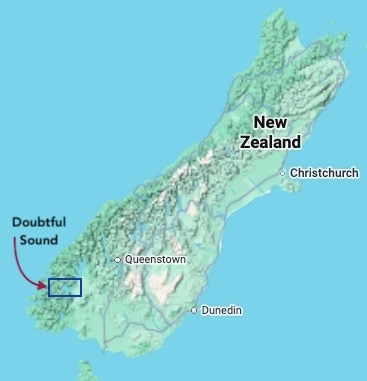
Fjordland National Park in the far southwest of New Zealand’s South Island is a huge, barely inhabited warren of 1000-m+ mountain ridges, deep 40-km inlets and glittering alpine lakes. Milford Sound is the best known of these glacier-carved fjords reaching inland from the Tasman Sea. Every day convoys of buses drive up the spectacular Milford Sound road to cruise the Sound.
We chose the less visited Doubtful Sound further south for a spot of rental kayaking.
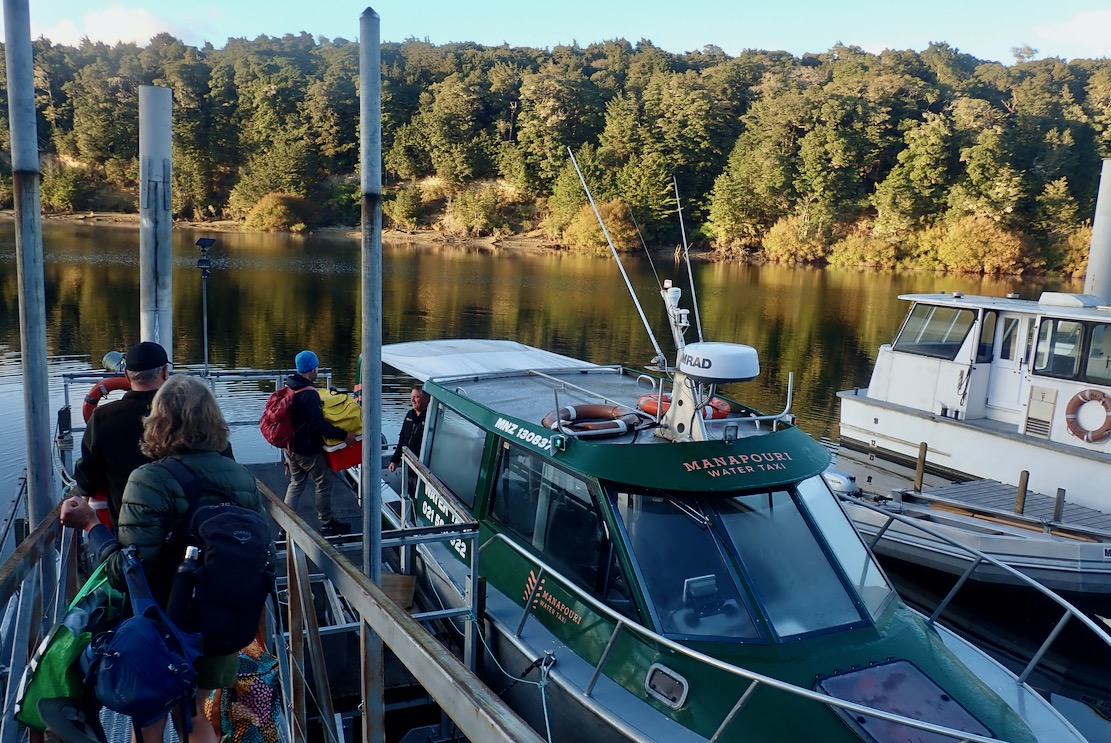
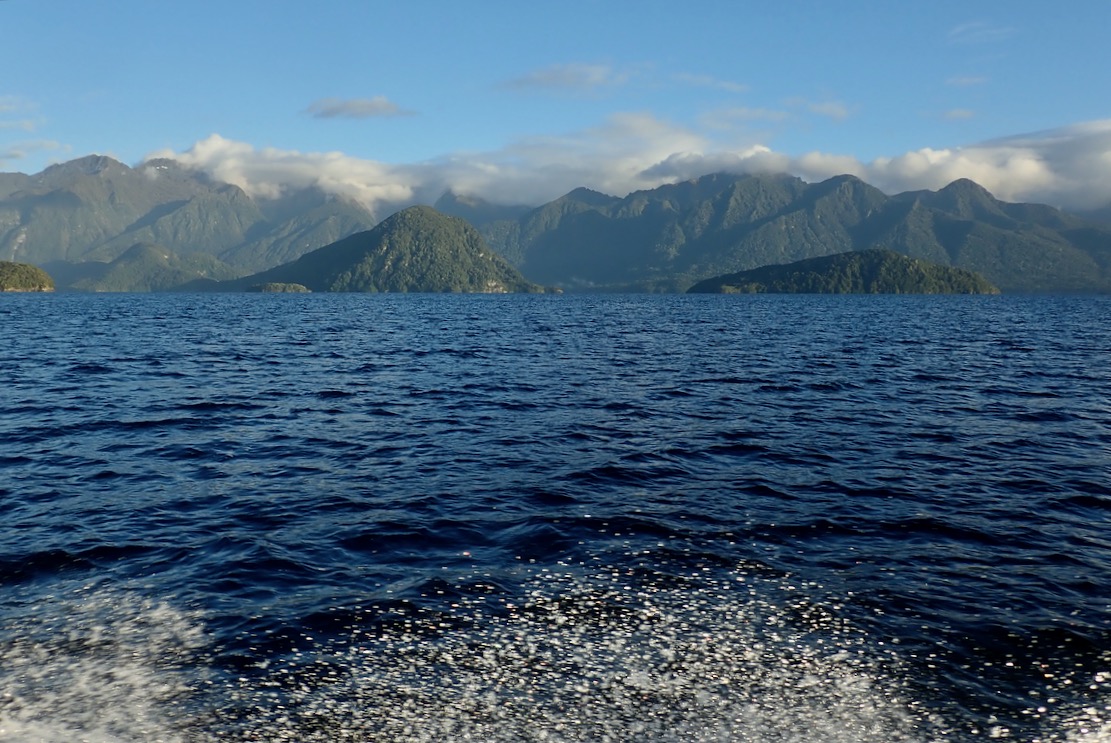
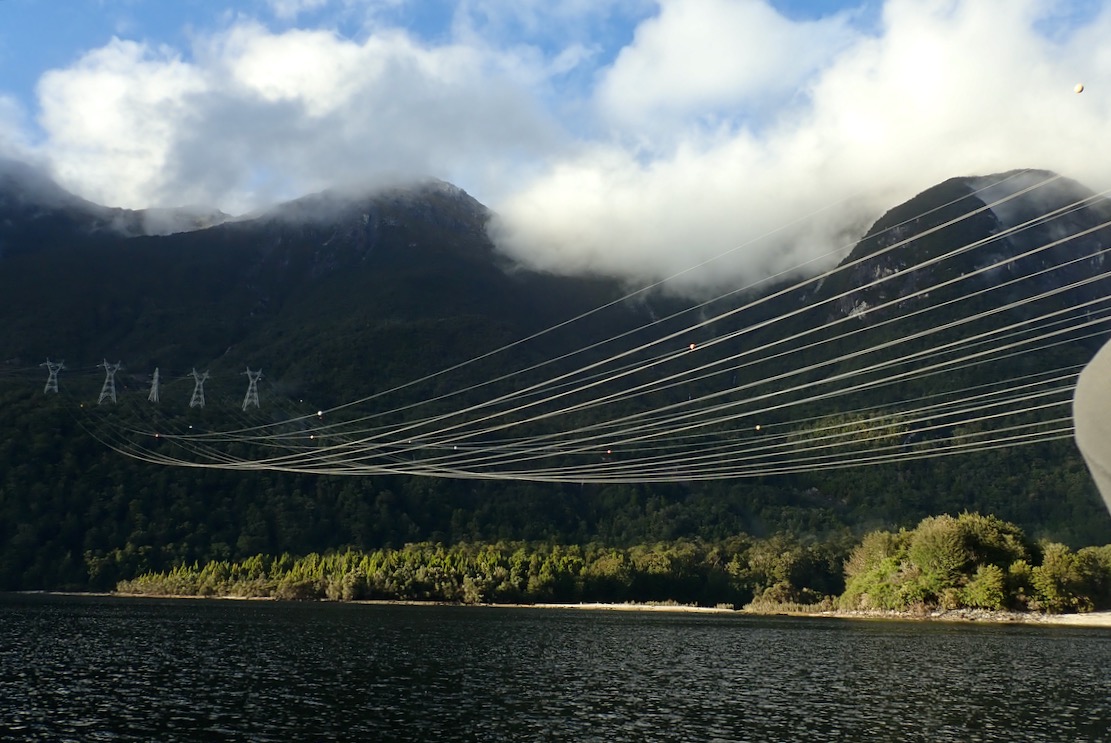
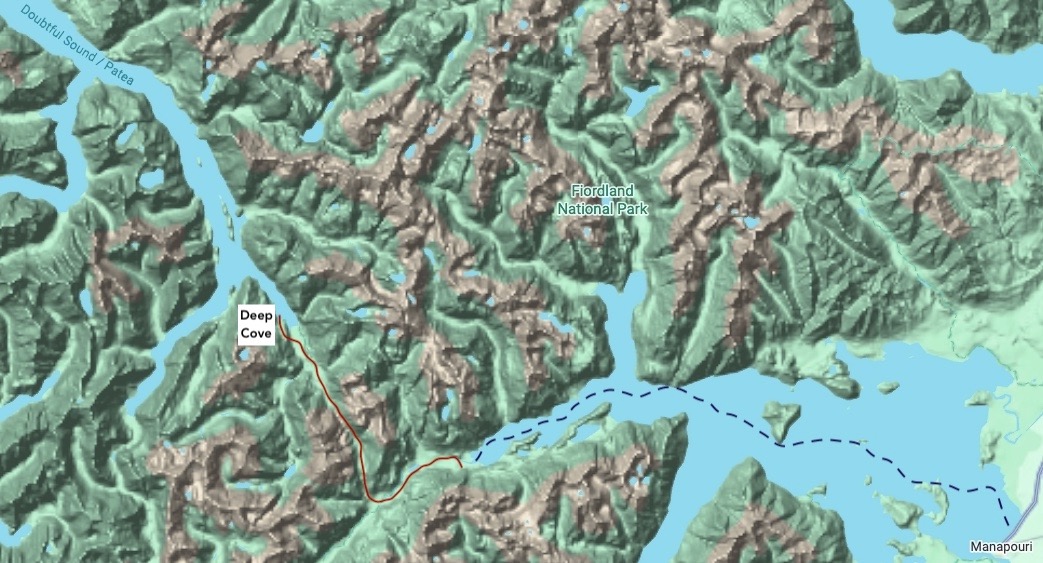
However you do it, getting to Doubtful Sound is a bit of an affort. First you cross the 35-km width of Lake Manapouri (pics above, map below) to a jetty at the west end, alongside NZ’s biggest hydro electric scheme (left). Unseen below is a huge machine hall carved out of the granite, housing the turbines
Just about every South Island lake seems to have been repurposed for power generation, producing up to 85% of the island’s electricity.
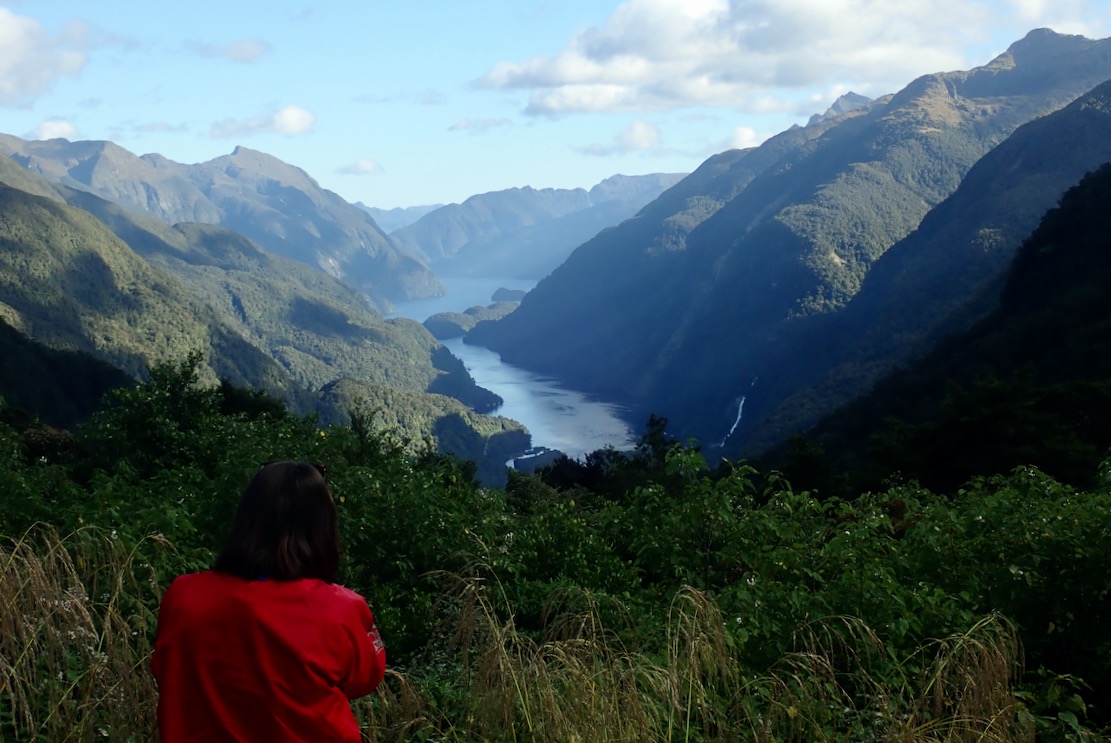
From the jetty a steep road leads over Wilmots Pass (above), then drops to the Deep Cove at the eastern extent of Doubtful Sound, noted by Cook on his 1770 expedition. This private road was originally built to serve the remote hydro construction from the sea. Once finished in the 1970s, one and then another tailrace tunnel was carved through the granite 10-km from Lake Manapouri to Doubtful Sound, the 180m-drop generating electricity for a smelter in town of Bluff, 150-km away. Five hundred cumecs (m³/sec) of water rush out of the tunnels, which adds up to a billion litres (1km³) every three weeks, freshening up the salty reach of Deep Cove with a couple of jetties and a hostel.
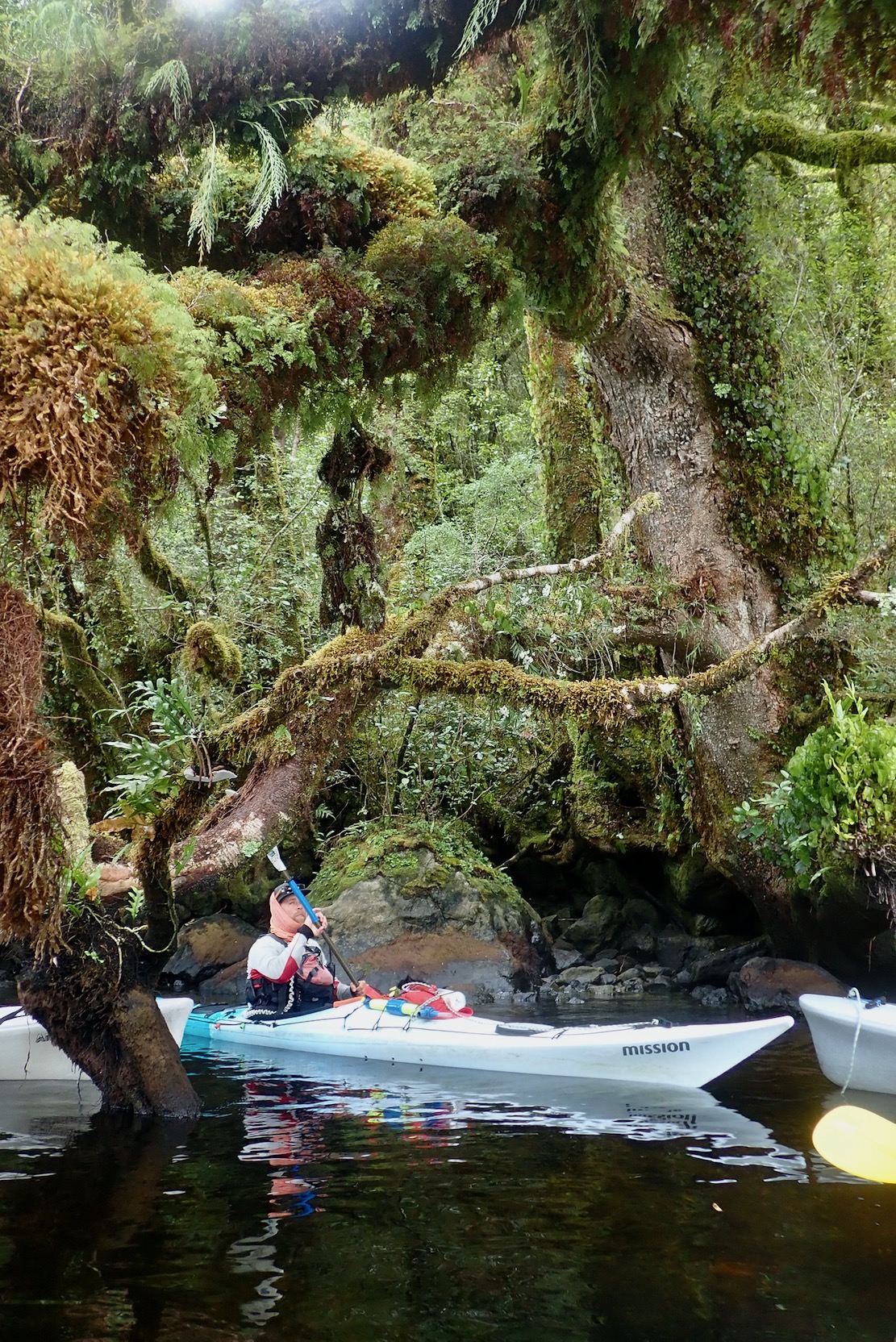
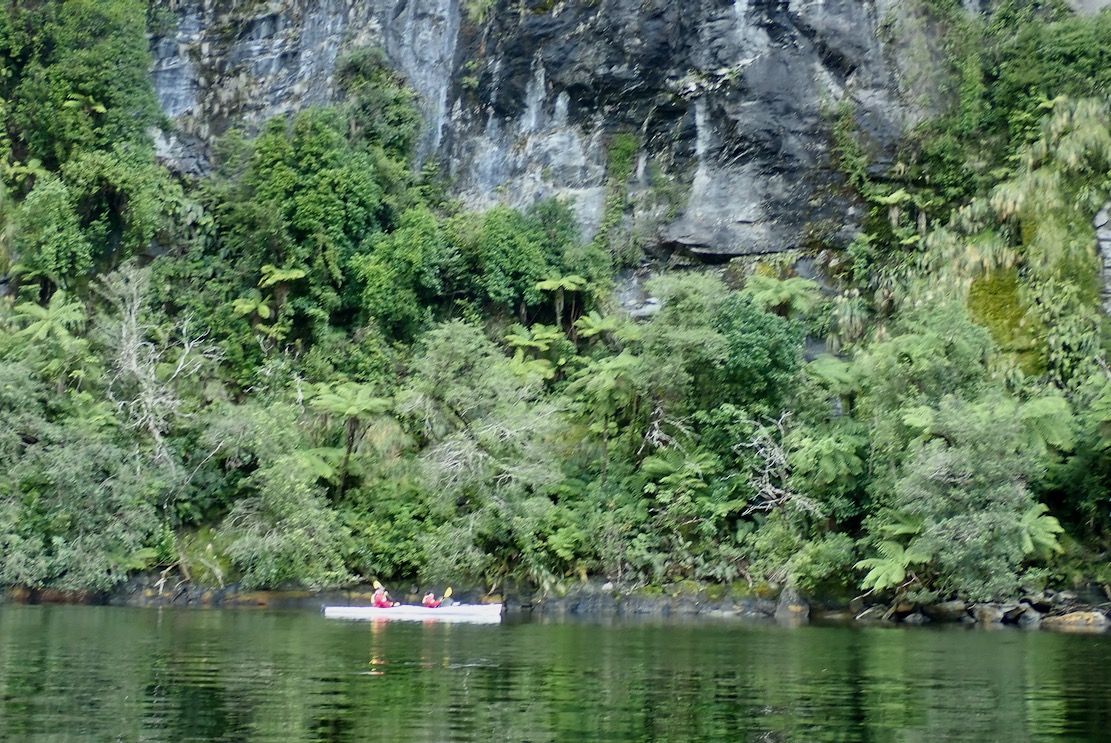
There’s little worry of Lake Manapouri running dry as the prevailing westerlies off the Tasman Sea dump up to 8 metres of rain a year, sustaining a dense, primeval rain forest of evergreens and ferns right out of Jurassic Park. They cling to the steep valley sides from the ridge crests all the way down to the tide line, and mineral, vegetable and probably some slow moving animals too, everything gets clad in bright green moss (left), even old rope.
But for all this running water and greenery, it’s barely inhabitable terrain dominated by 60° slopes or outright cliffs, all thick with impenetrable vegetation.
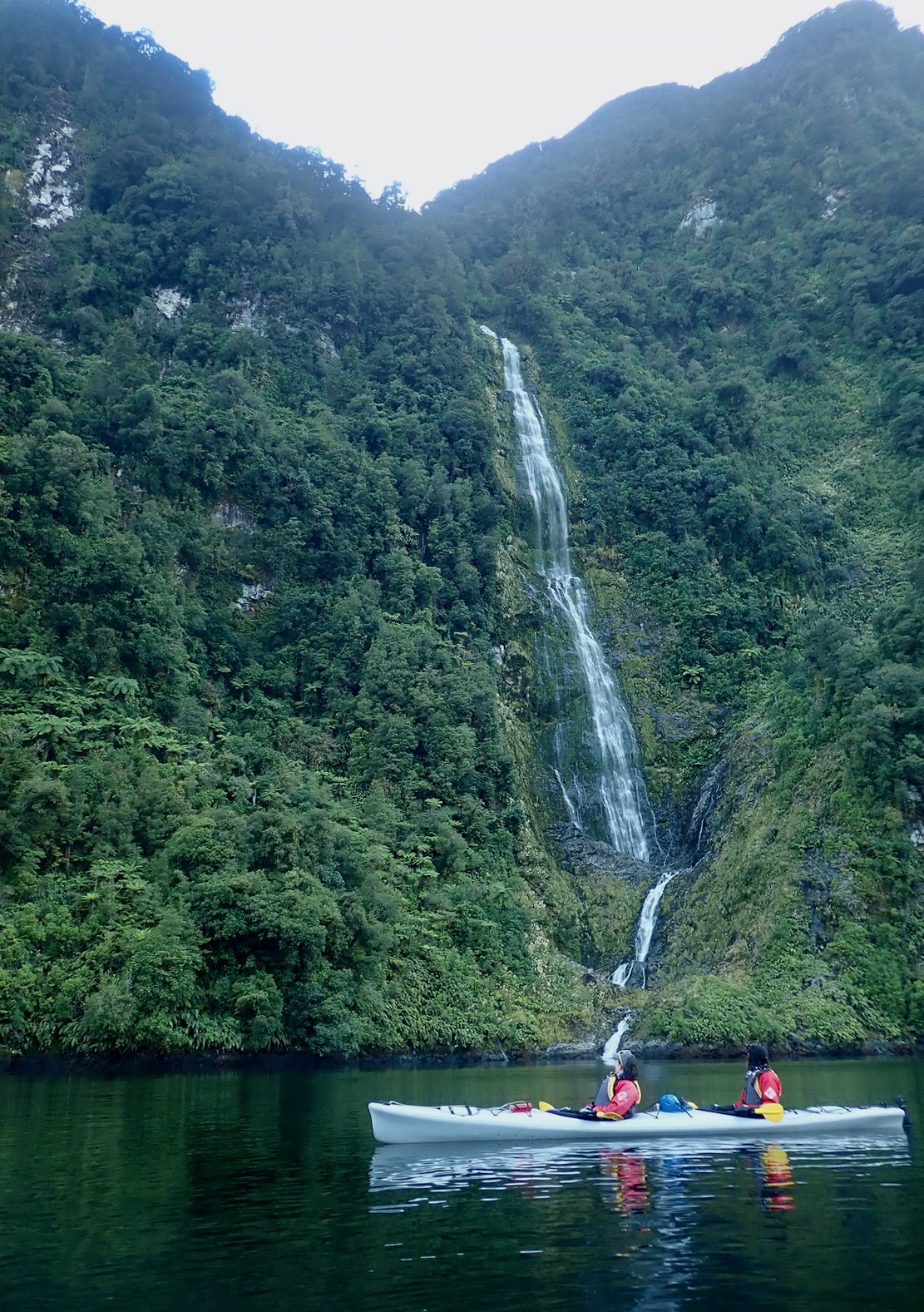
We’d arrived after a not unusual spell of rain which saw 1000-foot waterfalls streaming down the slopes, fed by unseen tarns far above. By the the time we headed out of the valley a day later, they’d dried up.
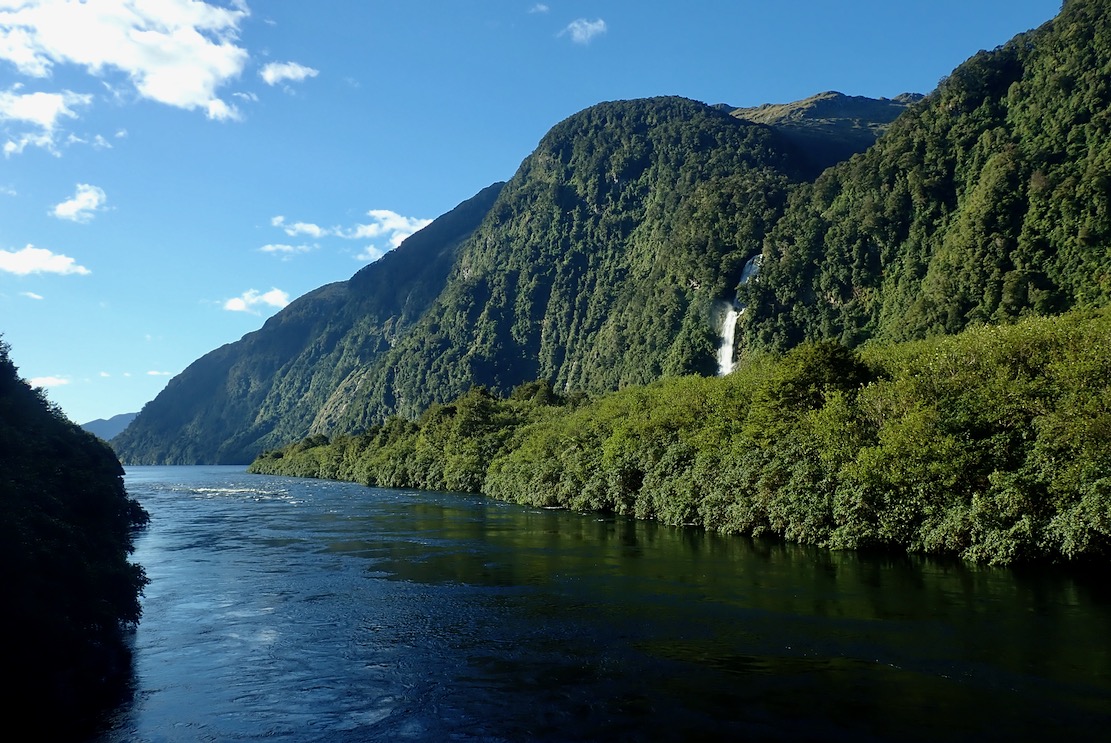
Our guide Blake explained there was no soil on these slopes. Once exposed by the retreating ice cap 12,000 years ago, lichen (algae-fungus) attracted moss, then ferns gained a footing and finally huge beech trees rose up, clinging to cracks in the rock and each other. Periodically they let go in a spectacular ‘treevalanche’, exposing a strip of bare rock comonly seen, and so the floral colonisation process resumes.
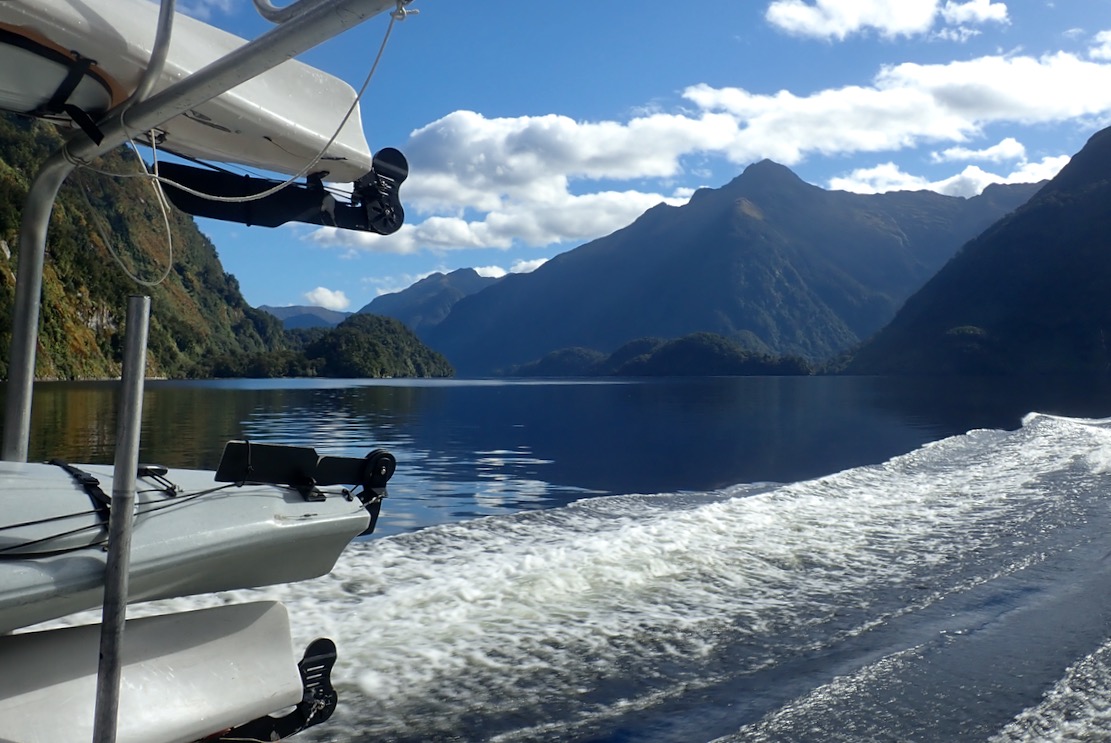
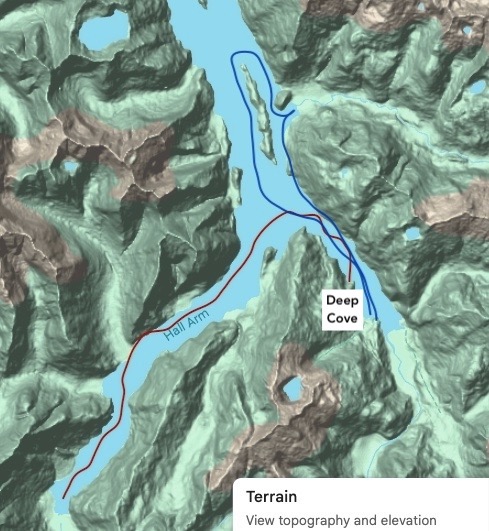
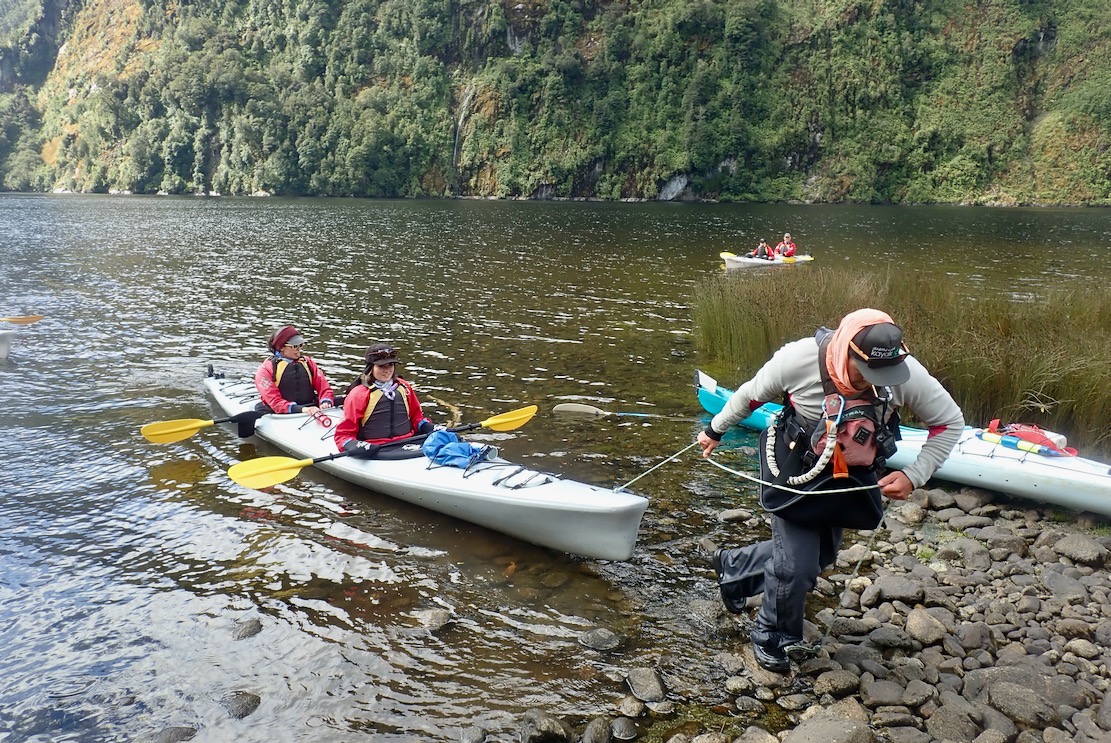
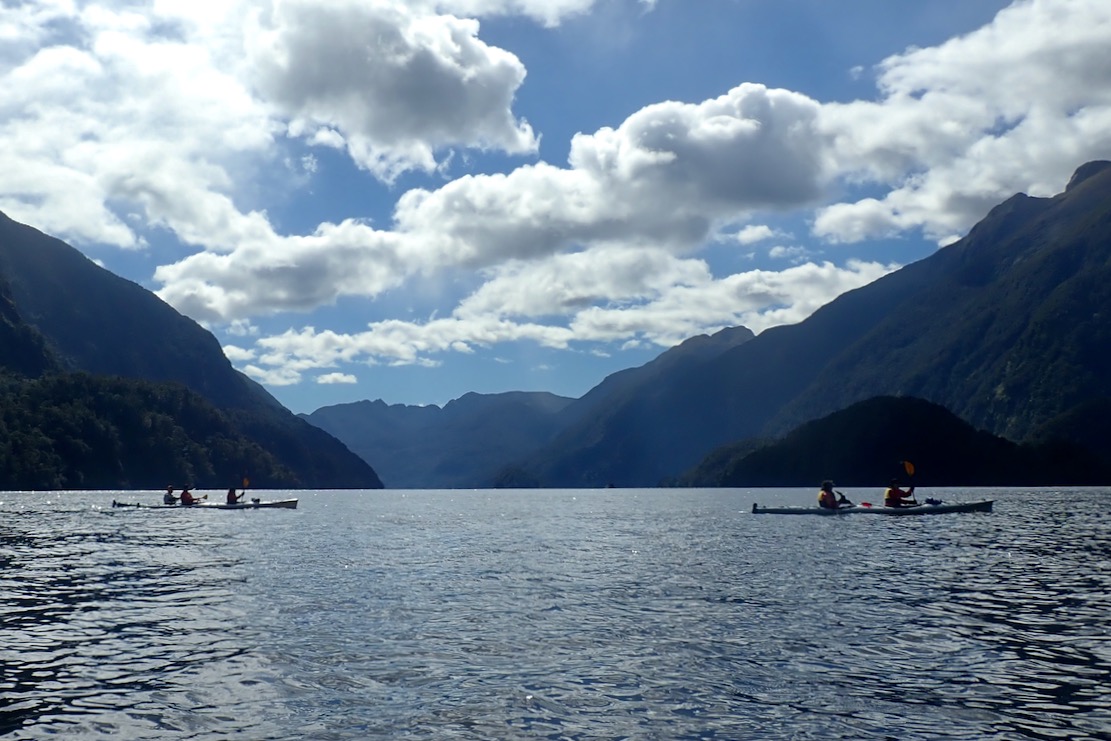
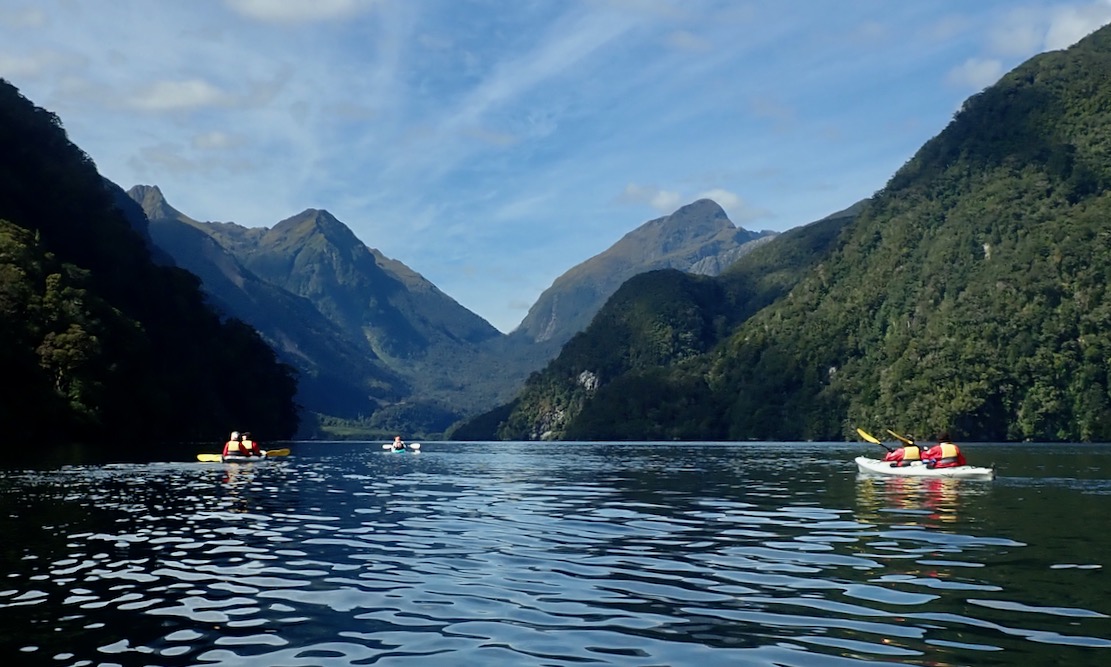
A service boat from Deep Cove jetty means kayak groups can be dropped off or collected anywhere in the Sound in minutes, depending on the day’s winds. Our afternoon paddle saw us left at the head of Halls Arm, 13km from Deep Cove. Down here only about fifty days a year are sunny, and we were lucky enough to grab two in a row. It was a bit disappointing to see passenger tour boats here, but they kept their distance or provided fun wakes to bounce across.
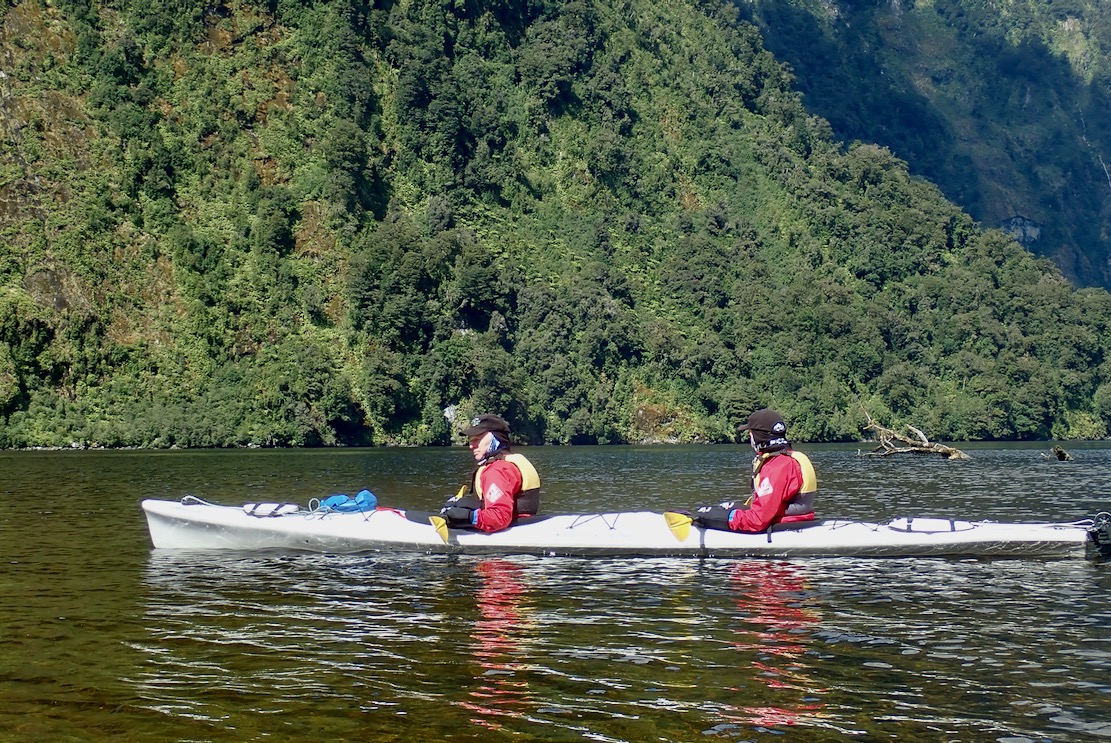
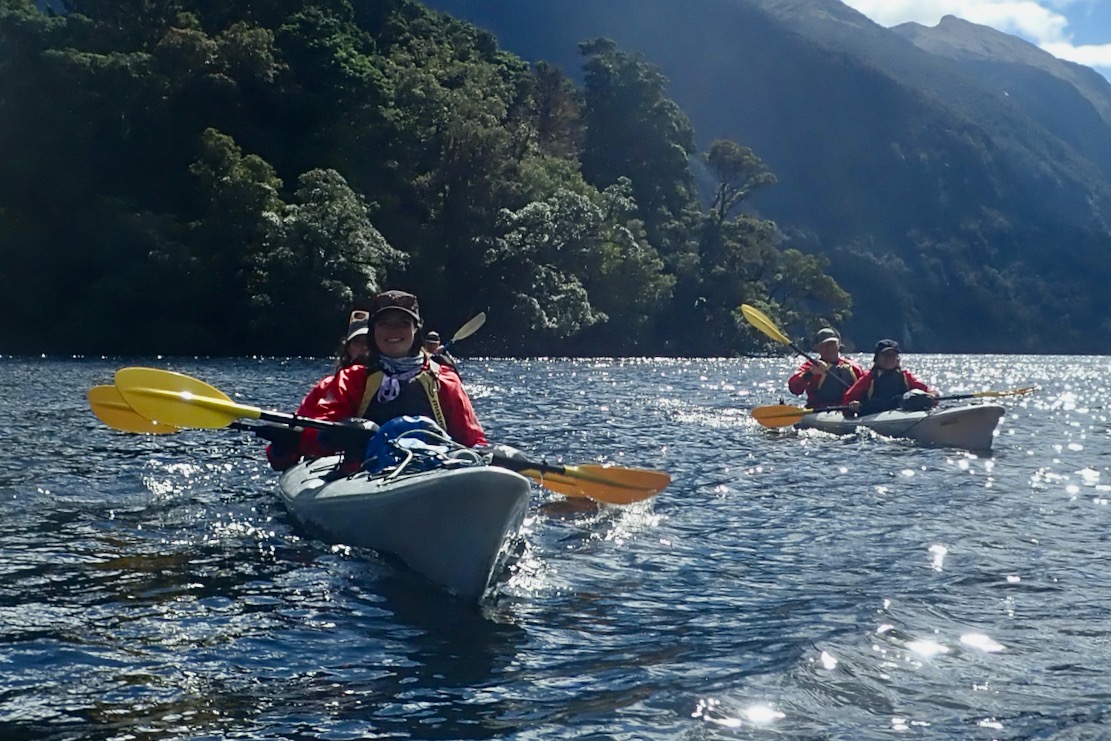
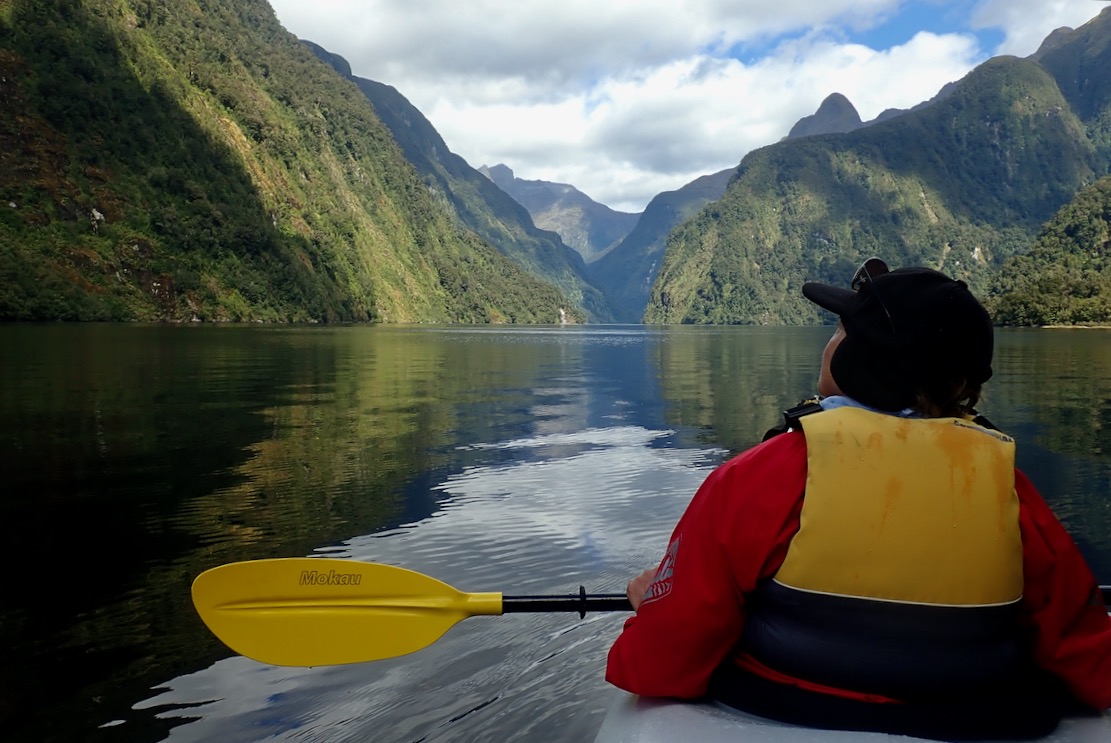
In Halls Arm eight of us slipped into four Necky Amaruks, a discontinued 6.4m roto double from the 1990s, just 66cm wide but clocking in at 42 kilos. We probably last paddled a hardshell double along Croatia’s Kornati Islands, some 30 years ago. The good thing with hardshells is you sit virtually on the floor and below the waterline, like a packraft but at nearly half the width. This means the boat is stable and fast, while still sitting low on the water and less prone to winds – the bane of much lighter and buoyant inflatables.
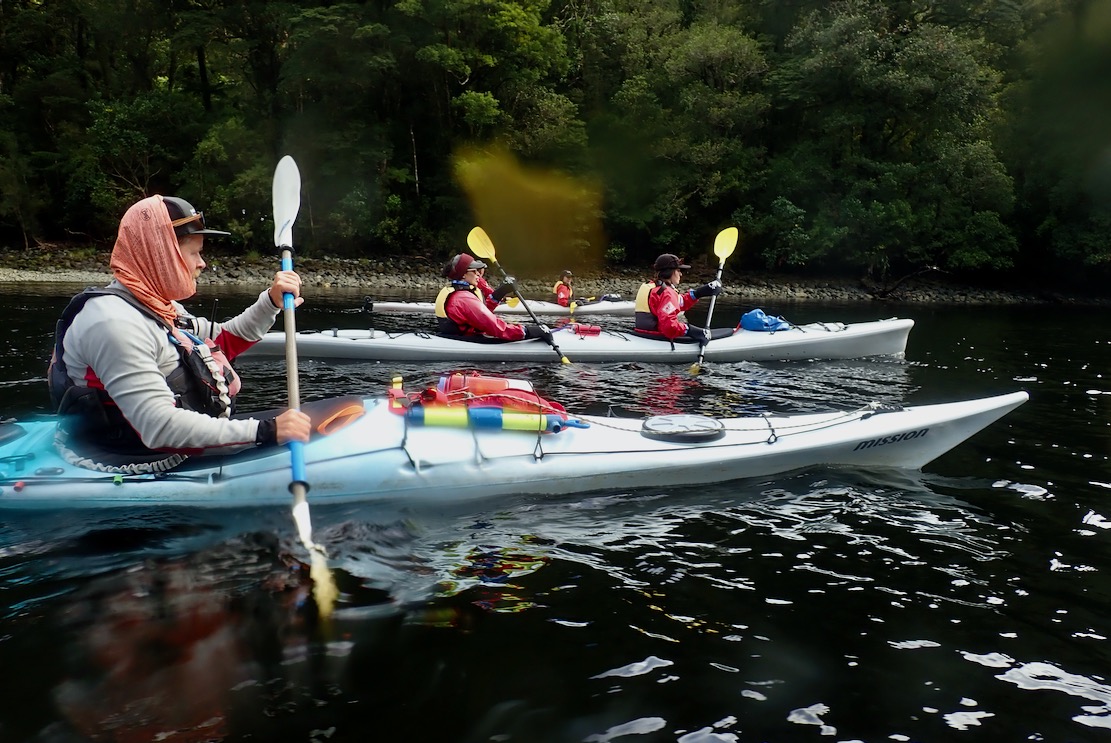
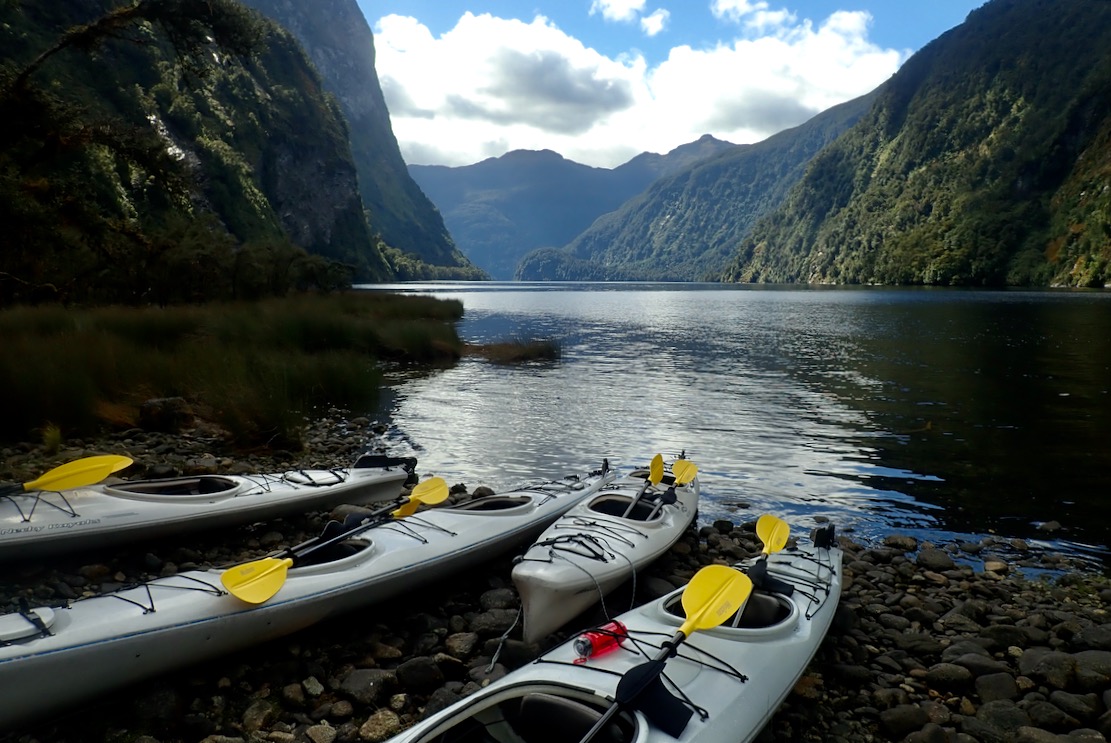
Today I sat in the back with the rudder, but failed to adjust for comfort, which ended up disagreeing with my bad leg and bad back. Occasionally an Omnium wet shoe would slip off the awkward side peg – less thick soles are better. After flailing hopelessly trying to reconnect my foot, I’d have to pulled back the skirt and reach in to unfold the peg.
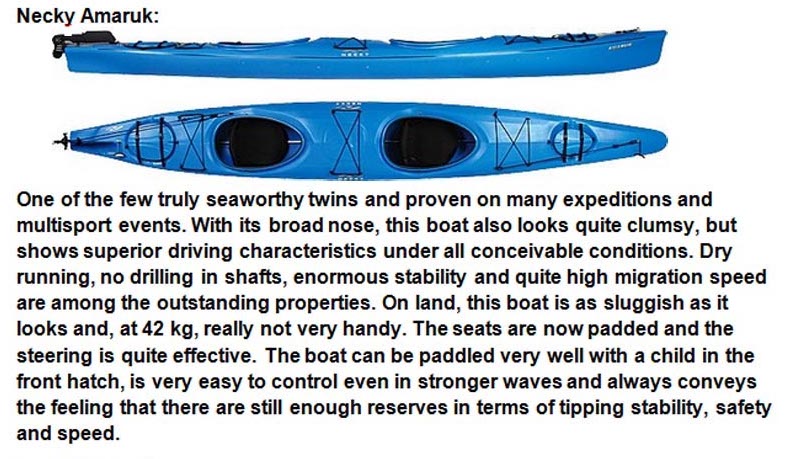
I’ve experimented with or had IKs with rudders, but in the end decided they weren’t essential for my sort of fair-weather day-trips (as opposed to overnighters, where you’ll get all sorts of weather when a rudder can help).
You’d think you just set the rudder straight to go straight, but I found myself constantly finessing the pegs and zig-zagging, while trying to synch with the Mrs’ cadence up front, a bit like patting the head and rubbing the stomach.
By the time we got back to Deep Cove after two, 2-hour spells, me and another similarly older guy had to be winched out like sacks of wet wheat. The minimally-padded seats saw to that, not helped by the lack of a solid footrest for support. He and I were not the first to experience this hardshell discomfort of course, but like bike saddles, you either get used to it or find one that suits you.
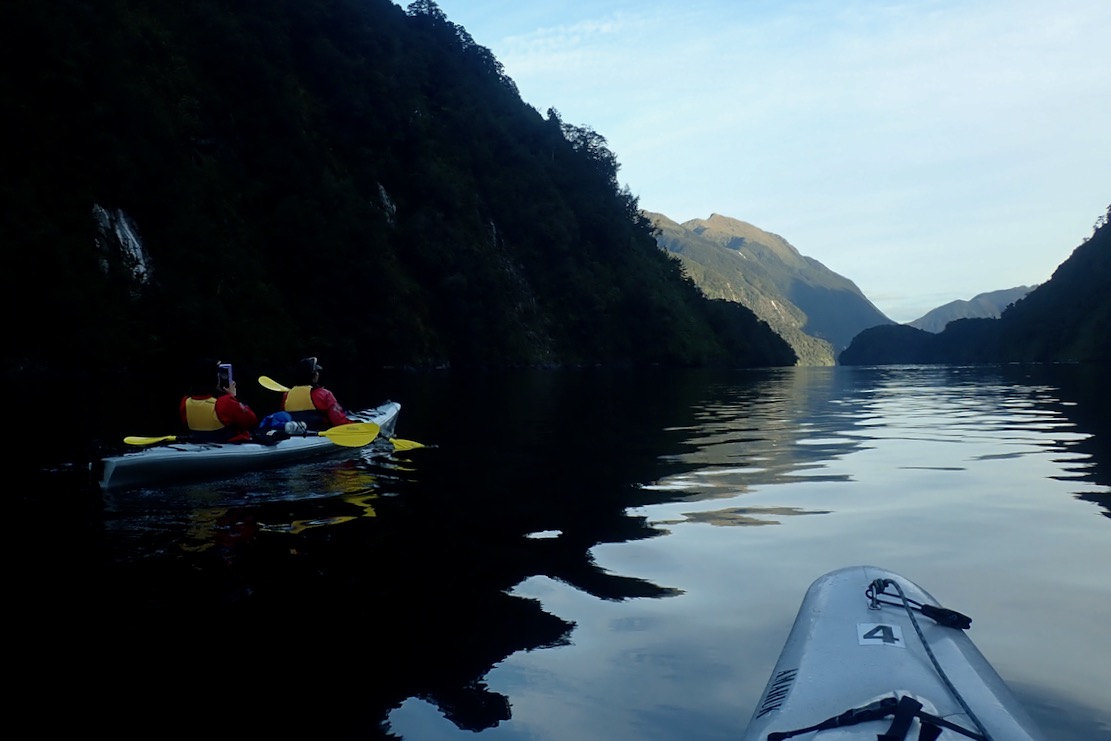
Next day I grabbed the front seat and directed the Mrs to the steerage area. This was much more like it! Solid foot placements and a great view. This time we paddled down the Sound alongside Elizabeth Island, passing a textbook hanging valley carved out by a former side glacier.
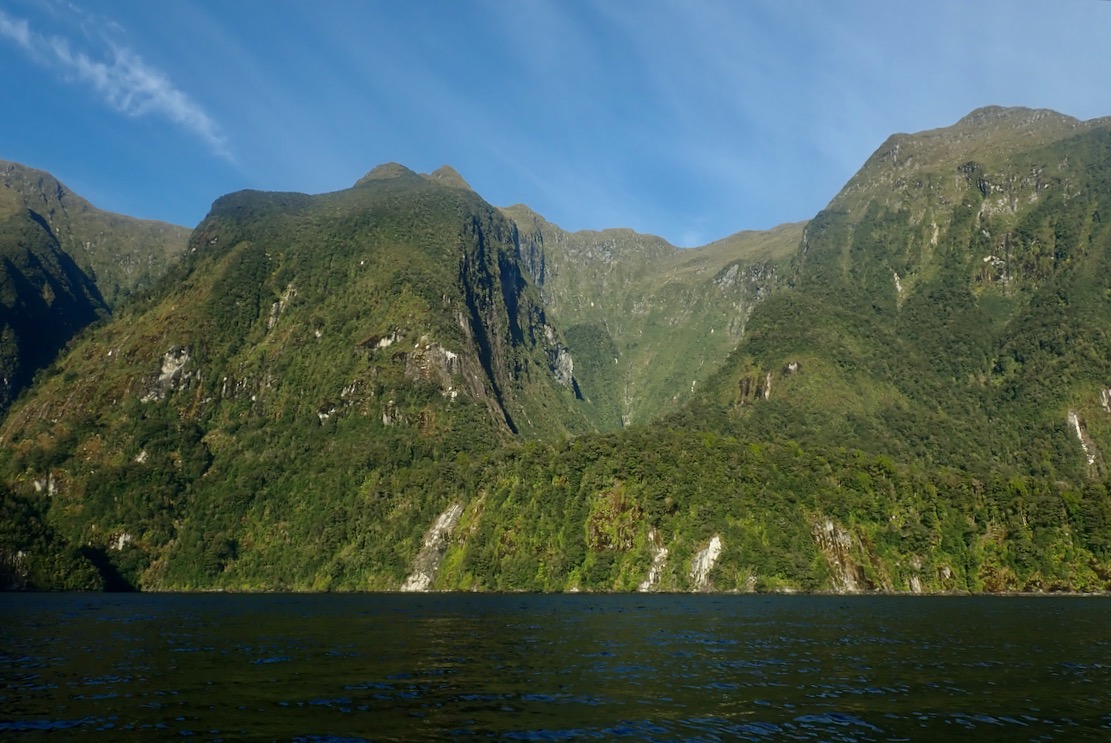
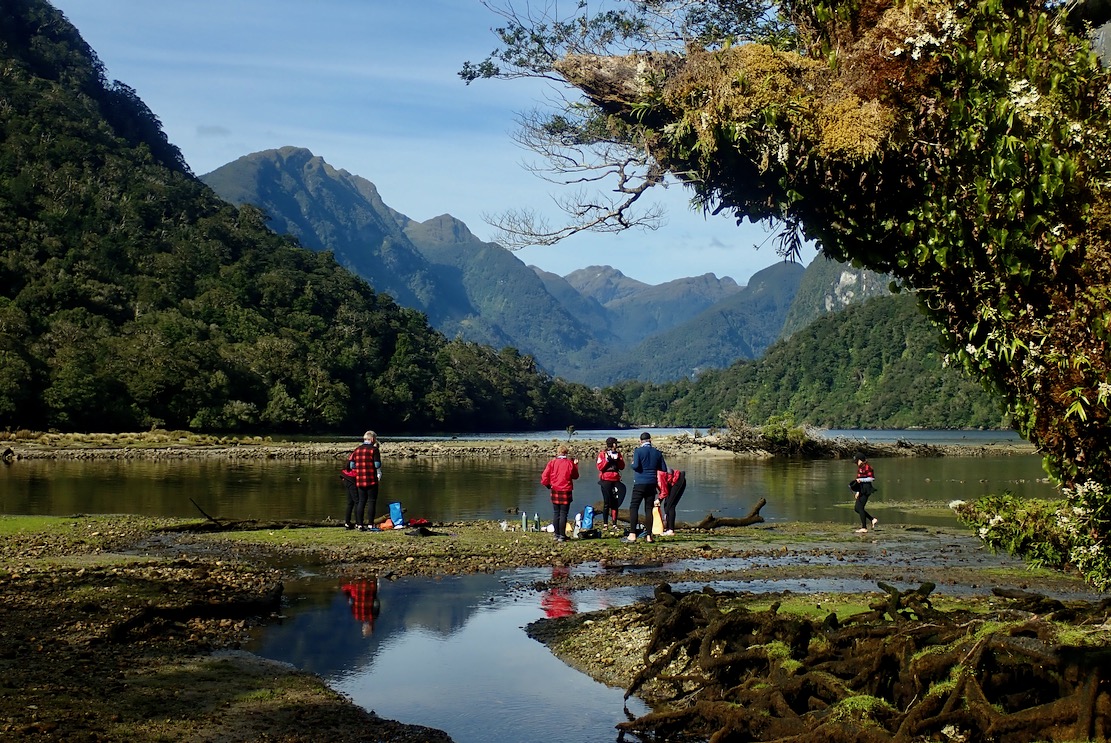
Returning up the north side of the island, we took a break in a tidal cove free of sand flies which had pestered us yesterday and which are the famed nemeses of New Zealand’s sodden west coast. Blake said yesterday’s smoko had been sand fly hell, but being bigger, satisfyingly swattable and far less dense than tiny Scottish midges, I’ll take Kiwi sand flies any day, even if they give the same itchy bites.
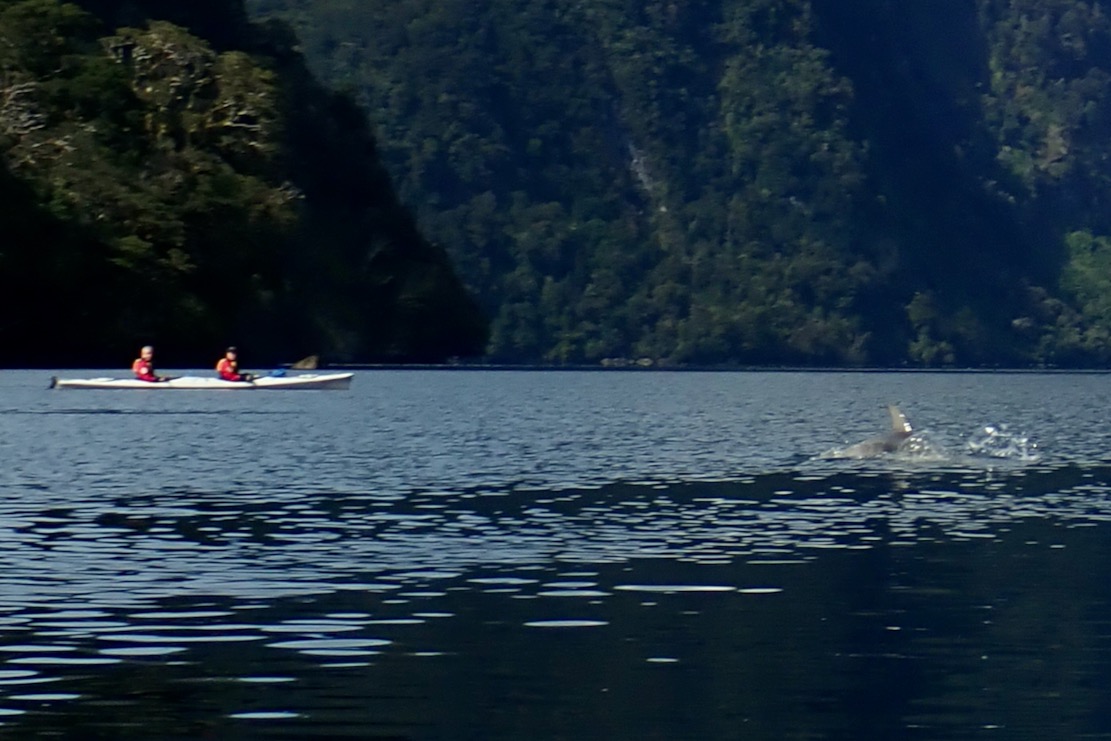
Heading back up to Deep Cove we came across some of the troupe of bottlenose dolphins which inhabit the Sound. The pod passed right by our boats, jumping and diving as they went.
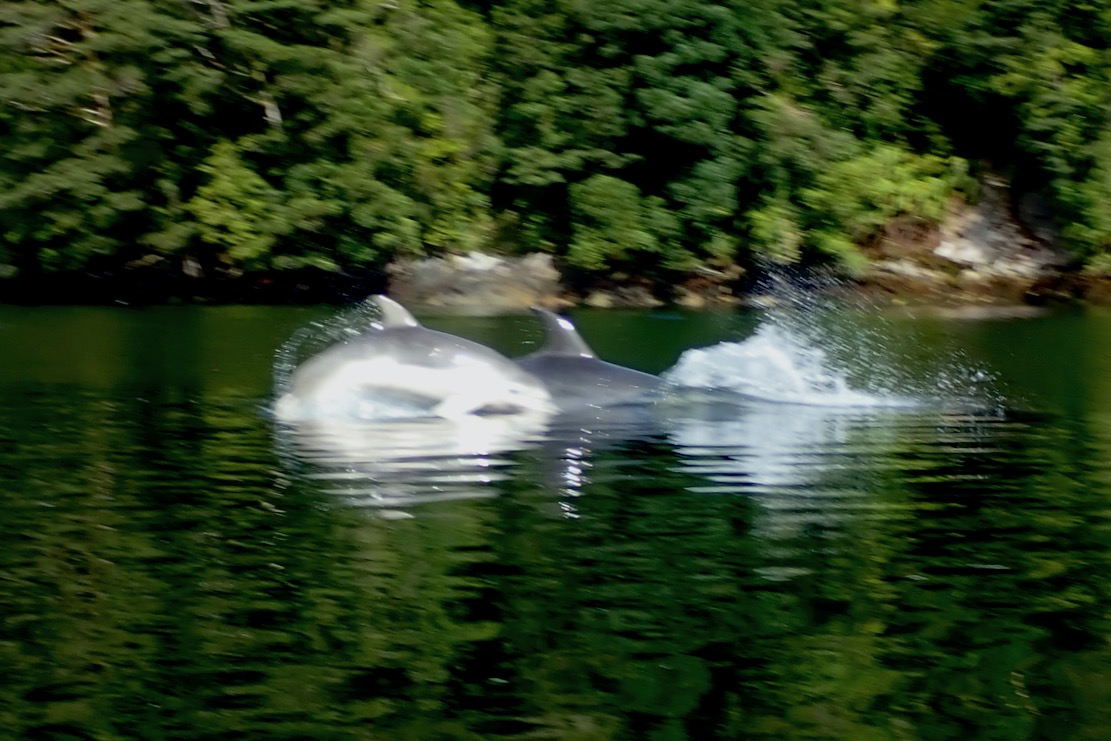
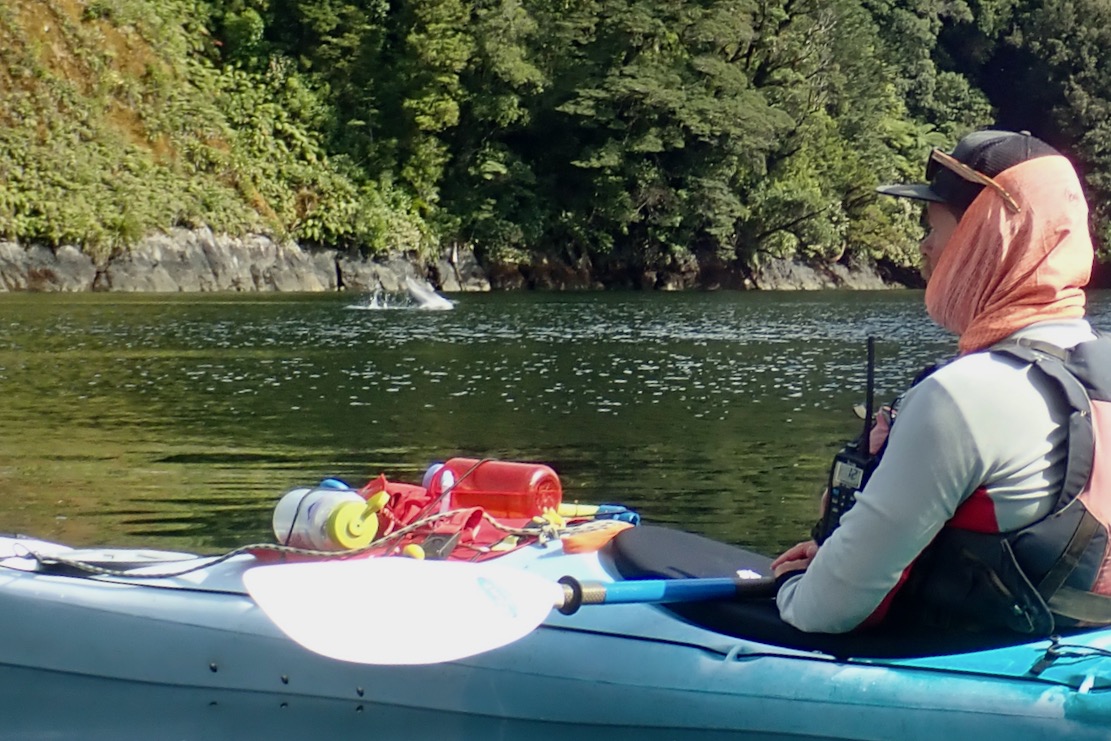
The last half hour turned into a slog. It wasn’t a headwind and it couldn’t be the Sound’s meagre two-m tide, even though it was on the turn. Which only left Manapouri hydro turning the taps on full as the the ally smelter down in Bluff just got a big order in.
Other than that, the tour’s pace was slow and the day after we both noted the lack of shoulder aches common after a first paddle in ages. When we were in synch, the Necky zipped along at an easy 6kph or more. It would have been interesting to see how it – or we – handled windier, choppier conditions.
Even then, a spell of hard shelling in a clammy wetsuit reminded me why I like IKs and Ps. Out in the fresh air, you can see your feet, access stuff easily, sit on a cushy pad of air, and of course hop in and out like a squirrel on a pogo stick. They say the Necky Lochsa which replaced the Amaruk had bigger cockpits, but you’ve still got 20 feet and 40+ kilos of plastic to store and transport; I saw one on ebay.nz going for just 300 quid. But for this type of use – rentals left on site for months – they’re ideal and indestructible. An SoT double would be door-wide and slow, and after all, most paddles here are in the rain.
It was great to paddle Fjordland and revisit to the dark side to revalidate my prefs. For the sort of paddling I enjoy, I’ll still take an IK or P.
 Inflatable Kayaks & Packrafts