
“My solution: Gumotex Solar 410C … the difference is ludicrous!”
Happy Gumotex owner after running a Sevylor Hudson for a few years.
Great website – what a wealth of information. I wish I had read it before buying my Sevylor Pointer K2, I would have bought a Gumotex. Never too late; it just costs you more. Anna M.
[I] got into inflatable kayaking a little over a year ago when a friend introduced me to Gumotex, I purchased my own Solar and have never looked back.
Phil.
For my sort of paddling, Czechia-based Gumotex make the best IKs, although in recent years value for money has dropped away. In North America they are branded as Innova. This place distributes Innova in North America, and summer 2025 Gumotex’s Instagram and FB pages seem to be on a bit iof a promo drive.
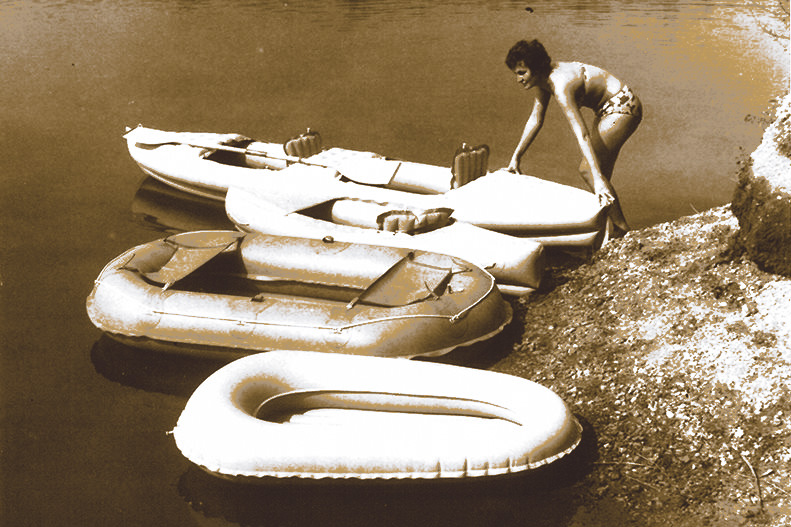
Starting in the 1950s and capitalising on new, rubber-coated fabrics, along with Semperit, Gumotex were among the early innovators of IKs (Zodiac, in the 1930s, made the very first).
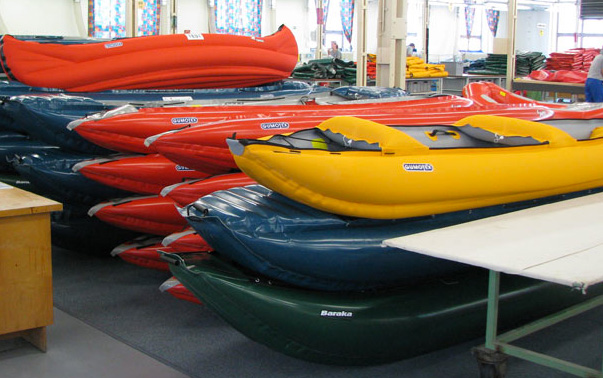
Now all you have to do is see if Gumotex have an IK to suit your needs. Gumotex also make some expensive, high-pressure, white water boats, such as these raft-wide Ks.
In 2011 they stopped selling the Sunny in Europe. It was my first main Gumotex. The 25cm longer, but otherwise similar Solar 410C took its place, and in 2017 that became the near-identical Solar 3. In 2019 it got renamed the Solar 019 alongside a similar Thaya with a rigid dropstitch (DS) floor.
Hybrids with dropstitch floors but still using their rubber-based Nitrilon fabric looks like the new direction for Gumotex IKs. The same durability but better gliding, while still rolling compactly into a bag. The Rush models of 2020 took this a step further with similar DS floors. So did the Seashine of 2024.

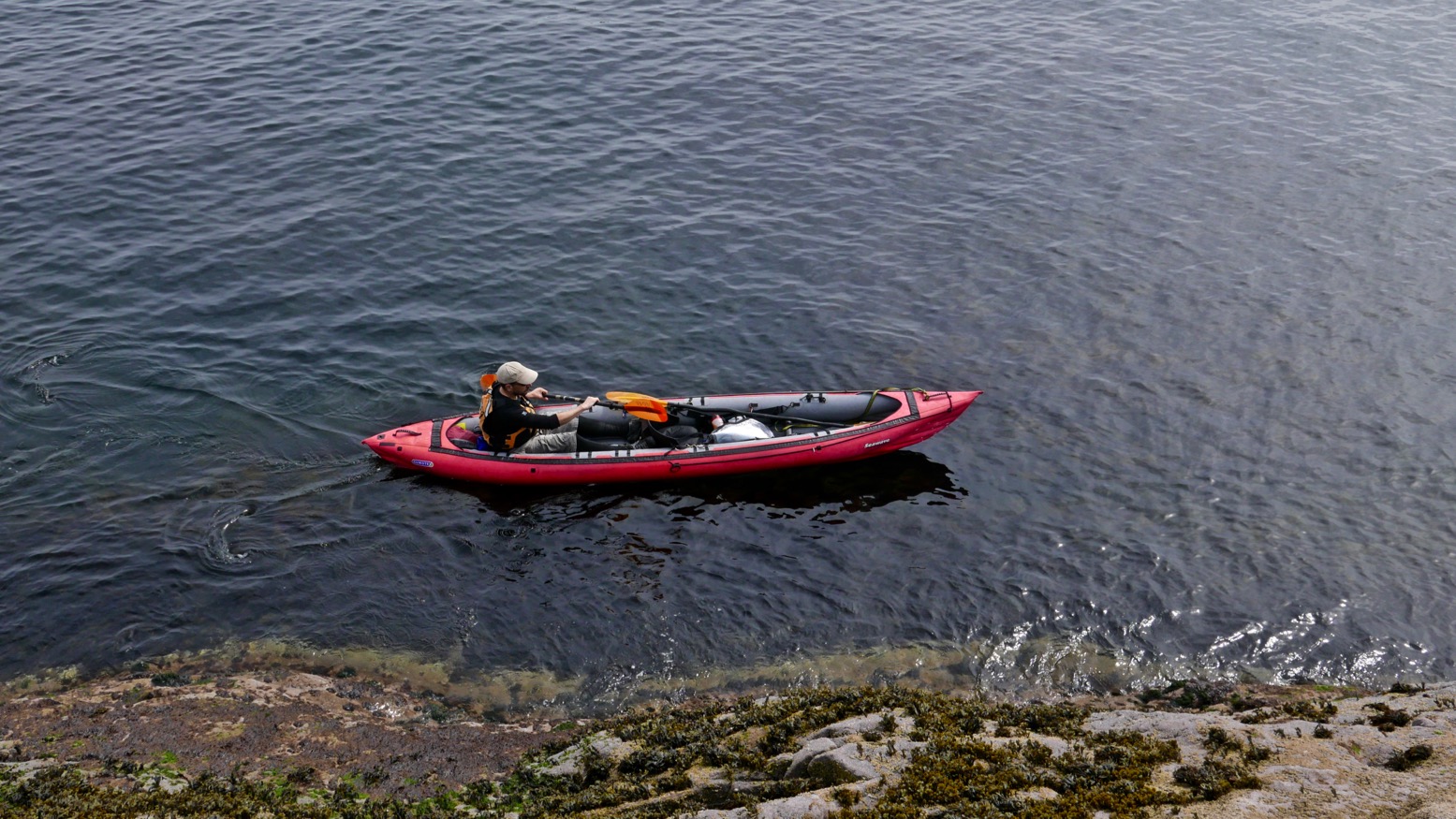
Compared to some IKs, Gumotex are simple, robust and slim like a kayak not wide as a raft. And they’re gimmick free. Over the years the design and fittings have been refined: better skeg fitment, better removable seats (but still crude and heavy), better valves, while in most cases retaining PRVs in the floors. Like the seats, the squidgy footrest cushions remain rubbish, but the current Nitrilon fabric feels lighter and more pliable, and Gumotex now offer fitted or removable decked boats like the Seawave, Framura and Rush.
The sporty Safari (with a 330XL version) the Solar 3/019 as well as the Framura and the versatile Seawave are all great touring boats, while the Nitrilon Twists are light and compact rec boats.
I haven’t owned or tried every Gumotex IK mentioned here, but in most cases know people who do- or have. The video below shows what sort of whitewater fun you can have with Gumotex IKs and even canoes.
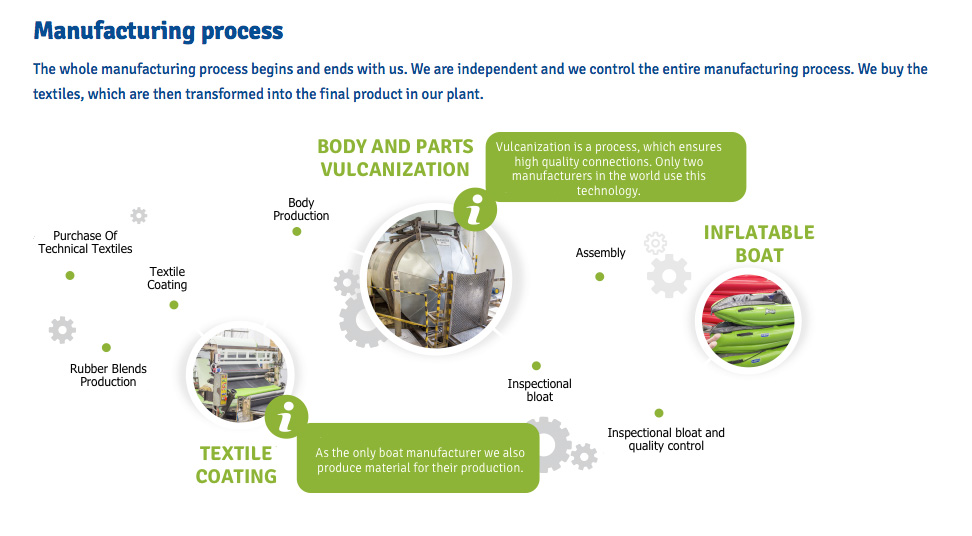
Gumotex IKs are what I call ‘tubeless’. There’s more here but in short this is the old-school ‘European’ way of making IKs with no cheap ‘inner tube bladders’ supporting a hull shell. Instead, all the sections are vulcanised in an autoclave and glued up to make a sealed vessel, like a packraft. (In the US, Sea Eagle make their Explorer IKs the same way, but use PVC). It’s expensive but has advantages over the the more common bladder ‘inner tube’ boats, principally in less bulk and quick and easy cleaning and drying.
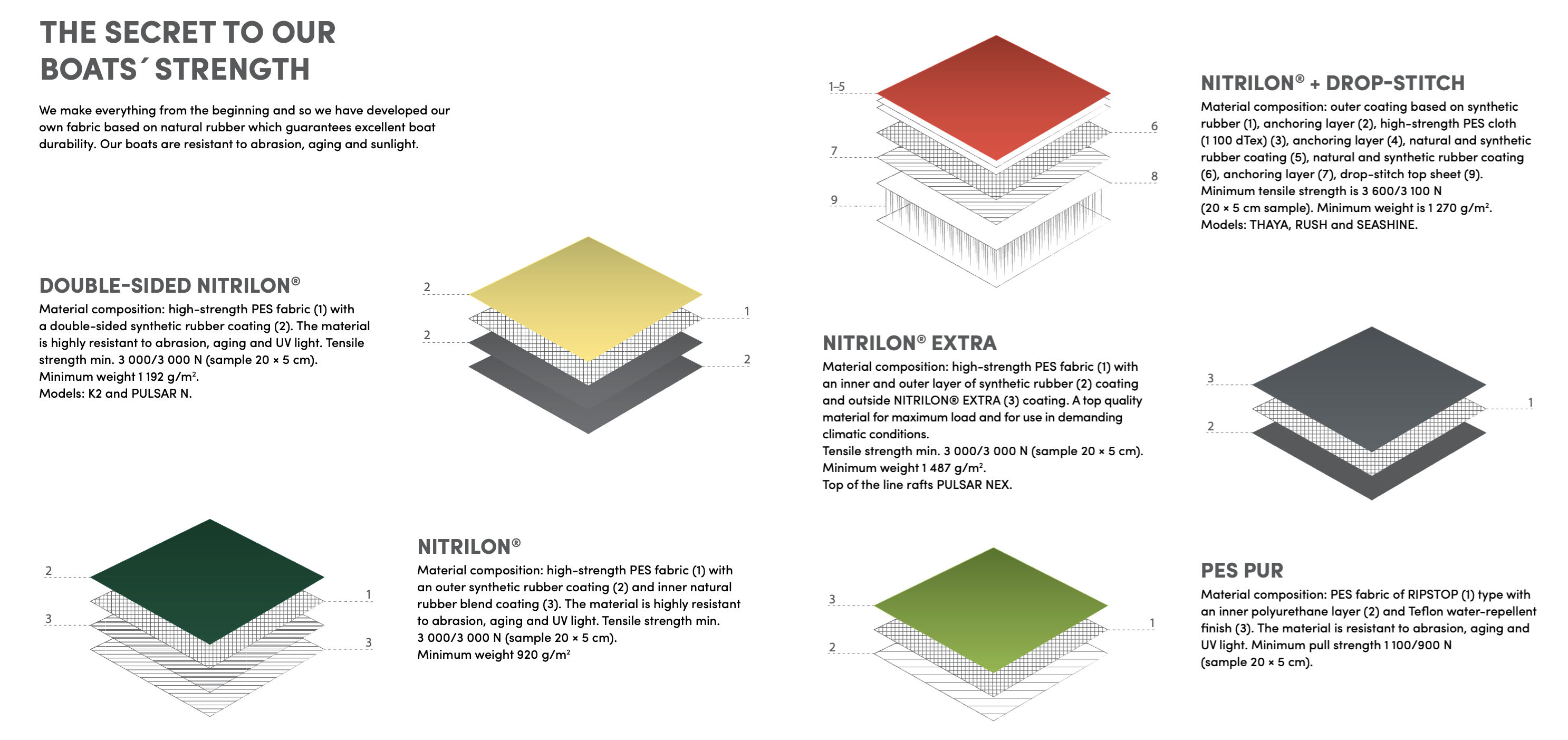
Gumotex IKs are made from Nitrilon, their own version of DuPont’s Hypalon: the original tough, synthetic rubber-coated fabric as used on white water rafts and which lasts for decades. (Grabner, by comparison, buy in their similar EDPM from Germany). Compare rubber with PVC in terms of abrasion: rub rubber along a rough surface and it may abrade and scuff; do the same with PVC plastic and it will also scuff and then heat up and melt.
In 2007 Gumotex introduced LitePack (later called Nitrilon Lite) on lower-end IKs like the Twists, with the rubber coating only on the outside of the hull. It saved weight but boats proved to be less durable and Nitrilon Lite was quietly dropped in 2018. (A mate of mine has many failures with his Lite Twists).
As mentioned, the current Nitrilon feels thinner and more supple than the original less shiny and stiffer Nitrilon of the Sunny era. After 15 years, I sold my Sunny in 2020 with little visible deterioration, considering its age and the use it got.
One thing you should know with Gumotex IKs is that all but the 3.7-psi Seawaves and Rushs are rated at 0.2 bar or 2.9 psi. This is more than cheaper bladder IKs which run just 1psi, but Grabner run a super-stiff 4.3 psi in the tubes Dropstitch panels run much higher psi.

I’ve read of Gumboaters running more than the recommended pressure in the side tubes to make the boats stiffer and more responsive. I suspect they can take it, as long as they don’t get too hot when left out of the water. Running at the recommended 0.2 bar pressure can mean that a boat is over 3.5m long – like the Solar – will flex in the swell or on rough water. This was a nuisance with my Sunny in rough seas off Western Australia because it swamped over the sides. So fwiw, I ran my Seawave side tubes for years at 0.33 bar – 50% more than the recommended 0.25. I had no problems but importantly, I added 0.33-rated PRVs so that the sides would purge air if they got too hot.
A hybrid Seashine was released early 2024, but at sea it still flexes a bit. And late 2025 came the hybrid Aurion.

On flat water, long boat flexing can mean reduced speeds if you’re heavy like me. Apart from going on a diet, years ago I considered various ideas to fix that in my old Sunny (which I took back in 2020), but in the end settled on a Grabner Amigo, a basic boat best described as a ‘high pressure’ Sunny. It was very stiff, but expensive and a bit slow. I sold the Amigo, and from 2014 ran a Seawave which I adapted in various ways, including running over-pressure side tubes, as mentioned.
I’ve had a lot of IKs and from waterside holiday fun to longer touring expeditions, you can’t go wrong with a Gumotex. Prices have got high and used boats are rare but I much prefer the tubeless design and durable rubber fabrics to just about anything in PVC (the Ukrainian Zelgear Igla being an exception).
 Inflatable Kayaks & Packrafts