

To all Mohunes
Of Fleet and Moonfleet
In agro Dorcestrensi
Living or dead

Recognise that epigraph? If you do you probably read John Meade Falkner’s Moonfleet (1898) as a conker-swinging nipper. Described as a ‘thrilling story of revenge and betrayal, of loyalty and great sacrifice, but … above all … friendship‘, I recall it being more of a ripping yarn with smugglers and treasure, set in mid 17th-century Dorsetshire or Dorcestrensi.
Like Enid Blyton in Swanage a few decades later, Wiltshire-born Falkner spent much of his time in a caravan park on the Dorset coast, and Moonfleet went on to be adapted into films (not least by Fritz Lang) as well as a few TV series. But to an 11-year-old none are as good as the book.

Fast forward half a century, I realise the 13-km long lagoon behind the pebblesome anomaly of Chesil Beach is known as the Fleet, as is a village along its shore, west of Weymouth. The novel includes many landmarks all the way to Purbeck and the Isle of Wight. That’s all the reason I needed to crack out the packraft and railcard.
But wait – are there restrictions?

Small-scale use of canoes and kayaks for paddling to the mid Fleet for enjoyment and the experience … is discouraged…
The Fleet seabed up to the mean high water mark is owned by the Ilchester Estates and part of the Reserve. The West Fleet is a closed, non-tidal area of water owned by the Estates and part of the Reserve. There are no boat slips bordering the Fleet that are open to the public. Boating in the mid Fleet is dissuaded as the water is shallow and the seabed comprises of soft, deep mud. There is also a tidal time lag … and strong winds … A military firing range is frequently in operation... It is hoped that the information below will reach potential boaters, … hopefully persuading them to reconsider their intentions.

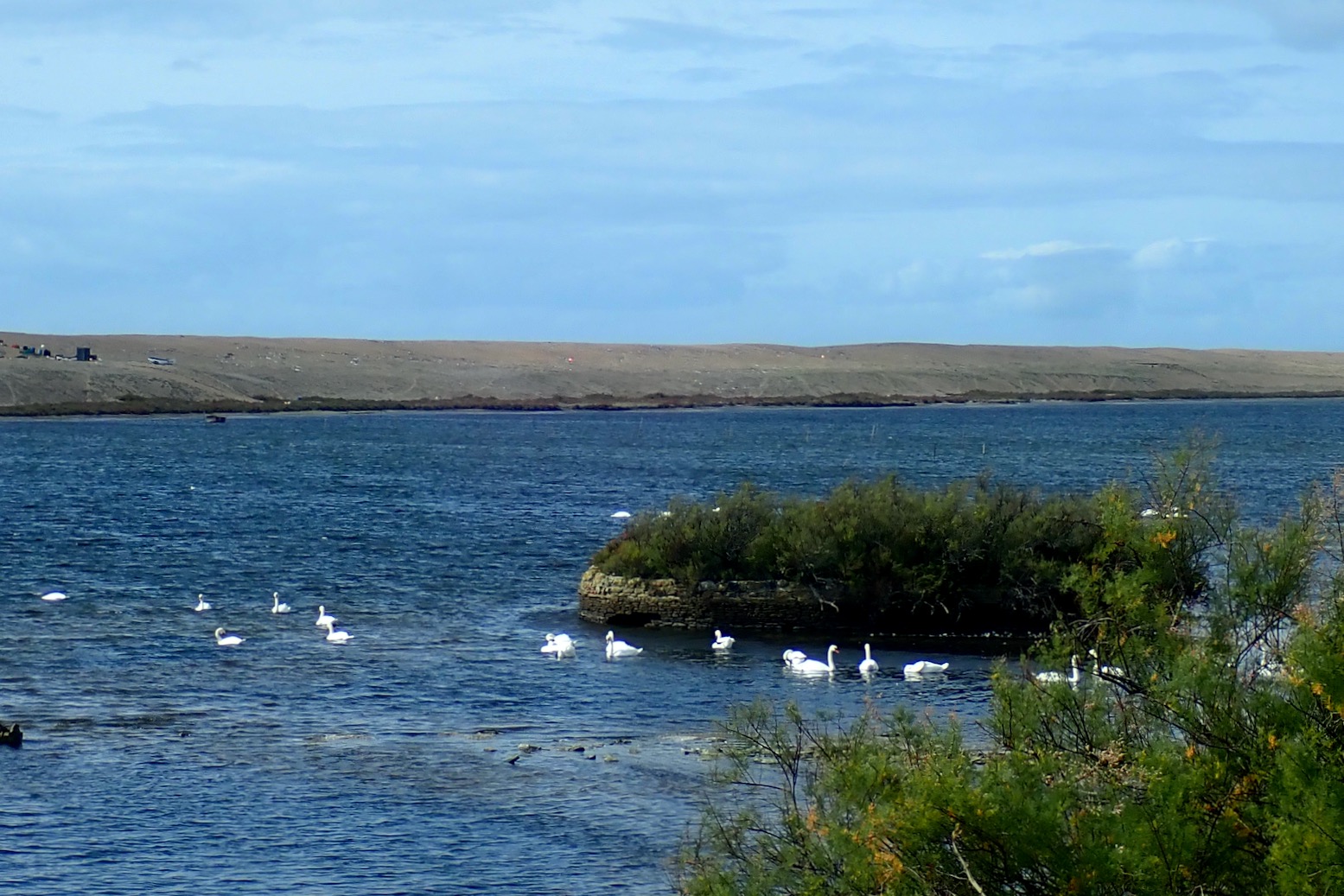
They missed out plague, pillaging pirates and pepper-spraying pangolins. Turns out the Fleet is a nature reserve. The top of the lagoon (West Fleet) has been a swannery since King Cnut of England, Norway and Denmark who actually died in Dorset. Harold (‘1066’) owned the manor of Fleet which was later listed in the first edition of the Domesday Book.

At that time swans were a substantial food source, farmed at the newly founded Benedictine abbey in present-day Abbotsbury at the top of the lagoon. During the Dissolution the abbey was dismantled and rebuilt as the new owner’s mansion, as were many dwellings in Abbotsbury.
By the mid-18th century, around the time of Moonfleet the new Earls of Ilchester established the Ilchester Estate which owns all you see here, including the Fleet seabed, not the Crown, as with most UK seashores.

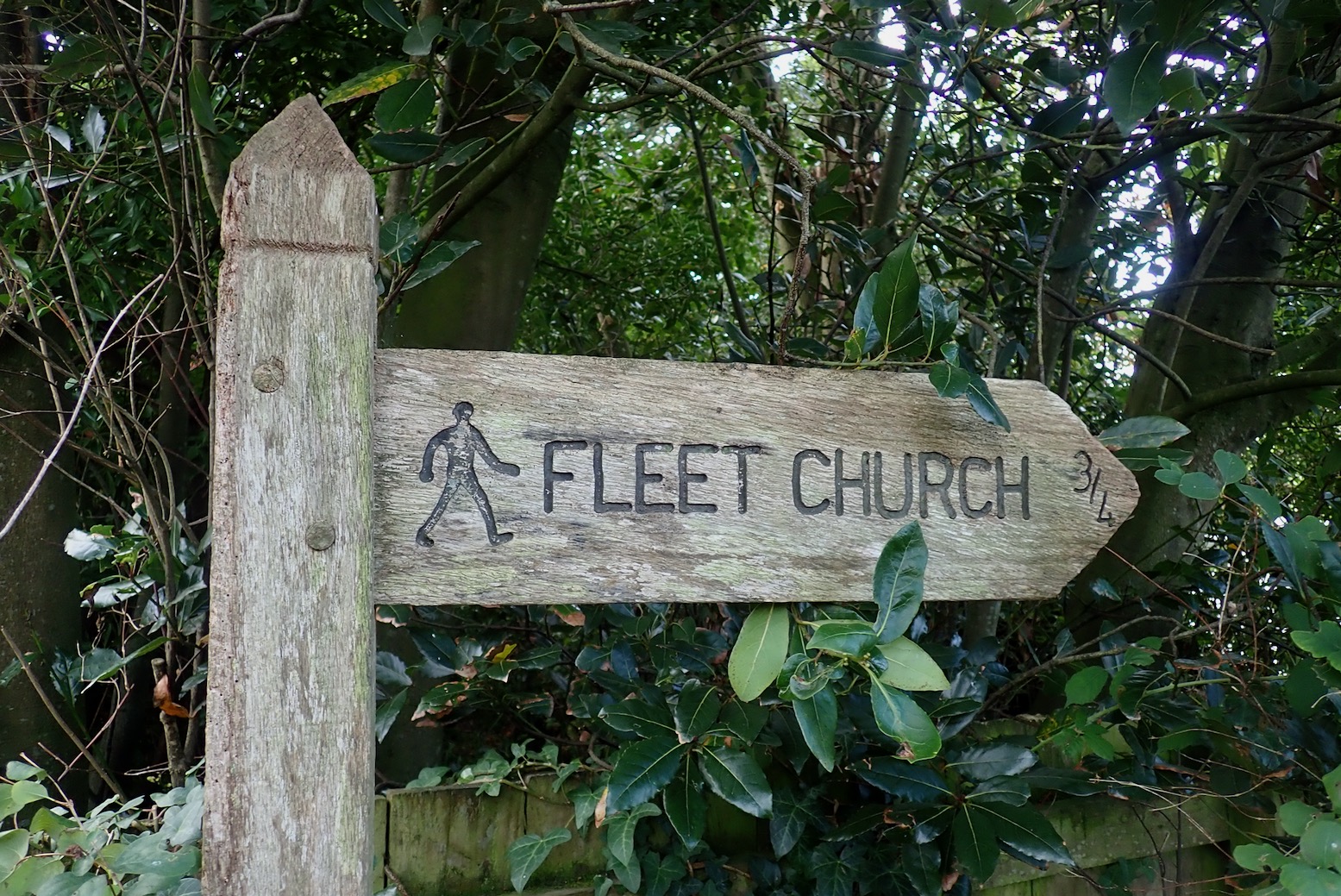

Given the questionable access for paddling, a foot recce was in order. We got off a bus at Chickerell and footpathed west towards Langton Herring, passing big, fat but not juicy sloe berries.
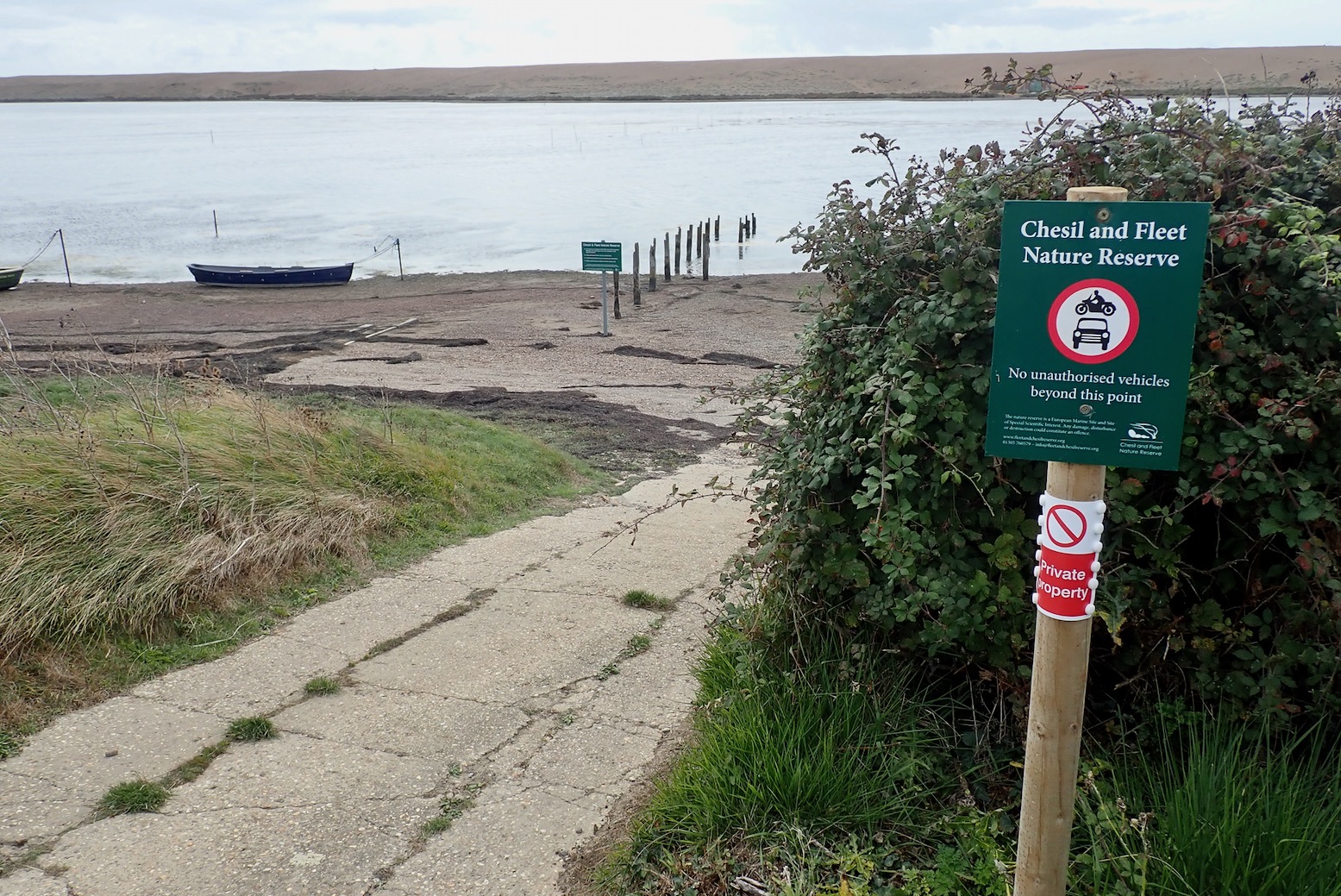
They really don’t want you to get to the water, do they. Along the shore regular green signs like above remind you there is no public access to the ‘hazardous foreshore‘.


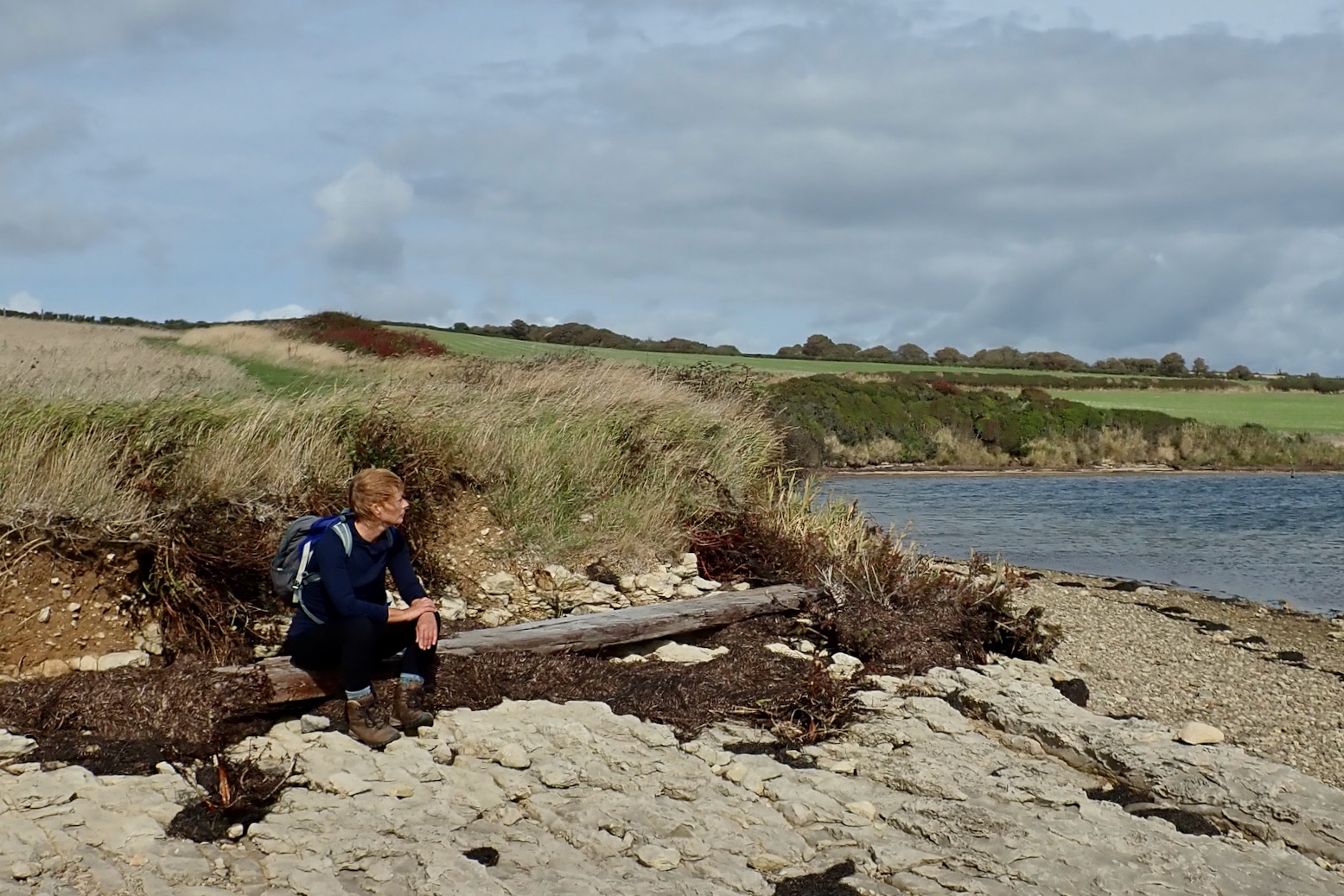


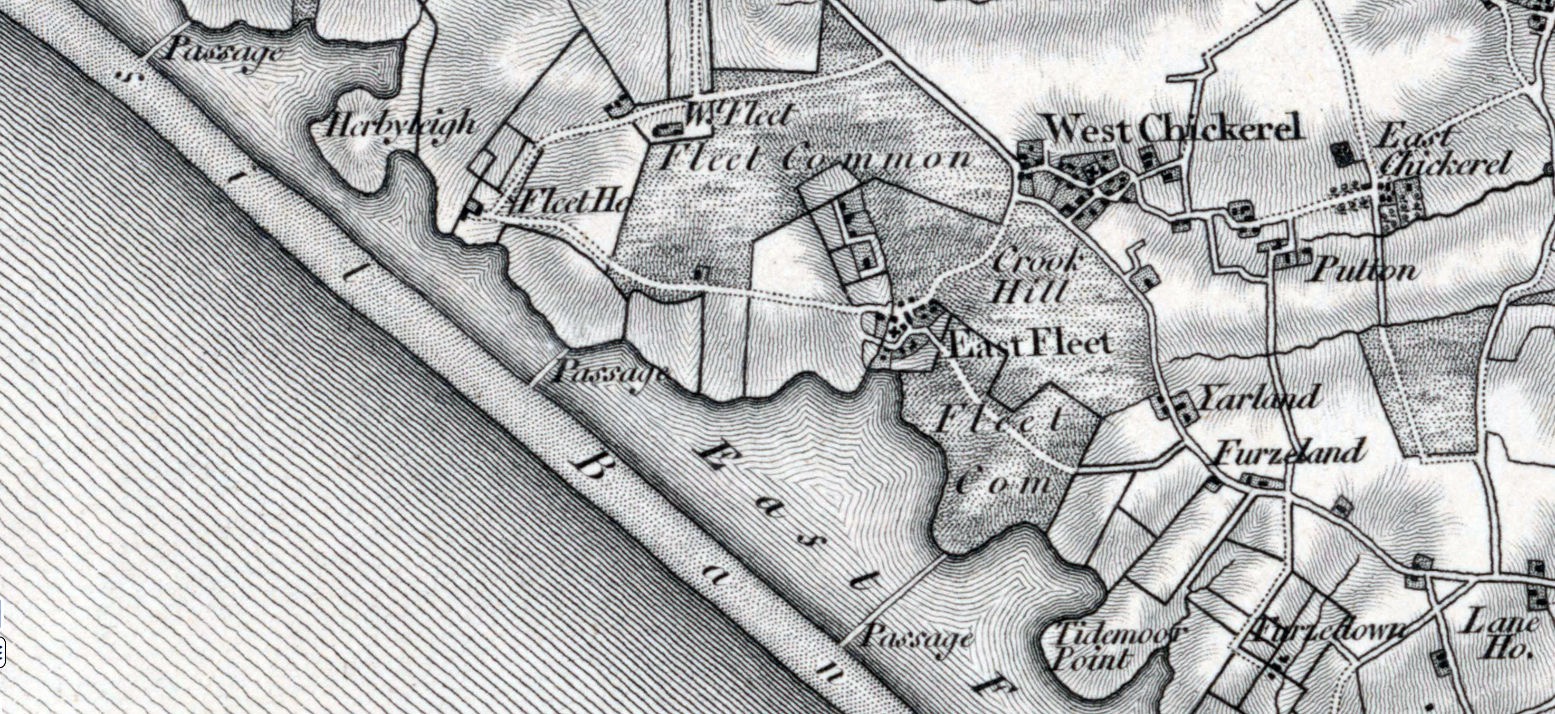


Round about here the maps show a mile of tidal mudflats to the southeast, just before the Narrows lead on to Portland. But the maps also indicate a permanent channel right alongside the Chesil shore. Stay on the Chesil side if in doubt.


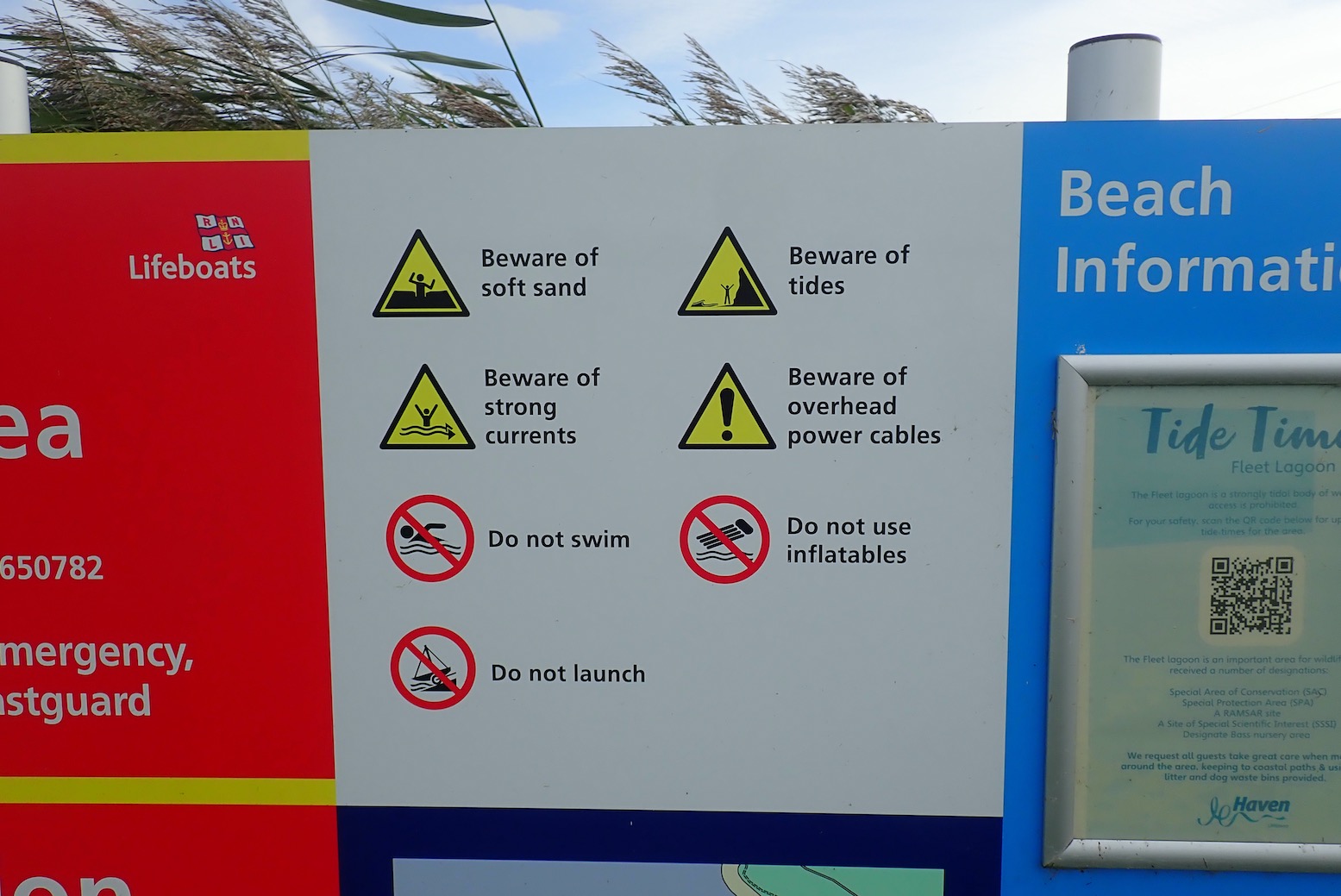
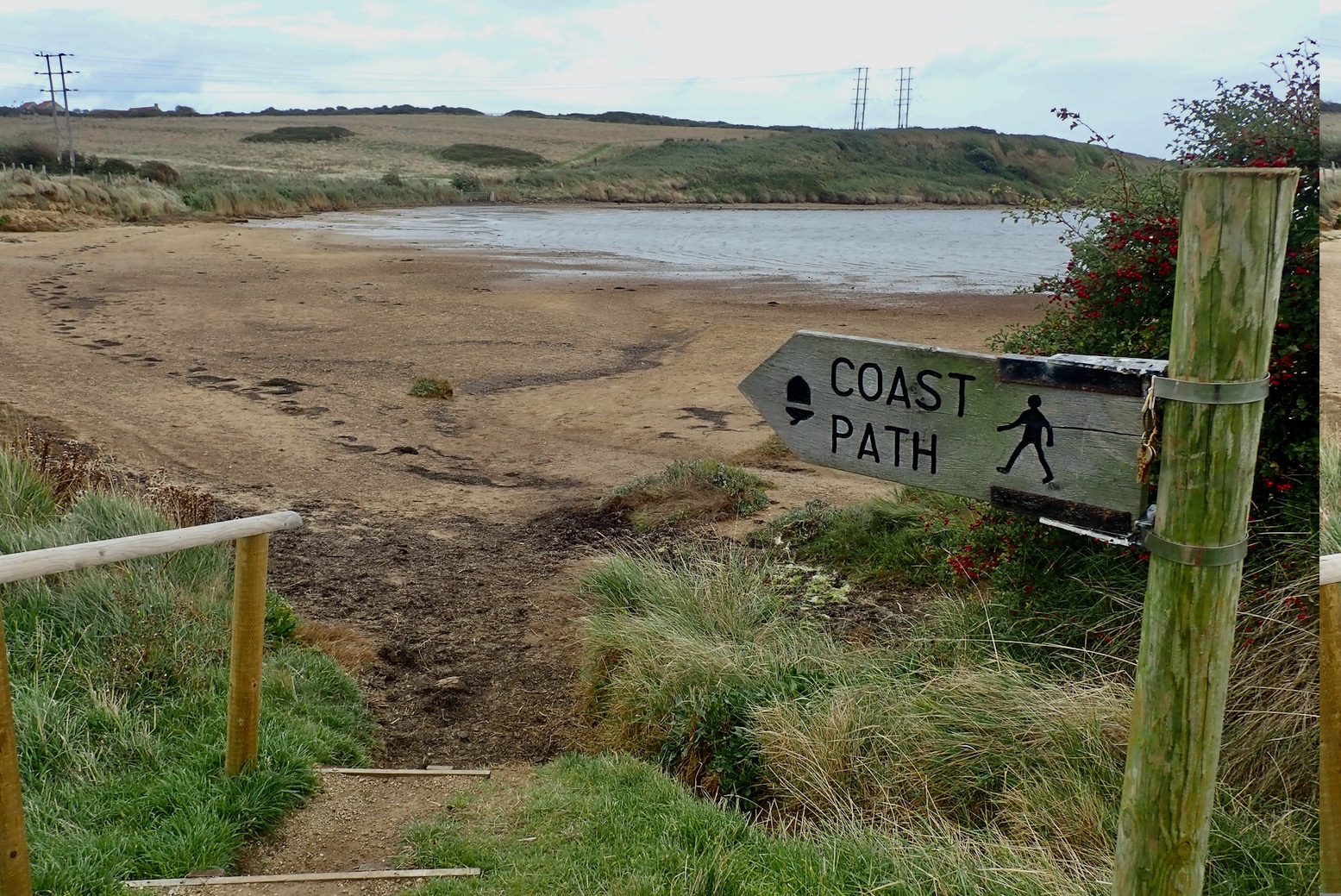

What about the matter of unravelling the tides so as not to get stranded on the cloying mudflats for 12.5 hours? The nearest datum is Portland Harbour into which the Fleet empties. I’d guess Portland + half an hour lag at Langton, but locals at the Ferry Bridge would known better.

Thinking it all over I realise I’ve fallen into the packrafters’ mentality of putting in to take out somewhere else, not the usual ‘there-and-back’ which heavy hardshells usually do. Asking online, access into the Fleet seems straightforward: put in at Ferry Bridge and paddle no further than Langton (8km) then paddle back without touching the sides. You’ve can’t say you’ve not been warned, so woe betide if you come a cropper in the mud flats, strangleweed, rip tides and all the rest.
Riding the tides may work, but you’re going to catch the wind one way, or more likely an all-day southwesterly crosswind, like we had. So this is one scenario where a wind prone packraft would be a bit too slow for enjoyment, given the other opportunities in the area.
 Inflatable Kayaks & Packrafts