

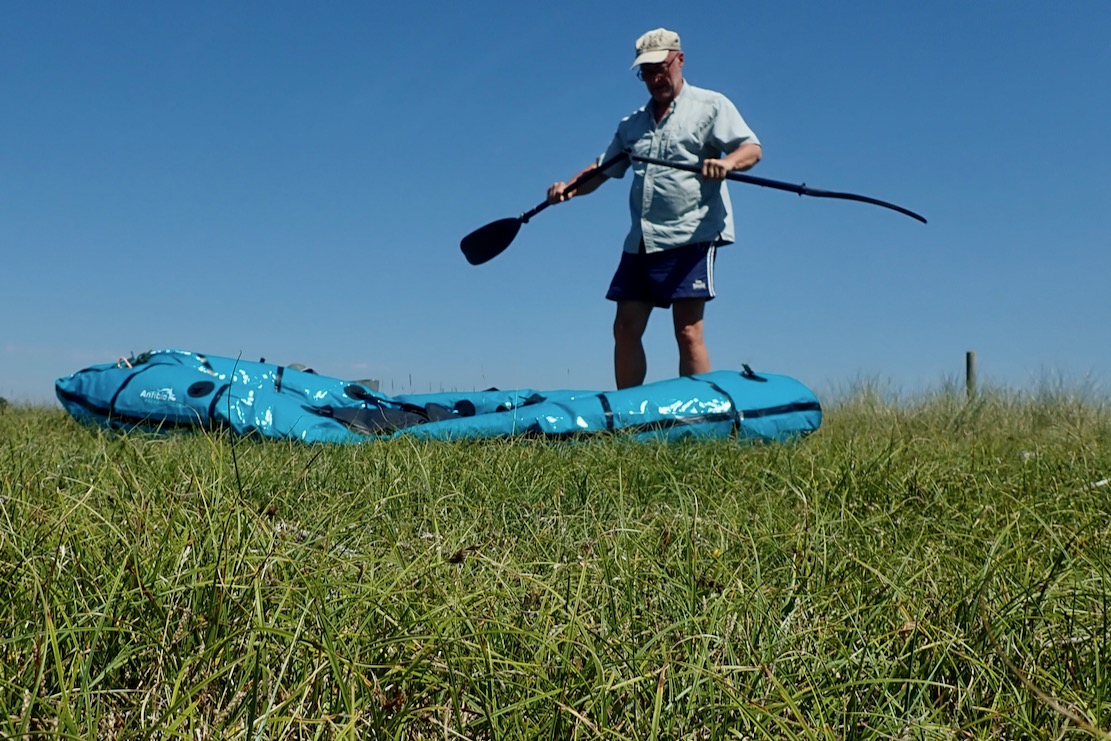
My 2.8-metre TXL+ (left) does it all for me these days, and I was just thinking that, for what I do (less hardcore, such as it was), I don’t miss my IKs at all.

What my TXL+ loses in sublime kayak glide, it gains right back in being able to be easily carried following a day paddle. Being wind-prone, venturing too far out to sea in any inflatable, IKs included, takes some nerve when alone.
Of course overnight trips including tough terrain, like our Knoydart paddle, will require a stiffer back or porters for these heavier, bulkier boats – or you plan for a sustainable paddling/walking ratio, ideally including sailing where possible (see video below).
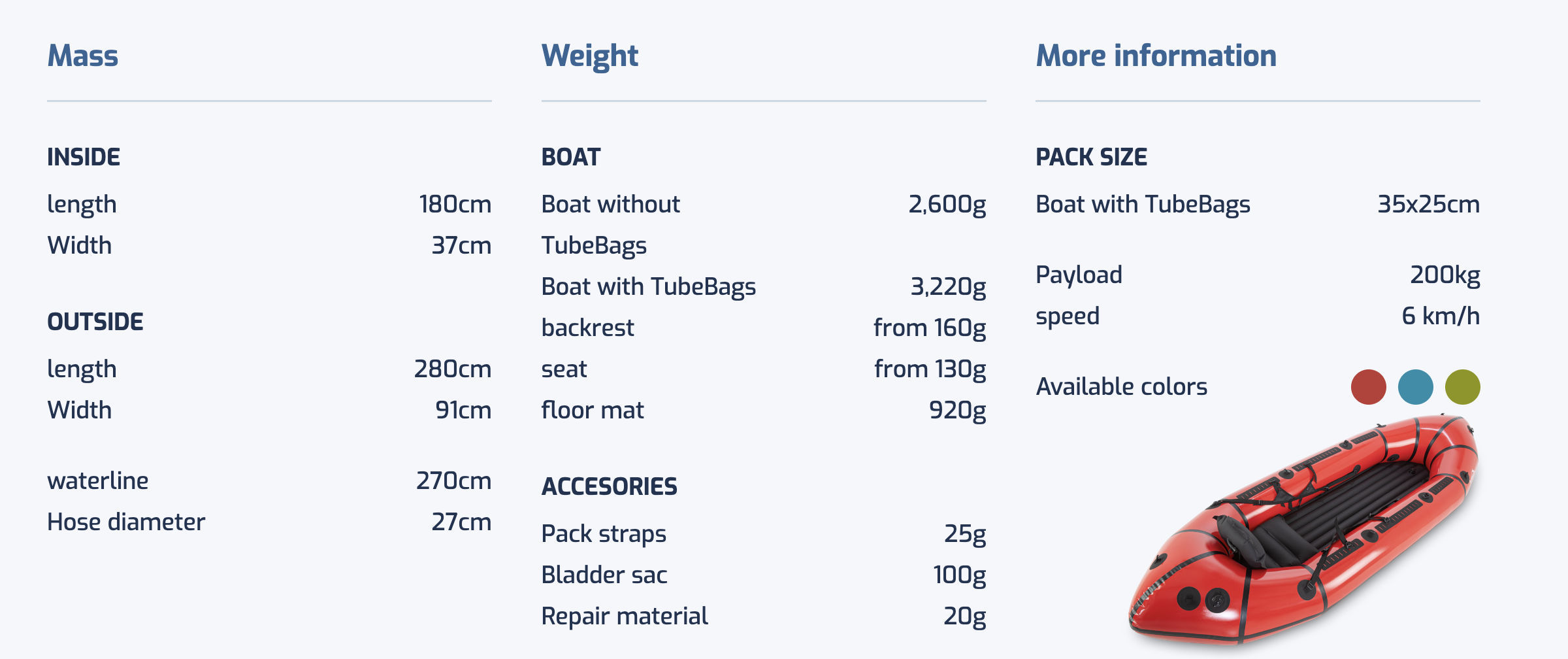
Long packrafts of around 2.8 metres offer more packing space and less annoying bow yawing, have a kayak-like, central solo paddling position with a level trim, but can fit a second paddler or a bike, as well as reach speeds up to 6kph. All for less than a kilo in mass. They are Pakayaks: the best of both worlds.
Two newish ‘packayaks’ from Anfibio caught my eye: the Sigma TXLB+ and the Rebel 3KL which has been out a few months. With masses of (optional) side storage, both are suited to multi-day, rough water expeditions. One bails, the other decks and both are ‘symmetrical’, ie: the bow and stern are identical, like a canoe and all current Anfibio boats apart from the Revos and Nano RTC. Some reviewers seem to think this symmetry contributes to faster speeds. A longer waterline certainly does, but identical bows and sterns merely simplify assembly and reduces costs – symmetry has nothing to do with speed (or Alpacka Raft have got it all terribly wrong!).
I’ve not tried either boat but as usual, that does not proscribe me from opinionating on pictures ransacked from the Anfibio website.

Sigma TXLB+ The Expeditionist
The single colour TXLB+ is just like my blue boat with optional thigh straps, floor matt, strap attachments and massive and secure TubeBag storage, but with the roll-up self-bailing drain hose we first saw on the 2022 Revo white water packraft. I never got to test that system properly, but the principle of flowing water sucking the swill out sounds plausible. As it is, you’ll be up dry on a floor and seat anyway, so it’ll take a lot of splashing to swamp the boat.
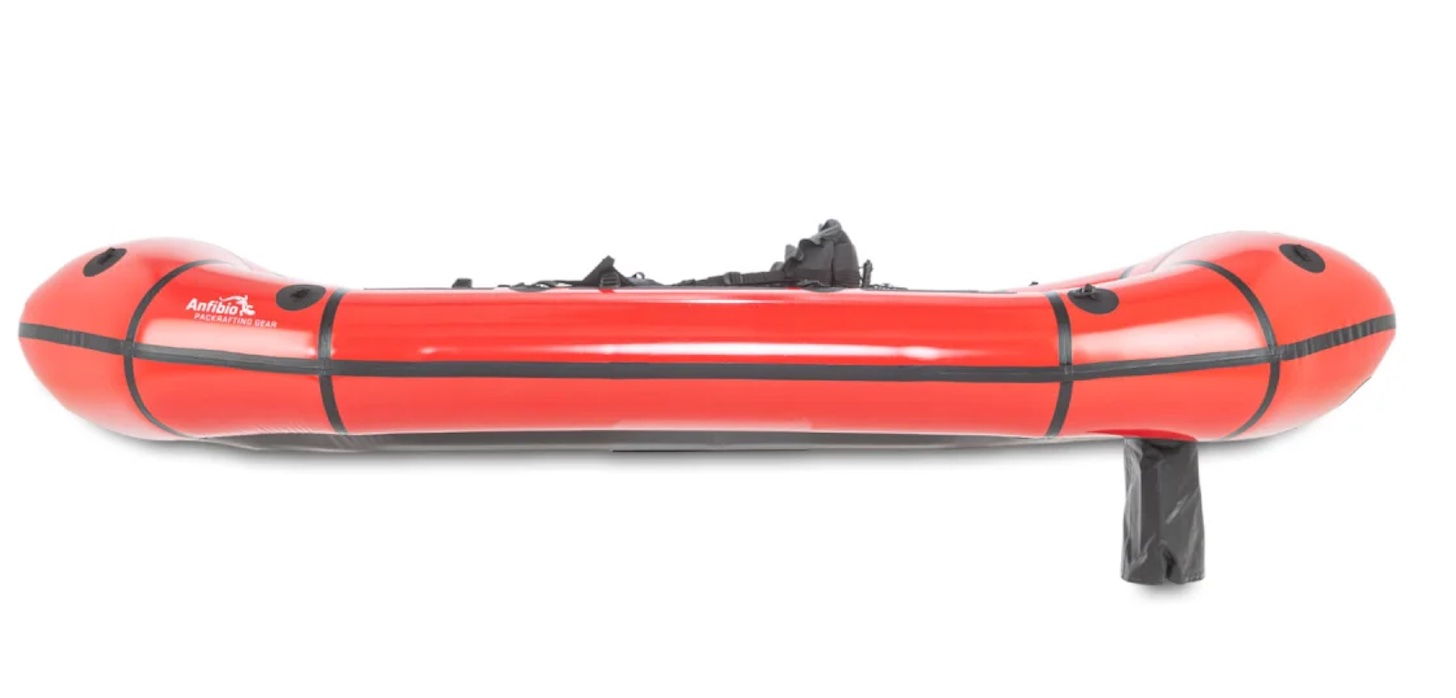

Is it needed? Not for what I do, but mileage famously varies from paddler to paddler. The hose can be rolled up and tucked out of the way (left) when not needed.
One thing that didn’t look right is the skeg back in the ‘old’ solo-packraft position (left) so as to be out of the way of the trailing hose. This placement works fine on normal, back-heavy packrafts with the paddler’s weight at the stern. But as I soon found with my first green TXL (see video below), it is less effective with centrally positioned padders because the boat floats level. And I imagine it might work even less well with the hose down.
I suppose you could say when using the self-bailing feature in white water, you won’t be using a skeg. And on flatwater you won’t be using the drain but could do with the skeg which will work OK. As for rough seas when you might want both – who would go out and do that?! One answer could be a bigger ‘sea skeg‘ option, like I’ve been saying for years. Or, on the TXLB+ simply remount the regular skeg in front of the drain.

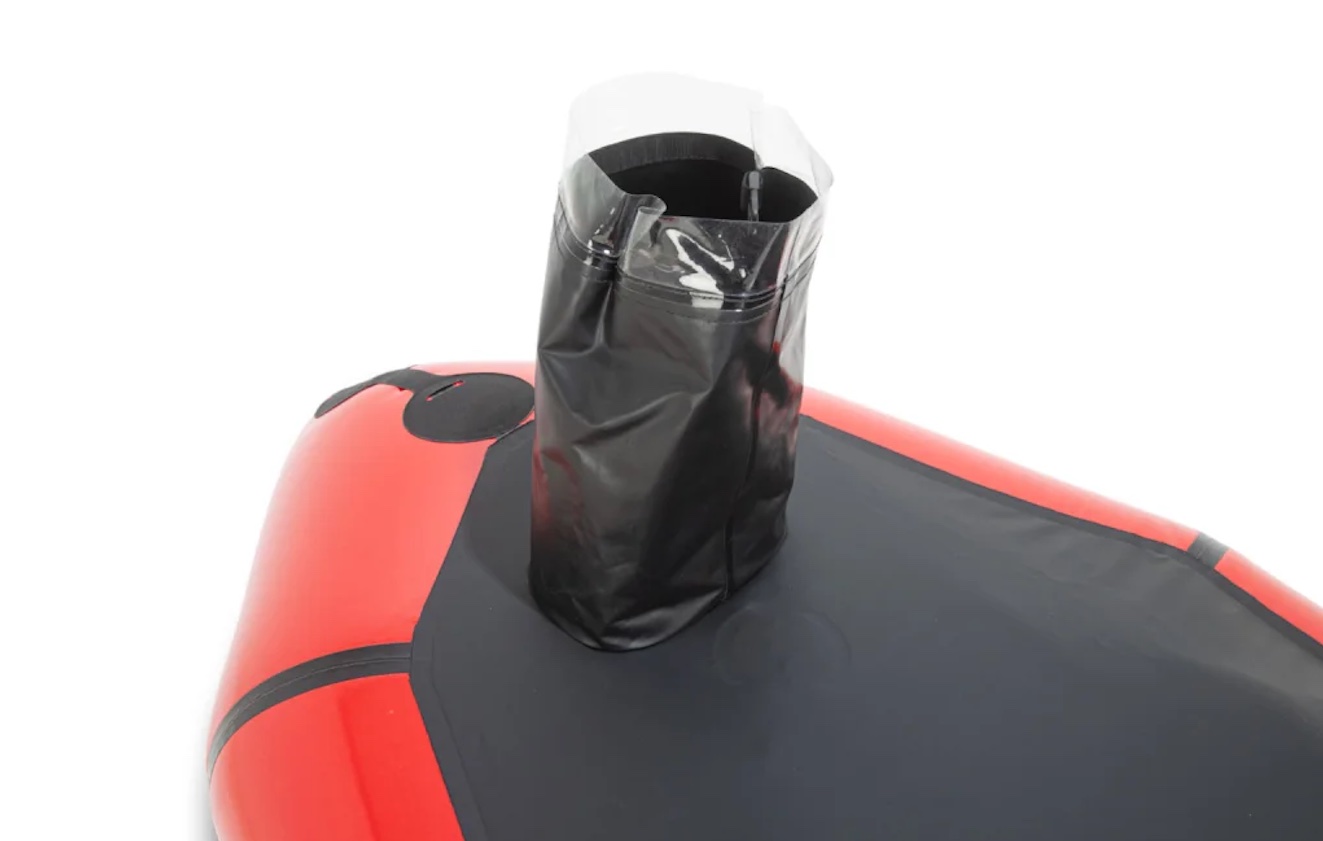
Rebel 3KL ‘The Longliner’
I’m not sure about the 3KL’s blue and green (“… should never be seen”) colour scheme. Bring back the delicious lemon and olive, like my old 2K. But the 2.72-m ‘Longliner’ is just 8cm less than a TXL and a viable decked longboat comparable with the zippy MRS Nomad S1. The deck is permanently fitted which means it’s solo only, but that’s what most do most of the time.

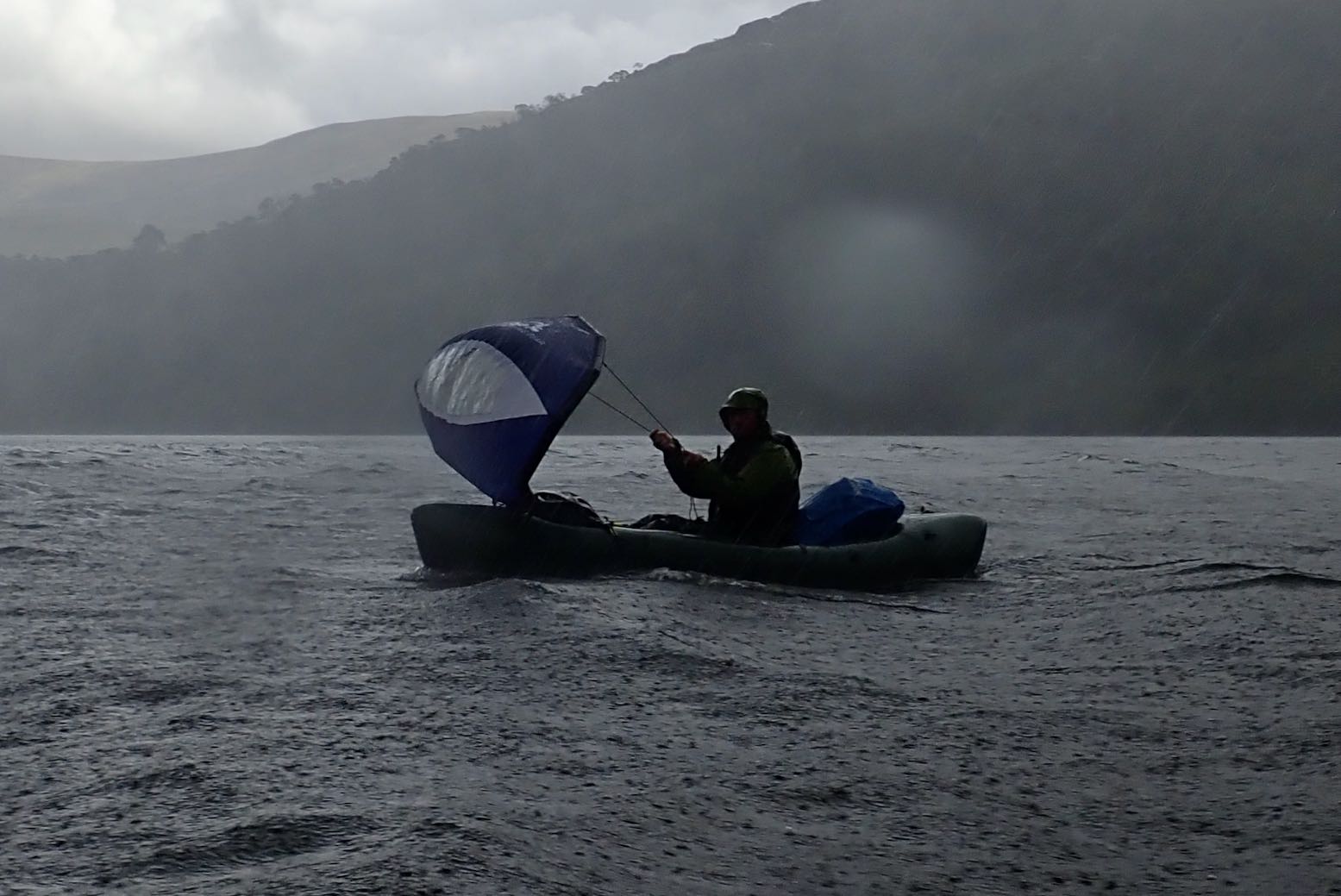
I was never that keen on my fragile decked packrafts from MRS, Alpacka or Anfibio – just another thing to damage, though I never did. I barely used them but one time rushing down a windy loch in pelting squalls, it sure kept me drier than matey in an undecked Nomad (left). He got so drenched and waterlogged, we had to stop early for him to tip out and wring himself out like a flannel.
You don’t have to zip up every time: the deck with integrated skirt rolls off to the sides, and a vital grab loop ejects you fast if you tip over. (Never happened to me in all my pack years).

I like very much that Anfibio are now using the so-called Performance BackBand – aka: an SoT foam backrest which I’ve been retro fitting to my packboats – IK or raft – for years (years, I tell you!). The lighter but wobbly inflatable versions which came with my TXLs got fed to the goats before I ever used them. Yes, you need inflation for supporting your weight on a seat base, but a backrest wants to be stiff and supportive, snugging into your lumbar curve while ideally, you press against a footrest or the front of the boat. Doing so really enhances boat control and connection.


TXLB+ or 3KL. Which would I choose?
Neither, thanks for asking ;-) My deckless, drainless TXL+ with self-fitted thigh straps and an SoT backrest covers all my needs. Just like IKs, I like that it’s dead easy to get in and out. And that video above is about as ‘out there’ as I ever like to get. Water coming over the sides was not an issue that day. Going straight was.
If it’s cold or rainy I’ll wear my drysuit and onesie or surf Netflix. And if it’s coming over the sides then I either badly misread the forecast or am engaged in some lovely southern French white water in the balmy summertime when pulling over to a bank to flip the boat dry is all part of the fun. I suppose I’d take the decked 3KL for cosy winter paddles. They just need to sort those mixed colours out. Alpacka used to have some great combos.
Still, it sure is great to have all these choices!
Anfibio Rebel 3KL Longliner
Anfibio Sigma TXLB+ Expeditionist
– both with optional Tubebags, imo the best way to carry heavy loads securely and reliably without compromising hull integrity.
 Inflatable Kayaks & Packrafts