Tag Archives: Anfibio Sigma TXL+

Packrafting Jurassic: Kimmeridge to Chapman’s Pool

Anfibio Sigma TXL+ main page
English South Coast Day Paddles
Kimmeridge Ledges with Zelgear Igla IK
The Kimmeridge Pliosaur
Packrafting the Jurassic Coast (video)
Packrafting Lulworth Cove to Kimmeridge
Dancing Ledge and Sea Caves

Action Stations and man the pumps. Conditions are finally benign for a paddle from Kimmeridge Bay to Chapman’s Pool – a distance of over three point six miles. It’s not exactly rowing the Pacific, but in a dumpy packraft you need to pick your moments when there are no take-outs from one end to the other, followed it’s a stiff, four-mile walk back.
A big spring tide was inbound for HW about 8pm and the wind was forecast at just 8mph SSW (onshore) and dropping by late afternoon. Plus it was sunny, too. Which was nice.

I packed a paddle in my pack and rode down to Kimmeridge Bay.
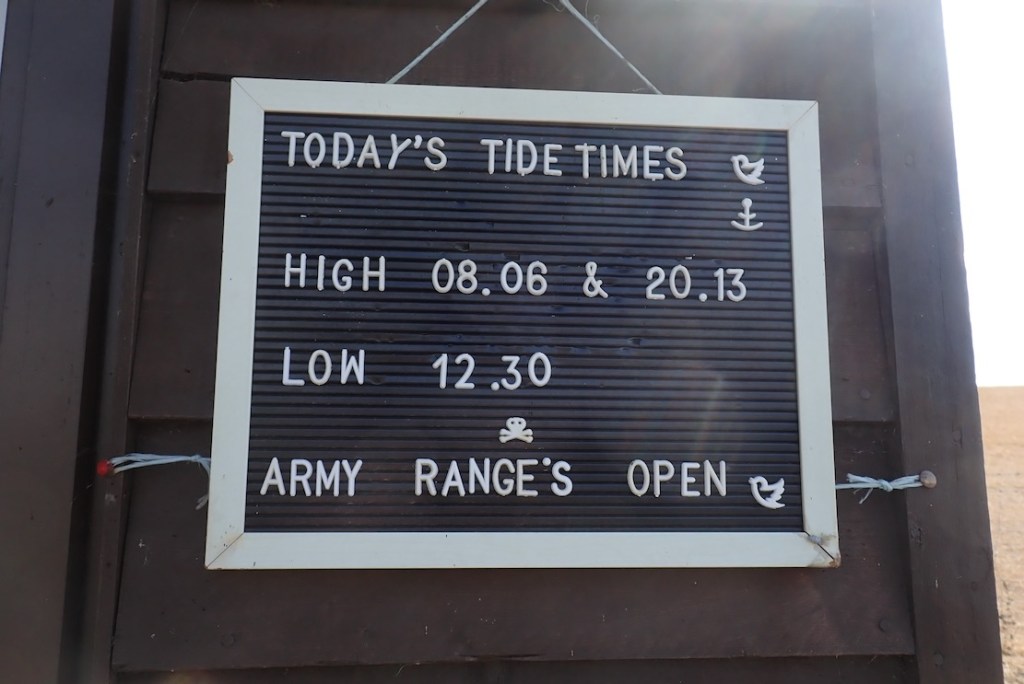
At Kimmeridge Bay’s massive car park field, bikes are only £1.20, but it’s a choka bank holiday weekend so I hope the lad at the pay shed was on a percentage today. I asked him about tides which have been doing my under-stimulated brain in. ‘Err, there’s a board over there’ said laddy. At last, the Kimmeridge Question was solved, I thought, admiring the first apostrophe, but sighing at the second. It turned out the board lazily repeated UKHO Mupe Bay/Lulworth Cove timings, about 5 miles west. You’d think that would be adequate for an estimate, but not necessarily.
I’m still baffled by the tides on Purbeck’s eastern Jurassic Coast. The problem is getting reliable times for Kimmeridge Bay or Chapman’s Pool, the most useful put-ins hereabouts, and timings matter the longer you’re on the water. The UKHO posts times for Mupe Bay and also Lulworth Cove which is less than a mile away. The times are identical. And then there’s nothing until Swanage, about 12 miles to the east as the black-tipped tern flies and a doable day’s paddle in a long boat. Such gaps in UKHO stations are fairly normal along the UK coast, and you’d think just estimating Mupe Bay ± ~30 mins will give a time for Kimmeridge. But around here the tidosphere is all warped. Above, a few days before neap tide, it looks like Swanage rises in synch with Mupe and then ‘holds on’ to HW for hours, before dumping five hours ‘late’.
And then I found this Insta post (above) from Sharon Lee in Brighton who makes tide times posters. But not for Kimmeridge because, as she observes: ‘Notice an arc of weirdness around Dorset? That’s an amphidromic point. Which basically means the tides around Dorset (particularly the Isles of Purbeck and Portland) are utterly mad.’ Amphidromic (or a tidal node) was a new one on me, but may explain the Mupe-Swanage Incongruity (MSI), as tidal philosophers have called it since Pytheas skimmed pebbles with Posidonius. You’ll find many tide times websites supposedly offering times for non-UKHO locations, but many just list the nearest UKHO location with no real-world adjustment. As unless I am over-thinking it, Mupe Bay to Swanage needs quite a bit of Amphidromic adjustment.
And while I have your attention, what is the point of UKHO listing identical times for Lulworth Cove and Mupe Bay, just a mile apart? Is it because one is civilian-touristy and the other military most days of the year? So what? Yes, there are no less than four UKHO tidal locations in western Poole Harbour (+ Wareham) as closely bunched, but it’s a busy area that drains out to mud flats at low water and the timings are all different.
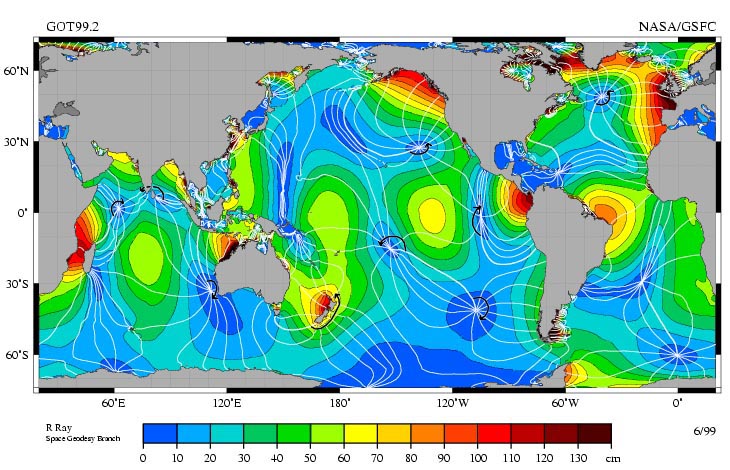
Mysterious tidal nodes appear all over the world. They are the Black Holes of the Oceans; go there and nothing happens. Spooky. Source

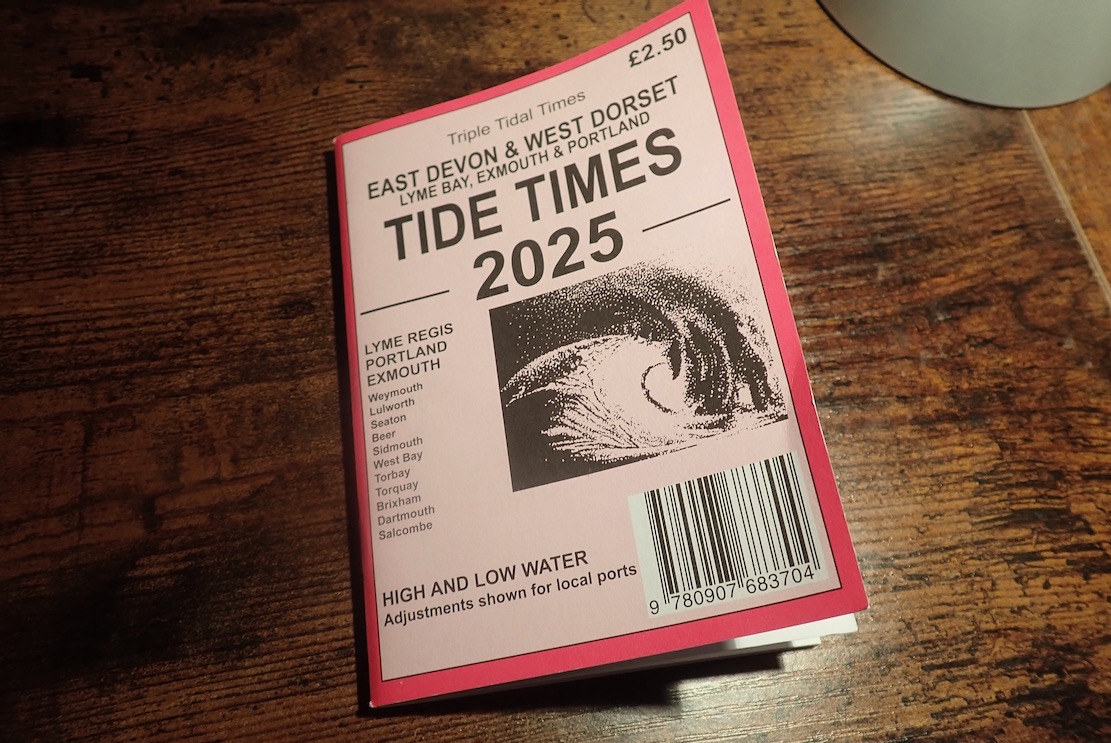
Then I saw in Kimmeridge’s Etches Fossil Museum shop a locally published tide tables booklet. ‘… West Dorset’ said the cover, but ‘Covers the coast from Swanage, Dorset through to Salcombe, East Devon‘ claimed the shop’s online blurb. The publisher’s website said as much (… the whole of the Dorset and South Devon coast…). Not in the copy I bought. The tables give every day of the published year, but only for Exmouth, Lyme and Portland. There’s nothing east of Portland in the booklet, unless you include a spot check on Portsmouth or Dover. No mention of Swanage, Lulworth or other local adjustments for Purbeck. You’d think I’d not be the first to notice this, I’d have saved my money for two more moto parkings were it not for chappy behind the shop counter advising: add an hour to Portland for BST, then 15-25 minutes for Kimmeridge. It’s Portland’s sticky out Bill that puts a spanner in Purbeck’s tidal flow, he explained. The formula was not Mupe Bay ± 30 minutes, as I’d guesstimated, but Portland + 15-25. I coughed up my £2.50 as an offering for this handy tip – I’ll appreciate it and the booklet when AI implodes the internet.
But hold your paddles, there’s more! Also on the Etches website I found a link to Willy Weather with a page for Kimmeridge Bay that wasn’t just a paste from Mupe Bay, but believably adjusted times. I compared KB times many months in the future using the Portland booklet formula and Willy, and found them to be within 3-13 minutes of each other. Assuming both are broadly correct, that will do me. Willy don’t list Chapman’s Pool but do have adjacent Egmont Point which seems to be KB + 2 minutes.
I’d heard of Willy Weather, but it wasn’t in my tidal bookmarks. It is now.
Still reading? At the jetty by the Wild Seas Centre a pair of well prepared sea anglers were setting out in their double outrigger SoTs. Talking of gear, this is a proper sea paddle so I’m in my proper Kokatat Leviathan pfd, but it feels like wearing a folded tractor inner tube full of ice cream. Leviathan – it’s in the name. At least I won’t be too gear-shamed when the RNLI fish me out by my ear and shake me dry.
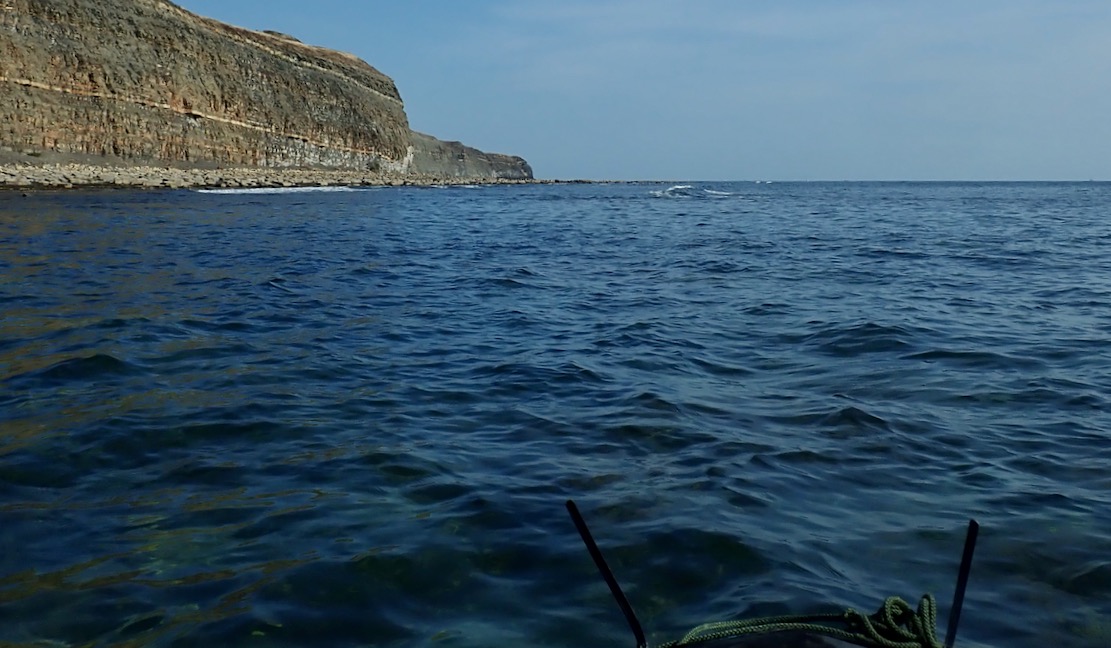
I head out of the Bay and turn east. Oh MG, breaking offshore waves already! But I needn’t have worried today. There were a few more later on, but nothing the TXL+ couldn’t ride out. I actually think tackling this stage with a rising tide flooding the Ledges is the way to do it (in either direction), as any waves will diminish as the ledges submerge – won’t they? It’s more down to the wind of which there was little today, but as you paddle along you still want to glance offshore once in a while in case you’ve gotten on the inside of a building wave which can pop up out anytime, any place, any where. This is why I stayed quite far out. Not normally what I like to do alone in a packraft.
The Ledges from above.
And on a windy day west of Kimmeridge. Frothier than a Costa cappuccino with sprinkle.
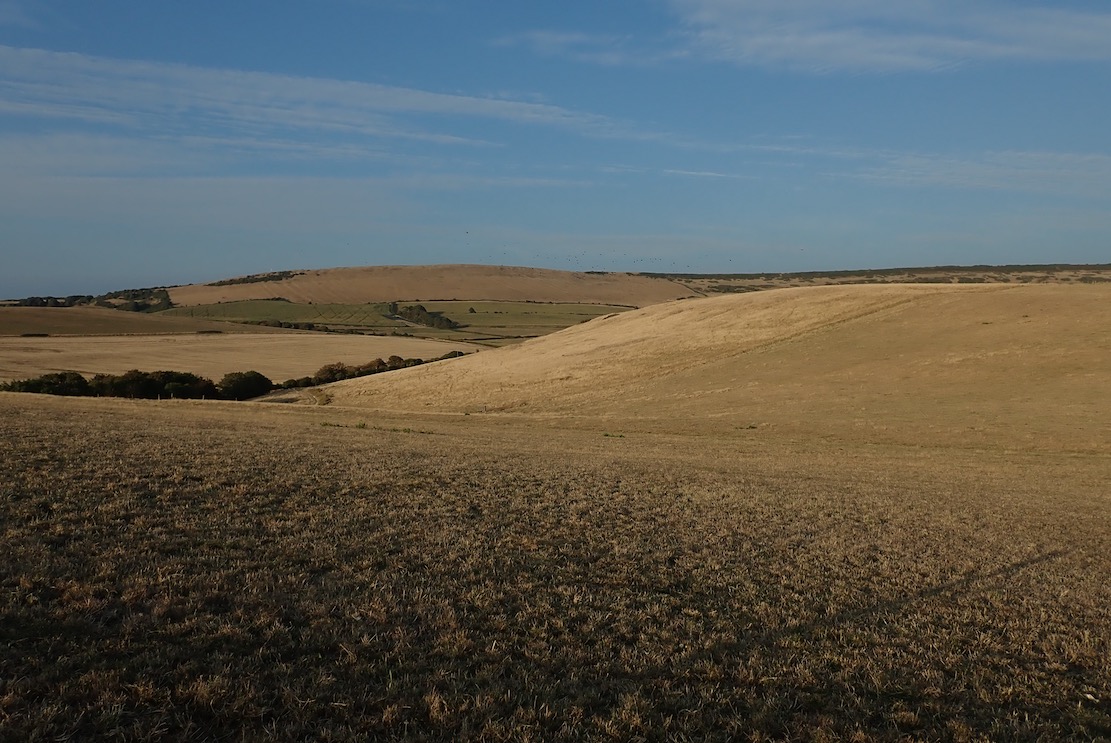
The waters are clear and green. At many points I could have hopped out and waded along.
In fact, I did for a bit.
It took me back to Shark Bay, 2011. Jeff and Sharon and me in my Gumotex Sunny wading north to a unearth a cache near Peron Point after battling a stiff headwind all morning. What a great paddle adventure that was. Easily doable in a packraft too, with added dolphins, dugongs, rays and yes, sharks.
I’m on the look out for ‘Iron Skeg Beach’ I found with the Igla IK a couple of years back. Above looks similar but is not it. In the Igla I turned back at ISB to Kimmeridge as paddling on to Chapman’s would’ve meant paddling back. First time out here and with a head full of Ledge Lore, I didn’t want to get caught out as tides and winds turned, and hauling the 17-kilo boat back along the coast path would have been too much. As I was about to find out.
There is the rusty triangular ‘skeg’ (also below) sticking up. This is actually called Clavell’s Hard and studying Ian West’s page for this area, I think the object (below) may have been something to do with oil shale mining right here in the 1890. There’s a semi-naked castaway looking for treasure. I hope he knows how to get back.
The strange cast iron object that looked like a ship’s skeg – from the SS Treveal, wrecked at nearby Egmont Point in 1920? It’s more likely a piece mining gear, a winch stand perhaps.
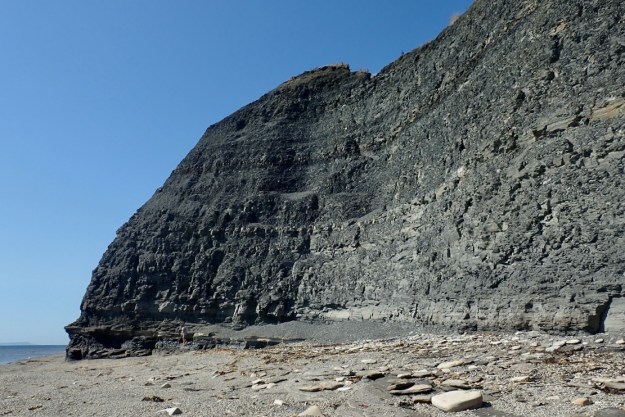
The soft, shaly grey cliffs, rich with ancient marine remnants.
Four colourful kayakers close to shore, like I should be. There’s more to see there.
I pass what could be Punta Pliosaurus.
Two days later we came back for a closer look.

I see sailboat masts ahead behind big rocks and am a bit disorientated. Chapman’s is tucked in on the left somewhere? I check the GPS and am nearly there, getting ashore 80 minutes out of KB or 4.5kph average with a bit of dawdling, and quite a lot at 6kph, according to the Garmin. People want to know this stuff!.
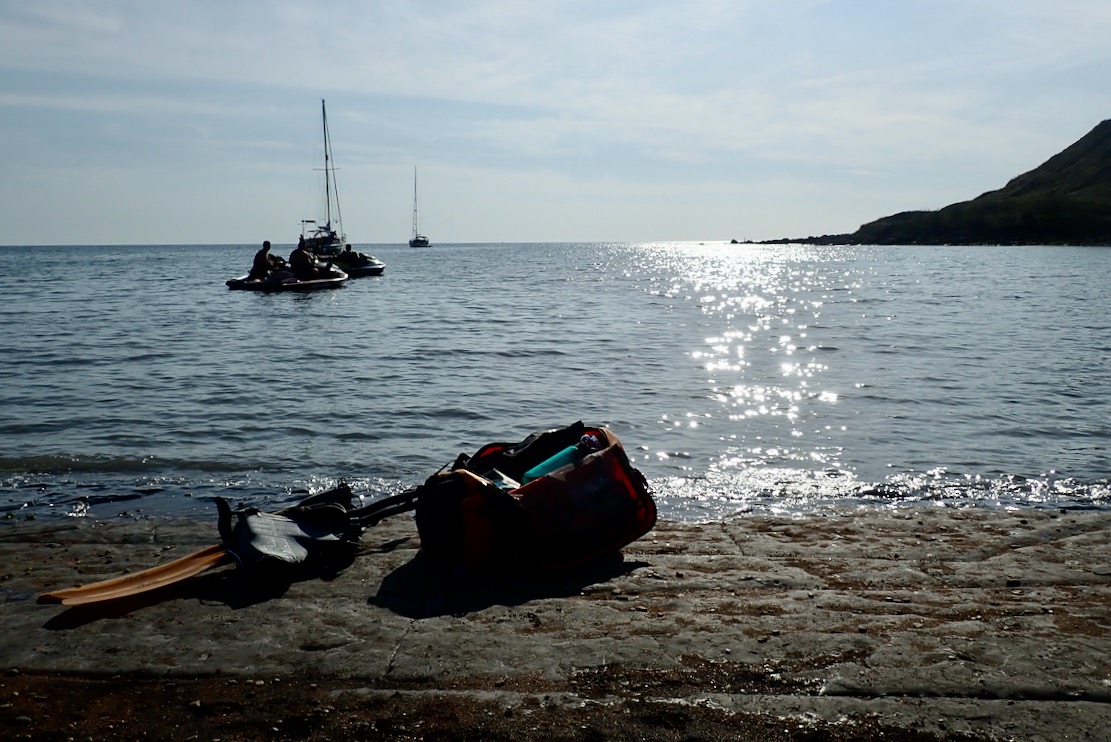
Along with some moored yachts and beach bathers is a trio of menacing jetskiers playing their satanic music. But this is Purbeck so it’s not blaring, and at least they weren’t tearing up the Pool like houns en tout.
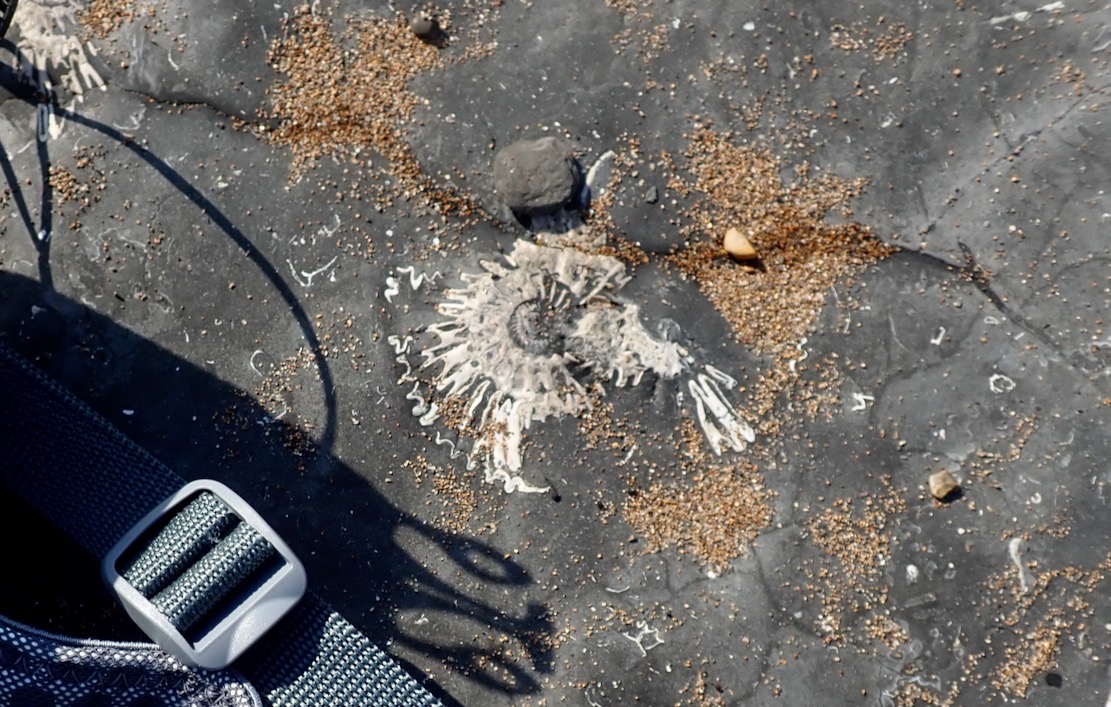
At Chapman’s there are ammonite fossils everywhere you step.
Even getting off the beach by the waterfall is a loose scramble, especially backpacking a holdall. As I leave, I hear the jets gun off to Kimmeridge or Swanage. I presume that’s what they did as you can’t get a trailer down here. With a packraft you can go anywhere you can walk.
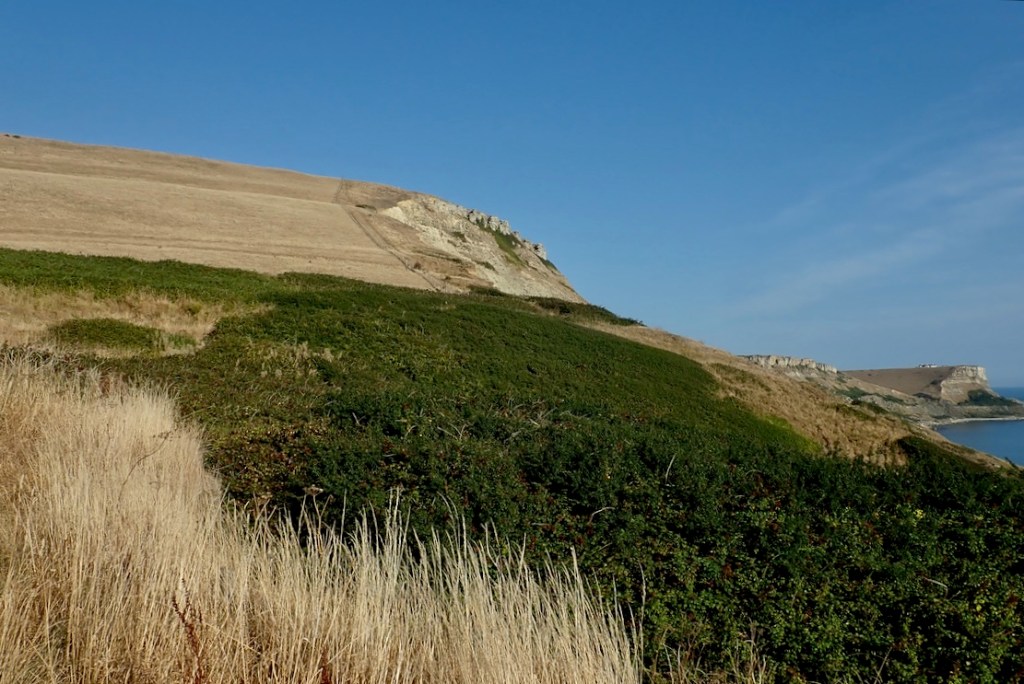
Up the steep, overgrown gully and across the parched field for the 500-foot climb up to Houns-tout hill – all in less than a mile from the shore. My pulse hits the rev limiter. What does Houns-tout even mean?
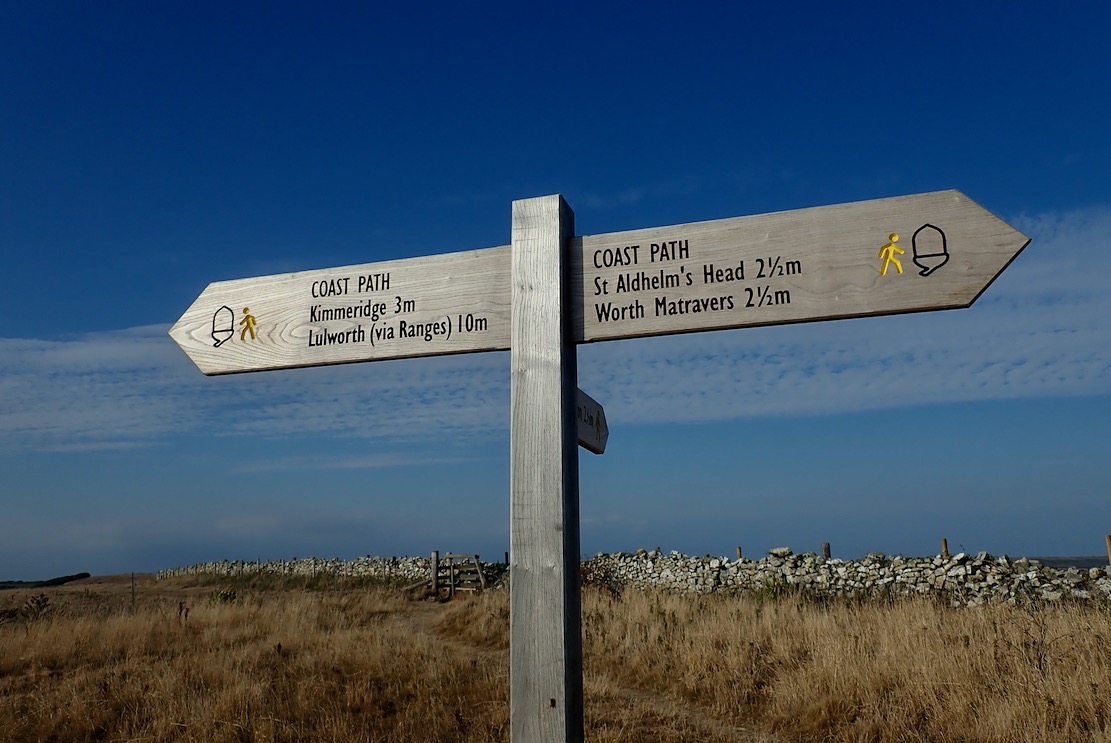
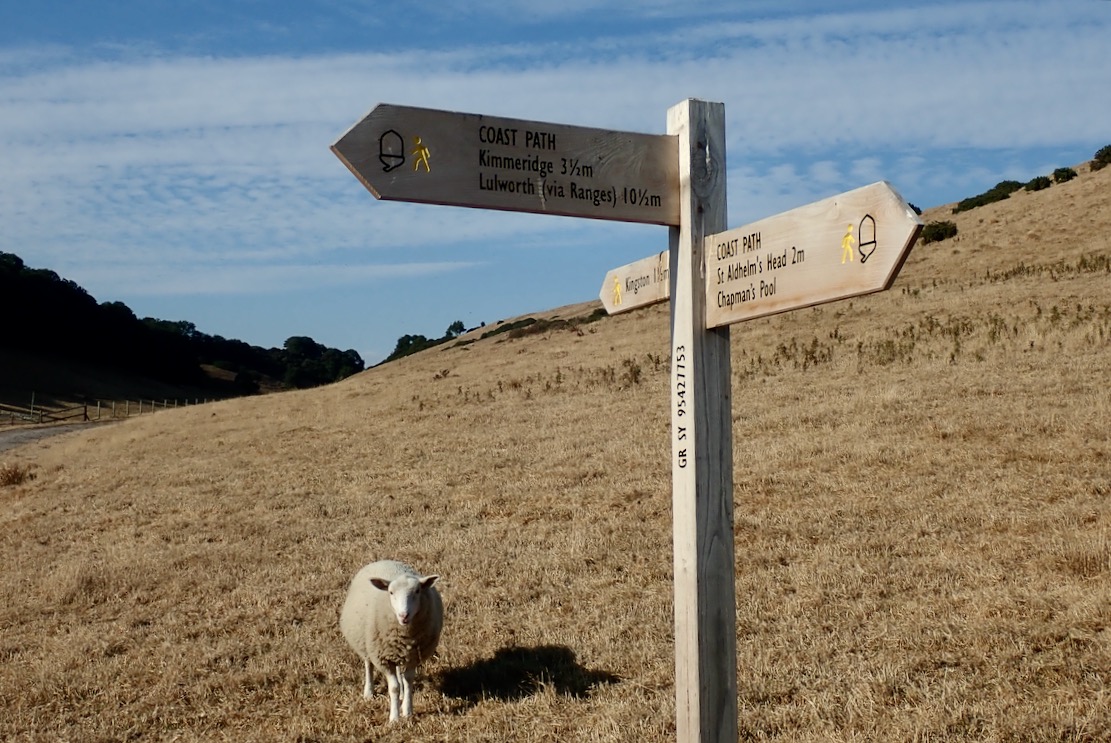
Kimmeridge 3 miles. In these shoes? No way, Jose.
Tranquil Chapman’s and St Alban’s Head from Houns-tout summit. And actually my Teva Omniums are not the problem; it’s the wobbly, 8-kilo holdall hanging from my shoulders. But on the way back I have a brilliant idea. More here.
The steep decent from Le Tout gave the underworked knees what for. I could do with my packstaff. I sold the 4-part Vertex paddle which it fitted. I need to convert my Anfibio Wave 4P but it’ll require some whittling.
Then back home I dug out an old, 55/170cm telescopic monopod (£18 on amazon Basics). It’s more gear (370g) and may slip under pressure, but zero bodging required and will work for long-arm selfies.
I witness a landslide near Punta Plio. This country is falling apart! I should get down there houns tout suite and see what fossil treasures came down with the rubble. ‘Get me Professor Etches, I found the tail. That pliosaur is longer than you think!’
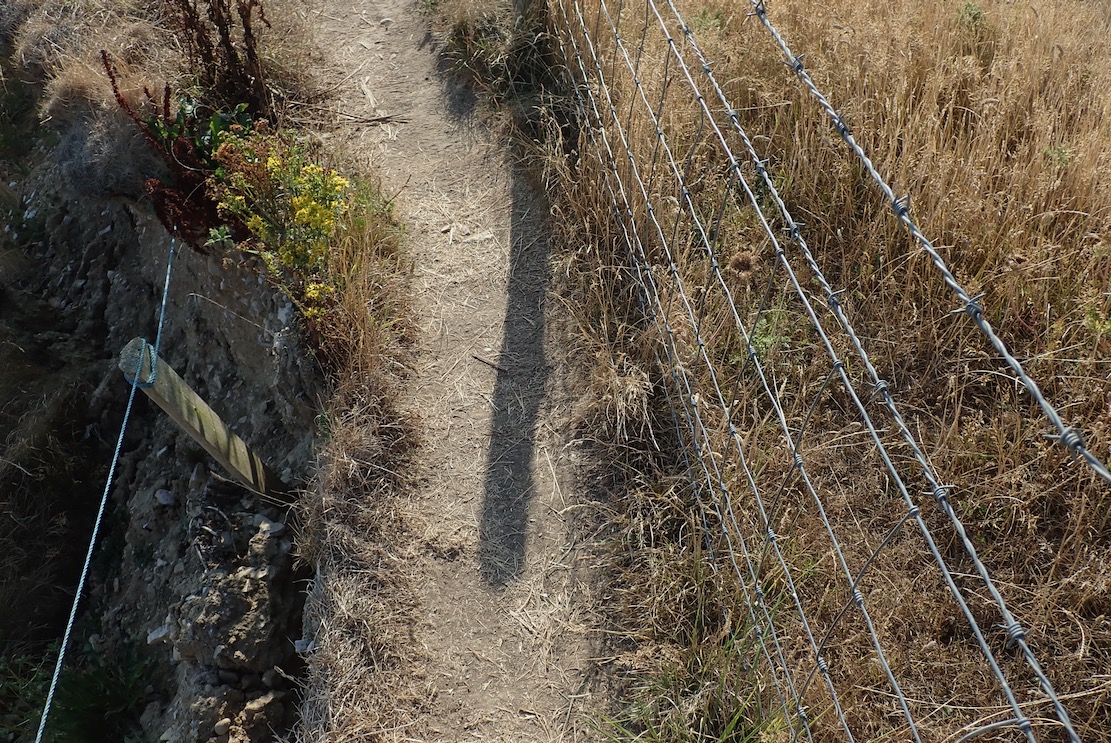
In places the path is very narrow: barbed wire right to spike my raft, big drop left to spike everything else. The first half from Chapmans is tricky in places. Don’t be part of the next landslide.
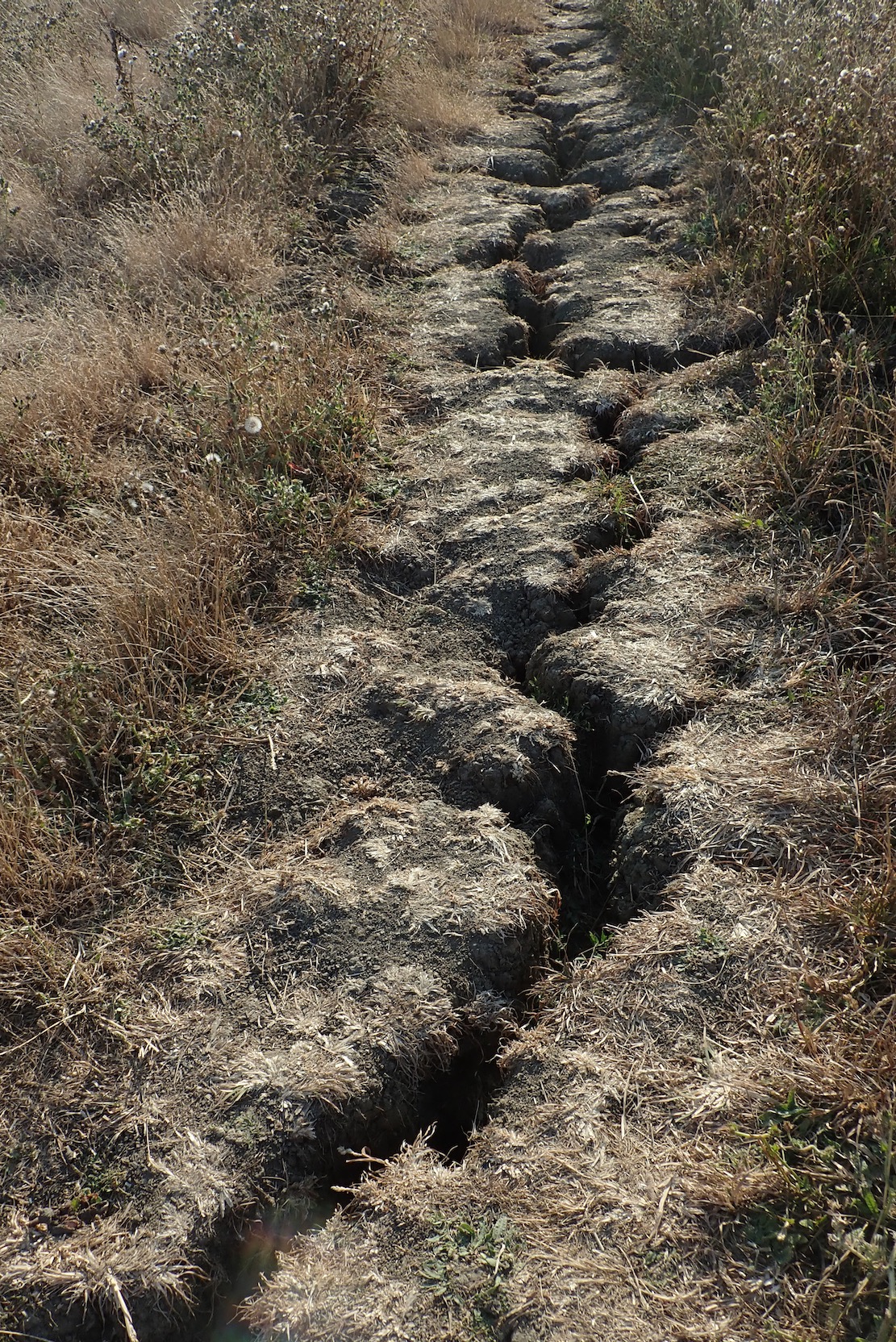
The SW Coast Path is cracking up. Must be the drought. Come the next deluge it could all come apart and slide into the sea, a few feet to the left.
All around as parched as southern Spain.
At one point a cheerful passing walker observes
Ooh, paddles. What’s in the bag?’
A boat‘, I reply.
Oooh, luvlay juvlay!’ she says
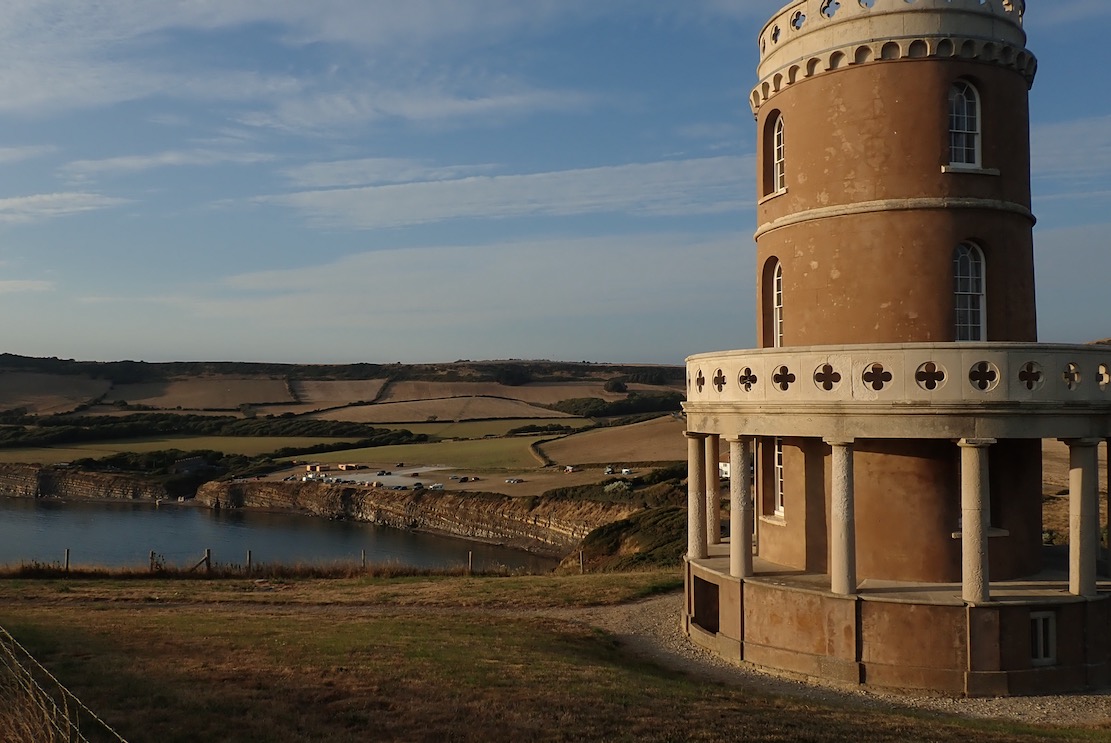
At last, the rotund edifice of Clavell Tower just as the battery warning light starts flashing and the legs wobble. I hobble down the steps like Steptoe with a hangover, passing pouting Instagramers capitalising on the golden hour.
I’m a sweaty, achey mess but it’s been a lovely summer evening’s walk up and down 340 metres along a tiny part of the South West Coast Path. They say the total elevation gain on the entire 630-mile trail from Minehead to Poole is a staggering 115,000 feet (over 35,000 meters). That’s like climbing Everest from sea level four times. And yet hundreds manage it every year, signing off with thighs like telegraph poles. They’ll see many amazing things, like Kimmeridge Bay an hour before spring HW: not a foot of a beach to spare.
The ride home via a refreshing ford cools me off.
There you have it: KB to Chapman’s. A lot easier to paddle than to walk.
That’s another stage of Weymouth to Poole ticked off, leaving the trickiest 8 miles for last. First, Chapman’s east around St Alban’s Head 4 miles to Dancing Ledge. Then about the same distance from there to Swanage, around Durlston Head, another tidal pinch point and with no take-outs. In a sea kayak you’d swan through in one go, slicing through whatever the tides bring. But you can’t pop it in your pack and bus home. Alone in the TXL I’d pick the neapest of neaps and lightest of winds – and still break it into two manageable stages. Summer is coming to and end. Maybe soon or maybe next year.
Taking the Piddle: Wareham Two Rivers Loop

TXL main page

Wareham – between two rivers
Frome Safari 2005

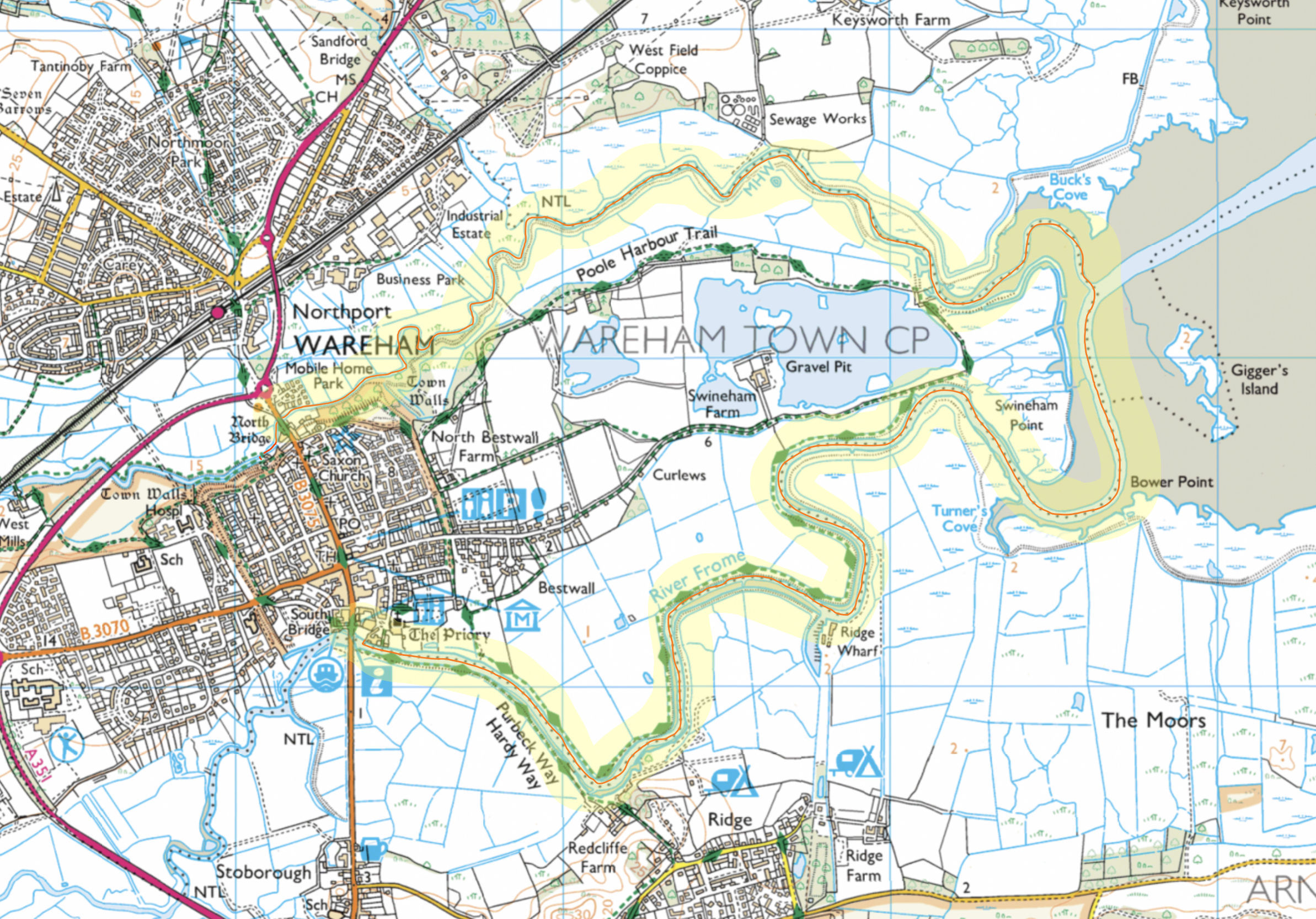
You do one paddle in two years then do two in a row. Honestly, you could not make this up! Take the Saxon walled town of Wareham – wrested back from the beardy Viking hordes by King Alfred in 875. It sits snuggly between the tidal reach of two rivers: the Frome to the south, and the smaller Piddle (aka: Trent) on the northern edge.
East of Wareham there’s a Two Rivers Walk which more or less replicates this paddle: down one river and up the other. I’ve paddled up and down the Frome loads of times. In fact 20 years ago last week I wobbled along the Frome in my very first IK – an early Gumotex Safari (left) that was tippier than a hog on ice.

The Piddle flows below the northern remnants of the old Saxon walls, and I’d long assumed it was clogged, weir-ed, patrolled by angling militias or otherwise inaccessible to the recreational paddleur. Not so, said our paddle-boarding builder who ID’d a put-in near the pre-Norman church of St Martin’s on the Wall, the oldest in Dorset. I recall checking it out in the 1990s while updating a UK guidebook, looking for the tomb-like effigy of T.E.Lawrence (left) who was died on his motorbike up the road at Bovington.

We walked down a private drive/footpath to North Mill (above; a self-catering) and put in by the brick bridge (left). It felt like their front garden, so next time I’d cross the bridge through the gate and put in somewhere on the north bank.
It’s a brambly, 3-foot drop either way into the swift but foot-deep Piddle. Piddle is of course a Naughty Word, so I should not bandy it about, willy-nilly, but in the ancient Saxon dialect of Dorse, it means a small stream. Along its upper course, several west Dorset villages: Tolpuddle, Affpuddle, Piddlehinton Puddletown, Mein’dapuddle and Piddletrenthide, take their names from it. (Test: one of those names is made up).

We left about 4 hours before HW at Wareham so we’d be against the tide (and a SE wind) as we neared Poole Harbour, but later have both at our backs as we heaved wearily up the Frome back into town.

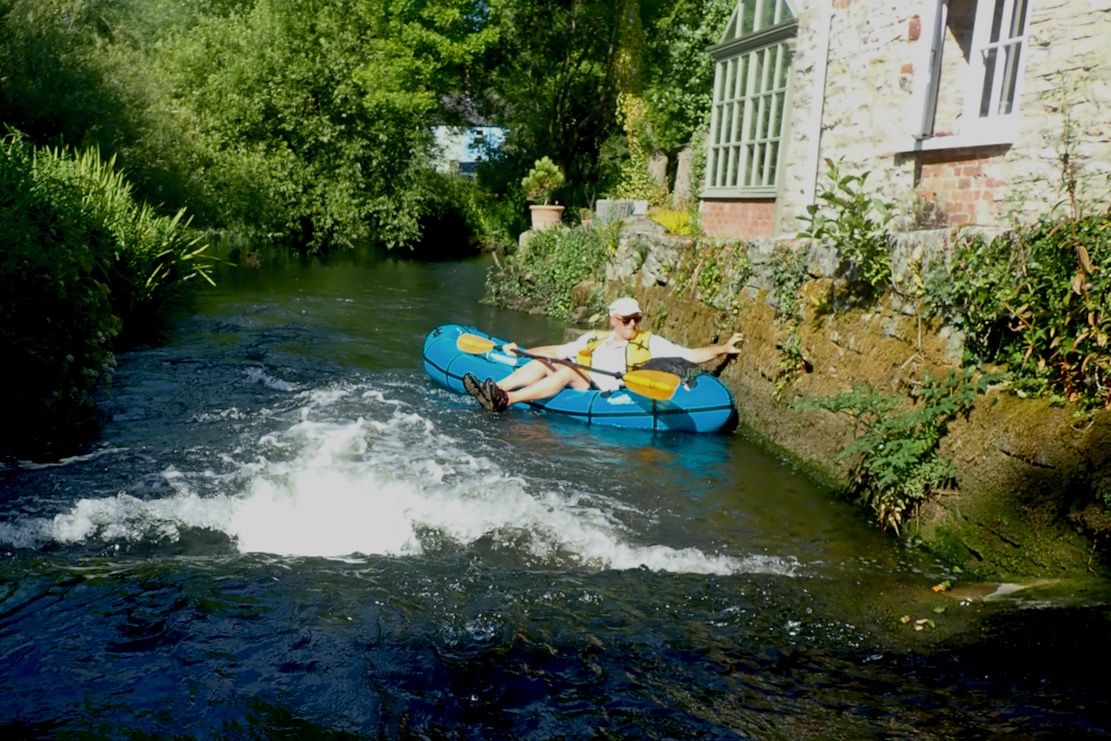
Below the bridge the old mill weir was easy to walk down (to spare the skeg). It’s not always so; sometimes the water meadows here get inundated. I bundled in and held on while the Mrs caught up. Once in the boat we felt like kids wearing oversized trench coats. I’d forgotten that when not using the Multimat floor (which makes less space inside when two-up) you inflate the seat bases right up. That done, we navigated down an overgrown channel, dodging overhanging branches and other rampaging midsummer verdure.

Soon we passed under Wareham North Bridge and its famous 18th-century sign strongly discouraging bridge vandals with a life sentence to Botany Bay. 

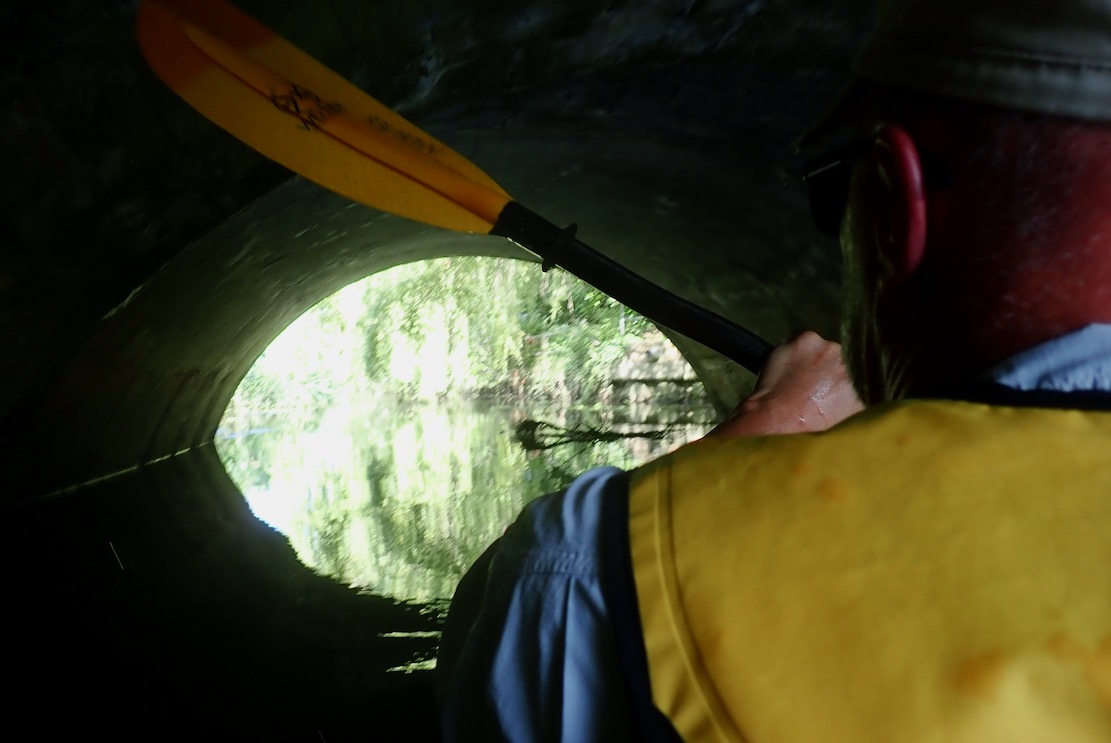
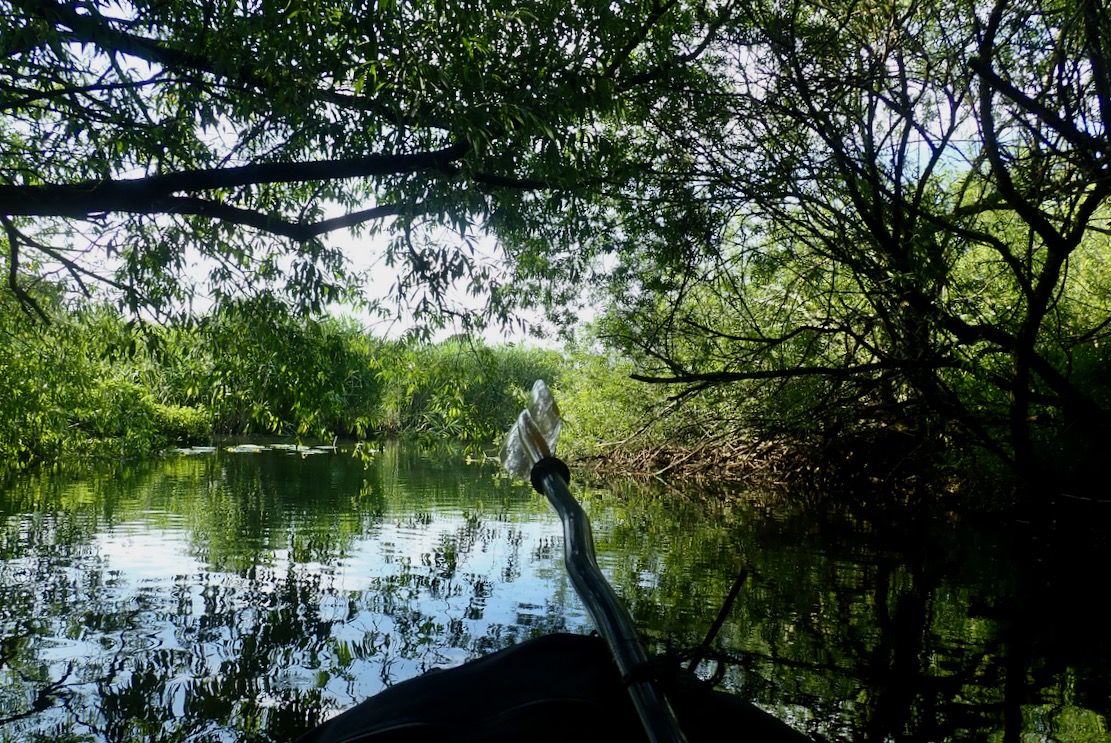
We paddled through a hidden world of drooping willows and silent lilies. At times it all closed right in and we were pushing and pulling through the dense overgrowth and branches, while getting pelted by dropping insects.

The detritus of bawdy summer parties.

Gradually the Piddle opened out. Somewhere around here we reached the tidal reach and entered a dreary, reed-lined corridor. The pace slowed down as tide and wind pushed against us.

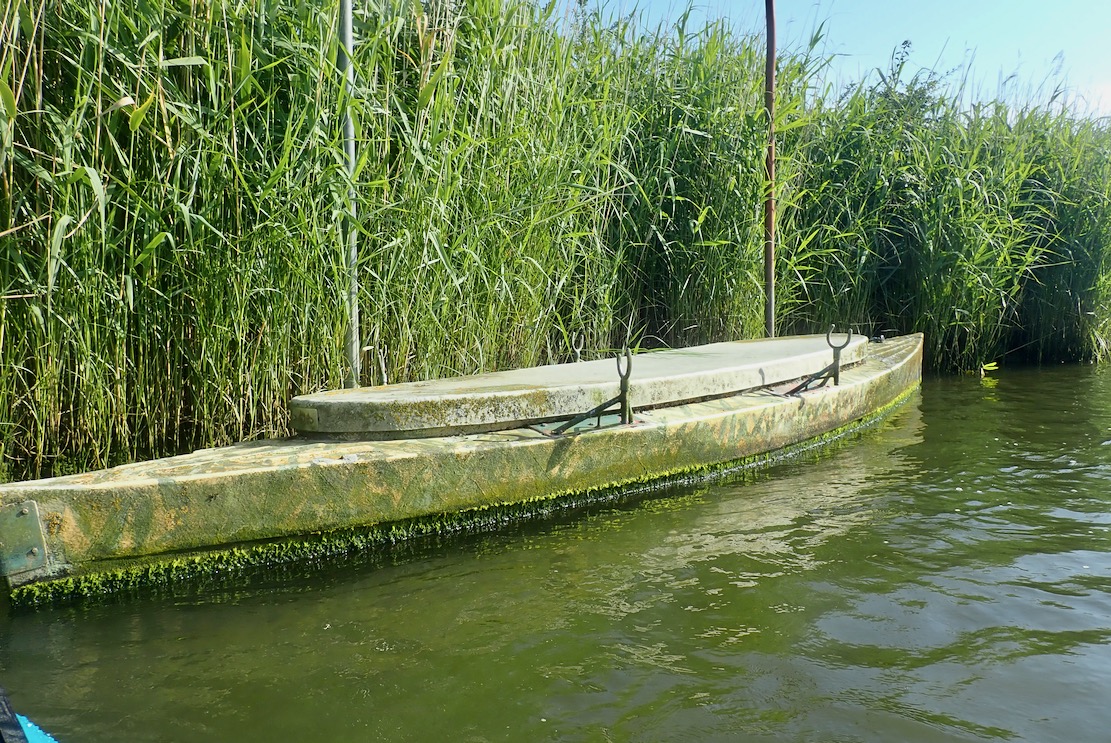
Near Poole harbour a few of these old rowing canoes caught my eye. They looked like something left over from D-Day training. Or maybe just long unused fishing club water craft. Anyone know more? Waterfowl punts I hear from the back.

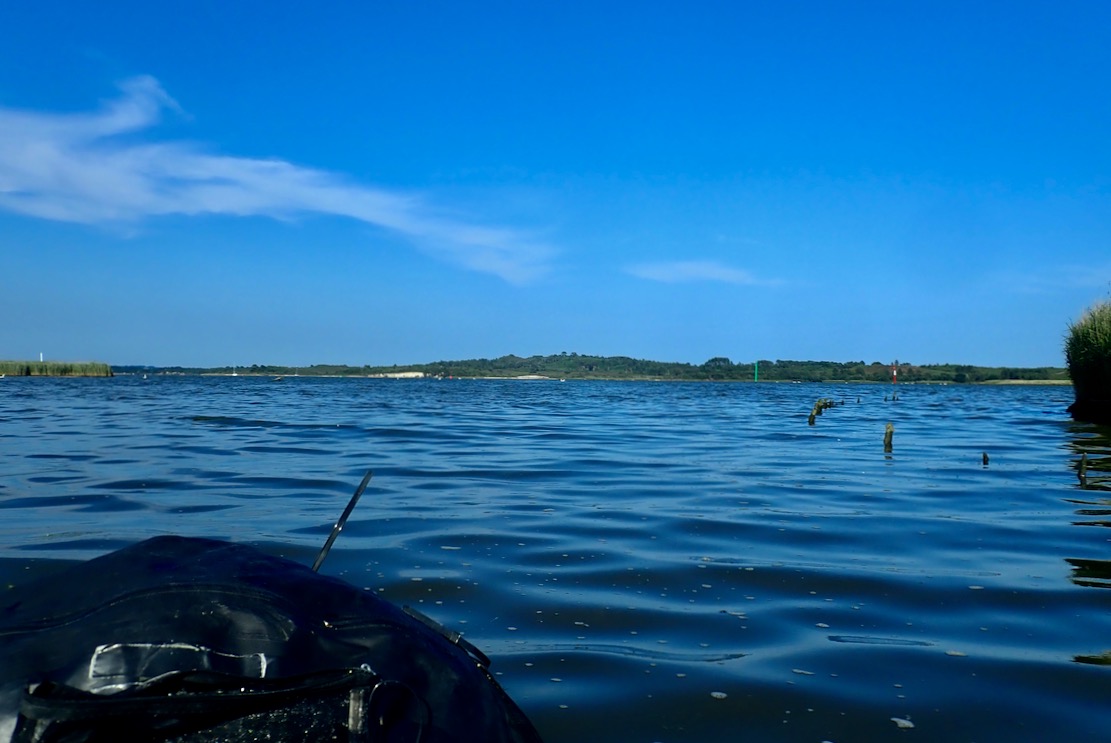
Out in Poole Harbour the water was less than a foot deep so we aimed for the red and green deep channel markers leading south to the mouth of Frome. Up ahead, the Arne peninsula. We turned into the Frome and the long hack back inland began. Even with a backtide, the Frome meanders to all corners of the compass so at some points you’re into the wind. Thick reeds to either side make you wonder how you’d get ashore if the call to abandon ship was announced.

A nice red boat – a sloop perhaps?

Paddling onwards, energy levels were also beginning to sloop, but we finally pulled in at Wareham Quay where early evening revellers were feeding the ducks. Originally bequeathed to the town by Alfred the Great following his expulsion of the Norsemen, a Purbeck legend has it that should the ducks ever leave Wareham Quay the kingdom will fall.
It was fun to try something new, but we’d not rush back to do the Wareham Two Rivers Loop.

Down the Piddle, into Poole Harbour and up the Frome to Wareham Quay. 8.5km and about 3 hours

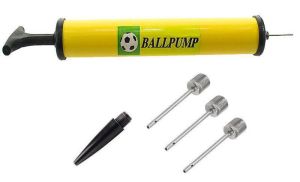
Back home disaster struck me down. As anticipated, my Anfibio handpump’s vulnerable handle snapped off in transit. Anfibio revised the pump by making a screw-off handle (below right), but mine was the old type.
A new one is £15 posted in the UK so I bodged mine by simply gluing and cable-tying the hose directly to the shaft, then adding a bit of garden hose to make a hand grip while pumping. Assuming it lasts, it ought to be much less snap prone. You can’t buy this type of balloon pump on eBay any more, but I found a smaller ball pump for 6 quid (left) which could be as good with the black adaptor modified. We shall see. Every inflatable needs a pump or two.

Sigma TXL on the Thames

Anfibio Sigma TXL Main Page
Anfibio Revo on the Thames
Gumotex Seawave on the Thames
Gumotex Sunny Incept K40 on the Thames

Order! Orrrrdeuuuurrr!!
TXL on the riverbank

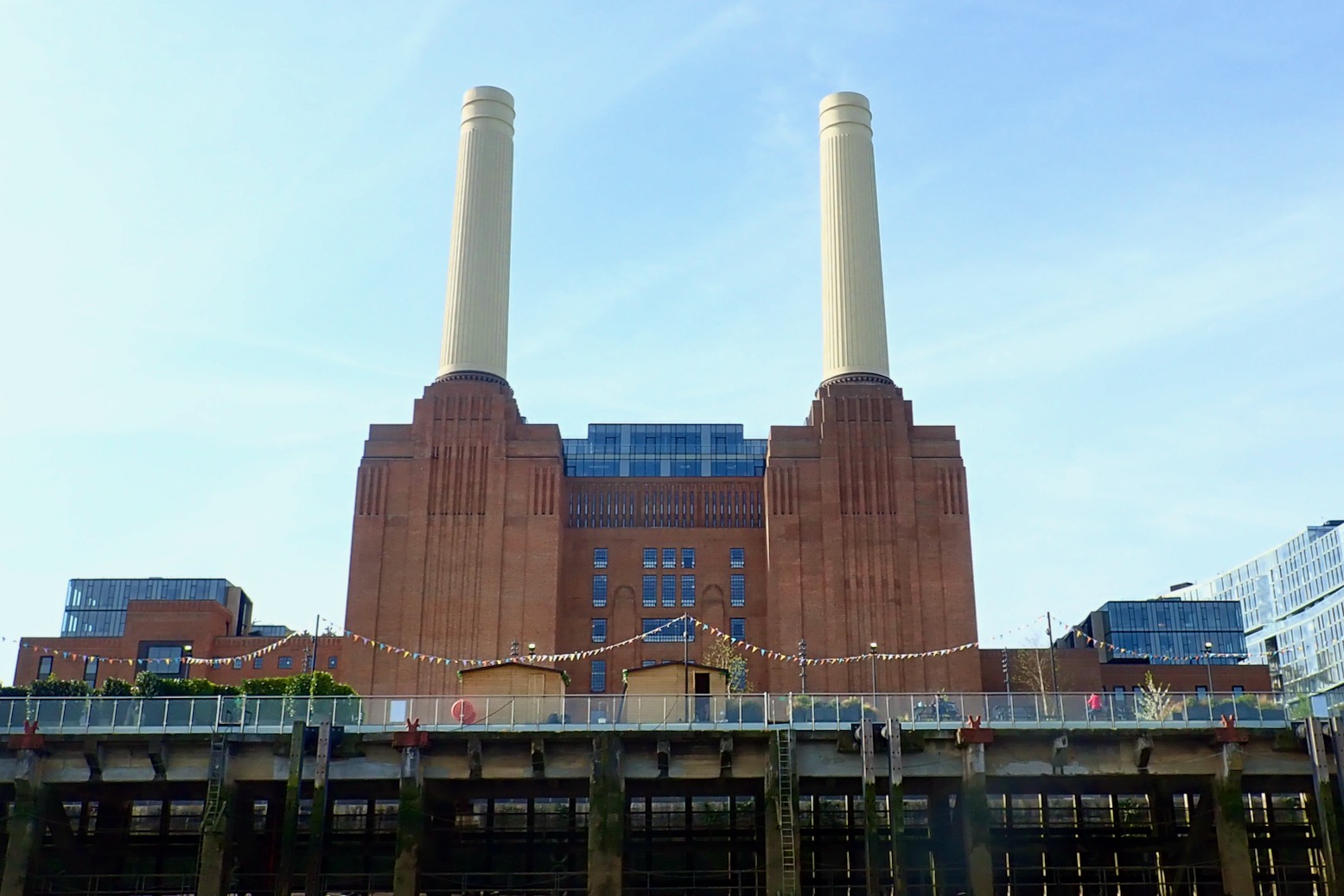
Miraculously, a sunny spell spanned the Easter bank holiday weekend so I took the new TXL down the Thames for its maiden voyage. At Putney I caught the remains of a spring tide but dithered too much so only had a hour until it turned at London Bridge and pushed back up the river. Nevermind, I’ll get as far as I get and hop out anywhere there are some steps or a ladder. With a packraft it’s easily done.

Skeg half out but does the job. One thing I like about longer, centrally positioned packrafts is the the trim is level, not back-heavy as in a conventionally sized rear-sat packraft like my 2K, (unless you are light or it has a hugely voluminous stern, like a Revo)

Floor pad and skeg
This is a similar run I did a couple of months ago in the dead of the Covid winter with the Revo, but this time I remembered to air up the floor pad good and hard. I’m expecting the 2.8-m long, hard-floored TXL to be nippy, and so it is. Setting off the boat skates across the water so that you can ‘paddle – pause/glide – paddle’ like in a kayak, not spin like a food mixer to keep moving.
I fit the skeg but notice from the pix that most of it is out of the water. Don’t think the 2K was like that, but it’s submerged enough to track well. I did wonder why it wasn’t on the flat of the floor for full effect. Perhaps, as with the Nomad S1, it’s not strictly necessary. Something to try next time. As mentioned, I do plan to fit a second skeg on the front to see how that affects crosswinds and sailing.

Seat
They advise using the foam seat block with the floor pad. It feels a bit of an afterthought, adds packed bulk and, as others have reported, is not so comfortable. After 20 minutes I was getting a sore coccyx which was only going to get worse.

More seats than the O2 Arena

Mid-river I shuffled over the twice-as-large inflatable seatbase but soon found it wobbled around on the hard floor pad (like trying to stand on a soft football) in a way these seats don’t when sat on regular packraft floors. This must be why the block seatbase is supplied but the foam is too hard for flatwater cruising. I aired the seatbase right down (easily done in situ) until I was nearly sitting on the floor, but in rougher waters there would still be a wobble and anyway, by then your butt and heels are nearly level like sitting on an iSup board; not an ideal paddling posture.

OMG – non-locking krabs! (fear not, a solution is at hand)

Overall, the raised position on the floor pad does aid good paddling as you can clear the fat sidetubes with the paddle more easily. Sat higher, I would expect stability in rougher water to suffer; at that time you’d want either thigh straps – or just sit yourself lower by easily airing down the floor pad. The backrest is easily adjusted in the boat too, and is held up by thin bungies so it’s easy to shift it up your back if it slips.

For the moment I feel the seat set up in MRS Nomad was a better affair. Partly because I felt it was part suspended/supported from tabs halfway up the side tubes like a hammock, not sat directly on the floor. That means your body weight is spread broadly along on the side tubes, not pressing down solely into the floor, created sagging. And also the flat foam backrest if fitted was better *and I may do the same with TXL).
But, at around half-a-metre square, the TXL seat base is much bigger than previous packraft seatbases I’ve used. Without the floor pad, this broad base may nearly replicate the advantageous load-spreading effect of a Nomad-style side-tab suspended seatbase. An underwater picture will tell all, but I like to think the TXL may be as functional and not much slower without the floor. After all the floor-less Nomad was nippy enough. Since then I think the TXL works well without the floor – or I’ve yet to detect unambiguous advantages.

The TXL’s raised floor jams you less well into the boat sides which is 4cm wider than the Nomad. I quite like a jammed-in feeling but recognise that with a floor pad, added height requires a bit more boat width to maintain stability. Meanwhile, up front there’s plenty of room for feet side by side, unlike in the pointy ended Nomad.

There are a few more evaluations to do with the TXL but it looks promising. Comfortable, supportive seating I know can be an issue with IKs so using the floor pad I’m confident I will either get used to it, find a better seatbase and backrest or find that the pad is not essential for shorter paddles.
Fyi, I have now become very used to using the Flextail electric pump to air up the boat (and the floor), before finishing off with the handpump. It can vacuum shrink the boat too, for compact packing, but rolling up is as quick. As you can see the handy BowBag fits on like it should, too.

Anfibio Vertex Tour paddle
Anfibio sent me their new, four-part, multi-adjustable Vertex Tour paddle to try. It weighs just 890g on my scales, same as my old carbon Aqua Bound Manta Ray, with same-sized blades. A simple lever clamp allows you to set any offset the carbon shaft left or right, as well as vary the length 15cm between 210 and 225cm which is something new to me. Theoretically I can see using the full length with a backwind or a strong current and a short paddle for battling into the wind in ‘low gear’.

Each piece is 63cm long. The all-round shaft felt a bit thinner than normal, and sure enough, measured up around 29mm ø compared to my 32mm Werners which suit my hands better. Smaller handed persons will prefer the Vertex.
The middle clamps up firmly but there was a bit of slack at the paddles; we’re talking less than half a millimetre here but it’s enough to rattle and be noticeable as you release the pressure on lifting the blade out. Does it make difference to non-competitive propulsion? Not really and better too loose than too tight. I wrapped some thin, smooth tape round the ends to eliminate the slack. The Vertex costs €125 – that’s a lot of light and fully adjustable paddle for your money. More here.