Anfibio Sigma TXL+ main page
English South Coast Day Paddles
Kimmeridge Ledges with Zelgear Igla IK
Packrafting Kimmeridge to Chapman’s Pool
The Mystery of the Freshwater Steps
They say everyone remembers where they were when the BBC aired ‘Attenborough and the Giant Sea Monster‘ on New Year’s Day, 2024. ICYMI, it’s still on iPlayer and having watched it, you’ll realise the profile of the famously fossil-rich Kimmeridge cliffs along Dorset’s Jurassic Coast has been raised further. Come high summer it’s impossible to find a park at the local Sainsbury’s.
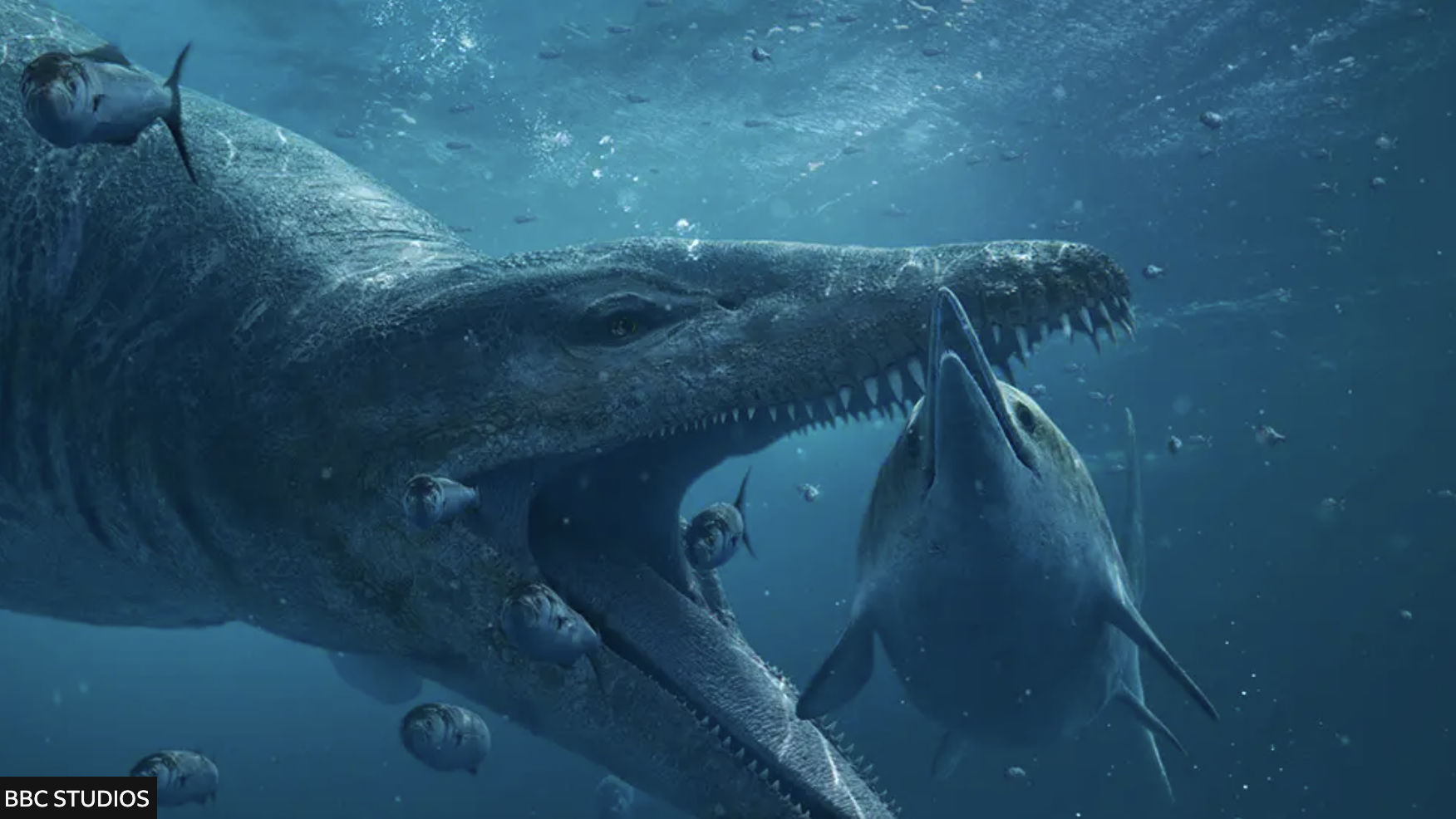

The story goes that in 2022, fossil enthusiast Phil Jacobs was fossicking along a difficult-to-access beach at low tide when he discovered a huge, crocodile-like snout in the shingle (left).
He contacted Steve Etches (below) at the nearby Etches Collection fossil museum in Kimmeridge and, long story short, a two-metre pliosaur skull was laboriously excavated from the friable cliff-face from which the snout had dropped. The BBC and Attenborough recorded it all as over months, the skull was painstaking restored and primed to go on display at the Collection the day after the documentary aired. Good article.
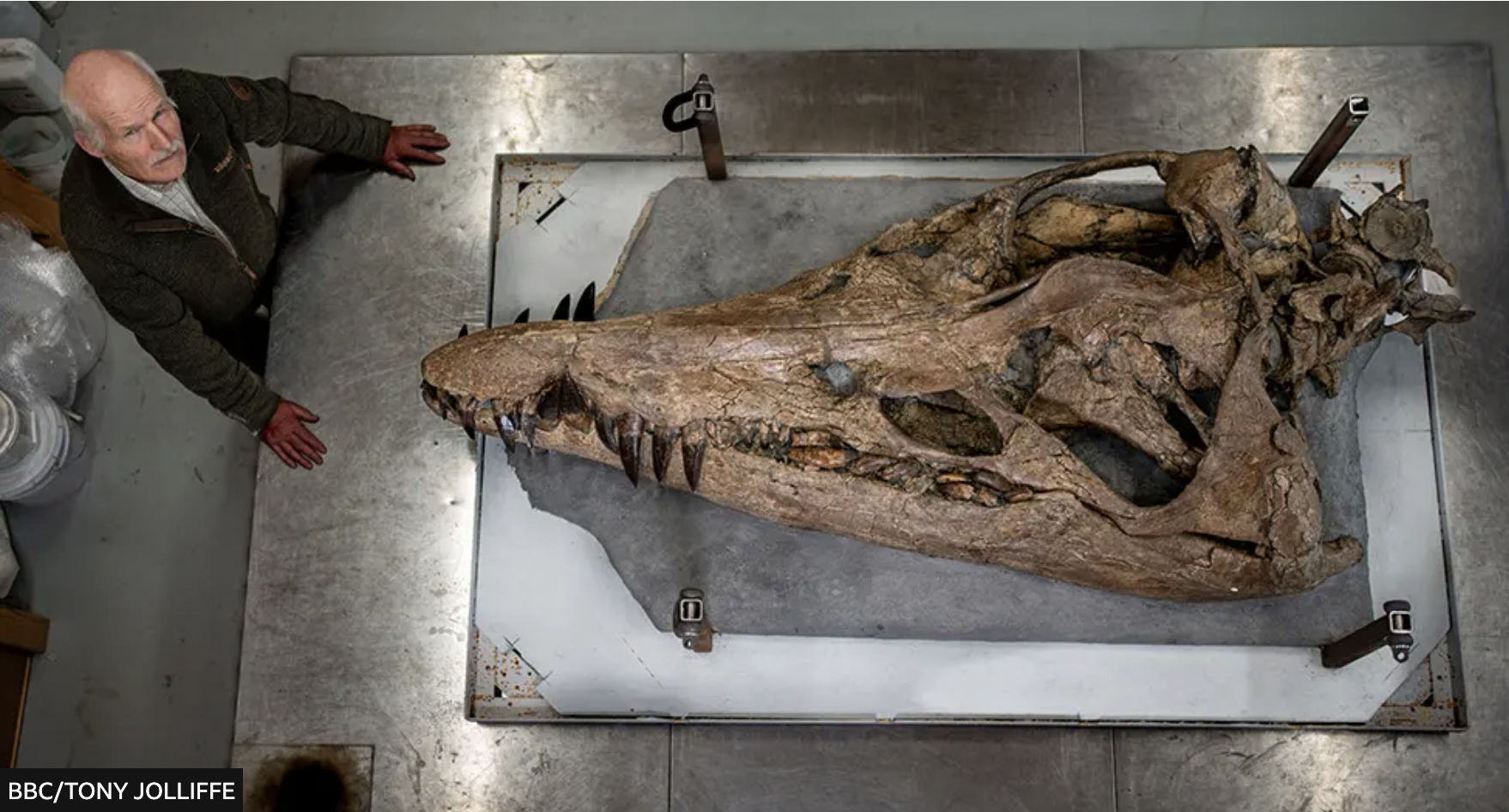
I’d visited the usually deserted museum over Christmas a week earlier, finding another similarly huge pliosaur jaw and many other amazing marine fossils on display. Returning on a stormy January 2nd after the broadcast, the place was packed with curious visitors blithely ignoring the ‘No Photos’ edicts right under Steve Etches’ nose. Since then the Pliosaur has been rebranded as the ‘Sea Rex‘.

Smedmore Estate signs at Kimmeridge Bay (left) warn against doing many things, including fossil hunting, and yet the museum has a video on how to do this safely. So I wondered how permission worked in the technically ‘neutral’ or Crown-owned intertidal zone (ITZ) where the fossil-rich Kimmeridge Ledges lie, and further east where the snout was found. A member of staff explained that protected SSSI status (see map or below) extended into the ITZ (as it might do for coral reefs) and Etches, a local man with decades of fossil collecting behind him, is the only person with permission from the Smedmore Estate (who help fund his museum) to excavate fossils, presumably in the cliffs fringing their land above the ITZ.

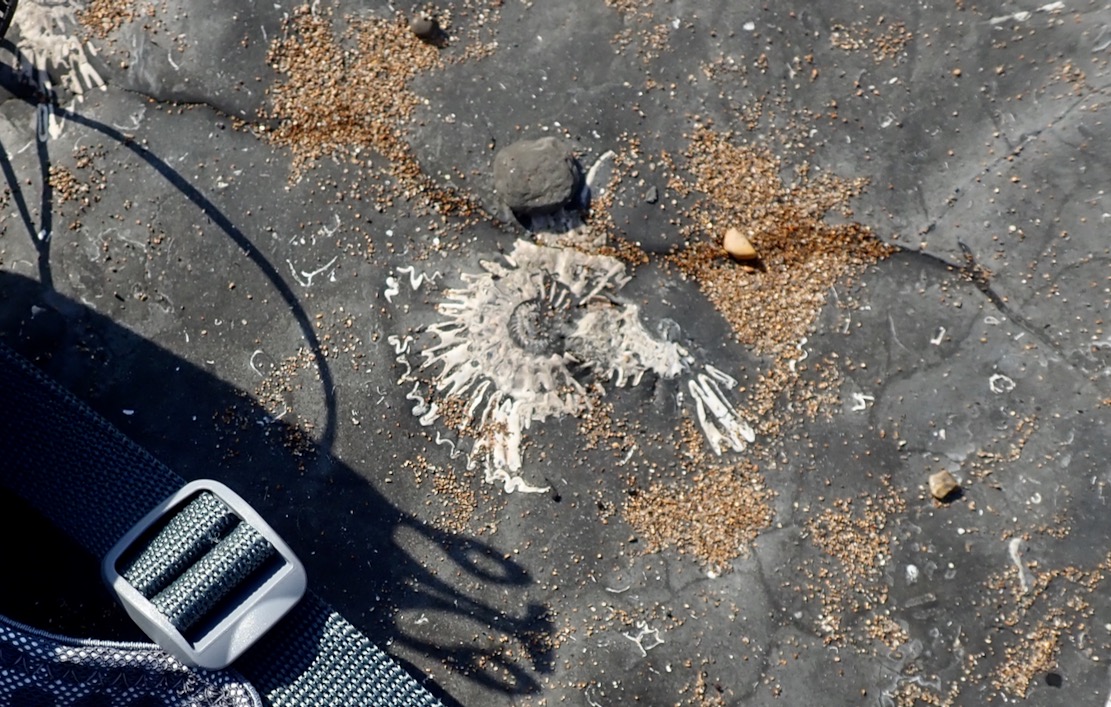
Perhaps finding tiny, loose fossils while beach combing is tolerated. When I was packing up my packraft the other day at Chapman’s Pool, I flicked off a wet flake stuck to the boat and could swear it was a thumbnail-sized ammonite fossil, DoB: 150,000,000 BC. I tried to find it among the shingle, but the fast-rising tide was lapping at my feet, so it got away. Another time down at Chapman’s (below left), the geef easily found a curl of ammonite shell the size of a thumb. Ammonites embedded in the exposed grey bedrock are everywhere (above left).
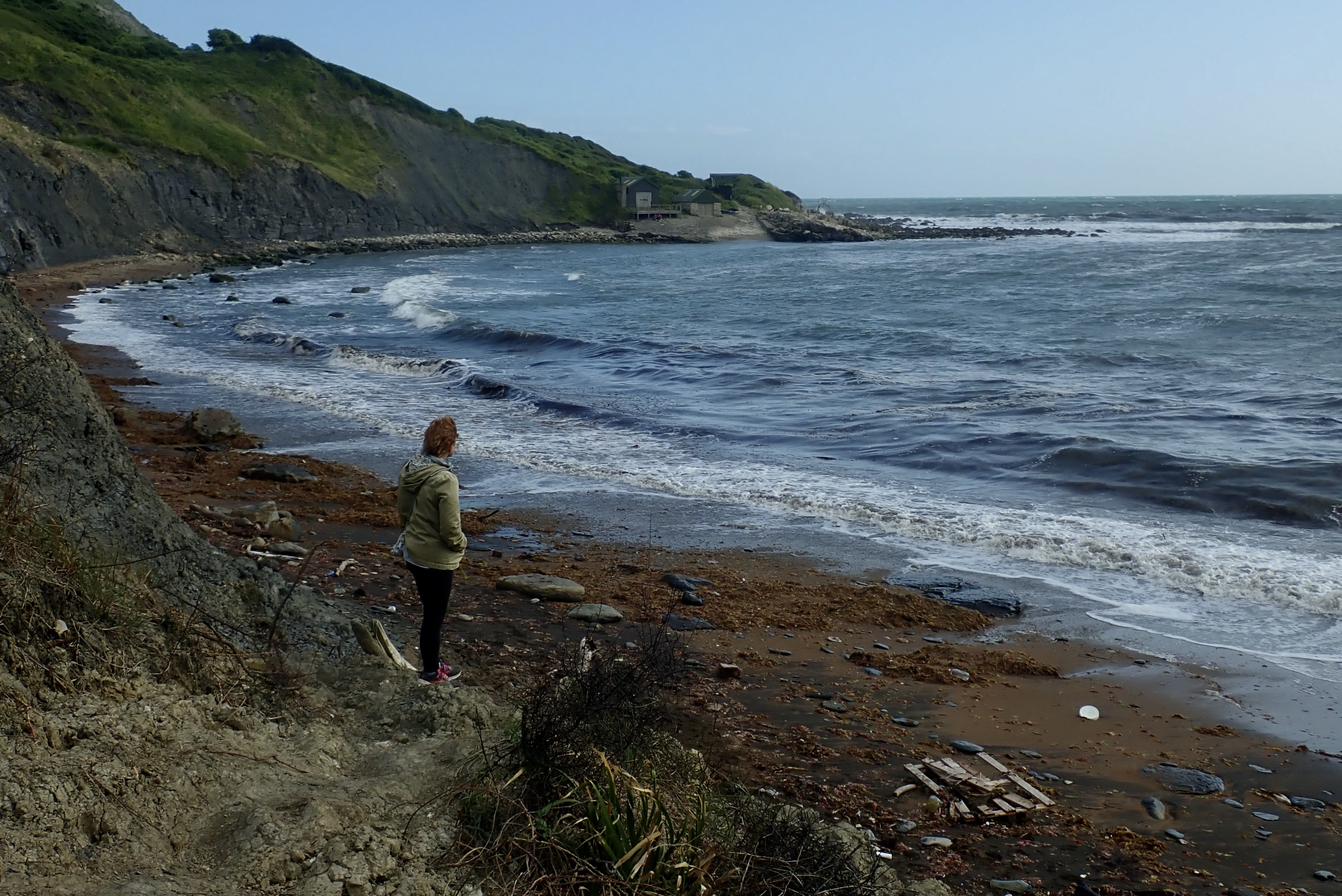
Like many who know the area, I was curious to know exactly where the fossil was found – or more accurately, solving the geo-locating challenge was a bit of ‘Wherewozit’ fun. Not surprisingly, the location was conspicuously absent from mainstream reports, but within the first minute of the BBC doc the excavation site is shown, and a couple of minutes later, snout finder Phil Jacobs’ shaky phone video pans past a waterfall in the background with a limestone wall bridging it (more below), and a mention of ‘east of Kimmeridge’. Ah Ha! The waterfall appears again in the BBC doc, so all in all you don’t have to work for GCHQ to pin down a possible location.
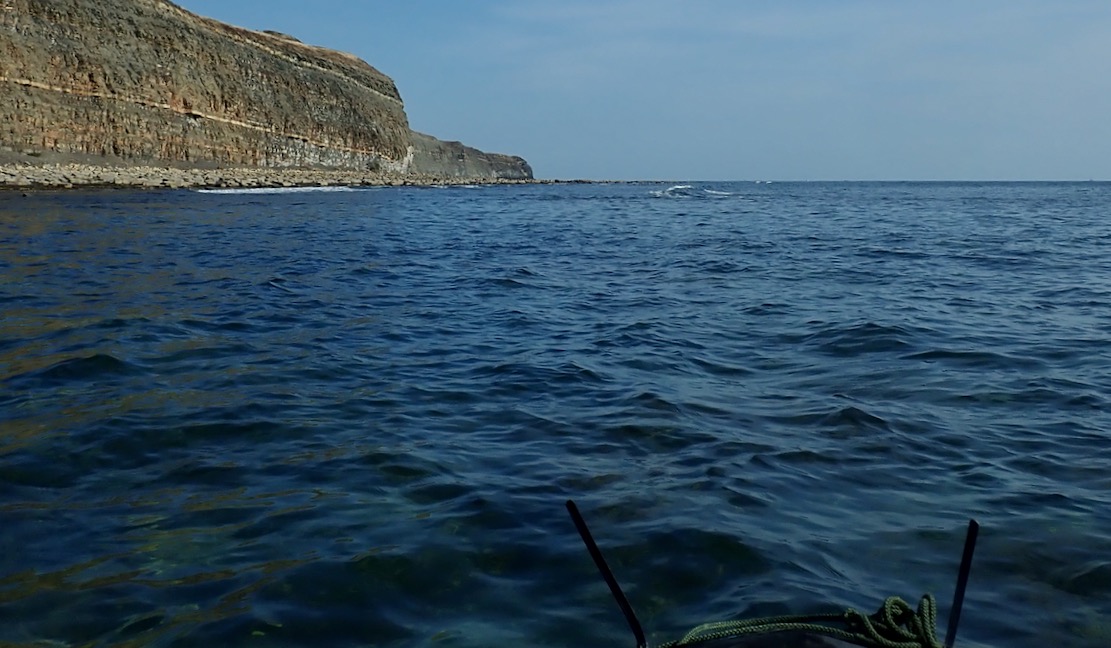
Fast forward a year and I finally got to paddle past what looked like Punta Pliosaurus on my way to Chapman’s from Kimmeridge. Beforehand, I’d wondered what would be there: disingenuous ‘Danger, Keep Away, Loose Cliff’ signs, evidence of excavation to retrieve the rest of the megafish’s body, or a huddle of day tourists from Swanage?


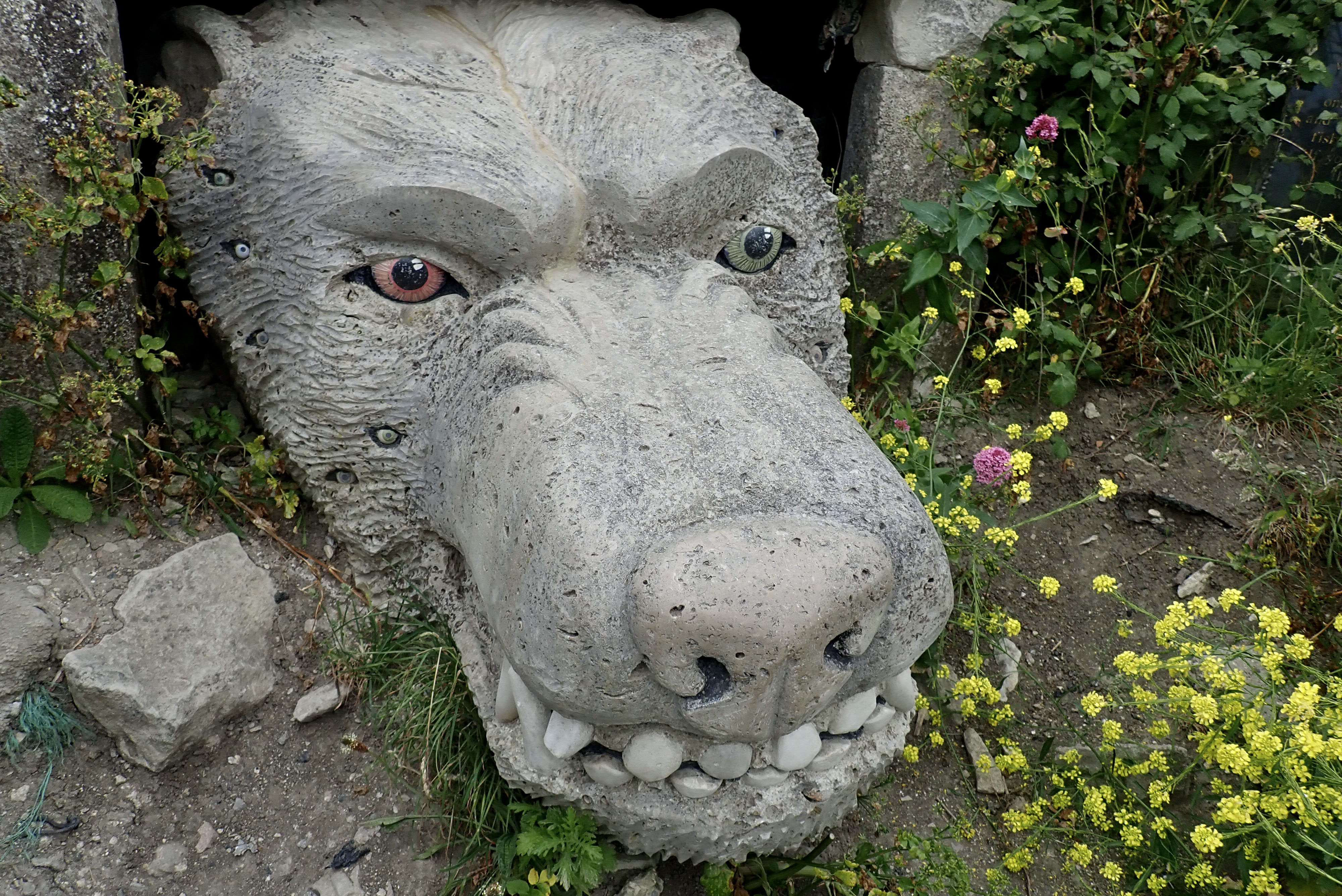
Although a late-afternoon sun was casting a shadow across the cliff (above right), all I can say is, assuming I’d got the right place, they’ve done an superb job of disguising the excavation of the pliosaur skull and restoring the cliff’s natural appearance until they get a chance to come back and finish the job. That said, a couple of weeks later a regular walker who knew the story here thought natural processes had quickly obliterated the excavation but either way, once done, they’re gonna need a bigger display case. Meanwhile, something else above the beach had caught my eye. More about that here.
 Inflatable Kayaks & Packrafts