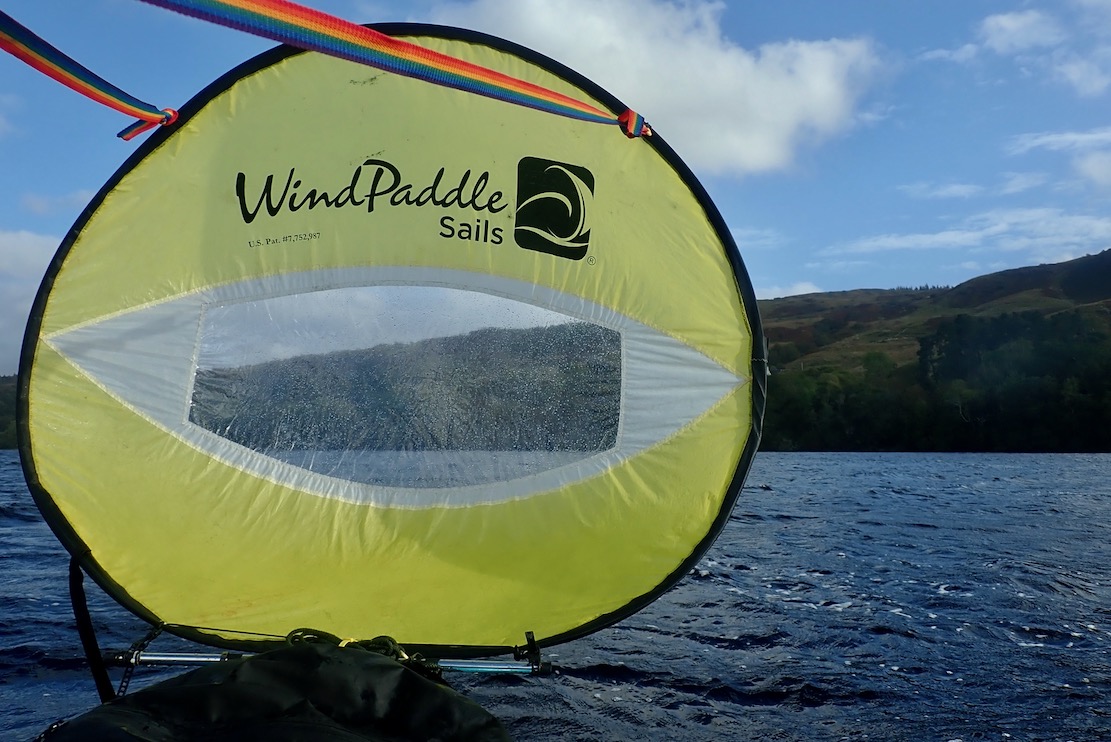
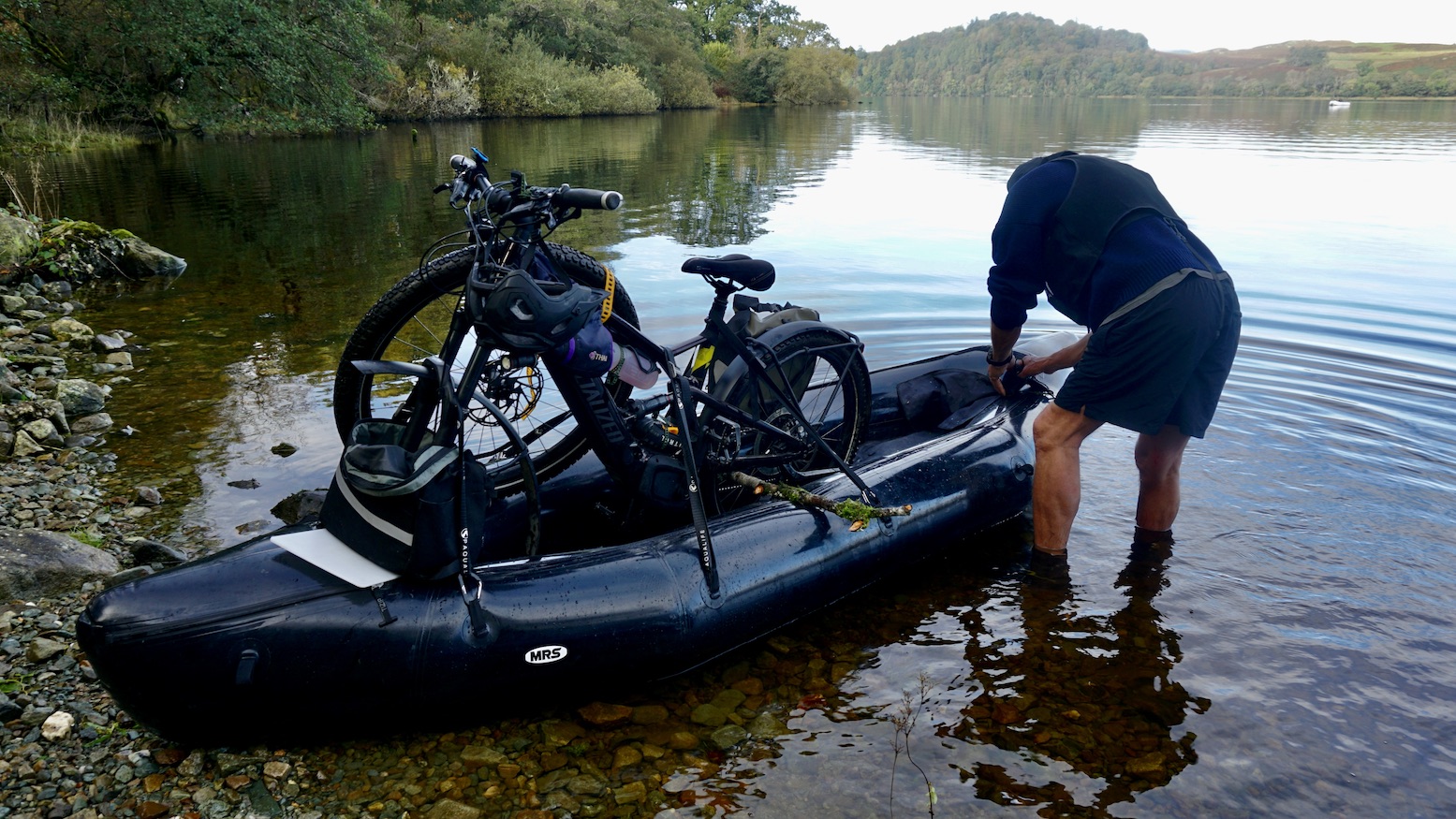
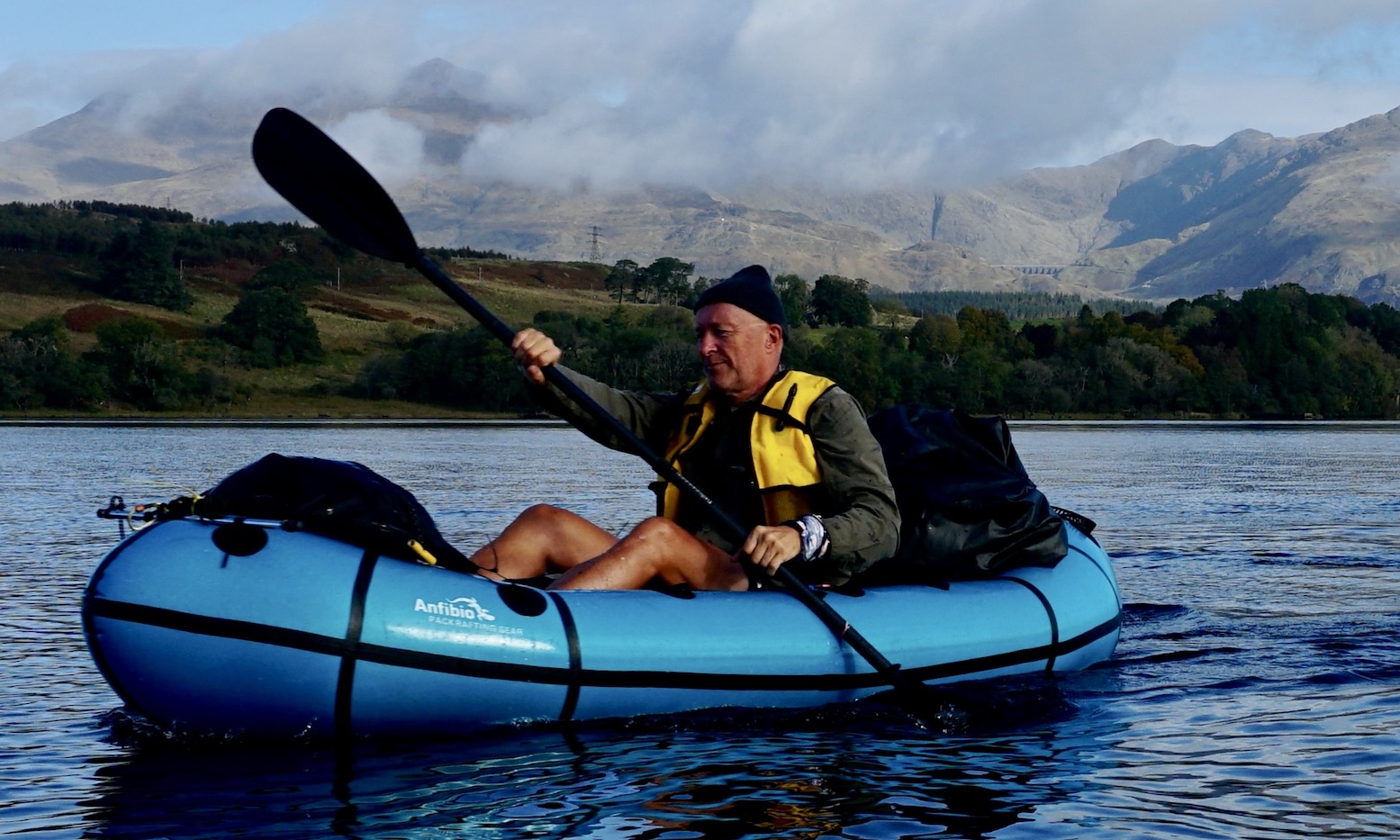
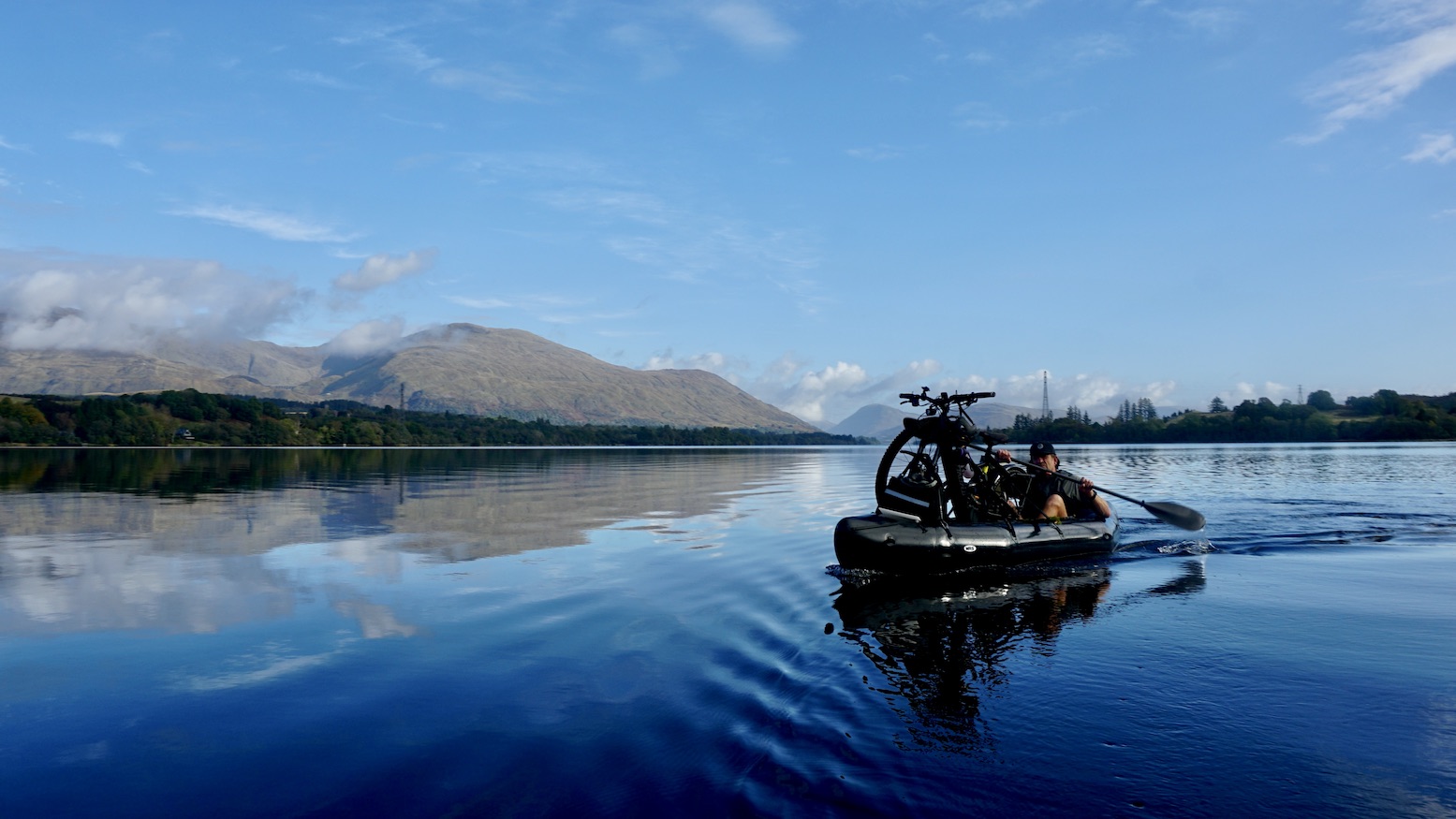
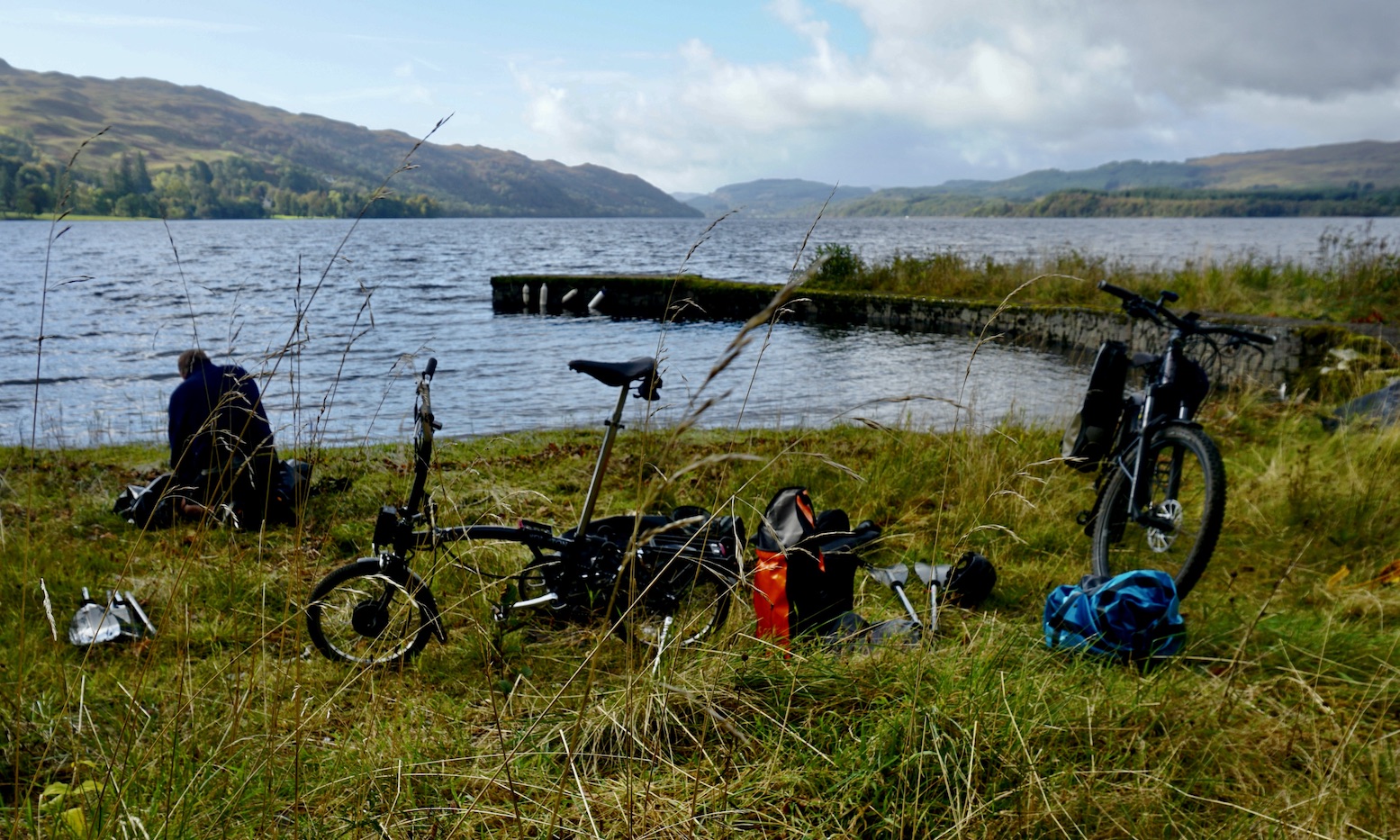
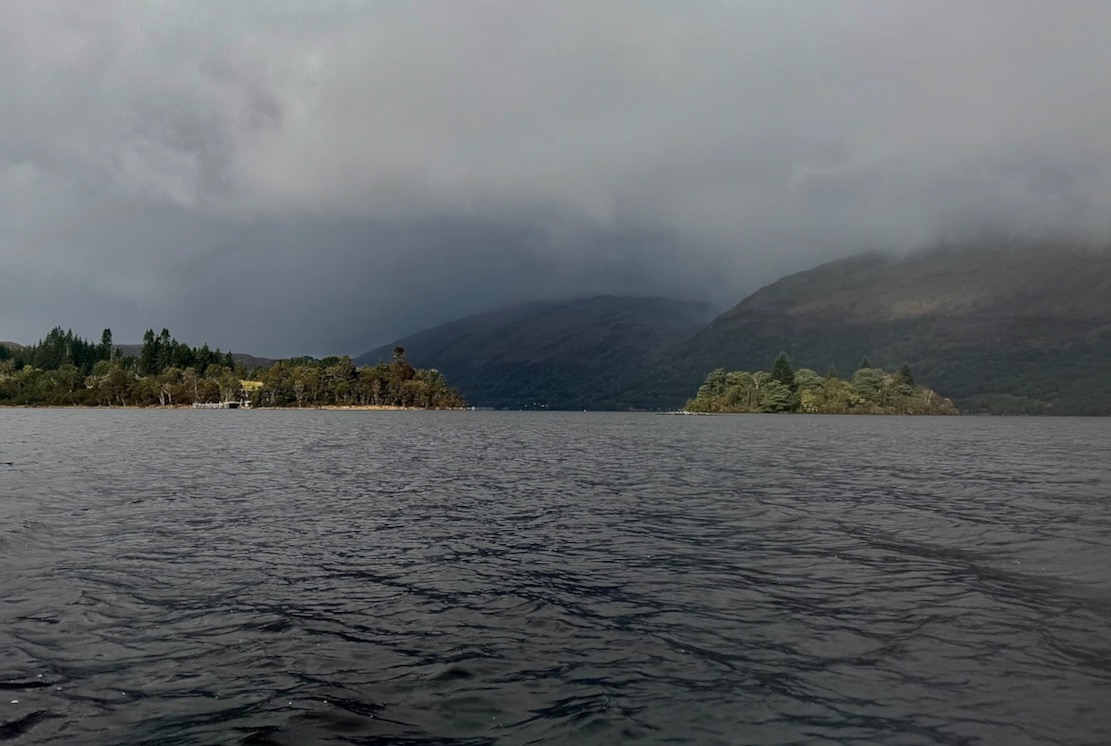
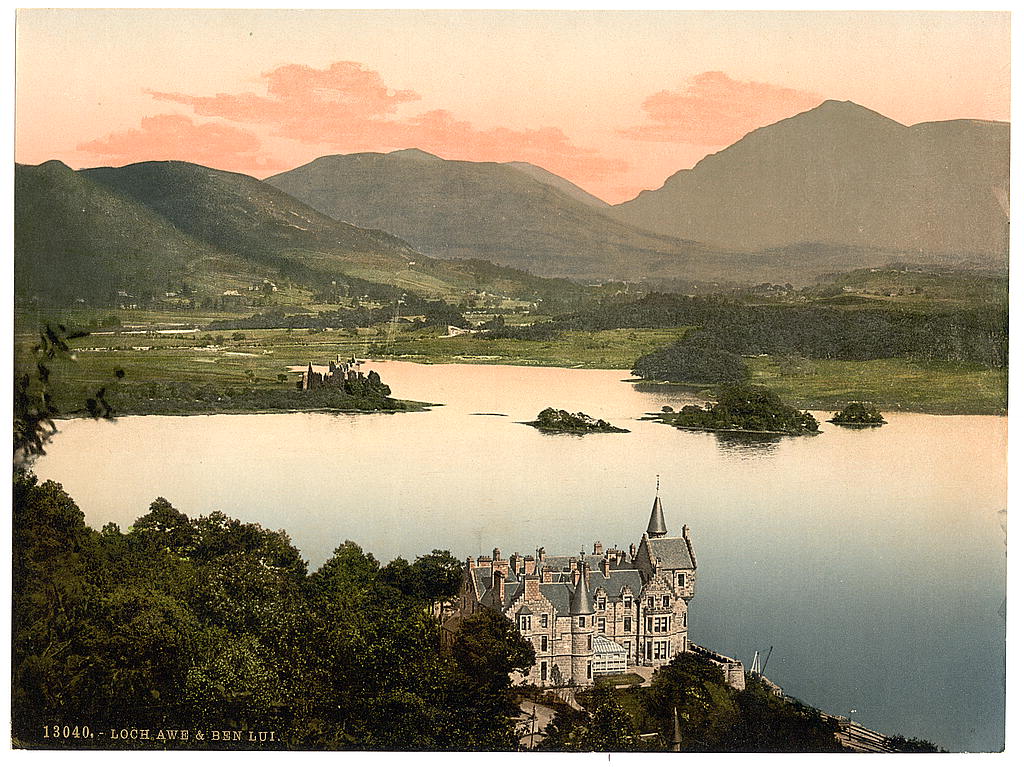
a mate and I spent a few days on Loch Awe, the longest freshwater loch in Scotland, just inland from Oban on the west coast. We had our e-bikes with us and as the loch’s just a kilometre or two wide, I paddled over one windy day to locate a good spot to land with our bikes on the far shore, then sailed back to the beach below our cottage in no time.
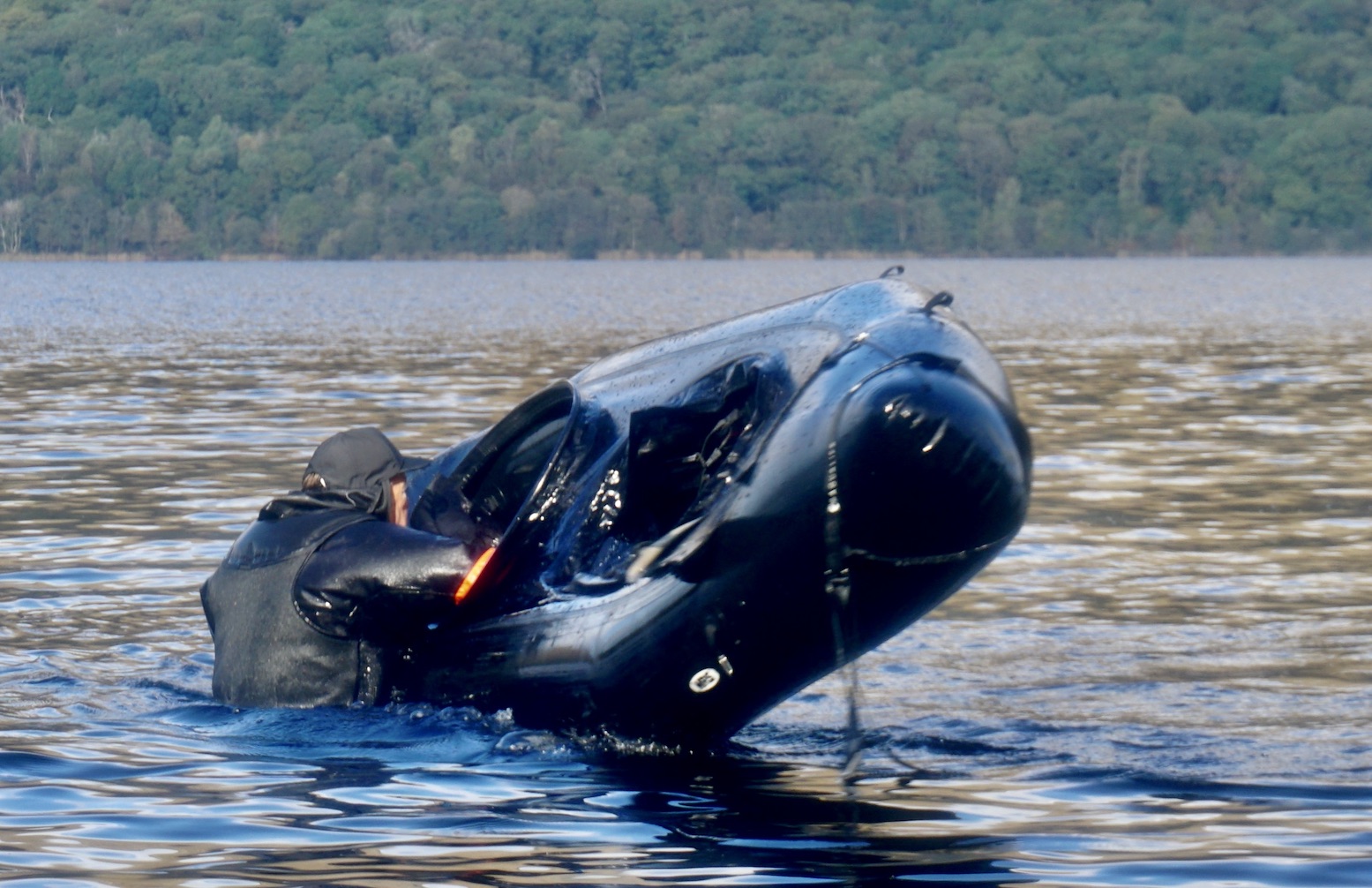
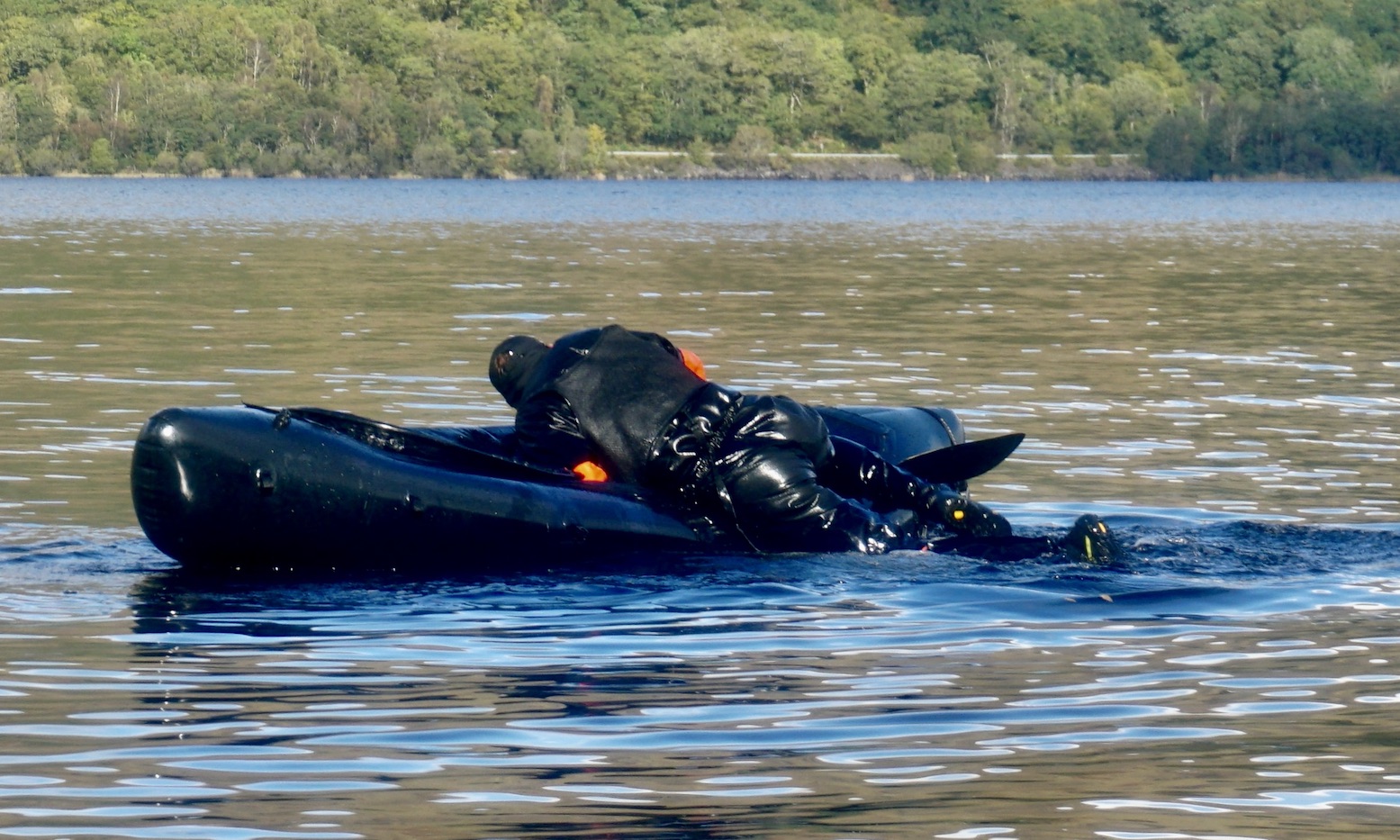
At one point the WindPaddle flipped and got dragged under the TXL’s bow. I’ve previously envisaged the undesirability of such a scenario, thinking the sudden drag might destabilise the packraft, but nothing like that happened. Instead, it was impossible to haul the sail back up on the downwind side, as if it was a bag full of water. Dragging it under the bow to the upwind side made this easier, though it’s odd how the disc became so heavy in the water. Anyway, now I know running over your sail is a recoverable drama.
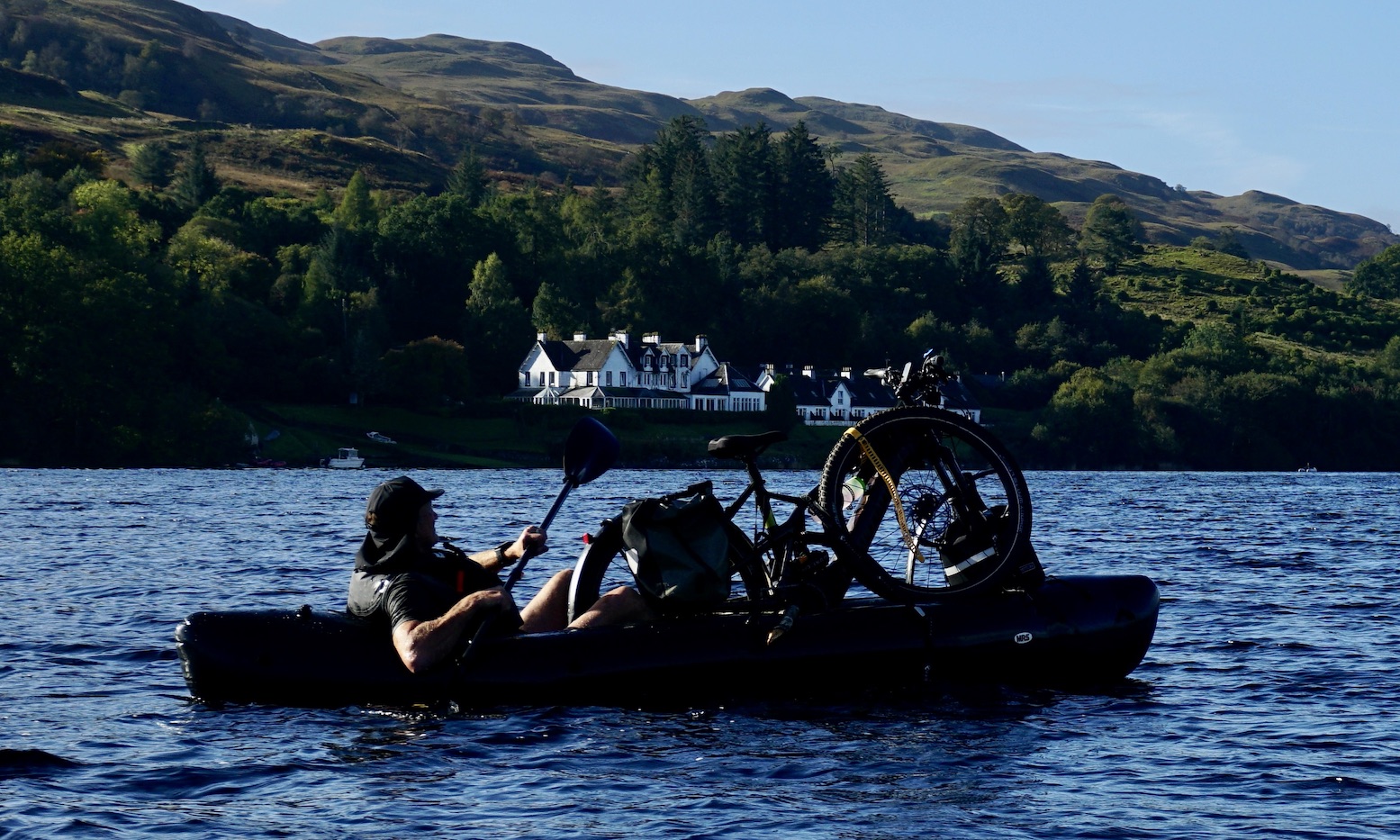
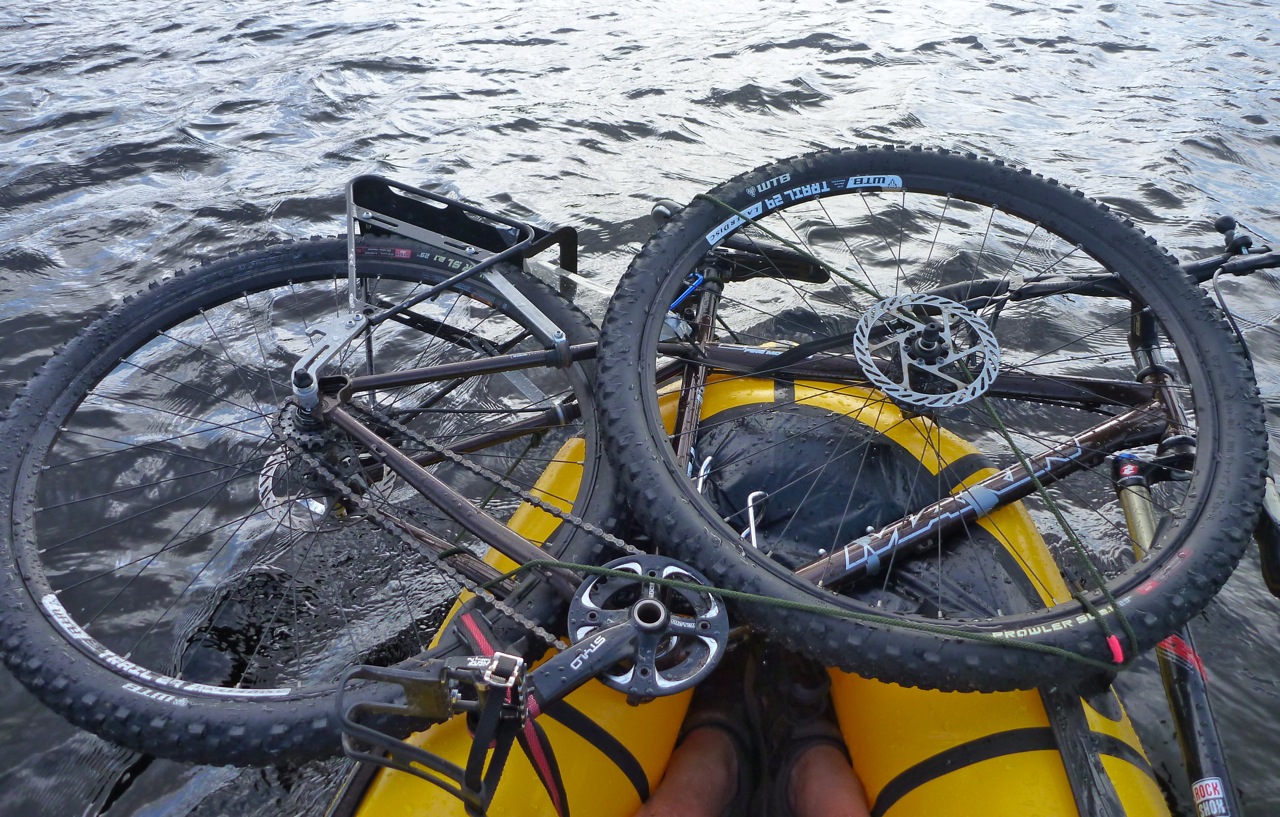
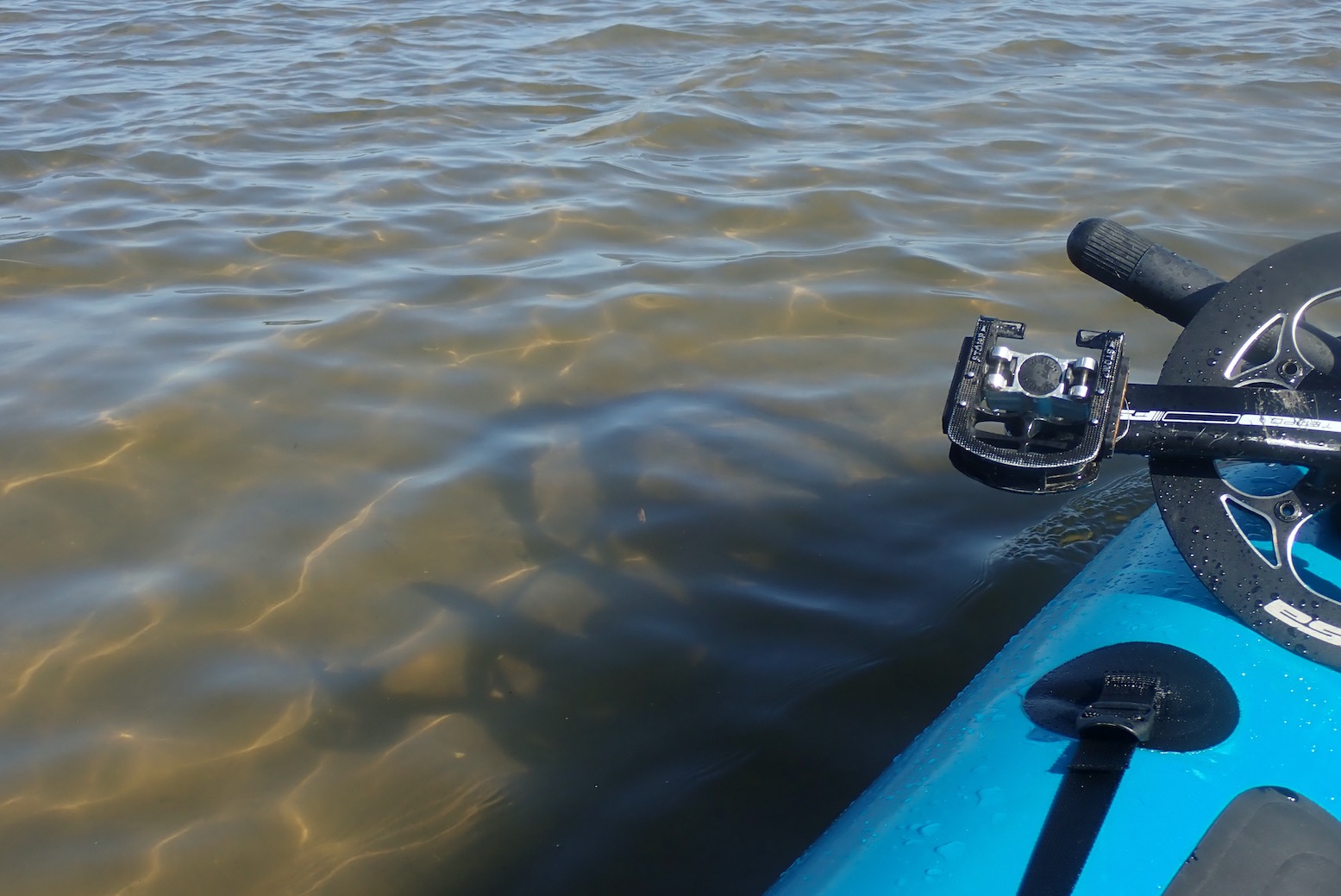
Next day was clear and calm. My e-bike is heavy and the vulnerable electrics are not so suited to laying across the TXL’s bow, even in freshwater. As my mate Phil had a very long MRS Barracuda, we decided it could stand upright in his boat, while I dropped his folding Brompton behind my seat.
On the far side we rolled the boats up, assembled out bikes and set off for our lochside road. You can read more about that here.
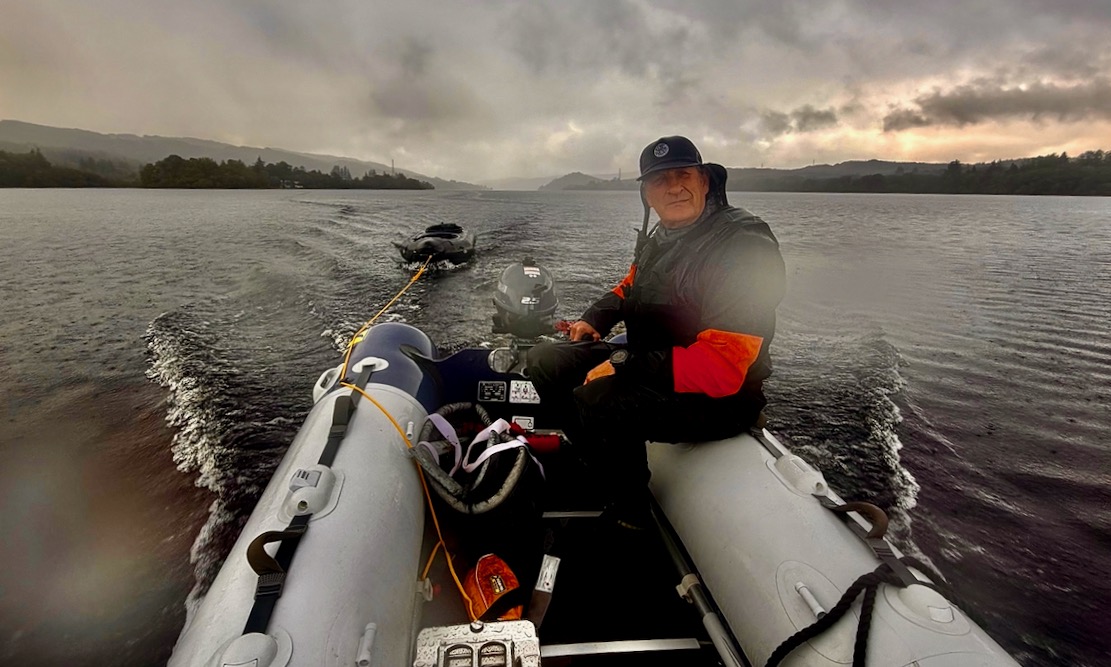
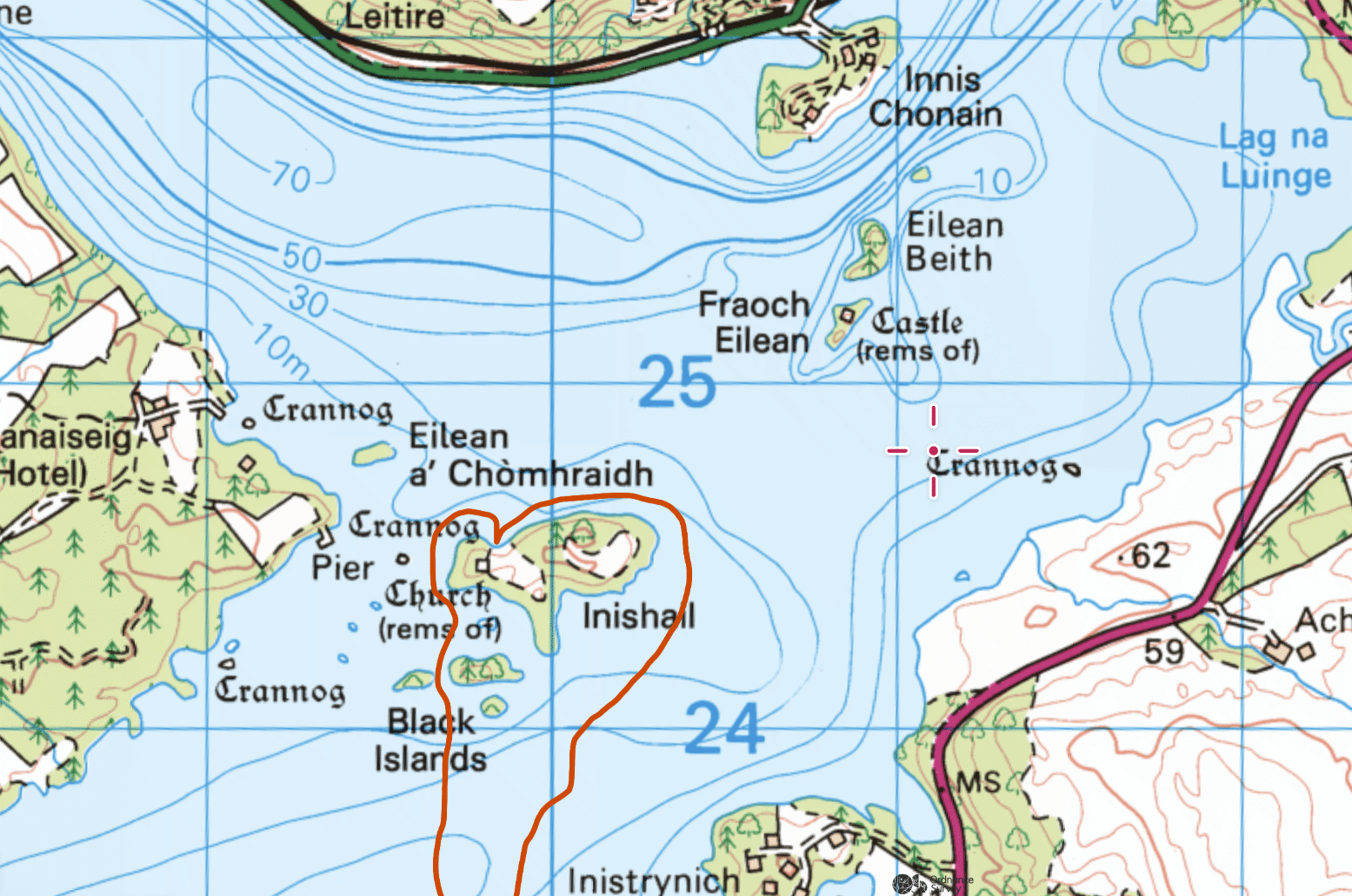
Next day the freak calm spell was over so we cheated a bit and motored Phil’s 2.5hp dinghy 5km to the interesting looking islands at the loch’s north end and towed the Barracuda along for the ride. according to the map (above) the biggest island, Inishail, had the ruins of an old church.
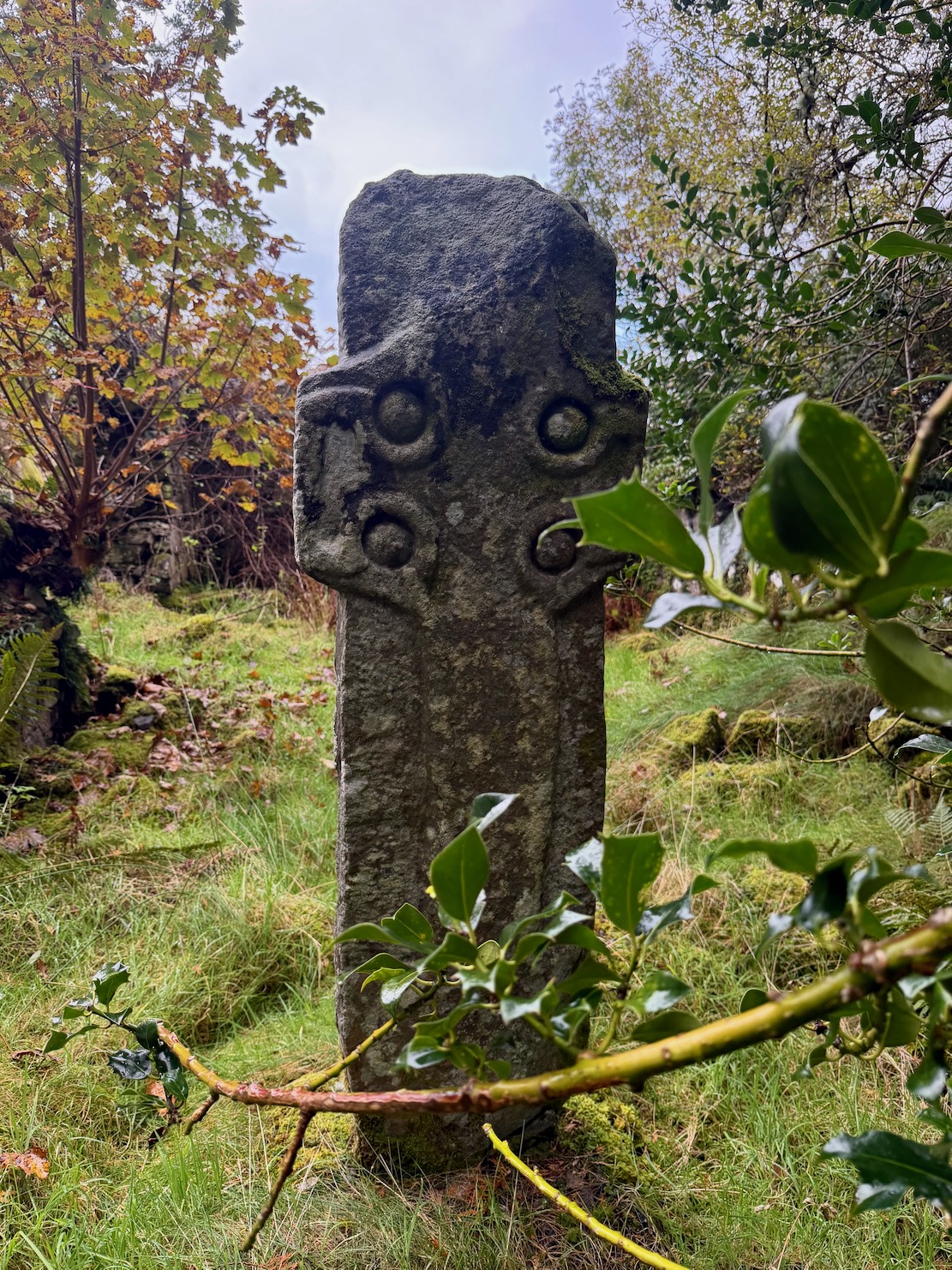
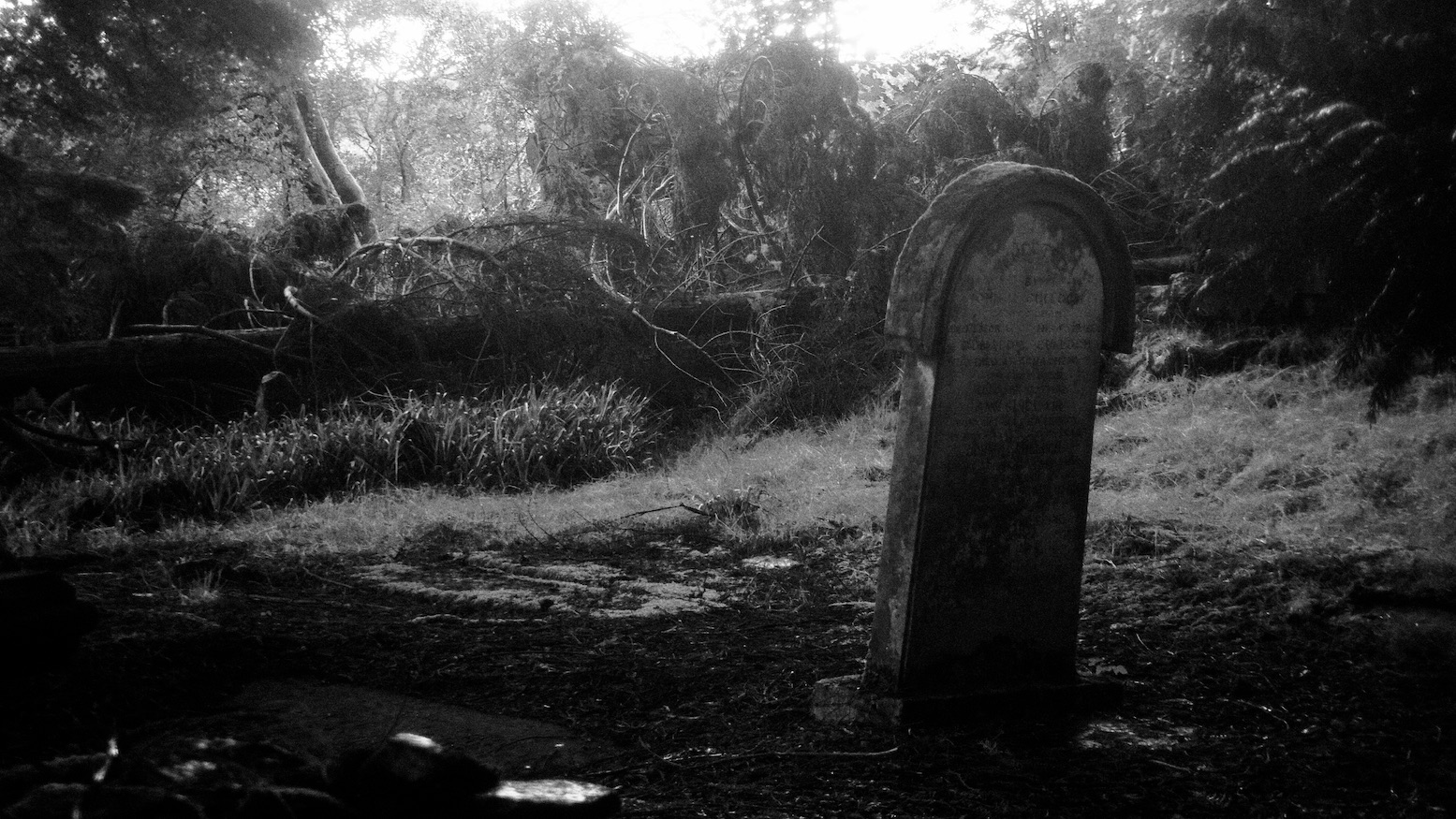
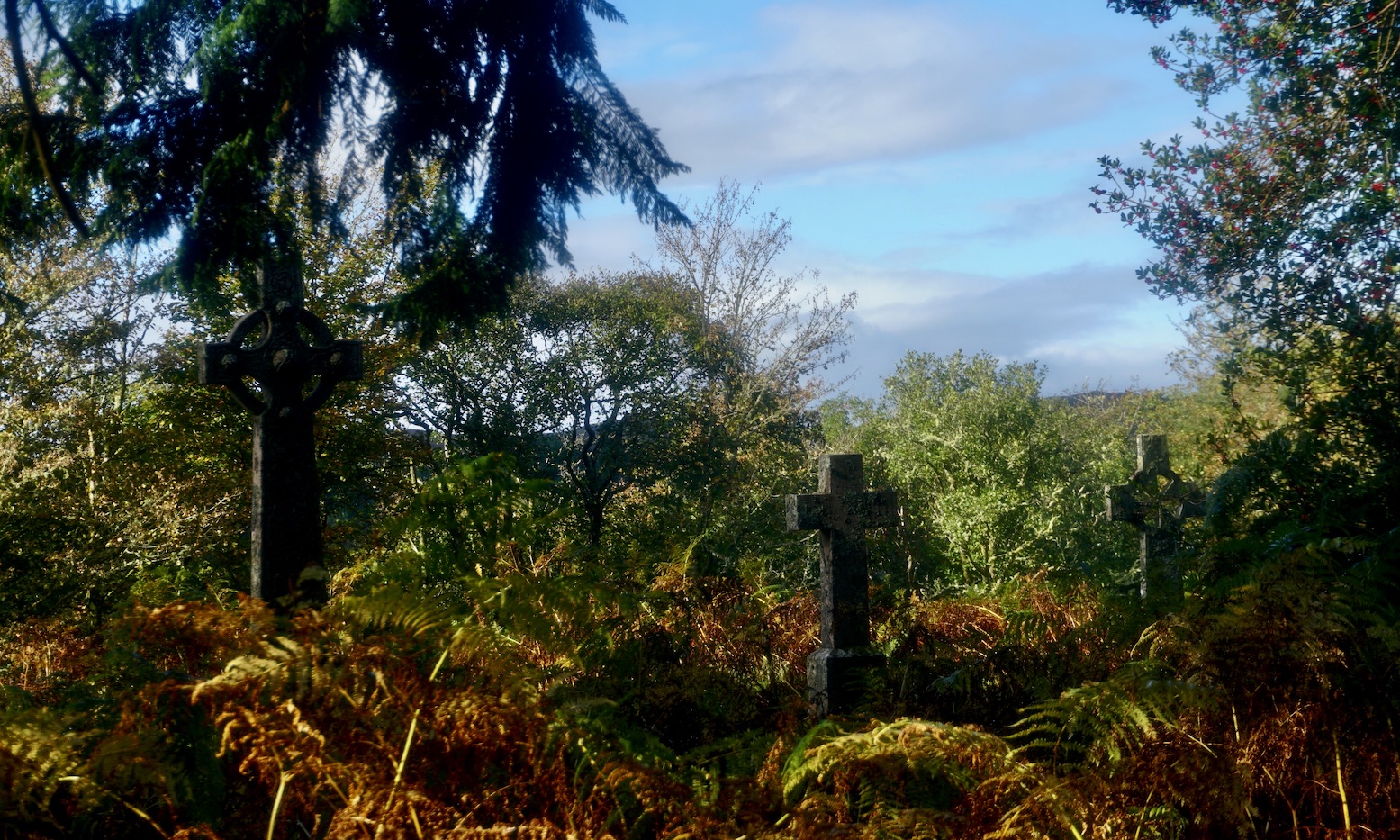
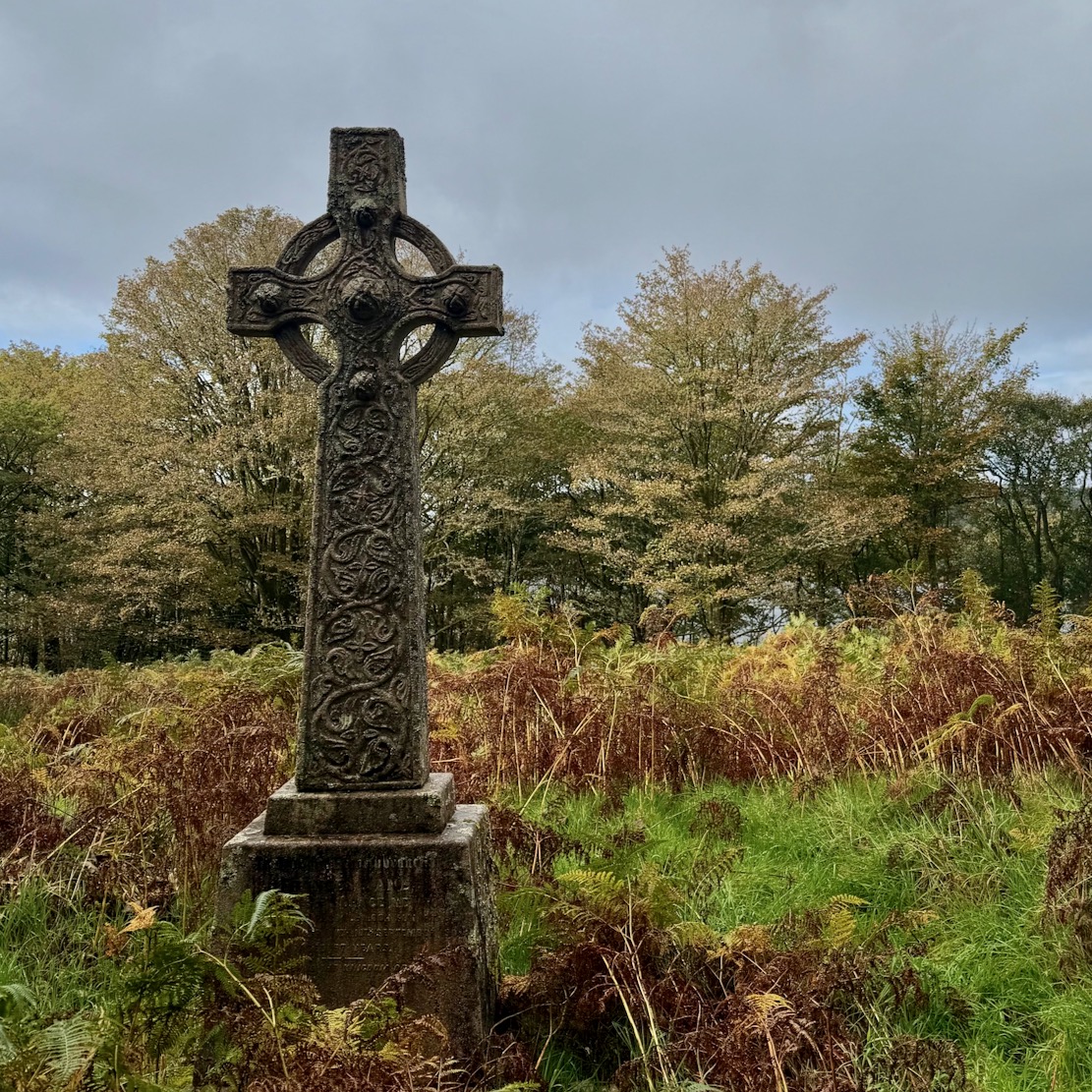
It had a lot more than that (see map, left). Mooring on the north side of Inishail, we soon came across a the ruins amid a burial ground with tombs spanning several centuries, set among huge firs. The church itself is actually known as the Chapel of St Fyndoca, and had one wall badly rebuilt wall and a crude Celtic cross mounted incongruously in the nave (below left).
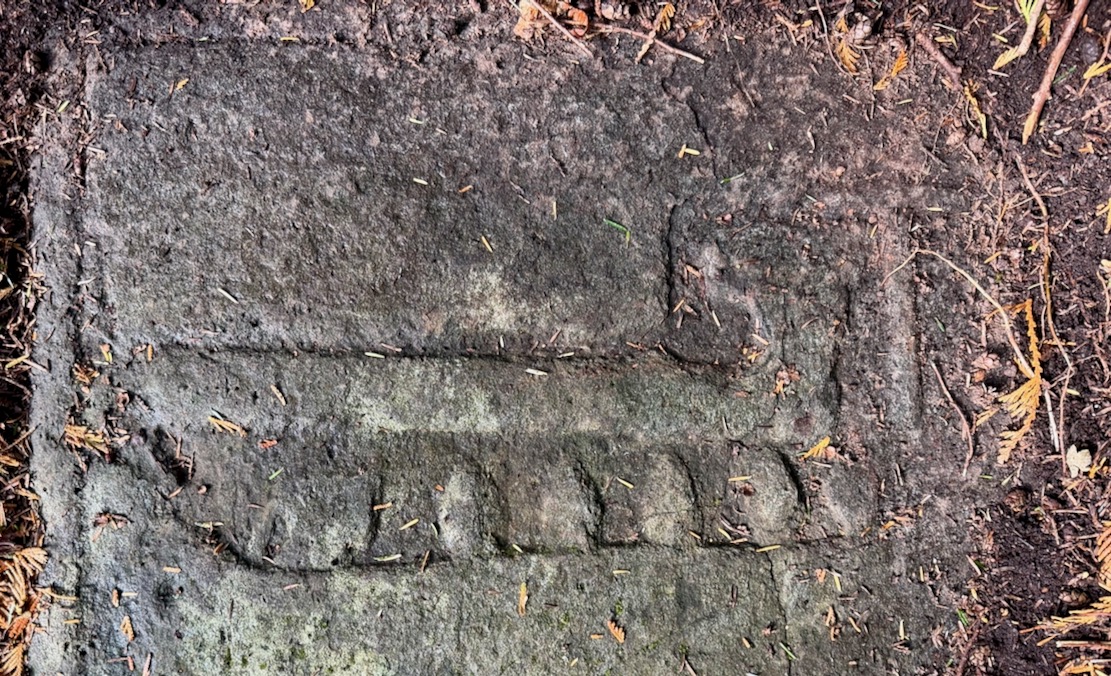
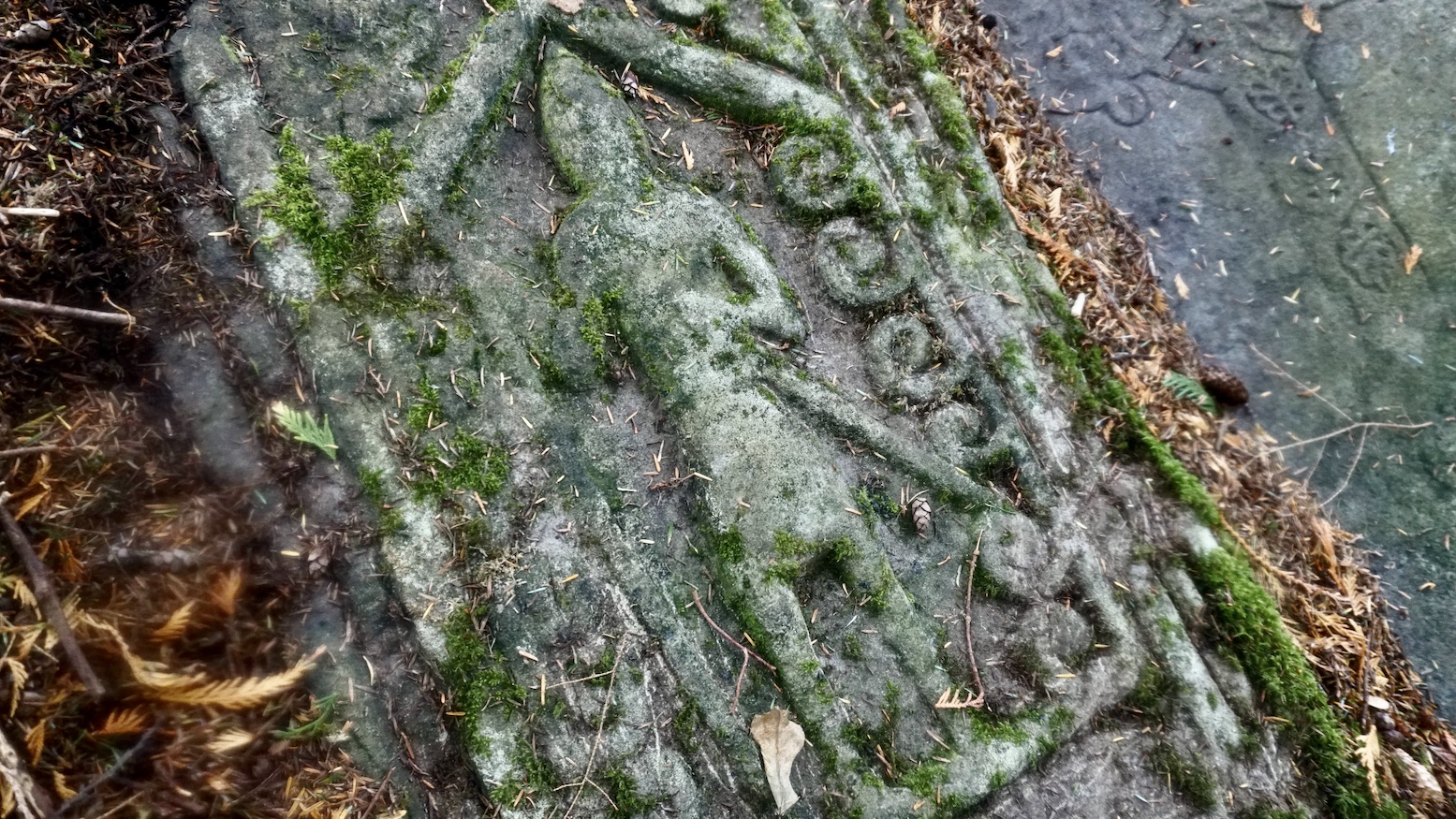
Some of the heraldic slab tombs or Celtic crosses had the ancient look, others genuinely dated from the 1400s, with embossed effigies to knights, a galley or the crucifixion. Heraldic slab tombs are commonly found in the Western Isles.
In olden days everyone up here got around by water, so an island was no less inconvenient to access, while also being a safe place to live. Furthermore, burial grounds dodged exhumation by ravenous Highland wolves. It’s said Inishail has been occupied by nuns since the 12th century and the church only fell into disuse in the 1700s. Holy inshore islands like Iona on the far side of Mull, Lindisfarne and St Micheal’s Mount are not so unusual in Britain and probably elsewhere.
After that Phil decided he ought to try deep water re-entry into his Barracuda. I did this myself years ago with my first Alpacka. Unfortunately he left one drysuit zip undo so the usual side paddle-lunge took a few goes and a lot more effort with feert full of water. Lacking a paddle float – dead handy for narrow IKs (see link) – he instead tried using my Multimat as a leg lever to get back in which did the trick. On the way back in the rain we rested the MRS across the bow of the dinghy which made the boat a lot faster.
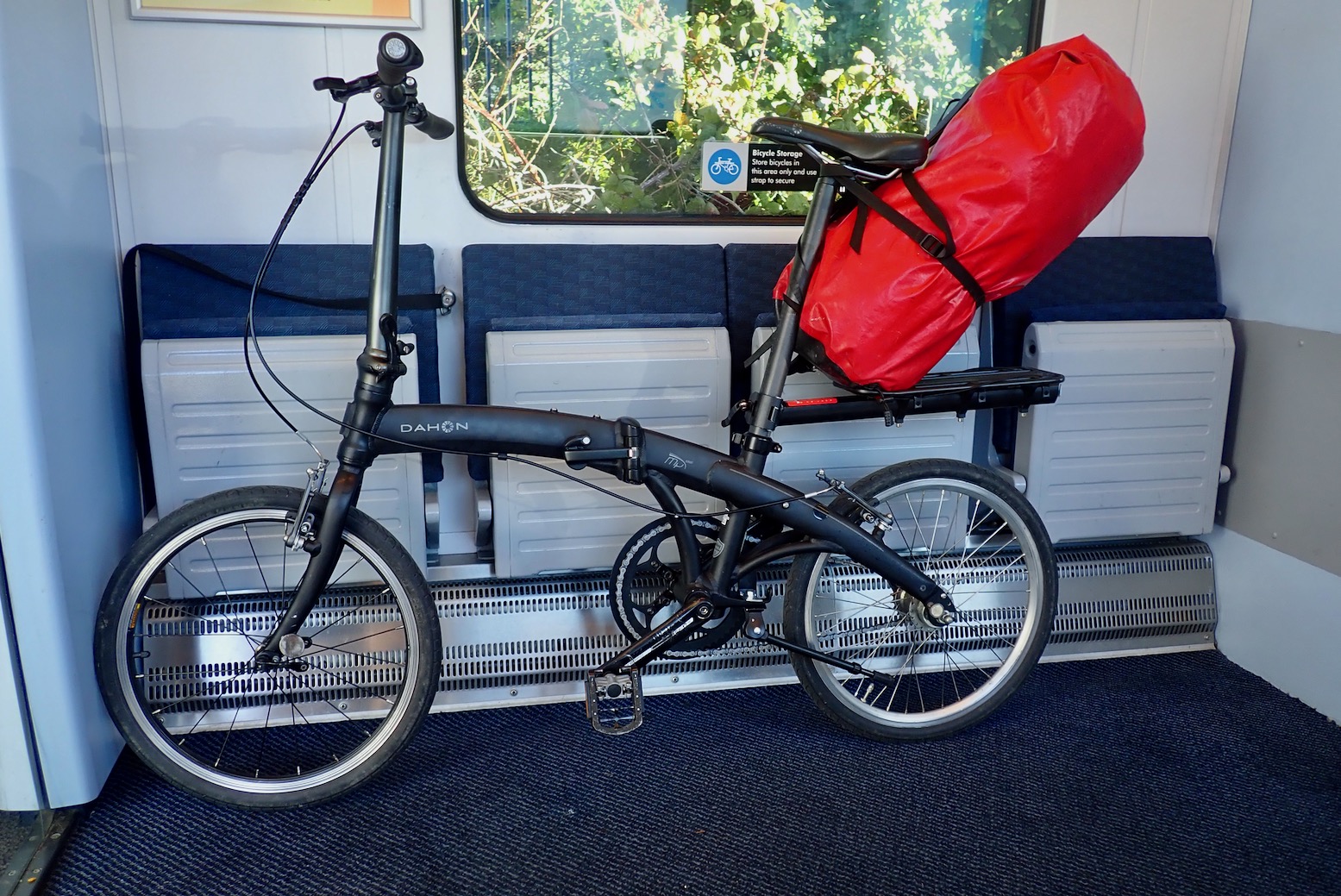
The other week I bought myself a Dahon folding bike, a long-established American brand with a French sounding name that’s probably made in China. In the UK it’s much less pricey than better known Bromptons. Folders seem to be going cheap right now as older folk move to e-bikes. I still have a couple of pedalling years left in me, I hope. At least 10 years old, my Dahon Mu has an unusual (and long discontinued) SRAM Automatix 2-speed hub, V-brakes and once folded up, weighs just 11.5 kg (my MTB is 15kg). I could’ve waited for a 7- or 8-speed hub to turn up, but thought I’d give the Automatix a try. I don’t mind having one less cable and mechanism to operate. It shifts up automatically at a round 10kph; a bit too soon some say, but there’s an easy mechanical hack around that.
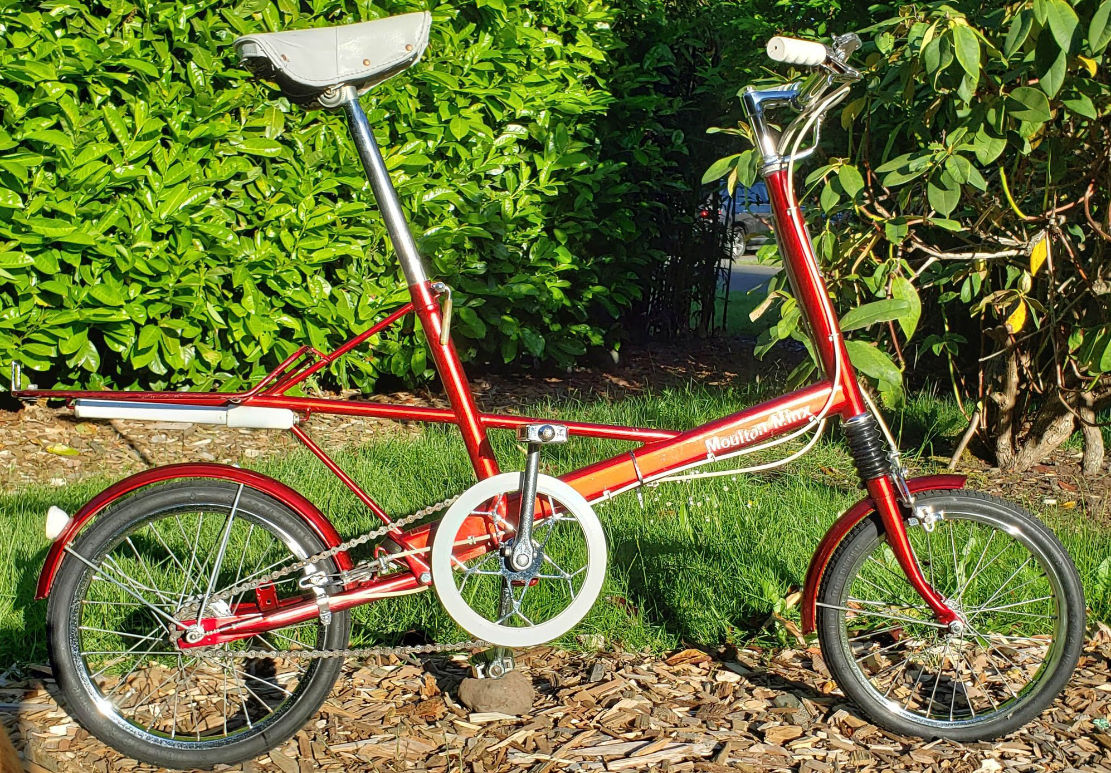
The Dahon reminds me of my Ferrari-red Raleigh Moulton I had in the late 60s, possibly my first two-wheeler. Along with being a groovy Sixties design, I think my mum thought small wheels = ‘sensible’, like a shopping bike. ‘Sensi-Schmensi? Hold my Tizer!’ My innovative ‘full suspension’ Moulton folded too, only not in a good way. Too much bombing around on Mitcham Common doing Evel Kinevel jumps one weekend saw the seat tube and stays fold backwards after one heavy landing. A decade and a half later California brought us the Apple Mac and mountain bikes and we never looked back.
Midsummer 2012, Joe Sheffer and Al Humphreys bikerafted to the top of Shetland using folding bikes. That’s my very first green Alpacka Joe’s paddling, a Denali Llama, just before Alpacka introduced the much copied extended stern.
Years ago I tried bikerafting in northwest Scotland with my MTB. Up there it didn’t really work, the few roads were empty enough, but what paths and tracks there were were tricky on a bike with a boat strapped to it. I wrote in 2012…
… add a bike and any off-roading becomes marginal up here [FNWS]. Most of the time you’ll be pushing or carrying, especially with an overnight load. No MTB is really rideable on the footpaths up here, although unlike England and Wales, since 2003 Open Access allows cycling on all footpaths (there are no bridleways). Cross country and off the footpaths, at times you can barely walk, let alone ride a bike
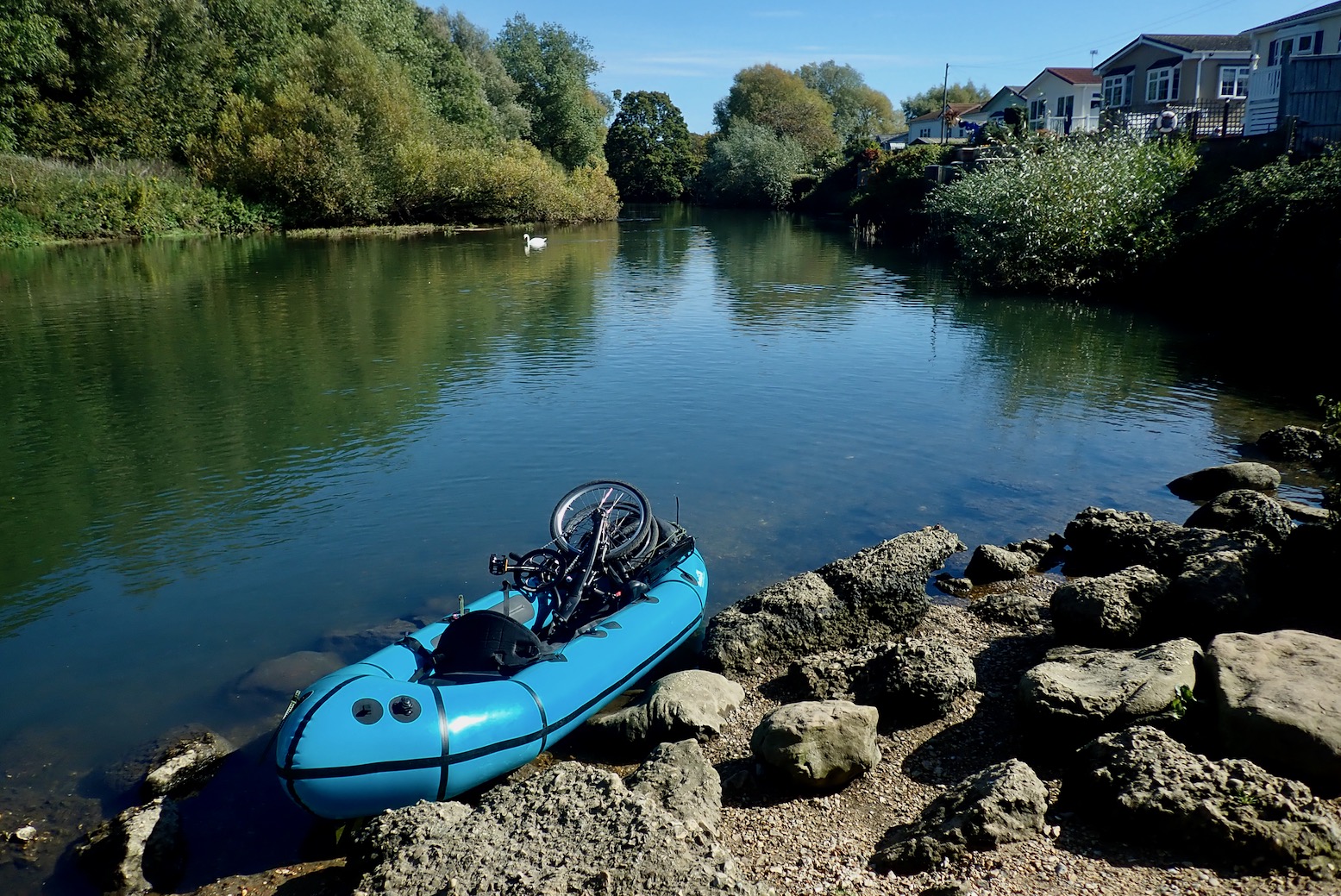
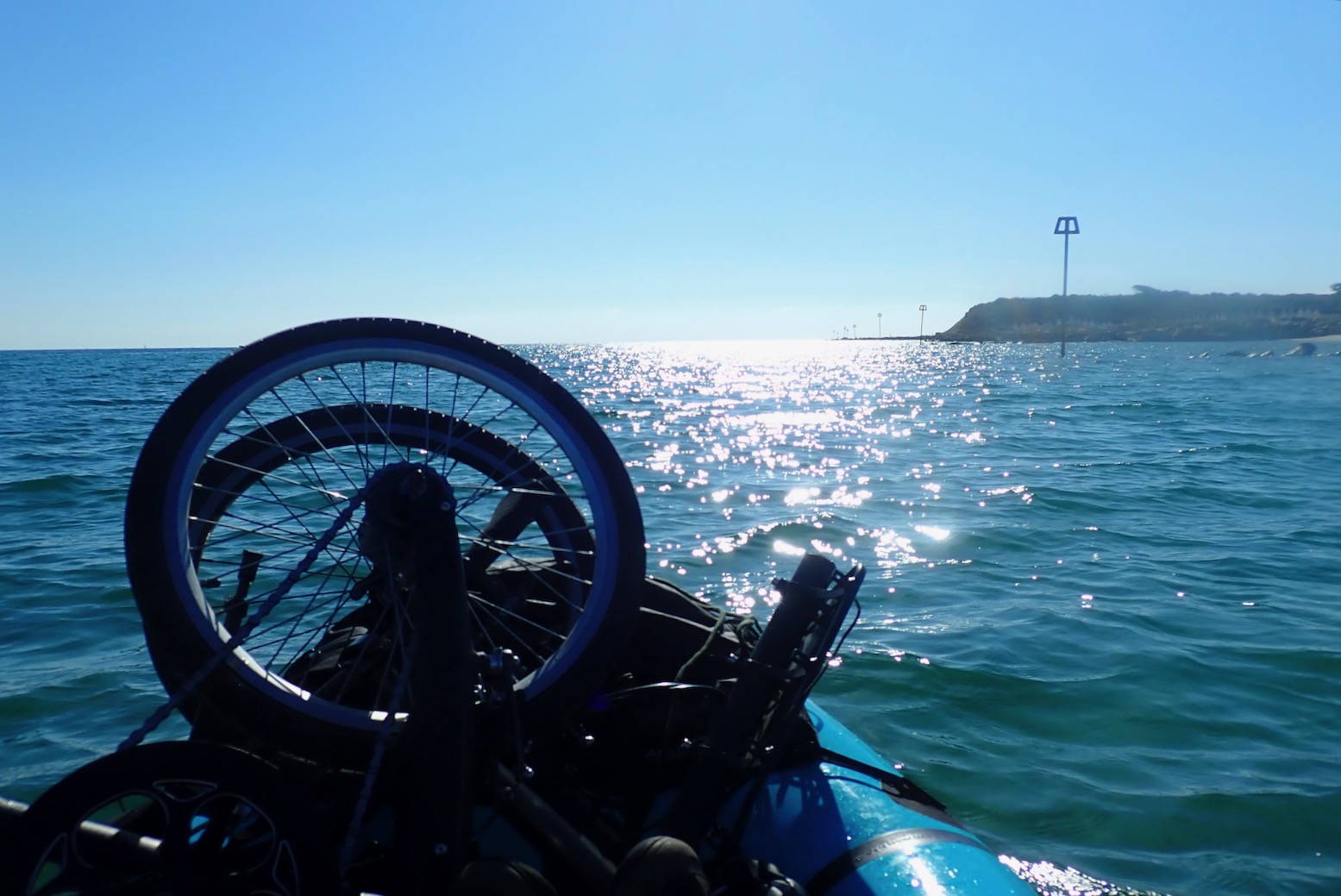
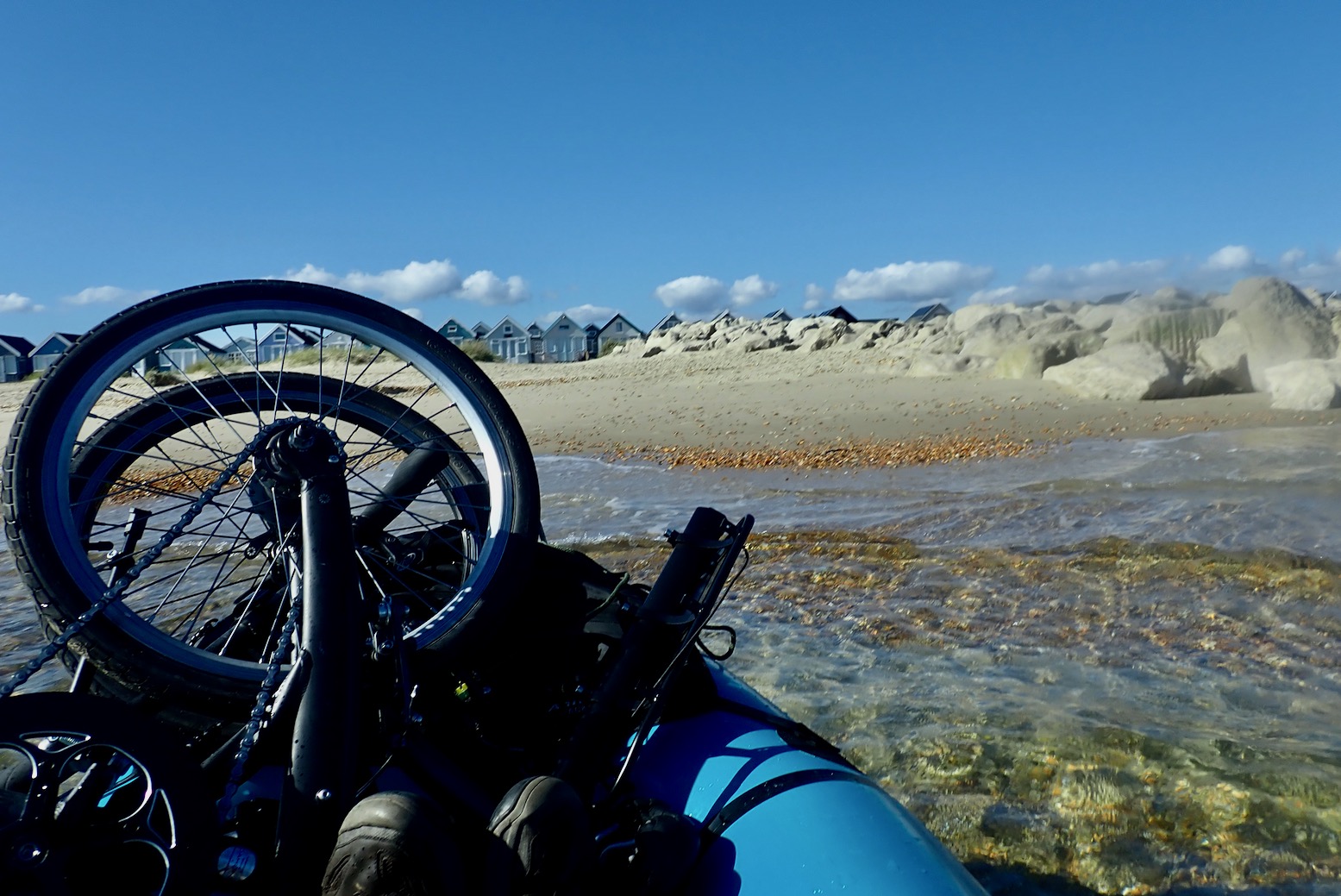
This time round I have a bigger packraft and a smaller bike. I pedalled down to the station and got a train to Pokesdown, a 10-minute cycle from Iford bridge (below) near the tidal limit of the River Stour. On the water I moved the seat back and dropped the folded bike at the front. Unlike a regular bike, the folded Dahon sits part in the boat so there’s no real need to strap it down on the long TXL. I put the bag under my knees and set off about 1pm on a rising neap tide (right) that was set to stay level in the harbour for the next few hours. Winds were 6-8mph from the southwest.
Iford bridge at the tidal limit of the River Stour
From Iford bridge, or Tuckton just downriver is a popular paddle boarding spot and a couple of women were putting in with me. You can see why. You soon leave any impression of urbanity and drift along between the lush trees with little other traffic.
Add the blue sky and all in all, these were as ideal packrafting conditions as you’ll get. The TXL feels a bit heavy with the 12kg bike, or I’m out of paddle practice.
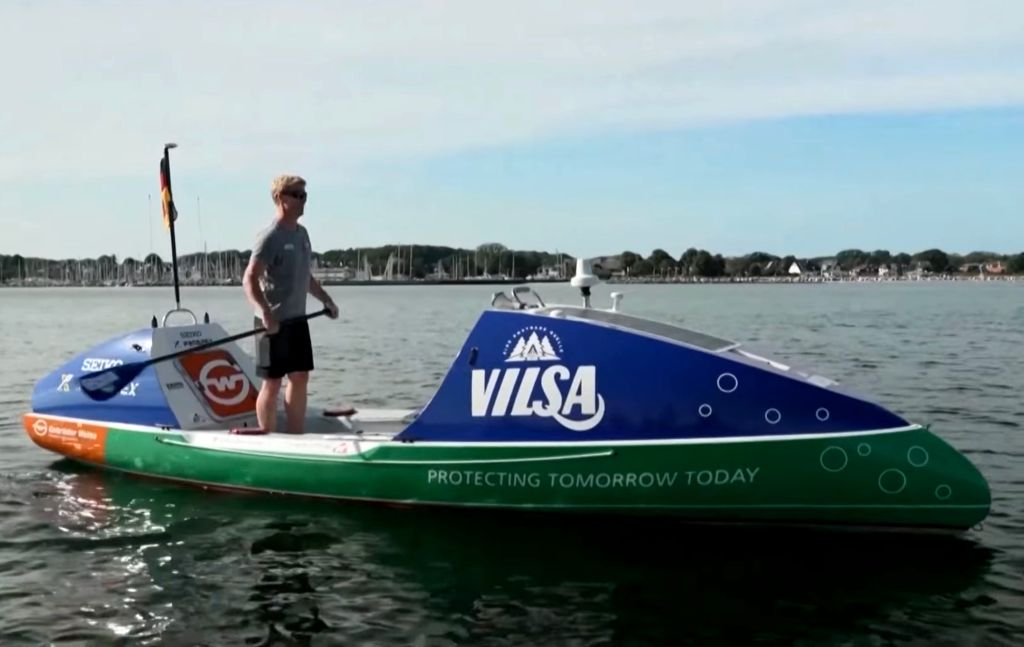
I pass a chap doing up an solo ocean rowing boat. It wasn’t this one which washed up nearby recently. Even with favourable currents and winds, it amazes me a single person can row a ton of boat across an ocean. But they can and they do.
I just read about Michael Walther, who adapted a similar boat to ‘SUP the Atlantic’. He set off from Spain and in two weeks covered 1150km to the Canaries averaging 3.9kph. Explanations seemed vague (boat damaged close to the port) but the trip ended there.
Soon rows of mega boats crop up with the the priory behind. Christchurch is like a millionaires’ Wareham.
Past Christchurch the land opens out. I sense the sea ahead.
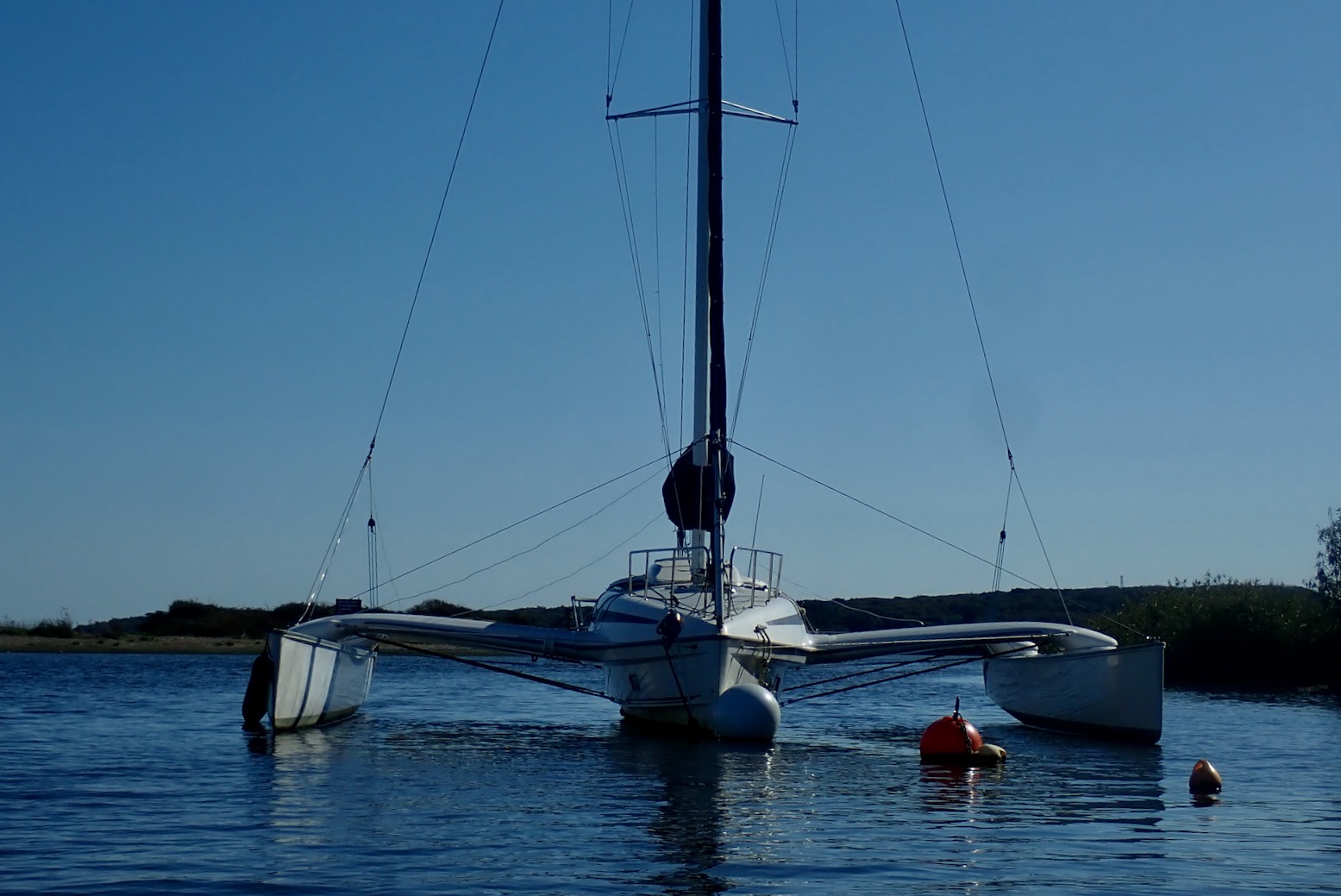
A lot of boat for a little space. But a lot more stable than a little Dahon Mu with a packraft on the back.
I stray too far north into the protected shallows with just six inches of water. The marked boating channel follows the harbour’s southern edge.
From Hengistbury hill looking north. Note the tourists train for the weary of limb.
The harbour’s narrow outlet at Mudeford Quay.
Mudeford Quay from the hill.
As I passed through the channel I was hoping to be temped ashore by the aroma of sizzling seafood.
No discernible tidal flow in the channel today. Out into Christchurch Bay it’s only 13km to the Isle of Wight
Wanting to string things out, I paddled south into the wind and tide towards Hengistbury Head. It felt a bit more fun to be pressed against the elements (knowing there’s only 10 minutes of it).
I take out at the last beach before the Head.
That was an easy and very enjoyable paddle. Only 8km over 90 minutes.
‘That’s a good set up you got there’ said a woman. ‘Yes it is’, I replied. The complete solution to amphibious mobility for the recreational enthusiast (I did not add).
I weave along trail across the beach
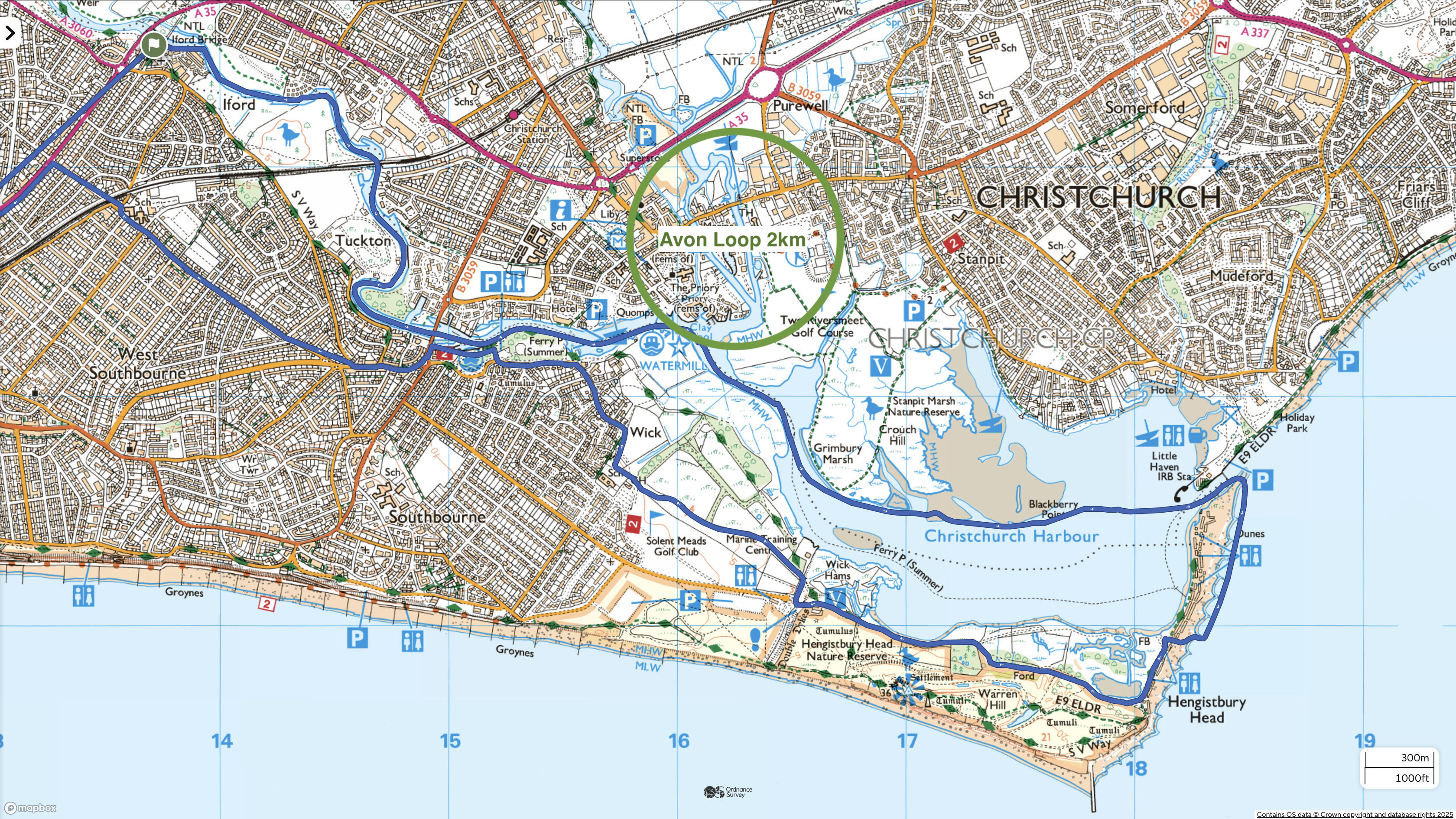
Harbour map. A fun place to explore with bike or boat or both.
It’s about 8km back to Pokesdown station, half of it on tracks.
Christchurch Priory and the water meadows, as not painted by Constable.
Only a tenner for 2 slices and a big cappucho. I suppose I needed the energy but that cherry slice had enough sugar in it to preserve a herd of dugong.
Looking at the OS map left, you might think it’s like packrafting through London, but nothing could be further from the truth. A tranquil, tree-lined river leads to a glittering inland marina and medieval church and a swan-speckled natural harbour beyond. Once out in the Bay, with the usual southwesterly you could carry on up the coast to Highcliffe, a couple of train stops up from Christchurch. Or with a higher tide, poke around the harbour. And just after the Priory, the Avon river comes in from the north. Someone suggested it’s possible to do a 2km tidal loop off the Stour and back. One for next time. Ironed out for some blundering around on the way back, that was about 18km from Pokestown station, with 8km of very enjoyable paddling. Without the bike it would have been a long walk back, though there is a summertime ferry from Mudeford Quay back up river. So this particular outing was well suited to bike rafting. With the wobbly payload, the comparative lack of stability, just two gears and the feeling I might snap something if I rode it like my MTB, the Dahon forces me to slow down. Not a bad thing. Next time on salt water, I might put it in a bag, so I don’t have to rinse and lube it back home, but I’m looking forward to more mini foldingbikerafting trips, where flatter roads and tracks allow.