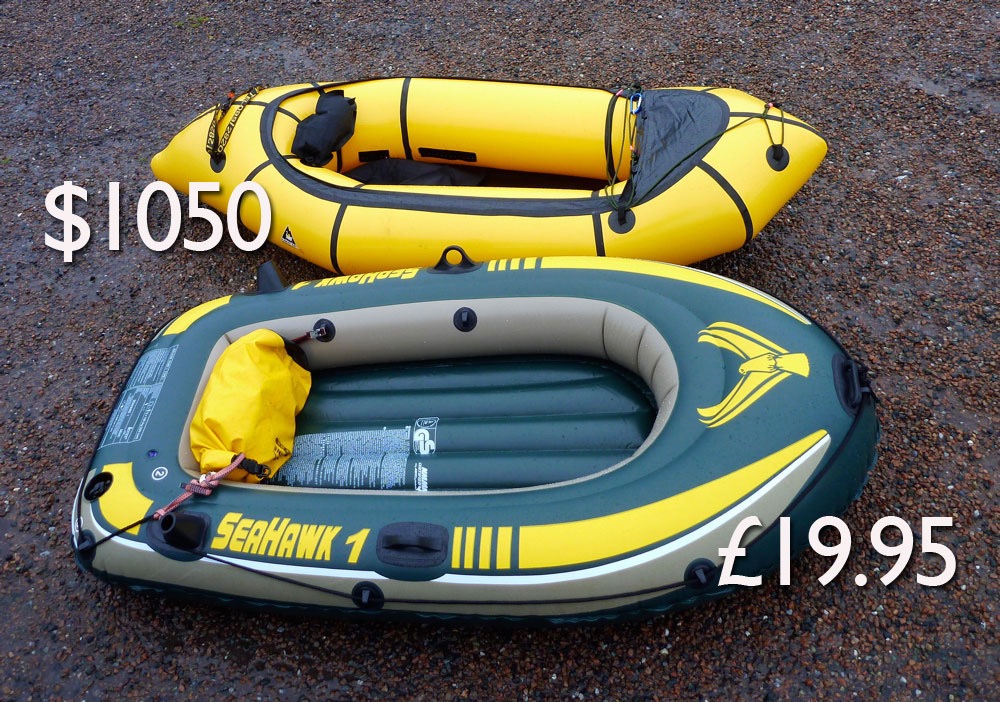
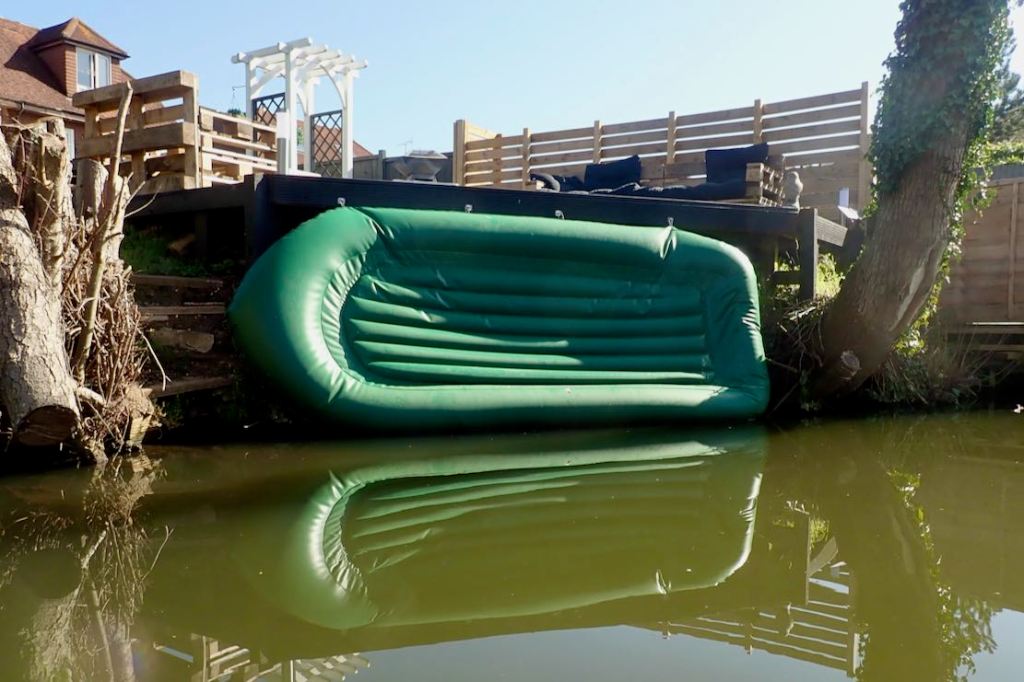
Remember Slackrafts? Around 2011 that was my made-up word from for cheap, vinyl, ultra-low-psi pooltoys using the same technology as children’s paddling pools. At the time they were some 3000% cheaper than the then dominant US-made TPU Alpackas (left), while looking vaguely similar to the paddle curious adventurer. For that price you really did wonder could there be so much difference? Experimentation proved the answer proved to be yes: a good TPU packraft is 3001% more enjoyable to paddle and 3002% more durable than a vinyl PoS.
Skinned SeaHawk results in minimal freeboard (Clashnessie)
Just before the subsequent Chinese-made packraft onslaught which must have just about peaked by now, Slackrafts was a dirt cheap way of trying ‘packrafting’ without the expense, responsive performance or durability. All you had to do was keep the thing from puncturing or bursting long enough to make up you mind. That might take a few hours or a few of days, especially once you cut off the outer chamber to make a slimmer, less bin-bag like raft (left) which retained adequate buoyancy for lighter paddlers. A decade or more ago various chums and I experimented with Slackrafts locally as well as in France, Scotland and remote northwest Australia, chartering a light plane to the headwaters of the Fitzroy, Australia’s longest river.
Fast forward to 2025 and YT algos led me to a bunch of Parkouriste youtubers called Storror with no less than 11m followers. In 2024 they set off in a boat-train of Intex and BestWay slackrafts for a paddle-less drift along the swiftly flowing Canal de la Toba, a hillside waterway of viaducts and spooky tunnels paralleling the Rio Jucar in Cuenca. The Toba starts near the town of Uña, midway between Madrid and Valencia, providing a reliable feed for a power station down the valley.
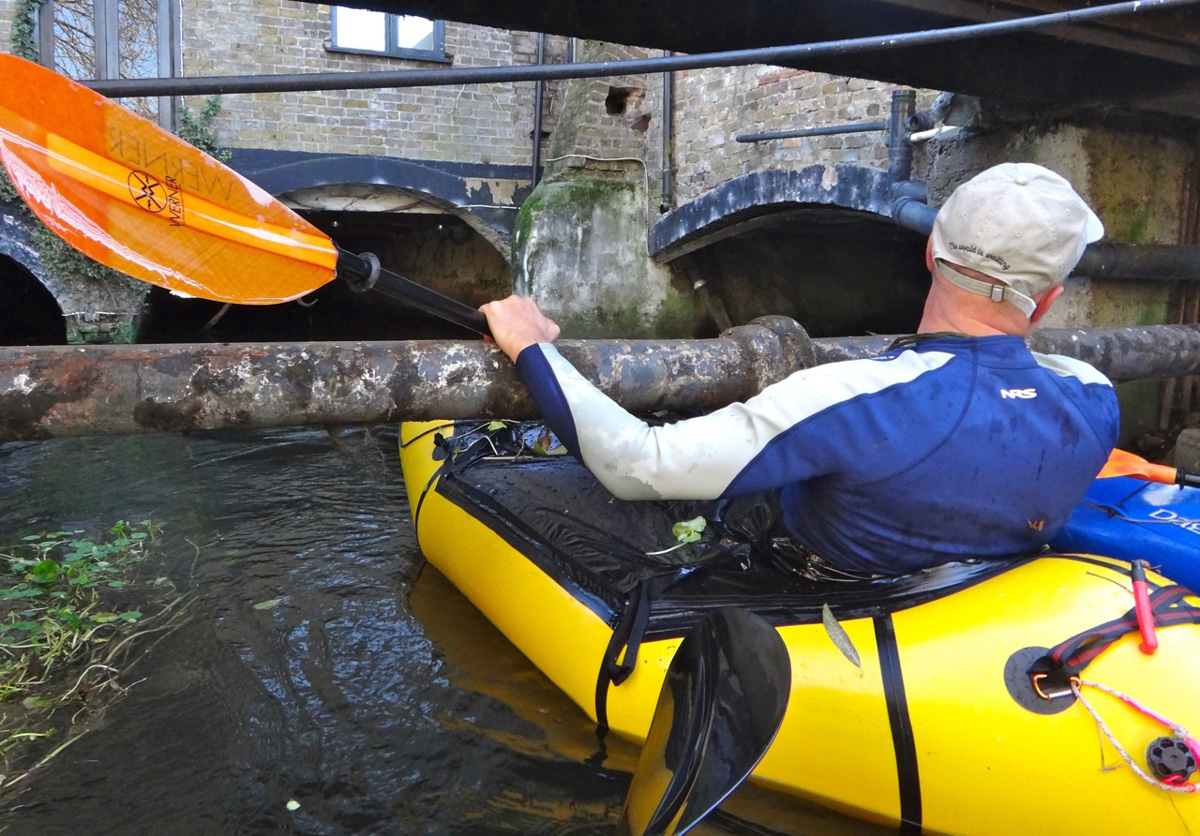
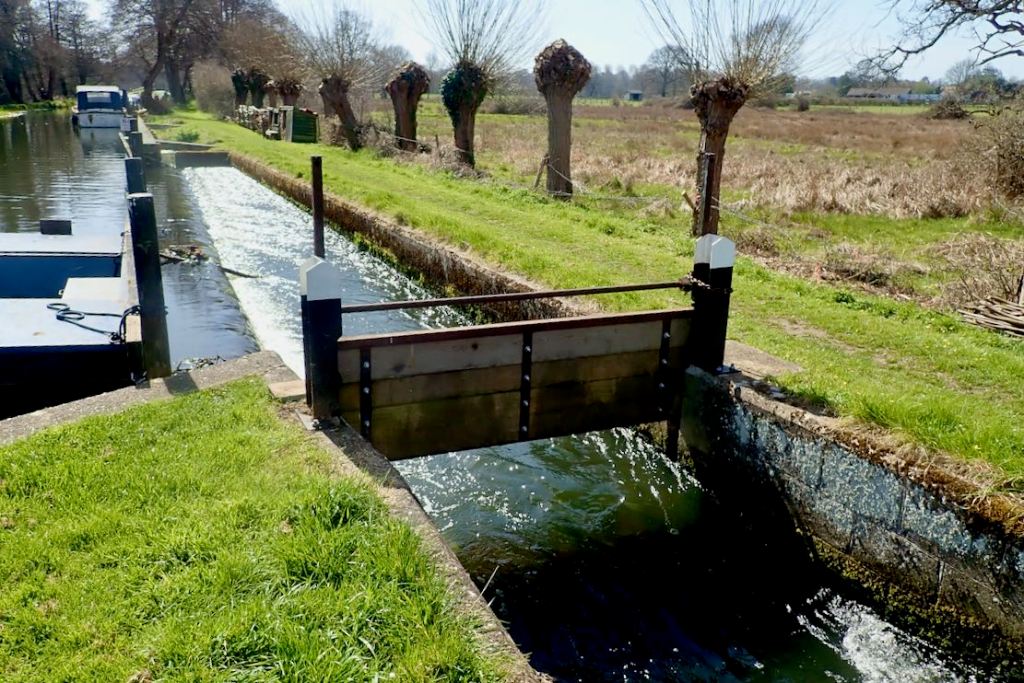
The Canal de la Toba is very much not a recognised recreational paddle backed up by a leaflet in the local tourist board. In fact it’s almost certainly illegal or severely discouraged and could be deadly – like many of Storror’s hugely popular parkouring stunts – or indeed the Kebab Death Tunnel Weir (above) on a bad day.
At one point just before entering a long tunnel they realise that using these rowing rafts backwards, with the thinner, flat-ended stern in front, puts your mass in the much more buoyant ‘bow’, so eliminating annoying back-end swamping when slowing down or when a breeze-driven wavelet passes by.
Jeff on the Fitzroy, stern first in his loathsome BestWay slackie.
Going blunt end down does nothing for hydrodynamics, steering or speed, but in the vid the floaters let the canal’s current do the work 12km to the ‘meat-grinder’ grill at the canal’s end, above Villalba de la Sierra. The entire cost of Storror’s seven-boat flotilla was still probably less than the cheapest TPU packraft you can buy today, and like many of the best filmed adventures, it came across as less dangerous than it looked. In a packraft it might have been too easy but let us take heart that the Spirit of Slackrafting lives on.
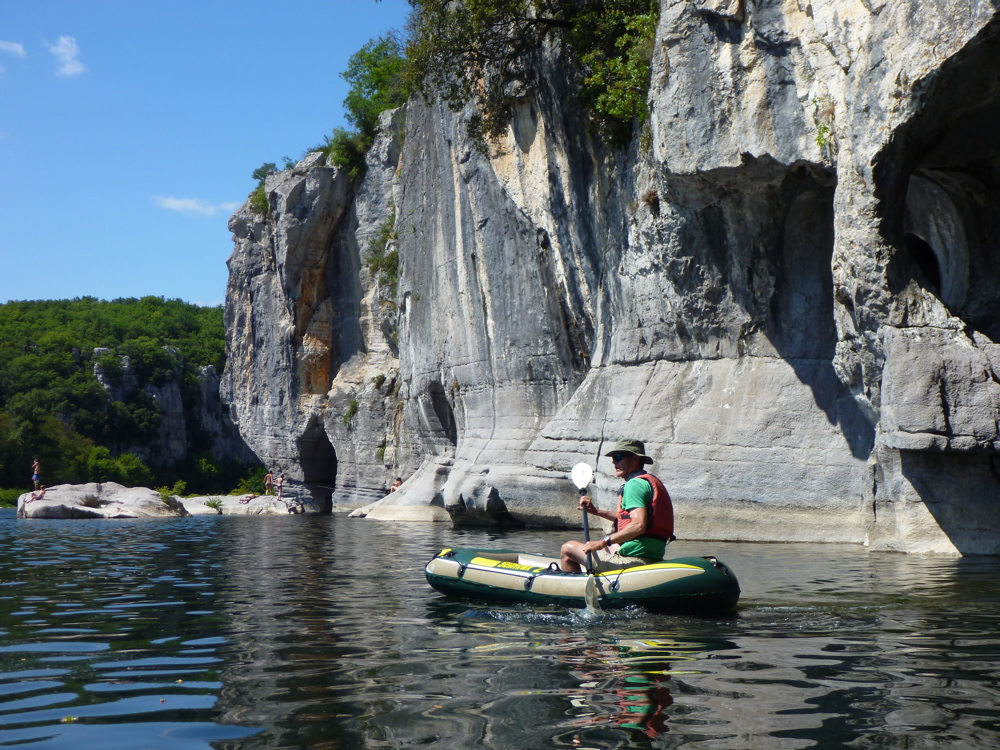
Slacking down the lovely Ardeche. Within a few days the raft was in a campsite dumpster.
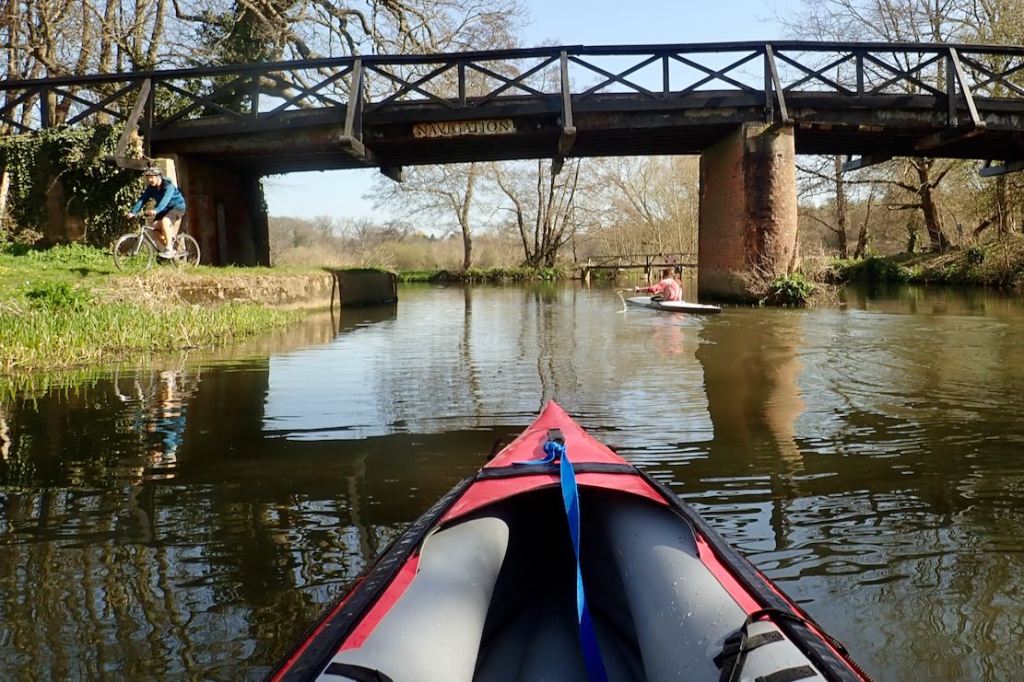
One of England’s first navigations, dating back to 1653. That’s probably why this historic canal feels quite natural and river-like, apart from the virtual lack of current.
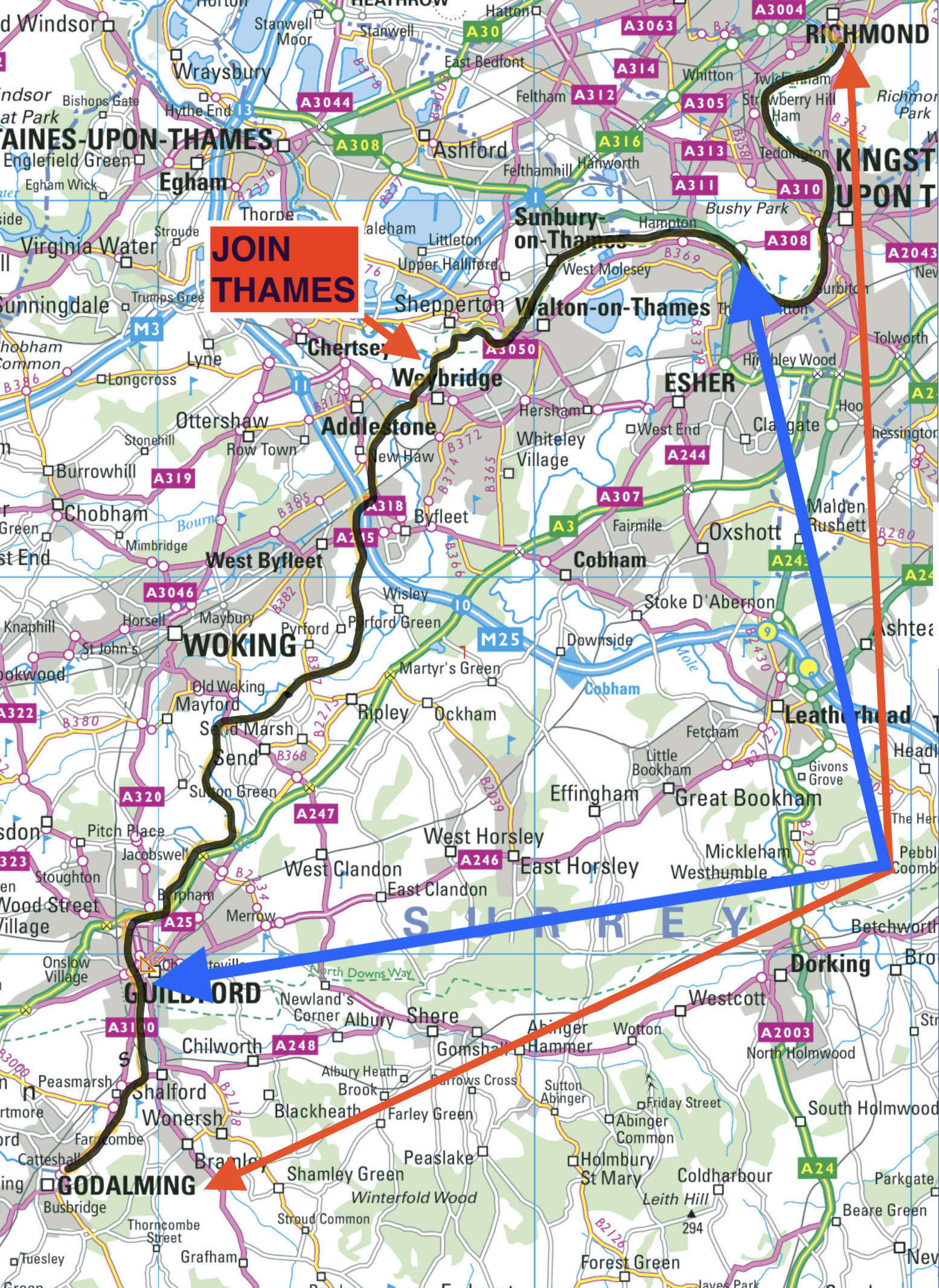
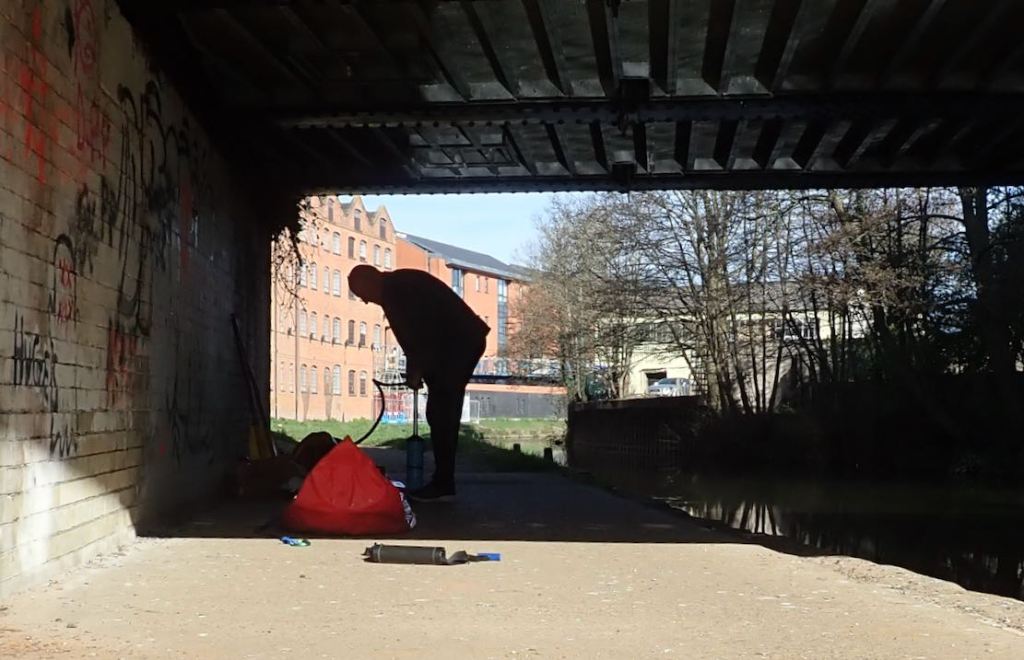
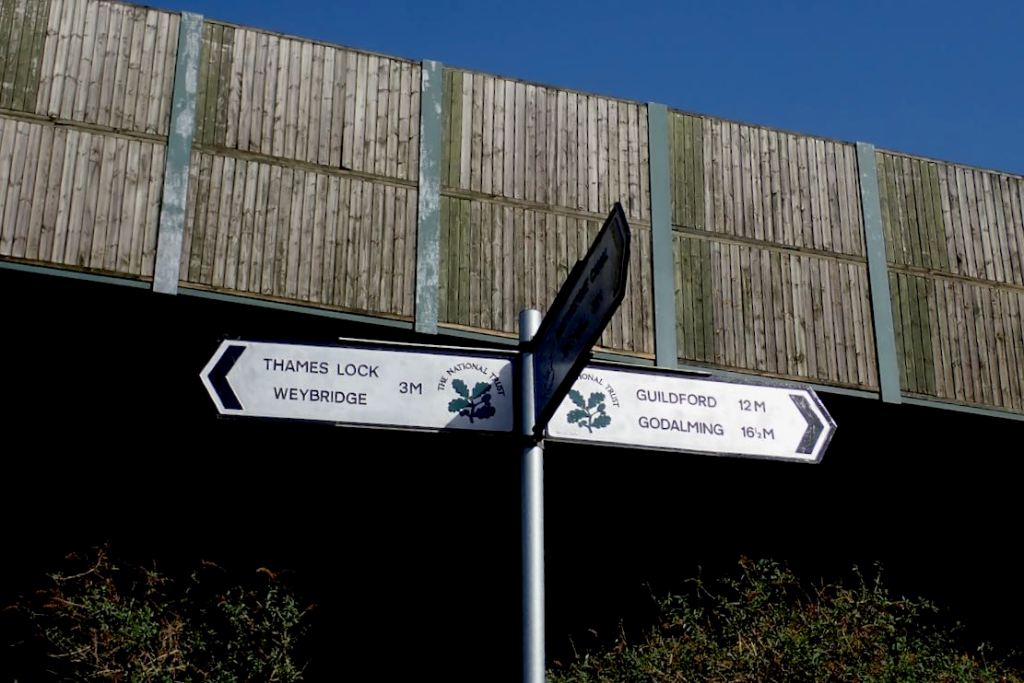
All hands to the barrel pump! The day will be long, sunny and warm. High time to tick off ideas matured over the winter months of Lockdown. First on the list: the River Wey from Godalming to Weybridge in Surrey. Or should I say, the historic canal called the Wey Navigation which is paralleled in places by the old river. It’s one of England’s oldest navigations (commercial inland waterways) which once connected the Thames with the Navy base in Portsmouth. At the time a safe way of transporting stuff, including munitions produced near Godalming, without risking encounters with Napoleonic marauders in the Channel. For years I’ve been unsure whether the Wey was a dreary canal with more locks than the Tower of London, or a grubby, semi-urban river with weirs and other obstructions. Turns out it’s a bit of both but better than expected. All I had to do was RTFM!
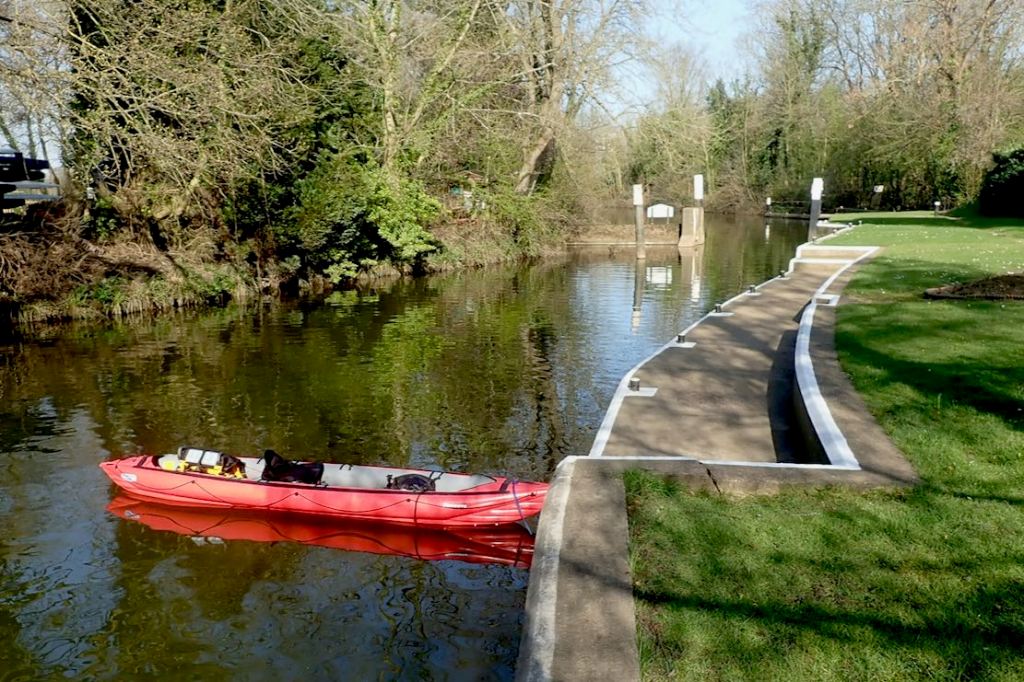
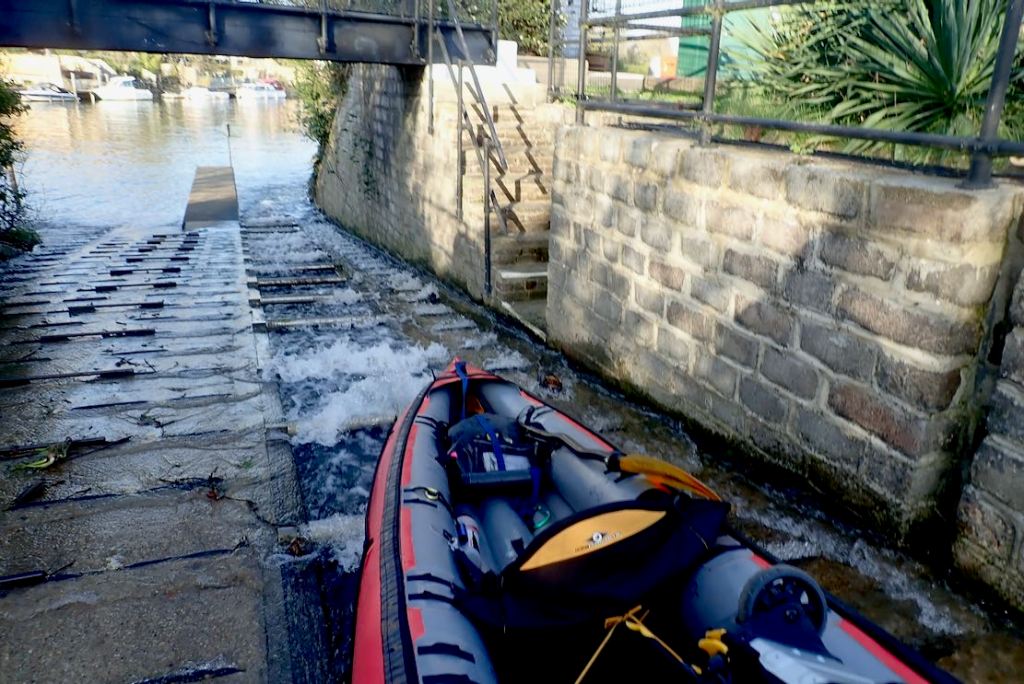
Compared to the similarly popular Medway, which I’ve done loads of times in IKs and packrafts, summer and winter, the Wey Nav feels less agricultural, more scenic and has an interesting history if you slow down enough to look. But it lacks the Medway’s unique canoe passes which scoot you down the side of each lock (right), avoiding up to three laborious carry-rounds per mile. Parts of the original river survive in places to either side of the canal, which is what caused me confusion. I now realise the Navigation (managed by the National Trust) gets priority in terms of water levels and maintenance. As a result the occasionally nearby River Wey might be shallow or chocked up with fallen trees or rubbish. But you can combine both to make loops like this.
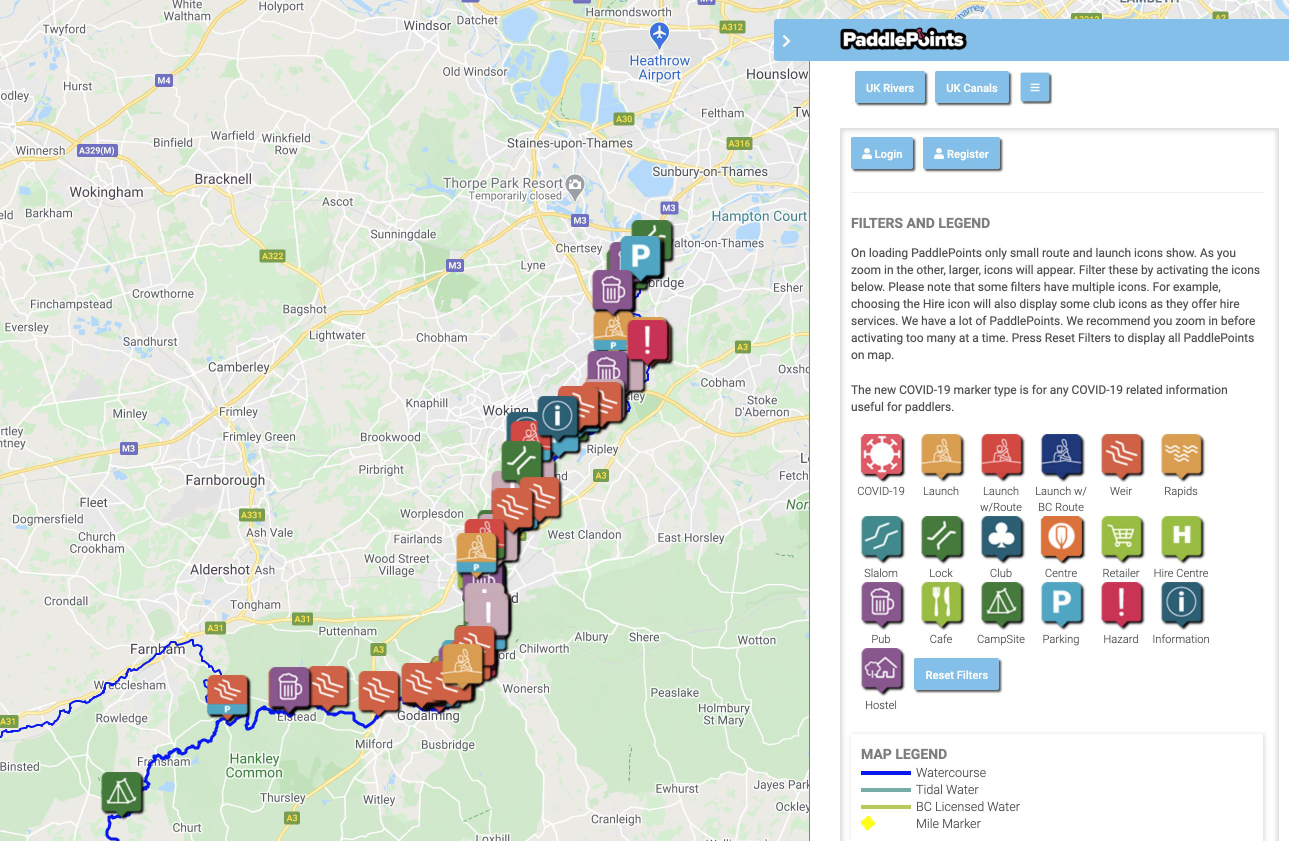
Because of the Wey’s multiple channels and numerous weirs and locks, I tried British Canoeing’s PaddlePoints website, a comprehensive database of paddleable river map routes with handy icons (above) for put-ins, parking, hazards like fallen trees, feral teenagers (I’m not joking) and so on. You can reset to delete extraneous icons (‘Covid-19’ ?); I just wanted to clearly locate the locks and weirs and river’s branches, though on the day ‘Navigation [this way]’ signs at junctions were clear. Closer scrutiny of the map shows that in places the blue line guides you along the old, choked-up river, not the Nav, and not all weirs (an important feature to know about) are shown as icons, even when they’re clearly evident on the Sat view underlay. And so the Map view (as above) can give a misleading impression of which way to go. As you’ll see below, at one point the blue line even guides you over a weir. Common sense prevails of course, but you can imagine some beginner clutching their PaddlePoints app on Map view getting sucked into a weir. I realise now this content is user-generated like OSM or Google Maps, and so errors, inconsistencies and lack of moderation are inevitable. As such, you can report icon-points, but it’s unclear if the route (blue/green line) can be corrected by users. If nothing else, PaddlePoints helps identify which rivers you’re allowed to paddle in England and Wales, and what the rules there might be.
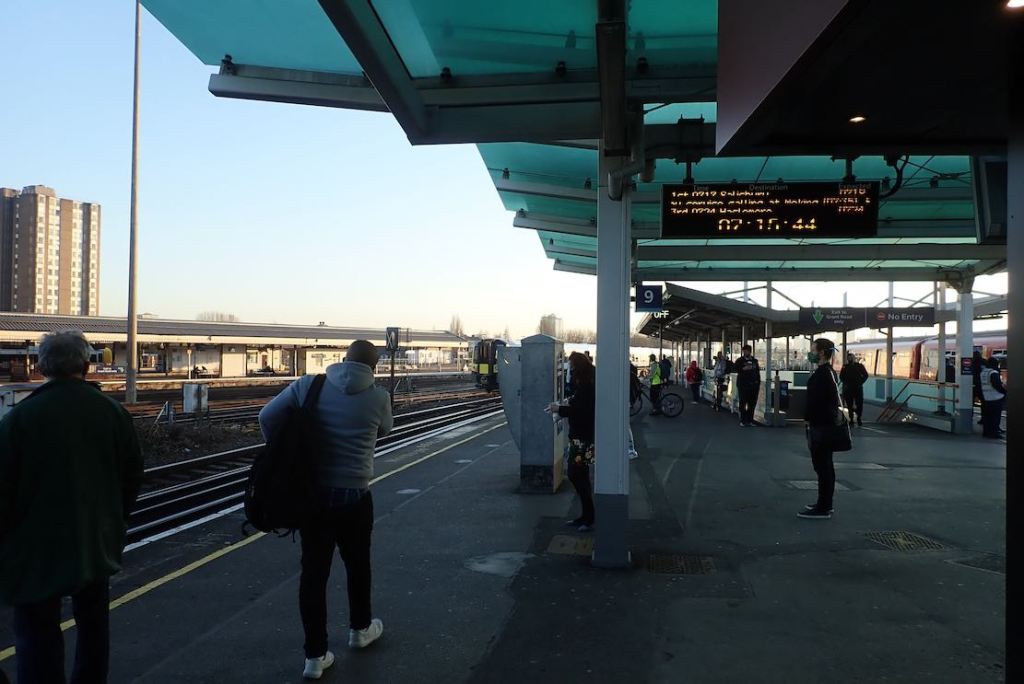
I fancied a full dawn-to-dusk recce: as much as I could fit in from Godalming (where most paddlers start) before my tank ran dry. I might even reach Richmond on the Thames, a section I enjoyed last December in the Arrowstream. That is actually quite a haul: 20 Weymiles plus another 15 on the Thames, including no less than 17 lock portages on the two rivers. But the great thing about ending a paddle in an urban area is I could air down when I got worn out and rail home. Thirty-five miles? Dream on, bro! I’ve only paddled two days since September so was far from paddle fit. Then again, the pre-dawn brain wasn’t on top form either: I set off in the right general direction, but on the wrong train.
Oh! Mister Porter, what shall I do? I want to go to Godalming And they’re taking me on to Hoo [k], Send me back to Woking as quickly as you can, Oh! Mister Porter, what a silly boy I am!
After backtracking, I decided to catch up with myself at Guildford, 5 miles downstream of Godalming and missing out 4 of the Wey’s 14 locks. I dare say I’d appreciate that later.
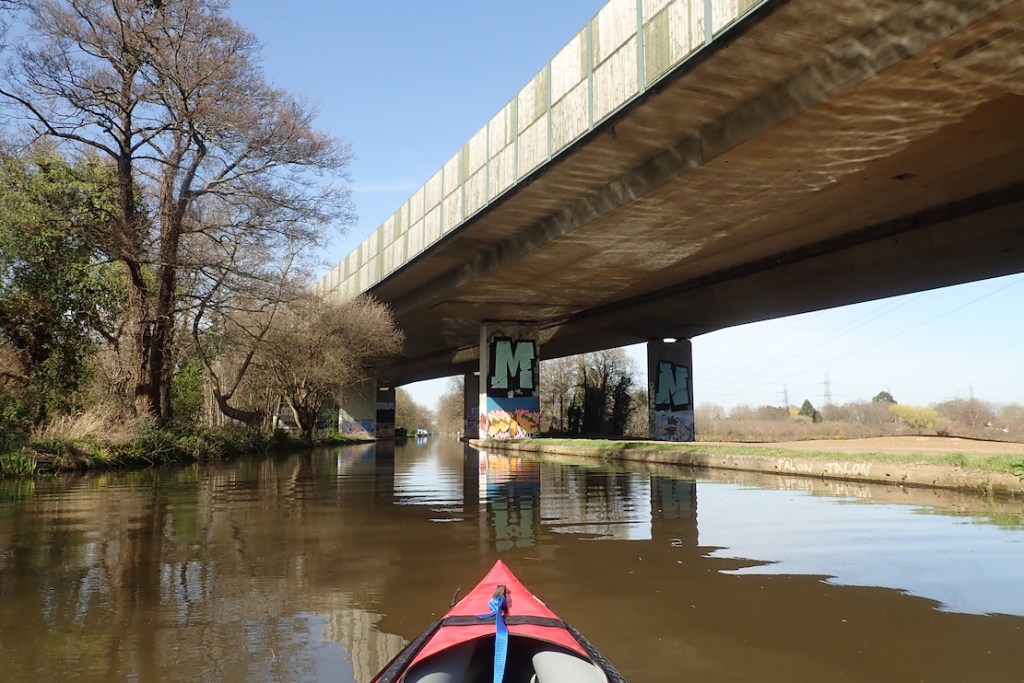
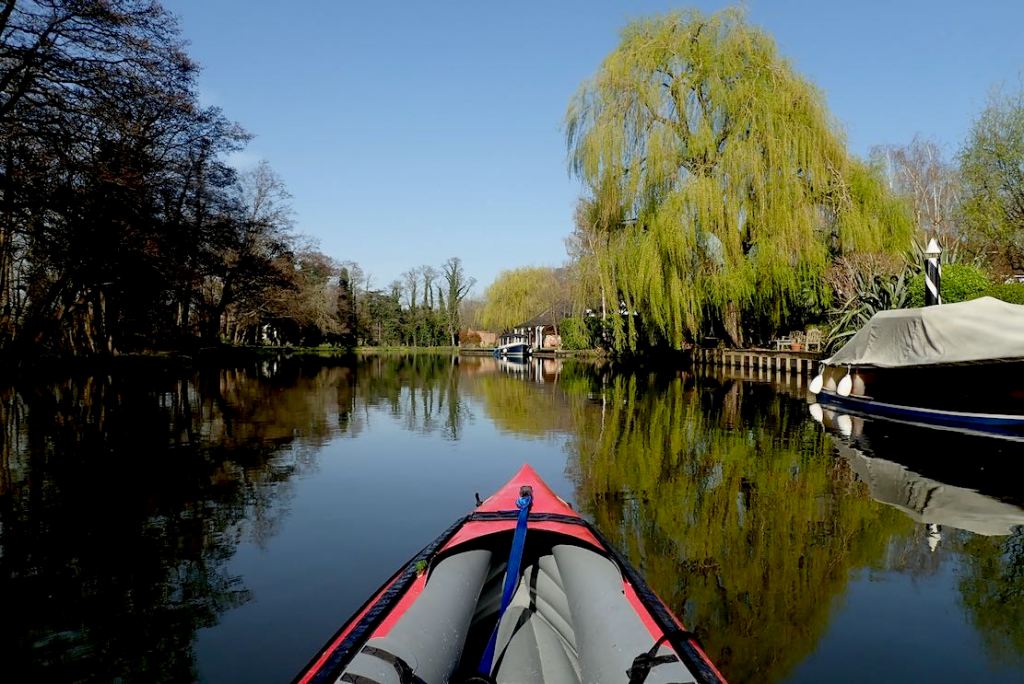
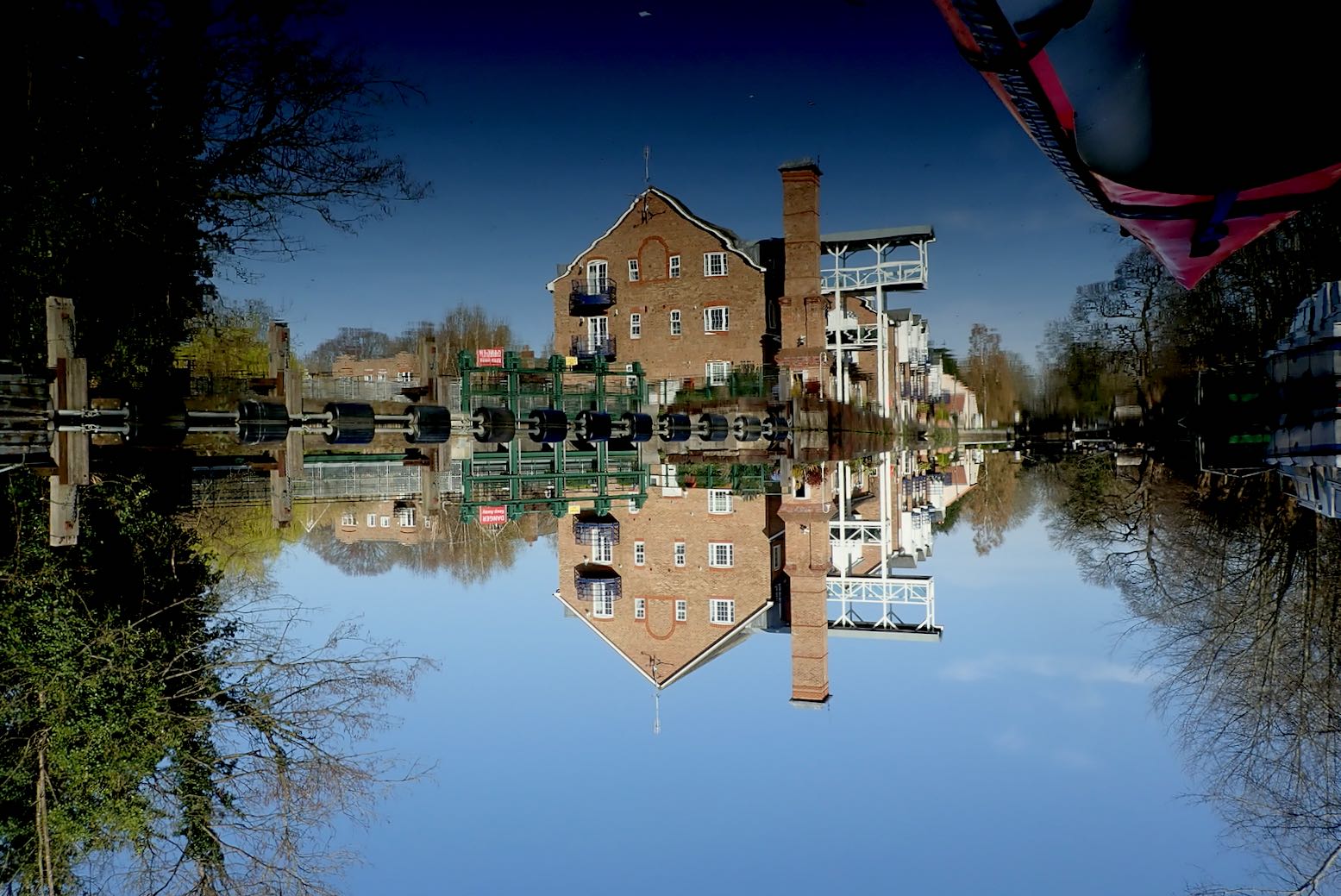
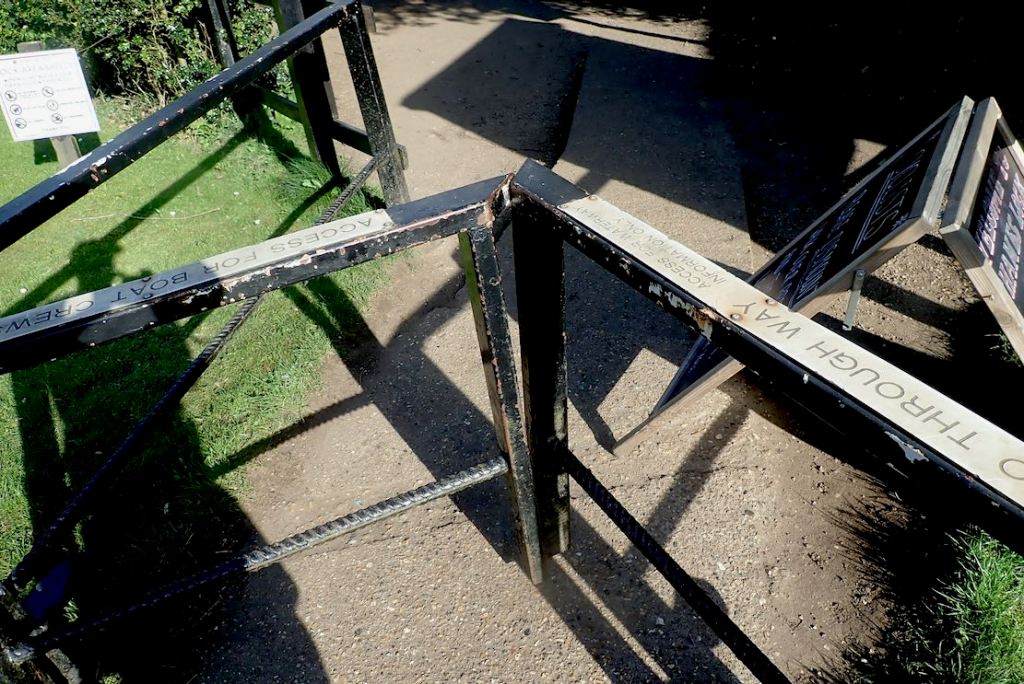
Clapham at 7am. It’s all a bit of a blur.I practise luggage distancing.In Guildford I slip onto a closed towpath and enjoy a quiet set-up without the usual ‘Oh Mr Porter, is that one of those inflatable canoes? I’m thinking of getting one…’Just around here I realised I’d left my Garmin out in the sun to catch a signal… Should have gone to Starbucks. I’m trying out some old runners as water shoes instead of my usual Teva Omniums. Do they really believe this or is it just juvenile baiting?A readable GPS in the net pocket of my Anfibio packraft deck bag didn’t really work on the Seawave. As usual I have a better idea.Alternative use for a big slackraft.At Bowers Lock I spot my first Intex of the day, a 100-quid of K2 Explorer on its maiden voyage with daughter and dad.Under an old bridge a real K1 belts past with barely any wake. Looks like fun but what happens when she stops? Same as the bike on the left, I suspect.As canals go, not so bad.Triggs Lock. With a little work this side sluice could be a fun canoe chute (lens finger shows scale).All they need to do is get rid of the guillotine and add a galvanised chute at the end. How about it, National Trust? It would be like turning Downton Abbey into a Discount Carpet Warehouse!Soon after lunch at Papercourt Lock I pass two chappies also heading for Weybridge in something called a Sea-Doo. Flip yer paddle round, mate, you look like an amateur!Not another lock, TFFT! Just some general-purpose gates to hold back Viking raiding parties.At this scenic and willowy point the canal runs right alongside the M25 London orbital motorway. The tyre noise is like Niagara Falls.Mile 12 at Basingstoke canal junction. By some civil engineering synchronicity the M25, Wey Nav, Basingstoke Canal and a railway mainline all cross or meet at this point. In its way it demonstrates the history of post-medieval commercial transport: rivers > canals > railways > highways and airplanes. That’s my MA thesis, right there!At New Haw Lock I need water but the lawn-mowing lock keeper says there’s no tap for a couple of miles. It’s an awkward portage over a narrow road bridge too. Luckily, this chap helps me out. Thanks, chum!Coxes Lock with a doable weir to the side. I may try it next time and risk censure from the NT.Well, according to BC’s PaddlePoints website, that’s the way to go!Weybridge Town Lock. Another awkward portage over a road bridge on the left.In places the Weybridge backwaters look like an Everglades retirement village.As I approach the Thames Lock at Weybridge things get wobbly and I have an out-of-boat experience.Amusingly lock-themed gates close the footpath so us portageurs can pass.Finally at Thames level, hallelujah. And there’s a tap set into the jetty too. I drink like a camel then me and the boat have ourselves a wash.Over six hours from Guildford, but even with a drink and food to spare, I don’t have another three hours in me to reach Richmond. Maybe I can do two hours to Kinsgton. Now on the Thames, I become a great admirer of roller portages.The game’s up at Hampton Court Bridge if I’m to have enough energy to roll up the boat. The station is right there. It’s a warm evening on the Thames and they’re all out in boats and the riverside parks. The [Covid] Rule of Six? Do me a favour! The skiffs collect bird poo while two lads fire up their Intex Challengers. I’ve seen more Intex IKs today than anything else. Why? Because they cost from under 100 quid, float just like a Seawave but track like a barrel.And he may be saying to himself: ‘My god, what have I done?’Dusk back at Clapham Jct. All up, only 21 miles. I blame ten portages, no resting and my nifty but 3-kilo Ortlieb roller duffle. With too much food, it all made the boat just a bit too heavy to carry easily. Where the lock-side grass was lush I dragged the boat, but I have a better idea.
Just before the GPS packed up at Basingstoke canal junction, I was averaging 5.5kph on the move. Pretty good with no current to speak of. On the livelier Thames I estimate I was moving at up to 10kph before I withered. Same as in the FDS Shipwreck in December. My tall BIC backrest (below left) initially felt great then collapsed on itself. Usual story: needs a stiffer insert. I was trying out my new footrest tube attachment points which worked great. Only when one heat-welded strap broke near Addlestone was I reminded how essential footrests are to comfort, efficiency and stamina. I jury-rigged something up between two D-rings which have been staring in the face all this time.
My 2021 Wey Survey of UK Paddling Trends
Hardshell canoes: 1
Hardshell kayaks: 1 (+ 2 K1 racers)
Hardshell SoT: 1
Vinyl IKs (cheapies): 5
PVC (bladder) IKs 3
iSUPs: 10+ (mostly women on iSuPs, too)
PFDs worn, almost none then again, mine’s more of a handy waistcoat)
FDS spotted: none (interesting as readers here are mad for that page)

















 Inflatable Kayaks & Packrafts