Tag Archives: myo packstaff

Suilven packrafting

sulpakmap

Not much time for paddling at the moment, but with a staggering three days of cloud-free skies while the south had its traditional wet bank holiday, we had to down tools and go and do something. How about another walk over Suilven and paddle back – was last time three years ago already? The motorbike was left at Inverkirkaig, so this time it was just a paddle-and-boot  ‘biathlon’.

sulpk01

With the car parked near Glencanisp Lodge, it’s about a 2-hour walk along the estate track to the turn-off leading up to Suilven saddle. On the way we pass Suileag bothy where Jon and I overnighted in May, tackling an Assynt variant on the Cape Wrath Trail.
sulpk02

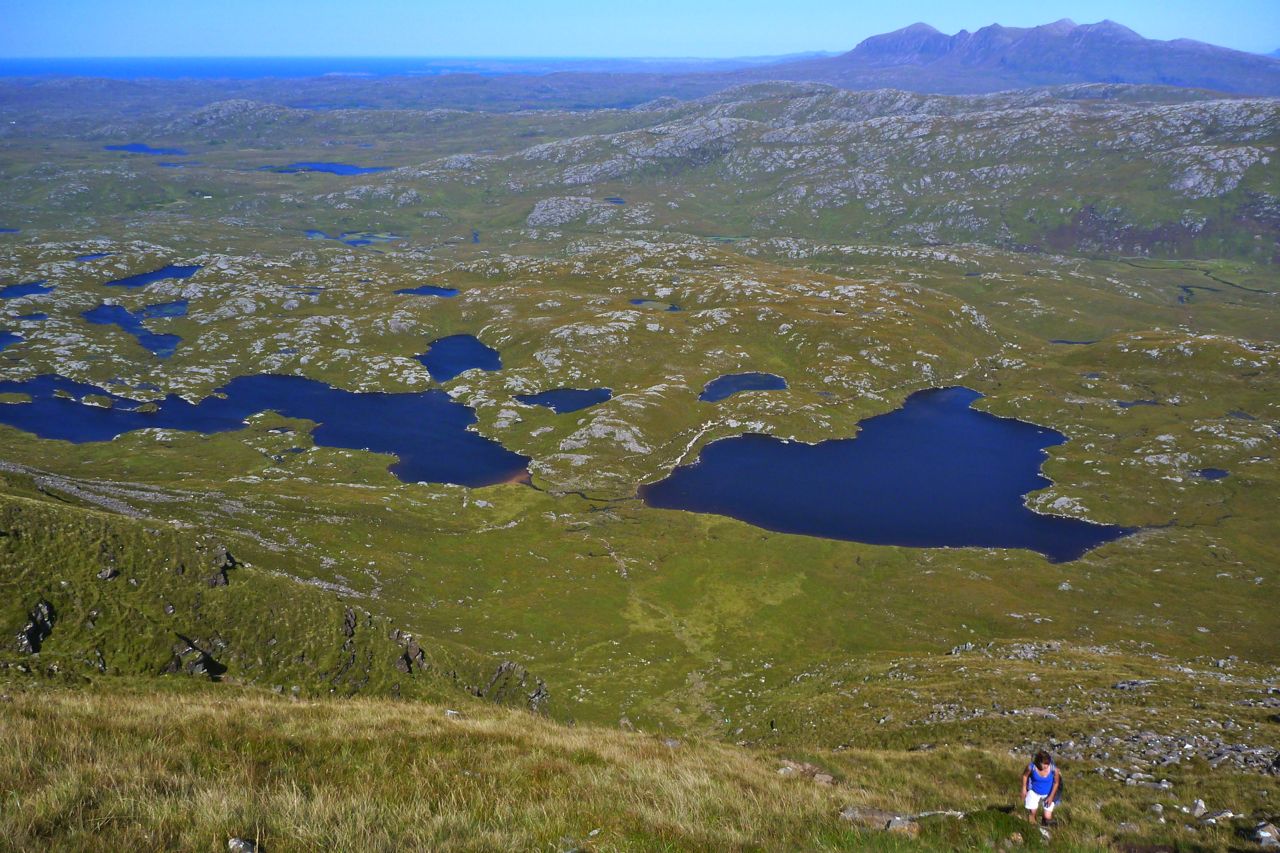
It’s only a mile and a quarter from the estate track to the saddle, but with the 430-metre rise, it takes up to an hour. The washed-out last few feet onto the 600-metre-high saddle are on all fours. Above at the back, Quinaig, one of the best of the Assynt mountain walks. No packraft required.
sulpk02a

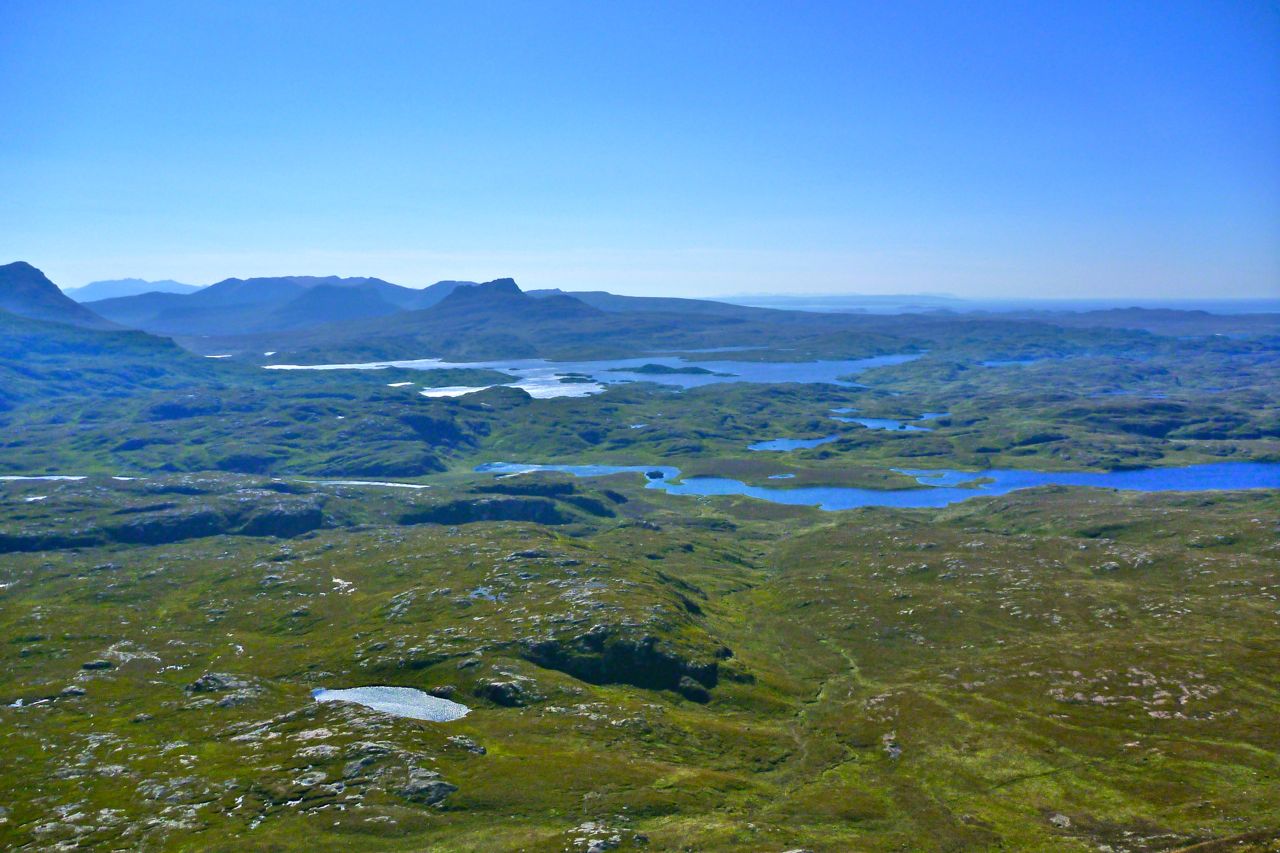
At the breezy saddle it’s quite busy – well, ten people or so – so we decide to lounge around and not visit the 731-m summit, nice grassy spot though it is. Far down below on Fionn Loch, we think we can see three canoes heading upstream towards the canoe camp alongside the rapids (more or less the middle of the picture, above). But they’re moving so slowly, for while I thought I was mistaken. Soon we’d realise why they were creeping along at about one foot a second.
sulpk03

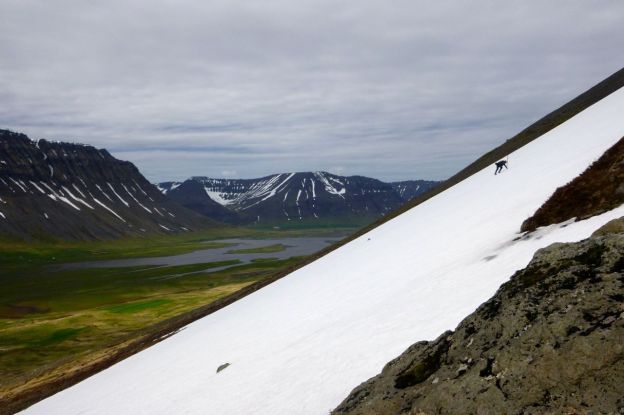
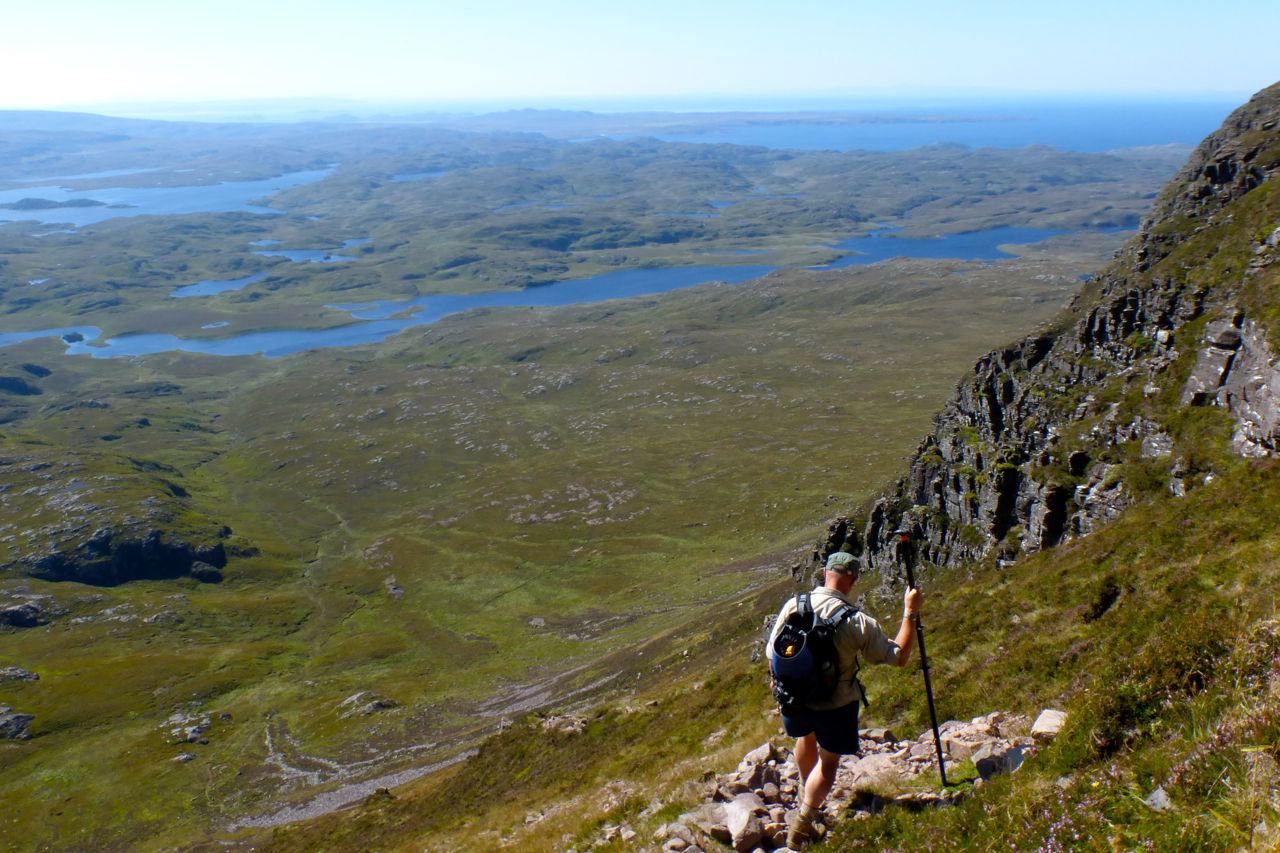
We set off down the exceedingly steep south side of the mountain.
sulpk04

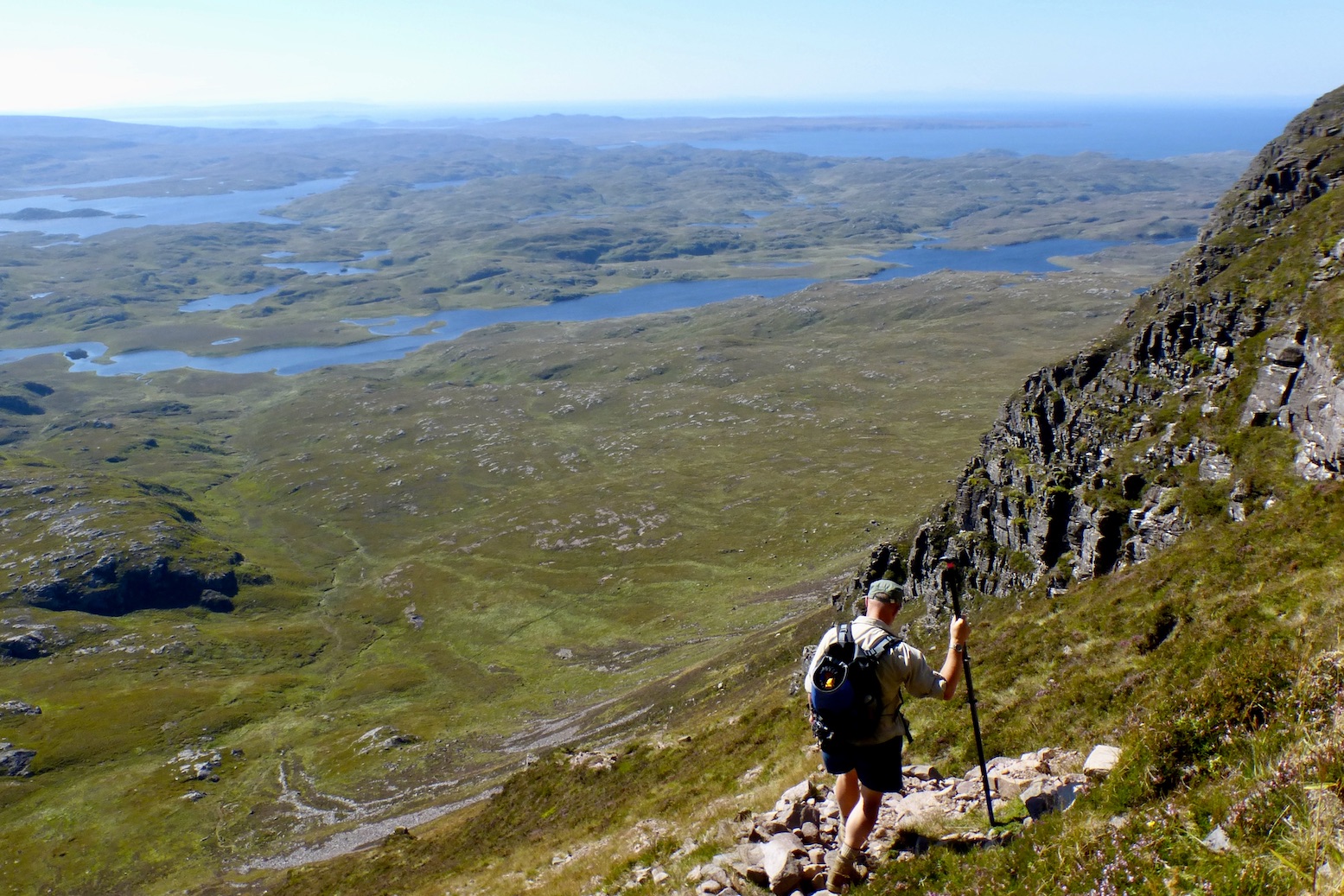
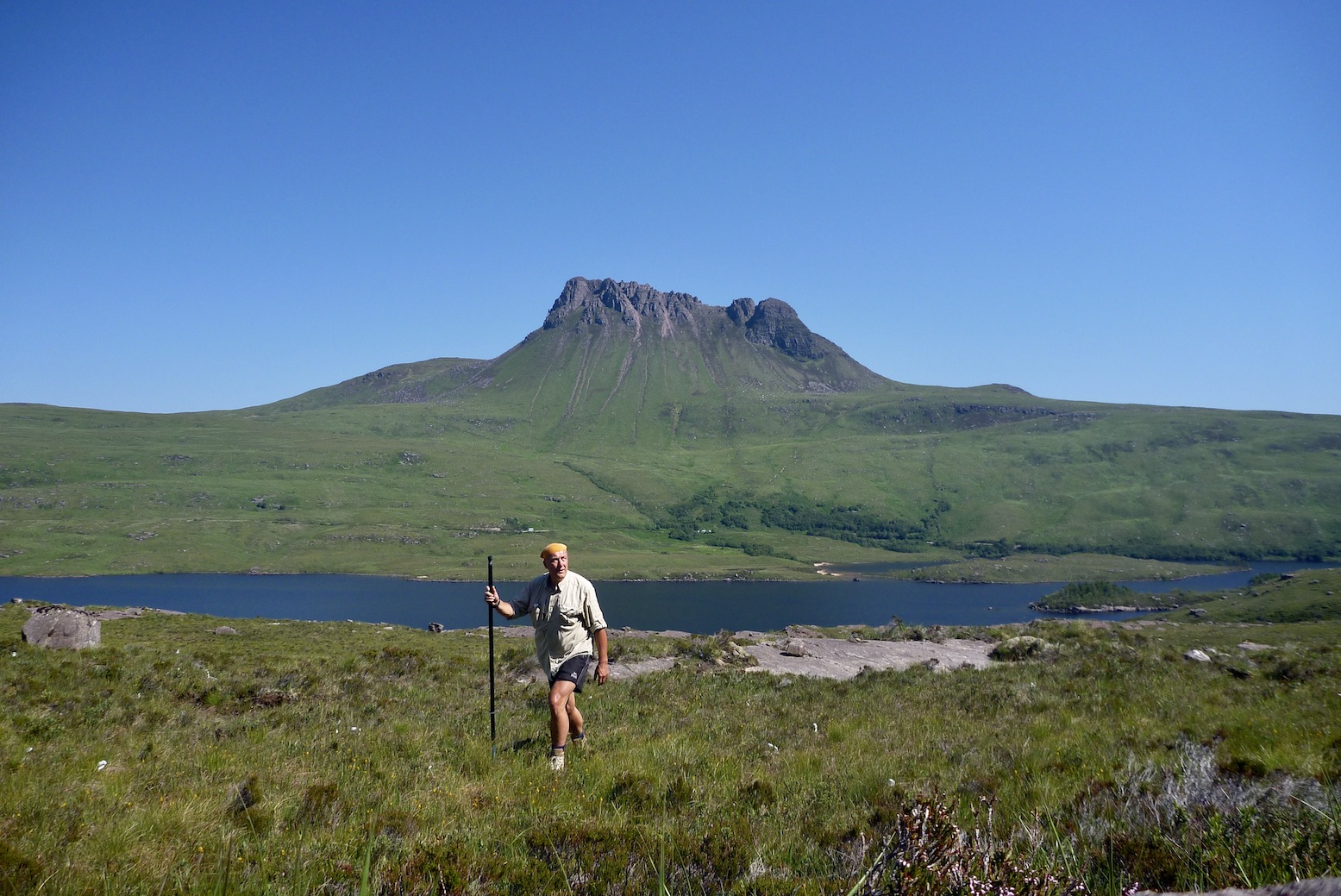
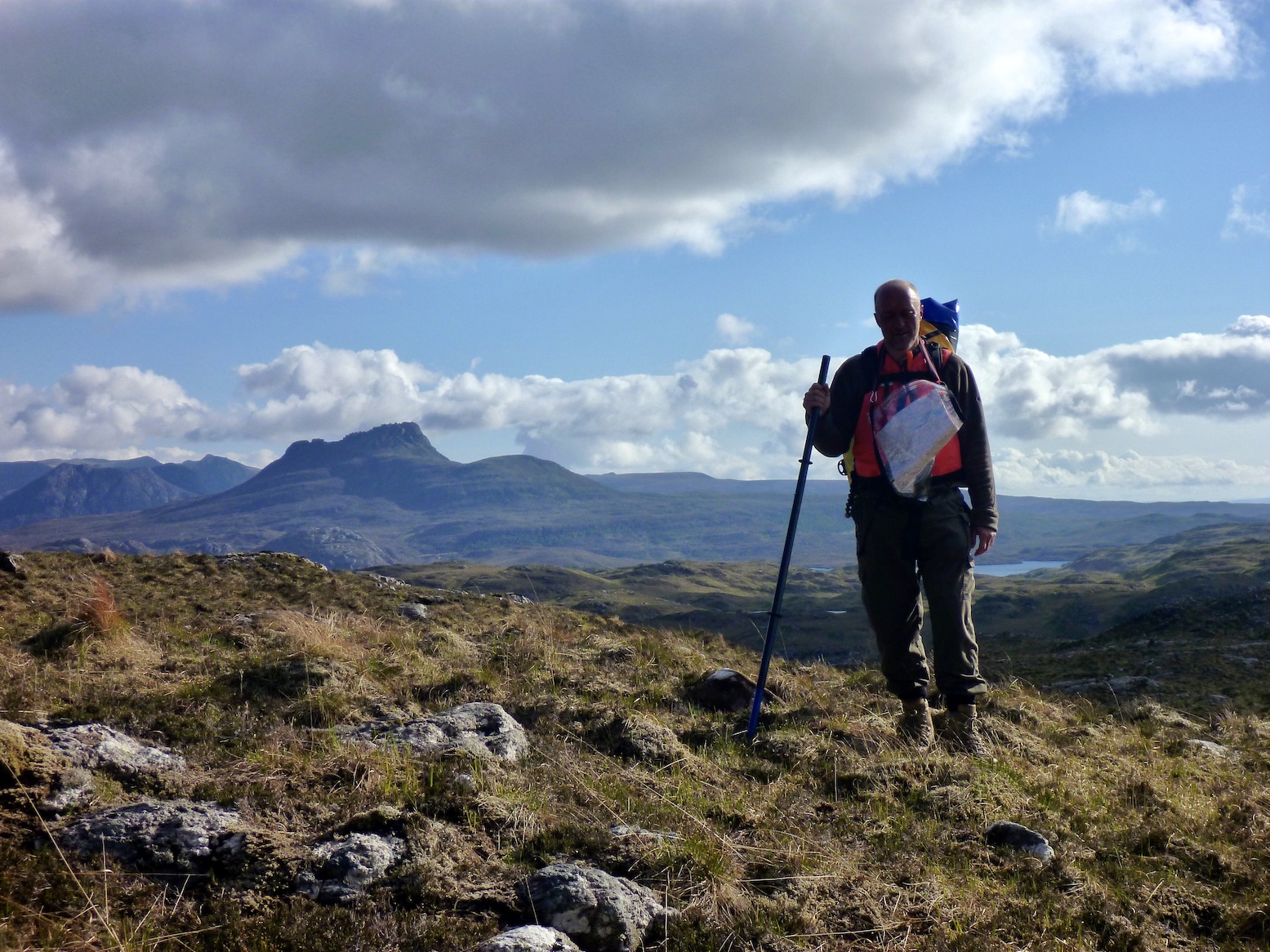
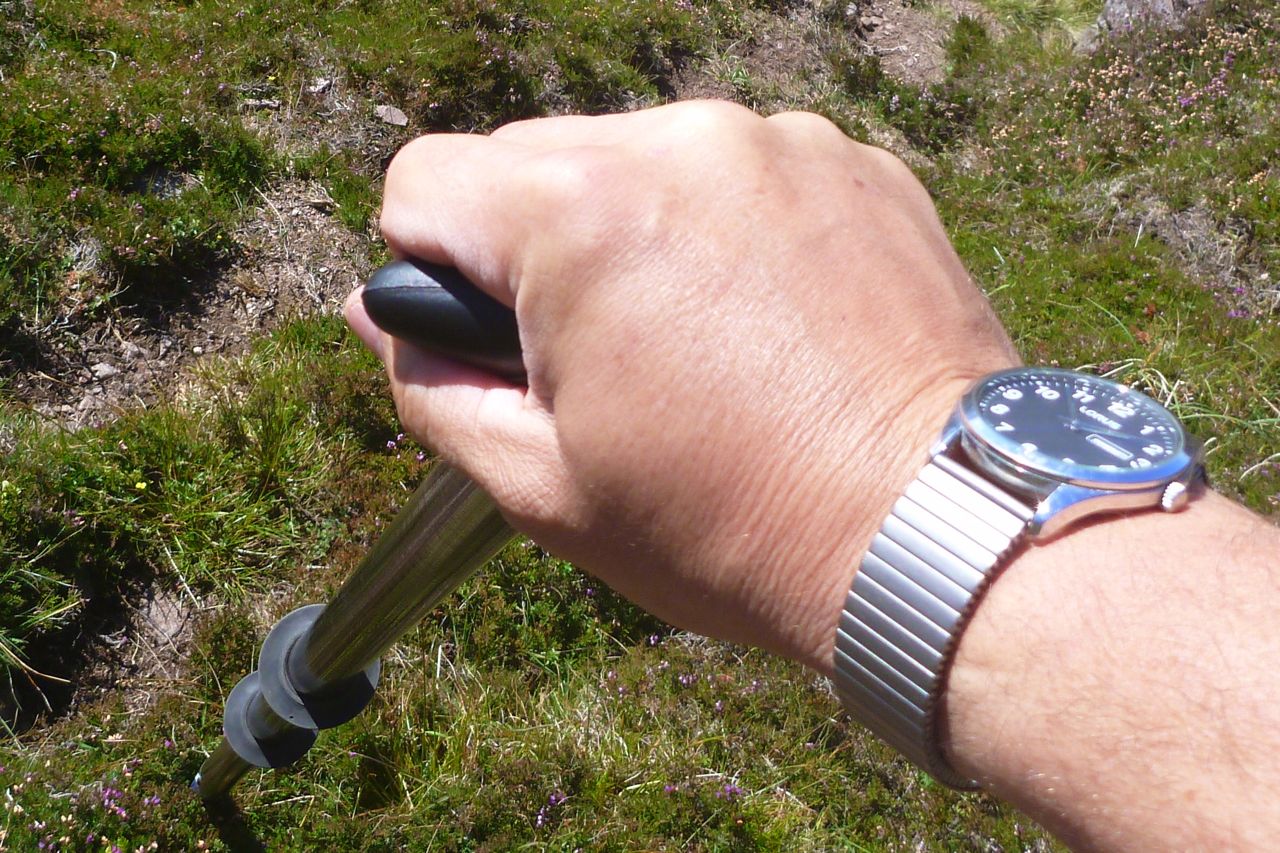
Here I get my first chance to appreciate the canoe-handle T-piece I’ve added to the end of my packstaff. It makes a much better support when inching down steep slopes, and the long packstaff can reach down a foot below your boots. Anyone would think I was going on about packstaffs again.

sulpk06
sulpk07

Coming off Suilven, the gradient begins to ease.

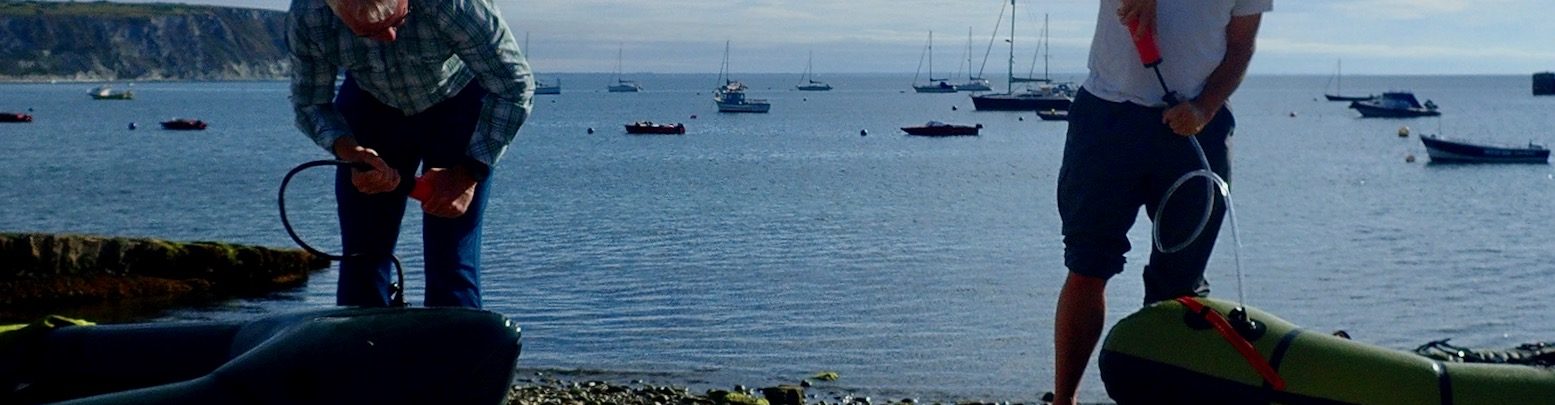
By Fionn lochside a strong easterly is blowing and the packraft fills up almost by itself, even if the boat is on the verge of taking off. This looks a lot more than the 15-mph forecast. The wind will blow us downstream, but it looks rather gnarly out there, and we’re only at the ‘top’ of the fetch. It’s about a mile and a half along the loch to the river inlet and will get choppier downwind.

sulpk09

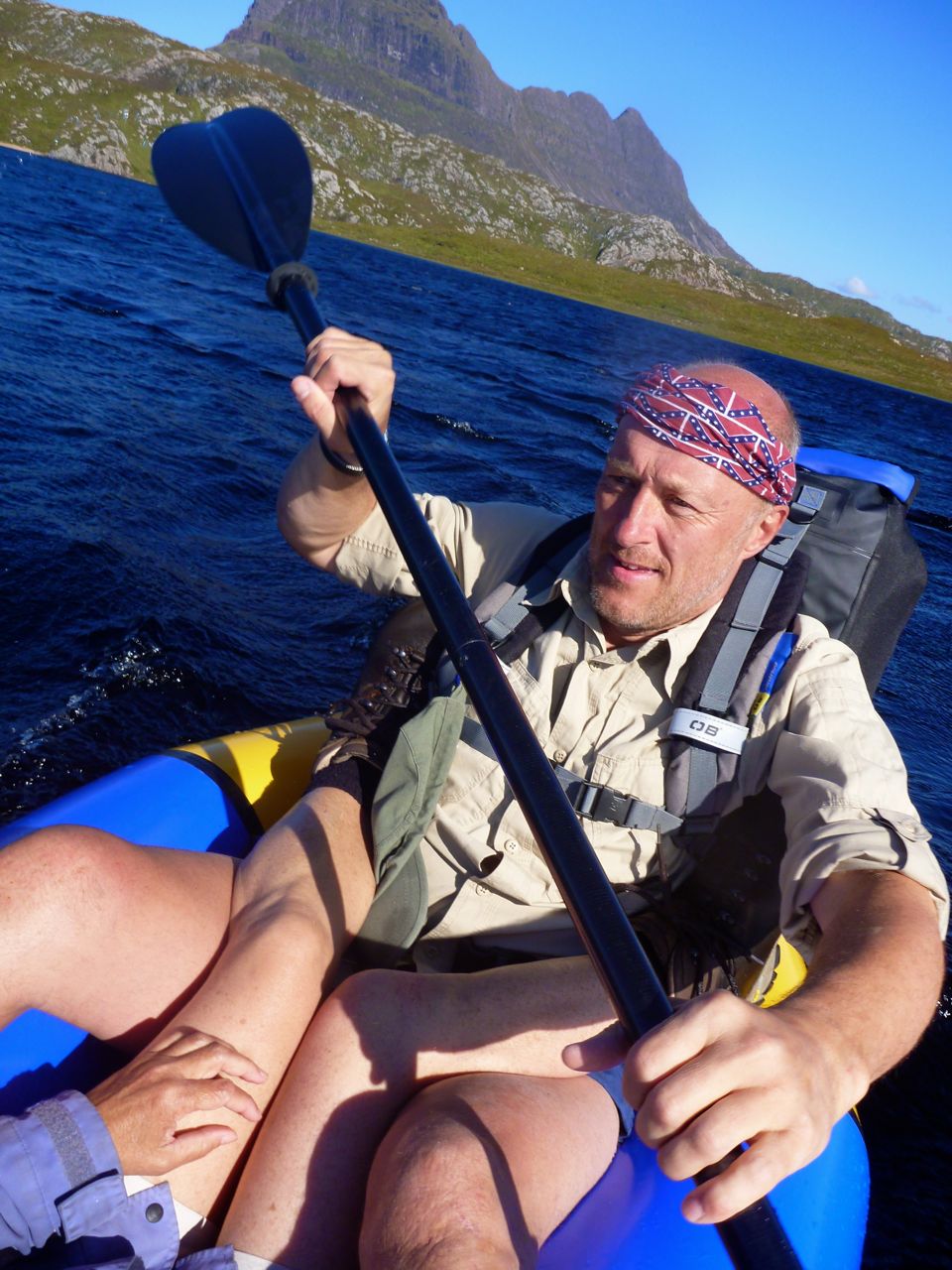
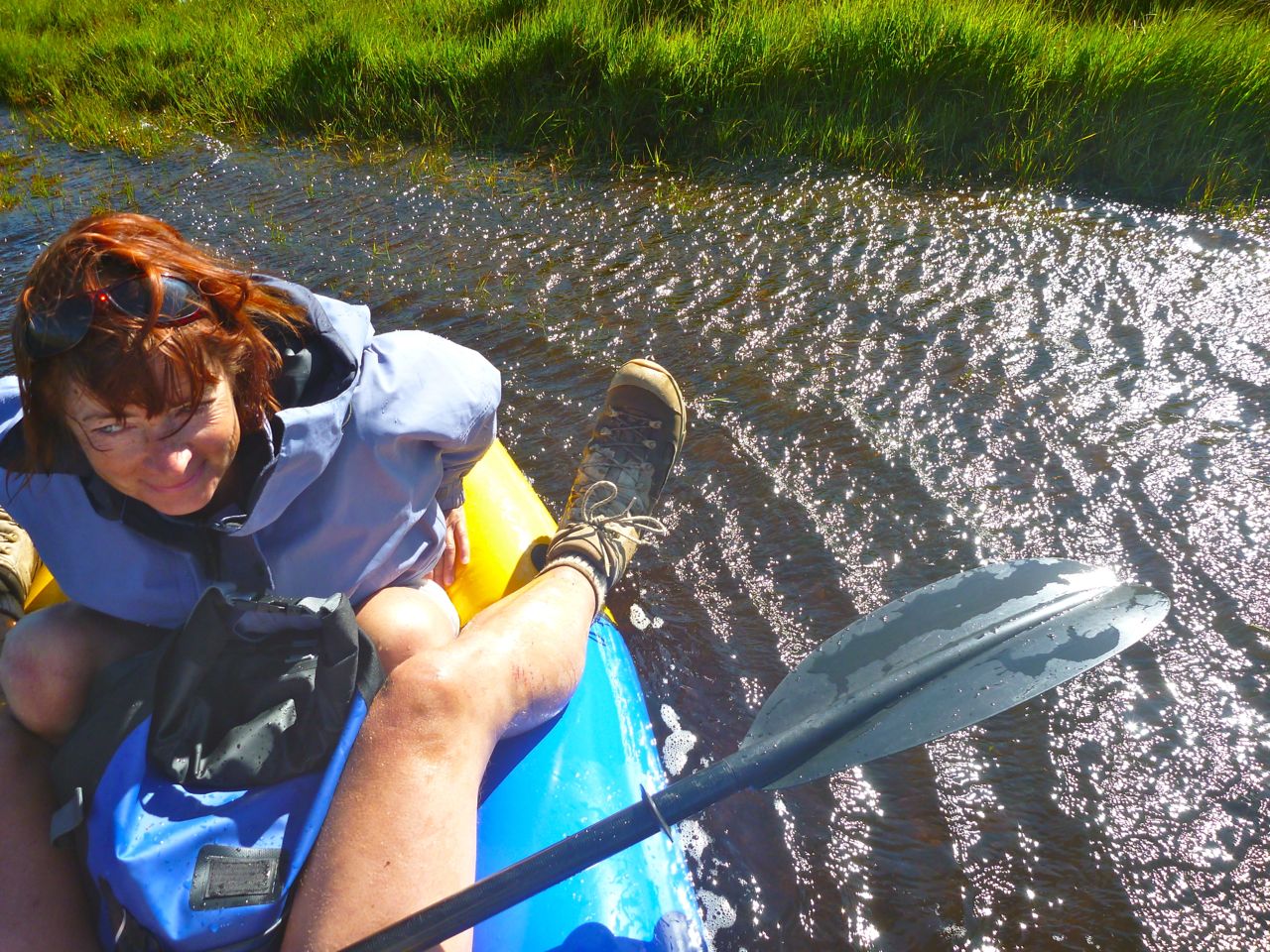
Visiting baboons might enjoy a view of my butt patch – glued on with Bostik 1782 and (appropriately) lined with gorilla-tape. Even though the 2014 Alpackas have a bit more back-end buoyancy (as we were about to find to our cost), for the weightier and lazier paddler, a butt patch offers useful protection in the shallows.
sulpk10

Did I say it’s very windy? And to make matters worse I’m rather careless about the weight distribution, forgetting how we did it last time in much calmer conditions. With the packs in the middle of the boat and the Mrs’ legs tucked in, instead of reaching back, the bow was noticeably low.

sulpk11

Once out midstream, the bow started swamping in the chop which was a little alarming. The restful 1.5-mile downwind paddle to the river inlet is abandoned. I tell the Mrs to lean towards me, and I paddle across-wind for the other bank. The odd wave splashes over the side.

sulpk12

We could have tried again with the packs on my back, but were a bit unnerved. As it is, two-up the boat was a little hard to handle in the wind, and we have no pfds. So the Mrs takes to the bank – a long detour around a lagoon – while I tip out the boat then allow the wind to whip me along the loch, pulling over to wait once every few minutes.

sulpk13

I’m not sure I want to engage with the wind funnel at the ‘narrows’ of Fionn Loch, as by now the whitecaps and chop are getting it on. Plus I’ve lost track of the Mrs. So I pull over and stagger over the bogs to see where she is.

sulpk15

Reunited, we’re effectively on the south side of the Kirkaig river, so are still going to have to paddle across to get to the north side for the regular path back to the car park. I recall the river entrance nearby is in another bay which will be out of the easterly fetch. With better thought out trim, that crossing should be less risky.

teroe

I know from previous experience that trying to carry an inflated packraft even five minutes to the bay in this sort of wind will be like trying to wrestling a pterodactyl. So out with the plug and under my arm it goes. That’s the great thing with packrafts: they’re as easy to paddle in as they are to walk with, though there’s probably a more elegant way of saying that.
sulpk16

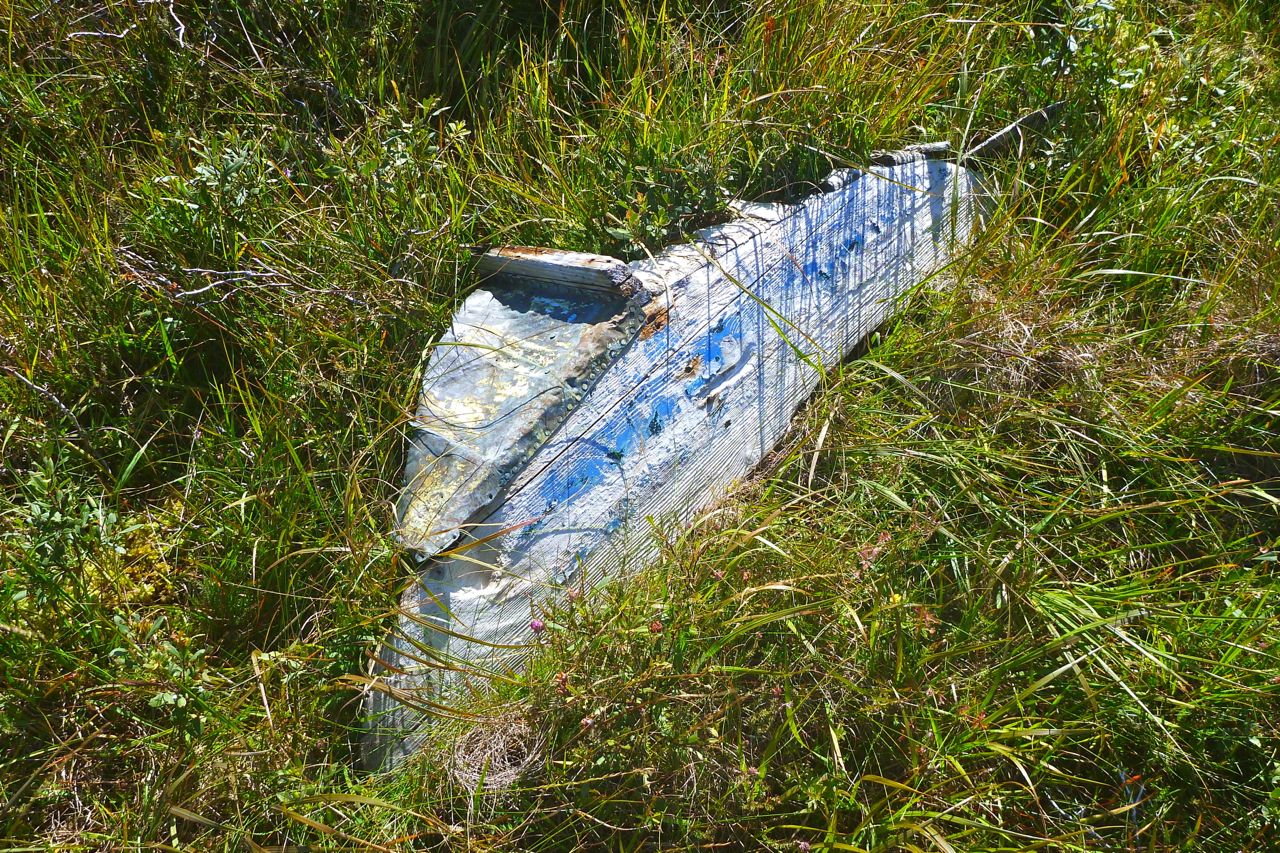
This rotting transom is all that remains of the last boat that came this way.

sulpk17

Another quick air up…

sulpk18

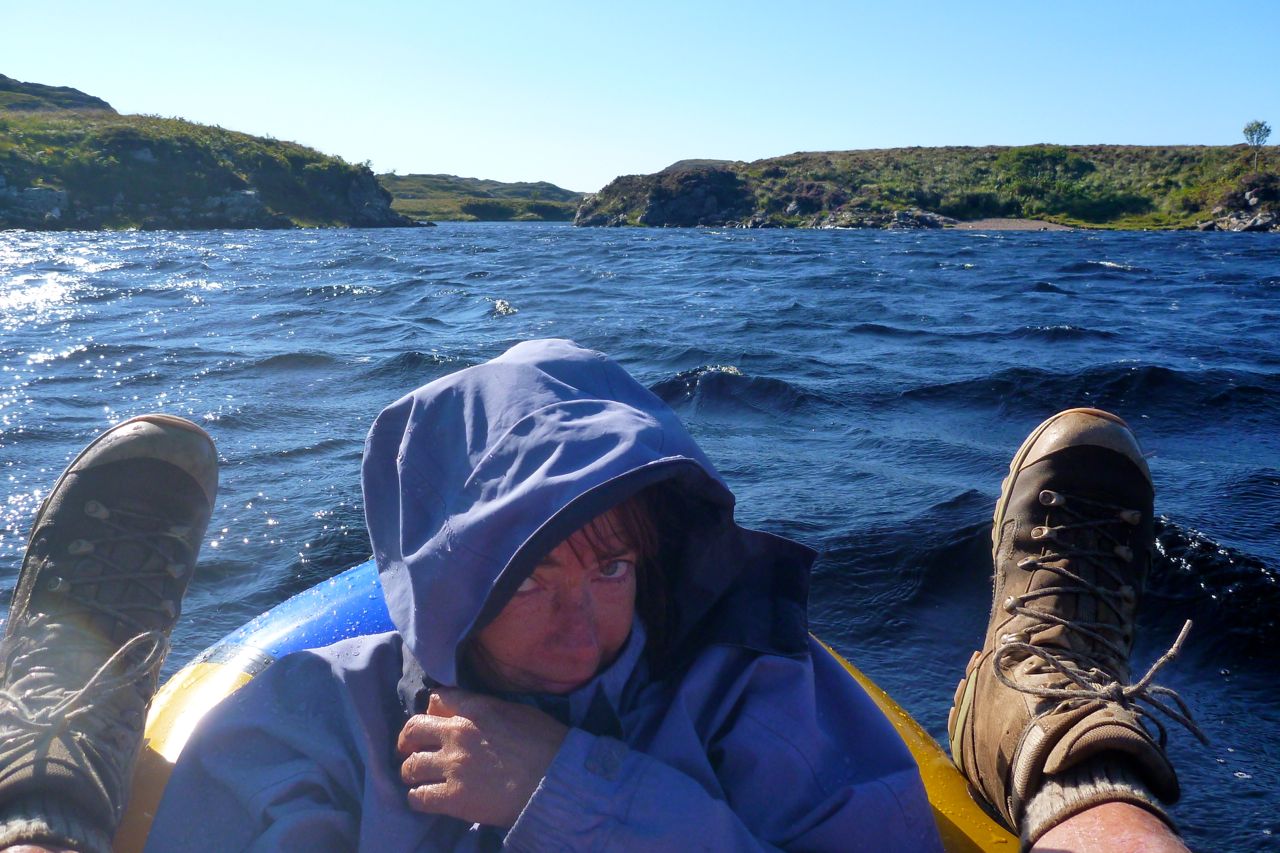
…and we set off across the small bay…
sulpk19

…for a small beach by the river entrance (above my right boot). Two up with the wind, I don’t want to get involved with the swift current flowing through the inlet towards bone-crunching waterfalls.

sulpk20

Back ashore I roll up the Yakpacka…

sulpk21

…and we set off for the 3.5-mile walk back to the bike at Inverkirkaig. And even here on the path the wind nearly knocks we over a couple of times. It was only an 11.5-mile day (10 for me on foot + 1.5 paddle), but by the time we get back to the bike we are pooped. Luckily, this year we have a lovely house to go back to.

achdu

Adapt your packraft paddle into a Packstaff

Some people place a rubber cap on the paddle shaft and use it as a walking stick.
This application makes me nervous about damaging the paddle shaft.

Luc Mehl, The Packraft Handbook

No one’s ever asked me how to make a packstaff attachment for their four-part paddle, but I’m going to tell you anyway. After nearly two decades decade, I’m still a big fan of my idea for traversing rough terrain with heavy loads (above).

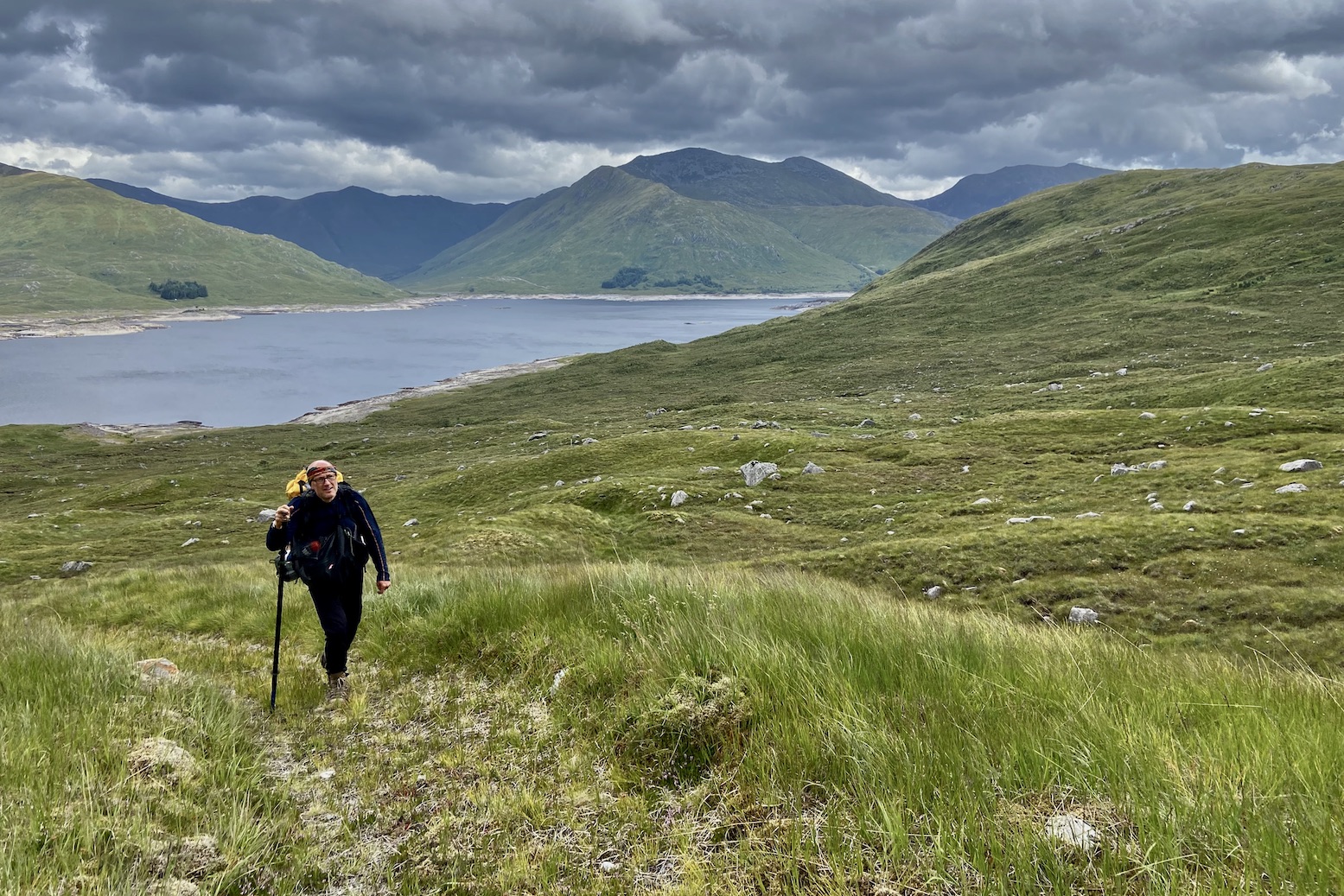
What’s so good about packstaffs? Well, they’re a great way of converting your light but strong paddle shaft into a light but strong walking staff that’s stronger and longer than too short trekking poles or hefty camera monopods, both of which are useful on the trail, but largely redundant on the water. Not needed on flat ground, staffs help you trek uphill and down dale with the same benefits as trekking poles, spreading the load off your ageing knees to your arms and chest. And when hauling a full load, they help with balance, reducing the effort need in your core for self-correction. Im sure my legs have felt less tired after a full day of loaded packstaffing in the hills.
Why not just use some trekking poles like a normal person? I tried them once years ago and can see the benefits, but it’s just more gear and I actually prefer using a longer single staff in one hand, while maximiusing gear functionality on land and water.

A longer packstaff can easily support your weight as you inch downhill with a heavy backpack pushing you forward. A cheap telescopic trekking pole would collapse, or sure feels like it might, same as a repurposed monopod. Like any long staff, they’re also handy for prodding bogs, fighting off killer Turkish mastiffs, just like tubmen in the old days, plus help with vaulting narrow streams and ditches or fording stepping stones in a bid to keep the feet dry. Again, a lightweight walking pole may not be stiff enough to do this.
An MYO packstaff nib weighs 200g, costs next to nothing, and works with any four-part paddle, like my old Aqua Bound Manta Ray. There’s even a bloke on ebay who’s partly copied my concept.
See bottom of the page on how to simply convert an Anfibio Vertex Tour by sawing off the end of a canoe paddle handle of one section and using the other canoe paddle handle section.

Find a bit of tube that’s close to the right diametre to slip into your paddle where the blade goes. My blue tube was from some cheap paddle that came with a long-gone slackraft. Add tape to make a snug fit, if necessary. But not so tight that you risk jamming when wet.
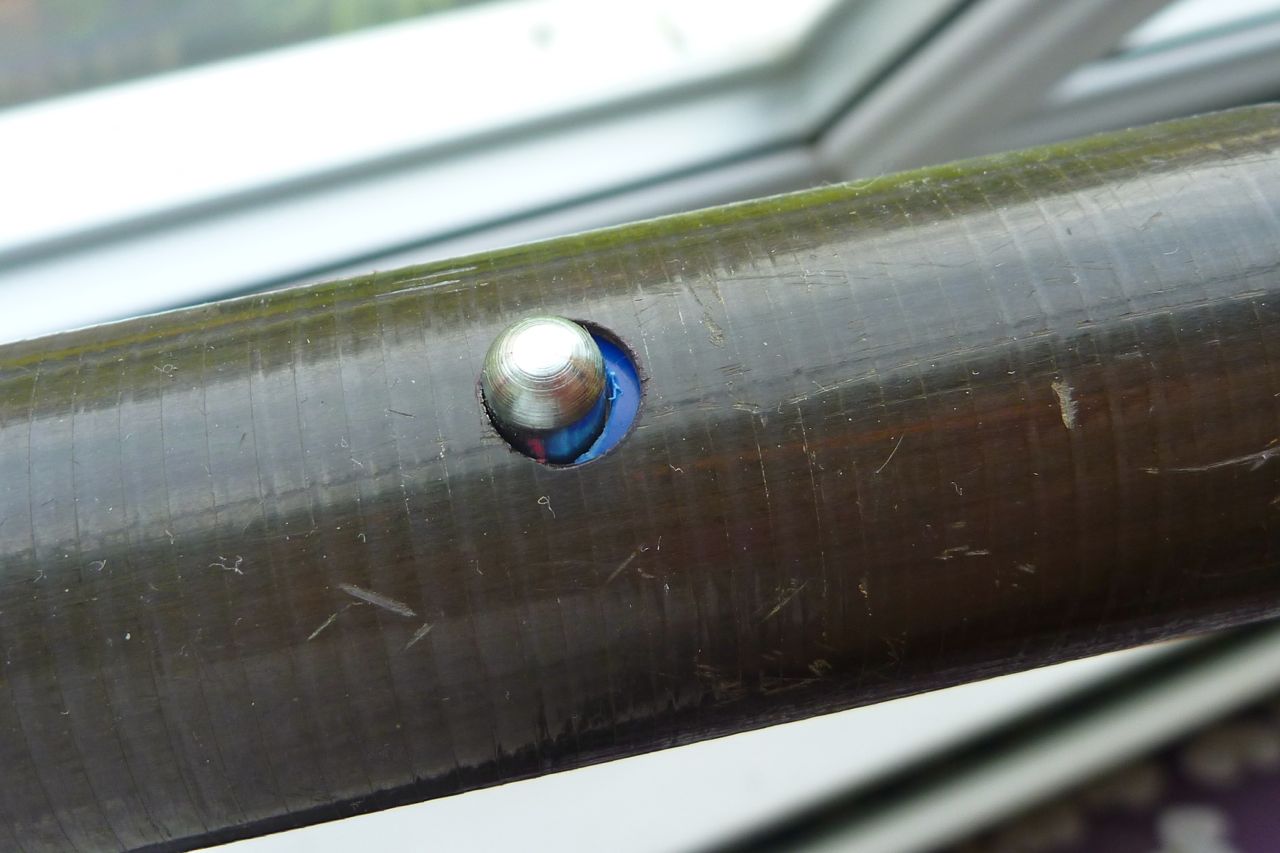
Drill a hole at a point where there’s enough overlap to make the assembly strong, and then fit a spring clip. I bought a pair on eBay for a fiver, though you can buy cheaper pressed out ones for less.
As it happens it turns out my Aqua Bound uses cheap pressed clips. You may not be able to find the typical 7-8mm buttons to fit the AB files. I settled with 6mm. This spring clip is easy to fit and a big improvement over my previous ‘slip-on’ nib which got sucked off in bogs.

pakstik1
Collar is important to take loads off the button
staffcork

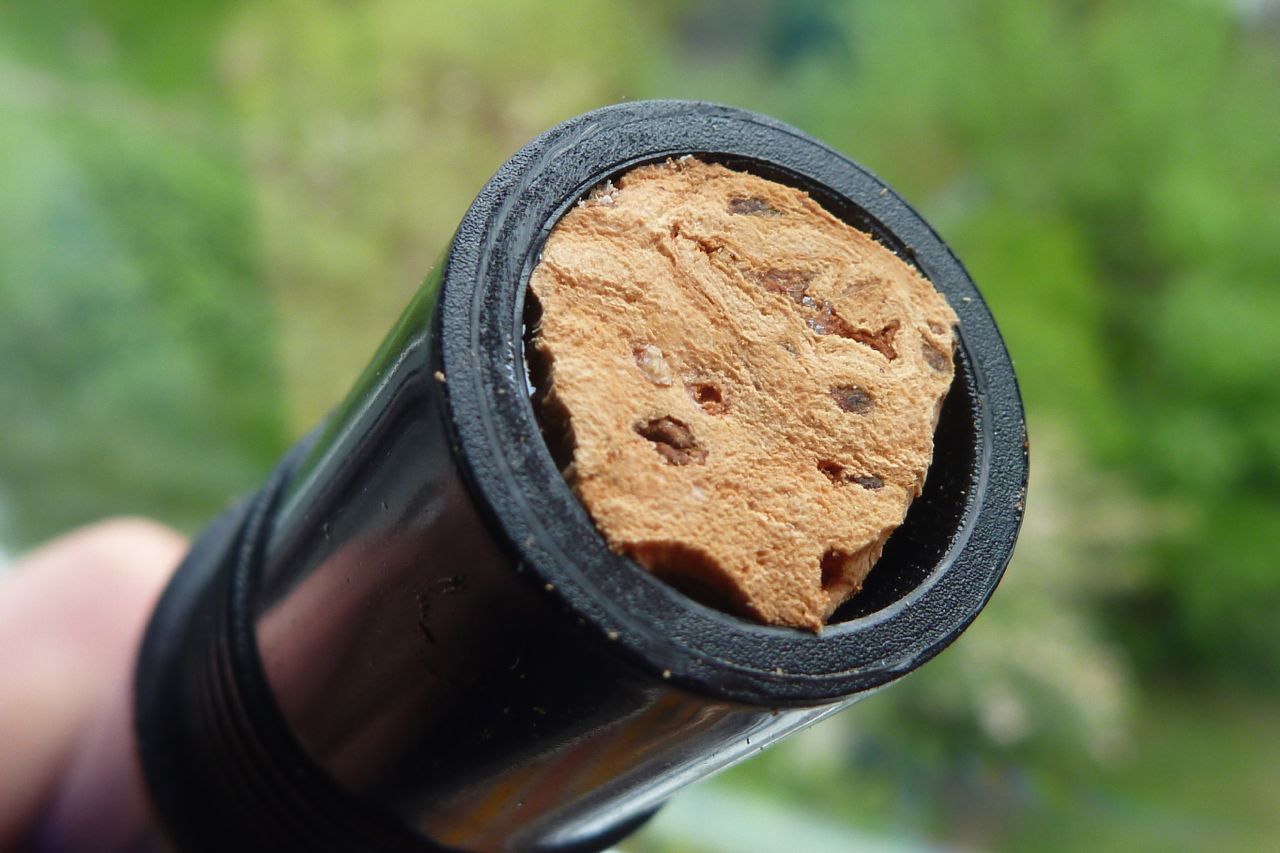
Next, line up the two holes or fit the spring clip and add a collar. You don’t want the nib’s striking force impacting on the clip’s button alone. I sawed a bit of old fibreglass kayak shaft which was a tight fit on the blue tube, so split it then glued it on. That glue didn’t work so well so I added a couple of rivets. The collar also protects the end of your paddle shaft. The actual end ‘nib’ is currently a black plastic screw section. Stuff and glue in a bit of cork or other blockage in your nib end (right) to stop the tube slowly filling with mud or stones. The nib weighs 137g

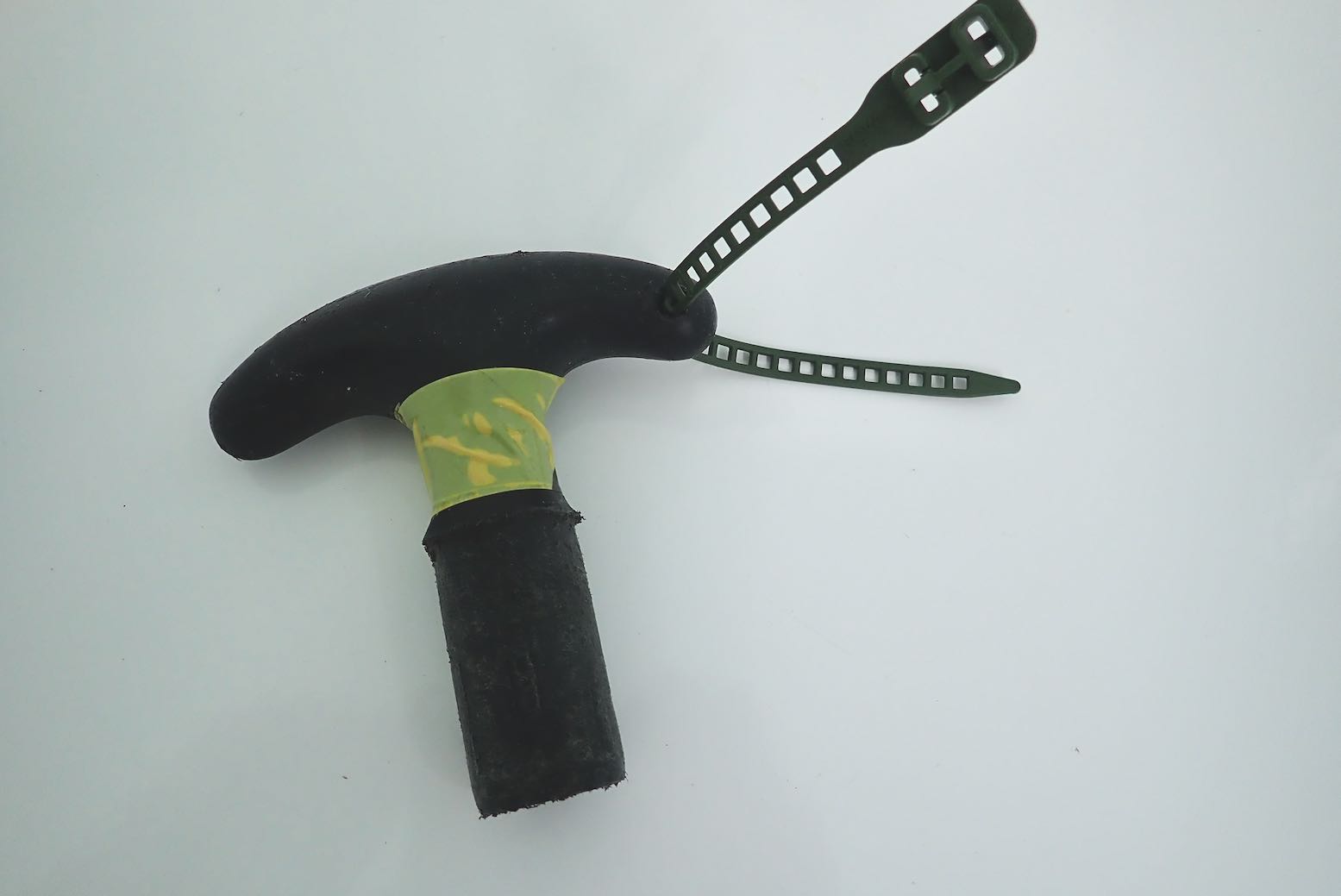
Using the packstaff with an open shaft at the top, I sometimes worry that stumbling onto that shaft at face height could take an eye out. With a canoe T-grip (below left; fiver on ebay) you can press comfortably on the staff coming down a hill, and it also acts as a handy hook. Mine had to be ground down to fit. It weighs 78g with a 6mm SoftTie to attach it to the nib during transit.

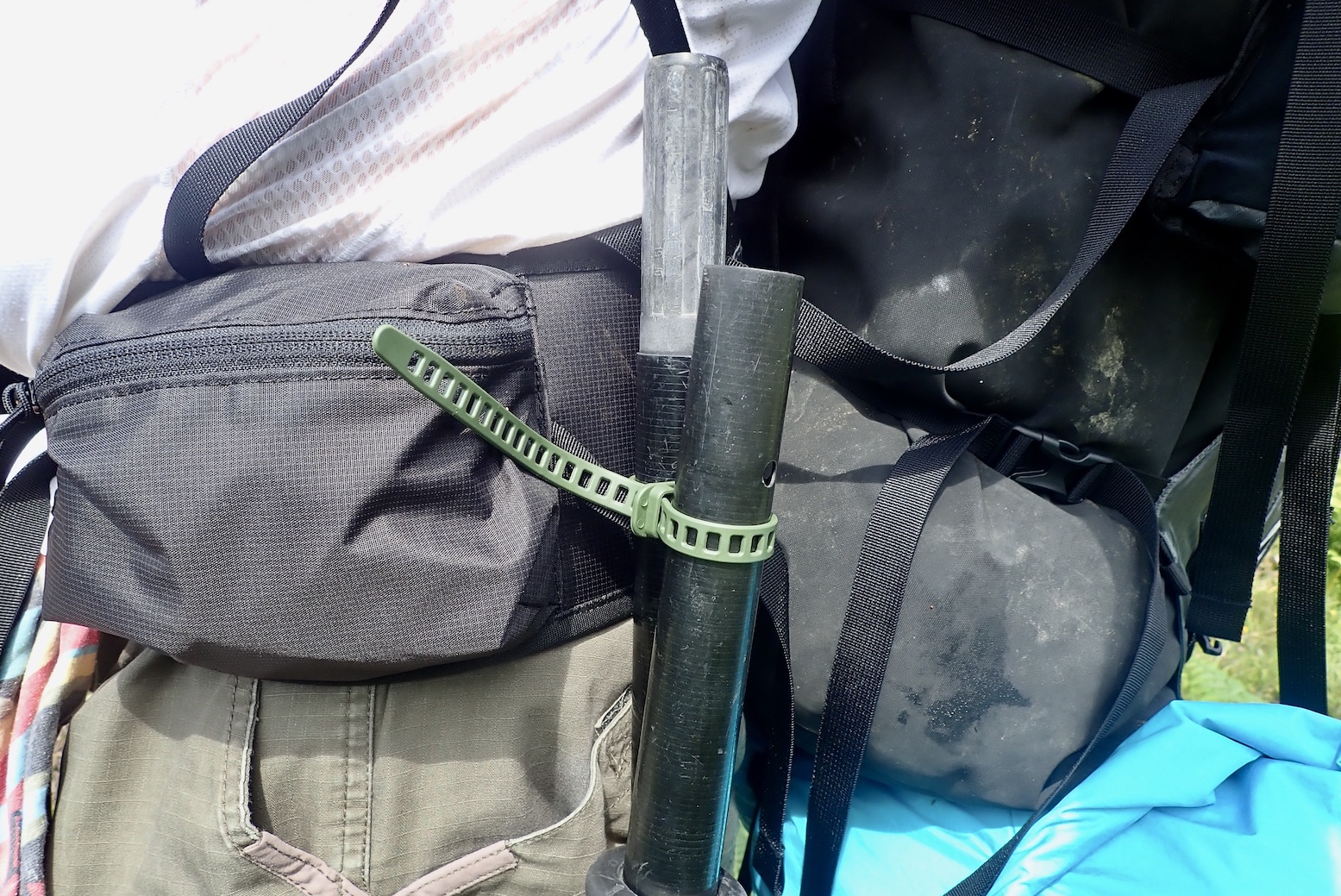
When you don’t need to carry the packstaff you can stick it under a shoulder strap, but I find it slips out. So better to break it down to two parts and slip it under a belt or similar loop. Again, I find the double-loopable SoftTies handy for this, and the loop stays on this paddle to make a handy paddle leash attachment using the mooring line when sailing or in rough open water.

Packstaff 2
In 2022 I got an Anfibio Vertex Multi Tour 4-parter so sold my old Aqua Bound Manta Ray 4P which weighed about the same. The Multi Tour comes with two canoe handle sections to make a pair of canoe paddles. I can’t see myself canoe paddling but figured there must be a way to convert these pieces into a Vertex packstaff.
Sure enough there is. Use the canoe paddle add-on handle with the clamp on the end and the section of paddle shaft also with the clamp, then saw the handle off the plain canoe handle section. You now have a three-part, length adjustable packstaff. Jam whatever nib you think is needed onto the thick carbon-plastic end of the sawn-off handle. The whole thing weighs 400g, and the advantage of length adjustment between 100cm and 133cm, which may have its uses.
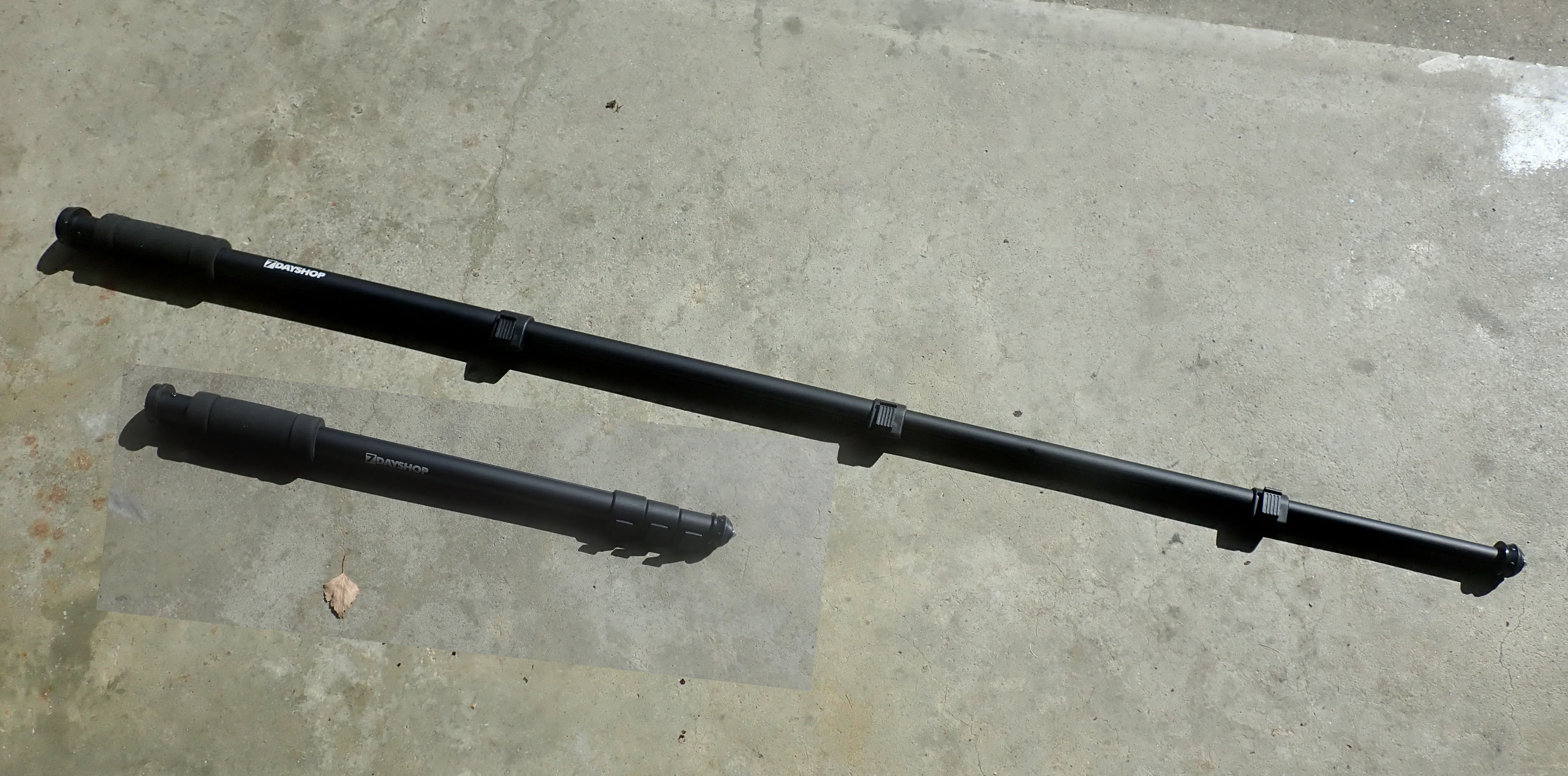
Annoyingly, in a noble bid to reduce excess gear I sold the Vertex and kept the Wave. I’ve since found an unused alloy, telescopic camera monopod that’s as long, weighs 370g, a bit less than the Vertex set up. It’s clearly not designed for packstaffing so I’m not sure it won’t slip under heavy loads. We shall see.

PackStaff Gallery