Weight 265g in bag (+ 30g for square and Trangia base).
How used Brew and barbie in the back garden.
Good points Light, adaptable, compact and transport-friendly. More windproof than an open fire and simple to assemble. Clean stamping or cutting with no rough or sharp edges.
Bad points A bit fiddly, but you’ll soon get the knack. Will get grubby. A hinged version is a tempting thought.
Six sides
Fpur sides. Too small and unstable
Description: Four- or six-sided stainless steel wood stove assembles in a minute with height adjustable bases and a grill. One wall segment is open for adding more fuel and the kit also includes a third base for a Trangia burner. You can also mount the floors higher to burner solid fuel. All the segments lock together to make a sturdy, stable structure and the perforated bases and slotted sides permit air circulation while acting as a windbreak.
Two wire tent pegs or chopped down coat hanger (not included) can slot through the sides so something like a 500ml Tatonka cup can sit low inside for added efficiency, and unlike some similar cups, the handles will be outside. You could also use the grill as a load-spreading base on soft terrain to stop sinking and help maintain air-flow underneath. Plus, if you have back problems, they make a Honey Stove in titanium, and if you want to cook bigger you can buy two extra side sections with a bigger base plate and grill to make an octagonal Hive Stove. It all disassembles in ten seconds and packs totally flat.
Review: I spotted this interesting looking stove on someone’s paddle blog, tracked down what it was and bought one. I ‘got’ the Honey Stove at first sight: a simple fuel container / pot stand / windbreak that breaks down flat to more or less the size of a slimline dvd case.
I’m not especially bushcrafty but recognise the value of a supplementary stove to either save butane or act as a back-up or alternative cooking device. Apart from driftwood, northwest Scotland isn’t really woodstove country unless you carry your fuel, but a Mediterranean setting certainly is. And as with the Woodgas stove I used in Turkey last year, you could pretty much carry this as hand luggage on a plane. No need to track down the right sort of gas canister at the other end.
Once the novelty wore off, the Woodgas stove – with its unintuitive top-down burning, flimsy pot stand and preferred tinder and pellets – was a bit too clever and as bulky as a Coleman, though still very light and unfiddly to assemble. The Honey stove burns conventionally with paper under twigs and sticks.‘I could make that with an old paint pot!’ I hear you exclaim. Go ahead, but don’t forget to stamp your paint can flat before you pack it away, then wrench it apart again when you next need a cuppa. The included Trangia-style burner support is a nice touch but for me a bit redundant – I got over Trangias in the late 70s and never got into solid fuel tablets either until i discovered ethanol blocks. To me, the whole point of a stove like this is to use locally sourced fuel.
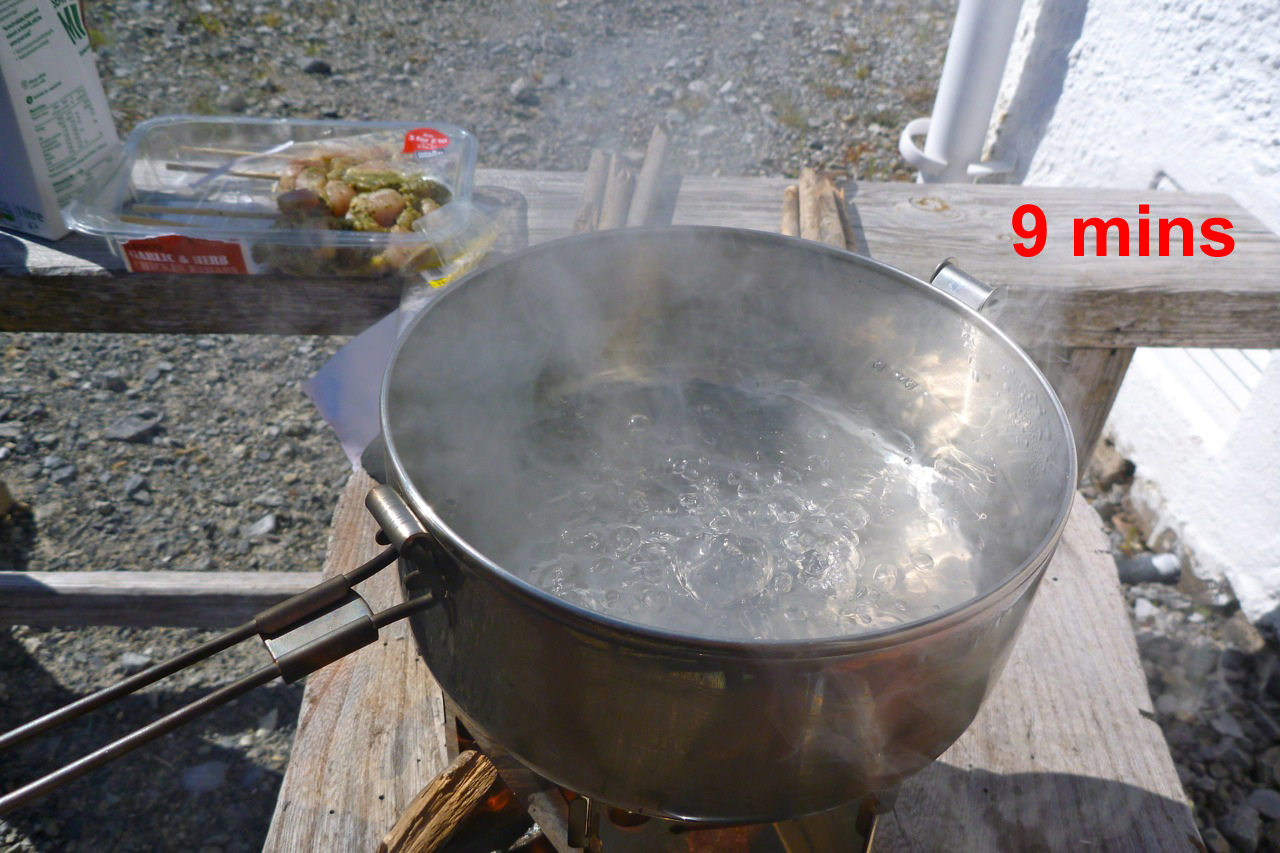
The smaller square format for a cup (right) is a bit small to carry an adequate charge of wood but six-up you can fit in plenty and my MSR Stowaway (left) sits just right. First go out of the bag 500ml of water boiled in 9 mins in a bit of a breeze and a bit of refuelling. I don’t think I measured the Woodgasser but I’d say it’s about the same once it got ‘on the gas’, and I bet the Honey would be quicker still in drop-down, wire-peg mode or with a bit of practice. There’s no benefit to woodgas when it comes to sooty pots.
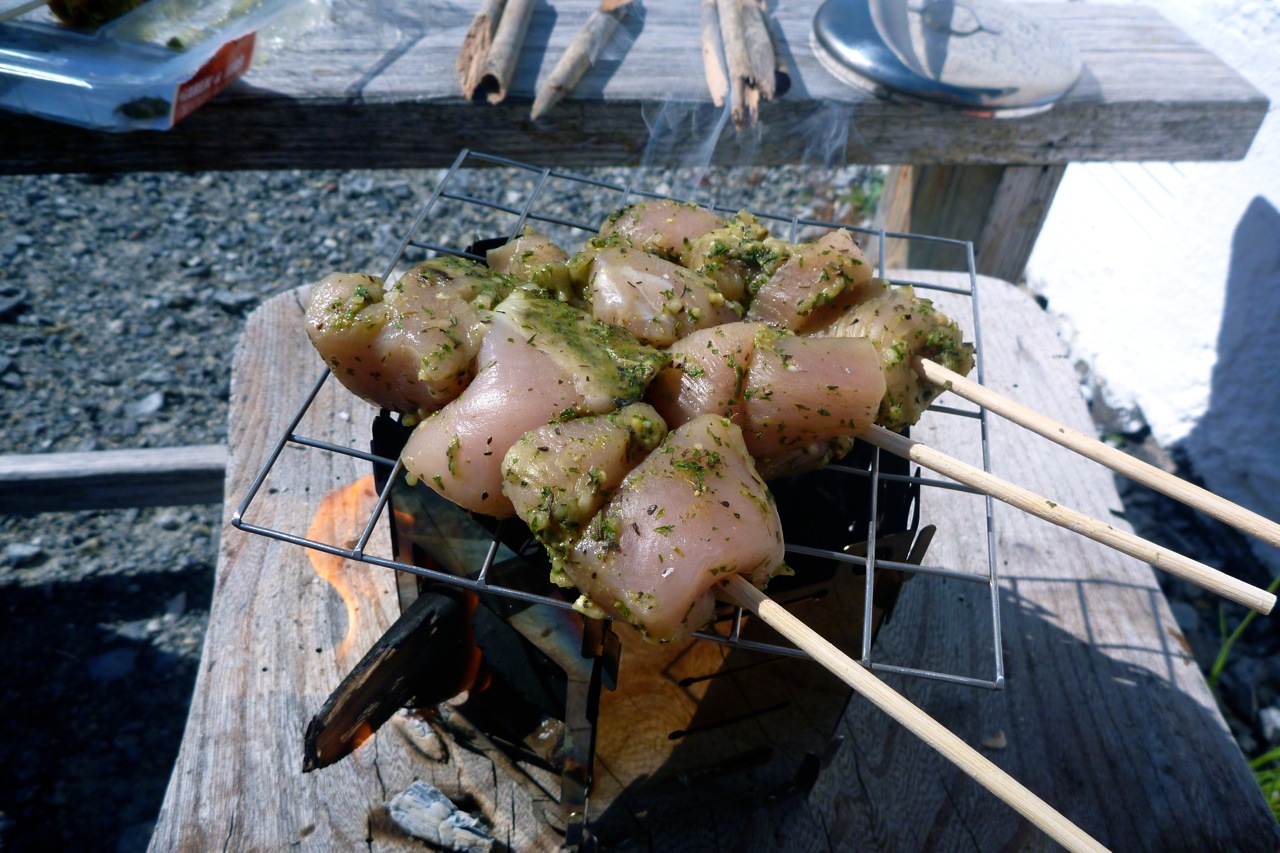
While the tea brewed I slapped on some tasty garlic and herb chicken kebabs on the grill. Never used them but I found a couple of charcoal BBQ coals and in no time my succulent, aromatic lunch was encased in a crisp shell of burned meat – will we ever learn? But the last skewer cooked up to perfection on glowing embers not flames as if from my local kebab shop.
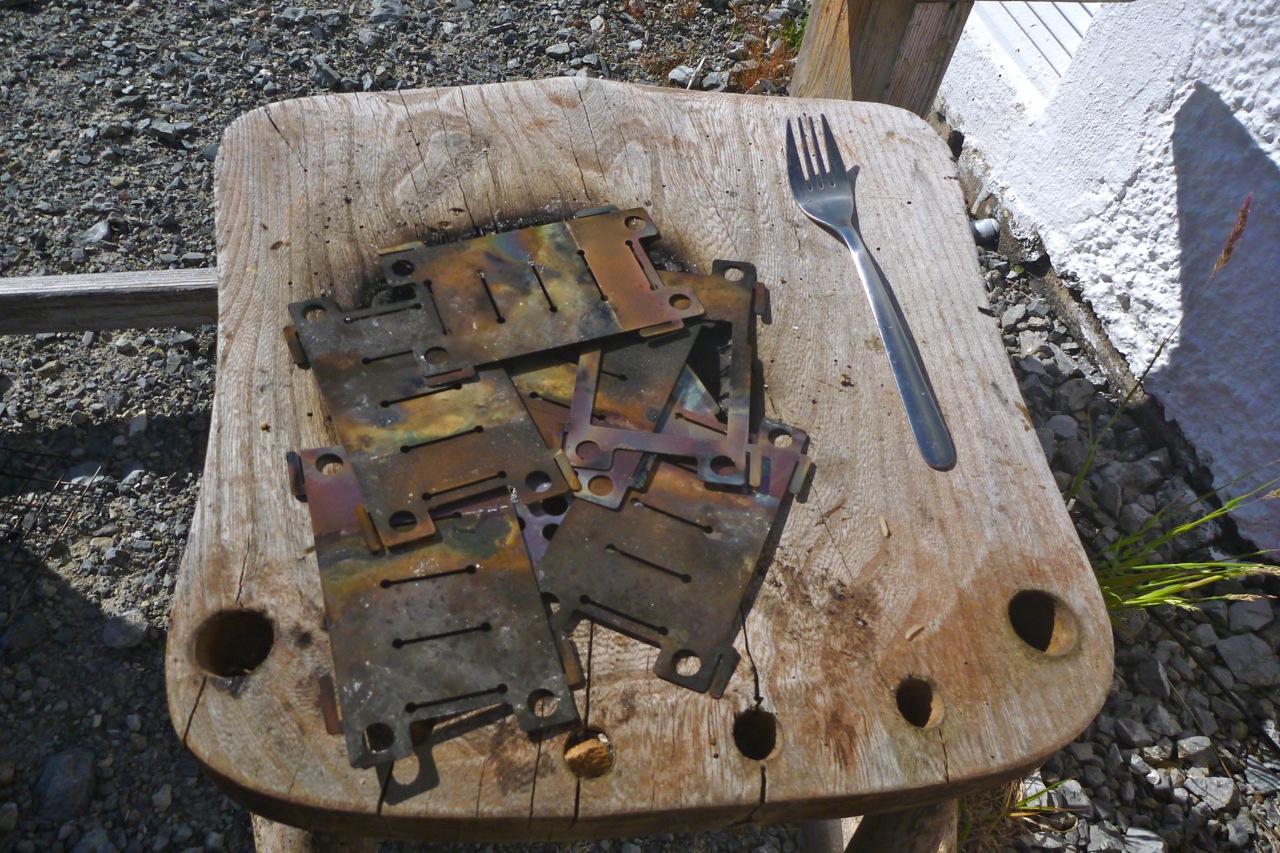
I was curious to see if the stove got warped by the heat – the Woodgas fuel bowl shrunk a bit which affected performance if not located correctly. The Honey’s floor plate and grill were a little warped but all still slot easily together. The stove has lost its BNIB sheen and was a little mucky with soot, but otherwise unchanged.
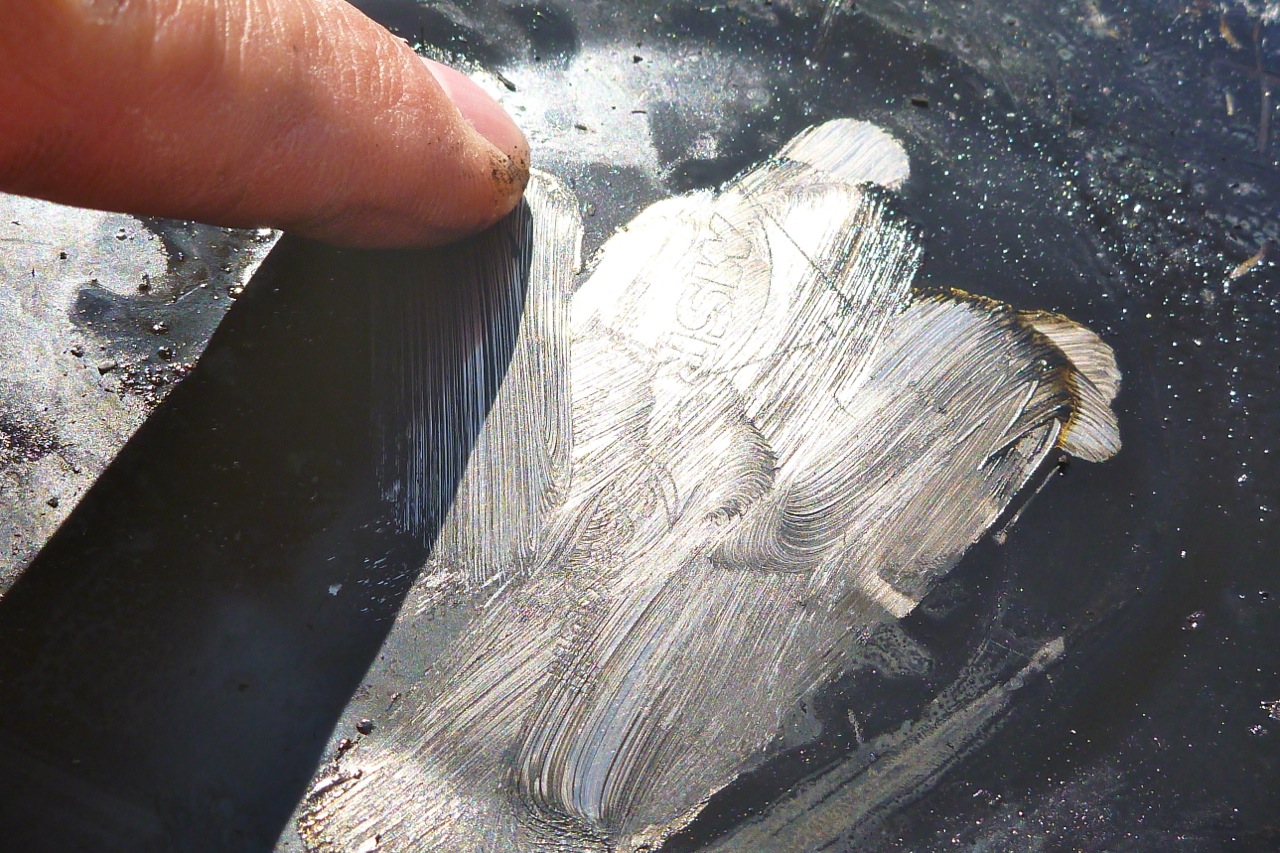
I also got round to trying the trick of wiping the cooking pot with liquid soap before using it to make cleaning easy. It works – the soot wipes right off (left); you could clean it with a bunch of grass. Who would have thought soap was so fire-proof.
UK manufacturer may explain the relatively high price for simple stamped or CNC cut steel, but the unit’s adaptability, versatility and unbeatable compactness make it feel much better value than the MkII Woodgas stove. There are much cheaper four-sided Chinese-made stoves on eBay using similar assemblies but BPL.UK’s six-sided version makes a marginally more spacious and stable burning platform and, as mentioned, can be expanded (for a hefty £26) to a bigger, eight-sided stove. A heftier than average knife may be needed to split wood into the ideal, pencil-sized pieces but the Honey Stove is an effective and foolproof supplement to a faster butane stove.
Update 2019: I’ve not used my MYO rudder since I made it in 2016 and sold it with the boat in 2020. Partly because I’ve only done day trips predicated on nice weather, but also it’s all just more faff and clutter, not least the lines and footboard. As explained earlier, for multi-day trips you must deal with the winds you’re given so a rudder is a good idea. But even then, you only notice your relative lack of speed (due to sidewind paddling correction) alongside others. Alone, you’re as fast as you are [grasshopper]. Rudders are not about steering as they are on powered boats; in a kayak they’re about enabling efficient, balanced paddling on both arms by compensating for the boat’s deflection by side winds.
Mk1 version – needed improvements
K40 with rudder
After writing this a few weeks back I decided to try and fit a rudder onto my Seawave. On that breezy Mull trip Gael, in the ruddered Incept K40 (left), seemed a little faster than me and the penny finally dropped as to why.
A rudder can compensate for winds pushing the boat off course while you power on as normal. Without one, you’re pulling hard with just one arm in an effort to keep on course – that explained why I was a bit slower. Rudders have little to do with improving tracking which the Seawave does fine with the help of the skeg (though fitting a rudder means you won’t need a skeg). And unlike a ship, rudders have even less to do with ‘steering’ which a kayak does easily enough by dragging or drawing a paddle blade. But you can of course steer with a rudder too.
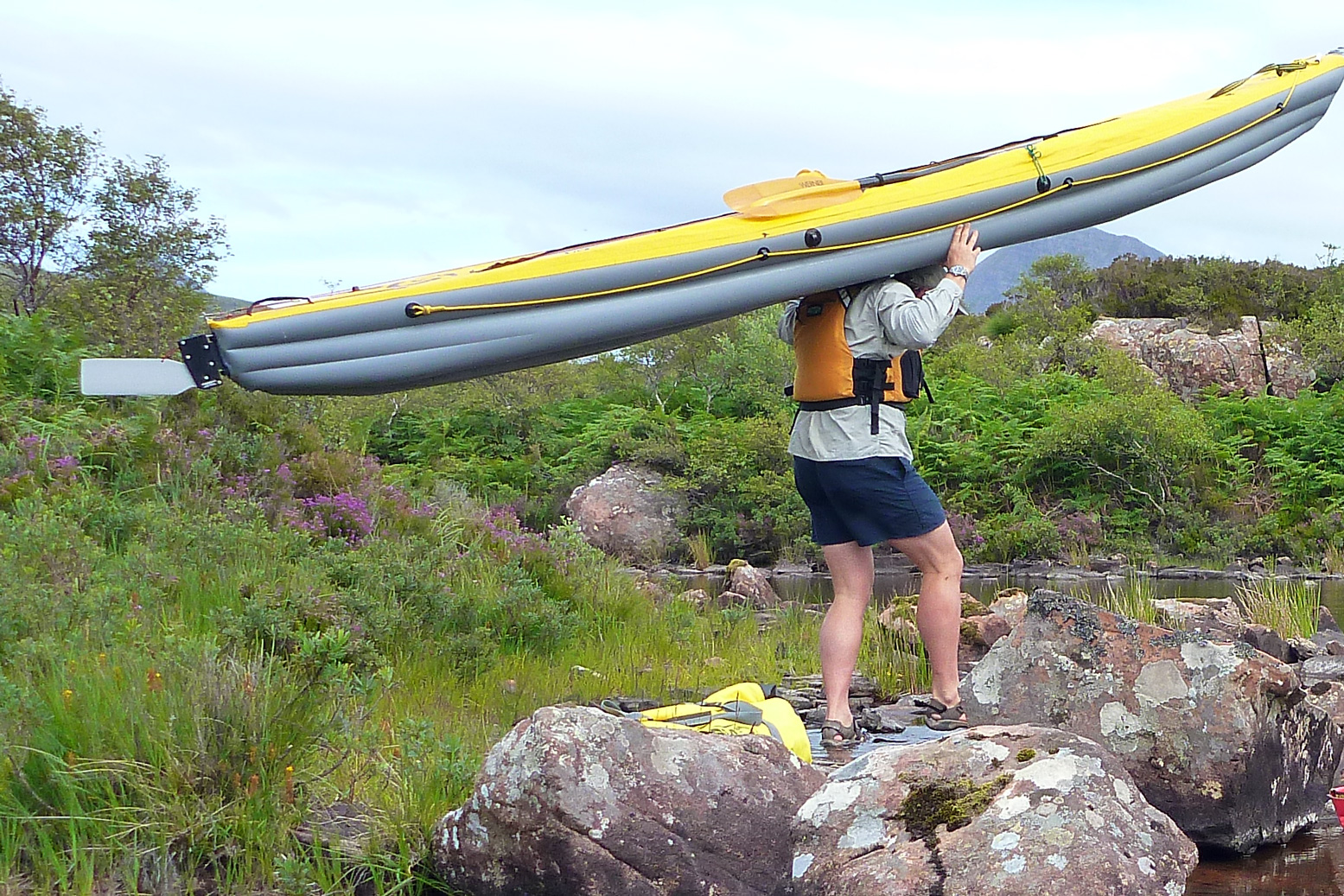
As mentioned elsewhere, another benefit of a rudder instead of a skeg is you can park the boat on flat ground without it pressing on the skeg – particularly useful when the boat is loaded and heavy (left). I’ve often thought about fitting a hinged skeg at the back of the boat to enable this. It’s a way of avoiding the complexity of a rudder but with the benefits of solid tracking which is needed at sea.
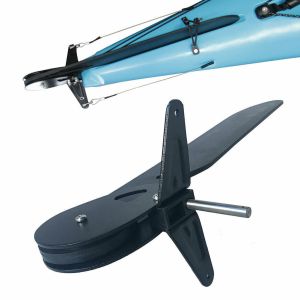
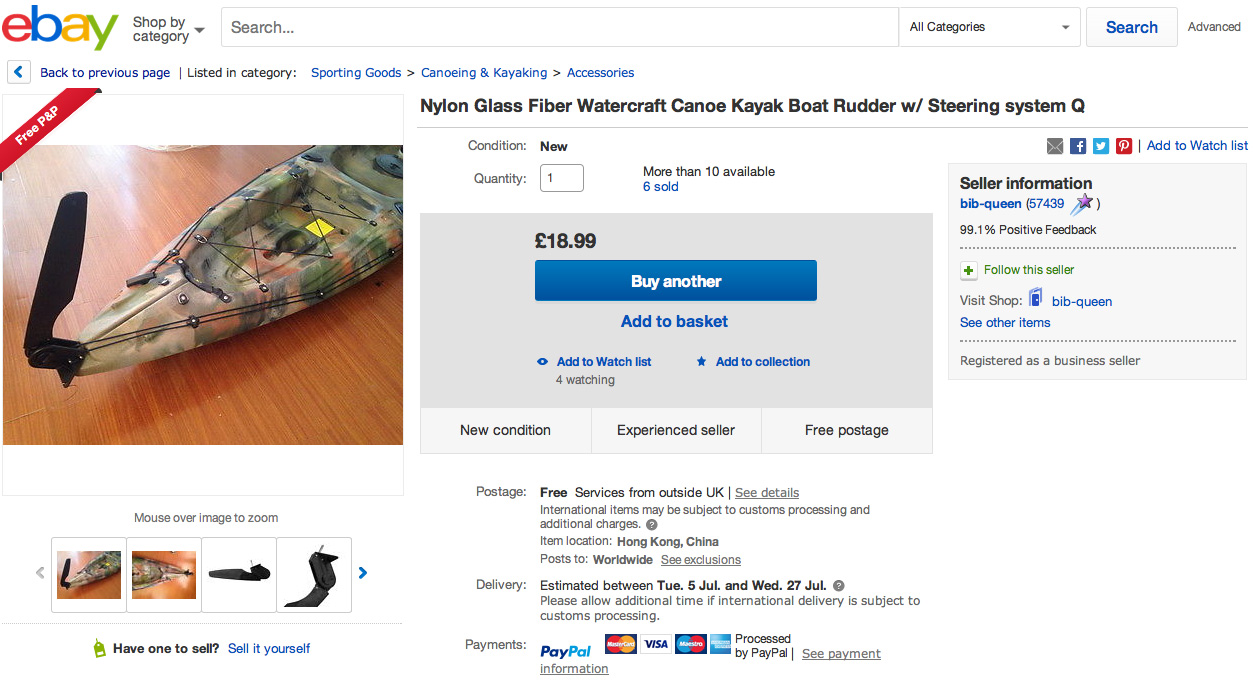
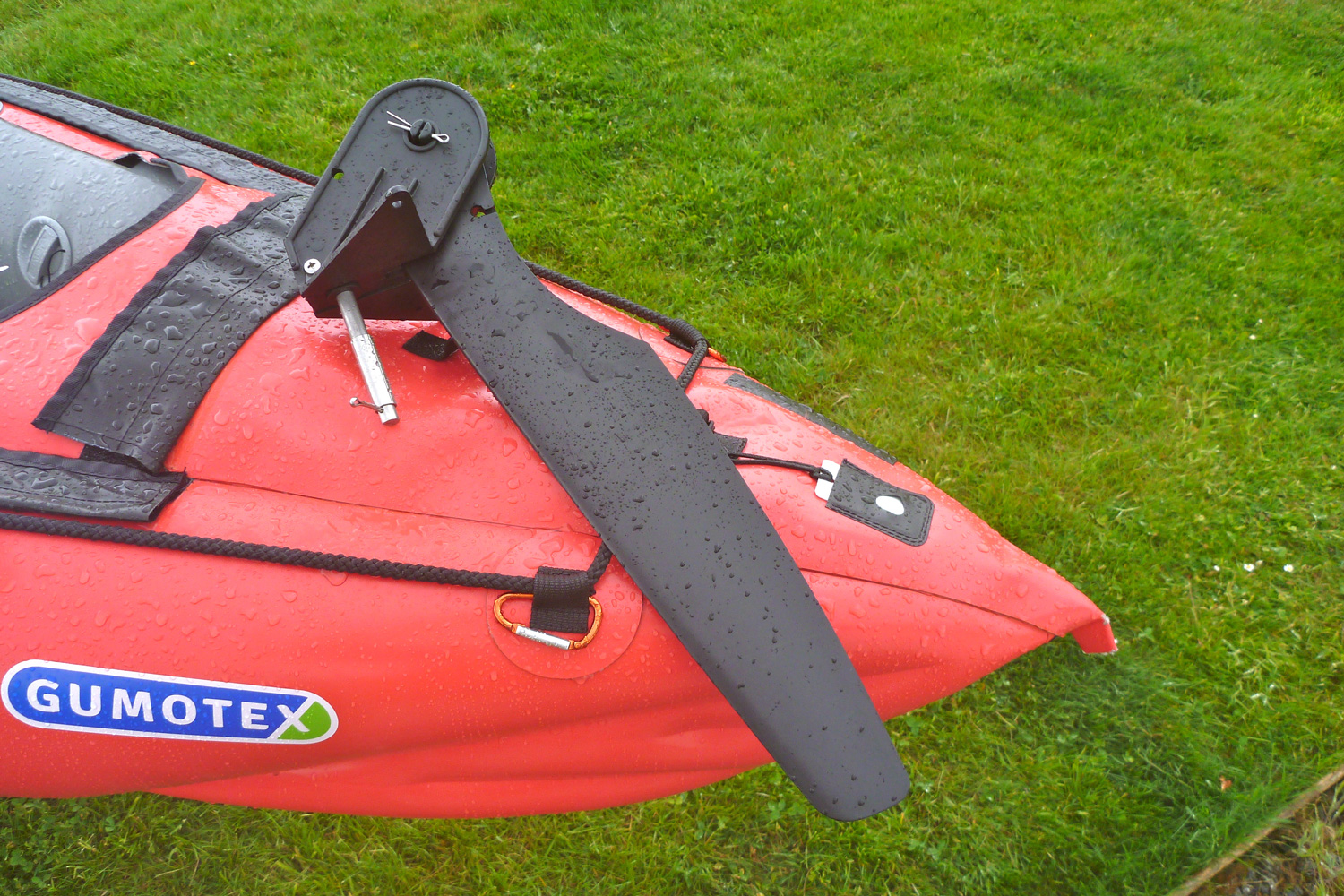
It helped that I found SoT rudders on eBayfrom Hong Kong (and now, in the UK) from just 20 quid. For that price it was worth experimenting, just like it was for a knock-off disc sail. Here in the UK a proper sea kayak rudder costs over £200 for a full kit with pedals. I also learned that Gumotex had introduced a Seawave rudder kit on their 2016 model as I was halfway through this project. I’m glad I spotted it as it gave me some good ideas, while the cost and certain features of the Gumotex rudder reassured me that my MYO was a better way to do it.
K40 with a (too short) rudder
Does an IK need a rudder? Most of the time on calm day trips a skeged Seawave manages fine without a rudder. But on a longer multi-day trip like Mull, you have to deal with the weather you’re given, or sit it out. As it is, unlike hardshells, IKs are innately more windprone as they’re lighter and sit higher on the water.
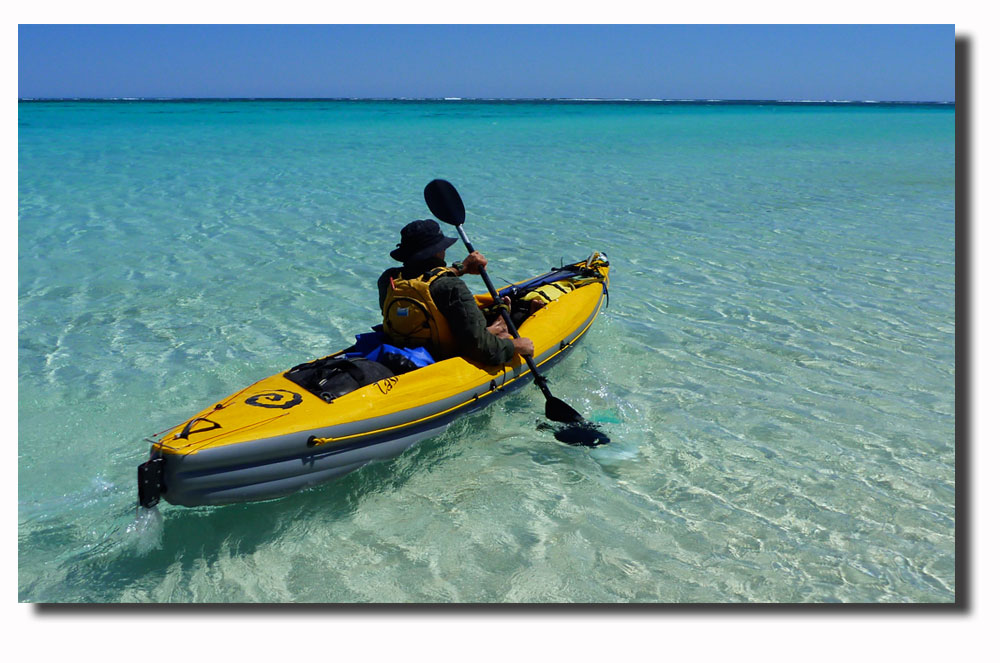
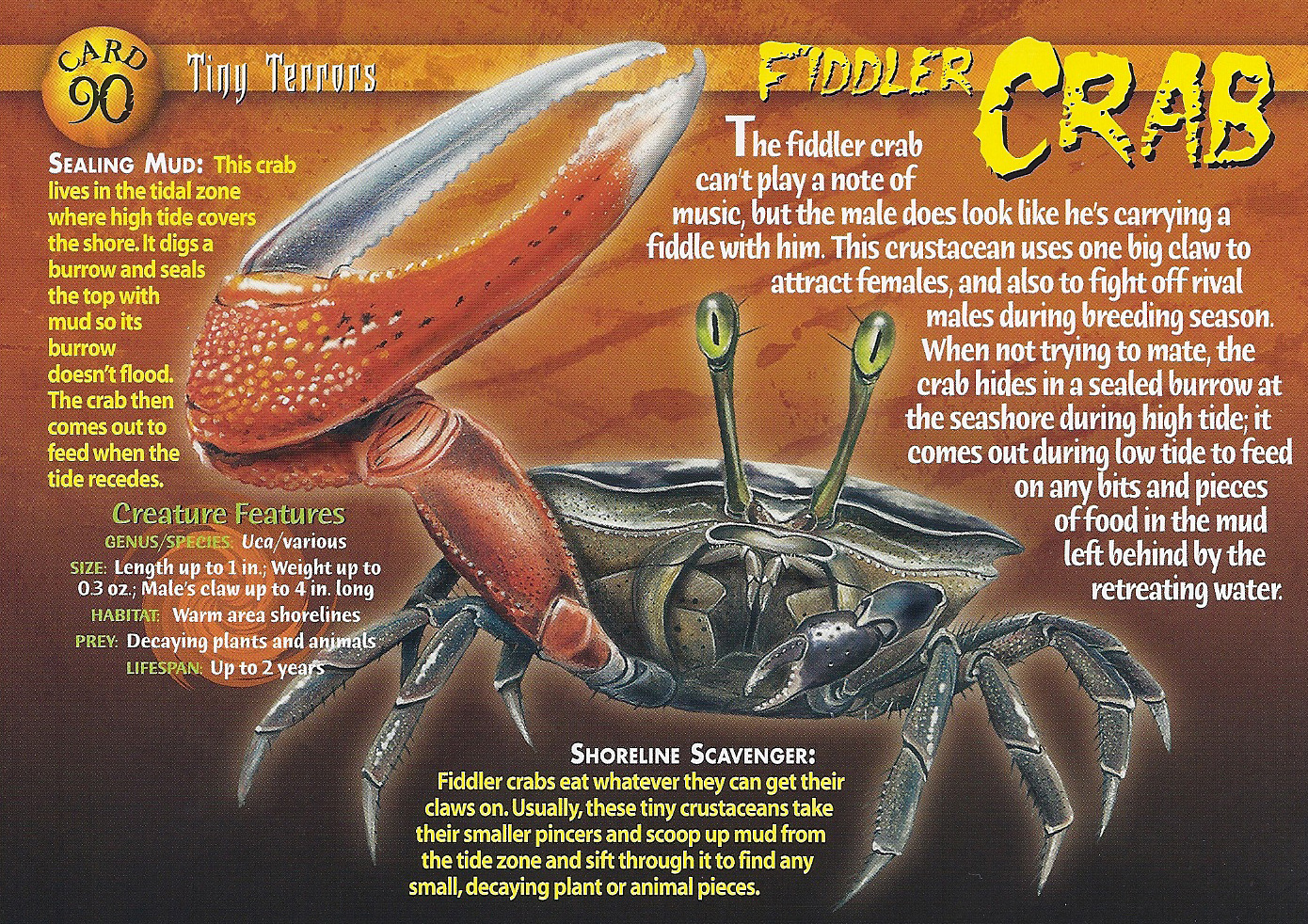
I paddled with a ten-ton hardshell once in Australia with my old K40 (above). Where we could, we both had sails and the hardshell flew along (a rudder makes kayak sailing much easier). But me, I had to give up on day two; I couldn’t control my kayak in the 20-30-knot backwinds, and that was with a rudder. (I realise now this was because the K40’s rudder was too short). On another earlier paddle in Ozzie in my Sunny I remember pulling hard on one arm for hours and days to counteract the crosswinds. I ended up with arms like a fiddler crab. So with an IK the window of rudder usefulness – when winds are strong enough to require rudder correction, but before they’re too strong for all except short, white-knuckle crossings – is actually quite narrow. Say, between 10 and 20mph.
This’s why I’d sooner not spend £200 finding out if a rudder suits my sort of paddling. A rudder isn’t going to transform my Seawave and I may end up not using it much, aa with my disc sail (though having a rudder again may encourage me to give sailing another go). But a rudder will slightly extend my boat’s paddleability. When a brisk quarter wind blows from front or rear I’ll be able to set the rudder against it and power away with equal effort on both arms. Anatomical consequences? More Popeye, less Fiddler crab.
Stick-out K40 rudder is vulnerable. Plus it’s too short when the waves get going.
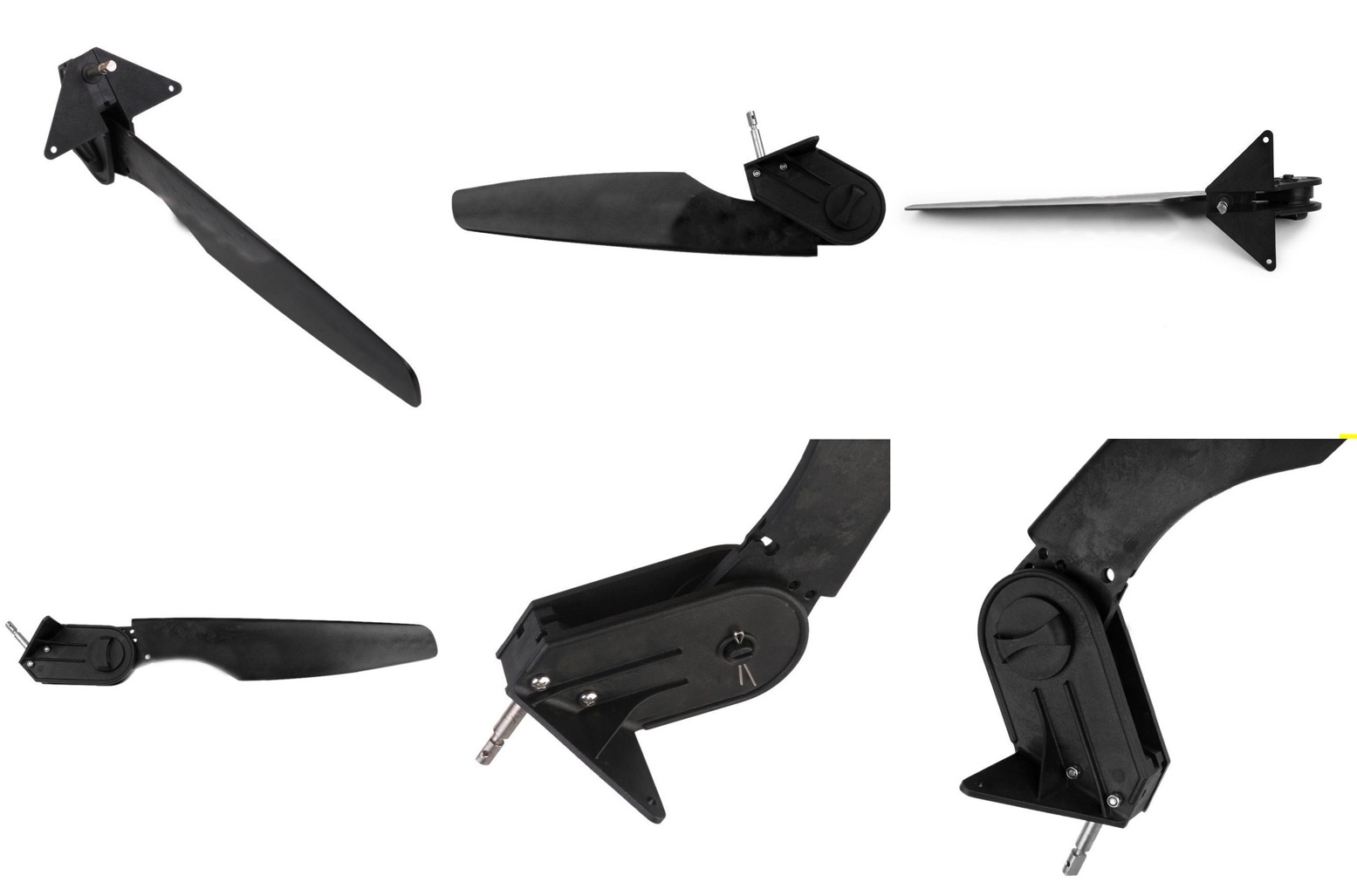
A Chinese SoT item (left and right) typically has a 400mm blade and is quickly removed on the pivot pin, plus can be both retracted and deployed using control lines. And better still, the retraction sweep comes right out and drops over the back of the deck, not sticking out vulnerably like the Incept rudder (above) or the Gumotex kit.
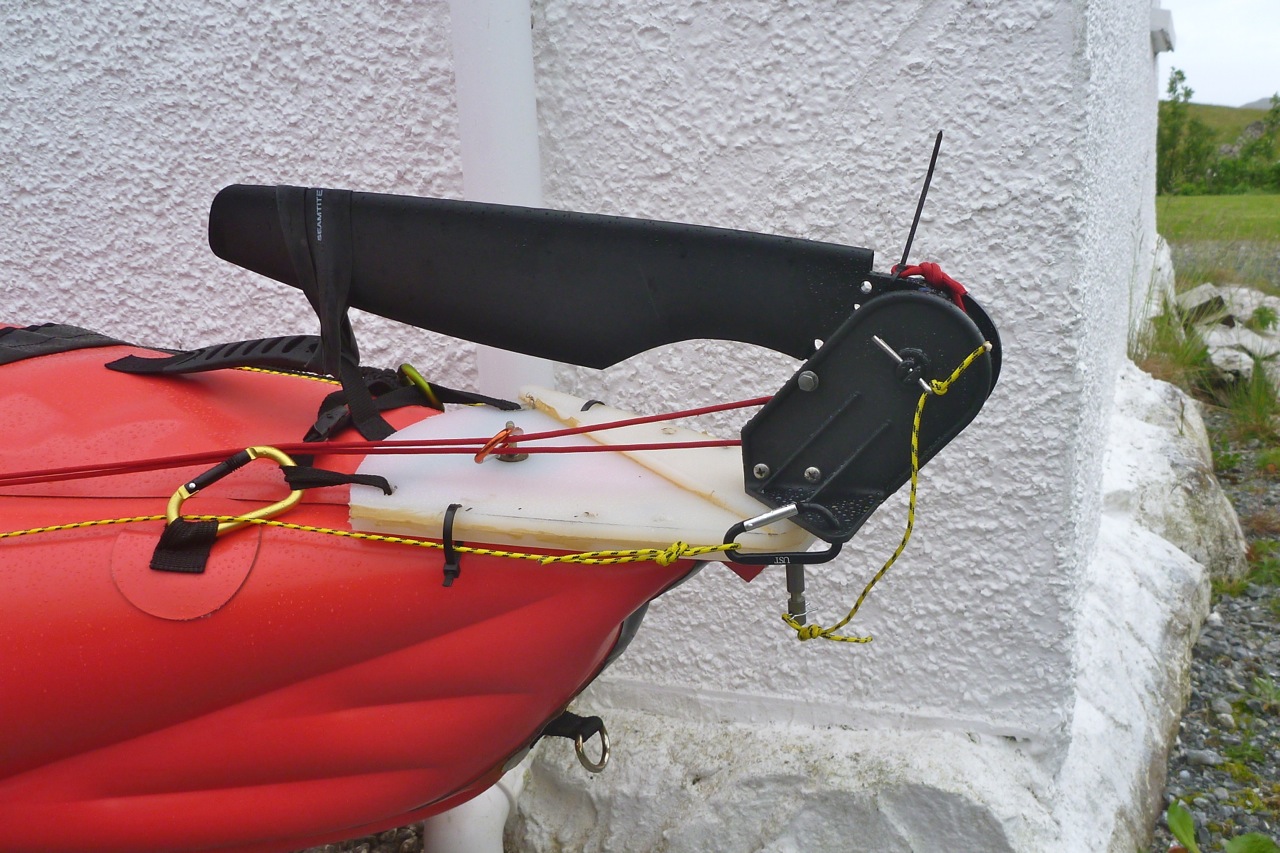
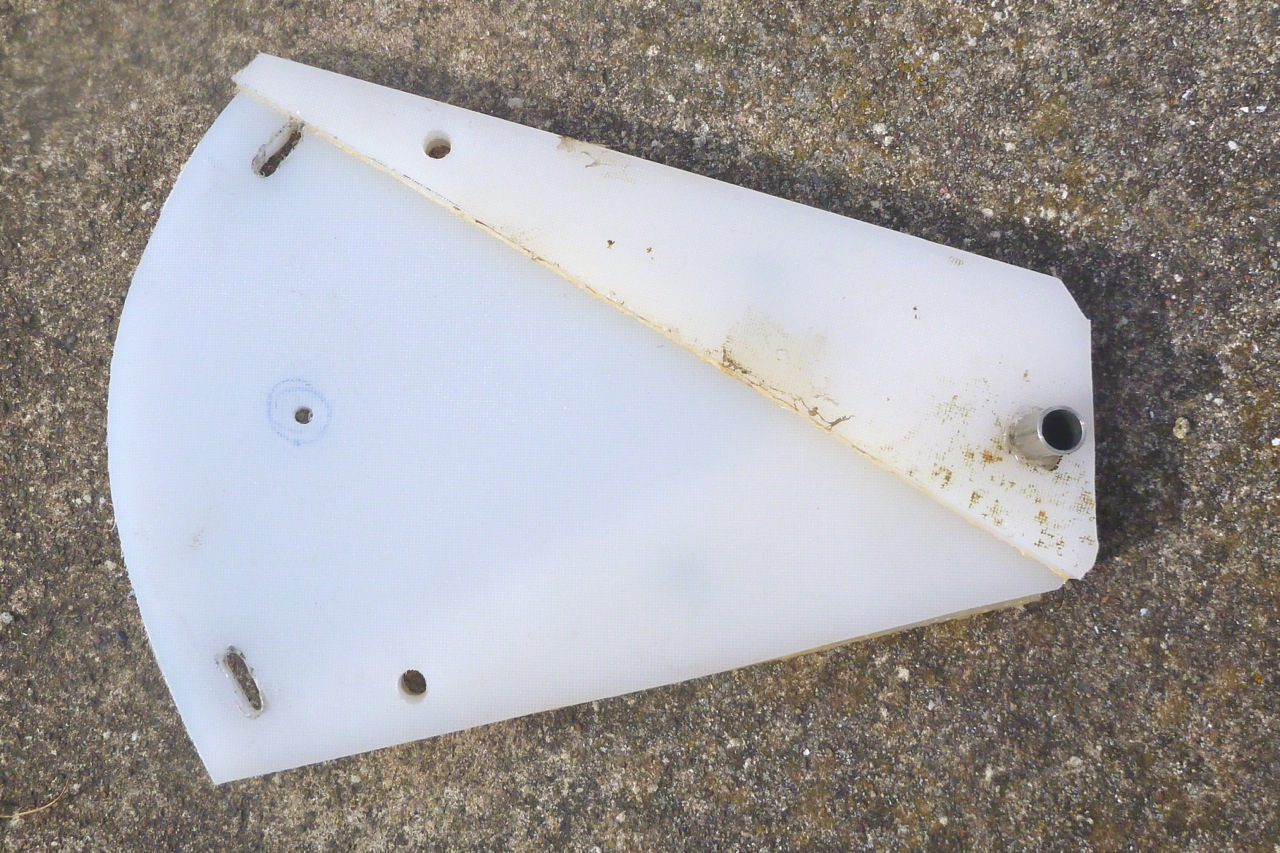
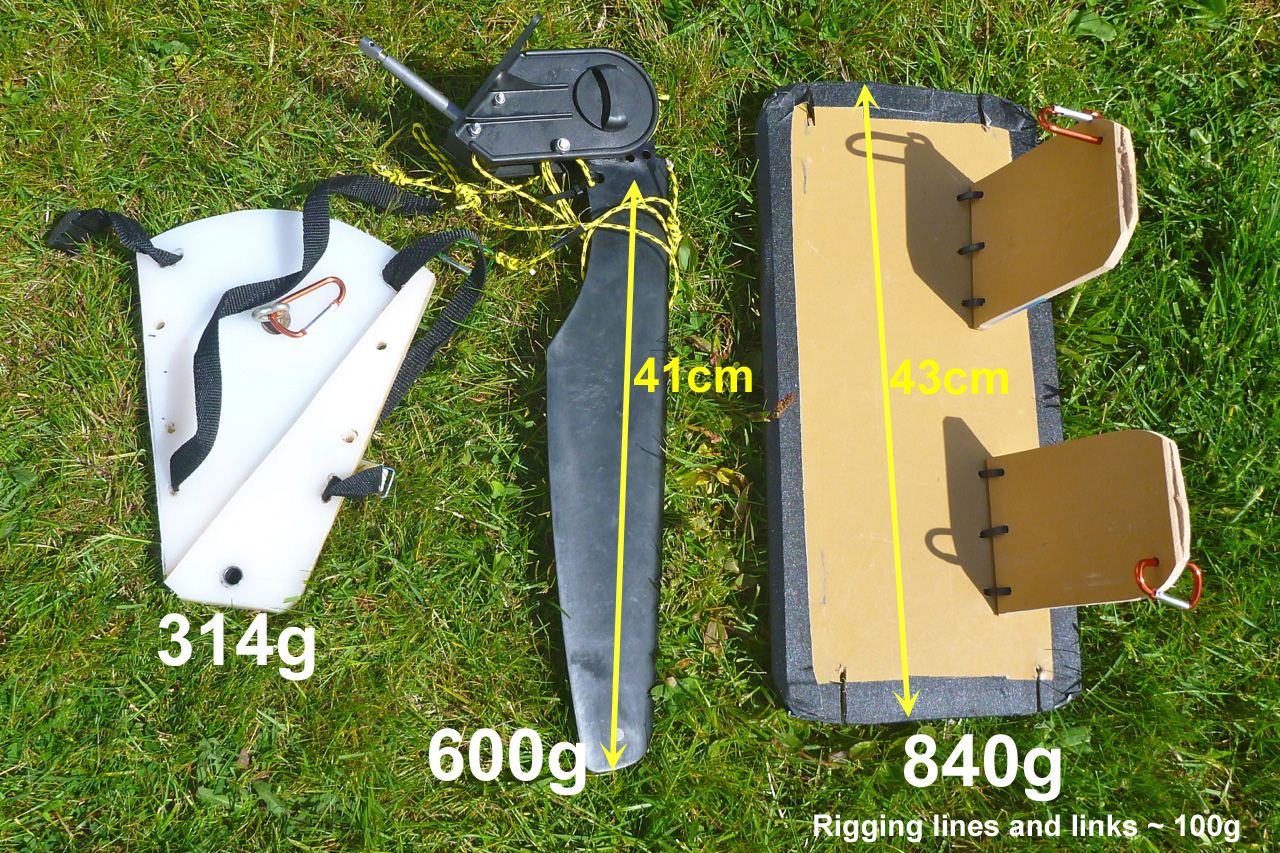
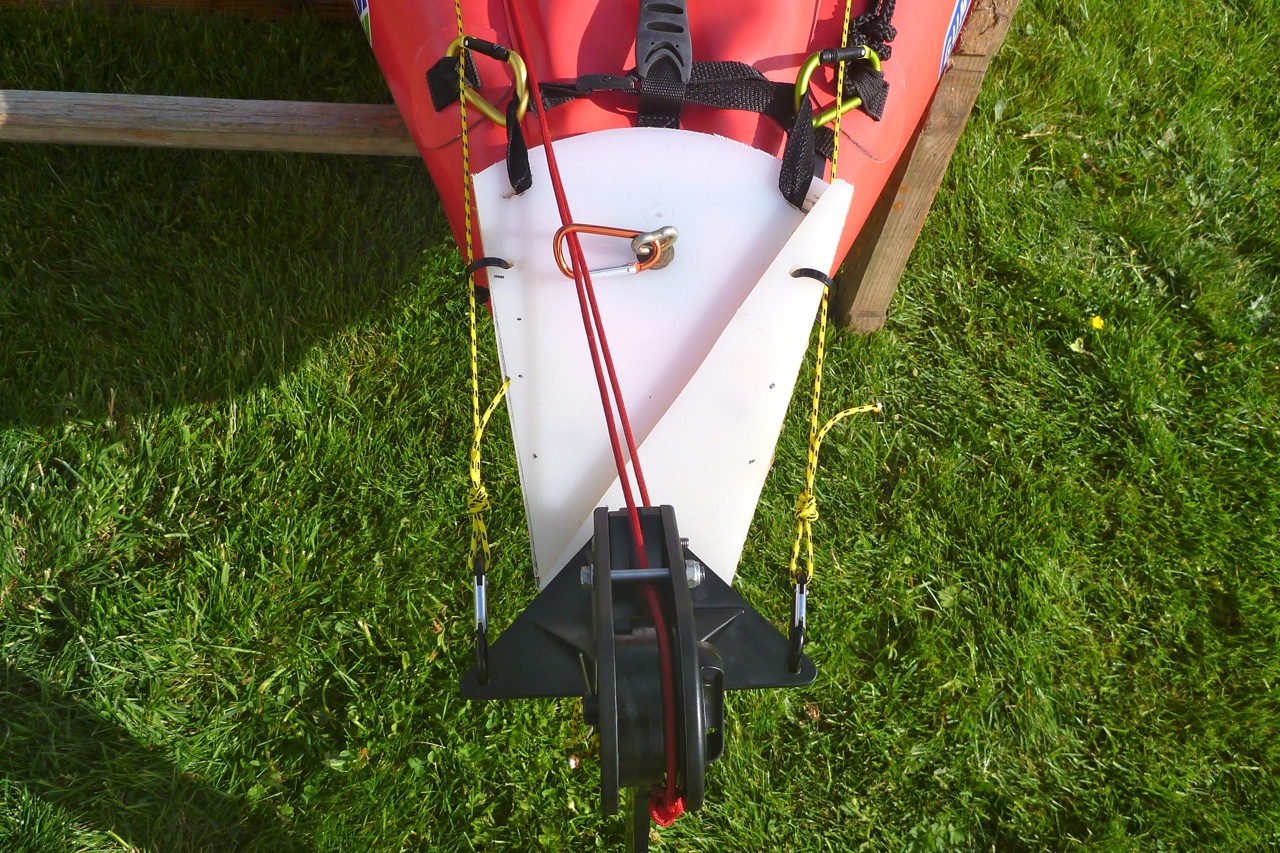
MYO While the rudder inched its way over from Hong Kong I came up with a rough idea to mount it on a chopped up HDPE chopping board held in place by straps or similar off the rearmost deck line sleeves, then cinched down with an extra D-ring glued under the stern – the only mod permanently added to the actual boat. On the end of the board some sort of swivel tube was needed, or just a built block of HDPE with a ⅜” hole drilled through it to take the rudder pin. Rigidity, or minimal flex is important if the rudder is to feel responsive – another flaw I recall from the Incept. Mounting something rigidly on the end of an inflatable is tricky, but if my first ideas aren’t good enough, there’ll be better ways of doing it.
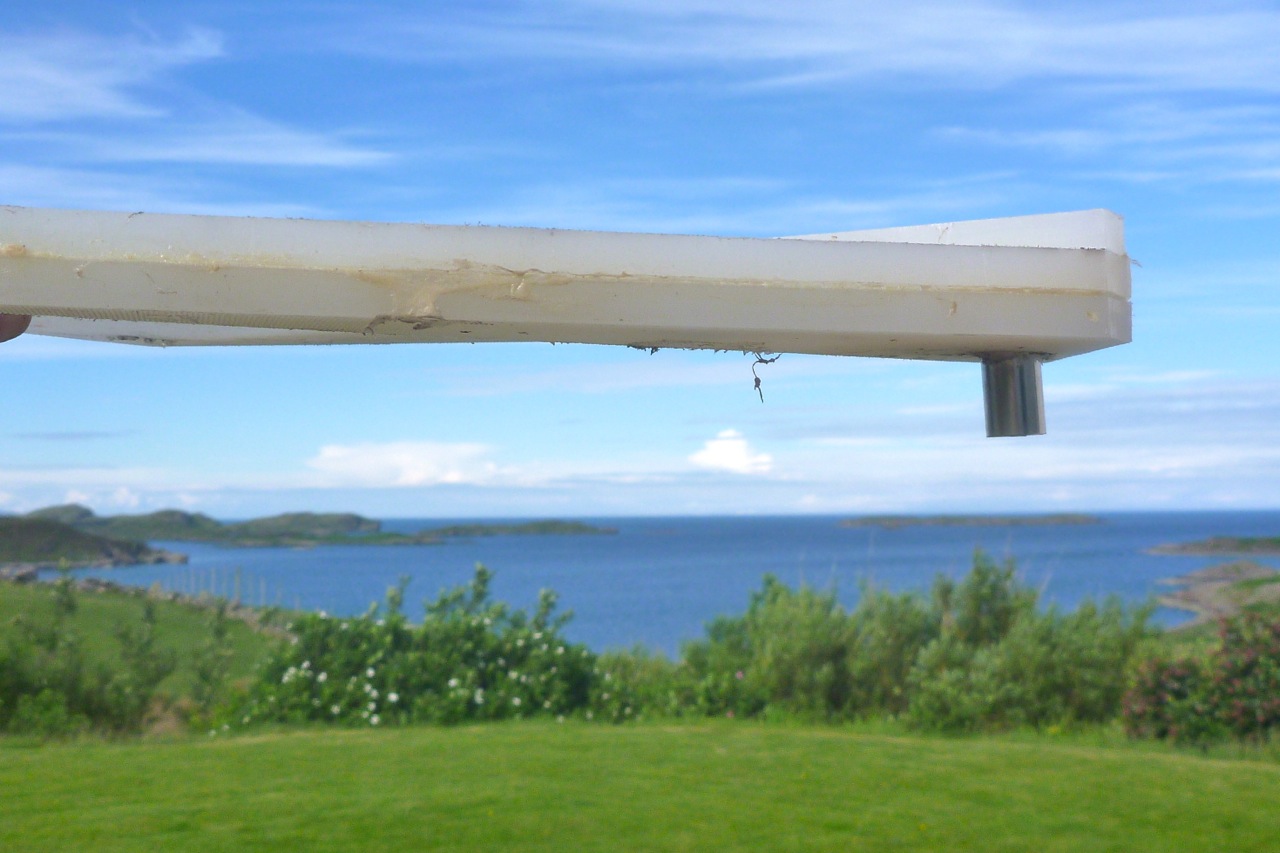
The way I chopped my 8mm board up and glued on the off-cuts for added stiffness produced about an inch of thickness at the back (right). And when the rudder turned up with a gudgeon pivot swivel sleeve, I decided it could be jammed into the back end of my board to provide a solid enough pivot.
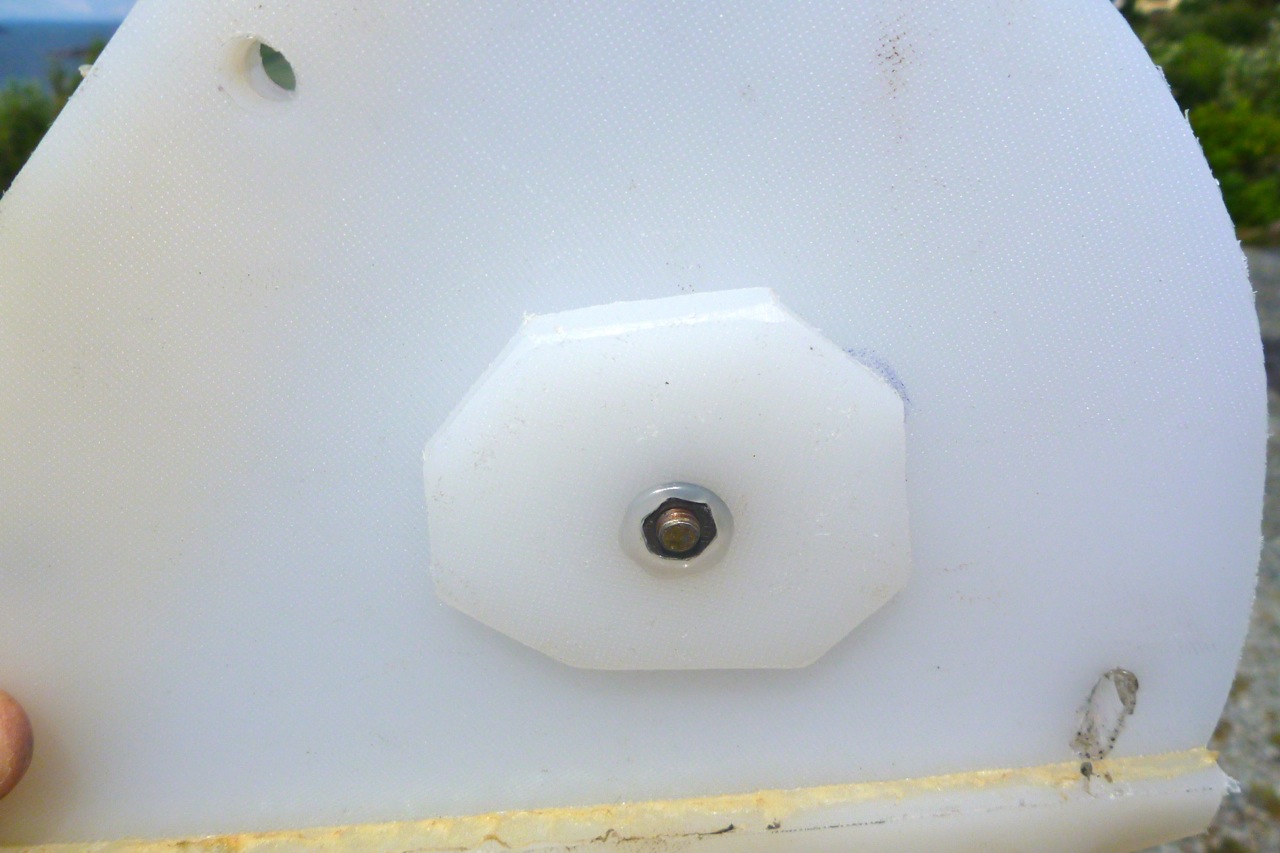
This kitchen plastic is a dream to work with: it cuts easily, melts readily (no need for a drill) but is fairly light, stiff and rot proof. I mounted a clamp through the boat’s drain hole – copied from the Gumotex kit – and used an off-cut with a melted-in M6 nut (right) to grip the top plate under the deck. With a strap threaded through the rearmost deckline sleeves, this triangulated the mounting to reduce – but not totally eliminate – sideways pivoting. When it turns up a ‘saddle strap’ through the under-stern D-ring will hold the board down to reduce movement some more.
Rudder lift line
Tubing, for smooth running,
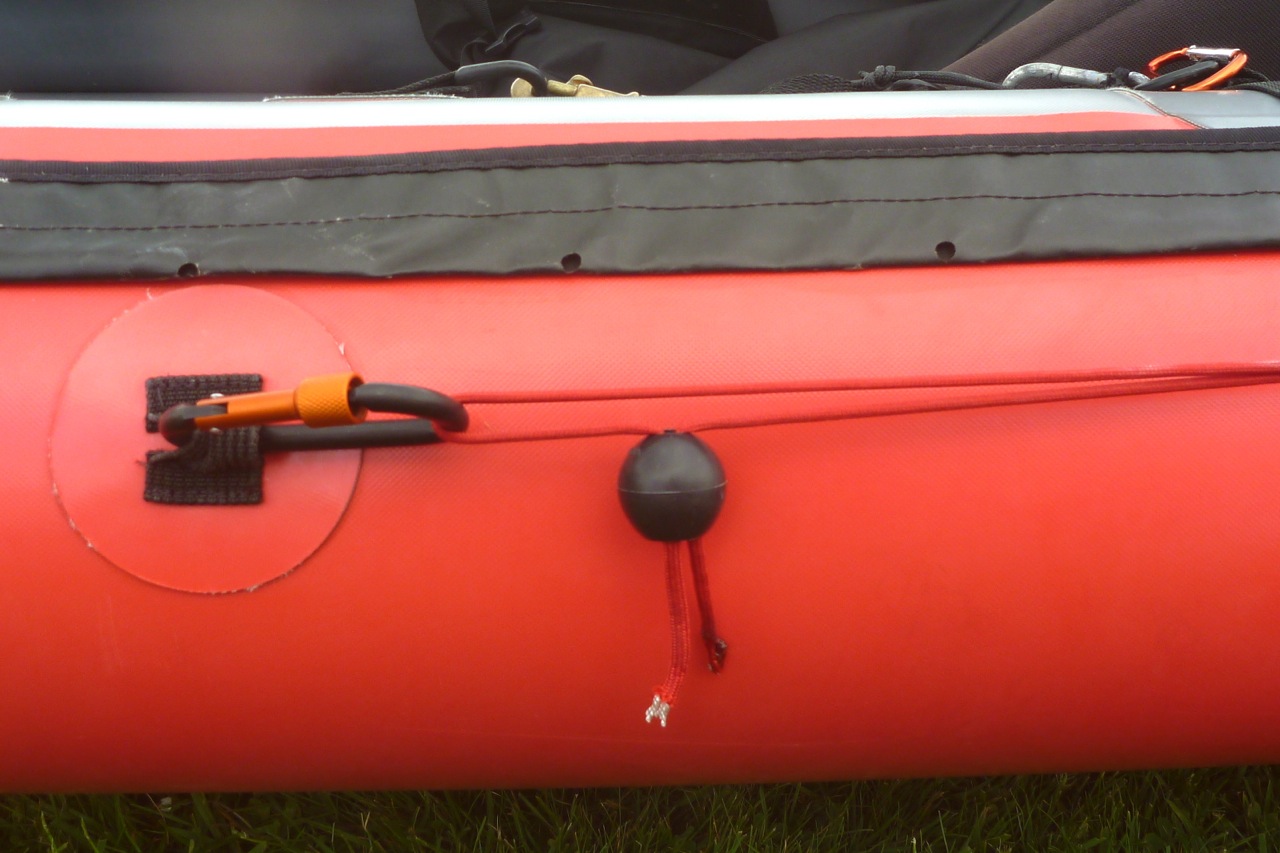
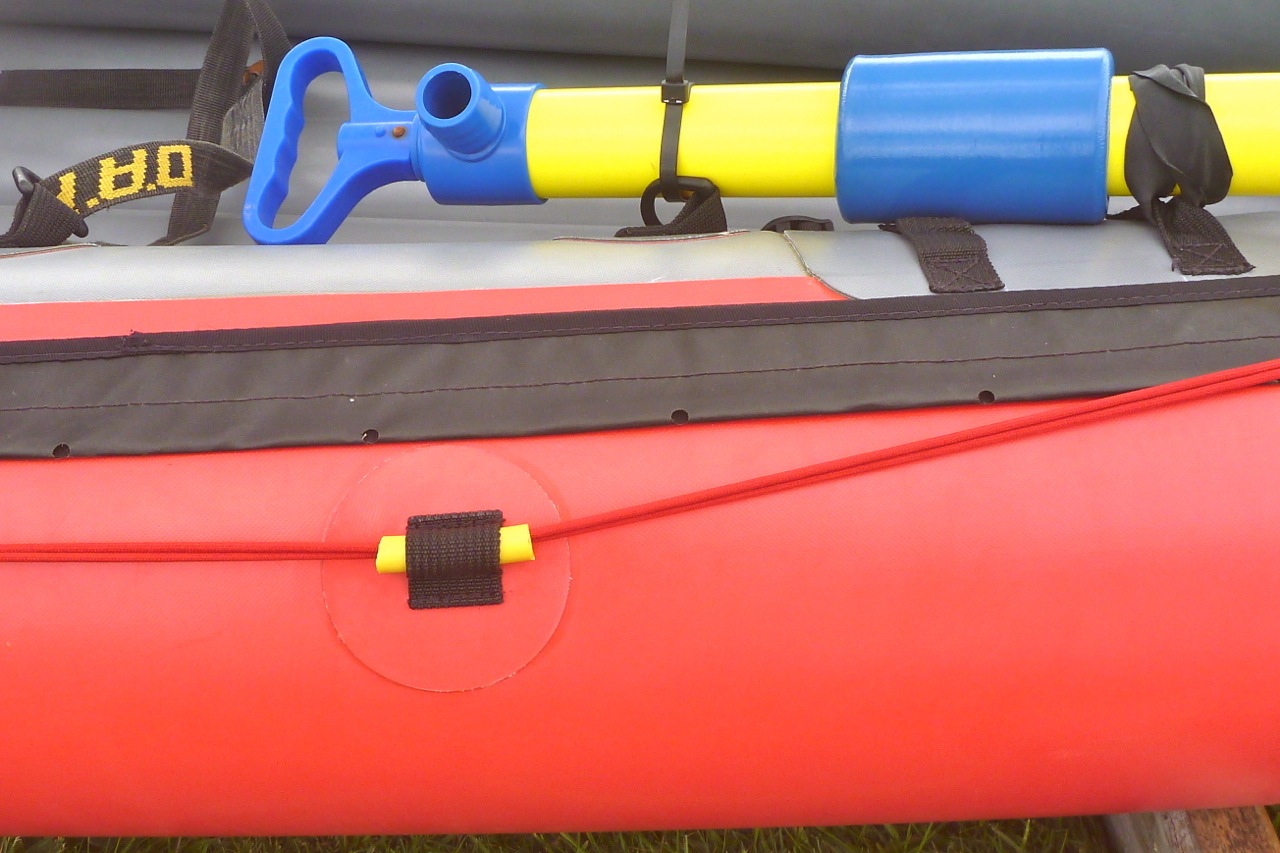
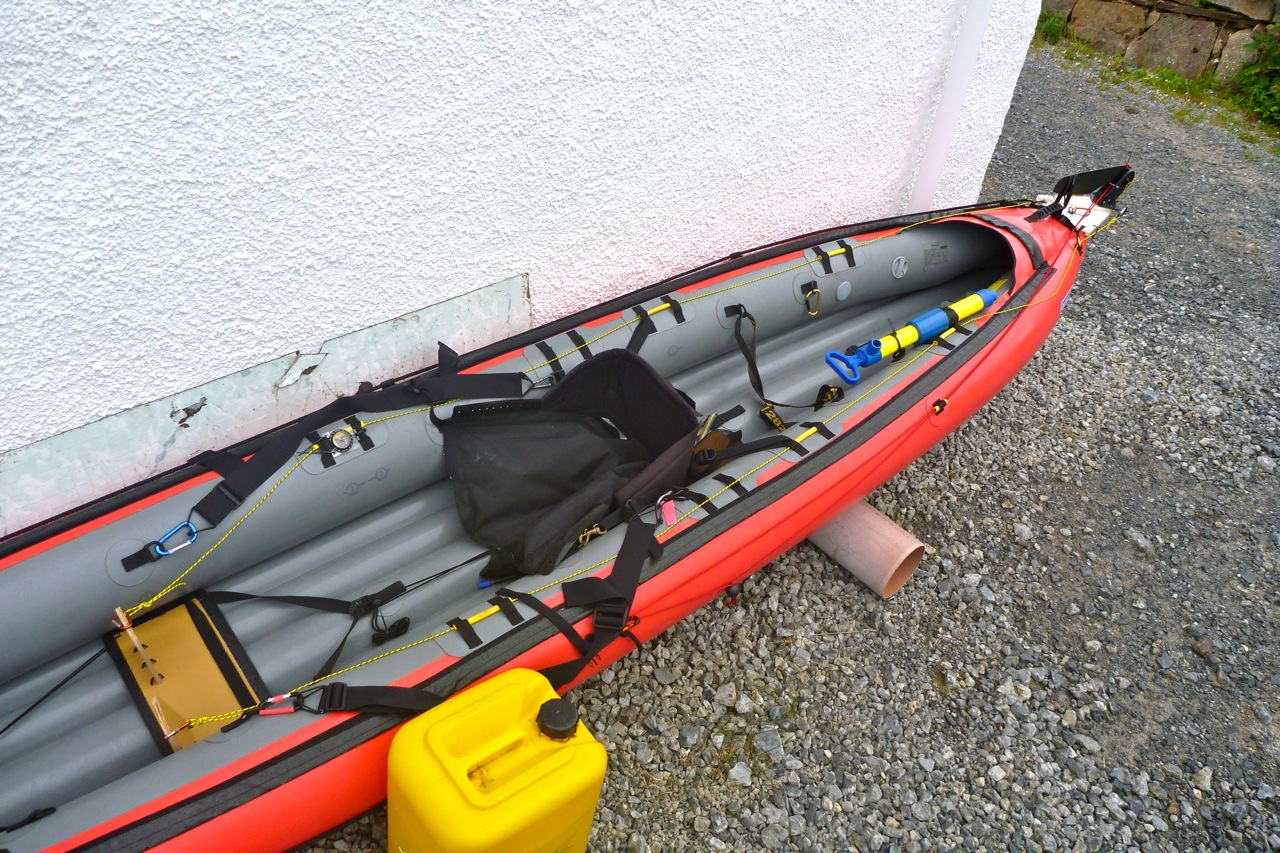
Control lines Having owned a ruddered IK helped with setting up the control lines. The threading of the rudder lift/drop line pulley is fairly obvious – the goal is to create as little drag as possible and the many fixtures on the Seawave make this easy. I used bits of yellow fuel line (above right) to make runners for the line which is more or less a closed loop from the rudder sliding through a karabiner hooked to a deckline sleeve left of the cockpit and knotted up to a plastic knob (above left). Haul back to lift the rudder; pull forward to drop. The trick is the get the length right before cutting off the excess cord. I might have done better using zero-stretch Dyneema cord rather than cheaper paracord, but that’s easily changed if need be.
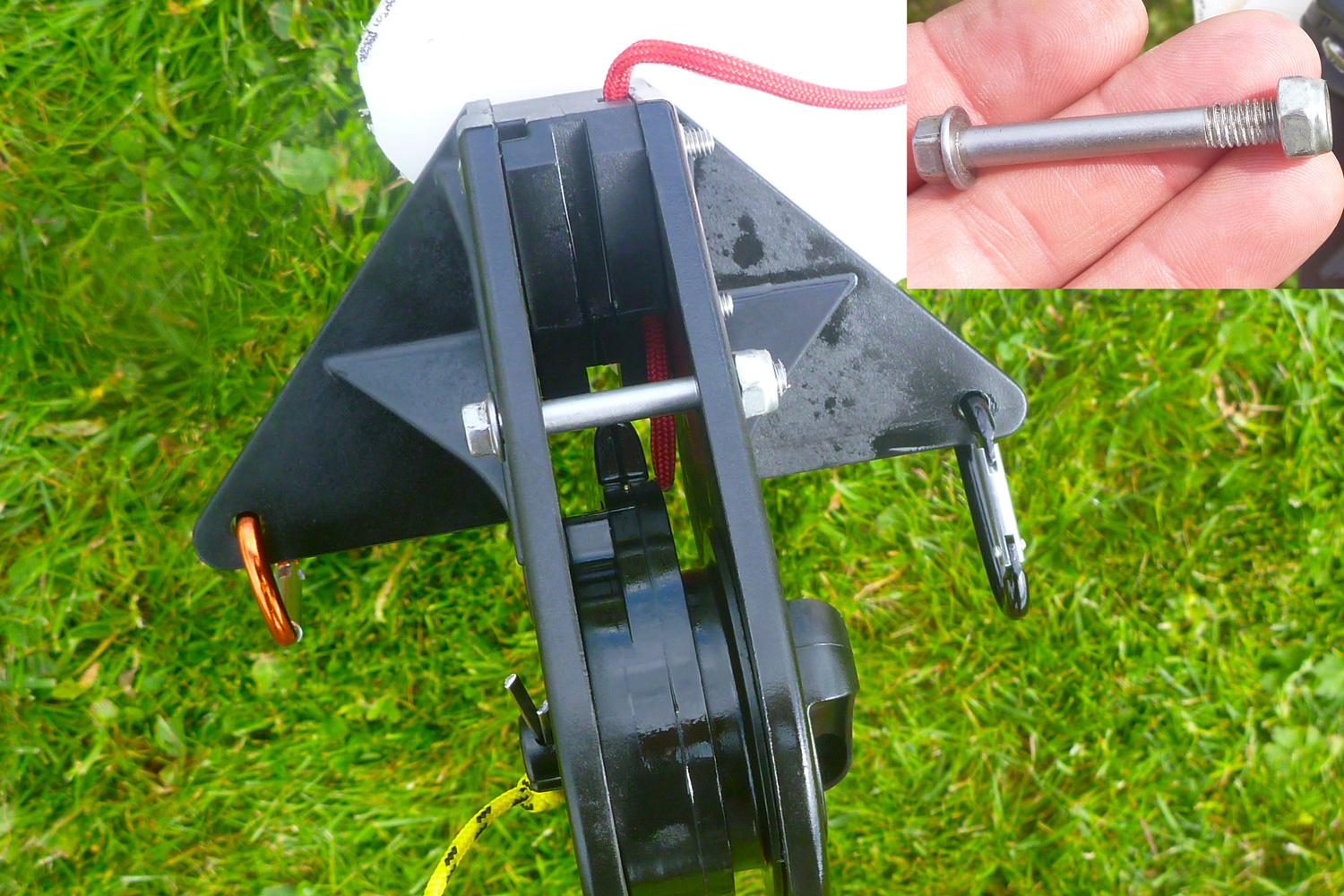
One thing the rudder needed to improve the lifting line’s angle was a smooth shafted M5 bolt running through it as shown left. The holes are already there – maybe it’s supposed to be like that (no instructions with rudder, but you do get 4m of paracord). The bolt isn’t tightened and rolls as the rudder lifting cord passes under it.
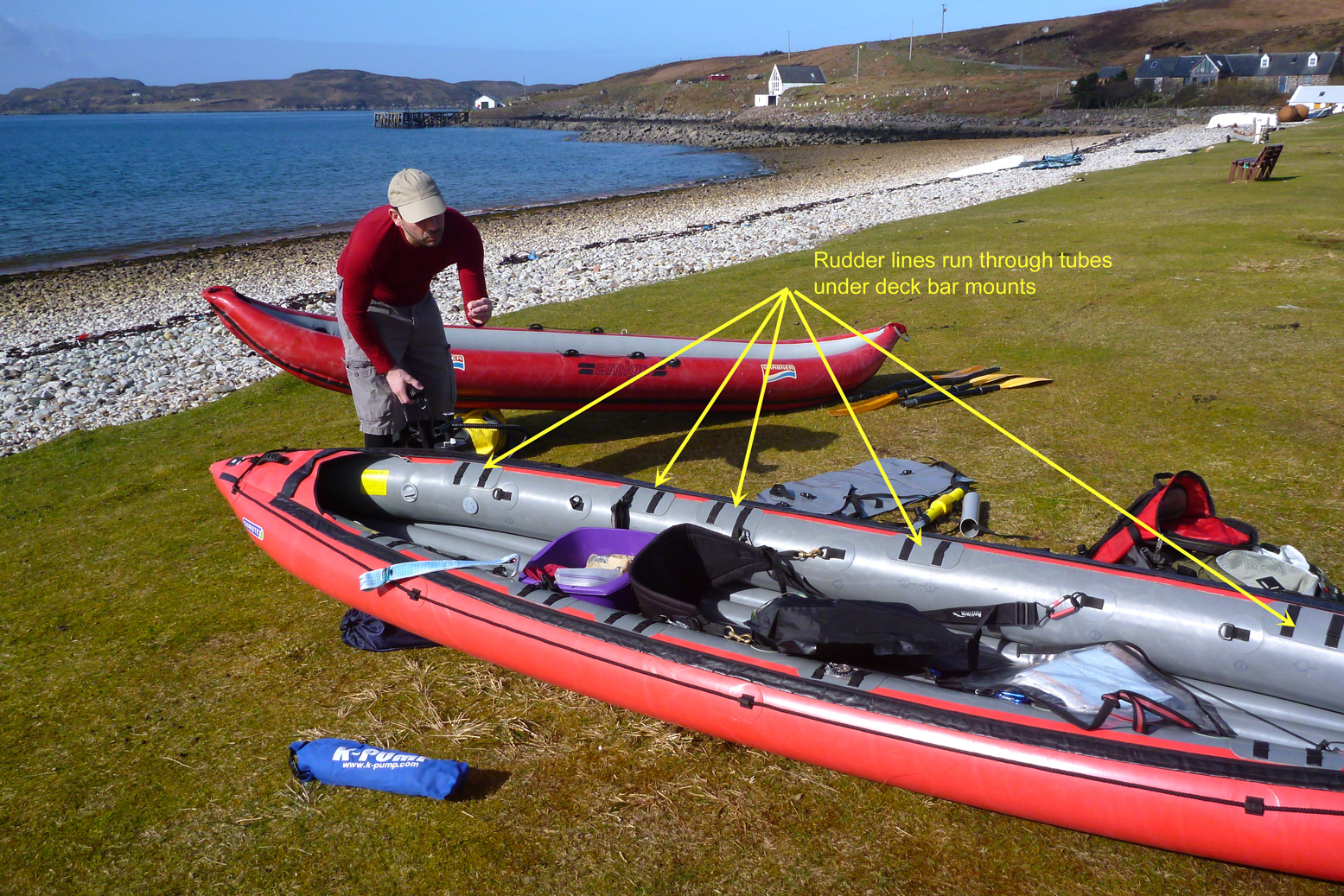
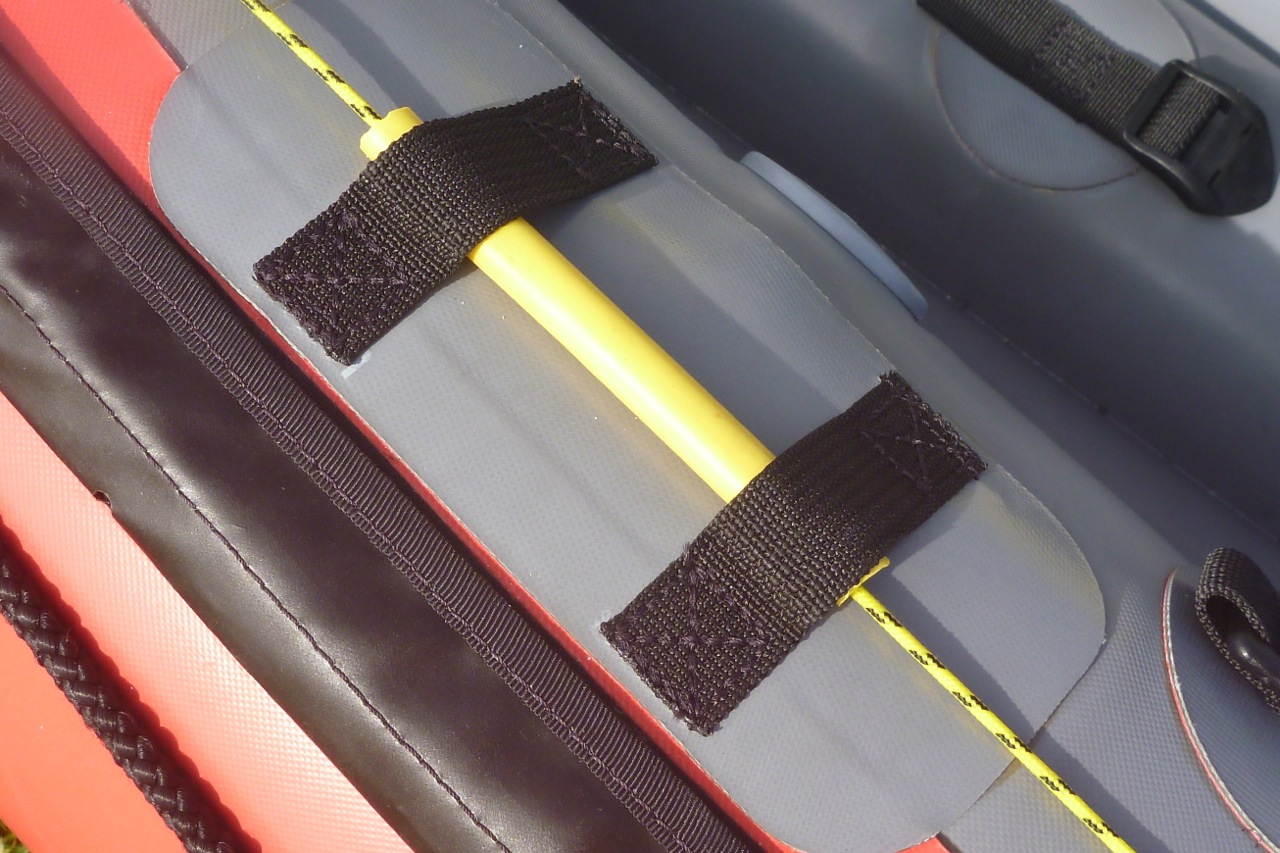
The rudder pivot lines run smoothly through more fuel line slipped unobtrusively under the redundant splash deck tabs on the hull top (right and left).
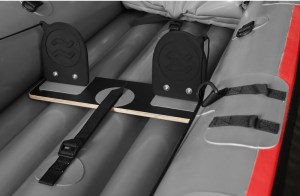
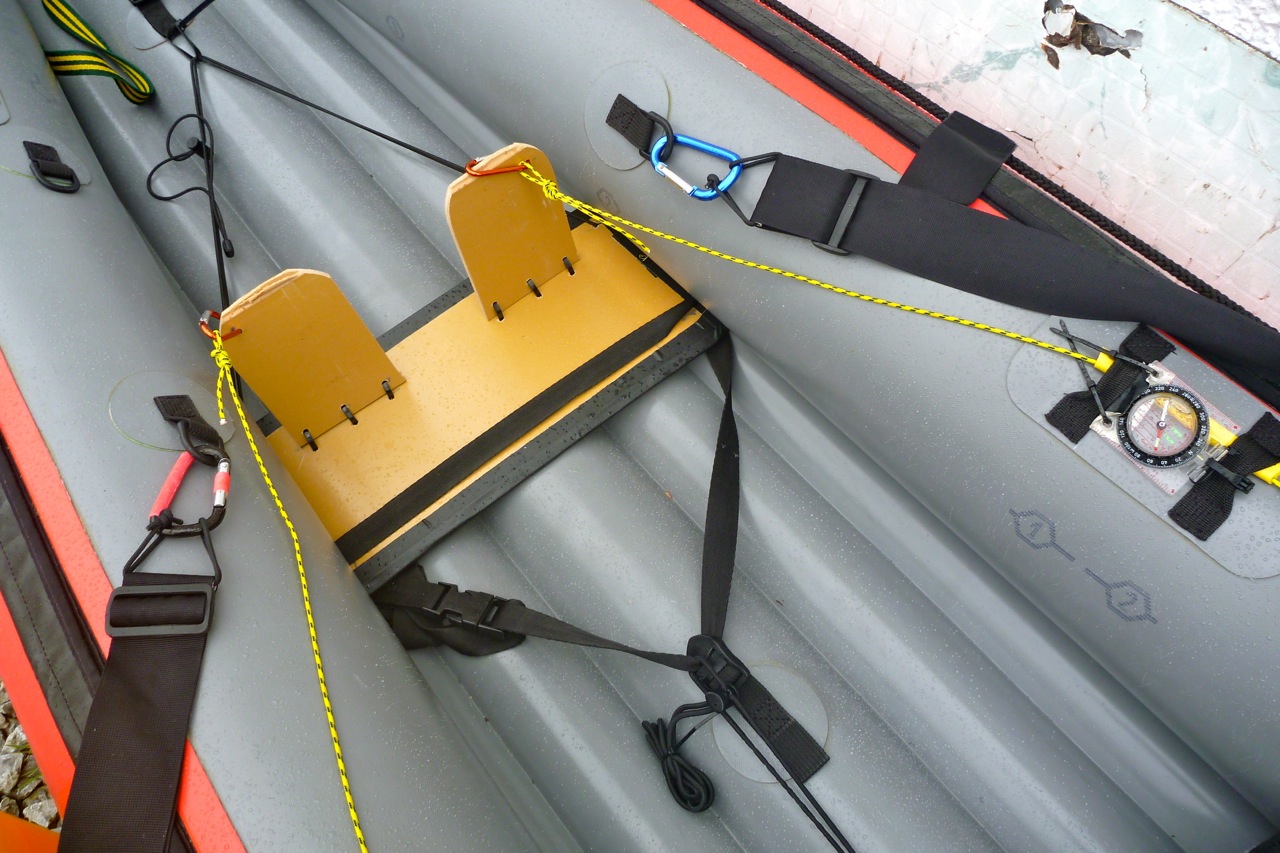
At the foot end attaching pedals to my big footrest tube (right) wasn’t going to work. I thought about using a smaller bit of tube but then decided a plain board with pedals pivoting on it at floor level works best – as Gumotex below right.
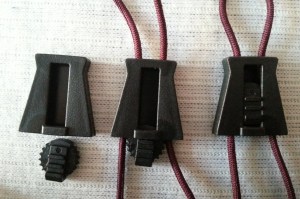
Wheeled cord locks
I found a plank of laminate flooring in the barn, sawed it into the right shapes and attached the pedals to the plate with zip-tie hinges so the thing would pack flat when not in use, but makes the pedals stand up which is handy. This floor laminate was what I found lying around wanting to get the job done, but another slab of kitchen chopping board will be a better long-term solution. At least I have a template just as long as the pedal board doesn’t dissolve at the first splash of seawater.
The pedal board is moveable front and back same as my foot tube was (for different length paddlers or two-up) but I need to find some way of fine-tuning the 2mm Dyneema rudder line lengths to match. Something more than a spring cinch lock like you get on a stuff sack that will actually lock the slippery Dyneema cord, but doesn’t need tension like the cam lock cleats I used on my V-Sail. I ordered the wheel locks on the left which should work.
The whole thing took a couple of days to work out using a jigsaw, a drill and a camping stove plus a skewer. If I had to do it all again and had all the bits and pieces at hand and a better idea of what I was doing (ie; this again but better) I reckon it would all take me 4–5 hours. Total weight added is 1.85kg, but I saved 450g by ditching my drainpipe footrest with a thinner version at a quarter of the weight.
The costs were: • Rudder £19 • Chopping board £2 • 5m of 2mm Dyneema and paracord £11 • Five mini karabiners £2 • Two cord locks £1.50 Other bits and pieces I already had or found lying around might add up to another tenner. Lessons learned: it pays to think it over: first ideas may give the impression of momentum coupled with intuitive brilliance, but are not always the best.
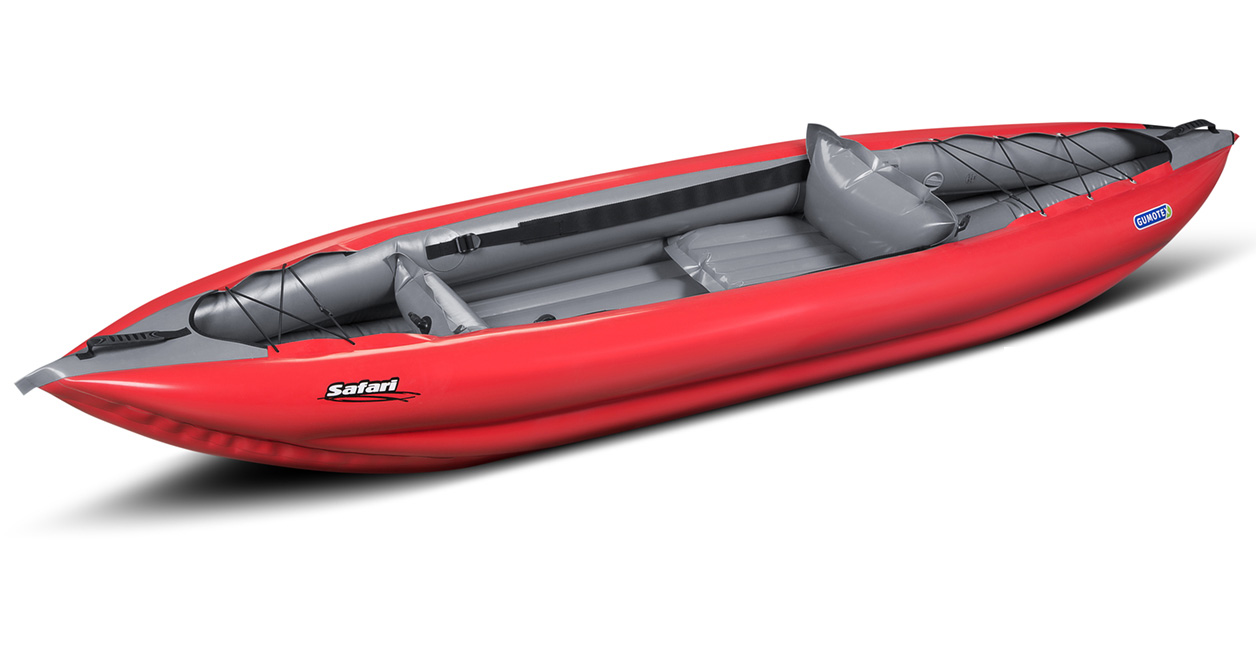
For 2016 Gumotex have a new model of the self-bailing white-water/surf Safari called 330 or 330 XL. According to the stats the new boat is 26cm or ten inches longer than the regular Safari and now 80cm- or no less than three inches wider, which means buoyancy is up 30% to a rated 130kg. Weight is down 500g too to 12kg.
I had the original pre-2003 Safari (left and right) – my very first IK and a very tippy boat for which I was too heavy and perhaps just too big. Part of the reason for tippiness is you’re sat high because a self-bailer needs a thick floor to put the your butt above the water level swilling around the draining holes in the floor. If that boat is also narrow and you’re an over-fed newb, then you both sit in water and have trouble keeping upright. Post 2003 Safaris were said to be much less tippy.
The new 330 retains the all-important thigh straps but will be a more stable, user-friendly IK that’s still suited to rapids and surf without the need for decks (as on the Framura or Swings) or for frequent bank-side visits to drain it (right). But you get the horrible, old-school Gumotex footrest and a seat with no back support. I’d glue on some hull-top patches for a proper backrest like on my Seawave or Grabner, and a footrest tube too. The claimed specs are: 330cm long; 80cm wide; 12kg; max load 130kg and 3psi pressure with a PRV in the floor. The preceding Safari was: 304 x 72cm; 12.5kg; max load 100kg and runs the same pressure and PRV.
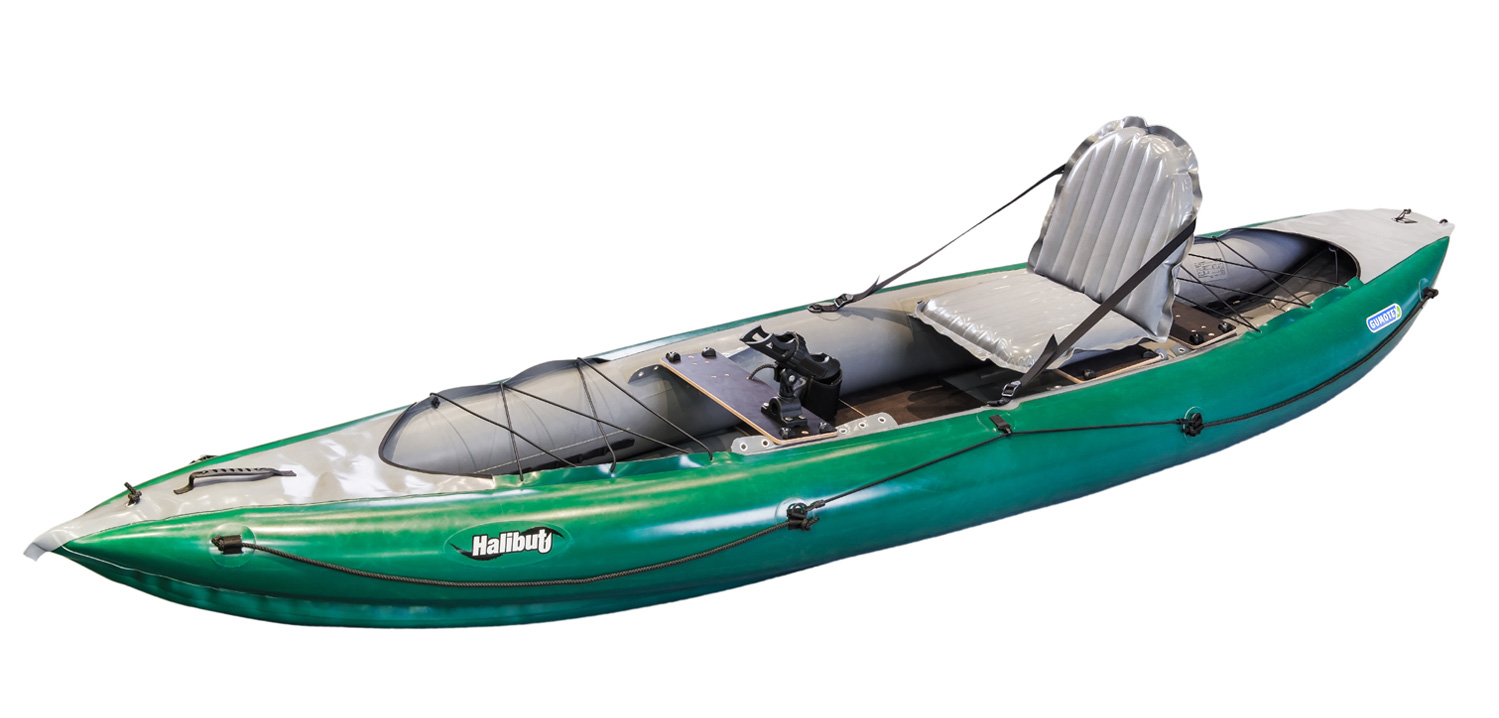
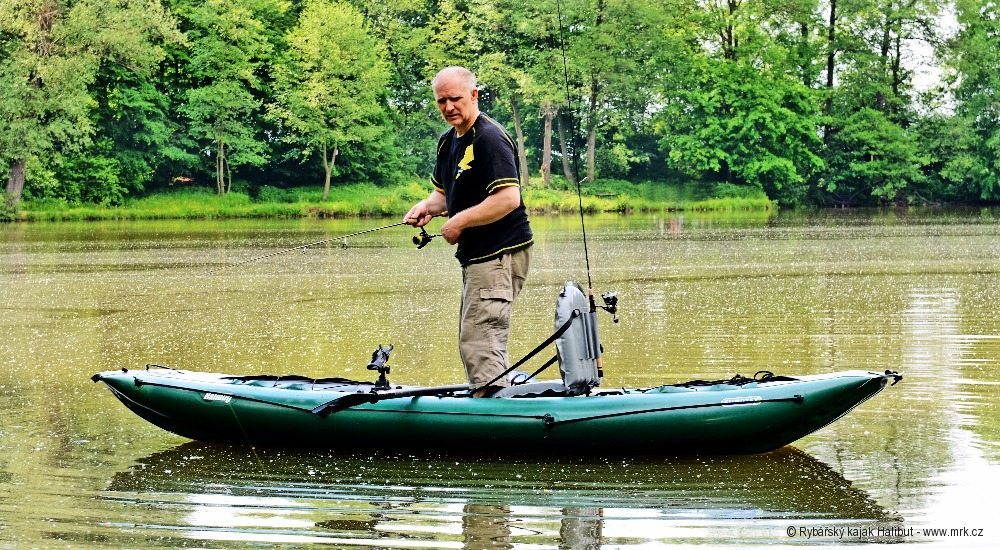
Lurking deep in the weeds we find Gumo’s other new IK, a fishing kayak called the Halibut. I do like a tasty halibut fried in butter and lemon, and this well-equipped trawler is high-seated, heavy but reassuringly wide (3.75m long, 96cm wide, 21kg).
It also comes with a floor plate for standing, but energetic casting might take some skill to pull off. At €999 it’s quite pricey too, but there are probably more fishing kayakers out there (mostly in hardshell SoTs) than the rest of us put together.
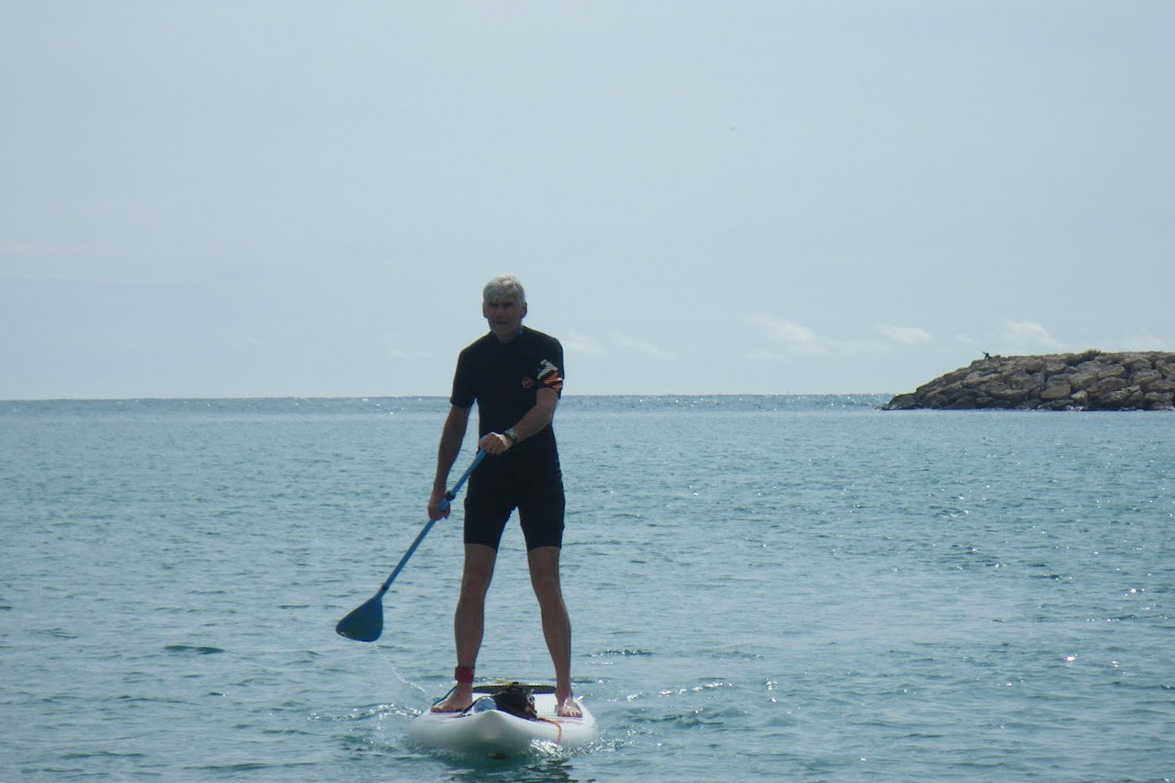
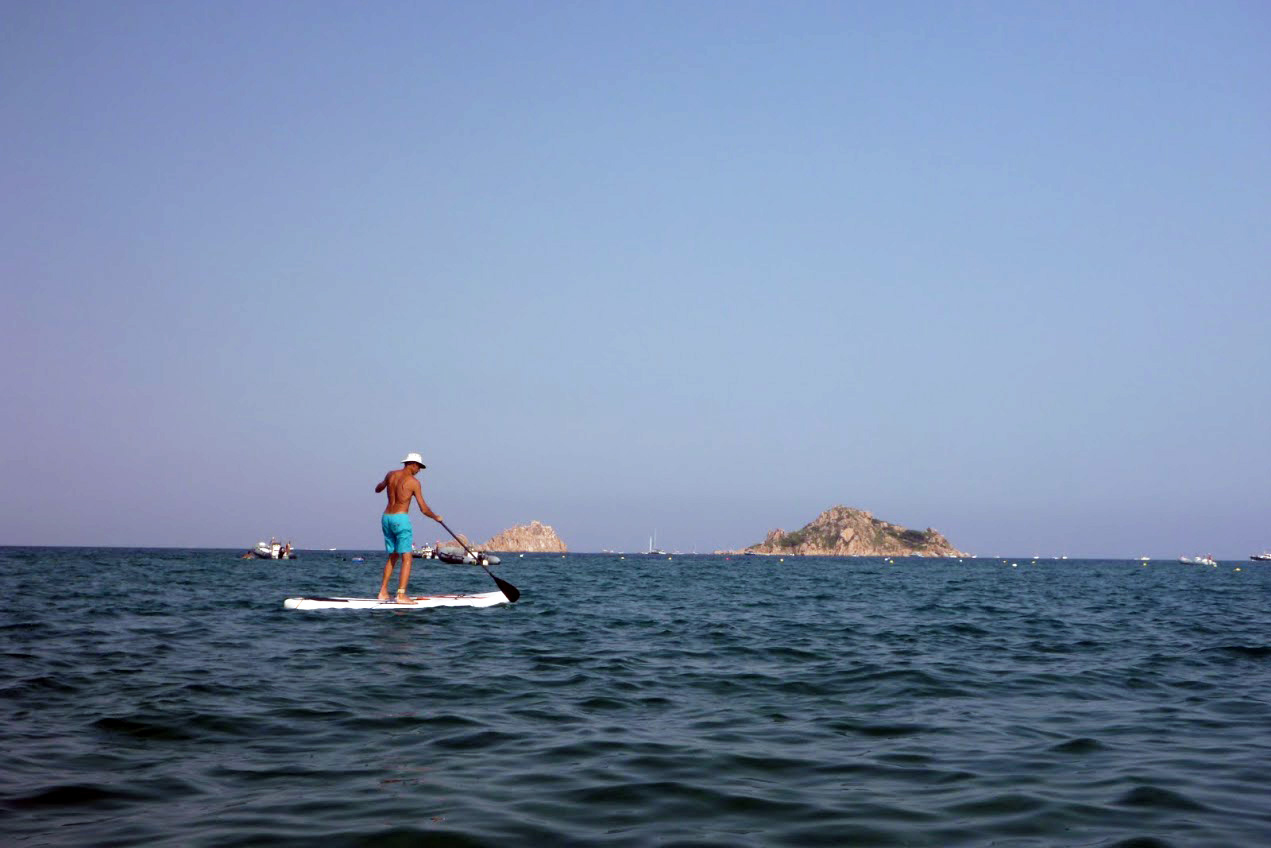
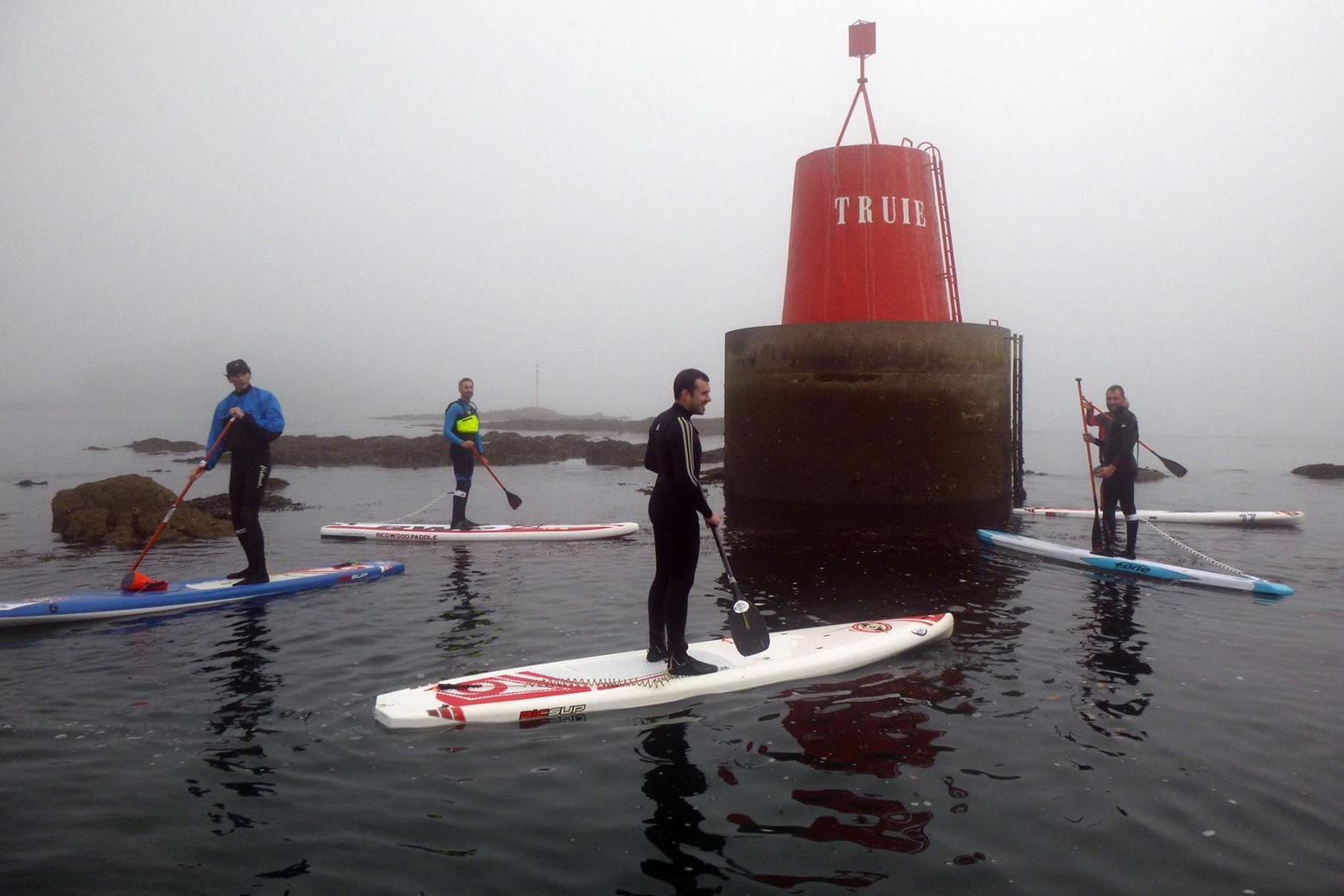
One day during my annual paddle off western Scotland, while waiting out a gale near Glenuig and enjoying some familiar Highland music (howling wind, drumming rain, crashing waves, whistling guy lines), I lay daydreaming of my imminent summer holidays in Sardinia. What would be the best use of these heavenly three weeks of typical Mediterranean conditions: hot days, warm water and mostly moderate wind? I needed a new way to roam this now familiar place. I’d kayaked the Ogliastra coast several times, hiked most of the hinterland, and wasn’t interested in mountain-biking or climbing. I wanted to try something new and that’s when stand-up paddle-boarding came to mind. According to some fellow paddlers who’d taken up SUPing some years ago, it was particularly enjoyable on calm seas with a light wind, no current and insignificant chop, allowing the paddler to see deep into the clear water below and enjoy a higher-than-normal viewpoint.
Quick iSUP Q&A
How far do you get on a good day?
Between 15 and 20 km. Paddling time is more relevant than distance. Sea and wind conditions have a greater influence on the distance you can paddle. I do usually 2 to 4 hours a day.
I hope you are standing up and not kneeling or sitting like I often see around here.
Yes I am. Paddling a board seated or kneeling is very uncomfortable. This summer I found out that most SUP owners use it as a kayak with a double blade paddle and some with a SoT seat.
What is the magical appeal of SUP? It won’t be the speed and range. Is it the standing, maybe easier to look around and breathe fully than sitting.
More fun. I was willing to try something new, provided it would be simple and use a paddle. Setting up a SUP is very straightforward and yes you see more things standing up. When conditions are favourable I like to potter along a craggy shore exploring nooks and crannies then return to base on a more direct route, like I would do with any other paddle craft.
Do you fall in often?
Not anymore, but it still happens.
Do you have to watch the weather more or less than IK conditions?
Definitely more. I try to avoid paddling in headwind or side wind, or on complicated sea state : staying upright on a SUP in steep waves is exhausting compared to riding them sitting in a kayak.
Back home, a bit of sit-down web surfing convinced me a SUP board would definitely be my next beach toy. SUPing is a fast-growing sport (if not the fastest according to some) so there are heaps of manufacturers offering flotillas of models in various materials, shapes, sizes and prices. Moreover, a wide range of inflatable models are available in this booming market, and thanks to innovative drop-stitch technology, most can take up to 20psi, (1.38 bar) making them almost as rigid as regular solid boards. As in the realm of kayaks, iSUPs aren’t as sleek and swift as solid boards, but they’re said to offer reasonable performance as well the usual benefits of inflatables.
How I chose my board In a nutshell, SUPs fall in three categories: short ones less than 9’ for surfing (the original purpose of the craft) and long ones over 12’ for racing, touring, and ‘downwinding’, which is surfing down big wind-induced offshore swells. Those in between are called all-rounders. While sales people in shops advise a wide 30-inch plus all-rounder for beginners, web research leads logically to responses like ‘depends on your type of paddling’, just as with IKs. What is my type of paddling going to be? More or less the same as my IK-ing: coastal exploring mostly with the occasional bit of inland – ‘flat water’ touring in SUP-speak. Flat water might be any sheltered expanse of water, lake, river, inlet, channel or bay which doesn’t get too rough under the action of wind, though from my experience and that of many others, such ‘flat water’ can get quite bumpy at times. For that the longer SUPs are faster and easier to keep straight. More length also means more buoyancy and room on deck to carry a payload. I bought an WSK 12’6” Race ST for around €600 from Kite Spirit near Auray in Brittany, not far from the Golfe du Morbihan, my favourite paddling playground. WSK is Kite Spirit’s own brand and is significantly cheaper than other top brands. It claims to be an original manufacturer, but all iSUPs are made in Asia. Sacrebleu: a French manufacturer using imperial measurements? I feel seasick! Someone call the Académie Française!
Specs:
12’6” long
29” wide
5.5” thick
26.5 lbs
18 psi
removable fin
4 cargo D-Rings
1 D-ring on the tail, 1 under the nose
As its name suggests, this board is supposed to be a race board which is why the width is slightly under 30”. Most touring/exploring oriented boards are wider than 30”. They are a bit more stable, but are slower. ST stands for Super Thick. The advantages of this 5½” (14cm) thickness are stiffness and buoyancy. Stiffness is even more important for a SUP than for an IK. It would be very difficult to keep balanced on a sagging board, speed and manoeuvrability would be poor: for that we have Slackrafts. Buoyancy enables a heavier payload or paddler but it also means more windage. At 12kg the 12-6 ST is very comfortable to carry.
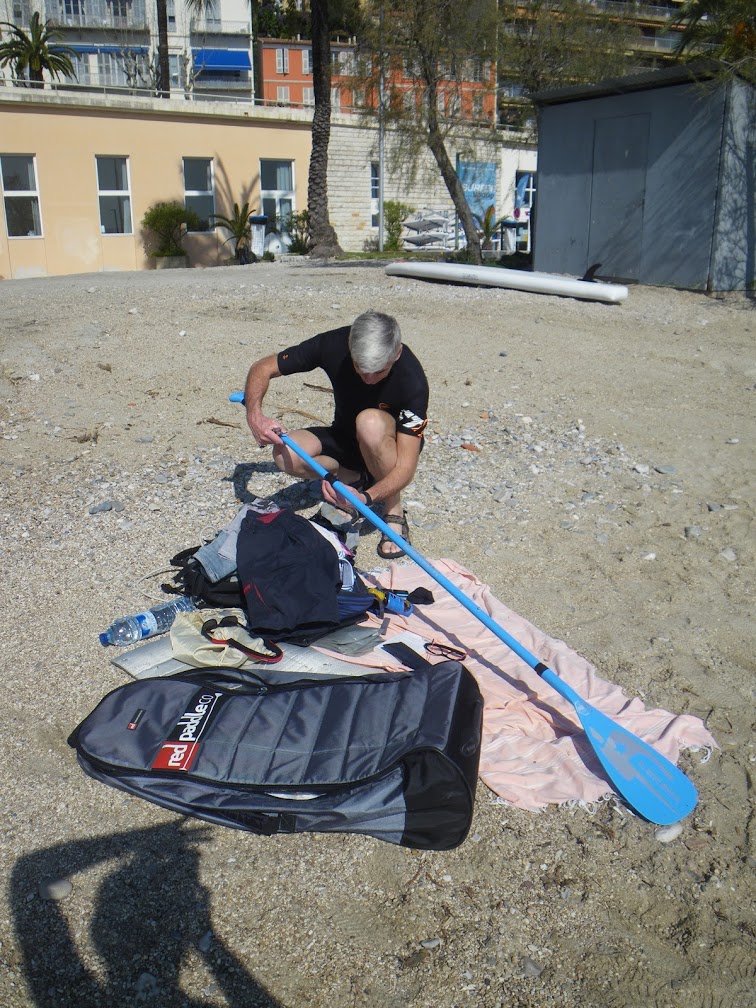
Unpacking the bundle iSUPs are generally sold with a fin, a repair kit, a pump, a paddle and a carry bag. The 12-6 Race ST uses a US Fin Box: a commonly used slotted box that allows fitting various fin styles. You guessed it; mine is a classic style deep fin for all-around paddling. It’s held in position by a small screw and plate which requires a screwdriver unless you use hand-tightened screws. For both types I use my Gerber multi-tool that goes into my repair kit.
Pump The pump (1.25 kg) is a tough, simple, single-action barrel pump with a built-in pressure gauge. The weak part is the cheap plastic tube that doesn’t inspire confidence.
Repair kit The repair kit (183g) includes glue, patches and valve key neatly stored in an orange cylindrical container with enough room for other tools and spare parts. I added the multi-tool and a spare fin screw in it.
Carry bag The carry bag is a cheap piece of canvas with shoulder straps which wouldn’t survive the rough baggage handling in airports. However it should survive a journey from a car park to the beach.
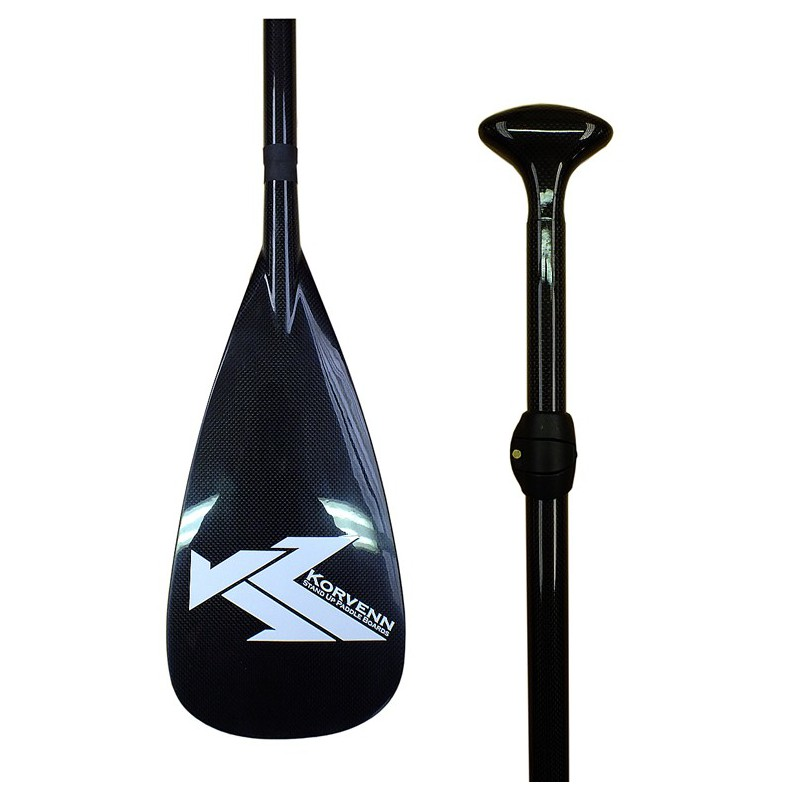
Additional equipment I bought an adjustable 500g carbon-fibre paddle which can be extended to the 225cm length I need. As a spare, I took a three-part adjustable (782g). By putting the blade on the shaft of my two-part paddle, I get a kayak style paddle for handling strong headwinds or swift currents.
Leash Just as sure as the sea is wet I’m sure to fall off on the water but don’t want to be separated from my board. At sea any inflatable object will be carried away by the wind faster than most can swim. Instead of buying a fancy surf-like leash, I use my old wave-ski one which I also in my IK.
Other stuff On a SUP you need to carry the same basic kit:
Painter / towline
Straps, bungee cords or cargo net to lash down equipment on deck
Much like with my open decked touring IKs, all the gear must go into dry bags tied down on deck. Multiple cargo tie-downs allow for a large quantity of gear to be carried on the nose and tail. While my 12.6 ST sports four D-rings on the front deck, I purchased four more from the local Red Paddle reseller (sold without the plastic ring) to be glued on the rear deck.
On the Water End of July I got a chance to try out my SUP. On that day, after a late lunch the sky darkened with ominous black clouds over the Sardinian mountains. Most people left and we had the beach for ourselves – all the better for my first attempt at riding my board. Conditions were perfect: no wind, flat sea, incredibly warm water. As advised in all beginner lessons I’d watched on youtube, I put the board in a foot of water with leash attached, knelt on it and paddled 20 meters then tried to stand up. I knew how hard it would be to just stand up and maintain balance and had imagined the first 20 minutes would be very frustrating for me and very entertaining for the spectators. Actually they were, even though the only onlooker was my wife. To make things worse, I made some mistakes like wearing my Tevas instead of barefoot, not washing the sand off the deck, and falling forward on the board, as I did when I tried to stand up. Next time I fell in the water and soon I was exhausted. My knees were raw, my hands were bleeding and my chest and forearms sore from rubbing against the board.
Within about an hour, spent mostly swimming alongside my board, my balance improved enough to look up from my feet and make my first forward strokes. Like a kayak, the pressure of the paddle on the water provides some lateral support and when I gained some forward momentum I felt significantly more stable and my confidence increased. Now I could stand for 20 minutes at a time before falling while trying to turn too sharply or tipped off by the wake of some motor vessel. The next challenge was to paddle straight. Since a SUP paddle is single blade, giving several strokes along one side then the other causes the board to yaw, even if keeping the paddle as vertical and as close to the board rail as possible. Although it proved impossible to achieve a straight line, switching sides about every 4 or 5 strokes produced an acceptable S-line while maintaining an almost continuous paddling rhythm. in spite of my precarious stance, my awkward paddle strokes were effective enough to drive me and my board along the desired route and reach the spots I was aiming at (buoy, yacht at anchor, jetty). The more proficient I grew, the more direct my course and the faster my pace became and the less I fell off. Upon reaching my target I had to execute the next manoeuver in the learning path: turning. SUP turning manoeuvres are very similar to sweep and draw strokes with as a kayaker, with a big difference: in a stable IK, I wasn’t punished by a dip when I got it wrong!
A kayak has inherent static stability and a lower centre of gravity, plus the paddler is wedged in his cockpit and integral with the craft. That is not the case on SUP. Any force on the paddle tended to pull me off the board before the board turned. I had to bend my knees to lower my centre of gravity and pay even more attention to my balance.
Coping with headwinds While paddling a kayak into a headwind can be frustrating, paddling a SUP in the same conditions is sheer drudgery. The board itself has a very low profile but the windage of the standing paddler is huge. In addition to the effort required to push into the wind, you of course have to deal with the wind-induced chop which sometimes gets the better of you. The recommended tactic in a strong headwind is to kneel or sit: less windage, better balance. Should I have to paddle a long way against a stiff breeze, I’d replace my paddle handle with a blade and paddle kayak style. On days when the grecale blew across the Tyrrhenian Sea I paddled up to a harbour breakwater. After a 50-minute slog and a bit of rest, I returned to the beach in 10 minutes, carried downwind by the breeze and gliding along the choppy waves.
Next steps My last year vacation ended before I got confident enough to try an overnighter. Now summer is almost there and I’m prepared to resume my SUP education. I still need hours of practice to improve balance and achieve longer paddling times before attempting a ten-mile coastal trip. So far, after an hour on the board, I badly need some rest. And SUPing makes me very thirsty too. In calm conditions I could grab my bottle of water when paddling, but not in windy conditions. I might consider buying a fancy hydration vest, or just slit open the back of my old pfd for a water bladder, as Chris has done (right).
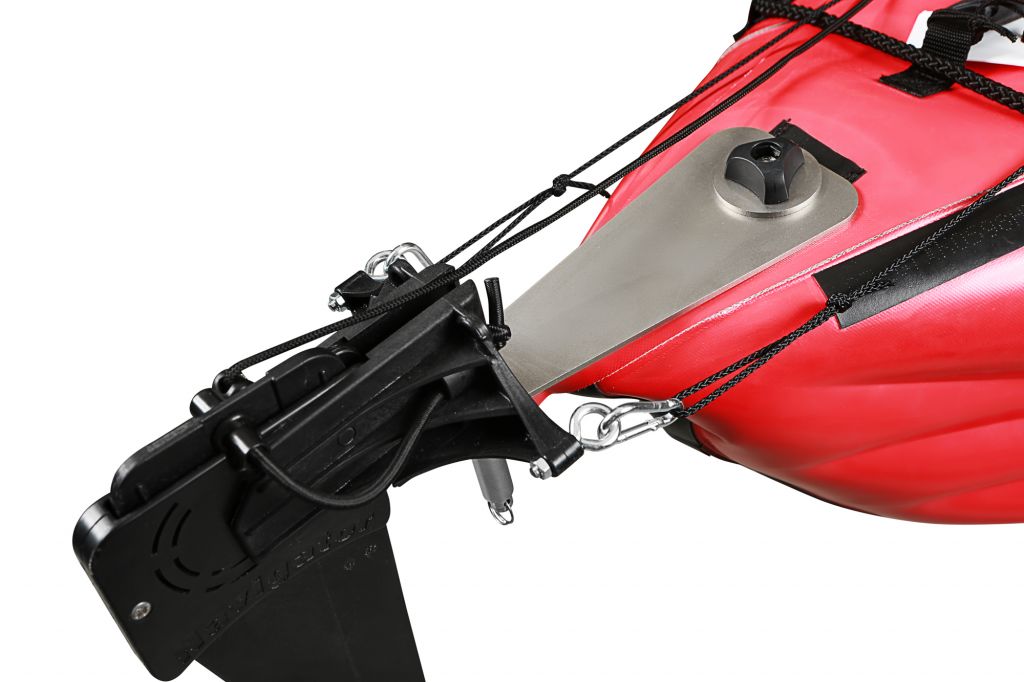
The 2016 Gumotex Seawave has had the stern slightly adapted to take an optional rudder kit. They’ve also improved the velcro bands for the optional deck by using Nitrilon, but it’s the rudder that’s the interesting development.
Coincidentally, I was halfway through adapting a cheap SoT rudder for my Seawave (left) and the factory version (going for £200) gave me some good ideas. The Gumotex rudder kit could be easily fitted to first-model Seawaves, and possibly to other Gumboats with similar triangular stern decks.
For the time it took to make mine I could have fitted a Gumotex kit ten times over but with only these pictures I was unsure exactly how it was secured. I suspect there’s an additional unseen plate underneath the stern decking to help jam the whole set up securely into the back triangle of the boat. I also believe they supply some stick-on velcro which goes behind (aft of) the black knob. Otherwise the plate would be prone to distortion under rudder forces, or give a mushy response like I got that on my prototype version.
The Gumo’s rudder’s retraction method is a pull-up-and-in, (left) whereas my was a more conventional swing-up-and-over which puts the rudder right out of the way over the back of the boat. IMO this is better for negotiating tight turns in narrow sea chasms where an unexpected swell could crunch your protruding rudder blade.
At the pointy end the pedal board looks reassuringly basic (and easy to copy) and the only obvious difference between an old Seawave are the two line guides on the stern deck (right) which I added to my boat to make a straighter, drag-free pull on the lines.
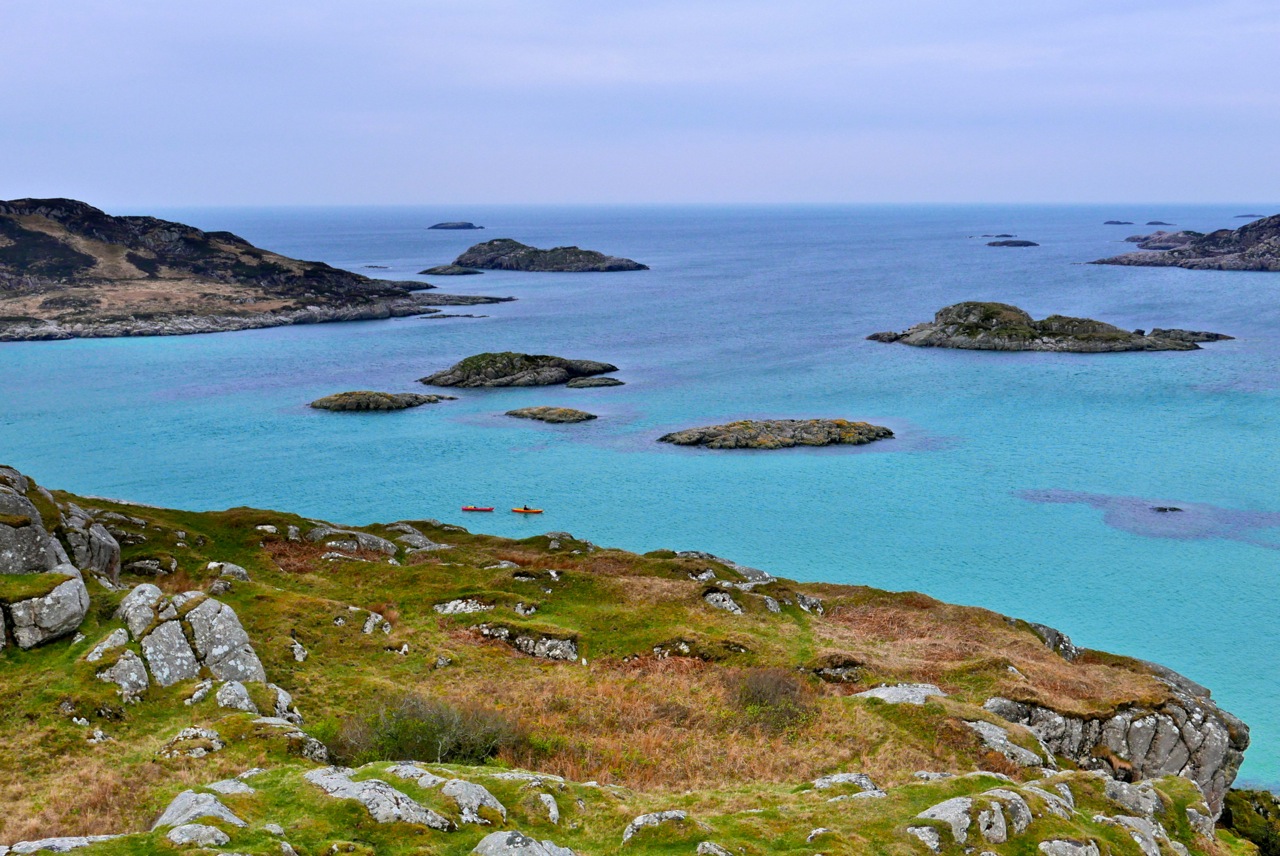
The shell-sand skerries of Arisaig are a well-known sea kayaking destination so, blown out by the wrong sort of wind to complete our mission on Mull, we scooted over towards Morar on the warmest May day since Michael Fish was knee-high to an isobar. Arriving late the night before at the sheltered glampsite at Camusdarach (5-star ablutions), I wasn’t quite sure where we were, but somewhere out there the easterlies were howling like banshees. Next morning at Arisaig all was calm as a small posse of schoolchildren trotted by in high-viz safety wear, a tribute perhaps to George Osbourne.
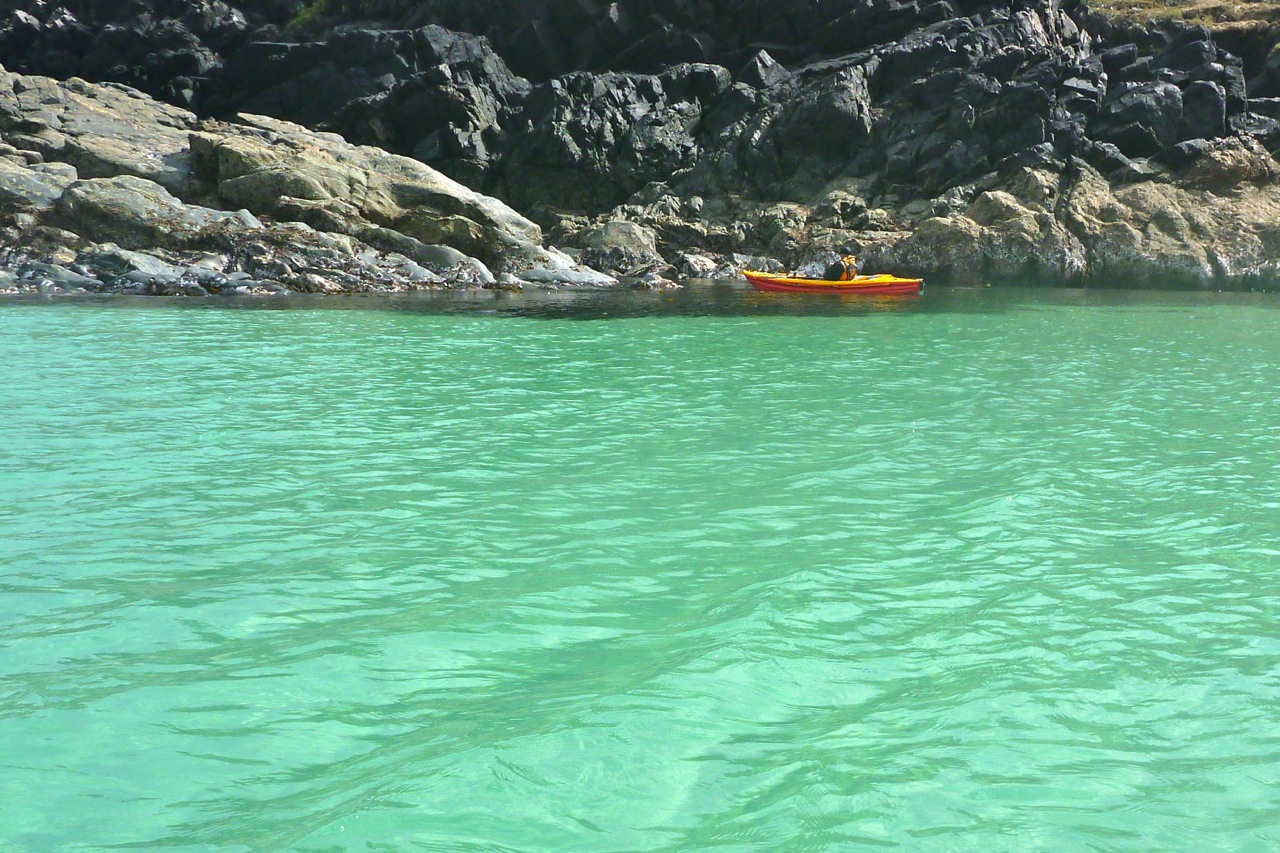
We were at the wrong end of the tide to enjoy Arisaig’s famed aquamarine lagoons, so headed round the corner to some beaches Gael knew from previous visits. We lunched at one, set up camp at another then headed back to the archipelago in unloaded boats for low tide. For me it had become just too darn windy to enjoy a relaxing sea cruise. Even hopping onto one of the skerries, I could barely stand while grabbing a few shots of Gael (left). Back at the camp, conditions were calmer for a quiet evening, but early next morning, as soon as I looked out the tent the northeasterly kicked off for the 90-minute headwind hack back to Arisaig. We arrived at the jetty just as the church bell tolled 9am. Nice touch – can’t say I’ve ever encountered church bells in Scotland.
All that remained was a lift to Mallaig, a ferry to Armadale, a two-hour wait sun-baking outside the Ardvasar pub for the stealth bus to Broadford, then another hour for the big bus to gusty Kyle. An hour later the train left for the scenic line to Garve where the Mrs turned up right on time. I’m staggered by Cal-Mac prices for walk-ons, even hauling a paddle and some packs. You couldn’t go two stops on a London bus for what it costs to cross over to Skye. Integrated local bus services? Less impressive but I got there in the end.
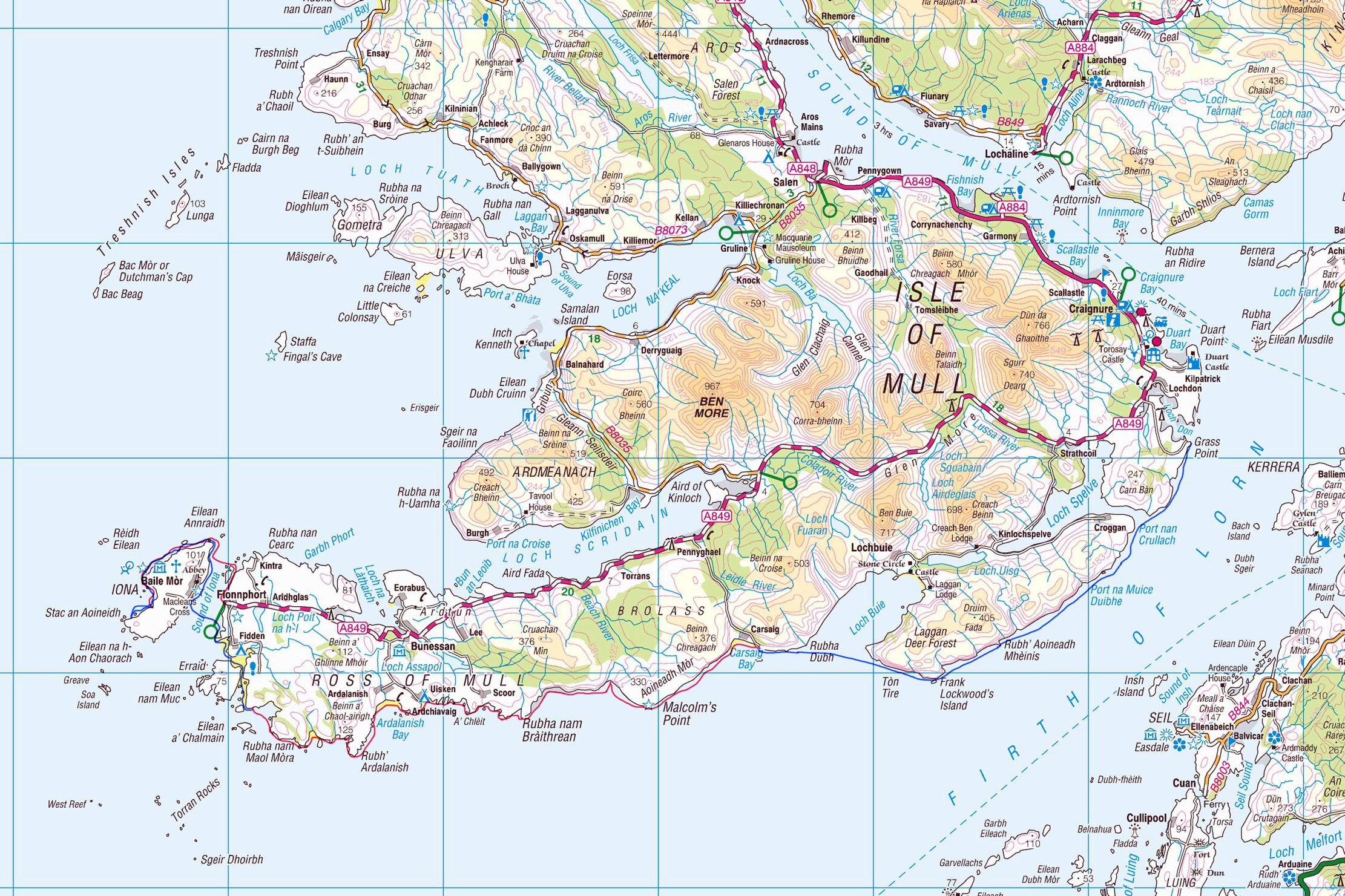
Intrepid Scottish sea kayakeur Gael of the Scottish Sea Kayak Trail was taking it to Mull this year. I invited myself along for part of the tour. His plan: Oban > Kerrera > Mull then along the Ross of Mull to Iona, back east then north for Ardmeanach, Inch K and Ulva. Then maybe Staffa, maybe the Treshnish, then handbrake turn and round the top to surf the tide back to Oban like the cats in Big Wednesday. He of course knew well that achieving half of that would be good going, but the forecast at least was for a sunny week with easterly winds. In the end, he ferried the car over the Firth of Lorn to Craignure on Mull (we had a full-blown gale up here on that day) then gonflated his K40 and set off clockwise round Mull from Grass Point.
I Know Where We’re Going Hopefully he’d manage the 27km to Carsaig Bay, as that’s where we planned to meet up that evening, far beyond the reach of any mobile signal. As we drew into the rendezvous the steep, bumpy single track road passed the quaintly isolated Carsaig phone box. It looked so picturesque, right by a waterfall surrounded by dense forest – I wish I’d taken a photo. Seems I wasn’t the first to notice it’s photogenic qualities: it featured in the 1945 Powell/Pressburger Hebridean romance I Know Where I’m Going. It was down on the old jetty that Wendy Hiller (left) looked out towards a fictional ‘Kilkoan’ (Colonsay) where she thought her matrimonial destiny lay before the spirit of the isles got the better of her. A more recent film is also set in the Bay: The Silent Storm refers we’re told to repressed resentments in an island preacher’s mission and marriage, but by all accounts is a turkey.
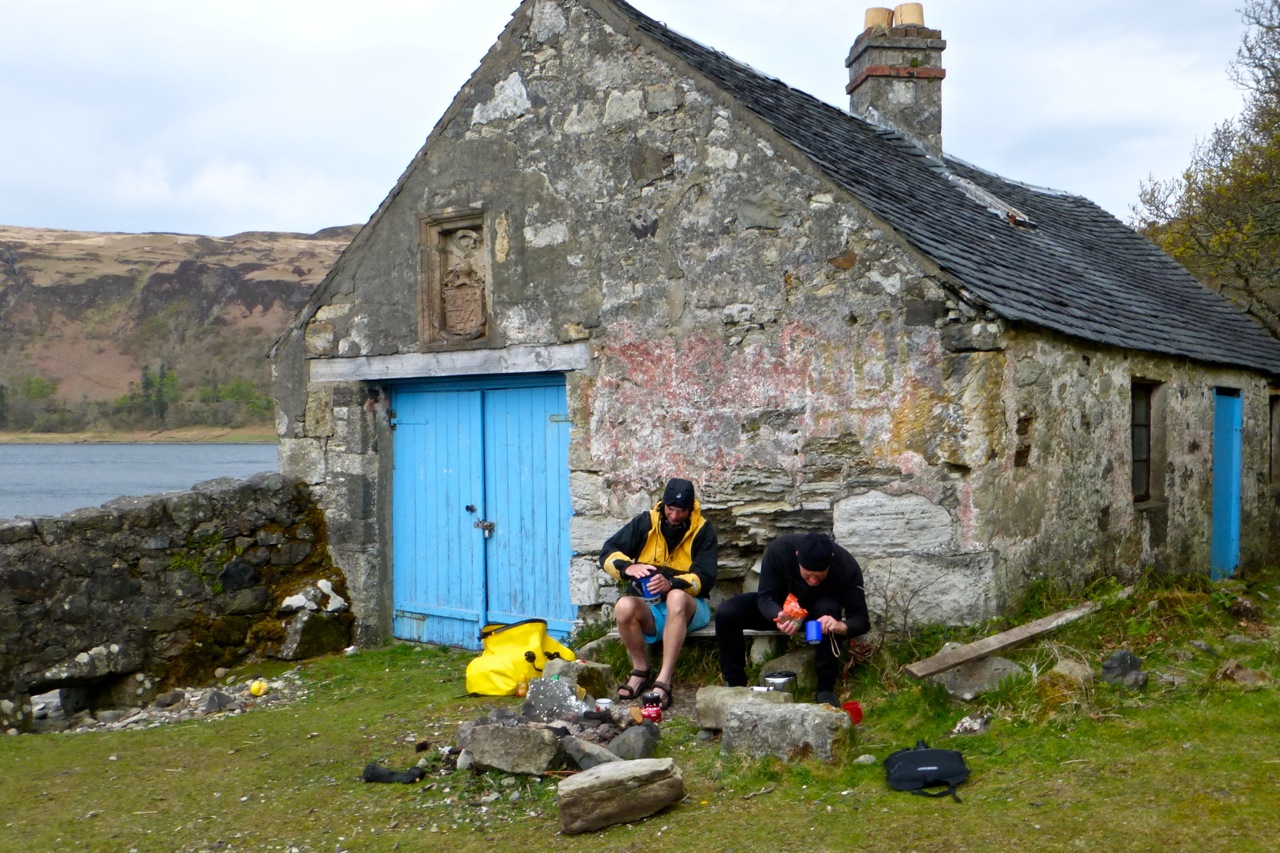
Carsaig is just a few scattered houses clinging to the wooded slopes, and some bothies by the jetty not built, we’re told, by French Napoleonic PoWs. Twenty odd clicks to the southeast lay the Slate islands where Gael and I pulled off a successful tour two years ago. This time round I’d be happy to tick off Iona, Inch Kenneth and Ulva before scarpering, while Gael set out for the Treshnish. For my liking they were a bit too close to Tiree, home of the Hebrides’ most persistent winds.
West with the Wind Came the day, all was overcast with a stiff easterly and rains in the air. Full cags and batten down the hat. It’s not often you get an easterly up here and they can be a mixed blessing. They are of course offshore winds but as Gael explained, because they don’t kick up much of a fetch, they blow over invitingly flat seas. Warm, sunny, dry weather from the continent is also a feature, but in passing over fast-warming landmasses they get gusty and variable, swinging between NE to SE several times over a day while stuck in this barometric rut for days. Your prevailing, rain-sodden southwesterly is generally much more consistent. A gusting offshore wind from an unexpected direction isn’t what you want when trying to get back to shore at the end of a tough day.
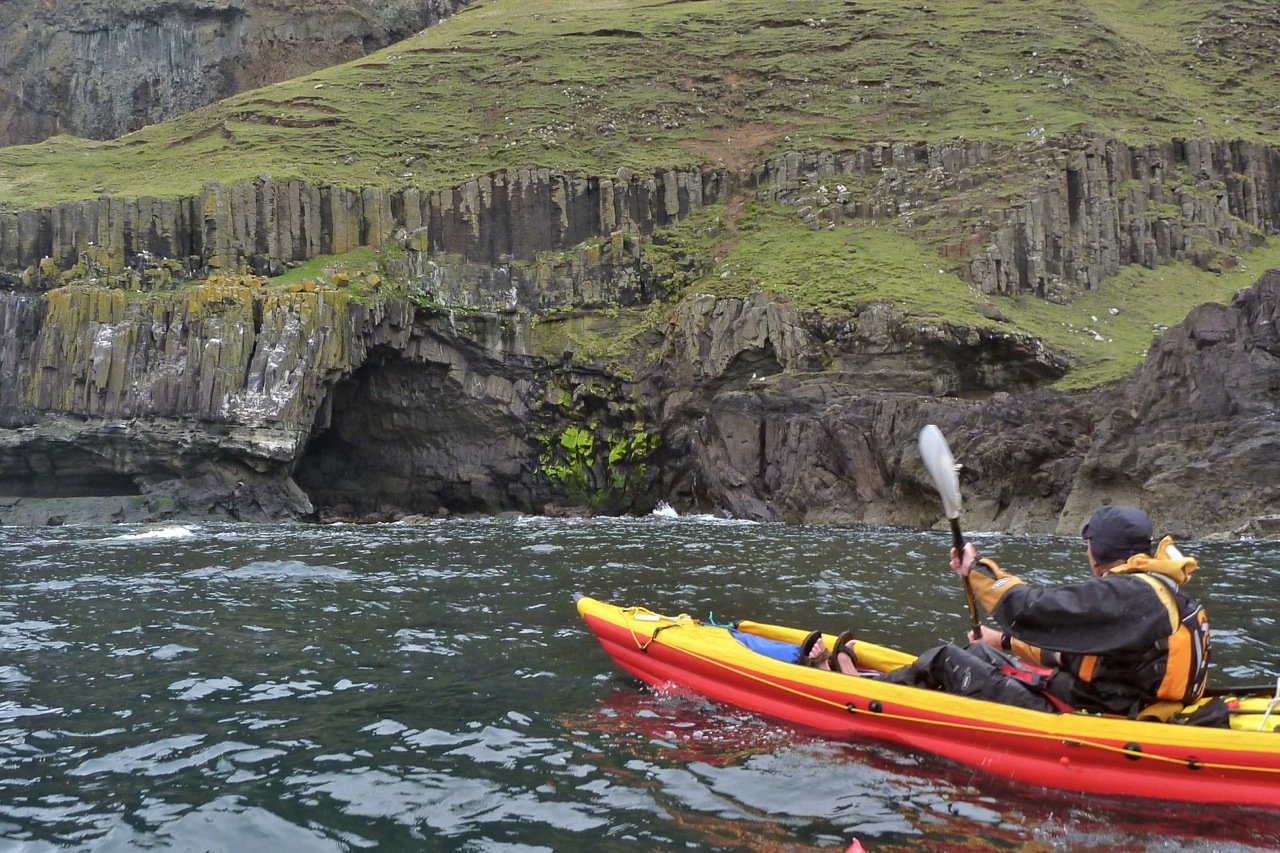
Out on the bay I was initially freaked out by the backwind, swell and exposure; it seems the 1000-foot mass of Beinn Chreagach was amplifying the rush. My loaded Seawave was far more composed, and together we bobbed and yawed towards the cave at Malcolm’s Point (actually an arch, left) with definite Staffaesque influences.
It’s almost certainly the same basaltic formation that makes up Staffa’s famous Fingals Cave. Alongside is a more obvious arch that from the sea looks like the front edifice of a bombed-out building (great shoreside pic of both here). Moving into the adjacent bay, high above a herd of deer swept across the steep slope – descended perhaps from the mythical doudou of French folklore, according to Gael a mountain beast with two shorter legs on one side. The deer ran towards a flock of wild goats tiptoeing for the shore. They’re pictured here in the nearby Nun’s Cave, a Medieval ‘Naughty Step’ accessible along a coastal path from Carsaig.
The huge waterfall at the back of Traigh Cadh an Easa (‘Waterfall at Ravine Beach’, or some such) reminded me I’d needed to fill up. On the stony beach the usual flotsam suspects lay strewn at the high water line: rope, plastic, wood and the occasional fisherman’s Croc.
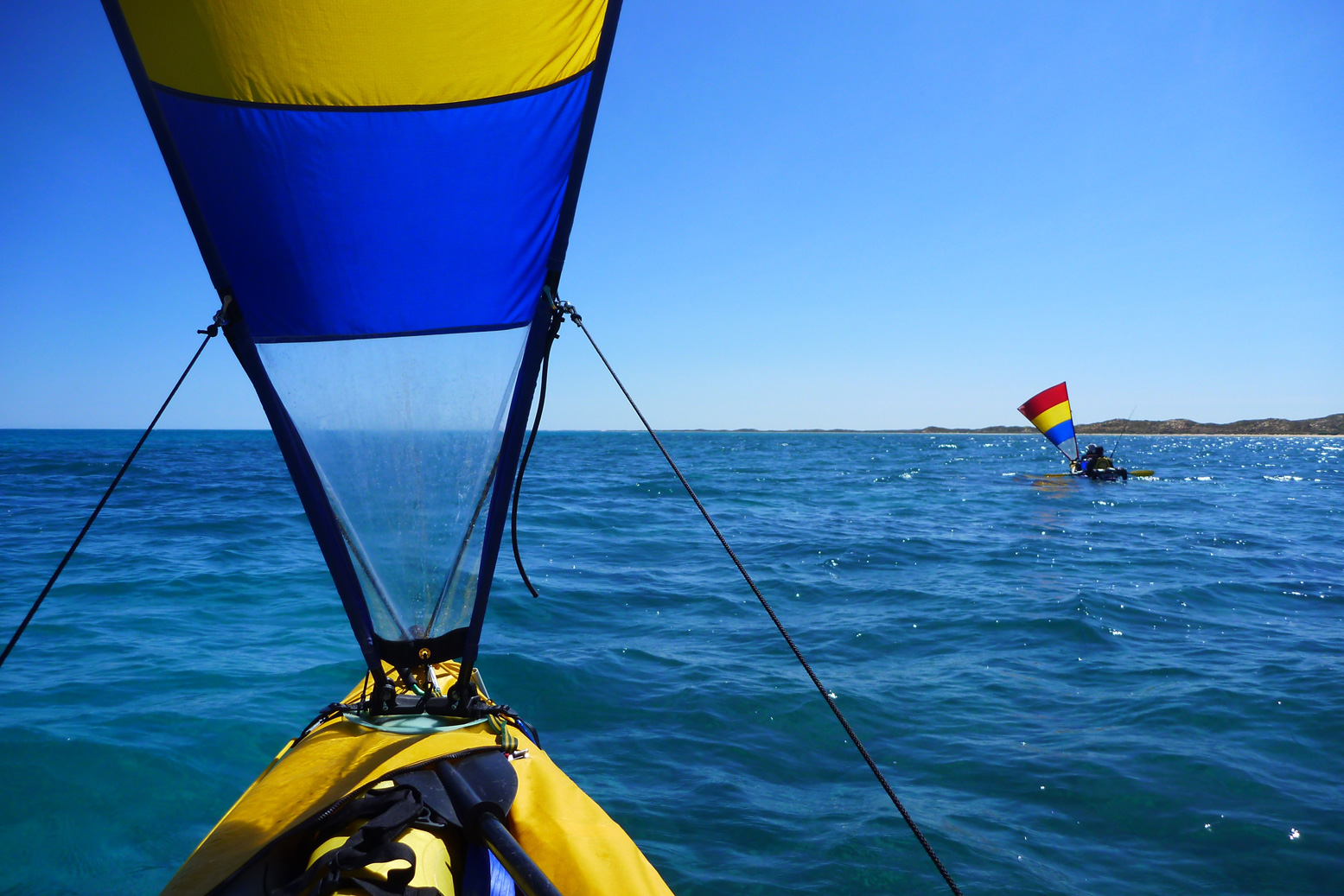
Round the point the winds dropped, but murk prevailed; further falls tumbling from the cliffs, as well as basaltic intrusions, gave the scenery a distinctly Icelandic feel. We were now passing towards a flatter ragged shoreline of skerries and periodic beaches where I grabbed a snack on a cushy fishing net sofa. It would have been a good day to have a sail up – I should have packed my compact cheapo disc sail which I’ve not bothered trying on the Seawave. I have experimented with the whole business and, certainly without a rudder, managing the lines on the disc would have resulted in the usual unsatisfying spurts.
West towards Uisken and through the skerries leading to the few dwellings at Ardalanish, the only car-accessible take-out before Fionnphort. Occasional showers rinsed the salt from our cags and after one stop my Seawave seemed to be pulling right, even though it’d handled fine in stronger backwinds earlier. I made do offsetting the paddle until the sandy isthmus by Eilean Mor where I hopped out and pulled off the kelp caught in the skeg. That’s more like it.
How far had we come? Who knew, but this being my first full-day’s paddle this year, by now I was counting the miles to the turning point at Erraid on my newish Montana GPS with OS mapping. As I’d found using it in the States on a moto a few months back, you can’t beat the big picture of a paper map. But here, when it came to threading passages between the skerries, seeing your precise position on a proper OS map made it easier to find a way through and avoid dead ends.
As we crossed Port nan Ron bay the winds kicked up hard to the NNE. We were aiming to turn north up the narrow, tidal channel in the Sound of Erraid (also the title of one of Enya’s unreleased albums from her mordant ‘Scottish Widows’ phase), but the tide was only just turning back in and the wind would have been on us.
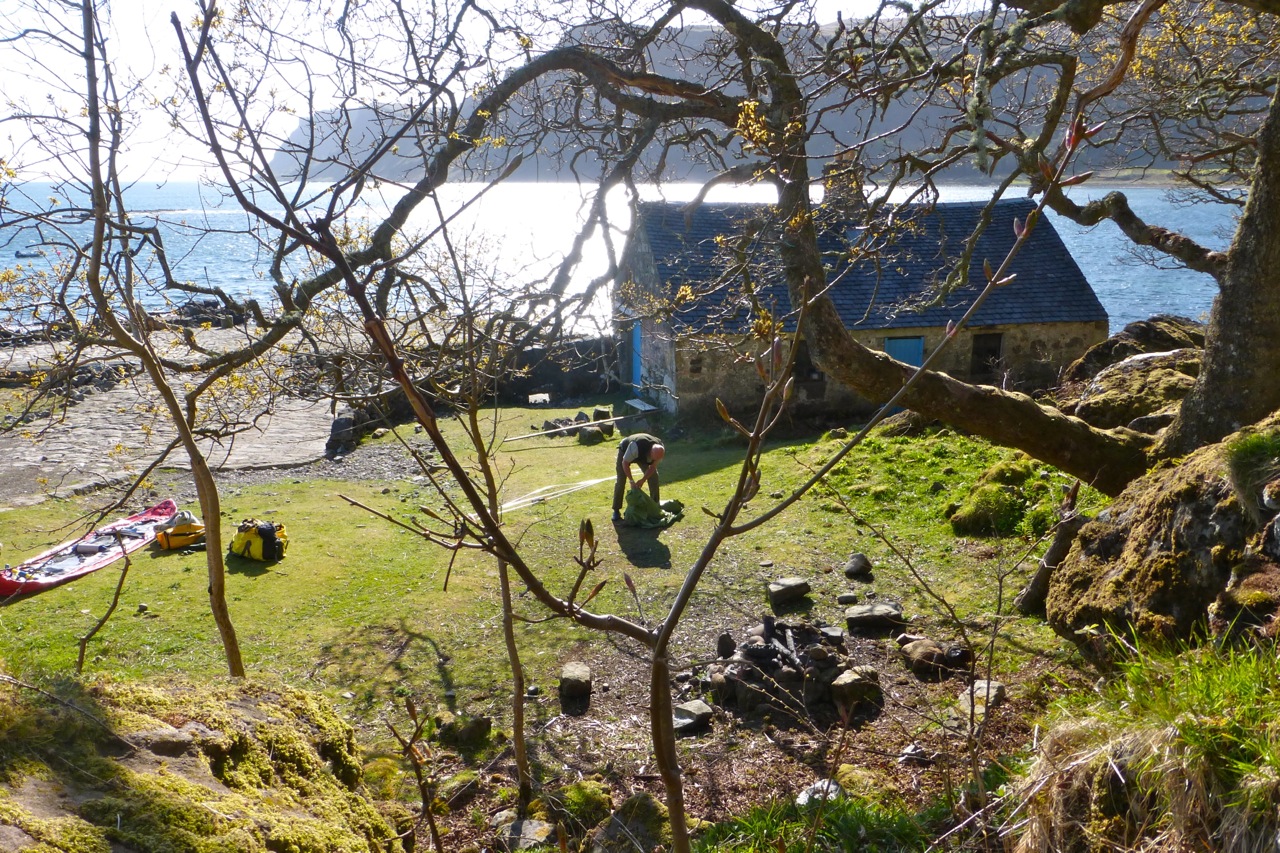
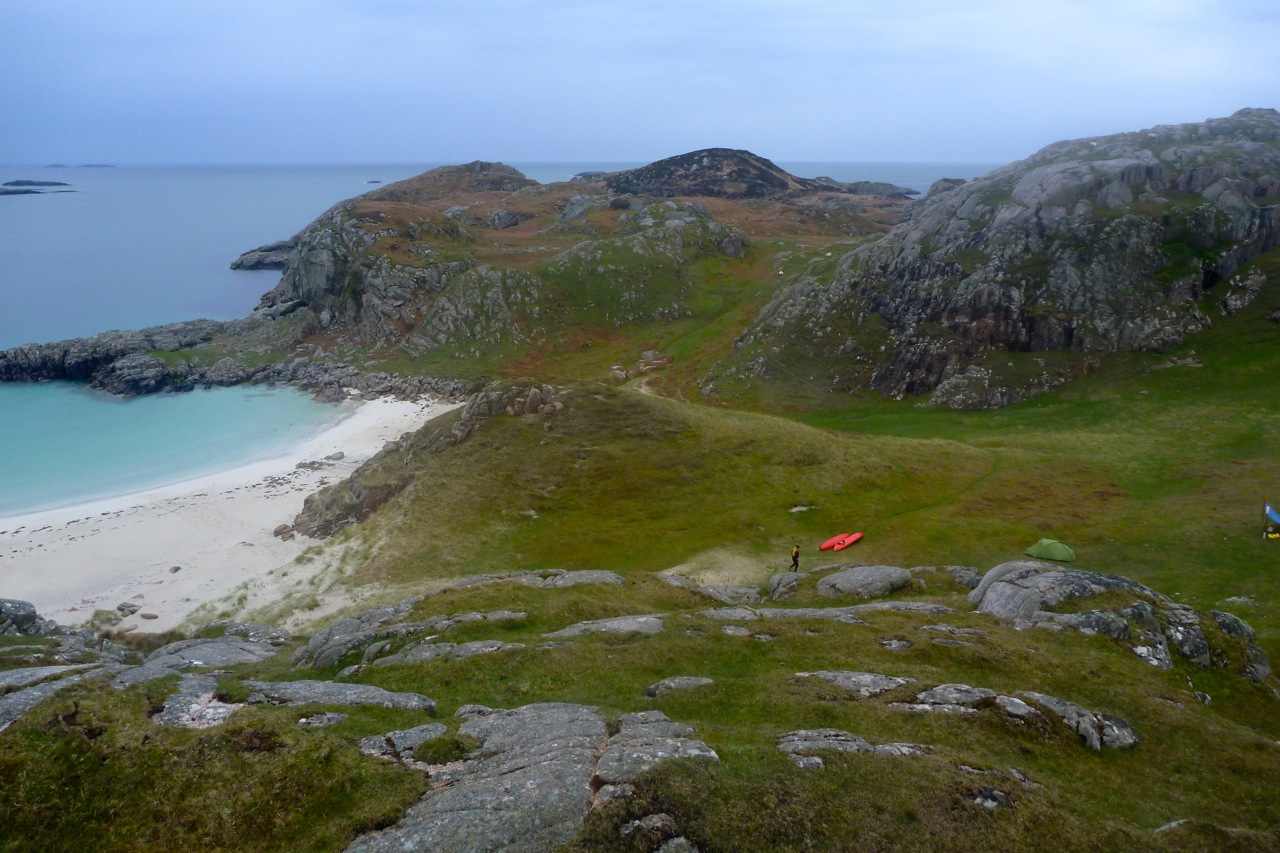
So we parked up for the night inside a lovely clamshell cove hemmed in by pink granite crags below a broad grassy amphitheatre. As the predicted evening rain fell, we cooked up some delicious seawater pasta then roamed to a high point overlooking the Sound where Gael picked up a detailed forecast from his mate: warming up, drying up but still blowing up from the east. Strong winds woke me in the night and I lay there wincing as the tent shook and flapped violently. This was its first stormy outing and it took me a while to just accept it, plug up the ears and fall back to sleep.
The Sound of Erraid The morning blew in from the northeast and after breakfast behind a knoll, Gael set out towing my yak while I fired off some shots from the headlands above and caught him up in the Sound. It was an hour or two after high tide so we only just managed to scrape over the Shallows of Erraid and out into a wind-blasted bay.
As we crept northwest, Erraid island seemed to be developed out of proportion to its size. Turns out it was a quarry for the nearby Torran Rocks lighthouse in the Stevenson era, and Stevenson fils set Kidnapped here. Now the former quarrymen’s cottages house a satellite community of the Findhorn Foundation, offering their alternative to the ecumenical retreats over the water on Iona.
Gael’s big Ortlieb water bag had gone rogue, exuding a pungent iodine tang, so we put in near Fidden campsite to fill everything else with lovely sweet water. (I noted a 1.5L plastic bottle slotted neatly into my footrest tube). Out in the Sound it was way too windy to aim for the southern end of Iona as planned, but we figured with our added ballast we could work our way north between the skerries for a shorter, less exposed crossing of the mile-wide Iona Sound. From there set off for an anticlockwise loop instead.
Crossing to Iona Somewhere just after Lalte Mor we made our dash for Iona, aiming for a beach just south of the ferry jetty, with two big buoys in between as markers. The wind had now veered to the southeast and mid-channel it was all getting a bit lumpy but manageable but the Seawave tracked true. The quicker I paddled the sooner it’d be over. Gael yelled to err north towards the ferry line where we were being blown anyway. He realised the spring tide was in full retreat down the sound and we needed to compensate. With the green and yellow buoys and the beach, I was sure my track was good, but on the far side Gael explained my trajectory resembled a washing line due to the strong southerly ebb. Sure, I was pointed at the beach and the buoys remained to my left, but the sea was moving southwards beneath me. His tip on such crossings was to line two points (a buoy and the beach for example) to better monitor and compensate for any deflection. A day or two later I tried this while hacking into Arisaig Bay, lining up a distant tree and a gully, and was surprised how the unseen current or wind deflected me within seconds, while still making good headway.
It was a good lesson from le seamasteur. Had we let the tide take us, our Iona Sound crossing might merely have ended up more westerly than northwesterly, but we’d still have reached the shore OK. But had we been aiming for Iona’s southern tip (as originally planned from Fidden), the stream may have pushed us out into the open sea, or at the very least extended the transit to reach the island. Add in the wind swinging back to the northeast and that’s how sea kayakers get in trouble.
Little did we know that my Mrs, who’d spent the night on Iona in solemn retreat after dropping me off at Carsaig, was recording our progress from the ferry chugging back to Fionnphort. And even as the odd wave broke alongside me, I too was able to grab a few shots: clearly a sign that conditions were less epic than they felt.
The Treasures of Iona We beached the boats and went for a wander through Baile Mor towards the abbey. While backtracking, up ahead it looked like the village idiot was bounding along towards us, waving enthusiastically. We reserved our judgments until it turned out to be the g-friend who’d hopped back onto the ferry to present me a chocolate doubloon (it was my birthday). What a nice surprise ;-) Soon we were swept away in a whirlwind of anniversarian revelry and all headed to the village cafe for a slap-up haddock, salad and chips (with a backup ice cream. And cake).
Back in the boats, it was a short sidewind struggle up to Iona’s northern beaches before a calmer paddle on the island’s lee. With the weather warming up, post-lunch lethargy plus the fatigue from the nervy crossing and the interrupted night, we lost our momentum a bit.
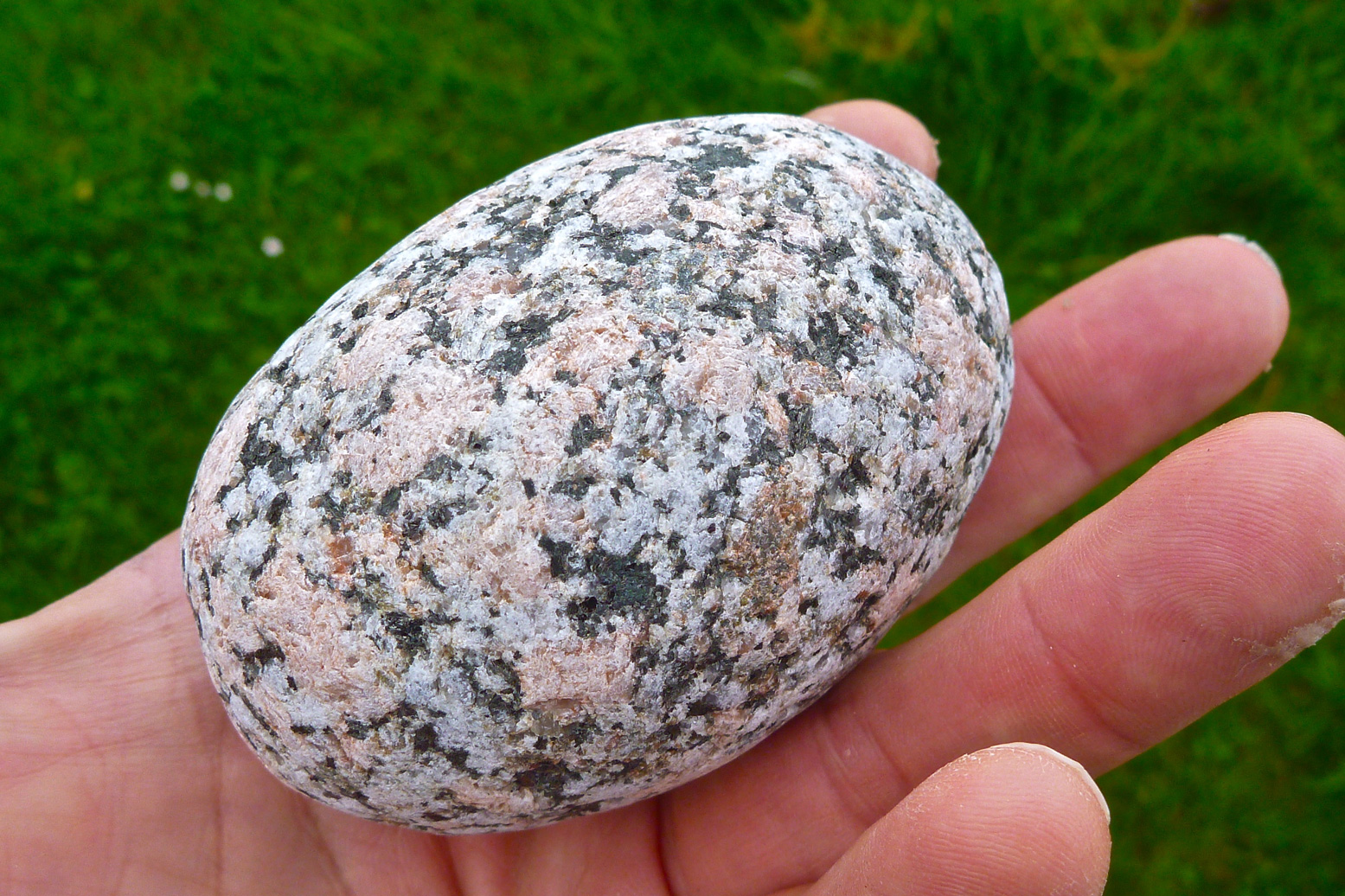
At the back of our minds, neither was keen on the idea of shortly rounding Iona’s southern tip into the wind and then edging back up the windward side. We crossed the big bay and nosed ambivalently past Sprouting Cave as far as Port Beul-Mhoe, a steep stony cove with an onerous portage before any tentable grass. I plucked a superb granite birthday egg from the shingle, then we backtracked to the big Camas ‘Bay at the Back of the Ocean’ and made an early camp to enjoy a warm, sunny evening. Next morning we’d see how we and the winds blew.
Outrun by the wind The plan had been to complete the Iona circuit, cross back to the Ross and head east into the mouth of Loch Scridain for the mountainous Ardmeanach peninsula where Gael has got windbound last year. A glance out of the tent at 6.30 revealed blue skies, but an offshore breeze was already ruffling the sea – and this was the lee side of Iona. It didn’t bode well for the south end, let alone the 13-km leg into Loch Scridain and the exposed crossing to Ardmeanach, with gusts tearing down off the 3000-foot slopes of Ben Mor. I was all set to roll up my boat, stagger across the island and meet Gael at the ferry, but he agreed the weather had outpaced our plans on Mull. We’d head back the way we’d come, cross to Fionnphort by paddle or ferry, then he’d retrieve his car from Craignure to deploy Plan B.
We set off at the top of the tide. With the newfound sunshine and warmth it was a relief to forgo the sweaty, salt-caked cagwear. Back through the skerries and into the wind round the top of Iona. Ten clicks to the north, Staffa and Dutchman’s Cap hovered on the horizon, but any trippers heading there today may well come back with faces the colour of warm guacamole.
The narrowest crossing back to Mull is near Eilean nam Ban, and when the time came it turned out to be a lot easier than yesterday, even contending with another southerly stream (left). Gael decided later we must have caught a fortuitous lull in the wind-bashing, and once in the sheltered Bull Hole channel, we let the strongly ebbing tide swish us down towards Fionnphort.
Unloading on the jetty, hoards of tourist-pilgrims from the world over were making their way to Iona. Having spent a day there, the Mrs had confessed she’d been a bit disappointed. The recently rebuilt abbey lacked a Medieval aura, and the achievements of Saint Columba and the significance of Iona’s post-Druidic heyday were rather embellished, compared to more objective sources.
For centuries the Lords of the Isles and Scottish kings (including Macbeth) had been buried here; the nearer the abbey the better, it was thought. I noticed the decorated headstone (above right) of former Labour party leader John Smith who’d managed to squeeze in, though it turns out he’d no connection with Iona other than being raised in Argyll. Maybe there’s more to it, but as even some Iona-born fail get a plot here, it seemed a post-mortal vanity inconsistent with what I recall of Smith’s public image.
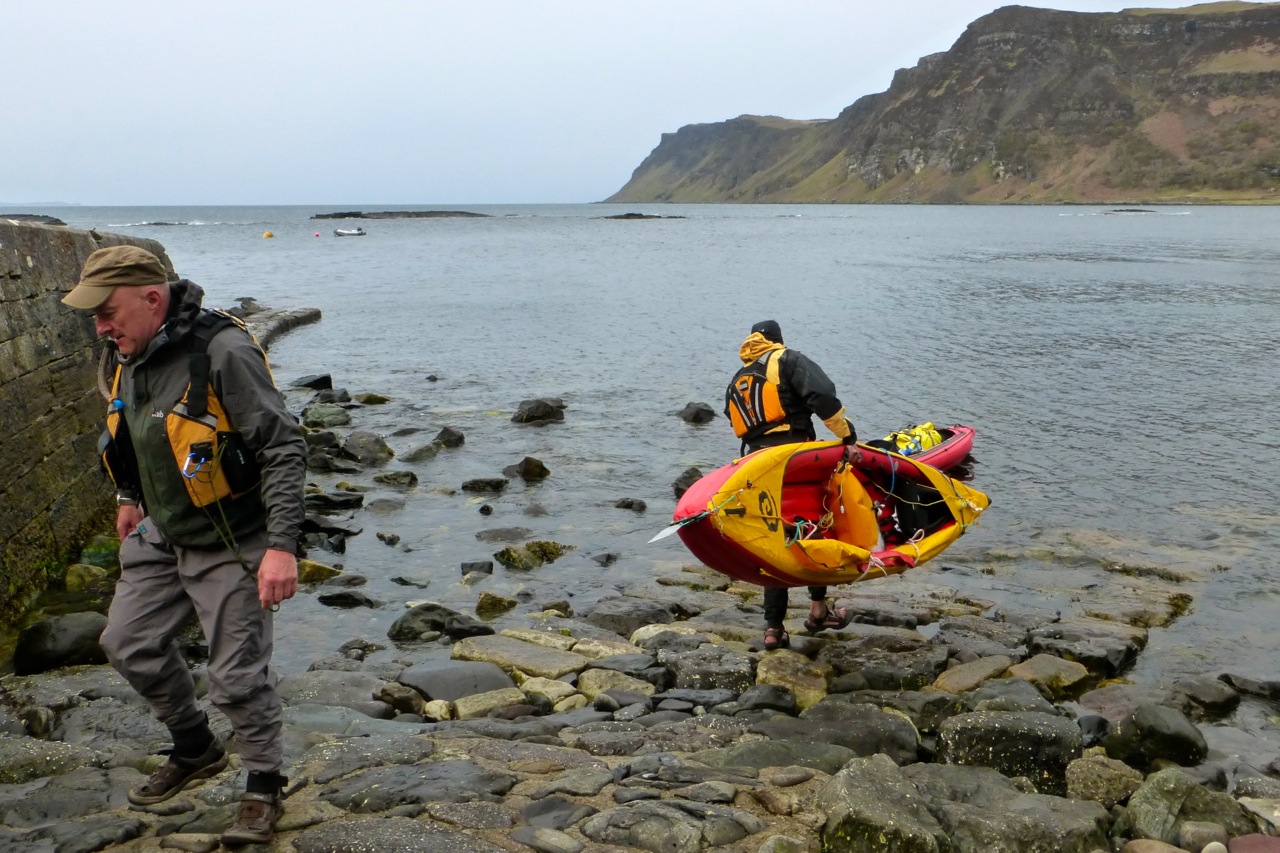
Anyway – I stretched out with my Kindle on the old jetty and let the warming kayaks gently purge through their PRVs, while Gael strode boldly east up the A849. After a while I went up the road to make sure he wasn’t skiving behind some shed having a quick nap. The strong winds I met underlined the fact that we were doing the right thing. Kayaking anywhere east from here would have been hard, paddle-creaking yakka. Three hours later Gael returned to find me surrounded by empty crisp packets, ice cream wrappers and a succulent Curly Wurly embedded in my gob. We strapped the yaks to the roof and went to find somewhere else to play.
I am on Gumotex Seawave 2 and a while back had the InceptK40 for a year or more. IMO, these are still two of the best IKs around for sea kayaking and touring. Fast, stable and firm. Like my paddle with my former Grabner Amigo, a longer trip with a K40 also gave me a chance to reappraise the pros and cons of these two IKs. Gael’s red K40 is the same one I tested back in 2012.
As you can see in this table, the Nitrilon Seawave is a little longer, quite a lot wider but less spacious inside. It claims a much greater payload, has space for up to 2.5 paddlers as well as fitting an optional fully removable deck and a fixed skeg with a rudder kit available.The K40 is made from a stiffer ‘PVC-urethane alloy’ fabric, has a zip-up/roll-back deck, a rudder and a single seat. The twin side-beam hull explains its slimness as well as the greater internal width. Both these IKs weigh around 17kg. Paddling with the K40 for a couple of days, it was a little faster than my Seawave. Gael’s K40 was loaded a little more heavily, but my added weight easily exceeded that. Both boats run similar pressures but the slimmer, stiffer fabric’d K40 had the advantage, even though it’s a shorter. Gael may also have a more efficient paddling technique, but overall we agreed that in the windy conditions we were experiencing, it was his rudder which made the difference when it came to maintaining steady progress.
Simply put, with a bit of rudder correction to compensate for winds pushing the boat off course, Gael could carry on paddling normally. At the same time, I had to correct my steering by pushing hard on the upwind arm and trailing the other to maintain a course, so I was only powering with one and a bit arms. This gave the K40 about 5–10 minutes over an hour, while also reducing – or at least balancing – paddling effort.
Seawave left, K40 right.
Running a Grabner Holiday, Gael is a rudder fan and thinks adding one to a Seawave would make it a perfect IK. Me, I wasn’t so sure the added complexity and risk of breakage was worth it, but I I talked myself into it. As long as my system is not like the Incept’s horribly mushy rudder actuation. It was less effort to paddle Gael’s K40, but pushing hard on the inflatable pedals was a bit like using a cushion for a steering wheel.
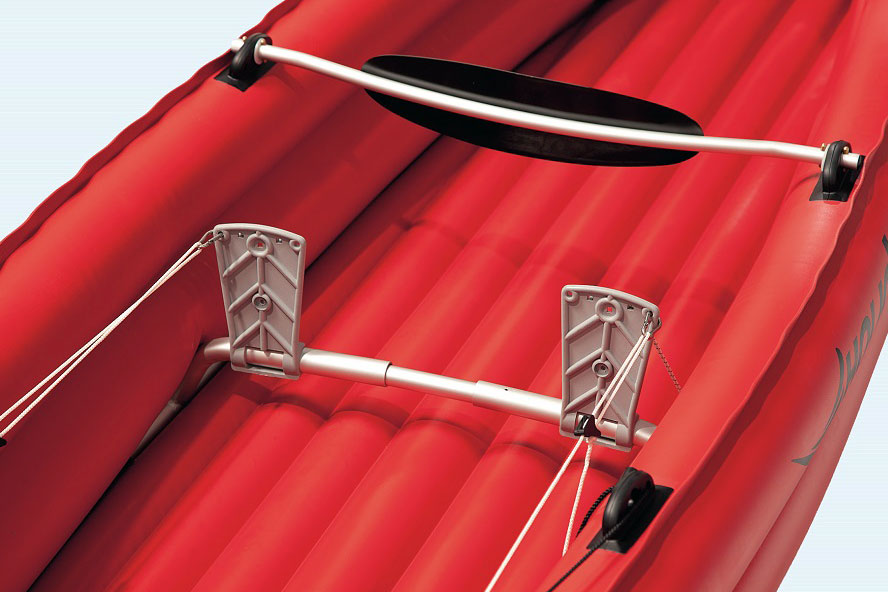
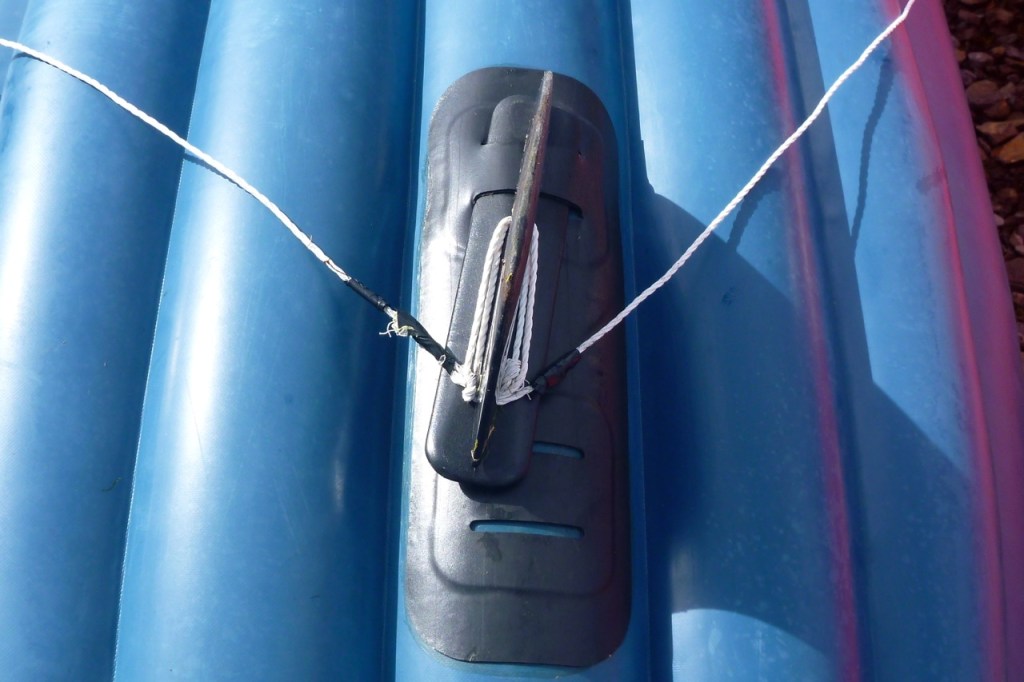
A great way to improve the K40 would be to fit something like Grabner plastic pedals pivoting on a rigid bar (below left). Or even a pivoting footrest tube (middle) as show here. The actual pivoting- and rudder-lifting mechanism at the back looks like a standard sea kayak arrangement with a rudder pin. We both agreed the K40’s generic hardshell rudder blade is too small or short for this boat when the seas get lumpy or the winds exceed F4. Maybe better to accept an IK’s limitations and not go out in those conditions, as I found once, though I’ve just remembered the hand-skeg-steering idea a visitor suggested to me: pivoting the half inserted Gumotex skeg using cords (right) to fix an angle against a steady wind.
Grabner rudder pedals
Pivoting footrest
Skeg hand trimming
Especially when loaded, my Seawave’s fixed skeg can be a bit of a pain at the shore. I don’t like the idea of the heavy IK pressing on the skeg so look for a rock, use my Pelicase or lean on the K40. But that’s all a small price to pay for the benefits the skeg brings at sea. I’ve thought of fitting a retracting/trailing skeg to get round this, but if I go that far I may as well install a rudder. Generic SoT rudders on eBay go for just 20 quid and could help review my dormant sailing experiments which I recalled fondly during the backwinds of Mull.
The other impression of the K40was the initial tippiness – yikes, it’s been a while since I’ve experienced that. In fact it soon went away and anyway, was helped by the thigh straps which again, I’m reminded, don’t snag the knees as securely as my set ups in the Amigo and Seawave – possibly because the front mount is too far forward (using the rudder pedal mounts). But then again, I should have adjusted the rudder-footrest towards me a good few inches. The Incept was also much more roomy thanks to the slim side tubes. That makes the thigh straps more important, and I actually missed the packraft-like jammed-in feeling between my Gumotex’s fat side tubes. The seat didn’t feel as comfy and secure as the packraft/SoT set up on my Seawave, and all-in-all I felt a bit out of sorts in the Incept which helped me realise how well my Seawave is suited to my sort of paddling. About time; it’s taken a few IKs to get there.
































 Inflatable Kayaks & Packrafts