In a line A busty PFD at a great price and more pockets than the Crucible in May.
Weight 1.01kg (size M/L)
Cost £40 (heavily discounted on ebay)
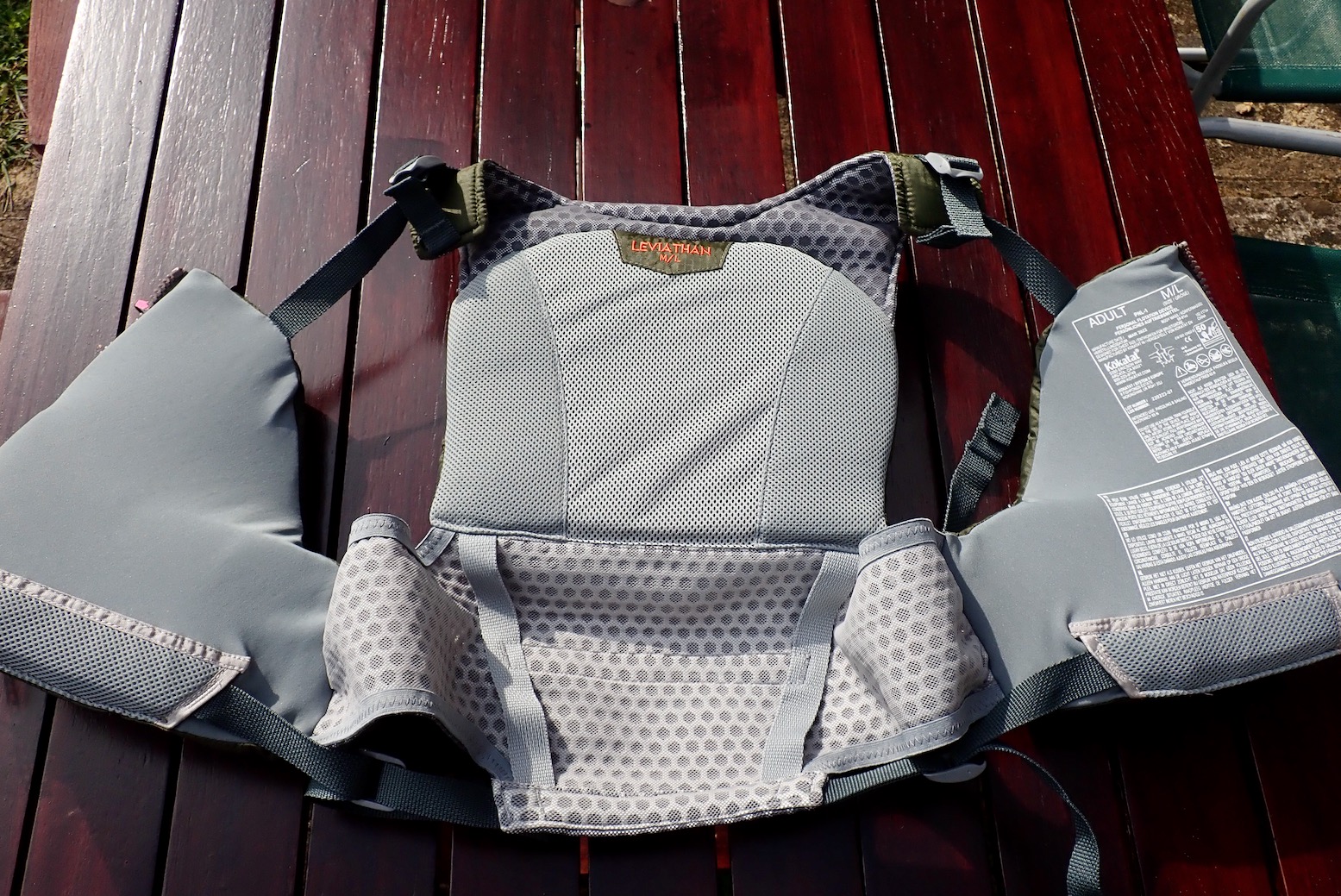
What they say The ultimate kayak fishing life vest, the Leviathan has 14 pockets and multiple fixture options allowing anglers to carry lures, tools, and gear wherever they choose. This high-back, performance, recreational life vest features body-mapped Gaia foam panels contoured precisely to allow the life vest to wrap the torso in a secure fit. Fleece-lined handwarmer pockets are a bonus for those chilly days. This Life Vest is certified for use in both the US (by The US Coast Guard) and Canada (by Transport Canada). You do not need to select a certification. The life vest is dual certified for both countries.
Review I read somewhere that a PFD loses its buoyancy over the years and should be replaced once in a while. In that case my 15-year-old, much travelled Kokatat Bahia Tour (right), bought at REI, Denver in 2007, must be well overdue for retirement to a golf resort in Spain. It’s been discontinued, and the Leviathan could be headed that way too, judging by the discounts.
Handwarmer pockets. Do they count?
Kokatat make some reassuringly expensive dry suits and sponsor big sea kayaking adventures, so it’s a trusted brand. I’ve never tested my old Kokatat, by choice or surprise, so have never experienced its floatability. Hopefully I’d not sink like a stone, but with a GPS in one pocket, a camera in another and a rescue knife, a bit more flotation might not go amiss. As it is I’m at the upper range of it’s body mass index When I spotted the Leviathan for just £40 on ebay (normally about £150), I set aside any stylistic reservations and clicked BIN. My compact, inflatable Anfibio Buoy Boy is OK for easy rivers or short crossings, but doesn’t claim to be a certified PFD and would be inappropriate alone on the open coasts around here in Dorset where you want to feel secure.
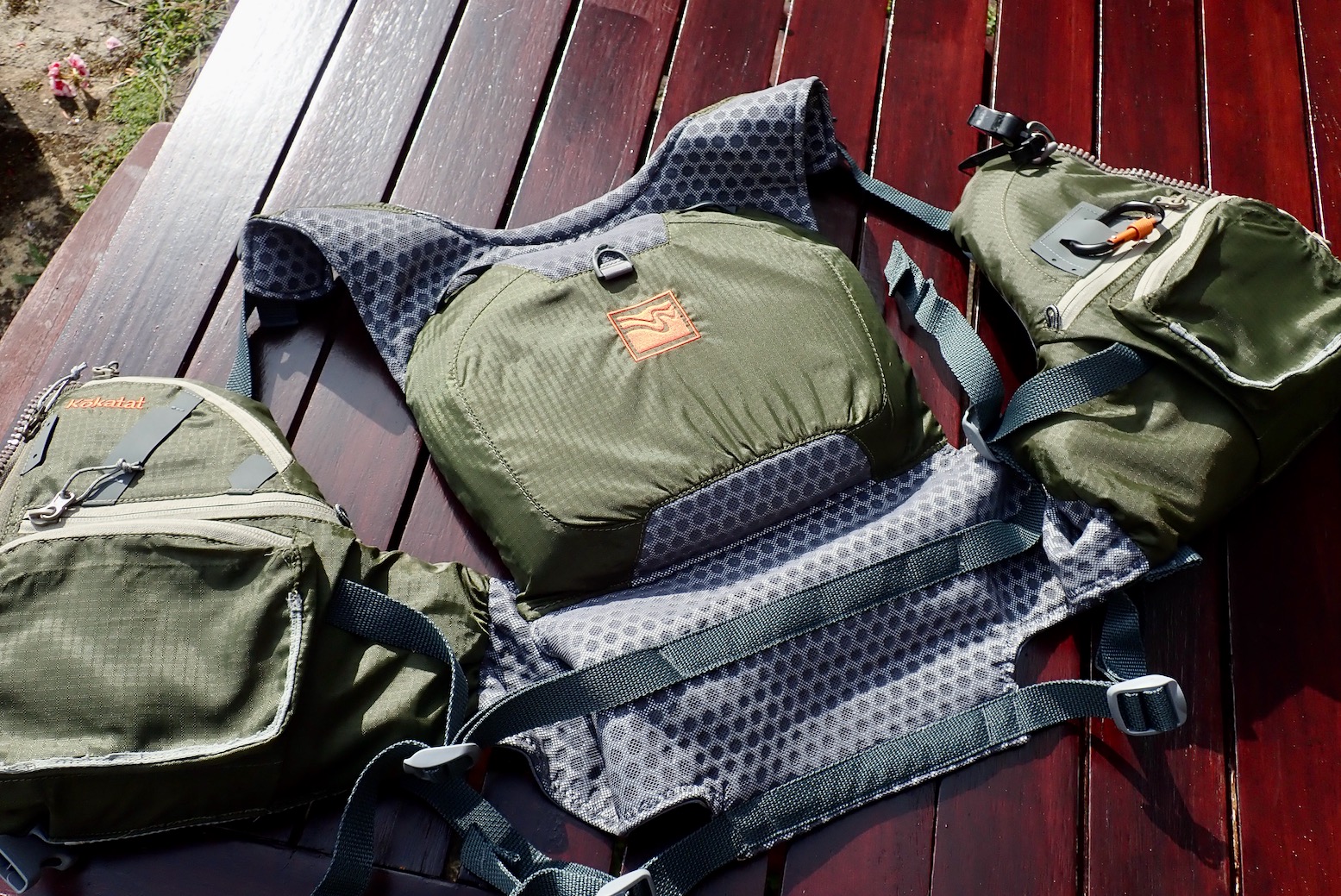
Pockets and attachment points galore
Breath in
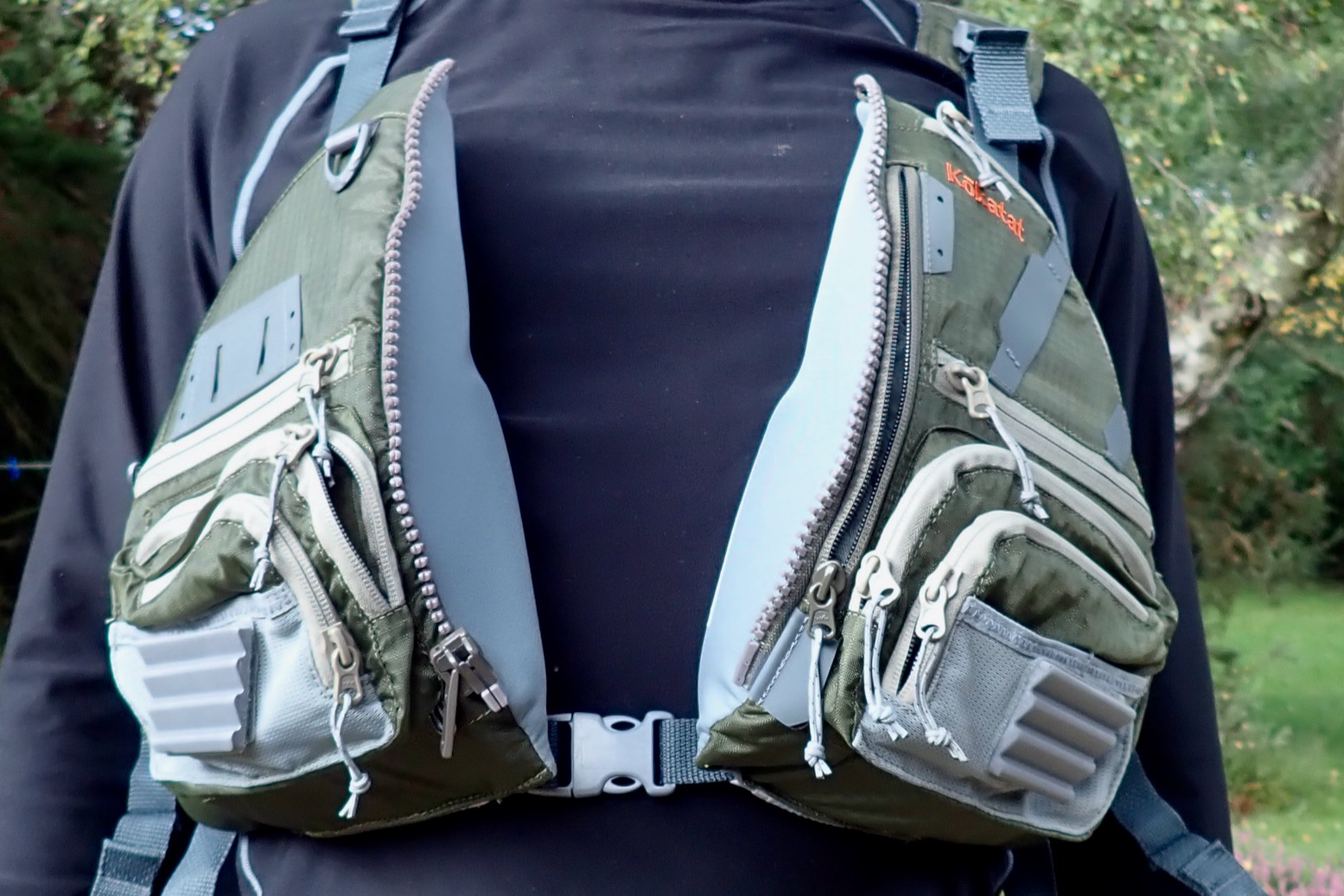
The Leviathan is a paddle fisherman’s PFD which explains the vast array of pockets. They’re handy, but I knew straight away 14 was OTT, even if four are tiny mesh pouches and two more are handwarmer slots. All this storage, along with generous foam implants give the Leviathan a busty appearance, even before you pack it with fishing paraphernalia. Or maybe I’ve had another well-fed summer. It won’t be as discreet to wear as a Buoy Boy. I’m not sure what the corrugated grey plastic blocks are, velcro’d on the mesh pockets. I’ve seen this on ‘tactical’ clothing: possibly for attaching insignia?
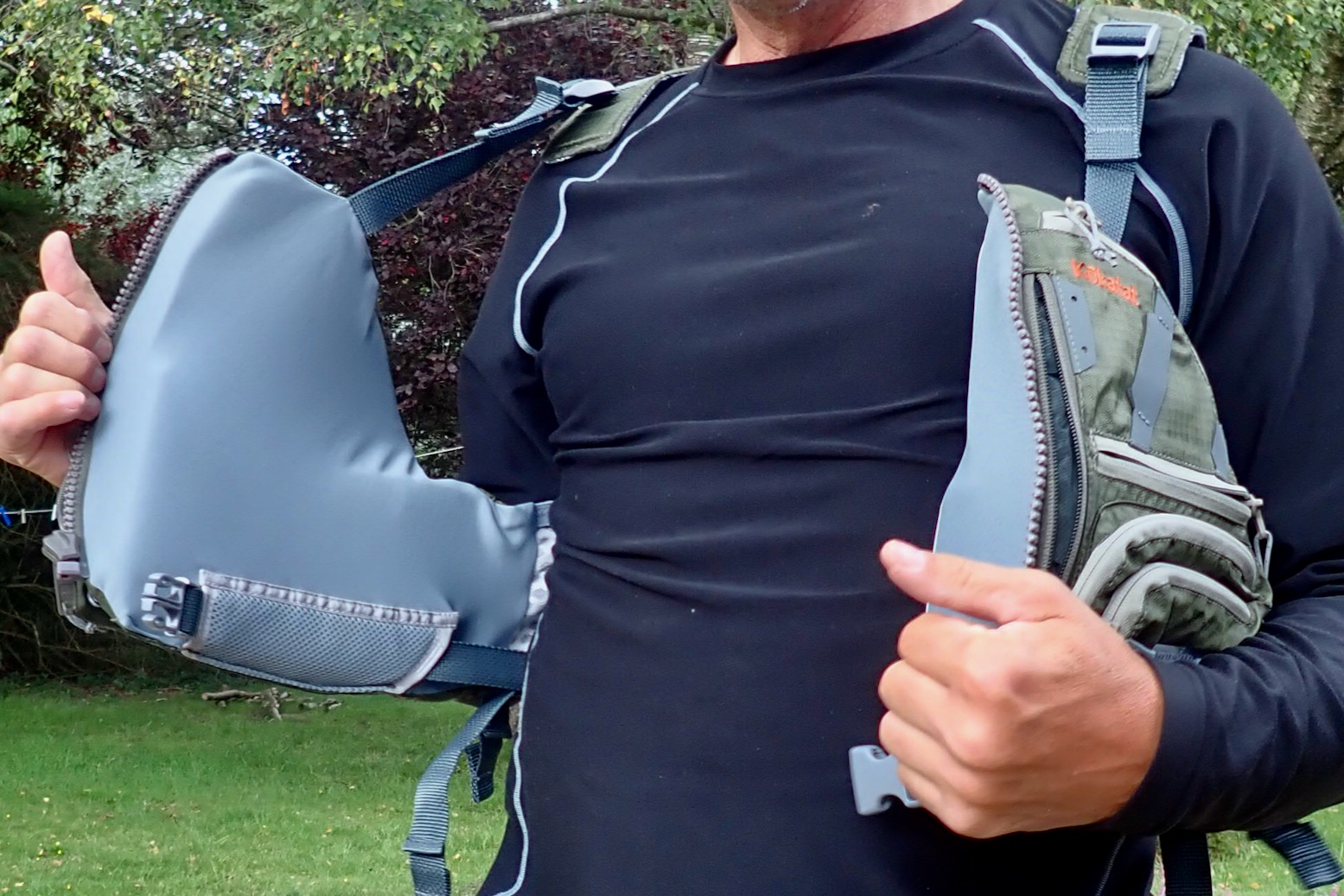
One underzip clip; shame
I like a front zip PFD, but will miss the second upper clip under the zip, as on my Bahia. It meant you could paddle on hot days with the PFD unzipped but still snug fitting. But one thing the Bahia lacked was a large pocket for a mobile phone in its waterproof pouch. If you paddle with a phone for safety, the advice is to have iton your person, not stashed awat in a dry bag somewhere on your packboat cartwheeling away downwind. The olive colour I quite like, though I admit it lacks the visibility of my Bahia’s faded mango.
Big pocket for mobbie. Tick
My Leviathan was not one hour out of the box when I set about it with a scalpel to trim the pocket count by 43% (6 pockets) while barely losing any functionality.
Another seamless IK&P modification
That done, I transfered my whistle, knife, biner and camera leash (in a pocket) from the Bahia and am ready to try it out on my next paddle.
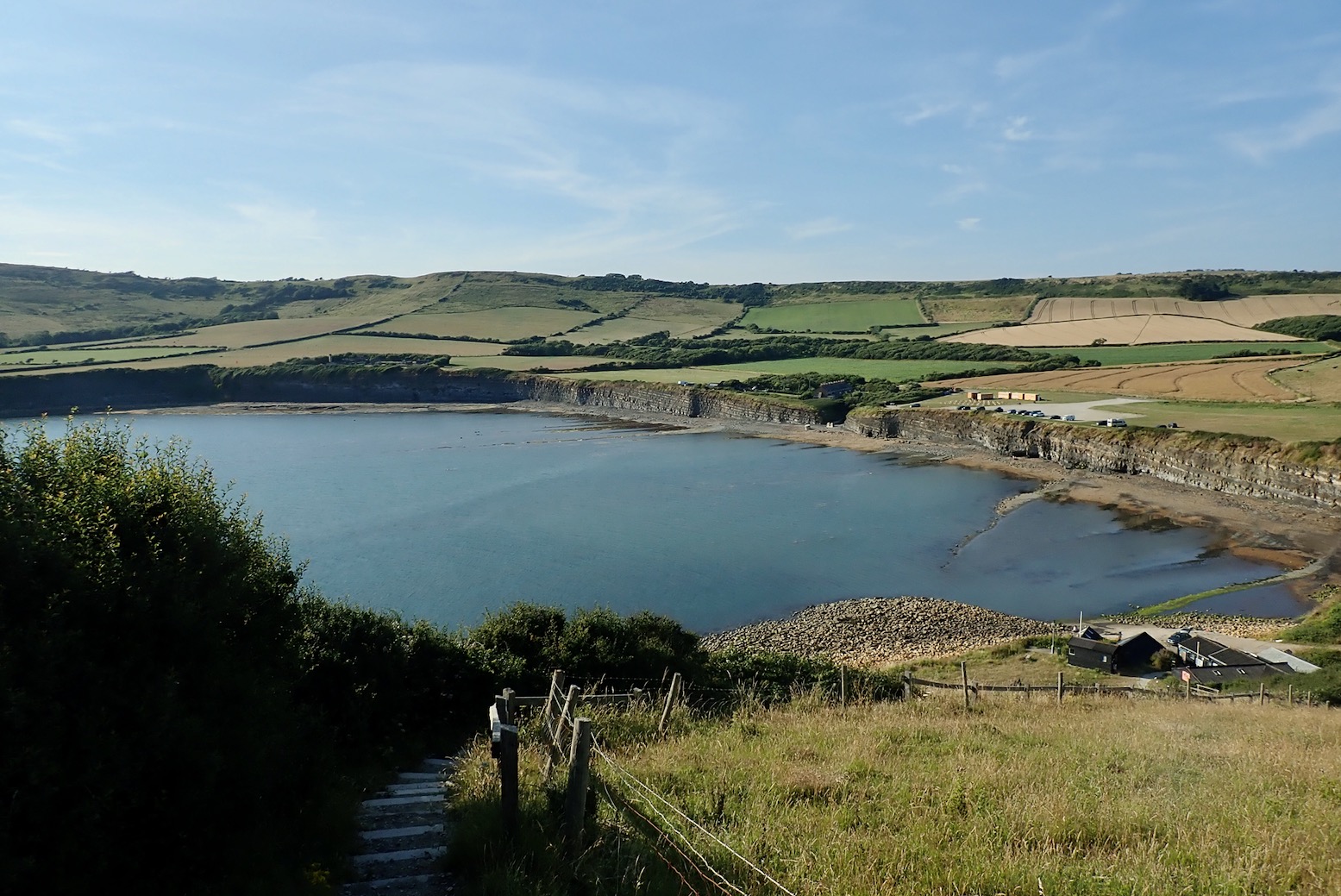
Eastwards from near Tyneham Cap: Kimmeridge Bay and the Ledges beyond on a very windy day
We took a lovely evening walk along the Purbeck coast east of Kimmeridge Bay, where for millennia the bands of bituminous shale have been burned or squeezed for their oil, like Kalamata olives. Good page here on Kimmeridge and its geology over the eons.
Just west of Kimmeridge Bay there’s even a lone oil well (right), nodding away incongruously since 1959 in the pastoral Purbeck idyll that inspired Enid Blyton’s Famous Five adventures which I devoured like Opal Mints in the Sixties. Blyton holiday’d for two decades in Swanage and elements of some distinctive Dorset icons, like Corfe Castle, find themselves transposed onto her book covers (left). There’s even an Enid Blyton Trail, which lists Kimmeridge.
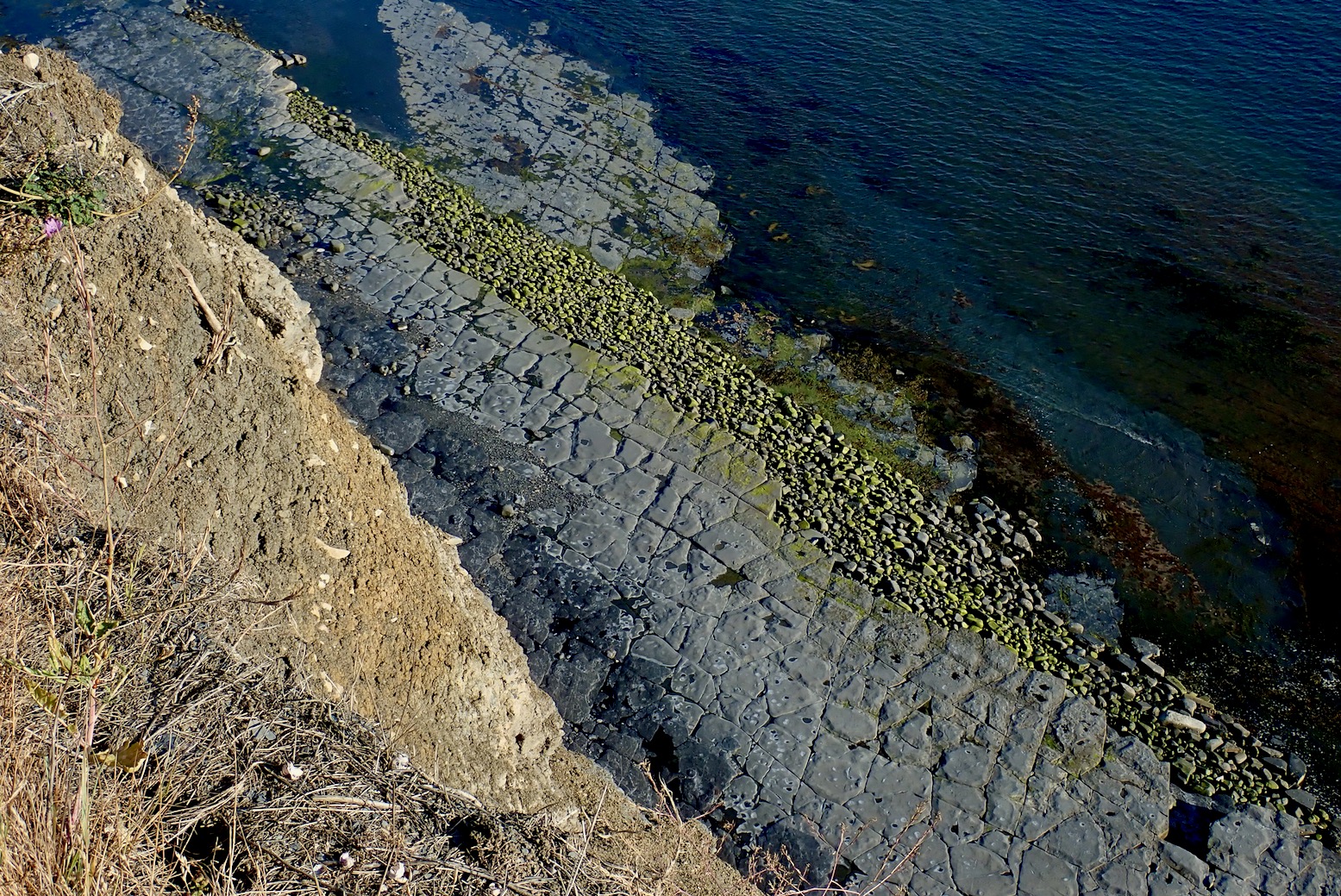
East of the bay are the notorious Kimmeridge Ledges, submarine clay or dolomite beds which reach out to sea a few hundred metres. With the right sort of swell or wind (top of the page and below) they can catch out unwary paddlers when waves suddenly rise up and break far from the shore.
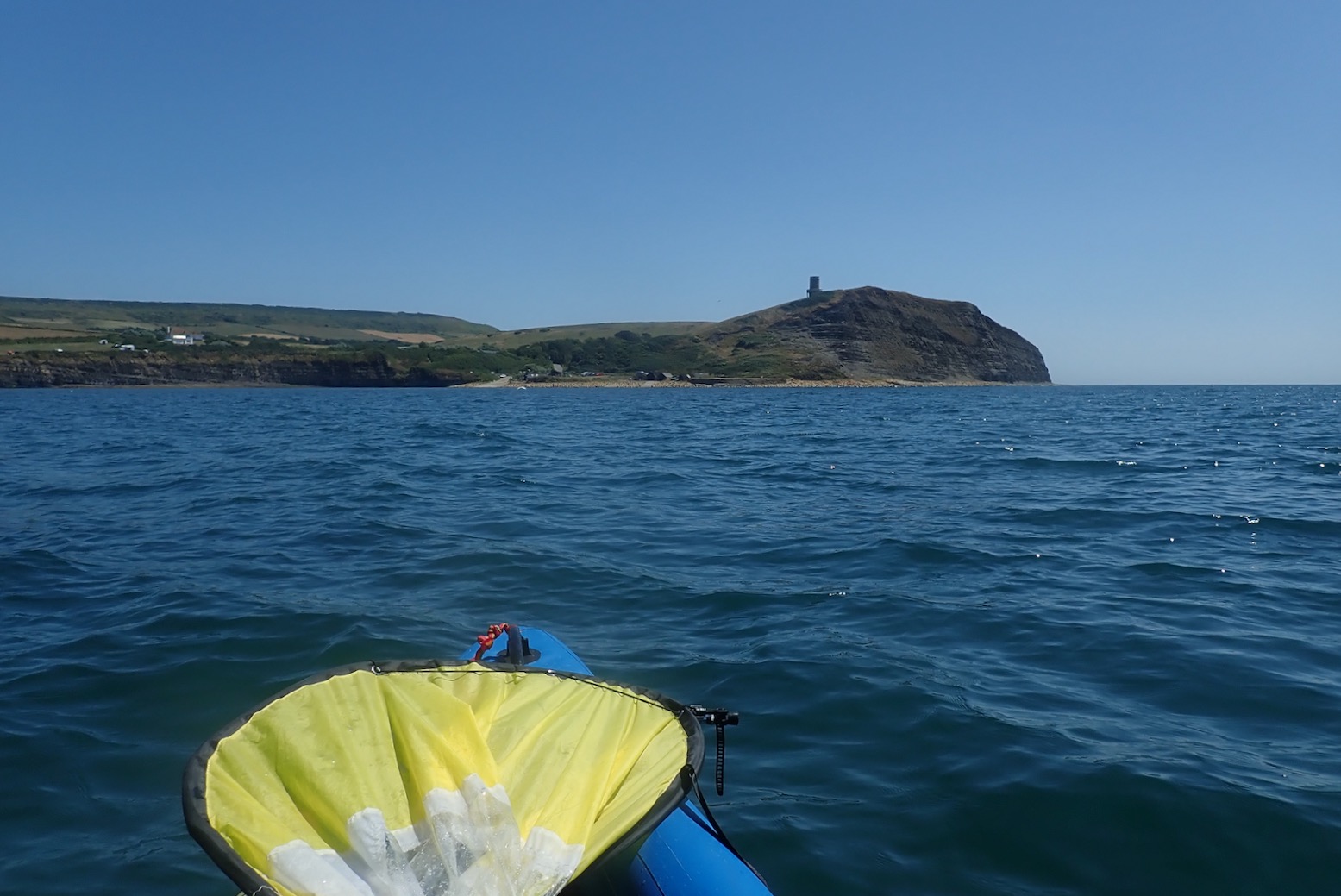
Windy day looking east across Kimmeridge Bay to the jetty below the Clavell Tower
Our evening walk coincided with low tide and calm conditions exposing parts of the ledges. They’re said to be rich in fossils and over the decades a local man, Steve Etches has collected enough to fill a museum in Kimmeridge village. We walked as far as the outlook over Egmont Point where the path turns inland on its way over Houns Tout to Chapman’s Pool, just before St Alban’s Head (below).
Chapman’s Pool, just before St Alban’s Head
Kimmeridge Bay
To reach Kimmeridge Bay you continue past the village onto a private toll road to a huge car park with a daytime cafe. On both visits no one was at the toll booth which saved a few quid. The east end of the bay has a handy slipway by the Wild Seas Centre. What a luxury it is to drive down to the sea’s edge and pop the kayak straight into the water to let it cool down and soften up while I parked the car. The high tide was just on the turn, but out here away from the headlands, the effect of any tidal current is minimal compared to the wind.
Jetty put in
I’ve got into the habit of opening the two side PRVs plus airing down the floor a bit at the end of a paddle for the drive home. Providing it’s not baking hot, I paddle with the PRVs closed which keeps the boat as rigid as a stick. Today I realised you can’t top up with a push-pull barrel pump stood in the boat on the water; you need to drag it all back ashore to stand on the ‘stirrups’. It takes just a few strokes to fully inflate the Igla back to 0.5 bar.
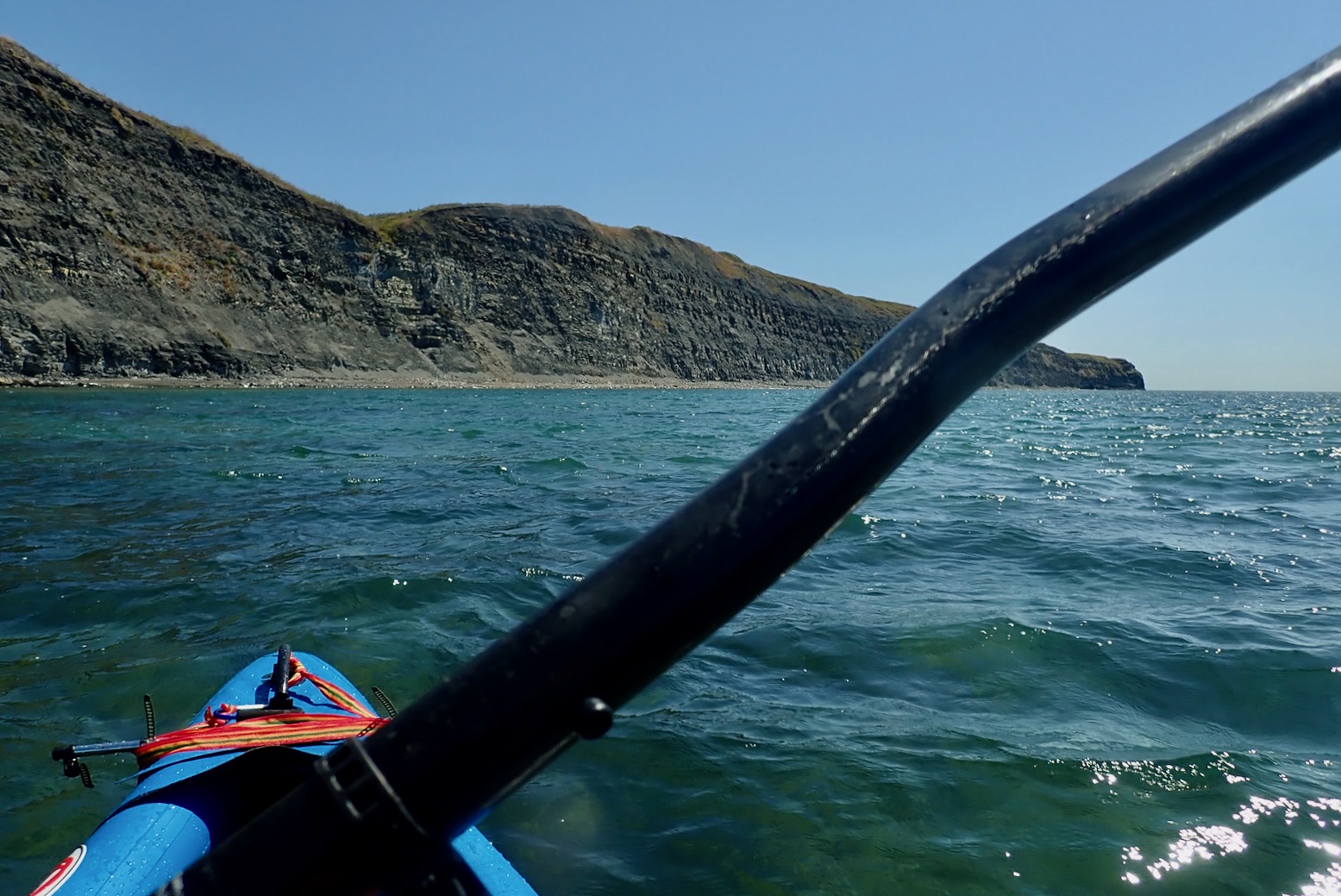
Round the corner the south easterly feels a bit more than the predicted 8mph. Perhaps the tall cliffs channel and accelerate the wind along their face. At least it should make for a good sail back.
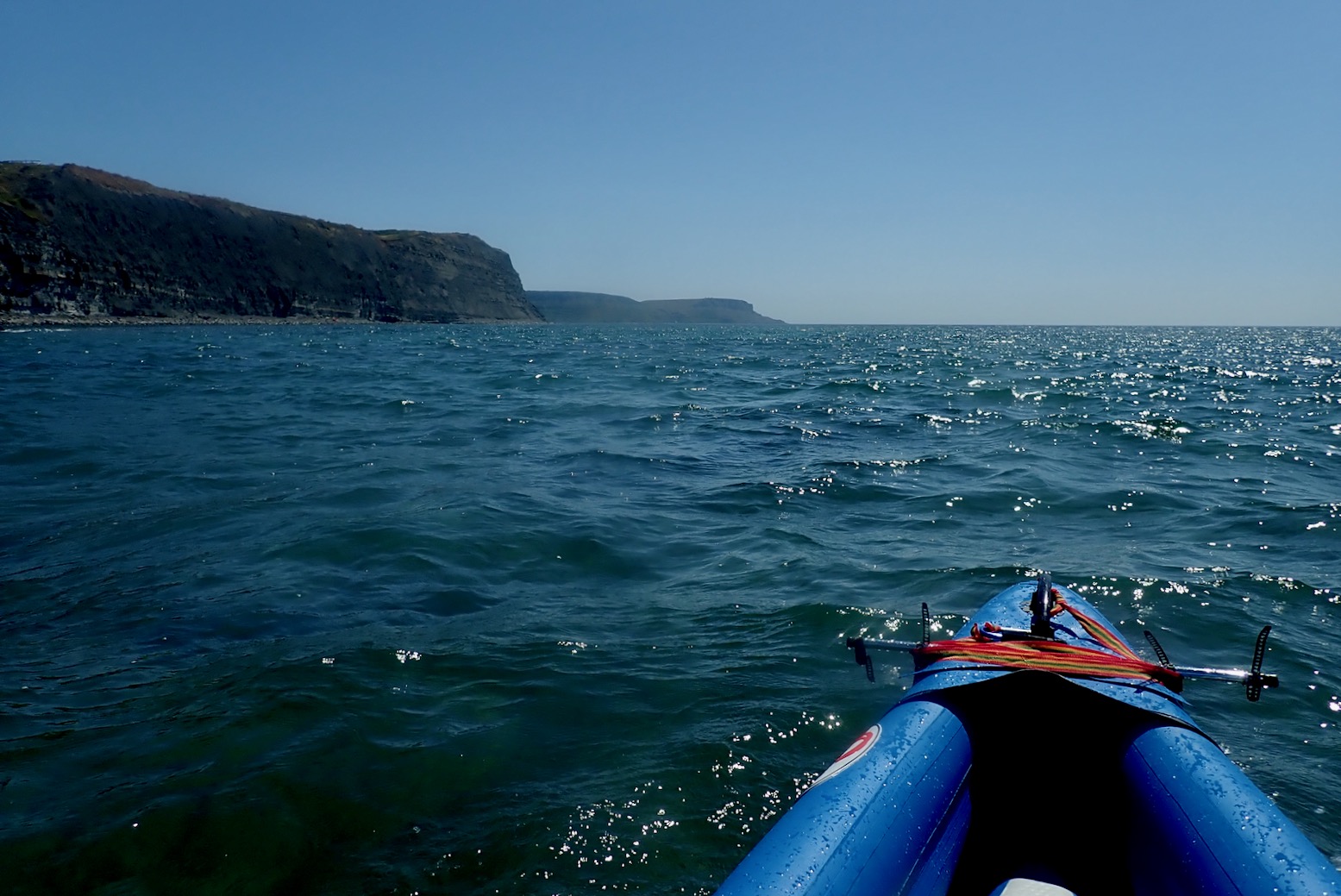
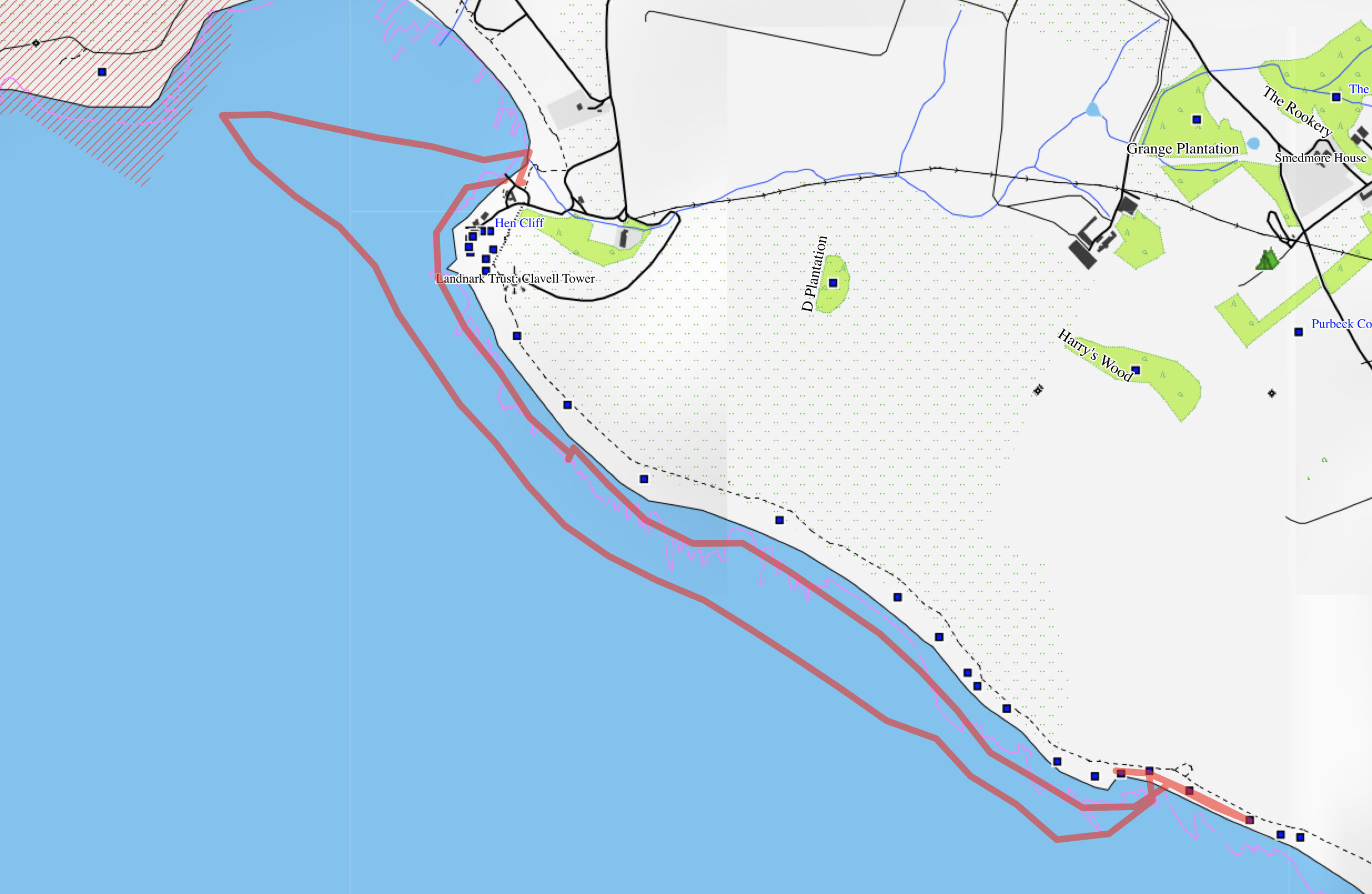
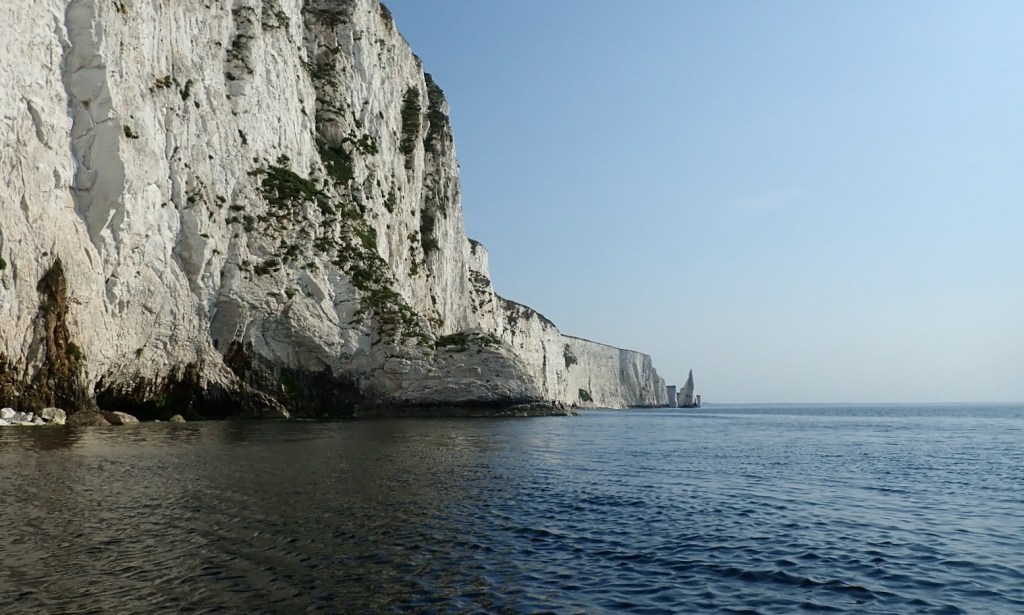
Heading southeast, I can’t help but feel a bit exposed out here; open sea to the right, rocky beach below a steep, crumbling cliffs to the left, and lethal ledges lurking ahead. What next – fireballs falling from the sky? But away from the corner the seas settle down a bit. The Igla cuts through the headwind at around 3mph.
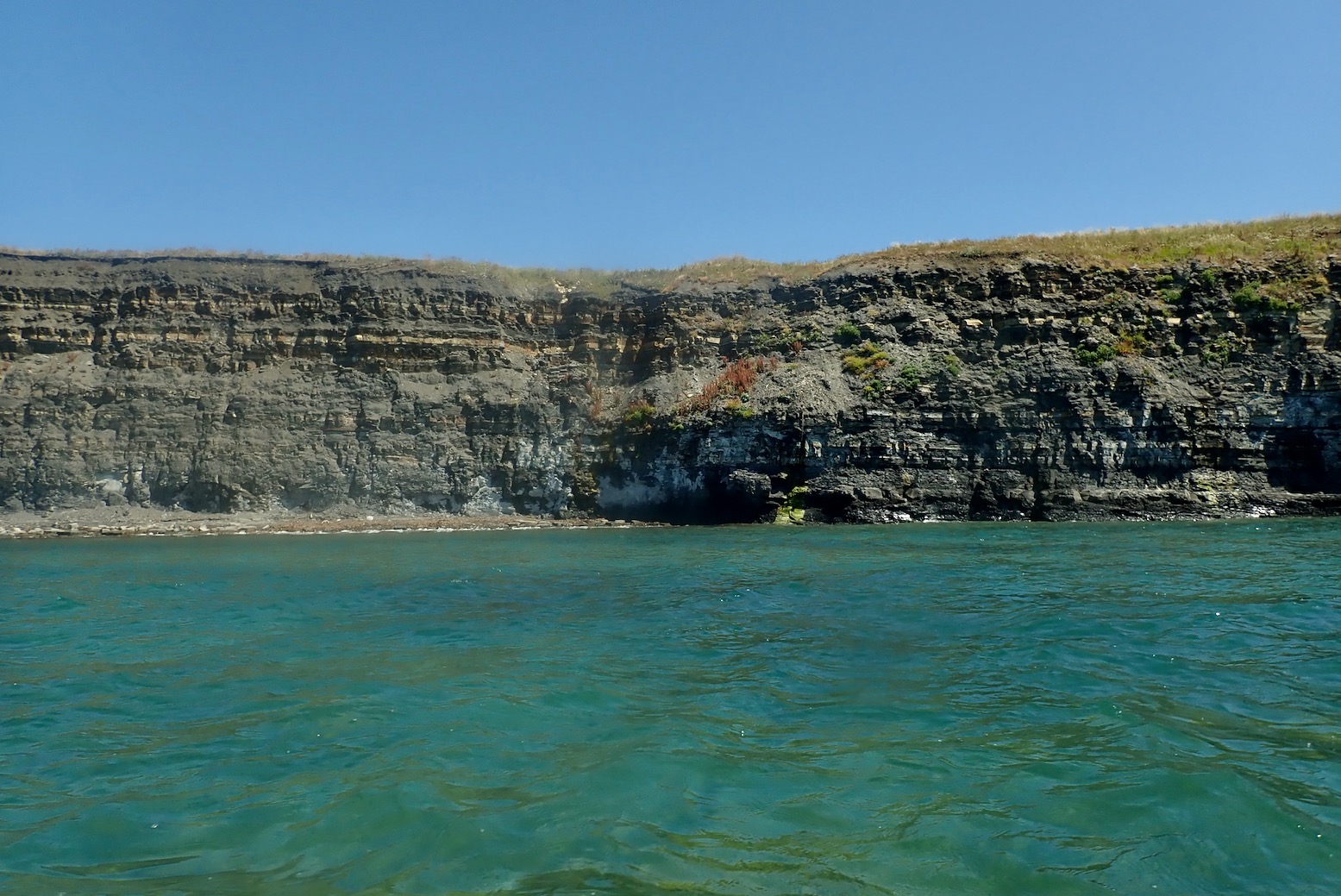
Nearer the cliffs the water turns green over the clay ledges not far below. But bigger waves rise up occasionally so I prefer to stay out which means I see less. As there are no sea caves to paddle into on this stretch and no skerries to paddled around, in a packboat I decide this unusual area might be more interesting to explore at low tide. You can easily hop in and out of an IK or packraft and wander across the ledges which few people ever access, looking for ammonites and other curiosities. Next time I’ll know.
Otherwise, with linear cliff paddles, in a kayak this Jurassic Coast can be all or nothing. You either commit yourself to a full run to the next normal take-out, or go somewhere and come back. It’s only 3.6 miles to Chapman’s Pool, but I wasn’t ready for that today. (I packrafted it in 2025). As it is, once there, with a 4-metre boat on your head it’s an unrealistic take-out up a 400-foot climb over a mile to the nearest parking.
It’s the same at the next possible take-out at Dancing Ledge. We checked that out on midsummer’s eve. In calm conditions it’s an easy enough landing providing the lower ledge is exposed, but you’d then need ropes to haul an IK, either inflated or rolled up, up a 15-foot scramble (left) before another steep walk up to Langton village via Spyways Barn. One for a packraft noseabout on the next calm day.
As it is, Dancing Ledge is on the far side of St Alban’s Head where the tide can kick up a bit (left). Good timing and some nerve are required, even if a kayak can tuck in close to the shore inside the race. This is why Mark R says in his South West Sea Kayaking book. [Kimmeridge to Swanage is 19km and …] “… a commiting trip with big tides races and few opportunities to land. This also happens to be the author’s local (and favourite) paddle.”
View from above, give or take.
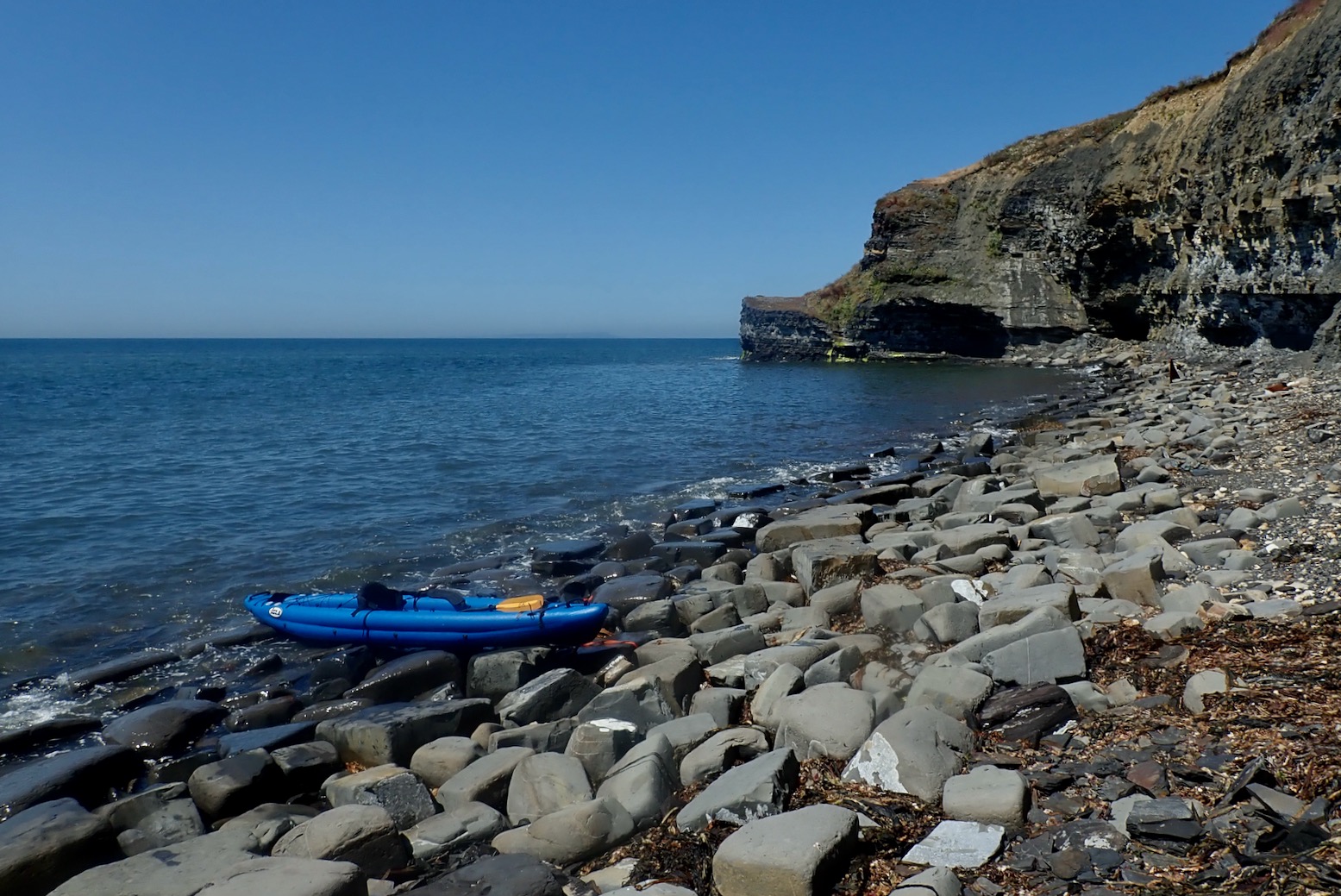
Back to the present. Lured by a curious triangle jutting up from the stones, I park up on a narrow beach and hop out for a bit on a look around. This is Clavell’s Hard, site of former shale mining. At ordinarily inaccessible spots like this you’re bound to find something interesting.
Like a beached red plastic ‘fake clinker’ dinghy.
Anywhere near seaweed there are masses of aggressive ‘sea-horse’ flies. The other week nearby Weymouth beach was blanketed in this kelp which soon started rotting during the hottest month ever. ‘Clear it away! cried the holidaymakers. ‘Stop your whining; it’s a natural phenomenon!’ responded the local council. ‘Get a grip‘ suggested Springwatcher General Chris Packham. Buckets and spades were flying and Trip Advisor turned molten with rage.
“This decision [to ignore the seaweed] supports our commitment to preserving the ecosystem’s integrity and avoiding any potential harm that may arise from interfering with its natural course.” chirped the council unconvincingly. A week or two later later they caved in and cleared the beach. Honestly, it’s just one scandal after another these days.
Compared to northwest Scotland, I’m surprised how little fishing detritus there is here. Are southern fisher-folk more tidy? I help that effort by snagging a superb, self-draining crayfish crate-bench to add to my collection.
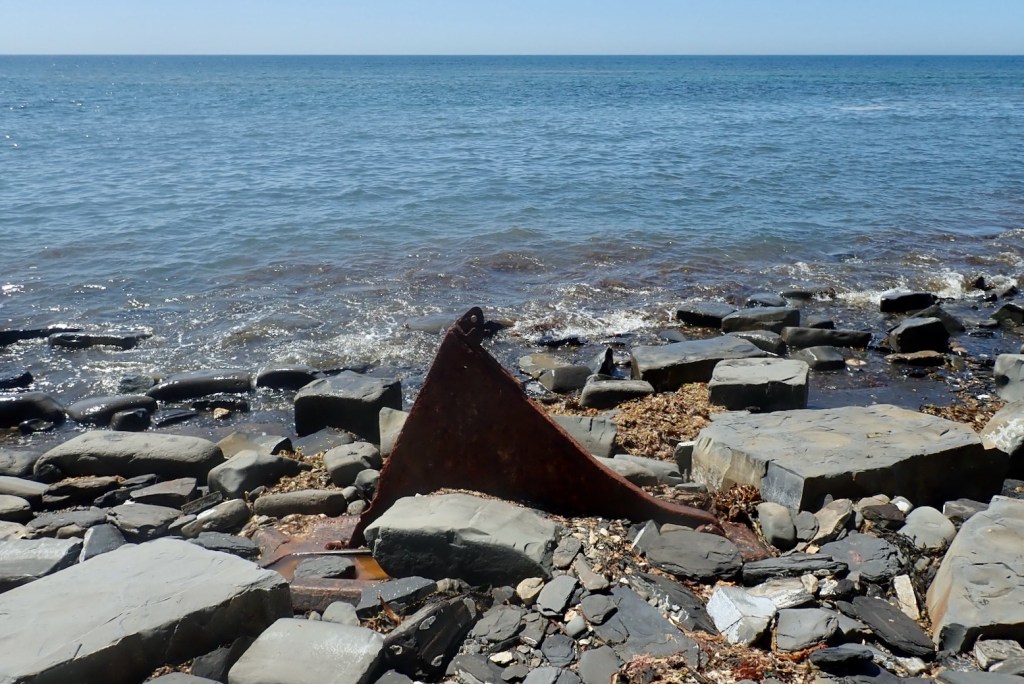
I approach the mysterious shark’s fin.
It looked like the upper half of a retractable drop skeg (fixed rudder) with its mounting plate, similar to kits you can buy for hardshell sea kayaks (left), except it weighed tons, not ounces. I thought it might be off some old wreck.
You can see a pivot pin up front. A cable might have winched it up and down. But then any ship that size would obviously have a rudder. Who knows, but I now think it’s abandoned mining junk.
The fin made me think of the SS Treveal which broke in two on the ledges about 1.5 miles southeast of here in January 1920. The Belfast-built steamer was on the return leg of its maiden voyage from Calcutta to Dundee, and had left Portland earlier that day where someone observed that the too northerly heading was inauspicious. Most of the 46 crew drowned when their lifeboats capsized near the shore. It’s said the tug which came to salvage the cargo also sank alongside. There’s no trace of the Treveal now, even on marine charts and wreck maps. But how do you dispose of a 5000-ton steamer snapped in two? Bit by bit I suppose.
It’s unlikely subsequent storms washed that huge hunk of angular metal a mile and a half to the base of this cliff. More probably it was placed there by shale miners. There’s more on the SS Treveal on Ian West’s geological pages here (scroll to the bottom of the long page).
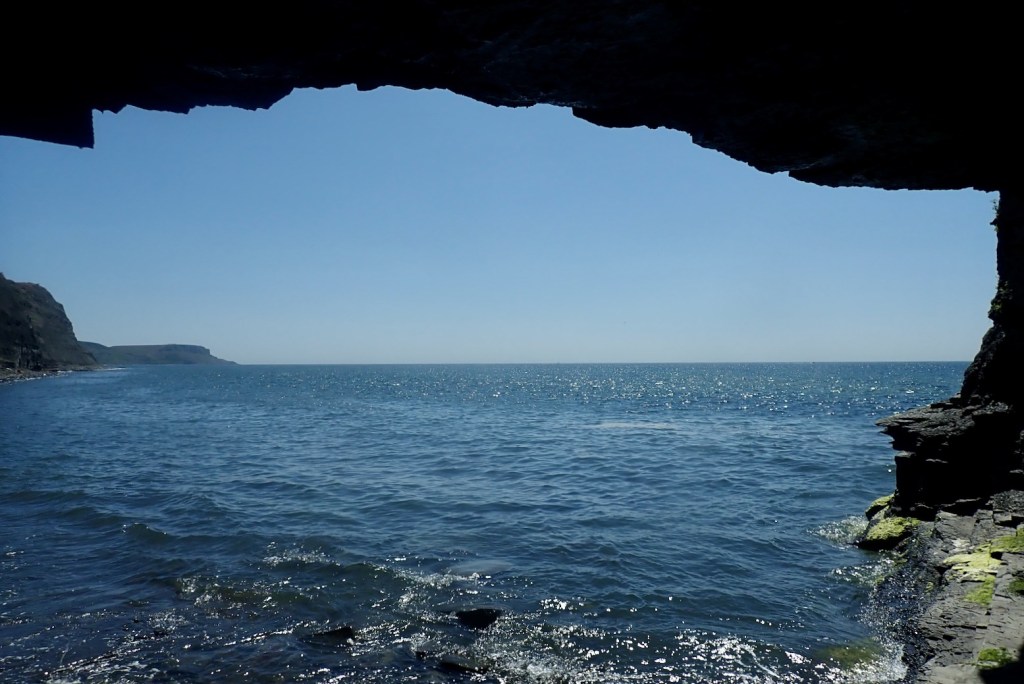
I wander into a nearby cave, perhaps excavated during the ‘Blackstone’ mining era.
Inside I see just how friable this oily shale is. I can easily peel bits off.
Underneath Silurian millipedes inhabit the tiny cracks, feeding off microbes that feed off the oil. Probably.
Time to head back. I’m all fired up for a good sail with the tide.
Benign, weed-covered ledges lurk not far below. On the far horizon the chalk cliffs of Mupe Bay, just next to Lulworth Cove. Might try there next, but the army firing ranges restrict weekday access. We’ve been hearing machine gun fire all week; Ukrainian soldiers getting trained for the front line.
I throw up the sail but it’s not happening. I creep along at barely 2mph. Maybe I’m too far out (left) and the wind got intensified near the cliffs.
I paddle back to the corner of Kimmeridge Bay…
And carry on to the other side where waves are breaking off Broad Bench ledge. On the left horizon is Portland Bill dangling below kelp-clad Weymouth.
I turn back to the jetty, de-air the Igla a bit and strap it to the car roof.
And though I haven’t really earned it today, I treat reward myself to a seaside seafood basket by the seashore.
Some great Gumo deals from UK outlet K&P, with discounts up to 40% on a Solar or Framura. Prices like they were a few years ago. Grab a Nitrilon bargain!
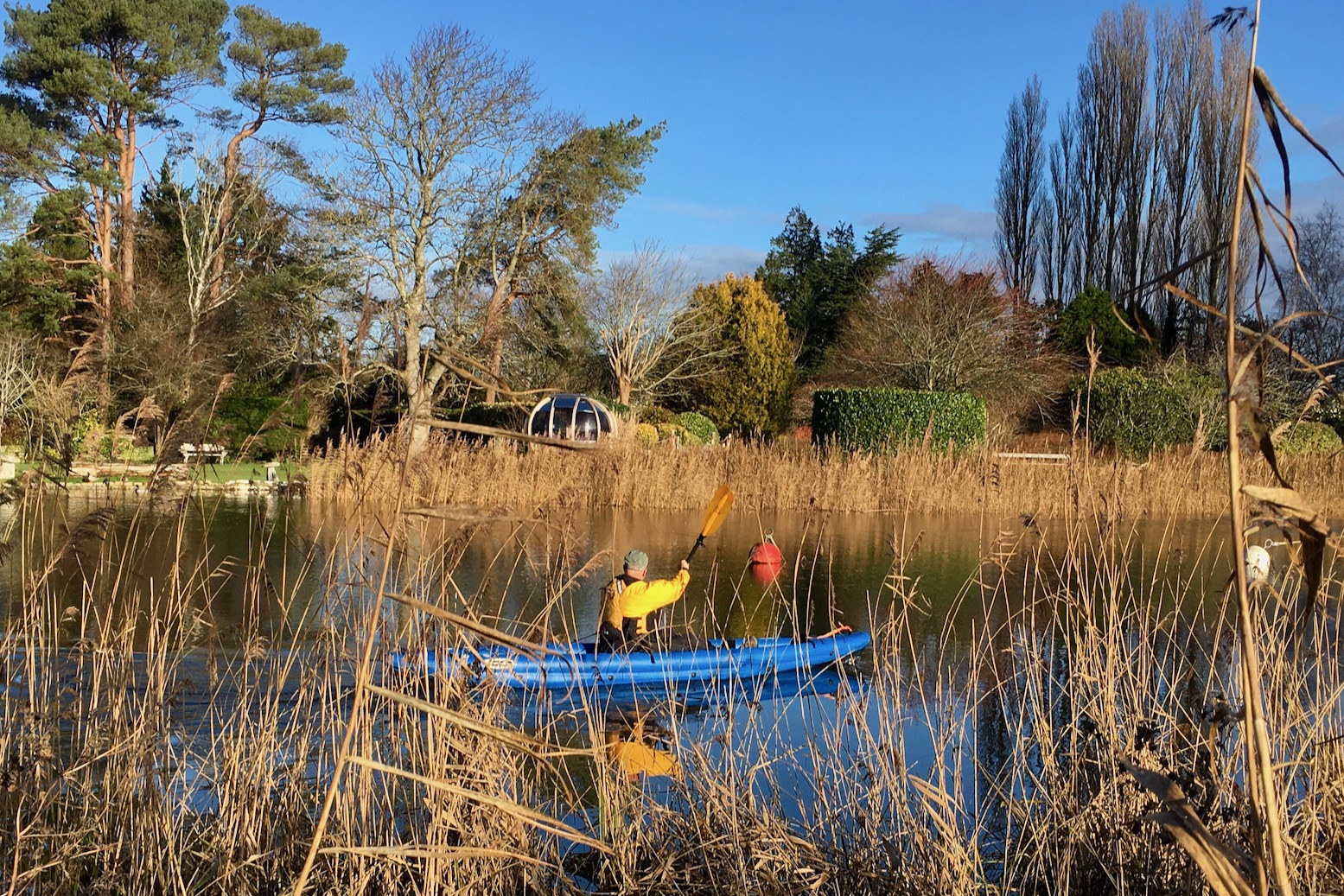
For the last fortnight the Wessex skies have been clear, and warm winds have blown from the east. After six months in the garage I finally get round to taking the Igla for a day out. Hard to believe I’ve only been out in the Zelgear IK once in mid-winter. A closer look at the south side of Poole Harbour is the plan, and a 25-minute drive drops me off just before the Sandbanks ferry inlet which we crossed last year in packrafts.
The tide was inbound and the forecast 13mph from the east, rising later and with gusts predicted at twice that according to some sources. Ideal for some downwind sailing action! The plan was to explore as much of the Harbour’s southern shore as wind, curiosity, energy and draught would allow.
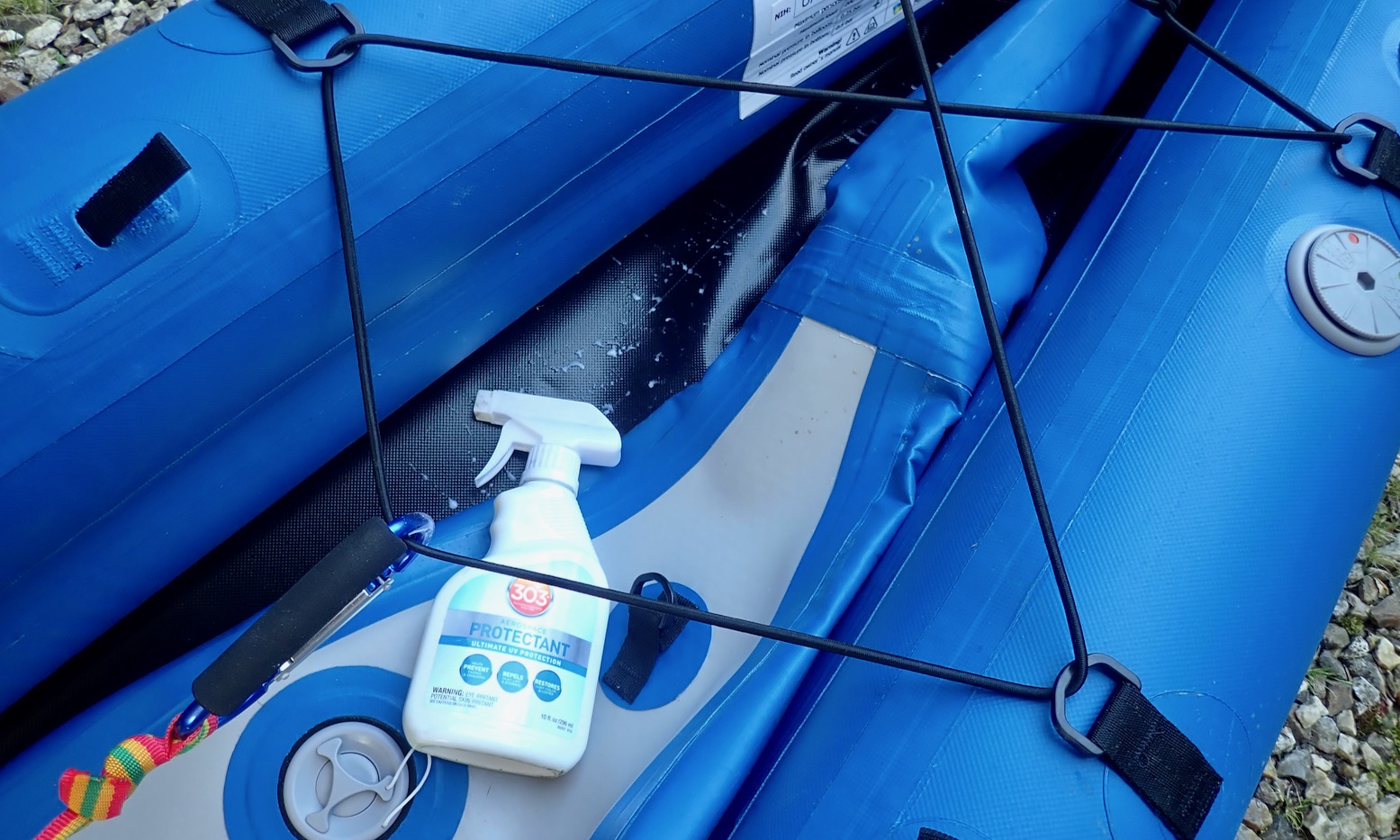
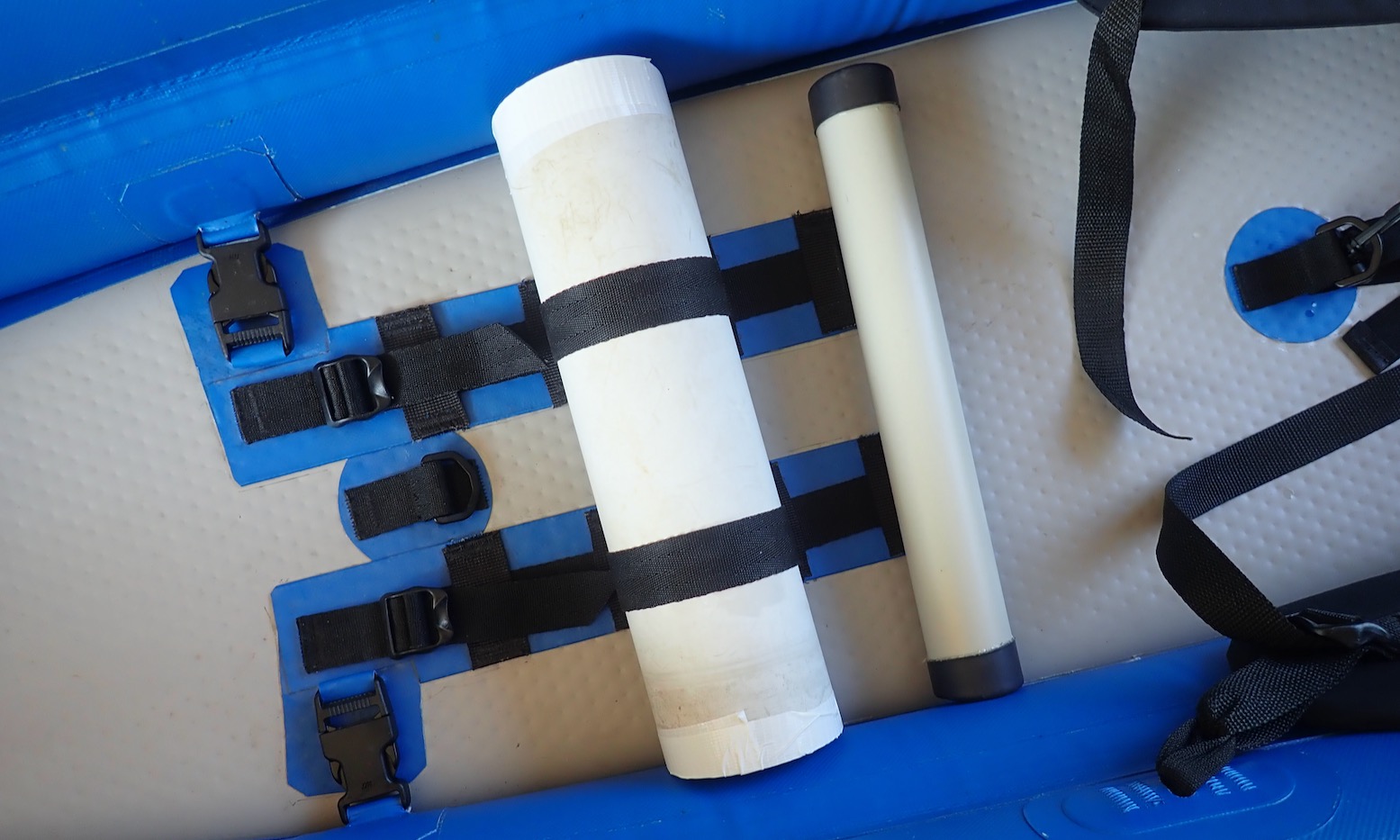
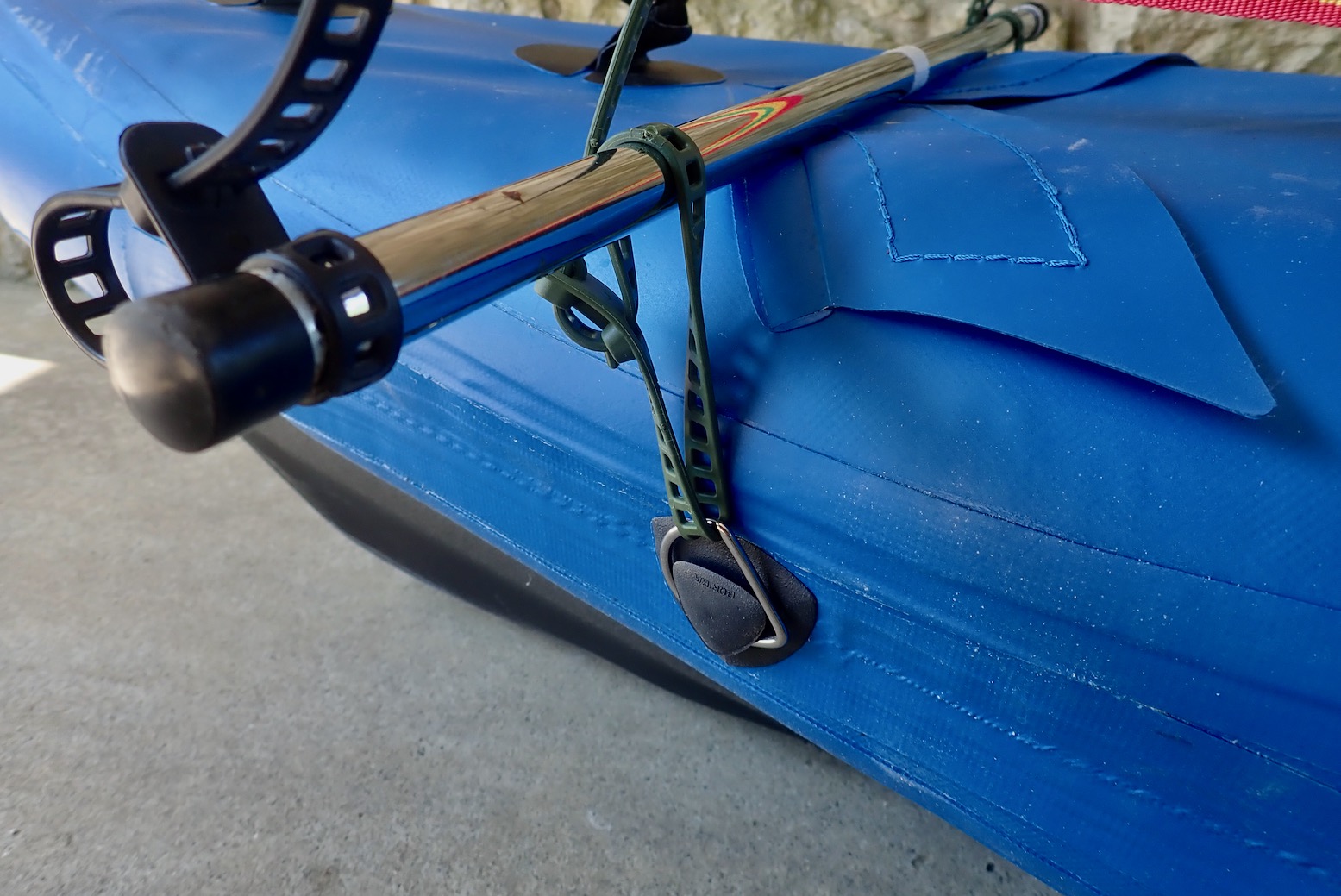
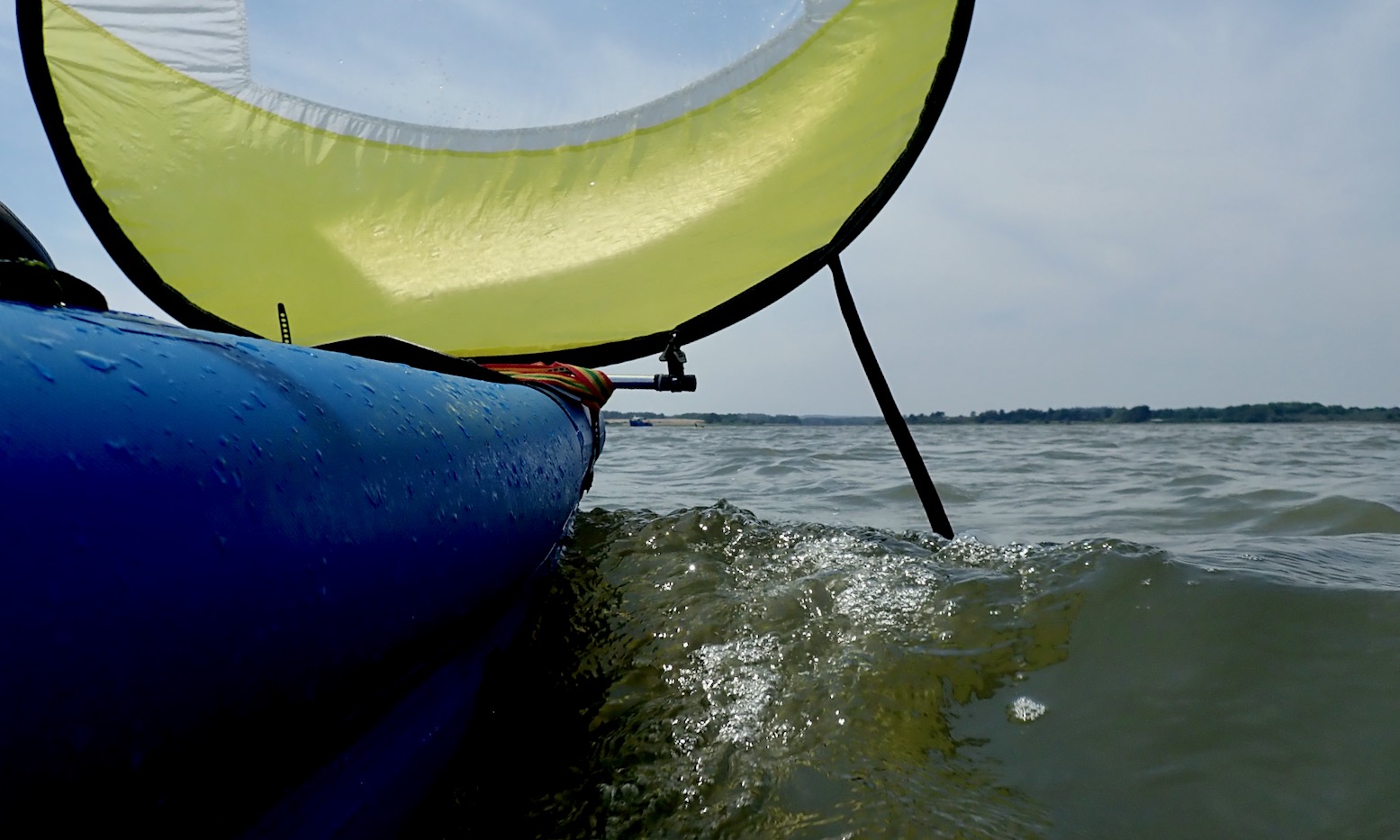
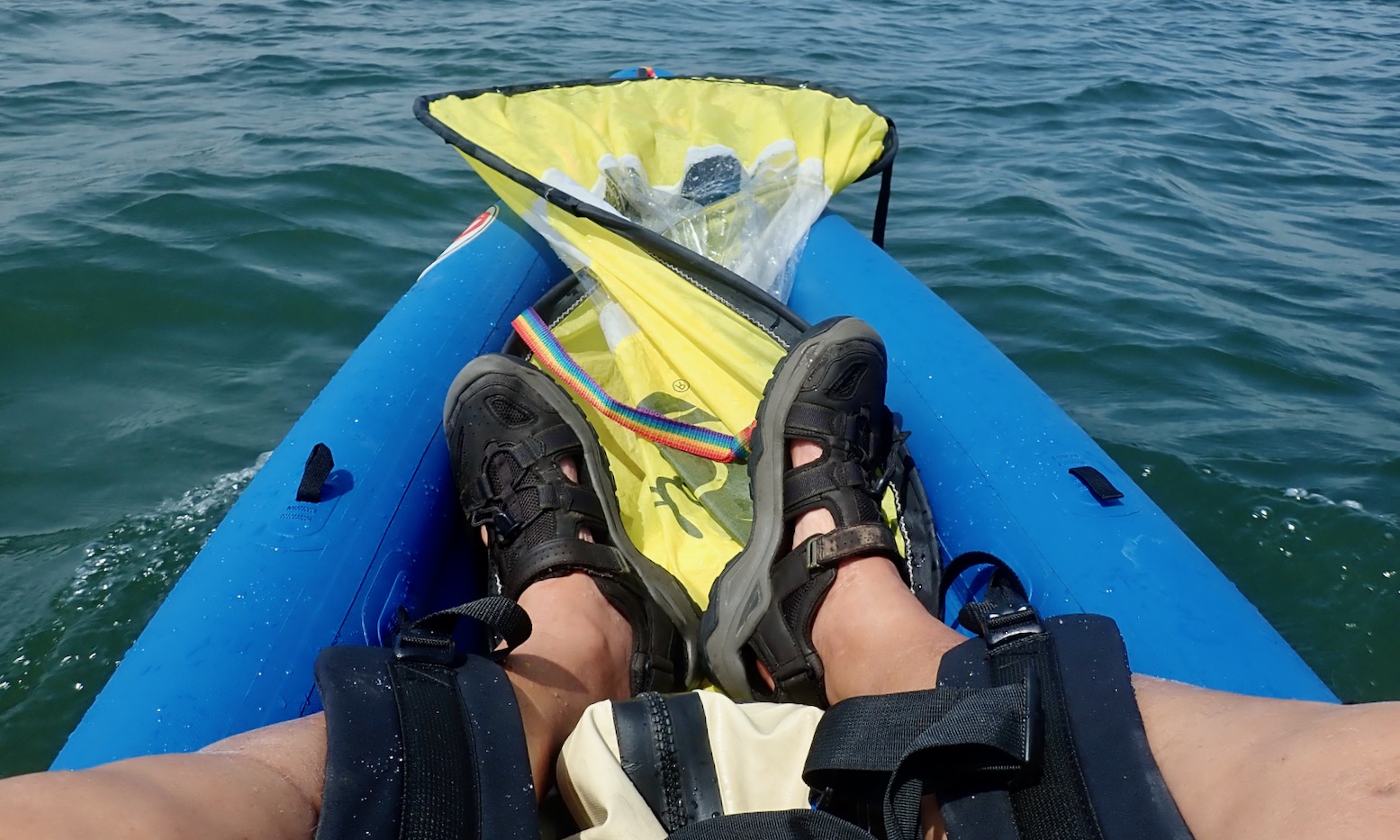
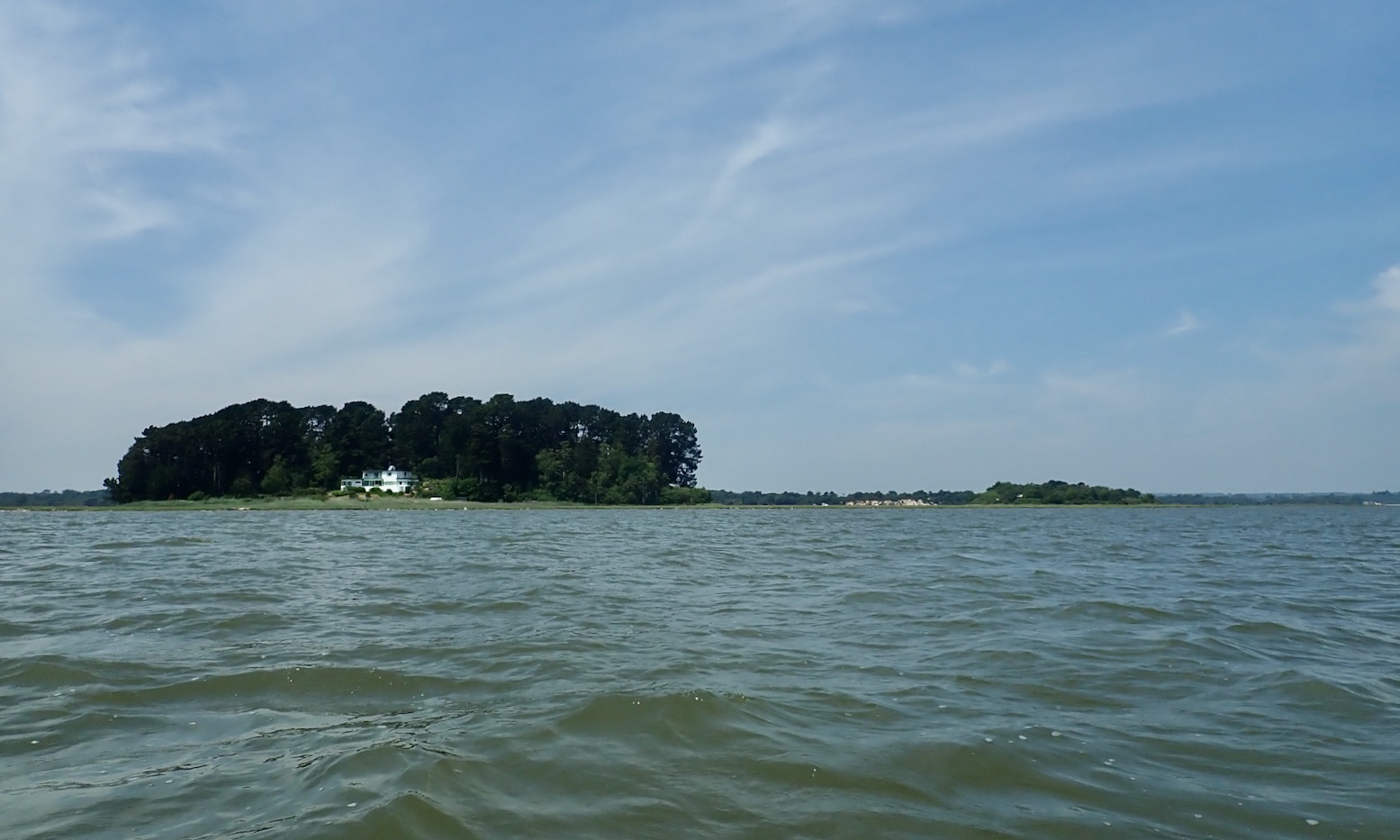
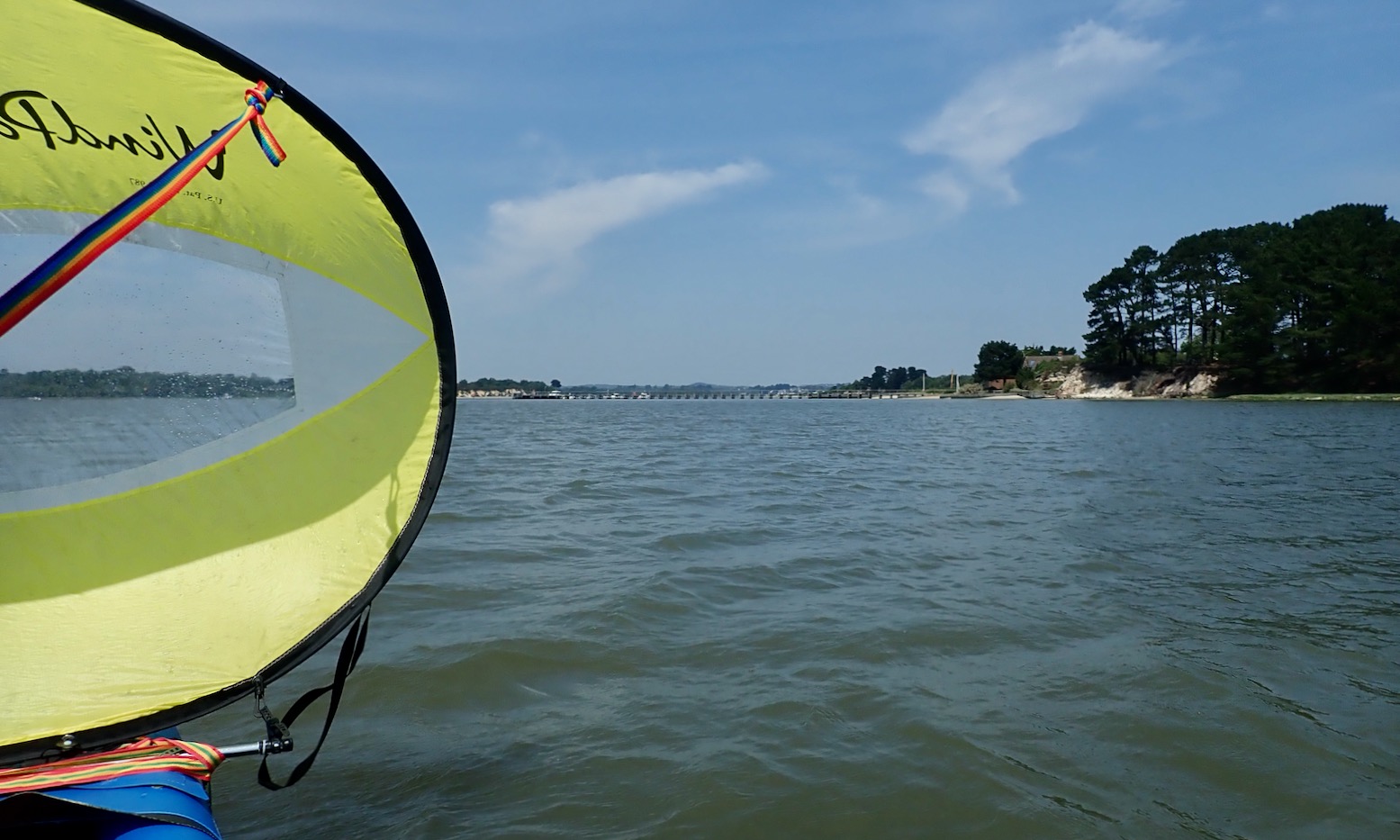
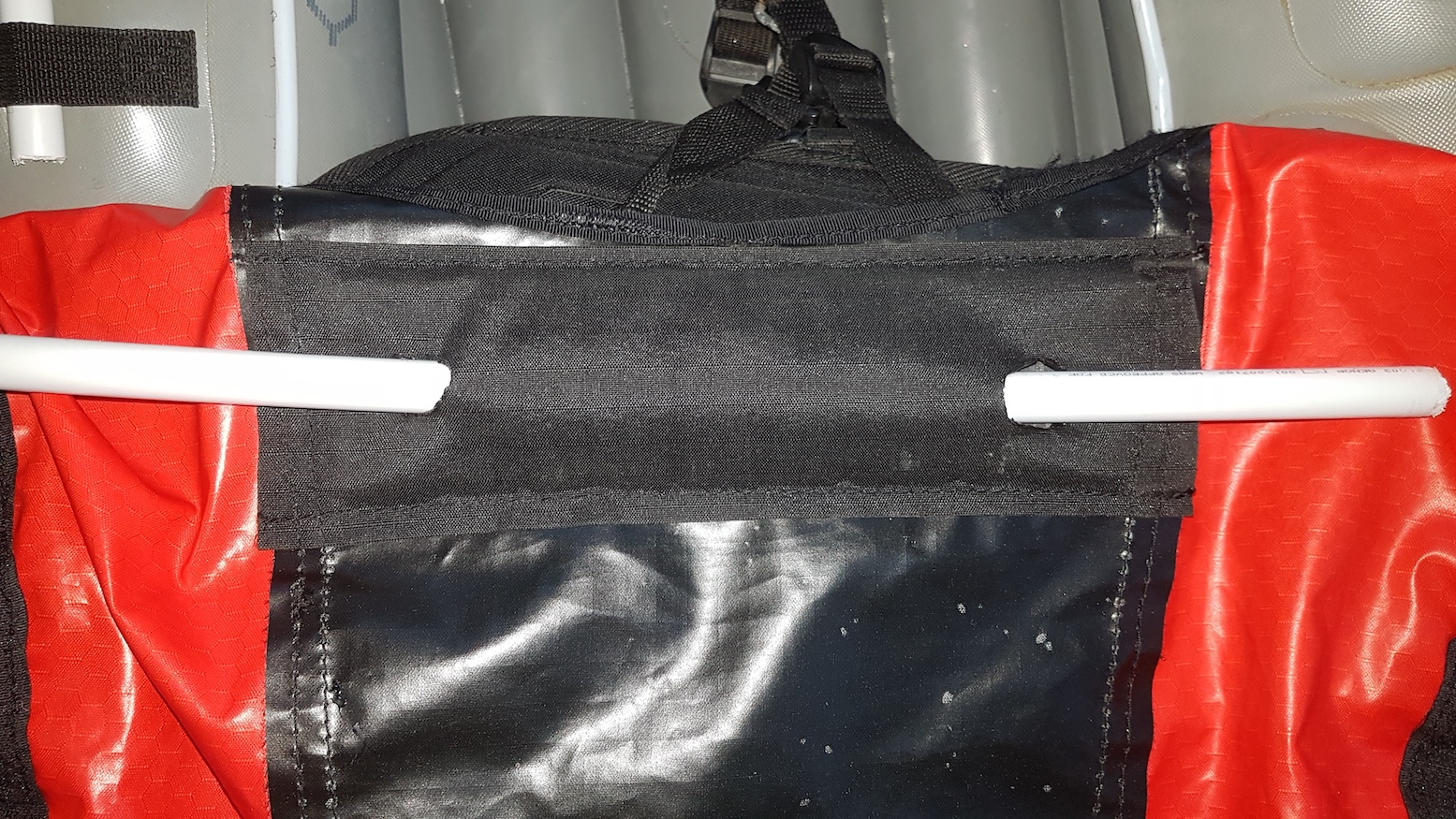
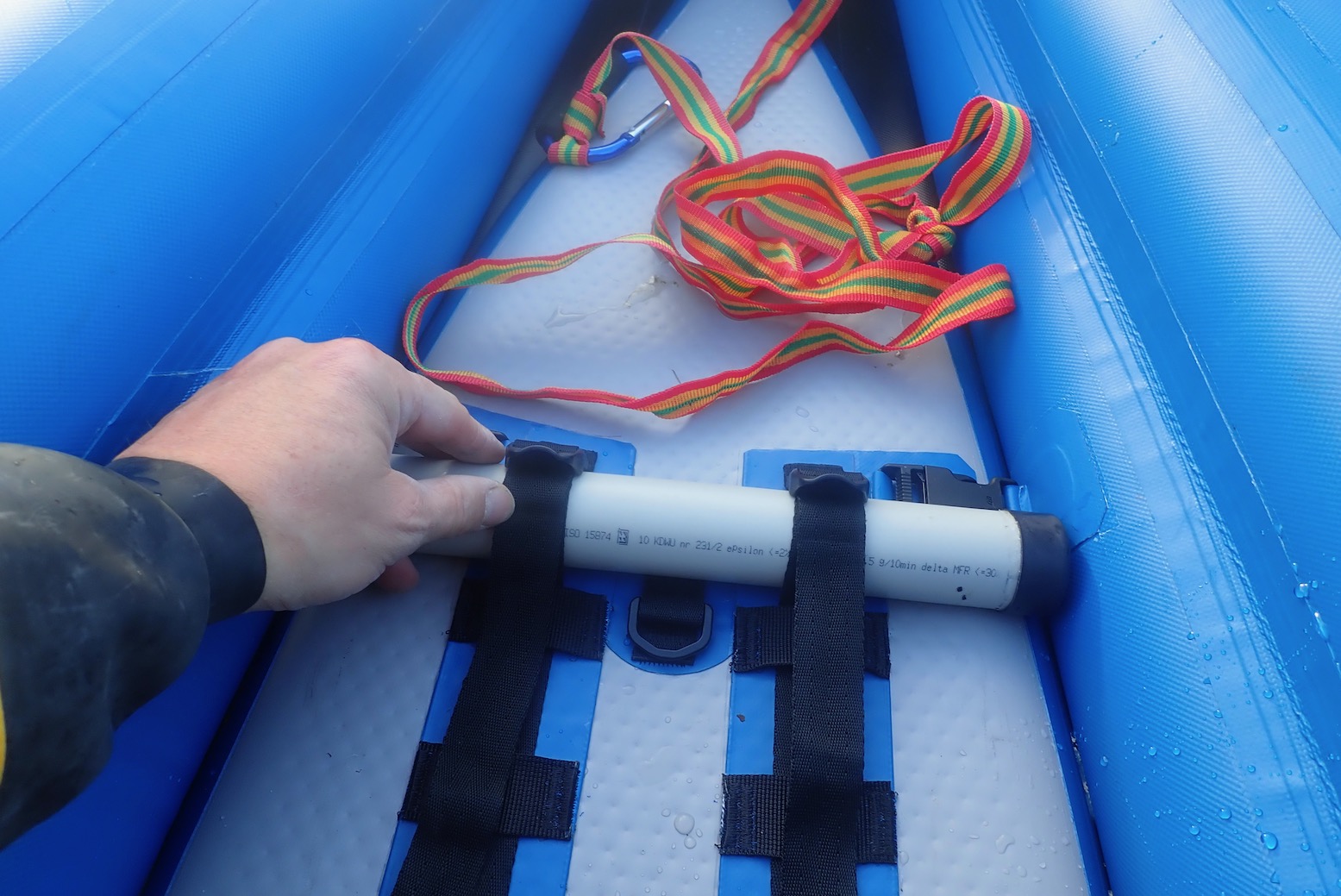
The 0.25 bar hull has been inflated for six months and lost a little pressure. I’d fully deflated the removable 0.5 bar DS floor and refitting it, decided a quick squirt of 303 anti-UV lube underneath and on the ‘horns’ would help it slide snugly into the correct position.I sawed off a bit of 12cm drainpipe to make a bigger footrest tube for my bigger feet. (Original Zelgear footrest tube on the right).I also found a way to fit my packraft ‘transverse bowsprit’ using ever handy Rovaflex straps.The wide bar stabilises the sail mounts to limit sideways swaying or rocking.It’s only a two-minute carry through the trees from road to beach, but requires passing through the ‘TPZ’ or toilet paper zone.I drop my lunch into the boat. It’s going to be a hot paddle. At the back, Brownsea Island.Oo-er, the Igla (‘Needle’) feels a tad wobbly, but then it’s an IK not a packraft. I deflate the seat with the handy twist-valve tube until I’m just resting on the DS floor. That’s better and once hooked into the cushy knee straps I feel secure and snug. The Igla’s seat is by far the most comfortable IK seat I’ve tried. It doesn’t have to be complicated or heavy.Like a migrating gannet, I venture forth in search of the wind.Soon it finds me.I glide past the southern cliffs of Green Island. Signs discourage landing. Nearby chaps are doing tight circles in small dinghies, dredging or fishing for something. Not knowing the landmarks yet, I keep having to refer to my Garmin’s OS map to go the right way.
Right now I’m reading We, the Navigators; The Ancient Art of Landfinding in the Pacific by David Lewis (1972, open source pdf). In it he explains how Oceania (or Micronesia, Melanesia and Polynesia) were populated by intrepid Asian seafarers – contrary to what the famous Kon Tiki expedition sought to prove. Some had mastered the art of navigating hundreds of miles of open Pacific without any kind of instruments, memorising instead a combination of stars (rising and setting points were like compass bearings) as well as prevailing winds and waves, refracted swells from unseen islands and unseen currents (flying fish always jump down-current; fyi). Travelling with the incredulous author, after days at sea aged South Sea navigators regularly found a tiny pin-prick of an island bang on time. It’s a fascinating topic but the book focuses purely on the techniques, rather than the adventures they all clearly shared for months. David Lewis’s earlier book, Daughters of the Wind (catamaran from UK to NZ via Cape Horn with young family) may be a more engaging read, and was a voyage on which Lewis practised the instrument and chart-free techniques he later documented in the Navigators.
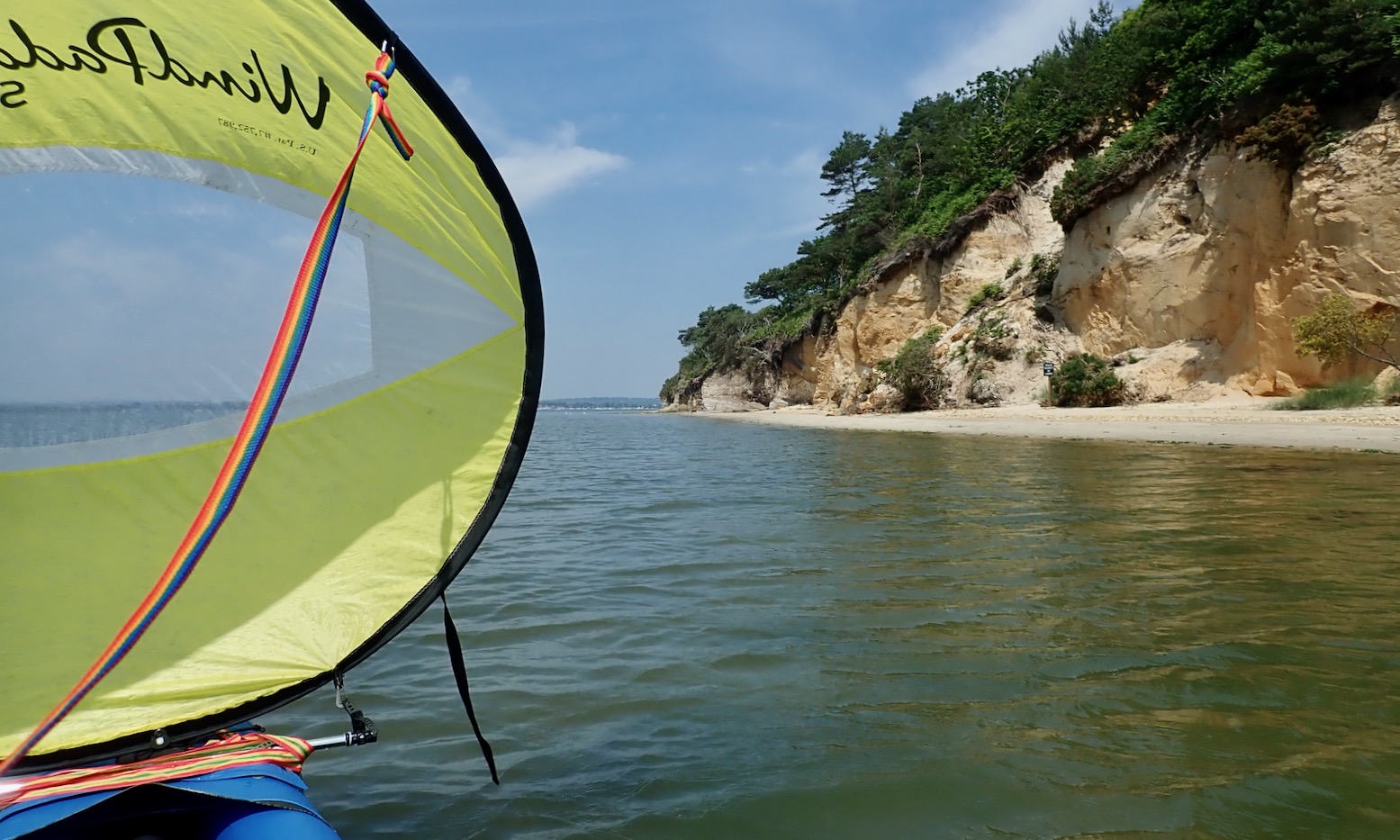
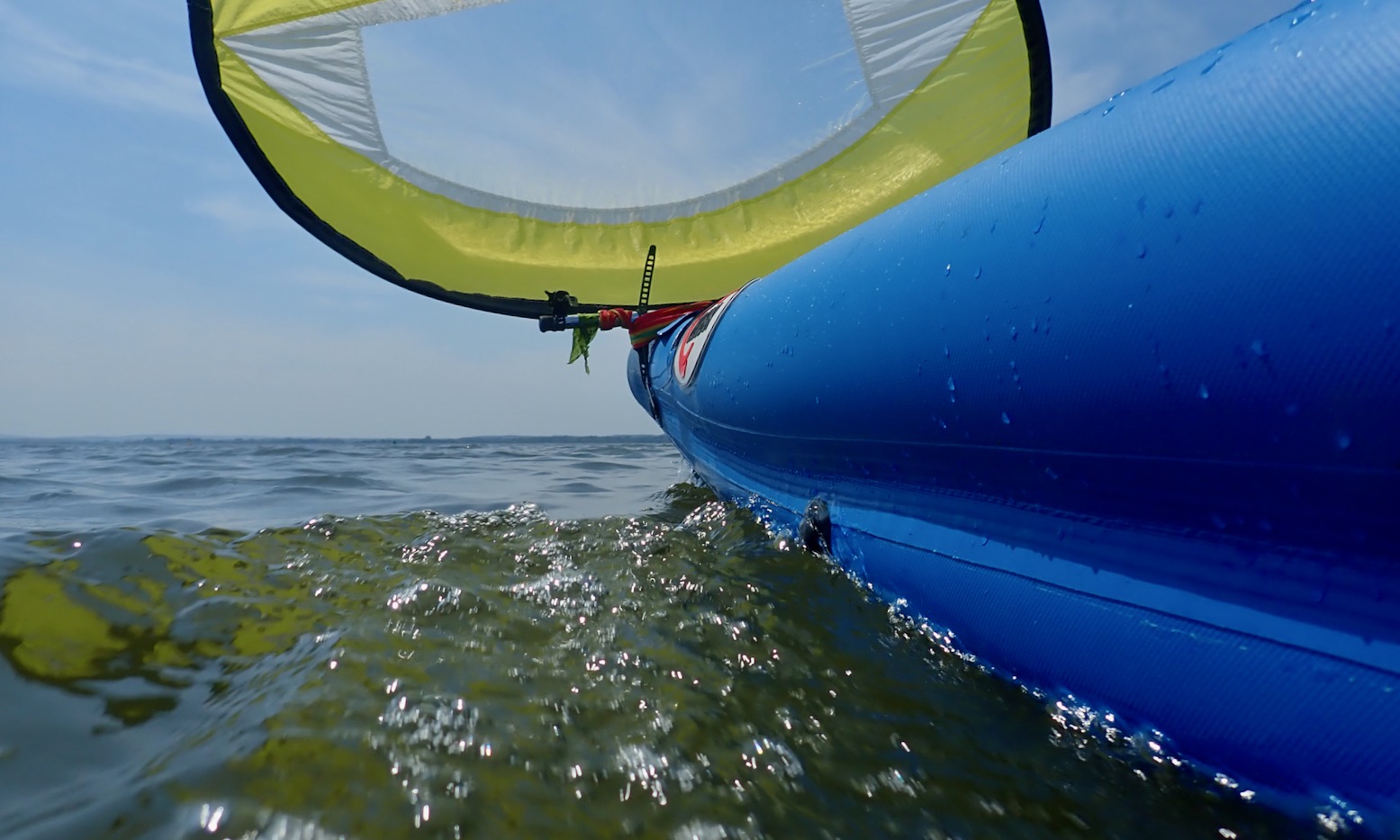
It’s blowing nowhere near 13mph and when the wind drops or I turn off it, one twist of the sail and it tucks easily under a foot, ready for redeployment in seconds. The system works very well.
We cycled a trail along the southern shore the other day, branching up to the harbour at a cottage on Ower Bay. From there I couldn’t work out what the wooded island was to the NW. Turns out it’s the south end of Round Island. Sgurr nan Cruinn, that might be in Gaelic.
I rounded the southern end of Round Island, passing more dinghymen doing full-lock burn-outs. There’s the long jetty as shown on maps. On the left the mainland shore of Arne.I ride up past Shipstal Point, one of the few points where footpaths reach the sea. A couple of SoT’s are beached up ahead, including a Sandbanks Style Optimal which I tested here a couple of years back. They’re going to have a rum old haul eastwards back to Sandbanks against the rising wind.I’m not wearing my glasses so don’t see the low spit of Patchams Point until I’m right on it. I have to turn east into the wind to get round it, scattering Oyster Catchers as I go. The taut Igla responds well.I pull over to inspect that state of regeneration and other incisive environmental initiatives. Soon I’ll pass Russel Quay where we put in the packraft the other day. I’m hoping for a good run with the wind towards the Frome river mouth.I get it but it’s not the high speed thrill I was hoping for. Plus it’s blowing me west, when I need to be going southwest. One flaw with my bowsprit idea is the lack of slack reduces the angle you can pull the WindPaddle to steer off the wind, especially when it’s not very strong.
The wind picks up, or get its fetch on at the downwind end of the Harbour. I’ve squeezed all the west i could from the wind and must now turn south. So I stow the sail and paddle a crosswind pushing me towards ancient stakes and into the reeds.
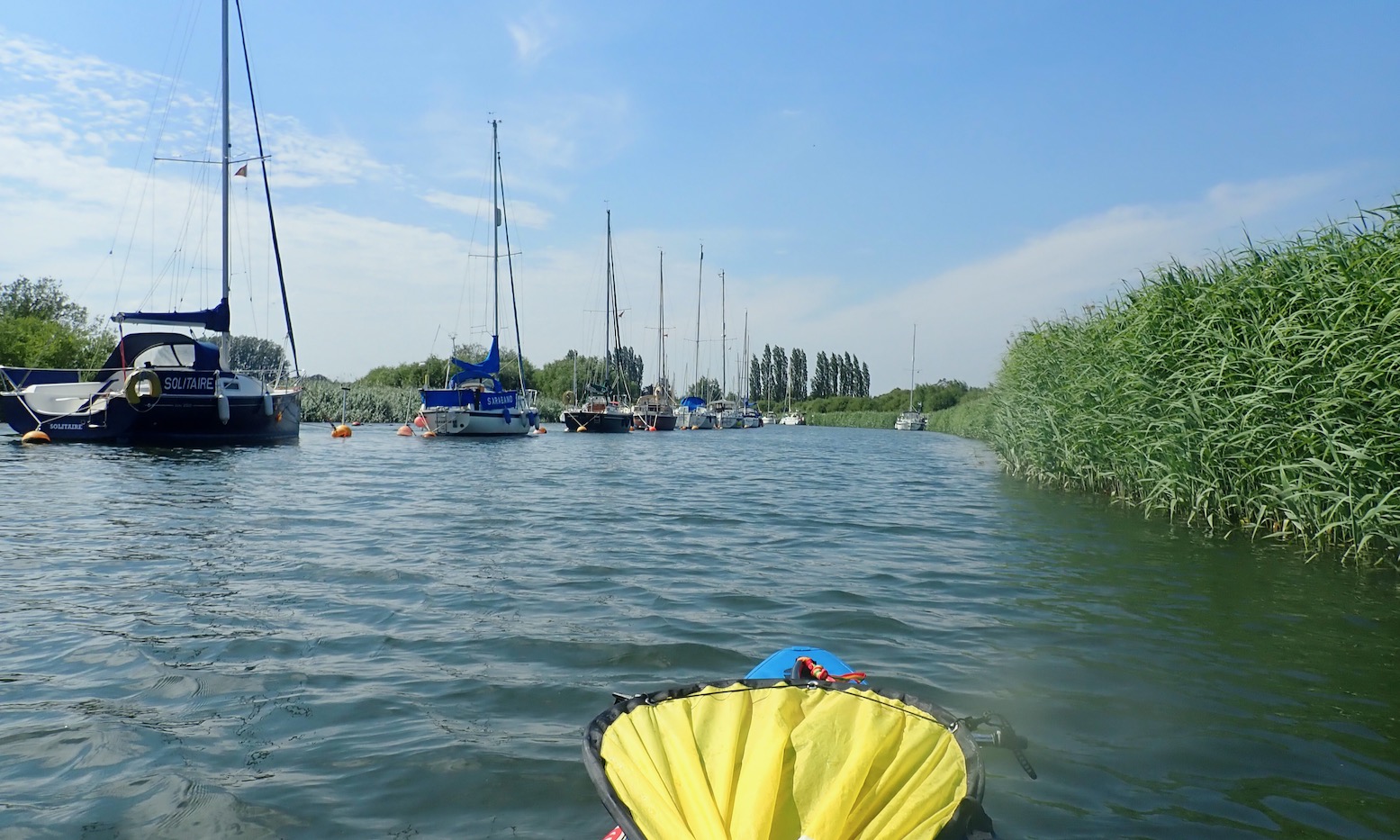
I follow a boat into the hidden river mouth and, with the wind now up to 20mph, I can sail a lot of the river’s meanders the two miles west to Wareham Quay.
With the wind whistling through the rigging, I hear a ‘Bloody hell, wow…’. It’s a moored boater expressing surprise as my kayak sails by as close to the 4-knot limit. I learned a new sailing trick: to micro steer the boat drag a left hand in the water to bring the bow round to the left. It worked well zig-zaging up the Frome.
Like a Polynesian master navigator, after my ten-mile traverse of the Harbour, I sail right up to the Quay…
.. casually hop out, and look around for my taxi.
IK or packraft, I wonder to myself. Environment or geography (as well as intended use) help define the best suited packboat. My TXL would have managed this outing fine, if a tad slower, but it sure is nice when the Igla slices through the water, either under sail or into the wind. The problem in this corner of Dorset is, once one tires of noisy, busy, drab but safe Poole Harbour, apart from Swanage (below), getting the inflated 17kg IK down to the exposed Jurassic Coast in suitable conditions is a bit of a faff, even with wheels, let alone getting back out and closing the loop with cars in place. You may as well use hardshells. That’s why I chose the long but still light TXL packraft. Down here I’m not straying out to islands where speed and efficiency are important. For plain old calm-weather mainland coast hugging, a large packraft does the job and enables public transport, an easy scramble ashore followed by a walk back. But for an effortless coastal tour with plenty of room for two, the Igla has its benefits. It’ll easily paddle at 8kph on a breeze too light to hold up a sail and that’s an extra 30% more speed or so less sustained effort over a few hours.
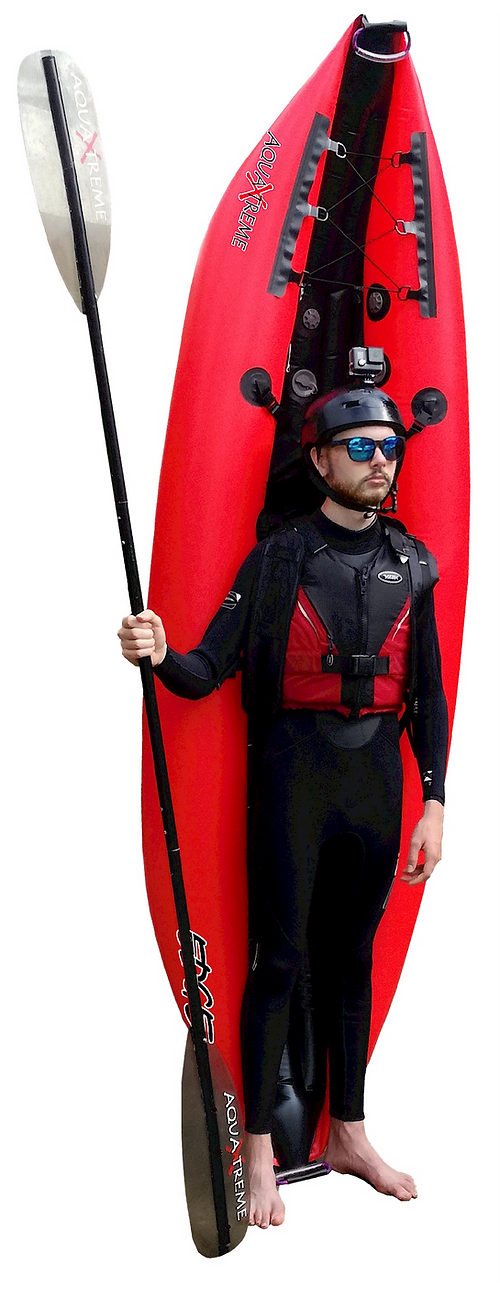
Thanks to IK&P reader Pavel for pointing me towards newish IKs from Israeli brand, AquaXtreme. To look at, the 4.2m (13.8′) x 90cm wide Explorer II is nothing special, the familiar profile of a round tube, non-dropstitch IK. AquaXtreme also make some slick-looking folding kayaks so, as rodeos go, they’ve been around the paddock.
What makes the Explorer and similar Edge models (left) different is that they’re made from up and coming TPU, like AquaXtreme’s range of packrafts (or just about all packrafts, in fact). And as we know, TPU folds up more compactly and is much less heavy per square metre than PVC while being strong enough, as well over a decade of TPU packrafts have proved. TPU also dodges PVC’s perceived ‘toxicity’ issues. TPU being thin, the only thing a 4.2-m Explorer might not be is innately rigid once pumped up, to which the answer is: more psi assuming the welds can hack it, This has been proved to work with packrafts in recent years. Rigidity is especially important in any longer IK with a single paddler sat in the middle, hence the advent of drop-stitch IKs a few years ago – a solution that in my opinion was not always elegant or functional.
Explorer II details and imagery on AquaXtreme’s website are skimpy: payload is claimed at 220kg while the all-important pressures look good at 2.5psi (0.2 bar) in the side tubes/floor?, but just 1psi (0.14 bar) in the floor.
It’s unclear if the floor is a loose insert ‘lilo’ sat on a packraft-like red floor sheet, as appears below, or integrated as a skeg photo (left) suggests.It’s possible it’s both (‘i-beam floor’ is mentioned) plus the ‘1psi ‘insert’ floor to allow it to be a self-bailer via the 4 floor drain valves shown. With valves open the insert would displace pooled water inside the boat to sit you above what’s left. But fitting self-draining ports in a complex I-beam floor is not a thing I’ve ever seen in an IK, so something doesn’t add up with the details and photos available. I also see what must be PRVs alongside the side tube inflation valves as well as the (insert?) floor. These are always a good precaution to stop an IK over-pressurising and rupturing if left in the heat, but something which many manufacturers are oddly coy about.
Weight is said to be 8.2kg; a bit more than half of what you’d expect in a PVC or rubber (hypalon) IK of the same length and the price is $999 with free post, plus tax where you live. There’s no mention of a barrel pump included, but you’ll need more than the air bag listed with their smaller, 2-psi rated Edge IKs.
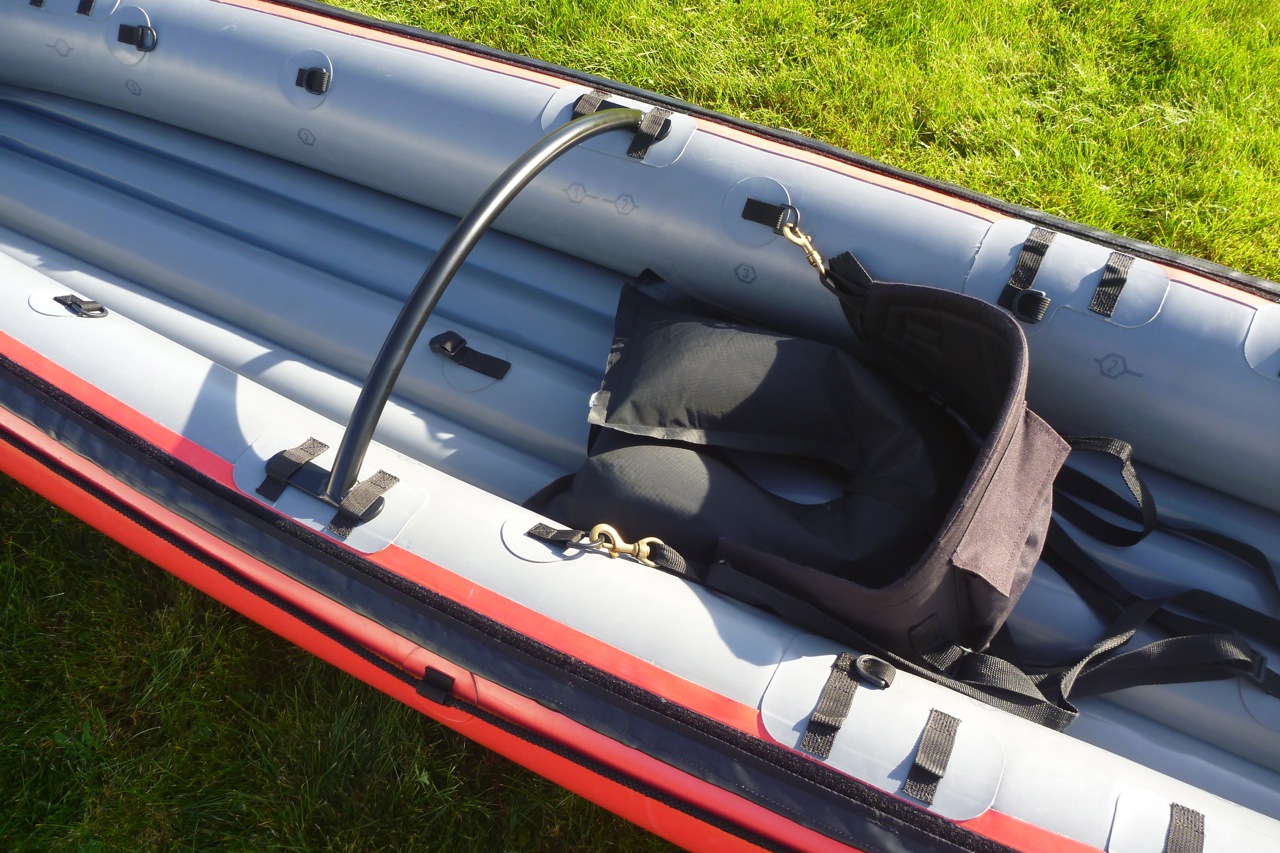
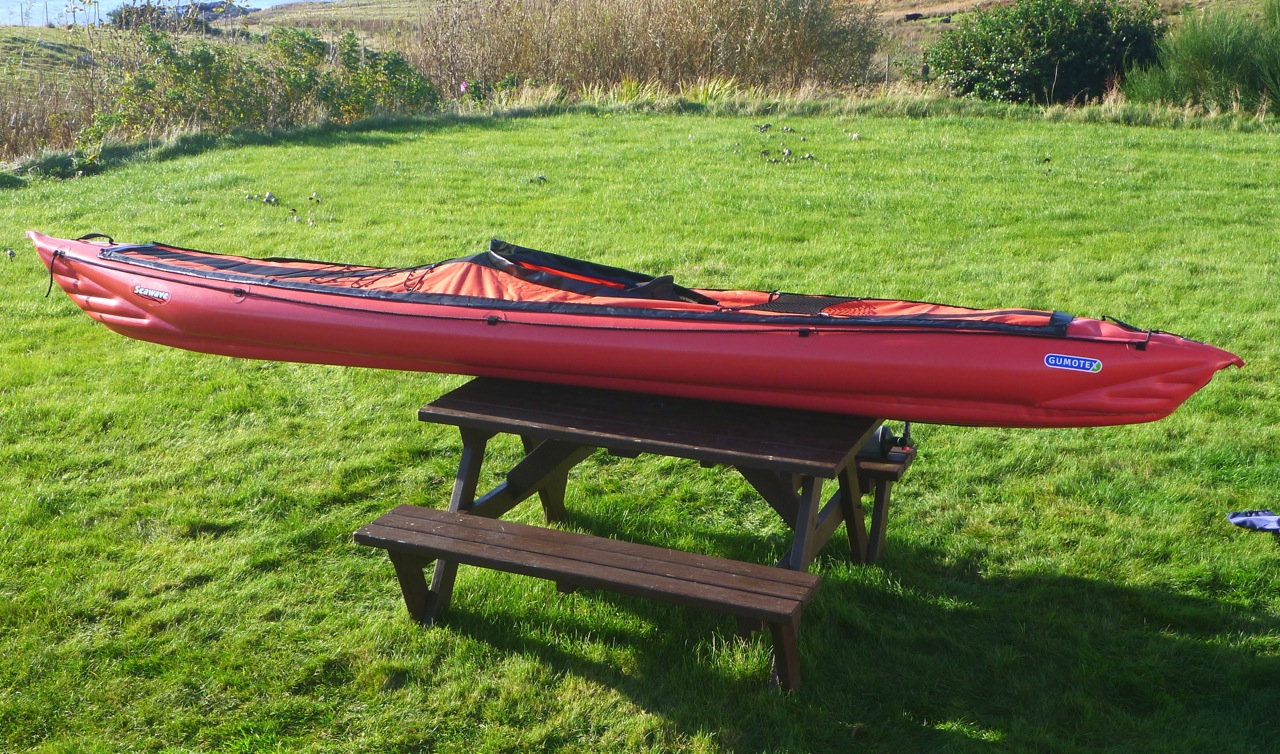
I got the optional deck with my first Seawave back in 2015 and as expected, didn’t really take to it. But decks can keep you warm and dry and you don’t have to use them. Gumotex made a neat job of velcroing it to the boat securely but dropped the ball with their crude, bulky and-over engineered set of 4 alloy bars to support the deck (left) so that water readily runs off. Something much lighter, flexible and compact would do the job. This only matters if you travel with boat and deck, but that’s why we have IKs, no?
Gumo Seawaver Jules writes:
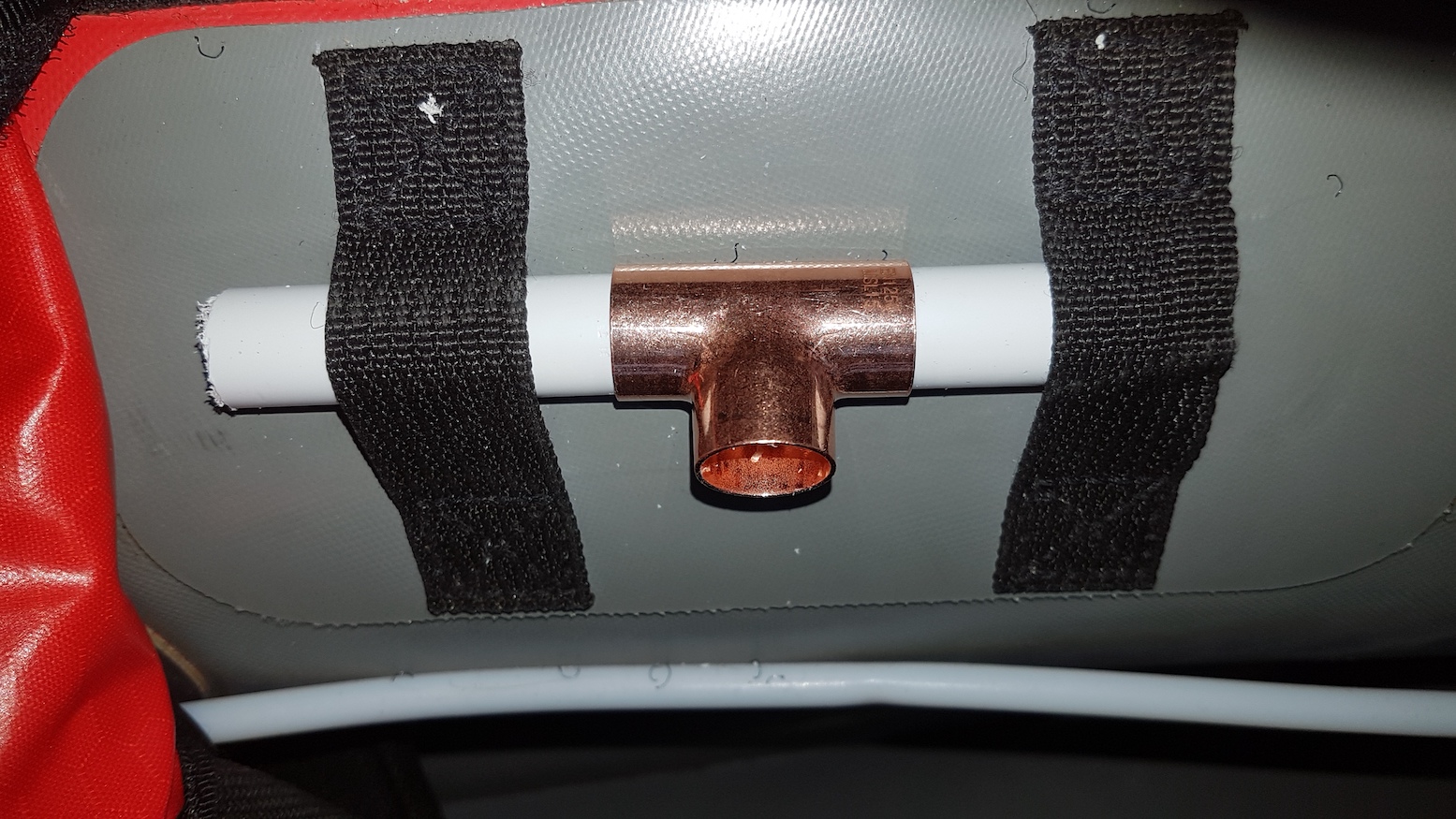
I’ve finally got round to making the Seawave deck supports after a couple of dud attempts and the design works great. What I did was to use 15mm speedfit pipe for the arch with a T piece to make the foot that goes in the tabs on the boat’s side tubes. The beauty is you can leave the deck velcroed on ( saves wear) and roll the lot up with at least 2 of the supports in place and it still goes in the rucksack.
The tubes are 44cm for the short and 62 for the 2 longer centre pieces and 4.5 and 6.5 cm for the pieces to go in the T piece foot. I melted a hole near each end of the black nylon that holds the padding on the inside of the deck, this keeps the arch in the correct plac
So far it works well and sheds the water off the deck; I’ve not tested it in rough weather yet.
In a line Fast, light, well-made and great value European-made hybrid tandem, the Igla’s removable floor and stacked [twin] side tubes keep the width down while retaining stability.
Everything in the huge bag except a paddle Removable DS floor for quick rinsing and drying Unusually light on the water Adjustable footrest tube Seat feels great Knee braces are stock Twin (stacked) side tubes keep width down Ready for optional rudder (supplied) Closeable sidetube PRVs Fittings for a deck (supplied) Three-year warrantyLike many PVC IKs, it’s bulky (if not necessarily heavy) Alloy skeg appears to be an extra; and would prefer it in plastic Skeg can’t be removed without deflating DS floor Limited overseas dealer networkbut see here
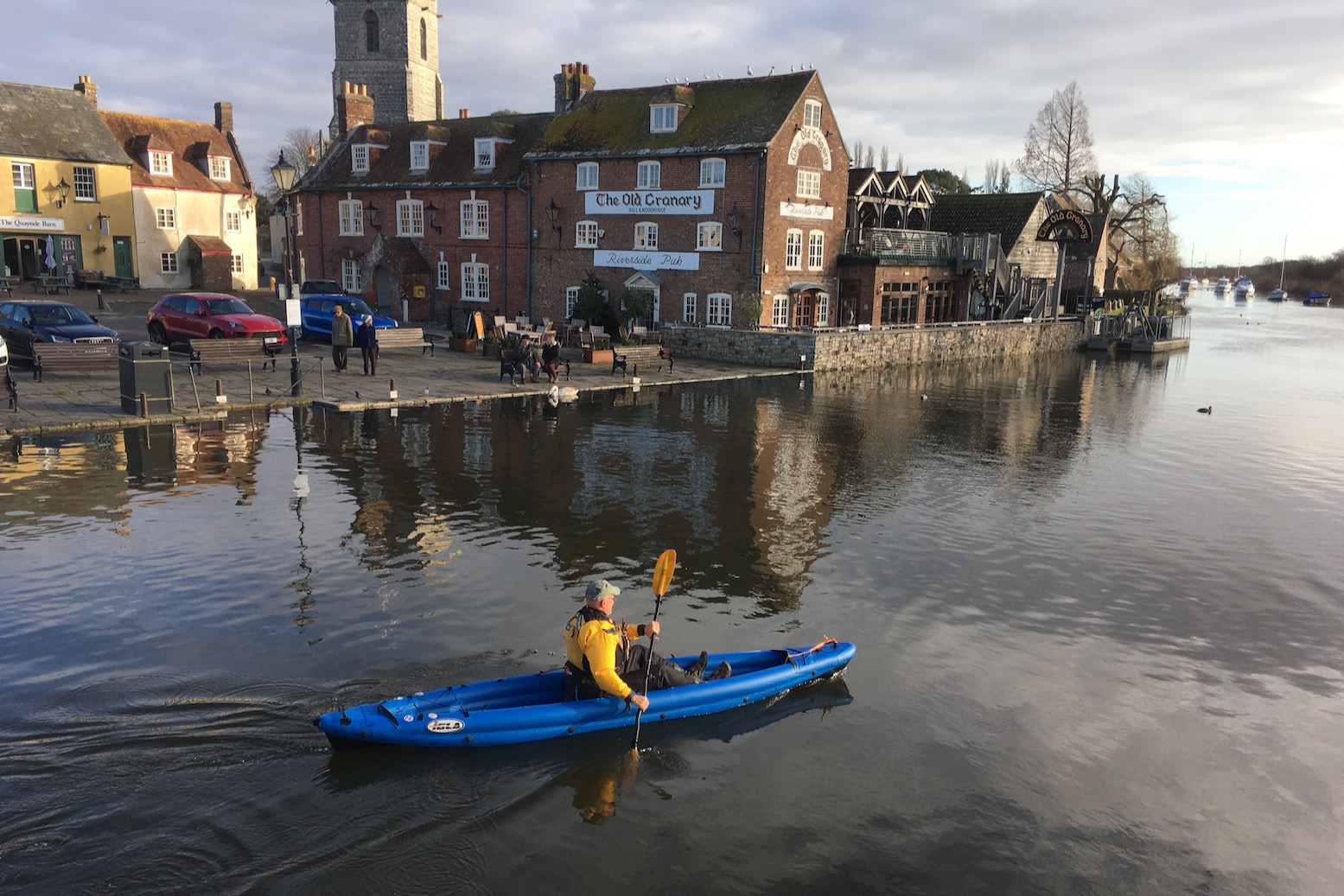
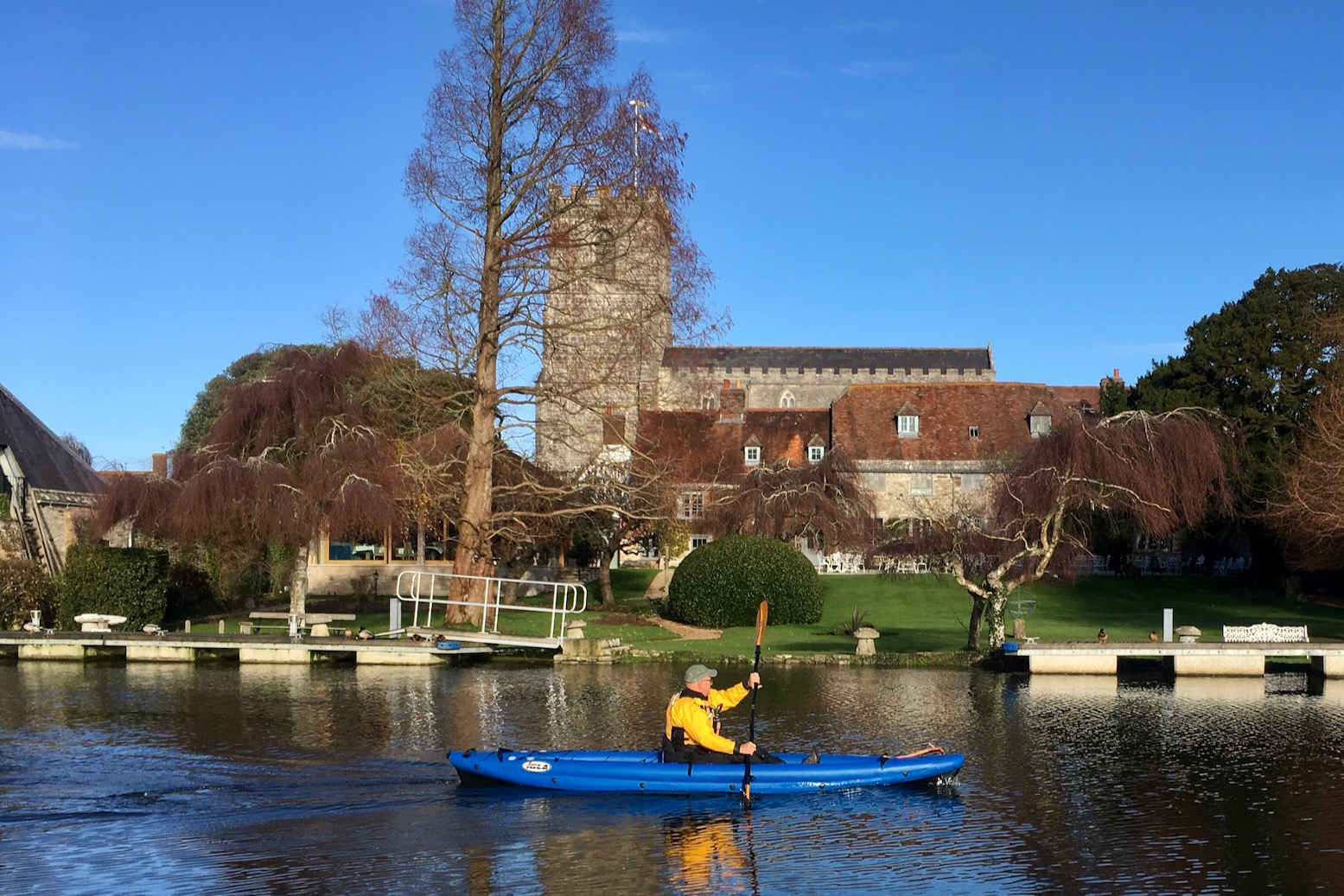
With clear skies forecast I took the Igla for a quick spin down the tidal River Frome out of Wareham quay. Some 1150 years ago marauding Vikings besieged the Saxon port in a bid to establish a flat-pack furniture enterprise. The ever dependable Alfred the Great sent them ‘packing’.
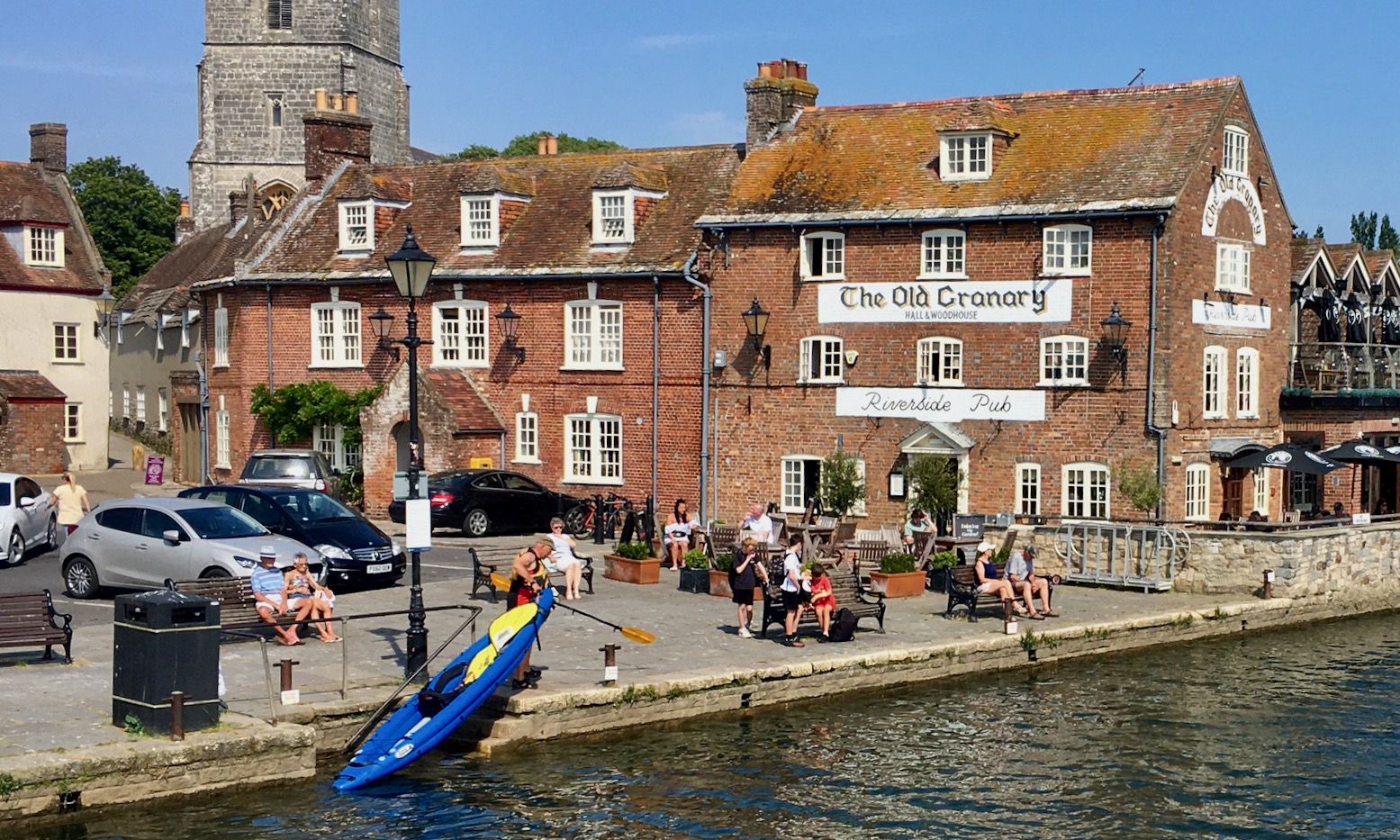
The recent thaw and rains on top of an incoming spring tide saw water just lapping over the medieval quay’s kerb and nearby pub lawn which for me meant an easy put in. Once cooling in the water I gave the kayak a quick top up and realised the closeable PRVs are quite handy in that you can close them as they start purging at 0.25–3 bar and so maintain firm sidetubes. Today, with temperatures in single figures there’s little risk of overheating blowing the boat to smithereens. I need to track down my manometer to see what the pressures actually are.
After hopping in I did a bit of pre-emptive wobbling while holding onto the quayside to ascertain stability. I don’t want a repetition of the shaky Shipwreck FDS I tried a couple of winter’s ago. The Igla seems good; a bit more tippy than the super-stable Seawave but unlike many FDS IKs, the round side tubes give it a bit more beam at water level. I adjusted the footrest tube further forward but later realised I may have been sat a little too far forward for level trim. I get the feeling these rock-solid drop stitchers are a bit more sensitive to trim as there’s no sag in the floor.
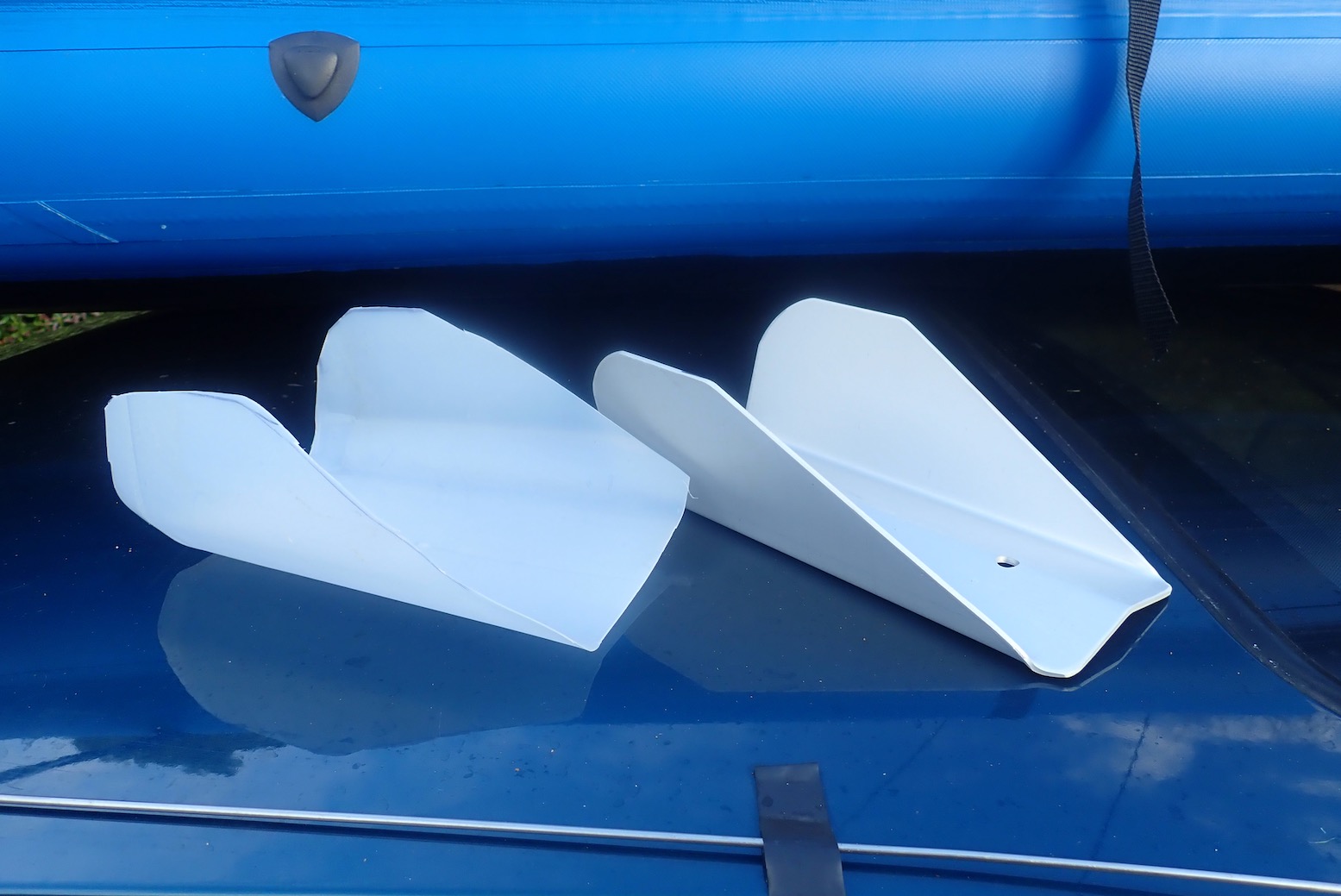
I see now that floating on the water the bow and stern prows are just above water level. With these relatively water-slicing forms (for an IK) I wondered whether the Igla might manage without a skeg but decided not to risk it. You can’t fit/remove the twin-fin alloy skeg with the DS floor inflated, so I made a quick copy from a plastic container (below). My MYO skeg was a bit flimsy but setting off downstream the Igla tracked fine while turning as easily as the Seawave. It wouldn’t be hard for Zelgear to redesign the skeg and mounting to make it easily removable while still being secure. And while they’re at it they could make it in ABS plastic.
Skeg bottle hack30g vs 260gEasily removable
I’m pleased to report the six-point seat feels about as comfy and supportive as I’ve seen in an IK out of the bag. No need for the usual adaptations or outright swaps. Gumotex take note. It weighs only 700g but offers great support, even from the inflated backrest. And semi-deflated, there was no wobble from the seatbase on the hard DS floor. If you’re looking for a good IK seat, try and get one of these.
The slim footrest tube too works better than I thought, thanks to the hard floor, and with knees braces cinched up, I felt secure in the boat. It’s a tad less stable than my Seawave of the same width but not enough to bother you on flatwater, as least. The Mrs was walking along the south bank and I was going to ferry her over to the north side to walk back, but we got separated in the reeds so I headed back into the growing westerly before the spring tide turned on me too.
Before I did, I hopped out and pulled out my plastic skeg. Doing so soon established that like most IKs, the Igla did indeed benefit from a tracking fin. The boat was paddleable but micro-corrections were required to keep it on track; do nothing and the bow comes round. Again, very similar to my old Seawave and unlike the FDS Shipwreck which tracked fine without it’s huge skeg but could turn better, too. Bang on time, at 12.20 the tide turned and soon, helped by the run-off from the Purbeck Hills, the river was belting along under Wareham bridge. That’s good to know for later paddles out of here.
Having not paddled for months, that little outing wore me out, but I like the Igla. It looks good, performs well, has many useful fittings which other IKs don’t and, for a European-made boat, is a bargain at current prices. Add tax and shipping (if needed) and it still ought to come in at under a £grand. I’m looking forward to taking it out for a longer session into Poole Harbour and beyond.
Itiwit inflatable kayaks were one of the few IKs that remained available (and without price hikes) during the Great Lockdown IK Shortage of 2020. In 2021 Decathlon’s initial entry into the packraft market with the 12-panel, semi decked ‘500’ model got off to a lumpy start, or at least ended up not being sold in the UK for more than a couple of weeks. However since 2022 the cheaper and plainer Packraft 100 model is definitely here in the UK (and probably everywhere else) for £399 and highly rated by buyers.
Itiwit Packraft 100 and 500
What they say Designed for packrafting beginners, this packraft can be carried in a backpack! Cover a calm water course or a lake then descend or cross it! This extremely compact packraft will enable you to enjoy your hikes in a whole new way, travelling along a calm class 1 river, or across a lake: Create your own tailor-made adventure. (It’s not easy to locate the X100 pdf manual)
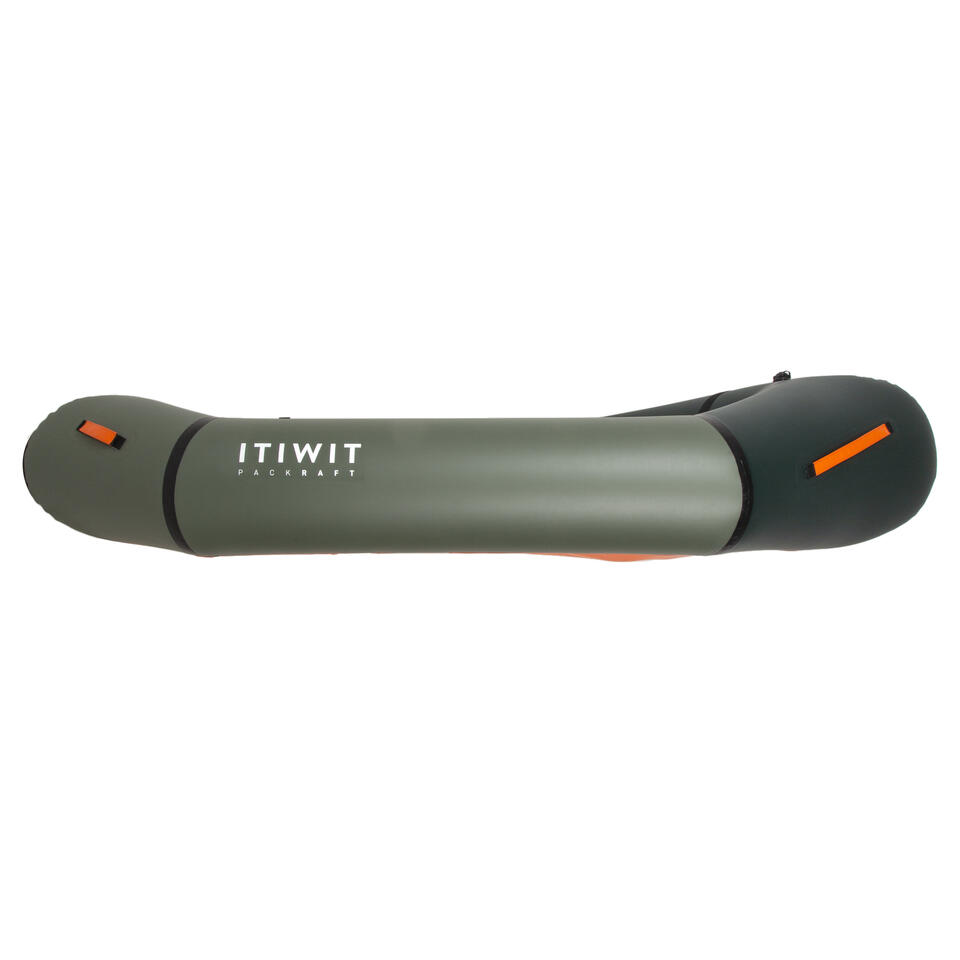
Decathlon/Itiwit kept things simple on the 100 with a basic, six-panel Kokopelli-like design and a flat hull with no rocker (bow uplift). The boat is made with 210D? TPU tubes and a 420D floor measuring up, we’re told, at 205cm long by 95cm wide, a bit shorter but a lot wider than Anfibio’s similar Alpha XC. Using graphic extrapolation developed in Bletchley Park, I estimate the interior width at the seat is 45cm and 25cm at the feet, with an interior length of 118cm, although the pointy ends will make that feel a bit less. Weight rating is 110kg and the claimed weight of the entire package: boat and hose in the carry/airbag, is under 2kg.
In that second video, product engineer Julie tells us with English subs that the Packraft 100 runs 1psi right over an image (left) that clearly states 1.5psi around the valve. Then again, the preceding action vid shows 1psi at the valve and on the air bag too. Perhaps they decided to play it safe at the last minute, but assuming it’s sewn and welded with tape like most packrafts, it should be able to handle a bit more for a better ride. Of course there’s no way of measuring pressure without a low-psi manometer.
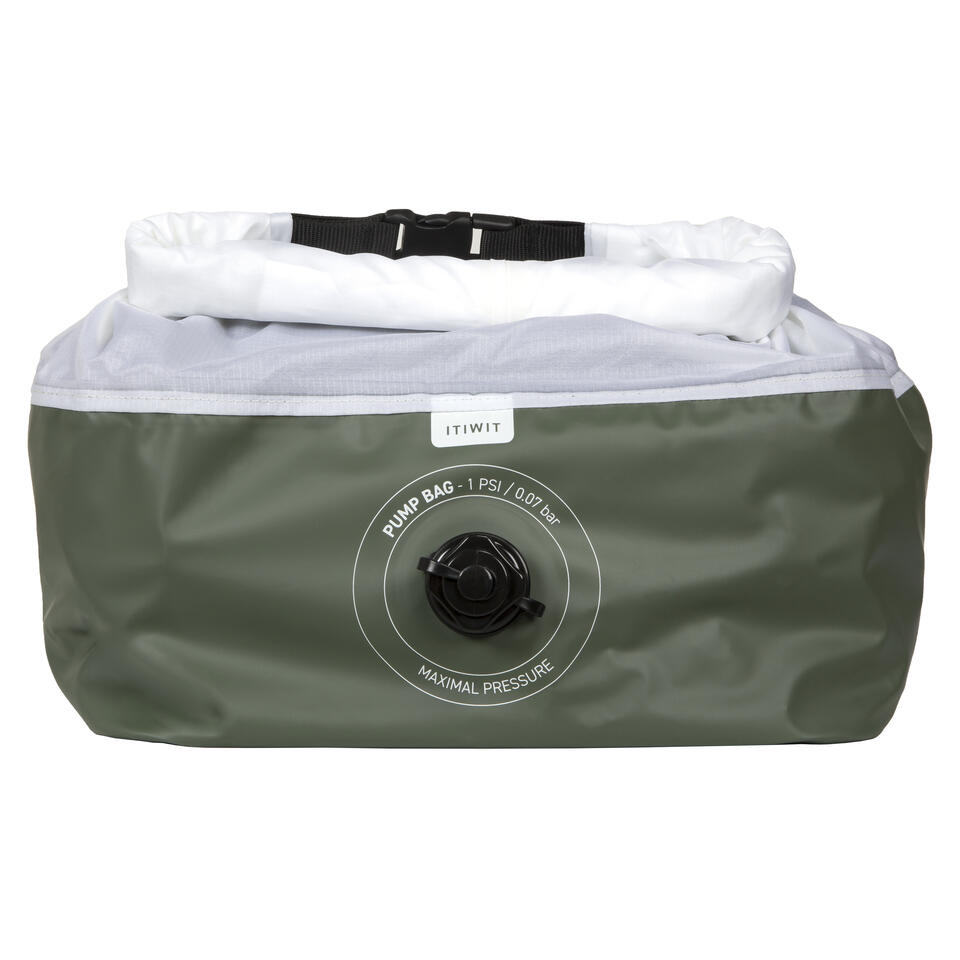
As with their IKs, Itiwit have their own way of doing things with seemingly little reference to competitors. So Packraft 100 looks oversquare and with long hand straps front and rear, rather than the usual grab loops (there are two up front inside). It’s possible hand straps are a requirement of paddle craft safety regulations in France. Unless I’m missing something, the very wide seat with a handy one-way valve uses an oddly clumsy securing strap, but the carry bag cleverly doubles as an inflation bag and then a roll-top dry bag once on the water. The orange floor is 420D TPU. In an emergency, flip the boat over and wave.
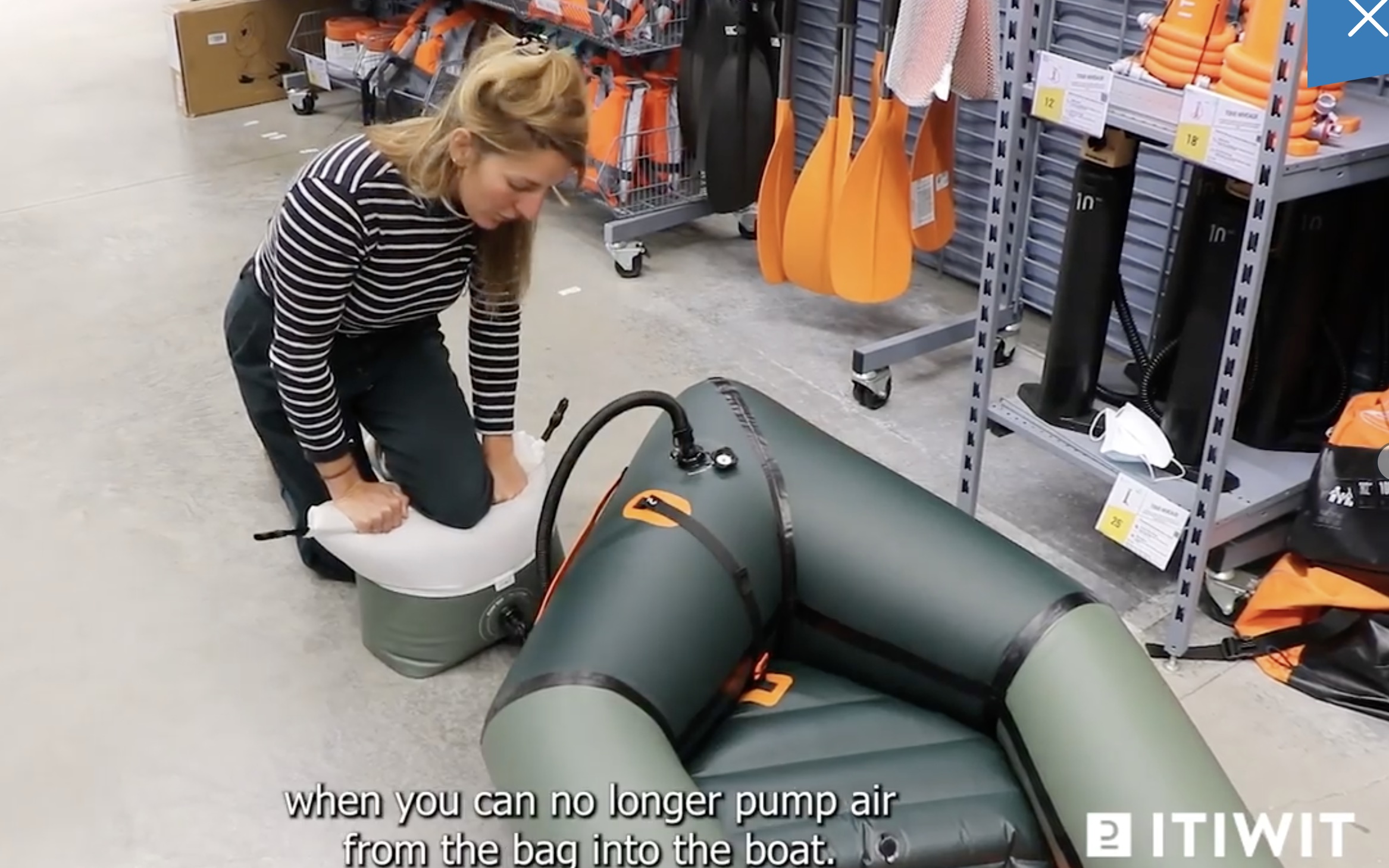
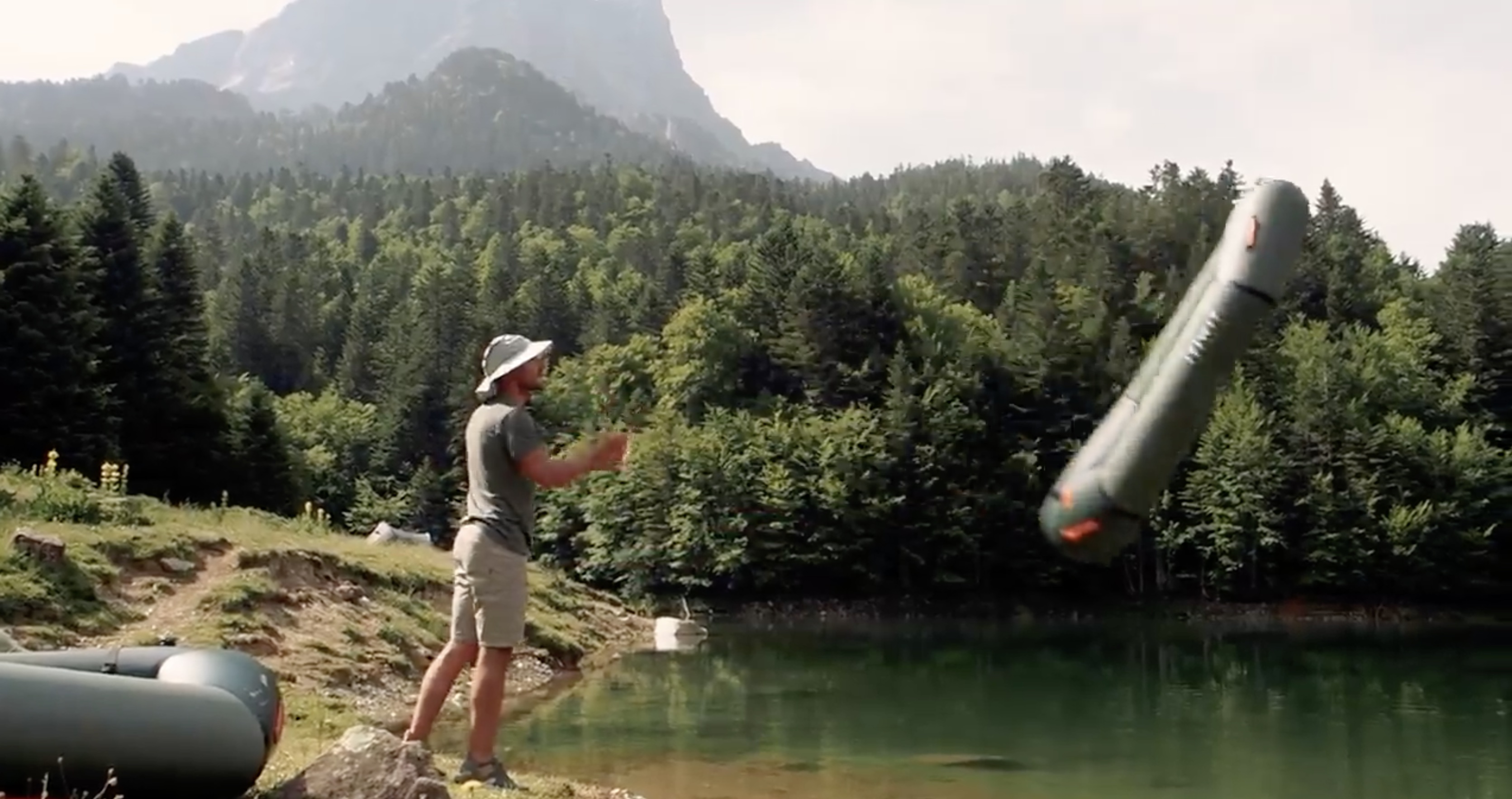
To inflate, you clamp a hose from the bag to the Boston valve, catch some air, roll up the ends then kneel on it (above left or watch the second vid). Top up by mouth only (see video below on this link), as they advise a hand pump may risk over-inflation. Then again we all managed packrafting for years with just air bags and mouth tops-ups long before mini hand-pumps came on the scene.
So there it is, Le Packraft 100 for le packrafting beginners, as long as they’re at the lighter and less tall end of the spectrum. And one good thing is Itiwit always make it clear spare parts are available.
At £380 I’m pretty sure it’s about the cheapest of the proper TPU packrafts (as opposed to PU nylon ‘crossrafts‘) and ought to be available wherever you find a Decathlon outlet.
BackTopSpares; Itwit are good on thoseSideStrap-in seatCarry airbagSporty low angle and XL strapOMG, it’s caught in the thorns!FrontOMG I shouldn’t have done that – it’s blow away!
Two good-value, four-part paddles from Anfibio ideal for packraft or IK travels. The yellow VertexTour is a newer redesign and a lot lighter, even with a longer range of length adjustments and has a better clamp. But the black Wave (left) has the classic dihedral (two-faced) blade. What is the difference and does it matter?
What they say
Anfibio Vertex Tour Our new, redesigned Vertex Tour paddle comes with a classic double blade, fine shaft and sub one-kilo weight. Equally suitable for lakes, calm rivers and moderate whitewater. The position length is adjustable from 210cm to 225cm at free angle.
Anfibio Wave High-quality, lightweight carbon paddle for long tours on calm waters. Freely adjustable in length and angle.
I’ve done several hours with both paddles and for this comparison we took both on a 15-mile paddle down the Wey in Surrey in the TXL. It was a hot day but water doesn’t get any flatter unless it’s an ice rink. Below some weights and measures to mull over.
Weight g
Length cm
Shaft cm
Shaft g
Shaft ø
Blade gm
Longest piece cm
Blade cm
Price
Anfibio Vertex
851g
210-225
118cm
303g fibreglass
29mm
274g
63cm (blade)
44 x 19.5cm
€125
Anfibio Wave
1011g
210-220
108cm
283g carbon
29mm
365g
65cm (blade)
44 x 16cm
€125
I didn’t notice until I weighed the blades, but the two are made quite differently. The larger Vertex blade – about 650cm2 – has a molded central ‘corrugation’ to stiffen the blade. The Wave has a classic dihedral (two-faced) power face which is said to power smoothly through the water better than a plain flat blade. The Wave blade is also smaller – 600cm2 at a guess.
Black Wave dihedralYellow vertex more flat faced
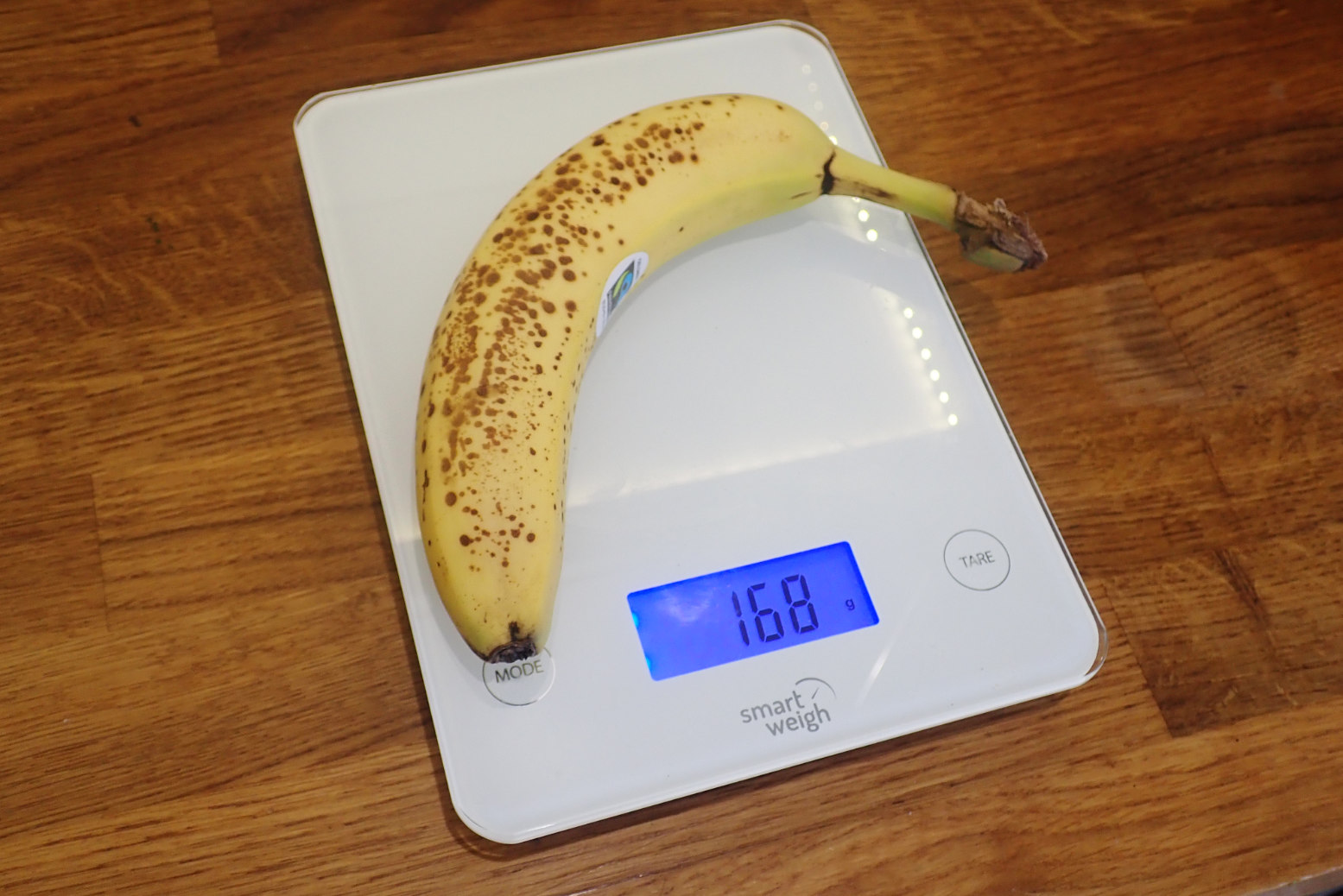
People ask: what is the the weight of a large banana?
So the main differences are weight, blade size and blade face, and I suppose adjustable length and the texture of the shafts. Will you notice the difference in a packraft? I very much doubt it but I think I’d prefer to paddle all day with the smaller bladed and dihedral Wave, even if it’s 160g heavier: the weight of a large banana.
I have a theory with length-adjustable paddles that into the wind or upstream (ie; max effort) you can ‘lower the gearing’ by shortening the paddle and leverage. Meanwhile downwind you can get the most of your paddle by setting it at full length overdrive. It’s good to have the option and one day I will test this theory but really, we paddle as hard as the situation demands. Sometimes easy, sometimes more efortful.
Wave shows the carbon weave; both are 29mm ø, good for smaller hands
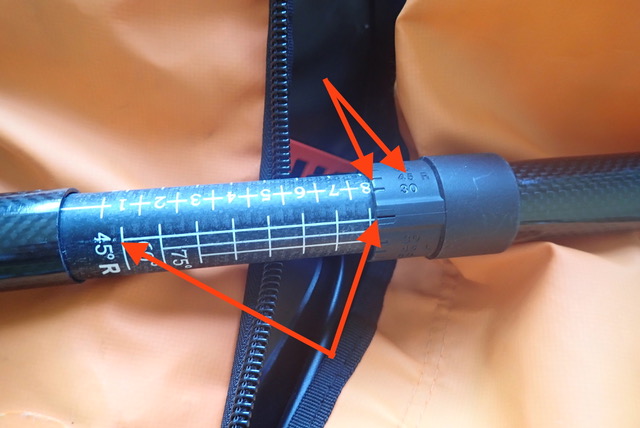
Feather angle alignment My Vertex came with no alignment line on the lever clamp to set the angle against a grid. It took me a while to work this out until I couldn’t and a couple of yellow tape arrows set at my preferred 45°R. Anfibio have since told me this was a production flaw and current Vertex have an alignment marker on the clamp. A permanent alternative to my stick-on arrows would be melting a slot into the clamp with a hot knife. It would be easiest to do this with the paddle feathered at zero (no offset) which is easy to estimate. Think before you melt or use tape!
No index line on the clamp. Tape arrows addedTwo ways of setting alignment on the Wave
The Wave’s alignment system is as you’d expect. In fact there are two ways: a slot on the clamp to align with the grid; and pre-set angles molded into the clamp to align with the zero line on the grid. As it is, on both paddles the white alignment grid gets slid over at each assembly and will probably wear away over the years so you’ll end up with a tape marker anyway. That’s what I’ve done on my old Werners which had a grid sticker on the outside which eventually peeled off.
The blades on both paddles felt a little loose once mounted on the shafts. Maybe they’re made that way as the shaft may swell over the years as it did on my carbon AquaBound. It’s unlikely you’d notice on the move but no movement is best. A small bit of thin tape (left; not a full wrap) was enough to remove any play and if the tape wears or pulls off it’s easy to apply some more. Once clamped down there was no play at the shaft join.
On the Wey you might notice the weight swapping from one to the other, but after a while you’re just paddling. In a way the ideal combo would be fitting the smaller Wave blades on the longer, better clamped Vertex shaft, but oddly they’re not interchangeable.
In the end, for €125 you will not be disappointed because either paddle will proper your boat forward, adjust readily and fit easily in your pack.
Incidentally, I did an IK&P survey when I paddled the Wey in 2021. 2022 numbers in red. In over a decade I saw my first every packraft actually being used on the water! An underinflated MRS. I got the feeling the owner didn’t know that airbagging was not enough; you have to top up too. Has he not read my book?!
Hardshell canoes: 1 1
Hardshell kayaks: 1 8 (group)
Hardshell SoT: 1 0
Vinyl IKs (rock-bottom cheapies): 5 1
PVC (bladder) IKs 3 0
Packrafts 0 1!
iSUPs: 10+ (mostly women or mixed groups goofing off) 10



















































 Inflatable Kayaks & Packrafts