Tag Archives: windpaddle 2

Packrafting Old Harry (Swanage)

See also:
Anfibio TXL main page
Packrafting Swanage
Kayaking the swanage Stacks

On Google Maps an ebbing tide spins out an eddy of sand out into Swanage Bay.

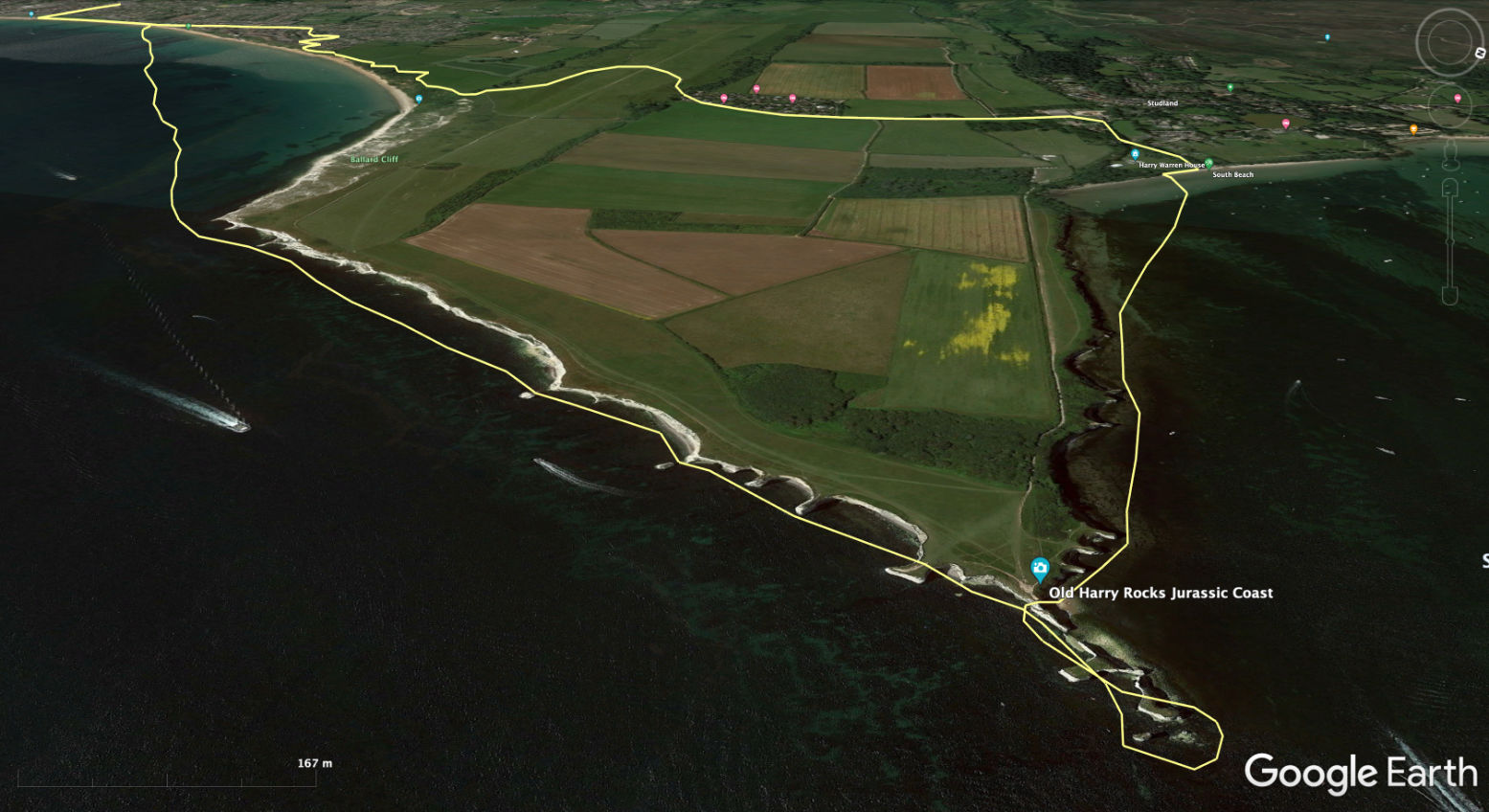
Swanage to Studland past the Pinnacles is one local paddle I don’t mind repeating. In normal conditions it’s the most dramatic, easy paddle I know on the Jurassic Coast, sheltered as it is from the Channel swells. Today I’m going to make a loop of it: packraft round to Studland and walk back to Swanage over the downs (map left). All up about 11km which should be doable in the 4 hours I’ve put in the meter.

It’s always further than it looks to the north corner of Swanage Bay at Ballard Point, so I sit back and let the wind do the work. But apart from the odd gust, it doesn’t feel like 12mph – like sailors say, it’s either never enough or too much. GPS recordings later reveal no records were broken.
Leaking Multimat

Around here I was expecting to top up or ‘temper’ the TXL’s sagging hull with the handpump once the air inside had cooled down and softened following 20 minutes immersion (as explained on the previous outing).
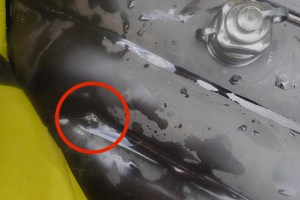
But remembering the Multimat floor mat this time, there was no tell-tale crease in the TXL’s sidetubes, even with a slow leak I noticed at the beach from one of the mat’s seams (left). So the mat must do the job in supporting the hull, even if, sat higher, I felt a bit wobbly on setting off. The mat’s not been left out in the sun, let alone sat on since I filled it in advance, but I’m not surprised a leak has sprung, with probably more to come; I-beams are weak under pressure but it’s a necessarily lightweight design that still weighs nearly a kilo. You pump the mat up as firm as you dare, otherwise what’s the point; I must have gone a bit far. I’ve picked up similar, wide, I-beam seats from Anfibio with the same damage; all easily repaired with quick wipe of Aquasure sealant.
I know it would need a stronger pump (like my K-Pump Mini), but, despite added cost and probably weight, a 2-3 inch thick dropstitch floor mat – either TPU or nylon – would be a more durable floor mat. The AE Packlite+ packrafts use them.
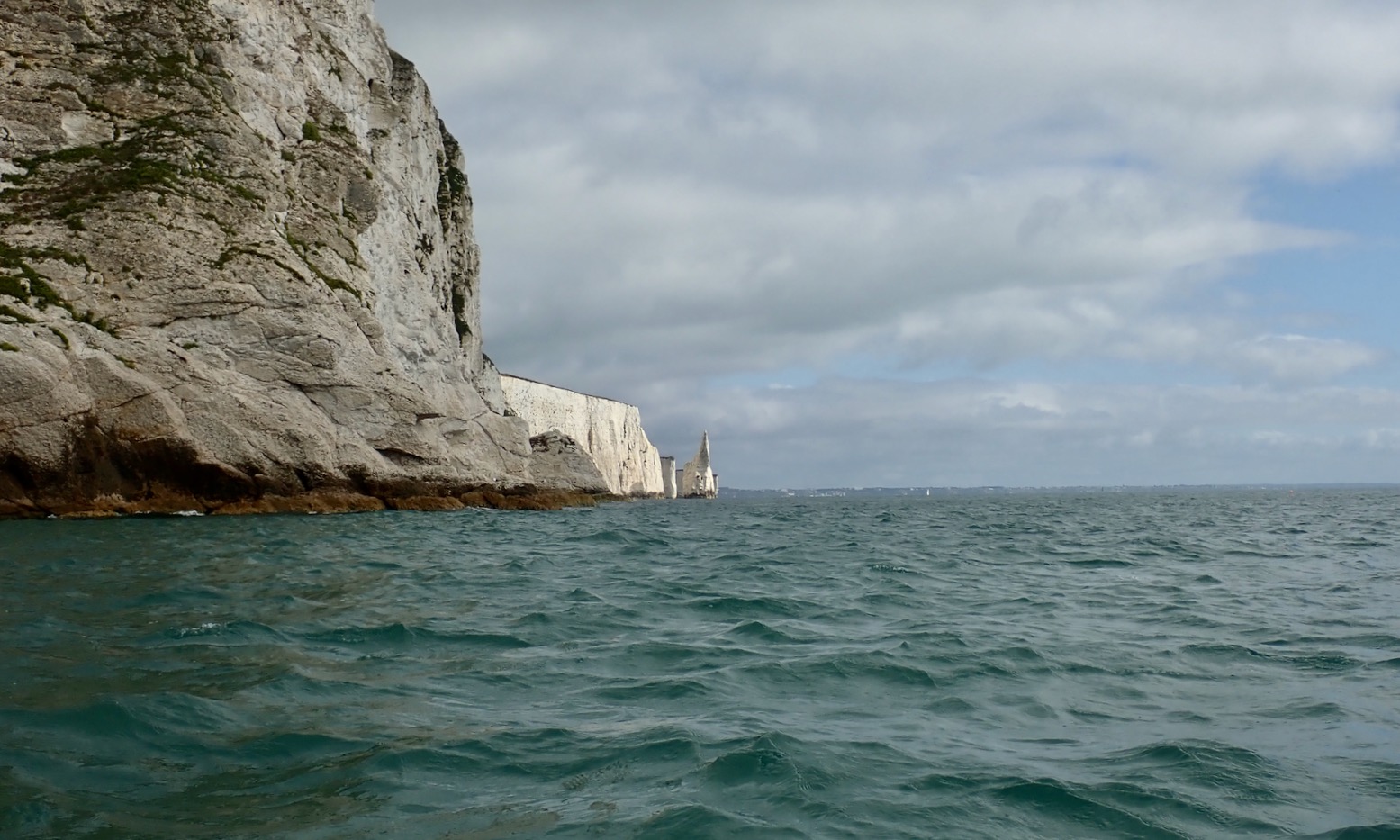
Round the corner the wind eddies out and drops a bit, and up ahead the big spiked pinnacle is still such a surprise I initially mistake it for a big moored yacht. You’d think I know by now. A couple of sea kayakers are heading the other way, into the tide and breeze. They’re curious about the sail and raft.
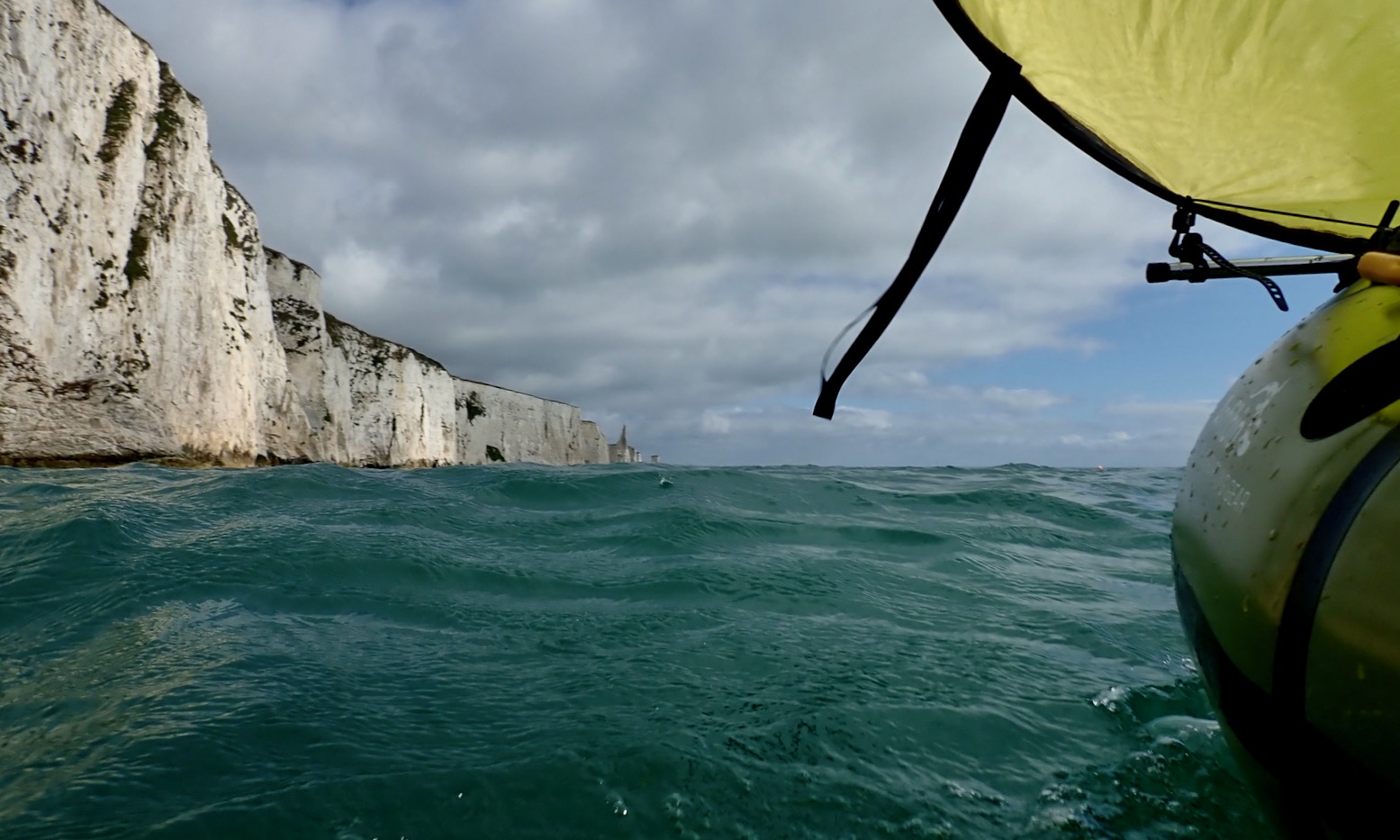
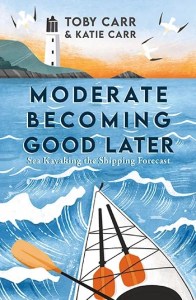
I admire their sleek, water slicing craft. I’ve just finished reading Moderate Becoming Good Later, Toby Carr’s attempt to kayak in the 31 Shipping Forecast zones (right) before he succumbed to cancer in early 2022, aged just 40.
He pushes himself hard, starting with Iceland, a lap of some Faroes, out to Utsire island 40km off Norway and the full coast of Galicia [Biscay, Fitzroy], as well Bishops Rock lighthouse beyond the Scillies [Plymouth, Sole, Fastnet, Lundy] before his health collapses.
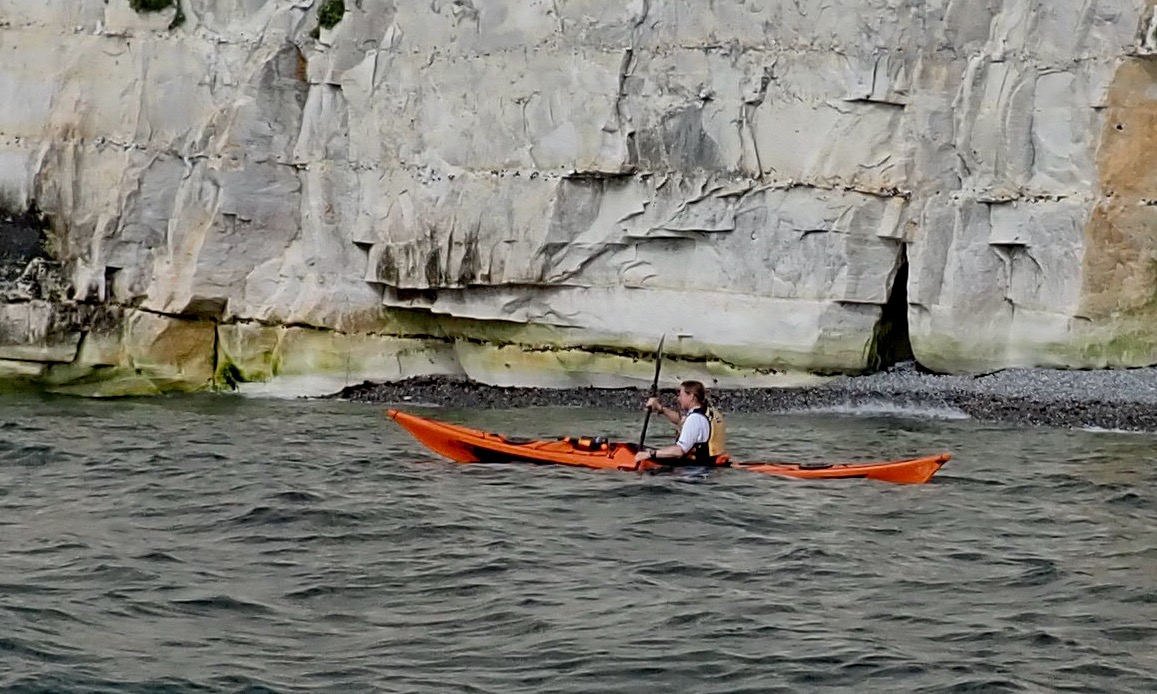
He reached some amazing places and it reminded me what a uniquely effective boat the modern sea kayak is in experienced hands. Combine today’s lightweight composite materials with inexpensive GPS tracking, satellite comms and ever more accurate forecasts, and radical paddles like the ones listed above become possible if you have the nerve, the strength and the wits to know when to wait it out.
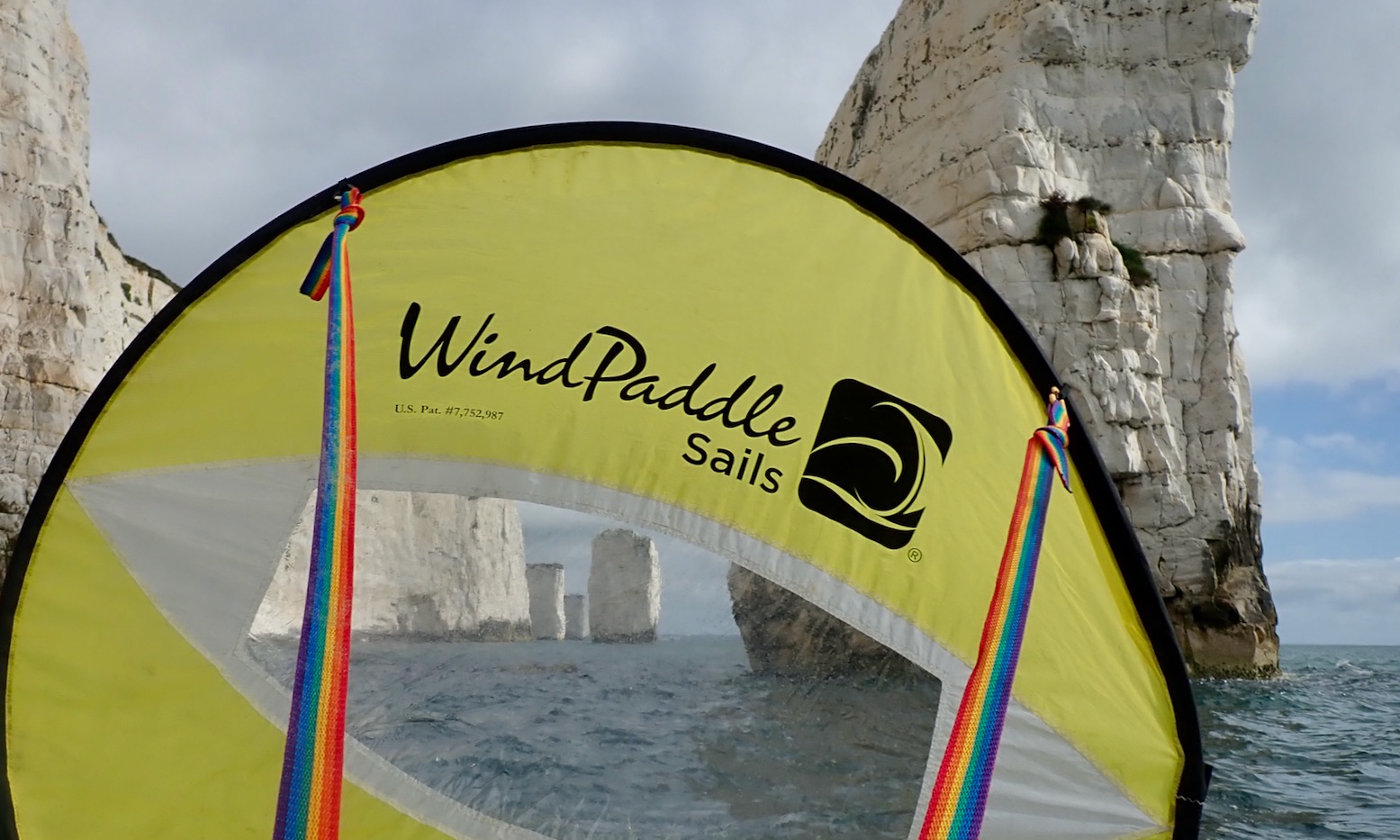
But I’m bobbing along in a packraft, also a great tool for more amphibious adventuring. More kayaks come through, including some SoTs and all clearly unpatriotic types disinterested in how England’s women might be doing in today’s World Cup Final. Luckily we can look forward to days of analysis and debate when we get back ashore.
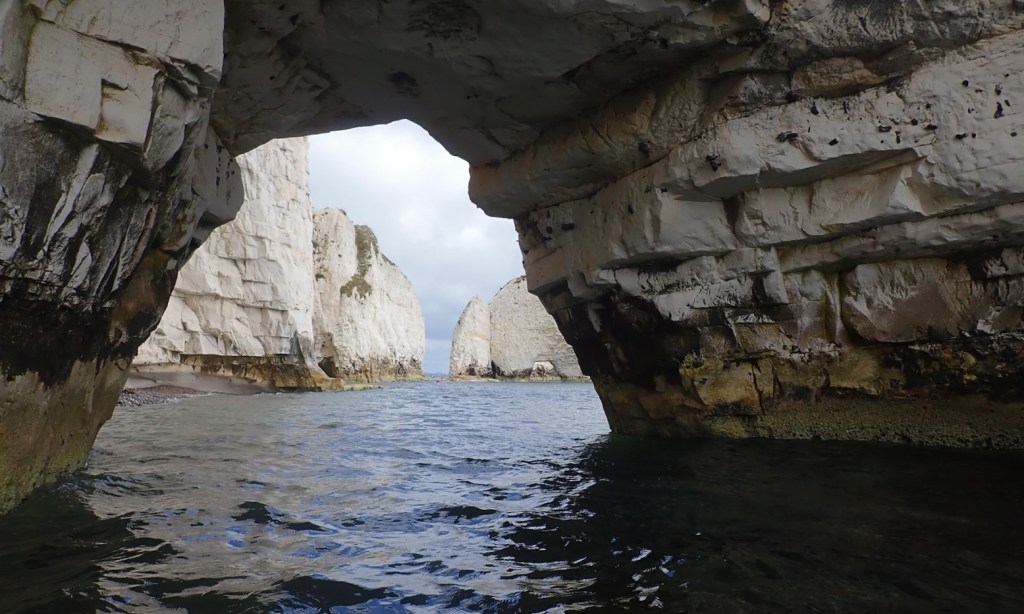
As I near Old Harry I tuck the sail under the deckbag and wait for some paddle boarders to squeeze through on their knees before threading all the arches I can; there must be over half a dozen here, not all full or wide enough for the TXL at the current tide level.

No PFD?

As this news report from a few weeks ago shows, it doesn’t always end well for paddle boarders taking the 1.2-mile run from Studland beach to Old Harry’s. But at least the guy rescued after 7 hours was wearing a PFD which I rarely see among paddle boarders. It’s just never become a custom, same as with Thames rowers. I don’t get it myself but maybe the lack of required clobber is part of iSUPing’s appeal. It is of course easy to crawl back aboard so out at sea – always a sketchy idea – an ankle leash is probably more important.
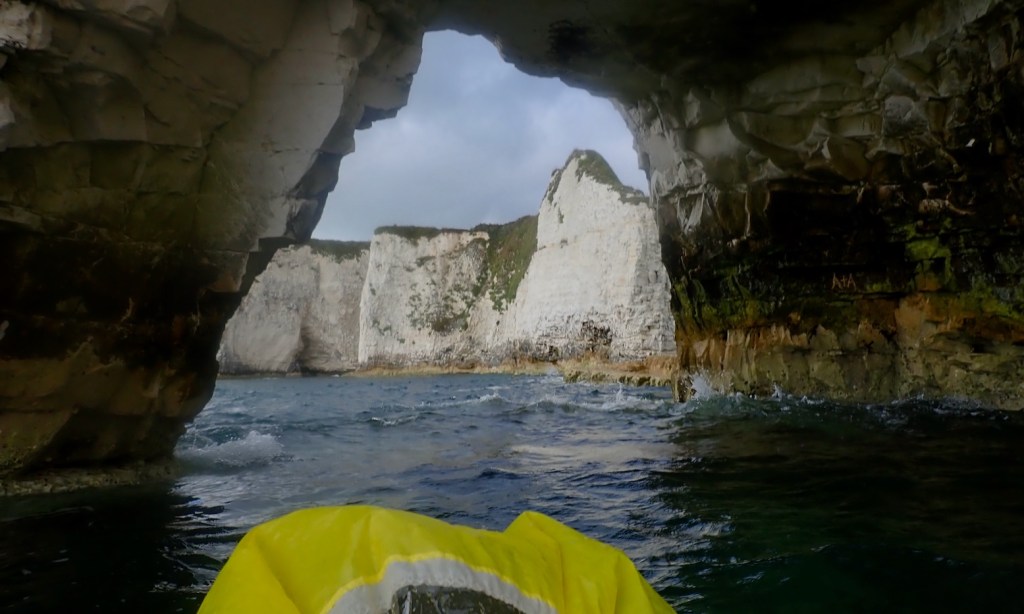
Arch bagging at Old Harry Rocks

That done, all that remains is a paddle along the northern lee of Ballard Downs to a busy beach all of 6 feet wide, pack up and a walk back over the Downs to Swanage.

Looking back north from Ballard Downs to Studland Bay and the entrance to Poole harbour.
Turn round and Swanage Bay lies up ahead.
It’s that time of year.

Windpaddling to Achnahaird

Packboat sailing
Summer Isles kayaking Guide

We decided to lap the tip (left) of the Coigach peninsula. Doing it clockwise put us in the lee of the afternoon’s southwesterly once in Enard Bay and better still, we’d catch high tide at Achnahaird, enabling us to paddle up the creek to complete a near full loop back to the car via the freshwater lochs of Ra and Vatachan.

rubccoiheader
coiloopmap

I remember being quite nervous the first time I did this way back in 2013 in my Amigo – in the other direction from Achnahaird. Looks like I’m not the only one – I blame the Pesda guidebook.
It felt like a long old slog west then north between the Ristol islands – the tidal Ristol channel was dry. But by the time we’d passed the reefs of Reiff and reached the sparkling beach at Camas Ghlais (below) we were already more than halfway round.

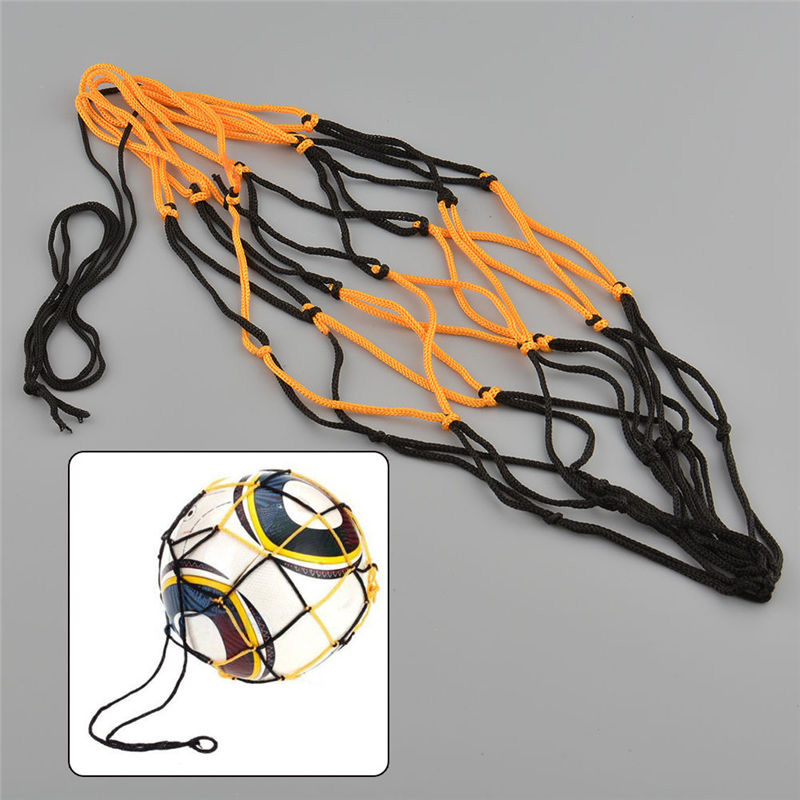
Sitting on the beach, on warm days like this and always looking to refine my set-up to a razorbill’s edge, I sometimes think a sturdy football-sized net bag to take a beach stone would be handy to anchor the boat out in the shallows. This way it won’t beach itself, get hot and purge air which can make the kayak soggy once back in the cool water. It’s one slight drawback of running PRVs on all 3 air chambers. I could probably find some washed up net up among the flotsam and make one. Or I could Buy [a ball bag] Now on ebay for a £1.62.  Leaving the sandy bay, I give the Seawave a quick top-up with the K-Pump anyway.

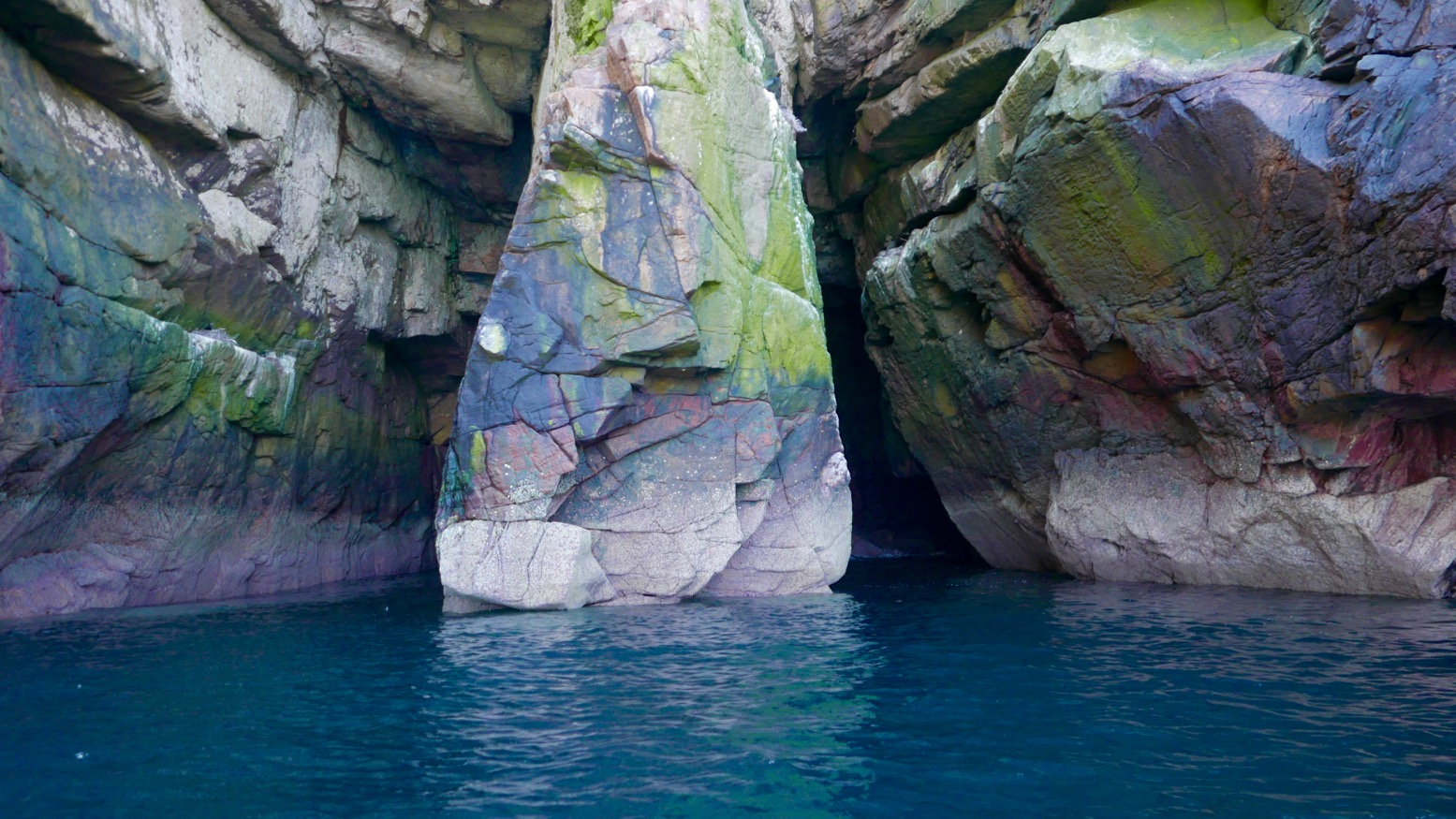
On the north side on the bay we nosed towards a slot cave, but white streaks running down from the ledges suggested nesting birds had hung out ‘Do Not Disturb’ signs. Either I’ve never noticed them before or there are lots more nesting birds around this year. It’s the end of May but there are still tiny snow patches on An Teallach and Beinn Dearg – maybe the season is late.

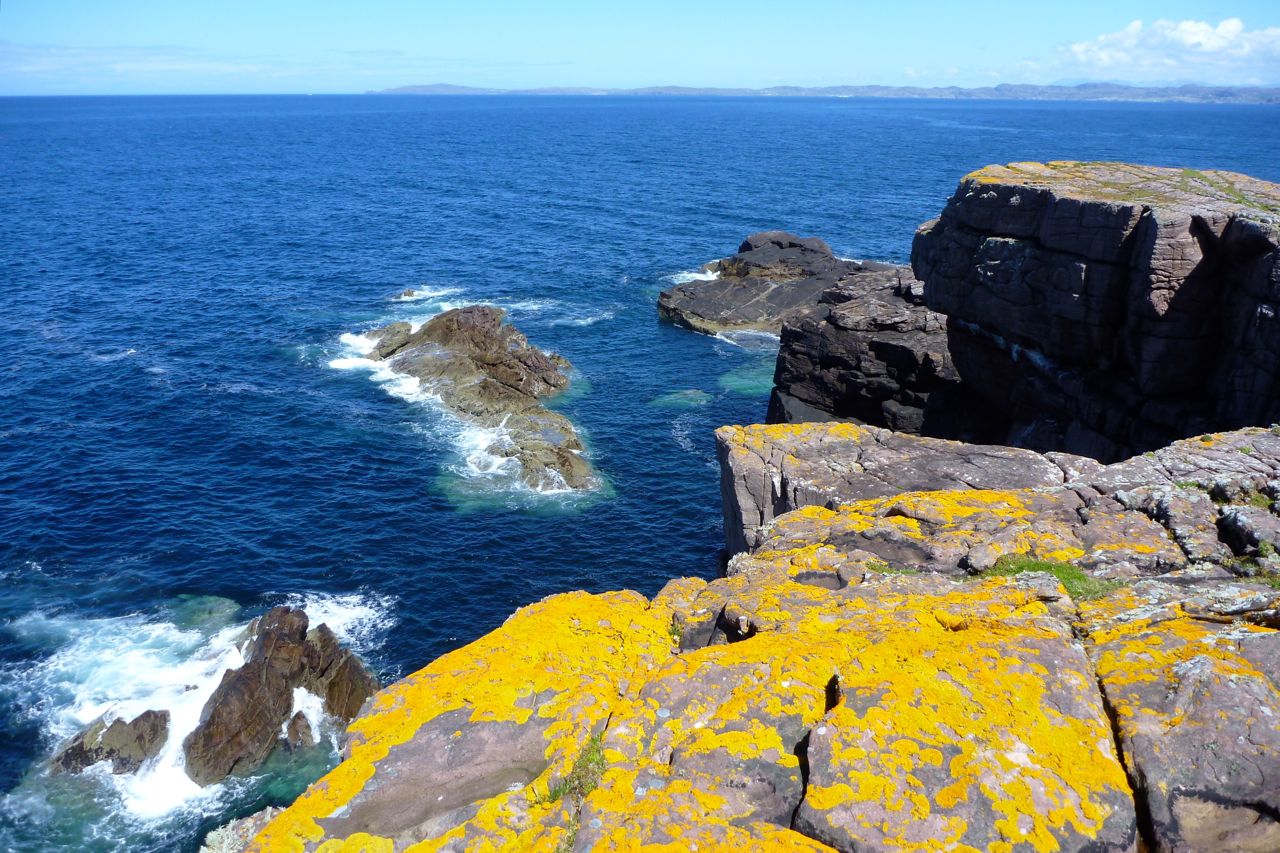
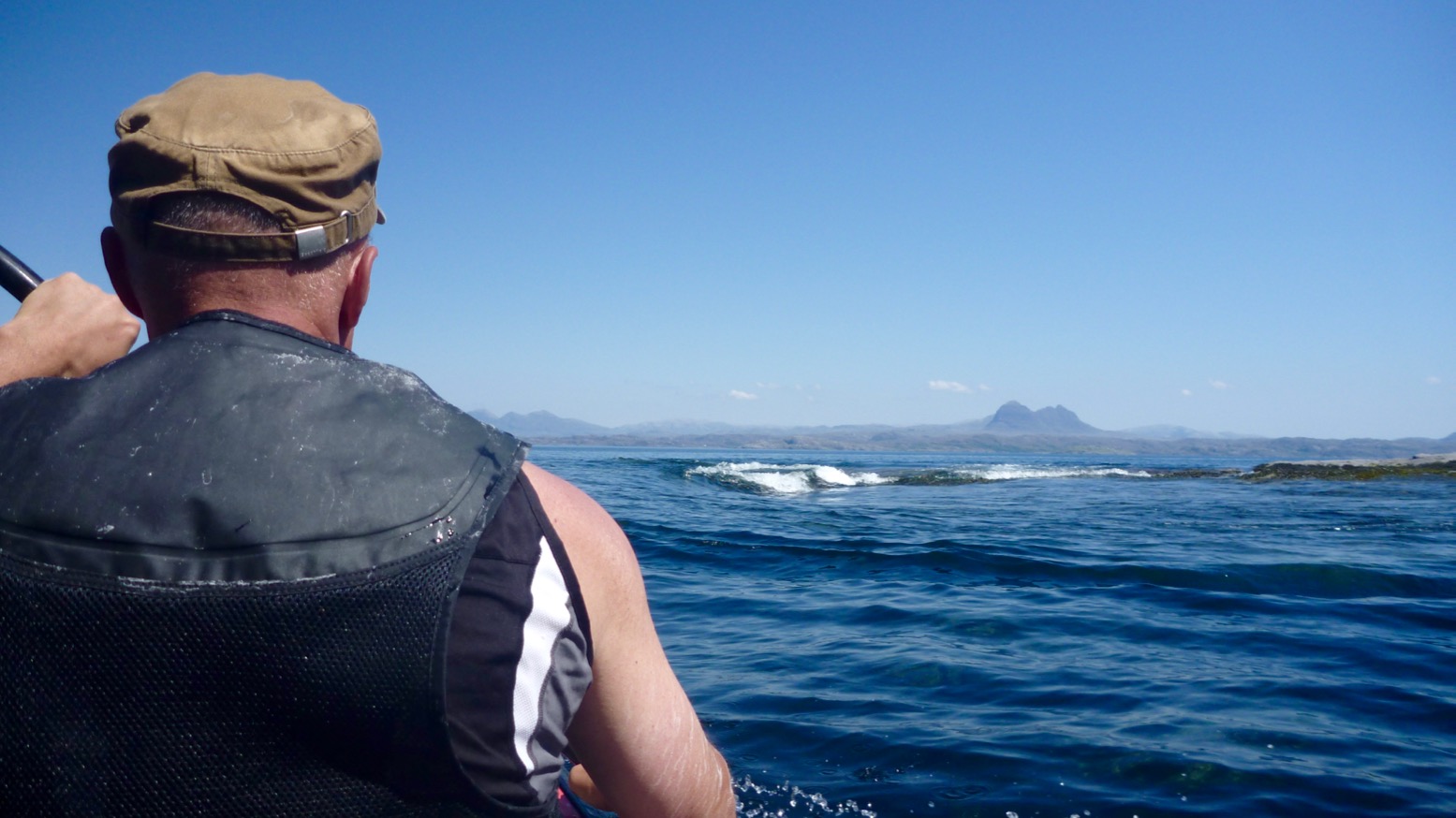
North of Camas the unrestrained swell was bouncing back off the low cliffs and small dazzling waves were breaking over semi-submerged rocks, making for a rough ride. But it’s all relative and showed what a sheltered life I lead, paddling mostly in and out of the protected Summer Isles.

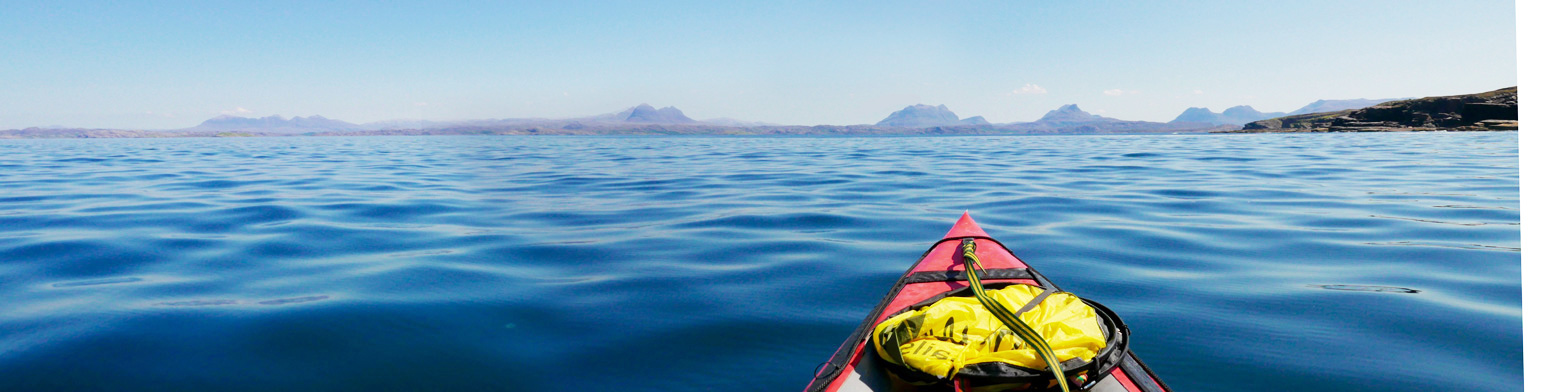
We passed on sandless Faochag Bay and on turning the point of Rubha Coigach all was calm as the grand panorama of the Assynt peaks came into view (above). From the right: Quinaig; Canisp behind Suilven, Cul Mor, Stac Polly in front of Cul Beag, and the group around Ben Mor Coigach. It’s one good reason to do the paddle in this direction. There’s a bigger version of the Assynt panorama here taken on the road above Achnahaird. I really must work out how to do that panorama photo-stitch thing.

Coming down the Enard Bay side, we tried to explore some other caves with green moss streaked with guano, but got dive-bombed by angry shags.

Back out in the bay an unpredicted northwesterly picked up – time to launch that WindPaddle which has been sitting in my kit bag unused for a year or more. Initially, the breeze barely reaches 6mph – we could have paddled faster – but it sure was fun to kick back, look around and let the boat waft quietly along, free from the splish-splosh, splish-splosh rhythm. I wonder if self-driving cars will be the same.

It’s been a while since I’ve done this but the WindPaddle definitely felt better than my homemade efforts from years ago, as well as the knock-off WP I bought a year or two back. I tried a V-sail too but have never really got the hang of kayak sailing. It seems the sweet spot is hard to find: either the wind comes and goes and the sail flops, or it blowing so hard the sail can’t handle it and you’re clinging on. Still, I look forward to giving the WP a spin in slightly windier conditions. For the compact size and light weight I get the feeling it may be worth keeping.

The breeze picked up and we chugged along at a brisk stroll. But even then the WindPaddle feels satisfying to use. I think the key is the sprung tension of the composite batten (rim); it retains the circular shape of the bowl which means it’ll stay up as the wind drops and keep shape as it rises, then can be confidently scrunched down to a packable size without breaking. Doing that during a bit of a blow may be tricky, but it can easily be pulled back and tucked down unfurled over the legs (right). It’s only a downwindish sail but as with previous disc sails, I like the way you can steer intuitively by pulling one line back; a skeg must help but there’s no need for paddle-rudder assistance.

oystereggs
oystercha

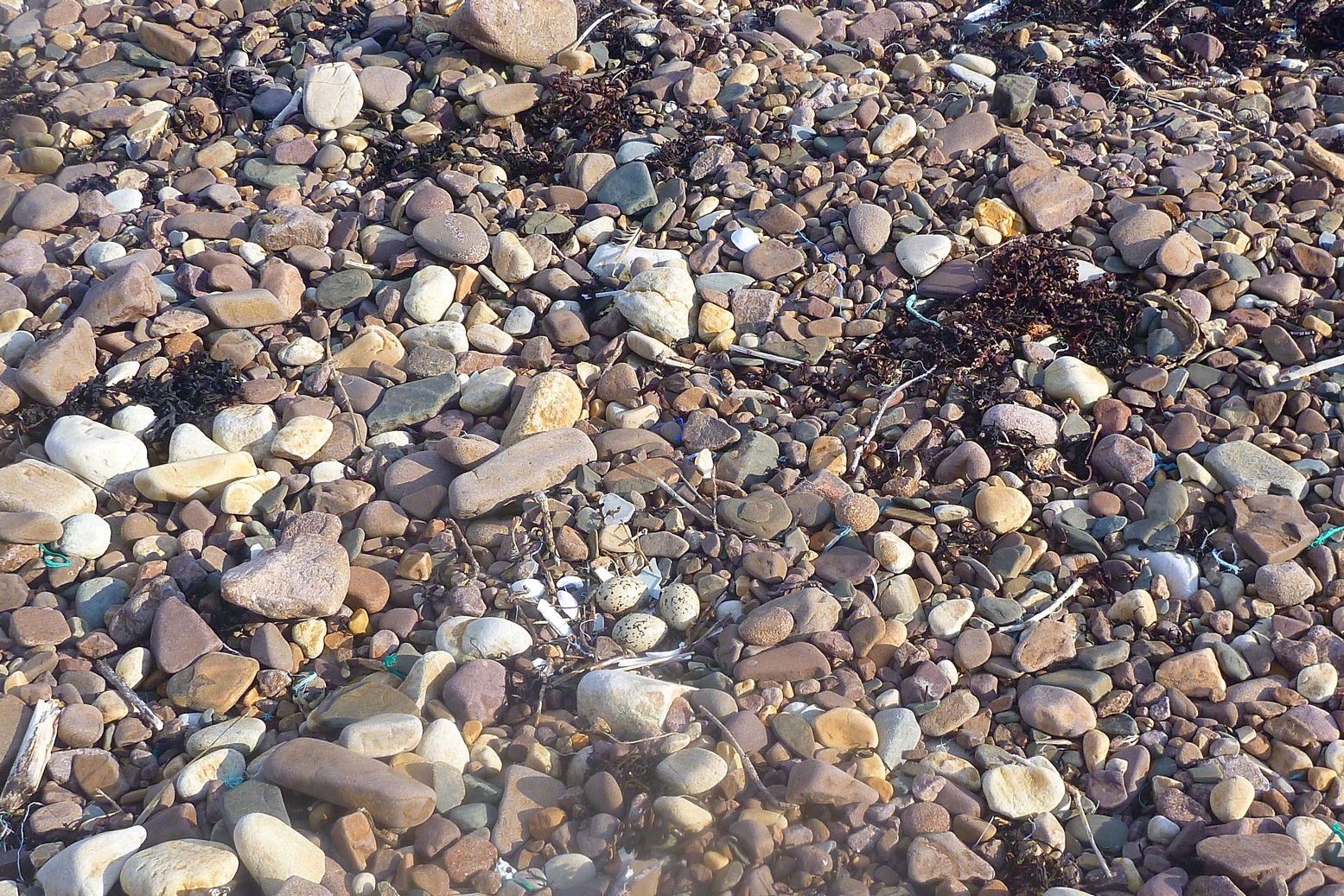
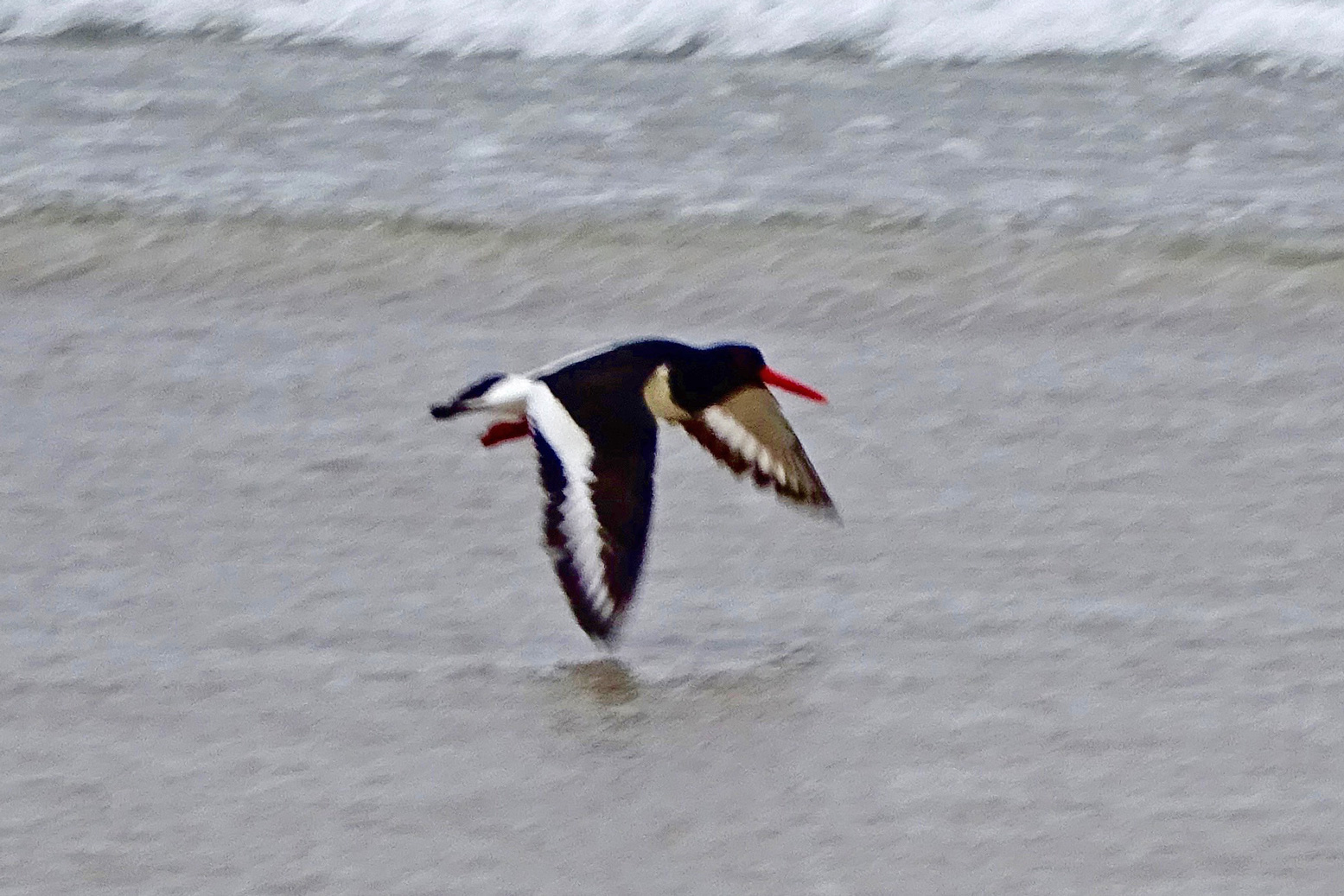
It was nice to look around in the quiet but I also missed that thrill of thrust when a sail catches and holds a good passing gust. Eventually we could stand the relaxed pace no more and the geef paddle-assisted us towards a stony beach at the mouth of the Allt Loch Ra creek. Squawking oystercatchers were guarding their nests. Left, by the bothy at Badentarbet last year; don’t stand on the eggs.

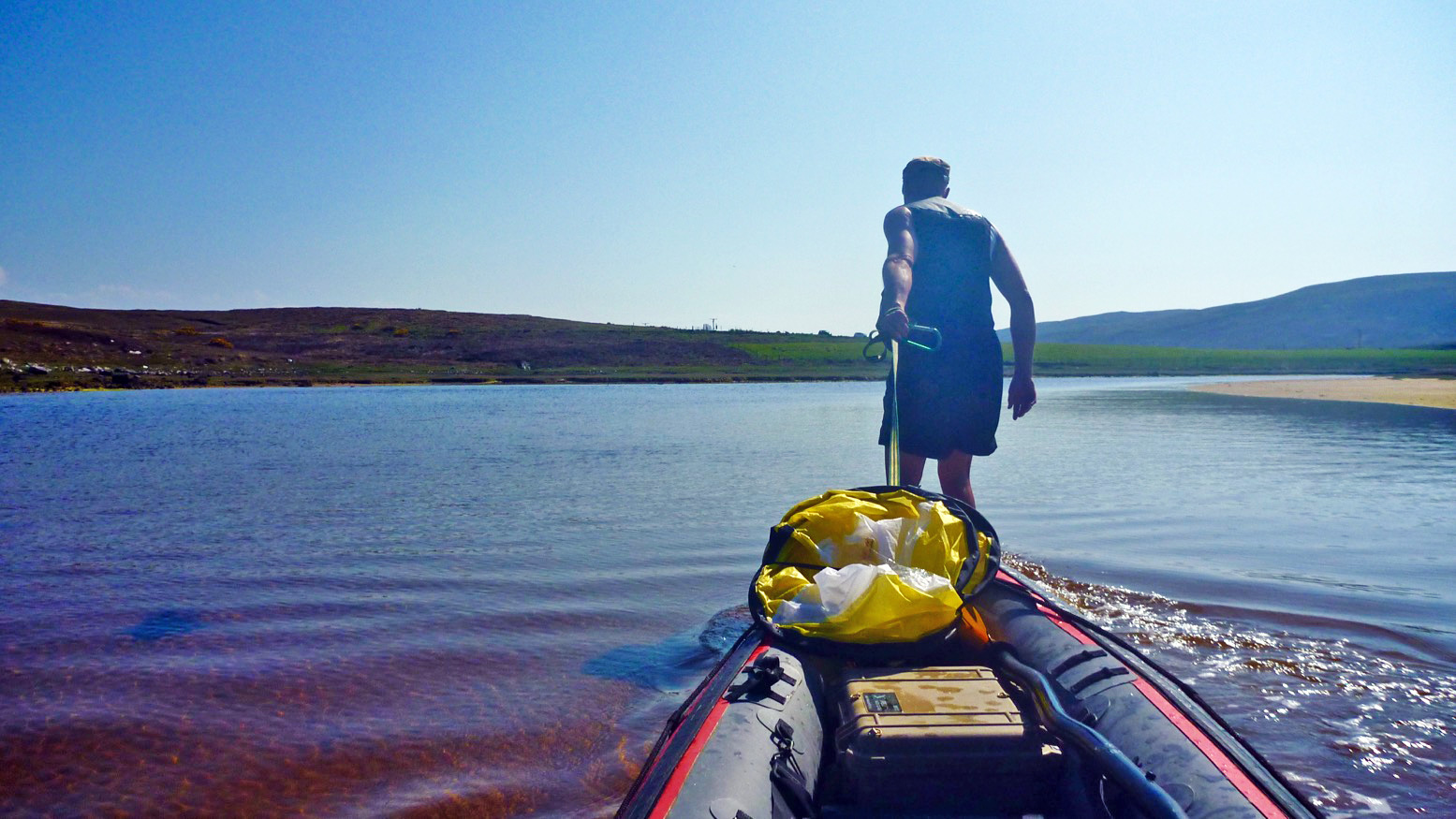
Refuelled, we paddled upstream for a bit then I tow-waded the boat, reminding me of the shallows of Shark Bay in 2006 – a good way to rest after what felt like days of headwinds. The short wade brought us to within a couple of minutes’ portage of Loch Ra just over the road. Now on fresh water, we dragged through the reeds before another short portage over into the adjacent Loch Vatachan. Picking a passing place close to the shore, the geef walked off to get the car while I rinsed off the seawater – another good reason to paddle this loop clockwise. It’s 15 miles and about 5 easy hours to loop the Coigach loop.