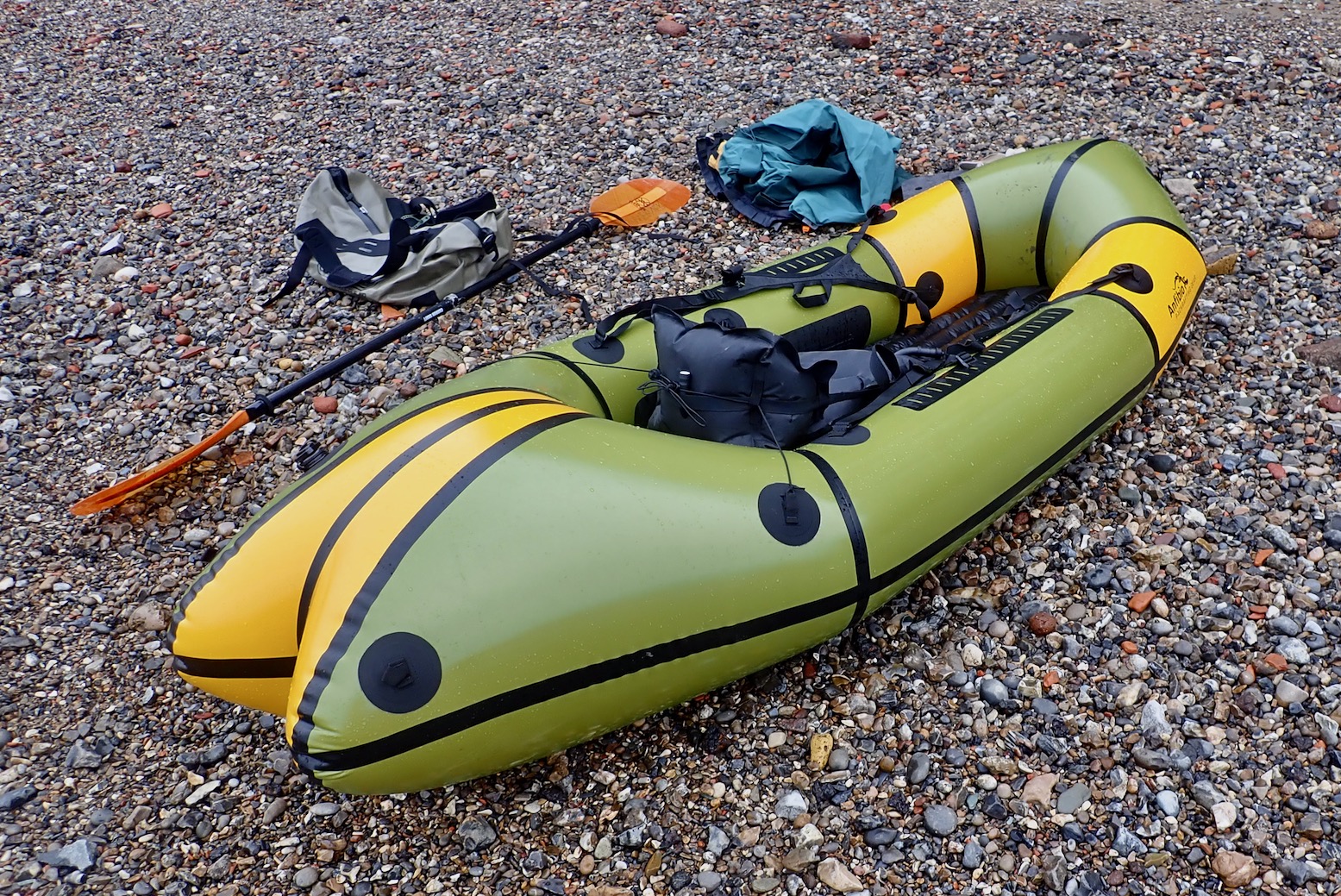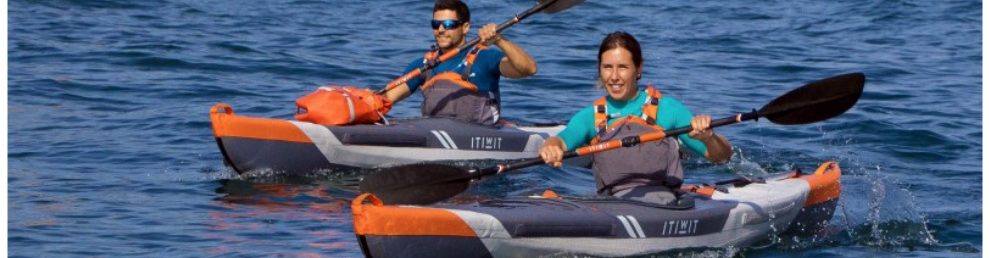
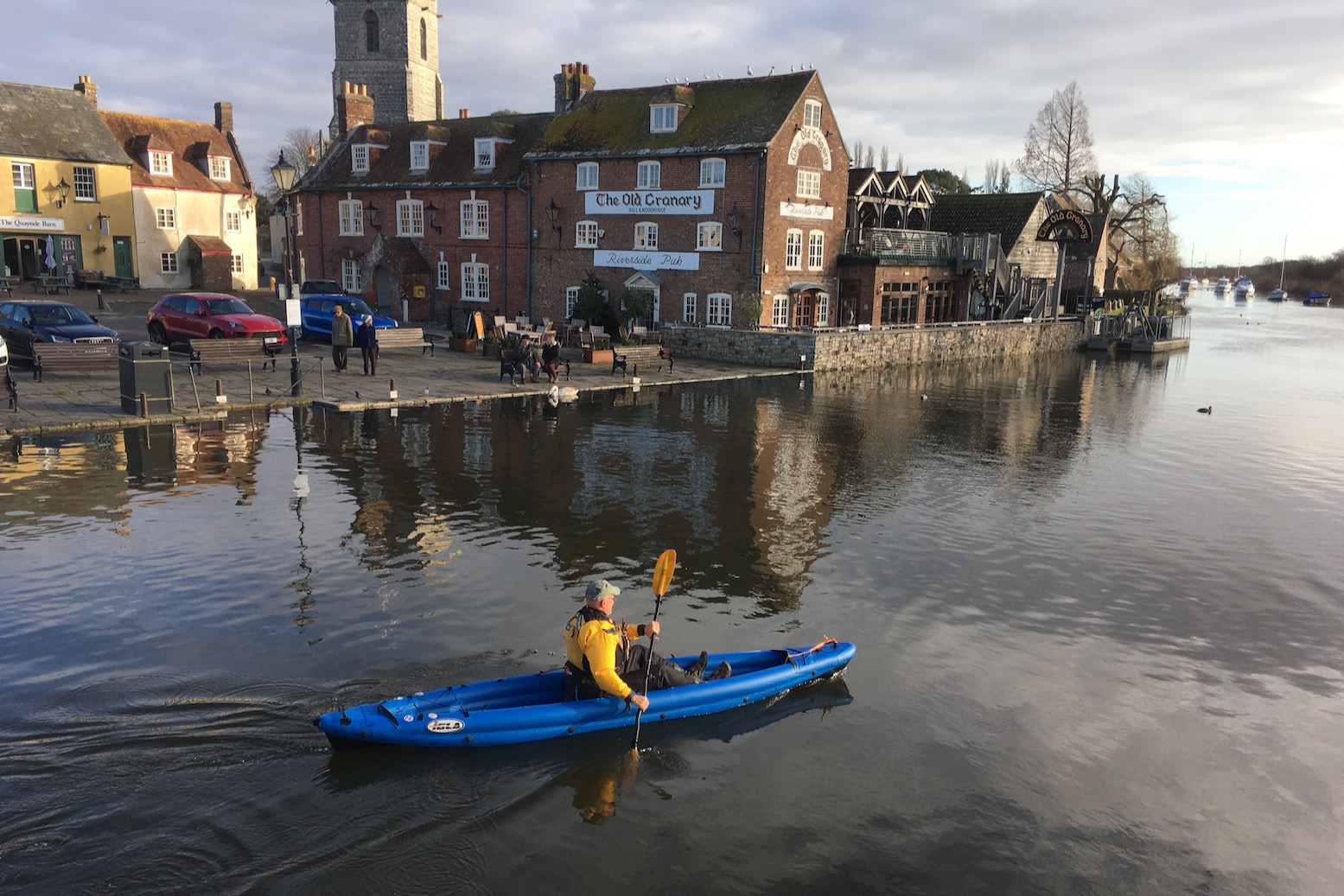
Category Archives: Boat reviews

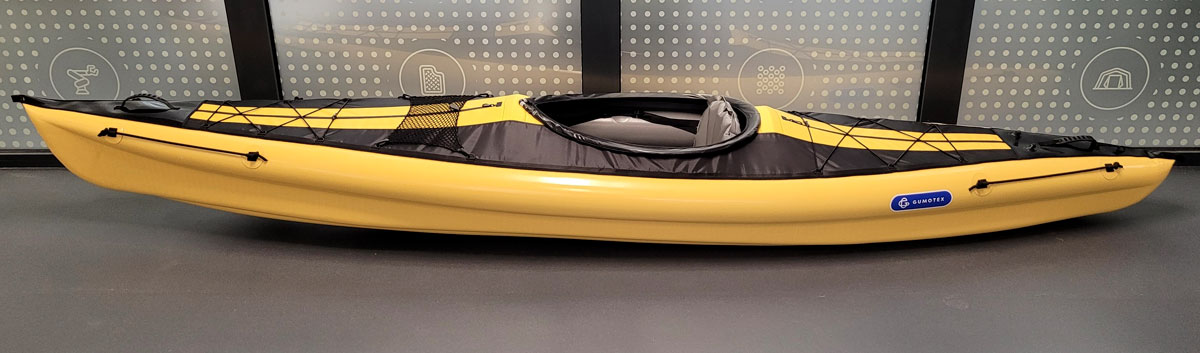
Preview: Gumotex Aurion

See also:
Gumotex IKs
Hybrid IKs
Do you need a deck on your IK?
Seawave

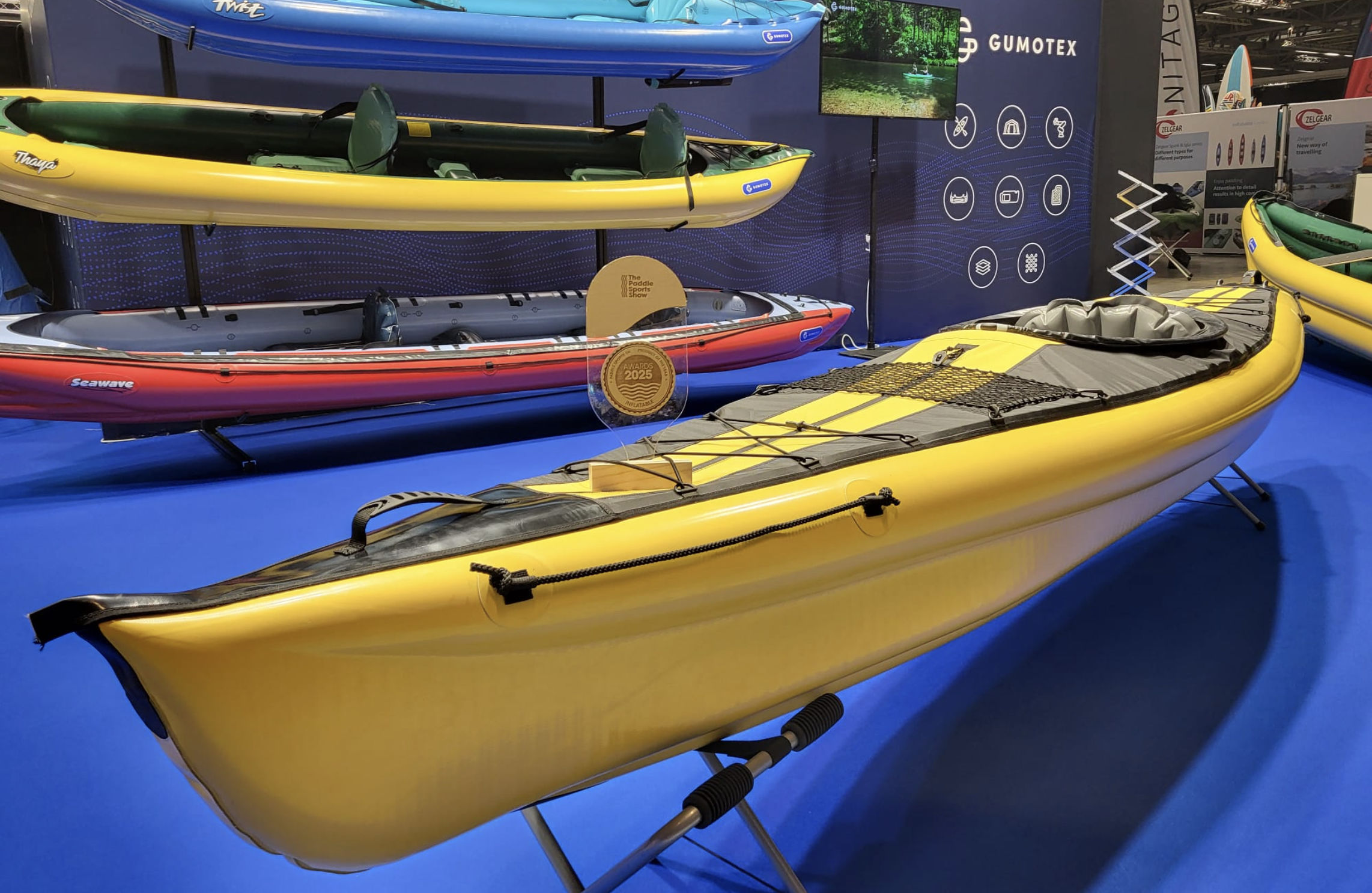
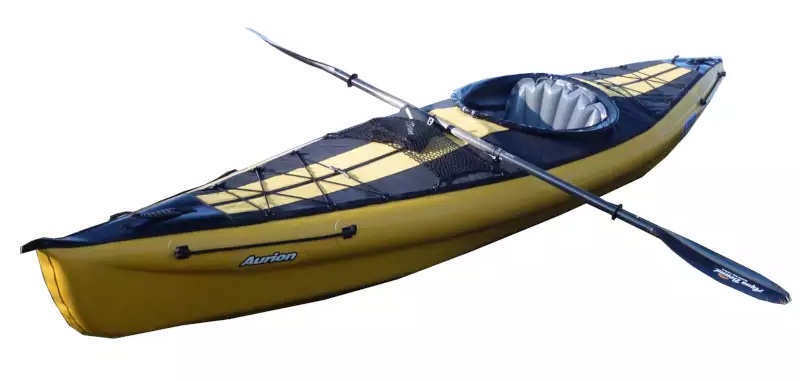
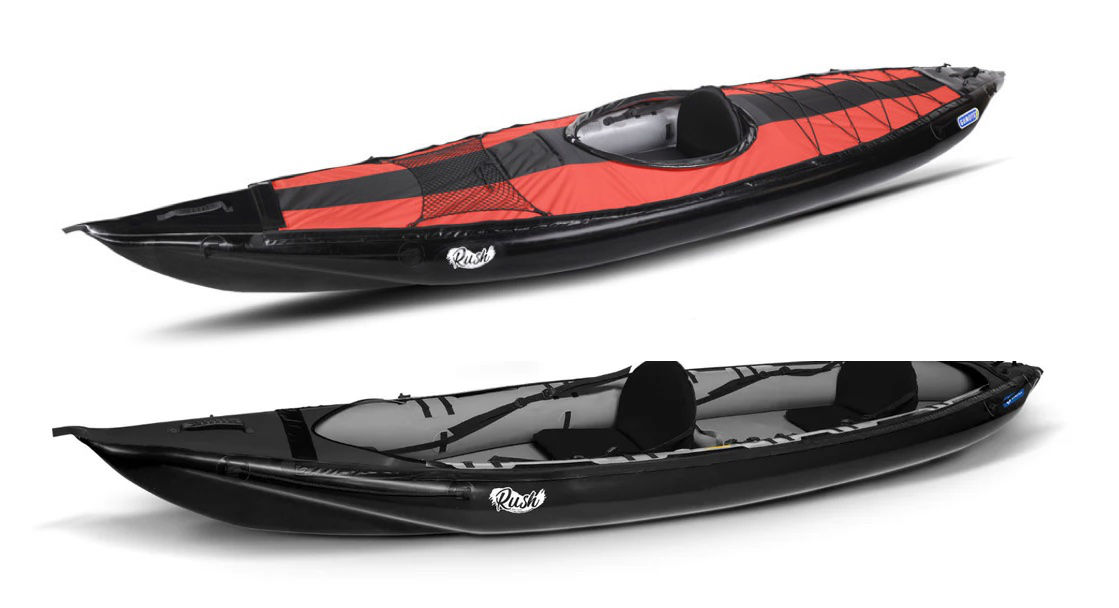
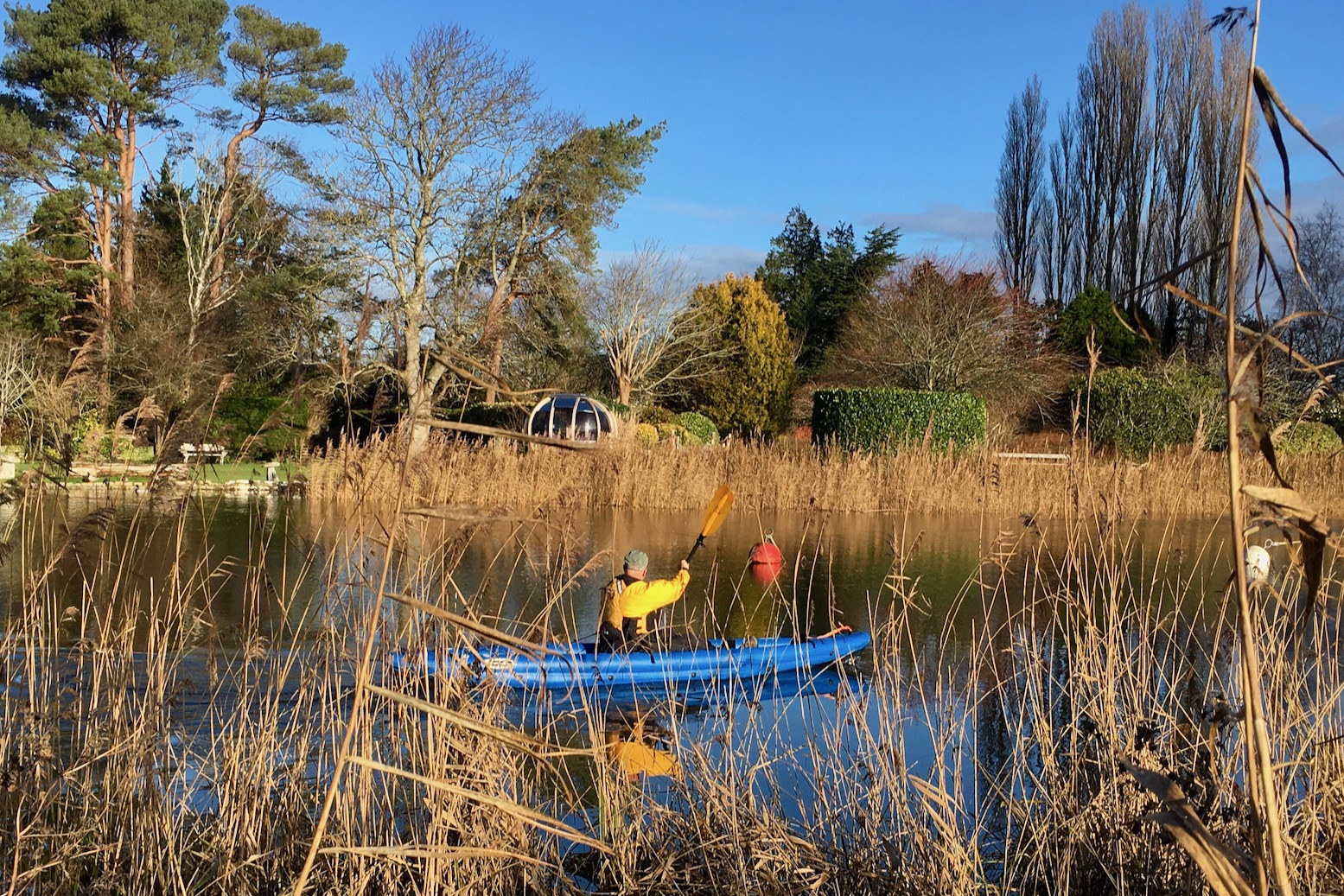
It’s the end of 2025 but there still no mention on the Gumotex website of their new decked single seater Aurion, announced in 2024 (video below), and sold for months in some European outlets at around €2400 with the new 5-year guarantee. Cool name and it looks good too – but so does the Rush 2 and so did my Seawave with the optional deck (left). Something about a deck can make a long IK look more like a sea kayak.

Positive video reviews have appeared in Europe in recent months, pre-production prototypes dished out to reliable influencers in strong IK markets, but there have been actual purchases too. Apart from above, currently most reviews seem to be videos in German, but we take what we can get here at IK&P.
Normally I’d scoot over to Laurent Nicolet’s Rivieres Nature YT channel (French Gumotex importers). They’re paddle pros not influencers, who often get new Gumboats early and shoot great vids with minimal chat, showcasing everything from the Gumocatalog from white water to sea with no piece-to-camera exposition. But so far they’ve only filmed the revised but still door-wide Swing 1 2025 (also fixed deck; their pics below), though Laurent did announce the Aurion on the French IK forum.
One chatty German video from ‘RoGa‘ offers an AI-generated English translation – ‘adjustable fruit stand with push valve … for securing pastries‘. Good to know, but other segments make sense, and you get a good all-over view of the hull, inside and out, as you do on the garden vid below by Austrian? Kayak Kev. (translate ‘closed captions’ to know what’s being said). Another vid of his bottom of the page.

Anyway, the Aurion
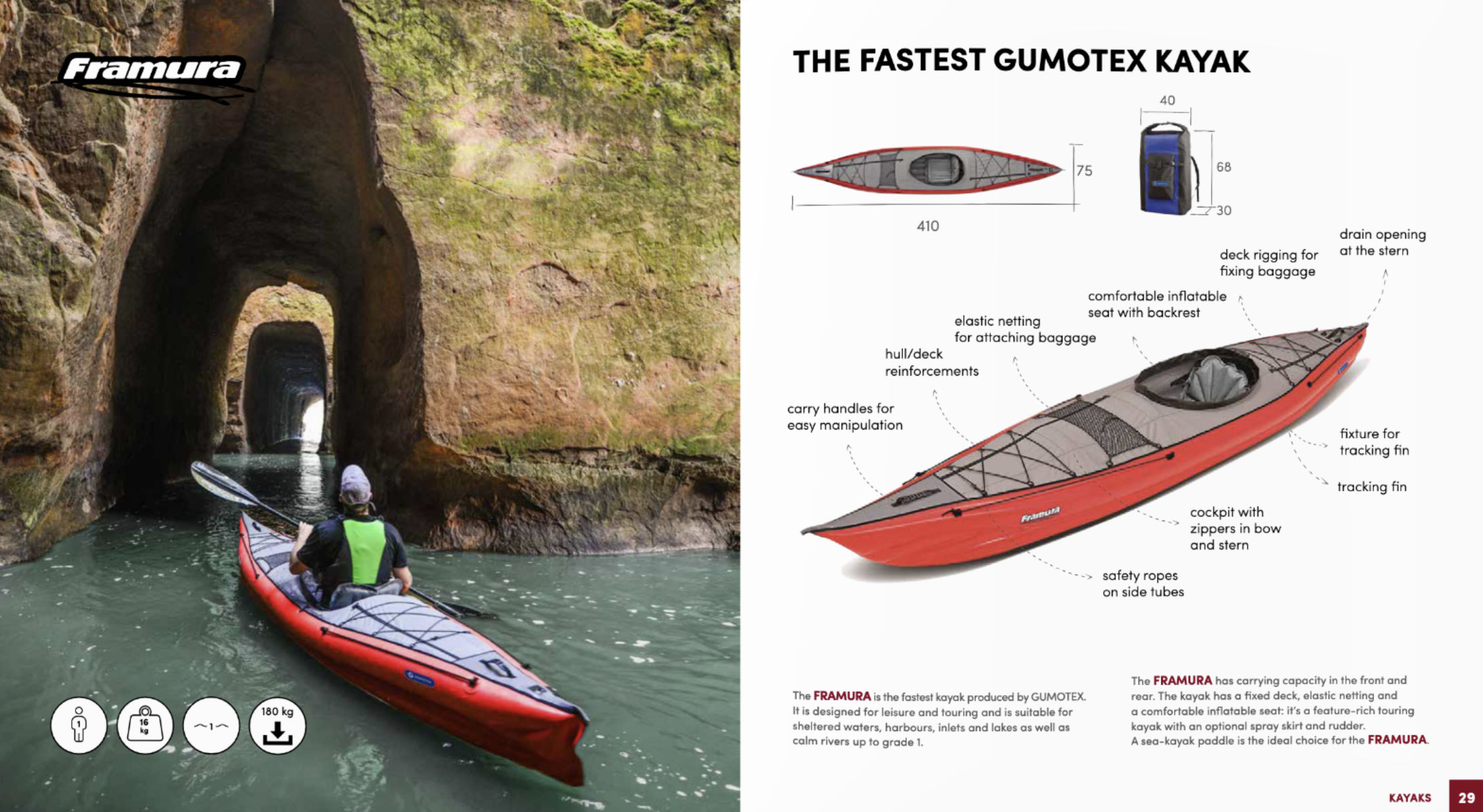
The Aurion (look it up) announces itself as the hybrid replacement for the possibly outgoing Framura (getting discounted right now). So like the old Solar span off the DS-floor or ‘hybrid’ Thaya, and the Seawave begat the longer hybrid Seashine, so the Framura has cloned into the Aurion.

The Framura was a boat which Gumotex always pitched as ‘the fastest Gumotex’. But as I wrote here back in 2014:
I’m not convinced the 0.2 bar Framura is that much faster than a longer, stiffer Seawave [or later Rush 2]. And I also suspect it has not been such a sales success either. Perhaps claiming the former has something to do with the latter.
Indeed I wonder if ‘fastest’ was nothing more than a marketing label for the Framura to separate it from the dumpier, also-decked Swings. Someone needs to do a drag race or time trial with all of them.

I-beam: parallel linked tubes, like an old lilo. This was the original way of making an inflatable ‘plank’ but was vulnerable to over-pressure and rupture if left in the sun (as happened to my Feathercraft). Automatic PRVs are a solution, but can be prone to leaks with grit-swill down on the floor. Lockable PRVs, like on my Zelgear Igla was another way round it, but for minimal weight gains, super rigid dropstich puts the whole issue to bed and turns out th light.

The new Aurion seems to match the Framuras LxW dims at 410cm by 75cm wide. This is actually only 3cm less than my 78cm Seawave (verified), no matter what the official dims claim. The Aurion’s payload is said to be 140kg.
Oddly, the Framura retained old-school 0.2 bar all round; low-end Gumotex pressures. The new Aurion runs 0.5 bar (7.5psi) in the dropstitch floor, and 0.25 in the sides, while gaining a kilo (17kg, same as a Seawave) and ditching floor PRVs. That will be as rigid as a Grabner (who, fyi, manage stiffness and high pressures without DS). Only half a bar in a floor is nothing for dropstitch, and anyway, DS is much better at managing excess pressure (from blazing sunshine) than vulnerable I-beams (like an air bed, see left). Along with less thick panels and of course rigidity for a negligible weight gain, this is the reason to incorporate DS in IK hulls.

Your Aurion’s DS elements aren’t just a slab of SUP board joined at the hip, like FDS IKs costing a third less, but complex hydrodynamic forms (like the X500) which partly helps explain the price. Like last year’s Seashine, the narrow floor has a shallow V, but only on the front half (with protective strake), producing a keel effect which flattens out to the back where the skeg mount sits. They claim this narrow floor helps make the Aurion 10% faster than its predecessor. As someone observed, the Aurion may be 75cm wide at the sidetubes, but it’s much less at water level which should mean less drag for a better glide.

If you’re spending €2450 on an Aurion, for another €400 you could get yourself an old school, 5 psi (0.3 bar) twin side tube Grabner Escape 1 on sale at Arts.de. Very similar dimensions except it weights 22kg and in the video looks as massive an an FDS, once rolled up. The day Grabner adopt dropstitch will be the Kitzsteinhorn glacier stops melting. Of there’s Gomotex’s tandem Rush 2 which, with the optional deck, works out about €2300.

I haven’t visualised exactly how, but the single chamber (or linked) side tubes are said to be DS at water level, but regular round tubes above, but presumably running 0.25 bar which won’t strain the DS. In this way the upper non-DS side tubes act more like stability pontoons, and many testers report the Aurion may feel tippy initially, but has good secondary stability when leaning right over (or broaching along a wave) like a proper sea kayak. My Igla had the same overall dims and was perfectly stable to me.

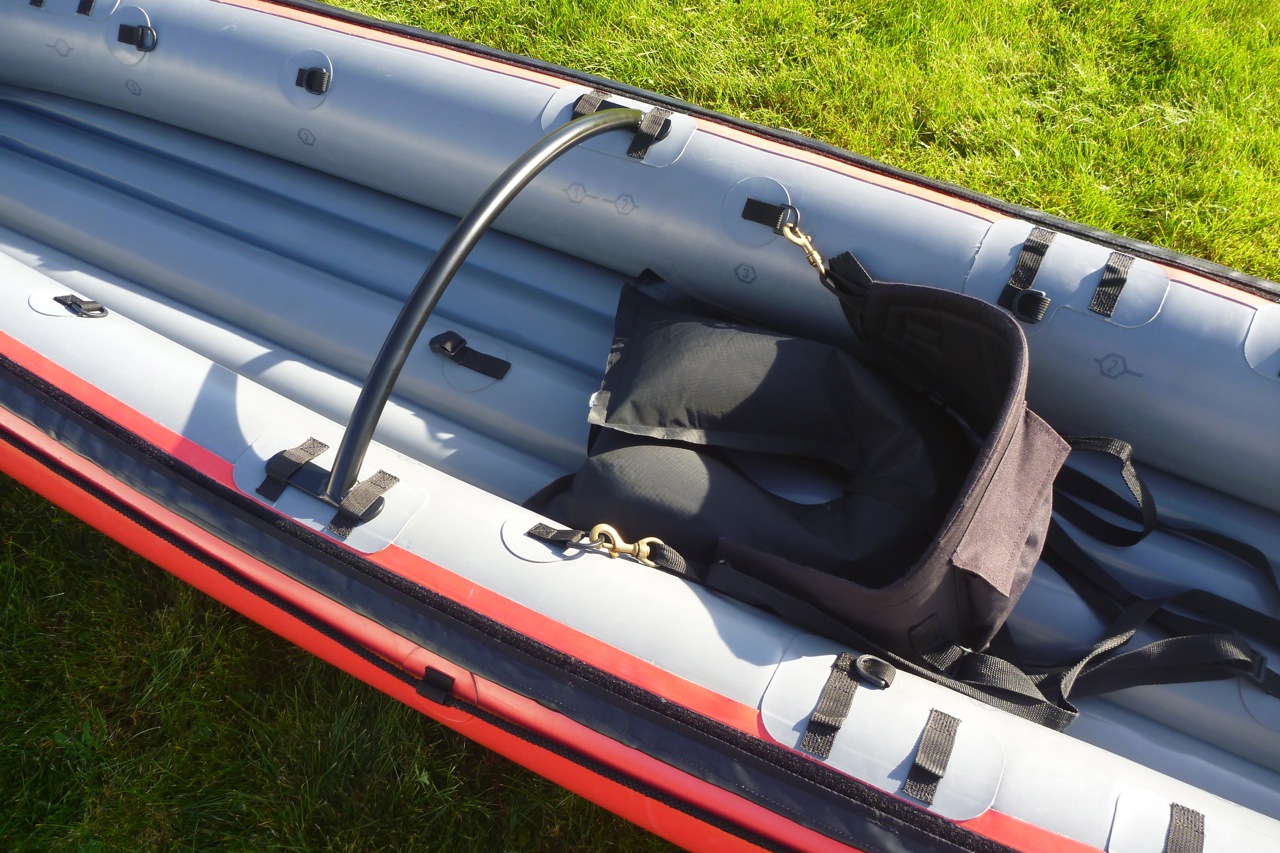
No one’s shown an out of the bag assembly yet, but the Aurion uses a pair of alloy supports fore and aft of the cockpit to hold the deck convex so water rolls ofF. The front one can also give something to brace knees against, as I found on my Seawave (no thigh straps needed) and supposedly, they tension the boat; holding the sides in as it flexes and opens out midway in heavy seas or rapids. You’d think the DS floor would see to that, and if these bars are anything like what my Seawave had (left), there’s a neater MYO option.

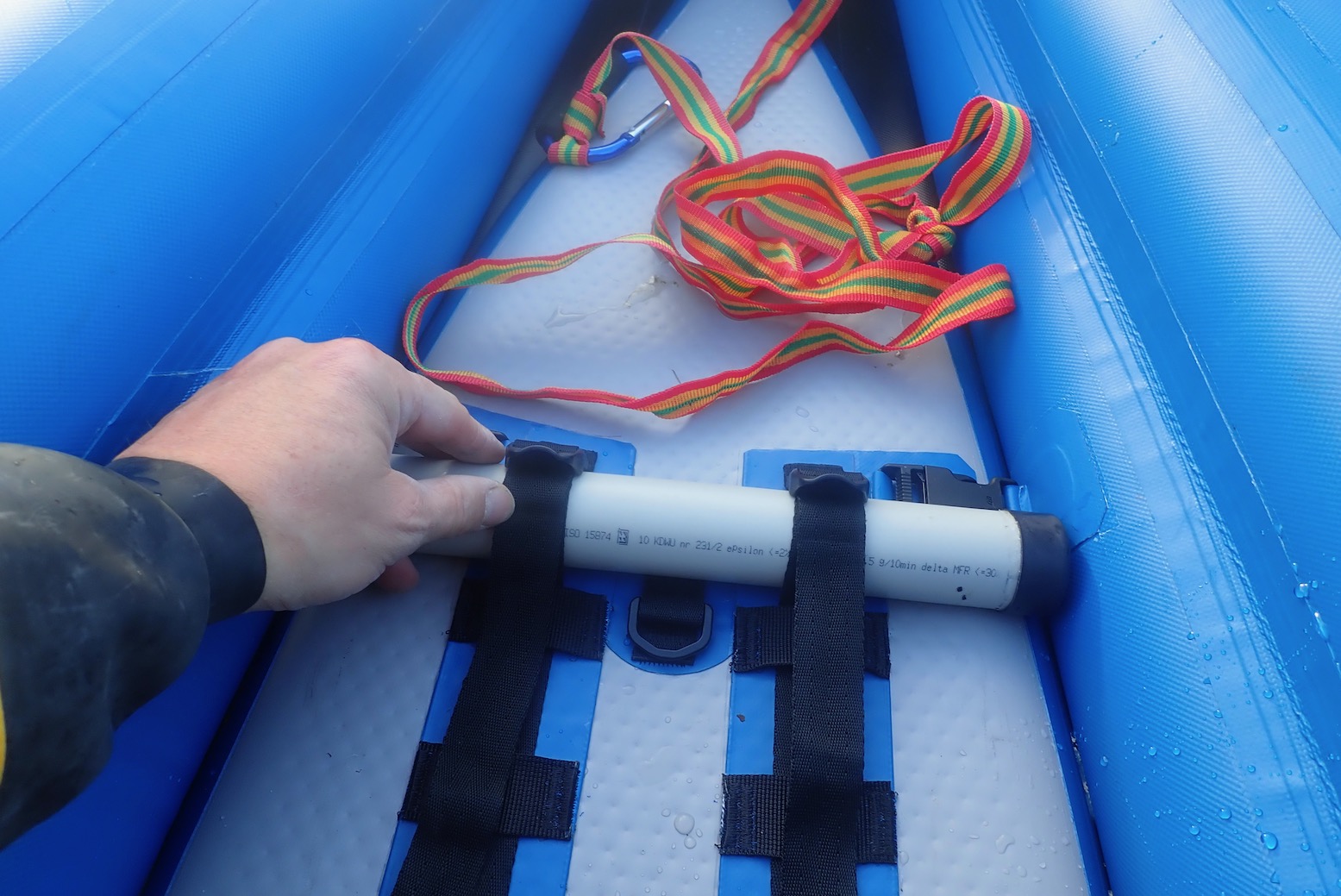
Drainpipe footrest – better

Meanwhile the seats still look crude, heavy items made (I suspect) from Nitrilon off-cuts (unlike my Seawave adaption above left). They can easily be swapped out and so can the footrest. They insist on retaining a blow-up cushion, but at least it’s now adjusted by two straps running up to the cockpit. For tensioning it’s a big improvement over the older, floor mounted set up, and you could easily replace the pillow with a piece of hard drainpipe, as I’ve done on my IKs for years (left).
With a narrower than normal IK you’d definitely want thigh straps to steady yourself, unless the front deck support brace works. Combined with a proper footrest, it all makes a huge difference to connection and control or flat or lively water.

Some people have been exorcised by the grab lines on the sides, but they’re just a safety requirement for inshore sea use in French markets. Talking of which, there’s also a rudder attachment hole on the back. Having experimented with rudders on my longer Seawave, it’s important to understand that on a kayak, rudders aren’t primarily about steering like on the QE2 liner; they’re more for compensating against crosswind drift on open water. With a rudder trimmed to one side you can paddle normally across a side wind and not have to haul hard on one arm to compensate. Very handy at sea, especially on overnight paddles where you may end up with winds you didn’t ask for.

Re-entering a decked boat from deep water. Needs practice and calm seas. Who ever capsizes in calm seas?

The cockpit takes a flexible coaming rod for a proper spray skirt, at which point you have to ask, would you want a fixed-deck single seater IK? You lose all the benefits of easy entry from or by the water, just to avoid a little paddle splash, though I admit a fore deck is handy for gadgets and snacks. They you have the cleaning and drying issues, baggage loading complications and so on – all for what? In that way the similar but slightly longer and wider Rush 2 is 10% lighter, probably as cheaper (though maybe not once you buy the deck) and can take a second paddler which has proven benefits to well being.

It’s good to see Gumotex leading the way with non-PVC hybrid IKs: first the basic Thaya slab, then the more sophisticated but initially troubled flat-floored Rush models, and the half V-hull Seashine which has been copied to the Aurion, but with semi DS side tubes. Each iteration refines the Gumotex hybrid format, but at a price that’s unlikely to see it chart in the UK.

Preview: AquaXtreme Explorer II TPU IK

See also:
TPU IKs – the Mis ing Link
AquaGlide Cirris TPU IK

Thanks to IK&P reader Pavel for pointing me towards newish IKs from Israeli brand, AquaXtreme.
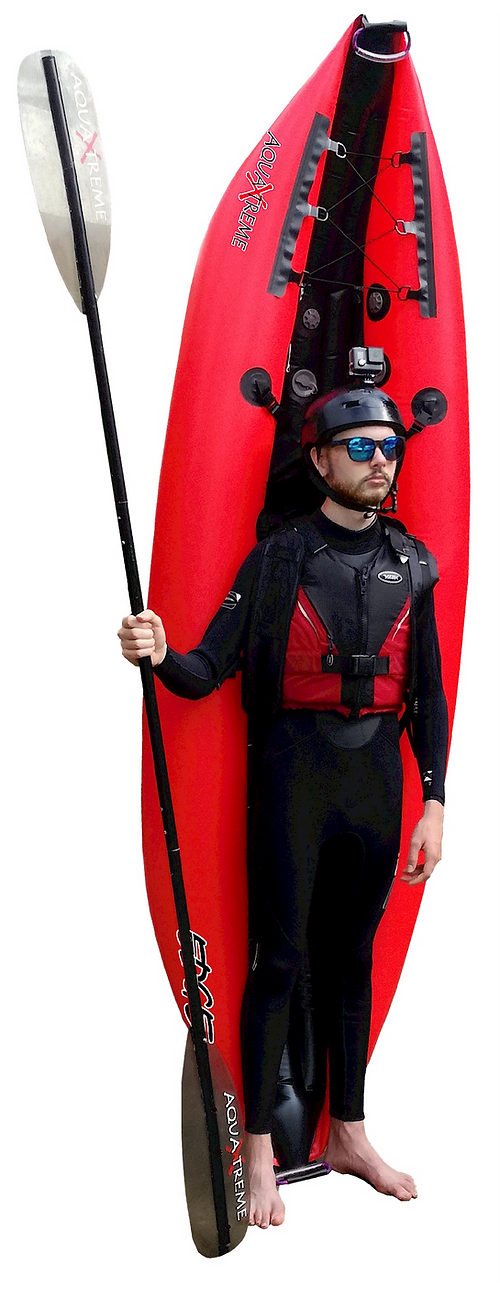
To look at, the 4.2m (13.8′) x 90cm wide Explorer II is nothing special, the familiar profile of a round tube, non-dropstitch IK. AquaXtreme also make some slick-looking folding kayaks so, as rodeos go, they’ve been around the paddock.

What makes the Explorer and similar Edge models (left) different is that they’re made from up and coming TPU, like AquaXtreme’s range of packrafts (or just about all packrafts, in fact). And as we know, TPU folds up more compactly and is much less heavy per square metre than PVC while being strong enough, as well over a decade of TPU packrafts have proved. TPU also dodges PVC’s perceived ‘toxicity’ issues.
TPU being thin, the only thing a 4.2-m Explorer might not be is innately rigid once pumped up, to which the answer is: more psi assuming the welds can hack it, This has been proved to work with packrafts in recent years. Rigidity is especially important in any longer IK with a single paddler sat in the middle, hence the advent of drop-stitch IKs a few years ago – a solution that in my opinion was not always elegant or functional.

Explorer II details and imagery on AquaXtreme’s website are skimpy: payload is claimed at 220kg while the all-important pressures look good at 2.5psi (0.2 bar) in the side tubes/floor?, but just 1psi (0.14 bar) in the floor.

It’s unclear if the floor is a loose insert ‘lilo’ sat on a packraft-like red floor sheet, as appears below, or integrated as a skeg photo (left) suggests.It’s possible it’s both (‘i-beam floor’ is mentioned) plus the ‘1psi ‘insert’ floor to allow it to be a self-bailer via the 4 floor drain valves shown. With valves open the insert would displace pooled water inside the boat to sit you above what’s left. But fitting self-draining ports in a complex I-beam floor is not a thing I’ve ever seen in an IK, so something doesn’t add up with the details and photos available.
I also see what must be PRVs alongside the side tube inflation valves as well as the (insert?) floor. These are always a good precaution to stop an IK over-pressurising and rupturing if left in the heat, but something which many manufacturers are oddly coy about.

Weight is said to be 8.2kg; a bit more than half of what you’d expect in a PVC or rubber (hypalon) IK of the same length and the price is $999 with free post, plus tax where you live. There’s no mention of a barrel pump included, but you’ll need more than the air bag listed with their smaller, 2-psi rated Edge IKs.


Zelgear Igla 410 – first paddle

Zelgear Igla Main page

In a line
Fast, light, well-made and great value European-made hybrid tandem, the Igla’s removable floor and stacked [twin] side tubes keep the width down while retaining stability.

Everything in the huge bag except a paddle
Removable DS floor for quick rinsing and drying
Unusually light on the water
Adjustable footrest tube
Seat feels great
Knee braces are stock
Twin (stacked) side tubes keep width down
Ready for optional rudder (supplied)
Closeable sidetube PRVs
Fittings for a deck (supplied)
Three-year warranty
Like many PVC IKs, it’s bulky (if not necessarily heavy)
Alloy skeg appears to be an extra; and would prefer it in plastic
Skeg can’t be removed without deflating DS floor
Limited overseas dealer network
but see here

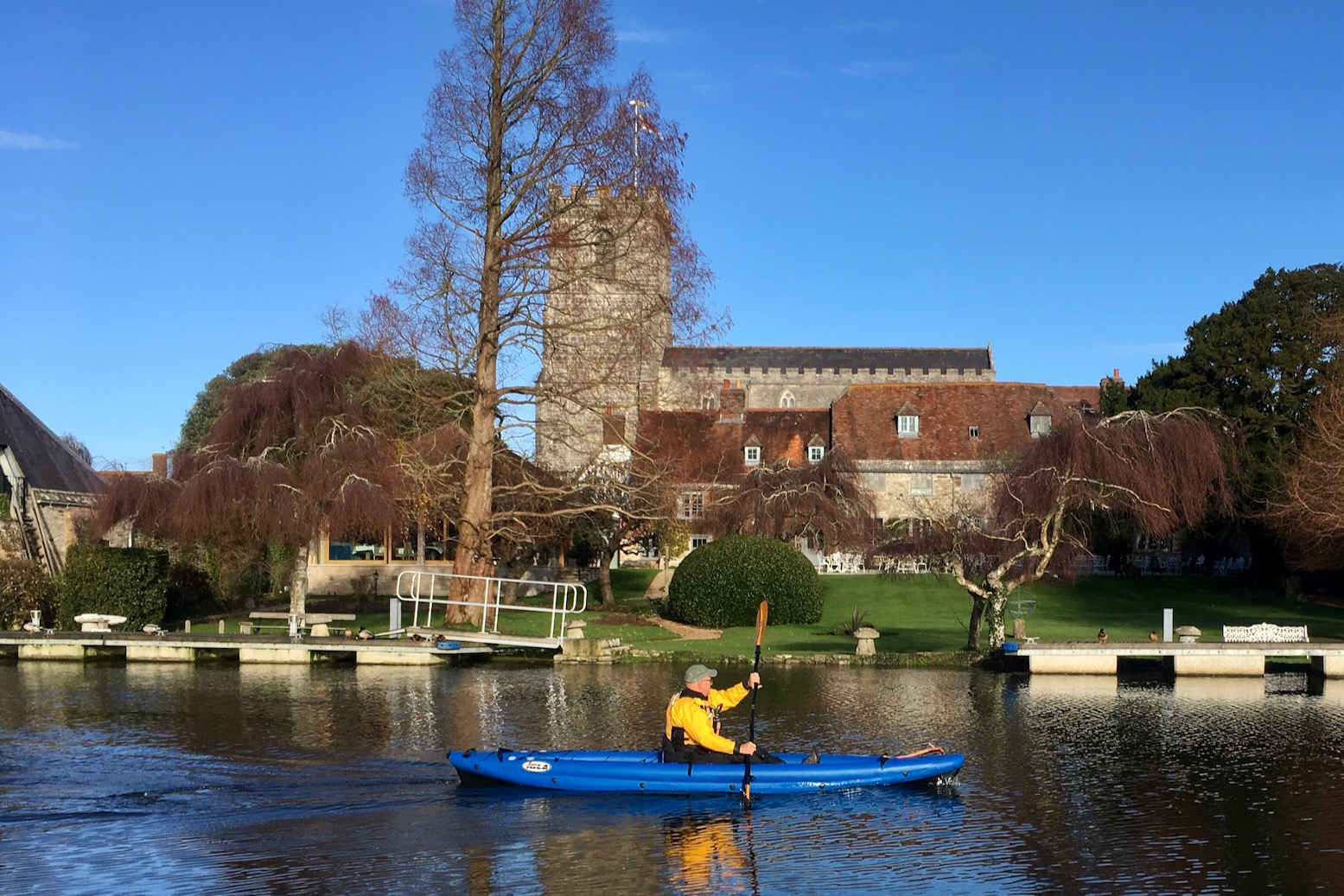
With clear skies forecast I took the Igla for a quick spin down the tidal River Frome out of Wareham quay. Some 1150 years ago marauding Vikings besieged the Saxon port in a bid to establish a flat-pack furniture enterprise. The ever dependable Alfred the Great sent them ‘packing’.

The recent thaw and rains on top of an incoming spring tide saw water just lapping over the medieval quay’s kerb and nearby pub lawn which for me meant an easy put in. Once cooling in the water I gave the kayak a quick top up and realised the closeable PRVs are quite handy in that you can close them as they start purging at 0.25–3 bar and so maintain firm sidetubes. Today, with temperatures in single figures there’s little risk of overheating blowing the boat to smithereens. I need to track down my manometer to see what the pressures actually are.

After hopping in I did a bit of pre-emptive wobbling while holding onto the quayside to ascertain stability. I don’t want a repetition of the shaky Shipwreck FDS I tried a couple of winter’s ago. The Igla seems good; a bit more tippy than the super-stable Seawave but unlike many FDS IKs, the round side tubes give it a bit more beam at water level. I adjusted the footrest tube further forward but later realised I may have been sat a little too far forward for level trim. I get the feeling these rock-solid drop stitchers are a bit more sensitive to trim as there’s no sag in the floor.

I see now that floating on the water the bow and stern prows are just above water level. With these relatively water-slicing forms (for an IK) I wondered whether the Igla might manage without a skeg but decided not to risk it.
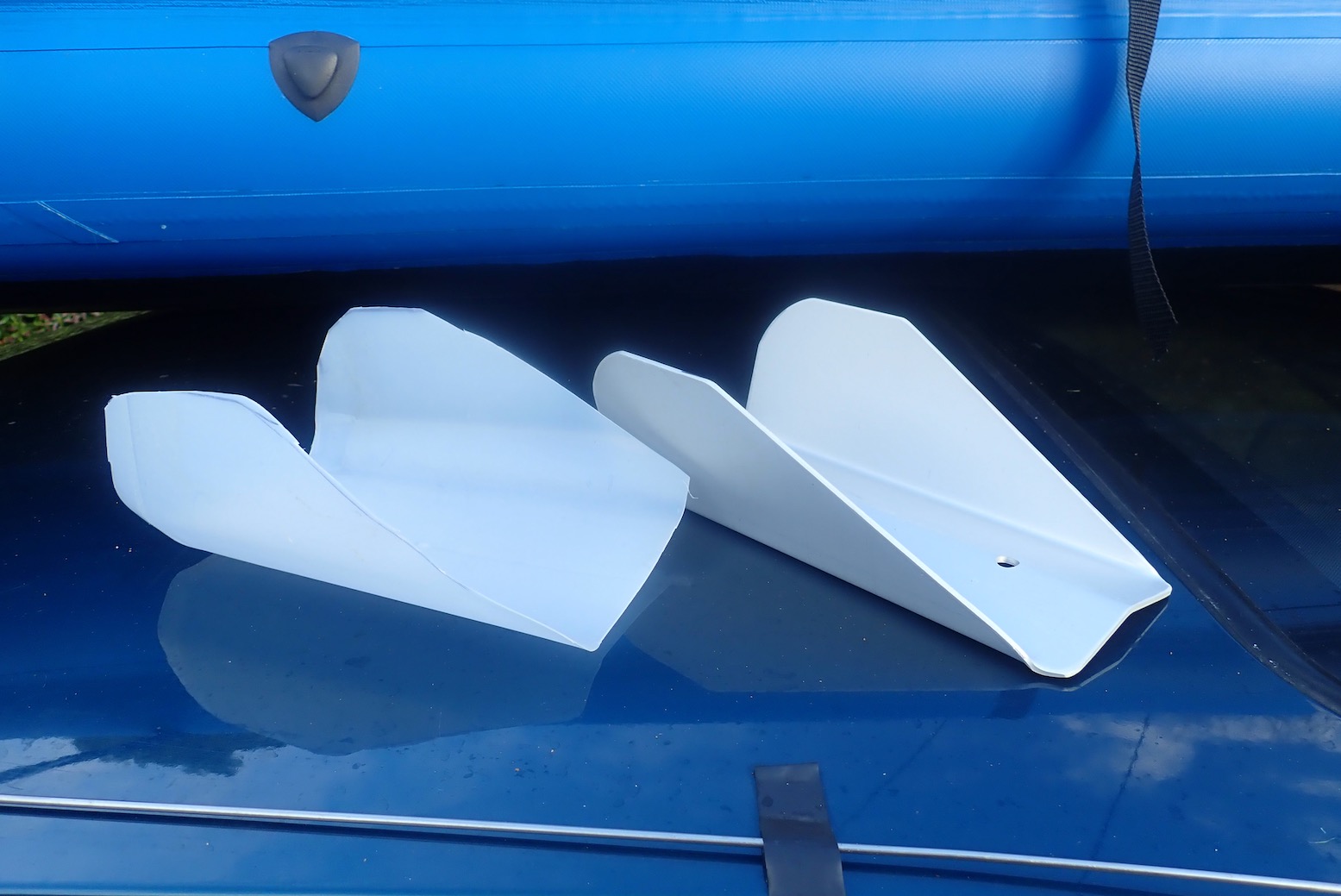
You can’t fit/remove the twin-fin alloy skeg with the DS floor inflated, so I made a quick copy from a plastic container (below). My MYO skeg was a bit flimsy but setting off downstream the Igla tracked fine while turning as easily as the Seawave. It wouldn’t be hard for Zelgear to redesign the skeg and mounting to make it easily removable while still being secure. And while they’re at it they could make it in ABS plastic.

I’m pleased to report the six-point seat feels about as comfy and supportive as I’ve seen in an IK out of the bag. No need for the usual adaptations or outright swaps. Gumotex take note. It weighs only 700g but offers great support, even from the inflated backrest. And semi-deflated, there was no wobble from the seatbase on the hard DS floor. If you’re looking for a good IK seat, try and get one of these.

The slim footrest tube too works better than I thought, thanks to the hard floor, and with knees braces cinched up, I felt secure in the boat. It’s a tad less stable than my Seawave of the same width but not enough to bother you on flatwater, as least. The Mrs was walking along the south bank and I was going to ferry her over to the north side to walk back, but we got separated in the reeds so I headed back into the growing westerly before the spring tide turned on me too.

Before I did, I hopped out and pulled out my plastic skeg. Doing so soon established that like most IKs, the Igla did indeed benefit from a tracking fin. The boat was paddleable but micro-corrections were required to keep it on track; do nothing and the bow comes round. Again, very similar to my old Seawave and unlike the FDS Shipwreck which tracked fine without it’s huge skeg but could turn better, too.
Bang on time, at 12.20 the tide turned and soon, helped by the run-off from the Purbeck Hills, the river was belting along under Wareham bridge. That’s good to know for later paddles out of here.

Having not paddled for months, that little outing wore me out, but I like the Igla. It looks good, performs well, has many useful fittings which other IKs don’t and, for a European-made boat, is a bargain at current prices. Add tax and shipping (if needed) and it still ought to come in at under a £grand. I’m looking forward to taking it out for a longer session into Poole Harbour and beyond.

Preview: Aquaglide Cirrus 150 TPU hybrid kayak

See also:
AquaXtreme Explorer II
TPU The Mis ing Link
Hybrid IK Buying Guide
IK Fabrics

Nearly two years ago I predicted TPU IKs could be the next step and wrote:

[synthetic rubber is good but] … Packrafts, meanwhile, are mostly made from TPU (as well as PVC), a different sort of polymer coating which has many of the benefits of synthetic rubber: odour-free, smooth texture, light, UV resistant, supple (crease-free), not environmentally toxic. But, like PVC, it too can be heat welded. Since Alpacka got the ball rolling, there are now loads of brands banging out TPU packrafts. In this time the fabric and seam technology have proved themselves to be as durable as PVC or rubber, and capable of running higher pressures too. As someone on the internet observed: ‘Thermoplastic Polyurethane (TPU) is the link between rubber and plastic’.

Now that TPU packrafts are well proven, it could be time to ditch PVC and make TPU IKs, assuming the costs can be bearable. The benefits are principally nothing less than a huge reduction in weight.

Aquaglide Cirrus TPU IK
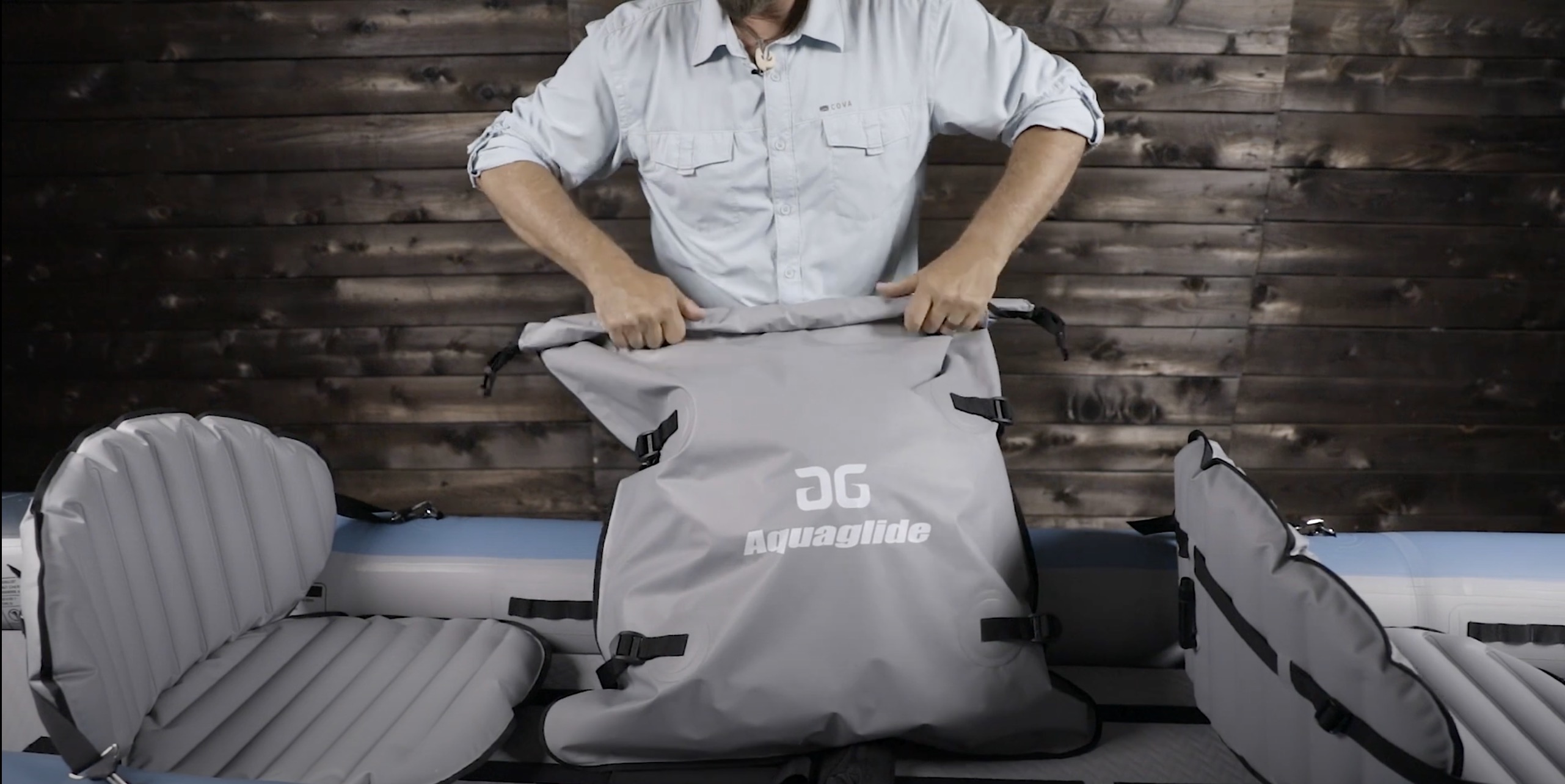
On the face of it the new Cirrus IKs seem to be copies of Aquaglide’s three PVC Chelen models (120, 140, 155) – never seen one but they look to be a decent hybrid. The PVC ‘155’ 15-footer weighs a hefty 42 lbs (19kg) and I bet will fill a large suitcase. Although that weight’s unverified, it actually compares well with other long hybrid PVC IKs and even my old 4.5-m Seawave at 17kg. But unlike a Nitrilon rubber Seawave, in my experience the rolled-up bulk of big PVC IKs can be off putting.

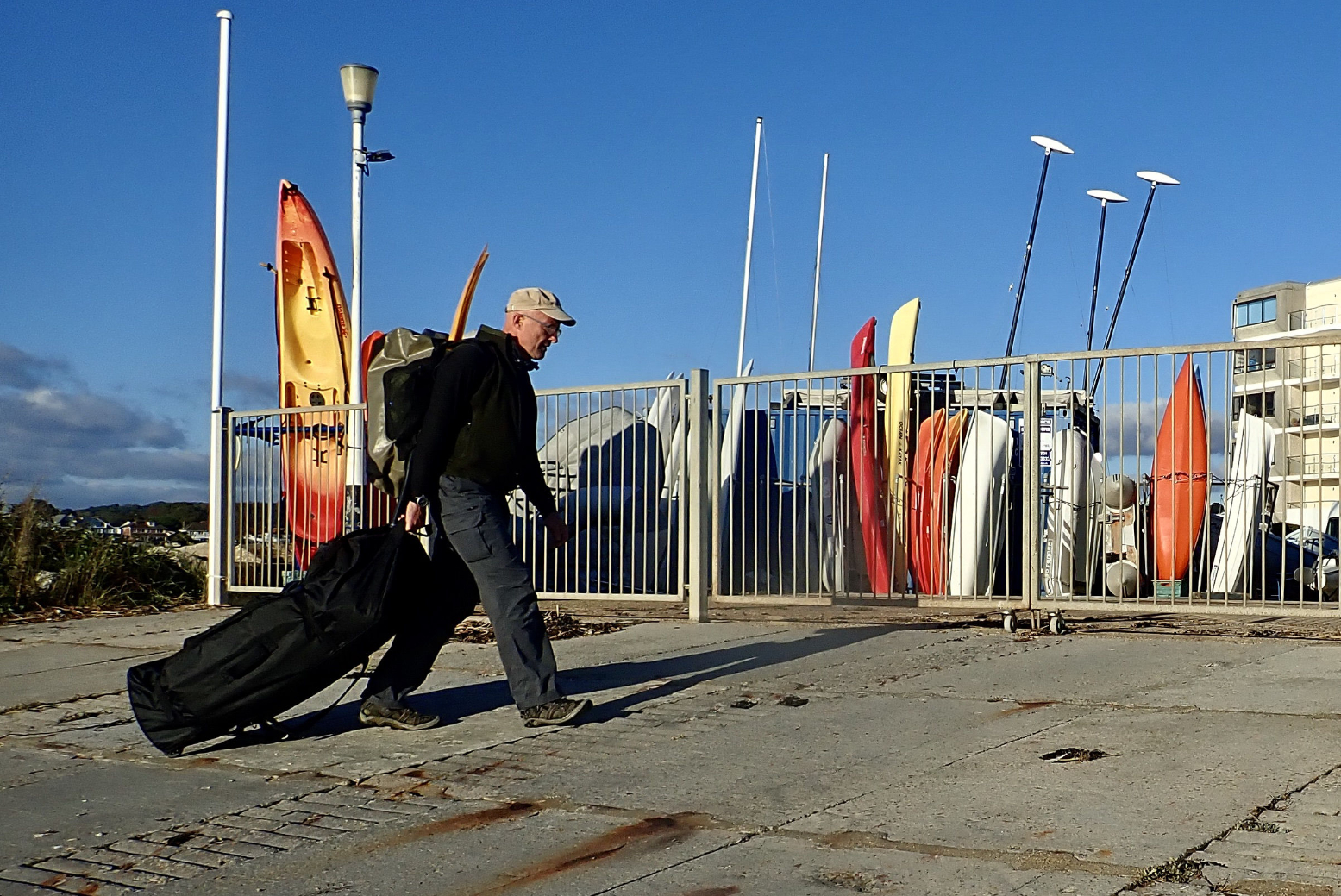
The press release claims the new Cirrus 150 will weigh just 18 lbs (8.1kg); a staggering <50% reduction on the PVC Chelan. The boat is 15 feet (4.57m) long, 35 inches (89cm) wide and claims to handle 600 lbs (272kg). You won’t need a wheel suitcase (left; Sandbanks) to cart a Cirrus around. By 2025 the price in the UK had plummeted to a reasonable £1400 or $1700 in the US.

According to the video above, the tubes are double-coated 70D nylon TPU. This sounds low compared to a packraft’s typical 210D hull, but remember denier is thread weight not coated fabric thickness (’70 x the weight of silk’). In the UK IronRaft sell 70D TPU and this MYO chap used it too. It’s at the very lightest end of the scale; 70D PU-coated nylon is what Supai use, though I’m not sure you can compare PU coating with TPU. The fact that the Cirrus will be double coated (most packrafts are now single coated) ought to provide extra support (more rigidity/less sag) without needing to resort to seam-straining higher pressures. One good thing about PVC is that it’s innately stiff once pumped up – good for performance if not packability.

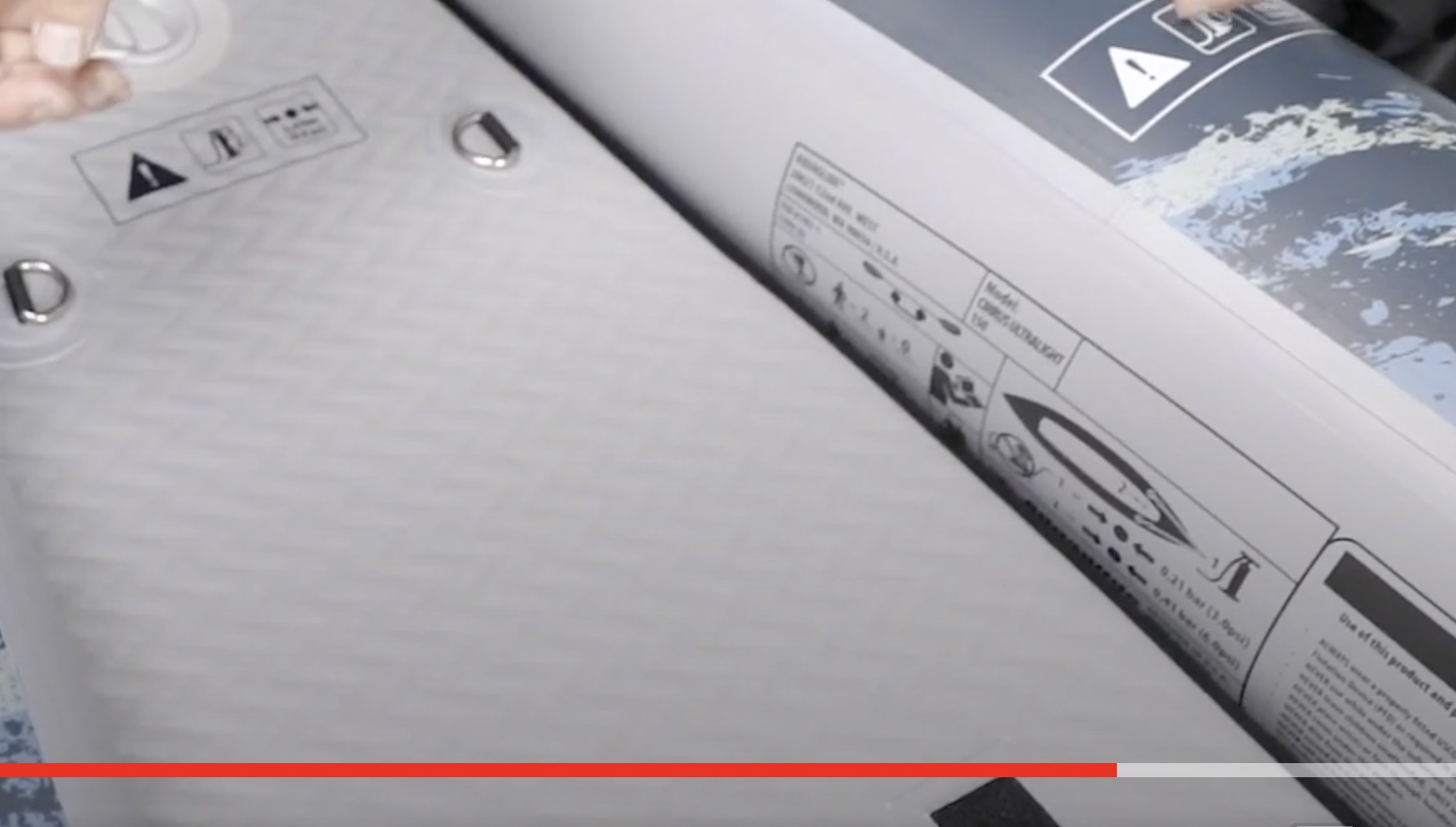
In the vid you can spot the floor pressure is rated at 0.41 bar (5.9psi) and the sides take a healthy 0.21 (3psi) which ought to be enough to give a rigid form without ruptures.

Unlike the Chelan, there appear to be no ‘have-your-cake-and-eat-it’ closeable self-bailing ports which I suspect have dubious value outside of white water paddling to which a 15-foot IK is ill suited. You just get the usual drain port in the back when flipping the boat over will achieve the same purpose. The floor is removable too according to a video comment; a huge benefit for quick rinsing, drying and cleaning. And we’re told the whole boat fits into the shoulder drybag as pictured below.

Price was always an issue with more sophisticated and less widely-used TPU and over £2000 is loads for an IK, but now everything everywhere has become expensive, does this matter less? Who knows but let’s hope this starts a trend towards more TPU IKs for folk who want the benefits of a lightweight tandem packraft like my current Sigma TXL, but in spacious and faster IK form.

Let’s end with something else I wrote two years ago:

A few years ago I predicted that full drop-stitch IKs would become the new thing. This has happened and has driven IK design and sales a long way forward. But, PVC aside, I’m still not convinced by the boxy profiles and packed bulk of FD-S IKs. Until FD-S forms can evolve (as the Itiwit X500 has shown), I think hybrid, drop-stitch floors (D-SF) are certainly the way to go, if an IK is to stay undecked, unlike the X500.

There will always be a demand for cheap vinyl or PVC IKs but I predict the next big thing in high-end IKs will be TPU, including removable D-S floors in TPU. TPU is now well proven with packrafts and blends the heat-welding benefits of PVC with nearly all the better attributes of ‘hypalons’.

Thanks to a couple of IK&P followers who spotted and passed on news of Aquaglide’s new Cirrus range of hybrid TPU IKs.

Preview: Aqua Marina Steam 412

See also:
Hybrid (DS Floor) Inflatable Kayaks

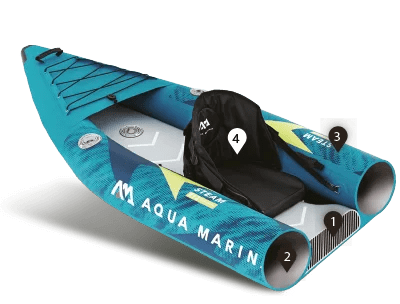
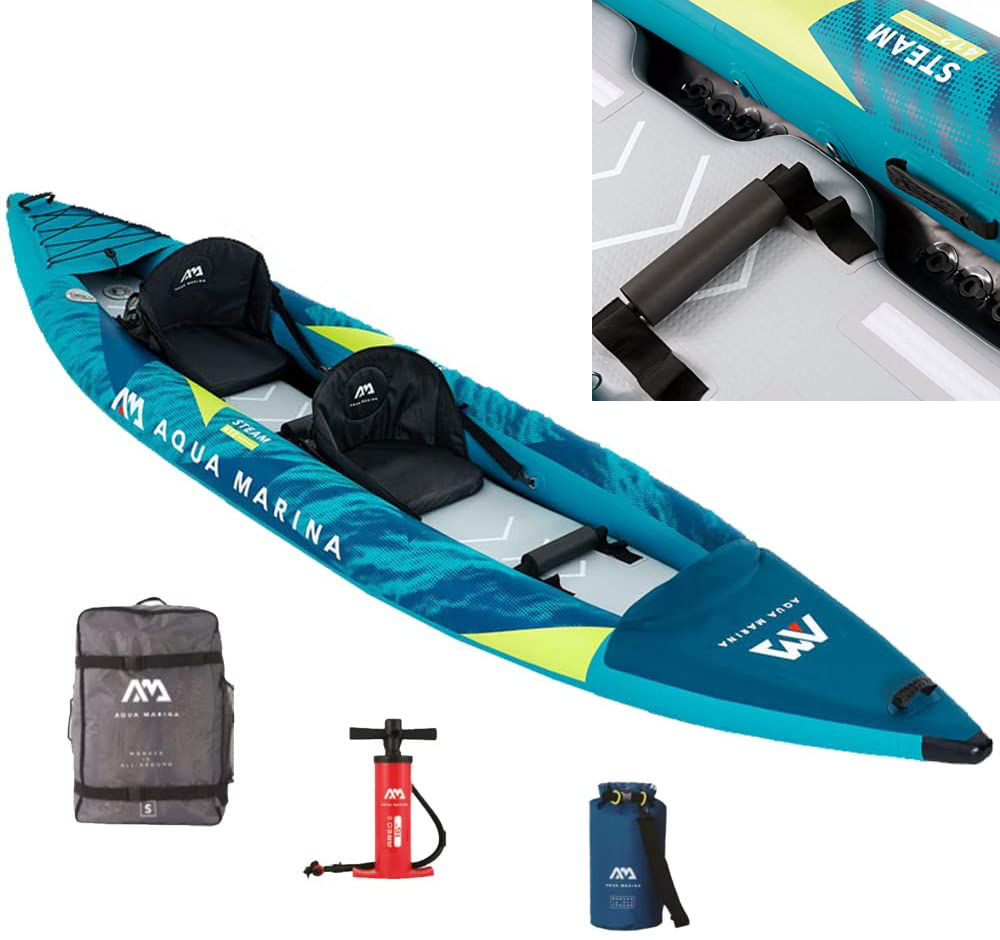
At under £450 on amazon UK, the bold graphics on the Aqua Marina Steam 412 hybrid (DS-F) does seem a lot of IK for your money in the longer, solo/double category we’re into here at IK&P.
Fyi: a ‘hybrid’ is an IK with a stiff, flat drop-stitch floor (DS-F; ideally removable), but with conventional, lower pressure round side tubes (right). In my limited experience it’s a better solution than most FDS, all-dropstich IKs.
*experimental affiliate link

What they say
The STEAM series is one of the best inflatable touring kayaks on the market. The combination of superior hull speed, outstanding durability and tracking capabilities make this kayak best in class. Both STEAM-312 and STEAM-412 mix Aqua Marina super-tough reinforced PVC material and rigid drop-stitched DWF floor. These ultra-stiff materials in the STEAM’s construction make a portable air-kayak so rigid that performs just as good as a traditional hard shell kayak. A perfect choice for long distance adventures and mild river running.

Length is – you guessed it – a spacious and potentially nippy 4.12 metres or 13.6′; width is a reasonable 90cm or 34″, plus a claimed 15.5kg (34.2 lbs) for the boat in the bag with a stated payload of 180 kilos.

High pressure raft valves for 1.4psi?

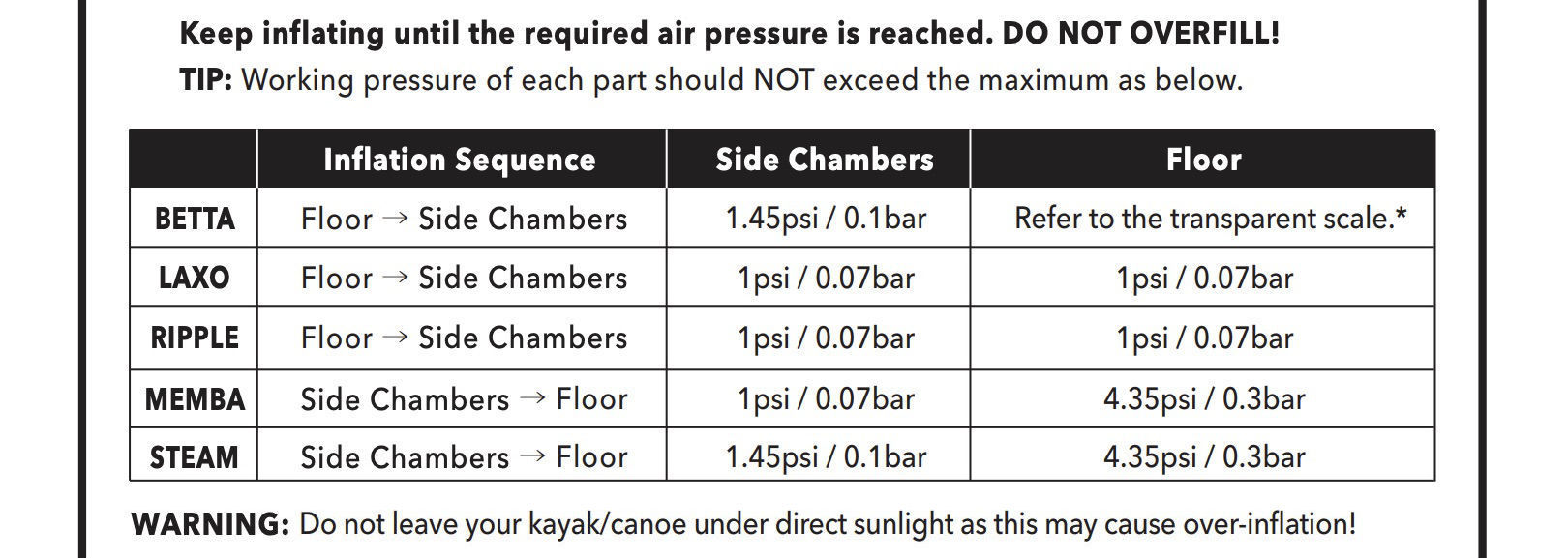
Oddly, the stated pressures of 1.4 psi (0.01 bar) for the side tubes are barely more than a vinyl Intex or Sevy cheapie (or lower end Aqua M IKs). The 4.3psi (0.3 bar) in the 7cm DS floor (AM call it a ‘deck’) is also about as low as DS can be – a Grabner all-tube IK will run the same psi.
I wondered if they meant 0.14 bar / 2 psi? It seems not according to the official website and the Steam product manual (snapshot below). It makes you think the construction may not be up to it, or that they’ve stated hyper-conservative/warranty covering values in case users over-inflate. After all, the sidetubes have proper ‘raft’ or iSUP valves capable of ten times that figure. Oh well, PVC fabric is inherently stiff so you’d hope that ought to make a reasonably rigid boat.

It has to be said the so-called “… Inflatable V-shape keel design…” is not evident in any online imagery that I could find (left, last year’s model) or in the video below. The floor looks as flat as a iSUP board (which Aqua M also make) with two, mid-positioned skegs. Most IKs manage with one at the back, but you can remove them or use just one. A V-shaped keel (like the Optimal FDS) would eliminate the need for skegs, so it could all be just marketing babble.

Best of all, this is not another shell & bladder but a ‘tubeless’ IK, so with the removable floor, cleaning and quick drying ought to be as easy as it gets on an IK. Many IK-ers soon learn the value of this.

The foam footrest tubes have a couple of positions, with the seats positioned on velcro strips. And the closeable bailing ports (see inset above) mean you can take a bit of wave splash over sides without swamping the boat, as the video below demonstrates. But two heavier persons plus gear could also mean you end up sitting in (or hauling) water as the floor is only 7cm thick. Paddling would reveal all, but the ports are closeable.

All in all those ports, the length and tubeless build for four-fifty quid could be a great way of getting into IKs. It comes with a pump, carry sack and a spare dry bag. Add paddles and some water. At worst you open it up on delivery, pump it up in the sitting and realise you’ve made a terrible, terrible mistake. Amazon returns are dead easy.

Sigma TXL • Packrafting Swanage

Sigma TXL main page
Kayaking Swanage
MRS Nomad S1 main page

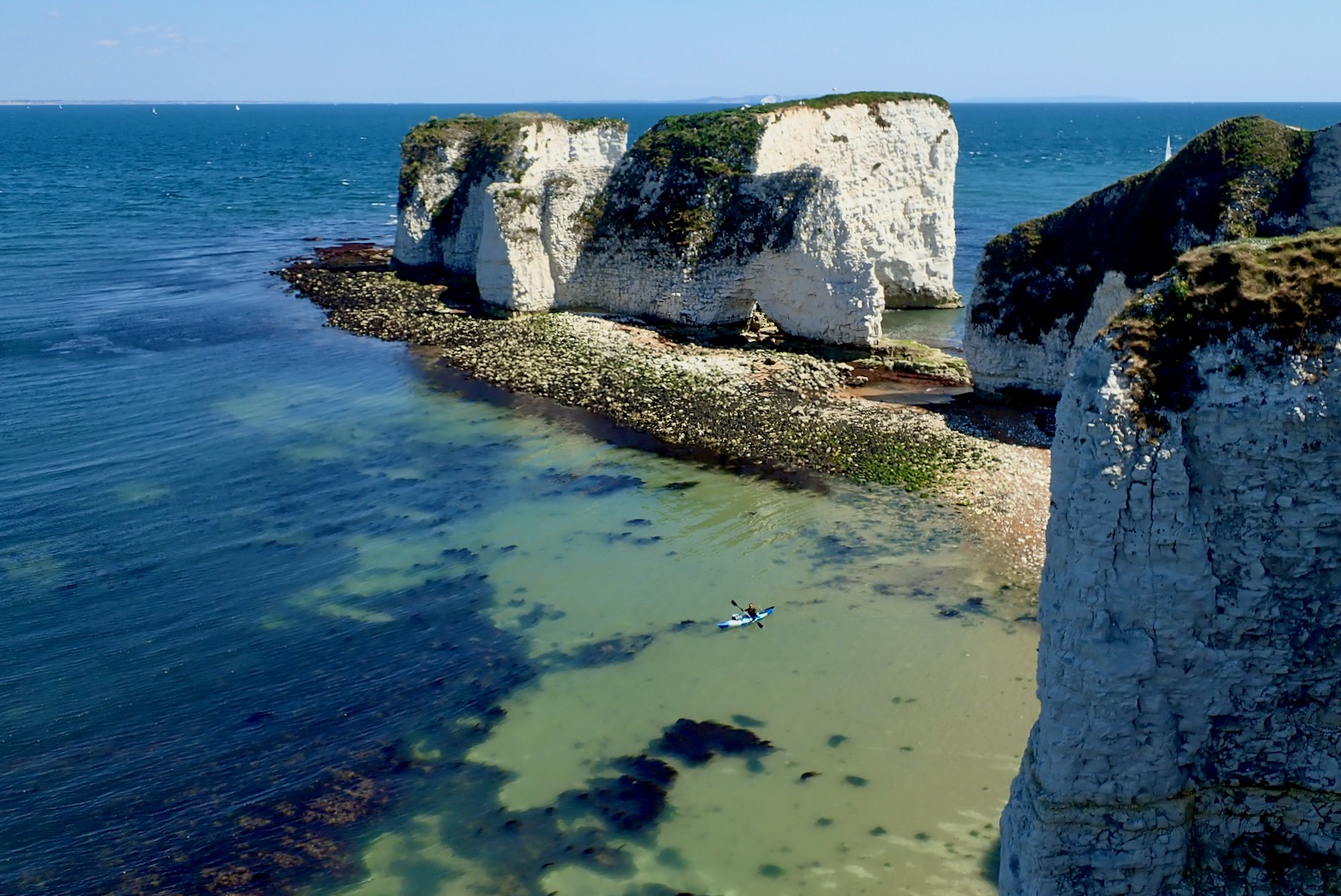
I’ve been looking forward to getting back to Dorset’s amazing chalk pinnacles near Studland which we paddled in the Seawave one calm morning back in 2019. Today the tide was right and the sun was out; it was just a bit chilly and on the windy side; a good day to see how my Sigma TXL might perform at sea.

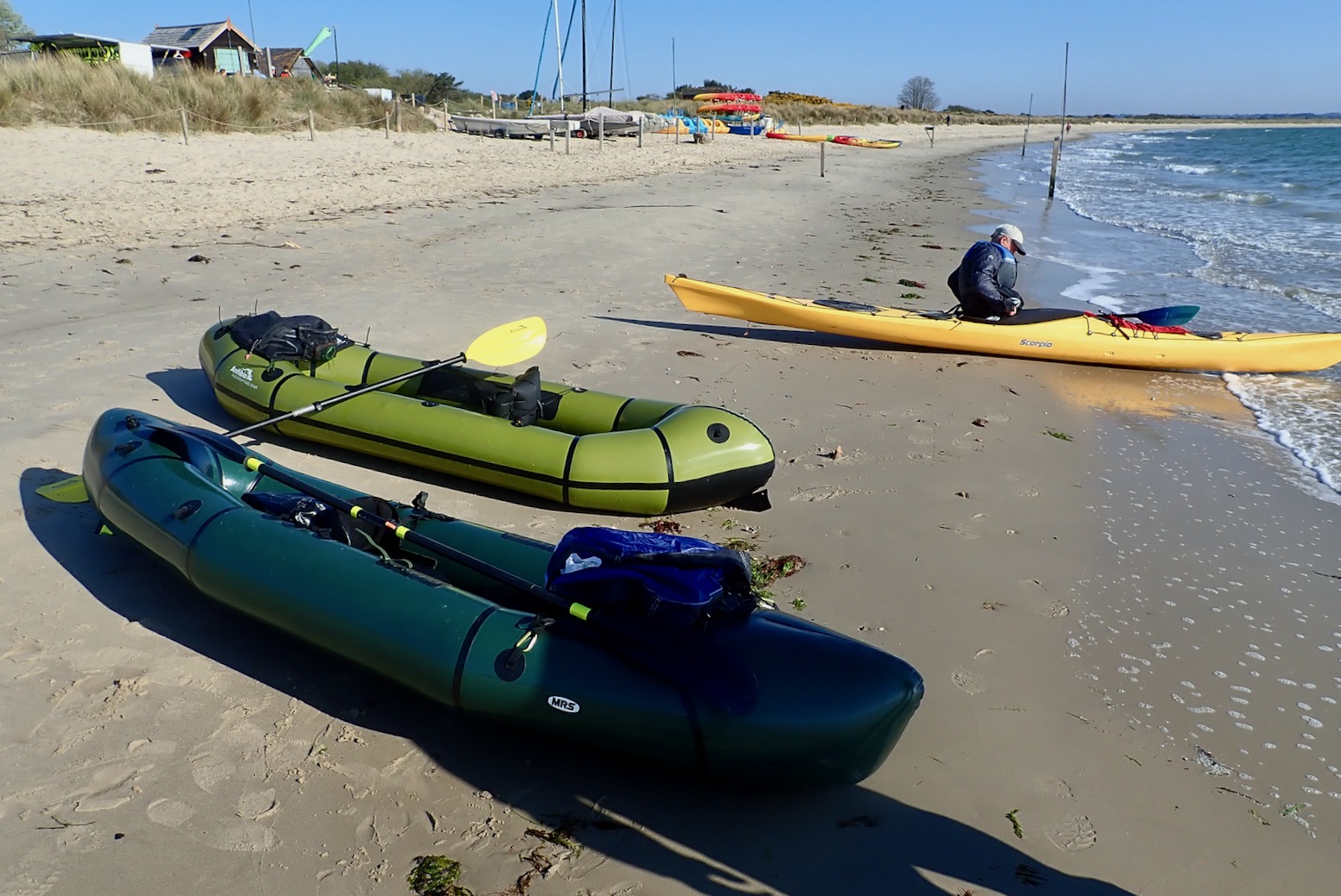
A couple of paddlechums were also up for a pre-dawn departure; Barry rode down with his similar MRS Nomad S1, while Nimbus – yet to fully embrace inflatable paddlecraft – brought his 17-foot, plastic P&H Scorpio sea kayak (left). Even at ~30 kilos, it was a proper boat for the conditions and we imagined he’d run rings round our packrafts.

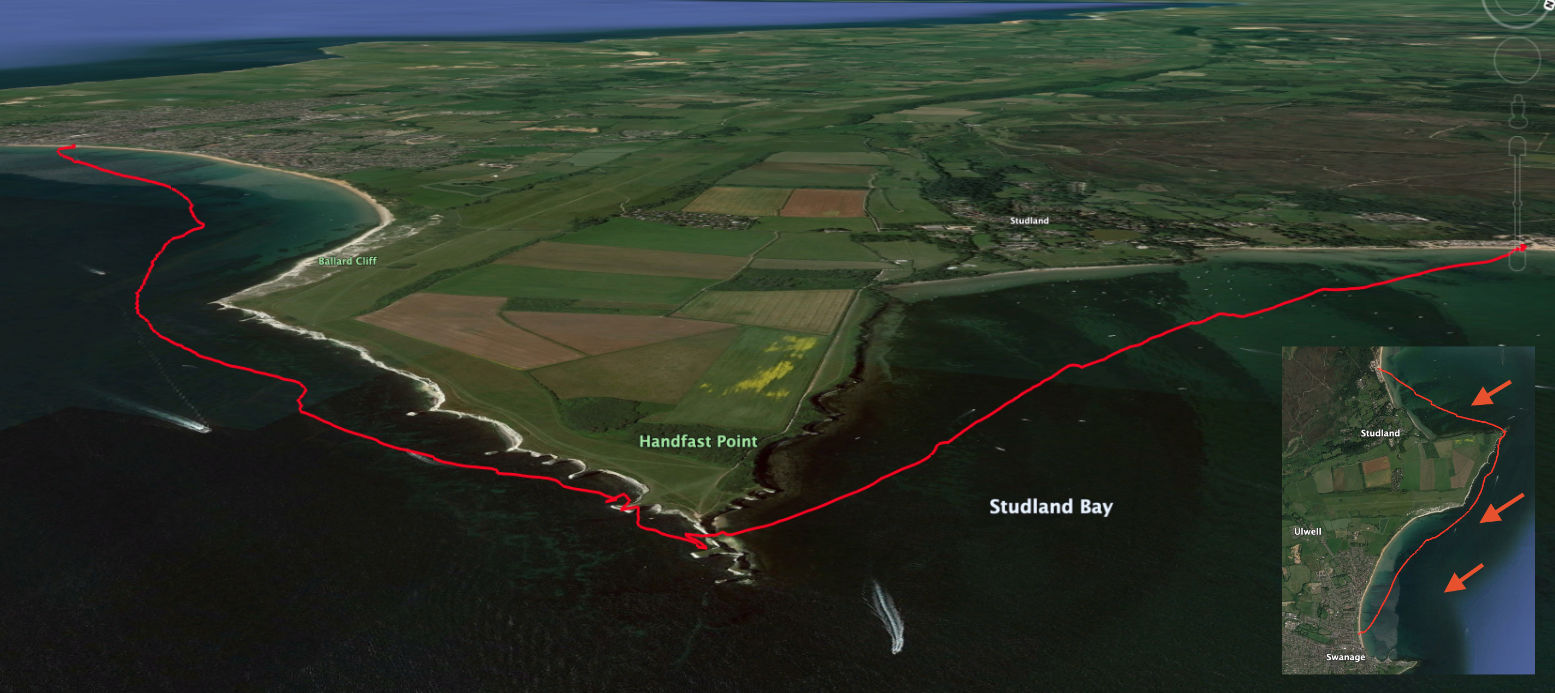
The plan was to paddle the four miles from Studland beach to Swanage town, leave the kayak somewhere then retrace the route over the downs to the vehicles.
Half the length, over twice the width, but a tenth of the weight of a sea kayak.

Early all-day parking is a problem at Studland as the car parks don’t officially open till 9am and anywhere else you’ll get towed and Twitter-shamed. But we slipped into Knoll Beach parking at 8 and were on the water before 9am.
By this time a one-metre tide was about 90 minutes after HW, and we set off into a steady onshore 12-mph northeasterly which would stop Barry and me running away with ourselves. By the time we turned the right angle at the Point for the run SSW along the cliffs, we ought to be able to put up our sails to catch up with Nimbus, except I forgot my WindPaddle. Oh well, I’d just have to paddle the full four miles and get medevaced out.

Swanage tides

The tides at Swanage aren’t the classic sine wave. Every other tide rises and falls normally, but in between is a mini low and high. Who knows how or why but I suppose the reservoir of Poole Harbour, plus the English Channel funnel have something to do with dampening every other surge. Either way, the range was only a metre today and is hardly ever more than two down here; not enough volume to raise any strong currents. Nimbus later calculated a southerly flow of around 1mph which may help explain our higher than expected packraft speeds.

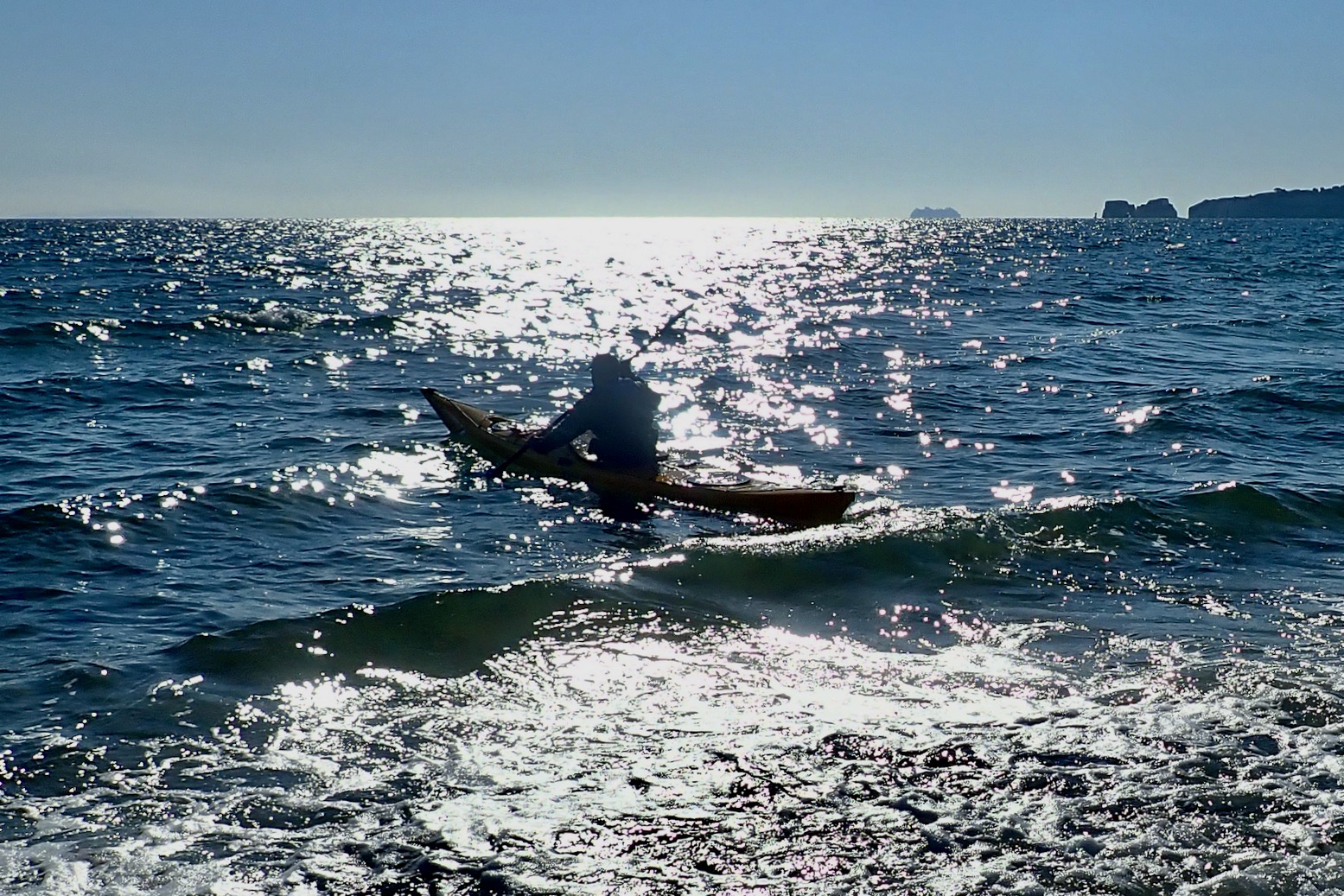
Nimbus sets off for the Point, far right.
Could the packrafts keep up?

Part of the reason I got the longer TXL was to try more coastal packrafting, even if the extra bulk and weight (actually only 450g more than my previous Rebel 2K) might set me back on overnighters. This is not a paddle I’d have attempted in my backheavy 2K, even with a deck; it’s just too slow to be enjoyable. But having owned a 2.9-m Nomad S1 like Barry’s, I was fairly sure the TXL’s near identical length, buoyancy and similar ‘footprint’ would make a difference. There is something about sitting in the middle, not the back end of a boat, that makes it feel more reassuring.
Unlike my Thames paddle a week earlier, I decided not to fit the TXL’s inflatable floor pad in search of a better glide. As things were, in today’s wind and chop the stability from a lower seating position would be more important.

It was about 1.5 miles to the arches at Old Harry’s headland, so I set off directly across the bay, hoping for flatter conditions further out. That wasn’t the case; the odd wave was breaking, but the TXL moved across the water purposefully. Sure, it rolled, pitched and yawed in the side waves, but sat down low I felt completely at ease, maybe even more than in my Seawave IK?
Barry was clearly having the same bouncy fun in his MRS and I’d assumed the P&H would have raced off, if for no other reason than to maintain stability. But later Nimbus said the Scorpio felt a little on edge in the high-frequency chop and couldn’t have gone much faster than us on this stage.

You’d think the two long, light packrafts’ would have been blown about, but the central, kayak-like position and added buoyancy made them easy to control (with skegs fitted) and the high sides kept most of the water out. I picked up maybe a litre over a mile and a half and didn’t miss a deck at all (though I did appreciate the drysuit).

Swanage Bay sets off a tidal eddy

Even with photo faffing, we reached the stacks of Old Harry in about half an hour, and it hadn’t felt like any more of a struggle than in an IK. It was really quite a revelation how well the TXL (and Nomad) were performing with just an extra 50cm or 20% in the waterline over a regula packraft. The lightness of the boats must have something to do with it.
Round the outside of the Point the wind and tide were fighting it out in a tidal race. It made me realise how well timed our visit in the Seawave had been three years ago. We’d arrived here in much calmer conditions but also around mid-tide with a less nasty looking race. Going round the outside today may well have been doable but set aside unpredictable currents, waves can also stand up and break out of nowhere. It was more fun to slip through on the remnants of the outgoing tide between the mainland and Old Harry’s stack. Next time I come here, I’ll make sure to arrive at the top half of the tide so all the arches can be threaded.

View from above about three hours later. Low water but still a bit of a race off the point.

After a bit of promo filming for the new book, we turned 120° to the southwest and expected to have the wind behind us, but it remained a case of dealing with sidewaves plus cliff rebounds, so we kept out to sea. Despite the packrafts jigging about like popcorn in a hot pan, we managed to make progress south along the cliffs, the Scorpio now edging ahead.

After being jostled around, Barry decided to air up his AirSail, but even with two of us, pumping it up properly in the chop proved too tricky. For easy deployment on the water, the sprung-hooped Packsail (like the old WindPaddle) is a much better idea, even if it’s more bulky to carry.

We rounded Ballard Point where the cliffs turned into Swanage Bay, and with the wind now on our backs, the GPS recorded 6kph (see graph below). As usual though, it didn’t feel that fast as the boat squirrelled around from the stern. I thought about moving myself further back (relatively easily done in the TXL unlike the fixed solo Nomad) so the lightened bow trailed downwind, but it wasn’t really that bad, it just felt sloppy. Sailor Barry was now keeping up with Nim until we all rolled up on Swanage Beach, aired down the packboats and made a beeline for the cafe for a superb Full Swanage Breakfast.

The cafe let us leave the boat among their bins out back, but I was overruled on walking the four miles back over Ballard Downs back to Knoll Beach. Barry clearly had a liking for taxis which I consider more of an emergency service.
“It is not the Packrafting Way!” I squealed as he put a bag over my head and shoved me in the back. Nimbus kept a diplomatic silence.
Back at Knoll Beach, Barry roared off on his motorbike while Nim and I wandered back the way we’d paddled to check out at Old Harry’s from above. The tide was now at its extended low period and the wind had swung to the southeast, sheltering Studland Bay. Down below, a lone kayaker was just setting off.
“That looks fun, a. We should try that sometime.”

Judging by this outing, the TXL has proved to be just what I’d hoped: a dependably agile coastal cruiser with all the other benefits of a packraft. More sea paddles to come.

Sigma TXL on the Thames

Anfibio Sigma TXL Main Page
Anfibio Revo on the Thames
Gumotex Seawave on the Thames
Gumotex Sunny Incept K40 on the Thames

Order! Orrrrdeuuuurrr!!
TXL on the riverbank

Miraculously, a sunny spell spanned the Easter bank holiday weekend so I took the new TXL down the Thames for its maiden voyage. At Putney I caught the remains of a spring tide but dithered too much so only had a hour until it turned at London Bridge and pushed back up the river. Nevermind, I’ll get as far as I get and hop out anywhere there are some steps or a ladder. With a packraft it’s easily done.

Skeg half out but does the job. One thing I like about longer, centrally positioned packrafts is the the trim is level, not back-heavy as in a conventionally sized rear-sat packraft like my 2K, (unless you are light or it has a hugely voluminous stern, like a Revo)

Floor pad and skeg
This is a similar run I did a couple of months ago in the dead of the Covid winter with the Revo, but this time I remembered to air up the floor pad good and hard. I’m expecting the 2.8-m long, hard-floored TXL to be nippy, and so it is. Setting off the boat skates across the water so that you can ‘paddle – pause/glide – paddle’ like in a kayak, not spin like a food mixer to keep moving.
I fit the skeg but notice from the pix that most of it is out of the water. Don’t think the 2K was like that, but it’s submerged enough to track well. I did wonder why it wasn’t on the flat of the floor for full effect. Perhaps, as with the Nomad S1, it’s not strictly necessary. Something to try next time. As mentioned, I do plan to fit a second skeg on the front to see how that affects crosswinds and sailing.

Seat
They advise using the foam seat block with the floor pad. It feels a bit of an afterthought, adds packed bulk and, as others have reported, is not so comfortable. After 20 minutes I was getting a sore coccyx which was only going to get worse.

More seats than the O2 Arena

Mid-river I shuffled over the twice-as-large inflatable seatbase but soon found it wobbled around on the hard floor pad (like trying to stand on a soft football) in a way these seats don’t when sat on regular packraft floors. This must be why the block seatbase is supplied but the foam is too hard for flatwater cruising. I aired the seatbase right down (easily done in situ) until I was nearly sitting on the floor, but in rougher waters there would still be a wobble and anyway, by then your butt and heels are nearly level like sitting on an iSup board; not an ideal paddling posture.

OMG – non-locking krabs! (fear not, a solution is at hand)

Overall, the raised position on the floor pad does aid good paddling as you can clear the fat sidetubes with the paddle more easily. Sat higher, I would expect stability in rougher water to suffer; at that time you’d want either thigh straps – or just sit yourself lower by easily airing down the floor pad. The backrest is easily adjusted in the boat too, and is held up by thin bungies so it’s easy to shift it up your back if it slips.

For the moment I feel the seat set up in MRS Nomad was a better affair. Partly because I felt it was part suspended/supported from tabs halfway up the side tubes like a hammock, not sat directly on the floor. That means your body weight is spread broadly along on the side tubes, not pressing down solely into the floor, created sagging. And also the flat foam backrest if fitted was better *and I may do the same with TXL).
But, at around half-a-metre square, the TXL seat base is much bigger than previous packraft seatbases I’ve used. Without the floor pad, this broad base may nearly replicate the advantageous load-spreading effect of a Nomad-style side-tab suspended seatbase. An underwater picture will tell all, but I like to think the TXL may be as functional and not much slower without the floor. After all the floor-less Nomad was nippy enough. Since then I think the TXL works well without the floor – or I’ve yet to detect unambiguous advantages.

The TXL’s raised floor jams you less well into the boat sides which is 4cm wider than the Nomad. I quite like a jammed-in feeling but recognise that with a floor pad, added height requires a bit more boat width to maintain stability. Meanwhile, up front there’s plenty of room for feet side by side, unlike in the pointy ended Nomad.

There are a few more evaluations to do with the TXL but it looks promising. Comfortable, supportive seating I know can be an issue with IKs so using the floor pad I’m confident I will either get used to it, find a better seatbase and backrest or find that the pad is not essential for shorter paddles.
Fyi, I have now become very used to using the Flextail electric pump to air up the boat (and the floor), before finishing off with the handpump. It can vacuum shrink the boat too, for compact packing, but rolling up is as quick. As you can see the handy BowBag fits on like it should, too.

Anfibio Vertex Tour paddle
Anfibio sent me their new, four-part, multi-adjustable Vertex Tour paddle to try. It weighs just 890g on my scales, same as my old carbon Aqua Bound Manta Ray, with same-sized blades. A simple lever clamp allows you to set any offset the carbon shaft left or right, as well as vary the length 15cm between 210 and 225cm which is something new to me. Theoretically I can see using the full length with a backwind or a strong current and a short paddle for battling into the wind in ‘low gear’.

Each piece is 63cm long. The all-round shaft felt a bit thinner than normal, and sure enough, measured up around 29mm ø compared to my 32mm Werners which suit my hands better. Smaller handed persons will prefer the Vertex.
The middle clamps up firmly but there was a bit of slack at the paddles; we’re talking less than half a millimetre here but it’s enough to rattle and be noticeable as you release the pressure on lifting the blade out. Does it make difference to non-competitive propulsion? Not really and better too loose than too tight. I wrapped some thin, smooth tape round the ends to eliminate the slack. The Vertex costs €125 – that’s a lot of light and fully adjustable paddle for your money. More here.

Packrafting through London – Anfibio Revo

See also:
Anfibio Revo XL review
Packrafting the Regents Canal

An hour and a half before sunrise and I am in the midst of a twitter storm. Up above me unseen in the trees the neighbourhood avians are performing their dawn chorus a little ahead of schedule.
I’d been planning to try out a prototype Anfibio Revo for weeks, waiting for a sunny day while failing to pull off more ambitious test venues. In the end they wanted it back so it feel to a transit of the dreary old Thames through London.

But walking to the station, it was clearly far from the predicted freezing night leading to clear skies till noon. No frost glittered on car bodies nor stars twinkled above. Oh well, it’s 6.30am and I’m at the station. I may as well go through with it. Not done the Thames in a packraft before, so there’s that.

At Putney jetty energetic young rowers were hauling out their cheesecutters from the sheds while I fumbled with the Anfibio Revo’s floor pad. At a glance the Revo looks bigger than my 2K so it might be a bit faster. It’s a self-bailer with an unusual drain funnel under the seat (like some Gumotex canoes) rather than the usual lines of holes along the floor’s edge (like the ROBfin; another stillborn test). An 8-mile run along the Thames wasn’t going to test the self-bailing system, but for flatwater the dangling funnel can be pulled in and rolled up like a dry bag to stop the boat filling up.

I am on the water midway through a 6-metre ebb; LW is 11am at the Mayflower pub in Rotherhithe.
The Revo has a high-volume stern typical of whitewater packrafts to stop them flipping backwards when coming out of rapids (I presume).
That old hay bail from my visit last April in the Seawave.
It’s an ancient rivermen’s sign indicating ‘arch closed’ or danger. Could make a nice bird nest too
The Revo seemed to yaw a lot for a long boat. Maybe the floor pad making the floor extra flat doesn’t help.
So I pull over and fit my skeg which made it a bit better
You don’t want to push up against this with 0.55mm of TPU between you and the fetid Thames
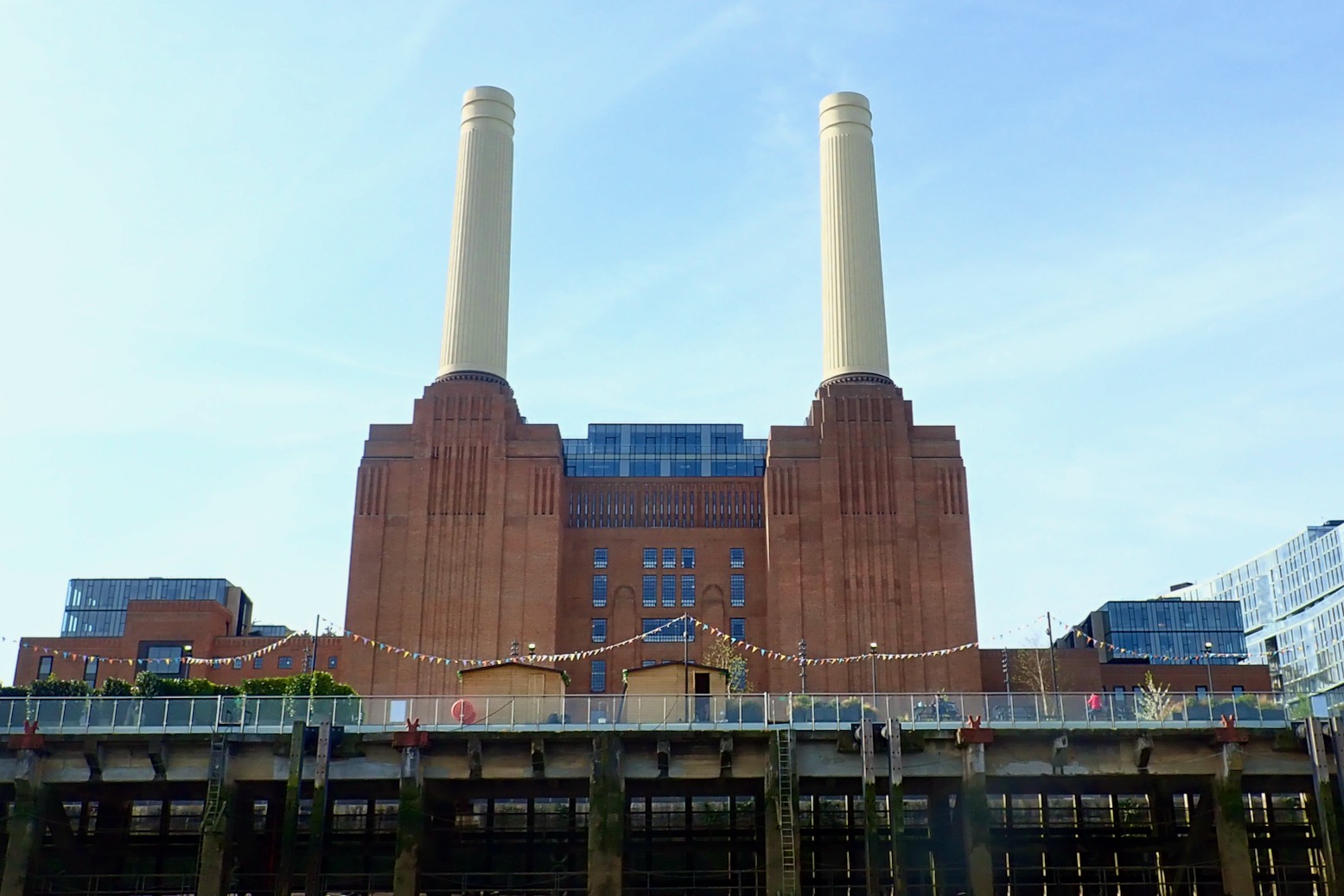
Is Battersea Power Station powering again? I hope someone informed the new residents?
I am reminded of the famous Pink Floyd LP cover from 1977.
People ask: What does the pig symbolize in Pink Floyd?
Along with dogs and sheep, pigs are one of 3 animals represented on the album. The pigs represent people, like [Mary] Whitehouse, who feel they are the moral authorities.
I was only asking!
The latest scandals? Sigh: where to start, but good to see they’re finally getting the flammable cladding sorted.
9am, all is quiet on the river but as soon as you pass under Westminster Bridge things gets choppier.
My P&S camera is barely coping with this eclipsarian light. What a wash out.
Jaunty buildings; journey’s end is nigh
I try some more selfingtons, but the focus is too low
I pull in just before London Bridge. I averaged 5mph for 7.5 miles, but half of that speed was the tide.
Like any packraft, the Revo felt slow at times. You sure miss the g l i d e of a long IK.
But it got me here and weighs just 4kg with the floor pad.
Jeez, I’m glad I got off before he bombed through!
A picture of me rolling up the packraft, so you know I’m not making it up.
I decide to climb the ladder for old time’s sake.
Back in summer 2005 with the old Gumo Sunny (my first proper IK) and before I knew about packrafts
Notice the small standing waves you often get just after London Bridge
What is the name of this famous ship?
And who was the illustrious captain?
I find myself in Borough Market for the first time in years, an Aladdin’s souk of upmarket nosebag:
Paradoxically, in the middle is a greasy spoon and before I know it I’m sat before my annual Full English.
After, I buy a giant sourdough loaf for a fiver and some wafer-thin slabs of Comte and Gruyere at only £45 a kilo.
Can I see you ticket, please?
London Bridge & APaddleInMyPack

Read more about the Anfibio Revo here.

Tested: Sandbanks Style Optimal IK review

See also:
Full drop-stitch inflatable kayaks main page
Advanced Elements AirVolution (similar design)

In a line
Stable, good looking and good value two-chamber full dropstitch IK.

• Reassuringly stable but not too slow
• Easy to get in and out
• Everything in the bag bar a buoyancy aid
• Effortless two-way Bravo SUP pump
• Capacious wheelie-rucksack bag
Three Five-year warranty

• Usual budget paddles; a bit short too
• Minimal underdeck storage
• Thin, hard seatbases
• Floor-mounted backrest supports
• No footrests
• No repair kit included/listed online

What They Say
The Optimal is an inflatable, crossover kayak that truly excels in any water and is designed to feel just like a solid kayak and not compromise on performance. The Optimal will help inspire confidence in with a balanced rocker profile for speed on the flat and manoeuvrability in whitewater. The V-shaped hull is designed for stability and also helps the Optimal cut through the water effortlessly. The rounded stern sheds water easily, making it forgiving in moving water. There are luggage straps at the front and rear so it has plenty of room for dry bags and gear for your day on the water.  

  • Inflated: 427cm long x 89cm wide (14′ x 35″)
  • Deflated 105cm x 58cm x 30cm
  • Kayak 19kg
  • Maximum load 231kg
  • Three year warranty
  • Price: £769 at time of review. Summer 2025: £749.00 sale £499

Thanks to Sandbanks Style for the boat loan

On the Quay

Based by Poole Harbour, iSUP-board brand Sandbanks Style offer a couple of full dropstitch (FDS) inflatable kayaks: the three-panel ‘Explorer’ similar to the Shipwreck Arrowstream I tested, and this two-panel Optimal, also in solo and tandem lengths.
The Optimal resembles (but is not a clone of) Advanced Elements’ AirVolution – as far as I know the first to use this design in 2020. The AquaTec Ottawa Pro (scroll down the linked page) is a similar design.

These types of FDS IKs use two slightly folded dropstitch panels wrapped in a PVC envelope; a ‘clamshell’ design which creates a small, low cavity under each deck. The upper panel is more of an elongated ring; the aperture forming the cockpit you sit inside. It’s similar to Perception’s Prodigy 145 hardshell (right), a kayak design favoured by recreational paddlers who prefer IK-like ease of access over a fixed deck, but don’t want a tippier and more wind-prone canoe.

All tandem Sandbanks kayaks come with a pair of four-part 220cm paddles, a two-way, two-litre Bravo 100 SUP pump, a skeg and a huge wheeled bag to carry it all. The whole package for the Optimal double weighs nearly 27 kilos with room to spare in the bag. The rolled up boat itself seemed less bulky, or at least folded up more compactly than the Shipwreck. The turquoise/white PVC did have a nice, pliant texture which may have had something to do with it. I’ve found the quality and feel of PVC varies greatly from boat to boat.

Inflation took about 7 minutes to reach an indicated 12psi on the pump’s gauge, which matched the reading on my handheld manometer. Using the 65-cm high pump means less stooping and was initially so effortless I thought I hadn’t plugged it in correctly. For the floor I flicked the switch to down-pumping only, but for the top chamber, with a better stance (left) I was able to reach full pressure using faster but more effortful up-and-down (two-way) pumping. I didn’t notice a deflation port on the pump to help suck the boat down for repacking, which is a shame. This is clearly a gangly iSUP pump which isn’t expected to be taken on the water.

Once inflated, the top and bottom panels press together along the edges, sealing off a cavity with the outer hull envelope that wraps around the two panels (see graphic above). In this way it’s similar to my old Seawave, making a side channel where water and debris can collect. The Optimal’s two panels may press together although water and debris got in the channel too. But, compared to most three-panel FDS IKs, you can directly access this part of the boat for proper cleaning.
Measuring up the inflated boat gave the dimensions below; at 440cm (14′ 5″) – all round a bit longer, wider and heavier than what appears on Sandbanks’ website. Plus ca change… Dividing length by width gives an LxW ratio of 4.78 which, compared to the table here prioritises stability over speed, though other factors, not least hull shape and rigidity as well as wind and waves, will influence the latter.

Thanks to glue-free heat-welding the whole high-pressure assembly is very clean with no untoward creases or anomalies. Only the black plastic end-cones stayed a bit deformed. I also noticed that after inflation the floor protruded a couple of inches on one side. But by the time I got back, a little hull flexing had realigned the two panels correctly. Underneath you’ll notice a ‘blister’ in the dropstitch (above right). This isn’t a flaw as some have thought, it’s opposite the floor panel’s inflation valve where there is no stitching.

Straight away you can see it’s not just two flat slabs of dropstitch, but a floor somehow folded up into a shallow ‘V’ to make a keel line (left) which, combined with the deep skeg, ought to ensure the Optimal paddles arrow-straight. The top panel has a similar downturn like the AE AirVolution, to ensure water run off the decks. These ‘clamshell’ angles create a space underneath each deck, but they’re too low to be of much use for storage.

At over 2.3 metres or 7.5 feet long and up to 50cm wide, the cockpit feels roomy for two adults. There are four D-rings on the floor for the backrest straps (but see below), with a four more rings up on the sides to counter-tension the backrests.
A side benefit of the cockpit’s overhanging side rim is you can easily pick up and carry the boat. If there are two of you, use the nicely padded carry handles at each end.

The floor’s shallow V is reflected inside, so any water will pool along the centre line and, depending on the boat’s trim, will run back towards the drain plug hole at the back of the floor. In my opinion this a bafflingly redundant and marginally effective gimmick that gets copied from boat to boat. Either flip the boat over to drain, or position the drain in the stern cone
A rear paddler could benefit from the back deck edge to lean on, and the front paddler might be able to use the edge of the front deck as a footrest. You might also shove a folded bag under either deck, otherwise gear will have to go under the paddlers’ knees or on top of each deck, using the bungy cords. They’re a commonly seen and inexpensive ‘feature’ on IKs, but I’ve never thought it a great place to lash gear that’s hard to access once on the water. As it is, used solo, there would be enough room to stash a camping load low on the wide floor.

Seats are the usual light, stiff foam items, with four, two-point straps and brass-coated? clips to keep the backrest upright and get your position just right. The floor mounted D-rings for the forward straps would be better positioned on the sides, like the rear strap mounts, putting them in line with the direction of tension. Otherwise the backrest tends to pull down as you rest against it.

Thanks to these long straps I was able to fit the seat in the optimal rear-of-centre position for solo paddling, using all four of the higher D-rings on the sides, resulting in good back support. I knew the main problem would be the lack of a footrest and the ~inch-thick seatbase sat on a hard, 12psi floor; within an hour the backside and legs would be numb and the back sore from slouching. (I notice Sandbanks’ three-panel Explorers do come with footrests.) Expecting this, I’d brought an inflatable packraft seatbase to try-out, as well as a strap to rig up a footrest off the floor D-rings. Pushing off some kind of footrest stops you sliding down the seat, so enabling a proper upright paddling posture.

The 220cm four-part, alloy shaft paddle weighs around 950g and has three blade-angle adjustment holes about 45° either side of flat. It will do the job in calm conditions, but the soft plastic blade easily deforms. Expecting a mushy budget paddle, I brought my own Werner paddle.

Underneath the stern goes the slot-and-peg skeg. At 20cm high, combined with the V hull, the Optimal ought to track like a TGV.
There’s no conformity label stating recommended pressures, payloads, CE stamp and so on, but I noticed a serial number (‘HIN’) at the back. This was a used boat, but there was no repair kit in the wheelie bag pocket, nor is a kit listed online, but the Optimal comes with a three- (now 5) year warranty.

On the Water

Putting in at Salterns jetty on the northeast shore of Poole harbour, I had various plans for my test paddle. Maybe a five-mile run out through the narrow harbour mouth to Old Harry Rocks which I’ve been keen to revisit. Or at the very least, a lap around Brownsea Island; about the same distance.
But on the day a chilly, 20mph NNW wind reduced my options. Even a quick crossing to Brownsea would have made getting back tricky in an unfamiliar boat, especially as the peak of a spring tide would be running southeast with the wind by the early afternoon.

So I set off into the wind, heading towards Poole. Taking it on the nose with the Werner paddle was an effort, but with no fetch, the water surface was only a little ruffled and the Optimal cut through at a up to 4kph. But as soon as I turned a little off the wind the front was pushed round and required a lot of correcting (as would any buoyant and tall-sided IK on a day like today).
I reached the shelter of another marina where above me the wind whistled merrily through a forest of masts, and the orange windsock waggled about a few degrees below horizontal.

Here I decided to rig up a footrest strap to help brace myself in the seat and improve my draw, then set out with the four-part paddle. I could feel the blades flexing as soon as I left the shelter of the marina and had to dig in, and also found the 220-cm length a bit short; at 92cm or three feet, the Optimal is as wide as a packraft. These budget four-parters with riveted-on blades are great for beginners and mellow paddles, but over time the joints will loosen up, creating even more slack. After a few minutes I swapped back to my stiff Werner.

Windy

The wind flattened the water with no chop to speak of, so I tried paddling across the wind – tricky in any paddle boat. The deep skeg meant the bow pivoted downwind, requiring masses of correction. Better to know this now than when trying to get back from Brownsea Island with a train to catch, so I put that idea to bed.
Any IK would have struggled to hold its line broadside to the gusting 20mph wind, but if the plastic skeg was trimmed to half its length I suspect the hull would be more ‘balanced’ across the wind, while not sacrificing any tracking. This goes for any of the current crop of IKs with these overlong slot-in skegs. A spare skeg might cost a tenner, so the experiment poses little risk.

Turning the boat back into the wind was a huge effort; I was having to yank on my paddle from the middle to get it to turn. Once back on line I carried on up to some buoys and tried the boat downwind where it held it’s line well; the deep skeg and the flat water meant little weathercocking (back end coming round). As with any kayak, wavier conditions which momentarily lifted the skeg out of the water would have been a different matter.

I headed for a park on the north side of the harbour to hop out and see how the Optimal handled without the skeg. Coming back downwind, the boat tracked no worse than my unskeged Seawave might have done. You can’t paddle quite as hard while maintaining a straight line, but you can easily weave tight figure-of-eights in and out of some buoys. On a river with a current, the added manoeuvrability (and clearance) without a skeg might be a better set-up.

I also inflated my packraft seatbase (left) to see if the raised position and air cushion would be more comfortable. But on the hard seatbase and floor, it merely wobbled around like a jelly and made things worse. I know from similar accessory pads for motorbikes that you want just enough air to support your weight, but on a surface with no give it just didn’t work. A better solution would be to add a foam block similar to what came with the Arrowstream (but which on that boat I couldn’t use as the raised height made it unstable).

The wind was blowing me in the right direction anyway, but I decided to take back control and slip into what maps call the Blue Lagoon, an inlet ringed by houses with private jetties. Maybe ‘Blue Lagoon’ was cooked up by estate agents; it’s said this side of Poole Harbour has the highest density of Britain’s most expensive houses.

Appropriately, the tide dropping through the bay’s narrow entrance made accessing the Blue Lagoon tricky. I squeezed in along the edge of the current which was a good demonstration the boat’s agility and responsiveness. But once inside things were already getting too shallow, so I backed out and threw myself into the modest tidal race then ferried across it just to see if I could. Maybe the lack of a skeg (but with the footbrace) made this sort of manoeuvre easier.

Test route

I refitted the skeg and drifted south round to the lee side of my Salterns marina put in where all was calm as long as I kept close to the wall. Overall, with a skeg was better but as said, I’d try chopping a spare down by half.

After ticking off a few selfies with the camera balanced on a buoy, I only just made it back round the corner to the jetty against the funnelled tide and wind, then bounced over the clapotis to where the sea had already dropped a foot, exposing Poole Harbour’s notorious mudflats. As newbs on a foggy day back in 2005 (left), we’d got caught out on one of my very first IK paddles in a Gumotex Safari.

Once on shore the Optimal rolled up into the bag easily, though having both valves at the same end would make purging the air in one roll easier (or having a pump with a suction port). Had I the chance, I’d have rinsed it by resting the bow up on something, open the stern drain and then deflate the floor. This ought to give you access to the otherwise sealed-off side cavities where debris and water collect. Then hose from the top and most of it will flush out the drain hole before a wipe down.

It was a shame not being able to get stuck into a proper paddle to somewhere, but I enjoyed my brief spin on the Optimal. For £769 at the time (£499 in 2025) – about £150 less than similar, heavily discounted Ottawa Pro doubles you might find online, and nearly half the price of the AE AirVolution, the Optimal is a solid double FDS which would work well solo once you add a footrest tube (easily done using the floor D-rings). Budget paddles and thin seats are what you’d expect at this price – as it is, comfortable seats are an issue with many FDS IKs. But the boat looks well made and the pump is easily up to the job. Plus you’re buying from an actual UK shop you can go and visit, not some shouty, sell-it-all web-based entity with flakey customer service.

As FDS IKs go, I think I prefer the two-panel ‘clamshell’ design. It feels more sophisticated, or is dynamically no worse than the the masses of three-chamber FDSs which sell for a bit less. The crux is stability which most recreational IK users rightly prioritise (or soon learn to). The Optimal may have that to excess, but as I also found on that very first paddle in 2005 (left), better too much than not enough.