See also
Packboating in southern France
Slackraft Main Page
Bored already? Part 2 – Ardeche
Includes photos by Steve L

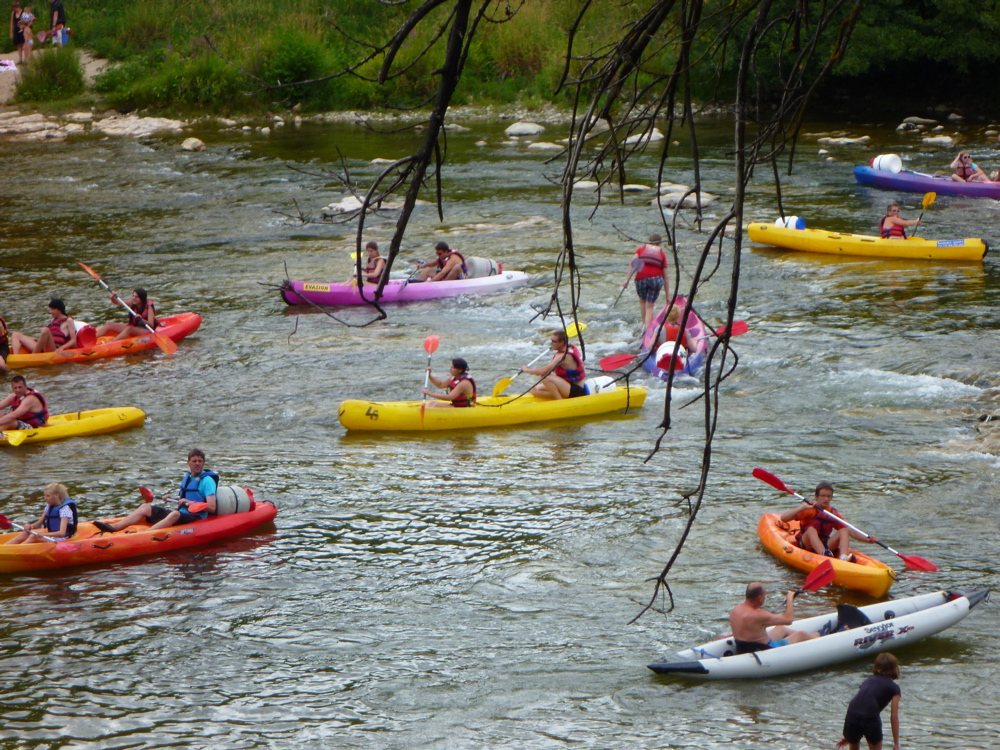
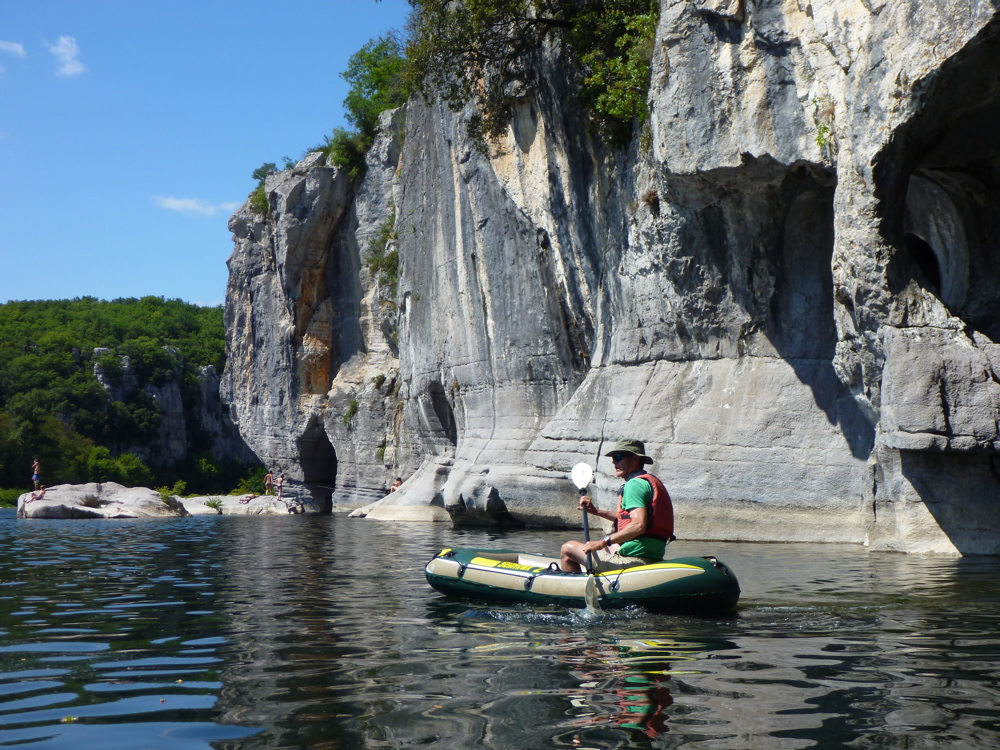
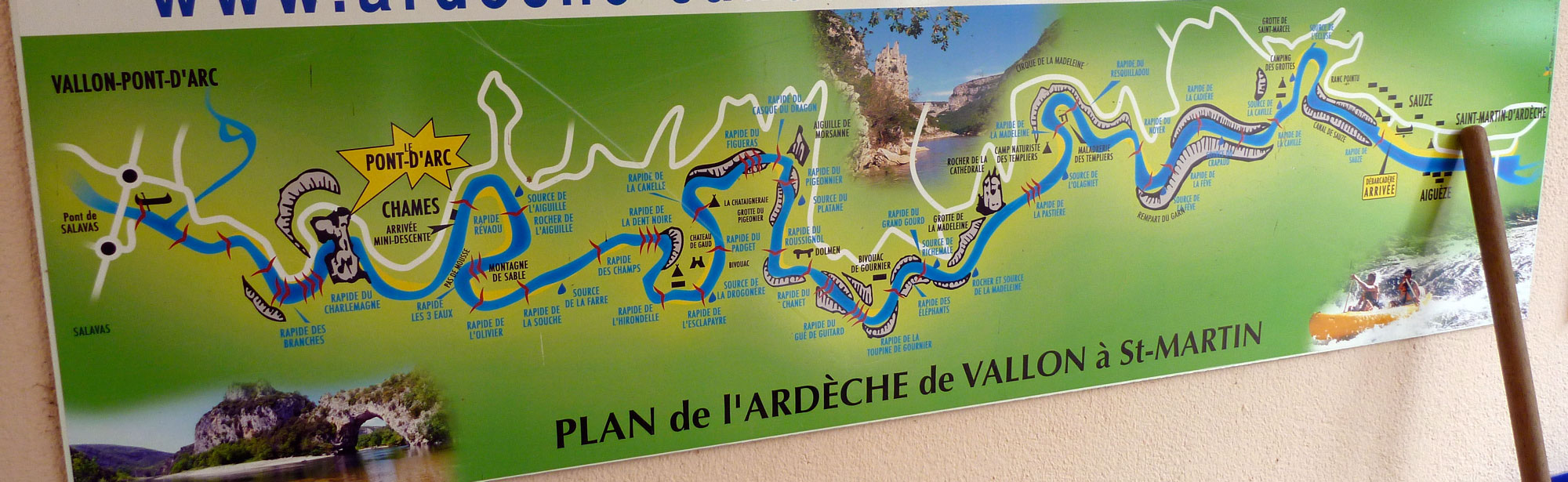
The Ardeche Gorge was the last big river I’d yet to do in the Massif Central and is one of France’s best known family-friendly kayaking adventures. Some days in high summer you can run from bank to bank, skipping from one rental sit-on-top (SoT) to the next, just like Tarzan across a crocodile log jam. That’s because the main Ardeche Gorge is a fabulous run of around 32kms through a wild, meandering 1000-foot deep limestone chasm from Vallon Pont d’Arc down to St Martin d’Ardeche (Sauze; see map), and includes enough easy white water action to keep you alert.


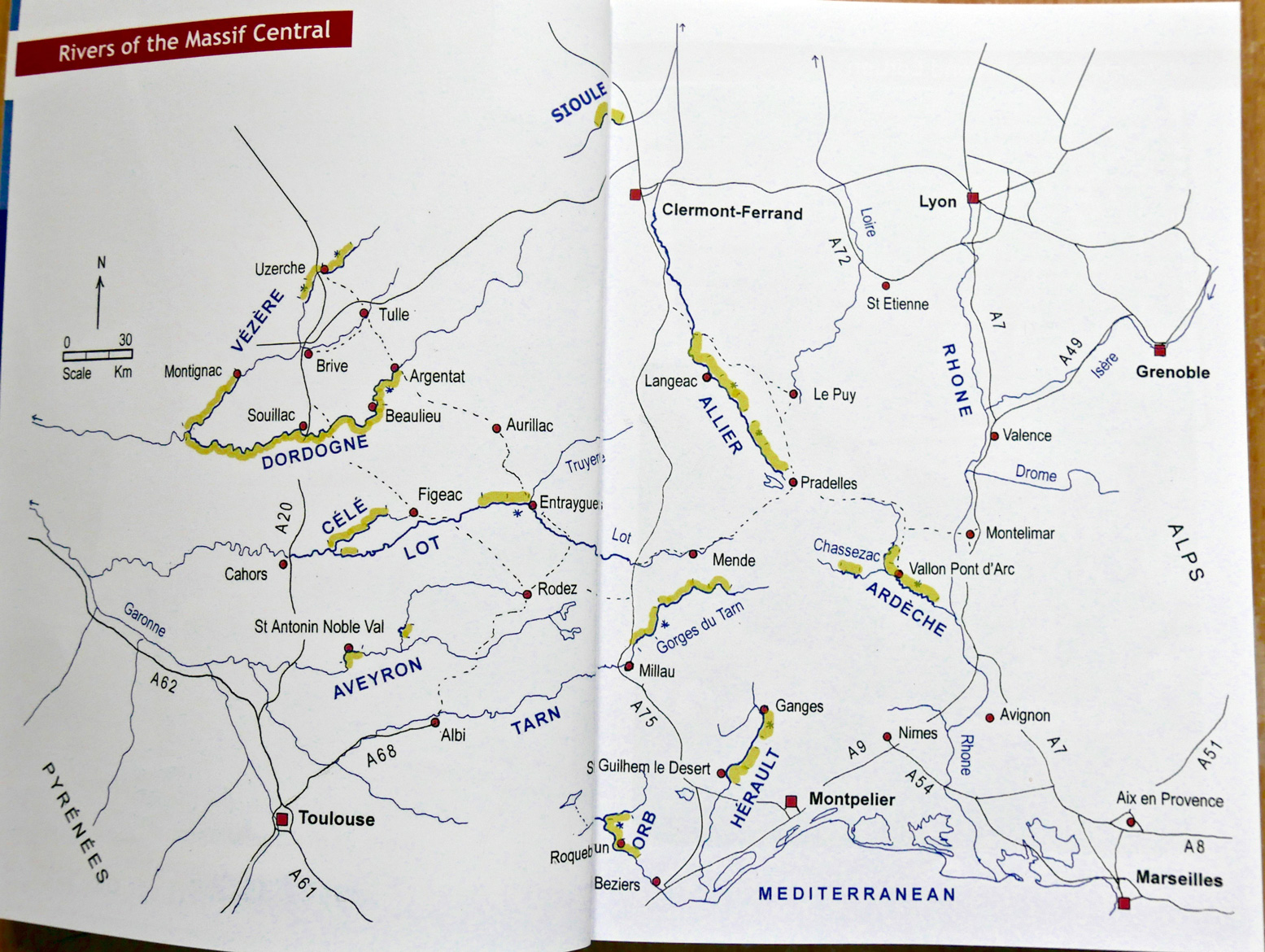
At either end it’s also easy to string it out for a few more days. We chose to start up at Les Vans and follow the less busy Chassezac river east to its confluence with the Ardeche for a day or two. We also planned to continue past the end of the Ardeche Gorge at St Martin for another day to Pont Saint Esprit from where there were buses back to Avignon.
Doing it in my packraft seemed like a great way to put the wind up the Frenchies, and I persuaded kayaking chum Steve that his £40 PVC Intex Sea Hawk II dinghy was operationally indistinguishable from my more expensive Yakpacka. We’d trialed it on the Medway back in the UK and, apart from a leak, it paddled well enough.
In just six hours we trained from London to sunny Avignon, and by 7 that evening were tucking into a pair of steaming pizzas and an Orangina at the campsite in Les Vans. How great it was to be back in La Belle France!

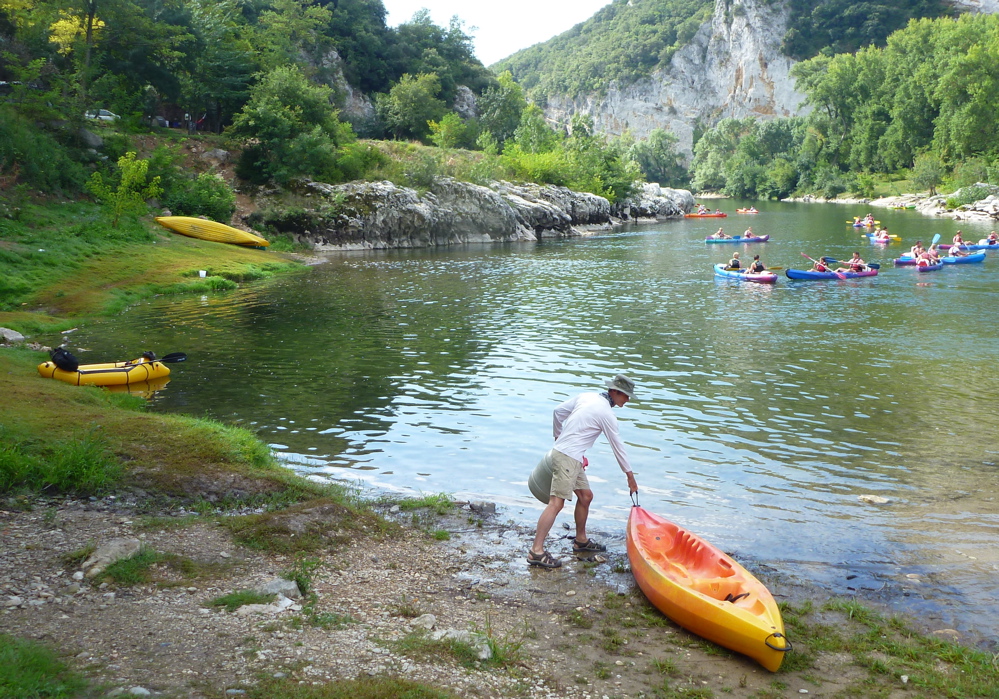
Next morning a 20-minute walk brought us to the bridge over the Chassezac where other kayakers were putting in their rentals (left) for the standard, easy 8-km run down to Chaulet Plage. That was our undemanding plan for that day too, as Steve was going to have to experiment with getting the most out of his Intex.
The start was a bit of a scrape and within sight of the bridge, heel-bashing the inflatable floor on rocks had pinched and gouged holes right through the Intex. It was just soft PVC after all, not a coated fabric as I thought. It still floated fine on its two big outer hull chambers, but as the day wore on more holes appeared until Steve was sitting in- and hauling a few inches of water.
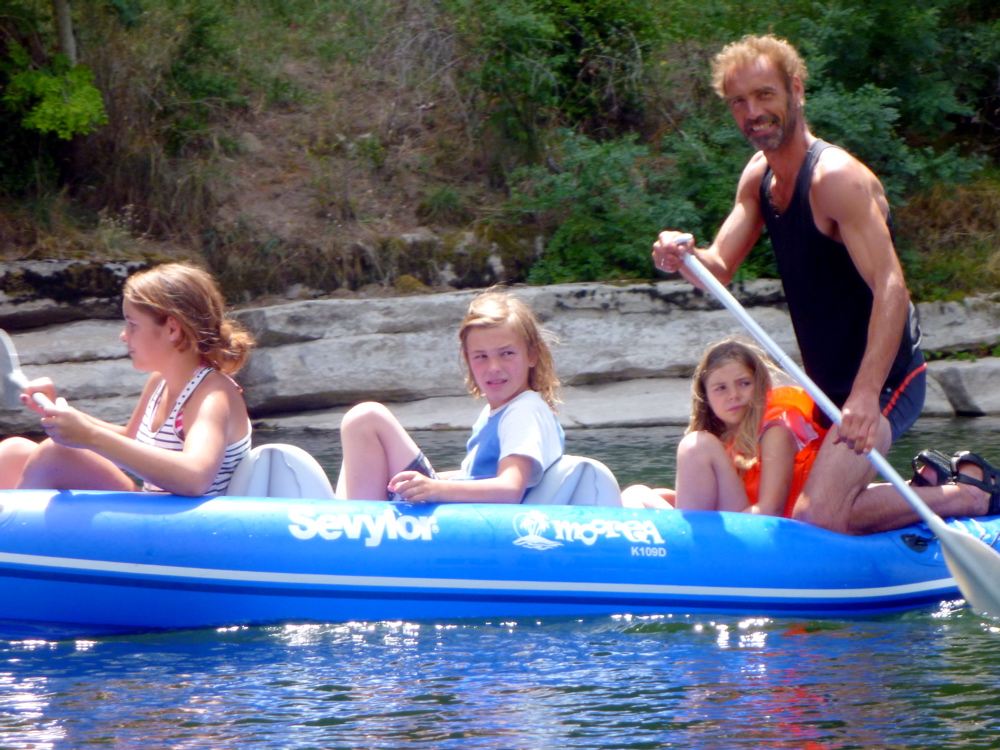
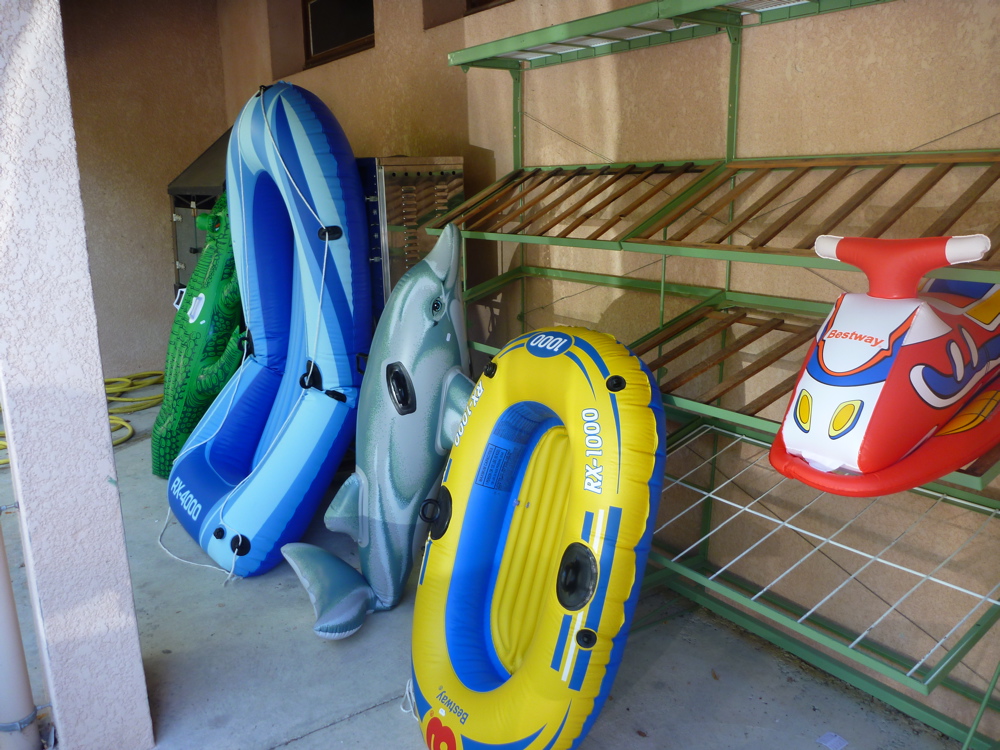
This section of the Chassezac is busy with riverside campsites and holidaymakers in rental SoTs, as well as a few owners, mostly in Sevylor IKs. We met a guy who’d had his Sevy 10 years with only one flat, as well as a Brit couple enjoying their Sea Eagle. Perhaps these brands aren’t so bad after all!? At times it was like passing one long seaside beach with kids shrieking and bobbing around on inflatable dinosaurs, dolphins and teapots, almost all made by Intex.

Steve rode his Boat Hawk stern first, then bow first, but it made little difference, the semi-swamped dinghy steered like a wet mattress and required as much effort to paddle, while still floating in a legal sense.
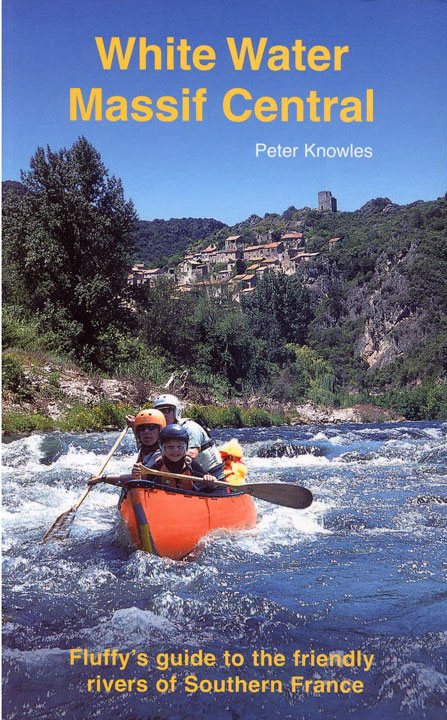
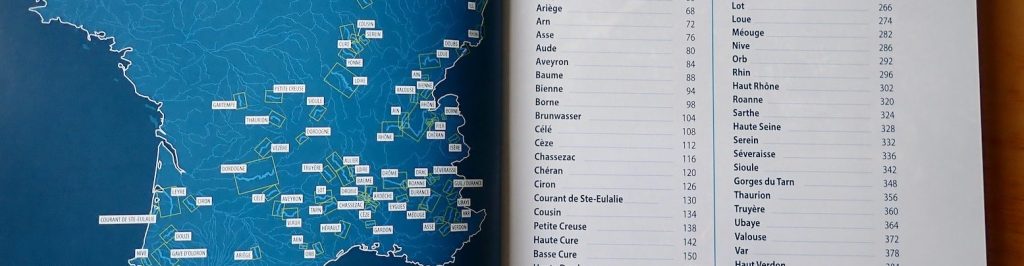
But despite what the Massif canoeing book (right) said, none of the rapids along the Chassezac caused us or most others any concern, and we arrived at Chaulet Plage camping that afternoon to assess the damage to the Hawk’s floor. It was pretty mashed up (right) and his small roll-top dry bags had leaked too, soaking almost everything and giving a soapy tang to the coffee for the rest of the trip. Duct tape would have been a quick fix, but with none around, we dabbed on some glue and a few patches on the bigger holes.
With the Intex so easily damaged by normal paddling, we were unsure it would last, but you couldn’t take a rental SoT from the Chassezac to the separate Ardeche which was another day away. To get there was a 20-km stage of less frequented river but as long as the main chambers held out, we’d make it to the Ardeche rental outfits to finish the trip as planned.
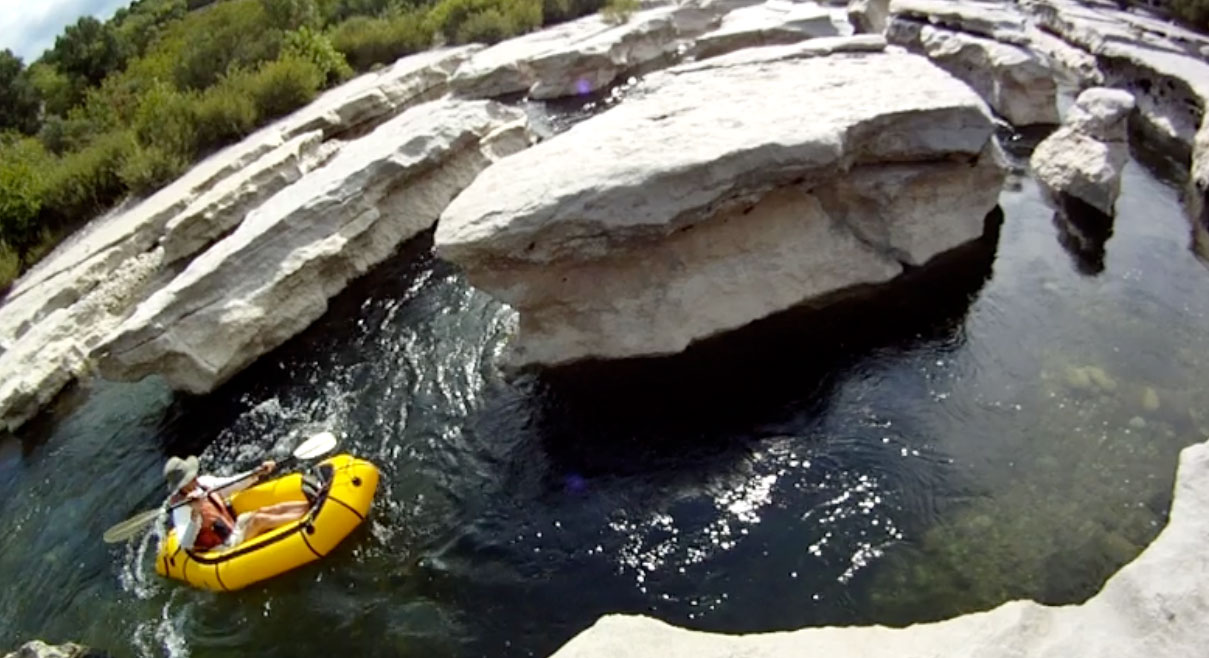
Day two started with a fun maze of limestone pavement (left) to navigate through; we took a few runs in the Yak. After all the playground commotion of yesterday, beyond lay a quiet, rural river with just the odd angler, far from the dreary expanse of ‘dog water’ the Massif book warned of. We nagotiated ankle-high riffles, waded occasional shallows, watched masses of kites overhead and came across remains of old fibreglass canoes (below), a 2CV chassis and stick sail boats.

The lunch stop revealed that Steve’s plan to sit out of the swill on his one good drybag had backfired: that too had got holed with his weight over the floor, so all was soaked yet again. Warm rain fell that afternoon as an easy portage around a strainer brought us to the Ardeche and a return to some sportier rapids. Down here I had a spell in the Intex and could see why Steve was gagging for an SoT. It was like paddling a sack of moldy potatoes and a new split was opening up between the floor and the side. The Sea Hawk was decomposing before our eyes.
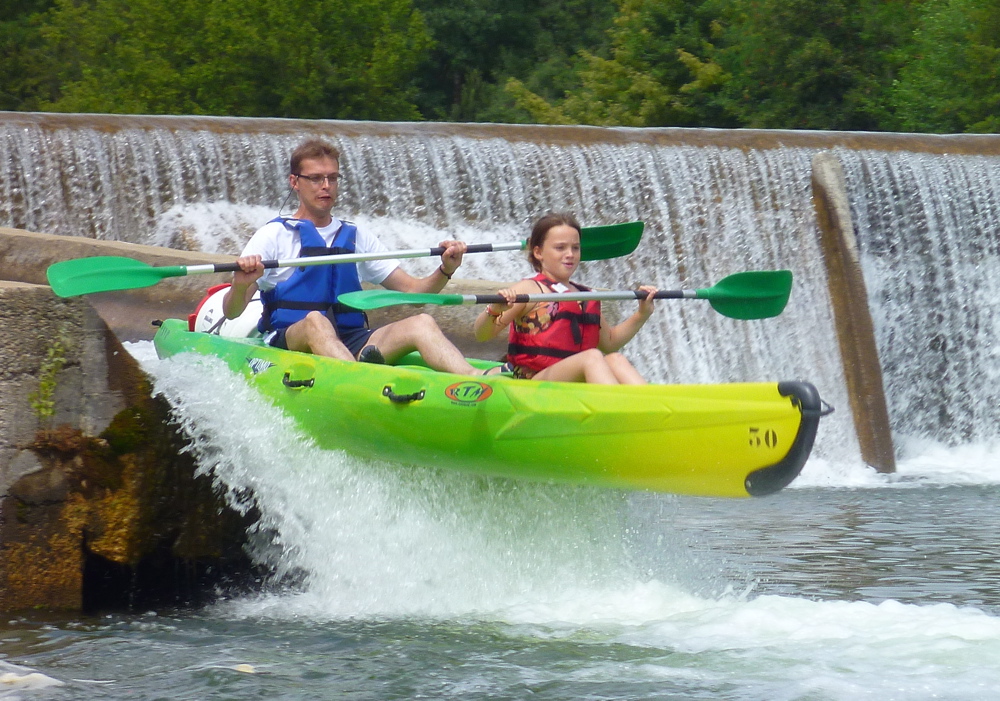
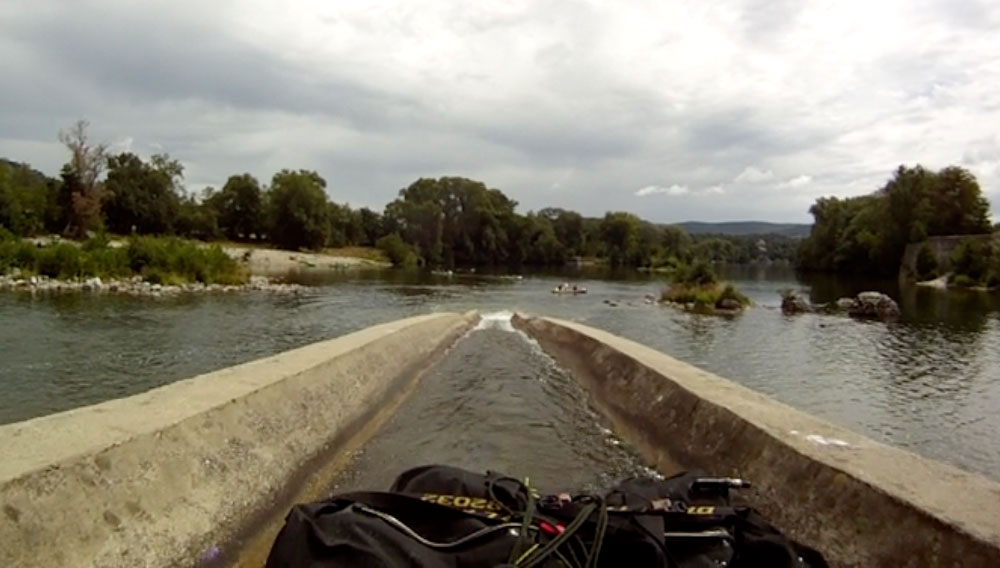
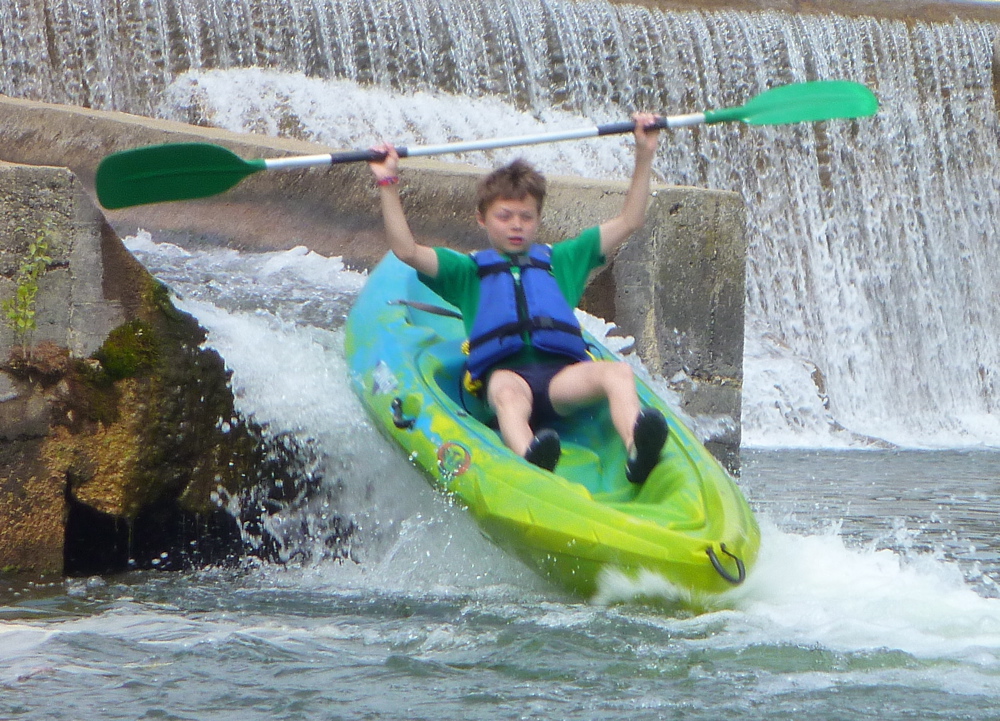
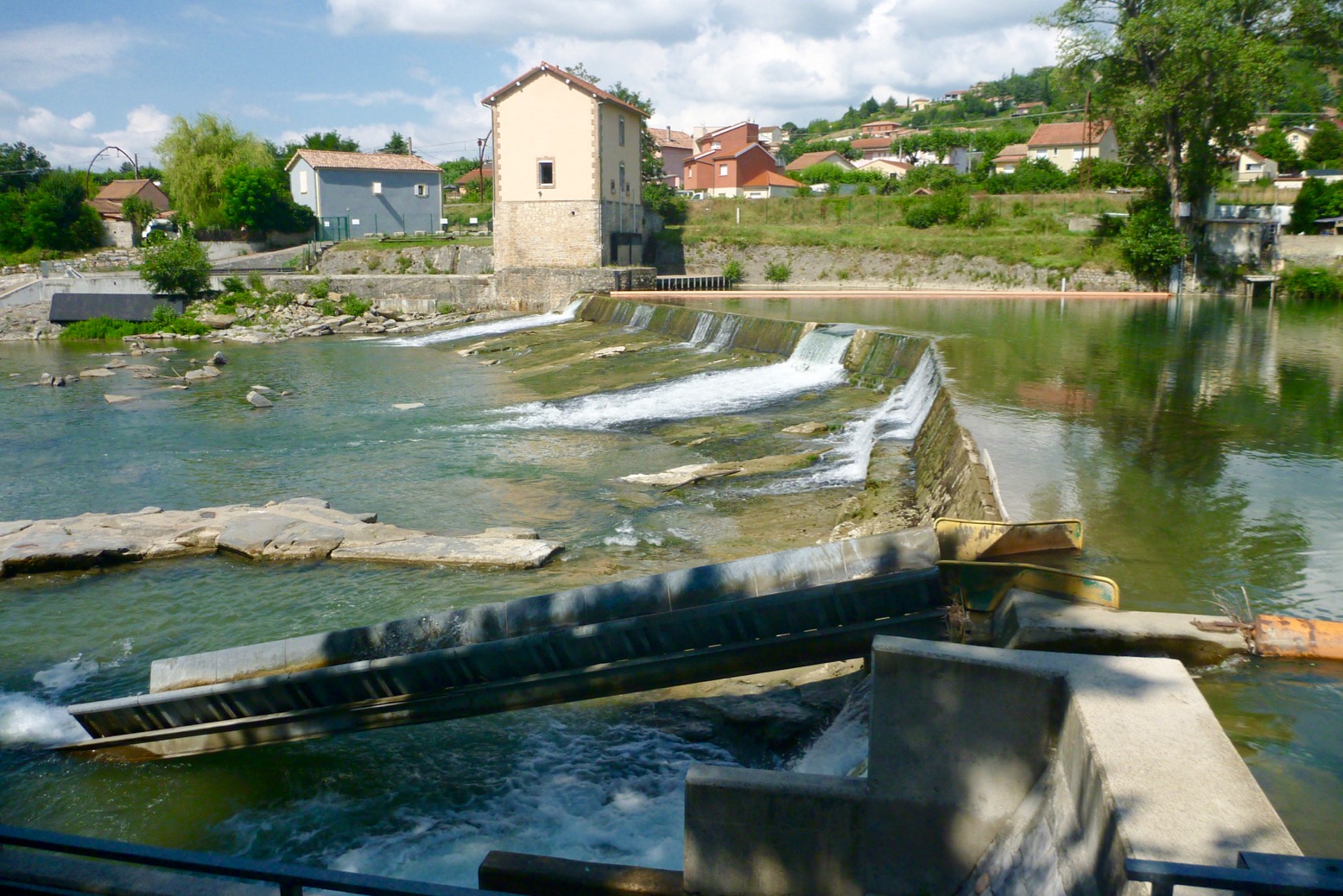
Downriver an old mill house and a false horizon were a sure sign of a weir, one with hopefully a glissiere or canoe chute running off it (left and below). If this was England there’d be red flags, safety booms and neon arrows. Here in France you get just a couple of tiny green markers on the weir wall identifying the discrete entrance to the chute. Miss that and you’ll land on your head. By the road bridge to Vallon were several holiday campsites with an adjacent canoe rental outfit, so we found one with a space and spread out to get dry.

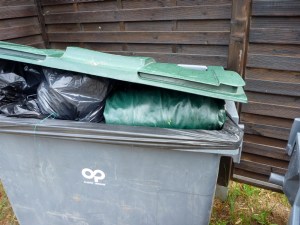
Next morning the mangled Sea Hawk was rolled up and stuffed into the dumpster, but half an hour later it was hauled out again. We could only rent an SoT here if we joined a group. Independent rental was possible elsewhere, so the wretched Hawk was dragged back to the river bank, inflated and loaded up. Another glissiere awaited us just downriver and this one managed to put a small hole in the outer hull; not such a trivial problem as the floor. Steve bravely hauled his sodden water mattress onward, stopping every once in a while to pump it up. Now he sat on the back and had his gear out of the water on the other end, like a packraft. The end was surely nigh for the Squawk, even if it was now Monday and Vallon would have shops with duct tape. I tried to persuade him to tape the Sea Hawk up like a gimp, and keep taping until we got to St Martin, but though it makes a good story, where’s the fun in that? I wasn’t paddling it and as it was the boat handled like a wet paper bag in the rapids which made further damage inevitable. And even on a good day it was just too wide to paddle comfortably – the one-man version may have been a better choice in that respect.
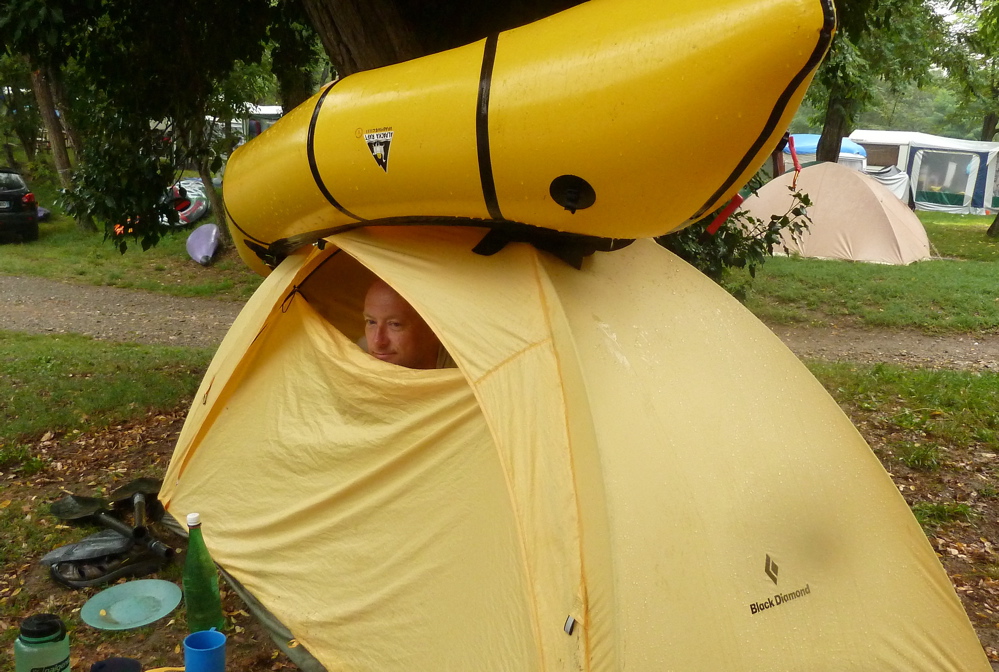
Right near Vallon were a couple of portages, one surprisingly kayak-unfriendly, the other a boat drop where I discovered to my pleasure that my Watershed bags were up to the job. Downriver the bank was packed with campsites and kayakers at the start of the main gorge stage. This time of year all camps were full, but a chance riverside encounter with one patron got us a spot right over the river. The next day it rained, so we sat in our tents eating and reading, me with my Alpacka on my Black Diamond Lighthouse tent (right) which had become rather porous. But despite the rain, kids were still gambolling around in the river below late into the night. Although two weeks in a packed holiday camp is not my sort of holiday, it was fun to see so many people having fun.
By Thursday we were keyed up for some red hot paddling action. The Intex was binned, this time for good, and with Steve in his SoT, we headed down to the famous Charlemagne rapids just before the famous Pont d’Arch, were a crowd of spectators were already assembled to enjoy the daily carnage…














 Inflatable Kayaks & Packrafts