Category Archives: Packrafts

Packraft preview: Anfibio Rebel 3KL, Sigma TXLB+

TXL+ main page

My 2.8-metre TXL+ (left) does it all for me these days, and I was just thinking that, for what I do (less hardcore, such as it was), I don’t miss my IKs at all.

What my TXL+ loses in sublime kayak glide, it gains right back in being able to be easily carried following a day paddle. Being wind-prone, venturing too far out to sea in any inflatable, IKs included, takes some nerve when alone.
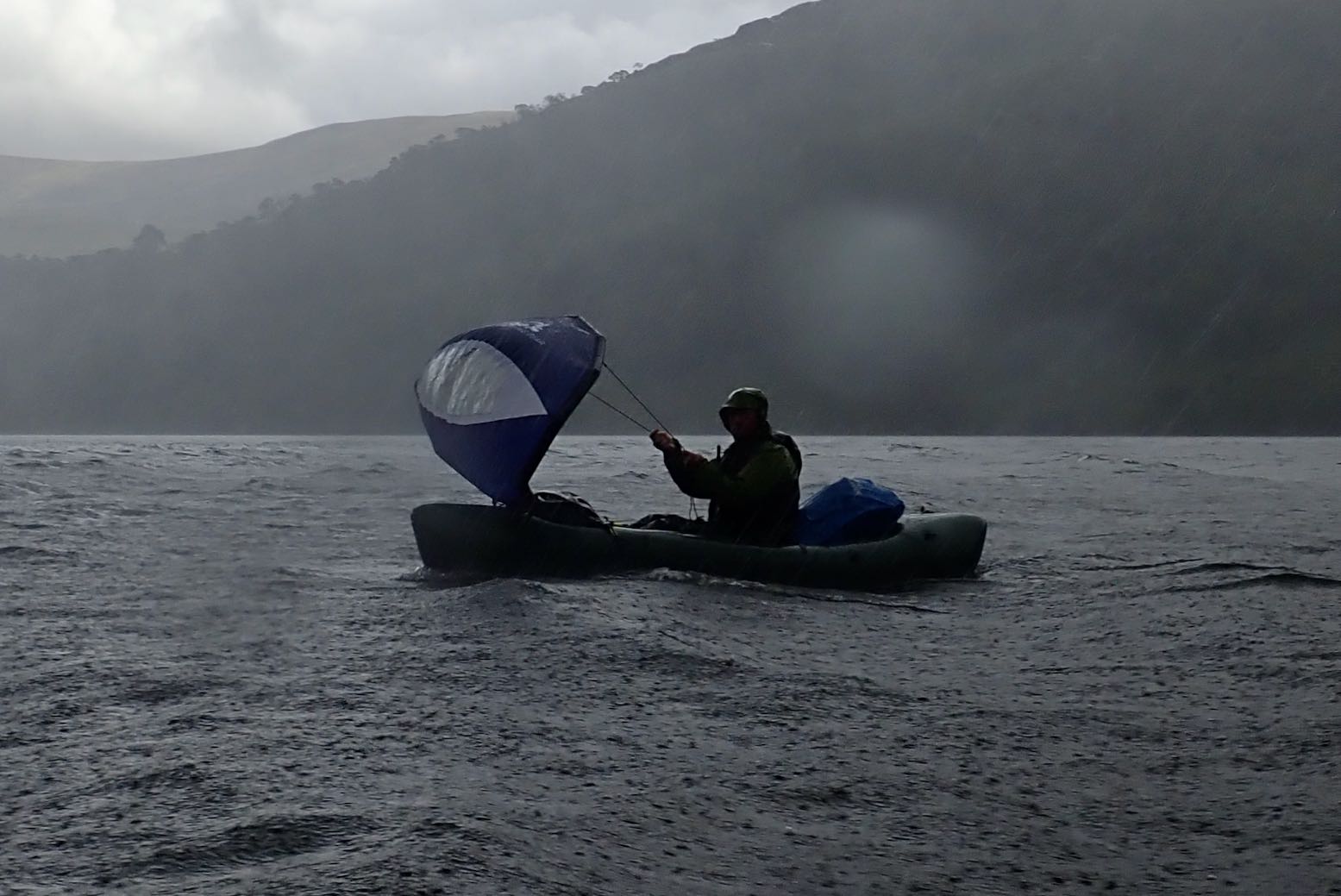
Of course overnight trips including tough terrain, like our Knoydart paddle, will require a stiffer back or porters for these heavier, bulkier boats – or you plan for a sustainable paddling/walking ratio, ideally including sailing where possible (see video below).
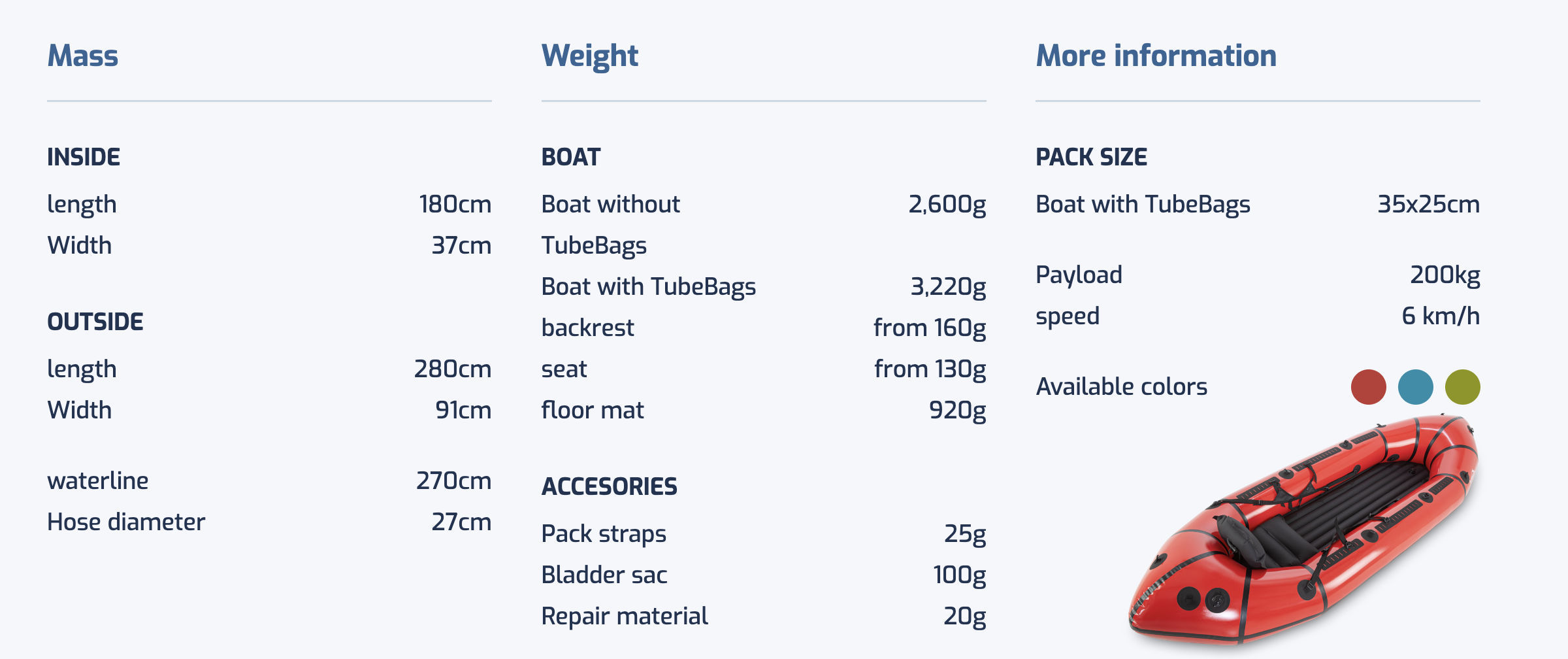
Long packrafts of around 2.8 metres offer more packing space and less annoying bow yawing, have a kayak-like, central solo paddling position with a level trim, but can fit a second paddler or a bike, as well as reach speeds up to 6kph. All for less than a kilo in mass. They are Pakayaks: the best of both worlds.
Two newish ‘packayaks’ from Anfibio caught my eye: the Sigma TXLB+ and the Rebel 3KL which has been out a few months. With masses of (optional) side storage, both are suited to multi-day, rough water expeditions. One bails, the other decks and both are ‘symmetrical’, ie: the bow and stern are identical, like a canoe and all current Anfibio boats apart from the Revos and Nano RTC. Some reviewers seem to think this symmetry contributes to faster speeds. A longer waterline certainly does, but identical bows and sterns merely simplify assembly and reduces costs – symmetry has nothing to do with speed (or Alpacka Raft have got it all terribly wrong!).
I’ve not tried either boat but as usual, that does not proscribe me from opinionating on pictures ransacked from the Anfibio website.

Sigma TXLB+ The Expeditionist
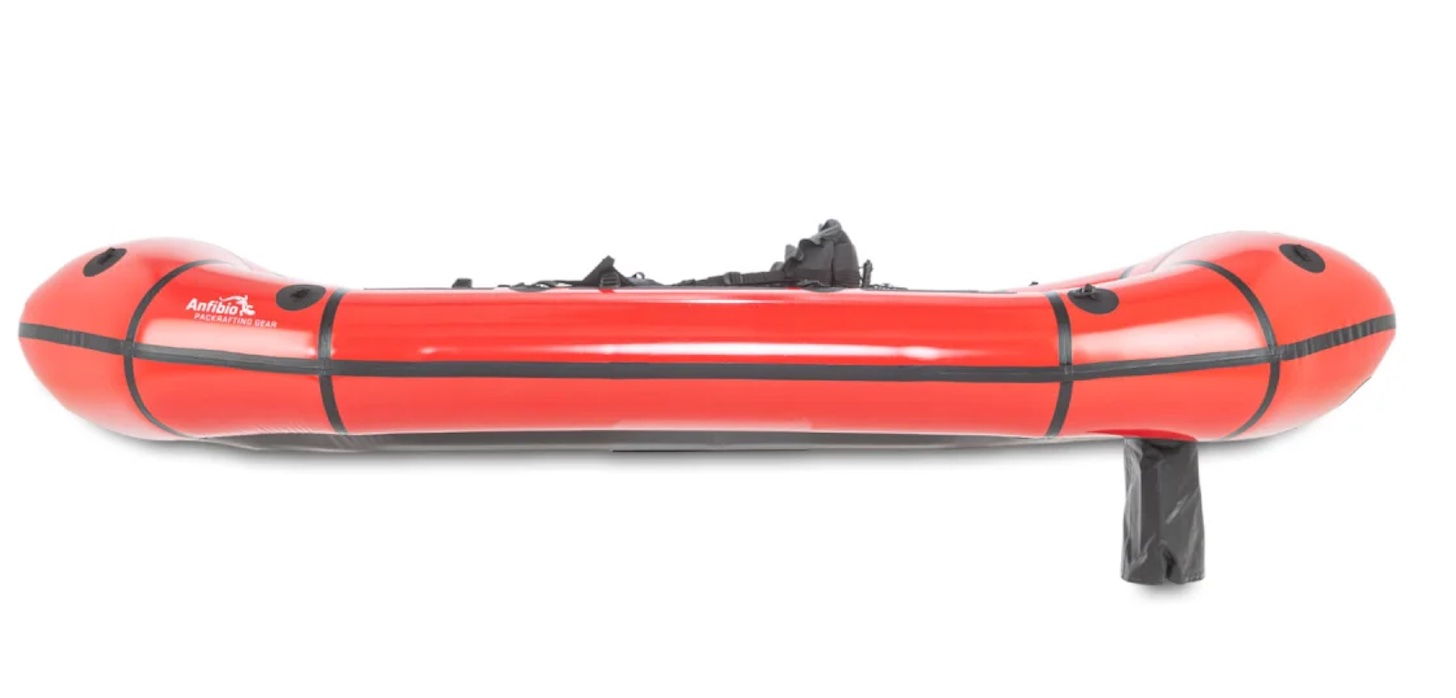
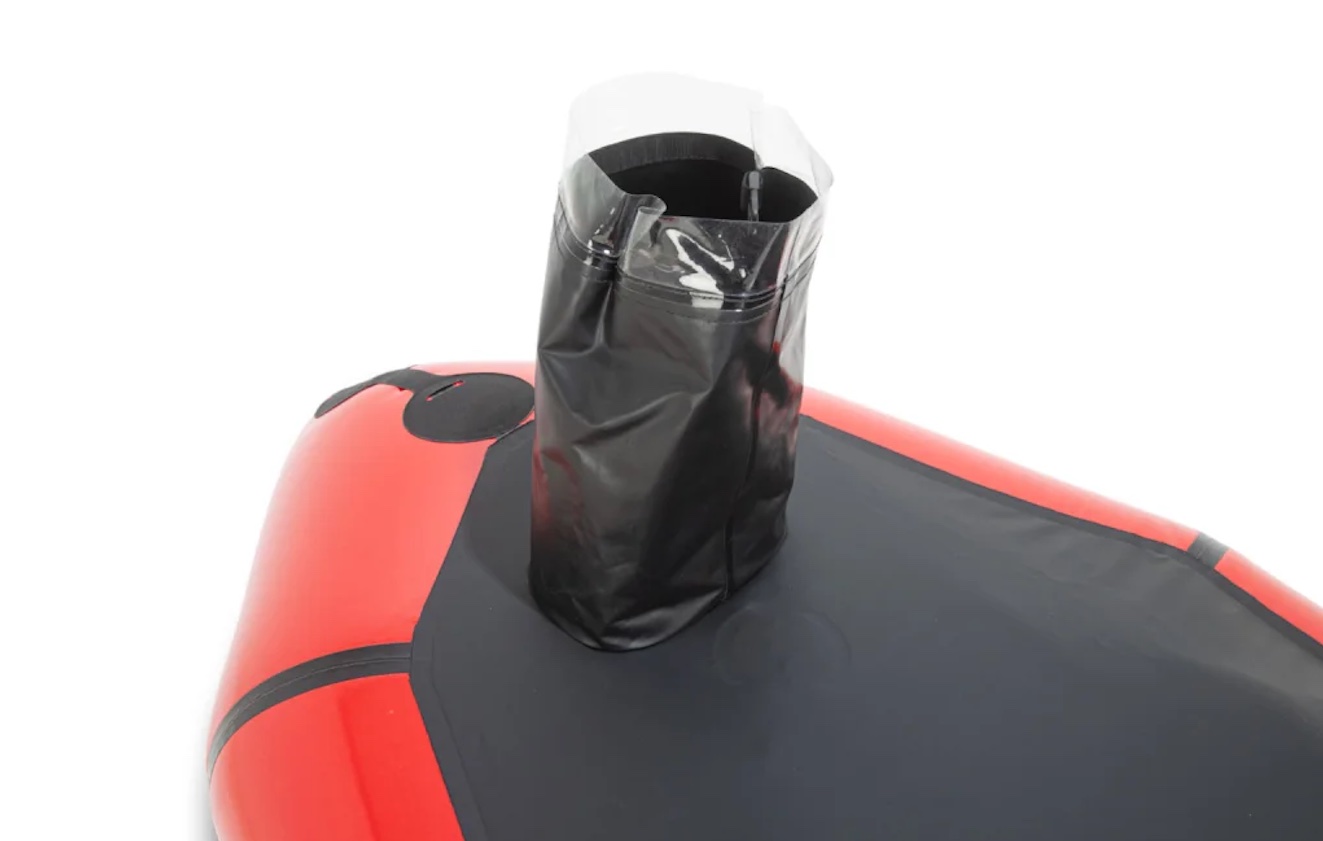
The single colour TXLB+ is just like my blue boat with optional thigh straps, floor matt, strap attachments and massive and secure TubeBag storage, but with the roll-up self-bailing drain hose we first saw on the 2022 Revo white water packraft. I never got to test that system properly, but the principle of flowing water sucking the swill out sounds plausible. As it is, you’ll be up dry on a floor and seat anyway, so it’ll take a lot of splashing to swamp the boat.

Is it needed? Not for what I do, but mileage famously varies from paddler to paddler. The hose can be rolled up and tucked out of the way (left) when not needed.
One thing that didn’t look right is the skeg back in the ‘old’ solo-packraft position (left) so as to be out of the way of the trailing hose. This placement works fine on normal, back-heavy packrafts with the paddler’s weight at the stern. But as I soon found with my first green TXL (see video below), it is less effective with centrally positioned padders because the boat floats level. And I imagine it might work even less well with the hose down.
I suppose you could say when using the self-bailing feature in white water, you won’t be using a skeg. And on flatwater you won’t be using the drain but could do with the skeg which will work OK. As for rough seas when you might want both – who would go out and do that?! One answer could be a bigger ‘sea skeg‘ option, like I’ve been saying for years. Or, on the TXLB+ simply remount the regular skeg in front of the drain.

Rebel 3KL ‘The Longliner’
I’m not sure about the 3KL’s blue and green (“… should never be seen”) colour scheme. Bring back the delicious lemon and olive, like my old 2K. But the 2.72-m ‘Longliner’ is just 8cm less than a TXL and a viable decked longboat comparable with the zippy MRS Nomad S1. The deck is permanently fitted which means it’s solo only, but that’s what most do most of the time.

I was never that keen on my fragile decked packrafts from MRS, Alpacka or Anfibio – just another thing to damage, though I never did. I barely used them but one time rushing down a windy loch in pelting squalls, it sure kept me drier than matey in an undecked Nomad (left). He got so drenched and waterlogged, we had to stop early for him to tip out and wring himself out like a flannel.
You don’t have to zip up every time: the deck with integrated skirt rolls off to the sides, and a vital grab loop ejects you fast if you tip over. (Never happened to me in all my pack years).

I like very much that Anfibio are now using the so-called Performance BackBand – aka: an SoT foam backrest which I’ve been retro fitting to my packboats – IK or raft – for years (years, I tell you!). The lighter but wobbly inflatable versions which came with my TXLs got fed to the goats before I ever used them. Yes, you need inflation for supporting your weight on a seat base, but a backrest wants to be stiff and supportive, snugging into your lumbar curve while ideally, you press against a footrest or the front of the boat. Doing so really enhances boat control and connection.

TXLB+ or 3KL. Which would I choose?
Neither, thanks for asking ;-) My deckless, drainless TXL+ with self-fitted thigh straps and an SoT backrest covers all my needs. Just like IKs, I like that it’s dead easy to get in and out. And that video above is about as ‘out there’ as I ever like to get. Water coming over the sides was not an issue that day. Going straight was.
If it’s cold or rainy I’ll wear my drysuit and onesie or surf Netflix. And if it’s coming over the sides then I either badly misread the forecast or am engaged in some lovely southern French white water in the balmy summertime when pulling over to a bank to flip the boat dry is all part of the fun. I suppose I’d take the decked 3KL for cosy winter paddles. They just need to sort those mixed colours out. Alpacka used to have some great combos.

Still, it sure is great to have all these choices!
Anfibio Rebel 3KL Longliner
Anfibio Sigma TXLB+ Expeditionist
– both with optional Tubebags, imo the best way to carry heavy loads securely and reliably without compromising hull integrity.

How does this work then?

Packrafting TXL: Kwikie around Hamworthy

With the car in for an MoT at Kwik-Fit in Hamworthy, it made sense to do a Poole harbour paddle rather than go home or hang out. Kwik-Fit is close to Lytchett Bay, an intertidal embayment or tidal inland lake crossed by the London-Weymouth rail line spanning a narrow outlet. A 10km lap from there out into Wareham Channel and back into the adjacent Holes Bay (another embayment with a narrow pass under a rail bridge) might be possible in the time I had. If not, I could hop off anywhere and walk back to the garage. That is the appeal of pack boating!
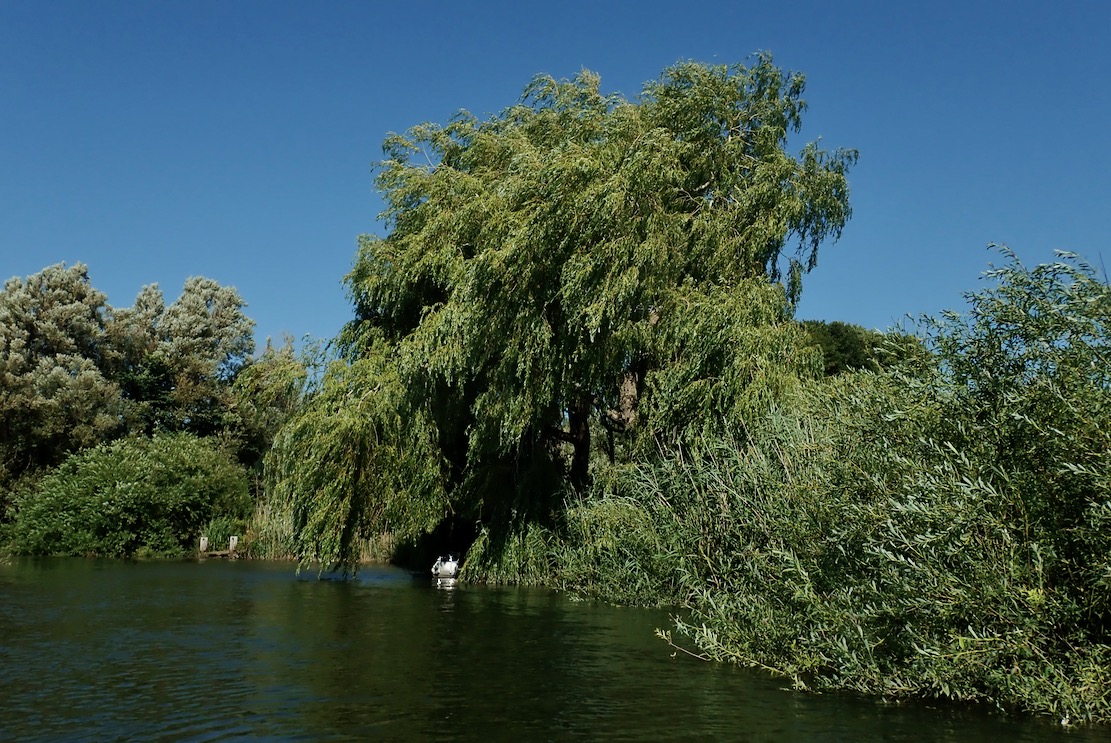
This route – out one tidal channel and in via another – had similarities with our lap around Hayling Island a few years back in the Seawave. On that occasion we had to go full steam against the incoming tide to get out of Langstone Harbour back into the Solent to close the loop. This Poole loop would only require a 500-m walk from Holes Bay shore back to Kwik-Fit.

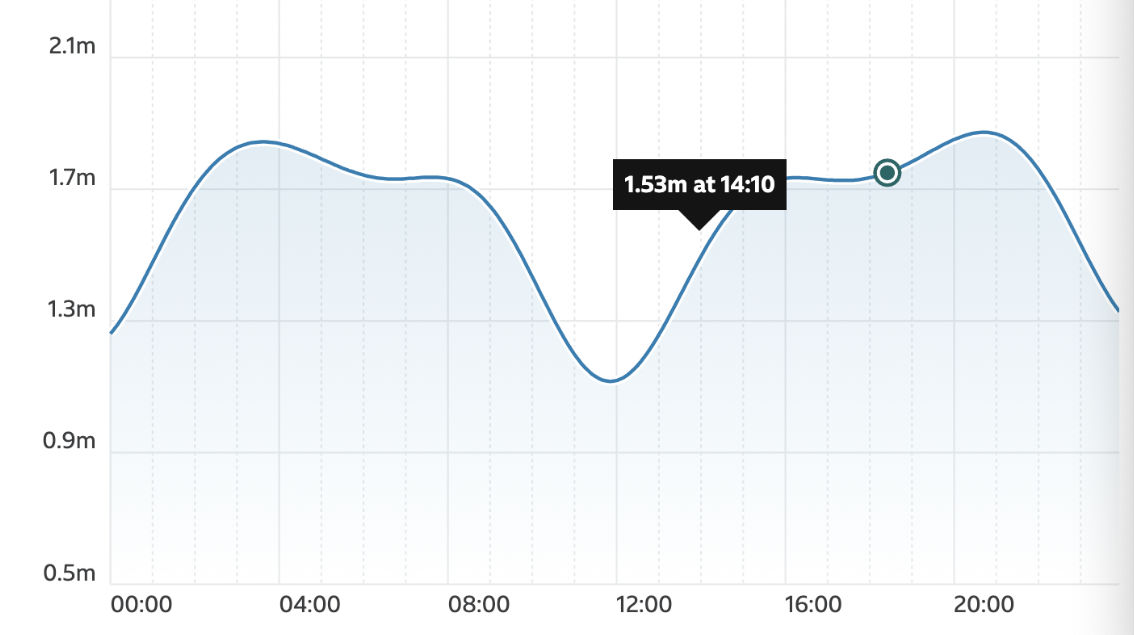
The winds were 10-13mph from the southwest which made sailing just about possible along my ESE route. The tide was coming in and levelling off about 3pm for 6 hours before dropping steeply again. In Poole Harbour – second only to Sydney Harbour but with an outlet just 300-m wide at Sandbanks chain ferry – the tides are far from simple sine waves. It may still be going in at Wareham at the back end, when it’s already going out at Sandbanks. There are four tide points listed by UKHO in Poole Harbour and I’m pretty sure ‘Poole Harbour’ refers to the RoRo ferry port on the north side. PHC is a great resource.

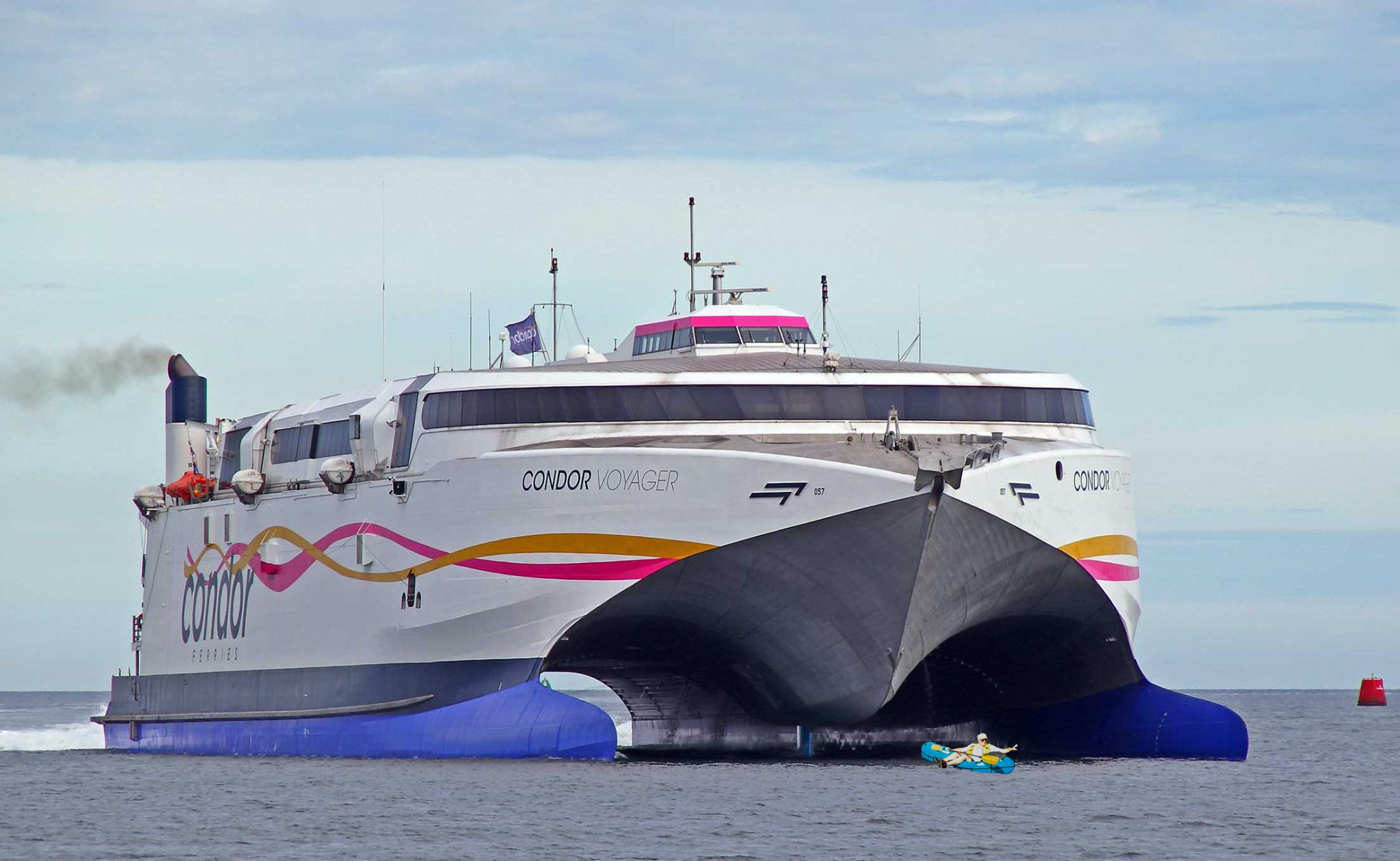
My route would take me right past the ferry berth where getting in the way of a gigantic ferry would probably raise a yellow card. Again, on PWC I was able to see today’s main ferry movements: the massive Condor Voyager cheesecutter class twin hull (above) would depart for St Malo at 14.15. I’d probably be an hour behind.

I set off from Kwik-Fit across Turlin Moor park aiming for the inlet, and once I saw some water, bundled through thick, 2-metre-high reeds on the off chance.

But once I emerged from the dense reed jungle I could see I was a bit early at this point, with 100m of knee-deep sludge ahead. It’s large acreages of tidal mudflats like this which give Poole Harbour its average depth of less than 50cm. That’s about the same depth I’d sink into the mud, trying to reach the water.

So I turned back and carried on along the shore until a path led behind some houses and through the trees to this grassy, reed-free bench by a sandy beach: 50.72448, -2.03601. If you want a mess-free, easy way to get on the water at Lytchett Bay east, aim for here.

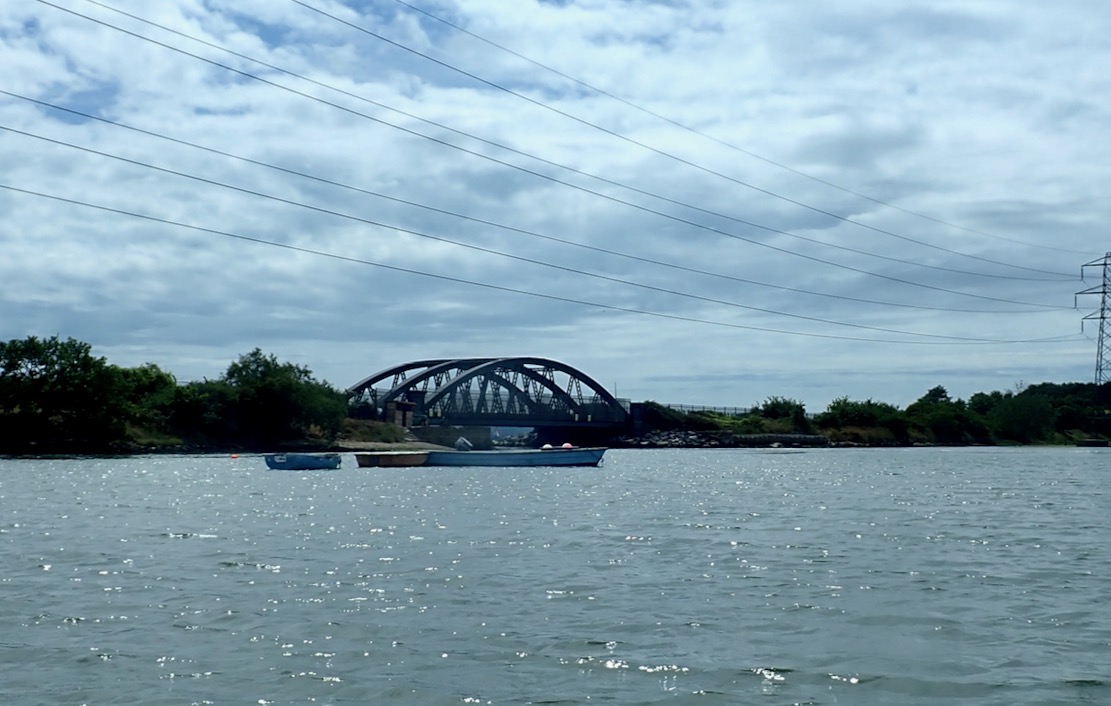
A headwind was blowing quite hard, but it was only 500m to the rail bridge narrows, after which I’d turn southeast to pick up what wind I could get. Setting off, the TXL+ felt like it was zipping along as wind and waves rushed past. Up to 6kph, according to the GPS as I neared the narrows. That was probably an unseen back eddy sucking me into the gap, because as I got nearer I could see a current ripping through under the bridge at at least the same speed or more. I powered in hard along the edge, like we’d done at Hayling, but could only manage 0kph.

“Try on the other side” said the bloke lurking by the abutments, so I ferried across and, with a lot more effort managed to squeeze under the bridge and hook behind some rocks for a breather while not getting drawn back in.
I’d swum half a mile that morning which can be enough exercise for one day. Paddling under the bridge was like doing 50 pull-ups and I was a bit pooped. I looked later at the state of the tide at that precise time (left) and saw I’d been about an hour early.

I took a wide arc out to avoid the worst of the tide race and headed off towards Rockley Sands where I came ashore last year on my way to buy a moto. The wind from my right wasn’t ideal for sailing in my direction, so I paddled out into the channel to turn and get a better angle as it pushed me towards the shore.
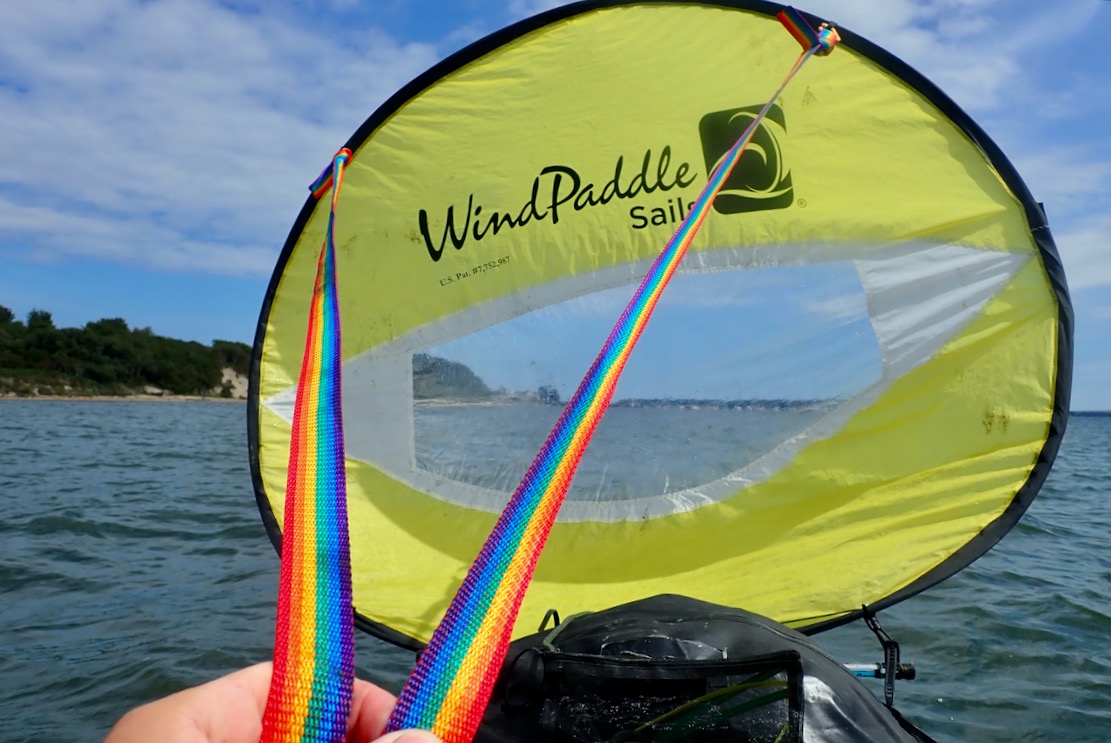
Though I was hardly bombing along, getting the sail up was the rest I needed. Out in the Channel, loads of sailing boats were fluttering to and fro past Brownsea island, and at one point a lightweight sailing cat passed close by with a hiss. I could do with some sails like that. As usual the WindPaddle was hit and miss. Holding 45° off the wind with some steering is not bad for what it is, but it never stays on it for long before getting in a flap.
However, as I got pushed towards the shore again, I really appreciated the way I could pull the WindPaddle down, give it a twist and tuck the lower fold under the Anfibio DeckPack in seconds. It was a handy trick I discovered while belting down a wind struck loch in Knoydart one time.

I passed a couple of piers and a series of long private jetties extending from people’s back gardens, some with a motorboat at the end perched on giant hydraulic hoists to stop them getting too wet. I assumed this was luxury overspill from affluent Sandbanks nearby, once home to the most expensive properties in the UK, but here “…overall, the historical sold prices in Branksea Avenue over the last year were 41% down on the previous year and 75% down on the 2011 peak of £2,262,500.” Unless rising sea levels are coming quicker than we think, or they’re putting in a new high-speed railway, it did seem an implausibly catastrophic collapse in house prices. Maybe the Rightmove AI needs to be burped.

Now heading more east, the wind was getting behind me. I made another effort to paddle out into the Channel to get a good run, and this time the TXL got picked up and rushed along. This was more like it, with an aerated bow wave frothing away by my feet. I squeezed every last minute out of a good run of nearly half a mile, not quite managing to steer around the breakwater of Poole Yacht Club where the accumulated fetch and rebound slapped me around a bit, but the TXL sat steady as a barge.
Round the corner I passed the entrance to Poole Yacht Club with a ‘Visitors Welcome’ sign and wondered if that included packrafts.
The phone rang.
Kwik-Fit here. Your Micra’s ready in 40 minutes.’
My word that was quick!’

A quick look at the map showed I was just less than halfway and would soon turn into Holes Bay with no more wind behind me, but with the high tide negligible. It would be tight to get back to the garage before it closed, so I turned into a dock entrance and rolled up the boat on the slipway.

I assumed this dock was part of the welcoming yacht club marina next door, but it was actually more like a deserted service yard for the ferry port right next door, surrounded on all sides by high security fences and an electric gate.
I dare say some security guard was observing me on his CCTV lair somewhere. After nosing around the portacabins and sheds looking for someone, a guy appeared in his car and swiped me out with his pass.
Things always work out, and as I passed the entrance to the Yacht Club, that too had electric security gates, though probably someone manning them. Looking at the map, a better take-out would have been Hamworthy Park by the club’s breakwater (50.71099, -2.00039), leading to a footbridge short cut over the rail line.

I walked right past the Customs and Immigration cabins (above left) of Poole ferry port, and a helpful map affirming je pagaie donc je suis ici with irreducible Cartesian logic. So – paddling mission not fully accomplished but the old Micra was on the road for another year.

Fat dotted red line shows unfinished stage. Arrows show wind direction

Looking back at the tide graphs for Poole Harbour, it seems that at the lowest neap tides (as it was two days later), there can be a 7 hour period when the high tide flattens off and rises then falls more than 20cm. That would be the best time to try and paddle around Hamworthy between Lytchett and Holes Bay. It could also be fun to leave Holes Bay on an ebbing spring tide to get a good blast under the rail bridge narrows, down the channel through downtown Poole and out into the harbour.

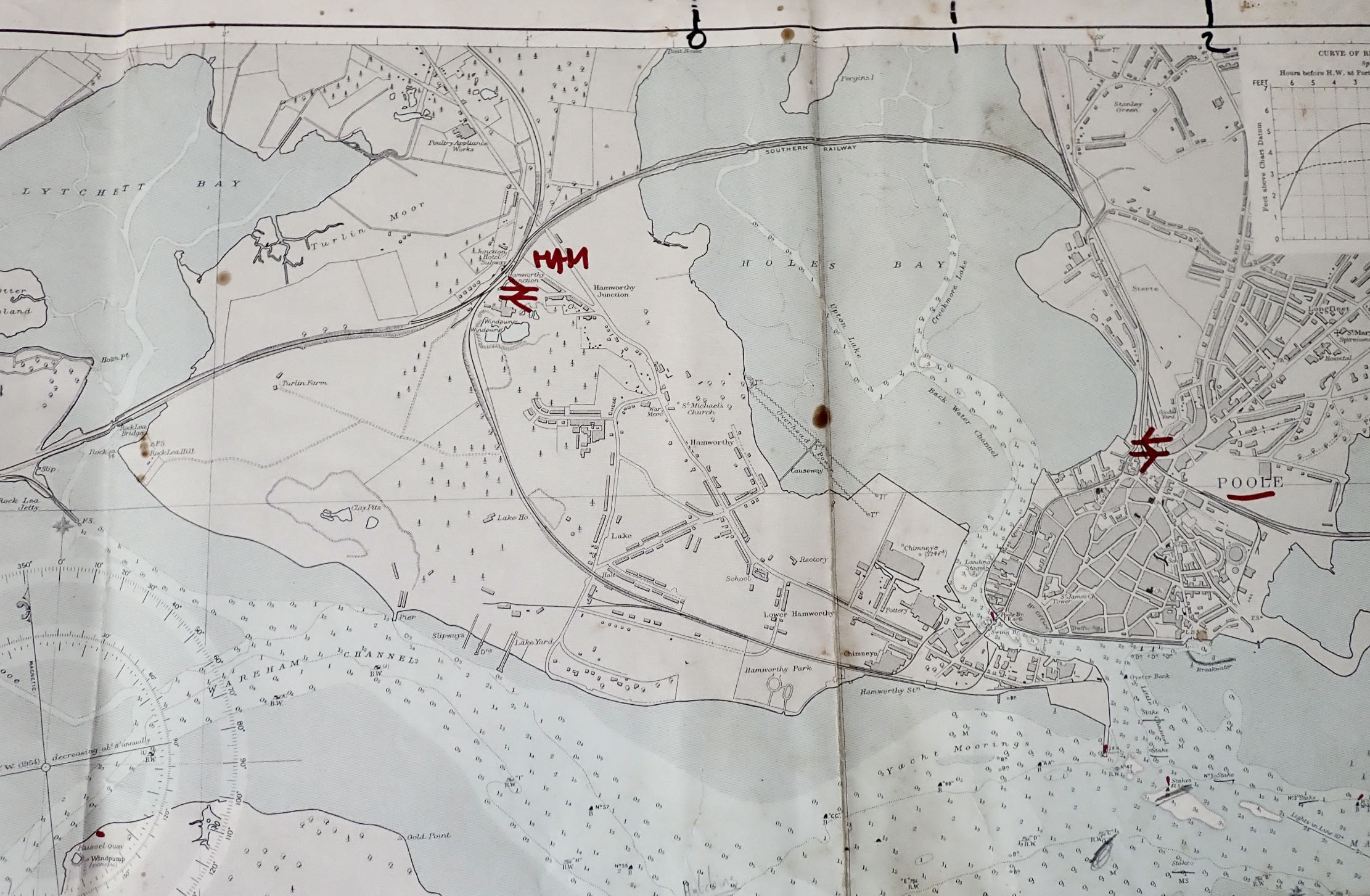
Wayback machine. Harbour chart from 1955. Hamworthy was just farmland and claypiys

There’s Wind in the Willow

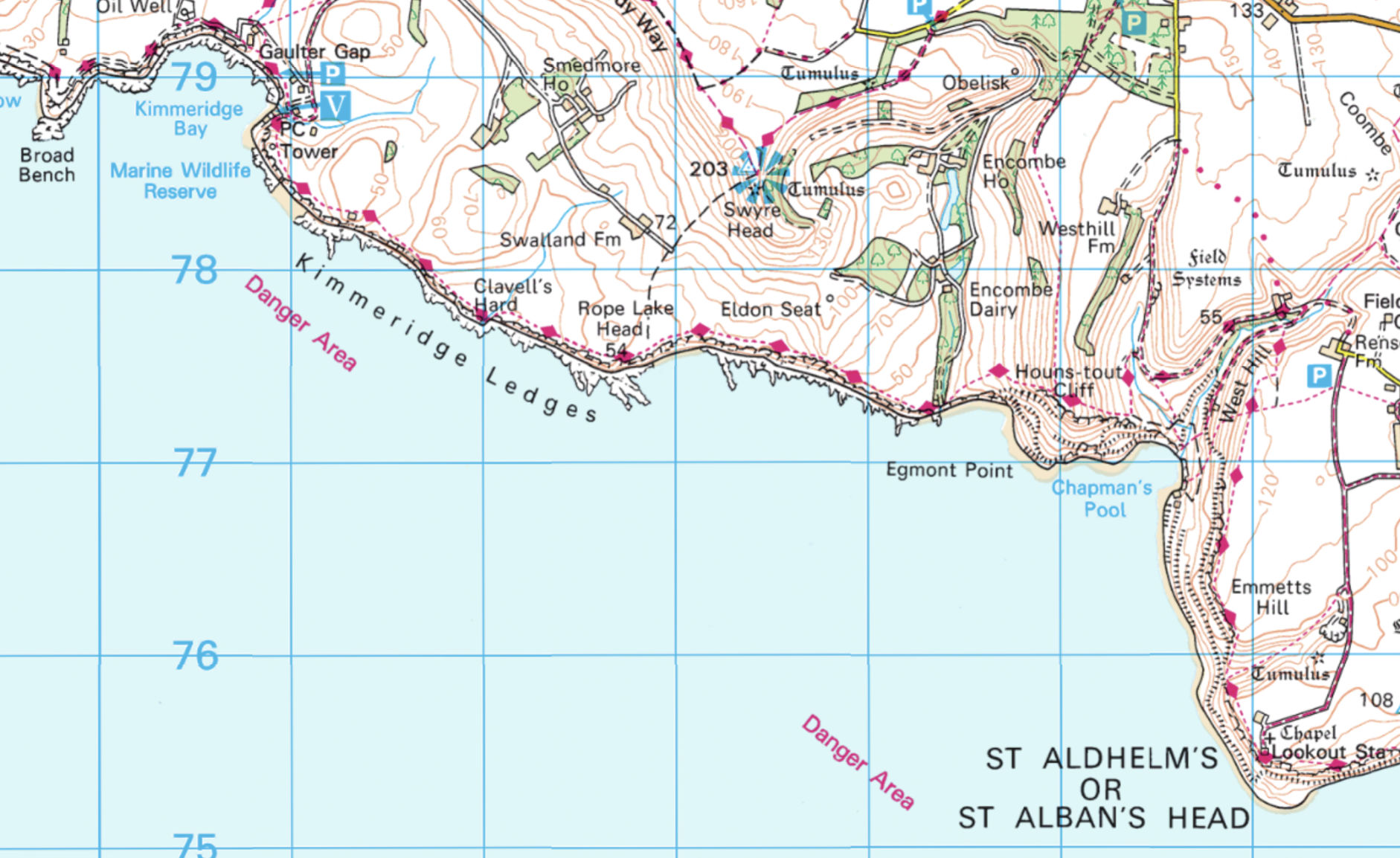
The short run between Kimmeridge Bay and Chapman’s Pool was on my pack list, part of what remains to packraft between Weymouth and Poole. St Alban’s Head near Chapmans, and Durlston Head near Swanage will need ideal conditions as there’s virtually no getting off anywhere in between, so they will have to wait.

A quick look at next day’s wind and tide put Kimmeridge broadly in the ballpark. High water 10am at Chapmans receding east, helped by a 10-12mph easterly. Ten is my self imposed limit for packing at sea so it felt a bit sketchy, plus it would be a hot walk with the boat back to the car near Kingston. It feels more than the forecasted mid-20s around here right now.
I was also unsure what the Kimmeridge Ledges do in such conditions, other than force you away from the shore. It was all a bit hot for an otherwise sensible clifftop recce from Kimmeridge car park to Chapmans’ with the boat, to gauge the sea state below. I’d have to carry loads of water too, as the springs trickling into Chapman’s Pool are probably minging with farm run-off. But whatever happened, it would sure be a sporty ride to Kimmeridge clutching the sail like something out of Roadrunner.

There’s a wind in this willow

Came the early morning I let myself off and decided to paddle upriver from Wareham instead. I’ve not been up there either. I left the quayside ducks around 9am, and passing the already swaying riverside willows confirmed I’d made the right choice. Ten-12mph predictions are always more in my experience, and they say easterlies off the continent are more gusty. Six to 10 with a tide would be more like it, alone in a packboat.

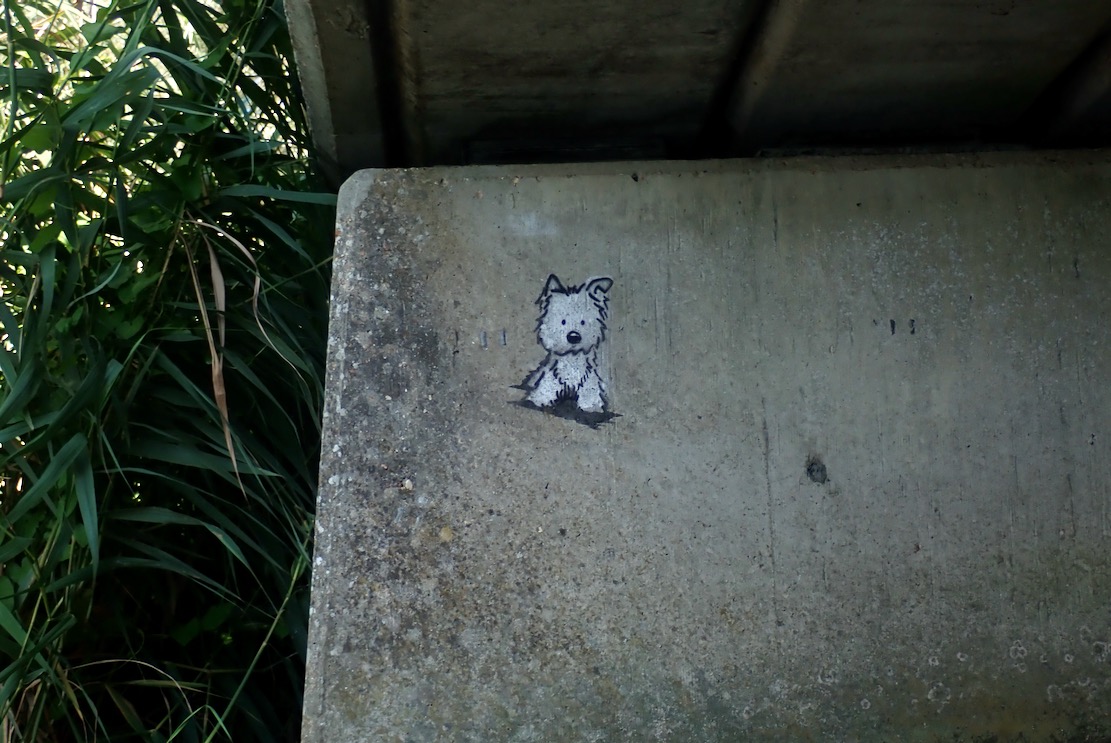
Tagged by the Wareham RiverBanksy

The Wareham tide and wind were with me and reaching the A35 bypass bridge (left) – the tidal line according to the OS map – I expected a big, ‘Paddlers Turn Back!’ sign, as rental SoTs and SuPs venture up this way.
No sign, so I had an excuse to carry on in ignorance until I got either shouted at or the Frome’s current got too strong. As it was, the riverbanks hereabouts were still thick with reeds, making angling without a periscope difficult. Further up nearer Holmebridge was angling country.

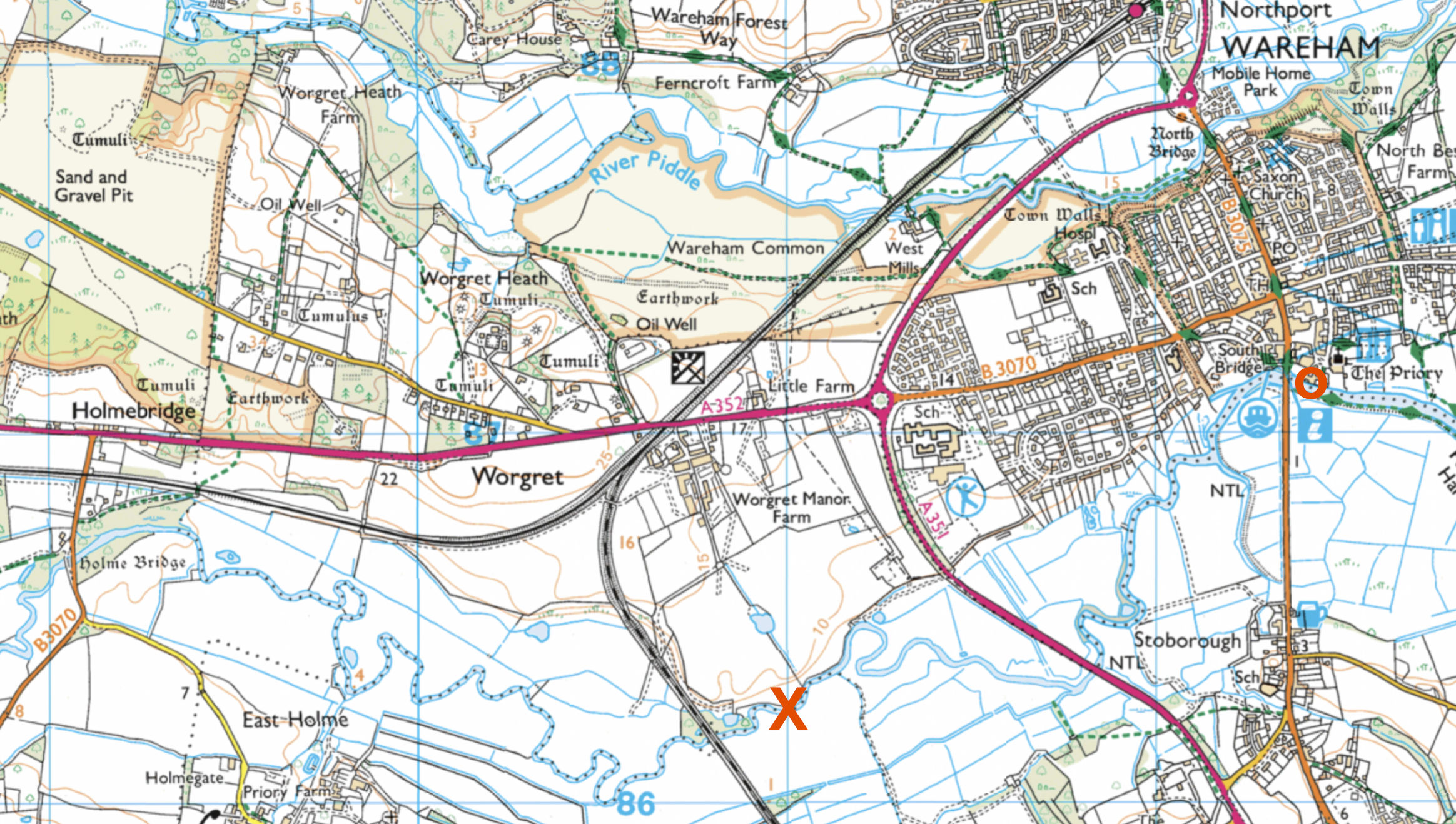
Frome meander from O to X and back to O

The river meanders like rivers do, covering double the distance as the gannet flies, so at some points I was into the wind which was now bending the trees. A good time not to be hanging onto the WindPaddle while launching from one Kimmeridge ledge to the next.
Up ahead I could the vanside banners fluttering briskly at the annual Volksfest campsite (below) whose music we can hear until nearly midnight.

Turns it down, volks

I wondered if I might make a run through the water meadows to Holmebridge, but by now the incoming tide had dissipated and I was against the Frome’s rising current.
That would better done as a stealthy dawn mission, but I felt I’d seen enough of the inland Frome, so I flipped round and enjoyed the cooling breeze in my face back to Wareham town.

Wareham Quay

It was a short, easy paddle so I’d not bothered checking the tides, but back home I was curious to know how Wareham – tucked right at the back of Poole Harbour – compared with Kimmeridge out in the Channel. Taking out at Wareham Quay around 10.15, the tide looked nearly full and had turned 30 minutes ago at Kimmeridge.

BBC tide

But the BBC (above right) which I usually look at first appeared to be hours out. According to their graphic (left), after I got out at 10.15 the river would rise another 800mm in the next 3 hours, flooding the quayside carpark a foot deep! tideschart.com, which I also refer to, showed identical times for anywhere in Dorset, so it (or my computer, or as likely, me) needed a cooling drink in the shade.
I deleted tideschart.com bookmark and found dorset-tides.com (above left) which gave a more plausible Wareham High Water about 90 minutes away (11.46). These are all BST, but this is the first time I’ve noticed such an anomaly. Both claim to use the UKHO. Only the BBC matches UKHO data, while seeming to be way out on the water. Today is the peak of the spring tides and maybe the east wind pushed Poole Harbour’s mass up the Frome a bit more than normal, but that’s not what a tide table can predict.
Meanwhile I wait for a fair wind at Chapman’s.

Packrafting the Swanage Pinnacles

See also
Sigma TXL Main Page
TXL • Packrafting Old Harry (Swanage)
TXL • Packrafting Swanage
Kayaking the Swanage Stacks

A recent picture on BBC News of David Attenborough plugging his new Ocean film (or lamenting the ravaged state of the seas) reminded me that the dramatic Swanage Pinnacles and arches are just down the road. Having paddled just once last year, this would be a good first paddle to break in the shoulders. Last summer got nixed by a big book job, which was tackled full-on and did in my back for months and months – all compounded by finally catching the Covid (or so it felt).

Ballard Point

As beach towels and brollies were getting unfurled, I unrolled my boat and left Swanage Bay (above) at the bottom of the tide. It would carry me north against a light breeze that would flip and get behind me around noon.
But setting off towards Ballard Point (left), the TXL was all over the place, handling like a 1psi vinyl bath toy. Had I forgotten how to paddle straight in the last year? I groped under the stern with the paddle to see if it clanked against the skeg. Either I missed it or it wasn’t there.

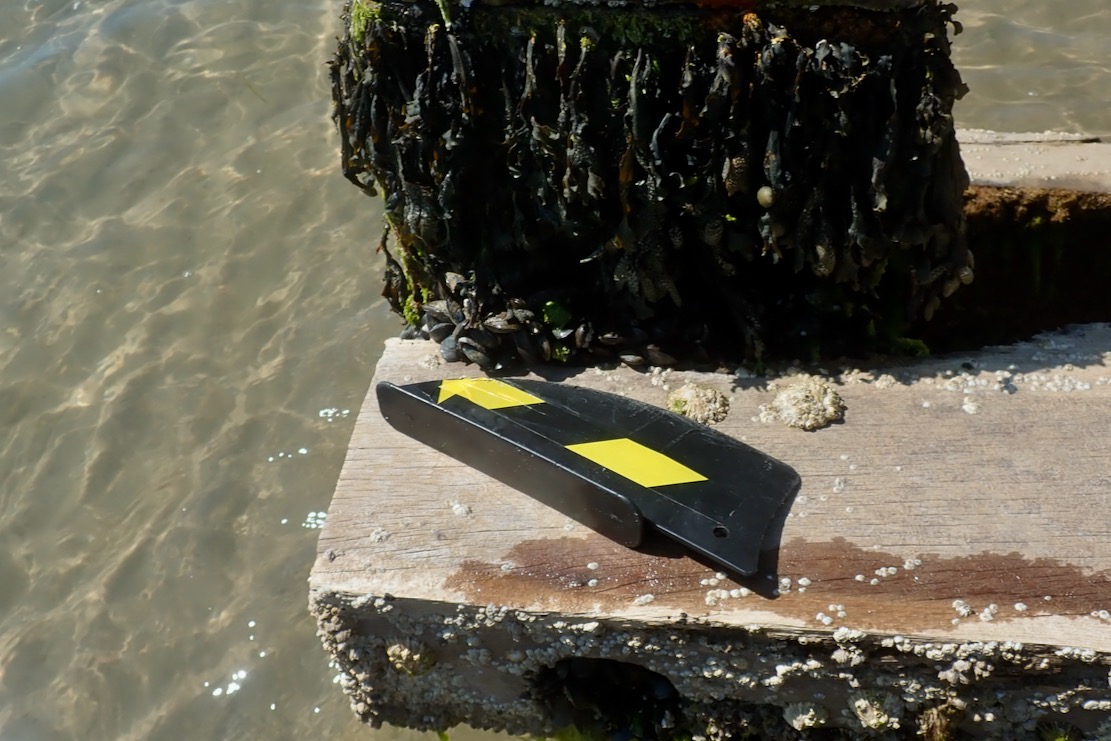
Back on the beach, sure enough – no skeg; probably dislodged while putting in. This happened once before, landing on a rocky ledge where the fore and aft of the shallow surf saw the skeg slip its mount. After that I wrapped it in hi-viz tape.
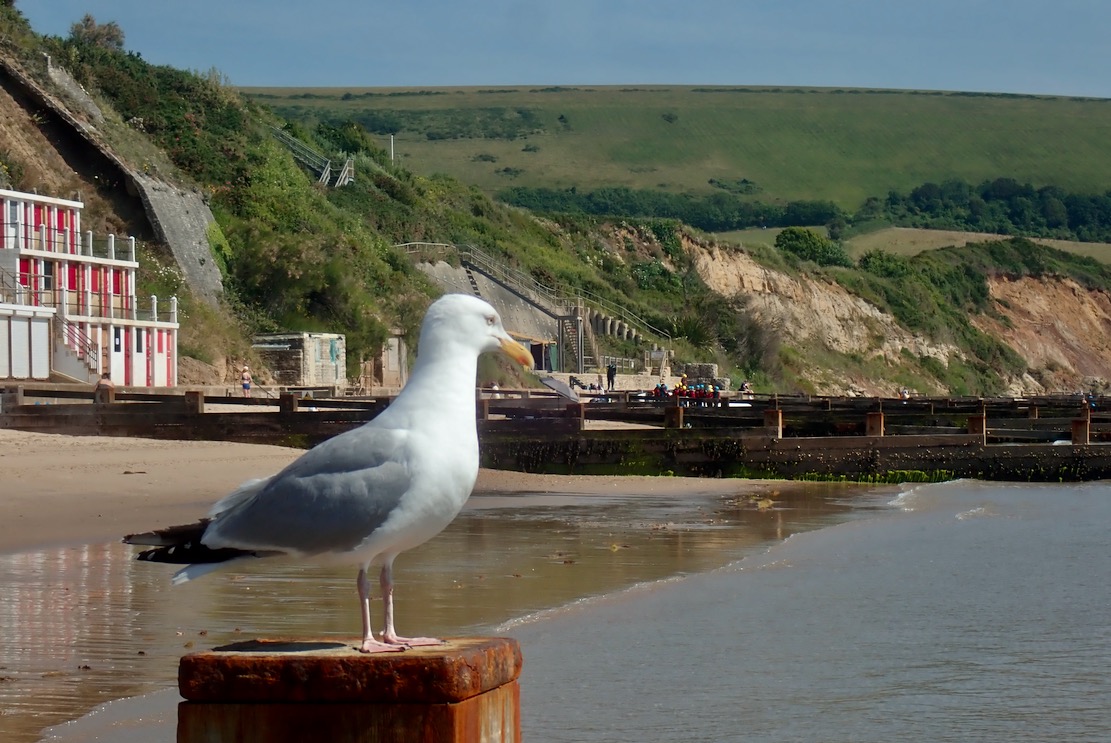
I couldn’t see how it had happened today on a smooth, sandy beach, but I spent the next 40 minutes wading up and down, juggling estimates of longshore drift with onshore breezes, but unsure exactly which of the 20 Swanage groynes I’d set off from. I finally accepted the skeg was MIA: some errant doggie must have snapped it up and rushed it back to its bemused owner. Drat – and I’d paid for 6 hours parking too! I went for a swim anyway, ate my sandwich, then packed up while a beaky seagull dryly observed the lambent folly of human endeavour.

Look for my Skeg, ye Mighty, and despair!

Heading back, I recognised a little sandcastle I’d passed on my way down to the shore, all of 2 hours ago. Was it here I put in? I wandered back to the nearby groyne on the off chance, but soon got distracted by the flash of some sunglasses. I waded round the end of the groyne to pick them up and there sat my skeg! Like a lost desert traveller expiring just one dune short of a palm-ringed oasis, my search had been one groyne short. Saved by a thoughtful beachcomber, I grabbed my skeg and left the shades: this show was back on the water ;-)

Don’t lose your skeg
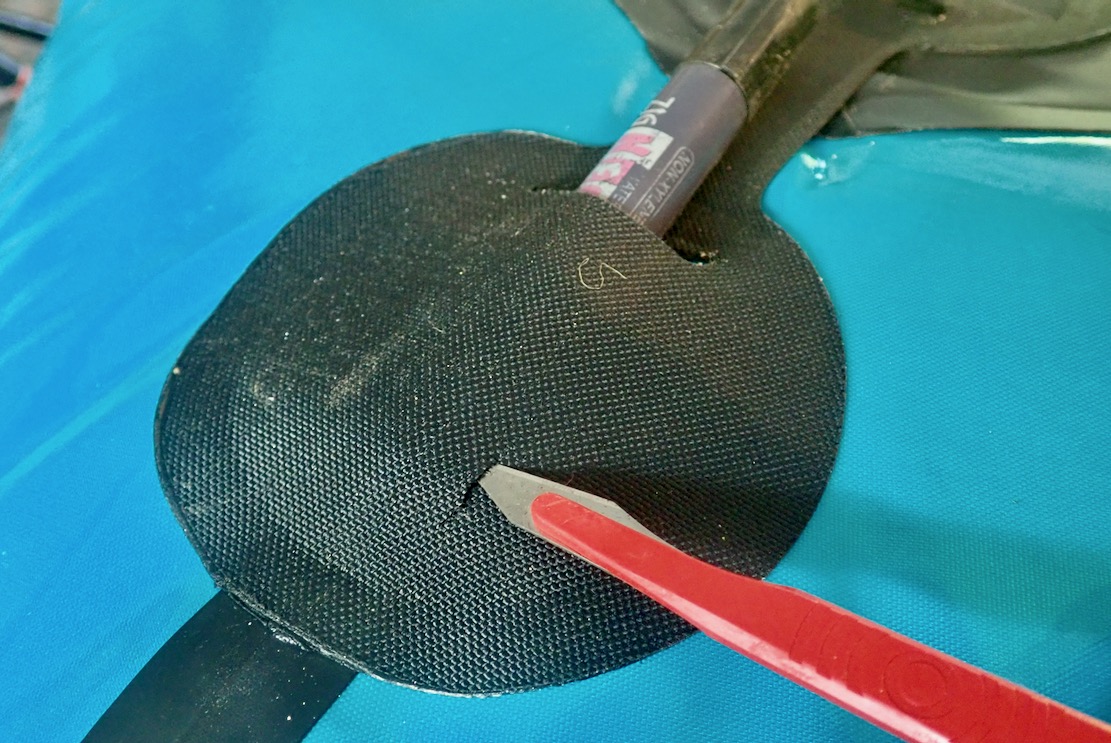
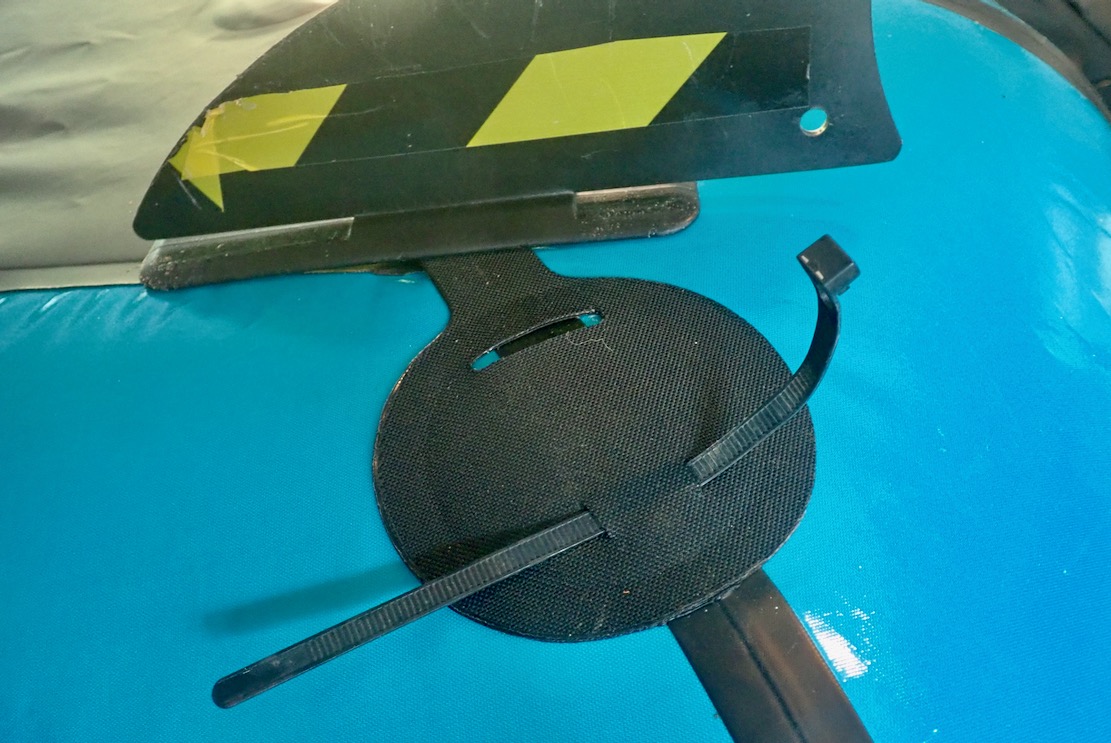
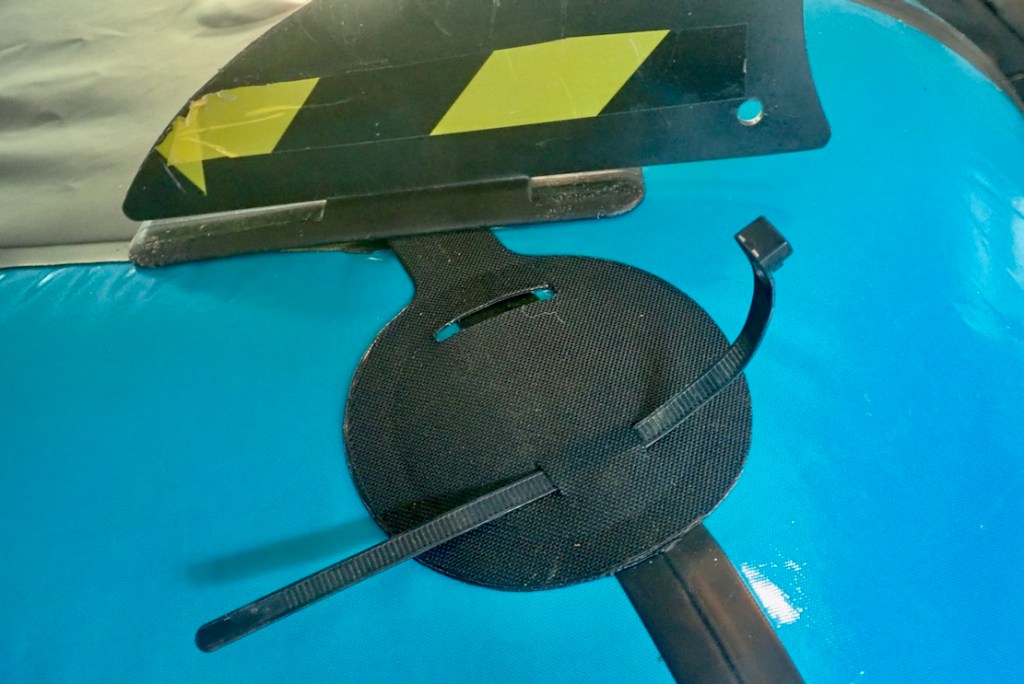
The lack of tension, even once inflated, can dislodge an Anfibio skeg following a small fore and aft movement of the hull pressing on the sea- or riverbed. On a flowing river, skeg-free is not so bad and you might need the clearance anyway, but at sea you definitely want a skeg for good tracking. Here’s one solution.
Stick something like a fat sharpie under the rear skeg patch to lift the fabric away from the hull; you don’t want to stab your packraft
Make two incisions which line up with the hole at the back of the skeg
Feed a reusable cable tie through the slits and leave it in place. The skeg will now be secure

Skeged up, the TXL sliced NE towards Ballards Point like a troupe of dolphins late for the ball. I was sitting on the optional floor inflata-mat, which stiffens the long hull, reducing drag).
Edging towards the Point, I could feel the boat slowing down against the eddy hooking back southwest into the bay (left; LW+3). Passing over the corner some clapotis (below) was jingling about, pushed up by the eddying current.

Once round the corner, with the wind and tide now behind me, I was expecting record speeds. As usual though, with a backwind you lose the ‘wind-in-your-face’ impression of speed, which can be quite dissatisfying. To my right, jet-skiers were thrashing about, making me feel uneasy. Paddling quietly along, it’s hard not to feel intimidated, far less any aquatic fraternity towards these wave-jumping motocrossers. The sooner they all go electric the happier we’ll all be. But either way, I bet they’re a blast to ride!

Awesome!

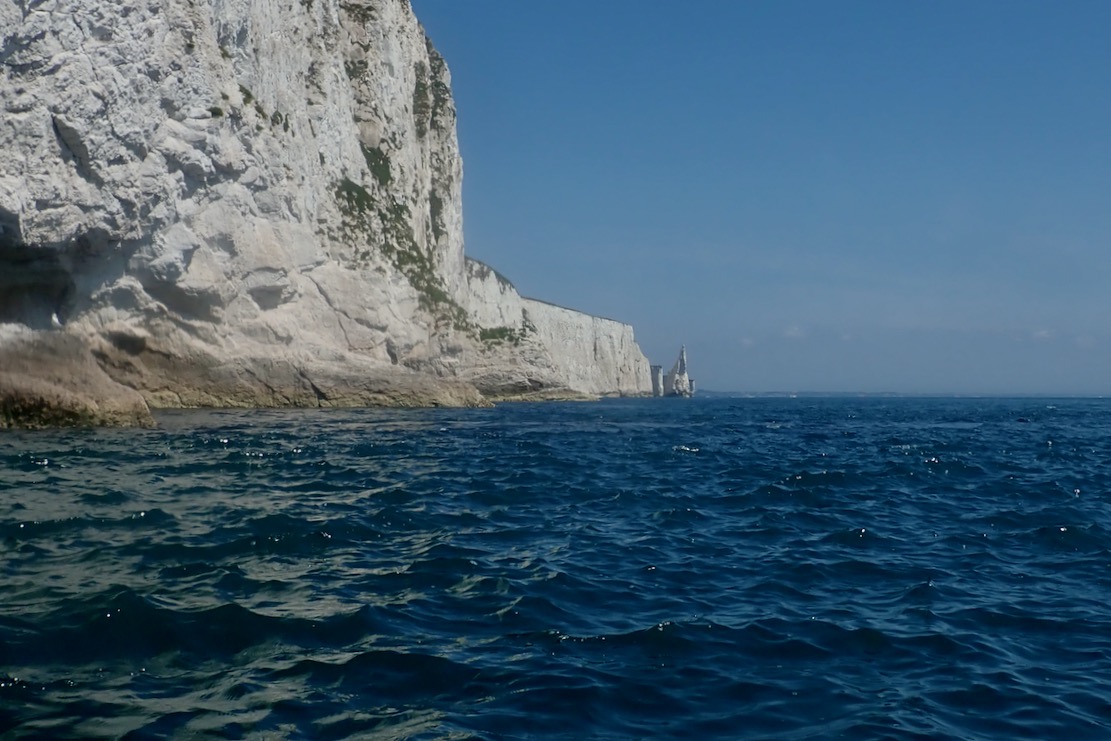
Up ahead rose the oddly nameless Jurassic fang, seen behind Attenborough at the top of the page. All the other outlying pinnacles hereabouts are flat-topped. When you work out the thin rib of chalk where they got DA to stand to get the shot, you’d hope there was an unseen safety line securely attached to Britain’s most treasured national. As I passed between the fang and the cliff wall, a gust shoved me through, and I saw later the GPS had hit a dizzying 9kph.

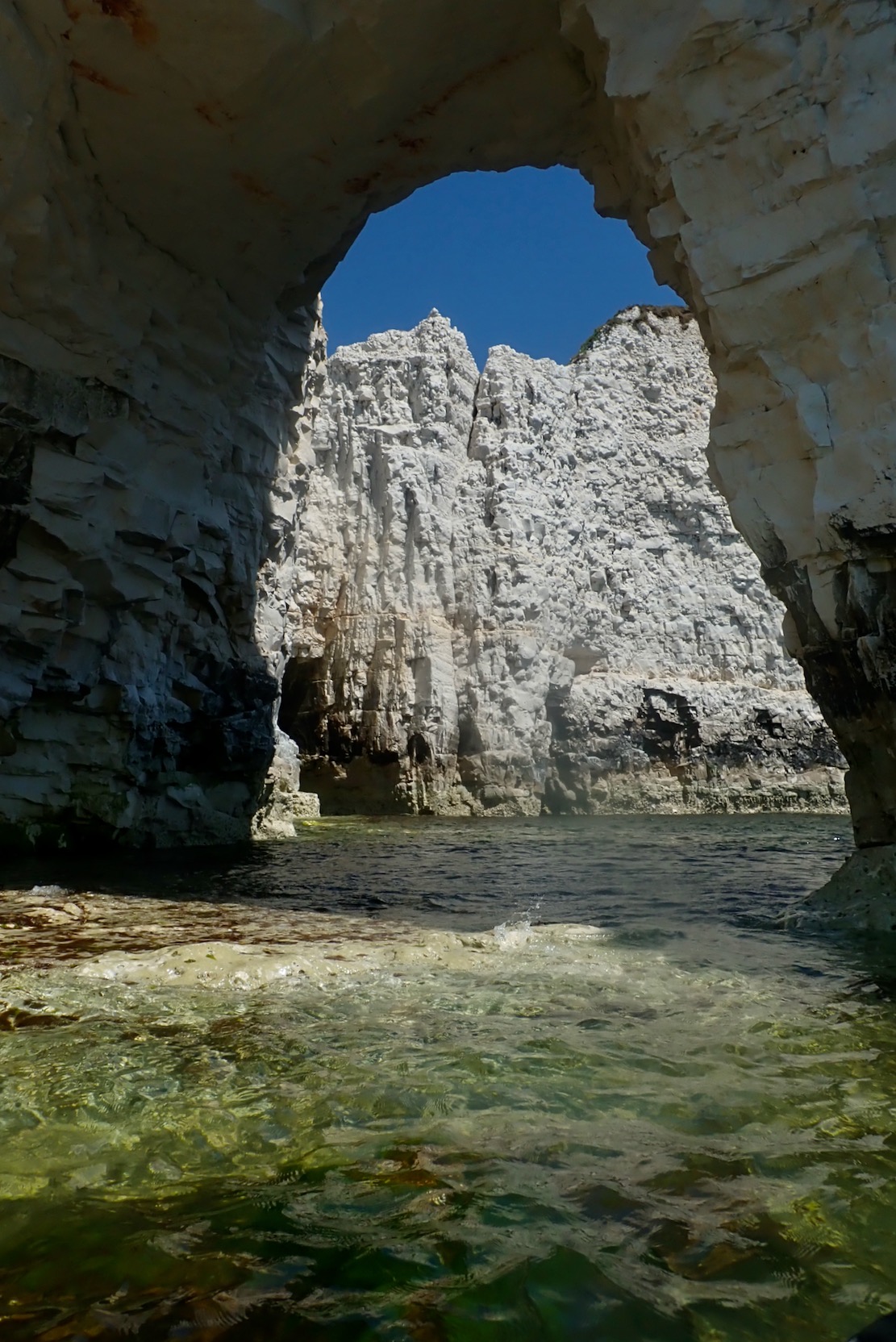
Beyond lay the first of the chalk arches which make this paddle so special, and why it got featured on the title page of my IK beginner’s guidebook (below). At the first small arch the wind bounced me back off the high walls, then whooshed me through the calcified portal like a popped cork. On the far side some paddle-boarders out of nearby Studland were taking a break on a tidal ledge.

With the tide about halfway in, I threaded the passable arches around Old Harry’s (above), while other paddle sports enthusiasts milled about at the geological wonder of it all and from the cliffs above, walkers looked down with envy.
Once round the corner and in the lee of Ballard Downs, all that remained was to head west for Studland South Beach and pull the plug.

Convincing

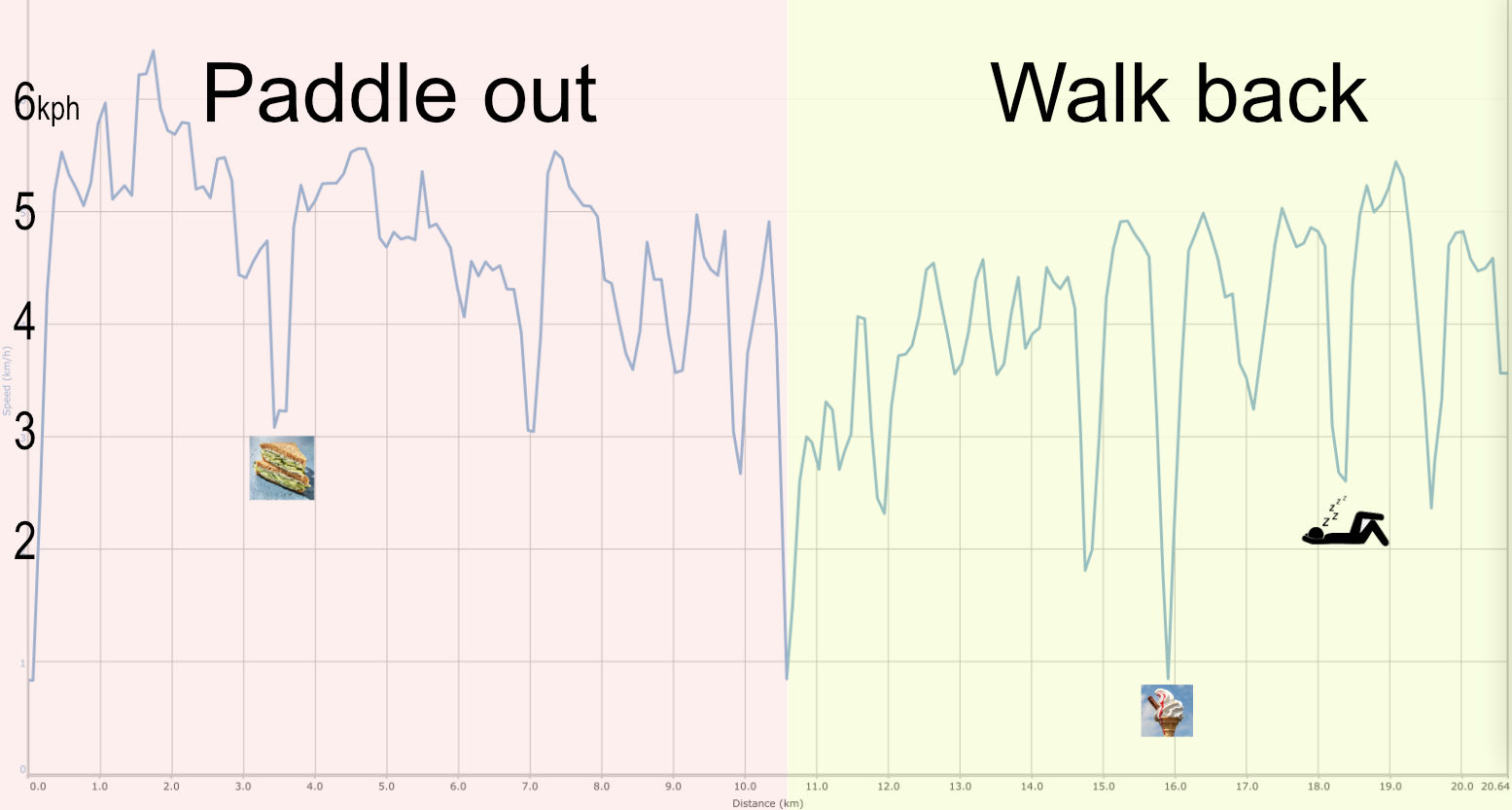
With a bit of energy to spare and nothing to lose, at one point I put my head down and powered on to see ‘what she’ll do [mister]’. The GPS data log revealed a blip from a steady and sustainable 5kph to a limited-endurance 6kph, which would soon drain the batteries. Six kph must be the maximum hull speed of a TXL on near still and windless water. Better to save such efforts for unwanted offshore headwinds. Even then, looking at the data below, I’m again amazed what a portable raft which you can easily pack up and walk with anywhere will do on the open sea. ISuPs may be loads more popular, but to paraphrase former Met Police commissioner, Robert Mark, ‘I’m convinced packrafts are a major contribution to paddle sport adventures’.

Fast

On South Beach oiled-up heliophiles were laid out like seals. It reminded me of a radio doc about boredom I’d caught the previous evening. In an experiment, apparently 70% of males preferred to self-administer a light electric shock rather than sit still in an empty room for 15 minutes. They should give them a sun bed next time, but perhaps I’m missing the point.

I could have walked back the couple of miles over Ballard Downs to Swanage, but what with the time wasted on the skeg search-and-rescue mission, I didn’t want to risk getting back late to the parking before something terrible happened.

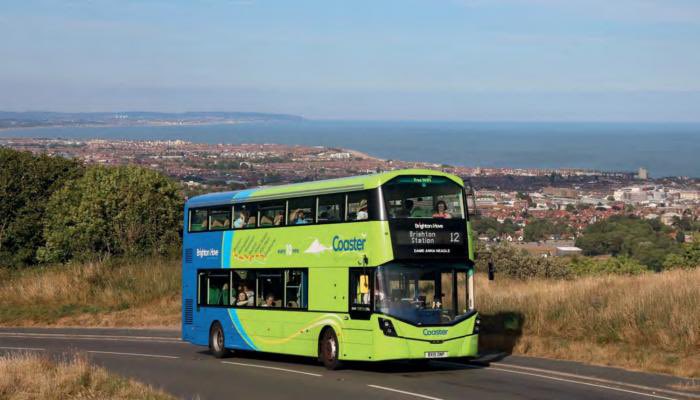
So I treated myself to the 20-minute open-top #50 bus ride back to town.

All together now:
We’re all goin on a
Summer holi-day…’

IK&P Competition. Win Free Books!

Congratulations to winners: Roger H and Dan S!

It was competition time here at IK&P. Answer a simple question to win three lavishly illustrated paddling books by Fernhurst Books, including their new Paddling Adventures; 100 Epic Experiences with a Paddle out in November for £20.
Inside, browse over 200 pages of gonzo whitewater, sublime sea kayaking, surfing, canoeing, paddleboarding and heck, even packrafting, with a couple of contributions by me, as well Rob from Mekong Packraft, including southern France’s lovely Allier.

I’ll also include a copy of my Inflatable Kayaking and Packrafting Beginners’ Guides, also by Fernhurst. Three books and enough paddle action and ideas to see you through the winter.

To enter the competition and a chance to win one of two sets of the three books worth £40 and post free anywhere, answer this simple question:

What is ‘IK&P’ short for?

Answer: Inflatable Kayaks & Packrafts

TXL+ Packrafting Beachy Head and Seven Sisters

Anfibio Sigma TXL+ main page
English South Coast Day Paddles

It’s less than two weeks to the autumnal equinox, but at nearly 33°C, today will be the hottest day of 2023 so far. It’s been over 30 for days now so you do wonder what it’s going to be like in 5 or 10 years time. More sea to paddle, that’s for sure.
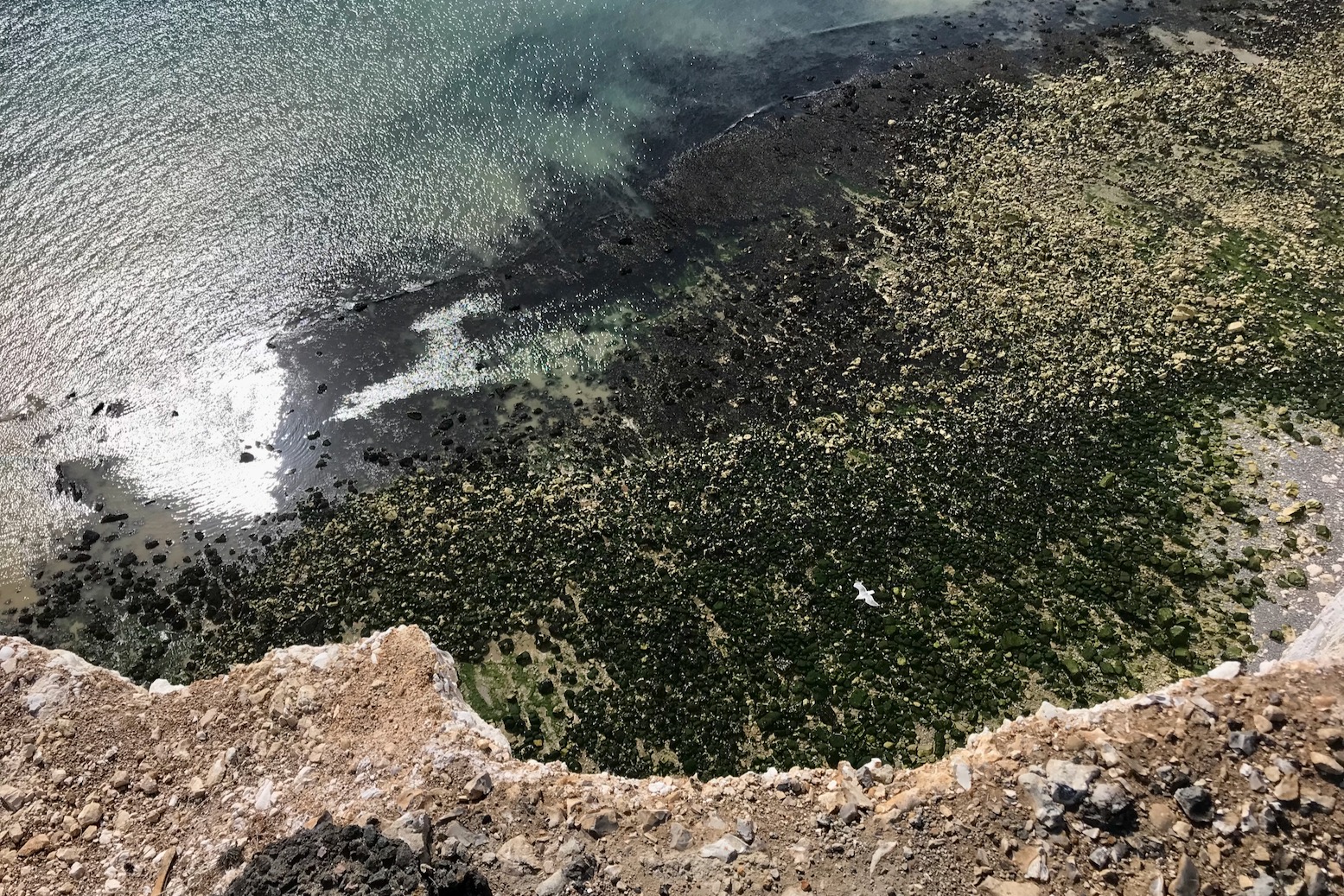
Today there’s barely a breeze; a fine day for a 10-km paddle around Beachy Head and the chalk cliffs of the Seven Sisters to Cuckmere Haven before walking back. I’ve had this one on the list for years as an IK trip. Today is the day, but with a packraft.

Tottering on Safari, 2004. Does my body look big in this?

It was Christmas Day, 2004 that I took my first ever IK for a tentative spin on the Cuckmere estuary and thought: shite, what have I done! The used Gumotex Safari was tippier than a one-legged stool and meandered more than the Cuckmere river itself. Luckily it was mostly the boat, not me. I soon swapped it for a Gumo Sunny and never looked back.
No worries about stability today. In the intervening decades packrafting got popularised and I’m trying out my new Anfibio TXL+, the length and width of a patio door.

Down in Eastbourne the forecast was a moderate 25, but at 8.30am it felt like that temperature already.

I cheat by putting in at the westernmost end of Eastbourne, a south coast town associated with genteel retirement homes. A neap tide is two hours into its ebb and light easterly winds were following it.

Looking for possible traps, I found a 15-year old kayaking report with pics of offshore breaking waves. I study a marine chart and am none the wiser, but realise that, like the Jurassic Coast, submarine ledges (or wave-cut platforms as I recall from geography) are a fairly normal thing off the South Coast, and breakers will move in and out depending on tide heights and the wind.

As I put in a swimmer bobbed up from the depths and asked:
‘Is that one of them Blowie things?’
I’d not heard this expression outside of the fly-ridden Outback.
”ow much do they cost, then?’
I delivered the fatal, four-figure Euro-sum. He dipped back down and slinked away like a seal. Another paddleboarder is born.

Initially the TXL+ feels dog slow – an unseen back eddy off Beachy Head? I now know it will pass so I keep going.
It’s unbroken cliffs all the way to Cuckmere with one exit halfway at Birling Gap where a staircase climbs up from the shingle to a car park and cafe. I can take out there, and if I’m knackered at Cuckmere, there’s the scenic bus 12 every 15 mins from nearby Exceat. There’s also an option to carry on all the way to Land’s End then ride the back of a whale to the Azores.

Sea kayakers coming in. They don’t have to carefully plot trips around tides and winds and bus routes.

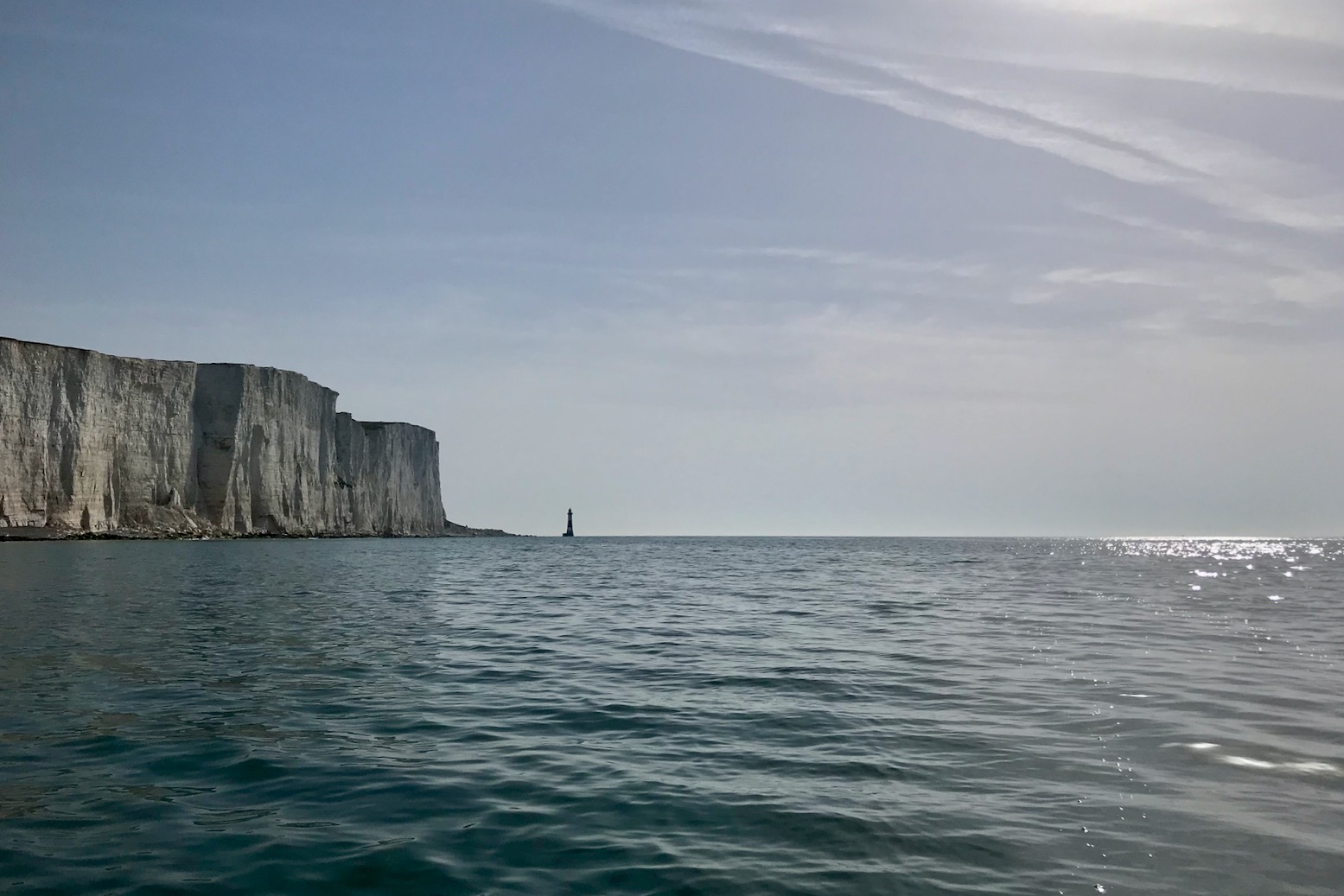
As I round the corner towards Beachy Head the impression of speed picks up as I join the westward stream. Up ahead the lighthouse, but before it some breaking waves on Head Ledge. White breaking surf is easy to see on a day like this, but you still need to keep your eyes left for bigger swells which rise up out of the blue.

The children’s book outline of Beachy Head lighthouse alongside the highest chalk cliffs in Britain (162m; 530′). I gave up trying to find taller chalk sea cliffs anywhere in the world.

Round the corner I pull in for a yellow-label sandwich. Something about the sunshine, warmth and the gleaming white rock makes the way ahead less intimidating. I remember feeling the same in tropical Australia in much less calm conditions.

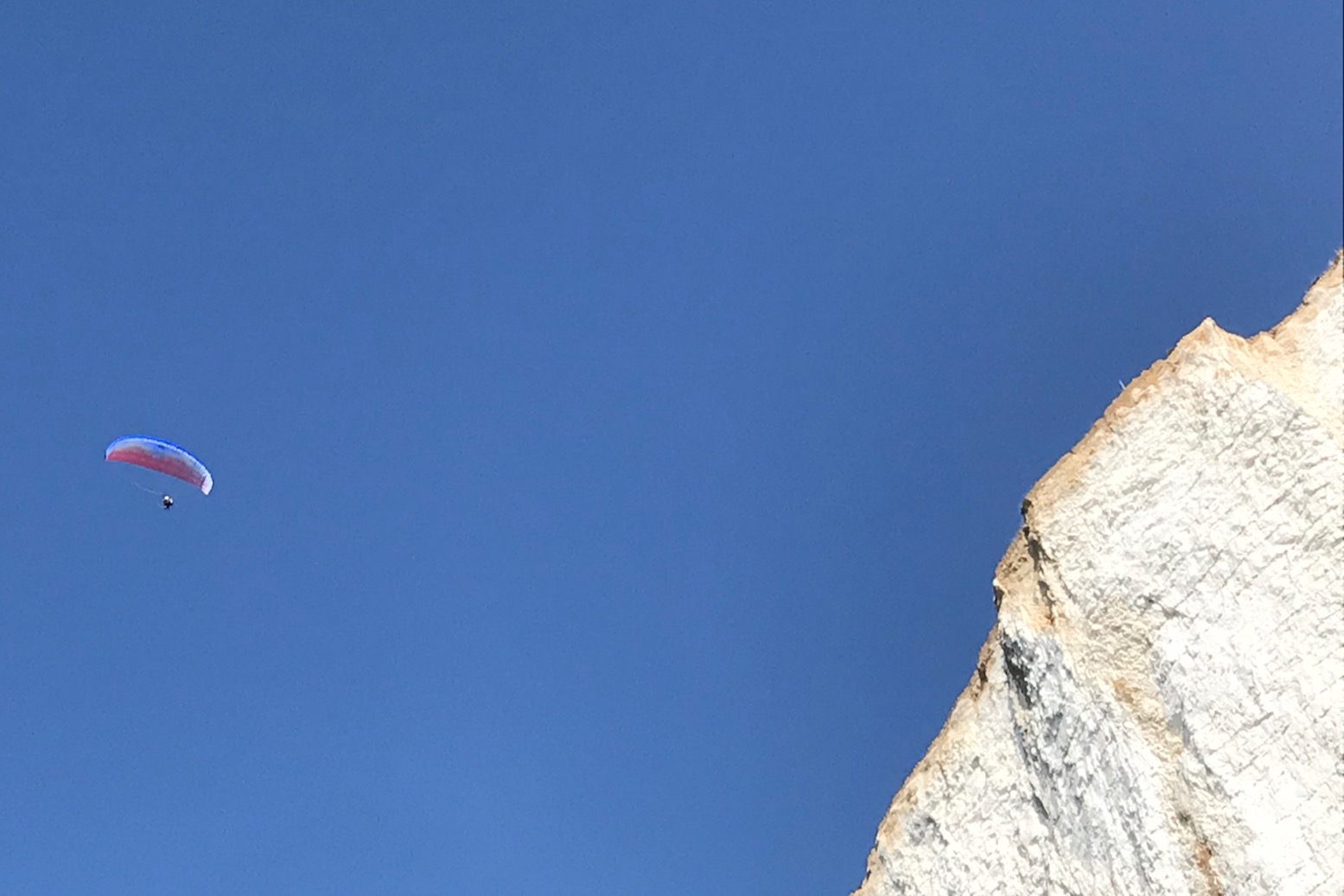
An overhead paraglider eyes up my seafood and florentine wholemeal bap and prepares to swoop.

Who remembers the 1968 film, Chitty Chitty Bang Bang? The magic car’s first airborne sortie is at Beachy Head and its distinctive red lighthouse, though I see they spliced a bit of IoW Needles in there too. Did they really think people would let it slide and not contact their MPs?

And in Quadrophenia released a decade later, depressed Mod Jimmy decides to do a ‘Thelma & Louise’ and end it all on Beachy Head (as many sadly do in real life) while The Who sing ‘I’ve Had Enough’.

I remember reading in the 1970s that with ice axes and crampons, this soft but vertical chalk was good practice for ice climbing. No need for all that sub-freezing clobber.

On the geologically contiguous Isle of Wight, these Red Bull lightweights are top roping.

At the peak of the modest ebb and I hit 6.4kph and get a nosebleed.
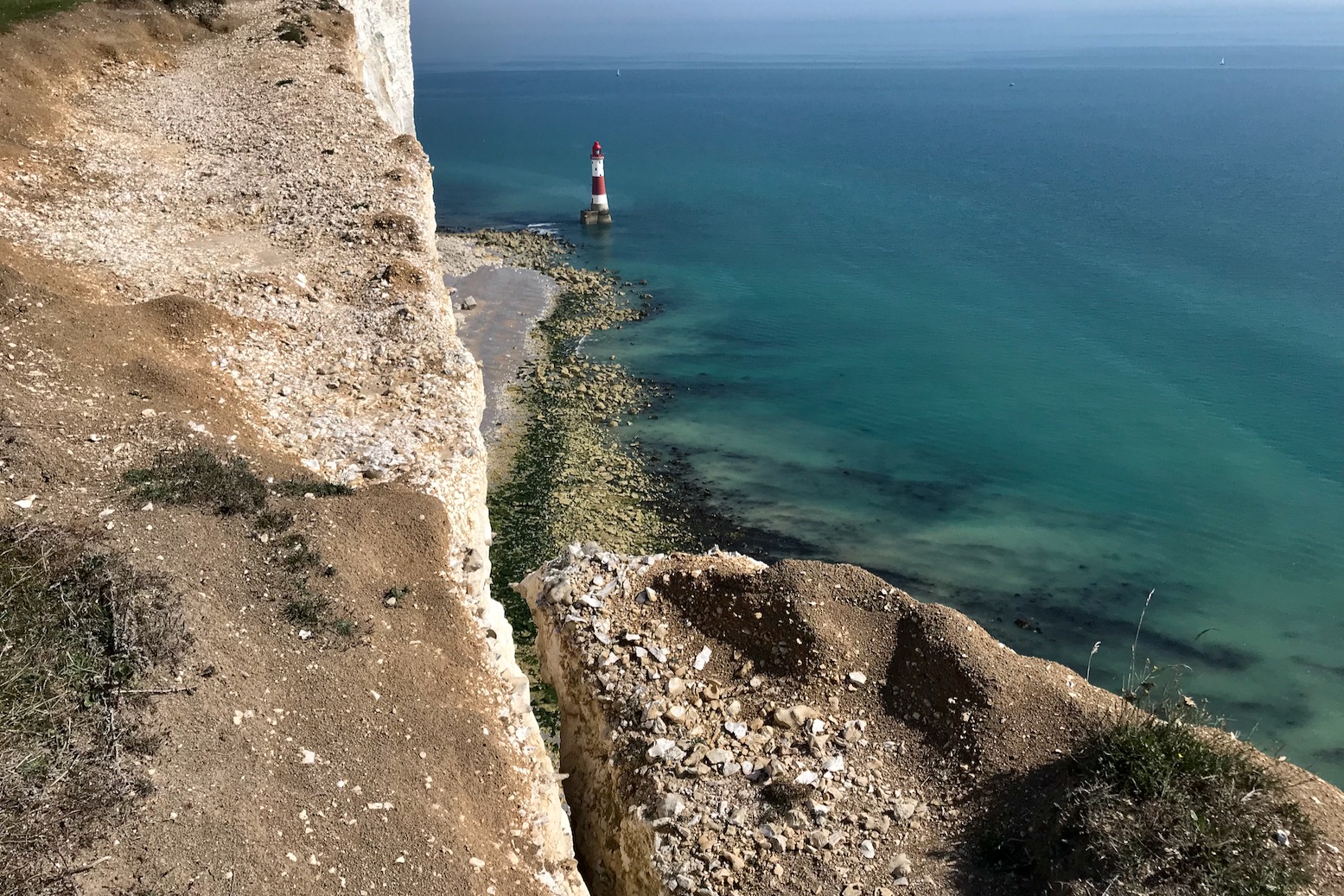
I look back and say goodbye to Beachy Head lighthouse…

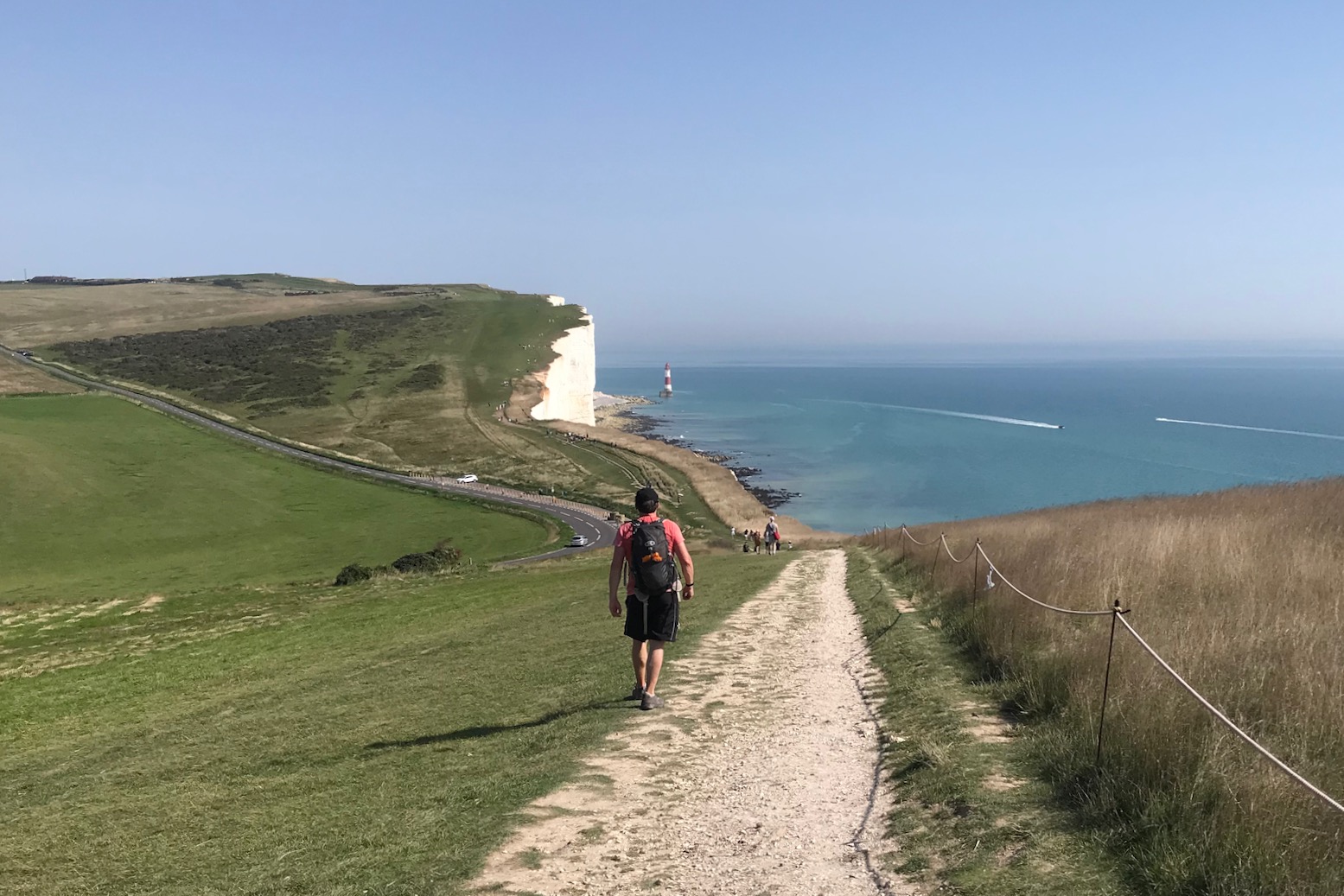
… before bidding bonjour to Belle Tout lighthouse up on the cliff top. It got decommissioned in 1904 after 80 years as it was too foggy too often up there. Beachy Head lighthouse nearer sea level replaced it. Apparently both mean the same thing: ‘fine headland’ (beau chef became ‘beachy’). You can learn so much from Wikipedia.

Sooner and with less effort than expected, I approach Birling Gap where there is road access. But first I have to paddle out around more deadly offshore breakers.
Beyond stretch the Seven Sisters to Cuckmere. Suddenly it all seems eminently doable.

Paddleboarders. Must be getting close to their lair at Cuckmere.

Heck, I even see one of those FDS IKs! Good to see one in actual use.

Strange buttress and cave formations appear. Would be fun to investigate out of Cuckmere or Birling one time.

At one point the TXL+ starts aquaplaning. I recognise this feeling so tighten the straps and respond in kind, doing the full torso pivot thing. I’m aiming for 7kph, but only hit 6 briefly with the waning ebb. Oh well, that must be the terminal hull speed of a dumpy TXL.

A flotilla of gulls patrol the entrance to Cuckmere Haven, as they have done since the Domesday Book was compiled.

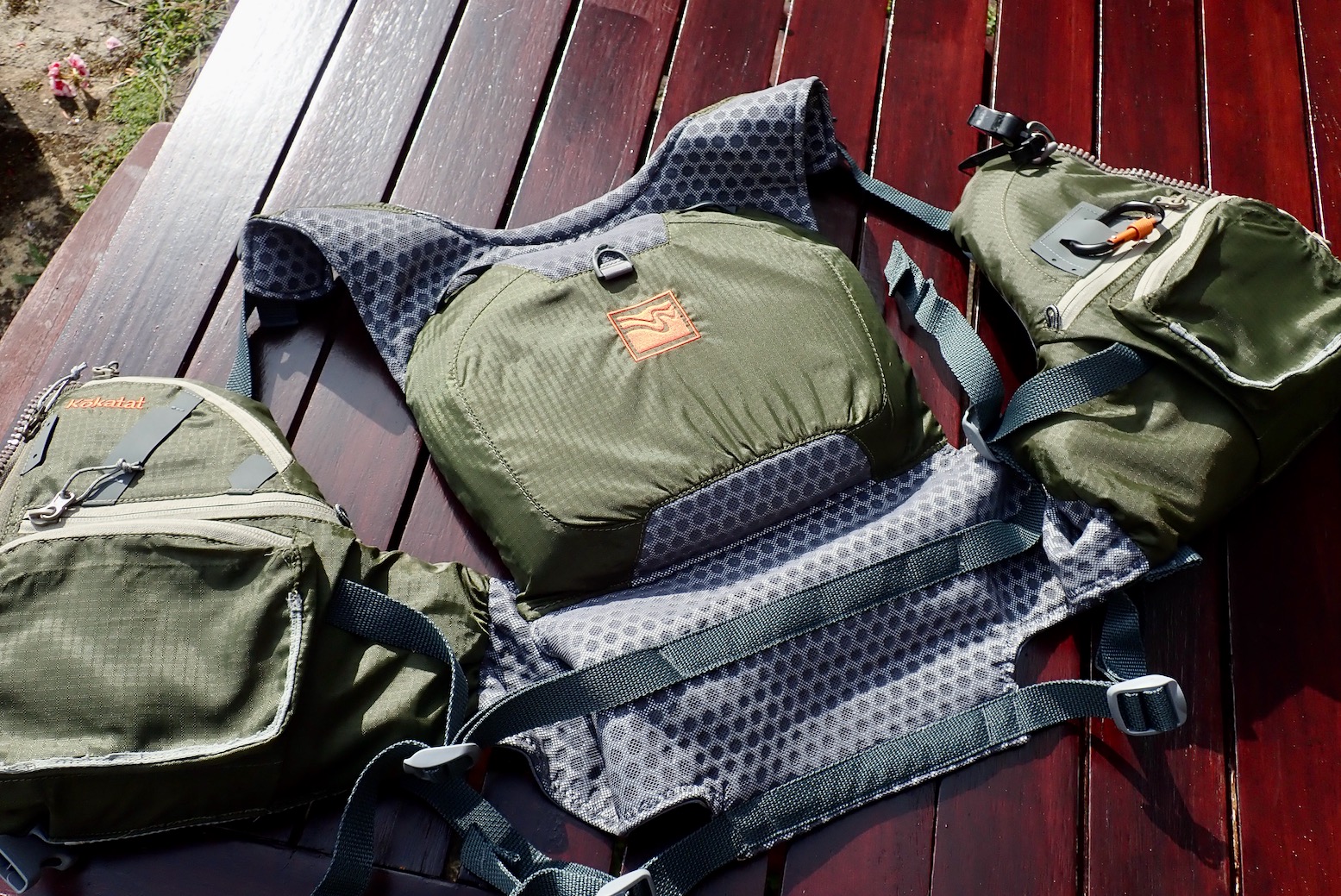
In the warm backwinds my new Kokatat PFD has been much less sweaty than expected. It also has loads of pockets.

Cuckmere beach.

Before I get there I pull over and stagger around on seaweed-clad boulders for a bit.

And take one last sea level glimpse along the Seven Sisters. What an enjoyable paddle that was. Another long standing ‘WLTD’ ticked off, but in a packraft, not a nippy IK. I fail to find the river inlet which must have moved a bit since my GPS map was made.
I’ve got it in me, but it’s going to be a hot old slog back to Eastbourne.

I flip the TXL+ and let it drain. An effortless 2.5 hours that took.

In the bag. Now for the hard bit.

What’s going on up there? Nothing much, just sunshine and enough space to enjoy it. Plus Taylor Swift handing out NFTs.

Seven Sisters means at least 7 brotherly ascents. It’s baking hot and I’ve got 500ml water left and dodgy knees, so for once I pace myself and use the paddle as a stick.
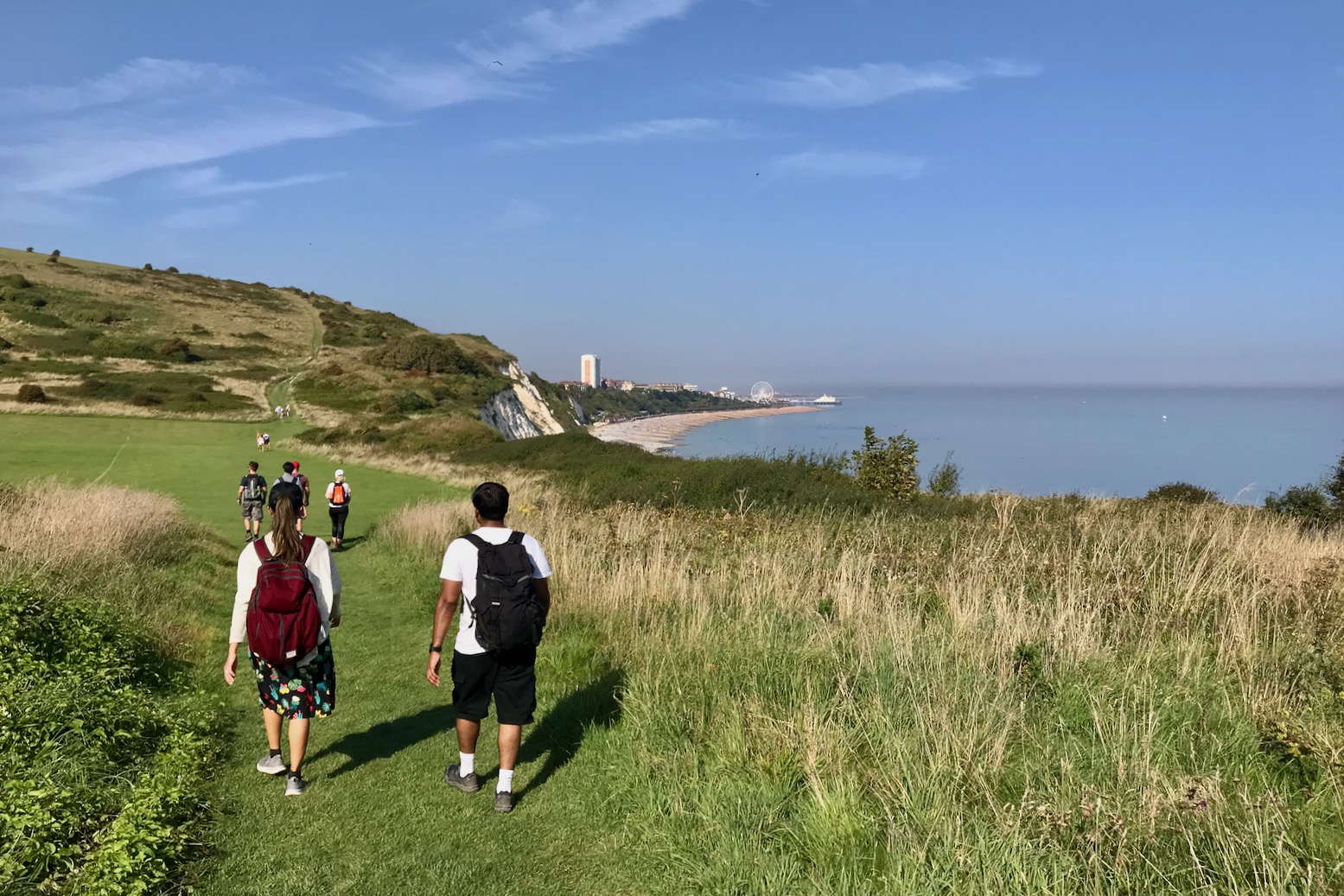
Up top you can see why this is such a popular walk; there’s loads of room to spread out on the vast expanse of magically trimmed grass with lovely sea views alongside.

Up on the cliffs it’s like some sort of diversity sponsored walk. I hear Spanish, Polish Urdu, Japanese, Estuarine, and what seems like a lot of first dates, judging by overheard chatter. I know no one’s carrying a packraft and all, but how do these fragrant young persons manage to not look like they’ve been dragged through a seaweed sauna by a JCB?

I make a mess of the toilets at Birling by indulging in a basin shower, but by Belle Tout lighthouse tout is not belle. I’m as parched as Pharaoh’s frog. Luckily there’s a smidgen of shade and a cafe selling reasonably overpriced ice lollies.

Local entrepreneurs have trained gulls to ride the thermals in search of dropped iPhones. Talking of them, this is the first time I’ve used a cheap cracked iPhone or any phone as a camera. The pics are pretty good, but you need two hands to hold and shoot, the lens is 28mm and any zooming soon gets ropey. As I walk into Eastbourne the battery is spent after only 130 shots and some mistaken video, but as a light day-camera I might get used to it.

Leaving Belle Tout with ice-chilled innards, it suddenly feels like it’s 5°C cooler. And the sight of stripey Beachy lighthouse suggests it’s not so far to go.

That was me down there not so long ago. The ice’s cooling effect doesn’t last, so after the long climb up to the 500-foot Beachy Head summit, I pull over for a cliffside rest which turns into a snooze.

I wake up and the cliff edge is cracking. Guard ropes are intermittent, broken and much ignored. Much refreshed after my nap, a head breeze has kicked up and I’m now less of a dripping mess. Someone needs to write a new self help book ‘The Power of Resting’. Oh, they already did. This groundbreaking book takes a fresh look at the role that rest plays in the quality of your life, offering a proven program to enhance your health, help you look younger, and feel restored. The Power of Rest provides a low-cost, low-risk answer to … Give it a rest!
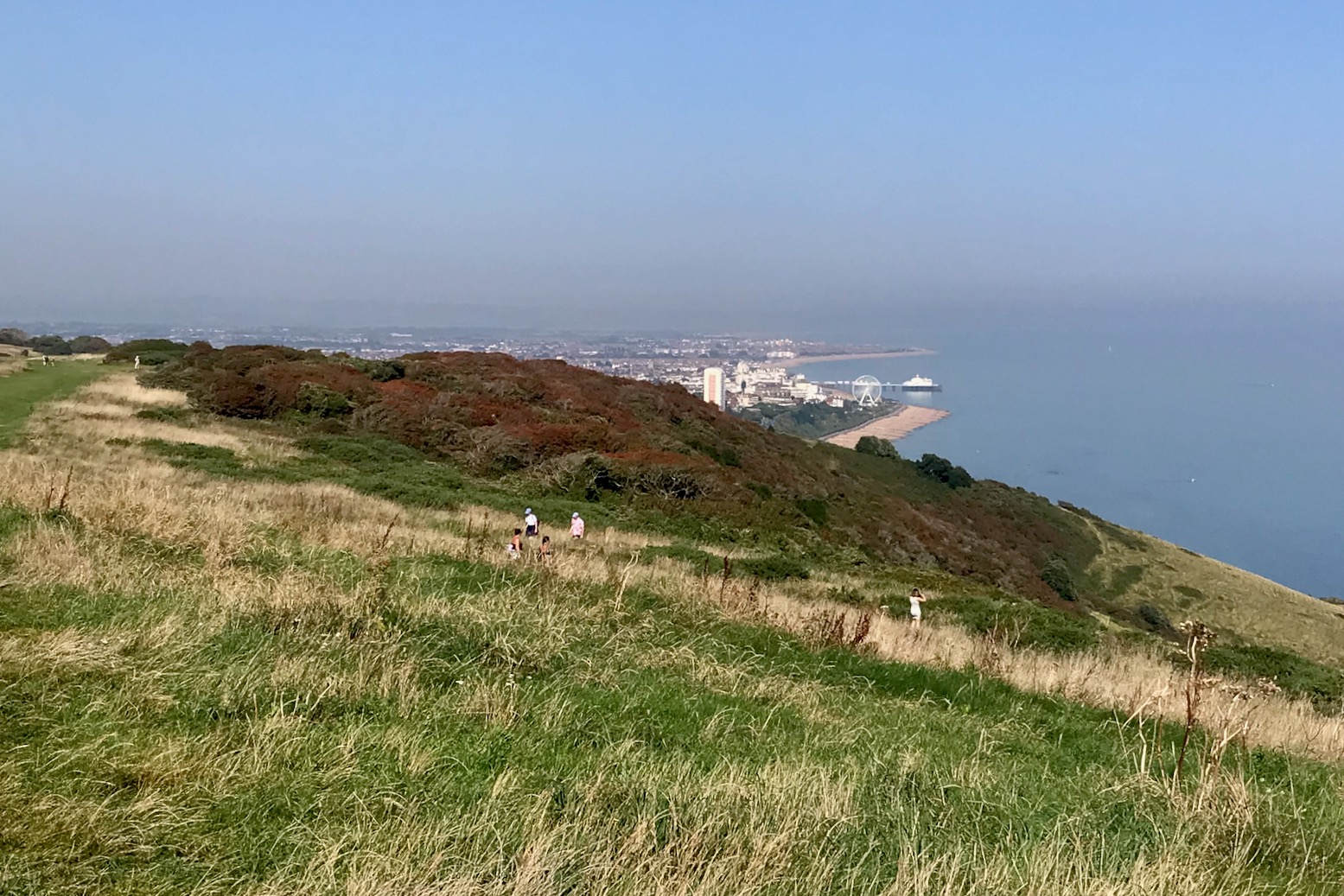
Eastbourne by George! But a steep, knee exploding descent lies just ahead.
Weary, lovelorn pilgrims make their way towards the finish line to collect their certificates.
‘Fancy getting a pizza later?’

Paddling Seven Sisters, highly recommended, whatever you got.

In case you ever doubted it, Float, Don’t Walk.

Anfibio Sigma TXL Plus+ Out of the box

Anfibio Sigma TXL+ main page

Updated summer 2025

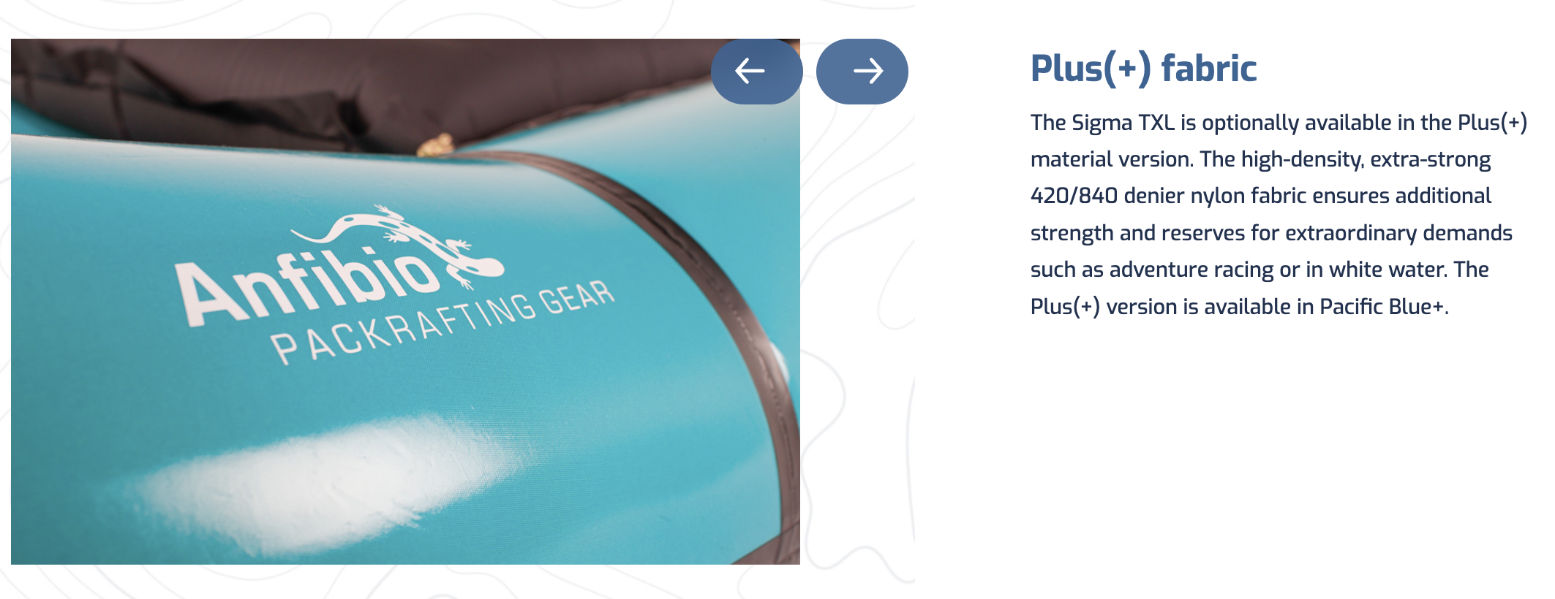
My 18-month-old TXL sold on ebay and I’ve just received a TXL Plus+ which I discussed earlier. Same boat but a lovely blue, heavier and with 80% more tear resistant hull fabric thanks to a denser weave and thicker 420D fibres. The floor is now full-weight 840D with extra coating. All that and it only costs €70 more than a standard TXL. Anfibio TXL page. Put that down to advances in TPU fabric technology. What is not to like?

Who knows how the ‘80%’ is calculated, but for the small weight increase, I’m in. For me, mostly paddling the coast alone, durability trounces light weight. If there’s a heavy duty version of anything, I’ll usually take it.

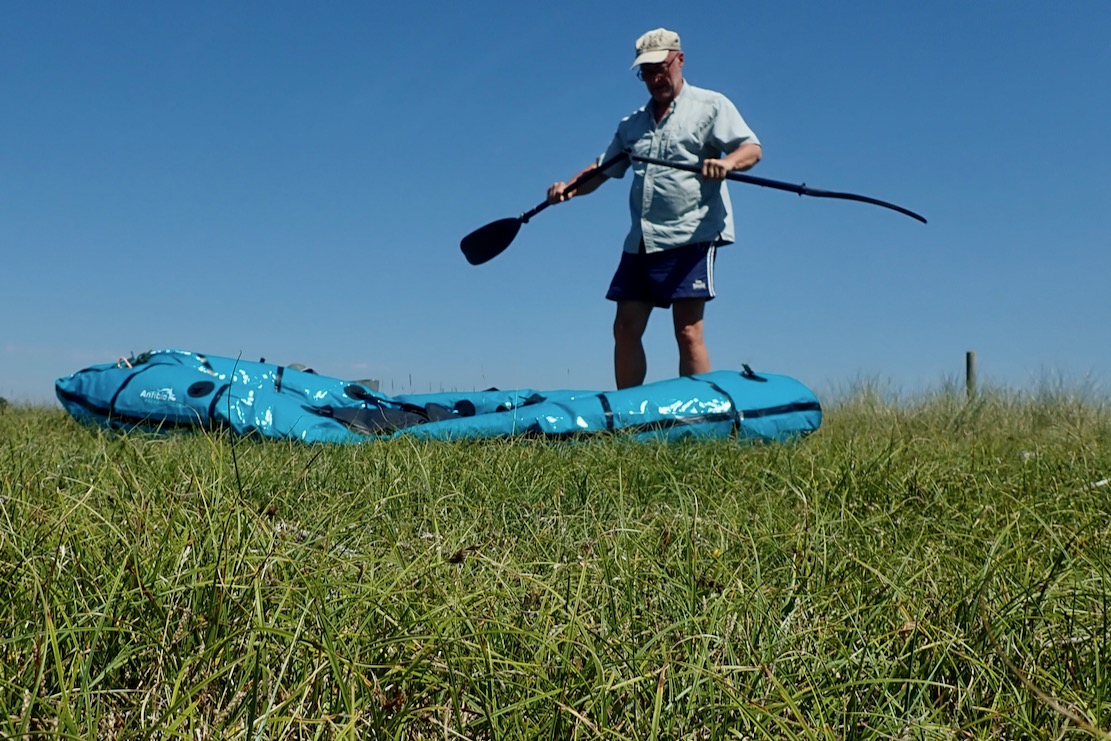
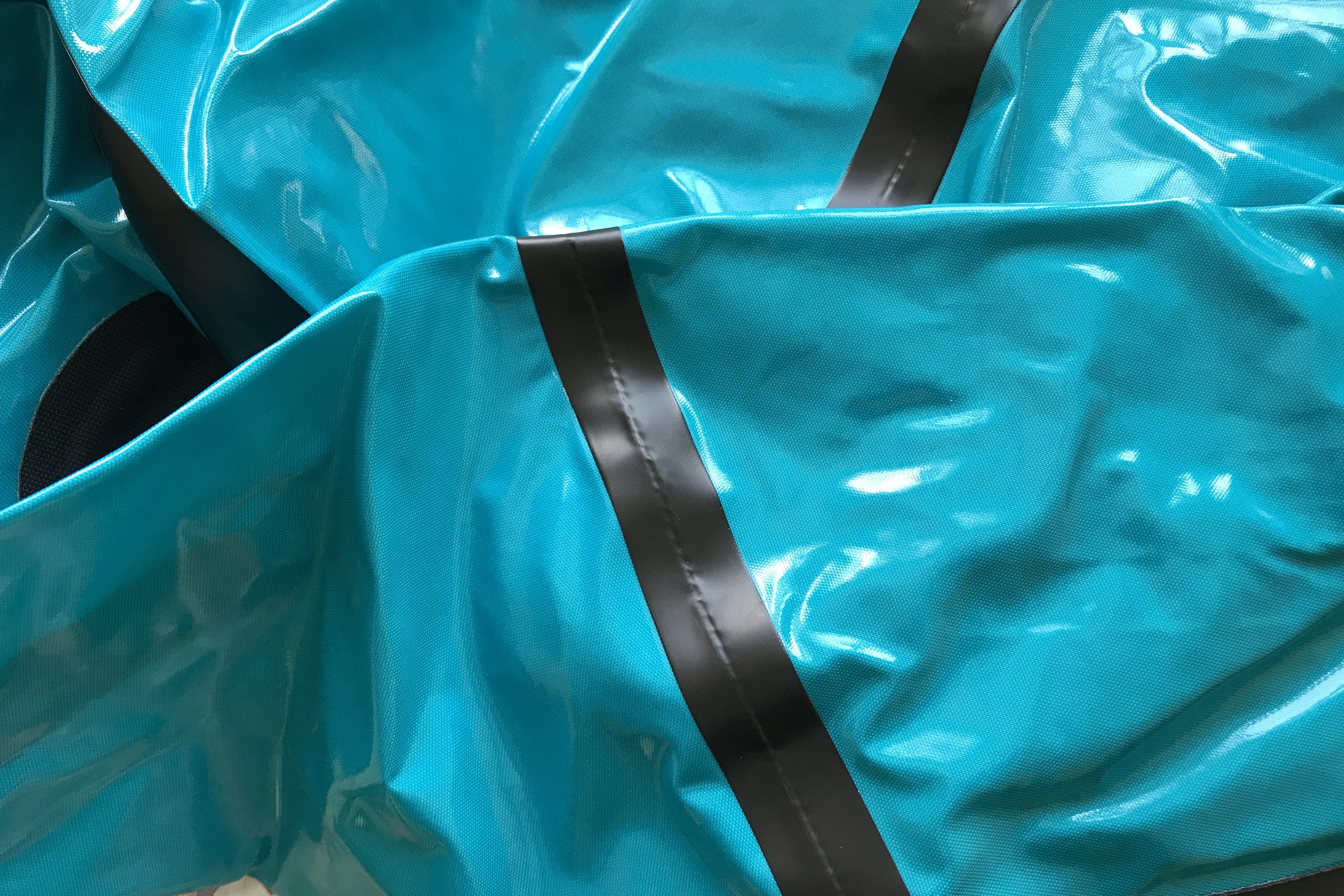
My TXL+ comes in a striking colour they call Pacific Blue but whose true hue can be hard to replicate on screens. I know from book cover printing that blue can be maddeningly inconsistent – WYS is not WYG. You will see the variations on this page – and that’s before we get into the subjective ‘was the dress gold or blue?’ argument. Anyway, I love my TXL+’s dark turquoise with tealy backnotes.

One thing I was pleasantly surprised by was the lightness of the box when I picked it up from the parcel depot. Did they miss something out? Nope, but back home, rolled up on the trusted kitchen scales (calibrated to <1% error, fyi), my bare TXL+ came in at 2971g or just 201g heavier than my green one. Weights may vary a bit but the dimensions are as below.

Blue TXL+ is the same size but 200g heavier: 2971g

All Sigma TXLs now have the skeg mounted further forward. On the first batch the skeg was only half submerged (left) and not fully effective. Anfibio haven’t moved the skeg onto the floor, as I did with mine, but straddling the stern and the floor (below left).
On my new boat it’s one less gluing job and thinking about it, it’s actually a better position, too. The curvature of the inflated stern where it meets the floor adds tension which holds the skeg securely in place (but not always; see below) and it’ll probably still stay submerged on flatwater.

With my version on the floor sheet, there was more submergence but less tension. The other day the skeg got dislodged as I got washed to and fro onto a rocky ledge while landing. I thought it was a fluke, and luckily I noticed the skeg lying in a rock pool before I set off again. It happened again a couple of years later off a beach, so I fixed that (see below). It’s one reason I stick hi-viz tape on my skegs (the main one being while packing up it’ll get forgotten in the shingle).

Don’t lose your skeg
Even on the curve of the stern, the lack of tension, or perhaps the low-friction woven-nylon skeg-mount patch, can dislodge an Anfibio skeg following a small fore and aft movement of the hull pressing on the sea or riverbed. On a flowing river, paddling skeg-free is OK and you might need the clearance anyway, but at sea you definitely want good tracking. Here’s one solution.
• Stick something like a fat sharpie under the rear skeg patch to lift the fabric away from the hull; you don’t want to stab your packraft
• Make two incisions which line up with the hole at the back of the skeg
• Feed a reusable cable tie through the slits and leave it in place. The skeg will now be secure.

The TXL+ comes with the same, huge TubeBags giving 200L of in-hull storage (right). The new zips are exceedingly stiff and the tiny zip pulls don’t help. As before, I zipped on a zip tie and even then it was quite a tug until all was lubed with silicon and it now runs like a rocket sled on rails.

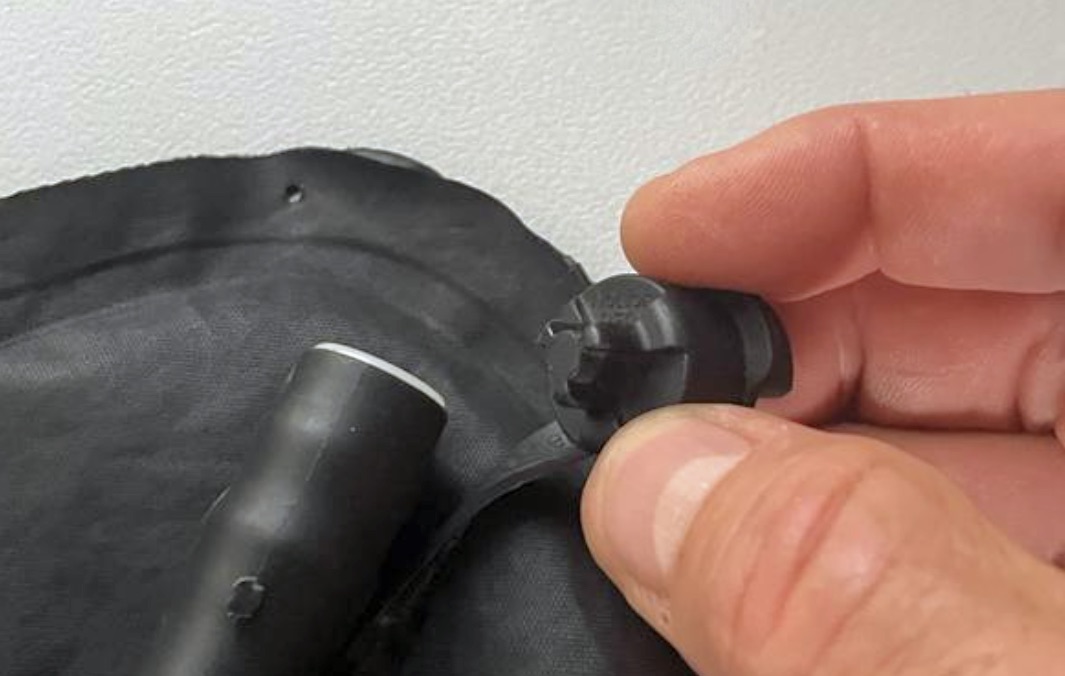
I included the +’s BNIB seats with my green TXL as my own seating is too bodged and ‘specialised’, but am told that the valve caps can now jam the sprung one-way valve open (left) for hands-free deflation. That’s a big improvement on the ‘press-valve-with-fingernail’ version that I crudely adapted to a Twistlok, and now means you can fully deflate the seatbase easily, even if it won’t be that fast.

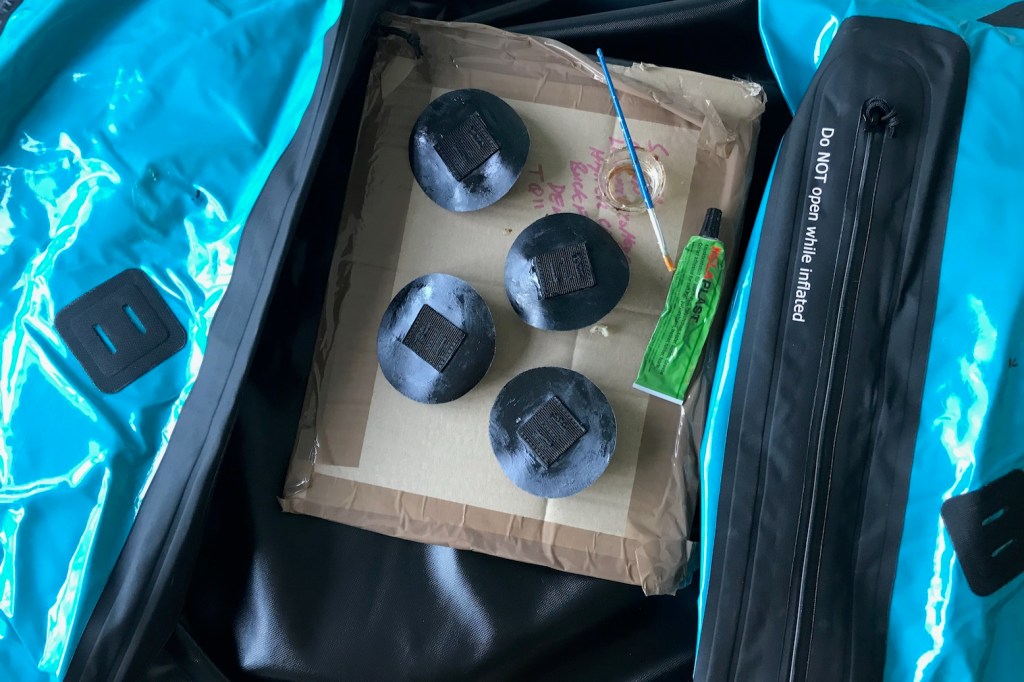
As on my green TXL, I’d glued on 4 tabs for my knee straps. I don’t have the green TXL at hand, but it did look like the OEM threadable strap loops on the top of the side tubes (right) are a bit chunkier. Knowing how little tension I actually put on the knee straps, I thought I might risk using them for the rear strap attachment point. But in the end I decided the further back position (as on the green TXL) was better, especially as I’ve lately noticed that with Multimat and MRS footrest fitted, I sit quite a lot further back.

Top left: The bits you will need to stick on 4 attachment loops. Top right: Watching attachment loops dry. Below: Wait a bit then apply another coat, wait a bit more then position the loop and heat with a hair dryer to reactivate glue (it was so hot today it kept shutting down; I had to ‘suction cool’ it with a hoover). Bottom left: Put on a hard surface and get stuck in with the roller. Bottom right: Stuck on after rolling
I love the way dried Helaplast magically turns sticky under some heat. Full gluing procedure described here.

New screw-down pump

I didn’t receive one, but Anfibio have refined the mini handpump too. It’s basically an adapted party balloon pump and costs only €10, but their version now has a screw-off nozzle handle (left). Good idea as I can see it getting snapped with an unlucky whack while in transit. In fact that’s exactly what happened to my old version after unpacking one time. I eliminated the handle, glued the hose direct to the shaft and added a bit of garden hose to be handle.

I mentioned here about repositioning the main hull inflation valve forward for easier topping up on the water when solo. Big-volume packrafts like a TXL can get a little saggy after a few minutes paddling on cold water – you will notice the light crease in the side tubes when sat in the middle. But on my last couple of outings with the Multimat, that didn’t happen; the flood pad did its job in constraining sag. Not having to over-inflate to get the boat firm is desirable; just enough pressure to get the job done. Problem is, my Multimat has already been repaired once and weighs nearly a kilo. Oh well, at least you can sleep on it too.

The 840D floor is reassuringly heavy duty, with a textured interior and a smooth, waxy exterior to glide across the brine. On my last Alpacka I went through a phase of light 420D floors then reverted back to a full 840D. Floors are at the sharp end so need to be durable, though of course they’re dead easy to repair.
In the end it’s hard to tell if my blue, TXL+ hull fabric is thicker than the plain TXL. It’ll all be in the mind, like the blue/gold dress.

TXL+ maiden paddle with true-blue photos here.

Quick review: Kokatat Leviathan PFD

In a line
A busty PFD at a great price and more pockets than the Crucible in May.

Weight
1.01kg (size M/L)

Cost
£40 (heavily discounted on ebay)

What they say
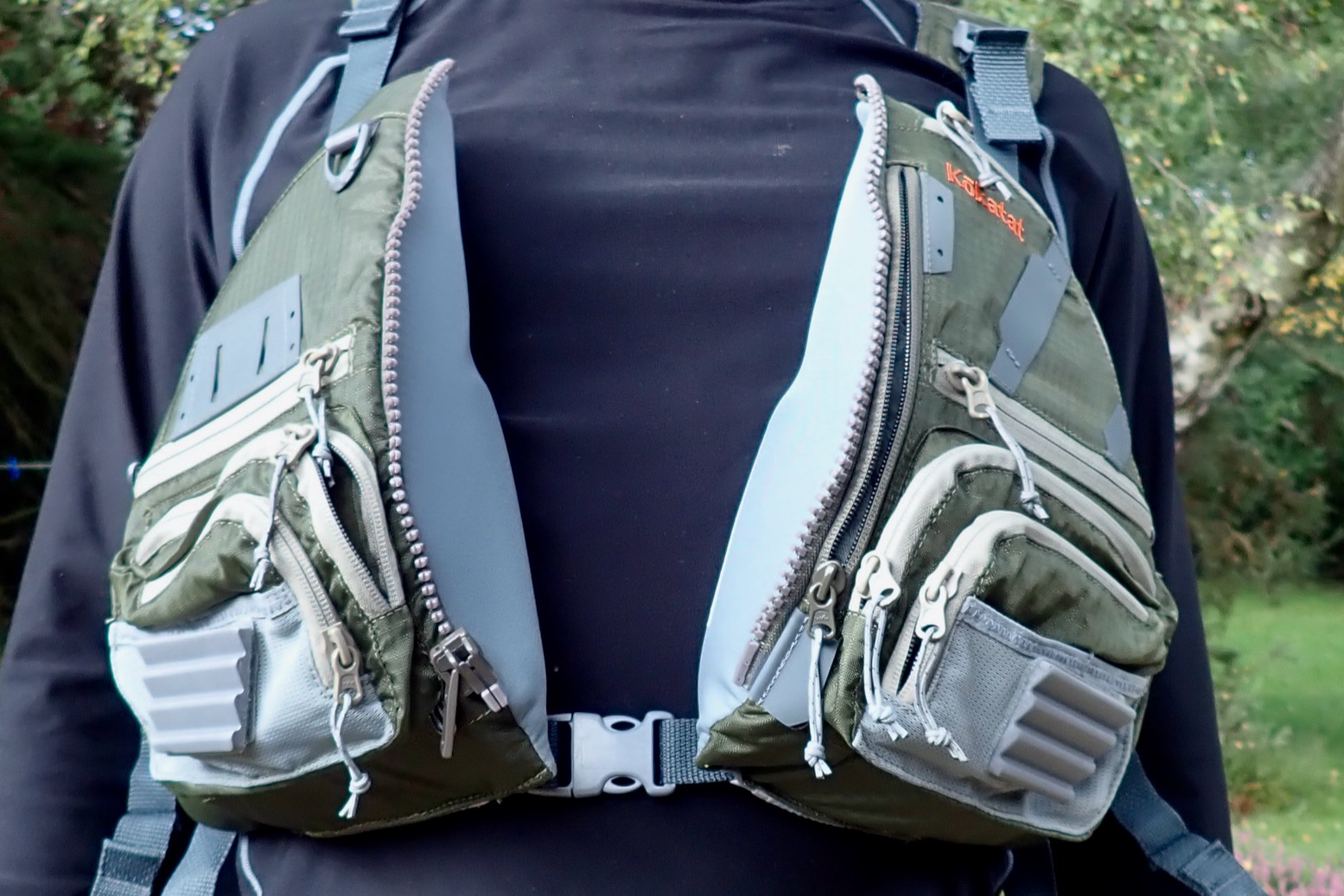
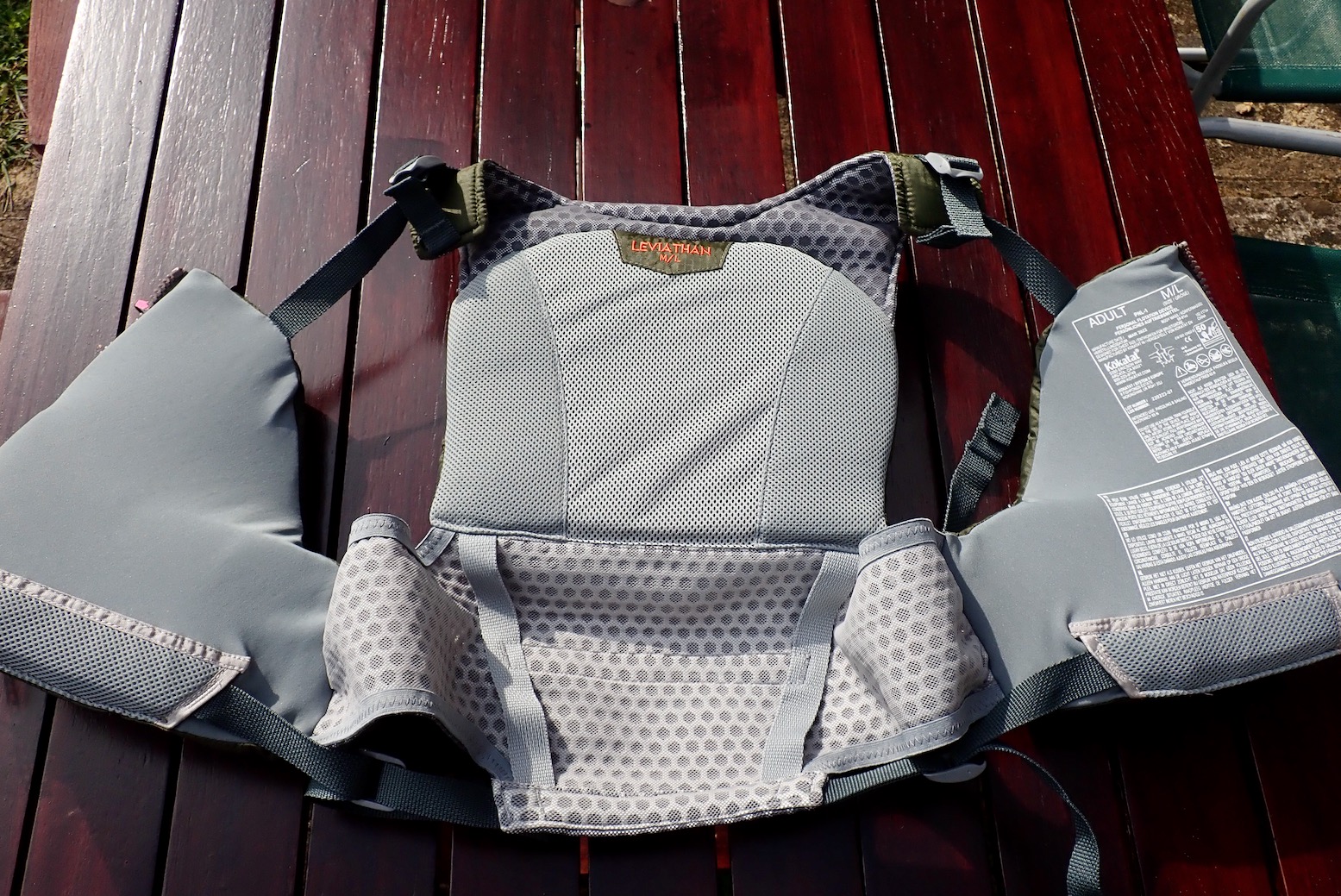
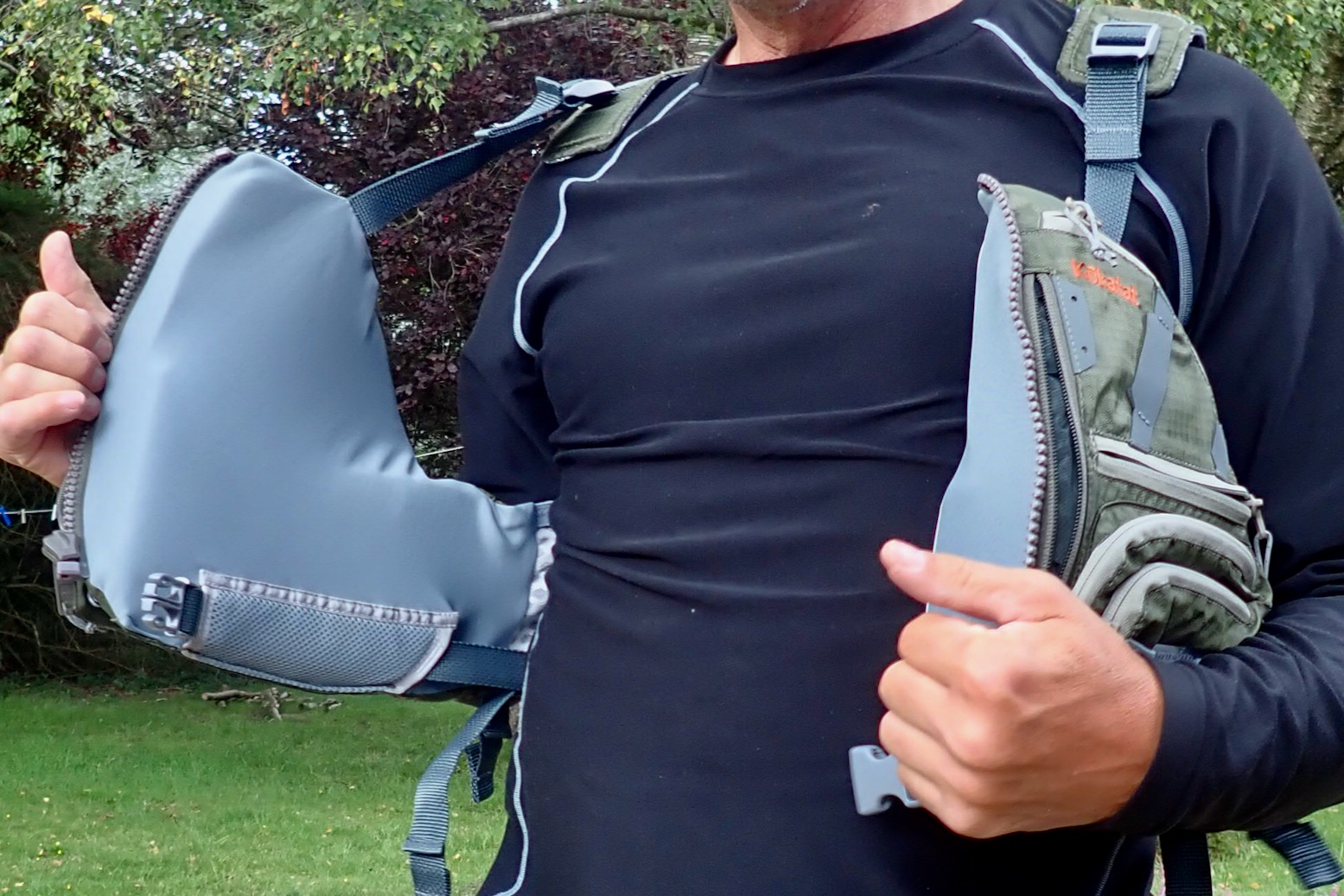
The ultimate kayak fishing life vest, the Leviathan has 14 pockets and multiple fixture options allowing anglers to carry lures, tools, and gear wherever they choose. This high-back, performance, recreational life vest features body-mapped Gaia foam panels contoured precisely to allow the life vest to wrap the torso in a secure fit. Fleece-lined handwarmer pockets are a bonus for those chilly days. This Life Vest is certified for use in both the US (by The US Coast Guard) and Canada (by Transport Canada). You do not need to select a certification. The life vest is dual certified for both countries.

Review
I read somewhere that a PFD loses its buoyancy over the years and should be replaced once in a while. In that case my 15-year-old, much travelled Kokatat Bahia Tour (right), bought at REI, Denver in 2007, must be well overdue for retirement to a golf resort in Spain. It’s been discontinued, and the Leviathan could be headed that way too, judging by the discounts.

Handwarmer pockets. Do they count?

Kokatat make some reassuringly expensive dry suits and sponsor big sea kayaking adventures, so it’s a trusted brand. I’ve never tested my old Kokatat, by choice or surprise, so have never experienced its floatability. Hopefully I’d not sink like a stone, but with a GPS in one pocket, a camera in another and a rescue knife, a bit more flotation might not go amiss. As it is I’m at the upper range of it’s body mass index
When I spotted the Leviathan for just £40 on ebay (normally about £150), I set aside any stylistic reservations and clicked BIN. My compact, inflatable Anfibio Buoy Boy is OK for easy rivers or short crossings, but doesn’t claim to be a certified PFD and would be inappropriate alone on the open coasts around here in Dorset where you want to feel secure.

Pockets and attachment points galore
Breath in

The Leviathan is a paddle fisherman’s PFD which explains the vast array of pockets. They’re handy, but I knew straight away 14 was OTT, even if four are tiny mesh pouches and two more are handwarmer slots. All this storage, along with generous foam implants give the Leviathan a busty appearance, even before you pack it with fishing paraphernalia. Or maybe I’ve had another well-fed summer. It won’t be as discreet to wear as a Buoy Boy. I’m not sure what the corrugated grey plastic blocks are, velcro’d on the mesh pockets. I’ve seen this on ‘tactical’ clothing: possibly for attaching insignia?

One underzip clip; shame

I like a front zip PFD, but will miss the second upper clip under the zip, as on my Bahia. It meant you could paddle on hot days with the PFD unzipped but still snug fitting.
But one thing the Bahia lacked was a large pocket for a mobile phone in its waterproof pouch. If you paddle with a phone for safety, the advice is to have it on your person, not stashed awat in a dry bag somewhere on your packboat cartwheeling away downwind. The olive colour I quite like, though I admit it lacks the visibility of my Bahia’s faded mango.

Big pocket for mobbie. Tick

My Leviathan was not one hour out of the box when I set about it with a scalpel to trim the pocket count by 43% (6 pockets) while barely losing any functionality.

Another seamless IK&P modification

That done, I transfered my whistle, knife, biner and camera leash (in a pocket) from the Bahia and am ready to try it out on my next paddle.

Trimmed, 8-pocket Leviathan ready to go

Packrafting Jurassic: Lulworth to Kimmeridge

Anfibio TXL main page
Kimmeridge ledges
Swanage stacks
Dancing Ledge
Packraft sailing to Lulworth
Kimmeridge to Chapman’s Pool

Lulworth to Kimmeridge
Map with most place names

‘Calm… caaaaalm’. It’s what you say to a hyperactive child. But it’s also what you observe as you scan a weather forecast: 3-4mph onshore southerly, backing southeast later. With sunshine too, it could be the Last Good Day of the Summer.
I left my moto just as they’re opening the gate down to Tyneham ghost village. From there the Mrs drives me on up the coast to lovely Lulworth Cove for a sneaky 9am bacon buttie. I do worry about my B12 levels sometimes.

All calm at Lulworth

“Oh wow!” squealed a little girl as she also arrived with her family at Lulworth beach. And you can see why; it’s an amazing natural feature which along with others help make Dorset’s Jurassic Coast a World Heritage site. Within an hour the renowned amphitheatre would be standing room only but hey, it’s August on the South Coast; if you want a lone beach, pack a mac and go to the Outer Hebrides.

Red shaded area is army firing range which – land or sea – is usually closed.

Today’s plan was head east 9km to Kimmeridge Bay as I gradually joined the dots packrafting Dorset’s Jurassic Coast.
This time last year Barrington and I sailed here from Ringstead Bay near Weymouth, before getting sent into Lulworth Cove by an army patrol boat. The following eastward section of coast is an army firing range that’s only open to the public on weekends or throughout the August holiday season. And even then, some landing spots are closed, and inland you have to stick to the paths in case you step on an unexploded bomb. Tragically that happened in 1967, though thankfully only once and as a result, today warning signs along the footpaths are everywhere.

Leaving Lulworth

Once out of the cosy Cove, the first section should be easy enough, but if not I could hop out at Warbarrow Tout, walk a mile to the bike at Tyneham and ride home. Continuing all the way to Kimmeridge depended on confidence and energy levels, and how the sea actually looked once out of the sheltered Cove.

Today I’ve remembered everything, including my repaired Multimat floor pad. All you need is to get into a routine; let me know how to do that. And as I set off towards the Cove’s mouth the TXL definitely has its glide on. I have two hours before the tide turned and the wind with it, but right now the boat felt great. I even remembered to pull up my knees straps, and felt nicely connected between the TXL and my paddle blades

Towards Mupe Rocks I had the odd sensation of offshore waves bouncing off the cliffs – it made getting close tricky. I see on an online marine chart (below) the seabed drops off quickly here so the swell just rolls in and boings back out.
They say there’s a petrified tree here somewhere – or ‘Fossil Forest’ in over-heated tourist-speak. But I learn later it’s by a path on the cliff top where there are also periodic radars (left) and other sinsiter MoD installations.

Mupe Rocks from the path

Mupe Rocks turn out to be rather ordinary remnants of fallen cliff, not like the gleaming white chalk stacks I paddled last week near Old Harry. With no interesting arches or caves, I thread about but they’re a bit disappointing.

Mupe Rocks

Seaweed streams reassuringly eastwards with the rising tide, and as I round the corner Mupe Bay opens up, revealing half a dozen moored sailing boats. Behind them rise the steep chalk cliffs which you can see for miles down the coast.

Mupe Bay
Mupe Bay and Warbarrow, a day or two later.
Landslide

I wonder about putting ashore at a gap in the cliffs called Arish Mell because I can. But perhaps I can’t, even in August, if I have interpreted the map warnings correctly.
Behind the beach I spot some huts, shipping containers, pickups and activity. As it is, my equilibrium is disturbed by some strangely large waves rolling in across the middle of otherwise calm Warbarrow Bay. A submarine shelf? They’re not crashing ashore as far as I can see, but I decide to stay out in the Bay.

Arish Mell gap
Activity on the Mell

Turns out Arish Mell is off limits 24/7/365, using the proven UXO gambit which didn’t seem to be bothering the chappies ashore today.
Another possible reason may be that from around 1959-1990 give or take, ‘slightly radioactive effluent’ was piped out here from the former Winfrith nuclear research facility a few miles away near Wool. They’ve been decommissioning Winfrith ever since, and we should be grateful that with much effort they saw fit to extend the outfall pipeline two miles out to sea. You can see the pipe on that marine chart above. Coincidentally, this week Japan started doing the same thing at the damaged Fukushima reactor, raising the ire of seafood enthusiasts in China. Meanwhile, this well-produced 1959 Atomic Energy Authority promotional film describing the pipeline project seems very proud of itself.

So I set course for the conical headland of Warbarrow Tout (old English for look-out) at the far end of the Bay. The sinister waves subside and something else changes: the TXL glides across the smooth surface effortlessly. I am able to draw a long, slow, kayak-like paddle cadence, not the usual thankless spinning.
Later the GPS data revealed the combination of windless conditions and the Multimat helped the raft skim along at up to 6.2kph or 3.8mph. I’m not sure it’s ever sailed that fast so, even aided by the final hour of a modest, metre-high tide, that’s quite impressive.

Actually, I don’t know why I’m so surprised. Although I seemed reluctant to admit it initially, the first time I tested the TXL with the Multimat in the Summer Isles, the evidence was right there (left), even if it wasn’t night and day.

Approaching Warbarrow Tout

As I neared the Tout I was anticipating some sort of disturbance from an eddy being pushed out by the eastern hook of the Bay. Sure enough, the TXL passed over a patch of clapotis without breaking it’s stride, but as I moved on past Pondfield Cove (a mini Lulworth) something changed again – the boat seemed to slow to a crawl. The coastline was creeping along but a check the GPS only registered a slightly slower speed.

Warbarrow Tout and Gad Cliffs beyond

As usual with winds, other anomalous currents and flotillas of irate pirates, I wondered if this would set in or get worse all the way to Kimmeridge, with get-offs but no take-outs along the way. I decided to carry on below the Gad Cliffs to the prominent Wagon Rock and if nothing changed, I’d turn back and walk out to Tyneham.

Gad Cliffs. Dorset’s cubist Mount Rushmore

But by Wagon Rock the countercurrent had subsided and the GPS later showed I resumed the steady 6kph pace. Sea paddling alone an semi-appropriate boat makes you more alert to minute changes in conditions which a sea kayak would pass with barely a shrug. I later wondered if it was possible the eddy from the hook formed by Warbarrow Tout could draw back or suck in a current ‘beyond’ itself, as shown below. Who can fathom the mysteries of fluid dynamics?

Beyond Wagon Rock the grey sweep of Brandy Bay‘s oily shale cliffs plunged down to the sea. Up ahead I was reassured by the sight of Clavell Tower, just 3km away, marking the far side of Kimmeridge Bay. Less comforting was the breaking water between me and it: the ledges of Broad Bench spotted when I paddled the Igla here a few weeks ago. It would be alarming to have one of these rise up on you out of the blue (below).

Sneaky wave

As always, the solution to such unpredictable seaside disturbances was to paddle further out, even if the instinct (and interest) was to hug the shore. I aimed for the distant St Adhelm’s Head and safely rounded the churning maelstrom of Broad Bench, with the bedrock visible a few feet below. That done, the crossing was in the bag and I worked my way towards the beach where crowds were streaming down to the shore with their dogs. Nine clicks covered in less than two hours from Lulworth. Not bad.

Brandy Bay in a gale.
Interesting shelf

A few weeks ago we walked the coast from Tyneham on a very windy day. At low tide the ledges at Brandy were a froth of white foam (above). Today, walking back 4km to Tyneham, the Long Ebb shelf delineating Hobarrow Bay was already emerging from the retreating tide. Looking back, I was reminded the nearby big shelf (left) behind Broad Bench was worth a nose about for fossils or dubloons, even if MoD poles discourage this and you can only access it by boat. It’s one for next time.

Above Tyneham looking back to Mupe Bay

Midday and Tyneham car park is already packed. Another section of the Jurassic ticked off or recce’d for another pass. Hopefully there’ll be a chance to do the 6km from Kimmeridge to Chapmans Pool before we roll up for the winter. That will leave the two points of St Adhelms and Durlstone for the next caaalm day.