Author Archives: Chris S

Packrafting Bradford-on-Avon 8 mile loop

See also
Sigma TXL index page
River Wye
Regents Canal
Wey Navigation

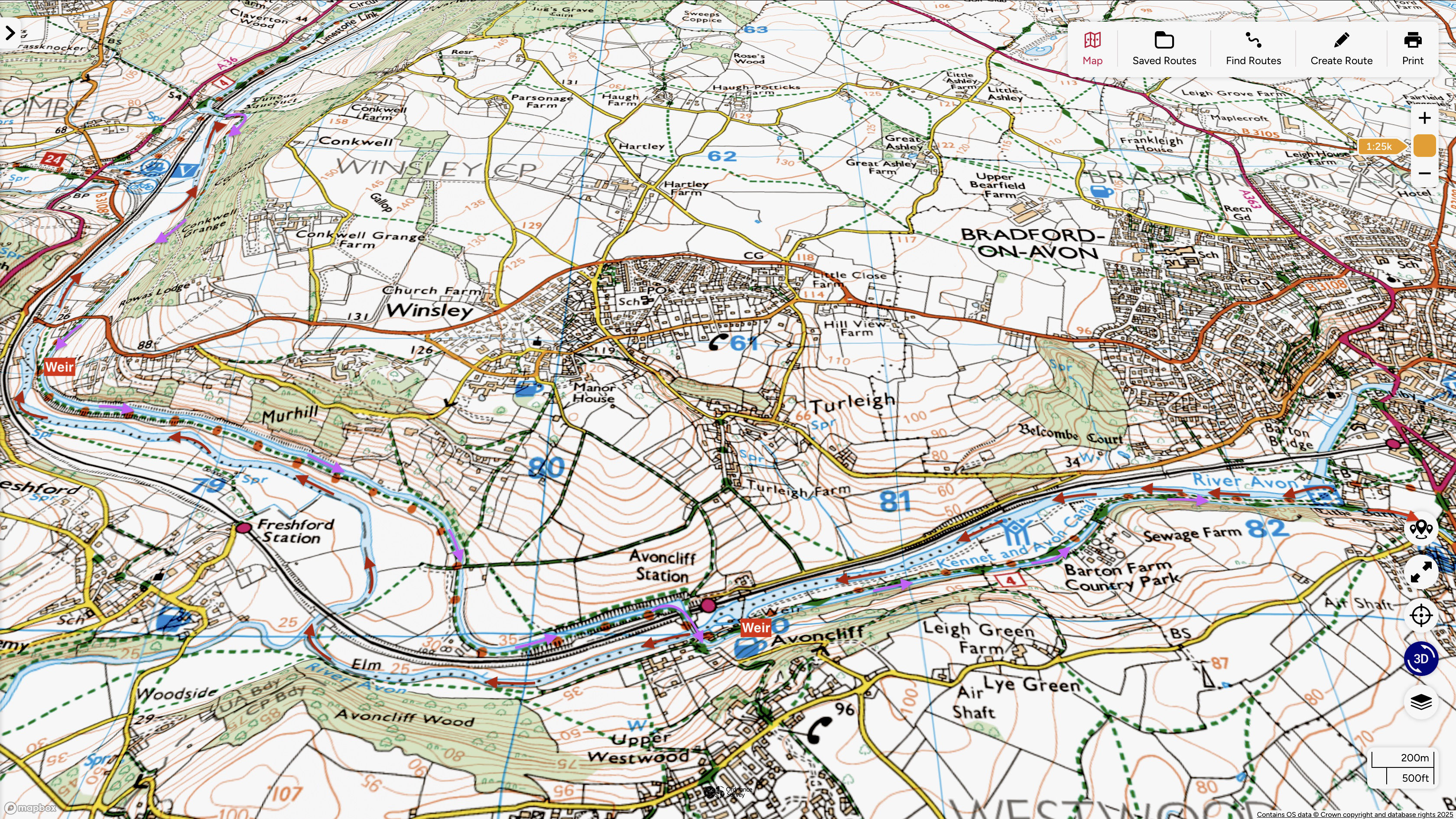
They say Bradford-on-Avon near Bath is one of England’s prettiest historical towns. I blundered through the other evening trying to outwit the satnav, and it didn’t look too shabby. With something to pick up near town, I wondered if the Avon river was paddleable, and found Andy Ballard’s nice canoeing vid above. He describes an 8-mile-loop which follows thne river towards Bath, before hopping up onto the parallel and lock-free Avon & Kennet canal at the Dundas viaduct to return to BoA. That will do nicely.

Avon 8 mile loop

‘Pay attention at the back!’
Completed around 1810 towards the end of the ‘Canal Mania’, the Kennet & Avon Canal essentially crossed southern England’s watershed to link the then key port of Bristol at the mouth of the Avon with London on the Thames. At Paddington in London, the Grand Union was completed around the same time, and led up to the north’s mines, foundries and mills, and where the network of canals became much denser (below right).

The Thames and Avon rivers were long navigable inland as far as Bath and Reading and the K&A linked those two towns over 87 miles. Kayaking the Wey Navigation and packrafting London’s Regents Canal taught me that Britain’s canals helped kick off the world’s first industrial revolution. They linked or added to long-established river navigations to extend inexpensive and reliable cross-country transportation of heavy, bulky or fragile commodities.
At this time the decrepit road network along ther Bath Road (A4) was still suffering from 1500-years of neglect following the Roman era. Coaches carried passengers and packhorse trains were superior to wheeled carts, but turnpike fees (tolls to help pay for road upkeep) made them costly. Hostilities with France included attacks on coastal shipping in the English Channel, necessitating secure inland transportation to help provision the war effort. The former Wey-Arun Navigation linking London and Surrey’s gunpowder mills with the navy fleet at Portsmouth was another example.

Once 18th-century nimbyism had been overcome, canals soon became a reliable investment opportunity which made nearly all shareholders richer, while seeing commodity prices drop for all. But Britain’s canal boom was short lived and 30 years after completion, the K&A was trounced by the Great Western Railway, itself trounced a century later by the M4 motorway.
Since WW2 canals and their adjacent towpaths have been widely restored and especially in cities, can be historically interesting byways. But recreationally they’re more suited to walkers, cyclists and powered river craft than paddlers. The lack of a current means they can work both ways, but portaging locks can break a journey’s flow, as they can on a rivers like the Thames, where canoe chutes are few. And the popularity of canals and towpaths can make them busy places compared to a natural river winding through the landscape, with the odd aerated riffle to spice things up.
I tried to do the right thing and buy a paddling day pass from the Canal & Rivers Trust in Bradford basin (not sold online afaict). But what looked on the map like a C&RT office turned out to be a cafe and gift shop. Oh well, at least they got a fiver off me in their car park.

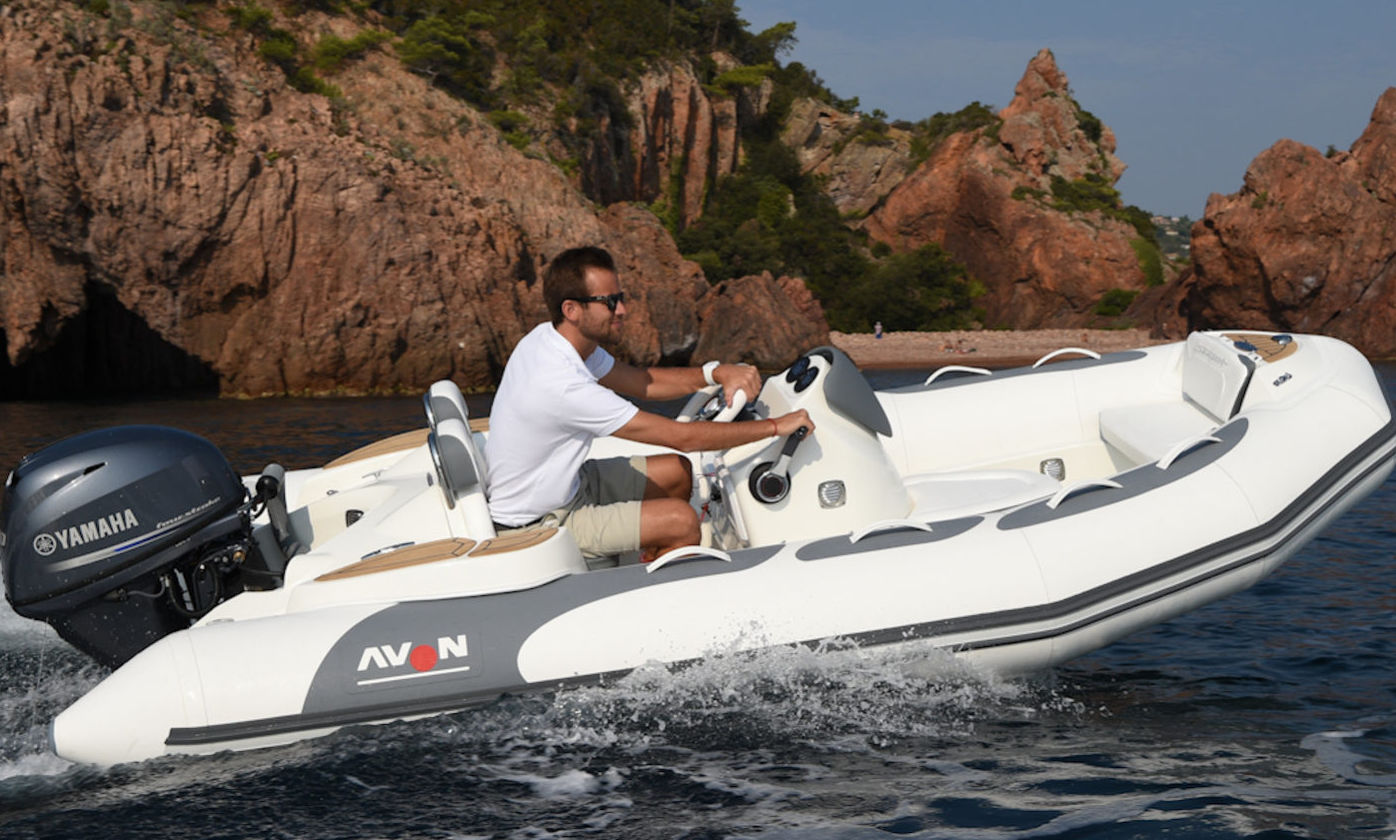
Signboard in the car park noting the dawn of rubberised fabrics in 1848 (interesting BoA Museum page) and which became Dupont hypalon we know and love, and then PVC. It explains the brand name of Avon Rubber Company and their RIBs (middle) and moto tyres (right). The factory was by the secind weir at Limpley. Avon RIBs were bought by French Zodiac in the 1990s, and after 112 years the Avon tyre factory up river in Melksham closed in 2023.

I have a mooch around the huge, 14th century Tithe Barn, a feudal tax warehouse where peasants surrendered part of what they produced to nearby abbey. Then in the 1530s, Henry VIII grabbed all religious properties for himself.
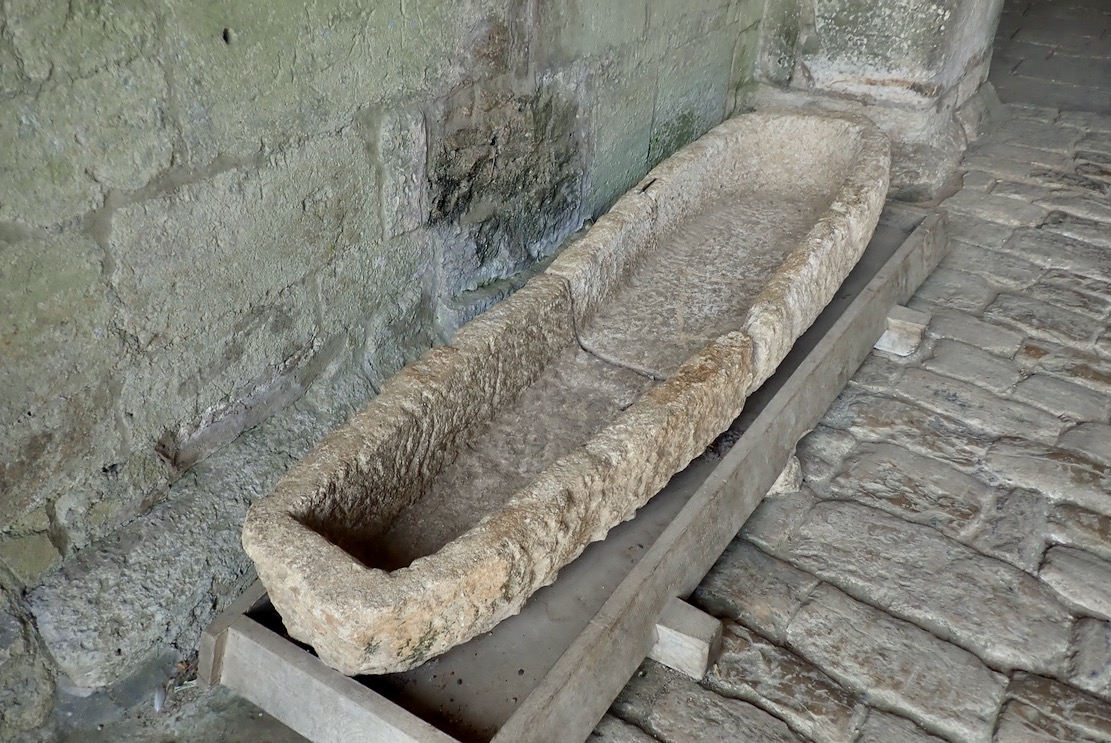
An experimental Roman dug-out canoe later repurposed as a sarcophagus. Along with a Saxon church, there are many historic buildings in BoA, most dating for the Industrial Revolution.
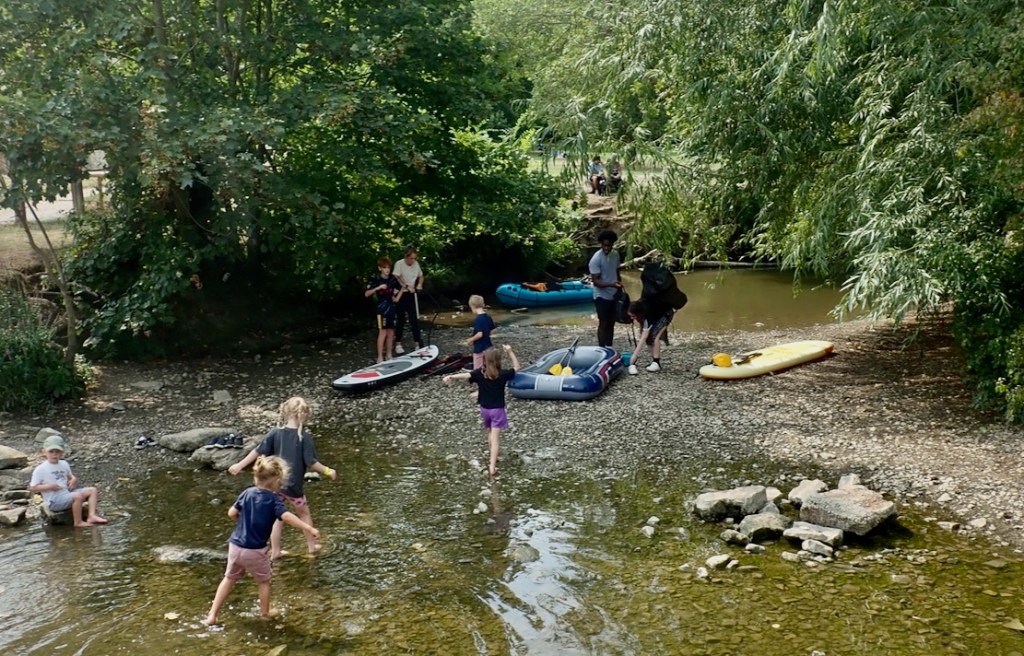
Easy put-in just by the barn. Loads of kids on paddle boards, plus a £20 slackraft to even things up a bit.
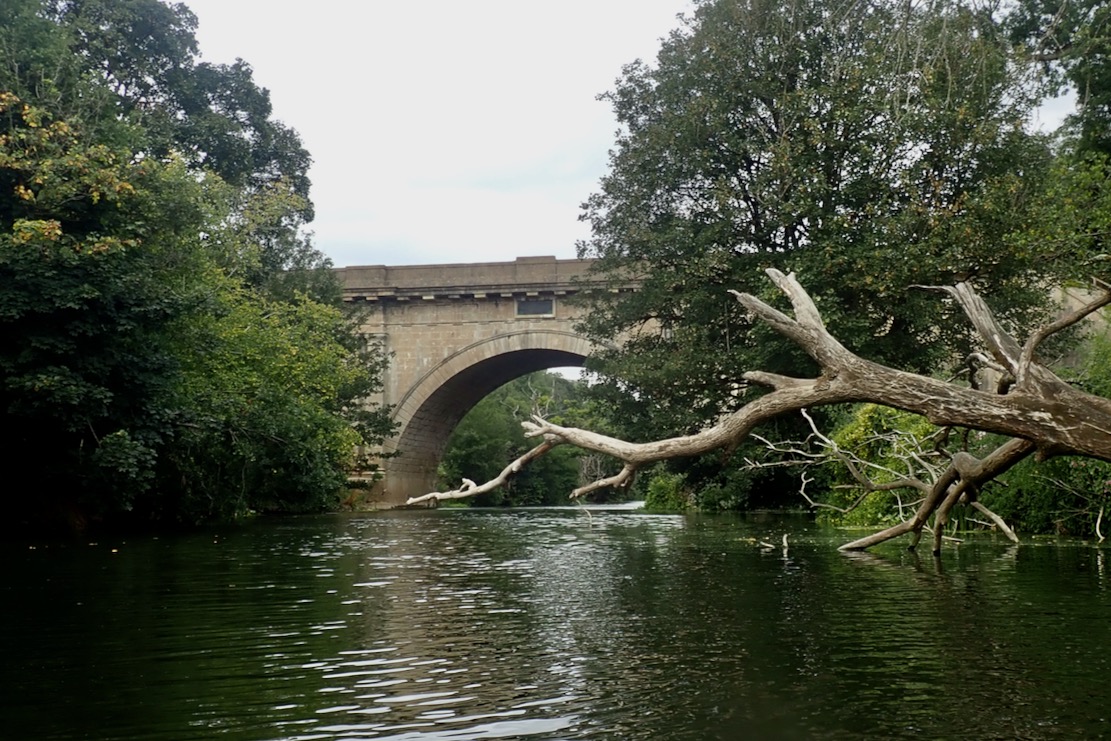
Soon I pass under the Avoncliff aqueduct which I’ll be crossing in a few hours.
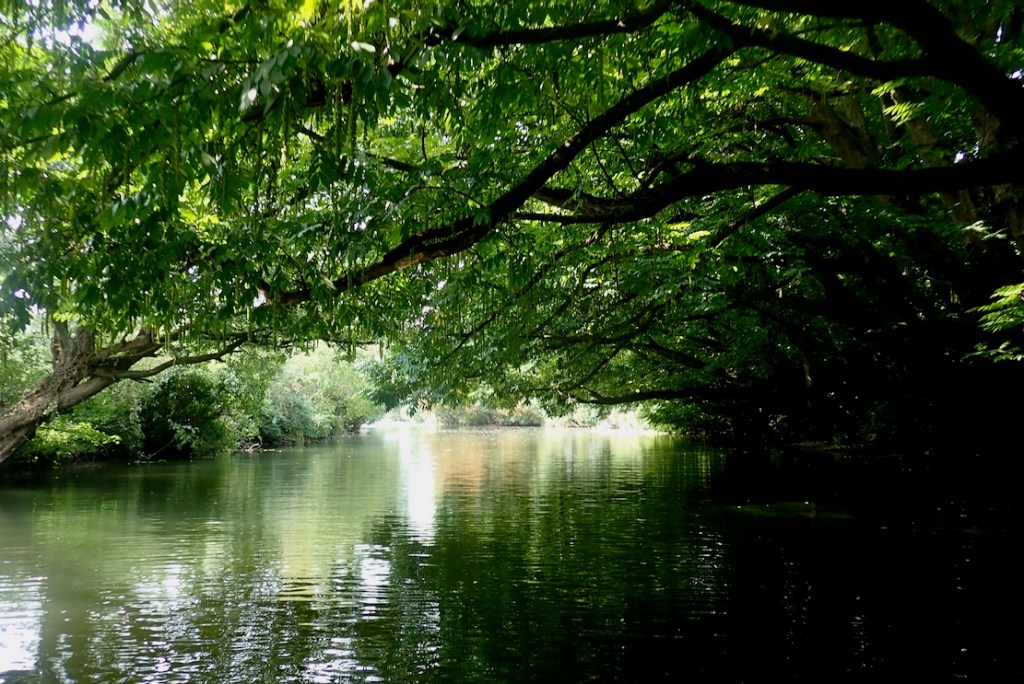
Lovely riverside treescapes.
Some are already turning, despite being right by the water.
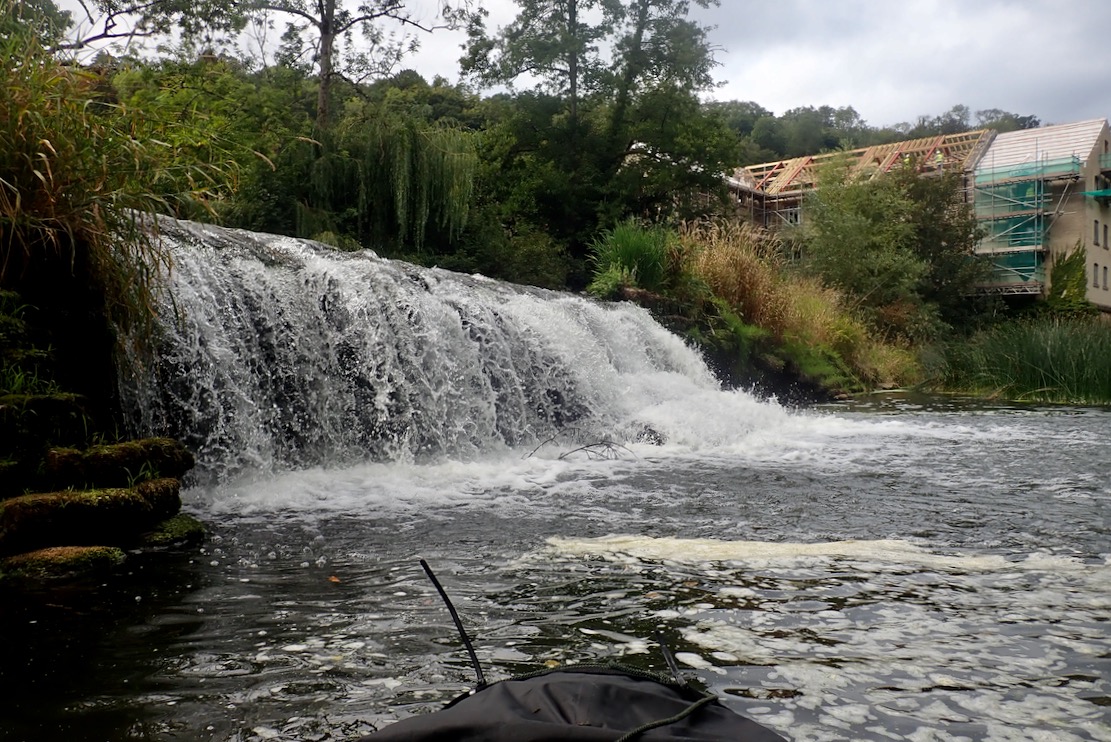
The first weir at Avoncliff. A Medway-style chute would be nice, but I read the weir face steps are shootable at much higher water levels. Sounds a bit sketchy to me.
The exposed steps make for an easy portage.
Once below, a brisk current flushes me through the reeds.
The second weir at Limpley Stoke. The steps river right are a bit steeper here, but easy enough. Not sure I’ve seen stepped weirs in the UK before. Avon Rubber’s original factory was here at Limpley Mill.
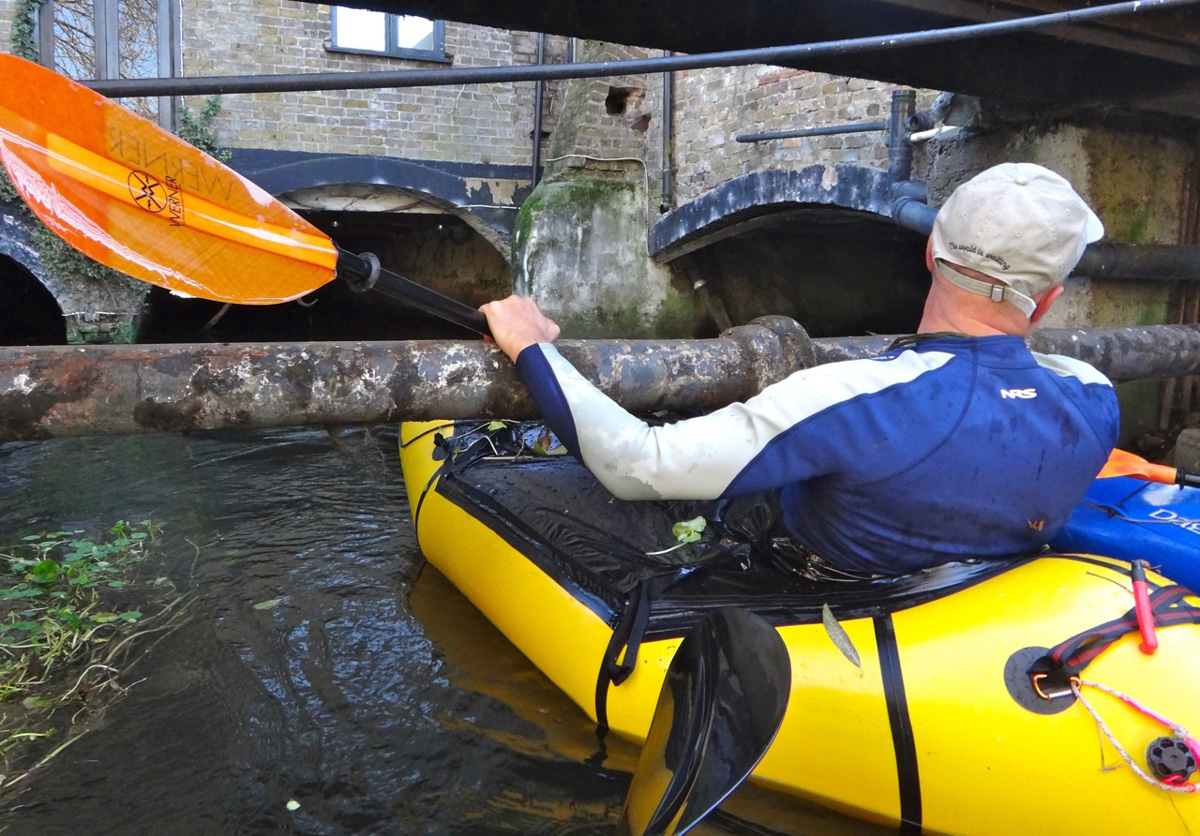
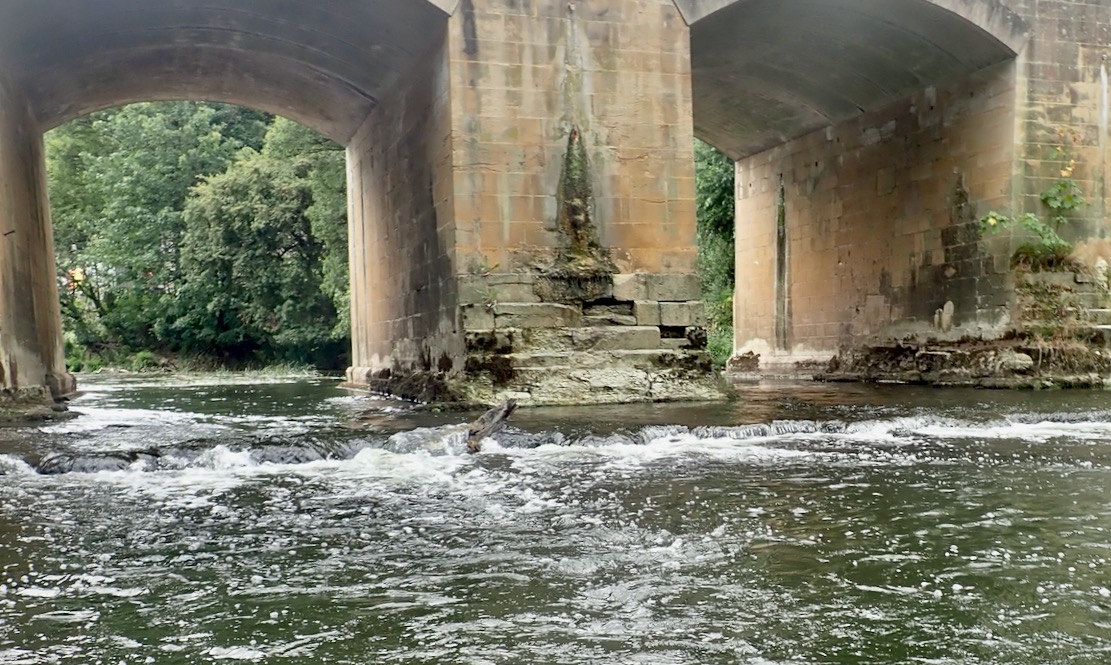
There’s a road bridge soon after followed by a 7-inch weir. The skeg scraped a bit around here but despite no rain for months, I never had to get out and walk the packraft, like in the canoe video.
Reeds and trees. I’m amazed how well the Sigma zips along, helped I’m sure by a bit of current and backwind and the Multi Mat floor. At times I even perceive an IK-like glide. No one’s ever said that of a packraft. The TXL+ really is a great do-it-all boat. Ae you getting a bit tired of reading that?
After 4.1 miles (6.6km) and 85 minutes (just under 3mph) I reach the Dundas Aqueduct where the Kennet canal crosses high above the river. Just after, on the right are steps to take out.
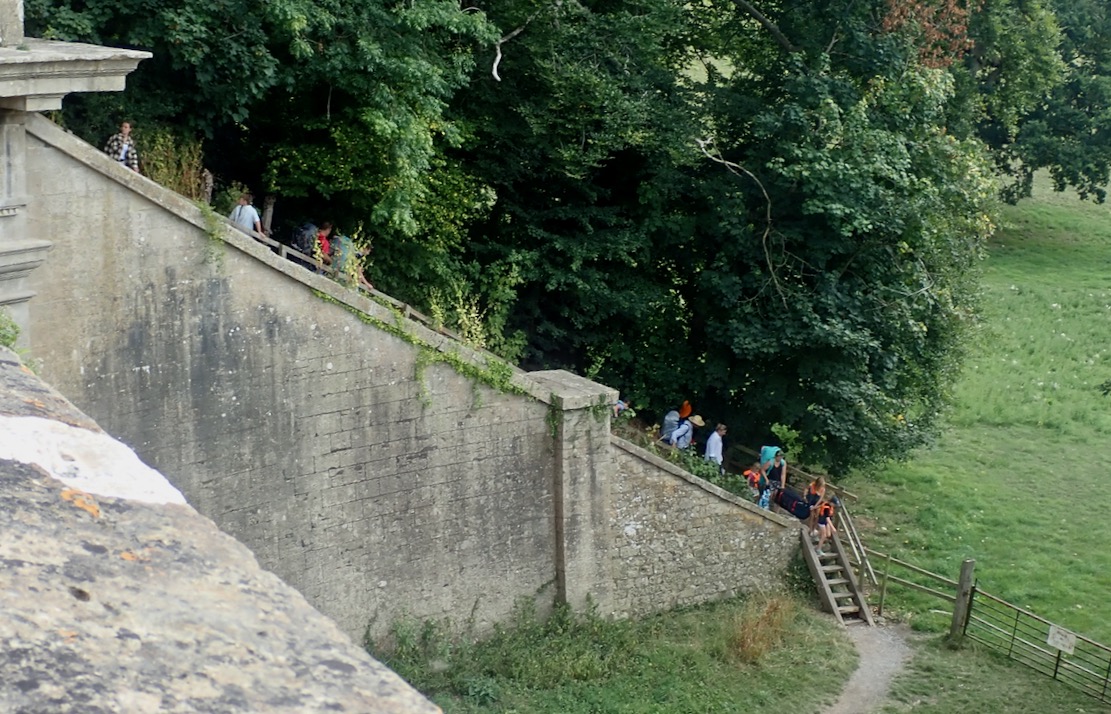
Once on the right bank it’s a 20-metre set of stairs up to the aqueduct. Wouldn’t fancy hauling a hardshell up there by myself.
The Avon from the aqueduct.
Tow path on the aqueduct. By way of a rest I submit to a questionnaire for the National Trust.
Video Andy warned the canal can get raucous with piss-up barges. But not on a balmy, late summer’s Tuesday afternoon.
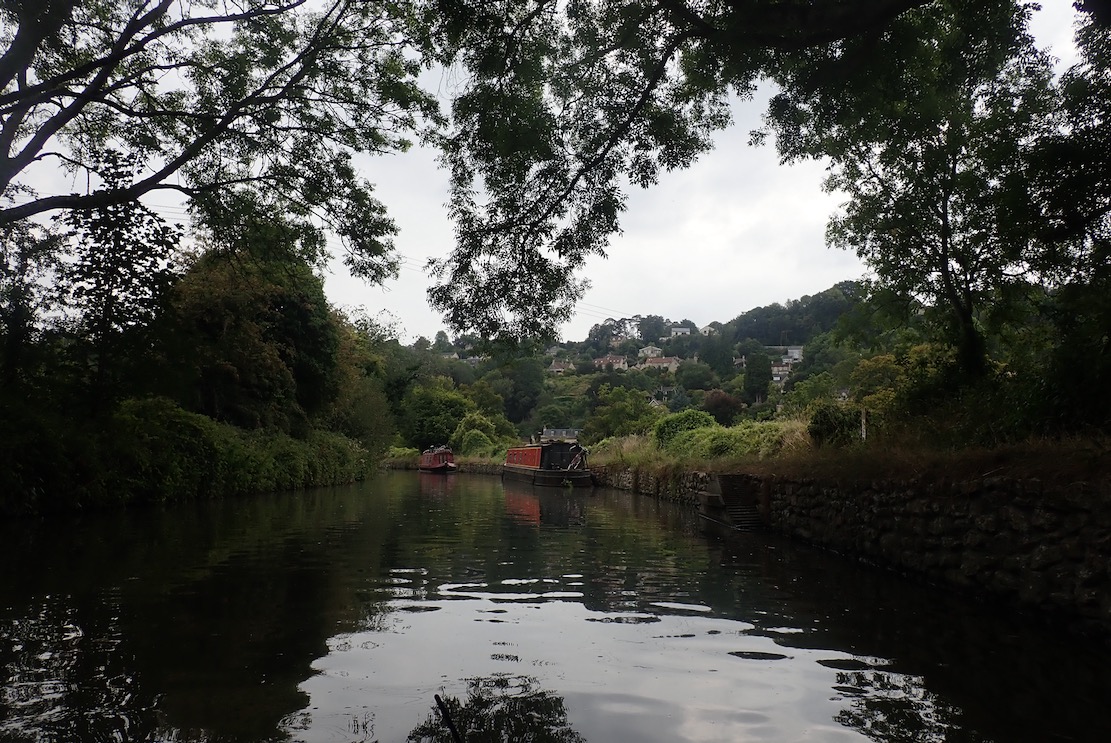
I got stuck in to the flatwater paddle back to BoA, looking down onto the valley on the right. It gets a bit dull and samey, then becomes a flat-out slog. The hands get sore and the elbows creak. I even overtake a couple of rental barges chugging along in a trail diesel fumes like an Algerian truck. A smell from the 1980s. No Euro 5 here.

Paddling along in the perfectly still water I had the feeling the boat was pulling to the left as if some weed was caught in the skeg or I wasn’t holding my paddle evenly. This wasn’t evident on the more lively river, earlier. I suspected I knew what it was: the skeg was warped, leaning over to one side and with a longitudinal curl at the back that would steer the boat left. I’ve not had this before on rock solid polyethylene skegs which don’t deform no matter how abused or badly packed. The unused one above with no tape or scratches is straight. I gave the bent one 2 minutes in a microwave but it came out the same. It is 3 years old from my original green TXL.

The state of some of these boats, honestly! On the street they’d be towed away.
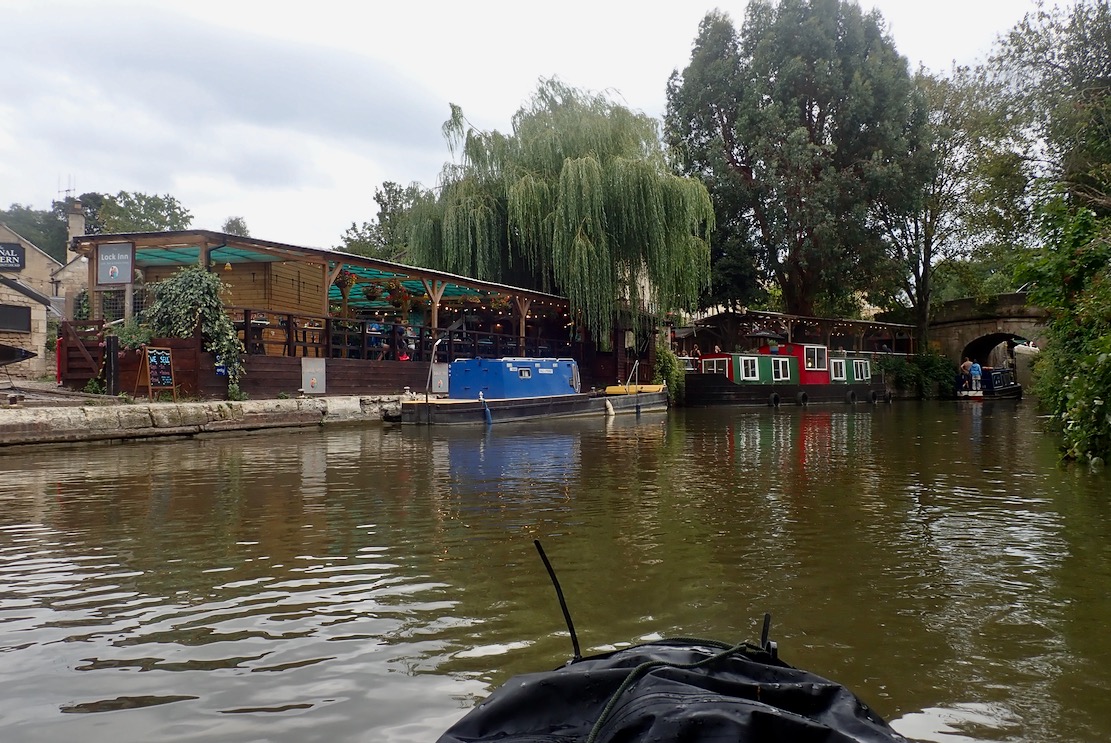
Take out by the Lock Inn back in town. There a lock right by that bridge leading into the C&RT basin. It was a bit further (4.3mls/6.9km) but surprisingly took just 80 long minutes (3.2mph) with no weir interruptions. Near the end I was considering hopping out but that would ruin the story. By now I’m ready for an early dinner.

Unless you’re getting swept down Spain’s Canal de la Toba, as expected, the river stage was a lot more agreeable than the parallel canal, and the two weirs portaged were not awkward. At much higher (or normal?) flows that might be different but anyway, the whole point of packboats is you don’t need to do loops if there is transport at hand.

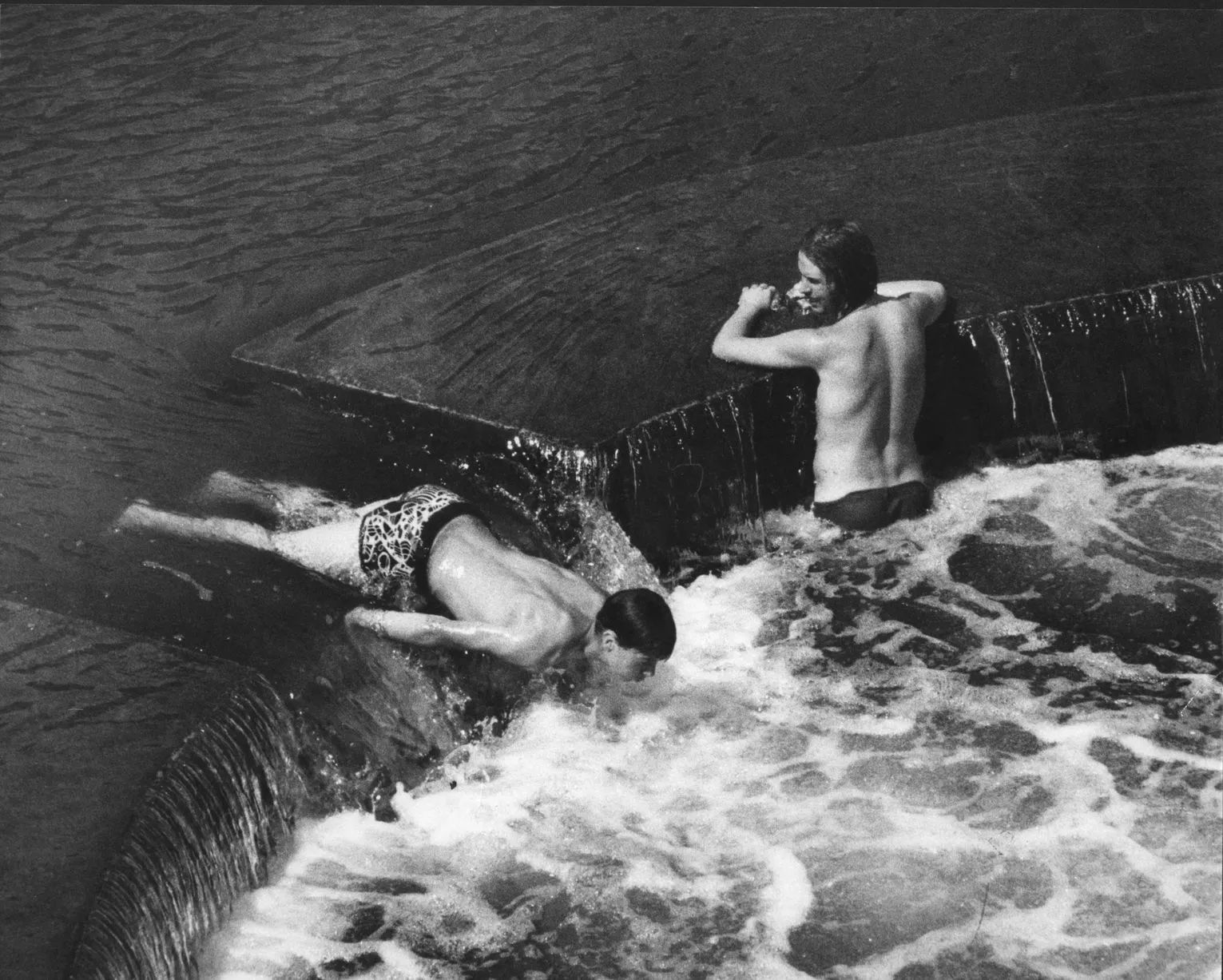
Poshboys on old Pulteney weir

Had I thought it through a bit more, I’d have registered the railway also following the Avon valley, and carried on six miles down river. There are weirs at Warleigh, a mile after Dundas, and Bathampton, both of which would hopefully with no more bother than what passed before. They lead to Bath’s amazing, neo-classically set Pulteney Weir, doable providing it’s no more turbid than pictured below. Bath Spa station is just 5 minutes away for the 16-minute train ride back to Bradford on Avon, looking down onto the river you just paddled. One for next time.

Bath’s Pulteney Weir even has a kayak-friendly nick at the apex.
Hold my beer!

Pulteney has had it’s share of tragedies, though the weir’s grim record must down to its city-centre location. The unusual V-shape actually only dates from the 1970s, replacing a diagonal low-head weir (above left), like most weirs upstream. Check out a great series of before-, during-, and after photos here, although the current log-jammed image on Google Earth doesn’t look inviting at all. They is actually a canoe chute alongside a dry ramp on the left hand end, by the trees. See this vid.

Slackrafting 2025: Video of the Week

Slackrafts main page
Slackrafting Clashnessie NW Scotland
Slackrafting Northwest Australia (videos)
Slackrafting France
Slackraft Sea Trials
Testing a cutdown Sevy
Packraft Quick Guide

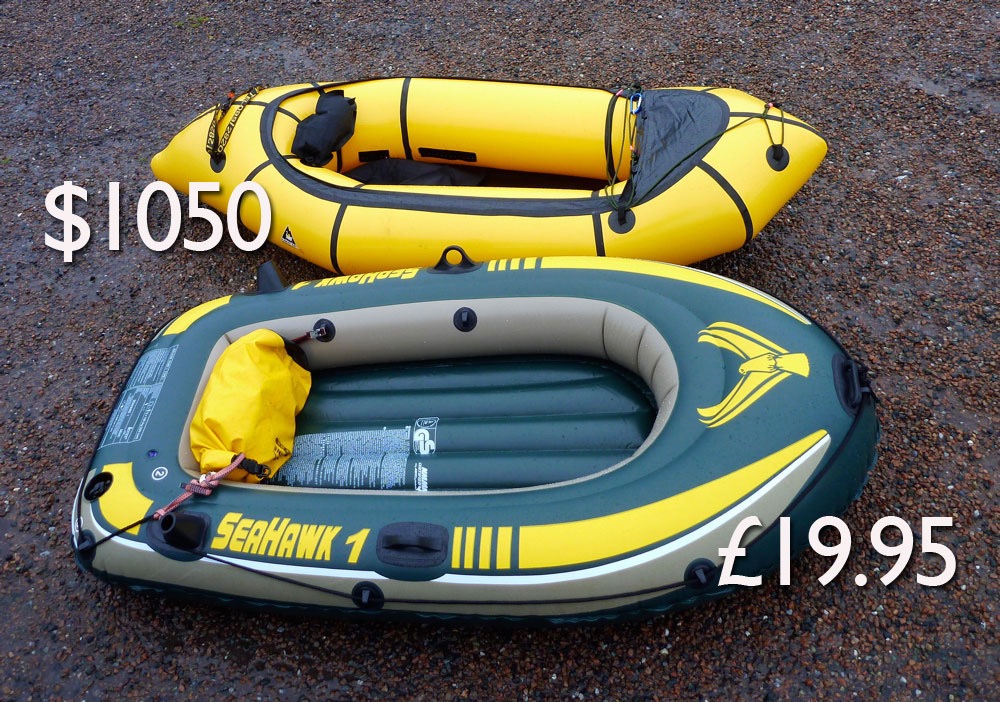
Remember Slackrafts? Around 2011 that was my made-up word from for cheap, vinyl, ultra-low-psi pooltoys using the same technology as children’s paddling pools.
At the time they were some 3000% cheaper than the then dominant US-made TPU Alpackas (left), while looking vaguely similar to the paddle curious adventurer. For that price you really did wonder could there be so much difference? Experimentation proved the answer proved to be yes: a good TPU packraft is 3001% more enjoyable to paddle and 3002% more durable than a vinyl PoS.

Skinned SeaHawk results in minimal freeboard (Clashnessie)

Just before the subsequent Chinese-made packraft onslaught which must have just about peaked by now, Slackrafts was a dirt cheap way of trying ‘packrafting’ without the expense, responsive performance or durability.
All you had to do was keep the thing from puncturing or bursting long enough to make up you mind. That might take a few hours or a few of days, especially once you cut off the outer chamber to make a slimmer, less bin-bag like raft (left) which retained adequate buoyancy for lighter paddlers. A decade or more ago various chums and I experimented with Slackrafts locally as well as in France, Scotland and remote northwest Australia, chartering a light plane to the headwaters of the Fitzroy, Australia’s longest river.

Fast forward to 2025 and YT algos led me to a bunch of Parkouriste youtubers called Storror with no less than 11m followers. In 2024 they set off in a boat-train of Intex and BestWay slackrafts for a paddle-less drift along the swiftly flowing Canal de la Toba, a hillside waterway of viaducts and spooky tunnels paralleling the Rio Jucar in Cuenca. The Toba starts near the town of Uña, midway between Madrid and Valencia, providing a reliable feed for a power station down the valley.

Entering the grease and WetWipe choked Kebab Death Weir Tunnel

The Canal de la Toba is very much not a recognised recreational paddle backed up by a leaflet in the local tourist board. In fact it’s almost certainly illegal or severely discouraged and could be deadly – like many of Storror’s hugely popular parkouring stunts – or indeed the Kebab Death Tunnel Weir (above) on a bad day.

At one point just before entering a long tunnel they realise that using these rowing rafts backwards, with the thinner, flat-ended stern in front, puts your mass in the much more buoyant ‘bow’, so eliminating annoying back-end swamping when slowing down or when a breeze-driven wavelet passes by.

Jeff on the Fitzroy, stern first in his loathsome BestWay slackie.

Going blunt end down does nothing for hydrodynamics, steering or speed, but in the vid the floaters let the canal’s current do the work 12km to the ‘meat-grinder’ grill at the canal’s end, above Villalba de la Sierra.
The entire cost of Storror’s seven-boat flotilla was still probably less than the cheapest TPU packraft you can buy today, and like many of the best filmed adventures, it came across as less dangerous than it looked. In a packraft it might have been too easy but let us take heart that the Spirit of Slackrafting lives on.

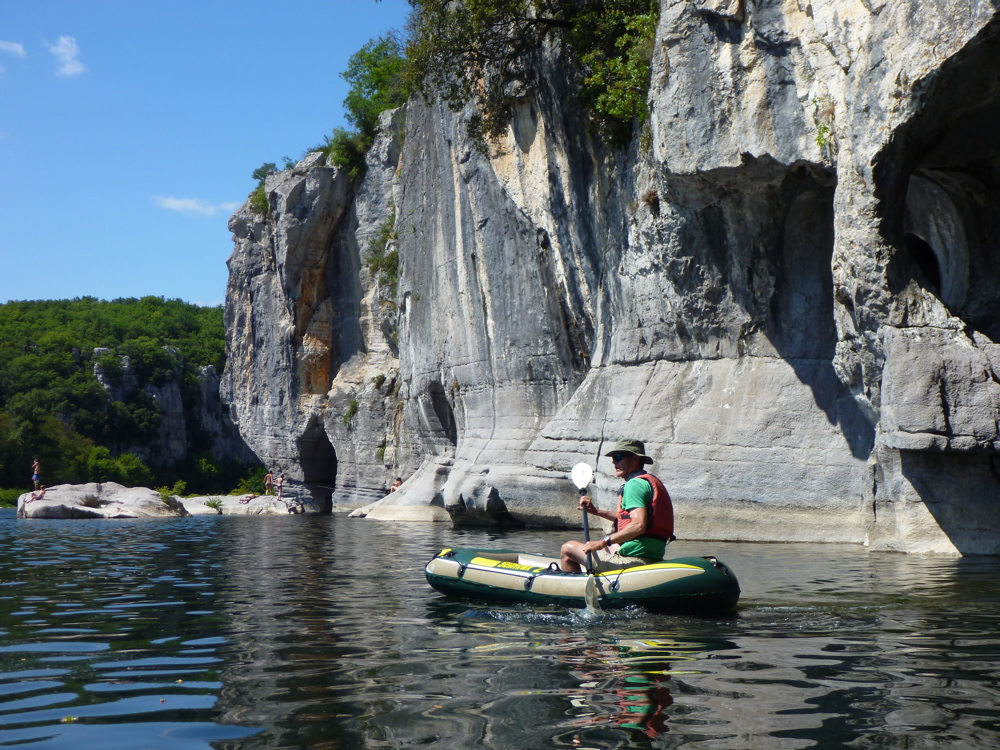
Slacking down the lovely Ardeche. Within a few days the raft was in a campsite dumpster.

Packraft preview: Anfibio Rebel 3KL, Sigma TXLB+

TXL+ main page

My 2.8-metre TXL+ (left) does it all for me these days, and I was just thinking that, for what I do (less hardcore, such as it was), I don’t miss my IKs at all.

What my TXL+ loses in sublime kayak glide, it gains right back in being able to be easily carried following a day paddle. Being wind-prone, venturing too far out to sea in any inflatable, IKs included, takes some nerve when alone.
Of course overnight trips including tough terrain, like our Knoydart paddle, will require a stiffer back or porters for these heavier, bulkier boats – or you plan for a sustainable paddling/walking ratio, ideally including sailing where possible (see video below).
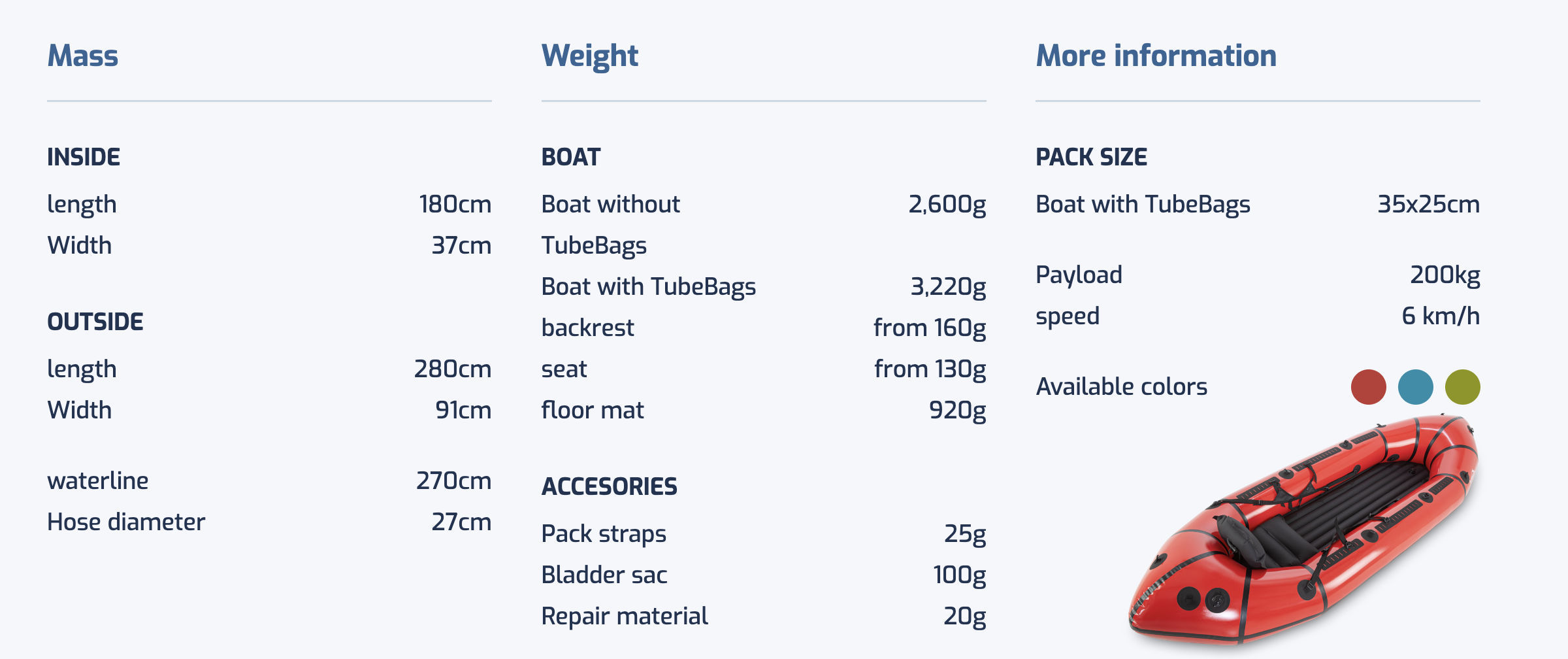
Long packrafts of around 2.8 metres offer more packing space and less annoying bow yawing, have a kayak-like, central solo paddling position with a level trim, but can fit a second paddler or a bike, as well as reach speeds up to 6kph. All for less than a kilo in mass. They are Pakayaks: the best of both worlds.
Two newish ‘packayaks’ from Anfibio caught my eye: the Sigma TXLB+ and the Rebel 3KL which has been out a few months. With masses of (optional) side storage, both are suited to multi-day, rough water expeditions. One bails, the other decks and both are ‘symmetrical’, ie: the bow and stern are identical, like a canoe and all current Anfibio boats apart from the Revos and Nano RTC. Some reviewers seem to think this symmetry contributes to faster speeds. A longer waterline certainly does, but identical bows and sterns merely simplify assembly and reduces costs – symmetry has nothing to do with speed (or Alpacka Raft have got it all terribly wrong!).
I’ve not tried either boat but as usual, that does not proscribe me from opinionating on pictures ransacked from the Anfibio website.

Sigma TXLB+ The Expeditionist
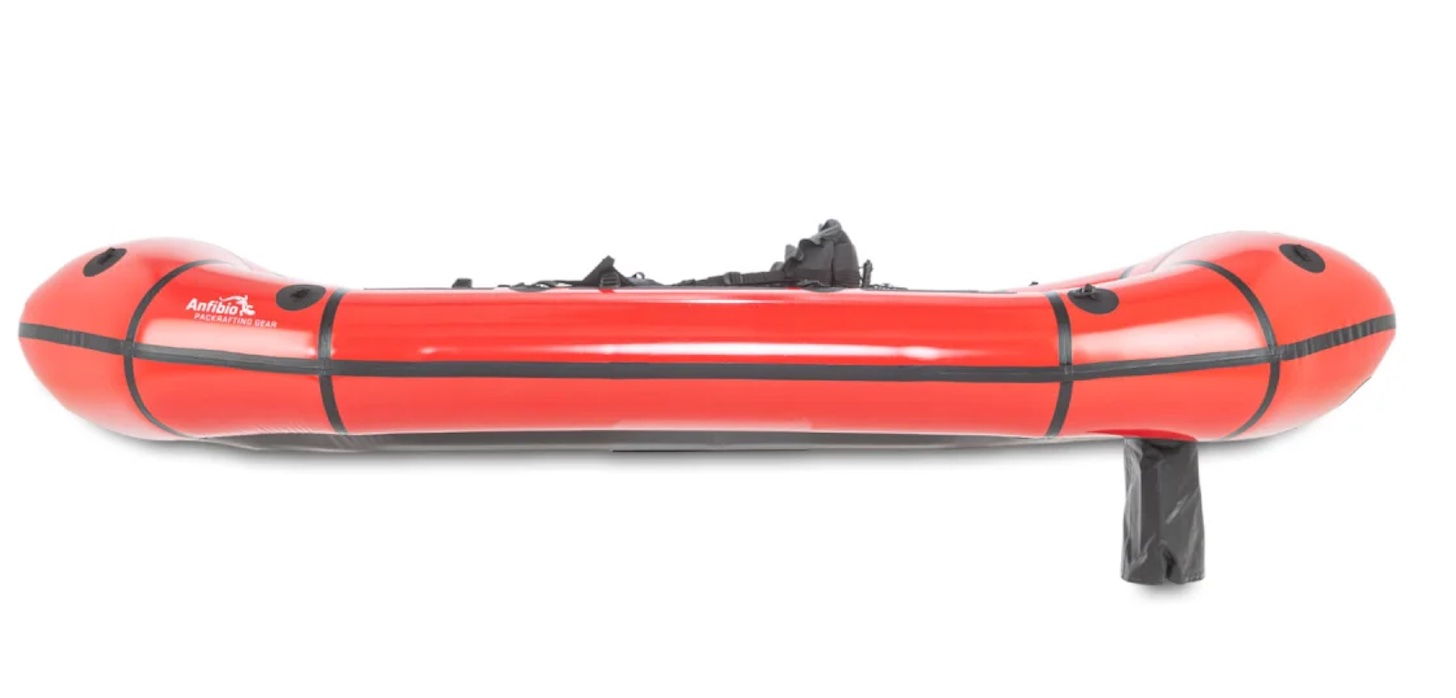
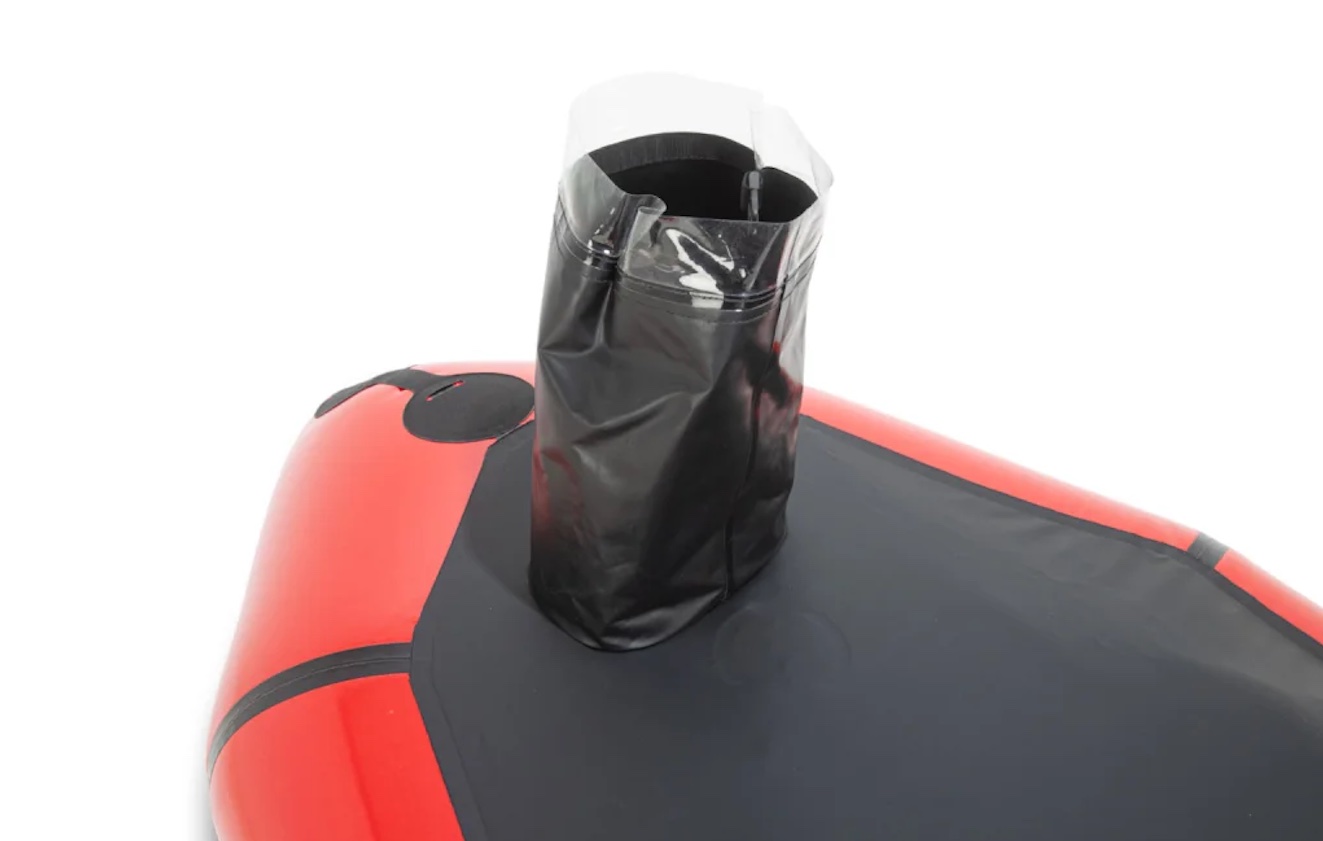
The single colour TXLB+ is just like my blue boat with optional thigh straps, floor matt, strap attachments and massive and secure TubeBag storage, but with the roll-up self-bailing drain hose we first saw on the 2022 Revo white water packraft. I never got to test that system properly, but the principle of flowing water sucking the swill out sounds plausible. As it is, you’ll be up dry on a floor and seat anyway, so it’ll take a lot of splashing to swamp the boat.

Is it needed? Not for what I do, but mileage famously varies from paddler to paddler. The hose can be rolled up and tucked out of the way (left) when not needed.
One thing that didn’t look right is the skeg back in the ‘old’ solo-packraft position (left) so as to be out of the way of the trailing hose. This placement works fine on normal, back-heavy packrafts with the paddler’s weight at the stern. But as I soon found with my first green TXL (see video below), it is less effective with centrally positioned padders because the boat floats level. And I imagine it might work even less well with the hose down.
I suppose you could say when using the self-bailing feature in white water, you won’t be using a skeg. And on flatwater you won’t be using the drain but could do with the skeg which will work OK. As for rough seas when you might want both – who would go out and do that?! One answer could be a bigger ‘sea skeg‘ option, like I’ve been saying for years. Or, on the TXLB+ simply remount the regular skeg in front of the drain.

Rebel 3KL ‘The Longliner’
I’m not sure about the 3KL’s blue and green (“… should never be seen”) colour scheme. Bring back the delicious lemon and olive, like my old 2K. But the 2.72-m ‘Longliner’ is just 8cm less than a TXL and a viable decked longboat comparable with the zippy MRS Nomad S1. The deck is permanently fitted which means it’s solo only, but that’s what most do most of the time.

I was never that keen on my fragile decked packrafts from MRS, Alpacka or Anfibio – just another thing to damage, though I never did. I barely used them but one time rushing down a windy loch in pelting squalls, it sure kept me drier than matey in an undecked Nomad (left). He got so drenched and waterlogged, we had to stop early for him to tip out and wring himself out like a flannel.
You don’t have to zip up every time: the deck with integrated skirt rolls off to the sides, and a vital grab loop ejects you fast if you tip over. (Never happened to me in all my pack years).

I like very much that Anfibio are now using the so-called Performance BackBand – aka: an SoT foam backrest which I’ve been retro fitting to my packboats – IK or raft – for years (years, I tell you!). The lighter but wobbly inflatable versions which came with my TXLs got fed to the goats before I ever used them. Yes, you need inflation for supporting your weight on a seat base, but a backrest wants to be stiff and supportive, snugging into your lumbar curve while ideally, you press against a footrest or the front of the boat. Doing so really enhances boat control and connection.

TXLB+ or 3KL. Which would I choose?
Neither, thanks for asking ;-) My deckless, drainless TXL+ with self-fitted thigh straps and an SoT backrest covers all my needs. Just like IKs, I like that it’s dead easy to get in and out. And that video above is about as ‘out there’ as I ever like to get. Water coming over the sides was not an issue that day. Going straight was.
If it’s cold or rainy I’ll wear my drysuit and onesie or surf Netflix. And if it’s coming over the sides then I either badly misread the forecast or am engaged in some lovely southern French white water in the balmy summertime when pulling over to a bank to flip the boat dry is all part of the fun. I suppose I’d take the decked 3KL for cosy winter paddles. They just need to sort those mixed colours out. Alpacka used to have some great combos.

Still, it sure is great to have all these choices!
Anfibio Rebel 3KL Longliner
Anfibio Sigma TXLB+ Expeditionist
– both with optional Tubebags, imo the best way to carry heavy loads securely and reliably without compromising hull integrity.

How does this work then?

Packrafting TXL: Kwikie around Hamworthy

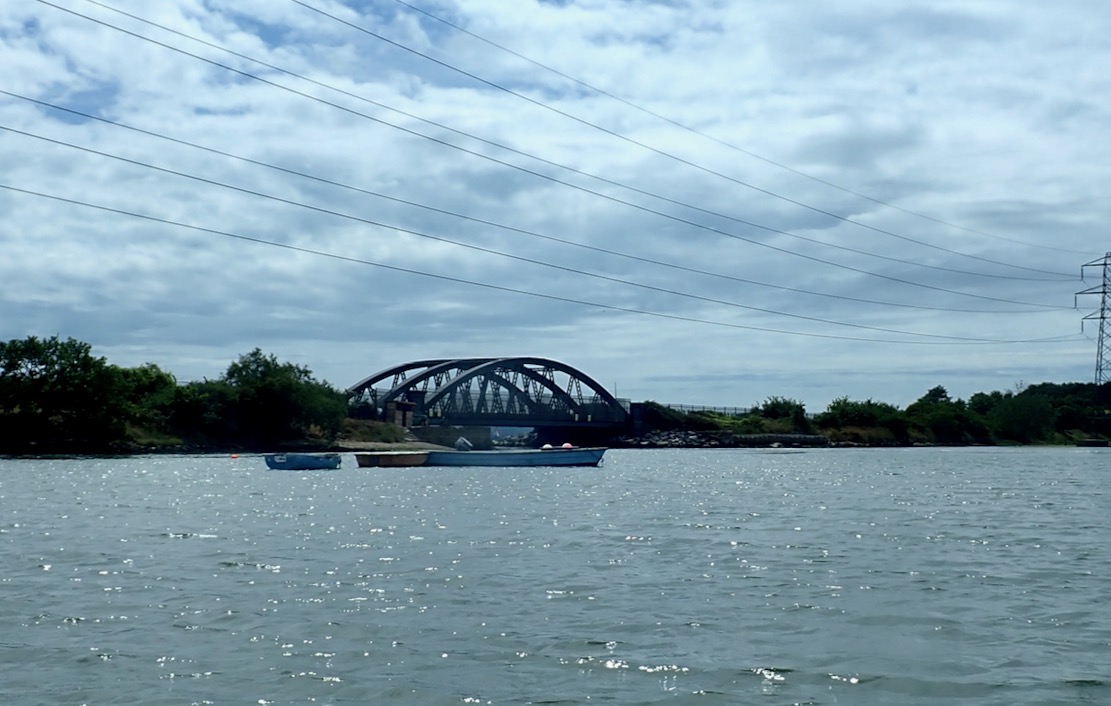
With the car in for an MoT at Kwik-Fit in Hamworthy, it made sense to do a Poole harbour paddle rather than go home or hang out. Kwik-Fit is close to Lytchett Bay, an intertidal embayment or tidal inland lake crossed by the London-Weymouth rail line spanning a narrow outlet. A 10km lap from there out into Wareham Channel and back into the adjacent Holes Bay (another embayment with a narrow pass under a rail bridge) might be possible in the time I had. If not, I could hop off anywhere and walk back to the garage. That is the appeal of pack boating!
This route – out one tidal channel and in via another – had similarities with our lap around Hayling Island a few years back in the Seawave. On that occasion we had to go full steam against the incoming tide to get out of Langstone Harbour back into the Solent to close the loop. This Poole loop would only require a 500-m walk from Holes Bay shore back to Kwik-Fit.

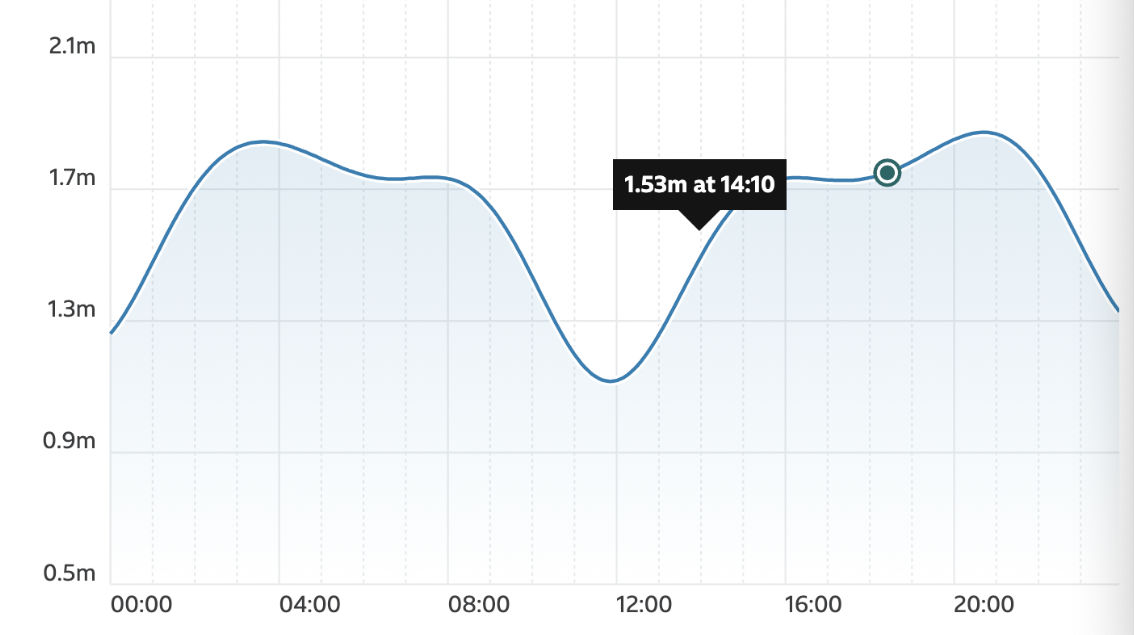
The winds were 10-13mph from the southwest which made sailing just about possible along my ESE route. The tide was coming in and levelling off about 3pm for 6 hours before dropping steeply again. In Poole Harbour – second only to Sydney Harbour but with an outlet just 300-m wide at Sandbanks chain ferry – the tides are far from simple sine waves. It may still be going in at Wareham at the back end, when it’s already going out at Sandbanks. There are four tide points listed by UKHO in Poole Harbour and I’m pretty sure ‘Poole Harbour’ refers to the RoRo ferry port on the north side. PHC is a great resource.

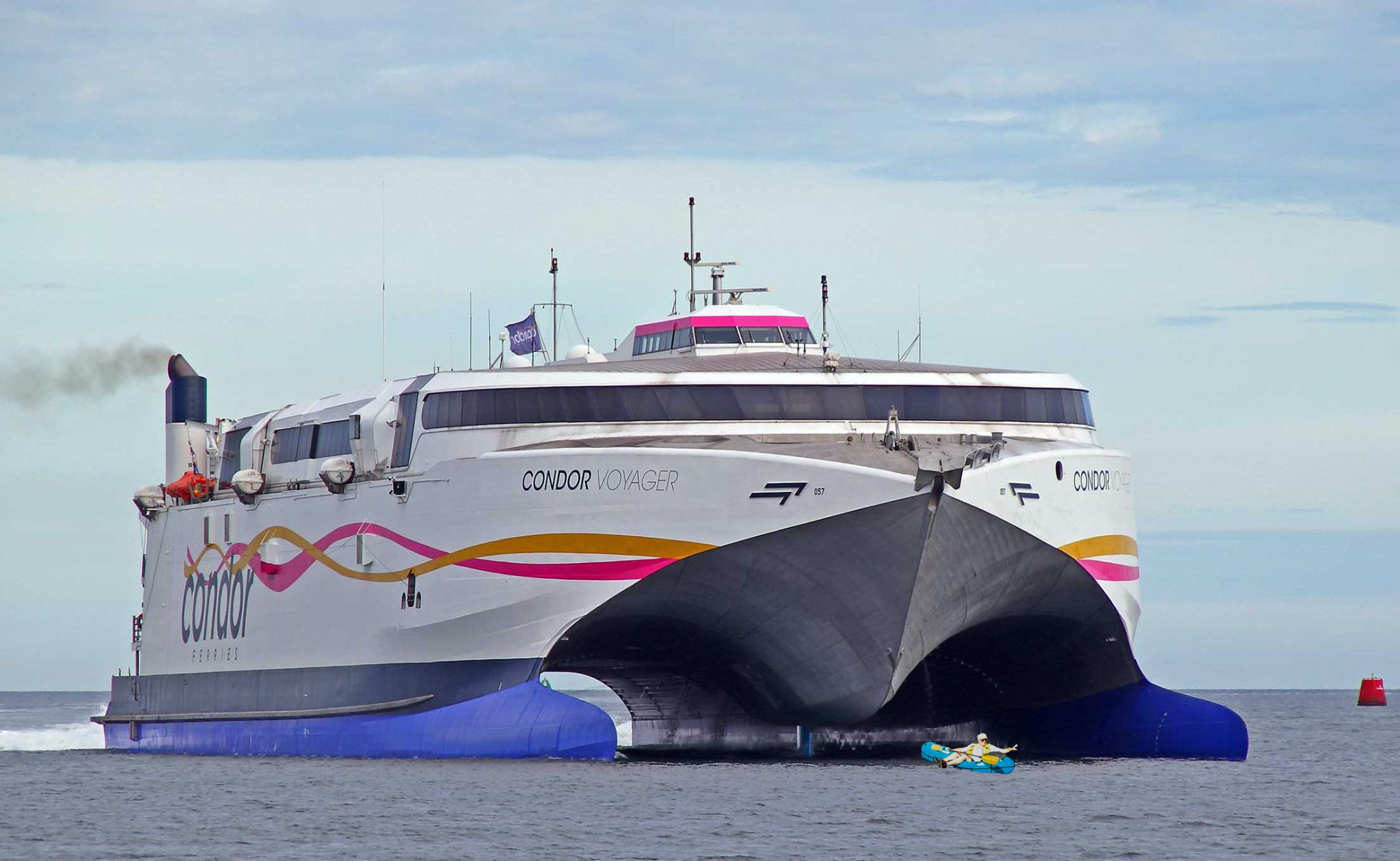
My route would take me right past the ferry berth where getting in the way of a gigantic ferry would probably raise a yellow card. Again, on PWC I was able to see today’s main ferry movements: the massive Condor Voyager cheesecutter class twin hull (above) would depart for St Malo at 14.15. I’d probably be an hour behind.

I set off from Kwik-Fit across Turlin Moor park aiming for the inlet, and once I saw some water, bundled through thick, 2-metre-high reeds on the off chance.

But once I emerged from the dense reed jungle I could see I was a bit early at this point, with 100m of knee-deep sludge ahead. It’s large acreages of tidal mudflats like this which give Poole Harbour its average depth of less than 50cm. That’s about the same depth I’d sink into the mud, trying to reach the water.

So I turned back and carried on along the shore until a path led behind some houses and through the trees to this grassy, reed-free bench by a sandy beach: 50.72448, -2.03601. If you want a mess-free, easy way to get on the water at Lytchett Bay east, aim for here.

A headwind was blowing quite hard, but it was only 500m to the rail bridge narrows, after which I’d turn southeast to pick up what wind I could get. Setting off, the TXL+ felt like it was zipping along as wind and waves rushed past. Up to 6kph, according to the GPS as I neared the narrows. That was probably an unseen back eddy sucking me into the gap, because as I got nearer I could see a current ripping through under the bridge at at least the same speed or more. I powered in hard along the edge, like we’d done at Hayling, but could only manage 0kph.

“Try on the other side” said the bloke lurking by the abutments, so I ferried across and, with a lot more effort managed to squeeze under the bridge and hook behind some rocks for a breather while not getting drawn back in.
I’d swum half a mile that morning which can be enough exercise for one day. Paddling under the bridge was like doing 50 pull-ups and I was a bit pooped. I looked later at the state of the tide at that precise time (left) and saw I’d been about an hour early.

I took a wide arc out to avoid the worst of the tide race and headed off towards Rockley Sands where I came ashore last year on my way to buy a moto. The wind from my right wasn’t ideal for sailing in my direction, so I paddled out into the channel to turn and get a better angle as it pushed me towards the shore.
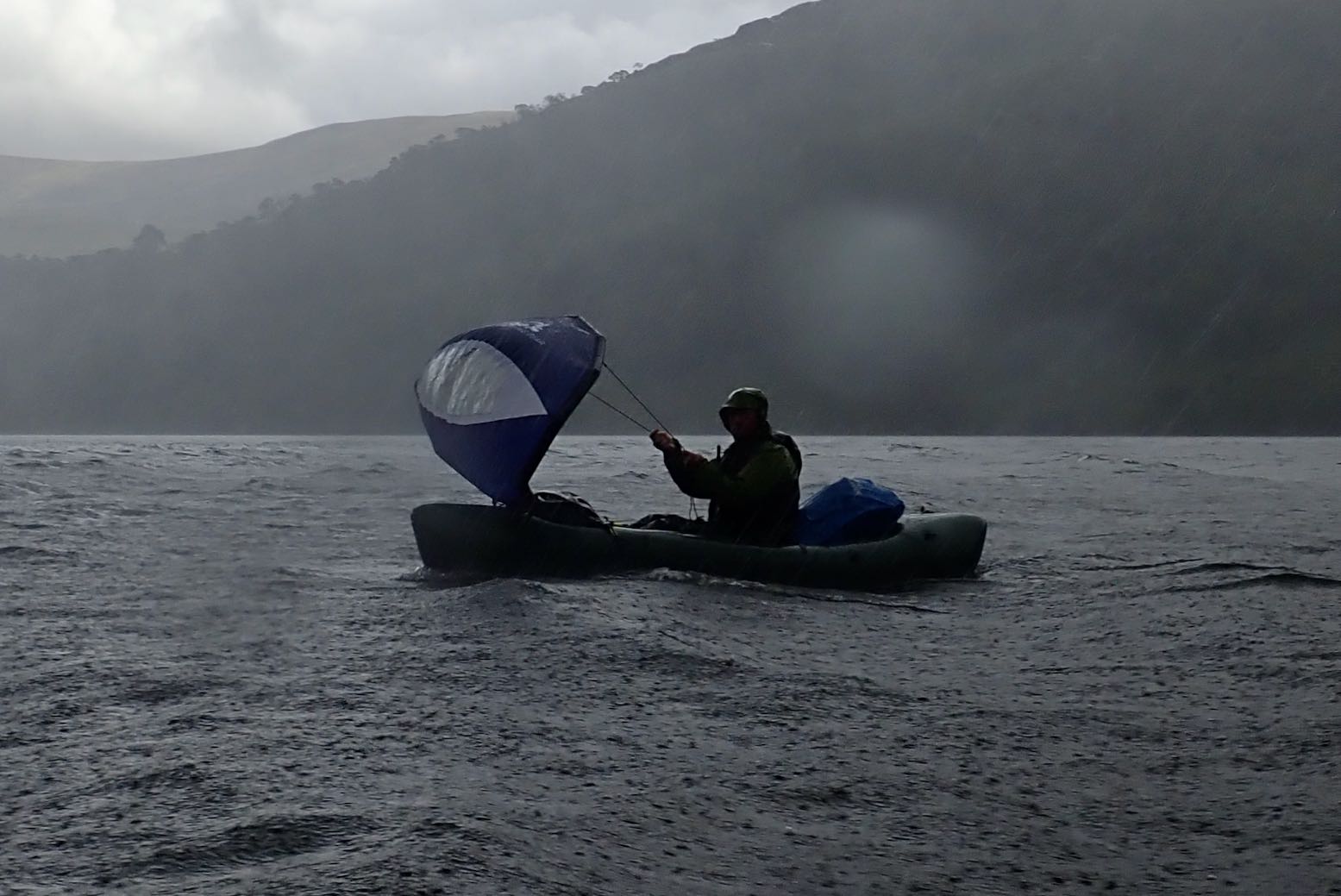
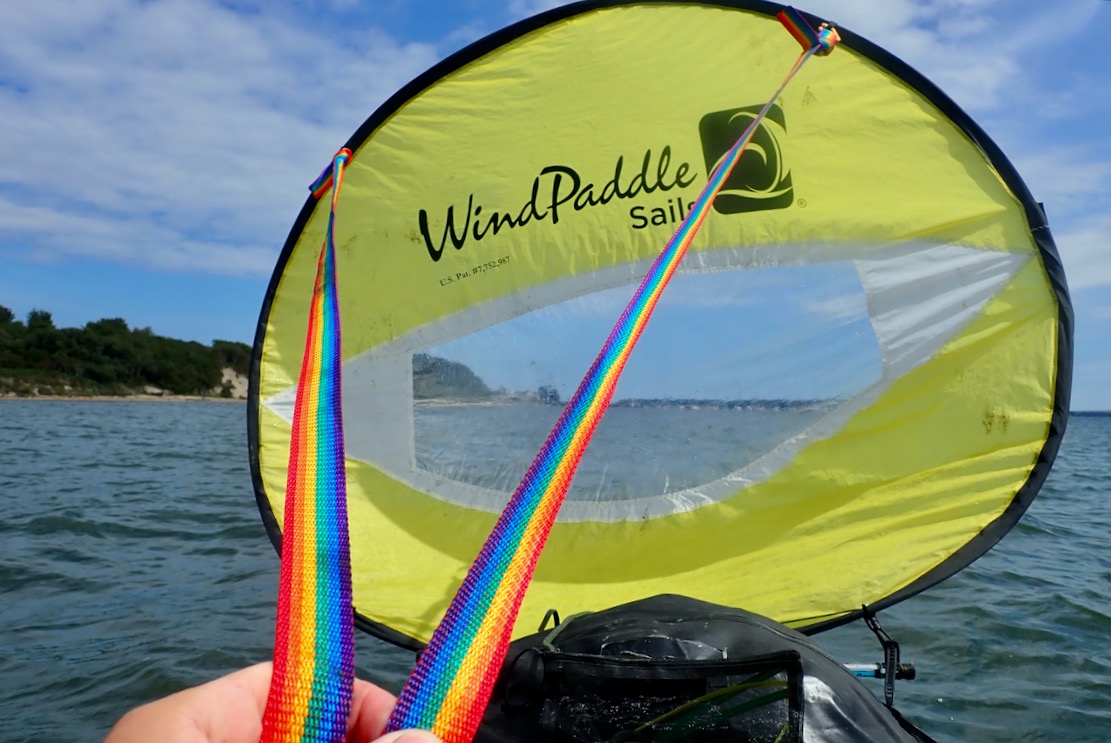
Though I was hardly bombing along, getting the sail up was the rest I needed. Out in the Channel, loads of sailing boats were fluttering to and fro past Brownsea island, and at one point a lightweight sailing cat passed close by with a hiss. I could do with some sails like that. As usual the WindPaddle was hit and miss. Holding 45° off the wind with some steering is not bad for what it is, but it never stays on it for long before getting in a flap.
However, as I got pushed towards the shore again, I really appreciated the way I could pull the WindPaddle down, give it a twist and tuck the lower fold under the Anfibio DeckPack in seconds. It was a handy trick I discovered while belting down a wind struck loch in Knoydart one time.

I passed a couple of piers and a series of long private jetties extending from people’s back gardens, some with a motorboat at the end perched on giant hydraulic hoists to stop them getting too wet. I assumed this was luxury overspill from affluent Sandbanks nearby, once home to the most expensive properties in the UK, but here “…overall, the historical sold prices in Branksea Avenue over the last year were 41% down on the previous year and 75% down on the 2011 peak of £2,262,500.” Unless rising sea levels are coming quicker than we think, or they’re putting in a new high-speed railway, it did seem an implausibly catastrophic collapse in house prices. Maybe the Rightmove AI needs to be burped.

Now heading more east, the wind was getting behind me. I made another effort to paddle out into the Channel to get a good run, and this time the TXL got picked up and rushed along. This was more like it, with an aerated bow wave frothing away by my feet. I squeezed every last minute out of a good run of nearly half a mile, not quite managing to steer around the breakwater of Poole Yacht Club where the accumulated fetch and rebound slapped me around a bit, but the TXL sat steady as a barge.
Round the corner I passed the entrance to Poole Yacht Club with a ‘Visitors Welcome’ sign and wondered if that included packrafts.
The phone rang.
Kwik-Fit here. Your Micra’s ready in 40 minutes.’
My word that was quick!’

A quick look at the map showed I was just less than halfway and would soon turn into Holes Bay with no more wind behind me, but with the high tide negligible. It would be tight to get back to the garage before it closed, so I turned into a dock entrance and rolled up the boat on the slipway.

I assumed this dock was part of the welcoming yacht club marina next door, but it was actually more like a deserted service yard for the ferry port right next door, surrounded on all sides by high security fences and an electric gate.
I dare say some security guard was observing me on his CCTV lair somewhere. After nosing around the portacabins and sheds looking for someone, a guy appeared in his car and swiped me out with his pass.
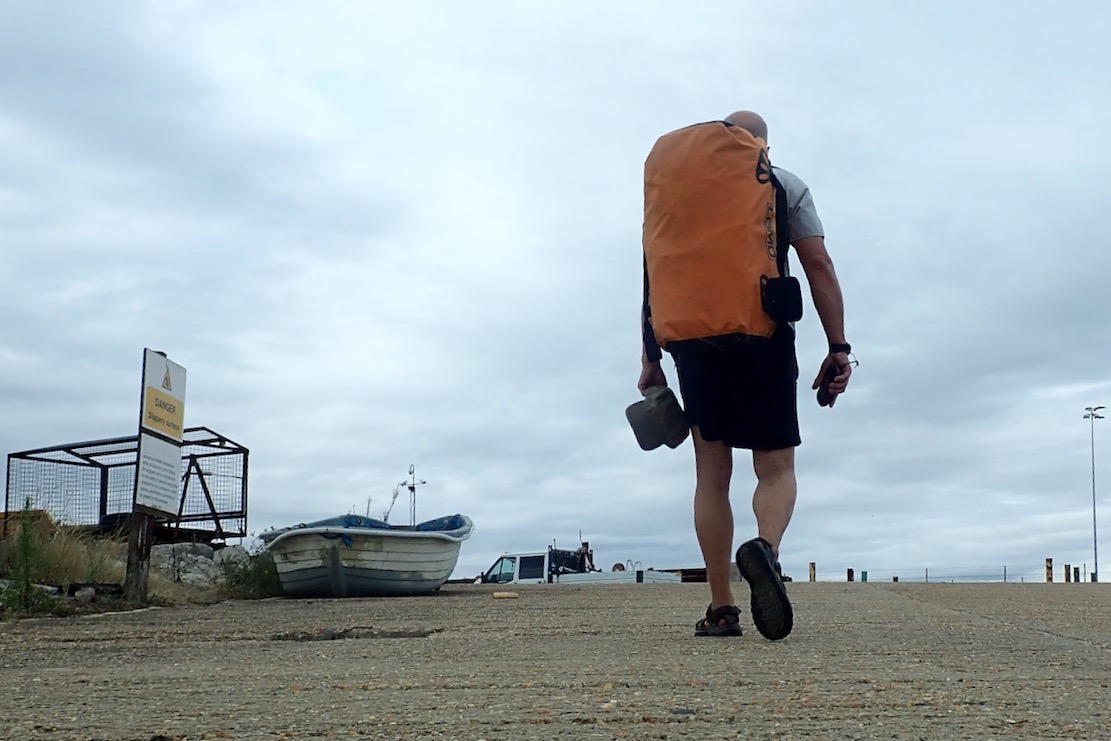
Things always work out, and as I passed the entrance to the Yacht Club, that too had electric security gates, though probably someone manning them. Looking at the map, a better take-out would have been Hamworthy Park by the club’s breakwater (50.71099, -2.00039), leading to a footbridge short cut over the rail line.

I walked right past the Customs and Immigration cabins (above left) of Poole ferry port, and a helpful map affirming je pagaie donc je suis ici with irreducible Cartesian logic. So – paddling mission not fully accomplished but the old Micra was on the road for another year.

Fat dotted red line shows unfinished stage. Arrows show wind direction

Looking back at the tide graphs for Poole Harbour, it seems that at the lowest neap tides (as it was two days later), there can be a 7 hour period when the high tide flattens off and rises then falls more than 20cm. That would be the best time to try and paddle around Hamworthy between Lytchett and Holes Bay. It could also be fun to leave Holes Bay on an ebbing spring tide to get a good blast under the rail bridge narrows, down the channel through downtown Poole and out into the harbour.

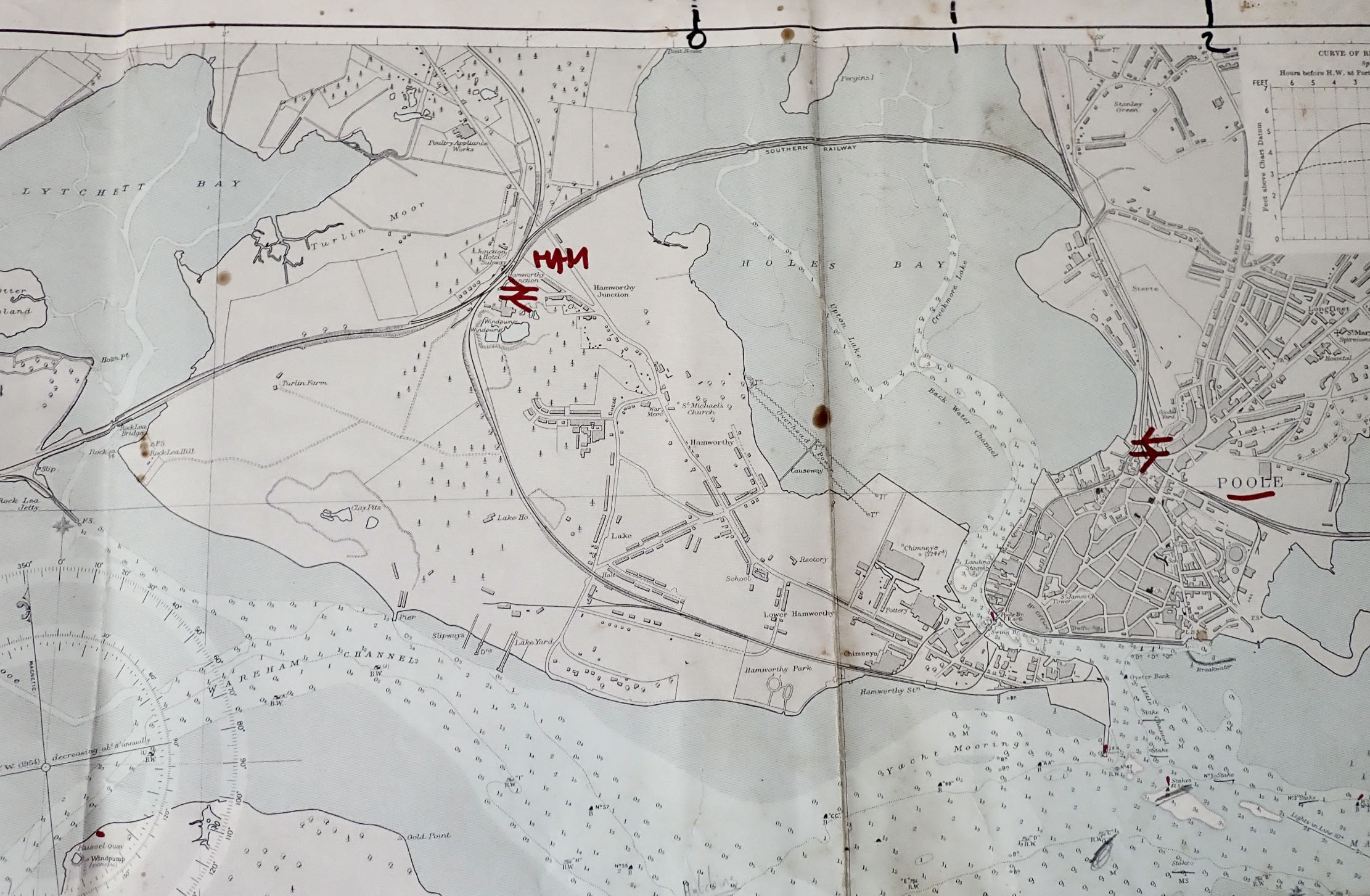
Wayback machine. Harbour chart from 1955. Hamworthy was just farmland and claypiys

There’s Wind in the Willow

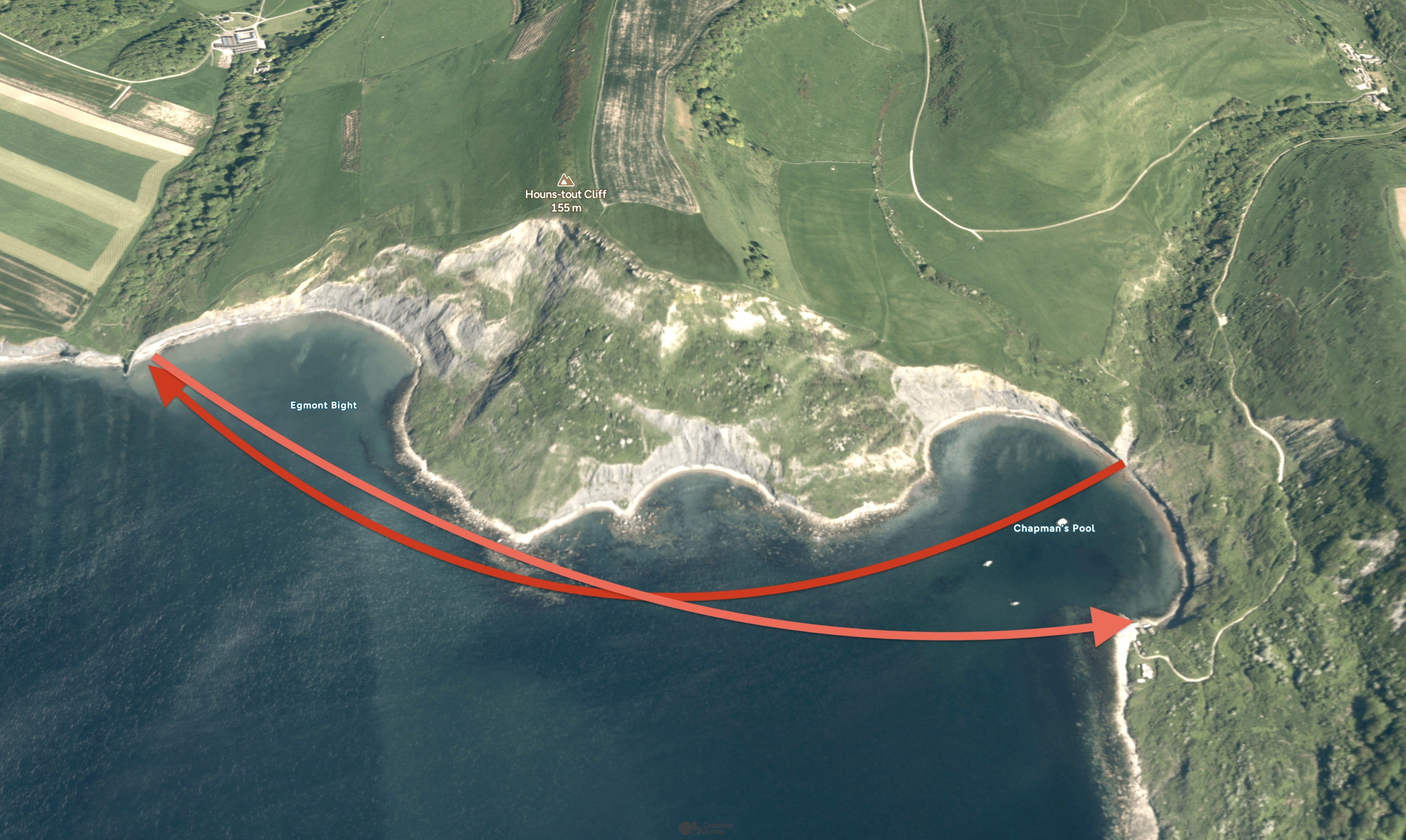
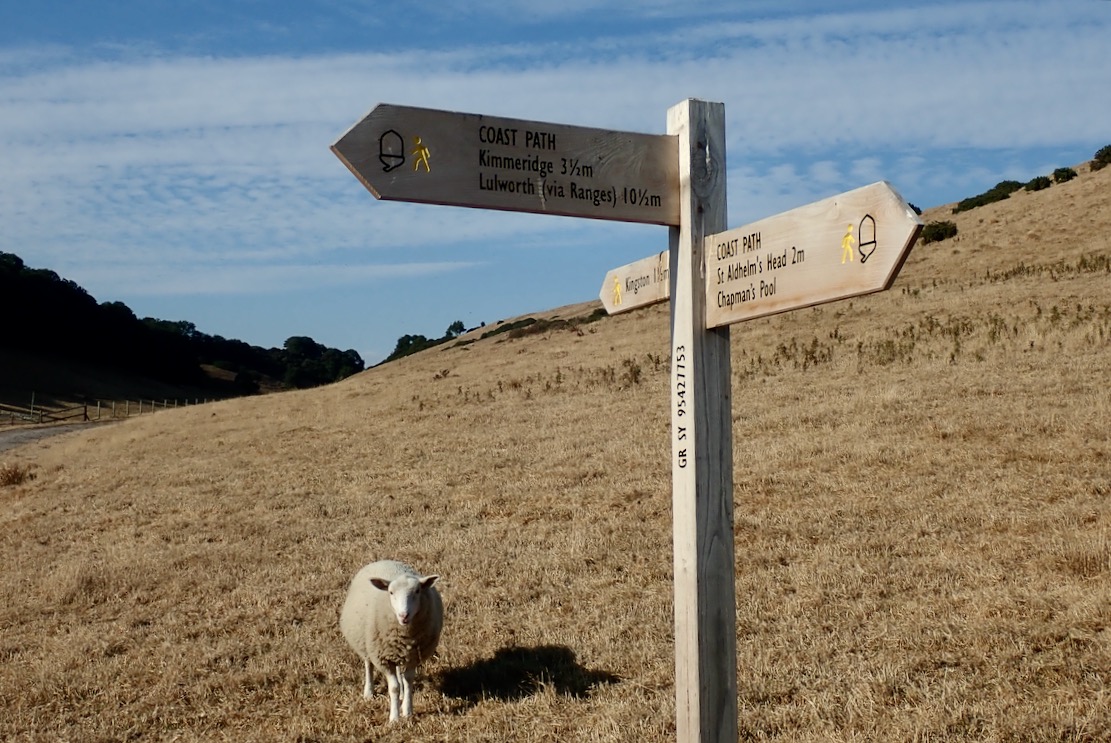
The short run between Kimmeridge Bay and Chapman’s Pool was on my pack list, part of what remains to packraft between Weymouth and Poole. St Alban’s Head near Chapmans, and Durlston Head near Swanage will need ideal conditions as there’s virtually no getting off anywhere in between, so they will have to wait.

A quick look at next day’s wind and tide put Kimmeridge broadly in the ballpark. High water 10am at Chapmans receding east, helped by a 10-12mph easterly. Ten is my self imposed limit for packing at sea so it felt a bit sketchy, plus it would be a hot walk with the boat back to the car near Kingston. It feels more than the forecasted mid-20s around here right now.
I was also unsure what the Kimmeridge Ledges do in such conditions, other than force you away from the shore. It was all a bit hot for an otherwise sensible clifftop recce from Kimmeridge car park to Chapmans’ with the boat, to gauge the sea state below. I’d have to carry loads of water too, as the springs trickling into Chapman’s Pool are probably minging with farm run-off. But whatever happened, it would sure be a sporty ride to Kimmeridge clutching the sail like something out of Roadrunner.

There’s a wind in this willow

Came the early morning I let myself off and decided to paddle upriver from Wareham instead. I’ve not been up there either. I left the quayside ducks around 9am, and passing the already swaying riverside willows confirmed I’d made the right choice. Ten-12mph predictions are always more in my experience, and they say easterlies off the continent are more gusty. Six to 10 with a tide would be more like it, alone in a packboat.

Tagged by the Wareham RiverBanksy

The Wareham tide and wind were with me and reaching the A35 bypass bridge (left) – the tidal line according to the OS map – I expected a big, ‘Paddlers Turn Back!’ sign, as rental SoTs and SuPs venture up this way.
No sign, so I had an excuse to carry on in ignorance until I got either shouted at or the Frome’s current got too strong. As it was, the riverbanks hereabouts were still thick with reeds, making angling without a periscope difficult. Further up nearer Holmebridge was angling country.

Frome meander from O to X and back to O

The river meanders like rivers do, covering double the distance as the gannet flies, so at some points I was into the wind which was now bending the trees. A good time not to be hanging onto the WindPaddle while launching from one Kimmeridge ledge to the next.
Up ahead I could the vanside banners fluttering briskly at the annual Volksfest campsite (below) whose music we can hear until nearly midnight.

Turns it down, volks

I wondered if I might make a run through the water meadows to Holmebridge, but by now the incoming tide had dissipated and I was against the Frome’s rising current.
That would better done as a stealthy dawn mission, but I felt I’d seen enough of the inland Frome, so I flipped round and enjoyed the cooling breeze in my face back to Wareham town.

Wareham Quay

It was a short, easy paddle so I’d not bothered checking the tides, but back home I was curious to know how Wareham – tucked right at the back of Poole Harbour – compared with Kimmeridge out in the Channel. Taking out at Wareham Quay around 10.15, the tide looked nearly full and had turned 30 minutes ago at Kimmeridge.

BBC tide

But the BBC (above right) which I usually look at first appeared to be hours out. According to their graphic (left), after I got out at 10.15 the river would rise another 800mm in the next 3 hours, flooding the quayside carpark a foot deep! tideschart.com, which I also refer to, showed identical times for anywhere in Dorset, so it (or my computer, or as likely, me) needed a cooling drink in the shade.
I deleted tideschart.com bookmark and found dorset-tides.com (above left) which gave a more plausible Wareham High Water about 90 minutes away (11.46). These are all BST, but this is the first time I’ve noticed such an anomaly. Both claim to use the UKHO. Only the BBC matches UKHO data, while seeming to be way out on the water. Today is the peak of the spring tides and maybe the east wind pushed Poole Harbour’s mass up the Frome a bit more than normal, but that’s not what a tide table can predict.
Meanwhile I wait for a fair wind at Chapman’s.

Taking the Piddle: Wareham Two Rivers Loop

TXL main page

Wareham – between two rivers
Frome Safari 2005

You do one paddle in two years then do two in a row. Honestly, you could not make this up! Take the Saxon walled town of Wareham – wrested back from the beardy Viking hordes by King Alfred in 875. It sits snuggly between the tidal reach of two rivers: the Frome to the south, and the smaller Piddle (aka: Trent) on the northern edge.
East of Wareham there’s a Two Rivers Walk which more or less replicates this paddle: down one river and up the other. I’ve paddled up and down the Frome loads of times. In fact 20 years ago last week I wobbled along the Frome in my very first IK – an early Gumotex Safari (left) that was tippier than a hog on ice.

The Piddle flows below the northern remnants of the old Saxon walls, and I’d long assumed it was clogged, weir-ed, patrolled by angling militias or otherwise inaccessible to the recreational paddleur. Not so, said our paddle-boarding builder who ID’d a put-in near the pre-Norman church of St Martin’s on the Wall, the oldest in Dorset. I recall checking it out in the 1990s while updating a UK guidebook, looking for the tomb-like effigy of T.E.Lawrence (left) who was died on his motorbike up the road at Bovington.

We walked down a private drive/footpath to North Mill (above; a self-catering) and put in by the brick bridge (left). It felt like their front garden, so next time I’d cross the bridge through the gate and put in somewhere on the north bank.
It’s a brambly, 3-foot drop either way into the swift but foot-deep Piddle. Piddle is of course a Naughty Word, so I should not bandy it about, willy-nilly, but in the ancient Saxon dialect of Dorse, it means a small stream. Along its upper course, several west Dorset villages: Tolpuddle, Affpuddle, Piddlehinton Puddletown, Mein’dapuddle and Piddletrenthide, take their names from it. (Test: one of those names is made up).

We left about 4 hours before HW at Wareham so we’d be against the tide (and a SE wind) as we neared Poole Harbour, but later have both at our backs as we heaved wearily up the Frome back into town.

Below the bridge the old mill weir was easy to walk down (to spare the skeg). It’s not always so; sometimes the water meadows here get inundated. I bundled in and held on while the Mrs caught up. Once in the boat we felt like kids wearing oversized trench coats. I’d forgotten that when not using the Multimat floor (which makes less space inside when two-up) you inflate the seat bases right up. That done, we navigated down an overgrown channel, dodging overhanging branches and other rampaging midsummer verdure.

Soon we passed under Wareham North Bridge and its famous 18th-century sign strongly discouraging bridge vandals with a life sentence to Botany Bay. 

We paddled through a hidden world of drooping willows and silent lilies. At times it all closed right in and we were pushing and pulling through the dense overgrowth and branches, while getting pelted by dropping insects.

The detritus of bawdy summer parties.

Gradually the Piddle opened out. Somewhere around here we reached the tidal reach and entered a dreary, reed-lined corridor. The pace slowed down as tide and wind pushed against us.

Near Poole harbour a few of these old rowing canoes caught my eye. They looked like something left over from D-Day training. Or maybe just long unused fishing club water craft. Anyone know more? Waterfowl punts I hear from the back.

Out in Poole Harbour the water was less than a foot deep so we aimed for the red and green deep channel markers leading south to the mouth of Frome. Up ahead, the Arne peninsula. We turned into the Frome and the long hack back inland began. Even with a backtide, the Frome meanders to all corners of the compass so at some points you’re into the wind. Thick reeds to either side make you wonder how you’d get ashore if the call to abandon ship was announced.

A nice red boat – a sloop perhaps?

Paddling onwards, energy levels were also beginning to sloop, but we finally pulled in at Wareham Quay where early evening revellers were feeding the ducks. Originally bequeathed to the town by Alfred the Great following his expulsion of the Norsemen, a Purbeck legend has it that should the ducks ever leave Wareham Quay the kingdom will fall.
It was fun to try something new, but we’d not rush back to do the Wareham Two Rivers Loop.

Down the Piddle, into Poole Harbour and up the Frome to Wareham Quay. 8.5km and about 3 hours

Back home disaster struck me down. As anticipated, my Anfibio handpump’s vulnerable handle snapped off in transit. Anfibio revised the pump by making a screw-off handle (below right), but mine was the old type.
A new one is £15 posted in the UK so I bodged mine by simply gluing and cable-tying the hose directly to the shaft, then adding a bit of garden hose to make a hand grip while pumping. Assuming it lasts, it ought to be much less snap prone. You can’t buy this type of balloon pump on eBay any more, but I found a smaller ball pump for 6 quid (left) which could be as good with the black adaptor modified. We shall see. Every inflatable needs a pump or two.

Packrafting the Swanage Pinnacles

See also
Sigma TXL Main Page
TXL • Packrafting Old Harry (Swanage)
TXL • Packrafting Swanage
Kayaking the Swanage Stacks

A recent picture on BBC News of David Attenborough plugging his new Ocean film (or lamenting the ravaged state of the seas) reminded me that the dramatic Swanage Pinnacles and arches are just down the road. Having paddled just once last year, this would be a good first paddle to break in the shoulders. Last summer got nixed by a big book job, which was tackled full-on and did in my back for months and months – all compounded by finally catching the Covid (or so it felt).

Ballard Point

As beach towels and brollies were getting unfurled, I unrolled my boat and left Swanage Bay (above) at the bottom of the tide. It would carry me north against a light breeze that would flip and get behind me around noon.
But setting off towards Ballard Point (left), the TXL was all over the place, handling like a 1psi vinyl bath toy. Had I forgotten how to paddle straight in the last year? I groped under the stern with the paddle to see if it clanked against the skeg. Either I missed it or it wasn’t there.

Back on the beach, sure enough – no skeg; probably dislodged while putting in. This happened once before, landing on a rocky ledge where the fore and aft of the shallow surf saw the skeg slip its mount. After that I wrapped it in hi-viz tape.
I couldn’t see how it had happened today on a smooth, sandy beach, but I spent the next 40 minutes wading up and down, juggling estimates of longshore drift with onshore breezes, but unsure exactly which of the 20 Swanage groynes I’d set off from. I finally accepted the skeg was MIA: some errant doggie must have snapped it up and rushed it back to its bemused owner. Drat – and I’d paid for 6 hours parking too! I went for a swim anyway, ate my sandwich, then packed up while a beaky seagull dryly observed the lambent folly of human endeavour.

Look for my Skeg, ye Mighty, and despair!

Heading back, I recognised a little sandcastle I’d passed on my way down to the shore, all of 2 hours ago. Was it here I put in? I wandered back to the nearby groyne on the off chance, but soon got distracted by the flash of some sunglasses. I waded round the end of the groyne to pick them up and there sat my skeg! Like a lost desert traveller expiring just one dune short of a palm-ringed oasis, my search had been one groyne short. Saved by a thoughtful beachcomber, I grabbed my skeg and left the shades: this show was back on the water ;-)

Don’t lose your skeg
The lack of tension, even once inflated, can dislodge an Anfibio skeg following a small fore and aft movement of the hull pressing on the sea- or riverbed. On a flowing river, skeg-free is not so bad and you might need the clearance anyway, but at sea you definitely want a skeg for good tracking. Here’s one solution.
Stick something like a fat sharpie under the rear skeg patch to lift the fabric away from the hull; you don’t want to stab your packraft
Make two incisions which line up with the hole at the back of the skeg
Feed a reusable cable tie through the slits and leave it in place. The skeg will now be secure

Skeged up, the TXL sliced NE towards Ballards Point like a troupe of dolphins late for the ball. I was sitting on the optional floor inflata-mat, which stiffens the long hull, reducing drag).
Edging towards the Point, I could feel the boat slowing down against the eddy hooking back southwest into the bay (left; LW+3). Passing over the corner some clapotis (below) was jingling about, pushed up by the eddying current.

Once round the corner, with the wind and tide now behind me, I was expecting record speeds. As usual though, with a backwind you lose the ‘wind-in-your-face’ impression of speed, which can be quite dissatisfying. To my right, jet-skiers were thrashing about, making me feel uneasy. Paddling quietly along, it’s hard not to feel intimidated, far less any aquatic fraternity towards these wave-jumping motocrossers. The sooner they all go electric the happier we’ll all be. But either way, I bet they’re a blast to ride!

Awesome!

Up ahead rose the oddly nameless Jurassic fang, seen behind Attenborough at the top of the page. All the other outlying pinnacles hereabouts are flat-topped. When you work out the thin rib of chalk where they got DA to stand to get the shot, you’d hope there was an unseen safety line securely attached to Britain’s most treasured national. As I passed between the fang and the cliff wall, a gust shoved me through, and I saw later the GPS had hit a dizzying 9kph.

Beyond lay the first of the chalk arches which make this paddle so special, and why it got featured on the title page of my IK beginner’s guidebook (below). At the first small arch the wind bounced me back off the high walls, then whooshed me through the calcified portal like a popped cork. On the far side some paddle-boarders out of nearby Studland were taking a break on a tidal ledge.

With the tide about halfway in, I threaded the passable arches around Old Harry’s (above), while other paddle sports enthusiasts milled about at the geological wonder of it all and from the cliffs above, walkers looked down with envy.
Once round the corner and in the lee of Ballard Downs, all that remained was to head west for Studland South Beach and pull the plug.

Convincing

With a bit of energy to spare and nothing to lose, at one point I put my head down and powered on to see ‘what she’ll do [mister]’. The GPS data log revealed a blip from a steady and sustainable 5kph to a limited-endurance 6kph, which would soon drain the batteries. Six kph must be the maximum hull speed of a TXL on near still and windless water. Better to save such efforts for unwanted offshore headwinds. Even then, looking at the data below, I’m again amazed what a portable raft which you can easily pack up and walk with anywhere will do on the open sea. ISuPs may be loads more popular, but to paraphrase former Met Police commissioner, Robert Mark, ‘I’m convinced packrafts are a major contribution to paddle sport adventures’.

Fast

On South Beach oiled-up heliophiles were laid out like seals. It reminded me of a radio doc about boredom I’d caught the previous evening. In an experiment, apparently 70% of males preferred to self-administer a light electric shock rather than sit still in an empty room for 15 minutes. They should give them a sun bed next time, but perhaps I’m missing the point.

I could have walked back the couple of miles over Ballard Downs to Swanage, but what with the time wasted on the skeg search-and-rescue mission, I didn’t want to risk getting back late to the parking before something terrible happened.

So I treated myself to the 20-minute open-top #50 bus ride back to town.

All together now:
We’re all goin on a
Summer holi-day…’

Review: Zelgear Igla 410 kayak

By Gael A

Igla main page

In spite of last ditch efforts to extend its life by another season, I eventually had to resign myself and pronounce my 25-year-old Grabner H2 dead on the water.

I was considering ordering a new H2 from Grabner when my compassionate friend Chris suggested sending me that Ukrainian iK he had been testing. His reviews were convincing, the price was fair, so off it went.  

The boxes were delivered to my place in Sardinia several days apart. The smaller one arrived intact, but the second one had suffered some damages during transport from the UK to Sardinia. It was ripped open and barely holding together by the rope previously nicely tied, probably another unfortunate consequence of that ill-fated Brexit (not to mention the paperwork hassle Chris had to go through in order to get the thing shipped over)

To my great relief, there has been no damage to the content and no parts missing.

I proceeded to assemble the Igla. Surprisingly enough, my Decathlon Itiwit pump connected perfectly to the valves, no additional adapter needed. That pump can inflate anything up to 20 psi and is fitted with a pressure gauge which proved useful to get the DS floor at the recommended 5 psi. After that it didn’t take many strokes before the side tubes release valves started hissing.

With the floor and both side tubes inflated, the general shape of the Igla looked fairly elegant, at least as compared with the H2. The V-shaped bottom, the relatively sharp bow and the general stiffness of the boat let me expect superior seaworthiness.

Converting from Solo to Tandem
According to the manufacturer, the Igla 410 is “suited to tandem day paddles with the optional second seat”, which was just my intended program. However this particular model had obviously been fitted for solo paddling only. I had to figure out how to attach the second seat and the rudder pedal board behind the front seat, which I did, thanks to some soft shackles, straps and pieces of shock cords I always keep just in case. 

Except for the pedal board, I discarded most of the Zelgear steering system components. The steering lines were too long, the rudder stock was too thin, the rudder assembly was too heavy. I recycled the H2 steering system instead, including the pedals.

I modified the original pedal board in order to make it fit the width of the floor and wedge itself between the lower tubes. 

I used thin straps tied to each chunky Igla pedal to fasten the impeccable H2 plastic pedals. The recoil cords are tied to conveniently located tape loops. The base plate is held down by the forward seat adjustment strap, while another strap prevents it to slip forward under the paddler’s thrust.

The steering lines run through another pair of tape loops. So as to accommodate the thicker stock of the H2 rudder, I removed the small metal tube embedded in the Igla’s rudder mount. Both the H2 rudder head and the stock fit perfectly in the Igla’s rudder mount.

The result looked a bit awkward but proved to work pretty well.

Shake down paddle
On a hot and breezy August afternoon I loaded the Igla on my car roof and drove to a relatively sheltered beach for a test paddle before venturing further offshore with my wary and mutinous crew.

I pushed off for a 40 minute solo paddle. First I checked that the steering worked well, which it did.

Sitting high above the waterline, because of the floor thickness, I expected some wobbling but I found the initial stability remarkably good and the secondary stability perfect, thanks to the shape of the lower tubes. The directional stability proved very good as well, I barely needed to use the rudder, even going crosswind.

The crew came aboard and embarked for a 20 minute test paddle. Paddling upwind through some steep chop, and with the bow cutting cleanly across the oncoming waves, we had a fairly dry and comfortable ride. Not sitting in a puddle while paddling was new to us.

The last test for the day was to check how the Igla performed in cross waves. Not only did it hardly roll, but no sea went over the gunwale, and no hard steering was necessary to keep a straight course. 

Back to shore I released some air, enough to remove the floor. It required taking off the seats and the rudder pedals board, which is a bit cumbersome. Here we come to the main drawback of the Igla : a lot of grit (sand, gravel, pebbles, shells) get stuck between the floor and the hull bottom, that need to be rinsed off, in order to prevent possible chafing and punctures. It’s also the only way to clean and dry the bilge.

Exploring the Ogliastra islets
This popular destination lies about 1 km offshore. The distance was 1.5 km from the beach. Conditions were excellent, light breeze, minimal swell, flat water, manageable powerboat traffic. It was an easy 15 mn crossing, the Igla was fast and required no effort to maintain a straight course.  Then we put the maneuverability on the test by rounding nearly all islets and rocks of this mini archipelago, going through numerous nooks and crannies. My makeshift rudder didn’t go deep enough to allow sharp turns, and the kayak slipped sideways when turning.

We crossed back to the mainland and paddled along the shore against the southerly breeze that had picked up in the meantime. We had no difficulty to move upwind. Unlike the H2, the Igla was not stopped by steep short waves.

We logged 13 km in 2 hours and 45mn, which was a slow average speed but we reached 10 km/h max speed while paddling downwind at the end of the trip. Click link to watch a Relive Reenactment. https://www.relive.cc/web/view/vXvL1jeo47O

Carrying gear
Another issue we have faced with the 4.1-m Igla was the lack of storage space. The DS floor takes most of the inner space. The “horns” leave little room in the fore and aft ponts points, the hold behind the rear seat has no depth, there are no decks that you could tie a bag on. There is barely enough room to put a medium size drybag behind the rear seat.
Gear list: Pump and repair kit in drybag, parasol tied to the front carry handle, water, food and beer in soft cooler, moka coffee maker, gas stove, windscreen, mugs, spoons, knife, groundsheet, beach towels, mats in a large drybag.
Carrying a pump is necessary for a full day trip during the Mediterranean summer. The PRVs let the air go off during the hottest hours, which leaves the tubes soft when the temperature drops down at the end of the afternoon, requiring a few strokes to put the regular 0.25 bar/.3 psi pressure back in. 

Another Relive Replay: https://www.relive.cc/web/view/vKv2YKpNZ4q

Rough conditions
As it happens in the Mediterranean, one day we met a sudden weather change near a conspicuous stack called the Pedra Longa, about 5 kms from our launch site, with no exit routes in between. In a few minutes, the wind picked up from light air to a solid F5 northeasterly breeze, raising steep 3 foot waves, and soon the sea was covered with many white horses. The crew being too scared to paddle, I had to steer the Igla singlehandedly most of the way back to shelter, which took about 1 hour.
In these unnerving circumstances, the Igla performed splendidly and demonstrated its seaworthiness: solid stability, going in straight line in the following sea, with little tendency to broach when hit by a steeper wave, and little water splashing over the gunwale.

Conclusion
Some comments on Chris pros and cons

Everything in the huge bag except a paddle
Removable DS floor for quick rinsing and drying
Unusually light on the water, easy to keep going straight.
Adjustable footrest tube, but useless in tandem configuration
Seat feels great – confirmed by the crew
Knee braces are stock – yes , but I didn’t install them
Twin (stacked) side tubes keep width down
Ready for optional rudder (supplied) – good rudder mount, needs a different rudder
Closeable sidetube PRVs – don’t forget to close those PRVs when the temperature drops.
Fittings for a deck (supplied) – if you need a deck, if not those fittings are annoyingly protruding
Three-year warranty

Poorly designed but complicated steering system
No standard tandem layout fittings
Limited storage space. The inside space is mostly filled with the DS floor, especially the “horns”
No beam spreader bar. If the DS floor deflates , the boat would collapse inward under the weight of the paddlers.
Like many PVC IKs, it’s bulky (if not necessarily heavy)
Alloy skeg appears to be an extra; and would prefer it in plastic – I would prefer no skeg and good rudder. Skeg can’t be removed without deflating DS floor – a skeg is an annoying accessory that gets snag when paddling over shoals and prevents landing safely in shore breaks

Gumotex Seashine: the hybrid Seawave

See also:
Gumotex IKs
Gumotex Seawave
Hybrid IKs (DSF)
Zelgear Igla

Boat of the Year – already!?

Thanks to Marcin for alerting me to the long-awaited dropstitch floor (DSF, or ‘hybrid’) Seawave. It’s called Seashine, an S-link between the old Sunny, Solar and Seawave? Why not.
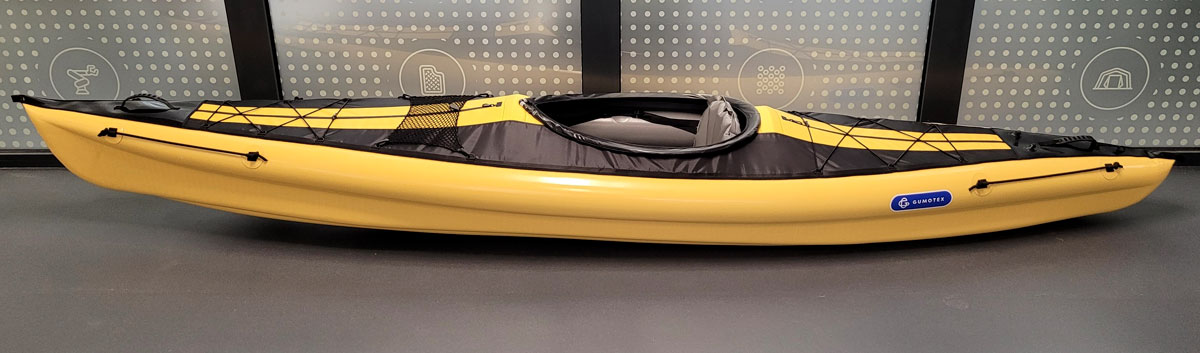
Length is 4.7m or nearly 15.5 feet with 83cm width. That’s 20cm longer and 5cm wider than mt verified Seawave, or nearly the same width as a Rush 2. Weight is said to be 19 kilos; 2kg more than Seawave, with the price in 2025, a hefty €2450.
I really liked my hybrid, 4.15-m Zelgear Igla (with a removable DS floor) which was half a metre shorter and 10cm narrower (thanks to twin- or stacked sidetubes). A 15+ foot IK is a lot of boat for solo paddlers; it must be pitched at families or a fast and spacious sea tandem.

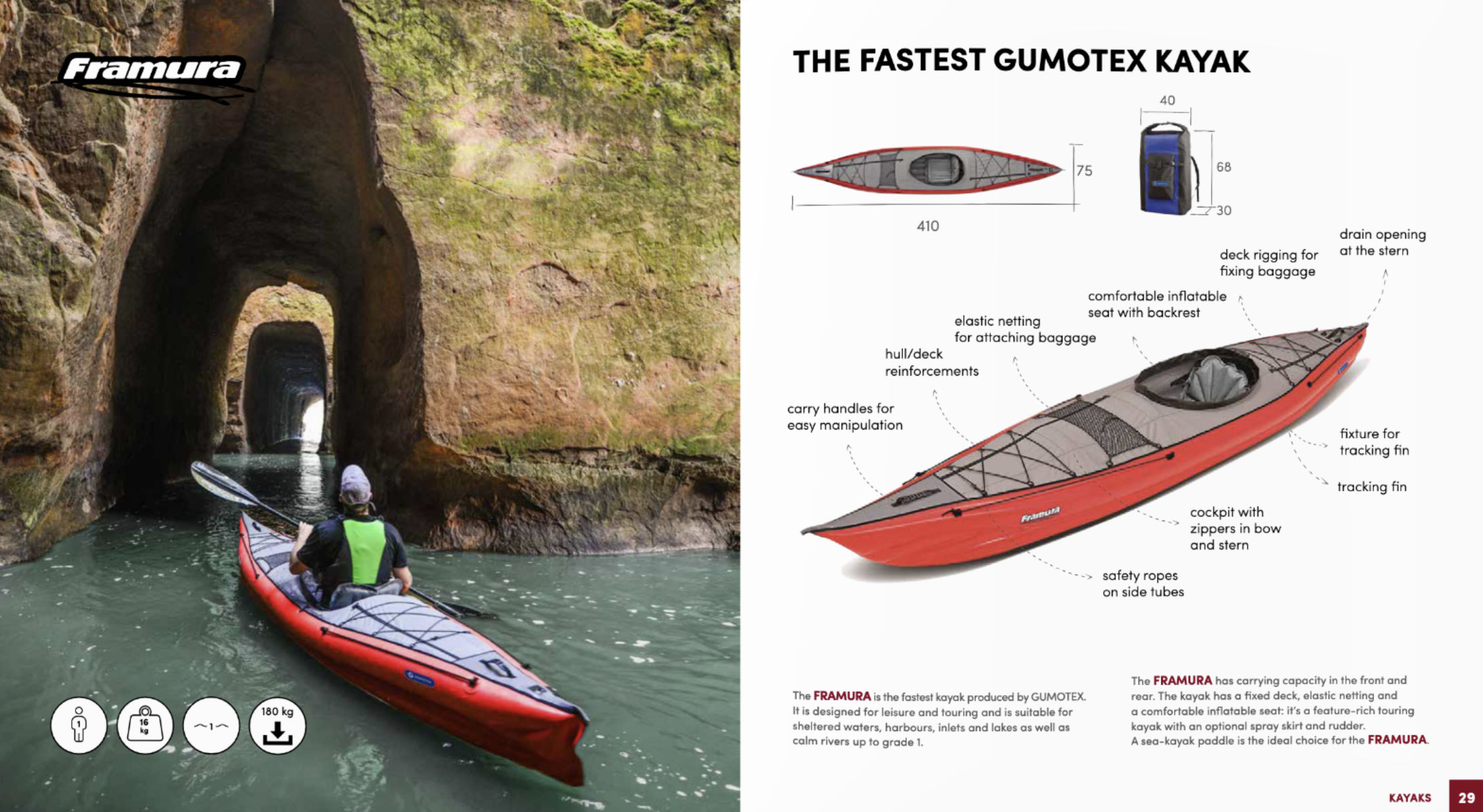
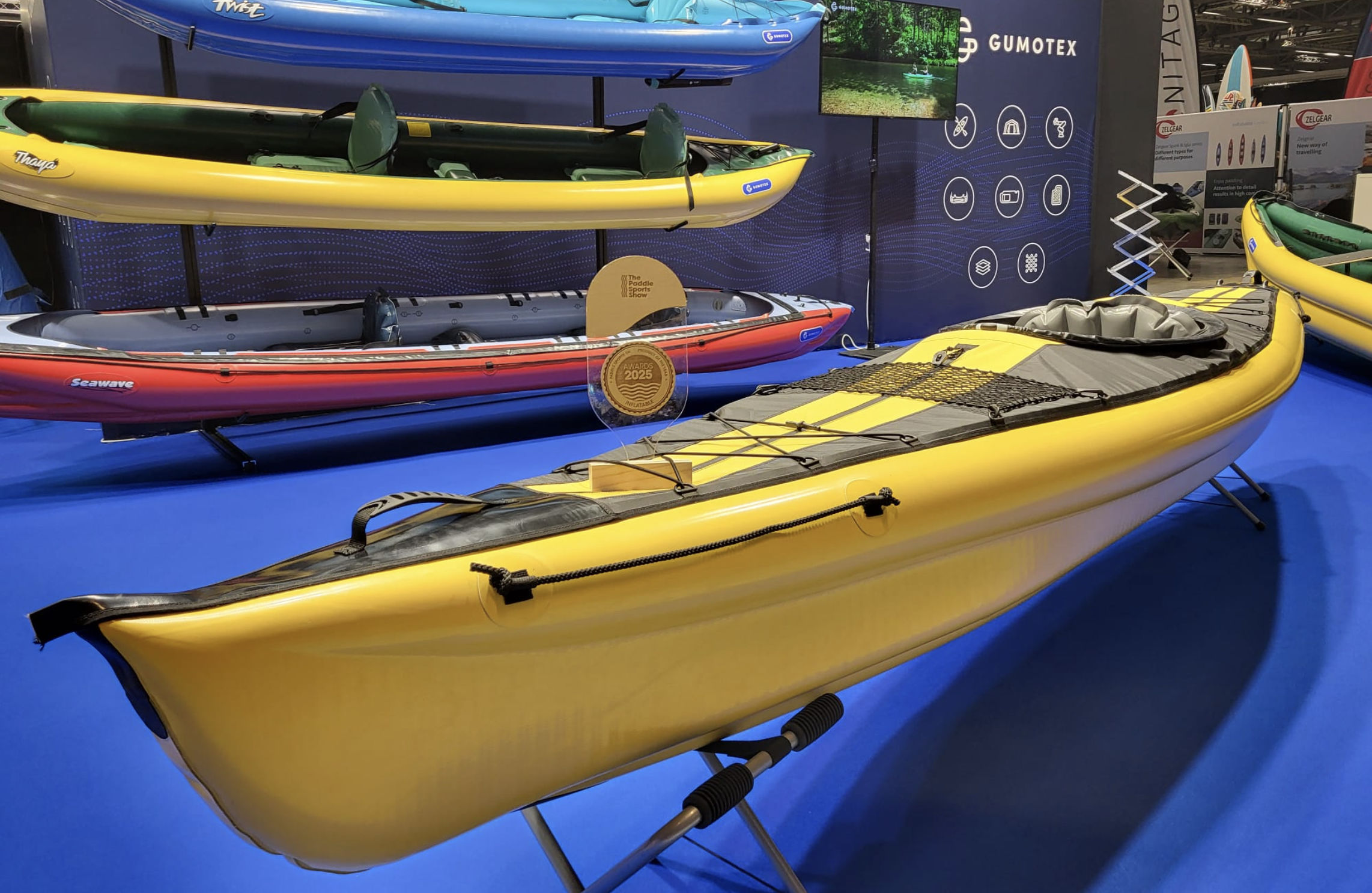
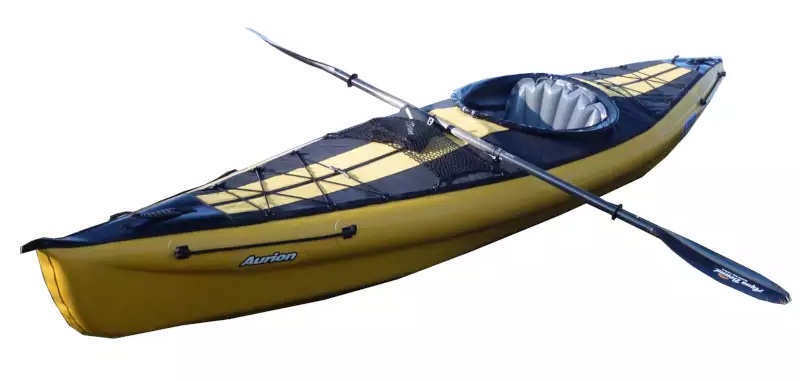
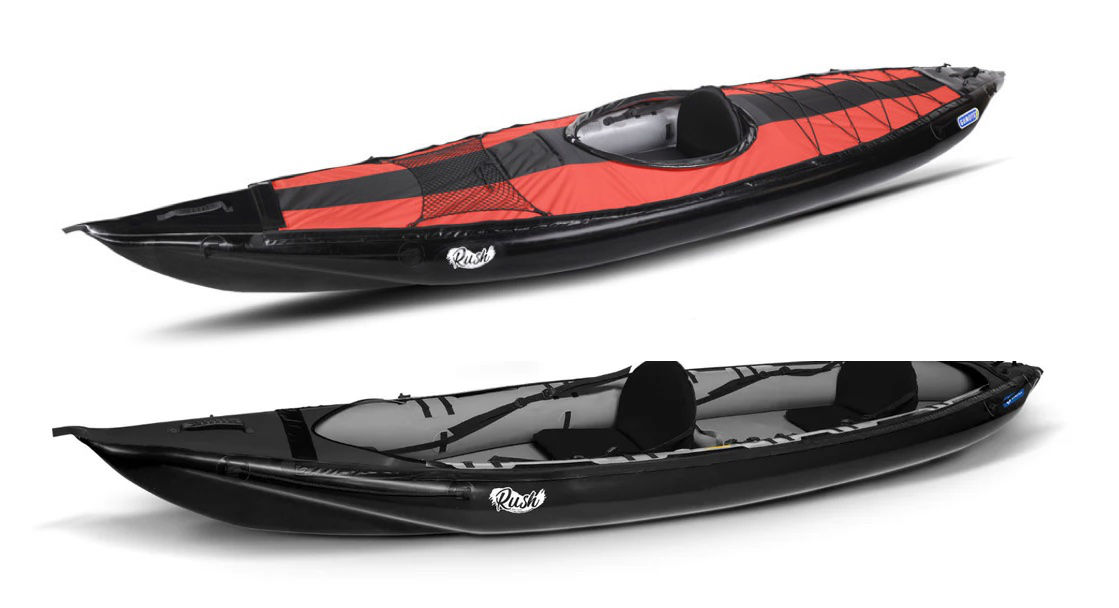
This is Gumotex’s third DSF IK, starting with the, simple, flat-floored Thaya (basically a hybrid Solar, which they still sell for around €400 less) and the lighter Rush 1 and 2 which was a new model in 2020 and had a more convoluted DS hull. The new Seashine resembles an elongated and wider Seawave, but without the Rush’s hydro-formed and more complex DS bow and stern. Underneath there’s a shallow V-shaped DS floor, changing to flat profile at the end, just like a hardshell sea kayak and the new Aurion. They’ve done a good job of smoothly integrating the DSF into the regular but lengthened Seawave, although in this two-up video you can still see the hull flexing in choppy seas, just like a regular Seawave would. As someone observed, a boat this long might well benefit from a rudder. There’s a kit you can buy.You wonder if the V floor might make the Seashine a bit more tippy, but tbh the Seawave had stability to spare.

I-beam floor: can’t do high pressures

The Seawave was a great IK. I had two and improved one with higher rated side tube PRVs to gain stiffness. It cost little and worked well. A DS floor is another way of doing the same and eliminates the traditionally fragile I-beam element (left; an old Semperit).
What are the benefits of a V-profile DSF? Better tracking than a smooth, flat floor, I imagine, but on the flat Igla a skeg easily ensured that. Better speed along with the added length? You’d hope so. A sustained 8kph or 5mph ought to be possible on windless flatwater. The ability to edge turn like a hardshell? That doesn’t really work with IKs I’ve owned (or I’ve never had a need for that technique), but the Polish bloke’s video below seems to show edge turning (leaning to the right to turn left) and so does the Aurion I am told. Only a comparison alongside a Seawave as well as the 4.2-m Rush 2 would tell, but it’s got to be a bit faster than either.