The effort of portaging the dozen locks of the River Wey the other month wore me out. On some portages you can drag the boat along harmlessly on lush grass. Others involved narrow gates, or crossing busy or narrow road bridges. It all got quite effortful, especially towards the end as my energy faded like a dying salmon.
I quickly worked out what was needed: a simple and easily deployed alternative to the typical strap-on canoe trolley, like the 60 quid Decathlon example (left) with identical examples on eBay for nearly half that price. A closer look at some images shows them to be needlessly high (unstable) and the clip-out joints don’t look that sturdy in the long run, though the tyres are nice and fat and clearance is great. With these trolleys I think the V of the alloy frame would sit better in line with the hull, not across it (with bends in the tubes). But crossways simplifies the wheel axle set up. My idea was to use the IK’s own weight with the skeg to locate and fix a trolley in place. Quick to use; no strapping needed.
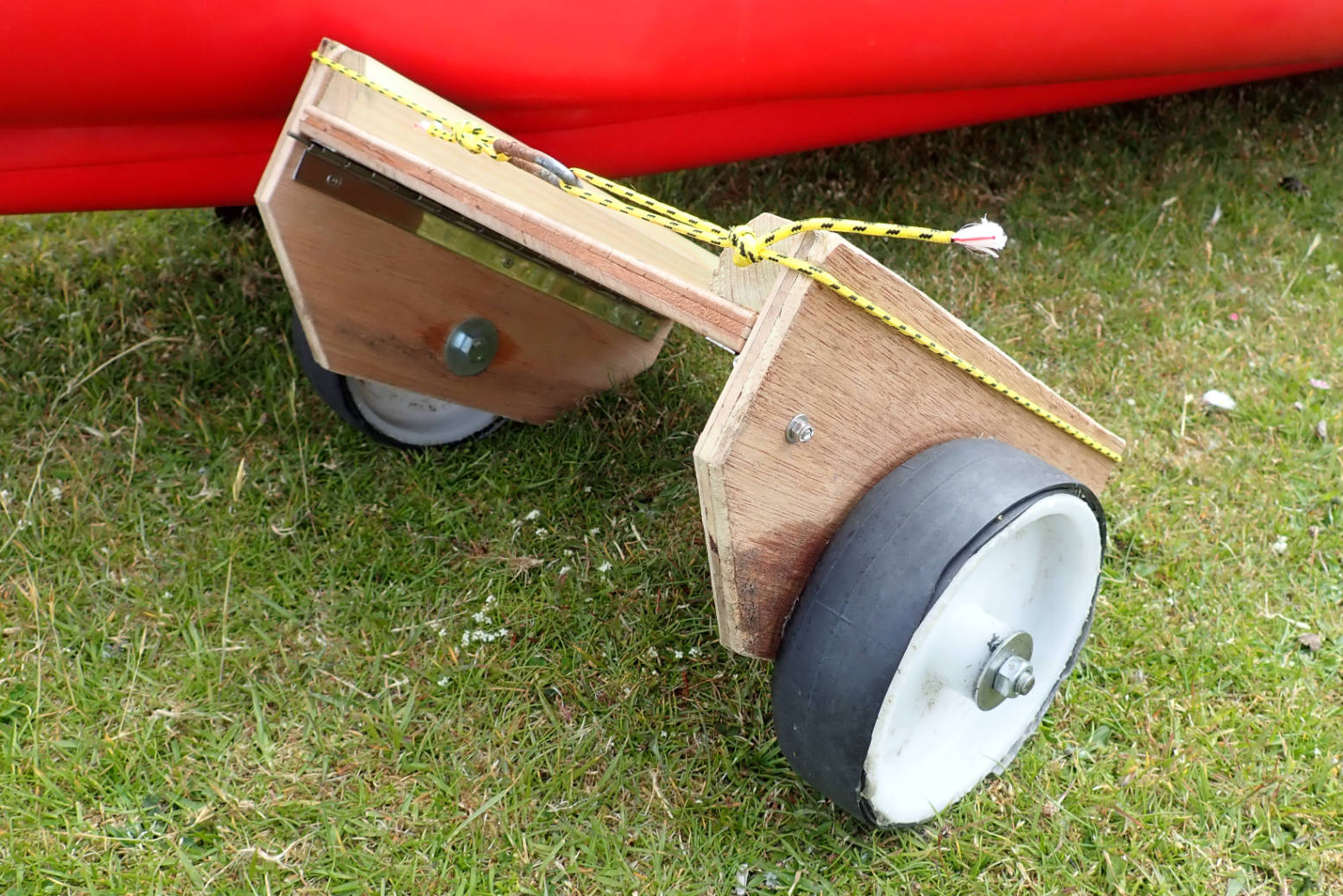
With workspace-and-tools mate Jon, we came up with a stable two-wheel folding platform with a drop-in skeg slot and hinged wheels which folded out to both roll and support the hull either side of the skeg. To portage, lower the boat’s skeg into the platform’s slot, pick up at the bow and roll it away.
On getting the trolley, the too-high sides were easily sawn down by an inch, and another inch got sawn off the bottom to improve ground clearance, as in the graphic. We hadn’t pinned down a way of stopping the hinged wheel plates folding inwards on the move. The trolley actually worked OK on smooth surfaces without any hinge lock, but eventually a bump would knock one side in. Until a neater idea springs to mind, the easiest way for me was stringing a loop of stretch-free Dyneema cord round the top to keep the wheel plates from folding in.
At 1.7kg it’s not that light, but as a prototype it was dead easy to make and the thing needs to be durable. Something similar out of alloy tubing (like the Decathlon trolley above) might be half the weight, but is less easy to fabricate in the front garden.
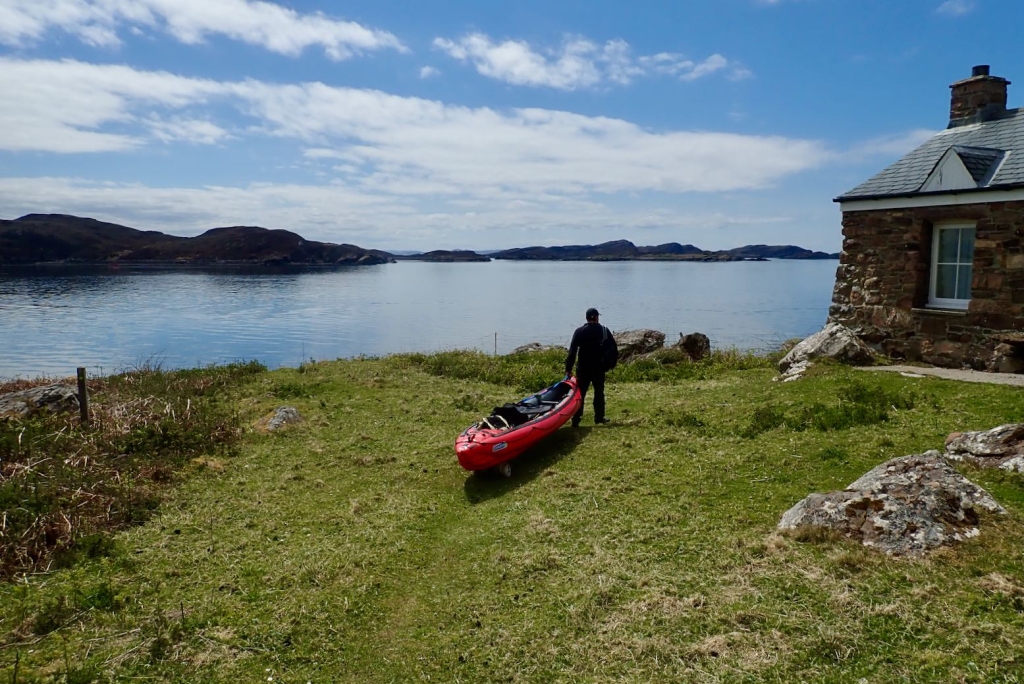
After a few miles… By chance, I was left car-less during a few days of great weather. In either direction it’s less than a mile and a 50-metre drop along a quiet road to the seashore: an ideal trolley testing scenario. What extra weight there is sits best over the wheels, and at the bow I tie a shoulder loop into the mooring line, leaving me hands-free to check my messages. Coming uphill for a mile from the beach, I could walk at normal speed with much less effort (and time) than carrying the deflated IK. It seems the width and height proportions are pretty good for stability, and the cord works well enough to keep the hinged sides up. A couple of times over rough stony ground the cord came off and the trolley folded up, or on steeper side slopes it just fell over. So maybe another 10-15cm of width would be good, but without much added height. And there must be a simple latch or lock idea for securing the sides.
Smooth on roadStable on grass
The solid plastic wheels (£12.50 for two pairs) make a racket or hard surfaces and will transfer shocks and eventual wear to the wheel mounts. Some near-identical rubber wheels cost about the same and ought to feel less harsh. But first, I may waste some time wrapping some spare motorbike inner tube around my current wheels.
Dom from Devon’s version 2022
Having a trolley makes an IK nearly as versatile as a packraft: a boat you can start here, end there and easily transport back across the difference.
Right now [April 2021] it’s a great time to kayak the Thames through London. It’s only April but due to you-know-what the Westminster tourist barge scene is dormant, making that brief but lively stage a bit less fretful. Down at water level we paddlers may be hyper vigilant, but can the bloke doing a U-turn in his heaving tourist catamaran while doing a commentary see us fending off the standing waves and refracted wakes? As a barge-tourist in a Union Jack bowler hat asked me last time; ‘Is this allowed? Yes it is chum, but a kayak on this part of the Thames is still an incongruous sight. The congestion and the standing waves pushed up by some bridges at certain times can feel a bit like skateboarding in a gale on Runway 3 at Heathrow.
Demanding…
Downloading the PLA’s mammoth 130-pageTideway Code is enough to put anyone off, but I do believe this edition (dated October 2020) is less anti IK than a previous version I read. At the time I recall seeking clarification from the PLA’s media person and got an arsey corporate riposte. Has the Lockdown IK consumer surge turned the tide on the PLA’s prejudice? It’s the old problem of misconflating a clueless beginner in £49.95 Aldi bin bag with an alert and well-equipped paddler in a decent high-pressure hybrid. I say: pick your tide, keep right and be observant. For me the biggest peril was dodging the horizontal scythes of the Putney rowers who seem to go up and down across the whole width of the river as they please. They do need a lot of space.
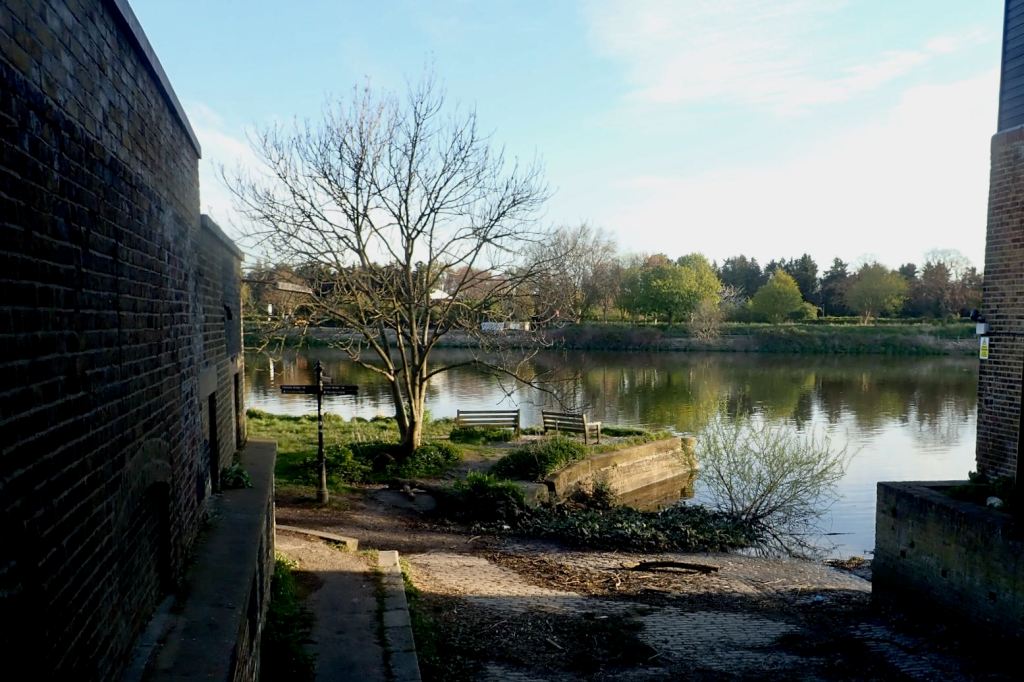
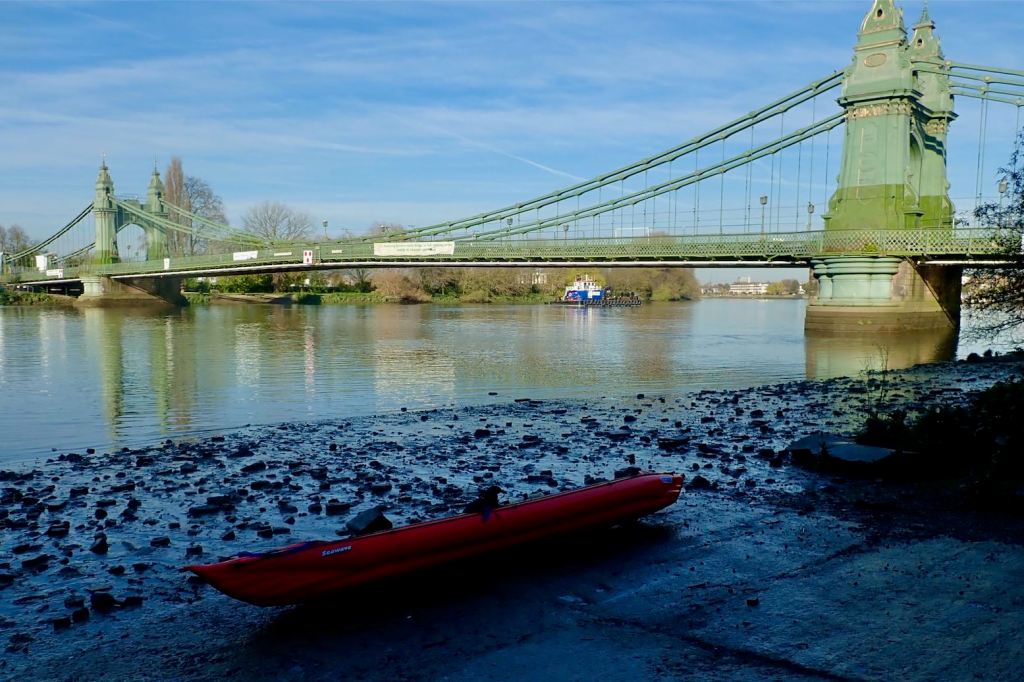
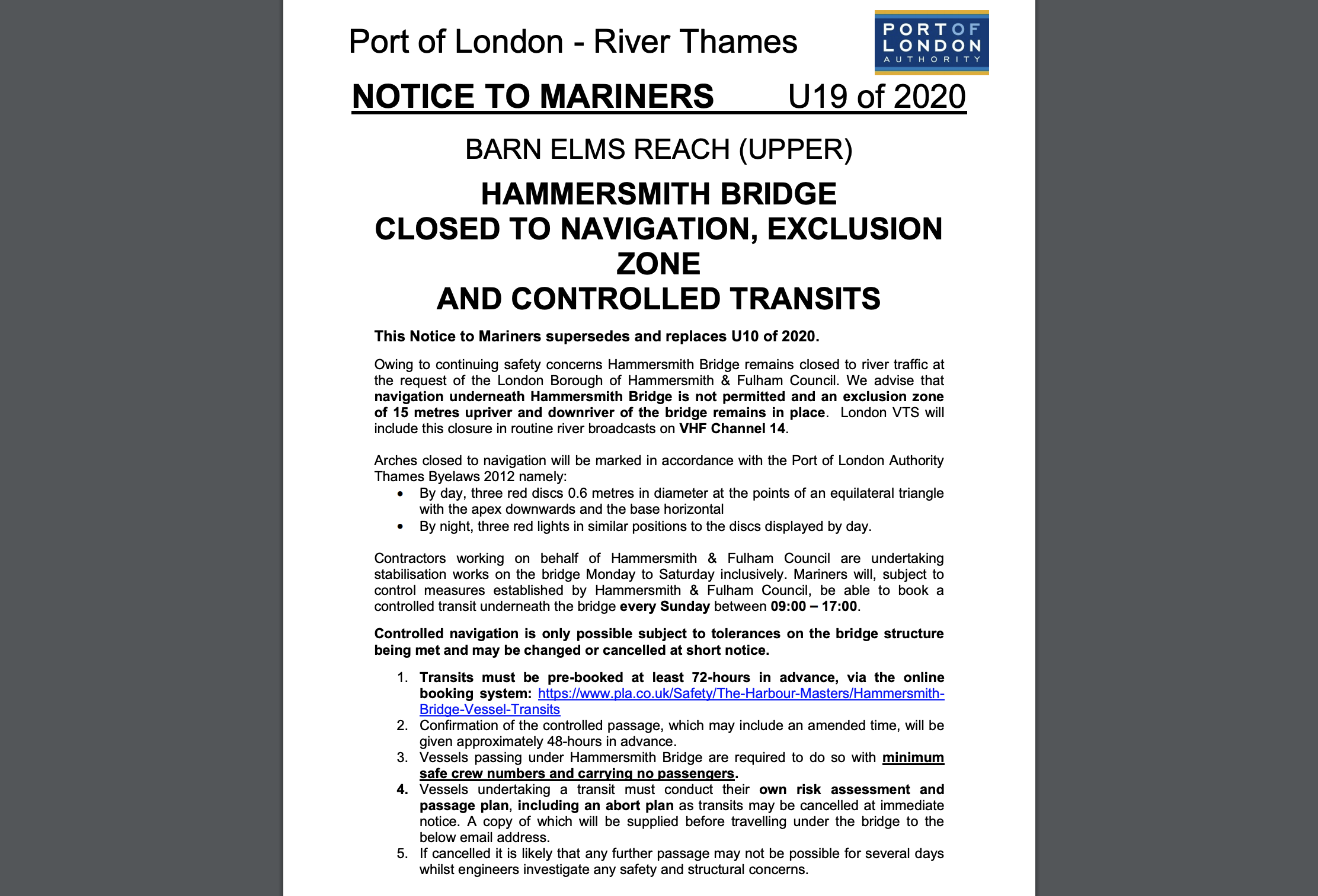
Mortlake to Mayflower (Rotherhithe) This 21-km (13-mile) stretch lined up well with 10-minute walks from stations at either end. By Rotherhithe the excitement, such as it is, is over. And skipping the five miles from Richmond gives an easy three hours on the river; a nice early morning or afternoon paddle with good light for great photos or views of the Thames’ bankside icons.It’s dawn and a Sunday, so it takes two buses and a train to get to MortlakeYadda, yadda…Spacious put-in at Bulls Alley off Mortlake High Street, complete with benches7.15am. All is calmA bit of early morning rumpy-pumpyHead buoyGenteel Georgian waterfront around ChiswickArseache! Hammersmith Bridge is Falling Down and closed to navigation. Ie: you can’t paddle under it in case it collapses on your head. But on the north bank there’s a handy jetty and this slipway (above) on the downriver side is a 5-minute carry
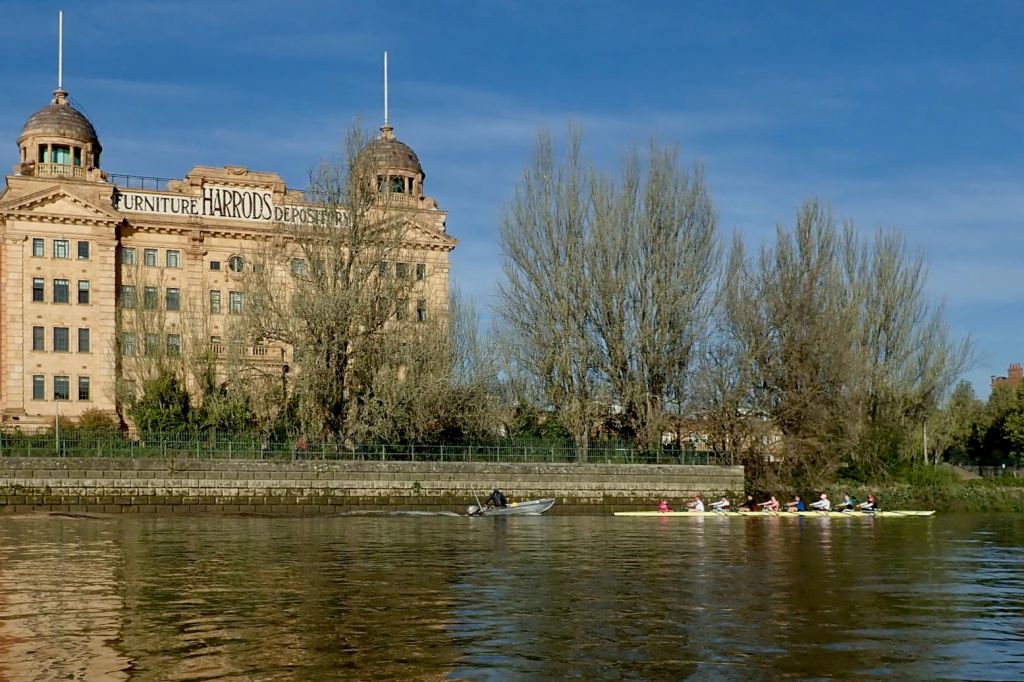
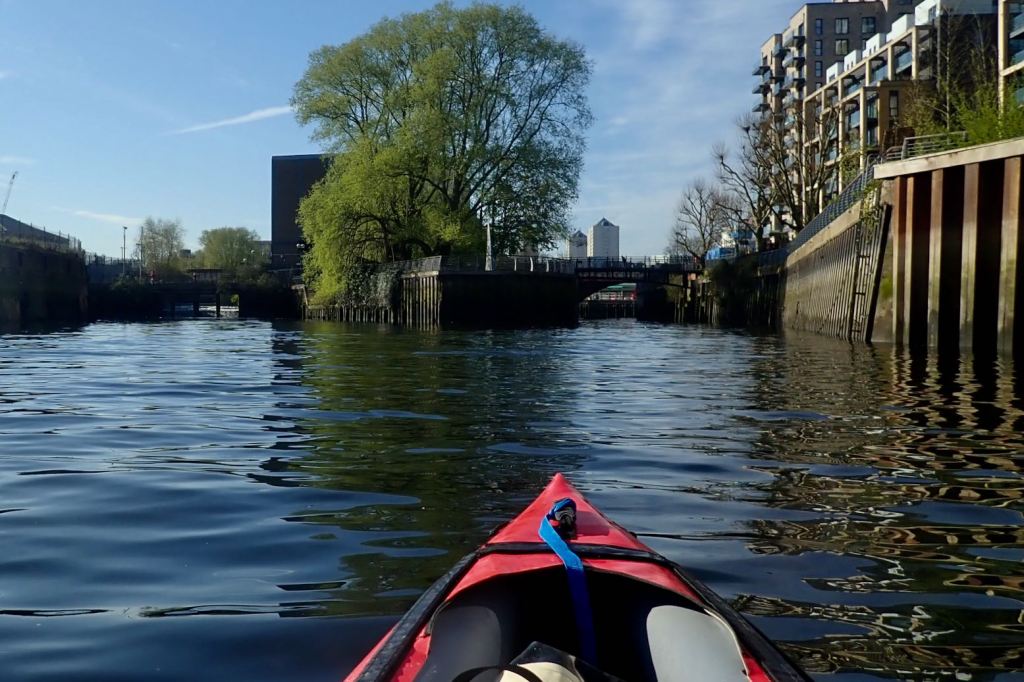
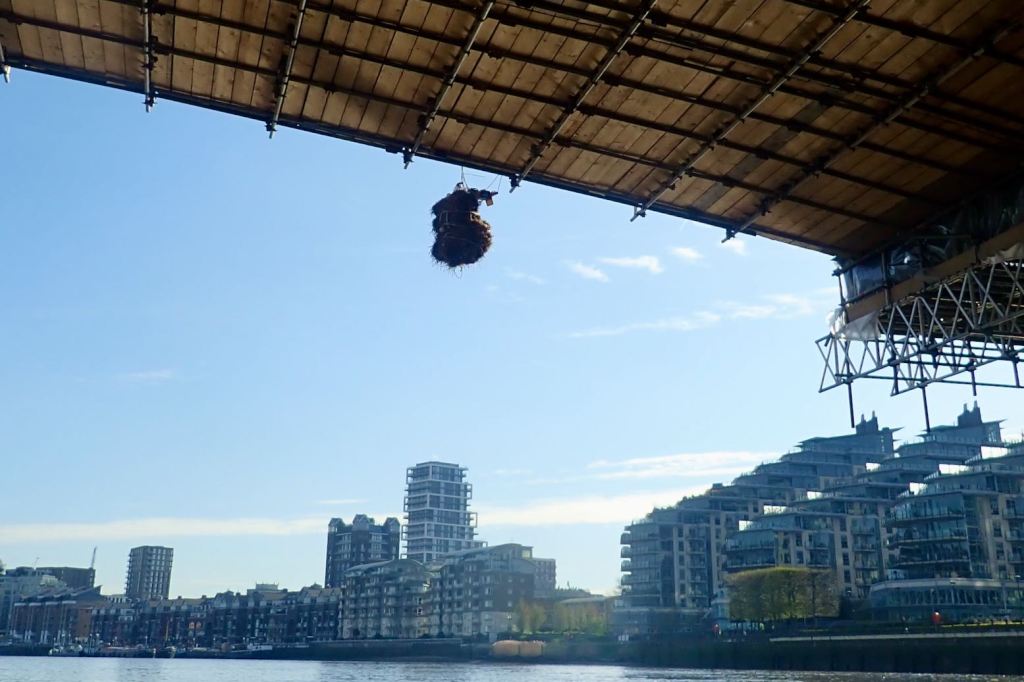
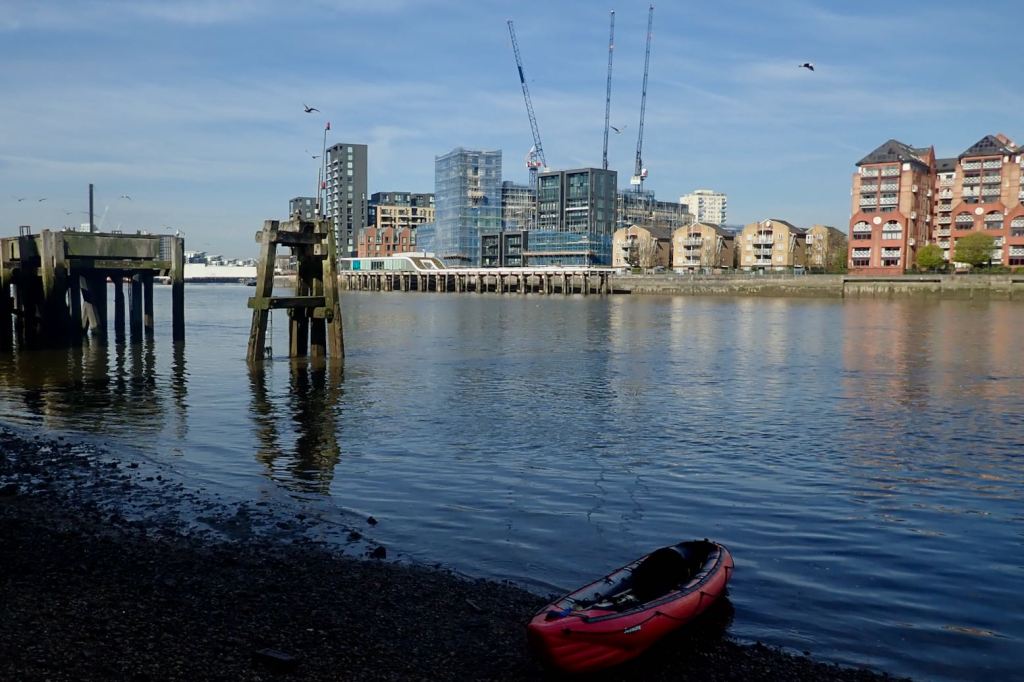
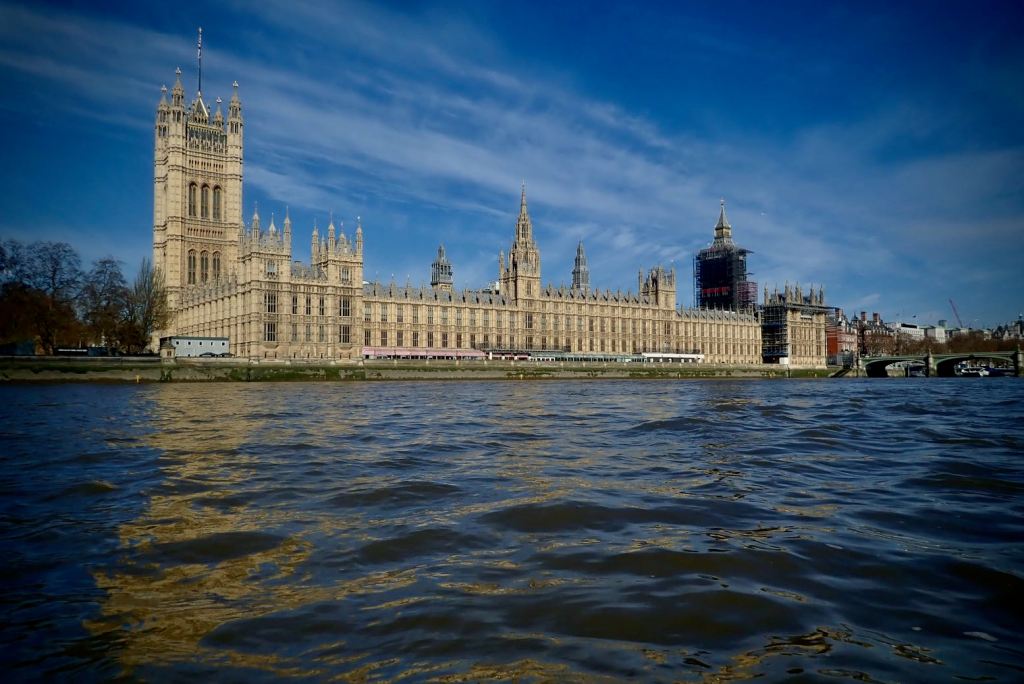
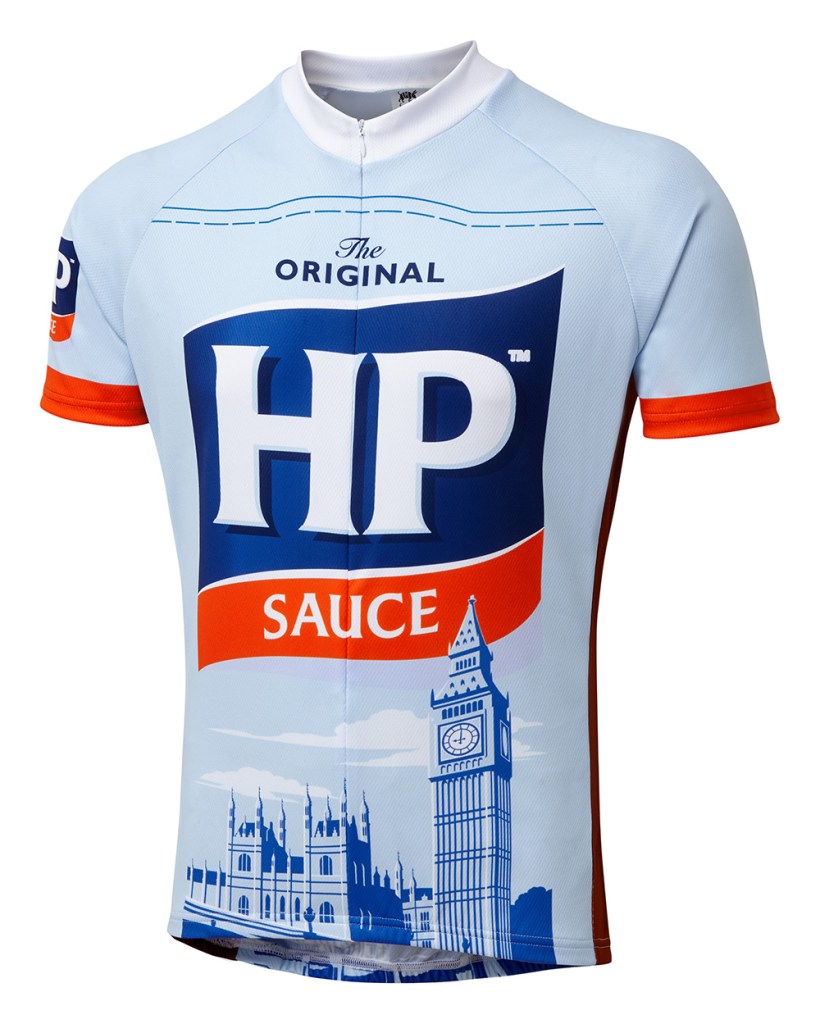
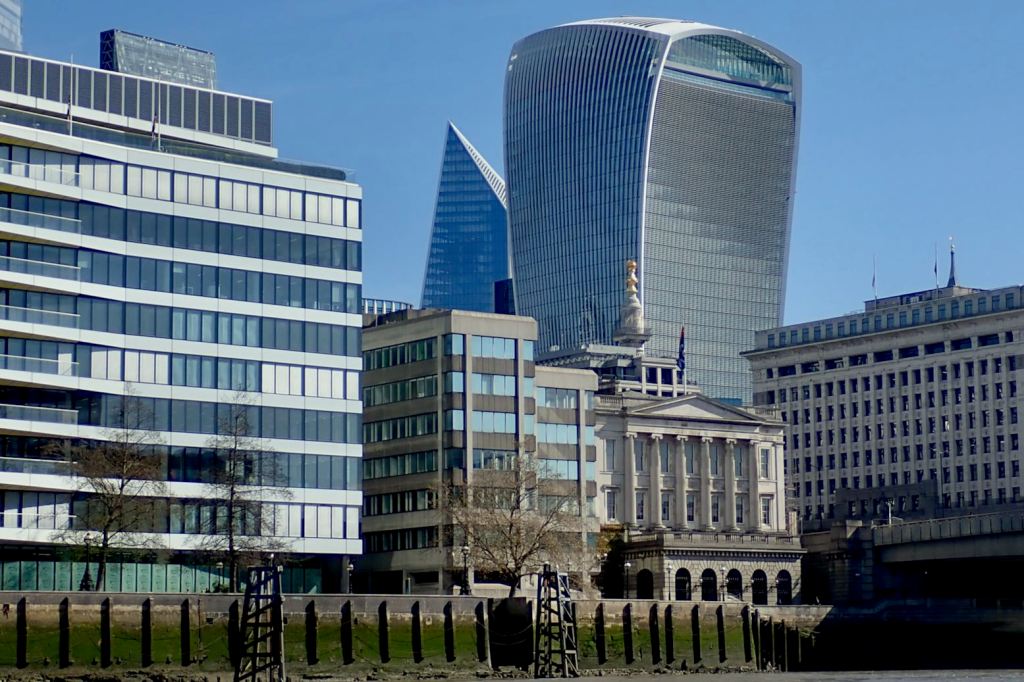
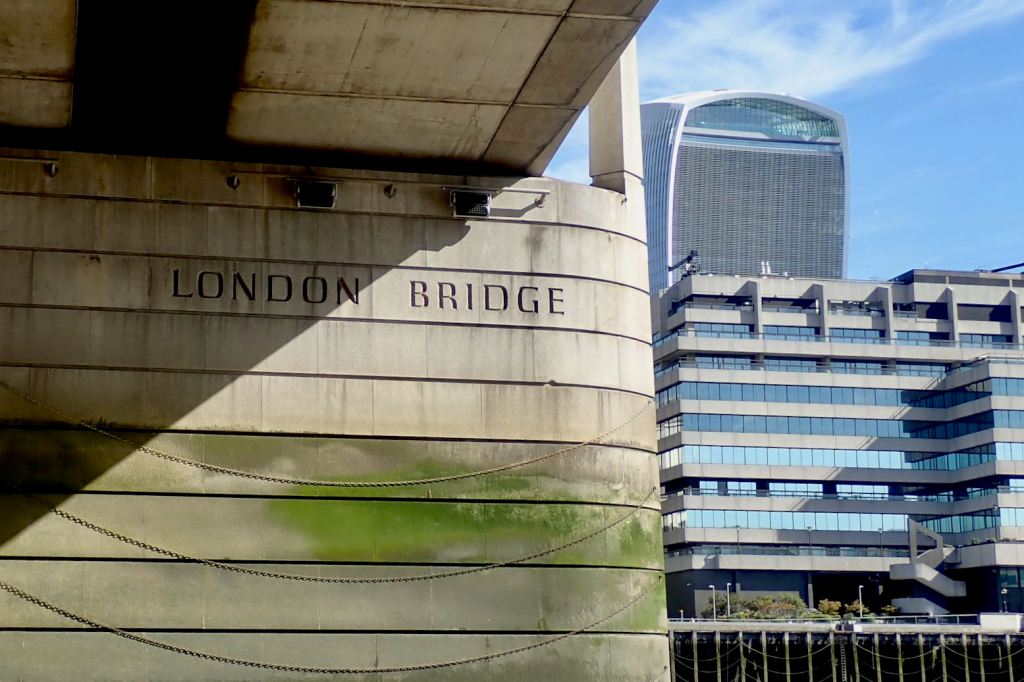
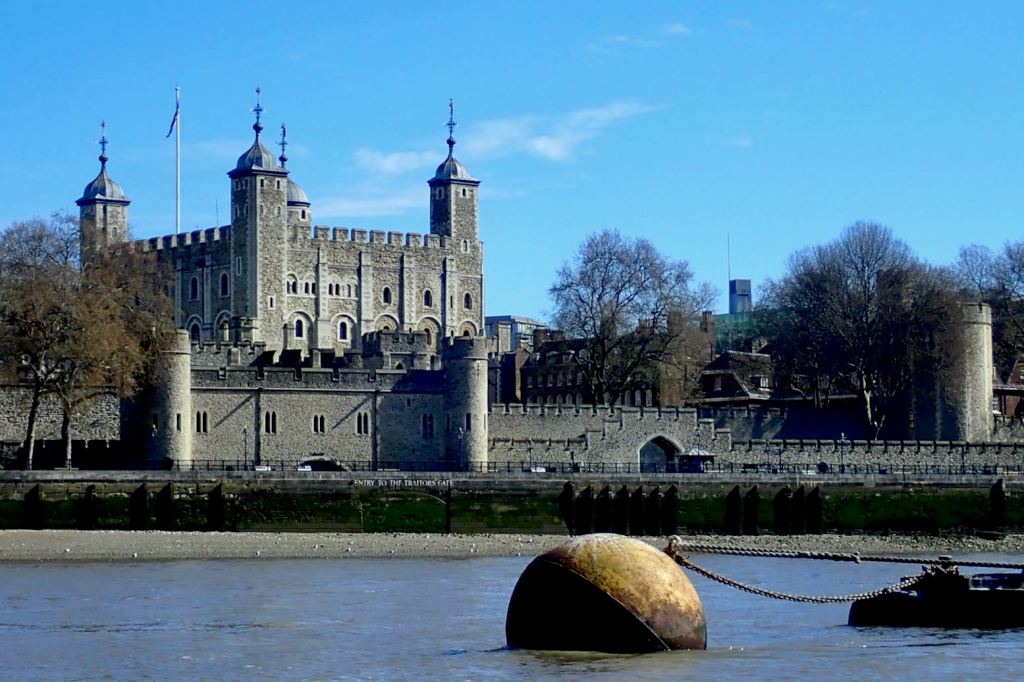
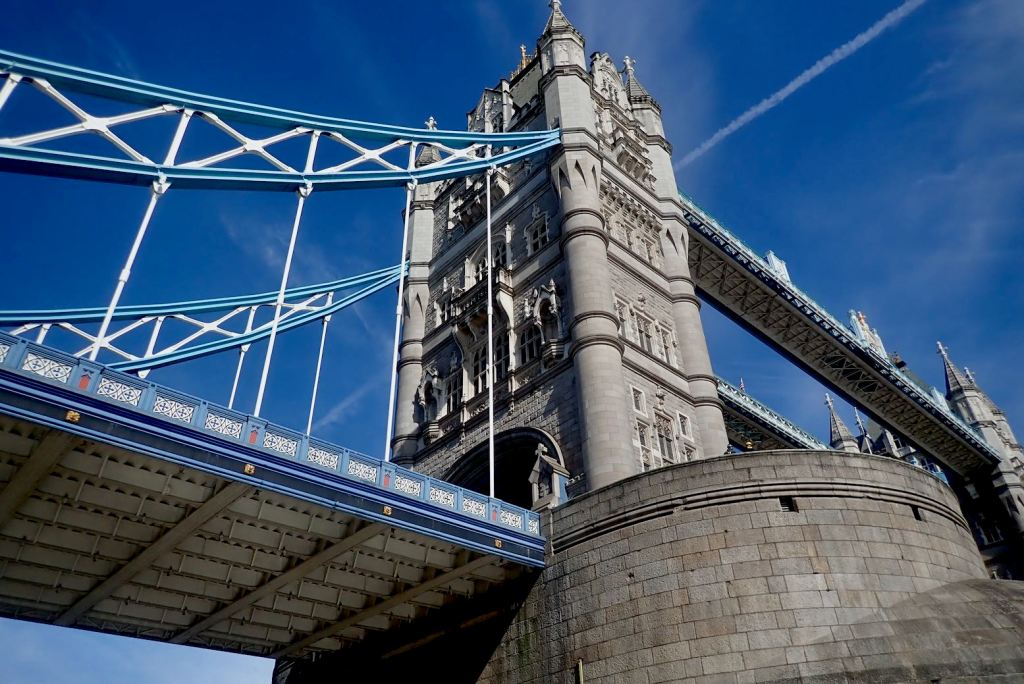
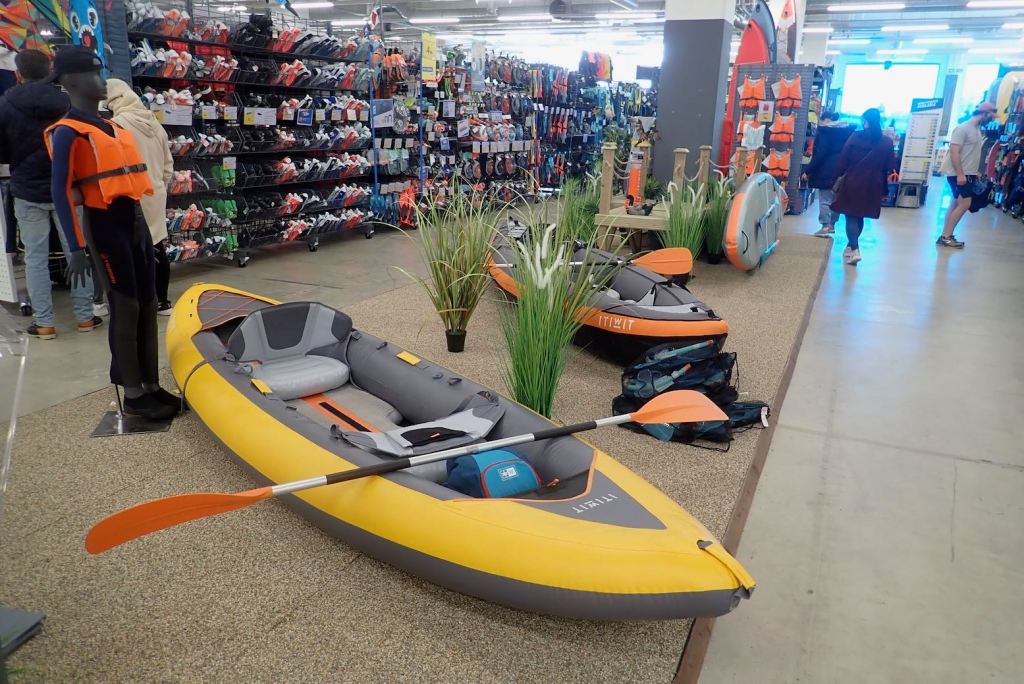
The Hammersmith’s brittle, ageing cast iron dates from 1887 and is suffering from micro-fractures. All together now: “Build it up with iron bars, iron bars, iron bars. Build it up with iron bars, my fair lady“You might try and book a controlled transit (Sunday’s only) with the PLA but I don’t think kayaks would qualify. It will be closed for years.Once a Harrods warehouse, how expensive flats9am. Putney rowers getting their oars on.At Wandsworth I nip up Bell Lane Creek where the Wandle comes in. Big weir drop to the left, and a bit further up on the right, another weir drop at all but HW. See: Wandle: An Urban Packrafting NightmareHanging hay bale? WTJoF? Explanation in the PLA Tideway CodeNo arcane signage here up Wandle creekIt’s chilly. Nature’s call cannot go unansweredRiver racers. My money’s on the YellowsHoly Mother of all Parliaments. The latest scandal? The ‘chumocracy’ of lobbying (there have been a whole load more sinceNamed after the famous HP sauceAlso available as lycra cyclewearIt gets a bit choppier just after Westminster Bridge as the current backs upLondon Eye still looks as amazing as ever. I wonder if they grease the axle and tension the spokes once in a whileRectilinear skyscrapers are just so last centuryA few years back sunlight reflected off the ‘Walkie Talkie’s’ concave face (20 Fenchurch St) and melted a car in the street belowNot falling down any time soon, but small standing waves soon after can make you thinkBy the HMS Belfast it settles down again. On a neap tide at least.‘Send him to the Tower!’This is what Hammersmith needsAfter Tower Bridge the river widens out and the powered craft can gun it A mile downriver, the Mayflower’s looking a bit shabby. Don’t people go to pubs any more? In 1620 the famous ship embarked from here for the New WorldTourists RIBs slalom up and and down the Pool of London like giant jet-skisMy modified seatback worked great. Just what was neededThree hours from Mortlake and plenty of space to dry out.Now that’s what I call a packboatGo west young man. And never come back!From the beach it’s a 10-minute walk to Canada Water station. I pop into Decathlon nearby to admire some Itiwits; quite possibly Britain’s most popular IK
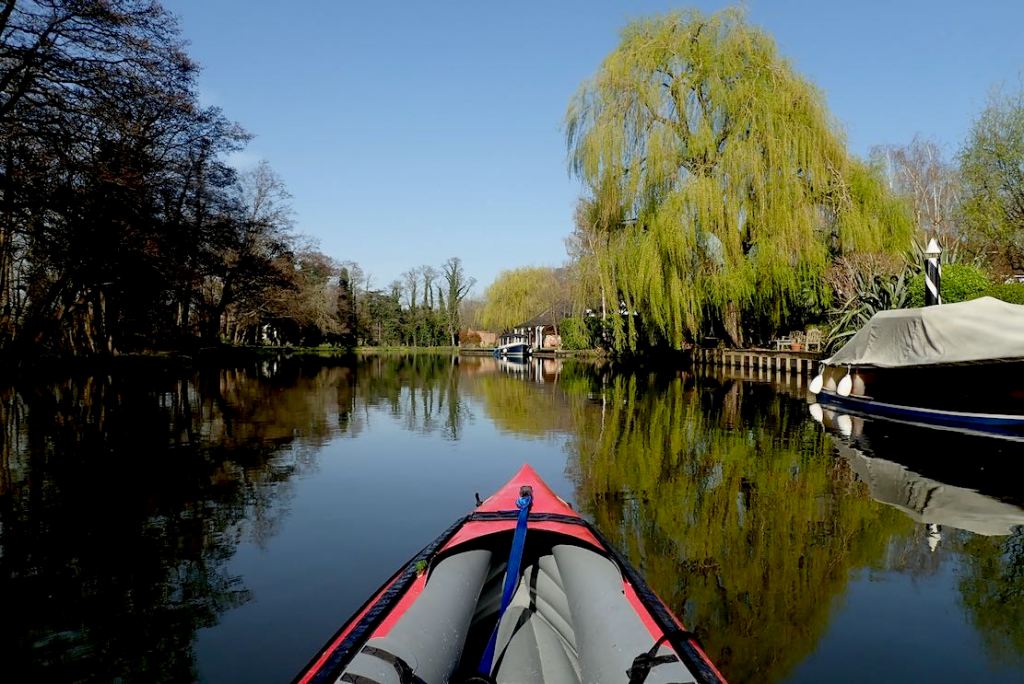
One of England’s first navigations, dating back to 1653. That’s probably why this historic canal feels quite natural and river-like, apart from the virtual lack of current.
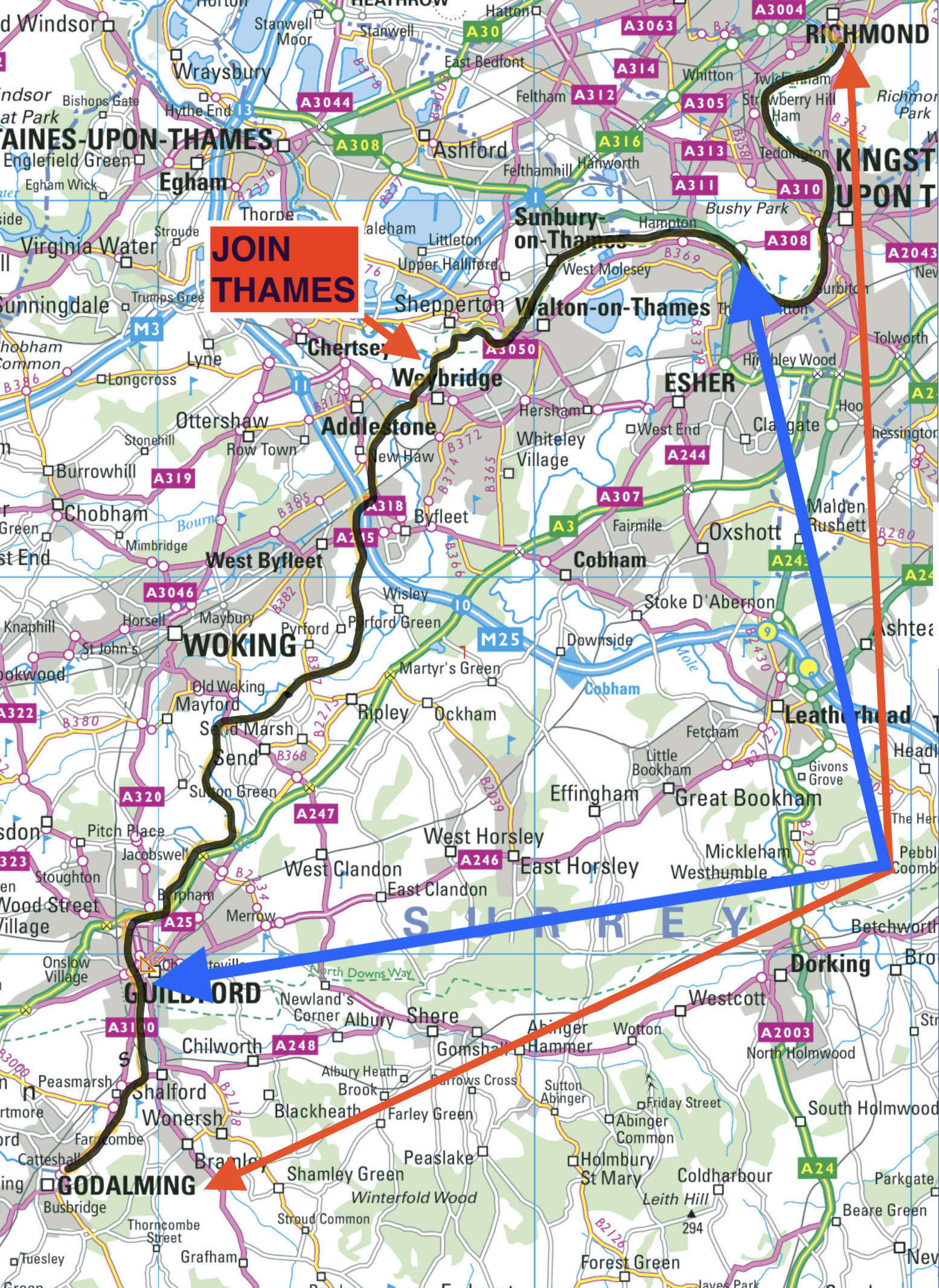
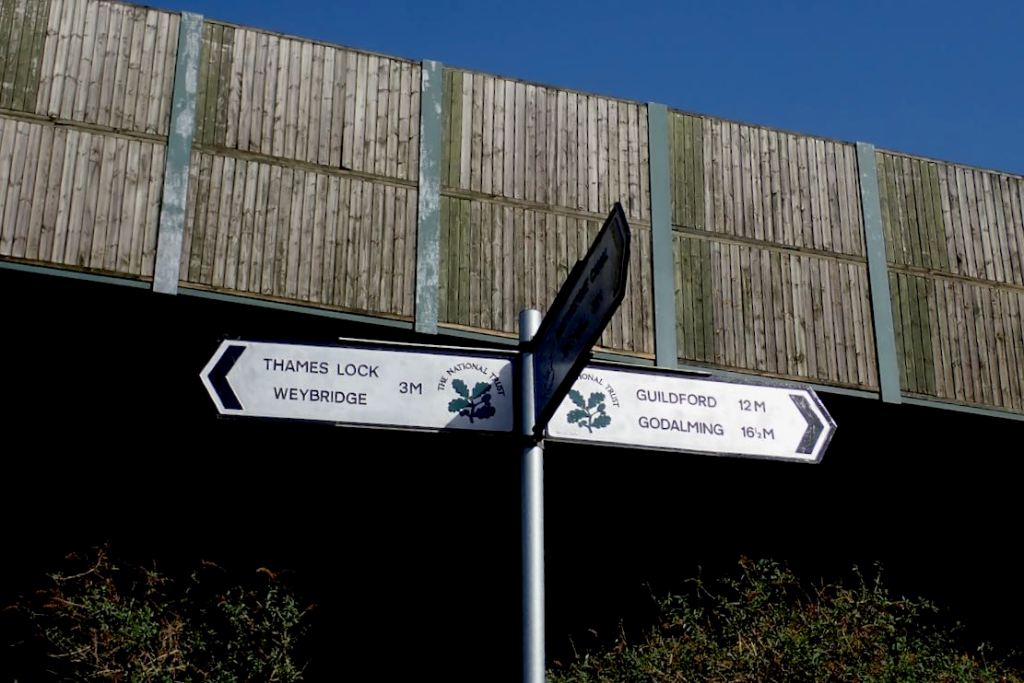
All hands to the barrel pump! The day will be long, sunny and warm. High time to tick off ideas matured over the winter months of Lockdown. First on the list: the River Wey from Godalming to Weybridge in Surrey. Or should I say, the historic canal called the Wey Navigation which is paralleled in places by the old river. It’s one of England’s oldest navigations (commercial inland waterways) which once connected the Thames with the Navy base in Portsmouth. At the time a safe way of transporting stuff, including munitions produced near Godalming, without risking encounters with Napoleonic marauders in the Channel. For years I’ve been unsure whether the Wey was a dreary canal with more locks than the Tower of London, or a grubby, semi-urban river with weirs and other obstructions. Turns out it’s a bit of both but better than expected. All I had to do was RTFM!
Compared to the similarly popular Medway, which I’ve done loads of times in IKs and packrafts, summer and winter, the Wey Nav feels less agricultural, more scenic and has an interesting history if you slow down enough to look. But it lacks the Medway’s unique canoe passes which scoot you down the side of each lock (right), avoiding up to three laborious carry-rounds per mile. Parts of the original river survive in places to either side of the canal, which is what caused me confusion. I now realise the Navigation (managed by the National Trust) gets priority in terms of water levels and maintenance. As a result the occasionally nearby River Wey might be shallow or chocked up with fallen trees or rubbish. But you can combine both to make loops like this.
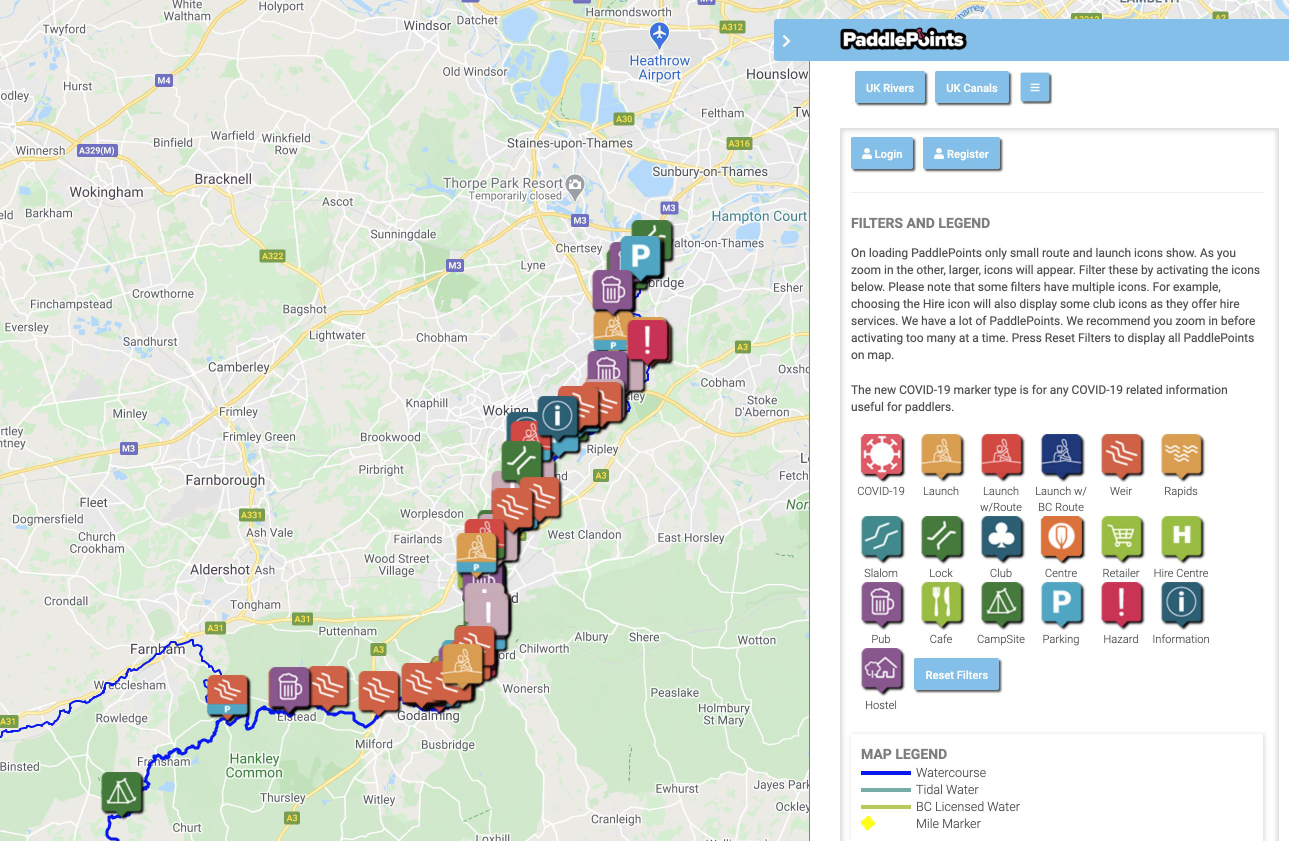
Because of the Wey’s multiple channels and numerous weirs and locks, I tried British Canoeing’s PaddlePoints website, a comprehensive database of paddleable river map routes with handy icons (above) for put-ins, parking, hazards like fallen trees, feral teenagers (I’m not joking) and so on. You can reset to delete extraneous icons (‘Covid-19’ ?); I just wanted to clearly locate the locks and weirs and river’s branches, though on the day ‘Navigation [this way]’ signs at junctions were clear. Closer scrutiny of the map shows that in places the blue line guides you along the old, choked-up river, not the Nav, and not all weirs (an important feature to know about) are shown as icons, even when they’re clearly evident on the Sat view underlay. And so the Map view (as above) can give a misleading impression of which way to go. As you’ll see below, at one point the blue line even guides you over a weir. Common sense prevails of course, but you can imagine some beginner clutching their PaddlePoints app on Map view getting sucked into a weir. I realise now this content is user-generated like OSM or Google Maps, and so errors, inconsistencies and lack of moderation are inevitable. As such, you can report icon-points, but it’s unclear if the route (blue/green line) can be corrected by users. If nothing else, PaddlePoints helps identify which rivers you’re allowed to paddle in England and Wales, and what the rules there might be.
I fancied a full dawn-to-dusk recce: as much as I could fit in from Godalming (where most paddlers start) before my tank ran dry. I might even reach Richmond on the Thames, a section I enjoyed last December in the Arrowstream. That is actually quite a haul: 20 Weymiles plus another 15 on the Thames, including no less than 17 lock portages on the two rivers. But the great thing about ending a paddle in an urban area is I could air down when I got worn out and rail home. Thirty-five miles? Dream on, bro! I’ve only paddled two days since September so was far from paddle fit. Then again, the pre-dawn brain wasn’t on top form either: I set off in the right general direction, but on the wrong train.
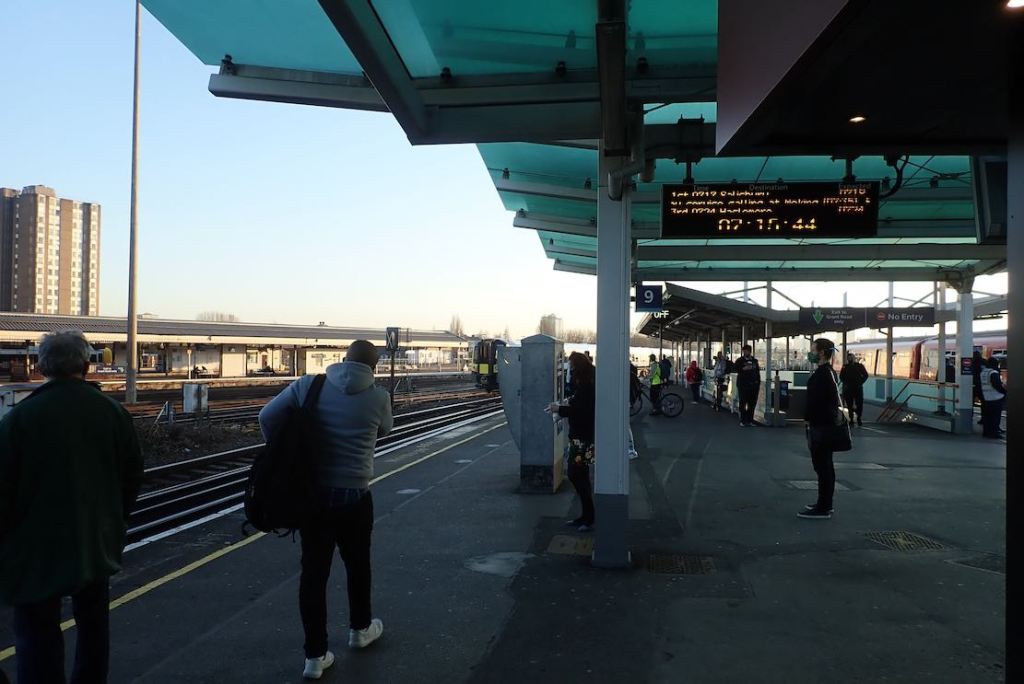
Oh! Mister Porter, what shall I do? I want to go to Godalming And they’re taking me on to Hoo [k], Send me back to Woking as quickly as you can, Oh! Mister Porter, what a silly boy I am!
After backtracking, I decided to catch up with myself at Guildford, 5 miles downstream of Godalming and missing out 4 of the Wey’s 14 locks. I dare say I’d appreciate that later.
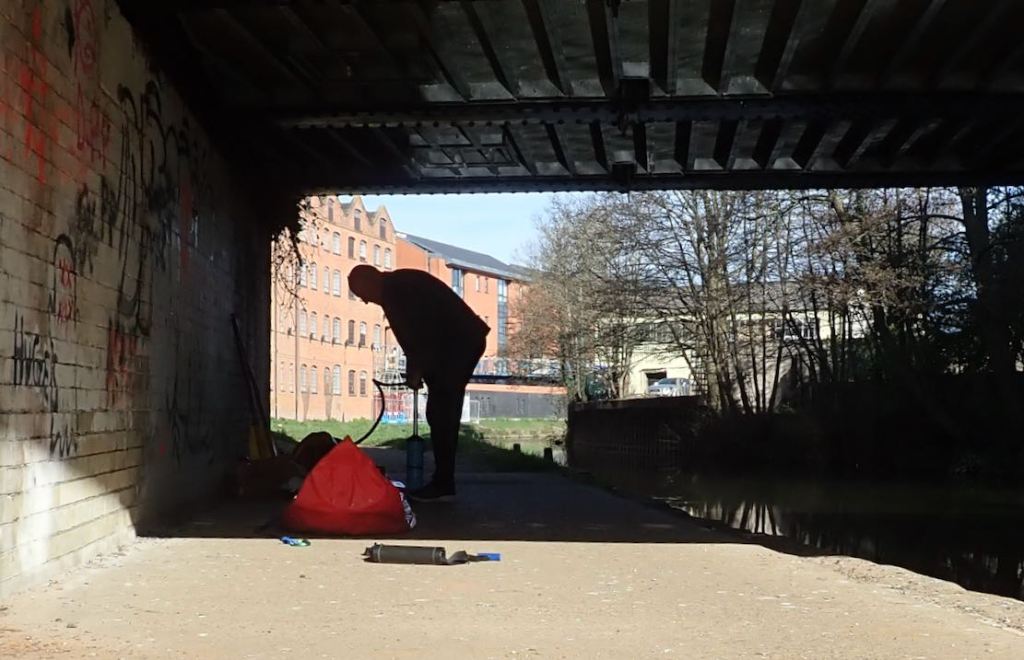
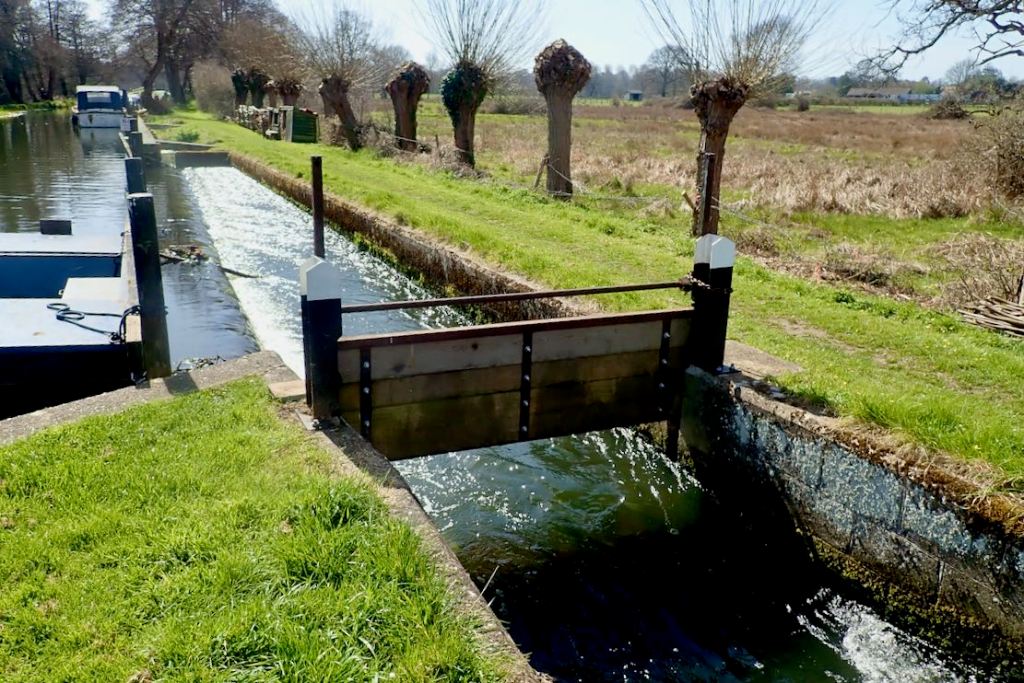
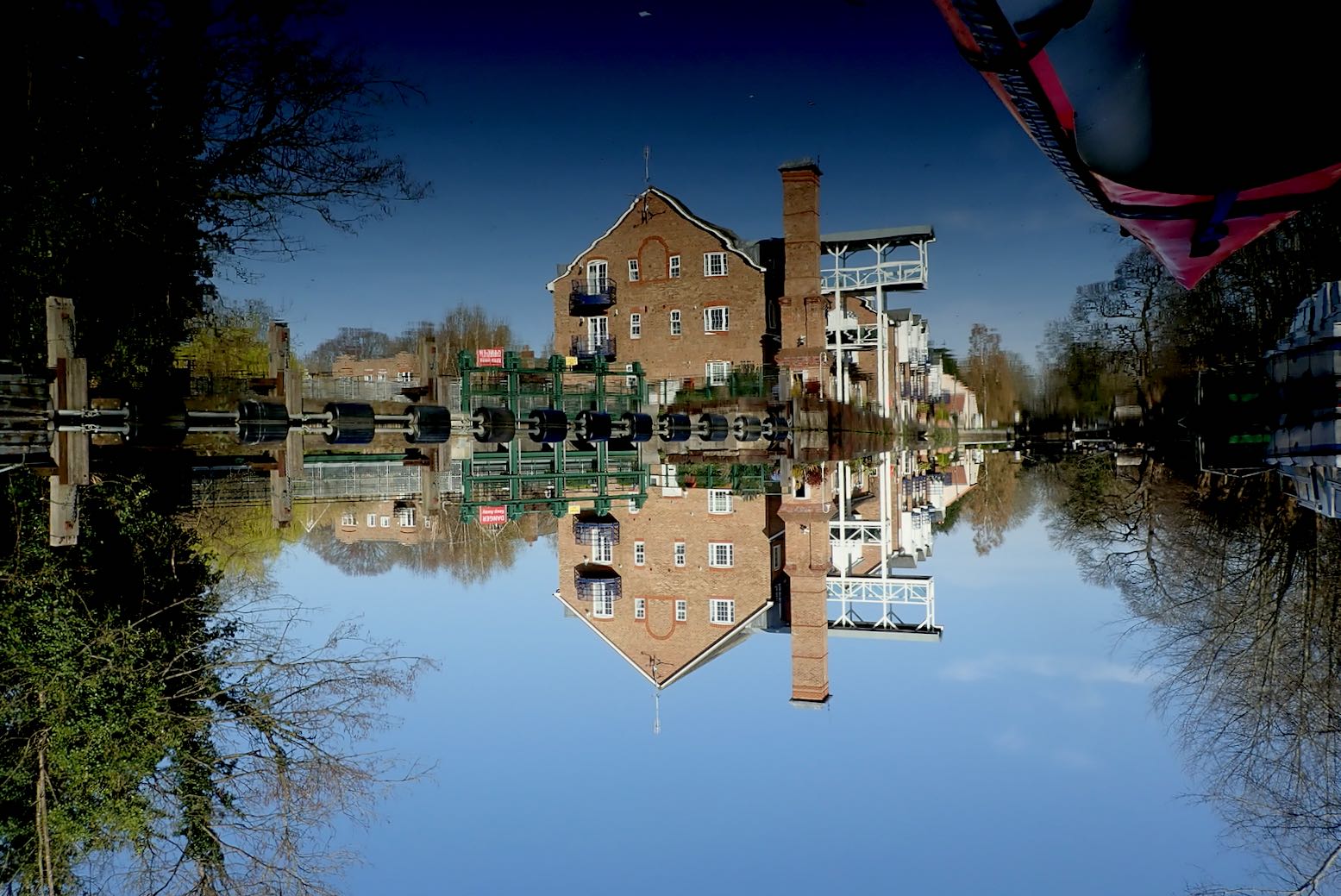
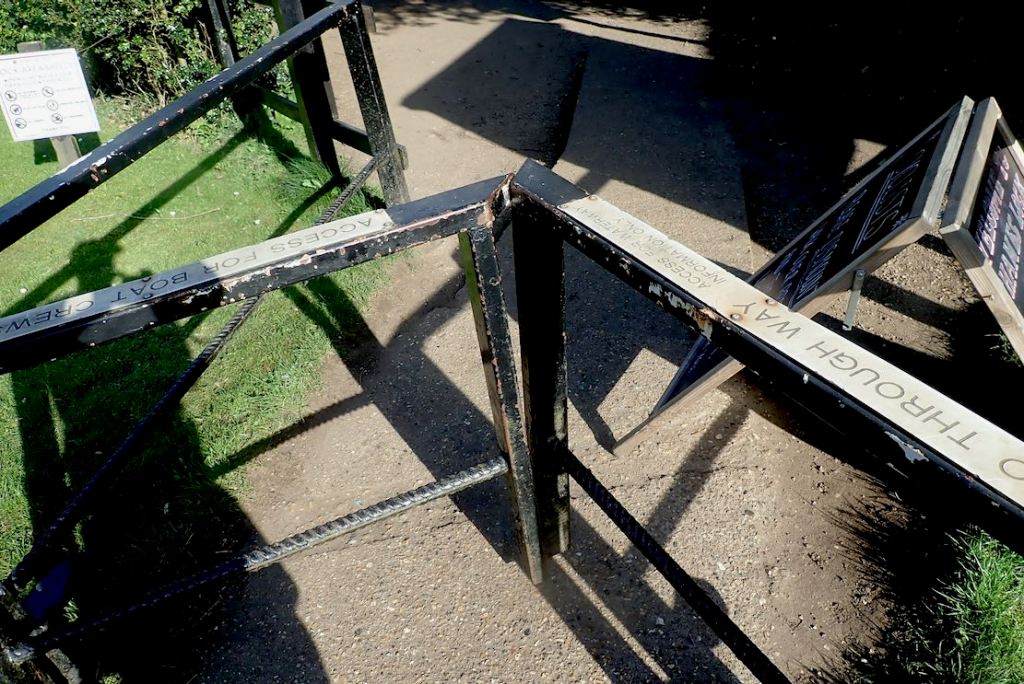
Clapham at 7am. It’s all a bit of a blur.I practise luggage distancing.In Guildford I slip onto a closed towpath and enjoy a quiet set-up without the usual ‘Oh Mr Porter, is that one of those inflatable canoes? I’m thinking of getting one…’Just around here I realised I’d left my Garmin out in the sun to catch a signal… Should have gone to Starbucks. I’m trying out some old runners as water shoes instead of my usual Teva Omniums. Do they really believe this or is it just juvenile baiting?A readable GPS in the net pocket of my Anfibio packraft deck bag didn’t really work on the Seawave. As usual I have a better idea.Alternative use for a big slackraft.At Bowers Lock I spot my first Intex of the day, a 100-quid of K2 Explorer on its maiden voyage with daughter and dad.Under an old bridge a real K1 belts past with barely any wake. Looks like fun but what happens when she stops? Same as the bike on the left, I suspect.As canals go, not so bad.Triggs Lock. With a little work this side sluice could be a fun canoe chute (lens finger shows scale).All they need to do is get rid of the guillotine and add a galvanised chute at the end. How about it, National Trust? It would be like turning Downton Abbey into a Discount Carpet Warehouse!Soon after lunch at Papercourt Lock I pass two chappies also heading for Weybridge in something called a Sea-Doo. Flip yer paddle round, mate, you look like an amateur!Not another lock, TFFT! Just some general-purpose gates to hold back Viking raiding parties.At this scenic and willowy point the canal runs right alongside the M25 London orbital motorway. The tyre noise is like Niagara Falls.Mile 12 at Basingstoke canal junction. By some civil engineering synchronicity the M25, Wey Nav, Basingstoke Canal and a railway mainline all cross or meet at this point. In its way it demonstrates the history of post-medieval commercial transport: rivers > canals > railways > highways and airplanes. That’s my MA thesis, right there!At New Haw Lock I need water but the lawn-mowing lock keeper says there’s no tap for a couple of miles. It’s an awkward portage over a narrow road bridge too. Luckily, this chap helps me out. Thanks, chum!Coxes Lock with a doable weir to the side. I may try it next time and risk censure from the NT.Well, according to BC’s PaddlePoints website, that’s the way to go!Weybridge Town Lock. Another awkward portage over a road bridge on the left.In places the Weybridge backwaters look like an Everglades retirement village.As I approach the Thames Lock at Weybridge things get wobbly and I have an out-of-boat experience.Amusingly lock-themed gates close the footpath so us portageurs can pass.Finally at Thames level, hallelujah. And there’s a tap set into the jetty too. I drink like a camel then me and the boat have ourselves a wash.Over six hours from Guildford, but even with a drink and food to spare, I don’t have another three hours in me to reach Richmond. Maybe I can do two hours to Kinsgton. Now on the Thames, I become a great admirer of roller portages.The game’s up at Hampton Court Bridge if I’m to have enough energy to roll up the boat. The station is right there. It’s a warm evening on the Thames and they’re all out in boats and the riverside parks. The [Covid] Rule of Six? Do me a favour! The skiffs collect bird poo while two lads fire up their Intex Challengers. I’ve seen more Intex IKs today than anything else. Why? Because they cost from under 100 quid, float just like a Seawave but track like a barrel.And he may be saying to himself: ‘My god, what have I done?’Dusk back at Clapham Jct. All up, only 21 miles. I blame ten portages, no resting and my nifty but 3-kilo Ortlieb roller duffle. With too much food, it all made the boat just a bit too heavy to carry easily. Where the lock-side grass was lush I dragged the boat, but I have a better idea.
Just before the GPS packed up at Basingstoke canal junction, I was averaging 5.5kph on the move. Pretty good with no current to speak of. On the livelier Thames I estimate I was moving at up to 10kph before I withered. Same as in the FDS Shipwreck in December. My tall BIC backrest (below left) initially felt great then collapsed on itself. Usual story: needs a stiffer insert. I was trying out my new footrest tube attachment points which worked great. Only when one heat-welded strap broke near Addlestone was I reminded how essential footrests are to comfort, efficiency and stamina. I jury-rigged something up between two D-rings which have been staring in the face all this time.
My 2021 Wey Survey of UK Paddling Trends
Hardshell canoes: 1
Hardshell kayaks: 1 (+ 2 K1 racers)
Hardshell SoT: 1
Vinyl IKs (cheapies): 5
PVC (bladder) IKs 3
iSUPs: 10+ (mostly women on iSuPs, too)
PFDs worn, almost none then again, mine’s more of a handy waistcoat)
FDS spotted: none (interesting as readers here are mad for that page)
Owning several Gumotex IKs with the rubbish footrest pillow (left), I came up with my footrest tube idea years ago. It’s since been copied (or maybe just implemented) by many manufacturers. In a kayak, a footrest isn’t something you rest your tired feet on while watching Netflix. They’re something you lightly brace against to stop you sliding down in the seat and to improve your connection with the boat. To that end it wants to be solid like a pipe, not mushy like a pillow.
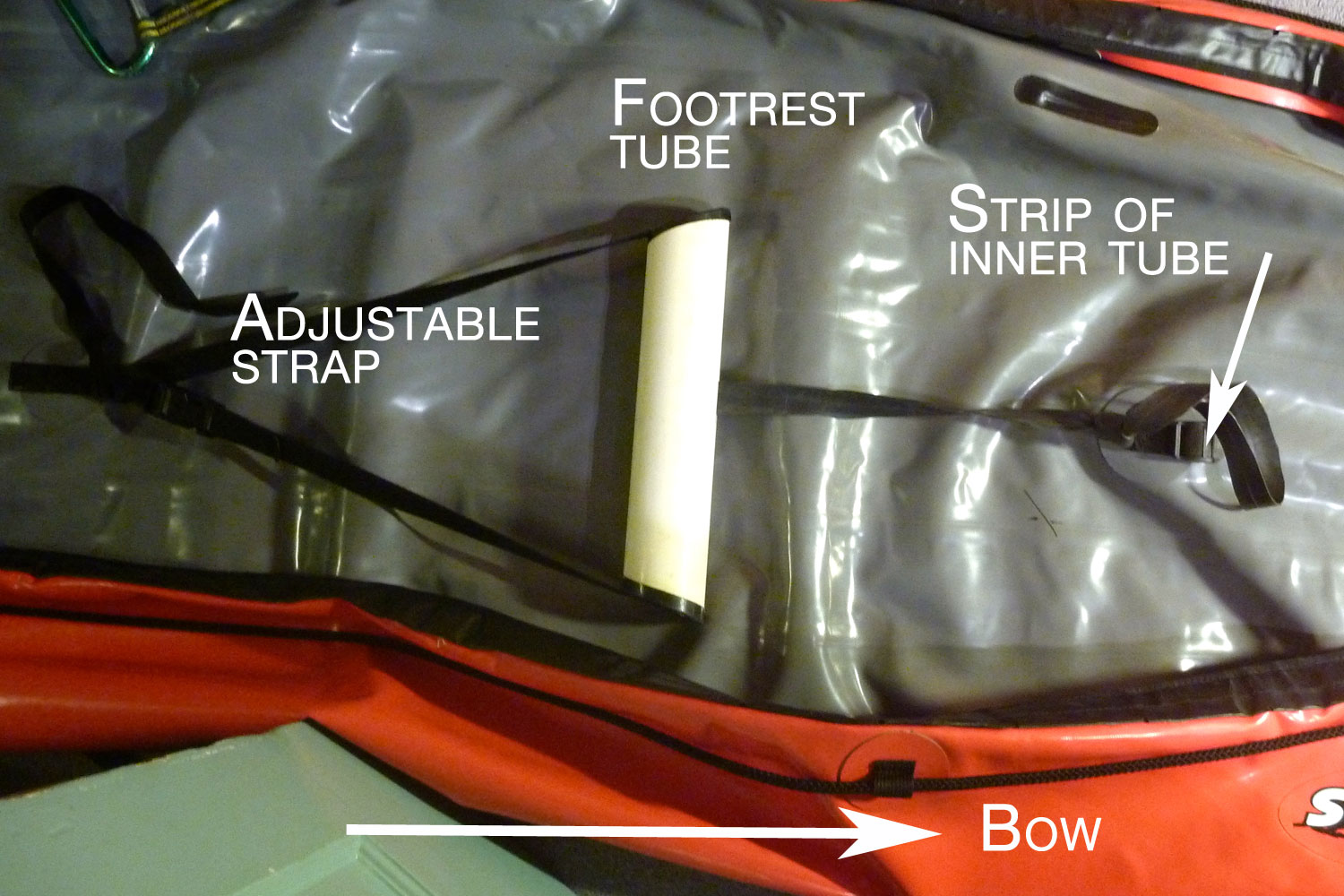
I was never really that happy with my original Seawave’s drainpipe arrangement (below): an adjustable strap running forward from the seat and a counter-tensioning elastic pulling from the bow to keep the tube in position. Too many straps, with entrapment and aesthetic issues.
Original footrest: over complicated
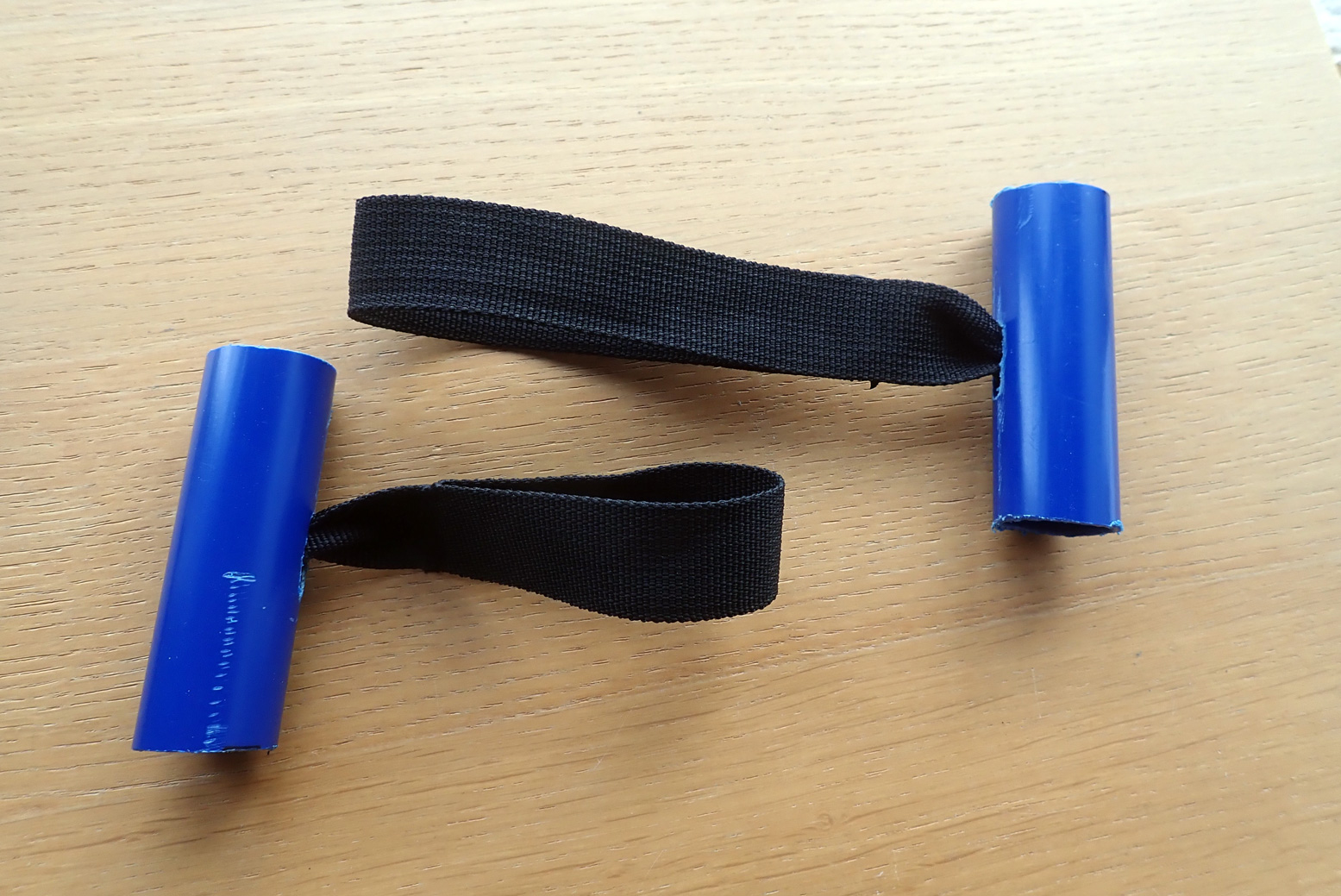
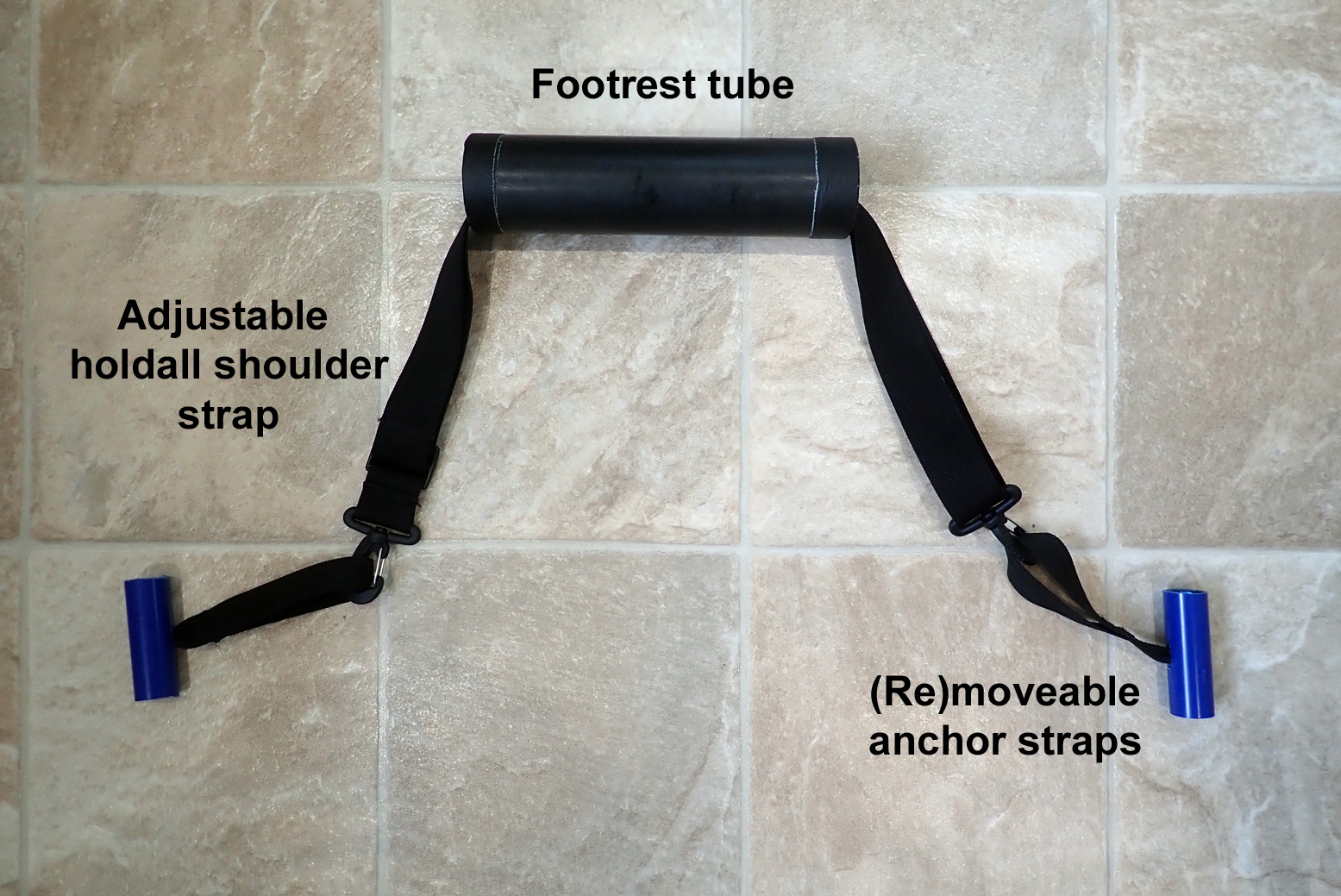
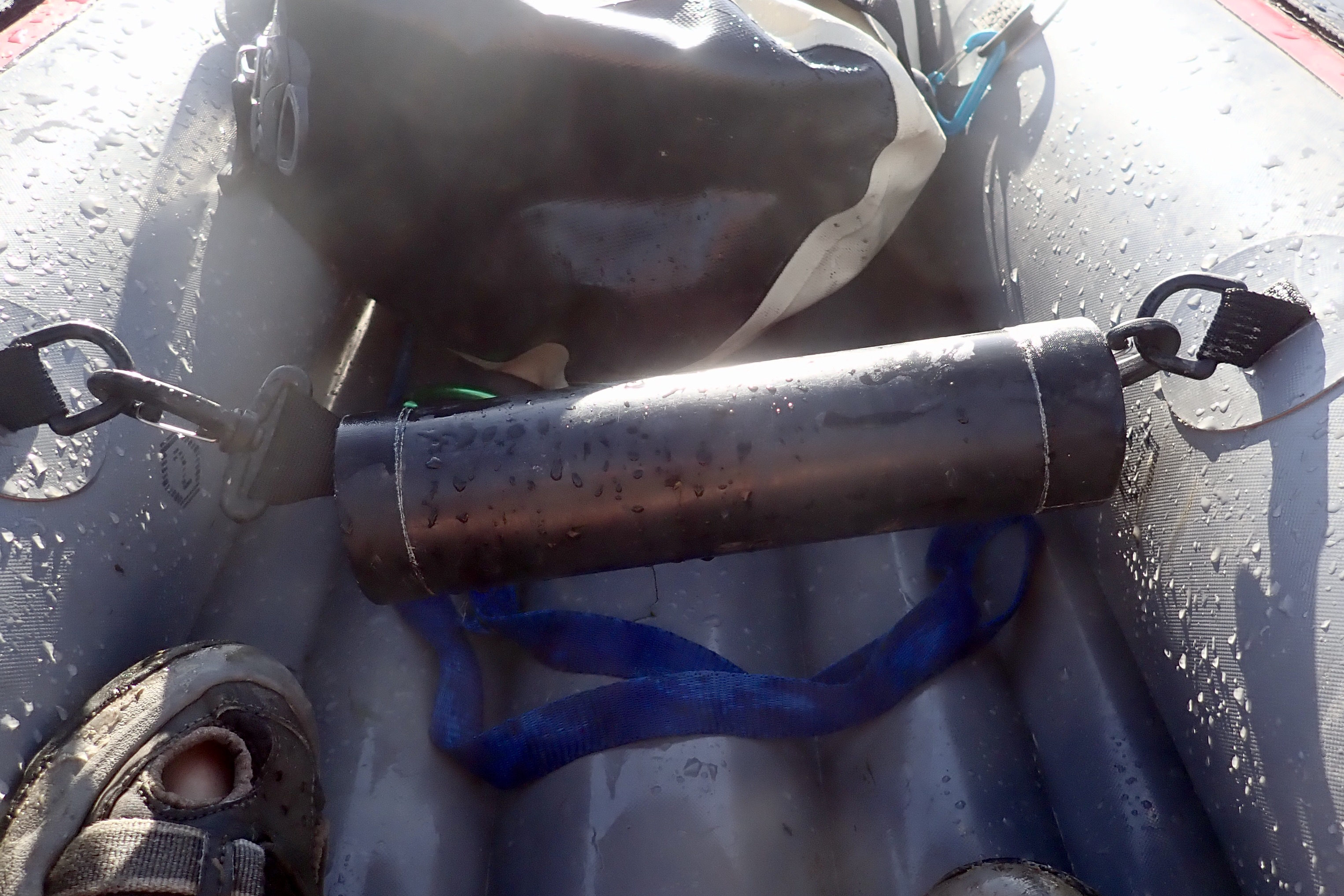
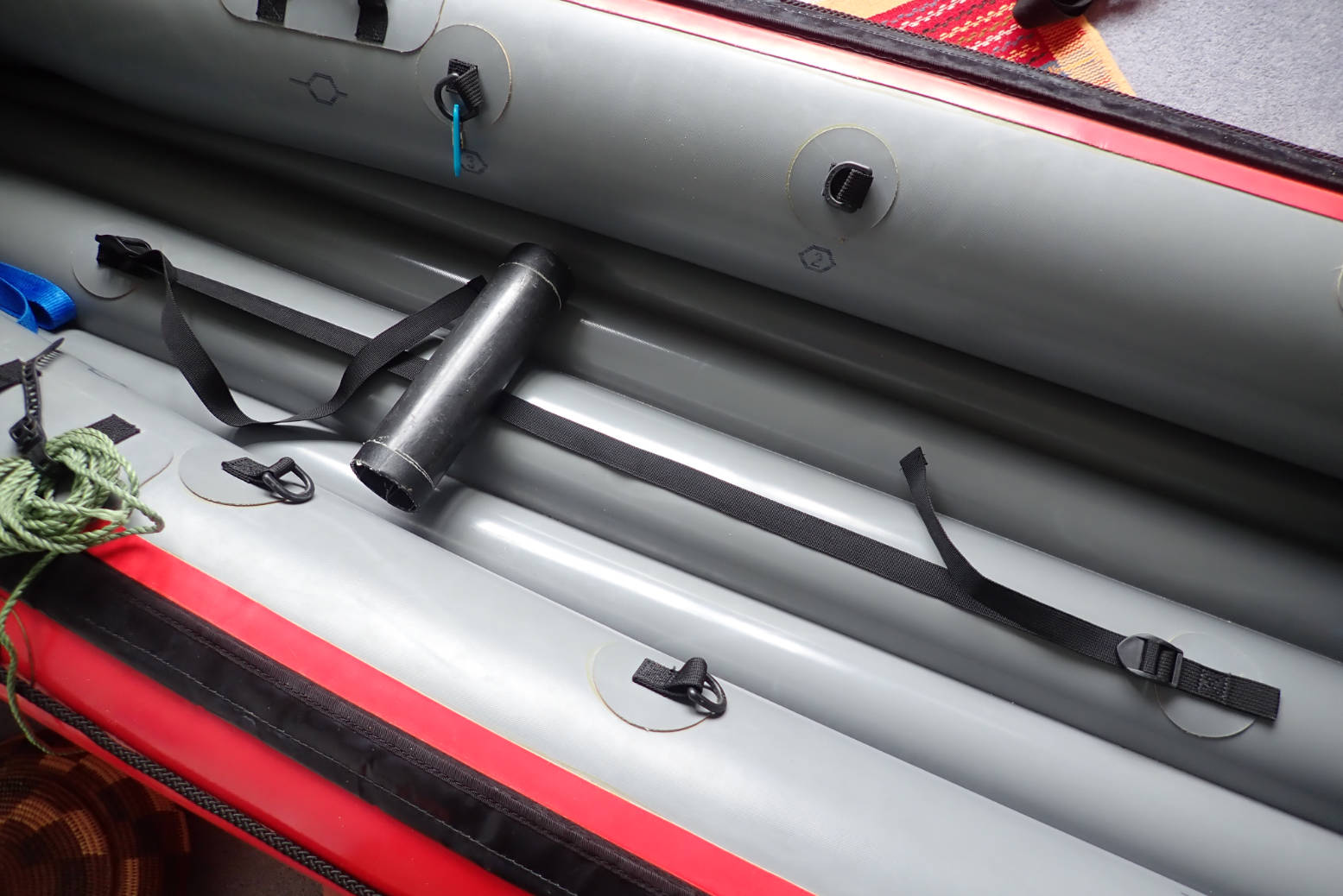
Then I remembered a clever idea someone passed on to me: straps threaded through a small piece of plastic pipe. You can buy them ready-made to jam into car doors to lash stuff down. As was suggested, these anchor straps could also jam into the cavity/channel (left) you find on most tubed and even FD-S IKswith removable floors, where the floor meets the sides to make repositionable/removable lashing points. Also, they are dead easy to make.
As footrest tube strap anchor points they work especially well because the tension on the strap is sideways (towards the bow) for better jamming, and they can be slid forward along the channel when paddling two-up and beyond the adjustability of the strap. And best of all, no tedious 2-part D-ring gluing required.
Or just straight to the sides; even simpler
I got to try out the new system on the Wey and it worked great. The location is solid, so much so that one lazily heat-welded strap broke and I learned fast how essential a footrest is. In bodging something up to get me home, I noticed in fact that the D-rings you can see on the right, below, are more or less in the right position (for me) as long as the footrest tube strap is nearly taught. All the better: it’s one less thing to do on set up.
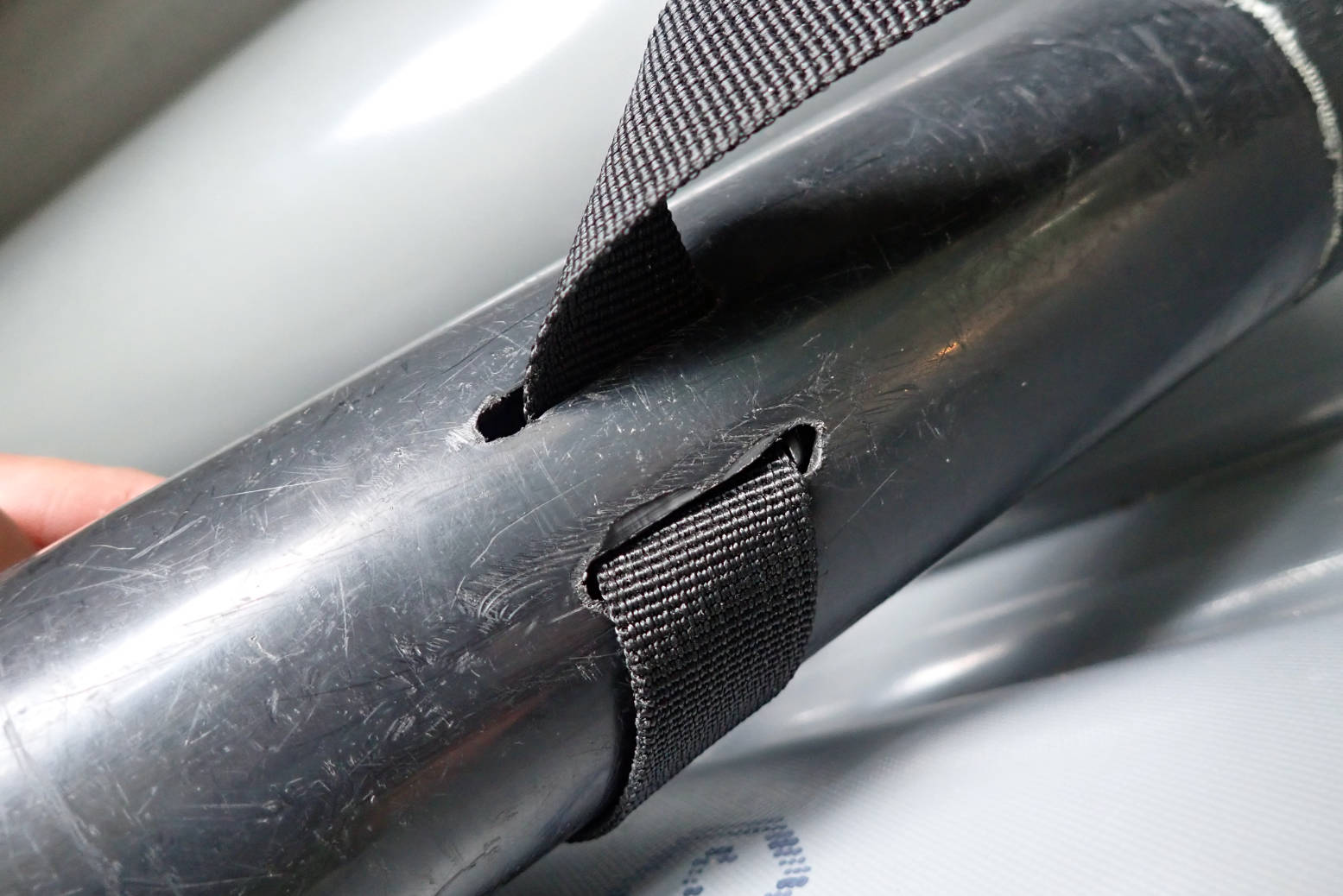
Then, while rigging up a rudder which worked off a pivoting footrest, a bit like bicycle handlebars work for steering, I realised the two existing tensioning or ‘ladder’ buckles fixed on the boat’s floor can be used to thread a strap, with the footrest locked off midway. The footrest needs to be fixed in position along the strap in, most simply by knotting the tape inside the tube, behind the slots. This makes a very quick and neat way to swivel the tube front or back them paddling double or switching paddlers. It’s possible the need to balance the tension on the centrally pivoting foot tube with your feet may not work so well when not steering a rudder.
I actually used two straps joined inside the tube.
Though not totally convinced by the boat just because it was new, I planned to buy a Gumotex Rush 2 in the early summer of 2020. I sold my old Seawave easily, but by the time I dithered over coughing up a grand, UK lockdown discounts had ended. Soon availability of Rushs dried right up, along with so many other IKs in 2020, which also saw prices shoot up.
Eventually it transpired the Rush wouldn’t be back before 2021 (was there some flaw with the new design?). Needing a boat for the book cover, with help from a Czech chum, I bought a second-grade Seawave direct from Gumotex, saving 15% on the CZ price (Gumo won’t sell these specials outside CZ). This was just before the price went up to nearly €1300. As predicted, Gumotex prices have risen across the board; the Rush 2 is now nearly €2000 and demand has not surprisingly collapsed.
It’ll never ever be this flat and compact again…
“Defects … are only of a visual nature (abrasions, patches, larger amounts of glue, stamp imprint, etc.) and do not affect the driving characteristics and life of the boat.“
Rather unnervingly, the exact nature of each boat’s damage is not specified or identified by Gumotex. It’s the luck of the draw. On unpacking the new boat it took me a while to locate a barely visible patch on the side (left). It may not even be a hole (hard to believe how that could happen in the factory), more likely a scratch or a nick down to the scrim.
Anyway, I’m happy with my Seawave, one boat I don’t mind owning again until something better comes along. The only difference I can see between my old one are grommet/ports for the rudder kit on the stern deck. The factory fresh fabric also feels oddly tacky, like TPU, something I’m sure will go away.
The seats and footrests are the same old over-weight rubbish. Gumotex aren’t making any innovations here. Just as with my first Seawave, before the boat got wet the seats went onto eBay for fifty quid, bringing the price down a bit. I refitted my proven packraft seatbase/SoT backrest idea. More on seats here.
One useless footrest cushion got chopped down into spare Nitrilon patches and oral valves. For a non-critical low-psi item, inside it looks amazingly well made. I plan to re-fit my footrest drainpipe system, and have a great new idea about how to fit and adjust it. More about that soon.
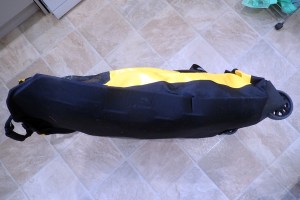
Shrunk down in my Ortlieb RS140
I took the chance to re-measure the Seawave. Yes, it really is just 30” / 76cmwide and yet looks huge in the corridor – the only place in our flat it can be inflated. And it weighs 19kg with everything in the supplied bag, Ditch the seats (965g x 2) and footrests (411g for both), add a single SoT/packraft seat and a mooring line, and the 4.5m Seawave is a genuine 16kg on the water. Pretty darn good for a 4.5-m boat. And it’s compact too. Now I’ve learned how to vacuum-shrink a boat (you need a bayonet nozzle with valve-opening pin) and have added an oral valve to shrink down my Ortleib RS140 roller bag too (above right), the boat takes up less room than ever.
An interesting thing was pointed out to me about the Seawave and other tubed Gumboats: they are effectively made from just two big sheets of Nitrilon (plus deck pieces): the red outer/lower and the grey inner/upper (above). They touch at the edges of the floor and join in a flat seam on top of the sidetubes. Simplicity, I like that.
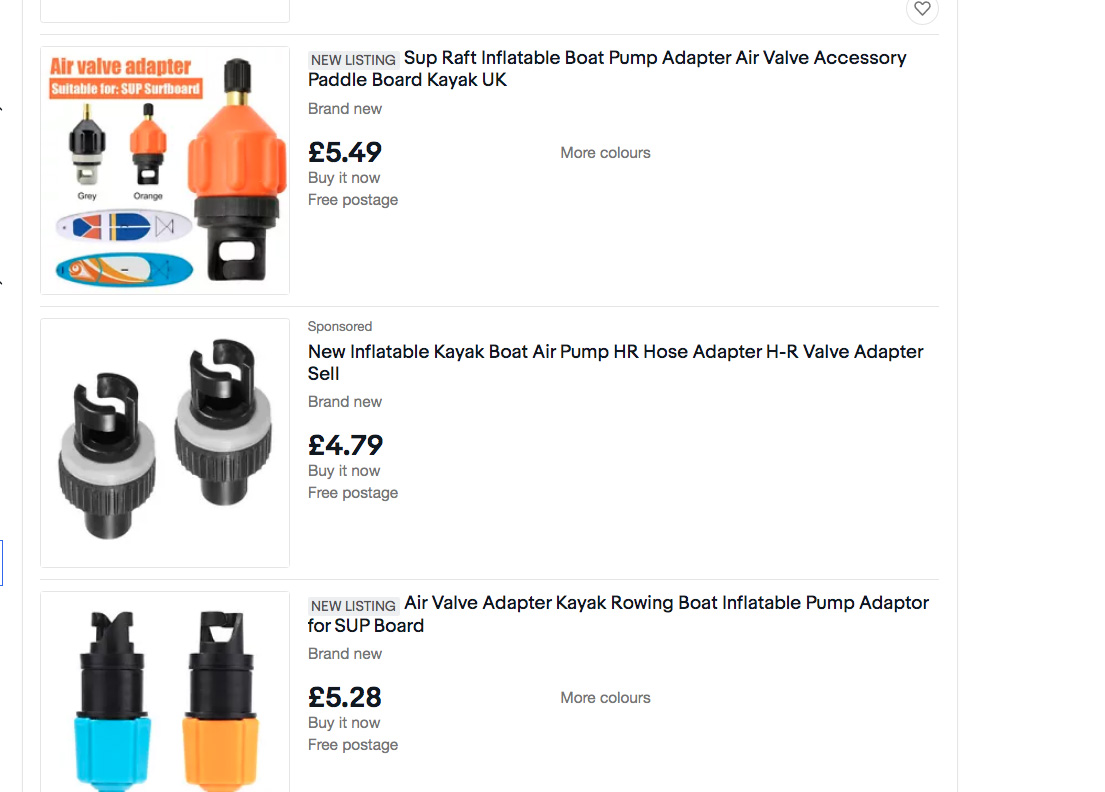
You may have seen these bayonet/car tyre adapters on eBay in recent months (left). The bayonet end clamps into your IK’s raft valve (won’t work on Boston valves). The other end is a regular Schrader valve like on your car/bike wheel. Attach that to your 12-volt Halfords tyre compressor and you can inflate your IK from your car battery. No more of that effortful, back-breaking pumping!
Me, I’ve never seen the value of electric pumps for IKs. (Packrafts are another matter). You can only use them near a power source, or the rechargeable battery will run out. And how hard and slow is inflating an IK with a good barrel pump anyway? As IKs catch on with more mainstream recreational users (whose cheap boats may come with a rubbish pump), some find manual pumping too tiring. What is this world coming too?!
The difference between tyres and IKs: • a car tyre is a low-volume, high-pressure vessel (~30 litres @ ~30psi) • an IK has high volume but runs low pressure (3 chambers of 50–160 litres @ ~3psi). Drop-stitch has less volume but runs much more pressure.
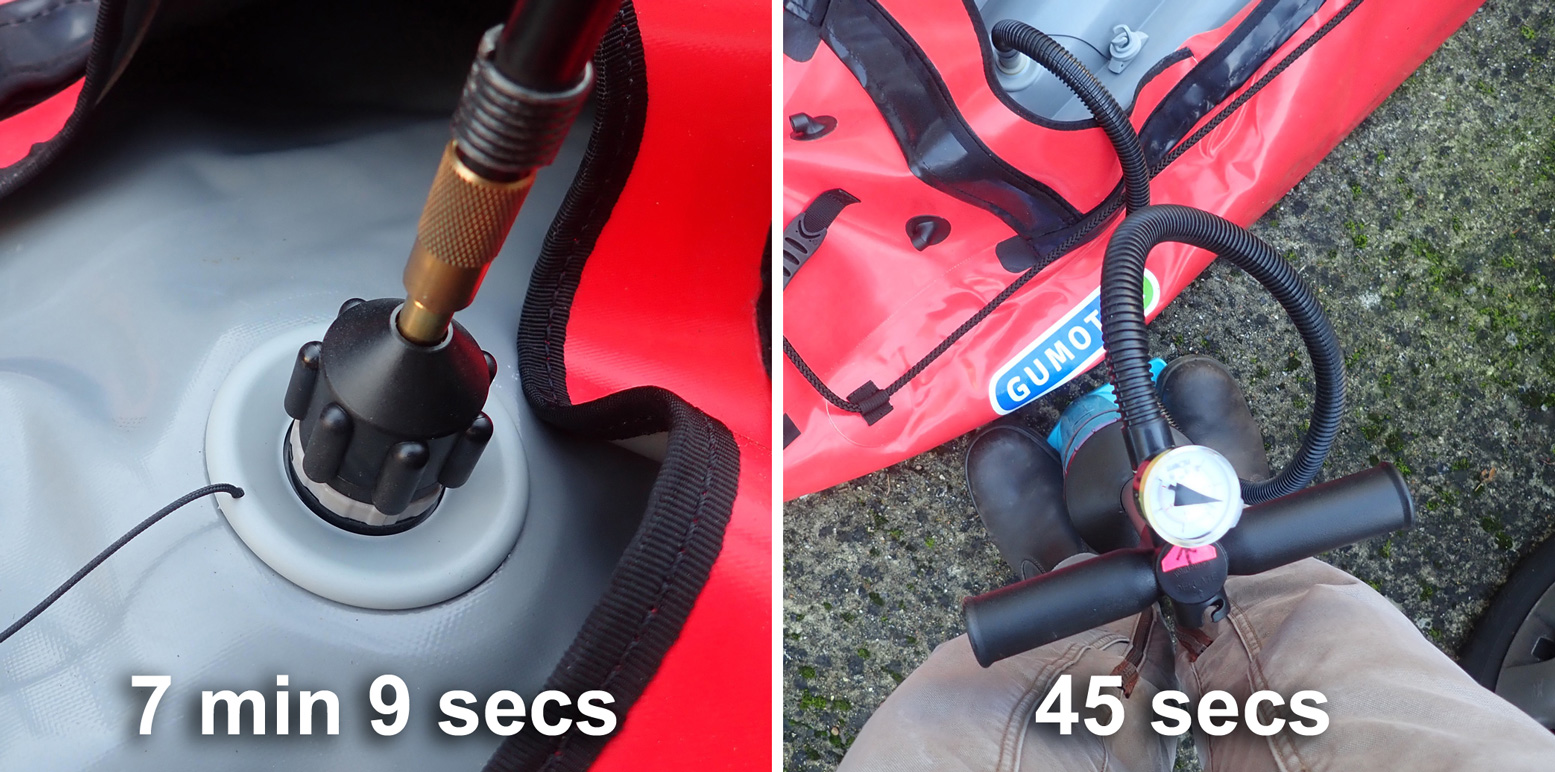
That’s up to five times more volume in an IK, but at a tenth of the pressure. I would guess the swept volume of my better-than-average car pump (left) is 3–5cc. My Bravo RED 4 barrel pump is 2 x 2000cc (it pumps on the up and the down strokes). Even if my 12-volt compressor whizzes along at 1001rpm, it will still take a long, long time to fill a 160-litre IK floor. But for a fiver, I thought I’d prove myself right.
The Test The easiest way was to pump up my Seawave’s floor to the point the PRV purged at about 3psi. The actual psi is immaterial but it’s consistent.
No surprise: it took less than a minute to pump up the 160-litre floor with the barrel. With my car tyre pump it took over 7 minutes. And if you want say 4psi in the sides, or a 10psi drop-stitch boat, the duration of the tyre pump (or effort with the barrel pump) rises exponentially. It will take forever with the car pump adapter and I think the tyre pump would auto shut-off or burn-out before it reached anywhere near 10psi.
Just a tenner on amazon
I looked into rechargable or D-cell battery or mains/car electric pumps like above. They go on amazon from just £9.99, or even less for mains only or 4 x D-cell battery. These may be great for pool toys, air beds and other low-pressure items like slackrafts which just need a shape, not rigidity. The Pumteck (left; £15) claims an obscure pressure rating of 4.5 kPa which sounds impressive but translates to just 0.65 psi or 0.045 bar. That is slackraft pressure; there is no worthwhile IK that runs such a low psi.
All these pumps do is save you the initial pumping which merely takes time (< 5 mins), not effort. The rechargeable ones will be spent in 10 minutes and then need hours of recharging. For a typical 3-psi IK you’ll still need some sort of manual pump to top offto full pressure; even more so a higher pressure DS IK. If your back can’t handle a barrel pump (taller pumps work better for taller folk), consider a Bravo foot pump, but with any dropstitch IK there is no getting round the need for a high-pressure barrel pump or a very expensive SUP electric pump.
Darn. I put my Seawave on eBay to ‘test the water’ and it went within hours.
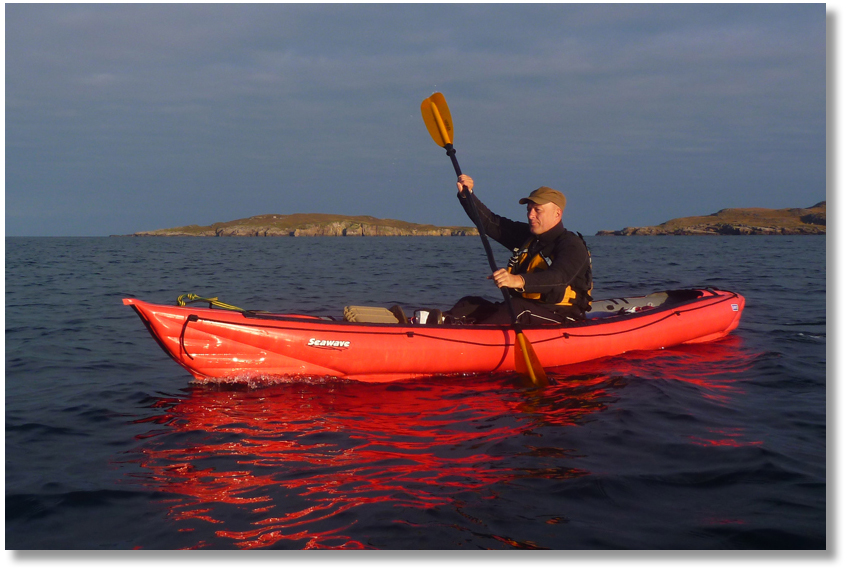
Still, it’s an excuse to show some of my favourite Seawave shots in five seasons of fantastic paddling. What a great boat that was. So great that, with nothing better available at the time, in October 2020 I bought another Seawave (left).
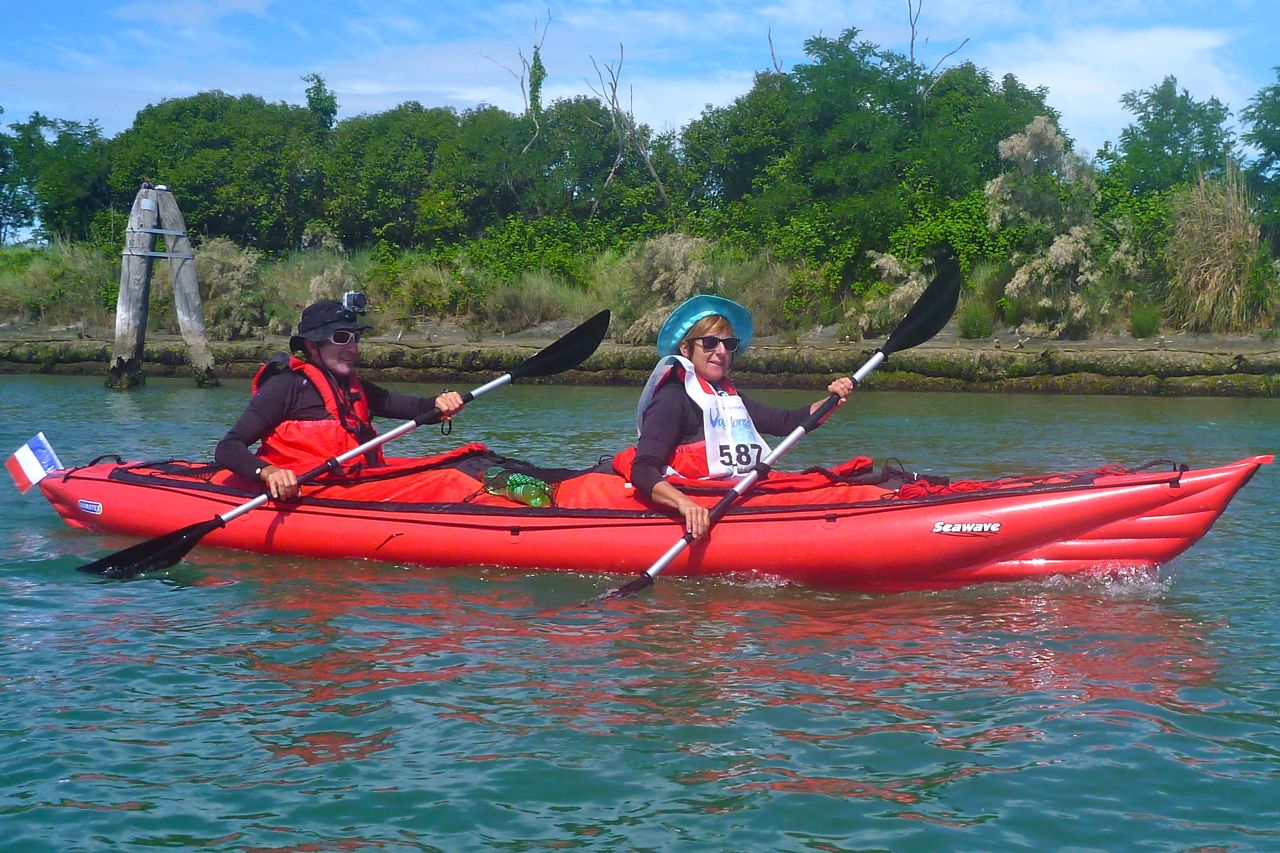
Venice lagoon; the only other Seawave I’ve ever seen. [Story]Early morning Swanage stacks. [Story]Lap of Hayling Island. Not as interesting as it looks. [Story]The far-flung wedge-skerry of Angus, outer Summer Isles. [Story]Tanera Beg, Summer Isles. [Story]Autumn sunrise on the way to Priest island. [Story]Limehouse Cut, London’s oldest canal (1769). [Story]Overgrown track to a lake in Sardinia.Grotto at Cala Luna, Sardinia. Our only wind-free day in a fortnight.WindPaddling around Coigach Peninsula [Story]Spring on the Medway, Kent. [Story]Short-lived MYO rudder experiment. [Story]
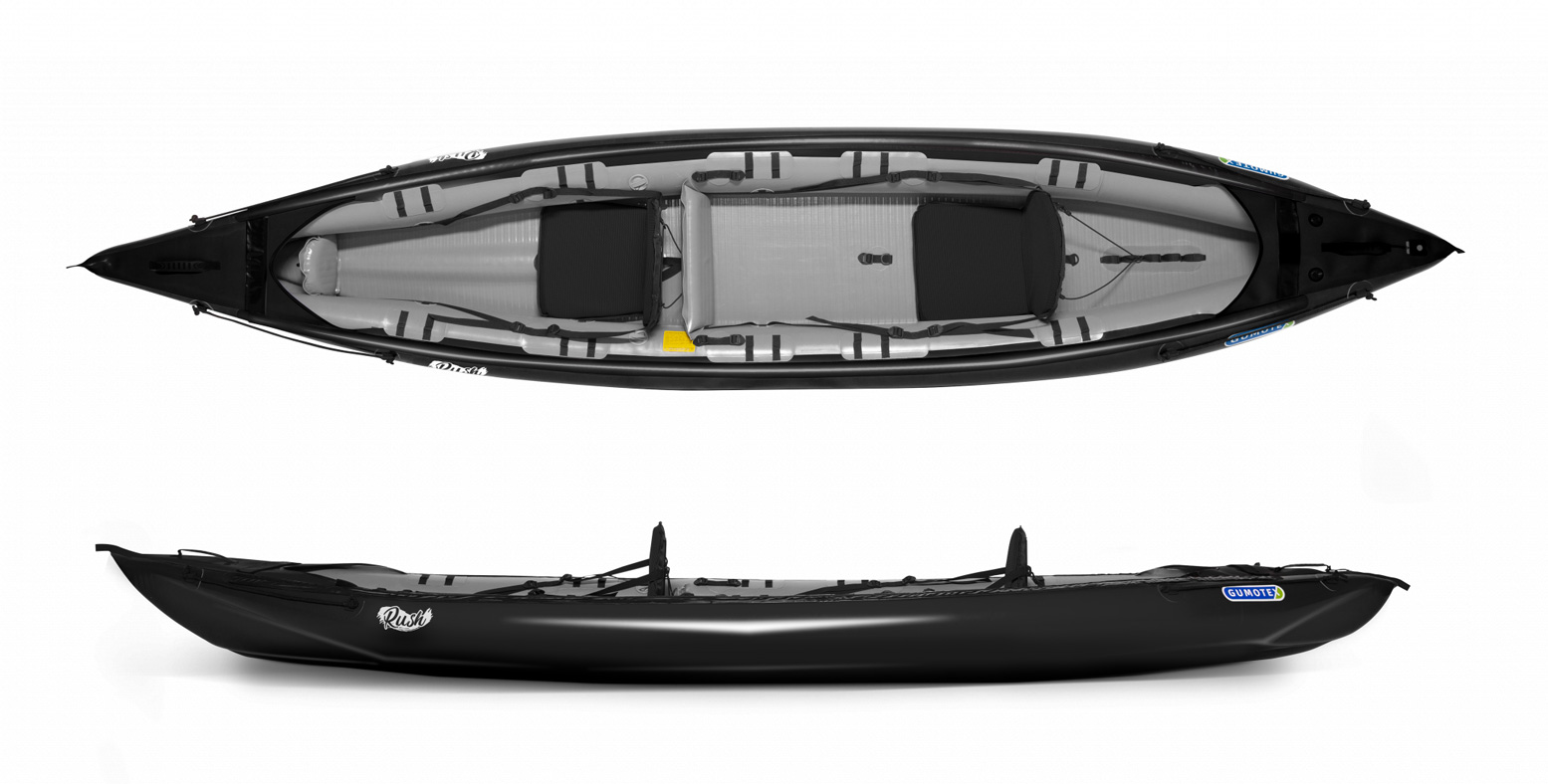
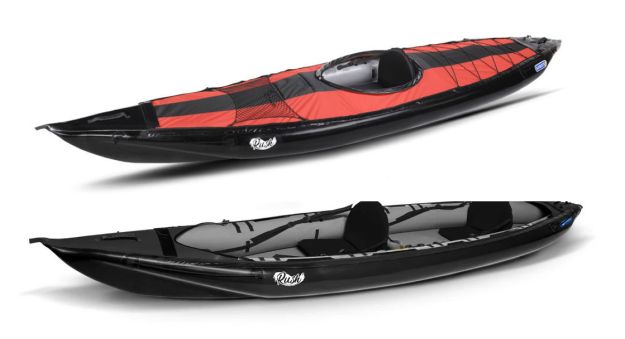
Gumotex are moving on up with hybrid dropstitch technology, originally showcased in 2019’s Thaya which is basically an old Solar 3 with a DS floor to make it more stiff. The new-for-2020 Rush 1 and 2 (above) is quite a sophisticated advance on a DSF or hybrid IK. A couple of years later the Seawave got the DSF treatment and became the Seashine at not less than £2500.
The Rush models came out in April 2020, just as the pandemic hit and lockdowns, shutdowns and slowdowns spread across the world. It’s also said there was some kind of quality control calamity at the Gumotex factory which led to many completed boats getting shredded. As a result, stock of Gumotex IKs dried up at a time when post-first-lockdown IK demand went ballistic RTW. Other IKs gradually came back online, including other Gumotex models, but oddly, the all-new flagship Rush was put right to the back of the queue until 2023. I speculated this may have been a production issue and it seems I was right: I read in the PaddleVenture review comments: “There is actually a modification to the Gumotex Rush [for 2021]. The drop stitch area on the bow and stern elements is said to have been improved. Apparently there were more complaints here than usual, so that at the end of last summer no more Rush models were produced and this part of the boat was revised”. It’s not clear what the problems were, but it proves that making anything other than a flat, DS plank is tricky, but also that any boat which can get round this (like the Itiwit X500) will be superior. The Rushs were briefly back in stock in2021 by which time all Gumotex IKs received a massive price hike which killed demand. By 2025 the R2 was listed in the UK at £2250but easily found for £1999.
‘Hybrid’ is a cool word for a kayak which isn’t a Full DS like a Sea Eagle Razorlite and many others. These IKs are assembled from three flat dropstitch panels making boxy hulls which, according to the graphics on this page of the French Gumotex importer, can be sub-optimal in choppy waters. Me, I also think a totally flat, barge-like floor doesn’t help, but the Rushs get round this with raised side tubes which act more like stability pontoons, a bit like the Tributary Sawtooth. In addition you’ll see on the left the suggestion that tall, flat sides are more affected by waves and wind, which does seem plausible. Of course, if you only every intend to paddle flatwater on calm days, this doesn’t really matter.
Derived from iSuP boards, DS has become a blessing to IK floor design which hitherto had to use I-beams of parallel tubes (above) which complicates assembly and is prone to ruinous rupture if over-pressured, unless fitted with a PRV or the IK is exceptionally well made.
A Gumotex hybrid IK (below) retains the regular round side tubes of a classic IK for better secondary stability (afaiu) but features a DS floor for much-needed rigidity as boats get longer. However, unique to Gumo, DS end-panels are also used on the bow as well as shorter and less obvious panels at the stern.
A word about this fabric paraphrased from here: “Nitrilon-Dropstich is composed of a core of 1100 dtx polyester fabric made up of two sheets joined by a mass of threads exactly 10 cm long. Unlike regular PVC-based iSuPs and DS kayaks, the durable elastomer plastic coating is not glued to the fabric, but ‘pressure-impregnated’ which eliminates delamination risks more common with bonded PVC coatings. An additional layer of polyester-reinforced Nitrilon is vulcanised to the floor bottoms making them double thickness.”
The Rushs differ from the Thaya (1st gen Gumo DSF) with the panels forming a more ‘hydroformed’ bow, another weak point with regular blunt-nosed tubed IKs. The Rush’s bow makes a water-slicing wedge sharp enough to cut ripe avocados.
The vital stats on the tandem Rush 2 are said to be 4.2m long x 82cm wide. Compare that to my Seawave at 4.5 x 78cm; the Seawave has an 11% better length/width factor (LWF) of 5.77 vs 5.12 over the Rush 2, but those are my Seawave measurements. The side tubes are said to be 19/20cm on the Rush compared to 22 on my Seawave. This and the length may contribute to the load rating dropping to 195kg vs 250 on the longer Seawave. That’s still plenty, unless you’re hauling a moose carcass out of the Yukon. The Rush 2 official weight varies between 15.5 or 17kg, depending on where you look online. The higher figure is the same as my modified Seawave with a packraft seat mod.
Pressures are another obvious difference with the Seawave. The 6cm DS floor runs at 0.5bar(7.2psi), actually a modest level for DS, but an IK doesn’t need to be as stiff as a iSuP board. The slimmer side tubes run 0.25 bar or 3.75psi (same as the Seawave). Well, that’s according to the table from the online manual shown below. Many outlets still list 0.2 sides and so did the Gumotex website until I pointed it out.
0.25 is a bit higher than normal IK pressure, but not quite as high as 0.3 in a Grabner, a Zelgear Spark or the 0.33 bar on my modified Seawave. When you combine that with the stiff DS floor, the 0.25 sides must make the Rush IKs Gumo’s stiffest IKs by far. The difference is, I added PRVs to my Seawave sides before running them at 50% higher pressure to automatically protect them. The Rushs don’t have any PRVs which explains the warning in the manual, above right. It’s odd but worth remembering that my super-stiff Grabner Amigo didn’t feature any PRVs either, not even in the floor. Quality of construction (gluing assembly) must have a lot to do with it.
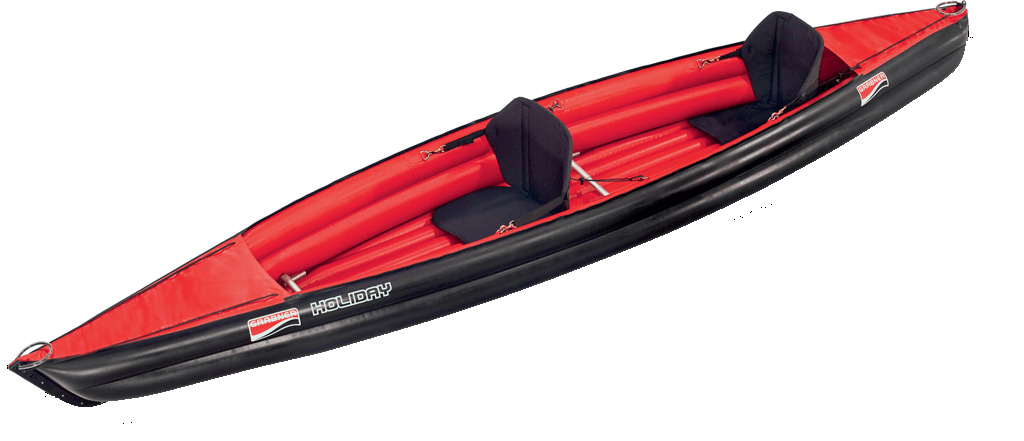
When you add any colour you want as long as it’s black, you do wonder if no PRVs is a good idea, because in the sun black things get hotter, faster. Black may be great for Cockleshell saboteurs, not so good for visibility at sea and it kills photos stone dead. It’s true the Innova-branded Swings in North America have long had black hulls and no one complained. But they only run 0.2 bar so need help in stiffening up in the hot sun. They also have fixed decks in red. Many Grabner IKs are now made with black exteriors too (below).
One assumes the Rush’s grey, lowish-psi floor will handle increased pressures from passive solar heating, especially as it’s in the water most of the time. But the black side tubes will get taught which becomes a nuisance to manage (or worry about), even if tubes/cylinders handle high pressures better than flat slabs. In fact, as you’ll see from the comments below and elsewhere, Gumotex have found black is not notably worse than red or green in absorbing solar heating and dangerously over-pressurising. And if you’re that worried it would be just as easy to install PRVs in the Rush side tubes, as it was on my Seawave.
Because a DS floor is flat, one imagines it will hinder effective tracking, despite having a skeg at the back. The flat hull will plane over the water and wander off to the sides like a packraft – the so-called ‘[windscreen] wiper-effect’.
So, similar to Sea Eagle‘s patented NeedleKnife Keel™ (left), Gumo added a more discrete ‘keel hump‘ under the bow (above) to compensate for the lack of old-style parallel I-beam floor tubes which added a directional element. You can see from the overhead image above that this keel hump is mirrored on the floor inside the boat, either by design or need. This protuberance makes a high-wear point on the IK in the shallows so it’s just as well the floor is double thickness Nitrilon, as mentioned above. It’s the same on any boat. On my Seawave I pre-emptively added a protective strake – a strip of hypalon – to the central tubed rib, though to be honest it never got much wear as I try and be careful. Mine was hardly worn in five years of mostly sea paddling.
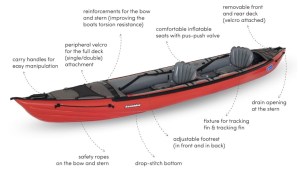
Rushs can be fitted with optional decks (green on the R1, above, red on the R2, below), using the same velcro system as the Seawave, with those horribly bulky alloy spars (right) supporting the decking (surely a flexible rod like tentpole material wouldn’t be hard to make). I read on other reviews that they’ve greatly improved the coaming (hatch rim) so that spray skirts attach more securely.
Optional removable solo deck on the Rush 2 – about £2500 all up, solo or double
In the still on the right the footrest appears to be the usual rubbish black cushion adjusted by strap and seats can be moved to a variety of positions, too, but the other images show grey footrest tubes which are supposedly dropstitch – much better. Seats are now solid foam, but the base looks too thin and low to me. A stiff foam backrest (with side bracing straps) is good, but an inflatable seat base is much more comfortable to sit on because you can vary the pressure and so the height. Foam eventually loses its cushioning but an inflatable seat doesn’t need to be made of hefty hull-grade hypalon, as on other Gumo IKs (more in the vid below). But anyway, a seat is easily changed to suit your prefs. More on IK seats here.
Below, a review of a Rush 1 by Austrian Steve. Can’t understand a word but some observations: I like his convertible Eckla Rolly trolley/cart/camp chair; also love the lovely long canoe chute at 20:40. Have to say though, I winced a bit at some boat dragging here and there. Do the right thing, Steve; it only weighs 12kg! Note also this shortish boat seemed to track pretty well without a skeg – the frontal keel-hump may be effective in leading it by the nose, after all. But in the comments Steve admits the stiff, flat floor slaps down hard on wave trains coming out of rapids and I suppose would be the same at sea. It’s a drawback of flat, raft-like DS floors. See this for an easily translatable written review also in German.
The rrp of a 2025 Rush1/Rush2 is now a £1599/2250 (with 10% discounts), plus decks going from £47v5 (solo; R2) and a rudder kit for £329, same as the Seawave unit.
As you can see, I have been comparing the Rush 2 with my Seawave and wondered if it might be time (or an excuse) to change. An unprecedented five years of ownership proves there’s nothing wrong with my Seawave [I sold my Seawave in May 2020 but bought another in October].
What are the benefits of a Rush 2? Black is not such an attractive or useful colour for a boat at sea. Neither is losing a foot in length or 50kg in payload over the Seawave. But possibly less bulk and 2-3 fewer kilos is appealing. On a river the greater nippiness from less length will have benefits, but for that I have a packraft. As for greater rigidity, it looks pretty good in this clip but my adapted HP Seawave was very good compared to the lower-pressure Gumboats, and it seems the speed (see below) is no greater, although the gliding effort is reduced. A Seawave with a DS floor – the Seashine (left) – appeared in 2023, now costing about 50% more than a regular Seawave.
















































 Inflatable Kayaks & Packrafts