Gael’s H2 review here, Compared with other kayaks here Solo paddle up the Scottish Sea Kayak Trail: Part 1 – Part 2
After more than 12 years my tandem Grabner H2 IK was showing signs of wear all over. The most visible appeared behind the fore half deck where two grommets fed the grab lines (below left). Around those grommets the rubber coating had worn off, showing the bare woven core material of the Hypalon fabric.
I knew Grabner could provide an MRO service as stated on their web site and the French Grabner reseller confirmed he could send my boat to the factory in Austria for a quotation. That came the week later in German, but what didn’t need translating was the substantial figure at the bottom which added up to something like “you’re better off buying a new boat”. Another major concern was a crack that developed under the aft backrest bracket (middle). This ill-designed bracket has a sharp edge that gets pushed into the skin under the weight of the paddler. After some years of chafing it had worn a small hole that proved difficult to patch reliably.
I must to admit the H2 is not as perfect and tough as I’d claimed so loudly. Encounters with various submerged obstacles and a number of uncontrolled landings had resulted in many scars and scratches all over the hull. I now also own a similar Incept K40 for solo paddles, but as I intended to keep the H2 as a tandem boat, I thought it was time to give it a serious makeover.
Grabner’s attitude to those requiring a more seaworthy kayak than an H2 was get an Explorer or the framed but now discontinued Discovery, but those IKs are way too bulky and heavy (26kg and 29kg respectively) for transportation when shuttling about.
My H2 weighs just 16kg. Plus they are just about the most expensive IKs in the inflatable world (left). I discussed the money issue with the other half of the H2’s crew who happens to also be the purser. She too wanted to keep the H2 and was not as appalled by the cost as I was, so after a short deliberation we decided to proceed. Three weeks later my local reseller informed me enthusiastically that my H2 was here and beautifully refurbished. Save for the numerous patches it looked like new.
The Grabner folks had done a great job; even the foredeck grommets had been neatly repaired.
All backrest brackets had been replaced with new parts of a much better design. A new pair had been added at my request to enable solo paddling from a central position. Up till then I’d sat in the back of my H2 when solo.
Most cockpit fittings like footrest and D-ring brackets which had started coming loose had been reglued.
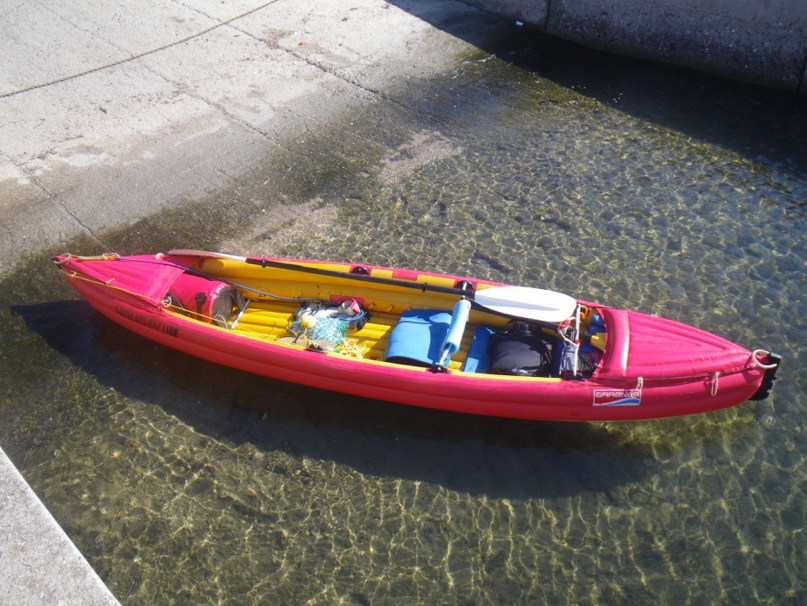
There was a keel strip on the bottom as well. Surprisingly the Austrian guys hadn’t paid attention to the colour of the patches (left). While the inside the H2 is yellow, they applied patches in external red. I should have supplied them the yellow patches I’ve got in my repair kit. Anyway, I’m happy the boat is in such great shape again, if not better than before. I can’t claim it’s worth as much money as I’ve spent on it, but I’m sure my H2 will go for another 12 years.
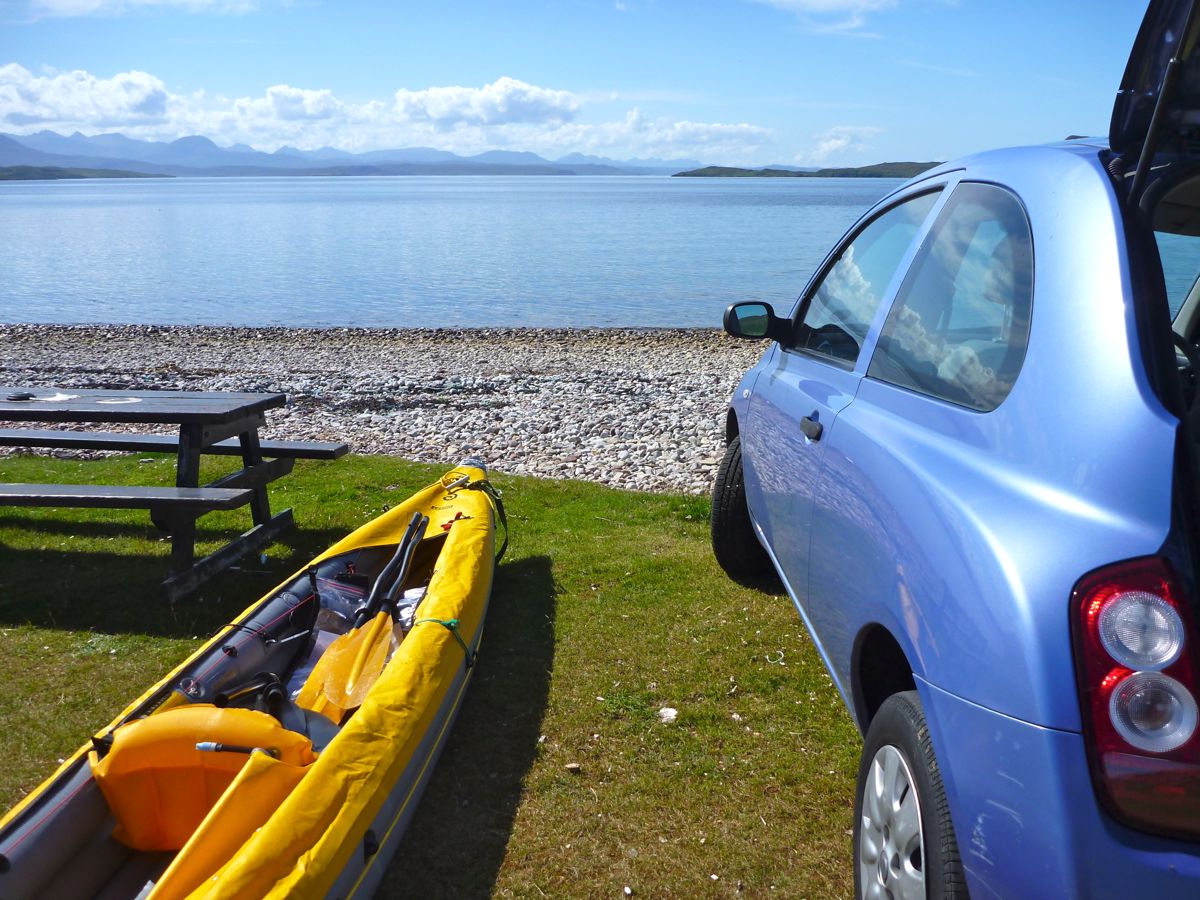
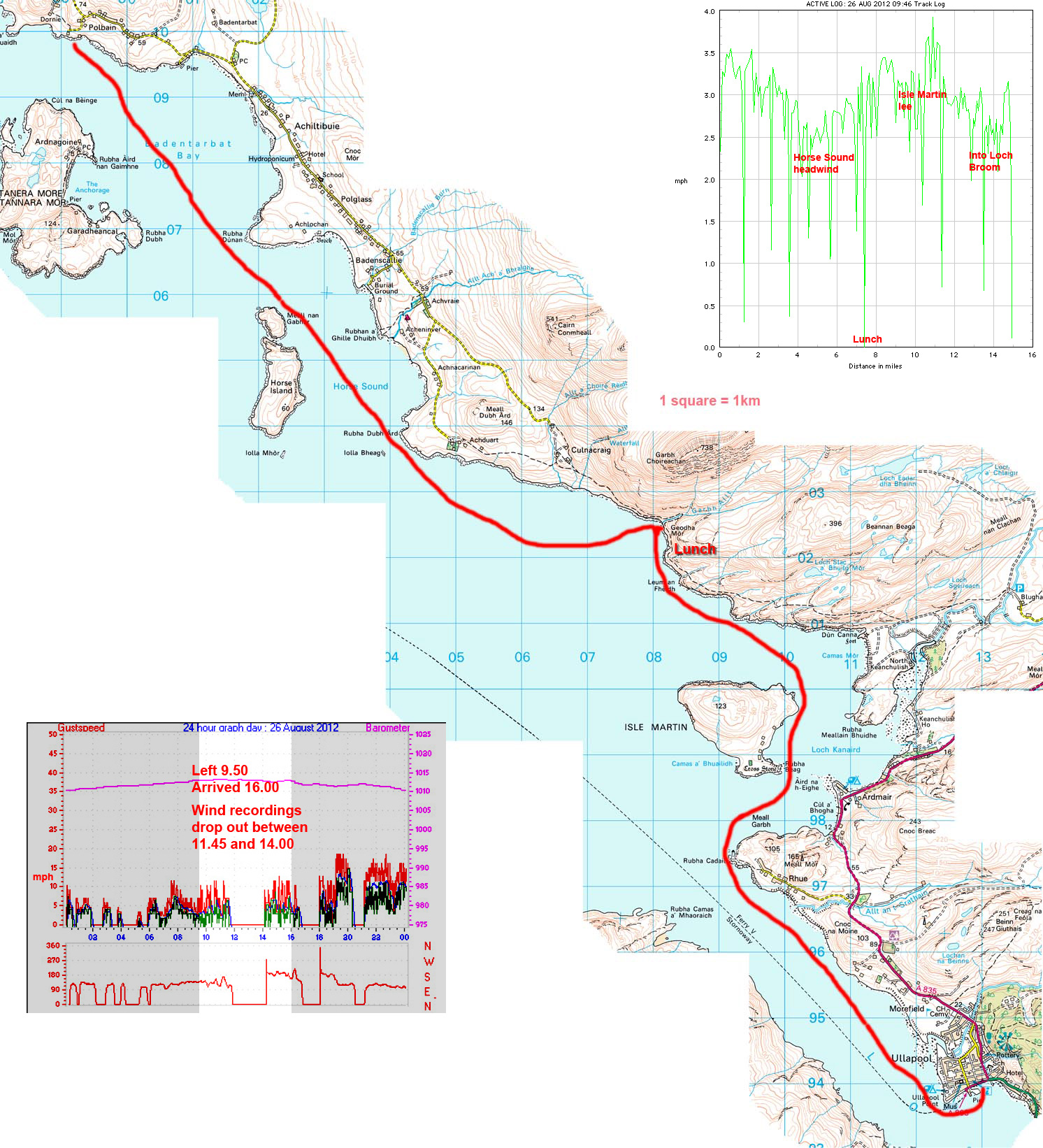
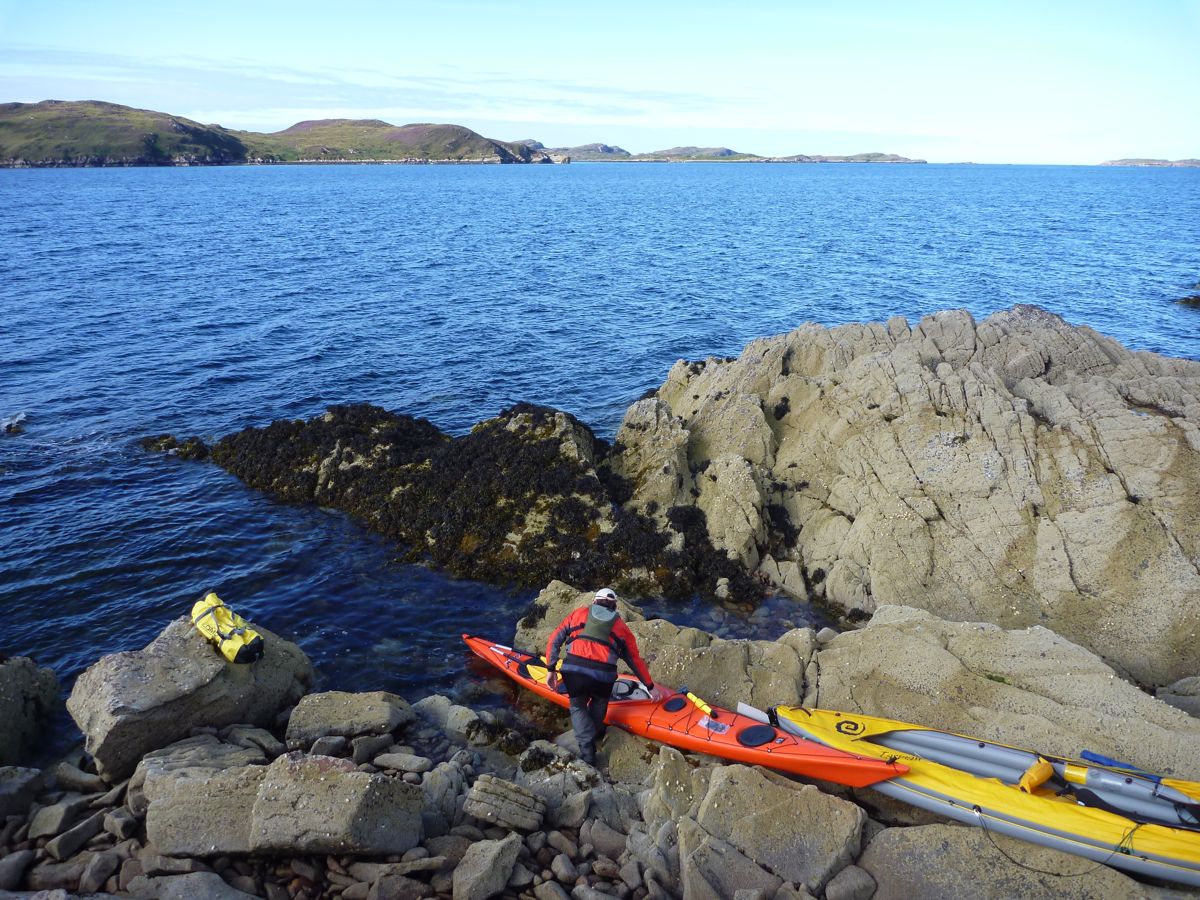
Right now the skies are slate grey while white horses gallop across the sound and the washing hangs horizontally. Ardmair just recorded 49mph. But as often happens up here, Sunday was forecasted as sunny with winds of just 4-5mph; a perfect day to paddle the 15-odd miles to Ullapool. Come the morning the predictions had inched up to 6-7mph, still manageable. Even the three-metre tide was with us, turning as we set off from the awkwardly rocky shore below my place (below left) for a run that we figured would span the six hours until high water at Ullapool.
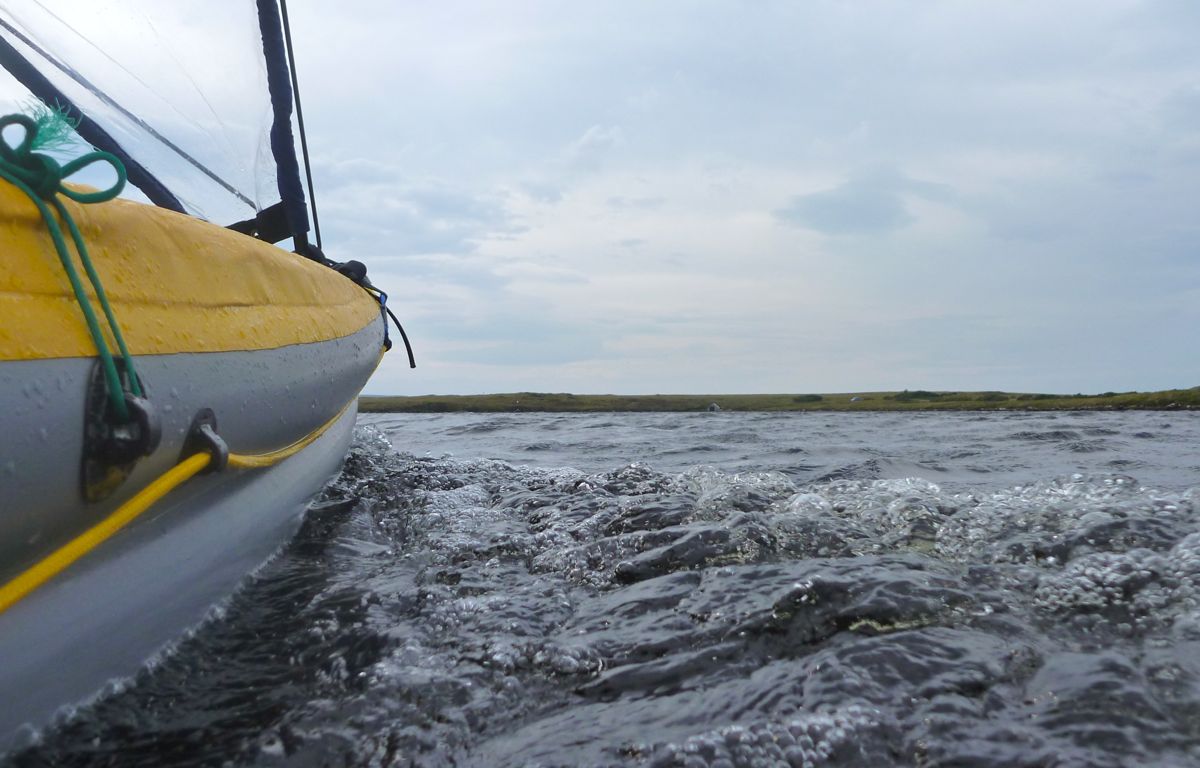
Six of seven mph winds don’t sound much, but coming right at us from the SSE it was enough to raise a chop of up to a foot over which my K40 slapped like a RIB. Jon’s Scorchio LV cut stealthily through the wavelets like a blacked-out commando with a knife in his teeth. You got to hand it to these proper sea kayaks, they look as good as they go, until you need to hop in or out of one, or carry it on your head. As it was, in the conditions we had we were pretty evenly matched.
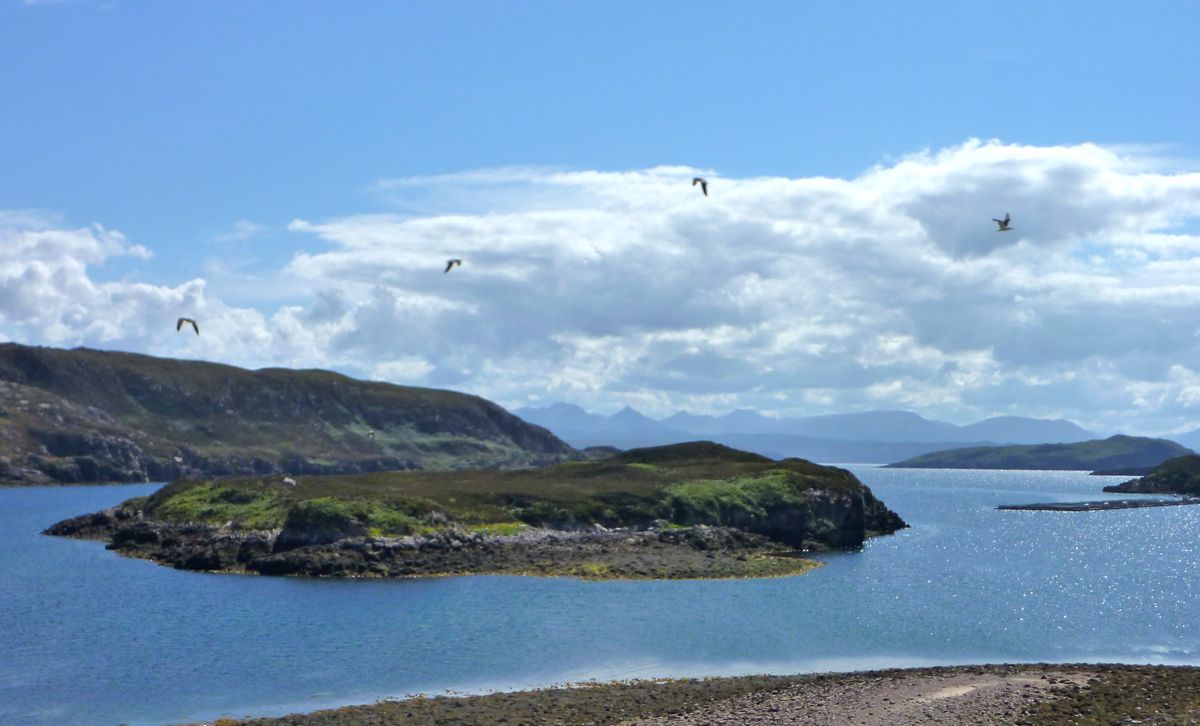
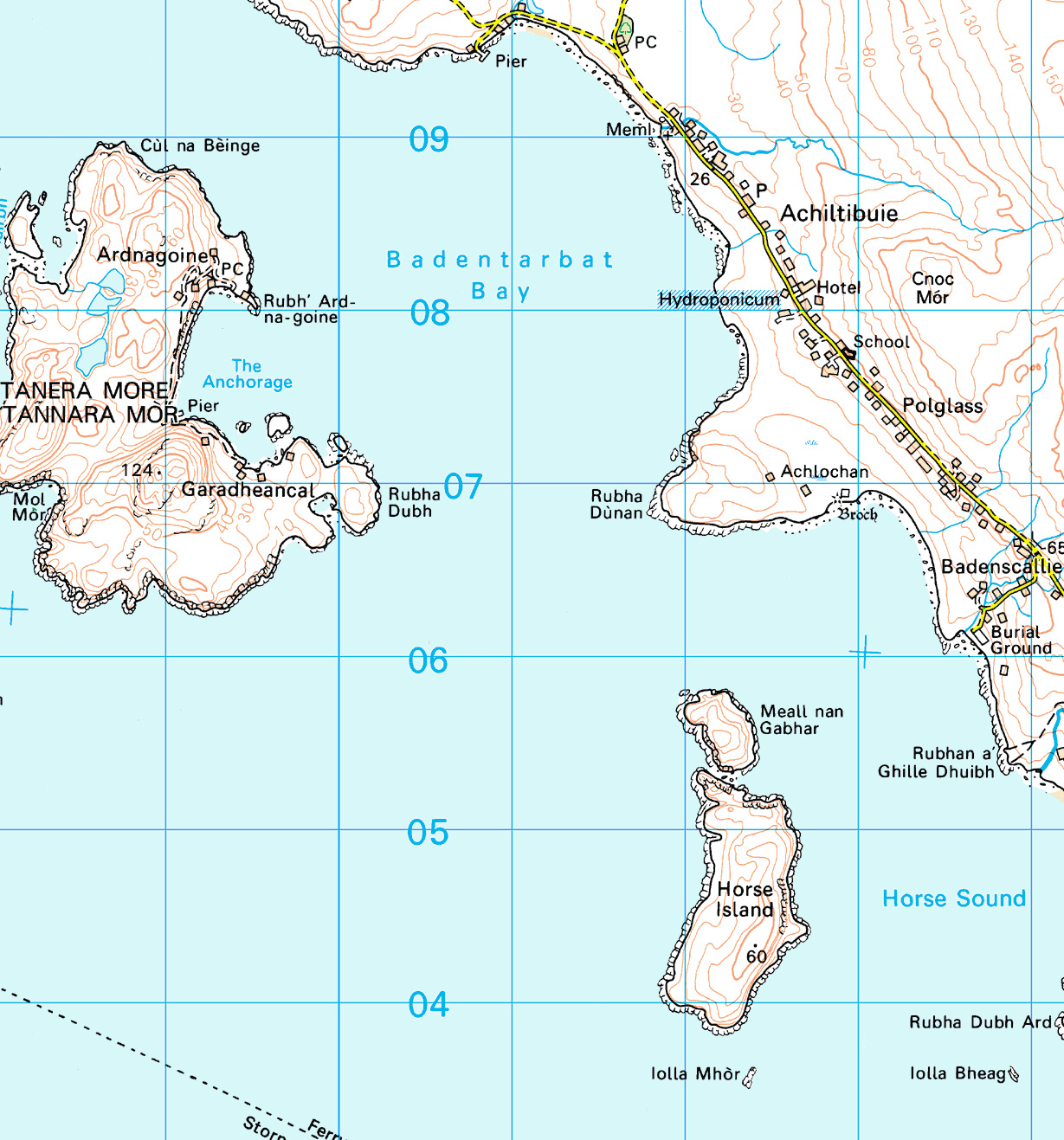
An hour in we were abreast of Horse Island and heading out into mare incognita. But not before I’d lost half my paddle. I was just thinking I really must get a leash for this thing for windier days, even if it means yet more tangleable cordage lying across the cockpit. As I made this vow I decided to wipe the sweaty right grip in the crook of my elbow, and in doing do, popped the button and flung half the paddle over the side. Mayday-mayday! Jon took a while to manoeuvre his 17-foot cheese-cutter into position, although I probably could have retrieved it using the single paddle. Must remember not to do that again. As we entered Horse Sound the wind rose into double figures and white caps formed so we bowed our heads towards the point at Rubha Dubh Ard opposite the guillemot-clad skerry of Iolla Beag (see map). We then passed the last of the dwellings around Culnacraig and edged towards the 2400-foot mass of Ben Mor Coigach which tops out just a mile from the shore. I wouldn’t be surprised if that is the steepest summit-to-sea gradient in the UK. Slip up there and you’d roll uninterrupted straight down into the sea with a huge splash.
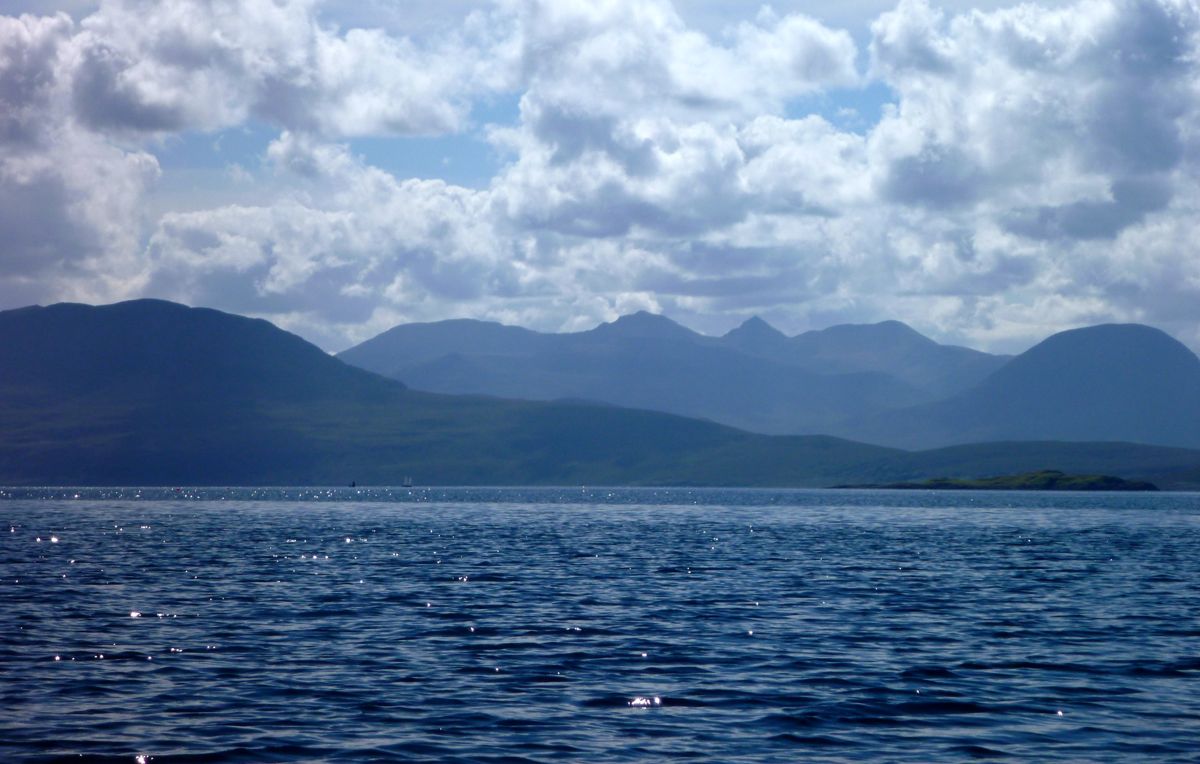
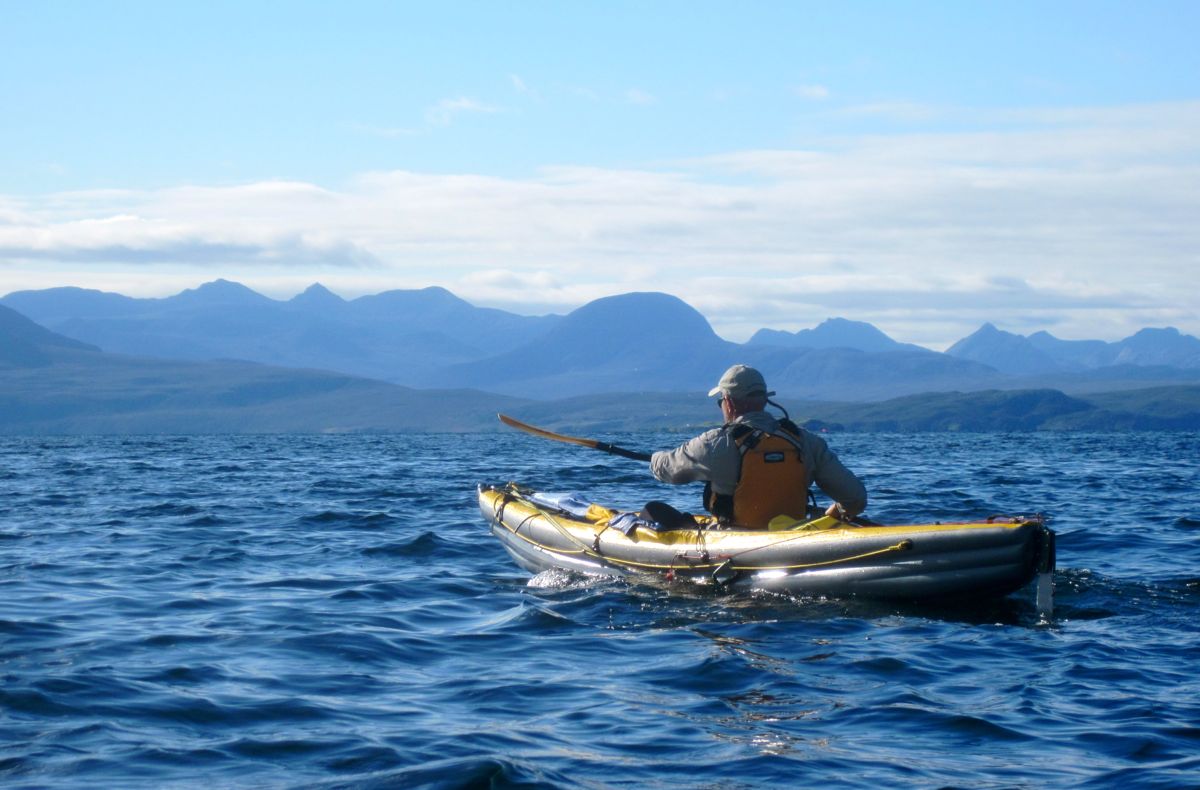
Two hours hard work on deck and it was high time for a refuel, so we set our sights on a beach formed by the creek which runs off the back of Ben Mor. But with more slip, slap and slop over the waves, it took twice as long as it looked to get actually there (left). It’s since occurred to me why. In this pic the ordinary-looking mountain seems quite near, but its actually an unusually big 2400-foot (730m) mountain far away. Or we were just slow.
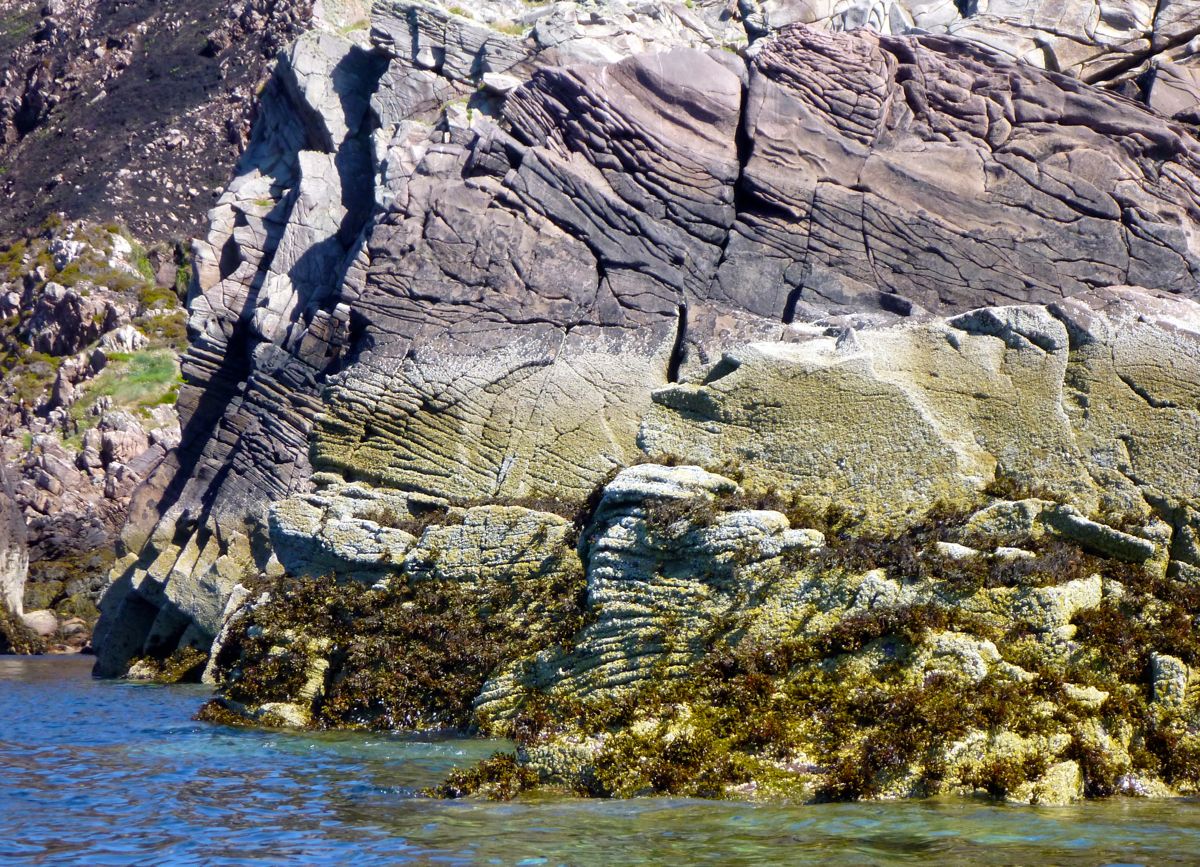
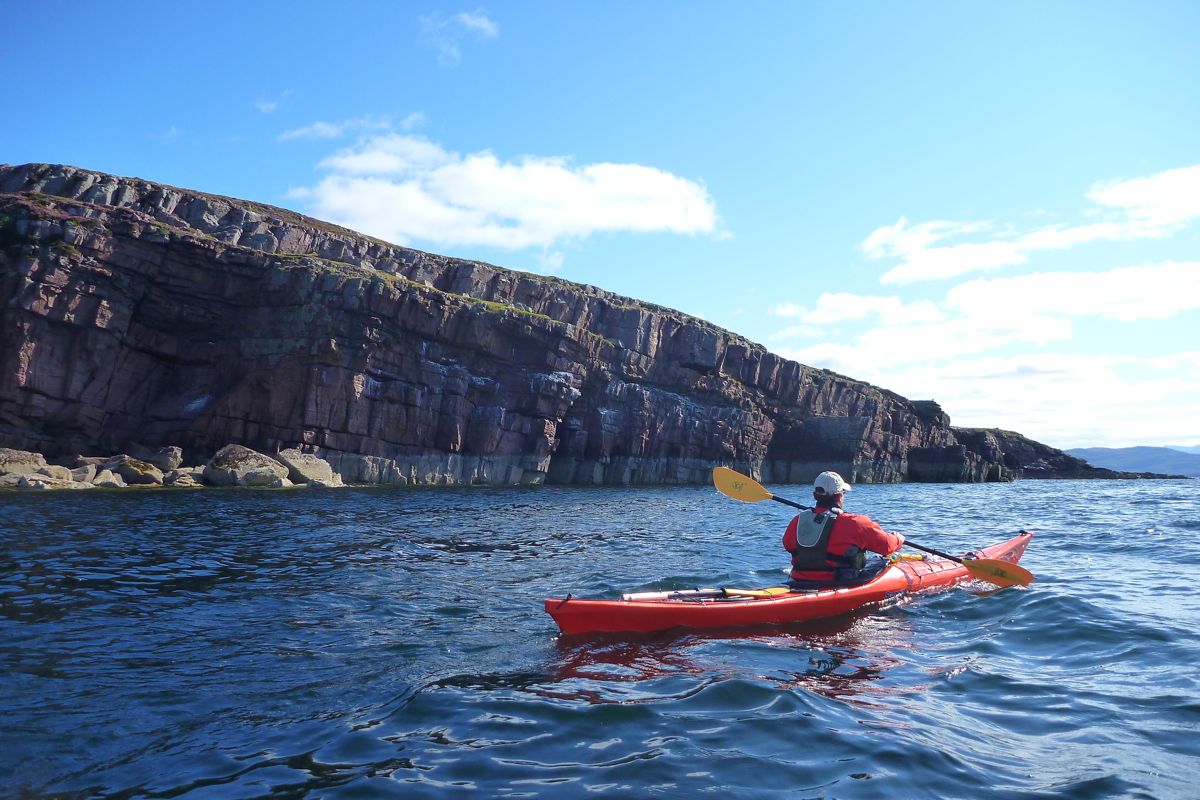
After the spell of fairly intense paddling, walking on the stony shore took some adjustment, but it sure was good to unbend. Up above a lone walker was pacing the thin Postman’s Path which runs along this steep, exposed coast east towards Ardmair. We did that one bleak December with packrafts. Duringa snack I kicked about among the usual enigmatic flotsam: a giant tennis ball, a baby elephant’s welly and a Filipino flip flop. I also picked up a bit of old rope to sell on ebay later while Jon pinched some nice stones for his giant aquarium back home. During our break the wind abated a little and as we set off again through a seal patrol, Isle Martin helpfully blocked the wind-borne fetch from the southeast. The creased, folded and weathered sandstone of guano-covered red cliffs drifted by, suggesting a second visit on a calmer day, but it was after 2 o’clock so we decided to save our energy and clipped the edge of the Isle. We didn’t want to leave it too late and end up paddling tired up the narrow part of Loch Broom on a turning tide and a headwind.
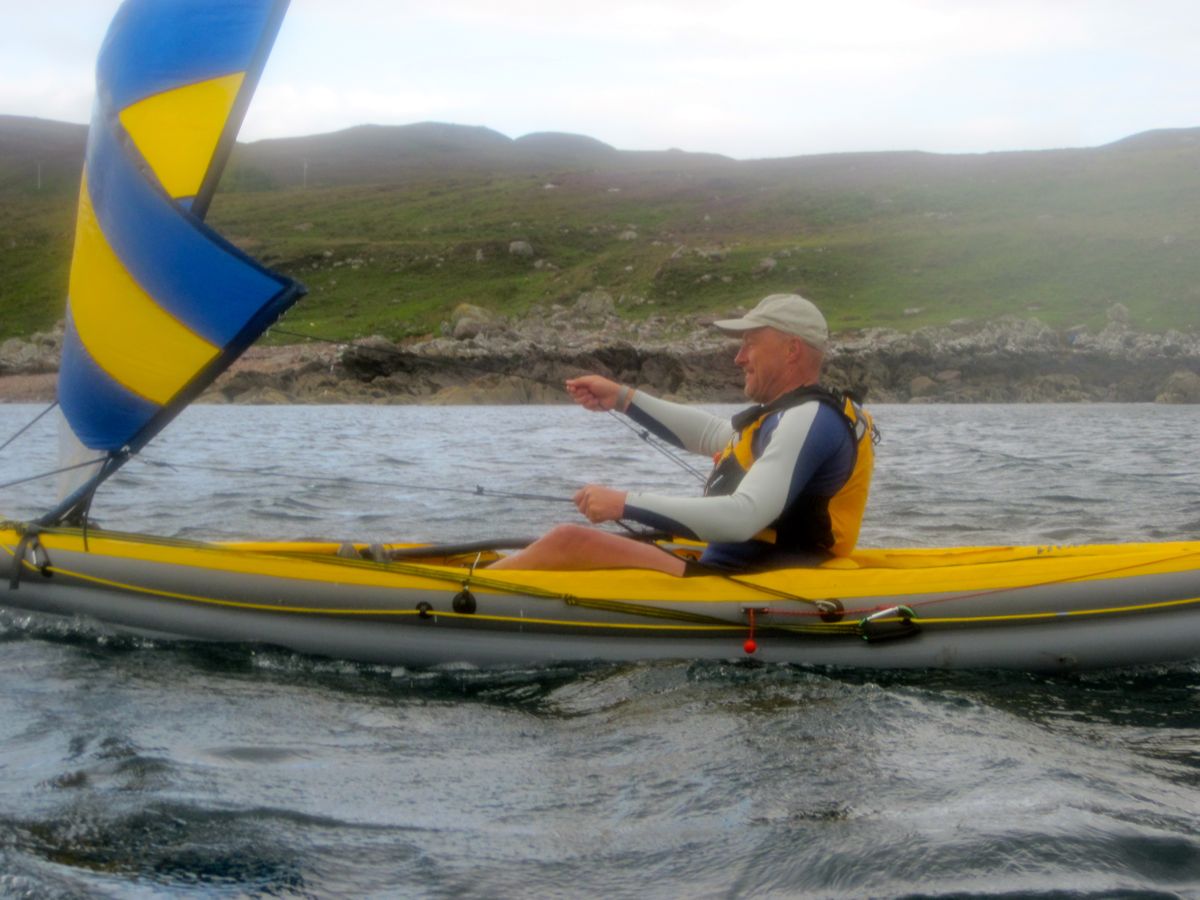
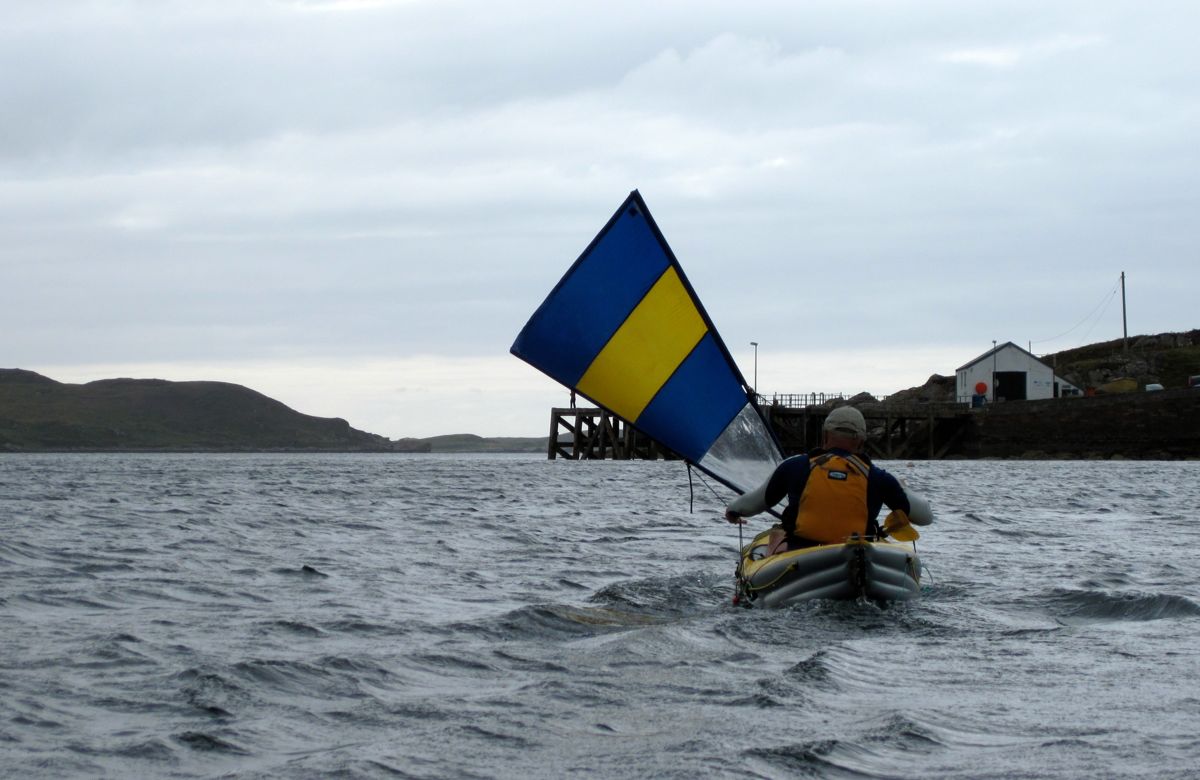
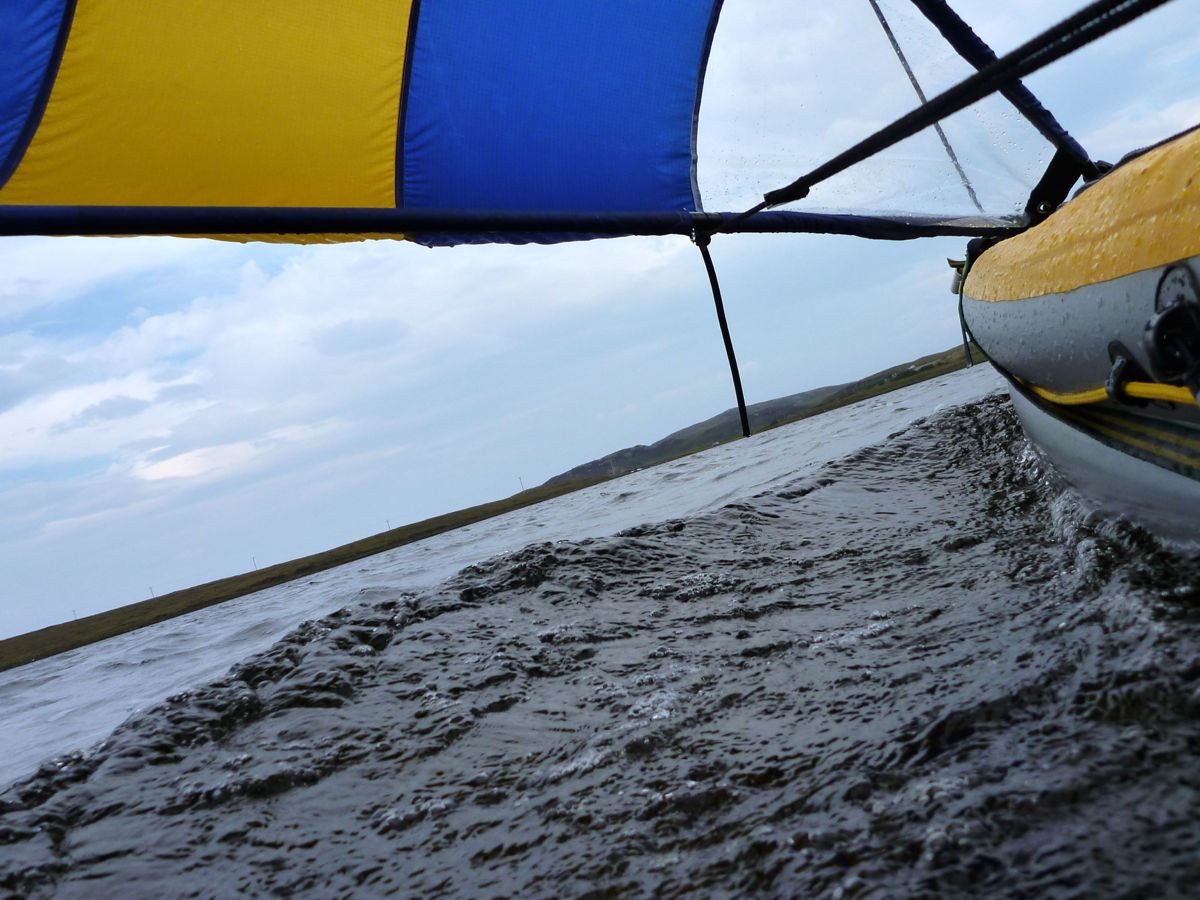
As it was I was hoping to snatch a quick sail (above) as we turned briefly southwest towards Rubha Cadail lighthouse, but while I did creep forward perceptibly, it was hardly worth it; bad angle and too much lee off the point. Still, the good thing with the Pacific Action sail is that it’s light, lies out of the way and is no effort to flick up on the off chance of a breeze. Rounding the stumpy lighthouse near Rhue, (below), we could look back across outer Loch Broom to Polbain and the Summer Isles – maybe we should have planned the day in the opposite direction. Whatever, now it was time for the final 3.5-mile stomp into the wind to Ullapool jetty, hoping that the afternoon ferry from Stornoway wouldn’t sneak up from behind and wash us into the middle of next week.
I observed that Jon typically cruised at four strokes for my five and put it down to the superior glide of his hip-wide LV. In fact he was deploying a textbook exemplification of PPT or ‘proper paddling technique’, instilled by his personal paddling trainer (also PPT). I’d read about this technique in books: put blade in by your feet while turning torso and pull back by re-pivoting the torso, not just pulling on the arms like an ape climbing a vine. I tried doing this and was a bit faster but it all felt a bit stilted and robotic, not the way I naturally paddle, for better or for worse.
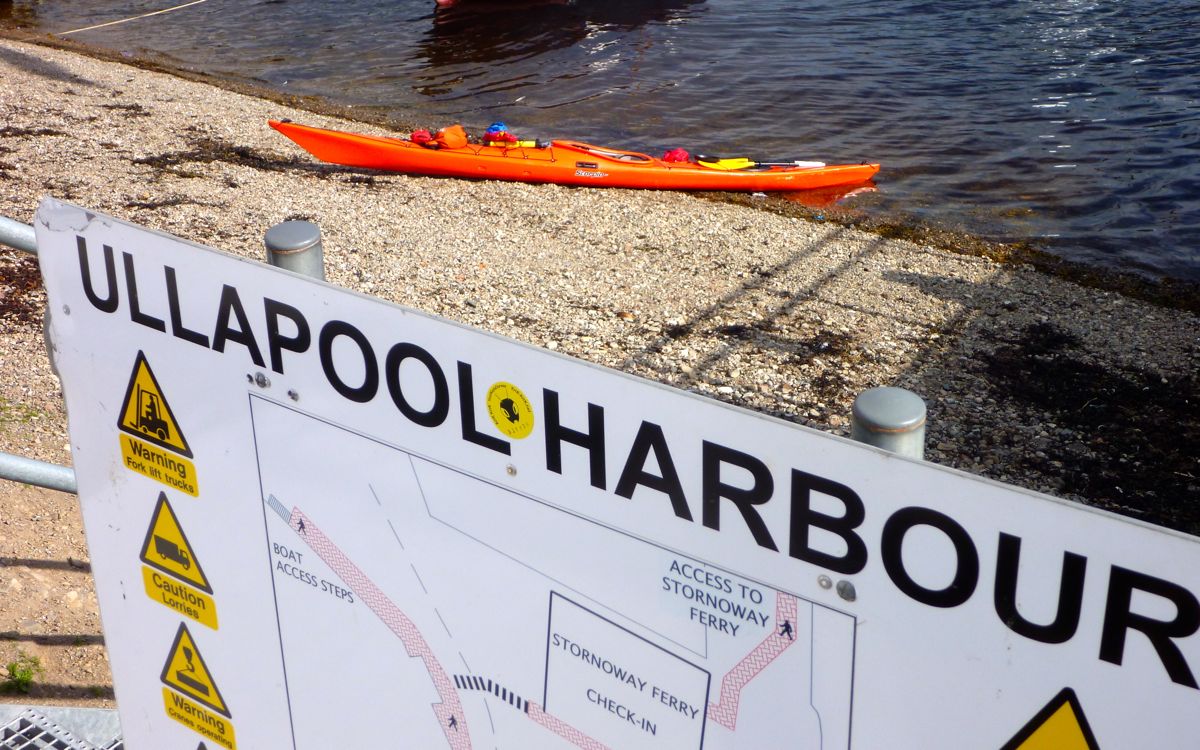
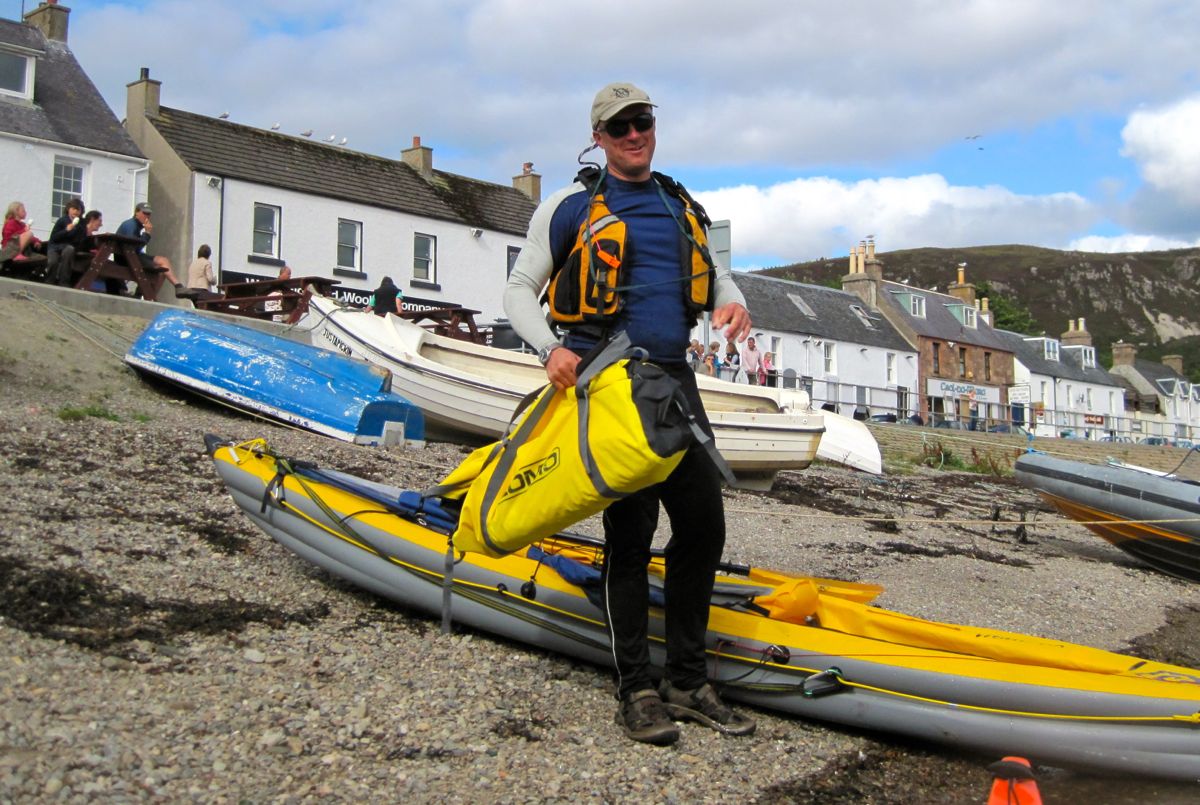
However you do it – ape-vine or PPT – it’s fun to paddle a little kayak into a port used to big boats coming and going from who knows where. Ullapool seafront milled with late-summer tourists and it’s possible to interpret one’s arrival as faintly heroic in their eyes, at least compared to a gannet floating beak-down in an oil slick. Sunburned, crusted with wind-dried salt and not a little stiff, we pulled our boats ashore just over six hours after leaving Polbain. With probably five hours of actual paddling to cover what was indeed only 15 miles but felt more, that’s a fairly ordinary 3mph moving average. Not something to get Ullapool’s summertime bunting in a flutter. Had the headwind been stronger it would have turned into a right old slog, but always with the option of a take-out and an ice cream at Ardmair then an a hour’s walk to the car.
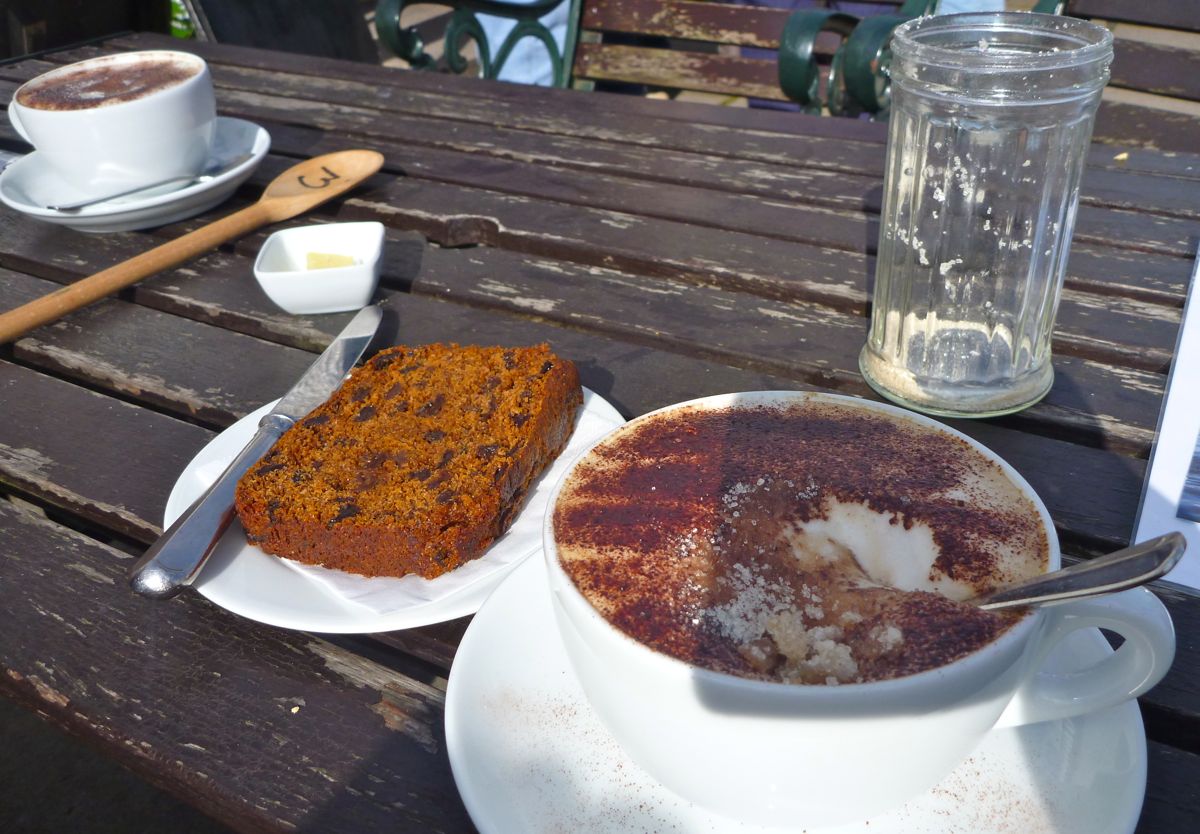
We did wonder what it must be like doing this day after day out here as say, Gael has done lately. We celebrated with a creamy cappuch’o and a slab of buttered fruitcake at the Ceilidh Place (as good as it gets in Ullapool). Recharged and with the anatomical creaks re-oiled, we reckoned we could have pushed on for another three hours if we really had to. But we didn’t so we popped into Tescos for more saccharine tucker and drove home.
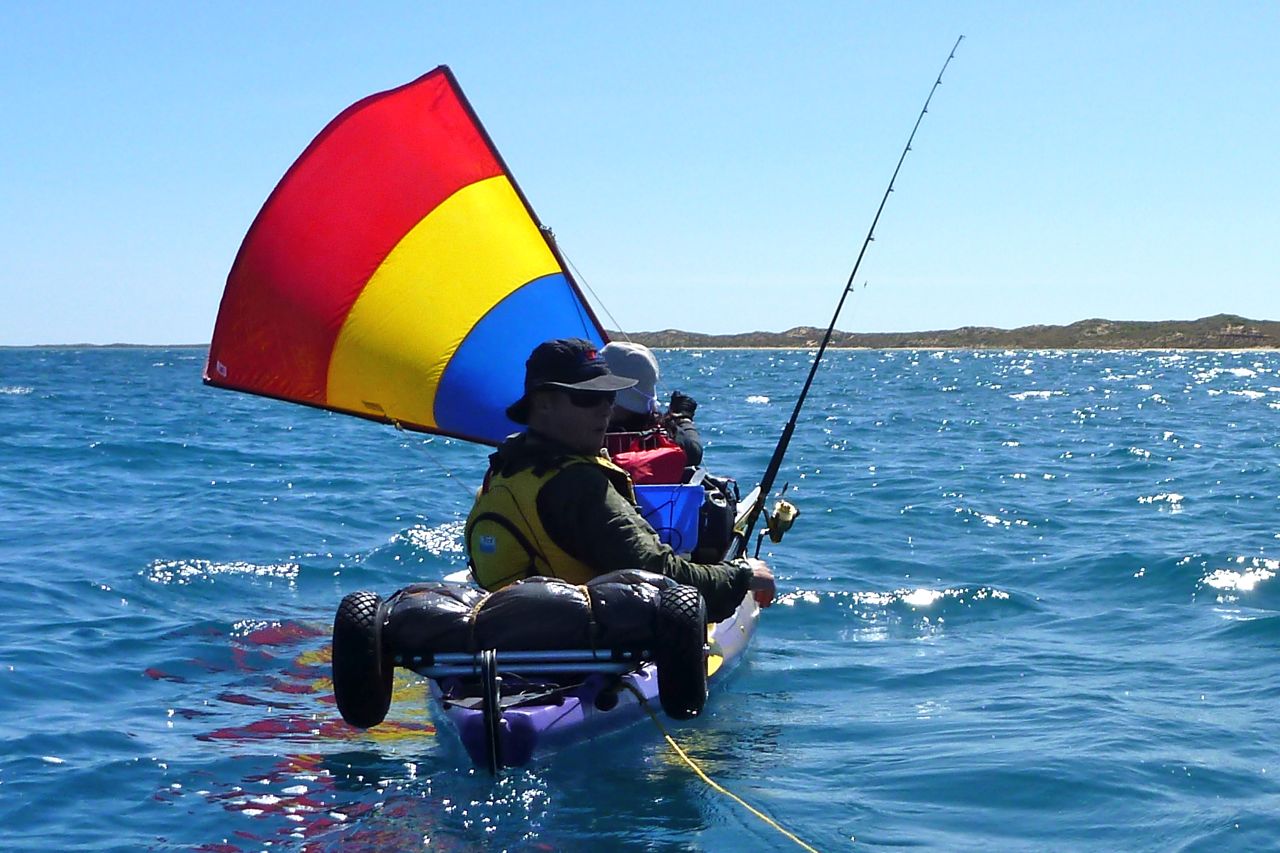
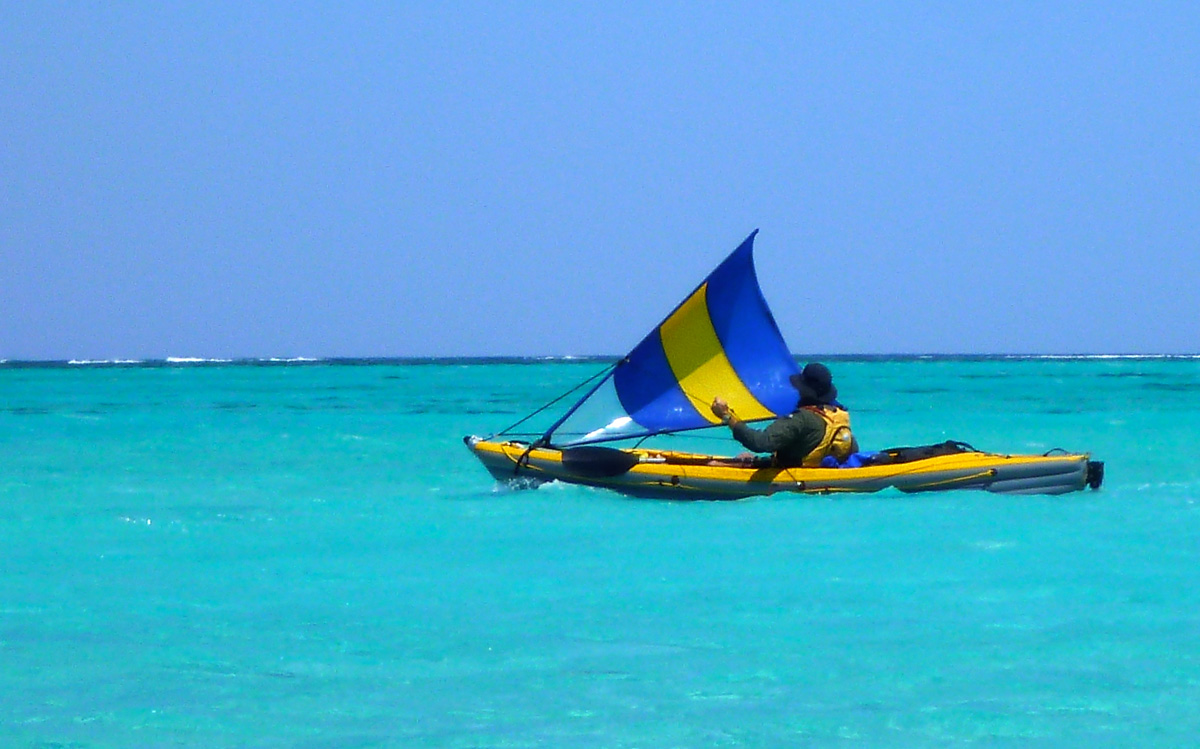
Windy but warm and dry thanks for asking – a good afternoon to take the IK out sailing. I’ve not done that since Ningaloo last September (left) when I was blown away so to speak, but not in a good way. Even before then I can’t say I’d got the hang of the Pacific Action V-sail which should add up to either hurtling from crest to crest with all hands on deck – or kicking back and getting a free ride while looking around at 3mph. Both are good fun but neither scenario seems to last more than a minute for me.
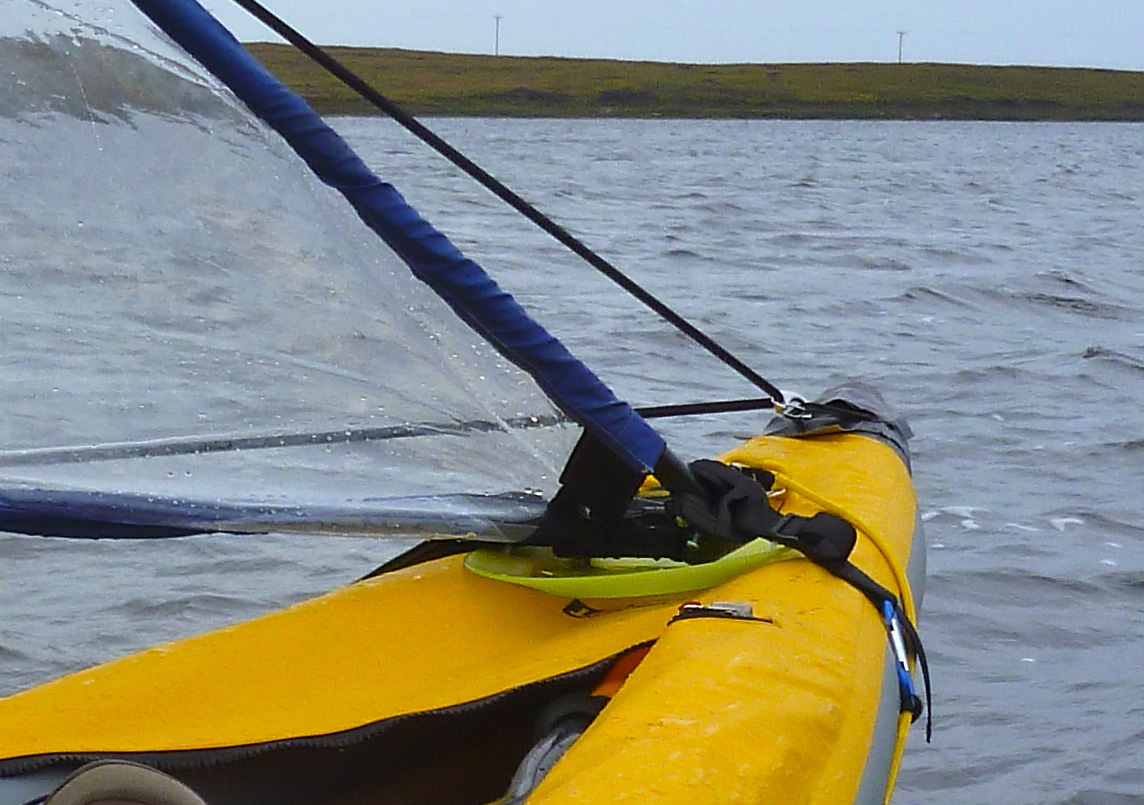
Remounting the V-sail to the K40 was easy. I clipped the front ‘sail-hoisting’ bungie about 8 inches further forward, right out on the boat’s nose using a loop of string and tape (right) as opposed to using the boat’s lift handle-ring. Fixed here it ought to help keep the sail up when pulled down low to one side by increasing the angle and distance from the sail’s feet. It’s an idea we came up with in Australia in an effort to make the K40 controllable in the strong winds.
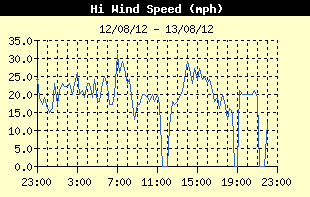
Winds today (left, from 3pm) weren’t quite as strong as WA but were getting there. And anyway, I was out on small lochs with no rudder-lifting ocean swell to deal with – another reason we thought the K40 got squirrely in strong winds out in WA. The K40s large draught but low weight acted like a sail of it’s own, weathercocking the boat. To reacquaint myself, I first took a spin on the smaller Loch Raa. I’m never really sure what I’m doing so just try various angles and approaches until the kayak catches the wind. I’m told that sailing directly downwind with the sail fully upright is less efficient (or is that with regular, fixed-mast sails?). With the PA you can get a good speed for a while, but soon the sail starts rocking violently from side to side as it sheds the excess blast – my strong recollection from Ningaloo. I assume that’s just a sign of the sail exceeding it’s speed limit, though I think Jeff’s hardshell did it less.
Off the wind about 45° and up to 90- or even 100° (ie; slightly upwind) seems more stable but slower, with the sail cranked down low to one side. But even then a consistent speed or direction seems hard to maintain for long. Is it my poor technique, the design of the sail when applied to my IK, or just an aspect of gusting and shifting wind? As it was I felt the unloaded boat was rather light, though in Ozzie last September 20+ kilos of ballast didn’t help much either.
Big sailboats and windsurfers seem to manage OK, but it seems hard to get a smooth, steady run while sat back with the cleated-off sail doing the work. Usually I’m yanking hard on the rudder to get in line, or have handfuls of lines trying to trim the sail for best effect. The tiny ‘finger-and-thumb’ cleats are just too fiddly to use in a hurry or mild panic, and often require two hands to release the jam. I wonder if hand-sized cleats exist for the thin cord, or some better device all round? Something like a sliding tube you could grab, but with a release button, a bit like a mountaineering jumar (left).
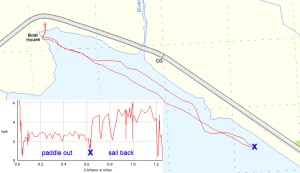
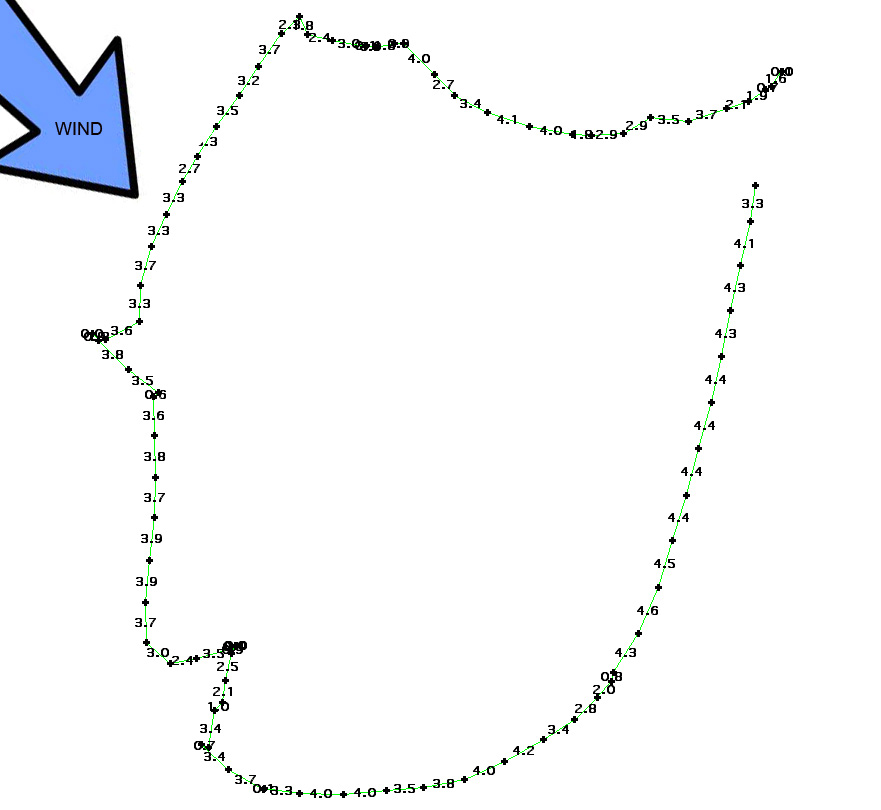
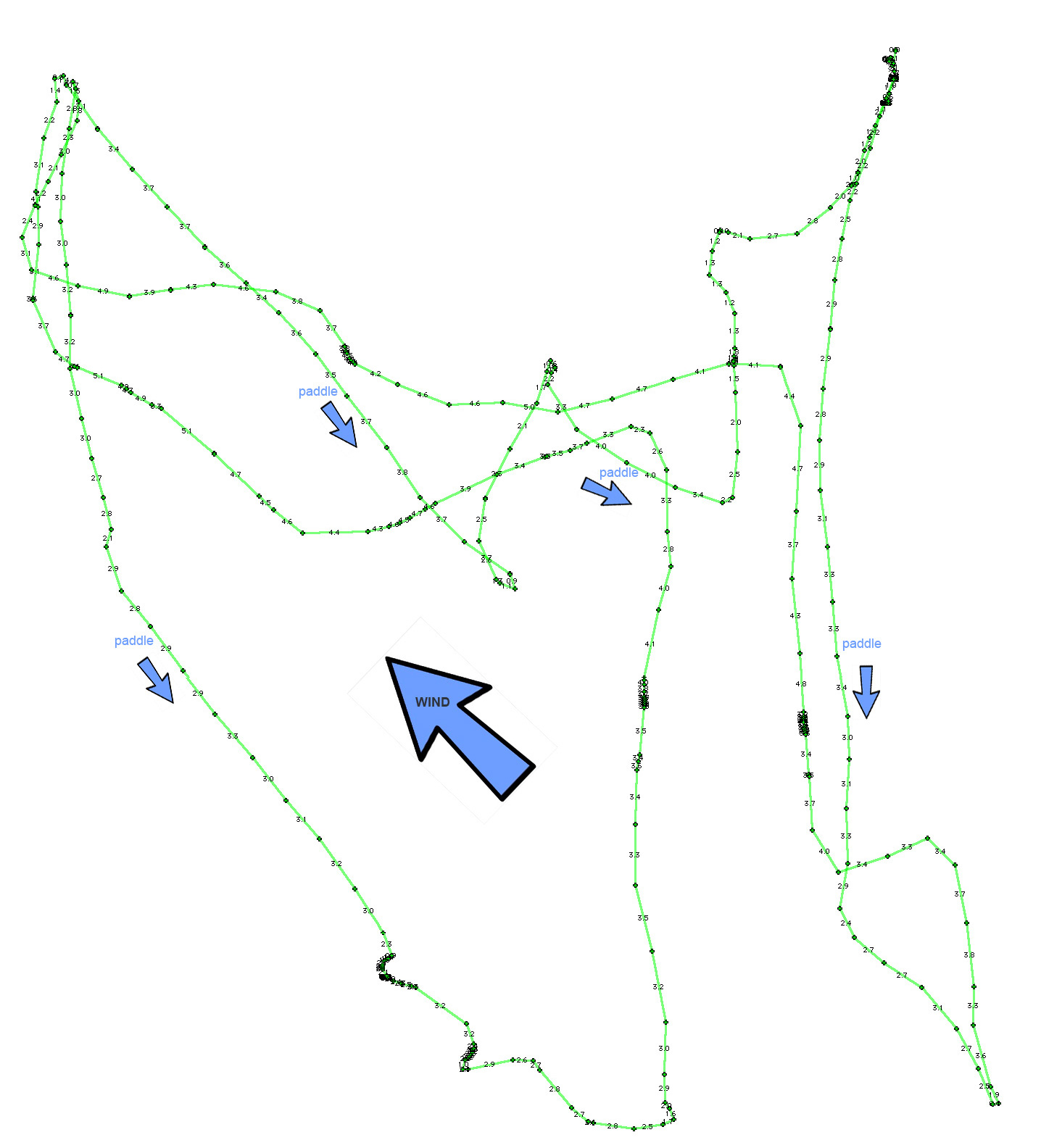
Even then, on seeing the speed readings (above), it surprised me how fast I could hack into the wind at 2.5–3mph, admittedly with some effort (needed to keep the kayak pointed ahead). Coming back with the big sail I only got over 5mph a couple of times, and often moved barely more than upwind, although using much less energy of course.
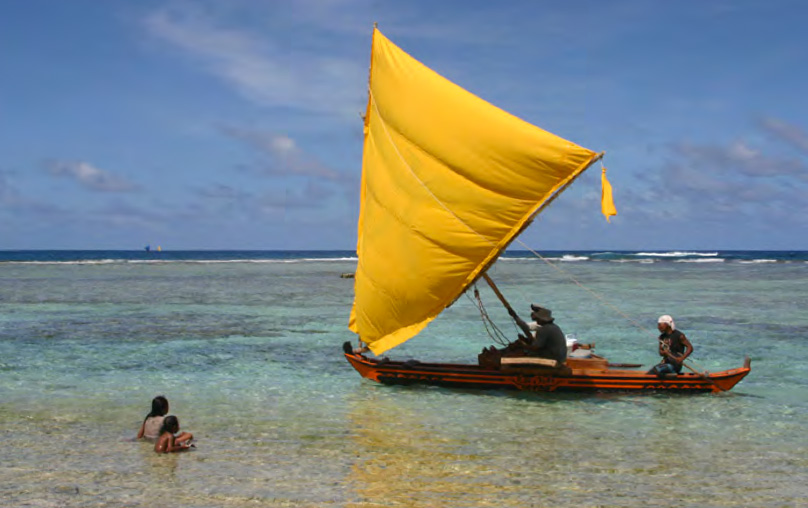
I came across this image of a Micronesian waharek boat newly built on an ancient design. Looks like a big V-sail to me but crucially, it has an outrigger.
After crisscrossing Loch Raa a few times (above right), I went around the corner onto Loch Osgaig. Out in the open and with the wind bouncing off nearby Stac mountain, there should be room enough to get some speed up, providing I could hold on.
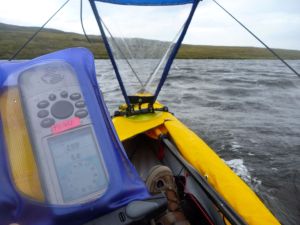
I set off and sliced the waves as best I could and stuck at it until I got opposite the small plantation. Here I stowed the paddle securely, got blown round and unfurled the v-sail, ready to snatch it back down should it all be more than I could handle. In fact, there were only a couple of hairy moments As you can see from the speed graph (right), my paddle out was pretty steady and straight, but under sail, speeds and direction were all over the place. A couple of times either a gust or the optimal line saw the boat fly at along at over 5mph (left), but it never lasted.
It does make me wonder what the PA sail is good for on my K40. In winds of over 15mph it seems hard work to maintain. Is it an inherent flaw of a lose, articulated mast – and one whose feet are not pressing directly onto a solid hardshell hull (I use a plastic dinner plate to spread the load/reduce wear). The fact is, Jeff managed fine on Ningaloo (right), ripping along in a boat that was four times heavier than the Incept. And in Shark Bay a few years earlier in the same tandem tanker, he was towing me in my Gumboat.
A 10-15 mph breeze does often correspond to a nice steady sail, but that does seem a rather narrow margin of operation – something I recall someone else saying to me about V sails. I think it’s a combination of more practice required, hampered by the fact I’m in a light, buoyant, flaccid-chined IK. It makes me wonder if the WindPaddle is worth another look (it was and I did), though I’m fairly sure the PA V-sail is more versatile; I doubt you could ride at 90°+ to the wind with the deeply dished WindPaddle. Another good thing about the PA is that it’s out of the way when down but dead easy and fast to deploy or stash. Just throw it up and see if it takes to the wind. Out this time I also felt that the thigh straps were particularly useful when edging the boat against the gusts.
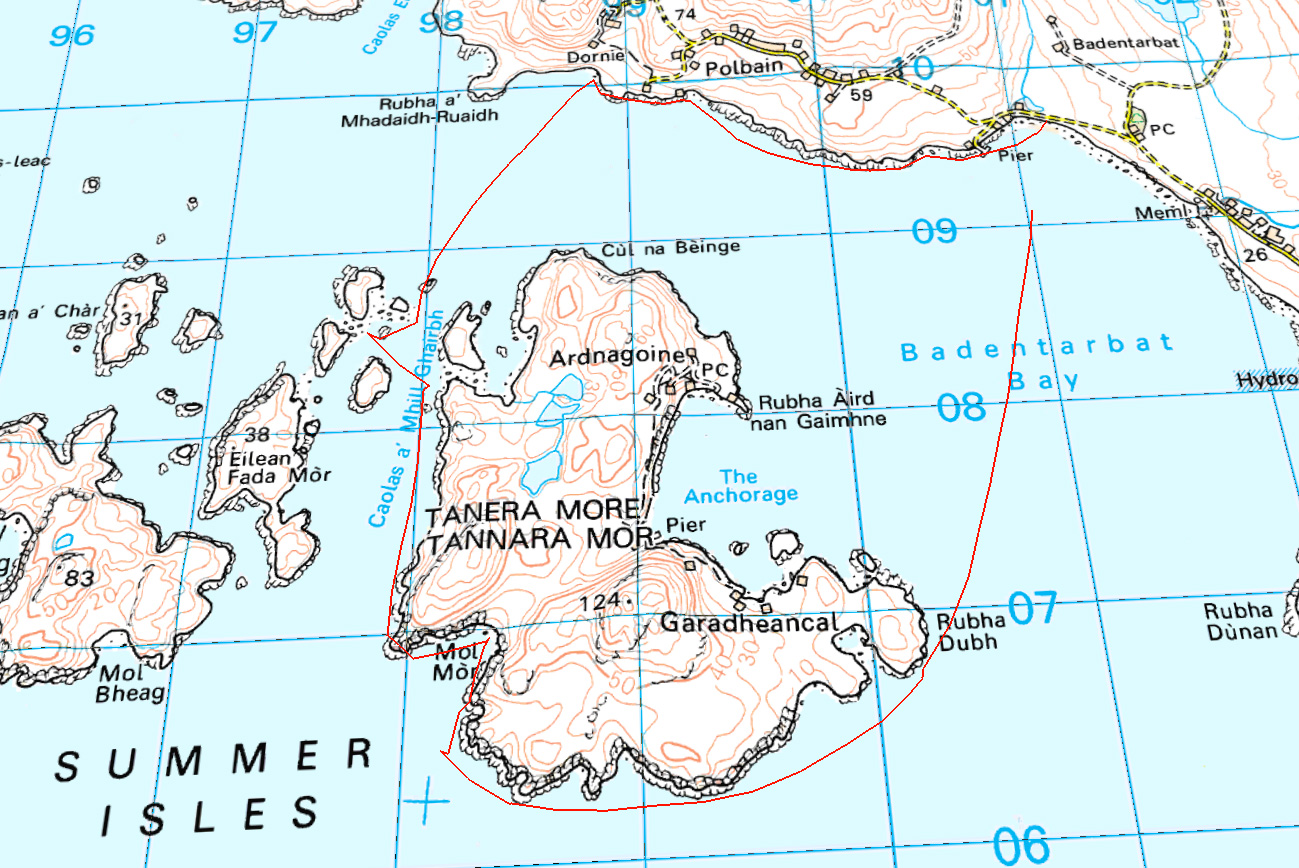
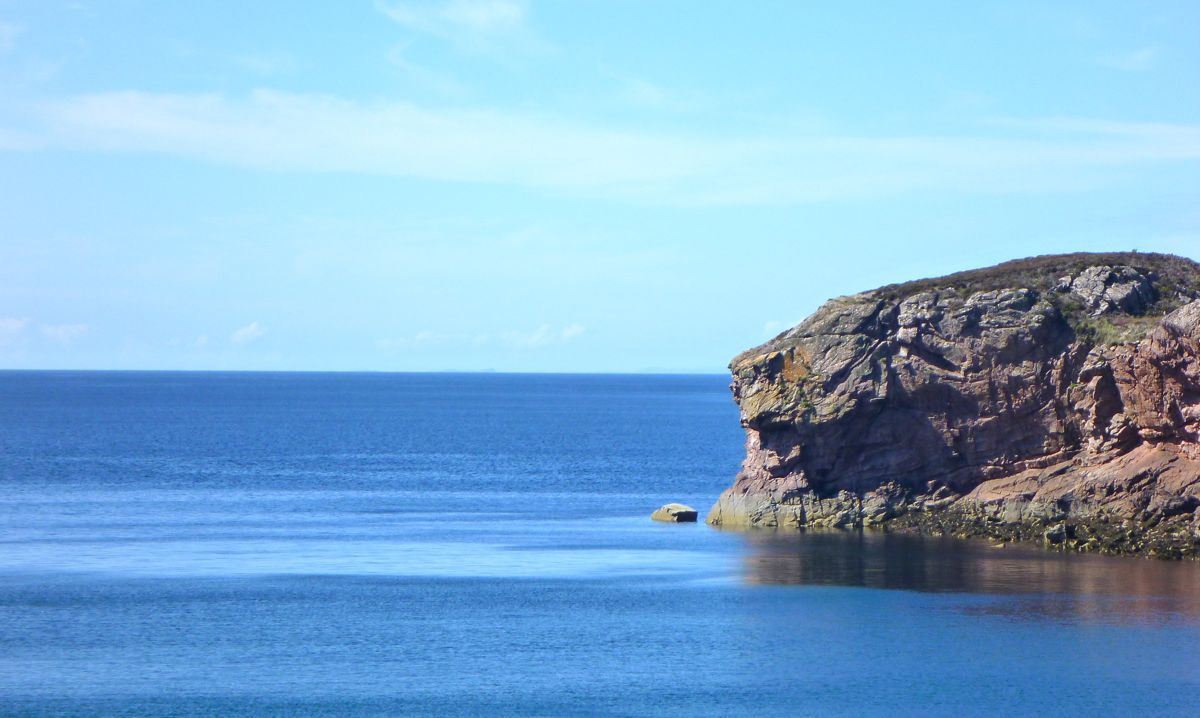
A sunny and wind-free morning coincided with the definitive wrapping up of my current job that’s dragged on for years. I could not pack up the gear quick enough before the calm spell flipped. And this time I wasn’t messing about – I was going to paddle right around Tanera Mor! All of a mile off shore it is, but you never know what to expect on the unseen ‘ocean’ side. Just before midday I stuck out for Rhuba Dubh Dubh, the island’s most easterly point (see map, above) and would decide how things went from there. Less than half an hour of speedy, flat-water paddling I arrived at the point, the smokey blue Torridons brooding in the background and the creased and weathered sandstone cliffs to my right.
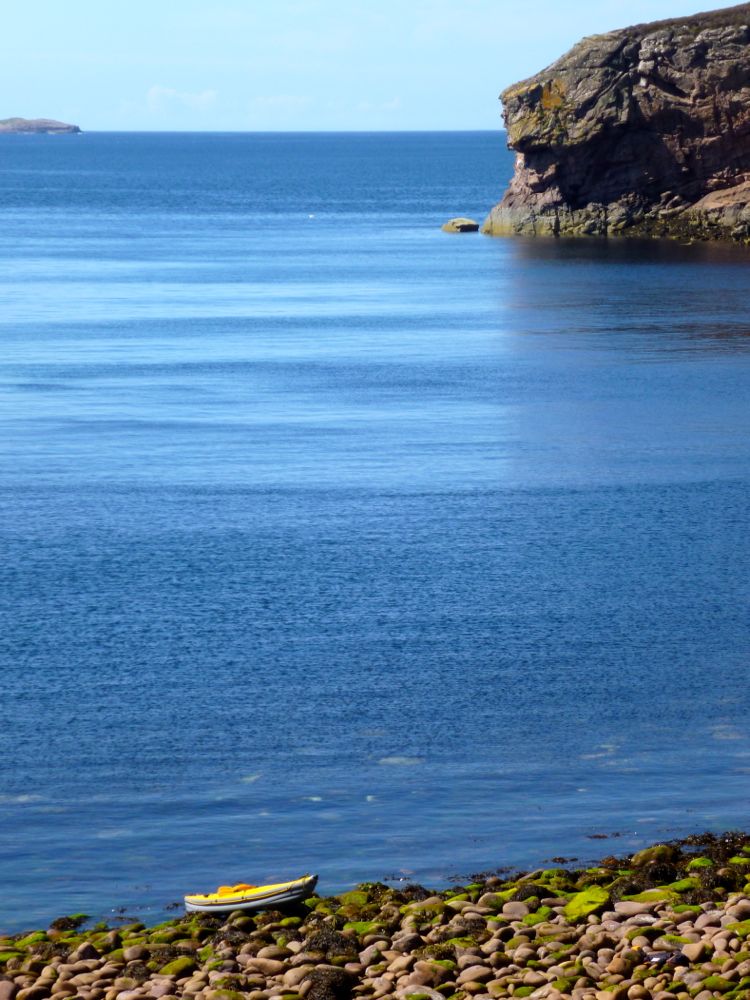
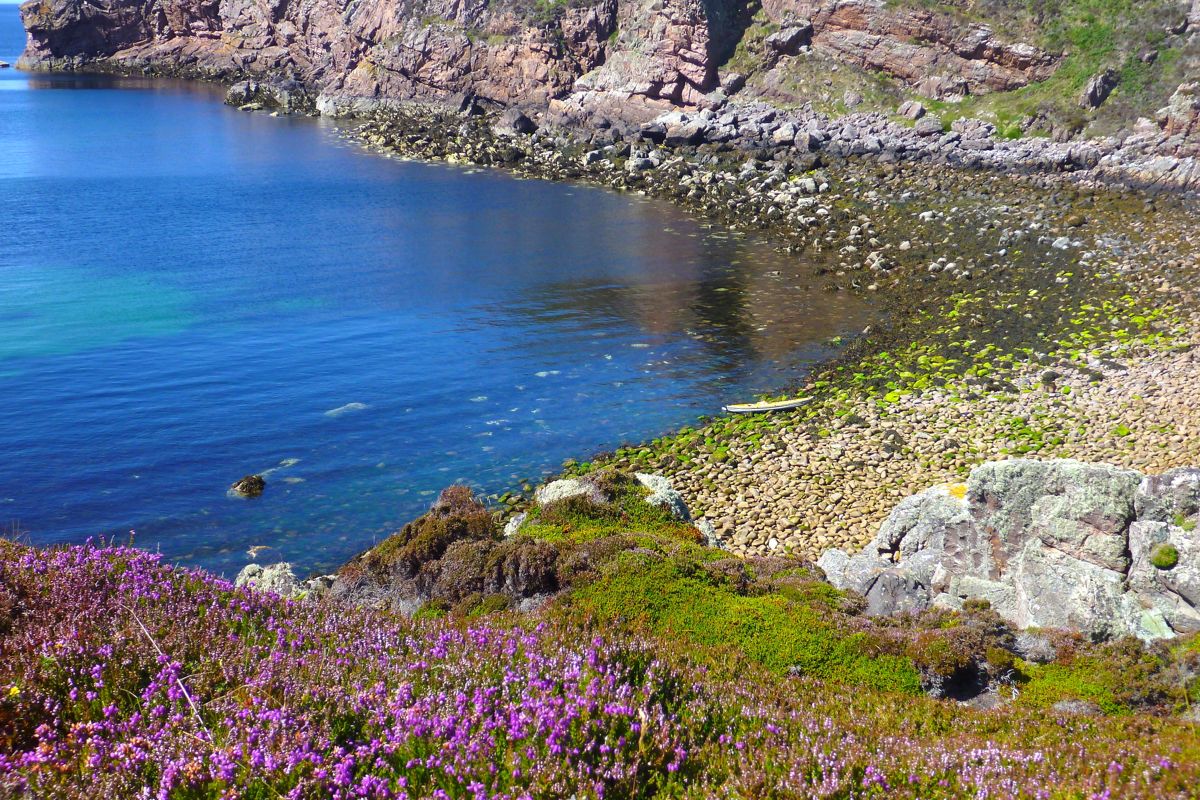
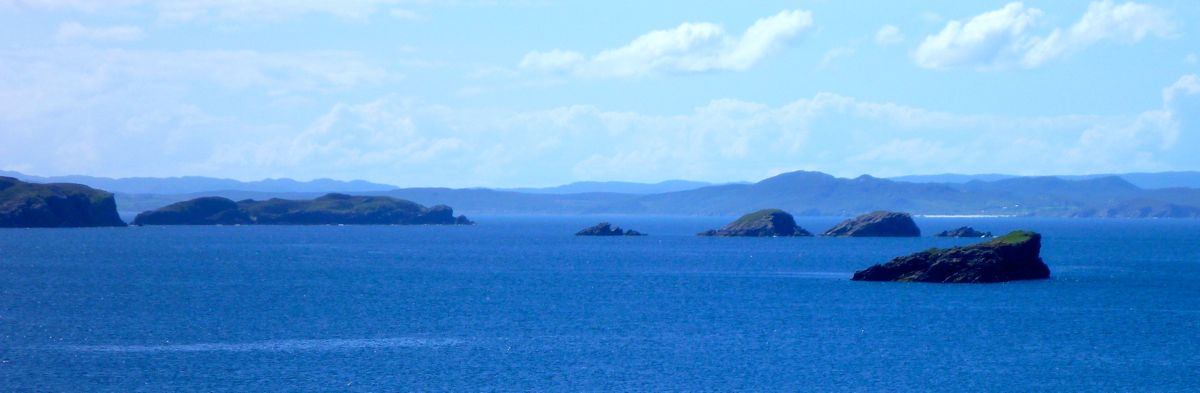
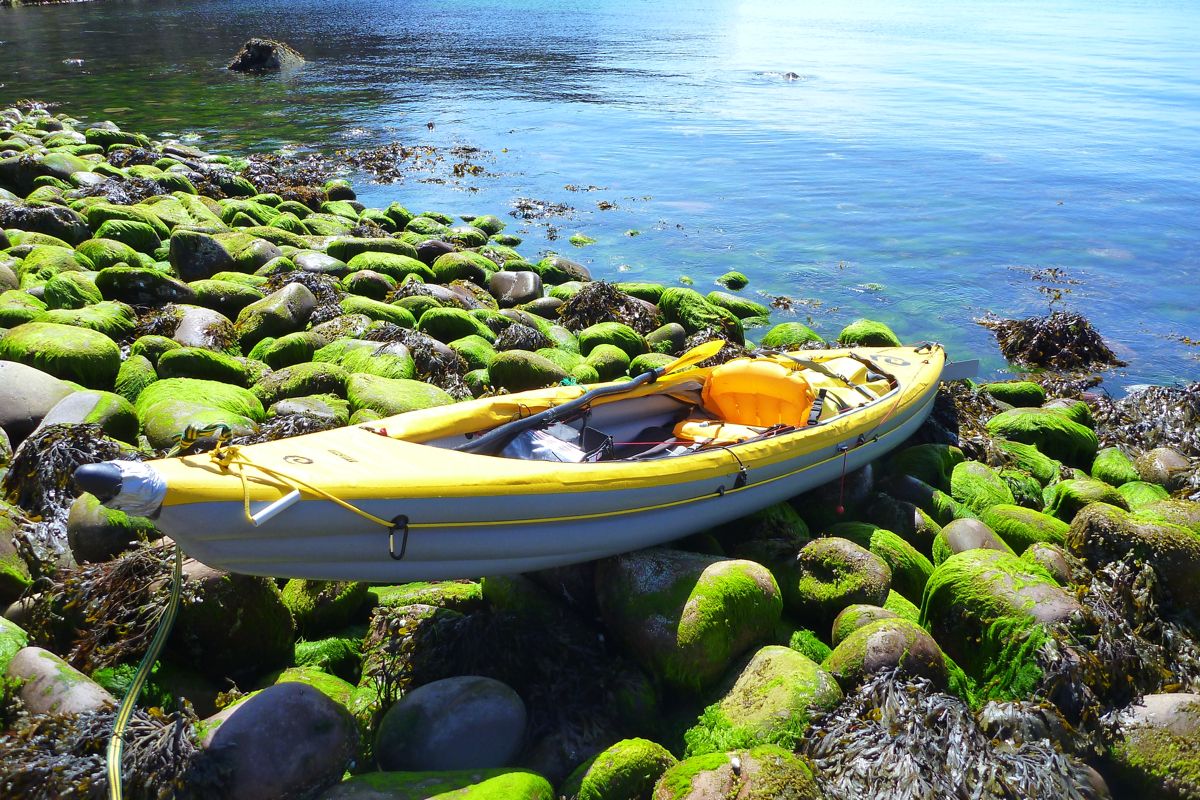
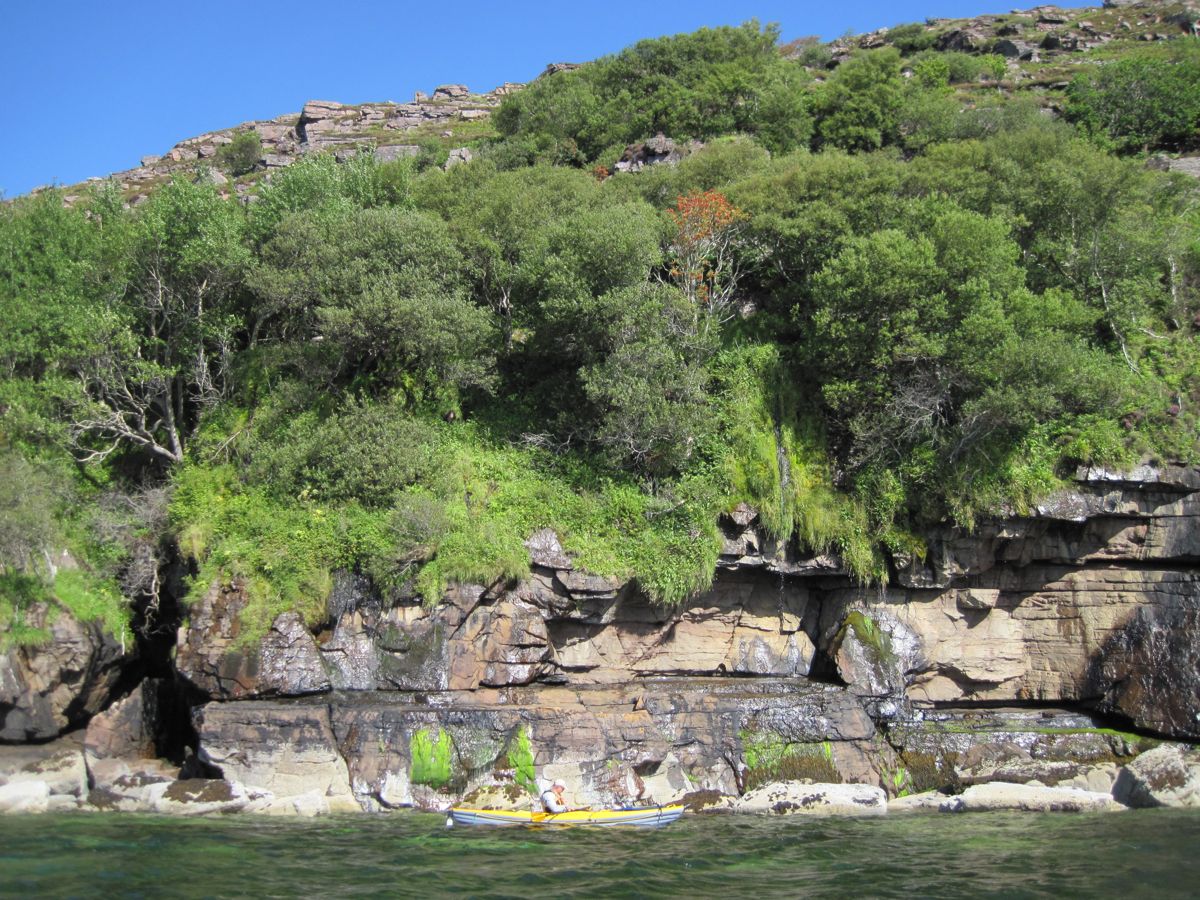
Rounding the bend to Tanera’s south side I wasn’t hit by the expected churning swell and whirlpools but pressed on, reluctant to relax until there was something to relax about. That turned out to be the inlet of Mol Mor which invited me in for a walkabout. It has to be said, at lower tide levels these islands don’t make getting ashore easy; a jumble of glistening wet, seaweed-draped boulders as big as melons bite at your ankles. And on proper land, it’s no better, with more unseen ankle traps under the thick heather, or plain old sphagnum sludge juiced up from the recent rains. But as always, from a high point the little yellow boat down below looked striking. Green sea-over-sand and the far headlands of Wester Ross backing the tempting (but not today) outer Summer Isles of Eilean Dubh, Bottle Island and Priest Island with the distant strand of Mellon Udrigle shining bright.
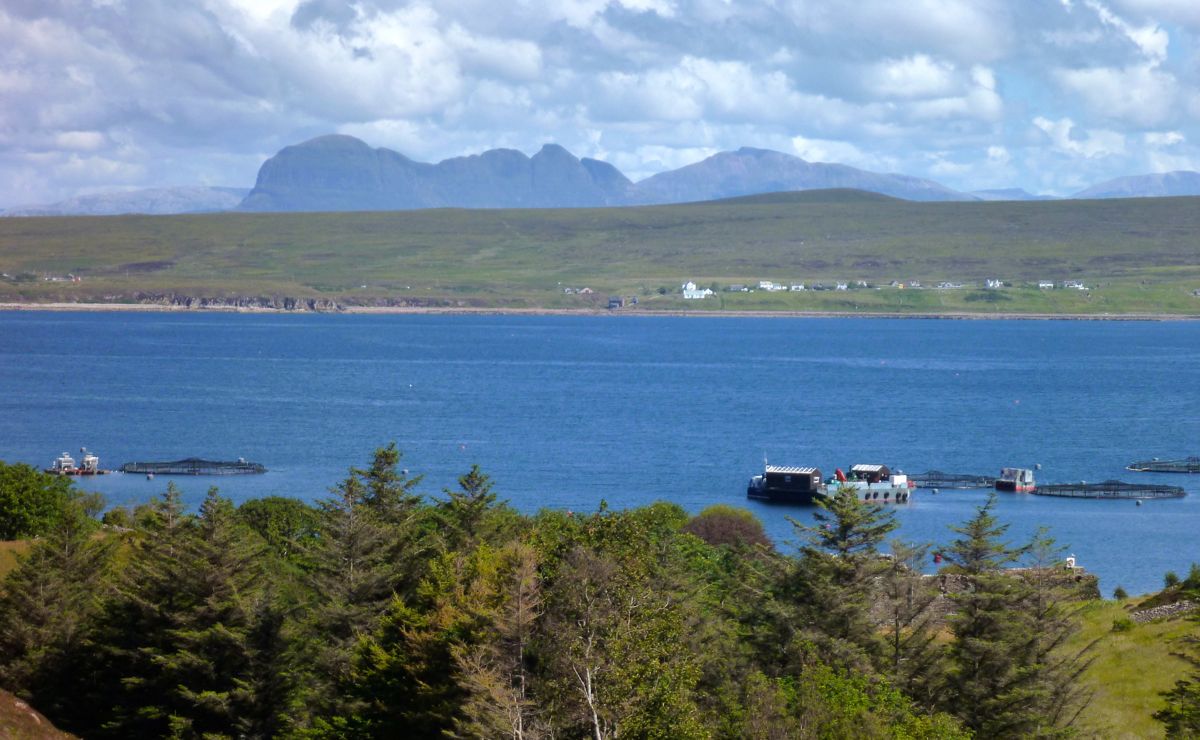
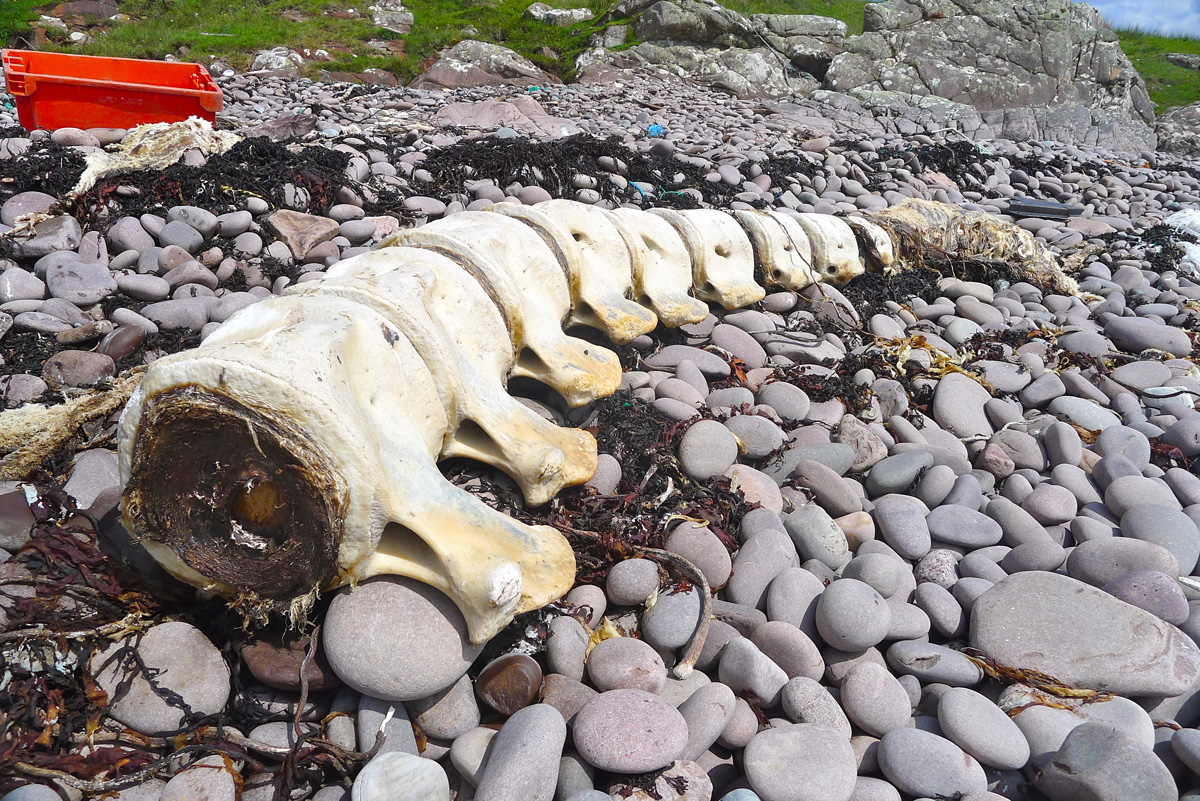
I clambered up to a pass for a view back north over the fish farm to Achiltibuie and the loaf of Suilven behind. Must go back up there one time soon. On the water again I turned up between Tanera Beag where a north wind had come up and gave me something to get stuck into. I didn’t want to push my luck but to string things out I popped onto one of the three islands north of Fada Mor which become one mass at low tide. Causing a seabird commotion overhead, I crawled to a high point and took in another great view back at the Fisherfield and Torridons. As on Tanera, the colours of the vegetation jumped out at me – was it the light, the recent rains after a long dry spell or just my shades? All that remained was a hack over to Dornie and back to Whalebone beach (now all gone). It was just beginning to whitecap which I regard as the red flag, especially when blowing from behind.
The spray kicked up over the sides but at times like these I’m reassured by the K40’s reliable turn of speed – about 3.5mph the readout said. It’s good to know it can be done, even if most of the time I prefer bumbling around in calmer weather, looking at stuff.
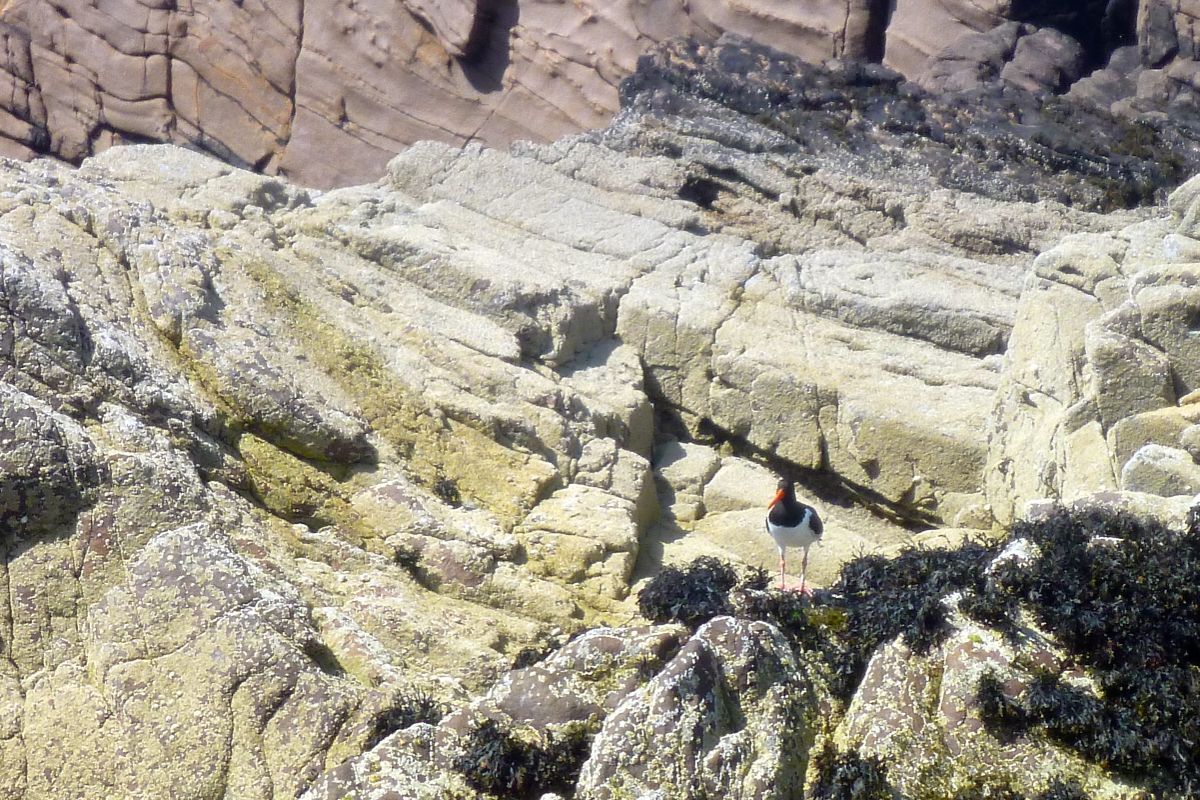
Once over, I pottered back tucked under the mainland shore out of the wind. A beaky oyster catcher eyed me suspiciously just as I neared the beach where a guy setting out with his toddler on his Sevy 200, doubtless the only two IKs for miles around. A few more days like that please, Mr Weatherman.
An afternoon’s paddle along the lochs strung out below Stac Pollaidh mountain, with a bit of portaging in between and a jog back to the car to finish up.
Sadly it looks like the amazing start to the summer may be over up here – or rather it’s back to normal. Since March it’s been one of the driest periods for years. June just gone was the driest ever while down south in places it was the wettest ever.
But the jet stream has flipped back into position and so it’s business as usual: the south is getting its overdue share of sunshine again while right now the wind howls periodically, it’s lashing down and I can barely see a mile across the bay.
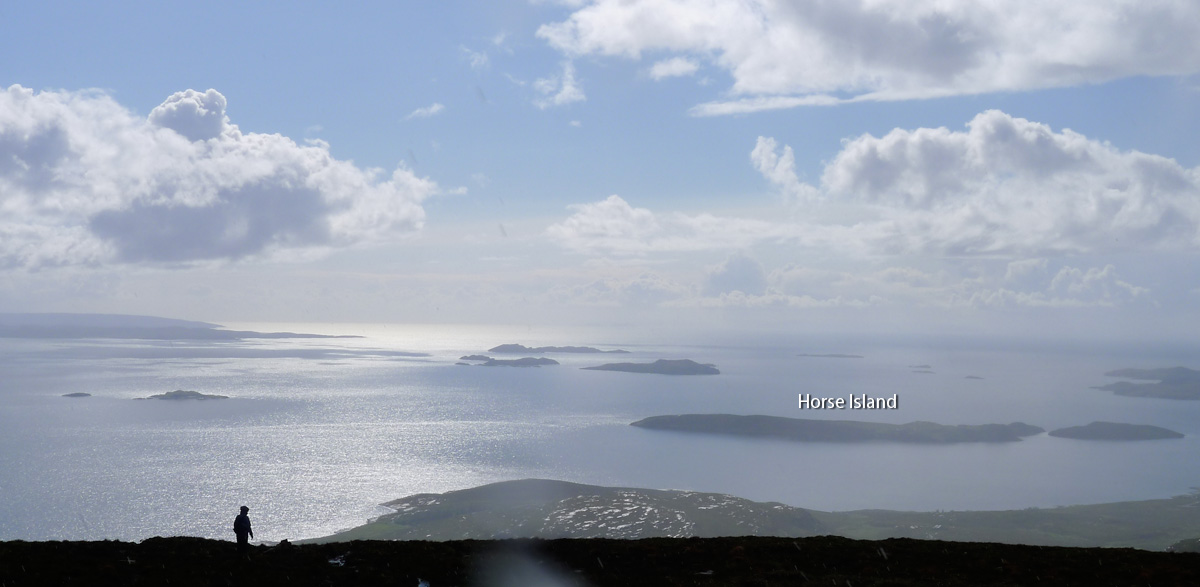
It was the same deal last weekend, but midweek the winds dropped and so did the pressure of finishing the current job. So I slipped out one evening across Badentarbet Bay to try and thread a loop through Horse Island. Not having paddled for weeks, as usual I went through the usual neuroses as I parted with the shore (“Crikey, this water really looks dark and deep”. “I really must take a spare paddle.” etc, etc…) while cautiously tracking some low cloud or mist coming up with a southern breeze. Horse Island is actually further than it looks, about 5km from the pier, and once I decided I’d survive the crossing I planned to slip through the gap between Meall nan Gabhar (see map, above) and head back. The passage is no longer pictured right by Gael who passed that way a couple of months back in his Incept at the culmination of his epic run up the Scottish Sea Kayak Trail.
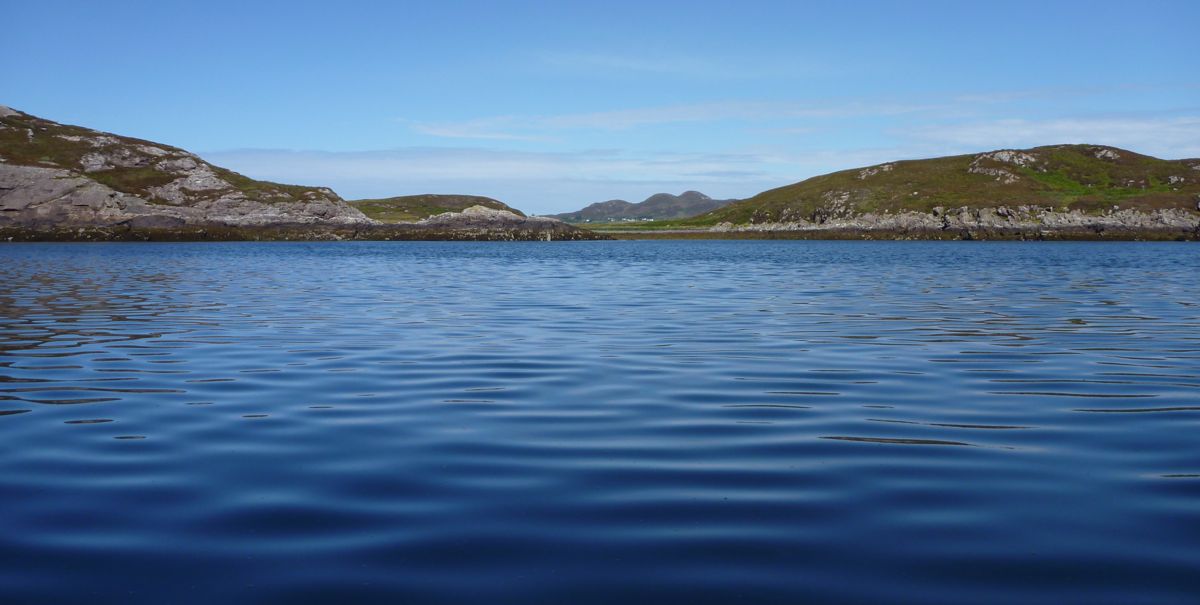
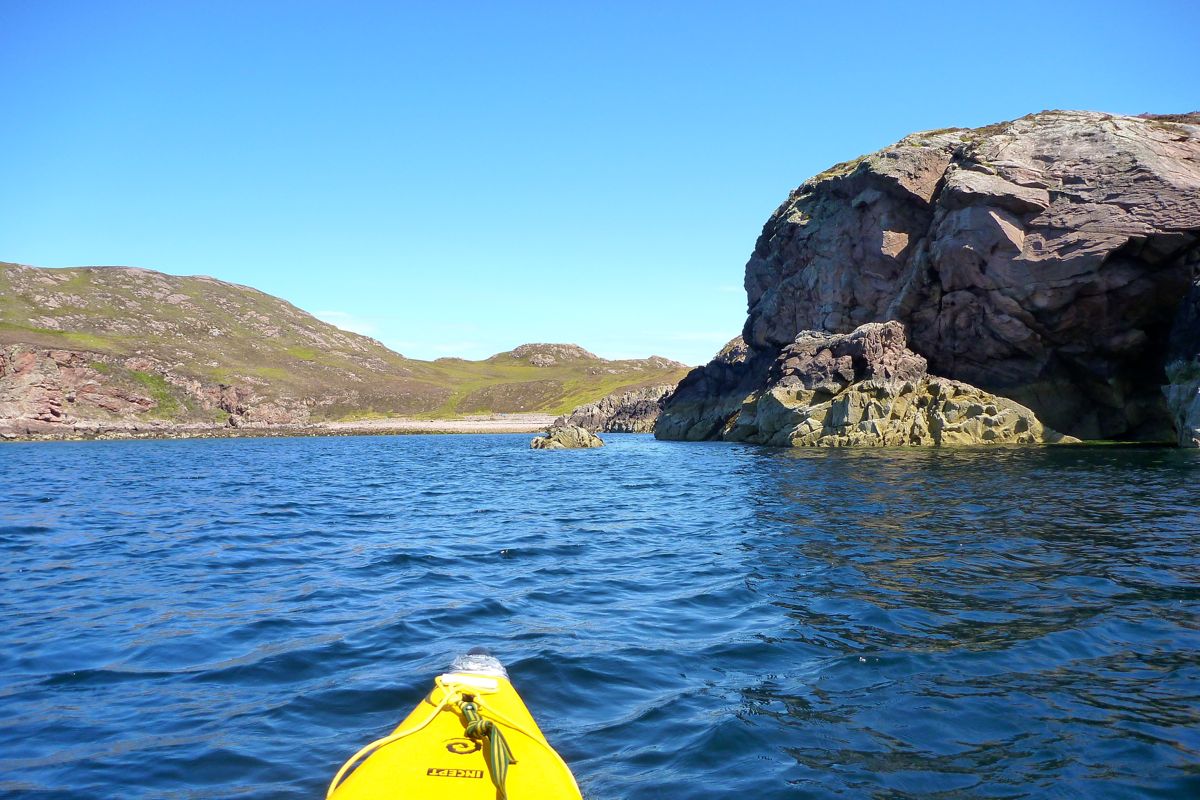
As I rounded the corner and frightened some seals with a splash, it turned out Meall (a ‘hill or mound’) is a separate island only during the top half of the tide. On my arrival with the tide bottomed out, a bank of seaweed-covered boulders rose two metres out of the sea (below), creating a broad causeway between Meall and Horse. No matter, it made getting out easy and as a seal popped up and eyed my movements, I scrambled up the knee-high heather and scrub for a look around Horse, finding a broad grassy platform with various sheltered nooks for a sheltered camp. It’s said local farmers periodically drop off their sheep here to graze, but the only presence was the high-pitched caw of a large bird of prey hovering over its nest up on the hill. The clouds parted briefly to shine onto Ben Mor (above) and pleased with my offshore excursion, I powered back to the pier.
I took the K40 out across the bay for the first time since Ningaloo last September. As mentioned earlier, Australian UV being what it is, it did look pretty good after being rolled up for months. I put that down to lashings of 303. But it still went a bit flat in the few days between pumping up and paddling. Maybe I pumped it up on a hot day.
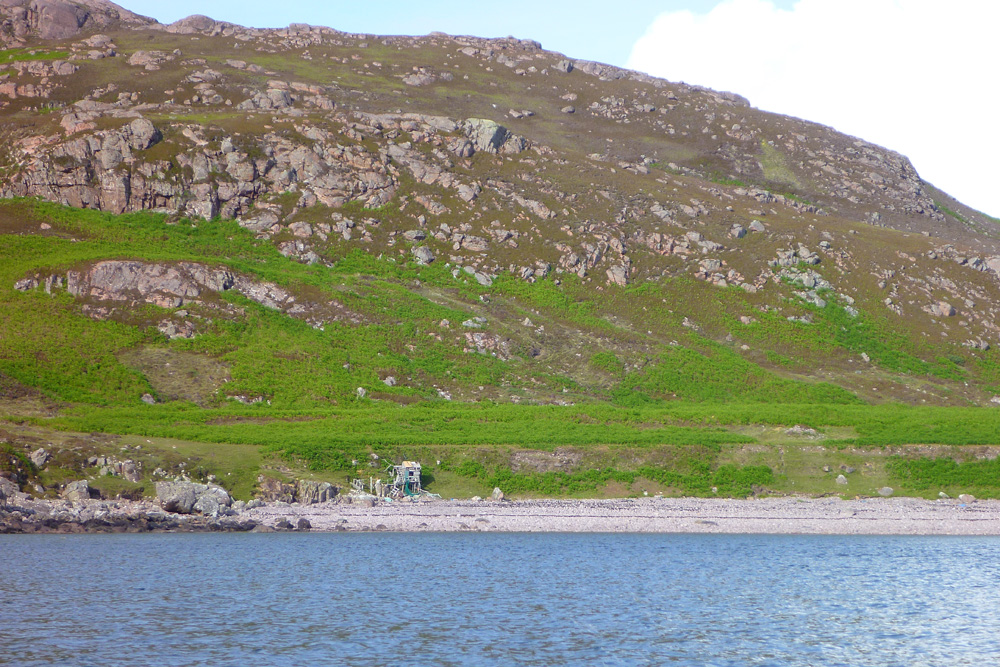
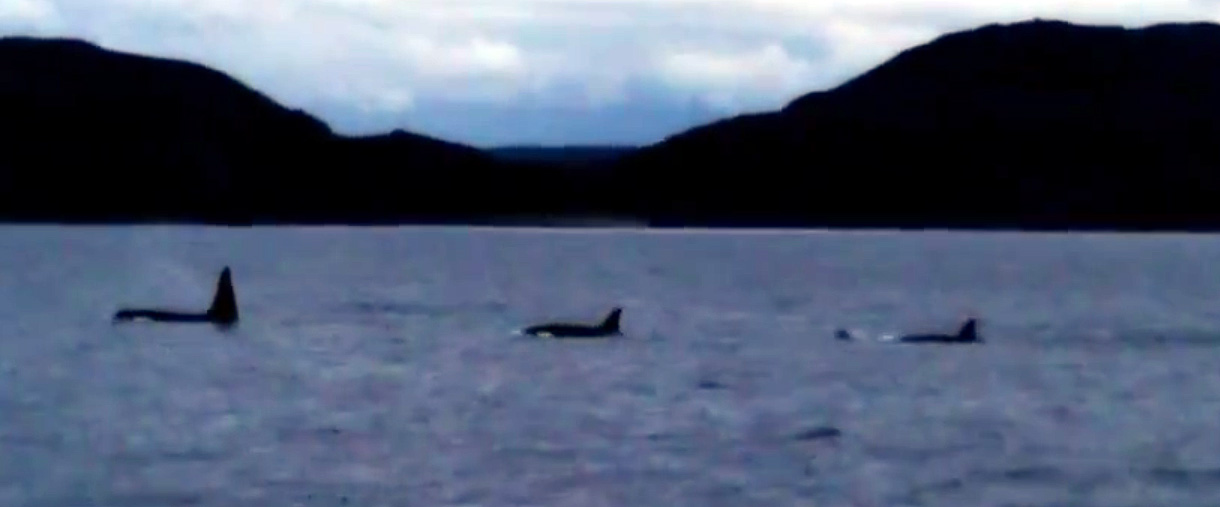
I topped it up in the water at Old Dornie, had a quick look for bubbles, took the pump with just in case, and set out back to Badentarbet beach. It had been calm for days and an ankle-high swell wafted along with a spring tide about to top out at about 3.5 metres. I passed the old ‘Wasp Factory‘ (left) still intact, and dithered a bit about crossing to the island, over-conscious about how the boat was moving on the currents that would barely push a wet paper bag. In the end, Tanera Mor got close enough, and after a couple of minutes paddling I trailed the rocky shore of red Torridon sandstone for a while before heading back across the bay. I found out later that the day before a boat tour had spotted a pod of half a dozen orcas (ropey video – start at 1:40 for the best action) right here. Someone suggested that because it’s been so dry, the salmon can’t get upstream to do their thing so have backed up along the shore where the killer whales come in for a feed. Video still below, more pictures here and see footnote.
With no dorsal fins towering over my head, I crossed the last mile over the bay with the rudder up to remind myself it was do-able. The K40 took a bit more finesse and occasional hard yanking to keep in line, same as with the old Sunny when without a skeg. A smooth, steady style works best but what it really means is that you can’t go as fast; pull hard to escape from a killer whale’s jaws and you really need your feet and a rudder to get you back in line.
As my taxi came down off the hill I passed a cheerful buoy bobbing around. Stowing the paddle and using the buoy as a marker, I noticed how quickly I was drifting back on the unseen tide, but as always, with the water and wind moving against you, you get much more of an impression of speed which is satisfying. Battling the not so agreeable tail winds off Ningaloo last September, I lost my faith in the K40 a bit, but here on a calm Highland evening, the Tasman slipped along, just as it always did.
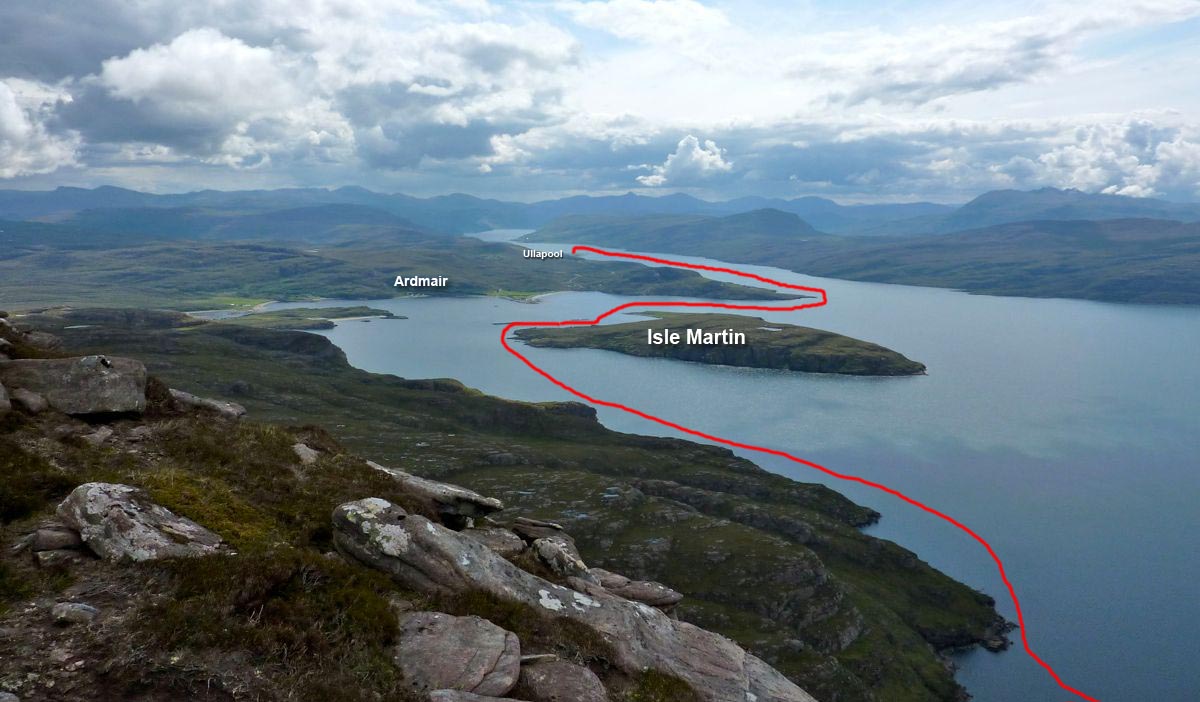
We climbed up onto Ben Mor (right) the other evening, from where I was reminded just how close Ullapool seems from a couple of thousand feet above sea level. Looking out over Loch Broom, with one arm you can pat the Summer Isles, and with the other dab the lighthouse at Rubha Cadail (Rhue), south of Isle Martin and Ardmair (left). It’s some 13 miles or more, but with a get-out at Ardmair if need be, it would surely be doable within in the span of a tide, then to catch the afternoon bus back.
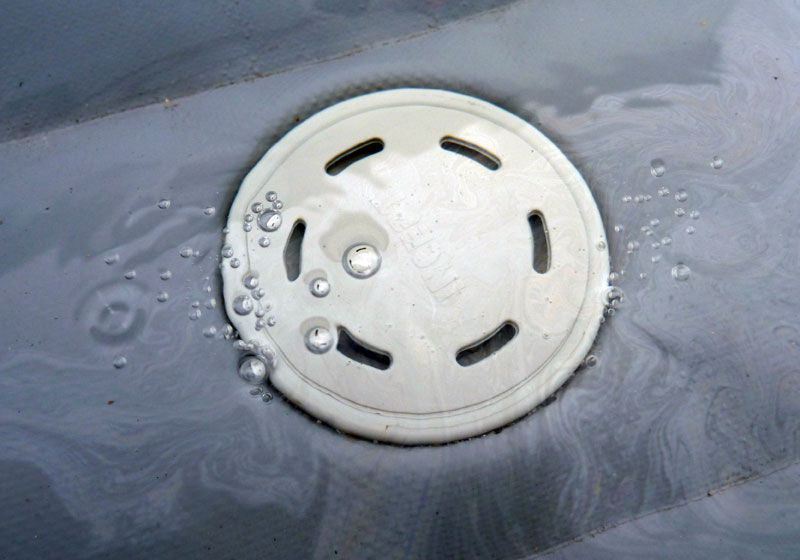
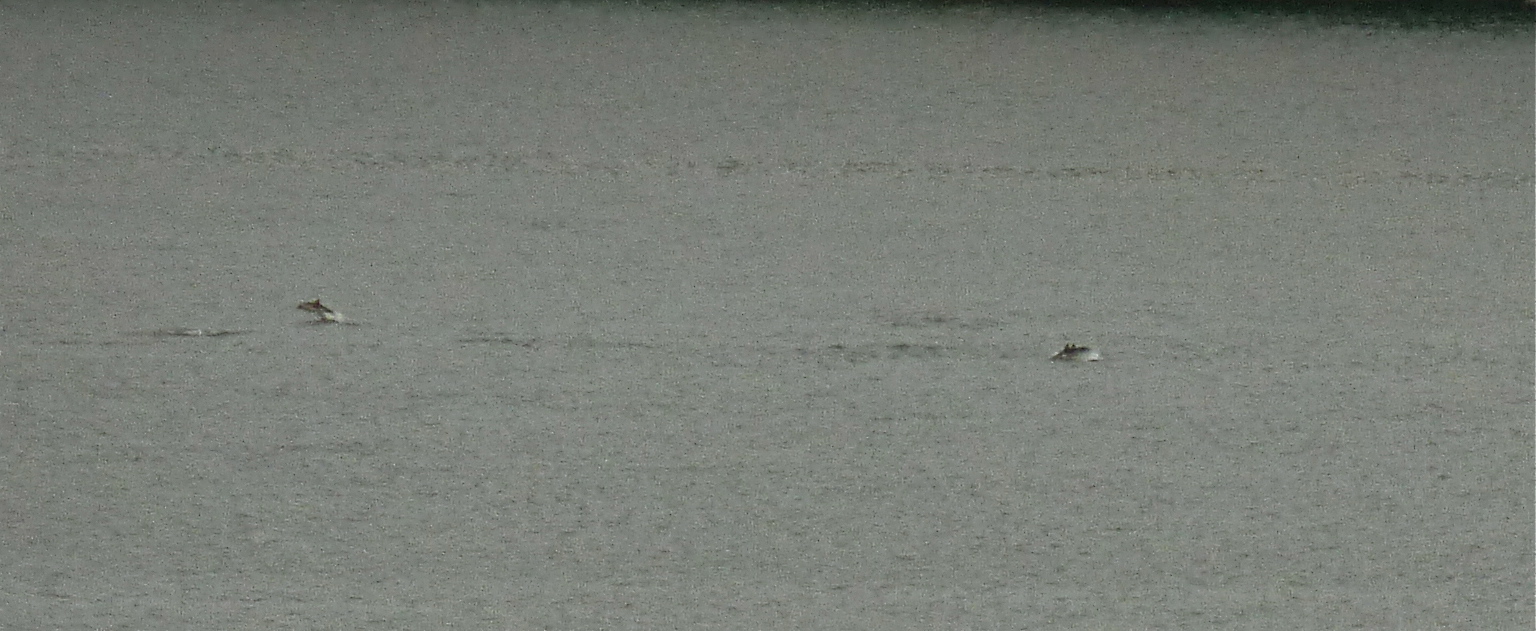
A few days later I decided my boat did have a leak in the floor somewhere. I hoped it might be a bit of easily expelled grit in the PRV and not the hull delaminating in some hard-to-get-to corner. I filled it up like a paddling pool and sure enough, it was fizzing from around the edges of the PRV (right). It took a bit of tracking down with Google (the menuless Incept NZ website is not the best), but it seems the cap needs prising off and the valves cranking down once in a while with a Halkey Roberts valve tool. Seeing as it’s not been done since new, that makes sense, so one’s on order and will hopefully do the trick. I never had to do that on the Gumotex Sunny in all its years, but the Incept does run a higher pressure and is a faster boat because of it. A day after I wrote this, over breakfast we spotted a huge pod of [probably harbour] porpoises coursing across the bay. They’re not so unusual and half an hour what looked like up to 20 of them trawled a line to an fro off the shore of Tanera Mor, presumably hunting or feeding. This is the best the zoom could manage on a murky midsummer’s morning.
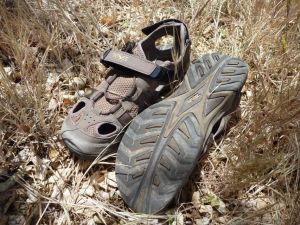
Good Lord, it’s 2025 and after nearly 15 yearsI’m on my my third pair of Teva Omniums. It pays to remember we’re not just ambling down to the sailing club for a drink, we’re balancing over slimy, head-sized boulders exposed at low tide, often while carrying a kayak, or walking through bogs or tidal mud which can suck off a shoe.
Back in 2011 they were going for just $40 at REI Denver. Like it or not, much of how something performs depends on what it cost. As a replacement for my inferior Keen Arroyos, the Omniums hold my foot much more securely, with a velcro adjustable heel strap, a velcro adjustable clip buckle strap over the top, plus those dubiously effective cinch lock laces over the front. It’s the over-the-top strap that makes all the difference to holding to foot securely.
The Tevas also have no wear-prone threading attaching upper to sole, and a solid and chunky-looking plastic-rubber footbed derived from one of their sports sandals and doubtless designated with some snappy acronym.
I have found a closed-toe water show much better for wading than a regular Teva sandal, because the open front of a sandal drags through the water as you wade. Closed toe ‘sandals’ work much better here and elsewhere, plus on land or water the toe protection is welcome. My Omniums feel more sure-footed than the Keen Arroyos ever were, mostly down to the fitting straps, but also due to what feels like a thick and less flexible sole which have not compressed and lost cushioning over time, as my previous Teva open sandals used to do. We walked a couple of hours up The Narrows at the top of Zion NP, following, crossing and wading along the Virgin River countless times. The Tevas gripped as well as anything here, drained readily and felt agile and secure when boulder hopping.
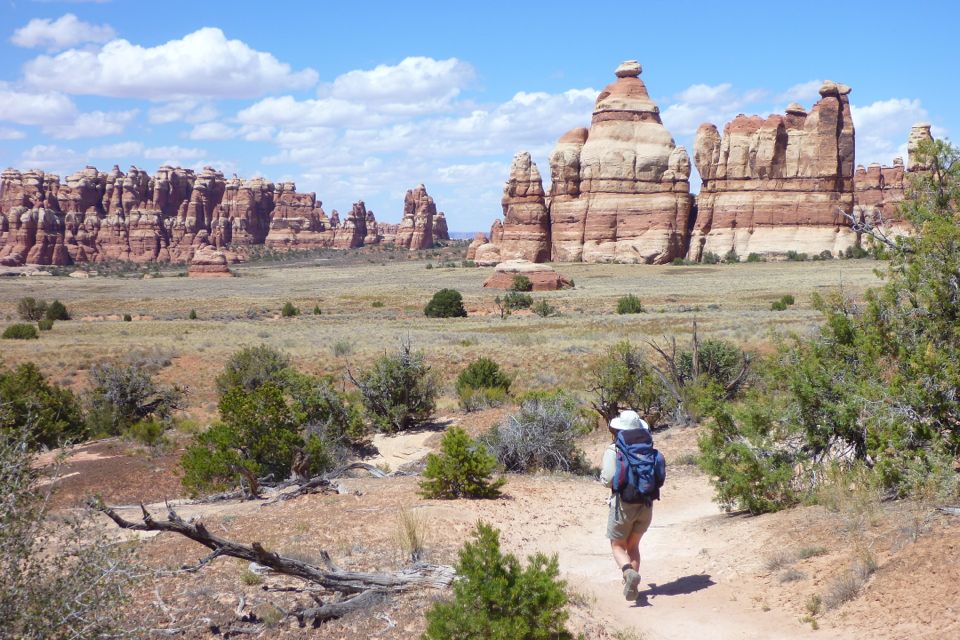
For regular dry walks up the side of Zion canyon and on a couple of longer dry desert walks in Canyonlands, they performed well enough, the softer-than-a-boot soles gripping very well on dry slickrock at the cost of letting some sand in in the washes. Lifting a foot behind you once or twice was an easy way to let the sand spill around the toe holes. At the end of a hot, 11-mile desert walk there was only a little soreness, but that could be due to my desiccated feet after a fortnight in this very arid climate. I feel that under the weight of a pack and clad in some seal skin socks, they’ll work well in northwest Scotland, though for an overnighter I think I’d sooner use the proper hiking boots.
With their wide snouts the Omniums are a bit Croc-ugly, but wide shoes suit my feet much better. I haven’t read them all, but the reviews on Teva.com did complain of fast wear; no great surprise with modern sports shoes. I do wish they’d put a chunkier tread on their soles, but another plus: they float – always a good thing in the water. I award a paddlepacking thumbs up for the Omniums. If you can grab yourself a bargain you’ll have a great water shoe.
Two years laterand my Teva Omniums are getting regular use for day paddles and are still hanging in there with no actual signs of breaking up. The soles are now too smooth to be useful on mud, but were never that good anyway. All in all, tougher than the similar Keens, but still limited for loaded overnight, all-terrain treks.
Four years later and nothing much more to report. Decay is gradual but they’re still hanging in there. Nothing has actually broken or worn out. The soles are getting quite thin and have lost just about all the tread. To be fair most of the time these shoes are in a boat or on a pushbike which may explain how they’ve lasted so long. So a short time later I used them on a three-day walk in Italy – about 80km. I found the Tevas extremely comfortable on the mostly road and gravel track train (once I put some socks on). The thick, squidgy heel really helped and the front sole wasn’t too thin for the gravel. They breath well of course (temps in the high 20s) and are easy to take off.
In 2016 I bought another pair in the US for about $60 and by 2020 the sole was peeling off here and there and I’ve just glued them up a second time. But they’re still my go-to paddling shoes. Another five years later they’re doing OK. A bit more peeling going on. I think I got some Omnium 2s which look a bit less clumpy. It’s 2025 and they’re doing fine on the water on the bike and in the garden.
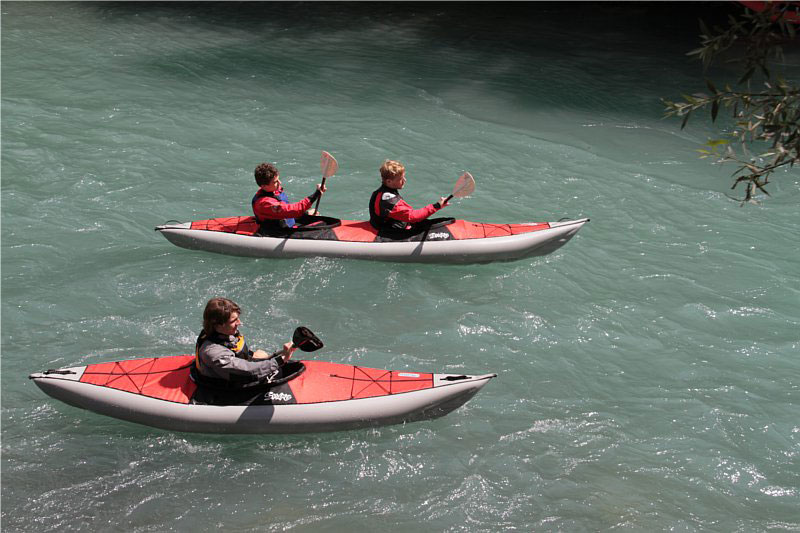
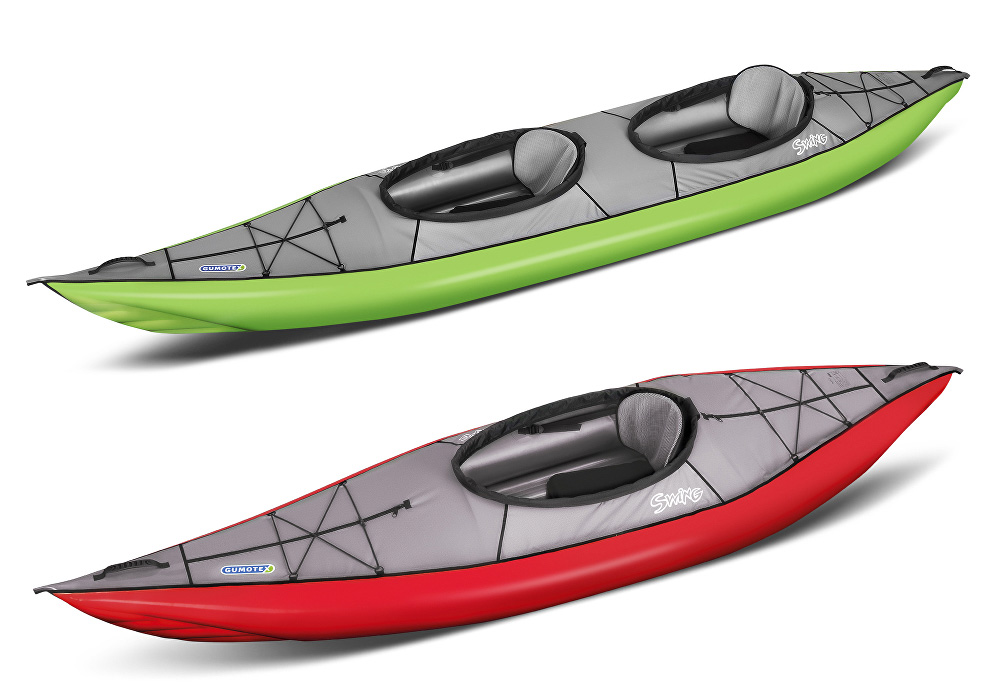
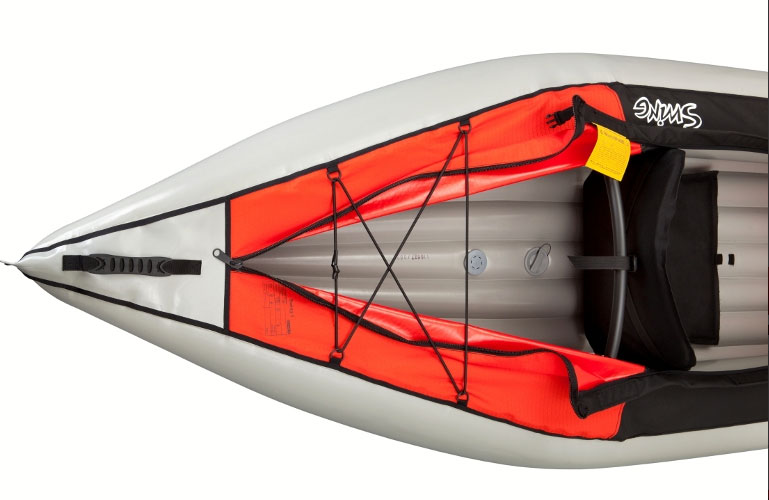
The Swings are fixed-decked solo or tandem IKs pitched at recreational users who seek the reassurance of a very wide boat and the dryness of a deck.
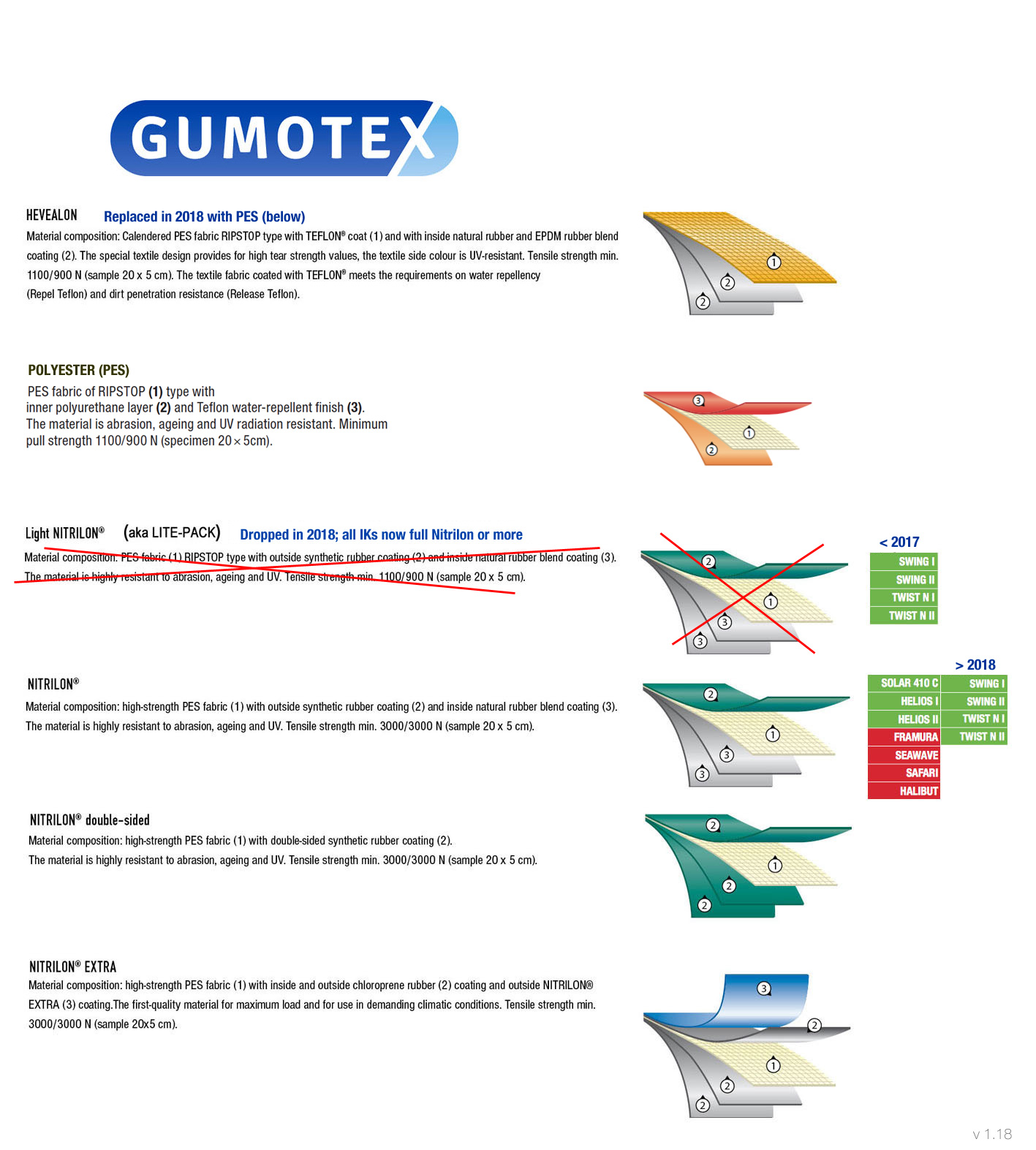
There were once and are maybe still two versions of Swing 1 and 2. Innova distributors in the US show red/black green/grey hulled models which they still list as made from Nitrilon Lite™. Europe and maybe elsewhere never had the black-hulled models and are made in Nitrilon (Nitrilon Lite™ has been dropped). The claimed weights for identical boats from EU/US are the same. You presume the green/grey doubles are now identical. See the table right about IK materials with more here.
Note that what Innova in North America call the Swing EX is a Framura in Europe – a slimmer, fixed-deck, 4.1m IK which is much more suited to solo touring and inshore sea kayaking.
As others have commented, they appear to be taking on IKs from Advanced Elements and even the bird’s-eye view is similar. From the profiles it appears they’re more ellipsoid or ‘lemon-shaped’ than other models, or maybe it’s just that they’re substantially wider which exaggerates this impression.
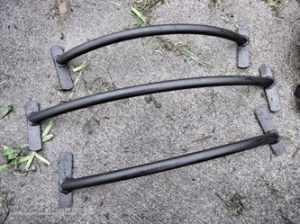
The Swings use 2 or 3 curved alloy crossbars to keep the deck taught (similar system on my Incept and Seawave) and make room for the legs, as well as spread and form the width of the boat. Some blurb states these crossbars make the boat more rigid which may well be true. Constraining the sides (stopping them from flexing out as the boat bends longitudinally) will have some effect in overall stiffness.
As far as the preferred boats for touring, what is desirable is a decked boat the length of a Swing 2, but set up for a single paddler. That is the Framura aka ‘Swing EX’ to Innova – a good-looking, solo-touring, fixed-deck IK for those who think soloing in a Seawave is a bit much. Sure you can sit in the back of an SW2 and load the front, but it’s not right, is it? What are the actual benefits of a fixed deck on an IK? (the Swings’ decks unzip partially). Limiting swamping – sure. Keeping the sun off – maybe in sunny lands. Keeping you warm – I suppose so, but that’s what a dry suit ought to do: ‘dress for the swim [falling in], not the paddle [air temps]’ they say. And many users complain that the zips are far from watertight. And so I conclude that the Swings may well be popular (actually I don’t think they were) but fall into the less desirable ‘bloat’ category: much wider than they need to be which is great for nervous day/rec users. But for the smaller niche of multi-day touring and sea use (space, speed, convenience), they’re not so ideal.














.jpg "cloggy")