Tested: Anfibio DeckPack

See also: Packraft Deckbags

In a Line
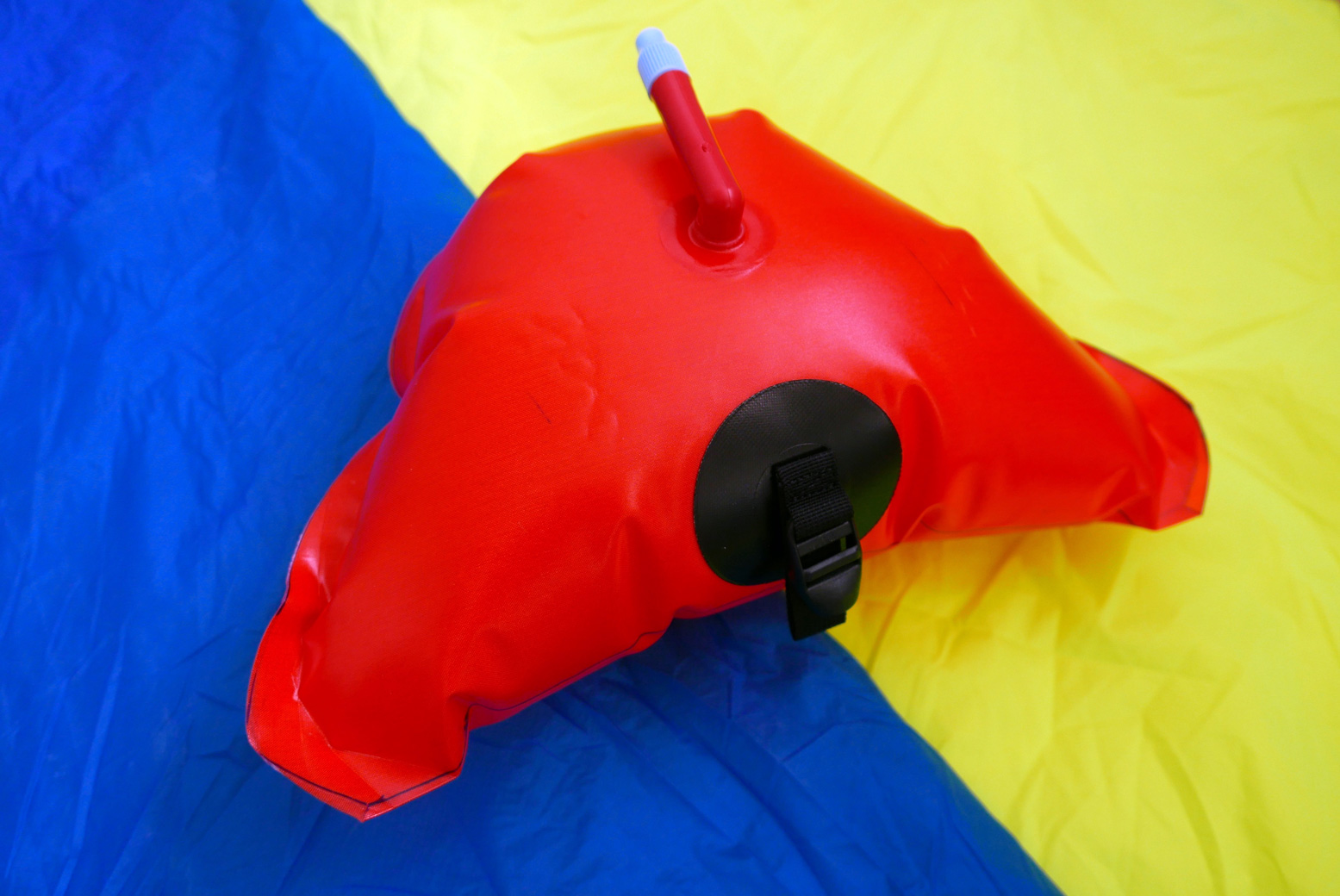
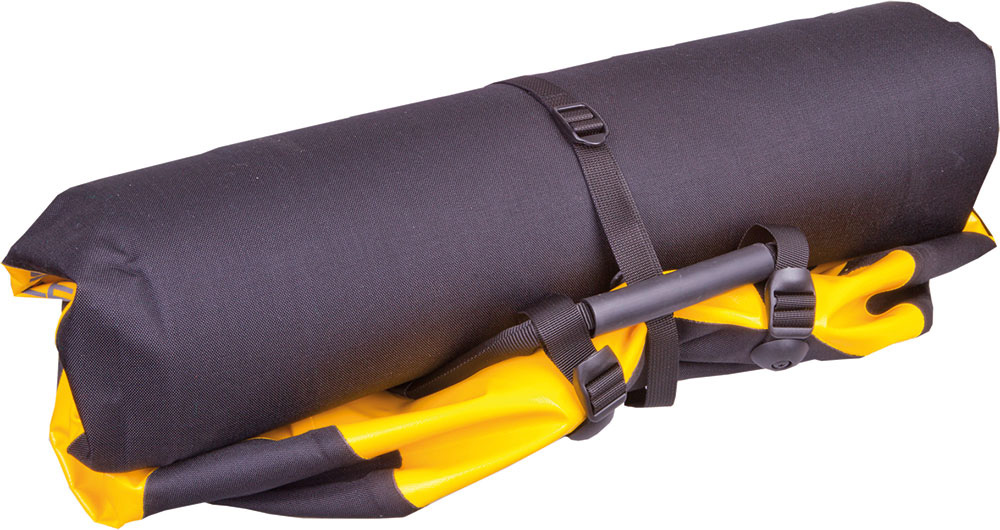
Easily fitted, low-profile 22-litre bag with waterproof zip and works off the boat as a shoulder bag too.

Cost: 99 euro from Anfibio Packrafting Store (supplied free for editorial work)

Weight, Size & Volume
Bag: 224g; straps 11g each (verified)
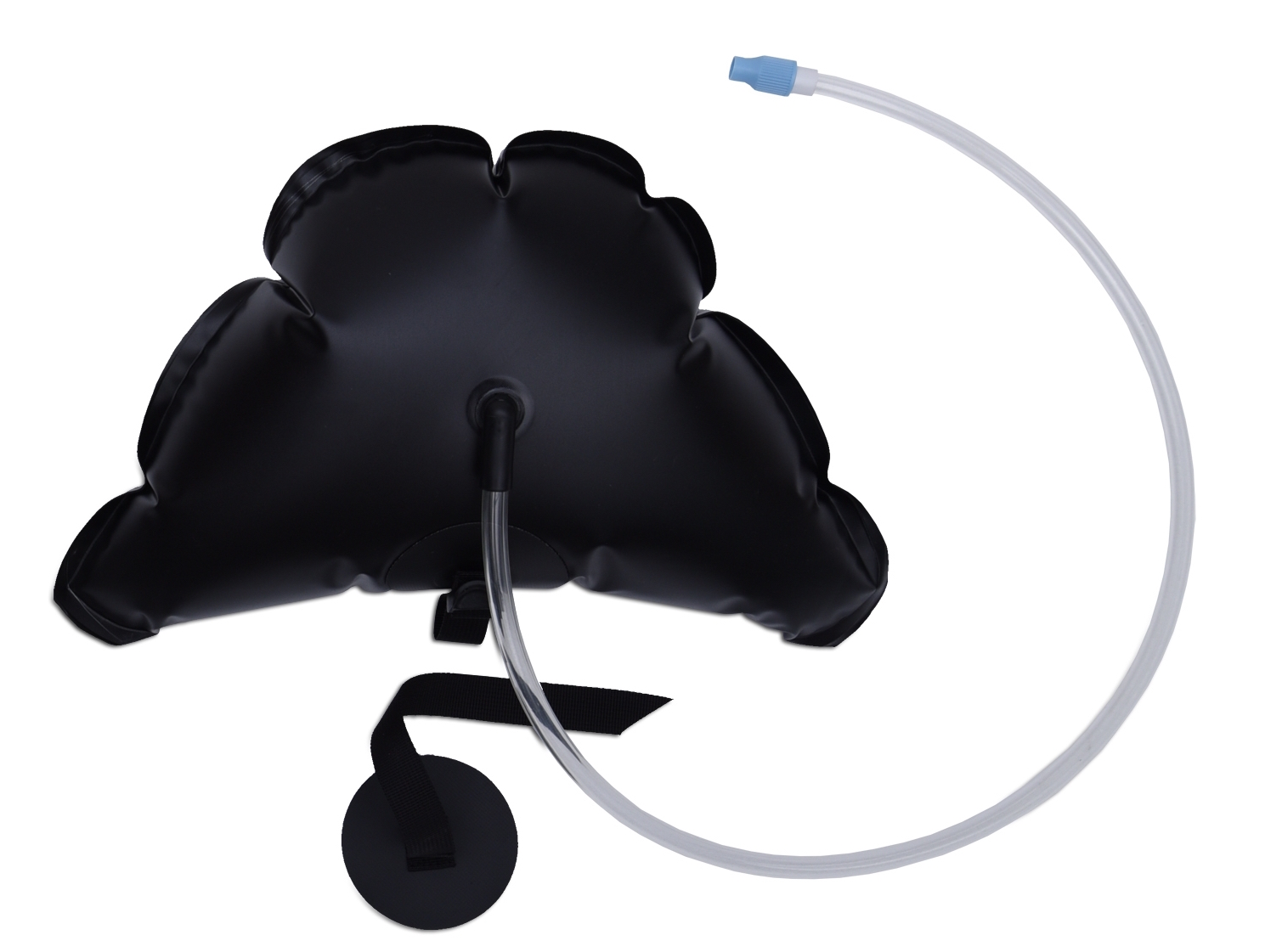
59cm wide, 43 cm long and ~15 high when full. Volume: 22 litres.

Where tested
Northwest Scotland, Medway, Knoydart, Jurassic Coast
• Waterproof construction including IPX7 zip 
• Light
• Variety of attachment options, providing you have the mounts
• Four 58-cm straps included
• Works great on the trail as a shoulder bag too
• Handy Molle rim tapes
• You can easily tuck a once-folded WindPaddle underneath or even inside

• On the bow of my Nomad was a bit of to reach; better on the Rebel 2K and TXL
• Not convinced it works well as a floor bag
• Won’t stay up to be a pillow
• A white interior and external mesh pocket would be really good
• Drop the straps and use reusable zip ties – quicker and easier


What they say
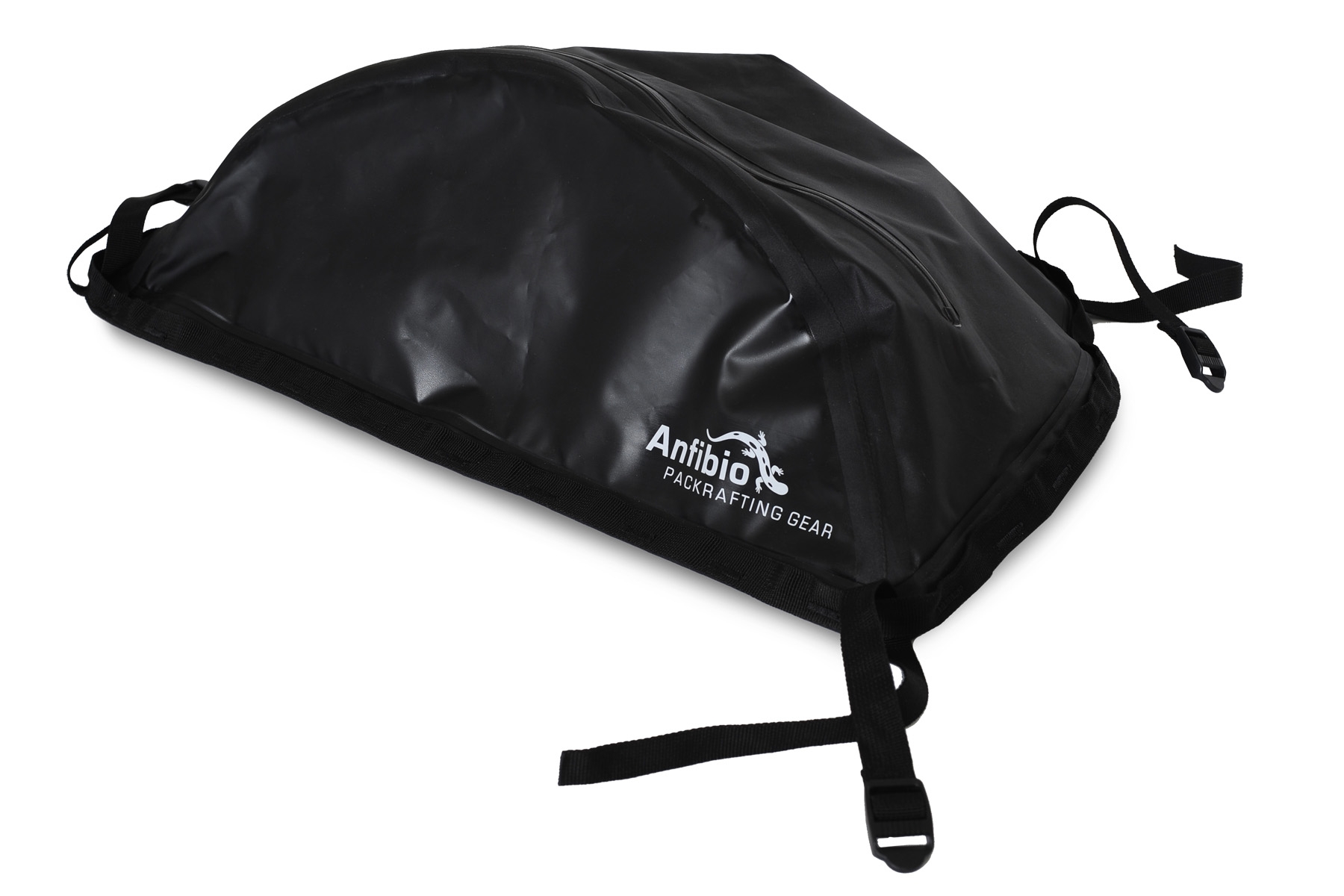
Waterproof zippered packraft bow or stern bag for easily accessible essentials on the water. Fits any Packrafts (and a lot of other boats) by full perimeter daisy chain (for variable fastening).
With the Anfibio DeckPack you can transport your essentials safely and securely in all conditions. Splash-sensitive valuables like a camera, keys or documents as well as emergency equipment and spare clothing are always at hand on the bow, the stern or on the floor beneath your knees. The DeckPack can also be quickly converted into a daypack for excursions on land or the use as hand luggage on your journey.


One great side benefit of a DeckPack is that a WindPaddle sail easily folds down and half tucks under the bag securely in seconds. A paddle can also tuck in under the bag securely while sailing.

Review
The problem with packrafts is there’s nowhere to put your stuff other than the bag it comes in, usually a backpack. I wrote more about it here, before making my own small Pakbag.

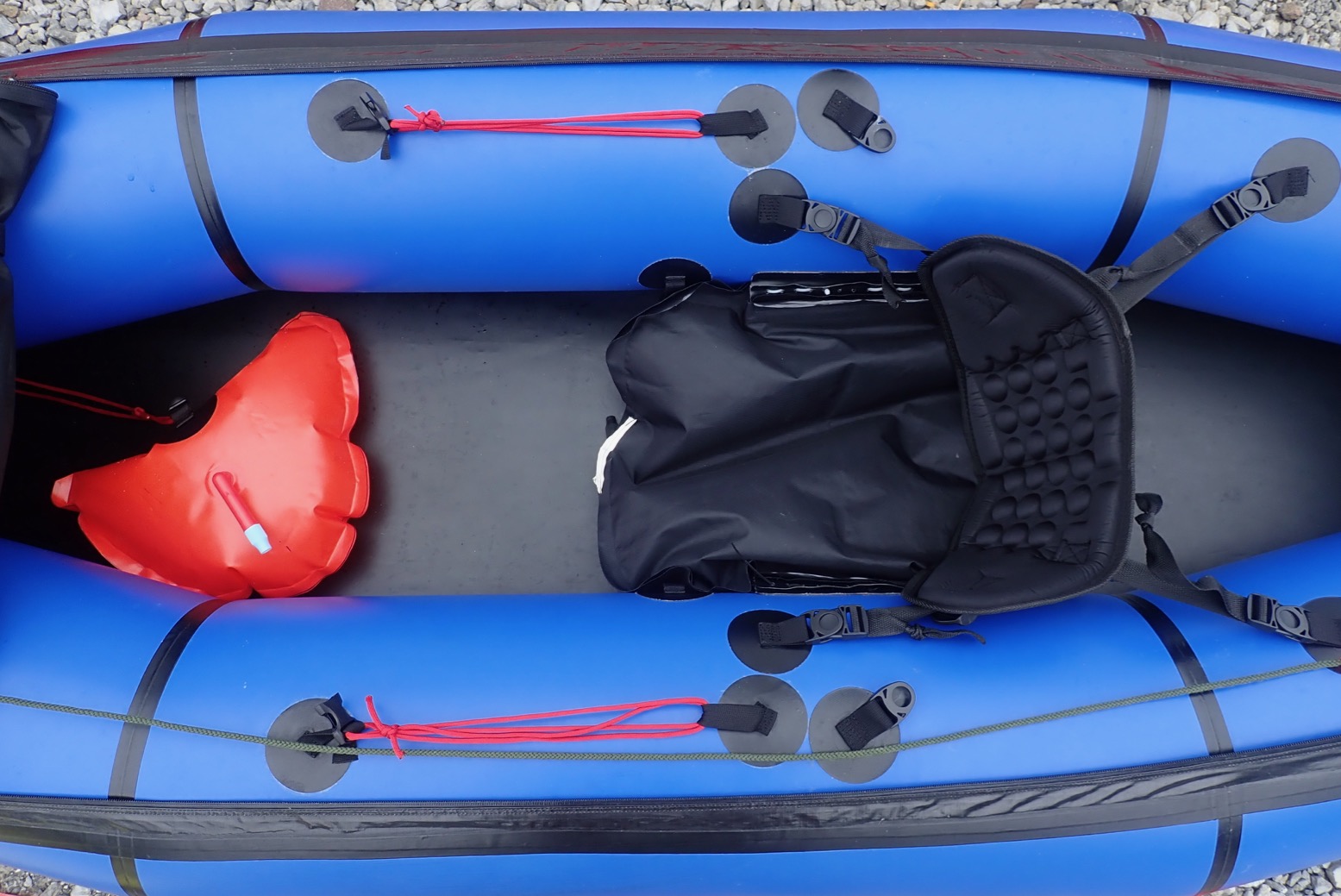
Otherwise, I like a 20-30L holdall, like my old Watershed Chattooga, or my current Ortlieb Travel Zip (right) with a handier TiZip and mesh-zip external pockets. These bags sit accessibly, but out of the way, under my knees, and on previous packrafts attached to a tab mount glued to the floor for when you flip.
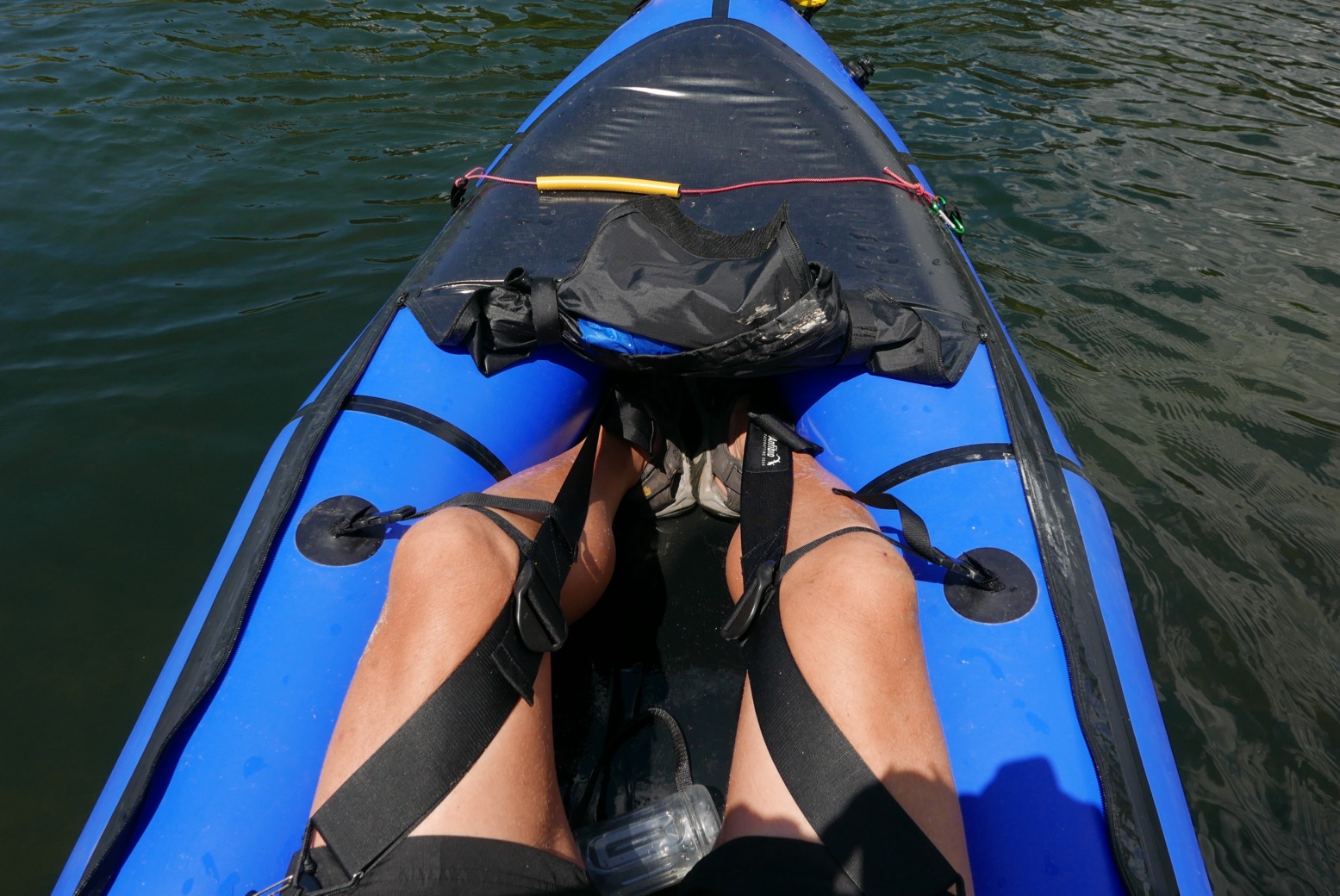
Anfibio’s DeckPack is another way of doing it. It resembles Alpacka’s larger, 24-litre Bow Bag but costs 25% less at current $/€ rates. It’s a vaguely semi-circular, PU-coated bag of around 22 litres which, unlike the Bow Bag, has a perimeter of daisy-chains (continuous attachment loops, a bit like Molle). It fits most obviously on a packraft’s bow, as this is where most packrafts have four tabs and where the weight trims the boat best. But you could as easily mount it on flatter sterns (as on my Nomad) if you already have a big backpack up front. Anfibio also suggest it can go inside on the floor too. Using the supplied straps, I’ve also used the pack as a shoulder bag while on the trail.

On my Nomad it just so happened the bow mounting tabs where just right to fit the bag without using the supplied straps. Reusable zip ties (below) are best. But mounted on the bow it was a bit of a reach on my Nomad unless I shuffled off the seat.
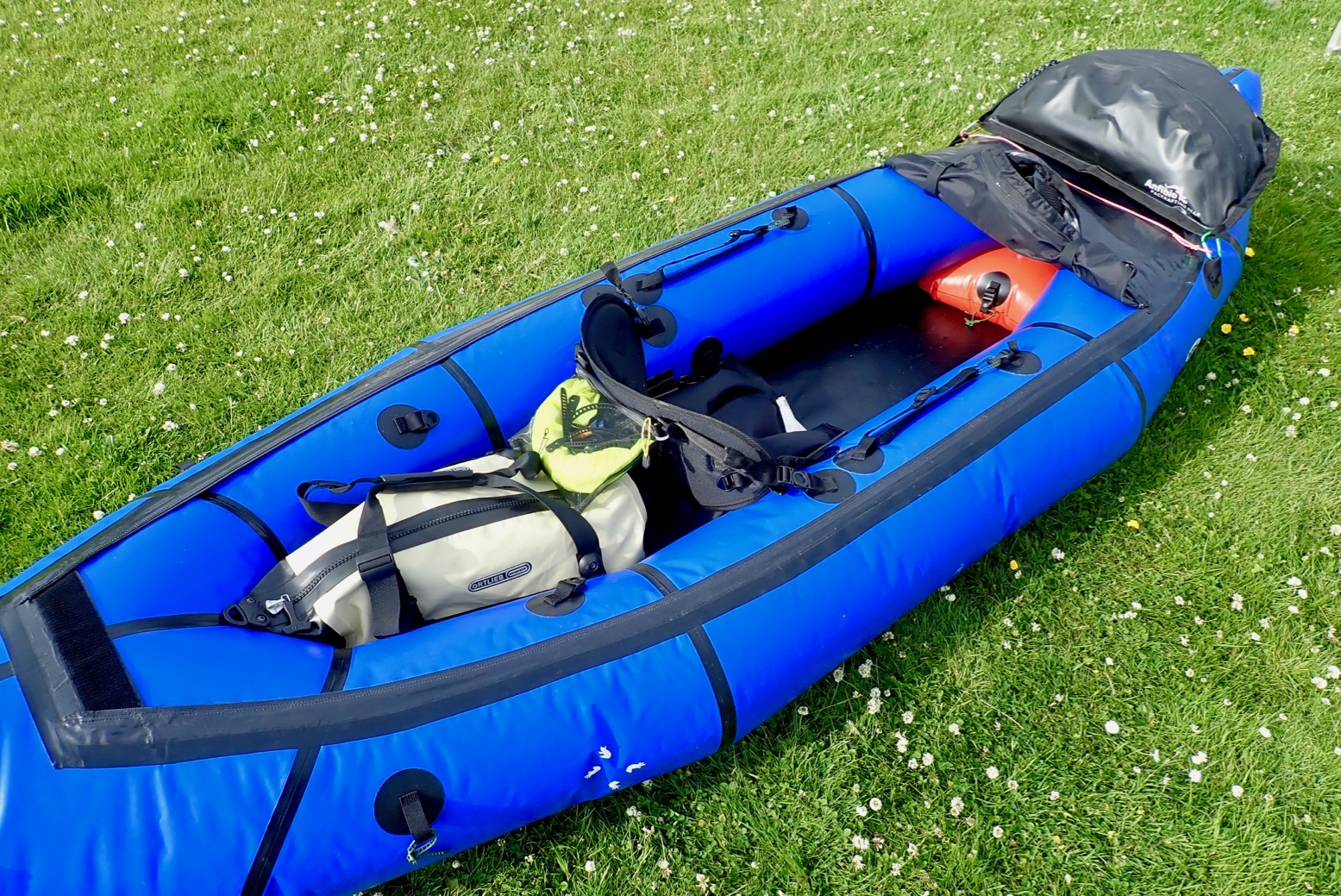
In fact there were enough hull mounts on my Nomad to position it further back (above right) using two front straps. Here it acts as a splash guard extension and was much more accessible on the water without making getting in and out too awkward.
Another very handy aspect of a DeckPack is that a mounted WindPaddle (left) or similar can be quickly folded in half and tucked under the bag out of the way when you’re setting off or need to change direction and start paddling. In strong winds this stashing of the sail is an important thing to be able to do easily and quickly; without a deck you can jam it under your knees, but with a deck the DeckPack or similar enables reliable stashing. Then, when you’re ready to sail again, you just pull out the sail and it’s up in a jiffy.

I submerged the DeckPack in the bath and, pushed underwater (ie: under some pressure) air bubbles slowly leaked out via the zip head. But Anfibio tell me:

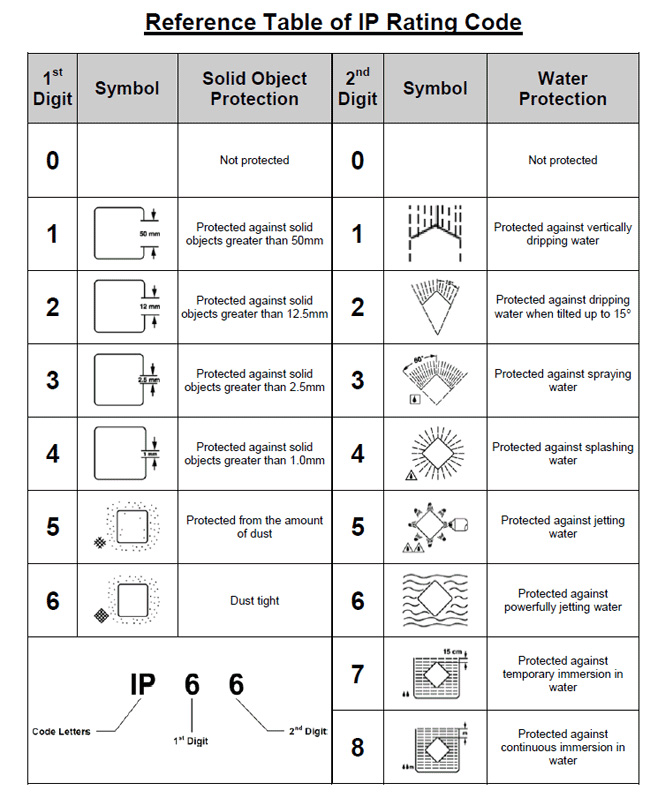
Please note, the zipper is one-way air penetrable, that means it will release air to the outside under some pressure along the zip, not only the head, but it remains watertight. It is actually rated IPX7. Under any circumstances, it can withstand submersion.

Without pressure, there may be no leakage and so the DeckPack doubles as a secondary buoyancy aid – always reassuring on single-chamber packrafts.
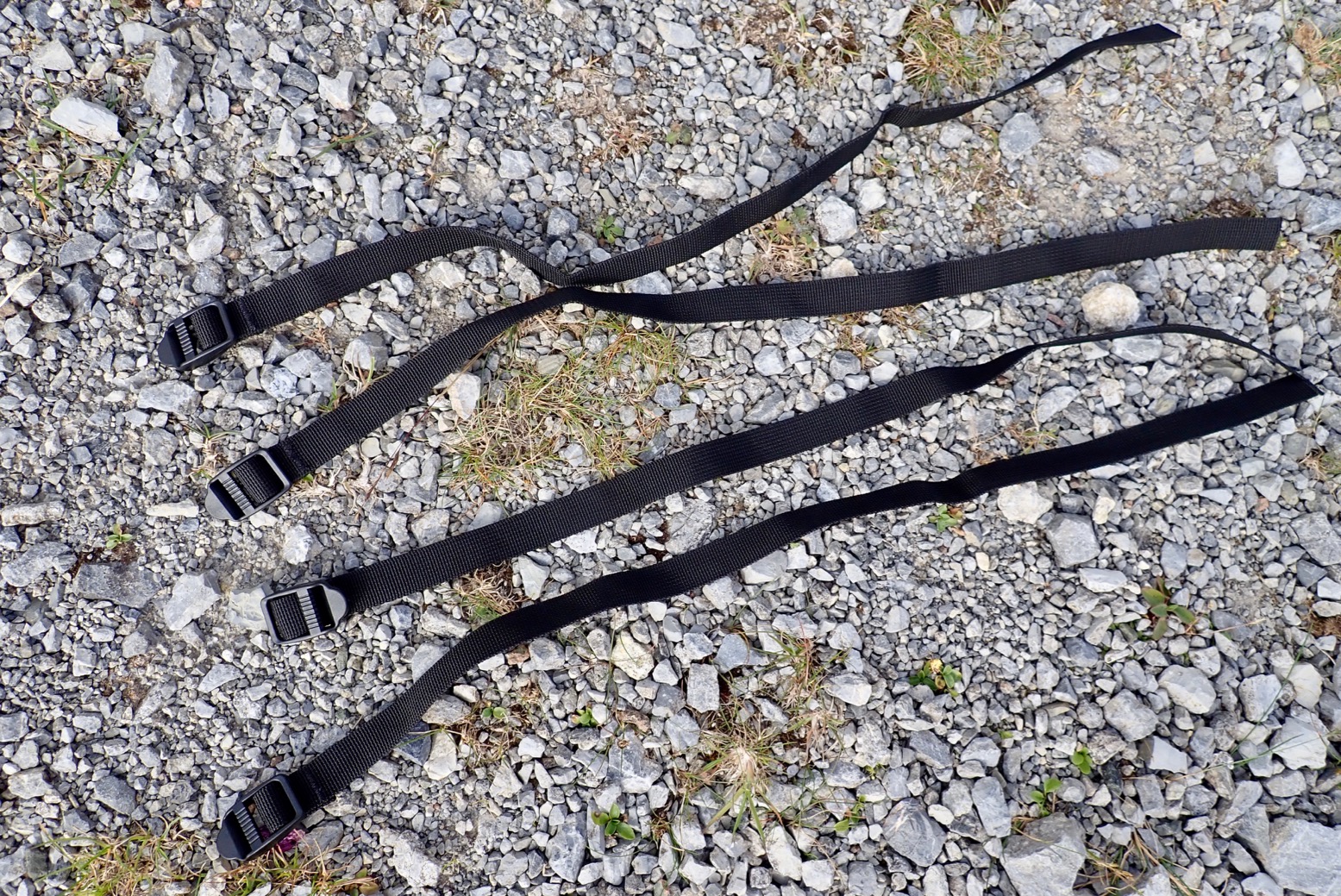
Once I realised it would work well on the IK, I ended up liking the Anfibio DeckPack a bit more than I expected, but here are a couple of suggestions:
• Drop the price and make the straps (right) optional. Most paddlers will have their own mounting means or ideas. I use four reusable zip ties.

OLYMPUS DIGITAL CAMERA

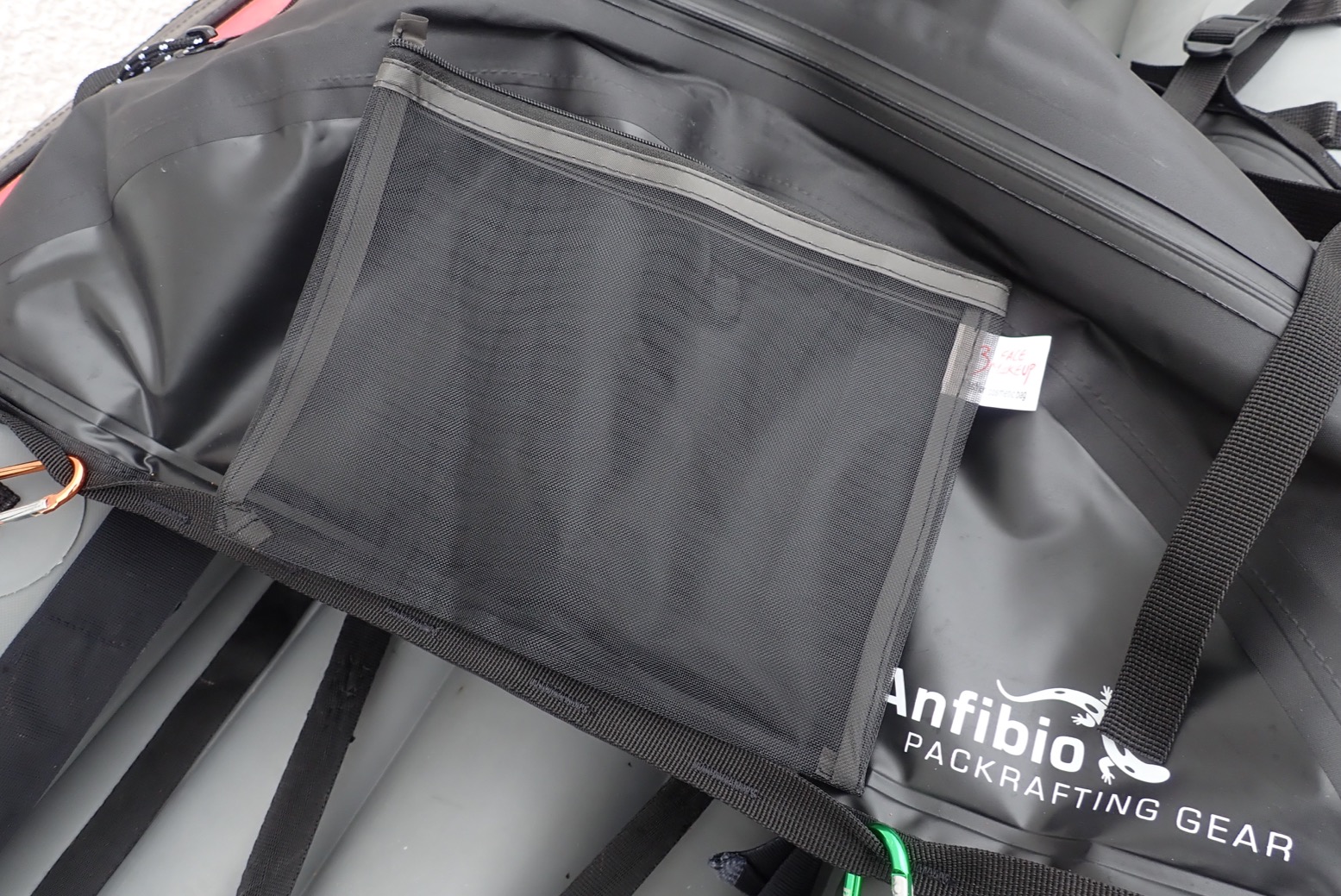
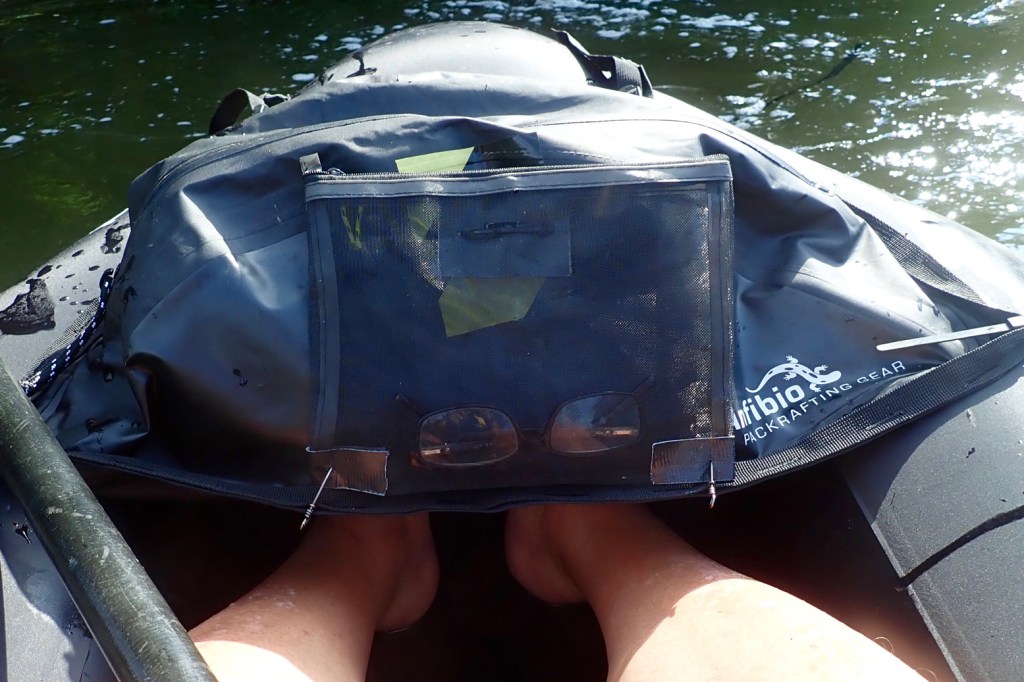
• A curved, meshed exterior zip pocket would be really handy for knick-knacks or having a GPS in a readable position. Or, run a line of daily-chains alongside the main zip, so you can DIY a mesh pocket to the outside without interfering with the main zip or bodging as I have done (left). It would make the DeckPack even more versatile and save over-working the waterproof zip to access stuff while on the water.


MYO Seatback Mesh Pouch
As mentioned above, zipped mesh pouches on exterior surfaces are dead handy. You can put stuff in them, they drain or dry fast and they enable handy access without digging into a main bag. It’s one of the things I like on my Ortlieb Travel Zip.

On eBay I found 9″ x 7″ zip mesh pouches for makeup at about 3 quid each and quite well made. I zip-tied one around the side hem to the buckles on the back of my packraft’s foam backrest (above and below). It’s a handy place to stash the inflation bag, some cord, snaplinks, zip ties and the top-up adapter for my K-Pump. I even fitted one to my Anfibio DeckPack.

DeckPack as shoulder bag

Tested: Anfibio Fly ultralight paddle

Paddles for packboats

anfibiologo
OLYMPUS DIGITAL CAMERA

In a line: Cheap, light and fully adjustable but may have too much flex for heavier paddlers/ boats or against headwinds

Cost: 99 euro from Anfibio Packrafting Store (supplied free for editorial work)

Weight: 451g (verified); length: 178-210cm, shaft 24mm; blades 34cm x 15.5cm

Where tested: Sardinia sea and lake kayaking; loch packrafting in Scotland

OLYMPUS DIGITAL CAMERA

tik
• Very light
• Inexpensive
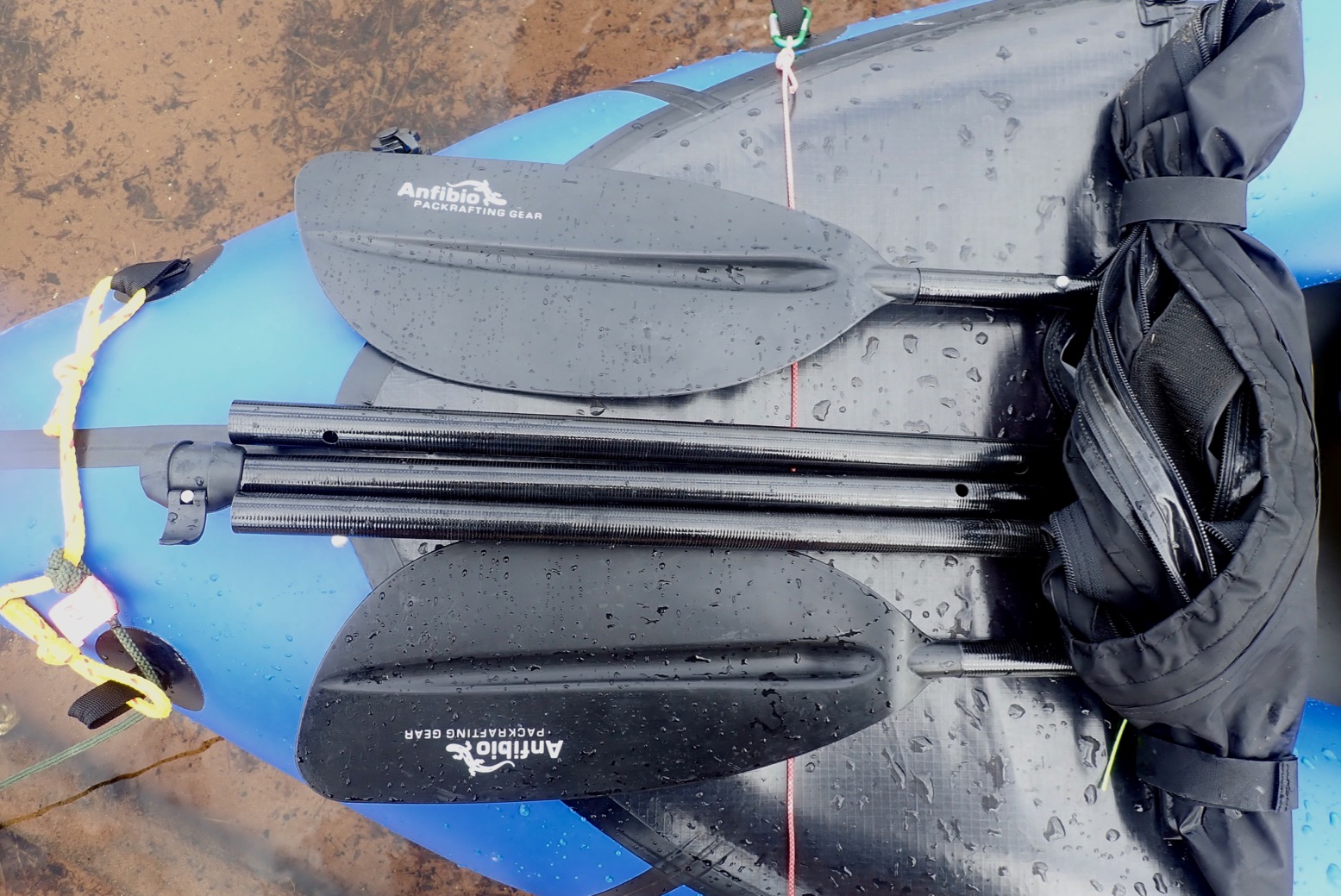
• Collapses into 5 parts of 49cm or less
• Single lock clamp to vary length and blade offset
• Telescopes down to 178cm – good for short paddlers or kids
• Would work as an adjustable tarp pole

cros
• Feels flimsy
• Small, 34cm flexy blades
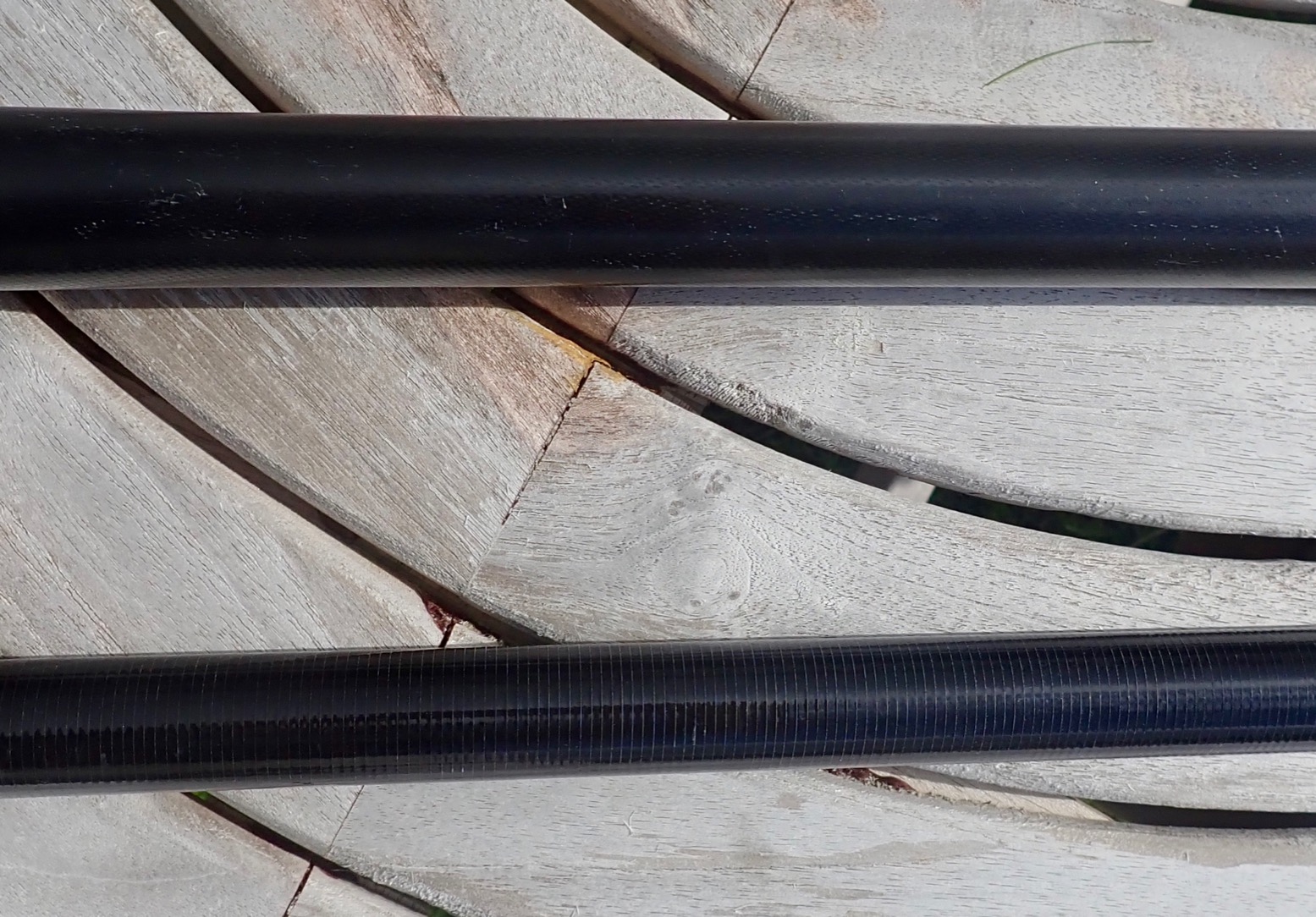
• Thin 24mm shaft diametre
• 210cm is a minimal useful length for chubby packrafts


pad-fly

What they say
Those who pay close attention to boat weight and packability should also make the right choice with the paddle. The Anfibio Fly has a minimum weight of just 460g making it an ideal ultra-light companion. It can be broken down into five segments none longer than 49cm so can be easily stored in any daypack. Despite its minimalist features, the Anfibio Fly is well featured for a wide range of uses.


Review:

OLYMPUS DIGITAL CAMERA
Fly set at 178cm and a big-bladed, 220cm Werner Corryvreken
OLYMPUS DIGITAL CAMERA

Held up and powered by your arms all day, a paddle wants to be light, but it also needs to be rigid so none of that input is lost in power-sapping flex. Combining the two effectively usually means spending hundreds while still compromising a little on durability.
The Anfibio Fly is about as light and compact as a usable paddle gets (a Supai Olo is lighter still). Paddling my packraft downwind I found the 5-piece Fly’s OK,

OLYMPUS DIGITAL CAMERA

but the thin shaft and small, bendy blades lacked the solid feel of a conventional, full-sized paddle. Add my ‘Maori-war-party’ paddling style (as I was told, once), and the Fly’s flex didn’t produce the sort of confident propulsion needed in a principle paddle. Even the much lighter and less energetic g-friend didn’t take to it – though that was in our 17-kilo kayak.
Used back-to-back against my Werner Corrywrecken, I paddled about 15% slower (5kph vs 6kph max). My other Aqua Bound Manta Ray 4-parter (left) may weigh all of 880g, but without spending at least $500 on something like a Werner Ovation (from 460g), this is simply the mass needed to get the job done at a reasonable cost.

A day later I was paddling into a 10-15mph wind with the solid Corry. It was hard on my arms and hard on the paddle; I needed to rest every 10 minutes and progressed at about 1mph. I’m sure I would have damaged the joints and maybe even broken the Anfibio Fly in such conditions, and yet at some stage, you may find yourself having to do paddle like this to get to shore.

OLYMPUS DIGITAL CAMERA

In calm conditions or as a back-up it will be fine and would suit a packrafting trek in a light packraft like an Anfibio Alpha XC where you’re crossing small calm lakes or briefly following benign rivers where you don’t need to power through rapids. The thin-diametre shaft, light weight and length adjustment down to a flex-minimising 178cm would also make the Fly an ideal children’s paddle.

OLYMPUS DIGITAL CAMERA

A Packboat in your Car

Overlanding with Packboats

Expedition Portal / April, 2019  

Packboat is my made-up word for easily portable boats that roll into a bag but deploy in minutes, in contrast with hardshell kayaks or canoes in aluminum, plastic, or composite. I’m here to suggest that if lugging a cumbersome hardshell on your overland rig isn’t for you, then a packboat weighing from 2 to 40 pounds and never bigger than a backpack might well be, while adding another great way to explore the outdoors…

Read the rest

2-up-fun-1500x1000

MRS Nomad S1 – a few mods

MRS Nomad Index Page

After paddling around in the S1 I can see some ways of improving it. So I did.

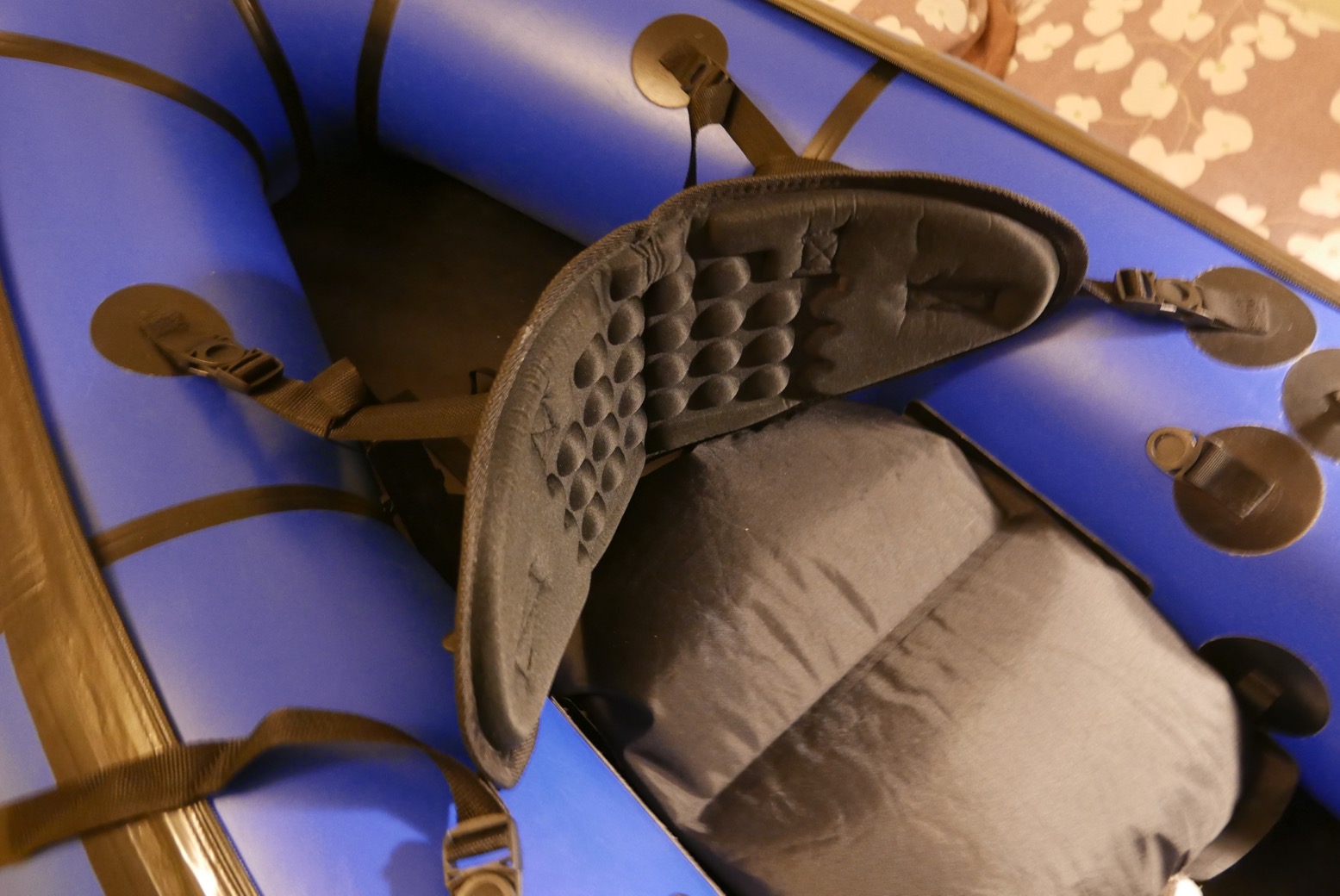
Replace the inflatable backrest with a plain foam backrest. The backrest which came with the boat had already been repaired twice and, unless it’s at the back of a packraft, who needs an inflatable backrest anyway? It’s more about support than weight-bearing comfort, like a seat base. As on my Seawave, a foam backrest (£12 on eBay; 200g) does the job and is one less thing to blow up. The press-pivot clips from the old backrest fitted on easily, and even though it only has 4 straps, not 6, it works fine. I trimmed about a foot of excess from each strap.

nomanewseat

I bought some mesh zip pockets about 6” x 10” off eBay costing next to nothing from China. I zip-tied one to the back of the backrest. A handy way to ensure the airbag, K-Pump adapter and a couple of zip ties are always in the packraft.

mrsfootrest

I fitted an Anfibio footrest cushion. You lose some inflating time there, you gain it here but the Nomad’s seat is too far from the bow for efficient bracing, even for me, and moving the seat has its limits.  I’ve since found the broad flat resting edge makes a more comfortable footrest than having them jammed in the bow. For flatwater I may not even need the thigh braces.

nomafootrest
nomappump
kpumpmini

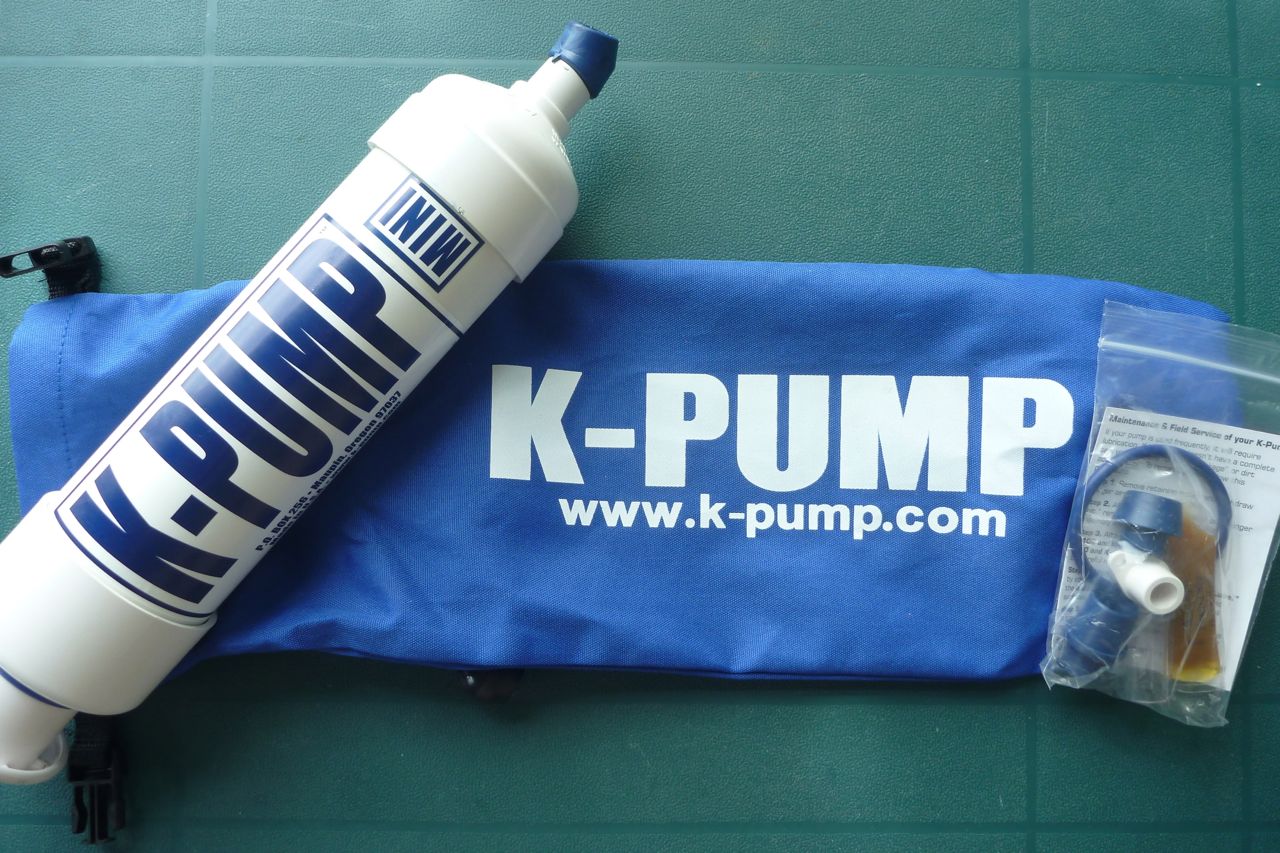
Top-up pump. The Nomad’s large volume takes a lot of tempering (topping up) to get it firm, but I can only do so much by lung. With a bit of hose on the end, the £3 pump (left) should have enabled a higher pressure, it’s the same one Alpacka were selling with some boats at one stage. But it didn’t work – or would take forever. I think it just hasn’t got what it takes. By comparison, my bulkier K-Pump Mini also with a hose nose (below), effortlessly packed in enough air to firm up the Nomad like a drum. So if it’s that important, the K-Pump it will have to be.

nomazips

Quicker detach seat base. I replaced the knotted-in laces with long, thin unzipped zip-ties threaded through the holes to make the seat easier to remove for land use or for drying and cleaning the boat. Any similar plastic wire-like thing will do, as long as there is no puncture risk. But it’s still not clip-off easy. I have a better idea.

2bags

I replaced the blue MRS airbag with a brightly coloured Anfibio one. Visibility is the rationale: because packrafts lack somewhere to stash this important item (but see below), with a neon green bag I’m much less likely to forget it when packing up (done that before). It could also be handy to wave as a rescue aid if stuck on a stormy skerry in the North Atlantic (not done that yet).

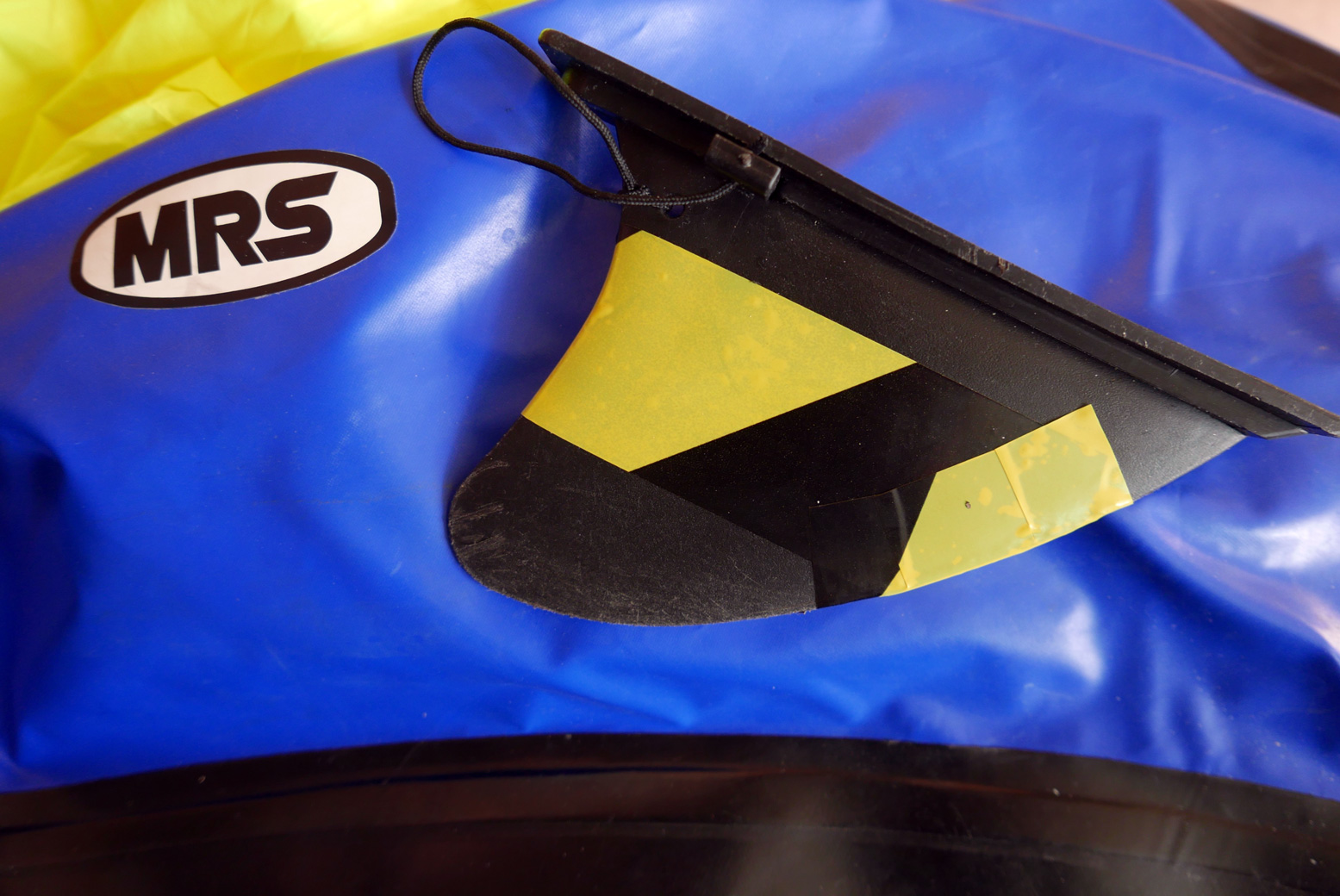
For the same reason I stuck some hazard tape on the skeg. I also threaded a reusable zip tie through a hole in the back so it can be securely attached to the boat when packing up, but in fact, unlike my IKs, on the Nomad a skeg is not essential to make it track well.

mrsskeg

I added some sidelines; handy handles when manhandling the boat, and also useful to tuck in the paddle securely across your lap while controlling a sail. Or course having the mounting points pre-fitted makes all this much easier.

Review: Olympus TG-5 – the ‘Top Gear Hilux’ of cameras

tg5

I used Panasonic’s Lumix FT2 wet cameras for 13 years or more, a simple, slim, one-handed, all-weather P&S which didn’t have to be mollycoddled. In 2011 we even used them to make a series of packrafting videos.
Later FTs seemed to lose the functionality of the FT2, so as they died or sank, I replaced them with used cheapies off ebay until they got too hard to find. Desert, pocket or sea, I’ve always liked the Lumix range’s preference for a wider 24mm-ish lens. Ridiculous zoom levels were far less important because picture quality dived. But after a really old FT1 burner unsurprisingly failed to survive a few minutes of snorkelling the other month, I decided to step up to a used Olympus TG-5 after some paddle boarders rated them.

Ft7

Commonly the Olympus TG-5 (from 2025 a TG-7 but barely changed) and Panasonic FT7 (left) get rated as the best P&S waterproof cameras. But they seem expensive for what they are, and when you consider the tiny zoom lens tucked inside the inch-thick body, you’re never going to get great shots, especially in low light or at full zoom.

lumixevc

Even then, my FTs always needed to be tricked into slightly lower (better) exposures by half-clicking on the sky, pulling down and composing before clicking. It was only when I got a Lumix LX100 that I realised
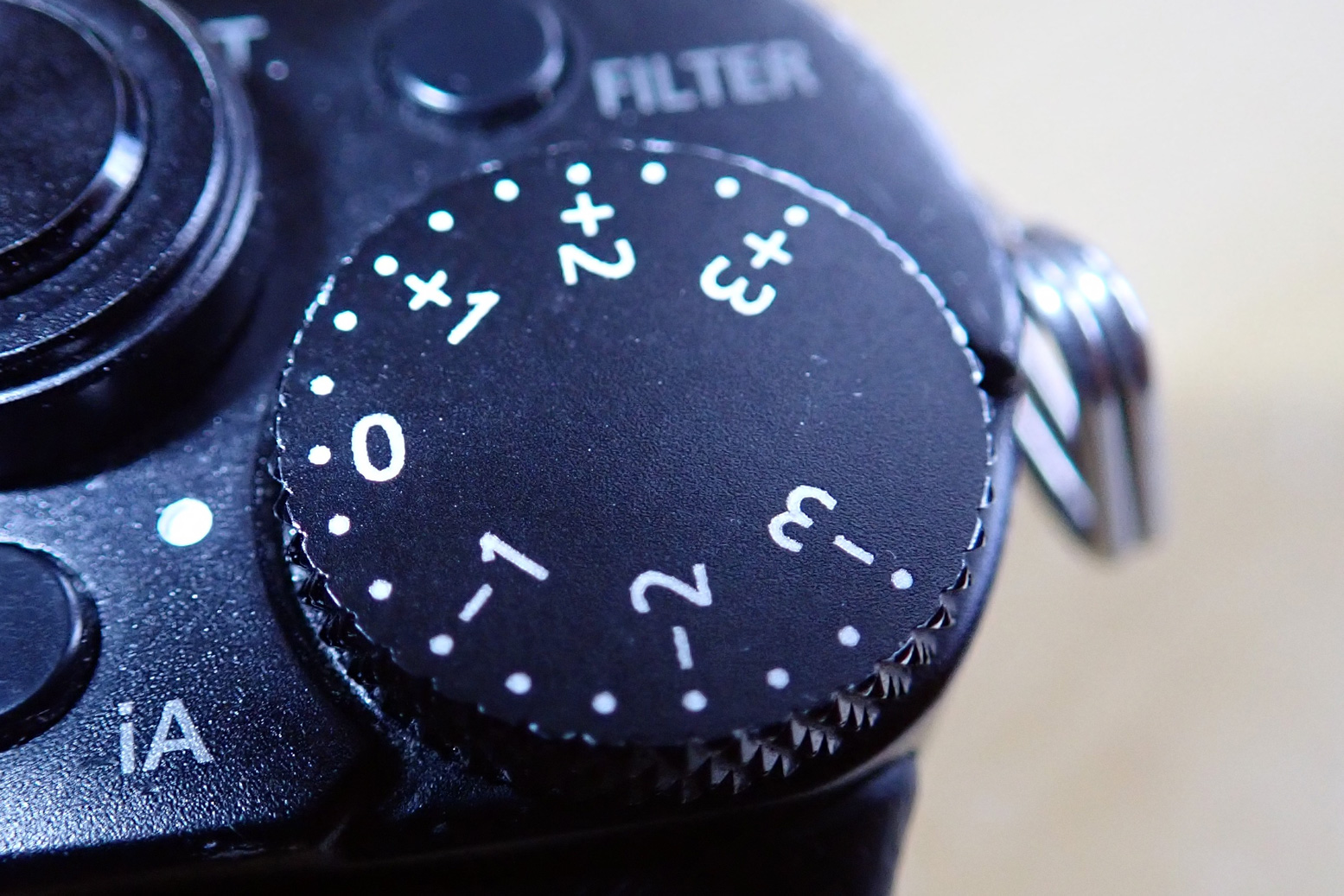
a: how handy an EV Comp dial (left) is; I use it on almost every shot. And
b: how relatively crappy some of my FT pics were. I used the FT less and less.

olyhoya

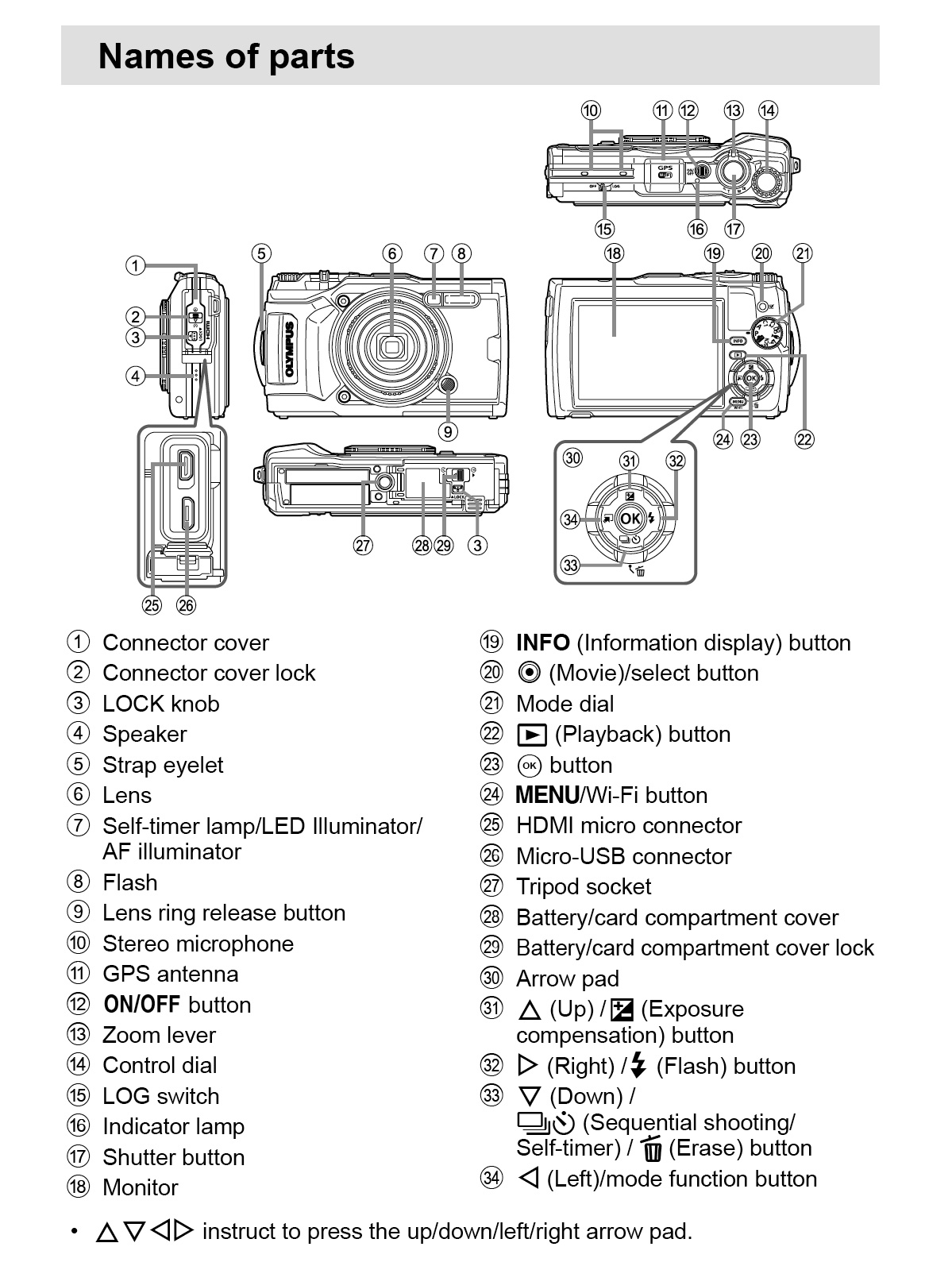
Back to the TG-5. Watching one of the vids below I learned it has an unmarked ‘control dial’ in the same, top-right position and which can work as an EV Comp dial. That alone is worth the price of the camera.

olyjjc

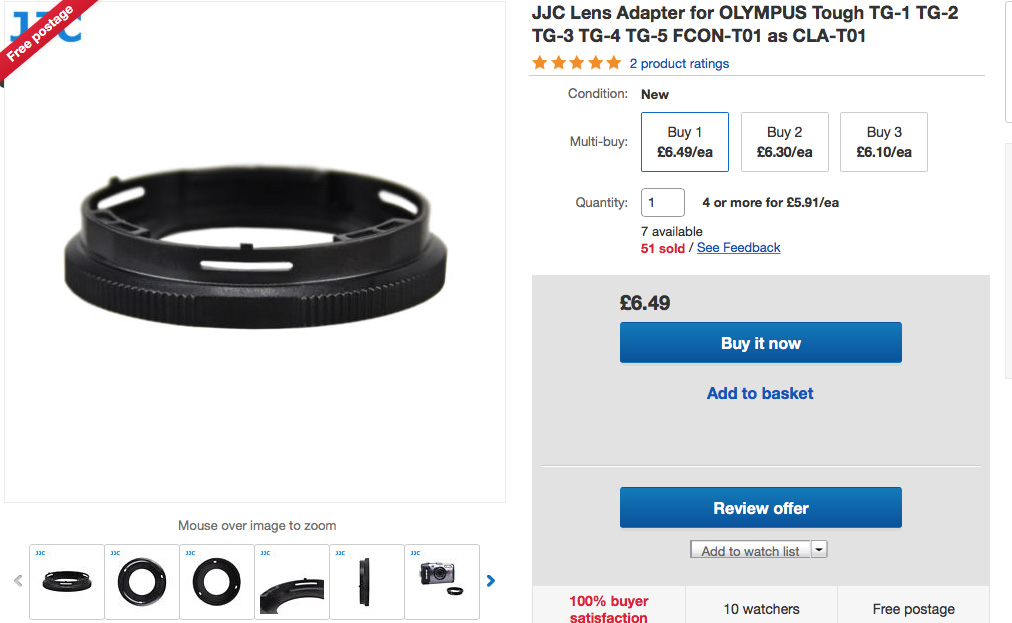
Having been inspired to RTFM for once, I now realise the TG-5 is actually much closer to the LX than I  though, not least in terms of the staggering number of things it can do. You can even clip on wide or tele converter lenses (a bodge, imo, if photo quality matters) but more usefully, you can fit a clear filter over the vulnerable lens window. For that you need the Olympus CLA-T01 adapter (£20; or a £6 JJC knock-off; above left) to which you then screw in a regular 40.5mm filter: UV, polarised, whatever (above).

With a piece of screen guard stuck over the LCD, the Olympus Tough can now be treated Olympus Rough, with both screen guard and UV filter being inexpensively replaceable. Note: towards the end of my TG’s life I dispensed with the 40-mm filter to make it slimmer in the pocket. Within a few months the stock built-in lens cover glass/plastic had become scratched (left) to the point of ruining pictures and finally finishing off the still-working camera for me. Moral: fit a quality UV lens filter; the stock cover is not up to it.

lympus

It also has an easy-to-use custom self-timer, a blessing for us paddle-blogging singletons. Normally I’ve had to settle for 3-shots-at-10 seconds, or simply shoot video and extract a cruddy still, but on the TG you press the sequential shooting (‘6 o’clock’) button and press the Info button to edit:
• delay (1–30 secs).
• number of frames (up to 10) and
• frame interval (0.5–3 secs).

I have tried doing selfies with the video and extracting stills, but even on the highest ‘SuperFine’ video setting, the extracted 16:9 still is 1920 x 1080 pixels, while a photo is 4000 x 2256. You do notice the difference so getting to grips with the custom self-timer is best, even if autofocusing on a passing boat can be hit and miss.

olychar

The battery is a slim 1270Ah which does masses of shots (four days or more) and you can charge it in the camera which is one less thing to carry. But for 20 quid I bought 3 clone batteries plus a travel-friendly USB housing rather than a mains charger (right) which will work off a laptop, battery pack, USB wall plug or a solar snorkel.

olycomp

Once I’d have said GPS position, elevation and a compass in a camera were gimmicks. Now I’d admit they add some redundancy when a proper GPS unit goes flat, as it did on me one time. There’s an easy-access external switch to turn the GPS on to log a waypoint of the picture, for what that’s worth. Otherwise, all the other data, as above, is viewable by simply pressing the Info button with the camera off. Up it comes for 10 secs, north by northwest. The TG-5 will also take great pictures. At home I use my TG almost every day.

tik Tough by name and tough by nature (see below)
Red; easy to find on the river bed
EV Comp dial in the usual position
Battery charges in the camera
Easy to turn on and zoom one-handed (good on a moto)
Spare 3rd-party batteries from £4; USB charger from £8
Good hand grip
Rated at 15m of water so ought to survive some splashes
Slim and light (260g with chunky wrist strap)
GPS, elevation, compass, and even tracking with the camera off
Easy to access and configure custom self-timer
cros A baffling new menu to master – sigh
LCD text is a bit small
Expensive, but discounted to ~£330 new
Annoying ‘Olympus Digital Camera’ meta data on imports cannot be switched off
That’s it!
Camera fell down there

A smashing camera
Two times I thought I’d killed my TG, as I’ve done with so many cameras over the years. Biking in the Moroccan Sahara one time, the red wrist strap loosened unnoticed and the TG tumbled along a hard road at 30mph. Picking it up, one corner was smashed in, but amazingly it still worked. I taped up the hole, gluing it later and used it for a few more years.
Scotland 2021: lunch on a slatted plank bridge up a glen. The camera slipped out of my pocket and fell through the gap into the a stream bed where it lay for at least five minutes before I noticed. This must be it, surely; just as long as the SD card makes it. Because I never use it under water, I’ve never bothered silicone-greasing the two access doors as they recommend, but I fished it out, blew the water out of the battery compartment and it still took pictures!
But soon the screen gradually clouded over, so did the lens and one by one, functions dropped away. Eventually turning it on gave nothing. Water must have worked its way though the system, shorting everything out.
Back home, a couple of days later I bought another used TG and had just started stripping the old one when I thought, I’ll just slip a battery in on the off chance. To my utter amazement the TG5 fired up good as before. All functions resumed and photos saved to and exported from an SD card. This is a Tough camera! I now have a spare as-new TG5 one which I was thinking about getting anyway.

Wandle: An Urban Packrafting Nightmare

See also: Kebab Death Weir Tunnel

We had a good look, then shot this underground weir and were spat out the other end, grinning and alive.

Screenshot

Years ago I recce’d South London’s Wandle ‘River’ from Merton Abbey Mills to the Thames at Wandsworth – a varied urban run of just a few miles – and all from the safety of my pushbike.
It’s not far from where I live but I decided the Wandle held too many elements which played to my watery phobias, not least near the end where the current sucks you into a series of sunless tunnels (left) under a shopping centre and former brewery. Sounds like a perfect setting for a macabre Gothic horror story.

But not everyone is so timid. Tim from Longshore International (defunct) followed tnhe Wandle with a couple of his boats. Full story with a description of the real hazards and more photos on Medium.

wanlong

Packyaking in Whitianga (NZ)

MRS Nomad Index Page
Packrafting the Wairoa River (NZ)

nzwhitmap
diver

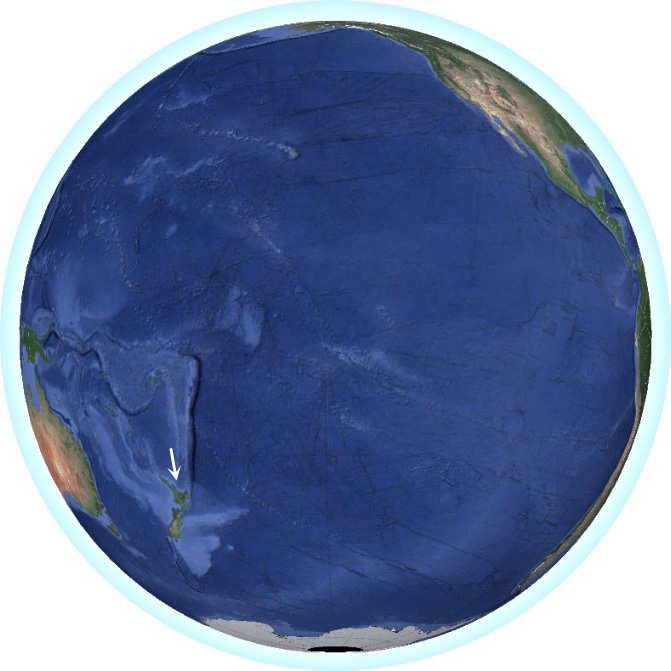
At a Dive shop in Whitianga on the North Island’s Coromandel peninsula half a day from Auckland, I asked the teenage girl left at the till which way the tidal currents flowed around here. She smiled at me like I was an idiot and explained slowly.
‘Well, when the tide comes in it like, comes towards you, and when it goes out, it sort of goes away.’
Before I got into sea paddling that’s what I would have said, but I explained what I meant, that tidal flows moved to and fro in a given direction along a coast, not just in out, in out, like a Can-Can dancer’s legs At any constriction or headland it’s a good thing to know when planning or timing a paddle. She looked it up on the internet.

‘Anticlockwise.’

‘Thanks.’

nzwhitibay
pacificoh

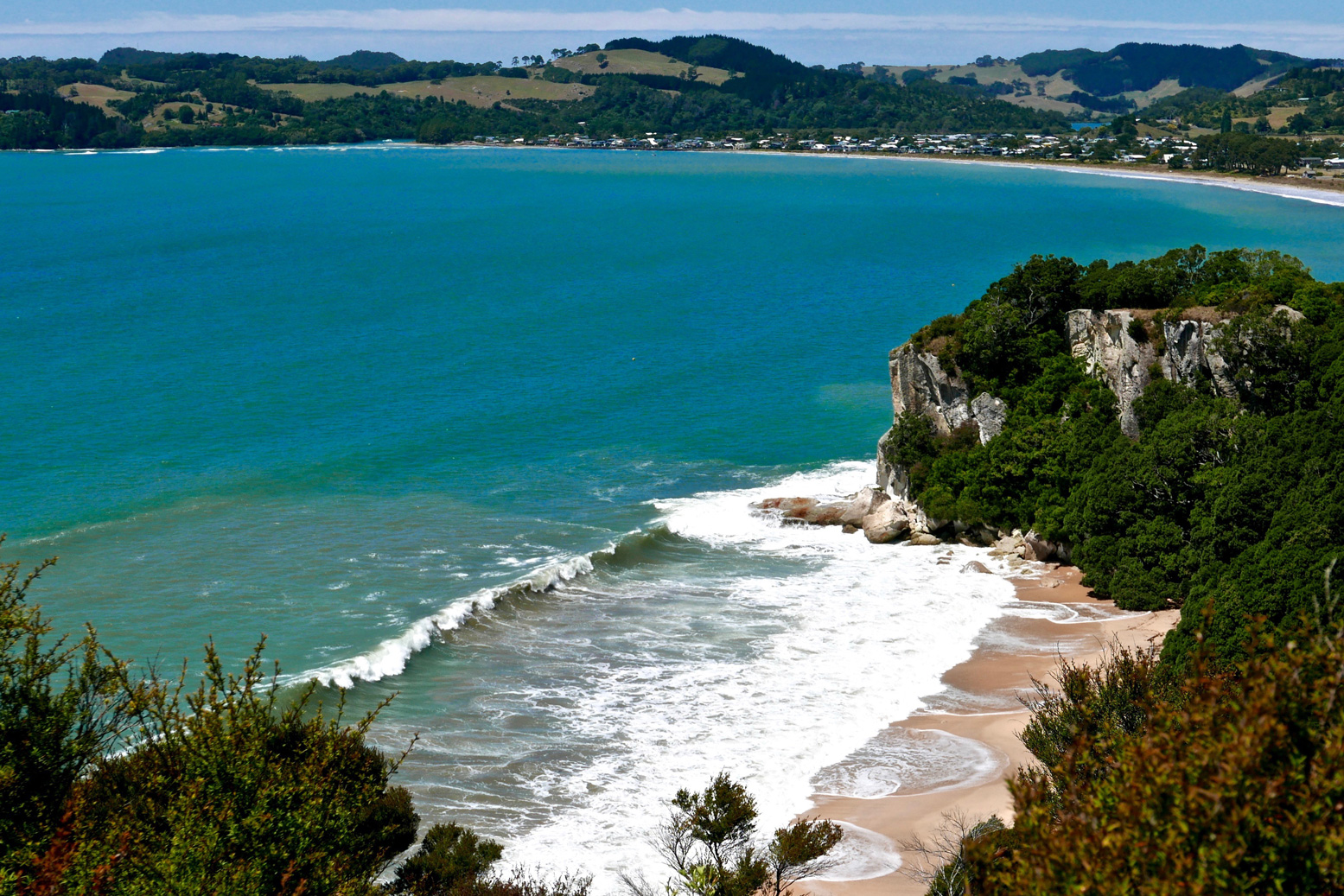
Tides apart, did I really think the surging expanse of the Pacific would be calm enough for a humble 10km coastal packayak round the cliffs of Cook Bluff to the famous and much fridge-magneted tourist icon of Cathedral Cove (painting below)? No, but now on my wavelength, Dive Girl went on to offer me tomorrow’s gloomy forecast: 4-metre swells, 35 knot gusts and occasional showers of razor-billed flying fish.
A good day for a cliff walk then. Coming back next evening from Cooks Beach, I  was a little appalled to see Mercury Bay awash with white-capped rollers, as if some tsunami was on the go. Surf’s up, if you have the nerve.
It was right here in 1769 that Captain Cook and his crew – on the hunt for the fabled Terra Australis – first raised the British flag on the New Zealand shore while engaged in observing the transit of Mercury.

cathcov.jpg
nzlonebay

Maybe I’d get a chance the day after, my last. But even in the calm morning, the storm’s after-swell was still pounding the cliffs and beaches of Mercury Bay. Who knows how it was at the Cove of Broken Dreams which, they said, was still closed from the land side, anyway.
Luckily, the cliff-rimmed natural harbour of Whitianga was sheltered from all this Pacific aggression. And better still, the tides were ideally timed to be swept into the inlet, before getting spat out on the mid-afternoon ebb like a retching gannet’s breakfast.

nzwhit - 3

Settling up on a grassy strand near the marina, I realised I’d left my pfd at the hostel – this after noting a warning sign advising that all in <6-m long boats required them. Oh well, if spotted hopefully the harbour master will zoom up alongside me on his jet ski and lend me one for the day. As it was, I was heading inland where there’d be no one.
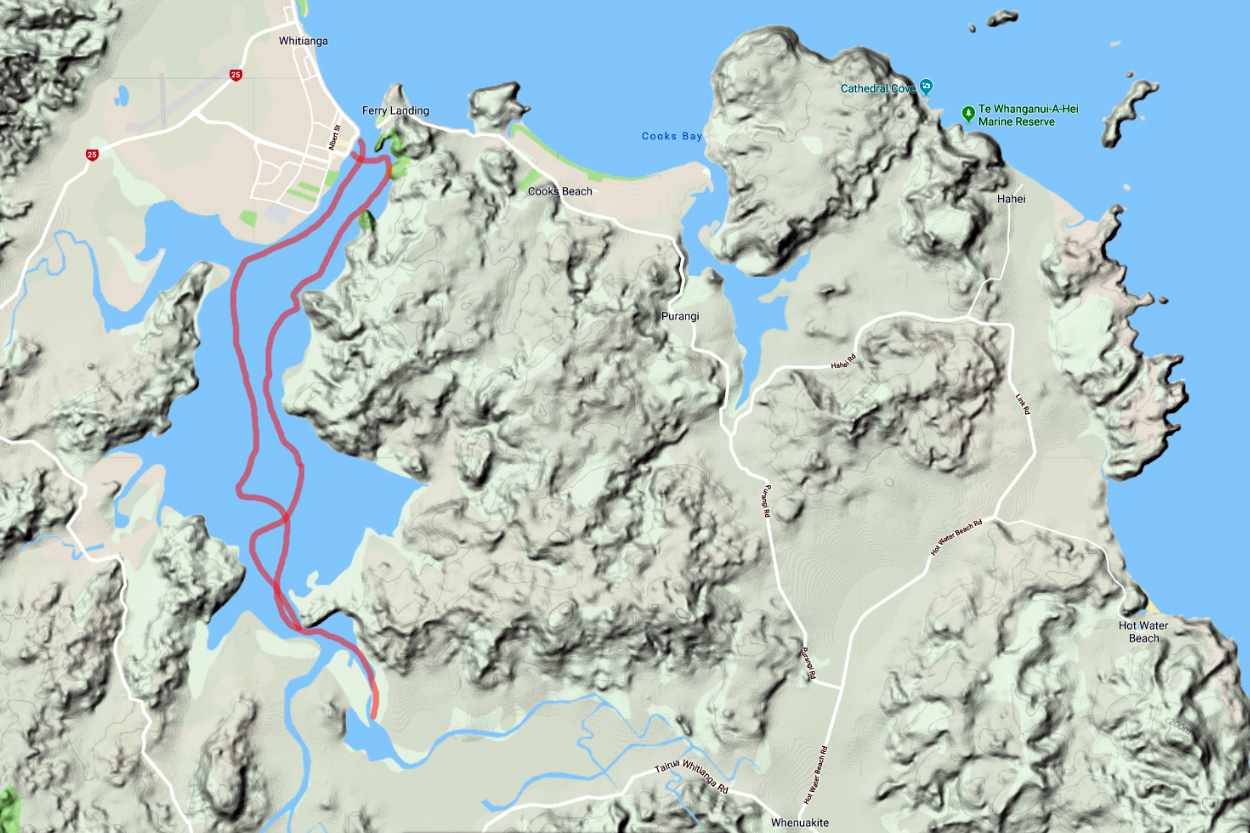
Once tempered up via my hose extension, I scooted over the yacht-clogged harbour mouth, ferrying across the strong current filling the shallow inlet, tilting marker buoys as it went. I was told later that, partly as a result of dredging a channel for marina access, that Whitianga’s natural harbour was fastest flowing in New Zealand.

nzwirshelf
handpump
beg18

On the west side, under a wave-carved overhang (left) I hopped out to temper the MRS again. I like an inflatable as firm as possible but am finding, perhaps due to its larger than normal volume for a non-pump inflatable, that the S1 commonly needs a second pump up a few minutes in.
I’m now wondering if something about half the size or volume of my 600-g K-Pump Mini would be handy to get the Nomad up to operating pressure in one go. This eBay pump (right) cost me just 3 quid posted and is actually similar to the mini pump Alpacka initially offered with their $2000 Alpackalypse. With a pump like this, after high-volume air-bagging, you could judiciously pump to a highish pressure on the shore – assuming the cheapo eBay pump can hack it. Yes, a pump’s another thing to carry/lose and the comparatively bulky K-Pump will do the job in a few short strokes. But unlike a paddle, it’s not ‘mission critical’, as they say in the movies.

Fitting a PRV and being able to pump away until the PRV purged (as I do with my Seawave IK) would be even easier, because you could also happily leave the boat out on a hot beach without fear of it exploding into a thousand ribbons of ruptured TPU. PRVs are unknown on packrafts so maybe I’m over-thinking it, but double-tempering is a bit of a faff even if, as humans go, I have a good pair of nicotine-free lungs.

nzyacht

Anyway, I padded southwards, weaving among the lifeless yachts and cruisers, reminding me of our Hayling Island paddle last summer. Let me tell you, in this world there are a lot of massively under-used boats bobbing around and gathering algae.
Once past a sinister big black tug, the bay opened out and I was in the clear. Nearby, alongside a jetty below a cliff leading to a dwelling hidden in the bush, I spotted this pioneering-era carving.

nzwhit - 2
nzwhit - 1

Beyond here the shore looked oddly mangrovey and inaccessible. Mangroves this far south at nearly 37°? I’d only ever seen then around Darwin where I’d once eaten a so-called oolie worm which feeds in their trunks. Sure enough, turns out hereabouts is the southermost extent of mangroves.
I’m not so keen on this sort of drab coastline, but live and let alternative lifeforms live, I suppose. In fact it was fun to probe the passages below the shady groves as it was due to reach 30°C today.

s1nzmangro
nzwhit - 7

It took a bit more idle nosing about before I finally located the channel leading southeast to the two small rivers which fed the harbour inlet. The channel narrowed as the supposedly slack tide swept me into the tangled maze of salt-loving woodland. Curving left and right, south and east, as the scaly boughs closed in, it occurred to me that this far down in the bay wouldn’t be a great place to get lost and then stranded in thigh-deep, oolie-ridden silt for the next few hours. Who knows how quick the tide turns. Anticipating this, I’d clocked a hilltop landmark over on the western hills to help orientate myself, then pushed on in as far as I dared, getting maybe 500m from shore before spinning around into the still-rising tide and scuttling back out into the open.

nzwhitbaymapp

The tide really ought to have turned by now, carrying me back the way I’d come, but the forecast nor’westerly was on time and in my face. Luckily the Nomad’s generous stub nose stopped me making a mockery of the harbour’s 5-knot limit so it was a long hour’s slog back to the harbour mouth, bent against the breeze and slapping waves. A similarly windy afternoon on the Wairoa River a few days back must have got me into paddling shape, so the effort was all put down to good exercise.
Once past the marina, I’d hoped to slip below the jetty, under the harbour master’s cabin and out into Mercury Bay itself. Maybe cruise below Shakespeare Cliffs and then land on Buffalo Beach, like a proper Pacific navigator. But it was not to be. Chances are I’d have just embarrassed myself, tumbling through the surf and into the shore fishermen’s barbed hooks.

nzwhit - 6
nzwhit - 12

My time was up in NZ. Next day, rolling my cleverly adapted UDB (more below) to the bus stop, all was as calm as a kiwi’s cozy nest. I was reminded how sea kayakers must feel when they haul all the way up to the Summer Isles to be met by tent-bothering gales, only to find great conditions as they pack up.
It’ll be there next time and for sure the east side of the Coromandel looks like the fantastic place for some fabulous sea paddling. The beachside hostel I stayed at laid on hefty old SoTs for free and there were plenty of kayak touring outfits in town and around. Give it a go if you ever find yourself down here.

nzwhit - 9

nzwhit - 10
trolley
ort140
ortliebrolled

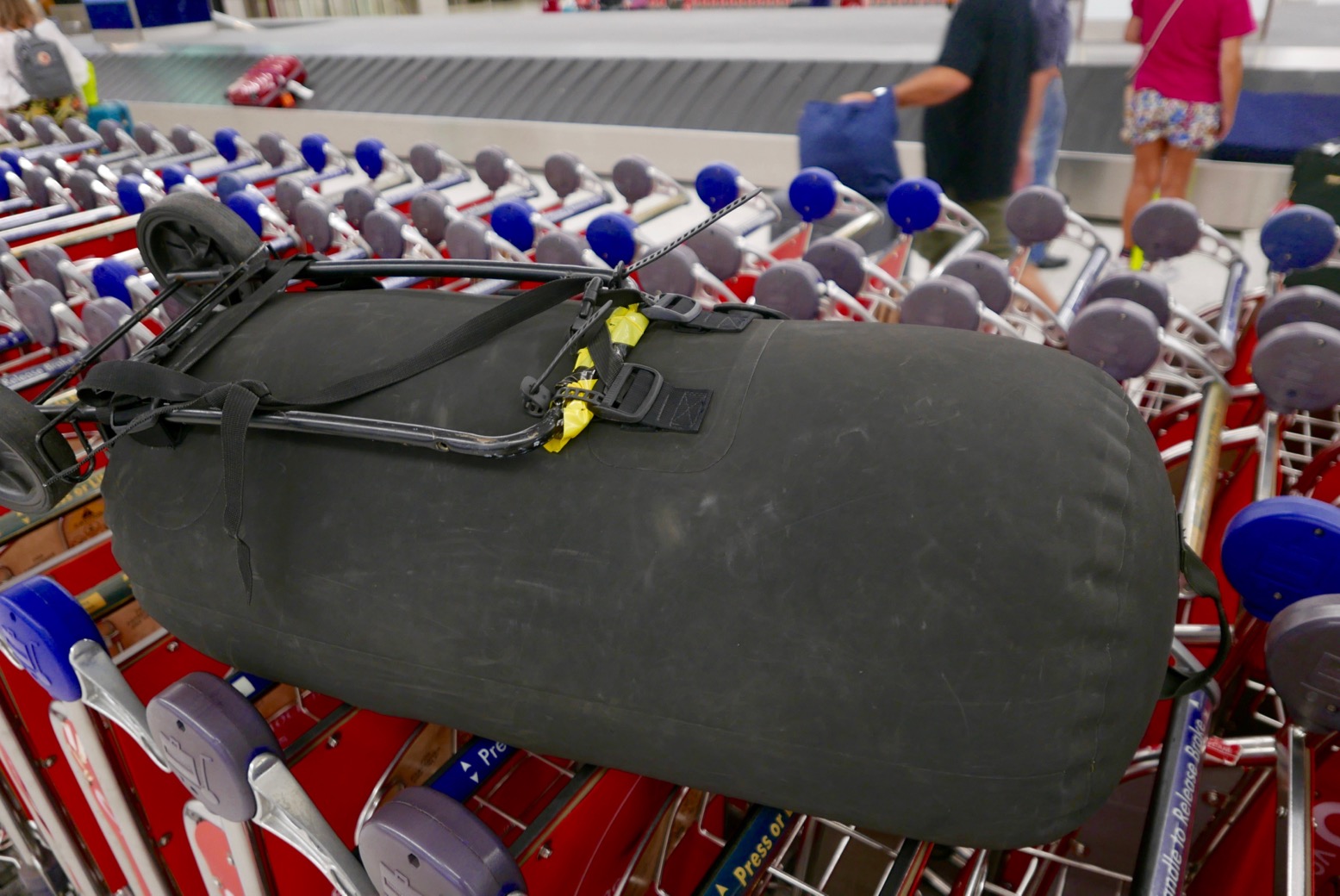
For this trip moving from airport to airport and in a bid to spare my creaking back, I mated my trusty Watershed UDB to a chopped-down lightweight folding trolley I’ve used on previous packboating trips. With chunky zip ties and a strap, the shortened frame fitted securely to the rugged UDB’s back harness tabs.
My load was way under the airline limit, but the thinking was that, once packboating my planned river for a few days, the UDB and small trolley would still be compact, compared to a regular wheeled travel bag.
It was all a way of stopping myself buying the painfully pricey but actually only 500g heavier Ortlieb Duffle RS 140 I’ve been eyeing up. Fitted with an IP67 TiZip (not as good as the UDB’s brass drysuit zip), it’s the biggest one they do, so ought to take my Seawave IK and gear. Lacking a backbone frame of Ort’s RG duffles,
the 140 actually rolls up even smaller (right) than my DIY contraption.
A handy side benefit (which might also apply to the airtight Ortlieb), was that being able to inflate my UDB into a rigid airtight sausage made it easier to wheel around (but not as comfy as a full-framed wheel bag). I got some odd looks giving my bag a blow job by the arrivals luggage carousel, because at departure check-in I had to tug the zip open a bit to ensure it would air-off safely at 32,000 feet.
In my hand I carried my nifty Ortlieb 30-L Travel Zip.

Packrafting the Wairoa River (NZ)

MRS Nomad Index Page

NZS1The MRS Nomad S1 I tested last summer in Scotland is my new packraft. Goodbye to my great little Alpacka Yak. Like the Yak before, it held its value and I sure got my money’s worth out of it over 4 years. The Nomad is an unusually long packraft with a central seat, making it more of a packyak which paddles much like a short IK (no yawing), has more space and weighs under 5kg with a roll-back skirt and thigh braces. So – easy to walk with for as long as you like.

I’d originally planned the classic North Island paddle: the canoe-able and therefore safely packraftable Whanganui River in the southwest. The best section is a 5- or 3-day-with-huts run for which you need to be self-sufficient as there are no towns, let alone roads or bridges until you take out at Pikiriki. I was set up for that, but it turned out getting to the remote Whakahoro put-in, then from Piki back to Auckland for my plane took more time than I’d allowed myself, once my flights got rescheduled.
No worries, this in New Zealand: international nexus for outdoor activities. I’d had a bike test arranged at Tauranga on the North Island’s Bay of Plenty, so decided to stick around that region instead of watching days pass by from a bus window.

nzt - 1


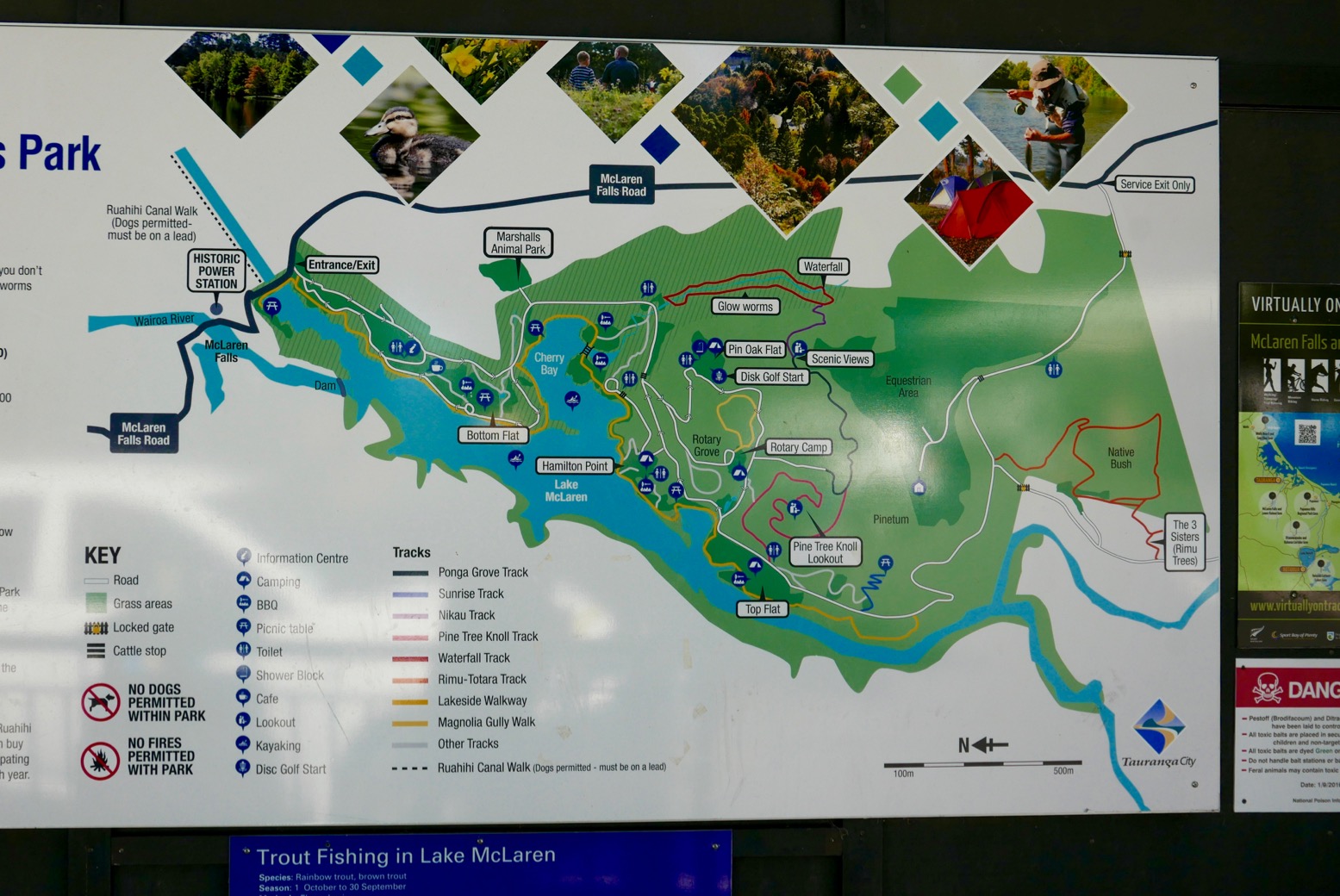
A brochure at the hostel proposed evening kayaking up a glow-worm gorge off Lake McLaren, 20kms south of town. Even in daylight that sounded fun, so I taxied over and planned to walk and paddle back. Lake McLaren is a country park (left) with forest trails spread around a small reservoir and an old power station by a waterfall. A good place to reacclimatise myself with the S1 as a quick spin in Sydney a week earlier showed up a crease mid-hull which suggested a slow puncture or just the usual ‘is-it-a-bit-soft?’ neurosis combined with too much fine dining.

nzt - 9
nzt - 5

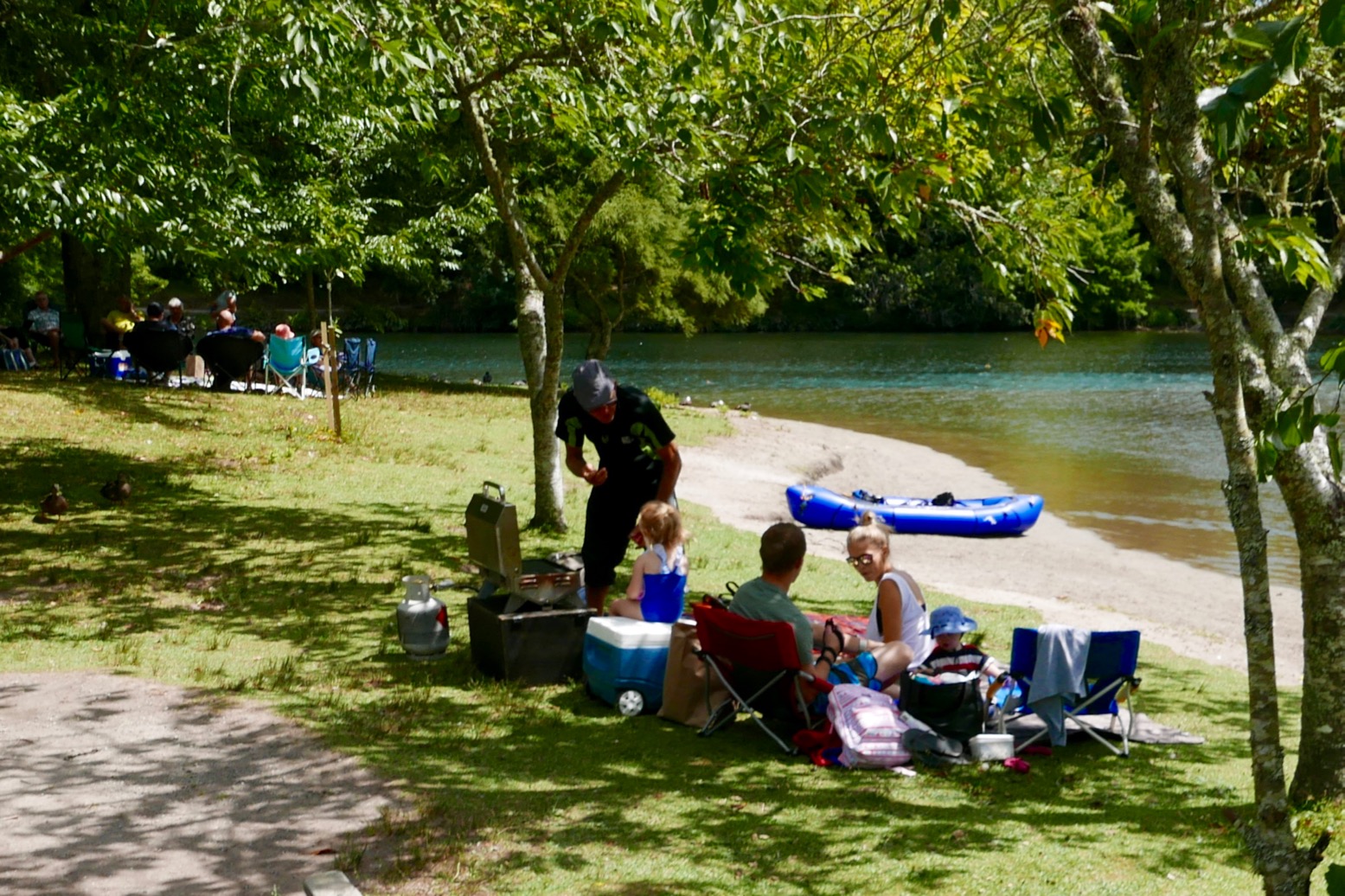
The boat was tempered and inflated to the max with my patented IAT (inflation assist tube; right). With the yellow hose you’re able to do a much better puff than just with your mouth on the Boston valve. I paddled my way round to the glowworm gorge inlet where families where feeding the ducks and enjoying Waitangi Day picnics. But the gorge stream was barely deep enough to float a duck and my quick foot-recce didn’t go far enough. If there was a paddleable pool up there, it was probably tiny. So I settled for cruising about the lake a bit and force-feeding more air where it wouldn’t go. I didn’t recall any hull creases when I tried the S1 last summer. And I’m sure the seat was suspended off the floor which spreads the load better, rather than pressing on the floor. Anyway, no leaks on this boat.

nzt - 6
nzt - 8

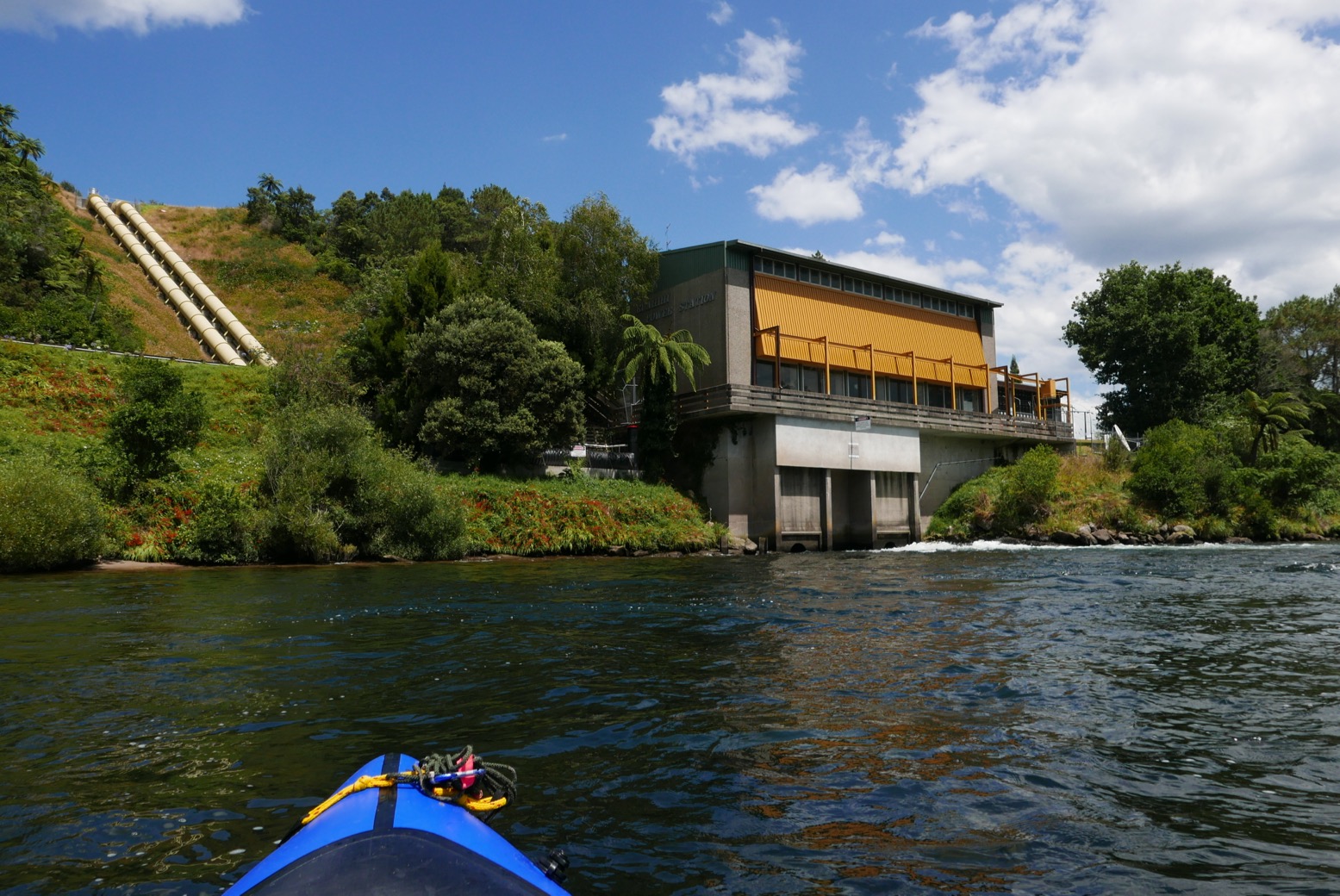
From the park it was a 6km walk back along the main road to rejoin the river at the newer Ruahihi power station. Between the park and Ruahihi I presume the lake’s output gets diverted through pipelines, baring occasional releases for the white water brigade. Having appraised the range of Newzealandish roadside detritus, just by the station I slithered down a steep bank thick with red flowers (left) and reinflated.

nzt - 10
wairiver

A nice current kicked out of the power station’s bores and I set off for the 12km run to a water park by a road bridge west of Tauranga.
It would be nice to report the Wairoa was a magical paddle. Giant, palm-like fern trees certainly give NZ’s lush, English-looking countryside an other-worldly, Jurassic quality. It’s no coincidence that just down the road they’ve renamed a town Hobbiton (below) in honour of the movie filmed there.

hobbito

The Wairoa might make a nice afternoon’s flatwater canoeing, but I do miss a bit of easy Massifian eau vivant. Youtube vids suggested the Whanganui has some rapids fit to tip beginners’ canoe, but here all I got was the cooling breeze which developed into an annoying headwind. I put my head down and dug away, on the way passing a clifftop tree (left) which surely must be one good deluge away from crashing down into the river.

nzt - 13
mrs-footrest

I may have skipped lunch and haven’t padded since the summer, but I was getting more tired than I should be. Something felt off with the seating and bracing set-up meaning I wasn’t relaxed. One problem with the mid-seated Nomad (or any packraft much longer than 130cm inside) is that you can’t jam yourself in, back-to-foot, leaning on the stern with the feet braced against the bow. The Packrafting Store included Anfibio knee braces which, after some adjustment, improved things a bit, but wasn’t as good as bow-braced feet. I see the Store are now selling an MRS footrest for €30 (right) which shortens the distance by six inches or so. I’ve since fitted one, improving bracing and comfort.

A jet ski shot by up river, kicking up some welcome wake. Then a paddle boarder passed by and a group getting merry on a motor pontoon. It had been over two hours now so I asked a bank-side dog lady how far to the water park
’Oh it’s a few kilometres’.
nzt - 15Surely not. I pulled over and, clinging to a moored boat against the wind, fired up the GPS. That’s more like it – not so far at all.

Soon there were kids churning along on pedallo-powered water slides, SoTs, giant inflatable silliness and a water chute hurling screaming infants into the river. What better way to spend Waitangi Day. Beyond, traffic rumbled over the road bridge and before that, a steep tidal bank lead up to a nicely mowed lawn for a dry-off during a bit of a lie-down. One-fifty minutes for 12 clicks – not so bad considering it felt like dog water much of the way.

nzt - 17
nzt - 18

From here it was a 7-km hike through Tauranga’s affluent suburbs back to the hostel. On the way, a supermarket called me like a siren:
‘Food… Foooood, large amounts’. Once out, I’d didn’t even re-park my trundler (as trolleys are called here) before gorging myself on a pain-au-choc, peaches and yoghurts. The rest of the shopping for the evening meal nicely balanced my paddle for the long walk back.

nzt - 19

Trying out SUP paddle boarding

iSUP: a new way to get in trouble at sea (worth reading)

sup - 4

Finally I got to try this SUP-ing everyone’s so crazy about, on a recreational inlet in north Sydney. Ideally it should have been an iSUP to satisfy the strict submission criteria of IK&P, but among the user-owners and rental places on Sydney’s northern beaches, it seems carrying or stacking your oversized ironing board to the beach or lake is no great hardship.

sup - 2


I would guess mine was a beginner’s round-nosed planing board of around 10 feet by 30 inches wide. I read later this was a little under-buoyant for my weight, but I can’t say it felt like that, or looks so in the photos.
You read a lot about how SUPing is a good work-out for the core (stomach) muscles. Thirty minutes of flat-out SUPing a day for two or three years will turn a wobbling belly barrel into a granite-hard six-pack. But initially, I found it was my feet and thighs which felt over-worked from micro-managing my tippiness, though any balancing exercises must be a good way of working the core.
Conditions were a light breeze topping out at a 2-3 inch swell and, just as with kayaking, it felt a lot more satisfying padding into a slight breeze than having it behind you, right up to the point it becomes a headwind. I don’t have acrobatic levels of balance but I was determined not to fall in so edged off the shore very slowly. I only fell off when the skeg snagged a tree root in the shallows. It sounds like I got off a lot better than Gael did, learning to iSUP on his marlin-nosed racer in Sardinia.
Half an hour in I got over the initial wobbliness and, like all inveterate hoons, decided to see how fast will it go (mister). Who knows if I was doing it right, but I found a knee-dip just prior to putting in a good draw close to the board before standing back up straight and pulling back felt right. It would’ve been fun to try a couple hours of this. Note the bend in the long stick in some pictures.

sup - 4

I did experiment with canoe-style J-stroking, where you give the end of each stroke a little outward scoop to counteract the tendency of the board to turn off course. But I can’t say it worked which is why most SUPers you’ll see swap sides every three or four strokes to track straight.
It’s fun to stand like a fully-fledged, chest-beating biped, but seeing as you need near-flat water I can’t see a SUP board being an irresistible travel tool as a packraft or IK are. On more turbulent waters falling in would be more common, which means away from the Mediterranean conditions I was padding in, you’d need to dress for immersion. Who wants the if they can help it?
Still, I’d like to give it a good go unhampered by the ticking of the rental metre. On eBay new iSUPs go from 150 quid, with quality used ones from £350. As with a lot of recreational stuff, buying used you can put in the time at your convenience to get a good idea for SUPing, then sell it for less than the rental hours, if it’s not for you. I must say I would be more attracted to owning a longer and pointier iSUP board (below), as Gael A writes about here. And then probably regret it once I failed to stay on it.
So for the moment, I think I’m happy to carry on renting when the opportunity arises.

sup9