Tag Archives: packrafting

Packrafting the Fitzroy 2/5

Fitzroy 1 ••• Fitzroy 3 • Fitzroy 4 • Fitzroy 5

The video above covers Day 1 (previous post) and Day 2 which is this post.
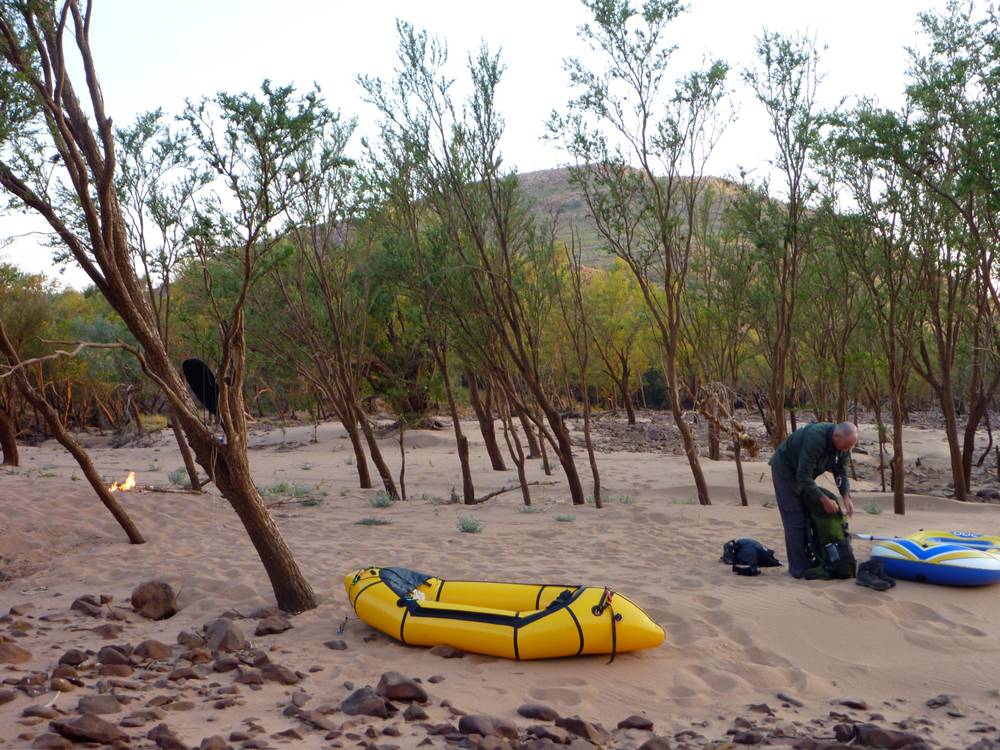
By 5am the sun had risen somewhere behind the ranges and it was light enough to get stuck into our first full day on the river. I’d slept well enough on the unrolled tent under a thin blanket and all my clothes. Some time around 3.35am a hot, phantom wind had blown through our sandbar camp from the northwest. I’ve experienced these lost night winds elsewhere in the desert and always wondered where they come from and where they went.
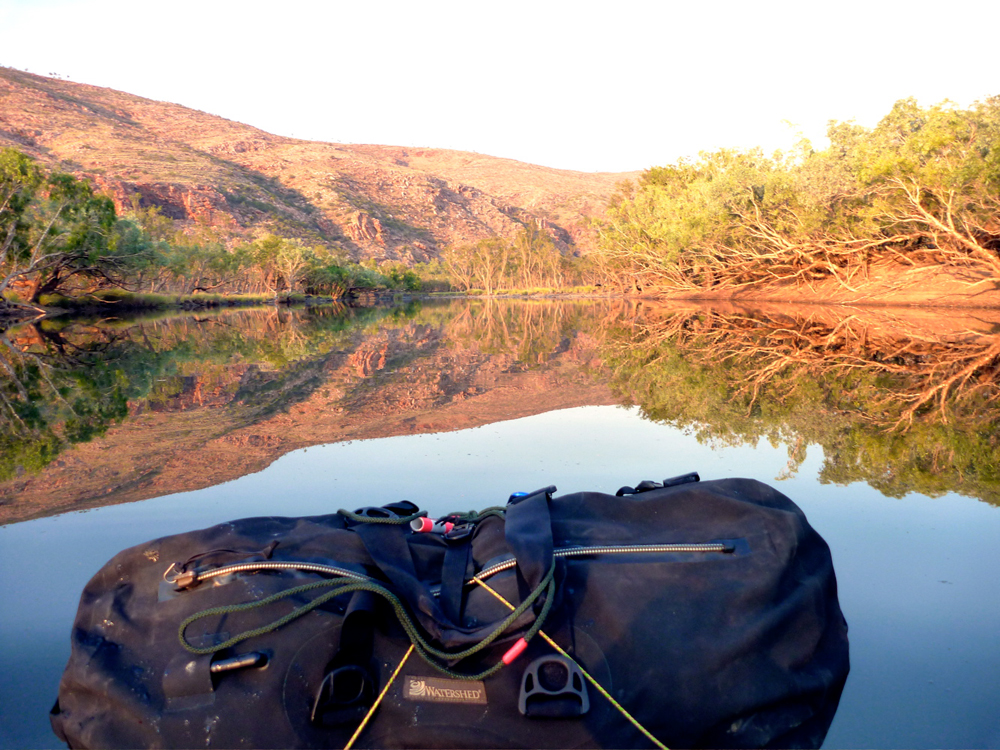
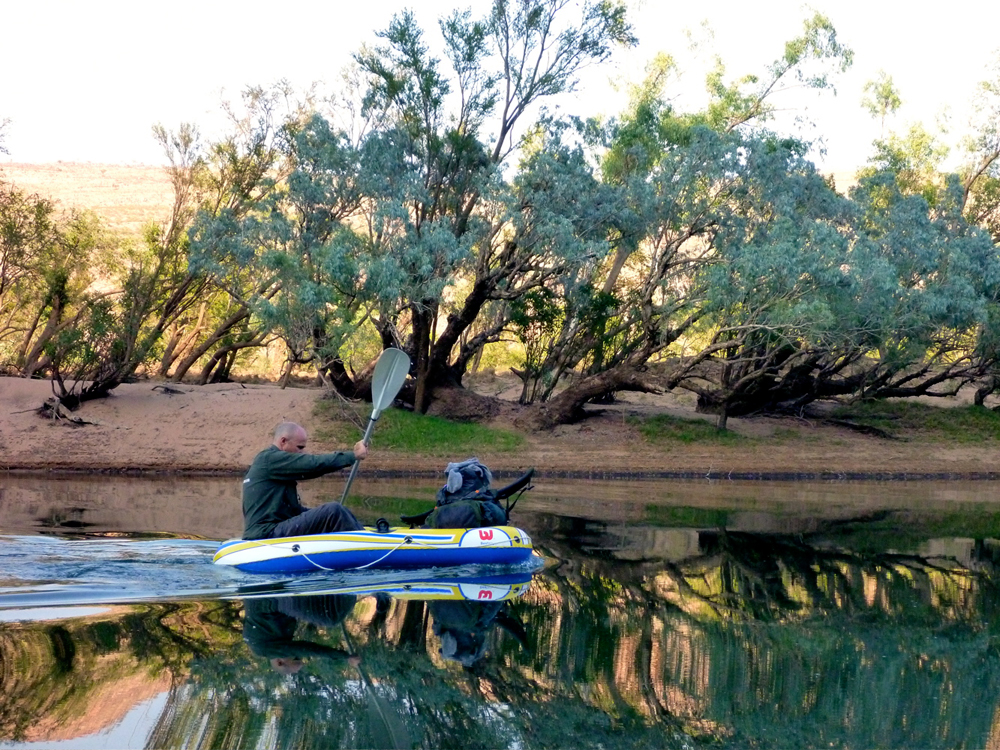
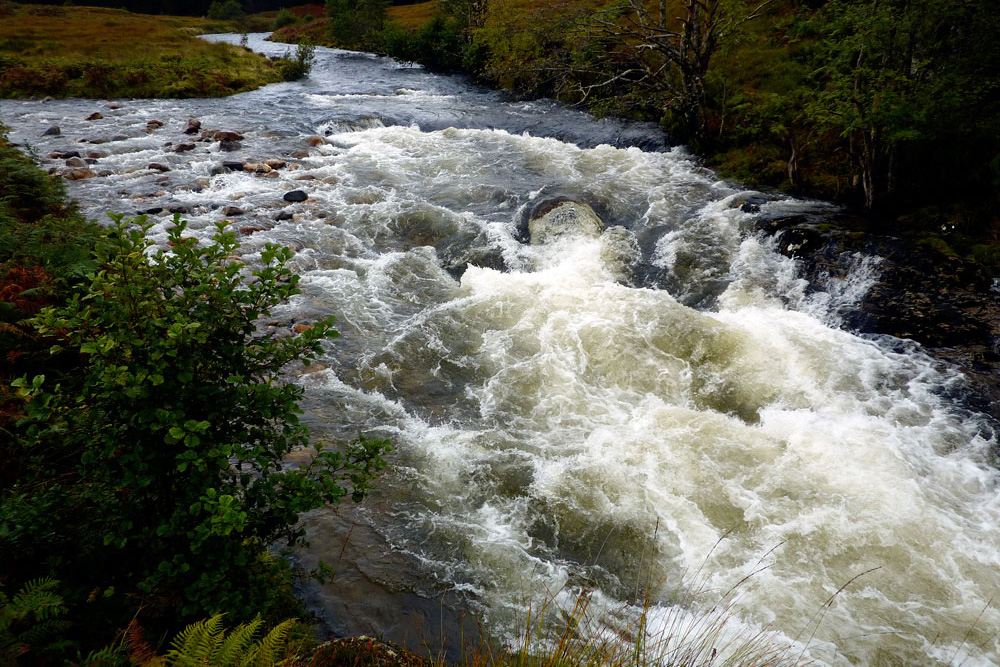
Like us, in the cool of the morning both boats were a little flaccid after yesterday’s exertions, but Jeff was relieved to find his Bestway was still holding good air. Even then, after a brief paddle he decided to walk the remaining five kilometres to Dimond Gorge. Me, I was pleased to stay on the water, even if it occasionally meant skating across slime-covered rocks when dragging the boat through shallow rapids (left). Right along the length of Fitzroy, another six inches water and just about all rapids could have been run in our boats, but I don’t suppose it works like that.
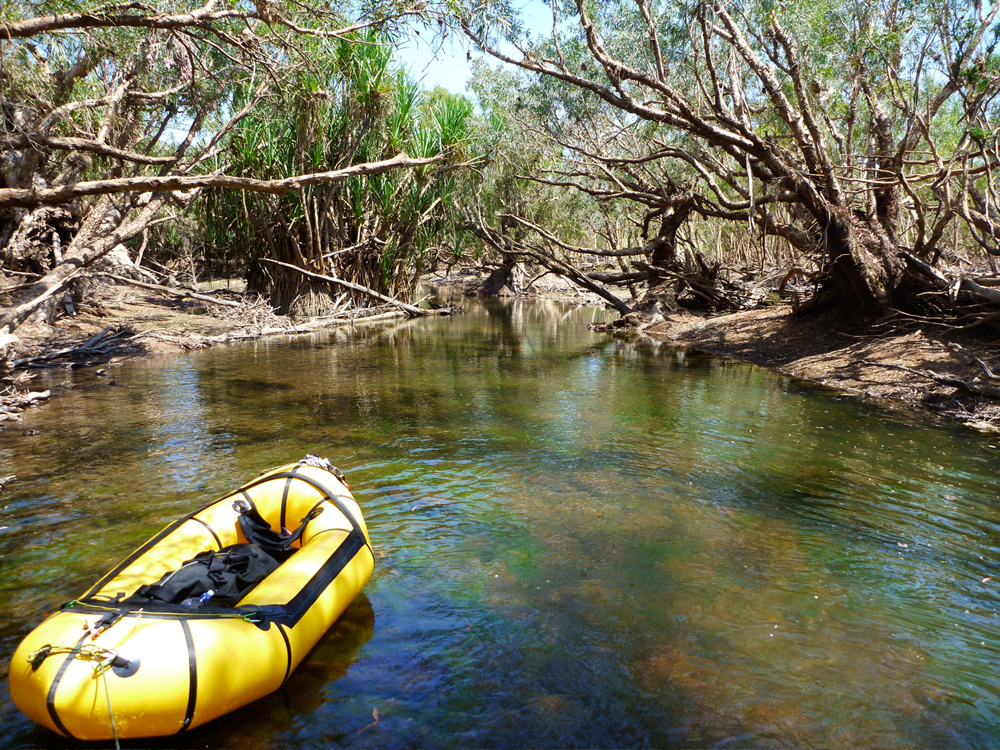
Jeff was now out of sight somewhere in the woods and soon enough the flow got shoved off the main channel by a blockage to burrow into the fringe canopy of trees where birds twittered and water monitors glared. This benign riverine underworld was a habitat I’d not anticipated, but was one of the most pleasant environments we found on the Fitzroy. Like a Damascene souk, shaded from the heat and glare of direct sunlight, you felt protected, cool and soothed while cockatoos squawked, rainbow bee eaters darted ahead and lanky-necked egrets stalked the pools. While pushing, pulling or paddling the boat through these cool causeways, I was reminded of that cool picture of Ed Stafford hauling his heavily loaded Alpacka through the Amazonian swamp.
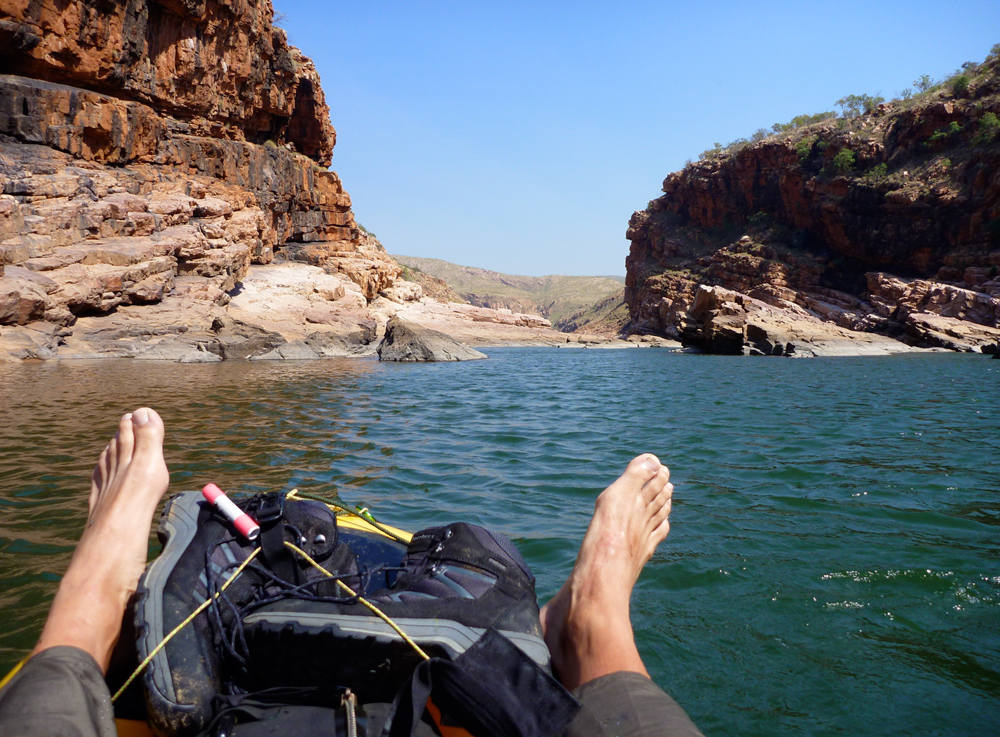
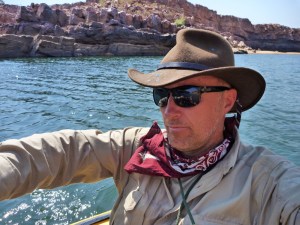
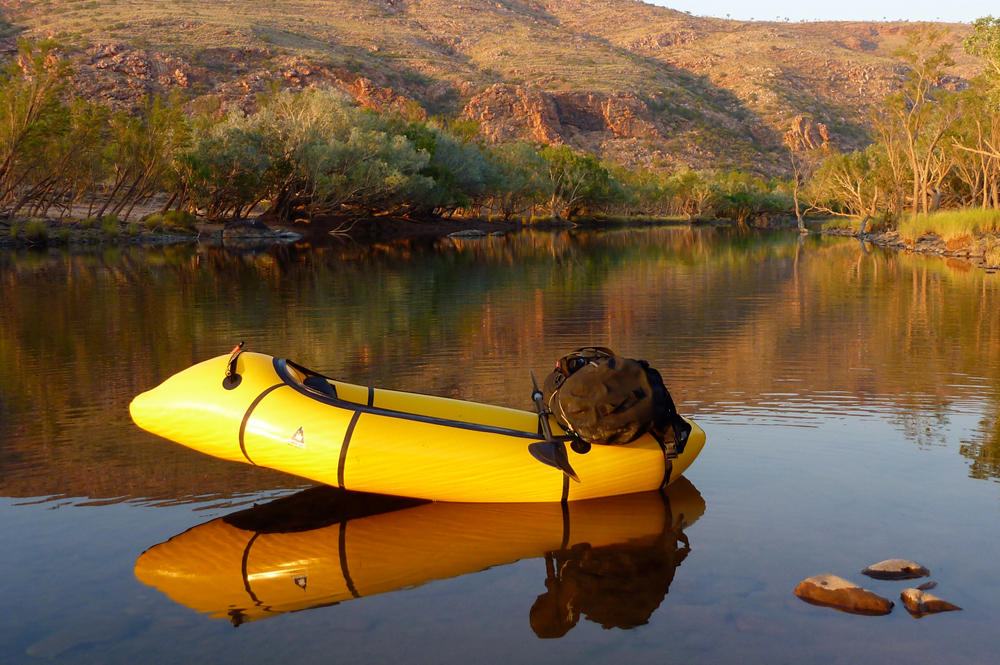
A couple of hours later I was back out in the open and squeezed the Yak between two rocks to slip into the top end of Dimond Gorge (above – downstream, and above, looking upstream). MWC left a few canoes here for day visitors and I pulled over alongside them, stripped off and dived in. Jeff turned up about 15 minutes later but it didn’t look like he’d enjoyed his bush walk and he simply dropped his dinghy in and set off along Dimond, knowing I’d catch him up soon enough. The headwind already funneling through Dimond from the plains didn’t improve his mood.
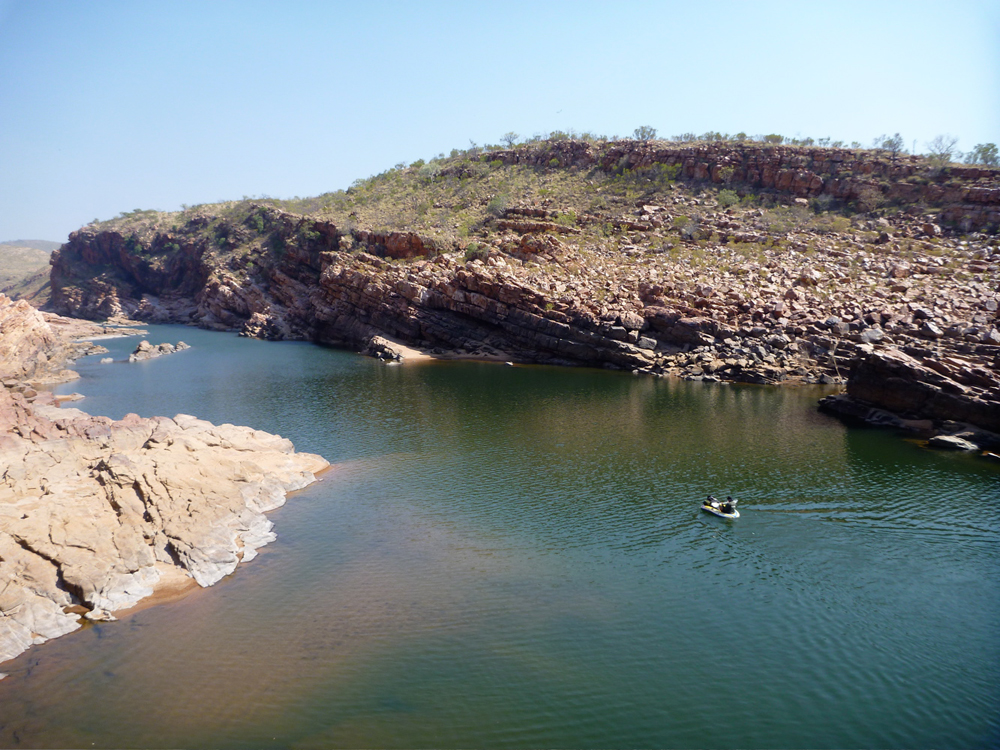
Presently the gorge turned left to break through the ridge and soon choked on the effort. It was here that the dam proposed over 50 years ago would have been sited, to match the Ord Irrigation Scheme near Kununurra in the East Kimberley. Although the idea gets revived once in a while, as things stand the Fitzroy is unlikely to get dammed here.
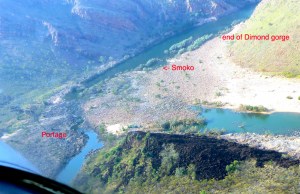
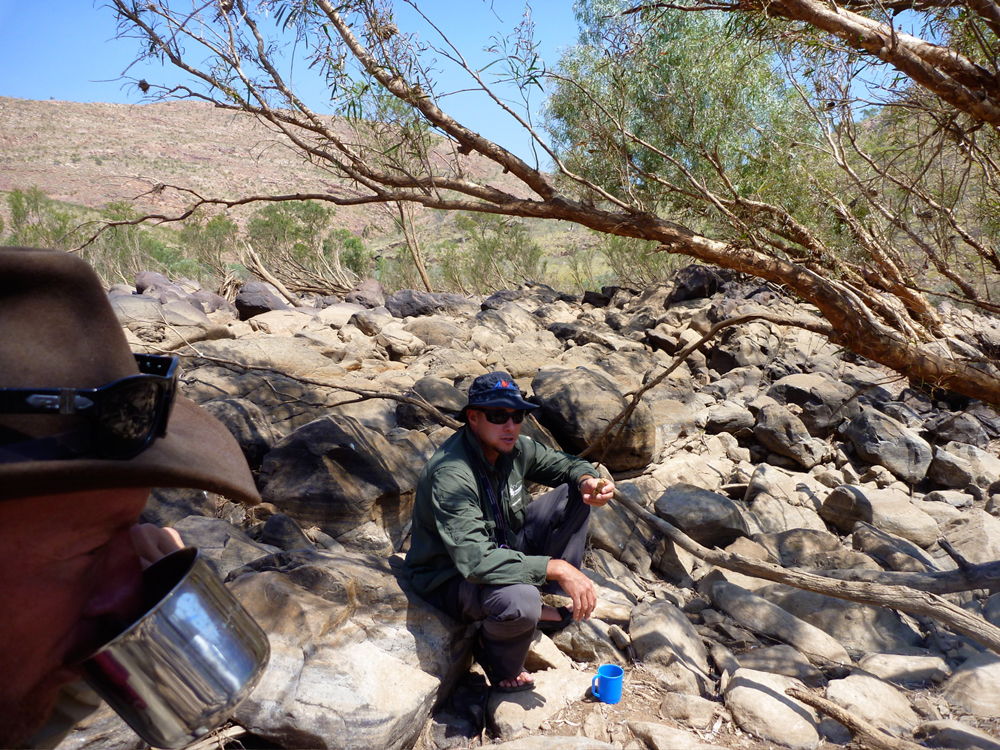
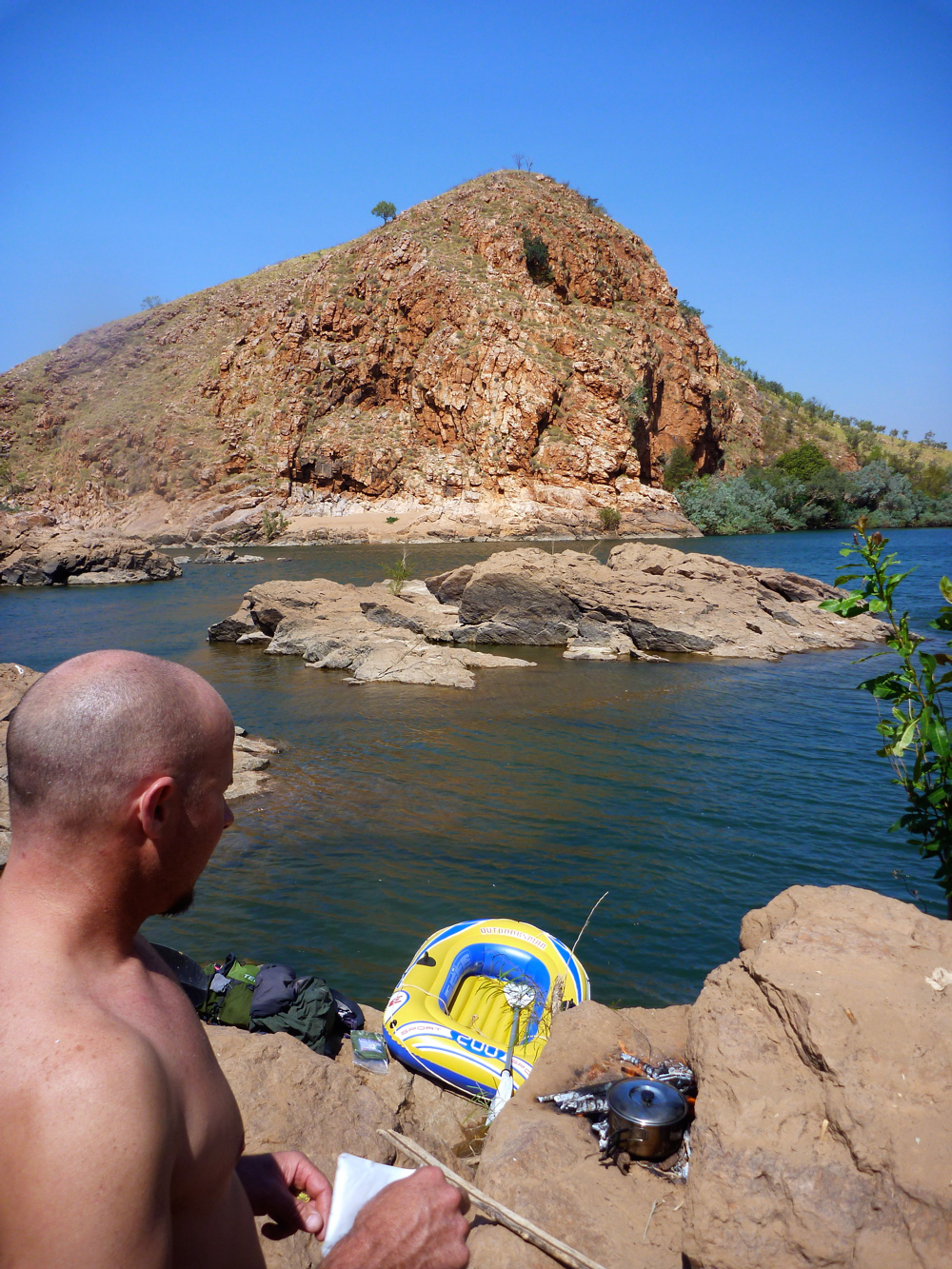
It was already 10am and with 8 or 9 clicks behind is, it was high time for ‘smoko’ as they call it in out here. As always, firewood was within arm’s reach and soon the billy was on the boil. We’d brought a gas stove in case high winds made real fires risky; on the way in from Broome we’d seen several roadside fires. Most were deliberate, late-season burn-offs, but we’d also heard some ultra-marathon racers had been trapped by a bushfire in a gorge on El Questro near Wyndham and had been very badly burned. If nothing else, it would be extremely bad form to start a bushfire on the station land we were about to cross, but we always lit up alongside the river where things remained damp and cool.
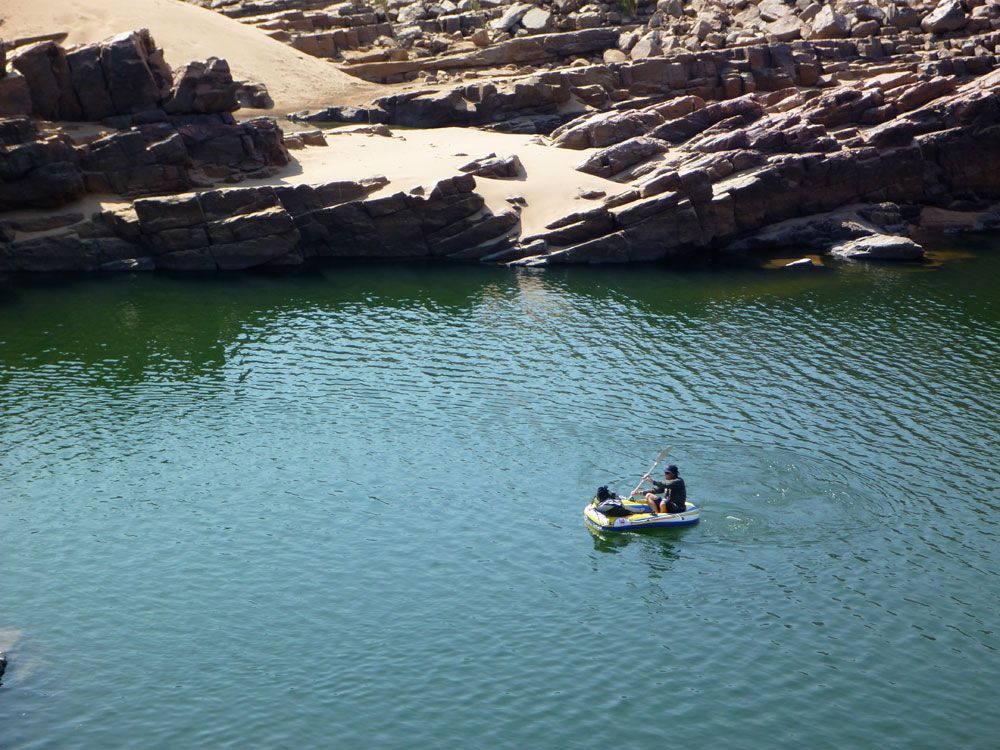
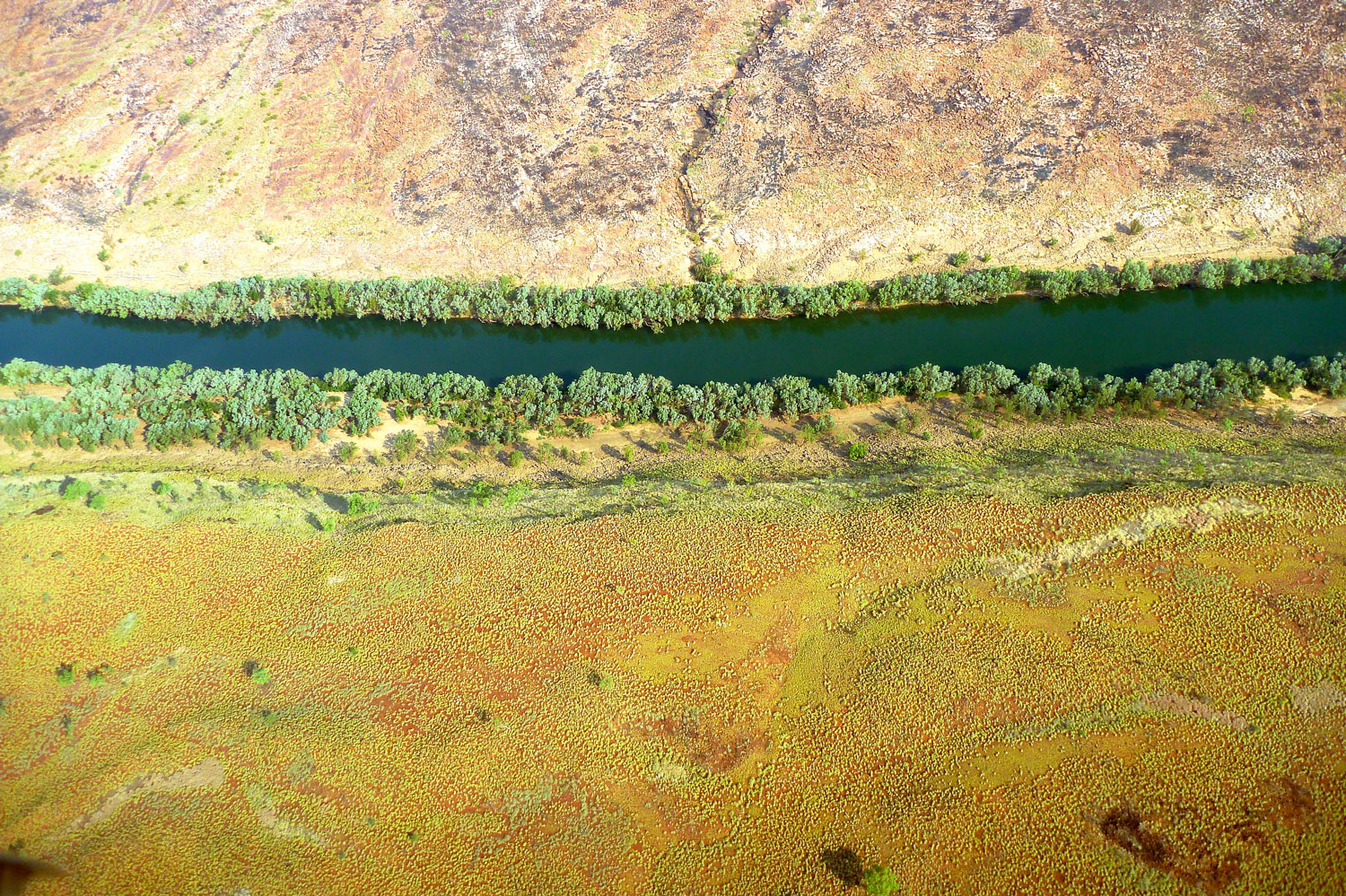
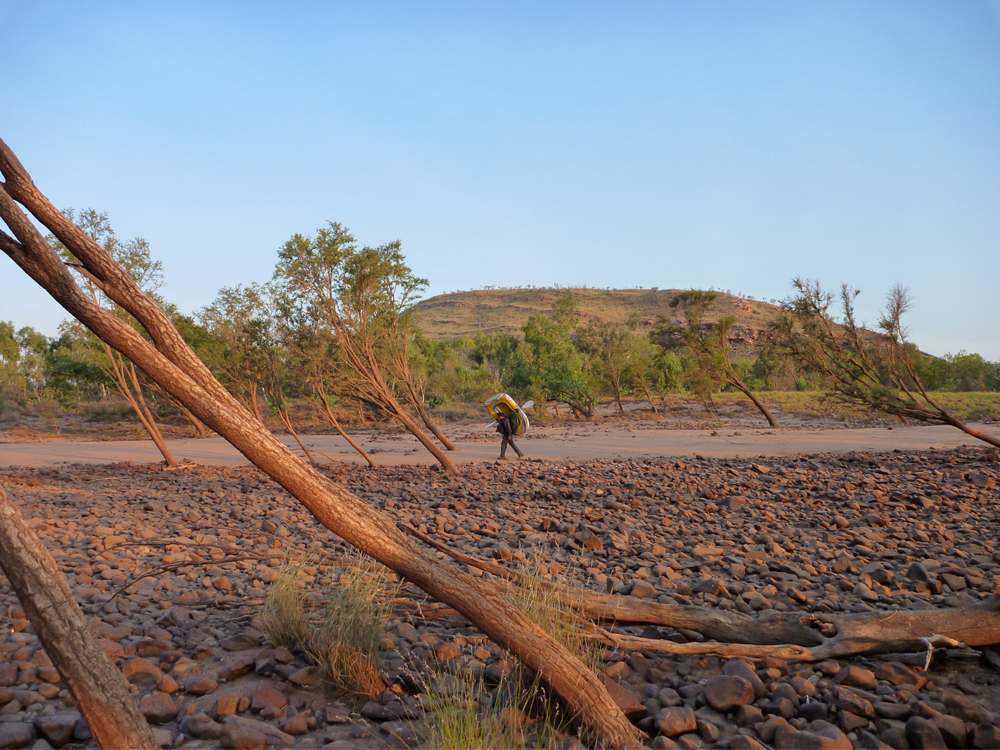
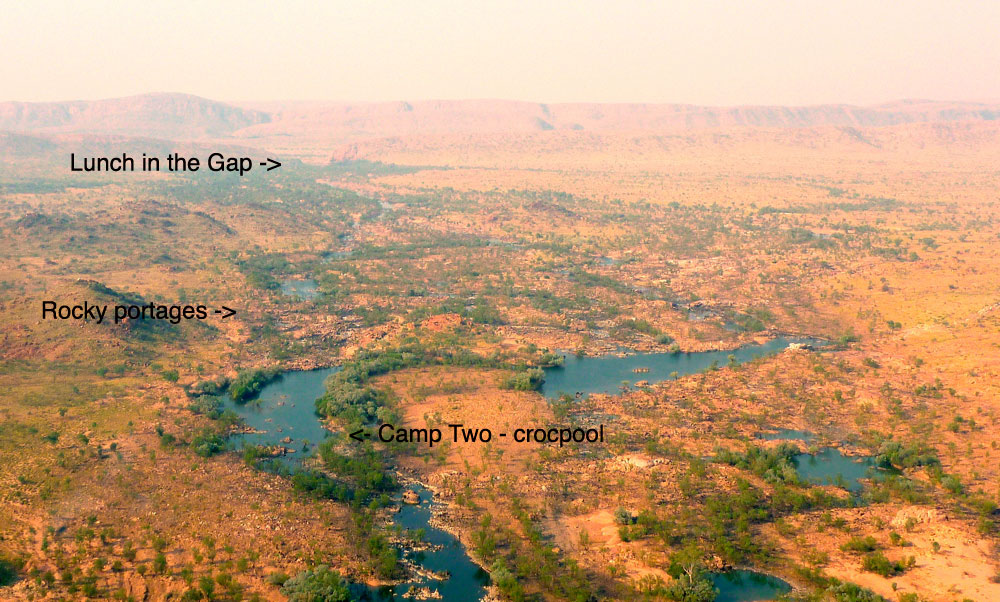
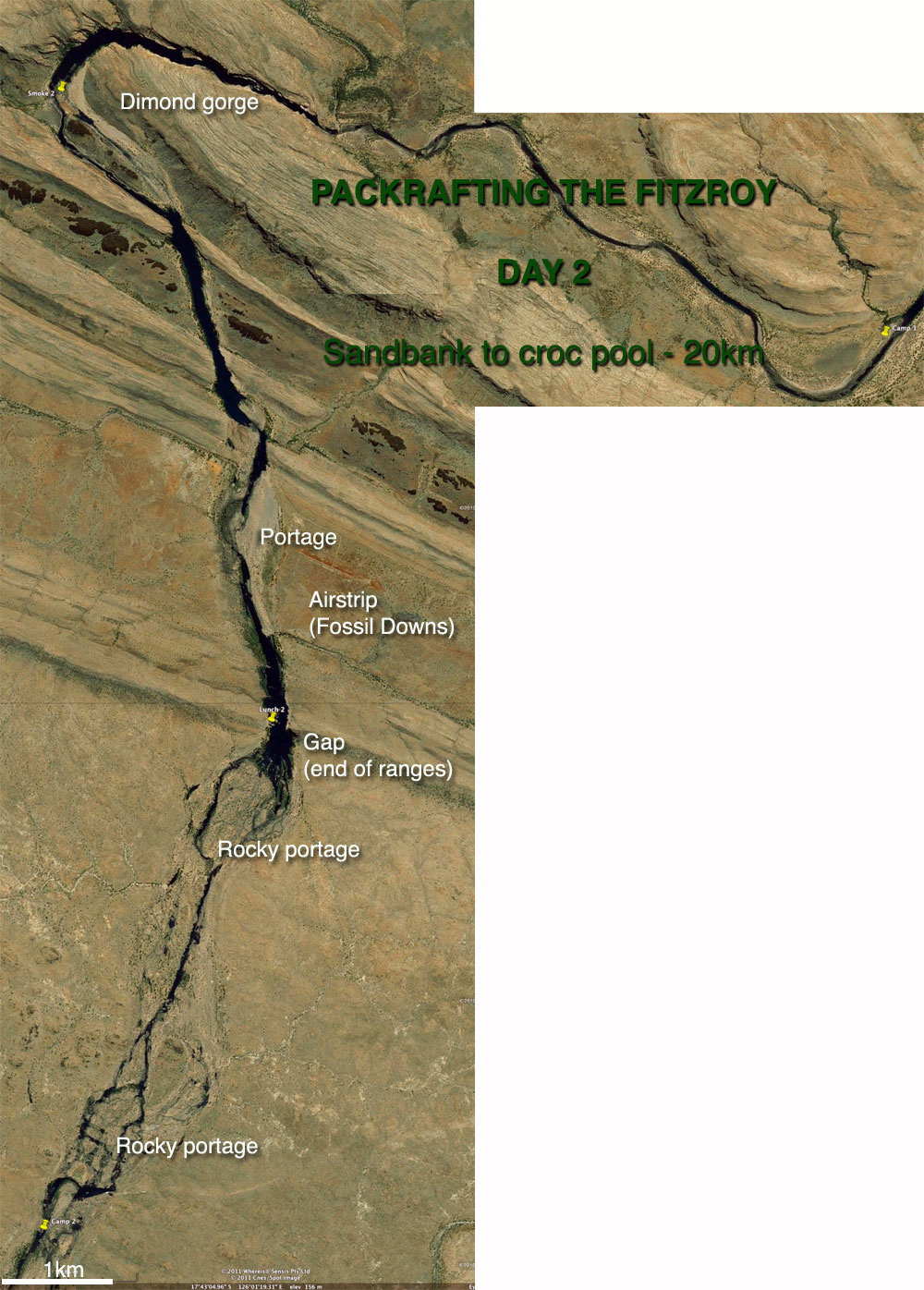
From this point it was about 6km to the next landmark – what we called the Gap, an opening in a low ridge like those found in the West Macs out of Alice, and which here marked the southernmost ridge of the King Leopolds. We’d seen it clearly on the flight in and with the headwinds persisting, Jeff decided to head off across the boulders while I paddled on for a couple of minutes, then portaged a very gnarly section. It looks like an easy  5-minute walk on the aerial picture but let me tell you with the head wind and my unstable pack, stepping between fridge-sized rocks with a boat under my arm was not a dance the Royal Ballet will be performing any time soon. At least the Brasher trail boots both Jeff and I had bought cheap in London were earning their keep here. Out of the shade and off the water, the heat bounced off the rocks, sapping the energy expended in carefully negotiating these rocky portages. I’d have to come up with a better system like Jeff, if these rough portages were to continue downstream.

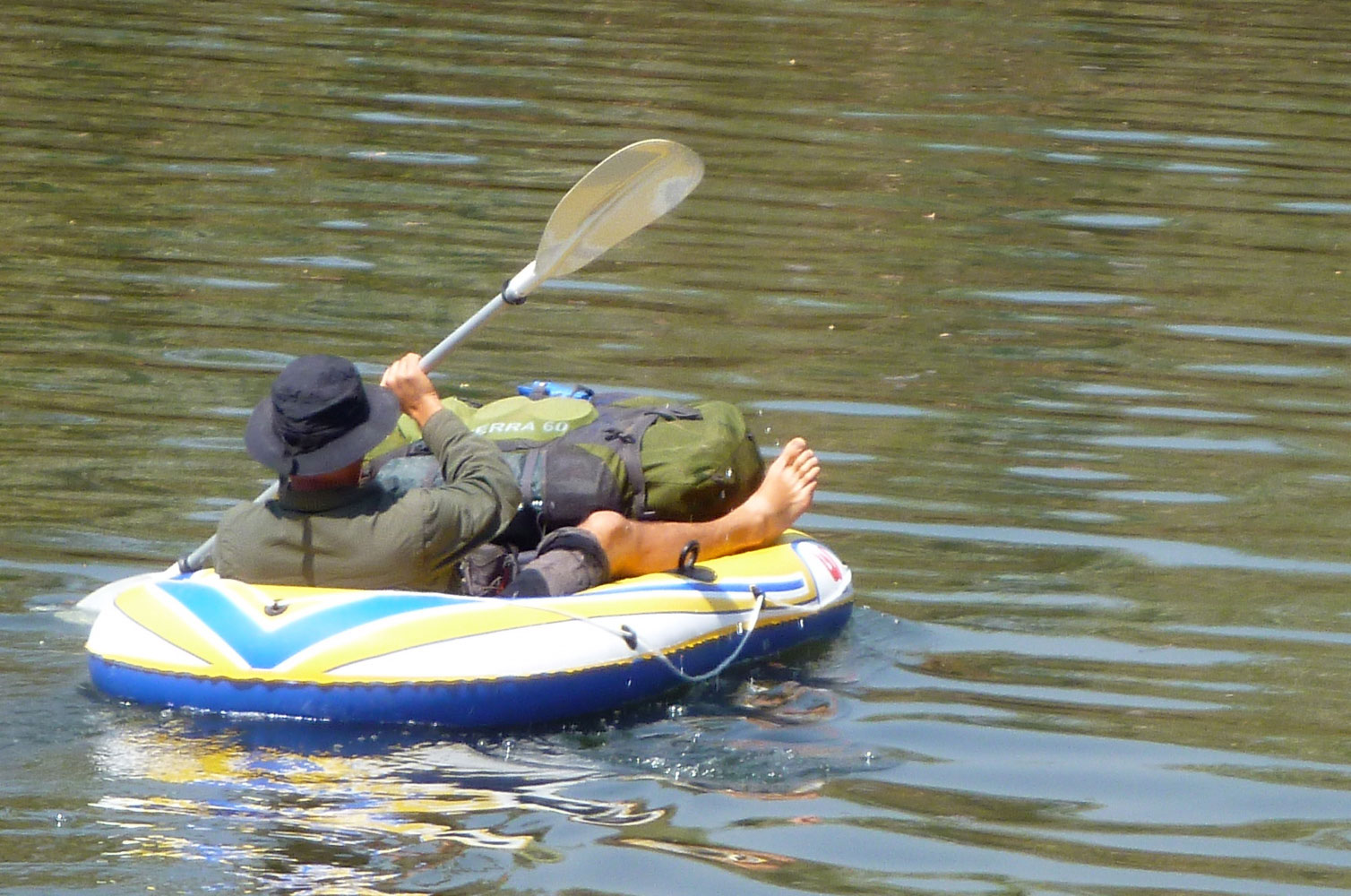
I put back in as soon as I could, noticing we were now on granite, a little less smooth but also less coated in treacherous slime in the shallows, which made wading easier. Up ahead Jeff was putting in too and despite the headwinds held his own – clearly he was refining his Bestway paddling technique. As the conclusion of the video proves, Jeff was finding his pool toy to be more versatile than he’d initially hoped.

Another sweltering rocky portage led past some sort of sentry box and pipework river left, close to where an outlying airstrip lay on Fossil Downs land. It was a clear run from here against the wind to the Gap and the end of the ranges. We clambered onto a rock for a lunch of double cuppa soup and another hot drink. While the billy boiled Jeff threw out his handline; we’d been assured in Broome that the barramundi (northern Australia’s best know fish), would be huge so Jeff had bought a 30-pound line accordingly. But there was no fish for lunch on that or any other day while we were on the Fitzroy. They must be out there, but the only fish I ever saw where the size of my finger. It’s no wonder the crocs were so stunted.
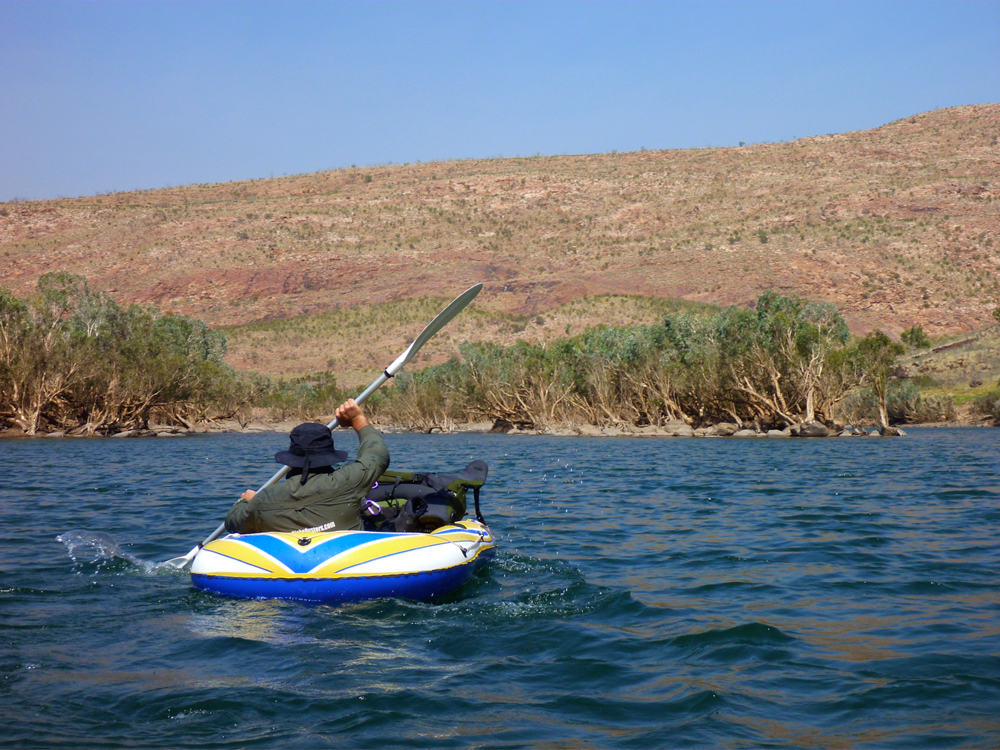
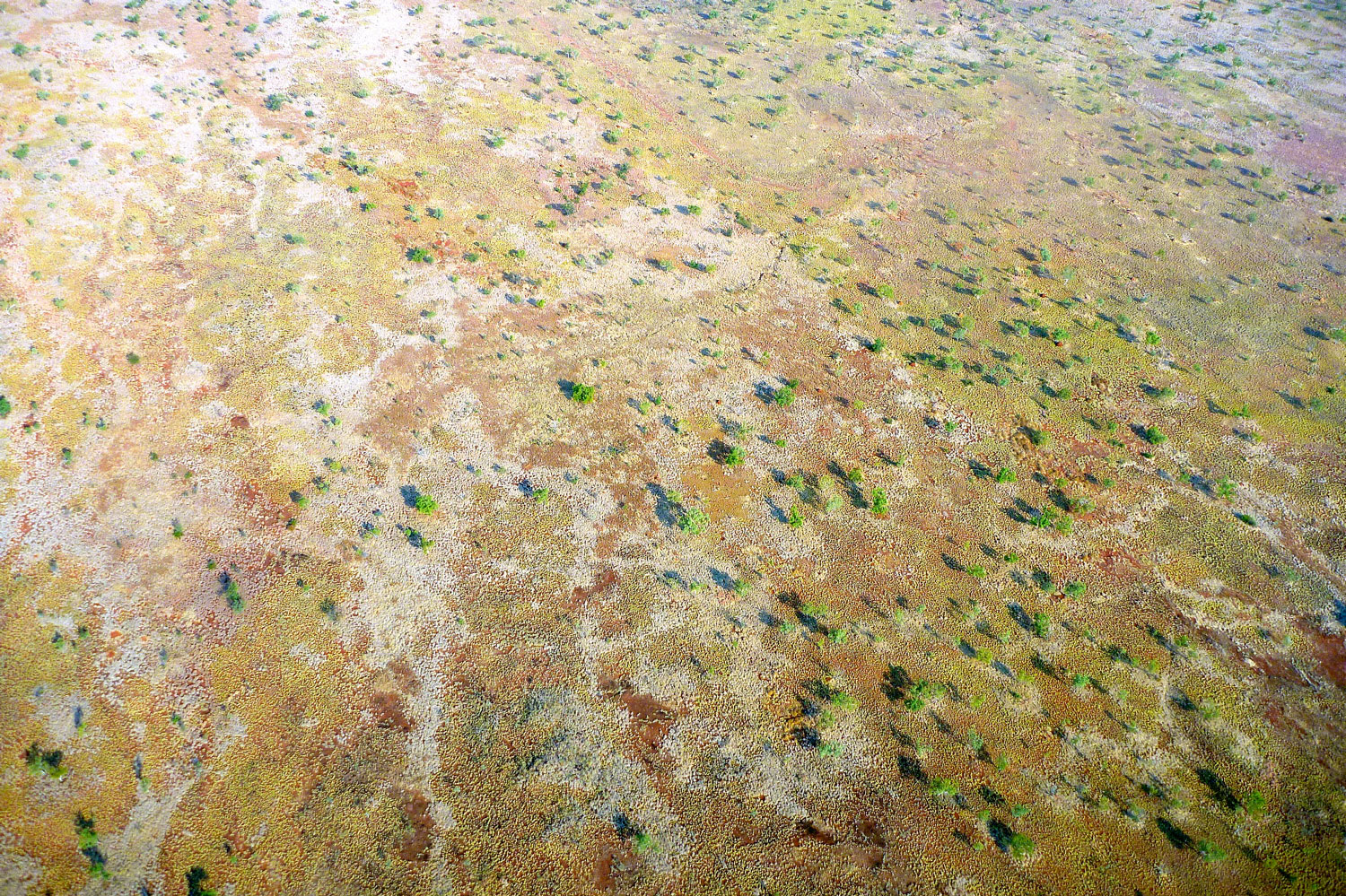
Beyond the Gap we knew the river would change character as it weaved over the savannah for 60 kilometres towards Geikie Gorge. This would be the crux of the trip. Even though the flight had revealed several long and clear river channels, we’d also spotted masses of thick woodland with no clear path. We looked back at those aerial shots in our cameras to figure out the way ahead. Our goal that afternoon was to try and get west of 126°E and onto the next map sheet, something that in the end we only barely managed.
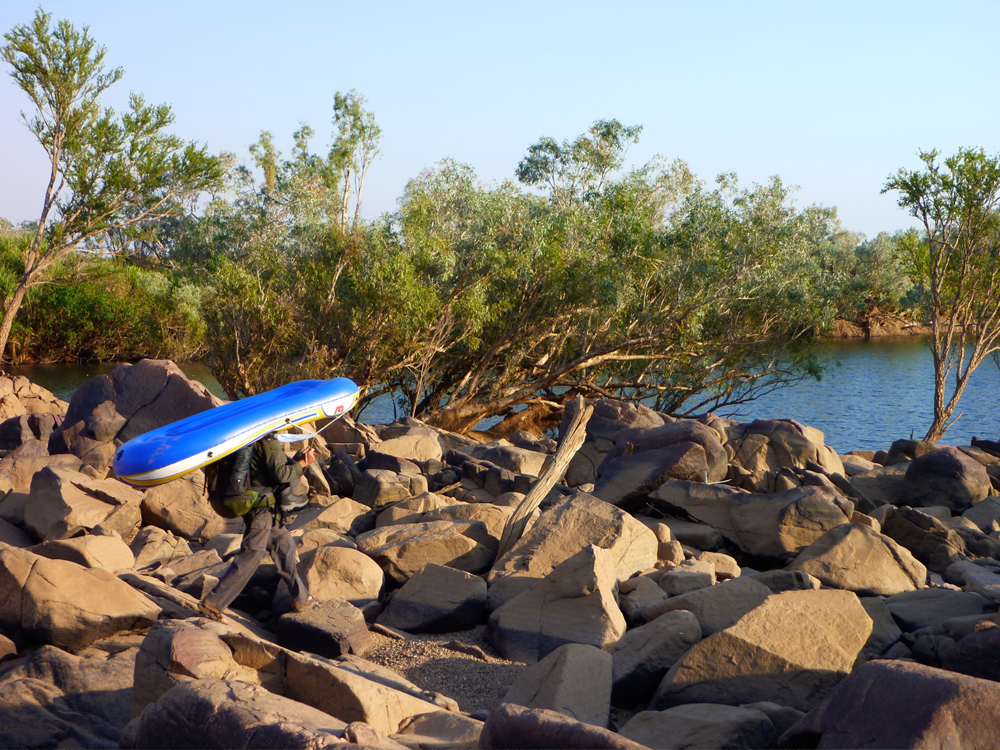
Soon after leaving the Gap we came to another big rock pile where the river braided out into nothing paddlable. In the mid-afternoon heat, clambering with all my junk was as much fun as roller skating on cobbles while balancing a sofa on your head, and using my packstaff for the first and last time was merely another encumbrance that threatened to impale me should I trip.
I desperately floated across the smallest pool, and when it came to the next big portage I simply left the boat and set off with the UDB pack. It took twice as long of course, but being able to see ahead and use my arms to balance, it felt safer. Perhaps it was hotter than we realised – getting on for 40° maybe? – but even before I turned back for my boat I was parched with thirst and croaked to Jeff, ‘Let’s camp at the end of the next pool’. Whatever the time was, we were beat!

The GPS was no longer tracking as the batteries lasted less than a day, but it turned out we’d put in an 11+ hour day of only 20 kilometres, managing just 5km after lunch. At our poolside camp, I slung the gear into the bank, went for a swim and then drank and drank. Unless I’d some acclimatising to catch up on, this effort in portaging over the big rock bars was not sustainable; fatigue would eventually lead to a mistake and Jeff had already fallen a couple of times.
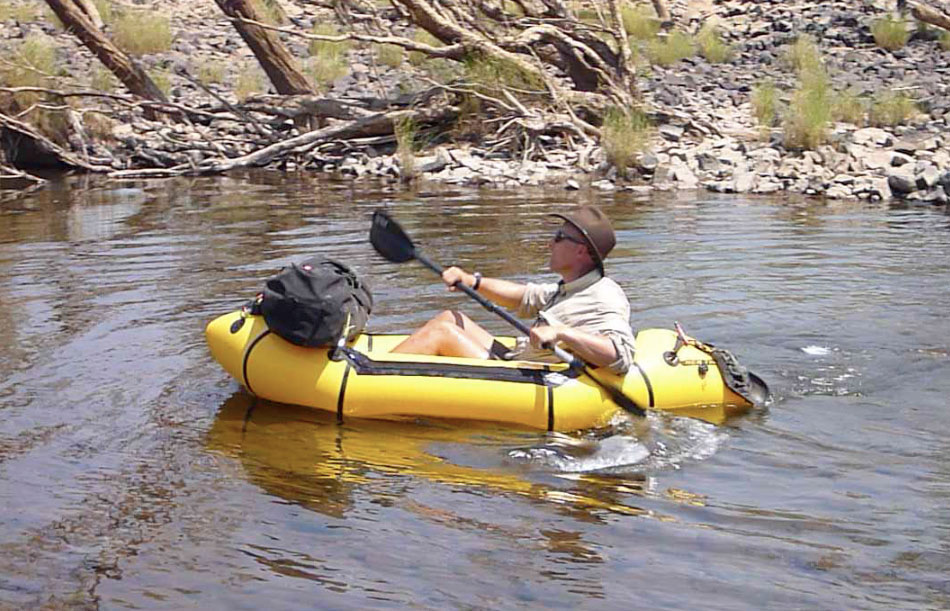
I needed to radically revise my portaging set up. My yellow Watershed ‘day bag’ was better out of the way inside the UDB which now sat in the boat not perched across the bow. That worked much better for wading and towing while I sat with feet plonked on either side in a suitably reclined paddling posture. Like this I could also access the UDB in the boat if needed, and forward visibility was better too while the Yak’s extended ‘fastback’ tail compensated for the rear-weighted trim. I’d also ditched my cumbersome water bag and now simply drank from the river. We’d brought my Katadyn and used it most evenings. Jeff stuck with it, but I found carrying a full day of water too heavy at the rate I drank it. I took care to drink from less skanky pools and flowing riffles and never got sick.


The water boiled and another two-course freeze-dried supper was wolfed down, along with several rounds of tea. Jeff was in bed by 6 – a personal best. It had been a tough first day and now we were heading into the meandering cattle lands we weren’t expecting it to get any easier as the river lost its definition. Jeff wasn’t convinced yet, but as I saw it, the key would be to keep track of the main channel and minimise arduous portaging at all costs by paddling or towing. Even then, we figured that as long as we didn’t get any more tired than we were tonight, and our once-daily bag meals continued to sustain us, we still had five full days of food for the remaining 100 kilometres and could trudge on at whatever daily distance we could manage until it finally ran out. By that time we’d surely be very close to Fitzroy Crossing.

It was a hot evening and out on the pool crocs, lizards or the elusive big fish were splashing about. I pottered around the camp for a while, putting off the unenviable moment when I had to squeeze into my too-short K-Mart tent to grab a mozzie-free night. I was still thirsty as I dozed off. Likely as not, tomorrow was going to be another tough one.
Gorges & Portages • Packrafting the Fitzroy 1/5

See also:
Slackraft Main Page

••• Fitzroy 2 • Fitzroy 3 • Fitzroy 4 • Fitzroy 5

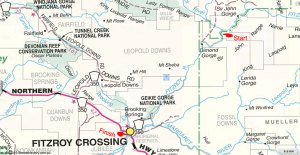
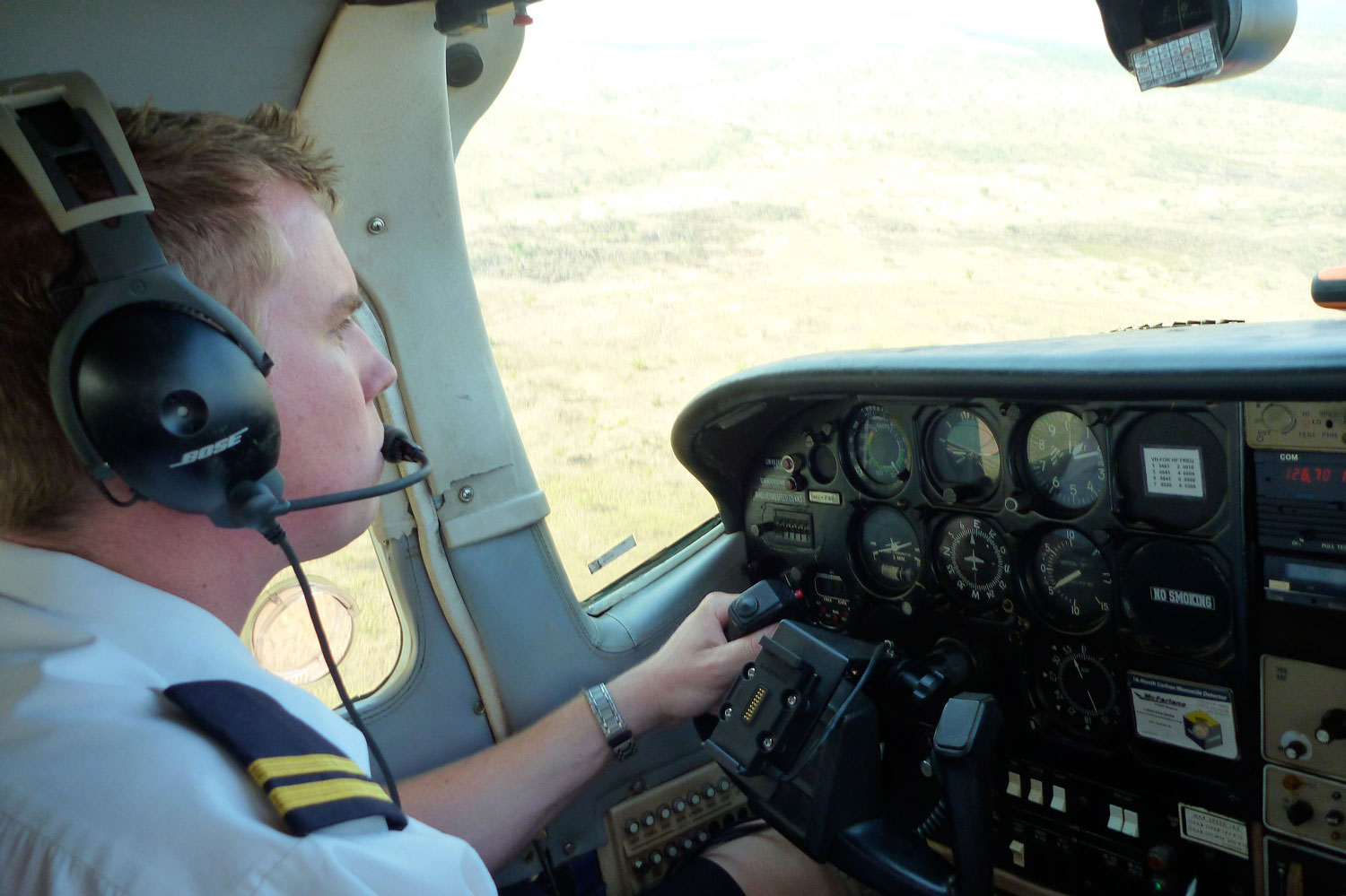
A few minutes after the plane took off from Fitzroy Crossing (see maps) Jeff taped me on the shoulder and gave a thumbs up.
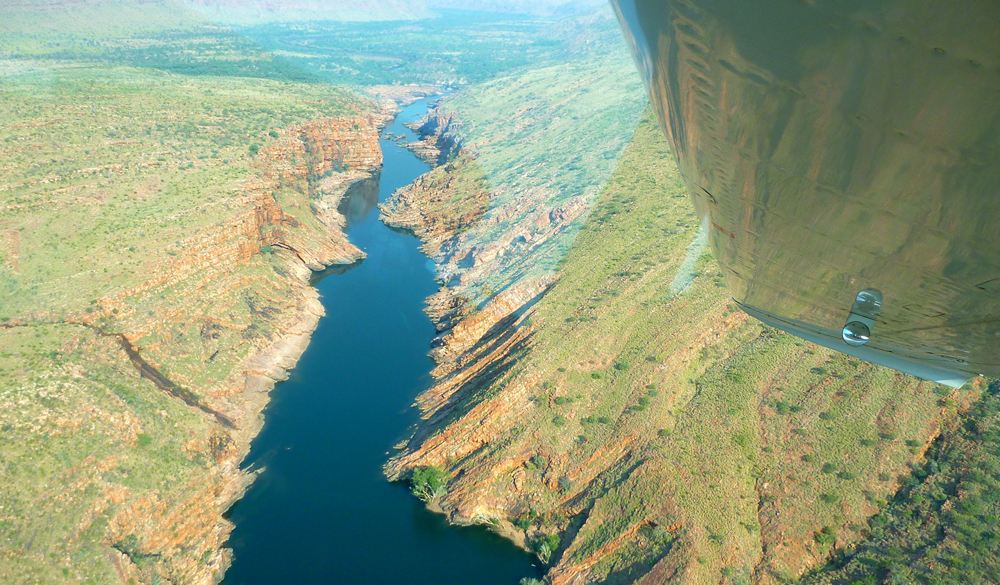
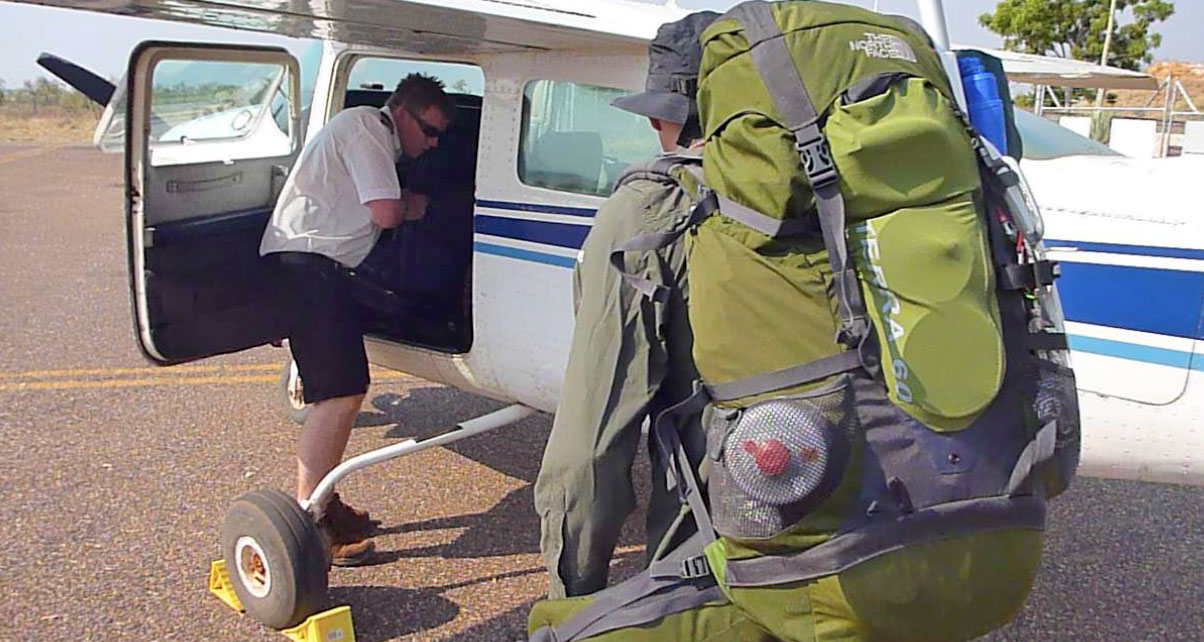
A thousand feet below, things were looking promising. Sam the pilot had agreed to fly us low for the 25-minute run to Mornington Wilderness Camp (‘MWC’) as the direct route closely followed the river which we planned to follow back over the next week.

It was soon clear that thanks to a huge Wet season a few months earlier, there was a lot more water down there than we’d ever hoped for so late in the dry season. It could well be more of a paddle and less of a walk than we expected, and having missed out on kayaking the full Ningaloo a week earlier, I was feeling optimistic.

During the Wet season (Dec-March) when tropical storms converge or a cyclone dumps over its huge catchment area, the 700-km long Fitzroy River briefly becomes the largest volume river in Australia. Expanding in width from 15 metres up to 15 kilometres across the flood plain, the 13-metre-high highway bridge at Fitzroy Crossing gets submerged for days while log debris gets rammed in the upstream side of the parapet (left).

That’s the Wet. By the end of a Dry we were expecting the river to be a string of stagnant, fly-ridden pools necessitating tiring portages. Packrafts make great walking boats of course, but September wasn’t a great time for bush walking in the Kimberley as the enervating ‘Build Up’ (pre-monsoonal heatwave) was on its way. Still, this is the Kimberley, Australia’s pre-eminent harsh and remote wilderness just 15° from the equator so it’s hot up here most days. Thirty, 35 or 40°C – we’d just have to keep in the shade. It took a few months to research the Kimberley area, pin down a viable river there, and then narrow it down to a doable section where permission from the various landowners was most likely to be given.

Having got to know the Kimberley’s regular tourist spots as a guidebook writer, I decided our 130-km section of the Fitzroy was a varied but not over-ambitious packboating introduction to the region. Even then, permission from MWC was only finally confirmed the day I flew out of London, and for Leopold station on the day we left Broome.

The way I saw it in a post I wrote earlier, the key to packrafting up here relied on uncomplicated access and exit: fly in from a town or station airstrip and paddle back to it if you can. Rendezvous with helicopters or seaplanes could be left for more ambitious trips. Since I first started visiting the Kimberley in the early 1990s I’ve been planning some sort of bush walk out here, and now finally I was going to get my chance, thanks partly to the advent of packrafts.

If things went wrong on our river there were station tracks not too far off, from where we could get recovered inexpensively in a ute. And there was no saltwater crocodile menace up here, as there is on some north Kimberley rivers draining into the Timor Sea. Like the dammed Ord to the east, the Fitzroy flows south off the massif flows into the baking savannah plains of what are really the northern reaches of the Great Sandy Desert. It then swings back west and northwest to empty into King Sound at Derby, hundreds of kilometres later.

Salties can live in freshwater and can travel far inland during the Wet, but it was very unlikely any would be far upriver at this time of year. Much more timid freshwater crocs are commonly found in the Fitzroy and the nearby Lennard River at Windjana Gorge. We saw plenty on our transit, all bar one diving for cover on detecting our splashes. Although it sounds good for the yarn, freshies are no more dangerous than lizards or snakes, and swimming, wading or paddling among them is quite acceptable.

At MWC we paid through the nose for a gourmet dinner and breakfast, but one last ‘real food’ supper was worth it to save on our supplies of bag food. I’d checked MWC out for the guidebook years ago, but the place was really more of a wildlife sanctuary for studying Kimberley fauna; the upmarket tourism side merely covered its costs. Diane, the manager, was involved in an early morning finch census when we arrived, which meant she was unable to drop us off at the riverside until 10am next day.

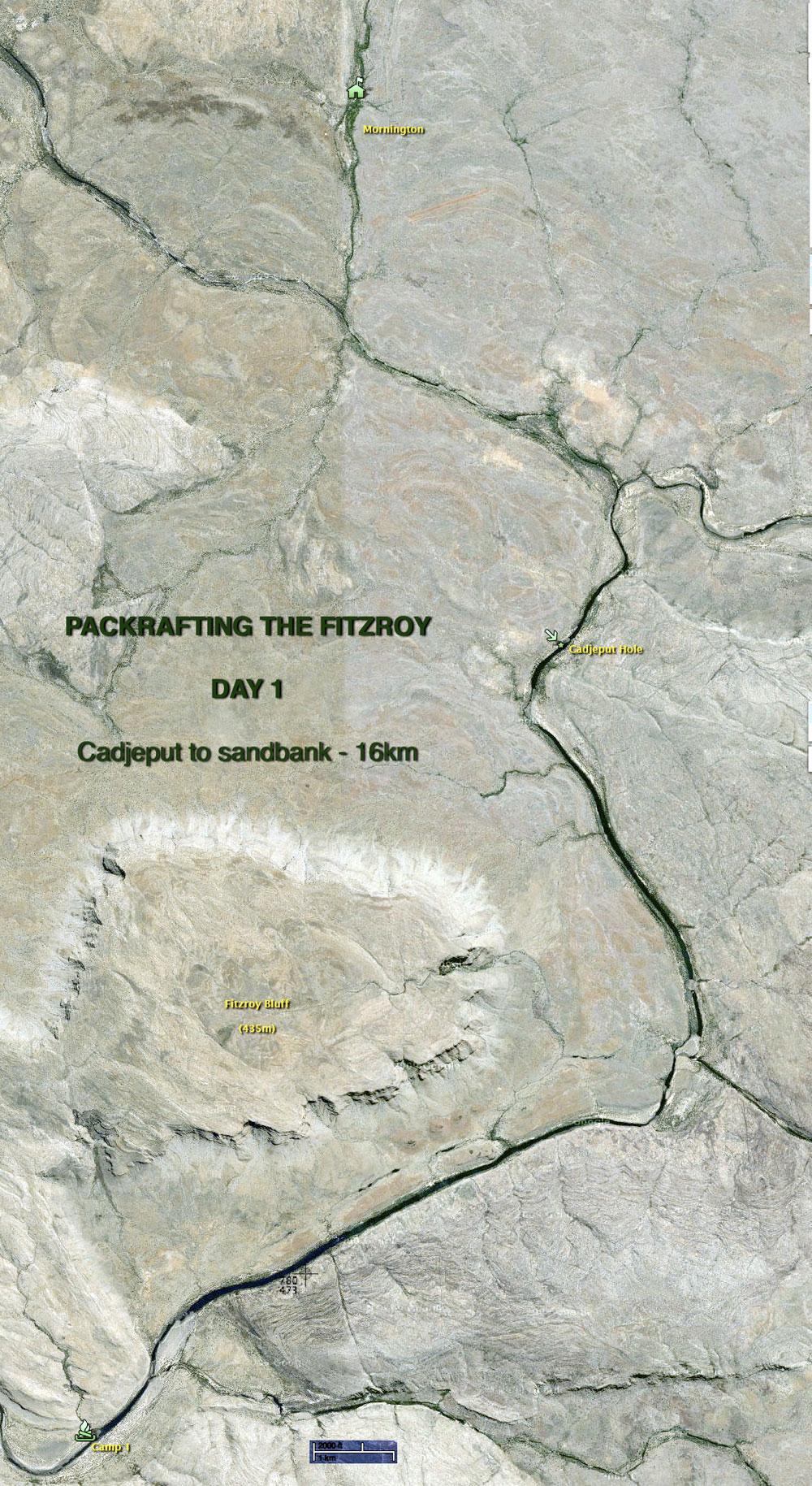
We’d originally planned to put in at Sir John Gorge further upstream, but Diane advised that might involve several rocky portages. Dimond Gorge was the other obvious alternative, but that would flush us out of the King Leopold Ranges in an hour or two which would be a shame. So we compromised and got dropped off midway at Cadjeput Pool, all up about 133km from the highway bridge and 20km from Dimond. Cadjeput was at around 180m elevation which only meant an 80-metre drop to Fitzroy Crossing, but as we were soon to find, the river flowed there all the way.

Jeff was in denial over his $30 Bestway Outdoorsman 200 Sport pool toy, and who can blame him. He’d only paddled it briefly in the campsite pool in Broome to see how his load sat. Anything else may have risked a catastrophic rupture. But now was the moment of truth and on the river, paddling ‘backwards’, stern first (these boats are meant for rowing and so have the additional ‘sitting’ buoyancy in the rounded bow), his dinghy didn’t look like it was going to start a bushfire anytime soon.

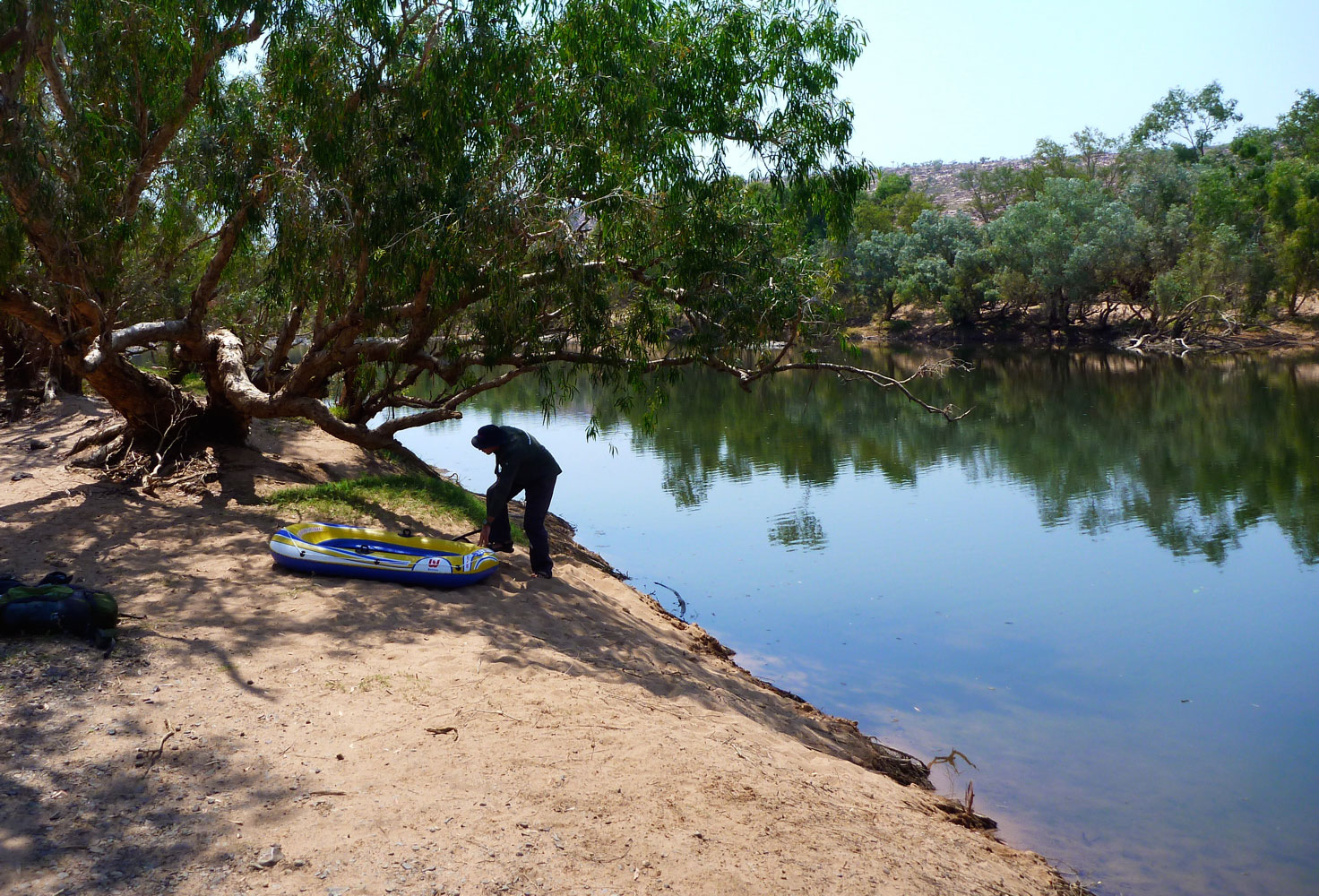
We set off downstream along the tree-lined pool (right), but within half an hour came to our first rock bar where the river took a 90° turn to the southeast. It was to be a pattern we’d recognise all along the Fitzroy; any significant change of course usually meant a slowing of the current and the deposition of rock or sand into a blockage which the river either worked around or seeped through.

Already mid-morning and hot, unloading the boats and tramping with full packs for the first time (left) underlined how tiring and tedious this was compared to effortless gliding in a raft. Initially Jeff’s view was quite different; walking was preferable to slow paddling, especially as he’d worked out a neat portaging solution. By putting his paddle through the rollocks (picture below) he could position the paddle shaft between his backpack and his back which located the boat securely, made a great sun shade and, with a light headwind, even generated a little lift as he tramped along, carefully avoiding any low branches.

My own boat-on-the-head arrangement using my more floppy UDB as a backpack (left) didn’t work half as well in a breeze, especially while staggering over fridge-sized boulders. Over the coming days while Jeff was happy to walk, I took to the water as soon as I could, until I figured loading the UDB with the weight low when backpacking made it much more stable.

Back on the water, before us stretched a 3km-long pool leading to the next right-angle turn to the southwest around Fitzroy Bluff where a much longer 6km pool and a headwind really tested Jeff’s Outdoorsmanship. For at least two hours he span his paddle furiously while I slid along in the Alpacka. Just like Steve on the Chassezac in France earlier this year, Jeff tried various ways of paddling: sitting on the bow, in the boat, swimming from behind. Nothing could shift the pool toy at a satisfying speed short of wearing it as a hat. It sat on the water like a jellyfish in a coma, and with the GPS I measured it running at up to 3-3.5kph while I topped out at 4.5-5kph in the Alpacka. And even to achieve 3kph Jeff had to paddle at twice my frequency, while failing to get a good catch due to the BW’s added width.


The Bestway really isn’t the best craft for touring big Kimberley rivers until you appreciate it costs less than a night’s camping in Broome or five overpriced beers at the Potshot Hotel in Exmouth. I was already wondering if Jeff would stick it out as pushing his water sofa into a headwind clearly ate him up. It was a mild reversal of the situation on the Ningaloo a week or two earlier, although being in the slower kayak there didn’t bother me as much as its handling in the high winds; you’re as fast as you are and here on the Fitzroy the reduced pace suited me just fine. I wouldn’t wear myself out and anyway, I was sure it would take us a day or two to establish an equable travelling pace. Could I carry on alone if Jeff bailed at Dimond tomorrow? What if he damaged it beyond repair and walked on while I carried the packs on long pools. Would that work? All options were on the cards for the coming days

At the next blocked bend I lifted over some logs and took off down a cool, canopied channel (left) while Jeff loaded up to haul over the sand and rocks. At the start of the next pool there was no sign of him, until backtracking on foot and shouting, I found he’d somehow got around me onto the far side of the channel.

In his exhausted haze he’d wandered up a side valley and only realised his mistake on turning on his Garmin Nuvi which had unusually good mapping, even out here (only I carried 100k paper maps). At that moment he looked rather shell shocked – I’d not seen him like that before. Just after the next shallow rapid an inviting sandbar glowed in the late afternoon light. ‘Let’s camp there‘ I pointed, and to my surprise he simply agreed; a mark of how tired he must have been.

We’d covered what I now realise was actually a pretty good 16km over about 7 hours, much of it into a valley-funnelled headwind with little shade and with no food breaks. We’d eaten our fill at Mornington, but that was going to have to change as we got to put in full days on the river.

A fire was easily lit and soon we tucked into the first of our freeze-dried bag meals followed by several cups of tea. By 6.30 it was dark and Jeff had already passed out in his mozzie dome after admitting ‘This is going to be the hardest thing I’ve ever done‘.

The video from this day is on the next post.

Packrafting in France 2 ~ Ardeche Gorge

See also:
Packboating in southern France
• Chassezac
Allier guide
Tarn
Packboating in southern France

Includes pix by Steve L

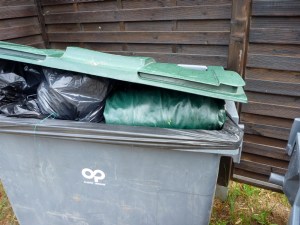
The story so far. We’d nursed Steve’s cheapo Intex Boat Hawk II for two days from Les Vans down the Chassezac river as far as Vallon on the Ardeche, about 38km. But following a brief reprieve, that slackraft was now a bundle of plastic stuffed into the campsite bin (left). Former Boathawker Steve was now astride a rental sit-on-top, like 98% of paddlers heading into the Ardeche Gorge.

With the river already packed with day boaters, we joined the melee towards the moderately technical rapid of Charlemagne, near the Pont d’Arc (above).
Recce’ing the Ardeche a year ago with the Mrs, we’d sat at Charlemagne rapid watching the boats come through, not all as expertly as the canoe on the left. But at that time (late May) the river had been at least a foot higher. Today, the surfing wave at the exit (above) was much flatter and the 200-metre dog leg channel to get there was pretty easy to follow. Traffic was much higher though and I had to queue up and take my turn to drop in.

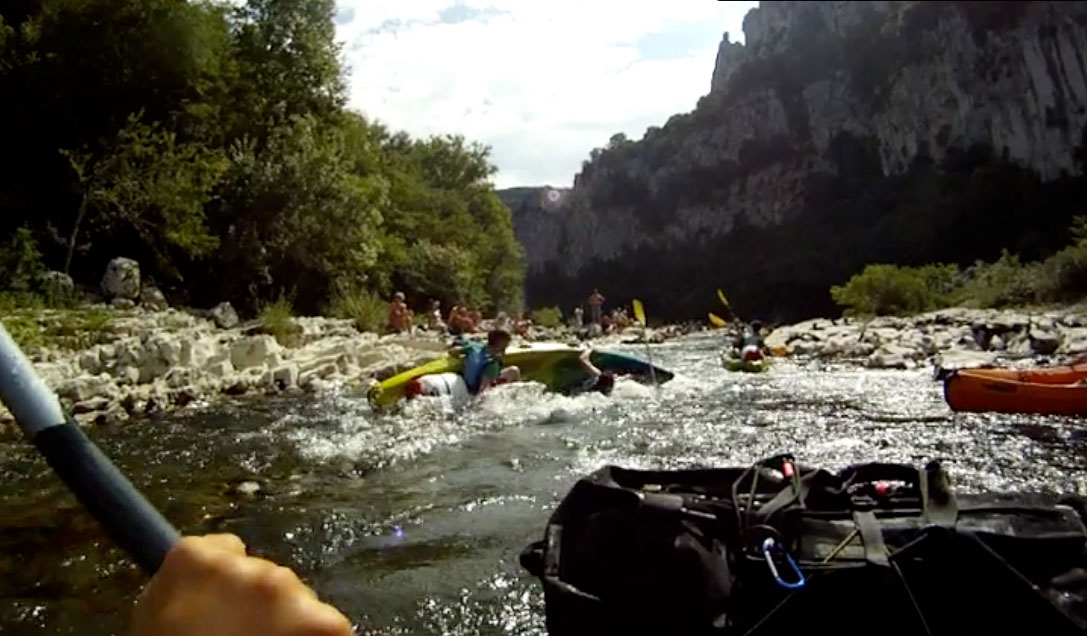
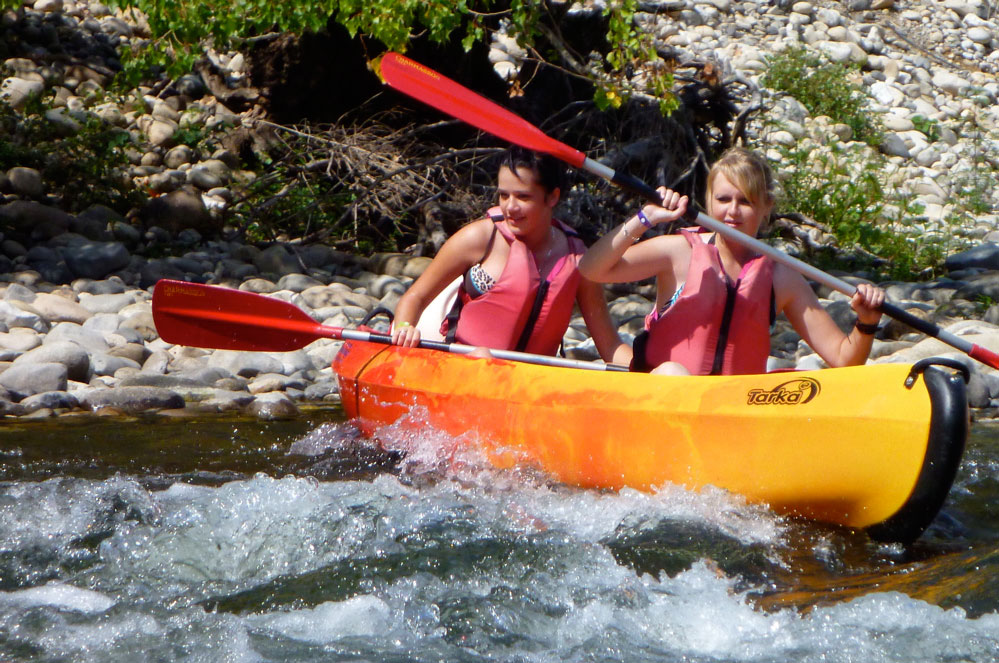
As I rode through, in front of me a couple of teenagers in a double rode up onto rocks and slowly flipped over (above), but in the packraft it was easy to steer out of their way and complete the run. First time SoT-er Steve also had no probs.

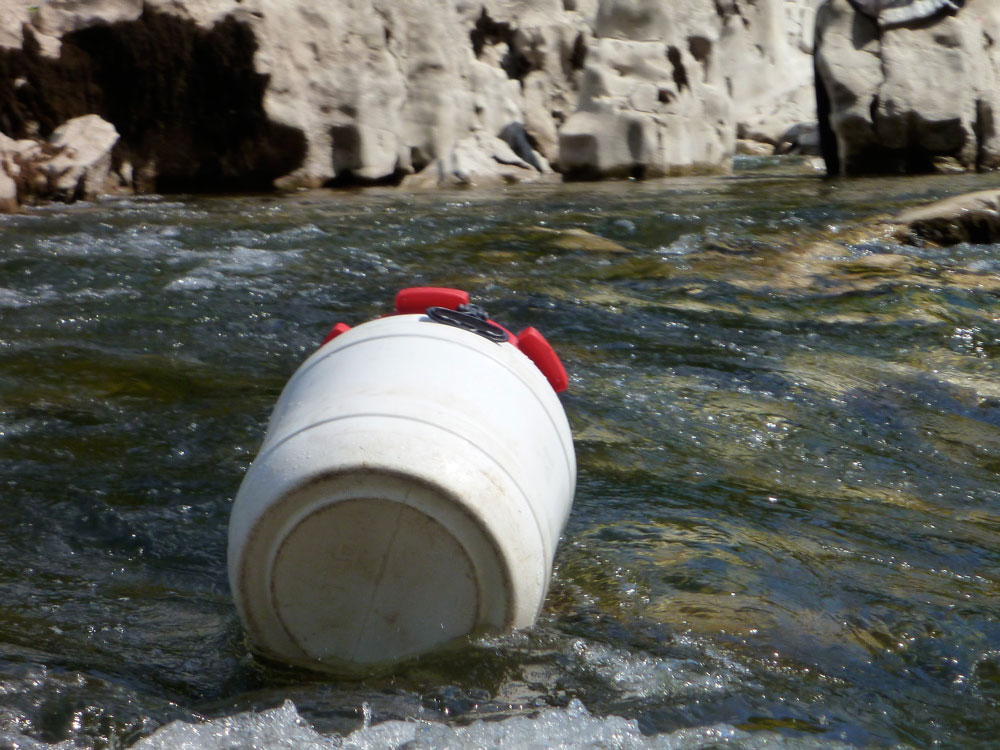
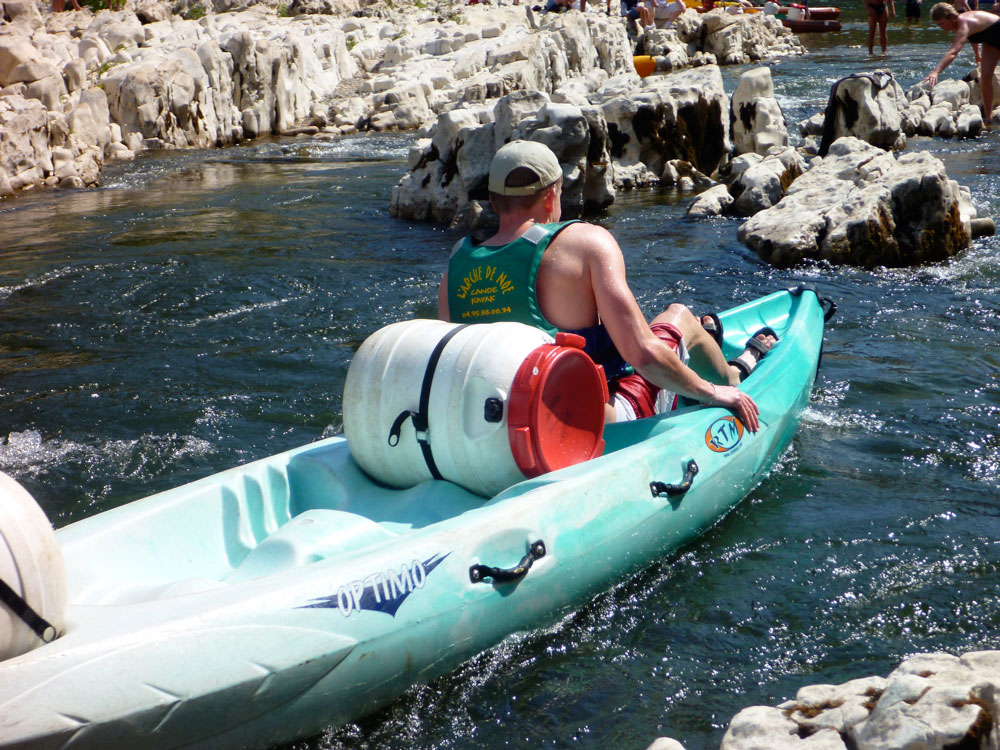
That done, we pulled over to watch the fun for a while. Most slipped through like us, but the double SoTs were far less agile. There’s no mystery why; put a teenage boy and his eight-year old sister – both new to kayaking –at each end of a 4-5 metre hunk of plastic SoT weighing 30 kilos and they’re bound to cock up any rapid that requires co-ordinating a sharp turn or a bit of elementary river reading. So it was that boats piled into boats (left) and a train of flotsam flowed out of Charlemagne towards the arch: vacant kayaks, loose drums and paddles, kayakers with no paddles, and the odd swimmer. Some very young kids were not seeing the funny side of it, but the crowds applauded their dad’s rock mounting antics and I don’t recall any single SoTs flipping. Remember that next time you do the Ardeche!

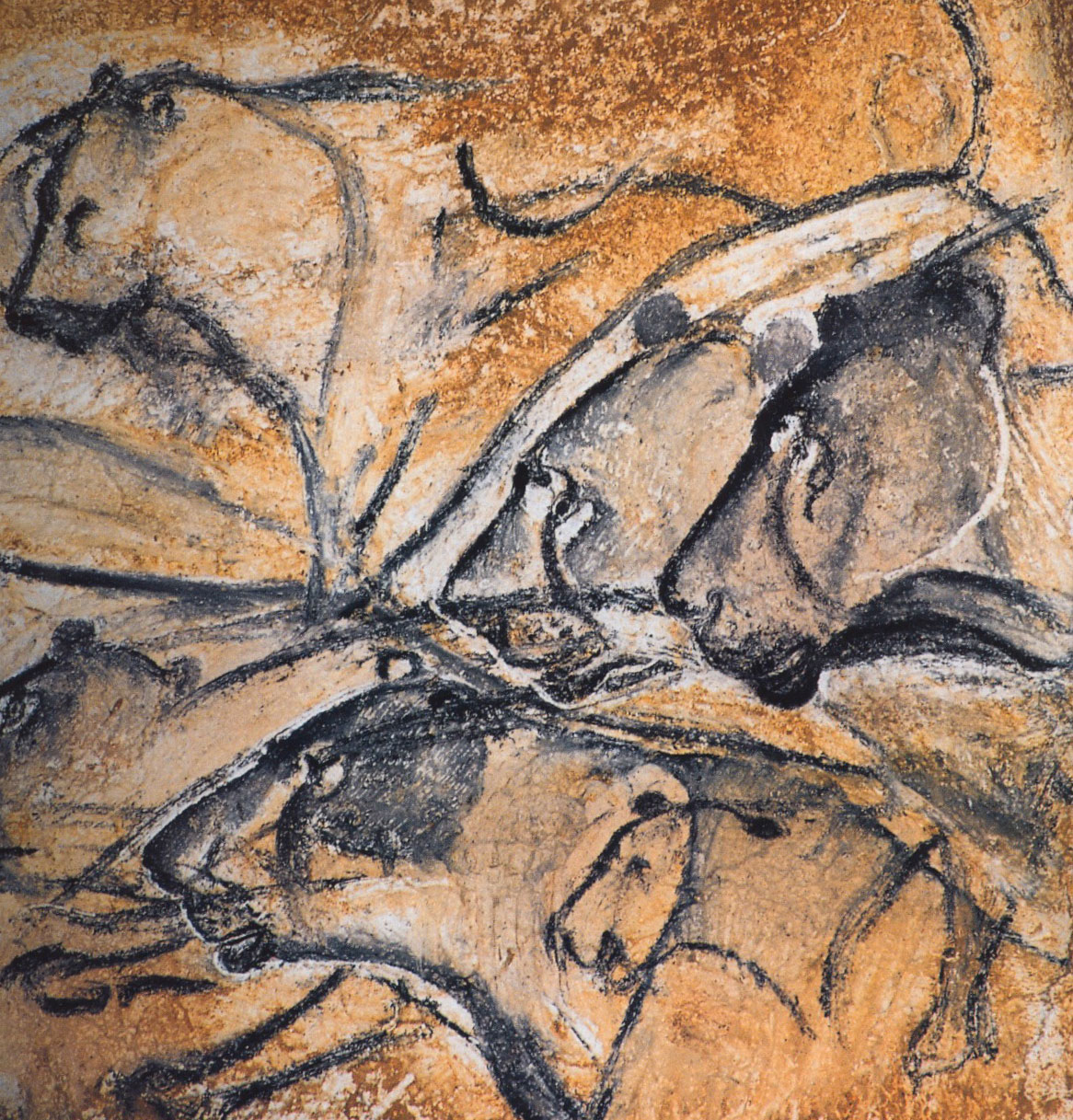
Just beyond we passed under the famous arch (left) close to where the Chauvet cave had been discovered in the mid-90s. Full of fabulous prehistoric rock art (right) dating back 30,000 years, it’s exact location is little known and it’s locked up for protection. The cave was the subject of a recent Werner Herzog film and, as has been done elsewhere in France, a replica ‘tourist cave’ is planned nearby.

Up to this point was the regular half-day fun run on the Ardeche. The next 25kms entered a conservation reserve with only limited exits, and to rent his SoT for two days Steve had had to prove he’d booked a place at one of the two overnight camps or bivis in the gorge (see map below). Wild camping is forbidden, although we did spot a few doing so and I imagine you could get away with it if you don’t want to get bogged down in the need to book the bivi in advance. You’re also supposed to be off the river by 6pm. As soon as we left Pont d’Arc paddling traffic dropped off dramatically. 

I’d been put off the Ardeche for years by the rather intimidating description in the Massif book, but Charlemagne had been a doddle and levels were low or perhaps just normal. That book had over-egged other rivers and rapids over the years, but it is aimed at Brit families in canoes (not a huge market it must be said, never seen any). While my old Gumotex Sunny would have swamped harmlessly here and there, and also been tricky to turn fast in some rapids, the Alpacka Yak has the effect of reducing the WW grades by a factor of one. You can turn the Yak with one swipe and you’re so low and stable, especially with the UDBag sat over the bow, it’s hard to think how it could ever flip. We wound our way along the meanders, passing the odd knot of kayakers as well as hikers following the gorge on foot, something which includes the odd bit of via ferrata.

The rapids ahead held little dread now and even the notorious Dent Noire mid-river rock (left) passed without incident. I managed to pass to the right, the correct way but which the current makes quite difficult. Steve took it on the left, grabbing a small bite from the Black Tooth on his elbow as he passed. A pair of river rescue firemen are stationed here each day, but with a ‘chicken run’ channel dug out of the shingle bypassing the rock altogether, they’d be having a pretty quiet time as long as the less controllable doubles took that line, as the signs advised.

We arrived at the empty Gard bivi early and took our pick of the pitches. After days packed like sardines in holiday camps, it was a relief to spread out over a sloping field as on a normal farmer’s campsite. There’s nothing here but toilets, water, free charcoal for the BBQ pits and a 2km track up to the road, as well as warnings to keep food sealed against the wild boars. The field filled up towards evening but it was still far from the overcrowding for which the Ardeche is notorious. A weekend here may have been another matter.

Friday was another wonderful day, hitting the frothiest lines we could find (left) and drifting with the breeze under the overhanging limestone walls. Only one rapid flipped Steve’s rigid SoT out of the blue, while the following Yak just hung up on the same rock, pivoted round and slid off.

At times stiff a breeze blew along the gorge, either in our face or our backs, depending on the orientation of the meander. As the walls subsided towards the take-out at Sauze near St Martin, that turned into a strong backwind which rushed us downriver. At one point after a break, I swam out with my boat and planned to get in it off the water just to remind myself it was easy, but the little tab I was holding onto broke and the boat was gone like a balloon in a gale. Just as well Steve was downriver to catch it.

At Sauze beach the rental outfits’ vans and trailers line up to retrieve their clients and SoTs. Me, I didn’t want to get off the river, but our original plan to paddle on for a day to Pont Saint Esprit was only possible with our own boats. Steve could have bought another cheapie from a toy shop but it would have meant rushing for tomorrow’s train from Avignon. So it was time to roll up the Yak on this mini adventure and head for out allocated patch in the Camping Municipal.

Our week in the Ardeche was all a bit of a holiday, not the sort of thing we normally do, but a fun run on which it was safe to take a chance with the cheap dinghy. There wasn’t a mark on the Yak but I was shocked how easily and quickly the Hawk had got mashed. Conclusion: you do indeed get what you pay for. With some duct tape we could have kept it going and for the £35 it cost, it was still worth it as a one-trip wonder, compared to the commitment of buying a proper packraft.
Combined with the brilliant Watershed bags, the Yak made light work of it all and makes me realise I’d be happy to do the Massif rivers I’ve done in the Sunny all over again with the Alpacka. It would also be fun to do the Ardeche again at higher levels and maybe start from Aubenas to make a meaty 100-km run down to St Esprit.

Getting to the Ardeche
We took an infrequent Eurostar non-stop service from London to Avignon – just 6 hours but £260 return each. An Easyjet to Lyon or Ryanair to Nimes may have been cheaper but not quicker and much less fun. From Avignon we backed up to Montelimar by train and from there took the connecting bus service on to Ruoms (one ticket about £15, 1.5 hours). At Ruoms, just north of Vallon, an empty minibus turned up bang on time and took us on to Les Vans for just €3 (30 mins). Simply getting a TGV train to Montelimar may be a better and cheaper way, but from the UK would probably require changing stations in Paris (40 mins walk) or maybe just platforms in Lille.
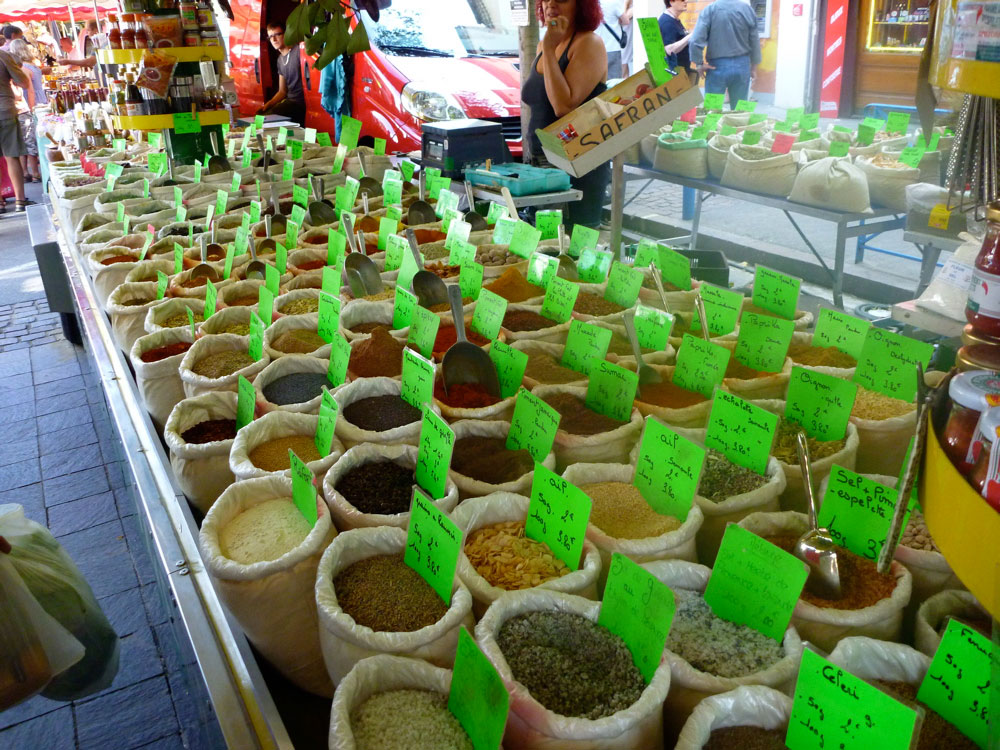
Coming back we got a lift from St Martin to Pont St Esprit (no buses; taxi €15 for 9km; 16km by river). And after wandering through the Saturday morning marche (above left), took the bus on to Avignon for just €2.50 (90 mins) for another 6-hour train ride back to London.

Tracking down Pont Saint Esprit timetables online unearthed a sinister history to the town: the Incident at Pont Saint Esprit. A recently published book (right) claimed that in the early 1950s, as part of what later became their MK Ultra mind control program, the CIA drugged the town with LSD with predictably terrifying results. Several people killed themselves in the hallucinogenic torment, many more were locked up in asylums. If it’s true then CIA stunts like that make an exploding cigar sound positively benign!

Alpacka Yak 1 (Decked) Main Page

See also:
Packrafting the Fitzroy River (NW Australia; 5 posts)
Alpacka Yak around Suilven mountain
Alpacka Yak to Suilven mountain
Urban Packrafting: the Death Weir Kebab Tunnel
Slackrafting to Clashnessie
Intex Slackraft vs Alpacka
Packrafting in France – Ardeche Gorge
Packrafting in France – Chassezac
Escalante packraft recce
Trying out bikerafting
Packrafting a Force 6 gale
Packrafting the Oscaig river
2011: Llamas get the point

After all that lot I sold my Yak and bought a non-decked, two-colour Yak in a 2013-14 sale

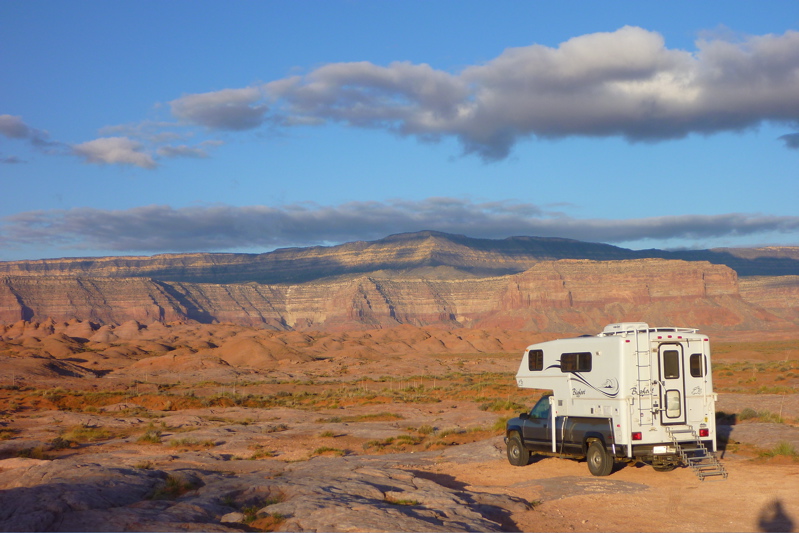
I’d parked the RV at the end of a 55-mile track south of the highway at Hole in the Rock, the top of a gully which drops 500 feet down to Lake Powell and which is bit of a scramble in places. If this was the Australia that I know, the chasm would be plastered with ‘Gorge Risk‘ signs. Looks like the Americans have got over all that, if it ever existed here. What you see – a steep, boulder-chocked gully where you want to take care – is what you get.

Getting down and back up from the lake wore me out for a day, but what was I complaining about? In 1880 Mormon pioneers spent six weeks here lowering two dozen wagons to get across what was then the Colorado river (read right) to get to a new settlement on the far side.
Once on the water I only went for a bit of a splash-about in a flooded arm off the main body of the lake as it was a bit windy and I wasn’t sure what weather lay ahead. By the time I got back to the top it had clouded over and stayed that way till I left the GSENM a few days later.
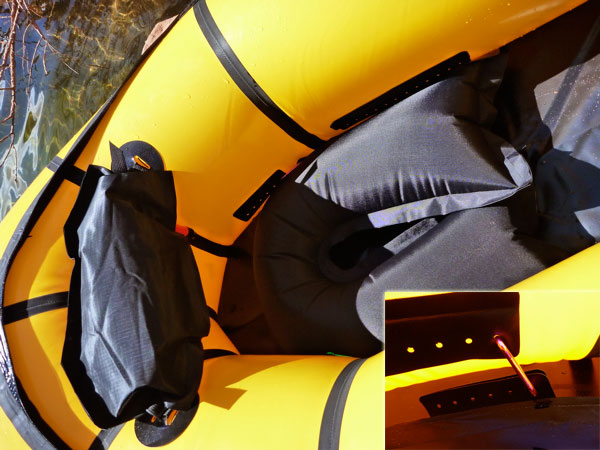
Changes on the conventional-looking pre-2011 rafts are summarised here: pointy ends, greater length, extended stern, 2-part backrest/seat and a deck that zips right off. I also have a feeling the floor’s made from a chunkier or stiffer fabric and so the extra butt-patch I had specified (left – done for free) may not be so necessary – but it sure feels worthwhile when scraping along a boney Scottish burn.

On the water first impression was not so good – oh dear the 4-inch shorter Yak was seemingly narrower at the front than my old Llama and I couldn’t put my feet side by side when pressed against the front (left image on the right) – this wearing size 11 Keen Arroyos (fairly wide). But deflating the backrest from full gave my legs more room and I actually found that both feet placed flat on the floor below the bulge of the side tubes worked fine (right image above right), just not so sure if this is so intuitive for brace control. I checked the front interior width of my Llama against the new Yak and it’s only an inch wider. In the picture left the new Yak and Llama fronts seem near identical in interior front width.


Getting back in the longer Llama, I now see the reason my feet didn’t jam was that I had a few inches gap between the front of my feet and the inner front of the boat where it tapered off. Sat against the back I could never reach the front to brace which is why I got the Yak. Also, the UDB on the new Yak may have constricted my feet a bit that day. Paddling a few days later without the UDB, I can’t say I noticed the foot jam. Got all that?


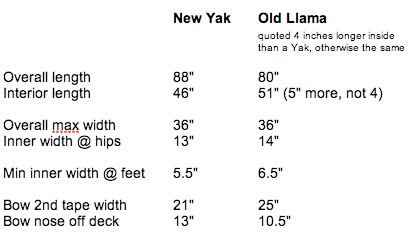
Other fascinating facts from my comparative measurements (above right) show the new Yak is only 8 inches longer then the Llama, so a new Llama ought only be 12″ longer, not 20 inches as estimated from the Alpacka website’s measurements at the time. The new Yellow Yak is nominally 4 inches shorter inside than an old Llama.

Other than that it feels much like the old Llama. Like they claim, turning/spinning doesn’t seem to be affected by the increase in length, but I’m sure the Yak’s bow yawed less from side to side as I paddled, due I suspect to the extended tail damping the paddle-induced pivoting effect, rather like a rudder or skeg. I did have my part-filled UDB strapped to the front where any weight tends to reduce yawing anyway. It was the first time I used the UDB on the water and have to admit the added guarantee of its girth and buoyancy was reassuring should a Colorado river barracuda make a bite at my Yak. Couldn’t really do any speeding in the conditions – it may be just half a mph faster, but that’s still some 20%.

As anticipated, the new 2-part seat is a real improvement. No more having the backrest flop down as you’re trying to get in quick off a steep bank or into a fast flow with a need to line up or burn. Like on my Llama, I just clipped the seat base onto the hull tabs with a single snaplink each side (inset, left) rather than mess about with the string they supply. Makes taking it out and drying/cleaning the insides easier.

Later on, washed up on the wrong side of the Virgin River Gorge in northwest Arizona, I also found the part-deflated backrest a handy way of portaging the empty boat – a bit like a Sherpa’s headband (left).
So, bottom line, not a huge difference in operation apart from less yawing which was never that bad anyway once you compensated for it. Can’t say I noticed any added buoyancy/better trim with the longer back, but it might be noticeable from the other PoV. The zip-off skirt is a nice idea; one less thing to unroll and dry after. The added snugness I dare say I’ll appreciate in rougher conditions and it sure is nice to have a yellow boat for a change!
There was a discussion on BackpackingLight about the new shape and here Roman D gives his opinion for a harder core of white water utility. More pack-Yak adventures this summer.


Packraft MYO sailing

See also this

First sunny spring day around here so we went out to try out the flip-out disc sail I made over the winter on my Llama and Steve’s Big Kahuna. Wind was forecast at about 8 mph but was gusty – a bloke in a dinghy sailboat said it was up to 15 mph.
Folded and clipped on the packraft, the sail sits out of the way and can be opened and – more importantly – closed easily with a twist, as long as you have a clip of some sort to keep it closed (and that clip is attached to the sail so it does not spring off and sink to the bottom of the lake…).

Initial impressions were disappointing, I did not rip off across the reservoir like a hooked marlin out of a Roadrunner cartoon. But watching the vid back it’s clear the boat did noticably drift downwind across the reservoir with the sail aloft, often at speeds similar to paddling (about 3 mph). Problem with the sail on the Alpacka was the boat soon turned off the wind one way or the other, swinging left and right. The pointier Kahunayak was better, especially once Steve trailed his paddle like a skeg. Didn’t get to try that on the Llama as I was fiddling about with the string trying angle the sail so as to steer the boat into the wind. This worked quite well in correcting the direction as you can see in the vid, but staying in that position was a problem.
Could this be due to ‘wind-spill’ off the flat disc sail which lacks dishing like a WindPaddle? Maybe. It will be interesting to try it on my ruddered Incept IK when it turns up, as well as the new-shape Alpacka which I am picking up next week.
More testing to come this summer up in windier Scotland with my all-new packboating flotilla. Or just enjoy this 2014 video from Finland by JP. More here at leftbound.

Winter not-packrafting in Scotland

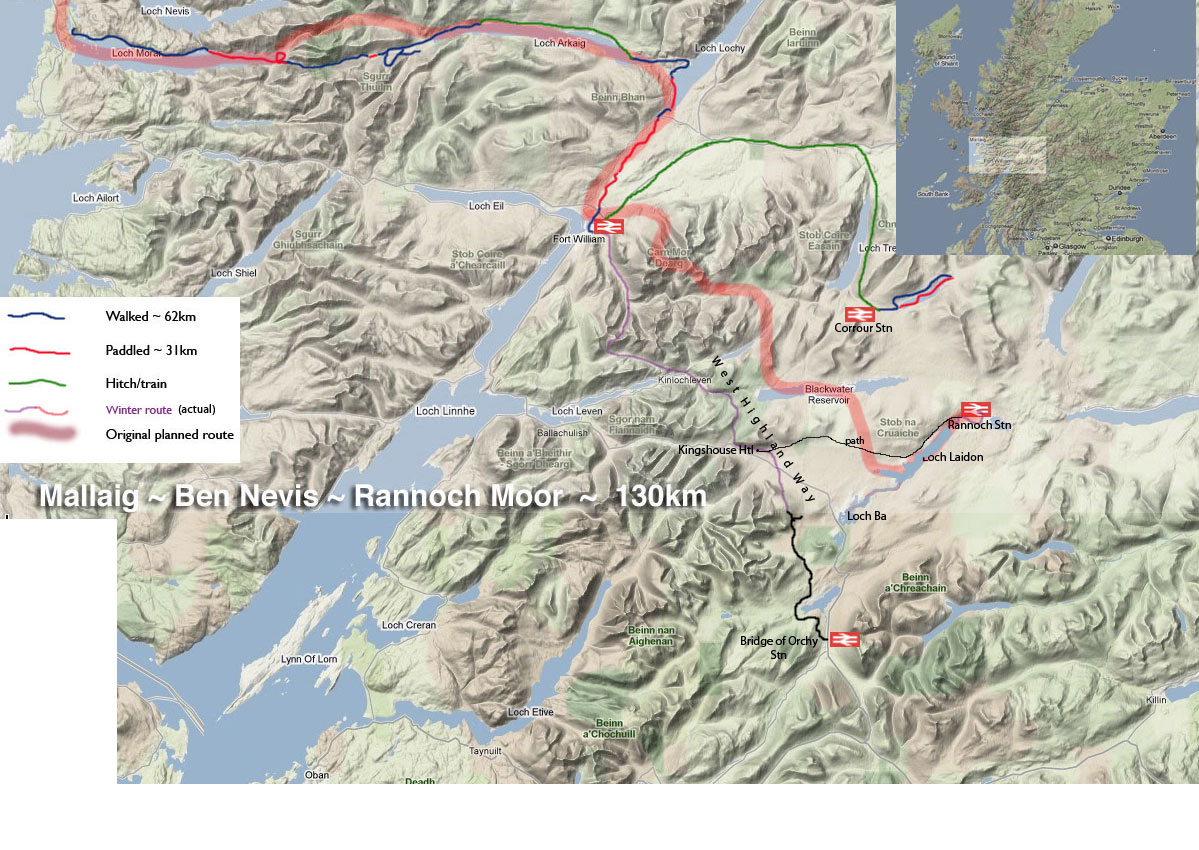
I should have been off to France in early November to packboat down the Allier River, but the current job drags on. So despite the very short days, it struck me I ought to finish off my summer’s packrafting plan. On that occasion, I ran out of time at Fort William while realising my idea of traipsing merrily across the bogs of Rannoch Moor from loch to river was – as usual – over-ambitious. Being my first packing trip, I also learned a bit about what gear works for this sort of travel.
End of November I’ll walk southeast for two days down from Fort William to west Rannoch along the West Highland Way, like any normal person. Then I’ll put-in near the road bridge at Loch Ba and paddle northeast for two slow days onto Loch Laidon for Rannoch station to train back home. Another perfect mini adventure!

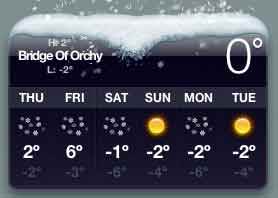
Looks like the forecast is freezing and snowy, so I’m a little concerned that a weekend of sub-zero temperatures may be enough to thinly freeze the lochs by Monday when I reach Loch Ba, making it too thin to walk on but too hard to paddle across. (a couple of weeks later we indeed experienced a paddling-through-ice scenario on a local river. Wind is forecast at 18mph headwind, but not till Tuesday which on top of -2 ought to chill things down. But that’s the final day’s paddle to the station so it can be endured or walked.

On the way I’ll be trying out some new gear:

  • Full-length Seal Skin socks for bog-wading immunity.
  • Self-draining trail shoes (normal hiking shoes with a hole melted through the sides). My Keen Arroyo drainers were not up to loaded walking.
  • Watershed UDB drybag/backpack and W’shed Chattooga day bag.
  • A waterproof Panasonic FT2 camera that can just hang off the neck come rain or splash. No more scrabbling with a Peli box while watching out for camera-killing drips and the rocks ahead.
December 5 ~ All Pack and no Paddle

I ended up only packwalking for three days, reversing the West Highland Way (WHW) from Fort William to Bridge of Orchy. It was nice enough, especially the last day after a bit of snow to improve grip. The only other person I met was this guy who’d cycled the WHW from Glasgow (95 miles) in 2 and a bit days. Pretty good going as I soon found out it’s not all rideable or even easily walkable in icy conditions.

On the first day I misjudged what I needed to wear a couple of degrees below freezing and ended up overheated and worn out after a long climb out of Fort William. After 13 miles I descended to Kinlochleven, a former ally-smelting company town for which the Blackwater reservoir had been built a century ago. From above it looked like some sinister gulag hidden in a valley. With snow on the hills I thought the hostel here would have been packed out with climbers, but there were only 4 others in and close up Kinloch doesn’t look so bad. The smelting works have now been converted into an ice climbing centre, while I imagine plenty of excess hydropower still pours down the pipes to get fed off to Fort William.

Day 2 was a slog up along the pipeline towards the reservoir and then breaking off on the WHW path towards the walk’s 560-metre high point at the Giant’s Staircase before dropping to Glencoe. From the top the Blackwater reservoir looked grim but was clearly unfrozen which boded well for tomorrow when I hoped to paddle the nearby lochs to Rannoch station.

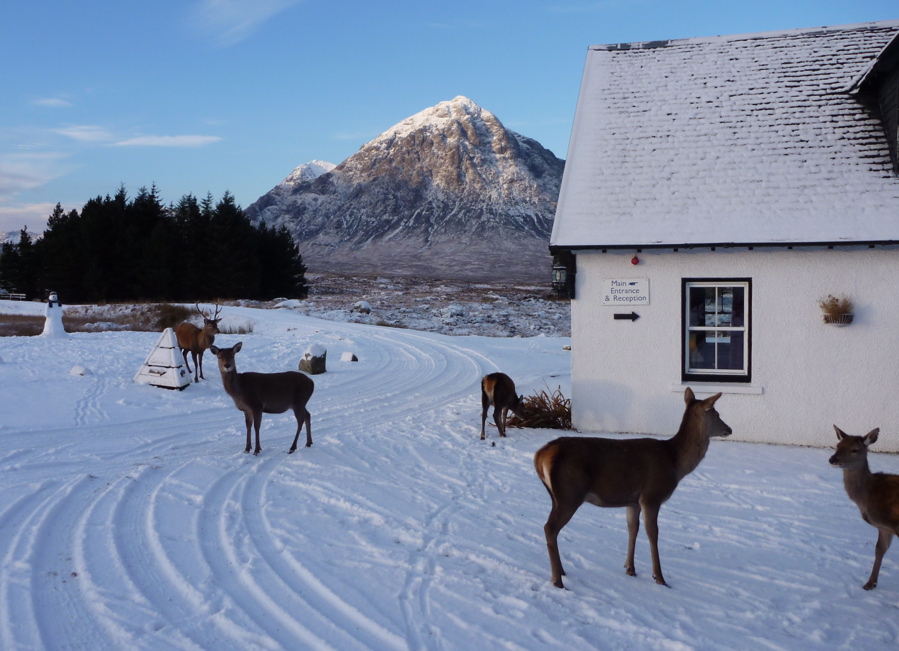
For the second time that day, I went flying on ice, ripping off my metal watch strap, tearing my trousers, and bashing my knee. The heavy pack amplified the impacts. Then later, walking on the flat towards the isolated Kingshouse Hotel at the head of Glencoe, I slipped again on and landed hard with the heel of my hand on a sharp rock which hurt a lot. With three similar falls on the previous day, after 9 miles I staggered into the hotel feeling pretty beaten up, but what a lovely cosy old place to spend the night! There was a fantastic view out of my room across to the pyramid peak of Buachaille Etive Mòr, while deer gathered below my window in the dusk.

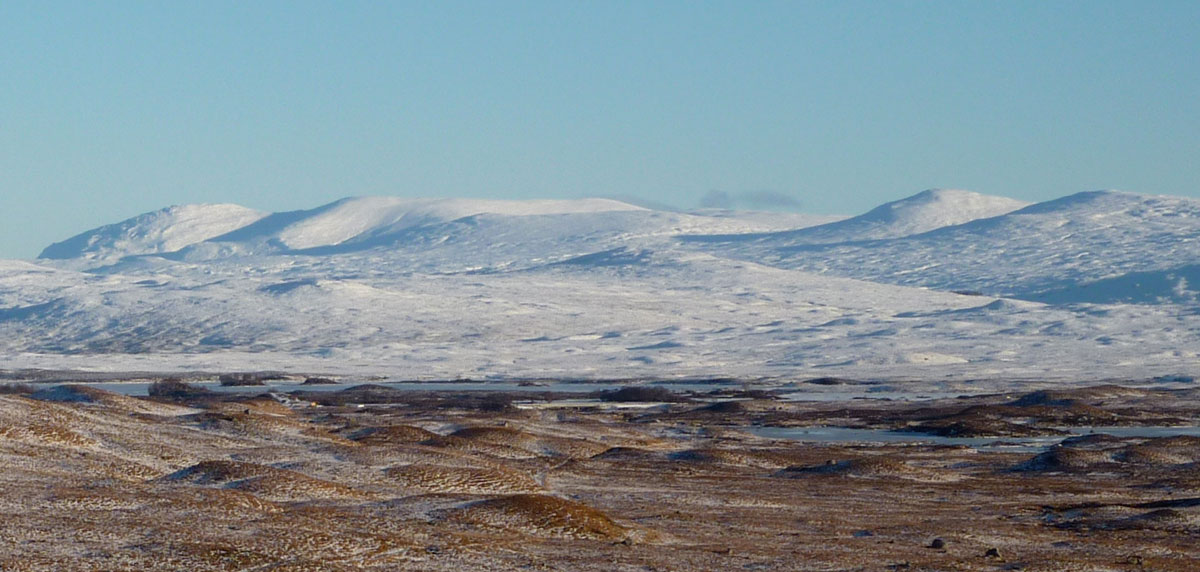
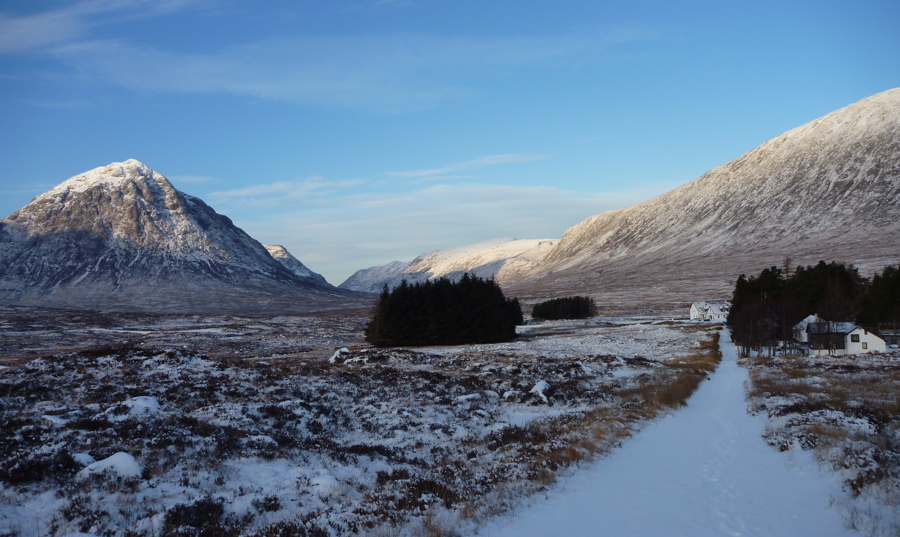
It snowed overnight and leaving Kingshouse Hotel, after a few miles I was expecting to get a view east over to Loch Ba from a high point cairn on the WHW, to establish whether it was worth schleping cross country to get to the water. The previous night had been forecast at -10°C and at the viewpoint all to the east was just a snowy tundra, with a small, snow-covered frozen loch south of Loch Ba for sure. Was Loch Ba frozen too? I couldn’t see from there nor from any other point further on the WHW, despite scooting without a pack up a hill for a better recce. Only back home when I zoomed in on the photos could I see a thin blue line of the bigger Loch Laidon which was clearly unfrozen. So I probably could have managed it after all.


It has to be said it was a lovely sunny day on the trail with only me, the stags, and some scurrying tracks, so with days short, I was happy to stick with what I knew and plod on to Bridge of Orchy station, rather than paddle to Rannoch station (the next one up) as planned.

whw-stags


So, a 40-mile walk in the snow with a heavy load. Nothing new there. What I should have done is taken the path from Kingshouse east to Rannoch, passing north of the lochs, but that would have missed out Loch Ba and the easy and shallow chute between the two lochs (though that may well have been frozen).

If nothing else it proved that you can set off for a walk with a camping load including a packraft as an option. If the walking is more pleasant or the packrafting not worthwhile, the modest extra weight is no drama. It would have been nice to go for a paddle but it’ll all be there next time and on the way to the station at Bridge of Orchy I was sizing up the Orchy River which drains from the moor to enter Loch Awe which I’d never heard of but whose north end is right on the Oban rail branch line. Sounds like a couple of nasty waterfalls need the be walked around on the Orchy soon after the bridge, but in tame water that’s too low for any hardshell it could be another little adventure with packboat and paddle. With roads, rails, and trails, the more you look at a map of Scotland, the more packable stuff is out there.
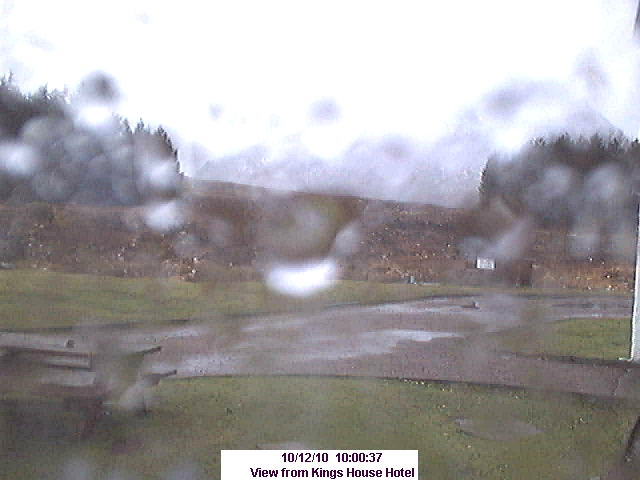
A week back home and the temperatures have jumped, even in Scotland, so the papers have to write about something else. Today, December 10th, the webcam at Kingshouse is the standard miserable Scottish highland vista.
We’re going back in a month to walk back from Orchy to the hotel and from there to Rannoch station. Bring on some more Siberian winds.

I was back in the area a month or so later in mid-January 2011 – still snowy but less thick cover. This time I could clearly see the path off the WHW leading down to the road bridge being repaired, the rushing torrent of the river Ba leading to the loch, and even the isles on the loch, not totally icebound. Maybe my eyesight improved over Xmas.

Gear

  • Seal Skin socks – very good while they last. Warm but not sweaty considering they’re initially waterproof. The knee-length ones ought to make great waders.
  • Self-draining Karrimor trail shoes. No real wading to test them, but certainly better to walk in with a heavy load than the thin-soled Arroyos, even if proper tight lacing (which could be adapted onto the Arroyos) had a lot to do with it. I may adapt a decent pair of decent trail shoes from Meindl or whatever with a better sole, if some turn up half price. It would be nice to get some plain, non Gore-tex trail shoes for packboating but I don’t think they exist these days.
  • whw-udbWatershed UDB drybag backpack was surprisingly good when you consider the 16kg load I carried just on shoulder straps with another smaller yellow Watershed over the front. Part of the tolerable comfort I feel was that the UBD’s relatively rough fabric grips across the back like weak velcro and so spreads the load. The packstaff paddle shaft saved a few tumbles and so means the 4-part Aquabound paddle is well suited when trail walking and paddling.
  • fxg-FT2The Panasonic FT2 never got to be splash tested either but was otherwise easy to use (once you know Pana interface) and took some great shots and video. It does lack the full 25mm width of my normal Lumix TZ6 and I wonder if on full zoom the relatively tiny lens is on the limit. A great back up camera for watery places. I’m still using one in 2016.


First time Alpacka packrafting: NW Scotland, 2010

Packrafting Quick Guide

I hopped on the Go-Pro bandwagon way back in 2010 but was shocked by the crumby, underexposed results above. They’ve clearly got a lot better since, but I just film with my P&S camera now.

It was a bank holiday weekend in Scotland and the West Highland Line from Glasgow to Mallaig was packed out, but only one person got off the train at Morar station. Me.
There was nothing here other than a few houses, a B&B and a lovely sandy beach facing the isles of Rhum and Eigg. The waters of Loch Morar spill out onto those sands and meander down to the sea. I was heading the other way, inland alongside the loch’s 20-km long north shore on a back road that turned into a track and finally a narrow path rising above the waters.

I was of course taking a very keen interest in the state of those waters. As must be normal around here, the wind off the North Atlantic was blowing up the loch with me, but not enough to make hauling the 20-kilo backpack on soft rafting shoes any easier. It looked like a downpour had recently smothered the area; transient waterfalls were running down the valley sides and occasional squalls rushed up the glen.
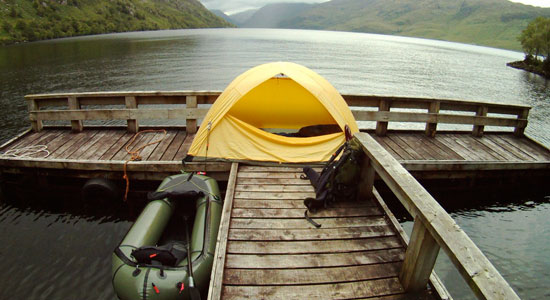
By the time I got past Swordlands Lodge – a WWII-era spy training base for the predecessors of MI5 – all I wanted was a flat patch of dry land to pitch. I’d got further than I thought, covering about 14kms in 4 hours and was now just 7kms direct from the bothy (refuge) at the far end of the loch. The wind had calmed, but the bothy could wait till the morning. I spread out on a narrow jetty, inflated the boat and went for a walk north over to Tarbert Bay, a few houses on the tidal Loch Nevis where a ferry drops in from Mallaig every other day on a circuit serving the oth
erwise inaccessible community on the Knoydart peninsula. The paddle up Loch Morar and short portage over to Loch Nevis to follow the coast back to Mallaig was a popular day trip for sea kayakers.

Never mind about that. The thought of my first real, fully loaded packrafting paddle alone on the 1000-foot deep Loch Morar was a little unnerving. Even fresh water inland lochs like this are prone to sudden storms that have drowned ill-prepared canoeists. How would my boat handle in a swell with a 12-kilo pack strapped to its bow?
When the time came next morning I found I just went through the motions, knowing that I’d done my best to get it right. Sealed inside a heavy dry suit, I pushed off and tried to keep a respectful distance from the steep shore, as the bay I’d sheltered in overnight opened out into the winds. Out there, funnelled in by the 1000-foot ridges, whitecaps furled the foot-high swell, but despite my dry mouth and hyperactive paddling, there was really nothing much to worry about other than worrying too much. With an open deck and the wind to my back, the loaded raft sat on the water as reassuringly as a wet mattress.

At one point the sun came out and soon after the white speck of Oban bothy came into view at the base of the narrow, cloud-filled valley which would lead me over to the next loch. Coming back to shore I felt a small sense of achievement; I’d managed seven whole kilometres across a windy loch carrying all my needs. With the wind and hard paddling, it had taken only one and a half hours, much faster than following the shore on foot, but that was enough adventure for one day. Though it would put me behind schedule, I decided to spend the rest of the day in the bothy, drying out the tent soaked by overnight rain and my dry suit soaked by over-anxious paddling.

On the map only intermittent paths lead to Oban bothy which seems rarely visited and as you can see from the video, is pretty basic but a very welcome shelter set in a brilliant location. Across the loch abandoned crofts reminded me that that this part of Scotland was not always the wilderness we like to think, but a land abandoned two centuries ago when poverty and inland expulsions to enable sheep rearing forced the inhabitants to the coasts, cities or overseas. Amazingly, in the next bothy the logbook showed a recent visit by some Canadians whose forbears had abandoned Glen Pean in 1793. With the gear drying on the line I went for a walk up the valley to confirm just how mushy the track would be. Later that evening I scooted off in the empty raft across the loch just because I could.

Over the pass
Next day was going to be a short-haul, just 8km by GPS up the valley and down the other side to another bothy in Glen Pean. I’d rather taken to bothy life. Though these places are basic and grubby, with no facilities other than a fireplace, some bed bases, left-over food and rubbish, the simple presence of space, shelter and mouse-eaten furniture is so much better than sodden tent camping.

While a packraft does open out your mobility options, especially in the Scottish Highlands, it does increase a typical 12kg camping payload by 50% once you add in a dry suit. Carrying that sort of load over the boggy, hummock-ridden terrain, where the high summer grass and reeds obscure knee-deep ditches and peat channels is probably more dangerous than bobbing around in the middle of a windy loch. To this end I’d adapted a sawn-off piece of paddle shaft to slot on the end on my AquaBound paddle to make a packstaff – something I’m still using over a decade later. It proved to be one of my best ideas on this trip, useful as a probe boggy-looking ground that was often actually firm (and vice versa) and a balancing- or weight-bearing aid. Climbing or descending, it helps take the load off the kknees and saved a lot of the energy expended in avoiding or trying to hop over peaty trenches which could suck you in down to your knees. I’ve been using the pack staff for packrafting and Scottish hill walks ever since.
This attempt at dancing around the mire while hauling 25% of my body weight was partly what had worn me out on the walk in from Morar station, not helped by trying to keep my feet dry in my quick-draining ‘canyoneering’ Keen water shoes. Today I decided to try out my Seal Skinz socks which had ssat in a drawer for years. Even though once wet, wool socks keep warm, the waterproof but bbreathable Skinz were as good and should mean less chance of trench foot. All I need for next time is a wade-proof, knee-high pair, though I soon learned the waterproofing or membrane in the Seal Skinz doesn’t last.
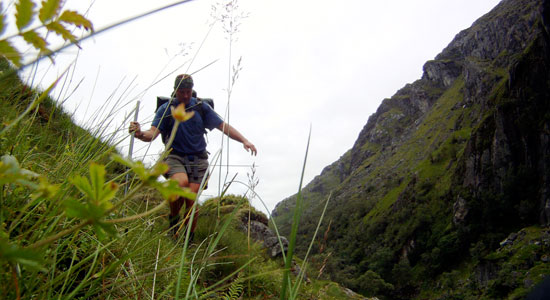
With an improved packing set up, I set off for the pass, no longer skirting the puddles and putting my weight onto the packstaff when needed. Taking it slow, I felt much safer with the staff as I plodded steadily up to the watershed. Here, still surrounded by boggy the steep valley sides, a faint sheep trail descended steeply to a water-logged valley where it disappeared altogether. Even with a staff and wet-proof feet, the valley still took some negotiating, inching around outcrops while leaning on the firmly planted staff which would have pretzeled a Leki walking pole. In the end, it was simpler to follow the stony river bed.
Presently I came upon Lochan Sagairt as marked on the map, unreached by paths from either side and jammed in among dense contours in a gorge. Either side would be a tiring climb with the load I carried and so here was a perfect evocation of the Packrafter’s Choice: to expend effort but possibly save time by keeping on land – or to deploy the raft and scoot across the lochan effortlessly and maybe even catch a bit of a ride off the stream on the far side. (If you’ve watched the vid, it’s here that the film and my photos end – my 8-gig SD card filled up).
It took just 12 minutes from stopping to paddling out through the reeds onto the lochan. (Here’s another version.) Following the stream gave me up to a kilometre of paddling distance, but soon that became too shallow and worse still, up ahead seemed to drop through a small gorge. Very keen to play it safe, I rolled up the boat and took to what was now a quad bike track which brought me through a jungle of ferns to the deserted bothy in Glen Pean, nine kilometres walk and four hours from Oban.

Glen Pean
The plan here had been to track the Pean river on foot and put-in as soon as it became paddleable, hoping that that would lead smoothly into Loch Arkaig, the next big body of water. I had my doubts it would be as simple as that, and after lunch set off, first up to an interesting-looking waterfall on the far side of the valley, and then back down into the valley to recce the river downstream. This exposed one of the flaws of packrafting in this sort of wild terrain. Walking the water courses in the valley bottoms, you’re in the worst, waterlogged terrain, fit only for birds and slugs trapped in a squelching morass of saturated peat and spongy moss.
Up here the meandering Pean river flipped between deep, Guinness-coloured pools and clear, shingly shallows. No big problem in an unloaded raft as I’d found in France where we’d spent the last few months, but with a load you ground out sooner, meaning getting out and pulling or even unpacking and carrying; not an efficient use of energy. I tramped downstream around the deepest mire where the forest plantation met the river, and up ahead noticed an ominous dip in the tree line between two knolls. Deadly, Alpacka-shredding rapids!

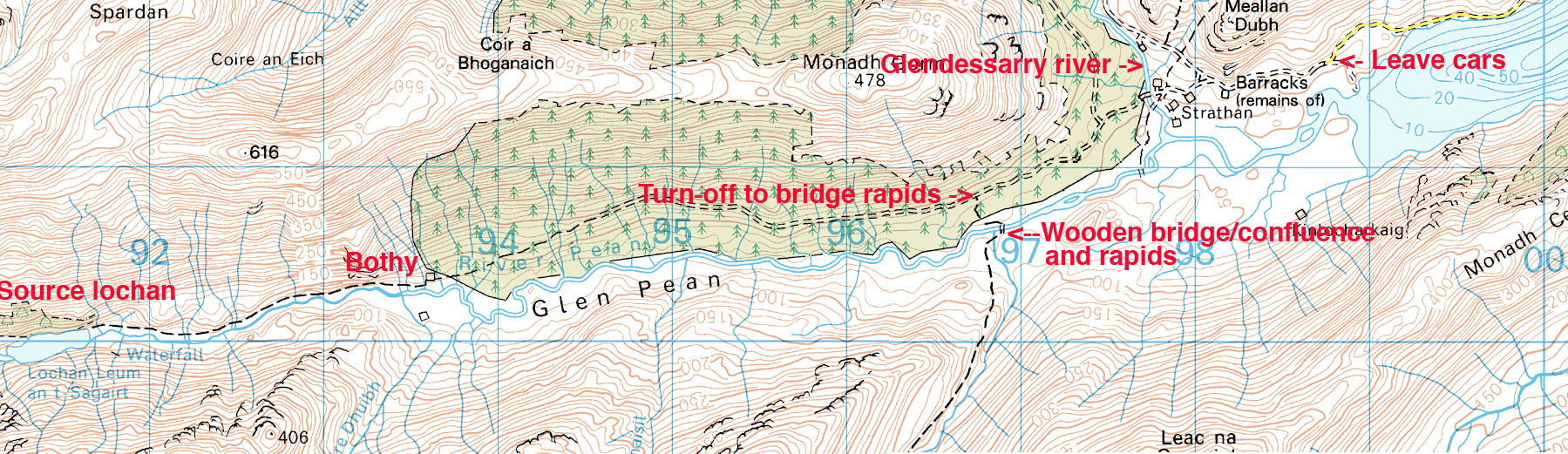
A perfectly walkable track led through the forest to the head of Loch Arklaig and a group of houses known as Stathan. I looked closely at the 1:50k map and sure enough, where a path came down the valley to bridge the river and join the forest track to Strathan, two 25-metre contours crossed the river within a quarter kilometre.
To confirm that paddling the Pean may be more effort than it was worth, at 6pm I set off along the forest track to that bridge and suss out the river. An hour later I looked down on a two-metre drop before it led into a boulder-chocked funnel. My hunch had been right, though of course, terrified as I am of being swept unwittingly into a mini Niagara, I’d have surely heard the waterfall and done something about it.

Back at the bothy, I was satisfied with my recce. The upper Pean was navigable with a little effort for about 4kms from the bothy to the bridge, but at the bridge you’d need to pack up and haul up a messy track into the forest and walk on down to Strathan, or stagger along the banks until the river cleared up. (I’ve since returned and paddled the Pean from that bridge down to Loch Arkaig).

Loch Arkaig to Gairlochy
Next morning I stood on a bridge in Strathan, a few buildings of the Glendessary estate at the west end of Loch Arkaig. Below me the Glendessary river rushed towards the Pean in a tumble of white water, while the Pean river itself wound placidly into Loch Arkaig.
Like Morar, Loch Arkaig ran for 19kms end to end, a long paddle that might take most of the day and certainly most of the day’s energy. A back wind was rushing along, maybe only a little worse than on Morar; here would be a good place to experiment using an umbrella as a sail. A narrow road also trailed the loch’s north bank and having lost a bit of time hanging out in the bothies, I thought I’d try and hitch a lift towards the Great Glen and Loch Lochy where the Lochy River lead south to Fort William. If I could get there tonight I’d have caught up with a chance to carry on to Rannoch as planned.
Plodding along the road eyeing up the loch, I passed a bunch of young canoeists on a course and figured if I couldn’t get a ride I’d be better off getting on the water and riding the swell down to the east end. Before that decision became necessary, a car squeezing past saw my thumb his mirror and half an hour later dropped me at the loch’s east end. Rich worked for the local Outward Bounds kids camps and spent his spare time adventuring himself on the islands and highlands. He told of some canoeists last winter who’d portaged the way I’d come yesterday. One ended up breaking her leg somewhere near Lochan Sagairt and getting helicoptered out (in fact I found the thread on that event here and there’s a video here). Portaging a canoe from Loch Morar? Have these people not heard of packrafts?!
Either way, I was sure glad I didn’t have to trudge down that long, lochside road; I’m sure whitecaps or not, eventually I’d have taken to the water. It brought up another flaw in my gear: I was wearing Keen Arroyos which gave little more support. Luffing a 20-kilo load over rough ground, I should be wearing boots for hiking. They did the job but the insides of my Arroyos were being ground to a pulp and my feet were beginning to suffer.
Rich dropped me off somewhere near Clunes, a shopless wooded hamlet surrounded by retirement homes. I was back in tourist lands on the Great Glen Way footpath. Possibly as a result of yesterday’s efforts, I suddenly became ravenous and tore into my food bag to boil up a mug of soup and some stew-in-a-bag paste while the wind howled through the trees. The freeze-dried food I’d been eating was pretty tasty and very easy to prepare, but for once, I wasn’t eating enough. Twenty kilometres away, Fort William would see to that.

All that remained to see was whether Lochy loch was paddleable in all this wind. Sure enough, the west bank was sat in a wind shadow. With a swell running at a couple of inches, this was a loch I could do business with. No need for the drysuit, just zip on the skirt to keep the insides try.
How nice it was to paddle on a calm loch. Back in phone range, I called the g-friend to fill her in on my triumphant achievement. A lighthouse marked the top lock on the canal: right for the canal and Gairlochy, left for a weir which led down to the river. Camping by the lock on trimmed grass was free, and many recreational boaters were berthing for the night. Fort William and a seafood basket with salad, chips and a cappuccino would have to wait. I pitched the tent, de-aired the raft, and went to suss out the state of the Lochy River from the towpath.
Between the trees and the wild raspberry bushes I spotted some fly fishermen by a couple of sporty rapids and found a good place to put-in tomorrow just past the lock. I was getting a bit desperate for proper food, but Gairlochy had nothing except all-you-can-eat wild raspberries. The nearest resto was up towards Spean Bridge, more than my blistering feet could manage.

River Lochy to Fort William: Riding the Wavy Trains
I was fairly sure I had the measure of the River Lochy, a canoeable river that led down to Fort William and tidal waters, interrupted only by one Grade 3 rapid which the Scottish canoe guide warned of but didn’t locate. A look on Google Earth had pinned down the probable location where the river took a hard left with a telltale smudge of white. I put it in my GPS.
I set off down the Lochy, knowing I’d be having a lunch of real food off a plate, not out of a bag. It was great to be riding the wavy trains again, with nothing above WW1 as long as you chose the right chute. At one point I hit 14.5kph (9mph) according to the Garmin and safe in my drysuit, what control I had steered me from tedious shallows or boat-flipping boulders. The grade-three waypoint was right on the money, where some young boys where being tutored in the art of fly fishing by a ghillie (river gamekeeper) dressed in full regalia, including a deer-stalker hat and a crimson face.
Inspecting the rapid, I’d have been curious to see how even a proper kayaker could manage to fly down the chute and stay upright where it ramped up to the left to flip you right, straight onto the rock. UK Rivers rates the Lochy quite lowly and barely mentions this rapid, but then goes on to add that a poacher and no less than a dozen commandos have drowned here over the years. The mossy, muddy portage was another job for the packstaff, and now a little braver, I took the hardest lines through the remains of the rapids and presently rocked up at the rail bridge at Inverlochy, a suburb of Fort William.

Loch Ossian
It was Wednesday lunchtime and my train out of Rannoch was due in 48 hours. If I was to make it I’d have to move on that afternoon, but after checking into a hostel I was dizzy with hunger. The afternoon would have to be spent answering the call of the stomach. In between I paid my respects to the outdoor gear shops in search of bargains, but merely confirmed the daunting truth: other than a couple more dried meals and some 2-for-1 mini karabiners, there was nothing I needed.
The next day the train dropped me off at lonely Corrour station, a mile away from the lovely wind-powered SYHA hostel alongside Loch Ossian. All that remained was to spend the afternoon paddling down with the wind to the Corrour estate lodge at the far end of the loch and walking back along the shore to satiate another ravenous appetite.

actual

I now have an idea about packrafting in Scotland: what sort of routes are optimal and what gear works best. The recce around Glen Pean made me realise that no matter how up for it you might be, hiking cross-country across bogs and tussocks as I’d planned to do from Glen Nevis over to Blackwater and from there to Loch Laidon, would have been a hiding to nowhere while hauling a heavy pack.
If I’d had the time I’d have followed the West Highland Way out of Fort William to Kinlochleven and on to the Kings House hotel in Glencoe (40kms – two days). From there an eastbound moor path passes close to Loch Laidon (we did it years later, below); either can be taken to reach Rannoch station.

pakeastwalk

Speeds
The raft can be pretty quick on a loch, paddling hard with a backwind, even with a load, and so some sort of sail would reduce the effort and so give more range. I never expected to try and paddle the full length of Morar or Arkaig (19+ kms).
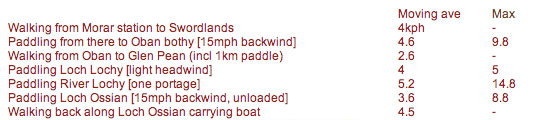
Loch Ossian (6kms long) was surprisingly slow as at one point I headed across the width of the loch with a stiff sidewind to see how the unloaded boat handled (pretty flappy but probably more secure than an IK).