Category Archives: Tech

Packboat Fabrics & Construction

Fitting a Pacific Action sail on Incept K40

Incept K40 Index Page
See also this post as well as this post about using the PA in strong winds in Western Australia. There’s a video there too.

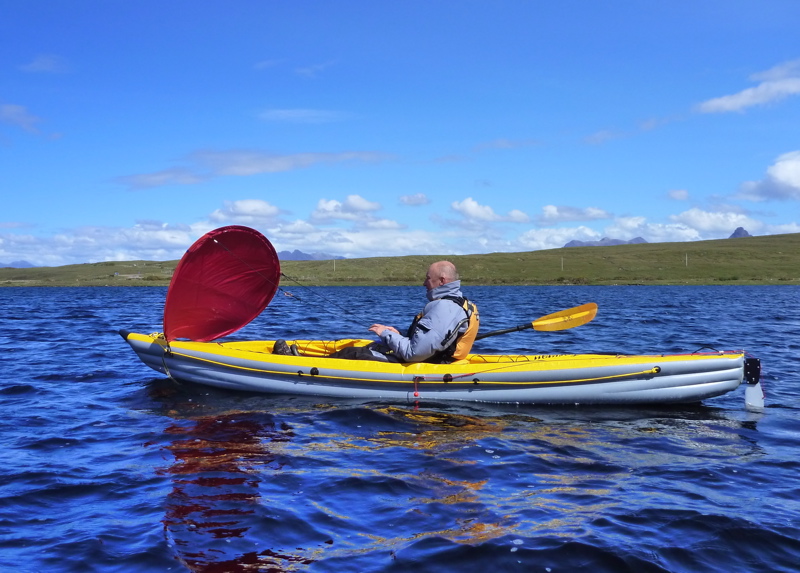
I’m pretty sure my 0.78m2 home-made disc sail is too small to push the 4-metre Incept along until wind conditions get beyond the pale. Recognising that, I tracked down a 1.5m Pacific Action for £175 instead of the usual £250 which is a bit much. As I mention here, you can easily make a V-sail yourself from bits of plastic piping and old trousers, but life is short and as I’ve experienced a PA in action in Shark Bay, I’ve treated myself. The nearest B&Q hardware store is half a day away.

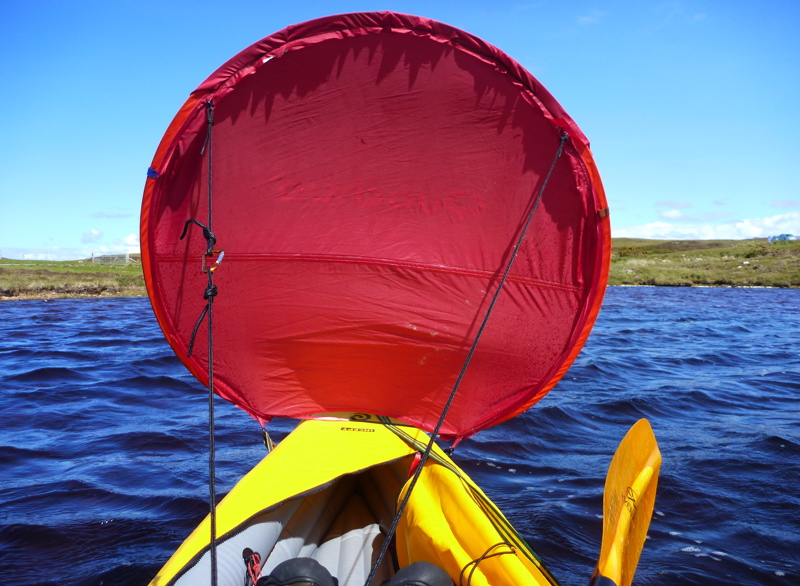
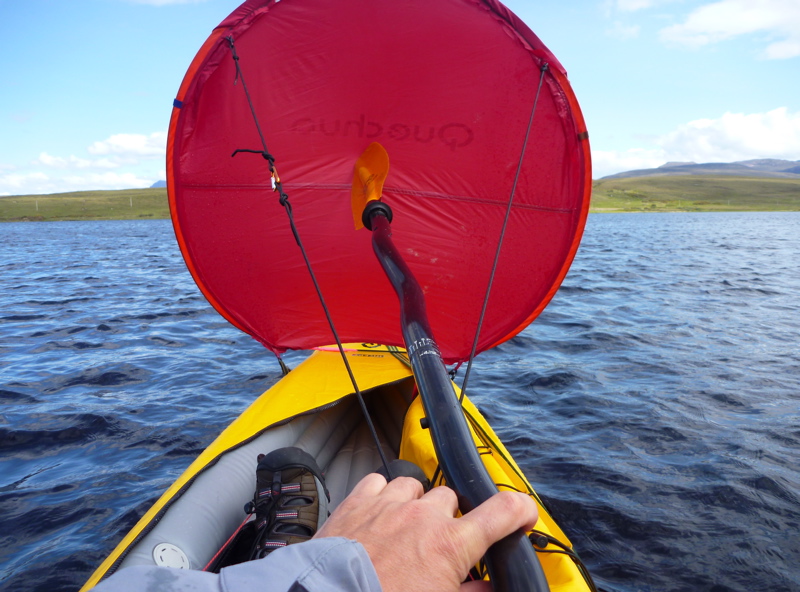
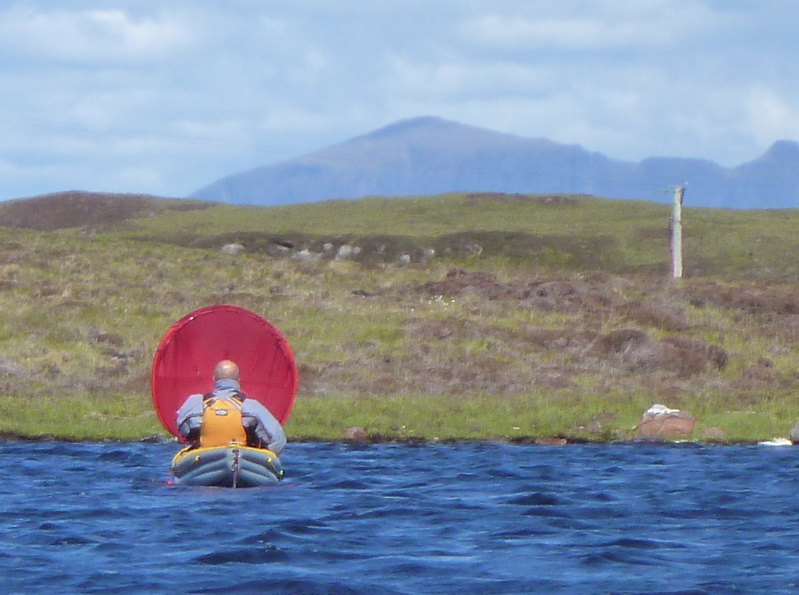
They call it a ‘1.5m’ sail, but unless I am very much mistaken it’s more like 1.15m2 if you calculate the area of the Isosceles as 146cm across the top and 174 up the sides (graphic on right; or base x height of about 170 divided by 2). PA round those dimensions up on their website to 150cm and 180cm,  but that still doesn’t add up to 1.5m2 or 16 square feet. Maybe I should chill out a bit; a Ducati 900SS is actually 864cc and so on. As you can see left, it’s about twice as big as my 0.78m2 disc sail and it certainly looks like a metre-and-a-half square, so perhaps my sums are wrong. And it’s bigger in the right area too: up high where it counts. Plus you can see where you’re going – always handy in busy traffic lanes.
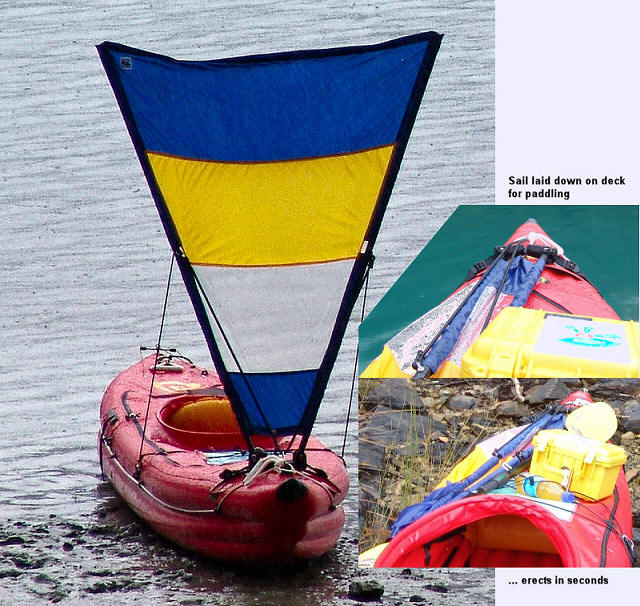
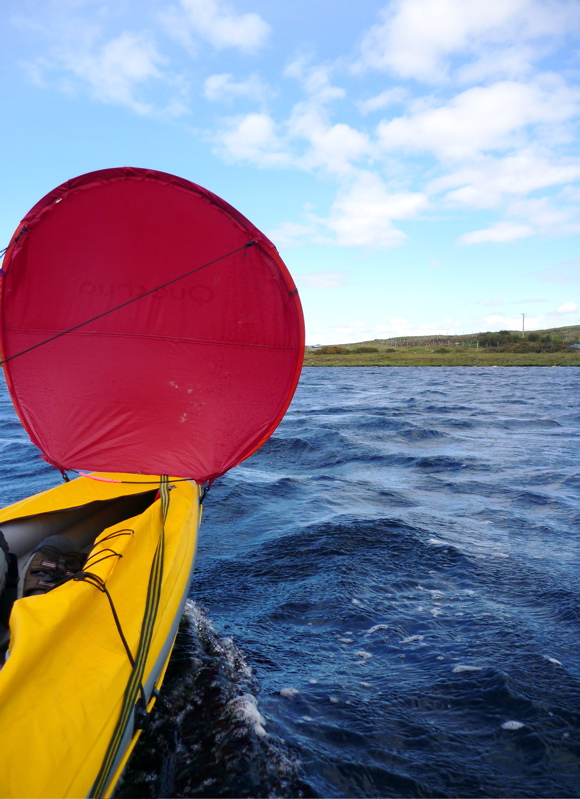
The sail comes in a compact bag of less than a metre. Can’t weigh things here but they claim 1.9kg; could even be less. Inside you get the two, 3-part masts made of thick glass fibre, the sail, fittings and rigging or lines, plus adequate instructions* for what turns out to be a fairly straightforward task. These instructions and fittings are obviously aimed at hardshells, be they SinKs or SoTs. With an IK you have to improvise a little. It helped knowing that there’s a picture of a PA sail on the Incept website (right), as well as this Kiwi guy’s video (bottom of page). The supplied cleats (sliding cord locks) are tiny and I recall Jeff replacing them on his Perception tandem for Shark Bay, but see below. Because of the confusing instructions combined with my congenital density, I misunderstood their simply application. On my first go at sailing the PA I was holding and maneuvering the control string by hand, as I did with the disc sail.
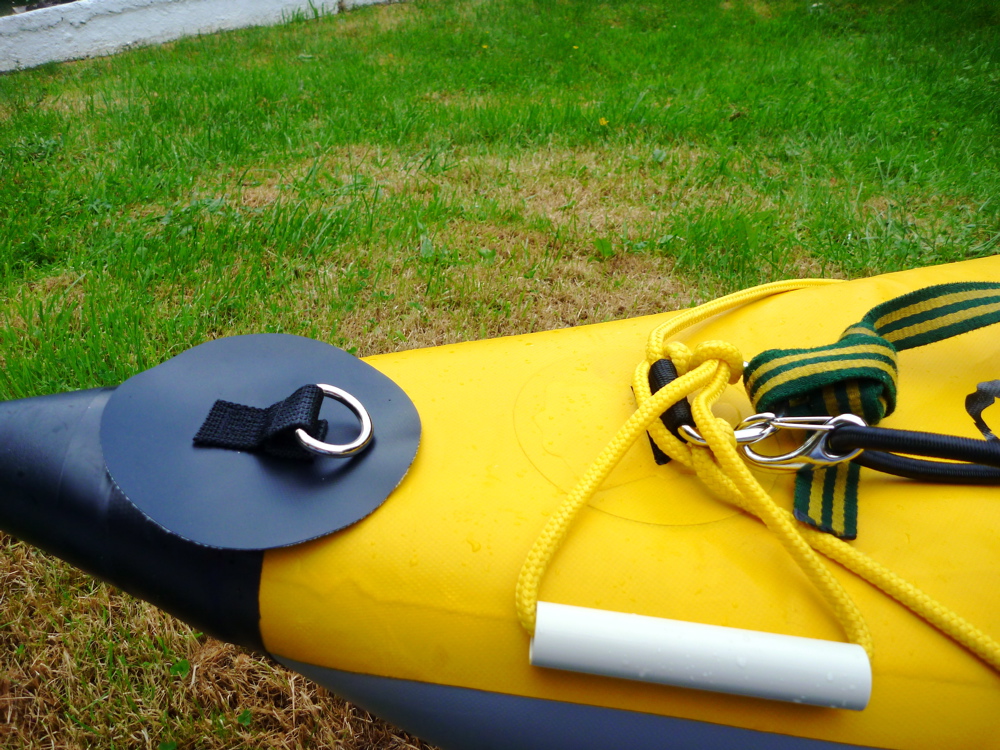
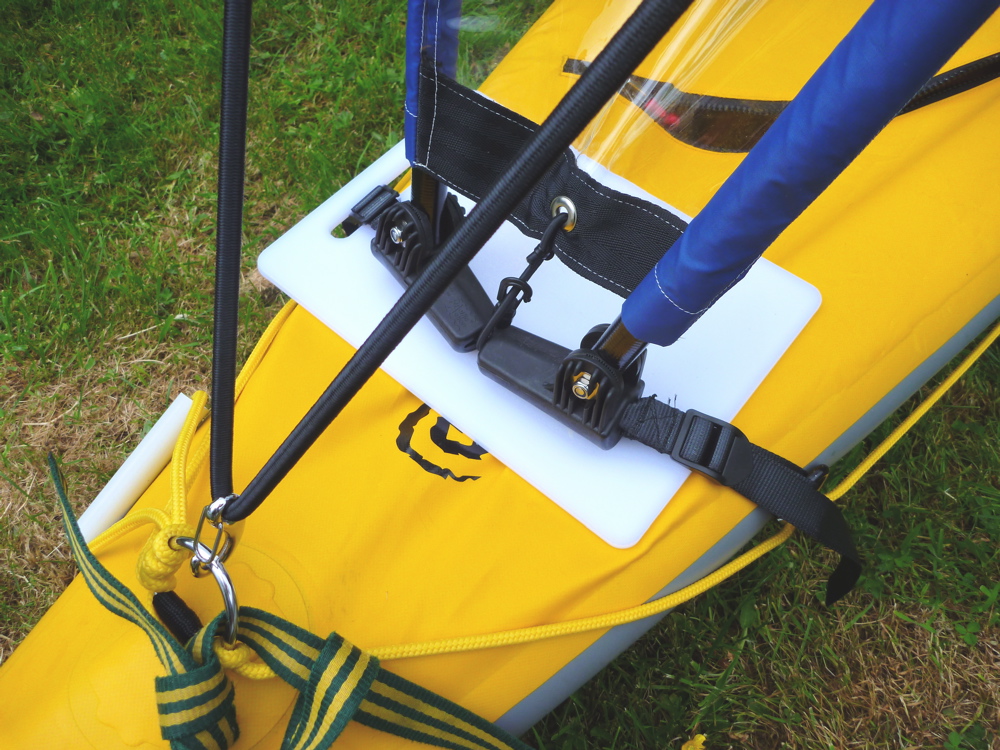
Up front the snaplinks (right) I’ve used to mount the disc sail also happen to be ideal positions for the PA’s webbing loop. And the bow handle ring toggle is the just about the minimum 12 inches ahead of the mast feet to take the shock cord clip (left) with which the sail springs forward when you release it. If that’s not quite enough far forward (as I think may be the case), I can stick a D-ring patch a few inches further forward right on the nose of the boat (as left). This position/angle may be more important than just getting a good spring forward, but also affect the sail support. We’ll see.
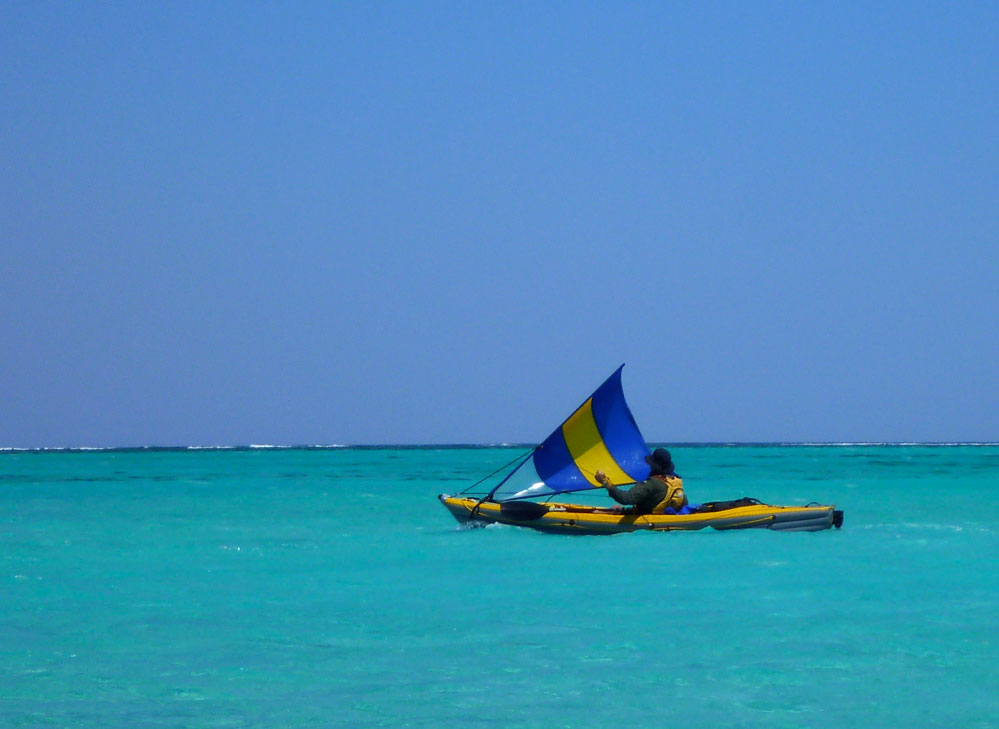

In Australia a few months later we did see. Further forward was indeed better, but I suspect still not optimal. When you think about it, the front attachment for the elastic would be better if it was set higher that the level of the mast feet. That’s because when you’re reaching across the wind with the downwind mast almost horizontal with the hull (as pictured left), the angle of leverage to keep the upper mast up gets very low; at 5-10° the tensioned elastic is almost at the same angle and so the sail collapses as shown in this video at 1.16. This happened to me all the time in Australia as the sail was pulled low to cope with the strong sidewinds. If I go ahead with my nasal bowsprit idea as mentioned here, I’m now thinking it might also be an idea to raise it a bit; have an upcurved bowsprit so the sail is more readily held up when reaching (near-horizontal).

While in Australia I also pushed the snaplinks to mount the sail straps directly through the black lugs and not around them as pictured right. This was because the strong wind was pushing the sail mount (a plastic plate) forward, making it go slack, reducing the elastic tension and causing more problems with handling. But by the time I made all these adaptions we were locked into two days of headwinds so I never really had a chance to see if it made any great difference.


Back to the original mounting story set in Scotland in summer 2011. It all went together easily enough, until it became clear some fittings were missing from the pack which for some reason looked like it had done the rounds with a few previous customers. Most fittings were not needed for my IK, except the four ¾-inch self tappers with which you permanently fix the mast feet position in relation to your kayak’s deck angle and with the sail splayed. According to the instructions* and this picture I found on the web this is an ‘8g ¾-inch’ screw, but that seems way too long to have two from opposing sides – one alone would act more as a bolt than a self-tapper getting a bite, but that is what they recommend; the subtext is these screws are important to make a solid fixture. What’s not made clear (or is perhaps obvious) is that you ought to pre-drill guide holes deep into the plastic mast feet lugs for the screw can get right in there. Some hardshells will have a bevelled or convex foredeck which is why you must set the mast foot angle (MFA) specific to your boat for optimum operation. On my set up, the MFA is horizontal (flat) as I’m using a plastic chopping board idea as PA suggest to give the feet the all-important support and avoid wear on the PVC deck. The feet move around quite a lot under tension as you pull the sail this way and that but, as I found first time out, the angle of those feet against the mast (as well as the webbing tension) must be solid if the sail is to spring up and open or splay out.

The sail rolls down out of the way and doesn’t interfere with paddling, though it does mean yet more cordage hanging around; you could get in a right old muddle if you don’t keep on top of it. PA do advise paddling with a knife or a less pointy rope cutter. I have a quick-grab Benchmark one (left) attached to my PA.
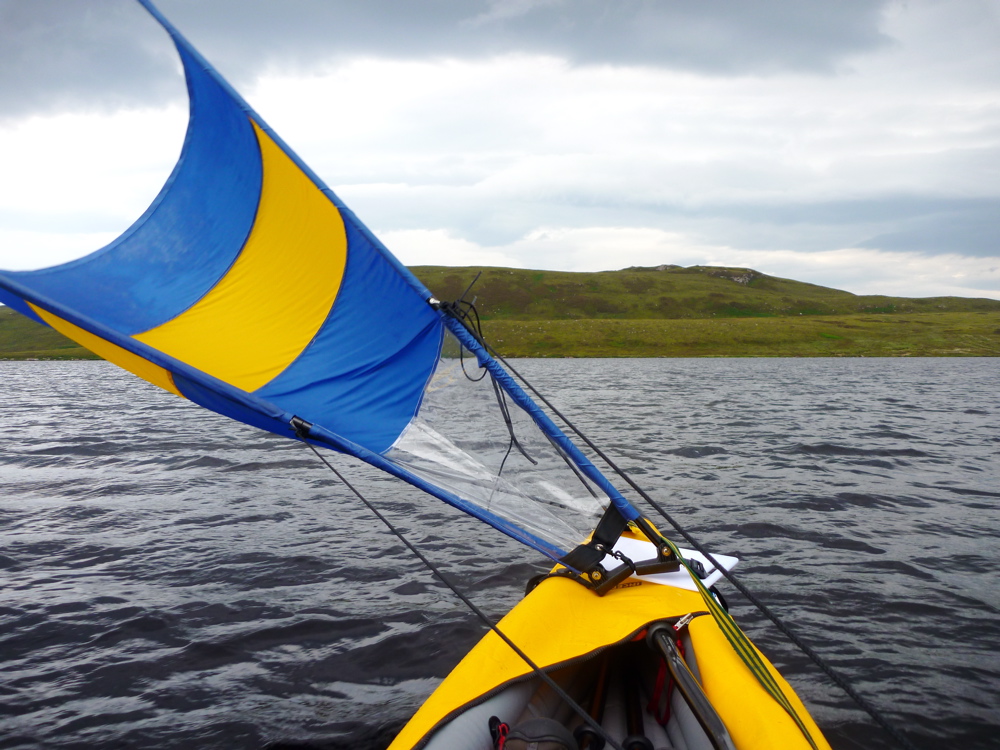

It was gusting up to 40mph before the local weather station packed up, and at times the sea was covered in foam streaks and swell, so I went to a back loch for a spin. Typically by the time I’d crawled into a dry suit in case I fell out and got dragged along by the sail, the wind had just about died, but it gave me a chance to test it out in tame conditions. That evening my paddling speeds back into the wind were greater than anything I managed under sail, but I was getting the hang of it and even got the knack of running almost across the wind. The vid from that session isn’t worth uploading unless you’re having trouble sleeping; I hope to have another session when the wind returns and on a loch that’s longer to the wind.
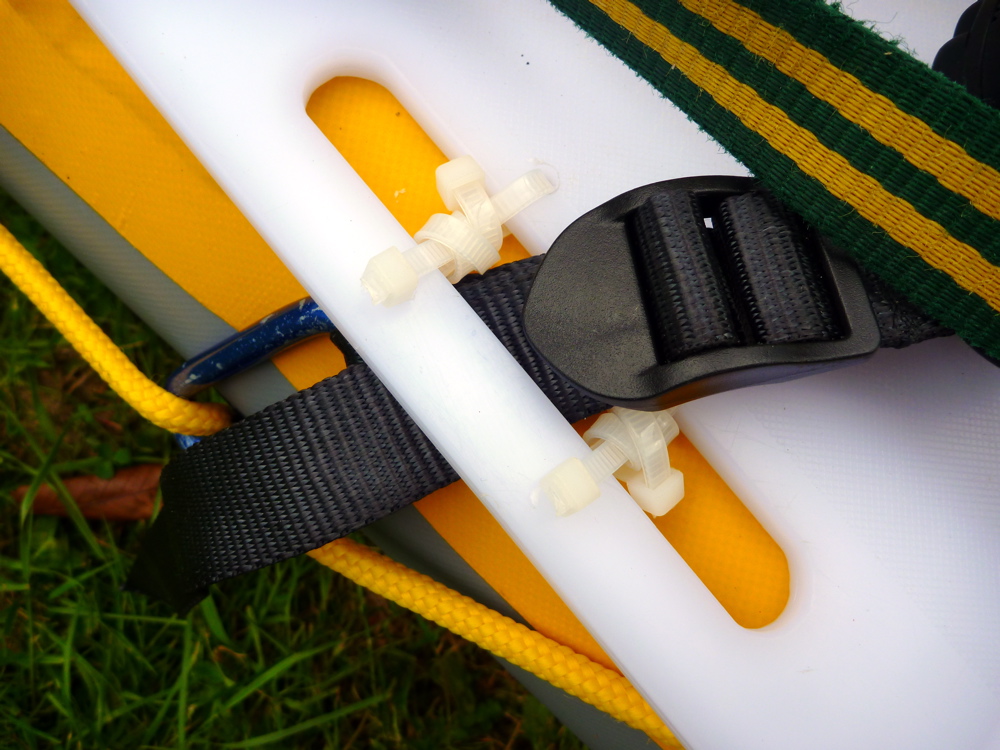
Lessons learned: need those self tappers to lock the feet, luckily the local store had some that may do the job. And I’ve since located that chopping board a bit better to the boat with some slots and zip ties until a better solution is required. 
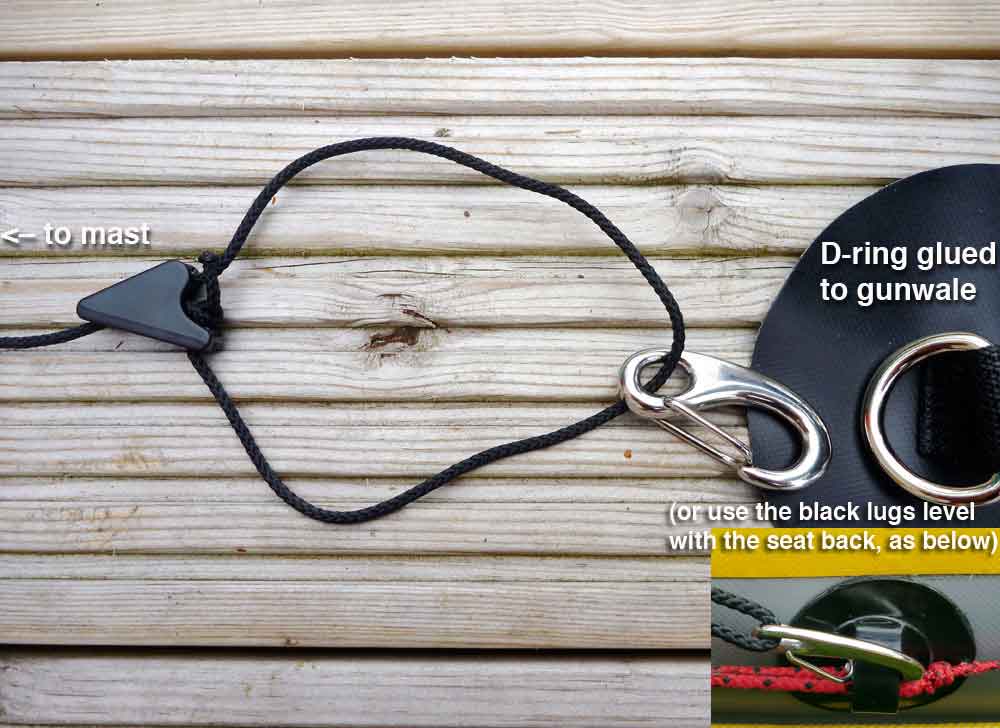
Rigging the sail-adjusting cleat
Working out how to rig the control cord to alter the sail angle was actually rather simple once I put my mind to it. As mentioned, you get some small plastic cleats in the pack whose use is unclear. But digging around online for an alternative cleat (as other PA users tend to fit), I discovered what the PA comes with are very much like, if not exactly Clamcleat Line-Loks. Now I know what they are, their fitting and application is more clear. It’s not illustrated or explained in the PA instruction leaflet* I received; in fact I’d go as far as to say that the tiny yellow picture of the rigged Line-Lok in the PA leaflet is the wrong way round compared to what’s illustrated in the Clamcleat gif on the left. But even though (as I found) it does work crudely when rigged the wrong way round, I think I finally get it now. A Line-Lok a nifty solution to tensioning a tent guy in the Arctic as the link shows, but as Clamcleat’s gif on the above right also illustrates, you need two hands to release it – not something that may be easily available in rough conditions while trying to grab your paddle and not spill your tea. But so far I’ve found in the light conditions I’ve been out in, one-handed works fine and if it’s a real panic you just pull the sail down in a jiffy.
In fact, testing the correctly rigged locking cleat off a chair leg, it’s possible to achieve the release movement by spreading your fingers as long as it’s not too tightly jammed in the cleats, while adding tension (pulling the sail back/down) is certainly easy.
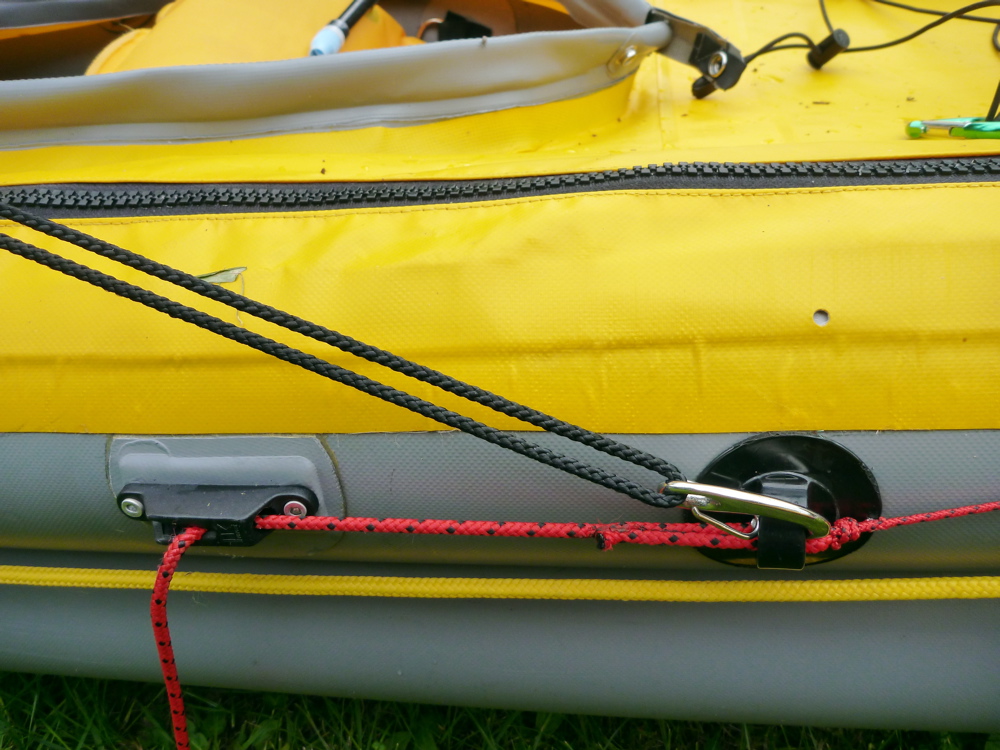
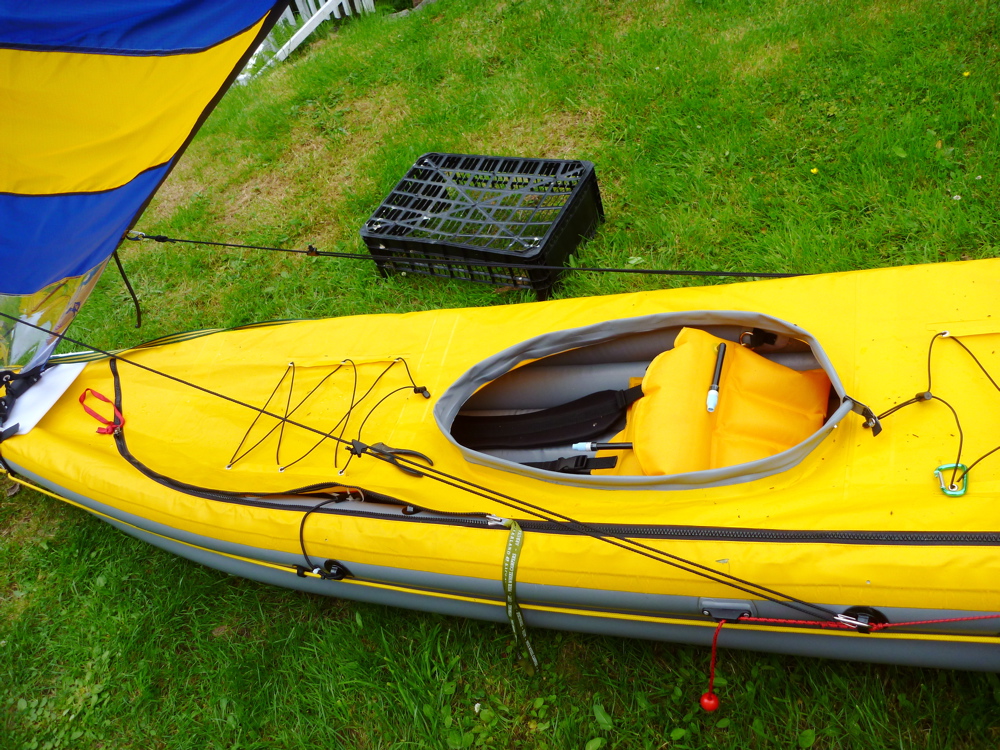
Having worked out how to string them up, the next question is where to attach them to the boat. By trial and error I found that cutting the supplied 4-5m line in half, rigging as above and then clipping the stainless steel clip to the K40 at the plastic lugs just behind the seat seems just right (left; it shares the left side lug with the rudder lifting line). Even though the Incept image with the red boat above seems to use the more forward points, fixed like this it puts the full sliding range of the locking cleat within arm’s reach while sat in the cockpit; or at least that’s how it looks on the lawn. I used the spring clips supplied to fix the control cord to the mast shackles, but at one point while sailing one unhooked itself from the shackle, so better to knot the cords securely to the shackle as PA recommend. To see how it sailed first time out, see this.

NB: A more recent set of fitting instructions were sent to me as a pdf from Pacific Action and are much clearer.
As far as I could see it wasn’t to be found on their website.
Paddles for IKs and packrafts

See also:
Anfibio Vertex Multi Tour paddle
Anfibio Fly
Wax your paddle blades
MYO Packstaff

pad-abmr
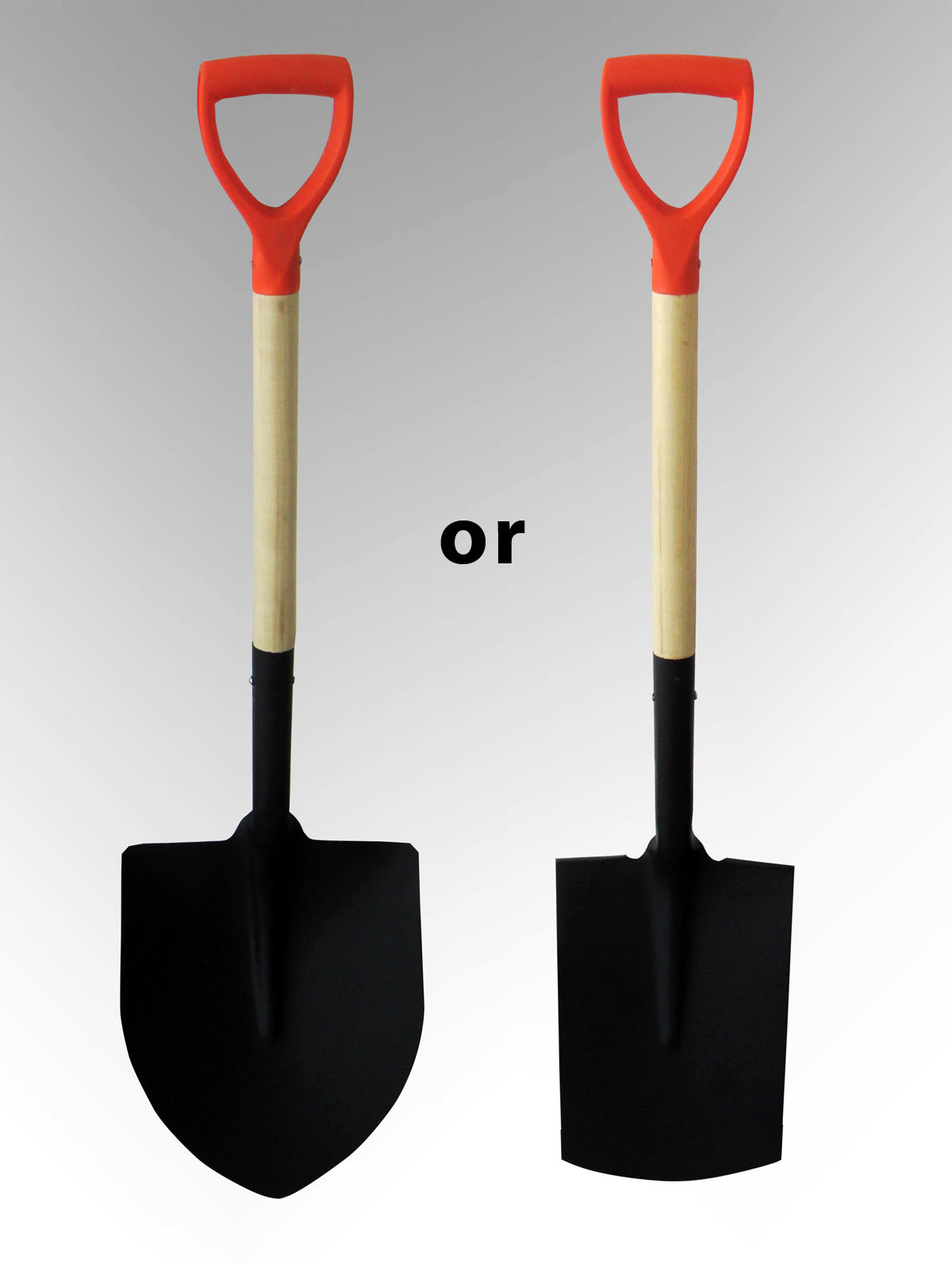
shovelorspade

Like most beginners I started my IK-ing with a super cheap 3-piece TNP shovel. Then, after picking up a much better used 2-piece fibreglass Lendal Archipelago which soon seized up, for Shark Bay in 2006 I splashed out on a decent light, rigid, bent-shaft, adjustable offset, low angle 2-piece, 230cm Werner Camano. At £230, it cost more than my first two boats but in all those [17] years I have no regrets. The Camano just works.

highangle
High angling with a low-angle paddle.? All the gear with no idea

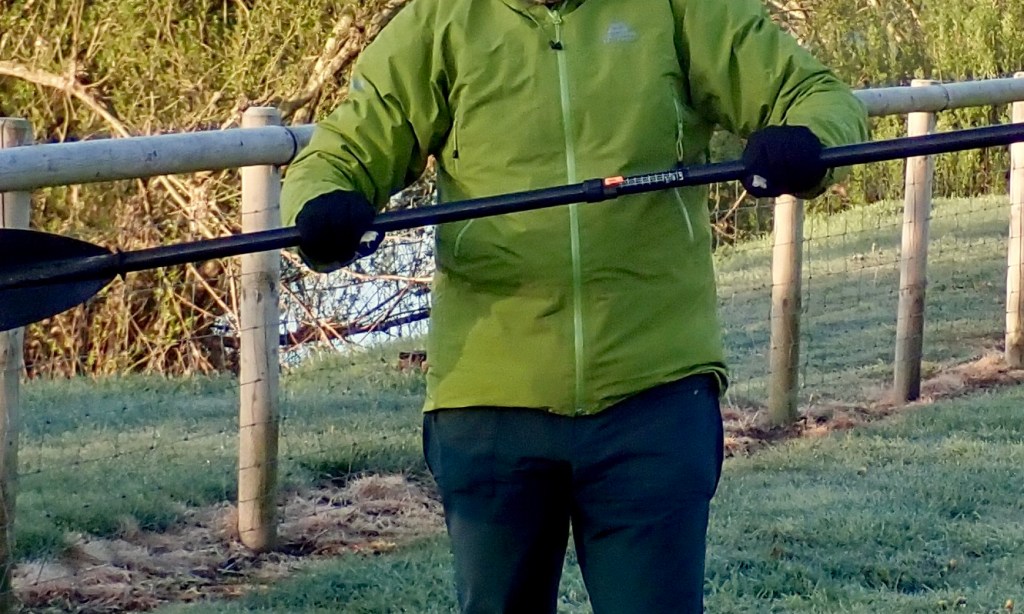
To me bent shafts and an indexed, ovalised grip make ergonomic sense for steady, all-day paddles rather than pulling fast moves in rapids. It’s just more compatible with the non-rectilinear human form. I did notice that when I swapped back to the slightly heavier straight Lendal (before it seized) there was noticeably less flex, but over a decade and a half later, the Camano is in great shape and is still my favourite for anything where a compact four-piece is not needed.

The Camano is a low-angle paddle, but I think my style, if you can call it that, is high angle, and in fact I read that high angle is the right way to do it. I find that wide, high-sided and relatively unresponsive IKs and packrafts encourage or require an energetic ‘digging’ style compared to a smooth gliding hardshell.

A paddle for packrafting
The way I see it, even more so than most IKs, a packraft has high and fat sides and you sit low inside. So that ought to mean a long paddle to get over all that plastic and into the water. Paddling with the 220cm, big-faced Aquabound paddle, I didn’t really notice any issues other than some squeaking as I rub the sides occasionally. Longer would not have made much difference.

At around 3kg a packraft is extremely light but it’s not an efficient shape for gliding through water like a swan. However, once on the water with a paddler in it, the total weight is nearly the same as a more glidey IK, so it boils down to the need to propel the hull using a paddle with a large surface area. Some might say a bigger blade will mean more yawing, but I figure you just dig less hard and anyway, with practice, yawing is easily controlled once moving. Providing you have the strength, a bigger face ought to give the speed which packrafts and IKs lack. There are times (mostly at sea or on white water) when speed and power can mean safety.
In the US I got myself an Aqua Bound Manta Ray 4-piece high-angle in carbon (above right, 220cm). Weighing under 900g this one feels more flexy than the Camano, but fits right in the bag and so makes a great packrafting or back-up paddle – apaddleinyourpack, so to speak. Mine has the two-position snap button offset which I run at 45°. You can now get an infinite-position Posi-Lok version.
The compact and light Manta Ray (70cm longest section) is ideal on short day trips with public transport and with no load to haul on the water. It was fine for a decade of UK packrafting and makes a great packstaff, too, but it didn’t always come apart easily like the Werners. Dry or wet, don’t leave it
assembled for days or weeks, especially after sea use (that probably goes for all multi-piece paddles).

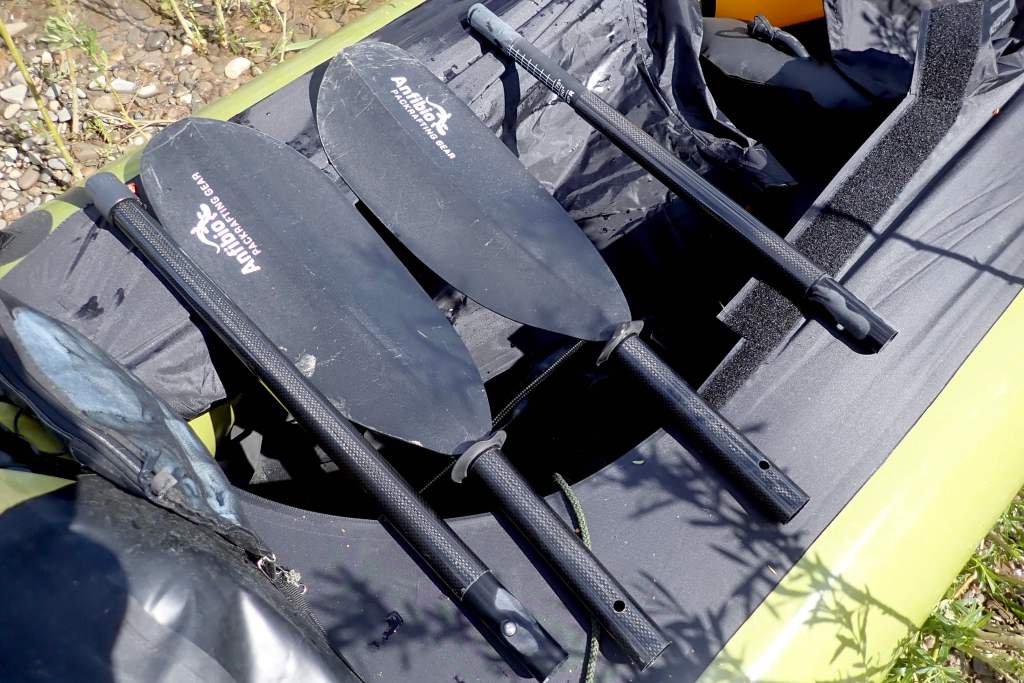
I used my Manta sea kayaking in Australia as well as packrafting – it was fine for both. For the price this is a great paddle – so good I sold it to my Ozzie mate and bought another right away. I’ve never seen a 4-part Manta for sale in the UK, but in Germany the Anfibio Packrafting Store sells TLC Mantas as well as their own Anfibio Vertex 4P (left).

Or they used to. Now they sell their range of own-brand sticks. I recently padded with a chap with their four-part Wave which weighs 991g and comes with infinite angle and 10cm of length adjustment (210-220cm). I would guess the blade is <650cm2. The longest section is 64cm and all that for €125 is very reasonable.

I also have a straight, fibreglass-blade Werner Corryvrecken (£200 years ago). It’s the biggest paddle Werner do in 210cm+ 2-piece touring paddles: 721cm2 blade area compared to the Camaro’s middle of the road 650cm2. and 677cm2 for the Manta Ray.

At 220cm (same as the Manta Ray) I’ve also gone as short as I dare to get over the fat sides of a packraft.
There’s no indexing on the straight, carbon shaft, just a little ovalisation as on the Aqua Bound. The Corry’s face is a tad bigger than the Manta Ray (left and above) but the whole stick feels much more rigid (it’s 2-piece). It’s 7% lighter than the Manta Ray and 17% lighter than the stiffer Camano – initially you notice this. I compare my Corry and Camano in my Incept sea kayak here.

More weights & measures
According to the kitchen scales the weights of these paddles are:

  • Werner Camano 230, 2-piece – 988g – stiffest
  • Werner Corryvrecken 220, 2-piece – 816g – lightest
  • Aqua Bound Manta Ray 220, 4-piece – 880g – least stiff but cheaper
  • Anfibio Vertex Multi Tour 210-25, 4-piece – 890g – cheapest; multi-use

So now I have a long, comfy low-angle Camano for long, loaded IK or packraft sea trips; a straight, I sold the rigid, light, shorter big-faced Corry, and the Mrs likes the thin-shafted Anfibio Vertex Multi Tour 4-piece.

Incept K40 – speed, straps and storage

Incept K40 Index Page

No doubt about it, the K40 is fast enough for an IK. Last night was a calm but chilly evening, not very inviting so I settled on some effort and endurance rather than relaxed fun, nosing along the coast.
Alone and without my usual dry suit, the initial agoraphobia certainly helped with the digging. But for goodness sake, the sea was barely stirring apart from an eerie swell, so I dared myself a dash over to Tanera Mor (left). It’s only a 25-minute crossing.

The day before a kayaker fell in heading in the other direction back to Old Dornie and ended up being rescued by the coast guard (one press version here with a few small errors). I was told only one of the two kayakers actually fell in and although experienced, couldn’t roll or exit instantly, possibly as a result of cold shock? I presume it was that effort along with, like me, not being ‘dressed for the swim’, that brought on the reported hypothermia and associated helplessness. There were several other kayak rescues reported around Britain last weekend. Certainly up here it was the first sunny and calm couple of days in ages which must have brought paddlers out, even if sea temps haven’t caught up and may never do so.

I kept upright and sustained a sweat-inducing 4mph plus for half an hour, peaking with the aid of some unnoticed surge at just over 5mph (8.5kph or 4.6 knots). I suspect that in similar conditions, a slick fiberglass sea kayak that’s six inches narrower and six inches less high can cruise at around 4–4.5mph all day, and I’m also told that at sea you should bank on an average of 3 knots (3.5mph, 5.5kph) when estimating distances. On the last leg, going east against the ebb and a light breeze didn’t make much difference to my speed. Until I was spent, that is. In the absence of sunny vistas and a warm breeze to linger over, it was a good work out. See also a similar test with my Grabner.
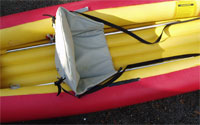
This was my first proper outing with the thigh straps. It wasn’t rough enough to test them, but I’m sure they enabled me to keep the speed up. This is partly due to the fact that, like so many IK seats, the Incept backrest collapses as you lean on it as it’s far from rigid, no matter how much you inflate it. It’s why I got an Aire Cheetah seat for my Sunny years ago, and why, along with its mushy footrest, the g-friend can’t get the most out of her Solar (top left; I fixed it later). When you lean back on an inflatable seat – even attached to the hull tops (the highest point) – it still just folds down from the arch of the lower back. This leaning from the middle-lower back rather than pushing from the lower back/hips is partly to do with a lack of solid footrests in the Incept and Solar (before mods). All this squishy inflation certainly creates comfort but is also the biggest performance drawback compared to hardshells – even if you do read of SinK Sit in Kayak hardshellers complaining of numb limbs until they find their ideal boat/set up. One reason a sea kayak can manage to be just 22 inches wide is that you can jam yourself into it – hip, thighs/knees and feet – so it fits and responds on the move like a running shoe, not a woolly slipper – a nifty analogy for SinKs vs IKs.
Without a solid seat or footrests, the thigh straps on the Incept do their best to replicate a hardshell’s underdeck thigh pads, enabling me to sit upright because the backrest as it is can’t provide that support. If that means more strain on my abdominal muscles, bring it on!
As I mention elsewhere, with the deck zipped up there’s normal back support off the coaming that’s still mushy enough not to make you sore as it would do on a SinK. Open deck, one solution would be to incorporate some rigid sticks or a board into the backrest to stop it scrunching down – like a Cheetah in fact. At one point on the Sunny, before I got the Aire seat I had a board jammed in behind me to help push off the box I used as a footrest. And so I conclude: seatback with the top down, not so good no matter how you adjust it; thigh straps good any day of the week.

One thing you lack in open deck mode on a K40 or any open IK is flat space for any sort of secure storage or fitting points.  It’s the same story on a packraft. Trying to emulate a professional, I went out with my new large SealLine ziplock map case which lay at my feet. Gael turned me on to these. Unlike some walking map cases that I’ve seen over the years, it’s clear on both sides and best of all is big enough to give you a whole day of map on view if you fold the map right, so avoiding unnecessary fiddly openings on the water or in the rain. Online walkers’ reviews seemed to rate the Ortlieb roll-top equivalent, and claimed the Seal Line will split at the ziplock, but even if it’s simpler, I can’t see roll-top anything being as bomb-proof on the water as a ziplock, and Gael’s had his still-unyellowed SealLine for years before it developed a tiny hole on his last trip.

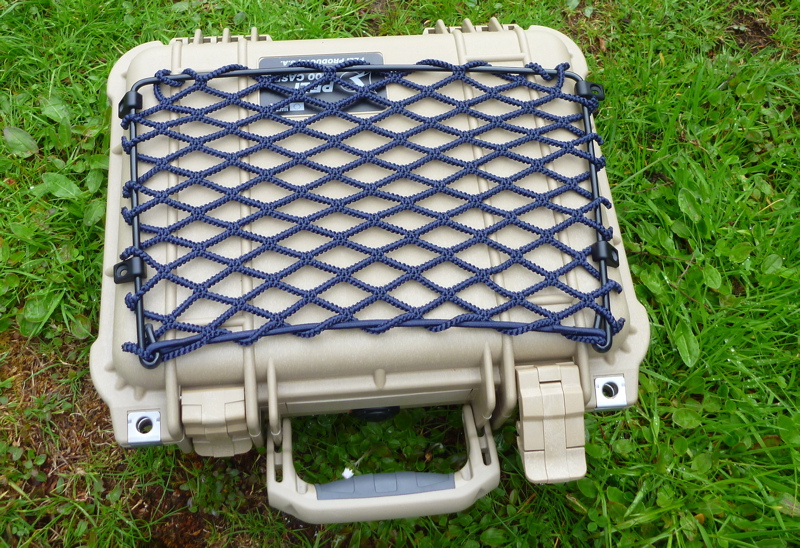
Back to stashing; of course you can attach everything to some point on the boat, Gael managed fine in his H2, but bits of string around your legs doesn’t seem such a good idea unless you’re really organised. I tried paddling with my Peli 1400 box (left, with a lid-net I plan to fix on – bought here) under my knees the other day, but handy though it was, that wasn’t going to work. It would be better fixed behind me. A Peli is easier to open and close quickly and reliably than my yellow Watershed bag (also ziplock closure), but I think it’s shape will make it a much better ‘day hatch’ bag on an open IK and a packraft, even if closing it securely as a hazard looms may take some luck.
Of course in zippy deck mode you have quite a lot of flat space, even if the Incept’s deck stretchies are almost over my feet (the thin shock cord is indeed too flimsy as Gael mentions). But top on there’s enough flat deck space by the hatch at 10- and 2 o’clock to stick a D-ring or velcro. One way I’ve got round this so far is packing it all on the pfd. Certain things belong there sure, but you can end up feeling like some special forces dude, waiting the the signal.

You can attach things to your thigh tops which are within reach and sight. The SealLine map case will clip around a thigh. I’ve tried doing the same with an Aquapac GPS case strapped round the leg; it’s OK and can hook to my drysuit’s relief zip tab to stop it slipping down when walking, but it’s all more junk hanging off you. Compass excepted, a GPS isn’t really a vital gadget in clear conditions. On the sea a legible and accessible map is handier. Still here? Then there’s a good page of improvised deck tech on ukrivers – but of course it’s all oriented towards hardshell SinKs.

MYO kayak disc sailing – Incept K40

Incept K40 Index Page
Main kayak/packraft sailing page
See also this post and links off it

We parked up at Loch Raa where we’d tried umbrella sailing last year without much success. Initially G said we were nuts to go out in this wind, so we sat in the car and ate our butties like a semi-retired couple in a Peak District car park. But by the time I’d finished working out a way to attach my home-made sail to the Incept’s bow, she was already on the other side of the loch.

This was my first time trying out my 0.78m2 sail on a kayak, but I’d recognised the value of sailing in Australia a few years ago with a mate hooked up to a Pacific Action (PA).
Here in the UK I get the feeling sails on sea kayaks are seen as even less sportsmanlike than rudders – just not cricket, but an Incept IK is excused from such protocols. Anyway, in terms of efficiency my home-made jobbie wouldn’t be a patch on a proper PA, but I’m not planning on crossing the Indian Ocean just yet. Made from an old tent and with the ability to twist down to half the deployed size, my rag sail was a good way to experiment with the idea and techniques of sailing. If it came to it, I can buy a PA or Bic anytime.

The wind was still batting over Loch Raa (Ardmair recorded a max of 33mph today) so I hacked upwind, flat out at 2-3mph, drifted round and let my rag sail get a fill. Considering the paddling effort it took to get there, I wasn’t exactly ripped out of my seat, but that’s probably a good thing for a first go. I was concerned a side gust might catch me out and pull me over. I took a few downwind runs and found myself cruising at around 3.5mph, topping out at 4.3mph once I neared the downwind shore at the end of the fetch.

At around 4mph it begins to get fun, with the bow carving through the waves. Stability was great, I never felt out of control and would have like to have gone a bit faster. All I had to do was stash the paddle, hold onto the string and foot the rudder. In lulls I needed to support the sail with my paddle (left), but later found if I let it reach forward it stayed up. Set up for a packraft, my control string was a bit too short with the sail six feet ahead of me.


I did try to steer and travel off wind by twisting the sail and ruddering, but not sure I fully got the hang of that. Doing this takes two hands to pull one string back, but if I rigged a rigid handlebar into the string (a bit like a water skier), that might enable one-handed twisting, plus easier holding at other times. Or perhaps a cinchable attachment to the hull is the way to go, leaving yours hands free to who knows, add a little paddle power.
Thing is, if I hacked into the wind at 2-3mph I could probably have paddled downwind at 4mph. I may try a proper downwind paddle v sail test next time, but as we all know, what downwind paddling gives you in push, you put in as tracking effort to avoid weathercocking, especially without a rudder.

At the wind speed that day, sailing wasn’t so much about going faster as saving effort. Plus it was more fun than I expected to surf along for free, mainly because it didn’t feel at all risky. But this was on a small loch with waves less than a foot high. Half an hour earlier on the sea the chop was a couple of feet; I imagine that would require more concentration and with less possible speed on the rougher surface.

Sailing downwind you don’t get the sensation of the wind in your hair, but the GPS and the splash off the bow tell the story. On one run we rafted up and the sail still pulled us along at over 3mph which was pretty good for two fat boats. As I approached the shore on my last run I lifted the rudder and straight away the back came round, as it seemed to do when I tried sailing in a pack raft. So it seems a rudder or at least a skeg is the key. To steer accurately with a paddle would be pretty tricky, but I may try that one time. Visibility wasn’t really a problem; to get a closer look just tug it back out of the way.

Having thought it all over, I have updated my hypothetical analysis of the £50 Bic Sail (left) on the main packboat sailing page with a couple of pics. For the couple of hours it took me to make my disc sail, I think fifty quid on something that has actually has some kayak-based testing and design put into it is not such bad value.

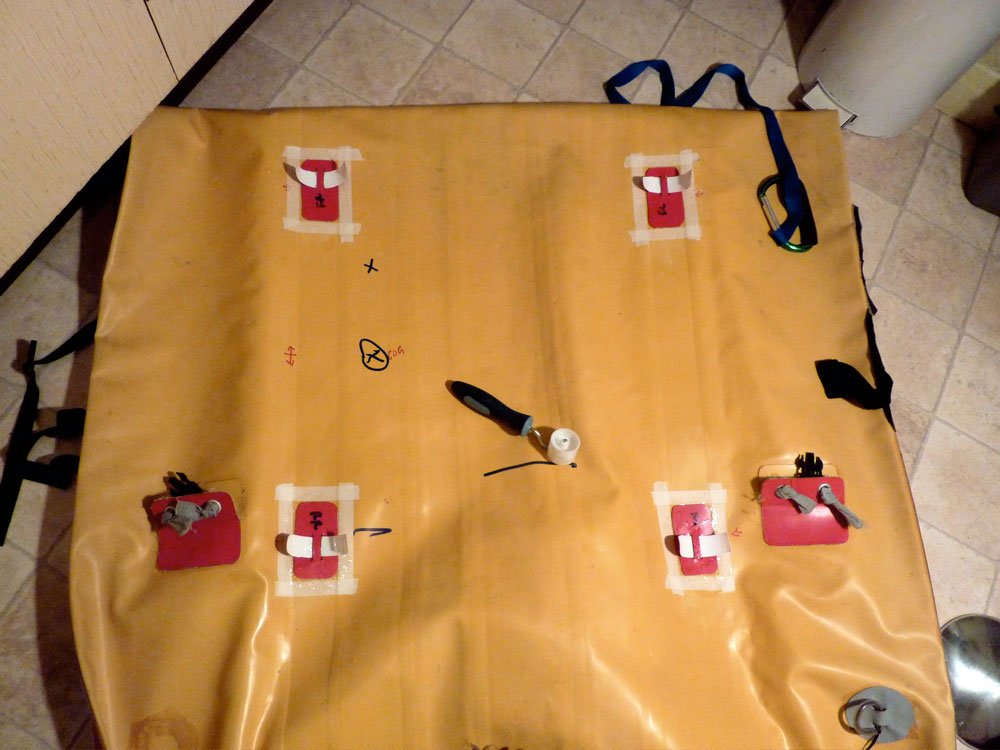
I also tried out my thigh straps. Problem was one of my messy patches had half unglued so I couldn’t put any force on them. But they fit well, are comfy and easy to adjust, don’t feel like they might trap you, and are a definite improvement for either powering on or boat control in choppy water. The positions marked on the Incepts hull felt just right.

Gumotex Sunny/410C ~ self bailing and hull rigidity

Sunny main page

Gumotex Sunny

Paddling the <a class="wp-gallery mceItem" style="color: #000000;" title="Kayaking and packrafting in southern France Haute Allier in France in a Sunny required frequent visits to the bank. Not to get money out of the ATM but to drain the swamped boat.
And on Shark Bay in Western Australia one crossing of a very windy bay required frequent pumping out. The water came in over the sides as the boat flexed over the swell (below).

On a river, flipping the boat is the quickest way of doing this, but can make a mess of the packing. Tipping it up on-end works less well because of a triangular patch at each end. It’s a handle of sorts but also keeps some water in. I cut a small hole in the back so I could drag it up a steep bank to drain itself (see little fountain, left).

Making the Sunny a bailer?
I’ve considered drilling bailing holes (easily and reliably reversible with duct tape I found on the old Safari, left) but am pretty sure the floor of the Sunny is below the water line with me in it. Loads at either end help, as would the hull sticks or plank described below, along with a thicker seat pad. It could be something worth trying to not end up sitting in water. Lighter solo paddlers in a Sunny may get away with cutting bailing holes without doing all these bodges because the boat won’t sink so low in the water (see graphic below).

ikbailers1

In the end, I decided I didn’t really need self-bailing for the sort of tame touring I did in the Sunny. If I was more into white water I’d get something like a self-bailing Safari. I never used my Java IK long enough to appreciate the benefits of its self-bailing feature and some later IKs (and packrafts) I’ve owned had zip on decks which are an alternative way to avoid water in the boat, although I used them even less. Away from flat water, a bit of splash gets in the boat most of the time but it takes a while before it’s sloshing about. The stiff and high-sided Incept was much less prone to swamping and the similar-to-Sunny Grabner seems the same. Longitudinal hull flex was the problem.

Making the Sunny/Solar 410C hull more rigid 

The Sunny is 3.85-m long but runs 0.2 bar (2.9psi). The replacement Solar 410C is even longer at 4.1metres but runs the same pressure. Since I originally wrote this I’ve realised that higher pressure IKs are indeed more rigid. I have read of people running a Solar 410 at 0.3 bar. I think this would take more than a regular Bravo foot pump could manage (or at least, my old example) and the push-fit valves (as opposed to more secure bayonet fitting) may pop the hose off. A way around that would be to use a push-fit hand pump like a K-Pump. I never tried it, but I have to say my experience with Gumotex IKs suggests that they feel sufficiently well built to take 50% more pressure. But to blow a seam in a tubeless IK like a Solar or a Sunny would be hard to repair.

Can you see any difference whatsoever in the pictures on the right? It’s supposed to show the Sunny with no load (top) – quite bent; the boat equalised with a heavy load – low and relatively level (middle); and at the bottom with a light load with some straight branches jammed in the sides (see below) – less bent than it would be. No, you probably can’t, they all look the same.

While paddling the Tarn Gorge in 2007 I tried ways to help stop the hull on my 13-foot Sunny sagging with my weight. The handy gap where the side tube meets the floor tube was just right for jamming a stick in.
Up to that point I had found that leaning far back on the seat and taking the weight off your butt and onto your heels and shoulders was a way to unsag the middle of the Sunny and could mean the difference between scraping through a shallow shingle rapid without punting or walking the boat through.
I was going to buy a pair of broom handles in France one time but forgot, so later by the Tarn river I found a couple of branches that were pretty straight over 5 feet and jammed them in between the floor and the side tubes more or less in the middle of the boat. My unscientific impression was that the Sunny was indeed more rigid, responsive and faster, leveling the boat out in the water. Later I found some light metal tubes (right) but never did anything about it. The fact that the river sticks popped out through some rapids shows how much the Sunny flexed in rough water.
A year or two later I was reminded what a good idea a pair of stiffening side floor poles could be on a Sunny and how easily that can be achieved. Of course, the poles will be more junk to carry around, but as I was considering using the old Sunny more in the sea it felt worth doing. I cannibalised an old TNP paddle and with a saw and a hot knife trimmed off the blades. Now I had two 1.55-metre long sticks although 1.75 would have been better as this is the distance where the starts to taper in to each end.

A series of attachment points needed to be glued to the 3-inch wide flat strip where floor meets the side tubes. I got as far as this (right) but then someone told about the Incept K40 which seemed a more seaworthy boat so I gave the Sunny away.
But – if I owned a Solar 410C and paddled solo and out at sea, it’s something I’d consider trying. It’s easy to do and harmless to try. There’s more on hull flexing here.

Packraft MYO sailing

See also this

First sunny spring day around here so we went out to try out the flip-out disc sail I made over the winter on my Llama and Steve’s Big Kahuna. Wind was forecast at about 8 mph but was gusty – a bloke in a dinghy sailboat said it was up to 15 mph.
Folded and clipped on the packraft, the sail sits out of the way and can be opened and – more importantly – closed easily with a twist, as long as you have a clip of some sort to keep it closed (and that clip is attached to the sail so it does not spring off and sink to the bottom of the lake…).

Initial impressions were disappointing, I did not rip off across the reservoir like a hooked marlin out of a Roadrunner cartoon. But watching the vid back it’s clear the boat did noticably drift downwind across the reservoir with the sail aloft, often at speeds similar to paddling (about 3 mph). Problem with the sail on the Alpacka was the boat soon turned off the wind one way or the other, swinging left and right. The pointier Kahunayak was better, especially once Steve trailed his paddle like a skeg. Didn’t get to try that on the Llama as I was fiddling about with the string trying angle the sail so as to steer the boat into the wind. This worked quite well in correcting the direction as you can see in the vid, but staying in that position was a problem.
Could this be due to ‘wind-spill’ off the flat disc sail which lacks dishing like a WindPaddle? Maybe. It will be interesting to try it on my ruddered Incept IK when it turns up, as well as the new-shape Alpacka which I am picking up next week.
More testing to come this summer up in windier Scotland with my all-new packboating flotilla. Or just enjoy this 2014 video from Finland by JP. More here at leftbound.

Sunny kayak ~ lashing points and trolley tech

Sunny main page

Lashing points and loading
One of the limitations of all old Sunnys is a lack of lashing points – something that an Aire Super Lynx or FC Java have plenty of. Early on, I tried to glue a few on with what I thought were the right materials and technique, but half have since peeled off. Now I’ve discovered Aquaseal or two-part glue I manage better.

Another IK limitation is that nearly half the actual width of the boat is taken up with air chambers, reducing the interior packing volume (if not necessarily payload) to less than a foot wide, especially with single side chamber boats like a Sunny (as opposed to twin-chamber bloats like Grabner H2s or Gumo Seakers). I have to say though, on the trips I’ve done – nearly a week along a tropical coast (above) with one resupply – the volume was adequate. It might not be the same story in a colder climate or when you need to carry more freshwater. The limits with the Sunny are weight as much as space; the freeboard is reduced and it swamps easily, which at sea can be a hassle if sharks are circling.

As is well known, the position of loads has an effect on what they call ‘trim’ – the level or balance of the boat. This also effects tracking (more critical without a skeg). In some pics you can see how my 95-kg weight sinks the boat in the middle. To counteract this I generally try to pack the heavy weights out at each end. Too heavy at the front is not so good for waves and rapids, but the Sunny swamps fast in these conditions anyway; it’s only on flat water that baggage positioning is noticeable.
I kept the cargo nets off my FC Java (left and above) and used those on the Spey river one time, a quick way of getting to your stuff which of course is one thing that IKs and SoTs do so much better than SinKs.

Trolley tech
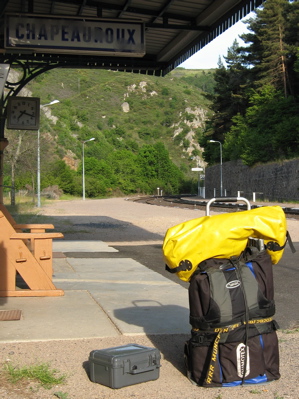
The Gumotex backpack/drybag is a pretty basic sack with thin shoulder straps prone to tearing, and no hip belt. You wouldn’t want to carry the 16-kilo Sunny and say, 10kg of camping gear and paddling gear more than a couple of clicks.

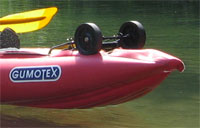
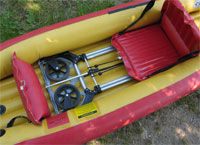
A £10/1kg folding trolley is a handy way of transporting an IK around rail stations or airports. It folds up neatly and fits on the bow (right). In fact, with a bit of adaptation, I wonder if it could make an upside down set of wheels for portaging? It’s nice and light but the wheels on this black trolley are too close together, or the load platform is too high so the load tips easily on rough pavements. And you get what you pay for: the tubing and construction are pretty flimsy. Protracted gumboat trolleying over rough surfaces and tracks will eventually mangle such a lightweight trolley (my second) so it needs to be treated carefully.

On the Haute Allier river in France  I used a heavier-duty and wider trolley (4.2kg) that fitted well under the seat (left, with the old original Sunny seat). Where weight is not a limitation (on trains and buses), I’d use this one again, but with any trolley a wide wheel track is the way to go. It all depends how far you’re trolleying of course, and if it’s over rough ground.

Sometimes I wonder about an integrated backpack frame with wheels, or a wheeled bag with more handles. Part of the reason the OE gumbag is tearing is that when you trolley up to some stairs you can only yank it by the top clips or the backpack straps. It’s something to think about when your current gumbag rips to the point of no longer being a functional drybag. Even in good shape it’s not a serious dry bag, but what roll top is? There’s more on dry bags here.

Homemade packraft or kayak sail

For my original post on the idea of IK sailing, with various videos, click this
For my first go packrafting with the sail, click this, and in a kayak, see this
A cheap ‘Windpaddle’ sail

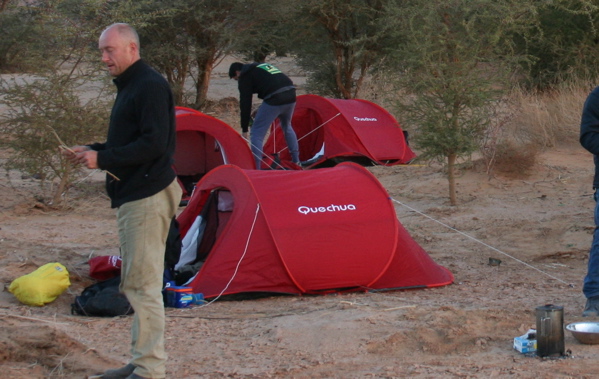
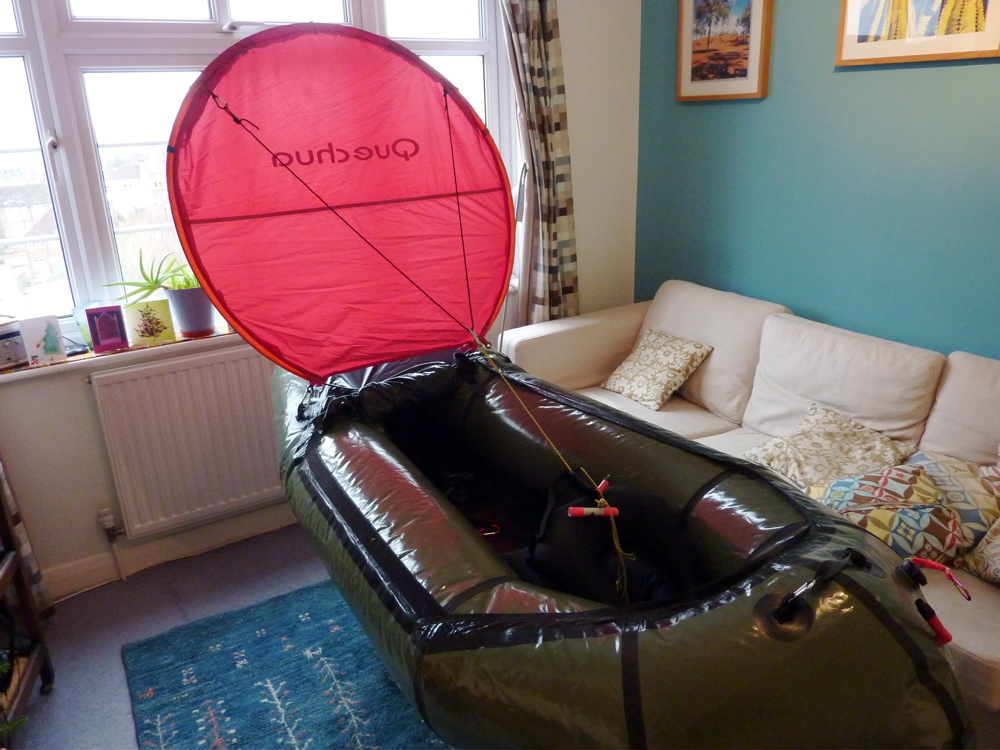
A few years ago I got a batch of discounted Decathon Quechua ‘2 seconds 1’ pop-up tents (right; £20) for a desert tour I was running, and have a couple leftover. Now everyone’s offering cheap pop-ups. People love the idea and though I don’t suppose this is a tent you’d want on the north face of Annapurna in a gale, when you arrive at a camp tired after a day of desert biking, you just want to click your fingers and, Abracadabra, you have a cozy shelter to call your own.

Whoever came up with the idea of flexible hoops sewn into a 3-D form to spring apart and make a tent or shelter was ingenious. I still marvel at it today. It seems a photographer John Ritson got to idea of adding fabric to a flat loop in 1985 and invented the collapsible Lastolite light reflector (right) after he saw a carpenter fold the blade of a bandsaw (See the bottom of this page). I imagine a Lastolite (a 38-incher costs £50) was the motivation behind the WindPaddle idea, but from a plain disc to a tent is quite a leap.

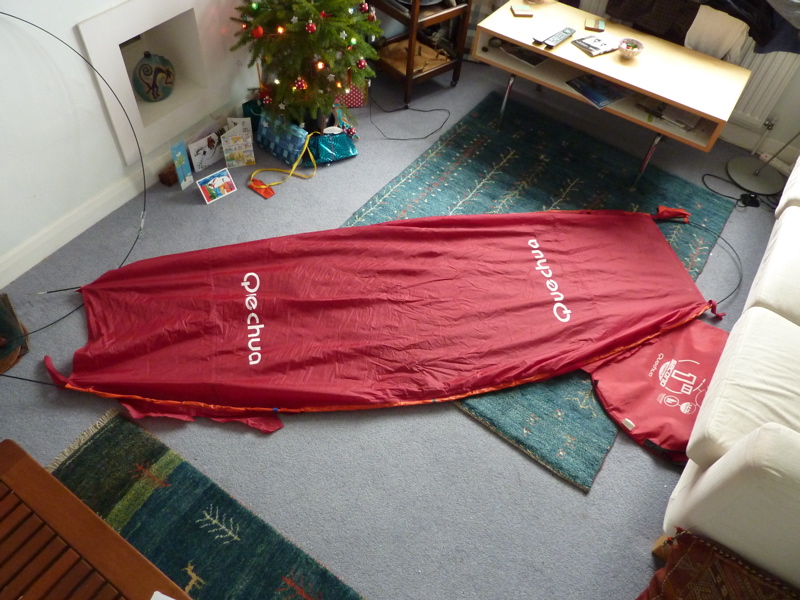
So I took a knife to one of my used Quechua tents.  Bad though it felt shredding a perfectly functional shelter, in the spirit of the Inca shaman, it will be reincarnated as a sail – or more ill-conceived clutter to shove under the bed.
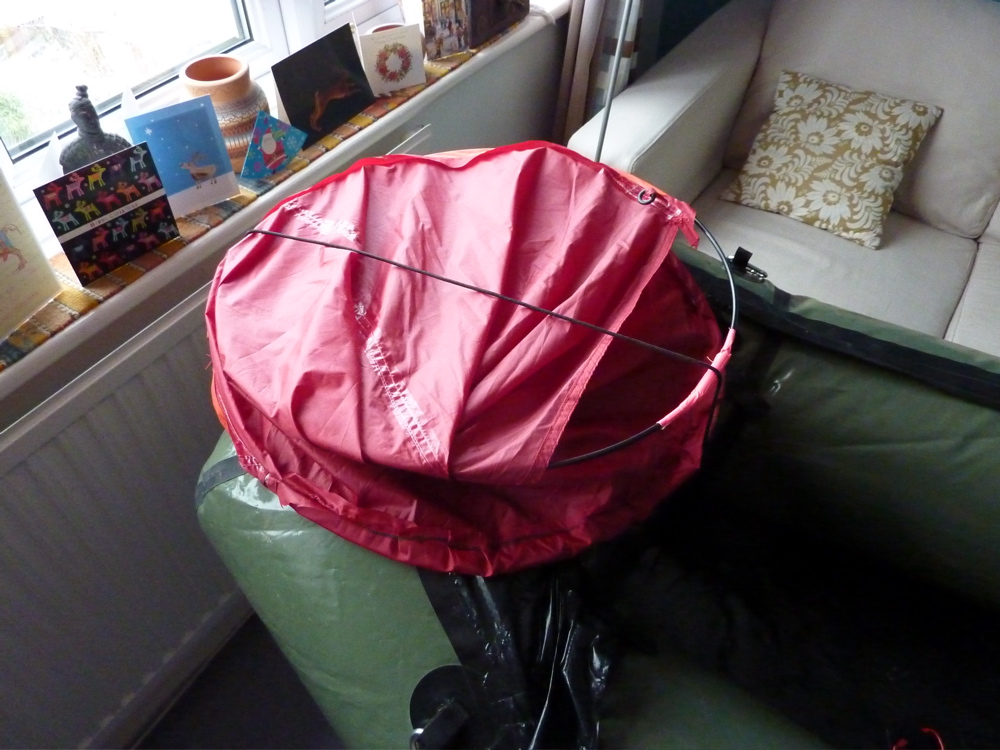
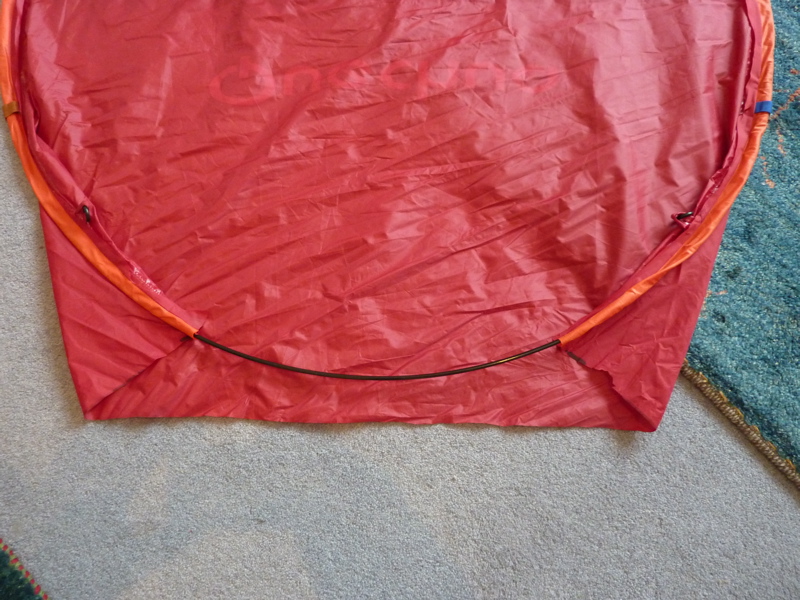
Dismembering the Quechua gives two giant hoops of 4mm nylon-coated alloy and another of 6mm. Having been told that WindPaddles can deform easily under strong winds, I chose the thicker wire to use for the hoop (Gallery pic 2, below) in the hope of reducing this possibility. (Warning: when opened up these springy wires can fly about all over the place).

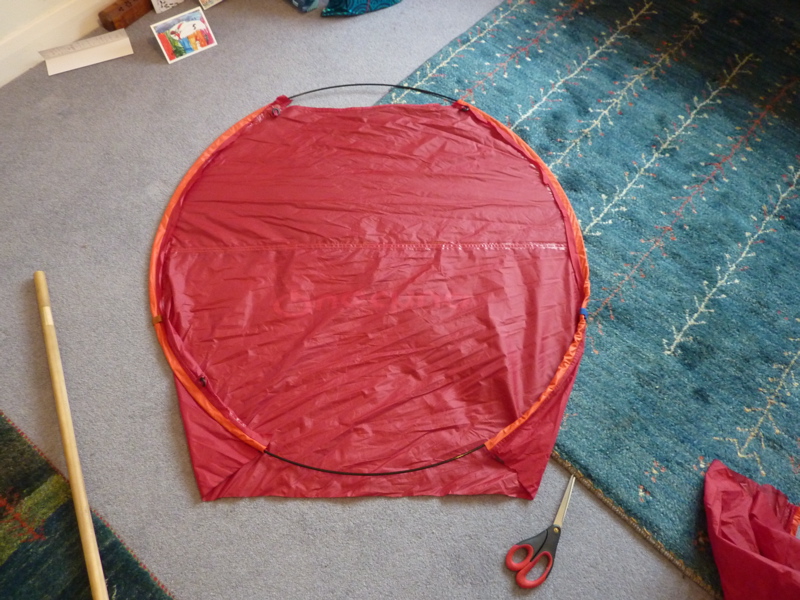
Cutting the thick loop in half and rejoining it with the metal collar/tube (don’t lose this bit) gives a hoop of around 40 inches or 1 metre diametre making a sail area of 0.785 m2 (8.45 ft2) – similar to a WindPaddle, but with negligible dishing. I built up the sawn-off end with some cloth tape to stuff into the collar-tube, and then taped it all up (so it’s easily undoable).
There’s enough fabric in the main body of the tent’s flysheet (Gallery pic 1) to make two 40″ disc sails if you cut from the middle, so 1 tent fly = 2 sails. I only worked this out after I cut. You want to use each curved end of the flysheet with as much orange hem-sleeve as possible (Gallery pic 4) – it saves on sewing later. You don’t want, as I thought,  the flat middle section which of course won’t become a smooth disc once formed into a loop with the wire. Gallery pics 5 to 9 show how to gather up the slack, trim it, tack it down and get the Mrs to sew it up as if she hasn’t got enough work to be getting on with at this time of year.
Gallery picture 10 is the sewn-up sail with a handy gap at the bottom for I don’t know what and which also happens to coincide with the position of two little hooped tabs at 5- and 7 o’clock which you can use mount it to an Alpacka’s rearmost bow loops using mini snaplinks (Gallery picture 11). By chance there are 2 more sewn-on plastic rings at 10- and 2 o’clock to mount a control string. The length of string I used happened to be just right to wrap around the folded over tent, though it’s all under tension and pretty unstable; you might want something like a bulldog clip to stop the sail deploying unexpectedly. I also think my control string may be on the short side, but it’s what was lying around.
My disc tent doesn’t have anywhere near the dishing (depth) of a WindPaddle or an umbrella-like spinnaker sail I am told. I still haven’t worked out if this is significant (it is). One would imagine a deeper WP-like sail – a ‘bowl’ rather than a ‘saucer’ – would be more stable downwind but less good at tacking across it (probably correct) but what do I know? Last time I sailed a boat was over 35 years ago.
I suspect a flip-out disc sail like this is probably a compromise when it comes to sailing effectively, but then so are pack boats. If round sails were such a good idea the Vikings would have them. It may even prove to be not fully useful and so just more junk to carry about which is why, after trying the umbrella, I chose to make one for next to nothing rather than spend £140 ($215) on a WindPaddle in the UK. It was easy to make, is light (250g or 9oz), and it can swapped between my Alpacka packraft and Sunny IK in the time it takes to unclip 2 snaplinks and attach them elsewhere.
Other uses include something to sit on, a doormat for the tent, a windbreak, sunshade or umbrella. There is a slight problem: you can’t see where you’re going, especially on the shorter packraft with a metre-wide sail a metre on front of you, but on most water that ought not matter too much and if it does, I can cut in a window (like a WindPaddle) if that is the sail’s only flaw.
As to how it sails, Monday after Christmas had a good southerly wind and the warmest day for weeks (ie: above freezing), but the reservoir I chose was a rink and looks like it’ll be that way for a while. It’s been the coldest December in the UK since records began so a test run make take a few weeks to complete. To see how it sailed first time out, click this.

Inflatable Kayak and Packraft Valves & PRVs

Pumps are here
Installing high-pressure PRVs
Testing unbranded mini PRVs
Fixing a leaking PRV

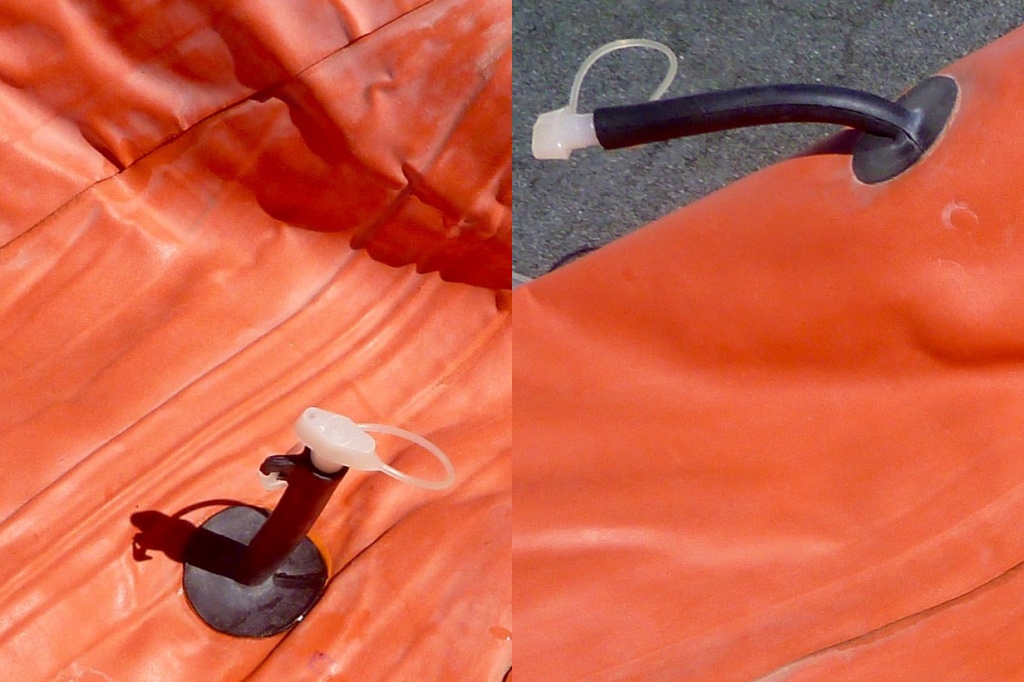
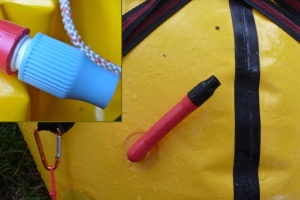
The best inflation valves for an inflatable packboat aren’t the bungs you find on an airbed or an old Semperit. Nor the thin, twist cap stems off a Feathercraft Java or an old Alpacka.
What you want are one-way valves. Like a car-tyre valve, one-way operation as well as a secure seal are the key, so what pumps in doesn’t push back or escape when you remove the inflation hose. Found on cheaper IKs and packrafts Boston valves are simple and effective for lower pressures. More below.

gumvalves


What I call raft valves (left) like Halkey Roberts, Leafield suit higher pressures and are needed for dropstitch panels. In America they’re called ‘military’ valves.
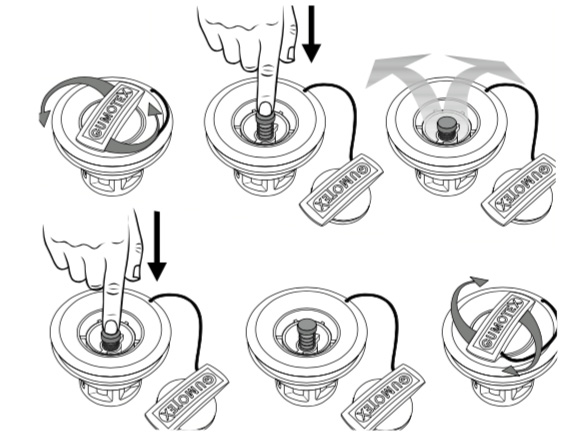
With raft valves you either push and twist the button clockwise to lock open (deflating). For pumping up, push lightly and turn anticlockwise so the button springs back up to seal. This closed ‘button up’ position is the best way to transport an IK too. To lose a little pressure (say, the boat is getting hot in the sun) just jab the valve core button, same as on a car tyre.

Many raft ​valves are now ‘push-push’ (graphic left) which work like a clicking biro so are even easier to use. I always refit the cap seal straight away to keep water and grit out of the mechanism.

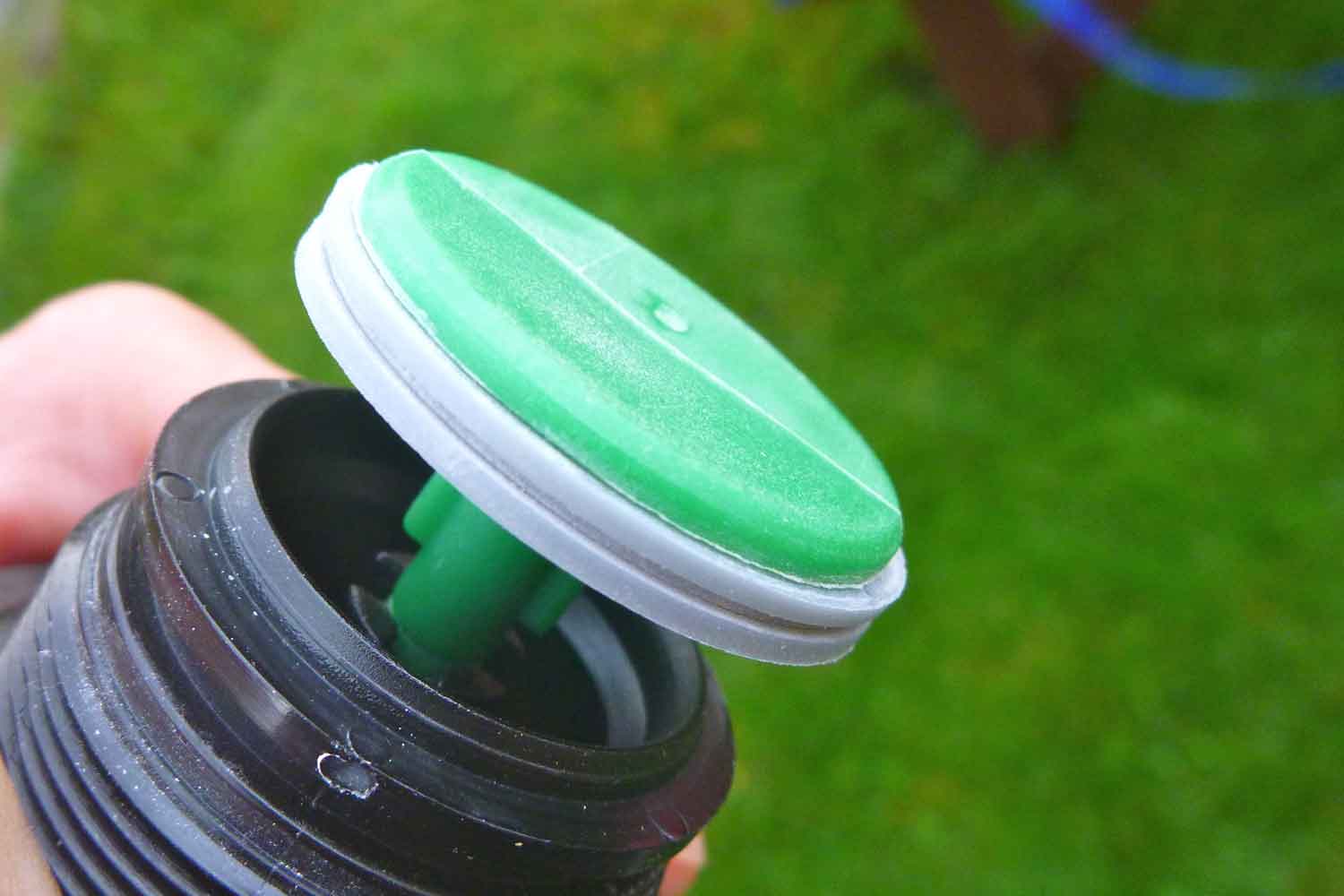
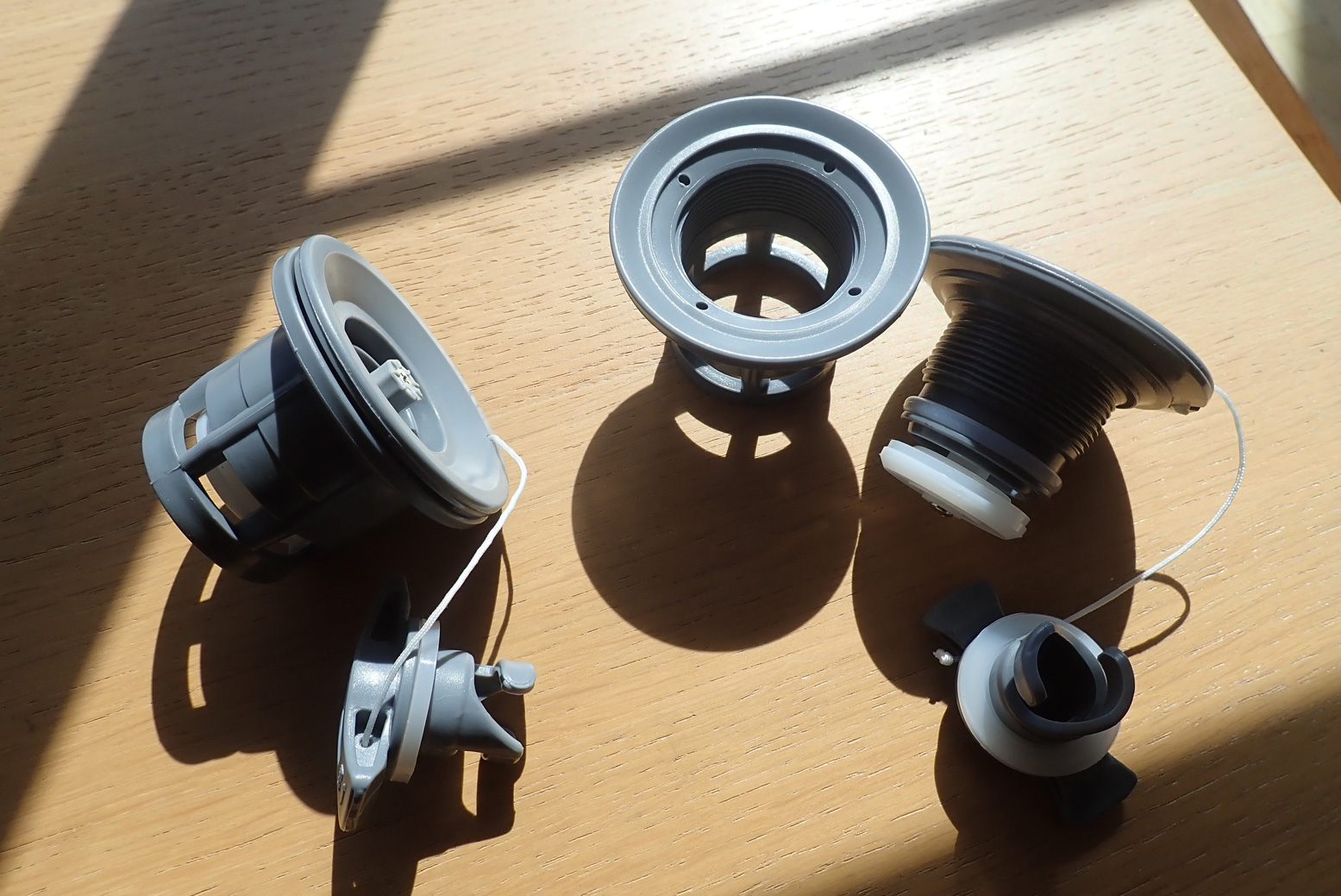
Two raft valves. On the left the collar goes inside the hull, the valve body screws into it tightly and the dust cap goes on top.
grabtool

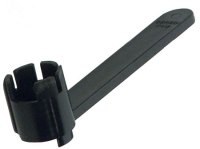
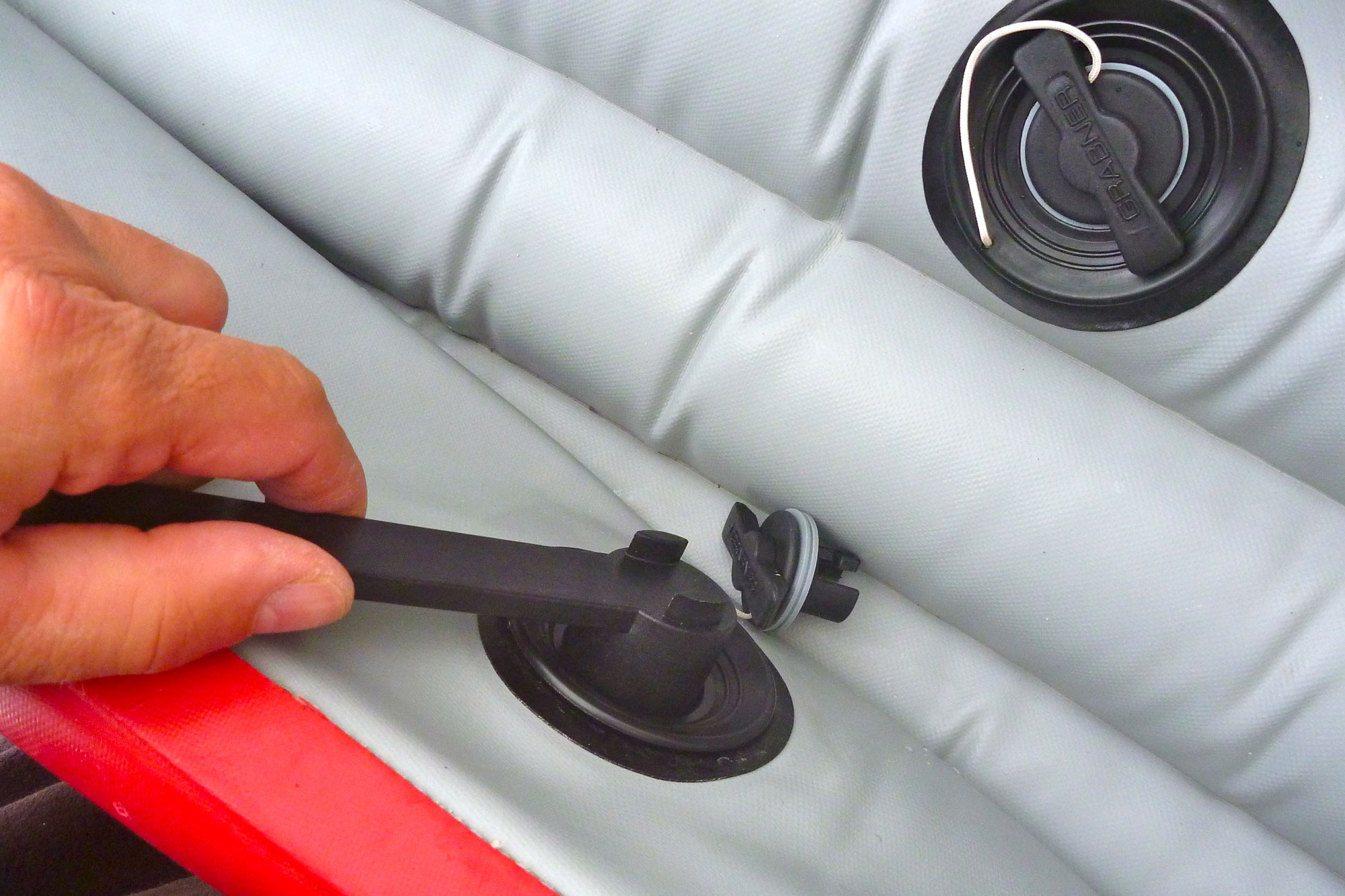
I’ve found these valves reliable on all my IKs, although this Gumotex 410C owner didn’t. Once in a while – or after the boat is new – you may want to check the valve is screwed tight against the fabric with the valve spanner, right. They’re also useful for removing the valve (or a PRV; see below) should it play up.

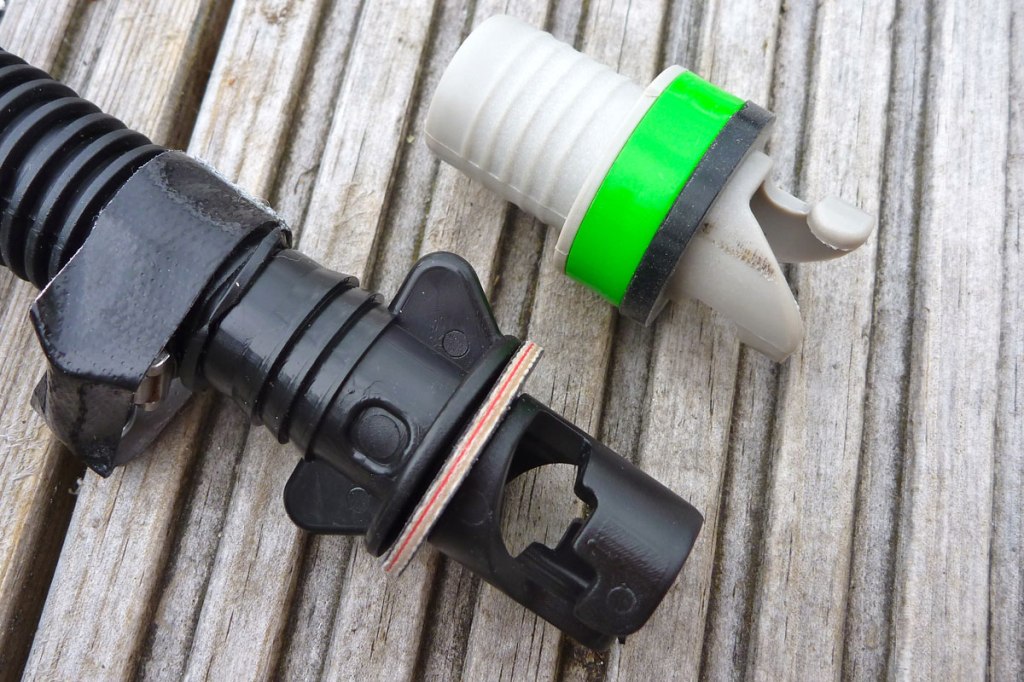
When it comes to inserting the inflation hose, a simple push-fit plug as shown below left can work; just jam the adaptor into the valve body and it usually stays in place while pumping. It looks cheap but on a Gumotex at least, works fine. With higher-pressure boats like Grabners and Incepts and some Gumotex (as well as dropstitch boats), the jam-fit can blow off so you’re better off using a bayonet fitting (below right) which won’t pop off as pressure builds.

Low-pressure valves for packrafts

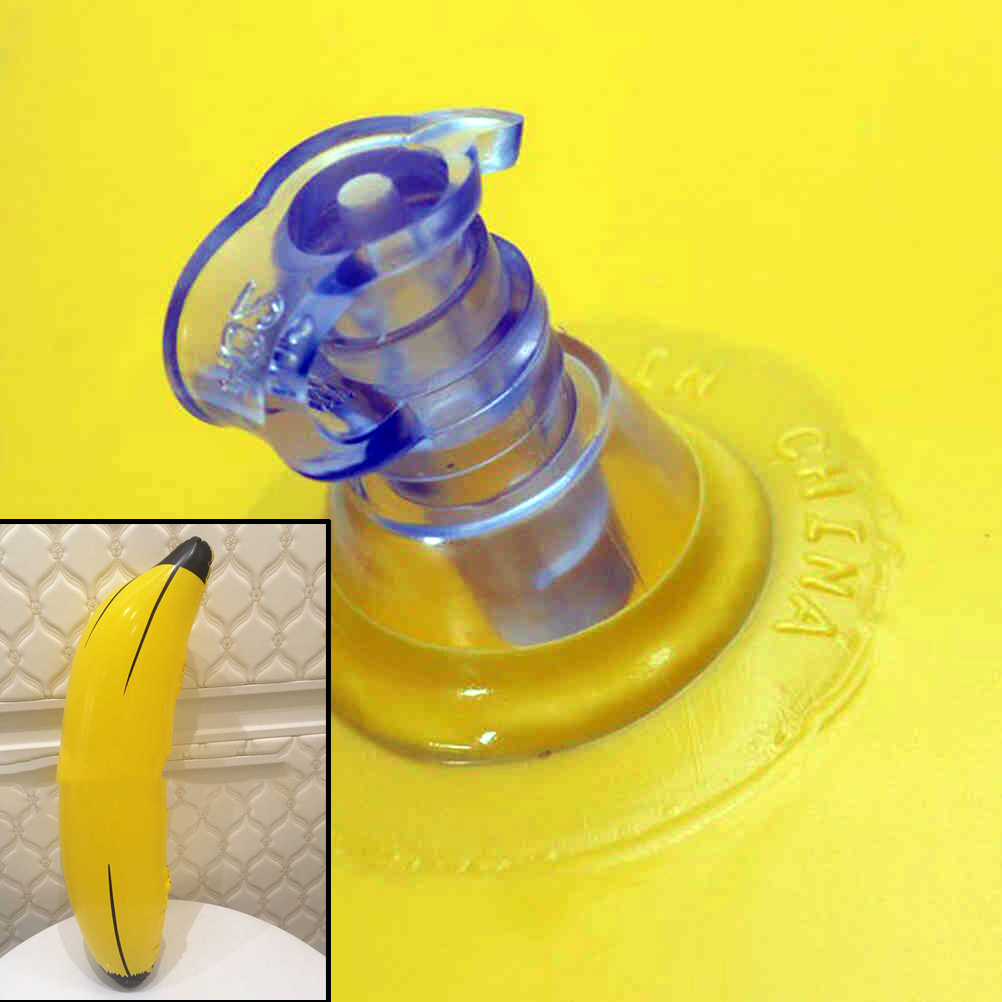
Alpackas and even Feathercraft used to use crappy, soft plastic twist-lock oral stem valves (below left) which you could never be sure were done up just right and which didn’t take well to pump nozzles. I suppose they were a step up from blow-up airbed plugs (below) which are still found on cheap IKs.

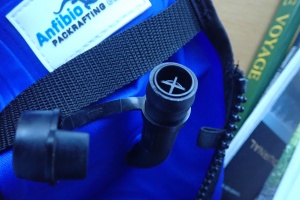
Now best used on inflatable seats and the like, they’ve been superseded by similar one-way stem valves (below right) with a light spring closure easily openable by lung pressure. They’re a bit trickier to deflate: you have to depress the ‘X’ with a finger while squeezing out the air. The one below right is actually on a buoyancy vest.

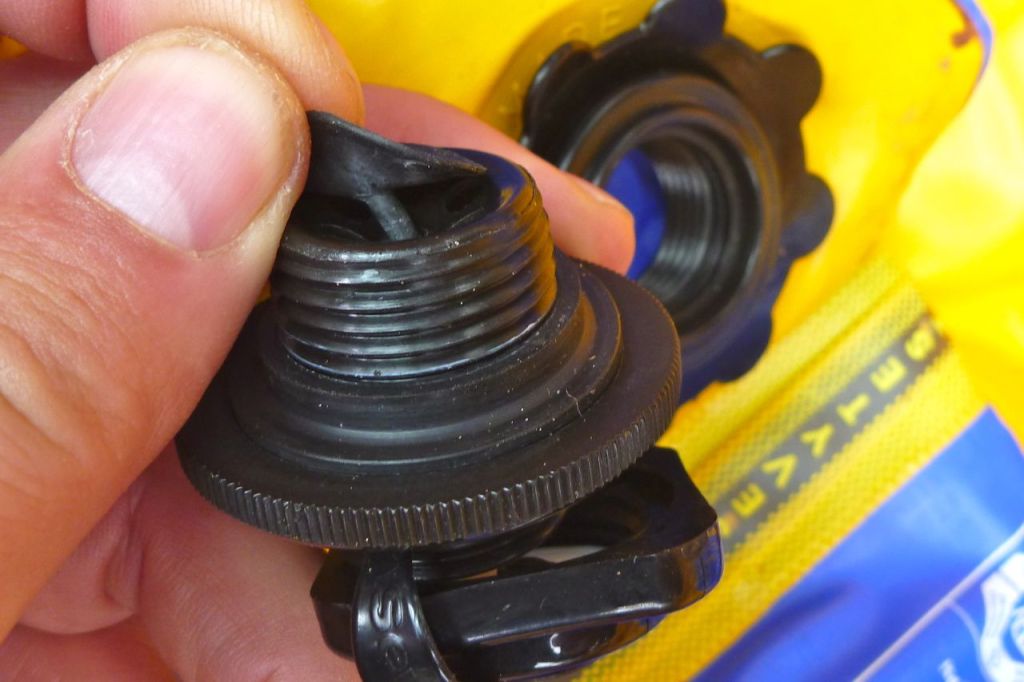
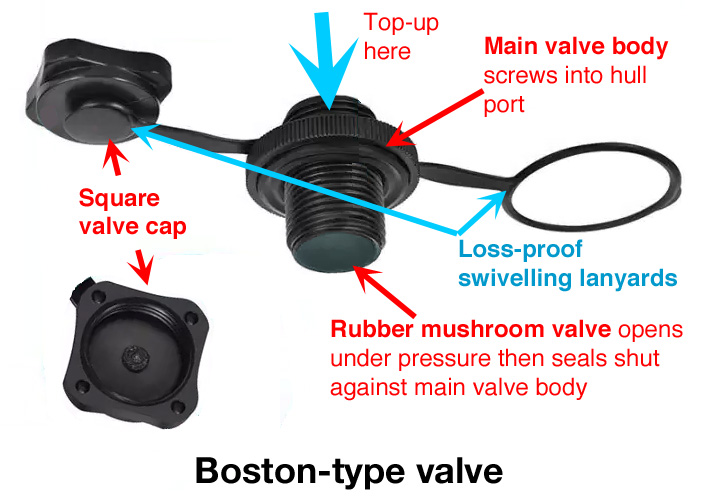
Boston valves is a generic name for a one-way valve long used on cheap IKs as well as slackrafts and have now become common on packraft hulls. Note they’re widely copied and not all may be identical, like well-known branded IK valves.
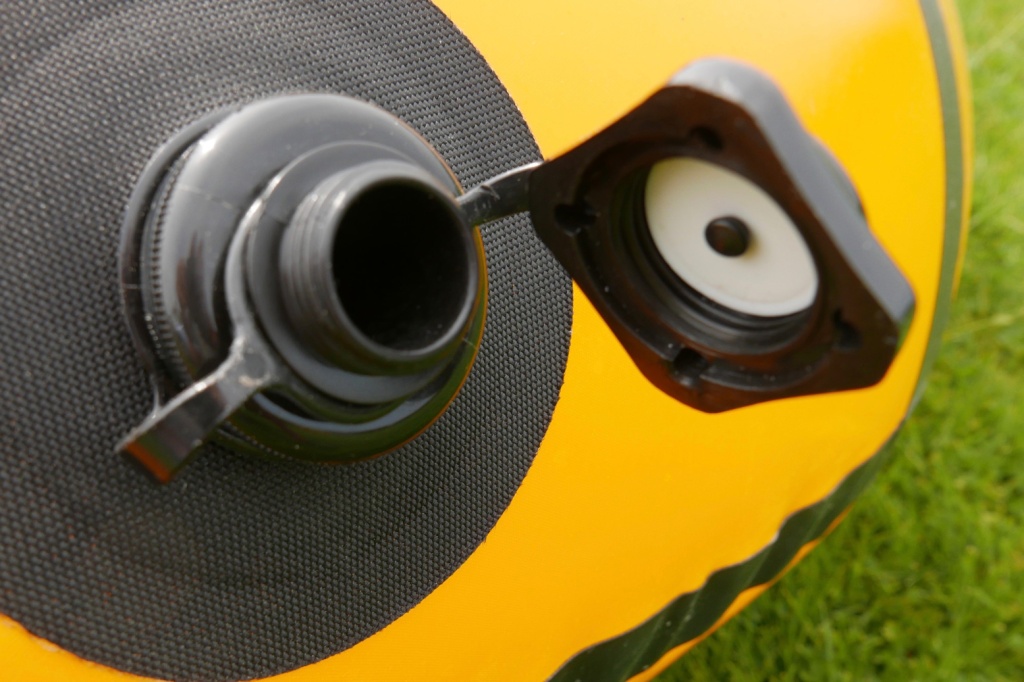
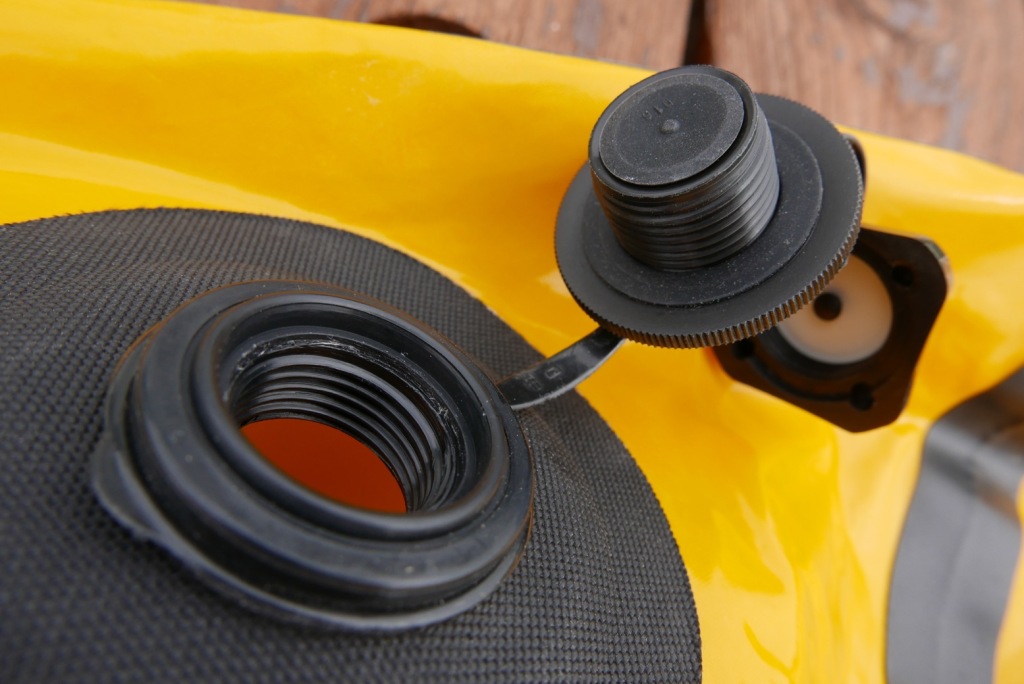
The square top cap screws onto the round valve body which itself has a knurled edge to easily unscrew from the hull port (below right). Here you attach your air inflation bag or open to quickly dump the air when rolling up.

Ideally suited to low-pressure boats like packrafts, they use a simple rubber ‘mushroom’ valve on a stem (above middle). Once the main valve body has been screwed back into the hull, unscrew the square cap to finish the inflation process by either topping off by mouth or with a hand pump.

A one-way Boston-type valve eliminates the need for the old separate stem valve and the whole assembly has swivelling plastic lanyards so nothing drops away when unscrewed.

Pressure release valves (PRV) for some IKs

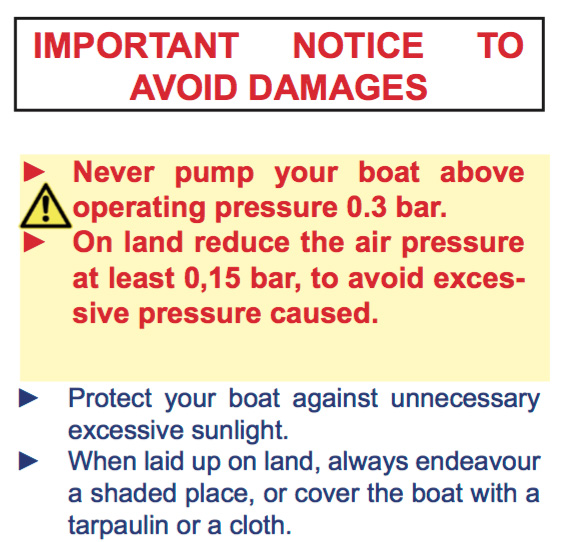
I’ve learned the hard way to be careful and not let an IK get too hot when out of the water. On a hot day you can feel the more exposed sidetubes tighten like a drum. This of course happens to be good for rigidity and paddling efficiency but isn’t good for the seams or an I-beam floor or the sewn seams of a cheap shell&bladder IK.

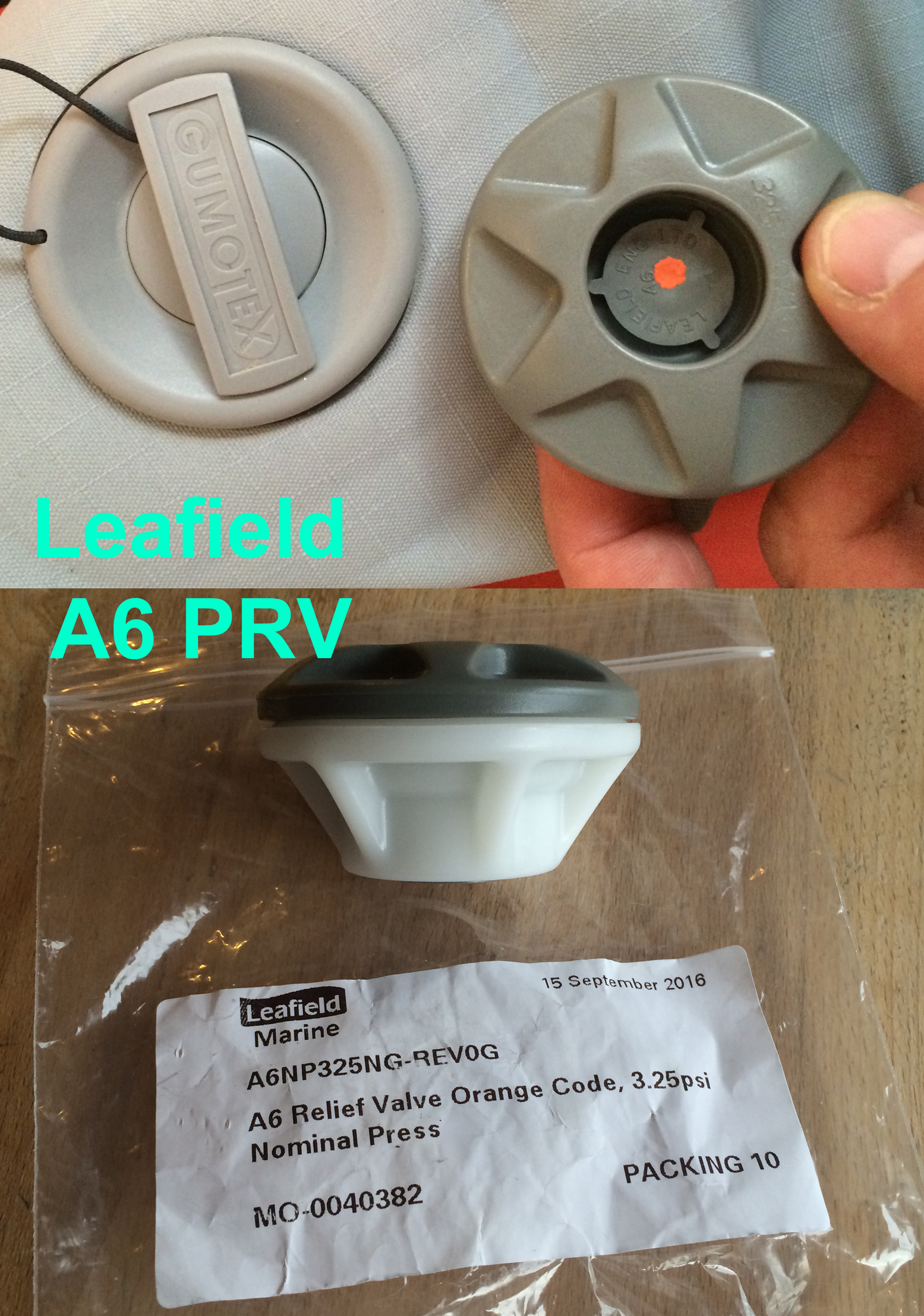
lefielda6

The floor tube on my old Sunny had a pressure release valve – oddly it’s something rarely mentioned in the specs, even on current Gumboats. It’s there to protect the I-beam floor which could rupture inside under pressure (I-beam floors explained here).
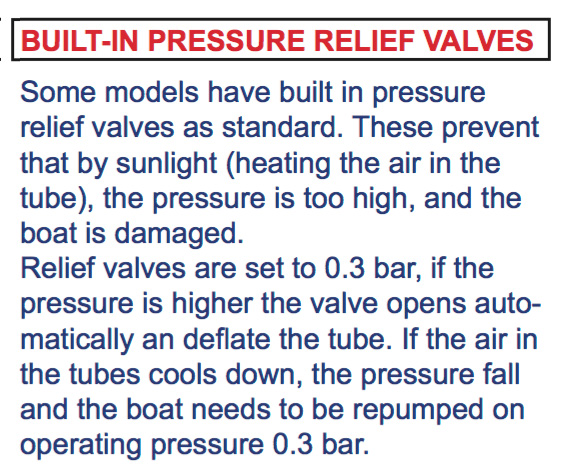
The valve is set to purge (open) at a certain pressure when the air inside heats up, expands and pressures rise. With Gumotex it is 3psi or 0.21 bar. It means an IK can feel a bit soft on a cool morning following a hot day; don’t worry, you don’t have a leak, it just purged some air when hot yesterday and in the cool air make sit a bit soggy. A quick top up is all you need to do.
The handy thing with a PRV is that it makes a good guide to how hard you ought to pump up the other chambers of the boat without PRVs when you don’t have a pressure gauge. At whatever pump effort the floor PRV starts hissing, that’s the same or a bit more pressure to put in the side tubes which usually don’t have PRVs.

As mentioned, the air in an IK can also get cooled, for example when pumping up on a hot day and then putting the boat in a cool river: a normal scenario. Cold air contracts (loses volume/pressure). Because you want the boat to be as rigid as possible, after initial inflation it’s worth topping up again once the boat is in the water; splashing helps cool the sides.
Topping up, or tempering as it’s called, optimises rigidity and with long, 2psi boats you need all the rigidity you can get. Conversely, pumping up your boat in sub-freezing temperatures then putting it on water which actually ‘heat’ it up, though this is a much less likely scenario.

prv-leak
PRV leaking from the sides not through the valve.
Needs tightening with a special tool; a common necessity
with hastily assembled new IKs.

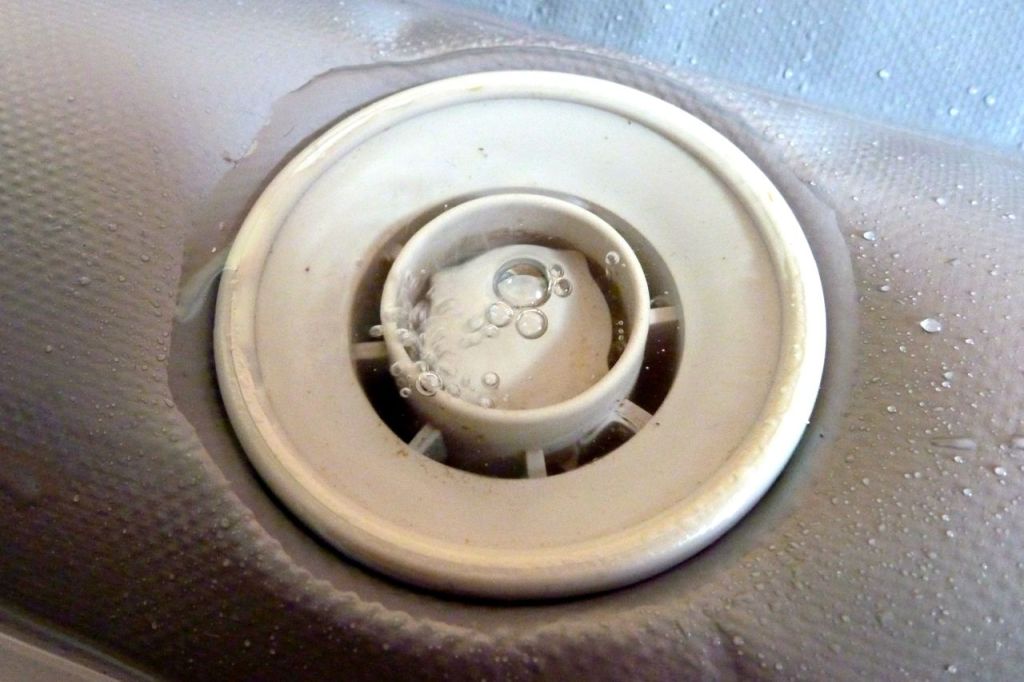
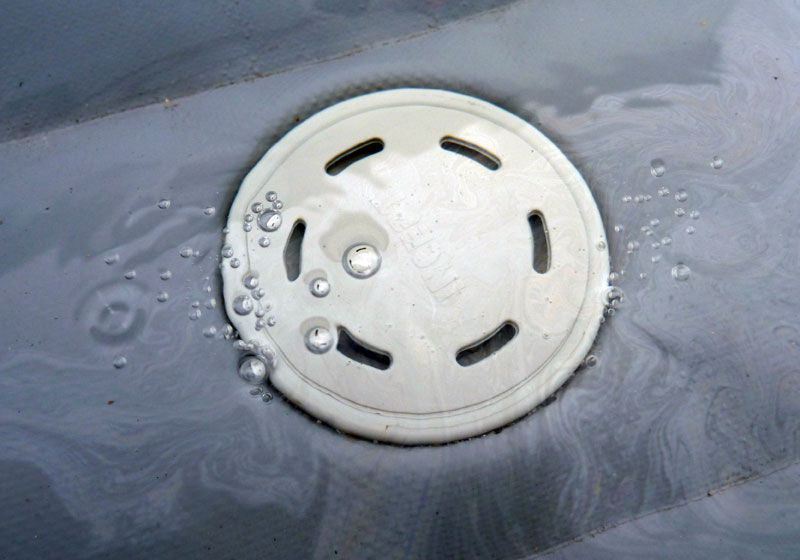
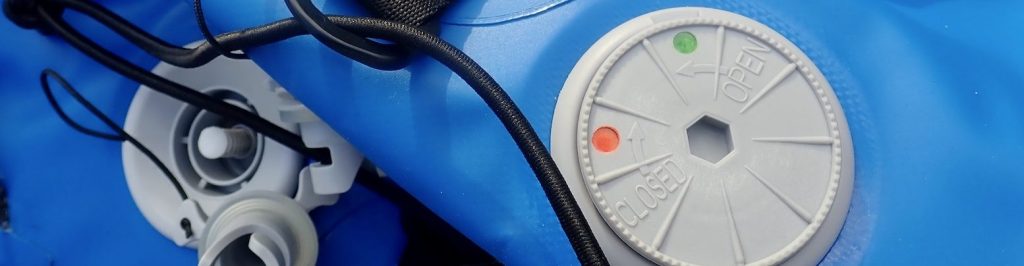
My higher pressure Incept K40 had PRVs on all chambers which meant you could confidently leave it in the Sahara and it would safely purge then feel a bit soft once cooled down back in the water. Picture above: Incept PRV test with the protective cap removed and purging correctly through the centre.
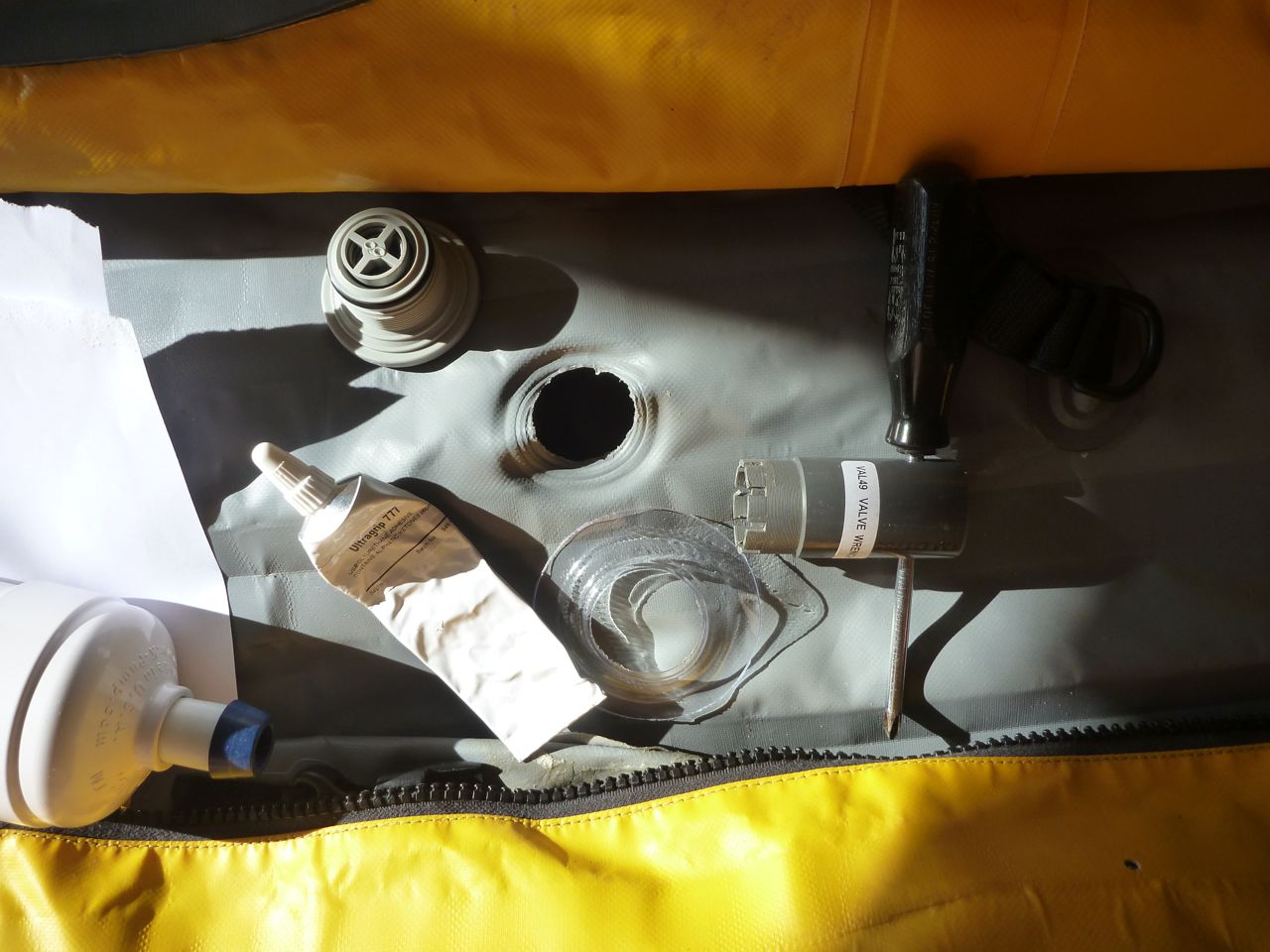
Below: a PRV being resealed after leaking from the edges (left). This was because I failed to check tightness after buying the new boat, as recommended by the manufacturer. (My Gumotex IKs never needed such tightening or checking in years ownership.)
I ended up also fitting sidetube PRVs to my Gumotex Seawave to run higher pressures and the be able to leave it pumped up and out of the water for months at a time.
Like any valve, PRVs can leak due to grit on the seal or a weak or sticking spring. Grit is not so unlikely when you think they can’t have a cap and have to sit on the floor of an IK, with water and sand occasionally swilling in and down into the body. Try removing the cap and blasting it out with air and maybe give the spring a squirt with 303 (UV protectorant). The best thing is to remove the PRV with the same valve tool, inspect and clean the sealing surfaces and reinstall.

Oddly, my old Grabner Amigo had no PRVs at all and neither do the latest Holiday models and a few other Grabners, even though all run higher than normal 0.3-bar pressures. One presumes Grabner are so confident in their construction they’re not needed, despite the warnings above.
It should be included with the boats, but if your pump has no gauge, Grabner do pressure relief adaptors to fit on the hose (left) which purge at 0.3 bar, so dispensing with faffing about with a handheld pressure gauge. It’s a good idea.

My current Zelgear Igla 410 has closeable 0.25 bar PRVs on the twin I-beam sidetubes (below). The separate DS floor runs twice that pressure but has no PRVs. I find it’s actually quite handy to ‘lock in’ the air during cool transits or when getting into the water. When the paddle is over I open the PRVs which hiss a bit back down to 0.25 bar. I leave it like that until the next paddle when I top everything back up.

Lockable PRVs; quite handy actually

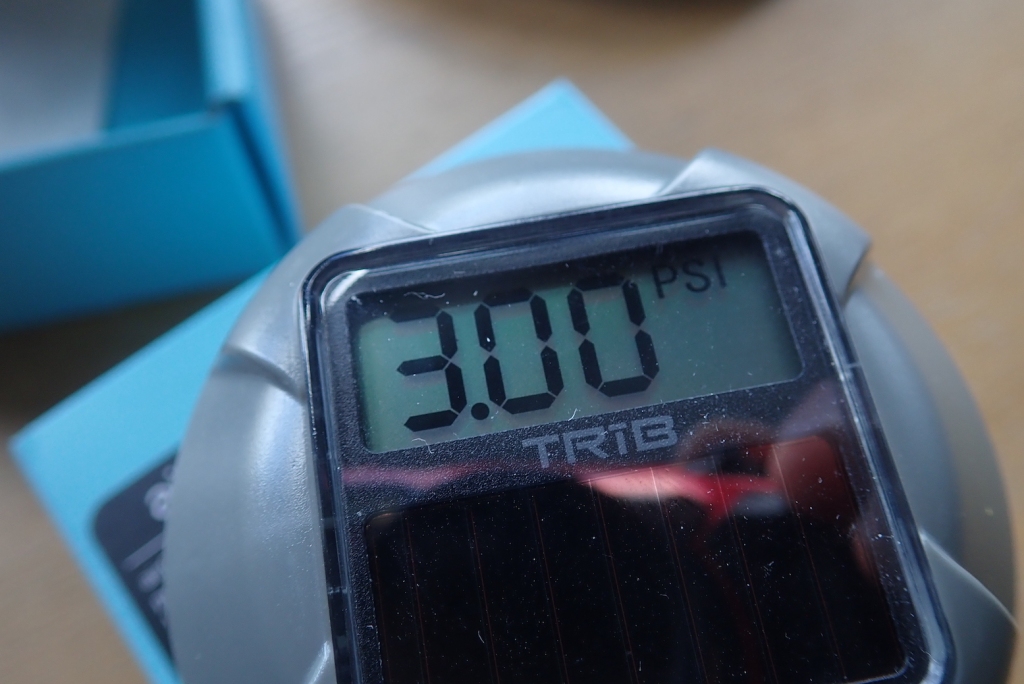
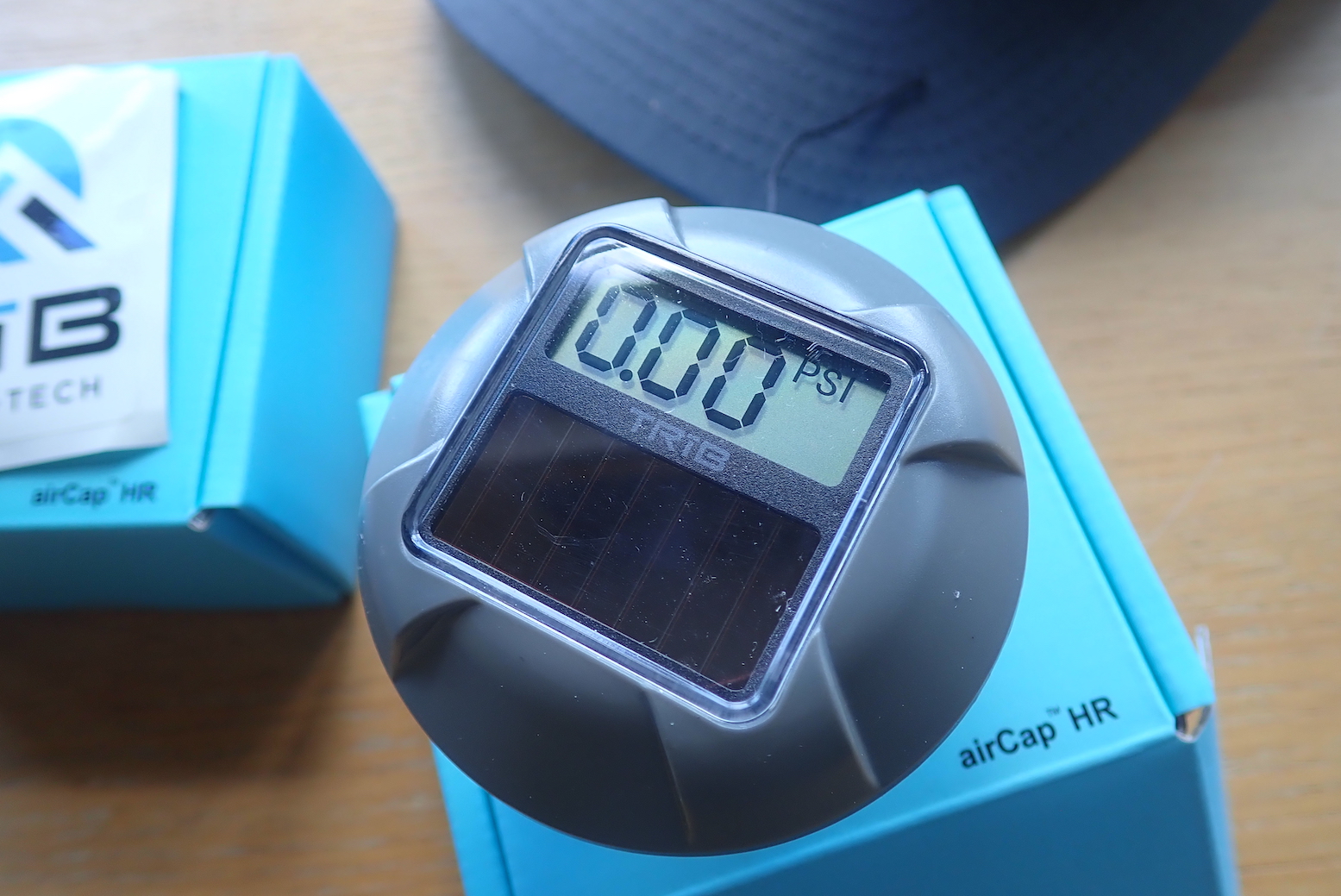
Another good idea are TRIB airCap live pressure monitors so your boat doesn’t end up like the Seawave left (actually an unexplained internal rupture while in the water).
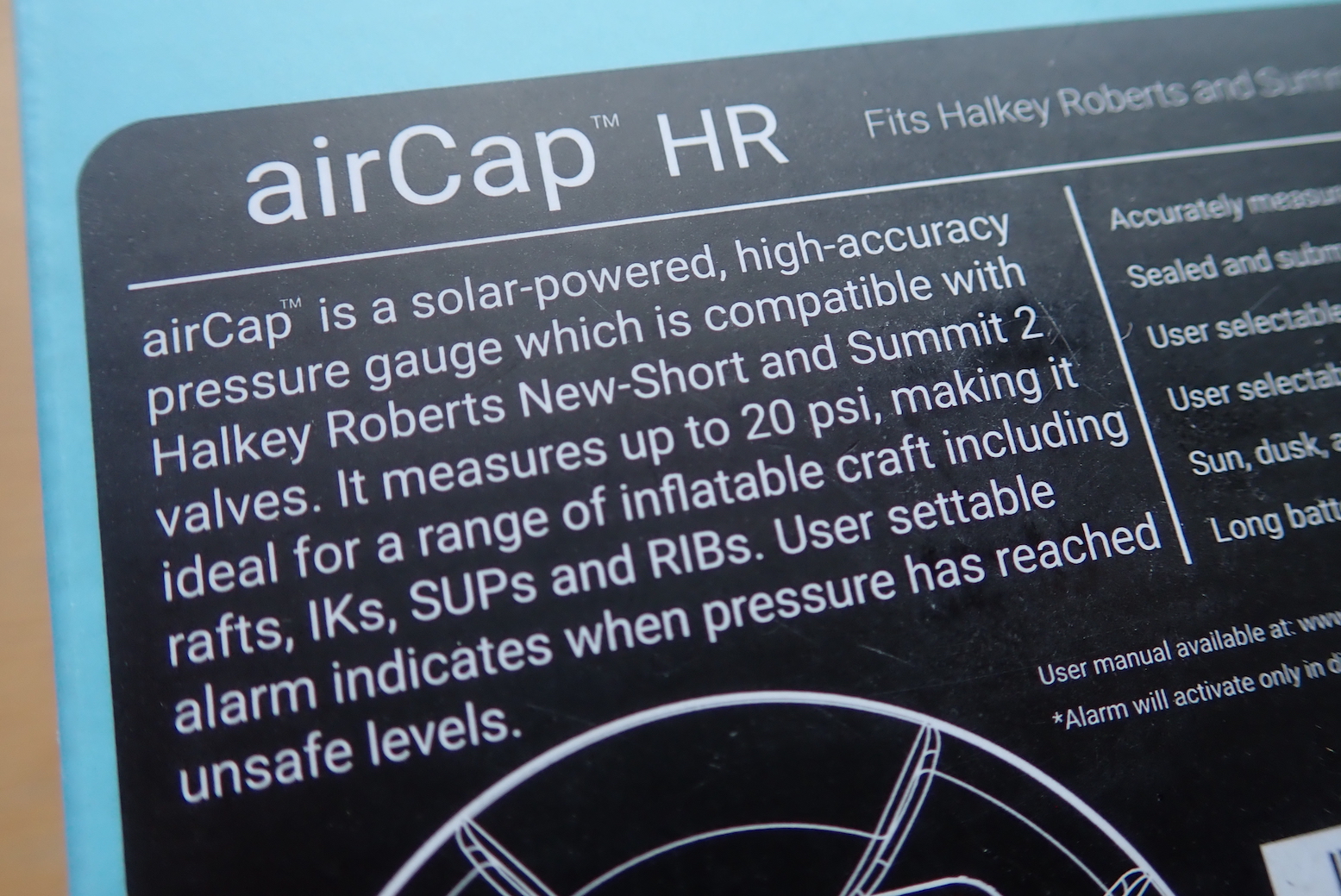
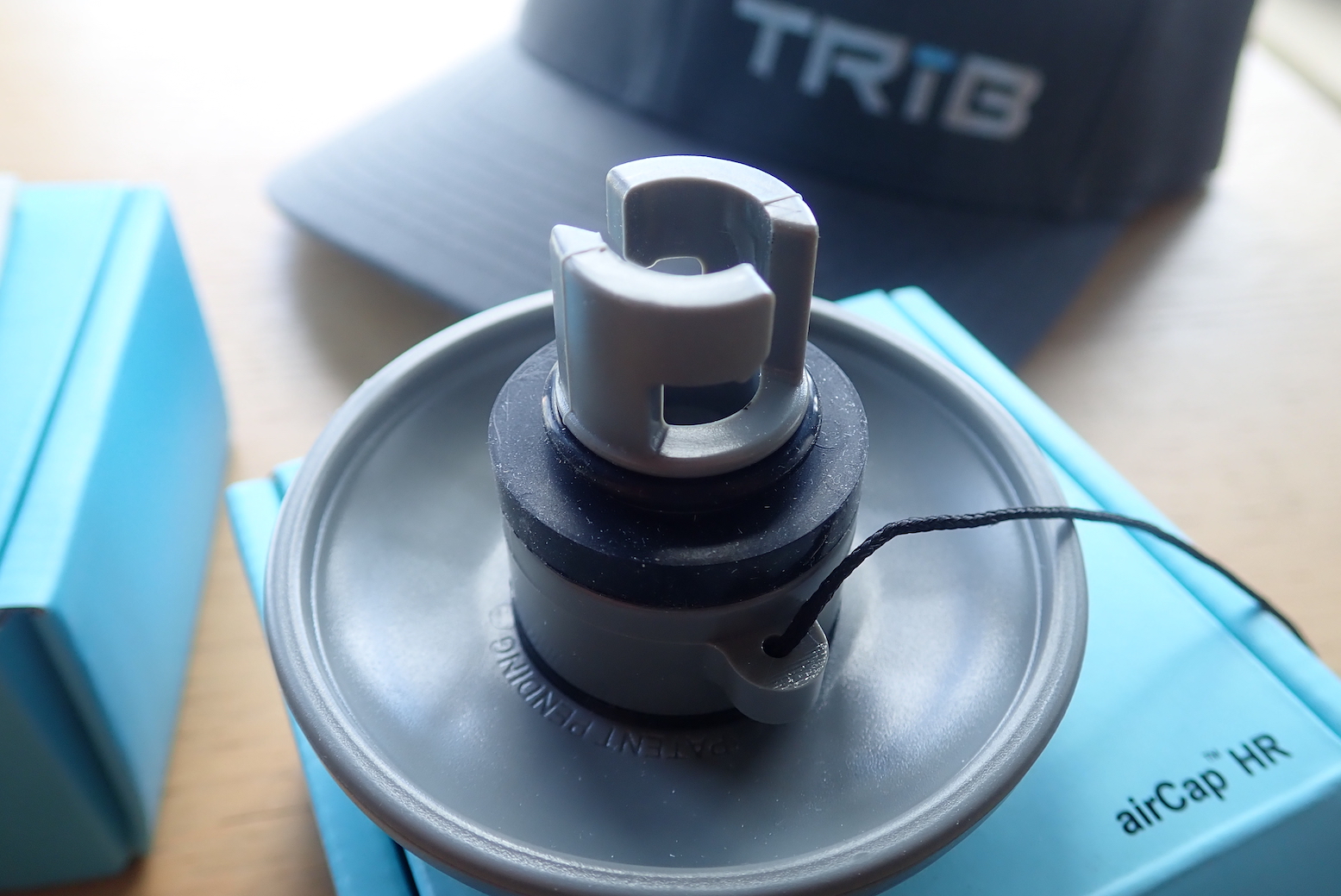
These TRIB solar-powered gadgets replace the valve cap on bayonet-type inflation valves like Halkey Roberts or Gumotex. One fitted securely an LCD display displays your pressures in psi, kPa or bar, a bit like TPMS for cars and motos. And like TPMS, you can even set a bleeping alarm at anything up to 20psi / 1.37bar.
You need to make sure the seal is good and air is not slowly leaking out, but you can also use them as simple digital pressure gauges: twist on, measure and remove. Once fitted, you can watch as pressure drops after you put the boat in the water, and then seeing it rise out on a hot river bank. If I kayaked in a hot country (ie: not the UK) they’d be a simple alternative to the faff of installing PRVs. TRIB airCaps cost $40 in the US and the same in £s in the UK. The ribstore sells them.