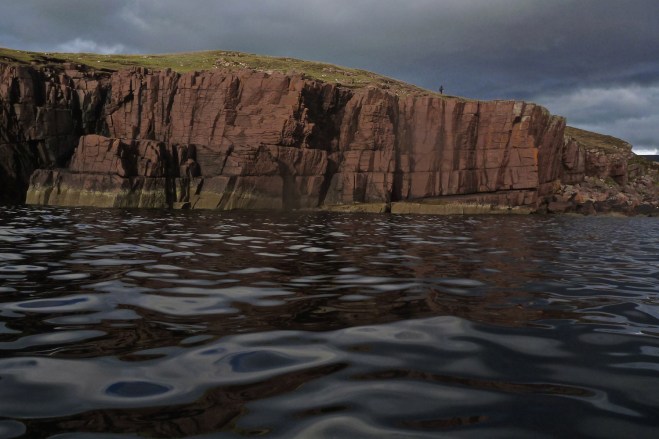
Walker on Rubha Dunan headland, below Achiltibuie. Well, I like it.
Some other colourful phenomena from the last couple of days.
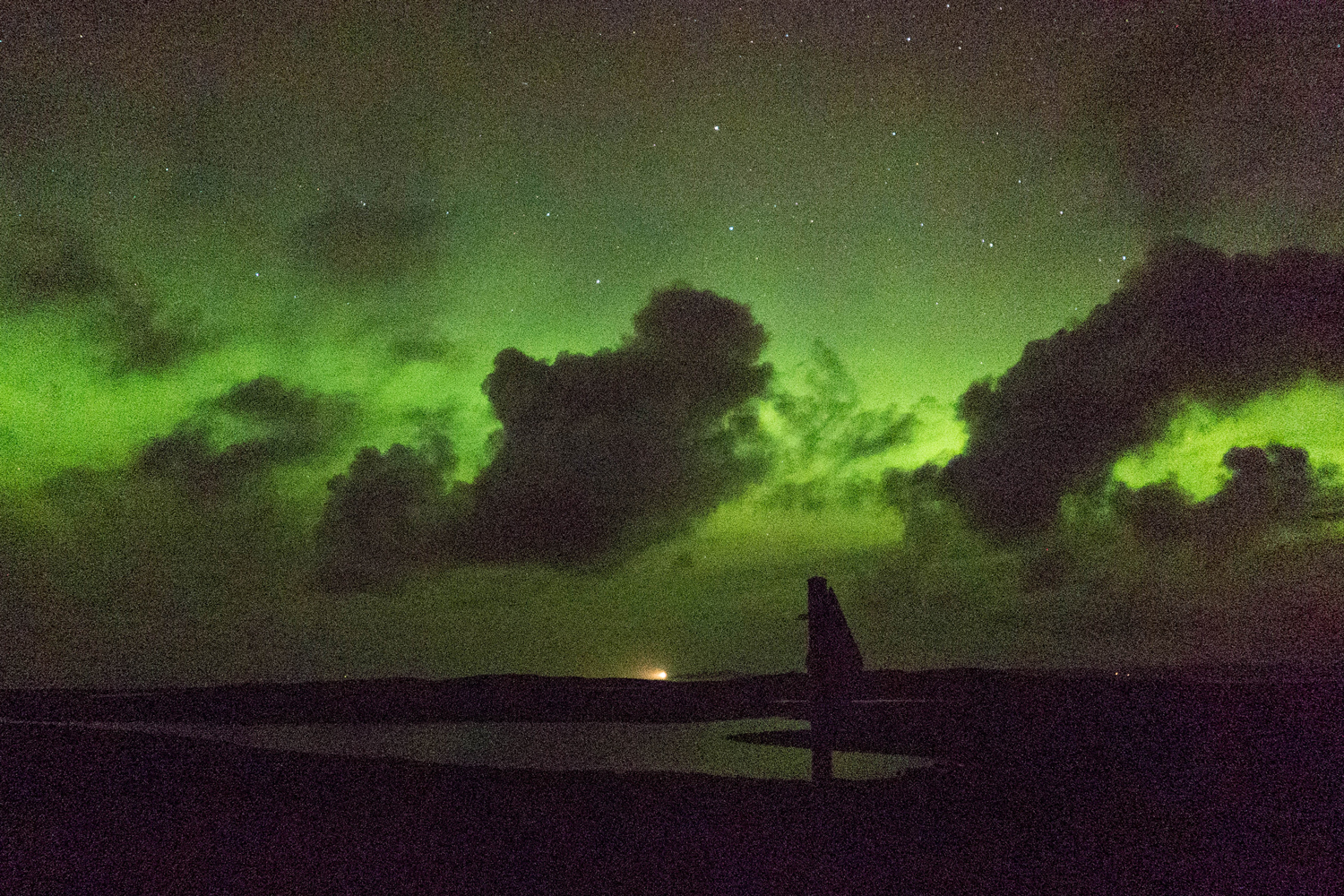
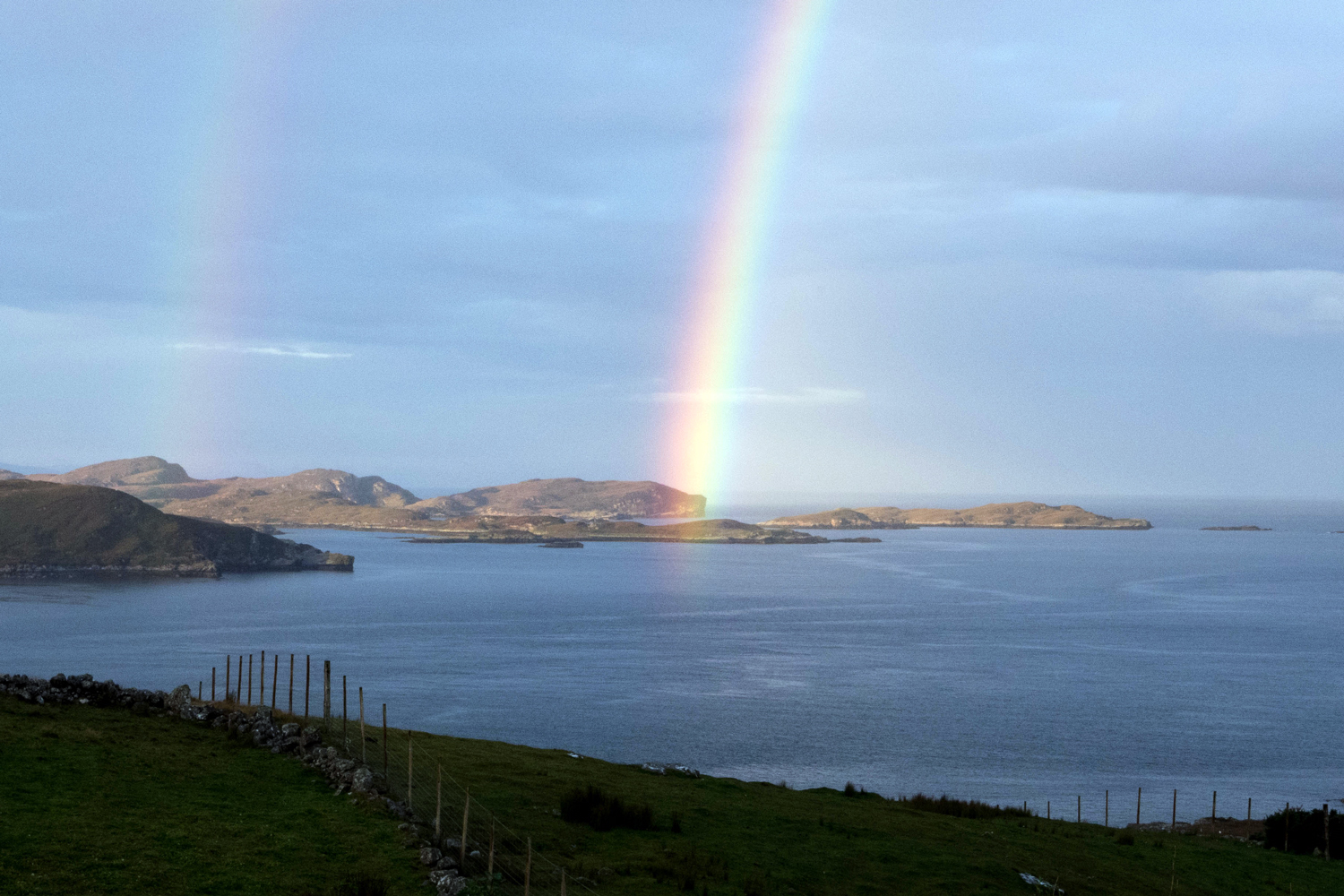


Some other colourful phenomena from the last couple of days.
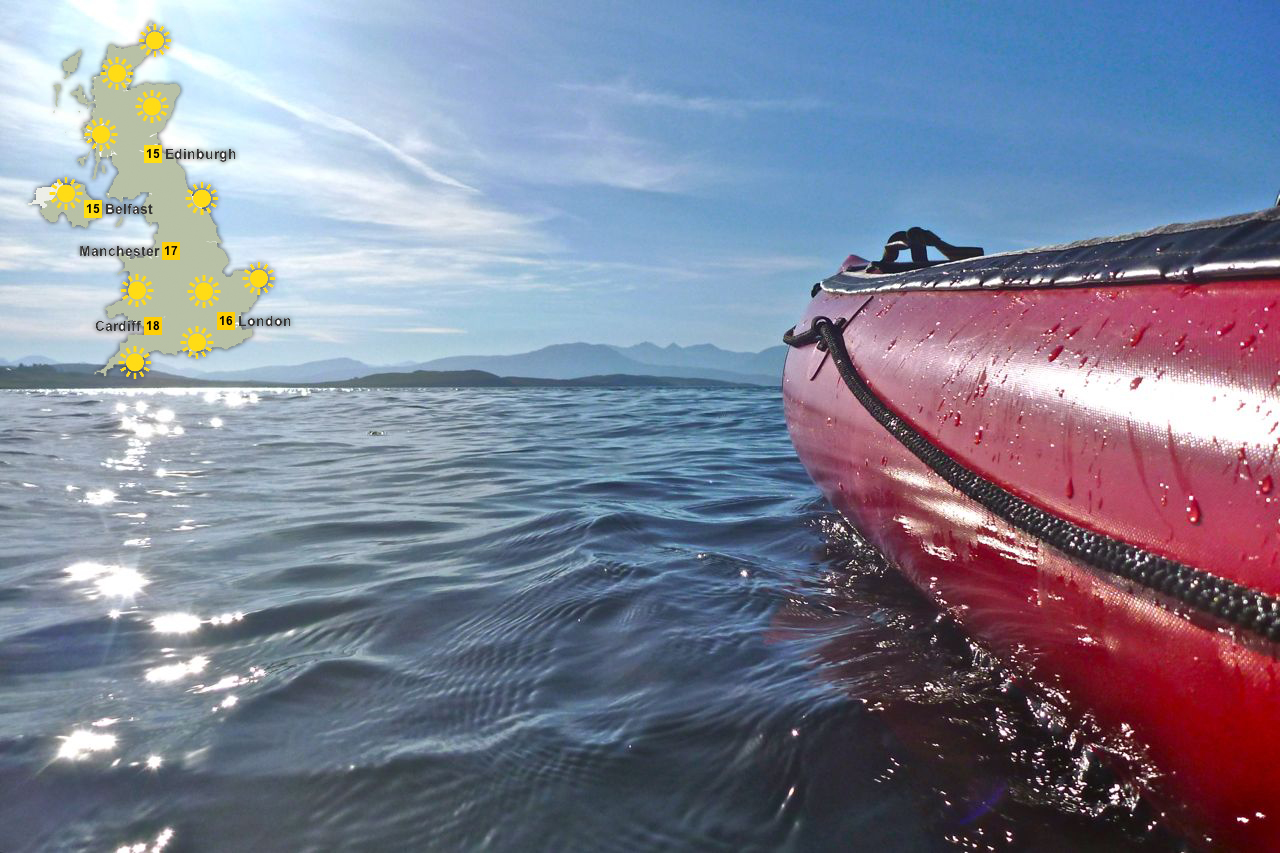

It’s summer time in the Summer Isles and the rest of the UK too, it seems. It’s a little later than usual but we’re not complaining. Feels like the warmest day of the year.
Loading the boat up, I realised I sold my footrest pipe with the Solar last week. Darn, I didn’t want to catch the wind so I quickly hacksawed a slice of plastic drainpipe on which the Seawave rests between missions. New XL footrest cut and rigged in ten minutes.

Don’t know if it was this bigger foot-tube but today the Seawave seemed set up just right. Seat, backrest, footrest, thigh braces and operator all working in perfect harmony as we sliced across Badentarbat Bay.
I set off planning to gallop around Horse Island but halfway across the bay took a fancy to Tanera Mor instead. It’s a good thing I don’t leave details with the coastguard; they’d never find me if they went looking.
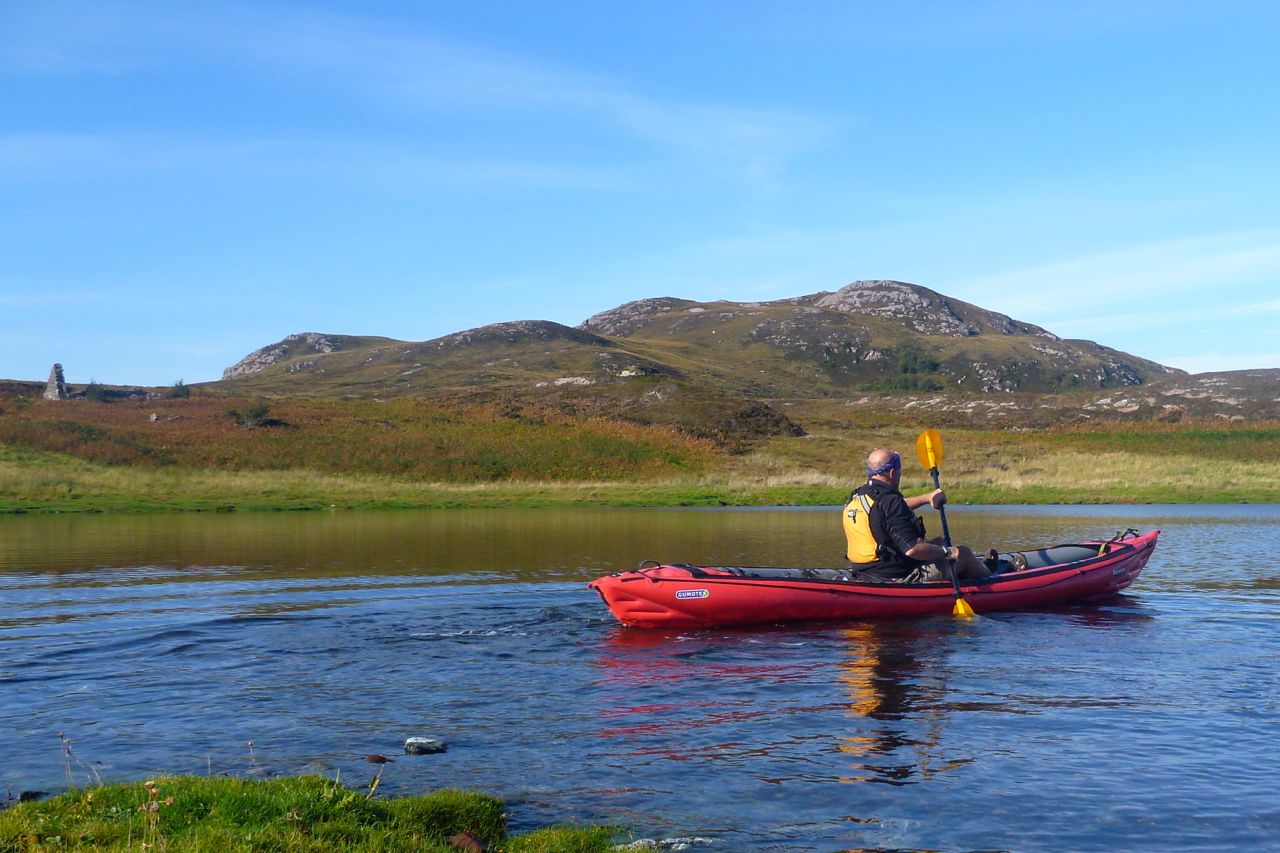
The breeze would be in by 2pm so I kept it simple and headed for a cove I recalled on the east corner of Tanera, just beyond Rubha Dubh Dubh. On the way in, a stream was draining a shoreside lochan into the cove, which looked odd. Then I remembered it was another one of those tidal lagoons which only fill on a spring tide, like Loch of Reiff.

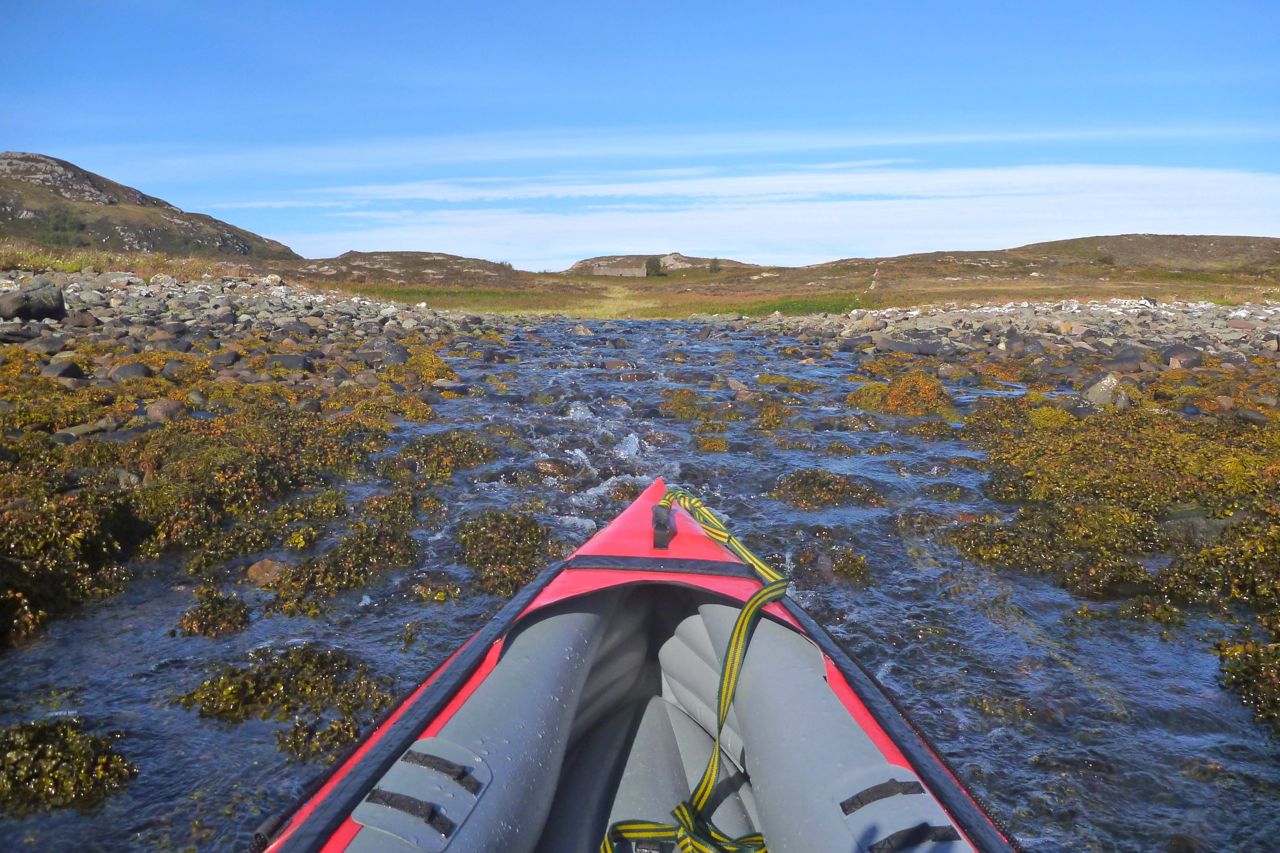
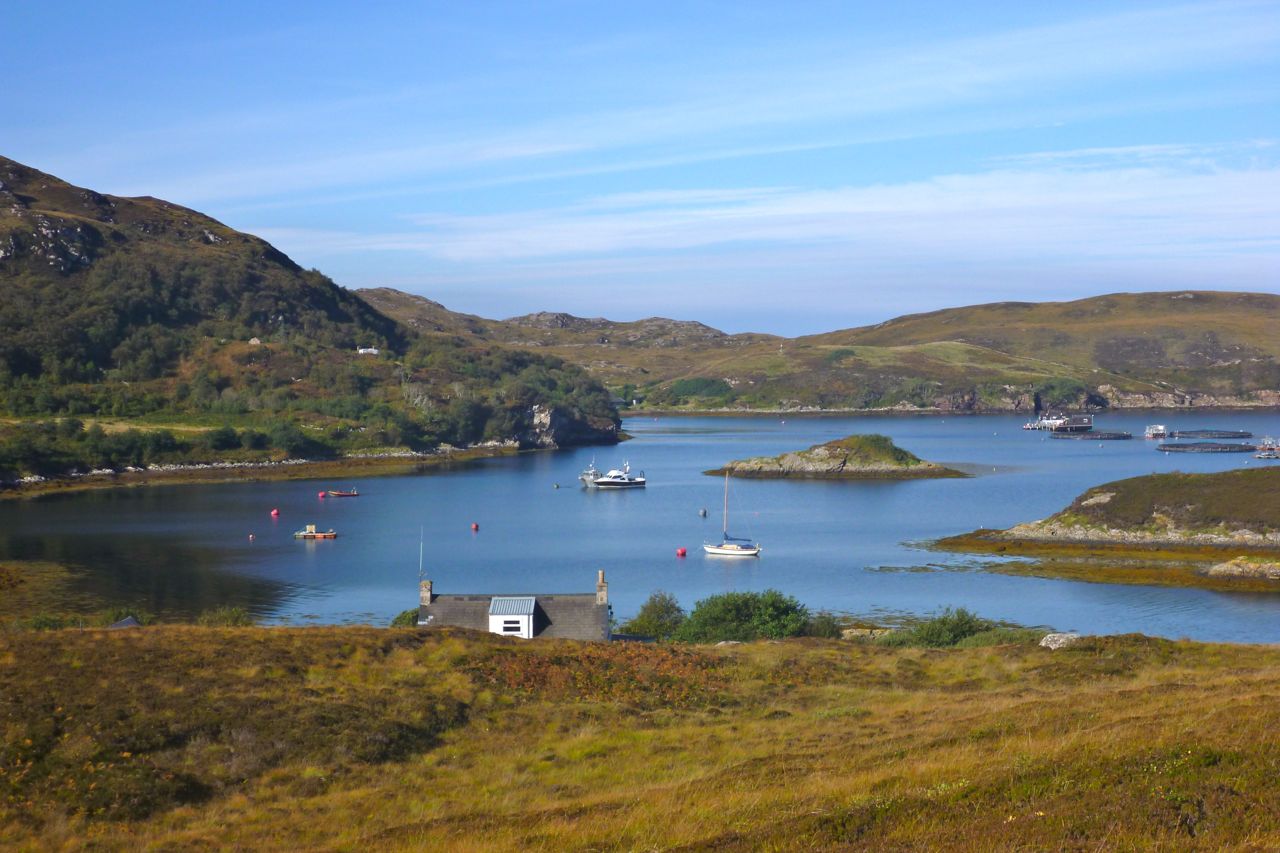
I pulled up to the stream bed in my long red limousine, crossed An Lochanach and went for a wander in the ankle-twisting tussocks. Up on top, I caught a lovely view over the tranquil Anchorage from behind Garadheancal. With all the ruins and usable houses, there are a lot of buildings on Tanera – still for sale at well under £2m now.
Back at An Lochanach the sea had dropped two feet in half an hour and as I was paddling out, my skeg doubtless hooked up a load of seaweed trying to pull through the mush.


I decided to contour around Tanera’s Anchorage, past the flapping salmon pens and pull up again by the post office at Ardnagoine which was having a quite day. All appeared to be in order so I set off back home in the flat calm which usually precedes a wind starting up from another direction. According to British Stomach Time it was definitely lunchtime.

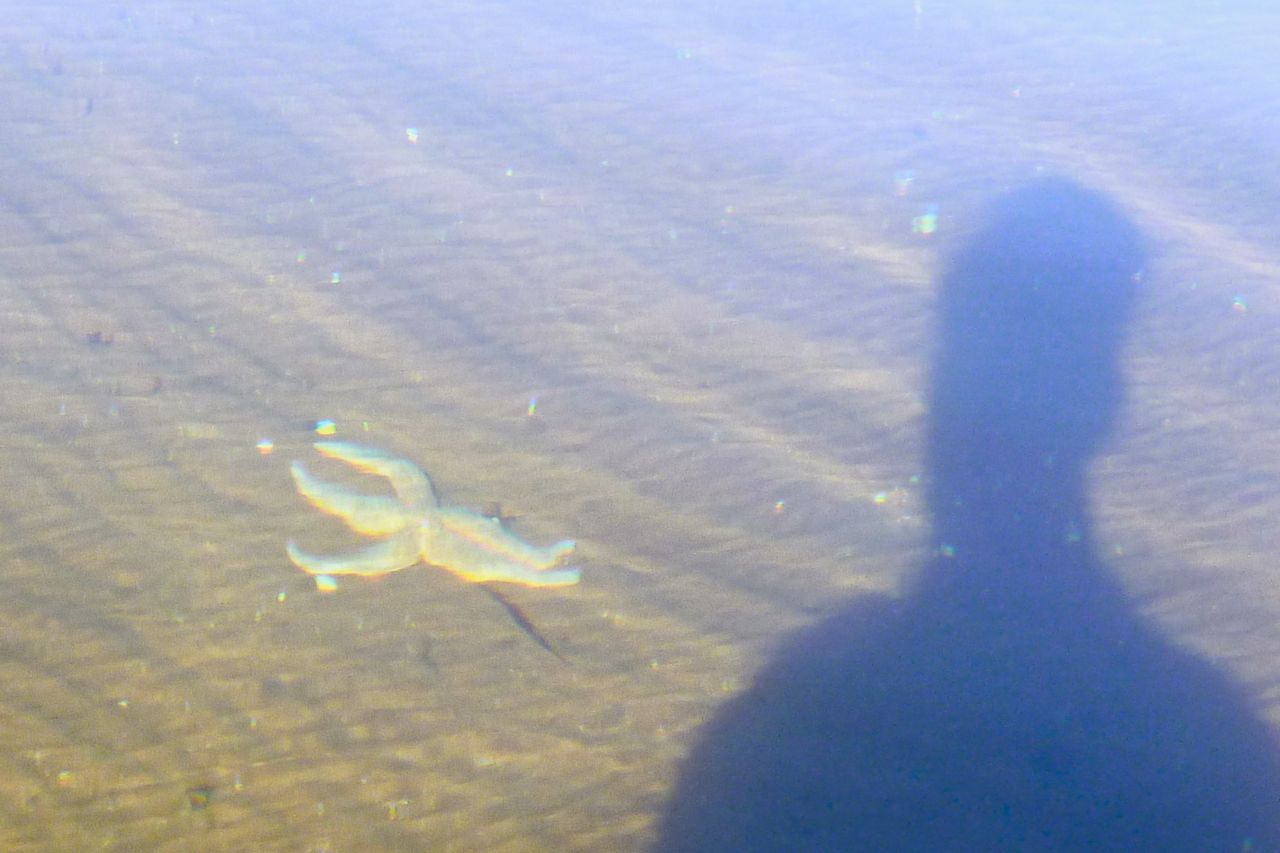
I slipped under the encrusted beams of the condemned pier and was just at the right level to pick off a few mussels for tea. On the way in the wind picked up and the ochre sands were already exposed as I glided over a mangled starfish on the seabed.
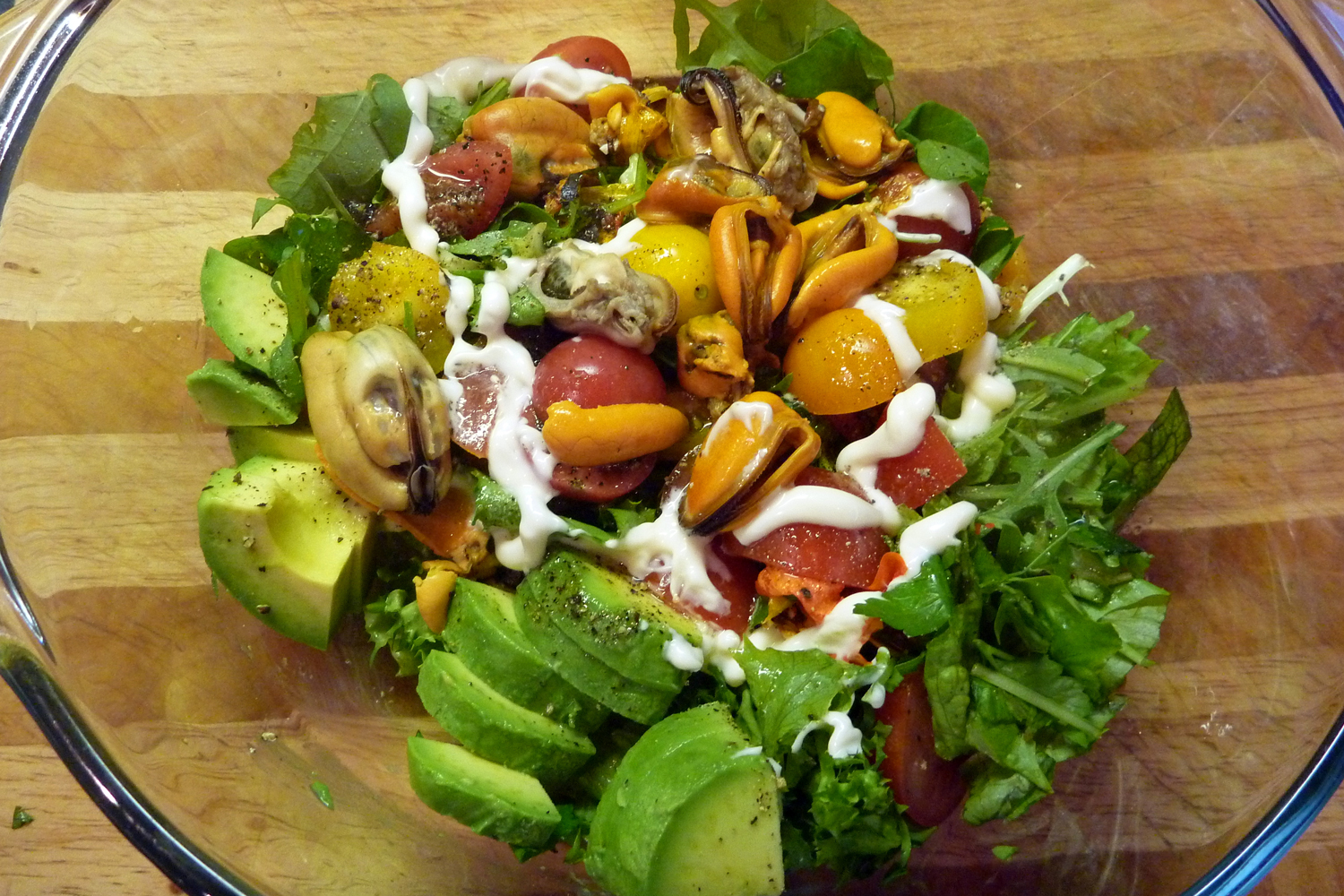

It’s taken a few visits, adding up to over a year up here, but I do declare I am running out of new things to paddle in the Coigach and Summer Isles area. A seven-mile run out to Priest Island – the very, very, very last of the Summer Isles – would be less edgy if not alone, while all the coasts from Lochinver round to Ullapool and up to the back of Loch Broom have been surveyed at least once. About a year ago that I did my (for me) epic run out to Bottle Island, just a stone’s throw from Priest.
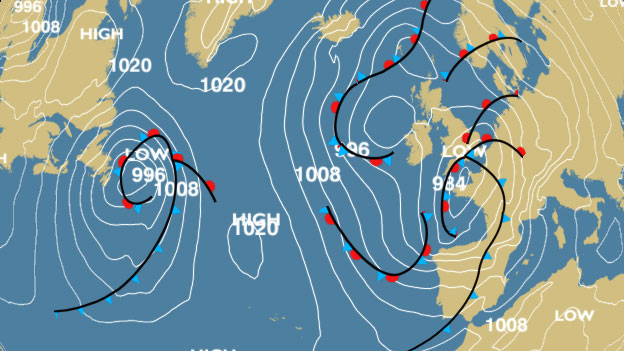
September does seem to be a reliably good month up here. Well, better than August – an old Highland truism. Another unexpected day of blue skies and light winds with the northwest pinned between a ‘Double Zero Low’, the sort of meteorological phenomenon that gives weatherpersons the munchies.
We decide to motor off the peninsula, along the Wee Mad Road (WMR) and past Lochinver to Clashnessie – a Norse word meaning ‘Battle of the Sea Monsters’. Here we paddled out towards the high arch before Point of Stoer and the beach at Culkein for lunch..
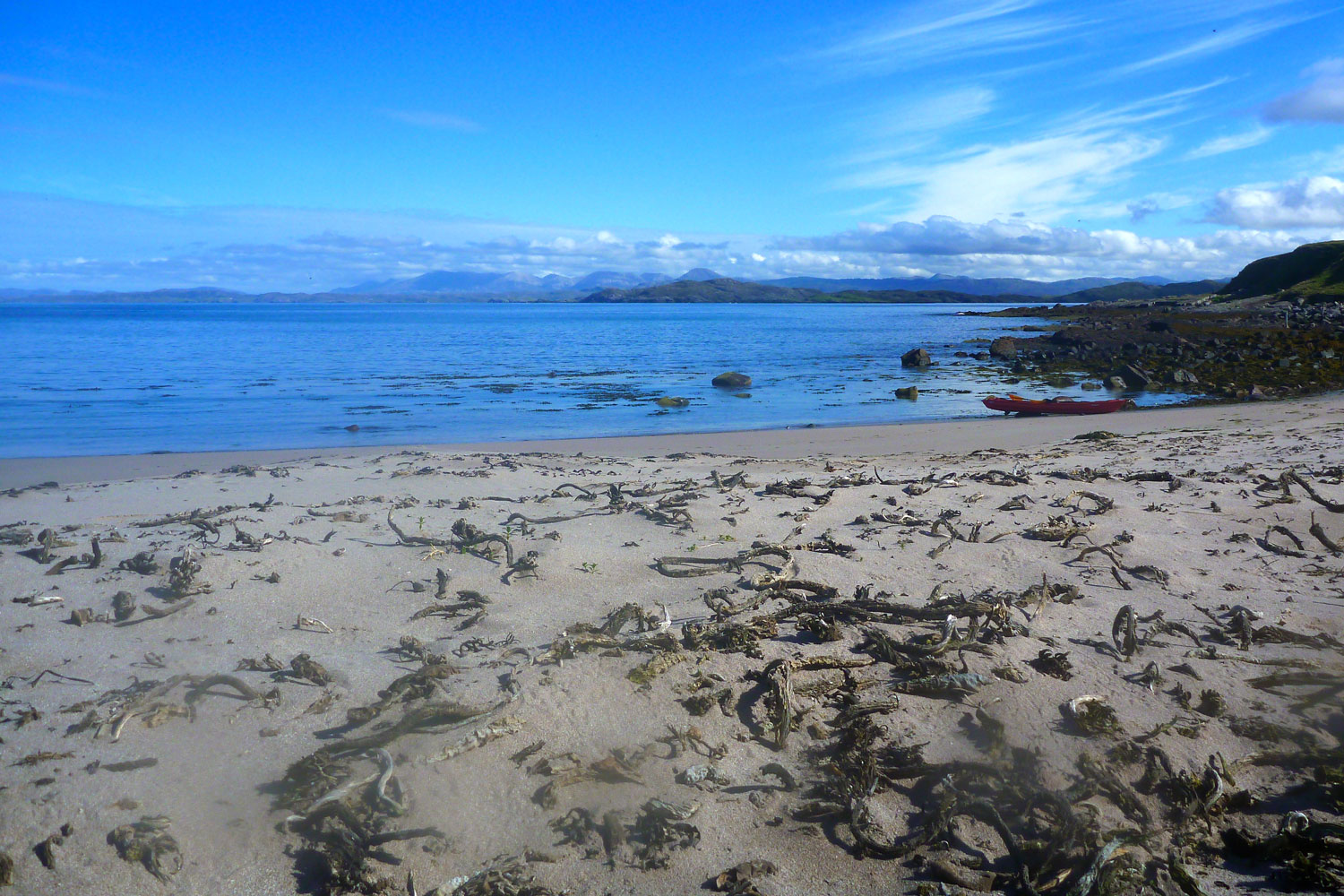
From Culkein beach there was a clear view right across western Sutherland to the quartzite mountains of Arkle, Foinaven, and the sea cliffs ending at Cape Wrath.
I thought about crossing the bay directly via the Eilean Chrona for Oldany Island channel. But it was a Spring tide going out so the flow may have been in our face by the time we reached the channel. Why wear yourself out on openish water? It would have added another 8 miles, ending with a rocky run back to the Clash of Nessies, just to explore a small area, and who knows what the weather might be doing by then.

So we headed back to Nessie beach, letting the swell you so often notice in these north-oriented bays, lift the boat as it rolled inshore to crash against the rocks. Directly ahead was Quinaig mountain (left). I’ve said it before: it’s one of the best day’s hill walks here in the Assynt.
I’d long wanted to poke around the scattered skerries and islets between Oldany Island and Drumbeg. We drove up the Drumbeg road, where one time a mate and I had staggered against a gale, looking for the car after slackrafting the Lewisian barrens. Soon enough a small turn off led north to a ruined jetty at tiny Culkein Drumbeg.
Coming north, as soon as you get on the WMR you begin to see a different ecology. Hard to pin down what exactly: less bleak and peat sodden than Coigach. Perhaps it’s due to the Lewisian gneiss bedrock, because the Torridian sandstone was scraped off like an icky marzipan crust by the Ice Age and dumped into the Minch, to wash up on the beaches of the Western Isles just in time for Castaway. More birds dash about, the flora’s subtly different with a few more pockets of old-growth trees which have been picked clean or long blown away on Coigach. Perhaps the Stoer headland protects Oldany a bit, but it feels more like Plockton than the blustery northwest.
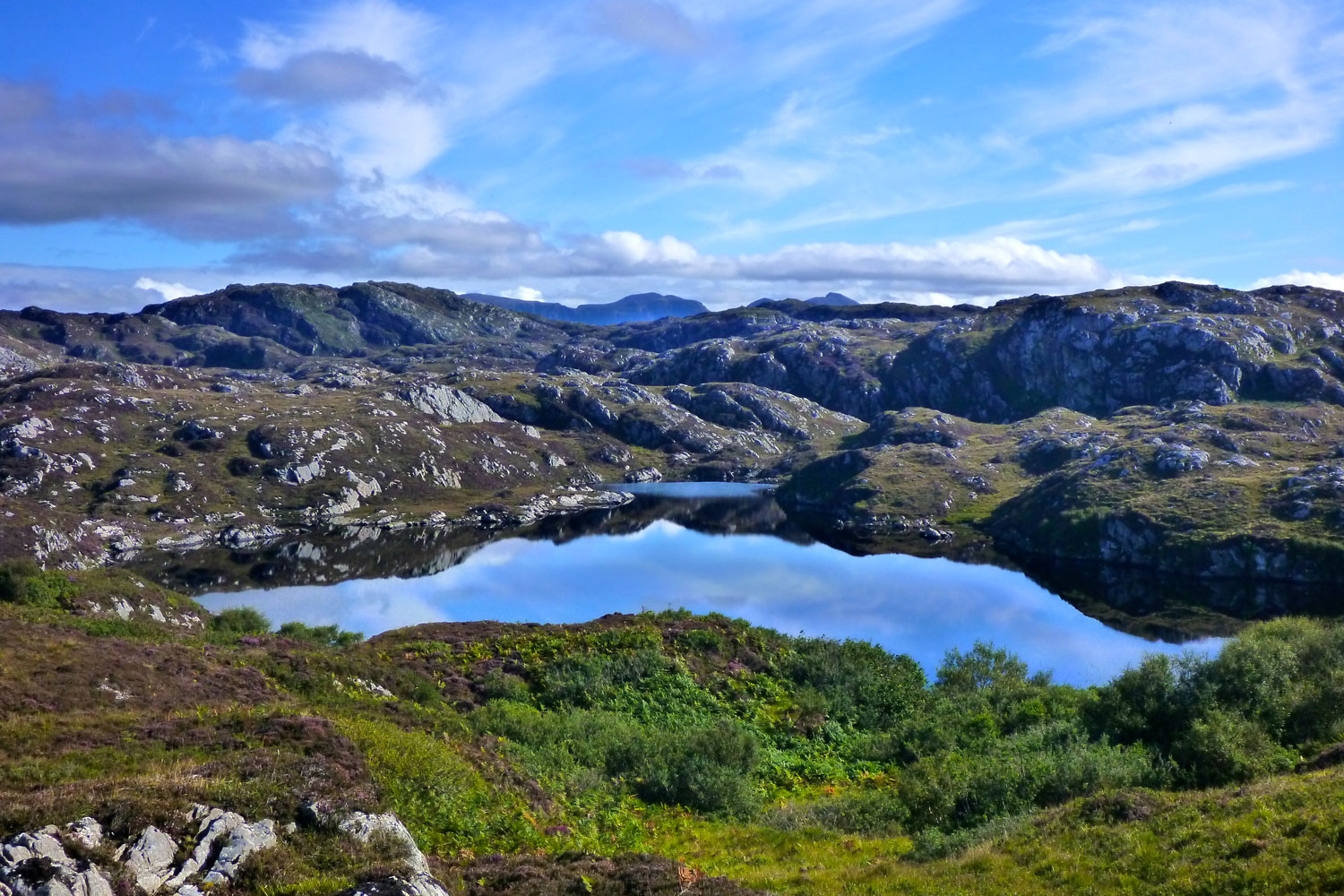

We set off for the hidden isthmus beach somewhere out here, scattering more seals as we went. Not bothering with the GPS to record moving averages, I’ve recently finally found a handy way to mount an easy-to-read compass on the Seawave, tucking it under the deck bar mount tabs. It was already proving handy to follow the NW bearing suggested by the map, out via the islets to the secret beach.

As we approached the sands we startled some hardy and doubtless Nordic skinny-dippers with their parked up Sevy Sirocco. Once beached, we politely took off in the other direction until they had regained their modesty. Soon a couple of hardshellers rocked up too – kayak rush hour on Oldany Island beach. Perhaps it’s not such a secret after all.
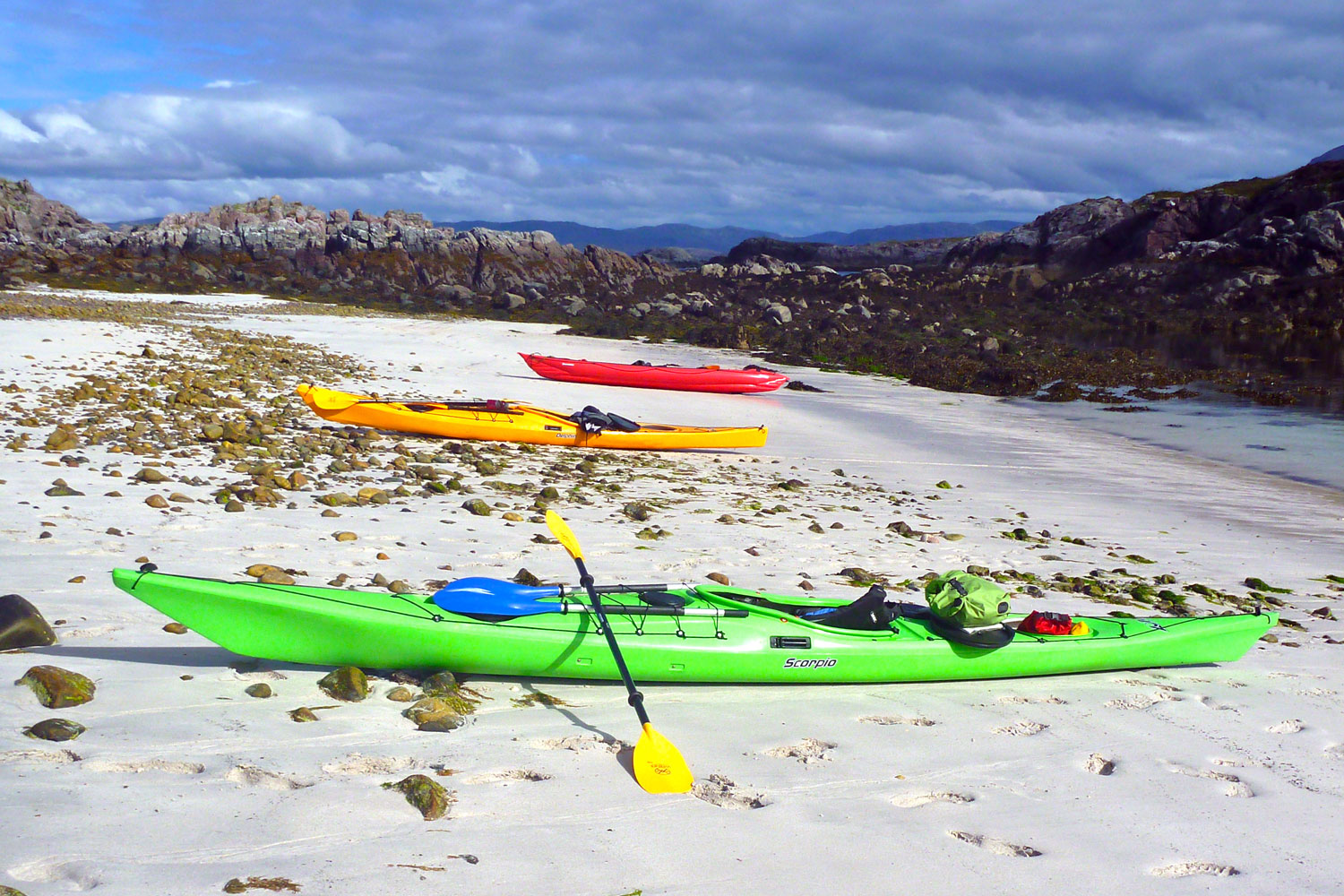
A small bothy sits perched on the spit of grass which separates the two beaches. Hardshell man told me it was a private dwelling once rented to a local doctor by the Edinburgh owners, and even had a phone line installed in case someone’s baby was born early. It was another detailed ownership report the like of which you won’t find online.
Our busy beach made an altogether lovely prospect of sand, grass and the azure sea beyond, abob with skerries and distant peaks. Plus kayaks in red, blue, green and mango.


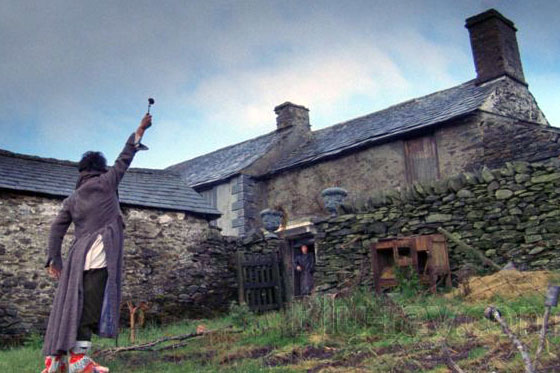
Back afloat, we took the long way back to the jetty, nipping round to the south to check out where the channel went. That could be a fun run at the right stage of a big ebbing tide.
In the car, we carried on clockwise around the coastal road. Even more than the WMR, this Drumbeg road is hardly level for a moment and would be a good work out on a pushbike. Back on the main road, in Unapool we stopped off for a brew at the Rock Stop Cafe. A retired couple there were trying to track down the rude Withnailian cottage they’d honeymooned at no less than half a century ago. They’d not been up to the northwest in 50 years and Rientraid, overlooking the Kylesku bridge, had rung a bell. We told them about The Kerracher Man book which was set nearby, but about a decade later.
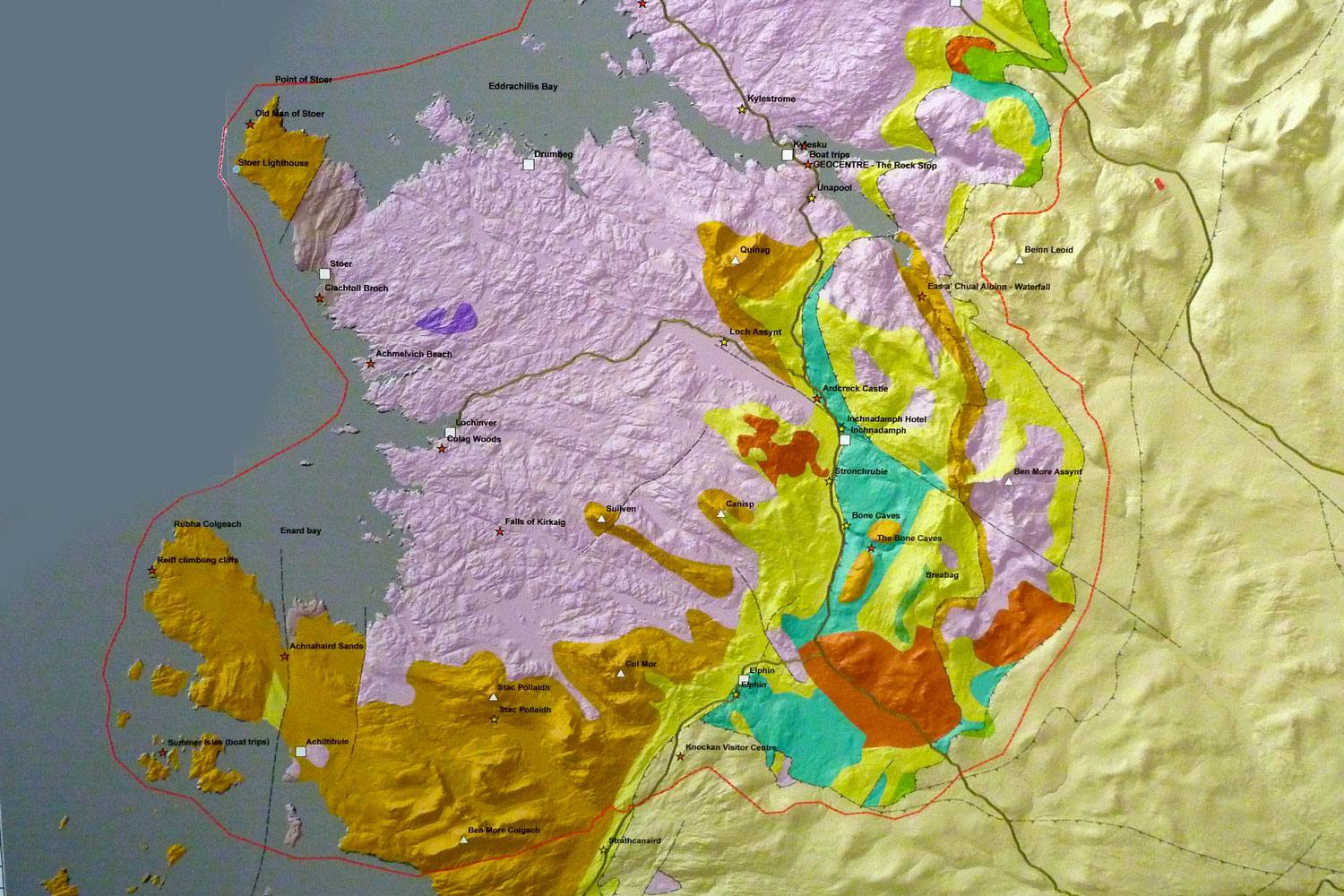
In the cafe there was Rocky Road in the cake cabinet and a geology map on the wall. Pink is your 3 billion-year-old under-icing of Lewisian gneiss; the orange is a creamy overlay of Torridian sandstone. Interestingly, the map showed Horse Island as the only Summer made of gneiss. Who’d have known? High time then to get your schist together and watch a geology lesson.

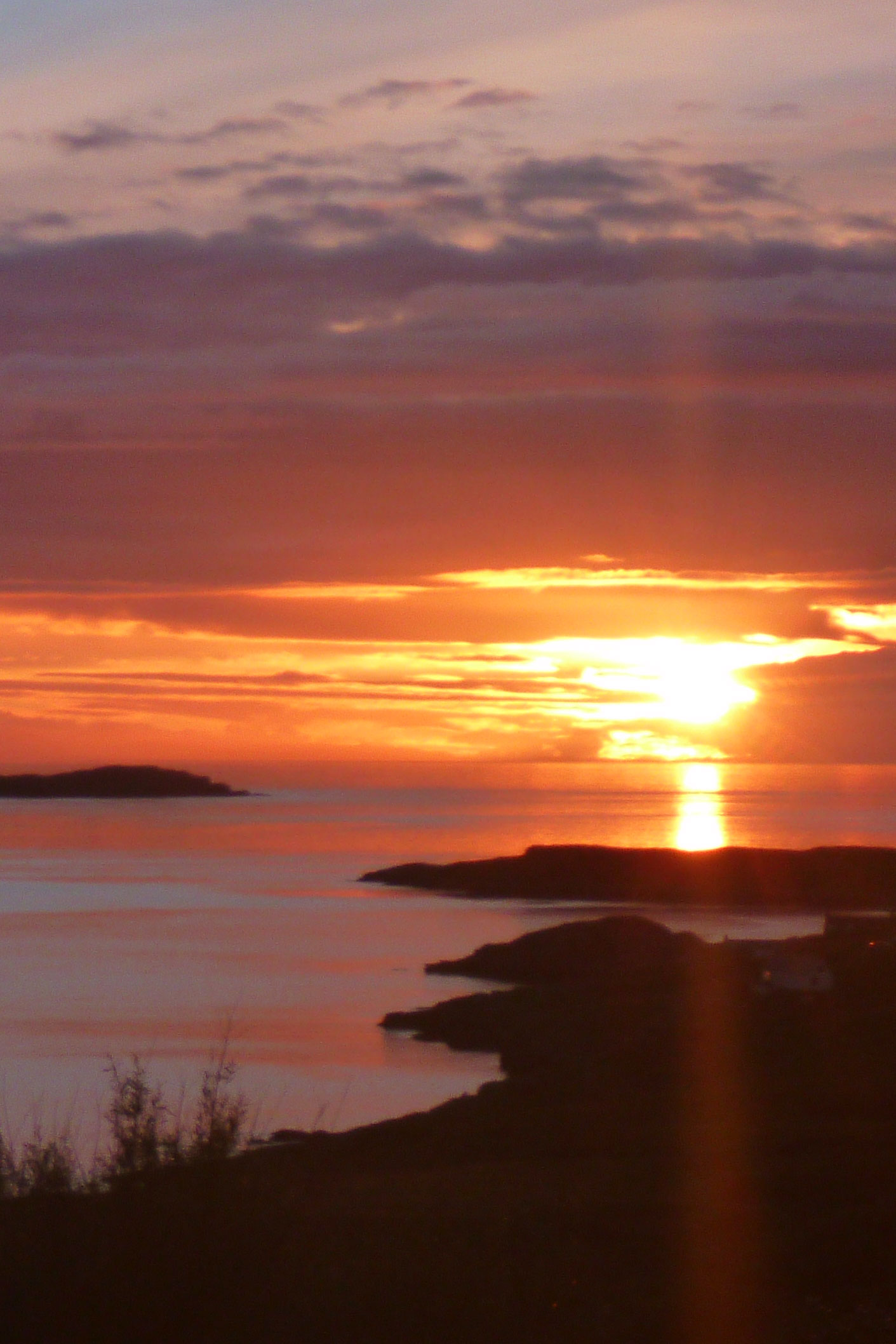
We’ve had some good here sunsets lately and even a green boreal glow a couple of weeks back. The other night the stormy orange clouds reminded me of the cover of Argonauts of the Western Isles – a great title for a lovely memoir by Robin Lloyd-Jones about sea kayaking on the west coast.
I’ve only just realised it’s a take on Brondo Malinowski’s seminal 1922 Argonauts of the Western Pacific which, unless I’m very much wiki-mistaken ‘redefined the ethnographic genre’.
Actually now I see the cover, it’s nothing like my photo, it’s much worse, though might have worked without that tilted horizon. But don’t let that put you off if you’ve not read it. It’s a wonderful tale that covers years of paddling up here, from post-war bathtubs and broomsticks to the start of the sea kayaking boom.

I’ve had a chance to do a few day trips in the Seawave, including trying it out as a tandem boat.
The main view west from our place is over to Glas-leac Mor, one of the peripheral Summer Isles, with a corresponding Glas-leac Beag nearly three miles further out and less than a mile from Priest Island.
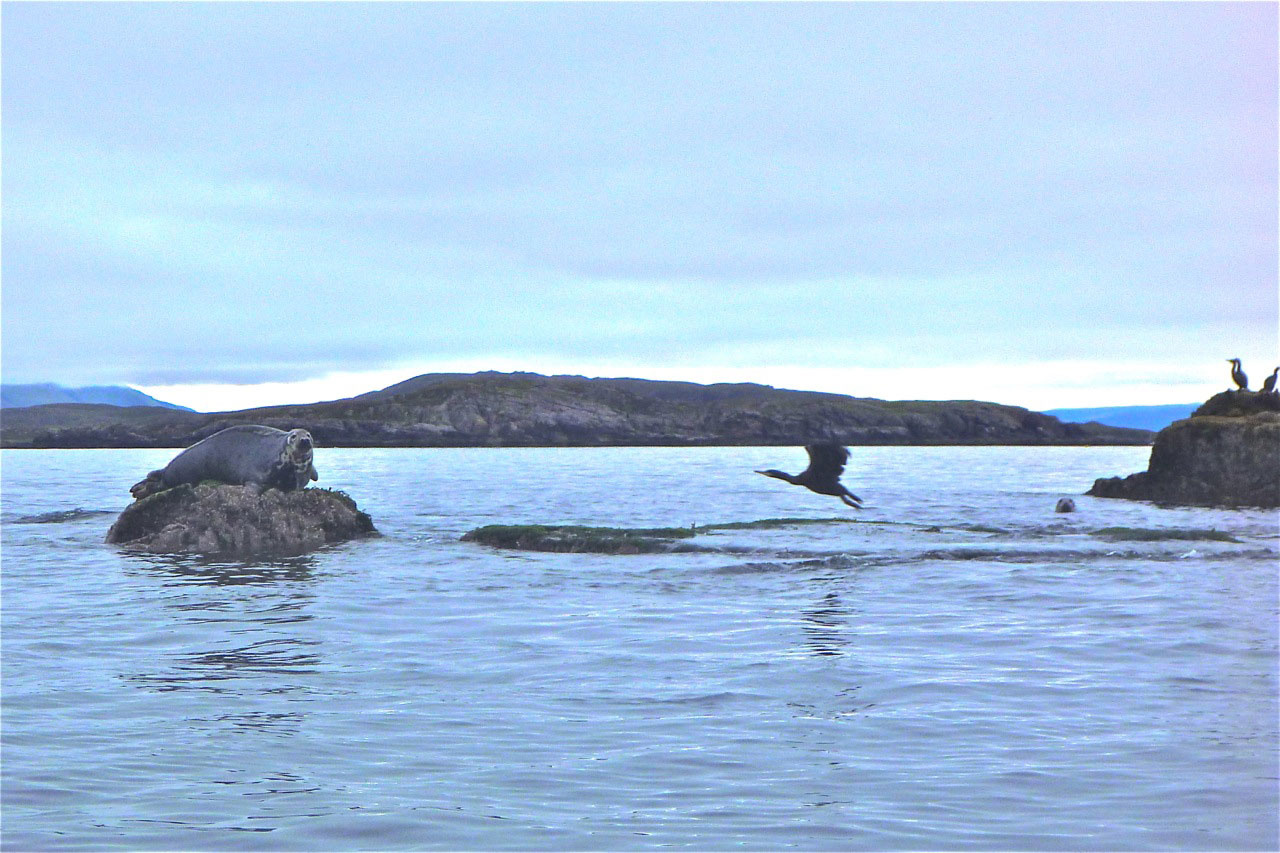
The day came round to loop the loop on Glas-leac Mor and maybe even carry on around the peninsula to Achnahaird. That idea was rained upon when the promised sunny skies turned out to be heavily overcast. Soon out of Old Dornie harbour The Call of the Bladder insisted I interrupt some basking seals on the unnamed skerry (left) close to Glas’s southern tip. Halfway down the east side I noticed a big stony beach, the only way of getting onto the island. There’s a lochan on Glas too, so it could be a good hideout.

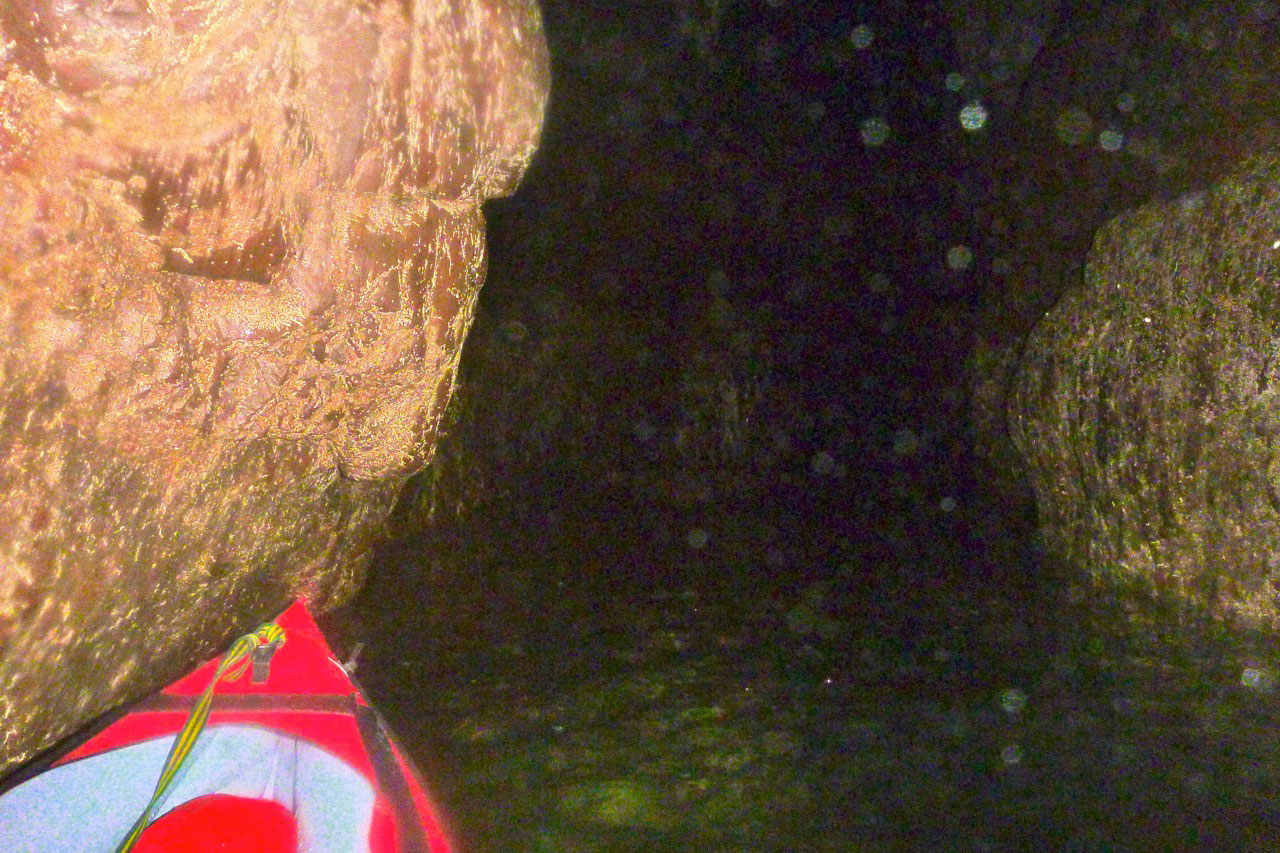
On the Minch side of these islands I always feel exposed on the swell that feels bigger than anything I can do with a paddle. It got a bit clapotty-choppy near the top of the island as I made a beeline north for Mullagrach. I was looking for a new cave I recently heard about and sure enough, north of the well-known arch an unnoticed inlet led under the island (right). (This was at the low end of the tide.)
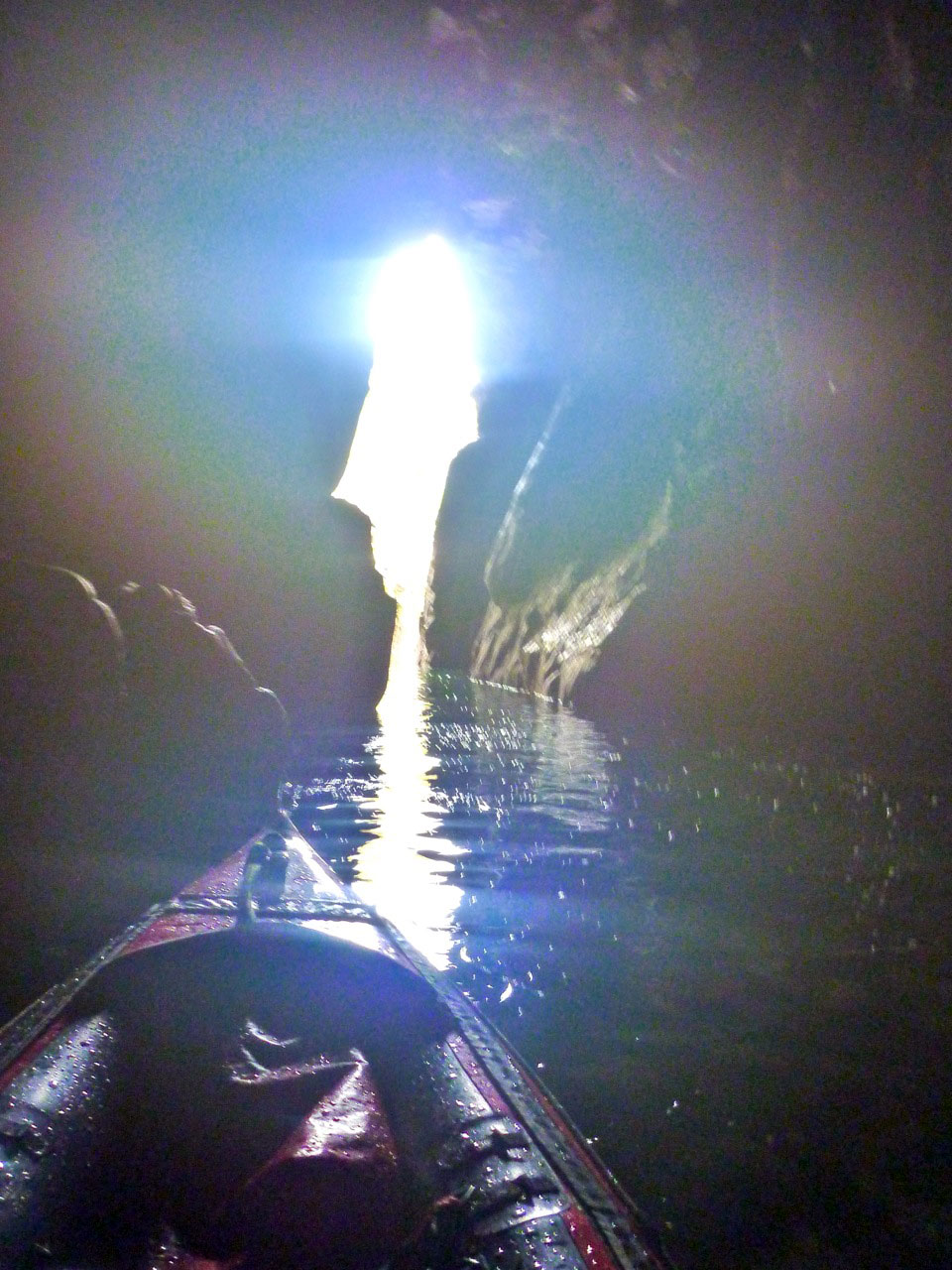
The GPS shows a rather unlikely subterranean track; I think it’s more of a southerly fault that’s part of the main arch and its adjacent cave. It was pitch black before I got to the end of the geo, but with a flash photo and from the sound of the slap-slopping swell, it felt like another 10-20 feet. But it was getting less than paddle wide and I didn’t fancy getting jammed on some old storm-mangled shopping trolley or stolen moped, in a bid to find out.

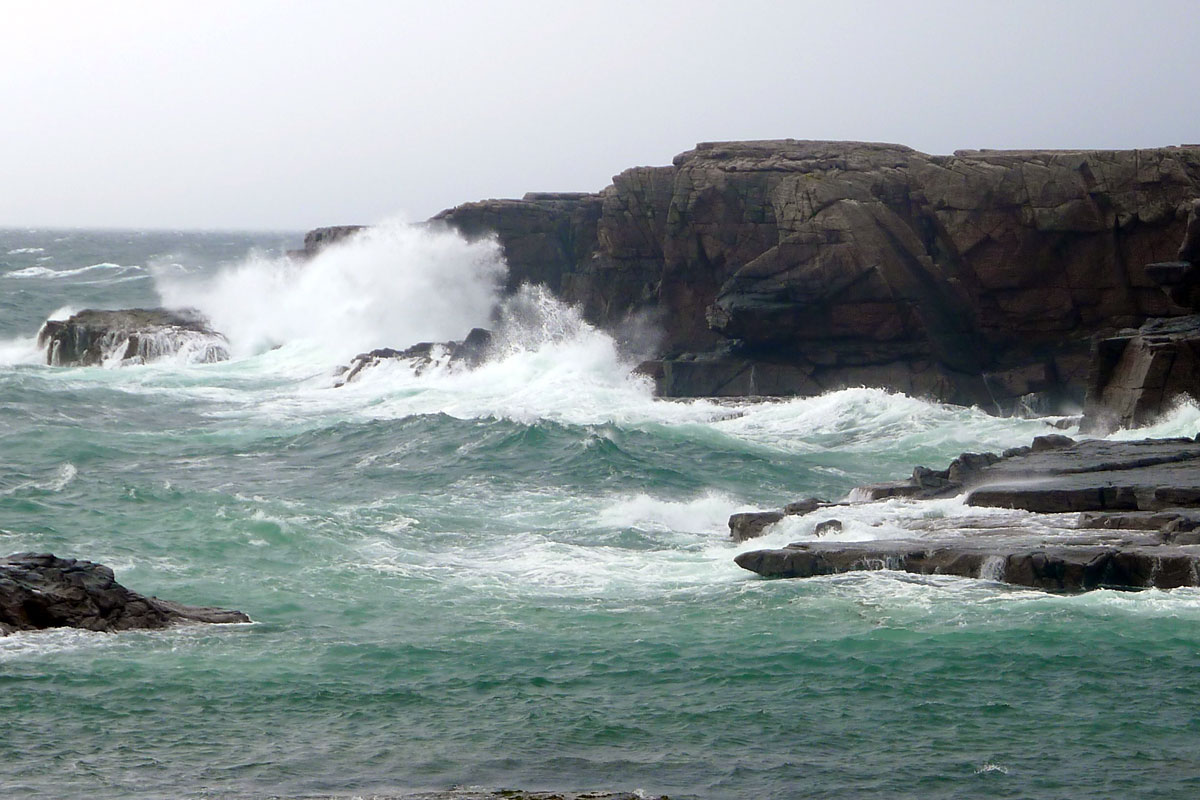
According to the GPS, I had been cruising at around 3.5mph but I wasn’t feeling that fast as I’ve not done much paddling exercise. So round the headland to Achnahaird felt a bit much. Instead, I settled on a short hop further north to ‘Reiff Cove’, as I call it, a nice sandy bay a mile or so above Reiff Bay where the houses are. As I got near, the swell was slapping back off the cliffs. This is a great place to watch crashing waves when there’s a good westerly on (right).

On the beach, I found a superb giant salami of polystyrene – former use unknown but for me a very handy boat perch and lunchtime bottom warmer.
Up on the cliffs I checked out the locked bothy which looked like it’d had a new roof, all the while wishing I’d dragged my boat a bit further up the beach. I do this every time.

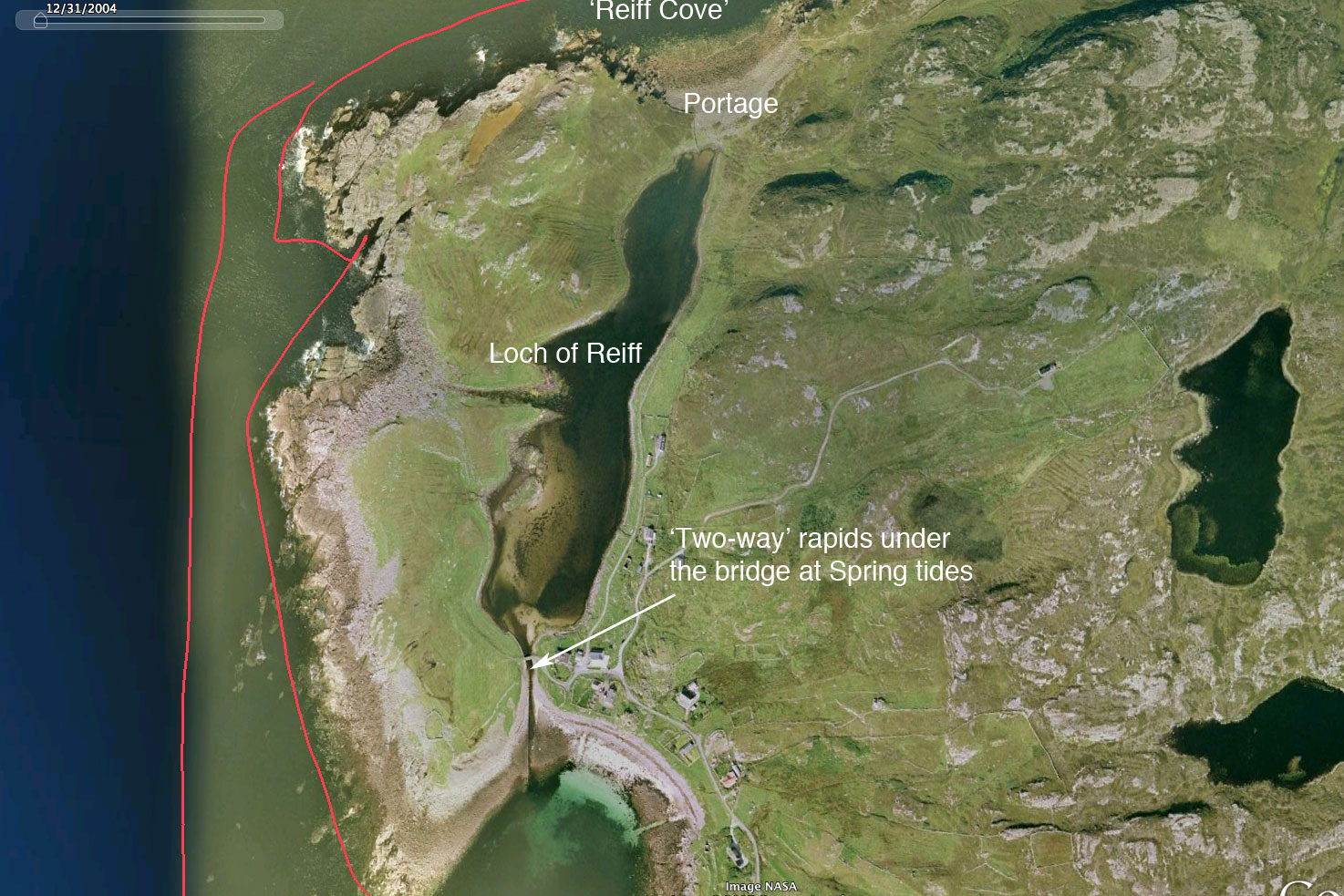
Up there I also clocked what I later realised was the back end of Loch of Reiff which fills and drains on the highest tides, making a fun ‘mini-rapid’ along the build-up canal under the bridge where a small quay used to be. If the timing had been right I could have done the short portage into the top of the loch (left) and got flushed out the south end into Reiff Bay. One for next time when the timing’s right, maybe even in a packraft. From Reiff Bay it was a couple of miles of coast hopping back down to Old Dornie, with just enough bars on the phone to call in the taxi.


I’ve hooked up some lightweight packraft thigh braces from the Packraft Store. Simple 50mm straps with a ‘delta strap’ to additionally attach to the side to add instant tension when you brace or roll a packraft.
I used a couple of hull top D-rings to clip them on. but they don’t sit as well as the heavy SoT straps I used on the previous Grabner Amigo. Mostly it’s because I had to glue four D-rings on the floor of the otherwise bare Amigo, whereas on the Seawave the mounts are higher so the straps don’t hook over the knees so well. I suppose I ought to get round to gluing floor D-rings but it’s a big job to do well. For the moment the ‘delta straps’ can be clip together like a sternum strap on a backpack (above), and hold the straps in place. ‘Warning – Entanglement hazard!’ I hear you cry, and quite right too. If it gets that gnarly I’ll unclip, pronto. And probably inflate my pfd, too.

Another fine day, another fine paddle. As usual I plan big but then snap out of it and think: why end up hauling ass all day when we can just have a sticky beak in some new corner of the locality.
Ardmair harbour, home of the famous Ardmair weather station, often looks like such a place, a striking bay just over the hill from Ullapool. One often sees tourists stopping here to admire it’s perfection. With a beach made of distinctive flat stones, I bet I am not the first person to say this would be a great location for a stone skimming championship.


Two-up, we set off to round Isle Martin clockwise. The winds were forecast to be in single figures, but coming round the west end of the island I could see the line of the north-easterly F4 blowing hard out of the Strath Canaird valley onto us.
But with barely a mile of fetch to gather up, the chop was only a foot high, so we tucked in and hammered along until we were close enough under the 1000-foot cone of Beannan Beaga to get a bit less chop along the northern shore. We bounced along that as tight in as we could, setting the seals off until we reached the stony sweep of Camas Mor beach.

Up in the warm grass for a midge free snack, I went for a wander and soon realised we were right below the jumbled rubble remains of Dun Canna Iron Age fort from about 0BC. You can see it would have made an excellent defensive position with good resources all around and over in the smaller Camas Beag (every Mor – ‘big’ – has its adjacent Beag – ‘small’ – hereabouts) bay to the north, what looked like a tidal fish trap (left). Sorry to say the fort’s rubble was not quite compelling enough to be honoured with a photo.

A couple walked by, looking for driftwood with which to make ornamental clocks. And I was later told that gems and who knows – maybe even the Lost Hoard of Brisingamen – lay among the stones of Camas Mor.
From the headland looking west towards the Summers, the ruffled sea and scrubbed, autumnal sky were as blue as John Lee Hooker with a hangover and a tax bill.

Time to ship the heck out. My plan was to edge south enjoying the lee, then poke the boat right up the Strath Canaird estuary until the winds, current and outgoing tide suffocated our spirit of exploration. Reading our GPS track that now seems a lot less further than it felt, but was enough to uncover a new habitat of seaweed dangling over mussel beds and dazzling highland villas once belonging to cider magnates, according to the knowledgeable driftwood couple. It’s odd how everyone around here knows which well-to-do-family owned but then sold what bit of land or island to whom.

Of course I’d long ago clocked Strath Canaird as a potential river paddle excursion, probably in a packraft from Strathcanaird hamlet on the A835. Now I’ve seen its lower end that 4-mile paddle looks a bit more intriguing.
Once we’d had enough battling the elements, we let them flip the Seawave round and scooted back to Ardmair Bay for a final nose around the moored up boats by the campsite and then out round the point and back to Ardmair Beach.

Two up or solo, the Seawave’s speed seems to be about 3.5–4mph, with the odd freak burst up to 5mph. That doesn’t seem to be much different to the Grabner I replaced it with, but it’s still an easier boat to use: PRVs all-round means it needs a quick ten jabs with the K-Pump Mini after a few days off in the outdoors, but never needs a manometer check. Masses of D-rings compared to the Grabner’s zero. The optional deck, the OE skeg and two feet of extra space.
And though the Amigo is long discontinued, the Seawave costs less. The nearest Grabner now would be the ruddered Grabner H2 but its over half a metre shorter; the H3 is half a metre longer but we’re still talking between €1800-2100 for well-made but rather bare boats. My Seawave with extra bits came in at €1000 from Czecho so to paraphrase the bloke from Jaws: ‘We’re ain’t gonna need a better boat’.
Well, not for a while.

I had a visit from former Olympic slalom trainer and canoeist Jim the other day. He bought a Solar 410C after browsing IK&P and declares it one of his favourite boats. I ran the previous version Sunny for years before I felt I’d squeezed all the potential from it and started changing IKs every year. The Sunny was a tough do-it-all boat and the 410 is the same, but 20cm longer. It was more space but also the greater rigidity of higher-pressure boats I was after.

We were hoping to go out for splish-splosh but for the last few days a cold offshore F4-5 northerly has been spinning off a North Atlantic High and bearing down on the Summers so games are off. Right now the chilling drizzle is nearly horizontal as it blows past the window. Oh hold on, it’s gone sunny now. Is it autumn already?

The 3-seat, 410cm Solar went for as little as £550 in the UK or up to £100 less from Boatpark in Czech when on special. Both do free delivery anywhere. The Seawave costs about half as much again.
The 410 is a foot shorter than my Seawave, an inch wider maybe, less slim and pointy at the ends and runs 0.2 bar/3 psi compared to my Seawave’s 0.25 (I run my Seawave sides at 0.33/4.8psi). The old style Nitrilon is thicker so the weight’s the same at 17kg, maybe less with one seat. The Seawave has a bit of a more pronounced keel rib along the middle too, but neither struggle to track without a skeg. It’s just that a skeg enables you to spend less time and effort correcting and so you can power on. Handy at sea, less essential in flowing rivers.

Jim showed me an interesting mod to make his skeg into a rudder to enable paddling into steady winds. By simply not fitting the back of the skeg into the sleeve, he’s able to pivot it off the front and modify the angle with a bit of string attached to the back of his seat (right). No probs with the skeg sliding out and if it does on a rock, chances are you’ll be close to shore and the boat won’t exactly become suddenly uncontrollable anyway.

I usually deal with quartering – ’10 or 2 o’clock’ – headwinds by just pulling harder on one arm, leaning into the wind or repositioning the paddle in my hands longer on the leeward side. I rather lost faith in rudders on the Incept in Australia when it was maddeningly ineffective in controlling the boat in strong backwinds, although I fitted one on the Seawave in the end. But without all the foot control faffery this could be a simple, non-permanent mod to any Gumboat which runs the robust, slip-in black skeg. And unlike my Incept rudder, it won’t come out of the water and be ineffective on steep backwaves.
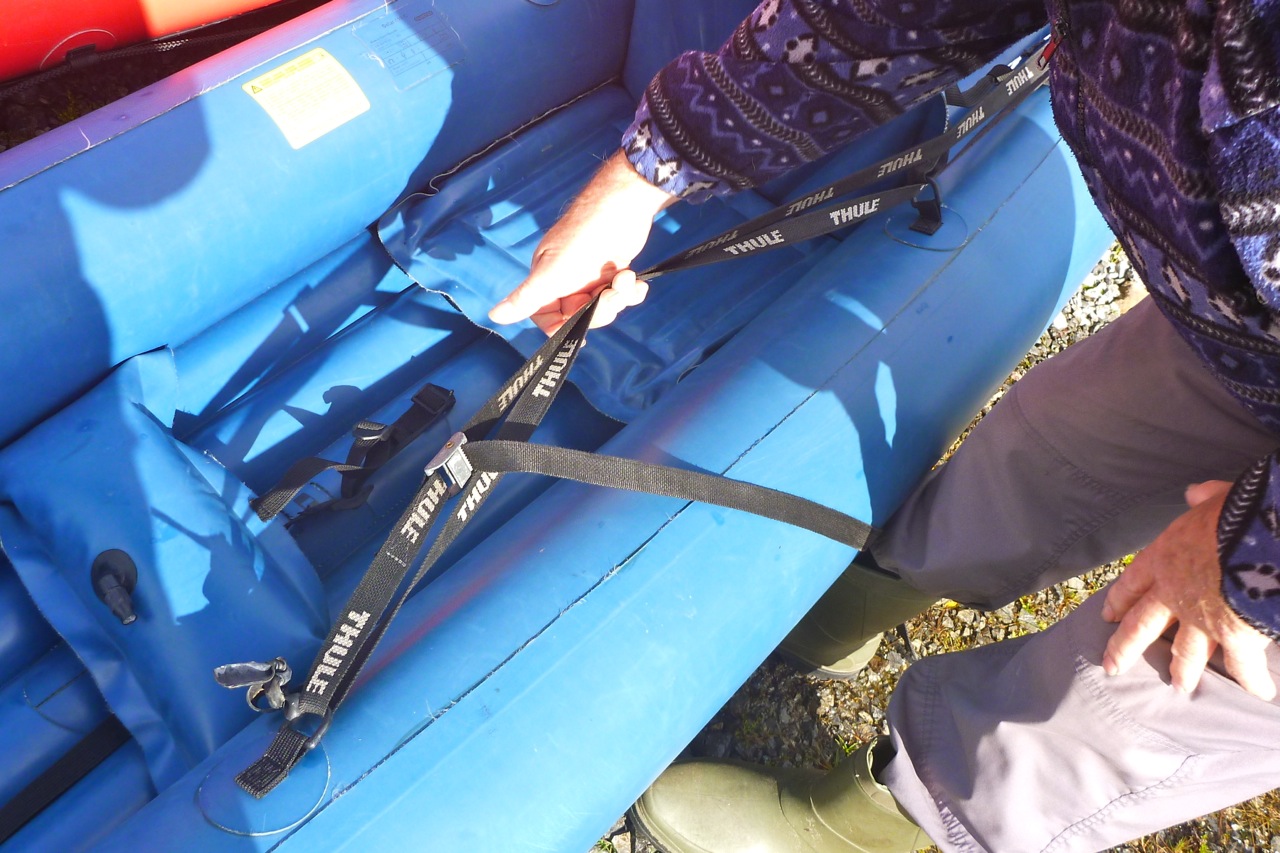
He also showed me a way of simply rigging up his roof rack tie-downs into thin knee braces (left). Like me, Jim agrees they’re a great benefit to paddling efficiency in an otherwise unbraced IK. I have some Packrafting Store ones on the Seawave – a lot lighter than my old SoT braces.
And he also said he’s successfully tried an idea I thought of in my Sunny days, but never tried: hull rigidity rods to make the long but low-pressure boat flex less. Either two on the sides which requires gluing fixtures to work best, or as he’s found, simply putting a thick broomstick or whatever under the seat in the middle of the boat


In an occasional series here on IK&P, we trawl through the tangled archives of celluloid to seek out often over-looked packrafting action from the silver screen.
Our first candidate: Stanley Kramer’s 1959 rendition of Nevil Shute’s post-apocalyptic drama On The Beach (1957), starring Gregory Peck and Ava Gardner (left and right) plus a miscast and already twitchy Anthony Perkins warming up for Psycho in a year’s time.
Synopsis
Someone in a Cold War bunker over-reacted and the world has turned dayglo (this actually nearly happened in 1983). But only the northern hemisphere has been obliterated. Australia remains uncontaminated but commodities are in short supply and the country is irrevocably turning toxic as wind currents spread fall-out right across the planet.
Although the film and the book shared an implausible ‘Keep Calm and Carry On [till the End]’ mood, for it’s time On The Beach was unusual in that the dangers of misused nuclear power were for once not ‘Attack-Of-The-Giant-Ants’ allegorical, but chillingly in-your-face realistic.

Packrafting Scene
American Navy sub commander Peck has taken refuge in Melbourne, but is asked to cross the Pacific in his nuclear-powered vessel to see if Arctic radiation levels might be dropping, and also to look into grabled morse signals emanating from San Diego. On the left a volunteer in a radiation suit and scuba tanks paddles ashore to investigate the radio transmissions.

Our man’s heavy get-up sees his navy issue packraft close to swamping. Continuity spotters will further observe that as he climbs the mooring ladder (left) he carelessly fails to tether his packraft, jeopardising his return to the sub even before the deadly fall-out permeates through his PVC suit.

Denouement
Northern hemisphere radiation remains deadly – no one is alive. The San Diego signals turn out to be a tangled sun shade flapping over a morse keying board. Gregor returns to Melbourne and accedes to Ava Gardner’s charms (left – unlike in the book but we’ll let him off). Doing so cures her alcoholism and ‘wicked ways’ but with his loyal crew he heads back ‘home’ to the toxic US anyway. The antipodean remnant of humankind succumbs and the film ends with a Salvation Army banner flapping in now-deserted uptown Melbourne: ‘It’s Not Too Late… Brother’.
There’s more on packrafts here.

New for 2015 is Grabner’s Mega, a 5-metre, semi decked, one- or two-seater which takes an optional rudder and all the usual bits which don’t come with a Grabner – even a motor.
Beam is a rather girthy 90cm or 35″ and at 23kg, the weight makes it a bit heavy for solo transportation. Your Mega will run 0.3 bar or 4.3psi but doesn’t resort to effete PRVs like those other IKs. The inflatable end-decks seems a rather wasteful use of Grabner’s Hypalon-like EDPM fabric, but may help constrain the form. The price is a paddle-wilting €2700.

A less pricey candidate might be the 4-metre Tramper which, is selling in the UK for €1650. At 90cm like the Mega, it seems a bit over-wide for swift touring – “appreciated by children and seniors alike” the blurb admits. The similarly long Holiday 2 is just 75cm wide, 1.5kg heavier and I can vouch is plenty stable enough at sea. Like all Grabners, the Tramper runs a very high 4.3psi or 3 bar. My old Amigo was as stiff as a brick.

It’s 2020 and things have moved on. See also:
Anfibio Nano RTC
Anfibio Alpha XC ultralight
Longshore International EX280 double
MRS Nomad S1 kayakraft
The range of packrafts has slowly expanded since I bought my first Alpacka Llama in 2010 and Alpacka rafts themselves have changed a lot in that time. But here in the UK people are still slow to see the benefits of these lightweight portable boats.
Much of this reticence must be due to the price of these niche-interest boats which, at a glance look not much different from what I call Slackrafts: disposably cheap vinyl beach toys. Another reason might be that packrafts appeal more to outdoorsy types looking for a new way to enjoy the wilderness or countryside, but with no interest in acquiring the technical skills far less the storage and transport issues of hardshells. They won’t come across these boats very often but as this test clearly proved, anyone can hop into a packraft, set off down river in a straight line and tackle an Environmental Agency Grade III canoe chute. The testers all ‘got it’ and by the end some were already cooking up packrafting adventures.

We’re comparing a prototype Aire BAKraft as well as the new Supai Matkat, both from the US; the Russian-made, German-branded Nortik Trekraft, and the Micro Rafting System (MRS) Microraft from China.
The unusual Aire calls itself a hybrid IK-packraft, the Supai is an ultralight ‘crossraft’ intended for flatwater use. The other two more closely resemble Alpackas in current or former iterations. My current 2014 Yak made a fifth boat on our test, one which I at least could compare against the others.

These four boats were lent to us by what is now called the Anfibio Packrafting Store in Germany which sells, rents and now makes under its own Anfibio brand, the biggest range of packrafts and packrafting gear in Europe. Sven at the Packrafting Store helped clarify or correct technical aspects in this review but the opinions, observations and most measurements are our own. Some of the more exciting photos are also from the Packrafting Store.
We asked NRS to participate: they didn’t answer. At the time Feathercraft’s packrafts were another option but Feathercraft is no more.
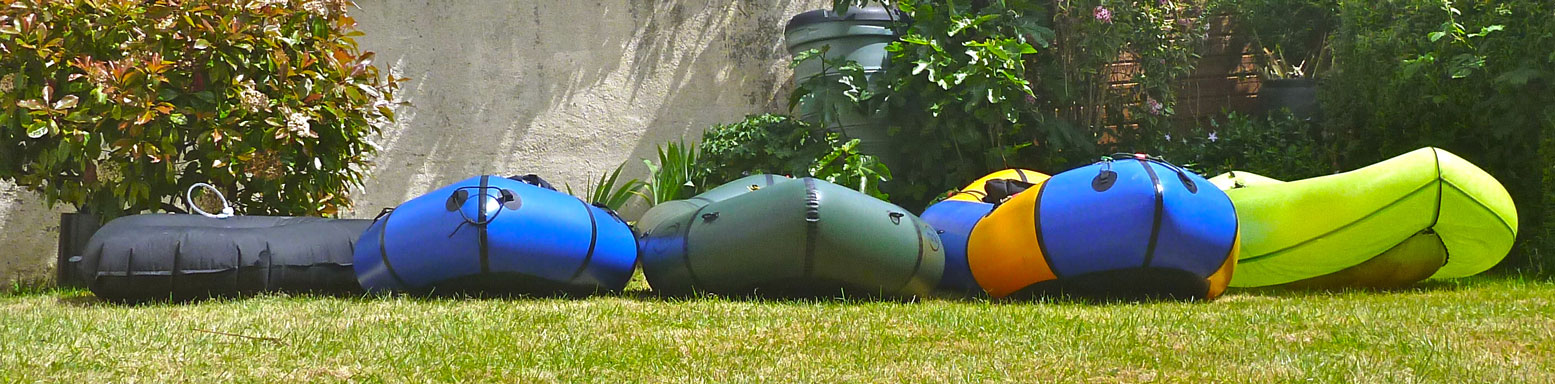
For this group test it would have been great to set off across the hills of Wales or Scotland, deploy the boats and then follow a river, hop out, walk some more, set up camp and swap notes.
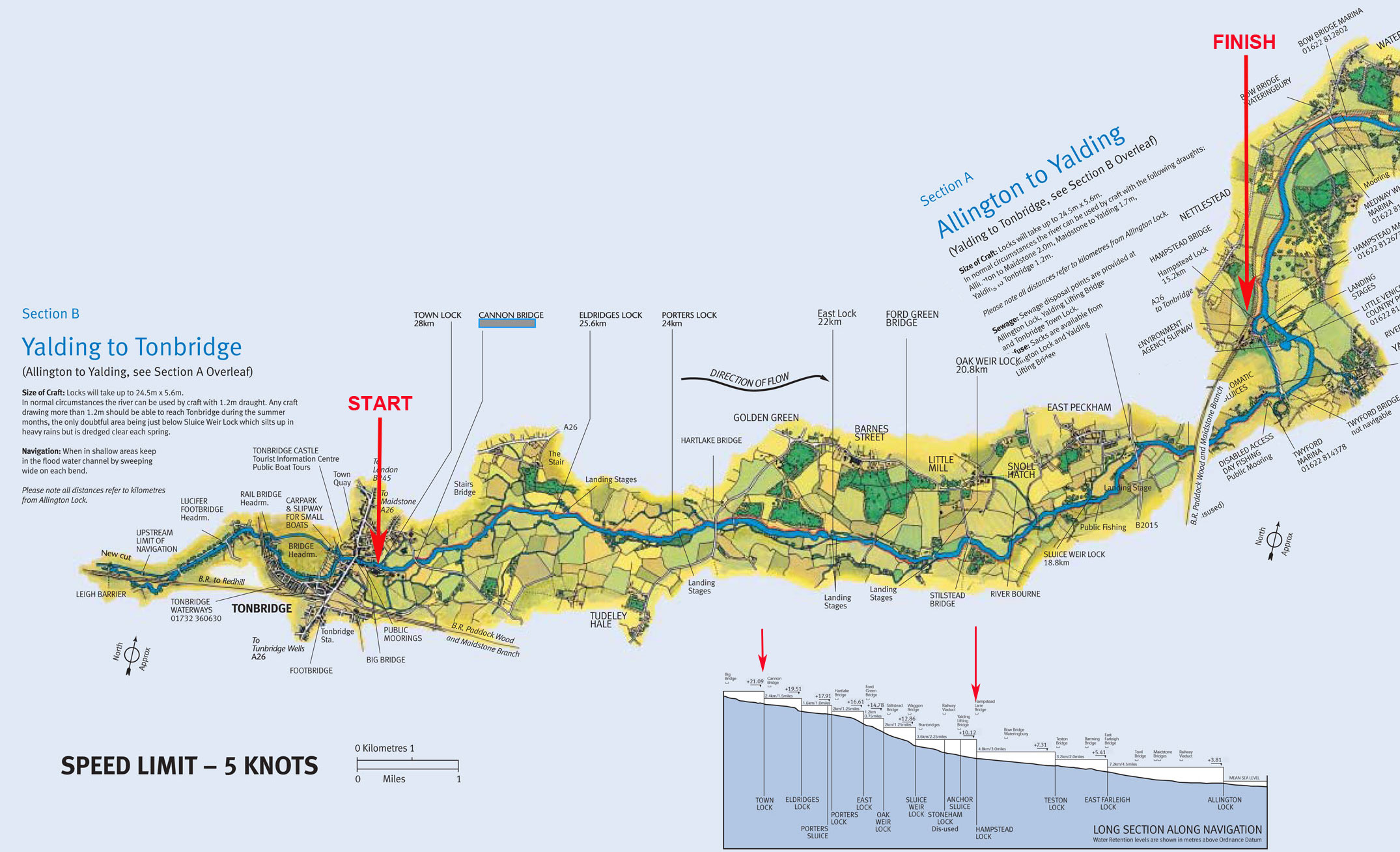
The reality of combining good weather and four other people with the free time to help do all this was slim. So we settled on an eight-mile day trip down the Medway River in Kent (above): me and four testers who’d all paddled (some with trousers rolled up) but had never packrafted. At each lock and chute we swapped boats, so everyone tried each raft at least once.

Me – Height 1.83m; weight 93kg
Experience: Into IKs and packrafts for day trips and touring. On my third Alpacka.
Bob – 1.78m; 85kg
Lilo incident, Margate 1965.
Lea River canoe lessons, Harlow 1980.

Hannah – 1.75m; 75kg
Much canoeing, some kayaking, love touring.
Don’t understand eddies, yet.

Lois – 1.62; 63kg
Dicking about on the Thames in Gumotex IKs and a Dagger. Rely on enthusiasm rather than skill.

Robin – 1.78m; 85kg
Scouts canoeing, NZ white water, Colorado kayaking, various inflatable trips, usually with tides.
How the packrafts were weighed and measured
Weighing was done using the classic Salter 1004 SSDR digital kitchen scales. They come with a classy brushed steel finish and still rate at 4 stars on amazon. They were checked and registered 500ml of water as weighing 500g.

Each boat was weighed exactly as it came out of the box, and then weighed again as it was actually paddled, without air bags, repair kits or straps (where included). It was then weighed again before going back in the box. All dimensions were also taken twice, the second time using stakes to get the external measurements at the widest points (above). Internal dimensions were taken at the shortest point, usually halfway up the curved tube side. Measurements from other sources may vary; there’s a table at the bottom of each review’s page and the summary for quick comparison.
* Our exterior measurements for the Matkat were 3- to 5cm less than the Store, but 4cm longer and 1.6cm slimmer than Supai states. Unnoticed leaks during the measuring stage may have stopped us pumping the boat up to actual size.
Construction
All these packrafts are made from pliable fabrics which form airtight vessels when inflated by human power alone. That’s about 0.03 bar or 0.4psi according to the Packrafting Store’s tests and probably too low for a regular manometer to measure accurately. The BAKraft uses an in-line ‘squeeze pump’ to potentially attain 0.17bar or 2.5psi – firmer than most vinyl IKs. All the models used here except the Supai were pressure tested to an impressive 0.5 bar (7.25psi) by the Store without exploding into a blaze of TPU. As a comparison, my old Grabner ran 0.3.bar as was as stiff as a gangplank.
Hardshell-like rigidity is an inflatable boat’s goal, and while design and shape might come into it, some rafts become more rigid than others and so perform better. The best rafts use a fabric (or construction design) which becomes stiff when inflated but is pliable when folded (especially at low temperatures) as well as being durable against sharp impacts and abrasion. Among other things you could add resistance to UV rays, ready supply and ease of assembly in the factory, repairability on the trail, and a range of fabulous customer-friendly colours.
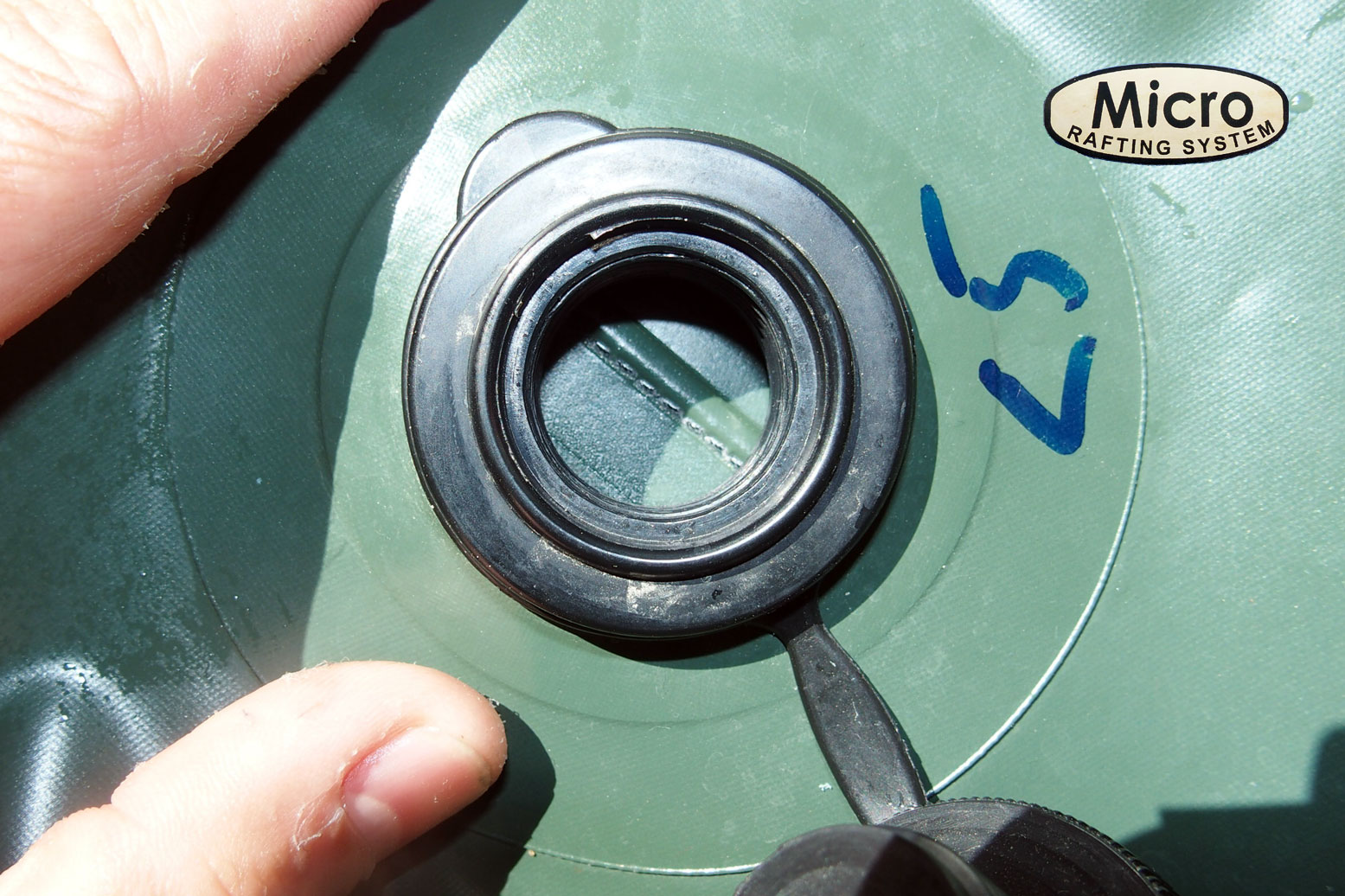
Broadly speaking the hulls of the Alpacka and MRS use ten panels of urethane (TPU) coated nylon fabric which are sewn together. Tape is then heat welded over the seams. The Alpacka fabric is only coated on the outside; the Nortik uses a similar double-coated fabric to the MRS (above; green, but not our Trekraft), but the Nortik’s seams are heat-welded with thicker tape (no sewing).
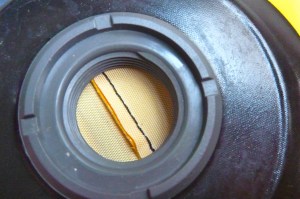
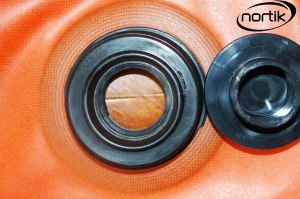
Double-coating adds weight and other technical aspects of proprietary coated fabrics vary greatly; they’re often specifically formulated for a raft manufacturer. The benefits of an inside coating are a second barrier to punctures when a light scratch to the exterior reaches down to the fabric core but doesn’t actually cut through it.

The floors on the Yak, Nortik and MRS are glued on then taped over (Nortik on the inside, the other two outside). They’re typically two or three times the denier rating (thread weight) of the hull fabric.
The Alpacka uses something called ballistic nylon which sounds cool but I’ve found is far from bulletproof. No part of an inflatable raft weighing just three kilos can be expected to be. Occasional repairs are all part of ownership, like a bicycle’s tyres. So is rinsing any grit out the boat before it works its way into the nooks and crannies. On the right click the extra large picture to have a close look under the boats and compare workmanship.

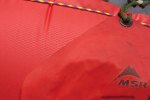
The superlight Matkat is in a class all of its own, entirely made from 75-denier ripstop polyester with a single urethane coating on the inside, the same weight (and sealing method) as an MSR water bag. The red picture below right is of another Supai we tried which you’ll see had a diamond pattern on the surface. The black Matkat we used here had a plain surface like an MSR bag. On both boats the four panels (floor, inside, top and bottom hull) are heat-welded together. It’s possible to repair these seams with a hot iron (or glue).
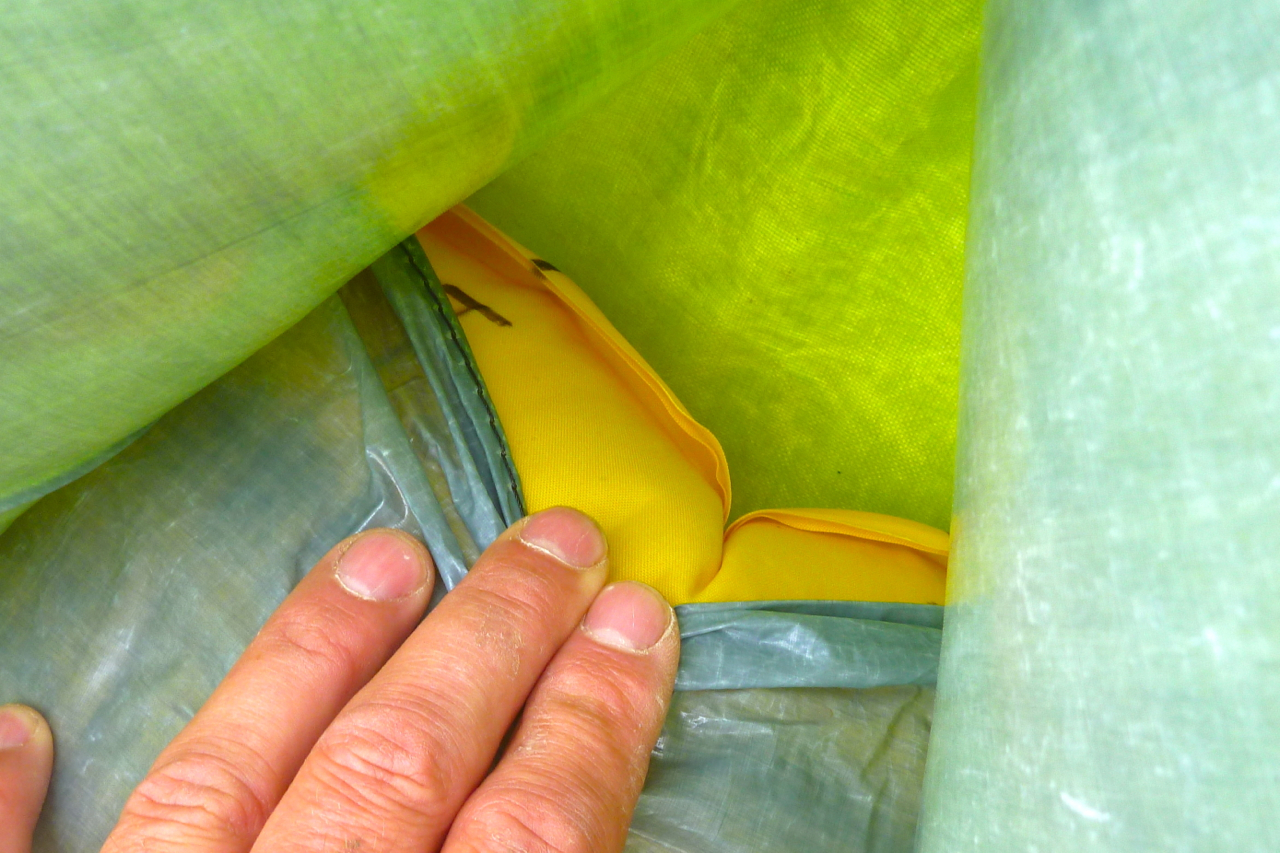
The Aire BAKraft prototype we tested used a thin and slightly stretchy urethane film ‘inner tube’ or collar supporting the hull, and a much thicker and stretch-free urethane-coated yellow nylon fabric for the I-beam floor (left). These bladders or ‘AIREcells’ as Aire calls them, are contained inside a sewn-up shell of fabric which need not be air- or watertight. If I interpreted the owner’s manual correctly then the BAKraft’s green exterior shell is made of Spectra and the grey interior of lighter-weight Dyneema fabric. You may know stretch-free Dyneema guy lines found on better tents.

The urethane bladder can be accessed for repair via long zips (left); the nylon floor can be pulled out for repair from each end. On packing or refitting care must be taken not to twist the bladders. I’ve never been a fan of it (for reasons explained later) but this AIRECell system has been used by Aire on their PVC whitewater rafts and IKs for many, many years. With minimal seams compared to a traditional packraft hull, air retention is excellent.
On all the boats seats, backrests and decks (where present) are typically made from urethane-coated nylon with seams or joins heat-welded and maybe taped.

Inflation/deflation
If you’re combining walking with navigating bodies of water – packing + rafting – you want a boat which inflates and deploys without any faffing about. In this respect the Microraft was the best of the bunch. It used the proven screw-in inflation bag (see video below) and, being a small volume boat, took about ten ‘scoops’ to fill up. The main valve cap is attached with a short plastic ring tab – no fiddly bits of string. Top off the air pressure by blowing all you got into the twist-lock valve and with practice you’re good to go in three minutes.
In the video below, from arriving at the beach to paddling away
takes about 8 minutes. Speeded up 15x. A jet passes overhead.
My Yak followed exactly the same inflation procedure, but being a higher volume boat (a little bigger than the one in the video above) took twice as many ‘air-grabs’ to fill up before topping off with lung power. Every time I do this I wonder whether my super-thin airbag will split or unravel at the seams if I scrunch too hard. I can feel the air leaking through the sides.
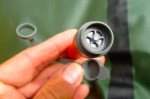


Like the MRS, the Trekraft’s airbag is also made from a reassuringly thick fabric, but is spoiled by a push-in plug, even though there’s obviously a thread in the boat’s port. Compress too hard or if it’s wet and the bag plug might pop out, so inflate gently.
Instead of using the old twist-lock to top-off, the Trekraft has a one-way spring valve stem with a cap (which came adrift and eventually got lost). This valve (above left) is dead easy to use and avoids the risk of over-tightening a cheap plastic twist-lock valve (as on older Alpackas). But when airing down, with the spring valve you can’t suck and seal the remaining air out unless you jam something in the valve as you suck. Packraft or IK, this ability to suck your boat down is handy for compact packing.
Next comes the Matkat. No airbag supplied even though the Supai website states: ‘We are working on developing an inflation sack to work with our valves hopefully we will have it released in mid-2014.’ When we tried the smaller red Supai Canyon Flatwater II in late 2013 we found it took about fifty breaths to fill, plus topping off. The higher volume Matkat takes about eighty breaths. I like breathing but that’s not something I’d want to do more than a couple of times day to save the 100 grams of an airbag.


Unlike the Alpacka, Nortik or MRS, the Supais use a male threaded dump valve which protrudes from the boat and onto which screws a cap with a thin tube and the twist lock valve on the end (right, red boat) – a neat and simple system that’s just about accessible for on-board top-ups.
Alpacka use an identical threaded valve port but on their air bags; it’s a regular American plumbing ¾-inch size. If I had a Supai packraft I’d get an Alpacka airbag for $20 and then either find a female-to-female plastic connection, or jam on a short section of clear plastic tube to join them together. That way I can save the hyperventilating for Glastonbury.

That leaves the BAKraft. Even before I received the boat I had my doubts after seeing pictures of the convoluted inflation system which Aire suggest.


The BAKraft uses Halkey Roberts (or very similar) valves, as found on proper IKs and whitewater rafts: one in the floor and one for the urethane bladder that fills both sides of the hull, or what what they call the ‘collar’. These valves work like car tyre valves (or the Nortik top-up) – a spurt of high pressure opens the seal and a spring seals it shut – except that you can lock them open by pushing and twisting the valve stem. This is necessary to deflate a boat easily, or to loosely pre-inflate it without having to push against the valve spring. These valves are really designed to be used with pumps not flimsy air-catching inflation bags, far less lung power. A simple and compact push-fit pump like a K-Pump will work. A high-pressure stirrup pump with a ‘Summit’ bayonet connector on the end will be even quicker, but is way too bulky to travel with.

With the BAKraft you’re supposed to use the backrest/cargo bag as an inflation bag and scrunch air into the boat via a tube fitted with a bayonet connector (left). But the backrest bag’s weight, odd shape and relatively small volume makes this task awkward, even past an opened intake valve which is still a restricted airway. I gave it a go but soon saw that, while I’d get there in the end, it was going to take ages.

Once the boat has ‘shape’ you’re then supposed to quickly close the boat valve then splice in a low-volume/high-pressure hand-squeeze pump into the ISC bag. The squeeze pump has another one-way spring valve in it: charge it with air from the backrest then squirt air by hand past the closed valve until the boat is firm.
This squeeze pump is quite a clever idea but at about 150cc a go will take a while to do the job. Sorry to say I wasn’t even curious to find out how long – I’d guess at least 15-minutes for the whole inflation, same as it took to pump up my 4.5-metre kayak the other day with the one-litre K-Pump Mini. So instead I reached for my Bravo stirrup pump – it took two minutes – and on test day I brought my compact K-Pump which took about twice as long.
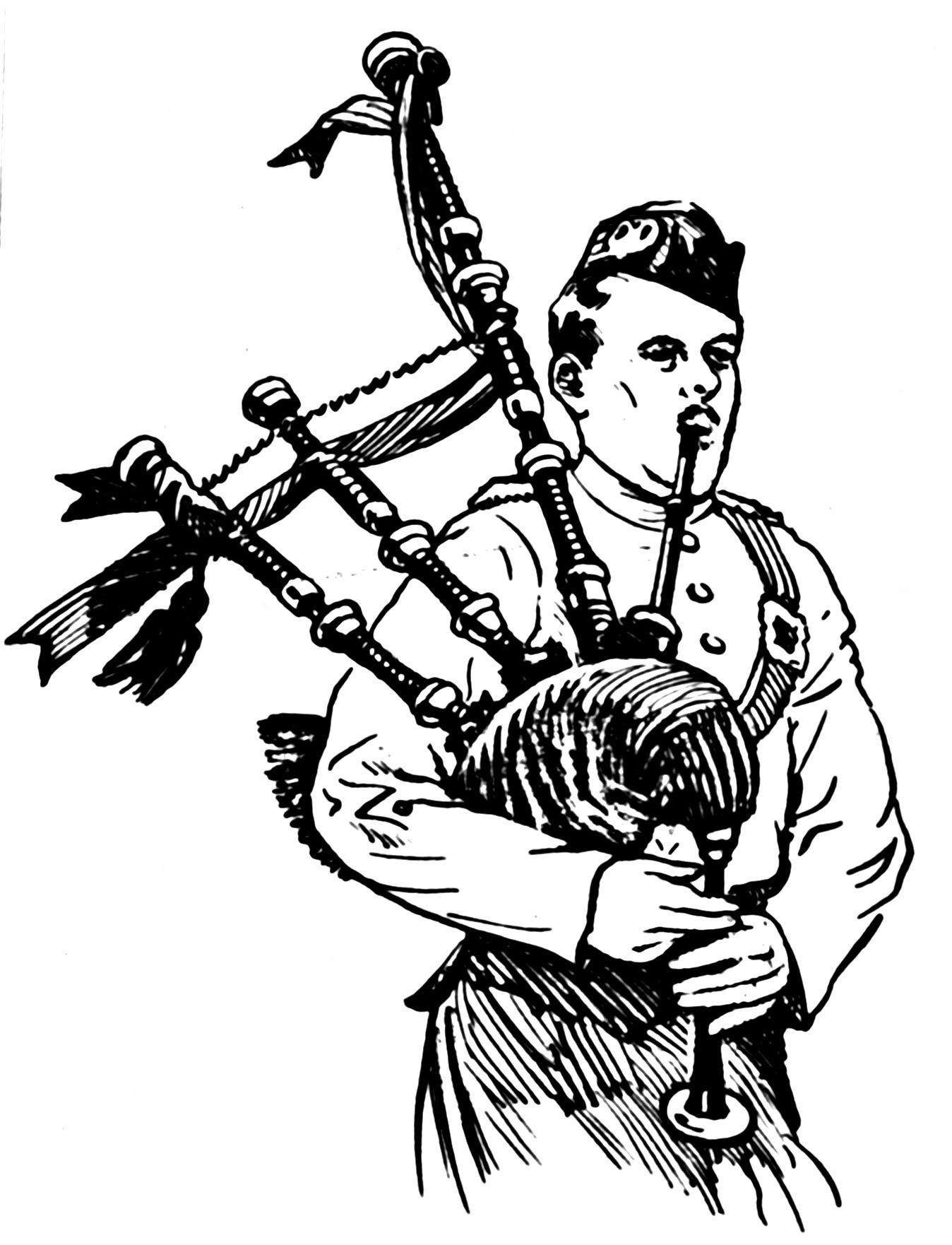
I see now that I’ve actually RTFM I used an alternative method. The image above right suggests you don’t use the backrest bag to charge the squeeze pump, but just blow then squeeze the hand pump directly using an oral tube, like a silent bag pipe. If I’d thought of that I might have tried it as it’s a much less clumsy way of topping off the BAKraft.

All the other packrafts here run at an air pressure that’s governed by the lung power you can exert through the top-off twist valve (left). But with a one-way valve you can pump more air into a raft (that goes for the Trekraft’s top-off valve too, now I think of it). The BAKraft is made to run an IK-like 2.5psi although you’re warned not to over-pressurise or allow it to happen. That can be easily done of you get carried away with a stirrup pump or leave the raft out in the hot sun.
It may have seemed clever to give the necessary backrest multiple uses, but it works only a little better for filling the boat with air than it does as a backrest (see review). I’d recommend getting a $20 Feathercraft inflation bag which comes with the ‘Summit’ bayonet fitting from their BayLee packrafts (they also use Halkey-like valves). And if you don’t get on with the oral/hand pump system, then get a 600-g K-Pump Mini too. I’d guess using both these devices will more than halve the inflation time.
From the four corners of southern England the throng gathered at Tonbridge Town Lock, the boats got pumped up, cooled off in the water then topped up some more. Then, after a quick groupie, we set off down the easy first chute. I took it upon myself to get in the Matkat while I was still feeling fresh.

Packraft Test Intro • Supai Matkat • MRS Microraft • Aire BAKraft • Nortik Trekraft • Summary

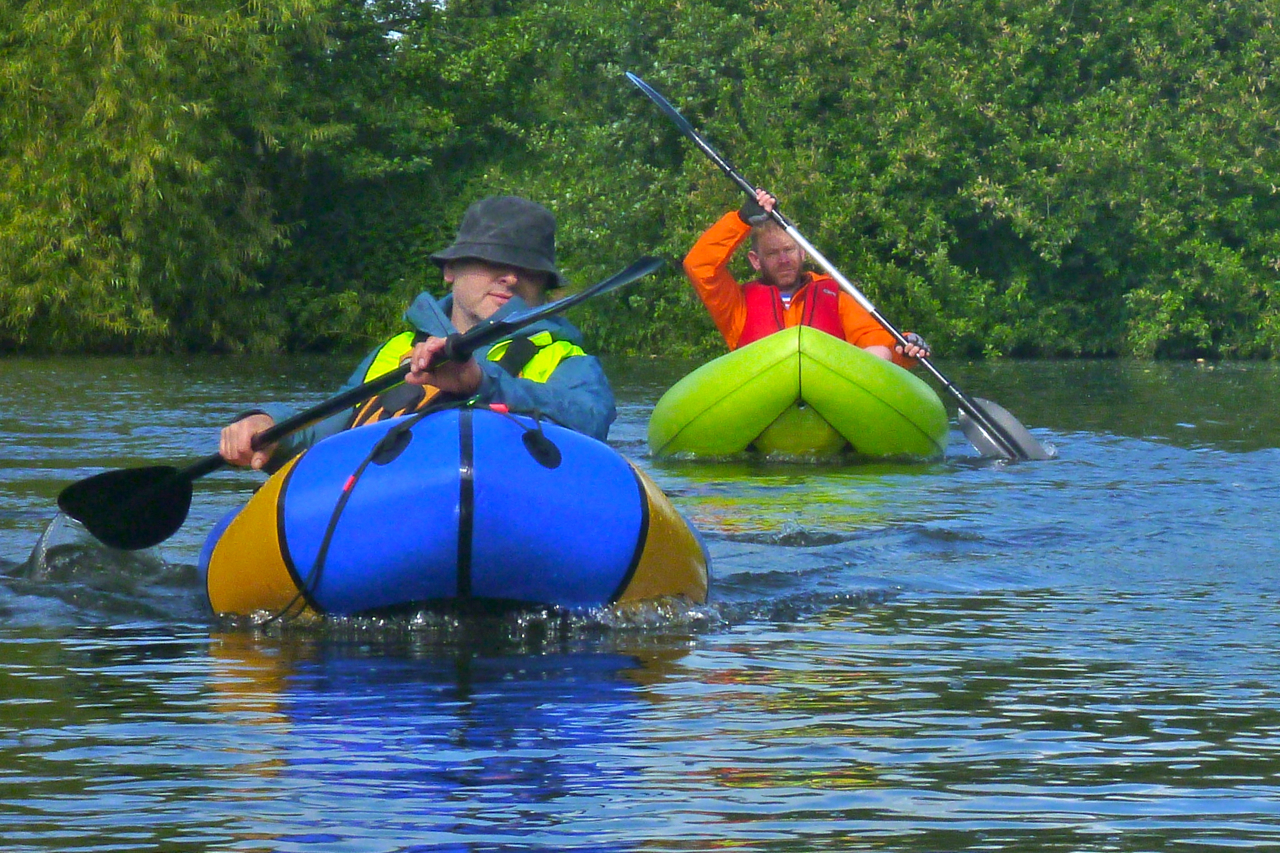
It was time to hop into my boat – a 2014 model Yak. You can read more about it here. There’s no real need to go on about it too much as it’s a well proven product. It’s use here was more to aid real time comparisons with the other four boats on test. I did this Medway run in it last year at an average of 3.4mph which for a packraft is pretty good going. Today with all the yaking and picture taking it was more like 1.1mph.
I knew the Yak was a tad short when I chose it and I see now that the tapered bow exacerbates that slimness at the feet. For me it’s fine bare foot, not so comfy in footwear. Because of this I rarely use the inflatable backpad to fill out the space.

It’s great to see how Alpacka have evolved since my first Alpacka, an old-shaped decked Denali Llama back in 2010. The ‘fastback’ stern introduced a year later was a convincing reason to sell the Llama and get a Yak. The stern prong acts both like a skeg, reducing the yawing motion at the bow – and adds buoyancy at the back of an inevitably back-heavy design, so improving the trim. It’s no surpeise to see the MRS and Nortik adopting similar designs. The old-style deck on my 2011 Yak was no better than before, better than nothing but feeling fragile and not that effective. Now Alpacka seem to have sorted that with a permanent, more kayak-like design also found on the Trekraft, and while I’m not convinced myself, the Cargo Fly is another ingenious innovation.
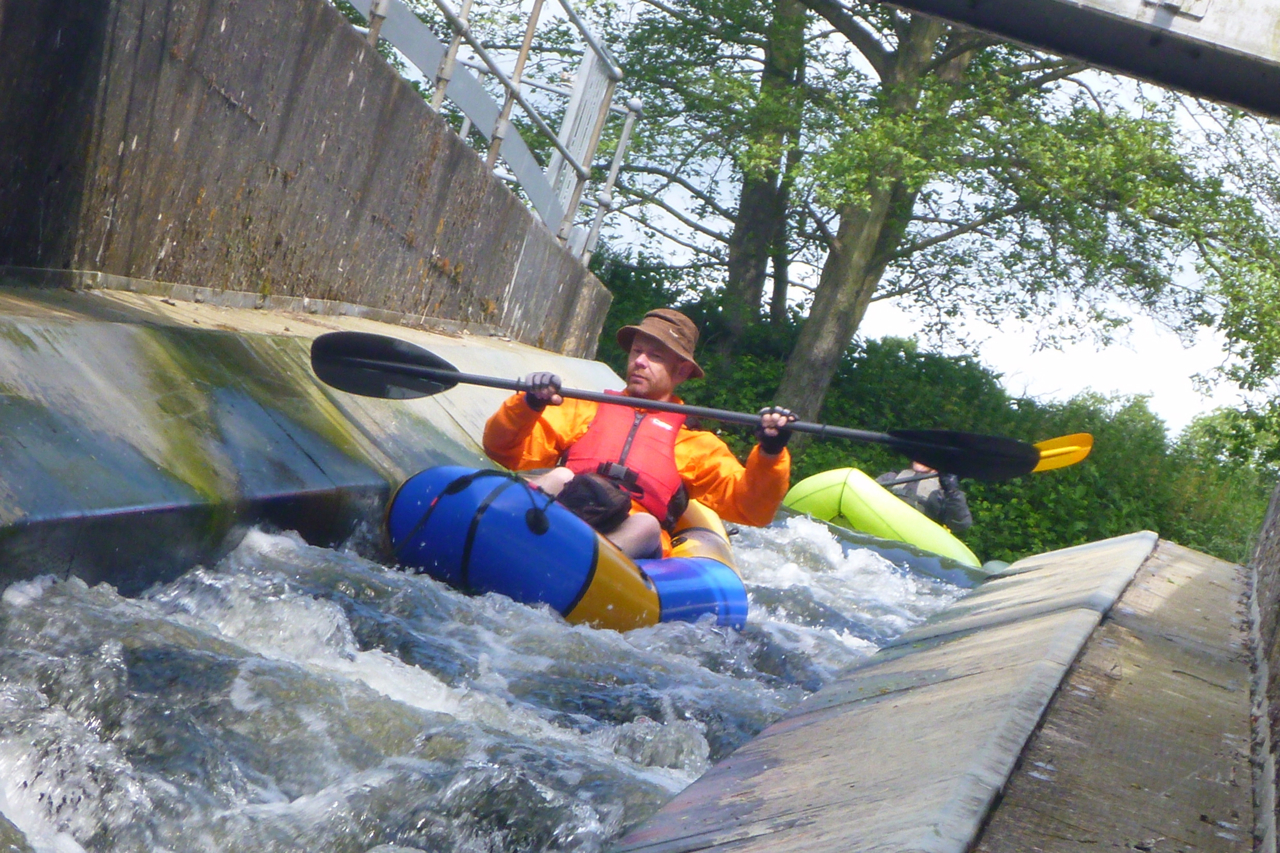
A question you might ask is having tried the competition, would I buy another Alpacka? as with all of them I bought it direct from the factory during a sale and either picked them up over there or got it brought over. I liked the fact that I could order a boat to my specifications (lighter floor, custom colours), even if that process took a long time and was incorrectly delivered. But I like to try new stuff so should my Yak be attacked and shredded by a pack of rabid Tibetan mastiffs, it’s good to have new stuff to choose from.

 Inflatable Kayaks & Packrafts