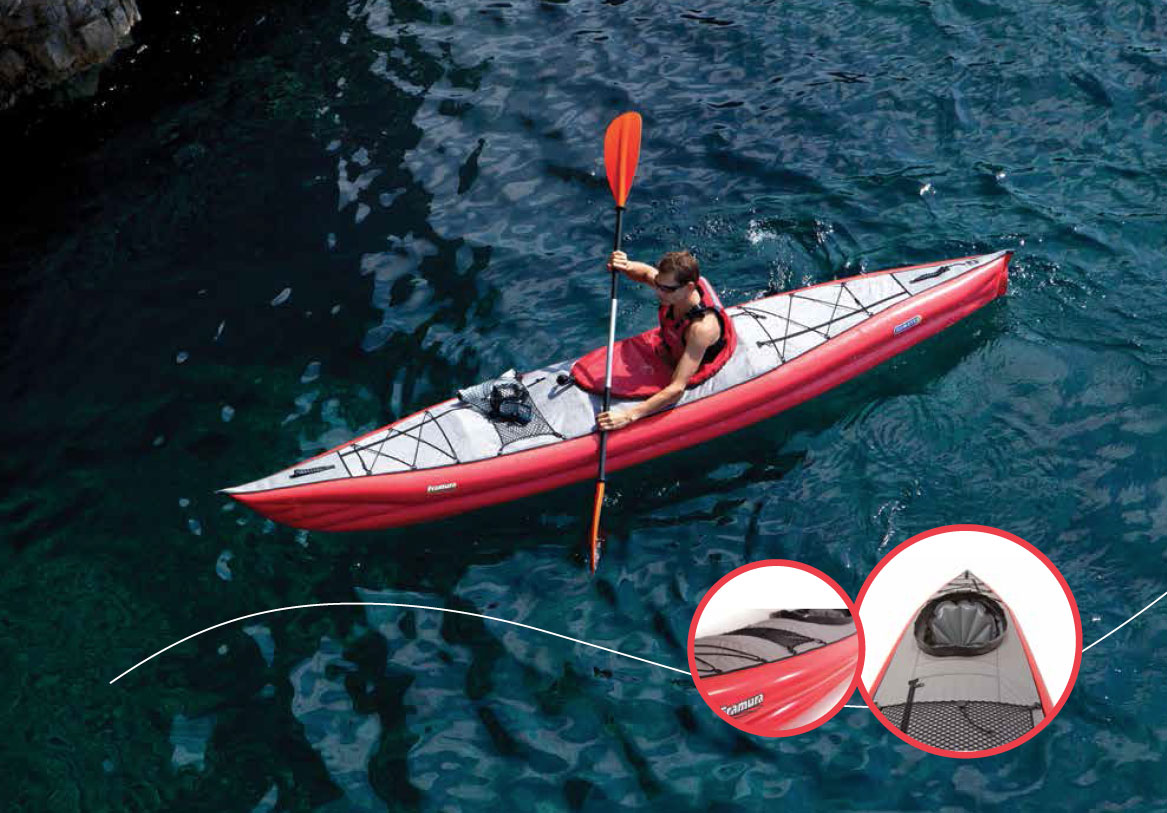
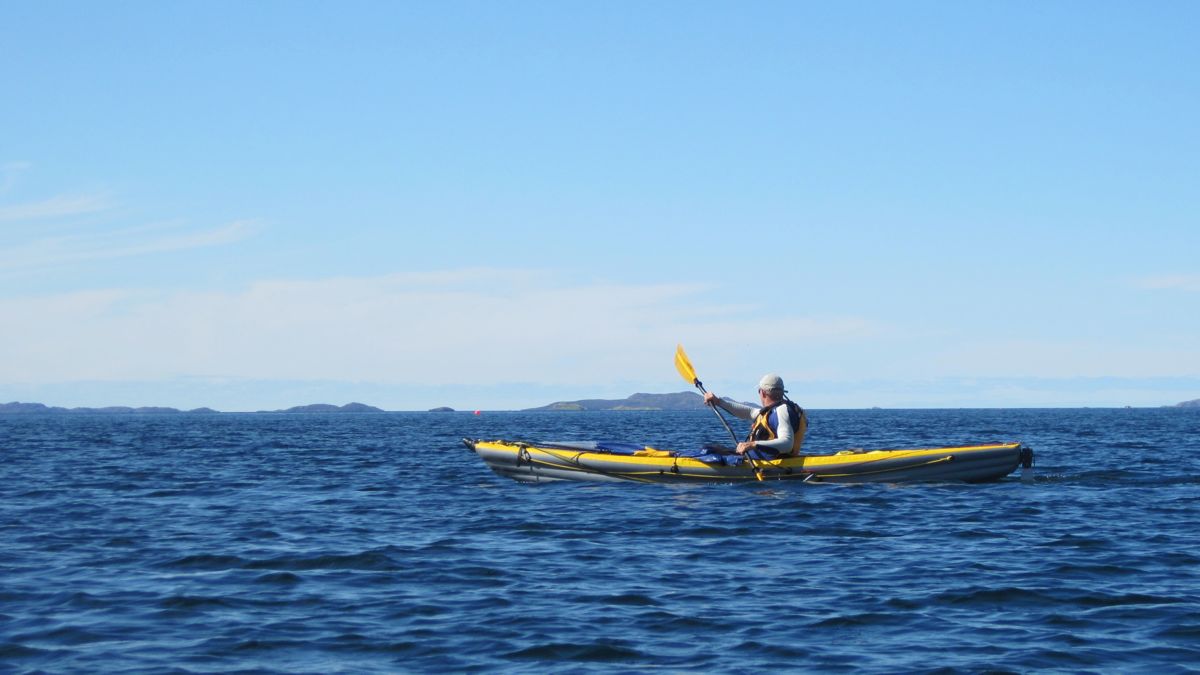
Even with the Rush models for 2020, Gumotex still claim their Framura IK is their fastest boat. For coastal ‘yaking the numbers certainly look great: 16kg + 4.1m x 75cm wide That’s 29.5″ and about as wide as you’d want to be in a proper IK. I see that in France it’s homologated for use as a kosher ‘Cat C, 10km from shore’ sea kayak while in North America it’s sold as a Swing EX.
Oi! Not sure I’d be dragging my IK over the sand like that.
From the bow shape it looks like it’s based on the slightly shorter but much wider Swing 2 – or the longer but also wider and higher pressure Seawave. That lightweight deck is fixed and has Swing-like struts to keep it up and shed water. Access is by straight zips or down the hatch. Like the Swings, they leak until the Swings were upgraded in 2025 along with the new Aurion, a hybrid Framura.
As for pressures, the Framura runs a disappointing 0.2 bar/2.9psi, not the 0.25 bar of the Seawave. But I read that Gumo-recommended max pressures are on the conservative side: the side tubes can be run up to 50% higher with great improvements in rigidity, and the floor runs an 0.2 bar PRV so can’t be over-pressured). I also read somewhere they got 12kph out of a Framura while testing at sea. The best I ever got out of my Java or Incept was a short burst of 10kph, so that is fast.
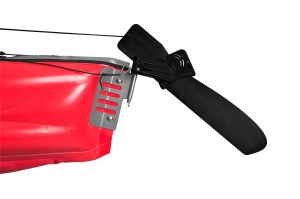
In 2016 they introduced a rudder kit (left) for the Framura/EX. I made one for my Seawave but in the end, could not be bothered with it on day paddles. On multi-day runs where you get the weather you’re given, a rudder may be a good idea.
Slim, not like an otherwise similar Swing
I like the look of the 4.1-metre-long Framura but I liked my Seawave more. Framura, by the way, is a nice spot on the Italian Riviera, not far from Portofino. Not, as I thought, a hint that the new boat uses a frame(ura) to maintain rigidity. That rarely works with IKs, in my experience. You do wonder if the new hybrid Rush 2 supercedes the 2015 Framura.More Framura in this video. See also this.
I’m not convinced the 0.2 bar Framura is that much faster than a longer, stiffer Seawave. And I also suspect it has not been such a sales success either. Perhaps claiming the former has something to do with the latter.
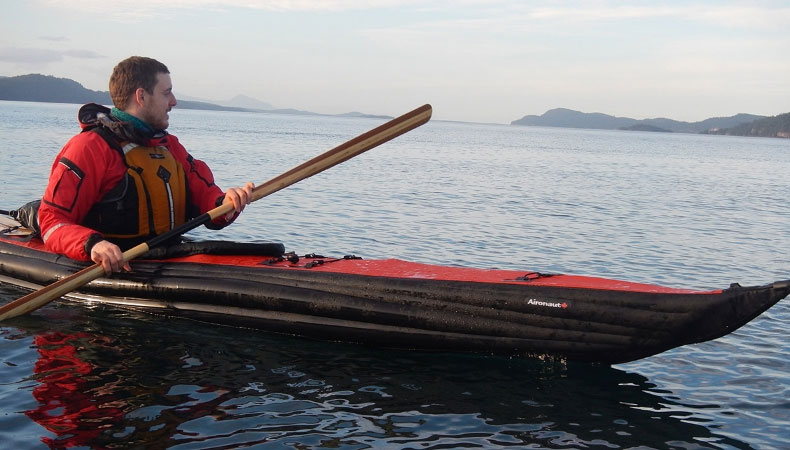
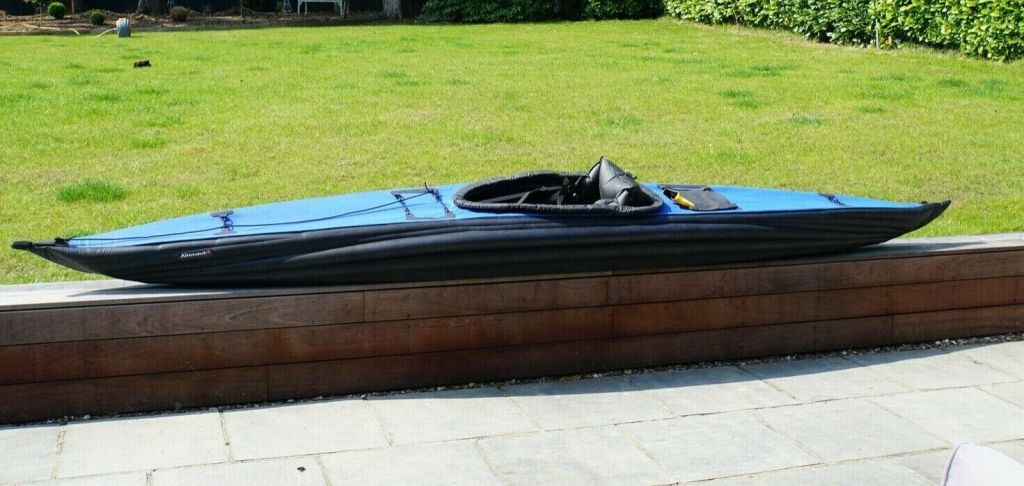
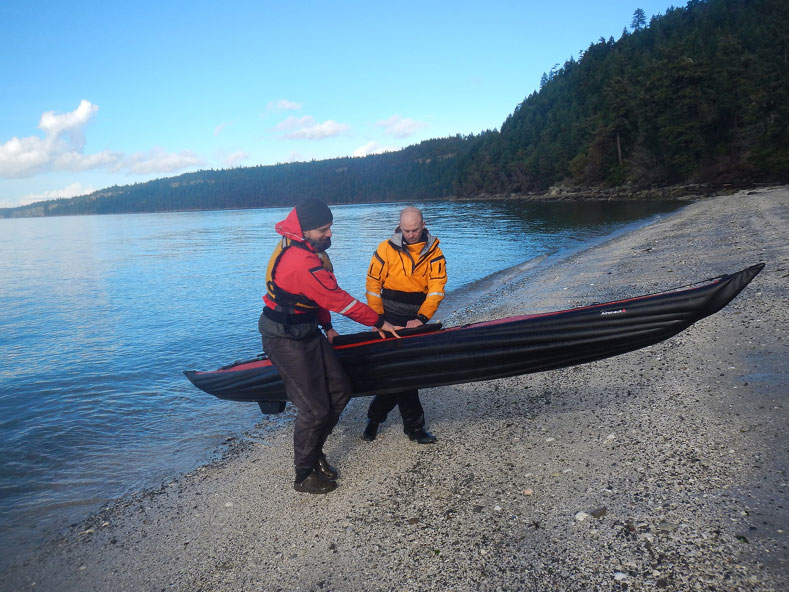
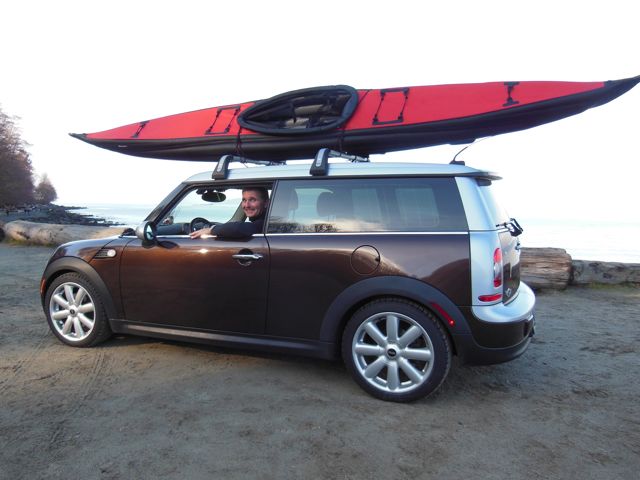
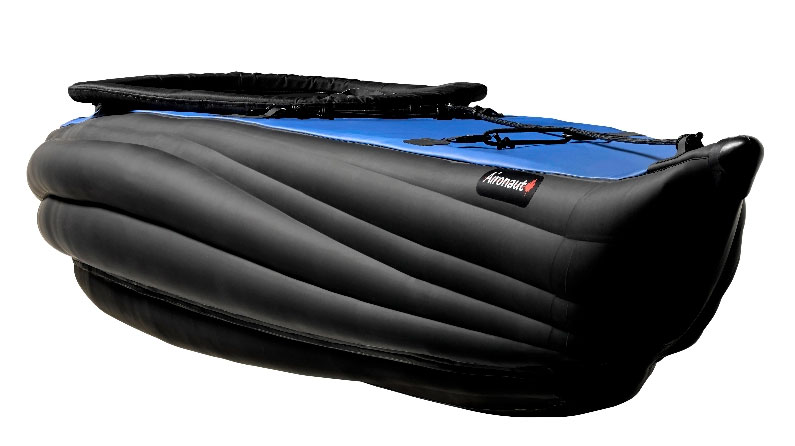
Feathercraft’s short-lived Aironaut IK looked like a breath of fresh air. As with their folders, FC managed to turn the usual IK sow’s ear into a very silky looking purse. With all kayaks, it’s the sensation of gliding or responsiveness to paddle strokes that has as much appeal as being in the outdoors. And judging from looks alone, the Aironaut did that better than other IKs even if the concept may have been flawed and the boat was discontinued.
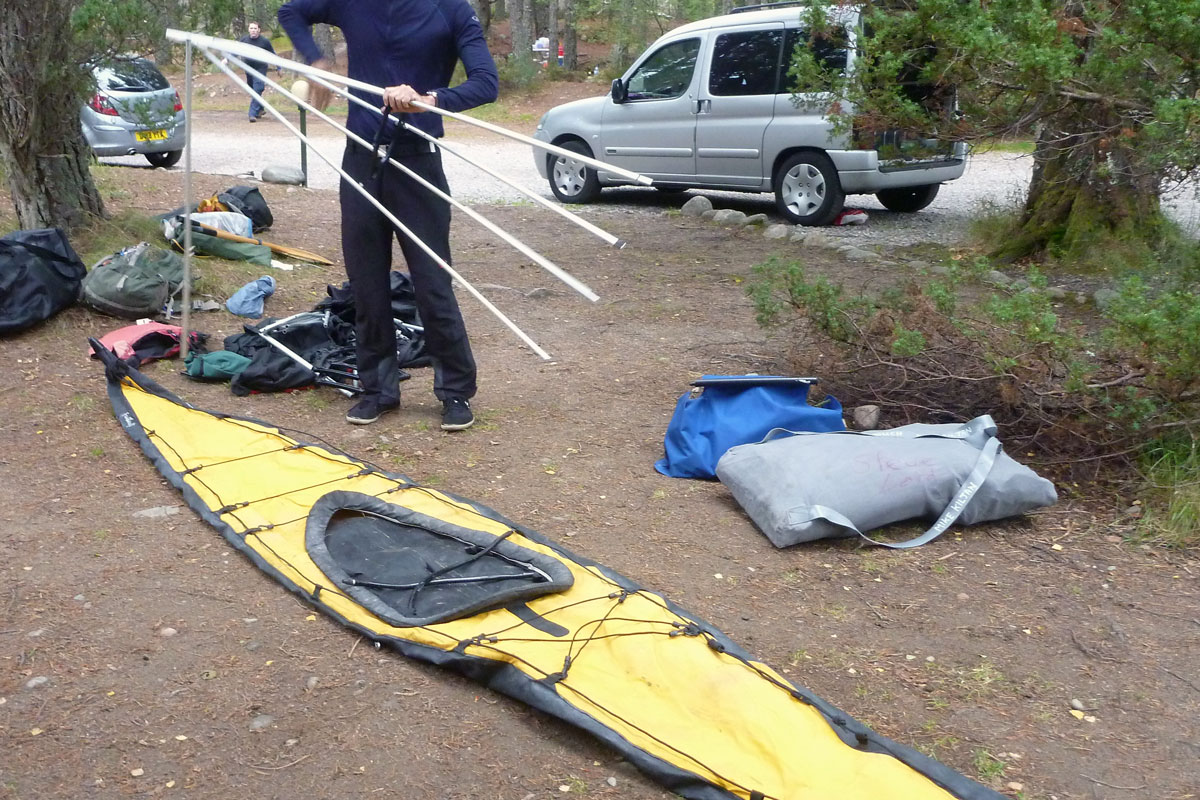
The Airo’ was pitched as a nippy recreational day boat for folks who find Feathercraft folding kayaks a faff to set up on the spur of the moment (left) and a pain to store or transport fully assembled. It’s the relative effortand complexity as well as assembly time that can kill spontaneity, especially if you’re at an age when you’re no longer as supple as a leaping salmon. I’ve also encountered the fragility of ally-framed folders – something to which IKs are immune, though both are susceptible to cuts and abrasions.
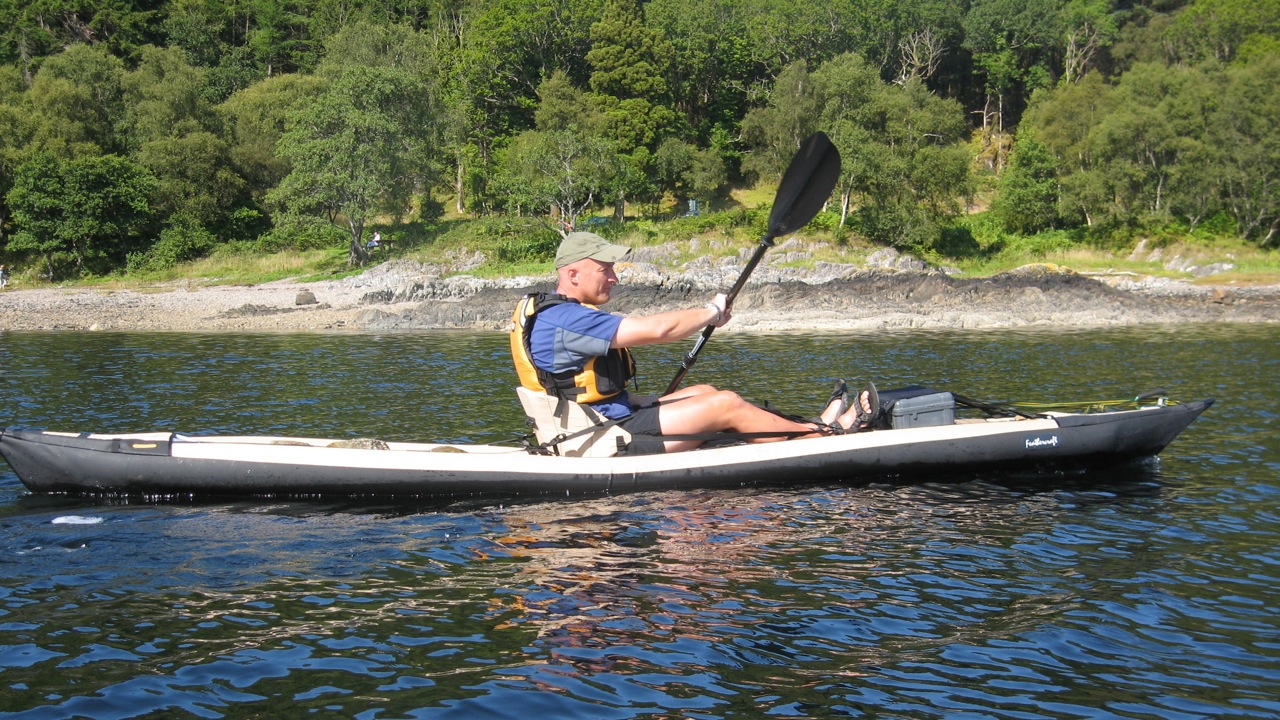
A few years ago I briefly owned Feathercraft’s Java, what they rightly called a ‘sit on top’ IK, but I didn’t get on with it (read the link). The Airo was a conventional sit in IK, complete with a fixed deck like the Gumotex Framura. By IK standards, even the Aironaut name was clever too, suggesting a light, cutting-edge boat. From the images it’s got to be the slickest-looking IK out there, though the competition isn’t that great.
The magic numbers are: 4.5m (14’ 9”) long, just 66cm (26”) wide, a weight of only 9kg (20 lbs) but a modest payload of 136kg. The rest you read here is my usual speculation based on those details and the photos I have pinched from the Feathercraft Aironaut webpage and eBay.
As with my old Incept K40, using ‘plastic’ coated fabrics means it can all can be heat-welded together, which you presume is cleaner and less expensive than gluing by hand. Urethane-coated nylon may not sound such a ‘high quality, technical fabric’ (to quote the FC blurb), but packboat manufacturers are notoriously cagey about fabric specifics. As with Alpacka packrafts, exactly what type of urethane is key, as is the composition of the nylon base. Both may be custom specified from a source manufacturer to deliver certain properties. A nylon weave base fabric is supposedly more stretchy than polyester which is good against spikes, but less good in containing a rigid inflatable form. That’s probably why it needed to run a such a high pressure.
My Incept was a fast IK, aided by a notably slick PVC-urethane coating over a ‘1100 polyester dtex’ (= about 1000D) base. Knowing that, suddenly the Airo’s 420D doesn’t sound so robust, but that’s how Feathercraft managed to halve the weight of a K40, which otherwise has very similar dimensions. Another clue might be in the payload of 136kg; the Airo’s many tubes may add up to a relatively small volume. The Incept was rated at 160kg.
They achieve that amazing weight by fabricating the Airo from 210D urethane-coated nylon on the deck and multi-tubed black sides, and 420D in the hull (hard to tell the later two apart in most pics). So it’s a regular three-chamber IK. When I recall the Supai packraft was made from 75D polyester, triple that for the sides and six times for the hull sounds reassuring, though direct denier comparisons are misleading. It’s about weave density not actual fabric thickness.
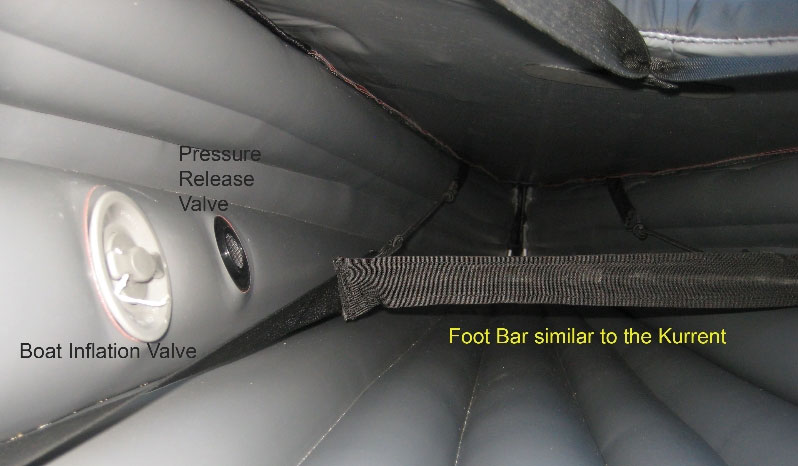
The Airo had Halkey inflation valves like the Incept, and pressure-release valves on all three chambers. PRVs are vital so the seams won’t stress and pop if it gets hot (as happened to my Java). I’m always a little perturbed that my high pressure Grabner had no PRVs and added them to my Gumotex Seawave’s sides for protection with sun-induced over-pressurisation.
However, see the link at the bottom of the page. It seems the combination of a long, solo IK made from a thin fabric needed a high 5psi rating to not sag in the middle, but even with PRVs all round, there were reports of a couple of Aironauts blowing apart irreparably which may be why it was discontinued (FC claimed ‘high costs’). Soon after FC sadly closed down for good. You might think: fit lower-rated PRVs to spare the hull, but if the boat was designed to work at 5psi, anything less would see it sag like a Sevylor bloat, especially with a girthsome paddler.
A blown I-beam in the floor. Hard to repair without opening the boat right up.
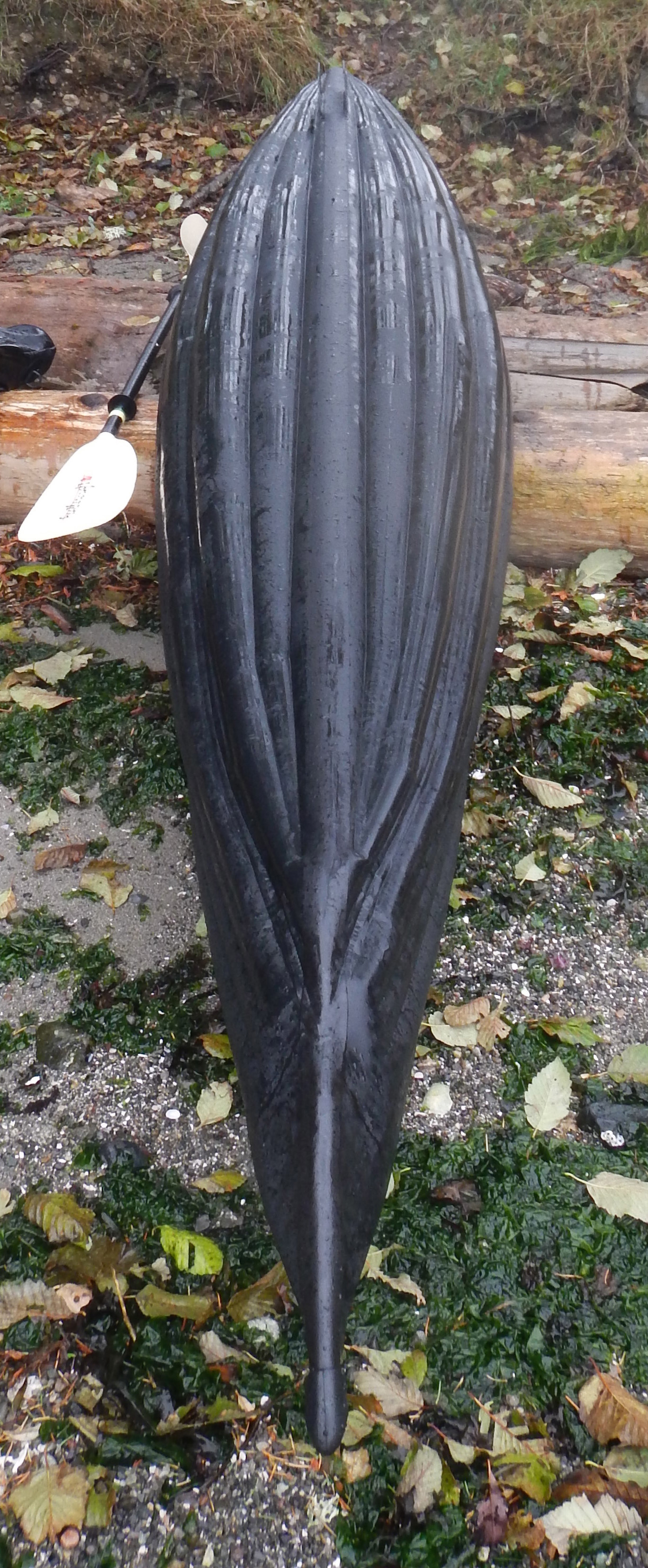
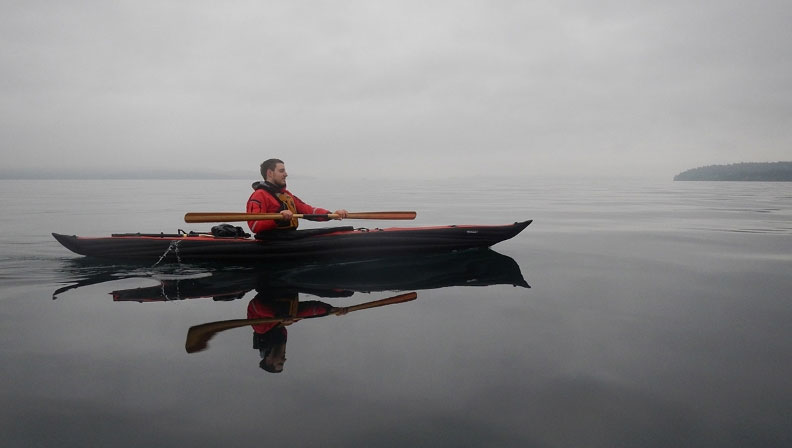
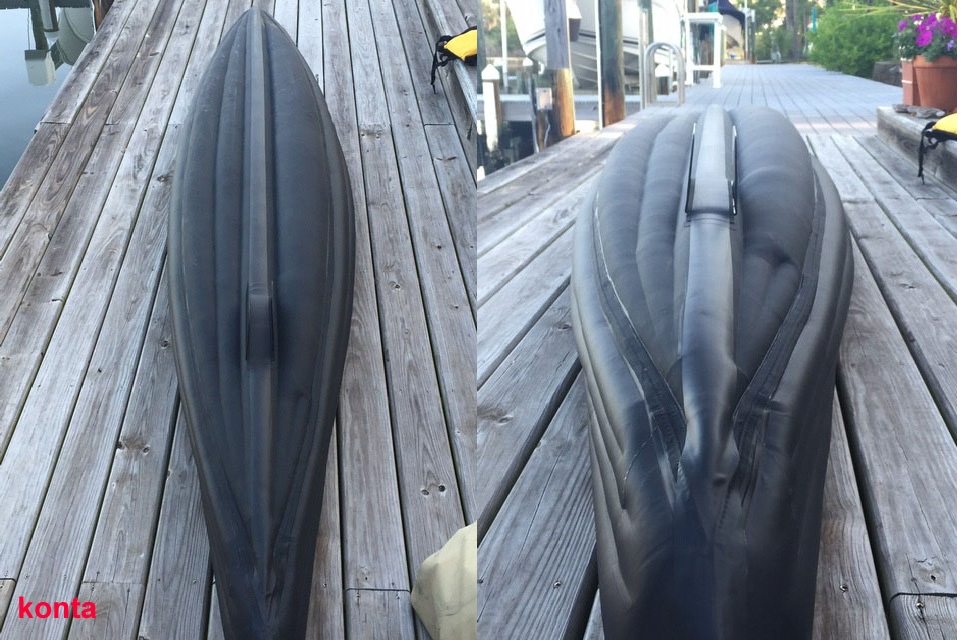
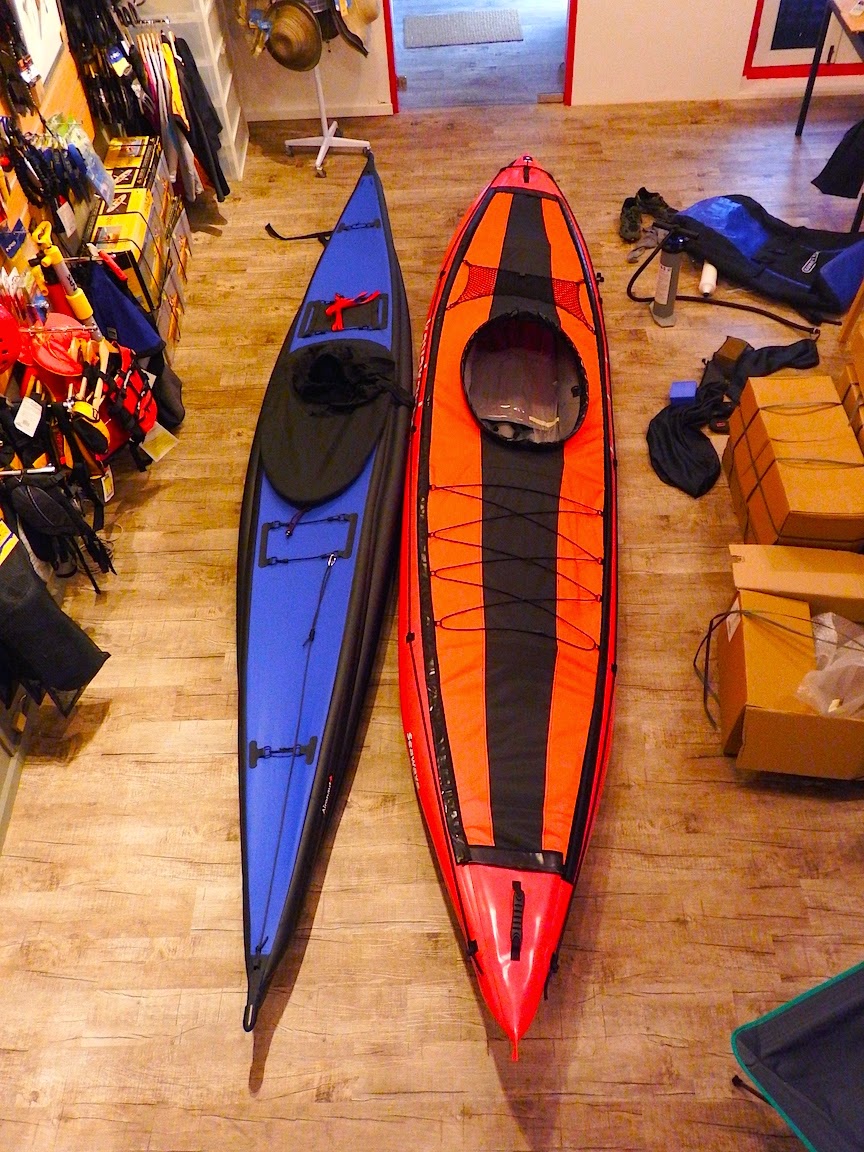
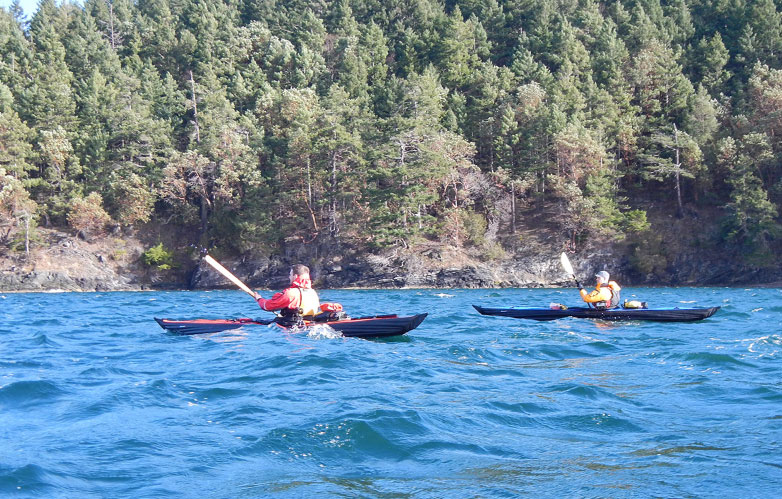
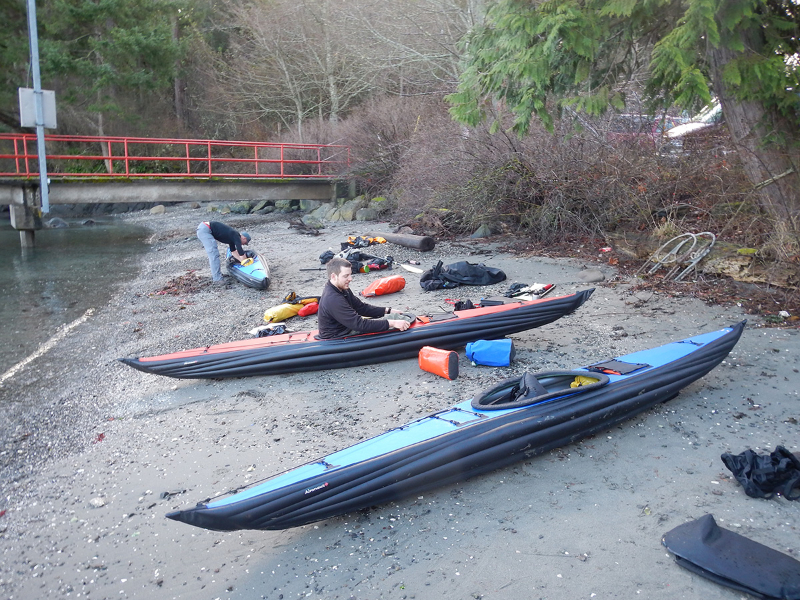
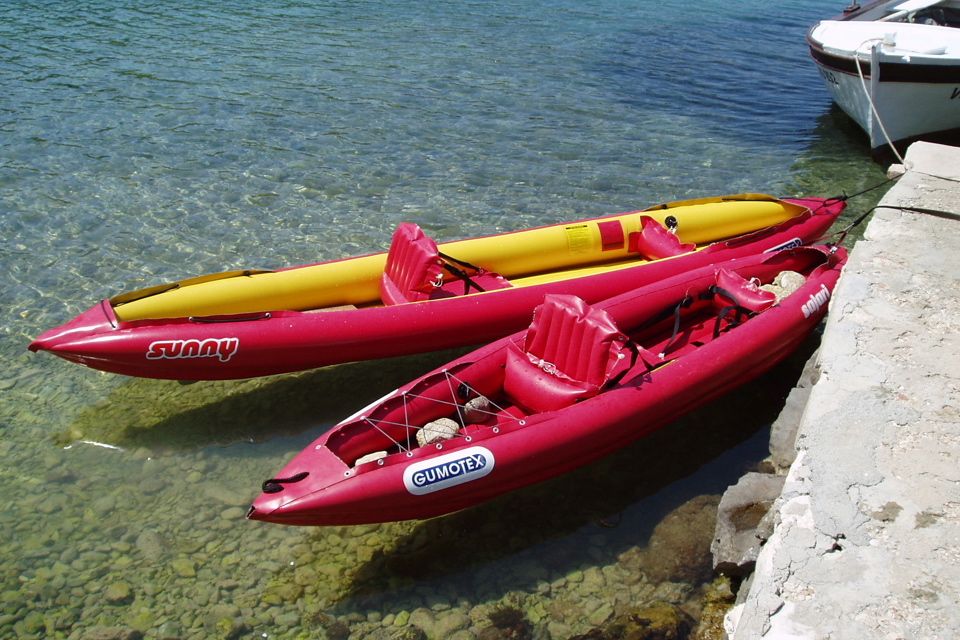
Also, like my old Sunny, Incept, Grabner and Seawave (left, alongside and Airo), the Aironaut is a European-style ‘tubeless’ IK with no slip-in sponsons (‘inner tubes’) to give a hull shell its form. Perhaps that too was necessary to run a high 5psi (0.34 bar) pressure,something which requires a good pump as well as good construction if it’s not to leak at weak points. Once on the water though, high pressure hulls have real benefits in terms of hardshell-like hull rigidity and paddling efficiency. Look at the pictures and see how straight the kayaks appear, even allowing for light paddlers (and compare to my Java here). Then factor in the Airo’s Java-like cheese-cutting bow and I suspect this may have been a fast IK, and all without clumsy and bulky stiffening rods or dropstitch floors. It’s no great surprise that it was Feathercraft who managed it, but it seems it the design was flawed.
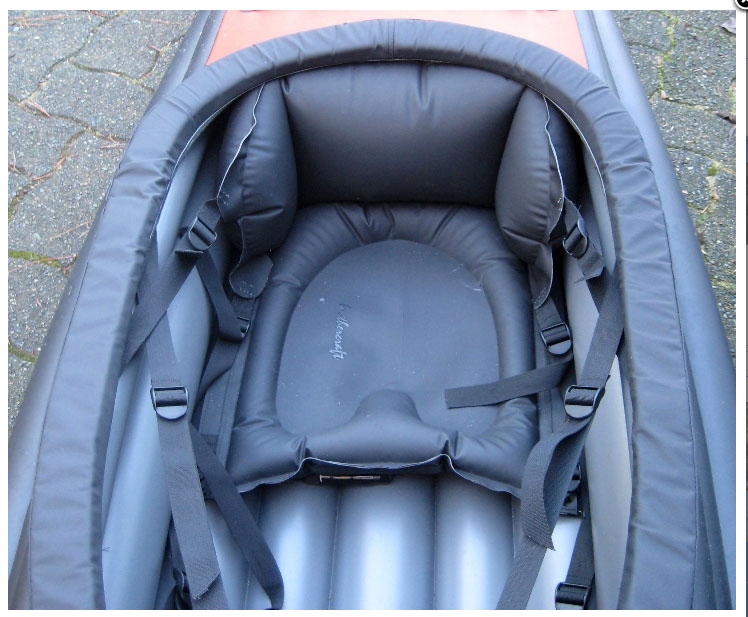
FC seem keen on you using their sea sock insert which fits around the coaming and stops the boat filling right up in a capsize. The thought of snagging that while trying to get out in a hurry would be a worry. It’s also a little unnerving that they include a paddle float in the package (left), admitting perhaps that the 26-inch wide Aironaut was a tippy IK and getting back into the cockpit would be tricky on the high and buoyant Aironaut. I tried it with the Incept once, but as we know, practicing near the shore with a mate taking photos is not the same as tipping over out at sea, especially when alone. You would be better off getting the knack of rolling.
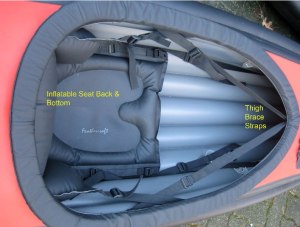
At 75cm long (26.5 inches) the Aironaut’s cockpit hatch is the same as my mate’s Big Kahuna. In all my clobber and fluctuating girth I wouldn’t want it any smaller, though I imagine there is more’ squidging’ space and no Kahuna alloy bars getting in the way; instead there are the thigh straps – essential for rolling and bracing. You also got a spray skirt plus a detachable, low profile skeg which is also a good idea at sea; the latter in my experience is much less faff than a rudder which I’ve found to be inadequate anyway once a tailwind gets beyond a certain strength. Good on FC for including all this in the package. Grabner and others take note.
The Feathercraft Aironaut was made in Canada and went for around CAN$3000 or the same price as the otherwise similar Incept K40 or a good Grabner.
Compared directly with the K40, the Aironaut was nearly half the weight, had a fixed deck which to me limited the appeal, had a simple skeg instead of a complex rudder, was a little narrower but a little longer, ran less payload and was supposedly tippy which, however they managed it, the K40 never was. Judging by other FCs I’ve tried and owned, I bet the Airo was better made than the K40 too, though that weight-saving fabric choice appears to be at the a cost of durability.
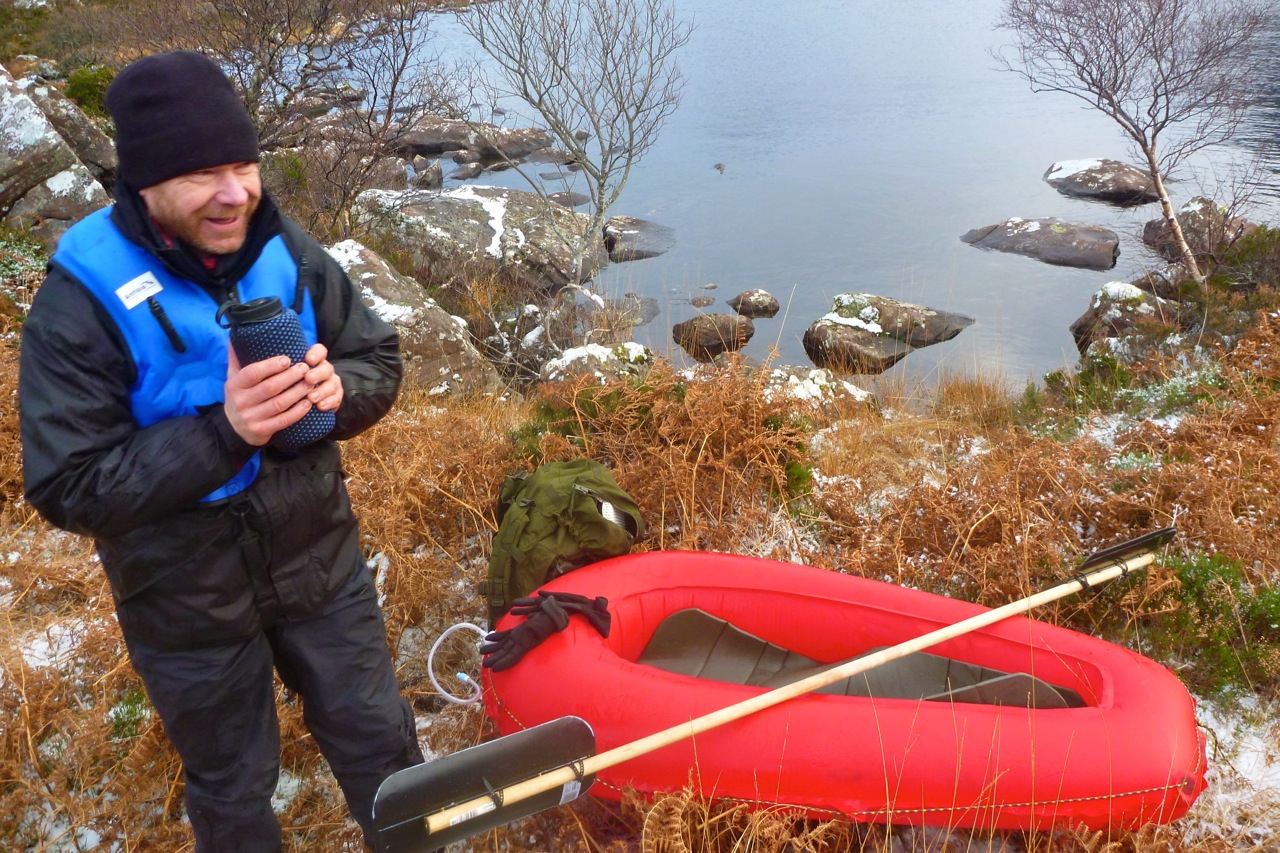
At a verified 670g (23.6oz) including an added grab line, Supai Adventure Gear’sFlatwater Canyon II ($300) must be among the world’s lightest and most compact boats. Before a winter storm blew our plan off the map, the trip we’d lined up in northwest Scotland was ideal for the Flatwater: short crossings saving lengthy overland detours or risky deep wading, but no extended or exposed paddling.
Fabrication Examining the deflated raft, it became clear it was composed of just four pieces of flat material: the top and bottom ‘rings’ which define the hull shape, an inner hull wall joining the top to bottom, and the floor fixed under the completed ring. You could almost make one yourself.
No fabricdetails on SAG’s website, but the Packraft Store states: ’75 denier polyester with single, innerside urethane coating’. This whole denier thing can be a bit misleading, the raft fabric looks and feels similar in thickness to my MSR Dromlite water bags (right) made from 200 denier, PU-coated Cordura (nylon?), but the Flatwater polyester has what looks like a reassuring ripstop weave (visible below left). And as we know from our studies in IK hull fabrics, polyester stretches less than nylon and so is more suited to inflatable boat applications than compact water storage. Where the seams overlap on the outside edge they’ve included seven reinforced tabs (above left) to use as attachment points (a weak point on my non-ripstop Dromlites, even with an eyelet). The floor is made of the same weight fabric and shows what look like ‘spot welds’ along the inch-wide seam (middle).
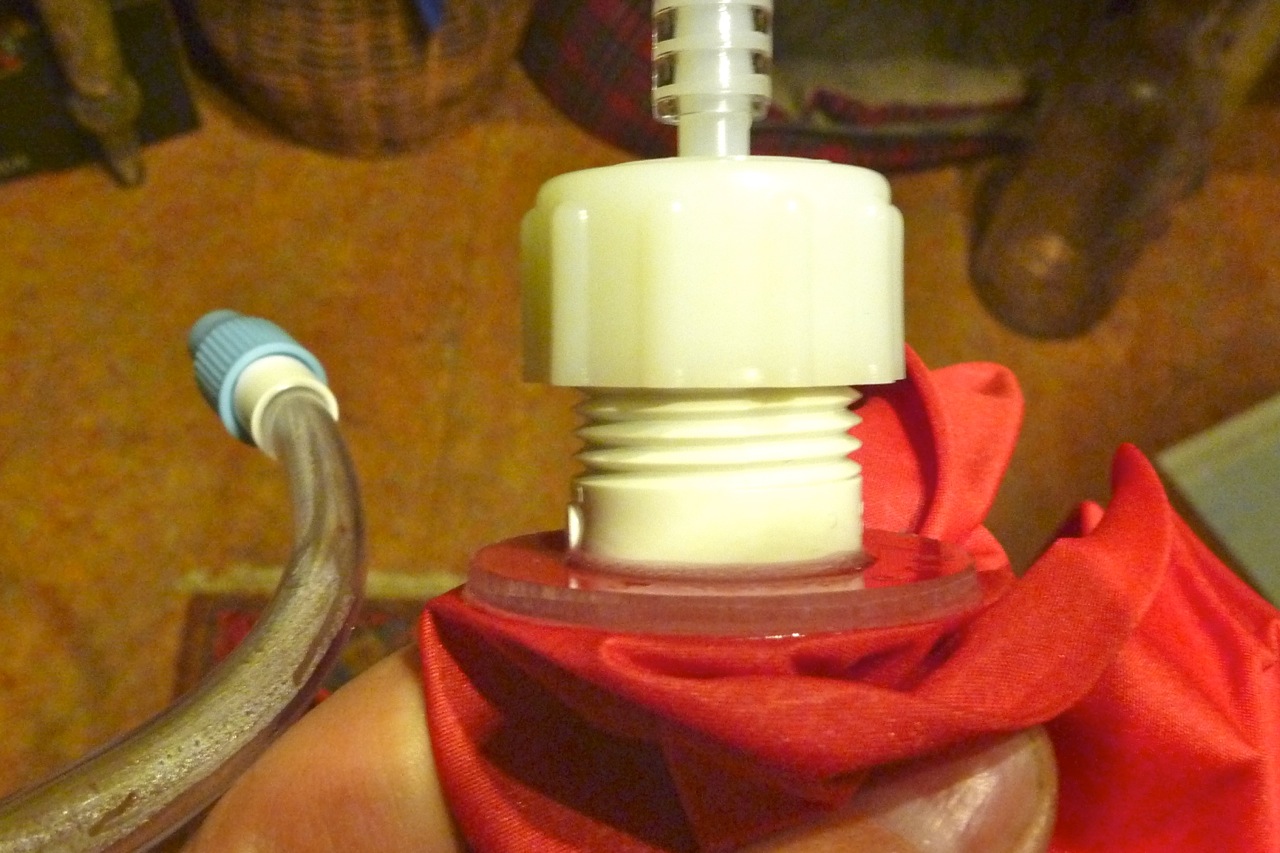
That’s it, apart from a big threaded inflation port onto which screws a white cap fitted with a 18-inch hose topped with a blue twist-lock valve (left). You blow the boat up by mouth (took me about 45 breaths) then top up to operating pressure with the twist lock, like on an Alpacka. But unlike a pre-Boston Alpacka, the long hose means you’re able to further top-up from the water where inflatable boats initially sag as they cool. Plus you could potentially manage a slow leak the same way.
The hull form tapers and narrows towards the bow to resemble a blunt wedge, similar to old Sevylor Trail Boat (right). Like all packrafts and even slackrafts, the added buoyancy (tube diameter) in the stern counteracts the mass of the paddler’s weight. There’s no seat and a new boat comes with a repair kit with full repair instructions on the SAG website.
Some of my measurements (checked several times and now confirmed by the Packrafting Store) vary greatly from those still posted on the SAG website many years later in 2020 and which had their Canyon over 10% bigger, inside and out. Even if they’re factoring in ‘paddler squidge’ making more room inside by pushing on the hull, that won’t make the boat seven inches longer.
As for buoyancy, SAG originally quoted ‘250lb’ (now a more realistic 200lb or 90kg). Robin briefly paddled the raft with his pack which we thought added up to about 100kg. That felt like the limit once a light breeze came up the valley, and required gentle paddling to avoid too much cyclic bobbing and possible swamping.
With the weight; the Store states 633g, SAG quote 24oz (680g). As mentioned, with a grab line and traces of dirt, our boat comes in at 670g on the IK&P calibrated kitchen scales (left). I won’t quibble over 40 grams; to be able to paddle across a loch in a boat weighing less than my trousers is quite something.
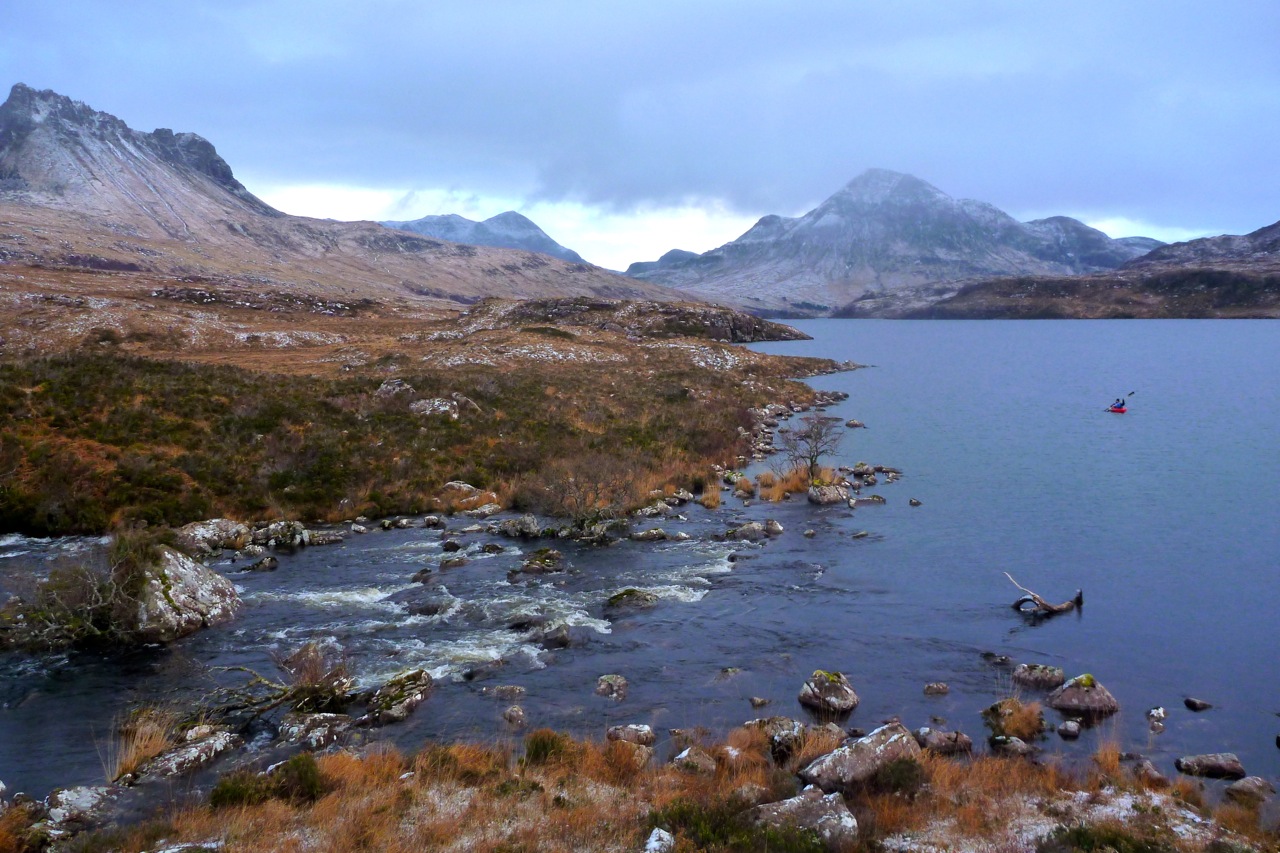
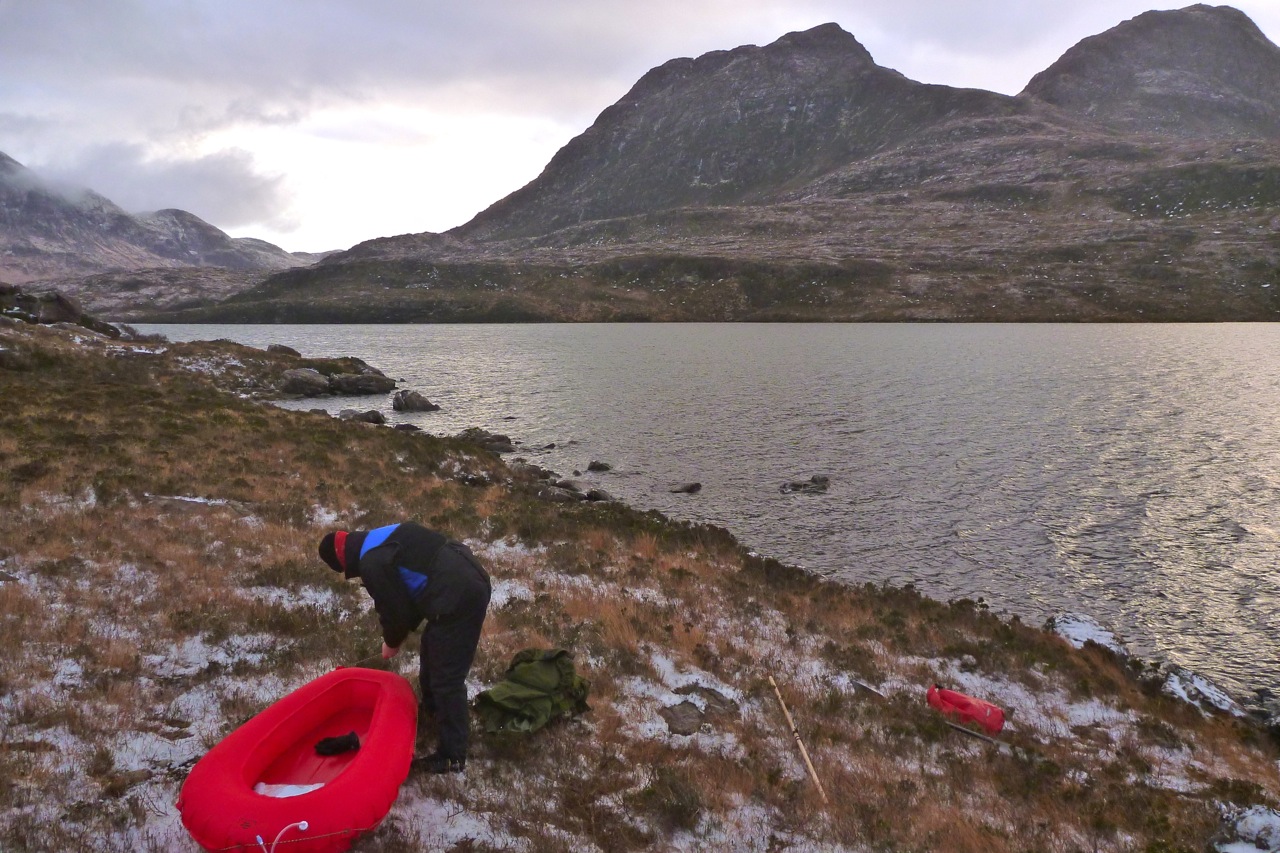
On the water The air was calm but temperatures were close to freezing as we set off to cross the eastern narrows on Loch Lurgainn below Stac Pollaidh mountain. We’d originally planned to come over in the other direction from the Culnacraig shore, but the storm which went on to wreak havoc across Britain nixed that plan (story here). So today we were just taking a 10-mile day trip with a short paddle, from Stac car park southwest back to Altandu.
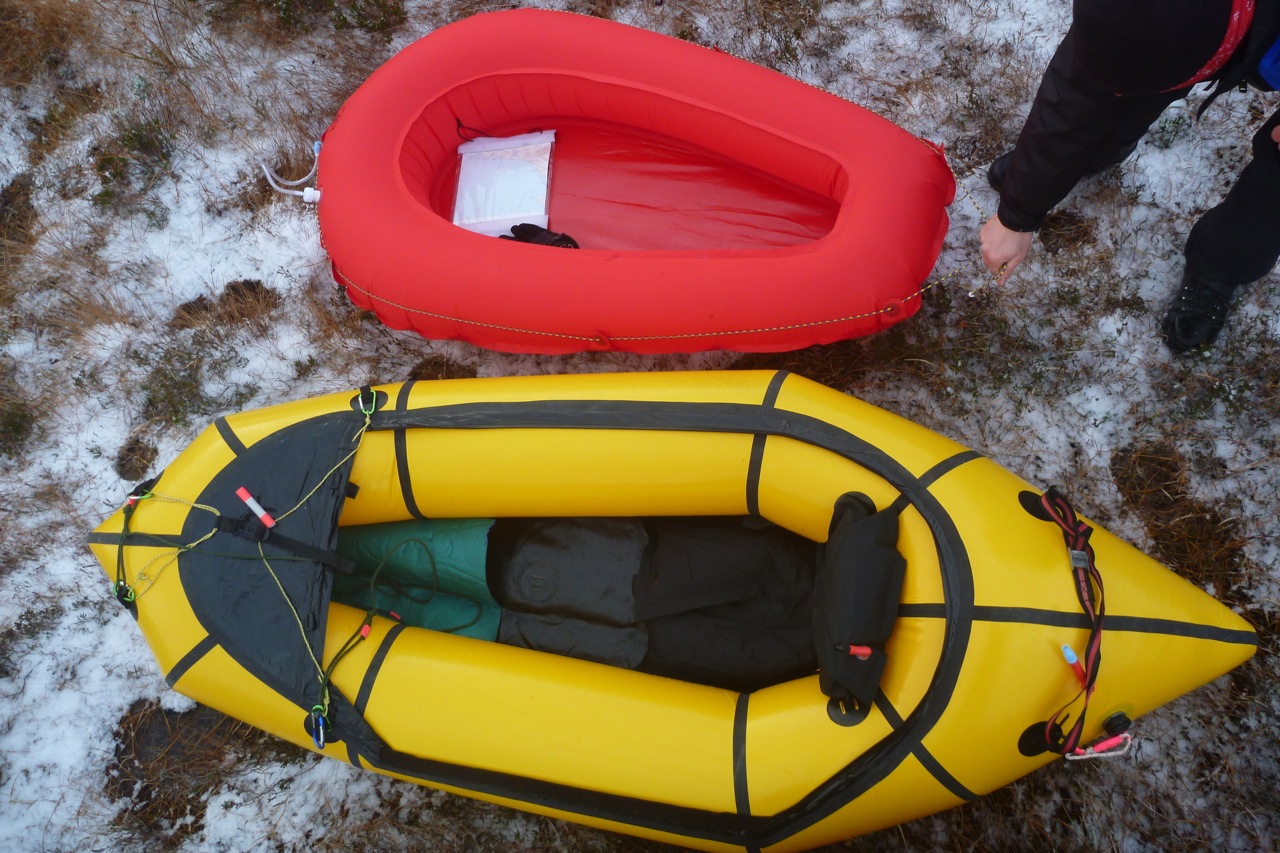
I tried to get directly over the two boats to get an equal perspective but I still think this shot makes the Supai appear a little smaller than it really is. I make the Yak ~42% longer.
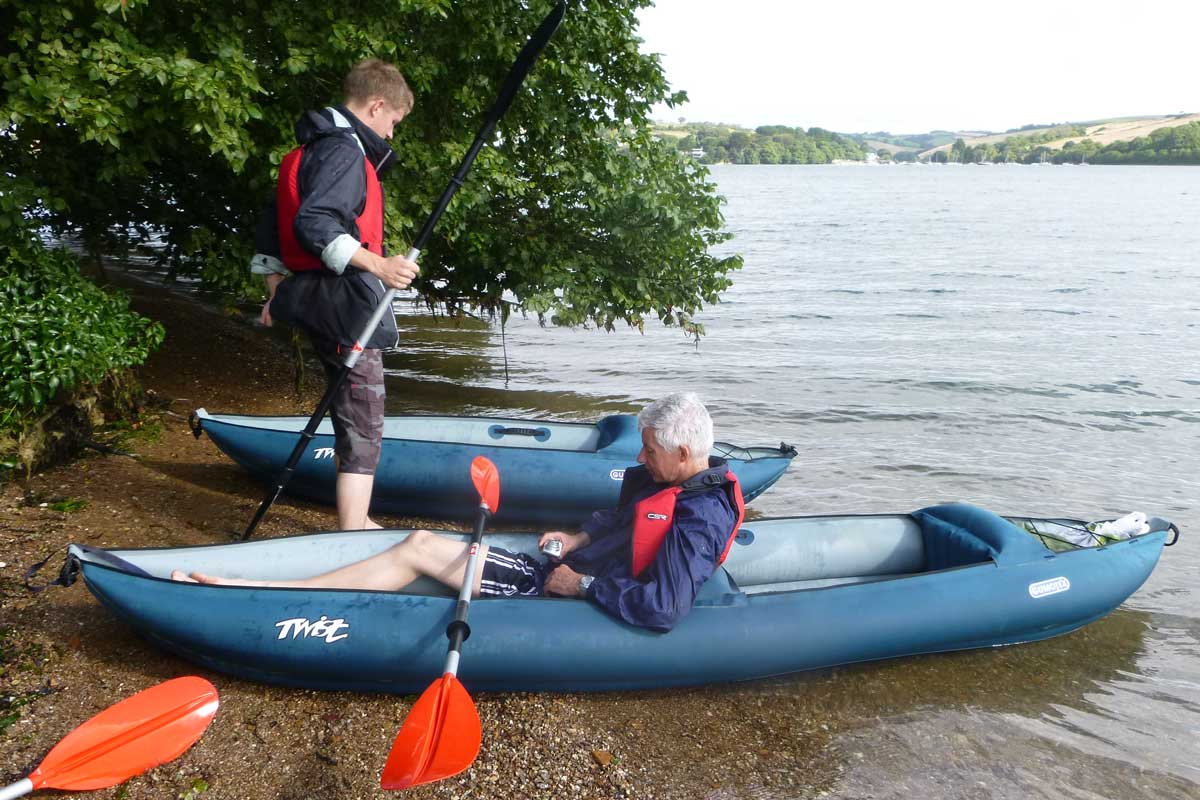
‘Fragile and small’ had been Robin’s first impressions after Sven from the Packraft Store in Germany sent us the raft to evaluate. Robin had recently upgraded to a couple of Gumotex Twist IKs so may not have been impressed by the Supai’s thin fabric. I had more faith in that, but as for the size, I too anticipated that SAG had cut it a bit fine with the Flatwater II, even if it lived up to their motto: ‘where every ounce counts’.
Down on the loch shore, even with a helpful breeze to fill my Yak’s bag, inflation time for both boats was actually the same, although by the end of it Robin was staggering around a bit. As Tim Evans found on his trip, other inflator bags can be adapted to avoid passing out.
Now, laid alongside my Alpacka Yak (same width but 66cm or over two feet longer), to me the Flatwater’s proportions rather too closely resembled a slackraft I skinned from a Sevylor pool toy a year or two back. I knew that with my weight of about 100kg in gear, I’d be pushing this boat’s limit. Without a drysuit I didn’t want to risk it.
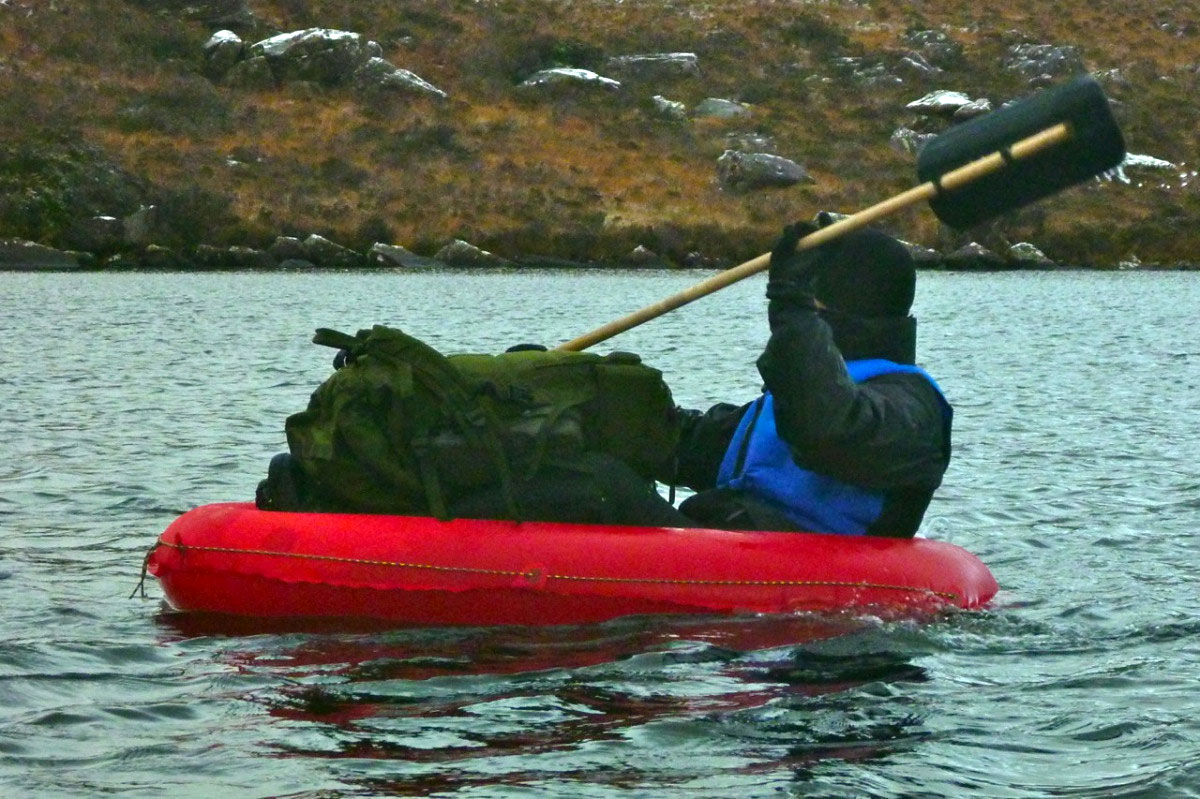
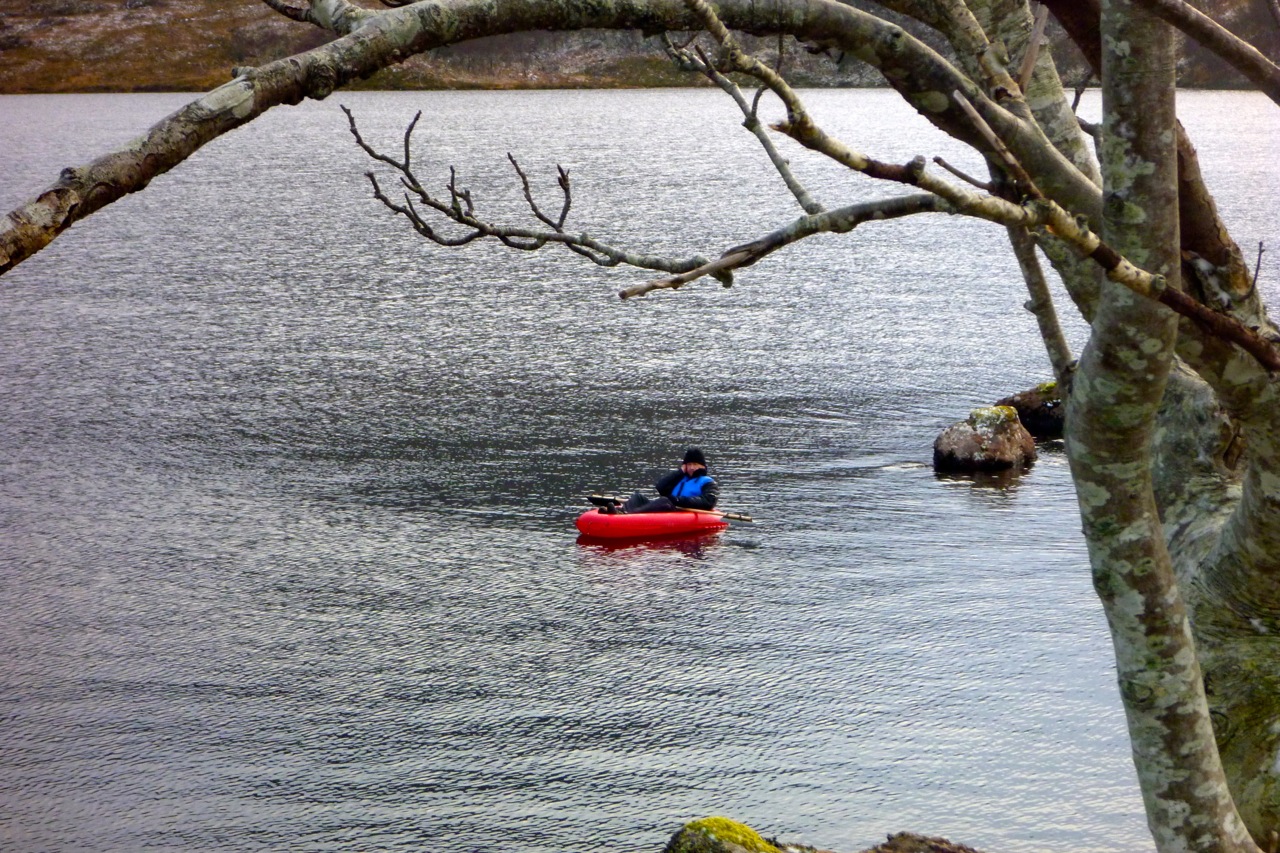
It took some prodding to get packrafting newb Robin (80kg + clothes) in the Supai and I’m not sure I blame him. A sudden move could see the stern dip down and douse the butt. After fitting his closed cell mat to keep warm and protect the thin floor, he set off for a quick spin and soon realised there wasn’t so much to worry about. Paddling gingerly with his home-made paddle (a broom stick, two sawn-down buckets and zip ties) he did a few loops while learning to control the annoying yawing you get with short packrafts and slackrafts, as well as managing the less welcome bobbing which might amplify into a back-end pour over. Yawing keeps the speed down which may be just as well. Start paddling too fast and the bow will rise with a corresponding drop at the stern when slowing down, again risking a pour over in wavy conditions.
Having established he wasn’t going to sink with all hands, I lowered Robin’s 10-kg pack onto his legs then hopped into my Yak. The pack’s added frontal weight should minimise the Supai’s yawing – at least that’s the effect on my Yak. But it’s well known that first time in a new packraft, especially a short one like the Flatwater, paddling efficiently is an acquired knack. Our extra chilly scenario (not helped by his experimental B&Q paddle) meant that Robin couldn’t really relax or bomb around in the Supai. (I tried his B&Q but soon sent it back as it brought in unwanted splash all over my boat). A gust rolled up the valley, rippling the loch’s surface, adding further to the feeling of anxiety in the Supai. From my PoV it looked like the stern was more than half sunk at times – and half sunk on a round tube makes pour-overs all the easier. I skimmed over to the other side and got out to get some long shots and was reminded yet again what a great boat my Yak is. No worries about getting in clumsily, sudden winds or carrying Robin’s pack. Sat here a day earlier when a gale was ripping through at an average of 35mph and gusting to twice that, it may have been a different story, but my long-bodied, yaw-suppressing, high-sided, tough hulled Yak inspires confidence, even without the spray skirt.
The price you pay is weight and bulk. Ready to paddle, at 3.1kg with seats, heel pad, pack attach and lead,plus other straps and some mini krabs, my boat is 4.5 times heavier than the Supai as tested, and even more bulky when you add in the blow bag, skirt and repair kit: the red bag shown right.
Robin slowly waddled over to the south edge of the loch and got out with care before pulling the plug and rolling it up. As on any inflatable, the floor is vulnerable and we discussed ways of getting round this. One problem is the Supai’s floor glues to the hull ring above the lowest points in the hull tubes which means the undersides of the hull are actually lower than the floor (until you sit in it on the water). Using a thicker floor panel won’t eliminate all possible wear. Robin is a versatile home-fabricator (as his B&Q paddle proves) and we decided the least invasive way of protecting the entire underside – hull and floor – would be to string a sheet of whatever you like from the peripheral half-inch hull seam (the seven reinforced tabs not being quite enough to do the job). No messy, irreversible, crease-inducing gluing required, just a line of holes along the seam plus a drawstring. Pre-emptive protection is something I’ve done to my Alpackas’ ballistic nylon floor and although it won’t look too neat, a floor sheet would enhance the less robust Supai’s undercarriage, despite a weight penalty.
Our conclusion He may have got used to it over time, but the Supai felt too skimpy for 80-kilo Robin. Ill-dressed on the day and over-fed in general, I didn’t even try to get in. Build quality is great and the fabric I could live with; it’s much better than slackraft PVC and the extra care needed in handling is well worth the weight saving over an Alpacka. Factoring in experience, company (support), weather conditions and operator weight, the Supai felt right on the limit. Initially you’re reluctant to paddle normally for fear of swamping which could turn exponential. Alongside a Yak it’s a pretty slow too, although I don’t think that’s a flaw. My Yak is slower than my IK which in turn is slower than … As long as it makes progress, a boat is as fast as it is.
Alpacka’s Scout might be a fairer comparison with the Flatwater II. According to Alpacka stats it weighs 1450g, is 4.5cm narrower, 2cm shorter inside and 26cm longer overall, while costing at least $200 more in the US. That still puts the Supai well in the ballpark on weight and cost.Anfibio’s Alpha XC is another which I’ve actually tried. Although it looks to have been designed for the canyon lands of southwest USA, for the lighter paddler the Supai could a great packraft for less predictable Scottish conditions involving short, flatwater crossings. The negligible weight really opens out the options and means you don’t have to get too fanatical about the rest of your gear which can translate into greater comfort.
I knew this even before I saw the boat, but what I’d love to see is a Flatwater XXL more closely matching my Yak’s (or my) size. I’d happily trade the extra 8cm of width the Supai has at the hips for fatter and higher tubes all round, plus another 10cm added to interior length. It’s hard to think that would add up to much more than a kilo overall, but would reward the portlier or overnight-equipped paddler with a more versatile boat able to deal with dodgier conditions. Let’s hope this is part of Supai’s game plan. * SAG later released the Matkat. Not exactly what I was thinking but we tried that too.
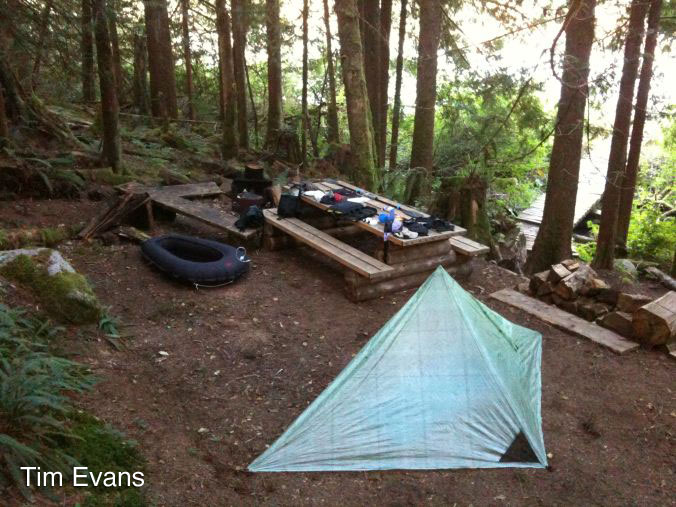
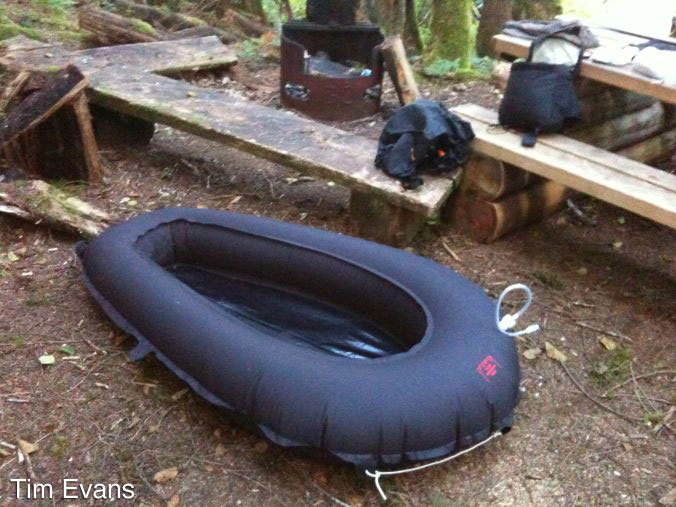
Photos also by Tim Evans who writes:
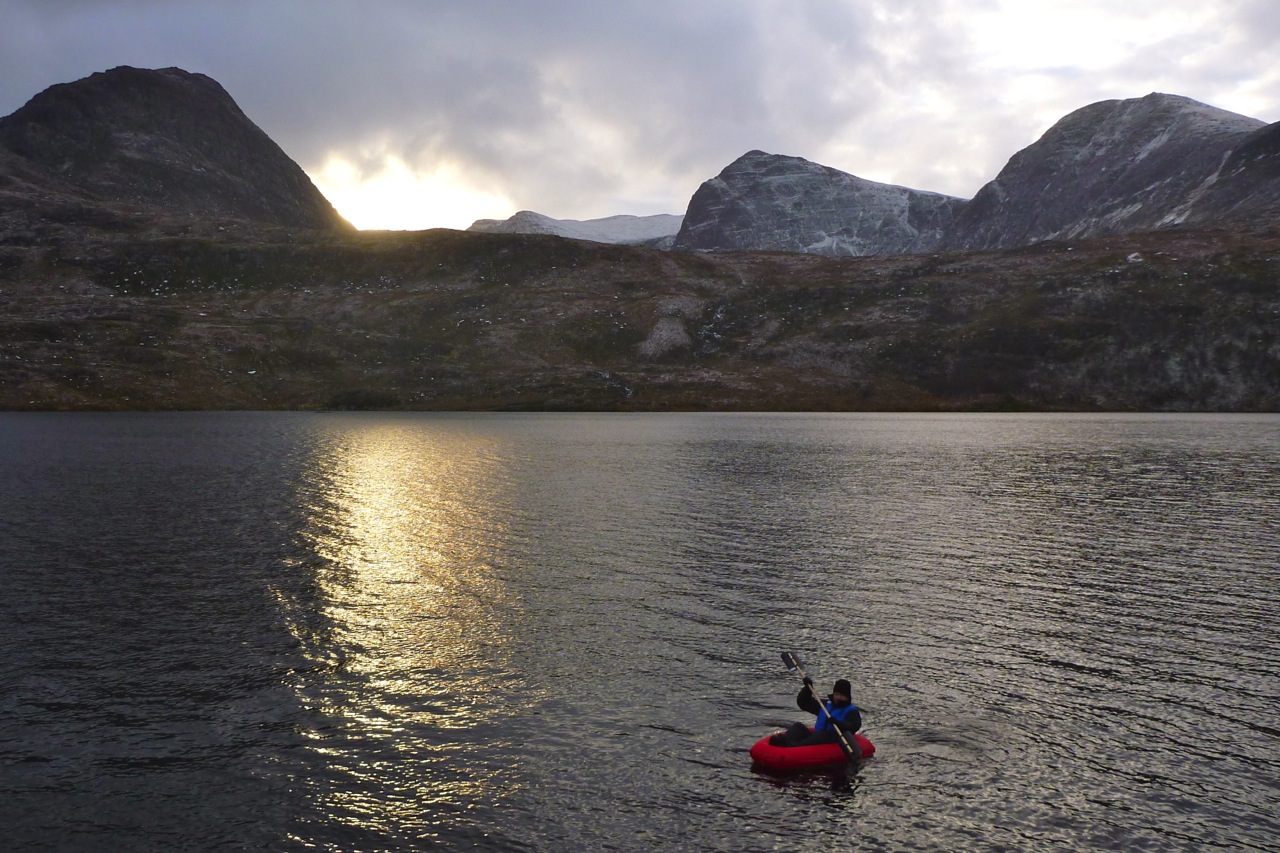
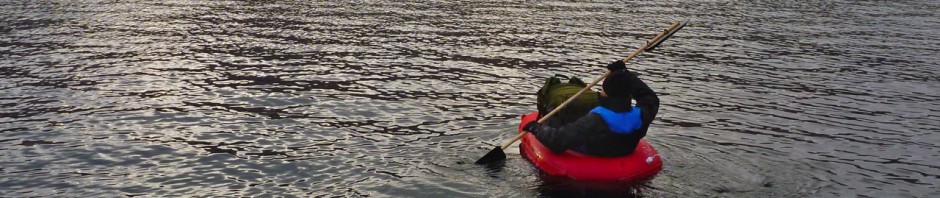
I got interested in packable boats as I love both walking and being on the water. My first major trip was in an Alpacka Yak from Whistler to Vancouver. I hiked for 2 days, paddled the Cheakamus River for a day (with some easy whitewater), then paddled 24 miles of ocean inlet back to Vancouver. This trip was only possible because of the packraft. Then I bought a Supai and did 35km through a lake system north of Vancouver that included a number of portages. I saw a pair with a canoe which they pushed on a trolley through the portages with 200lbs of gear. It took them hours to go a few km. I did the 4-day trip with 16lbs of gear including food, just to see if it could be done (it can). I could have jogged through the portages with my little boat tucked under my arm. The Supai was a light as it gets, but SLOW for any sort of distance.
Gumotex Twist Mk 1 Around 2010 Twists became a new direction from Gumotex: lighter, less rugged boats that suited recreational users. The original models didn’t last. The Gumotex Twist 1 (LitePack then later teflon-coated Hevealon, 2.6m long, 79cm/31″ wide, 6kg, max. load 100kg) became the replacement for the popular Solar. There’s a good review here and the author, Dave D, sent in some photos and updated impressions below.
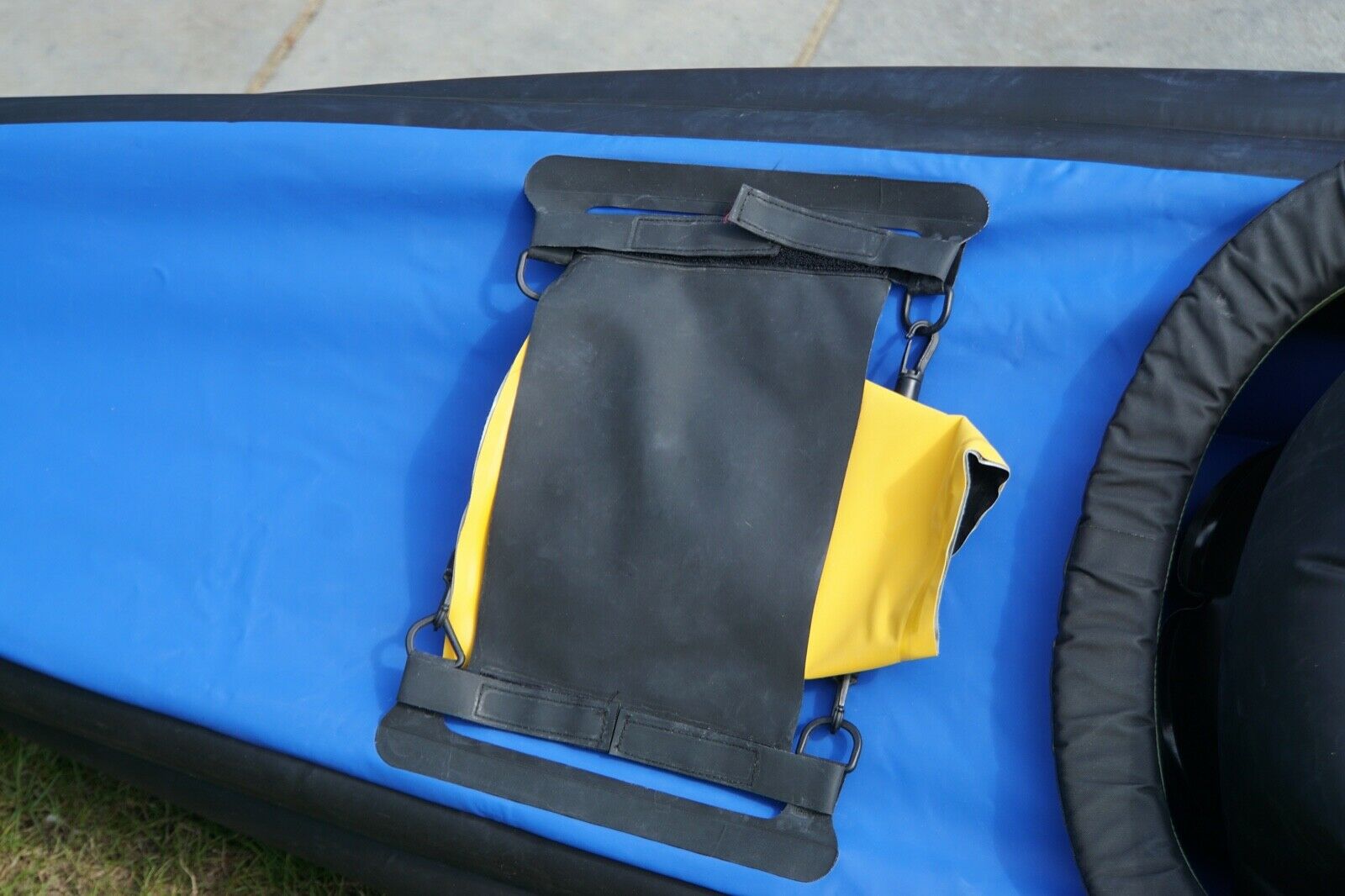
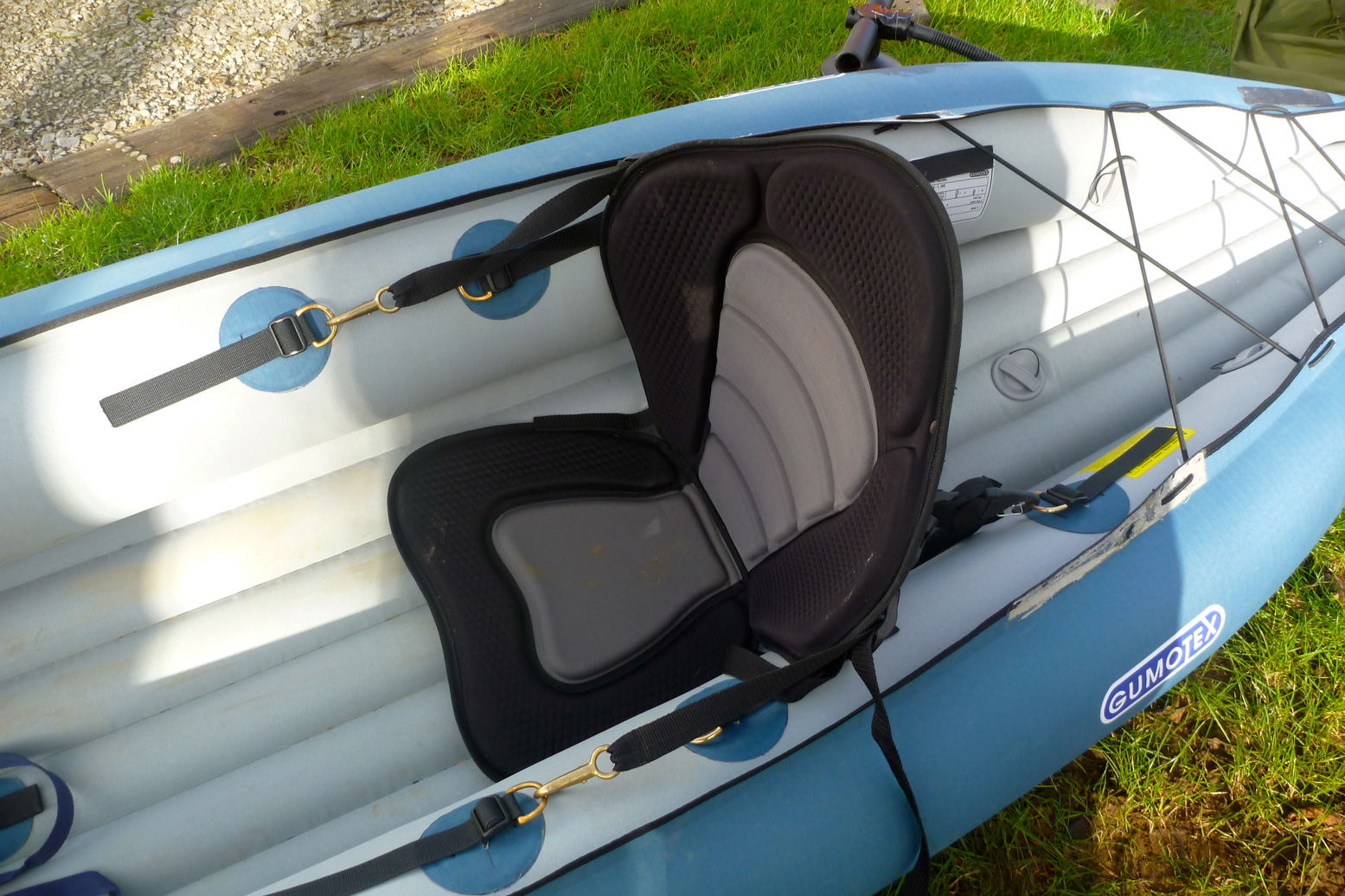
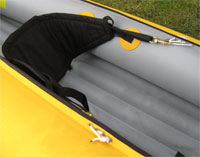
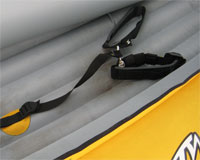
Notice the black backrest on his yellow boat are not the bulky and fixed stock items which have been cut out, so making the boat even lighter. I saw a Twist recently and realised they use the textured LitePack material for the whole boat, inside and out. This must be what makes them so light, while being like rubberised canvas it also takes a little longer to dry and a little less slippery on the water. This video below shows some disastrous porosity in a Lite Pack Twist. It can be fairly claimed that was an exception and the boat was replaced, but it’s hard to see that ever happening with full Nitrilon. A few years later the next Twists models were made in Nitrilon Lite.
The Twist 1 was not a lot bigger than my Alpacka Yak (above) and is only twice as heavy. On a recent Medway run I found the boats surprisingly similar in paddling speed. I assumed my flat, wide Yak would be slow. But this was on a day with a good swift current. I think with the more usual Medway deadwater the flat-bottomed Yak would have been more tiring and slower overall. This Twist also had its original seats cut out and replaced with an SoT pad.
As for a Twist II, a mate got one along with a T1, and he likes the lightness above all. Vital stats on that one are 3.6m/11ft 10in; 80cm/31.5″ and just 9k/20lbs, so nearly as long as a Sunny, as wide too but nearly half the weight which makes hauling with boat in a pack much more viable. He has since got a new T2 but prefers the lightness and compactness of the old one, once he’s swapped out the seats.
[Dave D]: Here’s a few more thoughts now that I’ve had a chance to use an original T1 a bit longer:
1. The inflatable seat proved to be junk. It kept developing major leaks – always at the point where it is folded through a 90 degree bend. Clearly this is a stress-point which the kayak’s fabric construction can’t handle. After my first one popped, I sent it back to Gumotex who replaced it – although this didn’t go smoothly: the first time they just sent the boat back to me without having done anything to it! Eventually, they sent me a replacement boat, but when the seat on this one popped I decided to rip the inflatable seat out and replace it with a more conventional back rest as you can see in the photos. This is far better, and also makes the boat narrower – I now don’t skin my knuckles against the side of the boat with each paddle stroke!
2. The inflatable footrest is useless [as it is on many Gum boats – see this]. If you want to paddle, you need to brace your foot against something, and this isn’t it! I decided to remove the cushion and replace it with two foot-loops on an adjustable strap. I was a little dubious about having my feet strapped into the boat in case of capsize, however I’ve found I can get my feet in and out without any trouble.
3. Before making the above two modifications, the boat had a major flooding problem. The stern sat too low in the water, so if you got a wave from behind or if you put your bodyweight too far back in the boat (e.g. because your inflatable back rest had gone down!) then water would swamp the boat from behind. Having replaced the seat and footrests with adjustable ones, I can now set it up so my bodyweight is well forward. This has so far eliminated the flooding problem, but I imagine you’d still have a problem with steep waves hitting you from behind. That said – when it floods you just jump out, turn it over and jump back in again.
4. I still love the boat. Whenever I’m travelling with work, I keep it in the boot of my car with a drysuit and a 4-piece collapsible paddle. If I’m on the motorway at rush-hour, I pull off to the nearest river and do one hour’s hard paddling up and one hour back for a bit of exercise and to de-stress. I often paddle on canals with locks, and it’s great to see the envious looks of canoeists when you do the easiest portage they’ve ever seen! The boat is actually quite quick. A couple of nights back I even started playing in a fast (but shallow and safe) weir by moonlight.
I also use it to take a short-cut across the harbour in my home town. It feels very stable, even when there’s a swell. I’ve put nav-lights on it and I have no problems zipping around and keeping out of the way of boat traffic. Dave D
This was Gumotex’s take on Grabner’s Holiday IKs, later reimagined by Incept (I’m pretty sure it’s in that order). In other words a twin sidebeam IK but with inflatable decking so making it an inflatable SinK (sit-in kayak). You didn’t get many of those to the pound back then, though Gumotex now do the Swings and Framuras and Aurion.
What they said The Gumotex SEAKER is the first fully inflatable sea kayak worldwide. It is designed for long trips in sea bays, on big lakes and large estuaries. The small volume of the packed kayak and big space for baggage predetermine this kayak to be used for expeditions. The user appreciates especially how easy and quick the kayak is ready for use. You can inflate the kayak within ten minutes. The biggest benefit of the Seaker kayak is its safety. The hull is extremely stable and enables remounting from the water without the aid of paddle floats. And what’s more – thanks to the inflatable design no water can get into the capsized kayak.
In case you’re wondering, twin side beam – two smaller stacked side tubes instead of one fat one has benefits. And on this model they were made from Mirasol PVC with a Nitrilon deck and floor. The Mirasol was thought to be less elastic and so the Seakers could run higher-than-then-normal-for-Gumotex 0.25bar. It made the sides taller so less swamping, though of course your deck and skirt will see to that. The interior space is greater and two side beams make the boat flex less longitudinally – a problem with all long, non-dropstitch IKs once they got beyond a certain length. The drawback was that the boat was taller in the water, so more wind-prone.
Once I thought a Seaker could fill the dark corners where the Sunny did not shine, but at 34kg the solo was more than double the weight of a Sunny, Incept K40, Grabner H2, Amigo or my later Seawave. The high-quality Korean Mirasol PVC was clearly much heavier than Nitrilon. Like a proper sea kayak, it had hatches and a rudder and could no doubt be rolled, but to me, half the appeal of IKs, even at sea, is the SoT aspect. If you want to sit in and want to be portable, get a nice low-profile Feathercraft (since closed down) for nearly the same price, less weight and which looks less like a floating, wind-prone torpedo.
They also did a 2-seater Seaker II but I got the feeling these were exotic, rarely bought boats that were heavily discounted in North America before disappearing around 2014. It was the end of the line for the heavy Seakers which is a shame because the only thing wrong with them was the weight. Still, I’ve never actually seen one so what the heck do I know about Seakers? A blogger in Canada got one cheap a few years ago but didn’t keep it long. A double went on eBay in 2016 for £410. Now in late 2025 the semi-dropstitch Gumotex Aurion looks like it fills the gap, only for over €2000.
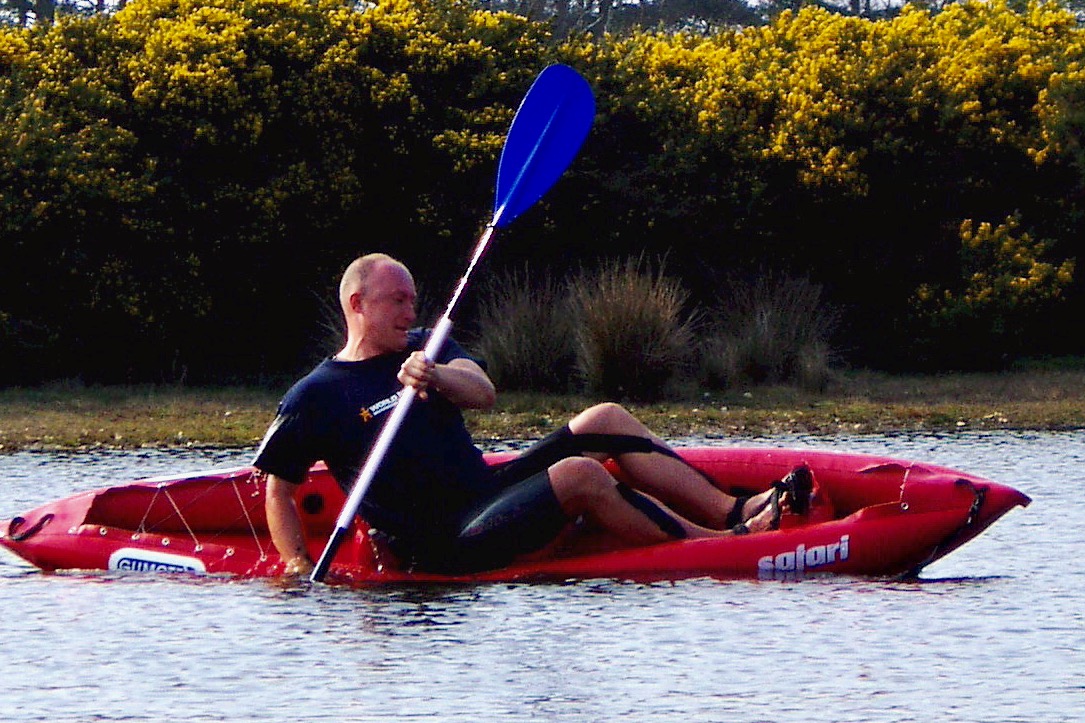
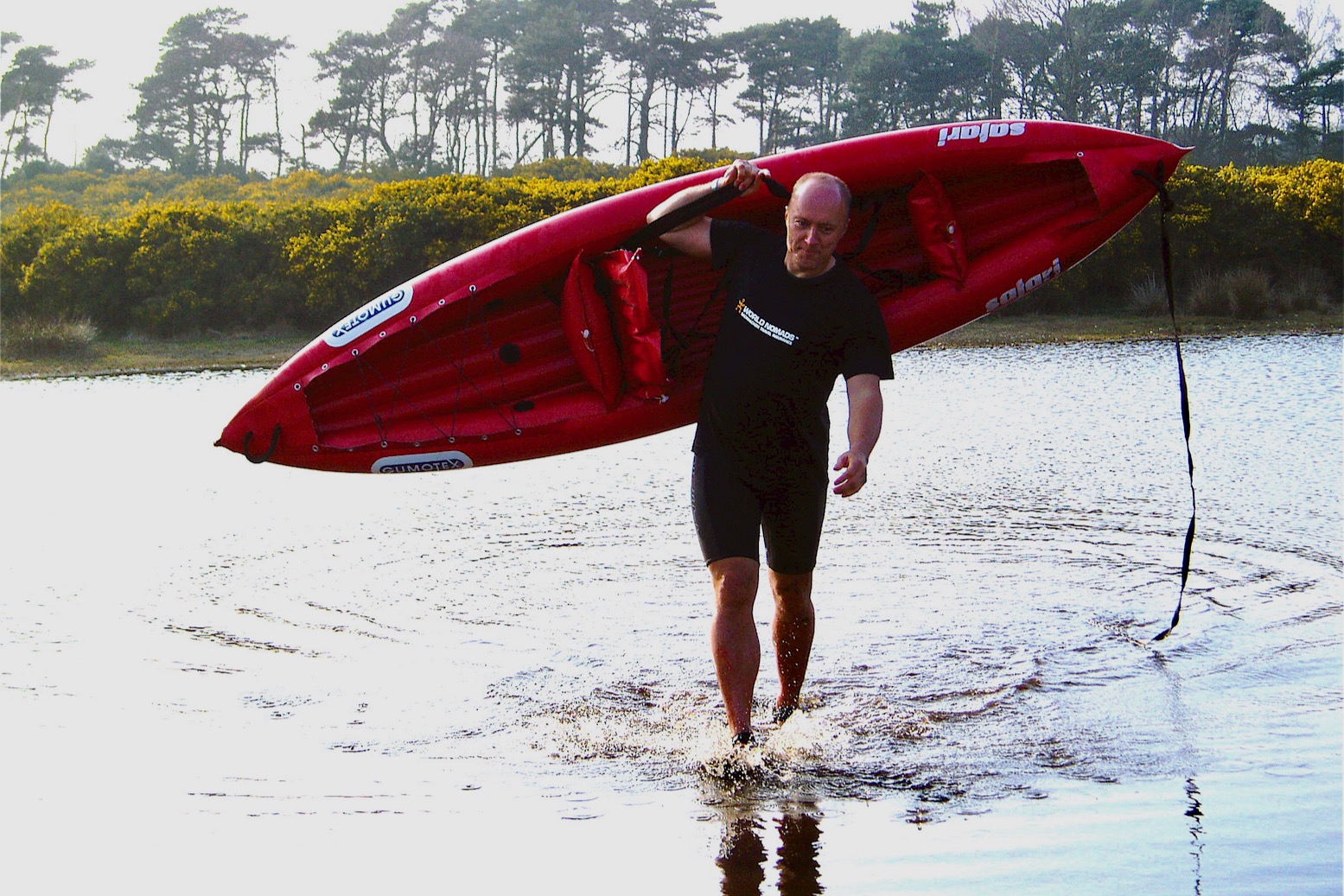
Gumotex Safari (pre-2003) Back when I didn’t know an IK from JK Rowling, my very first IK was a used Safari. And light and tough though it was, this early model Safari was a mistake. The Mk1 was a tad over 3 metres long (same as a Solar 1), 72cm wide and weighted just 12kg.
I pretty much knew it wasn’t for me when I bought it used in 2004 for £120 from boatpark.cz, but it was so cheap it was worth the punt. At my weight I pretty much maxed-out the boat’s 100-kilo payload, and at 6.1” I looked like I was sat in a small bath.
River Frome, Dorset
Without a skeg I also found it impossible to paddle straight (but had no experience then; see this). It felt nice and fast but way too tippy to inspire confidence in a large beginner. It’s the only IK I’ve ever had which I could barely stay in. And for me it was way too cramped to pack a useful load for a few day’s touring which was my plan all along.
Croatia
Anyone with a bit of experience would have realised this before they bought it, but I just wanted to check out a proper IK close up before moving on. I soon got a Sunny and have never looked back with Gumotex IKs; the Safari was passed on to my g-friend who’s a foot shorter and half my weight.
Scotland
A great feature on the Safari were the thigh straps (visible in the pics above). They really connect you to the boat and help you to paddle hard by controlling the yawing, as well as the roll to correct tipping over: great for the back and stomach muscles too. Knowing now that later Safari models are more stable, I’d be quite keen to try one again as a play/day boat.
Note. I’m told post-2003 Safaris (below) have a different hull design and are less tippy. The newer one had twin side tubes but still a rounded hull profile. BoatPeople in CA don’t mince their words when they talk about it still being tippy in certain conditions, and the current short Safari is not the same hull shape as an old and stable Solar 300 we owned. As for weight limit, I doubt that’s different.
North American Innova importer Tim R. told me “I would rate the Solar’s stability as a 9 out of 10, the old Safari would be a 6 and the new Safari an 8. The very first Safari prototype was a 3!”
Croatia
New or old, a Safari is also a self-bailer which is highly desirable when the going gets even a little rough, but only if you’re not too heavy to end up sitting in pooled water, as I was. G-friend used the Safari in Croatia and found she needed about 10kg of rock ballast in either end (see pic above) to make the boat stable and, as it happened, faster. Without them the boat sat high and even she felt tippy. Therefore the optimum weight for a pre-2003 Safari would be around 70kg. Now you know. We sold the Safari and got a Solar 1 or 300. The Safari is still in the Gumo line up. For a small WW fiend, a Safari would be a great little boat. There are plenty of videos online testifying to that fact.
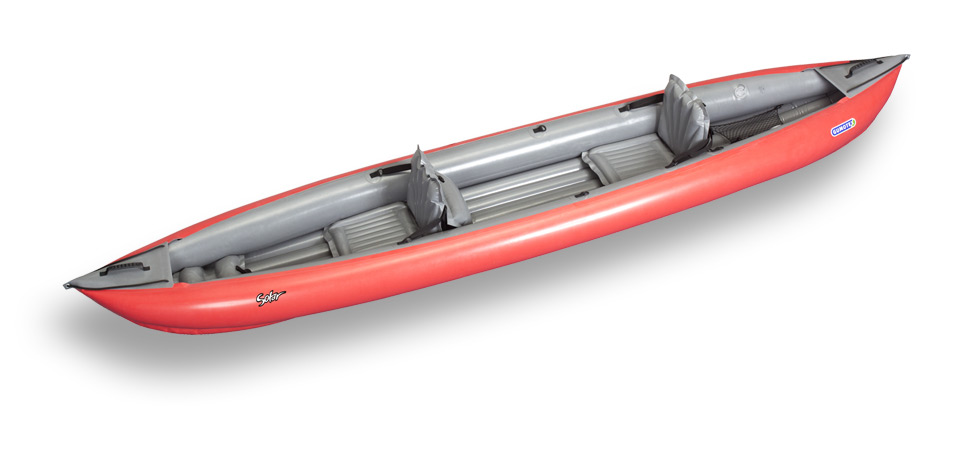
The Solar 410C was a step up from the short-lived, fixed-seat Solar 2 (below).The price in the UK with two seats and a skeg was £470. It became for all intents and purposes the new Sunny, because the old discontinued 405 Solar and Solar 2 (below) were usefully long touring boats ruined with fixed seat designs: either the original space-wasting thwarts (at least they were replaceable) or worse still, Helios-style fixed seats in the half-coat (Lite Pack) Solar 2 – the pits!
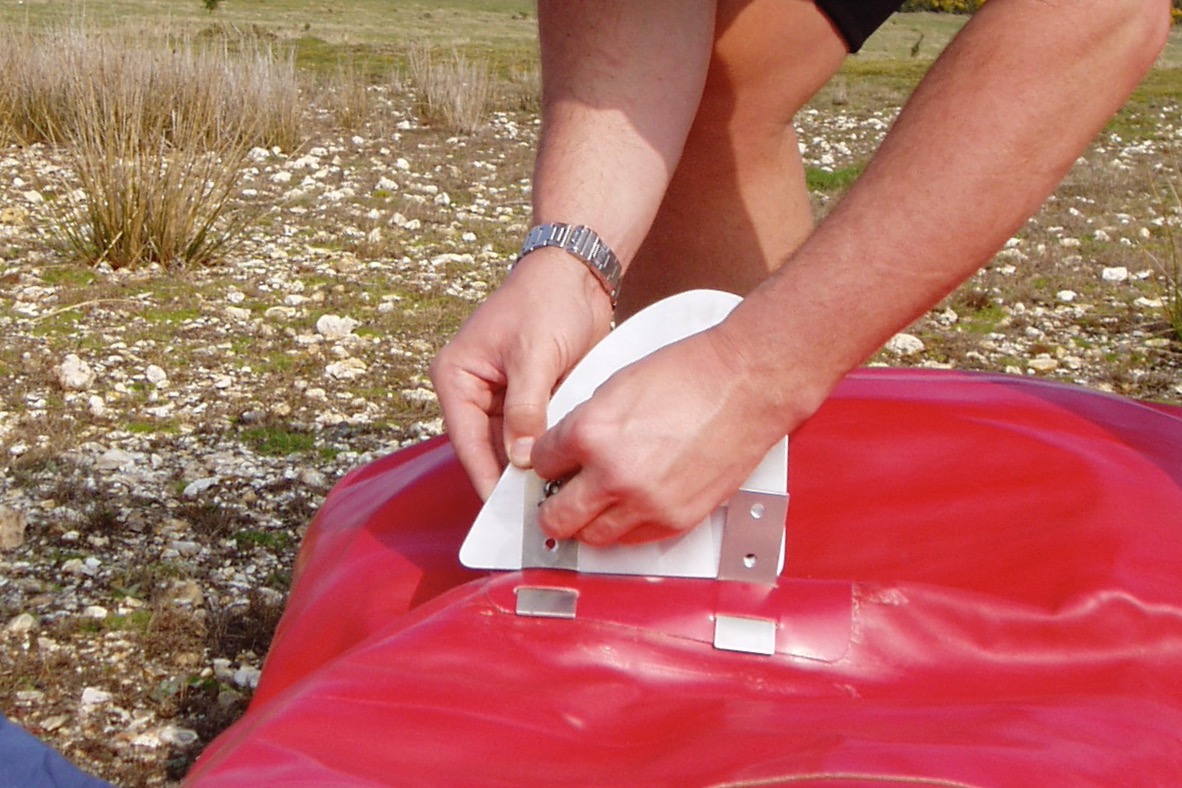
Luckily, the Solar 410 ‘C’ (for ‘Convertible’) has two or even three seats which can be removed and one re-installed the other way round to make a big, single seat kayak with lots of room for stuff – nice. You also get adjustable footrest pads (see here for a lighter and simpler idea), the usual half-arsed cargo net in the back, and the usual floor PRV too. Gumotex never seem to mention this useful feature, but of them I am a big fan. If not included, the black plastic skeg might be extra (and is worth getting). On the 410C you don’t need a skeg-mounting patch at both ends because unlike a Sunny, you simply move the seats forward or back on the D-rings, not turn them the other way. In the unlikely event your 410C doesn’t have a skeg patch, it’s not so hard to glue one on.
The stats for the Solar 410C are 4.1m long (Sunny 3.85m); 80cm wide (Sunny 77cm), weight 17kg (Sunny 16kg) and payload no less than 270 kilos (Sunny 180kg). With pressure still at 0.2 bar/3psi, that looks to be quite a jump in payload for just a little extra volume. If you can imagine three hefty adults sat in the new 410C, that equals 270 kilos – the slightest wave will surely swamp the boat.
But one thing I do wonder with a 410C (and why I got a Grabner instead, even at nearly twice the price), is that with my weight I suspect the longer hull would sag even more than the Sunny. This was why I moved on from the Sunny after many years, although here I discuss ways of getting around that flaw
Gumotex Solar 405/ Solar 2 The original, pre-2007 Solar 405 (below) was similar to a Sunny of the time but longer. Unfortunately it used space-wasting thwarts (fat air cushions) for seats. For that reason a Sunny was always better solo touring choice at the time.
The post 2007 ‘Solar 2s’ (right) became even less versatile: horrible fixed seats like the Twist and Helios may give great support, but along with fixed footrests it all means it can’t be set up optimally for solo paddling without chopping it all out. As on all post-2007 Solars for a while, only the outer wet surfaces were coated, and then the Solar 2 was dropped in favour of the broadly similar but more popular Sunny MkIII, the semi-decked 3.8-metre Helios II (also with fixed seats and decking) or even the shorter Twist I. By 2013 the 410C set things straight again and that soon became the Solar 3 which is still around today.
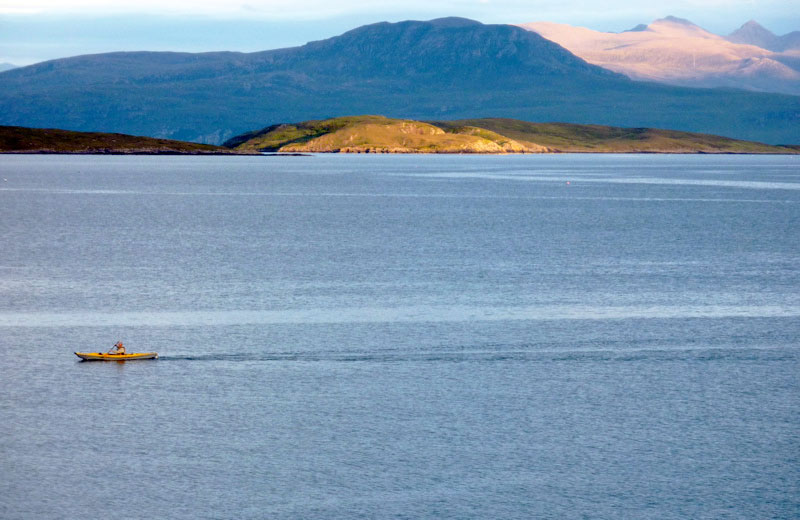
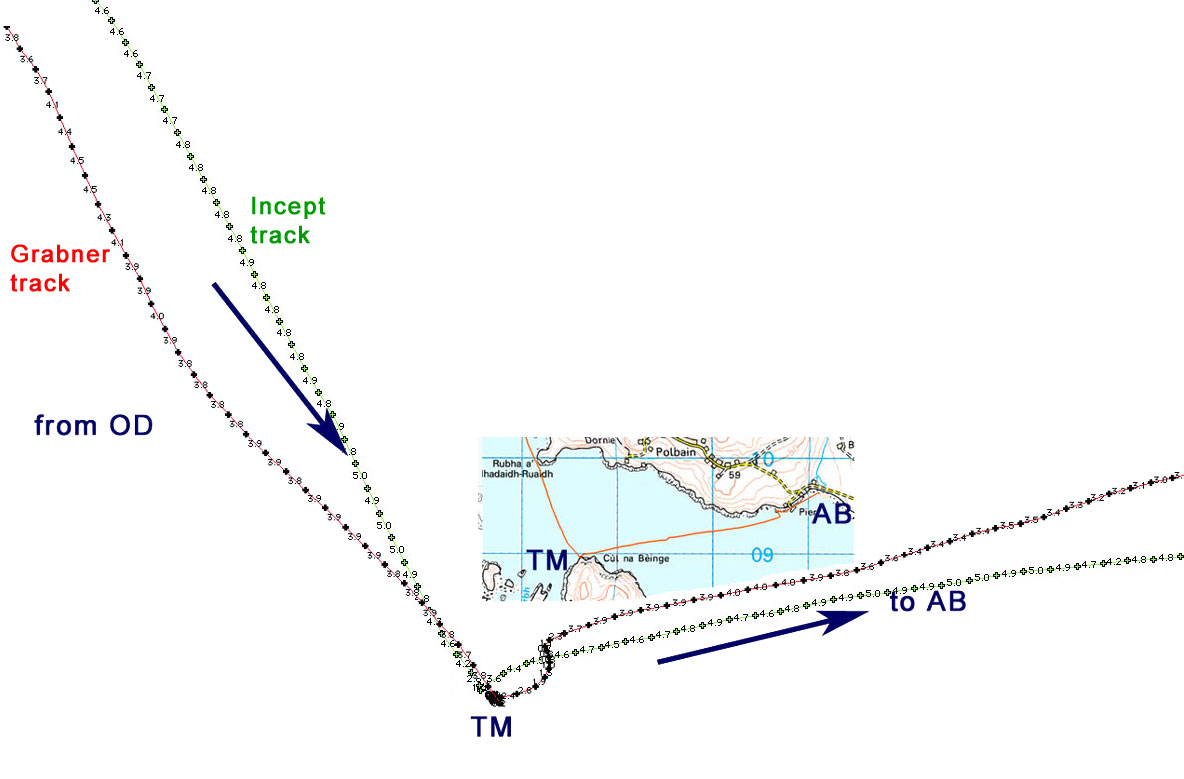
A couple of years ago I did a speed test on my then-new Incept K40 over three and a bit miles from Old Dornie to Badentarbet beach via Tanera Mor island.
I recall setting out flat-out on a cool, calm evening, cruising hard close to 5mph at times, with a burst after a rest up to 5.2, after which my energy levels tailed right off because I was well and truly pooped. I recently decided to replicate that route in similarly calm conditions and see how my new Grabner compared.
Prior to that we were out yesterday in windier and choppier conditions when, with a 10-15mph back wind I averaged about 4mph with a burst up to 5.3. Coming back into the wind we decided to try the Amigo two-up, as it only requires the front backrest moving forward. Towing the Solar together we managed a steady and sustainable 3mph with a burst of 3.8 into the stiff breeze. And on a quick spell downwind we got up to 4.8mph. It’ll be interesting to see what we can manage two-up when not towing a kayak
Though twice the weight of the g’f, I sat in the front and got pretty wet from the chop, but up here found the Amigo’s narrowed beam and lack of annoying finger-snagging seat lugs made paddling easier, even without a footrest to brace off. We seemed to clash paddles less than the last time we did two-up in the Sunny on the Vezere in France. Perhaps there’s more space between the seats in the Amigo even though it’s overall 10cm shorter than a Sunny.
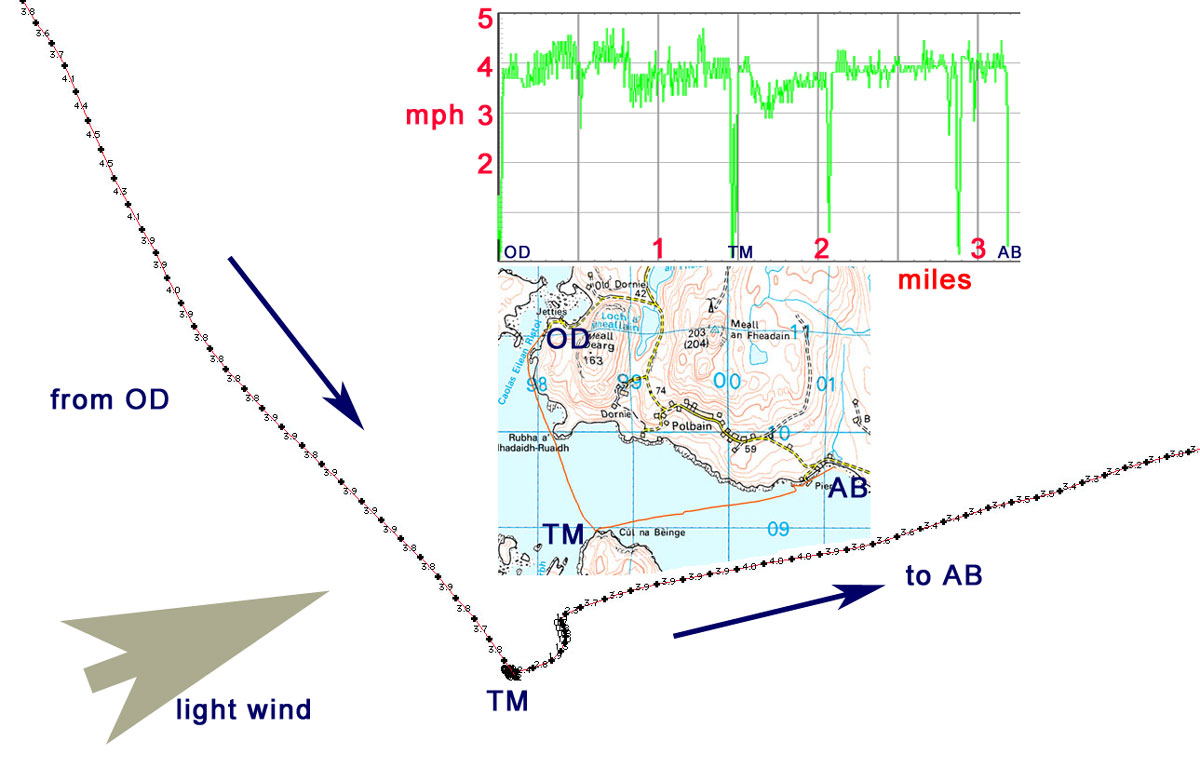
As it happens once back on the beach, a French couple in a motorhome were drying off their Gumotex Solar 410C. They’d also been put off from exploring the Summer Isles by the offshore wind. They set out this morning and I see that the two seats do look quite close (ropey photo at max zoom on the right). I mention this because, as a reminder, I rate my discontinued Grabner Amigo as very similar to Gumo’s Solar 410C (see table below). Main difference is more pressure in my Amigo make it a stiffer and probably faster boat – but at twice the price of the Solar while you can still buy it. Back to the speed comparison test. Today was a calm day with a light wind from the southwest and when I set off the tide just beginning to ebb.
I’m getting accustomed to the thigh straps and the homemade footrest is great. Pulling inwards with the knees to brace off the straps and so transmit more power in the stroke isn’t something I could do for too long, I decided. I think the straps are more useful for last-ditch bracing against tipping in rough seas or rapids. But even then, allied with the footrest they do help connect you as well as you can be in an open-decked IK. Yesterday I’d found the backrest made my back hurt, perhaps because I have those footrests to push off. I’m still not convinced by this rigid backrest arrangement anyway. The cut-down packraft seat is fine (while it lasts) but that bar keeps disengaging from the rubber lugs (since fixed) and I think I’ve already bent it just be leaning too hard while moving about. It won’t be too hard to either get a thicker-gauge backrest bar made or dispense with it altogether and fit something like an Incept blow-up seat using the current lugs (although I see from what I thought here that maybe that’s not the answer). And as mentioned, those forward lugs painfully snag my fingers every once in a while.
Anyway, with barely a break I belted across to Tanera as fast as I could, leaning on a bit of karrimat taped to the seat back which did the trick. I averaged just under 4mph where the Incept had managed about 4.6. That’s also the top speed I clocked in a flat-out burst in the Grabner just before reaching the island, although on both occasions this sort of effort was not sustainable.
On the second leg back to the beach I had a light wind behind me but as I neared the pier I thought I could feel the pull of the outgoing tide. Unlike in the Incept, my energy and speed didn’t drop off much as I approached the beach and I got across at what felt like an all-day sustainable 3.8, with some spells recorded at up to 4.5mph without trying.
What the heck does it all mean? Well, it’s the not-so-startling revelation that the slimmer and two-foot longer Incept K40 was indeed a faster IK than the Grabner (two tracks overlaid on the left). Overall the Grabner is around 20% slower than the Incept.
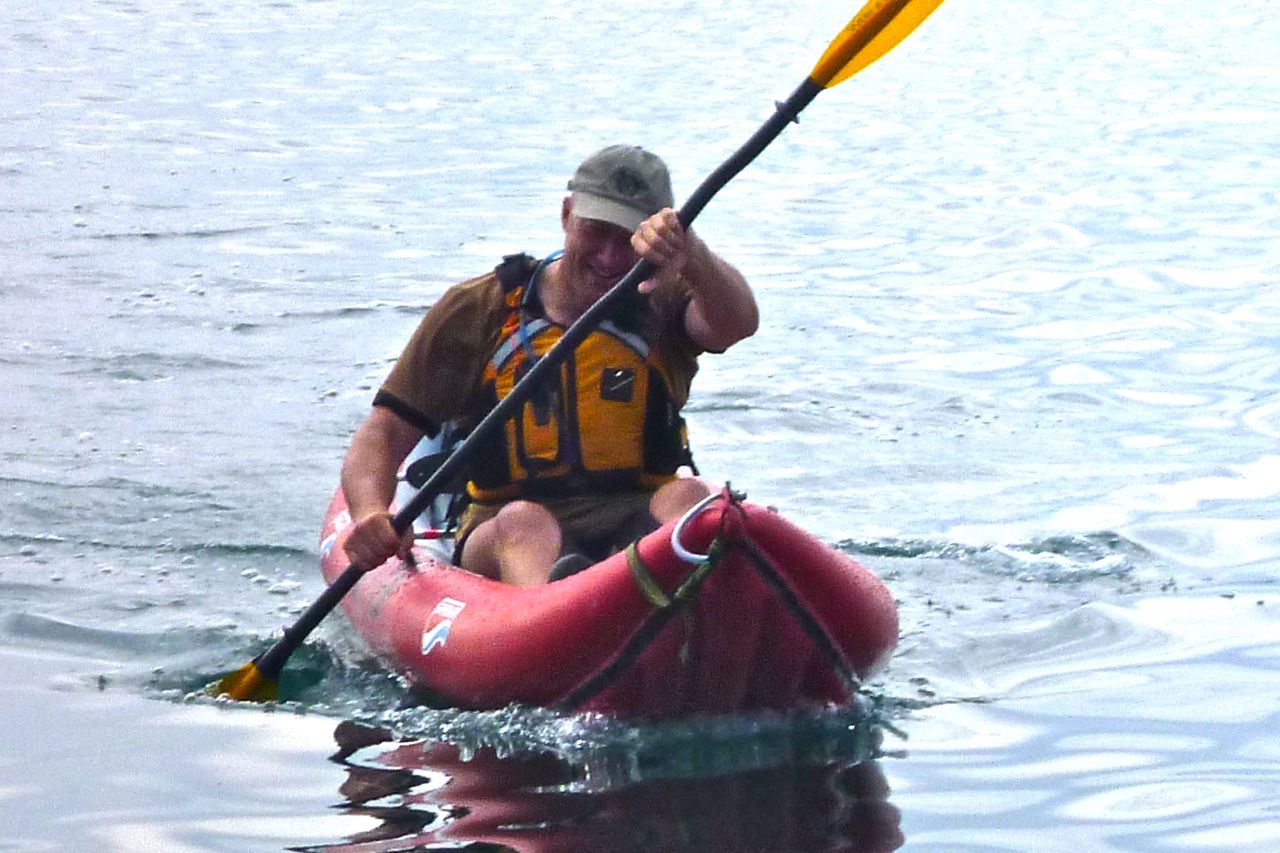
At times at sea or on near-still rivers I do feel like I’m pushing the wide-nosed Grabner like a packraft. That’s another benefit of twin-side tubes, I now realise: a sharper bow is formed, as found on Grabner’s Holiday models too. On the right you can see that’s more plough than bow and must add up to a more effort over a long day, limiting compatibility with hard-shells for full-day runs like this.
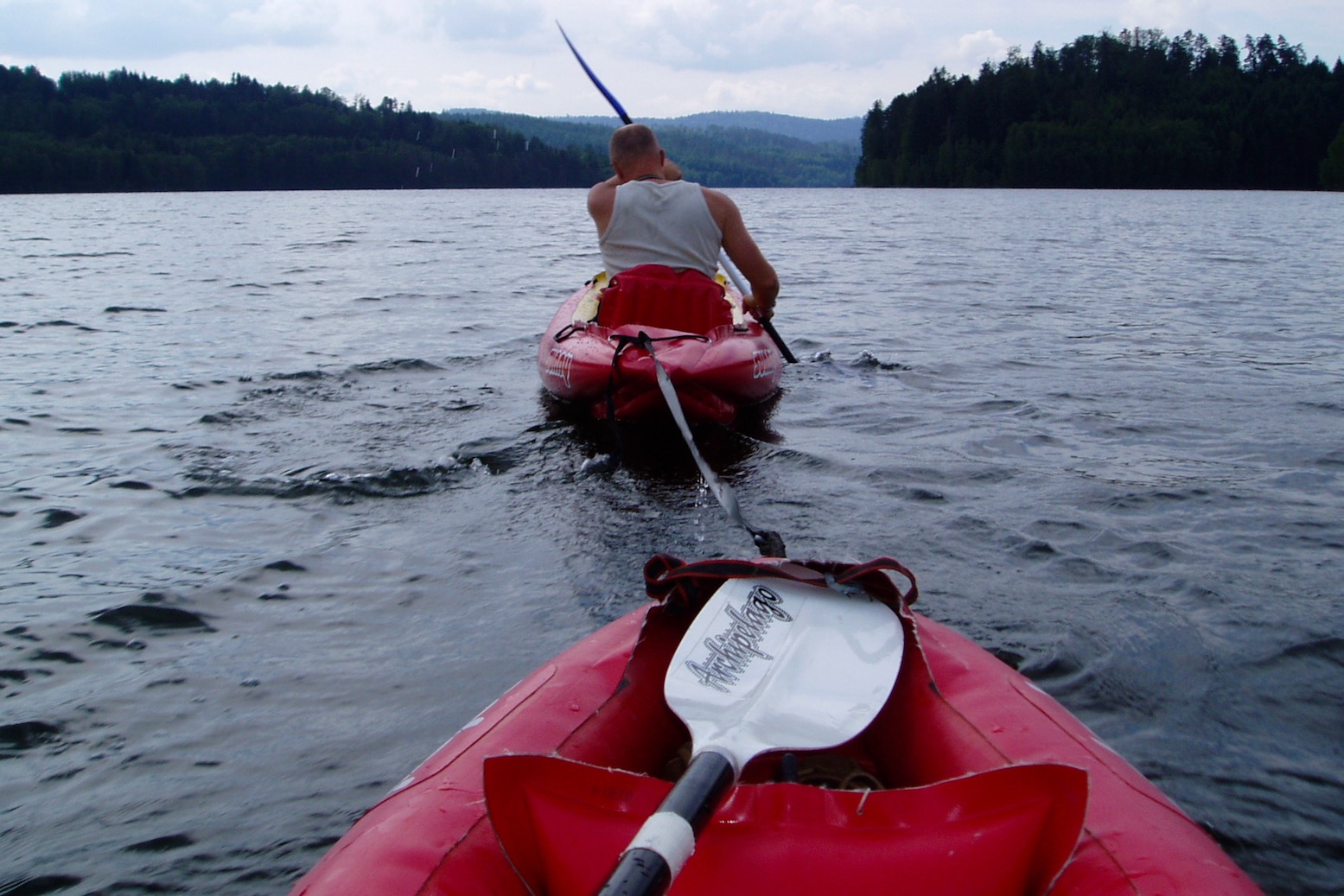
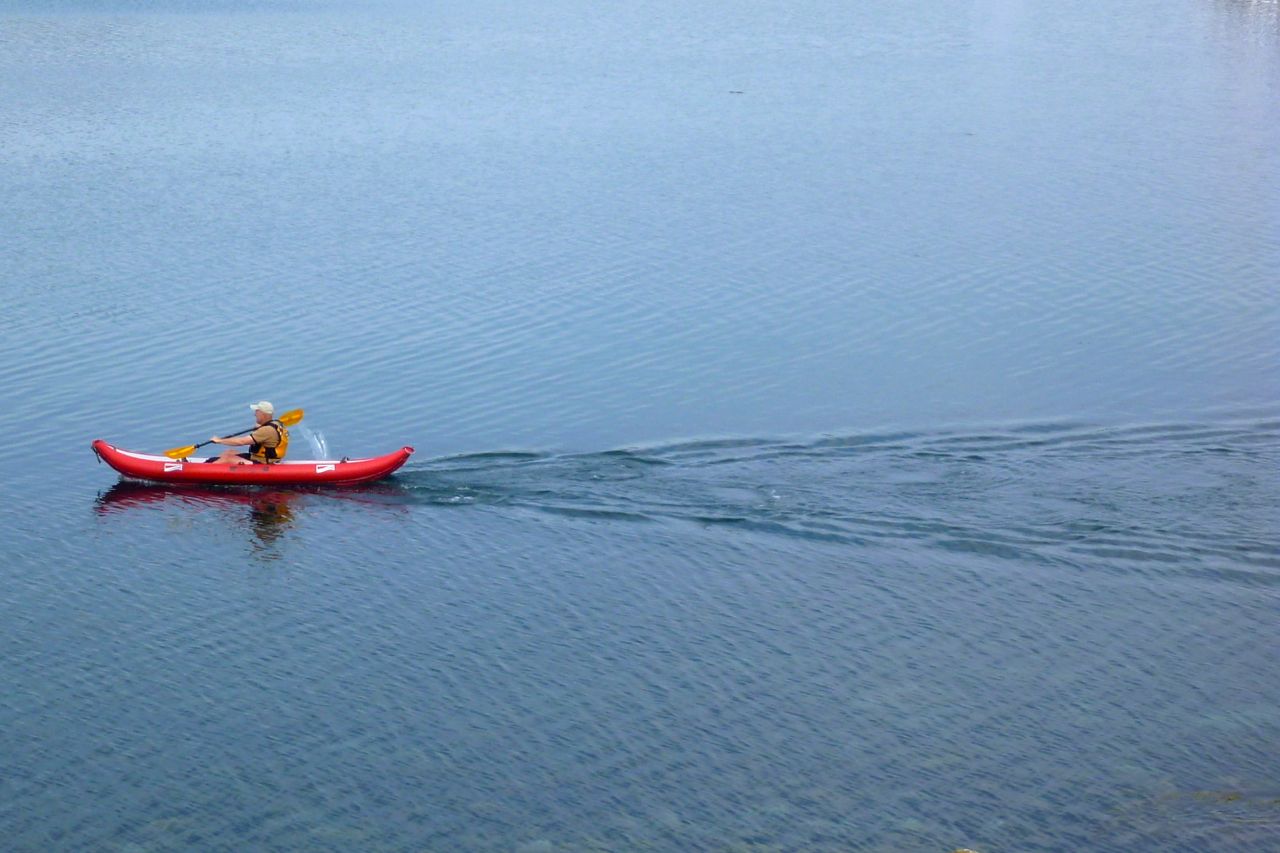
And look at that wake I recall forming a similar conjecture (picture) about how the Sunny ruffled the water when compared to a hardshell’s sculpted bow. Or indeed look again at the Incept’s moderate wake at the top of the page. But then this is all for flatwater operations. In a swift river like those of the <a class="wp-gallery mceItem" style="color: #000000;" title="Kayaking and packrafting in southern France Massif I’m sure the shorter Amigo will be easier to handle than a K40 and so the compromise stands. It’s just that up here the best paddling is in the sea. Surprisingly I don’t miss the Incept’s rudder, having spent years in skeg-only IKs before getting the Incept.
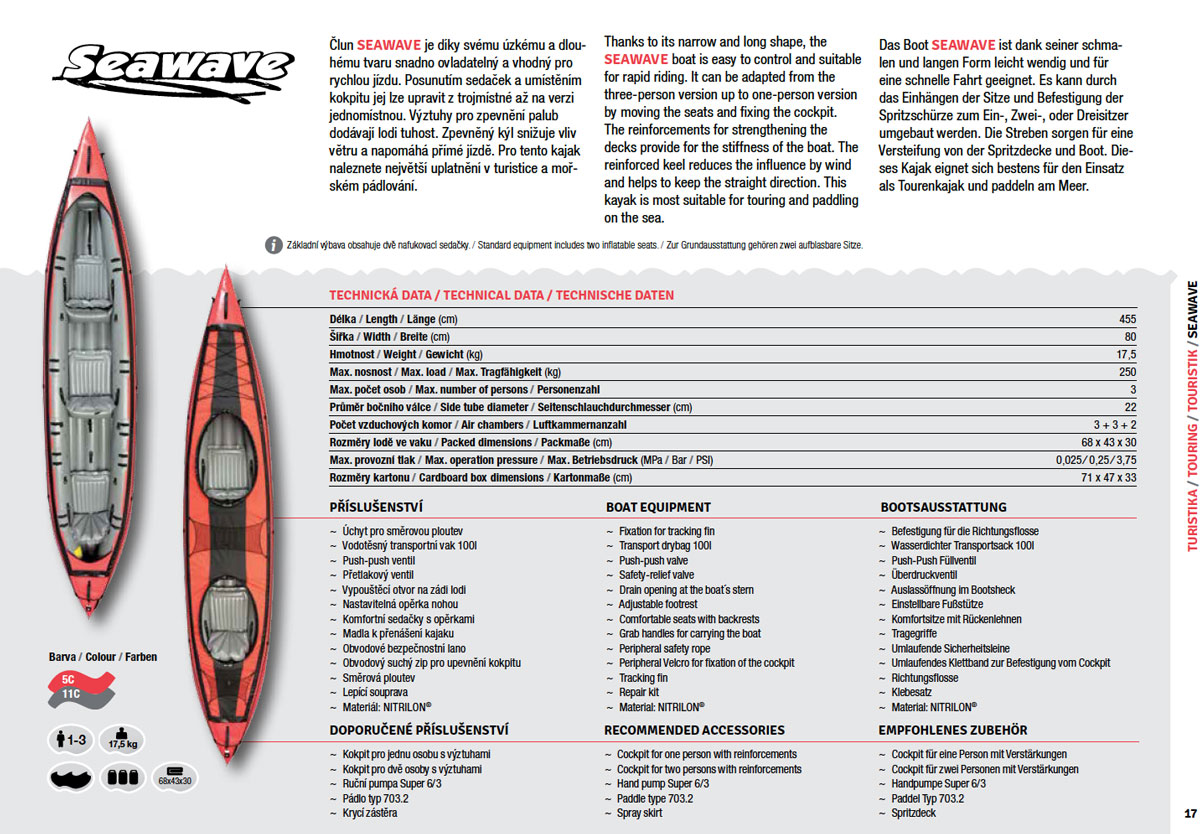
The Seawave was released in 2013 and in 2016 a near-identical model came out with a rudder option. The Seawave can be used as a single, double or triple, and is sold in Euroland for around€1625 or £1425 in the UK. They used to be a bargain. Not any more. In 2023 the Seashine version came out – a Seawave with a drop stitch floor (like the Thaya and Rush); slightly heavier, wider and longer and a lot more expensive.
My stats for my Seawave are 4.5m x 78cm wide and 17kg plus a claimed payload of 250kg which sounds plausible. Significantly, the Seawave’s pressure is rated at 0.25 bar (3.6psi) all round, midway between the Gumotex IK norm of 0.2 and Grabner’s 0.3 bar. Some of Gumotex’s orange series whitewater boats run 0.25 and their IKs were never that shoddy. Having said that, the PRV in the floor of the Seawave has the same ordinary rating you’ll find in a Twist or a Palava or probably any other Gumotex IK (more here) but the adjacent sticker claims 0.25 bar max. It’s the side tubes that now take 0.25 bar, not 0.2. What they now call Nitrilon is not like the stiff old hypalon-like Nitrilon of my early Gumboats. Increasing hull pressure is one way of getting a more rigid and therefore faster IK, but it’s the integrity of the ‘I-beam’ floor that’s the usual limitation. The Seawave has a pressure-release valve in the floor but not on the side tubes, and I read these pressures are said to be on the conservative side. You can’t over-inflate the floor but these Gumboats can handle more in the side tubes providing you watch it when out of the water in the heat.
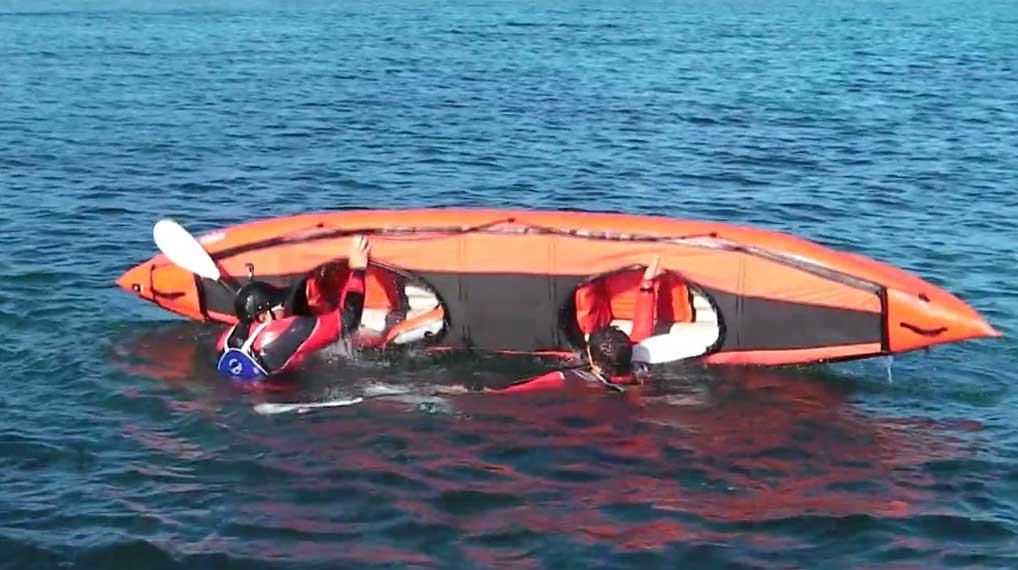
The Seawave is long for an IK, but with just a skeg (optional, but there’s a rudder now), you wonder if this could be hard work to turn into the wind. However, in France kayaks destined for sea use (beyond a certain distance from the shore) must be homologated or approved in some way, and the Seawave has passed this test.
The great thing with the velcro deck (for one or two) is that it can be removed; on my Incept I paddled like this approximately 99.9% of the time, with the deck rolled to one side. Even at the slightly higher pressures, I have to say at one point in the video I noticed the Seawave bending with the swell. My Sunny used to do this, taking on water over the low sides, but with a deck that ought not be less of a problem, even if you imagine there’ll be some seepage through the velcro in heavy conditions or white water.
Flexing is a problem with any long inflatable and even my short and high-pressure Grabner (left) flexedin certain conditions. Manufacturers get round it with metal frames (Feathercraft, Advanced Elements), twin side tubes (some Grabners, Gumo Seakers, Incept) stiff fabric (Incept) or just high pressures like Grabner, but that demands very good construction. Drop-stich panels are the new way of doing it now.
There are more impressions as well as some nice pictures from an actual owner, Norman, right here (translated from French). He ran a 410C for a few years and talks of pumping his Seawave right up to 0.35 (5psi) bar which makes for good speed (6kph average he claims). That is 40% above the recommendation so let’s hope the seams on the Seawave can take it, cap’n.
It looks like grey, Halkey-like valves in the back, not the old-style black ones that Gumo used. And I see that Gumotex have again adapted an idea that I had on my Sunny years ago (right), a drain hole at the back. Only theirs features a neat sliding cover. It could all be the normal process of improvement of course, but I recall that after I had some smaller skegs made for my Sunny (and sold to a few others), Gumotex reduced the size of theirs to the current black plastic ones. And then the velcro deck idea. Whatever, it’s gratifying to see ideas I have tried or written about actually making it into production.
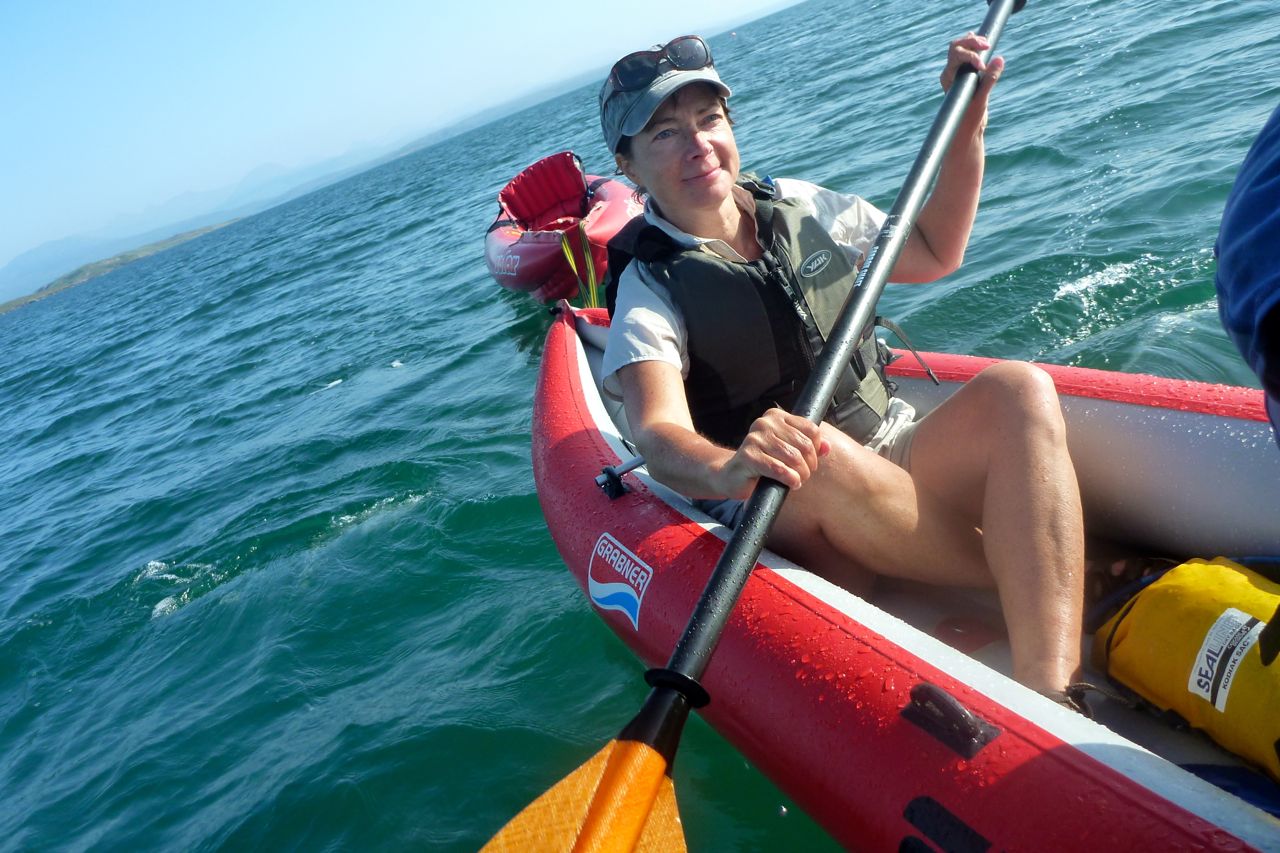
Enough of this speculation! Actual impressions on receiving my boat here, followed by half a decade of very enjoyable Seawave paddling.








































 Inflatable Kayaks & Packrafts