Category Archives: Gumotex Seawave

At sea with the Seawave

Seawave main page
drumdo

It’s taken a few visits, adding up to over a year up here, but I do declare I am running out of new things to paddle in the Coigach and Summer Isles area. A seven-mile run out to Priest Island – the very, very, very last of the Summer Isles – would be less edgy if not alone, while all the coasts from Lochinver round to Ullapool and up to the back of Loch Broom have been surveyed at least once. About a year ago that I did my (for me) epic run out to Bottle Island, just a stone’s throw from Priest.
dzero

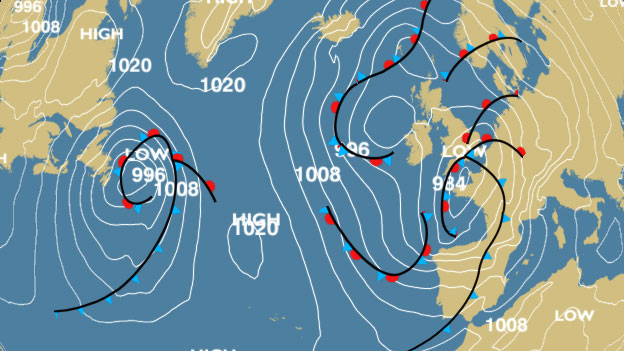
September does seem to be a reliably good month up here. Well, better than August – an old Highland truism. Another unexpected day of blue skies and light winds with the northwest pinned between a ‘Double Zero Low’, the sort of meteorological phenomenon that gives weatherpersons the munchies.

We decide to motor off the peninsula, along the Wee Mad Road (WMR) and past Lochinver to Clashnessie – a Norse word meaning ‘Battle of the Sea Monsters’. Here we paddled out towards the high arch before Point of Stoer and the beach at Culkein for lunch..
drum-arkl

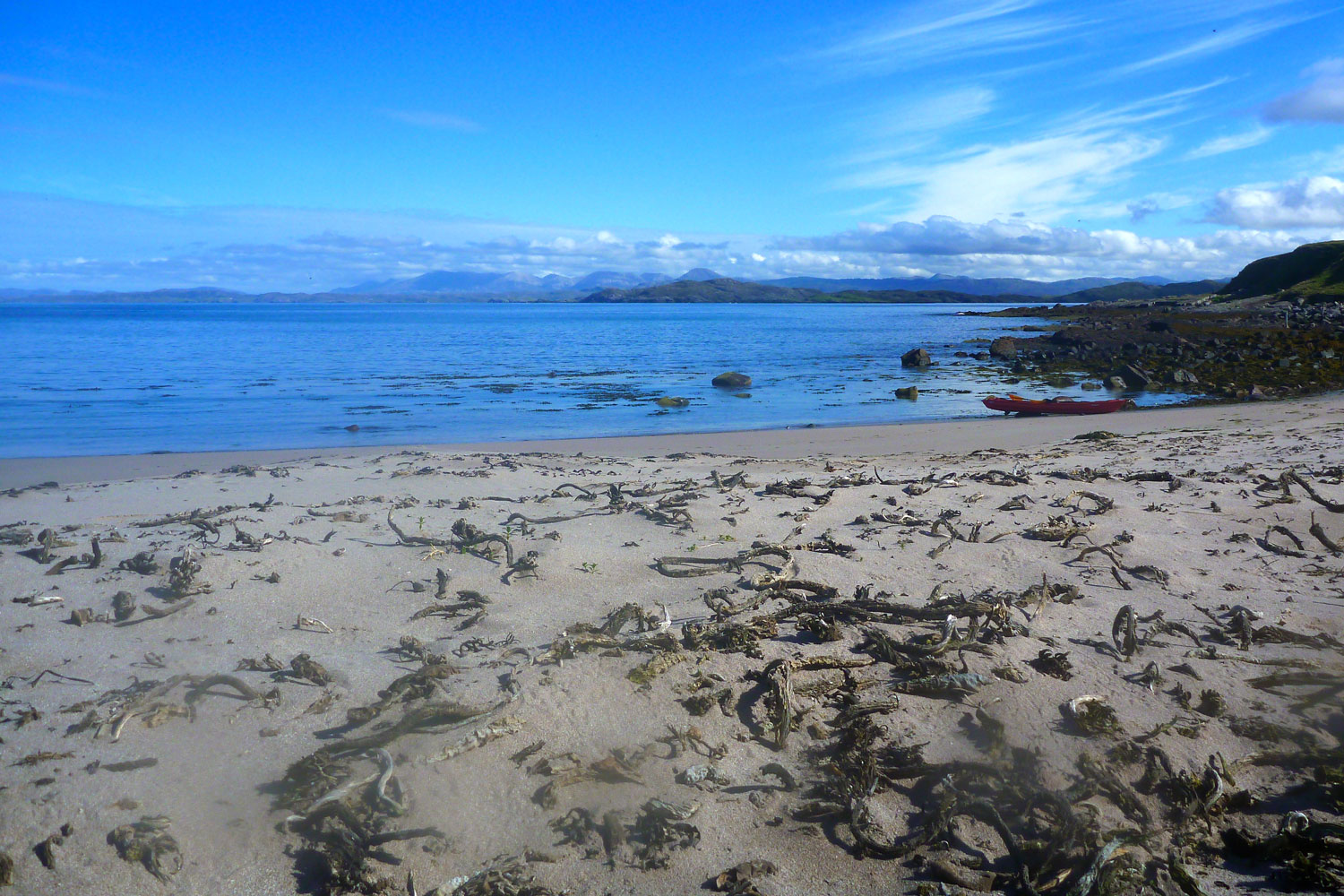
From Culkein beach there was a clear view right across western Sutherland to the quartzite mountains of Arkle, Foinaven, and the sea cliffs ending at Cape Wrath.
I thought about crossing the bay directly via the Eilean Chrona for Oldany Island channel. But it was a Spring tide going out so the flow may have been in our face by the time we reached the channel. Why wear yourself out on openish water? It would have added another 8 miles, ending with a rocky run back to the Clash of Nessies, just to explore a small area, and who knows what the weather might be doing by then.

drum-qooni


So we headed back to Nessie beach, letting the swell you so often notice in these north-oriented bays, lift the boat as it rolled inshore to crash against the rocks. Directly ahead was Quinaig mountain (left). I’ve said it before: it’s one of the best day’s hill walks here in the Assynt.
I’d long wanted to poke around the scattered skerries and islets between Oldany Island and Drumbeg. We drove up the Drumbeg road, where one time a mate and I had staggered against a gale, looking for the car after slackrafting the Lewisian barrens. Soon enough a small turn off led north to a ruined jetty at tiny Culkein Drumbeg.

Coming north, as soon as you get on the WMR you begin to see a different ecology. Hard to pin down what exactly: less bleak and peat sodden than Coigach. Perhaps it’s due to the Lewisian gneiss bedrock, because the Torridian sandstone was scraped off like an icky marzipan crust by the Ice Age and dumped into the Minch, to wash up on the beaches of the Western Isles just in time for Castaway. More birds dash about, the flora’s subtly different with a few more pockets of old-growth trees which have been picked clean or long blown away on Coigach. Perhaps the Stoer headland protects Oldany a bit, but it feels more like Plockton than the blustery northwest.
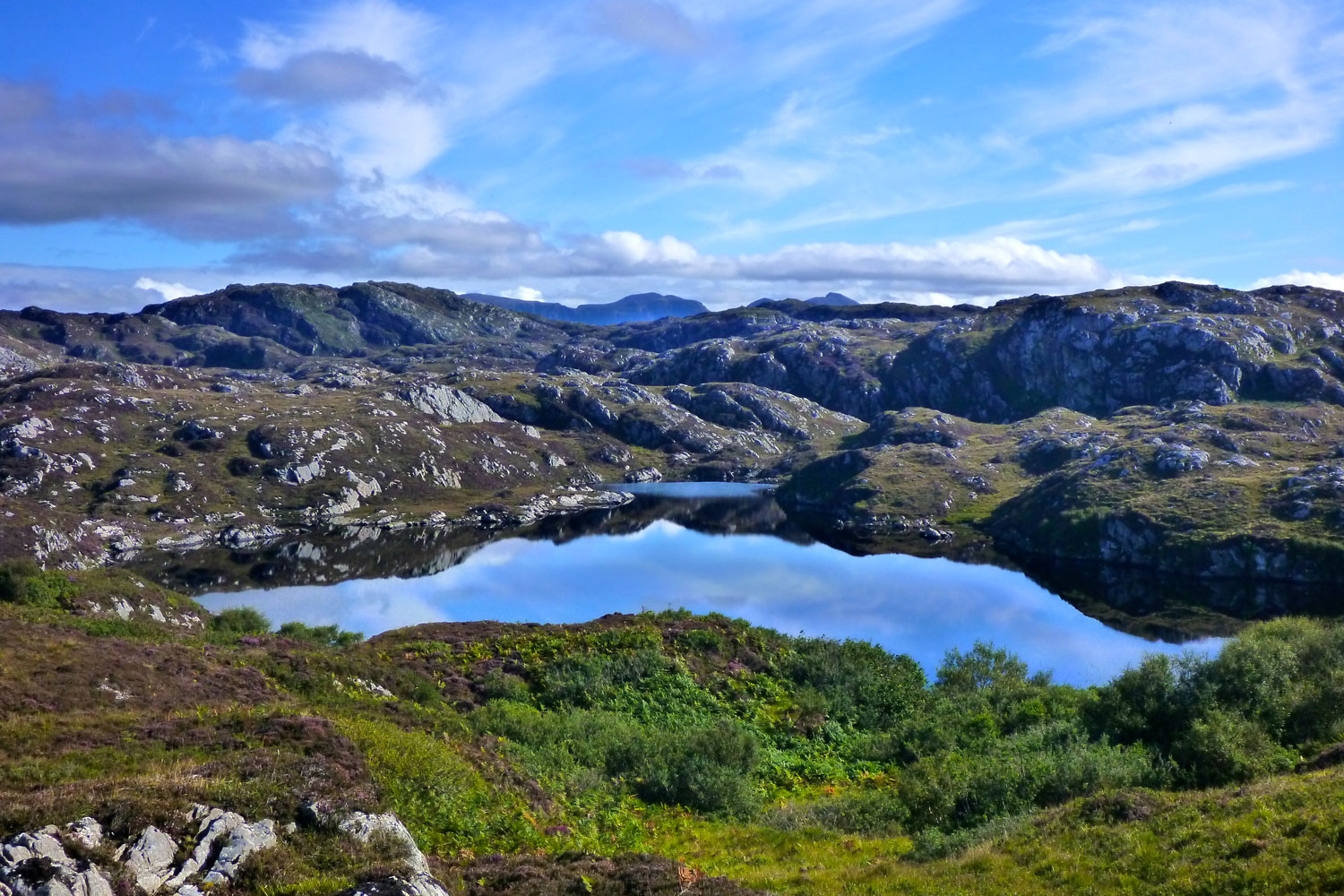
drumdrum

drum-comp

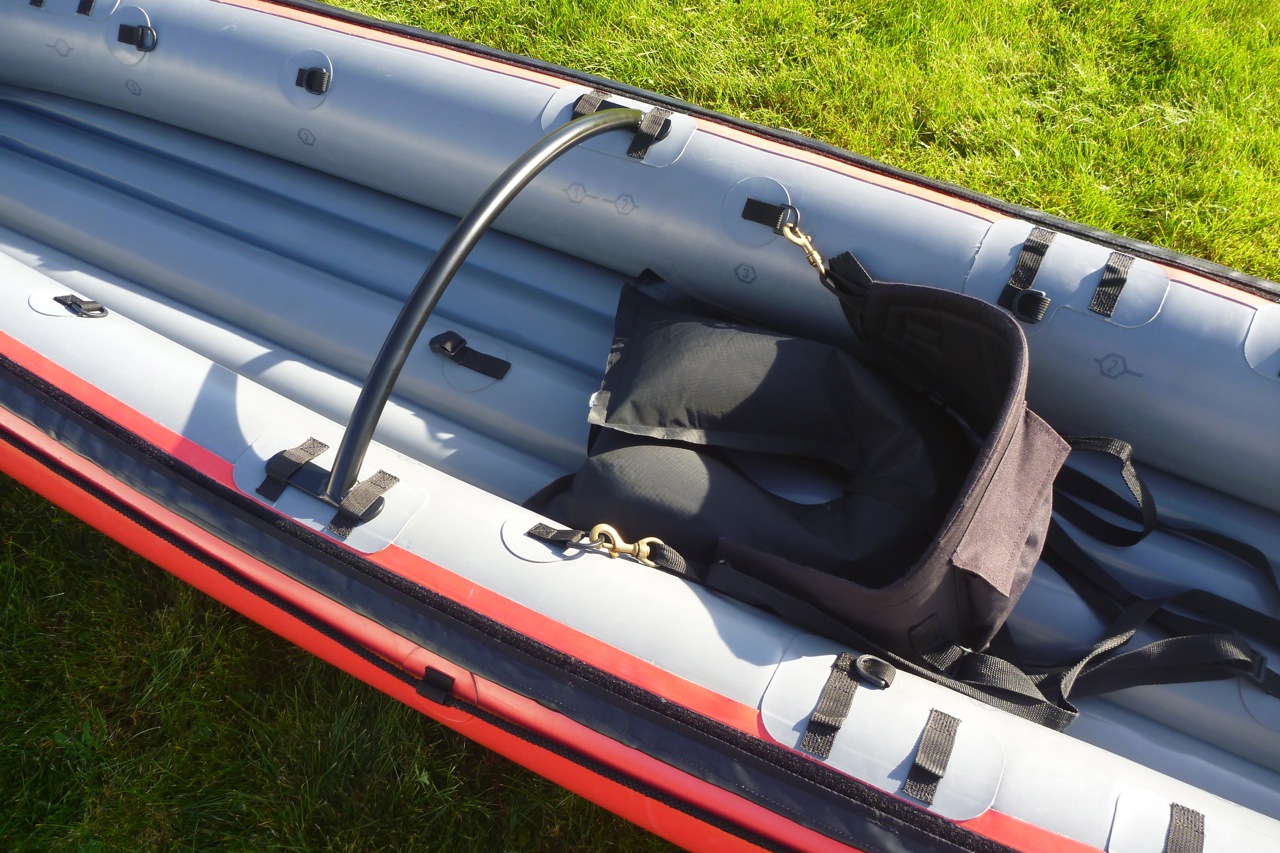
We set off for the hidden isthmus beach somewhere out here, scattering more seals as we went. Not bothering with the GPS to record moving averages, I’ve recently finally found a handy way to mount an easy-to-read compass on the Seawave, tucking it under the deck bar mount tabs. It was already proving handy to follow the NW bearing suggested by the map, out via the islets to the secret beach.

drum-siro

As we approached the sands we startled some hardy and doubtless Nordic skinny-dippers with their parked up Sevy Sirocco. Once beached, we politely took off in the other direction until they had regained their modesty. Soon a couple of hardshellers rocked up too – kayak rush hour on Oldany Island beach. Perhaps it’s not such a secret after all.
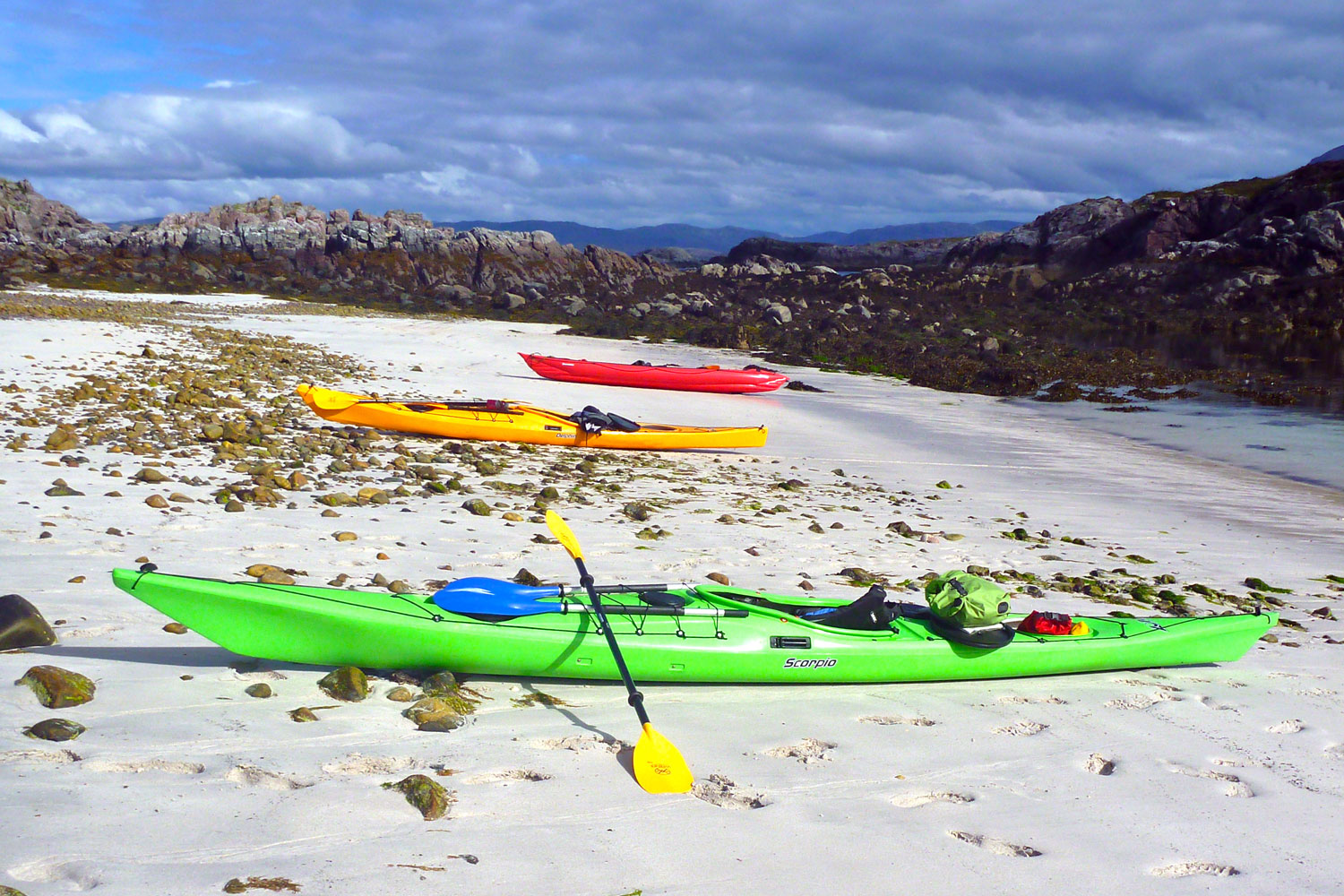
drum-yaks

A small bothy sits perched on the spit of grass which separates the two beaches. Hardshell man told me it was a private dwelling once rented to a local doctor by the Edinburgh owners, and even had a phone line installed in case someone’s baby was born early. It was another detailed ownership report the like of which you won’t find online.
Our busy beach made an altogether lovely prospect of sand, grass and the azure sea beyond, abob with skerries and distant peaks. Plus kayaks in red, blue, green and mango.

drum-sands

drumboat
wnail

Back afloat, we took the long way back to the jetty, nipping round to the south to check out where the channel went. That could be a fun run at the right stage of a big ebbing tide.
In the car, we carried on clockwise around the coastal road. Even more than the WMR, this Drumbeg road is hardly level for a moment and would be a good work out on a pushbike. Back on the main road, in Unapool we stopped off for a brew at the Rock Stop Cafe. A retired couple there were trying to track down the rude Withnailian cottage they’d honeymooned at no less than half a century ago. They’d not been up to the northwest in 50 years and Rientraid, overlooking the Kylesku bridge, had rung a bell. We told them about The Kerracher Man book which was set nearby, but about a decade later.
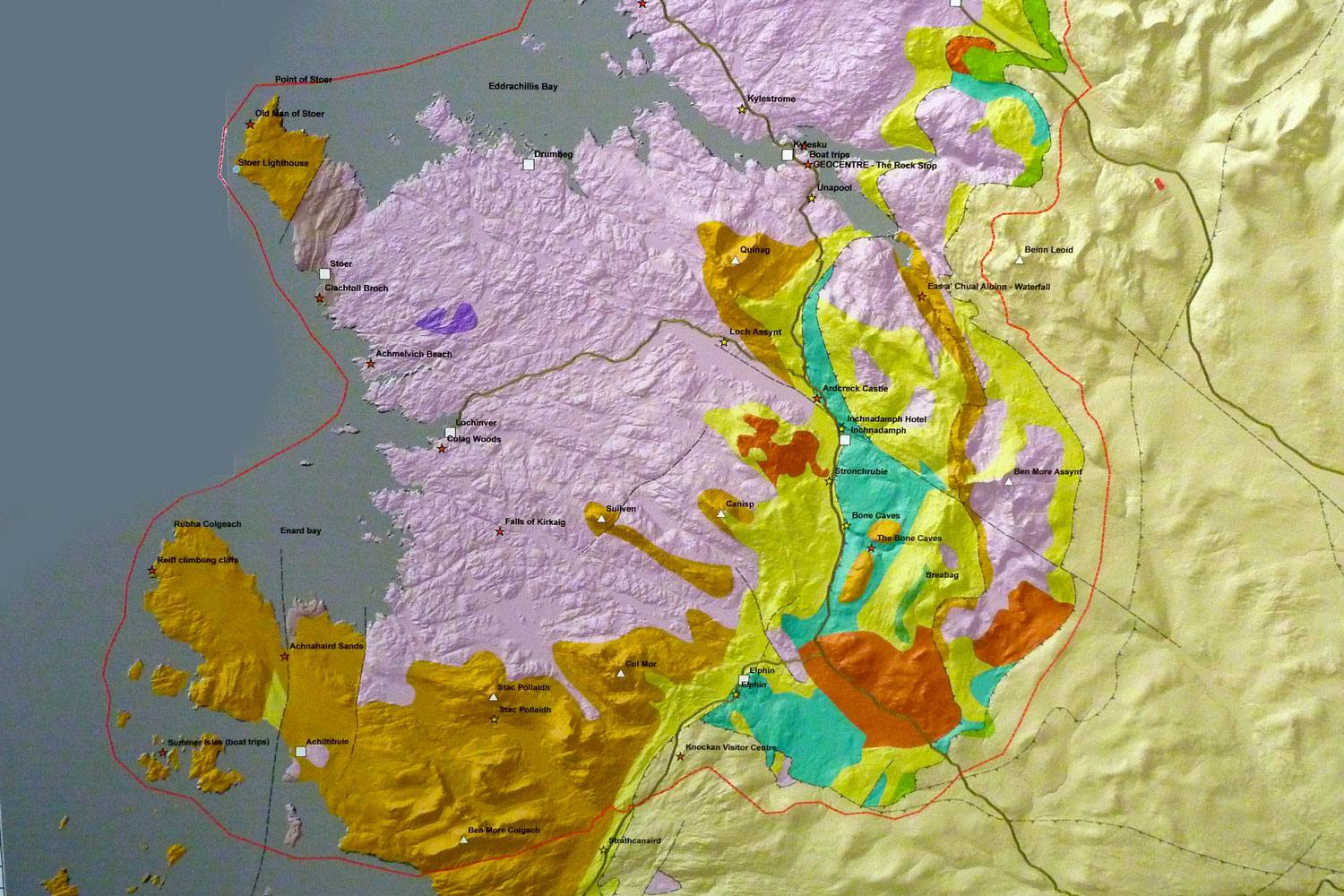
knowmyschist

In the cafe there was Rocky Road in the cake cabinet and a geology map on the wall. Pink is your 3 billion-year-old under-icing of Lewisian gneiss; the orange is a creamy overlay of Torridian sandstone. Interestingly, the map showed Horse Island as the only Summer made of gneiss. Who’d have known? High time then to get your schist together and watch a geology lesson.

argono
sunst

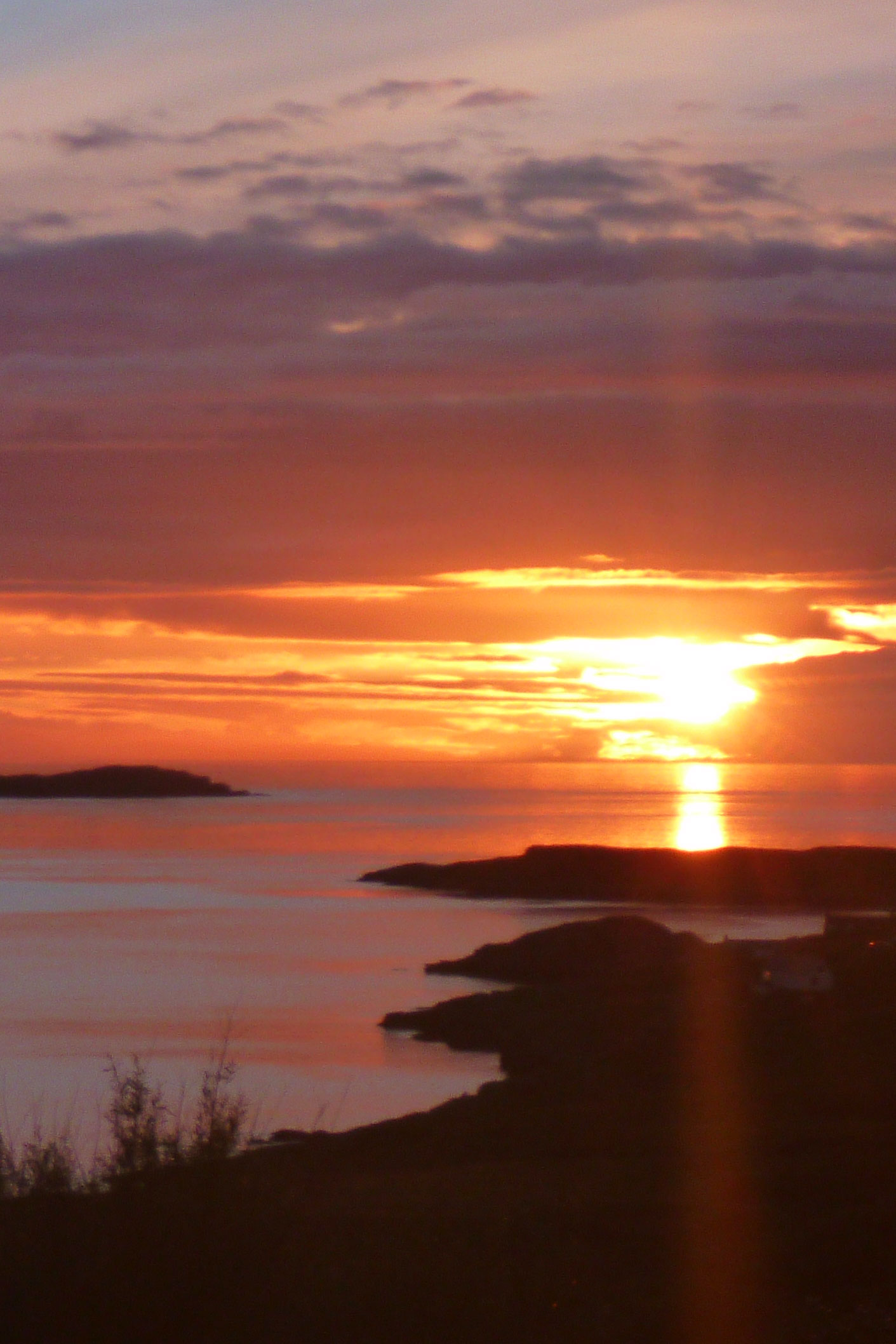
We’ve had some good here sunsets lately and even a green boreal glow a couple of weeks back. The other night the stormy orange clouds reminded me of the cover of Argonauts of the Western Isles – a great title for a lovely memoir by Robin Lloyd-Jones about sea kayaking on the west coast.
I’ve only just realised it’s a take on Brondo Malinowski’s seminal 1922 Argonauts of the Western Pacific which, unless I’m very much wiki-mistaken ‘redefined the ethnographic genre’.

Actually now I see the cover, it’s nothing like my photo, it’s much worse, though might have worked without that tilted horizon. But don’t let that put you off if you’ve not read it. It’s a wonderful tale that covers years of paddling up here, from post-war bathtubs and broomsticks to the start of the sea kayaking boom.

Seawaving, not drowning

Seawave main page
sww-glaslik

I’ve had a chance to do a few day trips in the Seawave, including trying it out as a tandem boat.
The main view west from our place is  over to Glas-leac Mor, one of the peripheral Summer Isles, with a corresponding Glas-leac Beag nearly three miles further out and less than a mile from Priest Island.

sww-corm

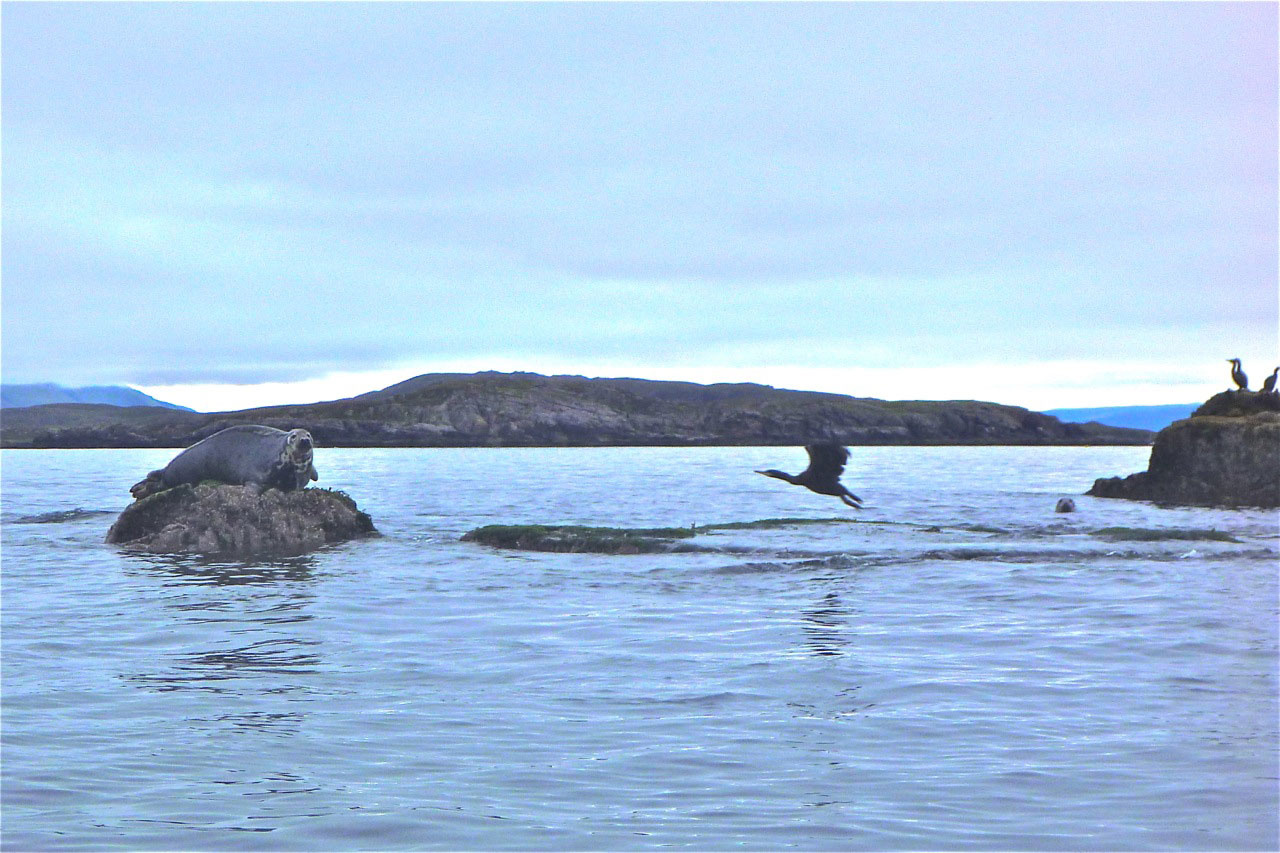
The day came round to loop the loop on Glas-leac Mor and maybe even carry on around the peninsula to Achnahaird. That idea was rained upon when the promised sunny skies turned out to be heavily overcast. Soon out of Old Dornie harbour The Call of the Bladder insisted I interrupt some basking seals on the unnamed skerry (left) close to Glas’s southern tip. Halfway down the east side I noticed a big stony beach, the only way of getting onto the island. There’s a lochan on Glas too, so it could be a good hideout.

sww-cav
sww-cave

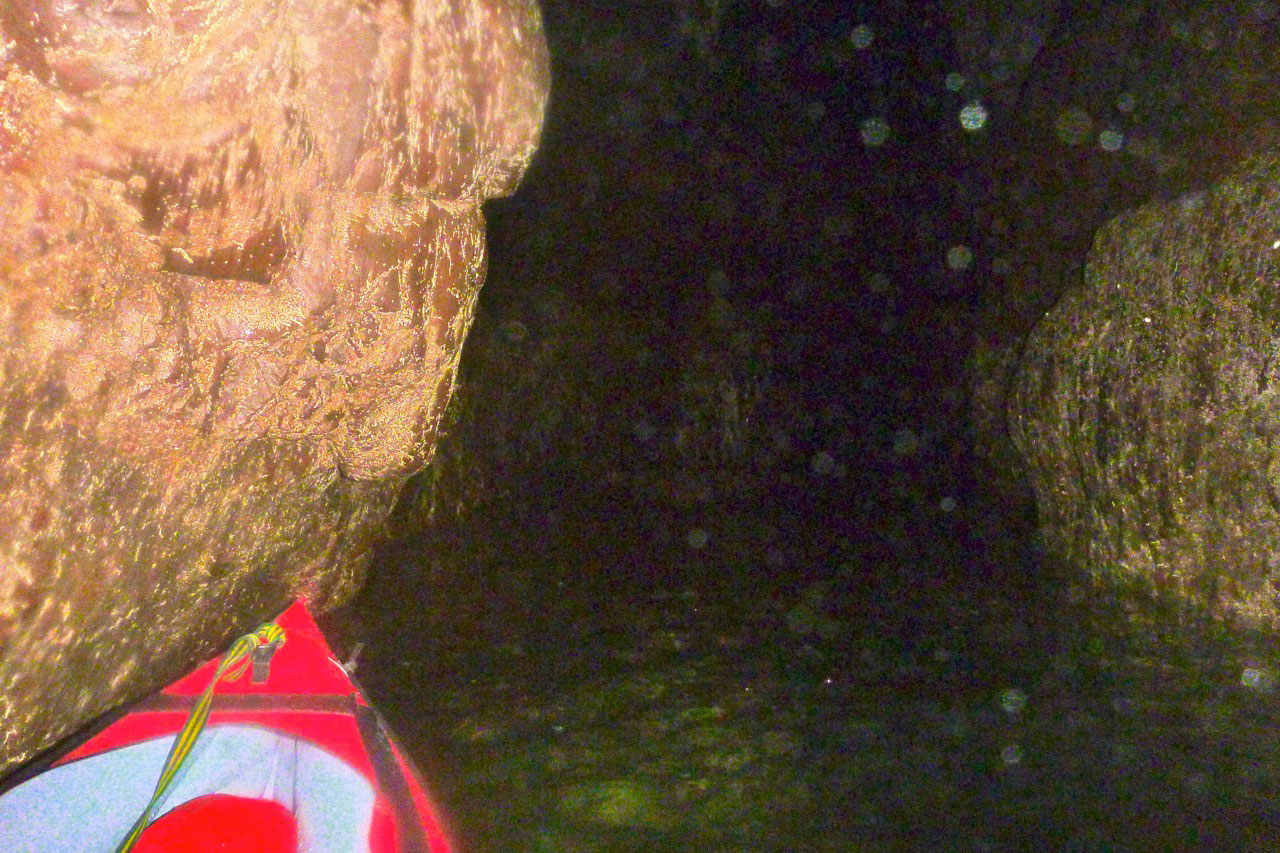
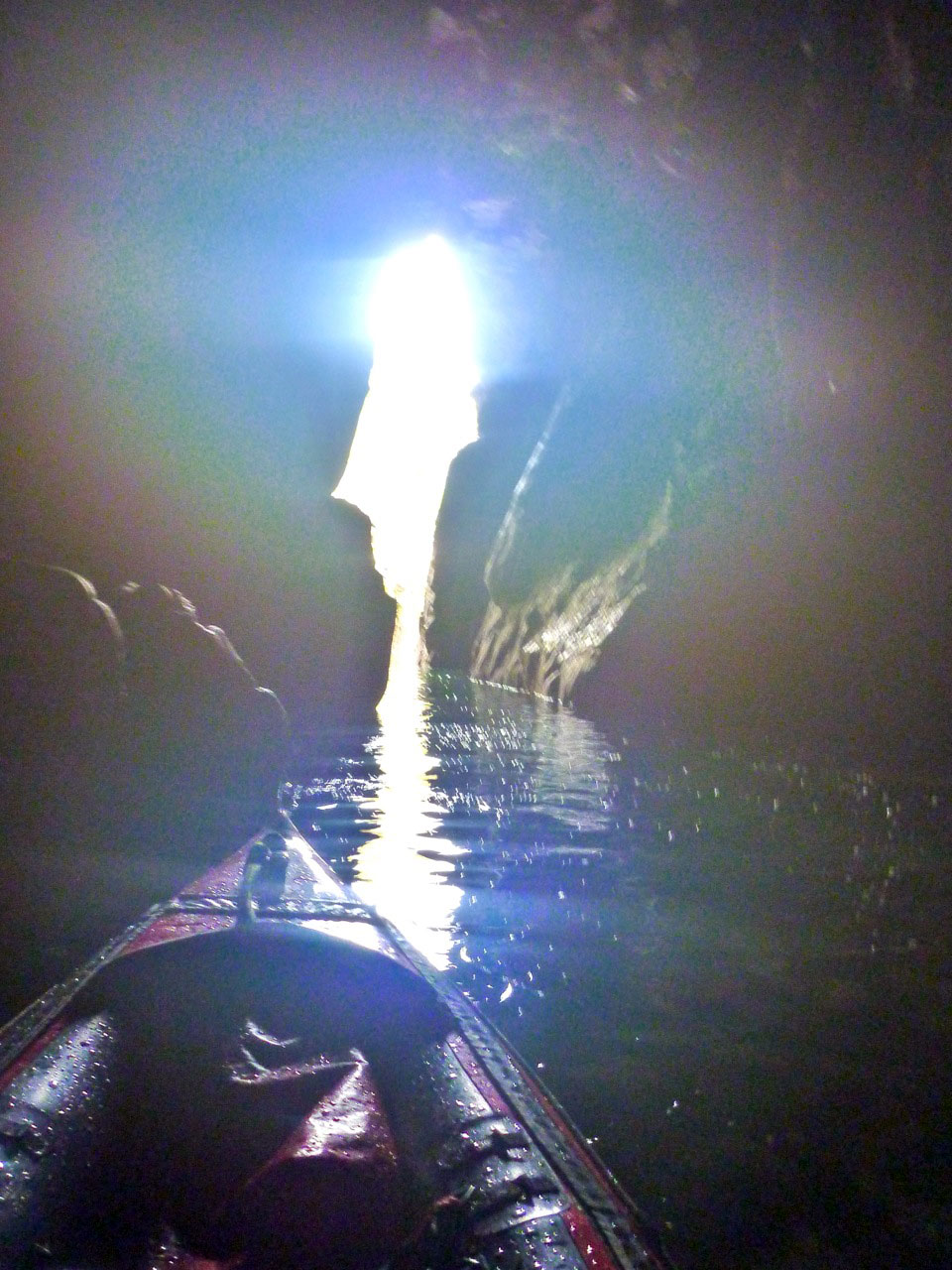
On the Minch side of these islands I always feel exposed on the swell that feels bigger than anything I can do with a paddle. It got a bit clapotty-choppy near the top of the island as I made a beeline north for Mullagrach. I was looking for a new cave I recently heard about and sure enough, north of the well-known arch an unnoticed inlet led under the island (right). (This was at the low end of the tide.)

sww-caver

The GPS shows a rather unlikely subterranean track; I think it’s more of a southerly fault that’s part of the main arch and its adjacent cave. It was pitch black before I got to the end of the geo, but with a flash photo and from the sound of the slap-slopping swell, it felt like another 10-20 feet. But it was getting less than paddle wide and I didn’t fancy getting jammed on some old storm-mangled shopping trolley or stolen moped, in a bid to find out.

sww-mphh
reeferai

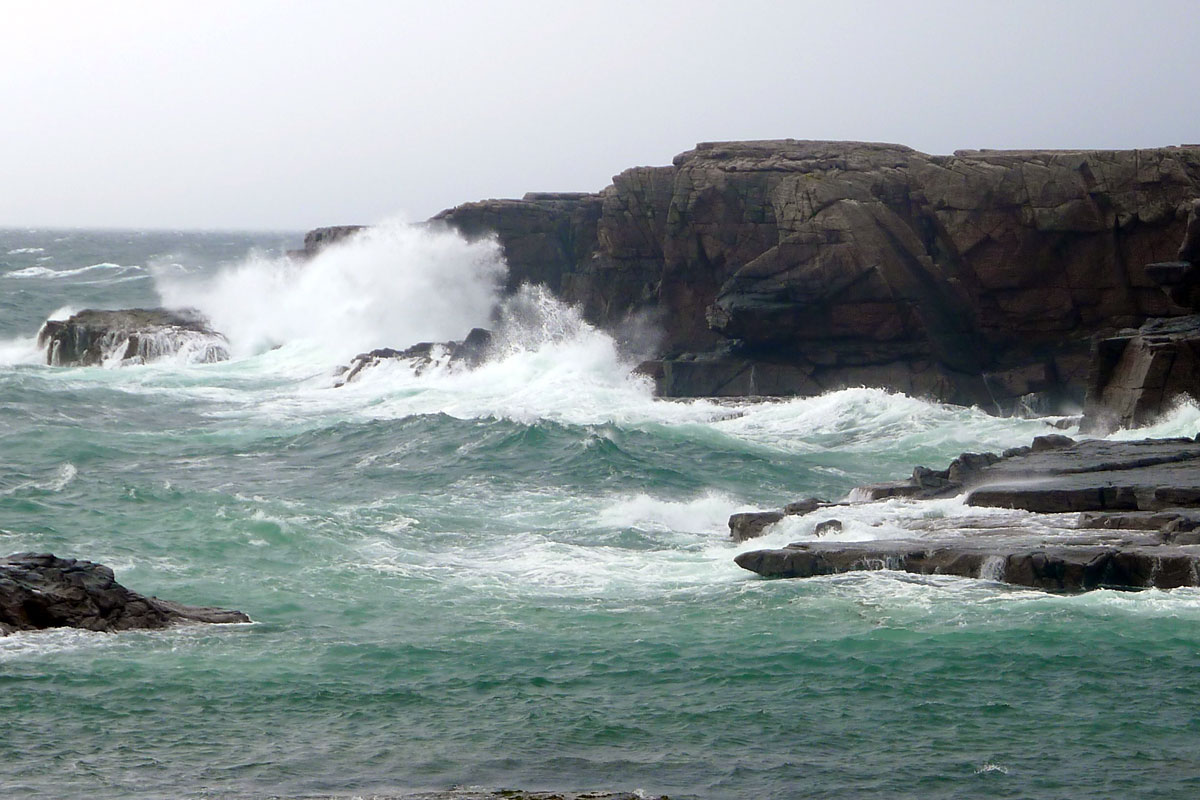
According to the GPS, I had been cruising at around 3.5mph but I wasn’t feeling that fast as I’ve not done much paddling exercise. So round the headland to Achnahaird felt a bit much. Instead, I settled on a short hop further north to ‘Reiff Cove’, as I call it, a nice sandy bay a mile or so above Reiff Bay where the houses are. As I got near, the swell was slapping back off the cliffs. This is a great place to watch crashing waves when there’s a good westerly on (right).

sww-cove

On the beach, I found a superb giant salami of polystyrene – former use unknown but for me a very handy boat perch and lunchtime bottom warmer.
Up on the cliffs I checked out the locked bothy which looked like it’d had a new roof, all the while wishing I’d dragged my boat a bit further up the beach. I do this every time.

sww-rfcove

sww-reefer

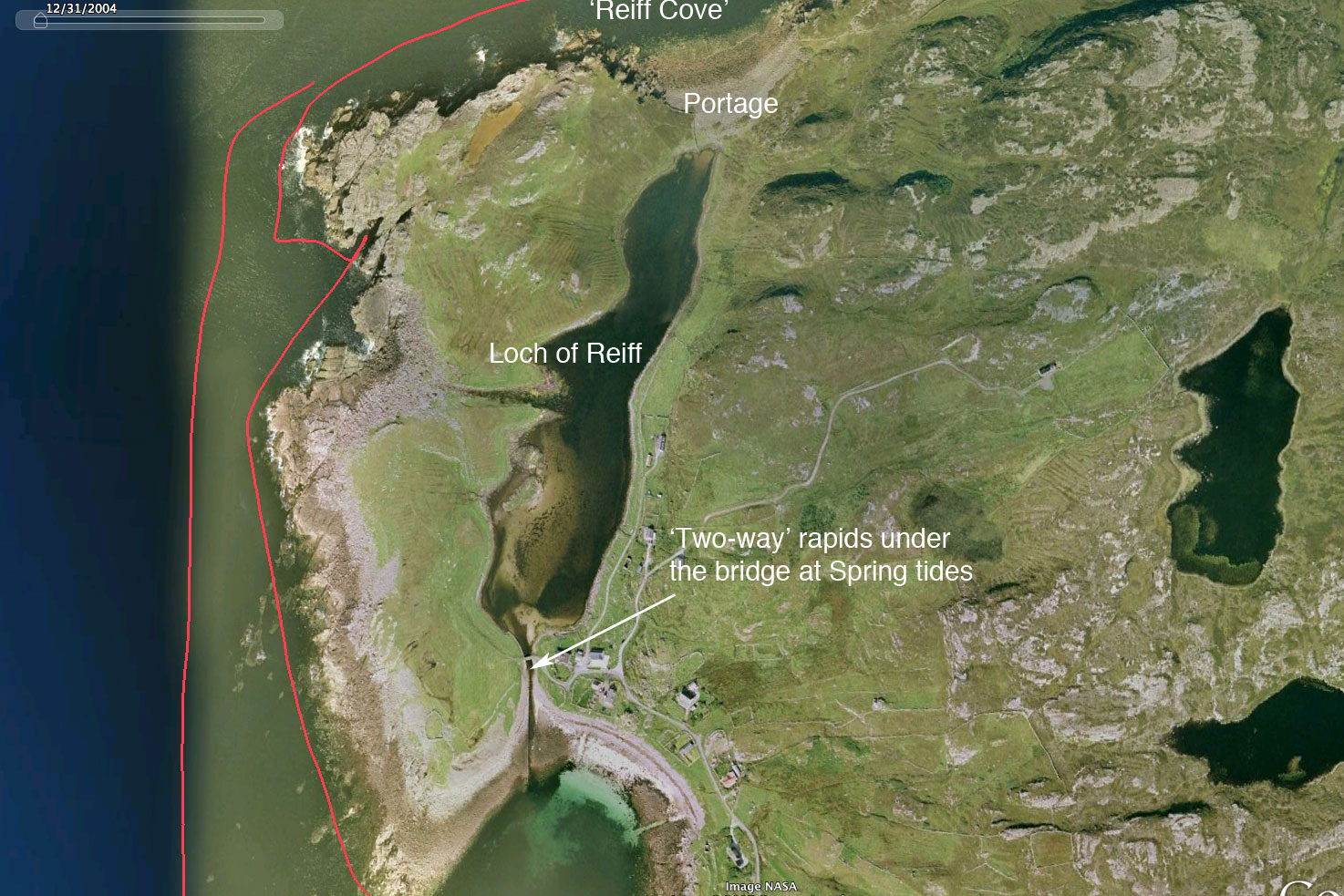
Up there I also clocked what I later realised was the back end of Loch of Reiff which fills and drains on the highest tides, making a fun ‘mini-rapid’ along the build-up canal under the bridge where a small quay used to be. If the timing had been right I could have done the short portage into the top of the loch (left) and got flushed out the south end into Reiff Bay. One for next time when the timing’s right, maybe even in a packraft. From Reiff Bay it was a couple of miles of coast hopping back down to Old Dornie, with just enough bars on the phone to call in the taxi.

sww-thii
tangle

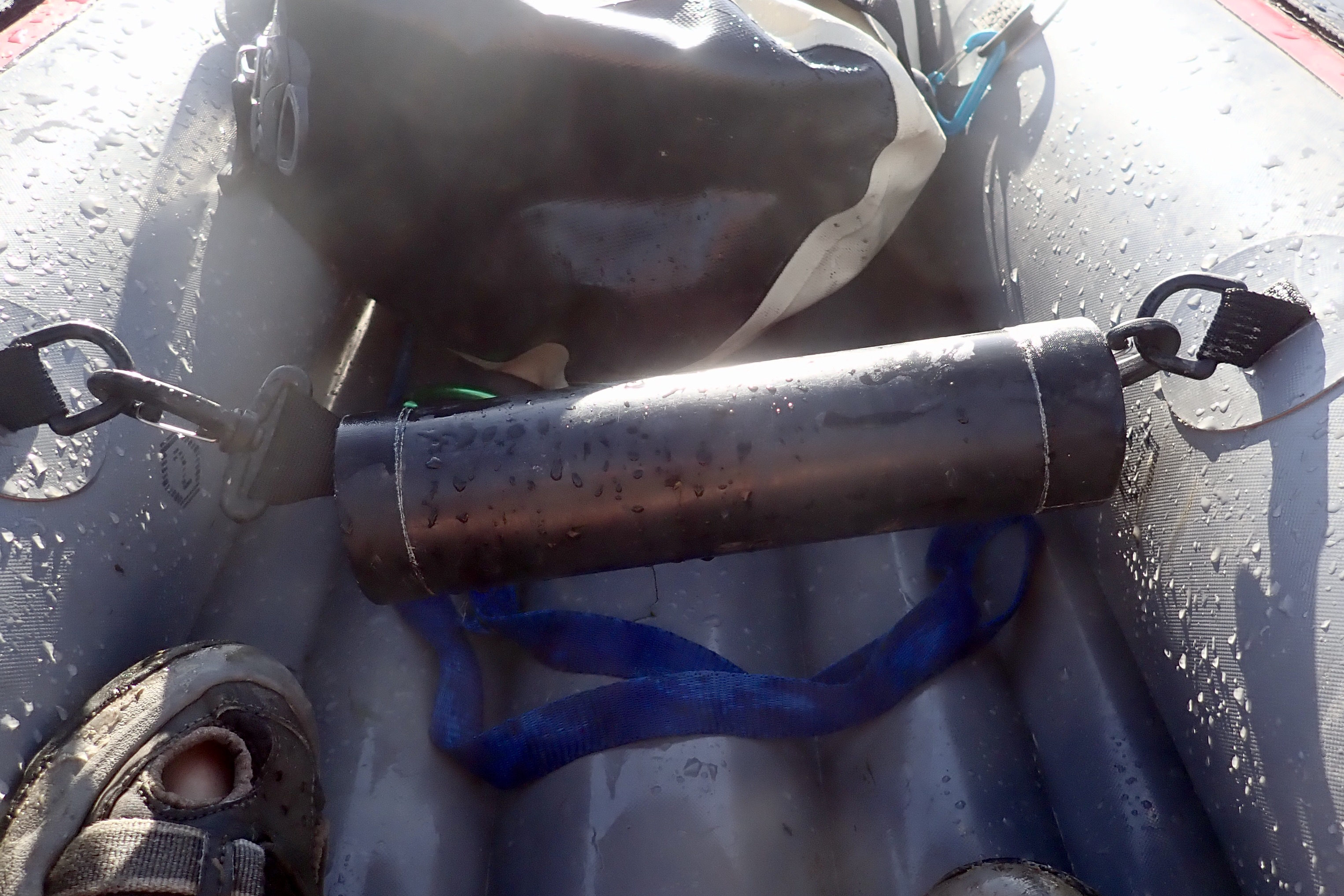
I’ve hooked up some lightweight packraft thigh braces from the Packraft Store. Simple 50mm straps with a ‘delta strap’ to additionally attach to the side to add instant tension when you brace or roll a packraft.
I used a couple of hull top D-rings to clip them on. but they don’t sit as well as the heavy SoT straps I used on the previous Grabner Amigo. Mostly it’s because I had to glue four D-rings on the floor of the otherwise bare Amigo, whereas on the Seawave the mounts are higher so the straps don’t hook over the knees so well. I suppose I ought to get round to gluing floor D-rings but it’s a big job to do well. For the moment the ‘delta straps’ can be clip together like a sternum strap on a backpack (above), and hold the straps in place. ‘Warning – Entanglement hazard!’ I hear you cry, and quite right too. If it gets that gnarly I’ll unclip, pronto. And probably inflate my pfd, too.

sww-camas

Another fine day, another fine paddle. As usual I plan big but then snap out of it and think: why end up hauling ass all day when we can just have a sticky beak in some new corner of the locality.
Ardmair harbour, home of the famous Ardmair weather station, often looks like such a place, a striking bay just over the hill from Ullapool. One often sees tourists stopping here to admire it’s perfection. With a beach made of distinctive flat stones, I bet I am not the first person to say this would be a great location for a stone skimming championship.

swward-fort
srath

Two-up, we set off to round Isle Martin clockwise. The winds were forecast to be in single figures, but coming round the west end of the island I could see the line of the north-easterly F4 blowing hard out of the Strath Canaird valley onto us.

But with barely a mile of fetch to gather up, the chop was only a foot high, so we tucked in and hammered along until we were close enough under the 1000-foot cone of Beannan Beaga to get a bit less chop along the northern shore. We bounced along that as tight in as we could, setting the seals off until we reached the stony sweep of Camas Mor beach.

swward-trep

Up in the warm grass for a midge free snack, I went for a wander and soon realised we were right below the jumbled rubble remains of Dun Canna Iron Age fort from about 0BC. You can see it would have made an excellent defensive position with good resources all around and over in the smaller Camas Beag (every Mor – ‘big’ – has its adjacent Beag – ‘small’ – hereabouts) bay to the north, what looked like a tidal fish trap (left). Sorry to say the fort’s rubble was not quite compelling enough to be honoured with a photo.

BrockFreyandFreyja

A couple walked by, looking for driftwood with which to make ornamental clocks. And I was later told that gems and who knows – maybe even the Lost Hoard of Brisingamen – lay among the stones of Camas Mor.

From the headland looking west towards the Summers, the ruffled sea and scrubbed, autumnal sky were as blue as John Lee Hooker with a hangover and a tax bill.

swward-blue

Time to ship the heck out. My plan was to edge south enjoying the lee, then poke the boat right up the Strath Canaird estuary until the winds, current and outgoing tide suffocated our spirit of exploration. Reading our GPS track that now seems a lot less further than it felt, but was enough to uncover a new habitat of seaweed dangling over mussel beds and dazzling highland villas once belonging to cider magnates, according to the knowledgeable driftwood couple. It’s odd how everyone around here knows which well-to-do-family owned but then sold what bit of land or island to whom.
swward-wed

Of course I’d long ago clocked Strath Canaird as a potential river paddle excursion, probably in a packraft from Strathcanaird hamlet on the A835. Now I’ve seen its lower end that 4-mile paddle looks a bit more intriguing.
Once we’d had enough battling the elements, we let them flip the Seawave round and scooted back to Ardmair Bay for a final nose around the moored up boats by the campsite and then out round the point and back to Ardmair Beach.


bigger

Two up or solo, the Seawave’s speed seems to be about 3.5–4mph, with the odd freak burst up to 5mph. That doesn’t seem to be much different to the Grabner I replaced it with, but it’s still an easier boat to use: PRVs all-round means it needs a quick ten jabs with the K-Pump Mini after a few days off in the outdoors, but never needs a manometer check. Masses of D-rings compared to the Grabner’s zero. The optional deck, the OE skeg and two feet of extra space.
And though the Amigo is long discontinued, the Seawave costs less. The nearest Grabner now would be the ruddered Grabner H2 but its over half a metre shorter; the H3 is half a metre longer but we’re still talking between €1800-2100 for well-made but rather bare boats. My Seawave with extra bits came in at €1000 from Czecho so to paraphrase the bloke from Jaws: ‘We’re ain’t gonna need a better boat’.
Well, not for a while.

Gumotex Seawave in Venice

Seawave main page

gumboeveni

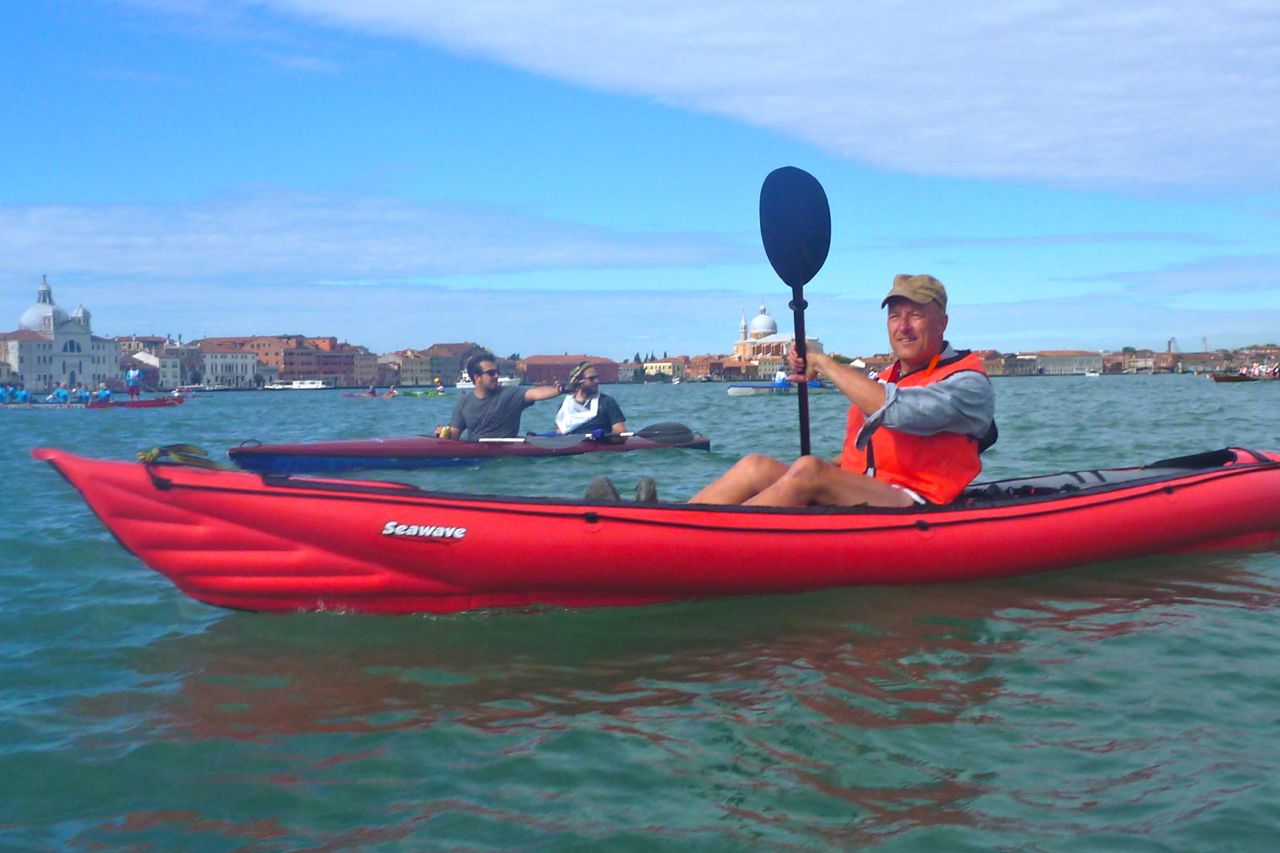
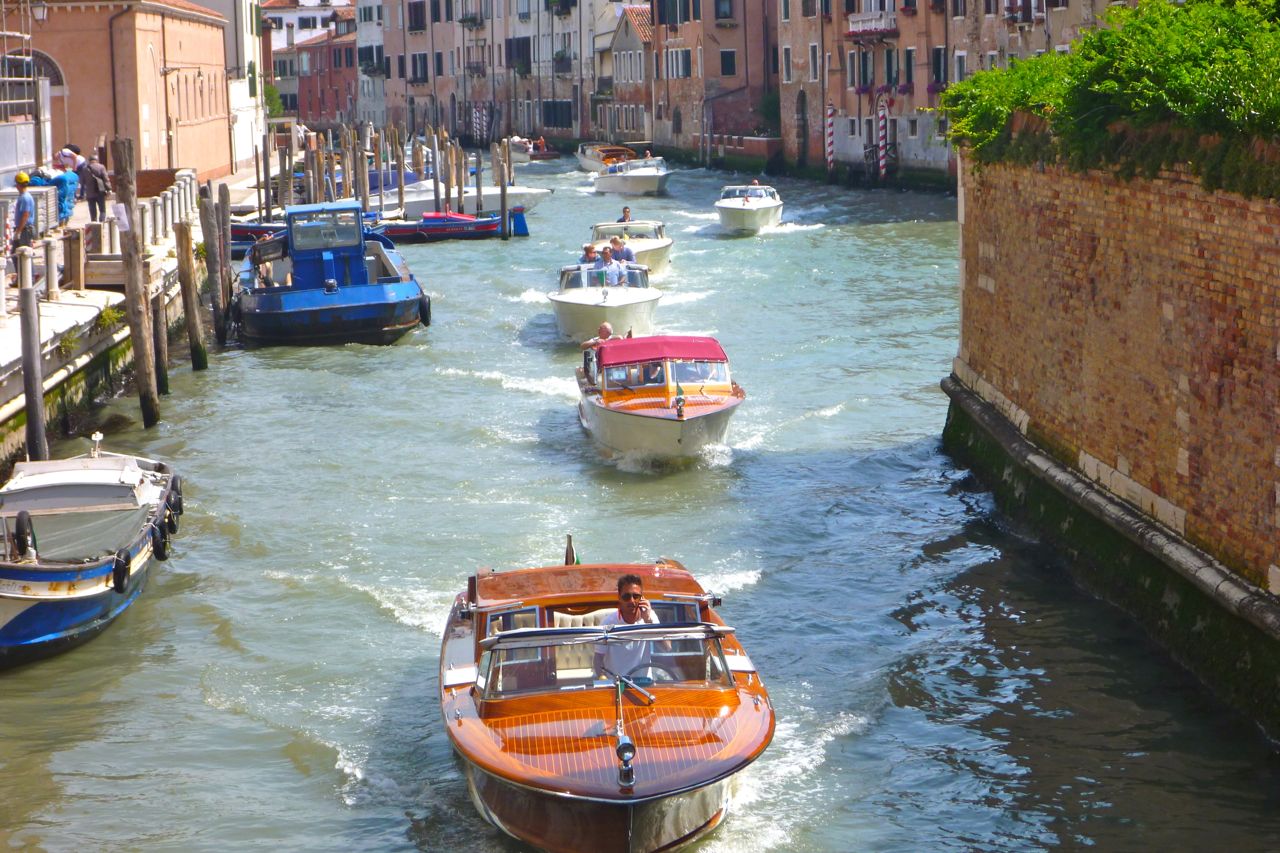
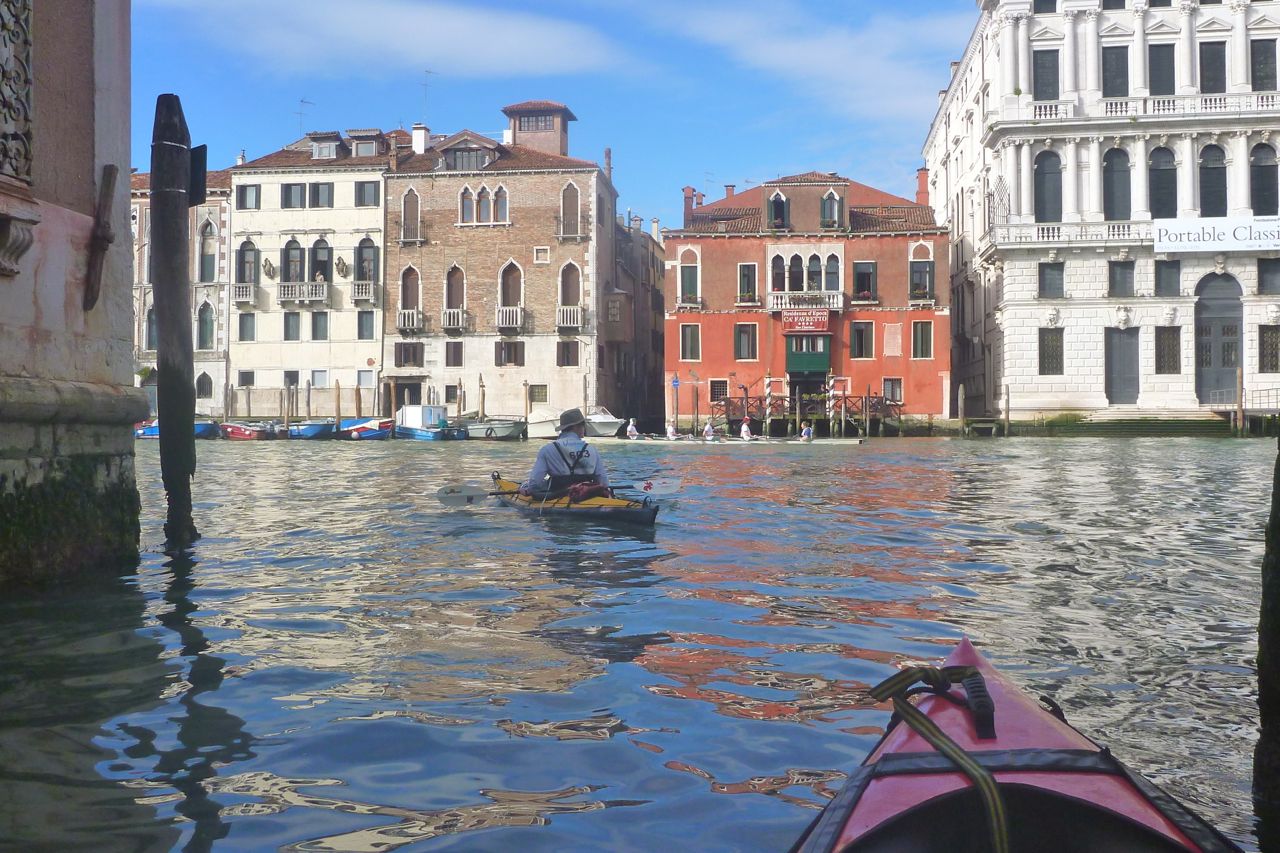
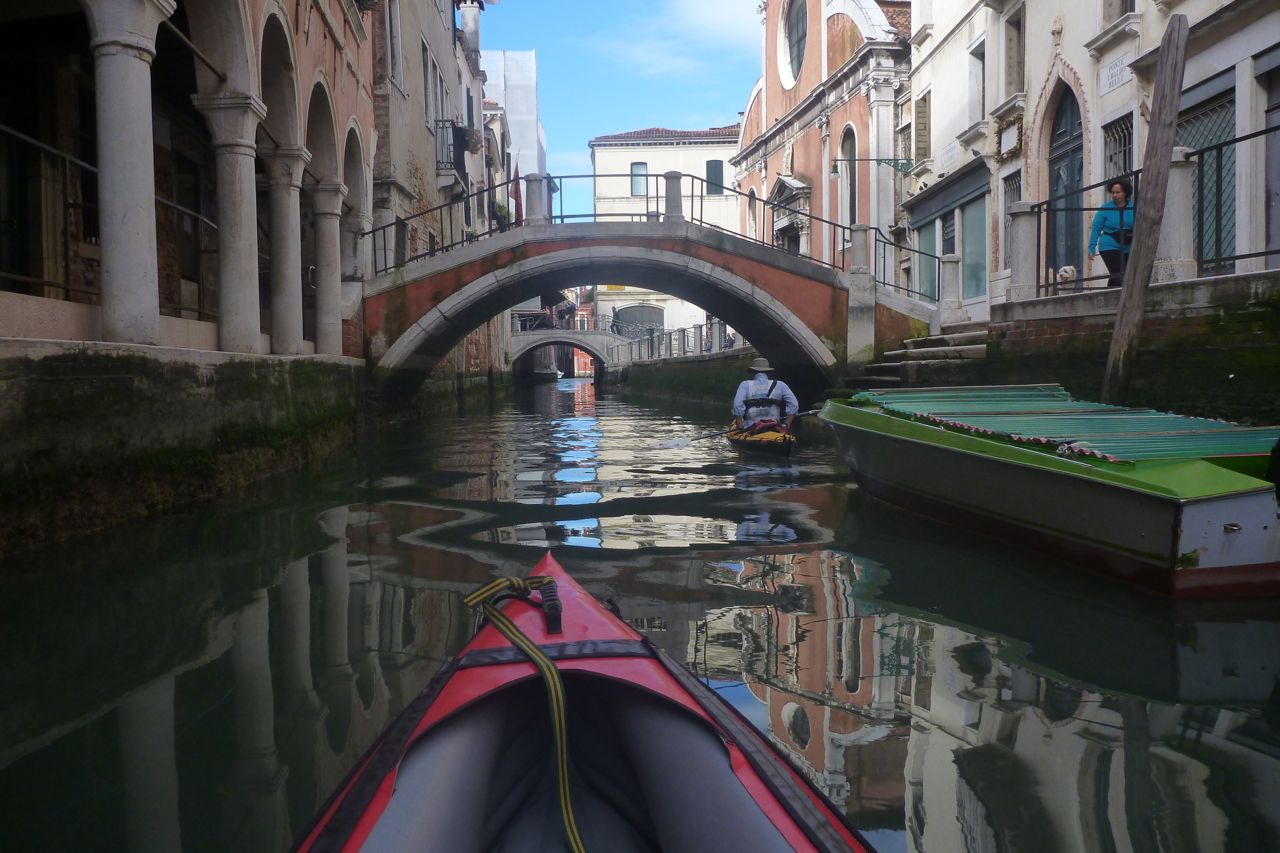
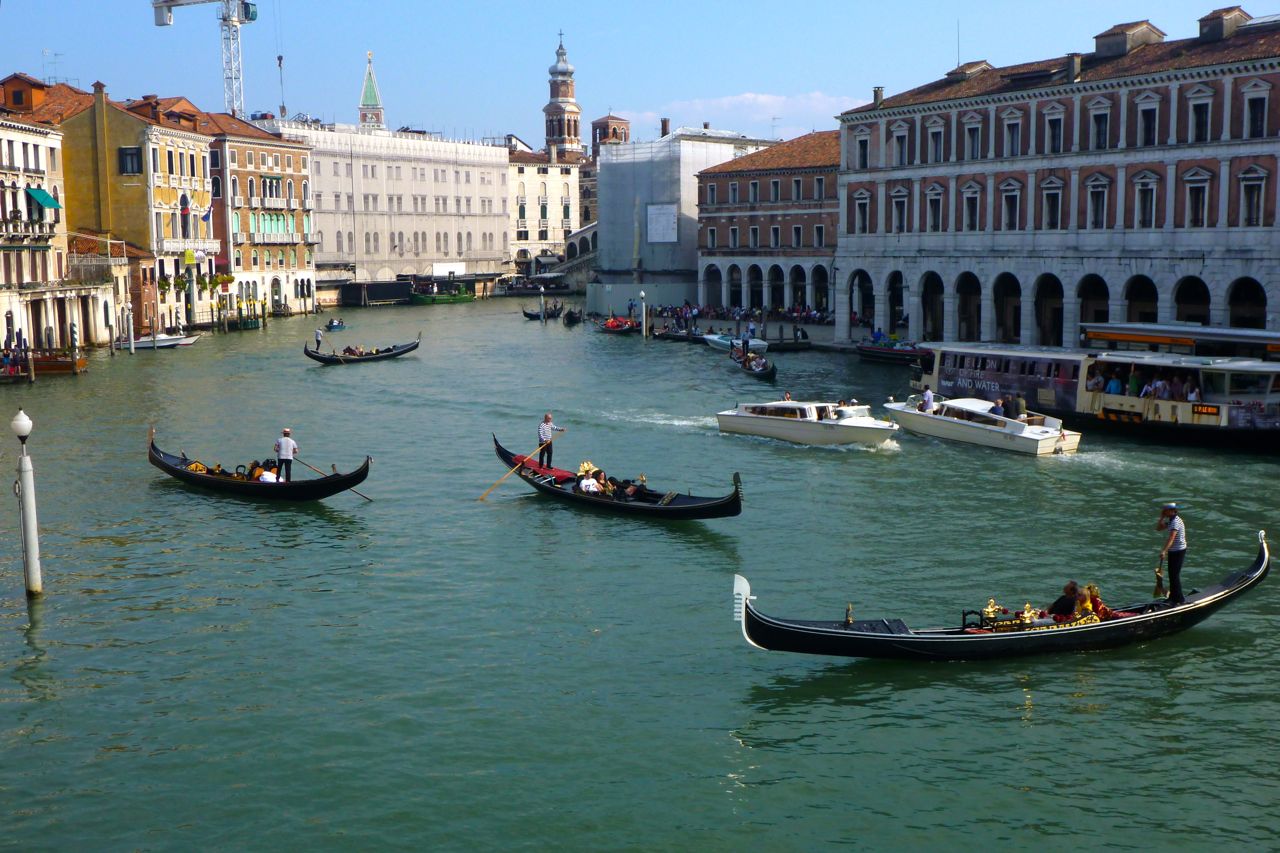
I’ve had the Seawave a few months but paddling in Venice last week was my first proper outing. Venice lagoon was pretty calm on the day – there was more wash inside the Grand Canal from the vaporetti water taxis. It may have been calm but some 34kms without a river current and some tidal flow is still a pretty good outing.

It was an opportunity to try my high pressure modification. I’m running 35% more pressure in the side tubes (4.8psi as opposed to the advised 3.6) but have fitted PRVs (pressure release valves) rated at the higher pressure to prevent the boat getting damaged if it gets hot. Full story on how I did that here.

swine-01
swine-04

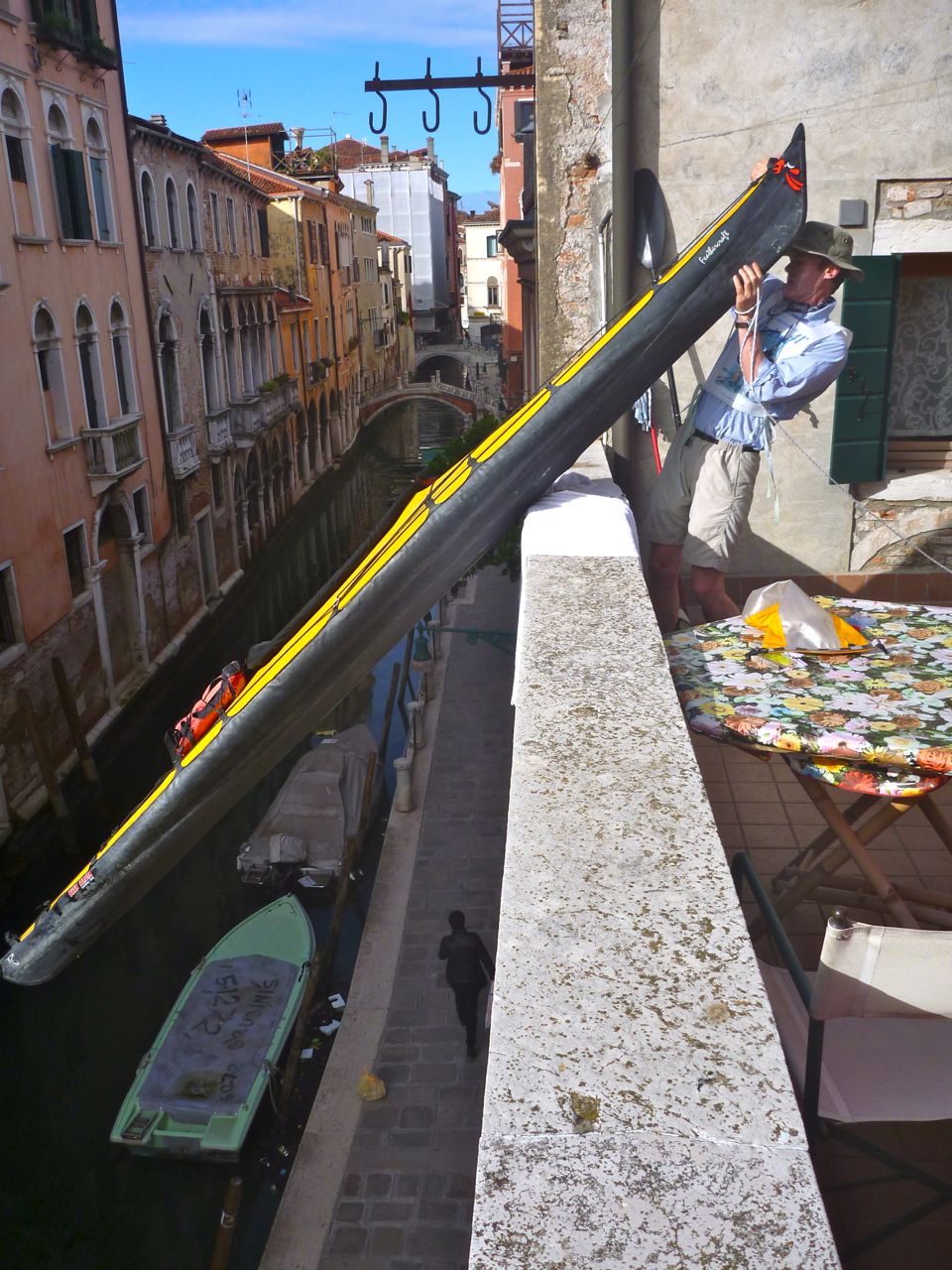
It took about 15 minutes to pump up the Gumotex with the compact K-Pump (left) but before we lowered it down to the canal (above) it went flat. Oh dear – did I do something wrong? Turns out one side-chamber inflation valve (not new PRV) was leaking. I unscrewed it, blew at it, put it back and it held all day. Probably just a bit of grit, though that’s never happened to me before.

gumboven
swine-05

My impression was the high pressure sides made the Seawave faster and more responsive – well it’s bound to, isn’t it. Returning to the apartment I didn’t feel like I’d paddled 21 miles, though I can’t say I was full of beans next day and my hands were swollen from using my 4-piece paddle (easier on Easyjet) instead of my bent Werner Camaro. I found it easy to keep up with Steve in his big yellow Kahuna and even found myself passing the odd hardshell sea kayak or double folders. On earlier trips in the Amigo I couldn’t catch the Kahuna. All those benefits might change in windy or choppy conditions, though there’s much to be said for an IK’s stability when things get gnarly.

swine-10

So three cheers for my Seawave HP. The short terms gains of high-pressure sides are not so elusive, of course. What remains to be seen is if running the boat 35% over the factory-advised pressure affects durability – ie; did I go too far choosing the PRV setting. I doubt it as poking the sides felt very much like my previous 2psi Gumo kayaks on a hot sunny day. The sides being less in the water will always be prone to getting warm and tight but have no I-beams to get stressed like the floor. Those boats never suffered so I’m sure the Seawave can hack it.

gumboveni

Paddling the Venice Vogalonga

Seawave main page

‘Viva La Vogalonga! Viva Venezia! VIVA SAN MARCO!’

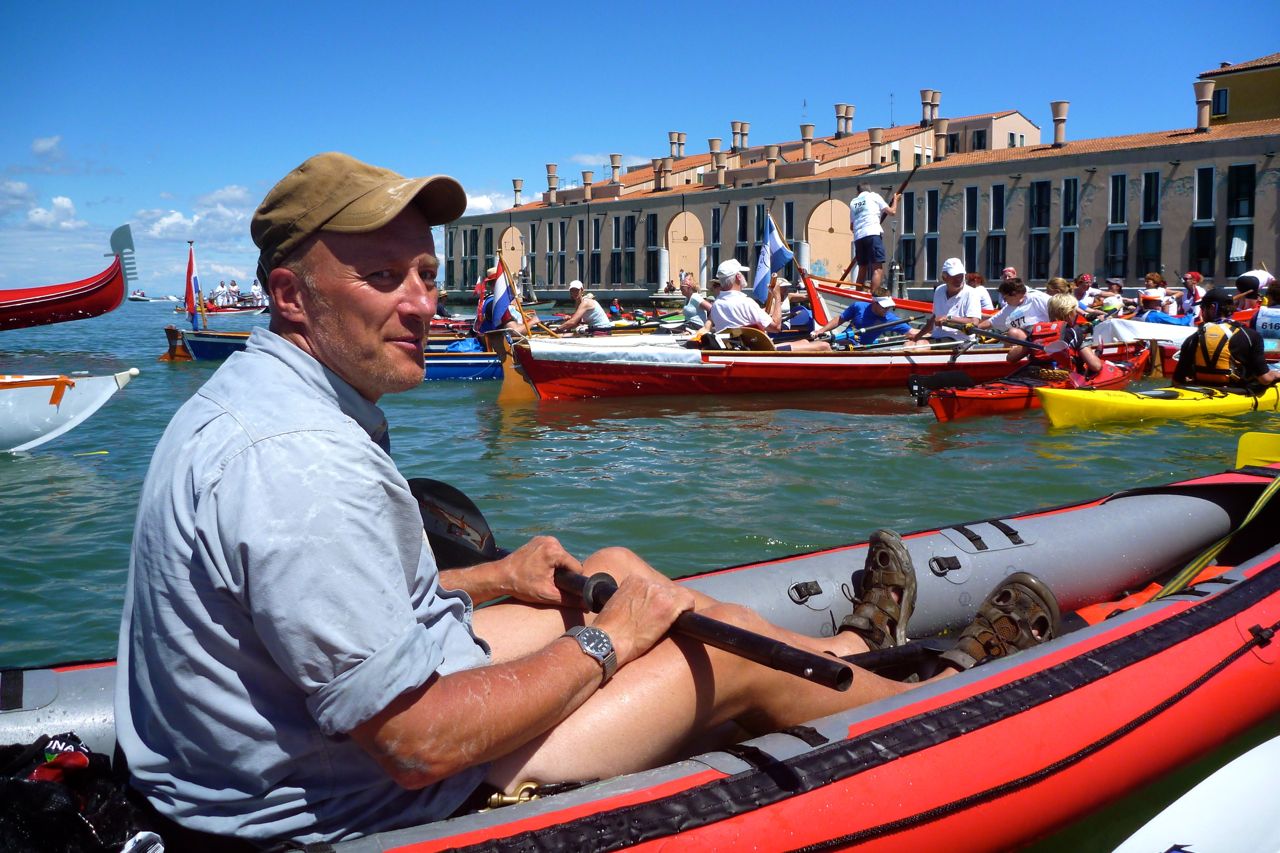
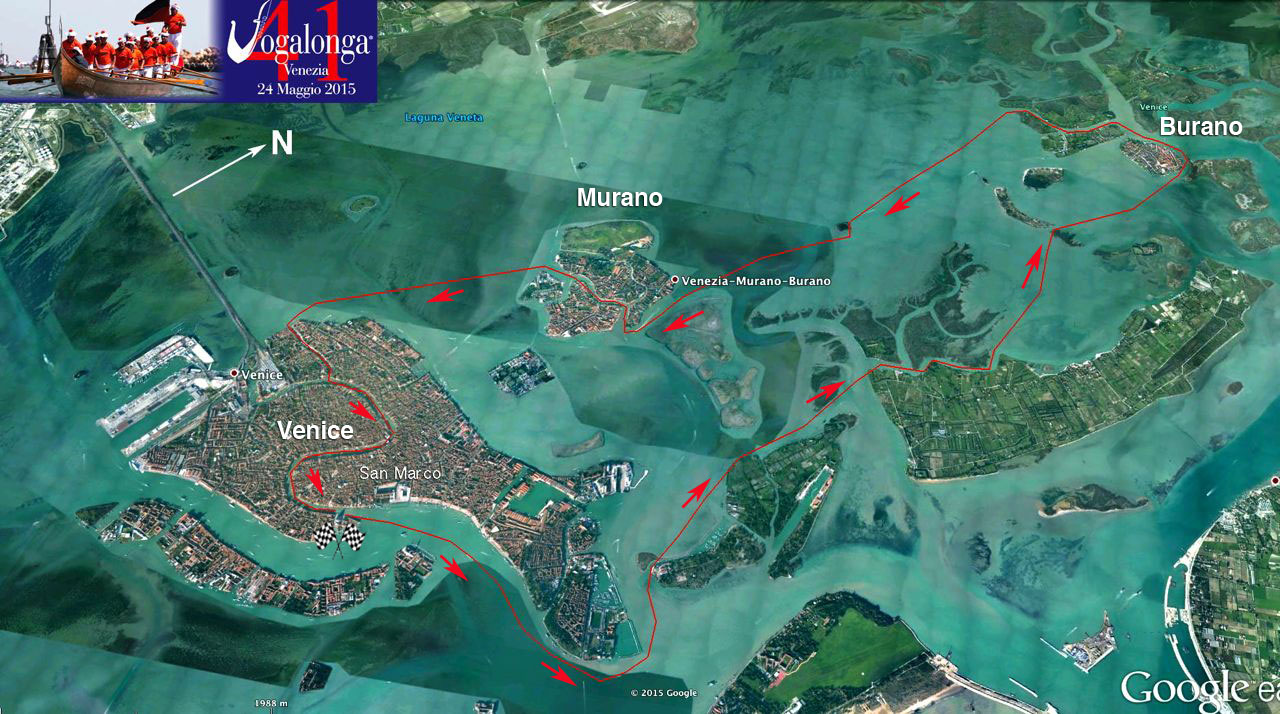
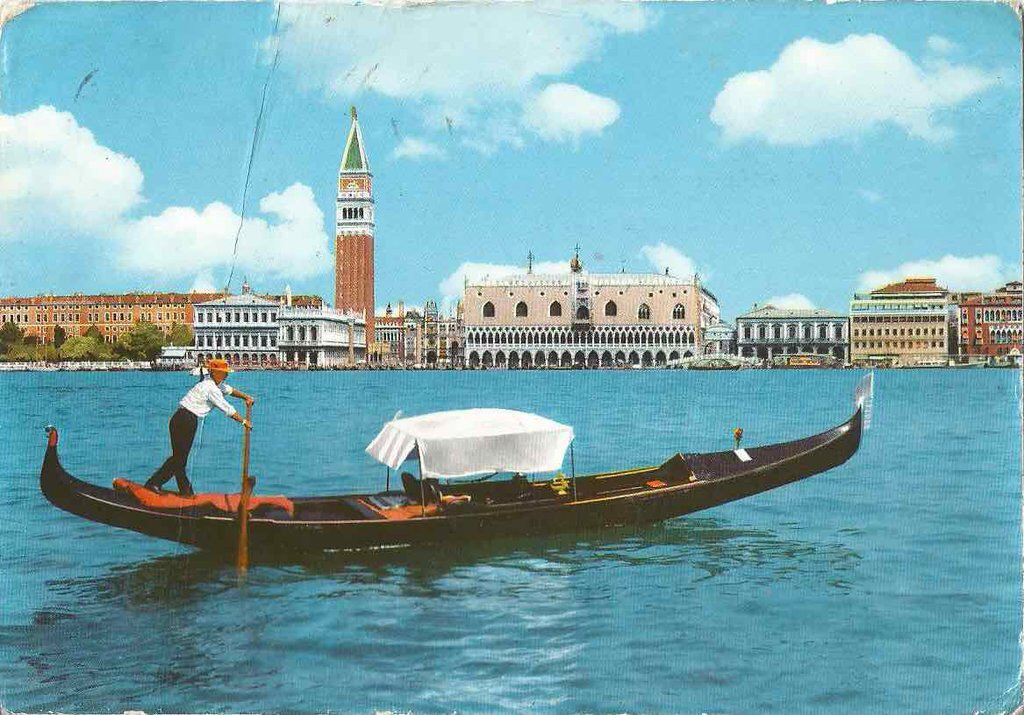
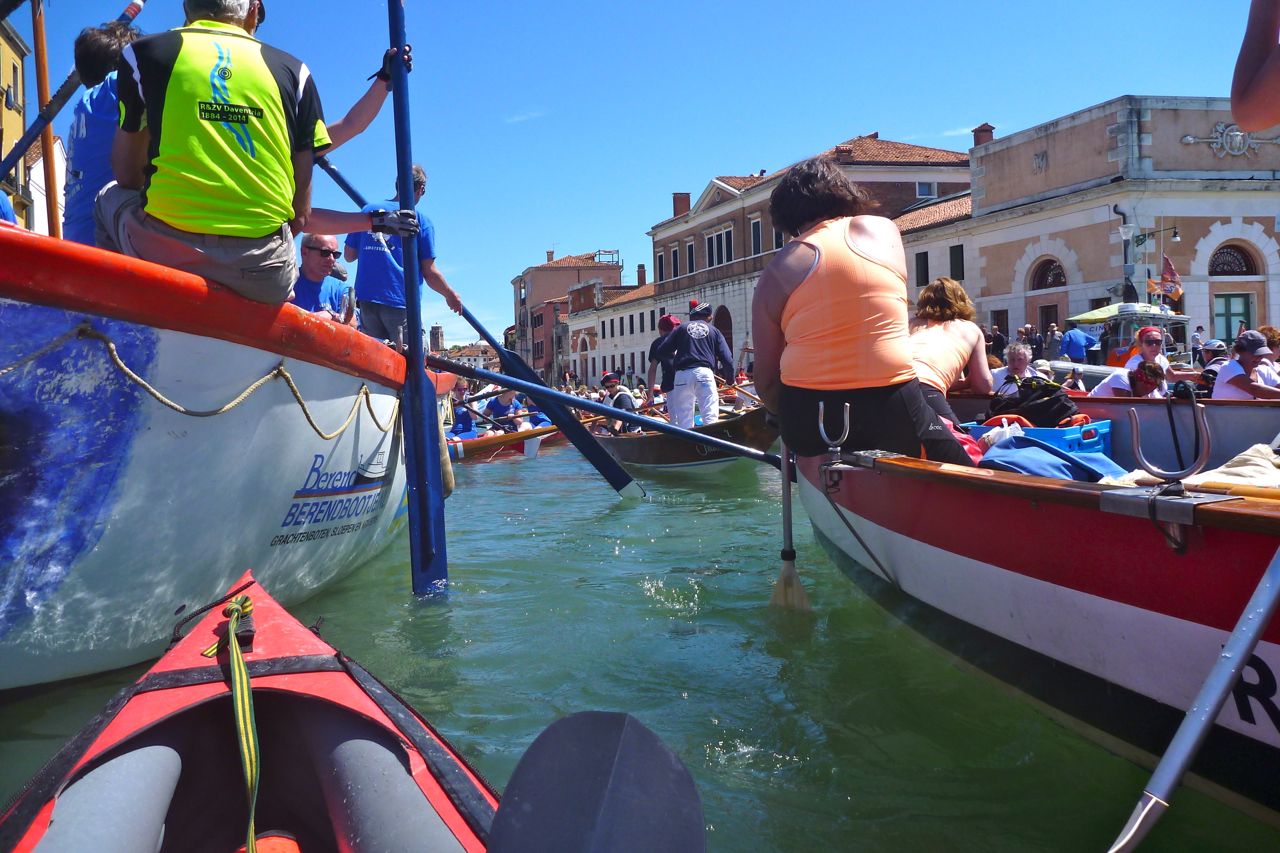
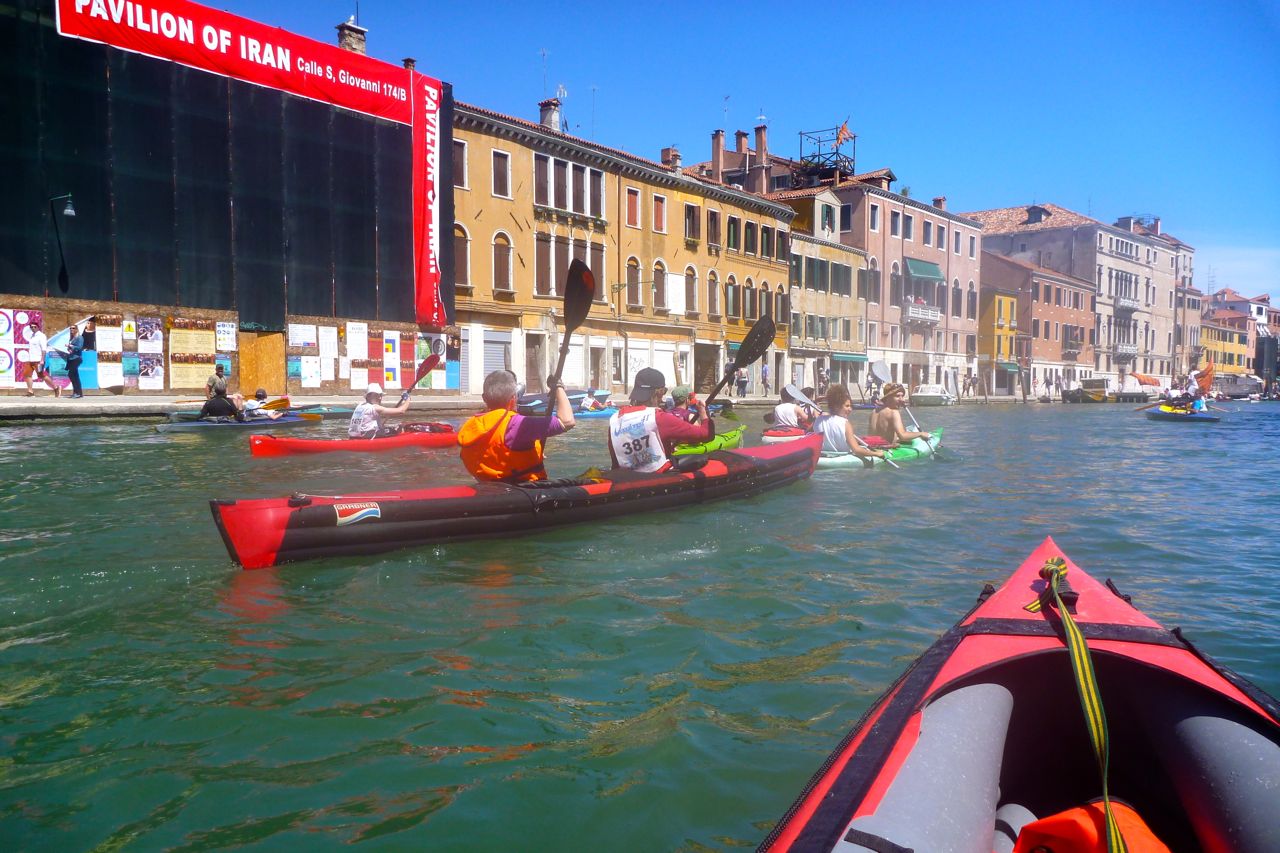
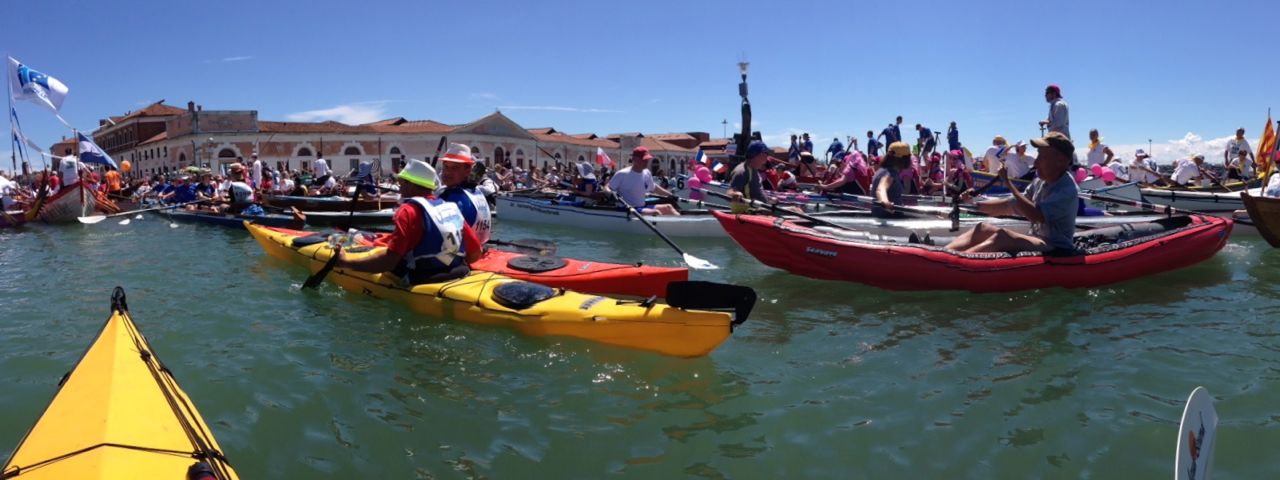
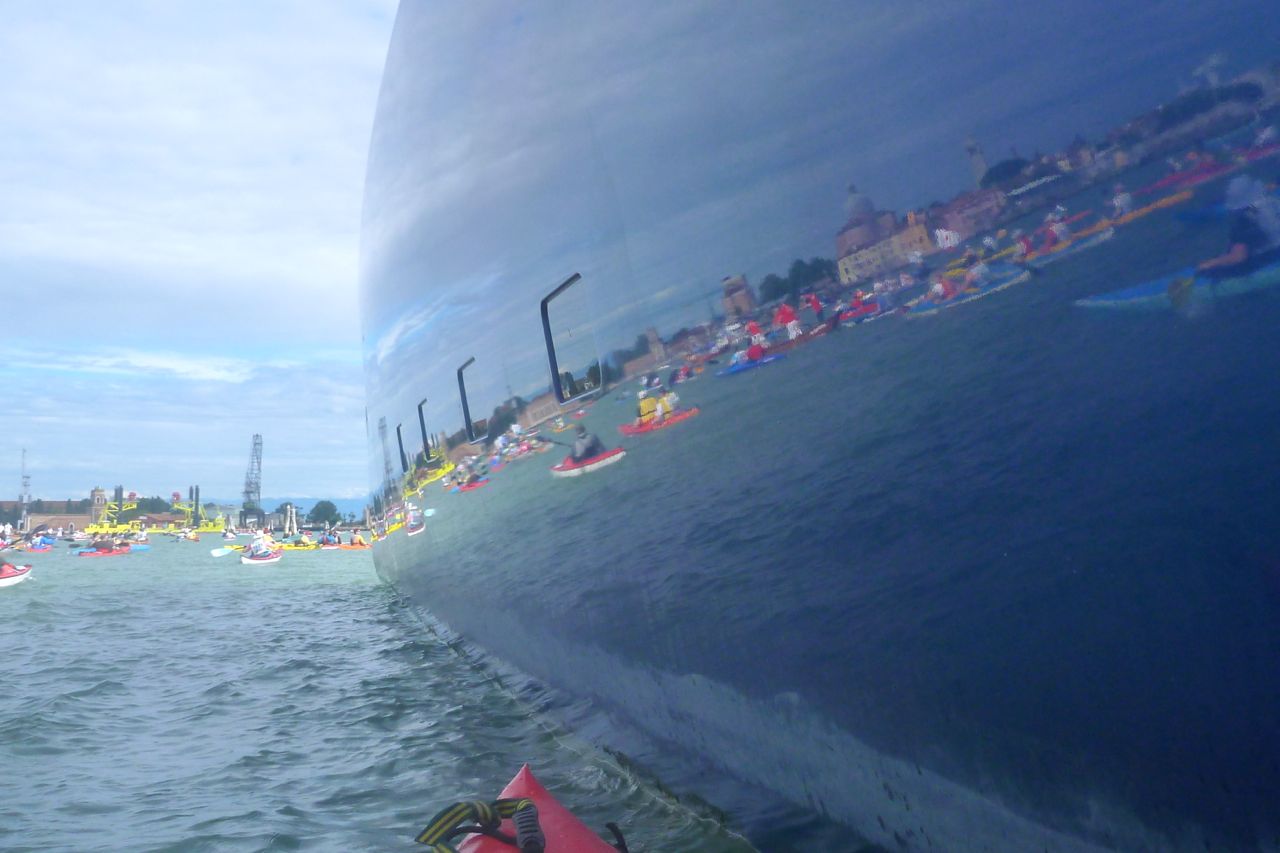
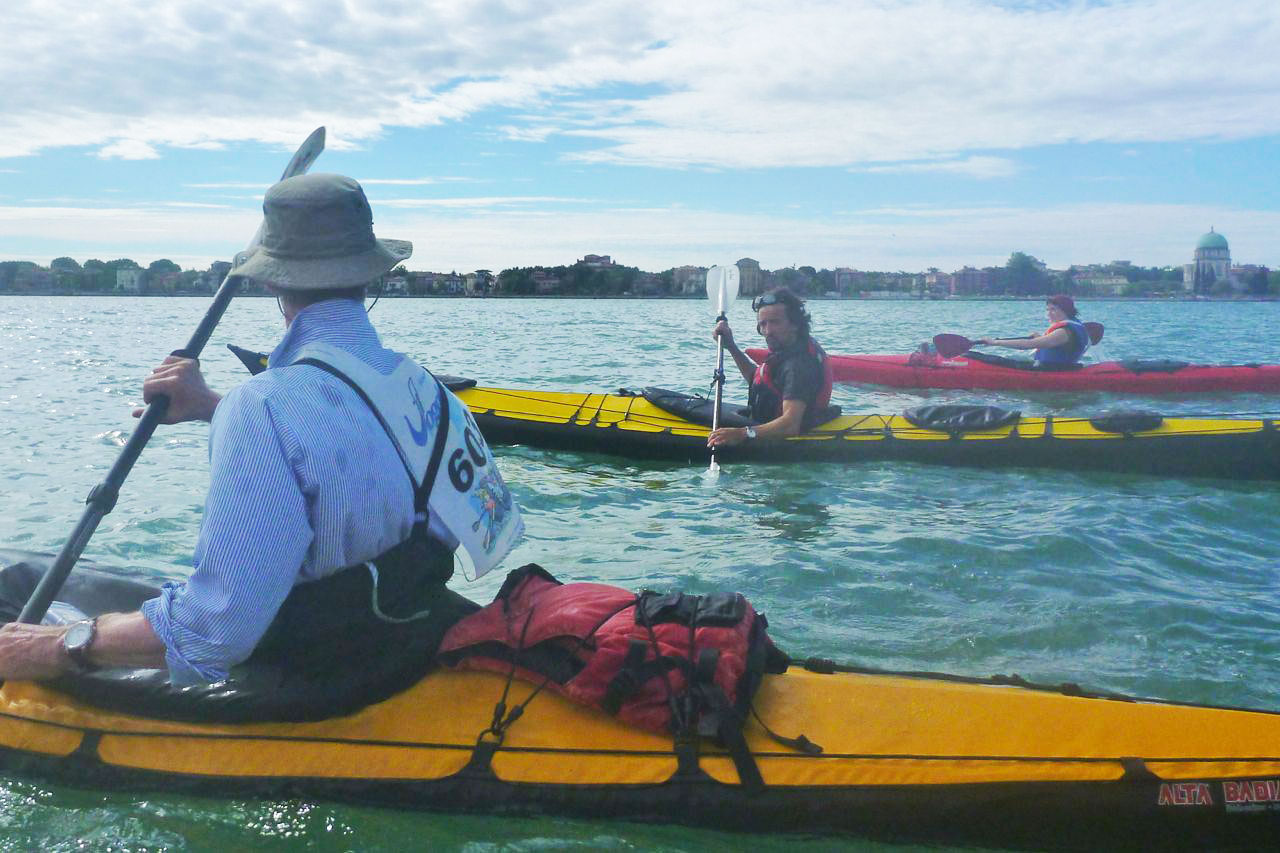
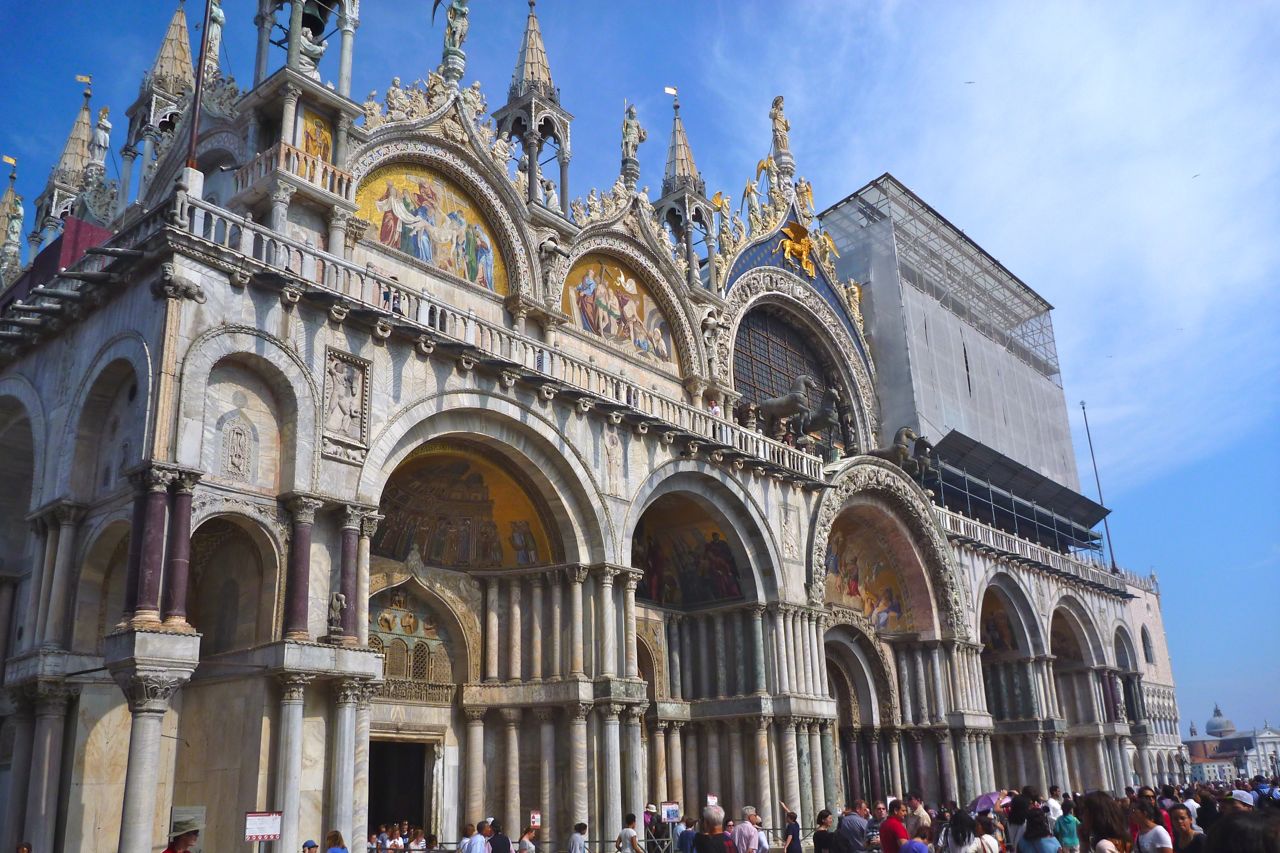
With the above proclamation and a shot from a cannon the 41st Vogalonga, a huge paddling regatta, got underway. Fettuccini’s stirring aria, La Forcola boomed from the speakers and the colourful, hand-powered flotilla pulled away from of the east end of Venice’s Grand Canal opposite Piazza San Marco and set off alongside the classic Venetian vista.

venezia


Not that it was any kind of race, you understand – and it was pure coincidence we happened to be at the start on time. You took as long as you chose over the 30-odd kilometres up to Burano and back via Murano to re-enter Venice from the other end of the Grand Canal. There was no starting line or prizes for first place or wackiest outfit.

voga-07


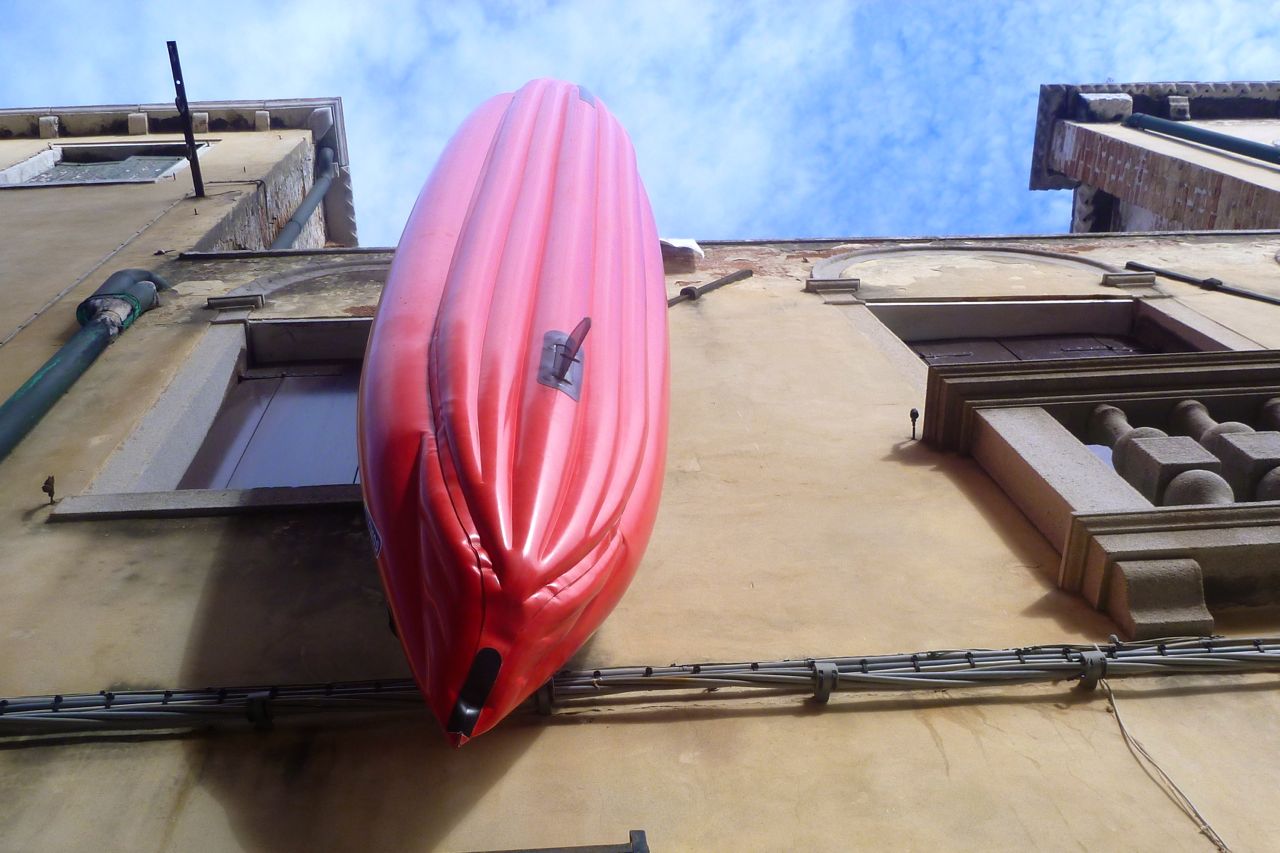
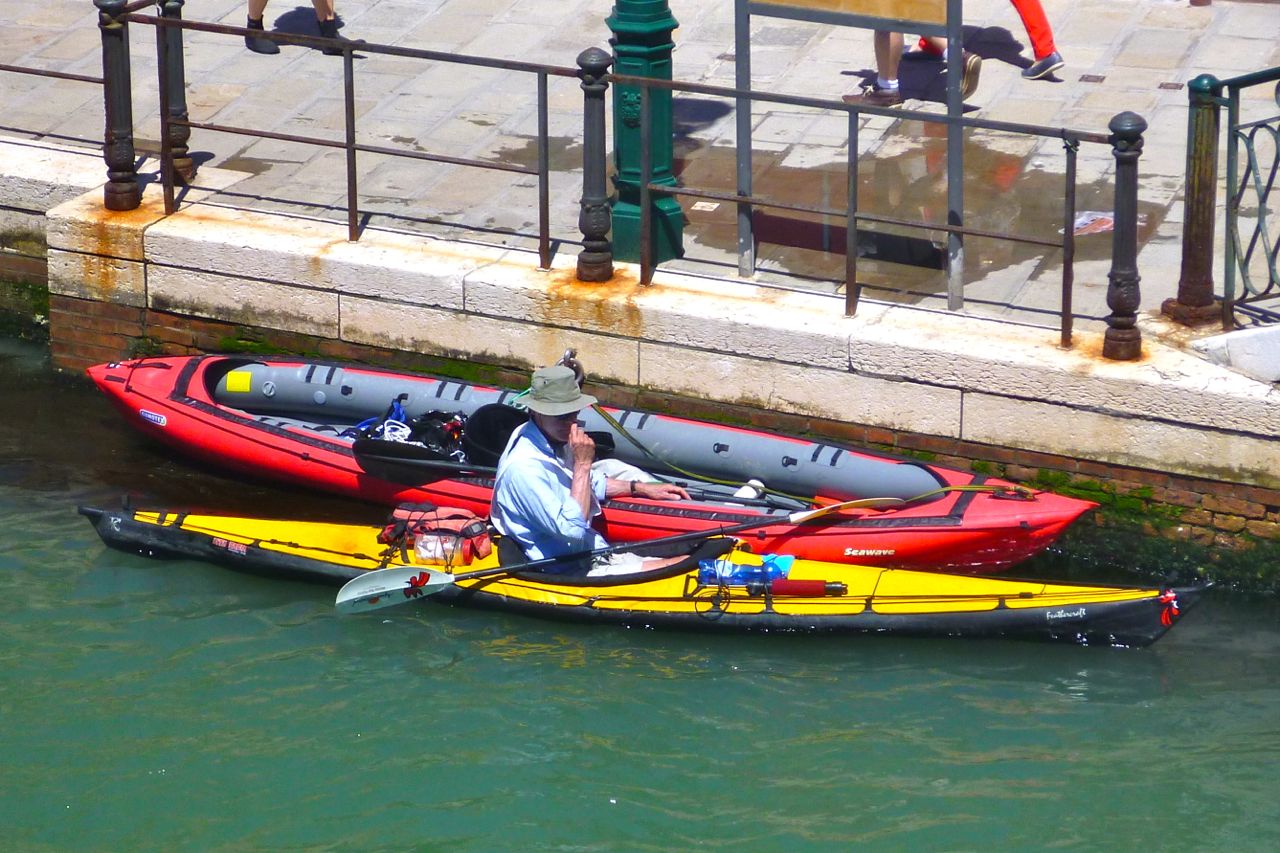
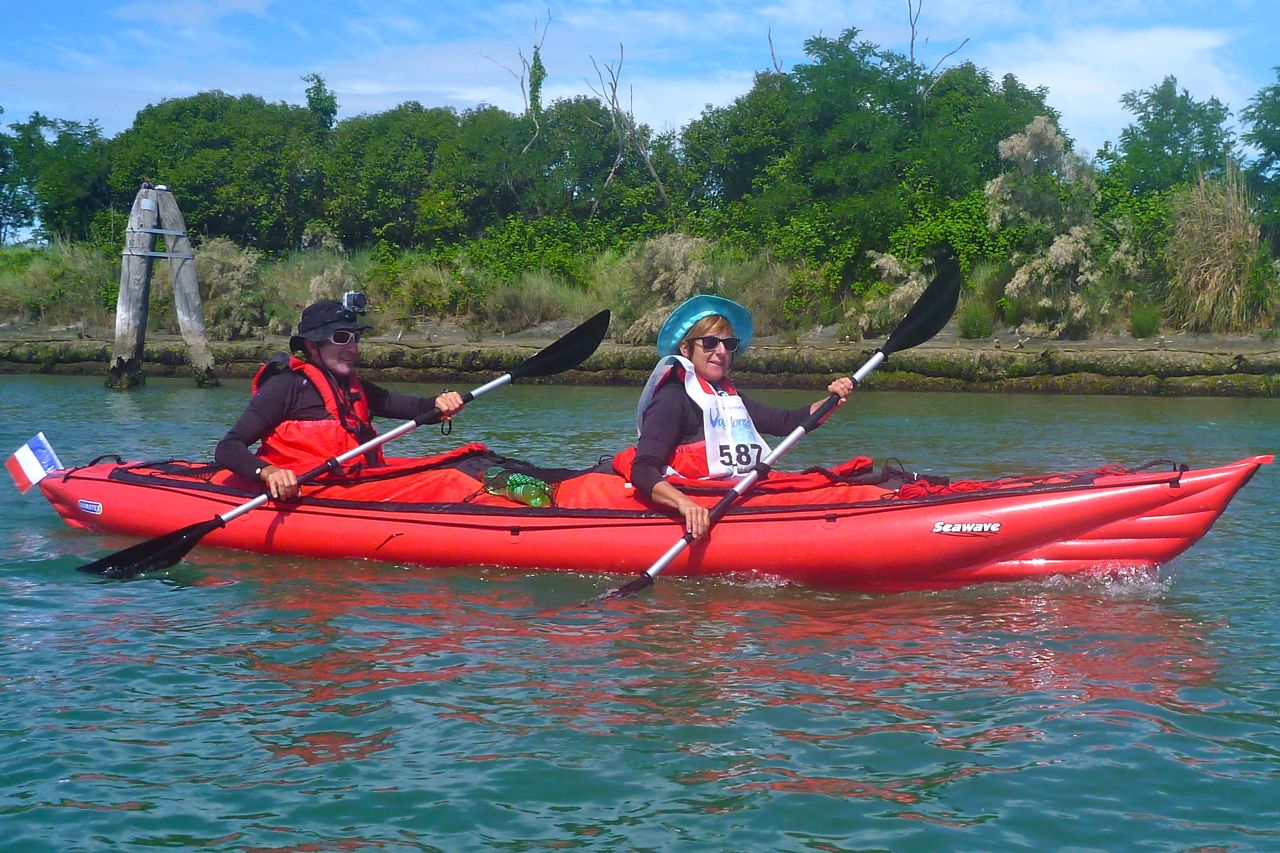
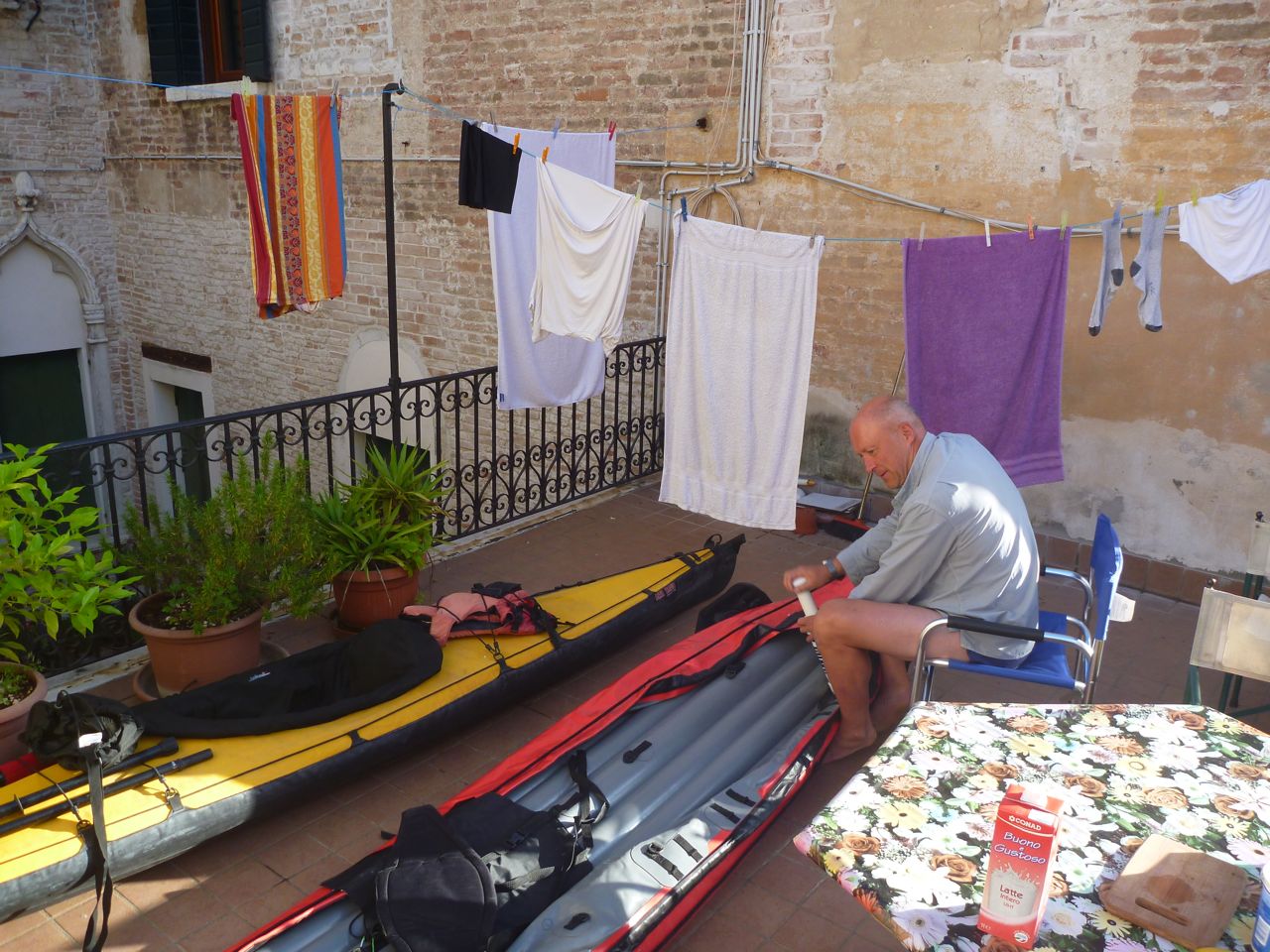
I flew in the night before and on the day Steve and I lowered our boats off his mate’s canal-side apartment balcony and set off to join the melee. Soon I realised I was in Italy not in a BCU training video: the official bibs were optional (included in the €20 entry fee along with a t-shirt, poster and certificate) and so were pfds. After all, who’s ever seen a rower or a gondolier in a pfd?

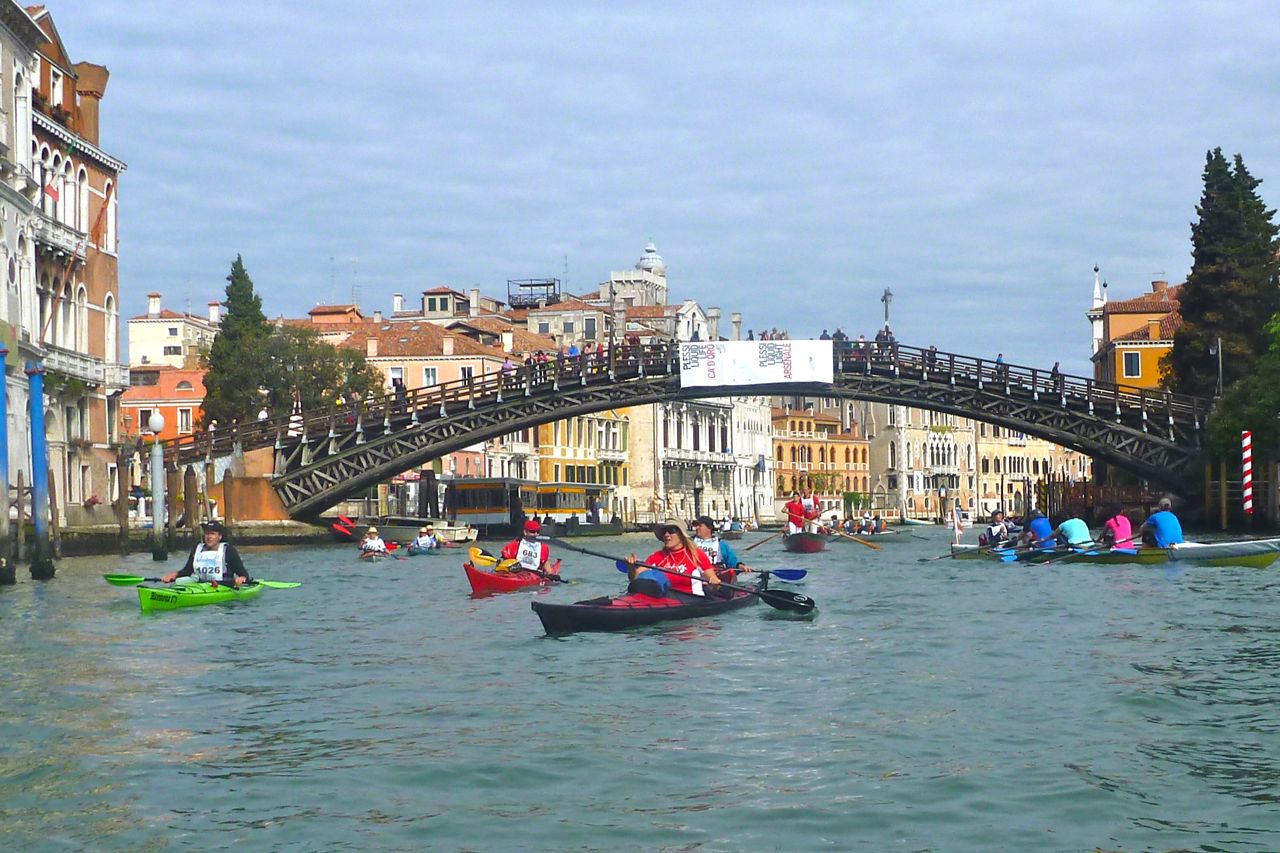
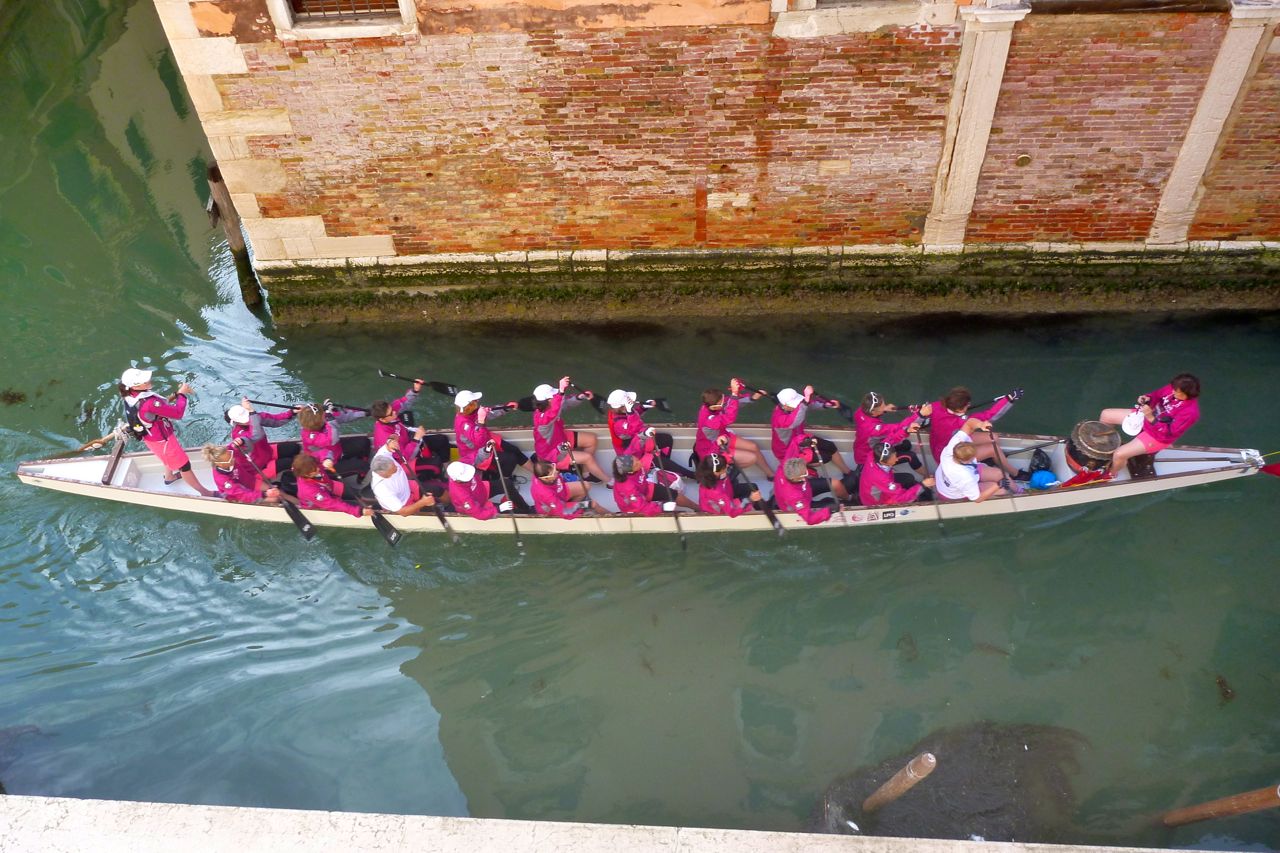
Around us was every type of paddle or oar boat under the sun, from 20-oar-power dragon boats paddling to a drum beat like in Ben Hur, four-up forward standing ‘frontelli‘ rowing skiffs, right down to inflatable SUP boards you could carry under your arm. Kayaks were probably the most numerous craft as this is one day you can cruise down the Grand Canal without getting terrorised by the vaporetti water taxis and their wake.
Dolomites ahead


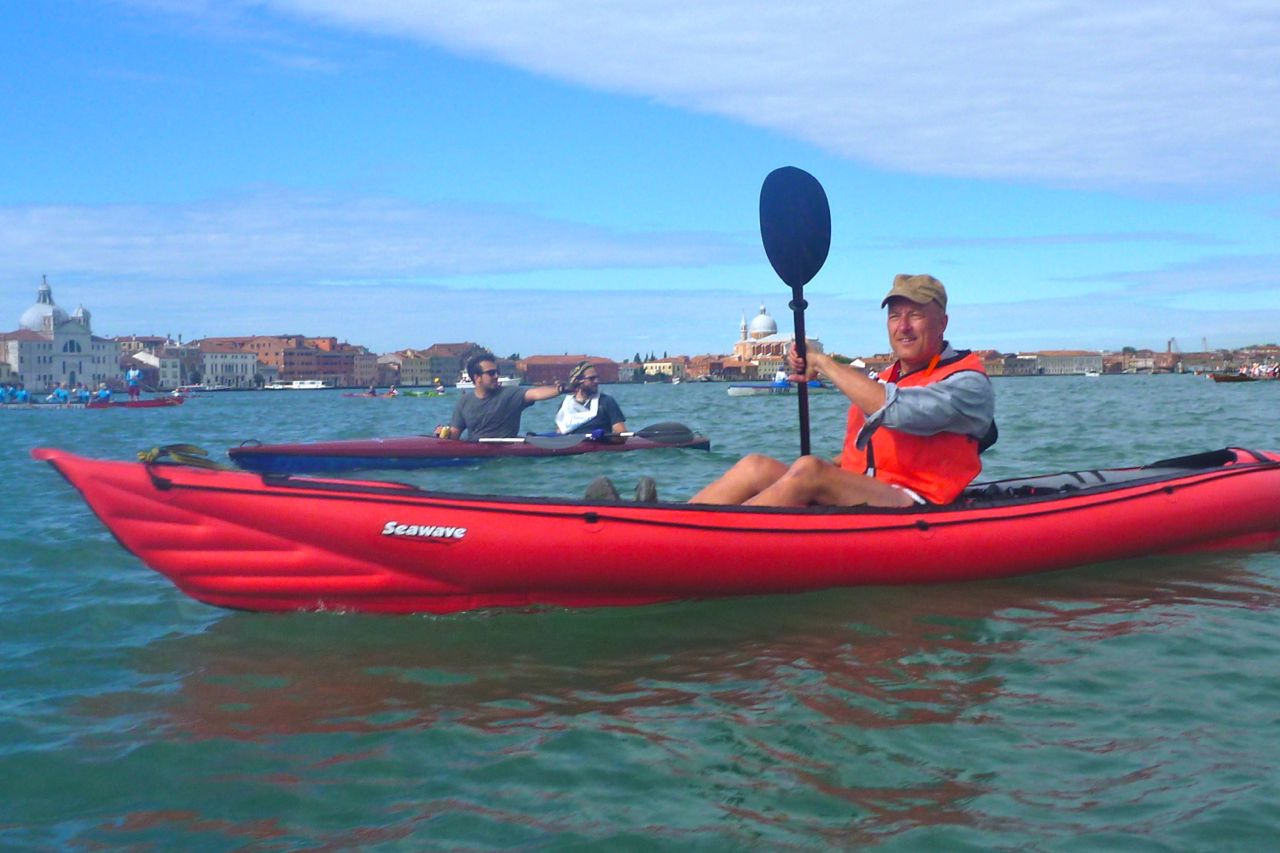
Out past San Elena point we dragged our left blades and pivoted north. The snow-clad Dolomites appeared on the horizon (left) which also sent in a light breeze giving us something to lean against. IKs and packboats of all shapes and sizes bobbed around me: Gumos, Kleppers and their klönes, Grabners, Feathercraft and Sevies. Passing islands or tidal mud flats became uninhibited pee stops as people joined in the paddle-powered cavalcade.

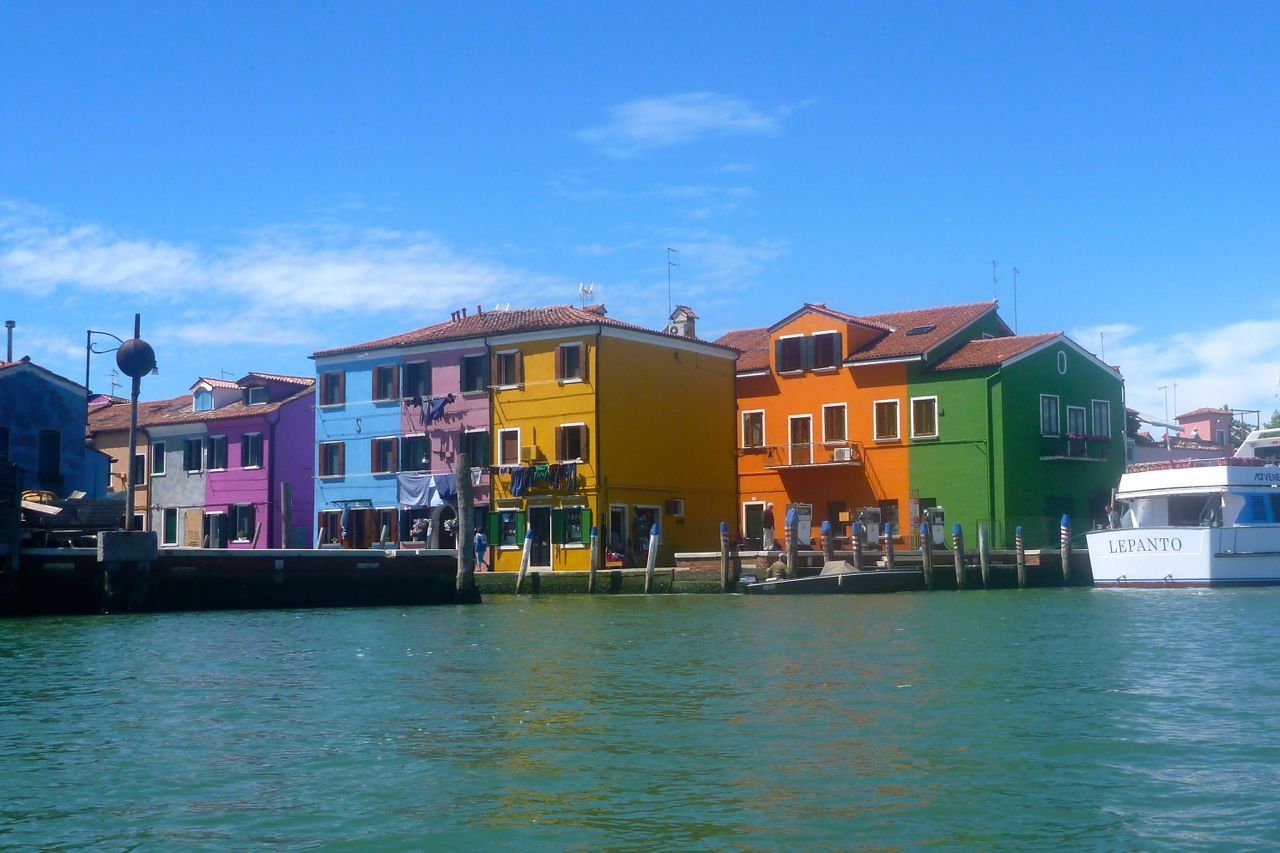
Turning round at Burano, the cooling effect of the breeze dropped off and the 5km open water haul to Murano was hot work. Three hours in and you could see all around the pace was flagging, not least when some tidal eddy made the last stretch into Murano a bit of an effort. It was here that Venice’s precious medieval glass industry flourished; I’ve come across Venetian glass beads in places as remote as Tichit in Mauritania.

voga-40
voga-43

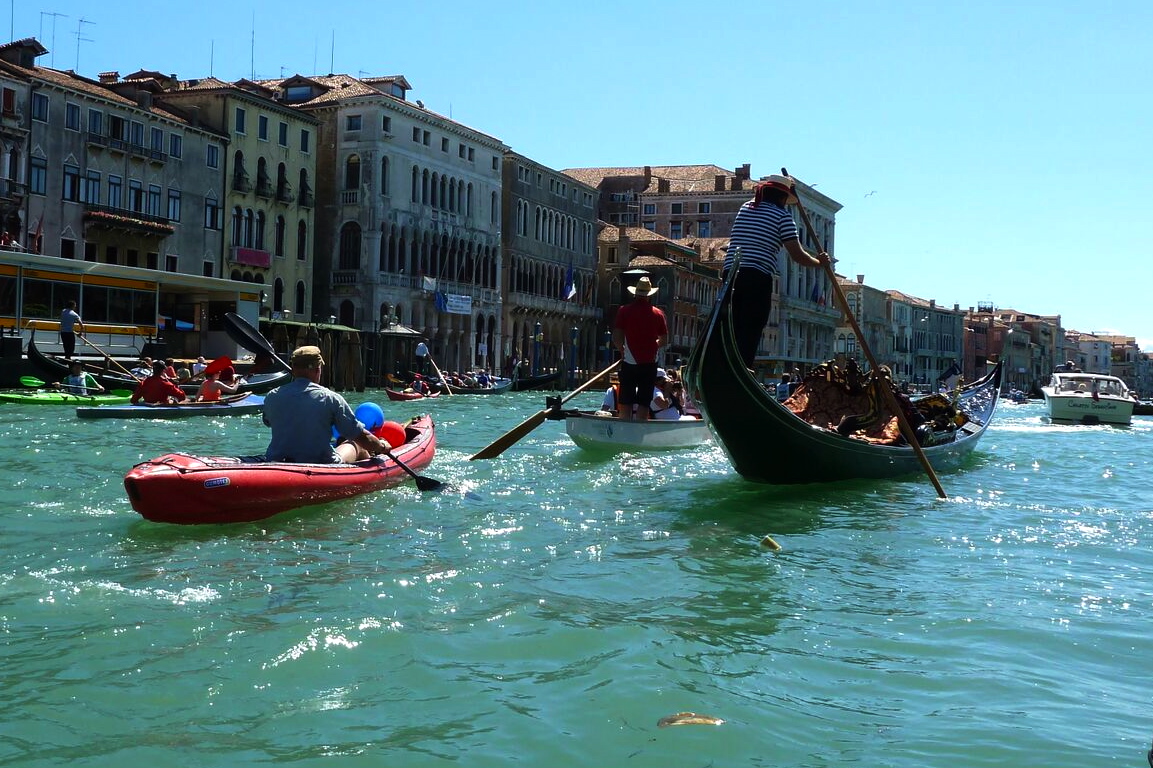
Just two Sorbettos – only €15 – then we rocked up at the other end of the Grand Canal where a huge bottleneck of paddle boats had built up at the entrance. It turned out the narrow Ponte dei Tre Archi was the cause – it could only take one rowed boat at a time and with some 2000 boats to filter, the police were trying to keep some order. Dodging low flying oars and prodding prows, it was all a good-natured bundle back into the canal where things quickly eased up for the home run back to San Marco, passing the Grand’s iconic palazzos, well-wishers cheering from the ponti and the acclaimed waterside vistas of La Serenissima.

voga-52


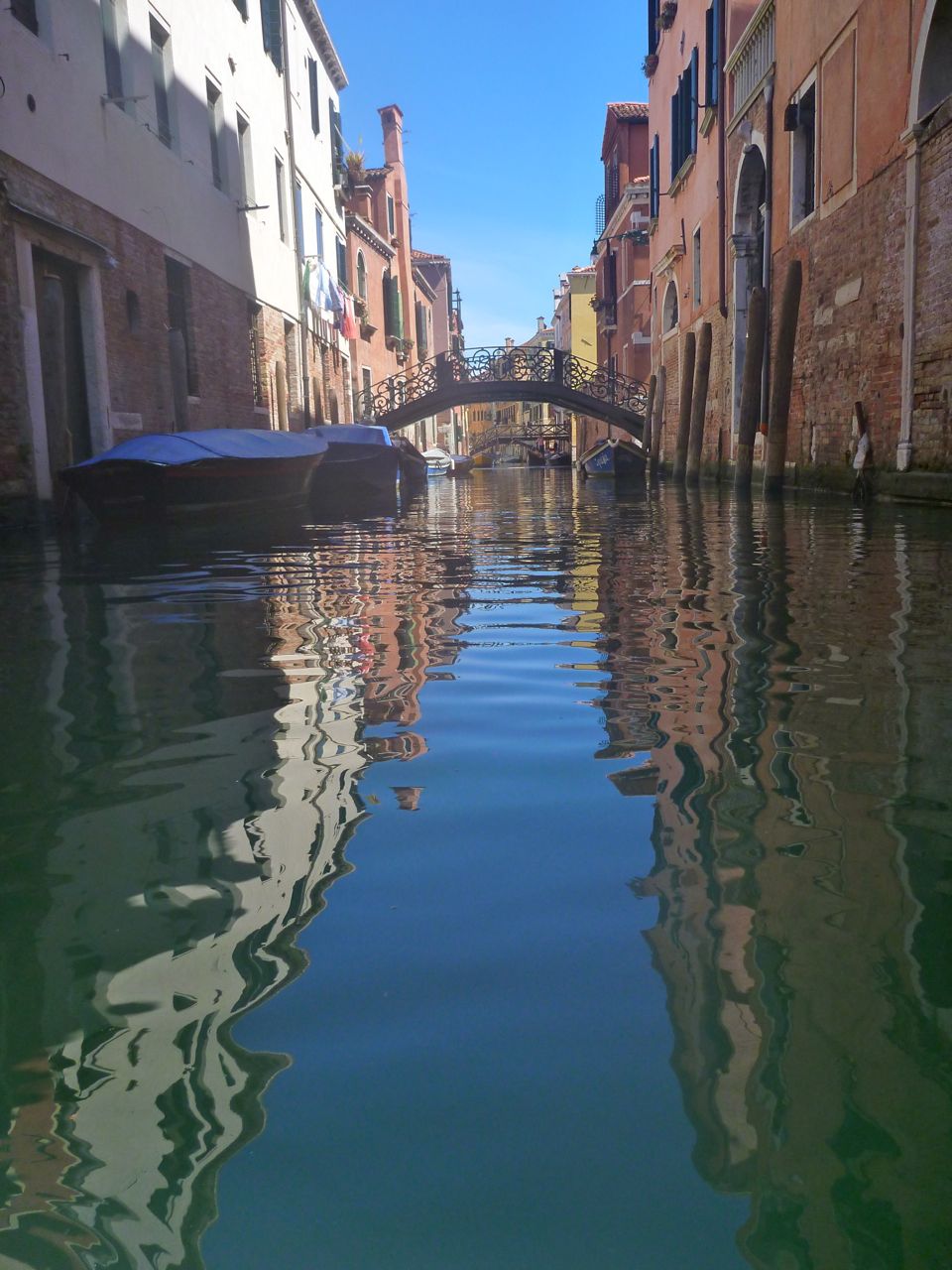
Within hours the vaporetti taxiboats had reclaimed the Canal from which it’s said kayaks and the like are excluded except to quickly nip across. But I see now that you can still have a great time paddling around Venice and the lagoon as long as you keep off the main canal and ferry channels, and out of the congested gondola tourist circuit between Ponte Rialto and the Bridge of Sighs. That still leaves plenty of quiet back canals to explore as well as the sheltered lagoon and its countless islands. Bring your packboat to the 42nd Vogalonga. If like me you’ve never been before, it’s a great way to tick off Venice.

Gumotex Seawave: Modifications and Improvements

Updated 2021 for Seawave 2

Seawave main page
MYO Seawave rudder

yalding

Grappling to get the boat out of the muddy Medway river at Yalding one time put a light scrape on the hull. It reminded me that, along with fitting PRVs to the sidetubes, another winter job was to fit a protective strake under the bow where most scraping occurs. Better to get the protection in early while the boat is newish.

straker
ami-poly

A 70 x 15cm Hypalon off-cut (close enough to Nitrilon) was 14 quid on ebay and once trimmed left enough for another strake or two. I had some Polymarine two-part adhesive (below) and glued the strip to the boat’s curved form with the floor inflated, even if that meant working the roller to press it all together was less effective. I then slathered some Seam Seal around the nose of the strake to protect it from unpeeling (less runny Aquaseal would have been better but a Seam Seal tube was open. More on glues here).

2021 Update A strake is a good idea but actually got hardly worn, so on Seawave 2 I just stuck on some Gorilla tape, maybe two layers, in the same place. Easily renewed/removed.

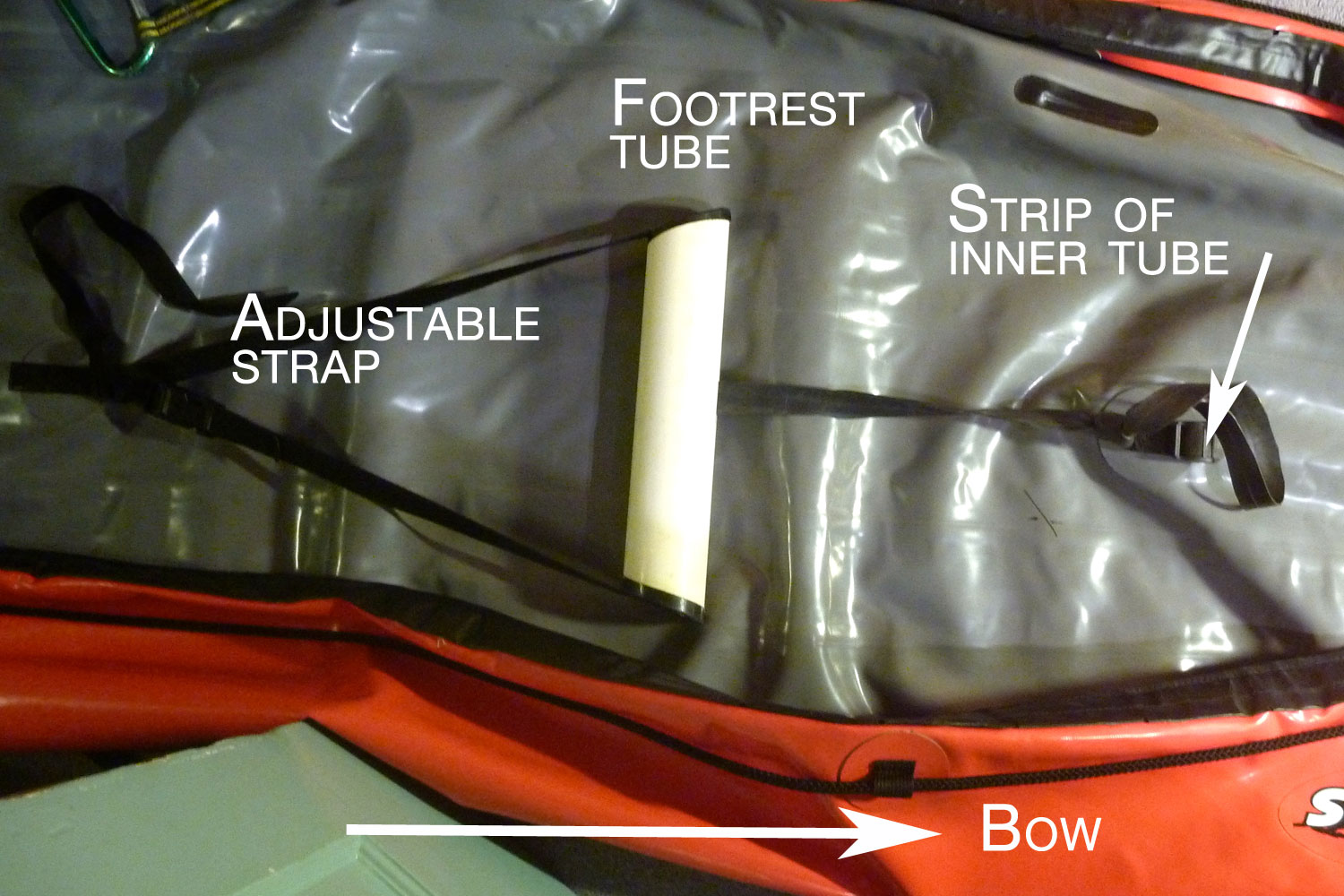
While the boat was filling the hallway and causing a hazard to domestic navigation I also bodged up a better system for the all-important footrest. A bit of inner tube now counter-tensions the footrest from the bow to keep it in position. It means the thing is now fully adjustable across a wide range of positions, can easily be fine-tuned from the water, removes in seconds for boat cleaning/drying and needed no extra fittings glued to the boat. Once great thing about the Seawave is the multitude of attachment points on the floor and sides.

2021 Update On Seawave 2 I just passed an adjustable sling through the tube and clipped it to the sides (left). Much simpler.

sw12

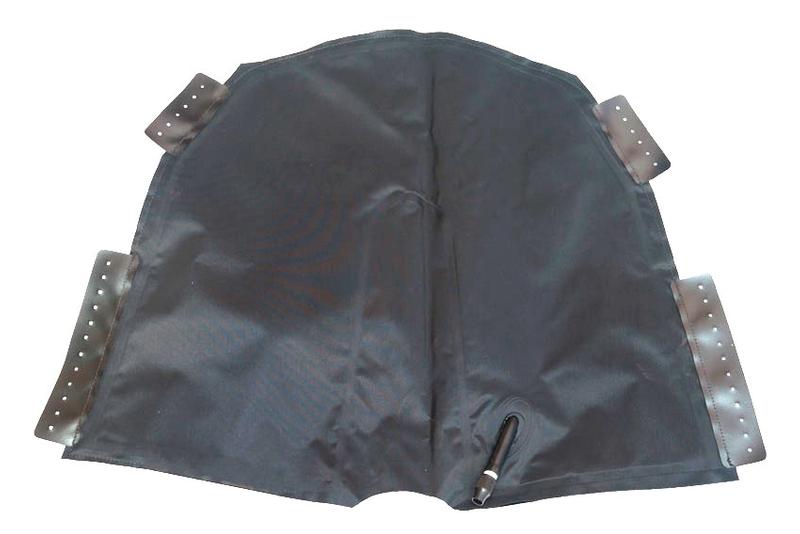
While on the river my aged Mk1 Alpacka U-seat base went flat, split right in the U. This seat is part of a lighter and comfier system I brought over from my Amigo – an improvement on the one-piece Seawave seats. It’s currently unfixed to the boat and the thin nylon must have ripped while yanking it into position on the river after getting back in. Again, I’m trying to avoid gluing extra D-rings to the hull – they’d limit seat base adjustment options anyway.

alpacka-seat

Better then to attach the seat base to the base of the backrest with a couple of zip ties. The whole backrest/seat base can then slide forward and back off the backrest side straps and it all unclips from the boat in less than 3.7 seconds. I glued up the punctured U-seat but it won’t last, so I’ve ordered MkII Alpacka seats (left) from Packrafting Store: €70 delivered for a pair. From Alpacka US the seats cost $25 but their auto-calculated international postage is nuts, let alone tax and VAT issues. These seats have the U filled in like a webbed foot: stronger and less floppy for just ~12g extra weight.

2021 Update. I’m using the same system on Seawave 2; a non-U packraft seatbase and a used backrest off a Bic SoT with a piece of stiff plastic board slotted inside.

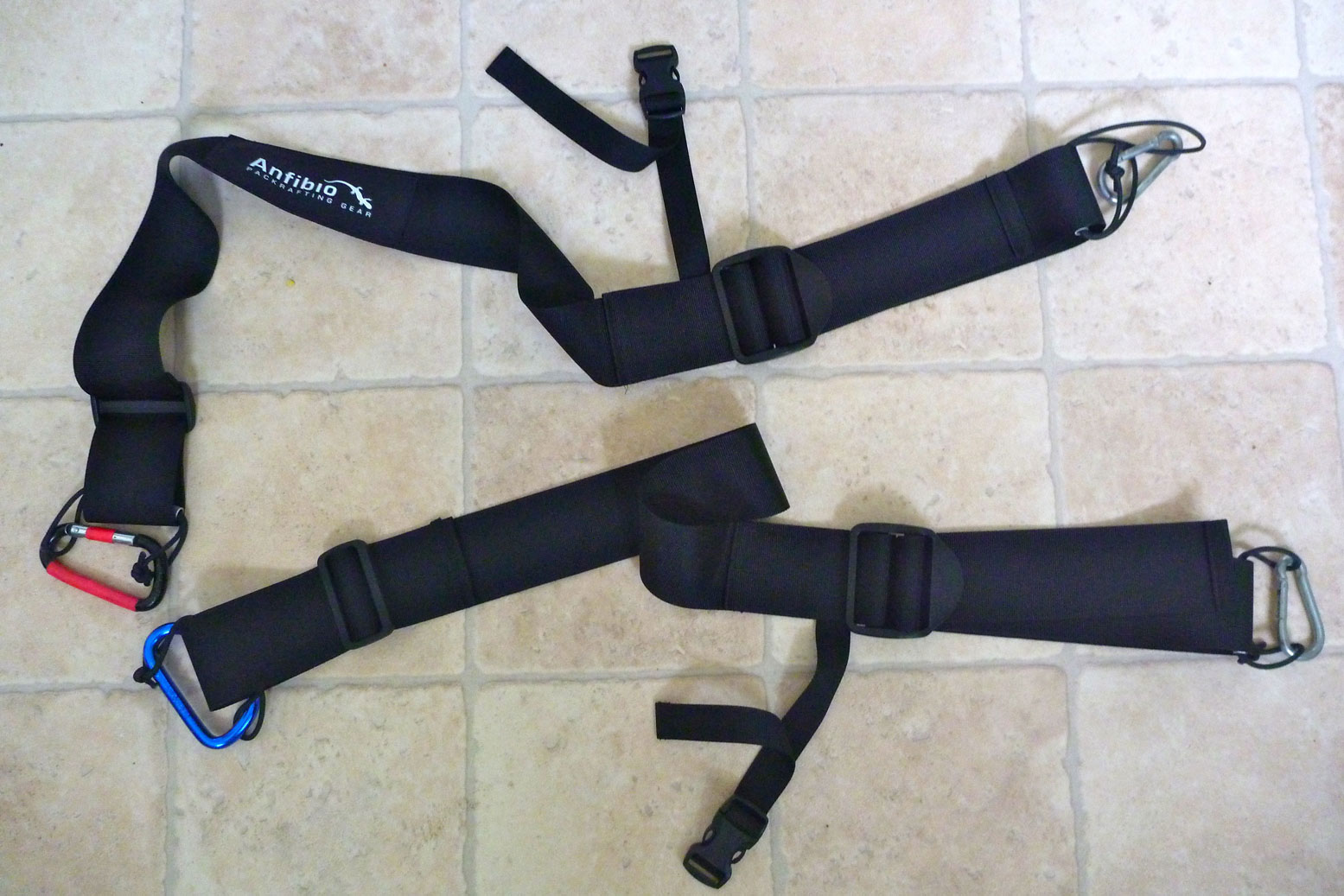
I’ve also ditched my old my SoT thigh straps (left). Nicely padded and effective though they were, the brass spring connectors and padding made them feel heavy and bulky at ~720g.

Instead I got some non-padded Anfibio packrafting straps (they’re different now). With my biners they come in at 270g. The delta-straps dangling off the sides are a clever idea, designed to give a more direct pull when rolling a packraft for example. Can’t see myself doing that in any of my boats. Whether you’re rolling or just paddling, in rough water the more direct connection with the boat the better. I’m a big fan of these light but effective straps now. No need for paddling.

Fitting 4.8psi (0.33bar) PRVs to Seawave IK sidetubes

Seawave main page
General article covering PRVs
Unexplained Seawave failures ;-/
Testing unbranded PRVs
Servicing and troubleshooting PRVs

My Gumotex Seawave is a well spec’d IK for my sort of coast-hopping and occasional touring, especially as it was factory rated to run at a higher-than-usual 0.25bar or 3.6psi (Gumo normal is 0.2). That means greater rigidity which adds up to less longitudinal sag caused by paddler weight (who, me?!) . And of course a better g l i d e. My previous Amigo and Incept both ran an even higher 0.3 bar, and it’s said that this Gumotex can also be pushed to that sort of pressure on the side tubes without risking damage. Factory hull pressures are set on the conservative side to limit warranty claims.

Like all the Gumboats I’ve owned, the more vulnerable I-beam floor chamber has a factory-fitted PRV set at 0.25bar/3.6psi (confirmed below). PRVs are important here as if an IK gets hot (typically out of the water on a sunny day) internal air pressure can increase to the point where seams might rupture. If separation happens to an internal I-beam in the floor it will balloon up and becomes a very difficult repair. I would not meddle with the factory-set PRV on an I-beam floor.
As we all now know, the answer to I-beam floor limitations is drop-stitch technology – effectively zillions on ‘I-beams’ spreading the load over the entire area which enables much higher pressures.

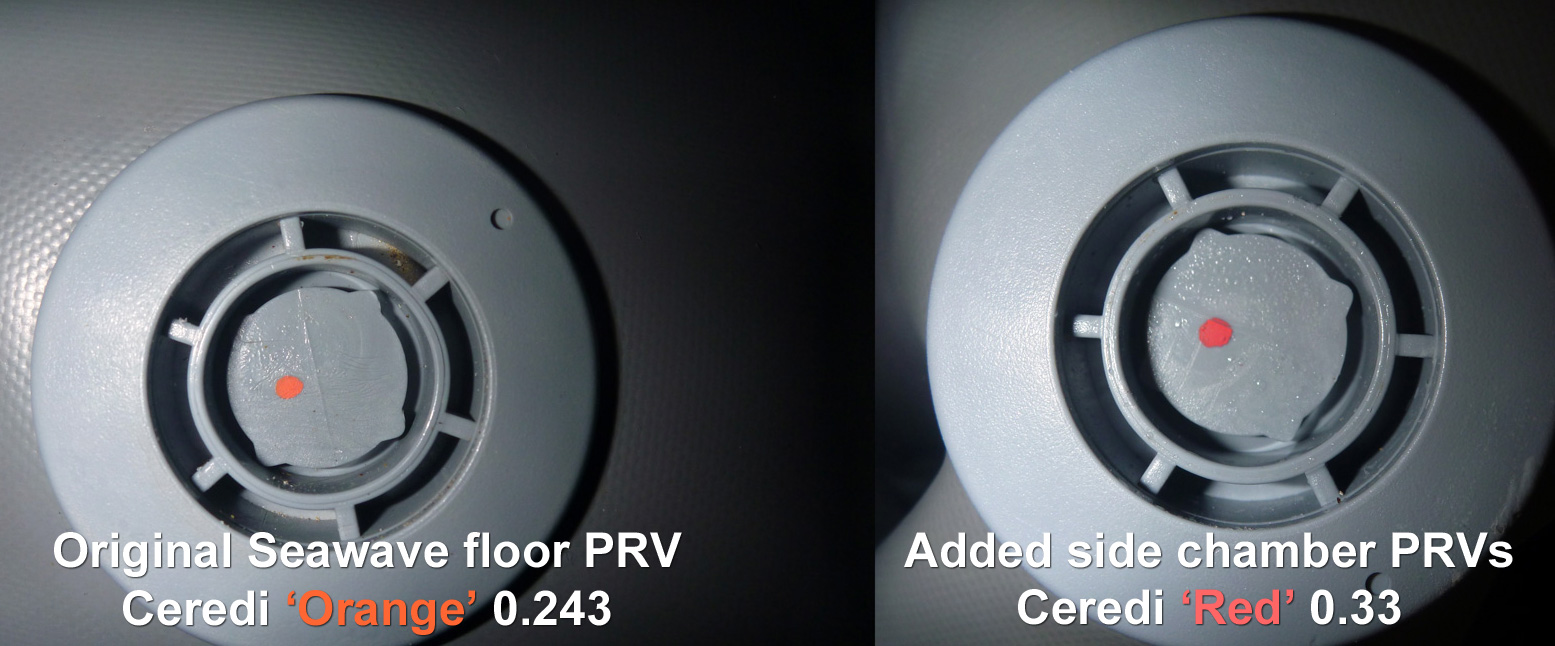
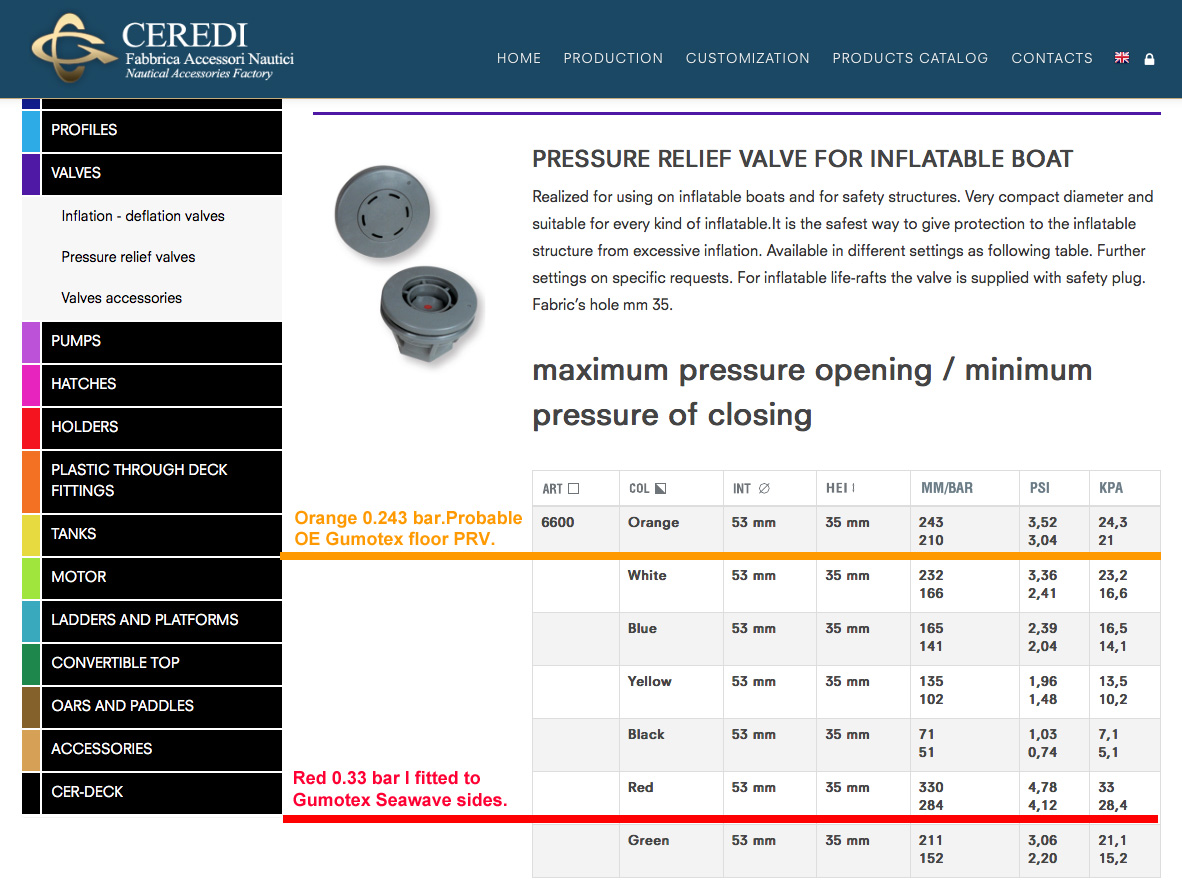
In a discussion with a French Gumtexer, he suggested that Gumotex use the same orange dot  0.243 PRVs in all their boats, irrespective of the stated official rating which is either ‘0.2’ like most – or ‘0.25’ on the Seawave. He sent me a photo of his 2016 Palava floor PRV (left) – orangey-pink, same as my Seawave and classified by Ceredi as 0.243.
Officially the Palava is a ‘normal pressure’ 0.2 bar canoe. Upshot? Your Gumboat’s floor may be rated at higher pressure than you think or is officially stated. You’d assume then that the tubed sides can easily handle at least as much pressure. Then again, in the table below, Ceredi state the orange PRV  will open between 0.21 and 0.243 so perhaps 0.21 it is and we all just need to calm down a bit.

Guatemala, Fuego volcano, Strombolian eruption

PRVs use springs set to purge air before pressures reach structure-damaging levels. Then again, my Amigo had no PRVs at all so you assume Grabner were confident their floor construction was solid enough to handle occasional neglect. But I’ve been caught out before and always try to ensure a boat remains in the cooling water when moored up on hot days – even getting up to splash the sides as they tighten up like a drum.

cerediprv

Like most IKs with single side tubes, my Seawave had no PRVs as the tubular profile can handle higher pressures better than the flat, ‘lilo’ floor. However, if you’re planning to run them over-pressure as I am suggesting, that could be risky.
The answer: fit PRVs in the side tubes – just like my old twin side tube Incept. That way you can safely leave you IK out of the water in the tropics, go and hike up a volcano (which might be described as ‘the planet’s PRVs’) knowing that all three chambers will harmlessly purge any excess pressure. Sure, when it all cools again back in the water the boat may be saggy, but better a quick top up with your K-Pump than pulling bits of shredded Nitrilon out of the palm trees.
Ideally I was looking for a PRV set at a reasonable 33.33% over the factory figure of 0.25 bar – i.e.: something around 0.33 bar or 4.8psi.

prvcolours
I admit that the colours look pretty close but it’s pinky-orange for the OE floor and red for my 0.33s

Well-known IK valve-makers Leafield and Halkey didn’t make anything matching my needs (or don’t sell to individuals). The Seawave’s valves are stamped ‘Ceredi Italy’ and once I managed to track them down online, I saw the same Ceredi 6600 PRV series came in options including Red 4.78 psi or 0.33 bar, (above right). In the UK they were a special order via IBS and cost £35 a pair posted.

Before you get too excited, scroll down to the bottom and read Nikola’s PRV nozzle idea.

Ceredi prices too steep for you? On eBay I bought unbranded ‘4psi‘ PRVs from China for about £4 a shot and delivered in less than 2 weeks.
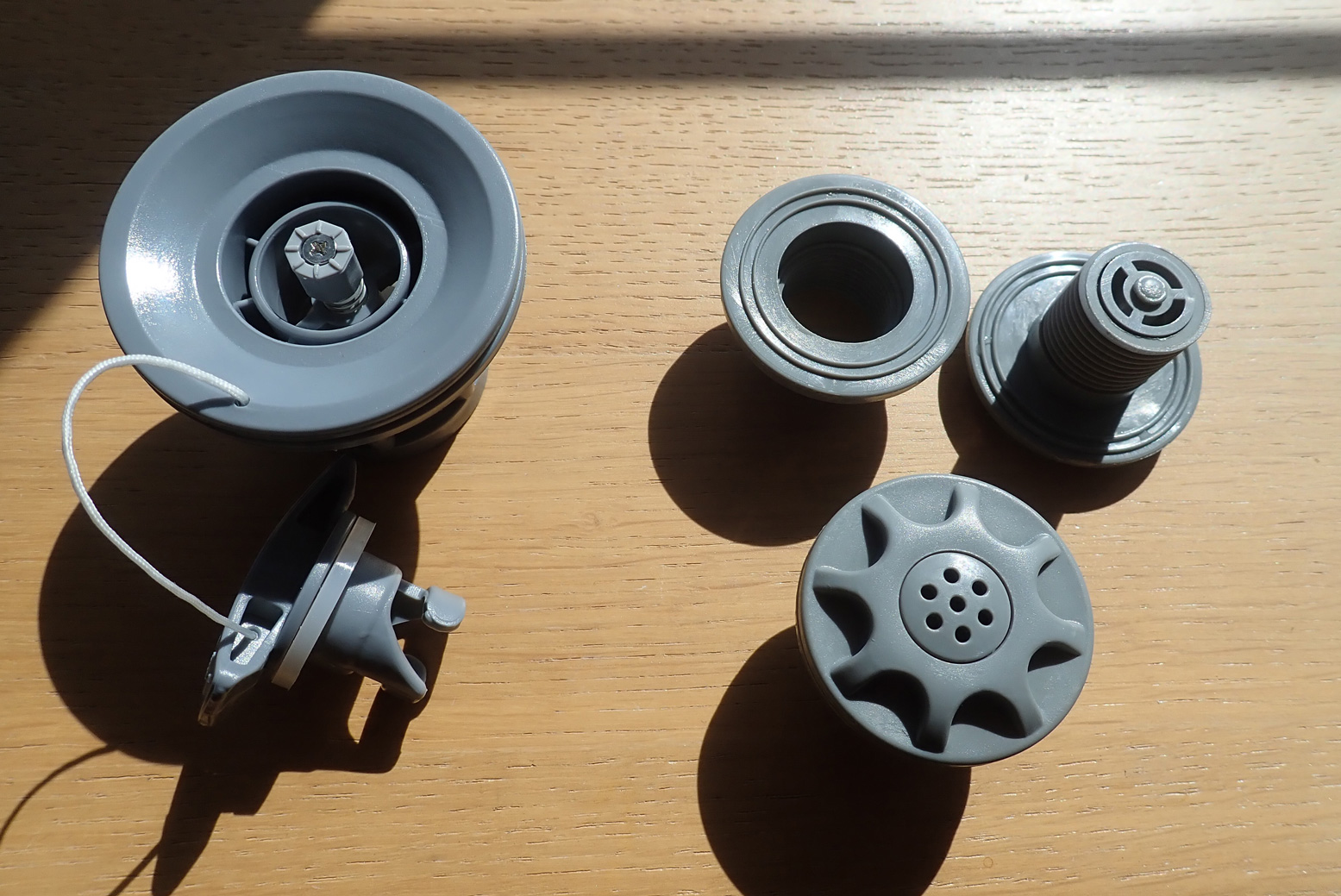
Note these are smaller than your Ceredi and require only a 25mm hole. The back nut will easily fit through the inflation valve hole, once you remove that.
I pressure-tested the valves I received and they stood up to the claim: more here.
Search eBay: ‘Air Safety Release Valve Kayak’.

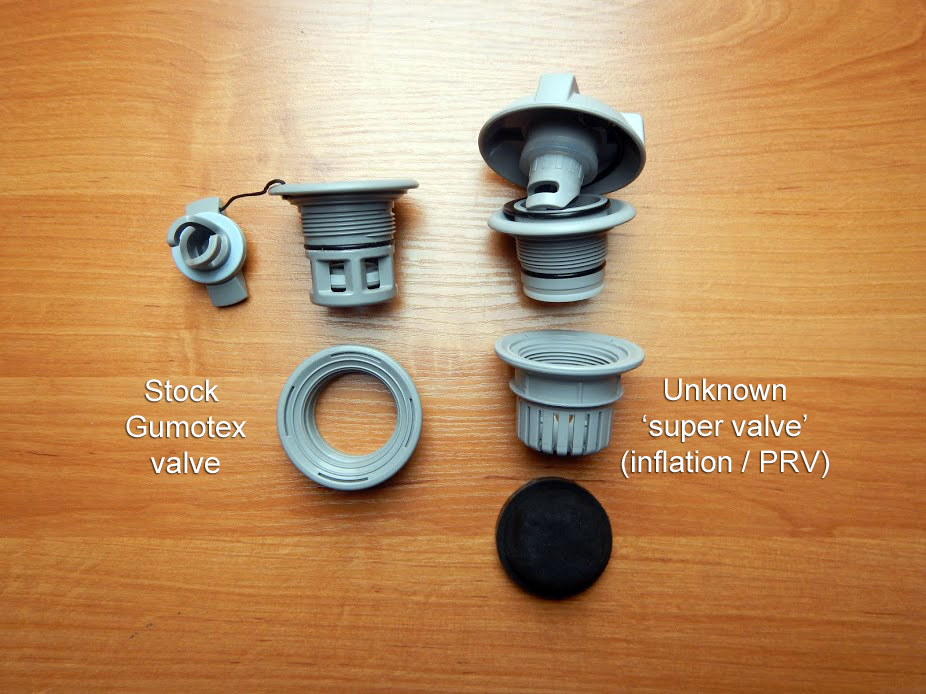
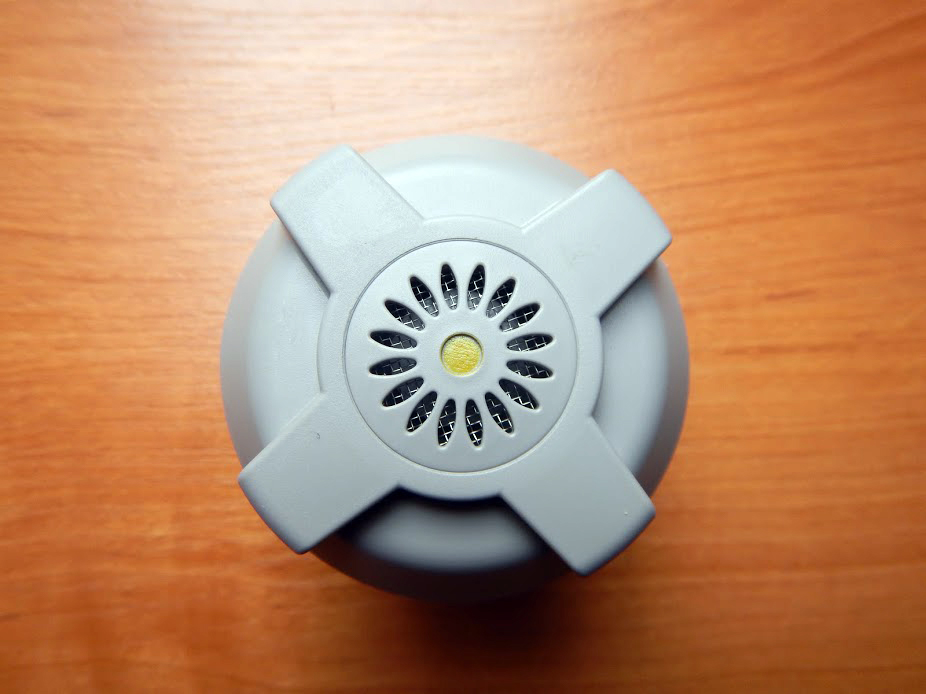
As you can read from Adam’s comment below, there is – or more probably was – a super valve which combined both inflation and pressure-release duties which means you simply replace the stock inflation-only valve. No need for extra holes to be cut. His link no longer works but I tracked it down to here; the Bravo Super Valve – that’s Bravo as in the Italian branded Chinese-made pumps we all know and love. But there is no mention of a super valve on their valve page anymore, nor in their catalog.


Fitting the Ceredi red dot PRVs

grabtool

Tools and time needed
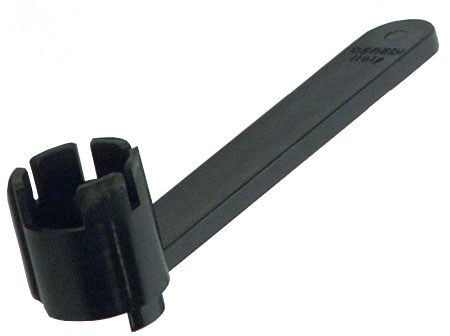
• Gumotex push-push valve removing tool (fits Ceredi PRVs also). Right;  £12 on ebay

• Narrow-bladed knife or scalpel
• Water pump/lock channel pliers
• 30-60 mins

Short version
• First, remove the side chamber’s inflation valve with the tool. They can be extremely stiff. If you can’t undo it, maybe think twice before going ahead. Or try silicon spray grease of 303 protectorate to lube

• Choose your spot, mark and then cut a 37mm hole in each side chamber. The Ceredi-suggested 35mm was not enough. Or fit the smaller, unbranded mini PRV (~25mm hole); see above.
• Squeeze the PRV’s threaded back collar through the bigger inflation-valve hole, shuffle it over to the new PRV hole and loosely screw on the external part of the PRV by hand
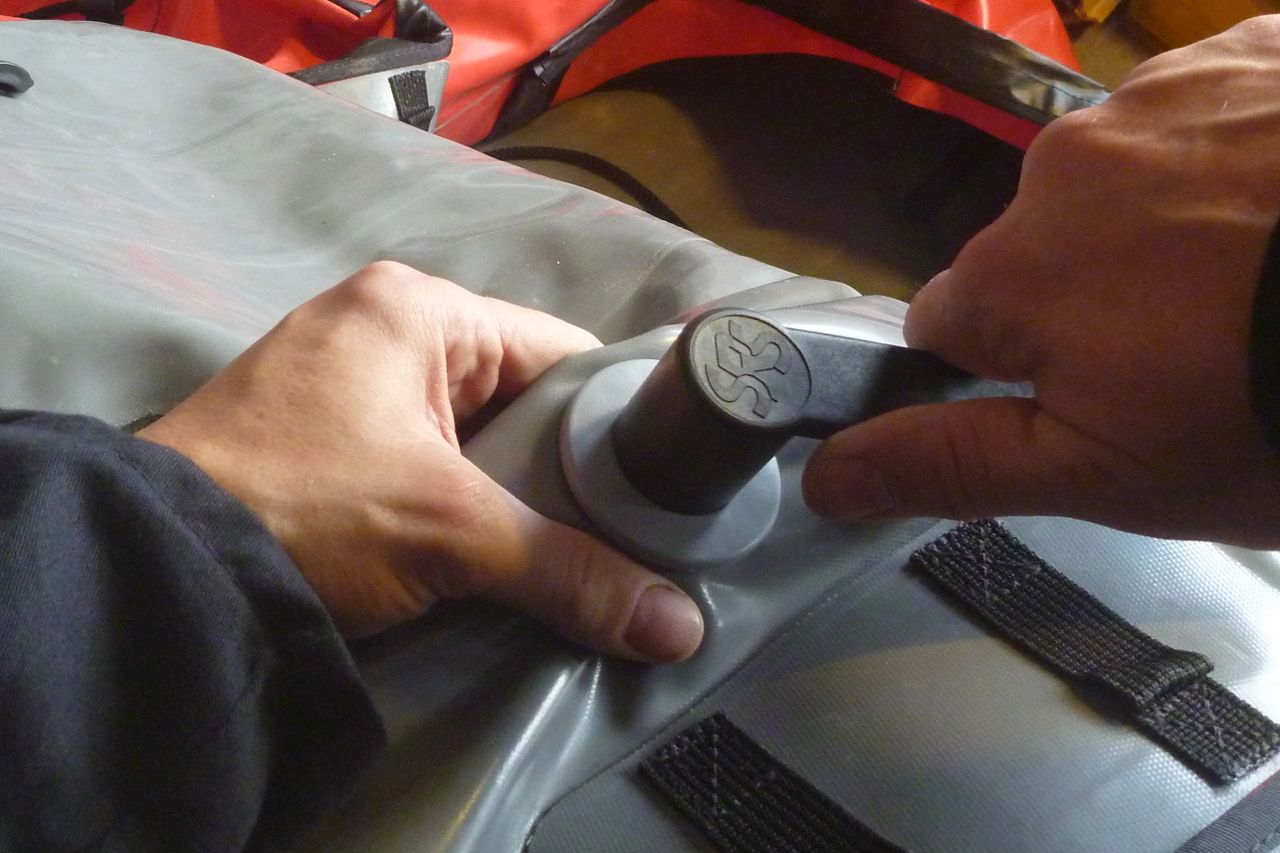
• Reassemble the inflation valve and tighten both valves with the tool
• Fit push-on caps to the PRVs
• Pump up and check for leaks. Maybe retighten some valves with the tool

Read this Interesting post

prvvs.jpg
Hadron

Long version
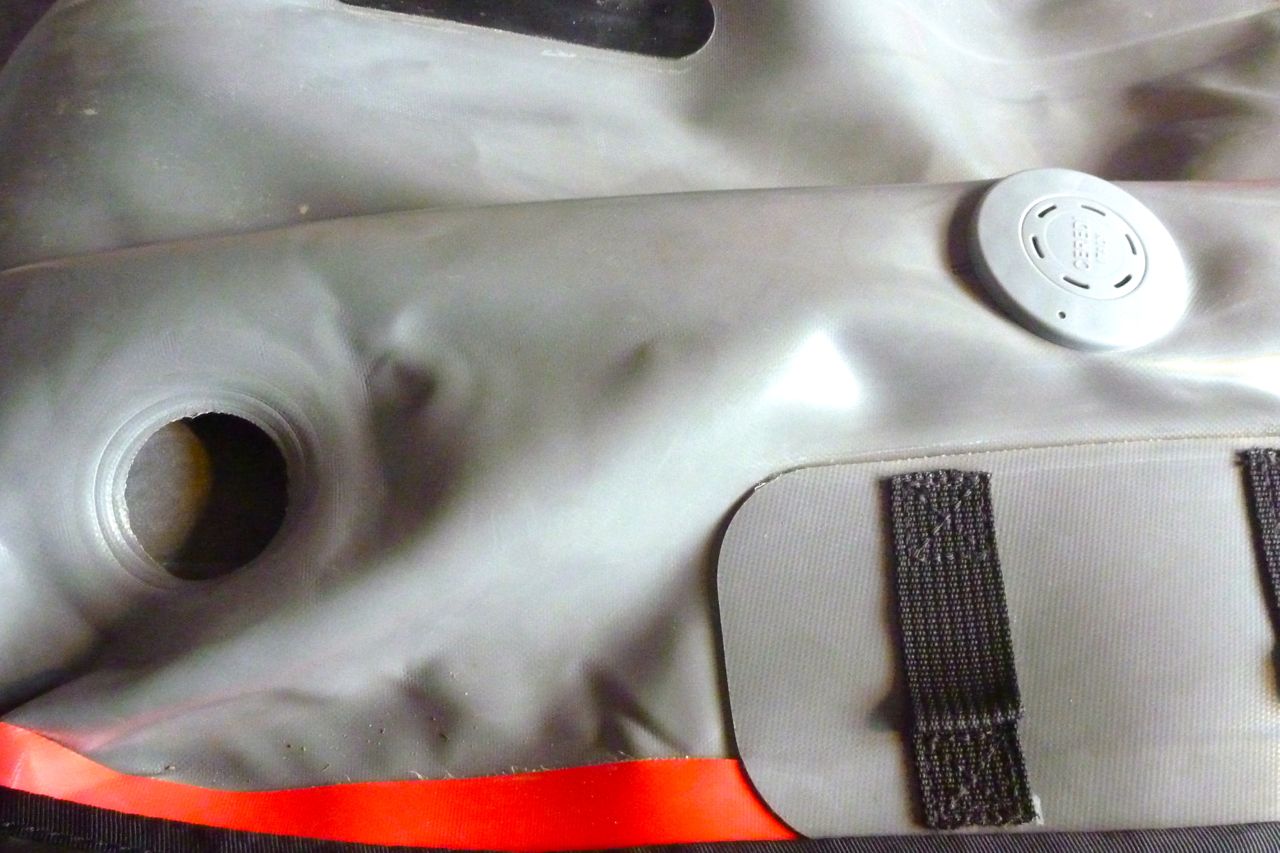
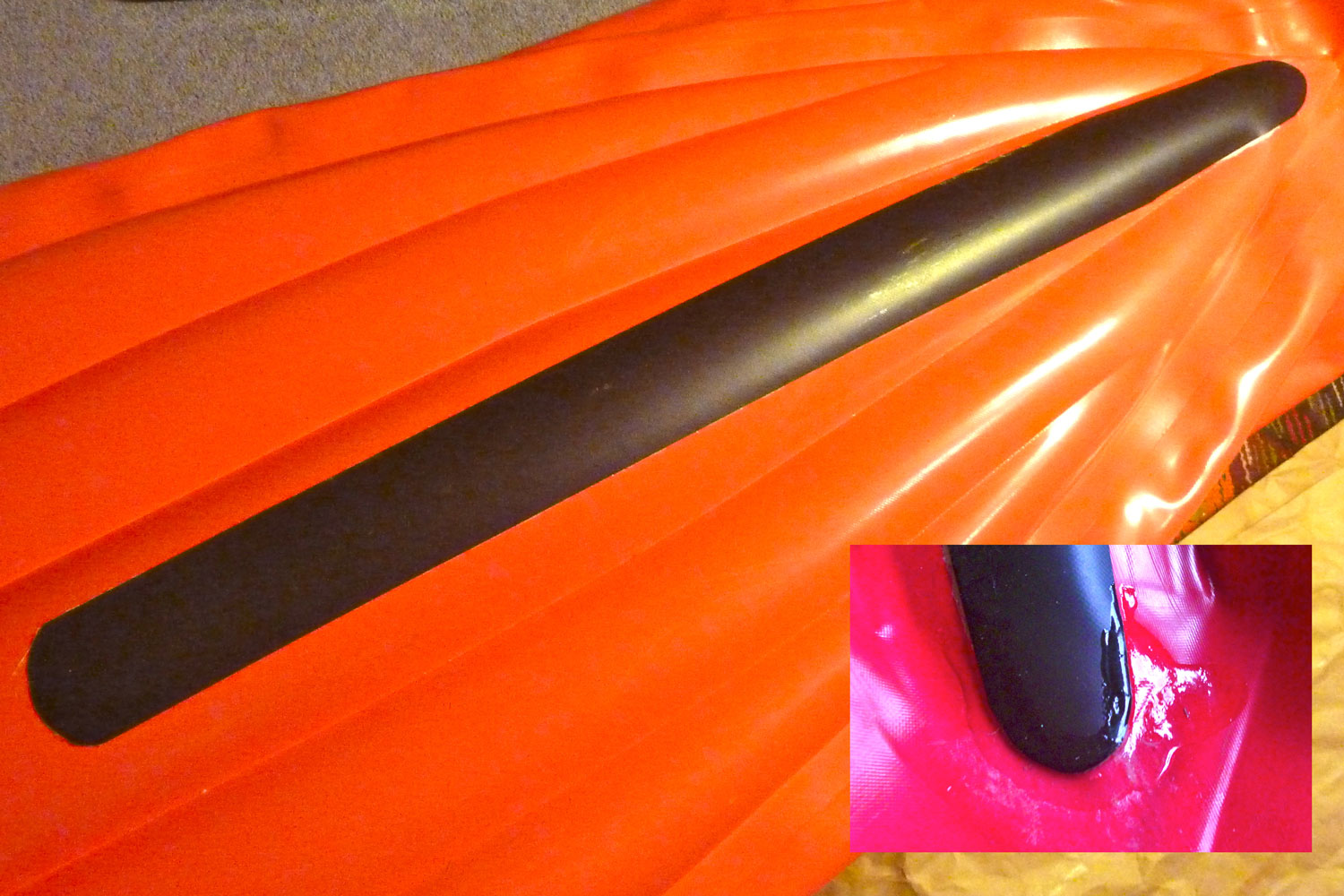
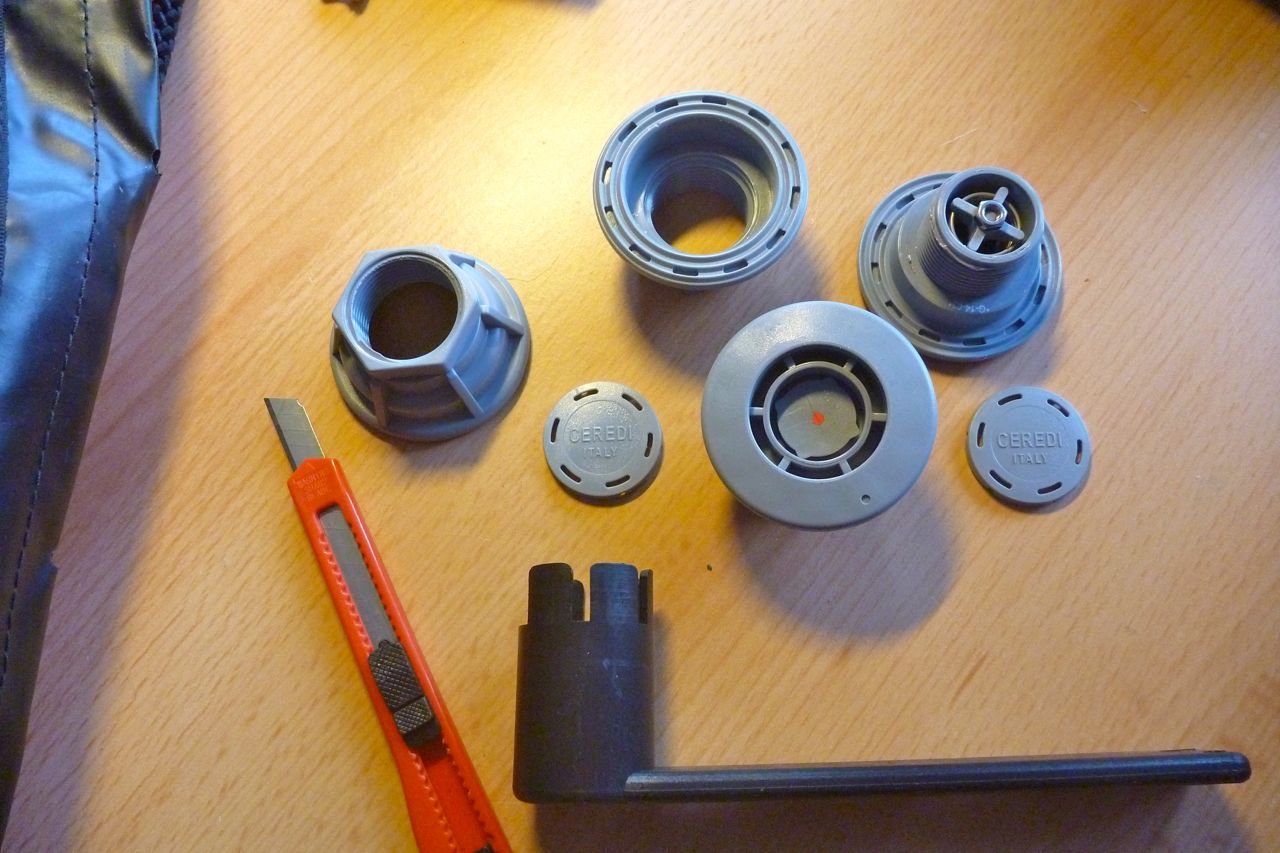
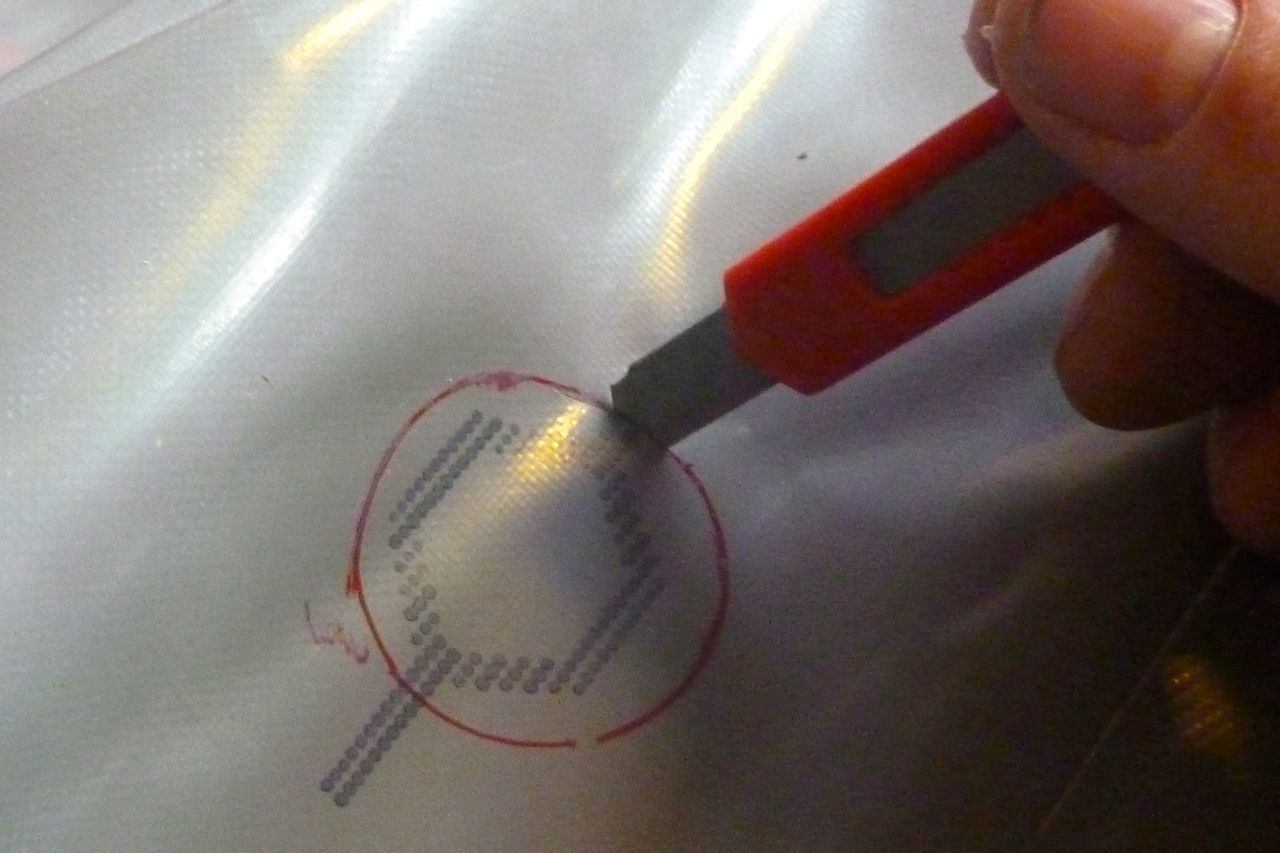
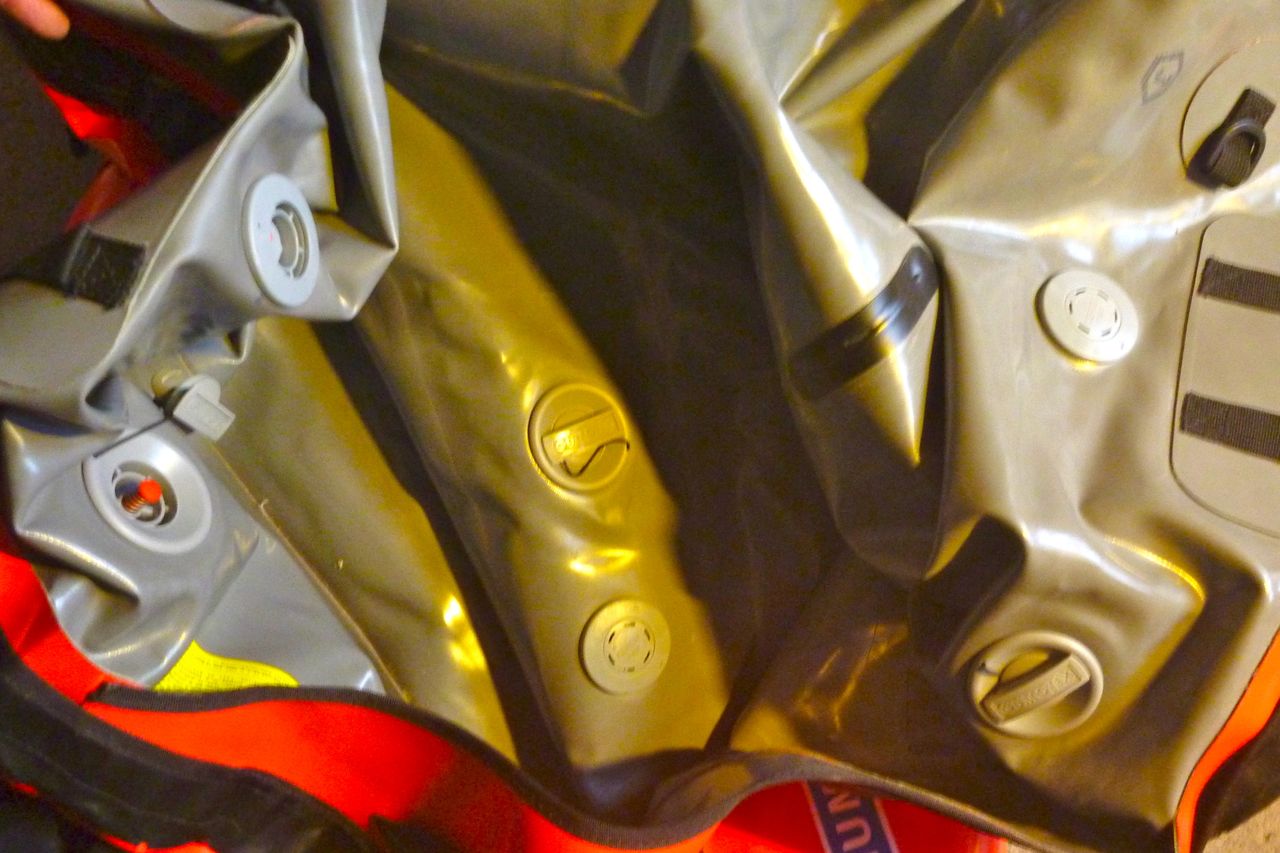
I chose to fit the PRVs close to the inflation valves and at about the same level. There are mysterious markings on the inside of the Seawave to aid symmetrical positioning (Pic 2, below). I used a narrow-bladed knife and of course took care to gather up the hull skin so I wouldn’t inadvertently puncture the other side of the side tube. 
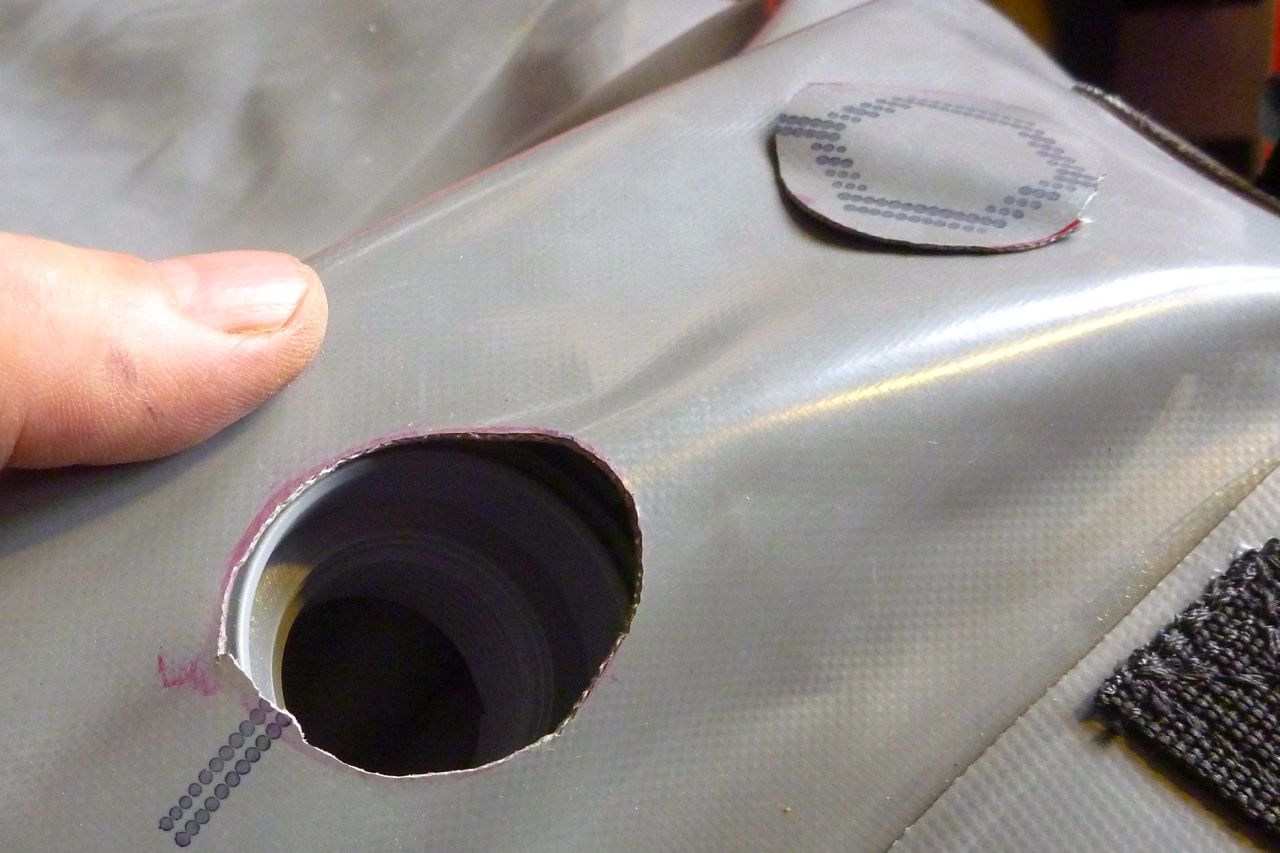
I assumed the 35mm hole would be big enough to take the back nut. When it wasn’t I was a bit flummoxed. Now I had a gaping hole in my boat, but no way of getting the back of the PRV inside the boat without performing a Caesarian on my Seawave. Luckily two brain cells dropped into my Hadron Collider and it occurred to me that once removed, the nearby main inflation valve’s hole might be bigger. And it was – just.
One stock push-push valve was extremely hard to undo. I wondered if it had been glued in or that the plastic valve removal tool would snap (you can buy a metal one for loads more). When the other side undid with less effort I knew it had to be possible.

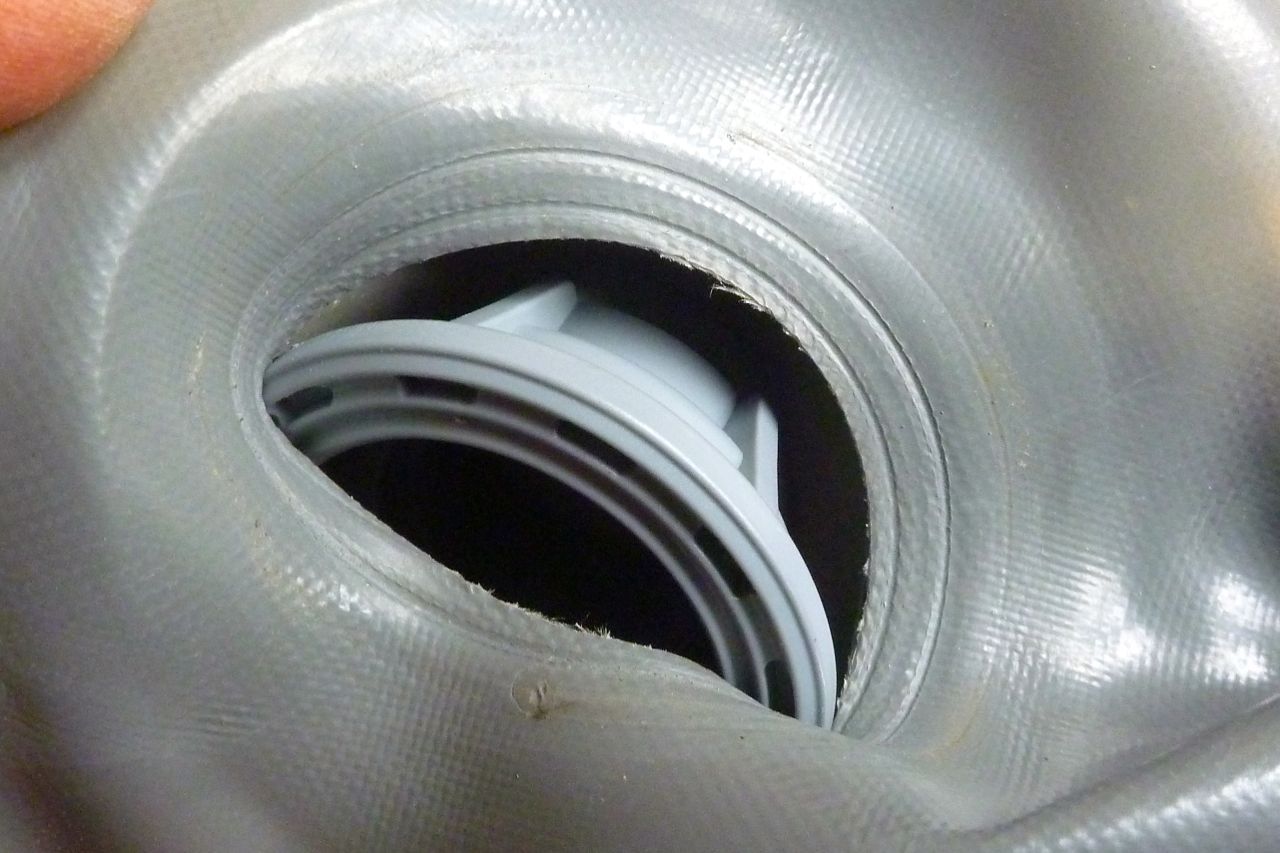
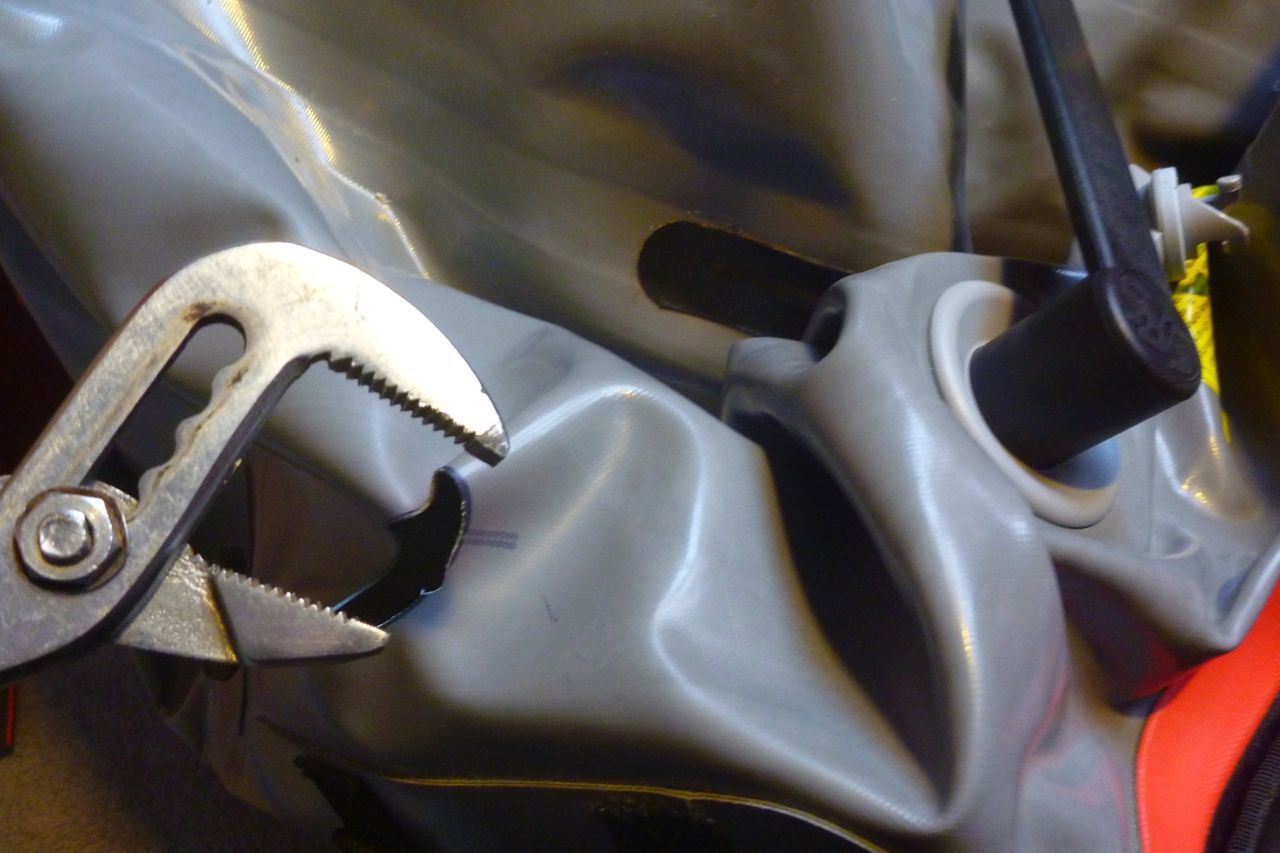
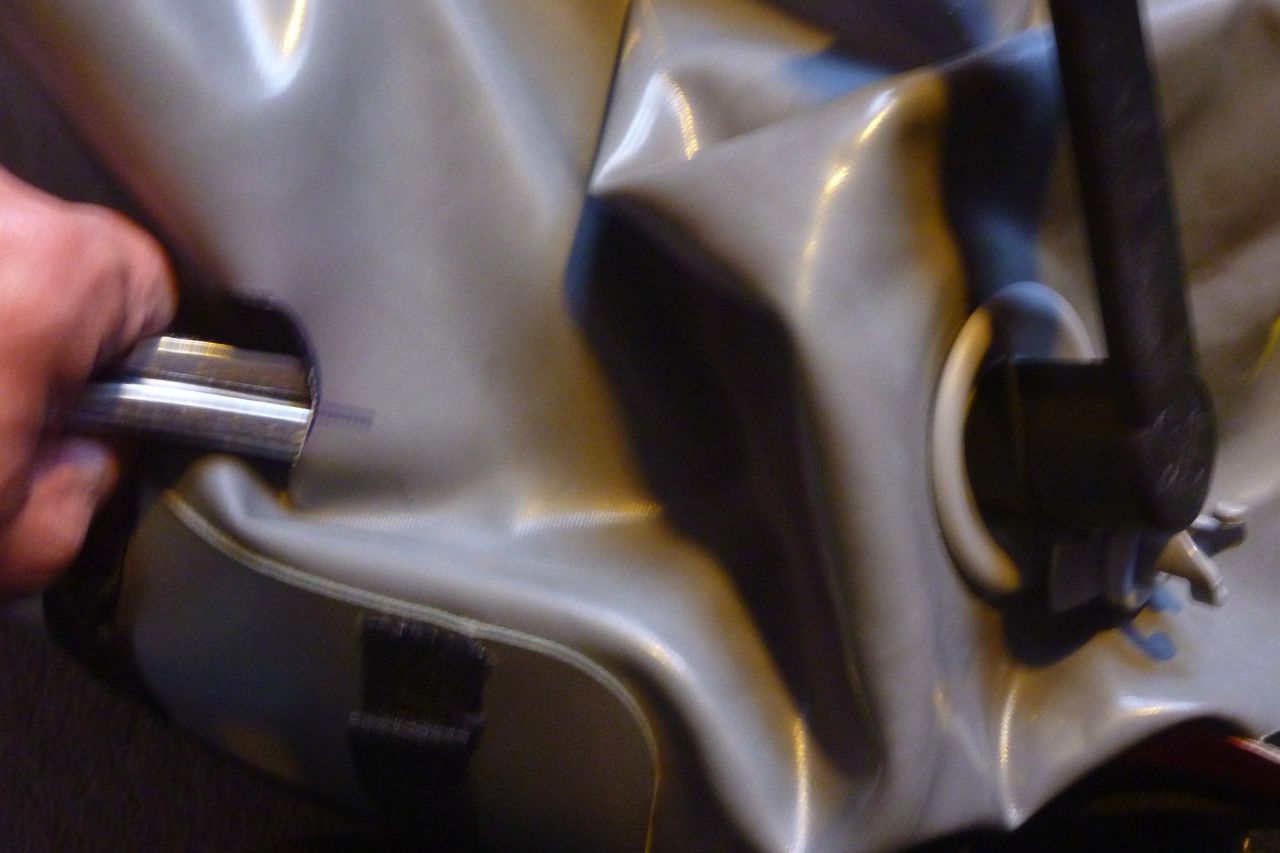
Another problem is that the internal collar or nut is only 10cm deep (pic 4, below) and so was hard to grab through the hull fabric. Until I realised this, I was grabbing the inside part of the outer valve body which screws through the collar from the outside. Trying to ‘unscrew’ the valve body from itself is like trying to pull you head off – eventually the valve tool would break. Another ‘Higgs boson’ moment came over me and I realised that by chance the two valve holes were close enough for me to get some water-pump pliers in there, grab the back collar and finish the job (pic 6, below). After that, no more problems.
One thing I noticed while doing all this was the unseen protective patch on the inside of the hull opposite the inflation valves to limit wear and rubbing between valve body and hull when the boat’s delated. Nice touch, Gumotex ;-)

I did all the valves up as hard as possible with tool and hand, and in four more years had no problems. On a hot day in the sun I can hear the high-pressure side PRVs hissing away. The gallery below shows the job in chronological order.

Now it’ll be good know that should I doze off as the tide ebbs away, I won’t be rudely woken by an exploding boat. Another side benefit of doing this is that you’ll never need to use a manometer (pressure gauge) again. You simply pump up all three chambers until they hiss and you know they are at full operating pressure.

smoko

Nikola’s PRV nozzle idea
In the comments below you will see Nikola suggesting the idea of using capped off PRV nozzles you’d usually fit to the end of your inflation pump hose to fill up a boat to the correct pressure without referring to a manometer. The integrated PRV in the nozzle purges at a given pressure. No scalpels required.
You will need to block off the open end where the pump hose attaches. The €13 red Ceredi ones he found (left) are rated at more or less the same pressures as a Seawave: 0.25 bar/3.5 psi. I think if I was running a Seawave in a hot country I’d definitely fit some to protect (or not have to worry about) the sidetubes.
It might even be possible to adjust the spring inside the Ceredis (beneath the vented cap) to get a bit more pressure before they open, getting closer to the red-dot in-hull Ceredi PRVs I fitted of Seawave 1. Or fit the similar black Grabner inflation relief valve which is rated at a more promising 0.3 bar, but, like everything Grabner, is double the price of the Ceredis.

Seawave: windy test run with deck

Seawave main page
swv1

The new boat had to get christened in what they call a ‘fresh breeze’. It was only going to get windier over the next few days. Either that or it would stay rolled up till the new year.
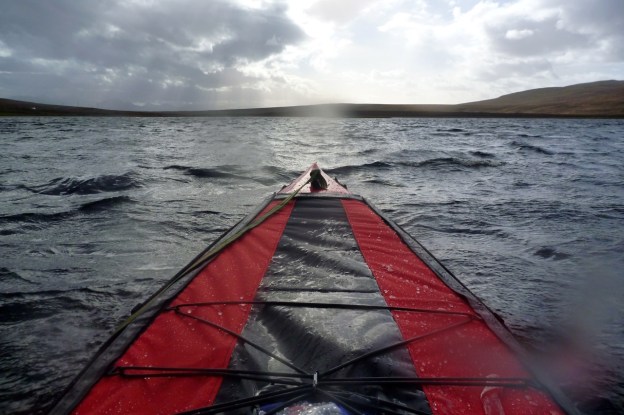
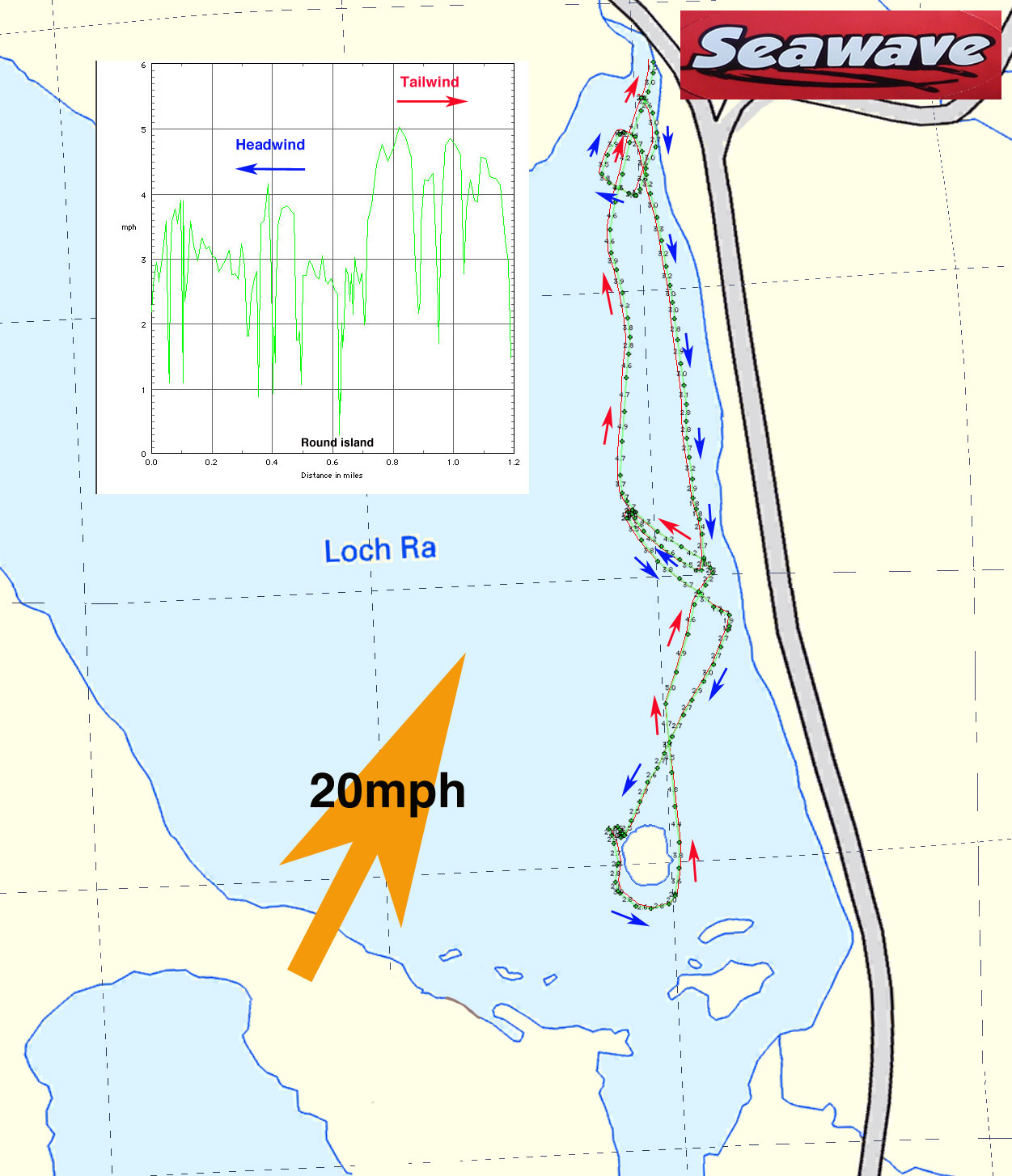
I went to freshwater Loch Ra round the back where I took my packraft for a ‘gale test‘ one time. It’s a safe place for this sort of thing. My new wind gauge – a tenner on ebay – was reading a moderate 15 mph, but it felt like more. I do wonder about the accuracy of that thing. Turns out Ardmair near Ullapool was registering a solid 25 with a spike up to 35 around the time I was out. So let’s call it at least 20 mph – not really IK weather.

footard

I pumped the sides up to about 0.33 bar (4.8psi) and jury-rigged a quick footrest stirrup, but under the deck it was hard to line up quickly when you’re getting in while being blown around. I have a better idea to counter-tension it into position from the other end with an elastic (left). That, or copy the Amigo set up with D-rings – less straps cluttering up the floor that way.

seawave2dek


Used to hoping effortlessly into open boats and setting off whatever the conditions, the need to negotiate the deck made getting in all the more awkward – though a grounding skeg is also a factor. With an onshore wind, I figured out a nose-to-the-shore angle but had the paddle blown out of my hands just as I was slotted in. I retrieved it and tried again using those nifty deck elastics for the stick, then backed up and swung into the wind.

As expected progress was slow until I found a rhythm, and then just very effortful – like hauling a head hose uphill. The Seawave’s more rounded hull means it’s a little more tippy than the mattress-flat Amigo, but in a good way. I never thought I’d write that line, but a little rolling means side waves need not push you over if you counter brace, though I can’t say the Amigo riding side waves flat like a raft was ever a problem. If it didn’t tilt with the waves water would pour over the sides. With the Seawave’s deck, lateral sea waves need not deck the Seawave.

Before I got too far out I checked to see I felt in control across the wind. It was blowing so hard I only needed to paddle on one side to go straight, but no stability worries. Then downwind with no untoward weathercocking either, all things considered. Further out on the small loch the fetch flattened a bit but another side-to-the-wind run saw the long boat extremely hard to bring back into the wind. A rudder would be handy, or maybe more aggressive leaning or my weight further back. It felt like my position was a bit too far forward to lever the bow round while the wind pushed on me and the sides. Not sure if that makes actual hydrodynamic sense, but without knowing the Seawave’s normal seat position, there’s certainly room to move my seat back in the cockpit a few inches to see if it makes a difference: more ‘rudder effect’ with a rearward paddler. This animated gif on the right shows the seat about 4 inches further back. Of course these were conditions where you’d expect a long, unloaded, over-buoyant IK to handle like a drifting log.

swv-speeds


Upwind it felt like I was crawling along but I got to an island faster than expected, got beached then carefully inched around it. As I knew well, a backwind may be less effort but can be as hard if you can’t keep the back of the boat from coming round – a common flaw with wind-prone IKs. But the Seawave tracked pretty well, right on- and then just off the wind, with only the occasional double pull on one side to level up. I did a bit more crosswind practice but by now I was pooped and even needed to drink out of the loch. Any hope of more tests without the skeg, without deck, at factory pressures and so on would all have to wait.

Back home the GPS showed up some surprises. Into the wind I was hacking at a surprising 3mph, across it at 4 and downwind at up to 5mph. All much more than it felt. I’m pretty sure the Incept would have managed the same – and it was less effort than in the Amigo.

Gumotex Seawave main page

 
pagemoved
Seawave main page

The A to Z of Inflatable Kayaks

a2zik

halforts
lidl

Inflatable kayaks are a bit like mountain bikes. You can buy a blinged-up piece of overweight junk with ‘full suspension’ from a superstore for under a hundred quid. Or, if you’re serious about your cycling fun you can buy something decent that’ll be a joy to own and ride.

Continue reading…