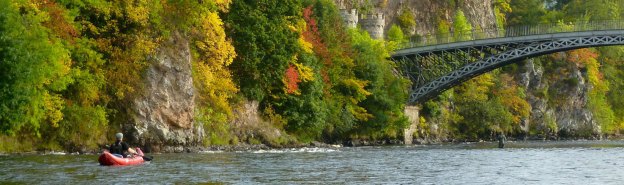
Category Archives: Inflatable Kayaks

Kayaking the Spey – 2013

Sadly my pics area bit ropey; camera was set on 640px…

spey1307

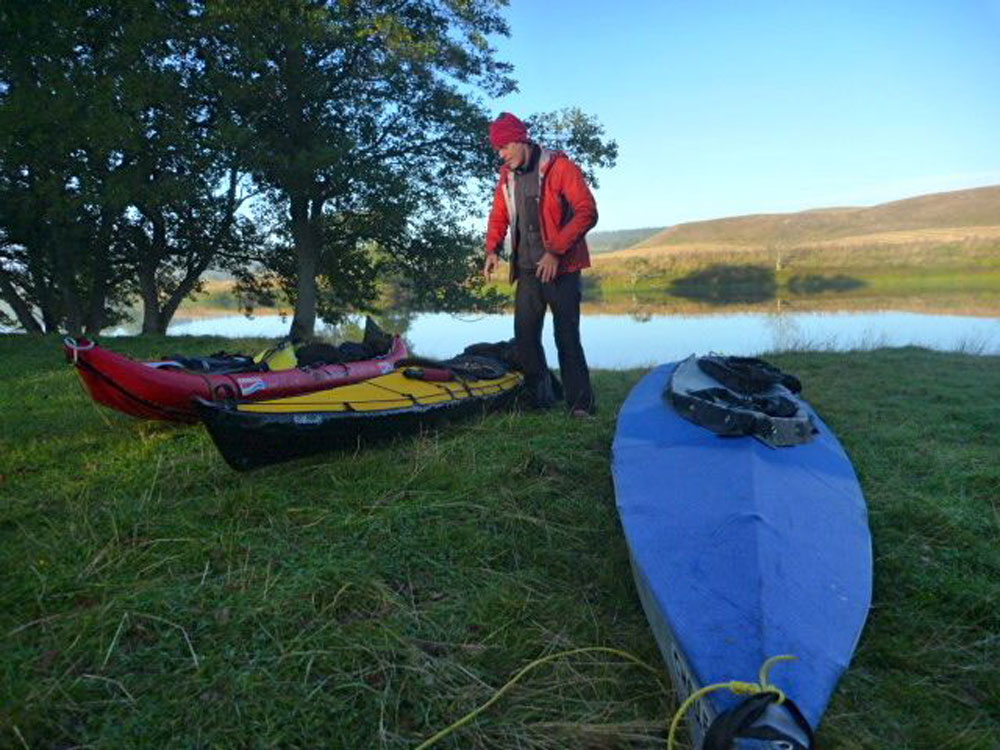
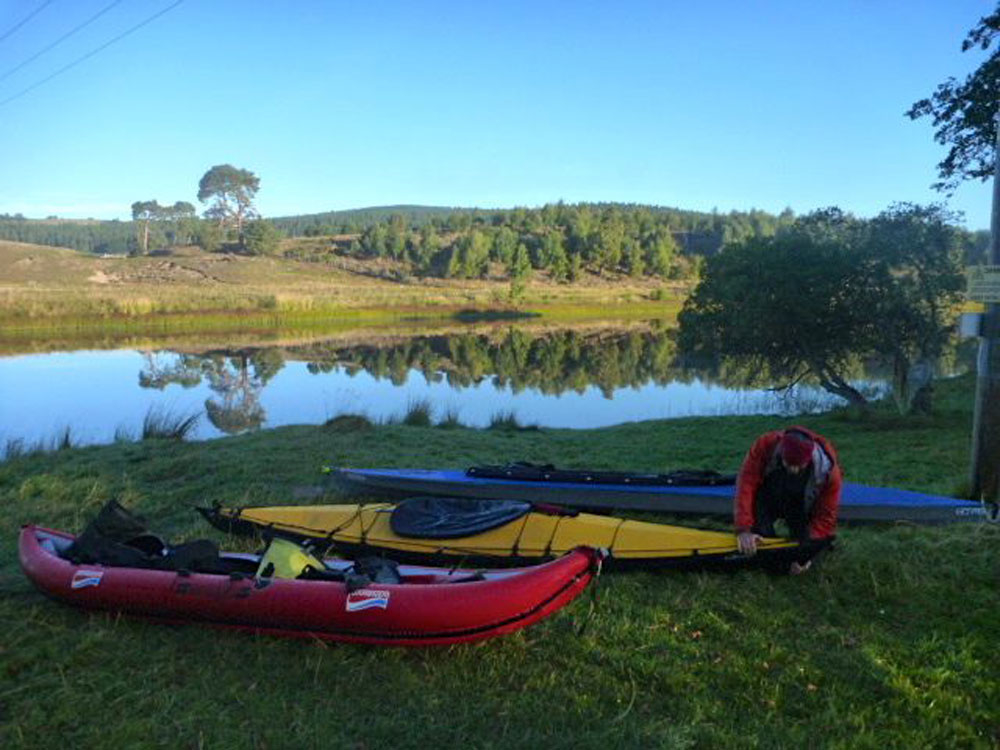
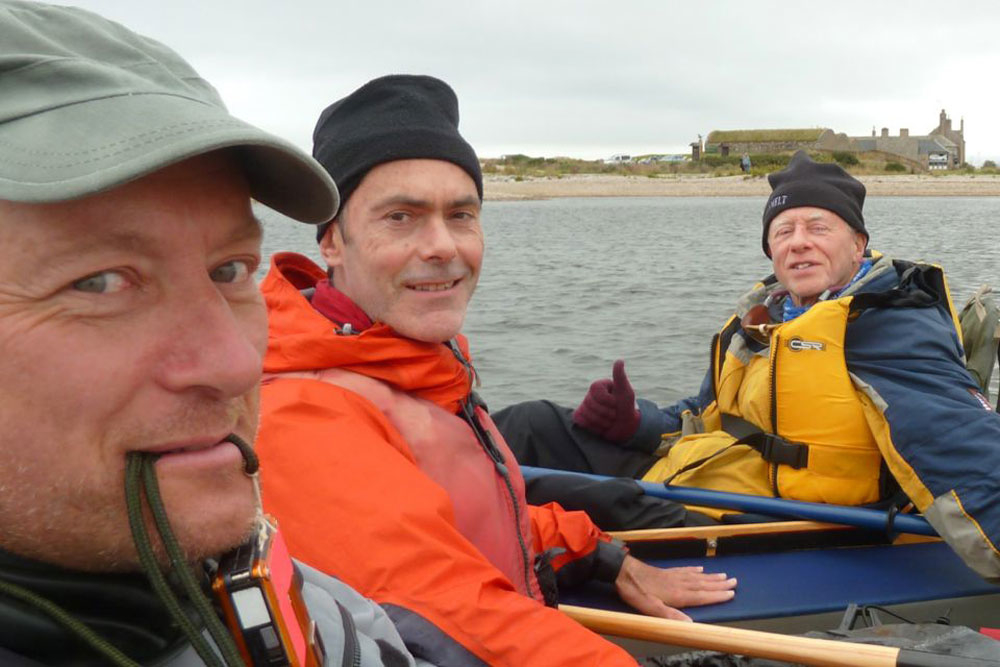
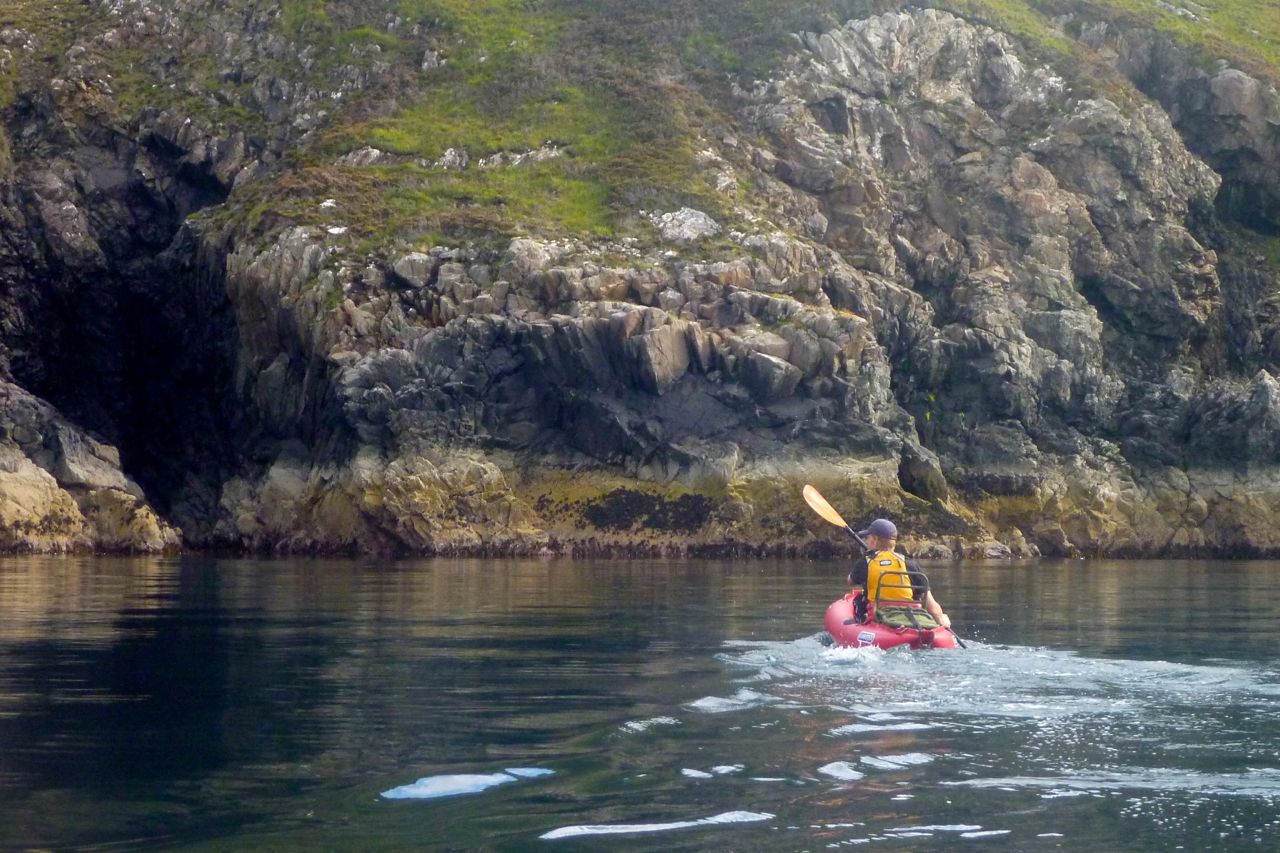
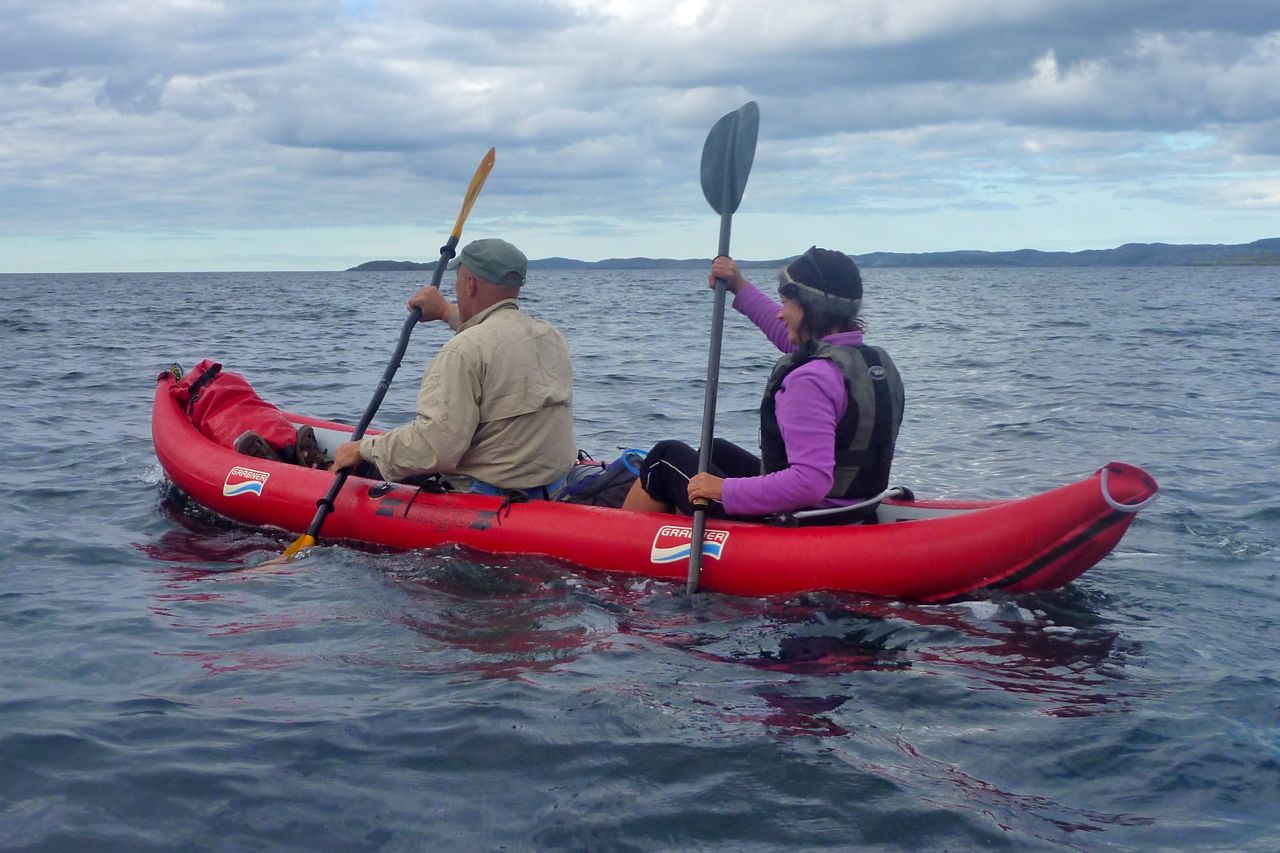
We last did the Spey from Aviemore to the sea in 2007 when I still had the Sunny. This time round Michael was in Steve’s old, 19-foot Pouch double, Steve was in his Feathercraft Big Kahuna and  I was in the Grabner. Levels were low again, if nor lower, it was the last week in the fishing season but at least the weather was looking good.

spey1314

The first day is just 12 miles and not so interesting, with the best views behind you. With the hour-long assembly of the Pouch completed and the van stashed at Spey Bay, we set off about lunchtime.
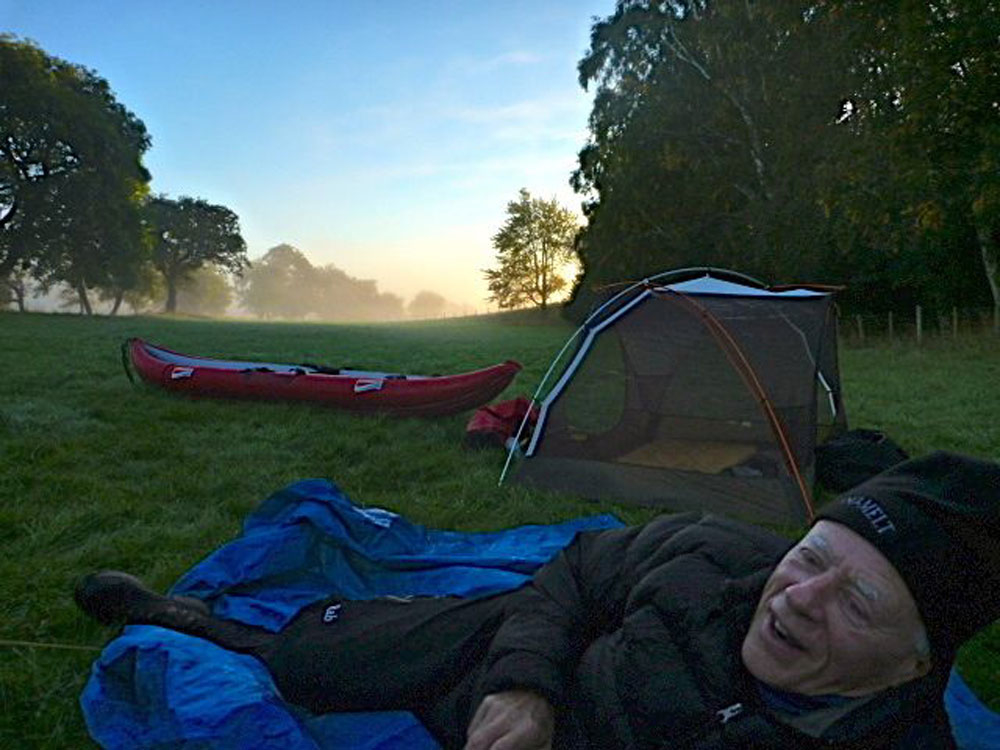
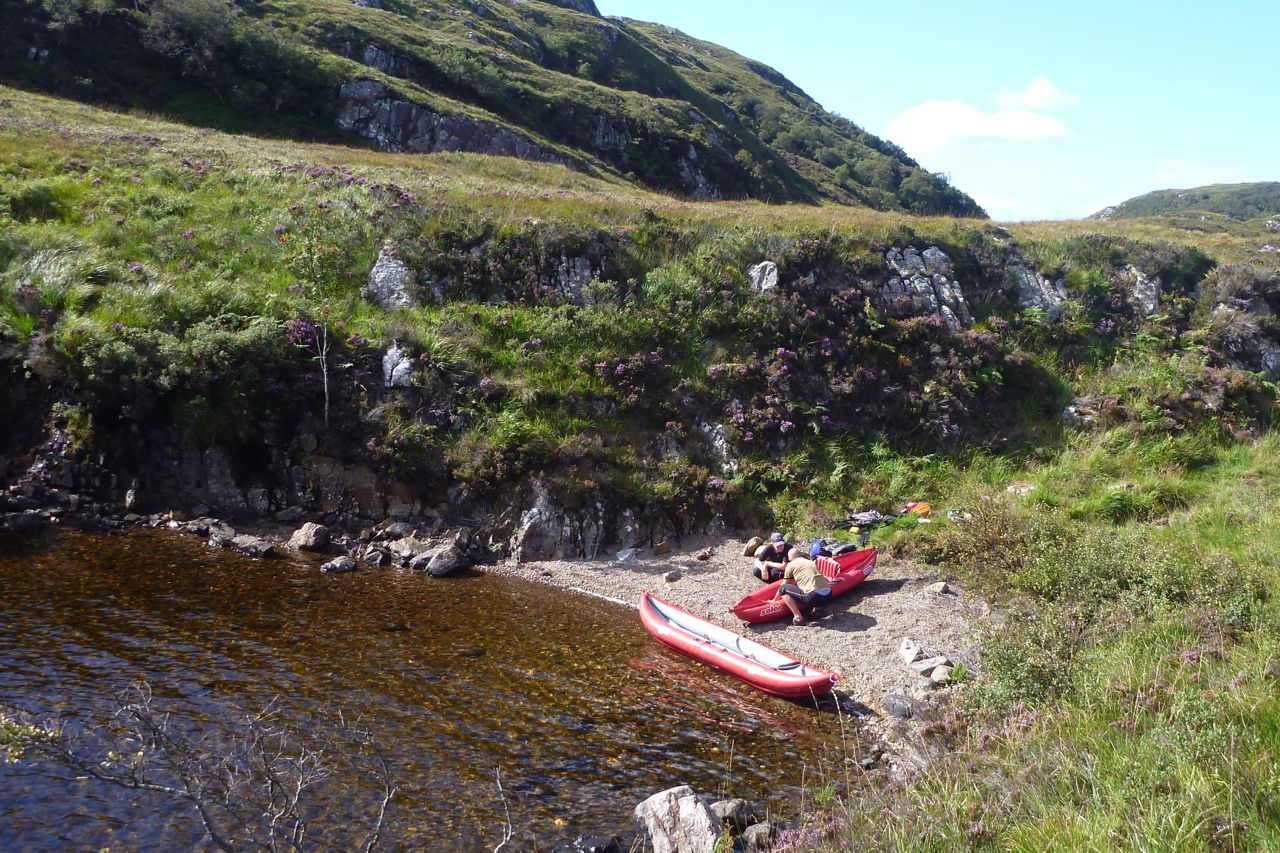
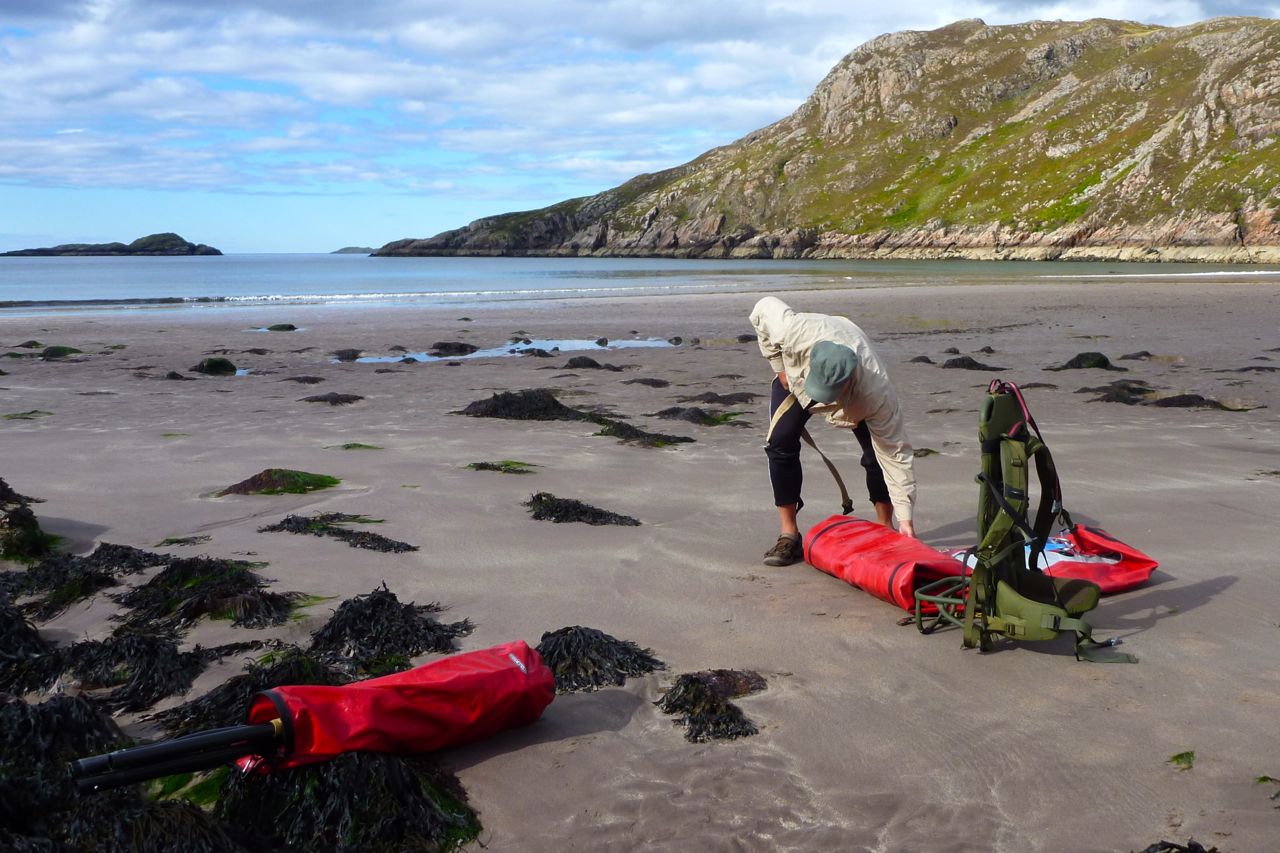
Strong backwinds made my skeg-less Amigo hard to handle and I found myself expending a lot of energy trying to stop the back end coming round. Or perhaps I was yet to learn the knack with the Amigo, having paddled it on the sea with a skeg all summer. After a few hours we arrived at the Boat of Balliefurth bankside camp field and paid our three quid. Dinner was a freeze dried mash up from stuff I’d had lying around for months, made easier to prepare and eat with Steve’s half-hoop Eureka annex tarp.
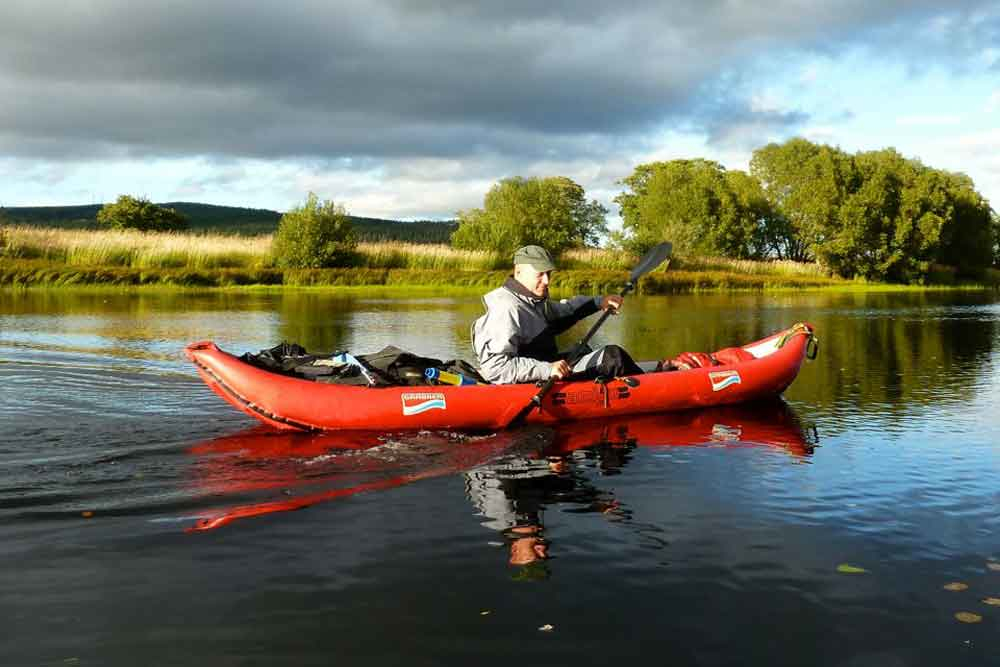
spey1304


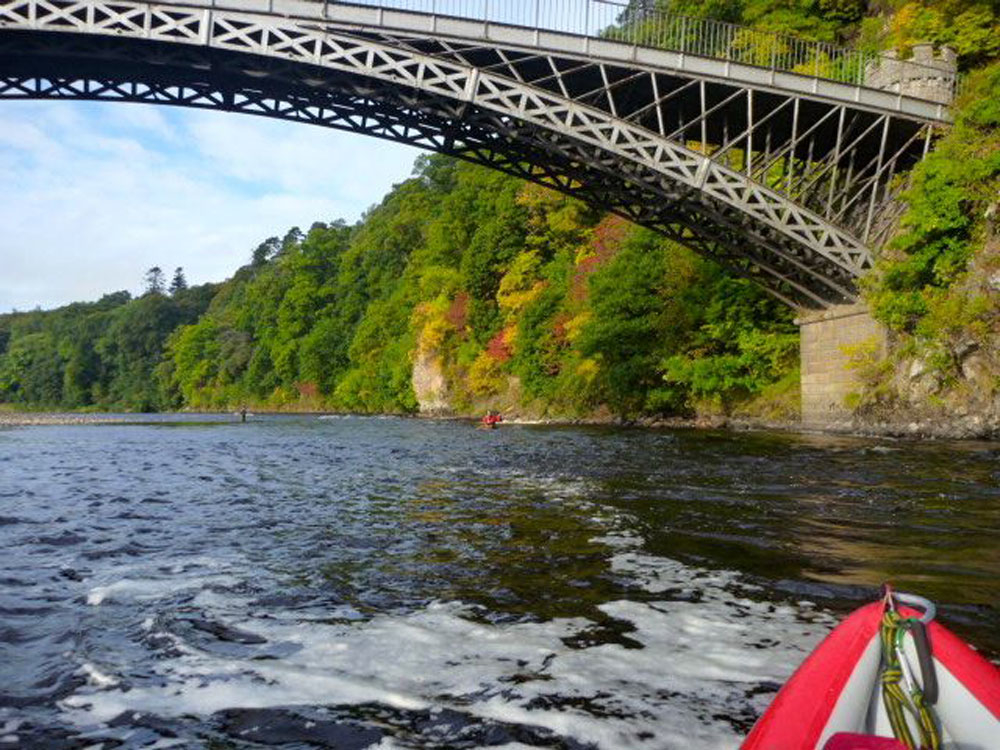
Next morning was another sunny, late-September day and we were relived to pass the point where one of the Kleppers got disemboweled last time by a submerged, mid-river fence post. On this occasion the boat-killing spike was visible a few inches out of the water.
We’d thought about doing the river a week later, when the fishing season was over, but timing put us here now, with the fisherfolk getting their last casts in before closedown. The tension between rod and paddle is an old story in England, but up here is exacerbated by the fact that the tweed and wader-clad anglers are paying – who knows? – hundreds of pounds a day for the privilege of fishing the famous Spey. With that cost comes the use of the many ‘day huts’ we saw on the finely manicured banks, as well as optional instruction from a ghilie. And then three kayaks blunder right through the spot where you’re prize salmon is lurking, like it’s a right of way or something.
We did our best to paddle round the back of the many anglers – some ignored us, some grumbled and a few lone ones appreciated it or were able to wave or indicate where they’d prefer you go. Struggling behind one bunch wading in the shallows, Steve got pushed across the current and flipped harmlessly while they just smirked and carried on casting.
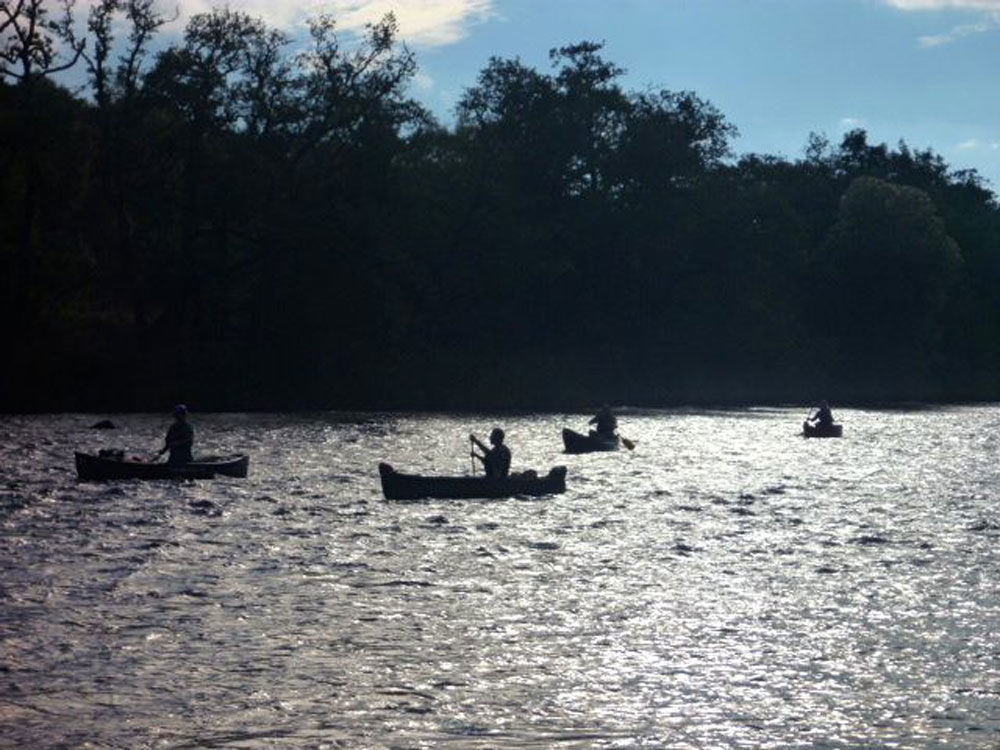
spey1324


Once free myself, I shot off downstream chasing what some said was Steve’s paddle, but within a mile another fisherman said he’d not seen it float past. I walked back wondering how we’d get out of this one, but soon came across Pouch and Kahunaman paddling along. Seems the paddle had got submerged right by the boat, so all was well bar a lost pair of shades. Luckily that morning Steve had fitted his FC ‘sea sock’ – a body bag attached to the cockpit rim which stops the whole boat getting flooded if it flips. It was about that time so once back at my boat we spread out for an early lunch, letting out dew-soaked tents dry as some canoers from last night’s camp passed by.

spey1309


Aberlour was our destination that evening. We’d managed it last time, even with the ripped Klepper, but it seemed we were even further behind today. As we paddled on, the shallows and rapids piled up and the folding boats were getting a bashing, while I took on a couple of inches of water bouncing through the wave trains. Occasionally, if we misjudged the route we had to wade (left).
The famous and actually straightforward Washing Machine rapid was only running a half-load that day, but nevertheless succeeded in giving the inside of my Grabner a full rinse which took a few minutes to pump out. More white-water followed, and still I have to say the Grabner didn’t seem to handle well, requiring vigorous paddle yanking to avoid rocks or get in the right spot. Even in the pools, it still took some concentration to track straight before pulling back repetitive bow draws or momentum-losing stern rudders to keep the nose downriver. I’m sure the very similar shaped Sunny wasn’t so bad.

spey1323


Barely a mile went by without passing a fisherman. One grumbled that we should whistle as we came through, but that seemed like it would raise more antagonism, though passing them on the opposite bank may have been right on their target area. Trout were jumping for sure, but we never saw anyone actually catch anything. I’m not sure fly fishing is about that.
After a while riding the bouncy wave trains lost its shine in the face of the after-pumping required, though the swamping was certainly less bad than the Sunny which was best drained by pulling over and standing the boat on end. The canoers we were leapfrogging were getting knocked about and hung up in some rapids too. Shallow rapid followed shallow rapid while we had the feeling that the ghilies, aware of where boats were late in the day, patrolled the banks to make sure we wouldn’t camp on their land.

spey1327


The easy white water had kept us occupied so that round dusk the old Victorian foot bridge of Aderlour came into view. We camped on the bank right there, a long day of around 26 miles in about hours. The great thing with camping by the bridge is that toilets, the Mash Tun pub and a Co-op are all just a few minutes walk away.

spey1326


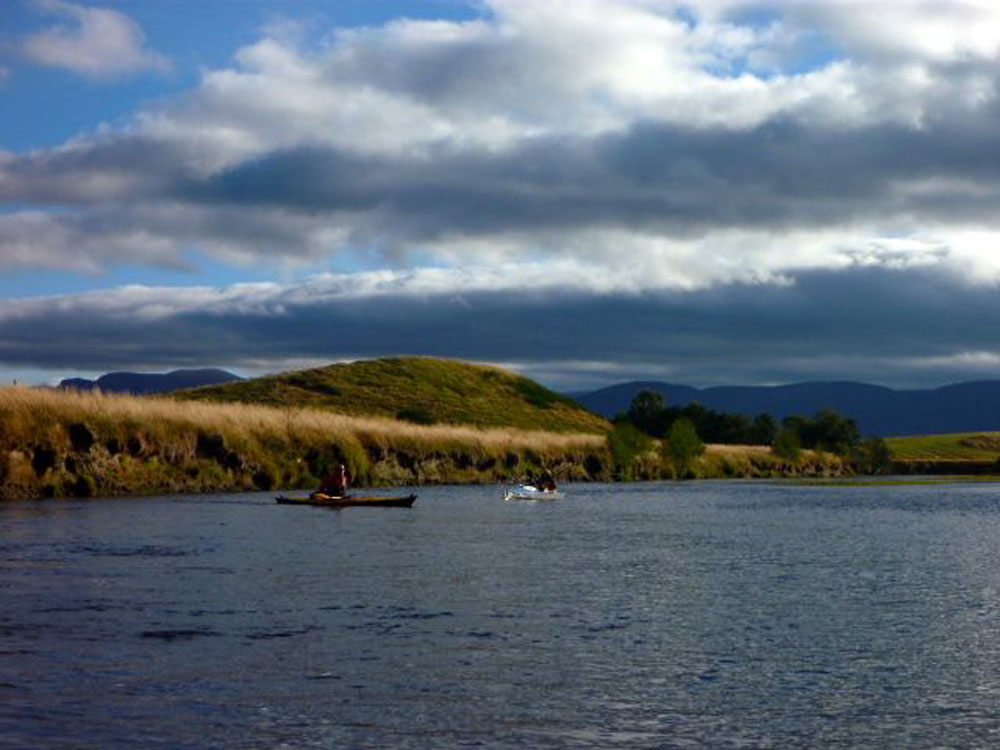
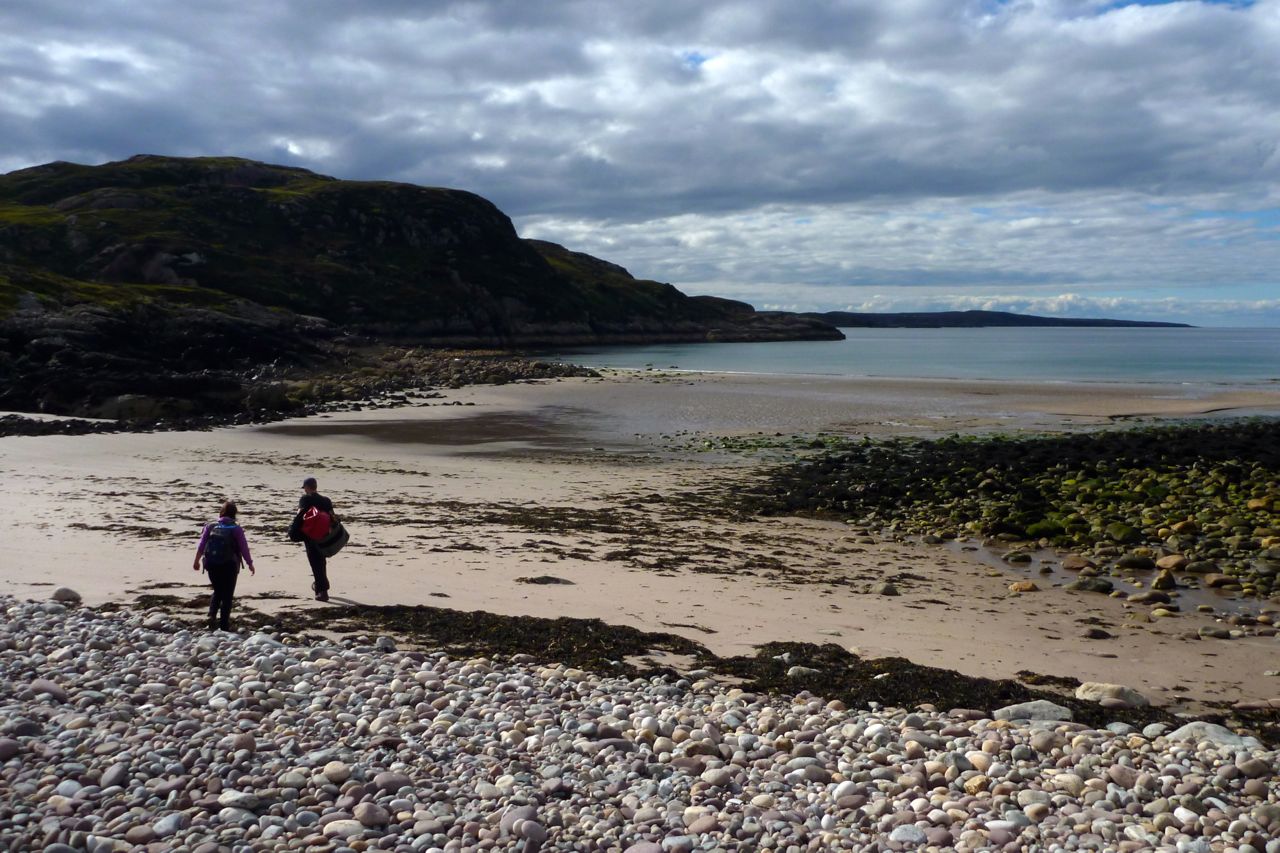
Restocked next morning and off by 9am, it was a 20-miler to the North Sea, during which time the riverside scenery got a little more interesting, the rapids kept you guessing and so did the fishermen. With no other dramas the breakers of Spey Bay rocked up at around 4pm but, just like last time, no one had the energy to go out and mount the surf.

spey1320


The old wooden-framed Pouch slipped through unscathed yet again and 70-year old Michael had handled the ungainly barge very well, helped by a rudder. The decks of Steve’s lower Kahuna were often swamped in the rapids but towards the end the Feathercraft sustained a bent alloy member (only $30) plus a small rip in the hull. The Amigo was of course immune to the knocks and easy to hop out of, but I’m again wondering about fitting an articulated skeg high on the stern. A bit like a fixed rudder that pivots up harmlessly as it scraps the river bed, and with a retractable and locking line (again, like a rudder) to pull it up out of the way when you don’t want the back pushed round in a sweeping current. I have an idea and it would be easy to fit.
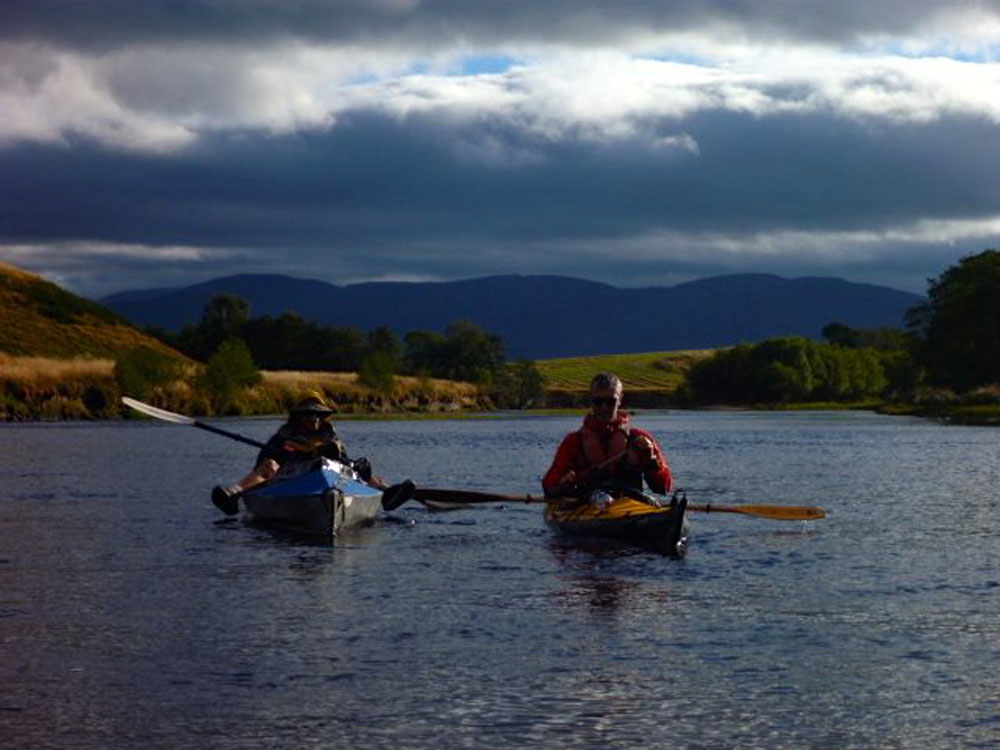
spey1312


It’s fun to paddle the 60-odd miles from Aviemore to the sea, but next time on the Spey I’d miss out day one, hope for higher water levels and do it out of the fishing season. It would also be fun to do the sporty  Day 2 in the packraft with a skirt.
They say the Spey is one of the best canoe paddles in the UK but that just shows how few good, long rivers there are here and why sea kayaking, or short-range hair boating are much more popular.
The stony shore of Spey Bay is a bleak place the paddle, but the van was intact and there was a welcome cafe for a sit-down snack before piling the van up to the roof with our packboats and heading south.

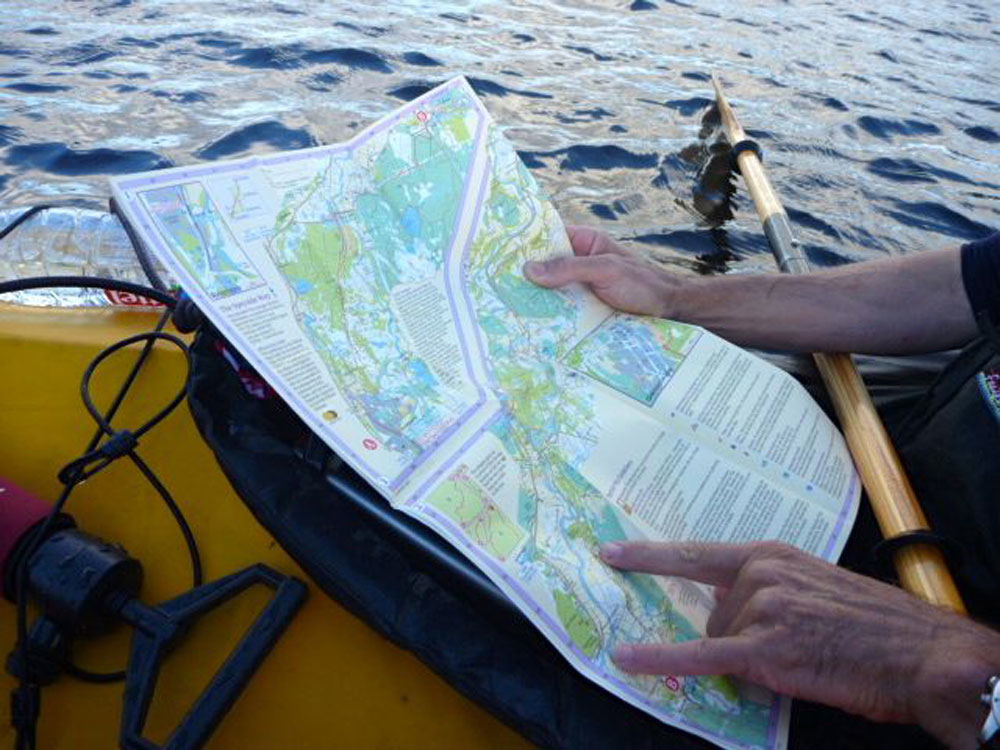
speymap

IKs & Packrafts: glue & repairs

See also:
Repairing a Gumotex Seawave
Repairing a huge rip
MYO D-rings
MYO alternative to D-rings
Gluing a TPU packraft
Gluing PVC patches to Gumotex Solar

gluerepairs

It’s understandable to worry that something like an inflatable boat is a bit of a liability when out in the middle of a deep lake, hairing down some white-water or when far out to sea. This is especially pertinent if your only experience is a beach toy made of a thin and stretchy PVC film.

I’ve owned over a dozen inflatable boats and have only had one tiny thorn pinprick in the Incept, age-related fabric perforation on an ancient Semperit and a hole worn through careless transportation in my Seawave.

rep-hull

Once on the actual water it’s hard to think of anything actually puncturing my full Nitrilon Gumotex IKs or the old Grabner. What more often happens is some kind of accidental wear or rubbing when not paddling or during transportation, like the trolley wheels which wore a hole in my Seawave, or the windy tree branch which rubbed (but did not puncture) my Grabner (left). I also snagged my packraft’s uninflated floor on submerged concrete once, then added protection to the outside and padding on the inside to stop that happening again.

I’ve also travelled with cheap slackrafts that have got ruined within minutes and punctured every other day. You do get what you pay for. So when it comes to glue I’ve learned that preparation and application are vital to getting a good repair: rough it up; wipe it down with solvent, apply the right glue to both surfaces, wait, then slap on the patch and press down hard with roller to achieve a long-lasting bond. More below.

pvc-or-hypalon

Is your boat plastic or rubber?
As explained here, broadly speaking IKs are made of either rubber- or PVC-coated fabrics. Rubber-based Hypalon, EDPM or Nitrilon is much less used now and most with the tubeless construction method.
On a boat like this, rough up the surface, clean with solvent (see below), apply the right glue and a same-material patch, all which needs to be done well as the patch is vulnerable on the outside. Or, you can just dab some Aquaseal directly onto a small hole in the hull to protect it from wear, as shown above left (not an actual puncture).

One-part glues
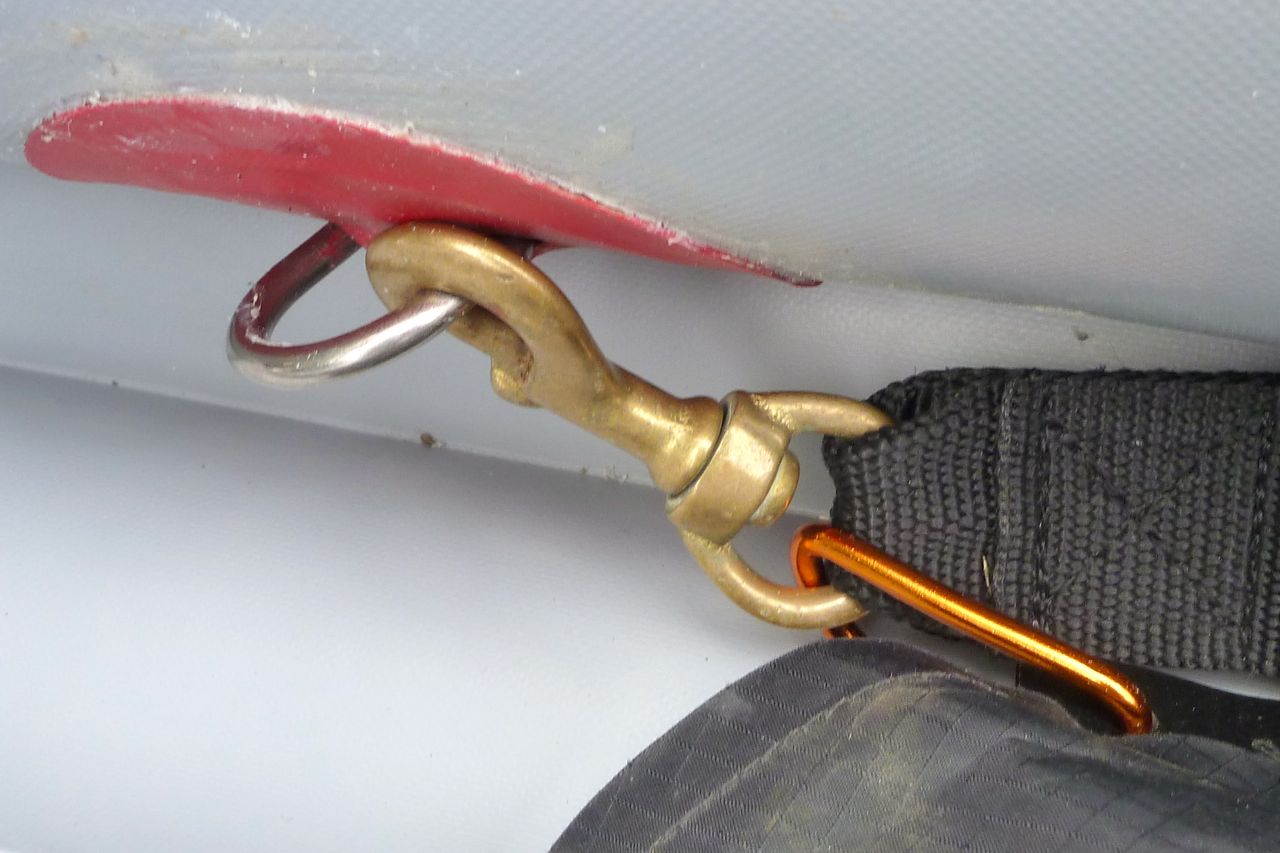
I’ve succeeded in gluing on non-critical D-rings onto Gumotex Nitrilon and Grabner EDPM (Grabner), as well as PVC to Nitrilon using single-part Aquasure urethane sealant/adhesive (‘Aquaseal
‘ in North America). Allowing Aquasure or similar to half-cure in air for 30 minutes, then sticking together and letting it ‘seal’ to itself is a way of bonding anything – even non-compatible rubber-based Nitrilon to PVC, as I did here. SeamGrip is a runnier version of Aquasure to get into cracks and seams. Though I’ve not tried it yet, British-made Stormsure is the same thing.
Apply a thin film of Aquasure to both surfaces; wait half an hour, then bond with all you’ve got.

In the UK you can buy Aqausure in 28g tubes from £6, or 250g for around £24. Unless you have a lot to glue/seal jobs, be wary of saving money with the big, 250-g tube. Give it a chance and it’ll split and harden before you get to use it all, even if it’s effectively over half price. Alternatively, I’m told a good tip is to store it in the freezer once opened.

sempoe

The other one-part glue I used on my PU/PVC Incept IK, Slackrafts and used recently on an old hypalon Semperit is Bostik 1782, not least because it once went real cheap on ebay.

glue-dring

I can’t say it worked that well on my Incept; two-part adhesive is always better. Even on the slackraft the Bostik softened and shrivelled the thin PVC. But on non-critical applications (D-rings and none-huge tears), 1782 seems to work well on hypalons (rubber is always easier to glue than plastic PVC) and at £10 for 100ml was good value. Plus it’s a nitrile rubber/resin-based solution and I’ve found won’t go off and harden in the tube like Aquaseal often does. It’s my favourite, do-it-all, one-part glue.

For years Gumotex supplied rubbish Chemopren Universal gluing in their repair kits. It looked like the brown rubber solution you’d use on a bicycle inner tube. I tried to use it on my Gumotex Sunny years ago and found it was crap. Back then it may have been me, but I tried to use Chemopren again recently on my hypalon Semperit and it wouldn’t even adhere to a roughed up, MEK’d surface! To be fair, it might have been many years old, but so are my other glues.

The glue that came with my second Seawave in 2020 was a small tube of Elastick (left). It looks like a generic polyurethane do-it-all glue, like Aquasure. It will probably remain unused with the boat until it turns solid. I’d sooner rely on Nirtile-based 1782 or Aquasure for field repairs.
Tbe problem with these urethane glues is once you open them or the alloy casing cracks they dry up and harden.

Two-part glue

For important jobs use much stronger two-part adhesives suited to actually assembling air boats as well as making more permanent fittings and bomb-proof repairs.
At about £15 posted for a 250-mil tin, PolyMarine 2990 Hypalon adhesive is much cheaper per ml than Aquaseal or Bostik 1782. In the UK Ribstore and Ribright sell similar stuff, and Bostik 2402 is the same but prices vary wildly. Just make sure you buy for Hypalon or PVC. I’ve used it to glue D-rings onto my Grabner (more here), floor patches to my Alpacka, latex socks to my dry trousers and patches as well as repairs to my Nitrilon Seawave and Sunny. It sticks like shit to a s***el.

The trick is to measure out the correct quantity. Above: the small bowl about half full of glue and hardener – about 10cc or 2 tablespoons? – was enough to fit two 80mm D-rings. Each surface: the back of the Ds and the hull, need two applications half an hour apart.

sempauto - 11

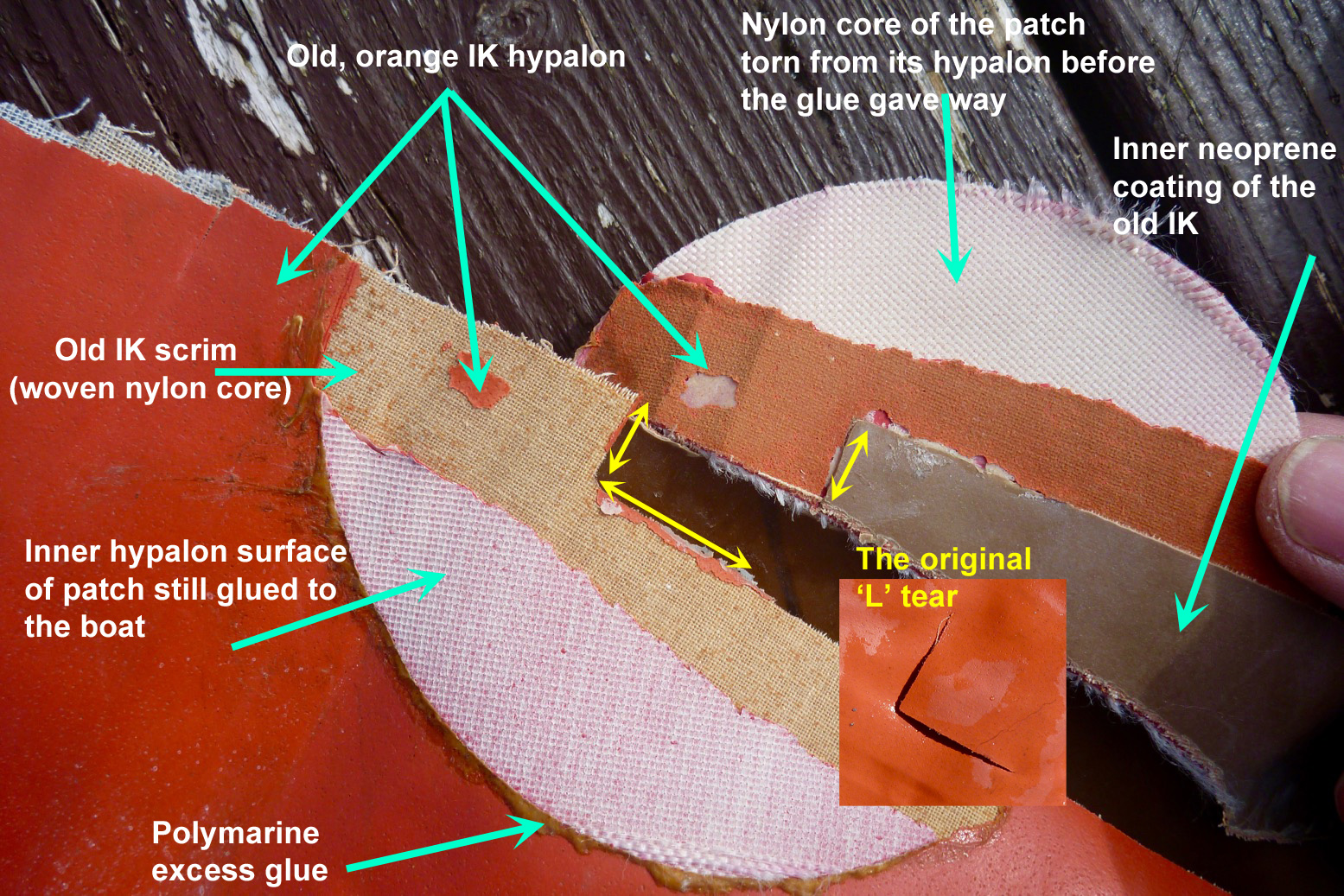
In 2017 when I dismembered an old IK, I was easily able to pull off recent patches glued on with Bostik by hand. But I could only pull off Polymarined patches with a pair of Knipex hydraulic trench pliers and even then, the patch coating pulled away from it’s core (lighter exposed weave below) or the patch remained stuck to the boat and instead pulled off the dead’s boat’s hypalon coating revealing the fabric’s yellowed core or scrim. The two recently glued surfaces could not be separated. They say the mixing of the two components causes a chemical ‘vulcanisation’ and molecular cross-linking which creates a very strong bond. Mixing and applying two-part is a pain, but it works.

semp-glue

Get a good roller

sealey

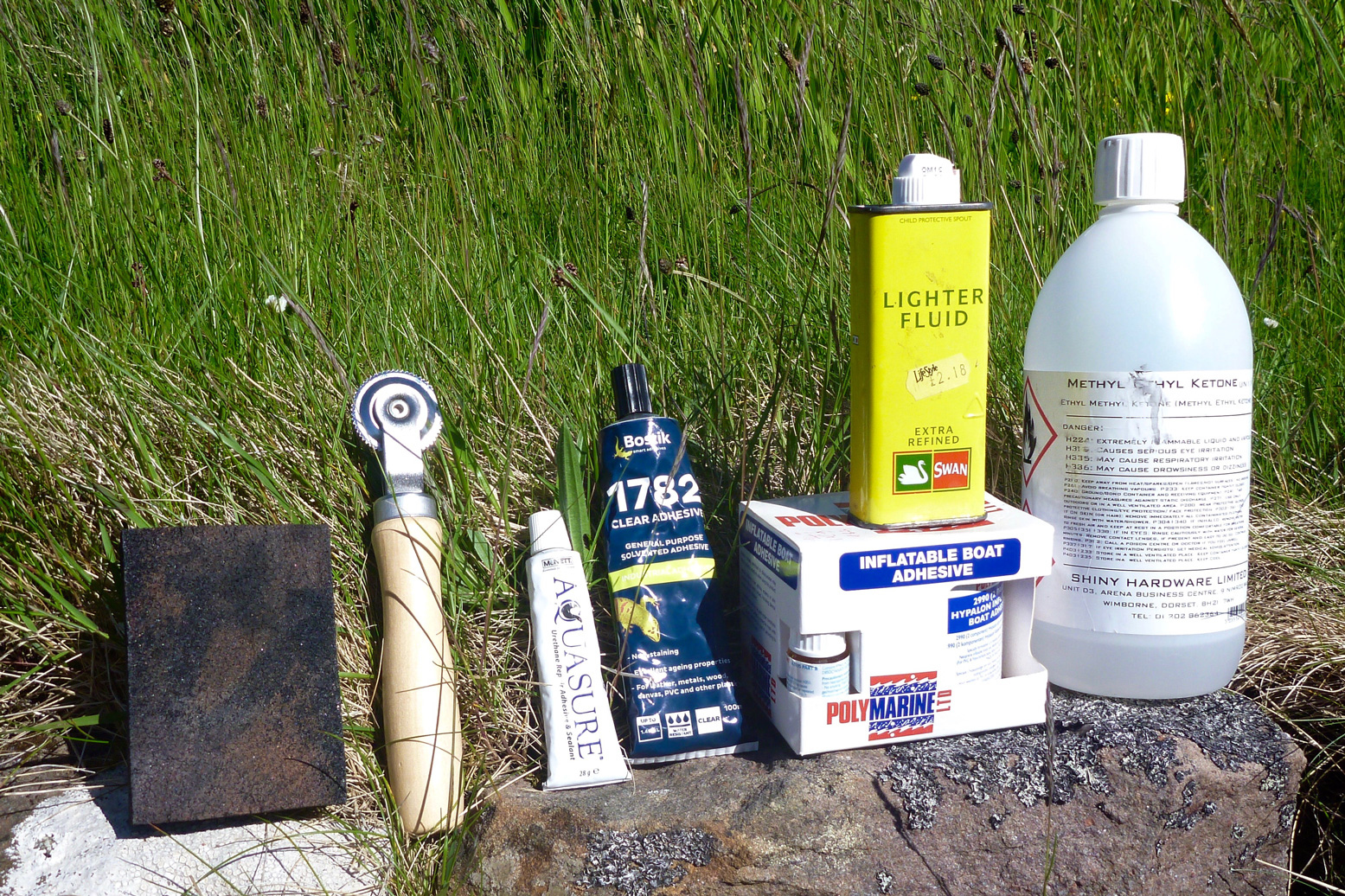
Single or two-part, once you apply your patch, roll it very hard with something like the classic Baltic-pine handled Sealey TST15 stitch roller (left) aka: tyre repair roller used for innertube and tyre repairs. The knurled metal wheel set in a solid handle applies much greater pressure than a wide plastic roller I used to use, and they’re only about a fiver on eBay. Buy one now so you’re ready.

glu-tyvec

Bladder boat and packraft repairs
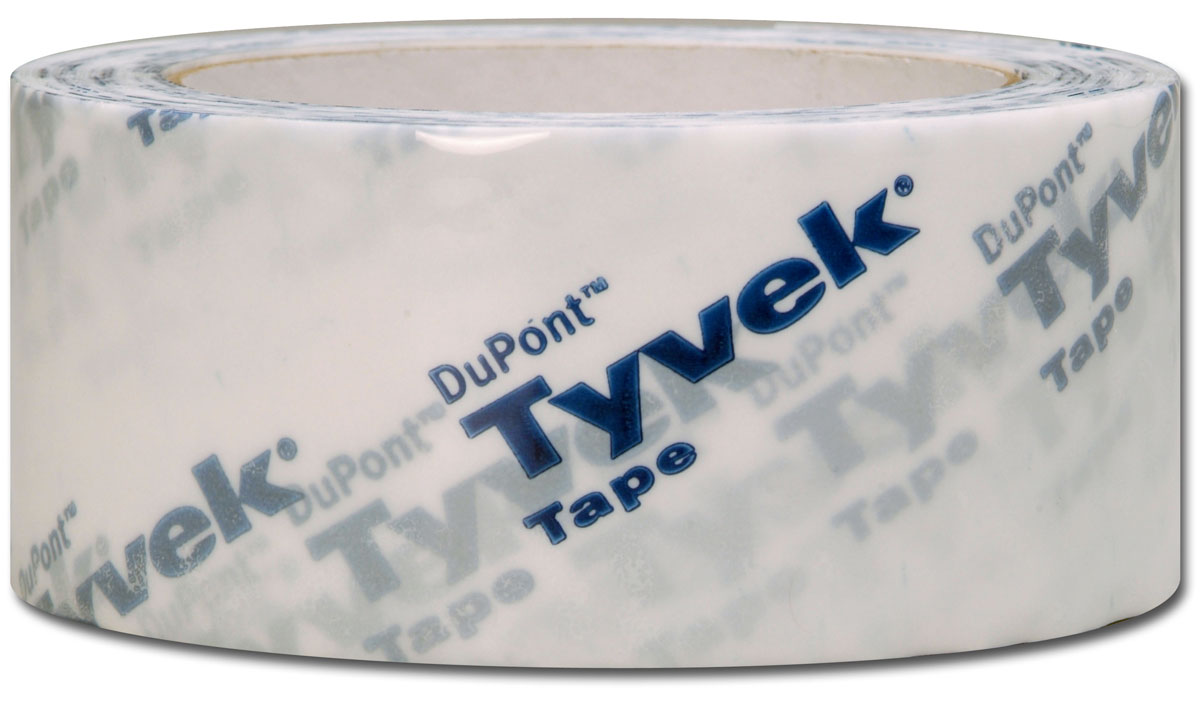
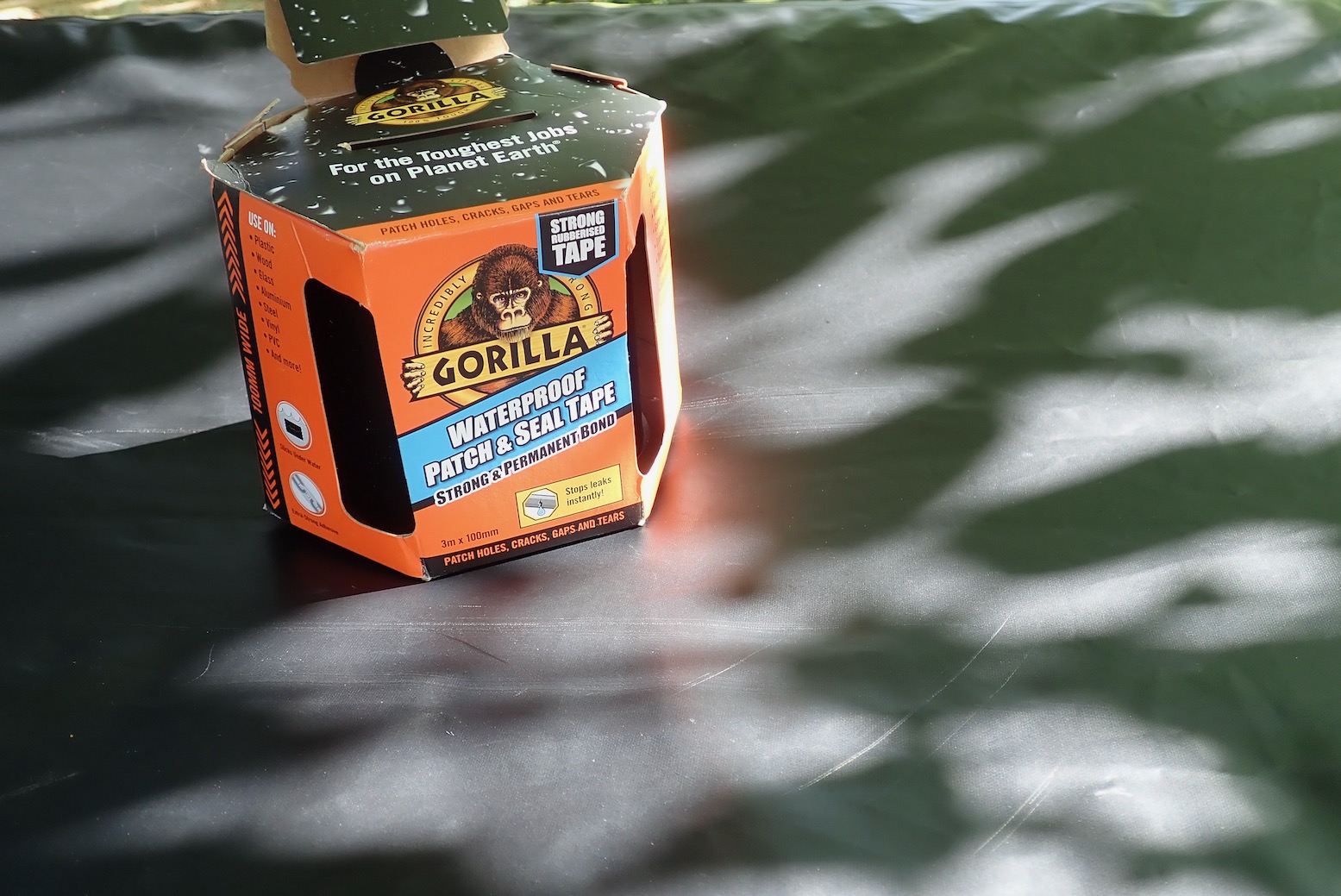
With smooth-skinned packrafts use two-inch wide Tyvec tape produced by DuPont. Just peel off the back and apply a section to pricks or small tears once the surface has been cleaned and dried. No need for roughing up, but a quick wipe with solvent won’t do any harm. Larger tears can be sewn then taped. Tyvec will work on urethane IK bladders or use ultra tacky Gorilla Patch & Go tape for deep floor scratches and cuts. It will remain impermeable even once immersed.

Aire-style bladder boat repairs are actually easy. According to Aire’s youtube vid, you unzip the hull shell, slap on a bit of Tyvec on the split, tape up the inner side of the hull shell gash to keep out grit, reflate and off you go. You can glue up in the usual way later, if necessary. I had the feeling that on my Feathercraft Java the urethane-coated sponsons made of thin ripstop nylon fabric (like tent flysheet material) couldn’t have been securely repaired with tape. In fact, it would be difficult to bond anything well to the slippery nylon fabric compared to smooth urethane plastic or hypalon-like surfaces, but perhaps once inflated the seal would have been fine.

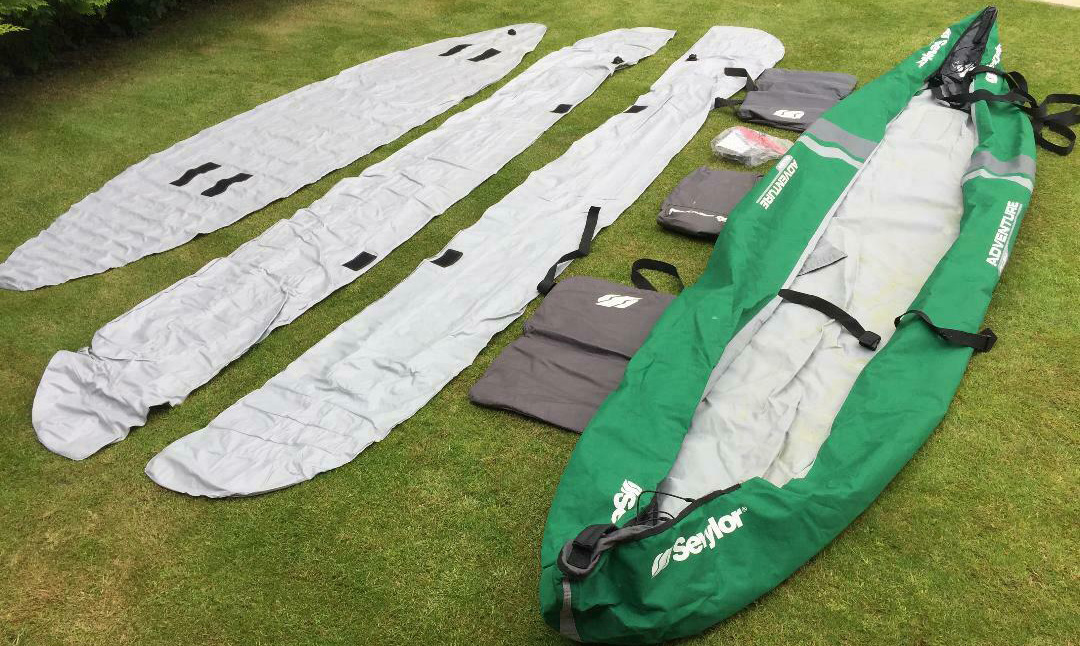
On this Sevylor it was the green envelope which ripped a metre long on the second outing! The owned may have over-inflated on a hot day – it only runs 1-1.5psi. The envelope is just a nylon fabric shell so would be an easily sewn repair. Usually it’s the inserted bladders which go. They can be patched.

Good article on how adhesives work

Cleaning solvents

foamdandingblock

Once you’ve done your roughing up (sandpaper or a foam abrasive sanding block, left) you need to clean off the residue as well as any oil or grease present. Anything will do in a pinch; alcohol and spirits, after-shave or nail polish remover (acetone), lighter fluid, white gas or petrol of course, but not oilier diesel, aviation fuel or Nivea for Men. Bleaching agents aren’t the same thing. In the end just use water to remove the dusty, post-roughing residue, and on a cold day it can help to warm up the damaged surface to cure the glue more quickly.

toluene
Tri Nitro Toluene (TNT)

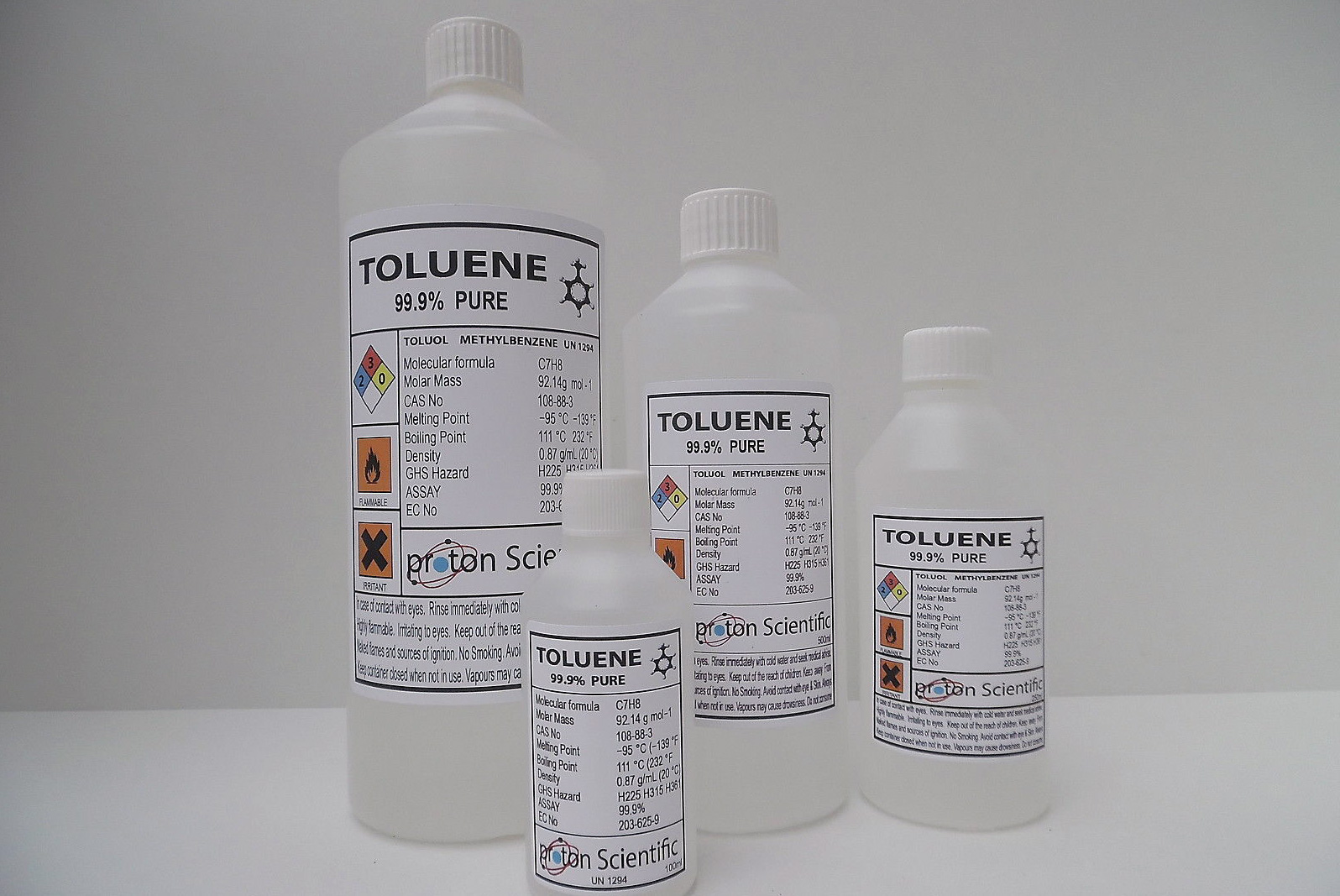
For a travel repair kit a tin of lighter fluid (same as white gas) or nail polish remover (acetone) are easy to buy and handy to pack. Back at home I’ve found MEK (Methyl Ethyl Ketone) is inexpensive at £9/ltr and hideously effective. Acetone is even cheaper and perhaps less extreme – all we’re really talking about is cleaning off any grease and the dust after sanding.
They say MEK is for PVC boats rather than Hypalon, but on a thin plastic slackraft the PVC will shrivel up before your eyes once MEK’d. Even on rubber-based coatings use MEK or similar toluene sparingly. Expect some colour to come away on the cloth and the coating to soften at bit: good for adhesion. Note the NRS video above specifically recommends toluene (the second ‘T’ in ‘TNT’ explosive, fyi) for hypalon. On ebay uk it’s the same £9/ltr but they won’t post this stuff around the USA.

Huge tears and bear bites

semp- - 3

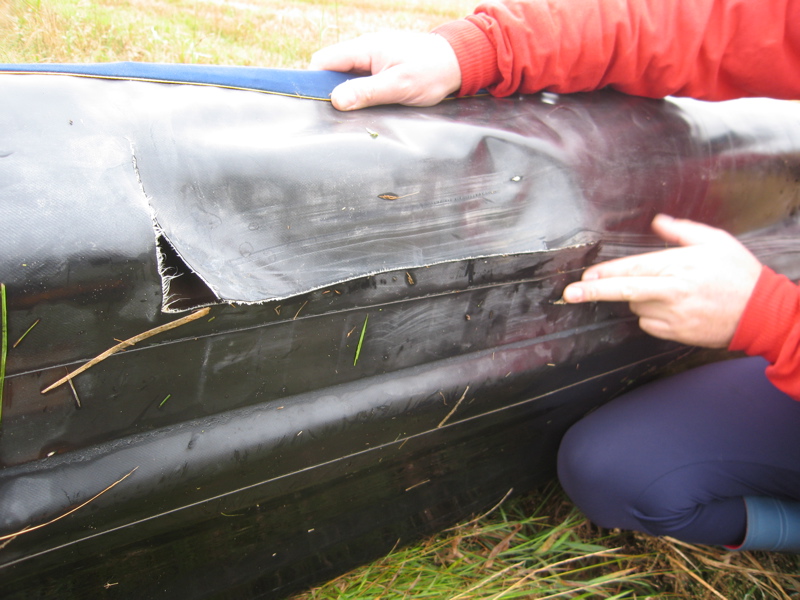
If you have a huge gash, as in the folding Klepper’s hull below, sewing is the only way to contain the tear when applied to an IK. Then apply a huge patch with adhesive, as normal. The boat below caught a cut-down metal fence stake buried in a shallow river bed and was actually sent back to Klepper for professional repair. It’s tempting to think an IK’s pressurised hull would have skimmed over the stake rather than snagged it. The smaller 1-inch L-tear on the left was glued with a 5-inch patch but the 30-year-old IK proved to be totalled.

Loch & Sea: kayaking to Achnahaird

mixteosmap

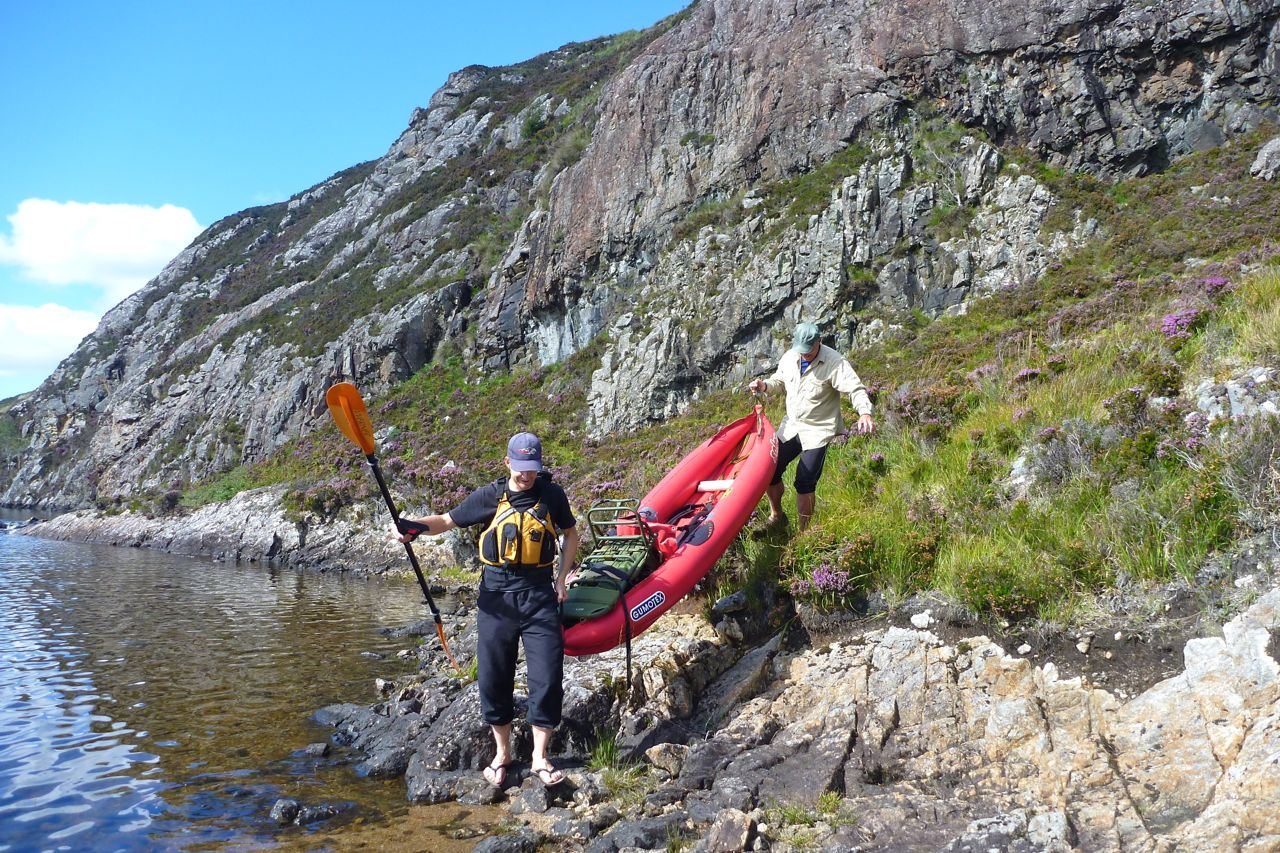
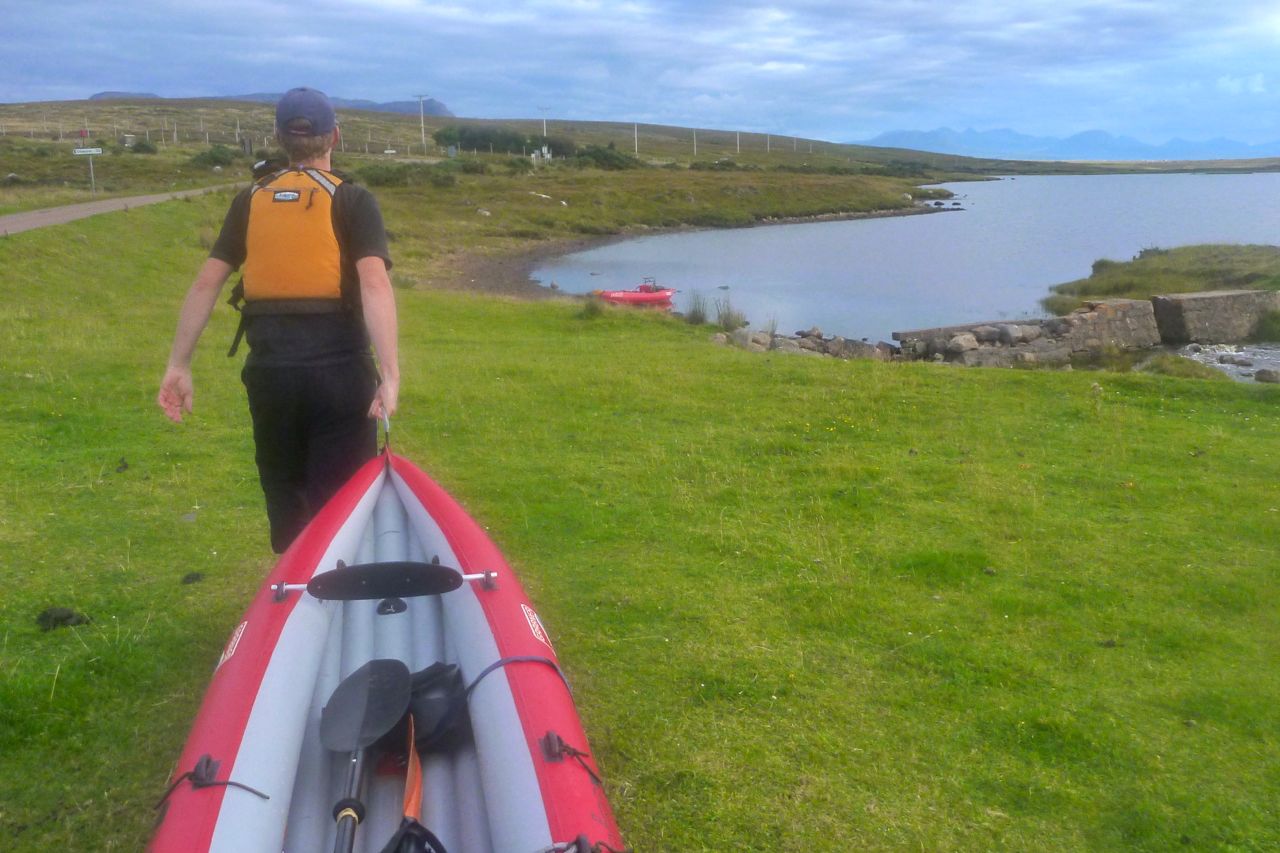
My grand plans to try out my new packframe on a trek from Loch Maree back to the Summers got radically downsized to a day out from Inverpolly. Down at Boat Bay we pumped up the IKs and set off along a route I’d packrafted a couple of years ago.

mix10

Surrounded by the singular Assynt peaks, Sionasgaig loch is an amazing place to splash about in a paddle boat, but at kayak speeds that stage was over rather too quickly. Just as well though, as I was trying the Amigo without a skeg, and two-up it wasn’t working. Into the wind was possible with one paddling, but out on Sion with a side wind, even with one in control the lighter back kept swinging off the wind.
We put a bag in the back, but at the Sluice Portage (above) we had to commandeer the skeg off Craig in the Solar who up to that point was loving his day out on the lochs. I assured him the Solar was manageable without a skeg as long as he applied appropriate levels of paddling finesse. This low level, almost sub-conscious correction to the tracking is something that’s difficult to achieve when two people are paddling one boat. It’s a shame that a skeg is such a vital accoutrement.

We’d all want them for the Enard Bay sea stage, so at the end of Loch Uidh Tarraigean, g-friend nipped back a couple of miles to the car where the forgotten skeg hopefully lay under a seat. By the time Craig and I had portaged over to little Loch na Dail, crossed it and walked up to the road, the car arrived with the errant skeg.

After lunch we rolled the boats up, coasted down to the fish hatchery on the River Polly and set off down the track towards Inverpolly Lodge and Polly Bay beyond. We’d crept up here on our bikes a few months back, to check out ‘Loch Sal’ bay north of the lodge. There’s boat ramp and fish pens there, which was good to know when I passed a while later on my Enard Bay paddle to Lochinver.
First time there and Polly Bay glittered invitingly at low water. On with in the skegs, in with the air and out we go into the flat calm. While exploring a bay round the corner, Craig managed to spot an otter gnawing over its lunch at the back of a chasm.

We worked our way around the coastline fringed with kelp exposed by the very low tide. Further along, winkle pickers were at work at Garvie Point, but then cloud rolled in on an annoying north wind; that is why you want skegs at sea. The little Solar bobbed about on the waves, but Craig seemed to be managing fine. We edged round Camas a Bhothain bay – no seals at play today – and slipped through the reef into Achnahaird Bay.

holdingpattern

It was now quite chilly and my proposal to form a holding pattern for three hours until the spring tide filled the bay was roundly vetoed. When Achnahaird Bay fills right up on spring tides, you can paddle up the Loch Raa outlet stream almost to the road junction car park, for the short portage to Raa. As it was, there was enough flow to tow the boats all the way up. We’d left a bike here so the Mrs cycled back over the hill to get the car, while Craig and I paddled across Loch Raa and then to the north side of Loch Vatachen. I did this bit without the skeg and was reassured to find that one up the Amigo tracked at least as well as the Sunny did in the same state. Perhaps it’s all down to more centred weight and the aforementioned correcting finesse. I’ll be on the River Spey in a couple of weeks where it’s good to know a skeg won’t be needed (it was).

On the north side of Loch Vatachen we aired down for the short but arduous slog up the hillside to the peat track that leads back to Polbain, a more direct route than following the road. Maybe it’s down to late summer growth, but the grassy tussocks and toe-dragging shrubbery made for an exceedingly tiresome, one-mph haul. Each step required lifting to knee height, and crossing the boggy stream course midway ingested one of Craig’s cherished flip-flops. Struggling a bit with his kayak in a shoulder bag, I was amazed it had managed to stay with him that far. My well-used Teva Omniums clung better to my feet if not the ground, and the heavily loaded packframe sat securely on my back, but I wouldn’t want to spend all day doing this.
By the time we reached the peat track where locals periodically  excavate their allocations, the sun was setting over the Assynt peaks to the northeast. From here it was a short downhill walk to the village and, after some 12 miles, attending to all the food that was fit to eat.

mix36

Packframes: Tatonka Lastenkraxe review

See also: NRS Paragon
Stone Glacier also worth a look; light but $$$

tonka-6
packframe

I thought I liked the idea of packframes for pack boating – a rigid rucksack harness and frame without the bag element. The boat, paddles plus dry bags are all lashed to a frame, alongside a drybag.

In the US one time I saw some packframes at a hunting outfitters in Flagstaff (left) that were much better than anything I’ve seen in the UK and going from just $80. They had hinged L-sections to support loads, and looked like an ideal carrier for the UDB and boats. As it stands, my UDB is still my preferred haul bag for overnight pack boating activities.
Good analysis, history and list of packframes

lastenkraxe-black

Tatonka Lastenkraxe review
Lastenkraxe? A Nordic nutcracker? An uncredited evil troll out of Harry Potter? Tatonka is a German company who produce some crafty and functional stuff, such as their pot/cup. A little research reveals that Lasten + kraxe adds up to ‘load bearer’ + ‘rucksack. Vorsprung durch kraknik.

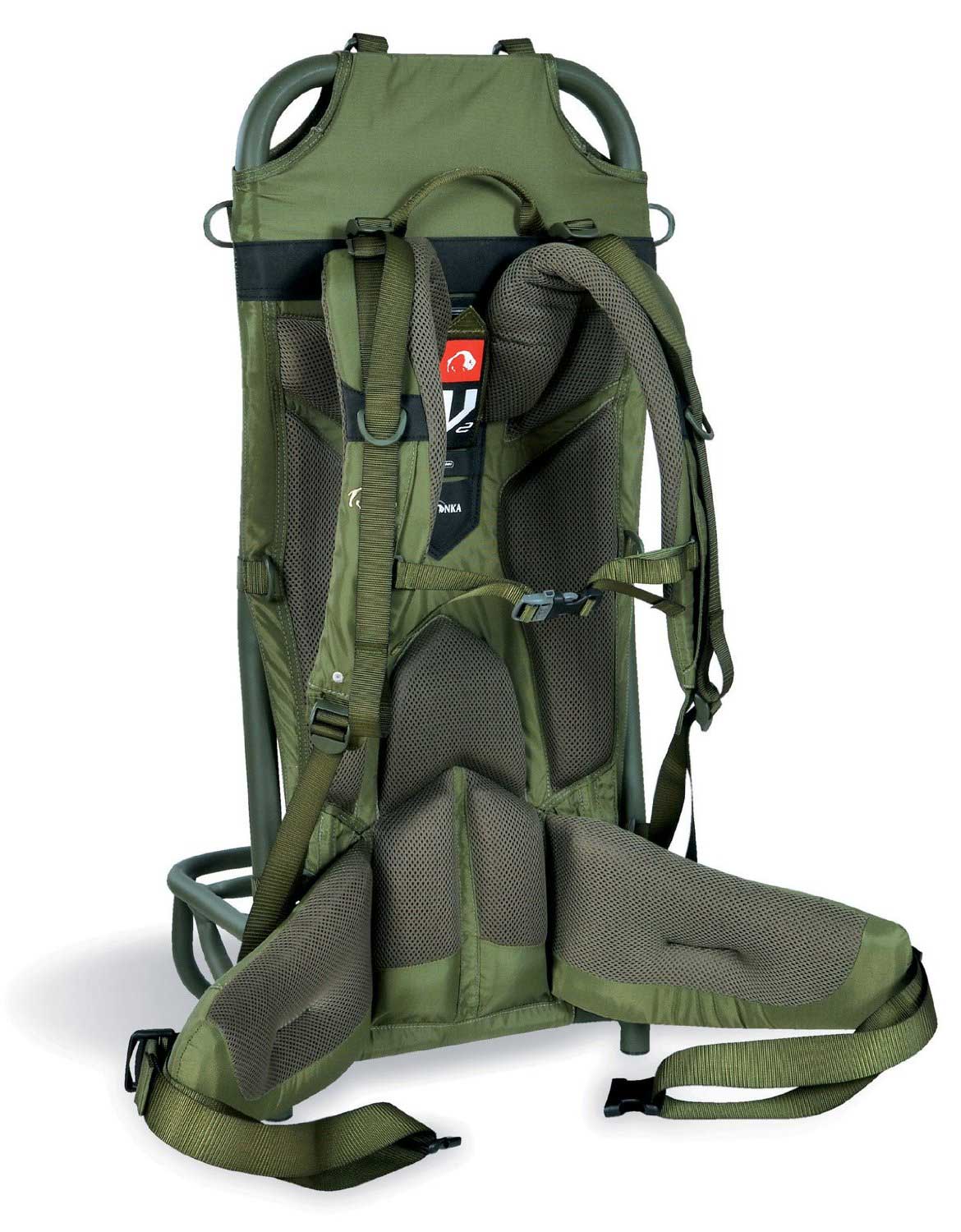
The Lax differs from the hinged hunters’ frames by having a well triangulated, rigid platform. A bit over the top for load bearing perhaps and it certainly won’t slip under the bed so easily. But besides being rated at an eye-watering 50kg, the platform provides the unexpected benefit of standing up straight when placed on flat ground and being a ready-made camp seat.

tonkae-2

It weighs 2.7kg but feels lighter for the amount of alloy in there. And like all modern packs, you can adjust the harness to suit your back length, as well as do the usual micro-adjusting to the chunky hip belt and shoulder straps and the all important, non-elasticated, sternum strap.
The Lax will obviously work fine for packraft expeditioning, plus kayak day trips where a trolley can’t be used, but I wanted to see if carrying my Amigo IK was a viable option for camping too. The Amigo weighs about 15kg ready to go, and as you can see, takes up much of the packframe when strapped on vertically. Horizontally would make more space above, but having walked about five miles on road, track as well as very rough hillside, treating the Amigo like a packraft will be a tall order.

I recall the Terra backpack on my first packrafting trip in 2010 weighed 18kg with a few days’ food and a drysuit. The Amigo is at least 12kg heavier than a packraft so that’s 30 kilos. I was walking around with about 20kg which felt like plenty. As said, the Lax is rated at up to 50kg which is hard to believe; the stitching alone would be under immense strain.

Realistically, camping with the kayak would work best where there was more water between short and fairly easy walks (few bogs and steep inclines – so not really Scotland then). Of course, having a kayak as opposed to a packraft makes lone coastal paddling and sea loch crossings less intimidating.

Comfort is as good as can be expected with a 20-kg load, but I think it’s safe to say a rigid frame is less compliant than a modern frameless backpack like my Berghaus C71 (2.6kg). On one stage the lower frame was digging into my hips through the hip belt, although on the next walk I must have adjusted it better and it was fine over terrain that at times was barely walkable. I wasn’t using a packstaff this time, but off-piste that would be a great help.

Early days yet, but quality of construction seems good. I like the lift handle and generous padding. One thing I’d like to see on any harness like this is a pocket or two on the padded hip belt, or even just a bit of tucking mesh.
The platform construction looks solid and as well as being a pack stand, with a some cushioning would also make a solid camp seat when unloaded. This is a much discussed and under-rated item, and one on which you could even lean back on, just like you weren’t supposed to do in school.
The solidity of this structure also opens up the possibility of adding that nirvana of urban packboat portaging: trolley wheels. More about that if I get round to it. Rrp in Germany for the Tatonka Lastenkraxe is €170. My green one cost £95 off amazon. Black ones were another 20 quid.

In my packframe investigations I discovered that in the Tatra mountains of eastern Europe there’s a local ‘iron man’ sport of ‘Nosicsky’ (‘portaging’): carrying massive loads on wooden L-packframes. Perhaps it was once a way of resupplying mountain refuges when the mules were on strike. As you can see, over 200kg was a record one time, but it proves that L-frames were the original do-it-all packframe, long before modern backpacks found frameless alternatives that kept the weight closer to your back.

tonkae-jeff

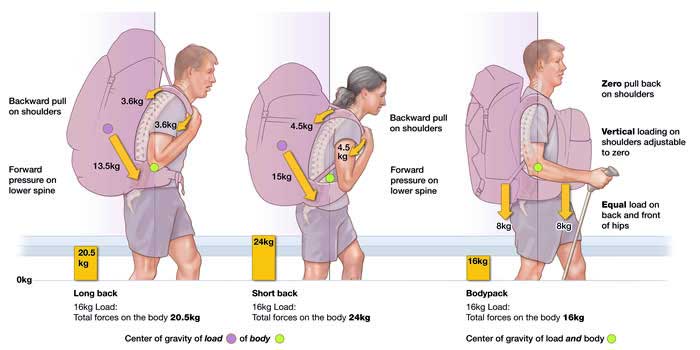
I also came across the Kiwi Aarn website which showcases a frontal load ‘FlowMo Bodypack’ to help improve you posture and balance weight distribution. They’ve designed two pockets for the front straps to carry dense but compact items (like water) while still being able to see where to put your feet. Sounds like a good idea but many of us, like Jeff on the left in the Kimberley (with my old Terra 65), have come up with a similar solution intuitively, when needing to carry a day pack as well as a backpack. Still, it’s an idea worth considering when you have a 15-kilo boat on your back.

cwtwh3-01

Since I wrote this I did try a similar idea on our CWT recce, well at least carrying the packraft on my chest. It did feel good on regular ground: better posture, less stooping – but on gnarly terrain the bulk got in the way of the ground at my feet which got dangerous in the places we were walking. To be fair, Aarn acknowledge this limitation.

Semperit Forelle: the original ‘proper’ IK

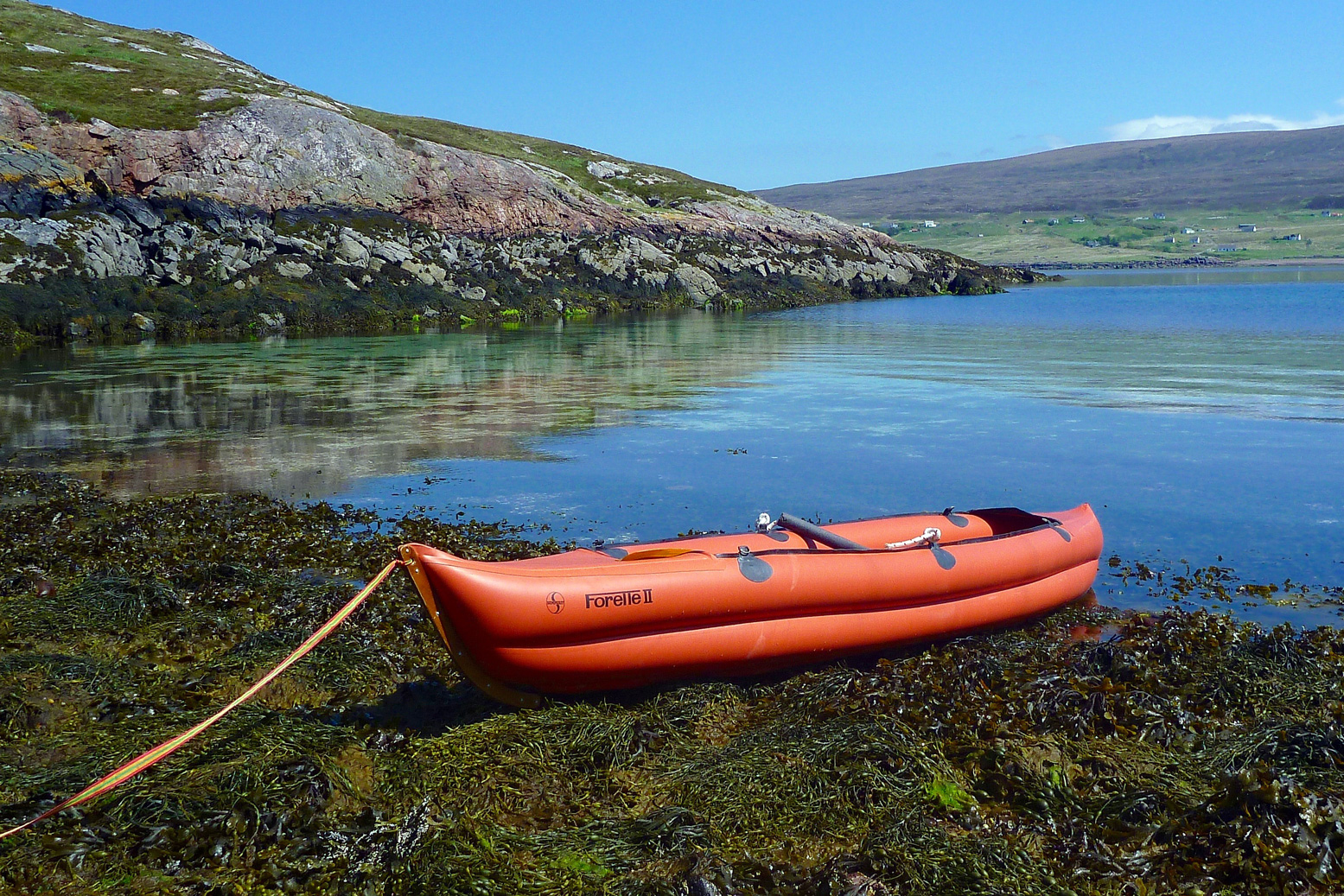
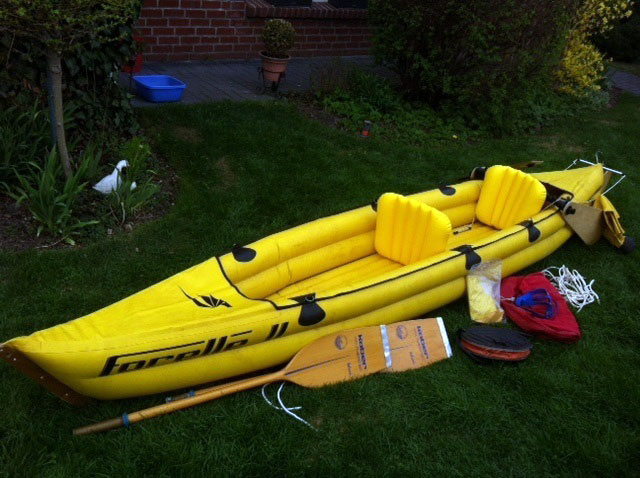
In 2017 I bought an old Forelle 2. Read more about the…
• …afternoon refurb
• Semperit at Sea
• Semperit at Sea 2
• Semperit Mori
• Semperit autopsy

semp

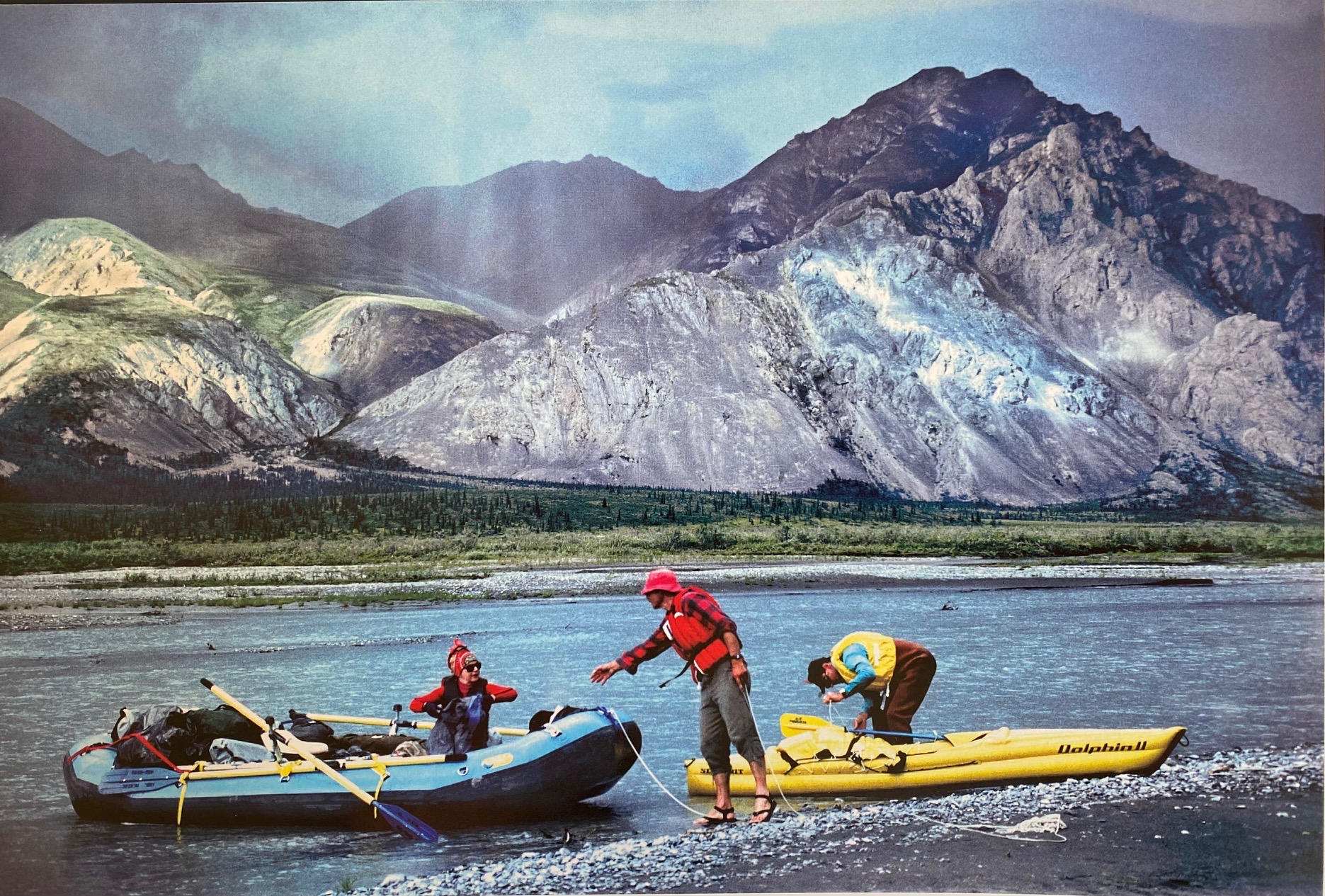
Not for the first time I will boldly speculate that the Austrian-made Semperit Forelle (‘trout’) or maybe the Dolphin before it, was the first modern IK, designed in the 1960s from tough hypalon ‘rafting’ fabric. 
Around the same time Sevylor released the PVC Tahiti watersofa in North America and maybe worldwide. I bet the Tahiti has outsold any Semperit 1000:1 but I know which one I’d rather own.

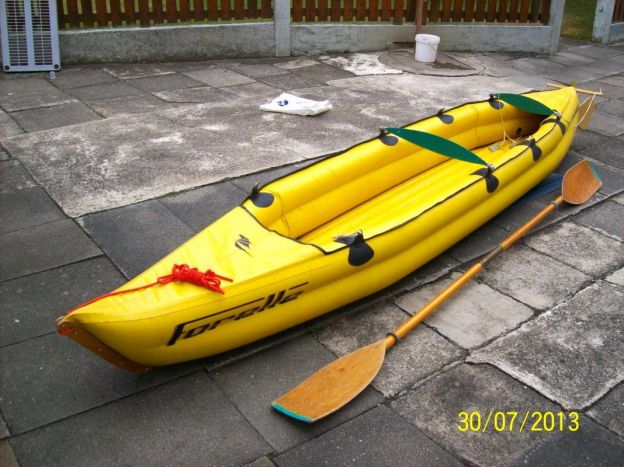
According to my measurements the Forelle 2 is 3.56m long, 70cm wide and weighs 10.5kg + seat. This guy says Semperit were last made in 1983 at which point (or soon after) Grabner (also Austrian) bought the rights.

Grabner Fun kayak

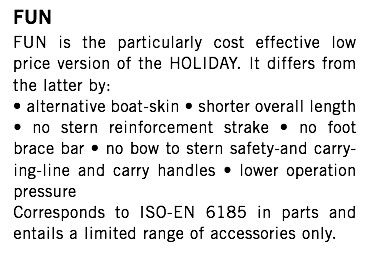
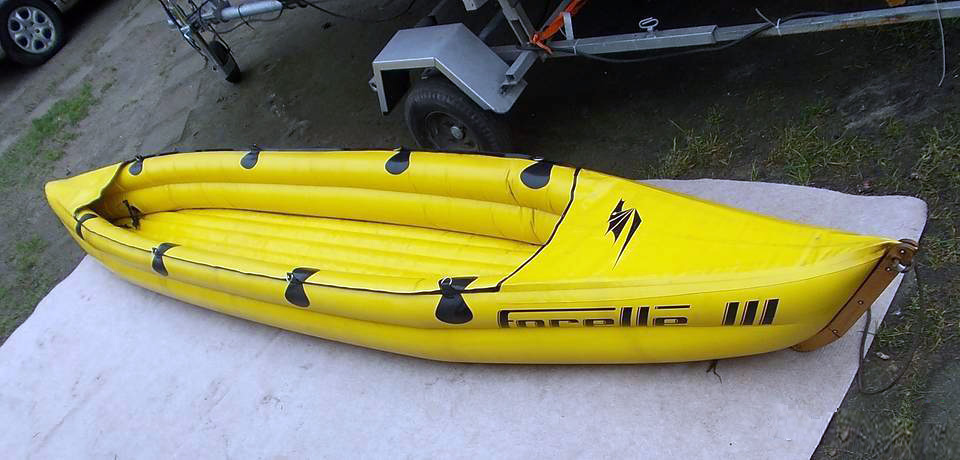
Grabner then got Gumotex, in Braclav just over the border (and behind the Iron Curtain back then) to produce a cloned Forelle called the Grabner Fun (left), but made from Gumotex’s hypalon-like fabric called Nitrilon. Back in the 1980s I’m sure Commie Nitrilon would have been cheaper and nearly as good as DuPont hypalon made in western Europe. The Fun was discontinued (or stock ran out) a few years ago.

Grabner Fun: 365 x 75 cm; weight 12kg; payload 170 kg; pressure 0.2 bar; fabric 1100 dtex Nitrilon

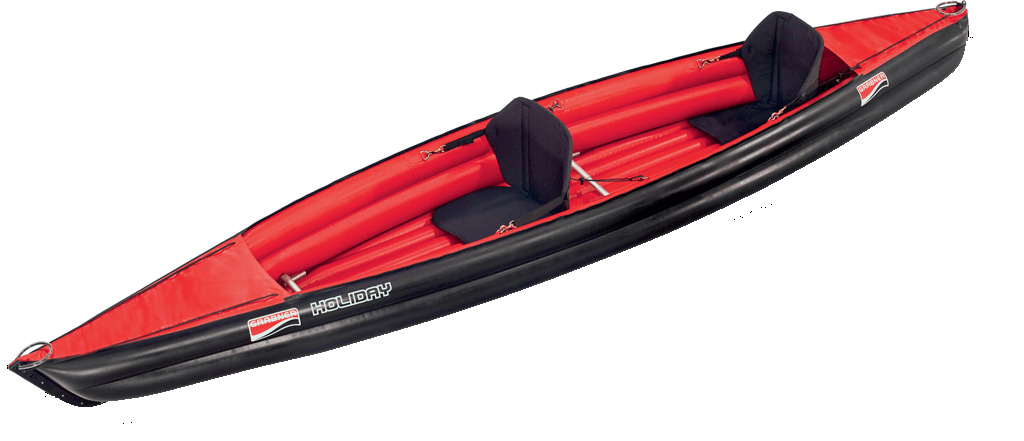
Not being one of their boats, the Fun was undersold by Grabner (notice the table, left). Instead, the similar but longer Holiday range got the fanfare and is still made today with few changes.
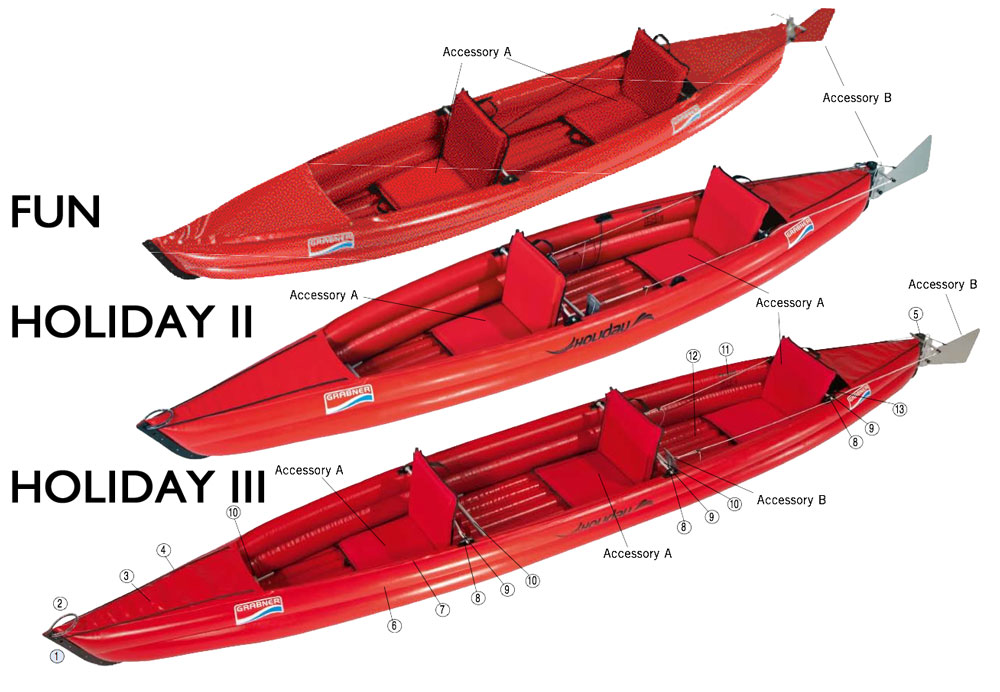
Grabner boats are made from a hypalon-like fabric called EPDM which, combined with Grabner’s hot vulcanising method, explains how their boats managed to run 50% more pressure (0.3 bar) than the Fun and other Gumotex IKs at the time. Gael A. paddled an aged Grabner H2 along the Scottish Sea Kayak Trail a couple of years ago. Among others, Incept also used the twin-side beam design to produce a 70-cm wide K40 which is also 70cm longer than the Forelle II, and one of the fastest IKs around.

I would say the obscure and expensive K40 and the more popular but also expensive Austrian Holiday 2 and 3 IKs are modern iterations of the twin side tube Forelle design, along with the Holidays (below) right down to the wooden bow clamp (right).

You can occasionally find aged Forelle IIs for around €300 in Germany; a new H2 goes for over €2900 last time I looked, while Funs were being discounted for as little as €400 new, but seem much rarer now. I was curious about tracking down a Forelle recently (I succeeded) and below are a few shots I picked up off the web and from some sellers. Apart from the odd repair, the indestructible hypalon fabric stands up well (or does it?) and the seats may well have been improved (Grabner’s still use crude and bend-prone alloy bars).

gumvalve
semperit forelle

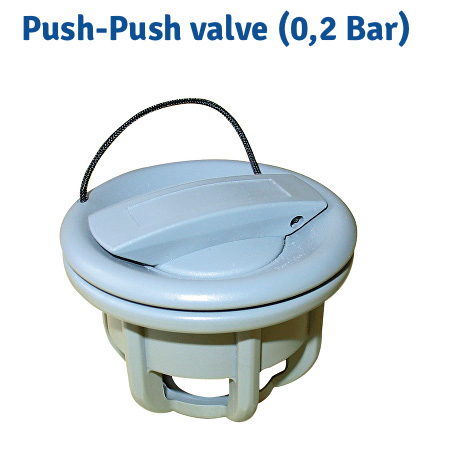
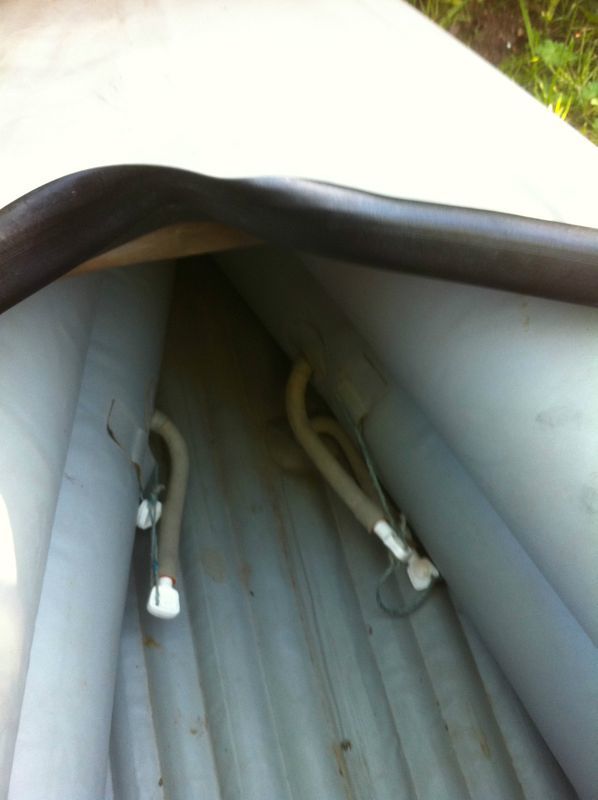
Some boats come with a huge wooden rudder which might be replaced by a skeg, but one off-putting aspect are the basic inflation ‘lilo plugs’ (left); no better than an old Gumotex seat. These could easily be cut out and replaced with proper Gumotex valves (right), maybe in a more accessible position, too.
It seems older versions (grey and orange, below) have a half-inch deep keel strake right along the bottom (as well as a rudder fitting) while later ones like the yellow one, do not.
One thing that can’t get avoided is that a Forelle (and a Fun) still run only 0.2 bar pressure. Same as most ordinary Gumos, like the Solar 3, though the stiffer twin side beam hull helps. Modern Grabners run 0.3 bar which makes a big difference. Some newer Gumotex IKs now run 0.25, though that can be pushed to 0.3 bar with care.

Thanks to Gael and OP for extra details. Most pics lifted from ebay sellers.

Gumotex Helios in Sardinia

pushhelio

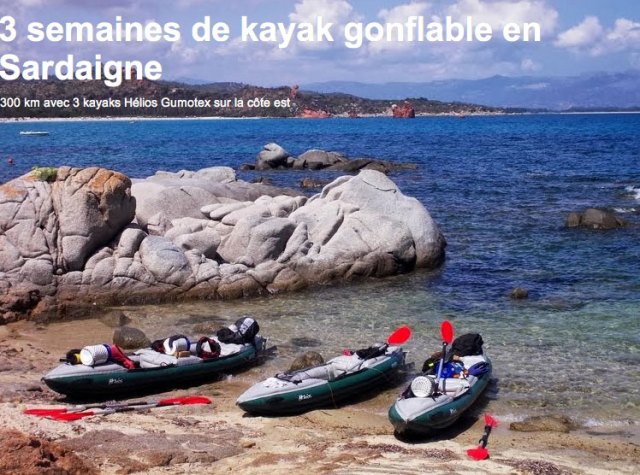
Great report of a three-week paddle along the northeast coast of Sardinia in three Gumotex Helios IKs.
Simply enjoy the photos or read a Google translation if you can’t read the French and another IK&P Sardinia report here.

heliosen

Audrey Sutherland’s book ‘Paddling North’

aud-inspas
aud-padnort

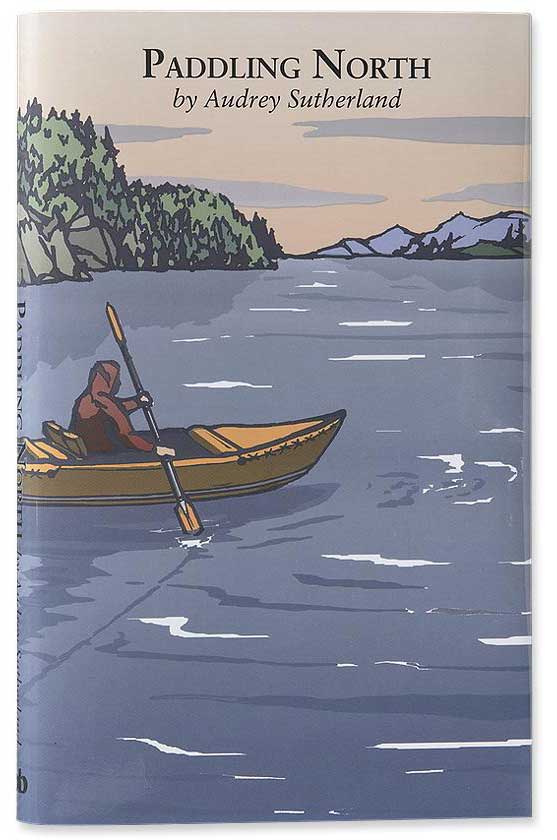
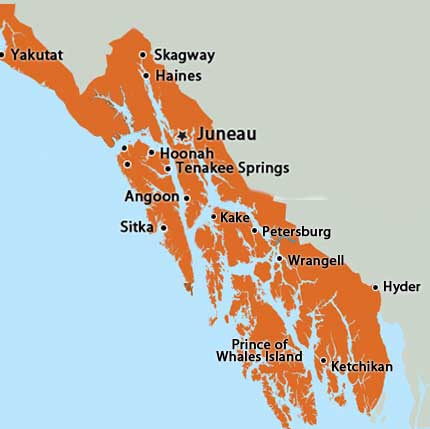
IK queen, Audrey Sutherland’s book, Paddling North, recounts a two-summer paddle along the Inside Passage (right) from Ketchikan to Skagway.

An article here
Amazon page and reviews

Kayaking towards Bird Island (Summer isles)

Another visit to Carn

sgeir-island

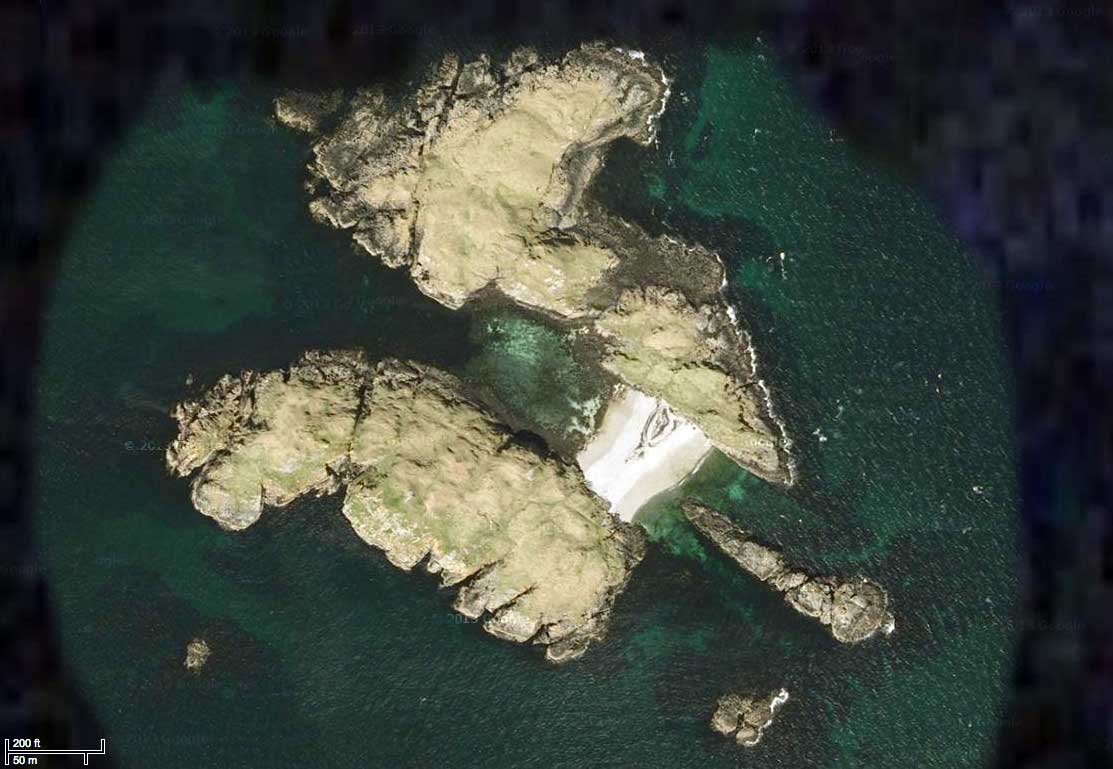
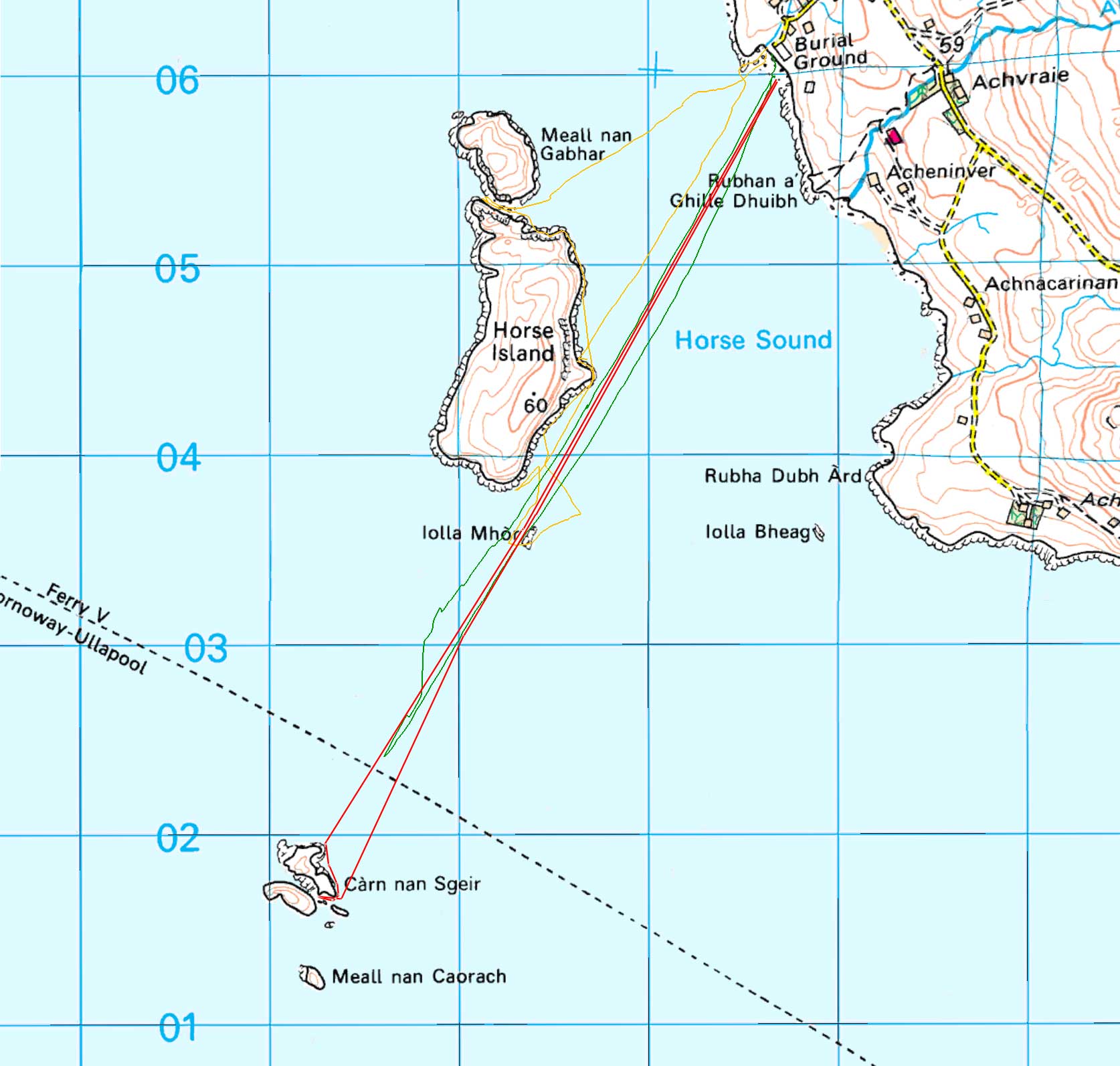
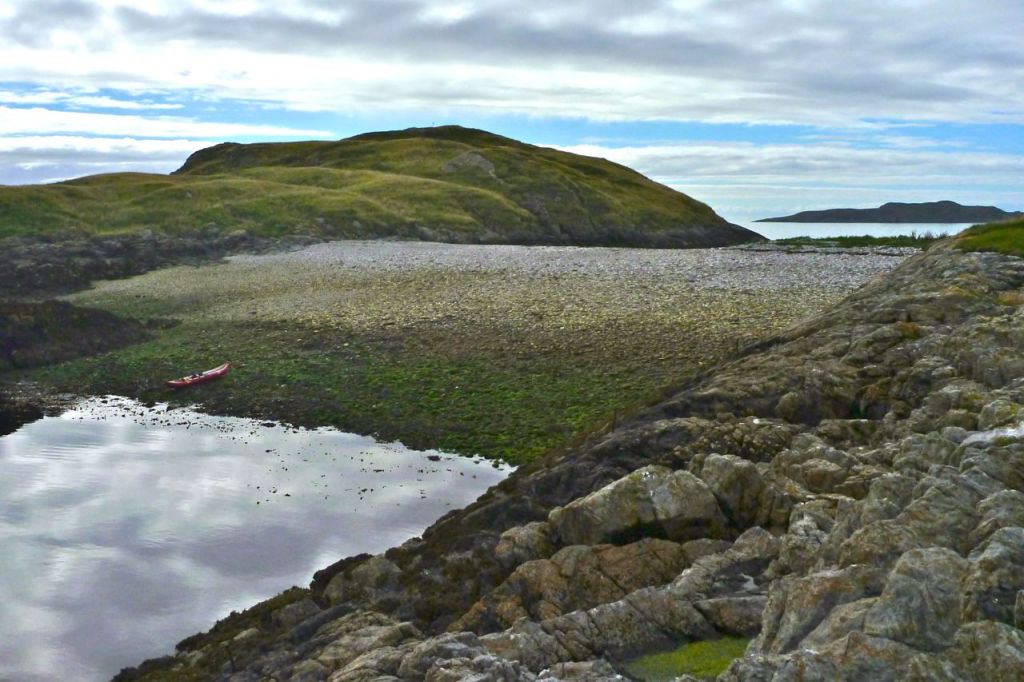
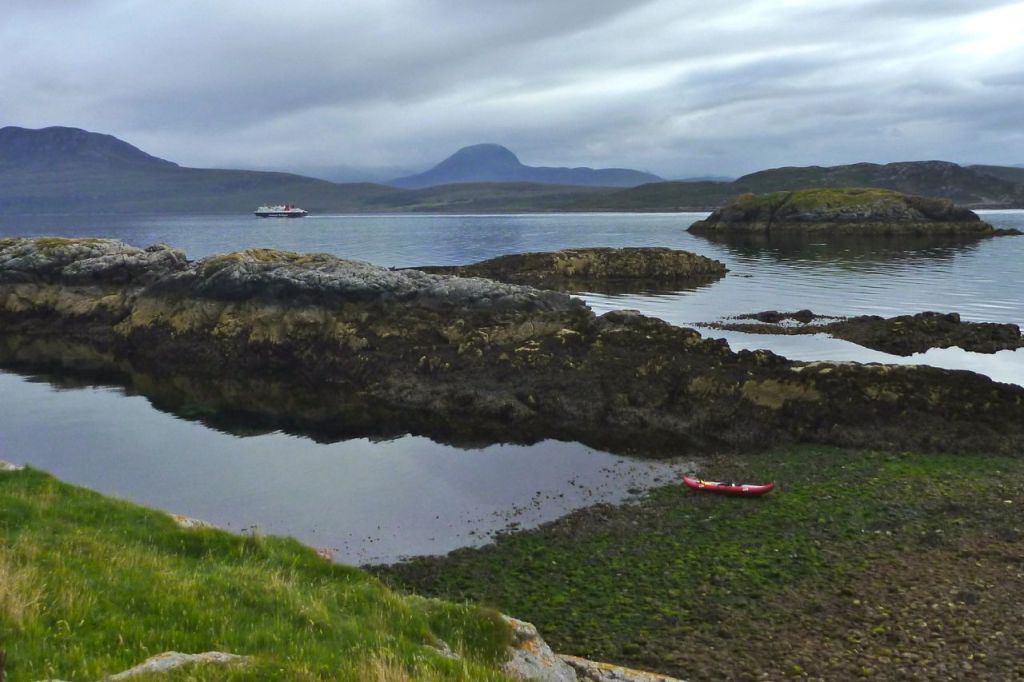
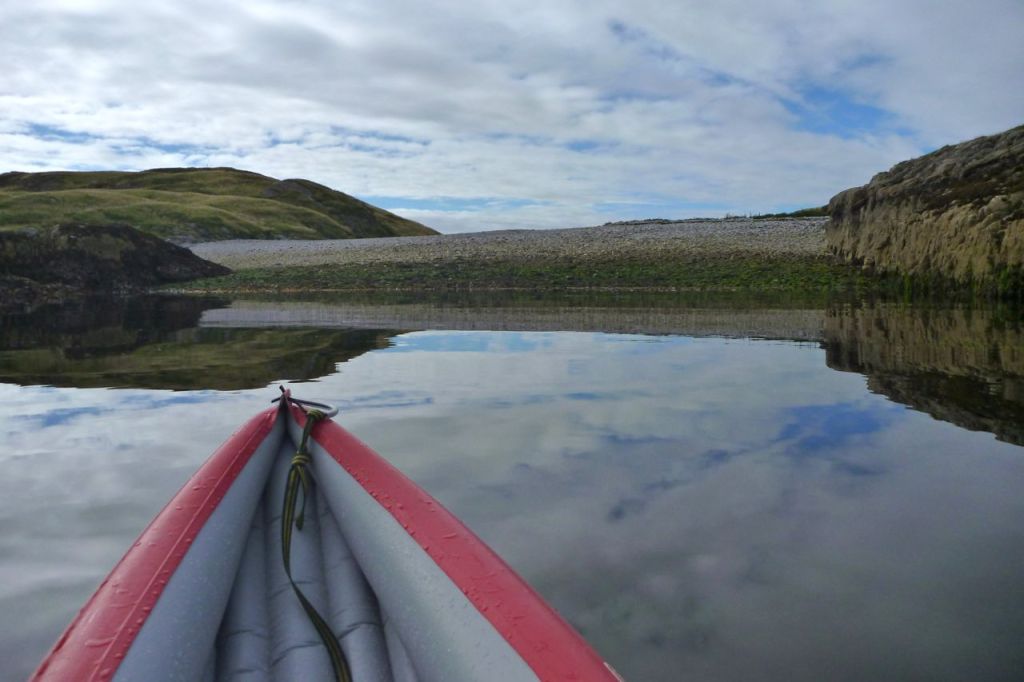
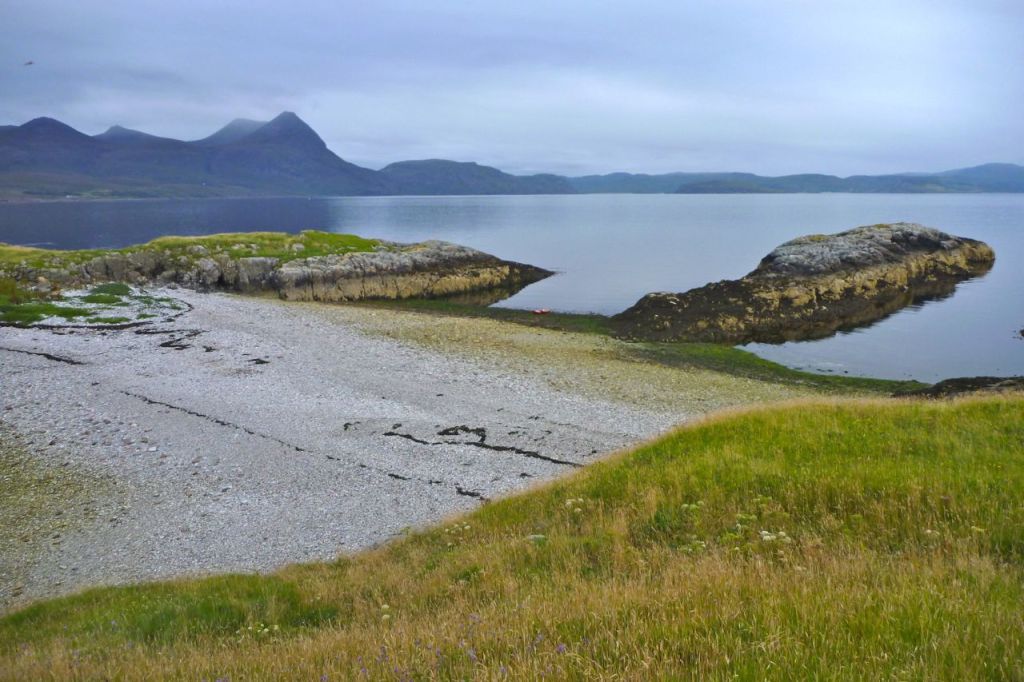
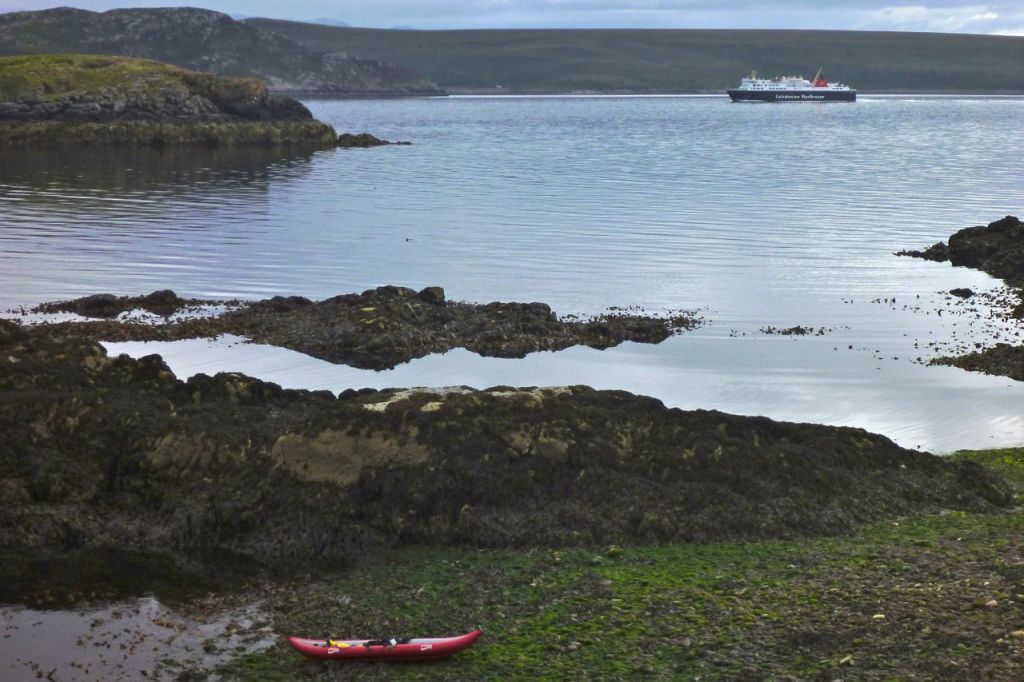
Stuck out in outer Loch Broom, the little hoof-print shaped island of Carn nan Sgeir (above) lies midway between Horse Island and the Scoraig peninsula on the southern mainland. Some call it Bird Island and four times a day the CalMac ferry passes close by, sometimes to the north, sometimes to the south. Nearly a mile-and-a-half from land, I figured getting to Carn would be a good simulation of a more exposed run out to Priest Island (marked below). Plus on the sat image it looked like an unusual place, separated at all but the highest tides by a single, shingle isthmus.

sguirpan

I came across this Summer Isles sea kayaking report by some intrepid members of the Braintree Canoe Club. In a week out of Ardmair they managed to do what’s taken me years, and that included two days windbound below Ben Mor mountain and an overnight on Carn nan Sgeir where, from their gallery, it looks like they saw a great sunset. And here another more recent report from the area with pics and maps: Gruinard Bay (Mellon, below) up past Stoer and Handa Island.

cng-1

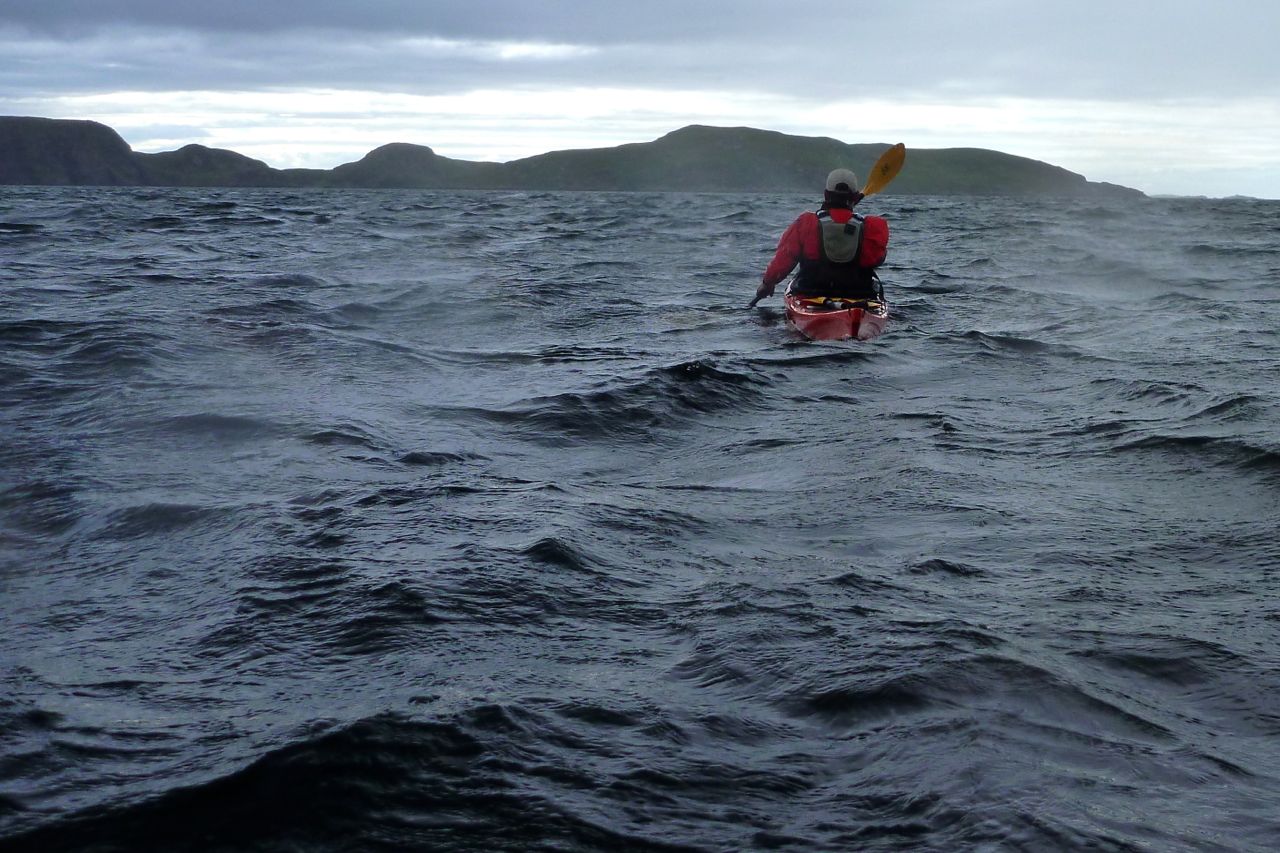
Mid-August but sometimes it feels like autumn has already arrived up here. Compared to a few weeks ago the light is thinner and there’s a chill in the air. Jon turned up, not having used his orange Scorpio LV since our outings here last year. On the day the weather wasn’t great so we set off from Badenscallie Beach opposite Horse Island for a splash about. Dark clouds pressed down on the steely swell and a westerly F4 made for a bouncy ride (above) until we got into the lee of Horse. The tide was up so we headed for the flooded gap between Horse and Meall nan Gabhar just to assure ourselves we didn’t want to go through it and out into the open.

cng-7

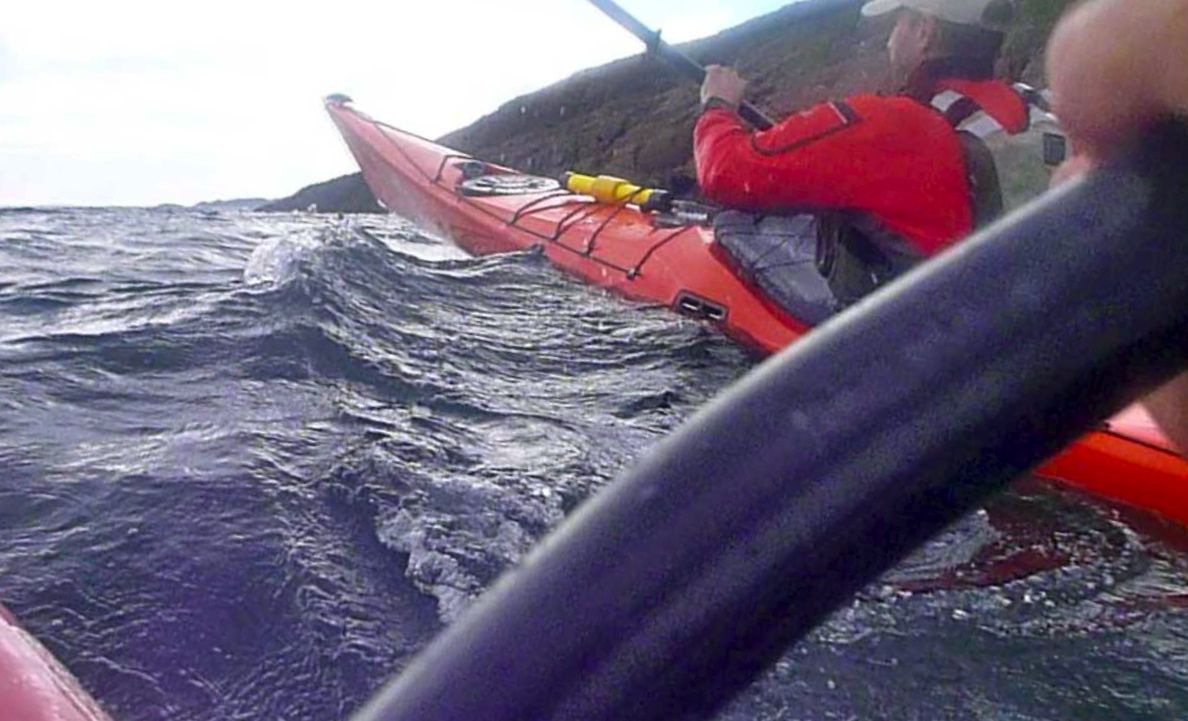
Instead, we tracked down the lee side of Horse to the southern point where we again pushed out into the winds. At times the front third of Jon’s long LV was launching off the crests, but considering he’d not paddled it for ages, he was managing fine. Perhaps these plastic coffins can be mastered after all? From any direction the Amigo handled it all too, with a brief squirt from Jon’s handy bilge pump by way of a rest.

cng-6

We mucked around alongside the surf breaking over the skerry of Iolla Mor and eyed up Carn nan Sgeir, some 2km away. We could make a run and probably make it, or we could play it safe. With the forecast set to worsen, we settled for a loop round Iolla, scattering some seals, then dithered again over making a break for Carn. Discretion prevailed again, so instead we landed on Horse Island and hacked through the chest-high bracken to the 60-metre summit cairn. As the disturbed birds wheeled over our heads, we looked over to isolated horseshoe of  Carn and the thick clouds swathing the Torridons beyond.

cng-5

A couple of days later all looked calm out the window towards Tanera, but that was because the hill behind us was sheltering the northwest wind. I didn’t notice that until leaving Badenscallie, and very soon the Grabner felt oddly squirrelly, pivoting left on each crest. Approaching Iolla Mor again and now in the lee of Horse, things flattened off but I knew once past that point the 4-5 mile fetch building up from Badentarbet Bay might get a bit much. And so it did, pushing the boat around as it started to white cap. By the time a wave flopped over the side I’d scaled down my plans to tap Carn with the paddle and shoot back. I pressed on for a bit with that in mind but the seas seemed to be rising and it could be a nerve-wracking hour getting back. Less than ten minutes from the Carn, I turned around and scurried back to Badenscallie.
carnmap

A period of calm, that’s what I needed to enjoy a relaxed paddled and look around Carn, rather than making it into a hurried dare. That afternoon came, but it didn’t stop me paddling out from Badenscallie at full steam, knowing that in a couple of hours it may all change. In the rush I’d forgotten map, GPS and watch, but I knew the way and with the clock in the camera I timed the 3 miles to the north tip of Carn nan Sgeir at just over 40 minutes. By that point sweat was wringing in my eyes, but the way the Amigo tracked in such unusually flat conditions was quite an eye opener.

cngg-02

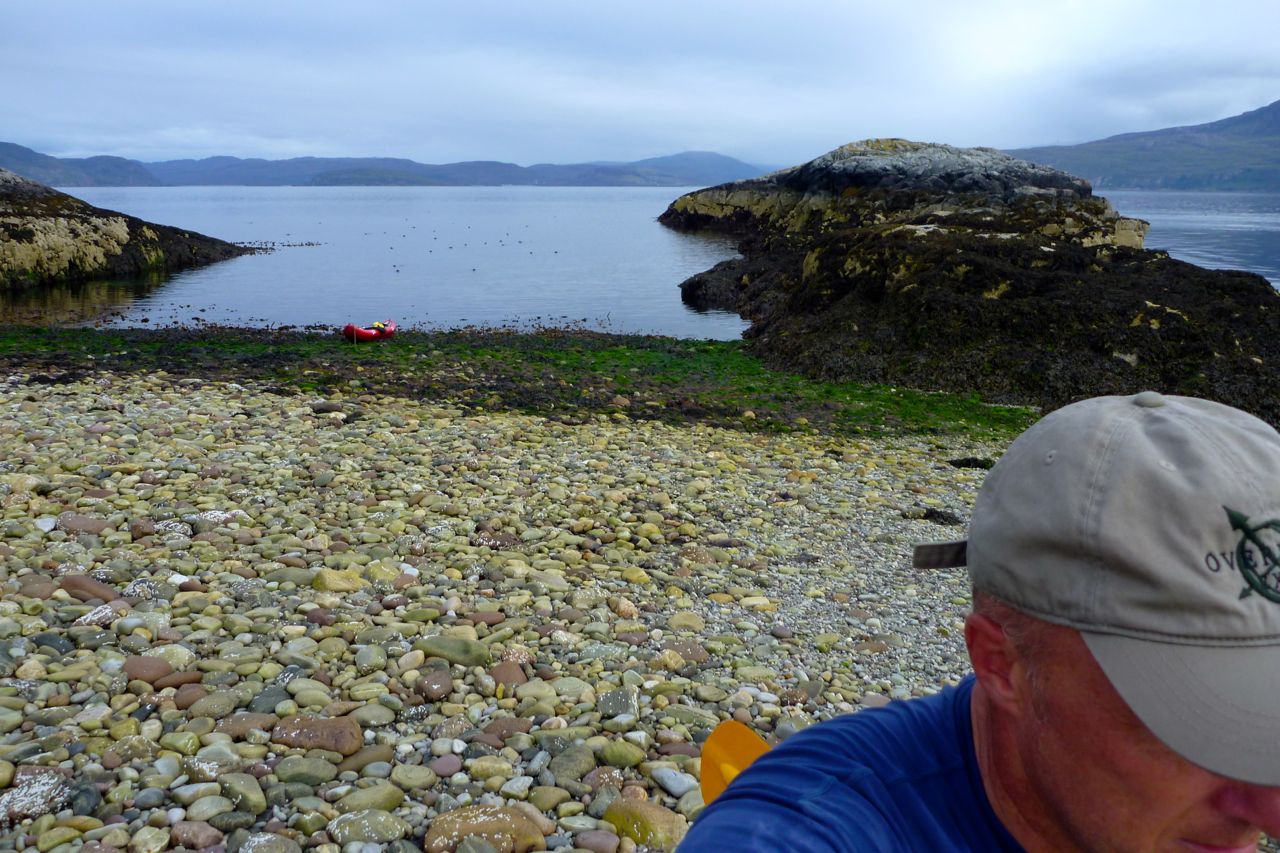
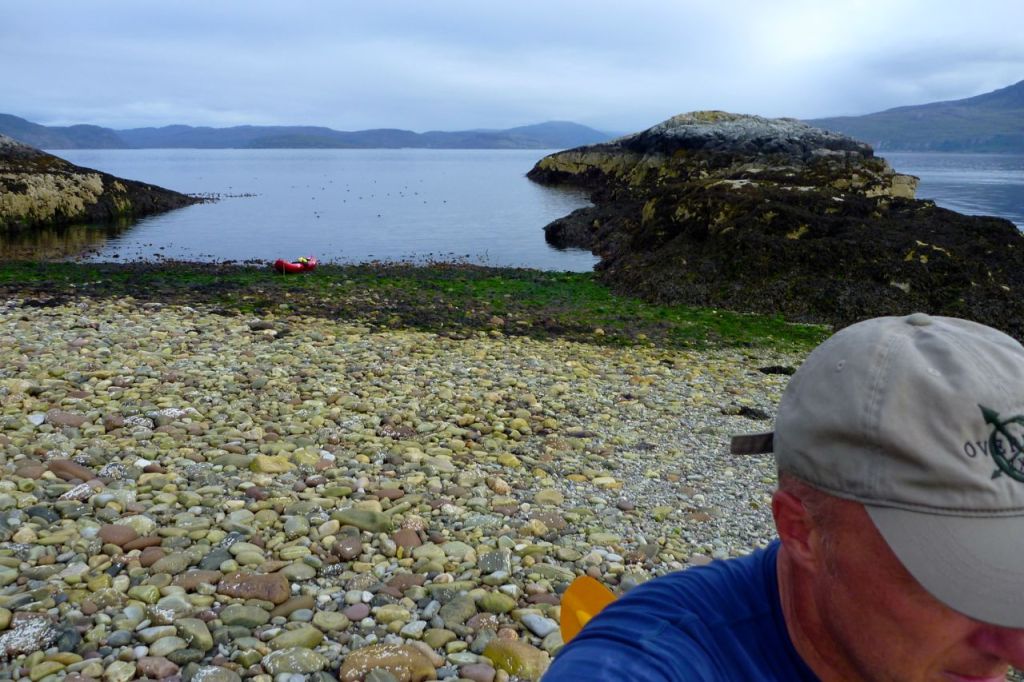
As I neared the shore of Carn, numerous seals slipped into the water and  soon no less than forty of them were bobbing all around, eyeing me up. I’ve never seen so many seals up here. They followed me like a fleet of U-boats as I paddled around to the stony isthmus, and were still watching as I walked  from the boat.

cngg-04

Getting to Carn’s high point took three minutes but doing so set off the dozing midges. As I reached the pole and rag marking the summit, the ferry was coming in from Stornaway, today passing south of the island. Midges made further exploration a misery, so I took a quick look at the grassier and less infested north isle then headed back to Badenscallie at a more relaxed pace.
By now the wind had dropped right off and I stopped a few times to enjoy the silence, broken only by the splash of a seal or a distant guillemot flapping off the water. I couldn’t get over it, there seemed something uncanny about how well the boat was tracking, perhaps I’d not yet paddled in such a calm. As a test I closed my eyes and paddled on for a minute; two times out of three I remained bang on target for the beach – the other time I was off at 90 degrees. As I neared the beach a light north breeze started up, just as predicted, and in a couple of hours the sun would emerge below the cloud ceiling’s western edge to make for another sunny evening.

As I’d found a few weeks ago when I paddled to Lochinver, and then around Rubha Coigach, when it’s calm up here you feel you can almost walk across the water to anywhere you like.

cngg-07

Inflatable Kayaks: Hull Forms and Rigidity

Page moved here

splashmatter