What air pressure does a typical packraft run? 1 psi, 1.5, 2.5? Answer at the bottom of the page.
Air bagging. Air bagging. Oh isn’t it wild?
Most inflatable devices come with an air pressure rating at which they perform best, including inflatable kayaks which run from 2psi/0.14bar up to 10psi/0.7bar in drop stitch. On the cheapest vinyl Intex or Sevylor dinghies, as well as slackrafts there won’t be a number, instead you get a ‘stretch gauge‘ (left). With a Sevy you keep pumping until a sliding black tab settles between A and B; your squishy slackraft is probably now at less than 1psi but is good to go. Add a bit more air to try and make it feel less of a water sofa and the thing will burst a seam. It may do that anyway if you give it a week or two or look at it too long.
Right from the start packrafts never had air pressure ratings. You just aired it up with a flimsy nylon airbag (above) until you couldn’t get any more in. The airbag idea was surprisingly effective once you got the knack, and the bag weighed next to nothing. You then unscrewed it without trying to lose any air, quickly screwed on the cap, then topped off by mouth via the separate twist lock elbow valve (left) with all you had in your lungs. The more you blew the firmer you boat became – and that definitely made a difference to response on the water. It helped if you didn’t smoke and played lead trumpet in the local jazz band.
Once on the water all inflatable boats cool down and the hard-won air pressure inside drops a bit so you have to top it up again to get the boat firm. What was the air pressure? As much as possible but what did it matter as you couldn’t overdo it with your lungs. Stronger lunged paddlers and opera singers paddled firmer boats. And anyway, such very low pressure would be difficult to measure with a normal handheld manometer.
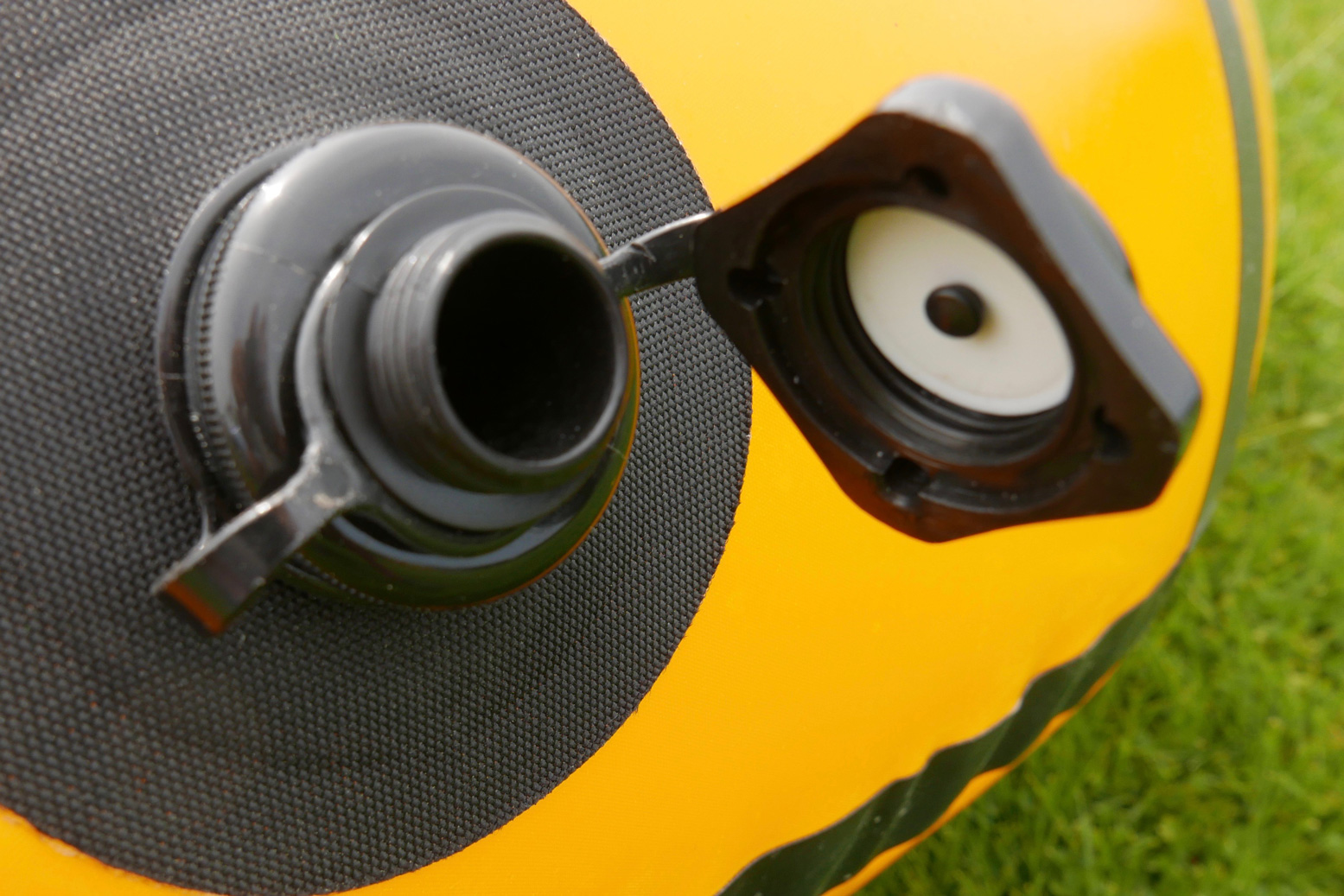
These days most packrafts use simple and effective one-way Boston-type valves (left) which screw off for a wide open ‘fast inflation’ port for airbagging, but have a one-way valve built into the cap for topping up, just like a car tyre. What goes in, stays in so you can build up pressure and get the boat good and firm. No more crumby twist-locks and undignified topping up by mouth.
Mini electric pump; ditch the airbagMini handpump to top up
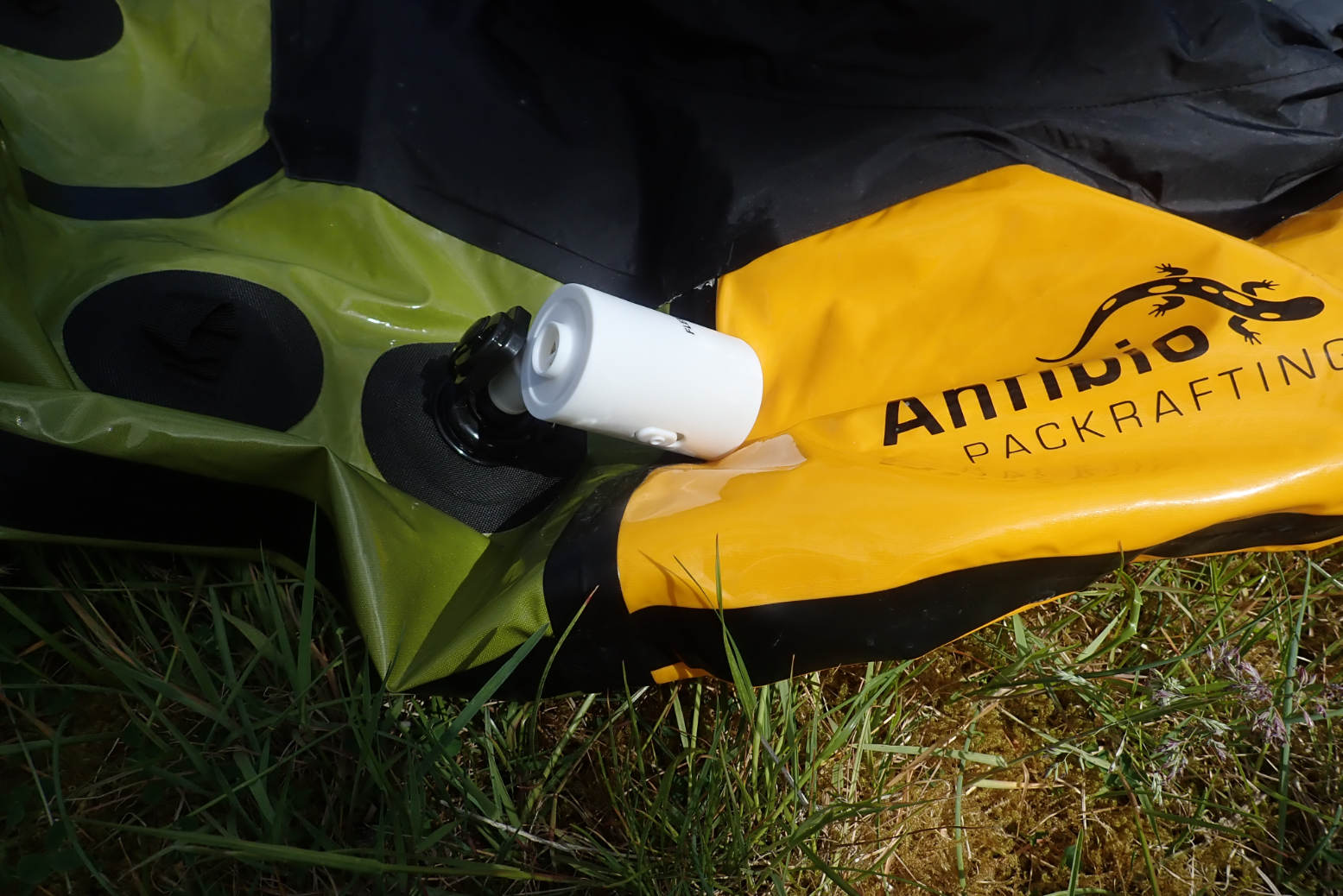
Better still, inexpensive pocket electric inflators like Flextail (above left) do the job of airbagging while mini handpumps (above right; adapted from party balloon inflators) can do the important topping up without giving yourself a lung hernia. But what’s the air pressure!? Who cares, it’s better than it used to be provided you could pump the handpump with all you had – I find it takes 100 jabs. A Flextail or similar will burn out long before it can get close to a handpump’s final pressure.
Tip: all these pumps are handy but I always leave an airbag in my packraft’s storage pockets in case the Flextail packs up or I forget it. Otherwise it will be a lot of blowing or handpumping to air a boat up. And with a Boston-type valve as above, a short section of half inch garden hose makes inflating by mouth much easier should you’re topping-up handpump pack up too.
Kokopelli and French-made Mekong packrafts (and maybe others) feature a RIB-style Leafield D7 push-fit inflation valve. That’s push-fit as opposed to more secure bayonet fitting as on proper IKs and iSUP boards. It’s what Gumotex IKs used years ago and is actually not a bad idea on a packraft as the pump nozzle on the end of a hose will blow off the valve as pressure climbs, meaning you have to try hard to over-inflate the boat.
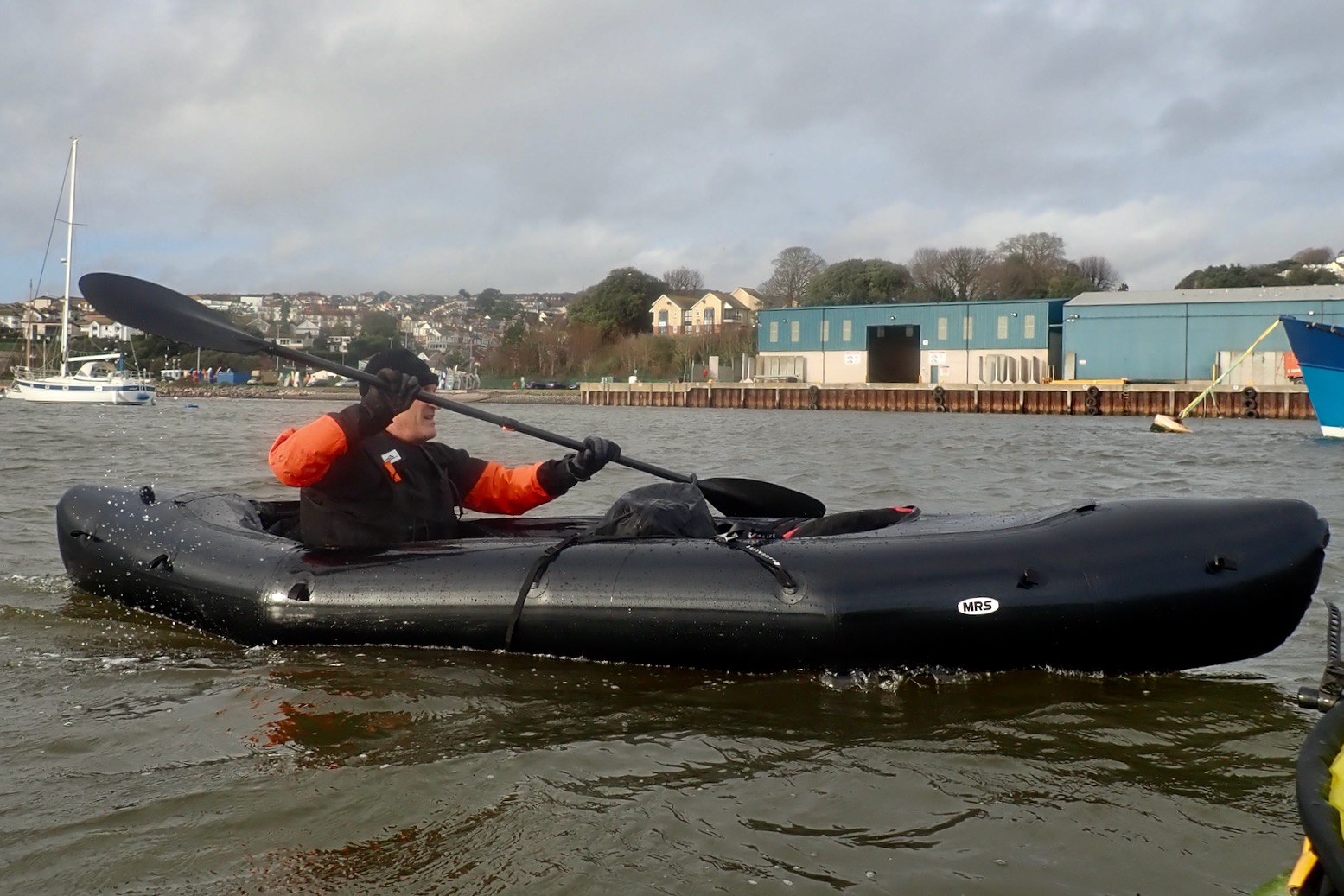
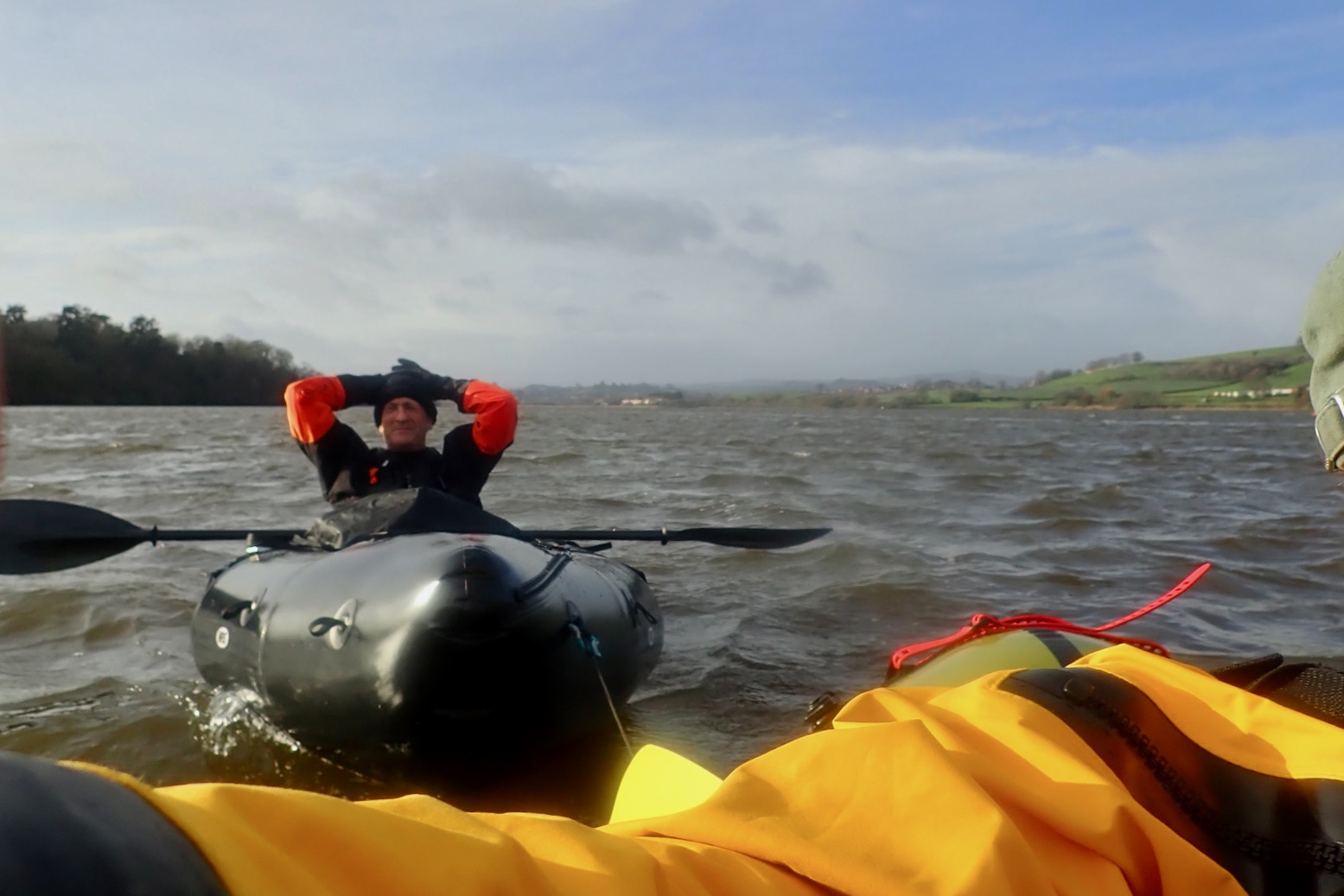
Black boat and Englishman
But these one-way valves have now made over-inflation a possibility, and we know how that can end. However, one thing we’ve learned with TPU packrafts over the last decade or two is that it’s virtually impossible to burst a well-made packraft using a human-powered pump, even a high-pressure iSUP barrel pump. You would really have to go at it or leave a fully inflated black boat out in the midday sun. The fabric and simple but strong sewn and heat-welded assembly spreads forces equally across the single chamber hull ring. So much so that MYO packrafts have become a thing for individuals with a big table and a sharp pair of scissors.
With a D7 valved packraft you could use a handheld manometer (left) with a push-fit adapter to read the boat’s pressure. Such manometers have a pin in their throat which pushes open the D7’s sprung valve stem just as the gauge body seals around the valve housing, so getting get a live pressure reading.
I don’t have a D7-equipped packraft at hand, but I do have a Bravo Alu 4 R.E.D barrel pump fitted with a 14.5psi/1 bar inline manometer (left). With an adapter jammed in the Boston’s threaded port I ought to be able to get a full-pressure reading off my Anfibio TXL.
I’m guessing about 2psi / 0.14bar to get a pinging firm TXL. It’s what my early Gumotex IKs used to run, using the now obsolete footpump. When the Seawave came out, rated at 3.6psi/ 0.25 bar, that was quite a revelation, though before that I ran a 4.3psi/ 0.3bar Grabner Amigo and you could have battered down a wall with that boat, proving that rigidity didn’t require drop stitch panels as long as the boat was solidly assembled. At Grabner prices, you’d expect that to be the case.
Back to the test. And the answer is…. just 0.1 bar or 1.4 psi. And this was with the TXL as tight as a drum such as I could never manage with the balloon handpump but might have with a K-Pump Mini. Now we know.
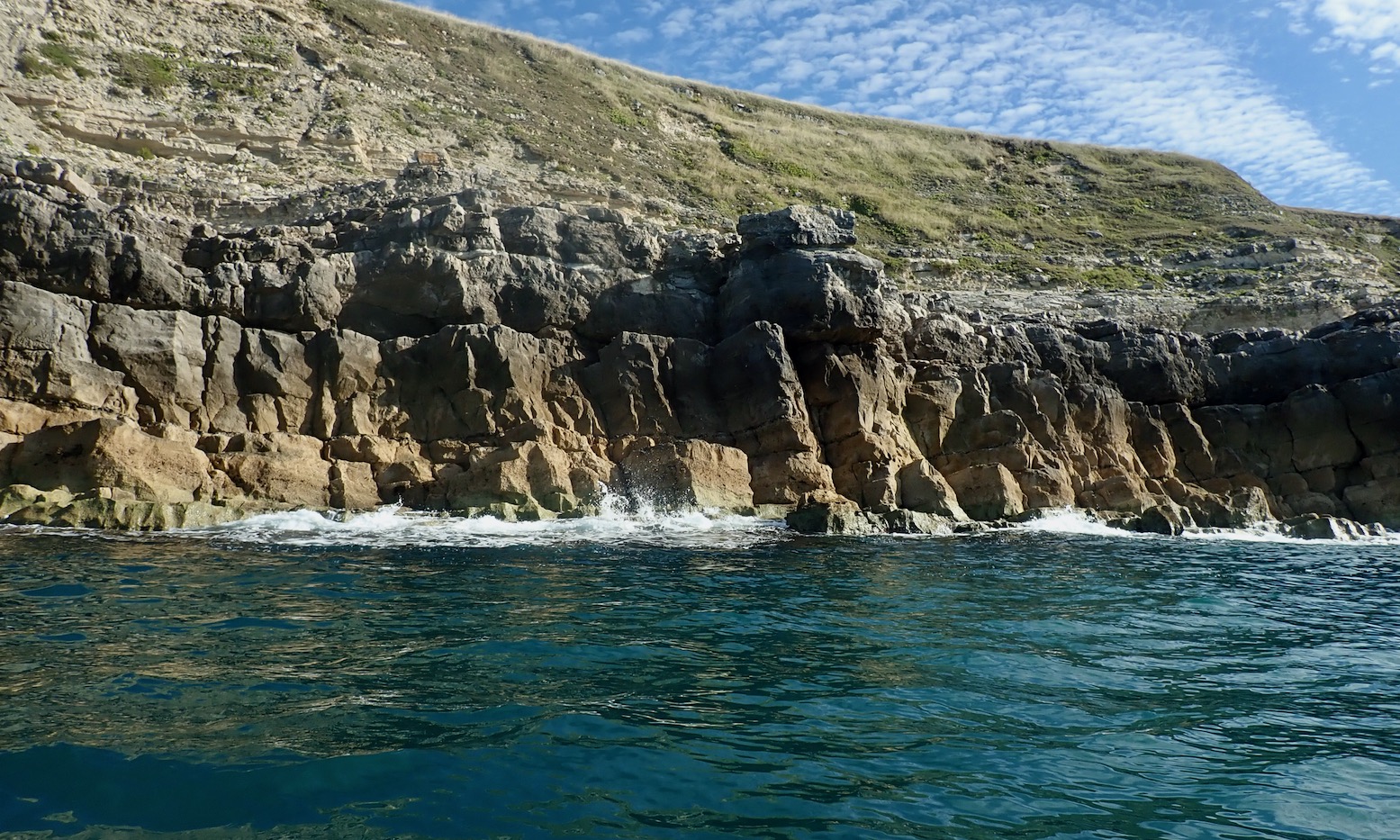
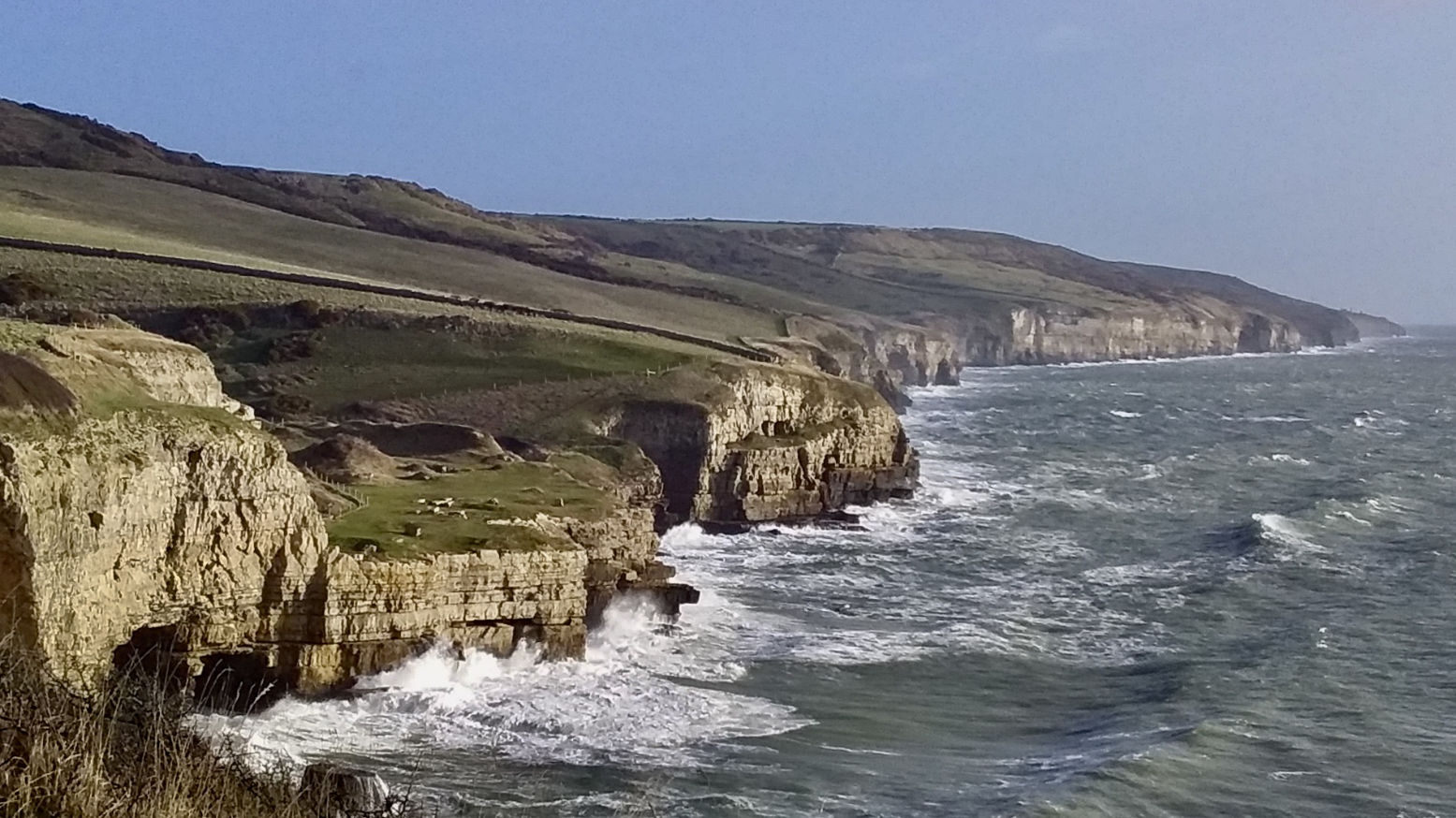
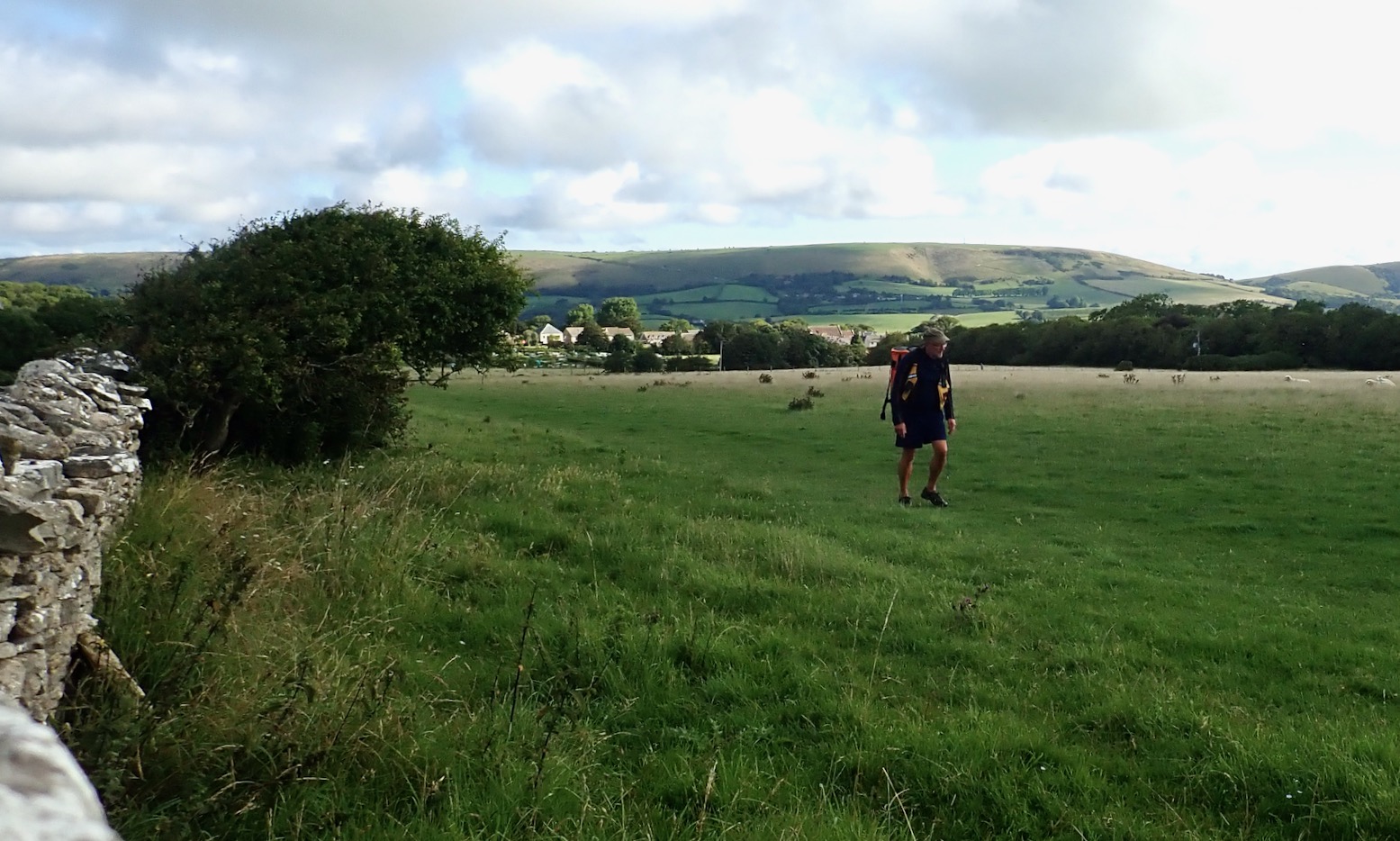
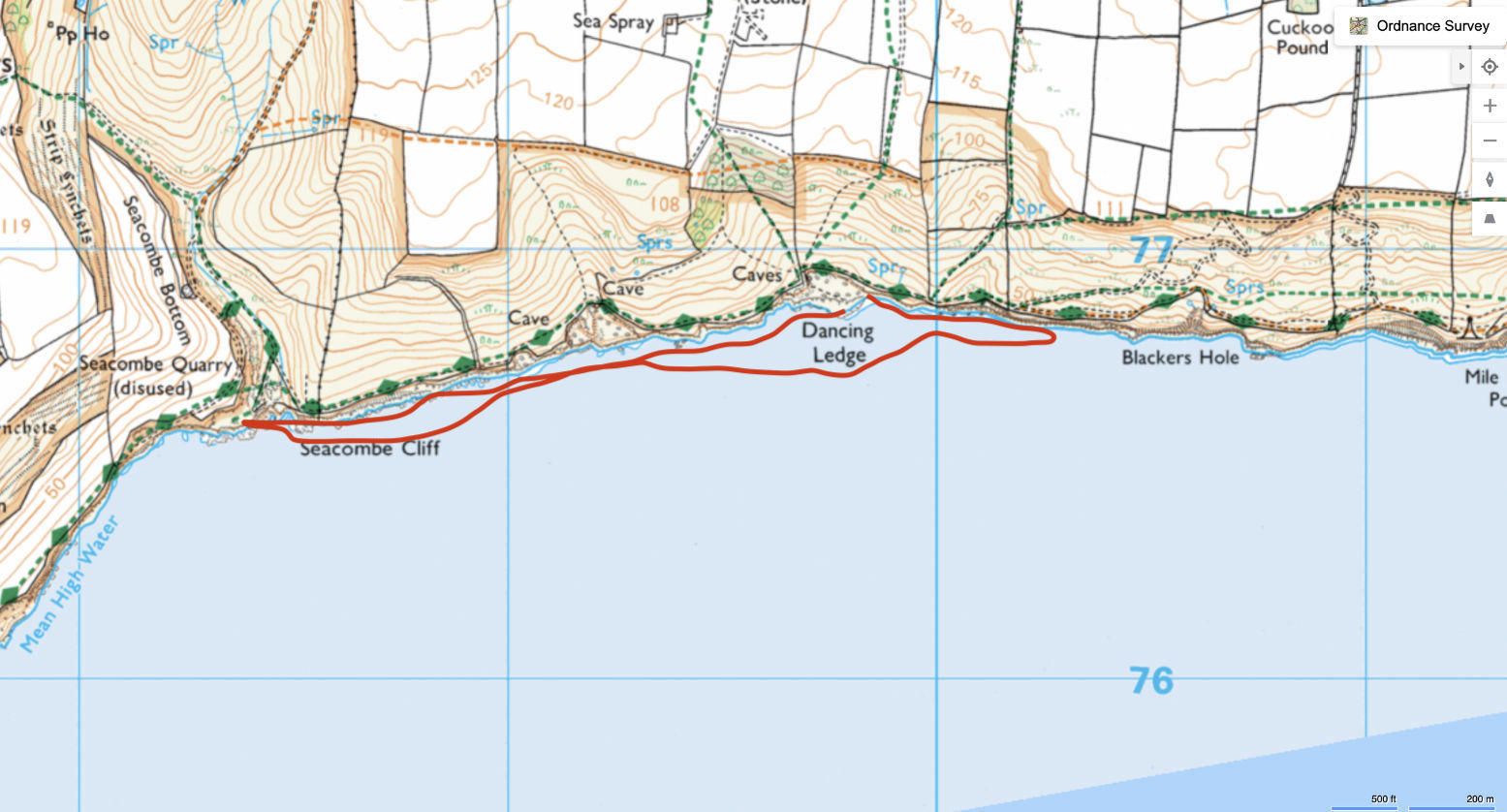
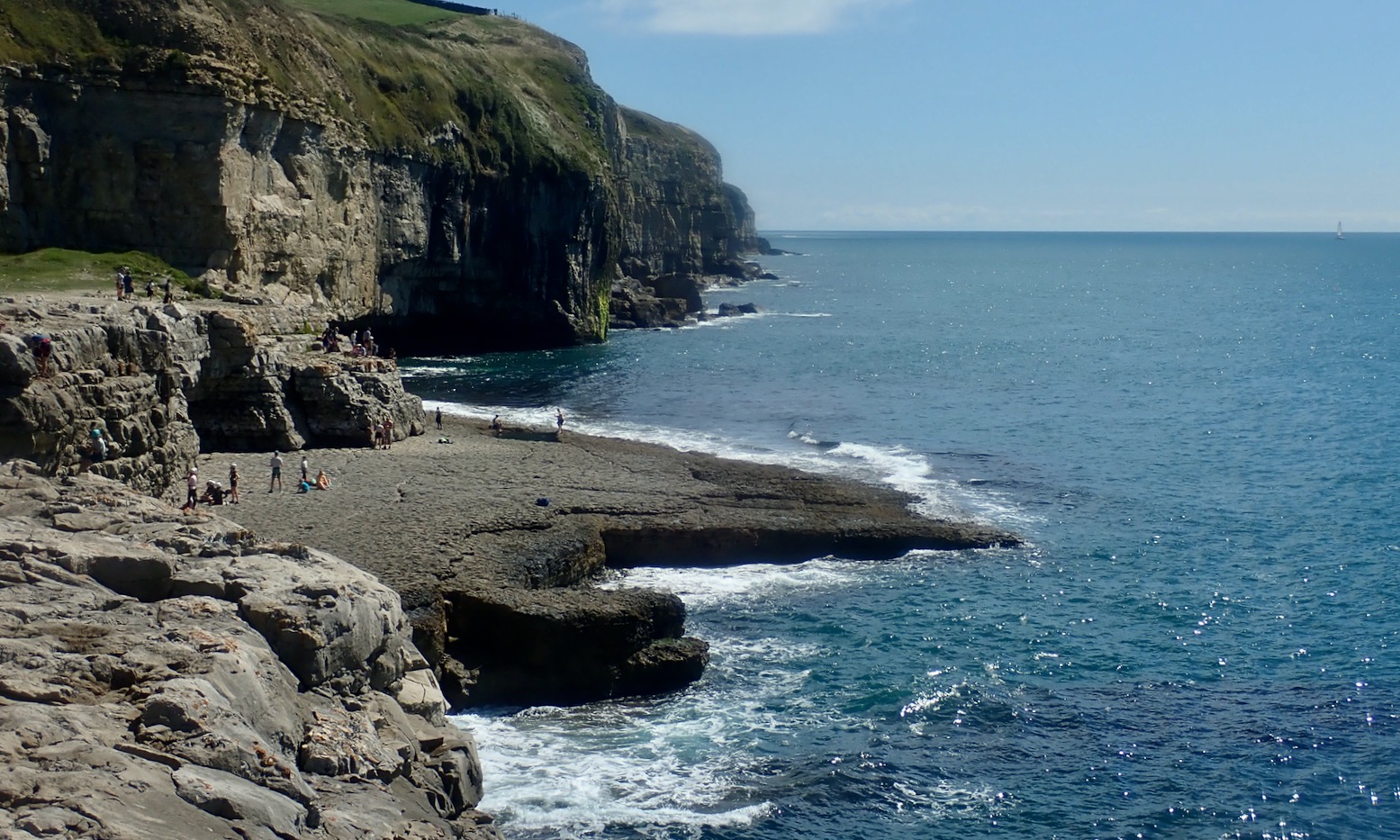
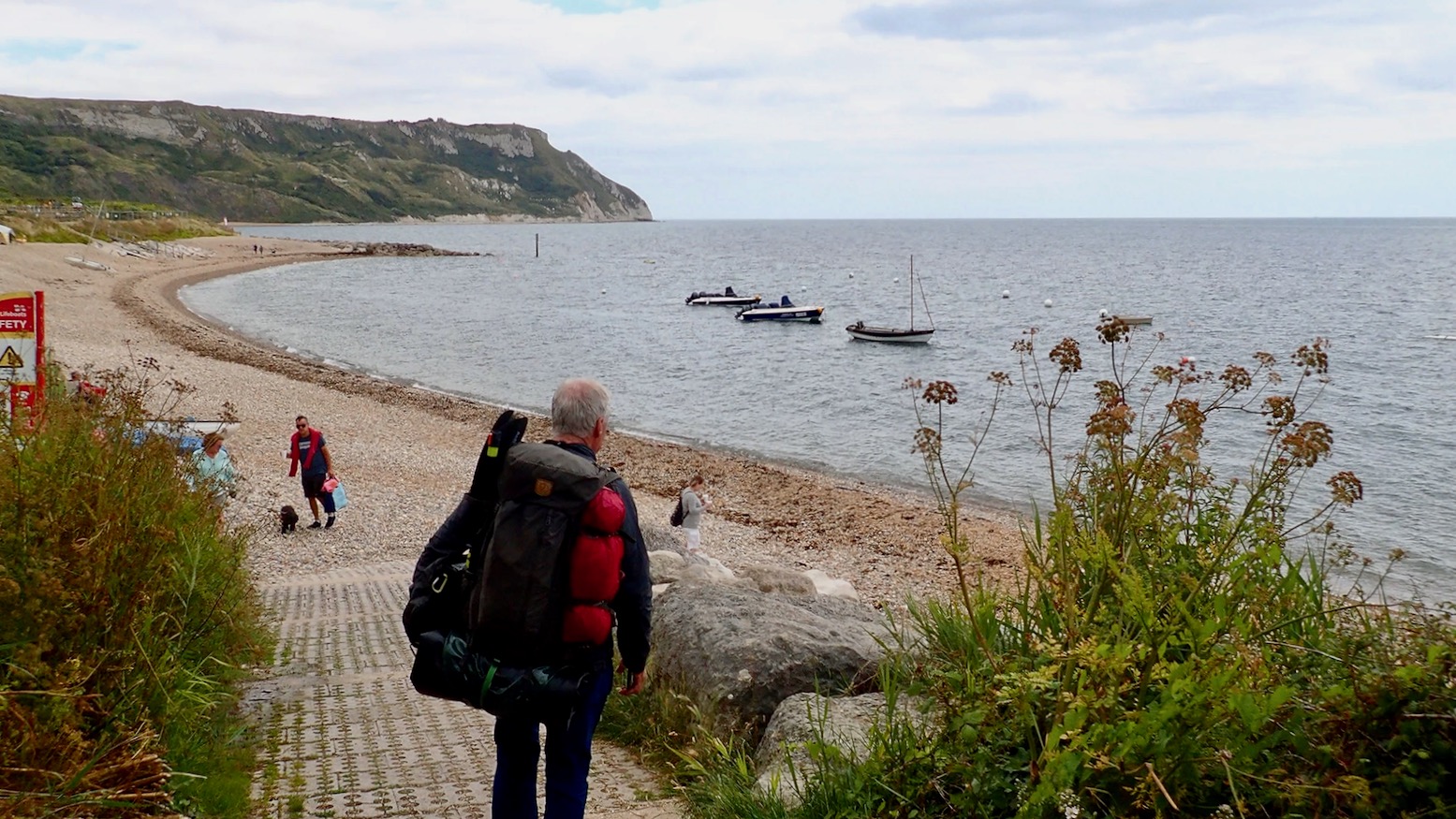
You wait weeks for a calm, sunny day to come along – and then one does. So in my back pocket I had a modest sea excursion planned for the TXL: the cliffs and caves west of Dancing Ledge. It’s a mile’s walk from Langton Matravers village across the fields to the coast where the downs drop steeply to the former Portland stone quarry. From Swanage, about four miles to the east, Dancing Ledge is the first of the few sea access points along this cliff-bound Jurassic Coast.
Approach to Dancing Ledge
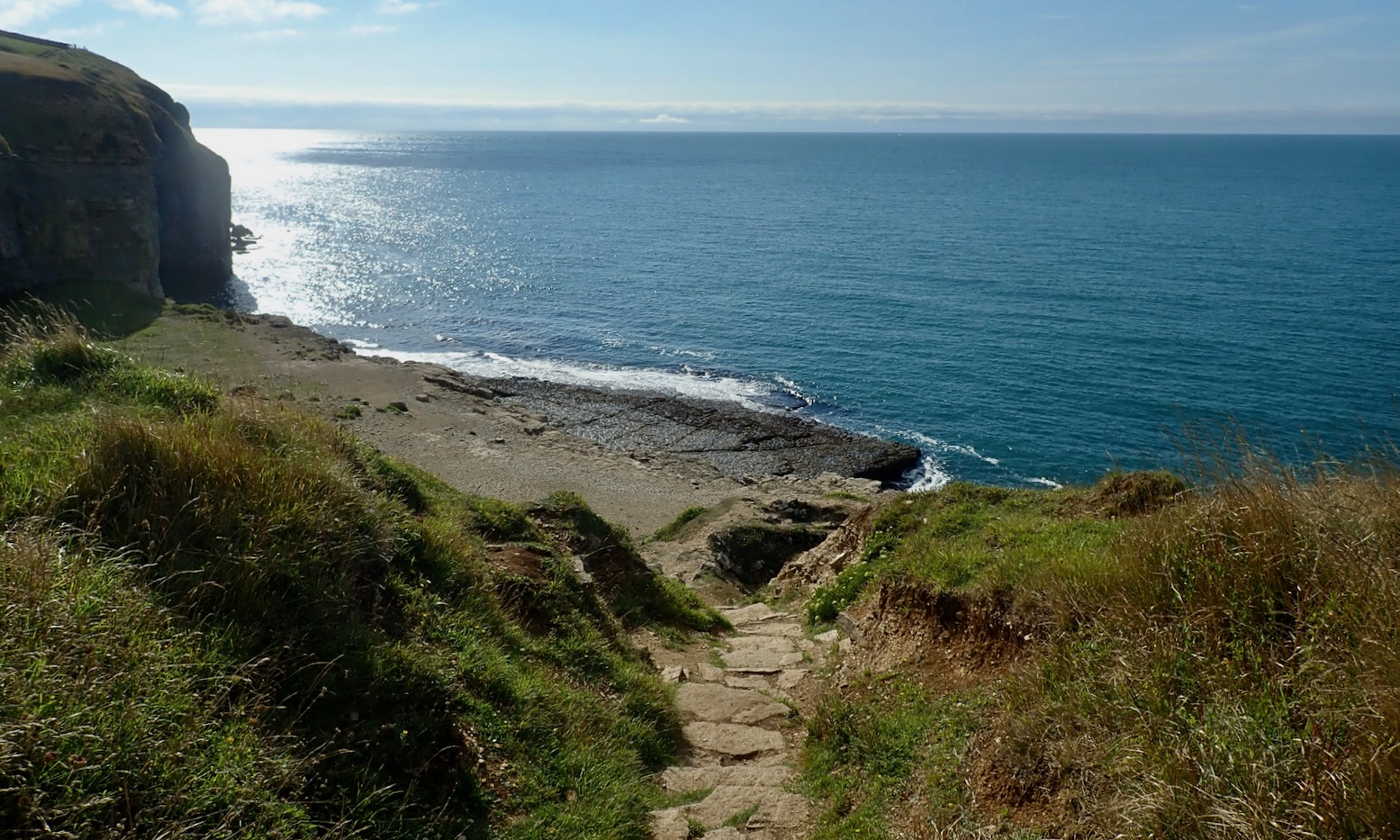
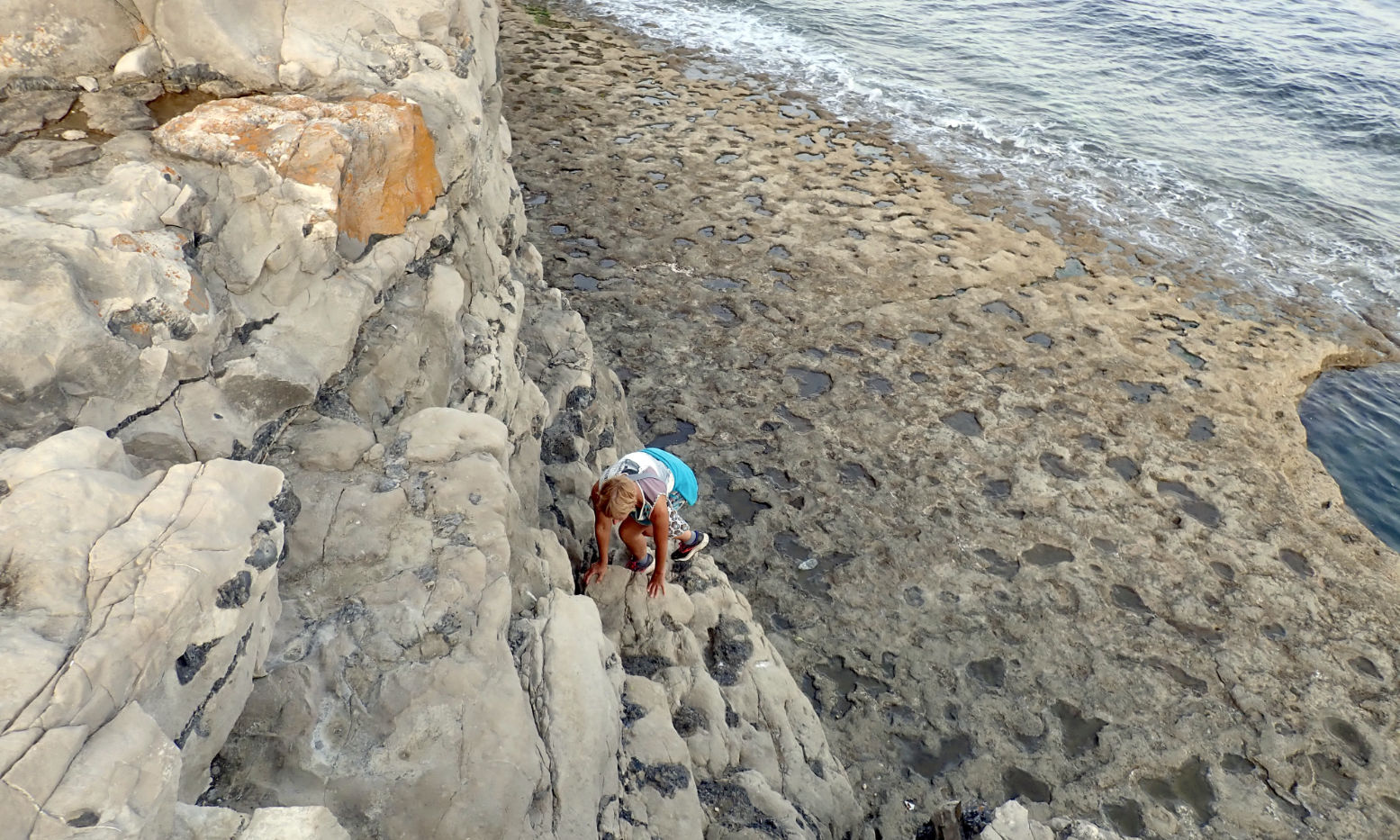
At low tide the lower, natural ledge is revealed, making getting in and out relatively easy. But to reach it you still have to scramble down a small cliff (below). It was easier to chuck the packraft backpack down before descending after it. Alone, rolled up or inflated, getting this far with an IK would be a struggle. This is why we like packrafts – and sea-going packrafts, so much the better.
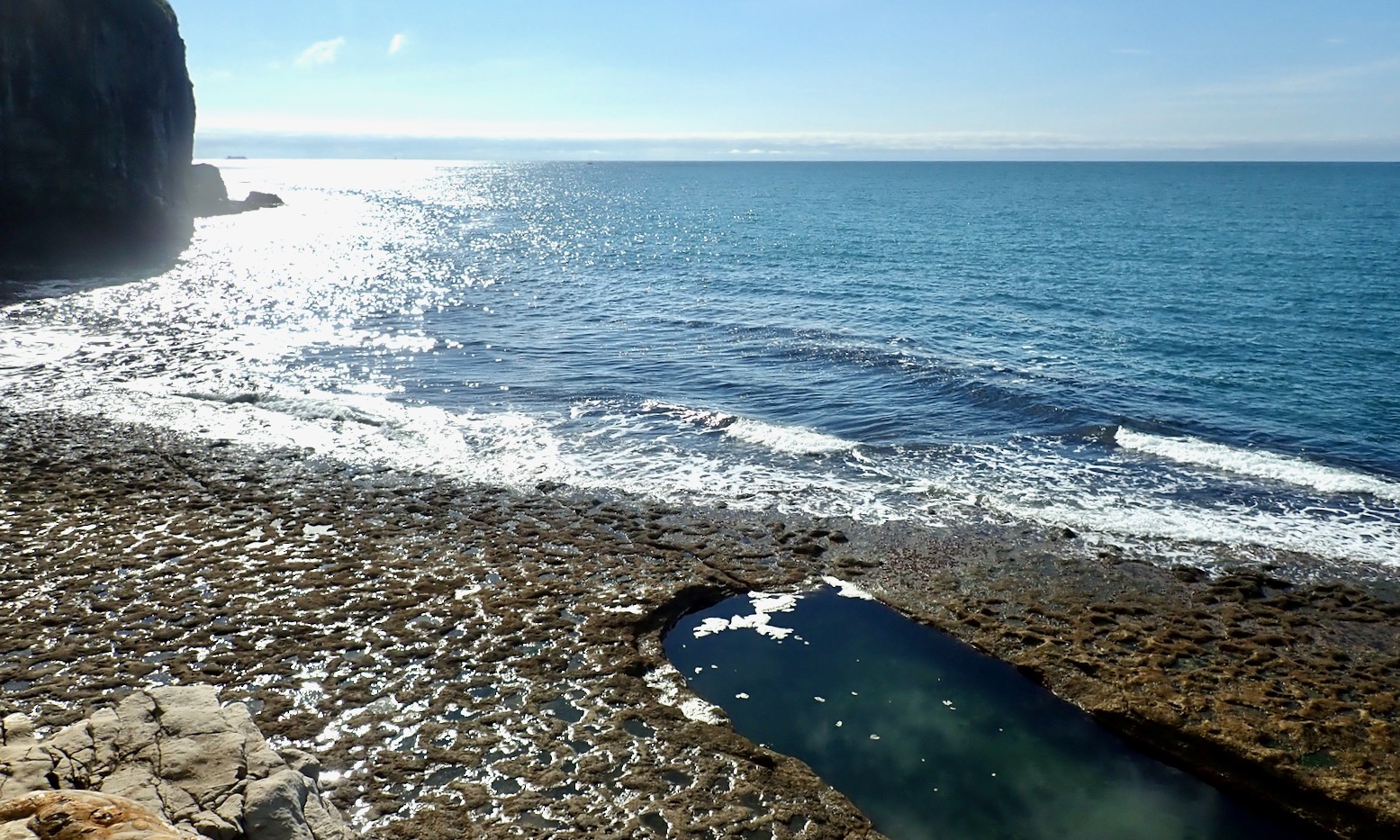
The point where you scramble down overlooks the Bathing Pool (below). It was blasted out of the rock in the late 1800s by the strict headmaster of the local Durnford school in Langton. Pupils then trotted off to the pool each morning for the character-building ritual of ‘strip and swim’, but with a now reduced risk of being swept out to sea. Decades later, James Bond author Ian Fleming attended the Durnford prep school and endured various torments before moving on to the more benign, towel-flicking environs of Eton. Unsurprisingly his Dorset years left a deep impression and later he named his 007 hero after a prominent Purbeck family, the Bonds of nearby Creech Grange. By 1999, when Bond 007 filmmakers had run out of Fleming’s dozen book titles, they chose ‘Non Sufficit Orbis’ or The World Is Not Enough, starring Pierce Brosnan. It was claimed as 007’s family coat of arms in On Her Majesty’s Secret Service, published in 1963, but was also the real Purbeck Bonds’ 16th-century motto. There’ll be a short exam later.
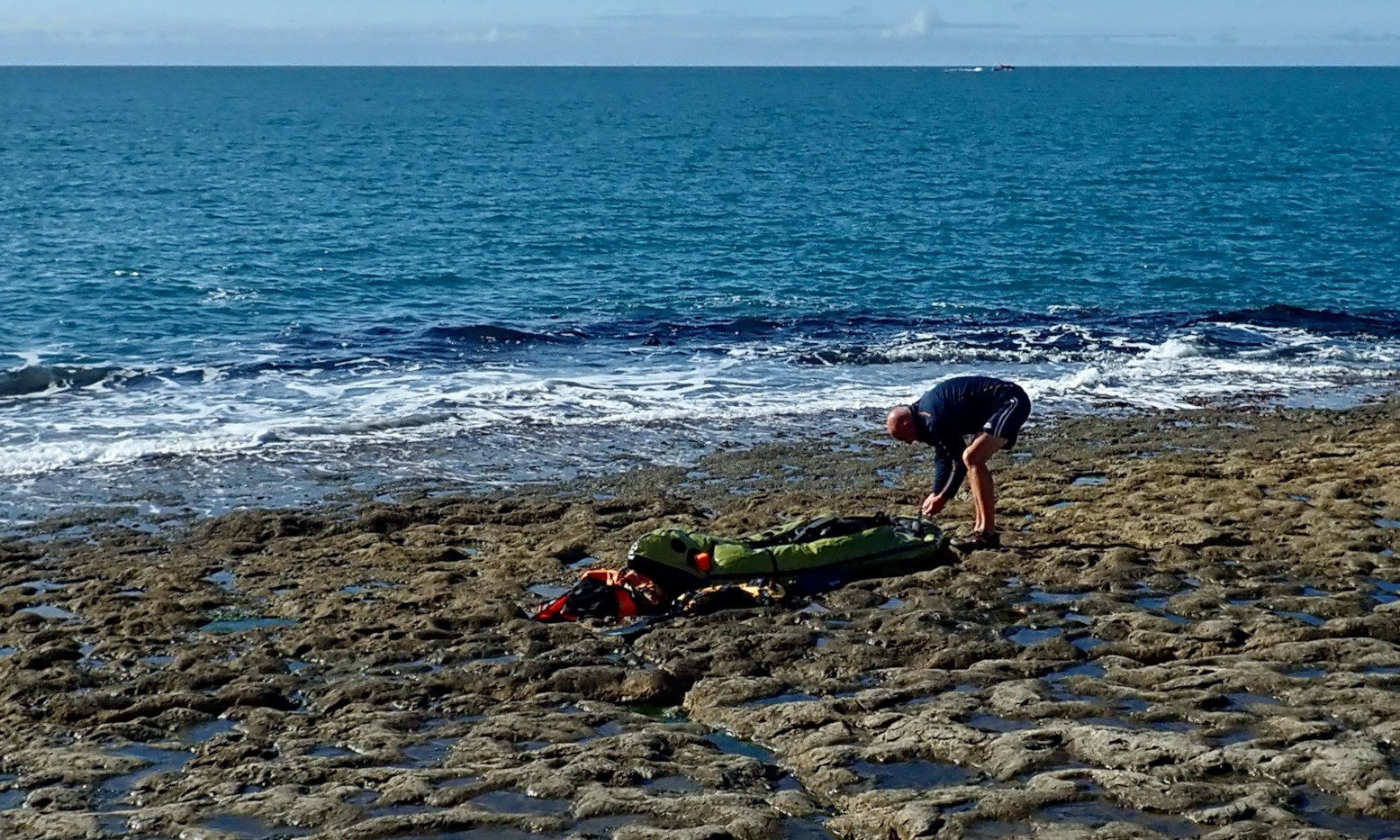
Back by the sea, even with wind speeds forecast at a lowly ‘4mph’ there was no balmy flat calm today, but that’s just the way it probably is with the wide open Atlantic to the west. Portland Bill or even nearby St Adhelm’s Head don’t do much to reduce the oceanic fetch driven by weeks of wind and squalls.
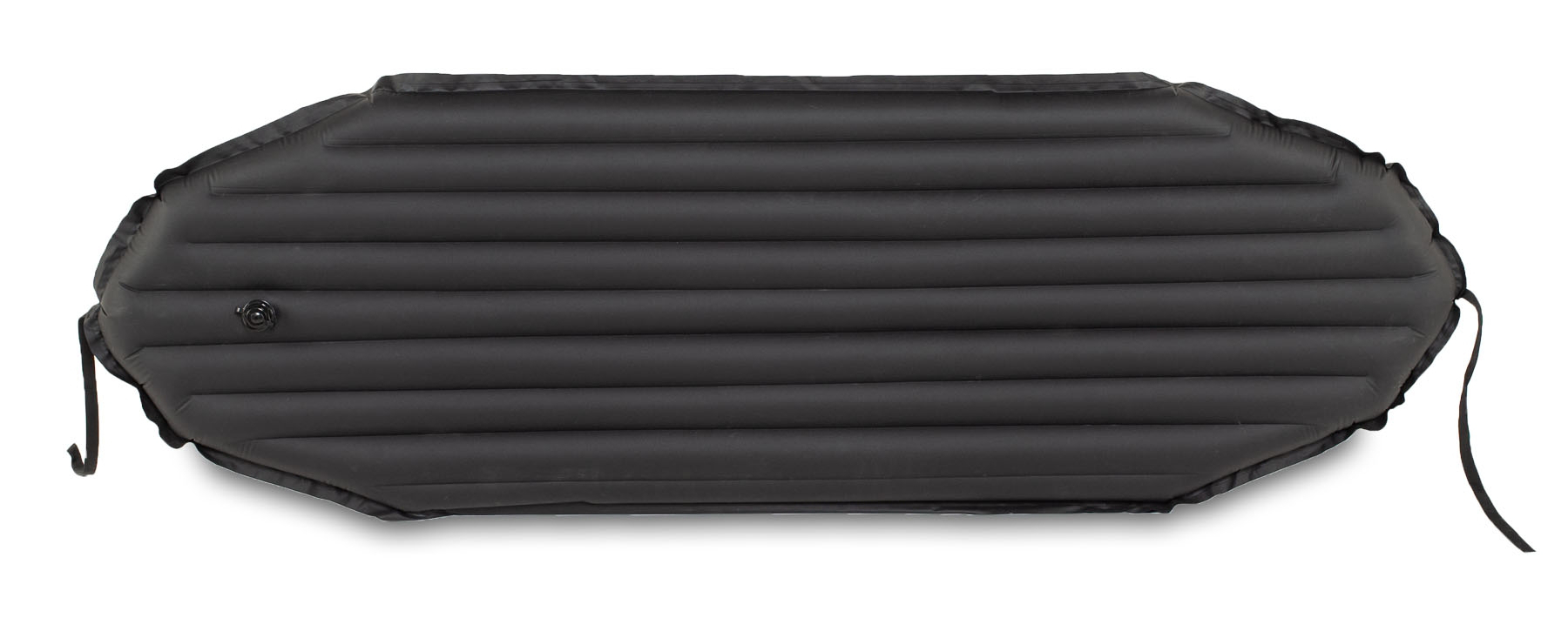
While setting the boat up I find today’s #ForgottenItem was the floor pad (left), which I was wanting to try again, despite being not entirely convinced. Two up, as we did near Skye last year, meant reduced legroom with the mat, but solo with my centrally positioned weight, I still like to think it will limit hull droop and floor sag to improve paddling response. (It does).
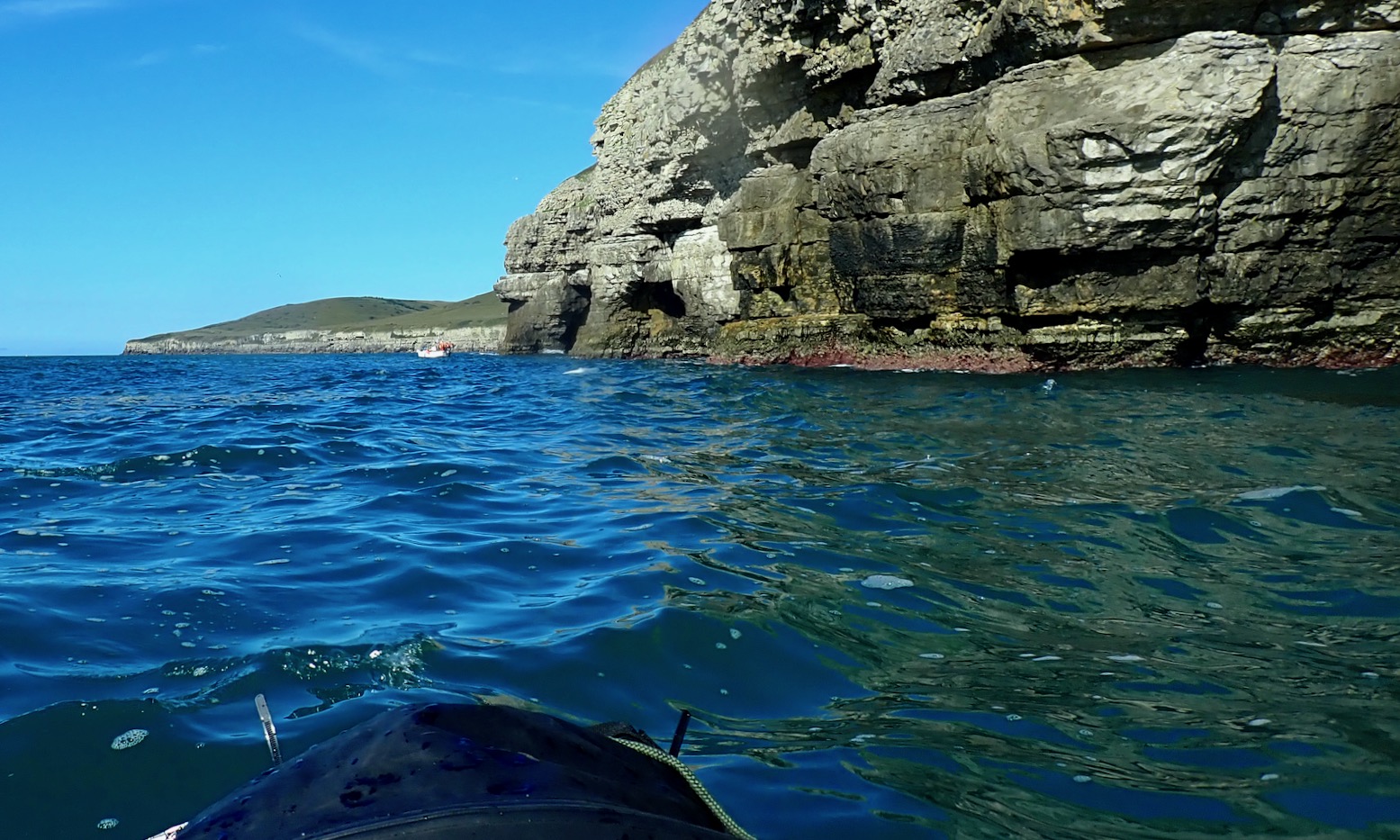
Alone, these exposed sea cliff paddles make me quite nervous, and a regular-sized packraft like my old Alpackas or Rebel would feel even more unnerving. The TXL’s healthy 2.8-metre length reduces that impression with less pitching, but I never fully relaxed today, so was happy it was only a mile to Seacombe inlet at which point I could get out and walk back if I wanted. Away from Dancing Ledge things calmed down a bit or I just get used to them, but elsewhere I needed to keep an eye seaward as bigger waves rose up.
With my old MRS Nomad S1, I learned that with longer, high-volume packrafts like a TXL, no matter how hard you pump them up with warm, ambient air, after 10 minutes out on cooler water, a crease develops midway along the side tubes as the air in the hull cools and contracts and the boat effectively loses a few fractions of psi. Though beginners might worry they have a slow leak, this is normal with inflatables. Ashore, I made use of Bond’s Pool of Torment (said to be the next film title) to pre-cool the TXL but knew it wouldn’t really work. Flooding the inflated boat for a few minutes is probably the answer. A little hand pump can only pack in, say, 2 psi at 18°C. Any more air forced in may burst the pump or stress the boat’s seams if done too often. But once part submerged by my weight on 12°C sea water, the hull cools and drops to, say, 1.8psi. It won’t get any lower, but it’s enough to lose its edge and means the boat paddles less efficiently. We can’t be having that!
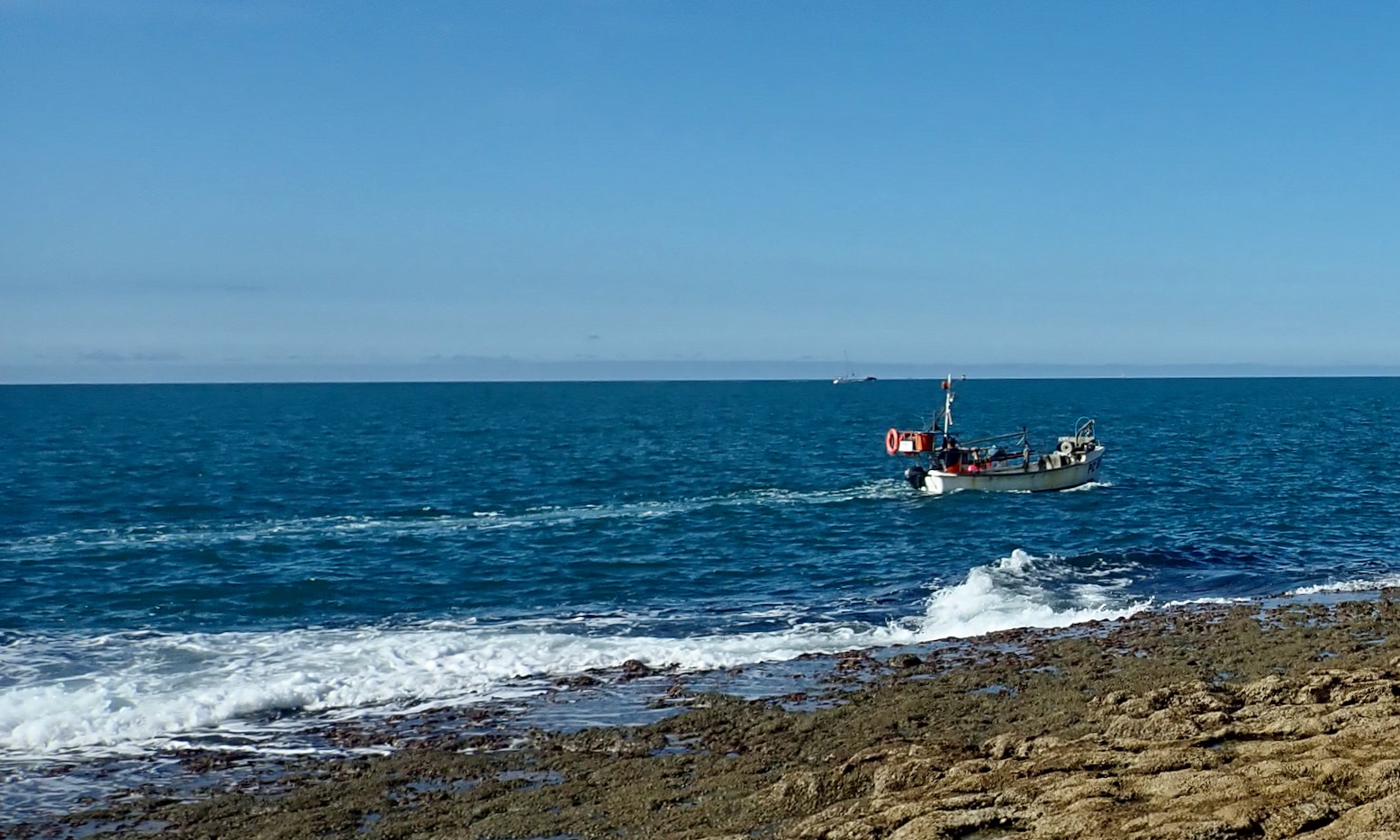
In my heightened state of anxiety at paddling a new, exposed locale, I was pleased to see a lobster boat passing my way (above). Later on I catch up and and meet the Chatty Fisherman. For a while I was worried the tide might turn before I got to drag myself away, but, Purbeck born and bred, he was a local quarryman who used his summer hols to snag a few lobsters and had lots to say about everything, including reduced catches of late. “We used to get hundreds [of lobsters] here before the seas got warmer. Now I barely get a handful.”
There was no place to hop off and top up the boat, though I could always flip round in the seat and do it on the water. That said, I wonder if longer packrafts like TXLs could benefit from repositioning the inflation valve closer to the central seat, like my old Incept K40 solo IK. The MRS Nomad had the valve on the bow, which was handy. I suppose this might make expelling the air on rolling up more difficult, but we now have mini pumps with suction settings, making valve position less important. With a passenger or another paddler alongside, on-water topping up is less of an issue, but had I thought it through before adding the second skeg patch, I could have glued it at the other end, as the TXL is symmetrical, but then is the bow bag tabs would be at the back. So halfway down one side would be better, Anfibio. Sorry, I did I say something?
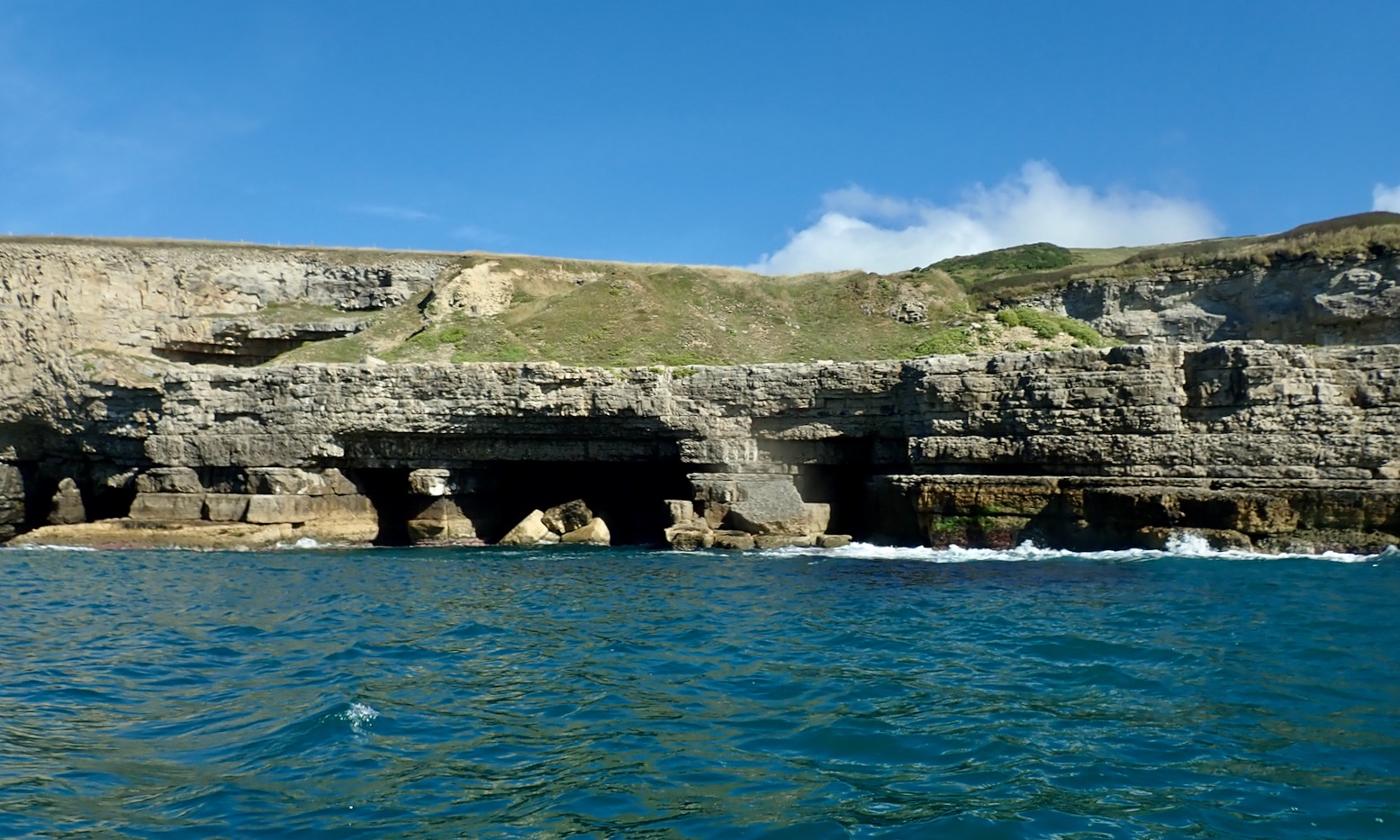
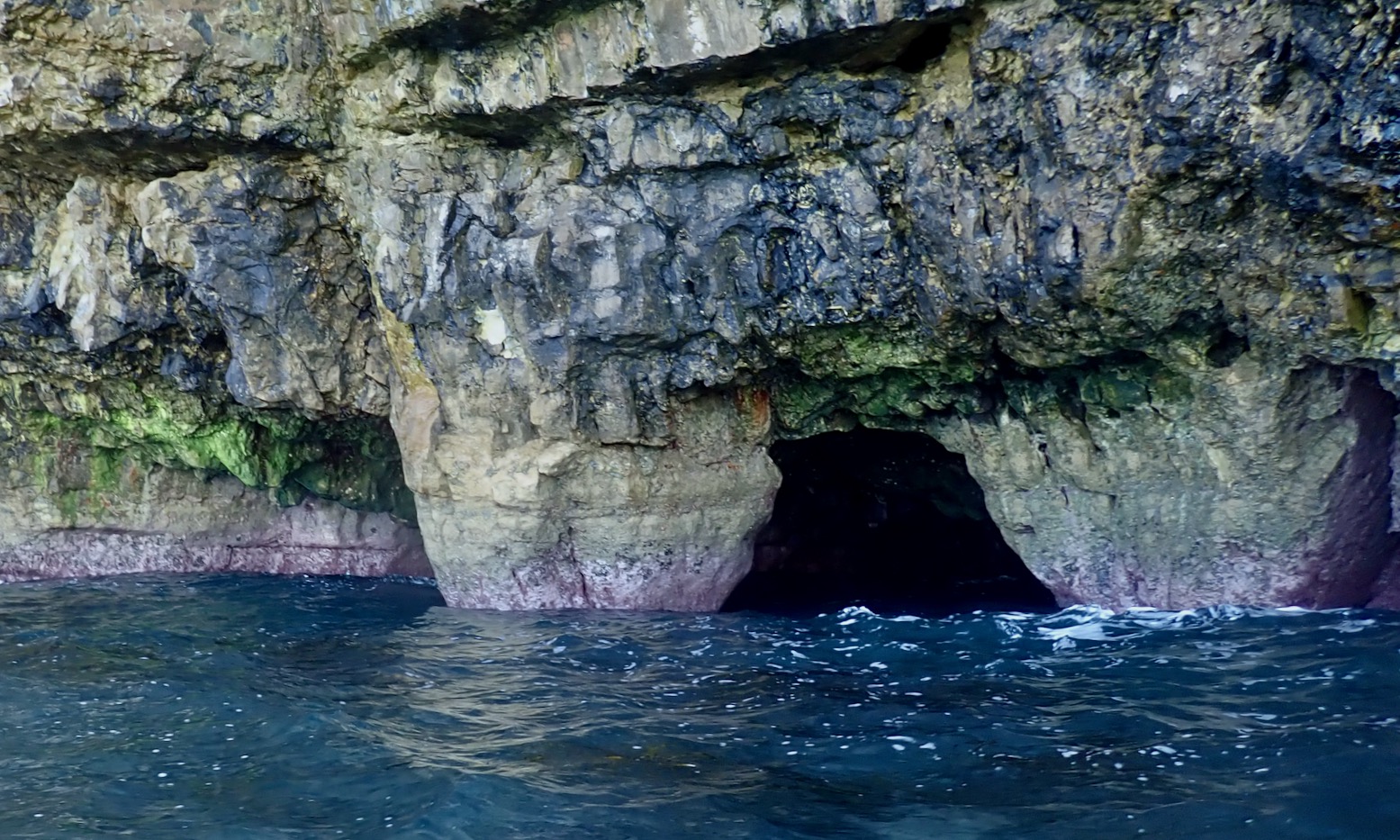
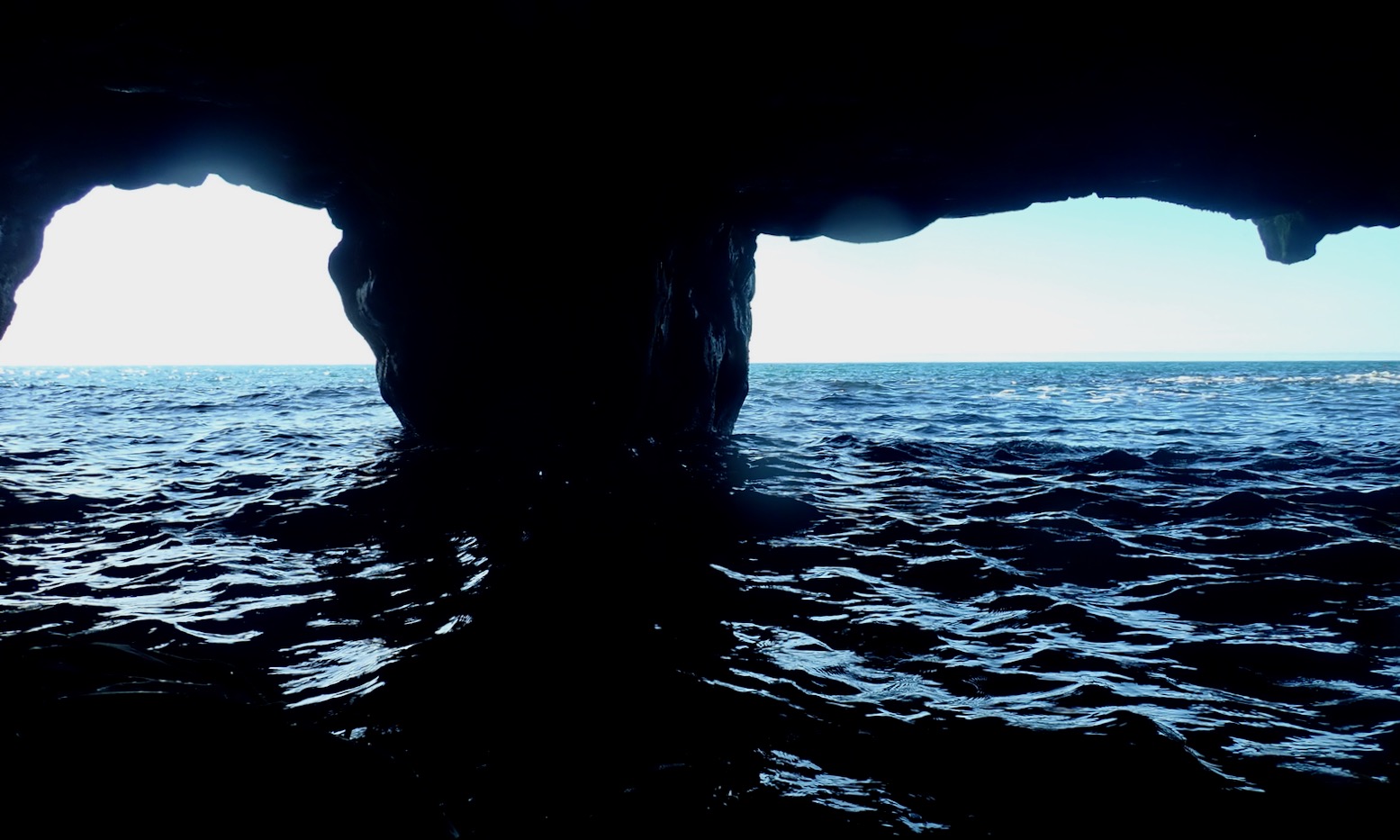
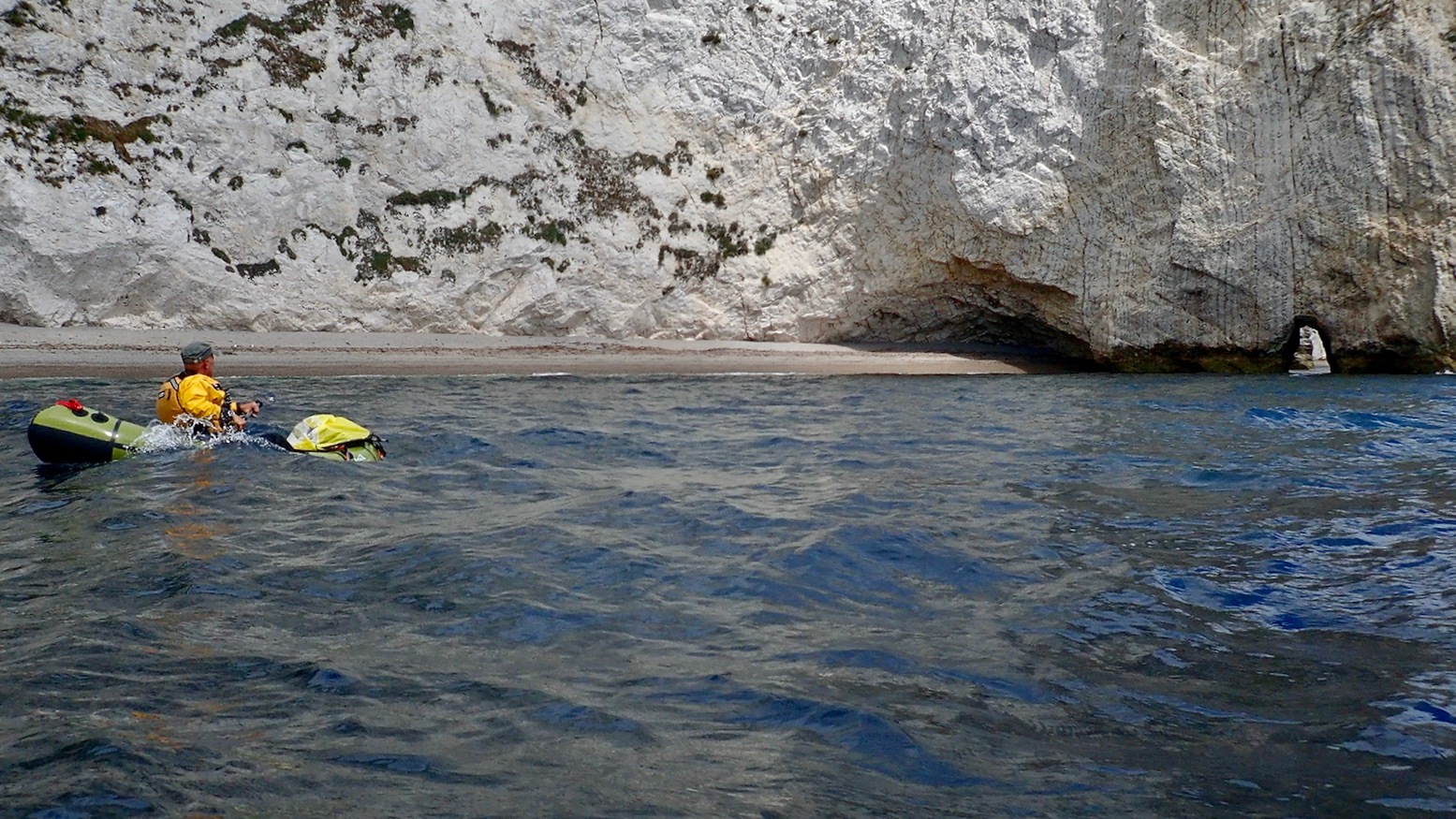
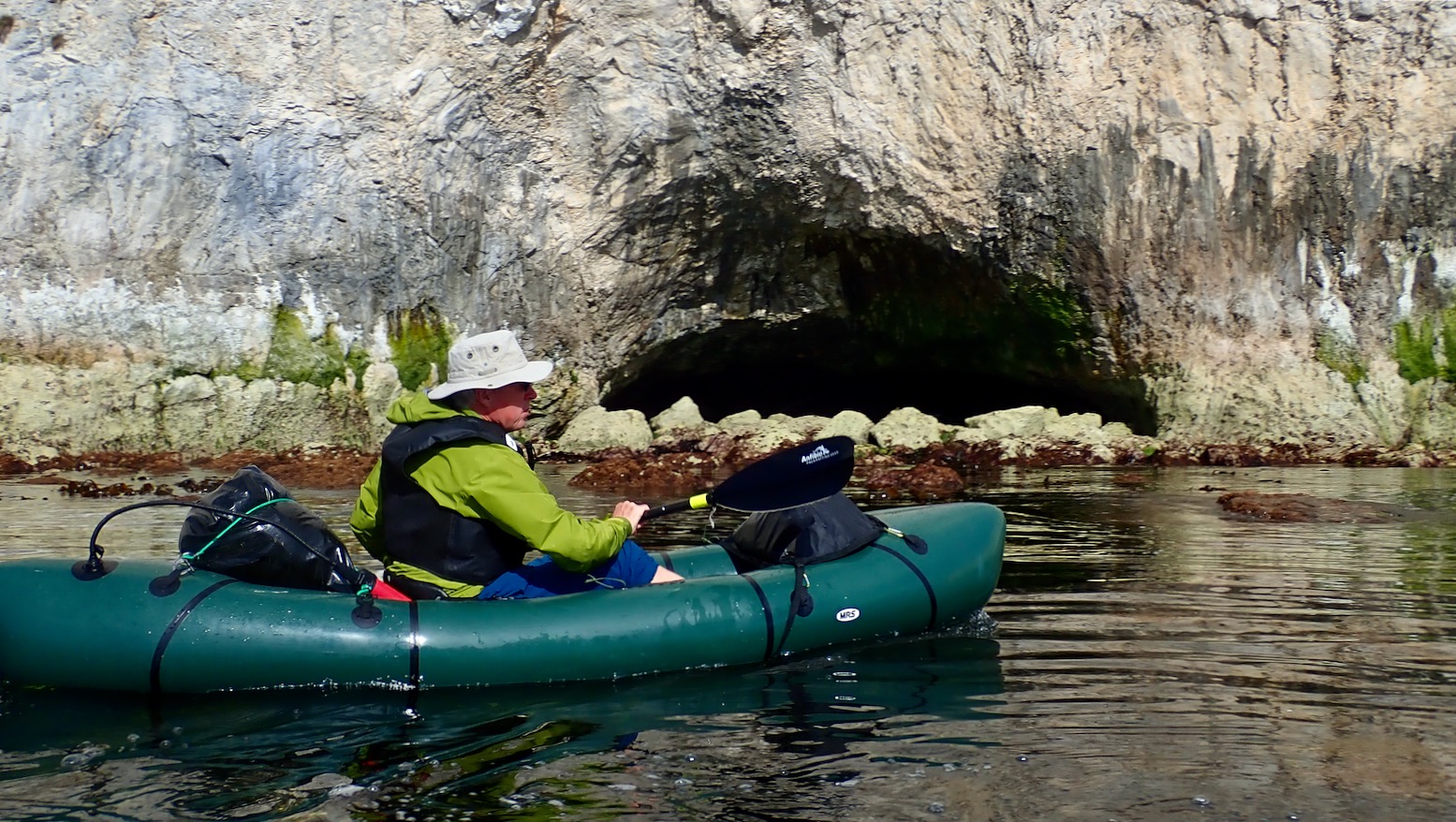
I paddle onward. Most of the caves have too much intermittent swell rolling in to get close, but one twin-mouthed cavern (above) looks like it could be safely threaded in the nippy TXL without me getting lifted by a sneaky swell and knocking myself out on the cave’s roof.
Inside the cave
Further west I see a few people wandering about on the foreshore ledges, announcing the inlet at Seacombe, another old quarry. As I get near, I line myself up to get lifted by a wave and dropped onto a ledge. It ought to be easy but ends up a bit of a bundle. Before I can climb out I get sucked backwards into another wave, which drops onto the boat. But though it looks ungainly, timing isn’t that crucial in a stable packraft that’s easy to hop out of quickly. Lord knows how a sea kayak would manage. Up on the ledge I drain the TXL before flipping it back over and giving it a few jabs of the handpump so it’s pinging firm again.
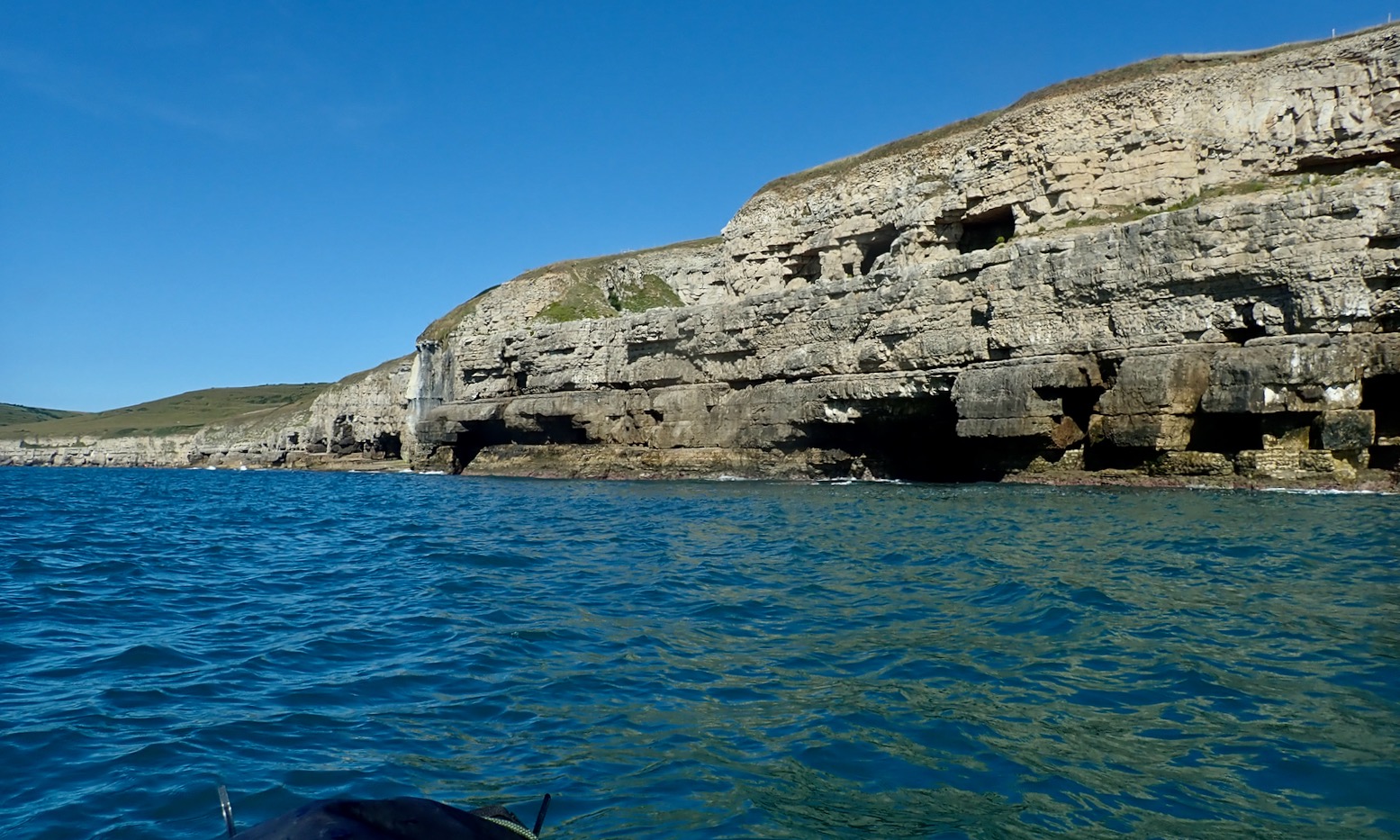
Seacombe cliffs
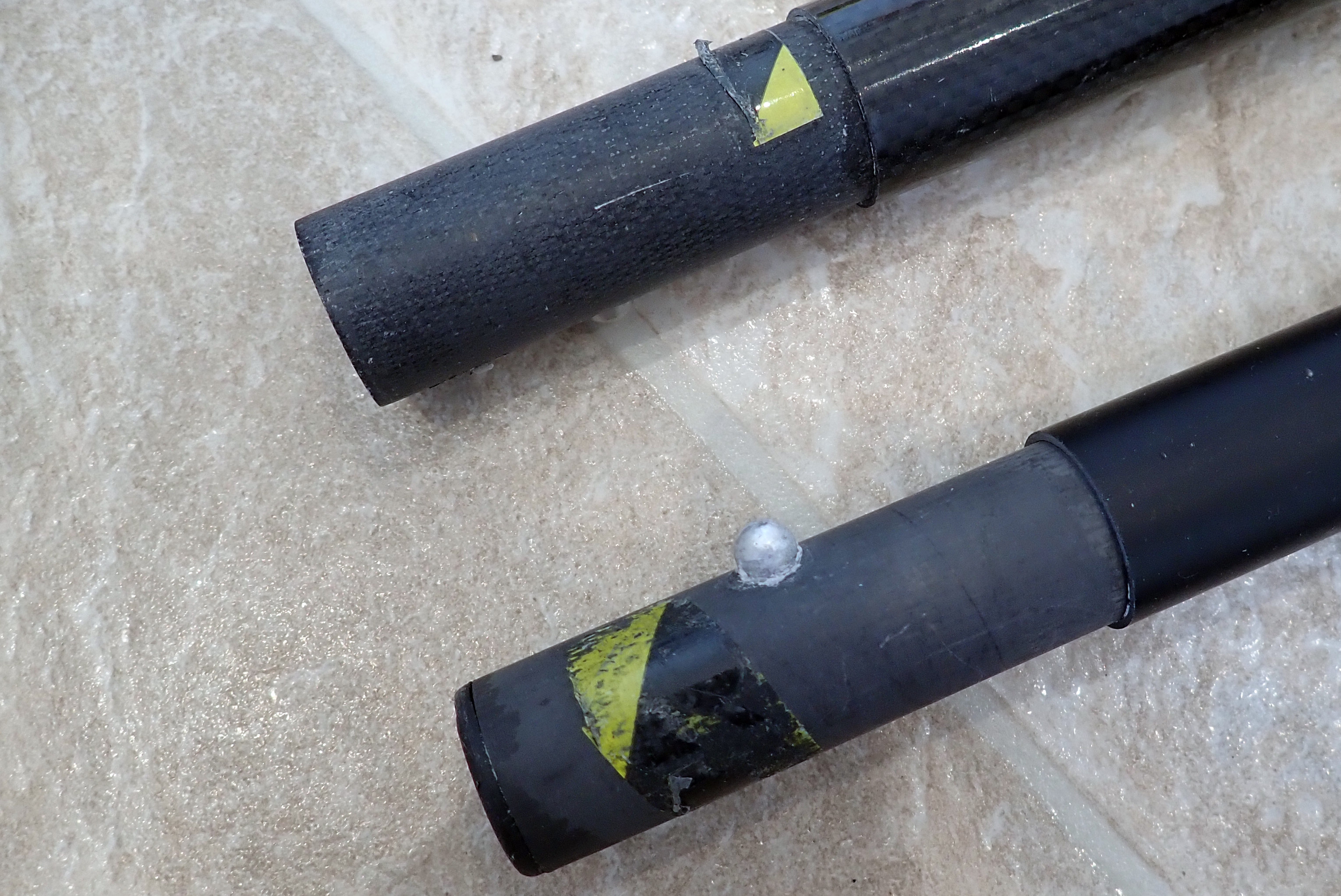
Putting back in, I’m alarmed to see my skeg lying on the rocks. My to-and-fro landing must have dislodged it. (It happened again on my next TXL; this is a fix). It is for moments like these (or, more commonly, distractions while packing up) that I wrapped it in hi-viz yellow and black tape. Had I lost it, the downwind paddle back would have been a bit squirrely, giving me something new to worry about until I realised the cause. Passing the twin-mouth cave I threaded earlier, the tide is already too high to repeat the stunt.
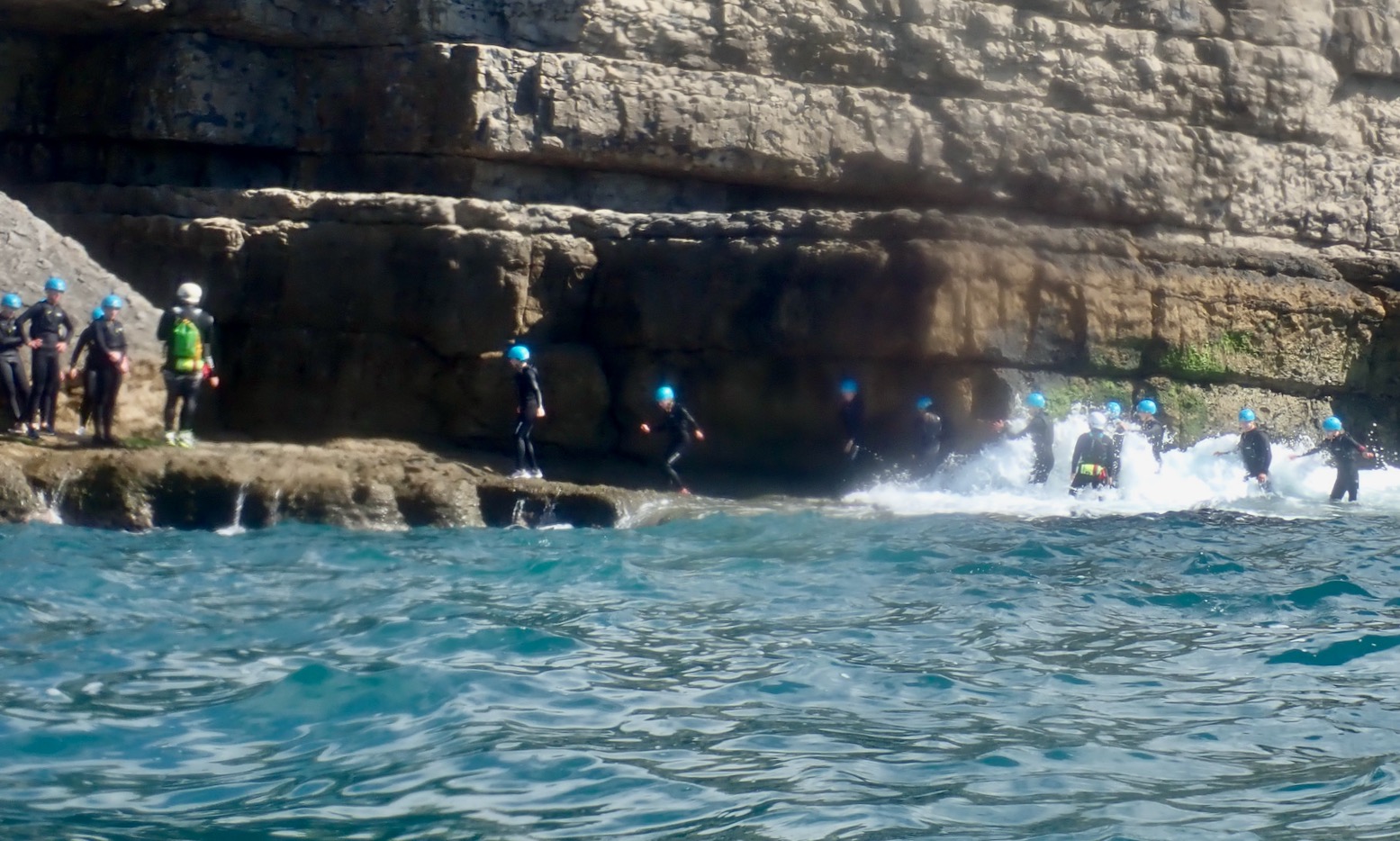
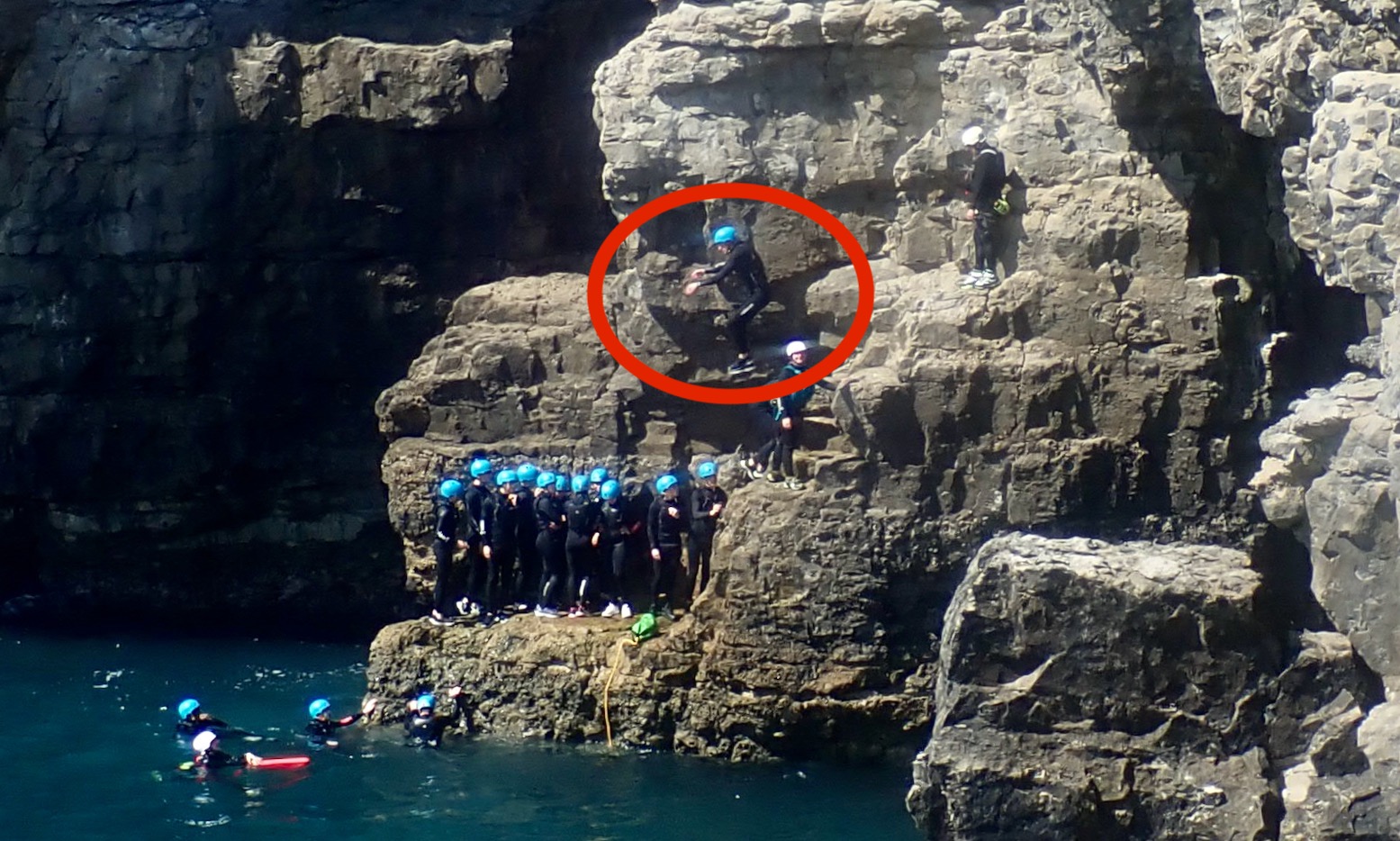
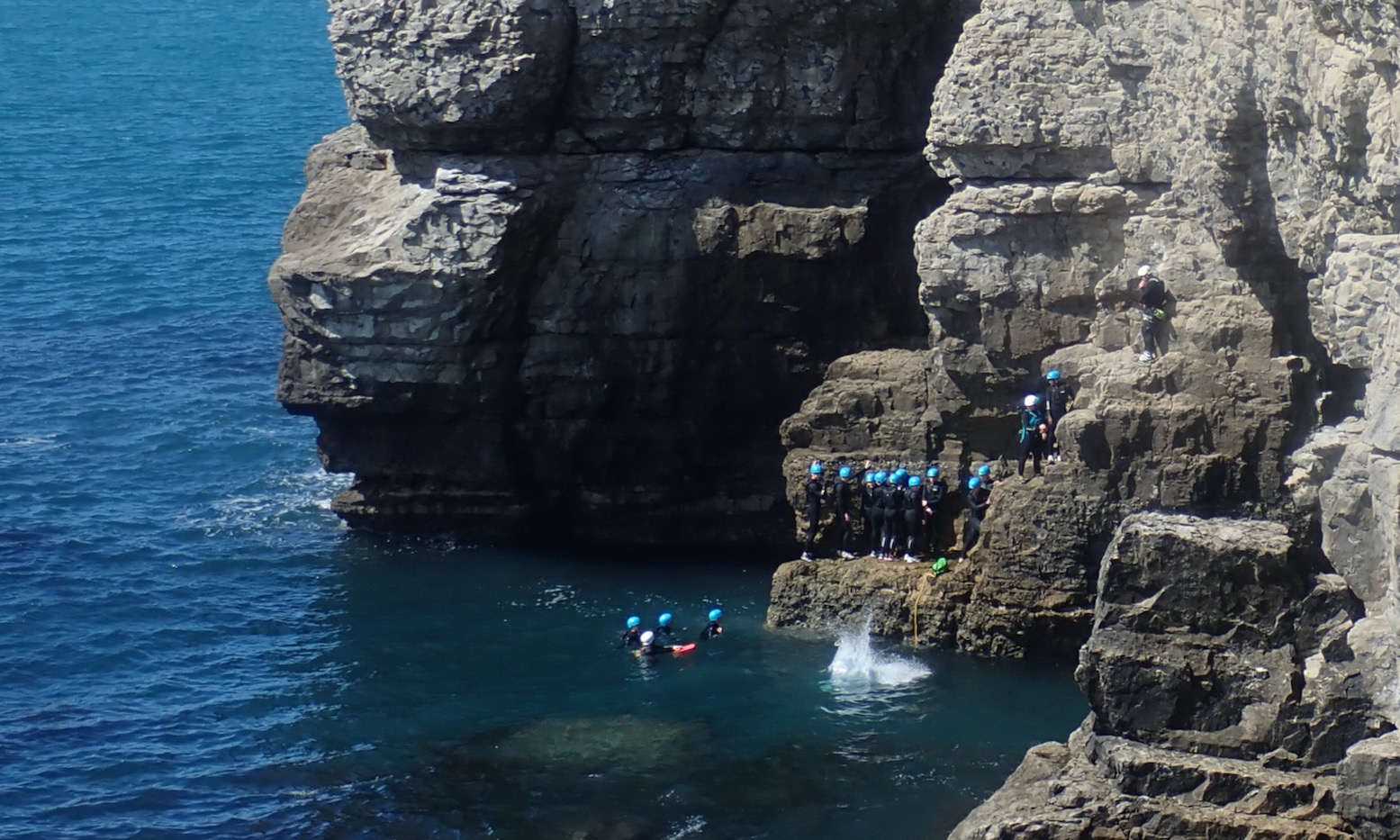
By the time I returned, Dancing Ledge was packed with day-trippers including groups of coasteering wetsuit-clad kids. They inched along the ledges, swam across cave mouths, and then clambered up to a narrow ledge to jump in. The next group was already lined up to follow so it all looked a bit sketchy and congested with just two guides for over a dozen kids (turns out it can be), but I bet they all loved it.
‘Beyonsaaaay! (or whatever kids shout these days).
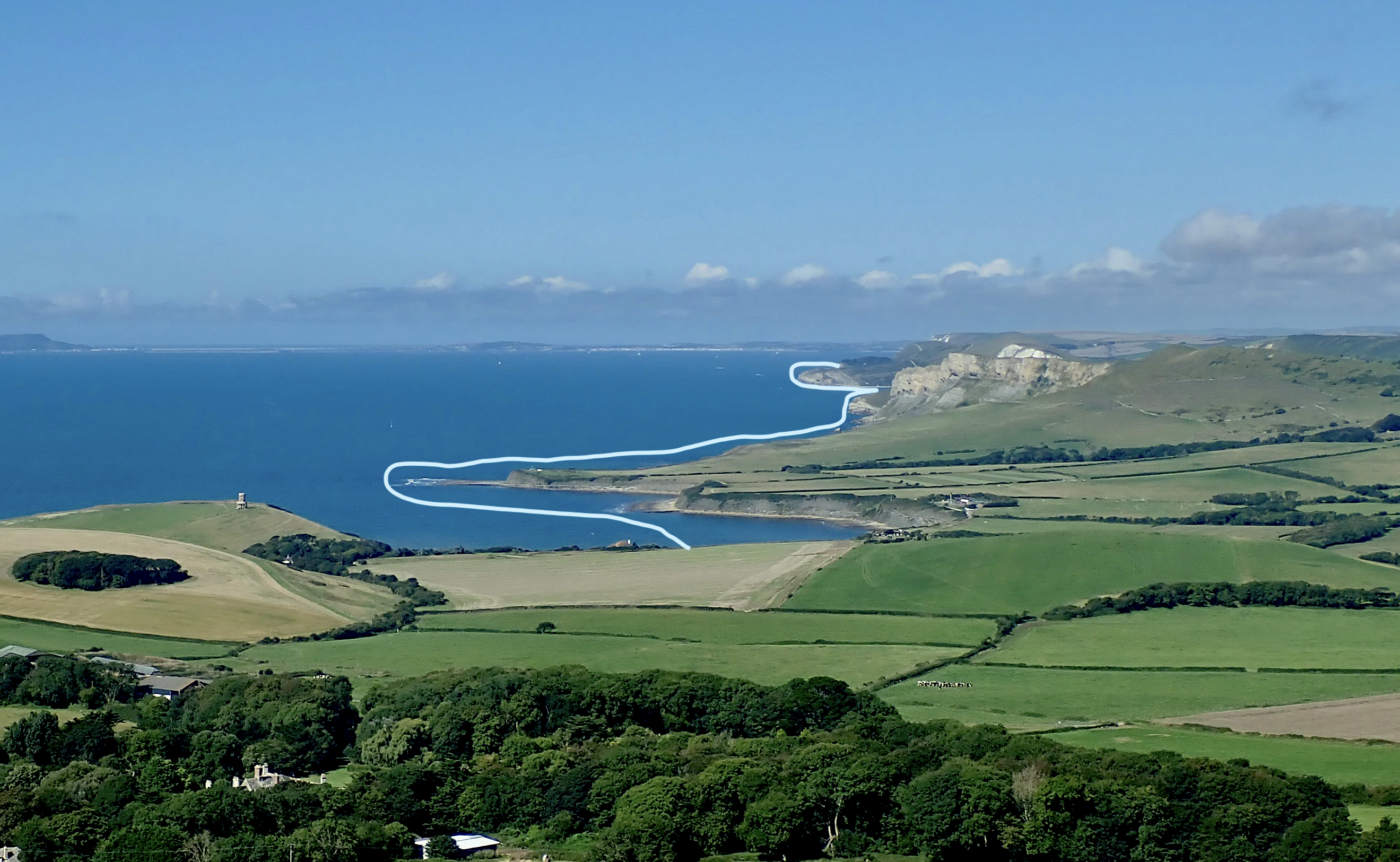
As had happened so many times, a spell on the water without incident calmed the nerves. So I continue past the Dancing take-out and cast a wistful glance eastwards. It was only 2.5 miles, or an hour or so with the tide and wind and cliffs to the Isle of Purbeck’s southeast corner at Durlston Head, before a more sheltered turn northward to Swanage, another mile away over the Pevrill Ledge, the final hurdle into town. One for the next ‘calm’ day perhaps.
Looking east over Dancing Ledge
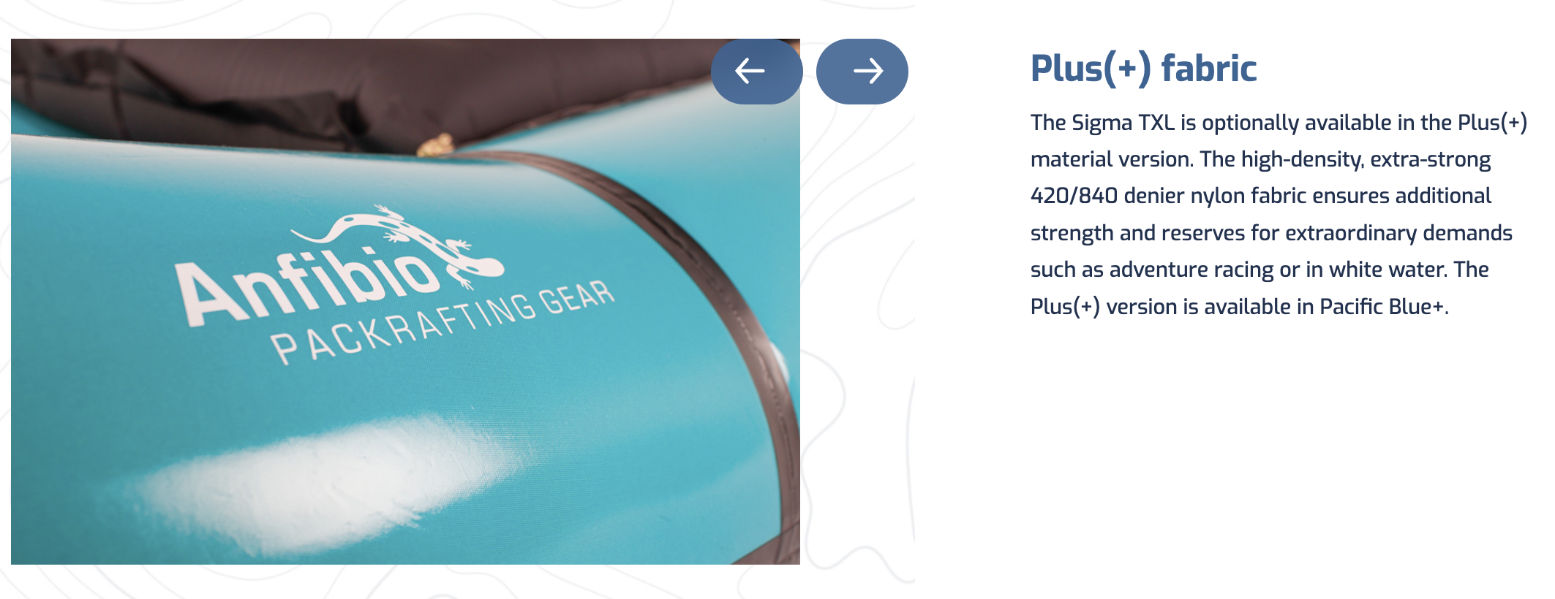
Anfibio Plus(+) fabric Checking out Anfibio’s TXL page later, I see they’re offering the option of the TXL and similar long/double models in chunkier Plus (+’) fabric. It’s only 17% heavier but 80% more tear-resistant, depending on how you measure that, but costs only €70 extra. It looks like it might be similar to floor fabric or comparable with Alpacka’s much more expensive Vectran option.
Anfibio don’t fully explain why they’re now offering thicker Plus(+) fabric; has the standard proved a bit less durable? I admit Anfibio do focus a bit too much on the ultra lightweight side of things which, alone in a single-skinned inflatable, is not where my priorities float. From my experience with stiffer PVC IKs versus more flexible rubber kayaks, I do wonder if a Plus(+) TXL or similar might be more rigid on the water without the need to pack it full of air. It may even exclude the need for the 900-g floor pad (it doesn’t). Along with what I estimate to be a <500g weight penalty, I imagine a Plus(+) TXL will roll up less compactly, but other than that it’s something worth looking into.
Quick-deflate seat While I was never a fan of the mushy, twist-lok stem valves on the early Alpackas, I’m not a huge fan of the sprung, one-way inflation valves Anfibio use on their seats and backrests. Great for easy inflation and holding high pressures, but a pain to deflate when packing up; you have to jam a fingernail in the valve and scrunch the seat while it ever so slowly deflates. At least with an old twist-loks you could suck the air out. And anyway, you don’t need full pressure in a seat. Far from it. There was talk of Anfibio modifying the seat valves for easy deflation but it’s not happened yet. Now the TXL is my sole packboat, I’m minded to set it up well. I failed to find anything other than Boston valves online. They’d work of course and will dump air really fast, but are a bit OTT and would need gluing in properly.
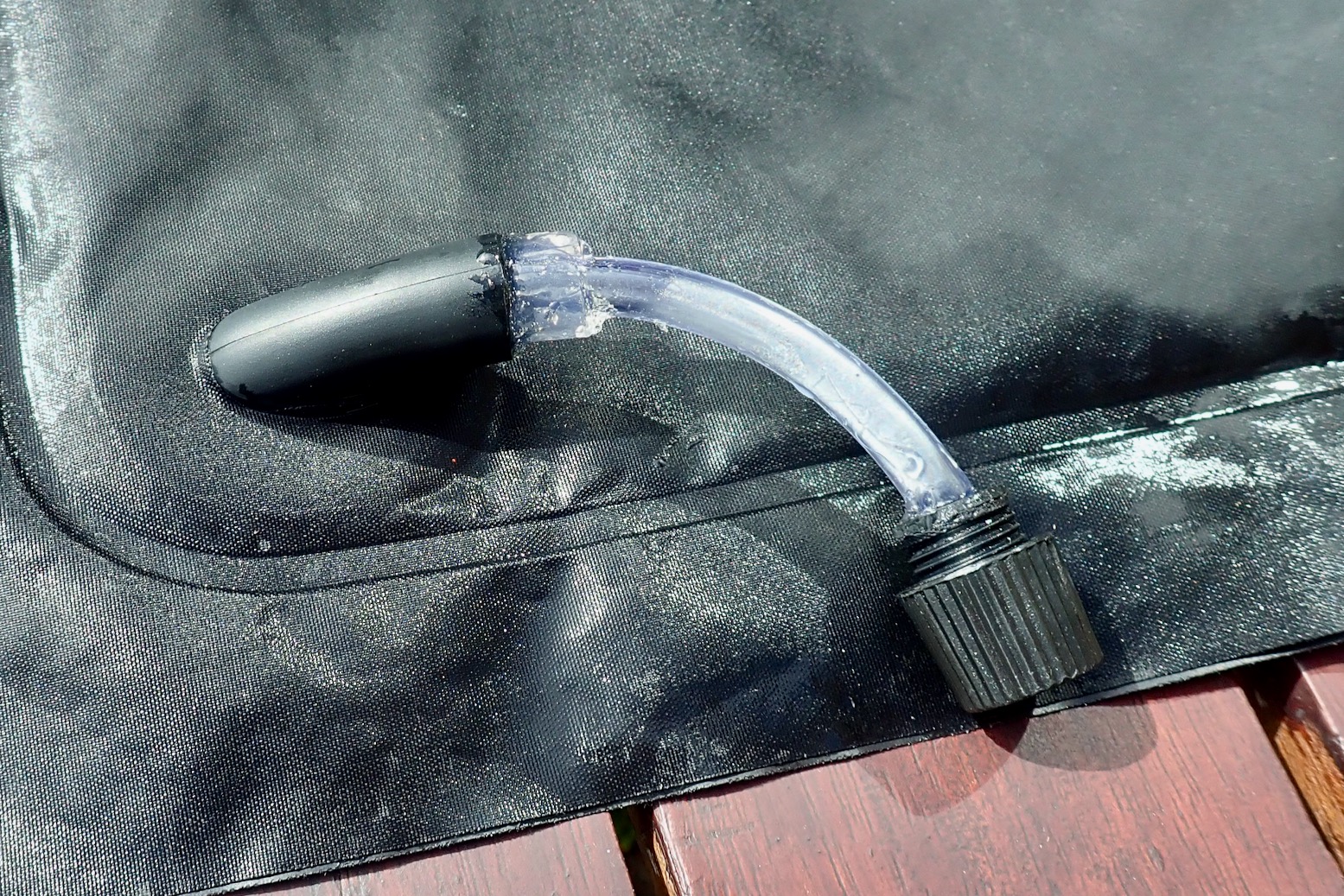
I had a spare dry bag with a neat twist lock valve a bit like Thermarest sleeping pad valves. But marrying it to the chopped off sprung one-way valve in the seat was tricky to do neatly. So I managed to do it not neatly (above left) with a bit of clear tube and lashings of Aquasure. Unfortunately the tube is narrow which slows things down or increases effort; win-lose. For the moment it works; I can unscrew the valve and roll up the huge seat, purging the air as I go. Looking back on this dramatic episode, next time I’ll just cut a hole and glue in a Boston valve (left) which are easily found online for under a tenner.
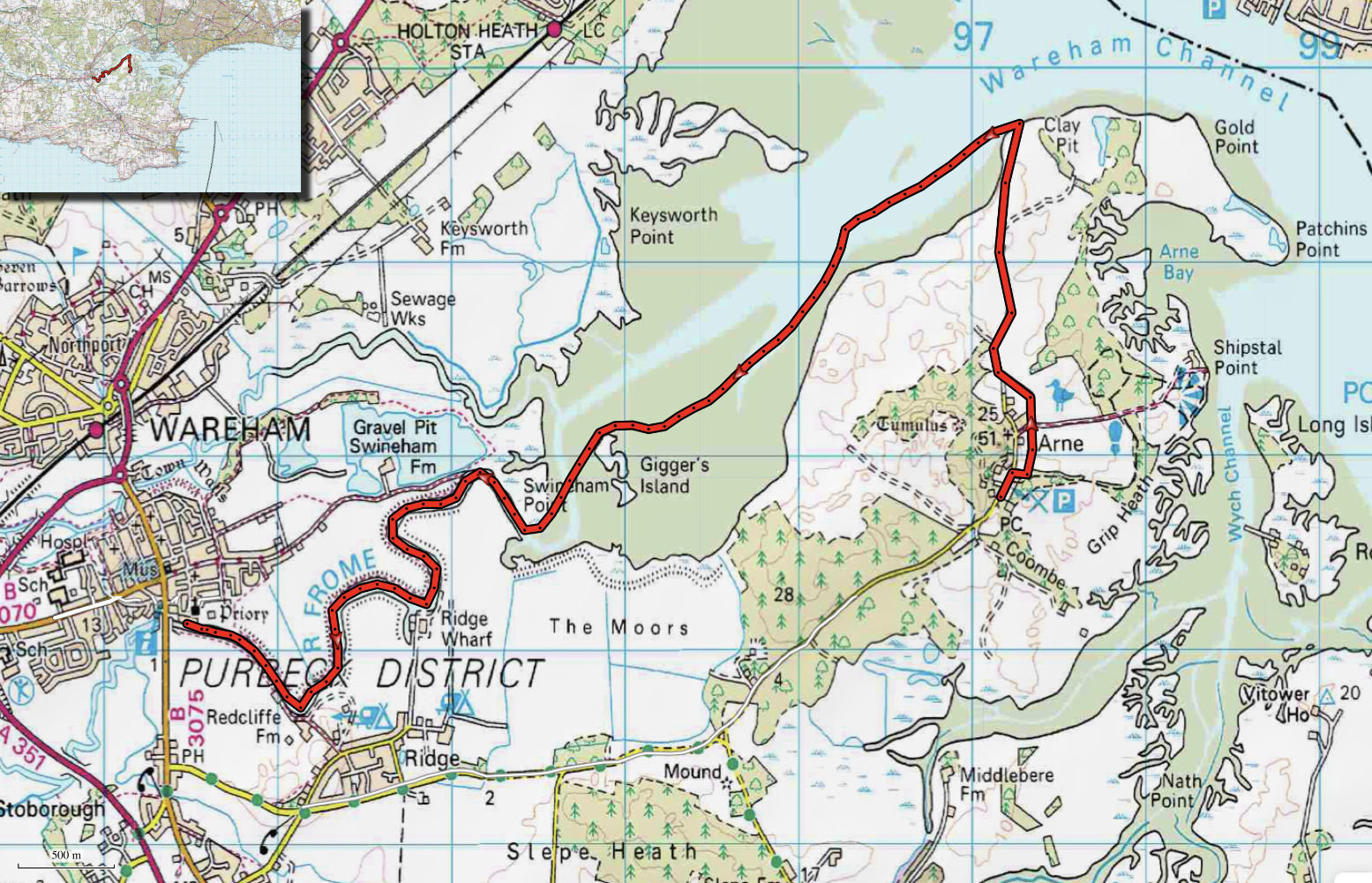
Holy moly, end of May and first paddle of the year? It’s been a busy winter and the arm’s been playing up so time to break in with an easy packraft across a back corner of Poole Harbour, our locale for the summer. Sailing Russel Quay back to Wareham with the tide and the wind sounded like a good one – a mile’s walk + 5 on the water. Although it clashes with our hitherto pristine eco credentials, we have two cars down here, so we leave one in town and the other at Arne.
Teetering on the edge of Open Access land.
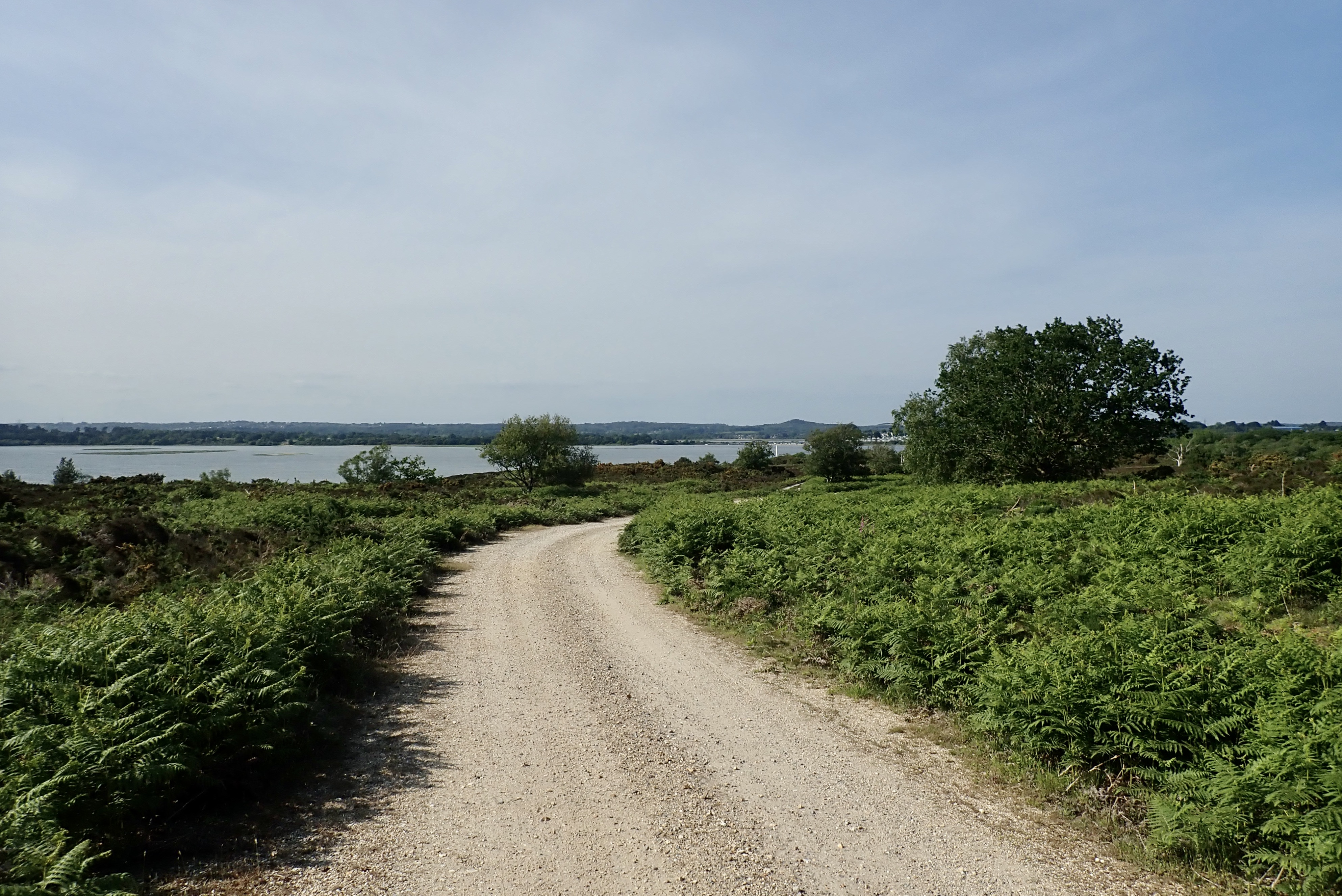
This whole area south of the Harbour is a largely undeveloped heathland with rare wildlife and part of an RSPB ‘super reserve’. On the day the famous BBC Springwatch crew were installed for a fortnight or more, motion sensing cameras probing various nests and burrows. Thick power cables lined our track leading up north to the put in near long gone Russel Quay. I’m not fully sure it was a right of way. Dodging irate English Nimbies is going to take some practice after the freedom of the Scottish northwest coast we became accustomed to. But ironically this area also has the biggest knot of land-based oil wells in western Europe. They’re the small, nodding donkey type, not towering rigs but a couple of months ago one of the pipelines sprung a leak in Ower Bay near the processing plant on the less accessible south shore. Luckily it wasn’t an Exxon Valdez event and at higher tides there could be some good packboat exploring in this inlet-rich area. It’s all we’ll have here bar the more exposed Jurassic Coast.
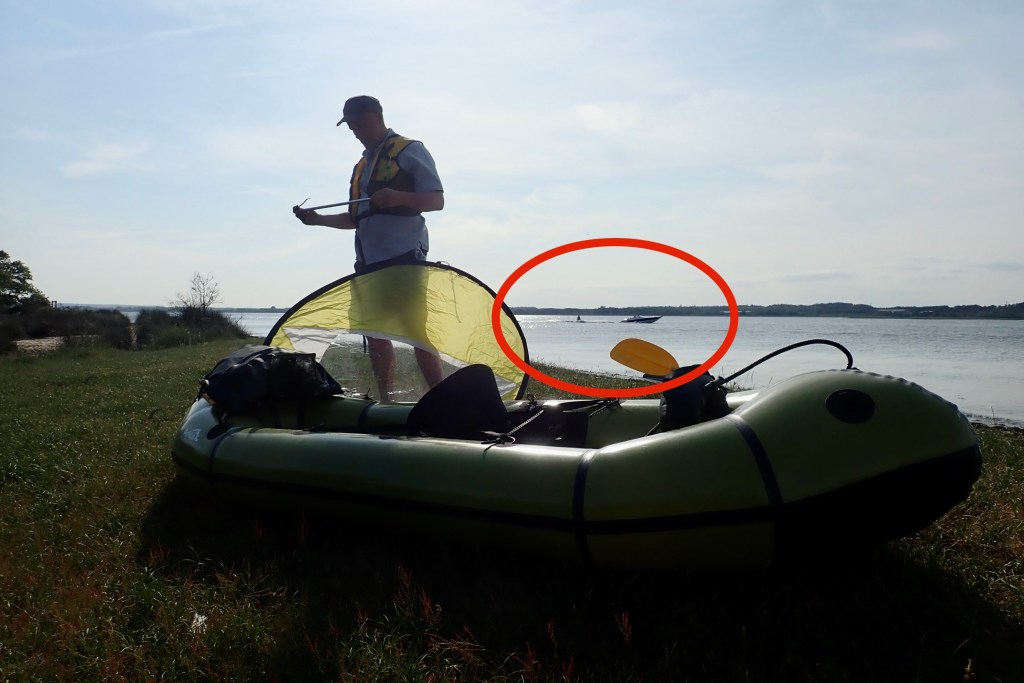
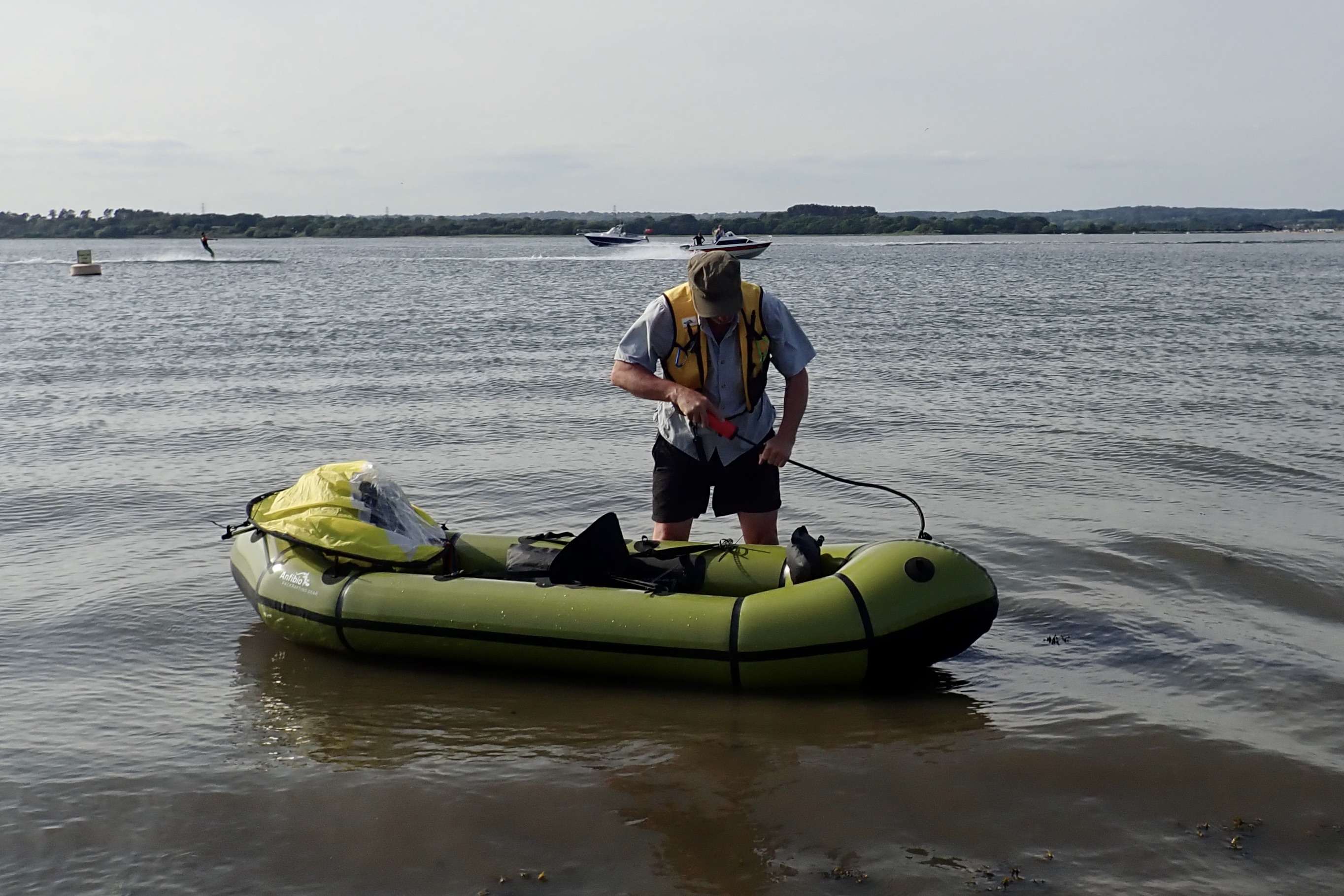
Not exactly the Summer isles, but it’ll have to do. You don’t get a May week of 20°C+ and full sun up there.I try to remember what to do and in what order.Note the water skier. With my typical ‘let’s-wing-it’ lack of due diligence, we’d stumbled on one of the few ‘PWC’ zones on Poole Harbour. (The link’s map is missing but may be what’s at the top of the page.)Well, stood at the shore it looked like a good north-easterly for a while.OMG, more menacing water-hoons! It’s a bank holiday Sunday and turns out we were right on their sole permitted skiing corridor. RTFM!Once on the water there’s barely enough wind to blow out a scented candle from Purbeck Handicrafts.But according to the GPS, paddling most of the time we did momentarily zip along with the tide.As it is, tides in the Harbour have quite a prolonged high water period which will be useful. This is a spring tide in a few days.Newbie on Poole Harbour back in 2005.Gumo Safari, my very first IK.We should have just cruised close to the shore where motorboats fear to tread. Next time we’ll know. Near Gigger’s Island we pass a motionless hardsheller, like a heron deep in thought.Without my GPS, first time finding the Frome river entrance would have been tricky. Soon impenetrable reeds line the banks, our speed drops and pot-bellied boaters cruise by at 4 knots. I can see this 2.5-mile river stretch might soon become a chore at the end of a long paddle and an ill tide.
Never get out of the boat? We couldn’t if we tried, but near the river mouth there’s a small jetty and a track back to town. Good to know but with an IK, I’ll need some wheels.
That night we catch a bit of Springwatch on the iPlayer but, as expected, I can stomach the hyper-saturated, happy-clappy ‘Phil & Holly of Wildlife’ for only so long. It’s the final finale of Succession – what are we waiting for!? A probing bike recce of the south shore is needed. More Poole Harbouring to come.
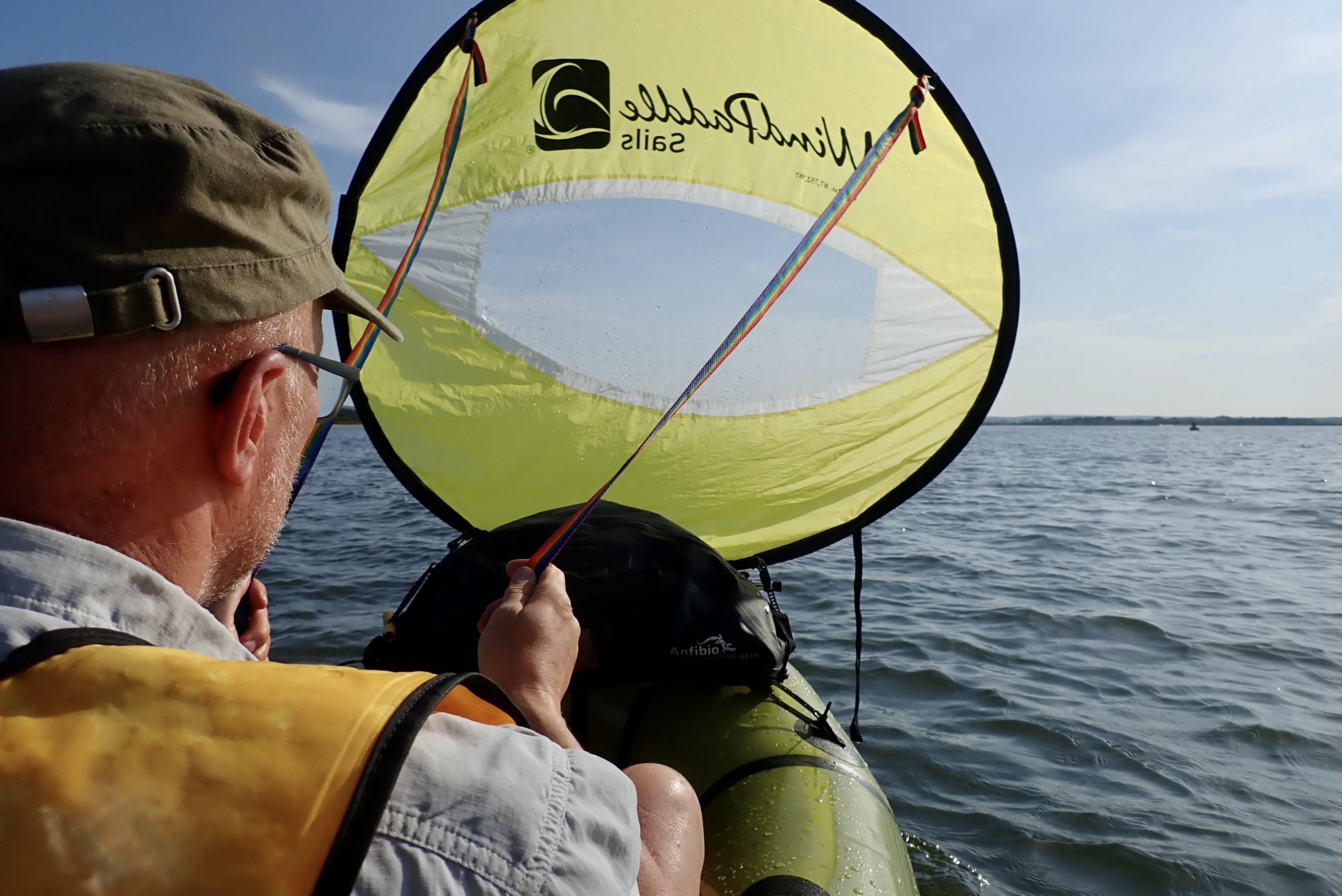
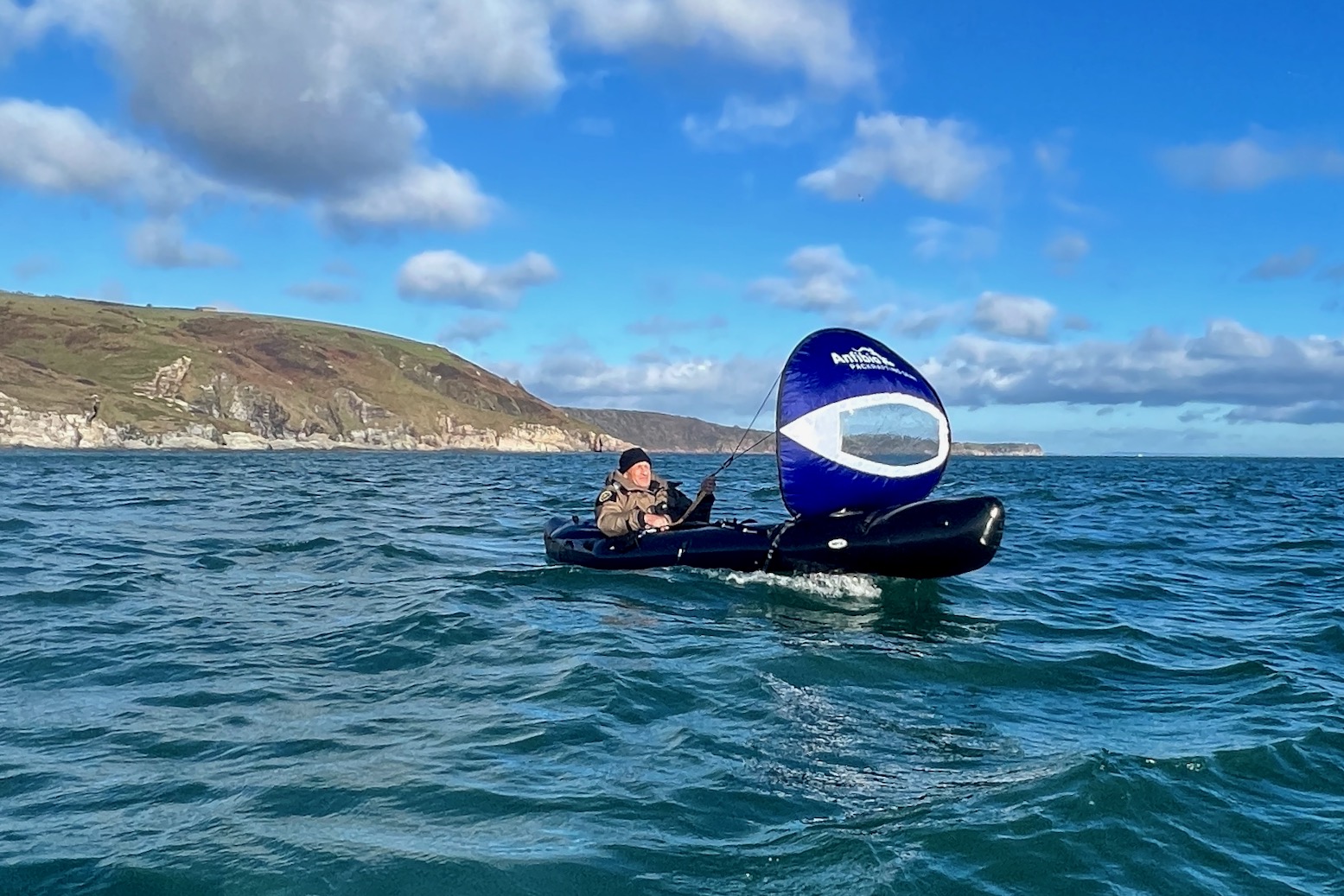
It took just one outing with old mate/new packchum Phil to recognise the appeal of packraft sailing. My old WindPaddle Adv 2 was able to haul us both out to the Teign estuary with little effort.
A few clicks online and a 99-euro Anfibio PackSail (same as the defunct WP) got jammed in his letterbox. With a chilly offshore wind blowing off the south Cornish coast, Phil launched his 12-foot long R2 Barracuda Pro from a handy RIB and set off for Brittany.
The combination of the Barracuda’s kayak-long waterline, light weight and the 1.3-m diameter sail soon got the MRS skimming along at nearly 10kph. That switched to -0kph as he turned round into the 30kn gusts and tried to paddle back to shore. Time to hail down the water uber.
An old mate got in touch to tell me he’d bought himself a top-of-the-range MRS R2 Barracuda Pro and heck, even my packrafting book. He’s in Devon and I was in Dorset so I suggested we meet up for a Yuletide splash-about. Back in the day we were desert bikers; now we’re packrafting pensioneers.
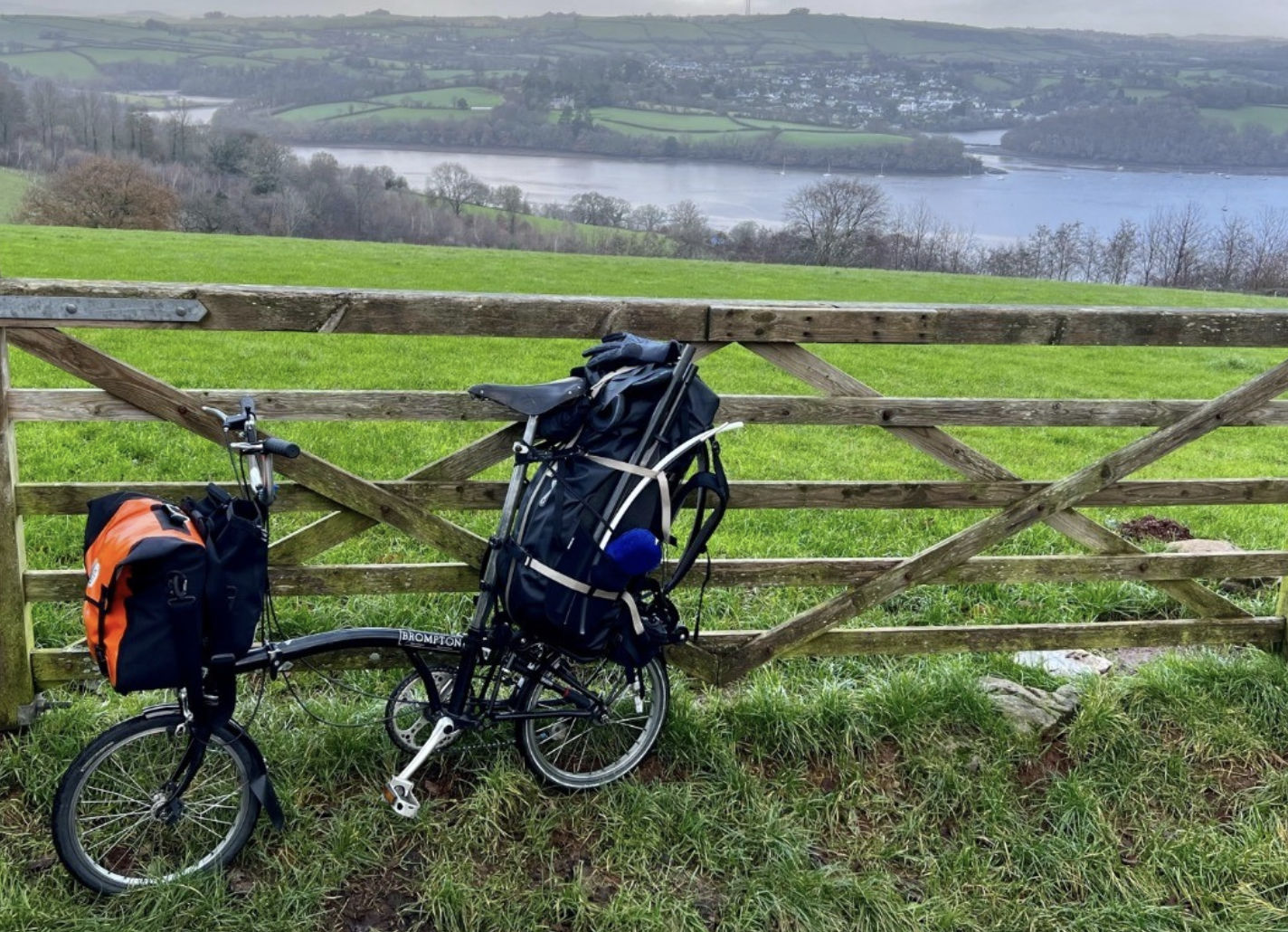
Like some do with a new activity, Phil had got stuck right into his MRS and had already paddled to Dartmouth with his Brompton bike (left), something over in Norfolk, then scared himself further up the rain-swollen Dart from Buckfastleigh to Totnes, noting ‘it’s amazing how dangerous the big branches [and fallen trees] are…’
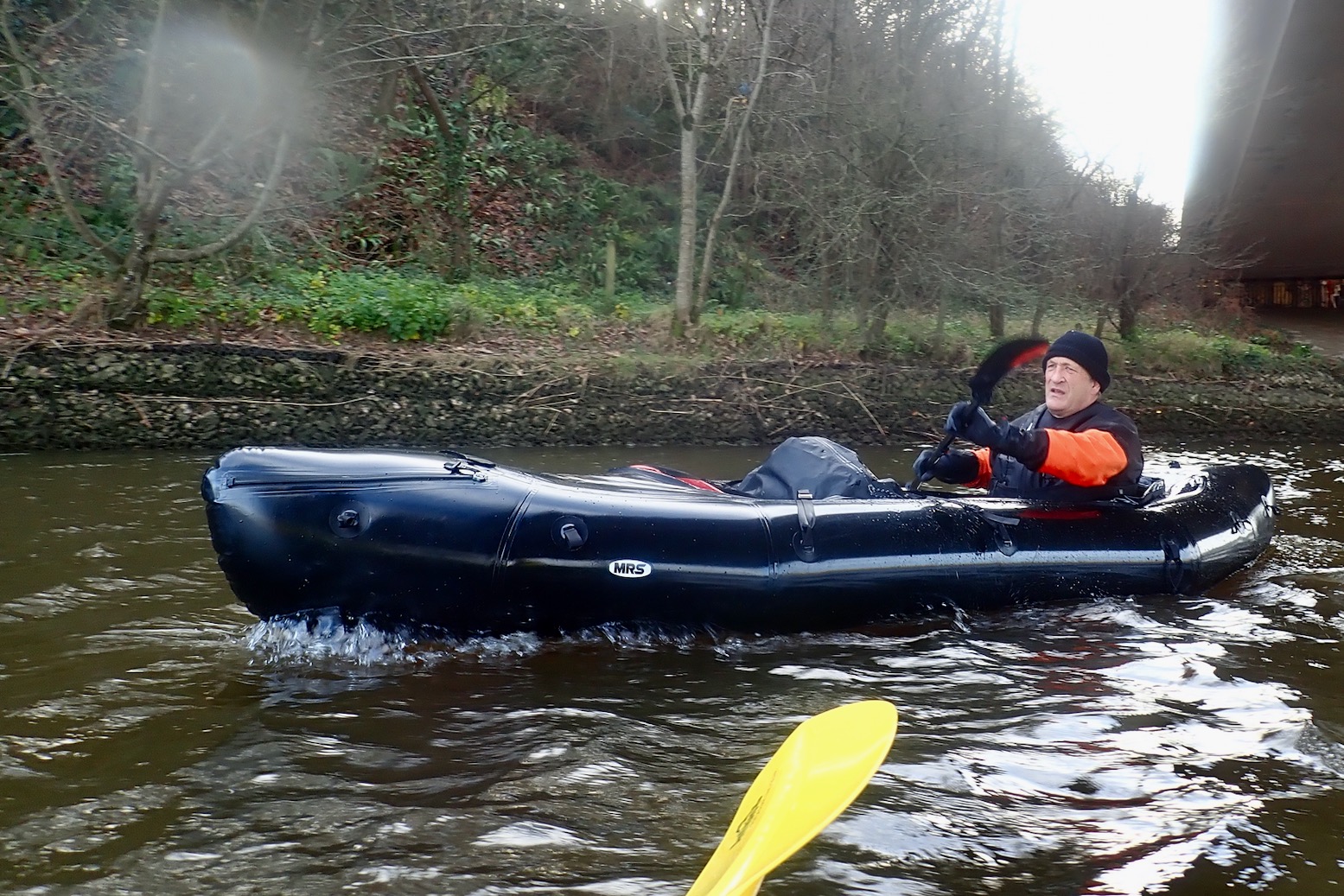
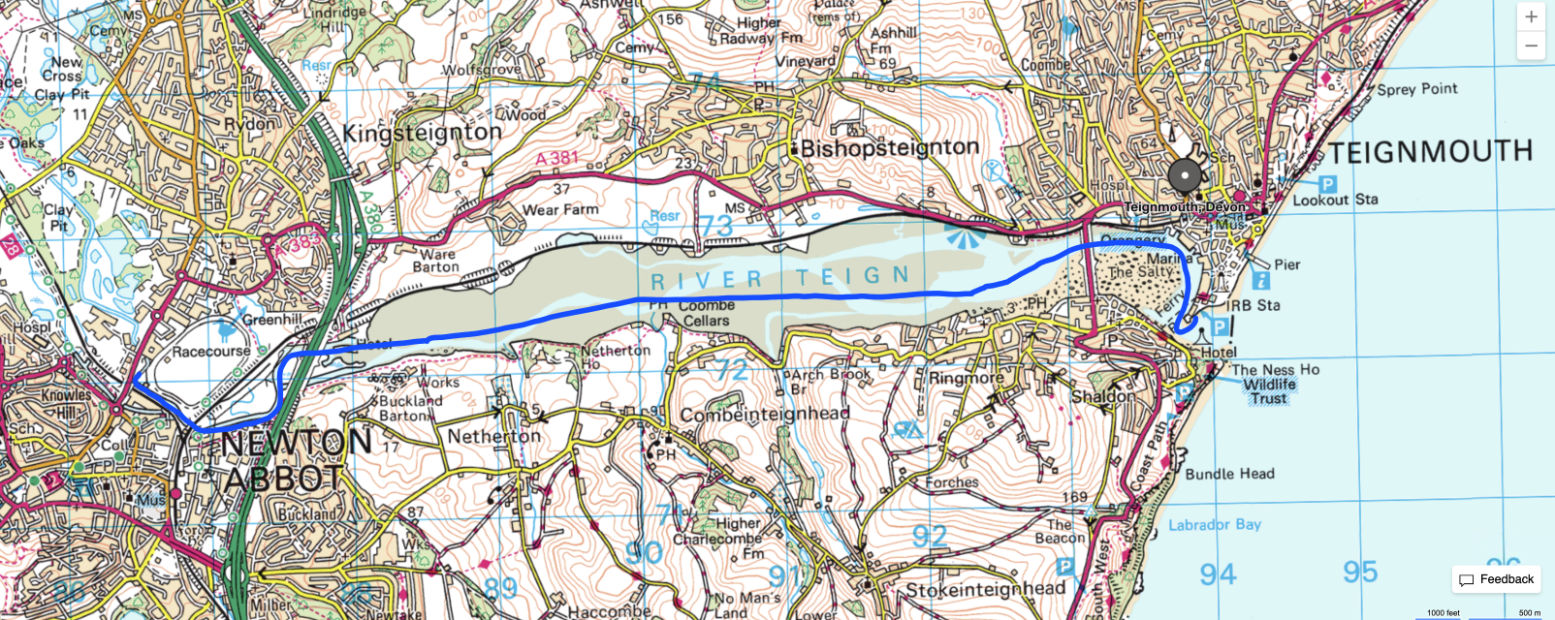
Tell me about it. If it’s not weirs or camo-&-beard anglers spitting poison darts, it’s deadly sweepers blown down by winter storms. I never quite got round to doing the Dart in my fearless prime, such as it was, but I hear in winter it’s one of the Southwest’s whitewater classics – a bit serious for me now. We settled on the Teign out of Newton Abbot with our respective bangers parked at either end.
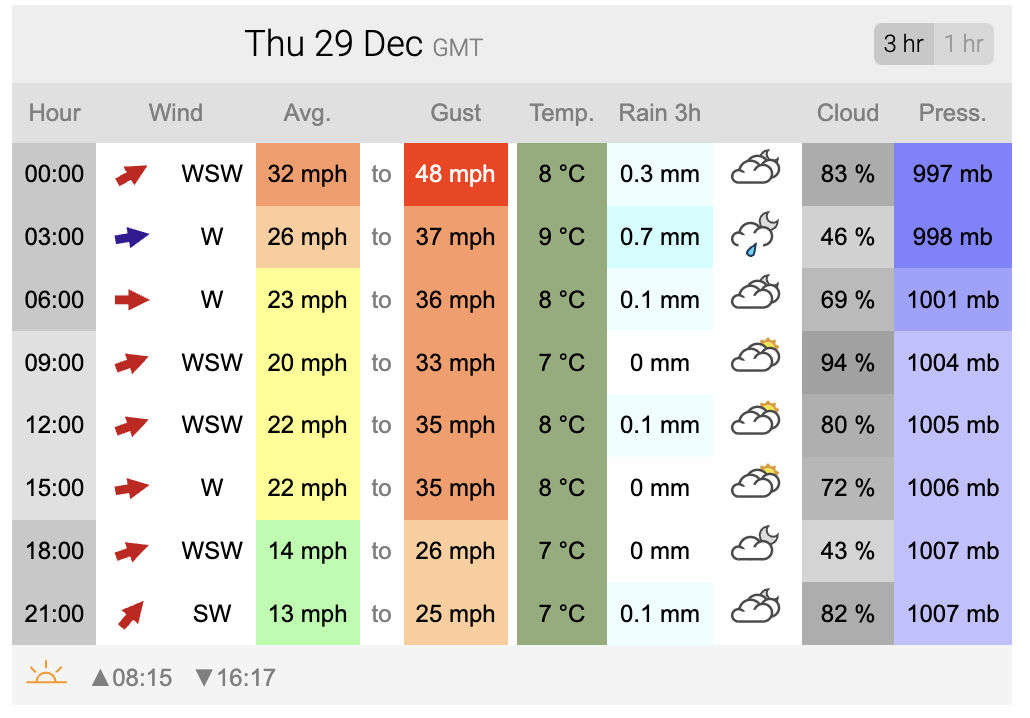
If nothing else, we ought to have a good backwind. The previous night had peaked at around 50mph, but by dawn it was tailing off to half that, with the usual gusts at +50%, single-digit temps and showers. A good day for a drysuit and a stable packraft.
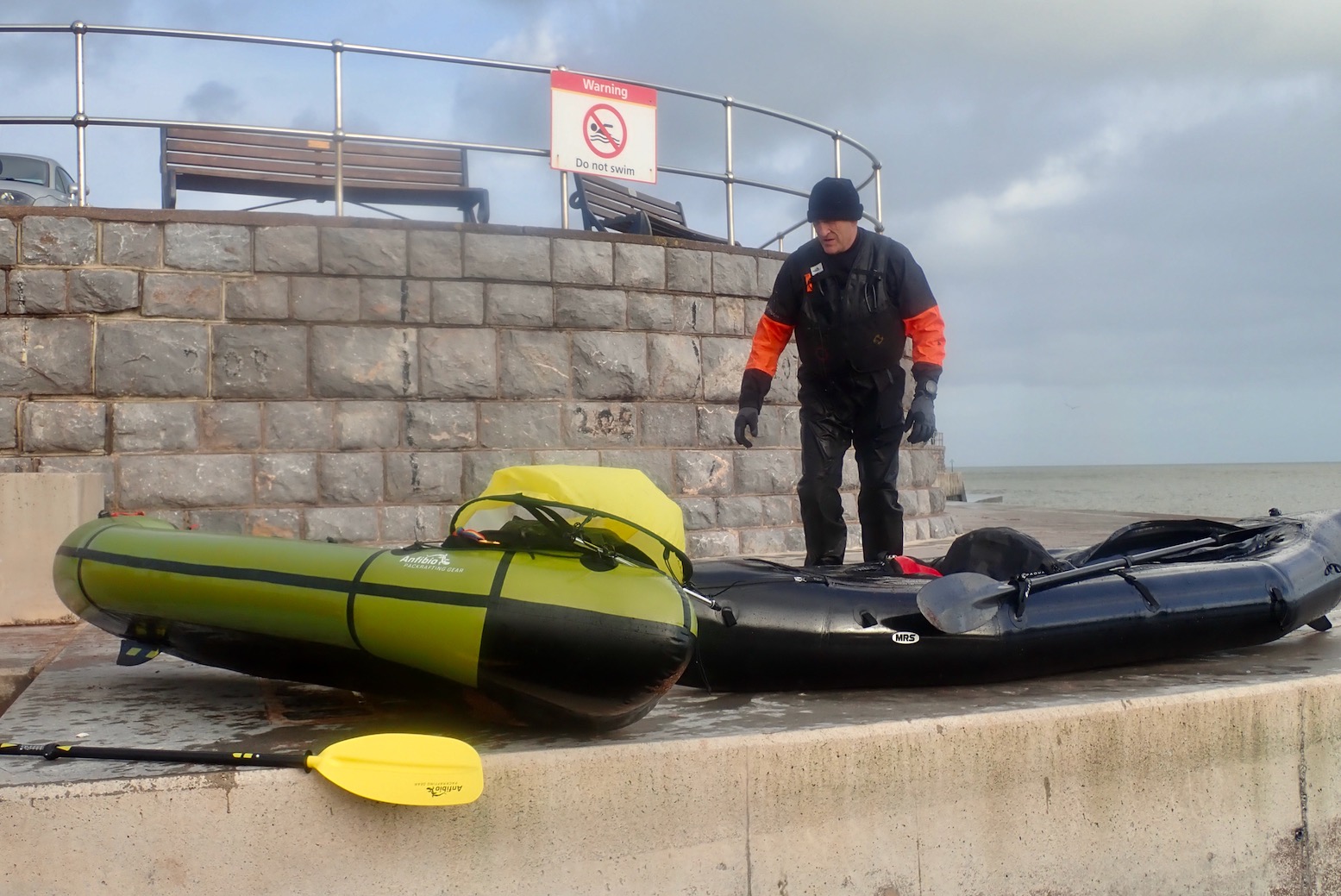
Some quick stats on Phil’s noire ‘cuda: 3.6m x 99 wide with 217cm inside and up to 7.6kg with the removable deck, two seats and internal storage, all for a hefty £1750. Compared to my TXL, it’s 80cm longer or nearly 12 feet in old money; our Micra’s shorter than that! It’s also 10% wider than the TXL, about 35cm longer inside so loads of room for 2 adults. Solo/no deck it gets down to 5.6kg alongside the TXL’s 3kg.
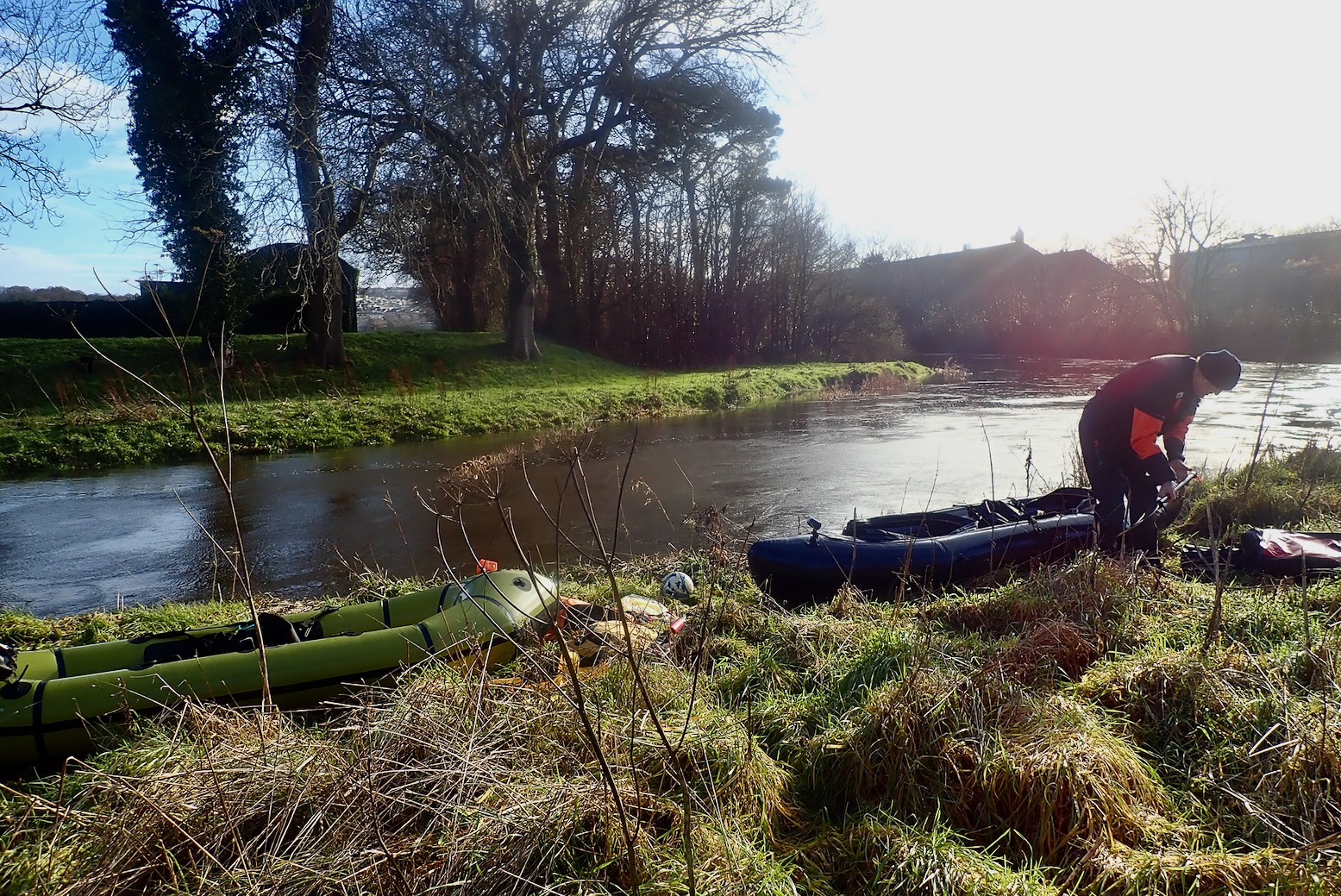
We drove around Newton looking for parking and a put-in. Opposite the racecourse and over a broken roadside fence we found a spacious river bank just at the Teign’s tidal reach. By the time we set off we were in the middle of a 3.5-m ebb, midway between springs and neaps. Either way, like the Frome the other day, the Teign was ripping along at a light jog and before I’d got myself untangled from my gear I was 75m downstream. I thought I’d finally got to grips with keeping it all in one bag, but Today’s Forgotten Item was my seat base [forehead slapping emoji]: ‘Gear drifts apart; the centre cannot hold. Mere forgetfulness is loosed upon the world‘. By chance I had a spare Anfibio Bouy Boy which did the job as a seat cushion.
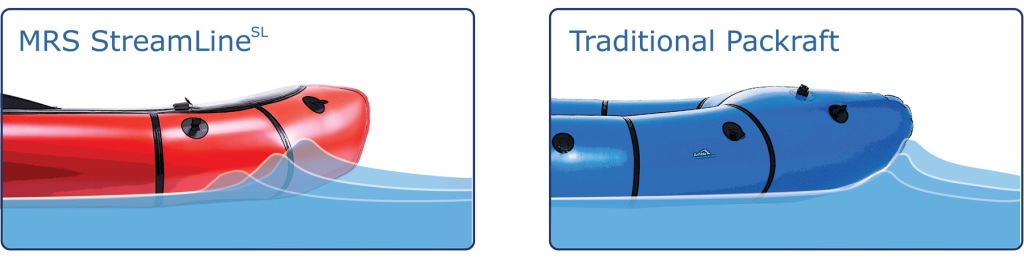
The Barracuda has the same distinctive prow design as my old MRS Nomad which was a fast solo packraft, what MRS call StreamLineSL. These prows take up nearly 1.5m in the R2 which explains the massive length while still having a lot of room inside the boat. There’s probably enough buoyancy for four people and a caribou calf, with room for all their gear inside the ISS hull storage.
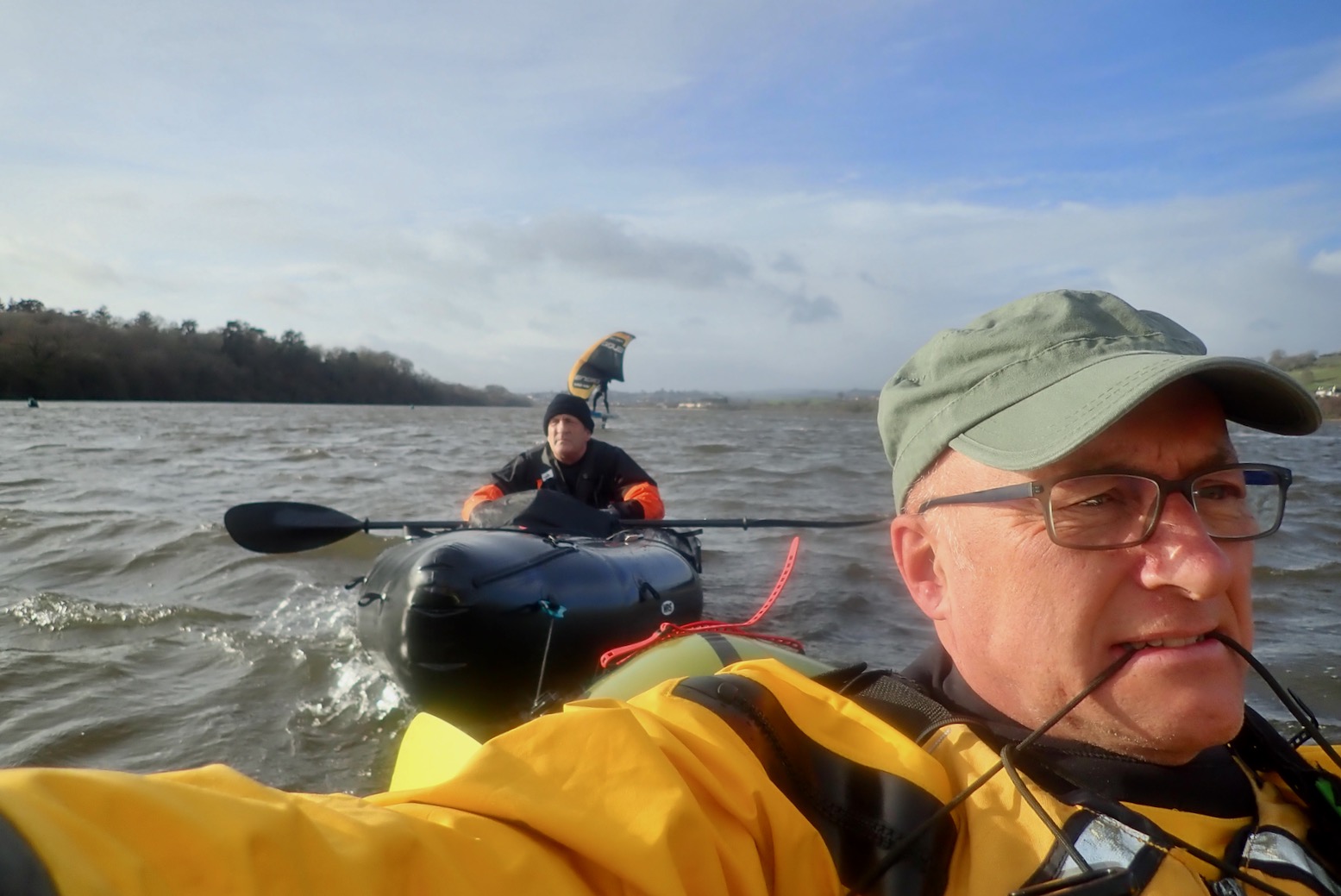
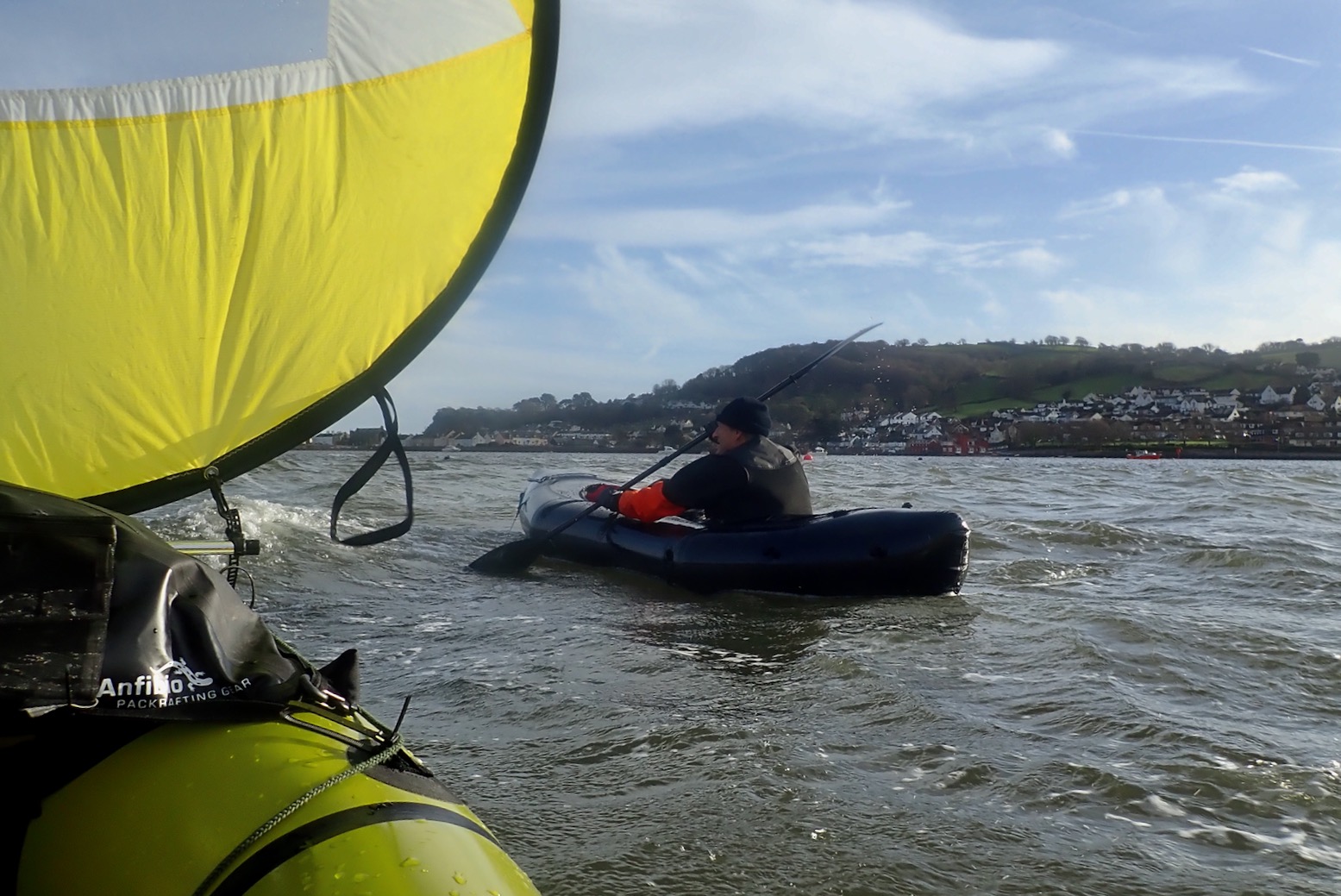
Before we knew it we’d passed under the A380 bridge and were out in the wide tidal estuary. The predicted 20mph winds came barrelling down the channel so I couldn’t resist flipping out my WindPaddle. With the Barracuda’s mooring line clenched in my teeth I managed the sail while Phil’s phone recorded 8 knots, obviously helped by the falling tide.
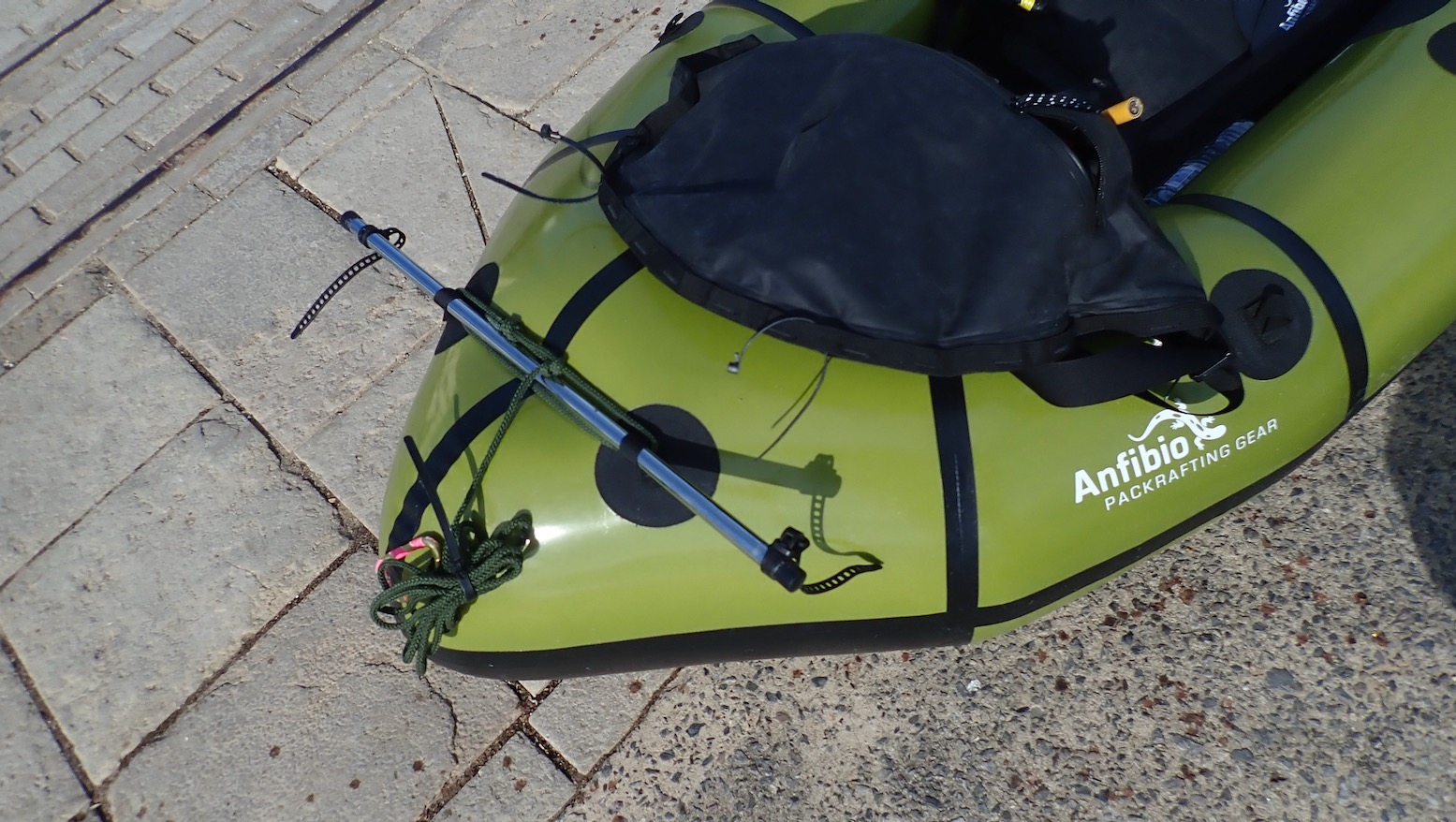
There were a few forceful gusts and the fetch kicked up towards the end, but the TXL and Barracuda shrugged it all off and my transverse bow sprit (left) did a great job of steadying the straining sail. I think the MRS has wider attachment points on the bow so may not need it, but I’m sure Phil will be buying a PackSail if Anfibio can do him one in black. He did.
Things got a bit chilly out in the deeper water and I noticed my TXL was creasing a bit at the sides. It’s been so many months since I last used it I’d forgotten high-volume packrafts need a second top-up a few minutes in to get good and taut. It didn’t seem to affect speed, but like properly laced shoes, taut feels better. That’s one good thing with Phil’s black boat; it auto pressurises in the pale winter sun. While we sailed, he tucked into his lunch.
The Teign estuary is actually not too industrialised. Under the last bridge The Salty sandbank was starting to emerge from the chop and as we curved round to the river mouth the sidewind pushed us into moored craft caked in algae. At the narrow outlet a rip of bouncing clapotis was jiggling out to sea and on the beach someone was striking poses for their Insta feed.
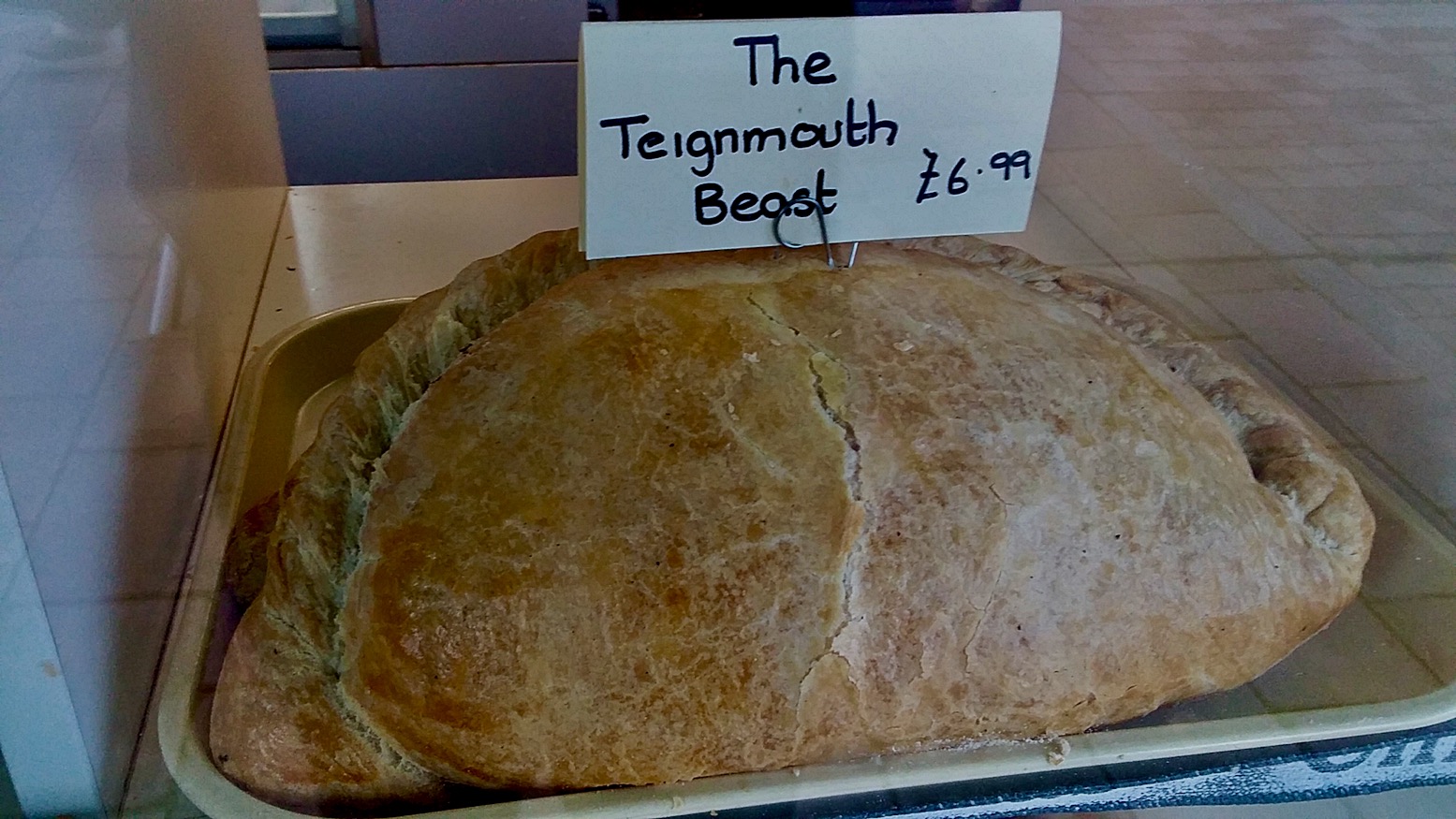
A little over an hour for 5 and a bit miles, just about all of it sailing both boats. It was interesting to learn that the WP could sail two big boats without much loss of speed. Staggering ashore, it felt odd not to be arm knackered, but once I got over that we headed into the deserted seaside town in search of the legendary Teignmouth Beast. That’s a local XXL pasty, not the jet-black MRS Barracuda.
Two good-value, four-part paddles from Anfibio ideal for packraft or IK travels. The yellow VertexTour is a newer redesign and a lot lighter, even with a longer range of length adjustments and has a better clamp. But the black Wave (left) has the classic dihedral (two-faced) blade. What is the difference and does it matter?
What they say
Anfibio Vertex Tour Our new, redesigned Vertex Tour paddle comes with a classic double blade, fine shaft and sub one-kilo weight. Equally suitable for lakes, calm rivers and moderate whitewater. The position length is adjustable from 210cm to 225cm at free angle.
Anfibio Wave High-quality, lightweight carbon paddle for long tours on calm waters. Freely adjustable in length and angle.
I’ve done several hours with both paddles and for this comparison we took both on a 15-mile paddle down the Wey in Surrey in the TXL. It was a hot day but water doesn’t get any flatter unless it’s an ice rink. Below some weights and measures to mull over.
Weight g
Length cm
Shaft cm
Shaft g
Shaft ø
Blade gm
Longest piece cm
Blade cm
Price
Anfibio Vertex
851g
210-225
118cm
303g fibreglass
29mm
274g
63cm (blade)
44 x 19.5cm
€125
Anfibio Wave
1011g
210-220
108cm
283g carbon
29mm
365g
65cm (blade)
44 x 16cm
€125
I didn’t notice until I weighed the blades, but the two are made quite differently. The larger Vertex blade – about 650cm2 – has a molded central ‘corrugation’ to stiffen the blade. The Wave has a classic dihedral (two-faced) power face which is said to power smoothly through the water better than a plain flat blade. The Wave blade is also smaller – 600cm2 at a guess.
Black Wave dihedralYellow vertex more flat faced
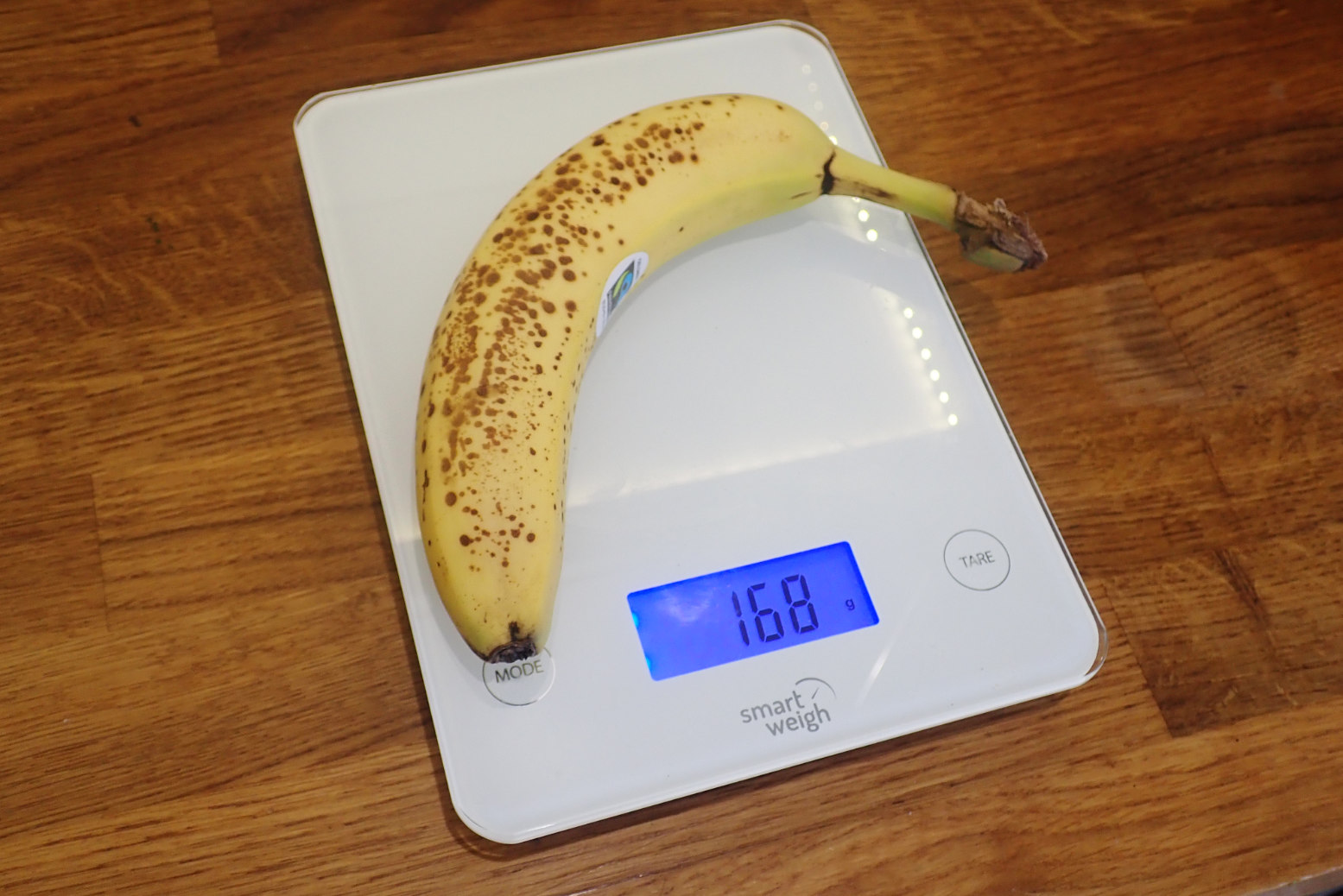
People ask: what is the the weight of a large banana?
So the main differences are weight, blade size and blade face, and I suppose adjustable length and the texture of the shafts. Will you notice the difference in a packraft? I very much doubt it but I think I’d prefer to paddle all day with the smaller bladed and dihedral Wave, even if it’s 160g heavier: the weight of a large banana.
I have a theory with length-adjustable paddles that into the wind or upstream (ie; max effort) you can ‘lower the gearing’ by shortening the paddle and leverage. Meanwhile downwind you can get the most of your paddle by setting it at full length overdrive. It’s good to have the option and one day I will test this theory but really, we paddle as hard as the situation demands. Sometimes easy, sometimes more efortful.
Wave shows the carbon weave; both are 29mm ø, good for smaller hands
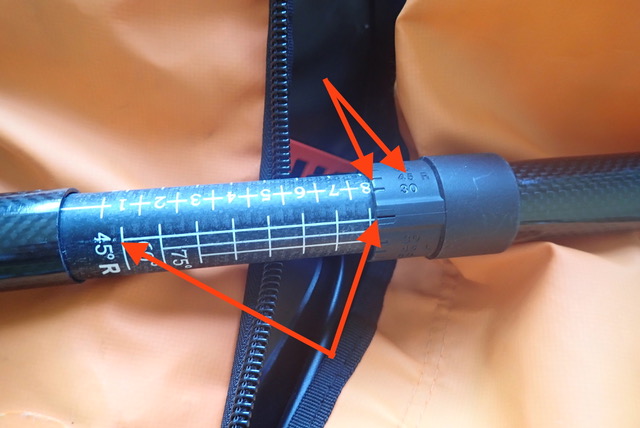
Feather angle alignment My Vertex came with no alignment line on the lever clamp to set the angle against a grid. It took me a while to work this out until I couldn’t and a couple of yellow tape arrows set at my preferred 45°R. Anfibio have since told me this was a production flaw and current Vertex have an alignment marker on the clamp. A permanent alternative to my stick-on arrows would be melting a slot into the clamp with a hot knife. It would be easiest to do this with the paddle feathered at zero (no offset) which is easy to estimate. Think before you melt or use tape!
No index line on the clamp. Tape arrows addedTwo ways of setting alignment on the Wave
The Wave’s alignment system is as you’d expect. In fact there are two ways: a slot on the clamp to align with the grid; and pre-set angles molded into the clamp to align with the zero line on the grid. As it is, on both paddles the white alignment grid gets slid over at each assembly and will probably wear away over the years so you’ll end up with a tape marker anyway. That’s what I’ve done on my old Werners which had a grid sticker on the outside which eventually peeled off.
The blades on both paddles felt a little loose once mounted on the shafts. Maybe they’re made that way as the shaft may swell over the years as it did on my carbon AquaBound. It’s unlikely you’d notice on the move but no movement is best. A small bit of thin tape (left; not a full wrap) was enough to remove any play and if the tape wears or pulls off it’s easy to apply some more. Once clamped down there was no play at the shaft join.
On the Wey you might notice the weight swapping from one to the other, but after a while you’re just paddling. In a way the ideal combo would be fitting the smaller Wave blades on the longer, better clamped Vertex shaft, but oddly they’re not interchangeable.
In the end, for €125 you will not be disappointed because either paddle will proper your boat forward, adjust readily and fit easily in your pack.
Incidentally, I did an IK&P survey when I paddled the Wey in 2021. 2022 numbers in red. In over a decade I saw my first every packraft actually being used on the water! An underinflated MRS. I got the feeling the owner didn’t know that airbagging was not enough; you have to top up too. Has he not read my book?!
Hardshell canoes: 1 1
Hardshell kayaks: 1 8 (group)
Hardshell SoT: 1 0
Vinyl IKs (rock-bottom cheapies): 5 1
PVC (bladder) IKs 3 0
Packrafts 0 1!
iSUPs: 10+ (mostly women or mixed groups goofing off) 10
I’ve done a few IK paddles in Southeast England between Rye and Portsmouth, but the Sussex and Hampshire coasts aren’t that inspiring. So it’s about time I started exploring the far more interesting and much more extensive Southwest Coast. From the Isle of Wight to Cornwall and back up to the Severn there are scores of inshore excursions possible in an inflatable. Just as in the far northwest where I mostly sea paddle, all you need is a fair tide and paddle-friendly winds, the latter a bit less rare down south.
In a blobby packraft? You cannot be serious!
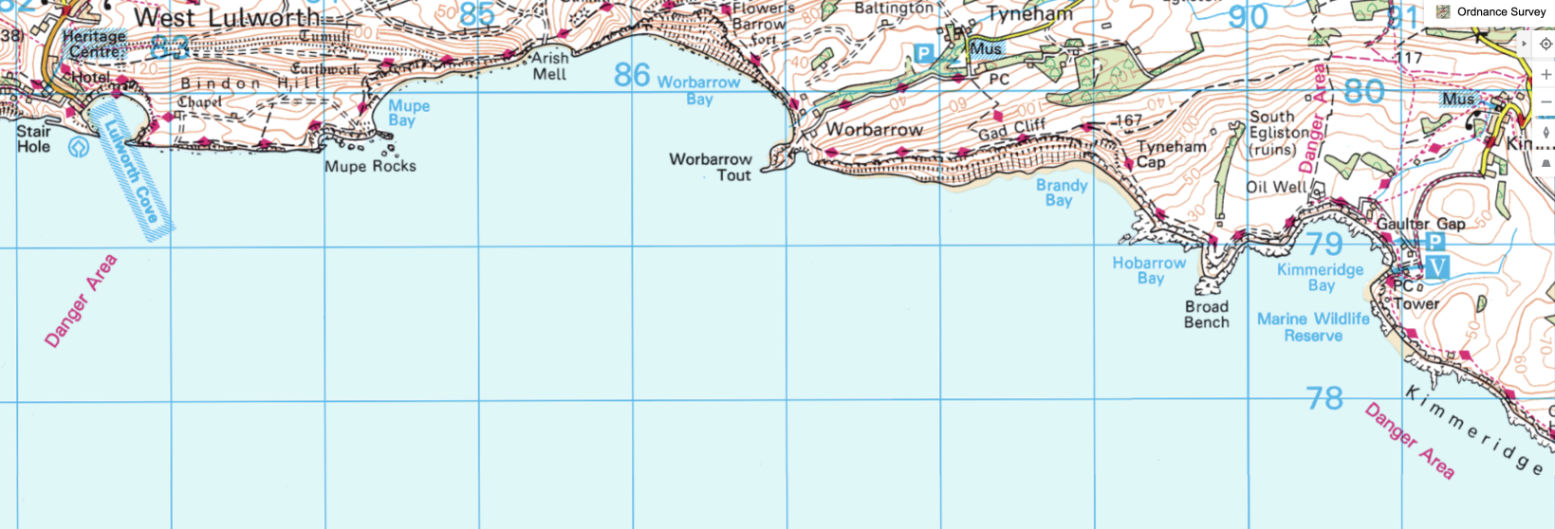
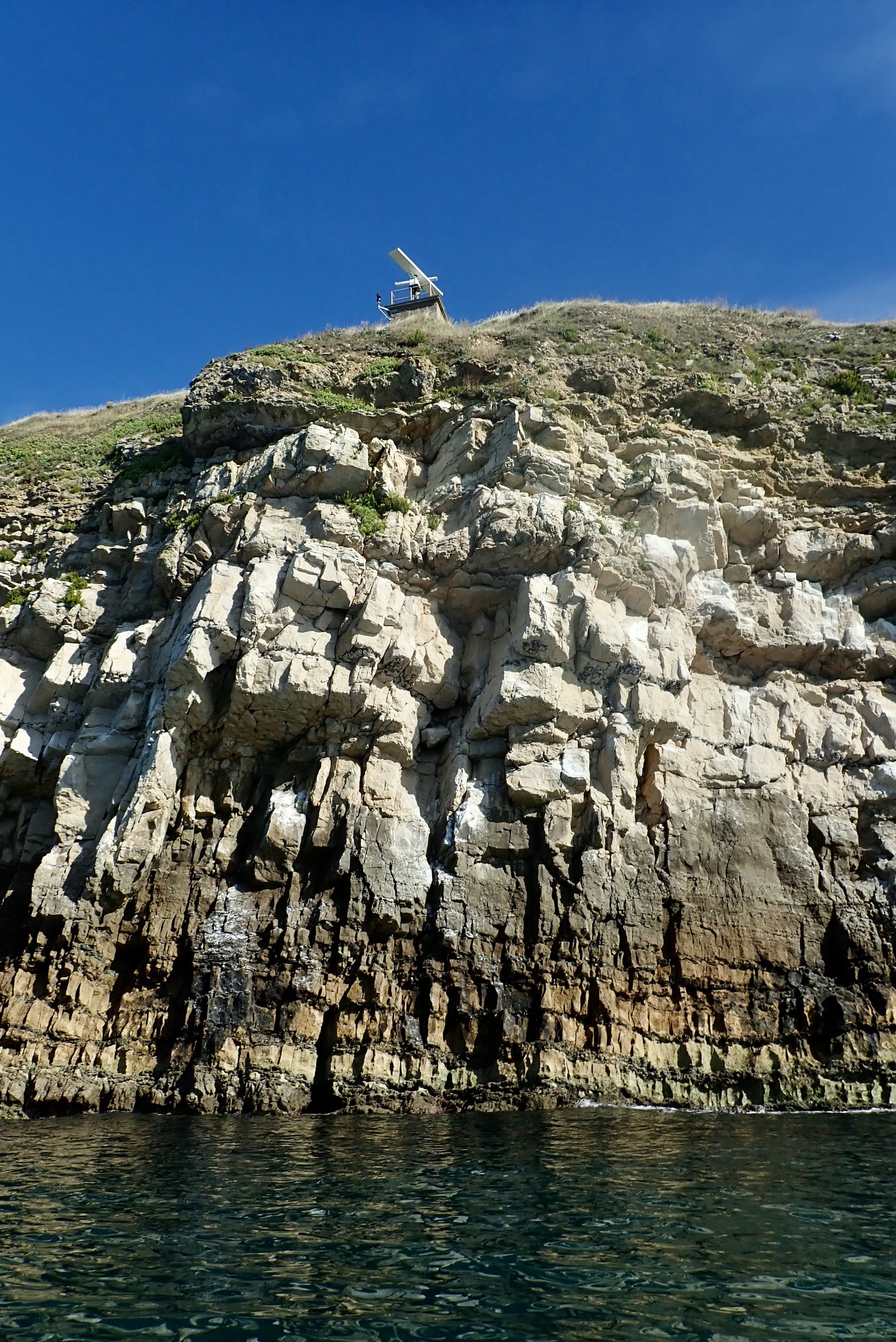
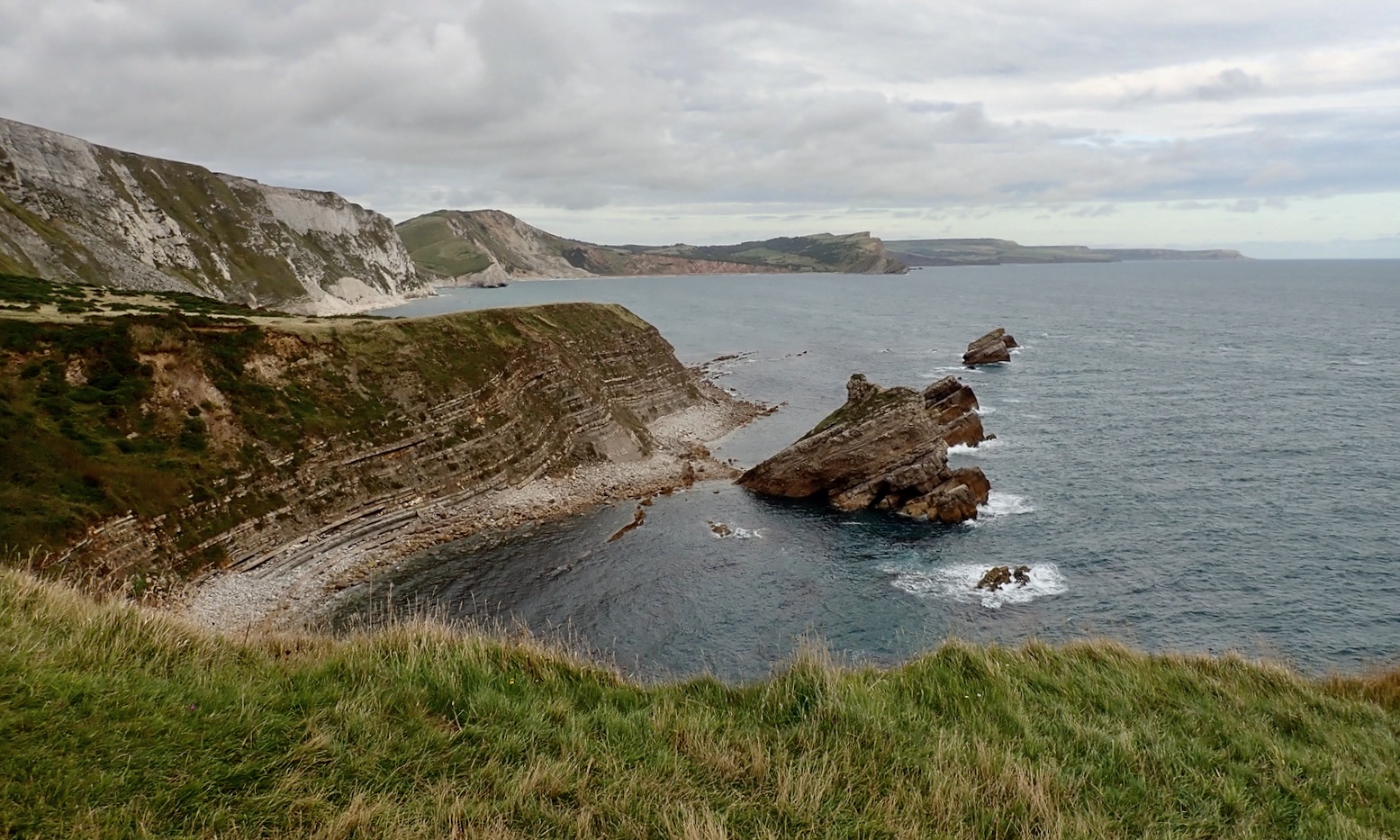
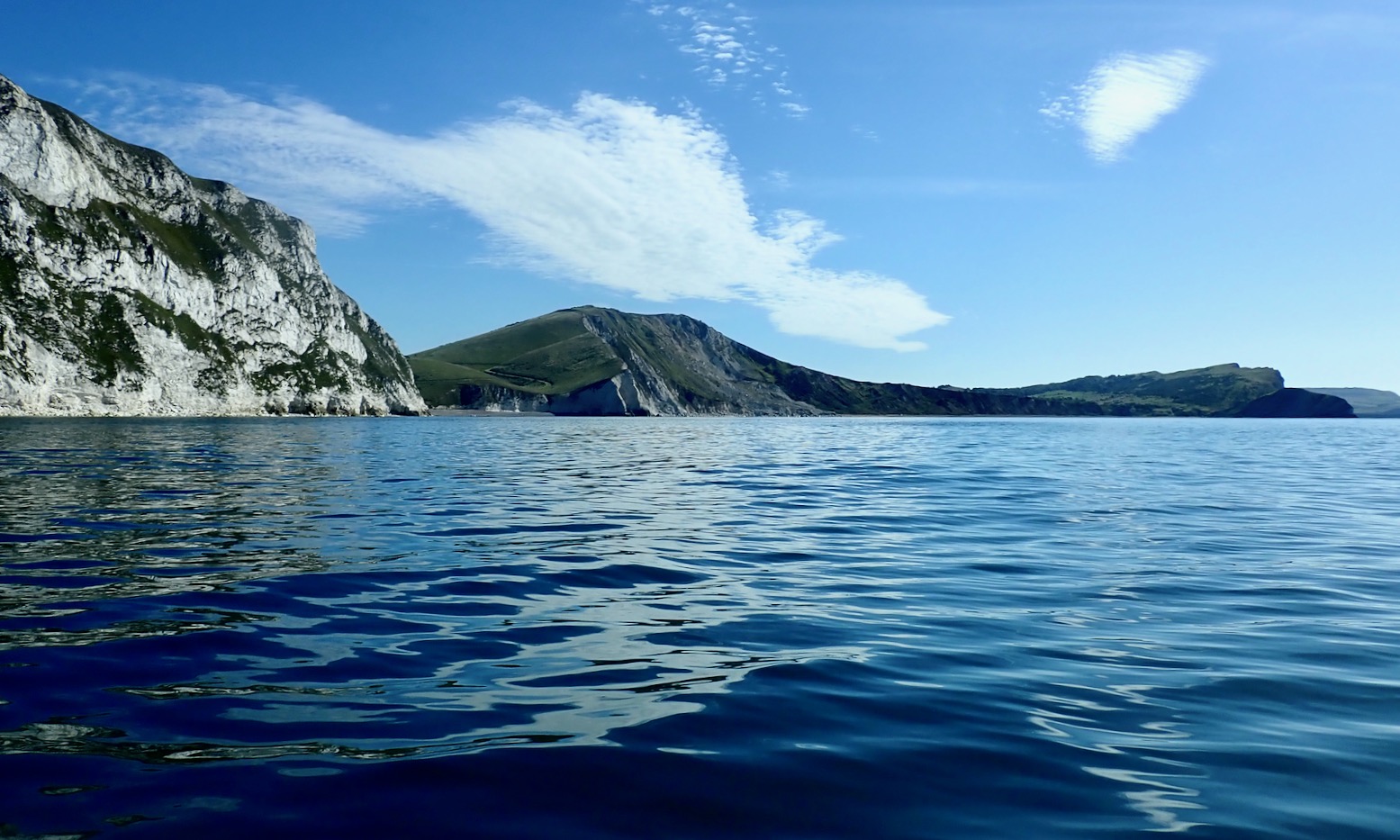
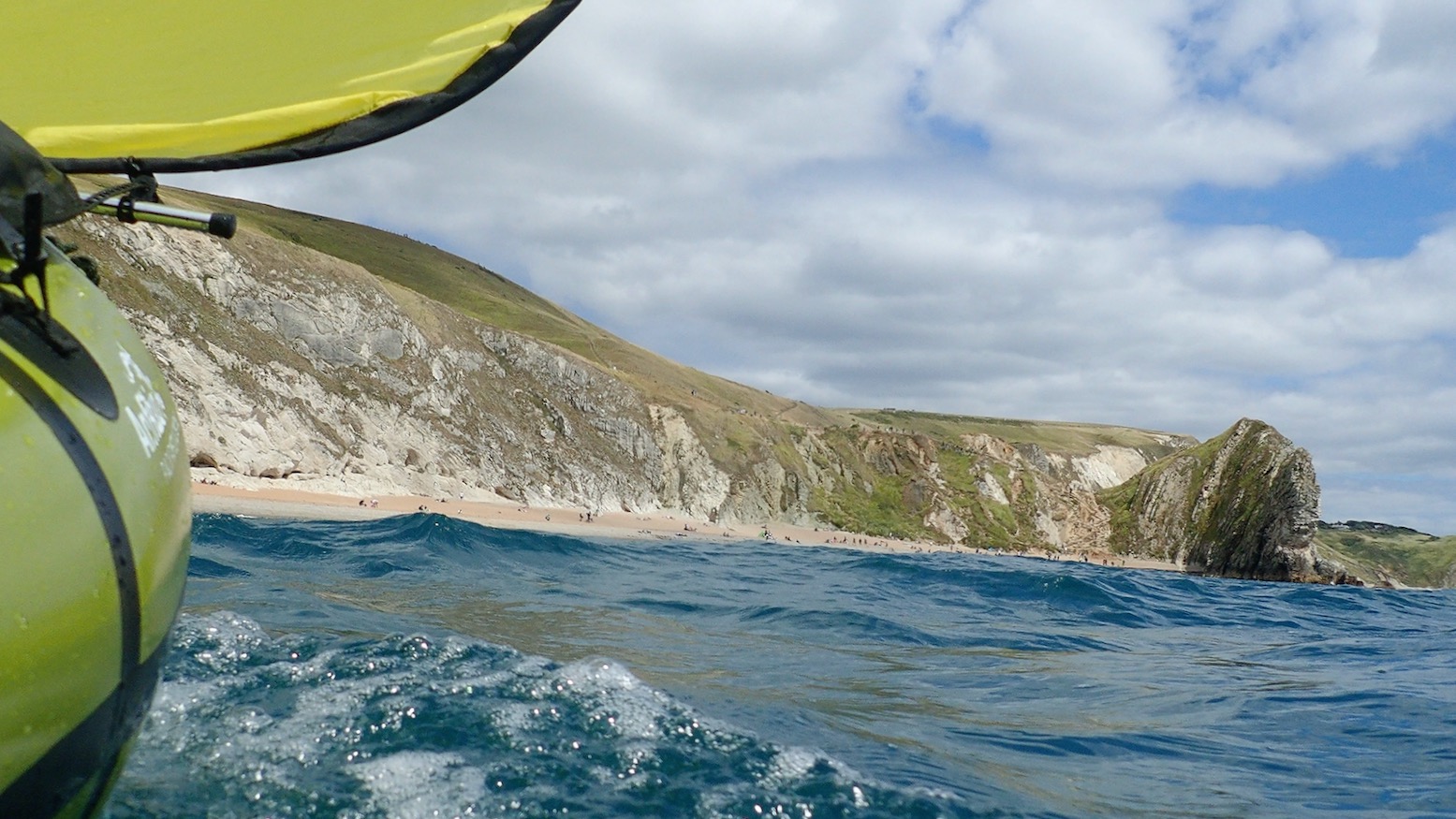
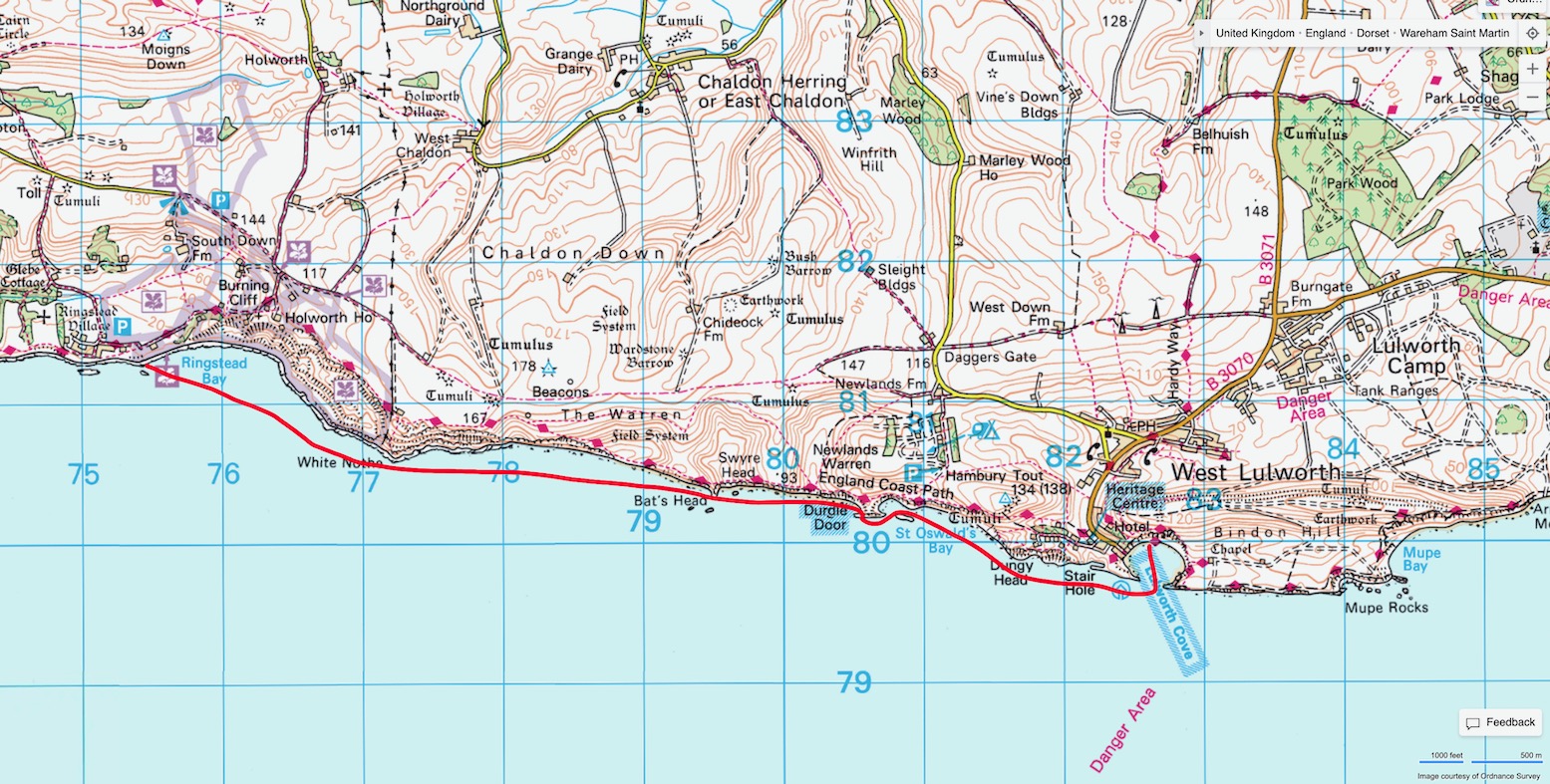
So in the face of predicted moderate winds I cooked up a 50-km Jurassic overnighter from Weymouth to Swanage in Dorset. I’m pretty sure they opportunistically rebranded the plain old Purbeck or just ‘Dorset’ coast as the ‘Jurassic Coast‘ soon after that 1993 movie and haven’t looked back since. Like much of the Southwest coast, the beaches and country lanes become a logjam of holidaymakers on a warm summer’s day. On the water, our paddle would pass below sections of cliffs a couple of miles long and take us to the famed landmarks of Lulworth Cove, Durdle Door arch (top of the page) and Dancing Ledge. We could even carry on back north past Old Harry’s Rocks and across Studland Bay right into Poole Harbour to catch out trains home.
TXL at sea
Compared to using regular (solo) packrafts, my confidence in my TXL for sea paddling is a revelation. After all, it’s still just another blobby, single-chamber packraft. It must be a combination of the added size giving a kayak-like perception of security (as I found in my MRS Nomad), as well as the responsiveness and speed from a longer waterline and, I now recognise, the sometimes noticeable added glide from the Multimat floor. There’s also the fact that paddlechum Barry was up for the Dorset run in his similar MRS Nomad, making this untypical packraft outing less daunting.
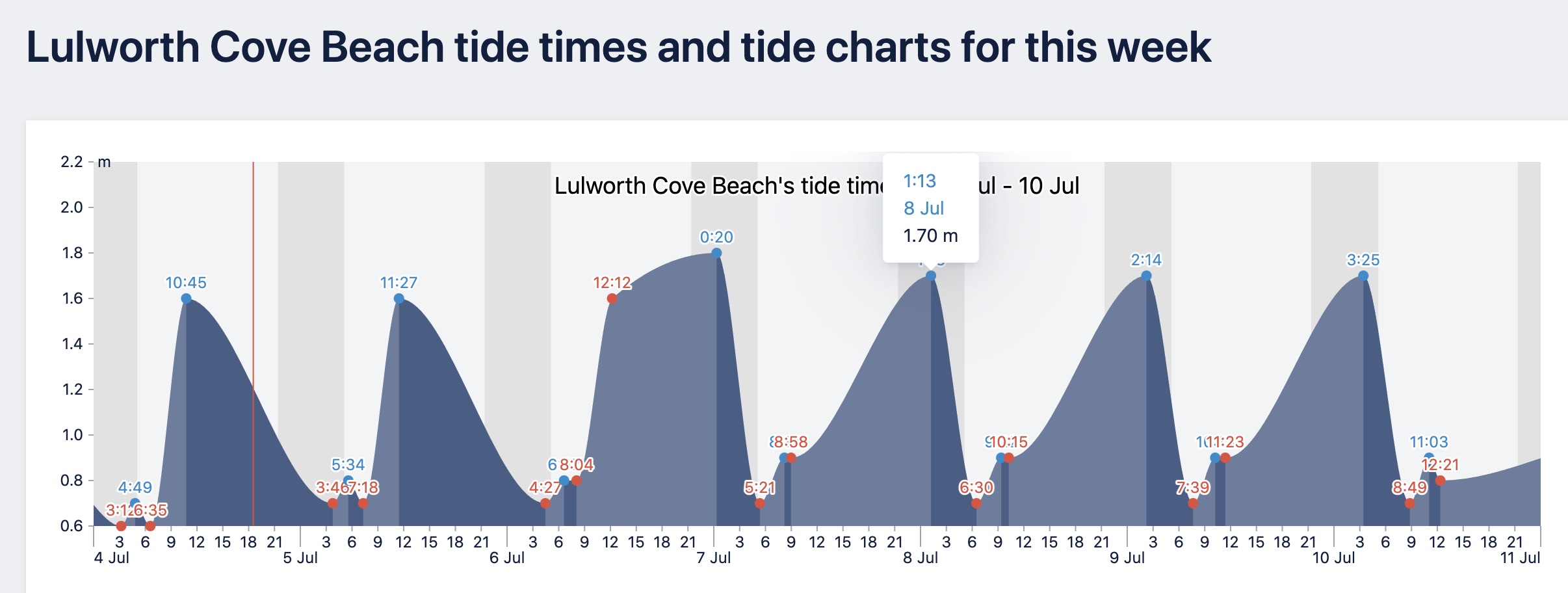
Lulworth tides – all or nothing (of not much).
Modest, two-metre tides off Purbeck
For some bathymetric reason – possibly the Atlantic tidal surge backing up in the Straits of Dover, plus hidden offshore shelves – the tides off the east Dorset coast are very odd: they can rise or drop all day, but have a range of just two metres, about as low as it gets in the UK. That ought to mean moderate ebb flows pushing up against prevailing westerlies, plus we were heading into neaps. And while often cliff-bound, if we stayed alert to escape routes we could easily bail and walk or climb out with our packrafts.
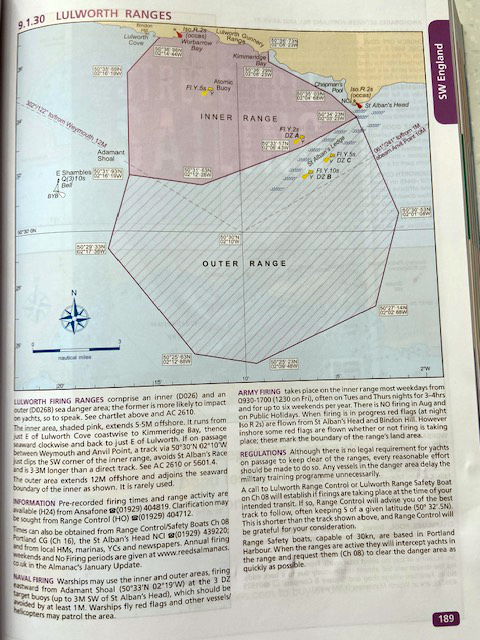
East of Lulworth Cove the Jurassic Coast‘s bucket & spade Babylon is interrupted by a 5-mile wide Danger Area – an army firing range. This was probably not one of UNESCO’s criteria for World Heritage status, but the SW coastal path also gets closed for a similar distance. Barry’s Reeds Almanac had a page or two on this (left), as well as useful tidal flow charts (drops to the west; rises east). I left it to Barry to call the ‘0800 DUCK!’ number, but imagined surely they’d leave the target practice to the off season. In fact they’re all it most of the time Mon–Fri, including an evening session 9pm to midnight: all we had to do was click this.
fishing.app – handy and similar toa Reeds Almanac but free
Early train to Weymouth
With a plan taking shape, I in turn bought a copy of Pesda’s South West Sea Kayaking in the hope of being alerted to local anomalies. I’m glad I did. It turned up with just hours to spare and identified that the run from Kimmeridge Bay round the Purbeck corner to Swanage was a grade up from the easy section from Weymouth. With headlands, submarine ledges and long lines of cliffs, without a foot recce I decided we may be better off skipping this bit.
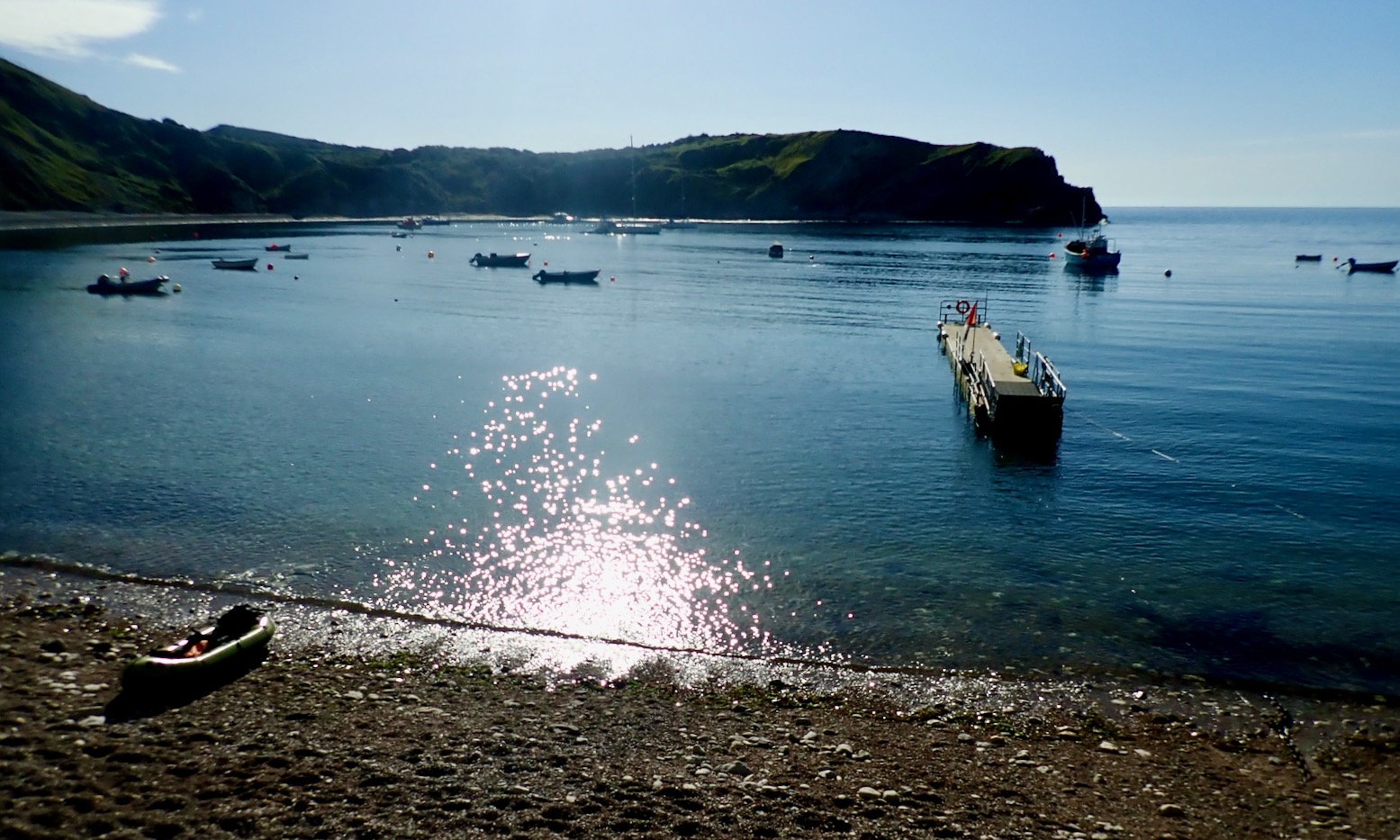
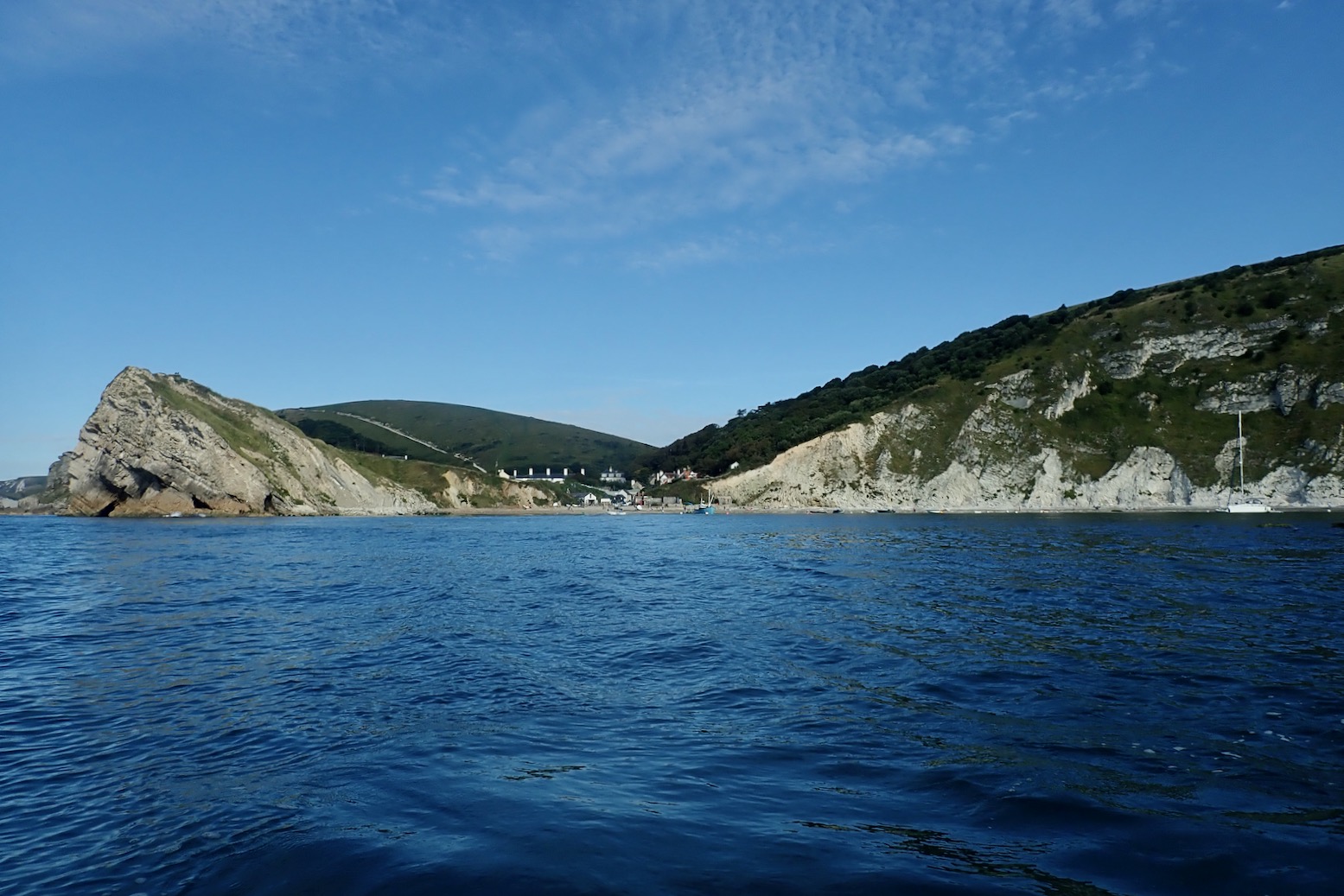
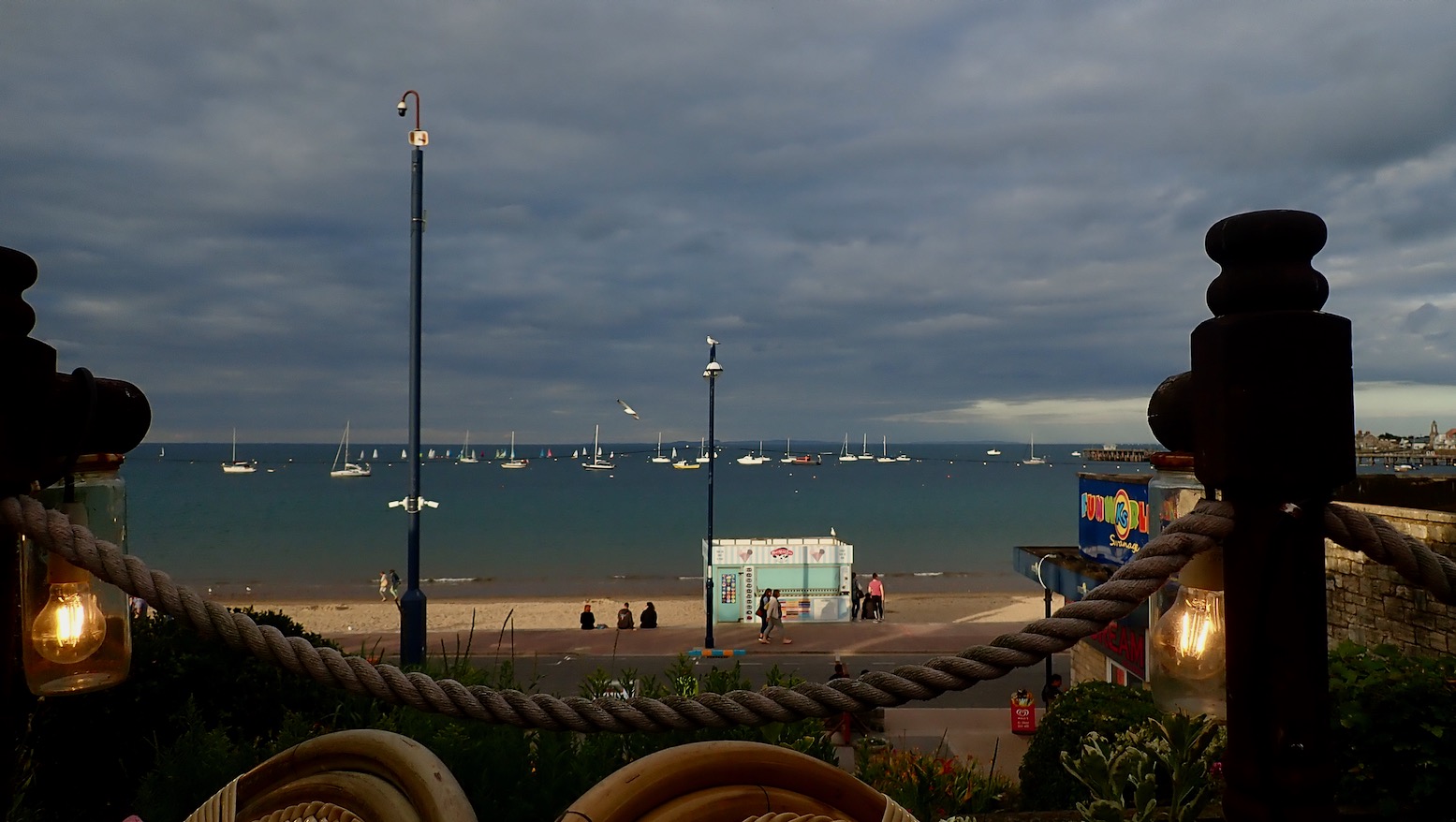
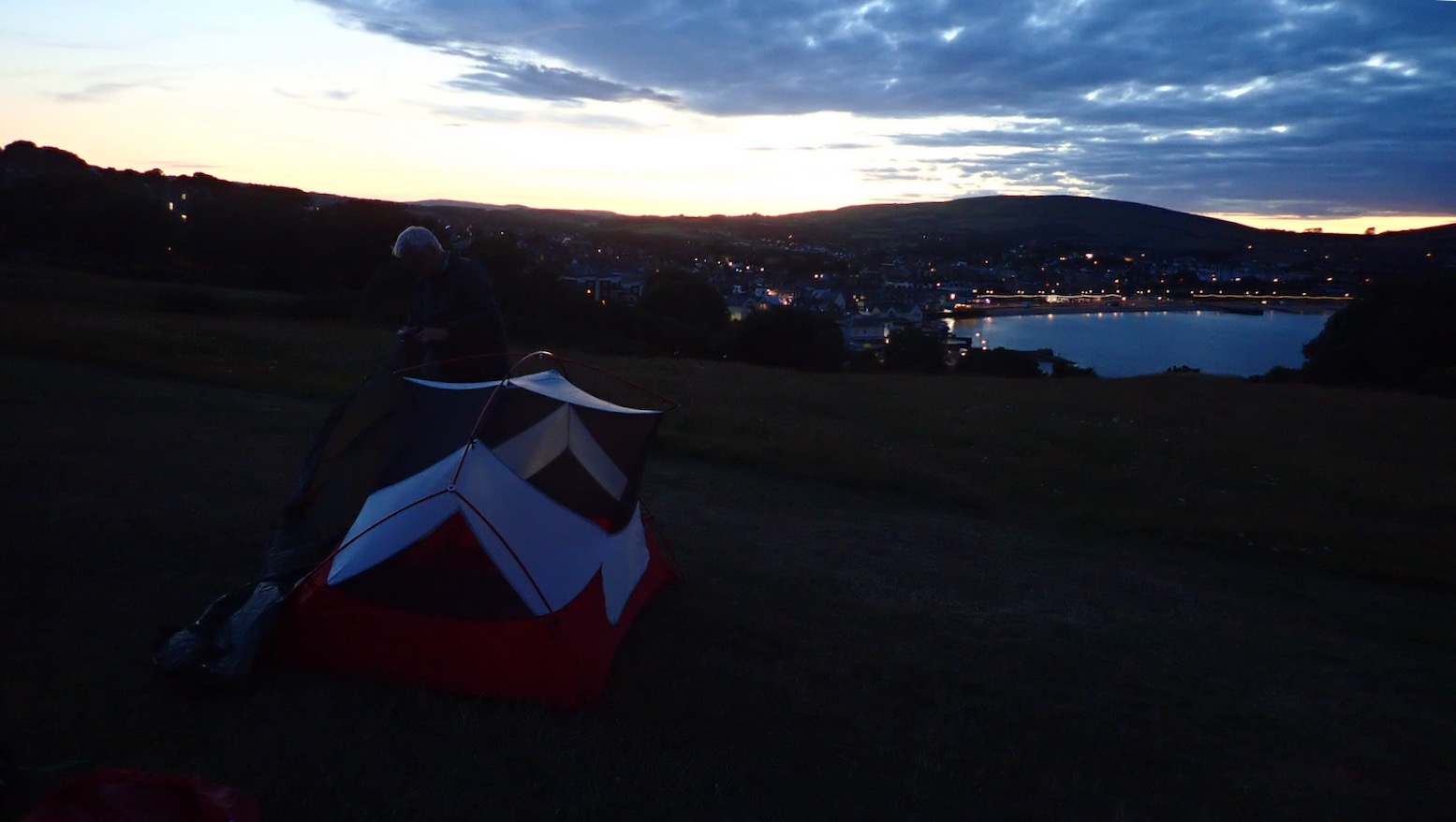
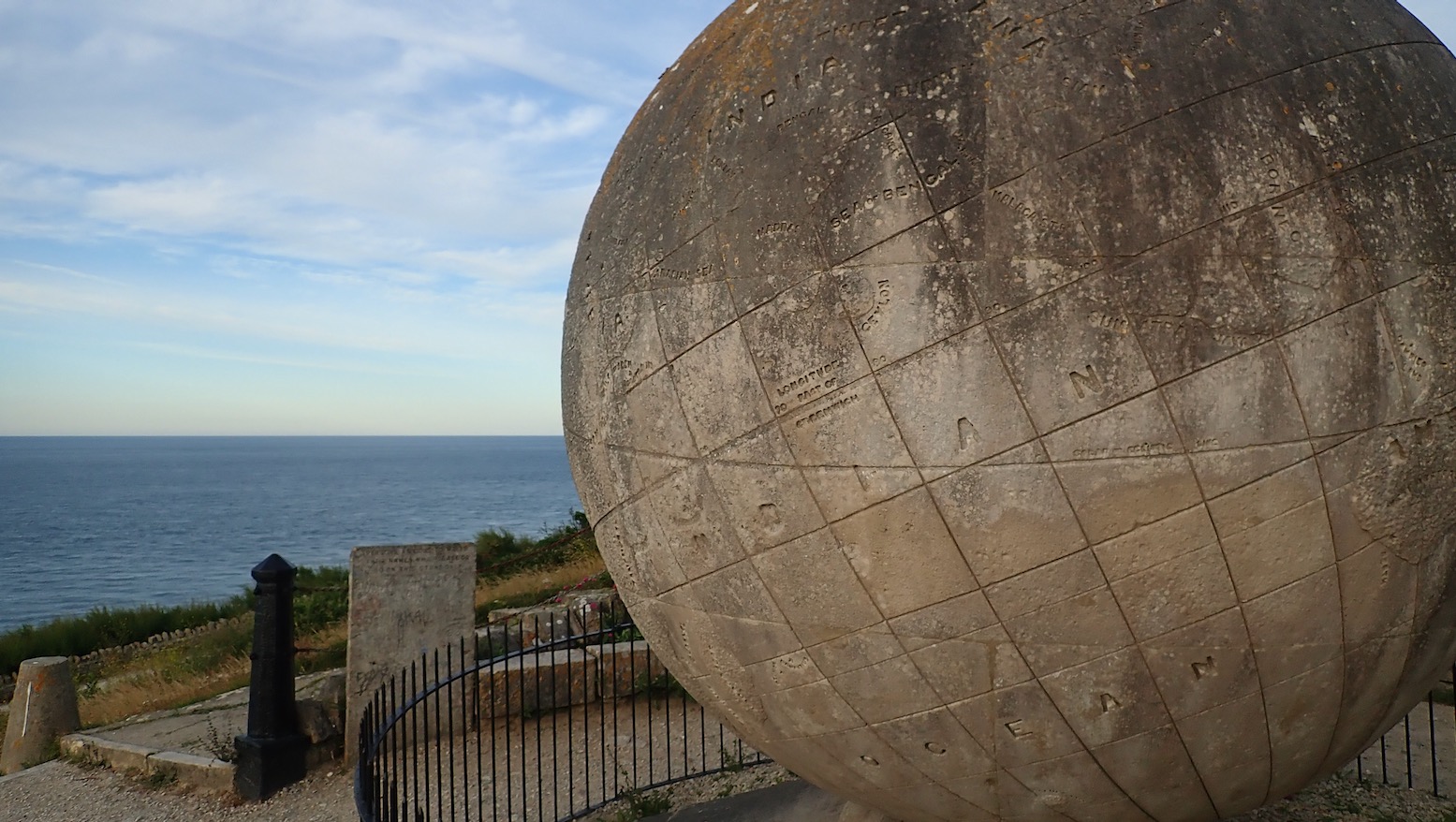
It’s noon in Weymouth, but with offshores now predicted by late afternoon, we fast forward by taxi to Ringstead Bay, 5 miles in. That first section from Weymouth looks nothing special.Put in at Ringstead. Ten mph westerlies blowing against an ebbing neap tide.My Mk2 transverse bowsprit for a wide WindPaddle sail mount to limit swaying in stronger winds. I’m giving the Multimat floor yet another go too, all the better to skim over the water. We’re on the water at 1pm, hoping to reach Chapman’s Pool, about 21km away. But around 5pm winds are said to veer offshore and strengthen, so we’ll see. We sail at about 5-6kph – not much faster than paddling – but I note my TXL creeps forward about half a click faster than the MRS – must be the stiffening Multimat.Propelled at paddling speed by his inflatable AirSail, Barry casually checks his investment portfolio.The cliffs below Chaldon Downs. At times we paddled as we sailed to make less work for the wind.Forty five minutes in, I pull in the sail and line the TXL up to thread Bat’s Head arch. Note how the layers of chalk beds here have been pushed up to nearly vertical. Give it half a million years and Bat’s Head will be as big as nearby Durdle Door.Approaching the famous Durdle Door arch alongside a crowded beach. The TXL still weathercocks a bit under sail; I keep having to steer hard inland, but the bowsprit ‘stick’ limits the sail’s ability to twist. Or maybe the wind’s bouncing off the cliffs and blowing us offshore a little. Sitting further back to weight the back end over the waves may help.Sunbathers watch spellbound as Barry smoothly ‘Durdles the Door’ – a Southwest kayaker’s rite of passage.The Door has been durdled. Some claim ‘Dorset’ (formerly Wessex) was named after this famous arch. In high summer young bloods jump off the 60-metre arch. Appropriately, it’s called ‘tombstoning’.Near the entrance into Lulworth Cove things get choppy. Sat high on the airmat floor, if I feel unstable I can easily let it down. As we head through the Cove’s narrow neck a patrol boat circles back and instructs Barry we can’t carry on east; the army ranges are firing. ‘I thought you said you were going call them, Barry? You had one job to do…’ ‘But you said they hardly ever do this on a balmy, July’s day!’ And so it went on…360° selfing in sheltered Lulworth Cove.I spot some IK compadres lugging an AE Elite.A salty-eared boatman tells us the army pack up about 5pm, about 2.5 hours from now by which time the offshores may be on us as we cross the Kimmeridge Ledges mentioned in the Pesda book. As we slurp a 99 with sprinkles the odd gust blows offshore. We can’t even pack up and walk the cliff path; it’s closed too, and so is the B3070 road. Barry wants to paddle on a 5pm, but I propose we bus to Swanage rather than risk being be left high and dry. Tomorrow we’ll paddle north towards Poole – or as far as the predicted headwinds allow.So a paltry 5 miles – but the classic stretch of the Jurassic Coast.A couple of hours later we enjoy a pint and…a lavish seafood medley overlooking Swanage Bay.But there’s no campsite till August, so we pitch for free up in Durlston Country Park to the sound of beery revellers and Tuesday-night hoons doing burn-outs along the seafront. What can it be like on a Saturday night?Six am next morning, a light breeze blowing from the northwest means no condensation ;-)) The Anfibio Multimat passed the sleeping test, too.I walk a mile south to Purbeck’s corner at Durlston Head to inspect the tidal stream. Two hours before LW, it’s negligible, but further west, St Albans Head just out of Chapman’s Pool is said to be stronger. I must do that walk sometime. Above, a ferry heads from Poole to the Channel Islands.Durlston’s famous 1890 Great Globe.‘The Earth is a planet and one of God’s glorious creations.’Looking back north you just see our tents on Peveril Point, Ballard Down chalk cliffs and pinnacles stretch out beyond, and Bournemouth’s at the back.I’m amazed how Barry always manages to roll his MRS up so compactly.A modest breakfast in the Swanage sunshine.At the cafe we meet Rach and Mark setting off on the final day of a staggering 630-mile walk along the Southwest coast from Minehead in north Devon. Their picture above taken a few hours later.Meanwhile we prime our boats for the 6.3 miles past Old Harry to Poole Harbour Entrance. We may carry on to Poole itself, but a strengthening wind may nix that idea.No sailing today, Barry inches into the light morning breeze across Swanage Bay. We reversed this trip a couple of months back.Ballard cliffs in the wind’s lee at glassy low water.Ideal paddling conditions – a chance to explore tidal caves I’ve never noticed before.Ballard’s spike, thought by some to be a fossilised Dendrosauraus tooth.We approach the Pinnacles to the squawk of agitated seabirds.Arches ripe for threading as far as the eye can see.But this morning the tide is too low.And it means there’s a lot of this string-weed floating about. It catches in our skegs but I have a solution.Leaving Harry’s, Barry’s is a bit of a Lethargic Larry cutting across Studland Bay. Halfway across, I remove a metre-long, kilo of Swanage string-weed caught in his skeg.It’s all going nicely until 10.30am when the wind kicks up, then picks up some more. But the GPS revealed we kept plugging on at 5kph, just with a lot more effort. As Barry observed, it was a slog but good to know our packrafts can progress against this sort of wind.With brain-out jet-skiers, sailboats, motorboats, working boats and the rattling Sandbanks chain ferry, we have to time our crossing across the busy vortex of Poole Harbour Entrance. Hitting 8kph, we cross a sharp eddyline where the incoming tide clashed with still-draining Poole Harbour. Barry hops out quick before the chain ferry trundles back. (Turns out it’s actually free for northbound pedestrians).From Swanage to Sandbanks, followed by a 90-minute walk to Poole station for the train home.
I’ve owned Anfibio Sigma TXLs for over three years and am now on my second, a blue TXL+. I’ve done several day trips two-up, solo and some sailing. It’s all helped give me ideas on how to refine this boat to my needs. On buying the first green one I got the optional Multimat airfloor, additional foam block seat, paddle leash and use my old Anfibio DeckPack on most trips. I also got a spare skeg patch and mounted a second skeg under the bow – it made things worse. Here’s a reappraisal of the Sigma TXL+ followed by a list of mods which have worked for me.
Spacious solo Light for its size Room for 1.9 people TubeBags very handy, even for day trips Level solo trim (unlike Rebel 2K and similar) Multimat floor’s benefits are noticeable (OK to sleep on, too) Broad, thick front seatbase jams in and spreads the load: less floor sag when solo Thicker 420-D floor extension ‘bumpers’ over bow and stern Variety of set-ups and sitting positions, solo or two-up.
Stock skeg mounted too high (or too small) Inflatable front backrest lacks support Optional foam seat block unusable For me, the paddle leash was inferior to my regular mooring line An Exped-style dump valve in the seatbase would be nice (instant deflation) Reduced floor space when two-up with Multimat (depends on your sizes)
Best Sigma TXL Modifications & Tips
1
Fit a thin foam backrest (+40g) for better support. Fits with no mods bar some helpful zip-tie slip-rings at the back. Works best with a footrest (6). Anfibio now fit and sell the Performance BackRest for €32
2
Fit a skeg mount to the floor so it’s fully submerged. Needed for sailing. Otherwise reversing the stock skeg improves submergence a bit, or make a bigger one. [Both skegs shown, only one needed for paddling] (Anfibio now position the skeg further forward on their longer boats)
3
Knee straps improve boat connection both on flatwater and when waves get lively, plus they help bracing into a headwind and are handy lifting handles on land. Above is the old Anfibio version which requires gluing on 4 tabs as none of the stock ones line up or are robust enough. Anfibio do a ‘5-P’ thigh strap – even more gluing needed but better for whitewater. Newer TXLs come with ‘ladder’ fitting tabs on the hull sides
4
There’s a lot of volume in a TXL so a Flextailgear electric pump works away while you do other prep. Using rubbery, self-amalgamating tape, I adapted a spare nozzle to fit both Boston valve ports (top). The soft grey adapter supplied (bottom left) fits the main port but could pull off and fall inside. If you use it, glue it on.
5
I tried a roll-top Anfibio Multibag Footrest but reverted to the simpler MRS footrest I used on my Nomad, with its overlong inflation hose. It creates a flat surface to push feet against for a good paddle draw.
6
Consider Anfibio’s Lite Seat base for two-up only (-176g). Besides being less than half the weight, the curved rear edge gives a little more footroom for the rear paddler compared to the broad, rectangular stock front seat base (see backrest picture 1).
7
The TXL’s frontmost tab mounts are close together. If you’re sailing with a WindPaddle or Anfibio AirSail/PackSail, consider a Transverse Bowsprit (aka: ‘stick’) so the sail’s mounts are spread wide. It stabilises the sail which can flutter side-to-side when winds get strong.
8
Initially I wasn’t convinced but now I am: the 900-gram Anfibio Multimat reduces sagging, especially solo, and helps the TXL glide. Yes, it’s another thing to have to carry and pump up, and I’ve already repaired mine once, but one time I paddled at 6kph on a calm sea for nearly an hour which I’m sure was made easier with the Multimat. Why Multimat? You can sleep on it too.
9
Skegs can catch weeds; soon you’re hauling 2 kilos of weed a metre long.Stick-on WeedBaffle™ in action
10
Twice my skeg has dislodged, pushing and pulling on the seafloor. They say it’s just me but I’ve now fitted a reusable ziptie into the skeg mount and thread it through the skeg hole. No more dislodged skegs ;-)