Category Archives: Travel Reports

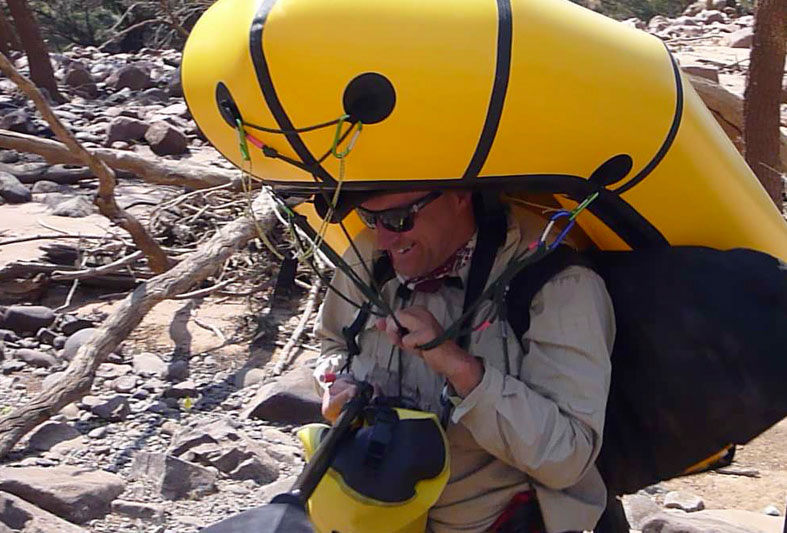
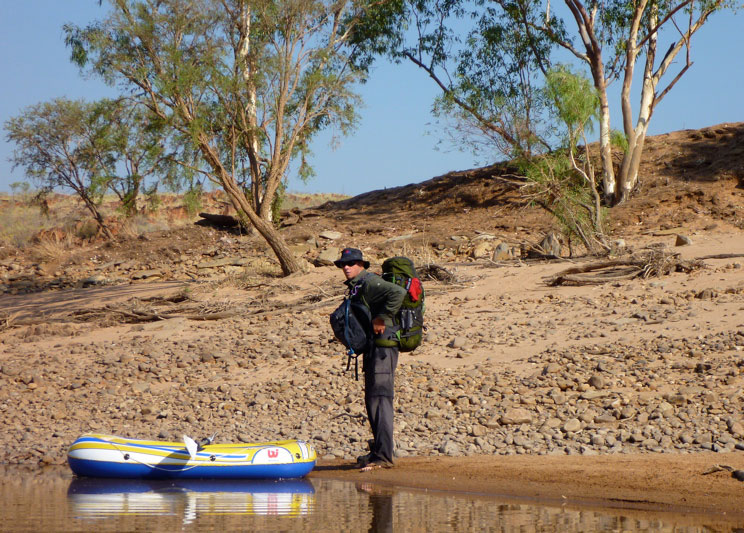
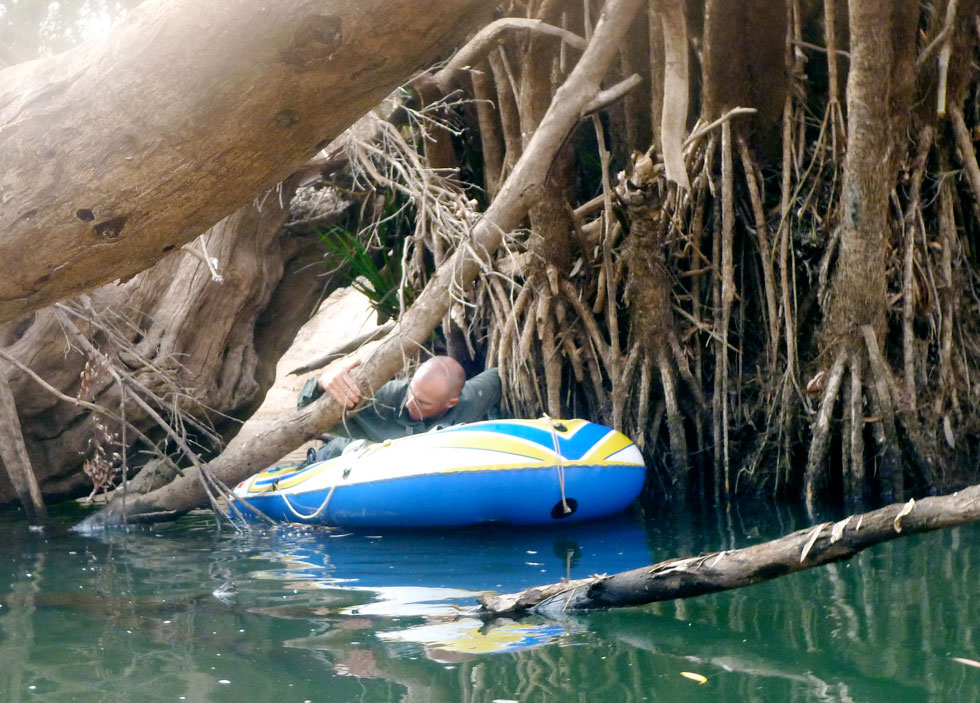
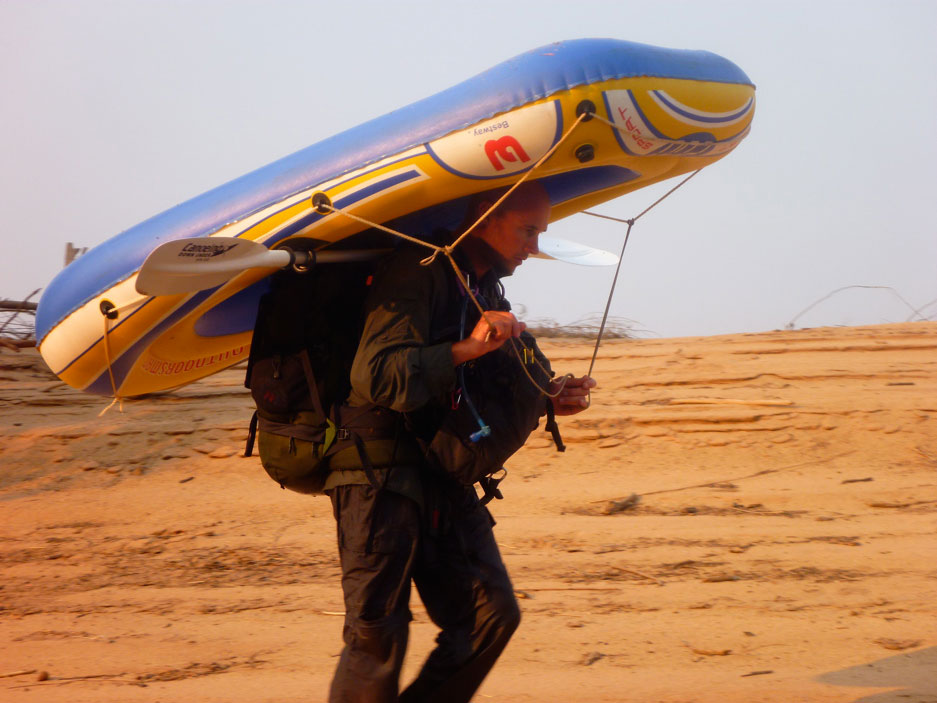
Travelling with packboats

Urban Packrafting: Kebab Death Weir Tunnel

See also: Wandle: An Urban Packrafting Nightmare
Packrafting London’s Regents Canal
Urban Kayaking: East London

The other day a friend relatively new to yaking invited me and a mate to paddle a river near her home. The Colne runs between the edge of Greater London and the M25 motorway just a stone’s throw from Heathrow airport.
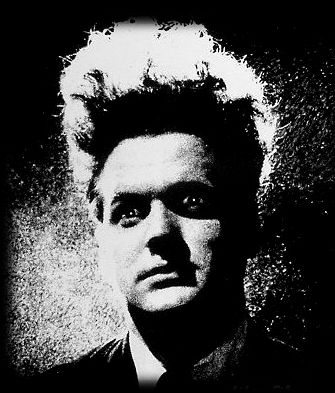
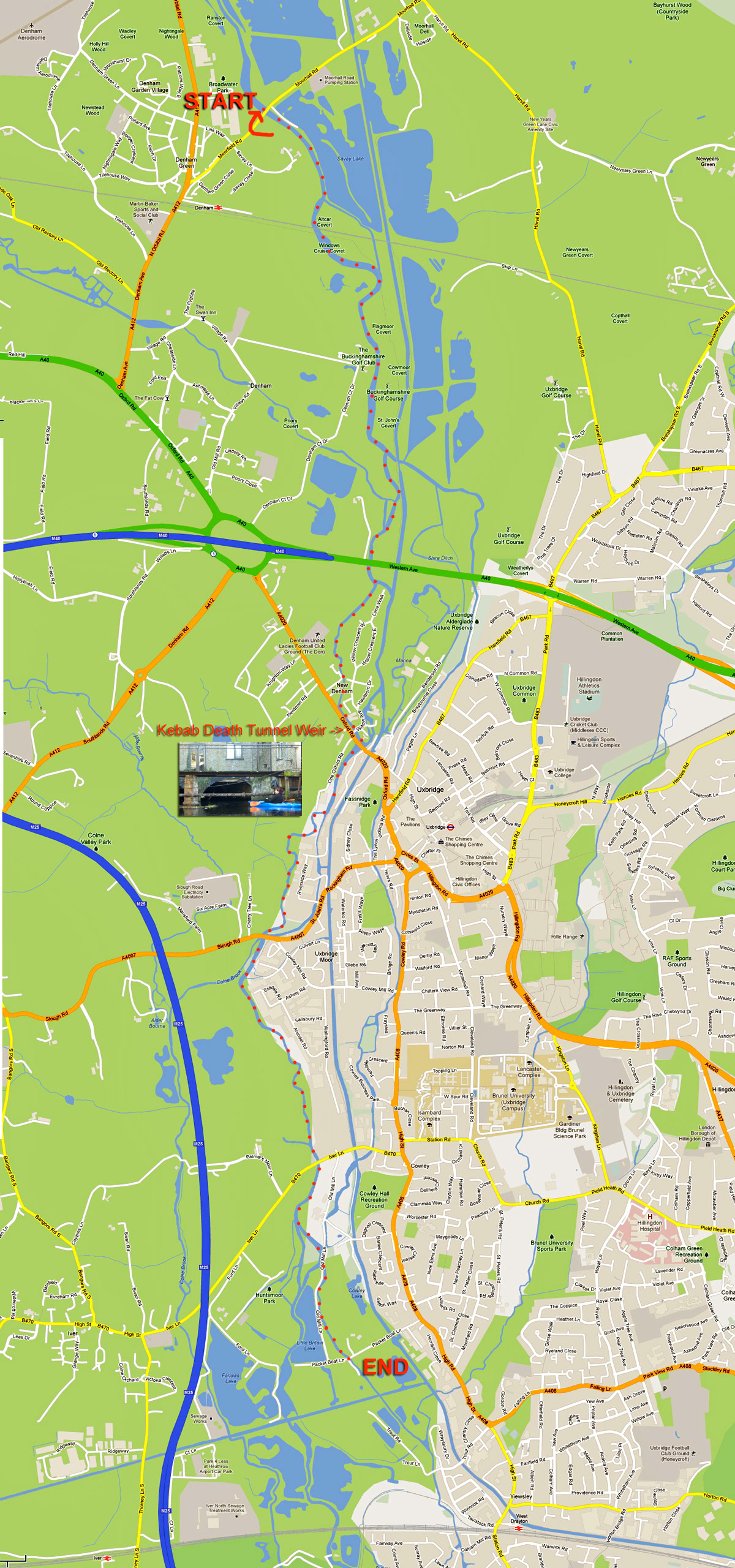
Looking at a map (far below) and more so at a sat image, it’s hard to distinguish the actual course of the Colne among the many waterways, reservoirs, overgrowths and the Grand Union canal which all fill this part of west London’s perimeter, but Lois had already recce’d a route which included half a dozen fun weirs and other challenges along the way –  all up a run of around six miles. Chief among these tests was what must surely be an urban paddler’s nightmare; a weir drop inside a low tunnel that passed under a kebab shop and which we dubbed The Kebab Death Tunnel Weir (the word order is interchangeable). The thought of being spun in a dank, sunless hydraulic or jammed against a rusting grate as clammy kebab fat dripped onto your forehead from cracks in the overhead brickwork was surely the makings of a deleted scene from David Lynch’s Eraserhead.

All that was far from our thoughts as we bundled over a bridge parapet and inflated Lois’ Sunny IK which Robin was borrowing. Lois was using her newish hardshell Dagger and I was in my Yak packraft. Lois quite rightly rationalised her controversial IK betrayal by explaining that as she lived on a canal she just wanted a boat to hop into anytime (her Gumos having sprung slow leaks). I can relate to that though I wouldn’t go as far as actually buying a plastic coffin.
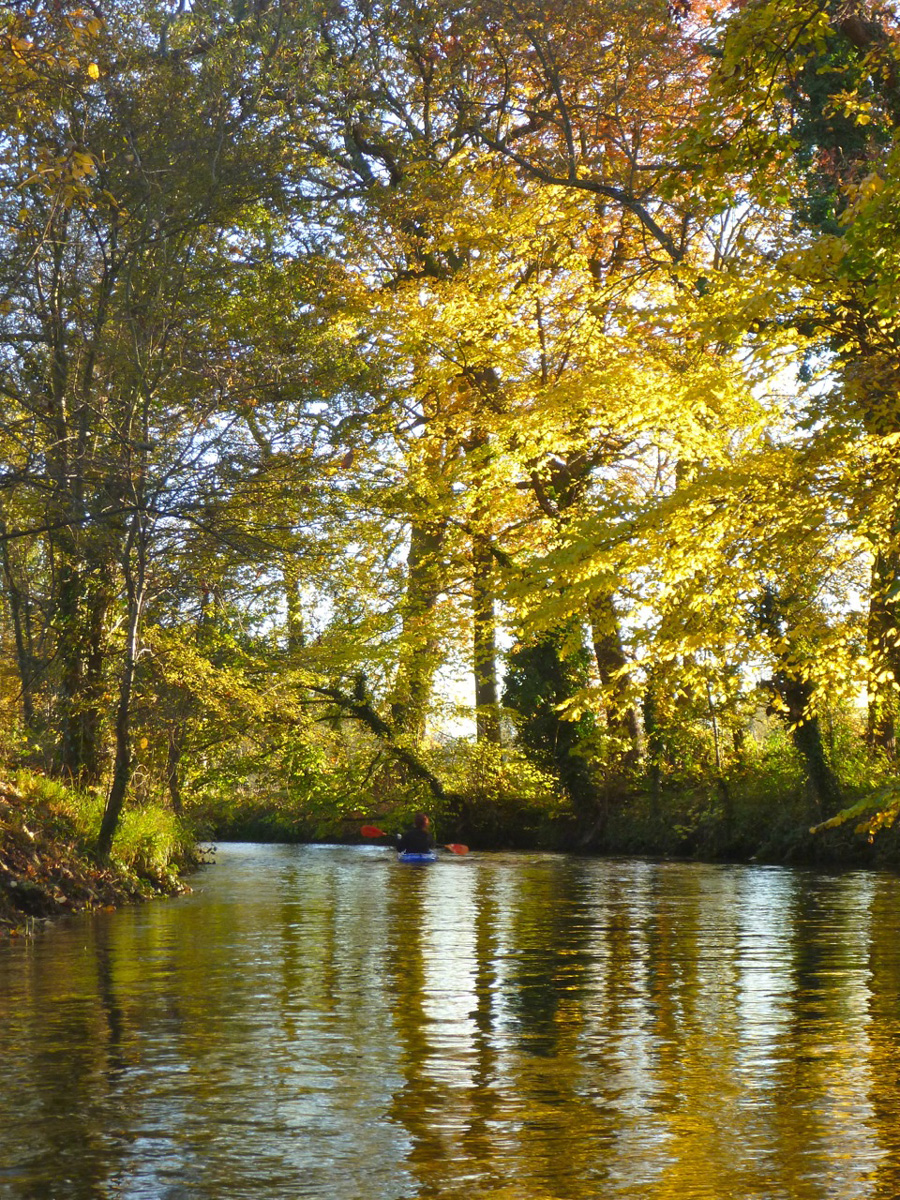
We swooshed off under the bridge and downstream on a lovely autumn’s day, along what transpired to actually be a proper river with a kosher current, far from my expectations of a concrete lined culvert awash with urban detritus and pestilent scum. We passed under a huge arc of brickwork supporting the westbound mainline railway and soon sidled up alongside the Grand Union canal. Not that we could see it. Even the OS map gets quite confusing, marking rivers or other waterways passing across lakes and wetland reserves. But once on the river the way ahead was usually obvious.
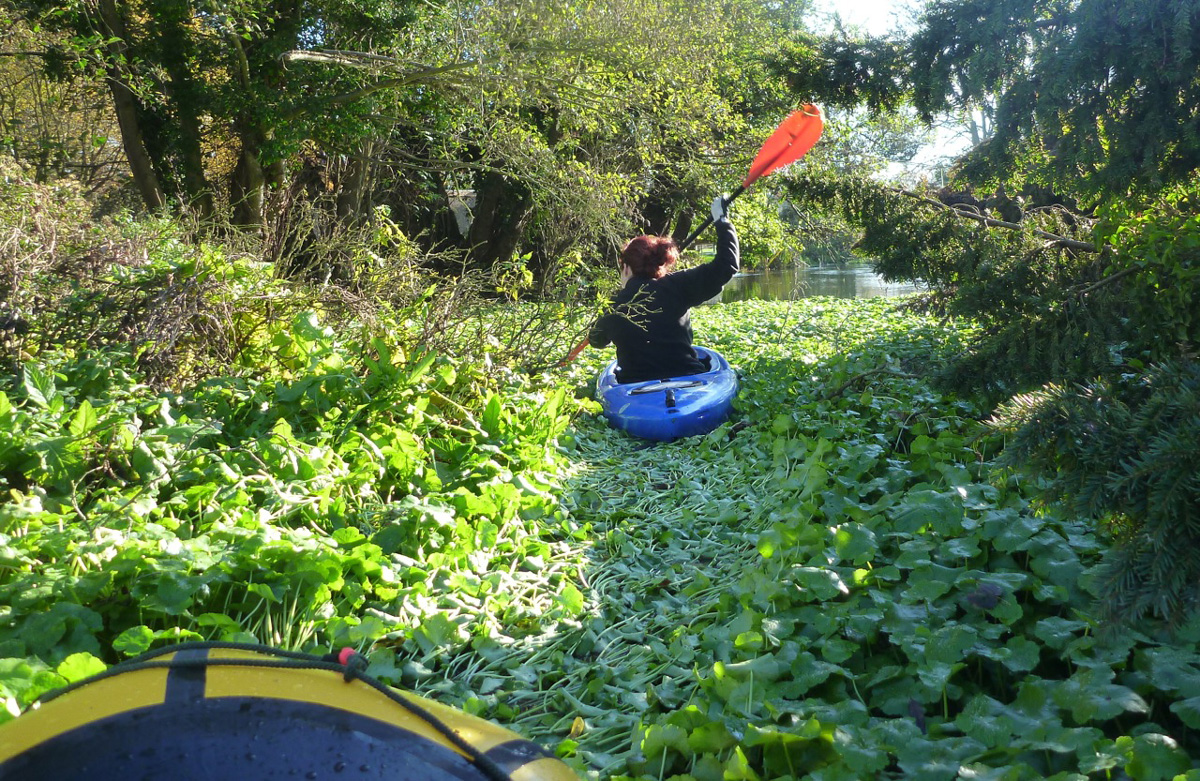
At one point what looked like thick mat of giant watercress carpeted the river bank to bank (actually pennywort, a very troublesome weed I am informed). Up ahead Lois’ Dagger ploughed into the vegetation (left) which amazingly proved to be paddleable, although with my wide, flat-hulled ‘packa I found reaching out and tugging on the floating wortrug worked best.

Soon we came to our first weir, a drop of a foot or so but where we did the right thing and hopped out to check we weren’t tipping over onto some gnarly boat spike. All clear so Lois slid over effortlessly into some shallows, then Robin beached himself inelegantly on the rim in the possibly under-inflated Solar. Knowing this, I sped the Yak up to warp speed and scrapped over with a splash.

More riverine bliss ensued with barely a crisp packet to sully our glide. Delicate foot bridges led to cosy cottages. Another double weir looked deadly from above but recce’d from below was no drama. No having yet recognised the benefits of spray skirts, Lois’ Dagger was taking a cockpitful on some of these weir drops. The Solar too scooped up some swill, but this was the first occasion where I zipped on the Alpacka’s spray skirt – mostly to keep my legs warm but also proving it did what it was supposed to.

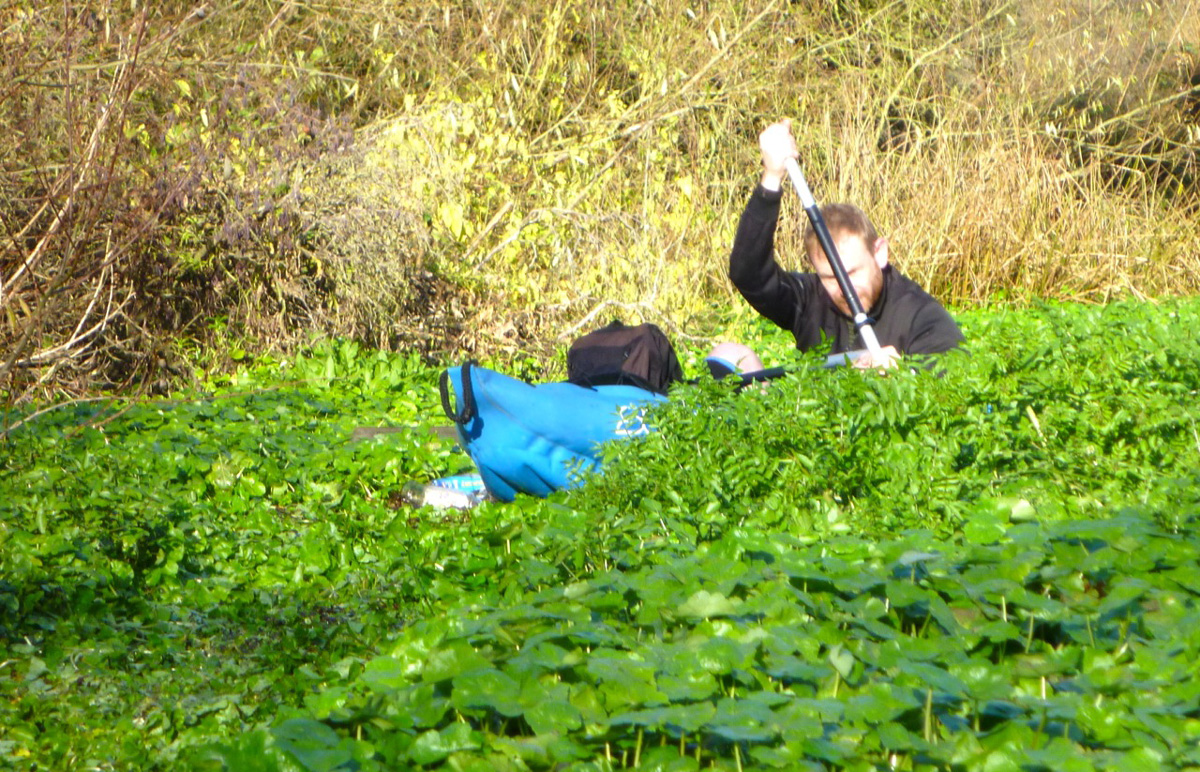
Up ahead, another clot of creswort choked the channel, but this had got thick enough to catch some crap so we hauled out stinky twigs and other rancid mush before hacking our way in. The rigid hardshell was best; my Alpacka (above) while broad was at least light, while the Gumboat put up a fight and Robin split his paddle all the better to dig his way through (right). Another weir with a drop of a couple of feet gave Lois a fresh rinse as we neared the outer London suburb of Uxbridge.
Bankside trees gave way to razor-topped railings protecting the back end of industrial units and things turned decidedly less serene as we neared the gaping twin maws of the Death Tunnel. It burrowed under a parade of shops, the pride of which was unquestionably the broad, handsome frontage of the Burger Kebab Galaxy restaurant.
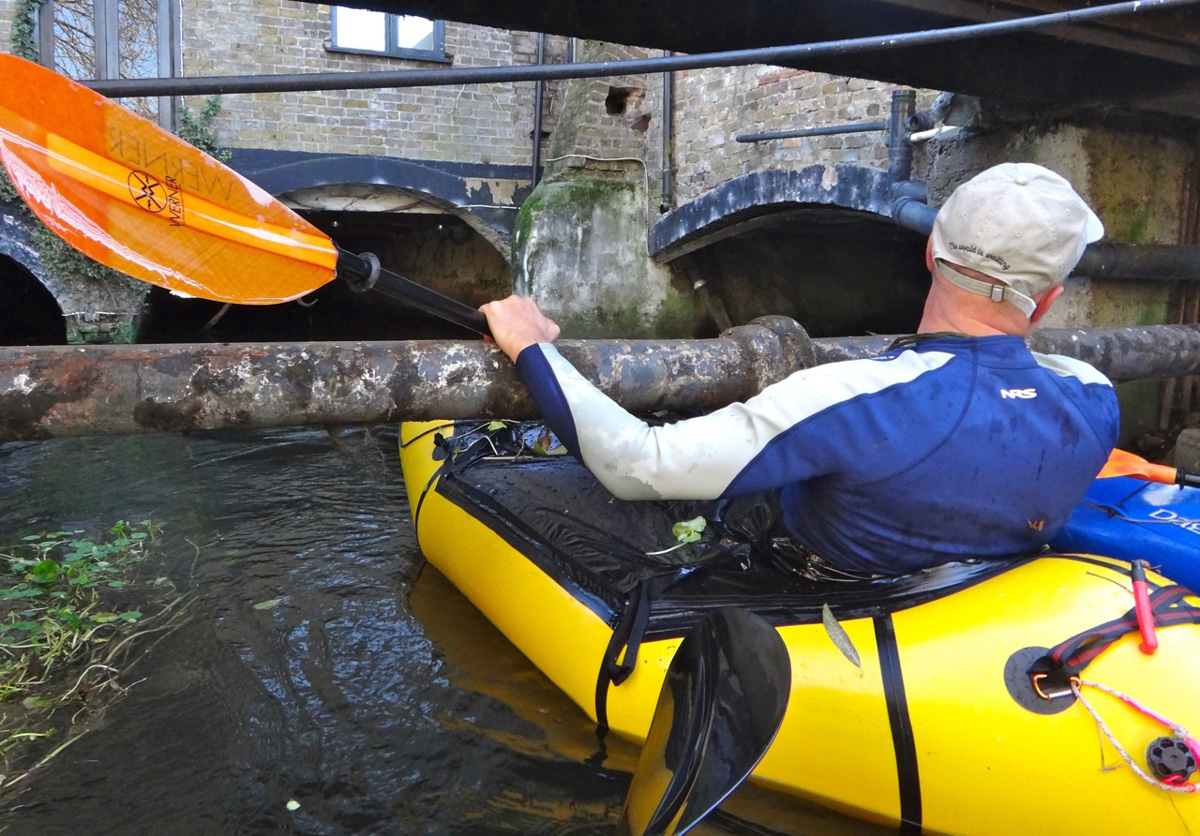
Two limbo-low bridges lead to an even lower rusty sewer pipe spanning the canal, and up ahead two arches reached into the watery gloom like a farmer’s rubber glove and where the rank stench of congealed doner fat choked the air. A chink of light marked the far end of the 70-foot tunnel (left) where the roof – strung with electrical piping, rotting rafters and mummified bats – pressed down to just a couple of feet right over the edge of the drop. Lois said last time the water was higher and they couldn’t even see the end, but they’d edged in anyway, slid over and survived.
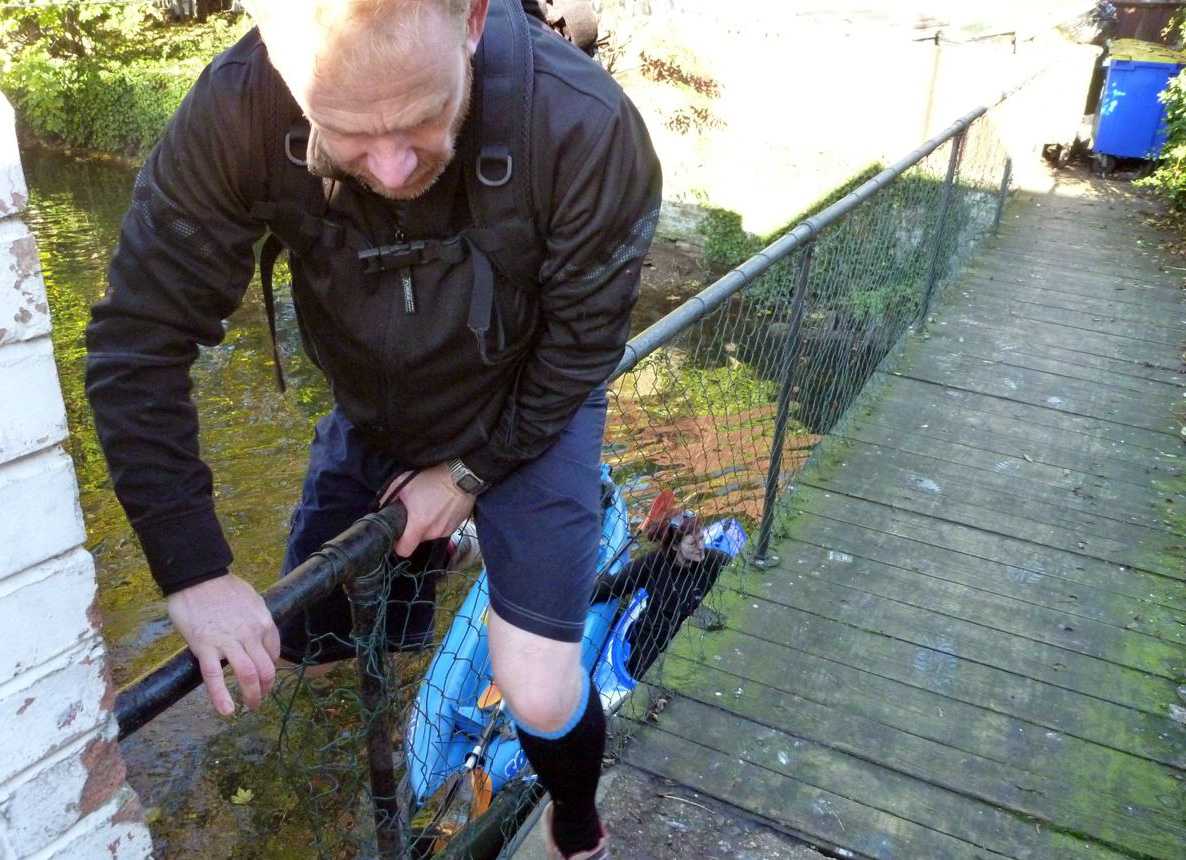
Even then, you never know when a burned-out scooter or half a tree might be poised to spoil your weir and anyway, Lois was sure this weir was higher than anything we’d done so far. So Robin and I clambered up onto the footbridge (left), walked round the far side and waded up into the tunnel as far as we could against the current. With the help of my camera’s flash I was able to get far enough in to see that the three-foot weir was actually a narrow 45° slide of about 3 feet, not a straight drop. Much less risky.

Now reassured that I wouldn’t be pitched out of the packraft to smack, face-first into to a span of festering, greasy brickwork, back at the boat I squeezed myself under the sewer pipe (right) and let the speeding current draw me in, making sure to keep well away from a broad side tunnel which led off to the right and didn’t look like it had a happy ending. I didn’t want to end up being squeezed out of someone’s kitchen tap like rubber-boned Janus Stark. In the main tunnel, the roof bore down and I stowed the paddle as I tipped down the chute, getting shoved against the right wall as I ran out towards the light like a near-death experience.
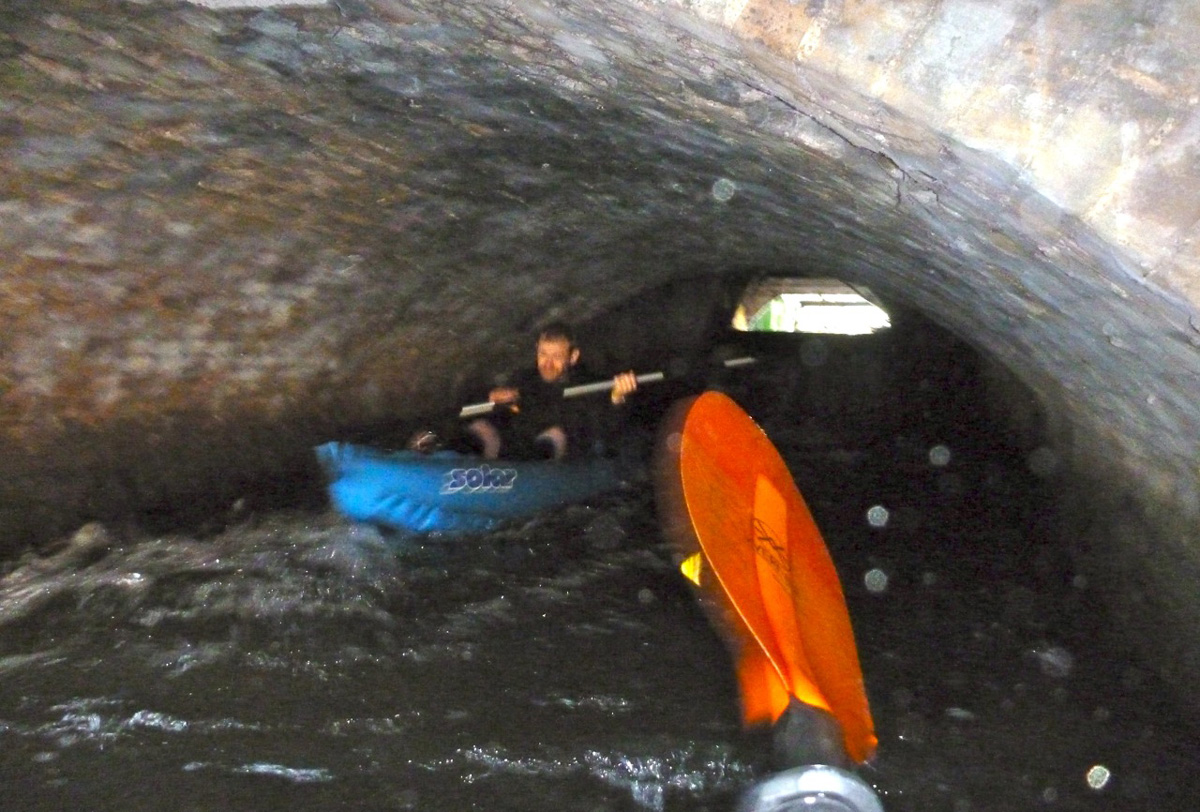
Lois came down next (faintly visible above left) and also got pushed right at the base of the chute and semi capsized.

Kebab Death Horror!

Her paddle floated down towards me but before I could grab it the eddy caught it and floated it back up towards the chute. Meanwhile, soggy arsed Lois hopped out and dragged her waterlogged Dagger into the piercing daylight. Robin came down next (left), got pushed over but kept it together. It seems the tunnel weir had set up a long, thin anti-clockwise circulant or eddy which came upstream and looped back down just below the chute and explained why we’d all got pushed into the right wall as we came off the slide.
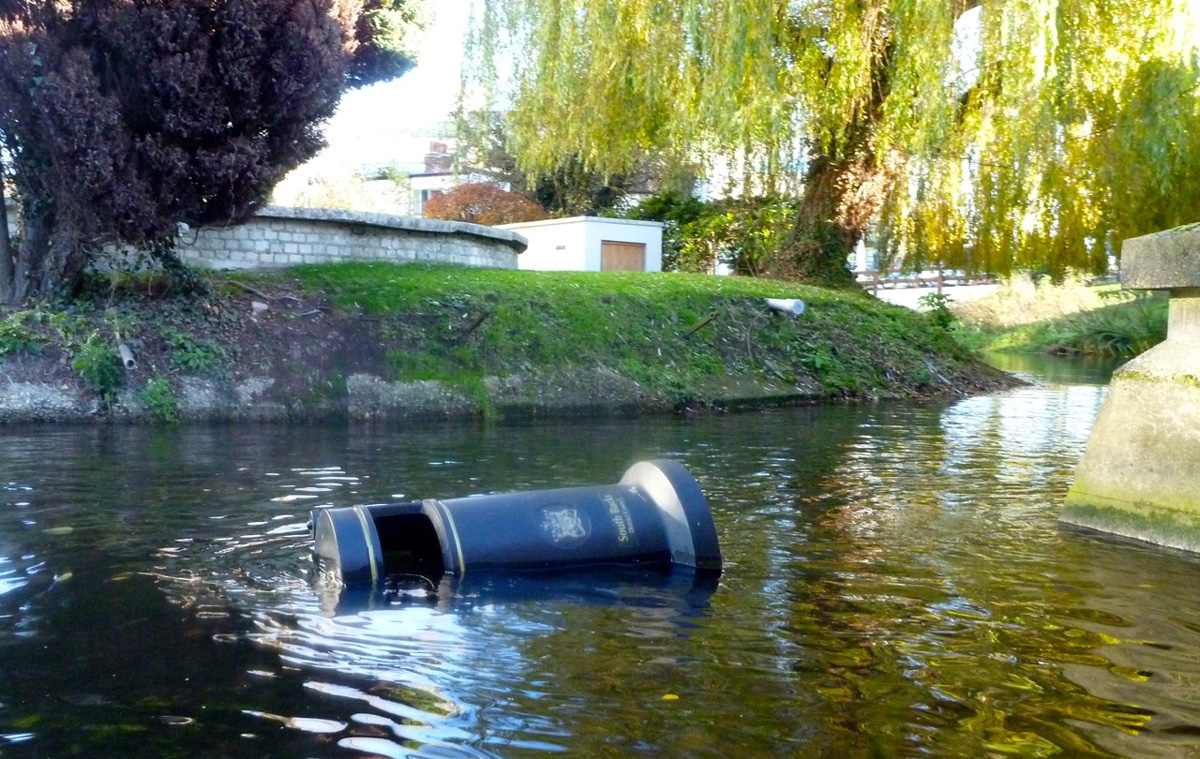
But we’d survived the KWDT and soon cruised past a striking municipal bronze statue depicting a trio of naked nymphs grappling over a giant Christmas pudding (left), a scene plucked from the otherwise unexceptional Lost Chronicles of Uxenbride discovered not far from Kebab Galaxy in 1892. And here at last! A plucky South Bucks District Council dustbin uprooted from it’s roadside vigil and flung into the Colne by some beer-crazed revellers high on nitrous oxide. Now that’s what you call urban packboating!
There was more to come. What is a paddle in merry England without getting a bollocking from a vexed bankside angler. We’d seen a few upstream who’d mostly ignored us (I don’t waste greetings on anglers anymore), but as Robin and I rounded a bend following another weirlette, some grumpy git wearing rubber up to his neck let us know his feelings, concluding with:
You coming back?’ (demonstrating his lack of understanding about how kayaks and rivers interact).
No sirree
Good!’

His mate just down the way was more civil and explained ‘there’s no navigation on this beat, it’s in the agreement…’ pointing to a sign, rather ineffectively positioned downstream that merely said Private Fishing or some such. I didn’t know the paddling status of the Colne and maybe Lois didn’t either, but a quick Google later on showed up threads on the SotP and ukrivers that indeed suggested the Colne hereabouts had been leased by a bankside golf club to Uxbridge Anglers Club, and their £80 membership fee helped entitle them to exclude paddlers on parts of the Colne. What about the Magna Carta and all that? Which parts are off-limits is hard to determine unless there is a blanket paddling ban.

We certainly saw no ‘ No Canoeing’ signs so it all left a sour taste for a while, but that’s the way paddling is in England thanks to Edward the 1st’s short-sighted bequest to his loyal noblemen (or so the story goes).

The last mile or two down to Packet Boat Lane passed without rancour as the late autumn sun seeped through the falling leaves. The current was speeding along by now and negotiating a squeeze around a fallen tree and some brambles, Robin managed to low side the unskeged Gumotex at exactly the point where Lois had tipped in on a previous occasion. Luckily he was also in shorts and hopped back in the Solar. Somewhere here there was a blockage of fallen trees and flotsam which we couldn’t paddle through and so made our only short portage.
‘Take out, rrrrrrriver left!’ yelled Lois, scarring the crows into the flight path of several 747s lowering their landing gear. Incredibly, Packet Boat Lane (near Iver) is actually a drivable ford across the Colne, rated at no less than five stars by the peer-reviewed wetroads.co.uk.

Once back at Lois’ cosy houseboat Robin couldn’t resist nipping back and having a crack at the car-swallowing ford on his well-travelled trail bike. I stood in the middle with water halfway up my thighs and filmed the action, thinking, ‘rather you than me, mate – it’s a long push back to Crawley’. Sure enough, before he got even halfway his Yamaha spluttered to a stop and we pushed it back like a couple of spotty teenagers trying out their first stolen bike.
Back on the barge the throbbing woodburner and a hot bowl of soup soon thawed our chilled limbs as we tried to analyse what the heck was wrong with Robin’s moto, other than acknowledging an engine can’t run on water like a kayak can. We left Robin to it, I rolled up my Alpacka and rode back home across London. 
Thanks to Lois P for organising a great day out.
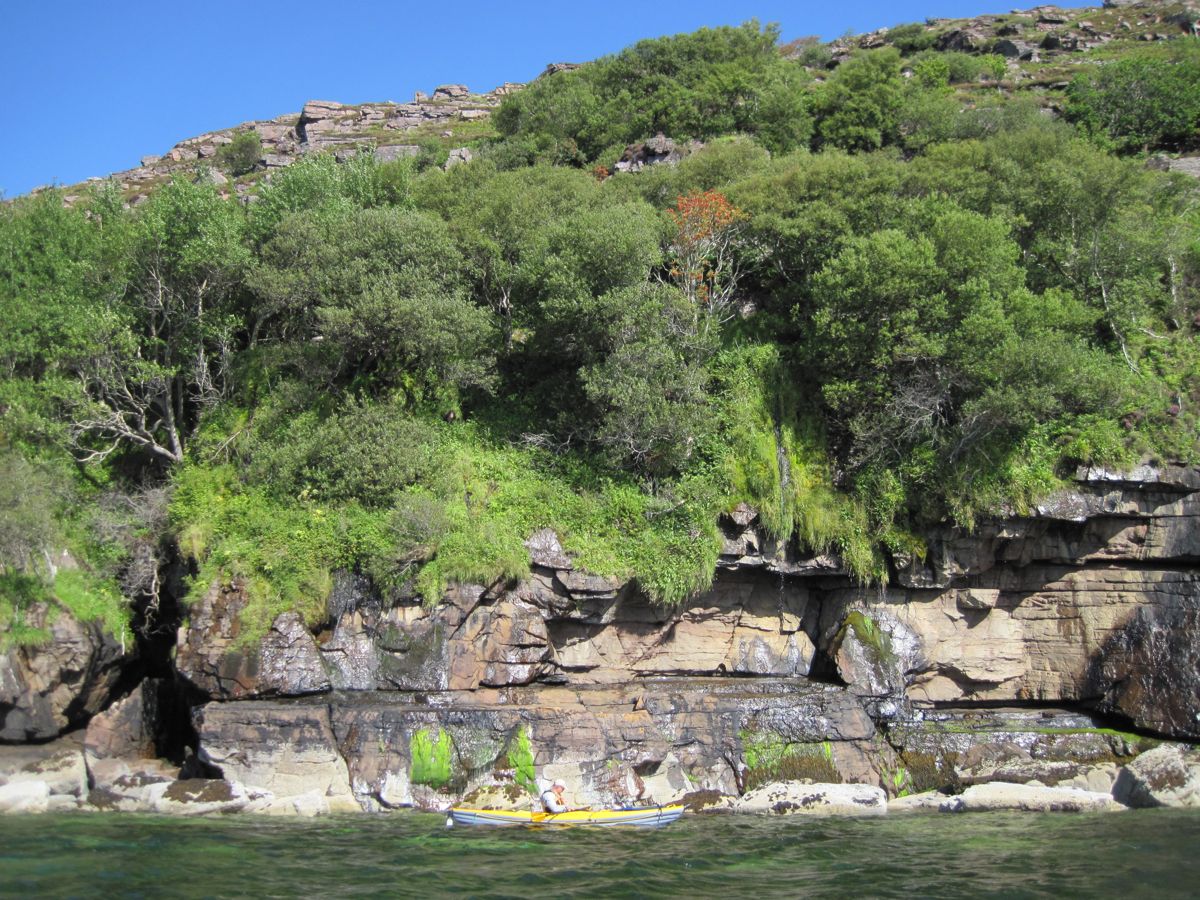
Summer Isles Gallery with kayaks

A sixty-six-photo summary of our summer in the Summer Isles with a little bit of Orkney.
See also: Summer Isles Kayaking Guide

IK&P Picture of the Week

Le Grand Gonflateur himself, Gael A sent me this image to illustrate something. Its composition and colouring was so magical I’m compelled to elevate it to the IK&P Picture of the Week.
Captured in 2005, the location is the River Epte, a tributary of the Seine in Normandy and site of Monet’s no less idyllic 1899 painting, ‘Waterlilly Pond’ (left). It looks like Gael is sliding down a burst canal bank on his H2, while his trusty compadre observers from the reassuringly stable platform of a Mk1 Sunny gumboat. Behind him a sign warns ‘Access Interdite – Danger [sauf gonflards] and nearby a docile cow nuzzles the trunk of an oak tree quivering in its prime.
A serene snapshot of rubber boating bliss.

Packrafting around Suilven mountain

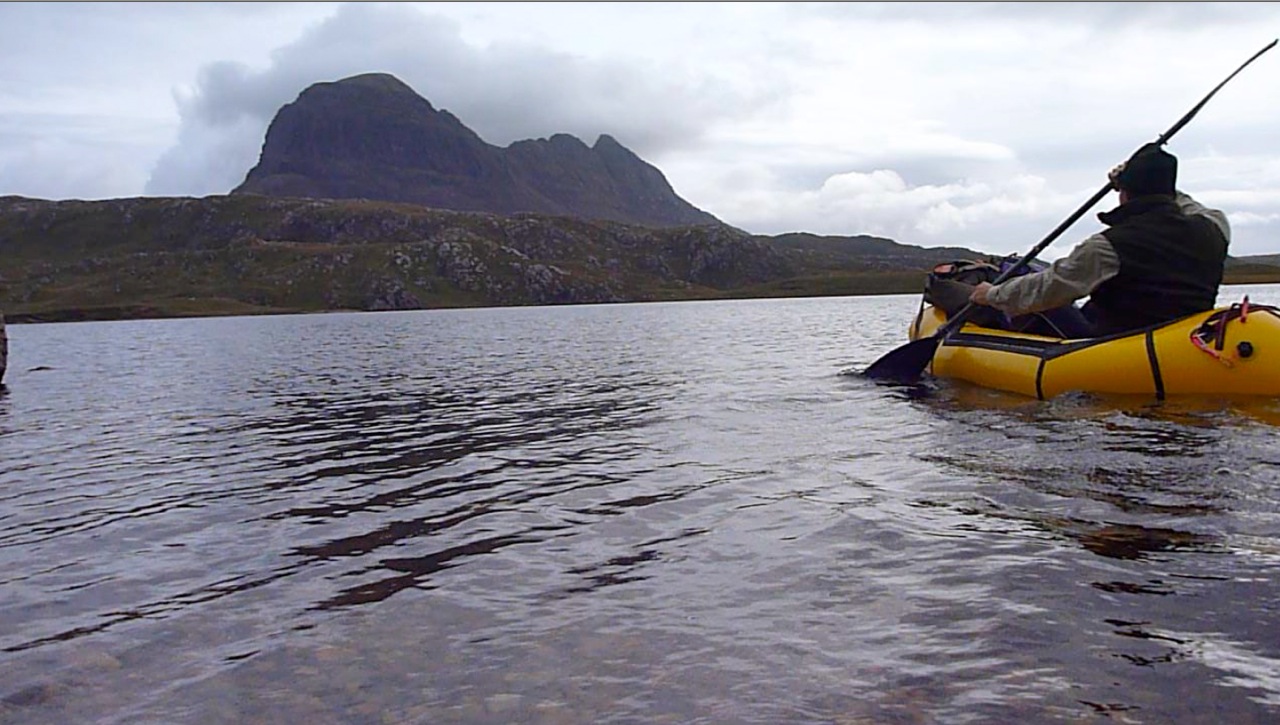
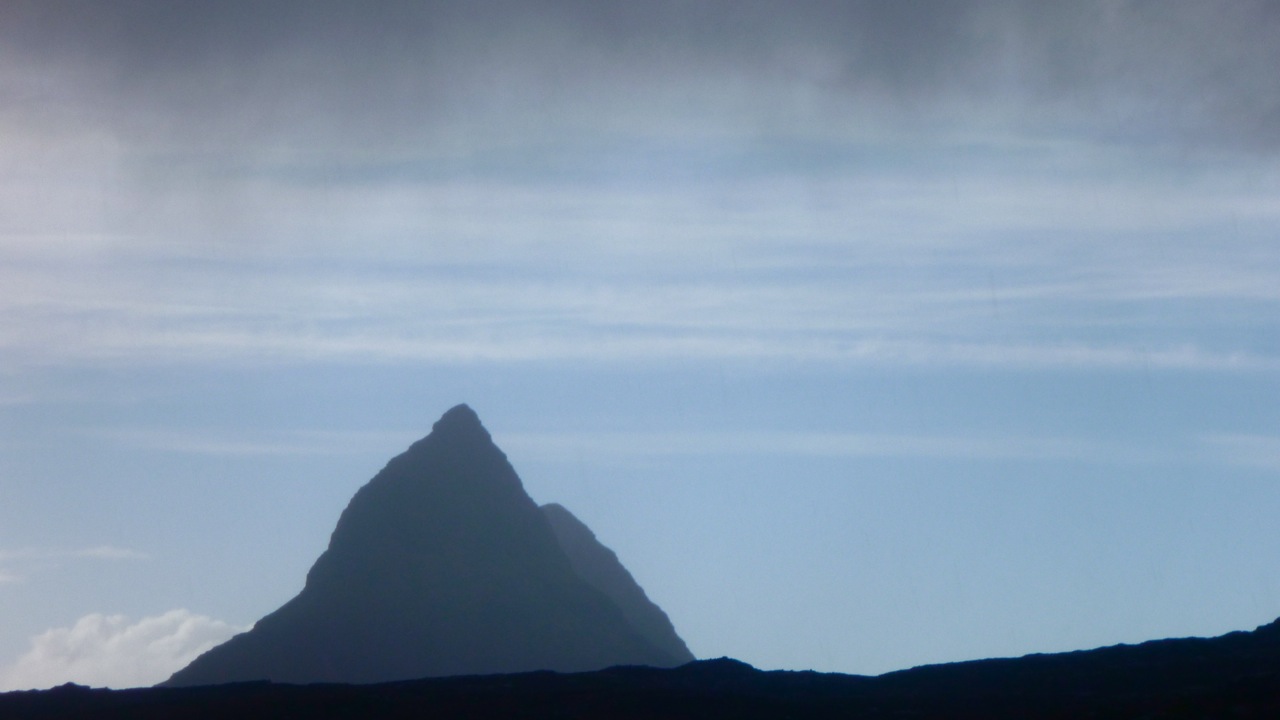
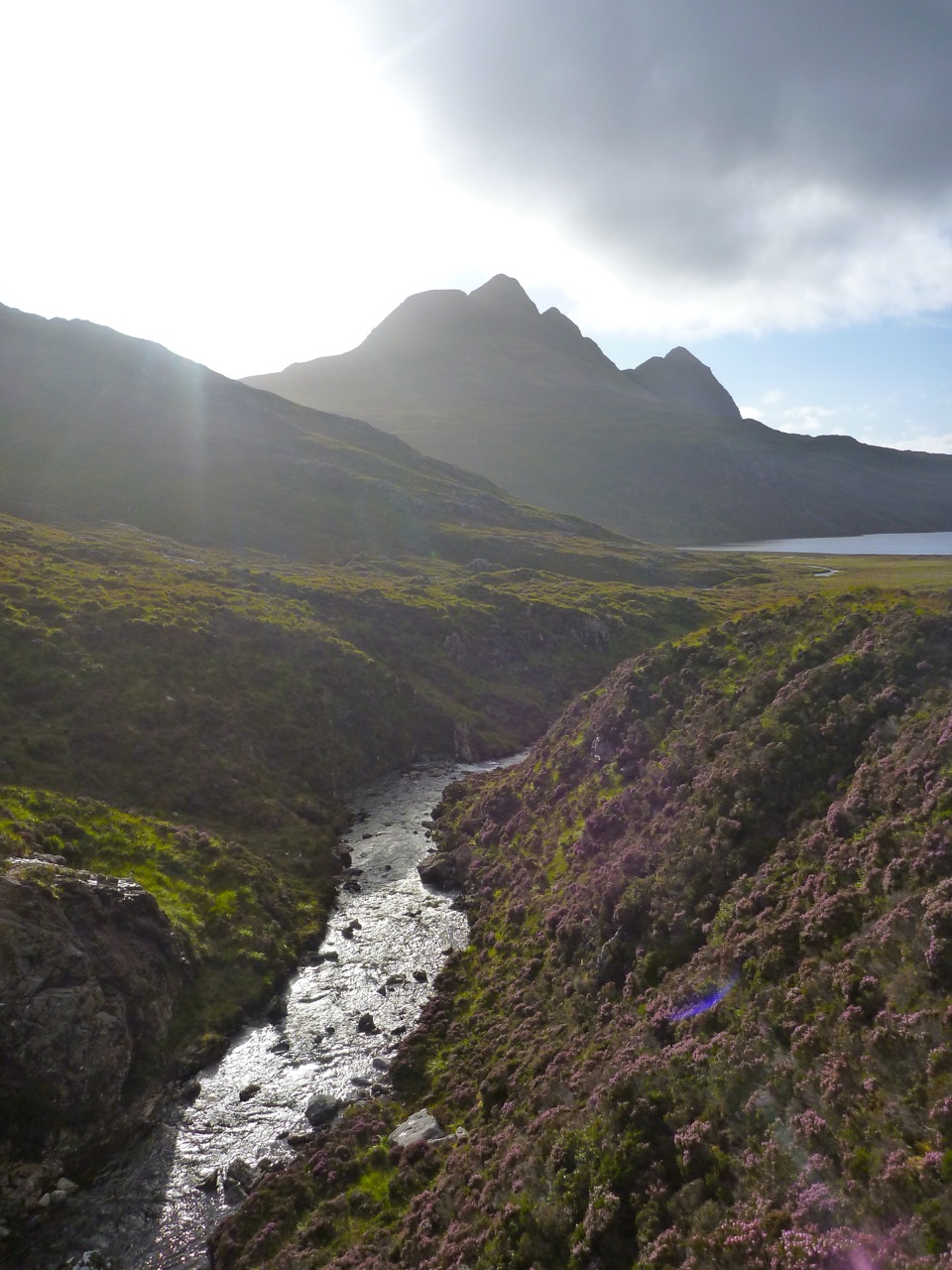
I’ve already done a couple of great packrafting excursions around the charismatic mass of Suilven mountain (left, viewed from the east). Last year we did a ‘triathlon’ loop up one side and down the other using bikes, feet and two-up in the Yak; and before that I did an overnighter from Loch Sion to have a look around. That second link has an intro to the region you may like to read.

So you’d think I’d know the local pack-potential well, but looking yet again at the map, I clocked an interesting if lengthy day out, packrafting around Suilven. I could walk east out of Inverkirkaig past the Falls to Fionn Loch, then paddle several miles of continuous water south of the mountain to cross a headland and then another short loch. From there I’d turn back passing a couple more lochs to Lochinver back on the coast. That was around 23 miles, plus another 3 or 4 back to the motorbike at Inverkirkaig. An eleven hour day for sure so unusually, I packed a torch.


The day of least bad weather arrived (today’s grim weather, right): overcast and 12°C with winds building up to 25mph bringing showers and afternoon sunshine. It would have to do; the rest of the week was forecast as much worse and at least I’d have backwinds paddling out.
lochanss

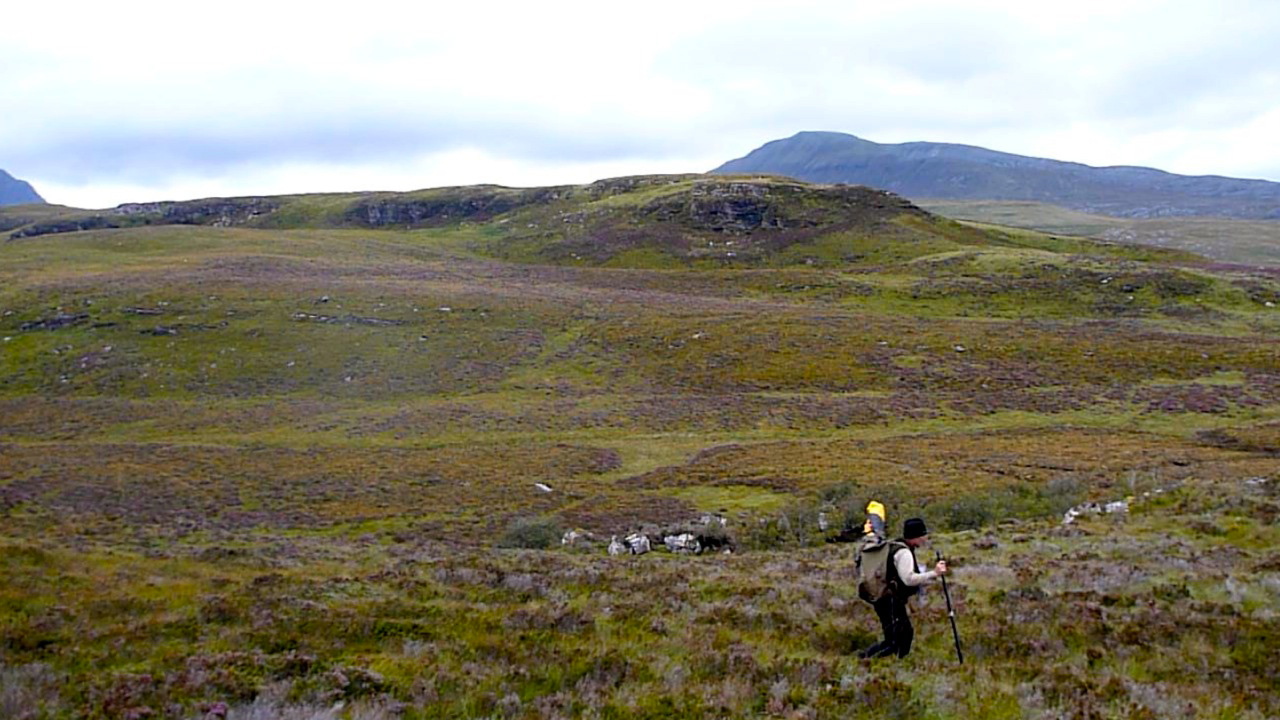
Should they become hard to handle I knew I could hop ashore – that’s the great thing about packrating. But I also knew that cross country hereabouts is usually a gnarly combination of boot-sucking mires, moss-clad boulders and ankle-snapping tussocks of clump grass. Unless you’re a ground slug or sport a rack of antlers, when off piste in the trackless wilds of the far northwest, you’re often better off in a boat.

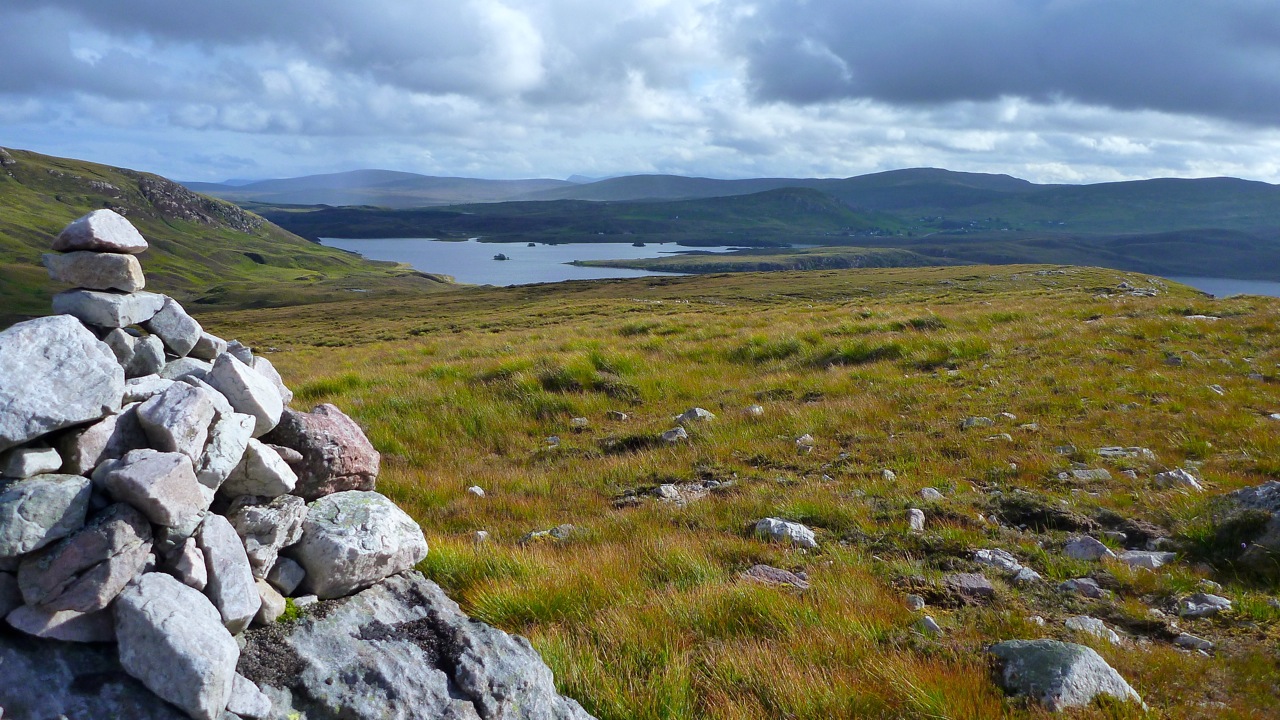
Nine 15 and I was out of Inverkirkaig with two fat sandwiches, two bananas and a cup. The thickly wooded valley with it’s not quite paddle-worthy river rose up to the 60-foot Falls of Kirkaig, but with filming and whatnot, it wasn’t till 11am that I paddled onto Fionn Loch (left) under a ceiling of thick cloud on the verge of incontinence. The rounded west prow of Suilven loomed above, trailing its cone-like tail like the giant goldfish in the Singing Ringing Tree.

I was reversing the section we paddled last year on the triathlon, and at a narrow point passed some small standing waves indicating a current flowing back to the river. Hmm, strange I thought. Approaching the mile-long narrows which maps call Uidh Fhearna, it was a stage which I’d somehow got into my head flowed east into Loch Veyatie, based partly on this picture I took last year. Turning south round a reedy bend and fighting what I thought was just the headwind, I took another turn and, like some astonished Victorian explorer, found the water flowing west, right at me. Of course it does. At the other end Loch Veyatie, Cam Loch drops through a series of waterfalls, and if Fionn here did the same, where did Veyatie drain – down some tectonic plug hole? There would be no Fellowship of the Royal Geographical Society for me this year.


Even with a backwind, there was no paddling up this Uidh (left), though I’ve read of hardcore canoeists poling it. So I  unplugged the Yak and set off along the north bank to the far end where the Uidh opened out onto Loch Veyatie and lost its current. With no free ride to help outrun the afternoon’s predicted winds, my schedule slipped away.
As the OS map shows initially, there’s a path as far as a stream a mile away. Who knows why, maybe that’s where folk fish, but of course the path itself becomes a mini river. I should have worn my long Seal Skin socks today, the short ones were already sodden but they still kept my feet warm. After fording the river I decided to continue cross country until it became too hard. That took less than 20 minutes by which time I’d already stumbled twice and, while negotiating one steep bank, actually feel a few feet into the loch! Luckily, no damage done so just up ahead I set my sites on a beach to deploy the raft.
It was now 1pm and with that walk covered at around 1.5mph and getting slower; better to get on the water. But first, for amusement purposes I filmed myself from unrolling the Yak to paddling away. It took 8 minutes, something that you’ll see below is made a little less boring to watch by speeding up fifteen times.

An exposed hour’s paddle down Loch Veyatie ensued. I turned out of the cove into the wind, hurrying for the south shore to get into the southwesterly’s lee until the next narrow point where I’d cross back to the windier north side to line up for my take-out. As I passed across the mouth of the sand-spit inlet of Loch a Mhadail, gusts blasted out fetching up some whitecaps. It’s all in the mind of course, but I really don’t enjoy bobbing about alone, mid-loch and out of sight on a chilly September’s day without a drysuit or PFD. One good thing with the Animas backpack I was using for the first time was that like my UDB, it doubled as a reliable float bag. Although there was virtually nothing in it bar my lunch and a cag, that was the reason I sealed it full of air.


The overhead gloom and rising wind was eating up a lot of nervous energy, but that wind was also pushing me along at what turned out to be 3mph, more than double what I’d have managed staggering along the shore, and more direct too. Another reassuring surprise was spotting the buildings at Elphin on the A837 at the head of the Loch. I’d forgotten how close I’d be getting to the other end.
Paddling with the wind past the south shore, cascades ran off Cul Mor and scraggy patches of original woodland clung to the foreshore. I counted them off on the map as markers to my take-out, and with a dash over to the north side, that came up just as it looked on Google Earth last night. What a great WYSIWYG navigation aid GE is. Let Google harvest all my dreary browsing data to throw back at me as targeted ads. It’s a price worth paying for their sat mapping services.


It was only when I crawled out of the boat and stood still that I realised how strong the wind really was, roaring over the hills and bating down the grass. Even though it was less than a mile’s walk to the other side of Creagan Mor headland, there was no chance of leaving the Yak inflated. Instinctively I headed for higher ground, scattering some deer far ahead, but my route soon led to a cliff so I dropped back into the bog and tussock valley that brought me to Cam Loch’s shore. Here I felt I could relax sufficiently to eat something. My cup was MIA, out on the loch somewhere, so I scooped up a drink by hand.

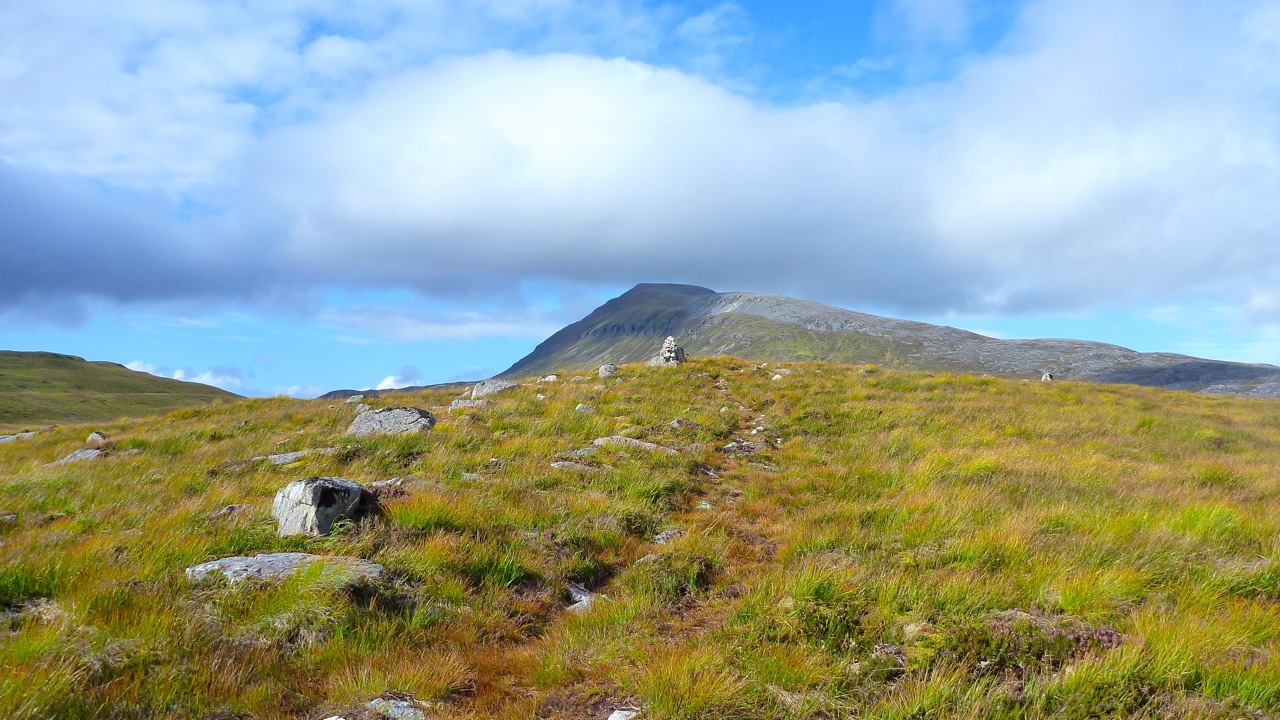
One more loch to cross; easily done no matter how windy it’s become. Somewhere on the north side the map promised a path that led 12 miles back to Lochinver. All I had to do was slot myself onto it and ride it out for as long as it took. Whitecaps rolled passed me as I neared the north shore of Loch Cam, but what had had an edge of dread on Veyatie just an hour or two ago was becoming familiar and a bit of a laugh as the promised sun stuck its nose out for a sniff at the day. After airing down I soon hooked up with the stony trail, but found I was wavering a little, probably through not eating or drinking enough. It was now 3pm; six hours on the go but I’d only actually walked some 4 miles up to that point, so the legs had plenty left in them and there was drinking water running down the paths.

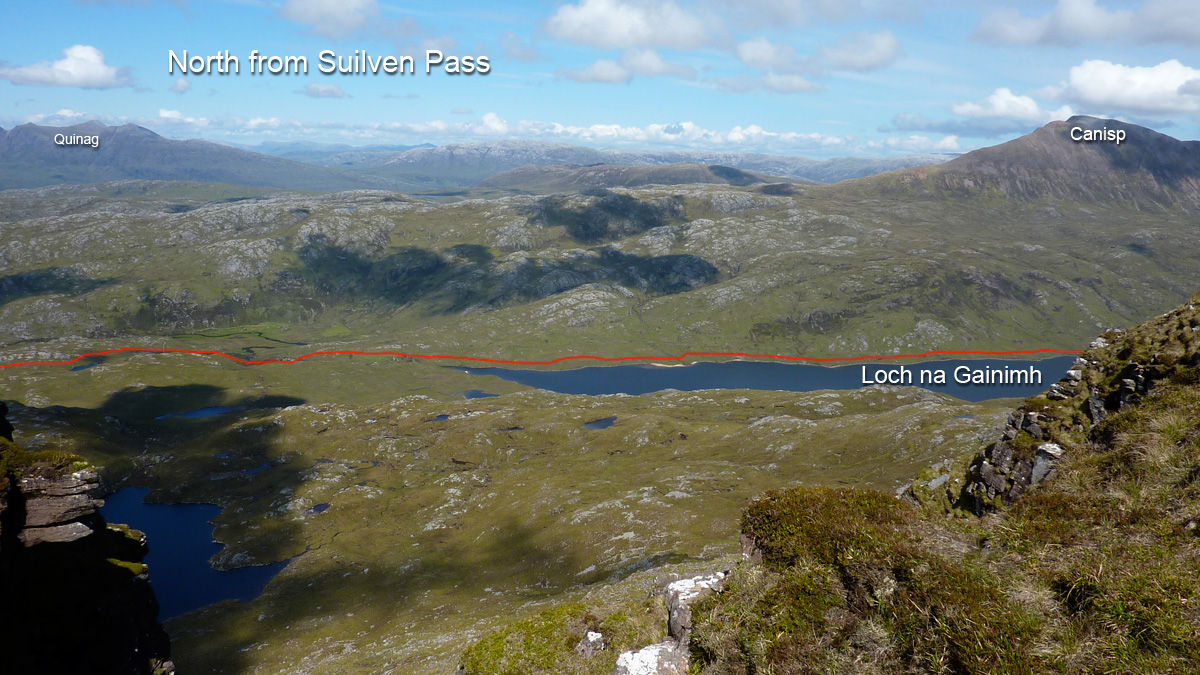
On occasions I’ve harboured thoughts of cycling this path from Lochinver to the A road, but from the state of it at this end I’d not get 10 feet. It followed a hard, white rim of exposed stony rubble that’s visible on a sat image, but I suppose was better than the mush to either side. Light grey and crystalline, I’ve since read it’s Lewisian gneiss or quartzite which gives the appearance of snow to some of the Assynt’s mountains like Canisp or Foinaven (see long image below). This whole region is marked with monoliths, the most striking of course being the remnant sandstone outliers like Stac or Suilven which resisted their brush with the glacier’s claw as it passed through, exposing the ancient base of lighter coloured gneiss.

I’ve kept missing the interesting ranger-led talks at Knockan Crag, just south of Elphin, he site of the Moine Thrust which literally turned geology on its head a century ago.

Kayaking Summer Isles to Ullapool (Incept K40)


Incept K40 Index Page
Weather data from Ardmair Point Campground
Summer Isles Guide

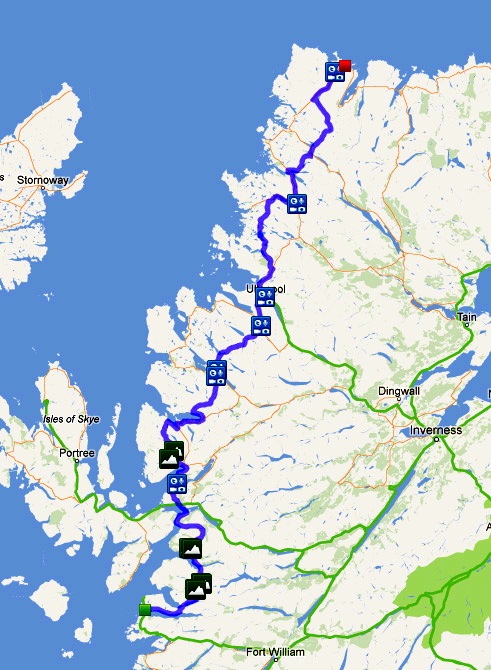
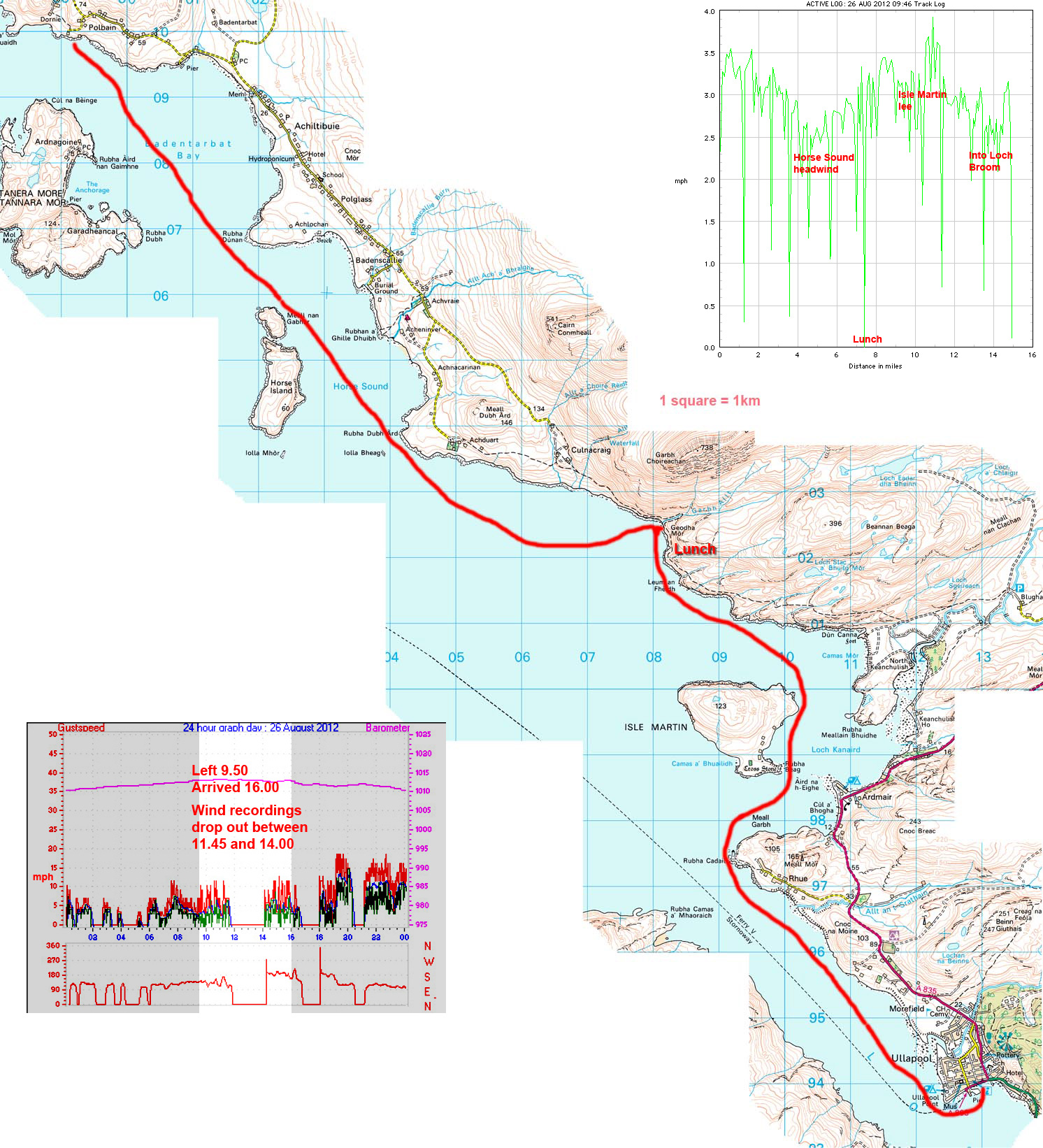
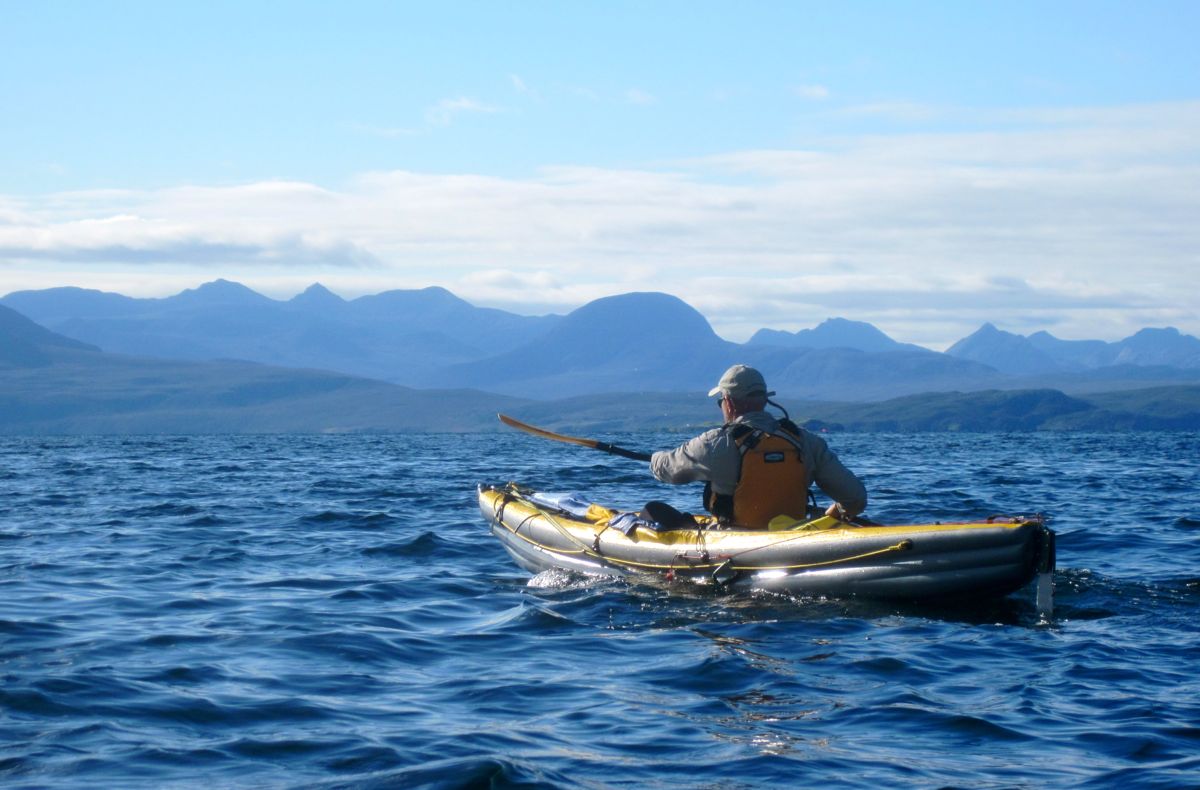
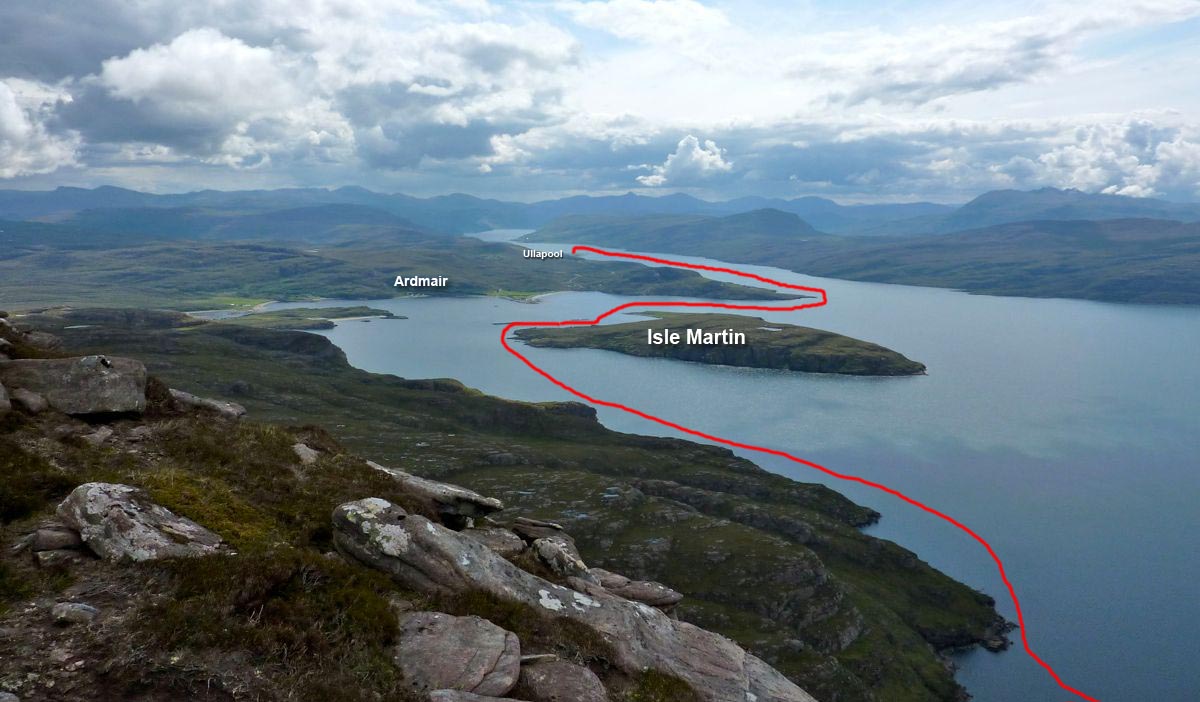
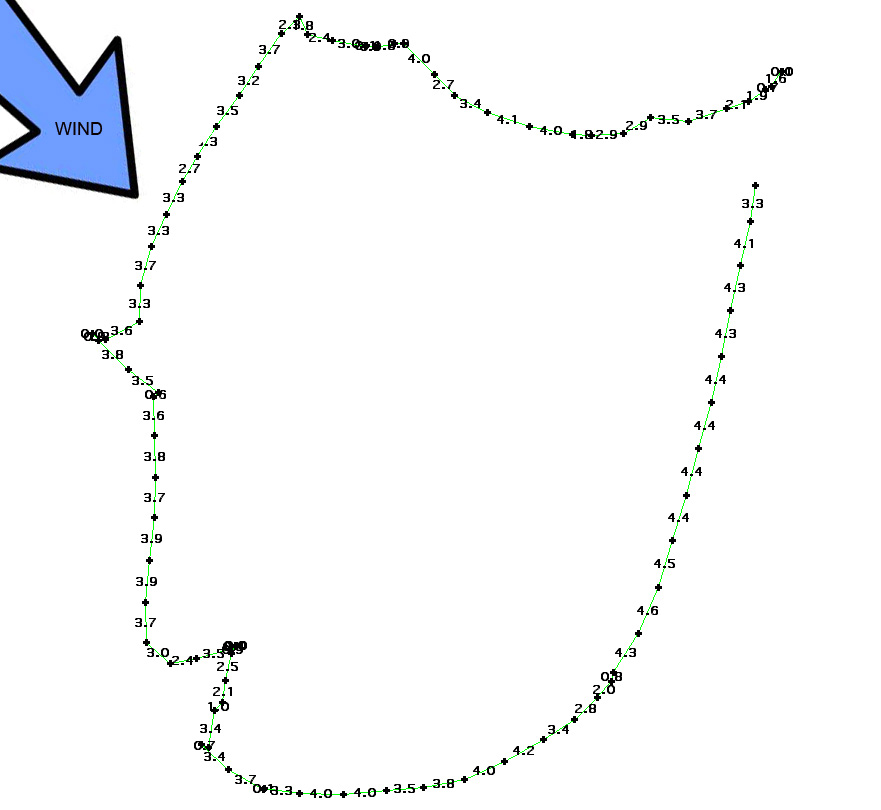
Right now the skies are slate grey while white horses gallop across the sound and the washing hangs horizontally. Ardmair just recorded 49mph. But as often happens up here, Sunday was forecasted as sunny with winds of just 4-5mph; a perfect day to paddle the 15-odd miles to Ullapool.
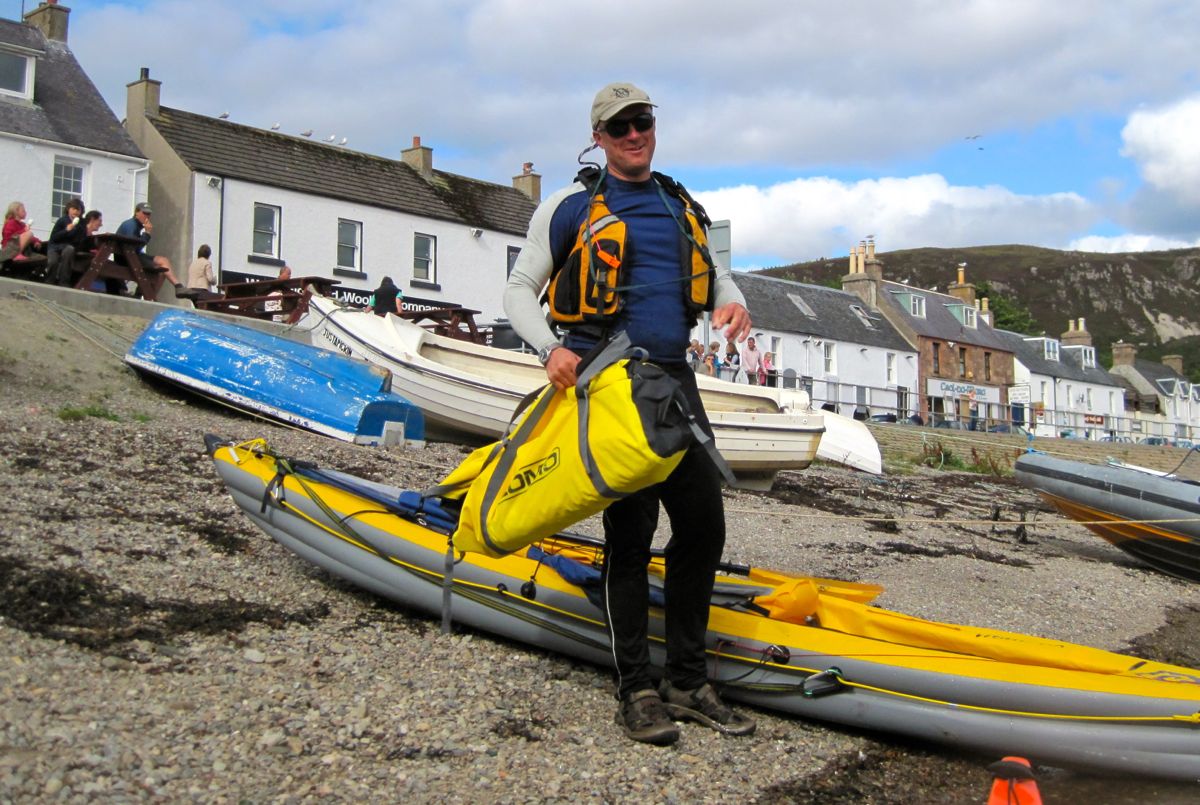
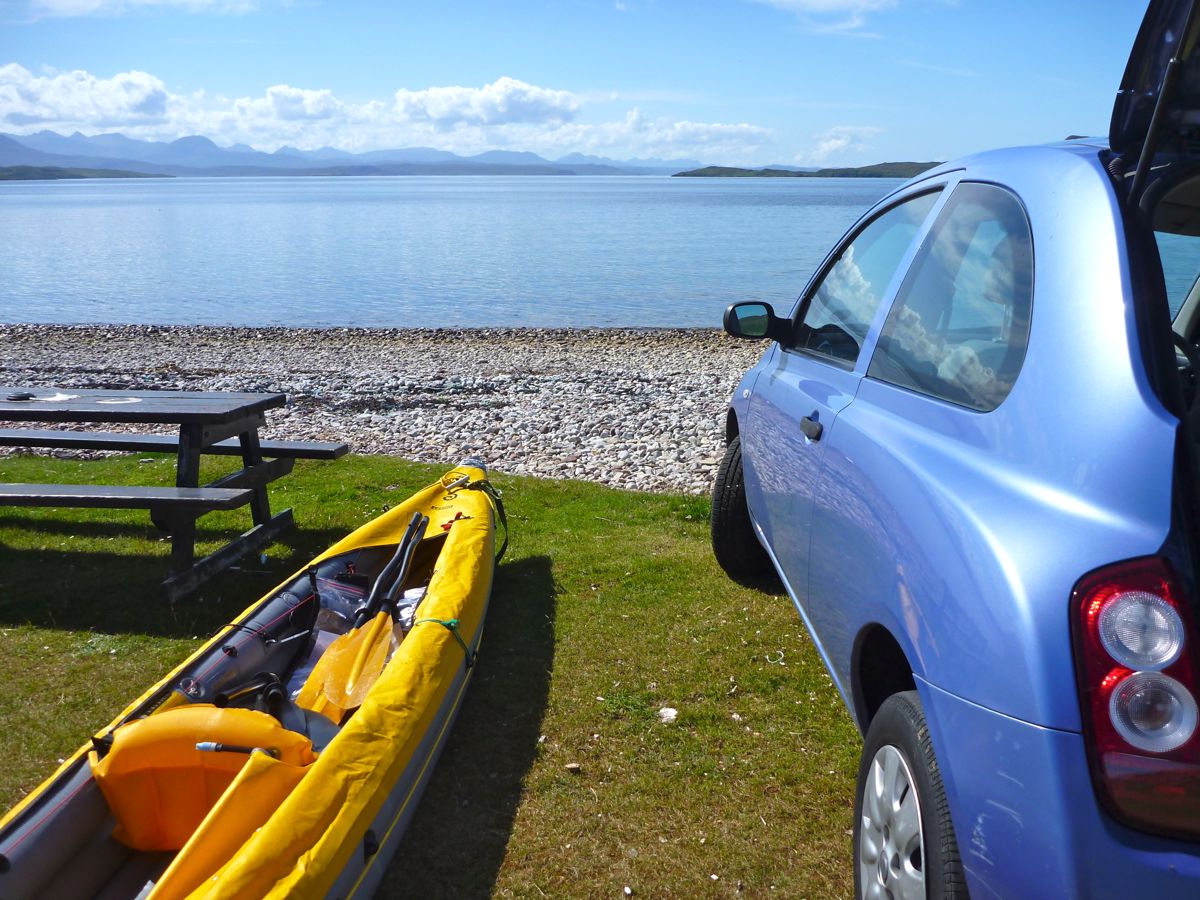
Come the morning the predictions had inched up to 6-7mph, still manageable. Even the three-metre tide was with us, turning as we set off from the awkwardly rocky shore below my place (below left) for a run that we figured would span the six hours until high water at Ullapool.

Six of seven mph winds don’t sound much, but coming right at us from the SSE it was enough to raise a chop of up to a foot over which my K40 slapped like a RIB. Jon’s Scorchio LV cut stealthily through the wavelets like a blacked-out  commando with a knife in his teeth. You got to hand it to these proper sea kayaks, they look as good as they go, until you need to hop in or out of one, or carry it on your head. As it was, in the conditions we had we were pretty evenly matched.

An hour in we were abreast of Horse Island and heading out into mare incognita. But not before I’d lost half my paddle. I was just thinking I really must get a leash for this thing for windier days, even if it means yet more tangleable cordage lying across the cockpit. As I made this vow I decided to wipe the sweaty right grip in the crook of my elbow, and in doing do, popped the button and flung half the paddle over the side. Mayday-mayday! Jon took a while to manoeuvre his 17-foot cheese-cutter into position, although I probably could have retrieved it using the single paddle. Must remember not to do that again.
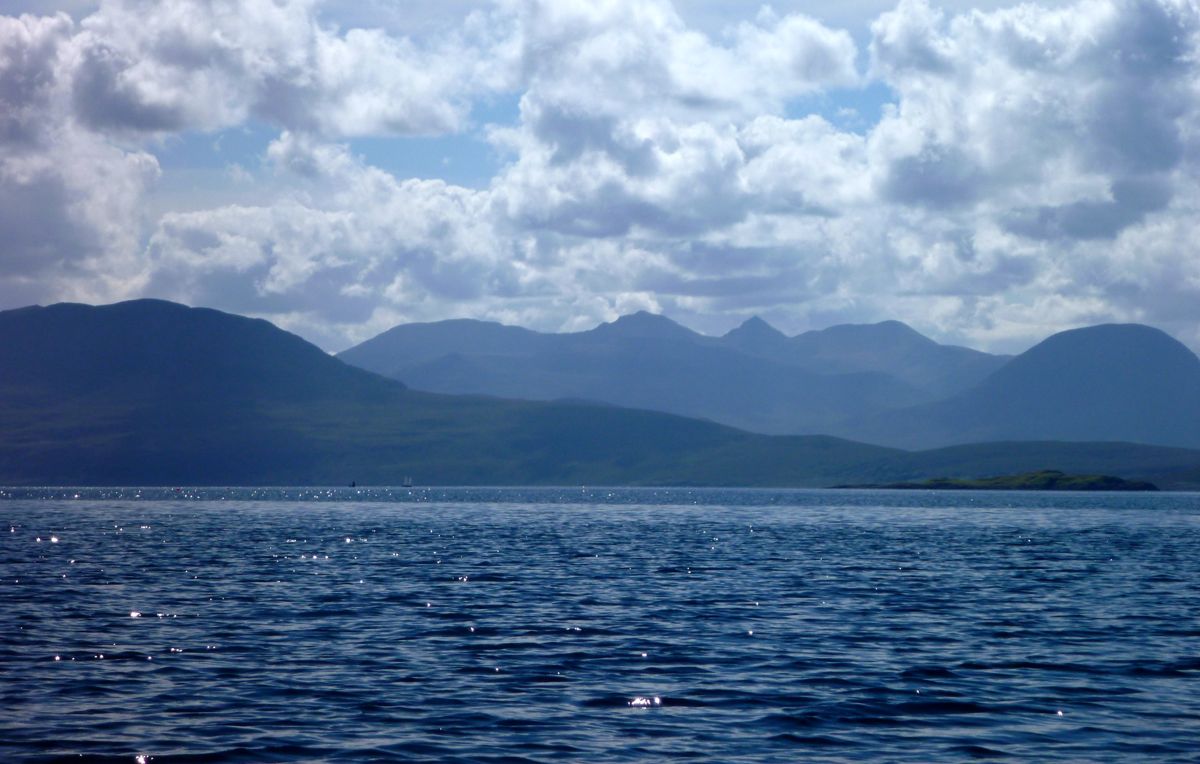
As we entered Horse Sound the wind rose into double figures and white caps formed so we bowed our heads towards the point at Rubha Dubh Ard opposite the guillemot-clad skerry of Iolla Beag (see map). We then passed the last of the dwellings around Culnacraig and edged towards the 2400-foot mass of Ben Mor Coigach which tops out just a mile from the shore. I wouldn’t be surprised if that is the steepest summit-to-sea gradient in the UK. Slip up there and you’d roll uninterrupted straight down into the sea with a huge splash.

Two hours hard work on deck and it was high time for a refuel, so we set our sights on a beach formed by the creek which runs off the back of Ben Mor. But with more slip, slap and slop over the waves, it took twice as long as it looked to get actually there (left). It’s since occurred to me why. In this pic the ordinary-looking mountain seems quite near, but its actually an unusually big 2400-foot (730m) mountain far away. Or we were just slow.

After the spell of fairly intense paddling, walking on the stony shore took some adjustment, but it sure was good to unbend. Up above a lone walker was pacing the thin Postman’s Path which runs along this steep, exposed coast east towards Ardmair. We did that one bleak December with packrafts. During a snack I kicked about among the usual enigmatic flotsam: a giant tennis ball, a baby elephant’s welly and a Filipino flip flop. I also picked up a bit of old rope to sell on ebay later while Jon pinched some nice stones for his giant aquarium back home.
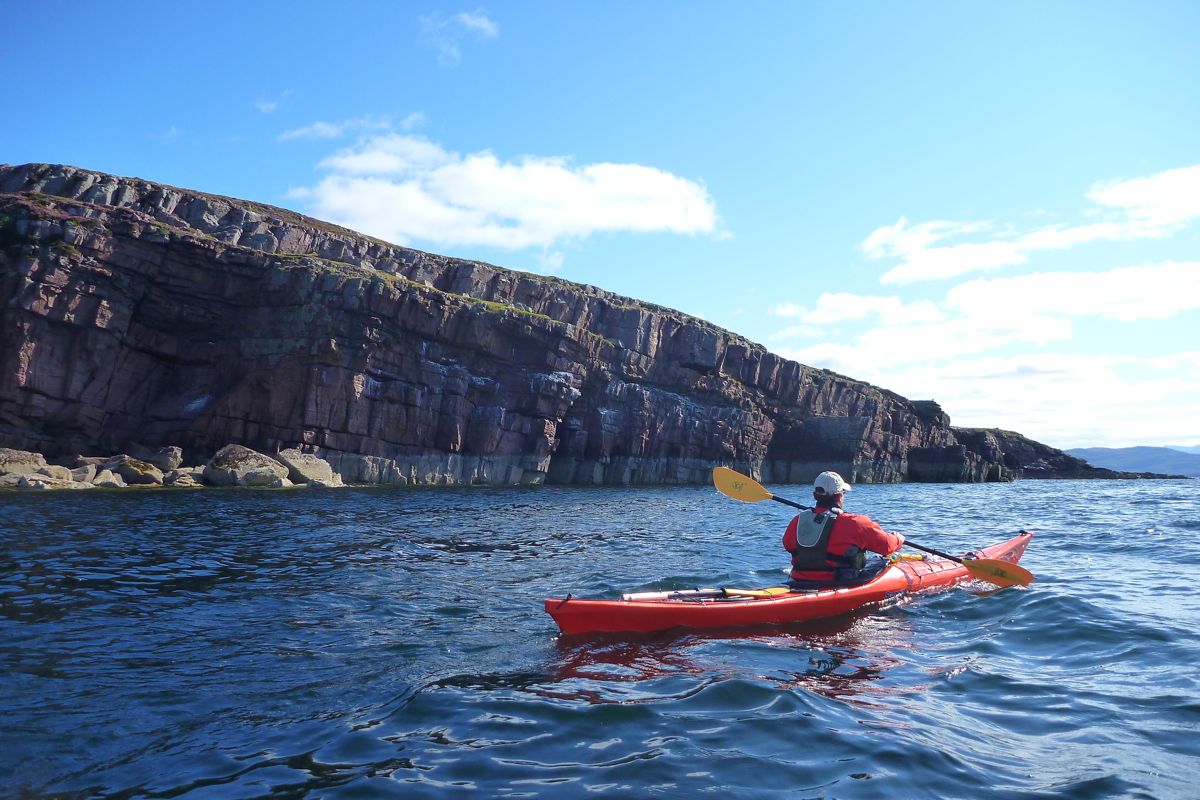
During our break the wind abated a little and as we set off again through a seal patrol, Isle Martin helpfully blocked the wind-borne fetch from the southeast. The creased, folded and weathered sandstone of guano-covered red cliffs drifted by, suggesting a second visit on a calmer day, but it was after 2 o’clock so we decided to save our energy and clipped the edge of the Isle. We didn’t want to leave it too late and end up paddling tired up the narrow part of Loch Broom on a turning tide and a headwind.

As it was I was hoping to snatch a quick sail (above) as we turned briefly southwest towards Rubha Cadail lighthouse, but while I did creep forward perceptibly, it was hardly worth it; bad angle and too much lee off the point. Still, the good thing with the Pacific Action sail is that it’s light, lies out of the way and is no effort to flick up on the off chance of a breeze.
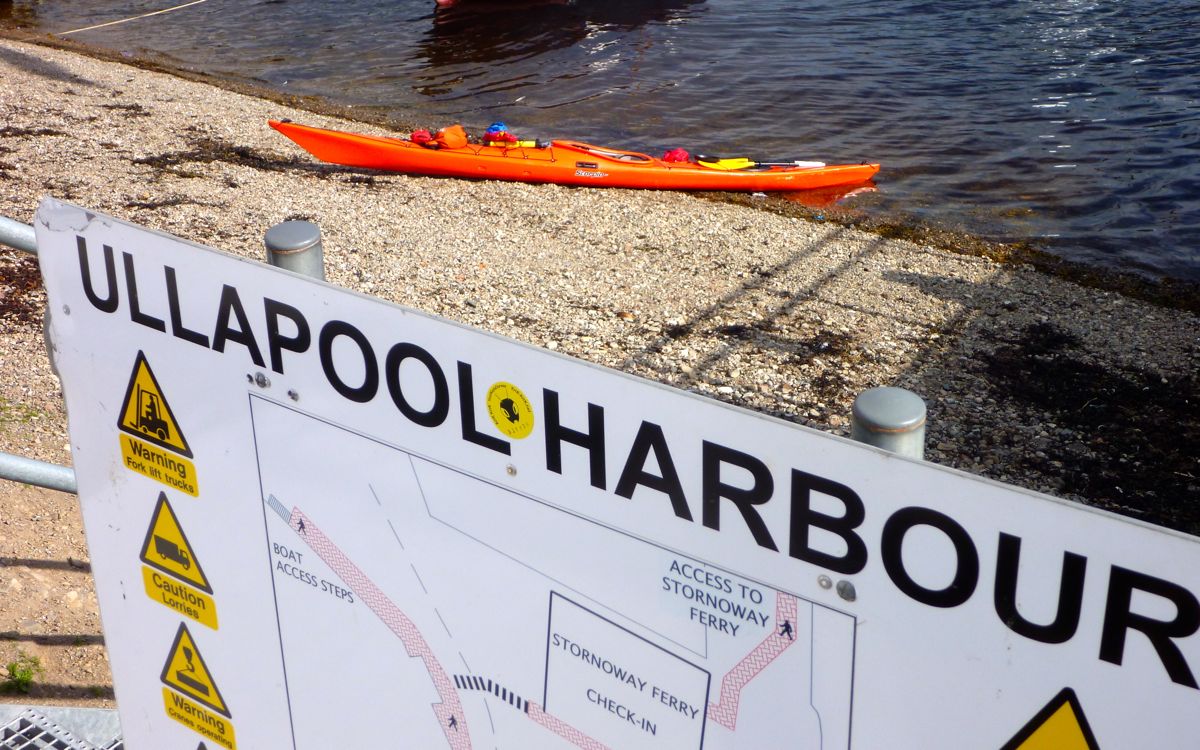
Rounding the stumpy lighthouse near Rhue, (below), we could look back across outer Loch Broom to Polbain and the Summer Isles – maybe we should have planned the day in the opposite direction. Whatever, now it was time for the final 3.5-mile stomp into the wind to Ullapool jetty, hoping that the afternoon ferry from Stornoway wouldn’t sneak up from behind and wash us into the middle of next week.

I observed that Jon typically cruised at four strokes for my five and put it down to the superior glide of his hip-wide LV. In fact he was deploying a textbook exemplification of PPT or ‘proper paddling technique’, instilled by his personal paddling trainer (also PPT). I’d read about this technique in books: put blade in by your feet while turning torso and pull back by re-pivoting the torso, not just pulling on the arms like an ape climbing a vine. I tried doing this and was a bit faster but it all felt a bit stilted and robotic, not the way I naturally paddle, for better or for worse.

However you do it – ape-vine or PPT – it’s fun to paddle a little kayak into a port used to big boats coming and going from who knows where. Ullapool seafront milled with late-summer tourists and it’s possible to interpret one’s arrival as faintly heroic in their eyes, at least compared to a gannet floating beak-down in an oil slick.
Sunburned, crusted with wind-dried salt and not a little stiff, we pulled our boats ashore just over six hours after leaving Polbain. With probably five hours of actual paddling to cover what was indeed only 15 miles but felt more, that’s a fairly ordinary 3mph moving average. Not something to get Ullapool’s summertime bunting in a flutter. Had the headwind been stronger it would have turned into a right old slog, but always with the option of a take-out and an ice cream at Ardmair then an a hour’s walk to the car.

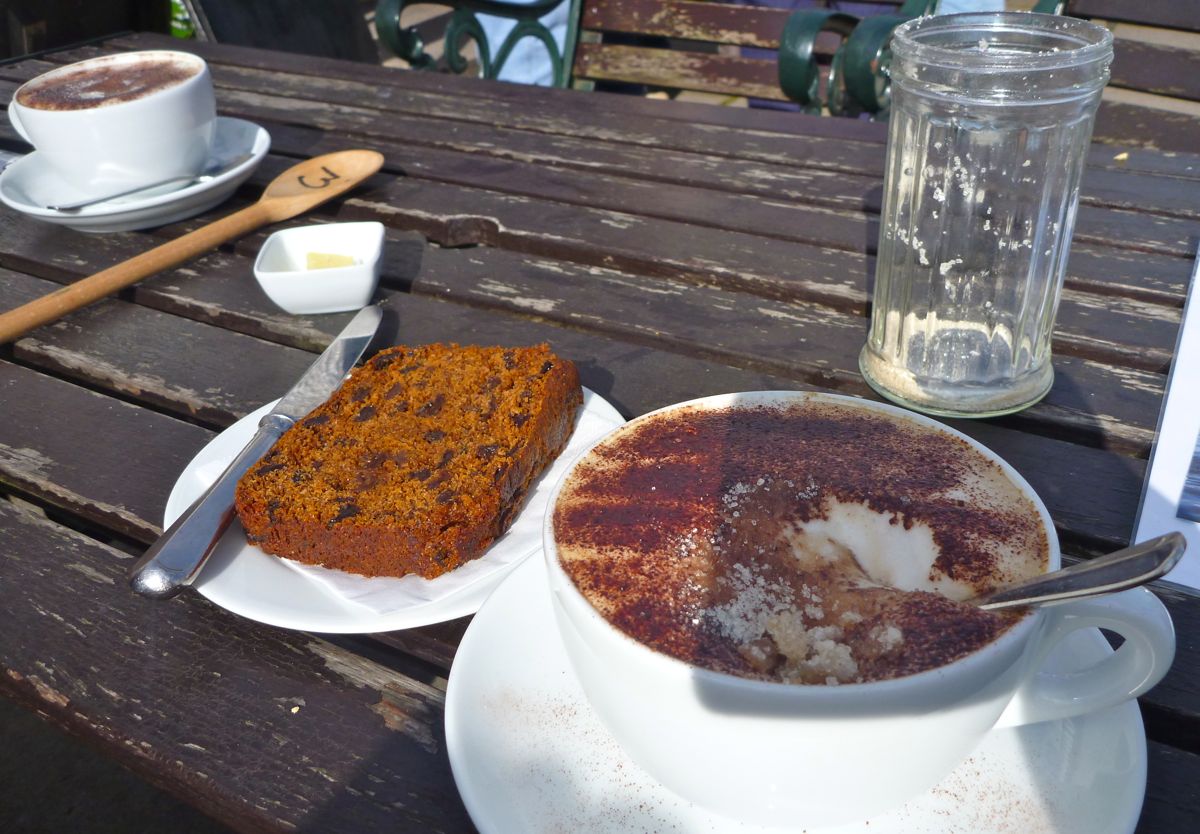
We did wonder what it must be like doing this day after day out here as say, Gael has done lately. We celebrated with a creamy cappuch’o and a slab of buttered fruitcake at the Ceilidh Place (as good as it gets in Ullapool). Recharged and with the anatomical creaks re-oiled, we reckoned we could have pushed on for another three hours if we really had to. But we didn’t so we popped into Tescos for more saccharine tucker and drove home.

Summer Isles Kayaking ~Tanera Mor (Incept K40)

Incept K40 Index Page
Tanera Beg here

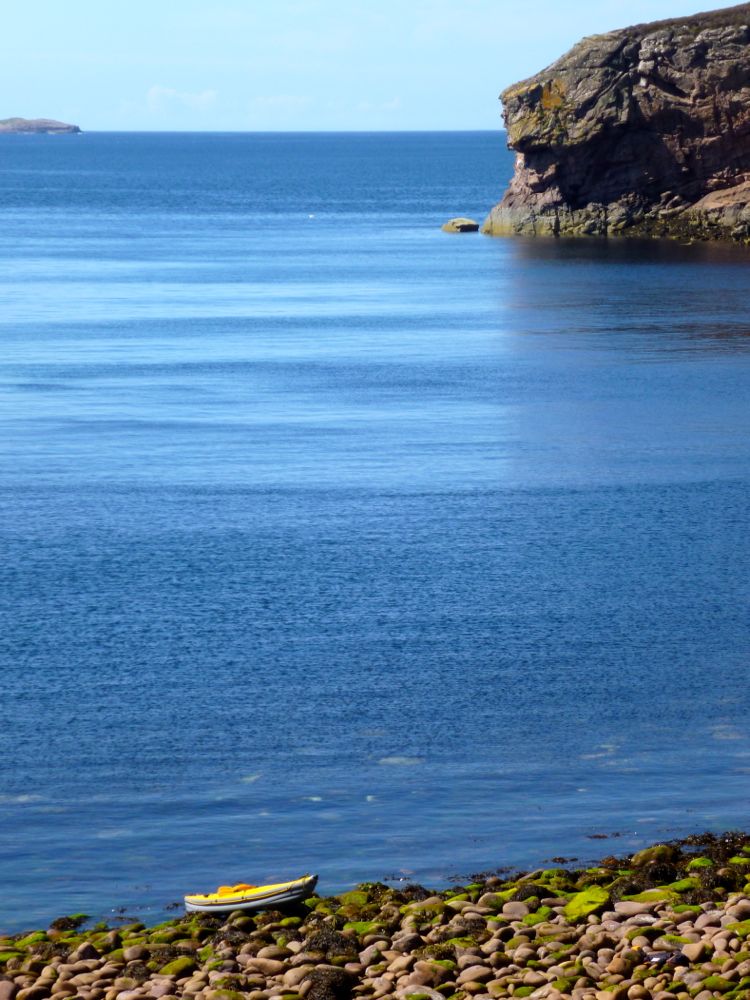
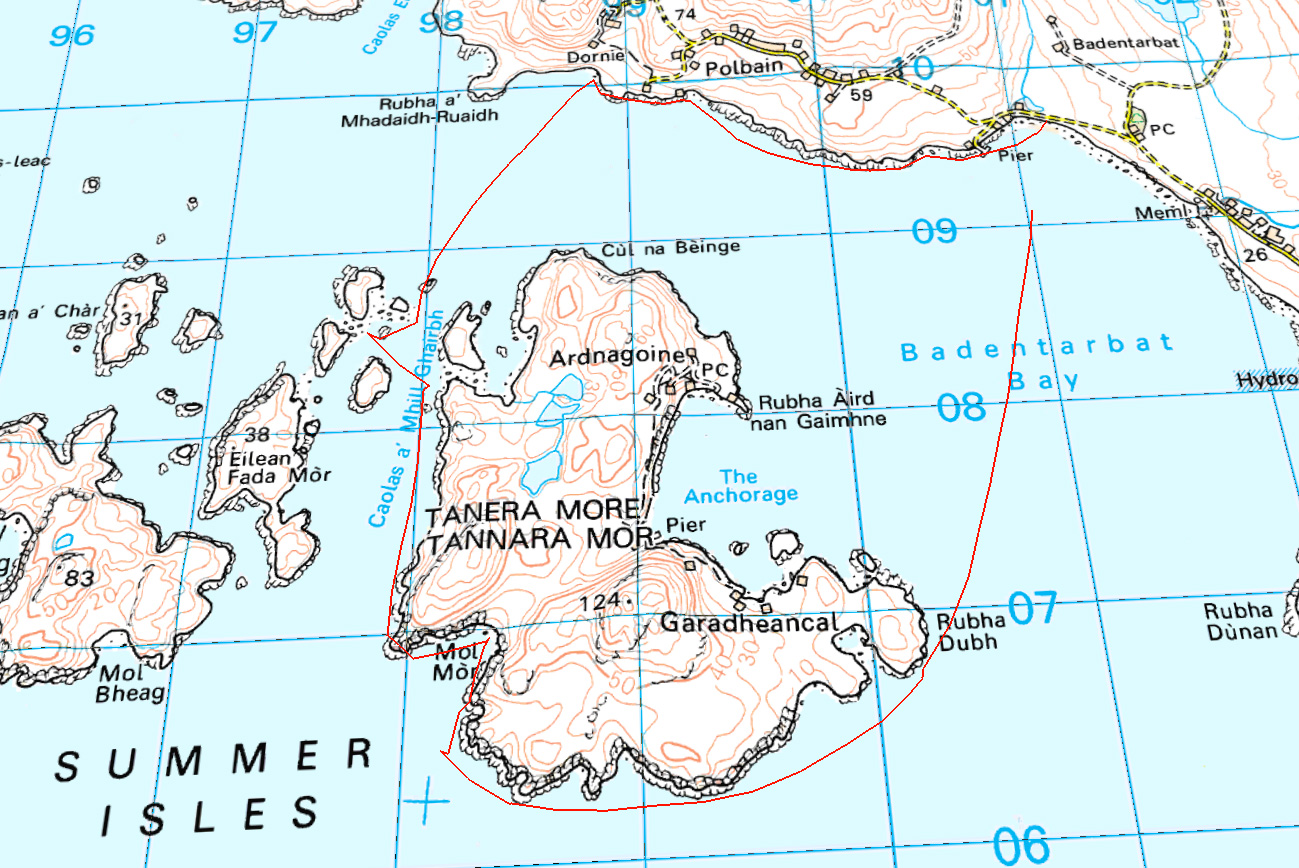
A sunny and wind-free morning coincided with the definitive wrapping up of my current job that’s dragged on for years. I could not pack up the gear quick enough before the calm spell flipped. And this time I wasn’t messing about – I was going to paddle right around Tanera Mor! All of a mile off shore it is, but you never know what to expect on the unseen ‘ocean’ side.
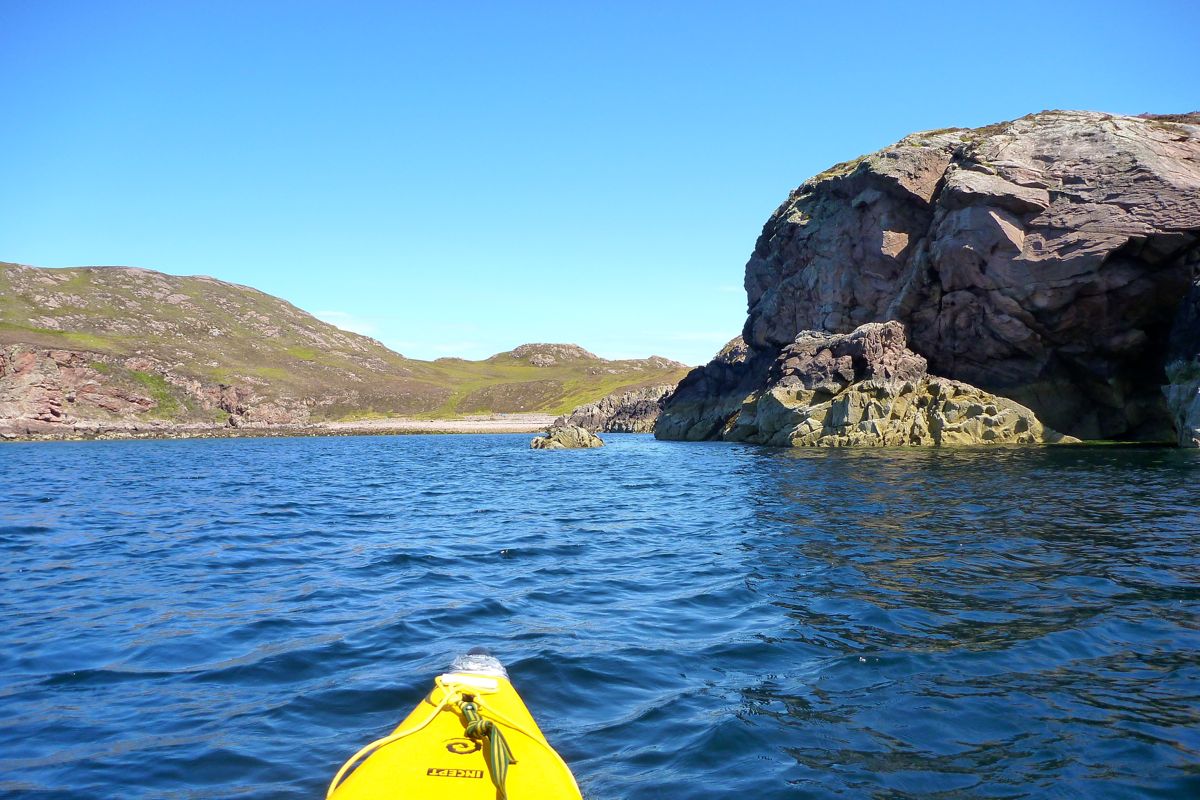
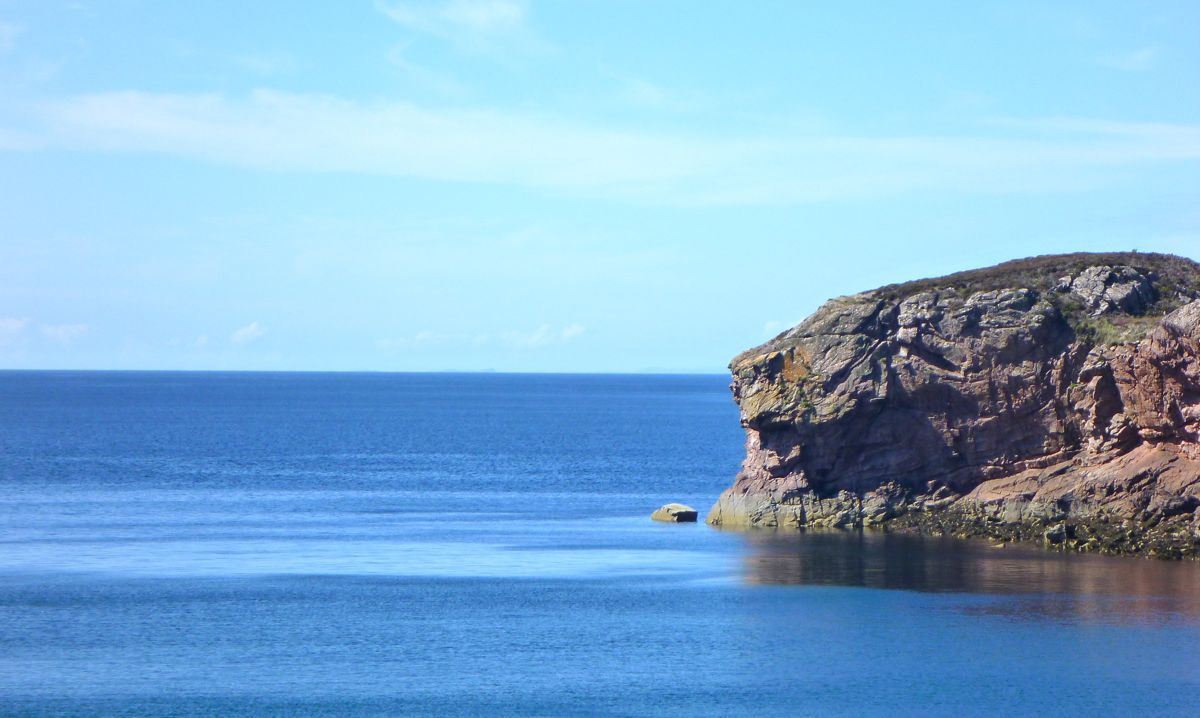
Just before midday I stuck out for Rhuba Dubh Dubh, the island’s most easterly point (see map, above) and would decide how things went from there. Less than half an hour of speedy, flat-water paddling I arrived at the point, the smokey blue Torridons brooding in the background and the creased and weathered sandstone cliffs to my right.


Rounding the bend to Tanera’s south side I wasn’t hit by the expected churning swell and whirlpools but pressed on, reluctant to relax until there was something to relax about. That turned out to be the inlet of Mol Mor which invited me in for a walkabout.
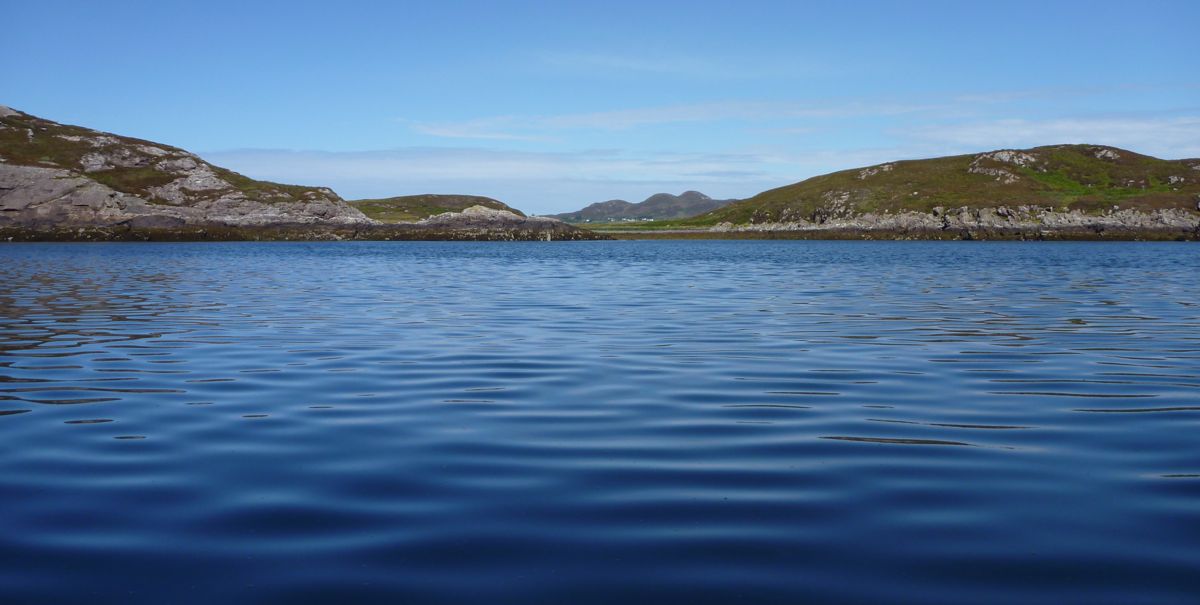
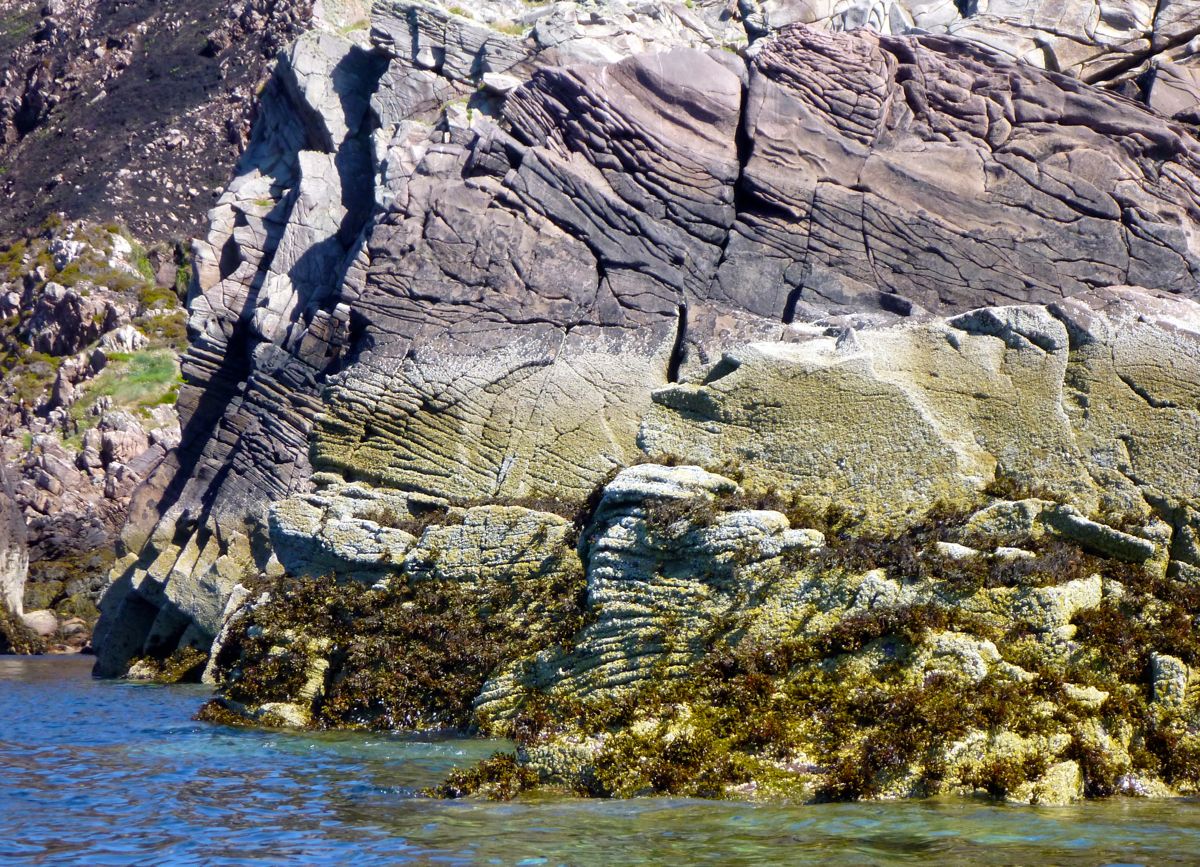
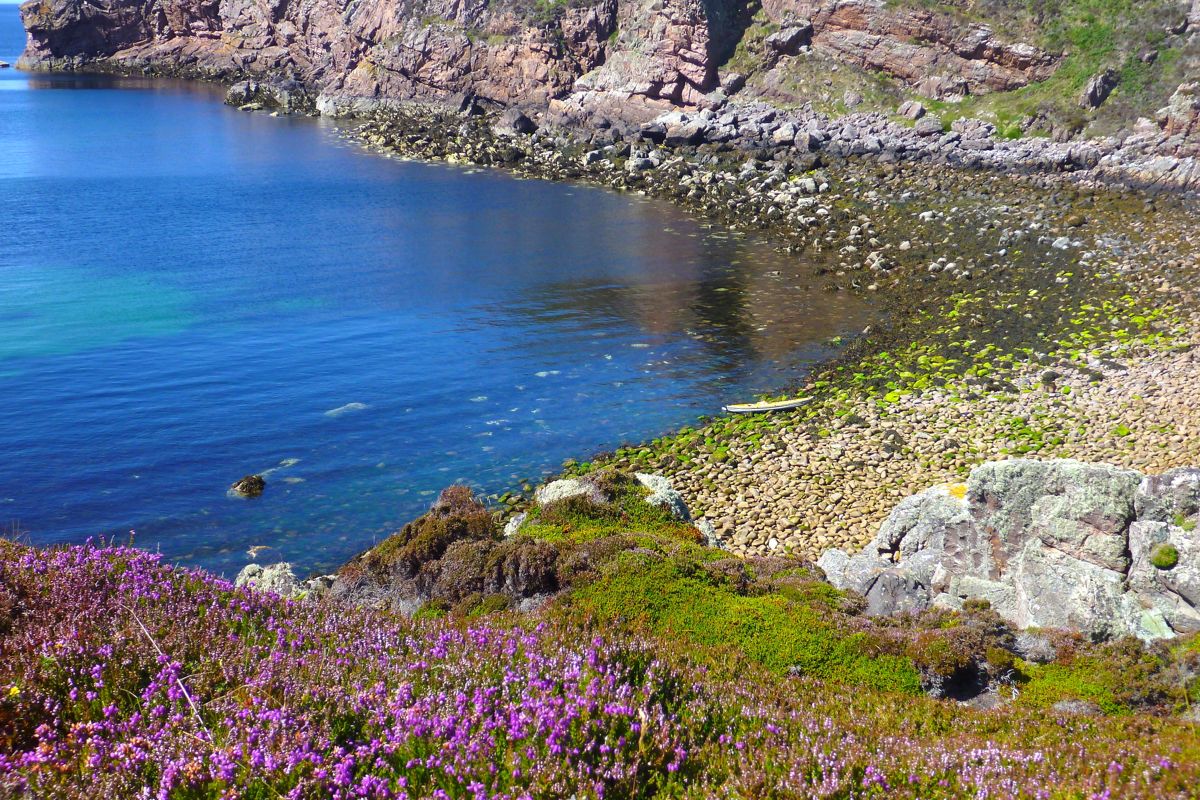
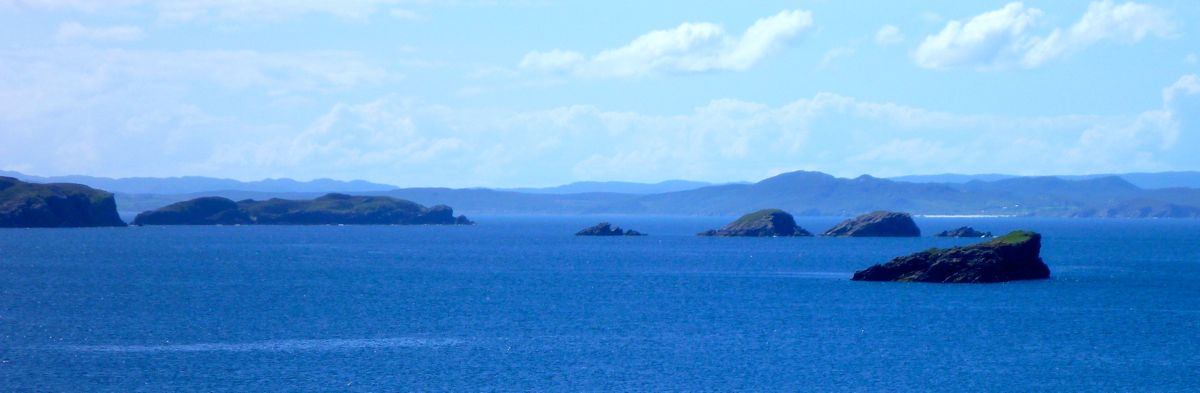
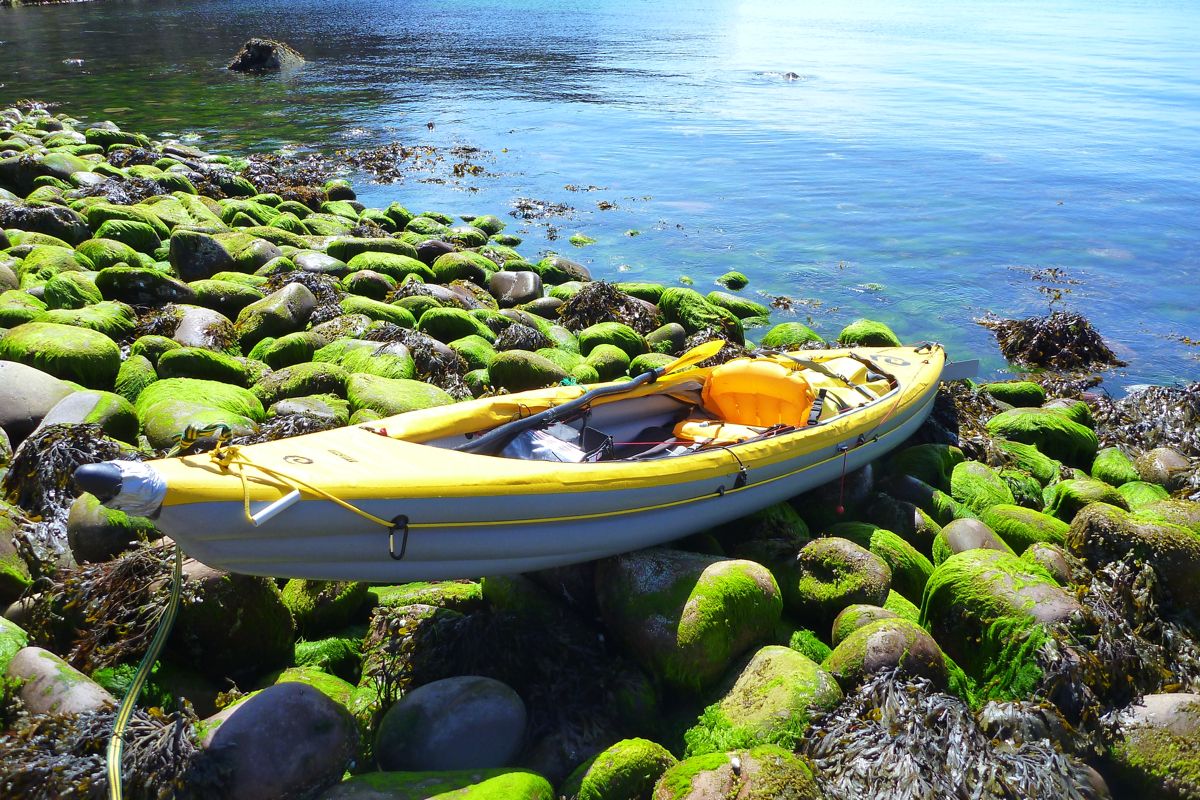
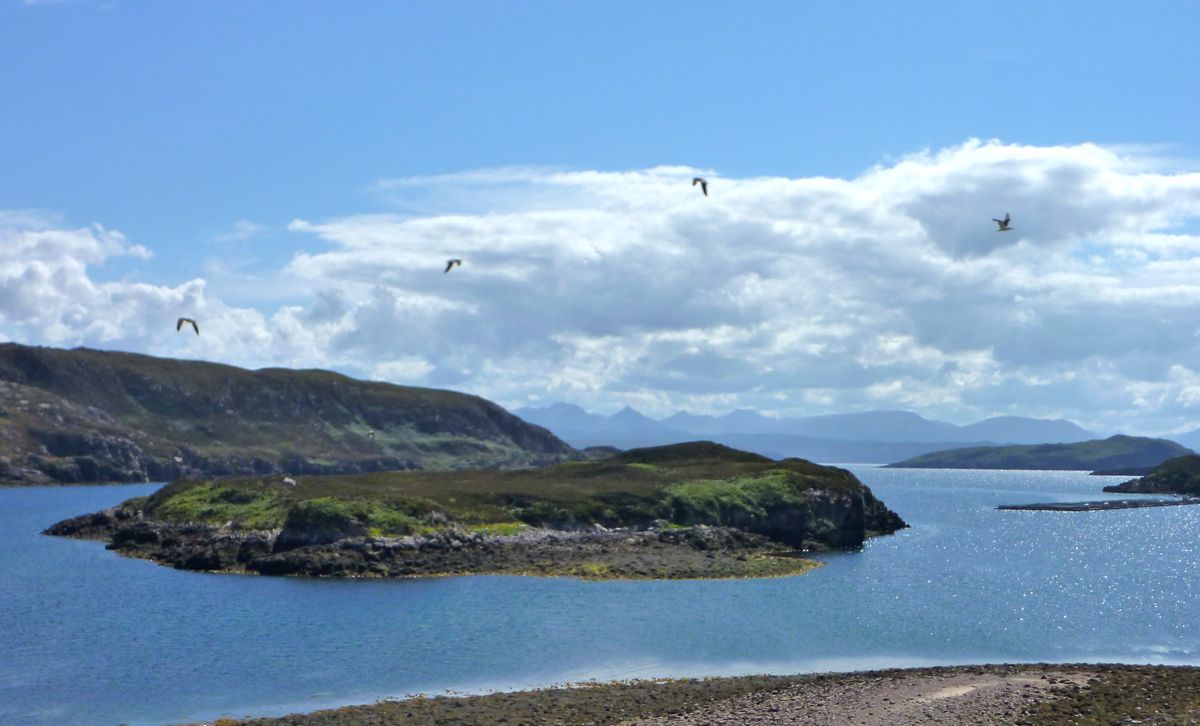
It has to be said, at lower tide levels these islands don’t make getting ashore easy; a jumble of glistening wet, seaweed-draped boulders as big as melons bite at your ankles. And on proper land, it’s no better, with more unseen ankle traps under the thick heather, or plain old sphagnum sludge juiced up from the recent rains. But as always, from a high point the little yellow boat down below looked striking. Green sea-over-sand and the far headlands of Wester Ross backing the tempting (but not today) outer Summer Isles of Eilean Dubh, Bottle Island and Priest Island with the distant strand of Mellon Udrigle shining bright.


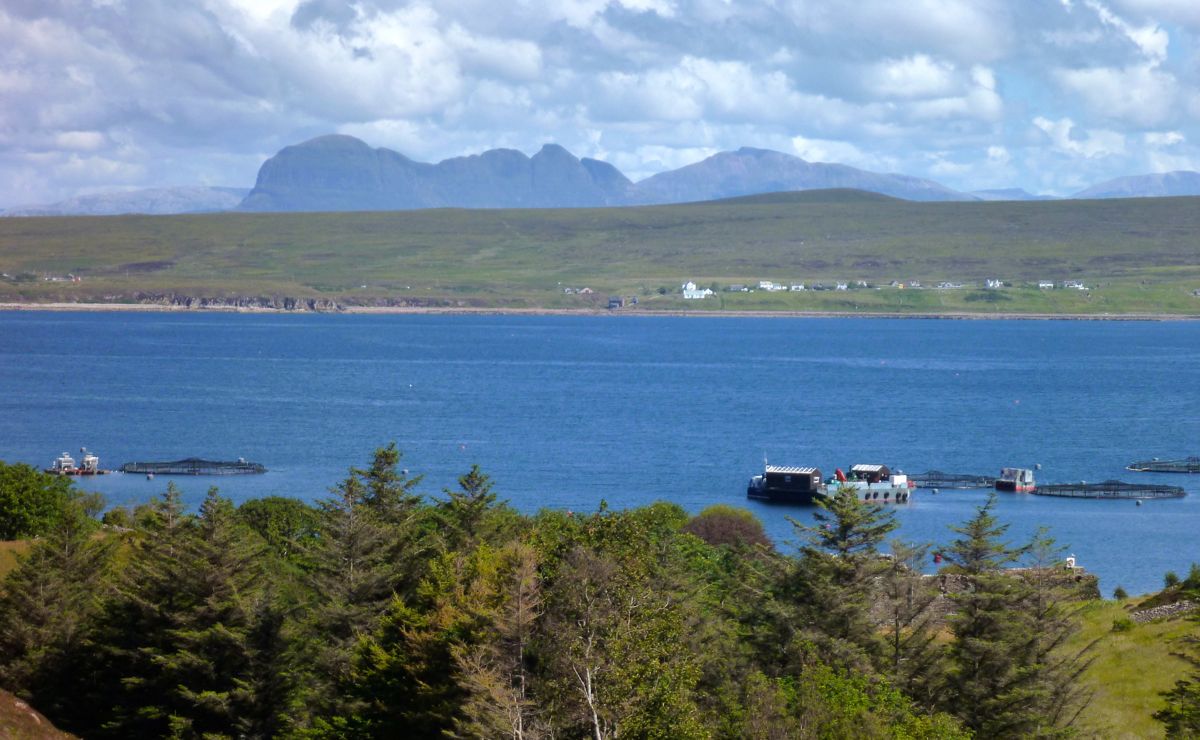
I clambered up to a pass for a view back north over the fish farm to Achiltibuie and the loaf of Suilven behind. Must go back up there one time soon. On the water again I turned up between Tanera Beag where a north wind had come up and gave me something to get stuck into. I didn’t want to push my luck but to string things out I popped onto one of the three islands north of Fada Mor which become one mass at low tide. Causing a seabird commotion overhead, I crawled to a high point and took in another great view back at the Fisherfield   and Torridons.
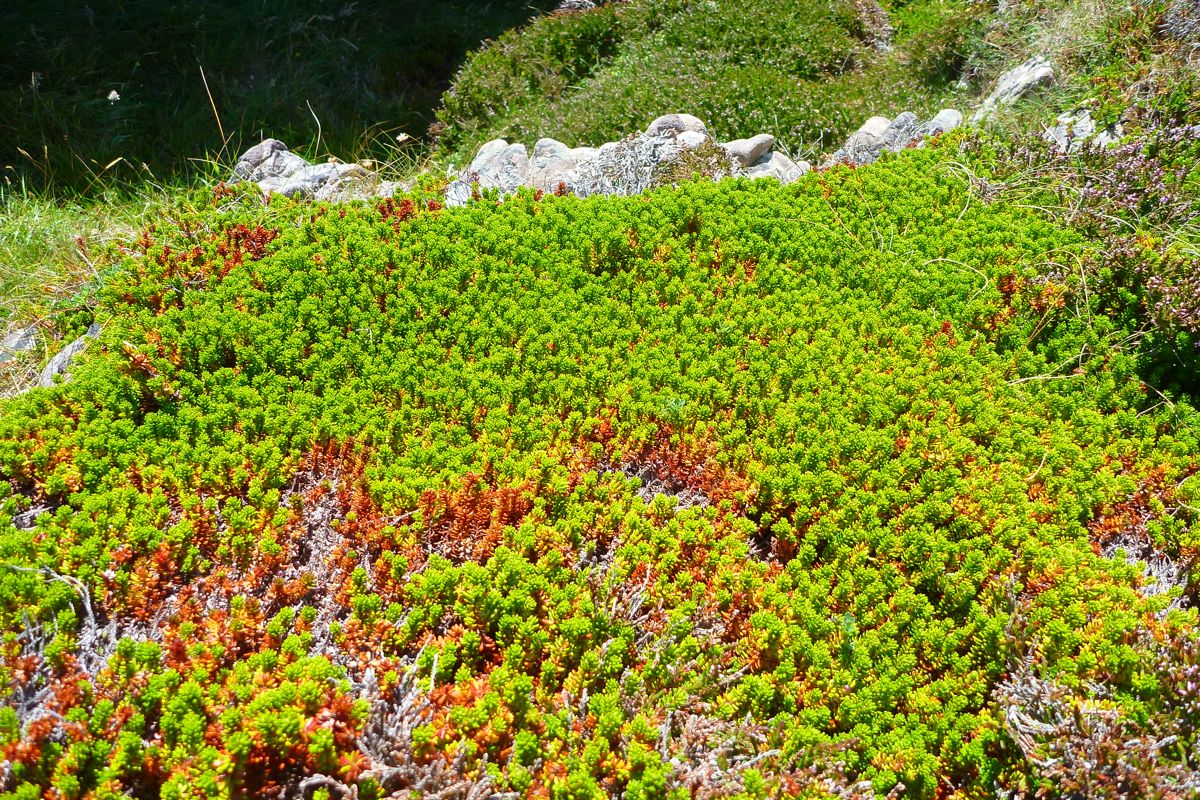
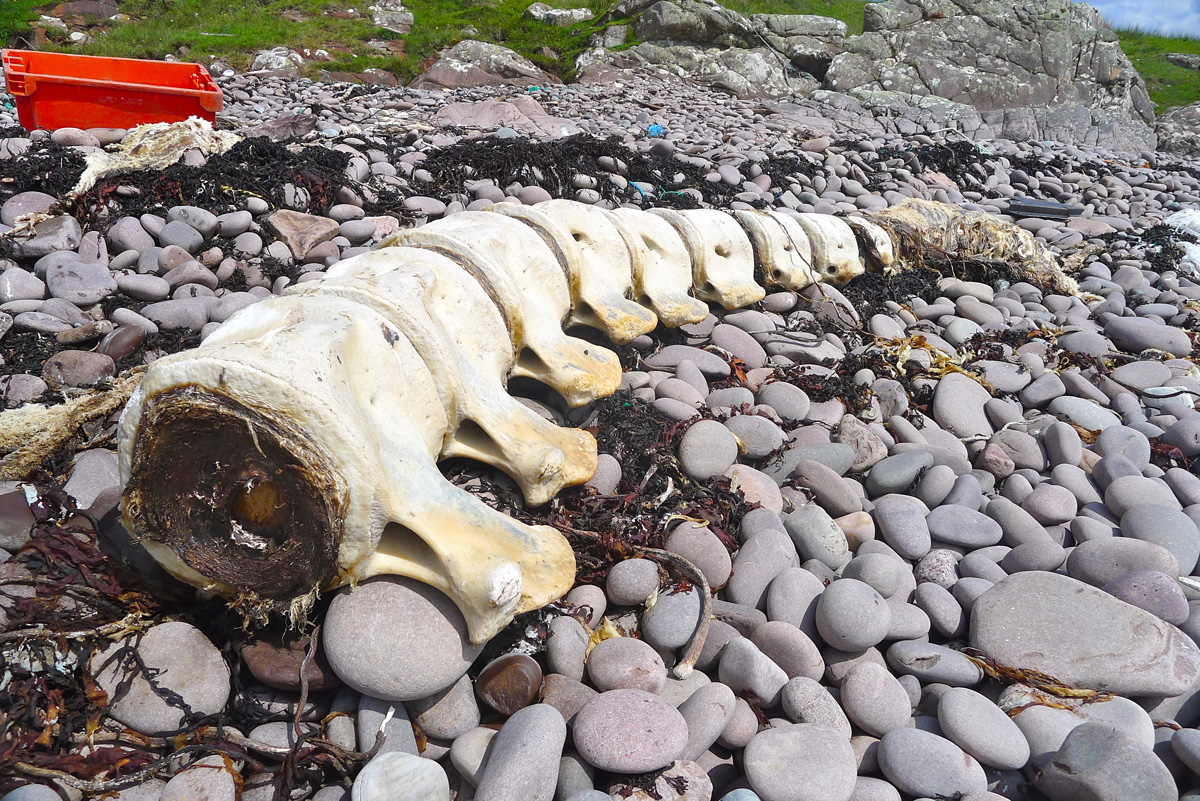
As on Tanera, the colours of the vegetation jumped out at me – was it the light, the recent rains after a long dry spell or just my shades?  All that remained was a hack over to Dornie and back to Whalebone beach (now all gone). It was just beginning to whitecap which I regard as the red flag, especially when blowing from behind.

The spray kicked up over the sides but at times like these I’m reassured by the K40’s reliable turn of speed – about 3.5mph the readout said. It’s good to know it can be done, even if most of the time I prefer bumbling around in calmer weather, looking at stuff.

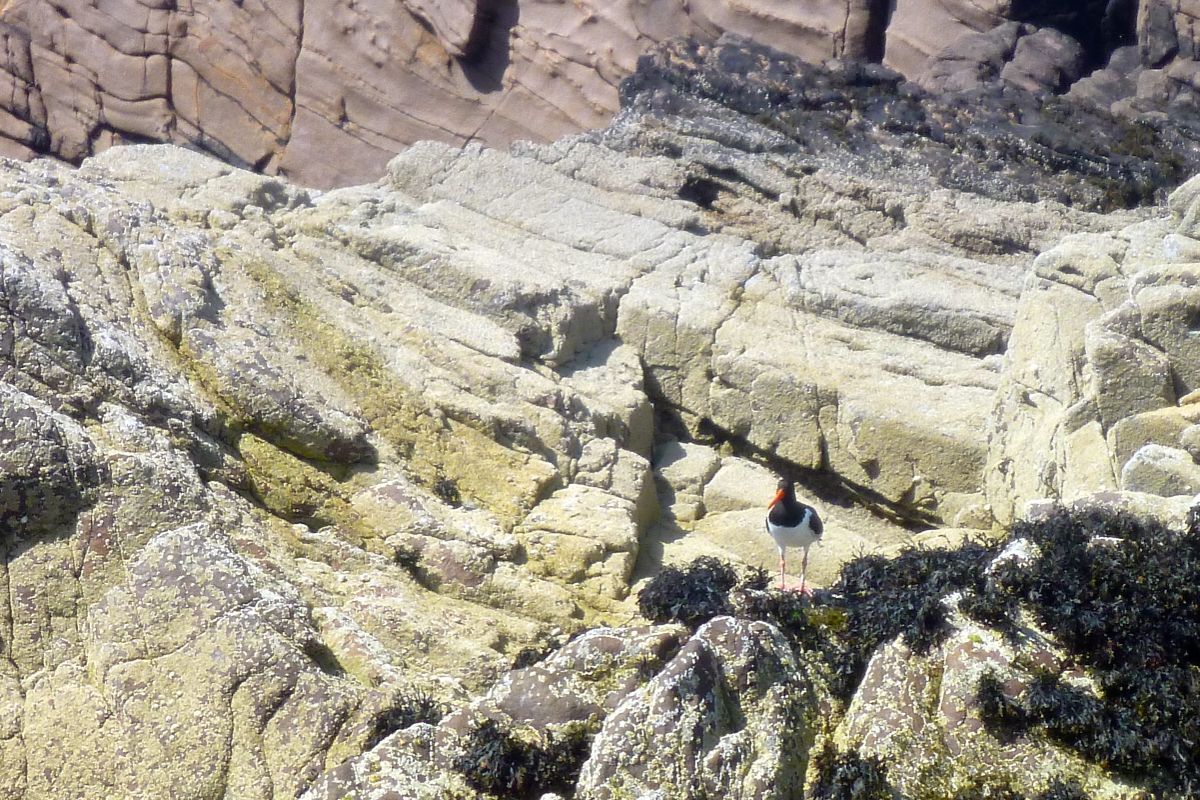
Once over, I pottered back tucked under the mainland shore out of the wind. A beaky oyster catcher eyed me suspiciously just as I neared the beach where a guy setting out with his toddler on his Sevy 200, doubtless the only two IKs for miles around. A few more days like that please, Mr Weatherman.

As I Paddled out one Midsummer’s Evening (Incept K40)

Incept K40 Index Page

I took the K40 out across the bay for the first time since Ningaloo last September. As mentioned earlier, Australian UV being what it is, it did look pretty good after being rolled up for months. I put that down to lashings of 303. But it still went a bit flat in the few days between pumping up and paddling. Maybe I pumped it up on a hot day.

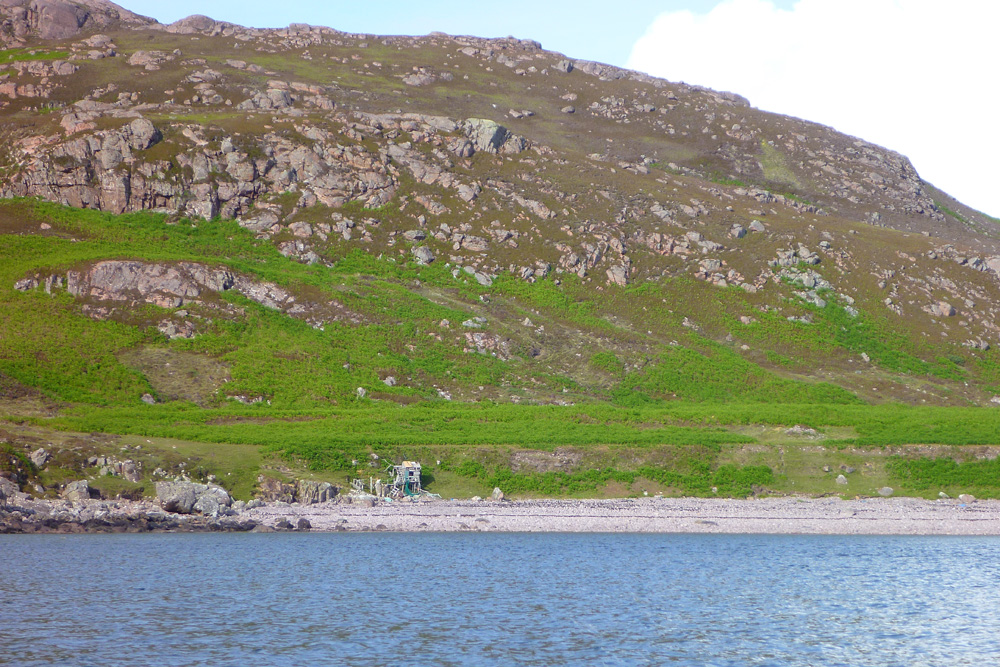
I topped it up in the water at Old Dornie, had a quick look for bubbles, took the pump with just in case, and set out back to Badentarbet beach. It had been calm for days and an ankle-high swell wafted along with a spring tide about to top out at about 3.5 metres. I passed the old ‘Wasp Factory‘ (left) still intact, and dithered a bit about crossing to the island, over-conscious about how the boat was moving on the currents that would barely push a wet paper bag. In the end, Tanera Mor got close enough, and after a couple of minutes paddling I trailed the rocky shore of red Torridon sandstone for a while before heading back across the bay.
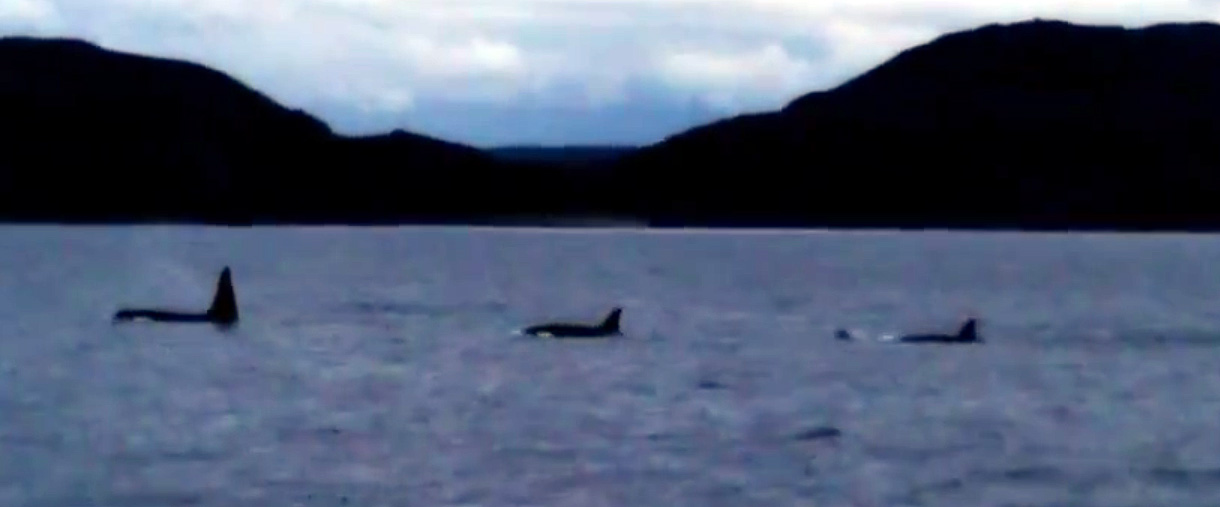
I found out later that the day before a boat tour had spotted a pod of half a dozen orcas (ropey video – start at 1:40 for the best action) right here. Someone suggested that because it’s been so dry, the salmon can’t get upstream to do their thing so have backed up along the shore where the killer whales come in for a feed. Video still below, more pictures here and see footnote.

With no dorsal fins towering over my head, I crossed the last mile over the bay with the rudder up to remind myself it was do-able. The K40 took a bit more finesse and occasional hard yanking to keep in line, same as with the old Sunny when without a skeg. A smooth, steady style works best but what it really means is that you can’t go as fast; pull hard to escape from a killer whale’s jaws and you really need your feet and a rudder to get you back in line.

As my taxi came down off the hill I passed a cheerful buoy bobbing around. Stowing the paddle and using the buoy as a marker, I noticed how quickly I was drifting back on the unseen tide, but as always, with the water and wind moving against you, you get much more of an impression of speed which is satisfying. Battling the not so agreeable tail winds off Ningaloo last September, I lost my faith in the K40 a bit, but here on a calm Highland evening, the Tasman slipped along, just as it always did.


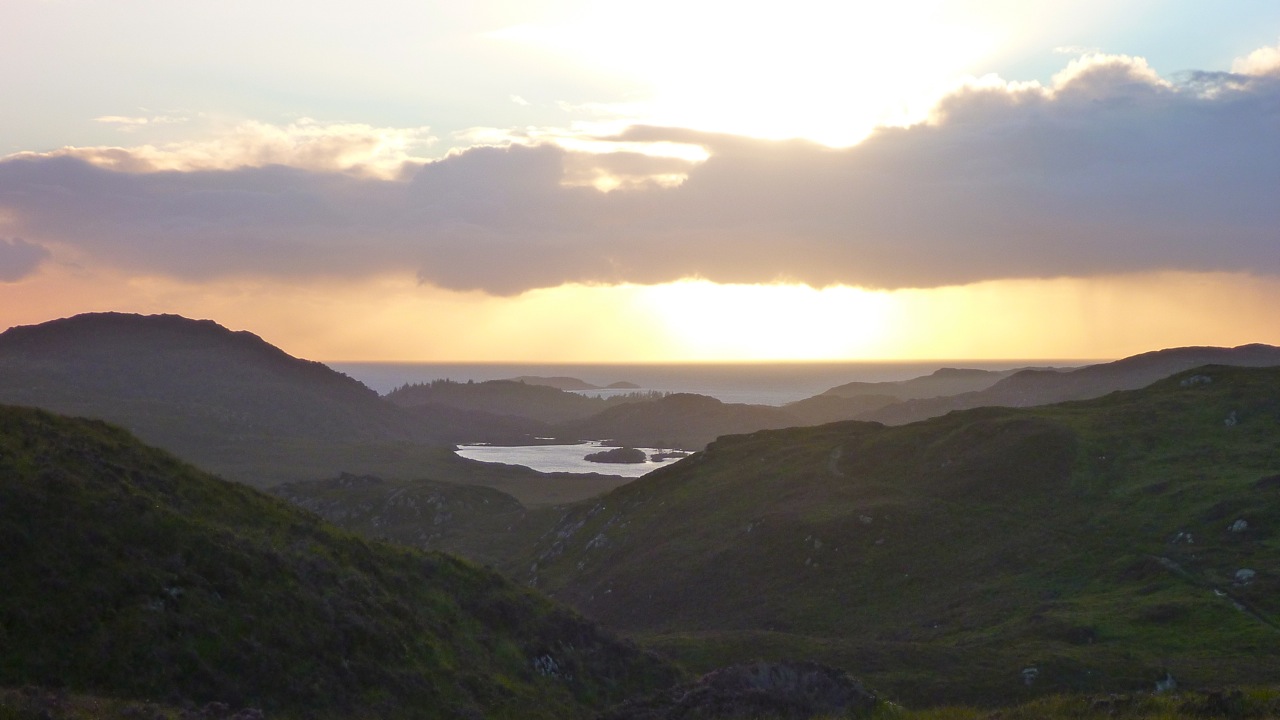
We climbed up onto Ben Mor (right) the other evening, from where I was reminded just how close Ullapool seems from a couple of thousand feet above sea level. Looking out over Loch Broom, with one arm you can pat the Summer Isles, and with the other dab the lighthouse at Rubha Cadail (Rhue), south of Isle Martin and Ardmair (left). It’s some 13 miles or more, but with a get-out at Ardmair if need be, it would surely be doable within in the span of a tide, then to catch the afternoon bus back.

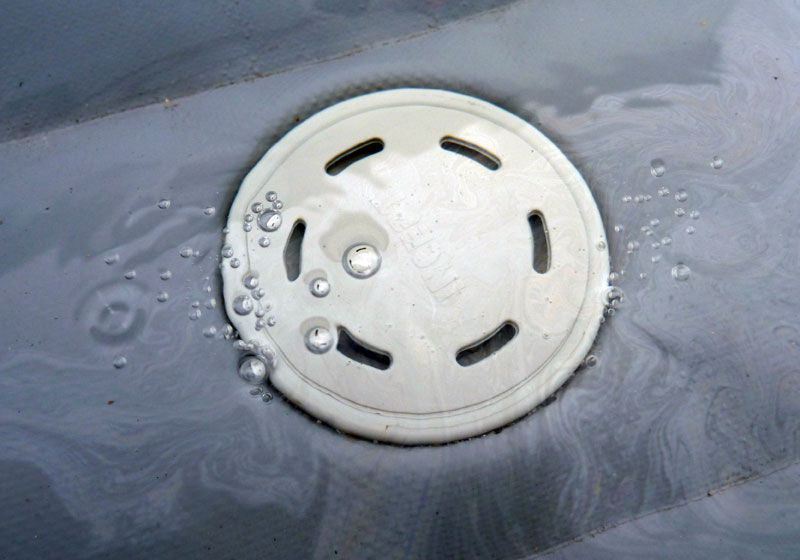
A few days later I decided my boat did have a leak in the floor somewhere. I hoped it might be a bit of easily expelled grit in the PRV and not the hull delaminating in some hard-to-get-to corner.  I filled it up like a paddling pool and sure enough, it was fizzing from around the edges of the PRV (right).
It took a bit of tracking down with Google (the menuless Incept NZ website is not the best), but it seems the cap needs prising off and the valves cranking down once in a while with a Halkey Roberts valve tool. Seeing as it’s not been done since new, that makes sense, so one’s on order and will hopefully do the trick. I never had to do that on the Gumotex Sunny in all its years, but the Incept does run a higher pressure and is a faster boat because of it.
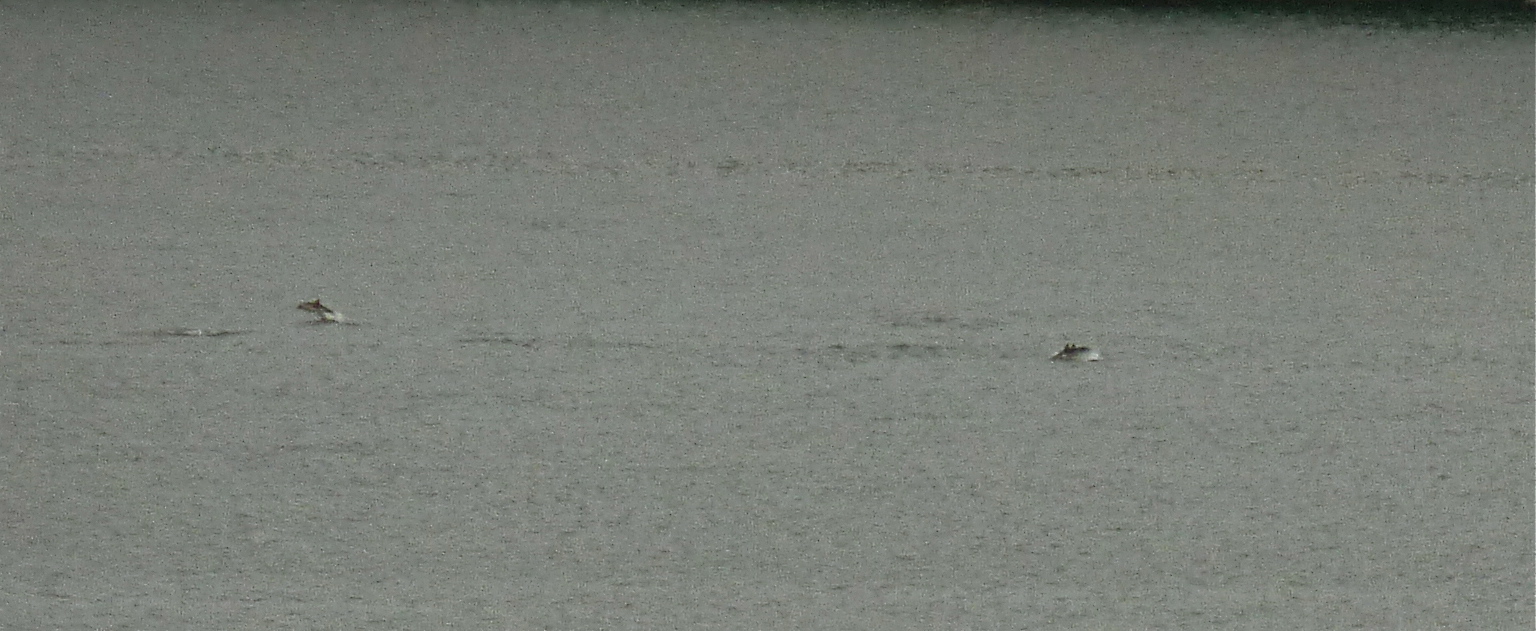
A day after I wrote this, over breakfast we spotted a huge pod of [probably harbour] porpoises coursing across the bay. They’re not so unusual and half an hour what looked like up to 20 of them trawled a line to an fro off the shore of Tanera Mor, presumably hunting or feeding. This is the best the zoom could manage on a murky midsummer’s morning.

Packrafting Fitzroy – Gear

Fitzroy 1  • Fitzroy 2  • Fitzroy 3  • Fitzroy 4  • Fitzroy 5

Access
One reason I chose the Fitzroy was that it seemed easy and safe by Kimberley river standards. It was easy to get to Mornington; the river covered mostly flat terrain (no abseiling/clambering down waterfalls, etc); and it was easy to get off – either onto station land in an emergency – or at the end where it ran past Fitzroy Crossing.

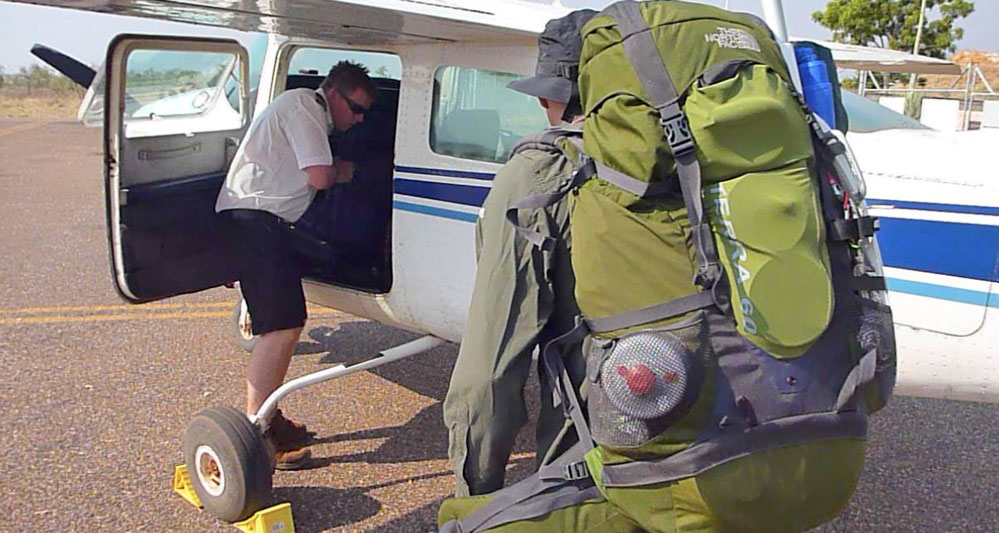
The Cessna from Broome Air Aviation cost AU$500 (£300), and we were able to leave Jeff’s van at Fitzroy Crossing aerodrome safely. The flight took 25 minutes to Mornington where we were met by a ute and taken to the camp. They charged us around AU$150 each for air strip pick-up and river drop-off, gourmet dinner and breakfast, and camping. Fossil Downs just asked us to call on departure and arrival (as did MWC), Leopold Downs (a small section) were not bothered, and we wangled our way through Geikie Gorge NP, as you read.
At the far end it was a 4km walk from the bridge through town to the aerodrome to retrieve the van. All in all, it couldn’t have been easier when you consider what we did, especially at the end of a trip when you can be tired or potentially lame or ailing.

tik

Maps, Navigation and Comms
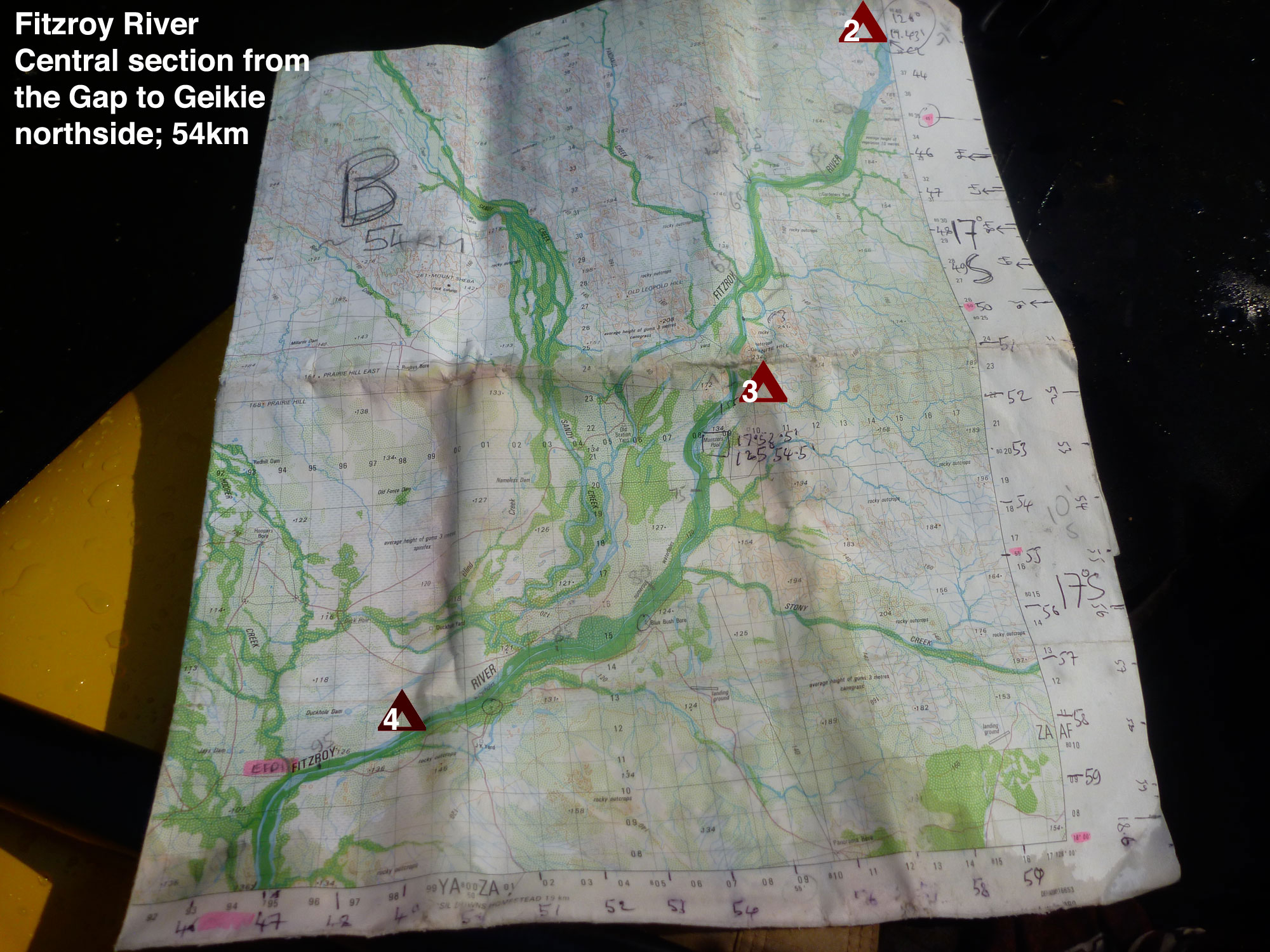
Three 1:100,000 scale maps covered out route and proved to be very accurate, considering the river channels can move around after a Wet.
Fitzroy Crossing 4061
Hooper 4062 (left)
Lerida 4162

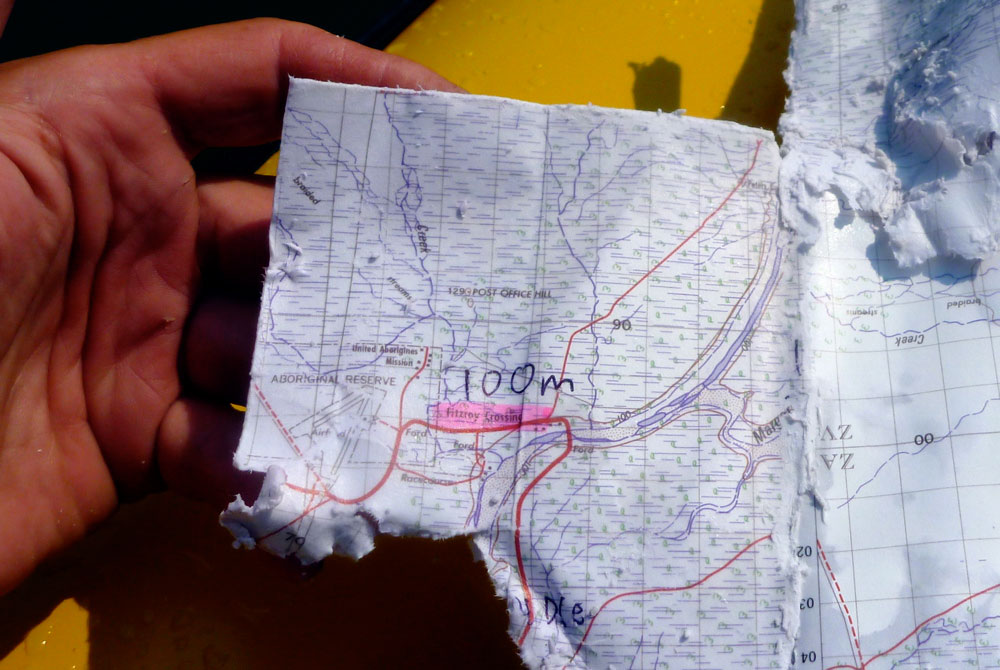
Oddly, 4061 was printed on some kind of blotting paper and fell to pieces under conditions which the other two maps survived with a bit of drying. All maps needed the long-lat grid calibrated by hand along the sides to work with my GPS. They use some other (Australian?) grid which I suppose I could have set the GPS up to read, but I prefer what I’m used to: long-lat.

cros
tik

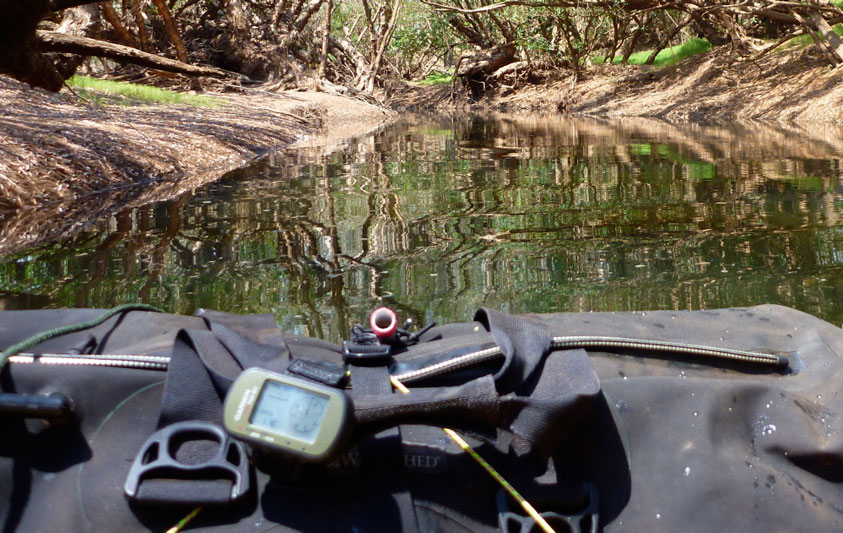
We both carried a GPS. I had a little Garmin 401 (left) and Jeff a more modern SatNav Nuvi with a good WA map which even depicted the course of the Fitzroy. He could have just about managed without a paper map. My 401 is a splash-proof wrist-mounted GPS, much lighter and less bulky than the 76CSx I normally use. Unfortunately, I suspect the 401 uses old Garmin electronics from the XL12 era that aren’t particularly sophisticated or efficient. The two AAA batteries lasted less than 6 hours (my CSX would have lasted up to 3 days in the heat on its two AAs), so after that I gave up keeping a GPS track and just turned it one to get a location. Because of that, we never really knew exactly how far we travelled. But above all, the 401 is handy and light, so as a quick locator it does the job unobtrusively and while it tracked it managed the splash-prone attachment to my pack without complaint. I sold it later – too basic for my needs.

tik

I had a compass too but didn’t use it much, although my 10-year-old Thuraya sat phone was handy to call Fossil one time, or to liase with Jeff when he was still on the river at the end (his Ozzie PAYG mobile didn’t work up north).
Thuraya sat phones just about work everywhere except the Americas and are cheaper than Iridiums.

tik

Food and water
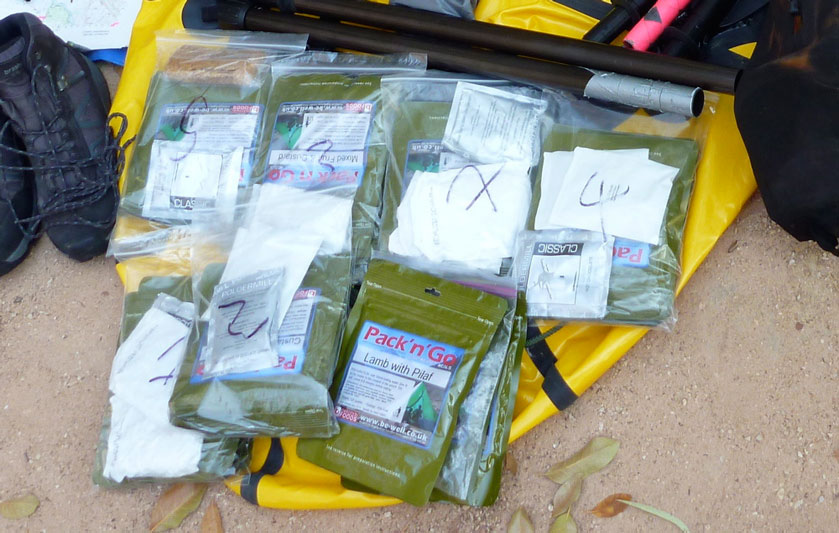
We brought a week of freeze-dried, Pack n Go food from the UK (below left) which weighed in at 3.5kg each but didn’t cover lunch – just hot choc, breakfast cereal and a two-course dinner. Pour in boiling water, seal, wait a few minutes and you got meal. Although it became quite boring after a while and some meals are tastier than others, I was amazed at its ability to sustain us considering the energy we were expending for up to 11 hours a day. I probably ate half what I do at home merely bashing at a keyboard; I suppose the heat helped suppress the appetite, but it must have also been due to the food’s calorific and nutritional values.

In the morning we had a hot drink and a hot P&G cereal of some kind. Smoko (morning tea break) was tea and a muesli bar or trail mix while both lasted. For lunch I just ate a double cuppa soup (good for salt) and another hot drink – Jeff got to eating his evening pudding at this time. And in the evening we ate the main bag meal and I had my pudding as well as more tea, coffee and whatever. I can’t say I was ever hungry, but I sure enjoyed some real food when we got back to Broome – including the brilliant seafood curry down at the Wharf – you gotta go there!
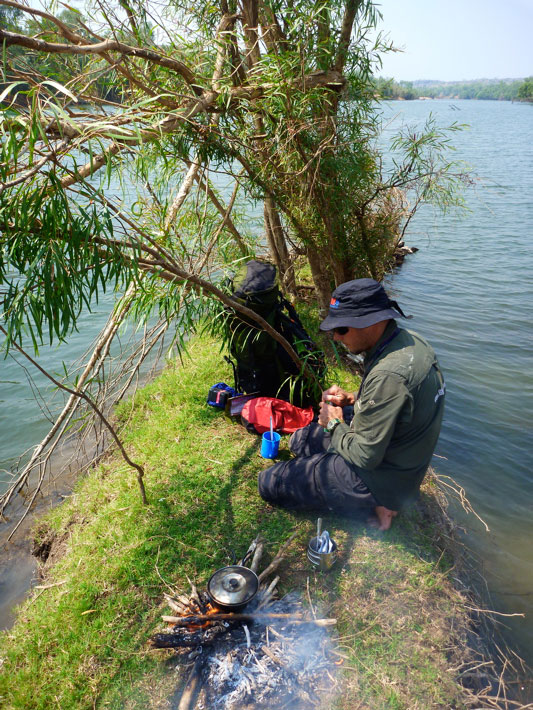
We took my Pocket Rocket knock-off stove and a gas can but only used it on the last morning where there was no wood nearby on our sandbank. At all other times there was plenty of dry wood and little risk of a bushfire along the river bank. Out in the open during very windy conditions a stove would be less risky.

tik

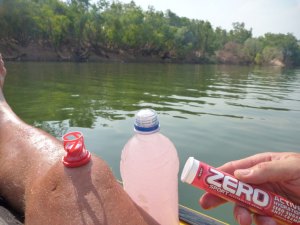
We planned to filter water daily with my Katadyn Pocket Filter (left), expecting lots of scunge due to low water levels. In fact the river was pretty full and running so after a day I dumped my cumbersome 5-litre water bag and filled a 750-mil bottle straight out of the river, while adding a Zero tablet (right) every time to stave off mineral loss through sweating. Jeff stuck with filtered (as did I on the day bat crap covered the river), and even though I didn’t use it much, I’m glad we brought it along,. There could have been an occasion where it would have meant clean water or no water, and out there you need water. Including drinks I drank up to 4 or 5 litres a day when engaged in hot and arduous portaging. Since sold and got an MSR Waterworks which I’ve not used yet.

tik

Clothes
I expected to need to cover right up to reduce sun burn and transpiration: long trousers, long sleeves and a hat. But in the end while the UV was the same, it was not so hot on the river due to splashing and shade, and the trousers were only useful against big flies in the gorges on day one. The problem with long trousers is that when wet they cling to your legs and drag – Jeff eventually ripped his North Face zip-offs above the knee, but both if us turned to shorts and a bit of slip-slap-slop on our legs. Rolling up the trousers didn’t quite work.
Knowing they would get a hammering from the UV and all the rest, I invested in some American 5-11 Tactical trousers and jeans. They are basically the same as normal work or hiking trousers and shirts, but as far as I can tell feature a thicker synthetic material, countless pockets and other small details like tabs to hold up sleeves. The shirt was very good: huge pockets to take a map or whatever – both it and the trousers finished up fine after a rough week unwashed. And they both cost half of what Fjallraven and the like might charge. All in all, I am a 5-11 Tactical convert, even though I know it has a naff ‘special forces’ connotation. I didn’t find the synthetic material a problem in the heat with regards to rashes. odour and so on – if anything it dried much quicker and was tougher than cotton.

cros

Footwear
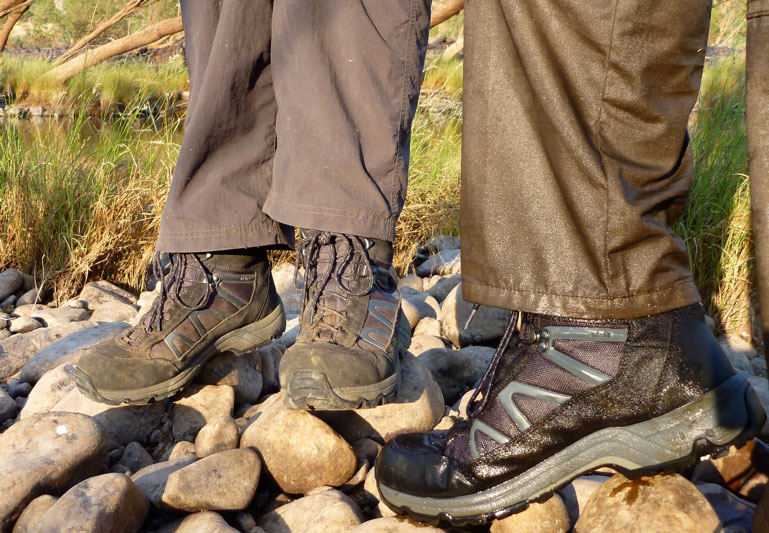
We both bought some Brasher Lithium boots which were going half price in London (£65), as we expected a lot of tough walking with full loads. In the end there was very little of that – and just as well in the heat away from the river. The Lithiums were great when portaging/balancing over boulders and wading through slimy, rocky shallows. But in the sands they filled up with grit and were hard to drag out of quicksands where they filled with sand all the more. Jeff who did more walking than me, wore his Lithiums more, or his Tevas, but in the end we both went barefoot in the river: lighter feet, easier quicksands and more hygienic. By the end our feet were a little sore and swollen from rough gravel, very hot sand and twig jabs, but I think Jeff found his Tevas the worst of both worlds for catching gravel on his already sore feet while not giving full boulder support or secure footing. On the last morning he duct-taped his shoes to his feet (left), but that didn’t really work either. Around camp I wore flip-flops.
In the end, although lacing the Brashers up was a pain, you do need a pair of tough boots if you plan to be walking in the Kimberley – Tevas or Keen Arroyos will not do when packing a load. I poked drain holes in mine after a couple of days so my feet would not get sodden, but in the end it was better just to put them on when needed, even for a short portage. Teva Omniums much better.

tik
cros

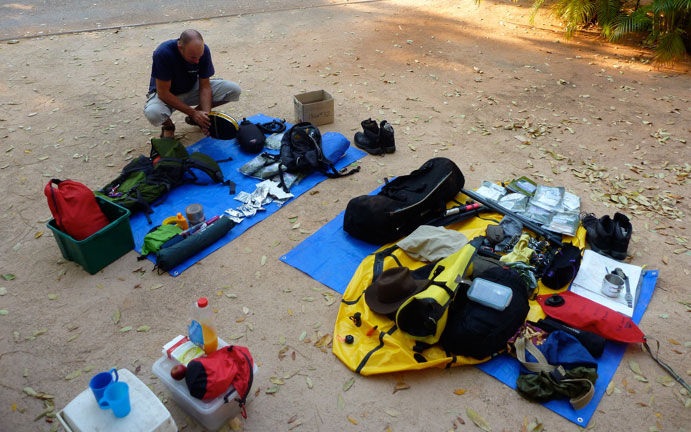
Packs and camping gear
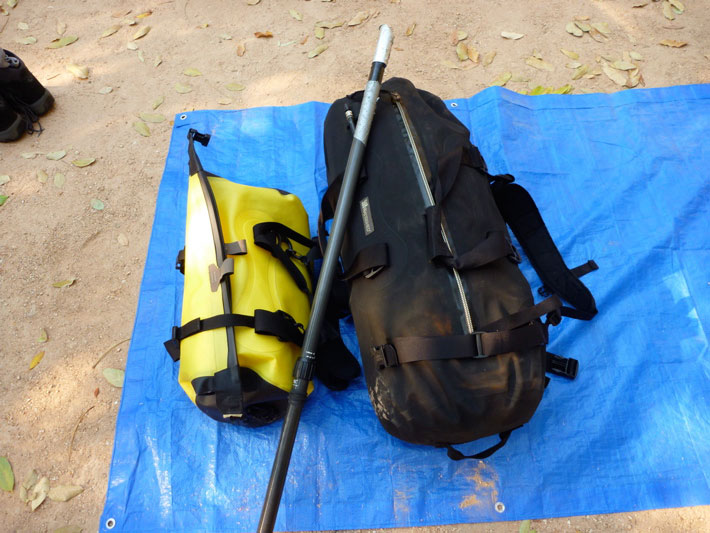
Jeff used my old TNF Terra 60 pack with dry bags, which was barely big enough but extremely comfortable. He also had a day pack which he clipped to the front – a neat system (right) for portaging. I used my UDB (90+ litres) and the Watershed Chattooga as a day bag (both left). But the UDB was a floppy sack on my back compared to the TNF and the Chat bag just got in the way for portages, so that went inside the UDB pretty soon and my shirt pockets became my ‘day bag’. I made great improvements to the stability of the UDB but packing the weight low one time. After that walking with it was not so bad, but it’s nowhere near as comfy as a proper backpack. But it can be if you use this.


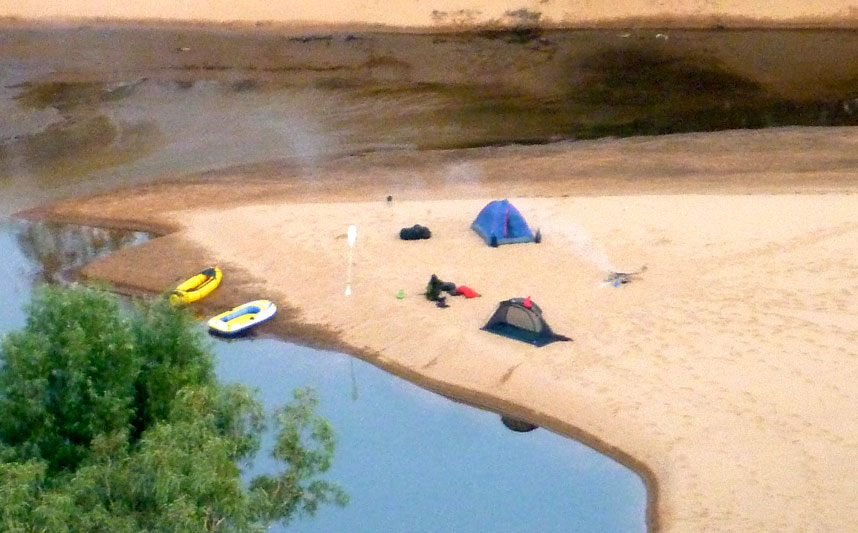
I didn’t take a sleeping bag, just a thin blanket that was going spare, and wore all my clothes on the one or two cold nights. Most nights I used the $15 K-Mart Tent which Jeff bought me – more as a mozzie dome than against the cold. The K tent was too short for me but for what it cost it was OK. Since then I’ve bought myself an Exped Venus UL which pitches with just inner for hot, insect nights and is longer than I am. Jeff’s mozzie dome is the same sort of thing – just right for the tropical bush. I used my Exped Synmat DL which is excellent and sold,it to Jeff in the end who suffered under his Thermarest UK which I used to use until I woke up (too much). I’ve since replaced my cushy SynMat DL with the UL version which weighs just 500 grams and is half a litre in bulk.

tik
cros

Cameras and recharging
We both used Panasonic FT2 waterproof cameras – the ranger we met at Geikie had one too. At the time (before Olympus TG) it was good in that it’s waterproof (great for Ningaloo reefing) but of course the lens is tiny and so the picture quality- is not that hot, especially on zoom. The video quality, it has to be said, is pretty amazing for a £200 camera. We shot in Motion JPG and HD modes (not the AVCHD which doesn’t import so well I find). That gave a 1200 pixel image which is certainly good enough for youtube, even if it takes many many hours to upload a 5GB movie. I would love to have used my old TZ Lumix, or the even better LX5 I now have, but out in the wet and wilds it’s too hard to be careful with fragile gear so the FT2 is good enough until I get a commission from National Geographic. They’ve since brought out an FT3 as they do, with GPS and other gimmickry – there is no substantial improvement as far as I could tell and you’ll never get a decent lens in such a compact, flat, waterproof body. A pair of 16GB cards  were more than enough for both of us.
We carried 1 spare battery for the Panas and, with the Go Pro below, that just about did us. In the end I didn’t take the Power Monkey solar charging gadget on the Fitzroy, but did use it on the Ningaloo stage. It charges the Pana batteries very quickly and has the capacity to do that about 10 times.
I also used my Go Pro which is temperamental and drives me nuts, but can get the hands-free shots other cameras cannot reach – mostly when on your head. The buttons are a pain so you have to check every time to be sure it’s on, but I also got into using it out of the box when the audio is of course much better. Out of bright conditions the exposure is not half as good as the Lumix; in the shade its terrible but maybe I should meddle with exposure settings which are on default. I also took a Gorillapod but that fell apart at the joints. Jeff used his newer one a couple of times; I’ll probably get another, maybe the bigger one for SLRs which may last longer.

Health and Dangers
The Kimberley can be a pretty unforgiving environment, hot, harsh and full of nasty or just plain irritating wildlife. I must say I feel I got away from there with barely a scratch; Jeff suffered a bit of crotch rot and cut up feet. I like to think that the Zero tablets I ate religiously kept me in good shape, even with unfiltered river water. I used a bit of 50-factor on my exposed legs and always wore the hat in the sun. In my experience in Australia the UV is much harsher than even the Sahara.

We saw no snakes – maybe one – though there are big olive pythons around (we had gaiters for walking in long grass, as Jeff did on occasion). Big lizards and freshie crocs are also only a danger if you tread on them by mistake. The only cow that got edgy was clearly in a bad way and cornered, and the only time big horse flies were a pain was, funnily enough, in the Leopold Ranges, well away from cattle country.
I think the biggest danger was portaging over boulders – a slip there could have ended badly once you crash to the ground under the weight of your gear. The answer is to pack carefully and take your time, or just do two trips as I did on one occasion. I found my packstaff was rather a hindrance with my boat on my head.
There were a few mozzies at night, but they were nothing compared to the blood suckers I’ve experienced in the Top End. So all in all, no drama.

Hot Days & Cool Rangers • Packrafting the Fitzroy – 5/5

Fitzroy 1 • Fitzroy 2 • Fitzroy 3 • Fitzroy 4 • Fitzroy 5

Today, our fifth on the river, we expected to break out of the clogged-up side streams of the last two days and get on the deep, open channel which led right through Geikie Gorge national park, not far from Fitzroy Crossing.

After breakfast the log jam which had defeated us last night was easily carried around, and after a couple of hours lifting over and squeezing under other blockages (left), we turned the last Big Bend and spied the northernmost outcrops of the Geikie Ranges in the distance.

This was the last of the few landmarks on the route and though the bridge was still 40km away, it marked the beginning of the final leg, just as the Gap had marked the end of the Leopolds.
As if on cue, the rock changed again from the sand-smothered granite we’d been on since leaving the Leopolds three days ago, to limestone which gave Geikie’s flood-scoured gorge walls their distinctive appearance.
The river spread out and lost its depth, and as we picked our way over shallow but gnarly limestone rapids not unlike the Ningaloo‘s shores, Jeff’s floor got snagged and went flat. It was smoko time anyway, so while the water boiled he repaired his boat one more time.

As far as we could tell, the park’s northern boundary began at 18°S, and as you’d expect in WA, paddling there was not without its restrictions. The DEC website stated private boats were only allowed on the river before 7.30am and after 4.30pm so that the daily boat cruises wouldn’t be disturbed by people bombing around for free. At our paddle speeds, keeping to these times would be difficult, let alone getting through the 18km-long park before nightfall, because camping wasn’t allowed either.

All visitors to Geikie drive in, almost all to do the one-hour boat cruise. Aside from a couple of short walks, that’s all there is to do, even though it’s clearly a great place for paddling. As with kayaking the Ningaloo Reef, we were again expecting ranger problems due to our unorthodox arrival and mode of travel. If the Ningaloo Reef NP regulations had no category for sea kayak touring, you can be sure Geikie Gorge had no equivalent for packrafts and slackrafts coming down from the King Leopolds. Our transit would require a sympathetic head ranger; something of an endangered species up north, if experience during my guidebook years was anything to go by.

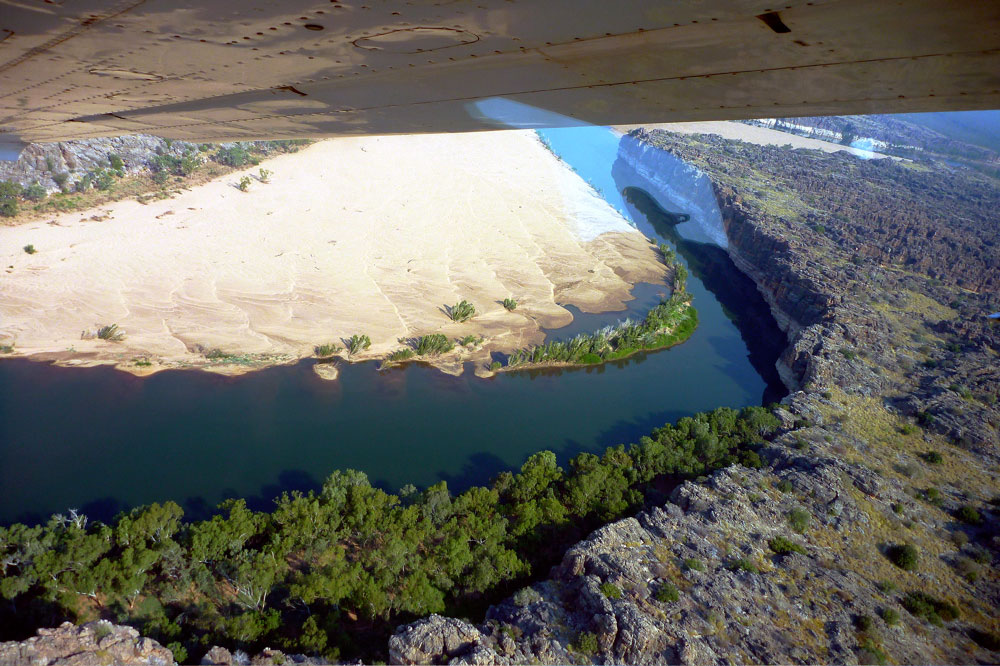
At least we’d seen from the plane that the river cut through Geikie in a deep, wide channel with minimal shallows. For me in the nippy Alpacka that was great news, but hours of unbroken paddling would be a drag for Jeff in his sluggish pool toy. Mid-morning a hot northern wind rose up and Jeff was quick to rig up a sail, but its effect was negligible; the only way forward was to dig or settle back and drift on the quarter-knot current. To our left and right, sun-bleached water marks reached ten metres up the cliff sides, demonstrating how high the Fitzroy rose during the Wet.

It was lunchtime, but with little flat and shaded land between the cliffs and the bank, we rocked up on a slither of an island capped with fresh green grass that no cattle had managed to reach. Later I realised I’d taken a picture of the very spot from the plane (left). While Jeff got the billy on, I emptied the Yak for a rinse and then went for a quick blast across the open river. Without its load the Alpacka skimmed across the water like a pebble.
Have a go in it” I said to Jeff when I got back. He did and of course loved it.
I shouldn’t have done that. I really shouldn’t have done that“, he realised. It made getting back is his squidgy pool toy all the more galling.

Back on the water, up ahead a motorboat was gunning towards us. Here comes the ranger; we’ve been spotted and our trip could end right here. But our paranoia was premature, it was just a bloke heading out to his favourite barra hole by some sunken trees. He explained we were in an unofficial access window tolerated between 11am and 1pm, between the two big daily tour boat cruises. He also warned us that the head ranger was a grumpy sod. No surprise there, so we decided better not to get bogged down in explaining ourselves on the sat phone, while at the same time planning to make the most of the Fossil Downs station land on much of the east bank for which we did have permission. Before we’d flown out of Fitzroy we’d tried to track down the ranger’s office in town to inform someone of our plans. We couldn’t find the place, but heard later there was no one there most of the time anyway.

As we entered the main part of the gorge, up ahead we heard the blaring of a guide giving his tour schpiel from the cruise boat. People looked to be taking pictures of us which meant we’d be seen for sure. They’d be waiting for us downriver, hands on their hips, drumming their fingers, but we decided we’d deal with that when it came. We’d talked our way out of it on the Ningaloo; we could do the same here. It’s not like we were drunk and churning the place up in jet skis.

Without any overhead canopy to shade us, the full heat of the afternoon pressed down and Jeff was feeling it. After some 20kms we came to a big sandbank where crocs buried their eggs. Seeing a curve in the cliff line, Jeff could bear the paddling no more and set off on foot (left) to cut the corner. At the far end I came ashore to look for him but he was still way back. The day’s heat bounced off the glaring sand.; great for incubating croc eggs, but it reminded me that had we actually done much open country walking (as we’d expected) we’d have had a tough time of it. Wading or paddling, the surface of the river felt a good 5-10°C cooler, even out of the shade. The combination of the cool water surface as well as constant splashing kept us swathed in a temperate micro-climate which made the whole experience infinitely more tolerable. The few portages we’d taken over boulders or sand banks over the last few days had been brief reminders of how hot it actually was out there, and later that day we were told the temperature had topped out at nearly 39°C (102°F).

Unless he was training to be an Indian fakir, it didn’t look like walking across the scorched sand bank had been any kind of respite for Jeff, and he flopped back into his boat. As on the first day, I suggested I tow him for a bit and this time he was too weary to resist. He reposed on his water sofa as we set off to explore the main east wall of Geikie, where eons of seasonal flooding had carved the former subsea reef into scalloped and fluted Gaudi-esque forms.

We glided under overhangs and nosed into caves and web-drapped fissures which bigger boats couldn’t reach. As we bounced along the eroded undercliff, enjoying a break in the pace, up ahead a babe in a red kayak came into view. And as we got close she started chuckling.

“I hope you’re not laughing at us” I said with a stern grin.
It was Ingrid, the Cool Ranger, probably the only person north of the 26th parallel who was remotely impressed by our achievement.
“Good ON-ya guys!”,

she said as we filled her in on our adventure, and she meant it too. We gloated modestly at this unexpected attention as she fired off questions about our boats and a trip she’d often thought of doing herself. On the way out we’d actually spotted her red kayak from the plane, beached on a bank somewhere upriver. Turns out she was one of the dreaded park rangers, but despite six months on the job was still keen enough to use her days off to see how far she could get upriver in her SoT.
And this wasn’t just any old SoT, but an Ocean Kayak Scupper Pro – a boat I’d considered buying myself for our stay in far northwest Scotland earlier in the year. Compared to most SoT tubs, the SP is a long, slim and sleek-looking boat, much admired by spray skirt-dodging hardshell connoisseurs as being the most sea kayak-like of SoTs.
No stranger to her own outback adventures, she quizzed us about our run down, while a fellow ranger glided over to deliver her fishing rod in a dumpier OK Frenzy, the more usual door-wide slab of SoT plastic. Ingrid had caught a two-foot barra hereabouts just a few days ago, so there were fish to be had here after all.

After a long chat it was time to move on; the sun had just about set. She explained that up ahead was a big sandbank on the left where another river joined the Fitzroy. That was out of the park so we could camp there as long as we liked. Buoyed on by the hope of a fresh fish supper, Jeff trailed his lure until half an hour later we bounced into the sankbank at twilight, barefoot and fishless as usual.

To the Bridge
Jeff had well and truly had it with his Bestway, and the previous evening had talked about walking the last 15kms back to the van at the aerodrome and putting back in at the bridge. By dawn he’d come to his senses. After all he’d nursed his malformed lilo over a hundred kilometres, past sleeping crocs and charging bulls, over boulder fields and under fallen trees, patching it as he went. For whatever reason, yesterday had been a hot slog and the novelty of his achievement had long gone stale, but he knew he had to see it through to the end – or at least give it a go. If nothing else, he had a film to finish!

He suggested I go on ahead to the bridge, walk to the aerodrome and come back with the van, by which time he’d be arriving himself. And so at 6am we set off for the final 20-kilometre leg which I figured I’d complete by noon. Although there was no let up in obstacles – more log jams, frequent sand shallows with quicksands, as well as headwinds – by 9.30 I’d reached the original ford which at the end 19th century had given Fitzroy Crossing its name.
My watch had packed up days ago and for some reason the last topo map was printed on toilet paper and had quickly disintegrated. An old guy was walking his dog over the ford and as I lifted my Alpacka over the concrete rim I asked the time and how far to the bridge – groaning when he said about 4 or 5 kilometres. Oh well, about another hour then.

I attacked this final stage non-stop in one last burn up, but after 16kms I was fading. It was hot and I only had a 750-mil bottle of water. Having passed a dead animal and other rubbish, I didn’t fancy the river water down this end, and now the river was no longer wild, I was keen to get the job over with.


Another sandy, shallow bend. I hop out to wade, sink over my knees in quicksand, crawl out, stagger on, get back in to paddle a bit, ground out and go through the whole cycle again. Jabiru storks carved the airwaves overhead and Brolga cranes danced about on the sandbanks. There were a lot more roos bouncing up and down the banks here, too. But never mind the wildlife, where was that bridge? Surely around this bend… that one… or the next, until finally there it was, less than a mile away (below). Road trains sped across, oblivious to the tiny raft below with its paddler, up to his hips again in quicksand.

Presently a shadow passed overhead, but it wasn’t a flood-battered river gum or a rustling cadjeput; it was the bridge on Highway 1 which ringed the entire continent of Australia.
Worn out and parched, I filmed a final, slurred p2c and headed for the steep bank to pull the cork out of the Alpacka one last time.