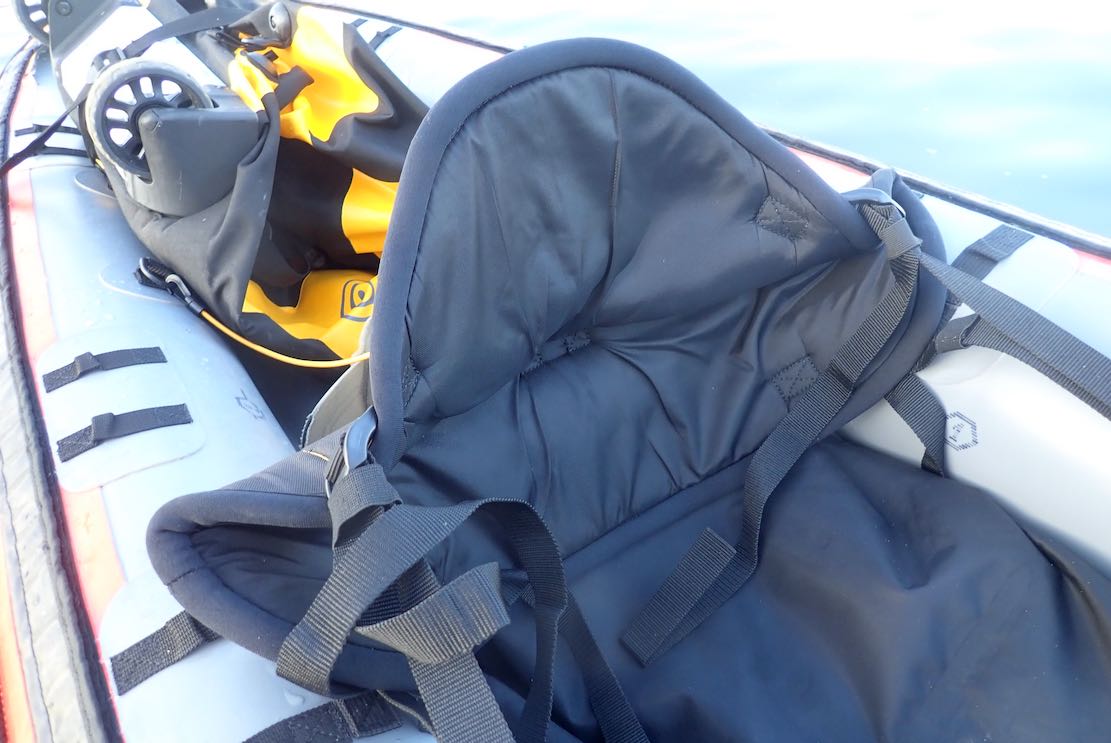
As soon as I received Seawave 2 last year I ditched the heavy and squidgy Gumotex seats (right), and implemented my proven packraft inflatable seatbase + SoT backrest idea (left and below right) at a fraction of the weight and bulk.
The seatbase is fine of course; it weighs next to nothing and lifts you off the unavoidably soft floor for a good ‘raised-bum’ paddling stance. I’ve been using it for years, but sometimes I think I could use more back support than the SoT foam backrest. It presses nicely into the small of the back, but like a low-backed chair, is not something you can lean on. You could say in a kayak you shouldn’t be leaning on anything, but sitting bolt upright, knocking out a series of ‘searchlight beam’ torso rotating powerstrokes. But after too much of that you just want to lean back on something.
I picked up a used BICSport Power Backrest (for an SoT; right) which looked like it might be more comfortable. At 37cm, it was tall but lacked a hand rear pocket and instead had a centrally positioned adjustable bungy to counter-tension the back and keep it upright. Using it for the first time on the Wey last week, it started well but after a few hours collapsed as the pull from the front and back straps crumpled the backrest.
Collapsed backrestNo good
The problem: lack of stiffness. A backrest needs to be stiff like a chair back, while a seatbase wants to be soft like an armchair. One provides support; the latter takes your weight. The best way to fix the backrest was to insert a firm plastic plate. It just so happens I kept that very part from a rotting old Aire Cheetah seat bought 15 years ago for my Sunny. I got that boat back last year, did it up with new seats and sold it. How’s that for recycling!
Through-stitching complicated thingsPlastic insert trimmedIncision madeFoam wouldn’t support a gnat in a spaceshipStuffing in the insertNearly thereTrying to seal the edges for sewingBut over-gluing was best. I should be a Caesarean surgeon
To be honest I’m beginning to think separate backrests and seatbases are a bit of a faff to fit and especially getting the seatbase just right under you when getting in and out a lot (did someone say ‘Wey‘?). It was ot that hard to attach the packraft seatbase to the BIC backrest, and like all these mods I do, is easily reversible.
For the back I bought another Chinese cheapie IK seat (left and below right; with back pocket; about £25) as I did for the refurb’d Sunny. The seatbases on these one-piece seats are just an inch or so thick; OK of a molded SoT but too low for the flat floor of an IK. So I attached a packraft base to it which provides the all-important raised position. The backrest is just more bendy foam so may need stiffening but we’ve found works fine as a second seat as the Mrs who never paddles like a Maori raider anyway.
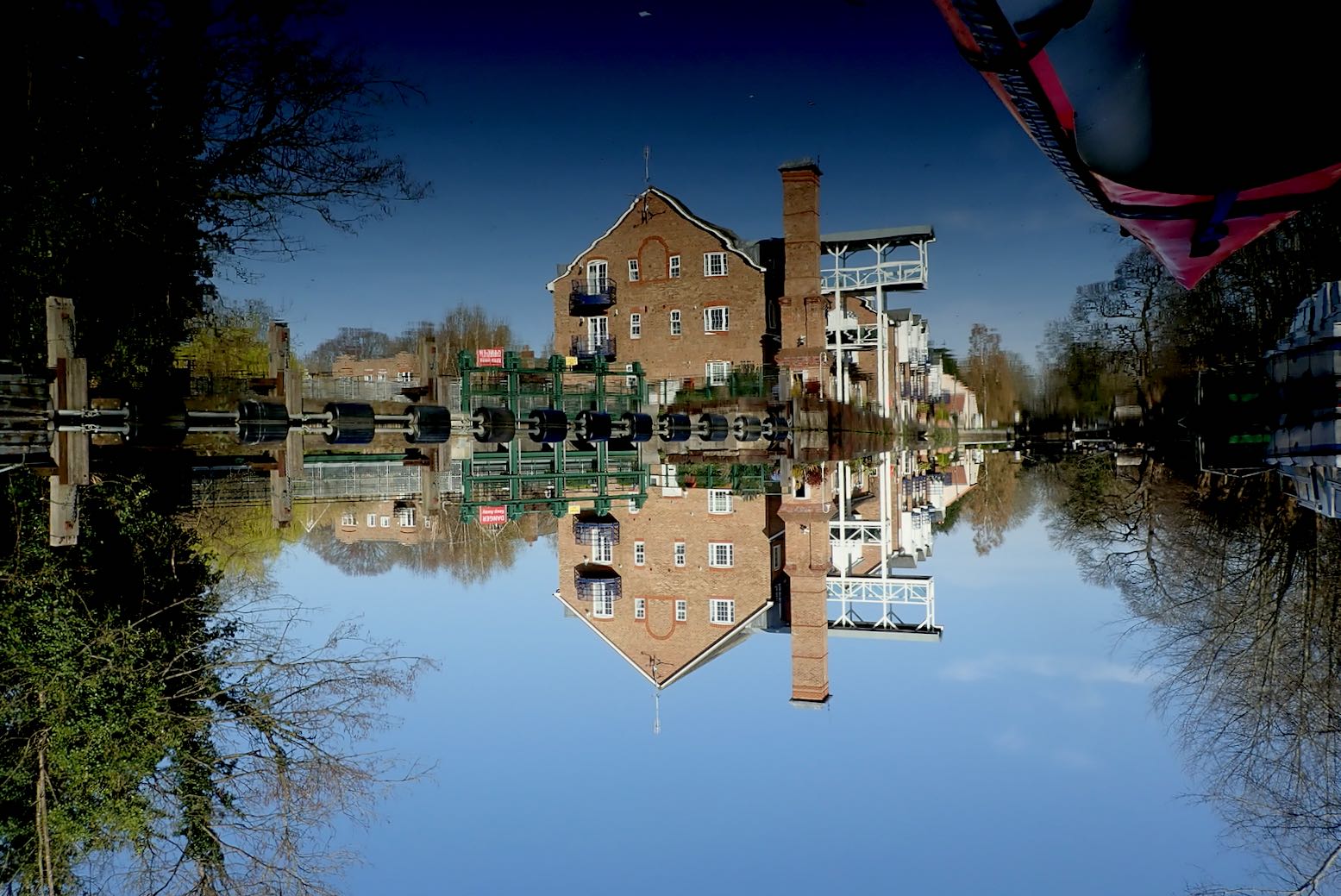
One of England’s first navigations, dating back to 1653. That’s probably why this historic canal feels quite natural and river-like, apart from the virtual lack of current.
All hands to the barrel pump! The day will be long, sunny and warm. High time to tick off ideas matured over the winter months of Lockdown. First on the list: the River Wey from Godalming to Weybridge in Surrey. Or should I say, the historic canal called the Wey Navigation which is paralleled in places by the old river. It’s one of England’s oldest navigations (commercial inland waterways) which once connected the Thames with the Navy base in Portsmouth. At the time a safe way of transporting stuff, including munitions produced near Godalming, without risking encounters with Napoleonic marauders in the Channel. For years I’ve been unsure whether the Wey was a dreary canal with more locks than the Tower of London, or a grubby, semi-urban river with weirs and other obstructions. Turns out it’s a bit of both but better than expected. All I had to do was RTFM!
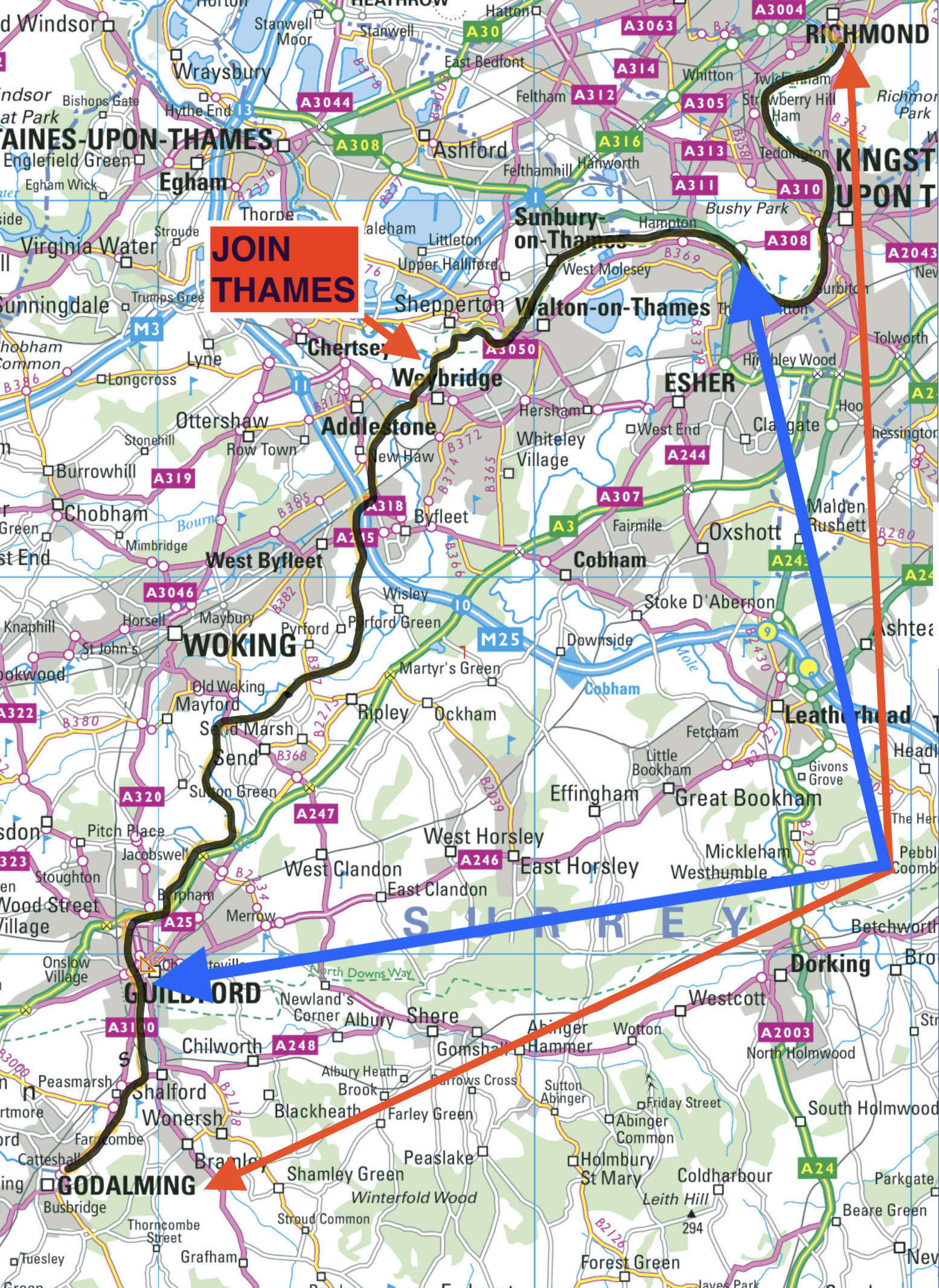
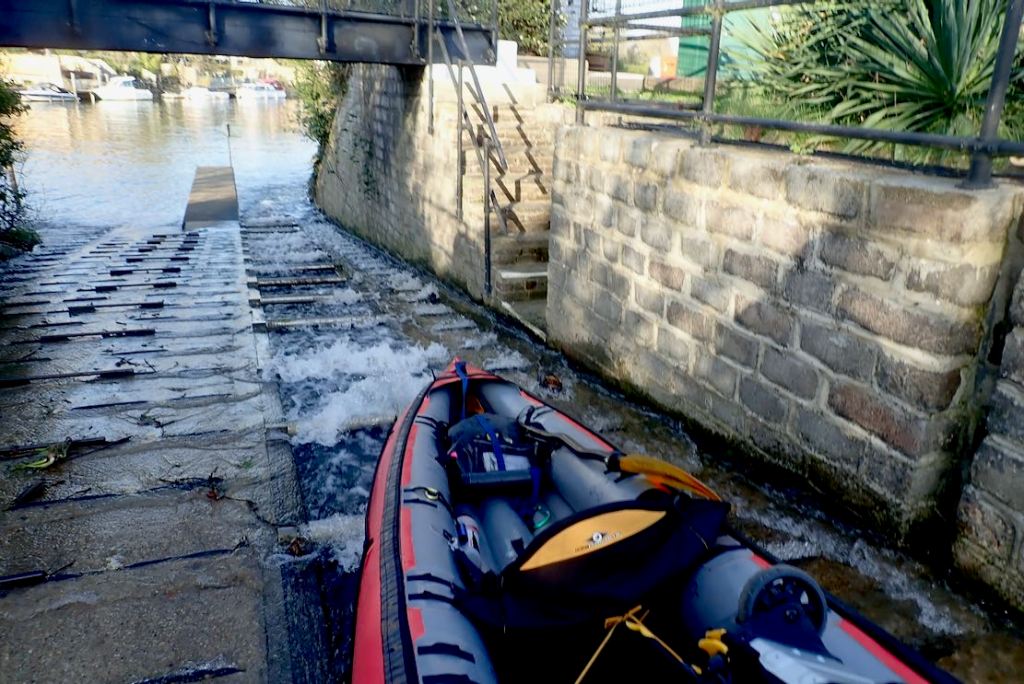
Compared to the similarly popular Medway, which I’ve done loads of times in IKs and packrafts, summer and winter, the Wey Nav feels less agricultural, more scenic and has an interesting history if you slow down enough to look. But it lacks the Medway’s unique canoe passes which scoot you down the side of each lock (right), avoiding up to three laborious carry-rounds per mile. Parts of the original river survive in places to either side of the canal, which is what caused me confusion. I now realise the Navigation (managed by the National Trust) gets priority in terms of water levels and maintenance. As a result the occasionally nearby River Wey might be shallow or chocked up with fallen trees or rubbish. But you can combine both to make loops like this.
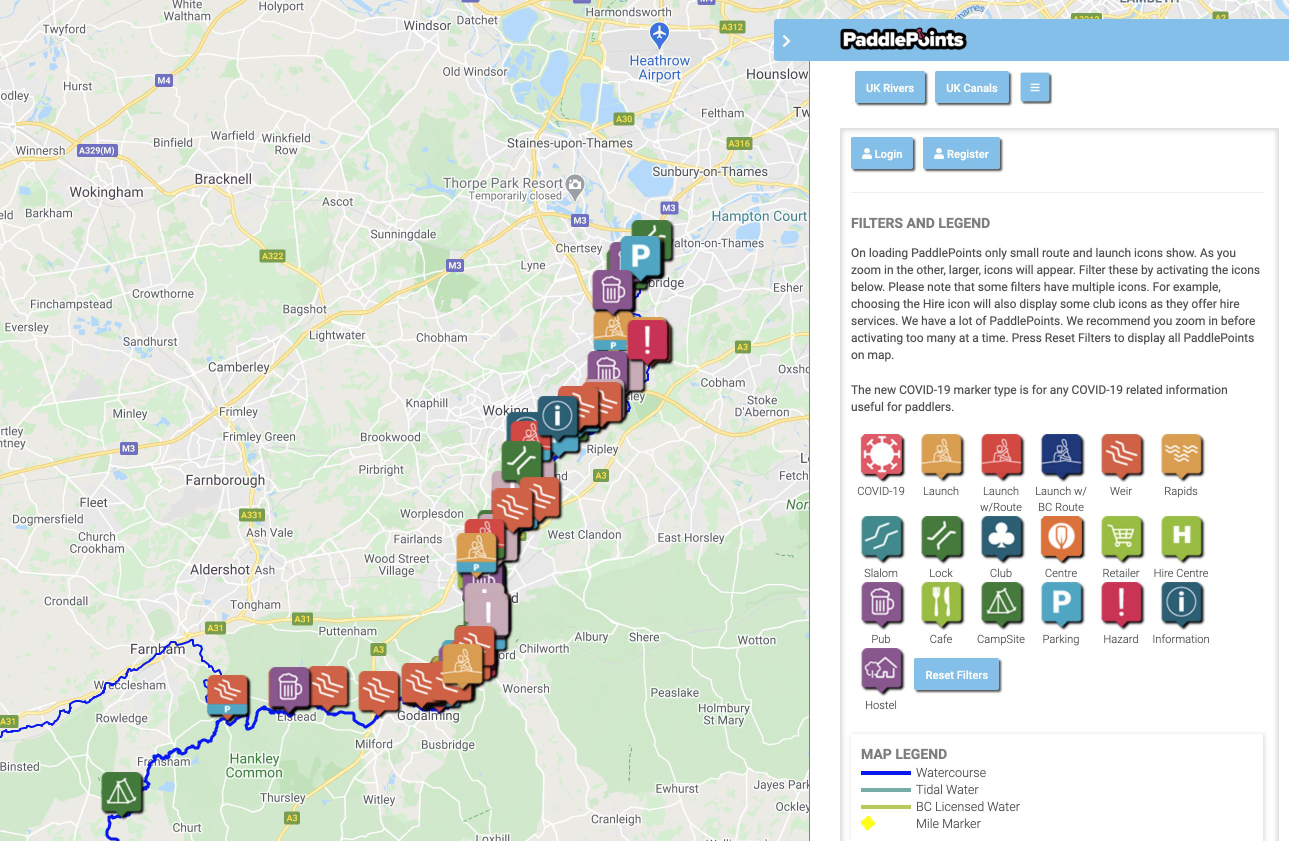
Because of the Wey’s multiple channels and numerous weirs and locks, I tried British Canoeing’s PaddlePoints website, a comprehensive database of paddleable river map routes with handy icons (above) for put-ins, parking, hazards like fallen trees, feral teenagers (I’m not joking) and so on. You can reset to delete extraneous icons (‘Covid-19’ ?); I just wanted to clearly locate the locks and weirs and river’s branches, though on the day ‘Navigation [this way]’ signs at junctions were clear. Closer scrutiny of the map shows that in places the blue line guides you along the old, choked-up river, not the Nav, and not all weirs (an important feature to know about) are shown as icons, even when they’re clearly evident on the Sat view underlay. And so the Map view (as above) can give a misleading impression of which way to go. As you’ll see below, at one point the blue line even guides you over a weir. Common sense prevails of course, but you can imagine some beginner clutching their PaddlePoints app on Map view getting sucked into a weir. I realise now this content is user-generated like OSM or Google Maps, and so errors, inconsistencies and lack of moderation are inevitable. As such, you can report icon-points, but it’s unclear if the route (blue/green line) can be corrected by users. If nothing else, PaddlePoints helps identify which rivers you’re allowed to paddle in England and Wales, and what the rules there might be.
I fancied a full dawn-to-dusk recce: as much as I could fit in from Godalming (where most paddlers start) before my tank ran dry. I might even reach Richmond on the Thames, a section I enjoyed last December in the Arrowstream. That is actually quite a haul: 20 Weymiles plus another 15 on the Thames, including no less than 17 lock portages on the two rivers. But the great thing about ending a paddle in an urban area is I could air down when I got worn out and rail home. Thirty-five miles? Dream on, bro! I’ve only paddled two days since September so was far from paddle fit. Then again, the pre-dawn brain wasn’t on top form either: I set off in the right general direction, but on the wrong train.
Oh! Mister Porter, what shall I do? I want to go to Godalming And they’re taking me on to Hoo [k], Send me back to Woking as quickly as you can, Oh! Mister Porter, what a silly boy I am!
After backtracking, I decided to catch up with myself at Guildford, 5 miles downstream of Godalming and missing out 4 of the Wey’s 14 locks. I dare say I’d appreciate that later.
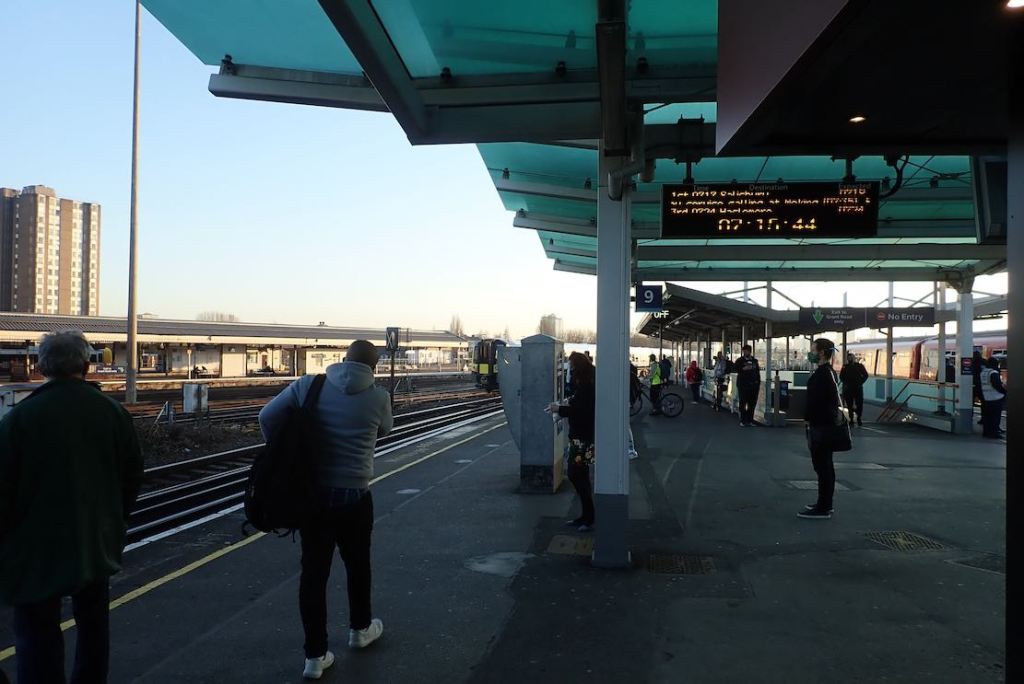
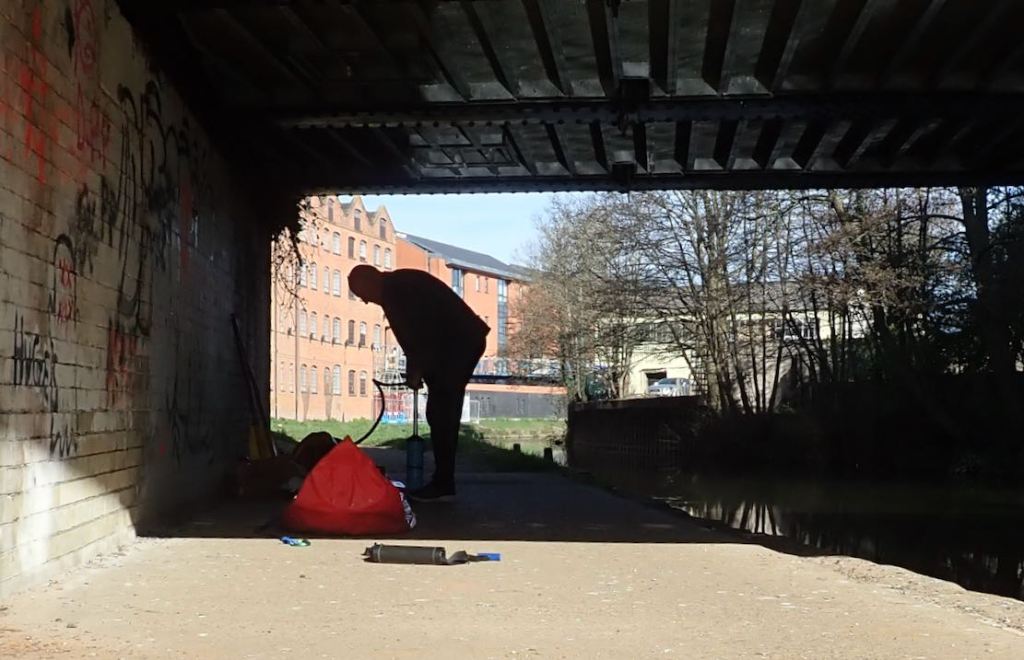
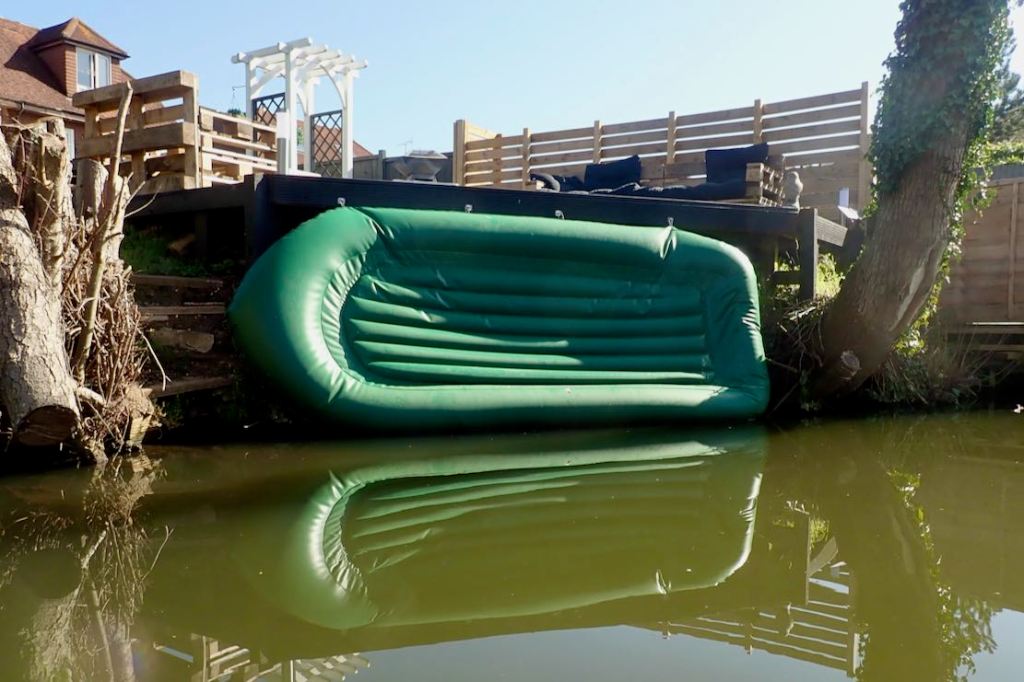
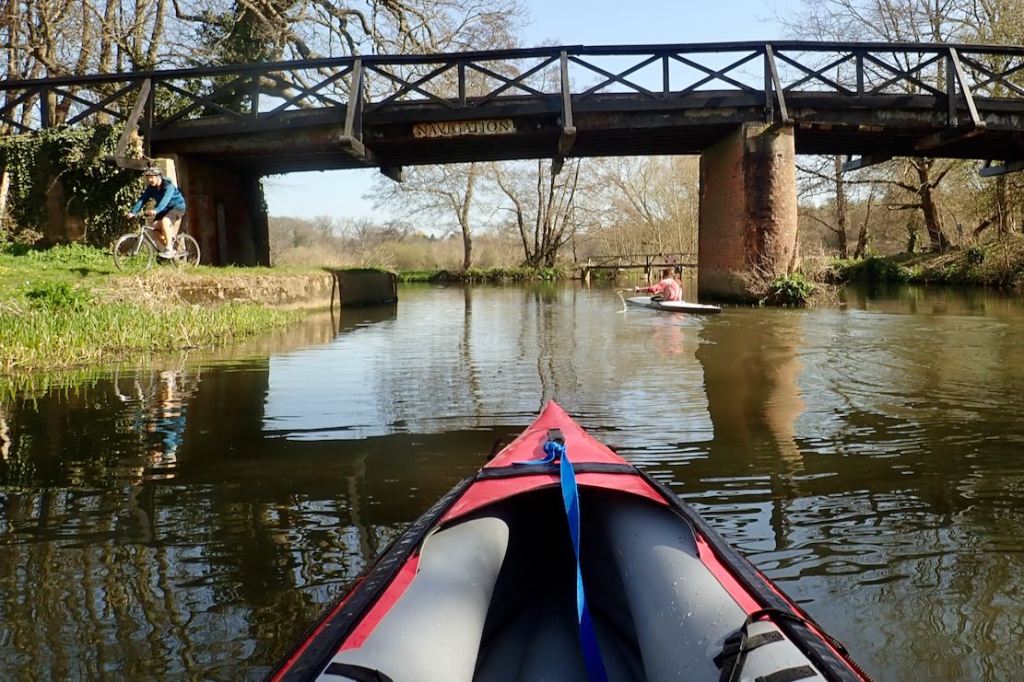
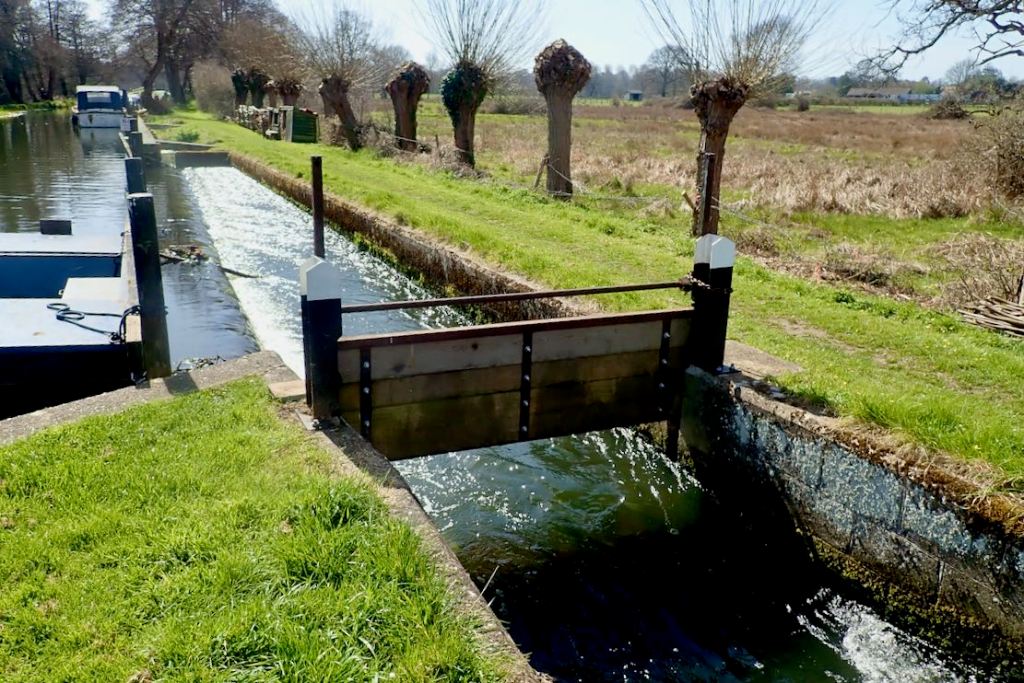
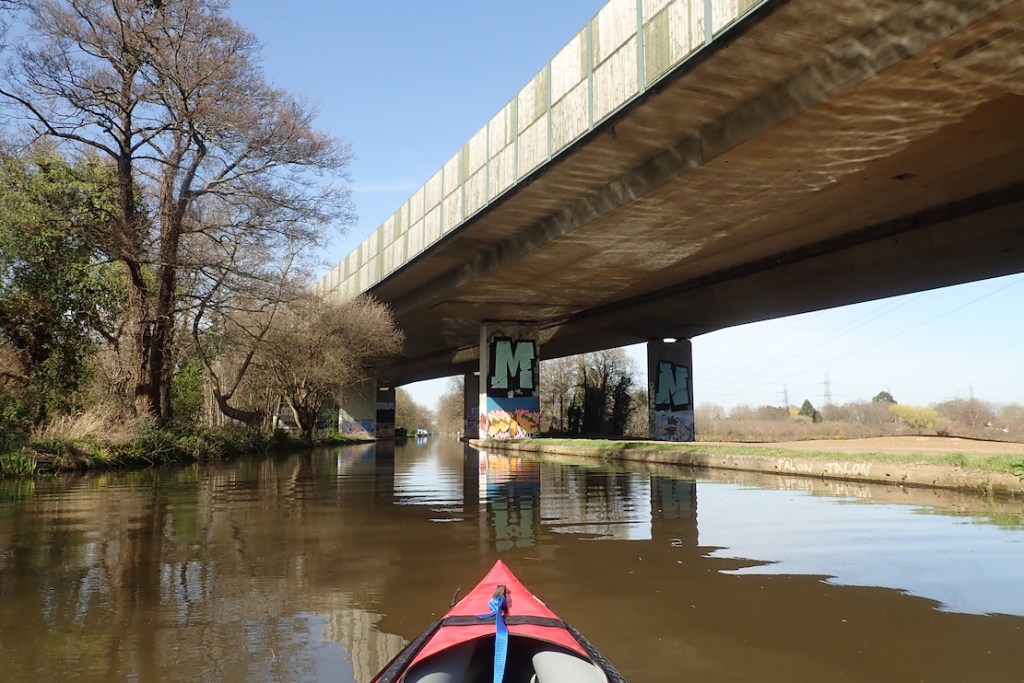
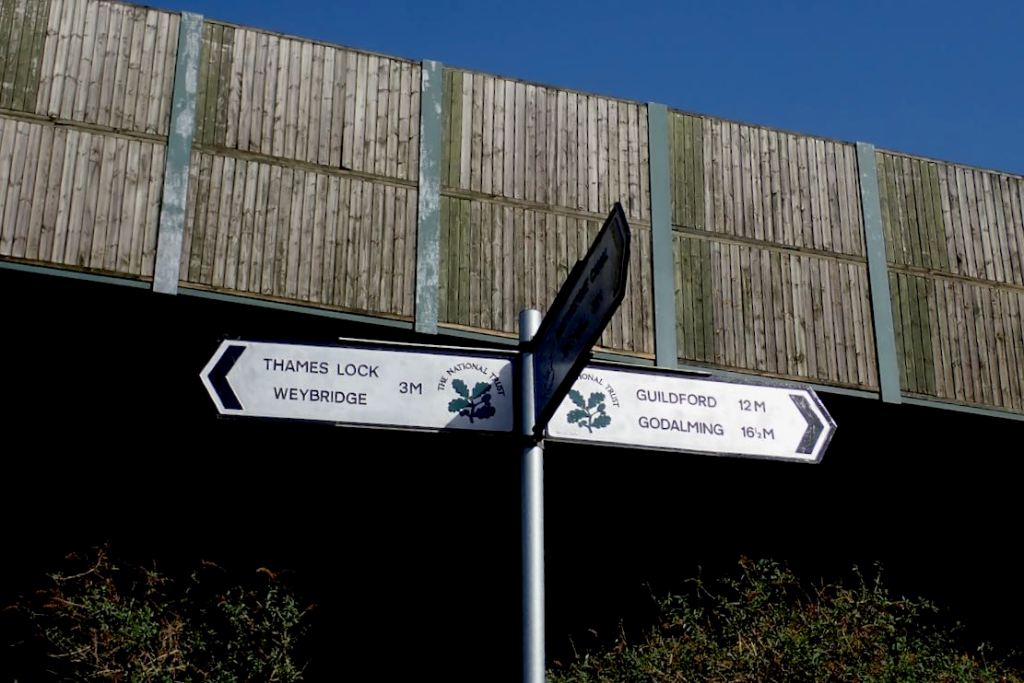
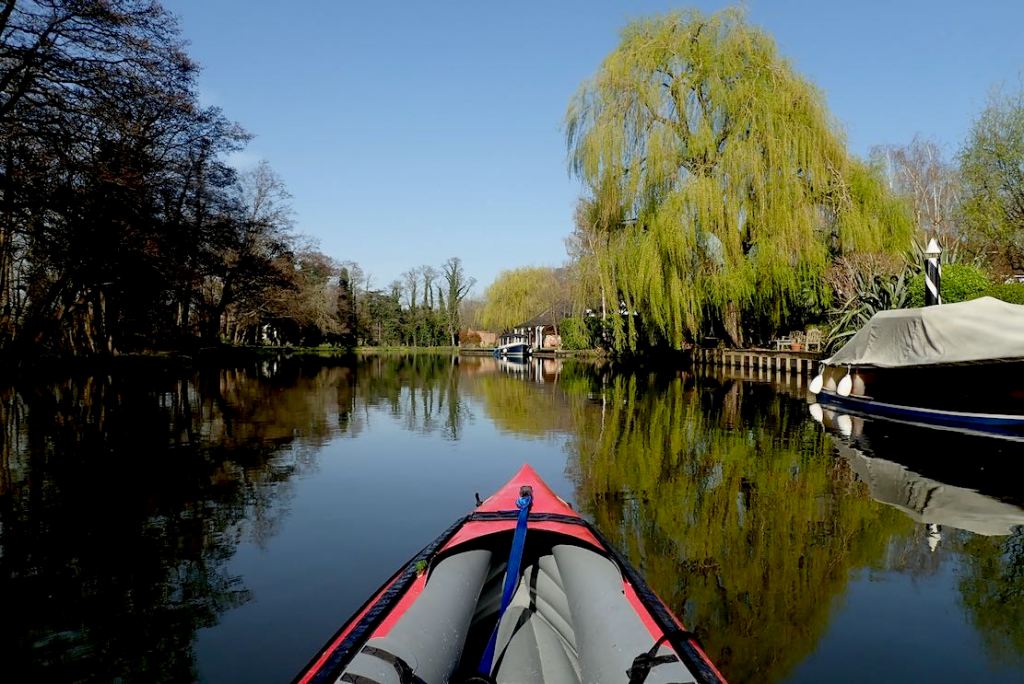
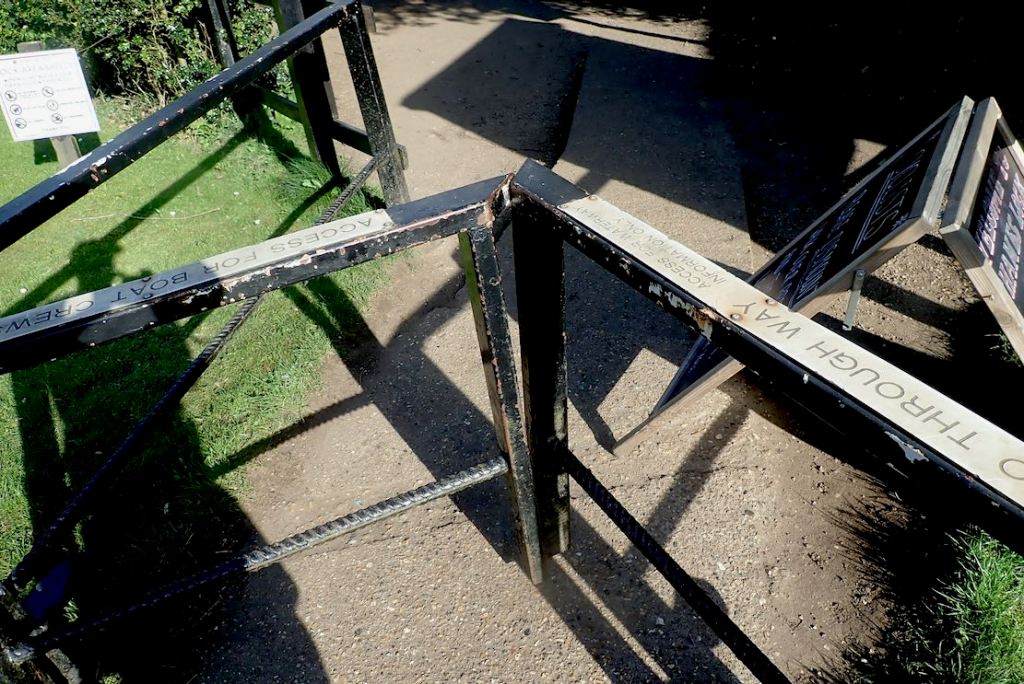
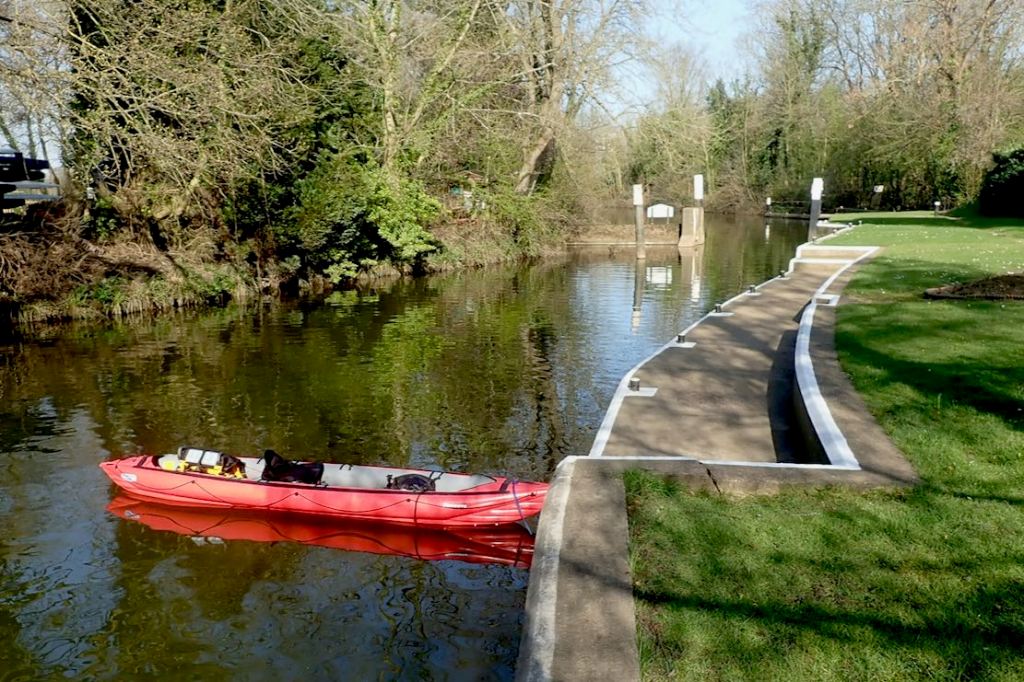
Clapham at 7am. It’s all a bit of a blur.I practise luggage distancing.In Guildford I slip onto a closed towpath and enjoy a quiet set-up without the usual ‘Oh Mr Porter, is that one of those inflatable canoes? I’m thinking of getting one…’Just around here I realised I’d left my Garmin out in the sun to catch a signal… Should have gone to Starbucks. I’m trying out some old runners as water shoes instead of my usual Teva Omniums. Do they really believe this or is it just juvenile baiting?A readable GPS in the net pocket of my Anfibio packraft deck bag didn’t really work on the Seawave. As usual I have a better idea.Alternative use for a big slackraft.At Bowers Lock I spot my first Intex of the day, a 100-quid of K2 Explorer on its maiden voyage with daughter and dad.Under an old bridge a real K1 belts past with barely any wake. Looks like fun but what happens when she stops? Same as the bike on the left, I suspect.As canals go, not so bad.Triggs Lock. With a little work this side sluice could be a fun canoe chute (lens finger shows scale).All they need to do is get rid of the guillotine and add a galvanised chute at the end. How about it, National Trust? It would be like turning Downton Abbey into a Discount Carpet Warehouse!Soon after lunch at Papercourt Lock I pass two chappies also heading for Weybridge in something called a Sea-Doo. Flip yer paddle round, mate, you look like an amateur!Not another lock, TFFT! Just some general-purpose gates to hold back Viking raiding parties.At this scenic and willowy point the canal runs right alongside the M25 London orbital motorway. The tyre noise is like Niagara Falls.Mile 12 at Basingstoke canal junction. By some civil engineering synchronicity the M25, Wey Nav, Basingstoke Canal and a railway mainline all cross or meet at this point. In its way it demonstrates the history of post-medieval commercial transport: rivers > canals > railways > highways and airplanes. That’s my MA thesis, right there!At New Haw Lock I need water but the lawn-mowing lock keeper says there’s no tap for a couple of miles. It’s an awkward portage over a narrow road bridge too. Luckily, this chap helps me out. Thanks, chum!Coxes Lock with a doable weir to the side. I may try it next time and risk censure from the NT.Well, according to BC’s PaddlePoints website, that’s the way to go!Weybridge Town Lock. Another awkward portage over a road bridge on the left.In places the Weybridge backwaters look like an Everglades retirement village.As I approach the Thames Lock at Weybridge things get wobbly and I have an out-of-boat experience.Amusingly lock-themed gates close the footpath so us portageurs can pass.Finally at Thames level, hallelujah. And there’s a tap set into the jetty too. I drink like a camel then me and the boat have ourselves a wash.Over six hours from Guildford, but even with a drink and food to spare, I don’t have another three hours in me to reach Richmond. Maybe I can do two hours to Kinsgton. Now on the Thames, I become a great admirer of roller portages.The game’s up at Hampton Court Bridge if I’m to have enough energy to roll up the boat. The station is right there. It’s a warm evening on the Thames and they’re all out in boats and the riverside parks. The [Covid] Rule of Six? Do me a favour! The skiffs collect bird poo while two lads fire up their Intex Challengers. I’ve seen more Intex IKs today than anything else. Why? Because they cost from under 100 quid, float just like a Seawave but track like a barrel.And he may be saying to himself: ‘My god, what have I done?’Dusk back at Clapham Jct. All up, only 21 miles. I blame ten portages, no resting and my nifty but 3-kilo Ortlieb roller duffle. With too much food, it all made the boat just a bit too heavy to carry easily. Where the lock-side grass was lush I dragged the boat, but I have a better idea.
Just before the GPS packed up at Basingstoke canal junction, I was averaging 5.5kph on the move. Pretty good with no current to speak of. On the livelier Thames I estimate I was moving at up to 10kph before I withered. Same as in the FDS Shipwreck in December. My tall BIC backrest (below left) initially felt great then collapsed on itself. Usual story: needs a stiffer insert. I was trying out my new footrest tube attachment points which worked great. Only when one heat-welded strap broke near Addlestone was I reminded how essential footrests are to comfort, efficiency and stamina. I jury-rigged something up between two D-rings which have been staring in the face all this time.
My 2021 Wey Survey of UK Paddling Trends
Hardshell canoes: 1
Hardshell kayaks: 1 (+ 2 K1 racers)
Hardshell SoT: 1
Vinyl IKs (cheapies): 5
PVC (bladder) IKs 3
iSUPs: 10+ (mostly women on iSuPs, too)
PFDs worn, almost none then again, mine’s more of a handy waistcoat)
FDS spotted: none (interesting as readers here are mad for that page)
Aquaglide is a US brand producing over a dozen Chinese-made IKs as well as iSUP boards and even floating waterparks. It’s been around for a few years, but their high-spec Chelan range, particularly the spacious 155 (formerly Chelan HB Tandem XL) has now been designated an IK of Interest. In the range’s three models, the numbers loosely relate to their length in feet; the actual stats are in the table below. These figures are copied off the internet, so accuracy cannot be guaranteed and anyway, sources vary. Like the similar Sea Eagle FastTrack 465, or bladdered Kokopelli Moki, By 2025 UK Chelan prices have dropped massively to a much more reasonable £899 for the 155.
All Chelans feature a 6psiremovable DS floor with conventional 3psitubeless PVC side tubes – what’s becoming known as a hybrid IK. Hybrids are usually more stable than the slimmer, boxy Full Dropstitch (FDS) IKs, because the round side tubes make them wider, but higher pressures add rigidity which can compensate for reduced performance. It’s a shame there are no pressure release valves, but they’re easily added in the sides if you paddle in hot climates. The relatively low 6psi in the floor – and the fact that’s it’s fully in the water – makes it less vulnerable to passive heating and ruptured panels. With 10-inch tubes and at a yard or 91.5cm wide, the 155 has a Length Width Factor of 5.03. By comparison, the similar Sea Eagle 465 is 5.1. Both are pretty low (more square) compared to the table here, but for many other reasons, an IK with a higher rating (ie: long and thin) may not necessarily be more efficient. I find most IKs over-wide, but nervous beginners may feel differently.
3psi sides6psi DS floor
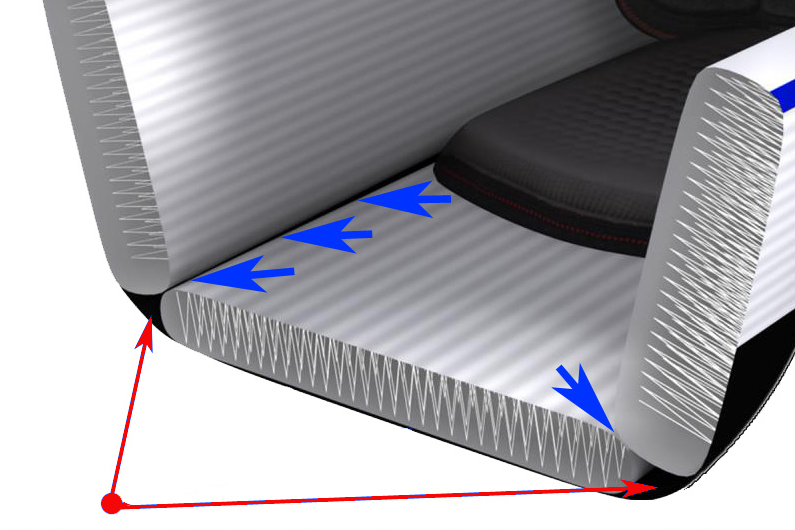
Chelan side tubes have no bladders (same Sea Eagles and all rubber IKs) which helps explain the high price, and they’re all made of Duratex PVC which they’ve managed to print on to give a sleek, distinctive look to the 2021 models. As you can read in the Comments, it took a while to clarify, but all Aquaglides featuring drop stitch floors are removable. This includes the Blackfoot, Chelan, Chinook and Navarro ranges. Actual new owner Dave Klein (see Comments and video below) assured me his new 155’s floor was removable. It’s odd that it’s not mentioned in the blurb, shown in the imagery or even explained in the pdf manual under cleaning and maintenance. This is an important and beneficial feature as it eases cleaning and speeds up drying.
Grit collects in the side
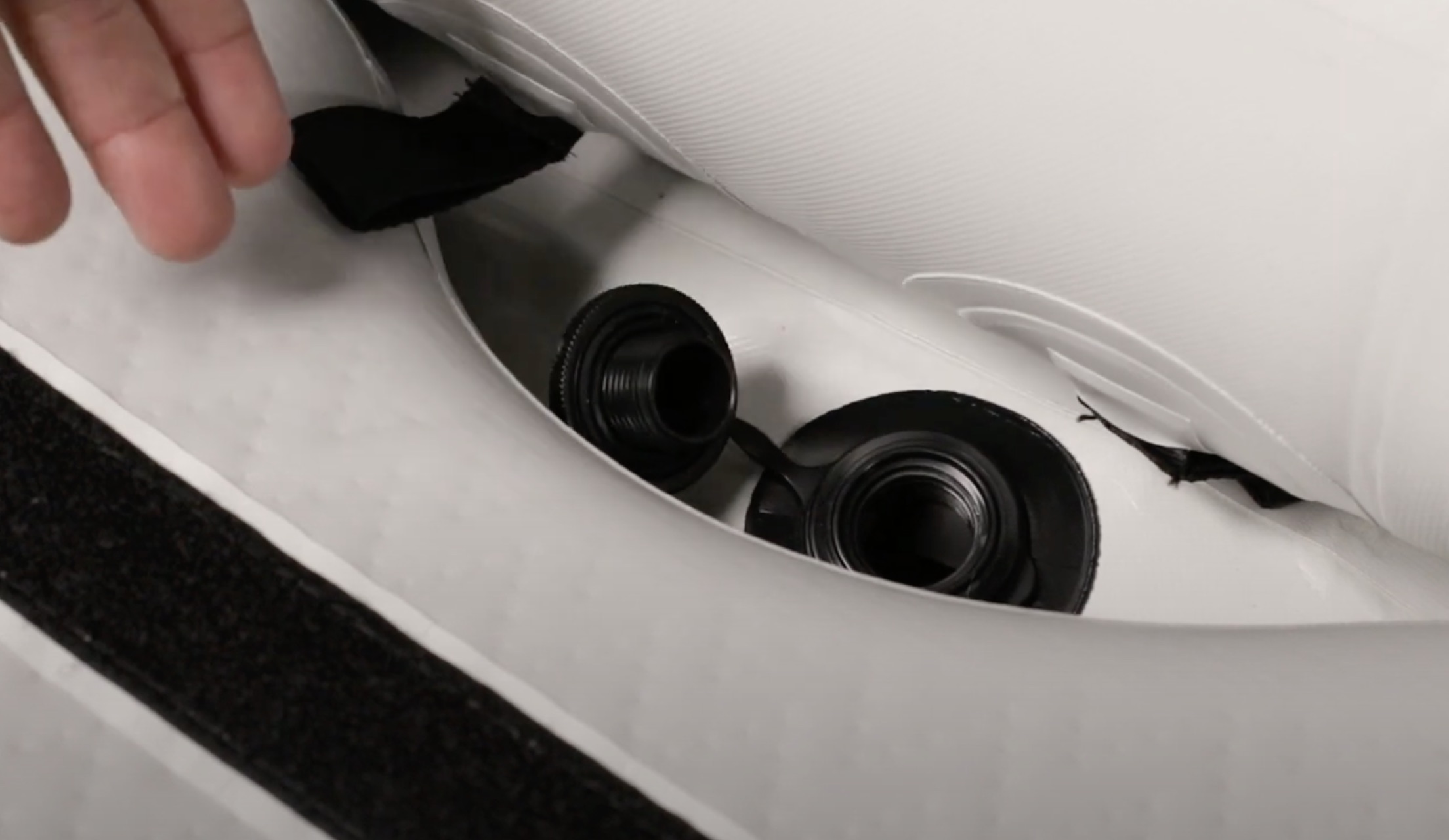
The 7 so-called ‘closable floor drains‘ are also odd, when the one at the back will do. If they’re just to drain the boat once on land, are seven – or indeed any – really needed? Especially as we now know the floor comes out easily. Just flip the boat over and let it drip dry. Many FDS IKs come with these multiple stern floor drains to help shed water and, more importantly, the grit, from inaccessible side cavities between the floor and sides (left). But the floor comes out on a Chelan so it’s not such an issue. The suspicion is that they might be a self-bailing feature and, although again, you won’t see it in the bullet-point blurb, the manual does say:
This product can be used in self-bailing mode. In this case, all cockpit drains should remain open. Some water will enter boat in self-bailing mode but will not accumulate.
Or to quote the video below
… [open drains] allow the boat to be paddled in rough water, surf or white water
In other words, the Chelans could be called optionally self-bailing which sounds like the best of both worlds. As mentioned, the blurb wisely steers clear of bragging about this, too much because, chances are for most people it won’t work so well. A boat is either designed to be self bailing – in which case it simply has bailing holes below an extra thick floor like the ROBfin I tried or AG’s Mackenzie range – or it isn’t. The heavier the load (or the smaller and less buoyant the model) the more the boat will fill up with water which will slow it down and become annoying as the water swills about. (On much slimmer hardshell sea kayaks this in-hull sloshing can lead to critical instability). The optional-bailing element may explain the unusually thick seat bases to ensure you’re not sitting in water.
DrainFloor velcro
The now improved, or higher-spec seats were a complaint on earlier models for their lack of back support – it’s a common issue with all IKs. They’re now positioned on velcro floor bands, like the Kokopelli Moki we tried. This is the quickest way to adjust seat positions for a level trim. There are small pockets along the seatbase’s front edge and on the backrest, and they’re braced off the sidetube tops. As mentioned, at five inches the bases are unusually fat. But you don’t have to inflate them fully, even if a taller seatbase makes paddling more comfortable; the 36-inch width Chelan has stability to spare.
Thick seatbase doesn’t need pumping right upPosition the seatbase on the velcro
Footrests use the same velcro bands to get the positioning just right. Not a bad way of doing it, providing that tube isn’t too squidgy.
Note the lateral strap with buckle which holds the removable floor in place.
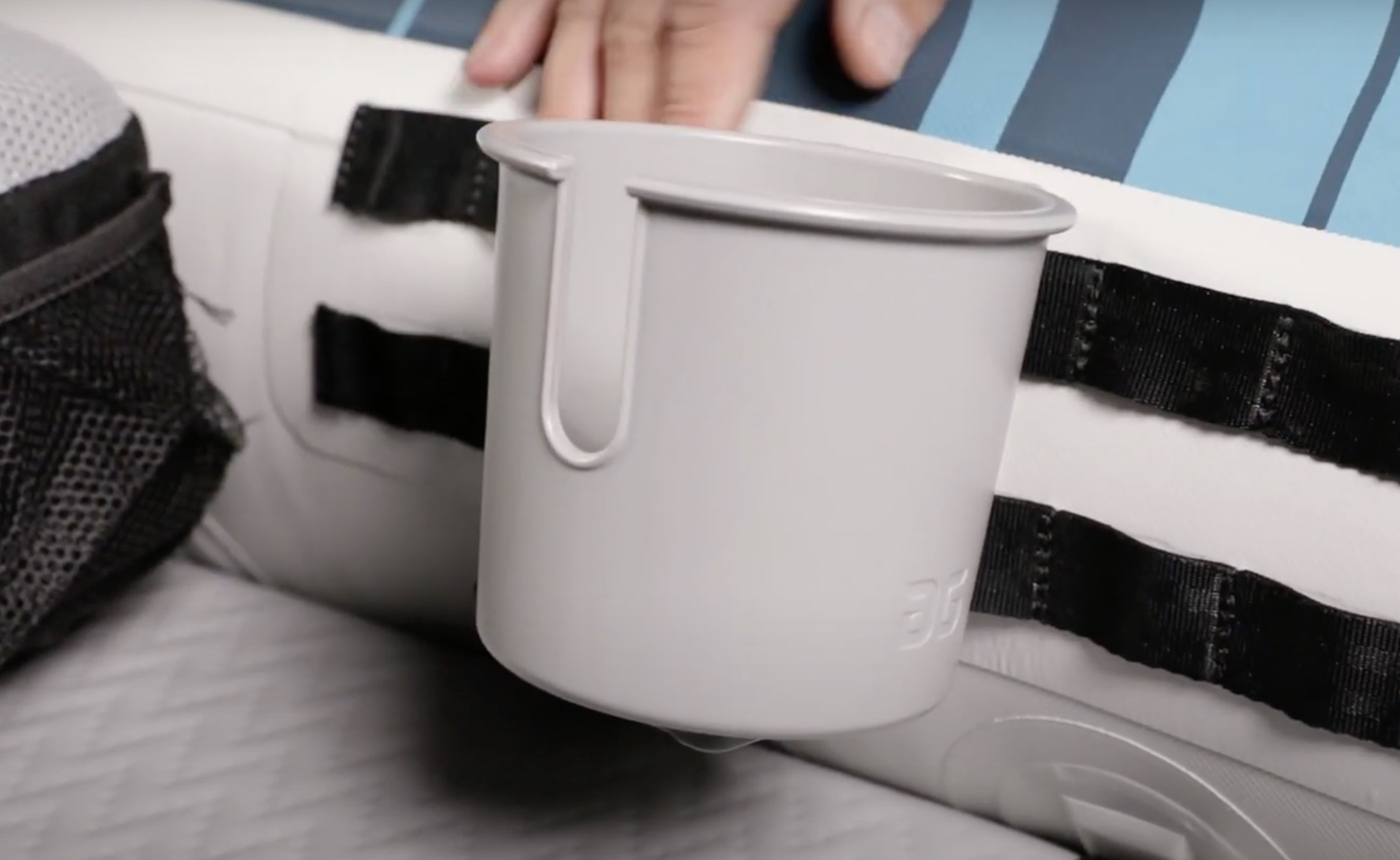
One of the best things on the Chelans is the attention to detail: handles at each end plus the sides, loads and loads of attachment points along the floor and side tubes, as well as Molle webbing which is becoming a thing on all sorts of outdoor gear now, and the usual deck bungies. Plus there’s an accessory mount floor plate for fishing gear or a GPS. I could do with one of those and it’s one of the side benefits of flat and firm DS floors. There’s even a beer cancup holder. I suppose it was only a matter of time before an IK got those.
Accessory mountCup holderMolle
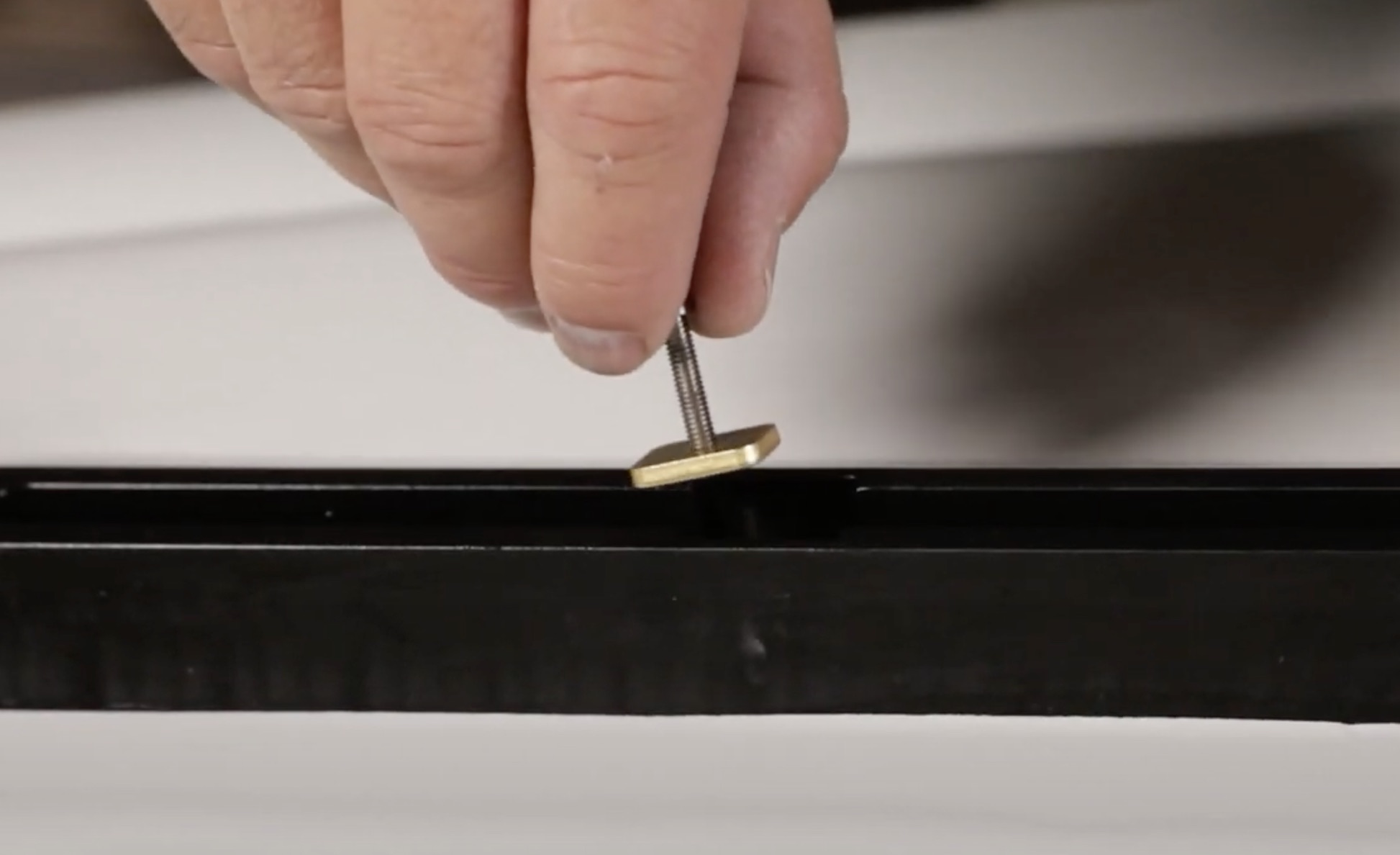
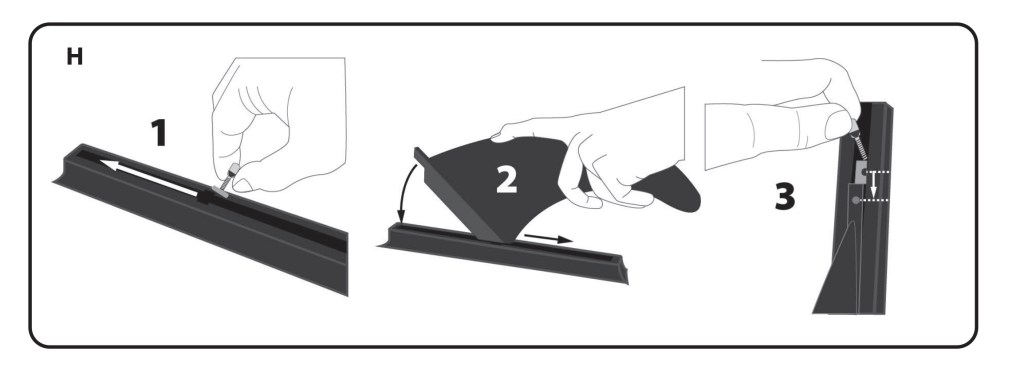
They sure have made a meal of the skeg fitting which uses a tiny and easily lost screw bolt and backing nut (left and right) which reminds me of the rubbish old Gumotex alloy skeg. Why complicate things like this when there are so many easy-to-use, no-loose-parts slide-in skegs around (as on the Moki). Up front there is a shallow keel strake to protect the floor from wear and help with tracking. A better way of doing it than Sea Eagle’s bulky DS keel. You do wonder if the 155 might be as hard to turn as the Moki was.
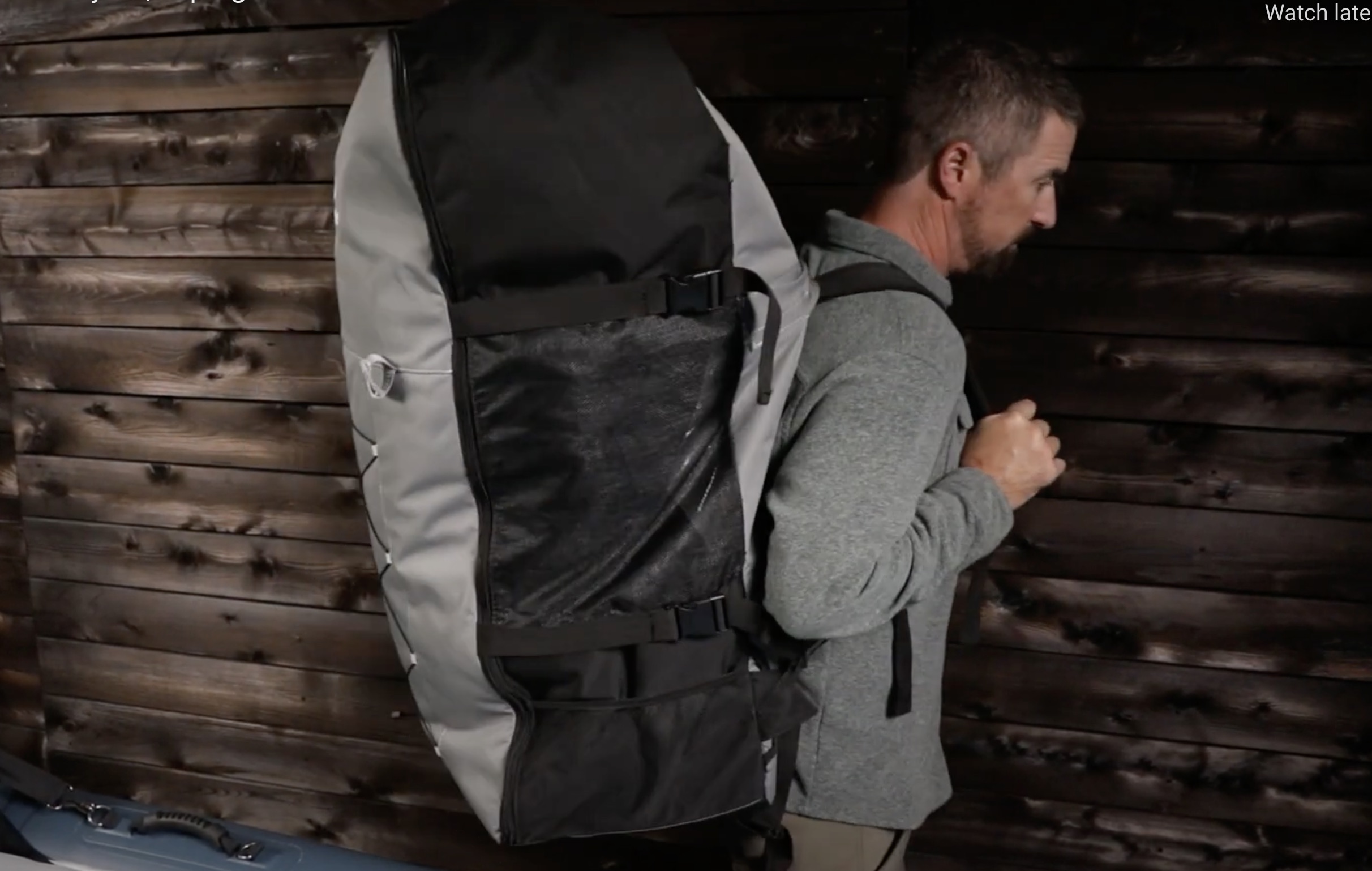
The whole boat all folds down into a huge, 170-litre back pack. The 155 may not be that heavy at 19kg, but like many PVC boats, it sure has a lot of bulk.
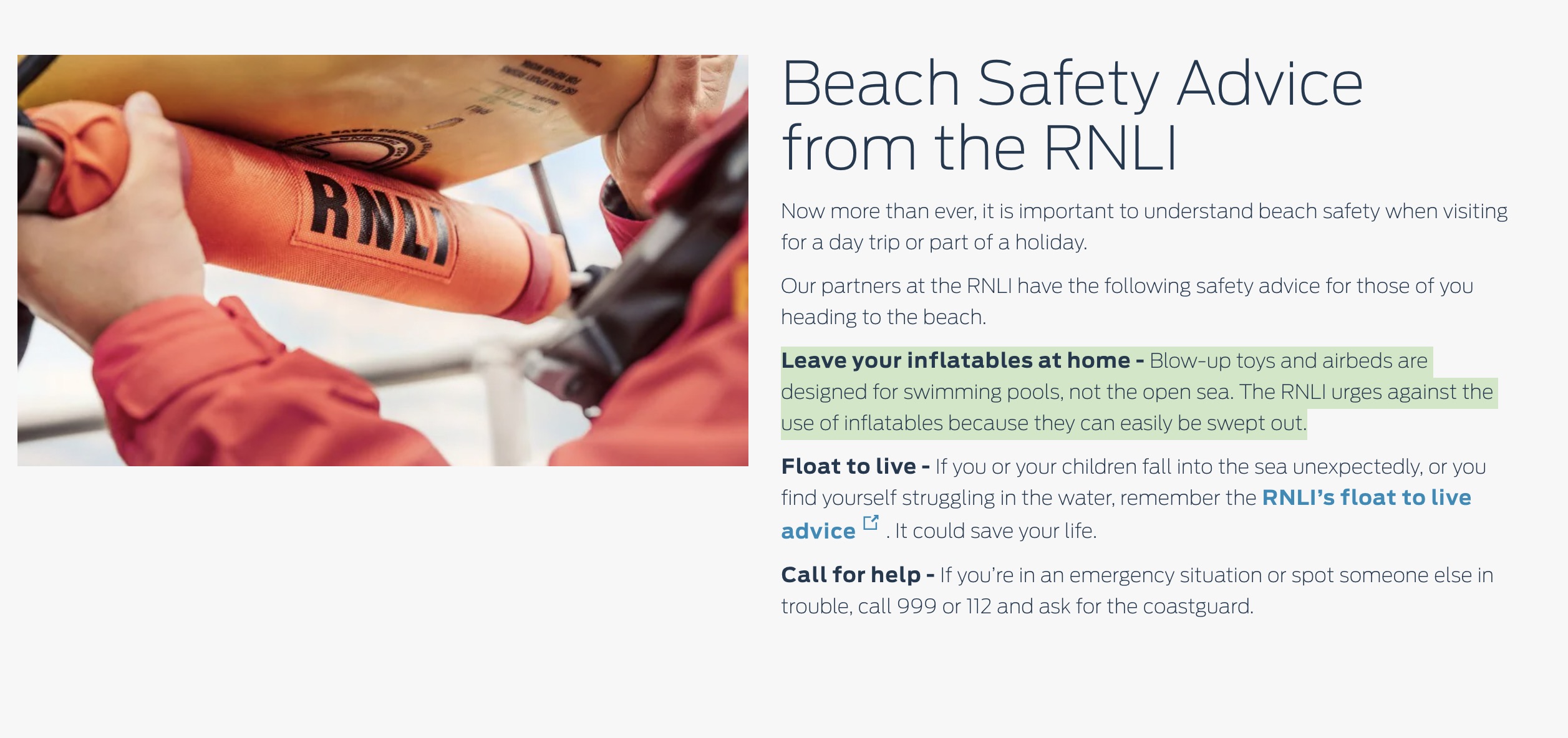
I just came across an RNLI campaign sponsored by Ford from August 2020, at which time paddling in the UK and elsewhere had gone ballistic. As some may recall, beaches in the UK were packed with a consequent rise in call outs Among the pithy safety advice they found room to print on a Ford Ranger’s specially moulded tyres – ‘RNLI Ford‘, ‘Emergency? Call 999‘ and ‘Float to Live‘ (a good case for inflatables, you’d think) – they also chose to include the rather blunt: ‘No Inflatables‘. As the Ford press release linked above says:
‘In 2019, RNLI lifeguards aided more than 29,000 people on UK beaches in more than 17,000 incidents, saving a total of 154 lives. They also helped to reunite nearly 1,800 lost children and teenagers with their families and aided 346 people in incidents involving inflatables.
In other words, 0.5% of incidents involved inflatables. Another statistic in the report may explain why inflatables got such prominence:
• 40% of people who say they would take an inflatable into the sea in the UK admit to previously getting into difficulty
How would you interpret this? Reckless stupidity or learning from your mistakes and being a bit more careful next time? Is the suggestion that ‘getting into difficulty’ required a rescue?
‘Stay together’
A fourth moulded-tyre message advising what looks like ‘Stay Together‘ (right) was given far less prominence in the press release and photos. It presumably referred to the >10% of incidents of children getting separated from their families at the seaside. That can be very unnerving for all concerned but is less perilous than being blown out to sea. It will be interesting to read the 2020 stats if they become available.
Inflatables…… some are better than others
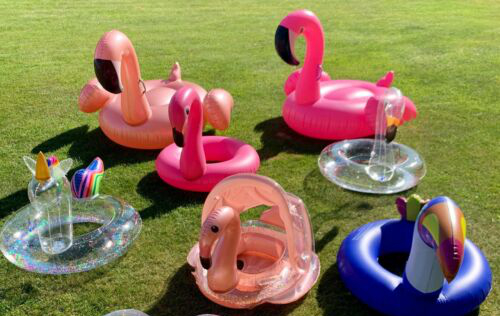
It was a Ford publicity stunt, of course, capitalising on their support of the RNLI which is a voluntary organisation part-assisted by donations. A link makes it clear by ‘inflatables’ they mean pool toys as above left or the inflatable toucan ring the little girl is seen wearing at the start of the video (below), running across a deserted beach towards the surf. But you’d think there was a better way of saying it. After all, the RNLI use inflatables themselves.
Allow me to pull a publicity stunt of my own and refer to the Weather & Safety chapter in the new book. The advice is clear: compared to a relatively heavy hardshell sea kayak which sits low in the water, much lighter more buoyant and wind-catching IKs can become difficult to manage in windy sea conditions, even if you are young and fit. Unless you know better, never go sea kayaking with a strong offshore wind, and think twice about going alone, especially to explore an unfamiliar area. At sea always wear a buoyancy aid. The summer sun may be hot on your back but in the UK, the water is cold. It’s the initial involuntary gasping reflex caused by cold water shock which leads panic, flailing about and drowning. That’s what they mean by Float to Live: once you’re over the initial shook and the breathing has stabilised, spread your limbs out and relax (assuming you can’t get back to you boat). Obviously a buoyancy aid makes this all much easier.
Last time I looked, you won’t find anything on the RNLI specifically addressing IK and iSUP limitations, and yet it is inexpensive IKs which tend to be bought by holidaymakers with no knowledge of how they handle at sea in windy conditions. I suggested to the RNLI writing such a piece but was told they have their own safety experts.
The Ford RNLI video below was shot at Minnis Bay, near Margate. I’ve never been paddling there but it does look like a particularly exposed beach where a typical southwesterly wind would blow you straight out into the Channel.
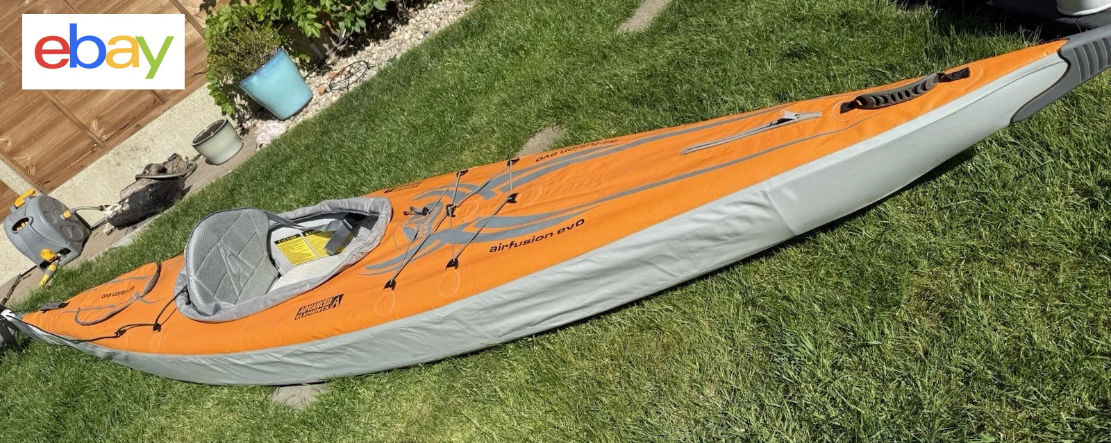
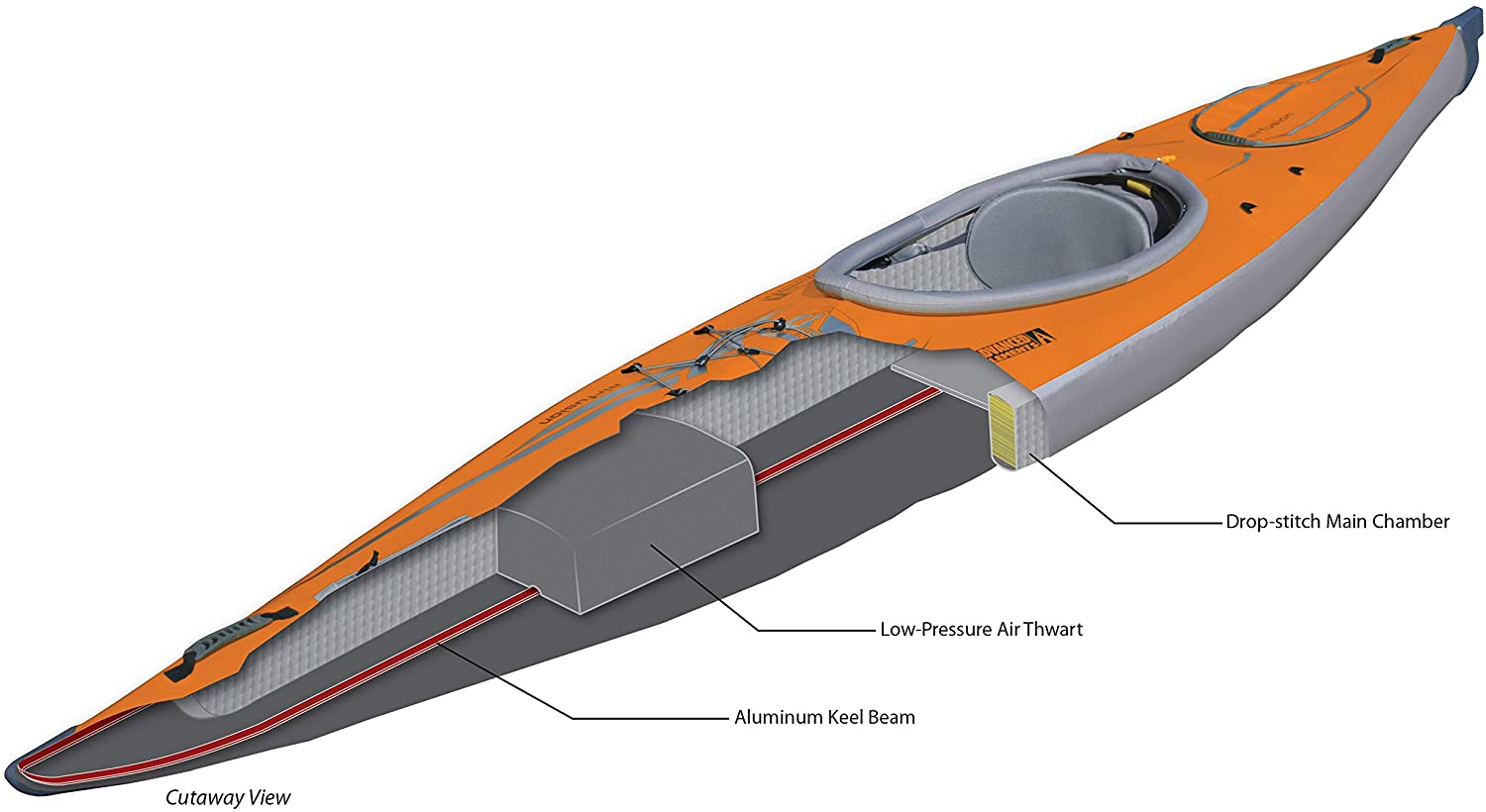
Advanced Elements’ hybrid AirFusion EVO (AE1042) is a good looking PU-skinned IK that slipped under my radar for a year or two. It replaced AE’s AirFusion Elite (right) which used two low-pressure side bladders (four in total) stacked one over the other, and an alloy keel rod along a plain, single-skin PVC shell. Like a folding kayak there is no inflatable floor. The EVO version (above) looks similar, but replaced the four bladders with a pair of PVC dropstitch panels running a much higher 6psi (0.41bar), and with the shell now much more supple PU. Both methods keep the boat slim, and bow and stern alloy ‘C’ ribs are tensioned by a long slot-in keel rod, like a thick tent pole.
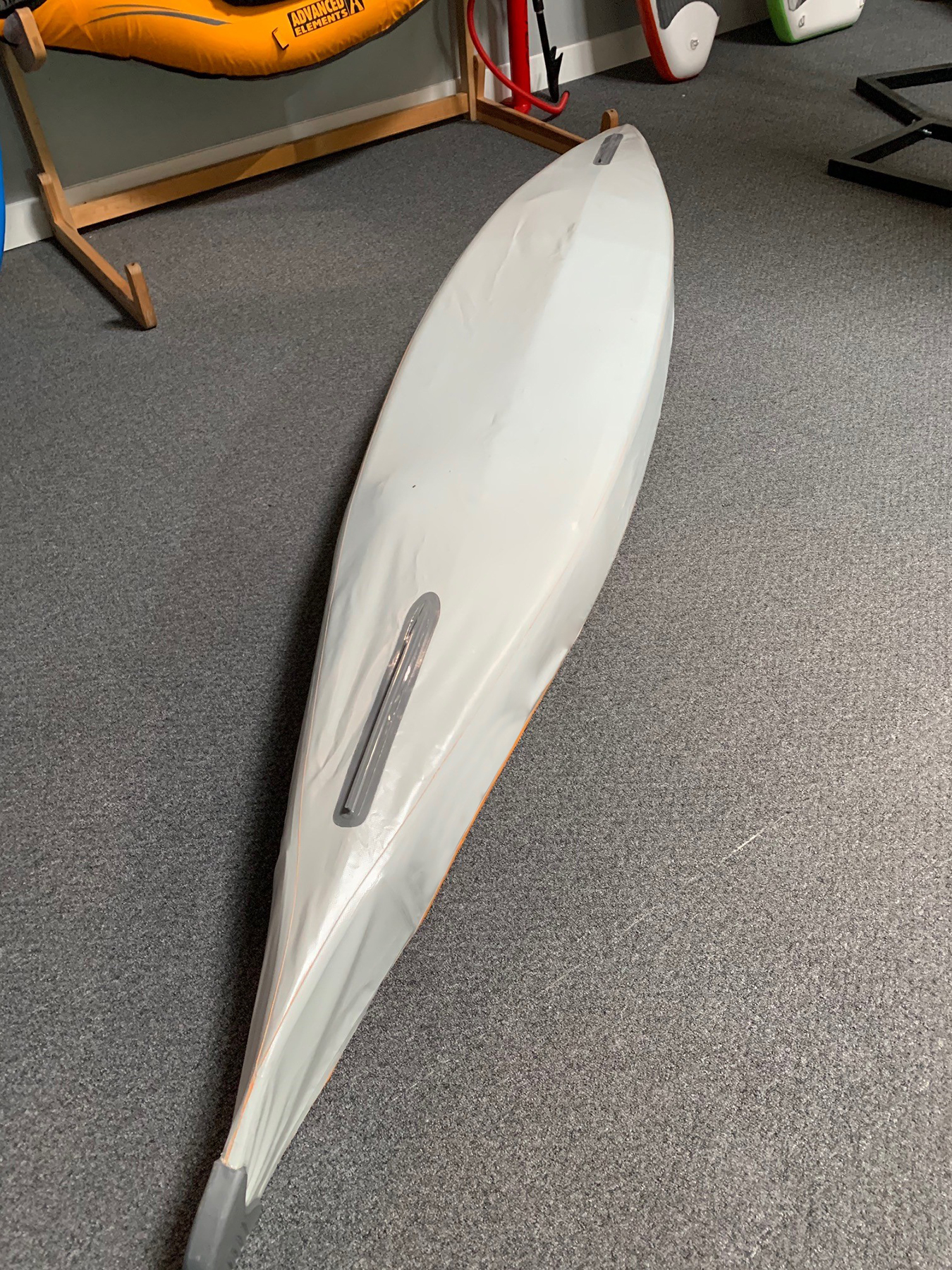
On some older, low-psi AE’s these ‘backbones’ are optional, but on the AirFusion it’s part of the design. This rod gives the AirFusion a V-shaped hull (above) a bit like the inflatable AirBone keel on some FDS Kzone IKs, and also adds tension between the bow and stern which the dropstitch sides can’t do alone.
The AirFusion EVO is the opposite of most ‘hybrid’ (part dropstitch) IKs which combine DS floors with round, low psi tube sides. Such boats, like the Gumotex Rush, or Aquaglide Chelan are rigid but, with round side tubes, end up wider and so, more stable.
The new EVO retains the low-pressure thwarts (air bags, below left) which help push the deck rod up so water runs off, push the sides and the floor rod out to make the skin taught, and up front, give something for your feet to push against (assuming the span is correct for you; there’s some adjustment in the seat). There are additional small airbags at the bow and stern to firm up the wave-cutting plastic mouldings there. As you can see, they’re as sharp as a hardshell sea kayak. The coaming (deck rim) is inflatable too, as is the seat base. And the EVO’s seat’s backrest has been made taller for better support.
The AE1042 is all wrapped in a PU shell – yes, you read that right; it’s not cheaper, stiffer and possibly heavier PVC. That makes it a sort of ‘shell & bladder’ IK with the drying issues that entails; made a little harder by the fixed deck. As with the bow and stern ribs, the DS panels are fixed with velcro but are pre-positioned out of the box. They can be easily removed (or even just part-deflated inside and separated from the shell) for a deep dry and clean.
Summer 2025 I spotted a 4-year-old Evo with rudder on eBay for £600 ono. I thought about it for a bit, but aside from the complex assembly and drying issues, the subtext implied it was fast but tippy.
Numbers are a very light 14.5kg/32lbs; 4m long x 61cm wide (13′ x 24″). Because of the lack of an inflatable floor, the capacity is a modest 106kg (235lbs) and, as the air bag thwarts take up interior space, like the all-DS AirVolution, this is more of a day boat than an overnighting tourer. But that is what most people want in an IK.
At 24 inches wide this is also one of the narrowest IKs around, similar to Itiwit’s 25-inch X500. That means it should also be fast, but the X500 is known to be tippy (it’s worse for larger paddlers). You’d think the AirFusion might be the same, but without an inflatable floor you sit a few inches lower (as in a hardshell kayak) which greatly aids stability. Certainly online reviews don’t mention the AirFusion’s tippiness as much as the X500 which runs 10psi I (Dropping the pressure a bit can improve things at the cost of performance.)
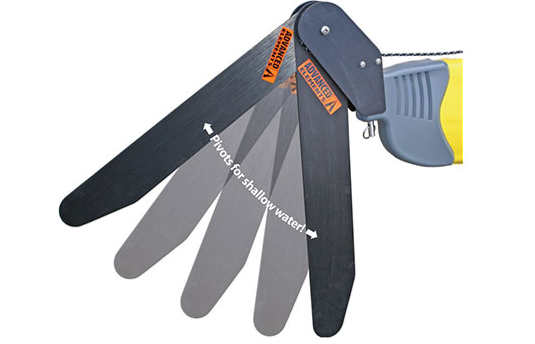
The integrated rear plastic moulding can take a skeg which is optional (or ‘free’ from some outlets). This is not your usual slot-in sharks-fin under the boat, but a rudder-like pivoting blade (below left) which can be lifted and dropped as needed on a loop cord.
I tried a similar MYO rudder set up but ended up a lot of unavoidable but annoying ancillary rigging. But I’ve often thought of adding something like this skeg to my own IKs to eliminate scraping in shallow water, or especially when beaching a loaded boat which needs to be rested on a rock your mate’s boat (above right) if the under-skeg is not be be stressed. I looked briefly on eBay but couldn’t see a similar but cheaper pivoting skeg direct from China. They must be out there of cough up 80 sovs for the AE one. You may get by without the skeg on the AirFusion as the V-floor also includes shallow strakes (inch-high keel strips) which will aid tracking while not getting in the way on land or in shallows. A couple of reviewers have mentioned this PU shell is easily holed when scraping. Maybe they went a bit too far to get the weight low, but a quick bit of tape easily fixes that as the skin is separate from the pressured DS panels. The 2021 EVO has had an added panel of PU welded along the keel line where most wear occurs
Assembly does seem quite a faff compared to simply inflating three chambers (watch the vid below), but as with all things, you’ll get the hang of it. Remember, you’ll have the same alloy-framed folding kayak worries with salt and grit getting into the anodised alloy tube joints after sandy or saltwater paddles. The assembly video below shot on a sandy beach made me wince a bit.
But as with a folding kayak, it may all be worth it if performance is responsive once on the water. Some photos do show a saggy, creased shell (left) – you’d think they could have made a better fit, or more likely this boat could do with a few more psi. And the sides are quite tall and slabby (also typical of a FDS IK) which will make it susceptible to side winds, especially without a skeg. That’s the case with most IKs, but you’d think with a single skin floor and a deck, it could be nice and low, like a Feathercraft.
With all the rods it looks as bulky as PVC DS or bladder IKs, but at under 15kg it certainly is light for a 4-m boat and appears to zip along. The back deck has an integrated velcro hatch / rolltop drybag and you have your usual bungy deck lines to stash a paddle while having a breather. In the US the AirVolution EVO goes for $1200; that works out as £1300 in the UK, plus a $/£40 pump which will need three nozzles for the raft, Boston and twist lock valves. That’s still nearly twice the price of the X500 or a FDS IK like the Shipwreck, but there are no other boats quite like this. Here an owner’s review.
…The sit-in vs sit-on saga is complex and deep because it doesn’t just involve design, seaworthiness and technical stuff such as stability and comfort. You’ve got to throw tradition, experience, pride, machismo and credibility into the mix.
I came across Rupert K’s Lone Kayaker blog, an intrepid Devon based chap who has an uncanny knack in spotting and photographing marine life from his kayak. I tracked his online adventures from the Southwest up to a sail-boat assisted visit to the Western Isles, including a nail-biting solo lap of St Kilda. Even in a spell of good weather, that’s still pretty out there.
I assumed all this had been knocked out in the usual high-end hardshell sea kayak, but looking more closely at the few photos, it seemed to be some sort of Sit-on-Top I’d not seen before: long and low and slim like a proper sea kayak – but with the legs airing off under the breezy sky. Well I never. Just as people write-off IKs on the basis of gaudy, vinyl beach toys seen flying past in a gust of wind, I too had made a similar assumption that ‘all SoTs’ may be fun, easy to paddle and cheap, but are wide and heavy.
Nice boat, Mister
Not a 22-kilo, 5.5m, 22-inch-wide Cobra Expedition with something called a kick-down venturi bailer*. They don’t make the Cobra X any more, but it looks like it and similar touring SoTs are based on the surfski idea (left): long, narrow, tippy but fast ocean playboats popular in the warm waters of South Africa and ANZ, but not a thing you’d go touring in. A rudder is vital to keep on top of things, but unlike a typical surfski, the Cobra had hatches to enable storage in the sealed, unsinkable hull.
* A kick-down venturi bailer is some sort of heel-operated cockpit water dump valve which opens a backward pointing drain spout. It derived from small, racing sail boats and moved on to surfskis – probably. Kick the valve open and as you move through the water, any water in the kayak’s footwell or cockpit gets sucked down and drawn out in a few seconds (the venturi effect), after which you close the valve clamp to reseal the footwell. With the valve open at a standstill, the low footwell might partly fill up with water. You will see in the Cobra reviews on paddling.com that some owners complain about leaking seals on their venturi valves. Self-bailers – certainly IKs like the ROBfin or most Aire IKs – need to have the floor well well above the bailing drain holes and general water level if the paddler isn’t to be sitting in water most of the time. But seating a super-slim surfski needs to be as low as possible if there is to be any chance of not tipping out. You get wet anyway in a surfski or SoT, but a valve like this enables a low floor plus hands-free bailing on the move. I imagine a slim surfski is like a bicycle: you need to keep moving to not fall over. You do wonder if these valves might eventually find their way on to fixed-floor drop-stitch IKs. As we know, many have floor plugs anyway to aid draining and drying of unreachable cavities. The thing is, SoT’s and surfskis have basin-like floor and seat wells which drain easily. The idea will work less well with a flat D-S floor.
Like me, he’s enjoyed owning a lot of boats over the years to find what suits him best and listed a Top Ten here. It even includes a couple of Gumboats and also lists many of the SoTs: RTM Disco, Scupper Pro, Prowler – which I briefly considered after reaching the limits of my bendy Sunny in Shark Bay. Then I discovered the K40 – like the Cobra, another Kiwi design – and a whole lot of other IKs better suited to my kind of paddling. There are more provocative SoT vs Sink thoughts here (quoted top of the page) which, depressingly, references the occasional snobbery of SINKers, especially towards IKs. As I say here, my theory is this contempt is initially based on the appearance of the cheapest IKs: there sure are some hideous Bloaty MacBloatface IKs out there!
It’s worth reading his summary at the end of his Scottish trip (quoted below). I couldn’t agree more and is why I can never see myself buying a hardshell, even if they perform better most of the time. There’s more to paddling than that. As an avowed packboater, I won’t get getting an 18-foot SoT either, but it’s good to now know such things exist and as Lone Kayaker proves, enable SINK-like exploration.
… And of course hugely safe. If you have a spill you just climb back on. Or do you? In the same way as I would suspect that a average paddler in a conventional sea kayak could not roll up if they get tipped over in a big sea (and if they did, they would be subject to exactly the same conditions that just tipped them over, so they would probably go over again), I would worry that I may not be able to get back on my SOT. It’s fine if it’s flat, but conditions bad enough to result in a capsize (surf excluded) would be pretty nasty anyway. However at least I would have the chance of a simple re-entry and not be struggling with a swamped kayak, pumping it out, etc. The sit-on-top/sit-in kayak (SINK) debate is potentially very long. I just like to keep things ultra simple. Simplicity means more time on the water and less time faffing about. Float it out onto the water.Sit on and go. No struggling with a spray deck on the beach and then scrunching across the stones it into the sea. Yes OK you need a decent drysuit for all season SOT paddling, but apart from that, clutter is a minimum. Considering my expedition round the west of Scotland as a whole, there were three or four occasions when I was concerned about my safety because of the sea state. Probably unnecessarily so, as I never came close to capsize. But paddling round the ‘dark side’ of St. Kilda I would have been in a state of severe anxiety if I was in a SINK. The unsinkable, unswampable feature of SOTs with their drainage holes provide a feeling of security. I suppose it boils down to enjoyment. My expedition was probably 80% enjoyment, 20% worry. If I was in a SINK that would have been 50%/50%. I could go on and on, and be a bit of a bore about the SOT advantages. Maybe it’s because they are so sneered at by most SINK sea kayakers.
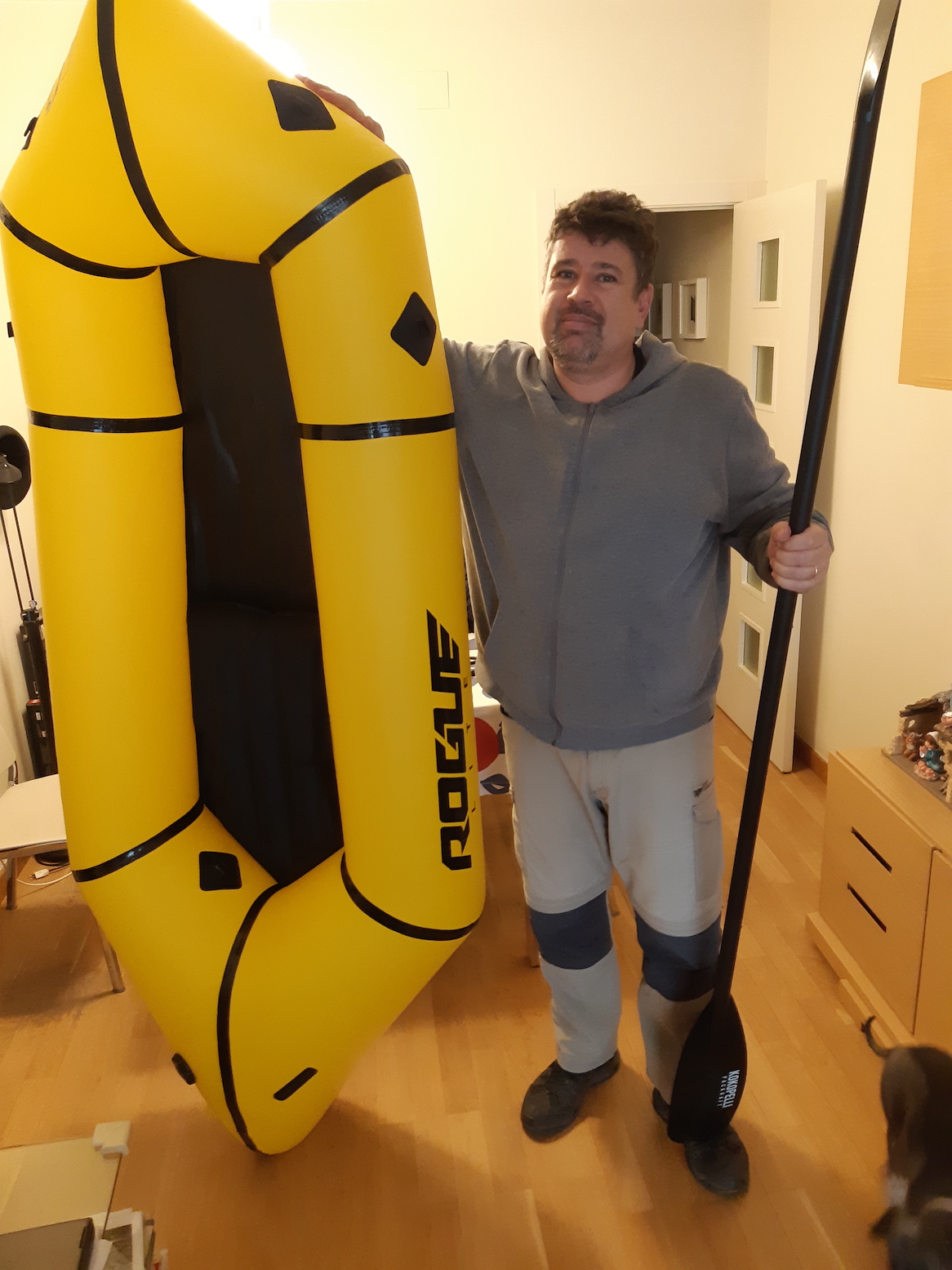
I love packrafts, but not their prices. Three years ago I bought a Klymit Litewater which served me well, but wanted something faster and more beautiful, yet almost as light. After a lot of internet research I decided the packraft I needed was an Alpacka Caribou or a Kokopelli Rogue Lite. But if I ever told my wife I had spent about 900€ on something that looks like a beach toy I would be in serious trouble.
And then, early in 2020 I found a pre-owned but unused Rogue Light for just 450€ including a carbon fibre paddle. It seemed too good to be true – was it some kind of scam? In fact the vendor had bought it for a trip that had to be cancelled, and he had no further use for it. One man’s misfortune is another man’s luck…
Sadly, before I had the chance to try it, the pandemic was in full swing and we were confined in our homes. I had to wait for June for a chance to use the Rogue Lite. My parents-in-law own an apartment in Costa Brava on the Mediterranean. There are a lot of nice beaches, coves and beautiful spots there, and many of the best can only be accessed from the sea. As I was teleworking, we moved to the apartment from June to September: what a beautiful chance to use the Rogue Lite in full!
There was an unused closet in the apartment and the inflated Rogue Lite fitted in quite well (it’s 2.15 metres long and 94 cm wide). Kokopelli boasts about the Rogue Lite having ‘the most bombproof valve on the planet’; in those three months I only had to top it up once, so I think Kokopelli has some reason in that.
The beach is about two kilometres from the apartment. As the Rogue weighs under 3kg, I could easily carry it fully inflated under my arm… That’s what packrafts are for! The boat is very robust and the paddling position is comfortable. The seat is good, and you can back lean on the stern. I am 1.83m tall and can keep my legs fully extended, which means that I can paddle for hours without feeling cramped.
My usual starting point was the north side of Sant Pol Bay, between the towns of Platja d’Aro and Sant Feliu de Guíxols. The sea is usually quieter so it’s a good place for embarking and disembarking, but the beautiful coves are in the south side. In the beginning, I just crossed the 1-km wide bay always in protected waters, to a small beach in the other side, that can only be accessed by sea, had a rest then came back. But, as my confidence in the Rogue Lite grew, my excursions became longer, even going out of the bay into the open sea. I once obtained a top speed of 6km/h, and I could keep 5 km/h for 15 minutes and 4 km/h for more than an hour. A 10-km round trip in the sea is not difficult in the Rogue Lite.
I was surprised of how seaworthy the Rogue Lite felt: it’s not difficult to paddle against a head wind, and side winds don’t make it drift too much (I imagine that the pointed stern acts as some kind of keel). One day, the sea conditions seemed awful, with a strong Force 4 winds and metre-high waves (Mediterranean waves are short, steep and have a high frequency, so 1-m Mediterranean waves are worse than 2-mAtlantic waves; believe me). I decided to go out anyway, as the wind was blowing onshore. The Rogue Light did outstandingly: I could paddle into the wind, and the boat handled the waves easily. To make things worse, some large powerboats were around, creating their own waves, so sometimes I got waves from different directions at the same time. In some moments, I was in the trough between waves and completely surrounded by water… then, the Rogue Lite rode the wave and I was on top… easy! The tubes are high enough to avoid water getting in, even with these waves. If a wave seemed too menacing, I simply paddled straight into it. The rockered bow made an easy job of climbing the wave. Overall, it turned to be a lot of fun.
The only negative aspects I found are: the price, and the the floor: Kokopelli seems very proud of the kevlar floor, but they could have made it a little longer and wider, so it could better protect the lower part of the tubes. Overall, I really like my Rogue Lite and I hope to keep it for many years.
I fell in love with the idea of packrafting as soon as I read about it. Sadly, when I started looking at prices I almost had a heart attack… an average Alpacka or Kokopelli costs more than 900€ in Spain – that’s a lot of money for me. But then I found the Klymit Litewater cost only 200€ including transport and import tax. I decided it deserved a try.
Two weeks later the first thing that surprised me was it’s really light (1300g in my scales) and easily packable. At a toy shop close to home I got a] cheap 7-piece paddle. The boat, the paddle and my everyday gear all fitted in a 5-litre Decathlon backpack. From March to October I always carry it with me so if I have a couple of hours free, I can go to the nearest water body for a paddle. That’s the whole point of ultralight boats like this.
The inflation bag is small, but is sturdy and waterproof. It serves to carry the boat and once inflated, a place to keep your belongings safe and dry. It takes between 5 and 10 minutes to inflate, after which it needs to be topped by mouth. The integrated seat is mouth-inflated. Once done the shape feels a bit odd as it’s short (1.93 m) and wide (1.15m). It has six tabs around the outer edge of the tubes for securing your belongings.
The paddling position is surprisingly comfortable: the sidewalls are low, but the stern provides good back support. The boat is long enough for me (I’m 1.83 metres) to keep my legs fully stretched. The material feels REALLY thin, but in three years my Litewater has rubbed against sand, gravel, rocks and concrete, and it still looks good. No punctures. The valve is simple, but doesn’t leak. This summer I kept the Litewater inflated for more than a month with no need to top up The deflation valve is a simple dump valve and one good feature of the Litewater is it dries fast.
I’m an atypical packrafter, as I use my boats in the sea. I alternate the Mediterranean (Costa Brava) and Atlantic (Ria de Arousa, a very large bay in northwest Spain), so all my comments will be related to the behaviour of the Litewater at sea. On the water it’s slow, but this is to be expected, as it’s short, wide and low-pressure. I don’t think I’ve ever gone more than 3 km/h. On the other hand, it’s more seaworthy than I expected, can hold its own quite well in the waves, and you can make headway against a moderate wind. Once I found myself in an unfavourable situation: the sea and the wind were calm, so I paddled for 20 minutes to a small island one kilometre off the beach. But, when it was the time to come back, a strong wind had risen up, blowing across my course. There was also a noticeable swell, and a tidal current against me. It took me almost an hour to get back, but the Litewater managed it. Of course, with such low sides, you get pretty wet but overall, I’m very satisfied with it. I now have a Kokopelli Rogue Light but am keeping the Litewater for when I need to travel light, or for my son or guests.






































 Inflatable Kayaks & Packrafts