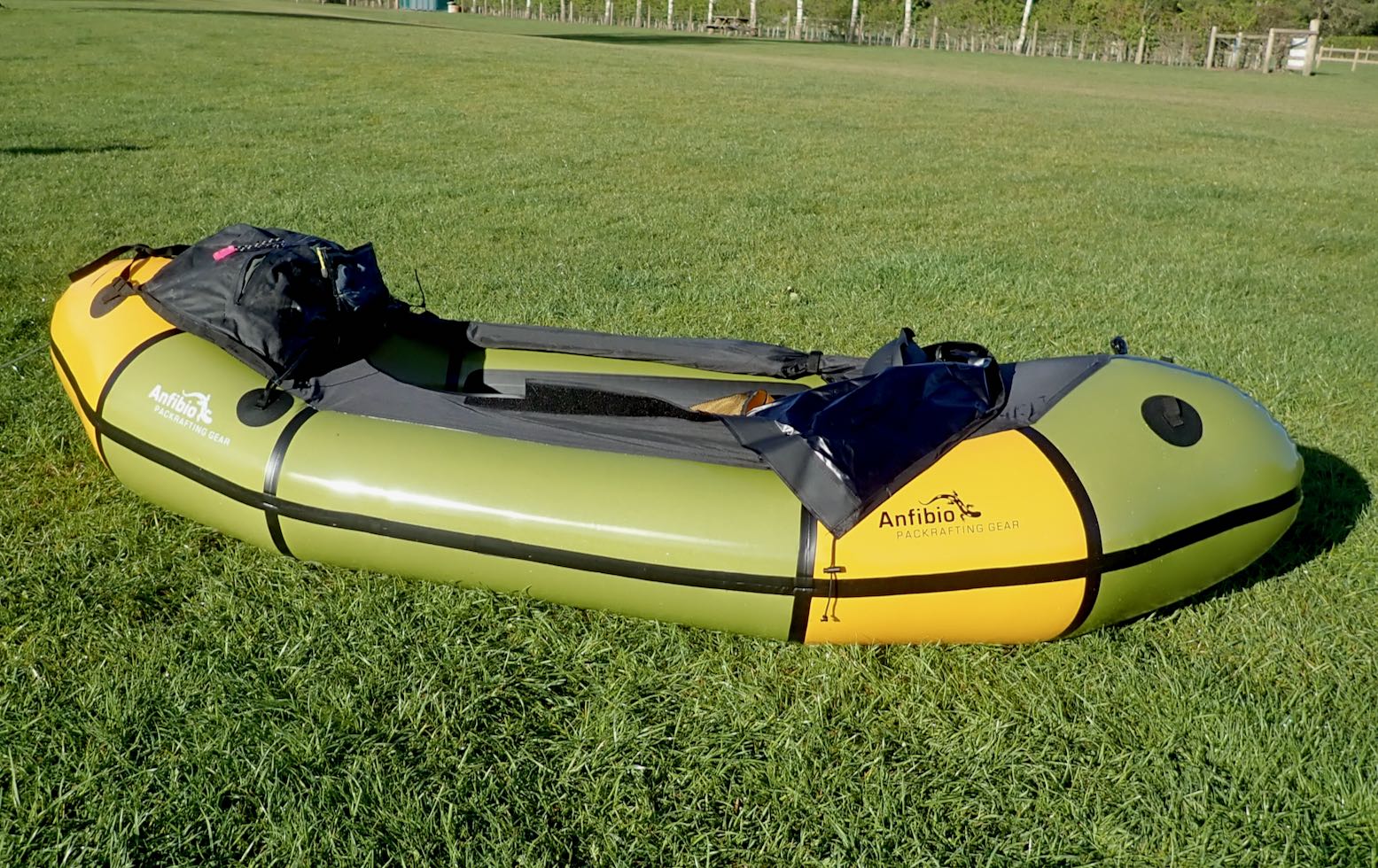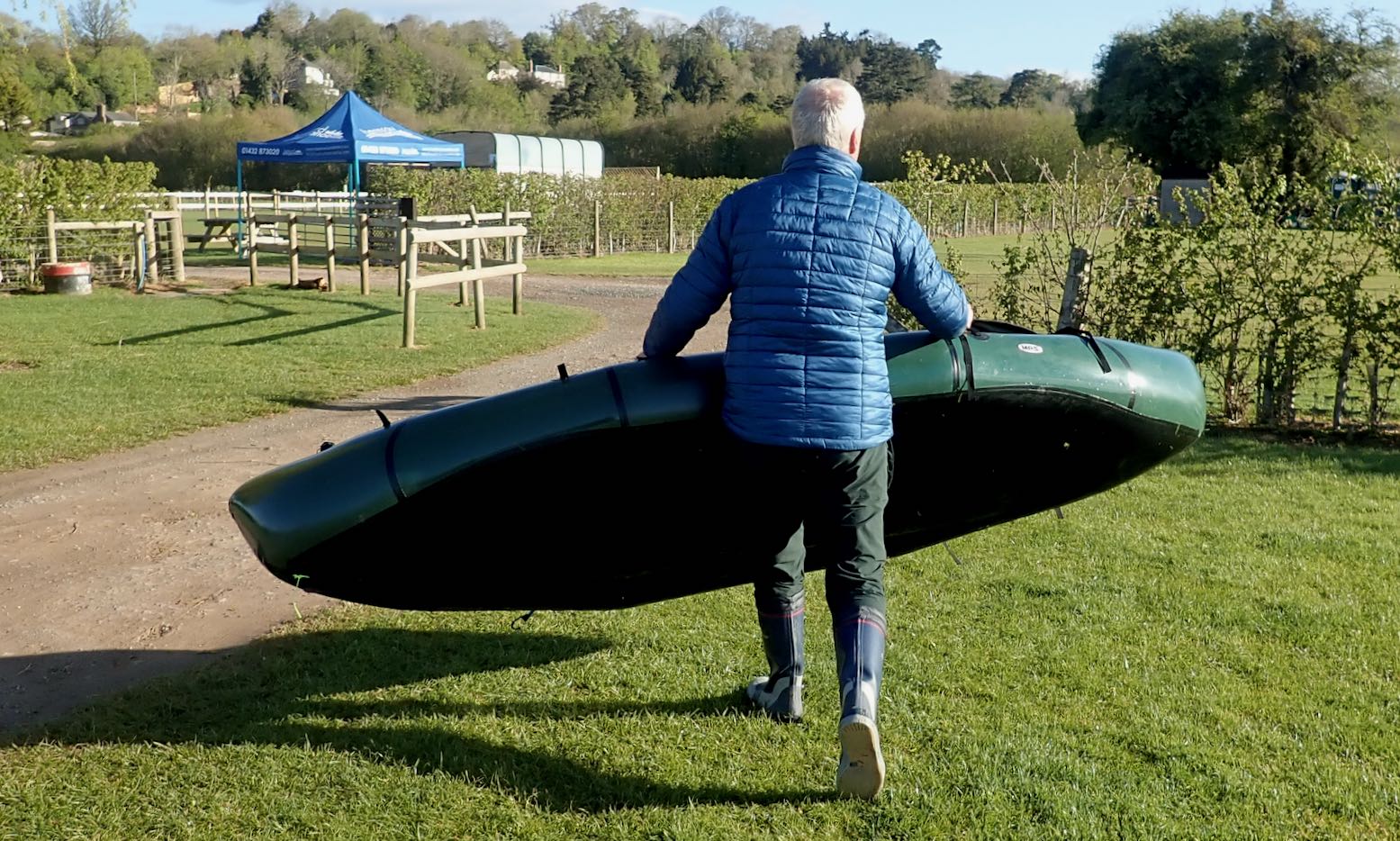
Coastal Packrafting

Rebel 2K main page

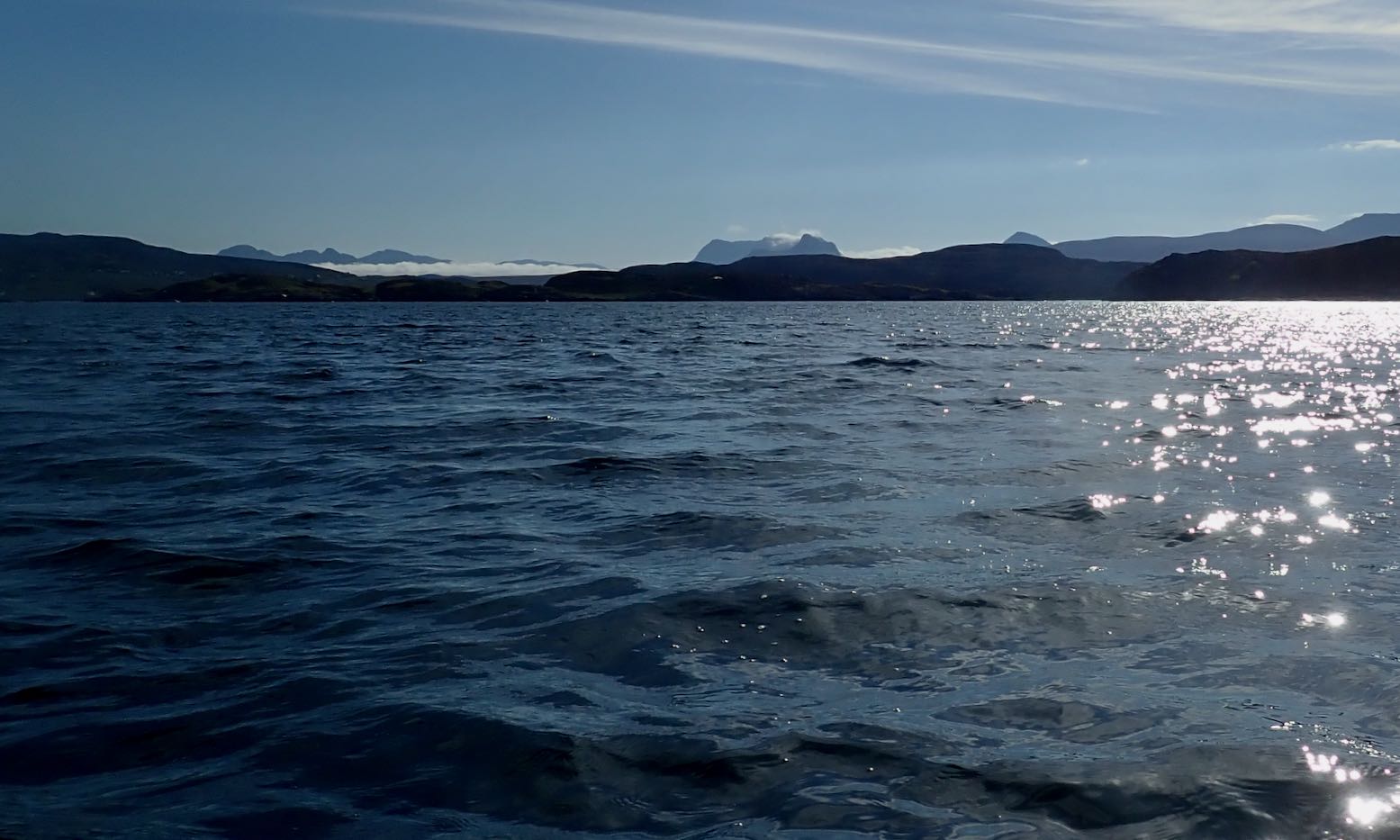
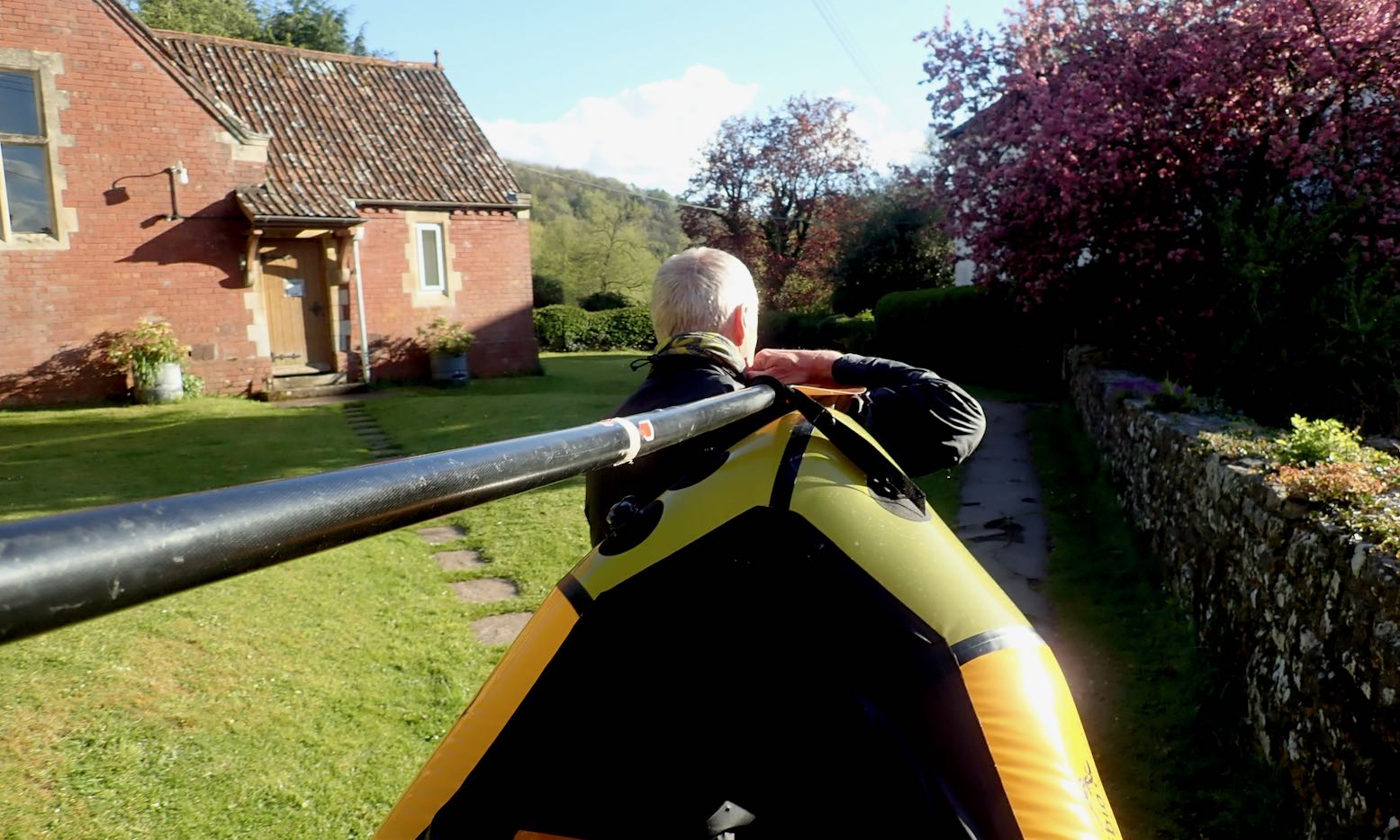
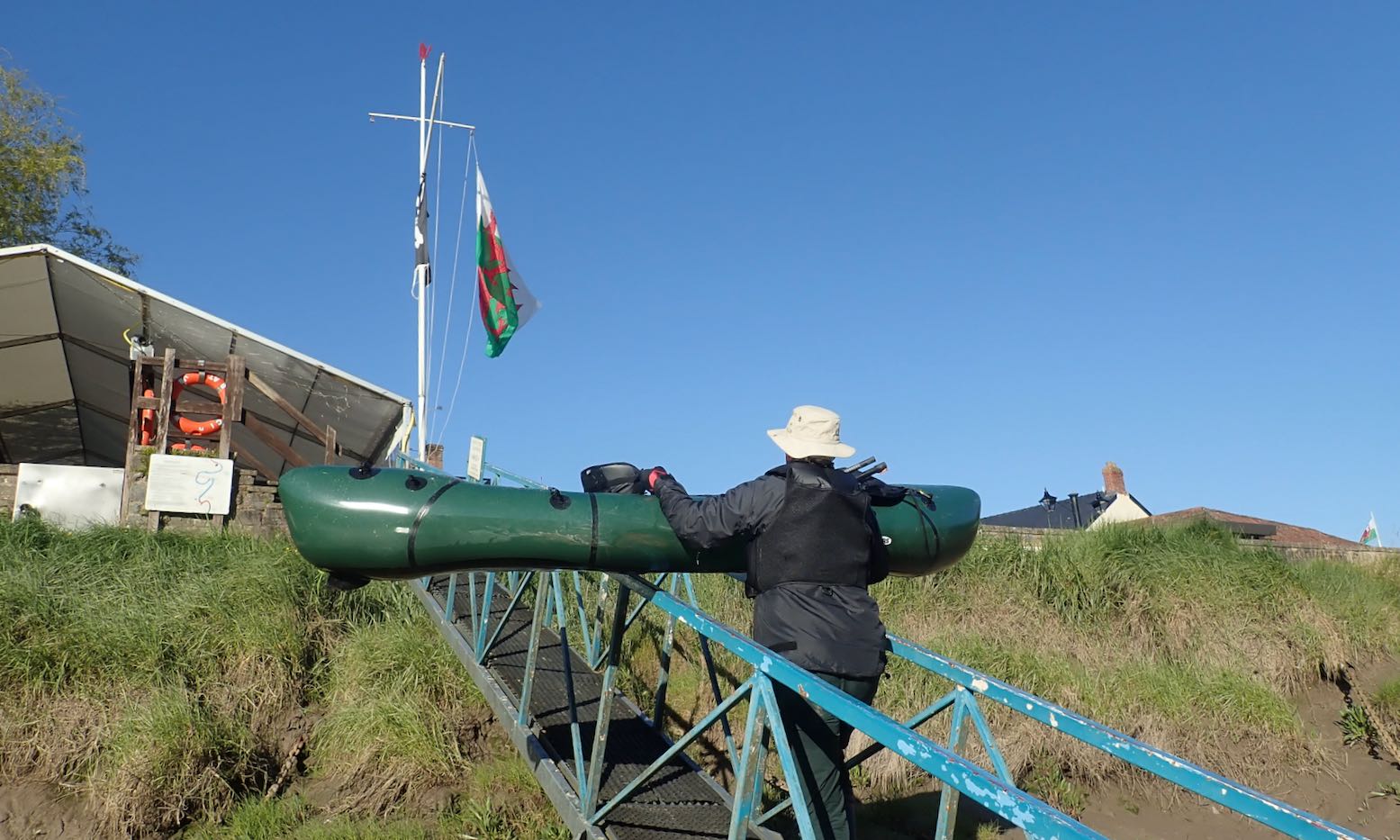
Around here the inshore sea paddling is exceptional, even if packrafting the inland lochs is also pretty good. Having done most of the latter routes, I thought I might try some coastal packrafting.
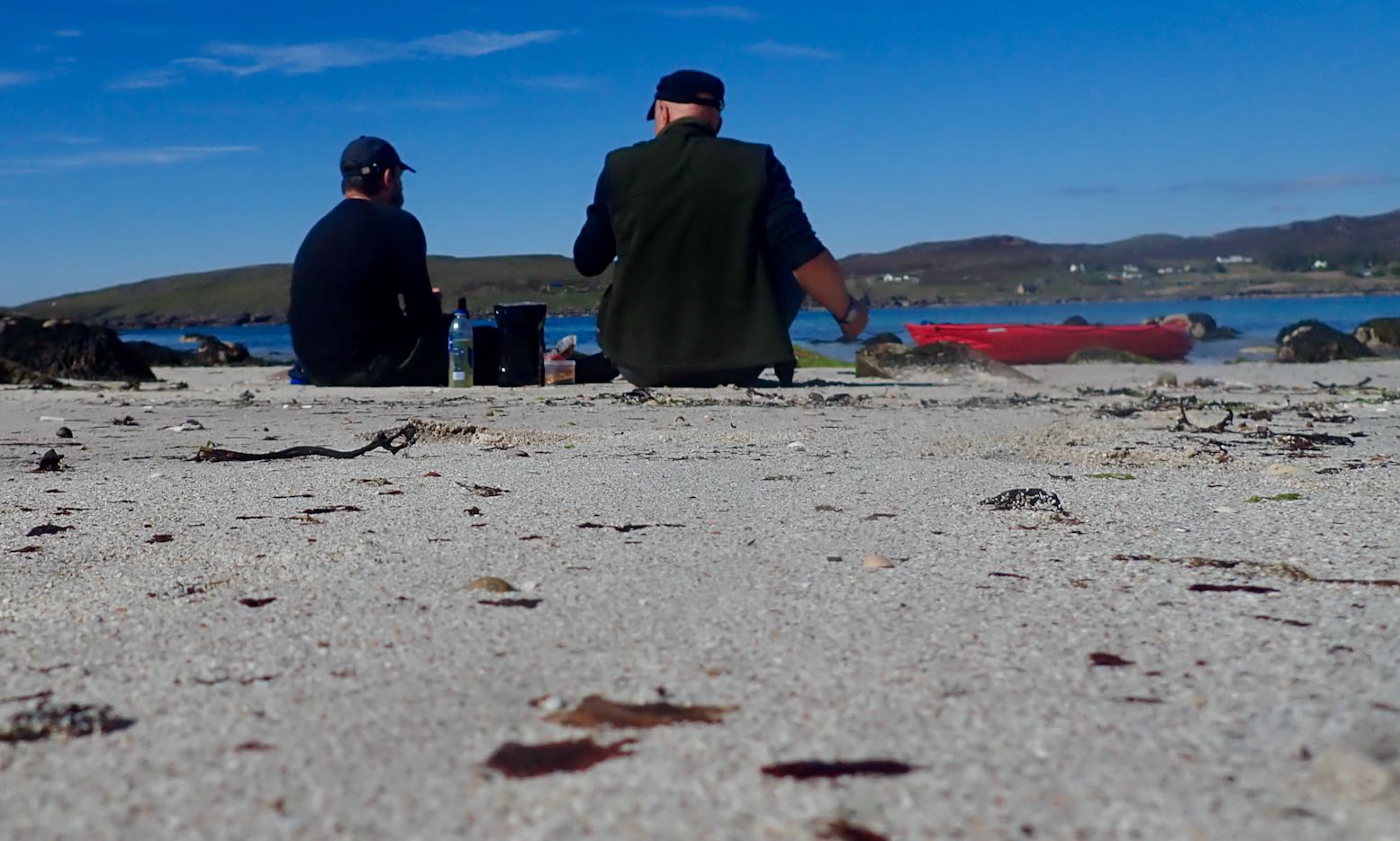
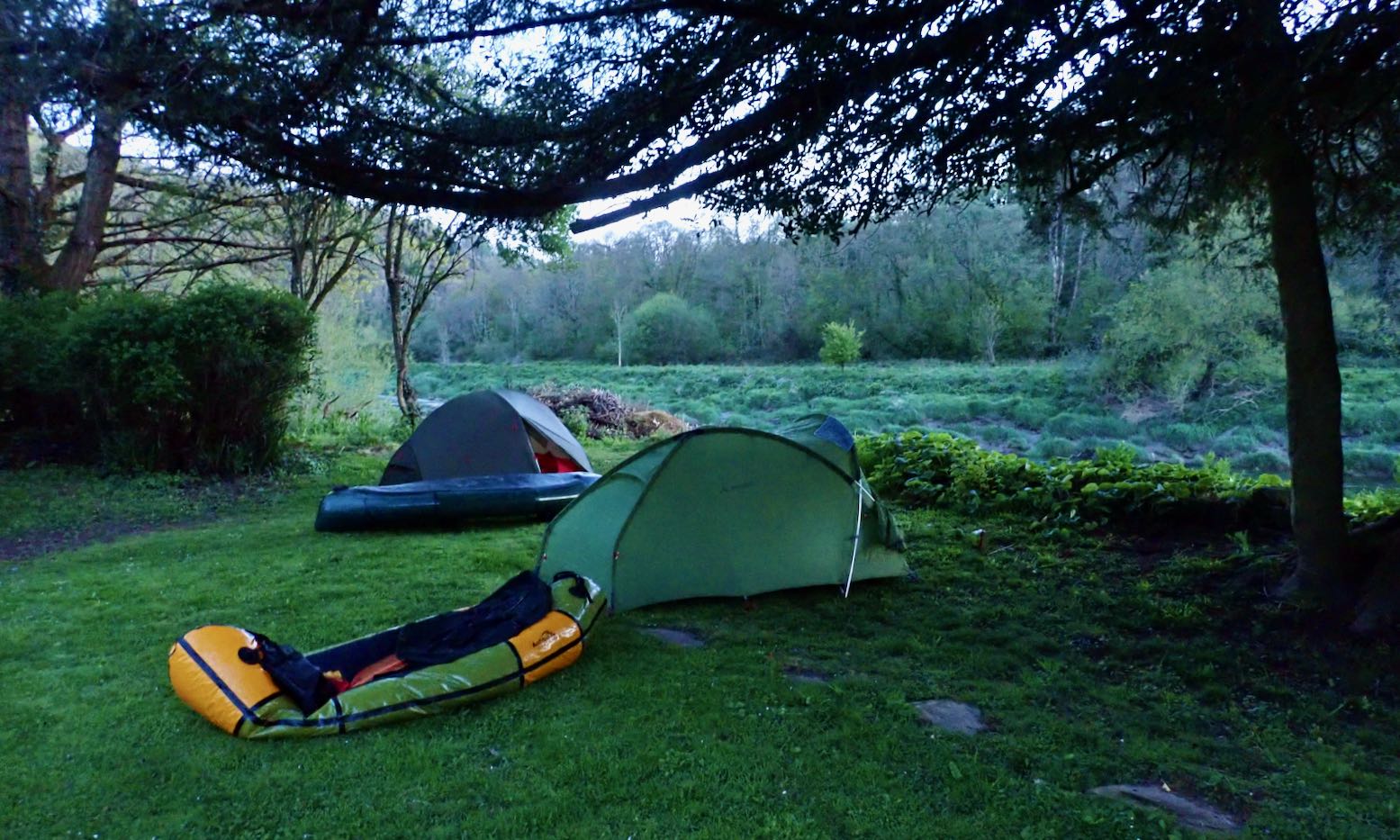
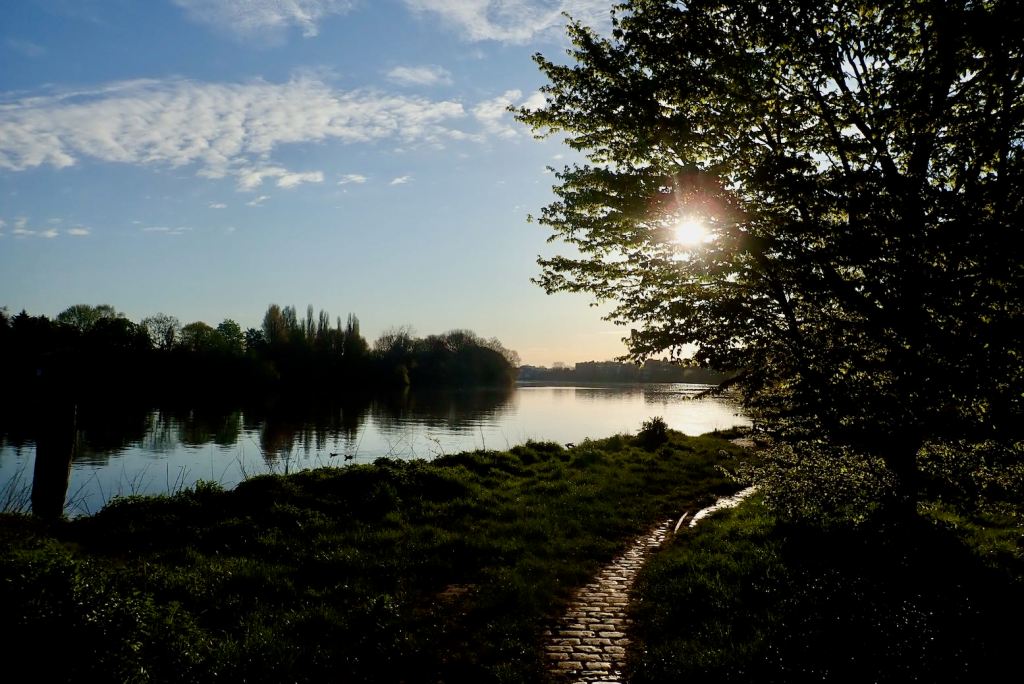
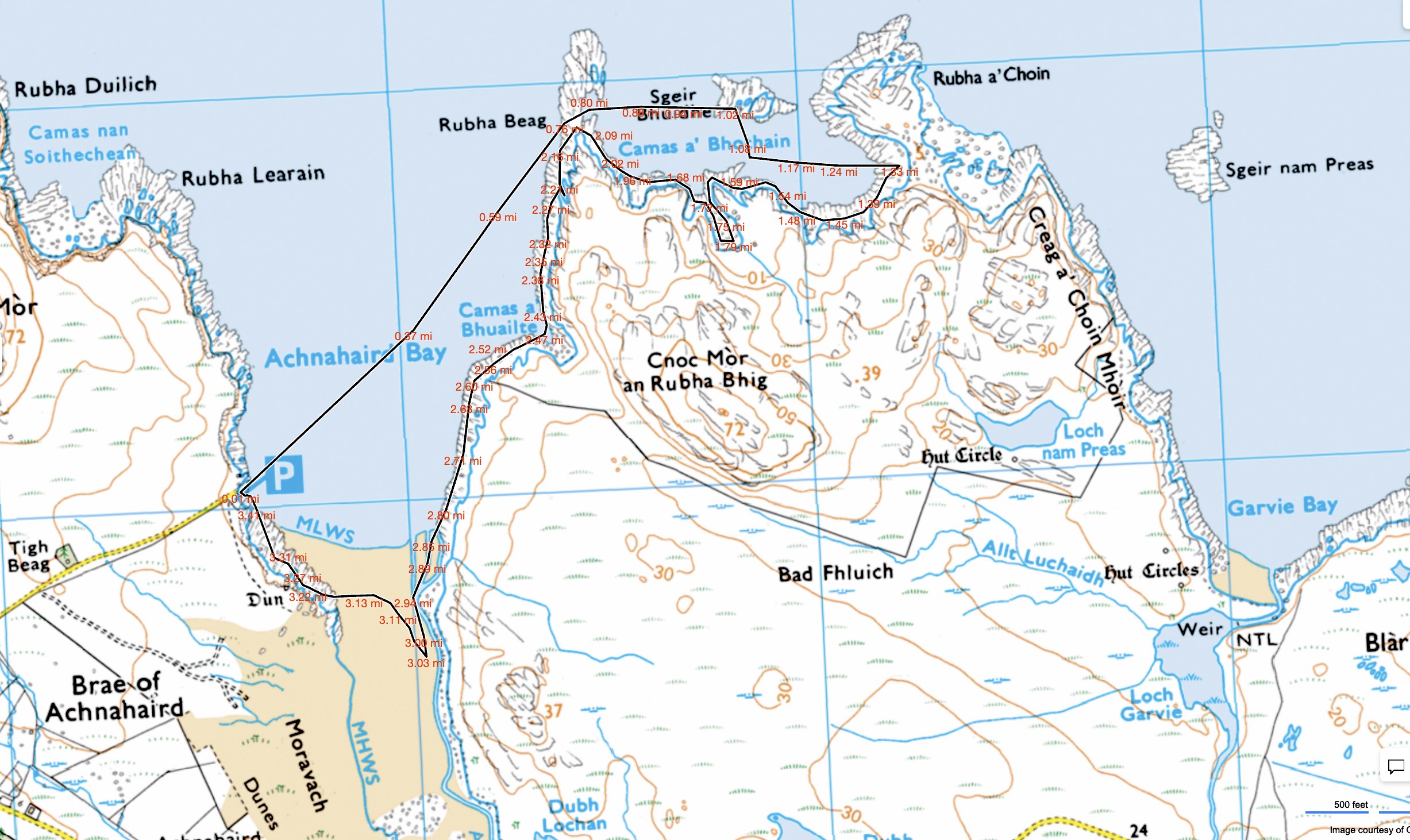
Garvie Bay arcing west to Achnahaird Bay looked like a good one and happens to parallel probably the best walk on the peninsula which we’ve done many times. That route could be a 20-km combination of cycling, walking and paddling, but as it was the last calm evening for a while, we thought we’d go out together in the kayak and I’d try the packraft on the way back. That way everyone got to play.

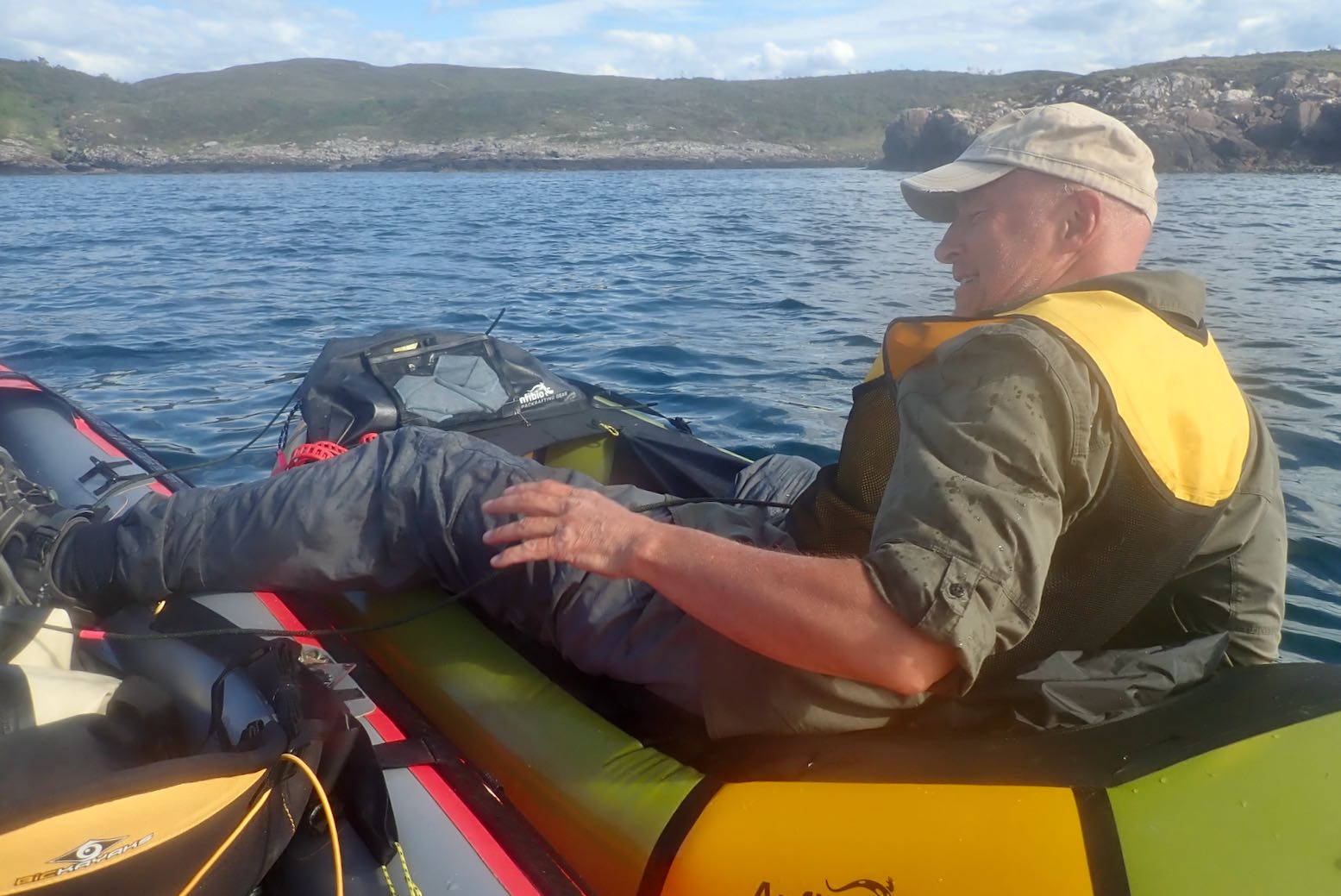
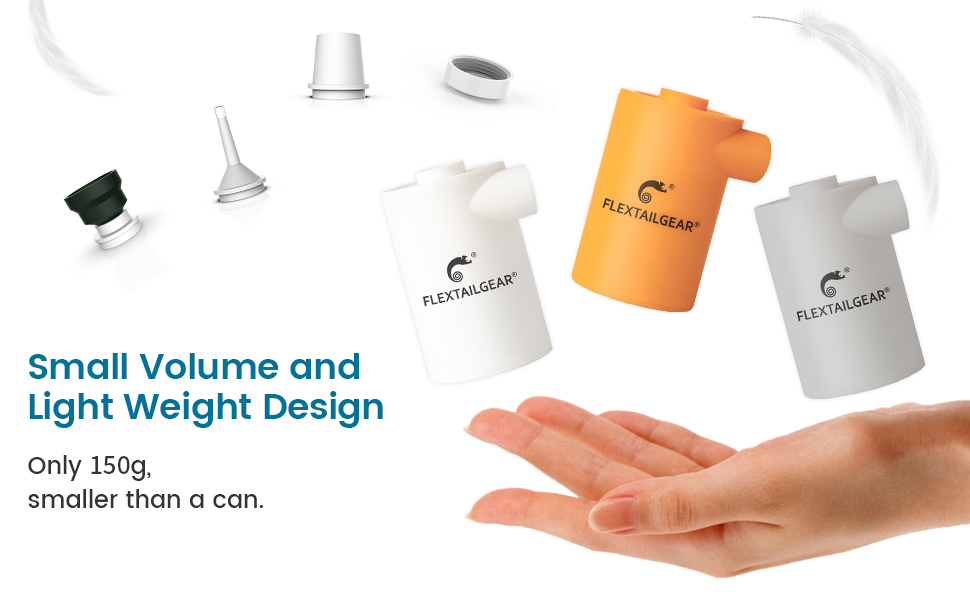
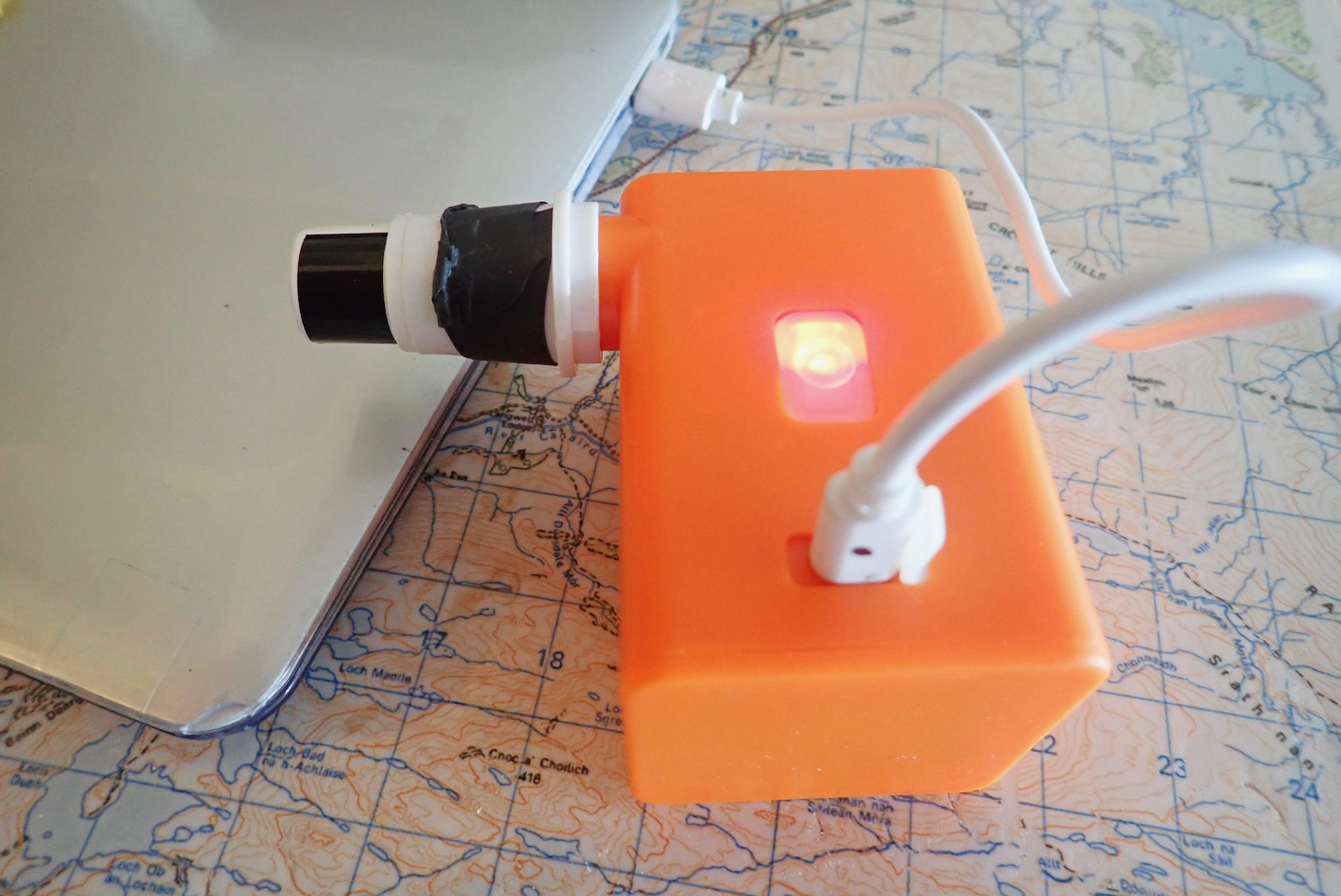
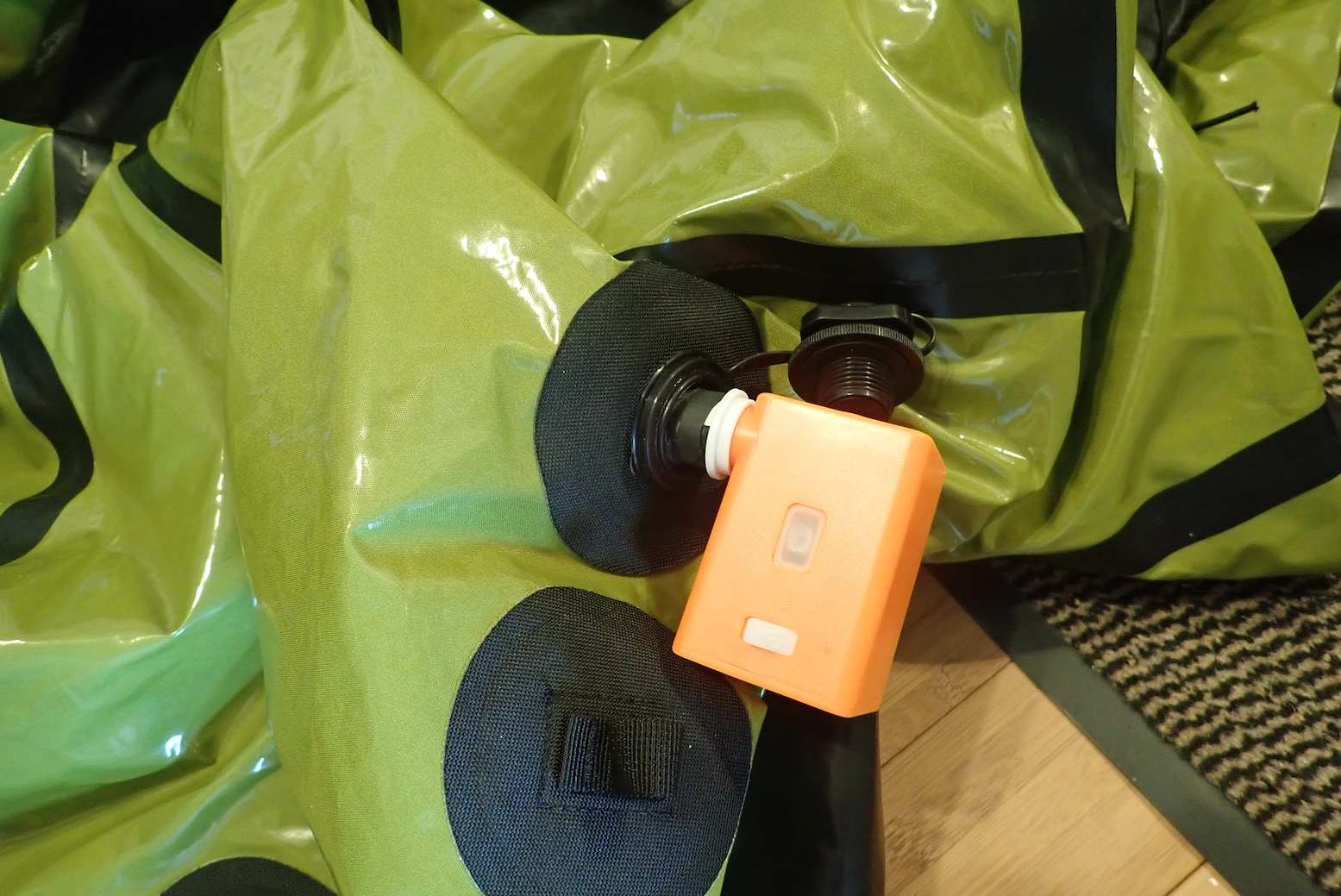
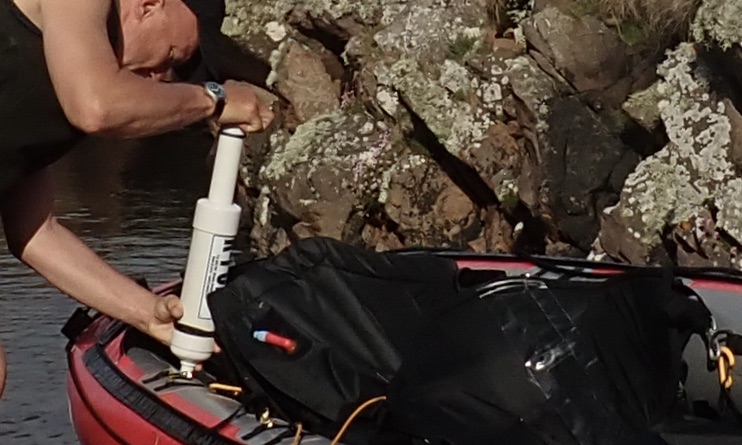
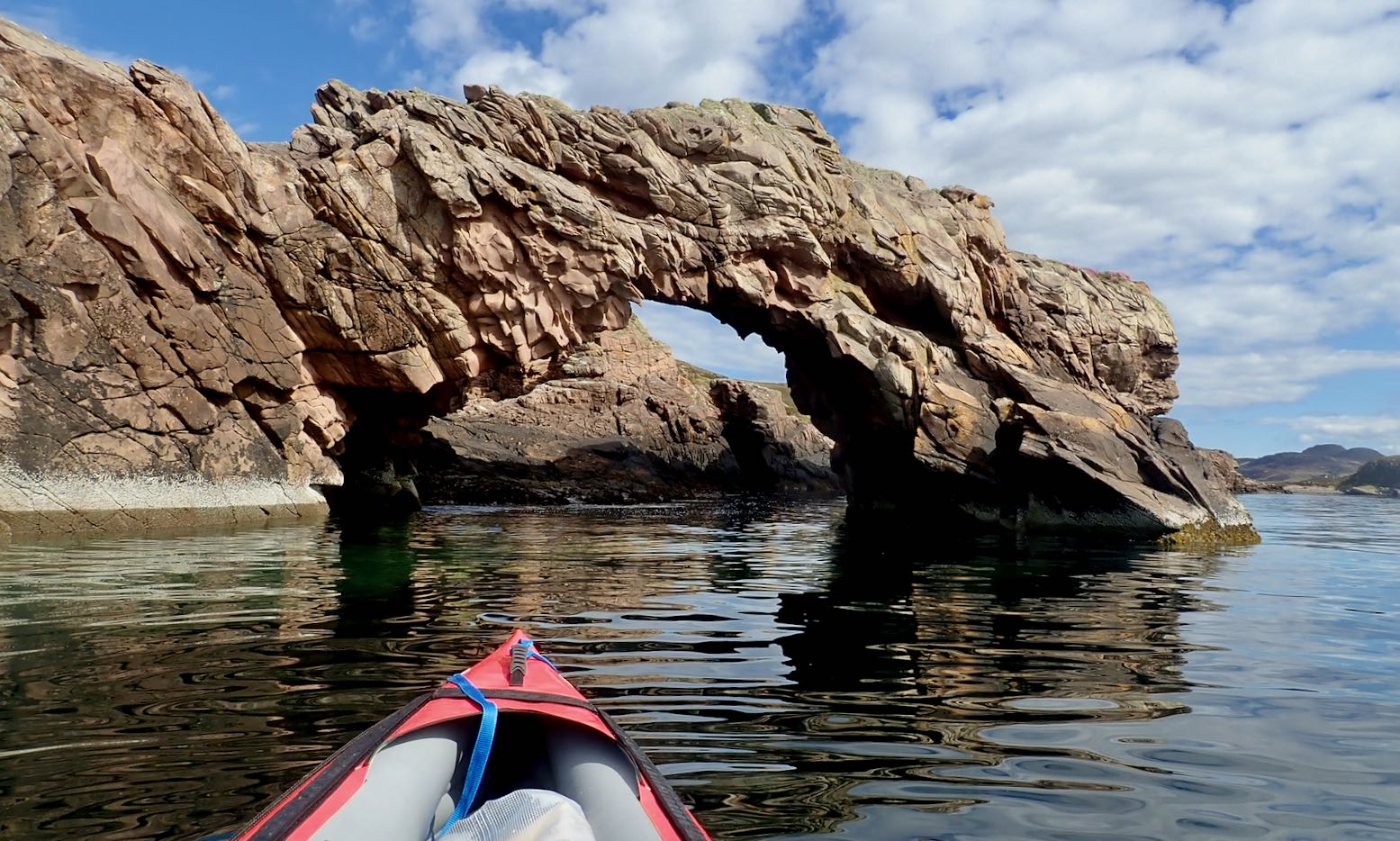
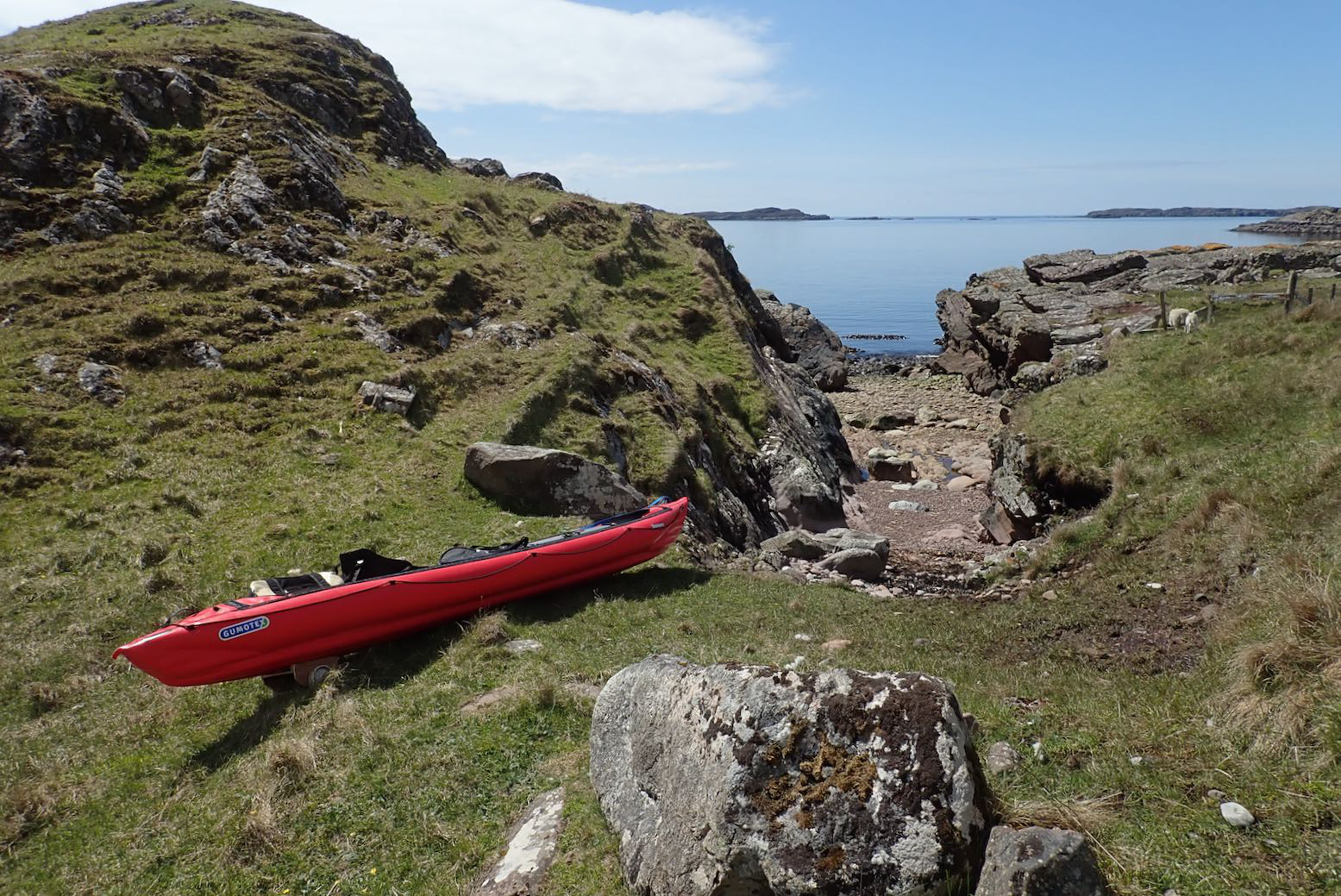
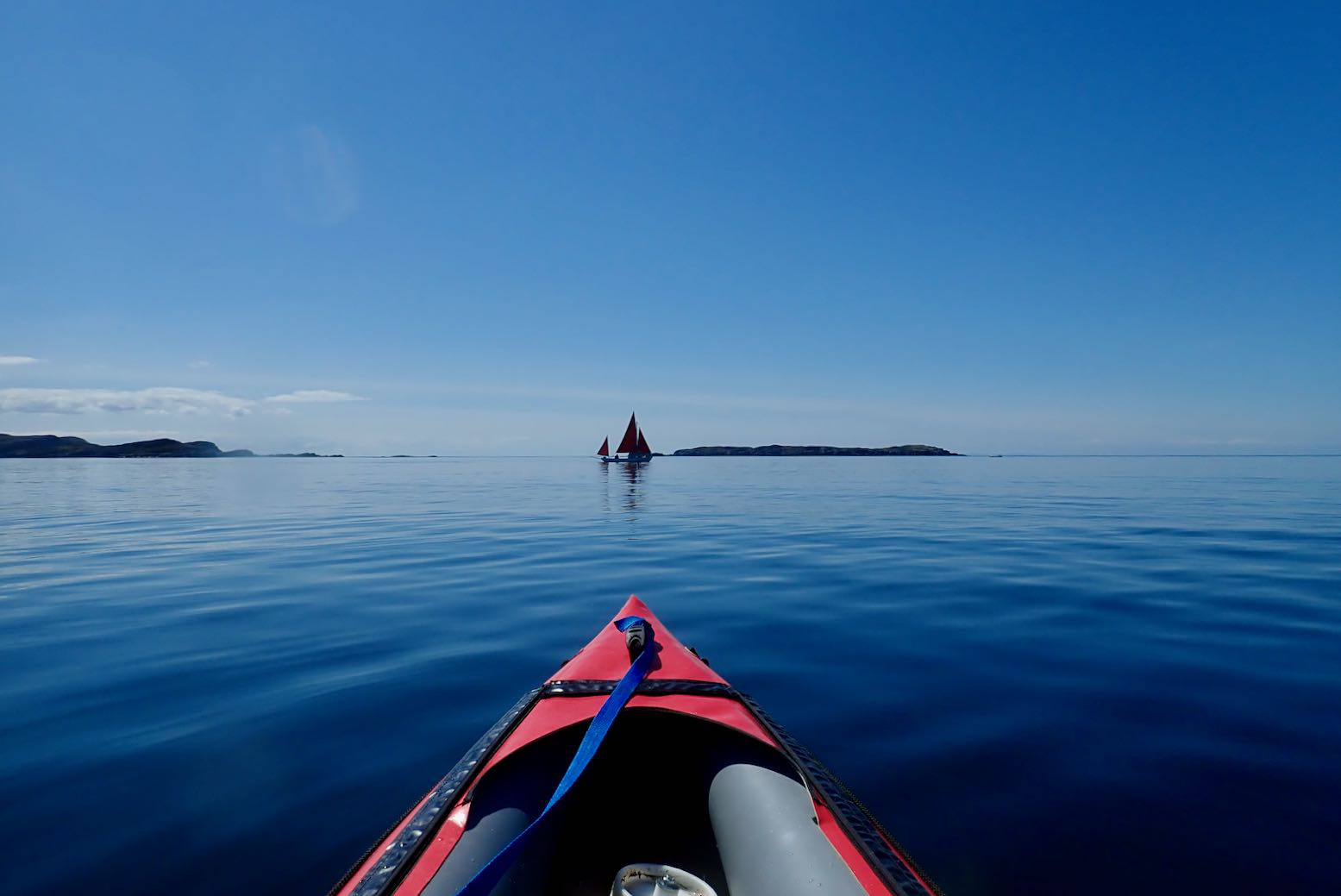
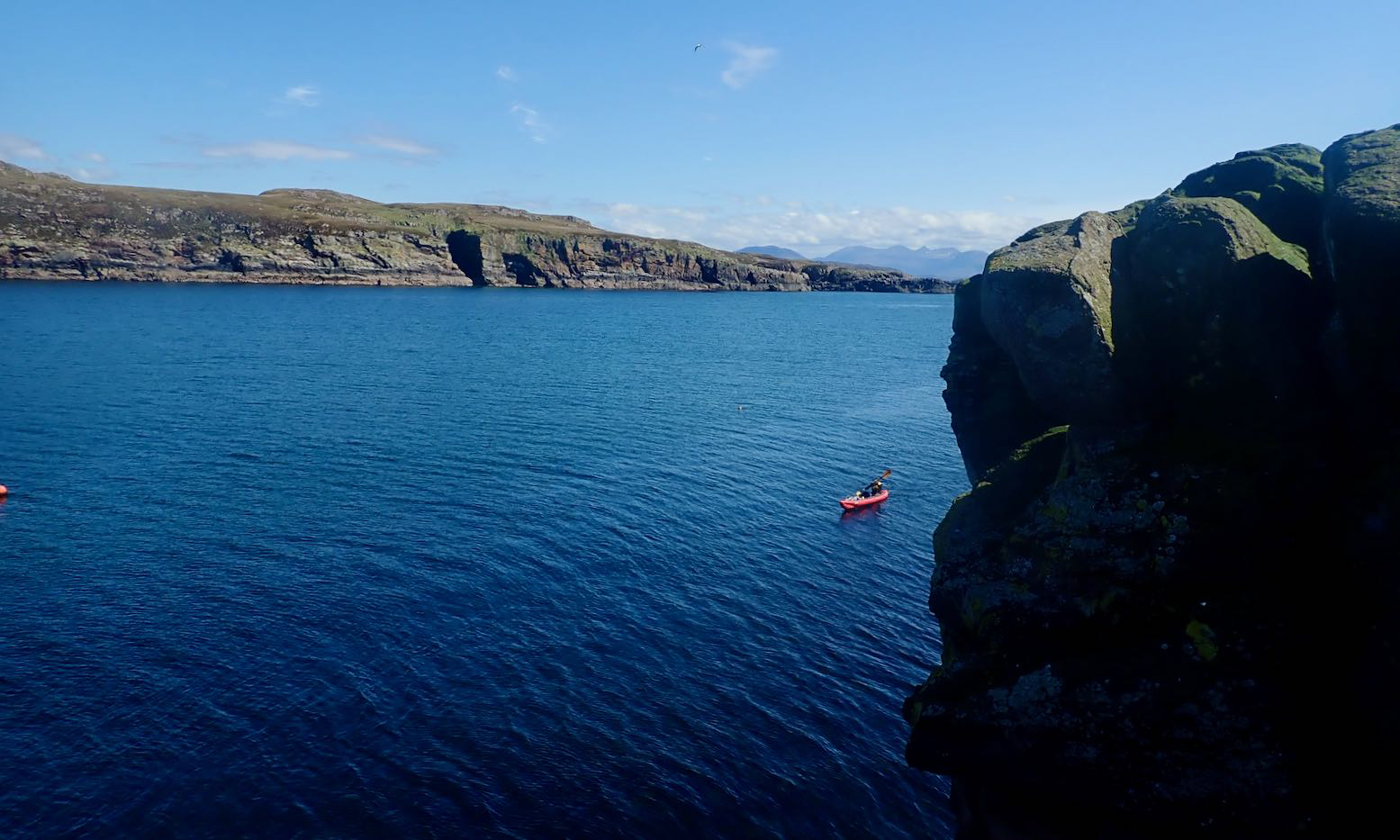
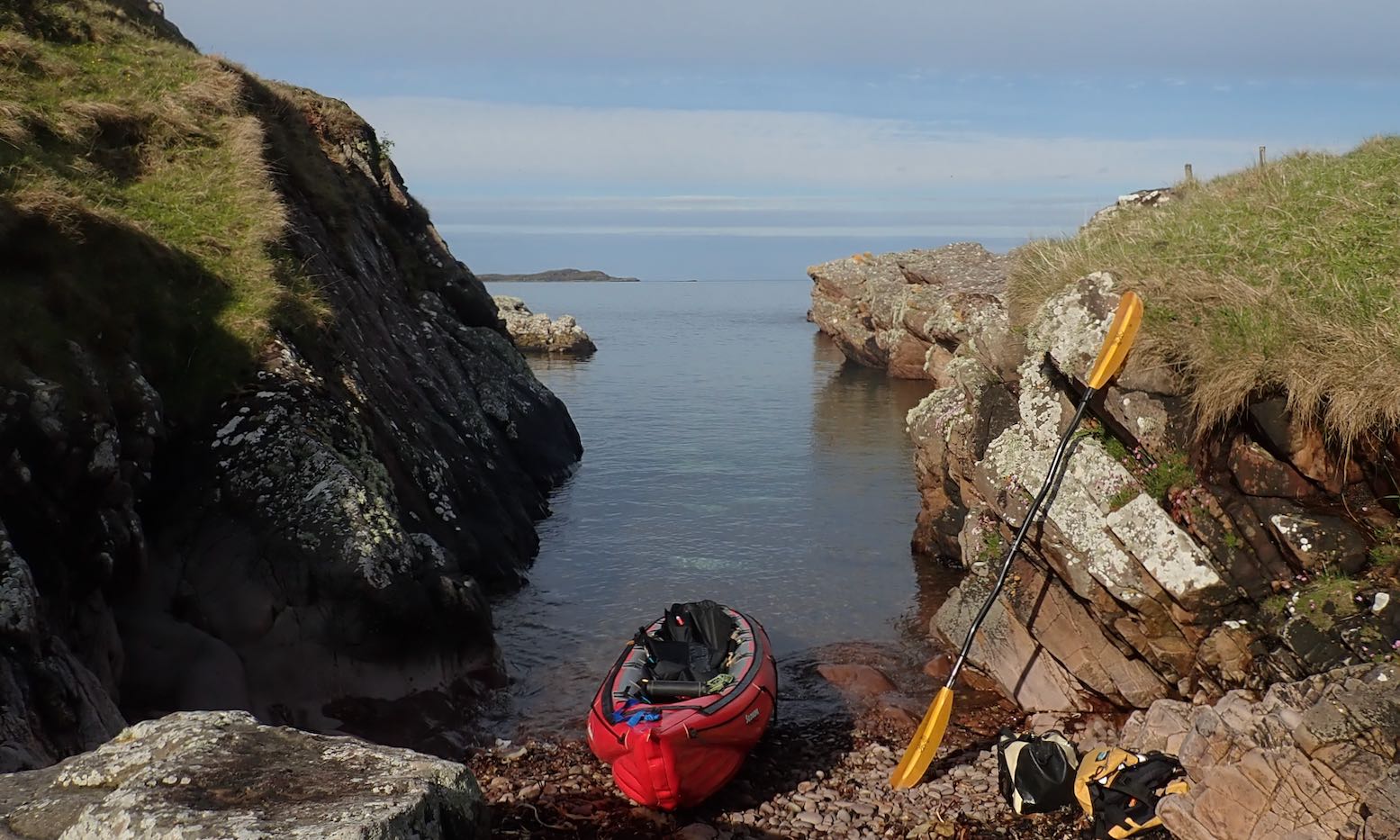
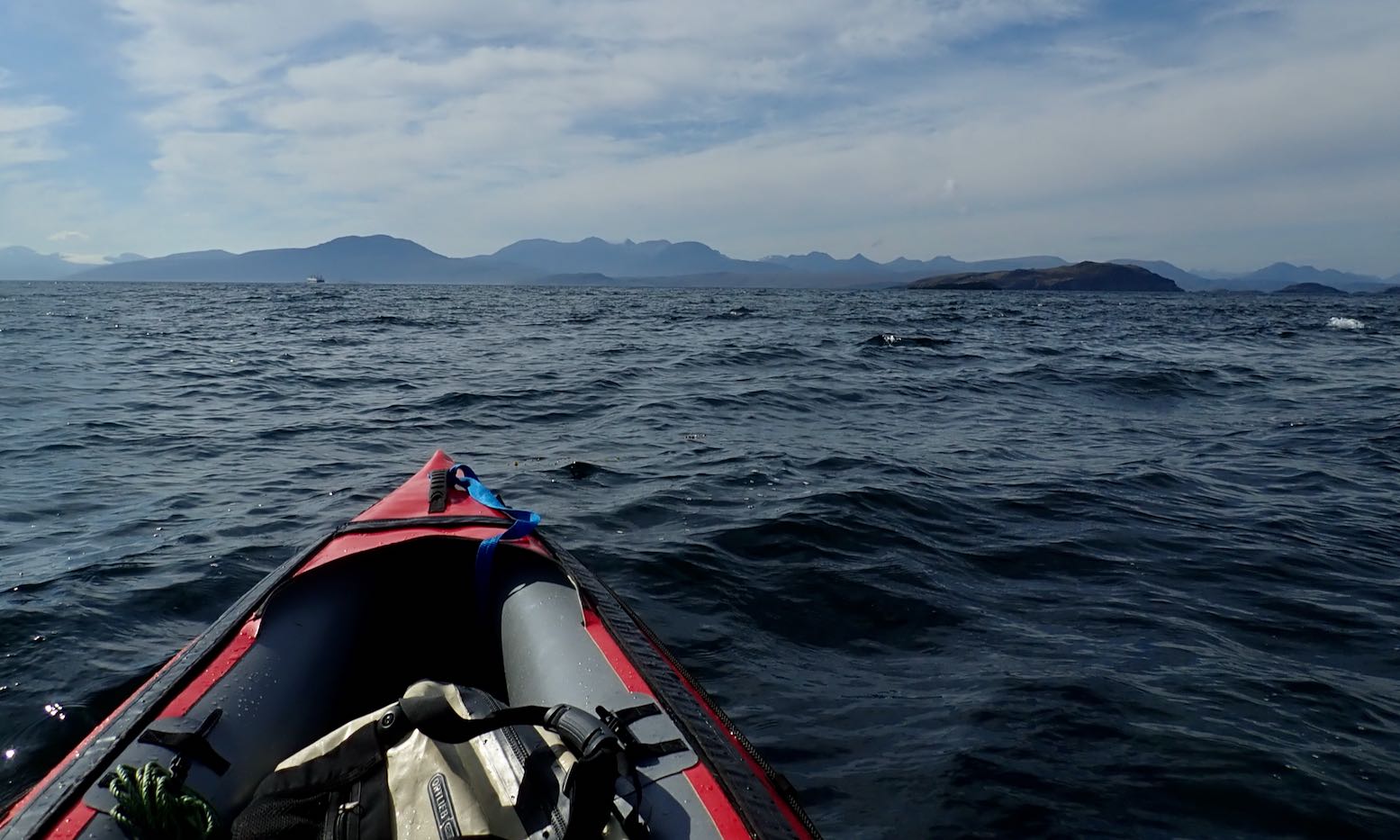
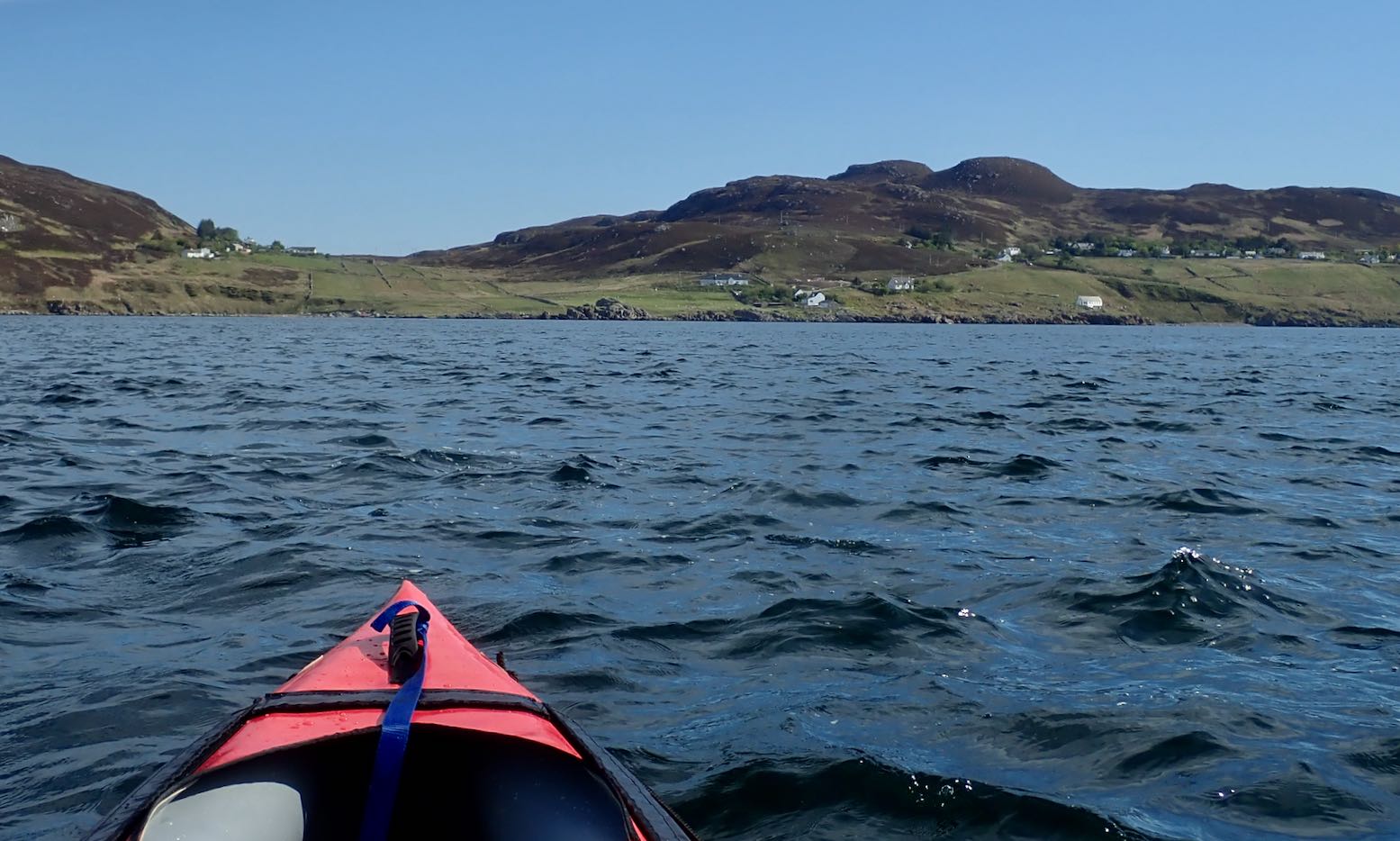
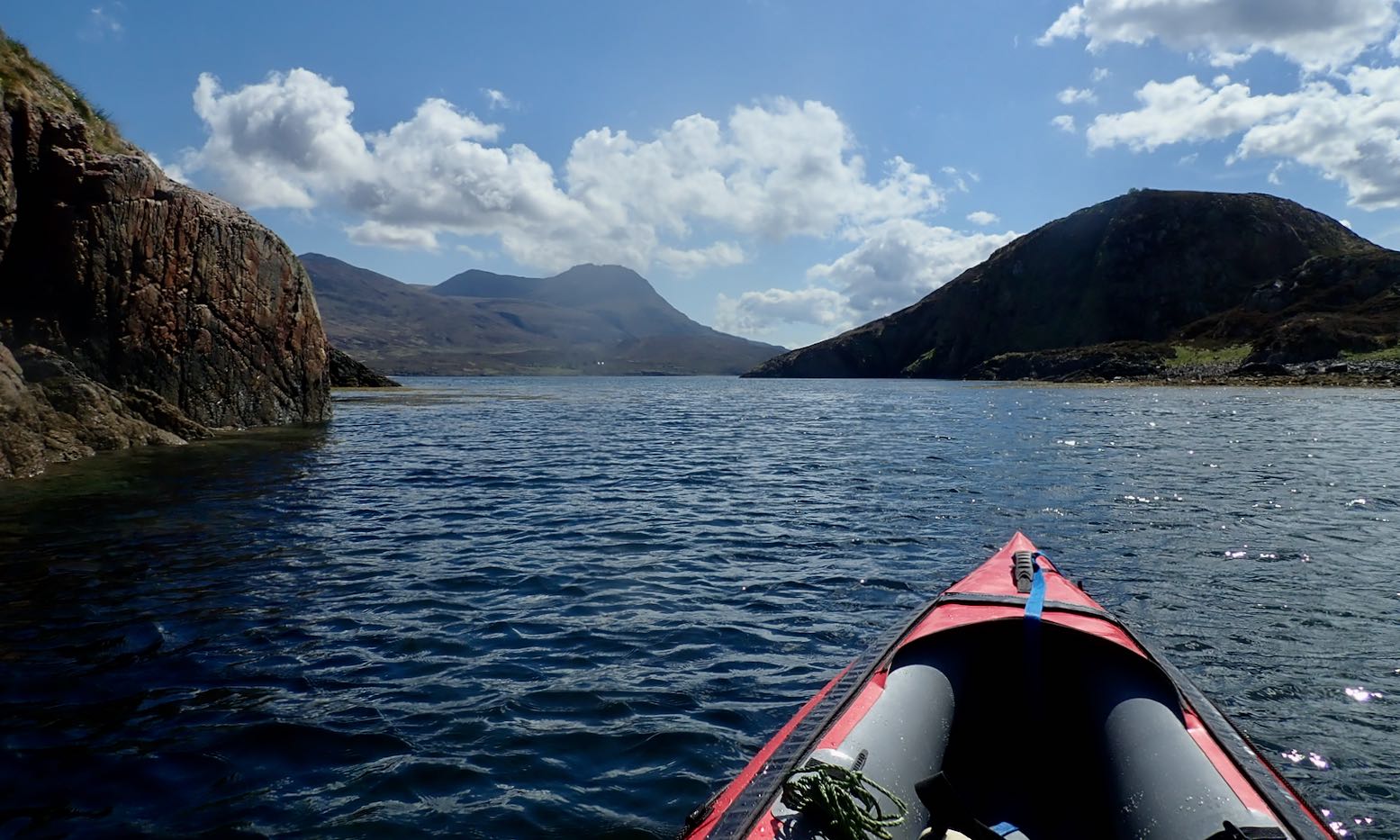
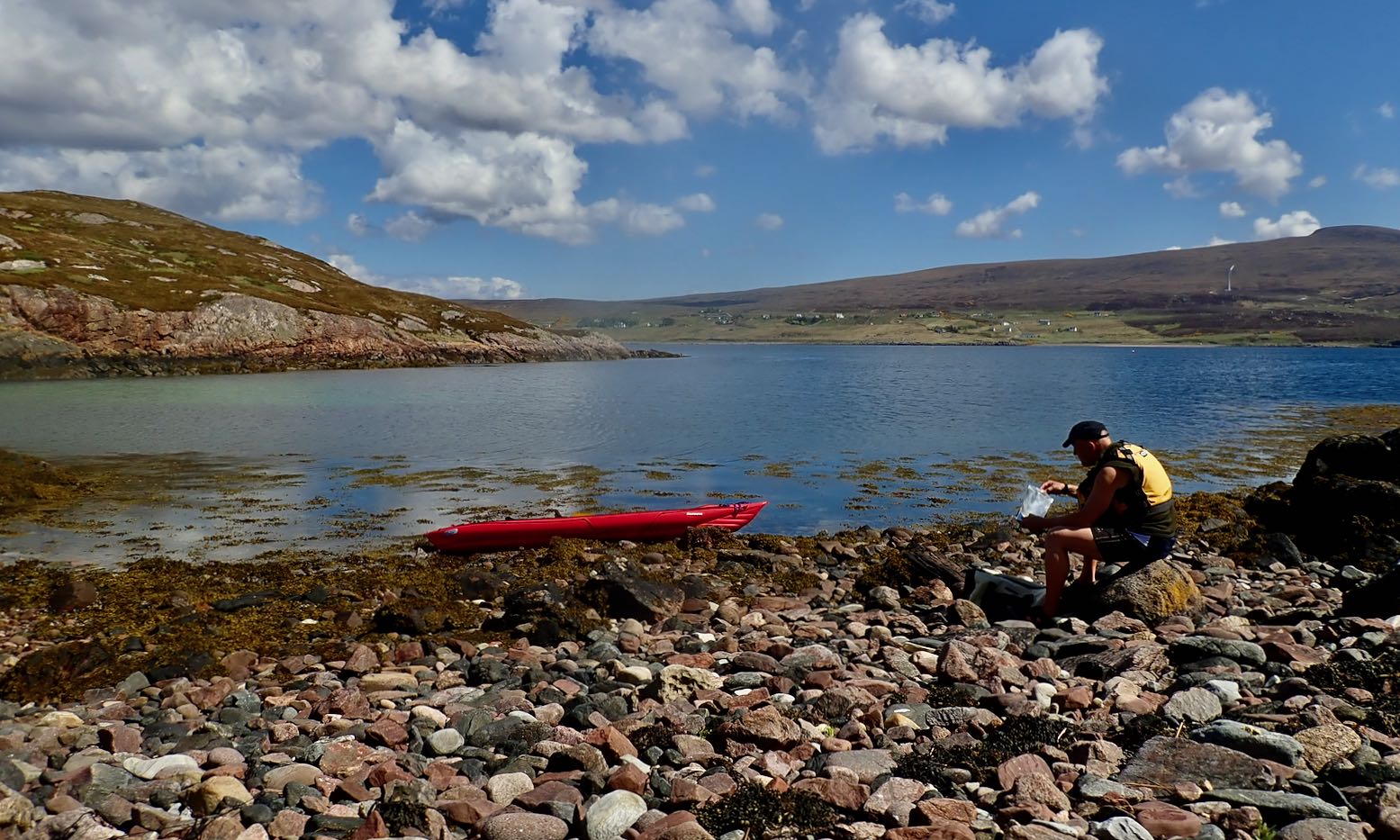
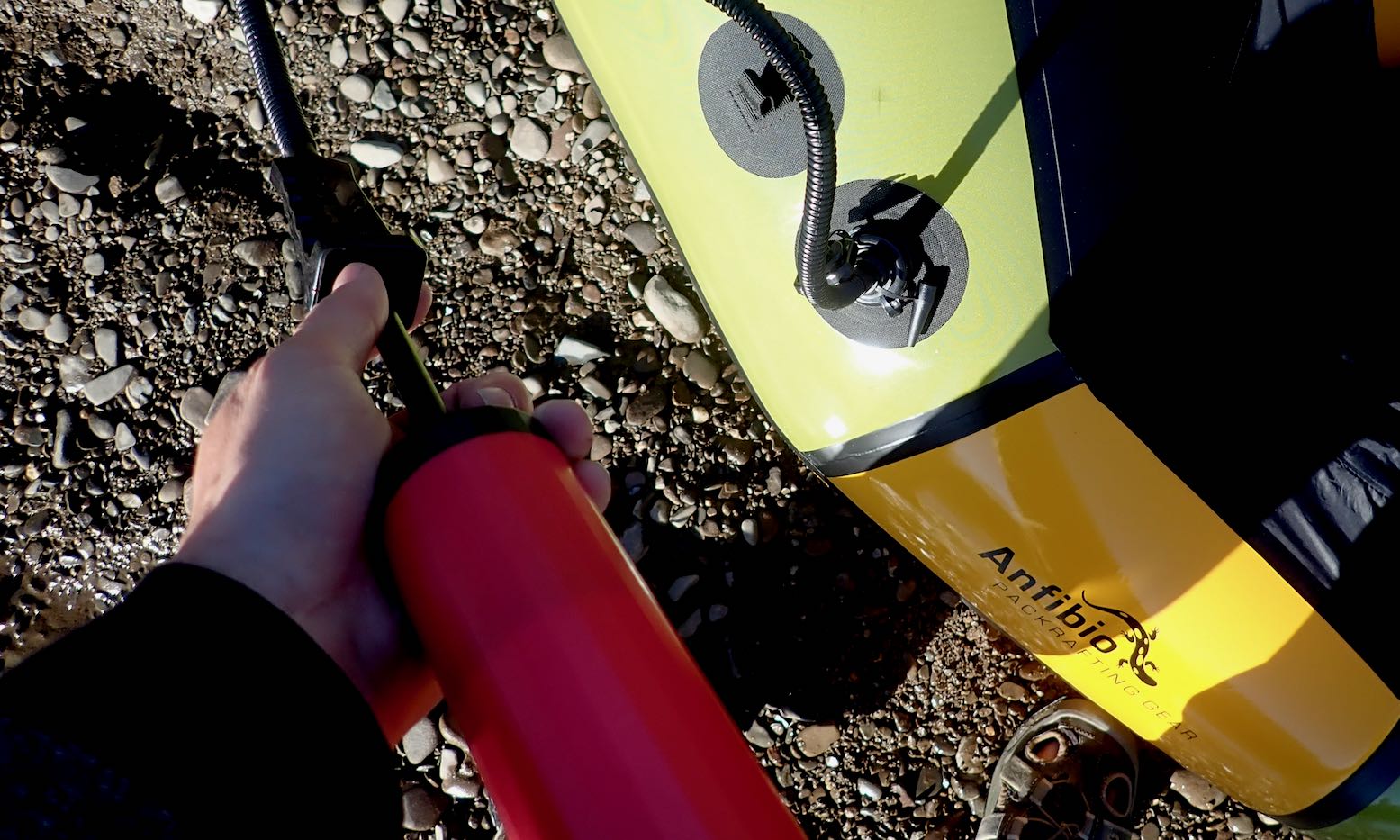
A light NW breeze blew onshore as we cut across Achnahaird Bay like a blue fin tuna. The approach of HW meant we slipped through the submerged skerries of Rubha Beag and into the crab’s claw inlet of Camas a Bhothain (Bothy Bay). This seemed a good spot to deploy the packraft with the aid of my exciting new gadget, a mini electric pump. I unrolled the boat over the water and let the pump buzz away for a couple of minutes, topped off with the hand pump, then clambered aboard.
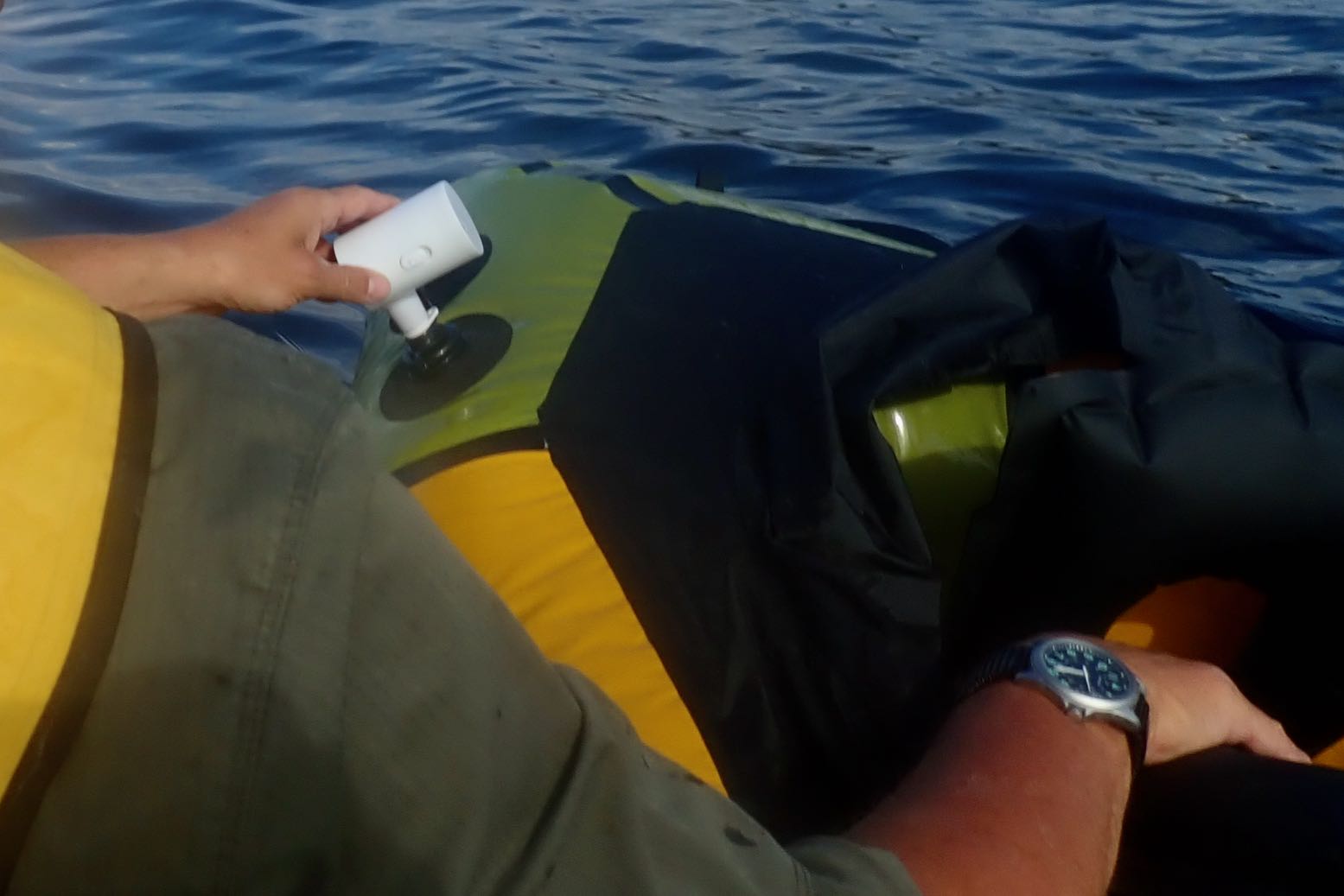
Paddling away, I realised this was the first time I’ve paddled my Rebel 2K unloaded and I was a bit shocked by the bow yawing. Now fully back-heavy, one good swipe of the paddle and it could flip a 180°, just like my old 2010 Alpacka Llama.

Ah, but in my haste to launch the lifeboat I’d forgotten to fit the also-untried skeg which comes standard on the 2K. I waddled over towards Rubha a Choin beach and slipped it on easily, while the Mrs transferred to the Seawave’s front seat.

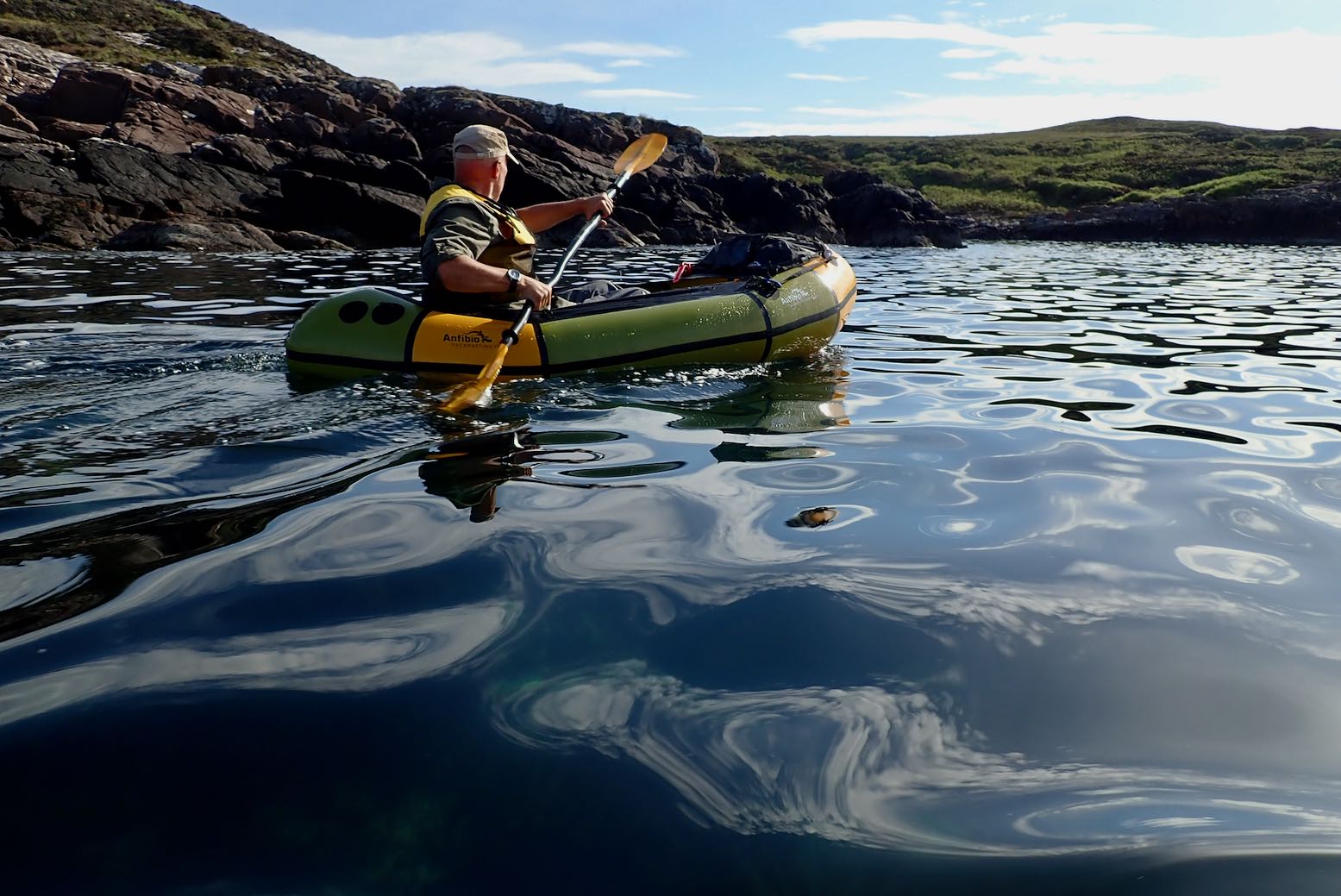
I’ve been ambivalent about the value of a skeg on a packraft, but now back on the water the yawing was notably reduced. If you think about it, a packraft actually pivots from a point around the middle of your swinging paddle, not from the stern, as it feels from the seat. The centre of mass behind the pivot point does make an unladen bow yaw more, but the stern will yaw too; just less and unnoticed.

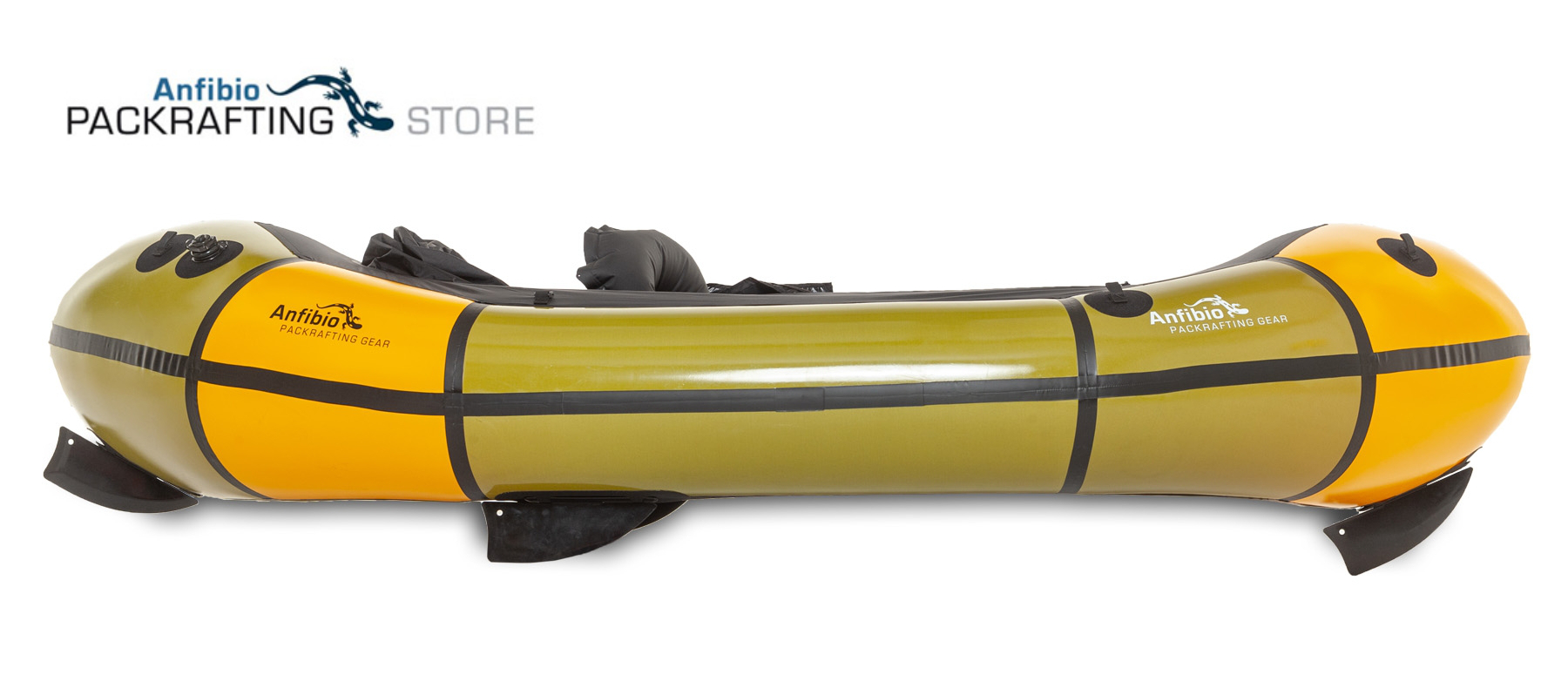
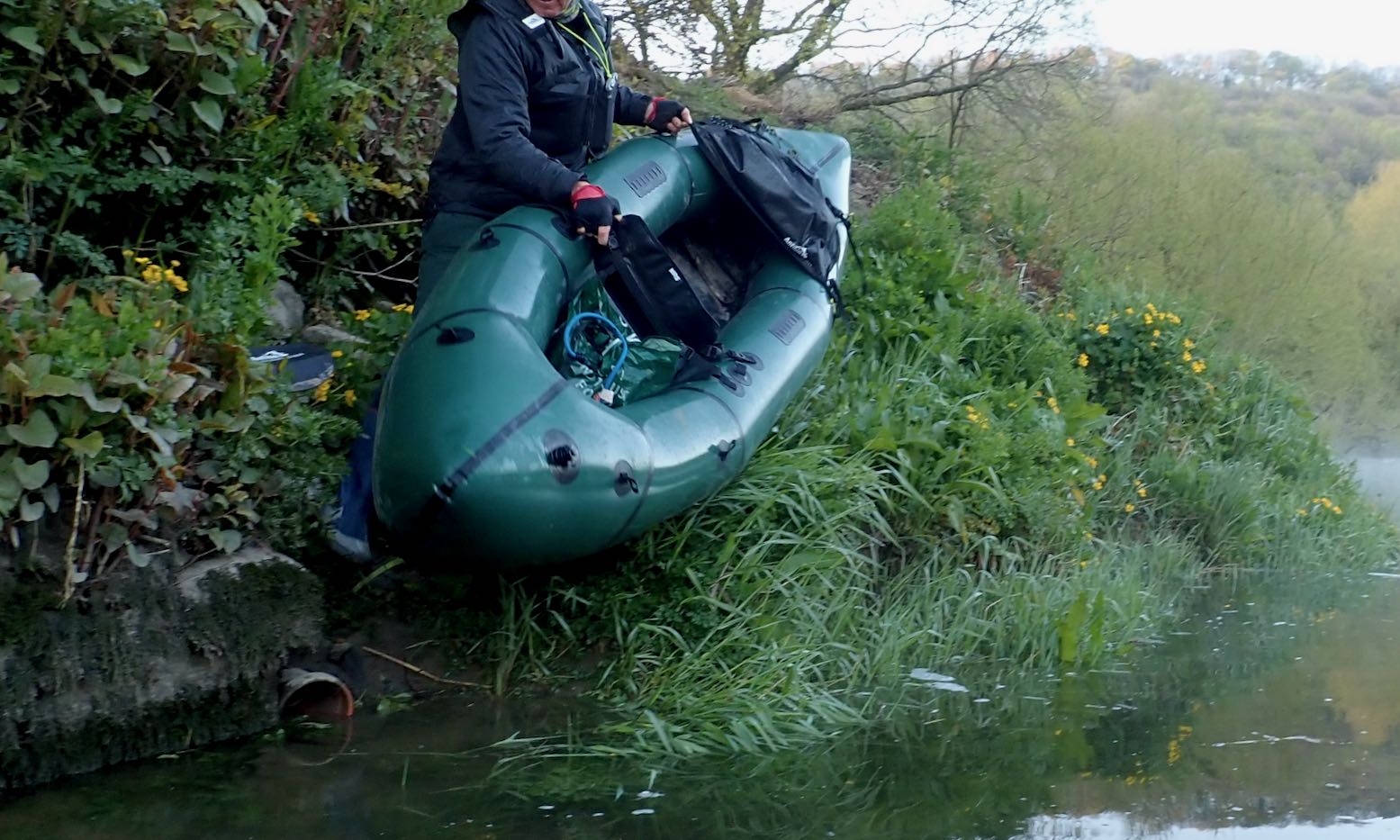
On the Wye my 2K was fully loaded with the centre of mass moved forward and which minimised any yawing, even without a skeg. (With a heavy load over the bow a reduction in yawing is well known with packrafts). Now unloaded and with the bow riding high, swish-swosh yawing was exacerbated, but is actually happening at both ends of the boat. So any type of fin or extension of the stern (like the post-2011 Alpackas – right – and all subsequent copies) will constrain this, while not affecting steering. So, bottom line: skegs work on a packraft and are easy to retro-fit.

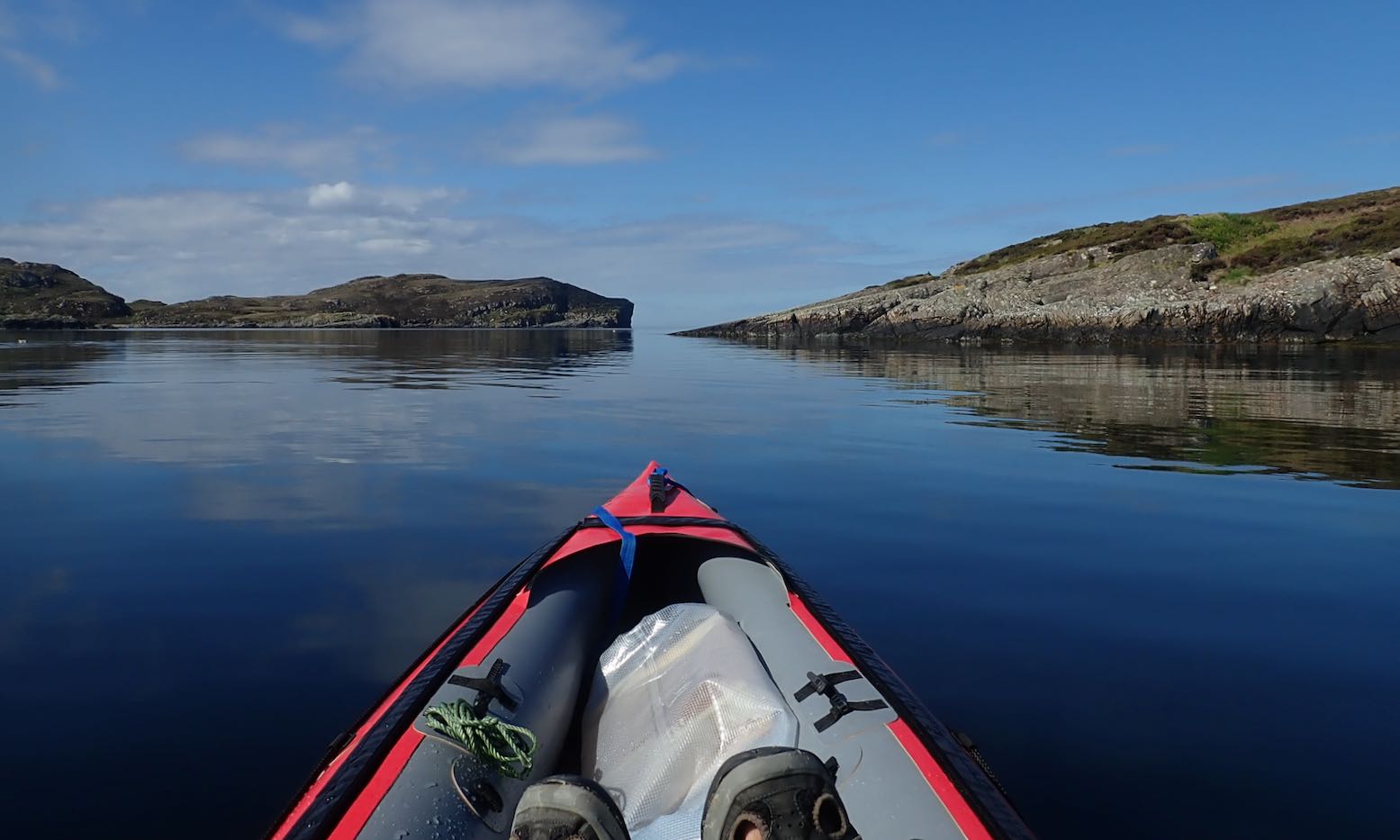
All the remains is a packraft’s agonisingly slow speed. These are not boats made to enjoy the sensation of flatwater paddling; they are boats to enjoy getting to out-of-the-way places easily. Any type of disturbance to progress, be it wind or current, may slow you to a stop, or worse. Something like the longer Nomad S1 I had would be better for this while still being packable. Still, in these ideal conditions it’s nice to float along observing the coastal features.

Paddling back down the east side of Achnahaird Bay, a back-breeze made progress feel achingly slow. Lately, I’ve come to value metres per second (m/s) as a metric of wind or paddling speeds. Something moving past you (or vice versa) at three metres per second is easy to visualise, though I suppose we can all visualise a 3mph walking pace, too. It’s what YR uses and is easily converted to ‘double + 10%’ for miles per hour (so 5 m/s = 11.18 mph). Or just double it and you nearly have knots (5 m/s = 9.8 kn), for what that’s worth. Crawling past the rocky coast it looked like I was doing 1 m/s at times. We had a race: diminutive Mrs in a big, long kayak; me in the packraft. Within ten seconds the Seawave streamed away while Bunter frothed up the water like a cappuccino machine.

Oh well, you’re as fast as you are. Like cycling in Tajikistan rather than Kazakhstan, for the best experience match your routes with your mobility and conditions. Next calm day I’ll do the full Garvie loop.

Tested: FlextailGear Max Pump / Plus

See also:
Pumps for IKs and Packrafts

Update May 2022.
Charged Max Pump packed up after a year/20 uses. Slide switch was off so not accidentally discharged. Plugged into computer; no charge light. Plugged into USB wall socket (as have done before): very bright light followed by smoke… Replaced with the boxy, orange, heavier, notionally waterproof Max Pump Plus for £23.

In a line Cheap, light, compact, USB rechargeable and fast, for when air-bagging is a faff or awkward.

Cost Max Pump £24 on amazon.
Max Pump Plus £23

Weight 148g + nozzle 8g.
Max Pump Plus 170g + nozzles
(Packraft airbag 110g).

Where used around UK

Light, compact
Faster than clumsy air-bagging – handy on a narrow bank/shore
Can suck (vacuum) as well as inflate
Ought to do > 15 fills
Max Pump as a conventional stiff slide switch, not ‘touchy’ inductive switch on the newer Max 2 version. Max Pump Plus has a silicon covered press switch.
Will do other stuff, like airbed mats and fire embers
Newer models can be used as a power pack, have LED lights, are IPX7 rated and can be programmed to sing Waltzing Matilda.

None of the supplied nozzles with Max Pump jammed nicely into a Boston valve
My Max Pump packed after less than a year and about 20 uses. Replaced with bulkier Max Pump Plus
Only replaces air-bagging; still need to top up by mouth and/or hand pump
Will discharge eventually, unlike manual methods, and will eventually die for good

What they say
My name is Max Pump 2020. I can quickly inflate and deflate your swimming tube. air mattress. and other inflatables. With vacuum bags .I can create more capacity for your suitcase and wardrobe at home. When in outdoor.I can provide oxygen for your burning ovens. enabling you to enjoy your food more easily.

Review
An electric pump to save a couple of minutes’ packraft air-bagging? Do me a favour! That’s what I think when applied to bulkier IKs where a two-way barrel pump is fast and easy. But factor in cost, weight, size, USB rechargeability plus supplementary uses and, for a packraft, FlextailGear’s range of pumps (above) is worth a punt.
Air-bagging is a clever idea to inflate a typical packraft, but on some days it’s not the most intuitive of actions, perched on seaweed covered boulders. Once a day is fine, but on a trip where you’re airing up and down a few times a day, the effortlessness of the Max Pump is welcome. A good case to point was my paddle on the Wye where accessing my Rebel 2K’s internal storage pockets to get to the camping gear each night meant re-inflating the boat every morning. The Flex pump would have made this less tiresome. Another example is getting back from a tiring sea paddle and wanting to reinflate the boat to rinse and dry properly. Plug in the Flexy and get on with other after-paddle chores.

Max Pump adapters but none fitted a Boston valve’s two ports just right
Actually the grey rubber nozzle (right) will push and seal into the main threaded port, and with my second Max Pump Plus, there was a hard plastic nozzle to fit a Boston’s mushroom valve (middle) too.
But to reduce loose bits, I made a 2:1 adapter (left) to fit both ports, using tape to make a good seal.

Out of the box
With Max Pump I got the pump, four nozzles, a short USB-A lead and a small bag. While one nozzle loosely fitted a Boston valve’s threaded airbag port / dump valve, nothing fitted the one-way valve body. You’d think with Boston valves so common on Chinese-made slackrafts, packrafts and cheaper IKs, this Chinese brand would include a Boston valve nozzle. Luckily, I’ve amassed loads of adaptors and nozzles, and one 16mm (5/8″) adaptor fitted the pump’s main nozzle and jammed into the Boston port. [The orange Max Pump Plus included a nozzle for the valved port].

Off a laptop allow two hours to fully charge the pump out of the box. After just three fills (12 mins?), it took just hour or less to get the green light. Off the mains is faster.

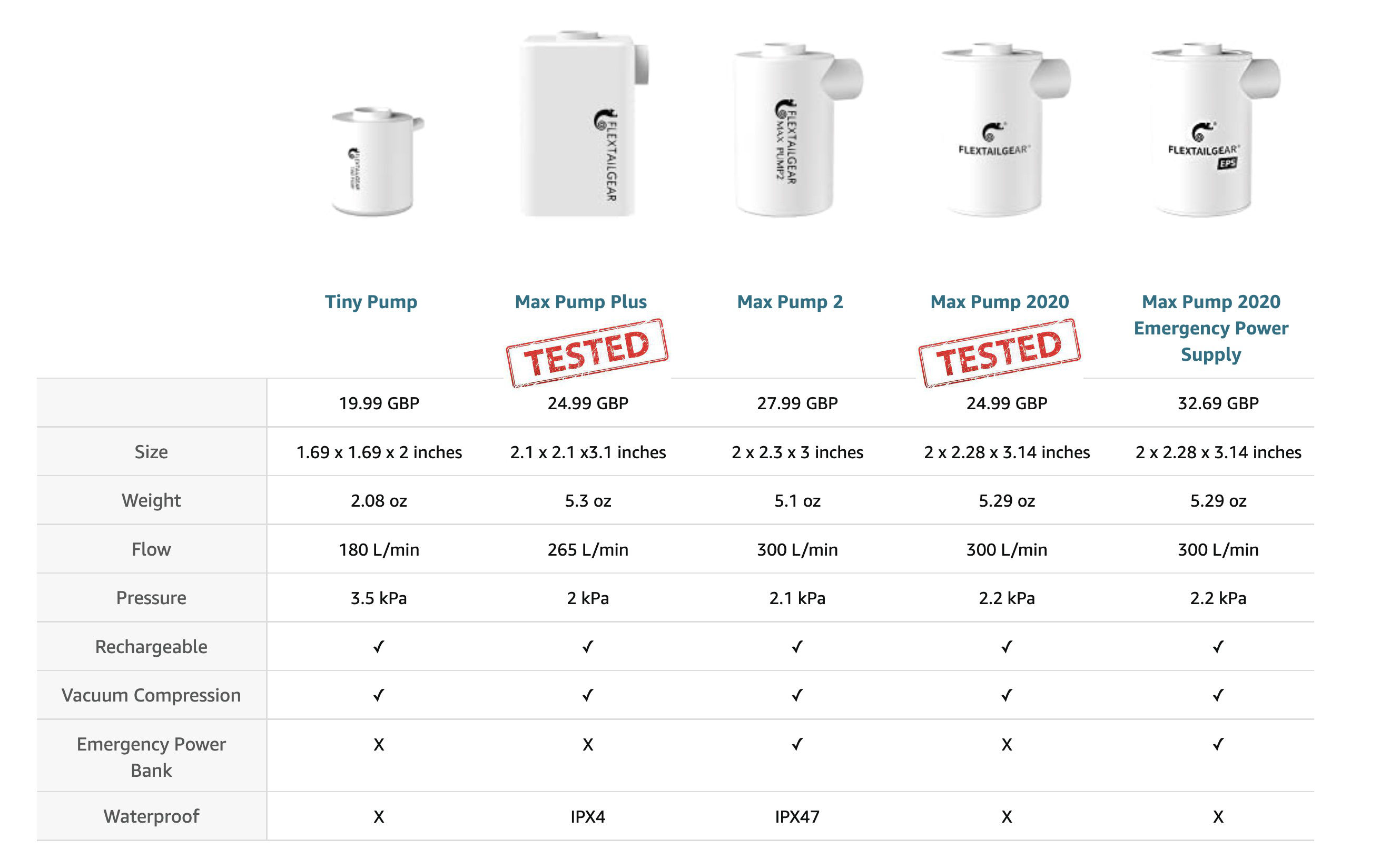
I estimate the volume of my Rebel 2K was 240 litres, (12 jerricans) so at the claimed flow rate of 300 L/min (currently the highest in Flextailgear’s range of mini pumps), that ought to take less than a minute. In fact it took 2:30s to reach the equivalent of airbag pressure (full volume; above).
But this was pushing through the one-way valve, (like a car tyre) not direct into the hull via the airbag port / dump valve which has no resistance.
Now with a bigger TXL with a volume of around 350 litres, I inflate directly through the screw port into the hull: 2:20s and if you’re quick you don’t lose much air screwing the cap on. Then I Flex for another 30s via the valve (or do 20 breaths to save the battery) and finish off with the handpump.
According to the Flextailgear table above, my heavier orange Max Pump Plus has 10% less power and max pressure than the Max Pump, but it’s hard to verify any of this data other than weight. The fact is, either pump does a packraft in a couple of minutes. Max Pump Plus: 170g + nozzles.

My comfy full-length Exped Synmat XP 9LW – which also needs air-bagging to avoid humid breath – inflates in just 25s. And as many will know, air-bagging a sleeping mat in a cramped tent when you’re worn out is not one of the joys of camping.
The Max 2020’s 3600mAH lithium battery is claimed to run for 40 minutes, so that ought to do at least 10-15 raft fills plus a few mats, when camping. I imagine the Max Plus will be the same.

Deflating either of these items is of course as easy as rolling them up, but getting the last bit of air out can be tricky, even though it can save a lot of packed volume. Pump suction definitely works on my Seawave IK because the one-way valve can be pulled open with the bayonet nozzle. On the packraft and mat, you have to suck from the unvalved airbag port, and by the time you’ve plugged that, some air gets drawn back in. I find just rolling up, squeezing, then sucking the last of the air by mouth works best, as your hands are free to get to the valve cap fast.

Max Pump Plus will do my Anfibio TXL in under 3 mins

Last word to Sven from Anfibio: “Can’t live without one anymore. Cannot remember when I last used an inflation bag.”
These young people, honestly. 

Kayaking Summer Isles; a lap of the Taneras

Seawave Index Page
Summer Isles Kayaking Guide
Other Summer Isles paddles

Another forecast of calm winds in the Summers. Or is it? The BBC and YR reports are contradictory: the former has too-strong-for-IK winds from the south; the latter shows light winds from the north. Others show light winds from the south. How can they all be so different?
Maybe I should just look out across the water? All looks serene so let’s make paddle while the sun shines. I wheel back down to False Man’s Harbour and set off with two hours before high water.

No side PRVs?
Am I missing not having added pressure release valves in my side tubes, as I did to my original Seawave? Not really. I am running 0.3+ bar in the sides (official: 0.25) but temperatures up here in NW Scotland are hardly tropical. I try and leave the boat in the shade at the house and de-air the side tubes for a couple of seconds after a paddle, effectively manually depressurising the sides to about 0.2 bar, rather than having fitted PRVs do it for me automatically. The more vulnerable stock PRV in the floor purges automatically at 0.25.
On my next paddle I have to top up all three chambers with the K-Pump as I would have to do with all-round PRVs anyway. About 30 kpumps brings the sides back up to over 0.3 bar. The difference now is I use a manometer to check the sides are about right. Before I would just pump until the side PRVs purged. It’s about a minute’s more faffing.
As with a lot of things I do to my IKs: sails, rudders, decks and now, trolleys and headwind weight transfer – it’s fun to experiment. But in the end they’re all largely over-shadowed by the simple enjoyment of paddling. With sides pumped to >0.3 bar I find I can cruise easily in the near-still conditions at 6kph.

Let’s try and make the outside of Tanera Beg again. Two days ago I got blown off that idea.
Kayaking tour party mustering at the north cliff of T. Beg.
But they seem to be dawdling, as if unsure whether to go ahead.
I paddle past and on to the big cave on T. Beg’s south side. That crack at the back might be passable at max HW.
The view out south towards the Wedge of Angus and Priest Island beyond.
I slip through the popular arch at Tanera Beg’s southeast end.
I notice a small second arch. The water is too high and gap too narrow to squeeze through with my Seawave, but it’s only a foot deep below, so the window of opportunity is as narrow as the arch.
What would Freud have made of all this arch-threading.
Being more exposed to the southwest, Tanera Beg has some deeply weathered sandstone cliffs.
Midway through, I decide crossing over to Tanera Mor seems too easy.
In the prevailing calm the three skerries to the south don’t look that far.
It’s just over a kilometre to Sgeir Ribhinn (‘Stack C’) according to the GPS. That will take 11 minutes.
Once there, I fail to notice the double-arched cave we found last time. But this is HW. A guard-bird observes.
Over to the south side of Tanera Mor. The new owner is employing scores and spending millions here. New cottages here and there, plus tracks to isolated beaches (for building stones, I was told). They now ask you not to land in the more built-up Anchorage on the north side.
There’s even a new house and other construction alongside the tidal lagoon of An Lochanach where I stop for a snack.
Two kayakers pass by. Earlier, I could clearly hear them talking behind me across the flat water, long before I could see them.
I cross the Bay and stop off on the mainland below our place to collect something.
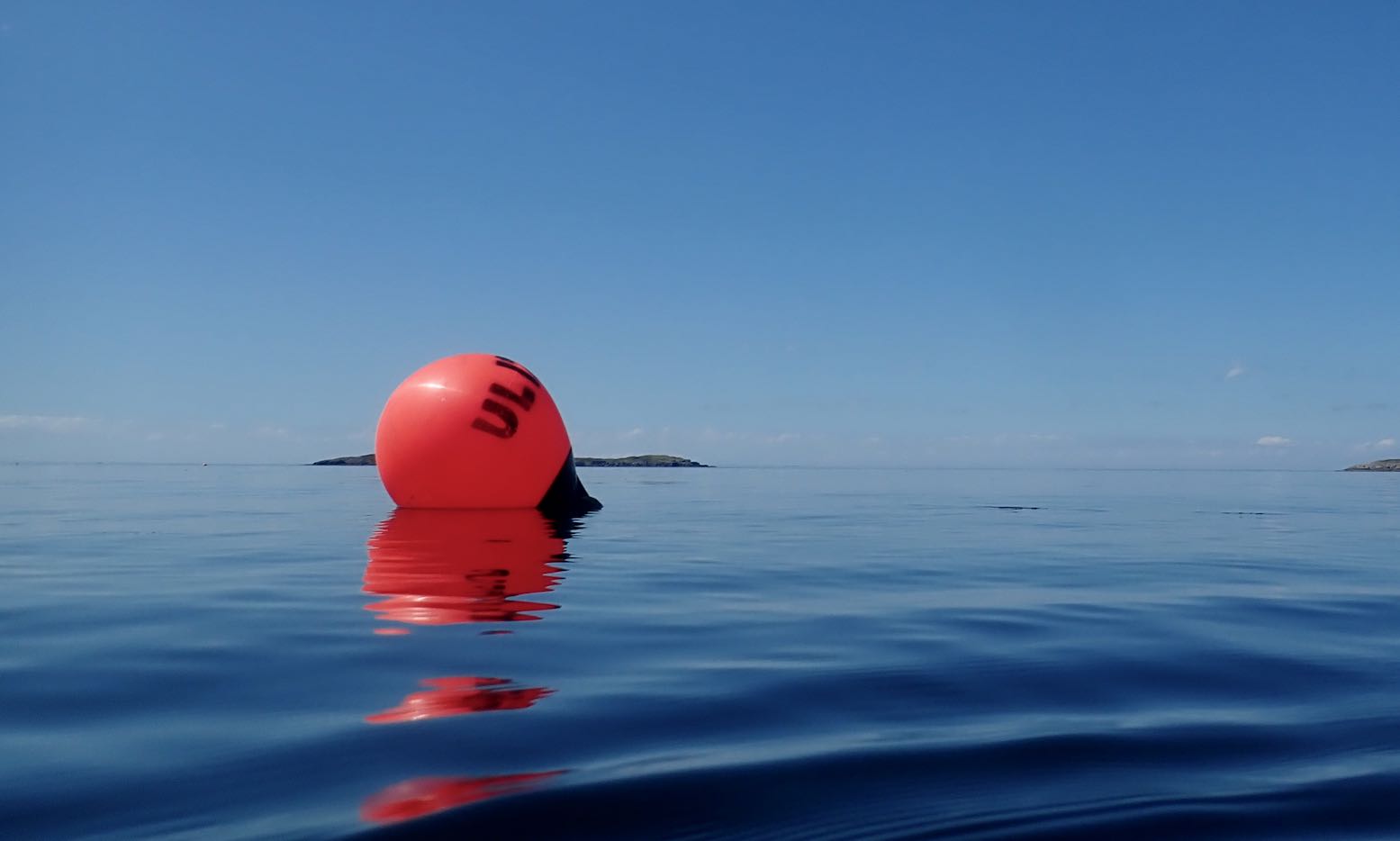
Looking west: a buoy with Glas Leac Mor behind.
I recently read that a hazy horizon (Outer Hebrides not visible) means stability; warm, humid air.
Good viz and crisp detail = cold air and wind.
I head to Altandu, near the campervan-packed campsite.
I drop-off and pick up a bucket. Coming back through Old Dornie harbour, a quarter headwind kicks up, pushing the bow left.
I use the chance to load the bow with 10 litres of bucket-water. It does seem to make a difference: the bow bites better; no correctional paddling needed, unlike the other day. A good trick to know (I’d brought the drybag up front for that purpose).
Another 13-mile day in the Summers, but I could have managed twice as far.
How easy IK-ing is without wind. As is portaging with a trolley.

Landfall on Eilean Mullagrach

Seawave Index Page
Summer Isles Kayaking Guide
Other Summer Isles paddles

After a fortnight of chilly north winds and a diminishing woodpile, today was one of those rare days in the Summer Isles (far northwest Scotland) where you could paddle pretty much where you liked in an IK.
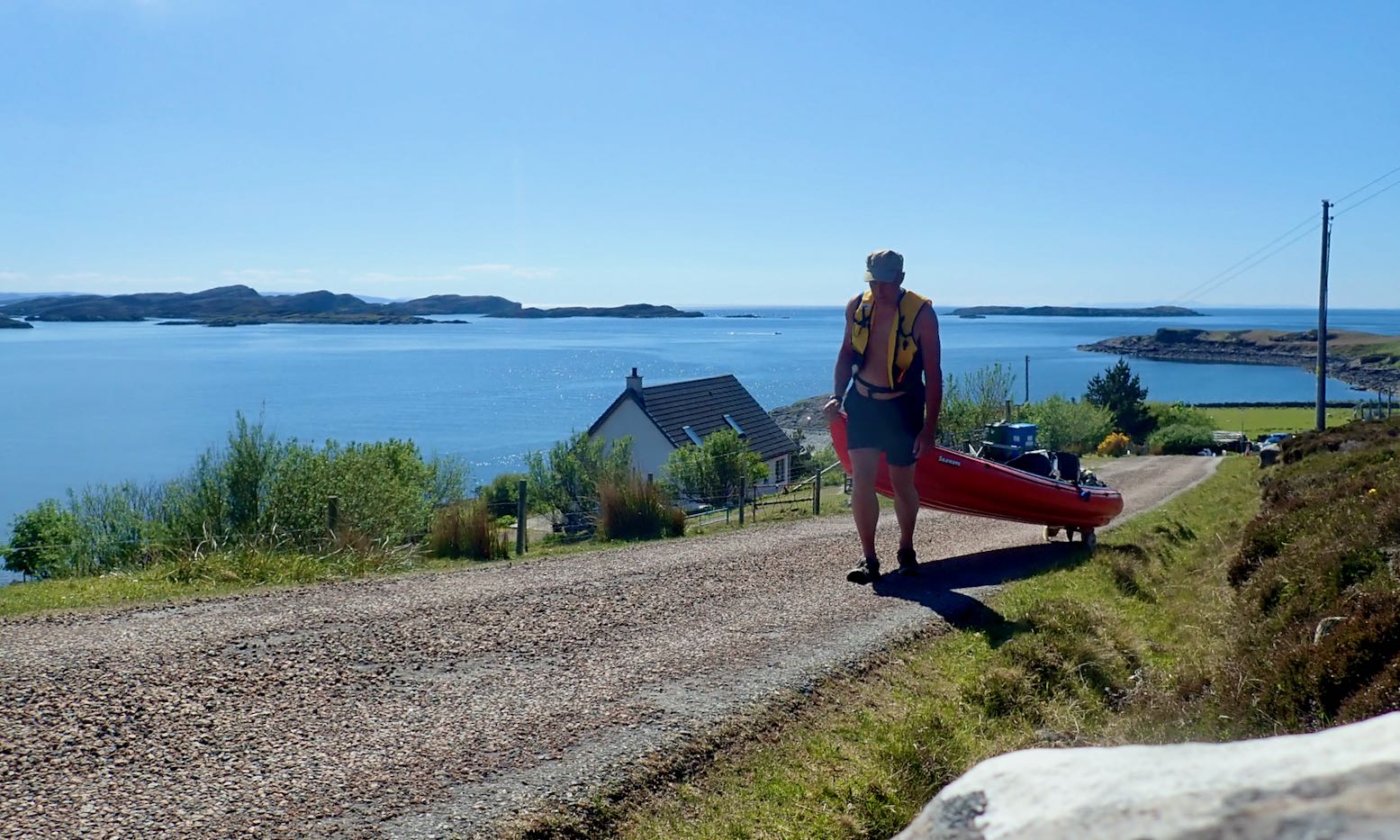
It was also a chance for me to try out my new skeg-wheel trolley which Jon, who was staying down the road, had made for me.
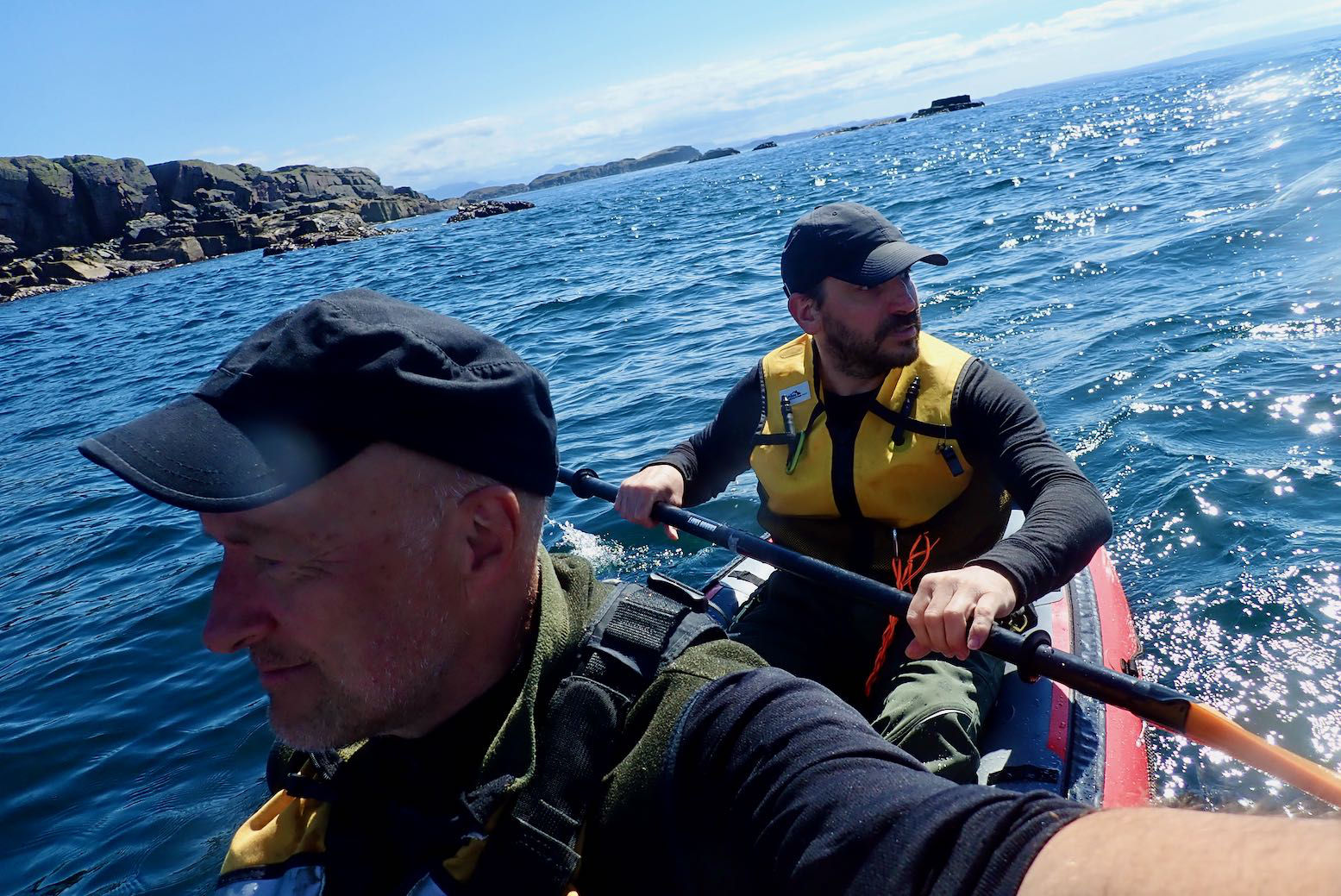
With no boat of his own this time, we set off in mine to see what we might see.

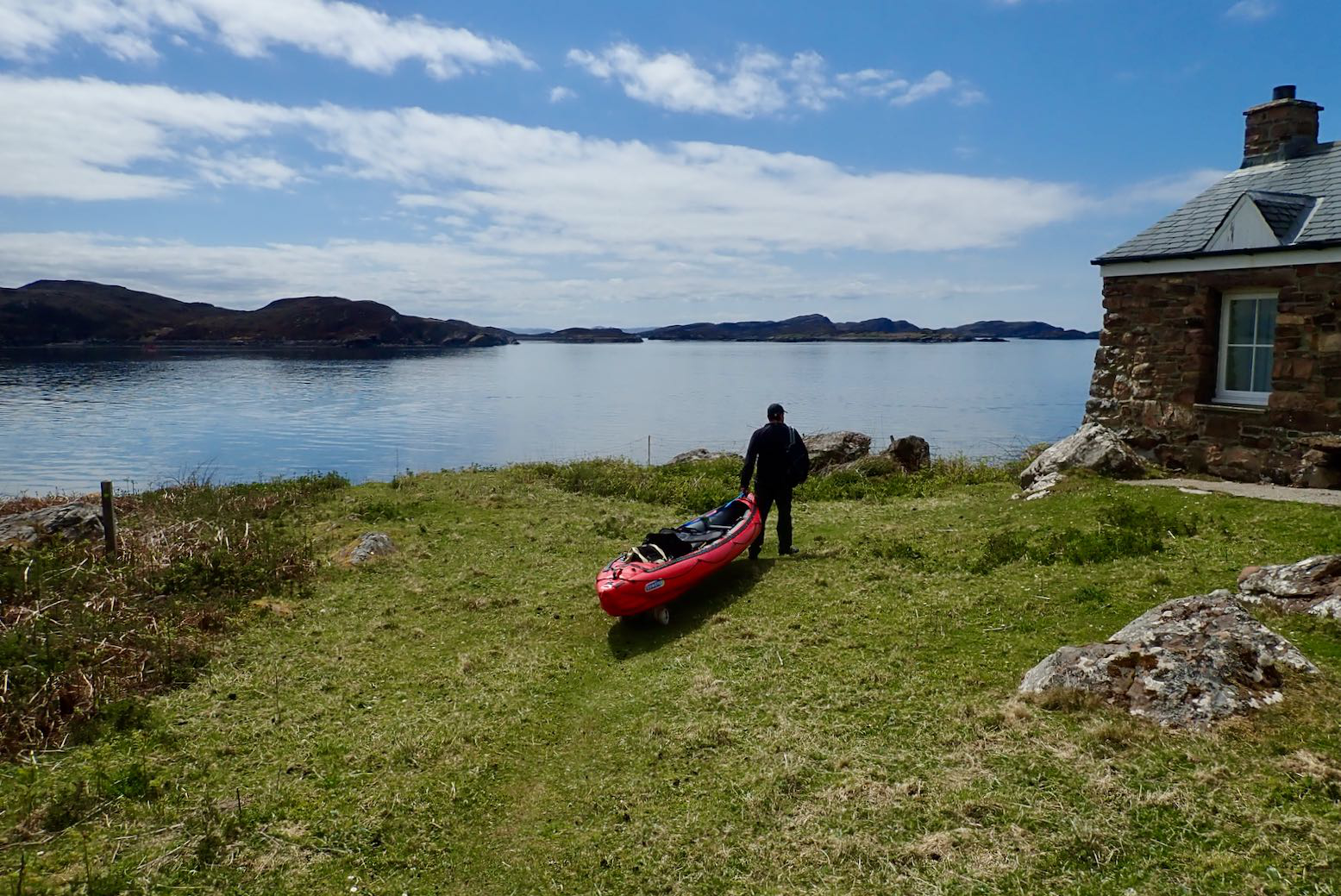
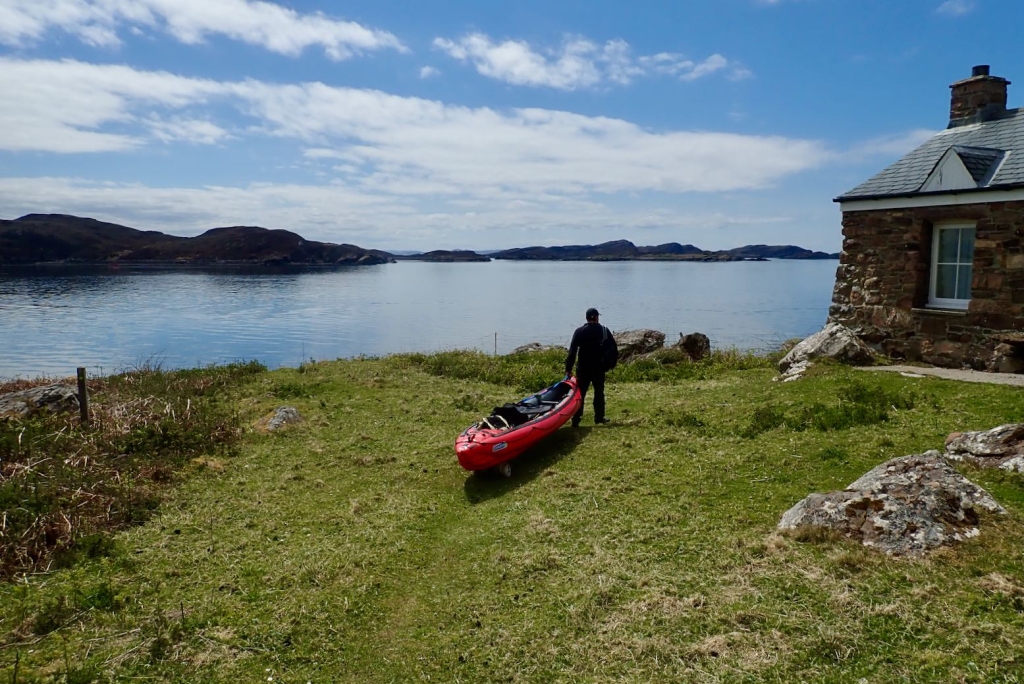
We rolled down the road to the Fox Point, the nearest and least effortful shore access from where I’m staying.
Apart from the clatter of the solid wheels, the set up worked perfectly: stable and smooth.
The spring tide had bottomed out so we looked for the least ankle-twisting put-in.
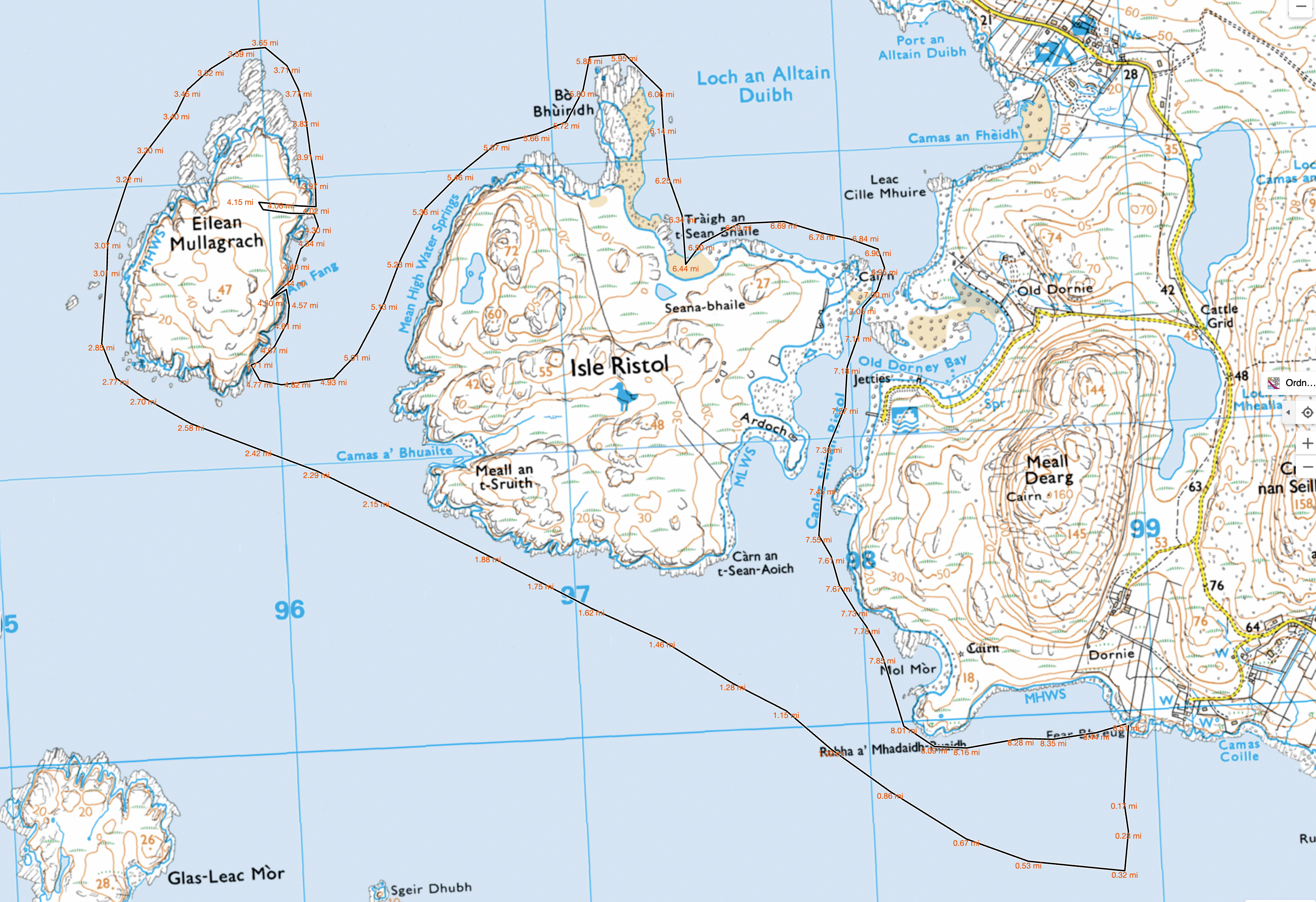
We have no plan so head towards the Ristol Islands across a glassy sea.
With the calm, we take on the outside shore of Eilean Mullagrach; here the refracting northern after-swell makes it a bit choppier with some alarming waves breaking over reefs.
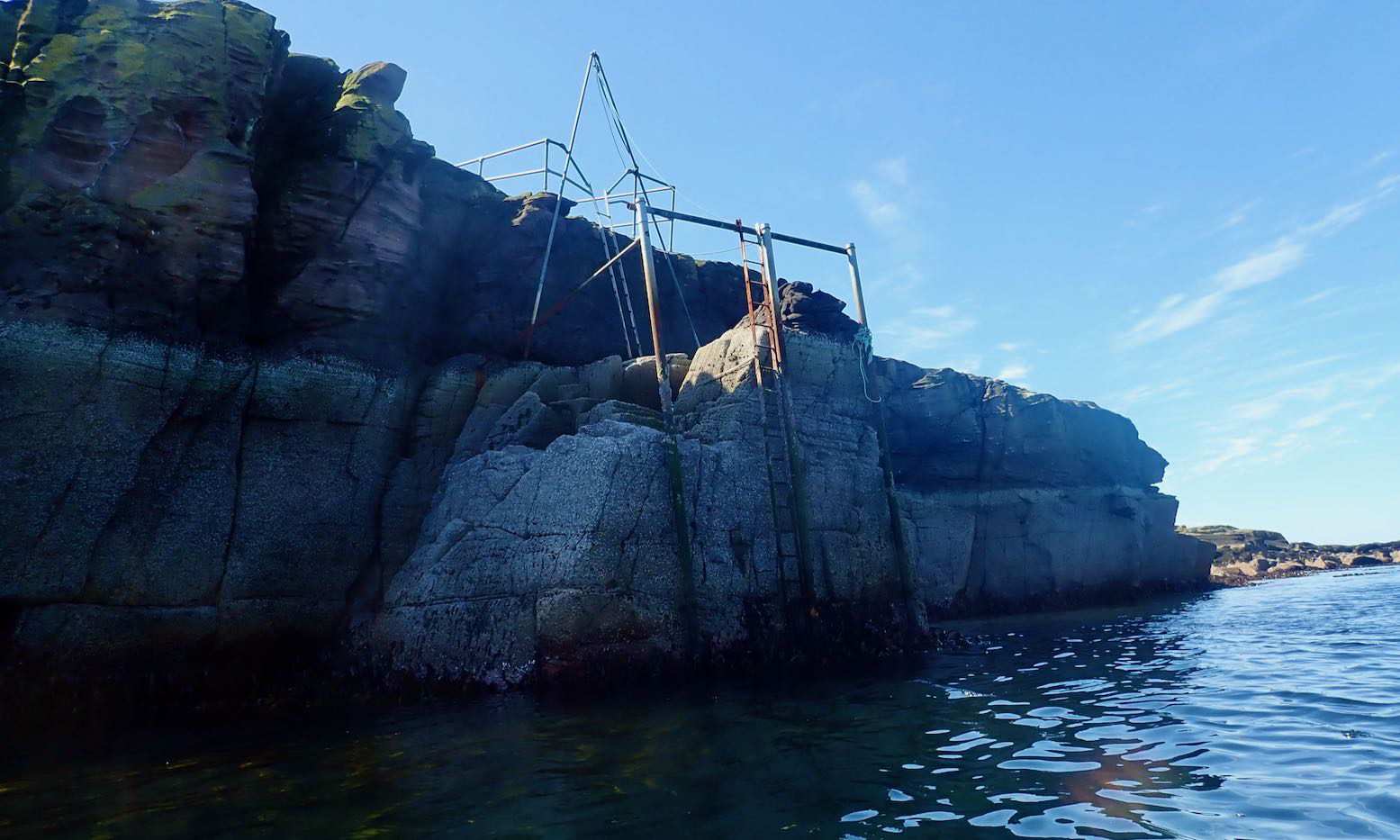
Unless you’re a gannet, this is the only way to get onto Mullagrach, a gantry at the northeast tip.
Usually alone, I’ve never done it, but with Jon to tend the boat, I climb up.
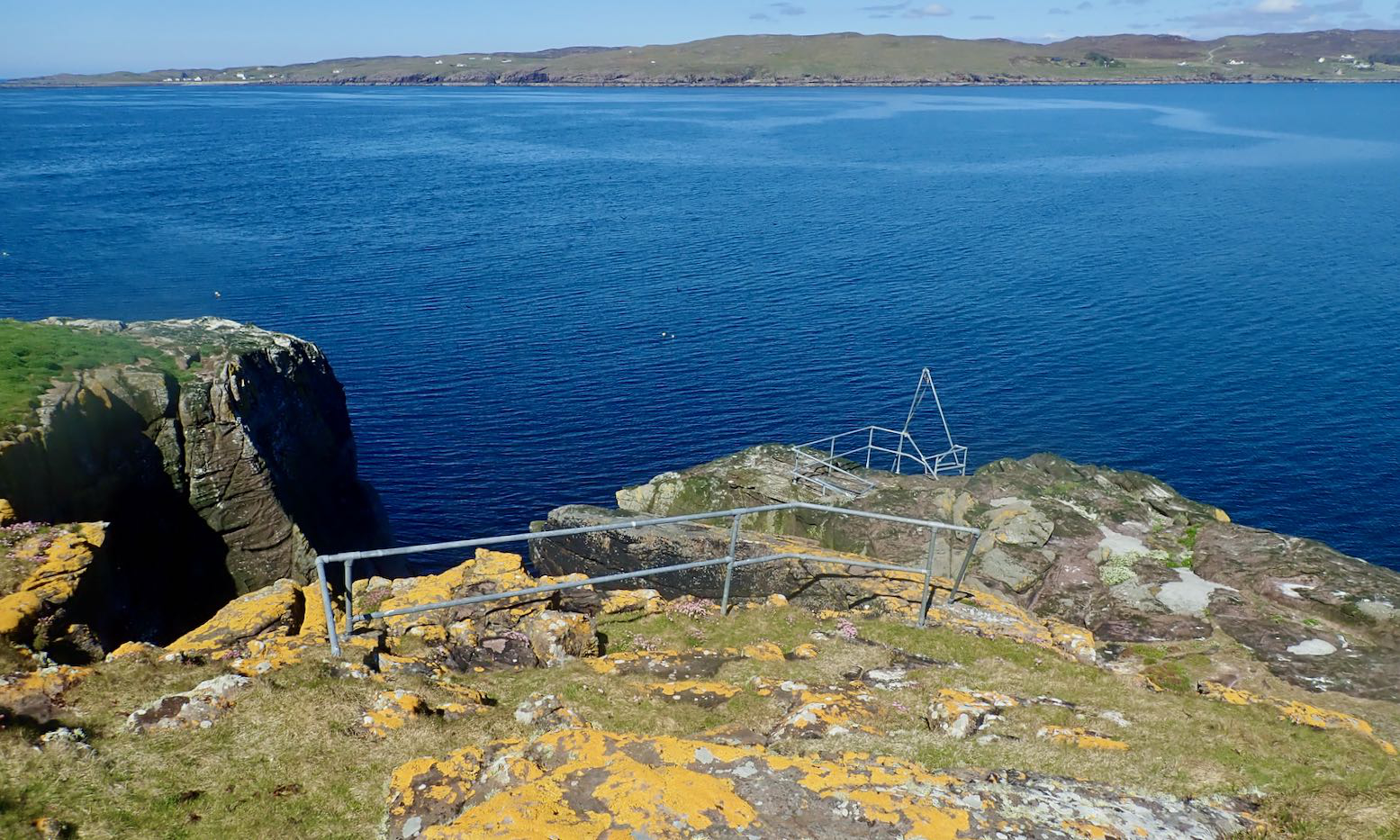
With access so difficult, Eilean Mullagrach was never occupied or crofted. I think it’s now owned by a bird protection enterprise. Perhaps they built this guardrail and cut the steps. There’s what looks like a hut at the island’s south end, just past the (not very) high point.
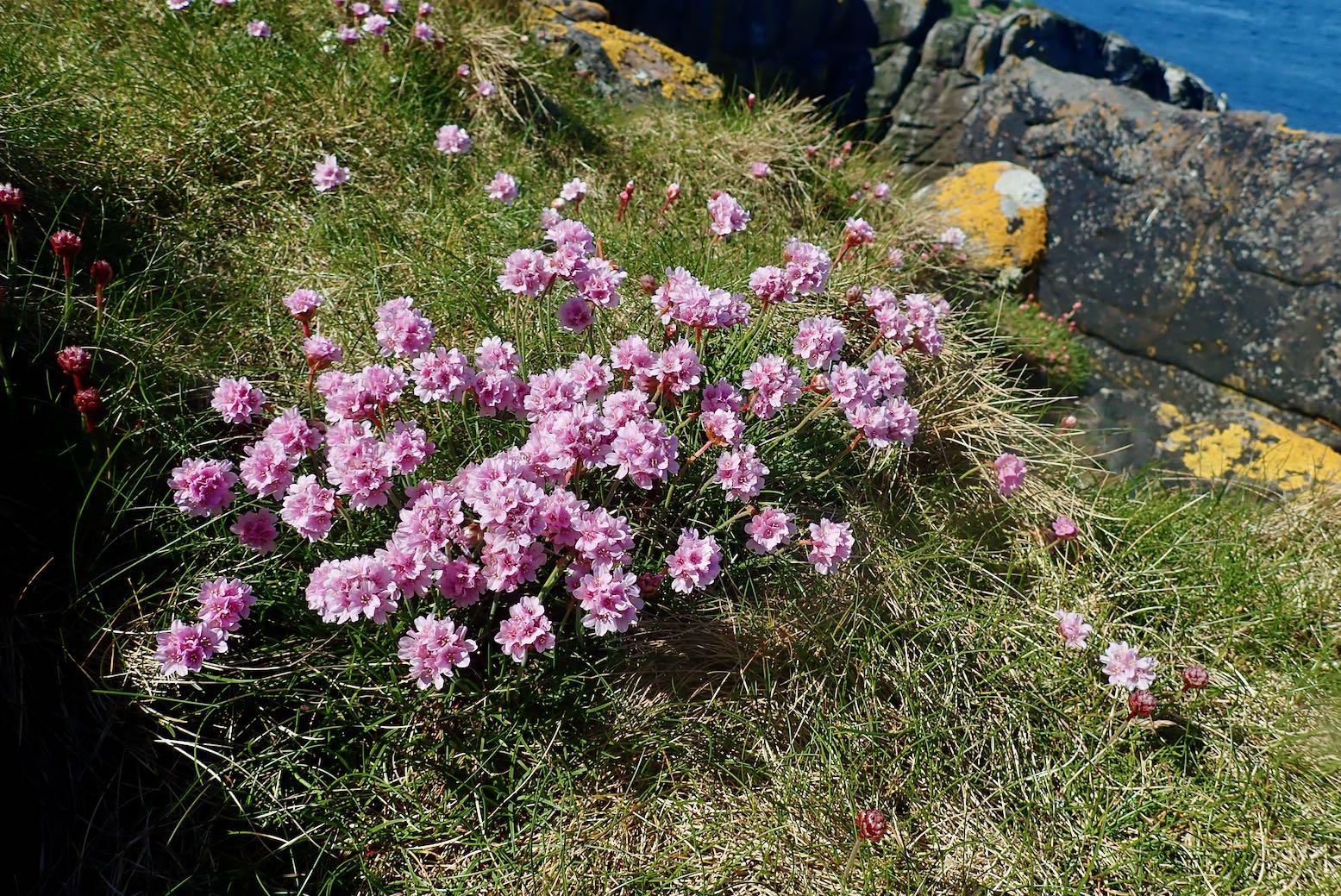
Nice to see sea pink and yellow lichen again. The former mostly found on the sheep-free islands and skerries.
View south over the Summers to the Fisherfield mountains.
The channel with Ristol behind. Better get back; the taxi’s meter is running.
We scoot back north out of the channel and take a break on Ristol beach before cutting through Old Dornie harbour back to False Man inlet.
I leave my kayak overnight with a plan to come back for more tomorrow.
Next morning I’m relieved to see my Seawave hasn’t floated off into the Minch.
I top up and decide to head round the outside of Tanera Beg for starters.
All is calmish as I cross Badentarbet Bay, but as I near T. Beg an unforecast southeasterly kicks up and keeps on kicking.
The west side of Tanera Beg would be too exposed, so I divert into the Tanera Channel, using the lee of the smaller eileans.
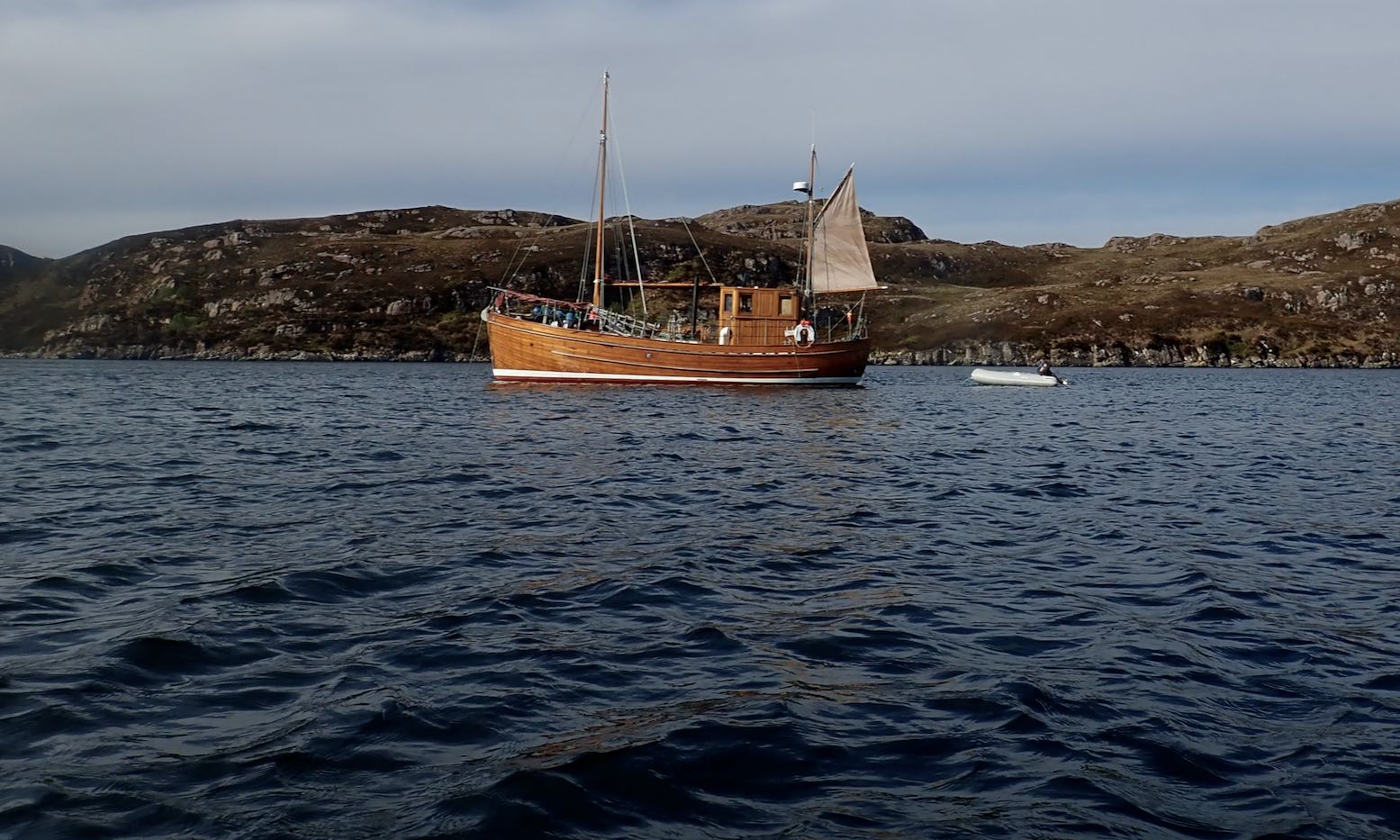
Nice looking wooden trawler.
I’m hoping to at least visit the arch at the southeast end of T. Beg.
It’s only 500m away but it’s quite lively and gusty now so I don’t risk it.
Instead, I turn east to get into the lee of Tanera Mor, and take a diversion through the usually cut off pool of Acairseid Driseach (these Gaelic words just roll off the tongue).
A bit disappointed, I head back to slot harbour but the wind seems less bad or may have passed.
So I collect my trolley and strike out for Horse & Goat Island.
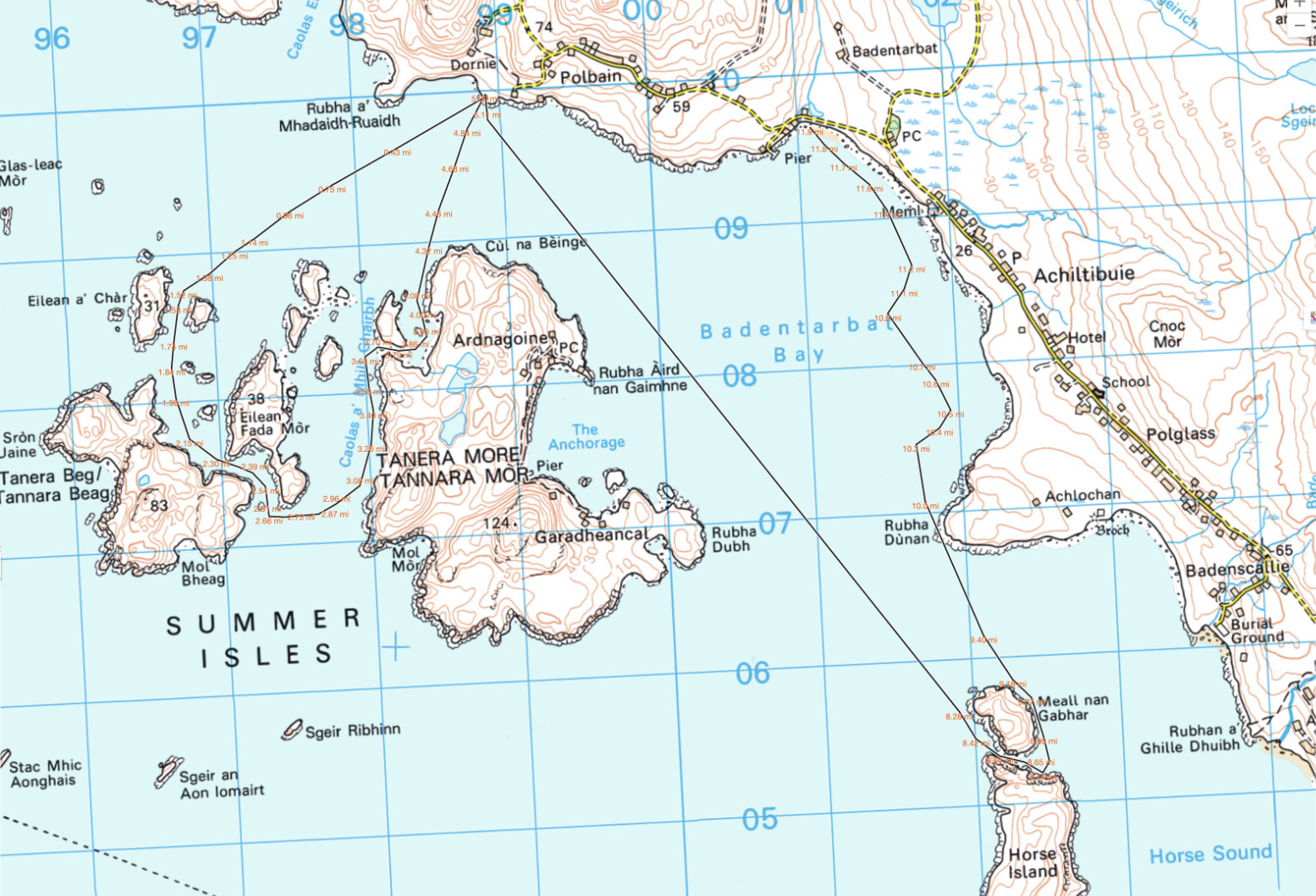
I estimate it’s about 2 miles across Badentarbet Bay. The wind drops and even becomes a NW tail breeze.
It’s actually more like 3.5 miles to the tidal channel between Horse & Goat.
By now the spring tide is at full flow against me and I wonder if the two islands have joined up yet.
I needn’t have worried; the NW breeze is stronger than any tidal current and there’s at least a foot of clearance.
I pull over for a snack and a drink. Last time I was here was with my failed Semperit project. What a nice boat that could have been.
I knew from here it would be a 2-mile into the wind hack to Badentarbet beach.
Or even more annoyingly, a three-quarter headwind. It’s less than 10mph, but despite pushing hard with my left arm, the boat kept getting pushed right. Where is my rudder now?! I should have picked up some rocks to weight the bow at Horse Island to see if that trick works. Next time I’ll carry a waterbag to do the same; it’s something I’ve read of but never tried.
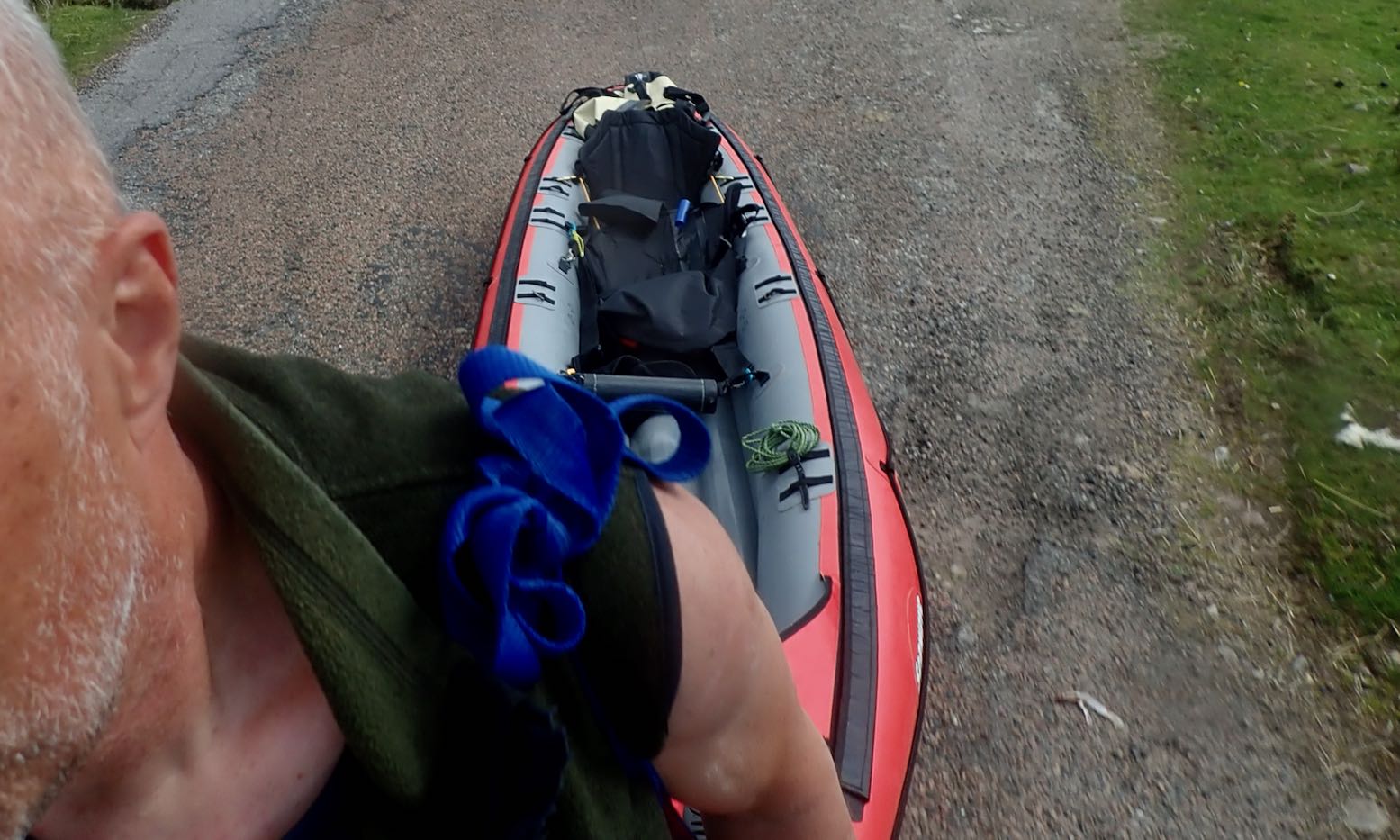
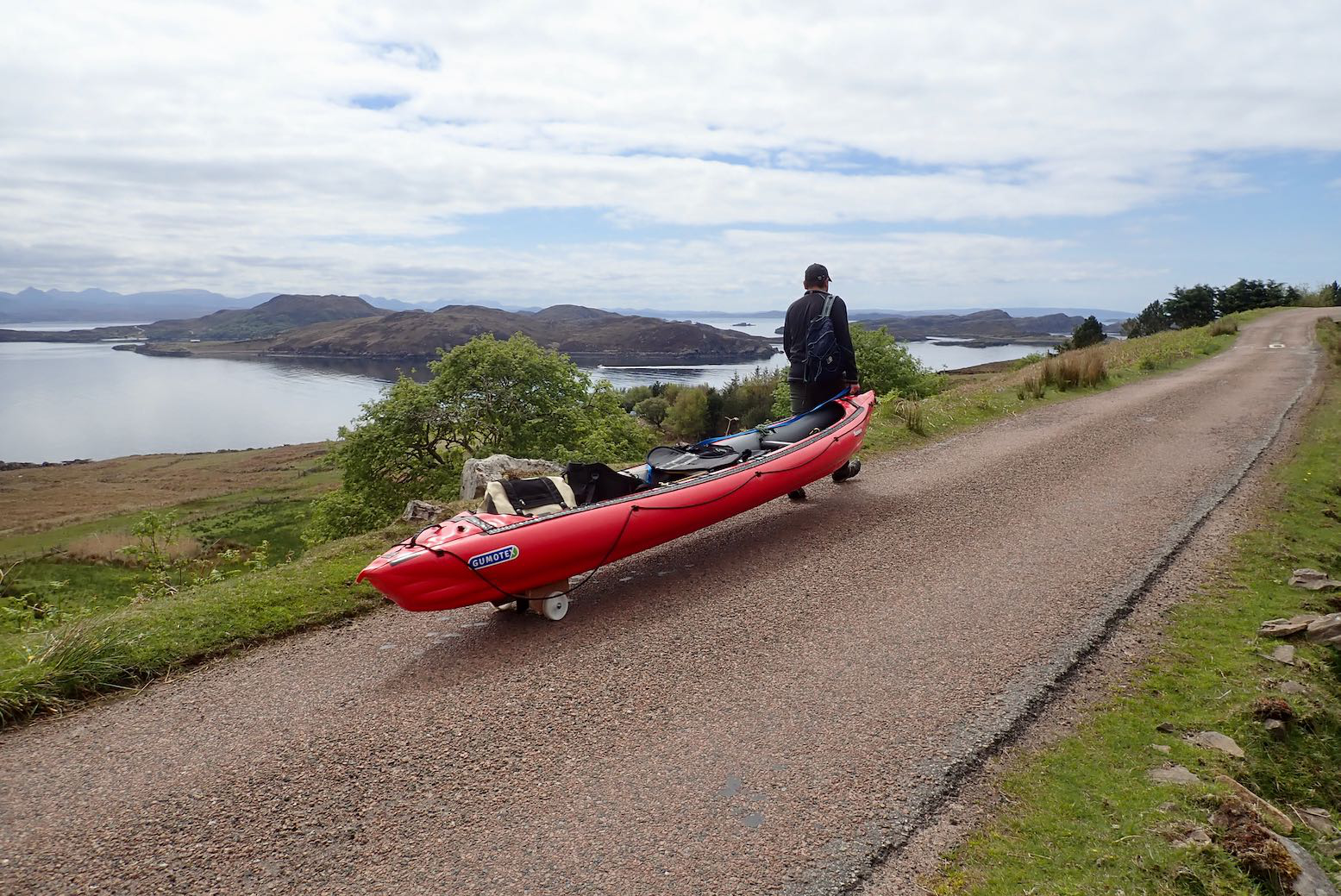
From Badentarbet Beach it’s a stiff climb – 1st gear pushbike – back up the road to Polbain, but on the road the skeg-wheel trolley again makes for easy, hands free towing with the boat hanging from my shoulder via a knotted mooring line. I can walk at normal speed with loads less effort (and time) than carrying the deflated IK.
Having a trolley like this makes the IK nearly as versatile as a packraft: a boat you can start here, end there and easily transport back across the difference.

So ends another great 12-mile day out in the Summer Isles whose configuration enables numerous ways to spin out a trip as pirates, winds and stamina allow, and all without getting too far out.

Gumotex Slip-On Skeg Roller (kayak trolley)

The effort of portaging the dozen locks of the River Wey the other month wore me out. On some portages you can drag the boat along harmlessly on lush grass. Others involved narrow gates, or crossing busy or narrow road bridges. It all got quite effortful, especially towards the end as my energy faded like a dying salmon.

I quickly worked out what was needed: a simple and easily deployed alternative to the typical strap-on canoe trolley, like the 60 quid Decathlon example (left) with identical examples on eBay for nearly half that price. A closer look at some images shows them to be needlessly high (unstable) and the clip-out joints don’t look that sturdy in the long run, though the tyres are nice and fat and clearance is great. With these trolleys I think the V of the alloy frame would sit better in line with the hull, not across it (with bends in the tubes). But crossways simplifies the wheel axle set up. My idea was to use the IK’s own weight with the skeg to locate and fix a trolley in place. Quick to use; no strapping needed.

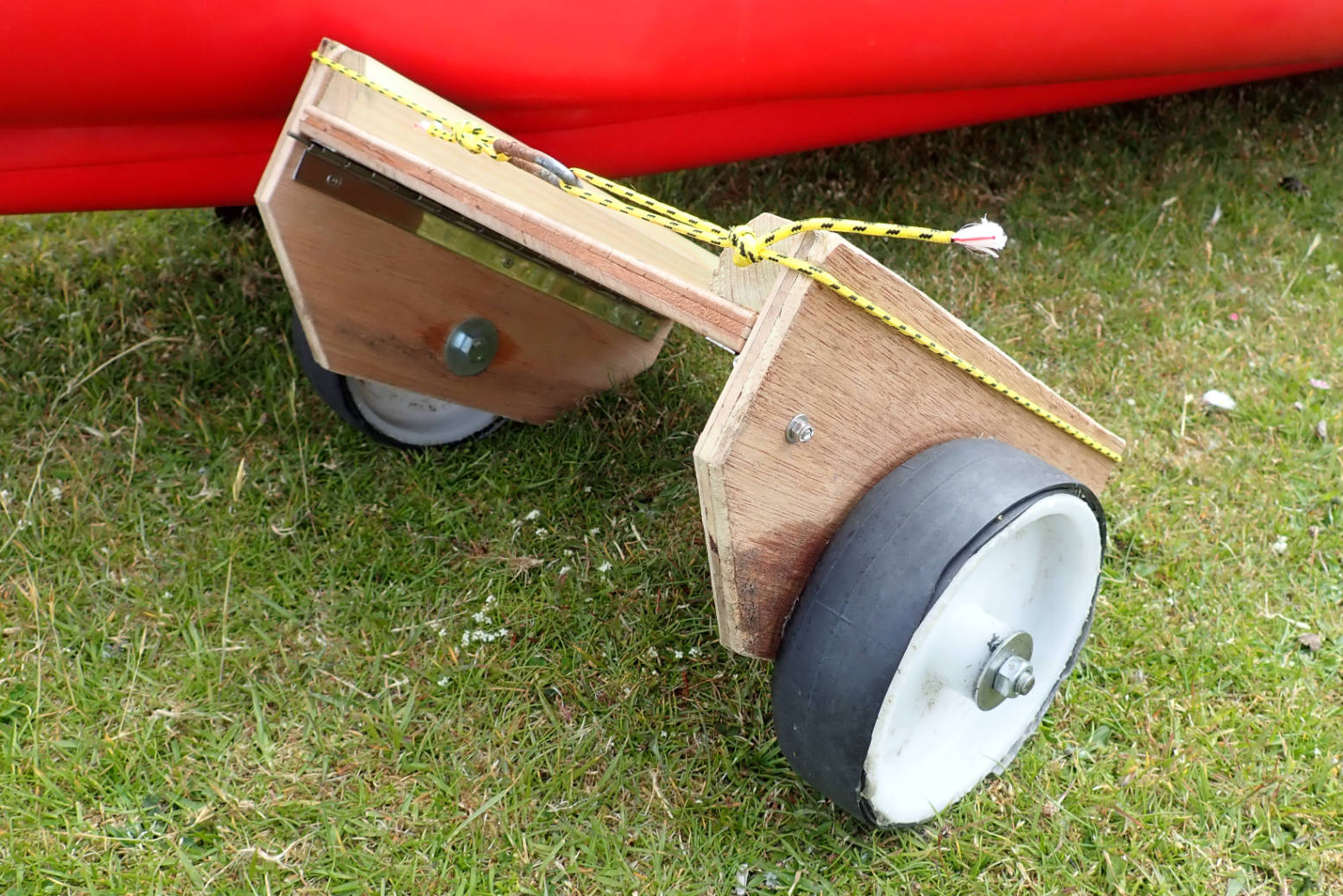
With workspace-and-tools mate Jon, we came up with a stable two-wheel folding platform with a drop-in skeg slot and hinged wheels which folded out to both roll and support the hull either side of the skeg. To portage, lower the boat’s skeg into the platform’s slot, pick up at the bow and roll it away.

On getting the trolley, the too-high sides were easily sawn down by an inch, and another inch got sawn off the bottom to improve ground clearance, as in the graphic. We hadn’t pinned down a way of stopping the hinged wheel plates folding inwards on the move. The trolley actually worked OK on smooth surfaces without any hinge lock, but eventually a bump would knock one side in. Until a neater idea springs to mind, the easiest way for me was stringing a loop of stretch-free Dyneema cord round the top to keep the wheel plates from folding in.

At 1.7kg it’s not that light, but as a prototype it was dead easy to make and the thing needs to be durable. Something similar out of alloy tubing (like the Decathlon trolley above) might be half the weight, but is less easy to fabricate in the front garden.

After a few miles…
By chance, I was left car-less during a few days of great weather. In either direction it’s less than a mile and a 50-metre drop along a quiet road to the seashore: an ideal trolley testing scenario. What extra weight there is sits best over the wheels, and at the bow I tie a shoulder loop into the mooring line, leaving me hands-free to check my messages. Coming uphill for a mile from the beach, I could walk at normal speed with much less effort (and time) than carrying the deflated IK.
It seems the width and height proportions are pretty good for stability, and the cord works well enough to keep the hinged sides up. A couple of times over rough stony ground the cord came off and the trolley folded up, or on steeper side slopes it just fell over. So maybe another 10-15cm of width would be good, but without much added height. And there must be a simple latch or lock idea for securing the sides.

The solid plastic wheels (£12.50 for two pairs) make a racket or hard surfaces and will transfer shocks and eventual wear to the wheel mounts. Some near-identical rubber wheels cost about the same and ought to feel less harsh. But first, I may waste some time wrapping some spare motorbike inner tube around my current wheels.

Having a trolley makes an IK nearly as versatile as a packraft: a boat you can start here, end there and easily transport back across the difference.

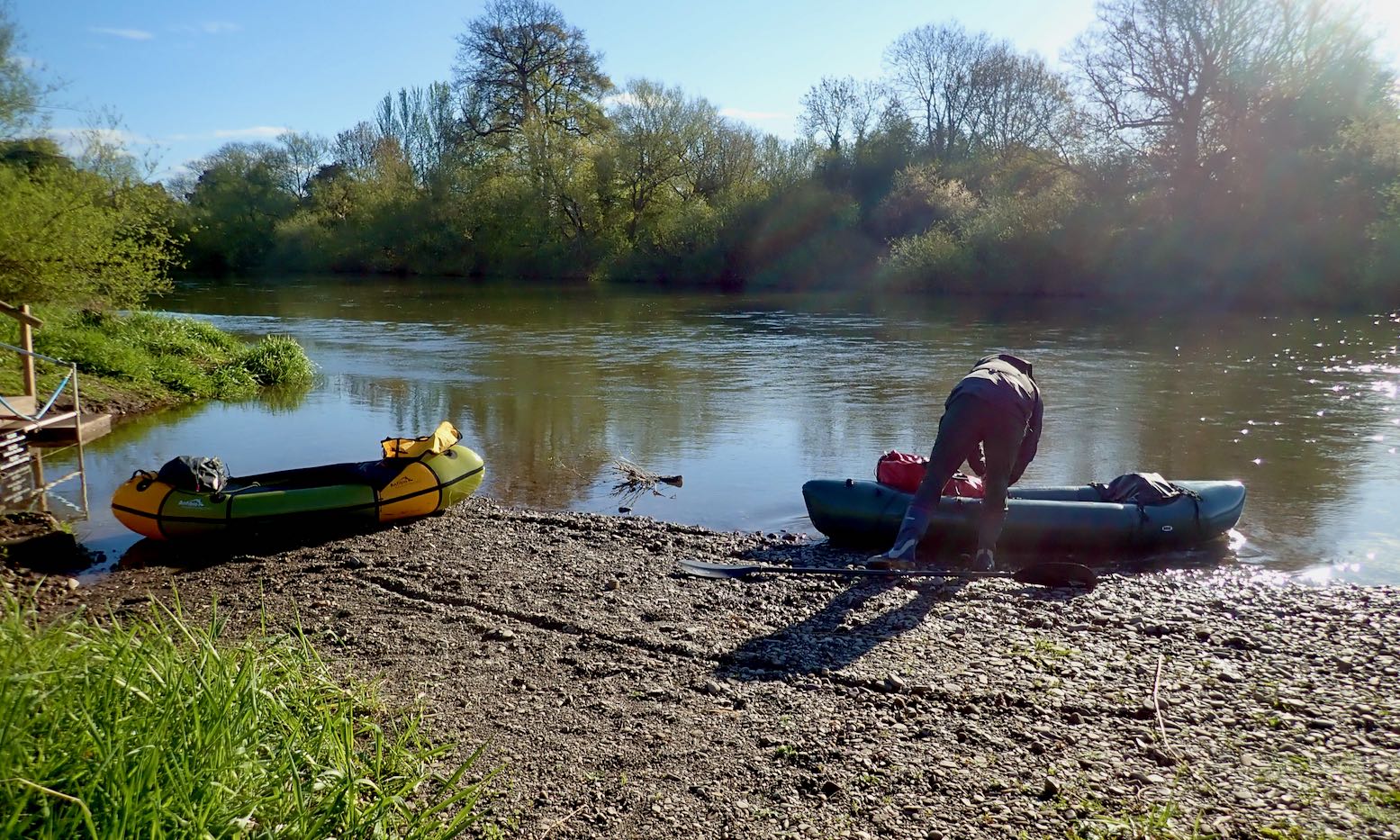
Packrafting the River Wye

Rebel 2K main page

With the exception of a few rivers … (Lugg … Severn … and the Wye), there is no confirmed Public Right of Navigation on other physically navigable, non-tidal rivers in Wales.
Canoe Wales

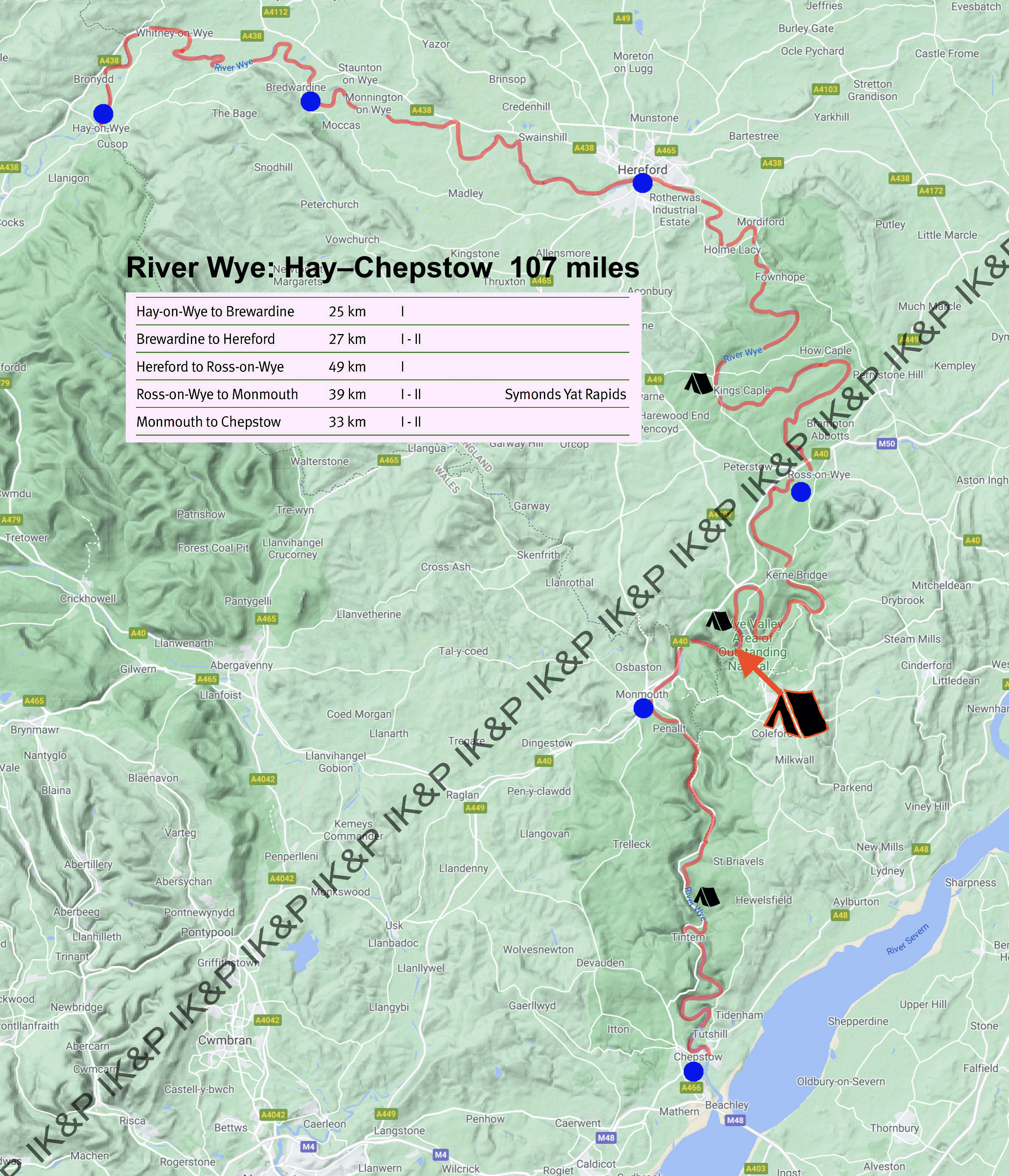
Free canoe camp below Symonds Yat marked

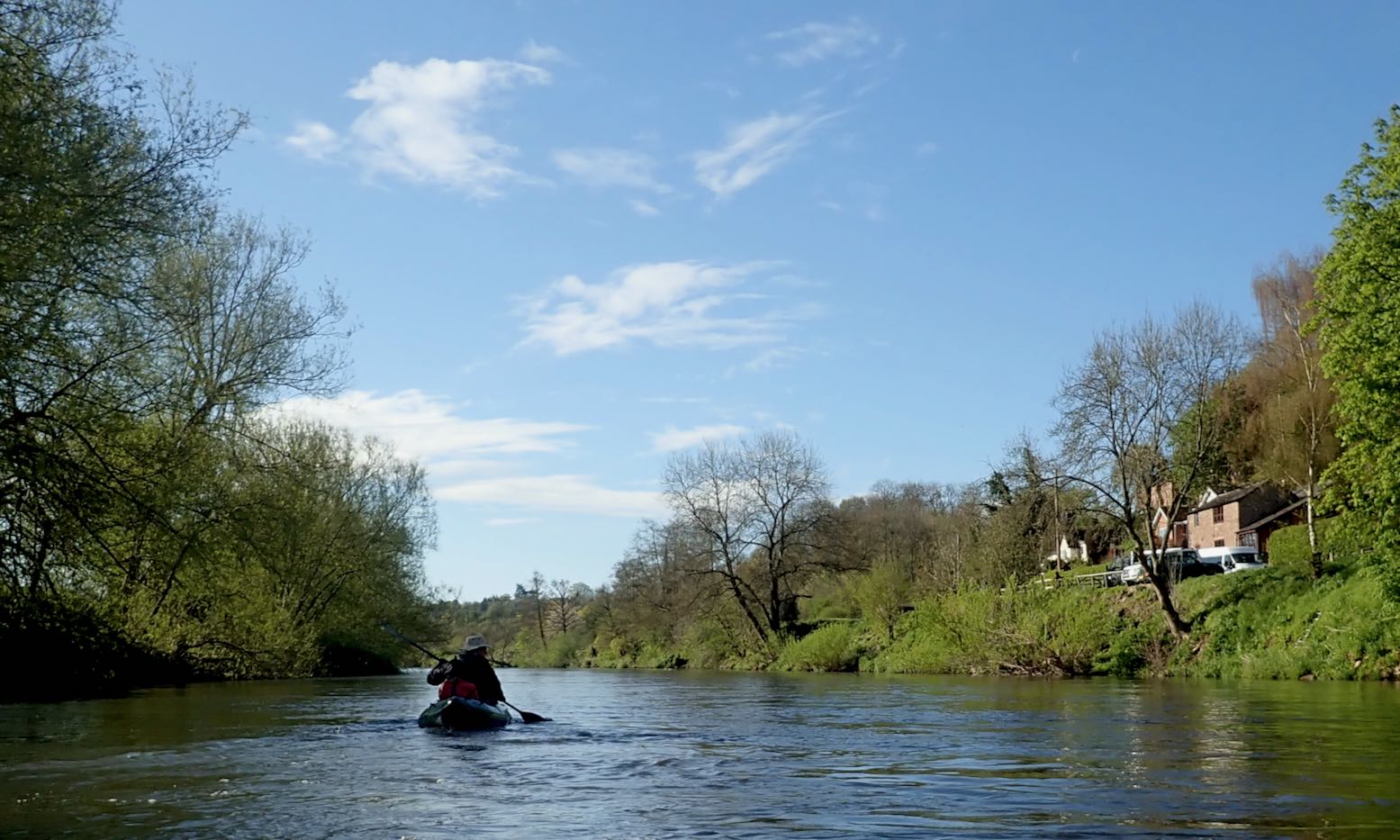
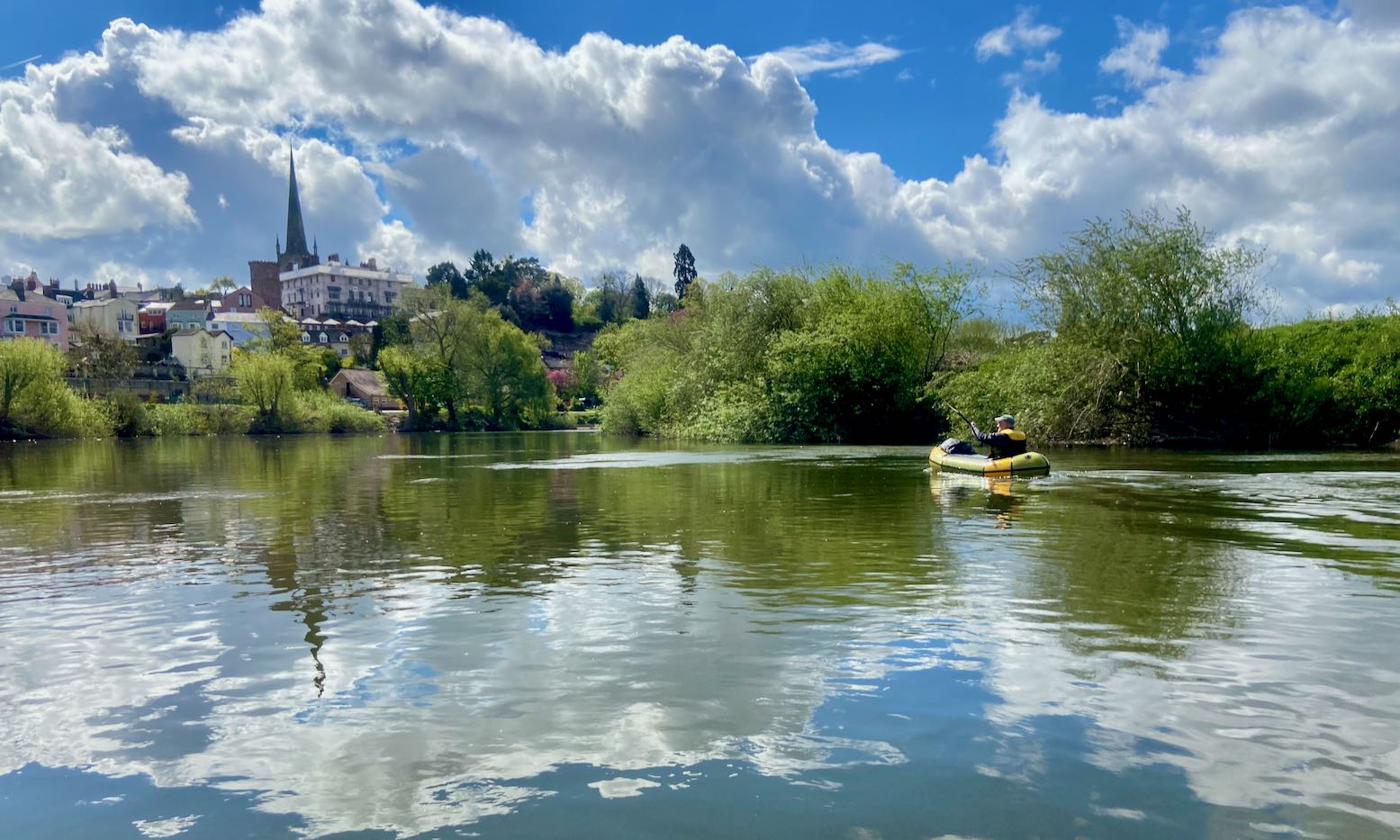
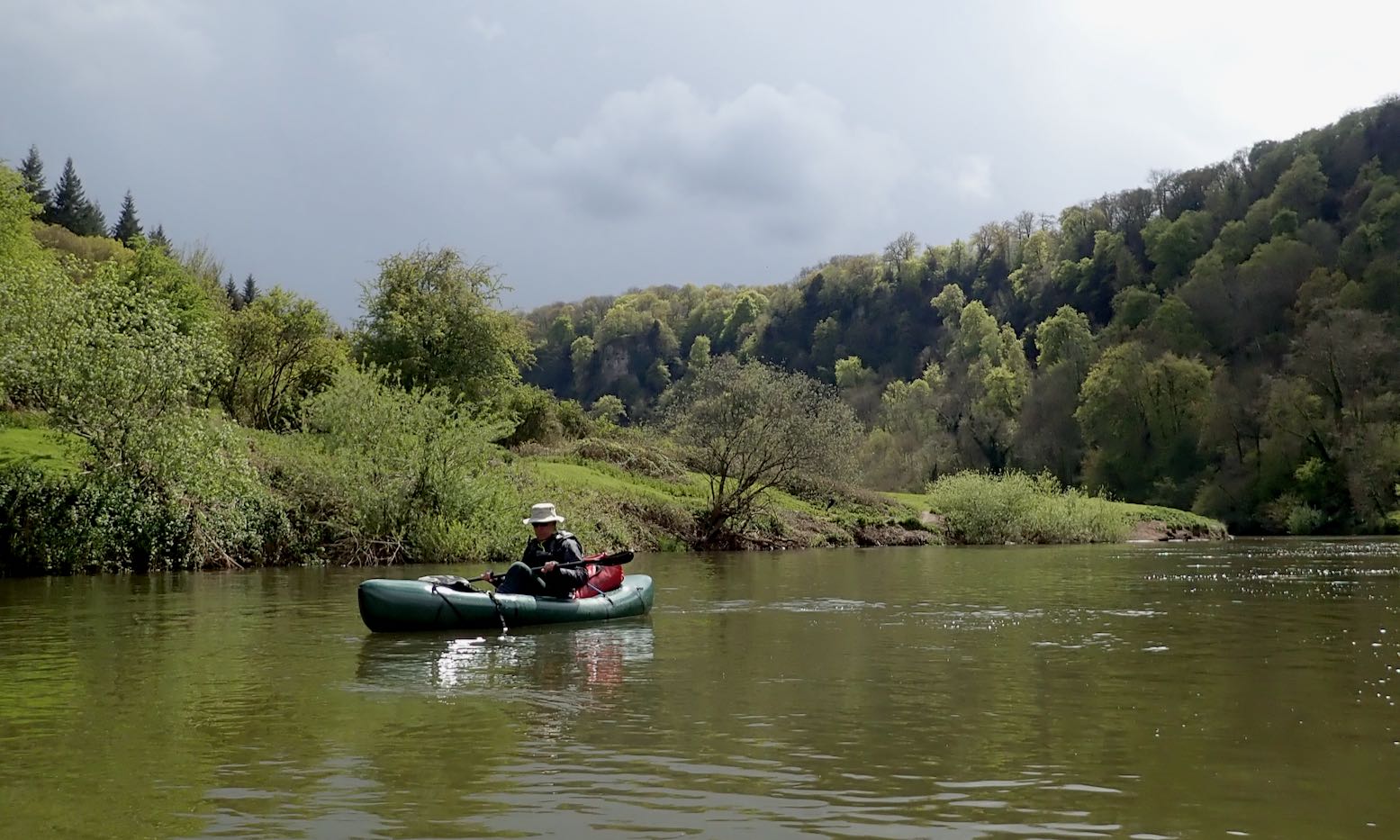
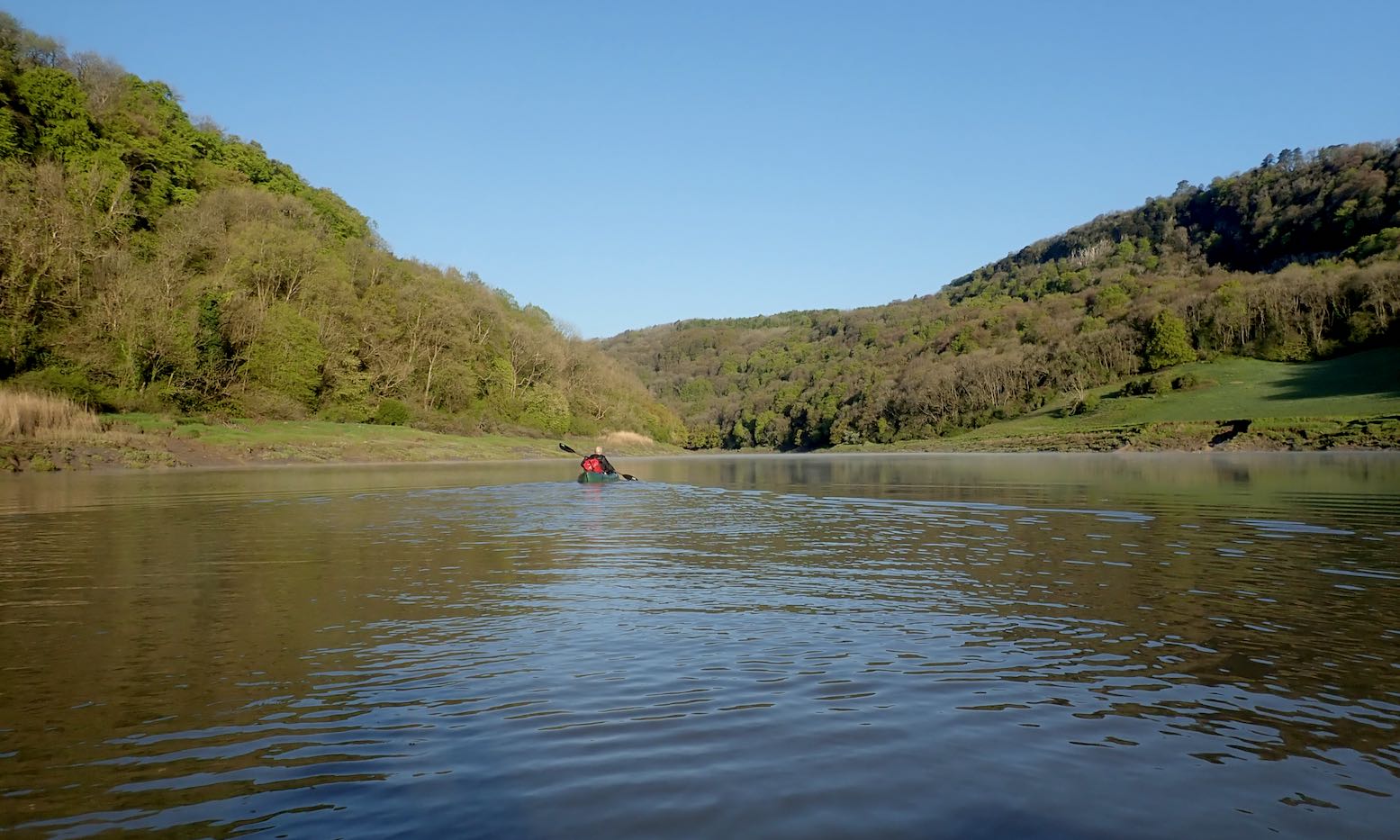
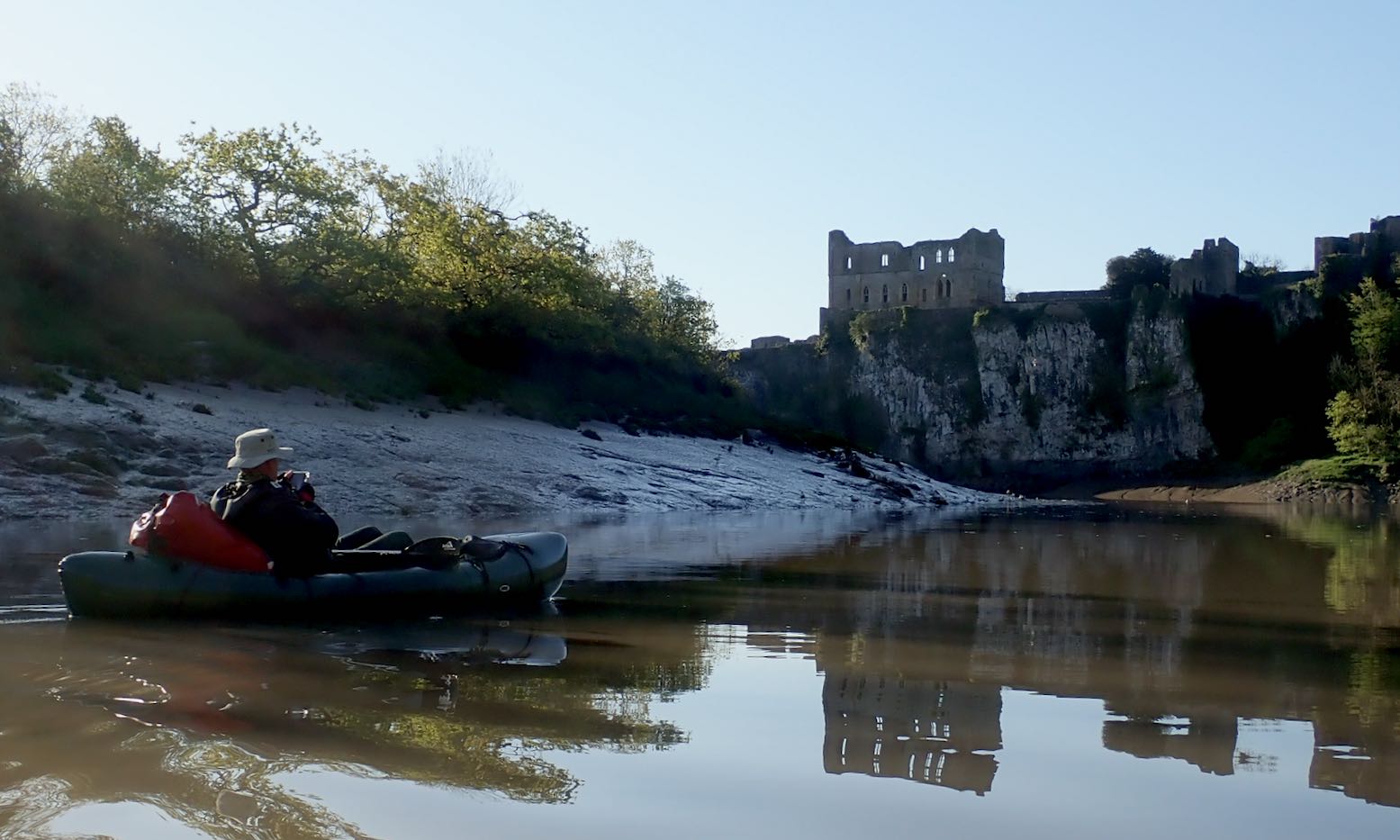
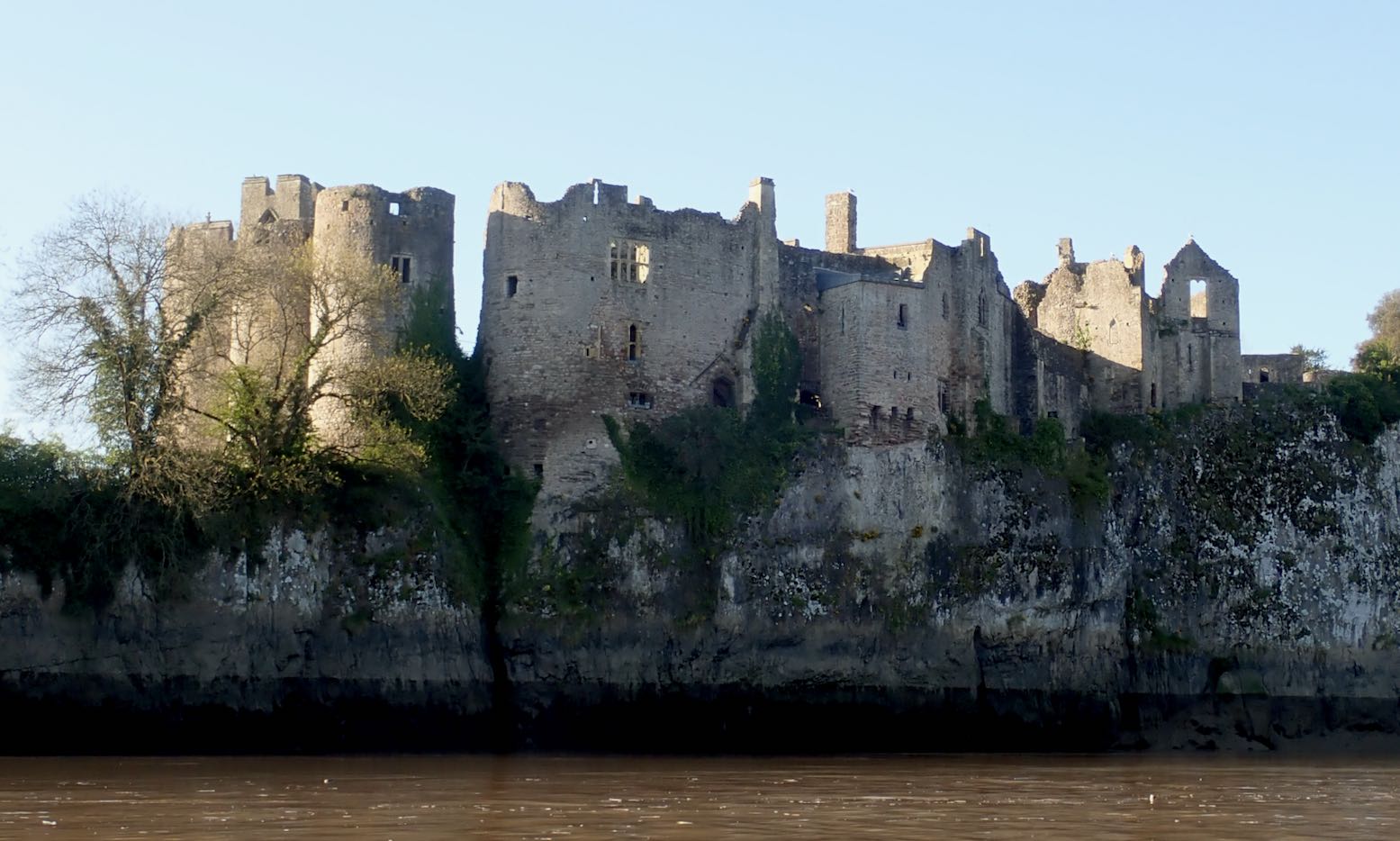
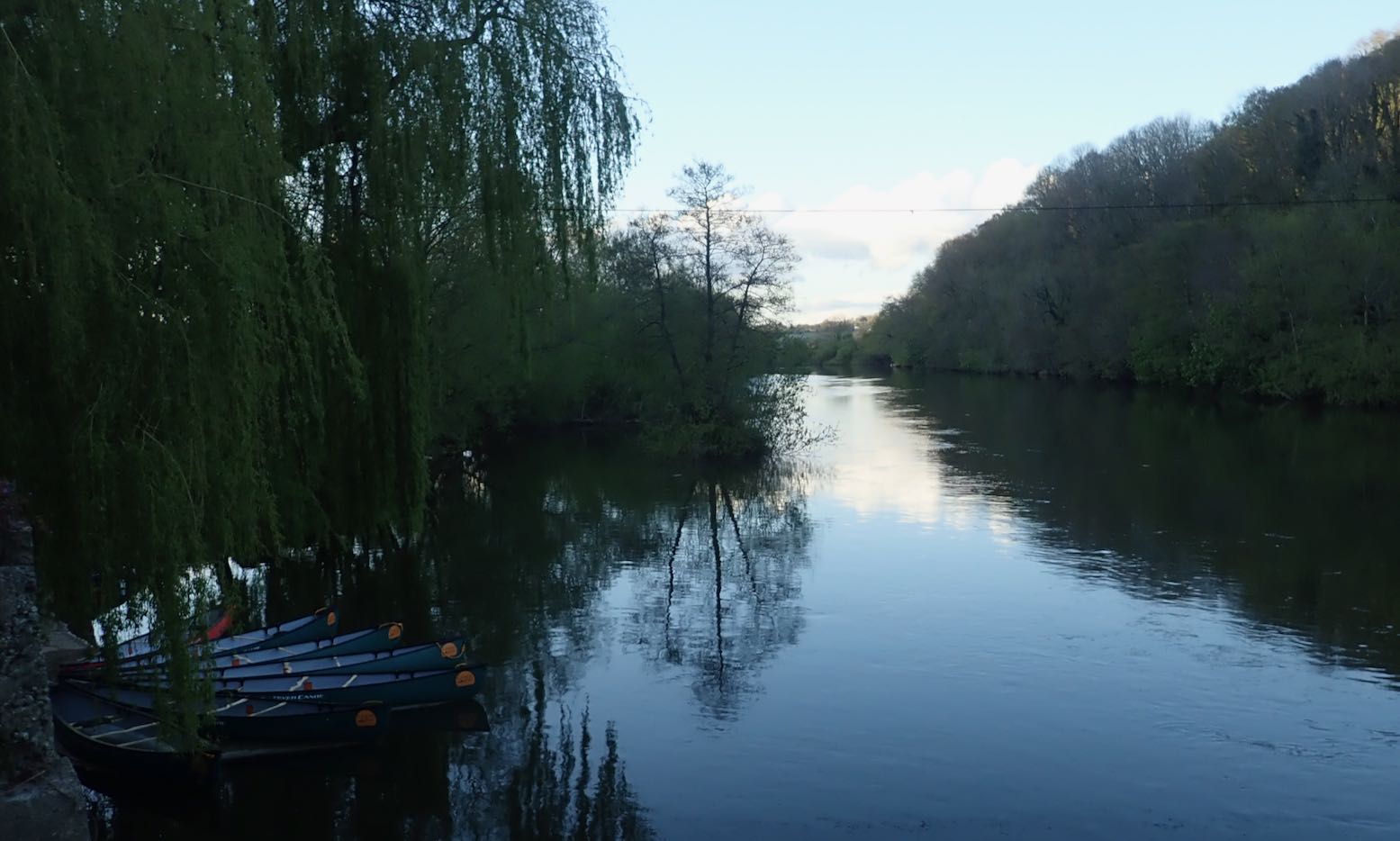
The Wye is the only river in (mostly) England where you can paddle for days and over a hundred miles, and not need to dodge a weir, portage a lock or confront a scowling angler. Even the few towns are historically intriguing. The whole valley is an Area of Outstanding Natural Beauty (‘AONB’), or ‘countryside’ as some call it.
You don’t even need a BC licence: from Hay-on-Wye the river uniquely has PRN (‘public right of navigation’; like a footpath’s ‘right of way’). There is no other river like it in England so I don’t know what’s taken me so long, other than the prospect of another staycated summer makes you reappraise your own backyard.

I invited myself to join Barry who lives near the river and who’d just bought himself an MRS Nomad. He’d done Hay to Hereford once and pronounced it a bit tame, so proposed Hoarwithy (Mile 51 from Hay) to the tidal finale at Chepstow (Mile 107 according to the table, left, or Mile 100 in the same sourced EA pdf guide.

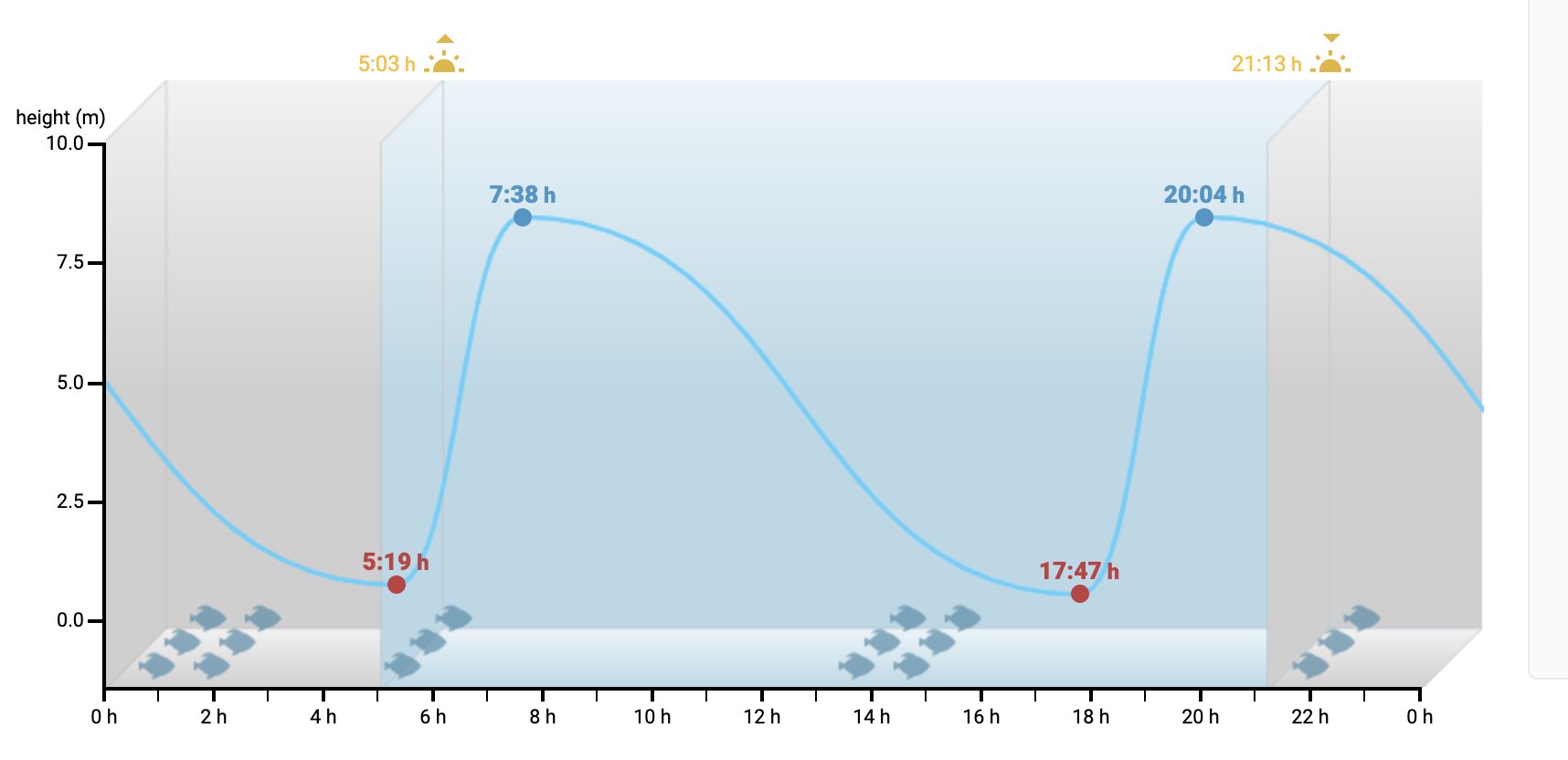
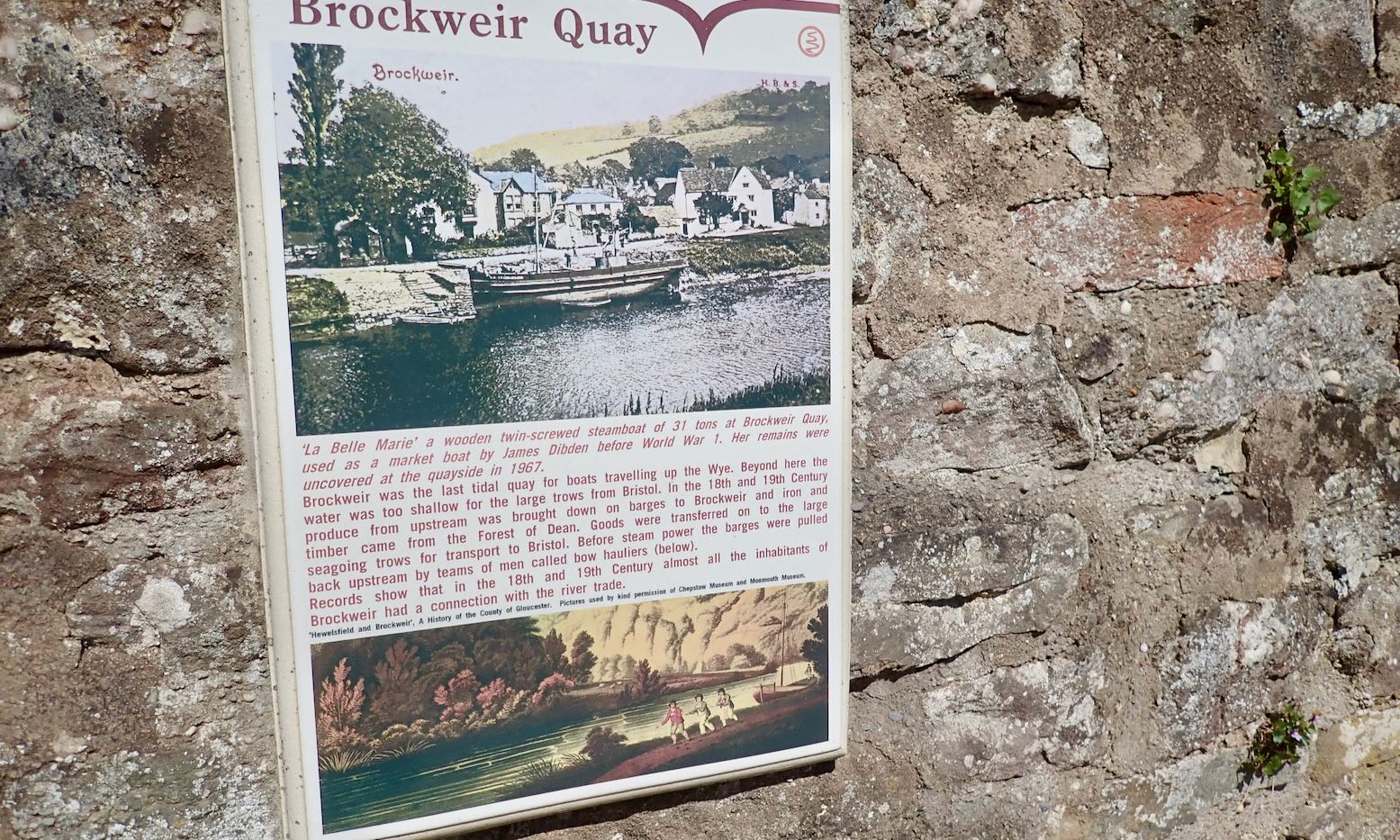
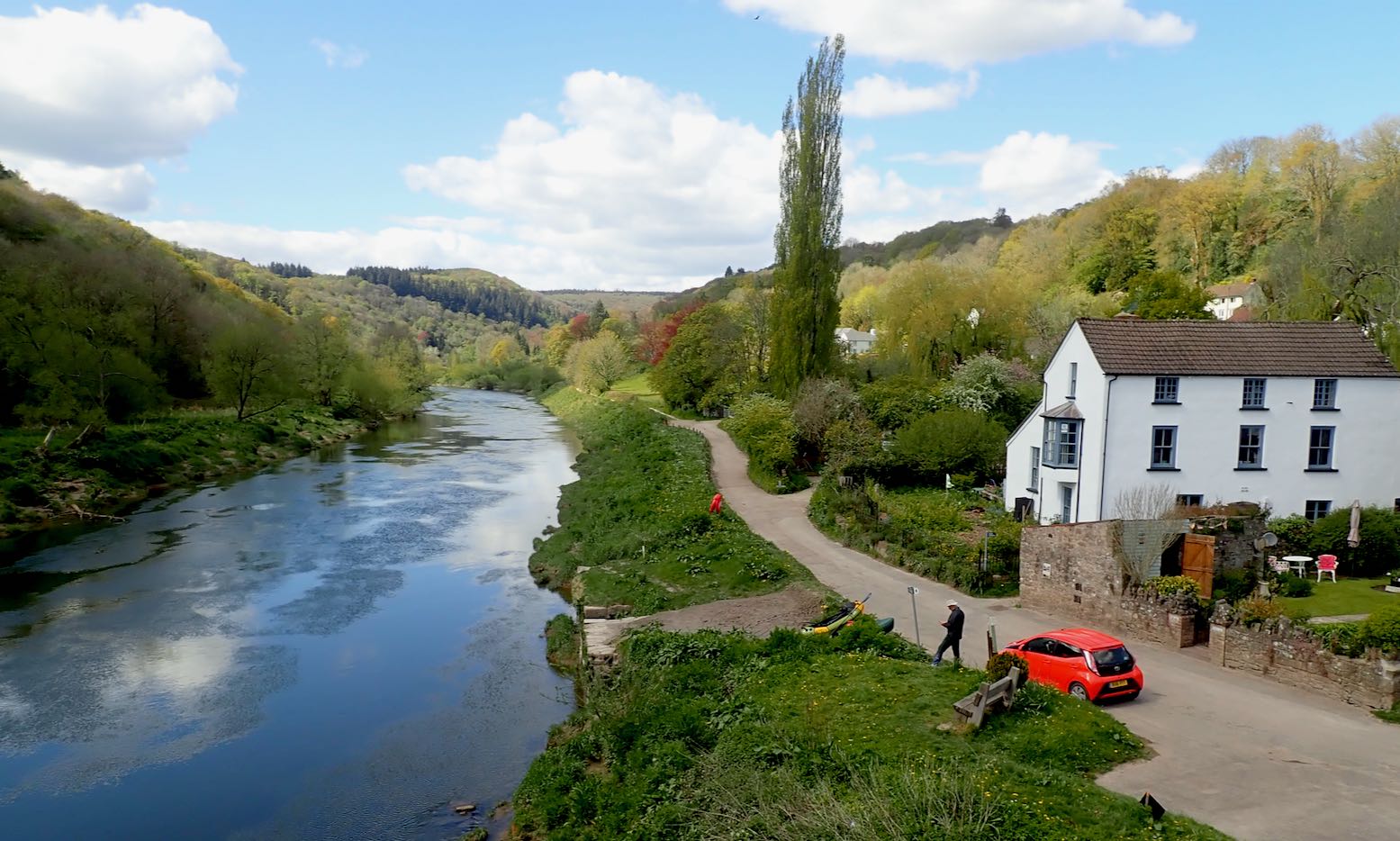
Fifty-odd miles: two long days and a bit, we estimated (wrongly). Our riverine transit had to be timed to meet HW at Brockweir, 7 miles from Chepstow’s sole jetty, otherwise we’d be stranded by tidal sludge or swept out into the Severn and end up in Tristan da Cunha.

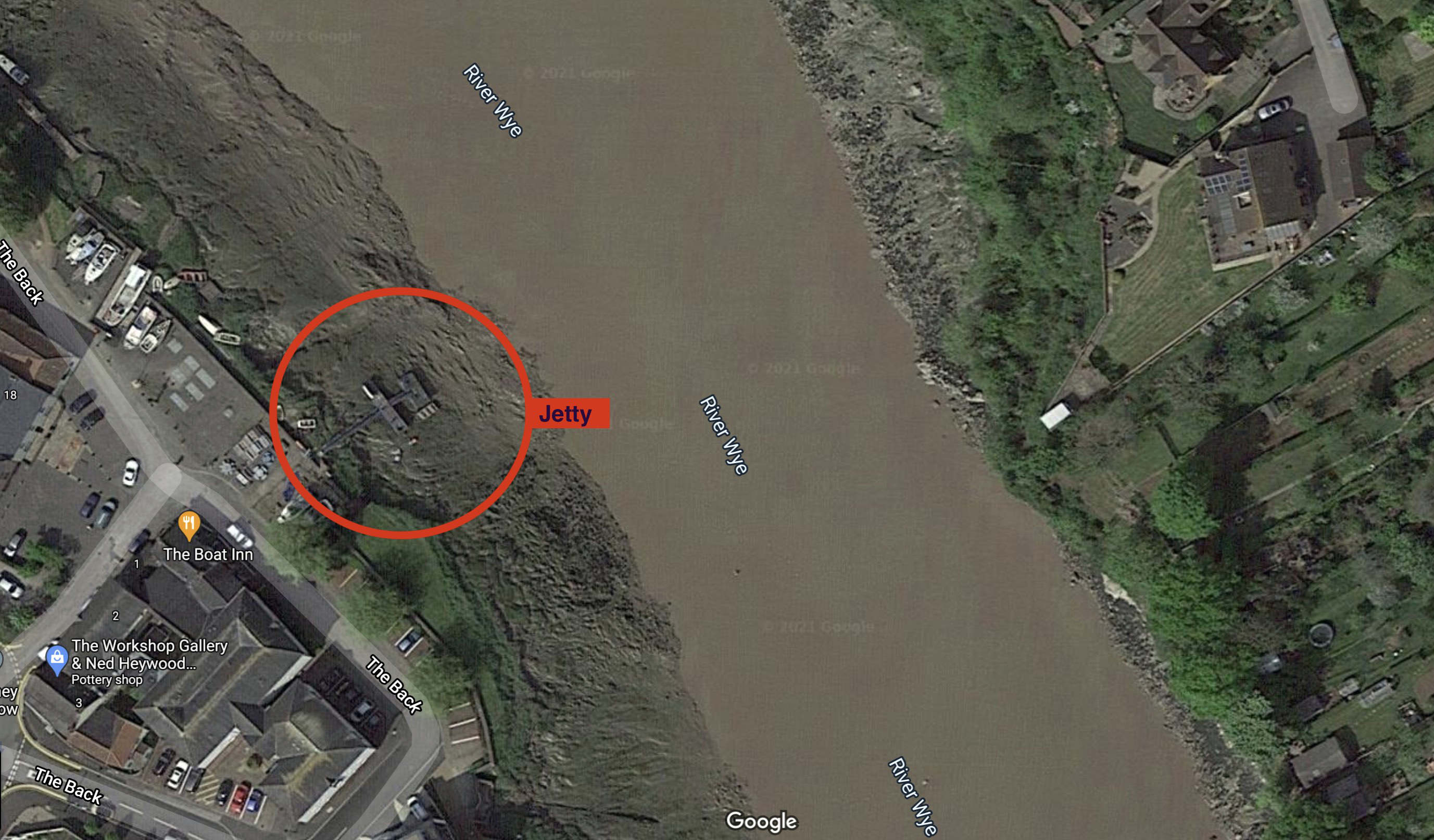
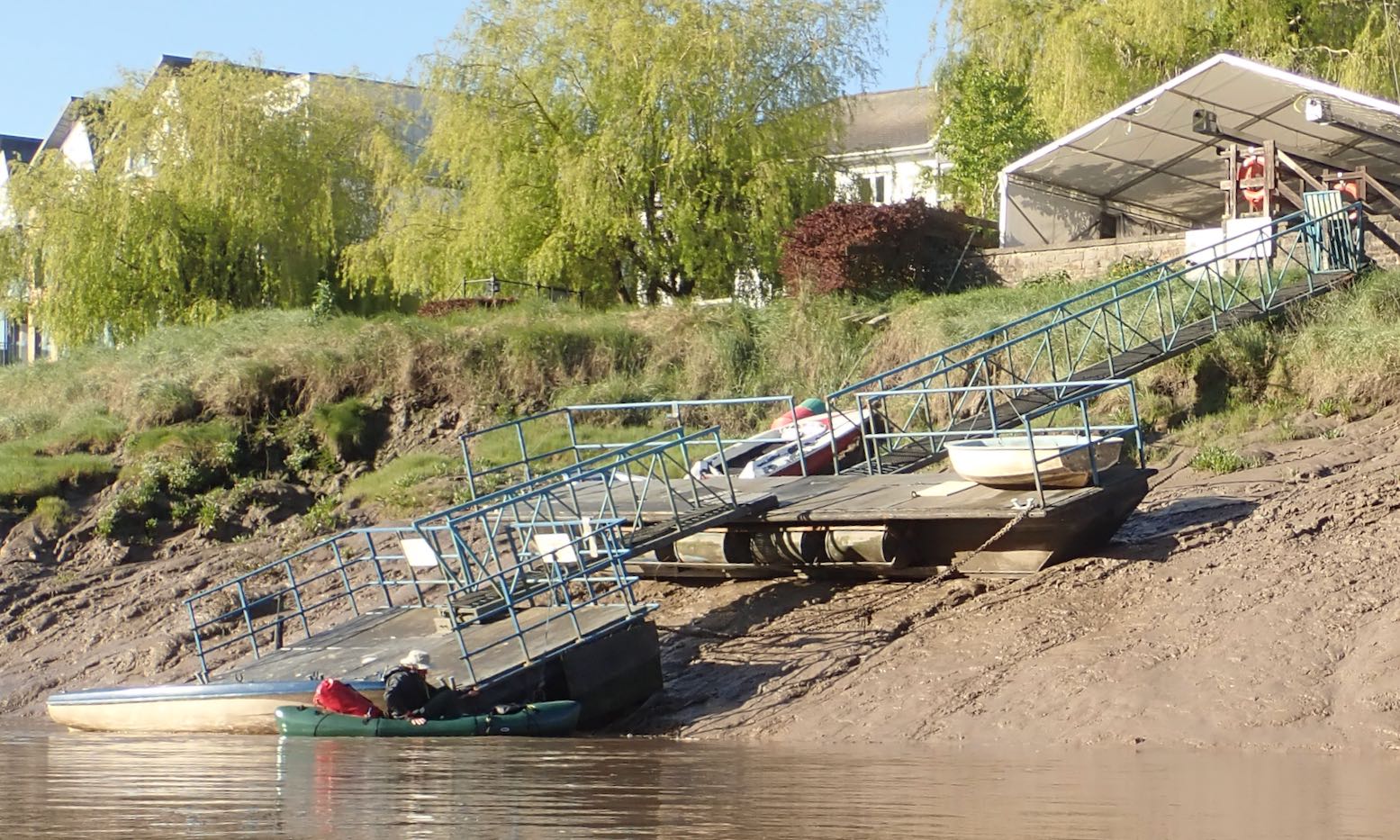
Chepstow jetty at LW; messy.

I don’t think I’ve ever seen a tidal profile like Chepstow: on a Spring tide the water can rise nearly 9 metres is less than two and a half hours, then take over ten hours to drop. This is because your Atlantic Ocean is piling into the western edge of the European land mass, including the funnel of the Severn (with Wye) estuary, creating among the highest tides on the whole darn planet. The game of ‘grab the jetty’ would make an exciting conclusion to our trip, especially as we’d have to be on the water before dawn to time it right. The guidebook warns: continue beyond Chepstow at your peril. Most canoeists dodge the tide timing game and take out at Brockweir.
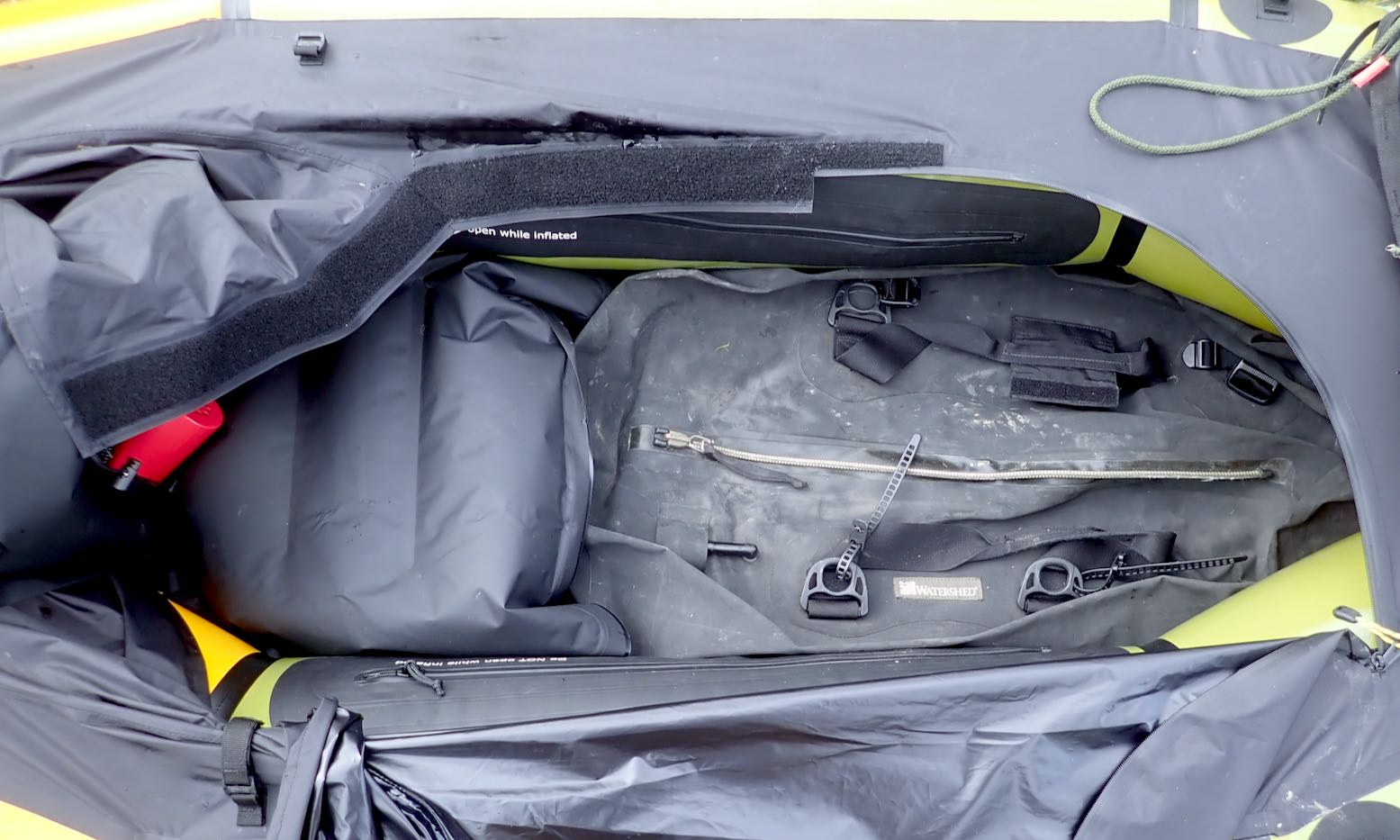
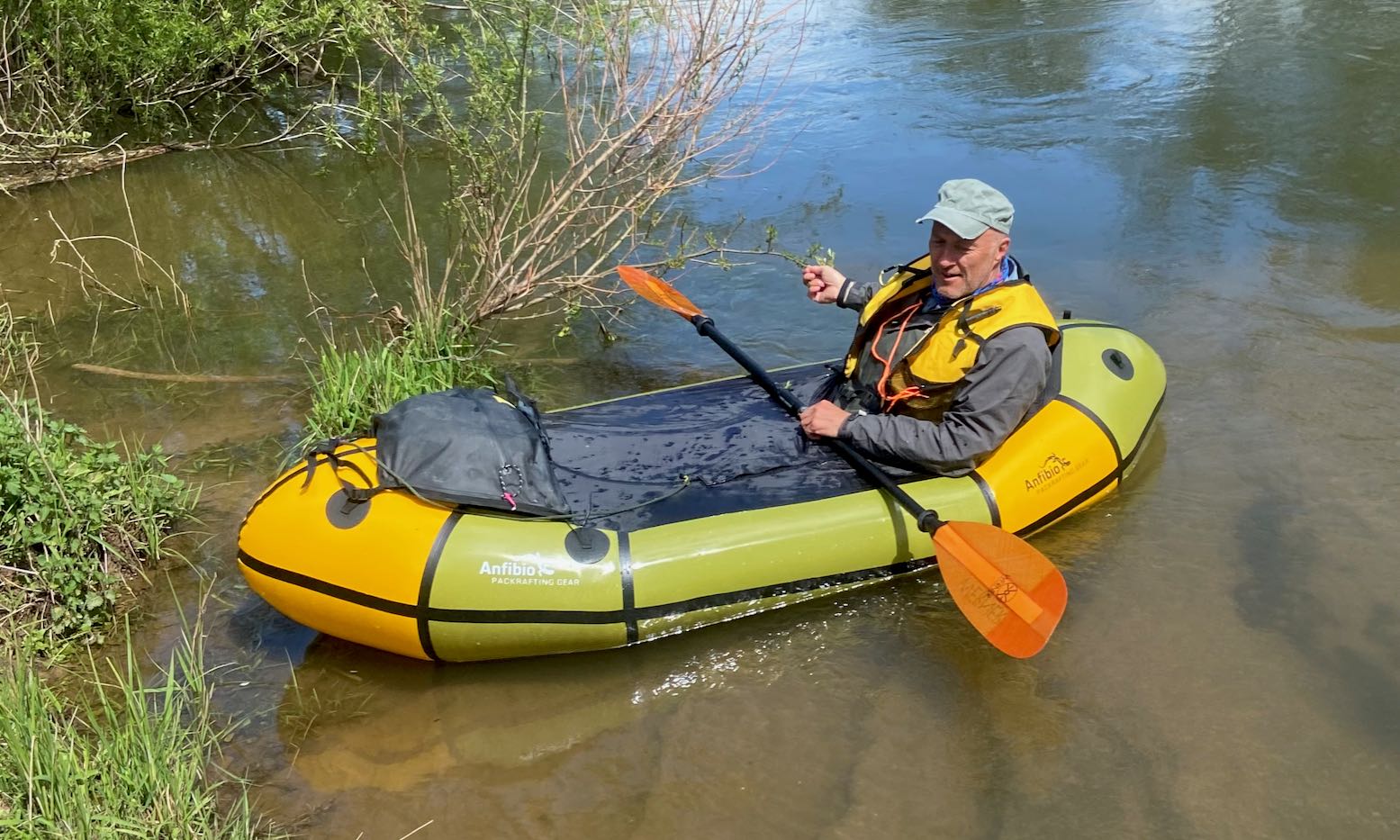
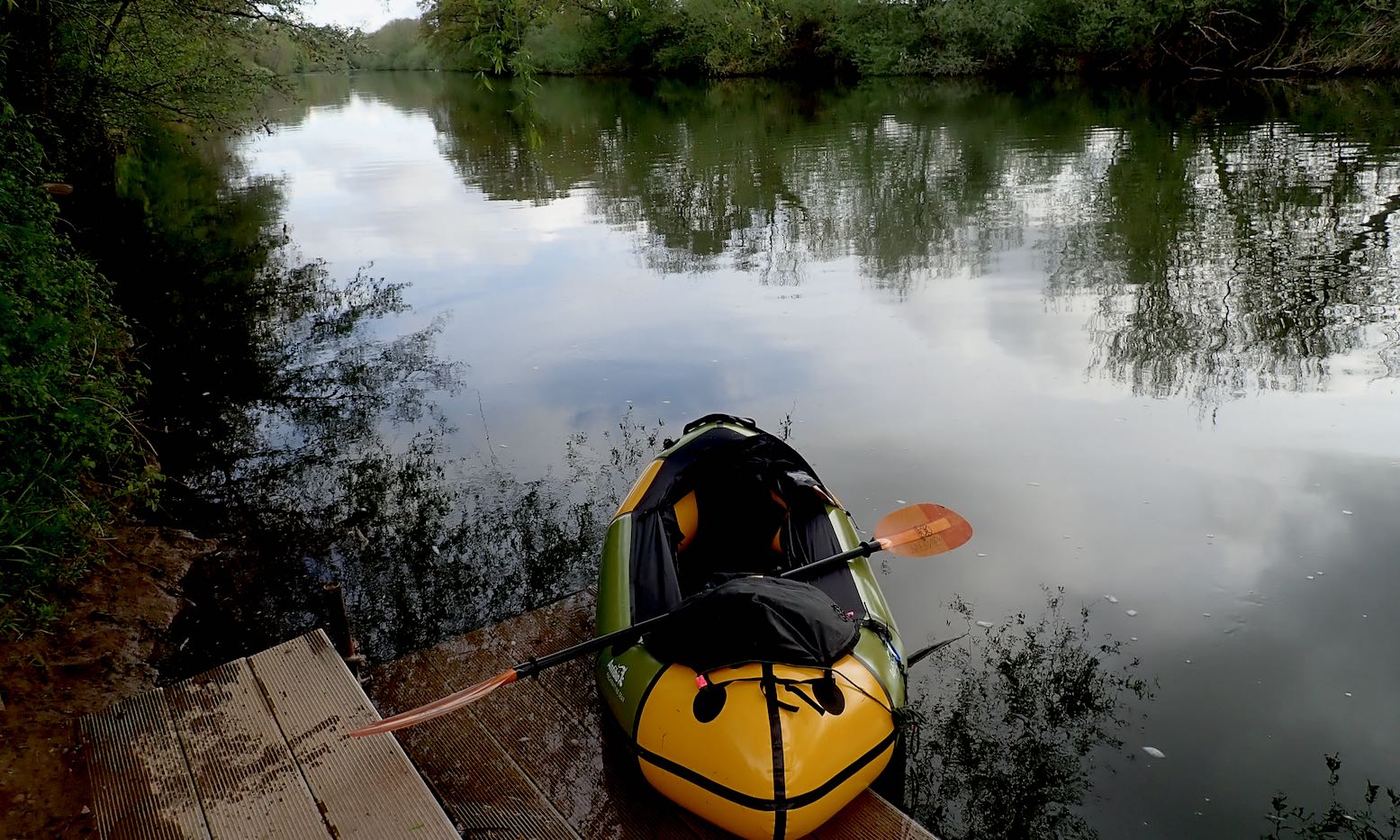
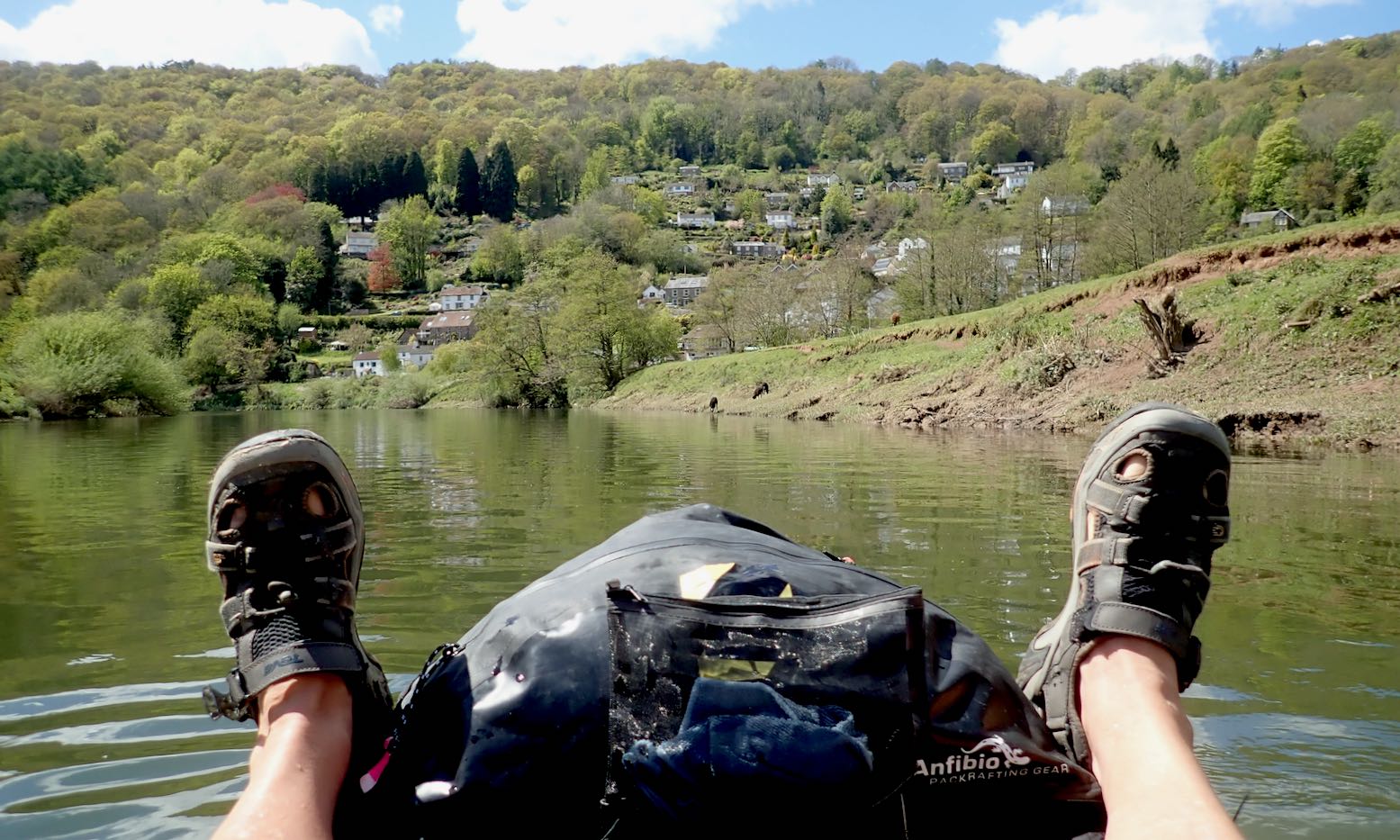
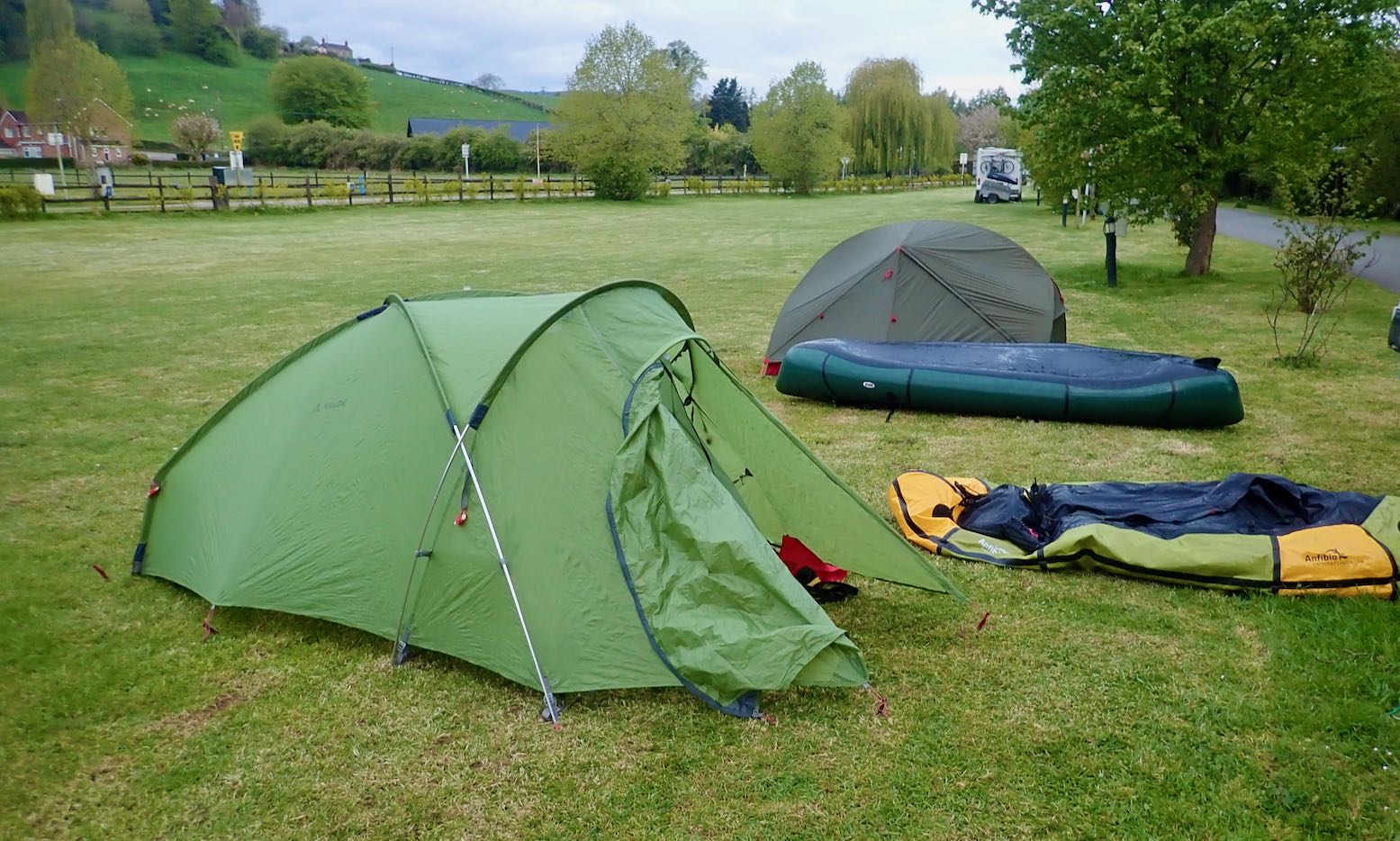
I thought I’d do the Wye in my Seawave, but then decided all that space and speed and glide would be too easy. Anfibio did me a deal on the Rebel 2K I tested last autumn (they’ll readily drop the tax to the UK so you don’t pay it twice). The three-night paddle would be a good test of their internal storage system for packraft touring. And the wet bits in between, a good test of the boat. My review of the 2K here.
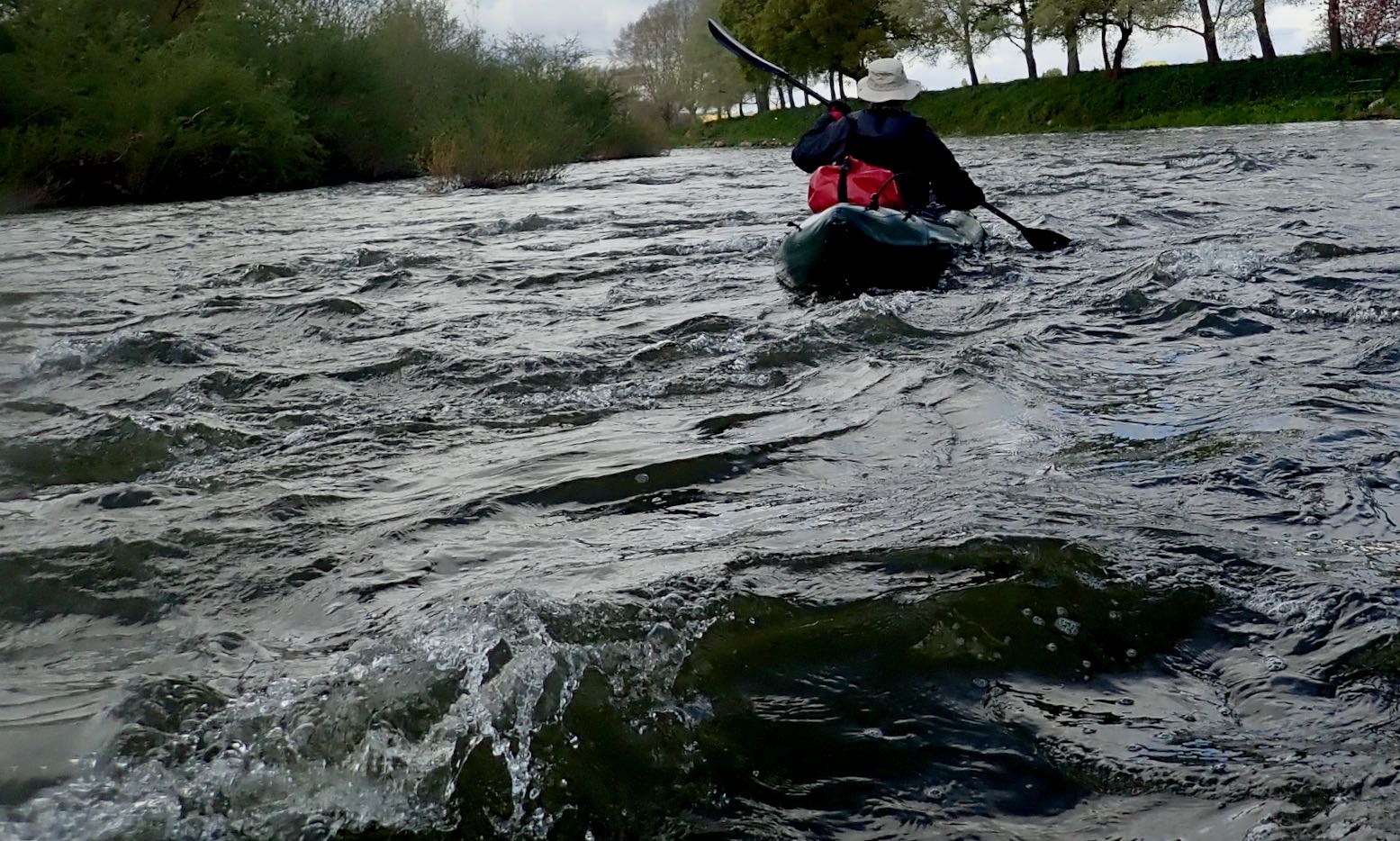
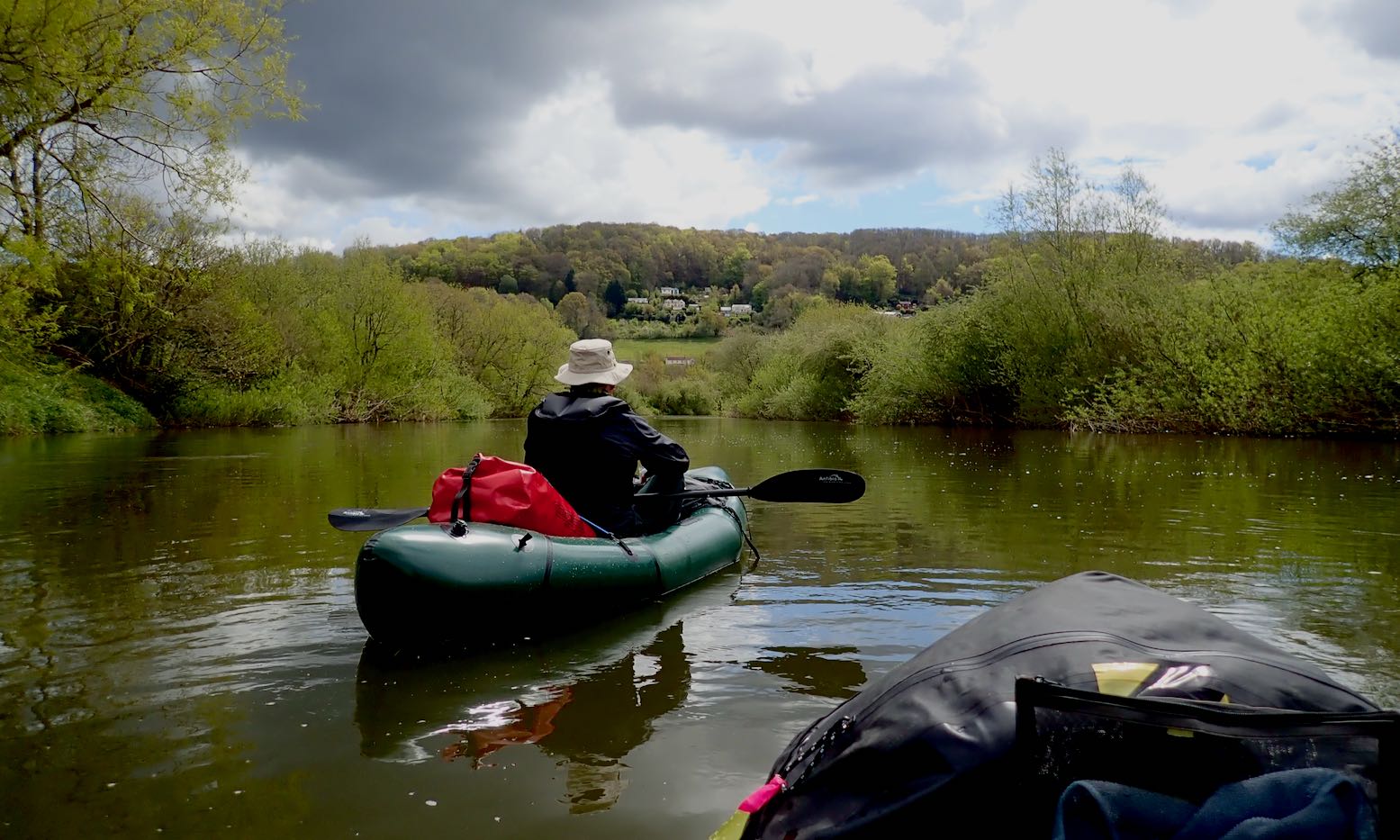
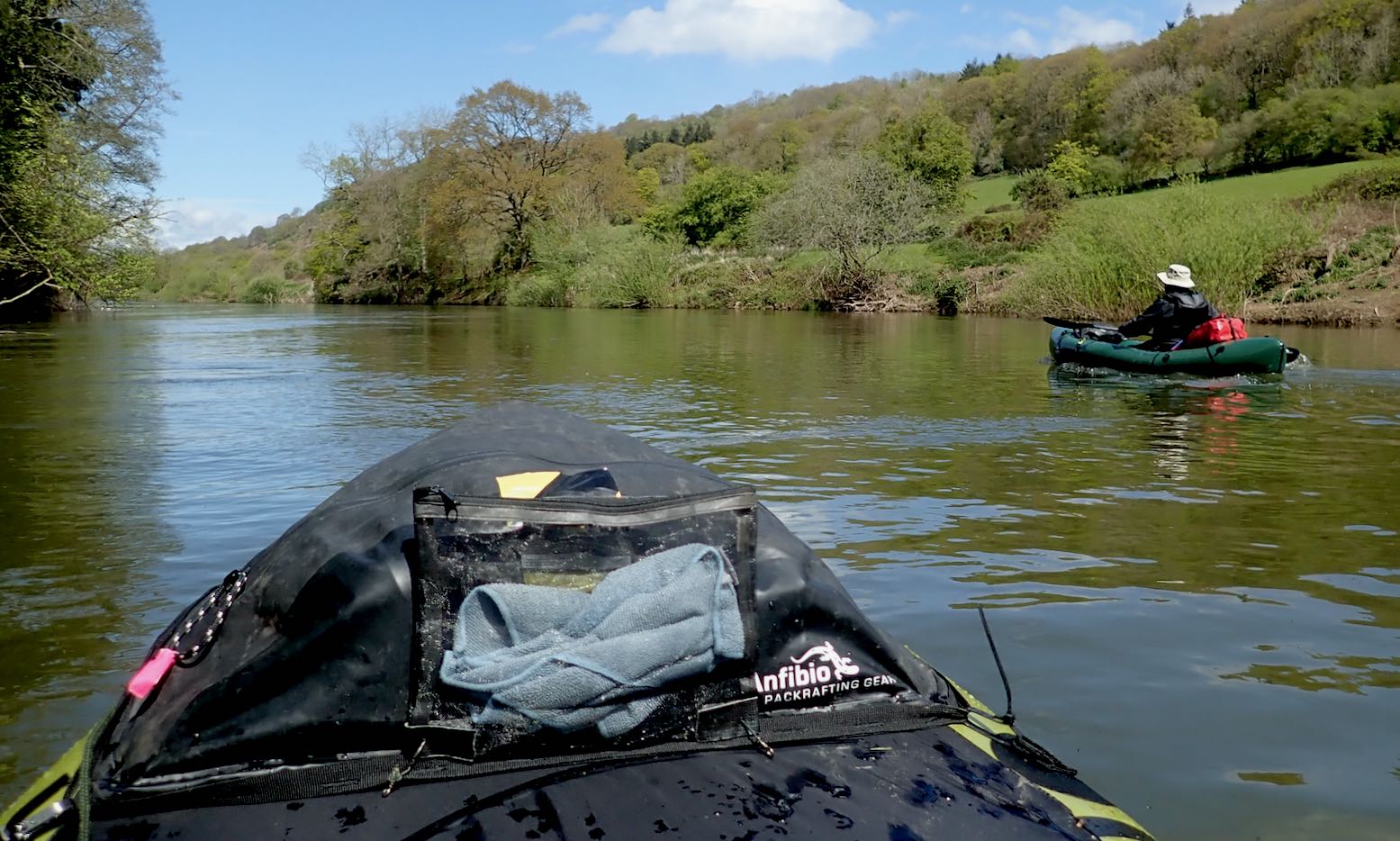
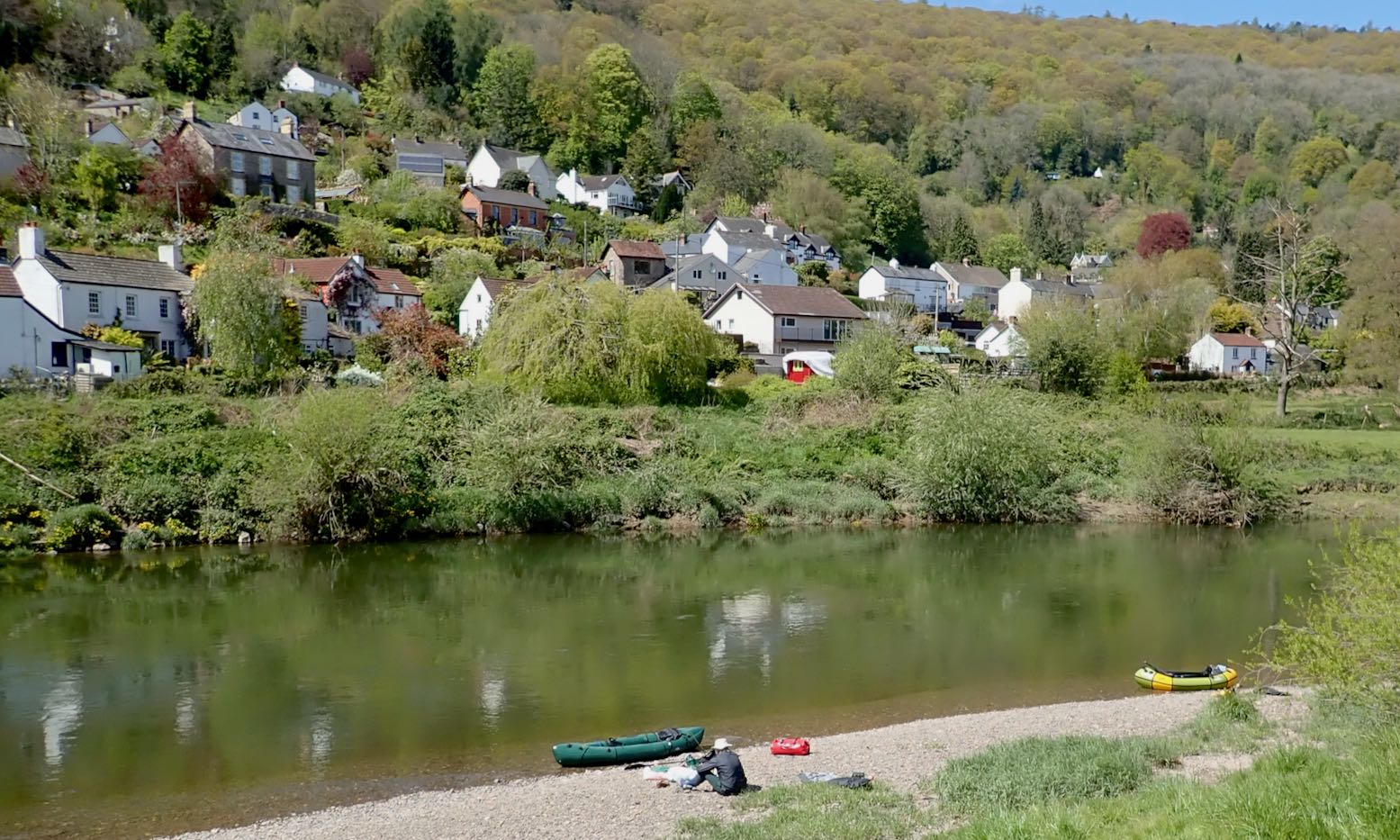
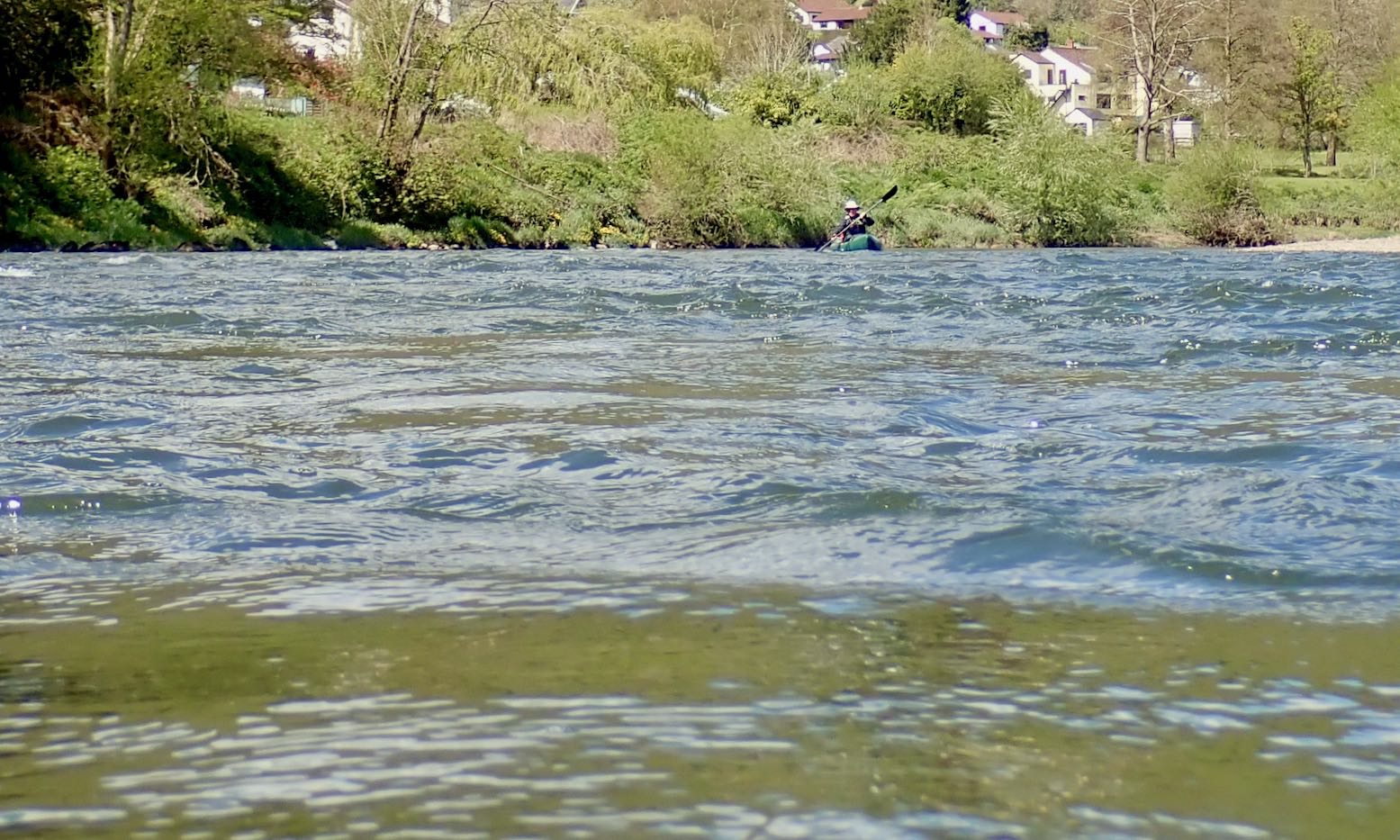
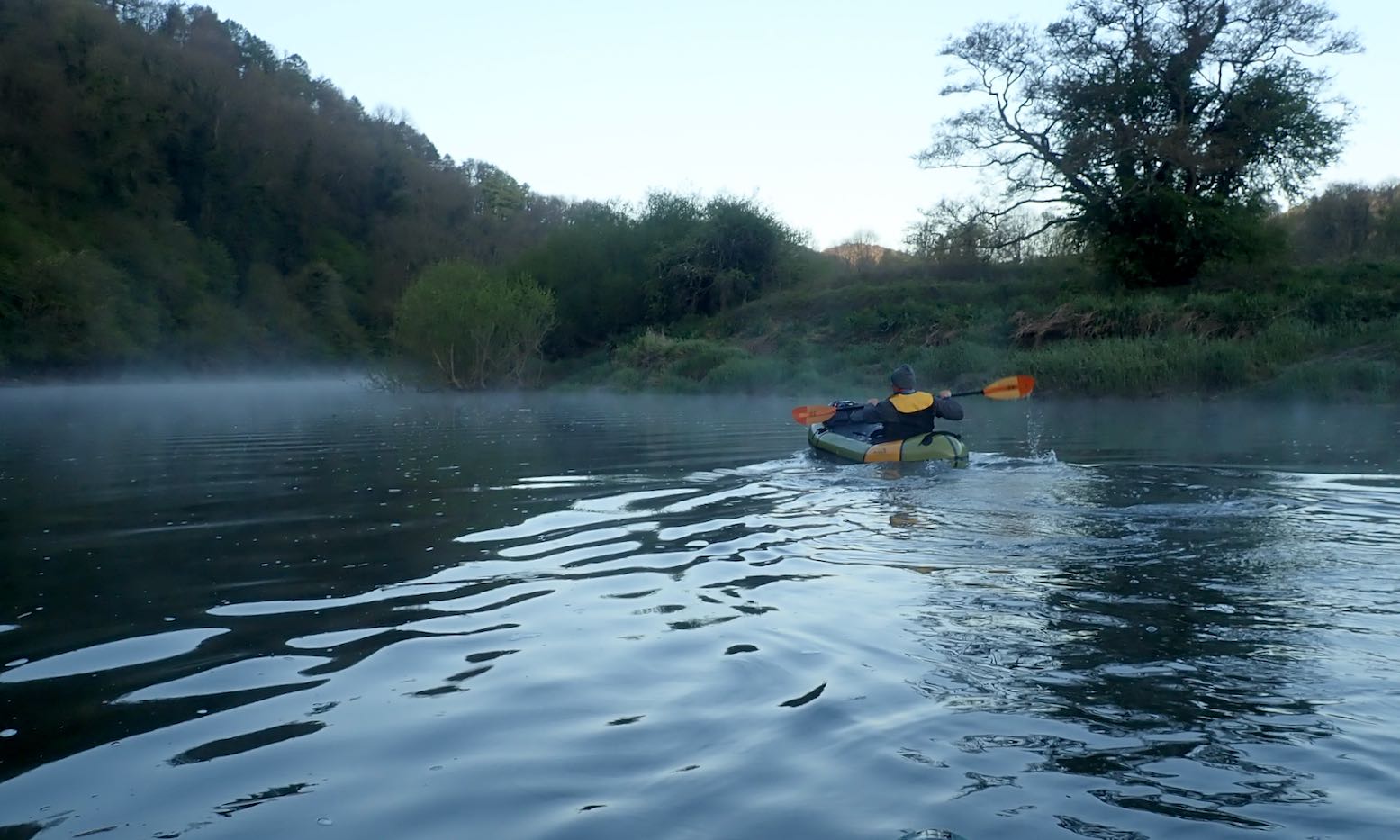
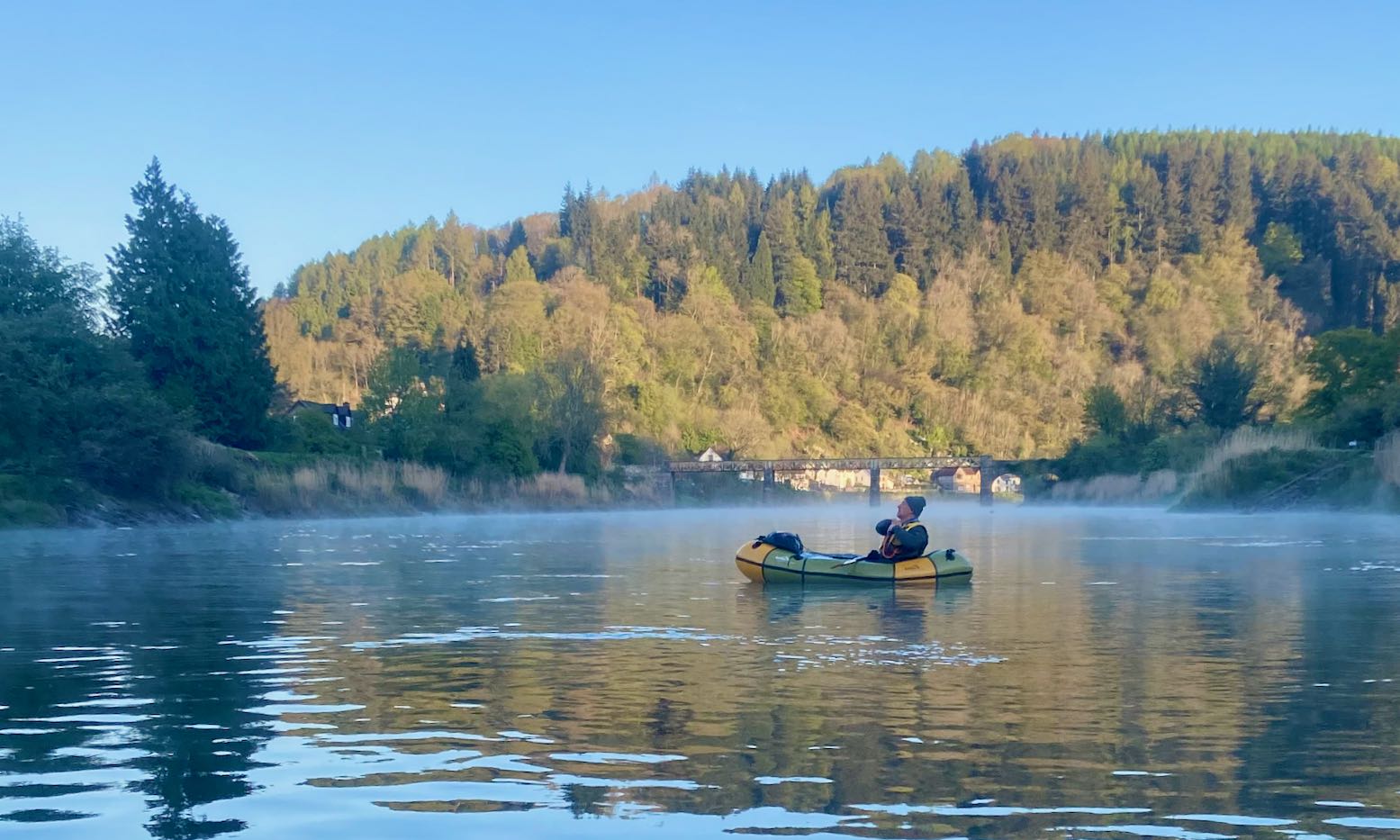
Short version: with a good, rain-fed current, the Wye is a fabulous, easy and scenic paddle. We saw just a couple of Gumo Safaris on a bank, and some club rowers out of Ross. Plus loads of parked up canoes waiting for the rental season. I hope to do it again in the summer. With no lifts, I’d try to leave Hereford early for Symmonds Yat free camp (see below). It’s 43 miles but in the conditions we had could be an easy ten hours. And if you don’t make it, no bother. Then it’s five hours paddling to Brockweir where an early afternoon HW could bring you two hours into Chepstow for a train home.

Wax your paddle blades to reduce drips

See also:
Paddles for inflatables

IKs are mostly undecked and drips from the swinging paddle can be a bit of an annoyance on a chilly day if you’re not wearing waterproofs. A solution in three words: Wax Your Blades.

More than three words
After watching the vid above I found some Nikwax Solarproof (left) under the kitchen sink. As well as being a UV protectorant (like the Aero 303 spray I’ve used for years), it adds water repellency to outdoor fabric gear like tents and jackets.
Now that it’ll be out for weeks, I sprayed my Seawave 2 and noted the boat was slipperier than usual when we lashed it to the car roof to go for a paddle. Should glide better on the water, too.
I also sprayed Solarproof on one paddle blade and in the sink noted the unsprayed blade took over twice as long to dribble dry (4-5 secs), but the coated blade still brought some water up with it.

Out paddling on the water, I can’t say the coating made that much difference because, as in the video above, your paddle is typically out of the water and swinging forward for a second or two – not long enough for the Solarproofed paddle to shed its water.
However, his wax version did seem to shed near-instantly. So I beeswaxed the untreated blade and noticed wax sheds water as fast as the sprayed paddle did alongside the untreated one.
Conclusion: water repellant spray works and has UV benefits, but wax sheds water better and probably lasts longer, too.

Tested: Gimp stove (solid fuel)

See also:
Honey Stove (wood burner)
Woodgas Stove (wood/pellet)

In a line Lightweight, compact, airline friendly ‘day’ or back-up stove using ethanol solid fuel blocks 9which are also hand sanitisers).

Cost ‘Shoe polish’ tin (from £1) + optional band + cross-stand (from £5) + FireDragon blocks (from £1.14 a filled tin). Total: around £8.

Weight Tin (25g) packed with fuel: 133g. Cross-stand 28g, 10cm wind shield 7g. All up: 168g + lighter.

Where used River Wye, Knoydart.

Light, simple, compact
Fast set-up, easy to light
Sits low (stable and out of the wind)
Tin makes a large burning area and is refillable
Tin fits inside a 400ml Tatonka folding-handle mug
No noise, no smoke, no smell, no residue on the pot
Fuel cools and resolidifies quickly and will relight later
Presumably can be carried on a plane, especially if you label it ‘hand sanitiser’ (which it also is).
So light and compact it can be used alongside or to back-up a gas stove or a woodburner

Expensive at around 37p to boil a big mug
Fuel may be harder to find than gas cans at outdoors stores, but sold in ‘home & garden’ stores like B&Q

Review: 
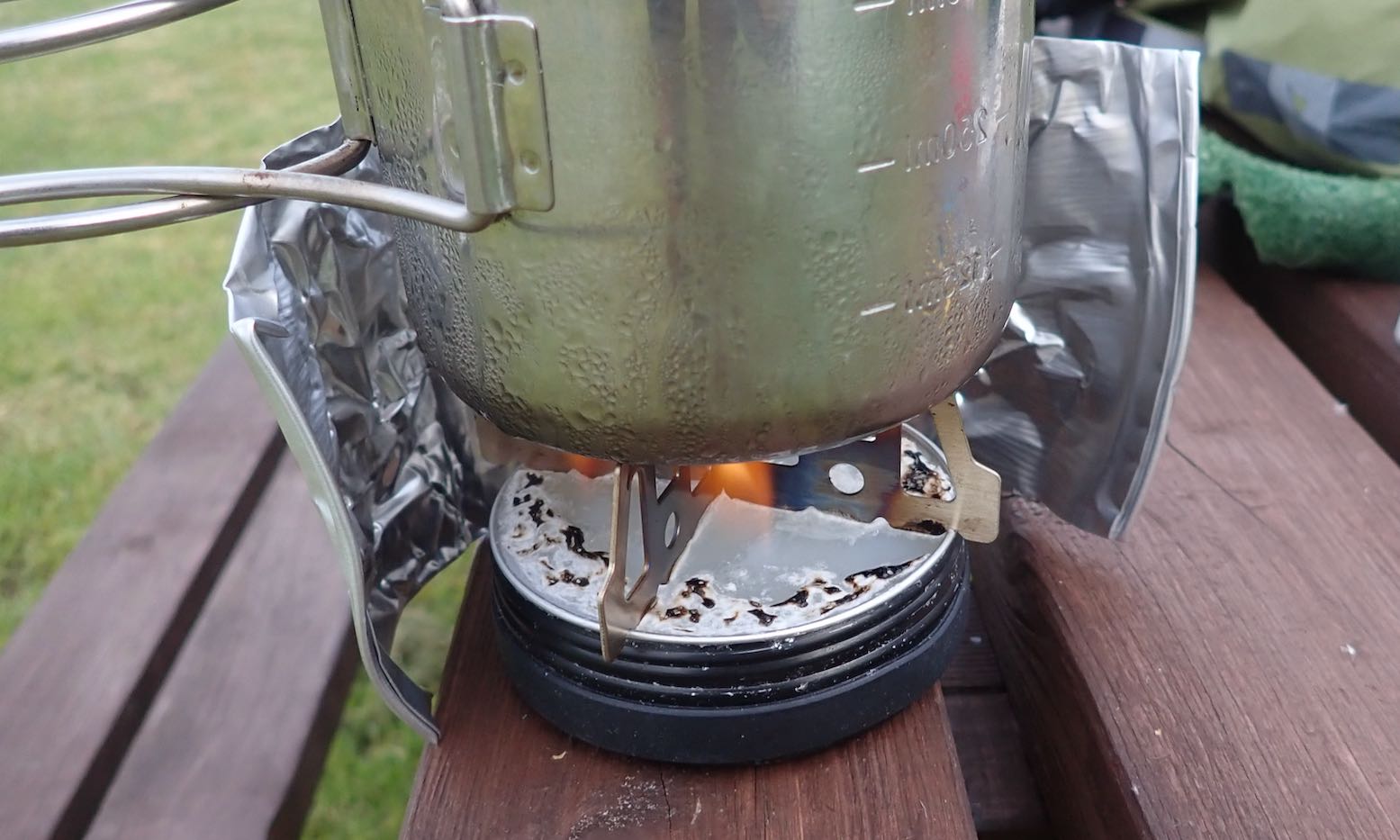
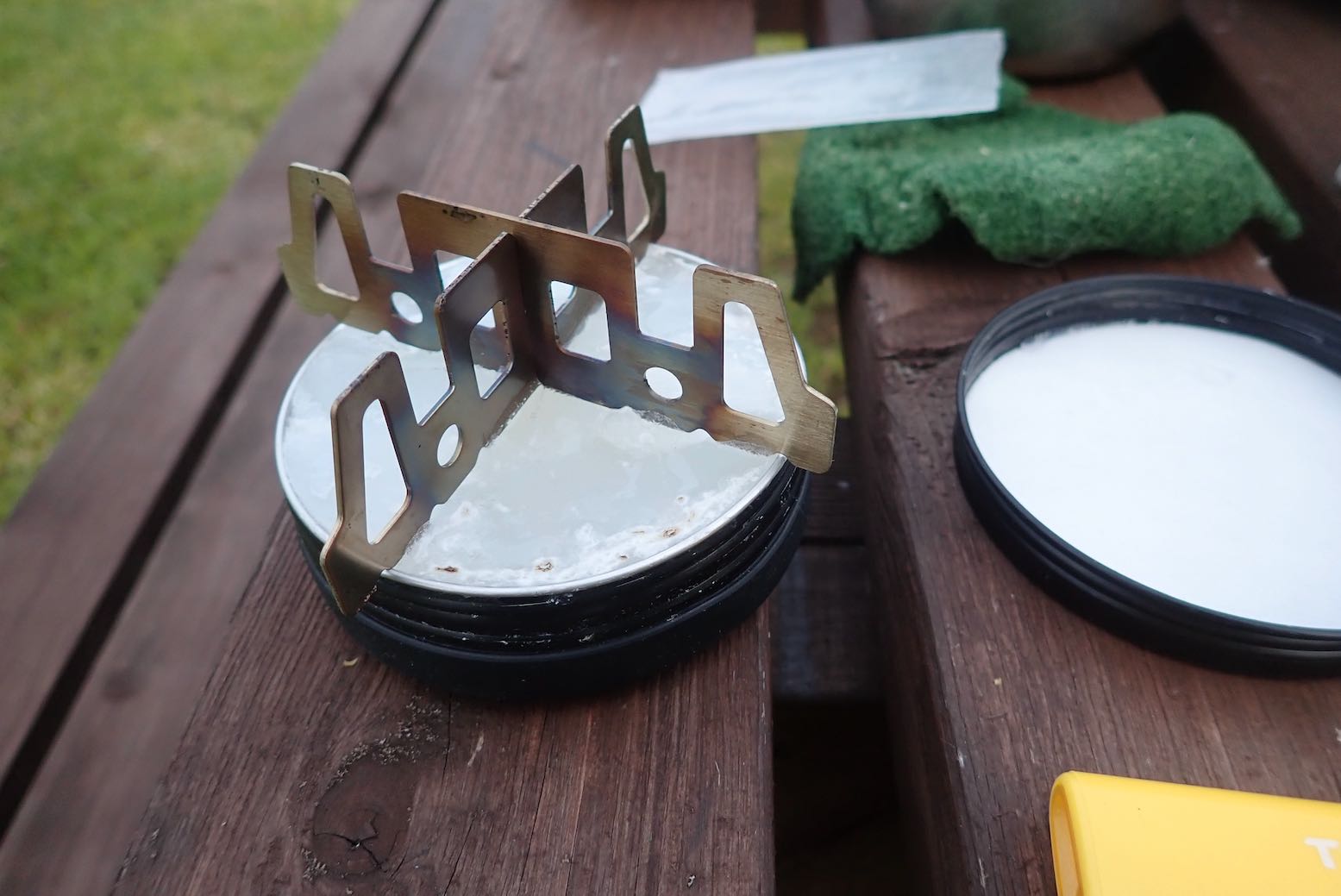
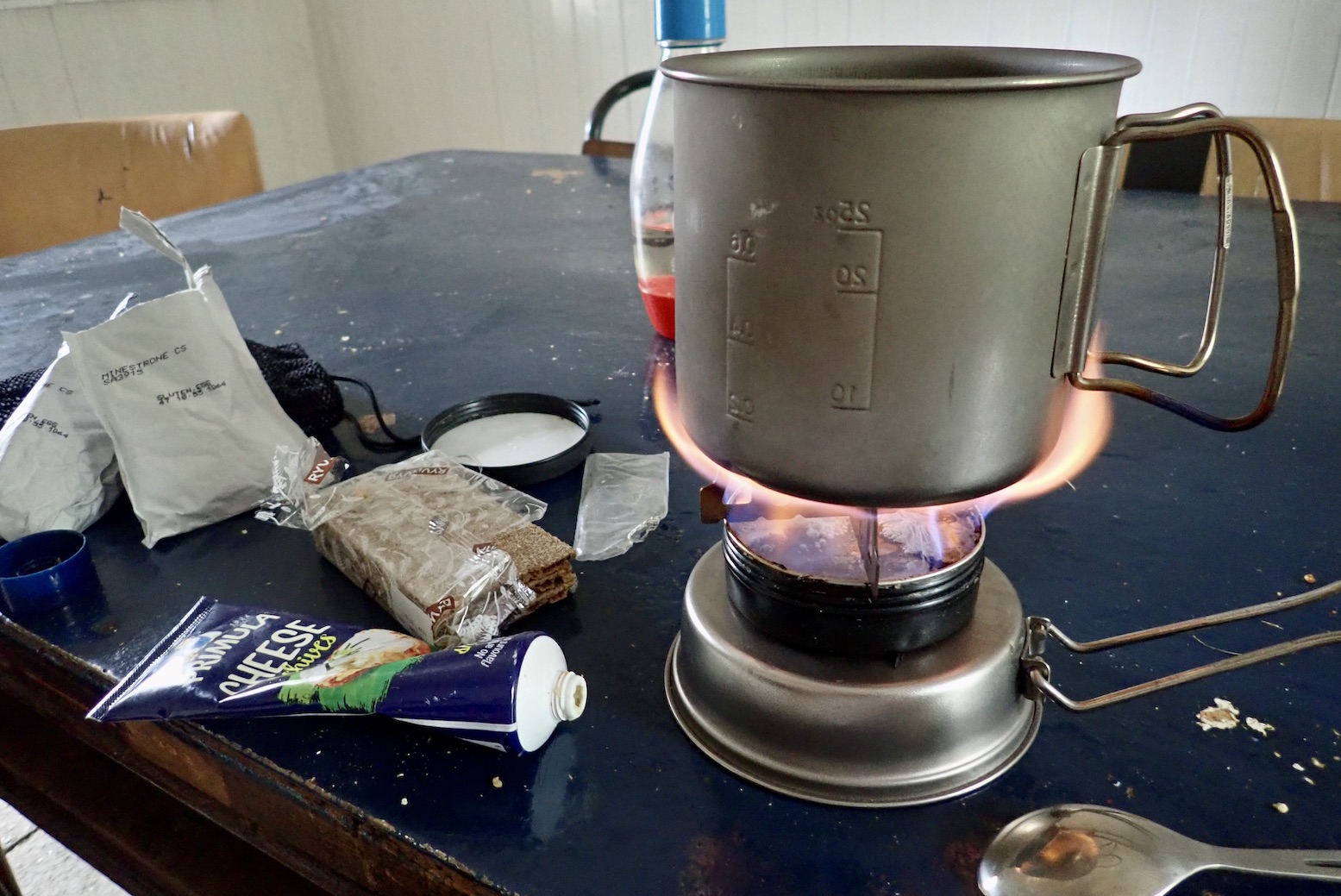
This Gimp Stove (a military acronym, apparently) isn’t something you can buy off the shelf. My bush-crafty mate put it together once he learned FireDragon ethanol firelighter blocks could be packed into a ‘shoe polish’ tin and easily refilled and re-lit.
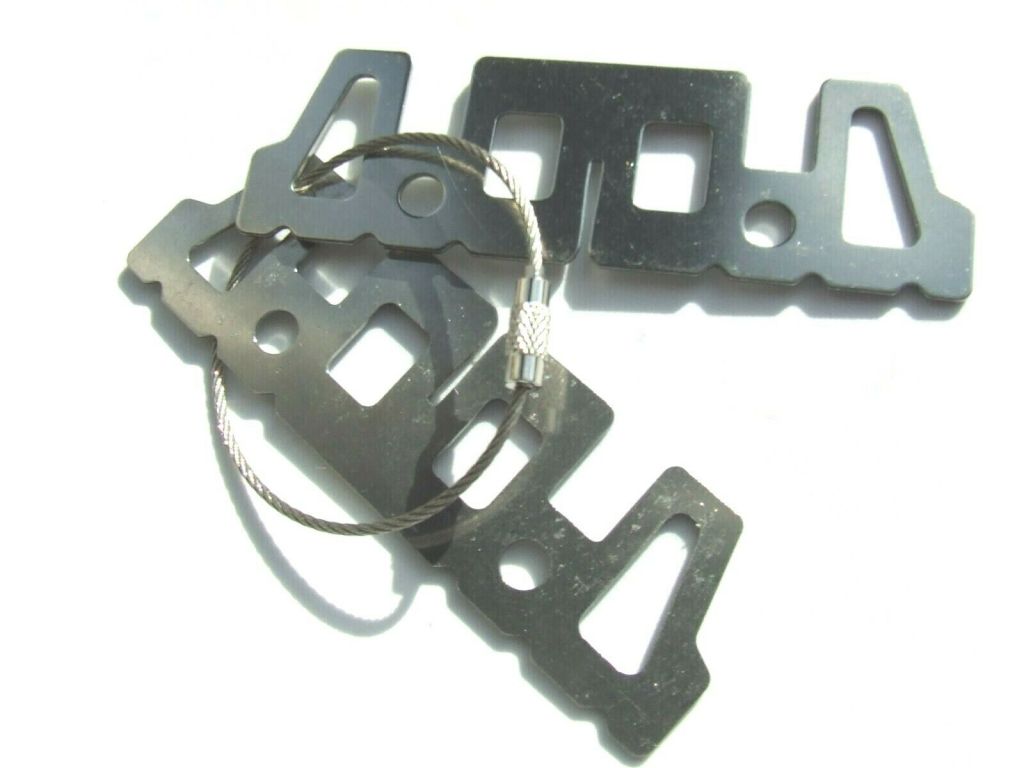
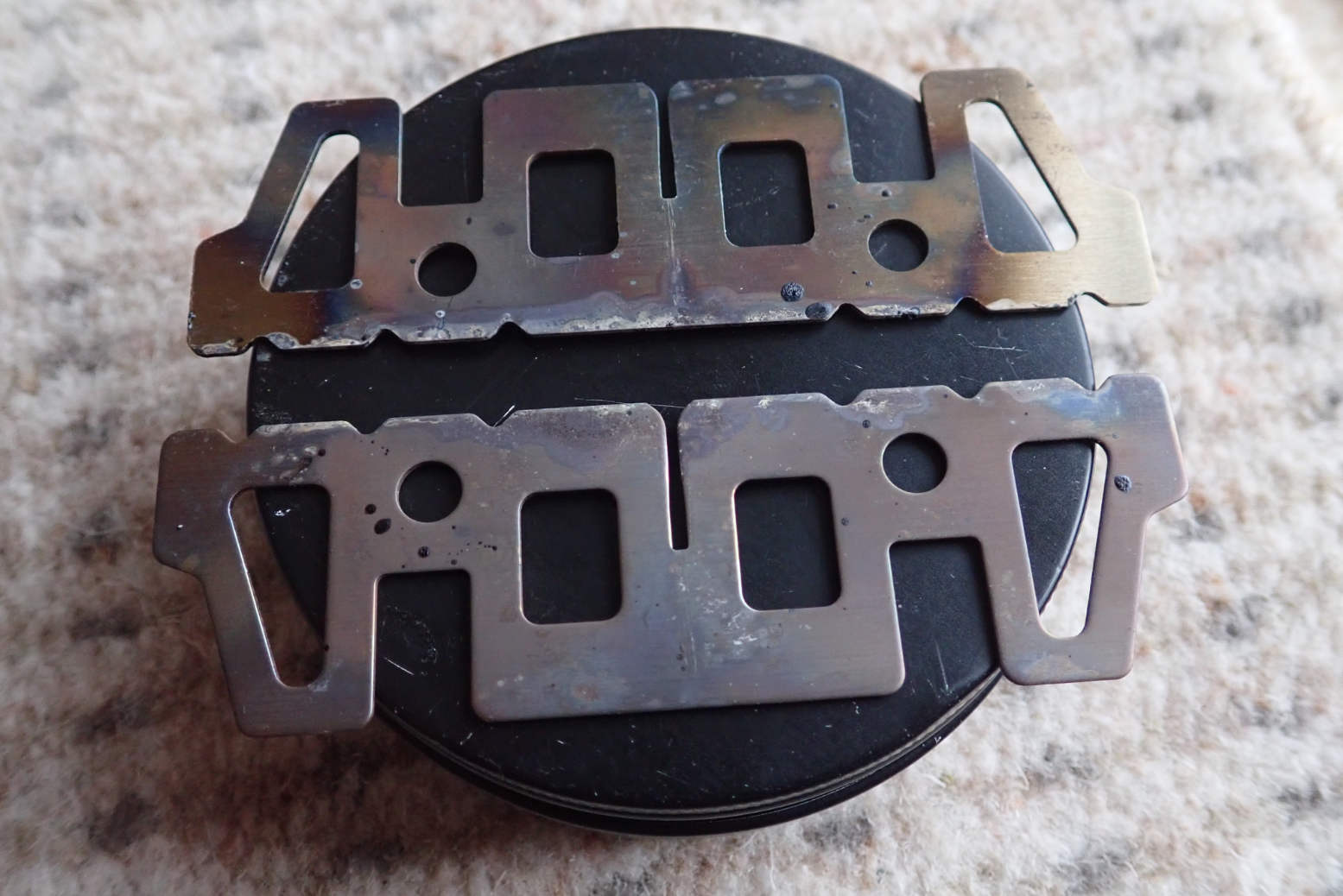
He identified a small, screw-top tin (multi-buys off eBay or amazon) with the right diameter to fit the notches of the CNC-cut stainless steel cross-stand also widely sold online from around a fiver. For a stable set-up, finding a tin to fit this cross-stand’s notches is the key. Or you can as easily make your own stand to suit any tin you like, but the tin’s lid needs to be airtight so the fuel doesn’t dry up. My mate even added a silicon wrist band round the base so you can seal it good and tight.
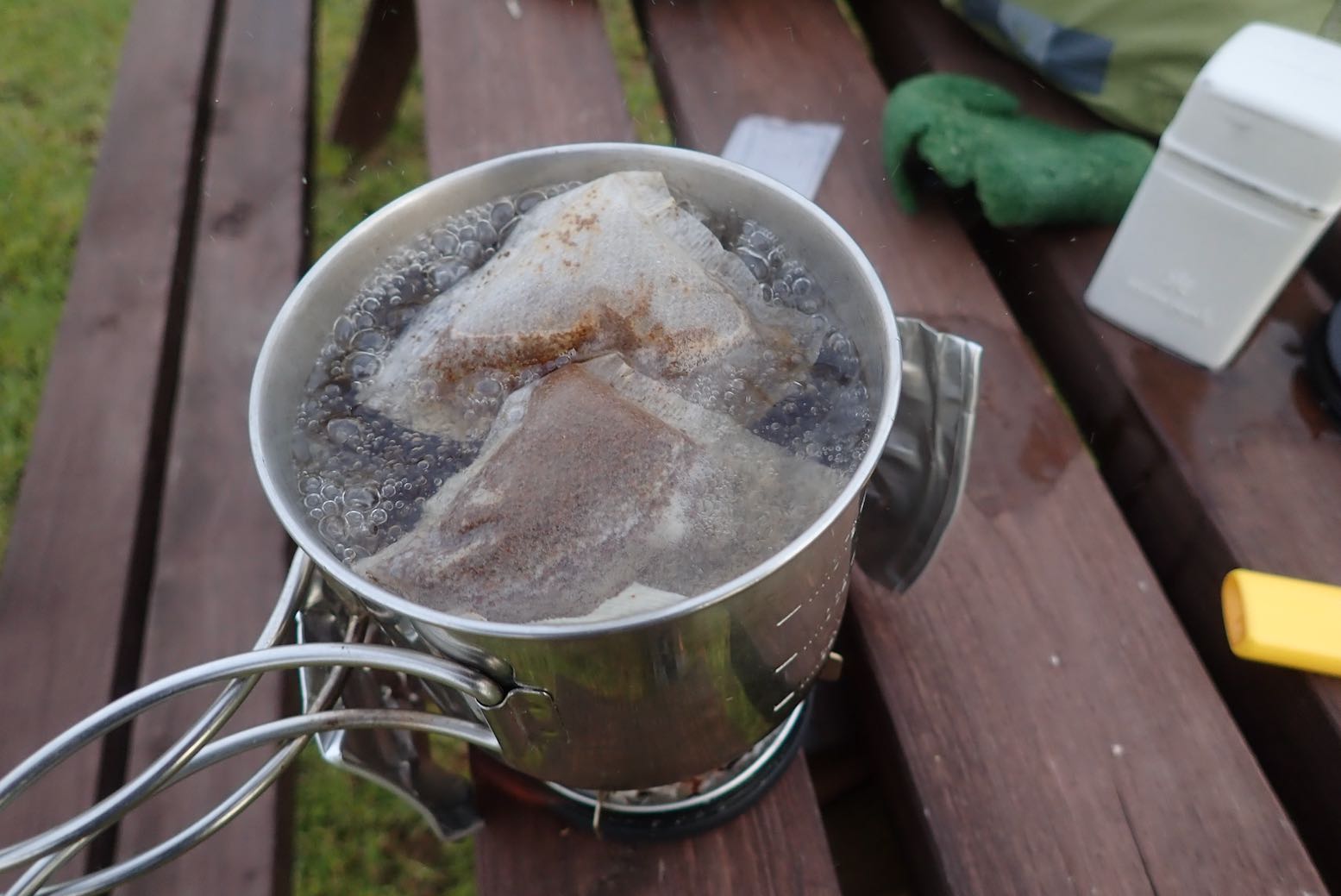
I managed to cram about four blocks (108g) into my ‘100ml’ tin (actually more like 130ml). From this I got three 360-ml (big mug) boils in the field. To extinguish blow it out, or smother with the lid. The liquified gel quickly cools and resolidifies and will readily re-ignite next time.
Timings were 4 minutes tested indoors, and about 7 mins outdoors, using a thick tinfoil windshield from the base of a fruit pie or a take-away curry. There is no noise, no smoke, no smell and unlike toxic hexamine tabs, no residue on your cup or toxic smoke.
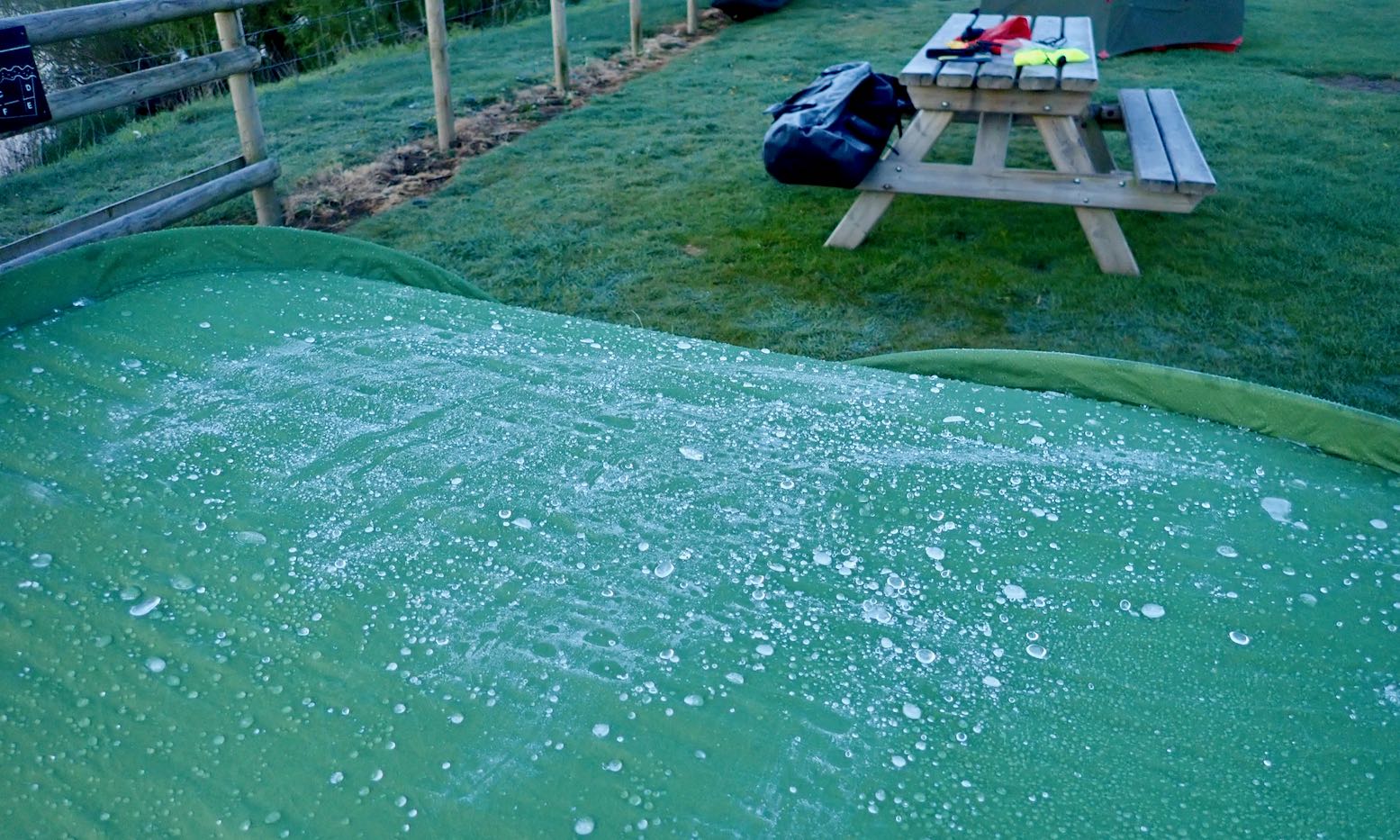
On the first freezing morning of our Wye trip, even though I’d slept with a 45% full gas can inside my sleeping bag, it failed to boil my water once out in the freezing morning air. The Gimp would have lit up readily and done the job. And the fact that you’re easily able to place a windshield on the ground, and need clever, faster but totteringly unstable, bulky and pricey JetBoils is another tick for the Gimp. All in all, the Gimp is a handy, cheap and foolproof pocket stove.
I used the Gimp again on a four-day Scottish trip to heat up water for lunch soup. Light and compact enough to carry in your day pack, it made the whole business effortless, while saving gas for other meals.

A one-ounce block of FireDragon

FireDragon Fuel
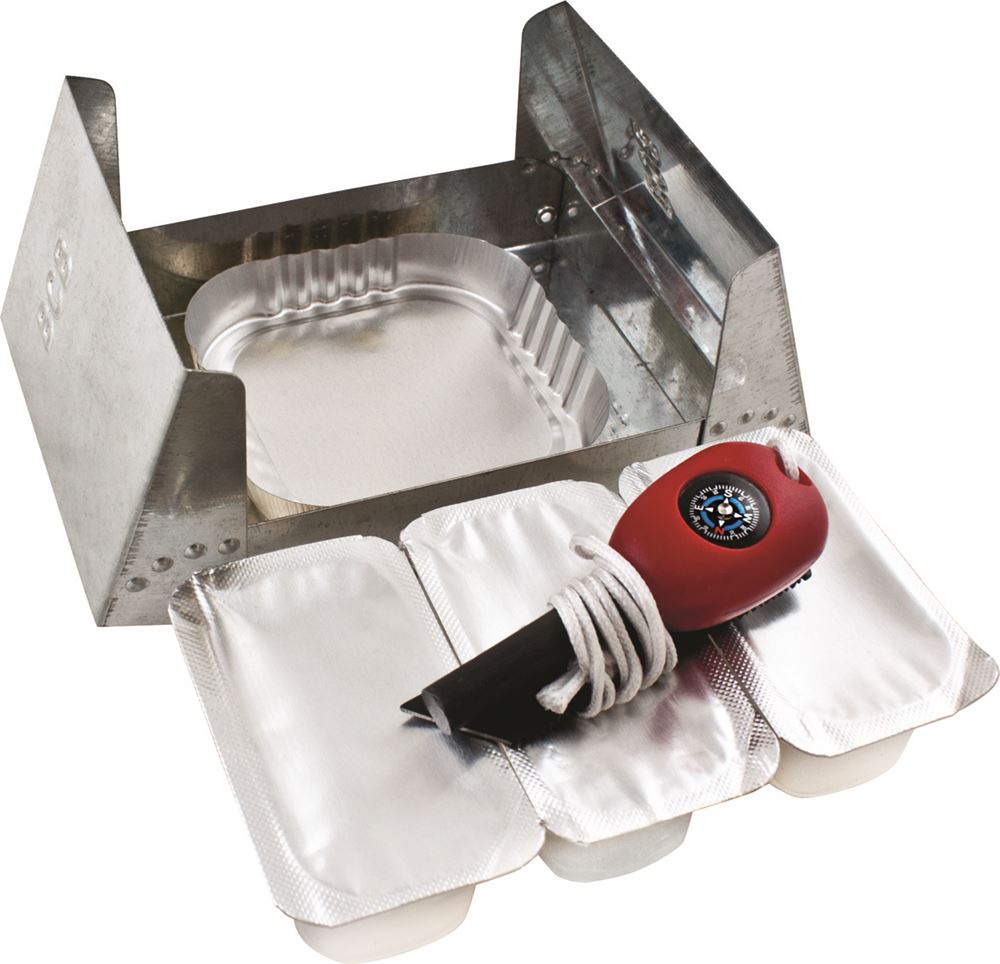
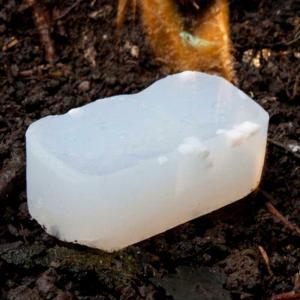
Made by BCB International from waste vegetable matter, the blocks come in individual sealed 27g (1oz) pods, bought 6 or 12 at a time. It’s the same (and can be used) as hand sanitiser. Once the packet is opened, the block (a mashable wax of ethanol or denatured alcohol, left) will evaporate and shrivel, but sealing in the screw tin works fine, at least for a few days. Long term you may want to verify this. The good thing with a full tin or two is you have no packaging to get rid of responsibly; you just come home with empty tins to refill.
Apparently you can ignite with a flint (BCB’s stove kit, right). I tried but couldn’t do it on used fuel, even with some magnesium shavings (the fuel lit right up with a lighter). I may try again with a fresh block, but honestly Bushcrafters, a lighter takes one second.
The best price in the UK works out about 28.5p a block by the dozen, so a penny a gram with a big mug boil at 37p – quite expensive. And you’ll struggle to find it at that price; very often it’s nearly double, or gets that way with postage. Your best bet seems to be larger Go Outdoors stores. I would guess you could get at least 30 same-sized boils from a typical 220g can of gas costing around £4 which is more than half price.


I skimmed through an online review (one guy was even wearing camo gloves!) and apparently the FireDragon boiled loads faster than hexamine (which I’ve never considered trying). I’m told the Brit army now use FireDragon instead of hexamine.

All Quiet on the Waterfront; Kayaking through London

See also
Kayaking Richmond to Greenwich

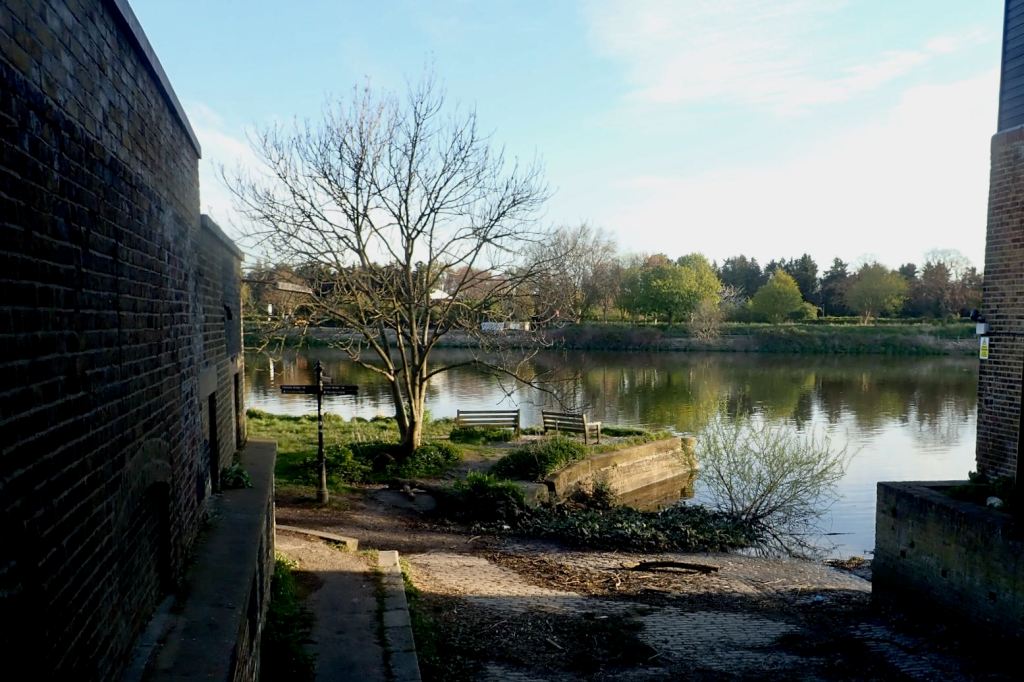
Notice anything suspect about this image?

Right now [April 2021] it’s a great time to kayak the Thames through London. It’s only April but due to you-know-what the Westminster tourist barge scene is dormant, making that brief but lively stage a bit less fretful. Down at water level we paddlers may be hyper vigilant, but can the bloke doing a U-turn in his heaving tourist catamaran while doing a commentary see us fending off the standing waves and refracted wakes?
As a barge-tourist in a Union Jack bowler hat asked me last time;
Is this allowed?
Yes it is chum, but a kayak on this part of the Thames is still an incongruous sight. The congestion and the standing waves pushed up by some bridges at certain times can feel a bit like skateboarding in a gale on Runway 3 at Heathrow.

Downloading the PLA’s mammoth 130-page Tideway Code is enough to put anyone off, but I do believe this edition (dated October 2020) is less anti IK than a previous version I read. At the time I recall seeking clarification from the PLA’s media person and got an arsey corporate riposte. Has the Lockdown IK consumer surge turned the tide on the PLA’s prejudice? It’s the old problem of misconflating a clueless beginner in £49.95 Aldi bin bag with an alert and well-equipped paddler in a decent high-pressure hybrid.
I say: pick your tide, keep right and be observant. For me the biggest peril was dodging the horizontal scythes of the Putney rowers who seem to go up and down across the whole width of the river as they please. They do need a lot of space.

Mortlake to Mayflower (Rotherhithe)
This 21-km (13-mile) stretch lined up well with 10-minute walks from stations at either end.
By Rotherhithe the excitement, such as it is, is over. And skipping the five miles from Richmond gives an easy three hours on the river; a nice early morning or afternoon paddle with good light for great photos or views of the Thames’ bankside icons.
It’s dawn and a Sunday, so it takes two buses and a train to get to Mortlake
Yadda, yadda…
Spacious put-in at Bulls Alley off Mortlake High Street, complete with benches
7.15am. All is calm
A bit of early morning rumpy-pumpy
Head buoy
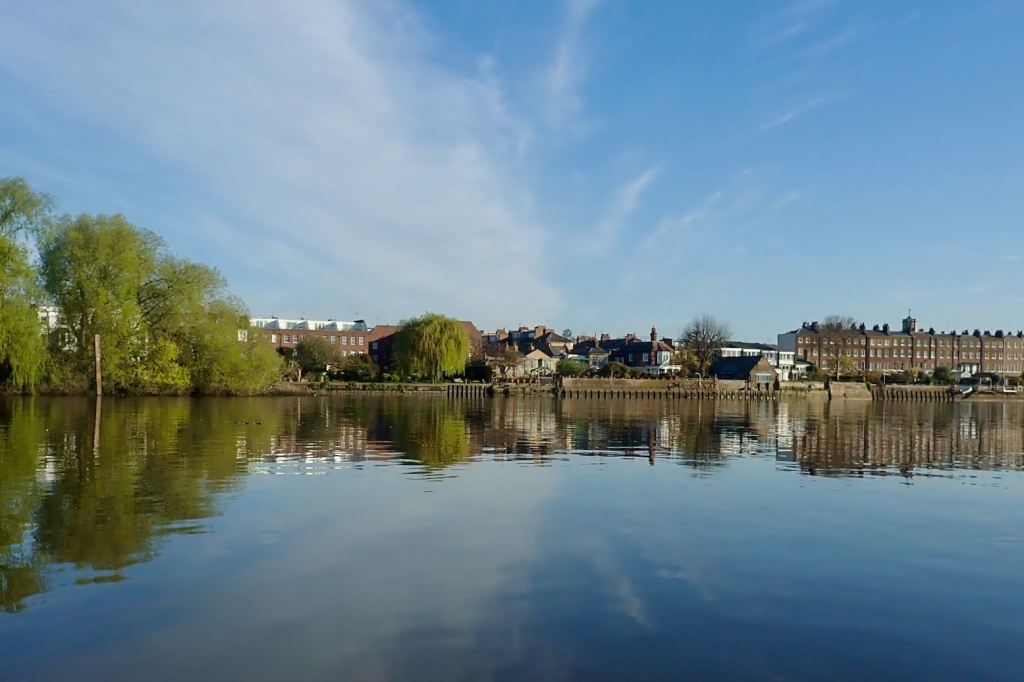
Genteel Georgian waterfront around Chiswick
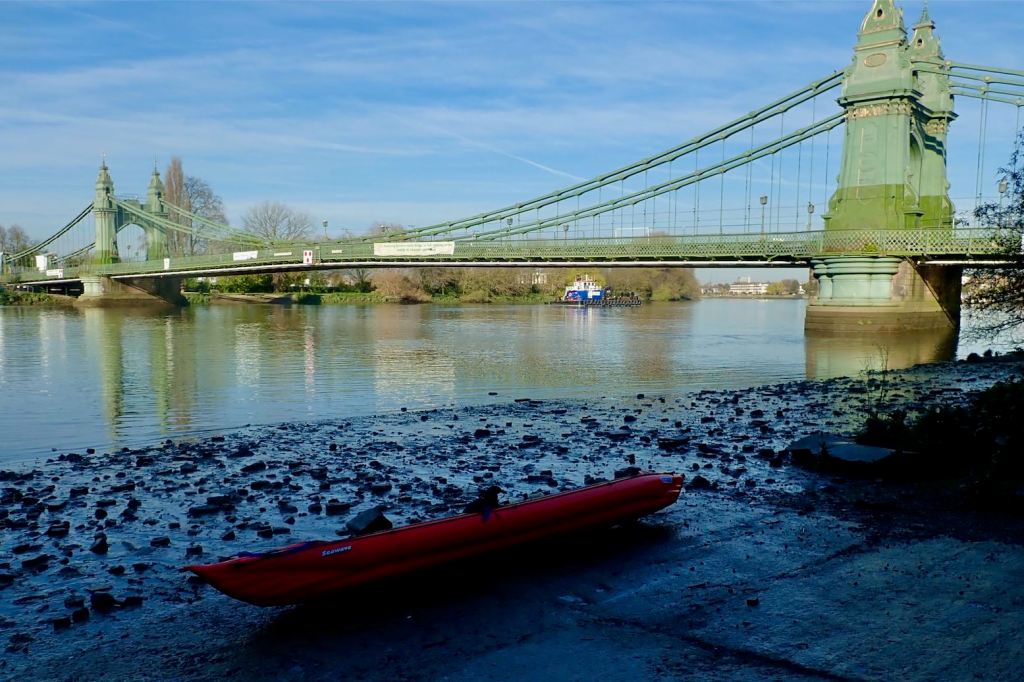
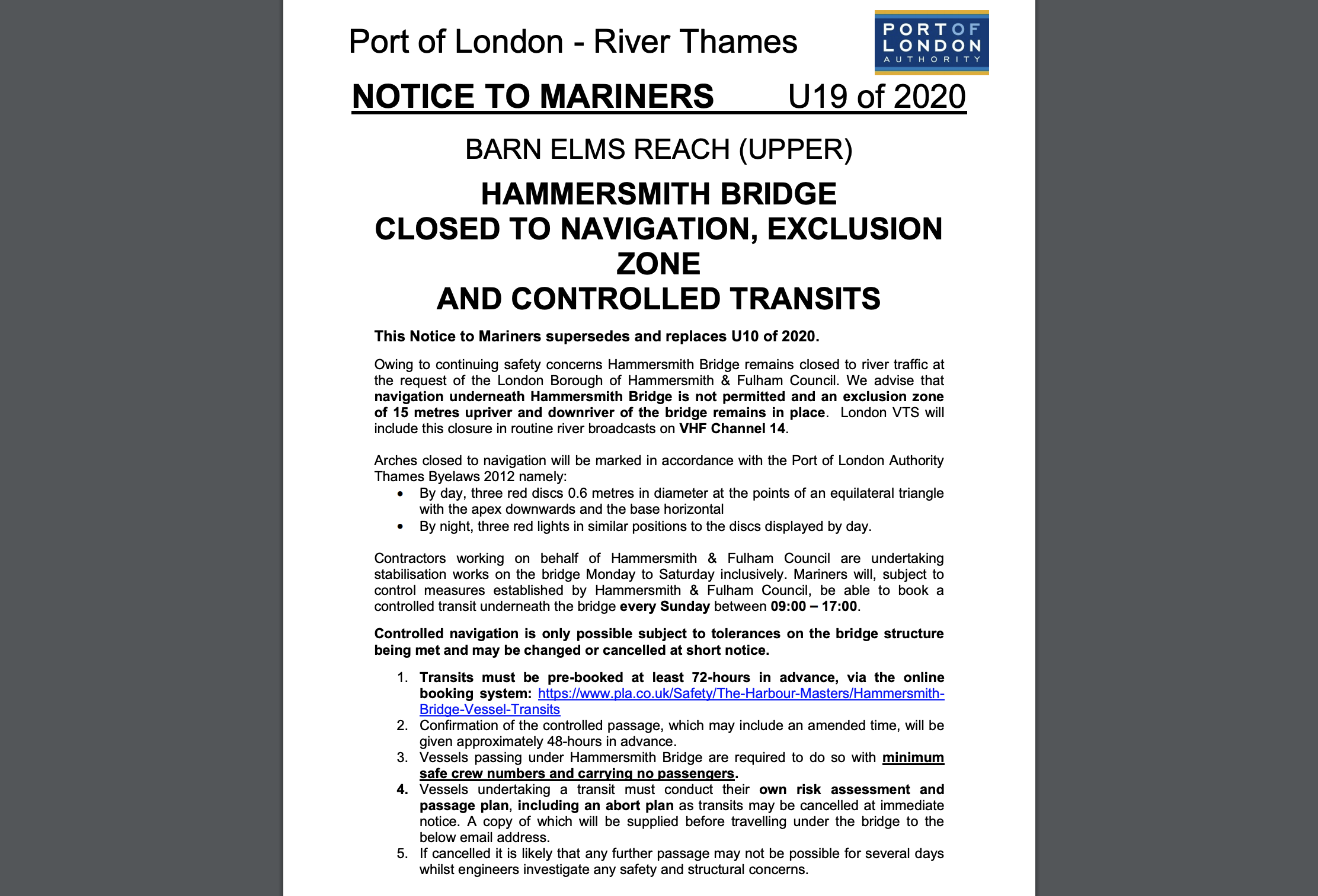
Arseache! Hammersmith Bridge is Falling Down and closed to navigation.
Ie: you can’t paddle under it in case it collapses on your head.
But on the north bank there’s a handy jetty and this slipway (above) on the downriver side is a 5-minute carry
The Hammersmith’s brittle, ageing cast iron dates from 1887 and is suffering from micro-fractures.
All together now: “Build it up with iron bars, iron bars, iron bars.
Build it up with iron bars, my fair lady
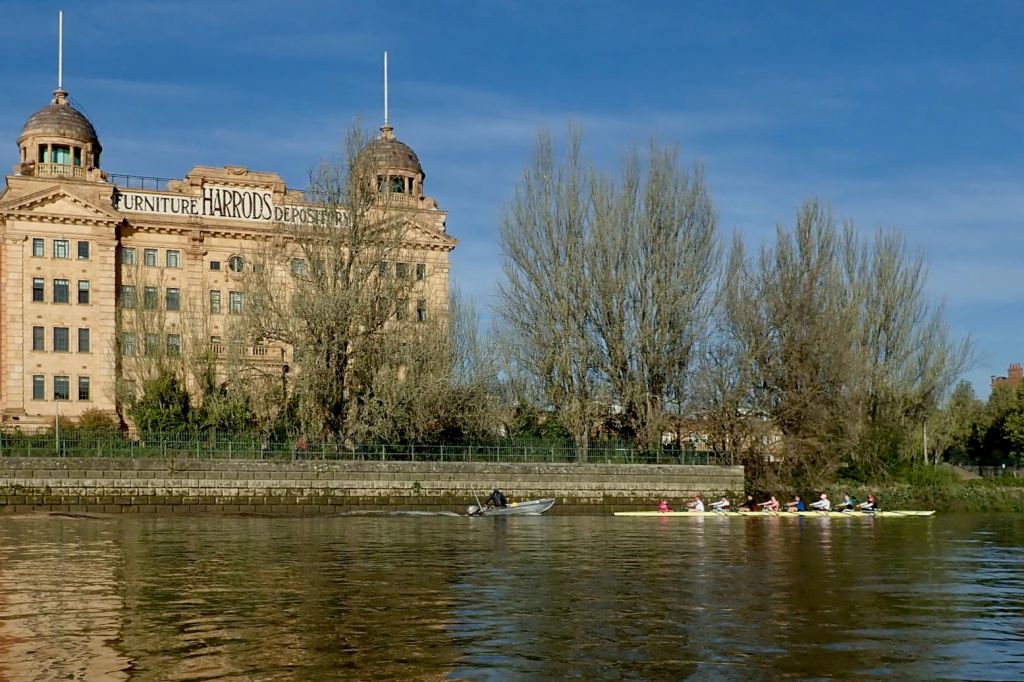
Once a Harrods warehouse, how expensive flats
9am. Putney rowers getting their oars on.
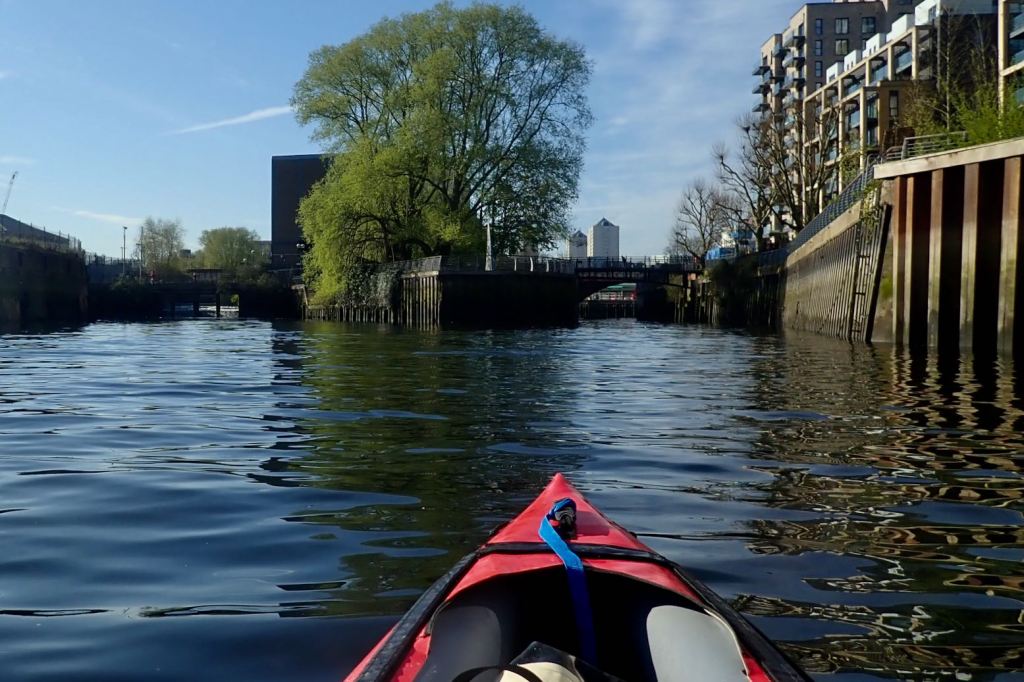
At Wandsworth I nip up Bell Lane Creek where the Wandle comes in.
Big weir drop to the left, and a bit further up on the right, another weir drop at all but HW.
See: Wandle: An Urban Packrafting Nightmare
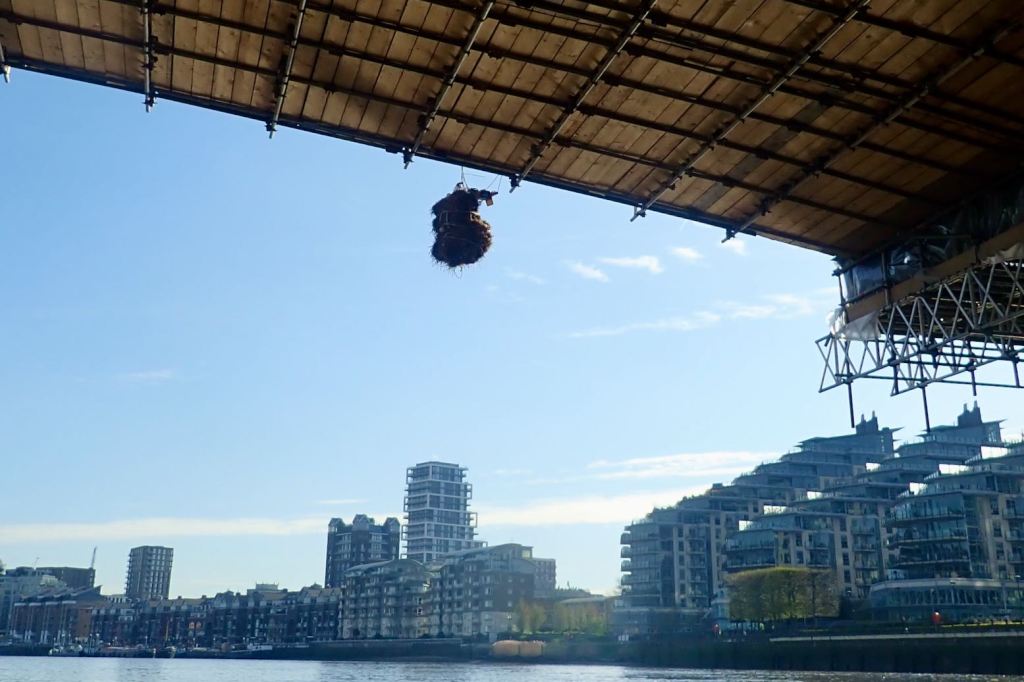
Hanging hay bale? WTJoF? Explanation in the PLA Tideway Code
No arcane signage here up Wandle creek
It’s chilly. Nature’s call cannot go unanswered
River racers. My money’s on the Yellows
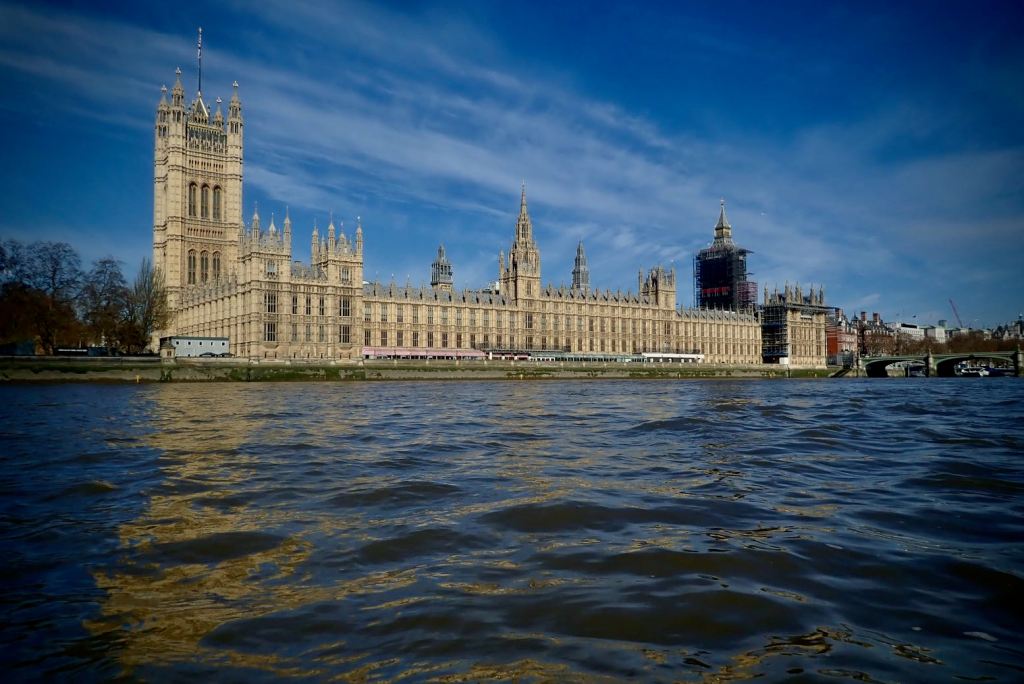
Holy Mother of all Parliaments. The latest scandal? The ‘chumocracy’ of lobbying (there have been a whole load more since
It gets a bit choppier just after Westminster Bridge as the current backs up
London Eye still looks as amazing as ever. I wonder if they grease the axle and tension the spokes once in a while
Rectilinear skyscrapers are just so last century
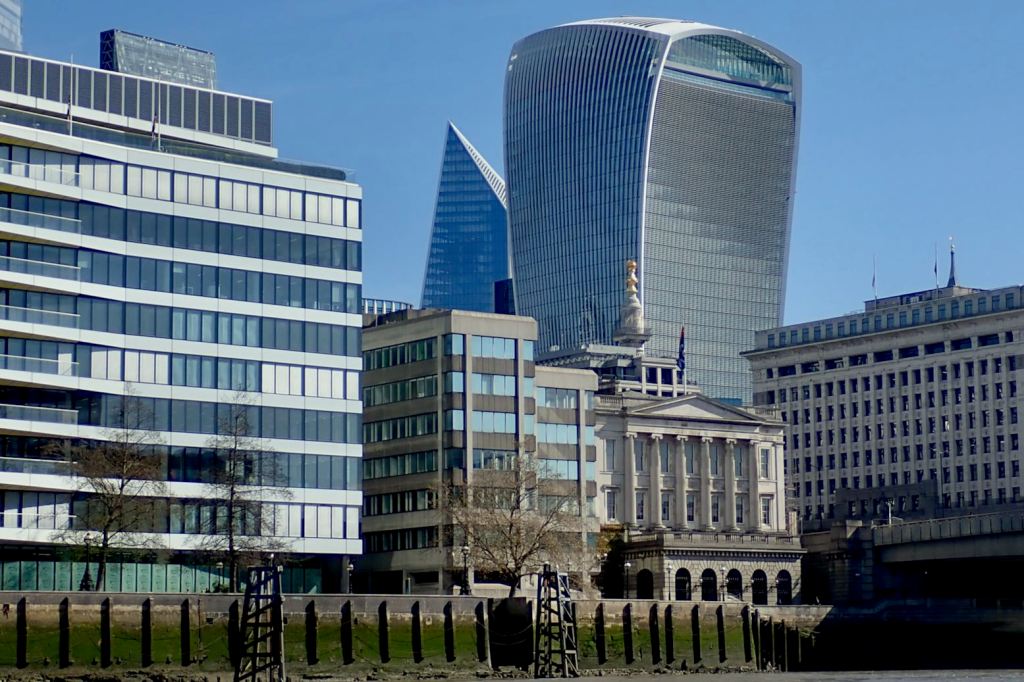
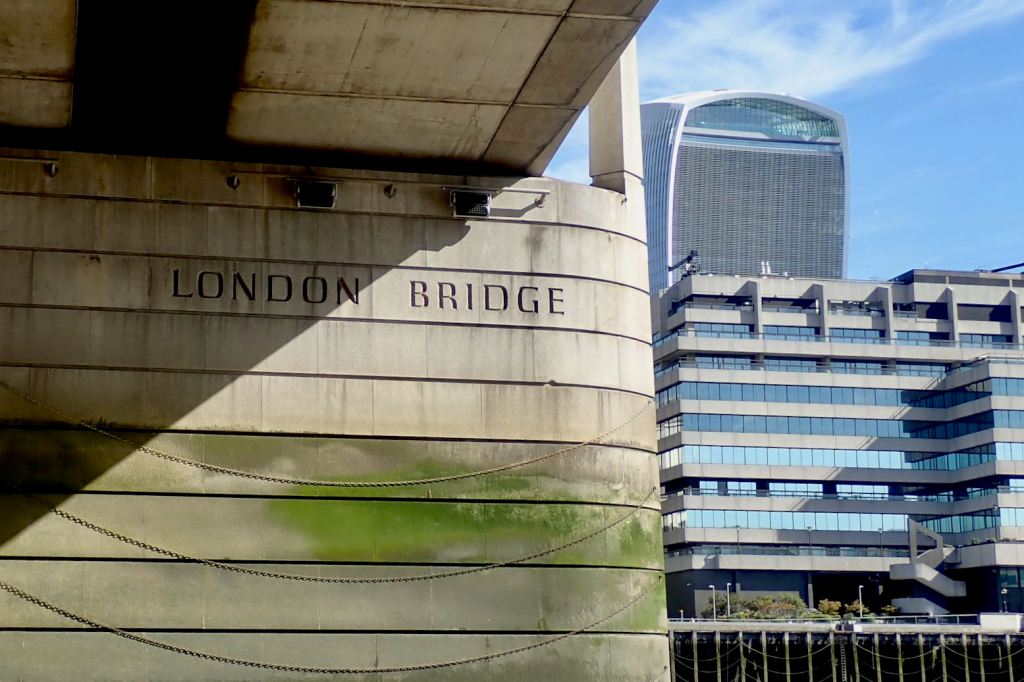
A few years back sunlight reflected off the ‘Walkie Talkie’s’ concave face (20 Fenchurch St) and melted a car in the street below
Not falling down any time soon, but small standing waves soon after can make you think
By the HMS Belfast it settles down again. On a neap tide at least.
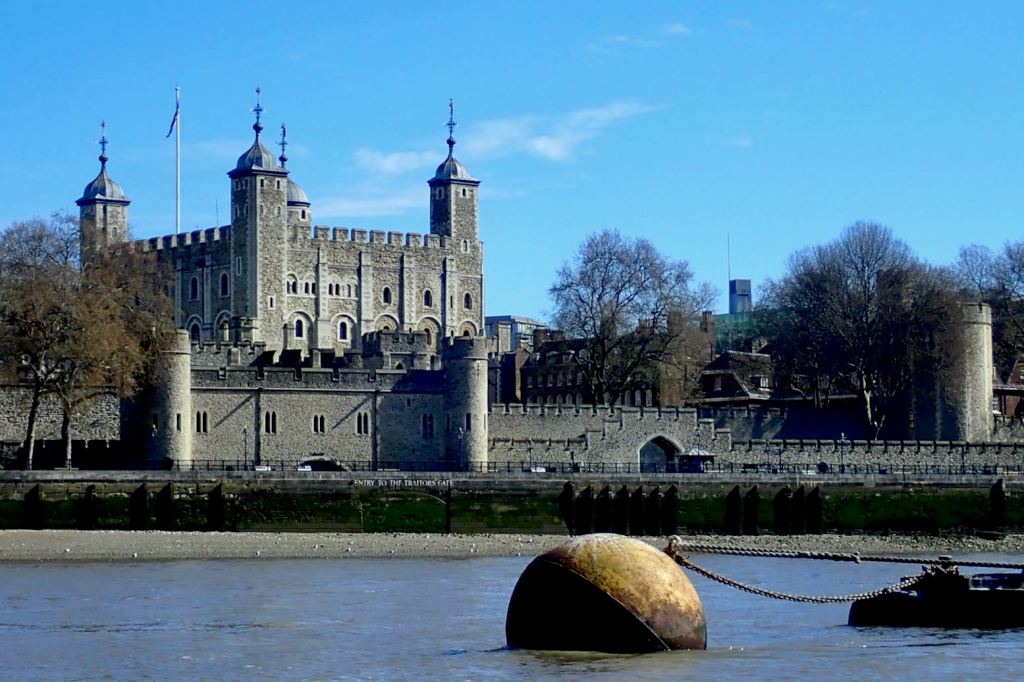
‘Send him to the Tower!’
This is what Hammersmith needs
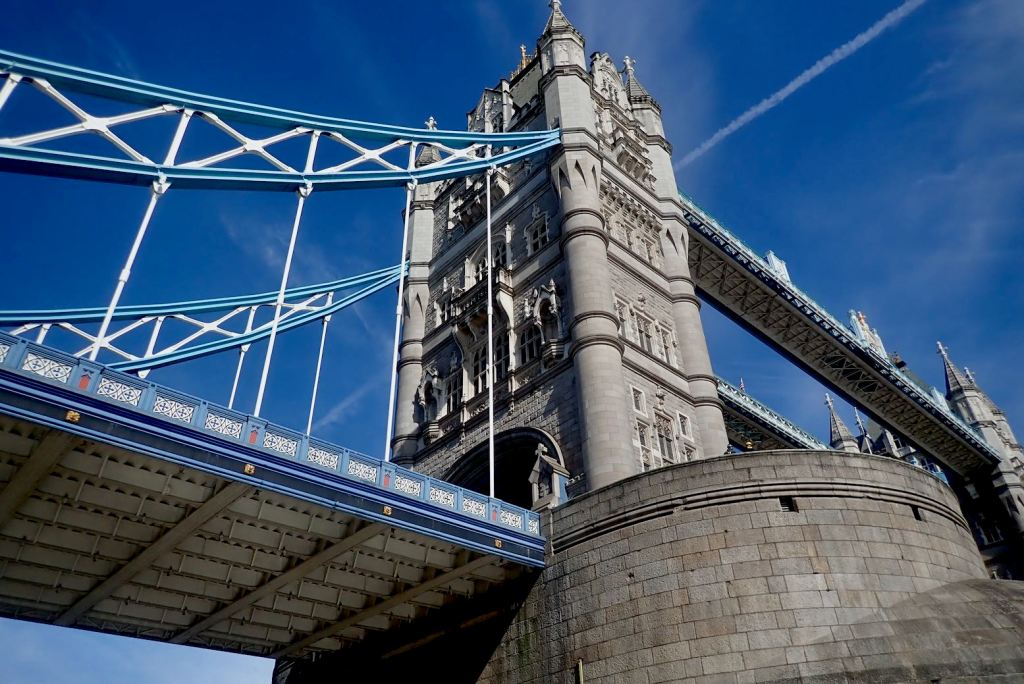
After Tower Bridge the river widens out and the powered craft can gun it
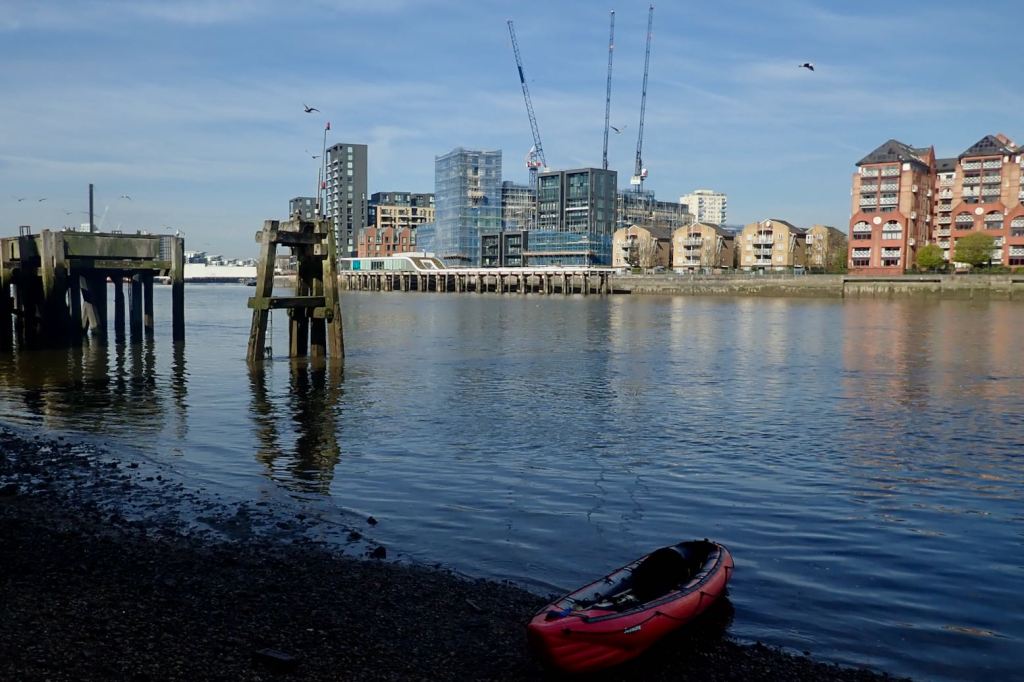
A mile downriver, the Mayflower’s looking a bit shabby. Don’t people go to pubs any more?
In 1620 the famous ship embarked from here for the New World
Tourists RIBs slalom up and and down the Pool of London like giant jet-skis
My modified seatback worked great. Just what was needed
Go west young man. And never come back!
From the beach it’s a 10-minute walk to Canada Water station.
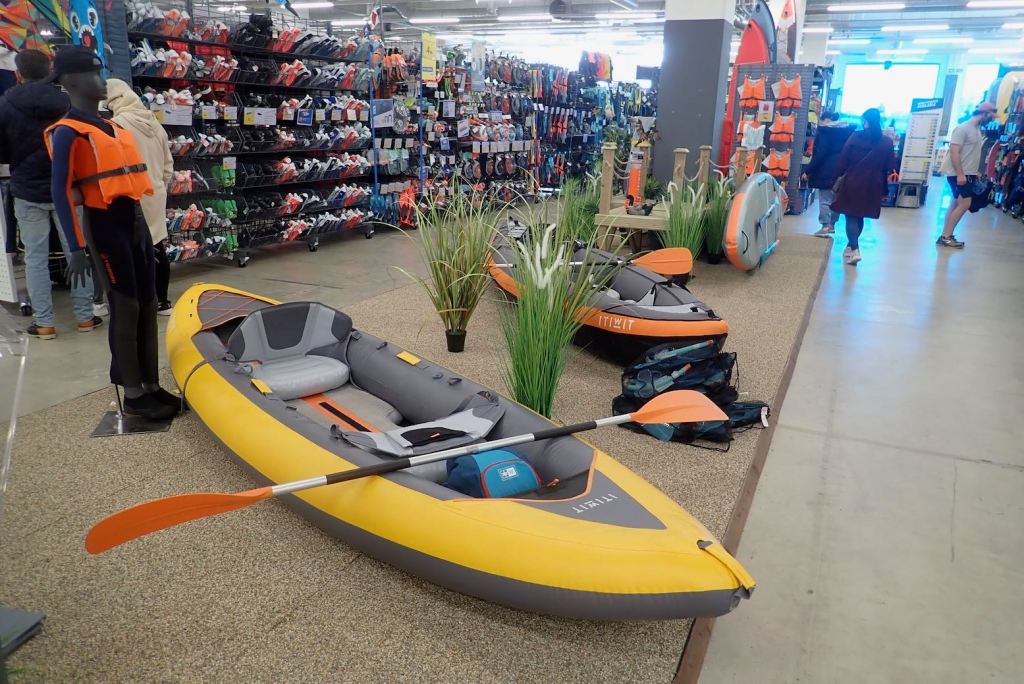
I pop into Decathlon nearby to admire some Itiwits; quite possibly Britain’s most popular IK